
Category: General

  • This is the Difference between Animal Cells and Plant Cells

    Differences between Animal Cells and Plant Cells – Cells are the smallest part of the body structure that supports life for all living things to regulate their various life functions. For living things, cells play a very important role because they are able to arrange the parts in the body so that they can carry out various activities.

    Cells in the bodies of living things are scattered in almost all parts, starting from the hair, skin, eyes, hands, feet, internal organs, and so on. Not only owned by humans, cells can also be found in all parts of the body in animals and plants that have many functions. Despite having similarities, there are many differences between animal cells and plant cells based on their function.

    But before discussing what are the differences between animal cells and plant cells, we must first understand the meaning of cells and their parts. To understand further what a cell is, here’s an overview.

    Definition of Cell

    For living things, cells are the smallest material in the body but play a major role for activity and life. It is so small, you need a microscope to be able to observe it. Without cells, living things would not be able to defend themselves and develop.

    Especially in the body of living things, all organs work together at all times to support the various activities carried out. All organs are composed of many components that make them able to work with various roles. Without cells, these organs will not be able to function properly which makes humans unable to carry out life.

    The existence of cells was first discovered by a Dutch researcher named Robert Hooke, in 1665 to be precise. He observed the cork in the stem of the Quercus Suber plant using a microscope he had specially designed for research.

    Hooke’s observations found that there were many empty spaces or parts in the stems of the plants he observed with thick walls as barriers. Then Hooke named the empty spaces he observed with the name cellulae or interpreted as cells. The cells found in his research are actually no longer alive, but the results of this work open up the history of cell research.

    Based on the results of research conducted by Hooke, a scientist named Antonie Van Leeuwenhoek was interested in learning more about cells. He then started his research by using straw soaked water as a research object using a self-modified microscope in the form of a single lens.

    Based on his research, Antonie found that there were several movements of small organisms in the immersion water that were observed previously. Antonie named his discovery as a bacterium. Because of his success in the research he was doing, Antonie was then considered the first person to be able to discover the existence of living cells in the course of the history of cell discovery.

    Cell Parts

    Before knowing the differences between animal cells and plant cells, there are several parts of the cell that we must know. Although relatively small, the number of cells in the body of living things is very large, reaching thousands, millions, or maybe billions. Living things themselves are composed of two cells, namely unicellular and multicellular.

    Unicellular is an organism that has only one or single cell and creatures that belong to this type are bacteria. While multicellular is an organism that has many cells to build various organs in the body.

    Cells or in Latin are called cellulae which means small rooms are divided into two main types. The first is the prokaryotic cell, which is the type of cell that is believed to be the first organism to ever live on earth.

    Some living things that are included in prokaryotic cells include blue green algae and eubacteria. While the second is eukaryotic, namely a cell type that is more complex than prokaryotic. Plants, animals, and fungi are some of the organisms that belong to the eukaryotic type of organisms because their internal structures consist of many cells.

    The cell consists of several parts that make up or better known as the cell structure. Some of the sections in question are as follows.

    1. Cell Wall

    The cell wall as one of the cell structures is a part that only fungi and plants have. This is what makes cells in fungi and plants look unique compared to animal cells. The cell wall makes plants stiff and unable to move freely like humans or animals, so they seem to just stay in place. But plants cannot be said to be silent, because their movements are passive and slow so that they cannot be observed directly with the sense of sight.

    The cell wall consists of two parts, namely primary cells and secondary cells. Primary cells are between the middle lamella as the outermost layer and secondary cells. The primary cell wall contains several substances such as cellulose, hemicellulose, lignin, and protein and is thin in texture because it is formed during division. The thickening of the primary cell wall due to the presence of lignin forms secondary cells that are stiffer, thicker, and stronger in texture. Secondary cells contain several substances including lignin, cellulose, and hemicellulose.

    2. Plasma membrane

    The plasma membrane is the widest part whose job is to keep the components in it well maintained. Think of it like a shopping bag that can wrap all groceries, that’s the role of the plasma membrane. The plasma membrane or also known as the cell membrane is owned by all living things, be it humans, plants, fungi, animals, even bacteria. This section is composed of several chemical elements, namely lipids (phospholipids), carbohydrates, and proteins.

    The nature of the plasma membrane is semipermeable, meaning that only a few substances can pass through it and enter the cell. Some of the functions of the plasma membrane include being able to keep the contents of the cell from leaving and as a recipient of stimuli from the outside. This section also plays a role in controlling the exchange between the cytoplasm and its environment.

    3. Cytoplasm

    The cytoplasm is the part that acts as a storage place for several important chemicals needed by the organism’s body. The stored chemicals are ions, enzymes, glucose, fat, and proteins which are responsible for the formation of cell metabolism. This section is composed of substances in the form of carbohydrates, proteins, fats, vitamins, water, and minerals.

    The cytoplasm moves dynamically due to several contents arranged in it which keeps it moving due to ionic charges. This cytoplasmic movement is known as brown movement.

    4. Organelles

    In cells, organelles can be found in the cytoplasm. Organelles can be found in some single-celled living things (eukaryotic) and very rarely found in many-celled living things (prokaryotes). This section has several main units and other units with their respective functions.

    Some of the main units in organelles are the Nucleus (core part), Mitochondria, Golgi Body, Chloroplasts, Vacuoles, and Endoplasmic Reticulum (RE). While the other parts in it are Centrosome, Autophagosome, Acrosome, Cilia, Flagella, Hydrogenosome, Lysosomes, Ribosomes, Plastids, Centrioles, Peroxisomes, and others.

    Differences between Animal Cells and Plant Cells

    After knowing what a cell is and its parts, there are several differences between animal cells and plant cells that you can find. Here are some differences between animal cells and plant cells that stand out enough to be observed.

    1. Cell Size and Shape

    The first difference between animal cells and plant cells can be seen from the size and shape of the cells. The cells in plants are larger, while those in animals tend to be smaller. Judging from its shape, the size of cells in plants tends to be more fixed and stable, while cells in animals are not fixed in shape.

    2. Cell Wall

    As the outermost layer, the cell wall is responsible for lining and protecting the plasma membrane. The difference between animal cells and plant cells is that animals do not have a cell wall while plants do. This is probably the most prominent because the cell walls make plants look stiff and strong. While humans and animals do not have cell walls that allow them to move freely wherever they wish.

    However, keep in mind that plants can actually move, namely through growth towards a larger size and their roots that continue to spread. This movement is called a passive movement because it cannot be observed and lasts a long time.

    3. Chloroplasts

    Chloroplasts are a part of the cell that is only found in plants. This section functions in the ongoing process of photosynthesis, namely the process of producing food by utilizing several substances from outside the plant body. Chloroplasts will provide a container to be able to photosynthesize. Plants will utilize water, sunlight, and carbon dioxide to be converted into chemical energy. This energy is then stored by plants in the form of carbohydrates or other compounds needed during the growth process.

    The process of photosynthesis requires sunlight in making food, this is what distinguishes it from animals. Food sources in animals are not obtained by utilizing sunlight so they do not have chloroplasts in their bodies. After all, animals are not creatures that make their own food like plants. Animals will use other living things as a source of food by hunting.

    4. Lysosomes

    Lysosomes are one of the organelles that are only owned by animals with a very important role. This section plays a role in filtering foreign matter and dirt that enters the animal’s body so it doesn’t interfere with the digestive process. Lysosomes consist of a membrane with a thickness of about 9 nanometers which can prevent leakage of enzymes. The inner membrane of lysosomes contains several enzymes such as hydrolytic, nuclease, phosphatase, protease, and others. These enzymes help the work function of lysosomes.

    Plants do not have lysosomes like animals because they do not process food like animals and the structure of the digestive organs is very different. The process of digestion in plants is carried out by vacuoles.

    5. Centrioles

    As one of the organelles in cells, centrol helps the process of cell division by separating chromosomes. Centrioles are shaped like a tube with a diameter of 250 nanometers with a length of between 150-500 nanometers which are located near the nucleus or cell nucleus.

    When cell division occurs, the centrioles will duplicate themselves by DNA replication. Centrioles consist of 2 parts of the microtubule component where in each component there are 9 microtubules. In cell division, centrioles will help the process of mitosis and cytokinesis.

    Centrioles can only be found in animals, while plants do not need them. Basically, animals are creatures whose cells are not fixed so that self-division is difficult to do. While plant cells tend to be fixed so they don’t need centrioles for their development.

    6. Vacuoles

    The vacuole is a liquid-filled cell organelle separated by a membrane called the tonoplast. This liquid is like water which contains enzymes, alkaloids, salts, acids, bases, minerals, glucose, organic acids, and amino acids. Vacuoles can be divided into two, namely Contractile Vacuoles and Non-contractile Vacuoles.

    The Contractile Vacuole whose job is to remove water from the cell to maintain molecules in the cell and maintain ion concentration. Meanwhile, the non-contractile vacuole plays a role in digesting the food consumed and distributing it to all parts.

    Vacuoles are easier to find in all types of plants, whereas in animals their existence is difficult to detect. In plants, this part is larger and more permanent. Whereas in animals, vacuoles are smaller in size and are not permanent. There are only a few animals that have vacuoles in their cells, namely animals that are classified as unicellular such as protozoa.

    7. Cilia

    The next difference between animal cells and plant cells is in the cell organelles called cilia. In living things, cilia are responsible for cell movement and help protect the passage of cells in the process of metabolism. Cilia will appear in large numbers on the surface of the cell. The shape looks like a thin thread with a thickness of up to 0.25 ultra meters and a length of between 2-20 ultra meters. Animals are organisms that have cilia because of their dynamic and active movements. Meanwhile, plants do not have cilia because the cells in them tend to be stable and rarely move.

    8. Plastids

    Photosynthesis in plants requires a place so that it can take place properly. The cell organelles that play a role in this are plastids. The location of the plastids is on the inner and outer membranes which are quite diverse in shape. In addition to the process of photosynthesis, plastids also act as containers for survival such as breathing, eating and drinking.

    The content of green pigment (chlorophyll) in plastids is called chloroplasts, while pigments other than green are called chromoplasts. In addition to chloroplasts and chromoplasts, plastids can also produce colorless pigments, also known as leucoplasts. The size of the diameter of the plastids ranges from 4-6 ultra meters with the number reaching 20-40 ultra meters in some plants that are classified as high levels. Plastids can only be found in plants, animal cells do not have plastids.

    9. Flagella

    The last difference between animal cells and plant cells is flagella. In biology, flagella are cell organelles that are long and thin like threads with active movements. This section is owned by many living things that are single-celled (unicellular) and some organisms that are multi-celled (multicellular). Flagella are responsible for locomotion in organisms, whether prokaryotic or eukaryotic. The size is between 15-20 nanometers and tends to be clear in color and has a convex shape when observed using a microscope.

    Some organisms can have more than one flagellum in their cells, such as single-celled algae (Escherichia Coli and Euglena Viridis). Flagella are easy to find in animal cells compared to plant cells. This is because animals are actively moving while plants tend to be more passive.

    Even so, some plants also have flagella like moss and some plants with open seeds. Flagella in plants function as a tool to go to a place where there are many water sources. While flowering plants do not have it.

    Those are some differences between animal cells and plant cells based on their function to support life. Even though they both have cells, in fact both animals and plants have very different cell work functions. But basically the existence of cells is needed, because without cells living things will not be able to carry out their lives properly.

    Recommended Books & Articles Related to Animal and Plant Cells

  • This is the Function and Role of Students in Society

    Role of Students – Students have roles and functions in society. The roles and functions possessed by students are of course very important. A student is someone who is currently studying at a university. Apart from studying at colleges or universities, students also have roles and functions in society.

    Basically, students have five roles in society including agent of change, iron stock , guardian of values, moral strength, and as a controller in social life in society. Check out the full explanation below.

    Definition of Student

    Who is actually a student? To make it clearer, Sinaumed’s can listen to the understanding of students in general and according to experts.

    In general, student is a term that is intended for someone who is studying or is currently studying at a college, academy, or university.

    A student can also be defined as an individual who studies at a college and he is registered as a student at that college. However, the definition of a student has a meaning that is more than just someone studying at a university.

    Etymologically, student comes from maha which means the most and the word student means student. Thus, students can be interpreted as someone who is the most educated.

    In the Big Indonesian Dictionary or KBBI, a student is someone who studies at a university and is in the educational structure in Indonesia, a student also holds the highest educational status among the others.

    Meanwhile, according to Knopfelmacher, he defines students as human beings who will become candidates with a bachelor’s degree and have a connection to a tertiary institution, students are educated as well as expected to become intellectual individual candidates.

    According to Sarwono, a student is someone who is registered to take part in a subject at a university with an age limit ranging from 18 to 30 years. Sarwono also defines students as a group that exists in society to gain status, because students have ties with a university.

    According to the guardian of values, a student is a student who has a high level and the role of mites is as a guardian for the values ​​that exist in society and the truth is absolute, namely to uphold honesty, mutual cooperation, fairness, empathy, integrity and other qualities that needed in society.

    The definition of a student according to his role as an agent of change is someone who is able to act as an activator and is able to invite the whole community to move to make changes for the better, with some considerations from various knowledge, knowledge and ideas possessed by these students.

    Meanwhile, according to the role of students as moral of force , students can be defined as someone who has the highest level of education. So he has an obligation to have good morals. The intellectual level possessed by a student will be aligned with the level of morality he has in life. This is what makes students have a role as a moral force for a nation and is even expected to be a good example as a driving force so that society is able to improve morale in a better direction.

    In addition to having the task of studying and achieving in the academic field when studying at tertiary institutions, students also have other roles and functions in society.

    Students have a deeper understanding, in accordance with what is formulated by experts and is more than just an individual or group studying in college. Therefore, students are expected to be able to carry out their roles and become inspiring student figures. The book entitled “Real Steps to Inspire Students” written by Azmul Pawzi can be a reference book for students who want to move in real terms to realize their role as students in society and become inspirational figures. So what are you waiting for? Immediately buy and read the book now, only at sinaumedia.com!

    Student Roles and Functions

    There are several roles and functions that a student has. In general, students have five roles and functions as well as labels owned by a student. Here’s an explanation.

    • Direct of Change , meaning that students are able to carry out forms of change directly, because there are many and sufficient human resources.
    • Agent of Change , namely students are expected to be able to become agents of change and become Human Resources who are able to bring about change.
    • Iron Stock , the point is that a student is a human resource that will never run out.
    • Moral of Force , means that students are a collection of many people who are expected to have good morals, because they have high education, knowledge and knowledge.
    • Social Control , is a role and label pinned on students because they are expected to become controllers in social life in society.

    However, in general, students have at least three roles and functions that are considered important for students and the general public.

    • The first role is the moral role. In the world of campus or university, every student can be free to choose what kind of life they want. Because of this, students are then required to be responsible for the morals of each of them as individuals who have knowledge and insight, so that they are able to live a life responsibly and in accordance with existing morals and live in society.
    • The second role of students is a social role. Apart from being responsible for themselves, students have a social role, meaning that the presence of students and everything they do can benefit the environment around them, the surrounding community and not only benefit themselves.
    • The third and final role is the intellectual role. This means that a student is someone who is referred to as an intellectual being and must be able to realize the status embedded in students in real life. Students are expected to be able to realize their true and basic functions when they become students, namely to deepen knowledge and provide the knowledge they have to make changes for the better by using the intellect or intelligence they have acquired while studying at university.

    In addition to the three roles of students, students also have functions which have been grouped as follows.

    1) Social Control

    The first function of a student is as social control. Students with the knowledge they possess, intellectual abilities, social sensitivity and critical attitudes are expected to be able to become social controllers in social life.

    As social control, students can provide criticism and suggestions as well as solutions to problems that exist in the community. The first function of students as social control, will be seen when something is not right in society.

    So that students are considered and expected to be able to change this oddity. Then, students who are not active or indifferent to the problems that exist in the surrounding environment, it will be considered that there is no hope for a nation, because students as iron stock are reluctant to play a role as social control.

    Apart from being a social control , students are part of the community which of course should be concerned with what is happening in their surroundings. This concern cannot only be realized in the form of a demo. However, it can be realized with thoughts, discussions as well as moral and material assistance that can be given by students to the community.

    2) Agent of Change

    Students have a function and role as agents of change. This means that students do not only act as initiators of change. However, he also has a role as an object or actor of the change he initiated.

    A critical and positive attitude, basically a student must have as an agent of change . Both of these attitudes are expected to be able to make good changes when there are irregularities in the social environment. So that people will become more alert, smart and not easily fooled, when something strange happens.

    Students are considered as a group of individuals who must be at the forefront when it comes to driving positive change. Through the eyes or views of students who are still neutral, students are considered able to see the mistakes made by their country.

    An example is when students took action as agents of change in 1998, namely when students overthrew the New Order and there were changes after that. The demonstration then became the biggest demonstration ever in Indonesia and was driven by students so that there would be a change for the better for Indonesia.

    3) Iron Stock

    Students have a role as the next generation of the nation and are expected to have the ability, noble character and skills to be able to become future leaders for the sake of the nation.

    Students are considered as assets, reserves as well as hope for the nation in the future.

    It is undeniable that many organizations will have a flowing nature, and be marked by a shift in power from the old to the young. Therefore, regeneration will be carried out repeatedly, continuously.

    Likewise in life at the university or in the nation and state. Cadreization of young people, such as students, must continue to be carried out, because it is in the hands of young people that big changes can occur, thus making the conditions of a nation better.

    As an iron stock , students can enrich themselves with knowledge and learn from mistakes that have previously occurred in the older generation or previous generations.

    4) Moral Force

    Students are required to have good morals, because students have a role and function as a moral force or role model for society. All behavior and decisions made by students will be observed and assessed by the surrounding community. Therefore, students are expected to be smart in choosing where they will place themselves in society, as well as their ability to be able to live side by side with other communities.

    In addition, in the current era of globalization, where it is easier for foreign cultures to enter Indonesia, students have a role to maintain the original cultural values ​​belonging to Indonesia. Thus, Indonesian culture will not be eroded by new cultures belonging to outsiders. Students are expected to be able to reflect the best values ​​and character, in accordance with the intellectual level they have and have obtained in college.

    5) Guardian of Values

    The fifth student function is as a guardian of value. As with the moral of force, currently many foreign cultures are starting to enter Indonesia. Thus, it is feared that the original cultures belonging to Indonesia will be eroded and lost.

    Therefore, students play a role as guardians of Indonesia’s noble and noble values ​​which must be protected. Students as guardians of values ​​are expected to be at the forefront of maintaining these good values. Examples include mutual cooperation, fairness, empathy and honesty. As guardians of values, students must be aware that there will not be a prosperous nation if noble values ​​are not upheld by both the young and the elderly.

    Steps to Realize Student Role Real

    After knowing the roles and functions that students have in social life in society, students must also know how to do or real steps to realize the roles and functions that have been attached to students.

    There are several steps that can be followed, if Sinaumed’s wants to realize the roles and functions of students in society in a real way. Here’s an explanation.

    • Students need to be aware of political conditions and life in the nation and state. This is because students as part of the community have an interest in defending the community and what is happening in their surroundings should not be ignored.
    • Students can choose movements that are in accordance with their vision and mission. The movement in question is an intellectual movement, namely as a way in which students can move to channel their opinions or passions through scientific activities, discussions, actions carried out in compliance with the law, audiences and others.
    • The third step is to realize the real roles and functions of students, is to be involved in student organizations and movements that carry out a good vision and mission and do not neglect assignments or lecture needs.
    • No less important, students can realize the role and function of students in society by having good time management. So that students are able to carry out their roles in the social environment in society and remain responsible for themselves, their studies as well as their families.
    • Broaden horizons by reading books. In order to be able to carry out the role of students properly and realistically, students must have broad insights. One way is to read a variety of books. Thus, students will get knowledge, perspectives or broad perspectives through the books they read. Apart from books, students can also broaden their horizons by diligently reading journals, newspapers and e-books which are now easier to find.

    That is an explanation of the role of students and their functions and is also equipped with an explanation of how to realize the roles and functions of students in a real way.

    As explained, one way to realize the real role of students is to read books. Books that are read better are not just one topic but a variety of topics. So, as #FriendsWithoutLimits, sinaumedia provides a variety of books on a variety of interesting topics, ranging from science to fiction, which can broaden Sinaumed’s’ horizons.

  • This Prayer of the Prophet Khidir When You Have a Desire or Hajat

    Prophet Khidir’s Prayer – Not only working hard, in an effort to achieve something you dream of, it is also highly recommended to be accompanied by prayer and remembrance of Allah SWT. This is because good fortune is obtained with His permission and pleasure.

    One of the prayers after prayer that can be said is the Prophet Khidir’s prayer to grant all wishes. The Prophet Khidir is a prophet sent by Allah SWT who is implicitly mentioned in the Al-Qur’an Surah Al-Kahf verses 60 -65 and verse 82. However, he is not included in the 25 Prophets and Apostles that we know.

    In addition, the Prophet Khidir’s prayer is believed to be read to get rid of difficulties and suffering. As it is known that every human being in his life does not always feel happy.

    There are times when humans get difficulties and suffering as a test from Allah SWT. Every test and trial that is given certainly has a purpose. So, we as humans should always be prepared to face it.

    To face all the tests and trials given by Allah SWT, we must live it with patience, prayer and struggle to survive. Like reading the Prophet Khidir’s prayer that will be given. The calamity that befalls us is also not necessarily a punishment because we have sinned. There is a possibility that this is a test given to elevate our status as human beings to become even better human beings in the eyes of Allah SWT.

    Prayer of the Prophet Khidir

    The good nature and personality of Prophet Khidir are told in the Al-Qur’an and hadith. One of the practices that the Prophet Khidir regularly did was prayer and dhikr. So, here is the Prophet Khidir’s prayer that Muslims usually read to ask for his wish to be granted:

    1. Prayer of the Prophet Khidir to grant all desires and their meanings

    The following is the Prophet Khidir’s prayer that Sinaumed’s can read after the maghrib or dawn prayers so that his sustenance will be expedited.

    Allahumma Sholli ala Sayyidina Muhammad waalihi wa shahbihi wa sallim.

    Allahumma kamaa lathafta fii ‘azhamatika duunalluthafaa, wa ‘alawta bi’ azhamatika alal ‘uzhamaa, wa ‘alimta maajuang ardhika ka’ilmika bimaa fauqa ‘arsyika, wa kaanat wasaawisusshuduuri kal’alaaniyyati ‘indaka, wa ‘alaaniyyatulqauli kassirri fiiqa ‘ilmika, wanada kullu syai-in li ‘azhamatika, wa khadha’a kullu dzi sulthaanin li sulthaanika, wa shaara amruddunya wal aakhirati kulluhu biyadika.

    Ij’al lii min kulli hammin ashbahtu aw amsaiytu fiihi farajan wa makhrajaa, Allahumma inna ‘afwaka ‘an dzunuubiy, wa tajaawazaka ‘an khathii’athiu, wa sitraka alaa qabiihi a’maaliy, athmi’niy an as-aluka maa laa astawjibuhu minka mimma washhartu fiihi, ad’uuka aaminan, wa as aluka musta ‘anisaa.

    Wa innakalmuhsinu ilayya, wa analmusii’u ilaa nafsiy fiima bayniy wa bainika, tata waddadu ilayya bini’matika, wa atabagghadhu ilaika bilma’ashiy, walakinnatsiqata bika hamalatniy ‘alal Jaraa-ati ‘alaika, fa’ud bifadhlika wa ihsaanika ‘alayya. Innaka antattawaaburrahiim, wa shallallahu alaa Sayyidina Muhammadin waalihi wa shahbihi wa sallam.

    Meaning: “O Allah, as You are gentle in Your majesty above all that is gentle, and You are Most High with Your majesty over all that is great, and You are All-Knowing of what is in Your earth as You know what that is above Your Throne, and the whisper of the heart at Your side is the same as open speech, and open speech is the same at Your side with the whisper of the heart, and submit everything to Your majesty, and humble everything that have dominion over Your dominion, and be the prison of the world and the hereafter in Your hands, make for me from all the complaints that befall me in the evening or morning relief and a way out of it “.

    “O Allah, verily Your forgiveness for my sins, and Your removal of all my mistakes, and Your covering for my bad deeds, all of which encourage me to ask You for anything that I do not deserve from what I careless to him, I beg You in safety, and I ask You in a state of pleasure, whereas You are always doing good to me, and I am always doing evil to myself in matters involving my relationship with You.”

    “You always make me love You by always giving Your favor to me even though You don’t need me, and I always make You angry by disobeying You, but my trust in You leads me to dare (beg) You, then visit me with Your grace and kindness to me and accept my repentance, verily You are the Most Recipient of repentance, the Most Merciful.”

    2. Prophet Khidir’s prayer to avoid difficulties and expand his sustenance

    Bismillahi ma sya-allah la yasuqul khoiro illallah, bismillahi m sya-allah la yashrifus su-a illallah, bismillah ma sya-allah ma kana min ni’matin fa minallah, bismillah mas sya-allah la hawla wala quwwata illa billahil ‘aliyyil’ adzim.

    Meaning: “In the name of Allah, everything happens according to His will, nothing brings good except Allah. In the name of Allah that everything happens according to His will, nothing removes badness except Allah. In the name of Allah that everything happens according to His will, there is no enjoyment except from Allah. In the name of Allah that everything happens by His will, there is no power to do good except with Allah’s help. And there is no power to avoid immoral acts except with the protection of Allah, the Most High and Most Great.”

    Many scholars recommend this Prophet Khidir prayer as a prayer that can help us as humans and Muslims in facing various tests and trials.

    Basically Allah SWT has determined the sustenance of His people according to their respective measures. When you have a wish or wish, it is not impossible that your wish will come true someday. As long as it is accompanied by earnest endeavor, one of which is by reading the prayers of the Prophet Khidir above.

    Some say, when Prophet Khidir and Prophet Ilyas got together, the two of them did not separate unless they read the prayers first.

    Prayer of the Prophet Khidir and Surah Al-Waqi’ah

    When practicing the Prayer of the Prophet Khidir, it can also be accompanied by Surat Al-Waqiah which is known to have the virtue of facilitating sustenance. In addition, by practicing the Al-Waqiah surah there will also be several miracles, as follows.

    1. The verse of a thousand dinars

    People often refer to surah Al Waqiah as the verse of a thousand dinars. Because it is considered as the door opener of sustenance when it is practiced every day.

    2. Keep away from poverty

    A great reward will be obtained by someone who reads Surah Al Waqiah every night. Apart from reading regularly, it can keep a person away from poverty for the rest of his life.

    Moreover, by reading the Makiyyah letter 14 times after performing the Asr prayer or one sitting, the wealth that person will gain will be abundant.

    “Teach the surah Al-Waqiah to your wives. Because in fact it is a letter of wealth “.

    3. Bring intercession on the Day of Judgment

    Imam Ja’far Ash-Sadiq said: “Whoever longs for heaven and its characteristics, then read Surah Al-Waqia’ah; and whoever wants to see the nature of hell, then read Surah As-Sajadah.” (Tsawabul A’mal, page 117)

    4. Be a generous treasurer

    In order for someone to become a rich person, it is safe from this Al Waqiah letter to be read 3 times after completing the morning prayer.

    5. Teaching monotheism

    In Surah Al Waqiah, it does not directly explain verses about wealth, sustenance and such things. However, this surah teaches about monotheism which makes a person believe in Allah SWT.

    6. Given peace

    “Whoever reads Surah Al-Wagi’ah before going to bed, he will meet Allah in a state of his face like the full moon: (Tsawabul A’mal, page 117).

    The procedure for the practice of the Prophet Khidir’s prayer, as follows:

    1. Prepare a container made of clay.
    2. Fill the container with rainwater that falls directly from the sky, without being blocked by tiles, leaves, etc.
    3. Fast for seven days and every night take the water in the container and then recite the Prophet Khidir’s prayer 3333 times, then blow into the water.

    Prophet Khidir’s prayer reading:

    Allahumma sholi’alaa sayyidina Muhammad waalihi kama laanihaayatin likamaalihi wa’ada hamaaluhu .

    The water that has been prayed for with the Prophet Khidir’s prayer, can be drunk daily. And also used to break the 7-day sunnah fast. With the permission of Allah SWT, those who practice it with sincere intentions because of Allah alone will get brain intelligence.

    The Virtue of Prayer According to Islam

    1. Worship

    The main purpose of prayer is to worship Allah SWT and worship is mandatory for Muslims. Worship itself is the most noble thing that can be done and shown to Allah SWT.

    2. Put your trust in Allah

    Another virtue of prayer is as proof that we put our trust in Allah SWT. With us as diverse people praying to Allah SWT, we have surrendered everything that happens in the life that is lived to Allah SWT.

    3. Demonstrates the power of God

    Prayer in Islam can show the power of Allah SWT. Therefore another virtue of prayer is to show that only Allah SWT is the Almighty.

    By praying, it means that we as Muslims have realized that Allah SWT has given us all pleasures and accepted all our repentance.

    Allah SWT said, “Who allows (prayers) people who experience difficulties and when he prays to Him, and who eliminates distress and who makes you caliphs on earth? Is beside Allah SWT there is (another) God? You remember very little of Him.” (QS. An Naml: 62).

    4. Increasing piety

    Praying is the same as we interact with Allah SWT or also communicate with Him. So that people who pray will be closer to Allah SWT. The way to increase faith and piety to Allah SWT is by getting closer to Allah SWT. So it is recommended for Muslims to balance all the efforts in the world by praying.

    5. In order to avoid disaster

    Praying to Allah SWT is also done to ask for help to always be kept away from disasters in any form. However, there is one thing that needs to be known that the prayers we pray can actually be postponed and replaced with something else which according to Allah SWT is much better than what was asked.

    “And I will pray to my God, hopefully I will not be disappointed by praying to my God.” (Maryam: 48).

    6. To be kept away from the wrath of Allah SWT

    According to a hadith, Allah will feel angry if we as His people never ask or pray to Him. Therefore, so that we do not make Allah SWT angry, we must pray and ask Him.

    Rasulullah SAW said, “Whoever does not ask Allah, Allah will be angry with him.” (HR. Tirmidhi no. 3373).

    7. The heart becomes calm

    Another way to make our hearts calm is one of them by praying. Whatever we are experiencing and feeling, pray that our hearts will be much calmer. Prayer in Islam is believed to be a way for humans to live peacefully in this world and in the hereafter.

    Allah SWT says, “That is, those who believe and their hearts find peace by remembering Allah. Remember, only by remembering Allah will the heart find peace.” (QS. Ar Ra’du: 28).

    8. To be kept away from seashore

    Praying is also one way for humanity in Islam to keep away from harm and find the door of mercy from Allah SWT.

    Rasulullah SAW said, “Whoever among you has opened the door of prayer, the door of mercy must also be opened for him, and Allah is not asked for something that He gives He likes more than being asked for strength.”

    In addition, Rasulullah SAW also said: “Indeed, prayer is beneficial for both what has happened and what has not happened, so you should pray.” (HR. At-Tirmidhi V/552) no. 3548.

    9. Can know Allah SWT

    With us as Muslims praying, we can know Allah SWT well from what we have prayed for and Allah SWT has given. The prayer offered is a form of our belief in Allah SWT that He is the Most Adequate, and the Most Loving.

    10. Eliminating despair

    For those of you who feel that while in this world you are experiencing hopelessness and feel unable to finish it, then pray. Allah SWT will listen to the complaints of his sincere people. Be assured with strong faith that Allah SWT will help you and eliminate that despair and provide the best solution to the problem you are experiencing.

    11. As gratitude

    By praying it means we are also grateful for what has been given by Allah SWT. When we get abundant sustenance and enjoyment then be grateful and keep praying so that these good things can always come to us. With thanksgiving that we often mention, we will be closer to Allah SWT.

    That is the prayer of the Prophet Khidir which can be read when we are feeling difficulties and calamities given by Allah SWT. Hopefully those who have a wish or wish will soon come true, don’t forget to keep praying.

  • This is the Choice of Majors for Those of You Who Love Sinaumed’s Mathematics!

    sinaumedia Literacy – Counting or mathematics is often perceived as difficult by society, not only children but also adults. The Indonesian Family Life Survey (IFLS) tests held by the Rand Corporation in 2000, 2007 and 2014 proved that the percentage of respondents who answered the math questions correctly at school age was not much different from more mature respondents. Even so, it turns out that there are also many people who like math or math and think of it as something challenging. Are you one of Sinaumed’s? If so, there are many majors to choose from for those of you who like math. Check these out.

    MATHEMATICS

    Those of you who take this major will study pure mathematics such as algebra, geometry, and mathematical analysis. In addition, students also have the opportunity to study statistics, computing, actuarial, and operations research. Even though everyone is familiar with mathematics, the Mathematics Study Program has received less interest. In addition to having very limited career prospects, this course is often considered complicated. But actually, the Mathematics Department learns many things that are not just calculating formulas. If you are interested in the world of arithmetic and have strong analytical skills, then the Mathematics study program can be the right choice for you.

    Mathematics Department Subject

    • Math Fundamentals
    • Calculus
    • Numerical Method
    • Algorithms and Programming
    • Elementary Linear Algebra
    • Discrete mathematics
    • Algebraic Structure
    • Linear Algebra
    • Algebra Practicum
    • Variable Calculus
    • Analytical Geometry
    • Real Analysis
    • Complex Functions
    • Ordinary Differential Equations
    • Partial Differential Equations
    • Mathematical Modeling
    • Linear Programs
    • Operations Research
    • Matrix Algebra
    • Number Theory
    • Statistical Method
    • Linear Program
    • Mathematical Statistics
    • Set Theory
    • Non Parametric Statistics
    • colloquium
    • Analysis of Life Test Data
    • Regression Analysis
    • Financial mathematics
    • Metric Space Theory
    • Hilbert’s Space Theory
    • Discrete Control Theory
    • Linear Control Theory
    • Graph Theory

    Character Appropriate for Mathematics Majors

    Thorough, Diligent, Detailed, Critical, Rational, Structured, Independent, Enjoys calculating, Enjoys analyzing, Enjoys doing research and Enjoys solving problems

    Job Prospects for Graduates of the Mathematics Department

    The Job Prospects for the Mathematics Department are very broad, starting from in the world of education as teaching staff, in corporates as analysts, statisticians, financial experts, to astronomers and Sinaumed’s actuaries.


    BUSINESS MATHEMATICS

    Along with technological developments, science is also being upgraded according to the needs of the times, including mathematics. Mathematics is not only limited to calculations, but now it is also a science that can be applied as a problem solver in various aspects of human life, including business. Therefore, even though it is still relatively new and rare, this study program can be a very potential choice whose knowledge will be very much needed and useful in facing the times.

    The Business Mathematics study program studies the application of mathematics in solving various business problems. The ability to analyze and think logically in mathematics can help solve business problems. Of course, in this study program you will learn Statistics, algebra, and mathematical logic. Mathematics in business acts as a provider of a logical framework that is used in identifying problems, conducting analysis, and making predictions in business activities. Business Mathematics is also available in the form of specialization in the Mathematics study program at several universities.

    Business Mathematics Department Course

    The courses studied in Business Mathematics are:

    • Calculus
    • Math logic
    • Statistical Method
    • Microeconomics
    • programming
    • Macroeconomics
    • Business communication
    • Geometry Analysis
    • Business Computing
    • Accountancy
    • Entrepreneurship
    • Basic Statistics
    • Elementary Linear Algebra
    • Discrete Method
    • Linear Programming
    • Algorithms and Programming
    • Opportunity Theory
    • Differential Equations
    • Numerical Method
    • Complex Function Analysis
    • Non Parameteric Statistics
    • Investment and Portfolio Analysis
    • Time Series Analysis
    • Regression Analysis
    • Quality Control
    • Financial mathematics

    Suitable Characteristics for Business Mathematics Majors

    Characters that are suitable for this major are you who are thorough, diligent in detail, critical, happy to count, happy to analyze, happy to do research and happy to solve problems.

    Job Prospects for Graduates of the Business Mathematics Department

    Job Prospects for the Department of Business Mathematics: This study program produces applied mathematicians and future mathematicians who are highly competitive, with soft skills, understanding in the field of IT, and broad business insights, and strong analytical skills. Graduates of the Business Mathematics study program can build businesses or work in various fields, such as Actuarial, Banking, Information Technology (IT), Operations Research, Researchers, Consultants, Financial Services, and so on.


    ECONOMICS

    The Economics study program, or also often called Economics, is one of the oldest study programs in the world of higher education. The Economics Study Program studies how to allocate resources as optimally as possible, and provides insight into socio-economic development issues. In this study program, you will be honed to become an economist or economist who is able to analyze statistical data into useful information for solving economic problems, as well as analyzing cause-and-effect relationships from various phenomena to the socio-political economic conditions of the country, such as the relationship between the unemployment rate against inflation, and so on. In Economics there are two sections that will be studied, namely macroeconomics and microeconomics. Macroeconomics places more emphasis on the topic of discussion on the global economic situation and a country. Such as exchange rate volatility, monetary and fiscal policies, and infrastructure development. Meanwhile, microeconomics studies the economic situation at the individual and corporate levels, about its business strategy, and of course the company’s performance.

    Why did you choose this major? The Economics study program will be perfect for those of you who have quantitative abilities, because Economics is always related to mathematics. Economy is also right for you who are critical and like to research. This study program is also suitable for those of you who have an interest in the world of business and buying and selling. Although actually the economy is not that simple. There are many factors that affect buying and selling transactions, such as interactions between sellers and buyers, regulations that limit trading movements and so on. So, by pursuing economics, you can become a businessman who is flexible, responsive, and has sharp instincts.

    Economics Department course

    Courses in the Department of Economics include:

    • Economic math
    • Economic Statistics
    • Econometrics
    • Microeconomics
    • Macro economics
    • Introduction to Management
    • Introduction to Business
    • Introduction of accounting
    • History of Economic Thought
    • Cooperative economics
    • Project Evaluation
    • Monetary Economics
    • Public Economics
    • Economic development
    • Economic System
    • International Economics
    • central banking
    • Demographics
    • Industrial Economics
    • Agricultural economy
    • Regional Economy
    • HR Economics
    • Natural Resources & Environmental Economics
    • Development Planning
    • Population Economics
    • Optimization Analysis
    • Managerial Economics
    • Banks and Financial Institutions

    Character Appropriate for Economics Majors

    Characteristics of students suitable for this major are Thorough, Diligent, Detailed, Rational, Structured, Independent, Happy to count, Happy to analyze, Happy to work alone, and Happy to do research. The Economics study program has always been a favorite study program to date, because the Economics study program has always been famous for its broad graduate job prospects. Starting from a large scope such as the state, to a smaller scope such as a company, it always intersects with economic aspects. But actually the science of Economics is very broad and has many branches of knowledge.

    Job Prospects for Graduates of the Economics Department

    Graduates of the Economics study program are prepared to become financial analysts, economic policy analysts, first planners, researchers and educators in the economics field.

    STATISTICS

    Statistics is a science that studies data processing, starting from planning, collecting, analyzing, interpreting, and presenting data. The function of statistics itself is as a basis for decision making. Without accurate data analysis, making the right decision can never happen. Statistics is widely applied to various disciplines, both social sciences and exact sciences. Why Choose This Major? Statistics does look boring because you will have to deal with numbers a lot. But actually statistics have a very important role as a basis for decision making. By studying Statistics, you will master how to search, sort, and process data that is used as the basis for companies, governments,

    Statistics Department course

    Statistics Department Courses:

    • Statistical Method
    • Basic Physics
    • Elementary Linear Algebra
    • Basic chemistry
    • General biology
    • Logic & Number Theory
    • Linear Algebra
    • Financial mathematics
    • Statistical Algorithms and Software
    • Numerical Method
    • Mathematical Statistics
    • Advanced Statistical Methods
    • Real Analysis
    • Statistical Matrix Theory
    • Introduction to Probability Theory
    • Sampling Technique
    • Nonparametric Statistics
    • Multivariate Analysis
    • Stochastic Process
    • Regression Analysis
    • Experimental design
    • Loss Models
    • Timeline
    • Quality Control Statistics
    • Survey Method
    • Actuarial Mathematics
    • Spatial Statistics
    • Quantitative Data Analysis
    • Statistical Decision Theory
    • Statistical Forecasting Methods
    • Genome Statistics
    • Categorical Data Analysis
    • Survival Analysis

    Character Appropriate for Statistics Majors

    Characteristics of students suitable for statistics majors are Thorough, Diligent, Detailed, Rational, Observant, Structured, Independent, Loves to count, Enjoys analyzing, Enjoys doing research, Enjoys solving problems.

    Job Prospects for Statistics Department Graduates

    Job prospects for Statistics majors are very broad, because almost all agencies need someone who understands how to obtain and process data. In the government sector, a graduate of the Statistics study program can work at institutions such as BPS and BAPPENAS. Meanwhile in the private sector, Statistics graduates have the opportunity to work in almost all industries ranging from Finance, Banking, Manufacturing, Fast Moving Consumer Goods (FMCG), even Technology.


    INFORMATICS TECHNIQUES

    The Informatics Engineering study program studies and applies the principles of computer science and mathematical analysis to the design, development, testing and evaluation of software, operating systems and computer work. In this study program, you will be taught starting from generating creative ideas, then realizing these ideas, breaking down functions, and creating very detailed instruction structures in programming languages ​​to teach computers what to do. Computer Science students must be proficient in operating systems and applications to ensure that the underlying operating systems work properly.

    Why did you choose this major? to master Informatics Engineering, at least you understand logic and mathematics. Informatics Engineering students will spend a lot of time with programming, and programming itself is an embodiment of algorithms (mathematics and logic). However, if you are interested in the world of technology and have an interest in developing software, then this study program can certainly be your choice.

    Informatics Engineering Course

    Informatics Engineering Courses:

    • Algorithms & Data Structures
    • Operating system
    • Informatics Logic
    • Algorithmic Strategy
    • Probability and Statistics
    • Object Oriented Programming
    • Software engineering
    • Artificial Intelligence
    • Internet programming
    • Calculus
    • Fundamentals of Programming
    • Computer system
    • Computational Theory
    • Software Development Methods
    • Network System
    • Data Mining
    • Database and Information System
    • Cryptography
    • Cyber ​​Ethics & Law
    • Artificial Intelligence
    • Database

    Appropriate Character for Information Technology Majors

    Characteristics of students who are suitable for this major are you who are thorough, diligent, detailed, critical, rational, structured, happy to count, like to analyze, like to work alone, like to do research, and like to solve problems.

    Job Prospects for Information Technology Graduates

    The rapid development of Information Technology opens wider career opportunities for graduates of Informatics Engineering or Computer Science. The need for informatics engineering expertise is very large, especially for those who like the world of technology, computers and programming. According to the Bureau of Labor and Statistics (BLS), the field of Informatics is one of the professions that will grow very rapidly between 2014-2024 with an average growth rate of 12%, above the average professional field in general. Informatics Engineering graduates have broad and varied job prospects, for example as software engineers & developers, analysts, consultants, network experts, system and network security and are responsible for coordinating the development, maintenance and expansion of computer systems in an organization.

    INDUSTRIAL ROBOTIC

    Increasingly sophisticated technology allows various aspects of work to be replaced by machines or robot-based production systems. By entering this department, you will learn various things about industrial robotics, such as designing sophisticated robot operation algorithms that are used for production processes in factories. The use of this robot can make the production process faster, maintain product quality, and minimize human error. Not only designing machines for factories, you will also apply algorithmic knowledge in every machine manufacture. Are there majors that are interesting and according to your interests? To enter one of these majors, you must master the concept of calculations well. So, before taking the college entrance exam,

    The Industrial Robotics Design study program will invite you to learn the ins and outs of industrial robots such as designing sophisticated robots that are used to assist the production process in factories. As we know, productivity, effectiveness, efficiency and quality are the most important aspects of industrial activities. In this sophisticated era, all of these aspects can be supported by the presence of a robot-based production system. These robots replace human labor so that the production process can run faster and minimize the possibility of human error. Why did you choose this major? This major can be an option for those of you who are hi-tech, like and interested in robotics activities, and of course creative. Increasing human population and changing times require each industry to continue to innovate and improve the quality of its products in order to meet increasing market demand. Therefore industrial activities must also be supported by sophisticated technology using industrial robots.

    Industrial Robotics Courses

    The Subjects of this Department are:

    • Algorithms & Programming
    • Introduction to Electrical Engineering
    • Digital Technology
    • Electrical circuits
    • Pneumatic Basics
    • Electromagnetics & Antennas
    • Electronics
    • Computer Architecture
    • Microcontroller System
    • Engineering drawings
    • Telecommunications Network
    • Digital System Design
    • Sensors & Instrumentation
    • Smart System
    • Visual Programming
    • Programmable Logic Controllers
    • Robotics
    • Industrial Automation
    • Entrepreneurship & Innovation
    • Mobile Device Programming
    • Power Electronics
    • Digital Image Processing
    • Power Systems and Electrical Machines
    • Control System

    Suitable Character for Industrial Robotics Major

    Characteristics of students who are suitable for this major are you who are thorough, diligent, detailed, rational, observant, structured, like to count, like to analyze, like to do research, and like to solve problems

    Job Prospects for Industrial Robotics Graduates

    Graduates majoring in Industrial Robotics Design have bright prospects. Because in this department you will get knowledge about automation of production processes where almost all industries need industrial automation engineers. Apart from that, graduates of this department can also have careers as programmers, industrial project managers, researchers, or enter the world of education as teaching staff. Countless career opportunities ahead.


    EDUTORE

    sinaumedia developed an educational platform called Edutore. On this platform, you can access many question practice books like those in sinaumedia by subscribing. Edutore has a slogan “Everyone Can Be Smart” and that is also what Edutore aspires to be. So that Edutore can participate in educating Indonesian children. On the Edutore Youtube Channel, various topics are discussed, ranging from unique general knowledge such as “Why are the brake lights red”, learning English with Captain J, to studying with Edutore which contains discussions of questions such as CPNS synonyms, antonyms, and others. Check the YouTube account directly, click here.

    Source: from various sources

  • This is an example of an obligation that everyone should understand

    Examples of Obligations – As good human beings, of course, we are often taught about obligations that apply to various things. If we don’t understand it, we will definitely feel that the various obligations are very many and troublesome. However, is it true to think like that?

    In everyday life, we are sure to find obligations that we have to do at home, at school or at work, in public places, even in facilities that we can use ourselves. Not only that, we even have obligations related to ourselves and not others.

    Obligations exist as a very important aspect of our lives. If we don’t know about obligations or how to carry out obligations, we will be confused about what to do and things in our daily lives will get messy. Moreover, does Sinaumed’s know about “Our obligation is the right of others ”?

    That is, the obligations that we carry out may be rights that others should have received. So, it’s very unethical if we take other people’s rights unintentionally because of negligence of obligations, right?

    So, what exactly is meant by liability?

    Things You Should Know About Obligations

    According to the Big Indonesian Dictionary (KBBI), obligation as a derivative word from the word obligatory is something that is required, must be carried out, and must. In addition, this word is also interpreted as a duty in general and legally.

    Meanwhile, Merriam Webster defines obligation as an act of obliging oneself to an action such as a promise or an oath, something (including a contract, promise, or demands of the heart) that obliges a person to perform certain actions, and something that a person must do.

    According to Legal Academician, Sukamto Notonegoro , obligations are things that should be done by every individual. The goal is that we can receive or exercise our rights properly. Sukamto also said that obligations must be carried out wholeheartedly because this is not a burden that is simply burdened.

    It can be said, obligation is an action or several actions that must be done by someone, either legally or morally. This obligation also restricts freedom and makes people choose to be free to act while still carrying it out. The existence of this obligation is also an option for society to do good things and avoid actions that are morally unacceptable.

    Why Do We Have to Carry Out Obligations?

    Is Sinaumed’s still wondering about other reasons why obligations must be carried out?

    If an obligation is violated, we will be blamed. On the other hand, when carrying out an obligation properly, we will not think about the consequences if we do not carry out that obligation. We will only always think about how to properly fulfill an obligation. Why so?

    People who respond to obligations by doing them without causing trouble must have good reasons. According to the sanction theory, obligations are perceived to be subject to the same pressures as social pressures to a person. It is this kind of pressure that strengthens people’s desire to fulfill obligations: so as not to be penalized and violate morals.

    Types of Obligations and Examples

    Sinaumed’s , now we know very clear reasons for the necessity of an “obligation”. However, what kind of obligations do we have to fulfill and what are some examples? Do we have to do all things that are labeled “mandatory” without understanding what obligations are and what their goals are?

    Therefore, let’s study the types along with examples of obligations below.

    Liability Based on Form

    1. Written Obligations

    Written obligations are contracts. Legally, they tie two people into an agreement. With this contract, everyone is responsible for doing their part. Meanwhile, a legal contract consists of an offer, acceptance, intention to bind one another in a legal agreement and consideration, as well as something of value to be exchanged.

    Examples for written obligations, such as employment contracts, sales agreements, and so on. Of course, this written agreement fulfills the criteria for us to fulfill our obligation to comply with it.

    2. Political Obligations

    Requirements that bind people to follow a law in the political area of ​​society are called political obligations.

    There is a philosophical issue, however, about whether citizens should follow laws simply because they are laws. There are various views about whether a political obligation is a moral obligation. John Rawls, an American philosopher, argues that people do have political obligations because of the principle of justice.

    Humanity in general benefits from the concerted efforts of governments. So, in the principle of justice, they must also be an active part and support this effort. However, apart from this view, there are also other philosophers such as Robert Nozick, who argues that enjoying the efforts of a community does not mean that there is an obligation towards that effort.

    In beloved Indonesia, there are several things that exemplify political obligations, namely:

    • Mandatory respect for human rights, this is explained in article 28j paragraph 1 of the 1945 Constitution.
    • Must comply with law and government, this is explained in article 27 paragraph 1 of the 1945 Constitution.
    • Mandatory participation in state defense, this is explained in article 27 paragraph 3 of the 1945 Constitution.
    • Must comply with existing restrictions, this is explained in article 28j paragraph 2 of the 1945 Constitution.
    • Mandatory participation in the defense and security of our country, this matter is spelled out in article 30 paragraph 1 of the 1945 Constitution.
    • Obligation to respect the law and government. Comply with regulations made by the government such as paying taxes, paying electricity bills, and obeying traffic signs according to article 27 paragraph 1.
    • It is mandatory to attend basic education in order to graduate and gain knowledge for a better life. This is in accordance with article 31 paragraph 2.

    3. Social Obligations

    Social obligations refer to the things that we, as individuals, acquire because of their collectively accepted nature. When people in a social environment agree to an obligation or agreement that affects other people in that environment, then other people in the same environment will collectively agree to this obligation. Humanity is also obliged to fulfill that promise for the welfare of society.

    Here are some examples of social obligations that we often carry out in our daily lives, Sinaumed’s!

    • Maintain security and public order by avoiding deviant attitudes.
    • Obey other applicable regulations so that the social environment remains orderly.
    • Respect others. Of course, we have to do this obligation, bearing in mind its relation to the etiquette and social comfort it creates.
    • Maintain tolerance in various aspects, including those related to religion, race, culture, and various other backgrounds in order to create harmony and unity.
    • Maintaining the natural environment in order to remain sustainable by not littering and routinely cleaning the personal environment.

    Liability by Source

    In addition to the form, the obligations are also divided based on the source. Here’s a review and an example of the liability:

    1. Legal Obligations

    This is the kind of obligation that must be obeyed. Because, if it is not implemented, we will receive legal sanctions that are already in force in a region or country. For example, a company or even an individual is required to pay taxes as part of the applicable law.

    2. Moral Obligations

    This type of obligation has nothing to do with law. Even so, it must still be implemented and its implementation obeyed because of the demands of our own conscience. For this reason, this obligation is called a moral obligation.

    Examples related to this type of obligation, some of which are helping each other, respecting others both those who are older and of the same age and respecting those who are younger, and so on.

    Obligations According to Experts and Examples

    One popular commentary on class obligation comes from a British statesman named George Nathaniel Curzon. He suggested that there are five classes or types of obligations, namely:

    1. Absolute Obligation

    It is a type of obligation in which a person is responsible for himself and does not involve the rights of others. For example, we must take care of ourselves, safety, or worship ourselves.

    2. Primary Liability

    Primary obligation is a type that we are usually familiar with in terms of punishment or sanction, which is an obligation that arises as a result of an unlawful act such as a fine.

    3. Universal Obligation

    This type of obligation actually includes two parts, namely general and special obligations. General obligations apply to the wider community, while special obligations are only aimed at certain groups, areas of law, or agreements.

    4. Public Obligations

    Public obligations mean as a necessity that involves public rights, for example complying with rules and laws because if you violate them it will harm other people who are also included in the public. For example, we may not destroy public chairs in city parks because other people will find it difficult to use them.

    5. Positive or Negative Liabilities

    Just like universal obligations, these are two opposite obligations. Positive obligations oblige someone to do something whereas negative obligations actually prohibit it. Examples of this obligation abound in laws or even school regulations.

    Examples of Obligations in the Environment

    The following are examples of obligations that we usually encounter in certain environments in our daily lives.

    Home alone

    At home, it is not common to find written regulations like those on the walls of schools, public facilities, or laws. In fact, usually obligations at home are formed on the habits and awareness of the family members themselves. Therefore, it is not uncommon for many different obligations depending on the main characteristics included in a family.

    Even so, there are still obligations that we generally have to carry out at home, Sinaumed’s. Here’s an example:

    • Mutual respect, respect and love one another.
    • Adhere to family rules, such as curfews or simple after-meal rules.
    • Maintain cleanliness and harmony in the house.
    • Save electricity and water usage.
    • Carry out worship according to belief.

    At the Office, School, or Other Institutions

    Apart from being at home, we are also used to consistently doing activities outside the home, usually in educational institutions such as schools or campuses, offices, or even courses. Sinaumed’s, this kind of rule must be known and obeyed in that environment!

    • Carry out learning activities or work properly and orderly.
    • Respect the teaching staff or superiors, and respect all individuals.
    • Doing assignments or jobs and completing them on time.
    • Comply with existing regulations.
    • Maintain cleanliness, security, and security in the institution.
    • Also report if there are violations committed by other individuals.
    • Don’t cheat.

    In the Community Environment

    Living in society means we apply our nature as social beings who need each other. So, it is not strange if there are certain obligations that must be obeyed for the sake of common welfare. Because, in the obligation itself, there is a right for us to socialize comfortably.

    Here are examples of obligations in society:

    • Respect and appreciate everyone, be it from the same or different race, ethnicity, physical, soul, national origin, social status, and language.
    • Participate in joint activities for the good, such as community service, mutual cooperation, and certain celebrations, for example the celebration of independence.
    • Maintaining the environment, public facilities, and tranquility for a more comfortable and safe daily life and nature.
    • No acts of vandalism.
    • Helping other people who are in trouble or need our help.

    Differences in Rights and Obligations

    Every time we know about obligations, we must also hear about the term rights. Rights are also something that humans definitely get.

    Rights and obligations are two things that are a package and cannot be separated. We must carry out obligations and earn rights. Why is that? This is because broadly speaking, our obligations may be one person’s rights, and our rights may be another person’s obligations.

    The clearest and most important distinction between rights and obligations, namely rights related to what we have to get, while obligations refer to things that we have to do. Both intersect with the word “must”, right? That is an illustration of how important rights and obligations are.

    Through efforts to defend rights and obligations, social life will become more stable. Not only that, the social awareness of each individual in the community is also getting higher. This is because rights are seen as property or must, and obligations are seen as full responsibility.

    The simple definition of right is the necessity to have something. This allows us to be aware of the rights that should be ours and what are not.

    Just like obligations, rights also exist in various environments and layers of society. For example, universal rights apply to all human beings, regardless of nation, gender, religion, race, and so on. These are human rights.

    Rights are also believed to function effectively as the foundation of the stability of any society. For example, when we fulfill children’s rights, such as to be educated, loved, and cared for, they will learn to be good citizens and human beings in the future if we give them the opportunity to enjoy their rights. In fact, they will also perform their obligations towards others in the future.

    Conclusion

    As the name suggests, obligations are mandatory for everyone. In law, rights and obligations are only a small part of the various aspects that are more detailed. However, these two things are fundamental for us to understand why a law applies.

    If Sinaumed’s wants to learn more about law, especially regarding rights and obligations, then there’s nothing wrong with learning through book references from sinaumedia . At sinaumedia, apart from being able to learn from trusted references, Sinaumed’s will also be treated to various attractive promos, events and discounts from #Friends Without Limits!

    Author: Sevilla Nouval Evanda

    Also Read!

    • Definition and Types of Obligations
    • Definition of Citizens and Their Obligations
    • Commitment in Organizations and How to Build It
    • What are the Differences in Rights and Obligations?
    • Example of the Implementation of the 2nd Pancasila Precepts
    • The Meaning of Demanding Knowledge, Obligations, and Its Priority
    • Why are norms needed in society?
    • Benefits of Saving Energy for the Environment
    • How to Respect and Appreciate Teachers
  • This is a series of Informatics Social Impacts that Need to be Known

    Social Impact of Informatics – Society and the social environment cannot be separated, as we know that humans are social beings who need each other from one individual to another. In the science of sociologists themselves, it is argued that humans as social beings cannot live alone, so humans must also communicate with each other and interact directly with each other.

    However, if you look at the facts, the social life of today’s society, it seems that the term social beings who carry out direct social interactions needs to be re-examined. This is because the times and technology have changed the patterns and systems of social life in modern society.

    Technology that is experiencing significant growth explicitly has a very large impact on today’s human social life. The emergence of social media and communication tools that are all effective and efficient are one of the factors that have resulted in the birth of individual human beings who tend to be selfish or even individualistic.

    People tend to do more pragmatic things for social interaction. By making direct social contact, it can be assumed as something complicated, not profitable, a waste of time and often considered out of date.

    In addition to technological advances that provide various means of accelerating communication between individuals. One of the other factors that causes the reduction of social community is the existence of a motion of distrust in their own environment, even in the closest sphere such as in the family, neighbors and work environment.

    This itself can happen because there are many criminal acts that generally occur precisely because of people around the environment, so that someone tends to choose to do everything alone or through communication tools to interact without having to meet and meet face to face. Just a small example that we can get, for example at the office, everyone is busy outside of their work, namely busy playing social media and at home too.

    Today, many humans tend to be no longer sensitive to the circumstances around them. Communication and social interaction within a family, both at home and at work seem more selfish and more individualistic. At the mother’s house with her friends, the father is busy twittering with his colleagues, the child is busy playing his online game , so that they no longer communicate intensely with each other. In fact, there is no openness between wife and husband, father or mother and children.

    Technology makes it possible to meet one another beyond the confines of their own space and culture, creating a whole new world of potential friendships. However, it is also important to keep in mind that virtual contact cannot and should not replace direct human contact with people at every level of our lives.

    Positive impact

    The social impact of informatics does not always have to be negative, but can also be positive, including:

    1. Make it easy for someone to communicate with others

    The first positive impact of informatics is that it makes it easier for someone to communicate with other people who are very far away or even in different countries. The easier it is to communicate, the better the relationship will be maintained.

    2. Facilitate the Government in Conducting Policy Dissemination

    Every new government policy must be disseminated by the government so that people are familiar with the policy. With advances in technology, social informatics continues to experience development, so that the government often disseminates a policy through social media belonging to an institution.

    3. It’s easy to know foreign cultures

    The presence of social informatics makes it easier for someone to know foreign cultures. That way, we don’t have to bother going abroad just to find information.

    4. Easily Distribute Works

    With advances in technology as well as social informatics that continues to develop, the works of the nation’s children will be more easily disseminated. That way, the Indonesian state will be increasingly better known by many people in the world.

    5. Easy to Do Student Exchange

    Technological advances also make it easier for someone to exchange students. This is because registration can be done online . That way, many Indonesian people will be able to study abroad.

    Negative impact

    Until now, the development of information and communication technology (informatics) is very rapid, there are even many advanced technologies that are used by humans to make their work easier. However, this advancement in informatics not only has a positive impact on human life, but also has a negative impact that needs to be looked at carefully.

    The negative impact of informatics in human life will also attack physical health or mental damage. This can be seen from the many legal cases that have been filed by individuals, communities and countries due to misuse of information technology, which is certainly very detrimental to several parties.

    In addition, there is a lot of negative content emerging, such as fake news, hate speech, various threats and insults, pornography, gambling, violence and terrorism or radicalism which often spread through social media and internet networks.

    At least there are some negative impacts from other social impacts of informatics, here are some of them:

    1. Dis-Information

    The first negative impact of informatics is dis-information, this itself is caused by misuse of informatics sophistication. Dis-information has also frequently occurred recently, including in hoax news which is very detrimental to the wider community. Various fake news is also produced and placed on certain web pages which are then spread via the internet.

    Other modes that often occur include posting hoaxes via social media such as Facebook, Instagram, Twitter or also spreading them through messaging applications such as WhatsApp, Messenger, Line, Telegram, and so on. In general, hoax itself is defined as a plan to deceive other people by providing untrue news.

    The negative impact of hoax news is very dangerous, because it will damage one’s good name, loss of trust in a product, SARA clashes in society, hurting someone’s life even by threatening the security of a country.

    2. “Colonization” of Culture

    It’s good to learn foreign culture. However, the result is that people will love foreign cultures more than their own. If it’s like this, indirectly, the local culture will be colonized by foreign cultures. As a result, cultural values ​​that have been passed down from generation to generation will disappear and the cultural identity of the local country will slowly and surely disappear.

    3. The creation of anti-social

    Advances in technology will also make a person enjoy his time with a computer and being at home more than socializing with other people. One of the dangers of internet addiction is that it can create anti-social behavior in itself.

    Whereas humans are social creatures, which means they really need other humans. If it’s like that, most likely will be shunned by the people around, such as friends.

    4. Hate Speech

    Misuse of information technology also results in the emergence of hate speech that is often carried out on social media. This hate speech itself is mostly directed at certain individuals, organizations, institutions, state officials, as well as ethnicity, religion, race, and between certain groups.

    However, this action makes hate speech carried out in cyberspace subject to law enforcement in accordance with Law Number 11 of 2008 concerning ITE article 28 (2) and Law Number 19 of 2016 concerning amendments to Law Number 11 of 2008 concerning Information and Transactions Electronics section 45(1). With reference to these articles, perpetrators of hate speech can be subject to a maximum prison sentence of six years in prison or a maximum fine of 1 billion rupiah.

    5. Other Negative Content

    Other negative impacts of informatics can cause a lot of negative content in the form of pornography or child pornography, gambling, insults or slander or defamation, threats or extortion, as well as terrorism or radicalism. Regulations regarding negative content are also regulated in Law on Information and Electronic Transactions (ITE) number 11 of 2008 article 27 and Law number 19 of 2016 concerning amendments to Law Number 11 of 2008 containing Electronic Information and Transactions article 45.

    Meanwhile, content related to terrorism and radicalism is regulated in Law number 5 of 2018 concerning amendments to Law number 15 of 2003 concerning the Stipulation of Government Regulation in Lieu of Law number 1 of 2002 concerning Eradication of Criminal Acts of Terrorism into Law .

    6. The Emergence of Crime or Cyber ​​Crime

    One of the reasons for the increase in crime cases is the misuse of information technology. Some of the criminal cases that have arisen include fraud and carding, cyber-bullying, and sabotage.

    a. Fraud and carding

    Cases of fraud using this technology are rife today. This itself is done by exploiting the blindness of its victims on how technology works, coupled with the weakness of human nature which is very easily emotional. One of the frauds is carding, which is a crime using computer technology to then make transactions using someone else’s credit card so that it is detrimental both materially and non-materially.

    b. Cyber-Bullying

    Cyber-bullying (cyber bullying) is a form of violence that often occurs in adolescents. As a result, it is very extraordinary for victims who are underage and teenagers, such as those who suffer from nervousness, embarrassment, stress, depression, and even the desire to commit suicide.

    c. Sabotage

    Sabotage as a crime committed by disrupting, damaging or destroying data, computer programs or computer network systems that are directly connected to the internet.

    7. The Culture of Help Is Disappearing

    Have you seen during an accident what people around will do? Some of them helped, but not a few also took photographs, recorded or just watched. This of course began to erode one of Indonesia’s ancestral cultures, namely gotong royong.

    The photos they take are intended to be viral in cyberspace. They are more concerned with going viral in cyberspace than helping people who are in trouble. It is not impossible that the culture of gotong royong has completely disappeared under the influence of technology.

    8. Traditional arts are starting to be abandoned

    Almost the same as the previous point regarding traditional arts which are endangered because of technology. This is caused by the next generation who think that traditional culture is old, old, and not interesting at all.

    This is also inseparable from the influence of the internet, which makes it easy to find art in various countries. We should grow a sense of pride and preservation of these traditional arts from generation to generation. This is because traditional art is one of the national identities.

    9. Individualist

    With the ease of information technology, someone will also feel “happy” only by having a smartphone or computer. However, humans are social creatures. This means that humans also need other humans. If things like this happen continuously, it can threaten his psyche and also his social life.

    Computers and the internet are things that cannot be separated from the daily life of today’s society, both parents, teenagers and even children. But at this time there are many negative sites that exist on the internet itself which can have a bad impact on society. This anxiety arises for parents who have children who are underage or teenagers at this time, because these negative sites and things can have a bad impact on them, especially if you can’t accompany your children all the time while they are using it. Internet. In addition, of course you want your child not to tamper with important files on your computer. There is one way to outsmart is to use Parental Control. You can use the tips and tricks the Caution!

    Basically, the progress of the internet also has two different sides, sometimes it can be profitable, sometimes it can also be misleading. It’s just how we react to it. Hopefully this article can provide benefits for all of you!

    Thus the discussion on the social impact of informatics, namely the positive and negative impacts of the internet in the social and cultural fields.

  • This is a list of the remains of the Buddhist kingdoms in the archipelago

    Relics of the Buddhist kingdom – Learning all things related to history is really fun. Where when we study history, it will be easier for us to find the life journey of our ancestors in the past.

    In fact, at this time there is also historical evidence that still stands majestically or is stored in museums as a medium of learning for the next generation.

    Indonesia is a country that has many historical heritages, some of which you may already know. Every historical heritage in Indonesia is also influenced by certain religious features such as Buddhism.

    It is undeniable that today there is still evidence of the relics of the Buddhist empire which are widespread throughout Indonesia. So, for more details, what are the evidences of the relics of the Buddhist kingdom that are still standing strong or are stored in museums, here is a complete explanation.

    List of Temples Relics of the Buddhist Empire in Indonesia

    1. Borobudur Temple

    Talking about Buddhist relics will not be complete if you do not discuss the Borobudur Temple. Where the Borobudur Temple is one of the proofs that Buddhism once existed in Indonesia.

    Borobudur Temple itself is formed from stupas and according to history was built in the 8th century AD by Mahayana Buddhists. It has a size that is quite large, so that the Borobudur Temple always shows its magnificent side.

    In fact, the Borobudur Temple is the largest Buddhist monument and temple in the world, you know . Until now, the existence of Borobudur Temple is still used as a place of worship by adherents of Buddhist teachings, especially during the commemoration of Trisuci Vesak Day.

    For the construction of the building, Borobudur Temple has three circular courtyards with one main stupa, 72 perforated stupas, 2,672 relief panels and there are around 504 Buddha statues.

    Borobudur Temple is a place of worship for Buddhists in Indonesia and the world, located in Magelang Regency, Central Java. In addition, UNESCO has also included Borobudur Temple as one of the world’s cultural heritages.

    2. Kalasan Temple

    Furthermore, there is the Kalasan Temple which is also one of the buildings that has a Buddhist style. Where Kalasan Temple itself is located in Sleman Regency and until now it is still standing so firmly.

    Kalasan Temple is a temple with a Buddhist style which was in Bandung in 778 AD for Dewi Tara who is known in Mahayana Buddhism. The existence of the Kalasan Temple can be used as evidence that there was an occupation of the Syailendra dynasty, the rulers of Srivijaya in Sumatra and Java.

    In the area of ​​the Kalasan Temple complex, there is a main temple which is surrounded by 52 small stupas which, if we look at it today, may not be intact like it was at the beginning of construction.

    3. Mendut Temple

    Mendut Temple is also one of the temples that has a Buddhist style. Mendut Temple itself is located in Magelang Regency, Central Java. Then, Mendut Temple is thought to have been built during the reign of King Indra from the Syailendra Dynasty.

    An archaeologist from the Netherlands named JG De Casparis also has a suspicion that Mendut Temple was built by the first king of the Syailendra dynasty in 824 or in the 9th century during the ancient Mataram kingdom. This can also be proven by the existence of the Karangtengah inscription.

    Because of its presence in Magelang, Mendut Temple is included in a series of Buddhist temples in the area. In the Mendut Temple building there are three large Buddha statues.

    The activity of the Buddha statue is like Dhyani Buddha Wairocana with the dharmachakra mudra (mudra) gesture, and is flanked by the Awalokiteśwara (Padmapāņi) statue on the left side and the Wajrapāņi statue on the right side.

    4. Pawon Temple

    Furthermore, there is the Pawon Temple which is also a temple with a Buddhist style. The existence of Pawon Temple is between Borobudur Temple and Mendut Temple. Apart from that, the existence of Pawon Temple and the two temples also have such a close relationship.

    This can be seen from the geographical position of Pawon Temple which is straight and the existence of the same relief sculptures from Borobudur Temple and Mendut Temple. A Dutch archaeologist named JG De Casparis explained that Pawon Temple was the place where the ashes of King Indera (782 to 812 AD) were placed, who was also the father of King Samaratungga who came from the Syailendra dynasty.

    Some people also say that the name Pawon comes from the word Pawuhan or if it means a place to store ashes. In addition, JG De Casparis revealed that Pawon Temple was also mentioned in the Karangtengah inscription.

    Not only serves as a storage for ashes, Pawon Temple is also used as a storage place for weapons.

    5. Brahu Temple

    Candi Brahu is a temple with the next Buddhist pattern. Where is the Brahu Temple located on the Trowulan site and when viewed from history, the Trowulan site was the capital of the Majapahit Kingdom in the past.

    Brahu Temple itself is a Buddhist temple which in the manufacturing process uses red bricks. Judging from the inscription written by mpu Rompit, Brahu Temple was the place where the ashes of the kings were burned at that time. However, from further research, no traces of corpse ashes were found in the chambers of the temple.

    Until now, the existence of Brahu Temple is still well maintained and has become a cultural site in the local area. To visit Brahu Temple, you can go directly to its location, which is on Jl. Brahu Temple No. 73, Siti Inggil, Bejijong, Kec. Trowulan, Mojokerto Regency, East Java.

    6. Banyunibo Temple

    Banyunibo Temple is one of the temples which also has a Buddhist style. Banyunibo Temple was built in the 9th century during the Ancient Mataram Kingdom. If interpreted, the name Banyunibo is a drop of water. When viewed from the ruins, Banyunibo Temple still has several other accompanying temples around it.

    Banyunibo Temple is located in Bokoharjo Village, Prambanan, Sleman Regency. Apart from that, the existence of Banyunibo Temple is also not far from the Ratu Boko site.

    The existence of Banyunibo Temple is still in the same complex as the main temple and perwara temples that surround it. On the outer wall of Banyunibo Temple there is a Bodhisattwa statue. This can also prove that Banyunibo Temple is a Buddhist temple.

    7. Muara Takus Temple

    Muara Takus Temple, located in the village of Muara Takus, Tiga Belas Koto Kampar District, Kampar Regency, Riau Province, is a Buddhist temple. As for the initial construction, it is not yet known with certainty, but the existence of the Muara Takus Temple itself is believed to have existed since the golden age of the Sriwijaya kingdom.

    Because of this, many researchers think that the location of the Muara Takus Temple was one of the administrative centers of the Sriwijaya Kingdom at that time. The raw materials for making Muara Takus Temple are slightly different from the raw materials used to make Buddhist temples on the island of Java in general.

    Usually, Buddhist temples on the island of Java use Andesite raw materials. As for the Muara Takus Temple, it is made of sandstone, river stone and also bricks which are believed to have been taken from Pongkai Village.

    The existence of a stupa which is also the symbol of Gautama Buddha at Muara Takus Temple makes it one of the characteristics of the existence of the Buddhist style. In addition, the temple is also more widely known because of the existence of a large stupa with a tower shape.

    Please note, if Muara Takus Temple is a complex in which there are several other historical buildings. Starting from the Old Temple, Youngest Temple, Mahligai Stupa and also Palangka.

    In addition, Muara Takus Temple is the oldest temple on the island of Sumatra and is the only historical heritage site in the form of a temple in Riau.

    8. Muaro Jambi Temple

    The Muaro Jambi Temple, which is located in Maro Sebo District, Muaro Jambi Regency, Jambi Province, or more simply, is located on the banks of the Batanghari River, is one of the next Buddhist style temples. From the results of existing research, Muaro Jambi Temple is a place of worship and also a place of education for Buddhist teachings.

    It is estimated that the construction of the Muaro Jambi Temple was in the 7th to 12th centuries AD. Therefore, Muaro Jambi Temple is also suspected as one of the relics of the Sriwijaya Kingdom.

    The Muaro Jambi Temple Complex is arguably the largest Hindu-Buddhist temple complex in Southeast Asia. In the Muaro Jambi Temple complex, after the restoration was carried out, there are nine buildings. In addition, outside the area there is still a lot of potential for other ancient buildings.

    9. Bahal Temple

    Next, there is the Bahal Temple which is thought to have existed since the 11th century. Bahal Temple is also known as Bairo Bahal and also Portibi Temple. As for the location of the Bahal Temple, it is in Bahal Village, Padang Bolak, Sibatu Loting, Kec. Central Barumun, North Padang Lawas Regency, North Sumatra.

    You could say that Bahal Temple is the largest temple complex in North Sumatra. Where the Bahal Temple complex is divided into three groups namely Bahal I, Bahal II and Bahal II. The existence of the Bahal Temple is often associated with the existence of the Pannai Kingdom.

    10. Jabung Temple

    Jabung Temple which is located in Candi Village, Jabung Temple, Kec. Paiton, Probolinggo Regency, East Java is one of the relics of the Majapahit Kingdom. Where the Corn Temple itself is estimated to have been built in 1354 AD.

    Based on the Paraton Book, the Corn Temple was allegedly built for the tomb of Bhra Gundul, a member of the royal family. The temple with the Buddhist style is synonymous with red. This is none other than because the construction of the Corn Temple still uses red brick raw materials.

    11. Plaosan Temple

    Next, there is the Plaosan Temple which is located in Bugisan Village, Prambanan District, Klaten Regency, Central Java. Plaosan Temple itself is an ancient building complex which is divided into two parts, namely the Plaosan Lor Temple complex and the Plaosan Kidul Temple complex.

    The existence of these two main temples makes the Plaosan Temple complex known as the Twin Temples. The existence of stupas and Buddha statues shows that Plaosan Temple is a relic of Buddhism in the archipelago at that time.

    Although Plaosan Temple is a Buddhist Temple. However, experts estimate that the process of building Plaosan Temple was during the reign of Rakai Pikatan from the Hindu Mataram Kingdom or more precisely in the early 9th century AD.

    12. Sewu Temple

    Sewu Temple is included in the ranks of temples with Buddhist styles. Where when viewed from the size, Sewu Temple occupies the second largest position after Borobudur Temple. However, for its age, Sewu Temple is older than Borobudur Temple and Prambanan Temple.

    The construction of the Sewu Temple itself is estimated in 800 AD. Even though it has the name Sewu Temple, in reality this temple only has 249 temples.

    However, the local community gave it the name Sewu Temple which can be interpreted as a thousand temples. The name Sewu Temple is also related to the legend of Roro Jonggrang.

    The Sewu Temple complex is estimated to have been built at the end of Rakai Panangkaran’s reign. Where Rakai Panangkaran is the famous king of the Ancient Mataram Kingdom. However, the existence of Sewu Temple underwent restoration during the reign of Rakai Pikatan, a prince from the Sanjaya Dynasty who married Pramodhawardhani from the Syailendra Dynasty.

    To visit Sewu Temple, you can go directly to its location, namely Jl. Raya Solo-Yogyakarta No.KM.16, Bugisan, Kec. Prambanan, Sleman Regency, Special Region of Yogyakarta.

    13. Jago Temple

    Jago Temple, which is located in Jago Hamlet, Tumpang Village, Tumpang District, Malang Regency, is one of the next Buddhist temples. According to the Negarakertagama and Pararaton Books, the name of Jago Temple itself is actually Jajaghu which, if interpreted, is a holy place.

    The purpose of the Jago Temple is to be used as a building to honor King Wisnuwardhana who adheres to the Shiva Buddhist religion. Shiva Buddhism is a religious sect that combines the teachings of Hinduism and Buddhism.

    As for the estimated development process of Jago Temple, it is between 1268 AD to 1280 AD.

    14. Ratu Boko Temple

    Ratu Boko Temple is the next Buddhist temple. Ratu Boko Temple is located on Jl. Raya Piyungan – Prambanan No.2, Gatak, Bokoharjo, Kec. Prambanan, Sleman Regency, Special Region of Yogyakarta 5572. As for the building itself, it is located on a hill bordering Sleman Regency, Special Region of Yogyakarta.

    The existence of Ratu Boko Temple is not only used as a place of worship. However, Ratu Boko Temple is also used as a residential complex or palace. According to the inscription that was found explaining that the beginning of the Ratu Boko Temple Site was a monastery for a Buddhist priest named Abhayagiri.

    However, this building also functioned as a palace by a Hindu ruler named Rakai Walaing Pu Kumbayoni.

    Inscriptions, statues, and books as relics of the Buddhist kingdom

    1. Tukmas Inscription

    The Tukmas inscription is one of the relics from the Kalingga kingdom. The Tukmas inscription itself was found on the western slope of Mount Merapi, Magelang, Central Java. The Tukmas inscription was made using Pallawa letters and Sanskrit. The contents of the Tukmas Inscription itself describes a clear spring which is likened to the Ganges river in India.

    2. Canggal Inscription

    The Canggal inscription was found in the courtyard area of ​​Gunung Wukir Temple, Canggal Village. The Canggal inscription can be said to be evidence of a relic from the Ancient Mataram Kingdom. Where the contents of the Canggal Inscription itself are about the Linga or Shiva symbol in the village of Kunjarakunja which was founded by King Sanjaya.

    3. The Kudadu Inscription

    The Kudadu inscription is one of the relics from the Majapahit Kingdom. The Kudadu inscription contains information about the experience of Raden Wijaya who was assisted by Rama Kudadu from the Jayakatwang Kingdom. After Raden Wijaya succeeded in occupying the king’s throne, he gave gifts of sima land to the residents and the Head of the Village of Kudadu.

    4. The Kedukan Bukit Inscription

    The Kedukan Bukit inscription was found in Kedukan Bukit Village, Palembang, South Sumatra. Where the Kedukan Bukit Inscription is evidence of the legacy of the Sriwijaya Kingdom. Historians explain that the Kedukan Bukit Inscription is a historical relic with a Buddhist pattern made in 683 AD. The Kedukan Bukit inscription explains the progress of Nusantara shipping during the Sriwijaya Kingdom.

    5. Statue of Gautama Buddha

    Next there is the statue of Gautama Buddha which is a relic from the ancient Mataram kingdom. The Gautama Buddha statue itself was found in Sikendeng Village, Mamuju Regency, West Sulawesi in 1921.

    The Gautama Buddha statue is made of bronze statues and is estimated to have been made in 200 AD. Historians explain that the Gautama Buddha statue has a different style from other statues in Borobudur Temple or relics of the Sriwijaya Kingdom. Where the pattern on the Gautama Buddha statue has the same characteristics as the statue found in Amarawati, India.

    6. Negarakertagama book

    The Negarakertagama book is a work created by Mpu Prapanca or Dang Acarya Nadendra. Mpu Prapanca himself was one of the people who promoted Buddhism in the Majapahit Kingdom at that time.

    The book Nagarakretagama has the meaning of the title “A country with a sacred religious tradition”. In the Nagarakretagama book there is information that describes the Majapahit Kingdom during the reign of Hayam Wuruk.

    Please note that the information contained in the Negarakertagama book is written in Old Javanese. Currently, the existence of the Negarakertagama book is used as a cultural heritage in Indonesia.

    Closing

    Well , those are some of the relics of the Buddhist kingdom in the archipelago. In addition to some of the relics above, there are many more relics from the Buddhist kingdom that have been found in Indonesia.

    If you want to find books about kingdoms in Indonesia, then you can find them at sinaumedia.com . Reading lots of books and articles will never hurt you, because Sinaumed’s will get #MoreWithReading information and knowledge .

    Author: Hendrik Nuryanto

    Also read:

  • Things That Invalidate Fasting, Find Out Here!

    Things That Invalidate Fasting – When carrying out fasting, of course we must comply with the existing rules and conditions so that our fasting will be blessed and get mercy from Him. Fasting is when we are required to hold back the passions that are inside from sunrise to sunset with the intention because of Allah SWT.

    Even so, there are several things that can break the fast that we are living. For example, if a woman who is fasting suddenly has her period, her fast will be broken.

    Then, what are the things that can invalidate fasting? Come on, see the following reviews!

    Things That Can Invalidate Fasting

    1. Eating and Drinking Intentionally

    This of course can break the fast because actually when fasting we are required to restrain our passions, be it the appetite for drinking and the lust for sex. So, if in the middle of this fast, we consciously eat and drink, it will obviously break the fast.

    There is an argument from Allah SWT regarding this matter, namely:

    Which mean:

    “…And eat and drink until it becomes clear to you the white thread from the black thread, that is dawn.. .” (QS. Al-Baqarah: 187)

    Based on the verse explains that we may eat and drink anything before dawn. Well, if it’s dawn, of course it’s no longer allowed to eat and drink.

    Apart from that, there are also sayings of the Prophet Muhammad SAW which said that eating and drinking intentionally can certainly break the fast. It’s different if you forget. This is shown in the following hadith,

    Which mean:

    “From Abu Hurairah ra: The Prophet Muhammad SAW said: Whoever eats because he forgets, even though he is fasting, he should continue his fast, therefore Allah is the one who gives him food and drink.” (Narrated by Bukhari Muslim)

    2. Smoking

    All scholars have agreed that someone who smokes cigarettes while fasting will of course invalidate his fast. This is because smoking is the same as eating and drinking.

    In fact, there is debate about whether passive smokers who only inhale cigarette smoke also break their fast. Well, the answer is not cancelled, because passive smokers don’t inhale cigarette smoke at all from the source, but from smoke that is flying in the air and is inhaled when breathing.

    3. Vomiting

    As with eating and drinking, vomiting can break the fast if it is done intentionally. Therefore, if you are sick, it is recommended not to fast first.

    What does intentional vomiting mean?

    Namely by inserting his finger into his throat to cause him to vomit.

    This is explained in the words of Rasulullah SAW, namely:

    Which mean:

    “People who vomit do not need to make up qada’, but people who vomit on purpose must make up qada.” (Narrated by Abu Daud, Tirmizy, Ibn Majah, Ibn Hibban and Al-Hakim)

    4. Ejecting semen

    The scholars have agreed that if someone discharges semen by accident, then his fast is not invalidated. It is based on the following hadith:

    Which mean:

    From Ali bin Abi Talib ra: Rasulullah SAW said: “The pens have been lifted from three people: From small children to baligh, from crazy people to sane people and from sleeping people until they wake up . ” (Narrated by Ahmad, Abu Daud and Tirmizy)

    5. Have sex

    Having intercourse between a man and a woman consciously of course causes the fast he is undergoing to be invalidated. The definition of sexual intercourse is:

    Which mean:

    Entry of male genitalia into female genitalia. (An-Nihayah, Ibnul Atsir, volume 5 p. 200)

    If a man’s genitals enter a woman’s genitals, then of course the fast that is being carried out by both of them will be invalidated, even if semen does not come out.

    However, what if people have sexual intercourse during the day in Ramadan because they forget that they are fasting? According to the scholars, this does not invalidate the fast. On condition, both of them really forgot, not pretending to forget.

    6. Apostasy

    This of course can invalidate the fast because of the legal requirements of fasting, namely being Muslim. However, if someone commits an apostasy, of course he is no longer a Muslim and his fasting is invalid.

    If, someone who has apostatized (left the religion of Islam), on the same day he re-enters Islam, then his fast will still be invalidated. All he needs to do is make up his fast that day even though he has not had time to eat or drink.

    This explanation is based on Az-Zumar’s letter, which is as follows:

    Which mean,

    “If you associate partners with Allah (apostate), then Allah will erase your deeds and you will definitely be a loser.” (QS Az-Zumar)

    7. Menstruation or childbirth

    This will be experienced by women who are fasting, then suddenly she gets her period, then the fast she is undergoing will automatically be cancelled. Although, menstruation occurs before sunset or almost time to break the fast.

    Likewise with a woman who is pregnant and suddenly has puerperal bleeding, then her fast will be invalidated. There are two arguments of the Prophet Muhammad regarding this matter, namely:

    Which mean:

    From Abi Said Al-Khudhri ra said that Rasulullah SAW said, “Isn’t it not permissible for a woman to pray and fast when a woman gets her period? “. (HR Muttafaq ‘alaihi)

    Which mean:

    ‘From Aisyah ra said: “In the time of Rasulullah SAW we used to get menstruation and then we were ordered to make up ‘fast’ and were not ordered to make up ‘salat” (HR. Jama’ah).

    8. Crazy and Faint

    The scholars have agreed that a person who is in a state of madness is not obliged to fast. This is because the obligatory condition of fasting is intelligent and not crazy. So, if someone who is crazy is fasting, then his fast is invalid. He is allowed to fast by making up the fast on another day if he is conscious and cured of the madness.

    Other Matters Still Being Debate

    Other things that are still being debated between whether or not fasting is canceled when these things are done are the practice of cupping treatment, blood donation, using asthma spray, and receiving blood transfusions.

    1. Practice of Cupping Medicine

    The practice of cupping or hijamah is a traditional treatment, by taking a person’s blood from the pores of the skin to remove the disease. Well, this medical practice is still being debated by some scholars regarding whether it is canceled or not if it is done while fasting.

    The first school of thought is that which says that the practice of cupping makes our fast invalid. The Hanbali school is of the opinion that a person who is fasting and then has his body cupped can break their fast, even including the fast of the person who cupped him. This is based on the following hadith,

    Which mean:

    From Syaddad bin Aus ra, that Rasulullah SAW came to someone in Baqi’ who was cupping in the month of Ramadan, then he said: “The one who cupped and the one who cupped, both broke their fast.” (Narrated by Abu Dawud, Tirmizi, and Ahmad)

    Then, the second school of thought states that the practice of cupping does not invalidate our fast. The majority of scholars (Hanafi, Maliki, Syafi’i) are of the opinion that the practice of cupping treatment does not invalidate the fast. This is based on a hadith which states that the Prophet Muhammad also underwent the practice of cupping when he was in ihram and fasting.

    Which mean:

    “From Ibn Abbas ra, he said: Rasulullah SAW never cupped in a state of ihram and had also cupped in a state of fasting.” (Narrated by Bukhari)

    2. Blood Donation

    In this case, the scholars who have different opinions regarding the practice of donating blood during fasting are the same as discussing the practice of cupping.

    The first school of thought stated that the practice of donating blood does not invalidate fasting was put forward by contemporary scholars, namely Shaykh Abdurrahman Jabnakah al-Maidani, Shaykh Yusuf al-Qaradhawi, Shaykh Wahbah az-Zuhaili, Shaykh Mahmud ‘Uwaidhah, and Shaykh Muhammad Jabr al-Ulfy.

    The scholars agree that taking blood from someone who is fasting, for the purpose of medical examination alone does not break the fast. This is if the blood taken is from a vein or artery using a syringe or vacutainer.

    Furthermore, the second school of thought stated that the practice of donating blood can break the fast was put forward by Shaykh Abdul Aziz bin Baz and Shaykh al-‘Utsaimin.

    3. Using Asthma Spray

    The first school of thought, which states that the use of asthma sprays does not break the fast, was put forward by some contemporary scholars. Call it Shaykh Abdul Aziz bin Baz, Shaykh Muhammad al-‘Utsaimin, Shaykh Yusuf al-Qaradhawi, Dr. Haitsam Khayyath, Shaykh Abdullah al-Bassam, Shaykh Faishal Maulawi, Dr. Ahmad al-Khalil, and Lajnah Dai’mah li al-Ifta’ Kingdom of Saudi Arabi,

    These scholars are of the opinion that the use of asthma medication that is sprayed into the mouth does not invalidate the fast.

    Meanwhile, the second school of thought, which states that the use of asthma sprays causes our fasting to be invalidated, was put forward by several other contemporary scholars. Call it Shaykh Muhammad al-Mukhtar as-Sulaami (Mufti of Tunisia), Shaykh Mahmud Abdul Lathif ‘Uwaidhah, Shaykh Wahbah az-Zuhaili, Shaykh Taqi al-‘Uthmani, and Shaykh Fadhl Hasan ‘Abbas.

    These scholars are of the opinion that the use of an asthma spray by spraying it into the mouth can invalidate fasting.

    4. Received a Blood Transfusion

    This is because the process of blood transfusion is using injections in blood vessels. Therefore, there is debate about whether or not the fast is invalidated.

    In the first school, which argues that blood transfusion does not break the fast. The scholars were Shaykh Abdul Aziz bin Baz, Shaykh Abdulllah al-Bassam, and Shaykh Wahbah az-Zuhaili.

    Meanwhile, the second school of thought argues that blood transfusion can break the fast. These scholars are Shaykh Muhammad Bukhait al-Muthi’i, Shaykh Mahmud Syaltut, Shaykh Sayyid Sabiq, Shaykh al-‘Utsaimin, Shaykh Mahmud Abdul Lathif ‘Uwaidah, and the ruling of Majma’ al-Fiqh al-Islami (in a book on medical jurisprudence ).

    Well, those are the things that can break the fast . Mostly, these things will clearly invalidate the fast if done intentionally. Therefore, if we want to fast, make the intention earnestly because of Allah Lillahi Ta’ala .

  • These are the Benefits of Sincerity and Its Virtue that Must Be Known

    Benefits of Sincerity – Sinaumed’s, have you ever been hit by a serious problem or disaster so that you lost a lot of things that are important to you. Not only valuable possessions, but also your best people? The answer must have been, because as human beings we certainly will not continue to be in an ideal situation in this life. As the saying goes, life is like a spinning wheel, sometimes it is above, sometimes it is below.

    No matter who he is, who his parents are, what his title is, how much wealth, they will have a hard time. In difficult times like this, many people advise us to be sincere and let go of everything that goes. Actually advice to be sincere is not wrong advice. In fact, we can really feel the benefits of sincerity and it is one of the best ways to lighten our hearts and minds.

    But on the other hand, letting go of something is not an easy thing to do. Even though the mouth is so easy to say, the feeling sometimes actually has to be desperate to try it. Trying to be sincere, make peace with the reality, while also letting go of everything.

    It’s so hard to let go, it takes a lot of people a long time to do it. There are weeks, months, years, even years to be able to feel sincere and make peace with reality. And when it comes to sincerity, what is sincerity really? The following is the understanding and sincere benefits that we can feel.

    The Benefits of Sincerity and Its Understanding in the Teachings of Islam

    In Islam, sincerity is clean from dirt. Simply put, the benefits of sincerity are cleansing oneself from human praise. A sincere person, will not expect anything after doing something good. They don’t want thanks, don’t want to get praise from other people, let alone expect to be given money in return for the kindness or help they have done.

    They help because they want to help. In fact, not infrequently, people who are sincere hide their kindness and forget about it as soon as possible because they don’t want the good they have done to bring out the character of being riya or showing off. The majority of people who are sincere in their hearts are also not looking for trouble with other people.

    But that doesn’t mean they like to run away from problems and are irresponsible, OK! On the contrary, when problems come, they will not run away, but try to deal with them well. Even when in difficult times, sincere people will try to be patient in accepting His decrees. Usually people like this also rarely complain to humans, instead they prefer to confide in God. They are well aware, God is the only one who is all-hearing and also provides solutions.

    Kinds of Sincerity

    Sincerity is not just an attitude. Not many people know that in Islam, sincerity is also divided into several types. Anything?

    1. Ikhlas Mubtadi’

    The very first sincerity is sincere mubtadi’. People who have a sincere sense of mubtadi’ in their hearts only worship Allah Subhanahu wa ta’ala. They obey and carry out worship well. But unfortunately they are still engrossed in world affairs.

    They do all the worship because they are afraid that Allah Subhanahu wa ta’ala will bring trouble. With worship, they hope to avoid these difficulties. Apart from avoiding themselves from troubles, these people also worship with the aim of gaining good fortune and goodness.

    2. Sincere Abid

    So if the previous type of sincerity still remembers the world, sincere abid is one level better than that. People who have sincere abid in their hearts, have stopped seeing the world. They are no longer interested in world affairs such as wealth and thrones. For them, the world is small and worthless.

    Because after all, even though they have everything in life, when they die, they still won’t bring anything, other than good deeds. So instead of expecting the world and everything in it, people who have sincere abid only hope for heaven.

    They worship and carry out all the orders so that later, when they are brought to account, their deeds will be more than their sins, and finally they can enter heaven with other believers.

    3. Sincere Muhibb

    If sincere abid is better than sincere mubtadi’ who still expects the world, then sincere muhibb is one level better than sincere abid. In contrast to sincere abid who worship because they expect heaven and want to avoid hell, those who have sincere muhibb don’t want either of them.

    They certainly want to go to heaven, but their worship is done solely because of Allah Subhanahu wa ta’ala. They worship because they need it, they worship because they are aware that worship is their duty as servants.

    4. Sincere Arif

    The last is sincere wisdom, and is sincerity with the highest level. They worship because their hearts are moved by Allah Subhanahu wa ta’ala.

    Their worship doesn’t feel like worship anymore. They see it no longer as an obligation, but a necessity. His heart is worried if he has not performed worship to Allah Subhanahu wa ta’ala, especially if the worship that must be performed is obligatory worship. And considering this is a necessity, then this service is definitely not to be missed.

    Benefits of Sincerity for Yourself

    As previously discussed, sincerity is easy to say, but very difficult to do and not everyone can do it. But behind a difficulty to sincerely accept the situation, there are also a myriad of sincere benefits that many people rarely realize. Here are the sincere benefits that you need to know!

    1. Makes the heart calmer

    When facing problems or calamities, our hearts are hit by various feelings. Yes, sad, anxious, angry, disappointed, regret, all of them come together and make the heart feel uneasy. As a result, whatever we do feels bad and is always wrong. All of these feelings are obviously normal, but still we can’t keep these bad feelings in our hearts.

    Well, one way to deal with this messy heart problem, sincerity can be the answer. When you are sincere with all the provisions of Allah Subhanahu wa ta’ala , your heart will be in a much better condition. No more anger, disappointment, regret, and other bad feelings. All that’s left is a sense of calm and renewed enthusiasm, that you can get through everything well.

    2. Not easily controlled by anger

    Everyone must have felt angry, but not everyone can control it. People whose hearts are not sincere, will always be angry. They get angry at everything. Angry at circumstances, angry at others, even daring to be angry and blaming Allah Subhanahu wa ta’ala .

    But when the heart is sincere, the anger will slowly disappear from your heart and change into an infinite sense of calm. Not only do you stop getting angry, you will also become a more patient person and not easily provoked by other people’s circumstances or provocations.

    3. More forgiving

    Normally, when someone makes a mistake, we get angry. The bigger the mistake, the bigger the anger we feel. Not only angry, some people even have the heart to carry out revenge missions. Regardless of whether it was intentional or not, in our eyes that person is wrong and must bear the consequences.

    But that will not happen if we have a sense of sincerity within us. Besides educating people to be more patient, sincere also makes someone more forgiving. They have a soft heart, and are easily touched. Instead of thinking about revenge, those who are sincere will even easily forgive others before they even apologize.

    4. More grateful for the blessings of Allah Subhanahu wa ta’ala

    As previously discussed, people who are not sincere get angry very easily, and even dare to express their anger to Allah Subhanahu wa ta’ala. But a person whose heart is sincere, is just the opposite.

    They are grateful for whatever circumstances are given by Allah Subhanahu wa ta’ala. Be it a good state, or a bad one. They are well aware that humans will always be tested with various things. The test does not mean that Allah Subhanahu wa ta’ala hates us, but instead it is a sign that Allah Subhanahu wa ta’ala loves us. With that thought, they no longer feel angry, let alone dare to blame Allah Subhanahu wa ta’ala.

    5. Liked by others

    Who wouldn’t love to have a friend who is patient, forgiving, and soft-hearted? People with these three attitudes, their presence always makes others feel comfortable. Just being close to them is fun, especially if you become their friend. After all, being friends with someone like this won’t make you regret it.

    Why is that? This is because they always spread a good influence on others. Remember the saying, being friends with an oil man will make you smell of oil, but being friends with a perfume man will make you smell good. Now people whose hearts are sincere, is the second category.

    6. Avoid various disgraceful traits

    Kindness is contagious, so is sincerity. Starting from a sincere feeling, then spread to be patient, and forgiving. Besides being endowed with good qualities, sincere people also tend to avoid various bad traits.

    Starting from anger, jealousy, jealousy, stubbornness, and several other bad traits that can harm oneself. They will not be tormented by it, because their hearts are always filled with serenity.

    Virtue of Sincerity

    Besides having a number of good benefits for oneself, sincerity also has several virtues in the eyes of Allah Subhanahu wa ta’ala. What are the advantages, let’s find out together!

    1. Being a condition of acceptance of worship

    We must be obedient to worship, especially if the worship performed is obligatory worship. But the name of worship, must also be done sincerely and sincerely. After all, apart from the obligatory worship, Allah Subhanahu wa ta’ala does not look at how much worship we perform, but how sincere the worship is.

    The same thing is written in the Al-Qur’an Surah Al-An’am verse 162 as follows:

    Allah Subhanahu Wa Ta’ala says:

    قُلْ اِنَّ صَلَا تِيْ وَنُسُكِيْ وَ مَحْيَايَ وَمَمَا تِيْ لِلّٰهِ رَبِّ الْعٰلَمِيْنَ

    qul inna sholaatii wa nusukii wa mahyaaya wa mamaatii lillaahi robbil-‘aalamiin

    “Say (Muhammad), “Surely my prayer, my worship, my life and my death are for Allah, the Lord of the worlds.” (QS. Al-An’am 6: Verse 162)

    2. Sincerity is a trait possessed by the prophets and apostles

    The prophets and apostles in the past preached to invite their people to worship Allah Subhanahu Wa Ta’ala. They preach secretly, then openly. Unfortunately, despite their best efforts, their proselytizing is not always welcomed.

    Many previous people opposed the preaching that had been conveyed. Not only opposing with harsh words, but also bad behavior, even daring to threaten the messenger of Allah Subhanahu Wa Ta’ala. But still, the prophets and apostles continued to carry out their duties sincerely and obediently.

    3. Given a roomy heart

    Many people are lazy to worship. Let alone carrying out sunnah worship, obligatory worship such as praying five times a day still feels heavy. But the story is different with sincere people

    For them, any worship will feel light and airy to do. Instead of praying five times a day, praying with a large number of rak’ahs, such as tarawih, is also done with pleasure without the slightest burden.

    Characteristics of a Sincere Person

    Finding someone who has a sincere heart is not easy because the only way to find out is to pay attention to their character and behavior. Usually, sincere people exhibit certain characteristics.

    1. They are not easy to influence

    It’s nice to be praised by others for what we do. Even if it’s just words, they make us feel more valuable. But on the other hand, praise can actually turn into a double-edged sword. The reason is a compliment can sometimes make someone turn into riya’.

    But this change will not happen to those who have sincerity in their hearts. No matter how many compliments there are, it will still be the same person as before.

    2. Expect nothing

    In this day and age, many people want to help because they want to get something in return. Whether it’s praise, or reward in the form of money. Even worse, not a few people openly ask for rewards just for doing small things.

    Well, sincere people will not behave like that. They are very sincere when helping others. Instead of asking for compensation in the form of money, they even often hide their good deeds so that others don’t know. For them, helping others is their duty as fellow human beings.

    3. Never bring up what he has done

    Many people claim to be sincere when they help, but end up bringing up their help later. Basically, bringing up something in the past, whether it’s something good or bad, is not a commendable action.

    Bringing up something indicates that we are not one hundred percent sincere with the help we provide. A person with a sincere heart would not do this. They can usually easily forget the kindness or favor he did in the past.

    Being sincere with everything that has happened is not easy. What if what happened to you was bad and painful. But just because sincerity is hard to do, doesn’t mean you can’t do it, right? One of the best ways to bring forth a sense of sincerity in the heart is to surrender to Allah Subhanahu Wa Ta’ala. Believe that whatever we have now is not ours, but belongs to Allah Subhanahu Wa Ta’ala. So when Allah Subhanahu Wa Ta’ala takes it back someday, you don’t need to feel heavy anymore, let alone feel you don’t accept it.

    For Sinaumed’s who want to learn all about the benefits of sincerity and other religious knowledge, you can visit sinaumedia.com . As #FriendsWithoutLimits, we always strive to provide the best and newest products for Sinaumed’s, so that you have #MoreWithReading information.

  • These are the 5 Founding Countries of ASEAN and the History of Their Formation

    ASEAN Founding Countries – On August 8, 1967 ASEAN was founded by five founding countries which have the same goal, namely to form cooperation between countries in Southeast Asia in the social, cultural, technical, educational, economic and other fields.

    Apart from aiming to establish cooperation, these ASEAN countries also want to take part in promoting regional peace and stability through respect for justice and the rule of law and adherence to UN principles.

    The establishment of ASEAN was outlined in the ASEAN declaration and in it there were five foreign ministers as representatives from five countries to sign the declaration. Then, who are the five countries that contributed to the founding of ASEAN? Check out the following explanation.

    ASEAN Founding Countries

    When it was founded, ASEAN initially only had five members who were also representatives as the founders of ASEAN. However, after the ASEAN declaration was signed by the representatives of the five countries, ASEAN now has 10 members and is considered one of the most successful intergovernmental organizations in developing countries. So, which countries contributed to the founding of ASEAN?

    On August 8, 1967, the five founding countries of ASEAN signed the ASEAN declaration at the Ministry of Foreign Affairs building in Bangkok, Thailand. Present were five foreign ministers representing the five founding countries.

    The five countries represented by Adam Malik from Indonesia, Narciso R Ramos from the Philippines, S. Rajaratnam from Singapore, Tun Abdul Razak from Malaysia and Thanat Khoman from Thailand.

    After the five countries signed the Bangkok declaration, also known as the ASEAN declaration, other countries joined. On 7 January 1984 Brunei Darussalam finally decided to join then followed by Vietnam on 28 July 1995, then Laos and Myanmar on 23 July 1997 and Cambodia on 30 April 1999.

    That way, ASEAN now has ten members from countries in Southeast Asia. ASEAN also has a motto, namely One Mission, One Identity, One Community.

    History of the Establishment of ASEAN

    As you know, ASEAN stands for the Association of Southeast Asian Nations and is an economic and geopolitical organization specifically for countries in the Southeast Asian region. ASEAN was originally established because there were some similarities in the five founding countries and the conflicts that occurred at that time.

    Then in the 1960s the countries in Southeast Asia entered the most difficult times, until several countries experienced disputes or internal and external problems. Some of these conflicts are as follows.

    Southeast Asia is a strategic place, so that countries in Southeast Asia have also become areas for the bases of the western block and the eastern block, for example, the Philippines and Vietnam. Apart from being the basis of the bloc, several countries in Southeast Asia have military conflicts such as Cambodia, Vietnam and Laos. Apart from internal conflicts, countries such as Indonesia, Malaysia, Vietnam and Cambodia also have bilateral problems.

    These conflicts ultimately had an impact on defense and economic stability in Southeast Asian countries. Because of the similarities in these problems, the leaders of several countries have the initiative to create a new, safe and peaceful atmosphere for the countries in Southeast Asia and form the ASEAN organization.

    That is the brief history of the formation of the ASEAN organization whose members consist of countries in Southeast Asia.

    Background to the Establishment of ASEAN

    As explained earlier, that initially ASEAN was formed because the countries in Southeast Asia felt they had something in common, one of which was the similarities because they experienced conflicts and similar problems they suffered. This is the main reason why ASEAN was formed, but apart from conflicts and disputes, there is also another background to the formation of ASEAN. Here’s an explanation.

    1. The Existence of Geographical Similarities

      Members of ASEAN are countries in the Southeast Asia region and are located between the Australian Continent and the Asian Continent mainland, and are located between the Indian Ocean and the Pacific Ocean. Because these countries are in the same region with the same geographic location, ASEAN is formed.
    2. Cultural Similarities

      Cultural similarities in ASEAN member countries are also the background for the formation of this organization. The inhabitants of Southeast Asia, as is well known, are descended from the Malayan and Mongoloid races. In its development, this race has received many influences from culture, such as skin color, customs, and food. The customs that influence this taste also come from India, Gujarat or Arabic and Chinese.
    3. Equality of Interests

      Of course the ASEAN organization can exist because each of its members has the same interests and wants to achieve the same goals. All ASEAN member countries have in common the desire to achieve the same goals and vision, namely peace, prosperity, security and order both in their regional and national environments.
    4. The Common Destiny

      The basic thing that underlies the formation of the ASEAN organization is because of this period, countries in Southeast Asia have the same fate and want to advance or change the destiny of their respective countries for the better. Apart from that, as it is known that most countries in Southeast Asia are developing countries.

    In addition, almost all countries in Southeast Asia have also been colonized by other countries. Like Malaysia and Singapore were colonized by the British, Indonesia was colonized by the Netherlands and Japan to the Philippines which was colonized by Spain and America and only Thailand was a country in Southeast Asia that was free from colonialism.

    Those are the four backgrounds for the formation of ASEAN and the reasons for five countries other than the founding countries joining ASEAN.

    The purpose of the establishment of ASEAN

    Basically, ASEAN was founded because it wants to create a Southeast Asian region that is peaceful, prosperous, stable and secure. However, when referring to the ASEAN declaration approved on August 8, 1967, the following are some of the objectives of the founding of ASEAN.

    1. ASEAN was founded to accelerate social progress, cultural development and economic growth in the Southeast Asian region.
    2. ASEAN has the goal of increasing regional peace and increasing stability which can be realized by respecting justice and obeying the law in relations between countries in Southeast Asia and complying with the principles of the UN Charter, so as not to cause abuse of authority.
    3. ASEAN has the goal of increasing active cooperation and mutual assistance among ASEAN member countries to solve problems related to common interests in terms of science, social, economics, culture, administration to engineering.
    4. ASEAN was established to realize more effective cooperation as well as foster cooperation between countries in order to increase agricultural and industrial output, as well as expand trade in international commodities, improve communication and transportation facilities and infrastructure and improve the standard of living of the people of each ASEAN member country.
    5. Has a goal to be able to improve the quality of knowledge in ASEAN member countries.
    6. Each ASEAN member country is expected to be able to help each other with advice on training and research for educational, professional, administrative or technical purposes.
    7. In order to maintain good relations with international organizations that have the same goals and vision, as well as to open up opportunities to establish closer relations between ASEAN member countries.

    Sinaumed’s can learn more about ASEAN material and the complete history of ASEAN by reading a book written by Shofwan Al Banna Choiruzzad. The book entitled “ASEAN at the Crossroads of History” contains the complexity of the development of the largest organization in Southeast Asia by looking at three important issues in this organization. If Sinaumed’s is interested, Sinaumed’s can buy this book at sinaumedia.com!

    ASEAN Charter

    ASEAN has a charter that is valid until December 15, 2008, after this validity period ASEAN will continue to operate under the new legal framework and establish a number of new organs to improve the process of community building.

    The ASEAN Charter has been fully ratified by the 10 ASEAN member countries, both the founding countries and the five member countries. Singapore became the first country to deposit instruments of ratification to the Secretary General of ASEAN on 7 January 2008, then Thailand became the last country to provide instruments of ratification on 15 November 2008.

    The ASEAN Charter has basically become a form of agreement between member countries that are legally bound. The Charter will also be registered with the Secretariat of the United Nations or the United Nations in accordance with Article 102, Paragraph 1 of the United Nations Charter.

    So, why is the ASEAN Charter considered important for member countries? Here’s the context.

    • With the ASEAN Charter, member countries can see new political commitments at the top level.
    • ASEAN Charter as a new and enhanced commitment.
    • The ASEAN Charter as a new legal framework with legal personality.
    • Establishing a new ASEAN body.
    • Open recruitment of two DSGs.
    • More ASEAN meetings were held.
    • More role of ASEAN Foreign Ministers.
    • Establishing a new and enhanced role of the ASEAN secretariat general.
    • Other new initiatives and changes.
    • What has been set will not change.

    Meanwhile, the ASEAN Charter also calls for new political commitments for ASEAN member countries, along with the intended political commitments.

    • United under one vision, one identity and one community of caring and sharing.
    • Building an ASEAN community consisting of the following
    • ASEAN political and security community
    • ASEAN Economic Community
    • ASEAN social and cultural community

    The Principles of ASEAN

    With the establishment of the ASEAN organization, member countries also need to adhere to the organizational principles that have been agreed upon and formed in such a way. The following are the ASEAN principles.

    1. Respect the sovereignty, independence, equality, integrity of each national territory and the national identity of each country.
    2. Every country has the right to be able to lead a national presence that is free from interference, as well as coercion or subversion from outside parties.
    3. The principle of not interfering in the internal affairs of fellow ASEAN member countries.
    4. Resolving differences and debates in a peaceful way.
    5. Refuse to use force and lethal things.
    6. Effective cooperation of each member country.

    ASEAN Basic Principles

    There are also basic principles of ASEAN, here are some of them.

    1. Respect the independence, equality, sovereignty, national identity and territorial integrity of all ASEAN member countries
    2. Share commitment and responsibility collectively in enhancing regional security, peace and prosperity
    3. Rejecting the occurrence of regression and the threat or use of force and other actions in a way that is not in accordance with international law
    4. Reliance on the peaceful settlement of disputes
    5. Non-interference in the internal affairs of ASEAN member countries
    6. Respect each member country’s rights to maintain its national existence free from external interference, coercion or subversion
    7. Consultations are increased regarding matters that are serious in nature and can affect the common interests of each ASEAN member country
    8. Compliance with the rule of law, democratic principles, good governance to constitutional government
    9. Respect for basic freedoms, protection of human rights, promotion to the advancement of social justice
    10. Uphold the United Nations Charter and international law, including international humanitarian laws that have been approved by ASEAN member countries
    11. Not participating in policies or activities including the use of its territory and being pursued by ASEAN member countries and non-ASEAN or non-ASEAN actors that can threaten the sovereignty, as well as territorial integrity and political and economic stability of ASEAN countries
    12. Respect the differences in language, culture and religion of the people of ASEAN member countries, while emphasizing the value of togetherness in the spirit of unity in diversity.
    13. ASEAN’s centrality in political, social and cultural relations, external economy while being actively involved, outward-looking, non-discriminatory, and inclusive
    14. Adherence to all multilateral trade rules and regulations based on ASEAN regimes for the effective implementation and economic commitment as well as progressive reduction towards the removal of all obstacles for the integrity of the regional economy in the market economy drive.

    Some ASEAN Cooperation

    ASEAN has conducted several meetings to establish energy security cooperation. This collaboration was carried out by ASEAN 3+ to ratify the activities of the Energy Security Forum, Oil Market Forum, Natural Gas Forum, Oil Stockpiling Forum and the Renewable Energy Forum. ASEAN has collaborated with three partner countries, namely Japan, India and China.

    When cooperating with Japan, ASEAN hopes that Japan can play a role in taking an increasingly assertive economic position. This is because Japan is considered passive in its role in terms of political and military power because there is still a strong rival, namely the PRC.

    In addition, ASEAN has also formed cooperation with China. The collaboration with the PRC was formed because the contours of dementia are becoming more complex every year. Thus, requiring each ASEAN member country to be adaptive to the geopolitical dynamics and geostrategy of the region. As is the case with the PRC’s increased military capability which America sees as a threat.

    ASEAN also forms cooperation with India which has become a full dialogue partner for ASEAN at the fifth ASEAN Summit in Bangkok. Leaders from ASEAN member countries as well as India’s leaders have emphasized that both have a commitment to enhance cooperation in the fields of trade, development, investment, human resources, technology to science and information technology.

    That is an explanation of the five founding countries of ASEAN as well as additional material regarding ASEAN starting from additional members, history and cooperation formed by ASEAN with three other countries.

  • These are 16 Learning Mistakes You Often Make Unknowingly

    sinaumedia Literacy – In ancient times, learning was generally done in groups or coming to tutoring places. Along with the progress of the times, there are now many applications on smartphones that help you to optimize the way you study. But even so, there are still many of us who make learning mistakes, aka not in accordance with learning standards in general. As a result, instead of being effective, it becomes even more difficult to absorb what is being learned. Here are the mistakes we usually make with or without you knowing about Sinaumed’s.
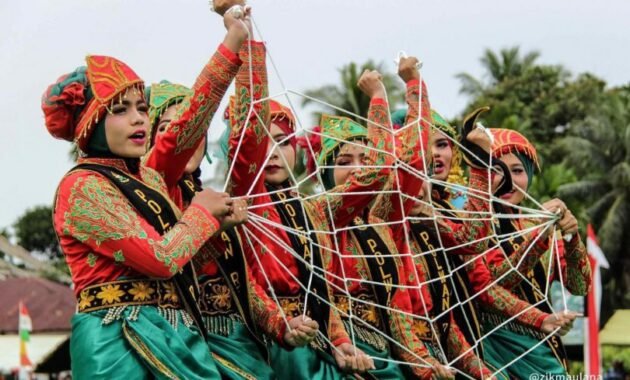
    UNDERSTAND THE CONCEPT

    The first mistake that students often make is understanding the concept. Most students tend to memorize, without knowing where the material they memorized comes from. The question of how come is the cornerstone of a concept. For example, in a quadratic equation lesson, determine the roots. To find the number of roots x1 + x2, most students only memorize the –b/a formula without knowing where the –b/a formula comes from. So, this is where the concept comes into play, how come x1+x2 = -b/a. If memorizing we can only solve one problem model, while by mastering the concept we can solve problems with other models. Try to find the concept, indeed this step is tedious and takes a lot of time but the advantage is if there are other problem models we won’t be confused to solve it.

    OVERnight GUN SYSTEM

    Who studies only before the exam let alone one night before the exam? Using this learning system will make it easy for you to forget the material you have learned. Whereas after the exam, the material you study will continue until the Mid Semester Exam or Final School Examination. It’s even worse if you use the screening method, which is to only study in the morning before the exam. With this learning method, you will only read quickly and skip material that might be important. The disadvantage that you will experience with this learning method is to miss material that is actually important as well as understanding a lesson in half measures.


    TOO MANY PLAYING GADGETS

    We all realize that playing with gadgets while studying will interfere with concentration, but our fingers just keep sliding on the smartphone screen. There is only one solution, determined. Start determined to be more disciplined. If now is the time to study, do study as you should. Checking gadgets a little will make you not focus on studying. Therefore, try to avoid gadgets for a while while you are focusing on repeating subject matter. If you are still tempted to play around, you can choose to turn it off and keep your cellphone away from Sinaumed’s.

    PREVIEW AND REVIEW

    This is a very ideal strategy. Why? With a preview before face-to-face in class we can get an idea of ​​what will be learned. If there is something we don’t understand, we can ask your teacher or your Sinaumed’s lecturer. Next is the review, in this way our brains will be familiar with the learning material we have just received. As the saying goes, if you keep sharpening a knife, it will get sharper. So does our brain. One way to review is to do various examples of Sinaumed’s questions. You need to know that the effective time for learning is not how long you study, but how often you study. Enough to study 15 minutes every day is said to be effective compared to you studying 4 hours once a week. Study regularly so that your brain is constantly trained in Sinaumed’s.


    PASSIVE LEARNING

    In this sophisticated era, it’s a shame if you don’t use it to study. Don’t just stick to your notebook, because you won’t be able to develop if you only learn from the same problem, look for references to your subject matter on the internet, for example looking for practice questions and discussions. Quite a lot of them give practice questions and discussions for free. Study outside the classroom with peer tutors or study with upperclassmen. With this, at least there are problems that will be resolved, for example, we are more familiar with the material or the tasks are completed. Accessing online learning sites can also be categorized as active learning in Sinaumed’s. Besides that, find your way of learning. Everyone has different characteristics. You are unique. You are not the same as anyone in this world, even your twin brother if you have one. Therefore, know yourself. Get to know and understand how you actually learn. Reflect, and contemplate. Think and remember the successes that you have rained. Think and remember the failures or lack of success that befell you. Why did it happen? How did you study before? In this way you will also get the most effective ways of learning for yourself. Why did it happen? How did you study before? In this way you will also get the most effective ways of learning for yourself. Why did it happen? How did you study before? In this way you will also get the most effective ways of learning for yourself.


    LESS VARIATION OF LEARNING RESOURCES

    So that learning doesn’t feel boring, there’s nothing wrong with looking for more interactive learning resources, for example learning through YouTube or SlideShare. Dabbling only with books alone will certainly make you bored, now this is what you have to watch out for. In order not to get bored, learning visually is the solution. Currently, there are many sites that provide online learning, for example Khan Academy, Solo Learn, Code Academy, or through Sinaumed’s YouTube channels. Here are some online learning applications that you can use Sinaumed’s, including:

    • Khan Academy: Through its application provides various kinds of knowledge and information. Starting from economics, history, physics, chemistry, biology and many more. Khan Academy is very creative and interesting in conveying knowledge in a fun way and involves various supporting tools such as videos, rather than just presenting boring and boring writing.
    • Duo lingo android online learning application. Currently, mastering a foreign language is definitely something that is really needed. This application is specifically for those who want to master the particular foreign language you want.
    • Photomath is an application that successfully combines a camera and a calculator. If there are math problems that are difficult you can use this application to help solve the problem. It’s easy, you just open this application then point the camera at the question, then the answer will appear automatically on your smartphone screen.
    • Quipper is an online learning solution service application. Users can enjoy fun learning with a variety of content such as animated videos, complete practice questions and quality Super Teachers on Quipper Video. This application developed by Quipper Ltd provides thousands of video lessons and complete practice questions according to the national curriculum.


    FEEL FORCED

    Feeling compelled to study will make your grades drop. For example, if you don’t like Mathematics, but because tomorrow is a test, then you don’t want to have to study, and in the end you learn compulsorily. Because you go through it by being forced to make the material you study not enter your brain, instead it will make you cranky yourself because you don’t really understand. Therefore, don’t ever feel forced even if you don’t like a subject, study sincerely, because with sincerity the lessons will be absorbed into Sinaumed’s’ brains more quickly.

    DO NOT LEARN TOO LONG

    Habits that are not good in the learning process are children studying for too long, exceeding 30 minutes. A reasonable time limit is no more than 30 minutes, so you don’t feel overly bored. With a learning pattern that does not exceed 30 minutes and is done consistently every day, it will be better than studying with a duration that is too long. For example, every day you study at 19.00 WIB, then the next day you can study at the same time. Where activities are carried out consistently will stimulate the brain to keep time in order to learn at that hour. In addition, the information obtained in the learning process will be more effective. Study time can be done more than once a day, for example at 03.00 in the afternoon, 05.00 in the afternoon and 07.00 in the evening every day.


    DO NOT UNDERSTAND THE RIGHT WAY OF LEARNING

    For example, if you have 4 hours to study economics and those 4 hours are directly used to study material, you will probably only get a score of 70. But if you use 45 minutes of study time effectively, even if you only study material, only 3 hours is more than your score. it can be greater than 70. Simply put, it’s like you’re cutting something with a sharp knife easier than with a dull knife. So you have to sharpen your understanding of the subject matter first.


    UNDERSTANDING WITH A HIGHLIGHTER

    Underlining and highlighting are actually important for learning. By highlighting, important parts of a material will be easy to find when repeating reading. However, highlighting actually reduces the effectiveness of learning. The disadvantage of highlighting is that the highlighter penetrates to the back of the page so that the paper is discolored. Underlining or highlighting actually damages the concentration of the brain when re-reading, because what is not highlighted or underlined will be considered unimportant so that it is not remembered by the brain. Marking important parts is good, but highlighting only the following 2 things: The title of the discussion, and the formula


    ALREADY DONE PR = ALREADY LEARNED

    Basically doing homework is a small part of learning, but doing homework should not be called studying because the two are 2 different things. If you want your study to be more effective, separate your homework time from studying. That is, if you want to study for 2 hours, then use 2 hours to study, and add another time to do Sinaumed’s homework.


    SNEAKING AND CHAT WHEN STUDYING

    When studying, you should really relax, for example, while occasionally snacking or chatting. However, this should really only be done occasionally, because the human brain basically cannot multitask (do 2 things simultaneously) in carrying out motor commands (memorizing while eating or memorizing while chatting). When studying, temporarily put your cell phone and snacks away, Sinaumed’s.


    DO NOT LEARN ACCORDING TO BRAIN DOMINATION

    Not everyone knows about his brain dominance. Even though it is very clear that everyone’s ability to perceive or perceive something is influenced by the use of the dominant brain (left or right). Some find it easier to understand writing, some find it easier to understand if the material is conveyed with sound, some require pictures to understand, and some require everything to make it easier to understand something. All depends on the dominance of each person’s brain. Knowing the dominant brain that we use, we can do the Sinaumed’s test.


    LISTENING TO MUSIC

    It turns out that studying while listening to music doesn’t just make you excited. There are many benefits of studying while listening to music. Starting from activating many cells in the brain, because the music you listen to while studying can actually activate almost all cells in your brain. It makes your brain healthier and always active. Besides that, it also strengthens your memory, Mozzart effect music strengthens your memory. Some scientists believe in the efficacy of The Mozart Effect theory. The Mozart Effect is an effect that arises when you study while listening to music. You can strengthen your memory.

    Therefore, listening to any song can strengthen your mental capabilities. Healing Body, Mind and Spirit music Music can be medicine. In the summary of the book Tapping the Power of Music to Heal the Body, Strengthen the Mind, and Unlock the Creative Spirit by Don Campbell, The Mozart Effect theory explains that music can also be medicine for your body, mind and soul, music also increases your Learning Creativity while listening to music make creative.

    Listening to music while studying can actually increase your creativity. Researchers use music, such as sonata songs from Mozart, to prove that the strains of the songs you hear are very influential for several mental functions, especially for creativity which is important for the learning process.


    DO NOT RECORD ON PAPER BUT OTHER MEDIA

    With advances in increasingly sophisticated technology, it can indeed facilitate many things, including in terms of learning. Unfortunately, this sometimes makes students lazy in taking notes. Usually many students prefer to take photos or type material provided by the teacher rather than taking notes on paper. The problem is, usually notes that are made not on paper or books, will be less often to be reviewed. There is a sentence that says: “Summarizing and rewriting what we have read and learned has the equivalent of 3 readings.” So try to keep writing, because by writing, we are just helping our brains remember what is being learned. And by writing we will also have material to study for the exam later.

    GROUP STUDY AT FRIENDS’ HOME

    Studying with friends is fun, besides being able to teach one another, it’s also fun because it’s not boring. But the problem is, when studying together we usually spend more time chatting than studying. So when you decide to study together, it’s best to make an agreement first about what material you want to discuss together. Also determine how long it will take to discuss the material. And the most important thing is, choose a study partner who can be consistent and willing to follow the agreements that have been made, and appoint one person to be the study leader. Of course, that person must be firm or ask an older person to watch over you.


    EDUTORE

    sinaumedia developed an educational platform called Edutore. On this platform, you can access many question practice books like those in sinaumedia by subscribing. Edutore has a slogan “Everyone Can Be Smart” and that is also what Edutore aspires to be. So that Edutore can participate in educating Indonesian children. On the Edutore Youtube Channel, various topics are discussed, ranging from unique general knowledge such as “Why are the brake lights red”, learning English with Captain J, to studying with Edutore which contains discussions of questions such as CPNS synonyms, antonyms, and others. Check the YouTube account directly, click here.


    These are common mistakes that many people make in the learning process. By changing study habits for the better, it is hoped that you will be able to retain information better and more effectively, Sinaumed’s!

    Source: from various sources

  • There is a Saman Dance! These are 12 Variety of Acehnese Dances and Their Explanations

    There is a Saman Dance! These are 12 Variety of Acehnese Dances and Their Explanations

    Aceh dance – Indonesia has a very diverse culture and arts from each region. One of the areas in Indonesia which is very rich in art is the province of Aceh.

    Just like other provinces, this province which is on the tip of the island of Sumatra also has many well-known cultural and artistic products. Among them are traditional Acehnese dances.

    Not only known as a city of religious tourism and culinary tourism, Acehnese dance is also quite well-known among Indonesians and even abroad. In the official website of the Province of Aceh, the traditional art of Acehnese dance has developed from generation to generation which then made it a cultural identity for the people and Province of Aceh.

    When talking about Acehnese dance, many people will immediately think of the Saman dance. Even though there are many types of traditional dances from Aceh and have their own historical stories that are no less interesting.

    So, what are the various types of Aceh dance and what are the explanations? Check out the review below to get to know the 12 types of Aceh dance and their explanations. Check this out !

    12 Aceh Dances You Need to Know

    1. Saman Dance

    The first and most famous Acehnese dance is the saman dance. On November 24, 2011 in Bali, this dance was officially included by UNESCO on the Representative List as an intangible cultural heritage of mankind.

    Based on the Forum National Seminar held by AP2SENI or the Association of Indonesian Dance and Music Drama Education Study Programs in 2015, the saman dance is a dance created by a great Acehnese scholar named Syekh Syaman. It is known that this dance originally came from the Gayo tribe in Central Aceh.

    Saman dance itself is a dance that relies on clapping your hands on your thighs or hands again while singing certain verses. Saman dancers will wear special colorful clothes and during the performance, the dancers will form a distinctive floor shape and pattern.

    In doing this dance, the dancers must line up to form a straight line to the side. The meaning of this part of the dance is because humans are social beings and always need other humans.

    This dance, which is performed in groups, is also interpreted as an understanding of Islamic teachings in the land of Aceh. In fact, for the sitting pattern, the dancers will sit with their feet bent as if they were sitting between two prostrations in prayer. This has the meaning as Muslims who are forming rows when carrying out their obligations, namely prayer.

    This dance is included in entertainment dances to celebrate traditional ceremonies and religious celebrations, such as Eid al-Fitr, Eid al-Adha, circumcision celebrations, to welcoming state guests. In its native area, namely the Gayo tribe, this dance is performed to celebrate the joy of an abundant harvest.

    2. Likok Pulo Dance

    Likok Pulo dance is a dance originating from the Uleee Paya area, Mukim of Pulau Beras Selatan, Pekan Badan, Aceh Besar. This dance was created by an Arab trader and scholar named Syeh Ahmad Badron around 1849.

    Etymologically, the name of this traditional Acehnese dance comes from two words, namely the word likok and the word pulo . The word likok means dance movement, while the word pulo means island.

    The island referred to in the word is a small island located at the northern tip of the island of Sumatra which is called Pulau Beras or Breuh . Based on historical records, this Likok Pulo dance is often held after planting rice or before the harvest time arrives.

    At this time, this dance is included in the type of performance or entertainment dance. The show is performed at certain traditional ceremonies and is still performed when the rice is finished planting. In the performance, the dancers will be equipped with a dance property called boh likok or bamboo. The composition or order of motion in the Likok dance are:

    • The Likok Pulo dance is performed in a sitting position, kneeling, forming a banjar, shoulder to shoulder.
    • The main dancer, called the sheikh, will be in the middle of the line.
    • There are two people who are beating the musicians or rapai behind or on the right and left sides of the Likok Pulo dancers.
    • The limbs used for dancing are the upper body, body, hands and head.

    3. Malelang Dance

    This dance originates from the South Aceh region, to be precise in Padang Village, Kesamatan Susoh. This malelang dance is included in the type of entertainment and performance dance. In addition, this traditional dance also has a purpose as a medium of teaching and media of advice through poetry or lyrics spoken by the dancers during the performance.

    This dance is usually performed at traditional ceremonies, such as wedding celebrations, circumcision of apostles, and releasing vows. In Aceh itself there is a tradition when someone intends or vows to have children, then he will let go of this vow by holding this malelang dance.

    This typical dance from South Aceh is usually danced by 10 to 12 adult female dancers. When going to dance, the dancers will form a circular position and move forward, to the center, and out.

    4. Seudati Dance

    Tari Aceh

    Seudati dance is one of the traditional dances from Aceh which has its own uniqueness in its performances. This dance, which originates from the coast of Aceh, is performed by 10 men. Eight people will serve as dancers and two other people will sing as accompaniment.

    In contrast to other dances which are accompanied by certain music, the Seudati dance is performed without the accompaniment of any musical instrument. Instead, there is a chant sung by aneuk syahi .

    The name of the Seudati dance itself comes from Arabic, namely Syahadat, which means testimony or acknowledgment that there is no God but Allah and the Prophet Muhammad is His messenger. This is found in the beliefs of Muslims.

    However, there are also those who say that the word ‘seudati’ comes from the word ‘seurasi’ which means harmonious or compact. This is in line with history which says that this Seudati dance tells about various kinds of problems that have occurred. This dance is also performed so that the people of Aceh know how to solve this problem together.

    At first, this typical Acehnese dance was known as a coastal dance which was also known as Ratoh or Ratoih . This means dances that tell how to start a game or demonstration of joy when the harvest season is coming or when the night of the full moon occurs.

    When going to perform this dance, the dancers will wear white clothes combined with long plain pants. The dancers will also be equipped with accessories in the form of songket cloth that is used from the waist to the thighs.

    In addition, the dancers will also be equipped with additional accessories in the form of a rencong at the waist and a tangkulok or headband. All the accessories for this dance will be red, according to the characteristics of the Seudati dance.

    5. Ranub Lampuan Dance

    The ranub lamp dance is one of Aceh’s traditional dances which is included in the list of traditional dances. This dance originates from the city of Banda Aceh and was created by Yuslizar around 1962.

    The word ranub lamp in the Acehnese language means betel in the cerana , which is a place to store betel nut. In the customs of the tribes and people of Aceh, this dance will be performed and performed to honor guests.

    In the show, this ranub lamp dance consists of seven female dancers and several accompaniment for band music. This dance also uses traditional musical instruments for its performances, such as the serune kalee and geundrang musical instruments as accompaniment.

    6. Labehaten Dance

    Labehaten dance is a traditional dance originating from the Singkil area, Aceh. Etymologically, the word labehaten comes from the Singkil language which means tiger. The choice of words is in harmony with the movements of the dancers when the show begins.

    In his appearance, the labehaten dance is danced by two male dancers. Then, the two dancers will dance by crawling like a tiger. One dancer will look for another person in the middle of the wedding crowd.

    In this dance, there will be a funny scene when the dancer is hiding among the women who are gathering. The women will also chase away the dancers while laughing merrily. During the performance, this dance is accompanied by a drum instrument using Sikundidi music rhythms.

    7. Tuak Kukur Dance

    This dance originates from Central Aceh District, precisely in the area of ​​origin of the Gayo tribe. In fact, apart from the saman dance, the Gayo tribe also has another traditional dance called the tuak kukur dance.

    The word tuak itself comes from the sound or word spoken to drive away the balam bird. Meanwhile, the word kukur means the name of the balam bird in Gayo language. So, it can be concluded that Tuak Kukur has the meaning of expelling the balam bird.

    The background of this dance is to tell how the farmer’s life is when the rice starts to turn yellow until it is harvested and becomes processed rice. This tuak kukur dance is certainly related to the busyness of the farmers in processing the rice which protects the rice from the balam bird which is looking for food.

    This dance will begin by moving the hands to the right and left repeatedly. This movement is also done simultaneously by holding the edge of the cloth. Usually, this dance will be performed by seven teenage and adult women.

    8. Shiva Dance

    This Aceh dance art has its own uniqueness. This is because the siwah dance will be performed using sharp weapons. It might be a little similar to the dampeng dance, but actually the two are very different, especially in the composition of the dancers.

    This dance actually displays the martial arts skills and dexterity possessed by the dancers. During the performance, there are dancers who are on the side of the circle, there are those who are outside the circle, and also dancers who are in the middle.

    In the center, there are ladies in waiting who are serving yellow sticky rice in front of them. This lady is actually a man playing the role of a woman. They also use special clothing and jewelry for women. After the series of dances was finished, the yellow sticky rice which was previously guarded by the lady-in-waiting was distributed to the audience.

    9. Kepur Nunguk Dance

    The name kepur nunguk comes from two different words, namely kepur and nunguk . The word kepur means to raise or sweep. While the word unguk is the name of a bird from the Aceh region.

    For the letter ‘N’ in the word nunguk, means to show ownership or belonging. For example, the word ‘ Ni manuk’s child ‘, this sentence means a bird’s child or bird’s chick.

    In this dance performance, the dancers wear costumes in the form of cloth to develop a distance reward. Then, the dancers will flick it up and down like the wings of a bird in flight.

    When the wings are raised down, the dancer’s legs or body will move slightly lower. And when the wings will be raised up, the legs and body will also rise following the movement of the wings. This movement is the essence of this kepur nunguk dance.

    10. Tarek Pukat Dance

    This traditional dance comes from the coastal area. Even the tarek trawl movement was inspired by the tradition of trawling or pulling the road which is usually done by the people of Aceh who live near the sea.

    This dance is quite simple because it describes the activities that Acehnese fishermen do when they are going to and are catching fish in the sea. This tarek trawl dance is generally performed in various cultural events, such as traditional events, cultural events, to welcoming ceremonies.

    In the performance, the dancers will wear traditional clothes and are typical of trawler trajectories. These clothes are in the form of long-sleeved shirts, long pants, and headscarves to cover the head.

    In addition, the dancers will also add accessories such as songket cloth and a belt for the waist. Their headscarves will be decorated as a sweetener and there will be a makeup artist to make them look very beautiful.

    After the clothes are completely paired, the dancers will begin to enter the show arena. Then, the dancers will dance a special movement that uses a rope as an attribute, much like pulling the nets that are done by fishermen. In addition, they also performed accompanied by a special accompaniment group.

    11. Laweut Dance

    The name of the laweut dance itself is actually taken from the word selawat. Means praise addressed to the lord of Muslims, the Prophet Muhammad Sholallahu ‘alaihi wassalam. This word was taken because the poetry used to accompany the laweut dance indeed has many meanings to pray to the Prophet.

    The main function of this dance is as a medium of preaching which provides knowledge about the teachings of Islam. So do not be surprised if every poem contains a deep message. Such as messages about faith, society, builders, and so forth.

    In the show, this dance is not accompanied by special musical sounds. Instead, it is accompanied by a sound that comes from the body of the laweut dancer itself. Such as the sound of chest clapping, hand clapping, foot stomping, finger norms and manners, as well as the vocals of the syahi who sings poetry.

    12. Ratoh Duek Dance

    The ratoh duek dance is a dance that describes the spirit and togetherness of the Acehnese people. The harmony that occurs between the poetry and the rhythmic clapping of the dancers reflects how the Acehnese people work together in everyday life.

    The word ratoh in the name of this traditional dance comes from the word rateb in Arabic. The word rateb itself means the activity of remembrance or prayer.

    To perform this dance, there are no special properties like other traditional dances. The clothes worn by the dancers are Acehnese clothing which has been modified. The clothes are plain clothes that are added with songket cloth and headdresses and don’t forget the belt.

    Conclusion

    Each region in Indonesia has its own arts. Aceh province is no exception, which is at the very tip of the island of Sumatra.

    Of course, traditional art takes many forms, and one of the most prominent is Acehnese dance. In Aceh itself, according to the government’s official website, the province, which is nicknamed Veranda of Mecca, even has 184 traditional dances spread throughout its cities and districts.

    Maybe if asked about traditional dances from Aceh, some people will remember the saman dance. The saman dance is indeed one of the most popular dances from Aceh. In fact, this dance is already known in various countries and is included in the UNESCO cultural heritage.

    But apparently, there are many other Acehnese dances that are no less unique and have their own history. That’s the explanation about Acehnese dance

  • There are 3 versions of the basketball game

    Basketball can be said to be one of the most popular sports around the world, after football. Just like football and other types of sports, the game of basketball also has several rules that must be obeyed by players in a match, one of which is the length of the game of basketball.

    As one of the sports that fall into the category of big ball games, almost every basketball match that has always received the full attention of people around the world. So no wonder, many people who have aspirations to become a professional basketball player.

    So, in this article we will focus on discussing the rules in basketball, especially the old rules of the game of basketball. Until now, it is known that there are 3 versions related to the old game of basketball, starting from the International Basketball Federation (FIBA), the National Basketball Association (NBA), to the United States National Collegiate Athletic Association (NCAA).

    A. Duration of Basketball Games

    The duration of a basketball game is basically 4 x 10 minutes. The old rules of this game are in accordance with the provisions issued by FIBA ​​as the largest basketball federation in the world.

    It’s just that the rules were modified by one of the most prestigious basketball competitions in the world in the United States, namely the National Basketball Association or often called the NBA. In this NBA competition, the duration of a basketball game is 4 x 12 minutes. Many people like the rules because they can watch NBA athletes to put the ball in the opponent’s hoop. Some of these athletes, for example, are Michael Jordan to Shaquille O’Neal.

    Meanwhile, compared to these two rules, the National Collegiate Athletic Association or abbreviated NCAA from the United States also has its own old basketball game rules. According to the United States NCAA, the duration of a basketball game is allowed to be two rounds with each round having a time of 20 minutes.

    In an international basketball competition, the rules regarding the duration of the basketball game that are commonly used follow FIBA ​​standards. For example, FIBA ​​world cup, FIBA ​​Asia cup, Basketball Champions League, and various competitions between other countries.

    Furthermore, basketball games also have a break between rounds or what is commonly called half time. The break time used by FIBA ​​is up to 2 minutes between rounds 1 and 2 and 3 to 4. Meanwhile, in NBA matches the rest time usually reaches 130 seconds between quarters.

    In addition, every two halves, there is a rest period of up to 15 minutes, namely the move from round 2 to round 3. This rule is enforced with the aim of providing sufficient time for both teams to rest as well as strategize for the next round.

    Although there are three versions of the old rules of the game of basketball, the three organizations have in common that there is an equal score until the end of the game. If there is the same score until the end of the allotted time, it will be followed by an extra time round or over time to determine the winning team. This time extension is usually done by inserting the ball into the field via a jump ball.

    However, when the extra time ended, the two teams still played a draw. Then the over time will continue with the same rules and regulations until a difference or difference in scores appears between the two teams. So, both the FIBA, NBA, and NCAA versions have the same over time, which is 5 minutes or 1 x 5 minutes net.

    B. Understanding the Game of Basketball

    Basketball itself can be understood as an example of a big ball sport. This game is basically carried out by bringing together two basketball teams to fight over the ball with the aim of putting the ball into the opponent’s hoop and preventing the opponent from putting the ball into the hoop. In the game of basketball, how to put the ball into the hoop will greatly determine the score you get. The score that can be obtained by a basketball team is in the range of one to three points.

    This is of course different from the game of volleyball, in the game of basketball, the players are given a time limit to face each other. Therefore, the game of basketball is not based on a team that scores first, but based on the duration of time. In the game of basketball, there are international rules that determine ten minutes for four rounds.

    It’s just that, as stated above, for matches in the National Basketball Association (NBA), the game will last for four rounds with each round having a duration of up to twelve minutes.

    C. History of the Game of Basketball

    The inventor of the first basketball game in the world was a man named James Naismith. The idea of ​​the game of basketball itself was invented by James Naismith because there were many sports games that his students could not do when they entered winter. Thanks to this wish, he then created a game that could be played indoors and used it for basketball games.

    As a physical education instructor at Springfield College in one of the states in the United States, Massachusetts. James Naismith even became increasingly eager to innovate to produce this sport of his mind.

    At first, in 1891 to be precise, basketball games were played by using a soccer ball. Next, James Naismith designed a basketball game by throwing the soccer ball into a peach basket. The basket is then placed or hung on the wall in the sports hall to determine the score.

    The beginning of the game of basketball consists of nine people from each team. In addition, at the beginning of the creation of basketball there was no dribble technique. The players are required to throw the ball at each other to their teammates in order to reach the opponent’s territory and put the ball in the basket.

    Over time, the game of basketball underwent many developments and changes, especially when this game began to have fans from all walks of life and all ages. Basketball is increasingly getting more and more improvements in various ways to what we know today.

    In the spread, many people like the way of playing basketball. Not surprisingly, around 1895 for the first time a basketball game was held which brought together two colleges, namely the Minnesota School of Agriculture and Hamline College.

    Even though it is held in a closed room, it does not necessarily make basketball a sport that allows players to relax. The abilities that a basketball player must possess include sharpness of vision, breath strength, running speed, dexterity in tricking, the ability to shoot on target, to hand dexterity. This is what makes basketball players look relaxed but sweat a lot while playing.

    D. How did the game of basketball enter Indonesia?

    The process of entering the game of basketball into Indonesia itself was recorded around 1920, at that time there was an exodus of Chinese citizens to various other Asian regions, one of which was Southeast Asia and Indonesia. Meanwhile, China can be said to be one of the main targets of the Young Men’s Christian Association (YMCA) to become a place for the spread of basketball games. China initially introduced the game of basketball twenty years before Indonesia, therefore they also brought this game to Indonesia.

    The immigrants from China then formed their own community, one of which was by establishing several schools for Chinese citizens. In some of these schools, the game of basketball began to be taught and became popular because many children liked the sport.

    Furthermore, many basketball communities began to be established in several big cities that were founded by these nomads. For example, such as Chinese Hwee, Fe Leon Ti Yu Hui, Chinese English School and Pheng Yu Hui (Friends). Sahabat itself is a club originating from an Indonesian basketball legend, namely Sony Hendrawan (Liem Tjien Siong). Since that period, the game of basketball began to be widely played by the general public.

    The organization that oversees the sport of basketball in the world is called the Federation Internationale de Basketball (FIBA). The organization has offices located in Geneva, Switzerland. Meanwhile, Indonesia itself has a basketball game center called the Indonesian Basketball Association (Perbasi) with an office located in the capital city of Indonesia, namely Jakarta.

    E. Basketball Game Rules

    In a book entitled Basketball for Beginners (Theory & Practice) by Yolis YA Djami, there are several important materials that can help you learn about all the important things in the game of basketball. In the book there are nine chapters about basketball, including the rules of the game of basketball.

    So, here are the important rules in the game of basketball that you need to know, including:

    1. Player

    Each team in the game of basketball consists of five players plus several reserve players. The five core players are divided into several positions, namely center (5 – C), power forward (4 – PF), small forward (3 – SF), shooting guard (2 – SG), and point guard (1 – PG).

    Substitutions are made when the ball is dead. Substitution of players is also free to do how many times.

    2. Time Rules for Carrying the Ball

    Perbasi sets some time rules. First, the three second rule. When in the opponent’s defense area, a basketball player may not last more than three seconds. More than that will be recorded as a violation.

    Second, the eight second rule. The time allowed for a team to play the ball in its own half is eight seconds. More than that, violation.

    Third, the 24 second rule. This is the time allowed for a team to attack. Should not be more.

    3. Other rules

    • There are no restrictions on how to throw the ball, but hitting or punching the ball is not allowed.
    • Carrying the ball by running or walking will be considered a violation. The ball may only be carried by dribble.
    • The limit that is allowed for a player to commit a violation is four times. If you commit another violation, the player will be disqualified.
    • Double dribbles are not permitted. That is, if a player dribbles then stops and holds the ball with both hands, then the player is not allowed to dribble again.

    F. Basketball Game Equipment

    The tools needed in the game of basketball are as follows:

    1. Basketball

    • Material: Genuine leather, synthetic leather, or rubber.
    • Weight: FIBA ​​576 grams; NBA 650 grams
    • Ball circumference: FIBA ​​74.9 cm; NBA 76 cm

    2. Rings and Net Rings

    • Ring Size: 18 inches
    • Location: 10 feet off the floor suspended from a 3.5 x 6 foot board.

    3. Time Keeper

    4. Team uniform and shoes.

    G. Size of Basketball Court

    The following is the size of a basketball court consisting of several parts, including:

    • Court length: 28 m
    • Field width: 15 m
    • Diameter of the center circle: 3.6 m
    • Distance of the three point line to the basketball hoop: 6.75 m
    • Bow to hoop distance: 1.25 m
    • Basketball hoop height: 3.05 m
    • Distance from hoop to finish line: 1 m
    • Basketball hoop diameter: 45 cm
    • Ring rebound area: 1.8 m x 1.95 m
    • The size of the middle box of the ring reflective board: 59 cm x 45 cm
    • Distance of the backboard to the finish line: 1.2 m

  • Theory Study: Definition, Examples & How to Make

    Theoritical review– For students who are writing a thesis or scientific work, of course they are already familiar with theoretical studies. To write a quality and weighty scientific paper, a quality theoretical study is also needed. The theoretical study in question can be an illustration, whether the scientific work made is good or not. Even when compiling a thesis, of course the writer will be faced with various terms related to research. Starting from the background, literature review, problem formulation, theoretical studies, and others. All of these research terms are part of the process of compiling a thesis or other scientific work. Therefore, it is important to understand the intent and purpose and also how to structure it. In this article, we will discuss what is theoretical study, examples, and how to arrange it. Listen until it’s finished.

    Qualitative Research Methodology for the Social Sciences: Conventional and Contemporary Perspectives, 2nd Edition

    “Research is a series of investigative processes to find facts or answers to an issue. One of the methods used is qualitative research, namely research that aims to understand social reality through understanding activities. This is what distinguishes the quantitative method which aims to “test”. Because it aims to understand, this research method must be supported by complete and valid data sources. Doing qualitative research properly and correctly means having a window to understand the world, including in the field of psychology and social reality. In the context of the dynamic development of the social sciences, this book appears to complement the previous edition with the addition of new chapters and content updates adapted to current social realities. This book helps readers avoid the misunderstanding that these methods are not as scientific as quantitative methods. By consuming time which tends to be longer, qualitative research methods can make the researcher involved in the social activity he is researching, thus making him feel more comfortable and understand it. In qualitative research, the researcher is also a tool. Therefore, this book is here to hone the skills of qualitative research activists or those who are interested in this method so that they are ready to start research and become an objective “tool”. “ so that it makes him feel even more comfortable and understands it. In qualitative research, the researcher is also a tool. Therefore, this book is here to hone the skills of qualitative research activists or those who are interested in this method so that they are ready to start research and become an objective “tool”. “ so that it makes him feel even more comfortable and understands it. In qualitative research, the researcher is also a tool. Therefore, this book is here to hone the skills of qualitative research activists or those who are interested in this method so that they are ready to start research and become an objective “tool”. “

    Definition of Theory

    Theory is a series of concepts, assumptions, definitions, constructs, and also propositions to explain a social phenomenon systematically by formulating relationships between variables. If based on this understanding, then the theory contains three things.

    The first is, theory is a series of propositions between interrelated concepts. The second, namely, the theory explains systematically about a social phenomenon by determining the relationship between concepts. Then the third, namely, the theory explains about certain phenomena by determining a concept that is related to other concepts and also the form of this relationship.

    According to Prof. Noeng Muhadjir, in compiling a theoretical framework, the theory section must present a whole or rounded part that is presented holistically. But also not just presenting a fragmented concept. So that the concepts will seem more interesting to study. This is stated in his book entitled “The Process of Constructing Theories and Hypotheses”.

    The mindset displayed in compiling the theoretical framework must use reflective logic. This logic means logic that is interrelated between inductive thinking processes and deductive thinking processes and does not matter where to start. Thinking tools are not just about generalizations from individual variability or frequency of occurrence. But it also needs context, pragmatic indications, essence, functionality, and others. Therefore, a theory will appear as a simplification, abstraction, and ideality of a phenomenon. This may be an explanation as well as an interpretation of the empirical. The following are some of the things contained in the theory.

    The things contained in a theory include postulates, assumptions, theses, hypotheses, a number of concepts, and also propositions. Not only that, in a theory there is also an idealization related to the order of social life or what is referred to as the order of life of the universe. Validation of a theory for its ability will provide empirical evidence.

    Application of Research Methodology in Scientific Work

    This book is a guideline for writing scientific papers for students and the Management Study Program Advisory Team. This book contains the basic notions of research, the role of theory in the development of science, the scientific method, the research process and a review of the literature.


    Definition of Theory Study

    Theory study or theoretical basis is a series of definitions, concepts, and also perspectives on something that is neatly arranged. Theory study is one of the important things in a research. Because, it becomes a foundation or basis of a research. Quality theoretical studies will also determine the quality of a research that is made. Even though the regulations for each university are different, at least theoretical studies can become the composition that dominates number two after the results of the research itself.

    Theoretical studies should adopt at least one basic theory that is related to the research topic. A theoretical study must use theory that is still relevant to define the variables found in a study. In addition to this, theoretical studies should also be able to answer hypotheses and also provide temporary answers that have been prepared.

    Definition of Theory Studies According to Experts

    In order for us to better understand the definition of theoretical study, it would be better if we refer to the opinions of experts regarding the meaning of theoretical study. Here is an explanation.

    1. Labovitz & Hagedorn

    They argue that the study of theory is a theoretical idea to determine the reasons why variables in a study can be related to statements.

    2. Emory Cooper

    Meanwhile, Cooper argues that the study of theory is a collection of concepts, variables, propositions, and other concepts that are systematically related and have also drawn similarities to be able to explain and read a fact.

    3. Kneller

    Kneller reveals that theory has two meanings. According to him, the theory has an empirical nature. That means, theory is also a result of hypotheses that have been tested using experiments and observations.

    4. Gardner Lindzey

    Lindzey prefers that theory is a hypothesis, still in the form of speculation, has not been proven, and the truth of the facts is uncertain.

    5. Manning

    Meanwhile, Manning argues that theory is a set of opinions or assumptions that have a logical nature. Theories can also generate conjectures that can be juxtaposed with the concepts that have been observed.

    6. Kerlinger

    Kerlinger revealed that theory is a concept that is well integrated with each other and contains a systematic view of a phenomenon.

    So, those were some opinions from experts regarding the definition of theoretical studies. When examined further, we can conclude that all experts express the words definitions, concepts, systematic, logical, facts, variables, and also connected. Therefore, it can be concluded that the notion of theoretical study is a concept that is logical and systematically interconnected in order to test a fact and a variable from a phenomenon.

    Pnd Research Methodology Complete Research Easily

    Chapter 1 discusses understandings related to science and research, starting from the nature/essence, meaning, differences in paradigms of science and research, ways of thinking, to analytical and synthetic thinking.

    Chapter 2 discusses trends in the focus and benefits of research where there are research trends that are discussed up to selecting topics and research methods as well as explanations about deductive and inductive to explaining the objectives and benefits of research.

    Chapter 3 discusses the determination of the title and research problems based on situations, conditions, and phenomena that occur so that the formulation of research problems is formed with various considerations that can be studied.

    Chapter 4 discusses both scientific and non-scientific research approaches along with explanations of the differences.

    Chapter 5 discusses research design and planning in which it also explains the scope of design in research proposals and not only reviews how to review and solidify research proposals, but also how to manage personnel (research team), proposed research budget plans, and schedule for implementing activities study.

    Chapter 6 discusses the characteristics of data, benefits and functions of data, classification of data sources and the urgency of data in research.

    Chapter 7 discusses the concept and conceptuality of the research, how to create a research conceptual framework, the characteristics of the variables, and explanations of the relationships between variables.

    Chapter 8 discusses the characteristics, formulation to the differences between hypotheses and research propositions.

    Chapter 9 discusses research procedures where there are differences in procedures between exact research and non-exact research, explanations through flowchat and research flow schemes to an understanding of research standard operating procedures (SOPs).

    Chapter 10 discusses the characteristics and role of research theory, how to generate theory through lateral thinking (out of the box), as well as an explanation of the description and characteristics of types related to literature studies.

    Chapter 11 discusses the types, formats, and research methods to the considerations in determining research methods, between quantitative and qualitative research methods.

    Chapter 12 discusses the scope of the research as well as the objectivity and subjectivity of the research.

    Chapter 13 discusses research instruments and the procedural steps for making these research instruments (both quantitative and qualitative) and explains focus group discussions (FGD) and the validity to reliability of a study.

    Chapter 14 discusses population, sample, and sampling.

    Chapter 15 discusses the types of scales, how to arrange scales, and the principles of measuring scales.

    Chapter 16 discusses definitions, functions, objectives, roles, characteristics, and analyzes related to research statistics.

    Chapter 17 discusses data collection techniques and data processing techniques both quantitatively and qualitatively.

    Chapter 18 discusses the principles of analyzing data to methods of data analysis (quantitative and qualitative).

    Chapter 19 discusses the procedure for making research reports systematically with a number of things that need attention, the existence of appropriate delivery targets to reviewing weaknesses in making/compiling research reports.

    Chapter 20 discusses the interpretation of research results and relevant theoretical discussions between the theories used and the analysis of research results.

    Chapter 21 discusses the characteristics, roles, problems, and ethics of being a researcher in conducting research.

    Chapter 22 discusses the procedures for writing reference sources and bibliography.


    How to Prepare a Good and Correct Theory Study

    According to Priyono (2008) and Priyono (2014) revealed that there are several ways that must be done in making theoretical studies. Below is the full explanation.

    1. Determine Research Variables

    In a qualitative research, the variable should be the first thing to be collected. The variables that have been collected can be categorized. Then from these categories can be determined the type of method that will be used for analysis. A good variable is a variable that is still relevant to research, can be measured and can be observed.

    2. Taking Reference Sources

    Then the next step is to take references from various types of sources. For example, taking references from books, scientific publications, research reports, research journals, scientific articles, and also a glossary. All of these reference sources can be used as the main reference sources. Reference sources have a very important role compared to previous research.

    3. Sorting Relevant References

    If references have been collected, then the next step is to choose which references will be used and are truly relevant to the research topic. For references that are not used, it is better to immediately get rid of them and save all references that will be used. Apart from being relevant, the references used must also be credible and accountable.

    4. Finding and Comparing Variables

    In a study, variables are the main components that become the point of attention. When making theoretical studies, researchers should compare, seek, and determine the position of the various available variables.

    5. Taking and Comparing Variables

    Because the position of the variable is very important in a study, researchers must test, retrieve, determine, and compare the position of the variables used. The placement of these variables can be done based on chronology, theory, and also their impact.

    6. Read Research Topics

    The next step is to read the research topic. Researchers must really have a research topic that fits the variable.

    8. Explaining Theory

    After that, the researcher needs to explain the theory that has been collected and must sort it as the basis for research. Try to use your own language in carrying out this stage and adapt it to the issues discussed.

    9. Include the source of the cited references

    Researchers must include reference sources that have been used or cited. This aims to prevent researchers from plagiarism.

    Researching is Easy: Social Research Methodology and Language Education

    Book Description

    On the world stage, we have witnessed many exhibitions of ideas and research from experts in various fields. More and more national or international journals are publishing their research works. However, survey results always highlight the lag of the Indonesian people in researching and writing articles in scientific journals. While scientists in our neighboring countries such as Malaysia, Singapore and Thailand have often published their research reports in various scientific media, the Indonesian people are still grappling with the problem of a lack of knowledge about research methods or writing techniques. Research is not difficult. This is the implied message that this book wants to convey. Through sequentially arranged chapters, this book invites readers to explore the main elements of research, be it research for theses and theses, as well as research for various schemes provided by the government and the private sector. Because of its nature which covers general matters in the realm of social research methodology, this book is appropriate for students and lecturers or scientists in the social field, including language and education.

    Example of Theory Study in Research 1

    CHAPTER II

    Theoritical review

    2.1 Natural Disasters

    Natural disasters are a phenomenon that usually occurs in nature, due to several causes. One of the causes of natural disasters comes from human negligence, as well as natural phenomena themselves. When a disaster occurs, humans will certainly suffer losses, damage the habitat for other living things, and also have an impact on the ecosystem.

    2.1.1 Natural Disasters on Land

    Natural disasters on land are natural phenomena that are detrimental, and occur on land. Examples include landslides, tornadoes, floods and earthquakes. Each of these disasters can harm the community and other living things in terms of the material from the scene.

    Floods are caused by overflowing water from rivers or heavy rains without having catchment areas. Whereas landslides usually occur on slopes, due to the inability of the soil to withstand drought, or water loads. Meanwhile, an earthquake is a disaster that occurs due to a shift in the earth’s plates that are in the bowels of the earth. Then, the existence of a wind flow that has high strength can have an impact on the appearance of a tornado.

    2.1.2 Natural Disasters in the Ocean

    Not only natural disasters on land, there are also sea natural disasters. For example, namely tsunamis, and also hurricanes. You can feel this stormy event when you are in the ocean. At that time, the captain of the ship must be able to control the ship or boat in order to survive.

    Example of Theory Study in Research 2

    chapter II

    Theoritical review

    2.1 Water

    In order to live on earth, humans need water to drink. The water contained in the earth has a fairly large amount, that is, it reaches ⅔ of the contents of the earth. The water usually comes from rain or soil. This water is very useful for humans, plants, and animals.

    2.1.1 Properties of Water

    Water has its own properties, including the first that water always flows to lower areas, that’s because water has mass which it uses as gravity. Second, water can evaporate because the heat that can release water makes a steam droplet. Third, water is everywhere, and even 70% of the body is made up of water.

    2.1.2 Benefits of Water

    The existence of water on earth has considerable benefits for living things that live in it. You can use water as a thirst quencher, a lot of water in the lake area can be used as a tourist spot, while water at home is used for washing dishes, bathing, washing clothes, and so on. The many benefits that water has, makes it impossible for humans to live without water.

    Theory Studies in Qualitative Research

    This theory can be interpreted as a set of ideas, explanations, and scientific predictions. In qualitative research, the theory is actually not the only material to find out the problem being researched. Because experience, as well as knowledge that previous researchers obtained through a literature reading, scientific discussion activities, lectures, seminars, and others, you can use as additional material in understanding the problem in more depth. (Mudjia Rahardjo: 2011)

    Theory can be used as additional information or comparison to see a phenomenon that is being studied as a whole, so that theory can assist researchers in getting inspiration and insight so they can interpret each problem.

    The function of theory in a qualitative research is to act as an analytical tool to understand the problems being studied, and to describe the answers to the questions that are in the focus of the research.

    If in quantitative research the theory has forms such as definitions or hypotheses, then in qualitative research this theory has the form of patterns or known as patterns, and naturalistic generalizations. For this reason, the review in the theoretical study can cover several main points, including the following:

    1. The concept consists of understanding, foundation, purpose, and others.

    2. Main theories that can assist researchers in answering the research focus that has been described in the form of research questions.

    3. Supporting theories that are in line with the main theories.

    4. The researcher’s interpretation of the theories he has cited, among other things, makes an explanation or conclusion that has been adjusted to the understanding of the researcher.

    From the four aspects above, it can be seen that theoretical studies can be used as an analytical knife in answering a problem, and the focus of questions in research. This means that the theory formed in the theoretical review section will be discussed, compared, and synthesized in a research finding described in the discussion section, after this data is described, and abstracted as a research finding.

    With the existence of a theoretical study, the researcher will gain some deeper insights into the research problem. This theoretical study can also assist researchers in the process of preparing research instruments that will be used in data collection activities. The research instruments include research grids, interview guides in the form of field studies, observation guides or field studies, and others.

    EASY WAY TO UNDERSTAND RESEARCH METHODOLOGY

    Book Description

    This book consists of several chapters, the first chapter on research variables, the second chapter on descriptive research design, the third chapter on analytic research design, the fourth chapter on experimental research, the fifth chapter on population and sample, the sixth chapter on data analysis and the final chapter on determining hypotheses. If there are questions about what you are researching, then the answer relates to the research variables. So research variables are basically everything in whatever form is determined by research to be studied so that information about it is obtained, then conclusions are drawn. Theoretically, variables can be defined as attributes of a person or object, which have “variations” from one person to another or one object to another (Hatch and Farhady, 1981).

    Variables can also be attributes of a particular scientific field or activity. Height, weight, attitude, motivation, leadership, work discipline, are the attributes of each person. Weight, size, shape, and color are the attributes of the object. Organizational structure, models, delegation, leadership, supervision, coordination, work procedures and mechanisms, job descriptions, policies, are examples of variables in administrative activities. Named variable because there are variations.

    For example, body weight can be said to be variable, because the weight of a group of people varies from one person to another. Likewise motivation, perception can also be said to be a variable because for example the perception of a group of people certainly varies. So if the research is going to choose research variables, both those owned by the object person, as well as certain fields of activity and knowledge, then there must be variations. A variable that has no variation is not said to be a variable. To be varied, research must be based on a group of data sources or objects that vary


    Example of writing a theoretical study:

    Research Title:

    Akhlak Aqidah Teacher’s Method in Improving Class VI Students’ Learning Activities at Madrasah Ibtidaiyah Negeri Sambas

    Focus:

    Based on the elaboration of the research context, the focus and formulation of the research problem can be broken down into the questions below.

    1. How is the preparation of the Aqidah Akhlak teacher method in improving the learning activities of class VI students at Madrasah Ibtidaiyah Negeri Sambas?

    2. How is the implementation of the Aqidah Akhlak teacher method in improving the learning activities of class VI students at Sambas State Madrasah Ibtidaiyah?

    3. What are the implications of the Aqidah Akhlak teacher’s method in improving the learning activities of class VI students at Madrasah Ibtidaiyah Negeri Sambas?

    From the title and focus of the research question, the systematics of theoretical study can be formed as follows:

    CHAPTER II

    THEORITICAL REVIEW

    A. The Teacher’s Method of Akhlak Aqidah in Improving Student Learning Activities

    1. Definition of Methods
    2. Teachers of Akhlak Aqidah
    3. Student Learning Activities
    4. Methods of Akhlak Aqidah Teachers in Improving Student Learning Activities

    B. Preparation of the Aqidah Akhlak Teacher Method in Improving Student Learning Activities

    (Describes theories, and research conclusions on theories related to the focus and first research question).

    C. Implementation of the Aqidah Akhlak Teacher Method in Improving Student Learning Activities

    (Describes theories, and research conclusions on theories related to the focus and second research question).

    D. Implications of the Aqidah Akhlak Teacher Method in Improving Student Learning Activities

    (Describes theories, and research conclusions on theories related to the focus and the third research question)

    Information:

    – Point A describes the concept part of each key term in the research title. The concept consists of understanding, foundation, or other aspects that have important values ​​to describe. In explaining this concept, researchers can use or refer to theories from various sources by clearly stating the identity of the quoted source.

    – Points B, C, and D are theoretical studies regarding theories related to the focus and research questions. Point B focuses on the first question, Point C focuses on the second question, and Point D focuses on the third question.

    Those are some explanations about theoretical studies and how to apply them in a study. Hopefully this article will be very useful for Sinaumed’s who are compiling scientific papers.

    QUALITATIVE RESEARCH METHODOLOGY SHARING EXPERIENCE FROM THE FIELD

    Book Description

    One of the fundamental strengths of qualitative research methodology is its ability to provide complex textual descriptions of how human engagement and life experiences raise questions. Contextually, this involvement is entirely a rich variety of information about the human side and a problem, whether in the form of deviant behavior, emotions, beliefs, actions, conflicts/conflicts, emotions, individual relationships with other individuals (even their environment). Qualitative research is trusted by sociologists, anthropologists, and researchers in the humanities to find the best analysis of intangible factors, such as norms, values, socioeconomic status, gender roles, ethnicity, religion, human consciousness and others. . Qualitative research in its function should not be seen as separate from quantitative research, its existence can strengthen interpretation and better understanding for a researcher to reveal a very complex reality. This book stands at the top, its existence is not to replace existing textbooks but rather as a courtesy to share with other researchers and readers. This book was born out of a feeling of disquiet due to the declining attention to issues of methodology and research design in universities. its existence is not to replace existing textbooks but rather as a courtesy to share with other researchers and readers. This book was born out of a feeling of disquiet due to the declining attention to issues of methodology and research design in universities. its existence is not to replace existing textbooks but rather as a courtesy to share with other researchers and readers. This book was born out of a feeling of disquiet due to the declining attention to issues of methodology and research design in universities.

    The initial intention of this book was to share experiences to foster creativity in conducting research field work, it is hoped that this book will serve as an impetus for researchers to find the best method for the research problem they are working on. In an effort to provide a comprehensive understanding, this book is designed to provide a description of the roots of philosophy in the form of a constructivism paradigm first and followed by other methods ranging from hermeneutics, phenomenology, ethnography, ethnomethodology, case studies, participatory action research, critical discourse analysis, semiotics, genealogical research. , and of course the current approach to digital ethnography. Of course, this book can actually be read separately from one chapter to another depending on the needs of the reader. This book deserves to be read by researchers, lecturers/academicians, teachers, students, practitioners, and general readers who are interested in research. In particular, this book is intended for the social sciences (sociology, anthropology, communication science, psychology, and government science) and humanities (language, literature, and culture).

  • The World’s First Car Inventor and Car History

    Inventors of Cars – Cars in the present era can be said to be a mode of transportation or vehicle that is very useful and very safe and comfortable to explore the land. Just now, cars have experienced very rapid development with very diverse choices and with various facilities that are very abundant. From cars for all-terrain or off-road, to casual cars such as sedans, coupes, sport utility vehicles (SUV) and even multi-purpose vehicles (MPV).

    This land vehicle itself has proven to be very helpful for humans in moving. Humans in today’s era can travel to various places with their families without worrying about being exposed to heat from the sun or rain. As part of land transportation, cars are now the main choice for almost everyone for travel.


    A. Inventor of Engine Powered Cars

    The era of the car that we use today was first started by a man from Germany named Karl Friedrich Benz or better known as Karl Benz. In 1886, Karl Benz was the genius behind the creation of the gasoline-powered car.

    Karl Benz himself got inspiration about a car from his experience of often using a bicycle dipper when traveling. Because he was often tired from pedaling a bicycle dipper, that anxiety was what eventually led to the birth of a car that moved using an engine.

    Karl Benz thought how to make the dipper bike run without having to pedal. This is the background for the modern era, with a design that is almost similar to a three-wheeled bicycle.

    Karl Benz himself was born in Germany on November 25, 1844 and died at the age of 84 on April 4, 1929. Karl Benz was already interested in science at the age of 9. That’s what made him finally go to college in the field of mechanics. As a mechanical science student, Karl Benz began his engineering career by developing skills through his many inventions.

    Karl Benz began to invent cars starting in 1878, when he succeeded in creating the first car named after him, namely the Benz Patent Motorwagen. This first car made by Karl Benz was not equipped with gears or gears, so it was often difficult to control during trials and in the end it often crashed into the parapet. It also makes the public afraid to try the car.
    In the same era, the inventors of gasoline-powered cars other than Karl Benz, namely Gottlieb Daimler and Wilhelm Maybach from Stuttgart, Germany, also developed a car project that was almost the same as the Karl Benz car project. They were only outdone by Benz, who was the first to complete the project and obtain a patent for the invention of the engine-powered car in 1879.

    After the Karl Benz era, several new car geniuses emerged, such as George B Selden. George B Selden was the person who succeeded in inventing a car that used a two-stroke engine in 1895. It didn’t take long, a few years later, various types of cars appeared to compete for market interest, such as steam-powered cars, gasoline-powered cars, to electric-powered cars. .

    The three types of car competition finally emerged as a gasoline-powered car as the winner. People prefer to use gasoline-powered cars because of the convenience and comfort. That’s what brought Karl Benz as the inventor of gasoline-powered cars to continue to develop the cars he created. The mechanical engineer from the University of Karlsruhe has never stopped creating and developing cars.

    Even after the failure of the first trial conducted in public, Karl Benz continued to improve all the deficiencies of the car engine he created. Until one day his wife, Bertha Benz, secretly tried to drive a newly repaired Benz Patent Motorwagen. Thanks to the car driven by Bertha Benz, Karl Benz finally started the starting point of his car’s success so that it can be known by almost all people in the world today.

    The failure of the car did not make Karl Benz give up, in fact the failure spurred Karl Benz to find the first car that was in demand on the market. Karl Benz is one of the figures who co-founded Benz & Co. The Karl Benz company eventually teamed up with the Daimler company and then changed its name to the brand we often hear, namely Mercedes Benz.

    B. History of Steam Powered Cars

    If the inventor of the car powered by the first gasoline engine is Karl Benz. On the other hand, Nicolas Joseph Cugnot is the figure behind the birth of a three-wheeled car that has a fairly large shape and uses a steam engine as its propulsion. A French scientist invented the first steam-powered car in 1769.

    Cugnot’s three-wheeled car was originally used to meet the military’s need to lift cannons. The need for the military indirectly inspired other scientists named William Murdock and James Watt. They both agreed to create a better steam-powered car that could be used by humans in 1784.

    Not long ago, in 1830, another scientist named Richard Trevenick created a steam-powered car that could travel at speeds of 20 km/hour. In this invention, Richard Trevenick has developed a steam-engined car with additions such as a steering wheel, brakes, multi-speed transmission, to increase speed.
    Furthermore, until the end of the 19th century many cars with steam power continued to be created and received a good response from the public.

    Then, in the mid-19th century, the change to steam-powered cars occurred very quickly. Joseph E. Lenoir, a mechanical engineer from France is the main actor in the creation of vehicles with other fuels. In 1860, Joseph E. Lenoir managed to create a fuel mixture consisting of coal and gas and air.

    So, in the next few years, Karl Benz succeeded in inventing a gasoline-powered car. Followed by the invention of the Hybrid car from Ferdinand Porsche who invented the Lohner-Porsche Mixte Hybrid as the world’s first hybrid car. Then, the development of the car industry is growing rapidly in almost all over the world, and people prefer cars with engine power or gasoline as the main choice.

    C. The type of car that was produced for the first time in the world

    More than 100 centuries of automobile history have been engraved, starting from the first gasoline-powered car in 1886 to cars of various types today. Even in the automotive world, the type of car has a huge influence. Therefore, the following are several types of cars that were first produced in the world under various brands and made before 1900, including:

    1. Mercedes-Benz (1886)

    In accordance with the name of its founder who is also the inventor of the first engine-powered car, the Mercedes Benz car brand is taken from the name Karl Benz. At the beginning of its creation, Mercedes Benz was named the Benz Patent Motorwagen. However, the Benz Patent Motorwagen failed in public trials until it was finally perfected until now. Currently, Mercedes Benz is also one of the most popular car brands in the world.


    Karl Benz built the car he created starting in 1885, until then he officially received a patent right in January 1886. At the beginning of its production, Mercedes Benz was only equipped with 3 wheels carrying a 954 cc single cylinder engine capable of producing 0.75 bhp. .

    2. Peugeot (1891)

    The Peugeot brand was first known in 1842 as a manufacturer of salt and pepper mills. However, after 40 years, Peugeot has finally turned to producing bicycles.

    After 9 years of focusing on producing bicycles, in 1891, Peugeot began building its first engine-powered car equipped with four wheels. The first Peugeot car was loaded with a rear-mounted V-twin engine to drive the rear wheels via a chain. So, after a year, the number of Peugeot car production continued to grow rapidly until it touched the production figure of 500 cars in 1900.

    3. Ford (1896)

    In 1896, Henry Ford conducted an experiment to create his first car. Henry Ford has finally succeeded in giving birth to a car unit called the Ford Quadricycle. Furthermore, after going through many trials, Henry Ford finally founded the Ford Motor Company in 1903.

    Henry Ford was not the first automobile inventor, but Henry Ford was a person who had an important role to play in creating a car industry that could reach many people. Today, the Ford car brand is one of the most popular and coolest cars in the world. However, in Indonesia this car can only be owned by certain groups.

    4. Renault (1898)

    In 1899, a triumvirate of car engine enthusiasts, namely Louis, Marcel, and Ferdinand Renault, founded a car company called Société Renault Freres. Société Renault Frères itself had built a prototype 1CV voiturette back in 1989. The company had also managed to reach a speed of 32 kilometers per hour.

    5. Fiat (1899)

    In 1899, a car company called Fiat or an abbreviation of Fabbrica Italiana in Automobili Torino. This Italian car company first opened its factory to the public in 1900. Fiat issued its first car using a twin-flat engine that had a power of 679 cc and was capable of producing up to 4 hp of power. In the past few years, Fiat cars have been upgraded to and managed to get a powerful 837 cc engine.

    6. Opel (1899)

    Adam Opel founded a sewing machine production company in 1862. Several years ago, Adam Opel diversified his sewing machine company into bicycles in 1886.

    In 1895, Adam Opel died and the business was continued by his family. Luckily, Adam Opel’s family succeeded in creating and introducing the first car from the Opel company in 1899. This Opel-made car had an engine with a capacity of 1545 cc and could generate power of 3.5 hp. This engine with a single cylinder can be selected by buyers with two editions, from the two-seat or four-seat edition.

    7. Buick (1899)

    Buick is a company that was founded in 1899. Buick was originally classified as a company that made America’s oldest car which is still operating today. The company was originally named Buick Auto-Vim and Power Company. However, after 1904, the company changed its name to the Buick Motor Company. Buick itself began to mass-produce cars right then and there. The first car produced by Buick was the Model B, which was equipped with a 2605 cc twin-flat engine that produced up to 16 hp of power.

    D. The Five Oldest Cars In The World Of All Time

    The world’s oldest car is not a machine-powered car, the world’s oldest car is a car that uses steam power. However, cars with gasoline are growing rapidly from time to time. Engine cars proved to be more accepted by society and superior to steam-powered cars.

    So, here are the 5 most memorable types of cars of all time, including:

    1. Cugnot Fardier

    This car with the name Cugnot Fardier is the first ‘self-propelled’ vehicle that is actually used for humans. The brand name itself comes from the name of the inventor, Nicolas Joseph Cugnot.

    Prior to the presence of the Cugnot Fardier car, a man named Ferdinand Verbiest created a steam-powered car in 1672. However, the car by Ferdinand Verbiest had small dimensions and design, making it difficult to build and develop, let alone drive.

    Luckily this problem can be overcome by Cugnot. Cugnot managed to build the previously problematic vehicle into a full-size model designed six years ago using three wheels plus steel rims. However, Cugnot’s car also had a drawback, where the car had to stop every 10 to 12 minutes to regenerate the vapor pressure on the vehicle.

    Cugnot’s car managed to reach a top speed of only about 1.6 km per hour. However, as part of a historic car, Cugnot’s car is now one of the collections owned by the Musee des Arts et Metiers museum in Paris, France.

    2. Hancock Omnibus

    The next steam-powered car is the work of Walter Hancock. This British man was actually a successful inventor in the military world, and Hancock was also the inventor of the most successful human-capable vehicle of that era. This is because the Hancock Omnibus has succeeded in becoming the first steam-powered vehicle to be successfully traded in the world.

    3. Greenville Steam Carriage

    In 1875 was the era when the majority of cars were produced by hand. However, Robert Neville Greenville is not the case, he instead designed a steam-powered vehicle that has a shape similar to a train locomotive. The car, known as the Greenville Steam Carriage, can only be ridden by seven people, one of the seven people will be in charge of ‘feeding’ the steam engine to keep it going.

    4.La Marquise

    La Marquise was created by three citizens of French origin. Right in 1884, the three people namely De Dion, Bouton, and Trépardoux succeeded in creating a car that was given the same name as De Dion’s mother, La Marquise.

    1887 saw the introduction of the La Marquise as the world’s first racing car for an exhibition. Furthermore, one year later, La Marquise which has a speed of about 18 mph or can only go 28.9 km/hour was able to beat Bouton, a three-wheeled vehicle.

    La Marquise uses fuel in the form of coal, wood, and scrap paper. To run it takes about 30 to 40 minutes to turn on the steam. That’s what makes La Marquise manage to reach a top speed of up to 38 mph, or about 61 km per hour.

    As the world’s first racing car, the La Marquise was given the racing number “0” as a token of appreciation at the 1996 London to Brighton Veterans Car Run.

    5. Benz Patent Motorwagen

    History has recorded that the Benz Patent Motorwagen is the world’s first gasoline engine powered car. Invented in 1885 and received a patent right in 1886. This car by Karl Benz was designed using a centrifugal engine and had a capacity of 954 cc.

    This first gasoline engine car initially also used fuel to the engine through evaporation. However, Karl Benz managed to add a carburetor in later models. Until 1887, Karl Benz innovated by adding leather brake shoes.

    Car Types

    Until now there are several types of cars sold in the market. The following are the types of cars that can be used as a reference.

    1. Multi-Purpose Vehicles (MPV)

    Multi-Purpose Vehicle (MPV) type car is a type of car that has a modern design and the muzzle of this type of car is quite long. Usually this type of car is a minivan and can carry a lot of stuff. Even though there is a lot of stuff that can be carried, the passengers will feel comfortable because the trunk of this type of car is quite large.

    2. Hatchbacks

    Hatchback type car is a car that has a trunk that is integrated with the passenger, so the size of the trunk is not too big. Therefore, this type of car is usually devoted to carrying passengers as well as transporting goods.

    3. Sport Utility Vehicle (SUV)

    A Sport Utility Vehicle (SUV) type car is a type of passenger or cargo car that is usually used in various fields, from on road to off road . In general, the trunk of this type of car is quite large, so you don’t need to worry when carrying goods as well as carrying passengers.

    4. Sedans

    A sedan type car is a type of car that has an attractive and minimalist design, so many people like this type of car. The body of this type of car tends to be short and elongated. Due to its minimalist size, this car can only be boarded by five people.

    5. Convertibles

    Convertible type car is a type of car where the size is small and the roof can be opened and closed. Usually, convertible type cars have two types, namely hard top and soft top.

    6. Station Wagons

    The Station Wagon type car is a type of car that at first glance is almost the same as a sedan. Even though it looks almost the same, the roof of this type of car extends to the rear. Therefore, usually the luggage in this type of car will be integrated into the passenger cabin.

    Book Recommendations & Related Articles

  • The Wisdom of the Month of Sya’ban and the Practices That Can Be Done

    The Wisdom of the Month of Sya’ban – Does You know that in Islam, there are months other than Ramadan which are also filled with His grace? Yep, it’s the month of Sha’ban.

    The month of Sya’ban is often “forgotten” by mankind, because this month is between two other “special” months, namely the month of Rajab and the month of Ramadan. Even so, the existence of this Sha’ban month must still be commemorated because there are many practices and blessings from Allah SWT.

    Then, what are the lessons from this month of Sha’ban? How is the history of the emergence of this month? What important events happened in the month of Sha’ban?

    So, so that You can understand and practice good deeds this month of Sha’ban, let’s look at the following review!

    Lessons from the Month of Sha’ban

    As with the month of Ramadan and the month of Rajab, this month also has the virtues that have been carried out by the Prophet Muhammad and must be followed by his people, namely:

    1. Increase Fasting

    When the month of Sha’ban arrives, the Prophet Muhammad SAW always increases fasting. Even the Prophet Muhammad SAW once said that fasting for just one day in the month of Sha’ban will get heaven someday. This is based on the words of the Prophet Muhammad, namely:

    “Sha’ban is my month. Whoever fasts just one day in this month of mine, he has the right to get to heaven.

    In addition, Rasulullah SAW also invited his friends to fast together in the month of Sha’ban in order to get closer to Allah. This was stated by Imam Ja’far ash Sadiq,

    “Imam Sajjad (Ali Zainal ‘Abidin) when he enters the month of Sha’ban, he gathers his friends and says, “O my friends, do you know what month this is? This is the month of Sha’ban, the Prophet Muhammad SAW said, “Sha’ban is my month. So fast this month out of love for your prophet and to draw closer to your Lord. I swear by the One in Whose Hands my Soul is, I have truly heard my father Husein say “I heard Amirul Mukminin (Imam Ali bin Abi Talib) say, ‘Whoever fasts in the month of Sha’ban out of love for Rasulullah SAW and his family, and for the sake of draw closer to Allah, then Allah will love him and bring him closer to glory and ensure heaven for him.

    There is even a story which states that in this month of Sha’ban, if we observe fasting, the sins will be forgiven by Him. This is contained in the story put forward by Ismail bin Abdul Khaliq, “(One day) I visited the house of Imam Sadiq as. Discussion of the fasting month of Sha’ban appears. He said, “The virtue of fasting in the month of Sha’ban is this and that. If someone has shed unclean blood, then fasts in the month of Sha’ban, surely his fast will be useful for him and he will be forgiven.”

    The fasts performed by Rasulullah SAW are:

    • David’s fast, namely fasting that is done alternately.
    • Fasting Monday-Thursday
    • Ayamul Bidh fasting, which is fasting for three days in the middle of the month, on the 13th, 14th and 15th days.

    2. Appointment of Good Deeds by Allah SWT

    The lesson from the month of Sha’ban which is not owned by other months is that there is a time when good deeds are appointed by Allah SWT. Even though this month is often “forgotten” by many people, the month of Sha’ban is the time when good deeds will be shown before Allah SWT.

    This is based on a hadith from Usamah bin Zeid who asked Rasulullah SAW.

    “And we don’t see you fasting much except in the month of Sha’ban?”

    Then, Rasulullah SAW said that:

    “That is the month that many people neglect between the months of Rajab and Ramadan, which is the month in which deeds are revealed, and I like it when my deeds are shown before my Lord, while I am in a state of fasting.” (HR. An-Nasa’i)

    3. Be prepared before the arrival of Ramadan

    The virtue of the first month of Sha’ban is fasting. Therefore, if we are used to fasting, giving alms, and dhikr since the month of Sha’ban, then we will also get used to doing these good deeds when the month of Ramadan comes. In fact, later, our good deeds will be multiplied by Allah.

    The History of the Month of Sha’ban

    The month of Sha’ban appears when the Arabs are scattering to find water. Previously, it was explained that the month of Sha’ban is between the months of Rajab and Ramadan. Therefore, when the month of Rajab came, people at that time refrained from going to war or traveling long distances. After entering the month of Sha’ban, they will go out to look for wells or springs in an effort to meet their needs.

    In the Hijri calendar, the month of Sha’ban is in the eighth month. However, Muslims often forget the virtues of this month because they are more prepared for the month of Ramadan. In fact, it can be said that the month of Sha’ban is a month of “warming up” before welcoming the holy month of Ramadan.

    Important Events That Happened in the Month of Sha’ban

    1. Revealing the Verse of Commandment for Prayer

    In this month, Allah SWT sent down a verse commanding prayer, namely in Surah Al-Ahzab verse 56, which reads:

    Indeed, Allah and His angels send blessings on the Prophet. O you who believe, pray for the Prophet and salute him.” (QS. Al-Ahzab: 56)

    2. Moving the Qibla from the Aqsa Mosque to the Haram Mosque

    This Qibla shift is one of the historical events for Muslims. This is because previously, the Qibla faced the Aqsa Mosque, then it moved towards the Kaaba in the Grand Mosque (Mecca).

    This important event occurred in the middle of the month of Sha’ban in the second year of Hijri. The reason for moving the Qibla is to mediate disputes with Jews who also want to make the Aqsa Mosque their Qibla direction. After that, the Isra Mi’raj event was carried out with the permission of Allah SWT.

    Practices That Can Be Done in the Month of Sha’ban

    1. Read Istighfar 70 times every day

    The first practice that can be carried out during the month of Sha’ban is to say istighfar 70 times every day. This practice will undoubtedly erase the sins that we have done before. This was narrated by Imam Ridha, which reads:

    “Whoever makes istighfar to Allah, the Most Blessing, the Most High in the month of Sha’ban 70 times, Allah will forgive his sins even though his sins are as many as the stars in the sky. ”

    2. Give charity

    In this month, we are encouraged to be active in giving alms, even if it is only half a date. From this charity worship, surely we will be kept away from the fire of hell. This was narrated by Imam Sadiq as when someone asked about the virtues of fasting in the month of Rajab.

    He said “ Why did you forget to fast in the month of Sha’ban? ”

    The narrator said “O son of the Messenger of Allah, what is the reward for one who fasts one day in the month of Sha’ban?”

    “By Allah, heaven is the reward ,” he said firmly.

    Then, the narrator asked again ” O son of the Messenger of Allah, what is the best practice this month?”

    He said, “ Give charity and seek forgiveness. Whoever gives alms in the month of Sha’ban, Allah SWT will take care of that alms as one of you takes care of his calf so that on the Day of Resurrection, the alms will reach the hands of the owner like the big Uhud Mountain.”

    3. Read dhikr 1000 times

    The next practice is to recite dhikr a thousand times. Undoubtedly the reward is the same as worshiping for 1,000 years. The dhikr is,

    Lâ ilâha illallâhu wa lâ na’budu illâ iyyâhu Mukhlishîna lahud-dîna even though karihal-musyrikûn(a)

    Which mean:

    “There is no God (worthy of worship) except Allah, and we do not worship except Him alone, sincere to His religion even though the polytheists don’t like it.”

    4. Pray 2 cycles every Thursday

    During the month of Sha’ban, Muslims are encouraged to pray 2 cycles of prayer every Thursday by reciting the Al-Fatihah letter once, then continuing with reading the Al-Ikhlas syrah 100 times in each cycle. After greeting, then we are asked to read blessings on the Prophet Muhammad and his family, 100 times.

    Through this practice, surely Allah will meet the needs of our religion and world.

    5. Fasting

    Previously, it was stated that in this month of Sha’ban we should carry out fasting as a “preparation” for the month of Ramadan. If we fast in that month, surely Allah will grant our prayers and forgive our sins.

    This has been mentioned in a hadith, namely:

    “The heavens clothe itself on every Thursday of the month of Sha’ban, and the angels say, ‘O our Lord, forgive the sins of those who fast in it and accept their prayers.’”

    6. Increase blessings

    Especially shalawat to Prophet Muhammad SAW and his family. The prayer reads:

    Allâhumma shalli ‘alâ Muhammadin wa ‘ali Muhammad

    Which mean:

    “O Allah, send blessings on the Prophet Muhammad and the family of the Prophet Muhammad”

    Well, that’s an explanation of the wisdom we get in the month of Sha’ban, as well as what practices we can do. As Rasulullah SAW has said, we as good Muslims, should not be able to “forget” the majesty of the month of Sha’ban, okay?

  • The Virtue of Reading Surah Al-Ghasyiyah

    The Virtue of Reading Surah Al-Ghasyiyah – Surah Al-Ghasyiyah is the 88th surah in the Koran. This sura belongs to the Makiyah surah group. As for the verses, there are 26 of them. Surah Al-Ghasyiyah came down after Surah Adz-Dzaariat. This Surah explains the Day of Judgment, the Day of Judgment, and the conditions in the hereafter.

    You can listen to the following explanation of surah Al-Ghasyiyah.

    Verses and Meaning of Surah Al-Ghasyiyah

    The following verses surah Al-Ghasyiyah verses 1-26.

    1. Hal atāka ḥadīṡul-gāsyiyah

    Has news come to you (about) the Day of Judgment?

    2. Wujụhuy yauma`iżin khāsyi’ah

    Many faces on that day will bow down in contempt,

    3. ‘Āmilatun nāṣibah

    Work hard again tired ,

    4. Taṣlā nāran ḥāmiyah

    Entering a very hot fire (hell),

    5. Tusqā min ‘ainin āniyah

    Was given to drink (with water) from a very hot source.

    6. Laisa lahum ṭa’āmun illā min ḍarī’

    They find no food except from a thorn tree,

    7. Lā yusminu wa lā yugni min jụ’

    Which is not fattening and also does not eliminate hunger.

    8. Wujụhuy yauma`iżin nā’imah

    Many faces that day will be radiant,

    9. Lisa’yihā rāḍiyah

    Feeling happy because of his efforts,

    10. Fī jannatin ‘āliyah

    In high heaven

    11. Lā tasma’u fīhā lāgiyah

    You don’t hear useless words in it.

    12. Fīhā ‘ainun jāriyah

    In it is a flowing spring .

    13. Fīhā sururum marfụ’ah

    in it are thrones exalted,

    14. Wa akwābum mauḍụ’ah

    And the glasses that lie (nearby),

    15. Wa namariqu maṣfụfah

    And the backrest pillows are arranged

    16. Wa zarābiyyu mabṡụṡah

    And the carpets that lay .

    17. A fa lā yanẓurụna ilal-ibili kaifa khuliqat

    Then do they not see how the camel was created,

    18. Wa ilas-sama`i kaifa rufi’at

    And heavens, how it is raised?

    19. Wa ilal-jibāli kaifa nuṣibat

    And the mountains how it was erected?

    20. Wa ilal-arḍi kaifa suṭiḥat

    And the earth how it was spread out?

    21. fa żakkir, innamā anta mużakkir

    So give a warning, because actually you are only the one who gives the warning.

    22. Lasta ‘alaihim bimuṣaiṭir

    You are not the one who has power over them ,

    23. Illā man tawallā wa kafar

    But those who turn away and disbelieve,

    24. Fa yu’ażżibuhullāhul-‘ażābal-akbar

    Then Allah will punish him with a great punishment.

    25. Inna ilainā iyābahum

    Verily to us is their return,

    26. Ṡumma inna ‘alainā ḥisābahum

    Then actually it is our obligation to take them to account.

    Asbabun Nuzul Surah Al-Ghasyiyah

    Imam Ibnu Jarir and Imam Ibnu Abu Hatim presented a hadith through qatada regarding asbabun nuzul or the reasons for the revelation of Surah Al-Ghasyiyah. Surah Al-Ghasyiyah came down because when Allah described the pleasures that are in heaven. People were momentarily amazed by that.

    So Allah sent down His word through QS Al-Ghasyiyah: 17, the following meaning.

    ” Then do they not pay attention to the camel how it was created, ” (Surah Al-Ghasyiyah: 17)

    When the surah was revealed, the disbelievers were amazed and thought it was strange. So, Allah sent down the next verse which gives instructions to pay attention to the things around us. So, can understand the truth about the hereafter.

    At Tabrisyi stated in a hadith from Ubay bin Ka’ab that the Prophet Muhammad SAW said, “Whoever reads Al Ghasyiyah’s letter, Allah will judge him with a light reckoning.

    Content of Surah Al-Ghasyiyah

    Surah Al-Ghasyiyah came down to explain the doomsday. Including the condition of the disbelievers on the Day of Resurrection. At the same time, the punishment for those who did bad things during their lifetime with their faces down and humiliated.

    The doom is also addressed to people who like to chase the world. They will enter into hell which has the hottest fire than any fire in the entire universe. They are still given drinking water taken from hot springs as well.

    The food that is given is no less bad and not delicious at all. They eat thorn trees. It cannot fatten and it cannot quench hunger.

    The surah also describes the state of heaven as a reward for those who believe and obey Allah. On that day, many faces were beaming. They feel happy to enter into heaven with a high position.

    When in heaven, no words are useless. The springs there were flowing. Cots were raised. Glasses are available nearby. Also the backrest pillows that are arranged as well as the rugs that are spread out.

    The sura also instructs to pay attention to the wonders of Allah’s creations. For example, consider the camel, how was it created? And the sky, how exalted? And how are the mountains erected? And how is the earth stretched out?

    Allah gave orders to the Prophet Muhammad to warn his people about the verses of Allah. This is because the Prophet Muhammad was a warner. He is not a ruler over the faith of mankind.

    The content of Surah Al-Ghasyiyah is briefly as follows.

    • Allah’s command to the Prophet Muhammad to warn his people to the verses of Allah. This is because the Prophet Muhammad was only a warner, not a ruler over the faith of his people.
    • Explanation or information about the disbelievers on the Day of Judgment and the punishment they will receive.
    • The command to pay attention to the wonders in God’s creations.
    • Explanation or information about the believers and the reward of heaven that will be received.

    The Virtue of Reading Surah Al-Ghasyiyah

    When someone reads surah Al-Ghasyiyah will get fadhilah and benefits as follows.

    1. Surah Al-Ghasyiyah is included in Al-Mufashshal which was given to the Prophet Muhammad in addition. Therefore, Rasulullah SAW has privileges and primacy over the previous prophets.
    2. Allah gives all to the readers of Surah Al-Ghasyiyah with His grace both in this world and in the hereafter. This is in accordance with what was said by Abi Abdullah. Abi Abdullah said, ” Whoever consistently reads hadithul-ghasyiyah (Surat Al-Ghasyiyah) in fardu or sunnah prayers, Allah will cover him with His mercy in this world and the hereafter, and on the Day of Judgment, Allah will bring him safely from hell. ” (Tswabul A’mal: 152)
    3. Someone who reads surah Al-Ghasyiyah will get relief from his reckoning. This surah can also be used as a prayer or as a ware for births, people who run away, and people who ask for help.

    The Prophet Muhammad SAW said, “Whoever reads this letter (Sura Al-Ghasyiyah), Allah will give him an easy reckoning, and whoever reads it will be born a human being, or another, people who ask for help, and people who run away. , then it calms him down and makes him quiet.” (Tafsirul Burhan, Juz 8: 267)

    Mandate in Surah Al-Ghasyiyah

    When reading surah Al-Ghasyiyah you should also read the translation of each verse or you can also read the interpretation. Because by understanding these things will get a lot of wisdom or learning. The following is the message or wisdom that can be learned from surah Al-Ghasyiyah.

    • Mention of various kinds of torment for people who are disobedient and wretched such as fatigue, humiliation, burning in hell fire, pouring hot water, and eating thorn trees. This gives us a warning to always do good and have faith in Allah. Thus, avoid these torments.
    • As a warning about the enormity of the Day of Judgment. At that time, people will be divided into two factions, namely the class of the wretched and the happy. If you don’t want to be included in the wretched group of people, then you have to improve and increase your faith. And must always obey God.
    • Describes how the faces of Muslim people look full of pleasure on the Day of Judgment. Their faces look full of happiness and pleasure.
    • Describes the life of hell which is far different from life in the world. There it is more cruel as a punishment for humans who only pursue the world and do not believe in Allah.
    • Explaining the high position of heaven as in Surah Taha verse 75 which means “And whoever comes to his Lord in a state of faith, and has truly done good deeds, then they are the ones who get high (noble) places.”
    • Explaining about the signs of Allah’s power on the surface of the earth, for example the upright mountains and the calm of the earth because all of them are like pegs.
    • A Muslim who successfully inhabits heaven will get enjoyment and happiness, for example being able to see Allah, get delicious food and drinks, trees. palaces and rivers.
    • Not only that, residents of heaven will gather with other residents of heaven. In it were high and beautiful couches. As well as neatly arranged pillows and spread rugs.
    • Explaining the creation of the camel as a sign of Allah’s power, the camel was created to be ridden and carried goods.
  • The Virtue of Fasting Monday Thursday and Its Benefits

    The Virtue of Fasting Monday Thursday and Its Benefits – In Islam, there is a pillar of Islam which is a requirement for a Muslim to be perfect in religion. There are five pillars of Islam, including the creed, prayer, fasting, zakat and pilgrimage. Fasting is a pillar of Islam which ranks number three.

    There are two types of fasting, namely obligatory fasting and sunnah fasting. Compulsory fasting is fasting that must be carried out by all Muslims, but there is a note for a Muslim who is allowed not to fast. Obligatory fasting in Islam is fasting in the month of Ramadan.

    A. Understanding the Meaning of Fasting

    Meanwhile, sunnah fasting is fasting which if carried out by a Muslim will get a reward, but if he does not carry it out it will not have any impact. There are many sunnah fasts in Islam, the fasts that the Prophet Muhammad had done except the month of Ramadan are counted as sunnah fasts.

    Some of the sunnah fasts that have been agreed upon by the majority of Islamic scholars are the fasting of David, the fasting of Shawwal, the fasting of the month of Rajab, and the fasting of Monday and Thursday. Well, usually a Muslim is more likely to fast on Mondays and Thursdays because of the convenience and many benefits. Apart from that, fasting every week is a form of devotion to Allah SWT.

    Fasting is worship that is directly related to Allah. The following is a hadith about the privilege of fasting, a hadith that reads:

    “Every good deed done by humans will be multiplied by ten similar good deeds up to seven hundred times. Allah Ta’ala says (which means), “Except the practice of fasting. The practice of fasting is for Me. I’ll personally respond. Because he has left lust and food for My sake. For people who fast will get two happiness namely happiness when he breaks his fast and happiness when he meets his Lord. Indeed, the smell of the mouth of a fasting person is more fragrant in the sight of Allah than the smell of musk oil.” (HR. Muslim)

    According to the hadith above, it can be taken to mean that this practice of fasting is a special practice. That is because the reward of the fasting person is rewarded directly by Allah. As the hadith explained above, there are many benefits of fasting, one of which is the practice of sunnah fasting. Monday-Thursday fasting is included in the sunnah fasting practices that the Prophet Muhammad liked. That is what makes many Muslims carry out fasting on Mondays and Thursdays in their daily life.

    As the name suggests, Monday-Thursday fasting is a sunnah fasting practice that can be carried out on Mondays and Thursdays. Fasting on Mondays and Thursdays is almost the same as fasting in general. Monday-Thursday fasting can be carried out from sunrise or the time of imsak’ until sunset or the evening call to prayer. The difference between Monday and Thursday fasting with other fasts is the intention, privileges and spiritual and physical benefits given.

    B. The Virtue of Fasting Monday Thursday

    Monday and Thursday fasting and other sunnah fasts have their own virtues. However, more specifically for Monday and Thursday fasting, there are several hadiths indicating the virtue of fasting two days in one week.

    From Abu Qatadah ra, Rasulullah SAW was asked about fasting on Monday. Then the Apostle replied: “Monday is my birthday, the day I was sent or the day the revelation began.” (HR. Muslim)

    Furthermore, in another hadith also explains: “From Abi Hurairah ra, Rasulullah SAW said: “All charities are paid on Mondays and Thursdays, so I prefer when depositing these charities in a state of fasting.” (HR. Turmudzi)

    Based on the two hadiths mentioned above, one can understand the meaning of the priority of fasting on Monday and Thursday. Therefore, these two days have such extraordinary features that the Prophet fasted so that he would be pleased and blessed by Allah.

    Apart from that, there are also several privileges and abundant rewards given by Allah directly to Muslims or Muslim women who are able to fast on Mondays and Thursdays. The following are the virtues of fasting Monday and Thursday, including:

    1. The Opening of Heaven’s Doors

    In a hadith which explains the virtues of fasting on Monday and Thursday, it reads: “The gates of Heaven are opened on Monday and Thursday. So all the servants who do not associate partners with Allah with anything will have their sins forgiven, except for someone who has enmity between him and his brother. Then it was said, ‘Delay the forgiveness of these two people until the two reconcile, postpone the forgiveness of these two until the two reconcile, postpone the forgiveness of these two until the two reconcile.” (HR. Muslim)

    According to the hadith above, the intention can be taken regarding the explanation of several things, first, Allah has opened the doors of heaven on Mondays and Thursdays. Therefore, whoever of his servants does not associate partners with Allah, his sins will be forgiven.

    But also, Allah will not grant forgiveness of sins to Muslims or Muslim women who are at enmity with their brothers until the two of them can reconcile. Because according to the previous explanation that Monday and Thursday are the days when Heaven’s doors are opened. Therefore, it is appropriate for a Muslim or Muslimah to use this moment to do good deeds so as to avoid actions and feelings that have the potential to associate partners with Allah.

    2. Collecting Human Practices

    It is God’s decree that as long as humans are alive they will be examined. Where the day of calculating human deeds will be carried out on Mondays and Thursdays. This has the intention that as long as humans live on Earth, there are angels Munkar and Nakir who will record all human actions and will deposit the results of these notes to Allah on these two special days.

    In the inspection process, a Muslim and a Muslim woman will record their good deeds. As long as they do good, all their sins will be erased or forgiven. However, such forgiveness does not apply to a hostile servant.

    “Human deeds are examined before Allah twice a week, namely on Mondays and Thursdays. Then all the believing servants have their sins forgiven, except for a servant who has enmity between him and his brother…” (HR. Muslim)

    3. Monday and Thursday Become the Important Day of the Prophet

    Apart from the privileges explained above about Monday and Thursday, there are still many features about these two days which have a strong relationship with the Prophet. The following is a hadith about the privilege of fasting on Mondays and Thursdays for the Prophet:

    “From Abu Qatadah ra, who actually said Rasulullah SAW was asked about fasting on Monday. So the Apostle replied: “Monday is my birthday, the day I was sent or the day the revelation began.” (HR. Muslim)

    While the privilege that Thursday has is through Ka’ab bin Malik Radhiyallahu anhu who says that:

    “The Prophet sallallaahu ‘alaihi wa sallam went out on Thursday in the battle of Tabuk, and (indeed) he liked to go out (to travel) on Thursday.” (Narrated by Al-Bukhari)

    Based on the two hadiths about the privileges of Monday and Thursday, it can be concluded that these two days are important days for the Prophet. Where Monday is the day the Apostle was born, the day the Apostle was sent to be a prophet, and the first day when the Apostle received his first revelation.

    It is very natural that Monday is very special so that it is sunnah for a Muslim to fast. It’s the same with Thursdays, where the Apostle often travels on Thursdays.

    C. Benefits of Fasting Monday and Thursday

    The benefits that you can get from fasting every Monday and Thursday are not only that, there are many more benefits that can be felt when a Muslim and Muslim woman are able to fast on Mondays and Thursdays regularly every week.

    So, here are the benefits of fasting on Mondays and Thursdays regularly, including:

    1. Become Your Self Shield

    First, sunnah fasting has benefits that can be a shield or protector for someone who runs it. It is a common thing, that by holding back eating and drinking someone who is fasting becomes more patient and strong to hold back his passions.

    Fasting can also be part of training the soul strength of a Muslim and Muslim woman both spiritually and physically. If someone can fast every week on Mondays and Thursdays, he will be trained and used to avoid actions and feelings that could potentially become sins or reduce his charity.

    2. Avoid Satan’s Temptations and Lust

    Second, fasting on Mondays and Thursdays can be beneficial so that one can avoid the temptations of Satan and lust. Basically, Satan is the main enemy of a human. Satan is a creature created by God who has the duty to tempt humans to associate partners with God and not practice all the true teachings.

    In addition, Satan is a creature that makes humans unable to control their passions. As a creature with lust, the duty of a human being is to manage his passions so that he can worship Allah to the fullest and not fall into the abyss of immorality and sin.

    Well, one of the benefits for people who fast on Mondays and Thursdays is to ward off all forms of satanic temptations to arouse lust. In fact, when carrying out fasting a Muslim and Muslimah are required to withhold anything that has the potential to break the fast. As a Muslim and Muslimah, we are commanded to be more patient and able to control our passions so that we do not fall into sin and disobedience.

    3. Practicing Discipline

    Third, carrying out fasting on Mondays and Thursdays can make a Muslim and Muslimah must be accustomed to acting disciplined in acting and always being introspective so as to avoid anything that brings badness. The reason is, Allah knows all forms of human actions, both through actions that are visible to actions that are not visible. Therefore, a Muslim and a Muslim woman need to get used to discipline to avoid immoral acts and avoid all prejudices.

    Fasting on Mondays and Thursdays is very beneficial for you to get used to the discipline of holding back your passions and cleansing your feelings of envy, jealousy, and so on. In carrying out this fast, a Muslim and Muslim woman will spend their time in worship such as praying on time and in congregation, reading the Koran, listening to Islamic studies, and being disciplined to always carry out all good deeds and be blessed by Allah SWT.

    4. Adding Practice

    Fourth, fasting on Mondays and Thursdays can encourage a Muslim and Muslim woman to improve the quality of their worship to Allah. Fasting on Mondays and Thursdays is actually a way to get closer to Allah. That is what makes people who fast have the desire to always add to every good deed, both when fasting and when not fasting.

    In fasting on Mondays and Thursdays, Muslims can read more istighfar, recite the Koran in their free time, carry out sunnah prayers such as dhuha, qabla, to ba’da, followed by dhikr and other good deeds. This is done as an effort to increase merit and avoid sins and erase previous sins.

    5. Forms of Gratitude

    Fifth, fasting on Mondays and Thursdays can make a Muslim or Muslimah more grateful for everything that God has given him. The main attitude of fasting is self-restraint or lust. This is what ultimately makes it easier for a Muslim or Muslim woman who observes fasting to be grateful for the favors that are usually less grateful for. In fact, Allah has given many favors and gifts in life, it’s just that because of human envy and envy, humans often forget the favors and gifts for themselves.

    Fasting on Mondays and Thursdays is also an expression of gratitude and gratitude to Allah. By fasting, a Muslim or Muslim woman can also realize that there are still many people out there who are hungry every day and are in great distress. Therefore, apart from fasting, a Muslim or Muslim woman can help each other.

    6. Good for Health

    Finally, the benefit of fasting on Mondays and Thursdays that a Muslim or Muslim woman can get is optimal health. Fasting is a way of treatment for people who experience health problems. By reducing eating and drinking and keeping feelings positive, humans can automatically have good health. Fasting can prevent humans from overeating. Therefore, fasting is a solution for those who have unhealthy bodies to adopt a lifestyle of eating only in moderation.

    In addition, the benefits of fasting on Mondays and Thursdays which are good for health can be a natural detox for the human digestive system. When someone is fasting, it makes the human digestive system rest so it can work optimally when used.

    Not only that, fasting can also be used to lower high blood pressure. High blood pressure has the potential to be a cause of heart disease. Therefore, fasting keeps emotions and can make emotions more stable.

    Actually, the virtues and benefits of fasting Monday and Thursday are very much. What’s more, fasting on Mondays and Thursdays is classified as light fasting and of course it’s easier for anyone to do.

  • The Uses of a Cover Letter When Applying and Examples, and Tips for Writing It

    Cover Letter – The term cover letter is usually related to the process of applying for work in a particular company or government agency. If You has ever applied for a job at a company, you must be familiar with the existence of this cover letter, right ?

    Or even You has memorized how to make a good and correct cover letter so that he can be accepted to work at the target company. But for fresh graduates, aka new graduates, it’s only natural if you don’t know what this cover letter is. Usually, a cover letter will be accompanied by a CV and resume, according to the requirements requested by the company.

    In writing a cover letter, you shouldn’t be careless, right? This is because the cover letter is the first document for recruiters to look at when receiving a job application letter. Unfortunately, not everyone understands how and how to write a good and correct cover letter. So, what is a cover letter? What is the purpose of writing a cover letter? What are the tips and how to write a good and correct cover letter? Is the cover letter the same as a CV and resume? So, so that You understands these things, let’s look at the following review!

    What Are Cover Letters?

    In general, this cover letter is a cover letter for a job application, usually a complementary document along with a CV (Curriculum Vitae) or resume. In a good cover letter, it should only contain the applicant’s background briefly, accompanied by the applicant’s motivation for applying for a job at the company, and the reasons for choosing the job position being offered. Now, through this cover letter, the recruitment party can get a glimpse of how the applicant is. If the recruiter is interested in your cover letter, then you have the opportunity to look further at your CV and then schedule an interview.

    Even though this job application cover letter is only seen by recruiters at a glance, there are several things that must be included in it, namely:

    • Profile. Fill in full name, telephone number, email address, and residential address.
    • The name of the recruiter or department that is currently hiring.
    • State where the source of the job vacancy information comes from. Even if you get references from other people, they still have to be mentioned.
    • Your personal opinion regarding the suitability of the qualifications for the position to be applied for with the abilities possessed.
    • The positive things you will do for the company.
    • A thank you for the time and attention from the recruiter for being willing to read your cover letter.

    Basically, a job application cover letter is written to introduce yourself, promote yourself by giving strong reasons that you are the right candidate to be accepted for the job vacancy, and provide an explanation of what contribution you will make if you are accepted at the company. Even though it seems that there are many things that need to be said, overall it should all be conveyed briefly and to the point, ok?

    Purpose of Making a Cover Letter

    If You often listens to content on social media that talks about tips on being accepted at your favorite company, you must have often heard of this cover letter for a job application. Yep, the existence of a cover letter is indeed that important for applying for a job. Then, what is the purpose of making a job application cover letter when applying for a job at your favorite company?

    1. Give Recruiters a Brief Description of Ourselves

    As previously explained, a cover letter will contain a brief profile accompanied by an explanation of your ability to fill the position you are applying for. So, through this job application cover letter, later the recruiter will get a “spoiler” about how you are and your abilities.

    2. Look Professional

    Is You aware that through a cover letter, especially one that uses formal language that is short and effective, can actually make you look professional? Yep, especially if the cover letter for the job application is delivered in formal, straightforward, concise, and easy-to-understand language in explaining how your skills match the qualifications for the position you are applying for.

    3. Give Recruiters a Good First Impression

    The first impression is not only useful when we are conducting a pdkt with a crush, but also for recruiters. Yep, first impressions, aka first impressions, really influence a person’s perception, you know… It’s called the Halo Effect.

    So, through this job application cover letter, we will give a good first impression to the recruiter so that there is a possibility that our name and abilities will be remembered by them. Thankfully, when we are not their current candidate, maybe in the future we will be contacted again for a job interview because we feel that we fit our abilities.

    Ways and Tips for Writing a Cover Letter

    After understanding what things should be written on a cover letter. Let’s listen to how and tips to write a good and correct cover letter for a job application. Even though the content is short with only 3-5 paragraphs, it is very informative, especially for recruiters.

    1. Short Profile

    In this brief profile section it will usually be in the letterhead. Fill in your full name, telephone number, mailing address, to your domicile. If you have a LinkedIn account, you can also add an account link. Example of writing format:

    (Full name)

    (Phone Number) | (Email Address) | (LinkedIn Account Link)

    (Address)

    2. Greetings Section

    The next section is Greetings. The things that must be written are the parties who want to be the goal of the cover letter for the job application, for example the name of the recruiter. If you don’t know the recruiter’s name, try contacting the job vacancy information via LinkedIn again. Usually, the letter contains the name of the recruiting manager at the company concerned. However, if you still can’t find the name, it can also be written in the following format:

    • Dear Head of HR Division (Company Name)
    • Dear Hiring Manager
    • Dear HRD Manager (Company Name)
    • Dear HR of (Company Name)

    3. Initial Paragraph

    In the initial paragraph, it would be better if you wrote about the reasons for writing the cover letter for the job application. The first reason can be by mentioning the name of the position or position you want to apply for along with the source of information from where you got information about the job vacancy. The second reason, can explain when you can join the company. Example of sentences:

    Introduce me (Full Name), (Your ID). Through the Kinobi job portal, I found a vacancy for (the position you applied for) and am interested in joining as soon as possible.

    4. Middle Paragraph

    After writing down the reasons for applying for the position, then in the middle paragraph you can write about your reasons for being interested in the position and the company. Don’t forget to mention why you feel suitable for the job offer. In addition, you can also write down what things you will do if you are accepted at the company, of course, those that are profitable …

    Then, you also have to mention the experience and skills related to the job position. Don’t worry, you won’t be seen as showing off, because that way you can show the recruiters that your abilities are very relevant to the qualifications of the position you are applying for. Example of sentences:

    After reading the job description and qualifications (position being applied for), I feel that my skills and experience match what you want. I have worked as (Previous Position) during (Period). That way, I’m sure I can make a good contribution to the company in the future.

    5. Final Paragraph

    So, this last paragraph can contain a conclusion on how appropriate you are to fill the position you are applying for. Actually, this last paragraph is optional, so it can be replaced with an explanation of how much interest you have in being able to work at the company.

    Don’t forget to write a thank you to the recruiter for their time and give enthusiasm to get a follow-up reply. Example of sentences:

    With my (Period) experience and high interest in (Company Name) as (Position you are applying for), I believe I can be considered for the position. Attached CV and portfolio according to requirements. Thank you for your time and consideration. The next good news is highly anticipated.

    6. Closing Regards

    After saying thank you, close the job application cover letter with formal language in the form of closing greetings, your full name, signature, and contact person to contact. Example of the format for the closing salutation:

    Yours faithfully,

    (Signature)

    (Full name)

    (Email Address or Phone Number)

    Just a little trivia , if You is confused about how to write a good and correct cover letter, you can also use several websites that make cover letters, one of which is Kinobi Asia.

    Cover letter example

    Reported from several sources, the following is an example of a cover letter both in Indonesian and English.

    Indonesian

    In English language

    Difference between Cover Letter, CV and Resume

    Although these three are often used as important documents when applying for jobs, these three also have different definitions and formats . So, what are the differences between a cover letter, CV, and resume? Come on, see the following review!

    Cover Letter CV resume
    Job application cover letter. A document that contains a curriculum vitae, aka a person’s career journey. Short version of CV.
    Usually 1 page and there are separate sections, like a letter. It usually consists of 2 pages and is written chronologically. Usually only consists of 1 page only. Maximum 2 pages and does not have to be written chronologically.
    Contains a brief profile, an explanation of why you are applying for the job, sources of information on job vacancies, an explanation regarding the compatibility between your abilities and the position you are applying for, and more. Contains a detailed explanation of work experience, educational background, achievements, and accomplishments in academic and professional terms. A summary of the CV that contains skills, qualifications, experience, and educational background.

    So, that’s an overview of what a cover letter is, which is often used as a complementary document with a CV or resume when applying for a job. Since today’s era is very sophisticated, the making of this job application cover letter document also applies. There are already many templates regarding job application cover letters, both in Indonesian and English, properly and correctly. There is even a special website for making cover letters and CVs with various views, one of which is Kinobi Asia.

  • The Sultanate of Ternate: Origins, Structure, and Legacy

    The Sultanate of Ternate, also known as the Kingdom of Gapi, is one of the four Islamic kingdoms in the Maluku Islands and is one of the oldest Islamic kingdoms in the archipelago. Founded by Baab Mashur Malamo in 1257. The Sultanate of Ternate played an important role in the eastern region of the archipelago between the 13th and 19th centuries.

    The Sultanate of Ternate enjoyed its heyday in the second half of the 16th century thanks to its spice trade and military strength. In the heyday of his power stretched to cover the Maluku region, northern, eastern and central Sulawesi, the southern part of the Philippine archipelago as far as the Marshall Islands in the Pacific. Currently, the throne of the empire is held by Sultan Syarifuddin Bin Iskandar Muhammad Djabir Sjah who has served since 2016 to replace Sultan Mudaffar Syah II.

    The Origins of the Sultanate of Ternate

    The territory of the Sultanate of Ternate in the 16th century (Uli Lima).

    Gapi Island (now Ternate) started to get crowded in the early 13th century. The early residents of Ternate were exodus residents from Halmahera. Initially in Ternate there were four villages, each headed by a momole (head of clan). They were the first to establish contact with traders who came from all over looking for spices.

    The population of Ternate is increasingly heterogeneous with the settlement of Arab, Javanese, Malay and Chinese traders. Due to the increasingly bustling trading activities coupled with the frequent threats from pirates, on the initiative of Momole Guna, Tobona leaders held deliberations to form a stronger organization and appoint a single leader as king.

    In 1257 Momole Ciko the leader of Sampalu was elected and appointed as the first kolano (king) with the title Baab Mashur Malamo (1257-1272). The Gapi kingdom was centered in the village of Ternate, which in subsequent developments grew bigger and busier, so that residents also called it Gam Lamo or big village (later people called Gam Lamo Gamalama).

    The bigger and more popular the city of Ternate, so that people prefer to say the kingdom of Ternate rather than the kingdom of Gapi. Under the leadership of the next several generations of rulers, Ternate developed from a kingdom that only consisted of a small island to become the most influential and largest kingdom in eastern Indonesia, especially Maluku.

    Structure of the Sultanate of Ternate

    In the early days the Ternate tribe was led by the momoles . After forming the kingdom, the leadership position was held by a king called Kolano . Beginning in the mid-15th century, Islam was totally adopted by the kingdom and the application of Islamic law was enforced. Sultan Zainal Abidin left the kolano title and replaced it with the sultan title. The scholars became important figures in the kingdom.

    After the sultan as supreme leader, there are the positions of jogugu (prime minister) and fala raha as advisers. Fala raha or four houses are the four noble clans that became the backbone of the empire as a representation of the momoles in the past, each headed by a kimalaha . They are Marasaoli, Tomagola, Tomaito and Tamadi. High-ranking officials of the empire generally came from these clans. If a sultan has no heir, his successor is chosen from one of the clans. Furthermore, there are other positions Bobato Nyagimoi se Tufkange (Council 18), Sabua Raha, Kapita Lau, Salahakan, Sangaji , and others.

    The Kings of the Sultanate of Ternate

    Kolano and the Sultan of Ternate Length of service
    Baab Mashur Malamo 1257 – 1277
    Guarantee Qadrat 1277 – 1284
    Komala Abu Said 1284 – 1298
    Bakuku (Kalabata) 1298 – 1304
    Ngara Malamo (Komala) 1304 – 1317
    Patrasanga Malamo 1317 – 1322
    Cili Aiya (Arif Malamo Session) 1322 – 1331
    Panji Malamo 1331 – 1332
    Shah Alam 1332 – 1343
    Tulu Malamo 1343 – 1347
    Kie Mabiji (Abu Hayat I) 1347 – 1350
    Ngolo Macahaya 1350 – 1357
    Momole 1357 – 1359
    Gapi Malamo I 1359 – 1372
    Gapi Baguna I 1372 – 1377
    Komala Island 1377 – 1432
    Marhum (Gapi Baguna II) 1432 – 1486
    Zainal Abidin 1486 – 1500
    Sultan Bayanullah 1500 – 1522
    Hidayatullah 1522 – 1529
    Abu Hayat II 1529 – 1533
    Tabariji 1533 – 1534
    Khairun Jamil 1535 – 1570
    Babullah Datu Shah 1570 – 1583
    Said Barakat Syah 1583 – 1606
    Mudaffar Shah I 1607 – 1627
    Hamzah 1627 – 1648
    Mandarsyah 1648 – 1650 (first period)
    manila 1650 – 1655
    Mandarsyah 1655 – 1675 (second period)
    Sibori 1675 – 1689
    Said Fatahullah 1689 – 1714
    Amir Iskandar Zulkarnain Syaifuddin 1714 – 1751
    Ayan Shah 1751 – 1754
    Shah Mardan 1755 – 1763
    Jalaluddin 1763 – 1774
    Harunsyah 1774 – 1781
    Acral 1781 – 1796
    Muhammad Yasin 1796 – 1801
    Muhammad Ali 1807 – 1821
    Muhammad Sarmol 1821 – 1823
    Muhammad Zayn 1823 – 1859
    Muhammad Arshad 1859 – 1876
    Ayanhar 1879 – 1900
    Muhammad Ilham (Kolano Ara Rimoi) 1900 – 1902
    Hajj Muhammad Usman Shah 1902 – 1915
    Iskandar Muhammad Jabir Shah 1929 – 1975
    Haji Mudaffar Shah (Mudaffar Shah II) 1975–2015

    Arrival of Islam in Ternate

    There is no clear source regarding when the first arrival of Islam in North Maluku, especially Ternate. However, it is estimated that since the beginning of the establishment of the Ternate kingdom, the people of Ternate have known Islam, considering that there were many Arab traders who had settled in Ternate at that time. Some of the early kings of Ternate already used names with Islamic nuances, but the certainty that they and the royal family embraced Islam is still being debated. It can only be ascertained that the royal family of Ternate officially embraced Islam in the mid-15th century.

    Kolano Marhum (1465-1486), the 18th ruler of Ternate, was the first known king to embrace Islam along with all his relatives and palace officials. Kolano Marhum’s replacement was his son, Zainal Abidin (1486-1500). Some of the steps taken by Sultan Zainal Abidin were to leave the title kolano and replace it with sultan, Islam was recognized as the official religion of the kingdom, Islamic law was enforced, and forming royal institutions according to Islamic law by involving the clergy.

    These steps were then followed by other kingdoms in Maluku in total, almost without change. He also founded the first madrasa in Ternate. Sultan Zainal Abidin once deepened Islamic teachings by studying with Sunan Giri on the island of Java. There he was known as the Sultan of Bualawa (Sultan of Cloves).

    The Arrival of Portugal and the Civil War

    Earliest map of the North Maluku Islands by a Dutch cartographer, Willem Janszoon Blaeu, in 1630. North is on the right, with the island of Ternate at the far right, followed by the islands of Tidore, Mare, Moti and the Makian Islands. At the bottom is Gilolo (Jailolo or Halmahera). The inset above shows Bacan Island.

    During the reign of Sultan Bayanullah (1500-1521), Ternate was growing, its people were required to dress Islamically, boat-building techniques and weapons obtained from Arabs and Turks were used to strengthen Ternate’s troops. It was also during this time that the first European came to Maluku, Loedwijk de Bartomo (Ludovico Varthema) in 1506.

    In 1512 Portugal for the first time set foot in Ternate under the leadership of Francisco Serrao, with the approval of the sultan, Portugal was allowed to establish a trading post in Ternate. Portugal came not solely to trade but to dominate the trade in spices, nutmeg and cloves in Maluku. For that first they have to conquer Ternate.

    Sultan Bayanullah died leaving heirs who were still very young. The sultan’s widow, Empress Nukila and Prince Taruwese, the late sultan’s younger brother, acted as regents. Empress Nukila, who is from Tidore, intends to unite Ternate and Tidore under one crown, namely one of her two sons, Prince Hidayat (later Sultan Dayalu) and prince Abu Hayat (later Sultan Abu Hayat II). Meanwhile, Prince Tarruwese wants the throne for himself.

    Portugal took advantage of this opportunity and pitted the two against each other until a civil war broke out. Empress Nukila’s camp was supported by Tidore while Prince Taruwese was supported by Portugal. After winning the victory, Prince Taruwese was betrayed and killed by Portugal. The governor of Portugal acted as royal adviser and with influence he had succeeded in persuading the royal council to appoint prince Tabariji as sultan. However, when Sultan Tabariji began to show hostility, he was slandered and exiled to Goa, India. There he was forced by Portugal to sign an agreement making Ternate a Catholic kingdom and a royal vassal of Portugal, but the agreement was flatly rejected by Sultan Khairun (1534-1570).

    Expulsion of Portugal from Ternate

    Portugal’s treatment of his brothers made Sultan Khairun furious and determined to expel Portugal from Maluku. This behavior of the Western nation also caused the anger of the people who eventually stood behind Sultan Khairun. Since the time of the sultan Bayanullah, Ternate has become one of the three most powerful sultanates and the main Islamic center in the 16th century archipelago besides Aceh and Demak after the fall of Malacca in 1511. The three of them formed the Triple Alliance to stem the attacks of Portugal in the archipelago.

    Not wanting to become the second Malacca, sultan Khairun waged a war to expel the Portuguese. Portugal’s position at that time was already very strong, apart from having strongholds and pockets of power throughout Maluku they also had indigenous tribal allies who could be deployed to confront Ternate. With Aceh and Demak continuing to threaten Portugal’s position in Malacca, Portugal in Maluku had difficulty getting reinforcements so they had to beg for peace from Sultan Khairun. The governor of Portugal, López de Mesquita, cunningly invited Sultan Khairun to the negotiating table and finally cruelly killed the sultan who came without his bodyguards.

    The assassination of Sultan Khairun further encouraged the people of Ternate to expel Portugal, even all of Maluku now supported the leadership and struggle of Sultan Baabullah (1570-1583), Portuguese posts throughout Maluku and eastern Indonesia were battered. After 5 years of war, Portugal finally left Maluku forever in 1575. Under the leadership of Sultan Baabullah, Ternate reached the peak of its glory, the territory stretching from North and Central Sulawesi in the west to the Marshall Islands in the east, from the South Philippines in the north to the Nusa Tenggara islands in the south.

    Sultan Baabullah was nicknamed the ruler of 72 islands, all of which were inhabited, making the Sultanate of Ternate the largest Islamic empire in eastern Indonesia, besides Aceh and Demak which controlled the western and central regions of the archipelago at that time. The golden period of these three sultanates during the 14th and 15th centuries was either deliberately or not neglected in the history of this nation even though they were the first pillars to stem Western colonialism.

    Arrival of the Dutch in Ternate

    After Sultan Baabullah died, Ternate began to weaken. The Kingdom of Spain, which had been united with Portugal in 1580, tried to reconquer Maluku by attacking Ternate. With Spain’s new strength strengthening its position in the Philippines, Ternate also formed an alliance with Mindanao to drive the Spanish out but failed, even Sultan Said Barakati was captured by the Spanish and exiled to Manila.

    Defeat after defeat suffered forced Ternate to ask for Dutch help in 1603. Ternate finally succeeded in holding off the Spanish but with very expensive rewards. The Dutch finally slowly took control of Ternate. On 26 June 1607 the Sultan of Ternate signed a VOC monopoly contract in Maluku in exchange for Dutch aid against Spain. In 1607 the Dutch also built the Oranje fort in Ternate which was their first fort in the archipelago.

    From the beginning, the unhealthy and unequal relationship between the Netherlands and Ternate caused dissatisfaction with the rulers and nobles of Ternate. Among them was Prince Hidayat (15??-1624), the viceroy of Ambon who was also the former regent of the king of Ternate, who led the opposition against the position of the sultan and the Dutch. He ignored the Dutch trade monopoly agreement by selling spices to Javanese and Makassar traders.

    Fall of the Sultanate of Ternate

    The next few sultans of Ternate continued to struggle to get Ternate out of the grip of the Dutch. With limited capabilities because they are always being watched, they are only able to support the struggle of their people secretly. Finally, in 1914 Sultan Haji Muhammad Usman Syah (1896-1927) mobilized people’s resistance in his territories, starting in the Banggai region under the leadership of Hairuddin Tomagola but failed.

    In Jailolo, the people of Tudowongi, Tuwada and Kao under the leadership of Kapita Banau succeeded in inflicting losses on the Dutch side, many Dutch soldiers were killed including the Dutch Controleur Agerbeek and their headquarters was ransacked. However, due to military superiority and more complete weaponry owned by the Dutch, the resistance was broken, the Banau capita was arrested and sentenced to be hanged.

    Sultan Haji Muhammad Usman Syah was proven to be involved in this rebellion, therefore based on the decision of the Dutch East Indies government, dated 23 September 1915 no. 47, Sultan Haji Muhammad Usman Syah was removed from the position of sultan and all his property was confiscated, he was exiled to Bandung in 1915 and died there in 1927.

    After the dethronement of Sultan Haji Muhammad Usman Syah, the position of sultan remained vacant for 14 years and the customary administration was run by Jogugu and the imperial council. There had been a desire by the Dutch East Indies government to abolish the Sultanate of Ternate, but this intention was nevertheless carried out for fear of a strong reaction that could trigger a new uprising while Ternate was far from the center of Dutch administration in Batavia.

    Now entering its 750th year, the Sultanate of Ternate still survives even though it is only a cultural symbol.


    Legacy of the Sultanate of Ternate

    Sigi Lamo, the mosque of the Sultanate of Ternate.

    The Empire of the Eastern Archipelago led by Ternate had indeed collapsed since the mid-17th century, but the influence of Ternate as a kingdom with a long history was still being felt centuries later. Ternate has a very large share in the culture of the eastern archipelago, especially Sulawesi (north and east coast) and Maluku. These influences include religion, customs and language.

    As the first kingdom to embrace Islam, Ternate played a major role in efforts to convert and introduce Islamic law in the eastern archipelago and southern Philippines. The form of the sultanate’s organization and the implementation of Islamic law, which was first introduced by Sultan Zainal Abidin, became the standard followed by all kingdoms in Maluku, almost without significant changes.

    The success of the people of Ternate under Sultan Baabullah in expelling Portugal in 1575 was the first victory for the natives of the archipelago over western powers, therefore Buya Hamka even praised the victory of the people of Ternate for delaying western colonization of the archipelago for 100 years while at the same time strengthening the position of Islam, and if the people If Ternate fails, eastern Indonesia will undoubtedly become a Christian center like the Philippines.

    Ternate’s position as an influential kingdom also helped raise the degree of Ternate language as a social language in various areas under its influence. Prof. EKW Masinambow in his writing, “Ternate language in the context of Austronesian and Non-Austronesian languages” stated that the Ternate language had the greatest impact on the Malay language used by the people of eastern Indonesia. As much as 46% of Malay vocabulary in Manado is taken from Ternate. Ternate Malay is now widely used in Eastern Indonesia, especially North Sulawesi, the east coast of Central and South Sulawesi, Maluku and Papua with different dialects.

    Two manuscripts of the letters of the sultan of Ternate, from Sultan Abu Hayat II to the King of Portugal on 27 April and 8 November 1521 are recognized as the oldest Malay manuscripts in the world after the Tanjung Tanah Malay manuscript. The two letters of Sultan Abu Hayat are currently still stored in the Lisbon Museum, Portugal.

    Other relics from this sultanate include the tomb complex of the sultan of Ternate as well as relics in the Museum of the Sultanate of Ternate (war equipment, the king’s throne, and the king’s handwritten Koran).

    • The Founder of the Kutai Kingdom: History, Heyday, and Legacy
    • The Founder of the Majapahit Empire: History and the First King
    • Founder of the Singhasari Kingdom: Origins and a Brief History
    • History of the Founders of the Sriwijaya Kingdom and Their Lineages
    • History of the Kingdom of Sunda and its Legacy
  • The story of the Rashidun Khulafaur: Abu Bakr, Umar, Uthman and Ali

    Khulafaur Rasyidin comes from the words Khulafa’ and Ar-Rasyidin. Khulafa’ means substitute, while Ar-Rasyidin means to receive guidance. So, when combined, Khulafaur Rasyidin means a substitute who gets instructions. Khulafaur Rasyidin is a leader who is willing to replace the duties of Rasulullah SAW. as heads of state, government leaders, and leaders of the Muslim community. Not all the duties of Rasulullah SAW. can be replaced by Khulafaur Rashidun, especially the duties of prophets and apostles.

    Khulafaur Rashidun is explained in the words of Allah SWT. in QS At-Taubah verse 100 which reads:

    وَالسَّابِقُونَ الْأَوَّلُونَ مِنَ الْمُهَاجِرِينَ وَالْأَنْصَارِ وَالَّذِينَ اتَّبَعُوهُمْ بِإِحْسَانٍ رَضِيَ اللَّهُ عَنْهُمْ وَرَضُوا عَنْهُ وَأَعَدَّ لَهُمْ جَنَّاتٍ تَجْرِي تَحْتَهَا الْأَنْهَارُ خَالِدِينَ فِيهَا أَبَدًا ۚ ذَٰلِكَ الْفَوْزُ الْعَظِيمُ

    Meaning: “And those who were formerly the first (converted to Islam) among the Muhajirin and Ansar and those who followed them well, Allah was pleased with them and they were pleased with Allah. Allah has prepared for them gardens beneath which rivers flow. They live in it forever. That is a great victory.” (QS. At-Tauba: 100).

    The Rashidun Khulafaur were the caliphs of the four companions of Rasulullah SAW. They became the caliphate after the Prophet died. The four companions of the Apostle are people who recognize the Apostle from the beginning given the task by Allah SWT. These four friends were also chosen by the people based on consensus. Companions who became caliphs after the Prophet SAW. who died were Abu Bakr As-Siddiq, Umar bin Khattab, Uthman bin Affan, and Ali bin Abi Talib.

    The reign of Khulafaur Rashidun was a very important period for the journey of Islam. This period is referred to as the formation period of Islamic jurisprudence. In addition, after the Islamic Shari’a law was conveyed by Rasulullah SAW, the companions of the Apostle who became caliphs bore a great burden and responsibility to seek sources from the Shari’a. This is necessary to answer during the development of the times which is not in the Al Quran and its Sunnah.

    At the same time as the Khulafaur Rashidun, the companions of the Prophet succeeded in expanding Islam beyond the Arabian Peninsula. They have laid the foundations of life from Islamic knowledge to the lives of their people.

    All the complete stories of Khulafaur Rasyidin are summarized in this book. His story is so touching and able to strengthen the faith of Muslims and deepen our love for Rasulullah SAW.

    For more details about the Rashidun Khulafaur period, below will explain a brief story of each caliphate at that time. Here is the story of Khulafaur Rasyidin.

    1. Abu Bakr As-Siddiq

    Abu Bakr’s real name is Abdul Kaaba. Then the name was changed by Rasuk to Abdullah. His full name is Abdullah bin Abi Quhafah at -Tamimi. Abu Bakr was born to the husband and wife Usman (Abu Quhafah and Umm Khair Salma bint Sakhr, he came from the Taim tribe. He was born in Mecca in 572 AD.

    Since childhood, Abu Bakr has been gentle, honest, and patient. When he entered his teens, he became friends with Rasulullah SAW. and other companions who accompanied the Prophet as well. Since then he was nicknamed As-Siddiq because he always believed and justified what the Apostle said.

    Abu Bakr was chosen as the caliph by way of deliberation between the Muhajirin and the Ansar. In the period after the Prophet’s legacy, there was a dispute between the Muhajirin and the Ansar during the selection of the Prophet’s successor. The Ansar offered Sa’ad bin Ubadah as the successor to the Apostle’s leadership, while Abu Bakr As-Siddiq offered Umar bin Khattab and Abu bin Ubaidah as the successor to the Apostle’s leadership.

    During this period of dispute Abu Bakr emphasized to the Ansar that the Muhajirin were the right ones to replace the Prophet’s leadership as Islamic leaders because the Muhajirin had been privileged by Allah SWT. the first emigrants recognized Muhammad as a prophet and were with him in all circumstances.

    At that time, Umar bin Khattab rejected Abu Bakr’s proposal to make him a substitute for the Prophet. Even Umar said that Abu Bakr was suitable to be the caliph of the Emigrants. After deliberation, the two people finally agreed to make Abu Bakr caliph. There were several agreements that made Abu Bakr accepted as caliph namely.

    • He was the first person to acknowledge the Isra’ Mi’raj event;
    • Abu Bakr who accompanied Rasulullah SAW. to emigrate to Medina;
    • Abu Bakr was a very persistent person and always protected those who embraced Islam;
    • He was once a prayer priest as a substitute for the Apostle when he was sick.

    During the leadership of Abu Bakr, he prioritized the interests of his own country rather than matters that had nothing to do with his people and country.

    The problem that existed in his country at that time was that people started leaving Islam because they thought that after Muhammad died, Islam had also ended its power. Then there are also many people who claim to be a substitute for Rasulullah SAW. Thus Abu Bakr decided to fight them all.

    All decisions that occurred during the reign of Abu Bakr were always in his hands. But previously he always consulted with his friends before deciding something.

    Before Abu Bakr died, he appointed Umar bin Khattab to replace his position as caliph. He pointed to Umar not just casually, but had considered it because of the existing political situation. Abu Bakr was worried that if the next caliphate elections were held like the previous caliphate elections, the political situation would become increasingly murky.

    2. Umar bin Khattab

    Umar bin Khattab was 13 years younger than Rasulullah SAW. he was born in Mecca in 582 AD, and in 634 AD he succeeded Abu Bakr as caliph.

    Since he was a child, Umar was known as a brave and intelligent person. He is not even afraid to tell the truth to anyone. Before he converted to Islam, he had opposed Islam, but after entering he was very much defending Islam and against its enemies. Because of his courage, Umar bin Khattab was feared by the Quraysh.

    The nature of his courage in the truth made Rasulullah SAW. gave him the nickname Al-Faruq which means the differentiator. The meaning is that Umar is a person who can distinguish between truth and evil.

    Umar bin Khattab’s caliphate began when Abu Bakr was sick and summoned Uthman bin Affan to write a will for Umar to replace him as caliph. Abu Bakr’s goal was to avoid disputes over the election of the caliph when he died. With the election of Umar bin Khattab as caliph, all Muslims agreed with Abu Bakr’s decision.

    The length of time Umar bin Khattab served as caliph earned him a new title, namely Amir al-Mu’minin, which means leader of the faithful. This title was given by you Muslims because you saw Umar bin Khattab who led Islam for 10 years. Therefore he really deserves the title

    During his leadership, Umar bin Khattab prioritized the expansion of Islam which reached up to one-third of the world. With Umar’s hard work, Islam could reach as far as Europe. Thanks to Umar’s leadership style, he became a force for Islam to be reckoned with. At that time the Islamic position had the same strength as the Romans and Persians.

    At that time the Islamic territory was extended to Egypt, Iraq, Syria, Palestine and other Persian countries. After ruling several countries with Islam, Umar formed a government similar to that of Persia. Umar bin Khattab made a government administration that governed eight areas, namely, Mecca, Medina, Syria, Jazirah, Basrah, Kufa, Palestine, and Egypt. The department was set up to regulate the salary and land tax of each official in the area thus triggering the creation of the Baitul Mal.

    Umar died at the age of 63 after reigning under Islamic leadership for 10 years and 6 months. His death was caused because he was stabbed by Abu Lu’lu’ah. He was a slave from al-Mughirah bin Syu’bah during the dawn prayer.

    3. Uthman bin Affan

    Uthman bin Affan in 579 AD in Taif, the fertile area of ​​the Hijaz region, located in northwestern Saudi Arabia. He was born after 5 years from the year of the Elephant. This made him 5 years younger than Rasulullah SAW.

    Ustman bin Affan was a wealthy merchant and also a well-known revelation writer. Ustman is known as a quiet person and has good manners. Because he did a lot of good deeds, he received the title Ghaniyyun Syakir, which means a rich person who is very grateful to Allah SWT.

    Even though he is a rich man, he does not forget the people under him. He also did not hesitate to join the war. It was even narrated from Ibn Syihab Al-Zuhri that Uthman had prepared 940 camels and 60 horses for Jaisyul Usrah (difficult troops) in the Tabuk War.

    In addition, he also gave 10,000 dinars (about 483 million rupiah) to Rasulullah SAW. with his own two hands. The incident was narrated by a companion of the Prophet, namely, Hudzaifah.

    Because Uthman had done a lot of good, he was married to the Prophet’s daughter, Ruqayyah. After Ruqayyah died, he remarried the Prophet’s daughter, Umm Kullsum. Thus he was given the nickname Dzun Nurain, which means having two lights.

    Ustman bin Affan has services in the form of recording the Al Quran into several manuscripts. He also determined the recitation in the Quran to be simultaneous and uniform. His great work is very beneficial for Muslims. Therefore, he was given an award as the Usmani Mushaf.

    This period of his leadership began when Umar bin Khattab became seriously ill after being stabbed by Abu Lu’lu’ah, a slave from Persia. Because of Umar’s illness, he formed a team that had members Uthman bin Affan, Ali bin Abi Talib, Talhah bin Ubaidillah, Zubair bin Awwam, Abudrrahman bin Auf, and Sa’ad bin Abis Waqqas.

    The formation of this formation aims to elect a replacement for Umar bin Khattab to become caliph. However, the four members resigned. Then, based on the general opinion of the people that they wanted Uthman bin Affan to be the replacement for Umar bin Khattab. Abdurraham bin Auf also tended to choose Uthman bin Affan to replace Umar bin Khattab’s role.

    With the agreement and approval of the Muslims, Uthman bin Affan was appointed caliph at the age of 70 years. He became caliph for 12 years, which was longer than Umar bin Khattab.

    During his reign, Uthman bin Affan expanded Islam to several areas that Umar bin Khattab had not previously reached. Muslims were a little disappointed because of the difference in character between Uthman bin Affan and Umar bin Khattab. Uthman has a nature that tends to be gentle and makes Islam a little weak.

    During his reign, the policy of Uthman that was most highlighted was when he appointed his family relatives to occupy important positions such as governors in Islamic territories.

    In addition to the problem of expanding the area, Uthman also paid attention to development in the city. He built flood prevention dams, city streets, bridges, mosques, and also expanded the Prophet’s mosque.

    At the end of his reign, Uthman did not leave the slightest message. This is because he died suddenly because he was killed when he was reading the Koran. He died at the age of 83 years. This made the political situation worse.

    Written in 1916, this classic book unravels the “black hole” of the life and career of Uthman and his descendants, Orkhan, Murad and Bayezid, the founders of the Ottoman Caliphate. Analyzing sources from Ottoman writers, compiled with the writings of Byzantine historians, and enriched with primary documents stored in museums, the author presents a picture of the realization of this caliphate.

    4. Ali bin Abi Talib

    Ali bin Abi Talib had the full name Ali bin Abi Talib bin Abdul Muttalib bin Hasyim. He was born in Mecca on the 12th of Rajab in the 30th year after the birth of Rasulullah SAW. Ali was born to a married couple named Abi Talib bin Abdul Muthalib and Fatimah bint Asad. Previously his mother gave him the name Al-Haidarah which means lion, then his father gave him the name Ali.

    As a child, he was educated and raised by Rasulullah SAW. The affection and nobility that the Apostle gave to Ali shaped Ali’s character. Because of the Apostle’s upbringing he dared to convert to Islam at a very young age, he converted to Islam after Siti Khadijah. Because of the courage possessed by Ali bin Abi Talib, he was given the title Lion of Allah and Karamallahu Wajhahu which means may Allah glorify his face.

    The leadership period began after Uthman bin Affan died. At that time Muslims were confused as to who would replace Ustman as Islamic leader. Then at that time someone suggested that Ali bin Abi Talib be Uthman’s replacement as caliph. All the majority of Muslims agreed with the appointment of Ali as the caliphate, except for those who only agreed with Muawiyah bin Abu Sufyan.

    During his time as a leader he replaced officials who were less competent at work, he also fixed the finances of the Baitul Mal, then advanced the field of linguistics, and promoted development.

    The reign that was run by Ali bin Abi Talib was different from the previous reign, where at that time the area of ​​Islam was very wide and was already heavily influenced by worldly issues.

    Ali also faced opponents who raised the rebellion. In fact, he also fought Zubair bin Awwam and Aisyah because he was considered not to have completed the murder case of Uthman bin Affan.

    All of these contradictions resulted in the emergence of the Jamal War or referred to as the camel war because Aisha rode a camel to fight. The conflict between Ali and Muawiyah also led to the Siffin War.

    Then these wars ended with tahkim/arbitration at Daumatul Jandal in 34 H. Because all the events that occurred resulted in the emergence of three groups in Islam, namely Khawrij, Murji’ah, and Shi’a. The three groups color the development of thought in Islam.

    Sinaumed’s, that’s a brief explanation of the story of Khulafaur Rasyidin. From the stories there are differences in leadership, and every leader also has an example that we can make as an example.

    If you have an interest in learning a lot about Islamic leadership in ancient times, you can read books at sinaumedia. sinaumedia as #Friends Without Limits has provided various books to meet your needs. Come on Sinaumed’s, buy the book now!

    This ebook is an attempt by Muslim intellectuals in East Java to contribute their thoughts in order to participate in educating the people to be made into a collection of writings by Muslim scholars, hopefully it will be more useful and inspire the people to always maintain their Faith and Piety to Allah SWT.

  • The story of Abu Bakar As Siddiq with Rasulullah SAW in spreading Islam

    The Story of Abu Bakar As Siddiq – For Sinaumed’s who already know various stories of the apostles and prophets of Allah SWT, have you ever read or listened to stories from the companions of the prophet? Yep, even though these companions of the prophet were ordinary people, they had very strong faith and even helped defend the prophet from attacks by unbelievers. One of the many companions of the prophet is Abu Bakar Ash Shiddiq whose name is often mentioned in the holy book of the Koran for his services and stories of his friendship with the Prophet Muhammad.

    This friend of the prophet is known for his personality who is always disciplined, obedient, and very honest about anything. After the Prophet Muhammad SAW died, Abu Bakar Ash Shiddiq was trusted by Muslims to become his successor in leading Islam. So, what is the story of Abu Bakar Ash Shiddiq? What are the features possessed by Abu Bakar Ash Shiddiq so that his name is often mentioned in the Al-Quran? How was Abu Bakr’s life before and after he converted to Islam? So, so that Sinaumed’s understands these things, let’s look at the following review!

    A Brief Biography of the Life of Abu Bakar Ash Shiddiq

    Abu Bakar Ash Shiddiq was born with the name Abdullah bin Abi Quhafa in 573 AD and died on 23 Jumadil at the end of 13 H after the year of the Elephant, at the age of 63. Abu Bakr was the son of a respectable noble family in Makkah. Before entering Islam, he was named Abdul Kaaba. His father named Uthman bin Amir converted to Islam right at the time of the Conquest of Mecca (Fathu Makkah).

    At the age of 63 years, Abu Bakar Ash Shiddiq died due to his illness. He was buried at his daughter Aisyah’s house, to be precise, near the Nabawi Mosque. Abu Bakr was mentioned as a figure who always accompanied the Prophet Muhammad SAW since he converted to Islam until he died. Yep, Abu Bakar Ash Shiddiq is the father of Aisyah, the wife of Prophet Muhammad SAW. Before converting to Islam, his name was Abdul Ka’ab which was later changed to Abdullah.

    Based on the book Hayatus Sahabah, it is written that Abu Bakr converted to Islam after being invited directly by the Prophet Muhammad. After that, Abu Bakr became a preacher of Islamic teachings to several important figures, namely Uthman bin Affan, Zubair bin Awwam, Talhah bin Ubaidillah, Sa’ad bin Abi Waqqash, and many others. Unfortunately, Abu Bakr’s wife, Qutailah bint Abdul Uzza, was reluctant to accept Islam as her religion, so Abu Bakr divorced her. Meanwhile, his other wife, Umm Ruman, was willing to become a Muslim.

    Before he died, Abu Bakar Ash Shiddiq had been sick for about 15 days. At that time, he could only lie weakly in bed and could not perform congregational prayers with other friends. Since Abu Bakr was always appointed as the imam of the mosque, but at that time he was sick, he was replaced by Umar bin Khattab so that congregational prayers could continue.

    Abu Bakr died at the age of 63 and his wife, Asma’ bint Amisy, washed his body according to his will. Regarding the cause of this illness, there are several sources that say that Abu Bakr ate food that had been poisoned by a Jew. At that time, Abu Bakr was eating it with al-Harist bin Kaladah and al-Atab bin Usaid, who later both had the same disease and died on the same day.

    In terms of marriage, Abu Bakr had married 2 wives in Makkah, namely Qatilah bint al-‘Azy and Umm Ruman bint Amir bin Uwaimar. From his first wife, he was blessed with two children named Abdullah and Asma. Meanwhile, from his second wife, he was also blessed with two children, namely Abdurrahman and Aisyah.

    After converting to Islam and moving to Medina, Abu Bakr remarried with two wives namely Habibah bint Kharijah and Asma’ bint Umais. From his third wife, Abu Bakr was blessed with a child named Umm Kulthum who was born after he died. When Umm Kulthum grew up, she married one of the companions of Rasulullah SAW, namely Talha bin Ubaidillah. Meanwhile, from his fourth wife, he was blessed with a son named Muhammad.

    The story of Abu Bakr Gets the Nicknames of Ash Shiddiq and Al-‘Atiq

    Reporting from islam.nu , there is a story that tells about how Abu Bakr got the nickname Ash Shiddiq and Al-‘Atiq. In the tradition of the Arab nation, it is common that a person’s name will also be accompanied by a laqab alias nickname. The function of the nickname is as a form of praise for the nobility of his character. Rasulullah SAW also often gives nicknames to his friends, as a form of flattery. For example, Umar bin Khattab was given the nickname al-Faruq which means the difference between truth and falsehood, then there is Khalid bin Walid who was nicknamed Saifullah which means the sword of Allah, then there is also Hamza bin Abdul Muthalib with the nickname Asadullah which means tiger of Allah.

    It can be said that all the companions of Rasulullah SAW received their own nicknames, including Abu Bakr who was famous for his nicknames as ash-Shiddiq and al-‘Atiq.

    Ash-Siddiq

    This means that people are very honest or justify a lot. This is what made Abu Bakr appointed as the most trusted friend of Rasulullah SAW, including things that don’t make sense though.

    There is a story to be precise after the Isra Mi’raj Event, at that time Rasulullah SAW made a very lightning journey from Mecca to Baitul Maqdis, then continued with a sky journey full of miracles. The next day, Rasulullah SAW told his experience to the residents of Mecca. However, instead of being listened to and making their faith increase, the residents of Mecca did not believe and even made fun of Rasulullah SAW. Even worse, some people who have weak faith, actually become apostates and consider the Prophet Muhammad as a liar. It was at those moments, Abu Bakr appeared dashingly and confidently to justify what the Prophet had conveyed. So, since then, he was given the nickname Ash-Shiddiq.

    Al-‘Atiq

    Abu Bakr not only has the nickname Ash-Shiddiq, but also Al-‘Atiq. According to some scholars, this was because Abu Bakr had a handsome face. However, there are also some who say that the nickname was given because Abu Bakr has always been at the forefront of goodness. Another version, the nickname was given because Abu Bakr was indeed born from a holy lineage where his ancestors were protected from committing adultery. Some opinions say that Abu Bakr got this nickname because he was guaranteed to be free from the torment of hell. According to the following hadith,

    “By Allah, in fact I was in my house one day, while the Messenger of Allah and some of his companions were in the yard. Between me and them closed by a barrier. Suddenly Abu Bakr came, then the Prophet said, ‘Who likes to see people who are free (‘atiq) from the fires of hell, then look at Abu Bakr.” (Reported by Al-Hakim)

    Privileges of Abu Bakr Ash Shiddiq

    Even though Abu Bakr became the father-in-law of the Prophet Muhammad SAW, he was also appointed as a friend of the Prophet who always accompanied the preaching of Rasulullah SAW everywhere. He is willing to sacrifice both his wealth and his soul to spread the message of da’wah. That is why, the name Abu Bakar Ash Shiddiq has a special place in the heart of Rasulullah SAW and Islamic history. So, here are some of the virtues of Abu Bakr Ash-Shiddiq.

    1. His name is enshrined in the Koran

    For the sacrifices he always made, especially when supporting the preaching of Rasulullah SAW in spreading Islam, he received a noble appreciation from Allah SWT by perpetuating his name in the holy book Al-Quran, including in QS Al-Taubah verse 40 which reads:

    It means:

    “If you don’t help him (Muhammad), then surely Allah helped him (namely) when the disbelievers (mushrikin Mecca) took him out (from Mecca) while he was one of the two people while both were in the cave, when he said to his friend: “Do not grieve, verily Allah is with us.” (QS. Al-Tauba: 40)

    2. Become the First Person to Enter Heaven

    Yep, Abu Bakr became the first human figure from the people of Rasulullah SAW to enter heaven. This has been explained in a hadith narrated by Abu Daud, which reads:

    From Abu Hurairah Ra. He said that Rasulullah SAW. said, “Gabriel came to me and invited me to see the gates of heaven that would be entered by my people later. Abu Bakr said, “O Messenger of Allah, in fact I hope when he comes I am with you so that I too can see the door of heaven.” Rasulullah SAW said, “Indeed you Abu Bakr are the first people to enter heaven from my people.” (Narrated by Abu Dawud)

    3. Became a Mufti during the time of Rasulullah SAW

    During the time when Rasulullah SAW was still alive, there were at least 14 friends who were trusted to give fatwas to his people. However, of the 14, only Abu Bakr was trusted by Rasulullah SAW to give a fatwa when he was with him. Meanwhile, other friends are only allowed to give fatwas when they are not with Rasulullah SAW. Because of the trust that the Prophet Muhammad had in Abu Bakr, it is contained in a hadith narrated by HR. Al-Bukhari.

    4. Become a person who always hastens to do good

    The figure of Abu Bakr, who was not only the Prophet’s father-in-law, but also the Prophet’s best friend, would always hasten to do good things. Even when the other companions of the Prophet did not do it. This has been narrated in a hadith which reads:

    From Abu Hurairah Ra. He said that Rasulullah SAW said, “Which of you is fasting this morning?” Abu Bakr said, “I am.” Rasulullah then said, “Which of you today accompany the corpse?” Abu Bakr replied, “I am.” Rasulullah SAW then asked again, “Which one of you is feeding the poor today?” Abu Bakr replied, “I am.” The Messenger of Allah also asked again, “Which of you is visiting a sick person today?” Abu Bakr replied, “I am.” Rasulullah SAW then said, “This deed does not accumulate in someone unless he will enter heaven.” (Muslim HR)

    5. Become a very humble friend of the Prophet’

    The attitude of tawadhu’ is a calm attitude and not arrogant about the things he has. This commendable attitude belongs to Abu Bakr, who is a wealthy person in terms of wealth. Even though he was a rich man, Abu Bakr still lived in a humble and simple attitude, according to the hadith which reads:

    “From Abdullah bin Umar Ra. He said that Rasulullah SAW. said, “Whoever lengthens his clothes to be extravagant, Allah will not look at him on the Day of Resurrection. Abu Bakr then said, “Surely my clothes are long unless I cut them.” Rasulullah SAW then replied, “(O Abu Bakr) you do that not to be extravagant.” (Narrated by Al-Bukhari)


    The Life of Abu Bakar Ash Shiddiq Before and After Entering Islam

    Before Entering Islam

    Abu Bakr grew up in the Quraysh environment in the city of Mecca and was a respected descendant of the Tayim qabilah. Well, before converting to Islam, he had indeed become a figure who was honest, had good morals, and was far from the bad habits of the ignorant people who liked to play women and get drunk at the same time. Not only that, Abu Bakar also came from a wealthy family because of his profession as a trader. He has visited quite a number of trade routes. Even when trading, Abu Bakr continued to practice his honest and friendly attitude, so that he was considered a respectable trader among the Quraysh.

    In Sirah Nabawiyah, Ibn Hisham also explained that Abu Bakr was a gentle figure as well as being polite to his people. As a trader who has special character, he is also often visited by the leaders of the people to ask for opinions. This was because Abu Bakr was also famous for his extensive knowledge, his established trading experience, so that his position was even higher among the Quraysh.

    After Entering Islam

    As previously explained, Abu Bakr was indeed a figure who was protected from the bad morals of the ignorant nation, even though at that time the religion of Islam had not yet been revealed. He was so reluctant to follow the moral downturn that existed in the Quraysh, even though he was a respectable figure there. So, after converting to Islam, Abu Bakr always accompanied Rasulullah SAW in every preaching. They don’t even hesitate to spend part of their wealth to spread Allah’s religion. The closeness between Abu Bakr and Rasulullah SAW was also narrated by Bukhari, which reads:

    “From Ibn Abbas ra from Rasulullah SAW he once said, “If I were allowed to take close friends from my people then really I would choose Abu Bakr. But he is my brother and also my friend.” (Narrated by Bukhary)

    As a figure who “supports” the preaching of Rasulullah SAW, Abu Bakr directed his preaching into 2 groups namely the Quraysh group who had pure nature, righteous thoughts, and were not affected by the bad morals of ignorance; and groups of the poor among slaves and people who have been wronged from among non-Quraysh.

    Well, that’s a review of how the story of Abu Bakar Ash Shiddiq, who is the father-in-law as well as the closest friend of the Prophet who is always trusted by many people, is no exception by the Prophet Muhammad. From the life story of Abu Bakar Ash Shiddiq, can Sinaumed’s take good things from his character?

  • The Sport of the Javelin Throw: Its History, Techniques, and Regulations

    Javelin sheet sport is one branch of athletics. This sport requires technique, speed, and strength to be able to throw the javelin as far as possible. This javelin throw comes from two words, throwing which means throwing away, and javelin which means a sharp-pointed stick.

    Throwing is the process of moving objects from one place to another with all your might so that the object reaches the maximum distance. Throwing is the most important element in javelin throwing sports activities.

    According to PASI (1988), javelin throwing is one of the sports in the athletics branch that uses a long round spear-shaped instrument by throwing it as far as possible. Meanwhile, according to Jerver (1996), javelin throwing is a hand-touch movement using a long-shaped object that is thrown as far as possible.

    The book is a physical education and sports book for grade IX junior high school or MTS.

    Knowing the sport of javelin throwing will not be complete if we do not know its history. Behind this worldwide sport, javelin throwing has a history in ancient times. Here is the history of the sport of javelin throwing.

    History of the Sport of Javelin Throw

    Javelin throwing activities were often carried out by humans in ancient times to hunt animals to make ends meet. Humans also use this javelin for war. Before being used as a sport, javelin throwing was used more for action and self-protection. Centuries later, javelin throwing was made into the sport it is today.

    This javelin throw has been introduced since the Olympics in ancient times as part of the Pentathlon in 708 BC. Furthermore, this sport also appeared in Germany and Sweden in the 1870s. Then this javelin throwing sport officially became part of the athletics branch at the modern Olympics since 1908 (men) and 1932 (women).

    In addition there are two developments that have influenced the development of this javelin throwing sport. The first is to use the disc as a spin tool for throwing. This method provides a good distance for throwing, but it is also frequently banned. The second is the rule that athletes do not turn their backs to the direction of the throw.

    Javelin Throwing Sports Technique

    The javelin throw is an athletic sport that prioritizes arm and muscle movement. Therefore it is necessary to do the right exercises and techniques to maximize throws and also reduce injuries to the arms. Before doing this javelin throwing technique exercise, you are required to warm up so that the whole body, including the arms, is stretched and not stiff when moved.

    In the technique, javelin throwing itself is divided into four namely, javelin holding techniques, javelin carrying techniques, running techniques, and javelin throwing techniques.

    1. Javelin Holding Technique

    Holding the javelin properly and correctly is the key to a good throw. On the javelin, of course, there is a rope coil which is used as a recommended place to hold the javelin. It is at this point that the javelin is most effective.

    There are three styles for holding the javelin namely, American style, Finnish style, and clamp style. Here are the styles for holding the javelin.

    a. American style

    This American style is an easy style to do, especially for beginners who are just learning to throw the javelin. Apart from beginners, society and education also use this style to hold the javelin because the thrust generated by the thumb and forefinger is higher.

    The way to hold the javelin in the American style is to hold the javelin by the string between your forefinger and thumb, then palm and other fingers grip the stick as usual.

    This hold is also easier to perform than the Finnish hold. Usually the people who hold the Finnish style are elite athletes only. In general, the American and Finnish javelin holding styles are still used today because they have the same strong thrust, only the technique of holding them is different.

    b. Finnish style

    The way to hold the javelin in the Finnish style is to hold the javelin on the coiled part of the rope with the middle finger and thumb that meet, followed by the rest of the fingers that hold the javelin, but the index finger remains straight following the javelin.

    The style of holding the javelin on this one is similar to the American style, but the straight forefinger must be extended slightly back to control when you want to throw the javelin.

    c. Clamp Style

    This clamping style is done by holding the javelin on the coiled part of the rope with the index finger and middle finger between the javelin in a clamped position. This style of holding the javelin is to prevent injuries to the elbows due to wrong throws. But because of the thin rope, it can also cause problems when throwing.

    2. Technique of Carrying the Javelin

    After you can determine which style of holding the javelin is right for you, the next step is the correct technique for carrying the javelin. Below are the steps.

    • Hold the javelin and position the javelin over your shoulder. In this case the position of the elbows should point forward. Then point the javelin forward at a 40 degree angle to the intended throwing area.
    • When performing the first step, try to keep your hips perpendicular to the target area. Before throwing, generally beginners will run 10 steps, while athletes can usually go up to 13 to 18 steps.
    • During the run, you have to make sure the position of holding the javelin is in accordance with the initial technique.
    • When you’ve reached the final stride, rotate the leg opposite your javelin hand, then point your hips toward the javelin target.
    • Next, cross leg movements while pulling the javelin backwards. In this case the position of the body must be leaning back to get ready to throw the javelin at the target area.

    3. Javelin Throwing Technique

    When you understand how to hold the javelin, the next step is how to run when you want to throw the javelin. Below are the steps.

    • When you start running, make sure you run while carrying the javelin with the javelin above your head, arms bent forward, and palms facing up. As in the initial position of holding the javelin. What you also have to remember is that the position of the javelin must be level above the parallel line with the ground.
    • The last part of the beginning consists of cross steps which are called cross steps . In addition there are several other ways such as, tiptoe ( hot steps ), cross steps ( cross steps ), rear cross steps ( rear cross steps ).
    • In the cross step method , when the left leg is lowered, then the shoulder is rotated to the right slowly. After that the right arm moves back. At the same time the center of gravity drops during the run start.
    • Rotation of the shoulders and straightening this arm continues to move backwards without interruption until it passes over the left leg. This results in the body leaning backwards.
    • Your eyes should be straight ahead. Then, when the right leg lands in a bent position, it ends with a cross step. After that, lift your right heel as your knee moves forward, then open both legs by stepping your left foot as far forward as possible and stepping to the left a little.
    • In this condition, keep the javelin in the grip at shoulder height. Your wrists must be kept in an upward position so that the javelin’s tail does not touch the ground.
    • Then in this last phase, when the left foot is lowered at the end of the throw, then the hips rotate forward and are marked by an inward rotation of the right leg and knee. After that, immediately open your left shoulder, and turn your right elbow upwards, straighten the javelin over your arm and shoulder towards the target.
    • Then press the left leg like jumping and followed by the right foot inward, then straighten it while the right knee is also straight so that it forms a longitudinal position from the body, and is ready to throw.

    4. Javelin Throwing Techniques

    Here are some steps for throwing a javelin. This technique can be used if you want to throw a javelin without a running start.

    • You should straighten your arms and lean back. Don’t forget to keep your eyes on the target area.
    • Use your front foot for support, then push off with the other leg. Change your point of gravity and weight forward while preparing to throw the javelin.
    • At the same time, you can throw the javelin up front. Release the javelin that you are holding when your hand is in front of the pedestal.
    • Throw the javelin as hard as you can, and keep your body balanced when throwing.


    The book is a physical and sports book for grade VIII SMP and MTS.

    General Rules in Javelin Throwing

    The International Association of Athletics Federations (IAAF) has determined a number of rules regarding javelin throwing. Here are the general rules in javelin throwing.

    1. Equipment for throwing javelin

    The javelin consists of three parts, namely, the eye of the javelin, the body of the javelin and the rope. The body of the javelin is made of metal, then the sharp eye of the javelin with a long tip.

    The specifications for the temple and princess javelin have several differences. These predefined specification rules ensure that the javelin can fly and land properly and correctly. In this case, the engineering manager must take care to ensure all javelins comply with legal regulations.

    The weight of the javelin for men is 800 grams, while for women it is 600 grams. Men’s javelin length is 2.60 m to 2.70 m. Meanwhile, the female javelin has a length of 2.20 m to 2.30 m.

    In world or regional championship competitions, participants must use the javelin provided by the committee. However, in other competitions at a smaller level, participants may bring their own javelin as long as it has been checked and marked by the committee.

    2. Javelin Throw Prefix Track

    According to applicable regulations, the length of the javelin starting track may not be more than 36.50 m and not less than 30 m. This track shall be marked with two parallel lines 4 m apart and 5 cm wide.

    3. Javelin Limit Curvature

    The arch for the javelin boundary is made of meta wood which is painted white and placed flat on the ground. This arch is an arc that has a diameter with a radius of 8 m. The curved line measures 7 cm. The 0.75 m is constructed as an extension of the throwing arc and is at right angles to the parallel running track of the start.

    4. Javelin Landing Area

    The landing area is marked with an arc drawn and centered at an angle of 28.96 degrees.

    5. Javelin Throw Assessment

    In his assessment, javelin throwing uses a flag as a symbol. The white flag is used if the throw is made correctly and lands successfully in the landing area. While the red flag is used to indicate that the throw made was wrong.

    A javelin throw is measured from the mark closest to the point of the javelin to the inside of the circle, then measures the mark between these marks. Some of the elements of the assessment are how to hold the javelin properly and the farthest and correct landing of the javelin.

    Muhajir (2007) said that a throw can be said to be valid if the javelin has scratched or stuck in the landing area. The throw is said to be invalid if when the participant throws, the foot touches the throwing arch. Ballesters say that a throw is considered valid if the point of the javelin touches the ground before the rest of the javelin, and must fall completely into the landing area.

    Legal Javelin Throw Requirements

    • The javelin must be held by a coiled string, and must be thrown over the shoulder and the upper part of the arm.
    • The throw is invalid if the blade does not strike the landing area before any other part.
    • The thrower may not cross any of the parallel lanes while throwing the javelin.
    • Throws are counted invalid if the thrower touches the throw line at right angles to the line parallel to the body of the thrower.
    • After the initial motion of the throw until the javelin has been released and is flying, the thrower may not turn his body so that he faces the landing area.
    • The thrower may not leave the runway before the javelin is thrown into the landing area. From a stance leaving the starting running lane, from behind the throwing arc, and the extension line.
    • The javelin must land on the landing area and make a landing mark, not having to stick to a hole in the grass.
    • It is not allowed to use tools to glue the hands so that throwing the javelin will be better. Not even wearing gloves.
    • The athlete only has 1 minute to throw the javelin. If the athlete has not bowled in the last 15 seconds, the referee will raise a yellow flag as a warning. Points will not be counted if the time limit has been exceeded.
    • Generally, athletes try to throw three times in a competition. Even on some occasions, athletes can have the opportunity to try six times.
    • If the points between the athletes end in a draw, then another throw must be made. The athlete with the best throw will emerge victorious.
    • The referee determines the winner from the legal throw and the farthest distance.

    Books on Physical Education, Sport and Health for class X SMA/MA/SMK and equivalent, compiled based on the latest revision of the 2013 Curriculum. Presented with due regard to the interrelationships of technology, health, environment, and society. The material in this book reveals several techniques or methods of mental skills that must be mastered by students.

    Book Recommendations & Related Articles

    Well, Sinaumed’s, that’s an explanation of the sport of javelin throwing in which there is history, techniques, regulations, and requirements for javelin throwing. If you are interested in practicing javelin throwing, you can learn from the article above.

    Before doing sports activities, of course we have to warm up. If you want to learn how to warm up properly, you can buy books and even sports equipment at sinaumedia. sinaumedia as #SahaatUnlimits provides books that you might want. Come on, buy the book now!

  • The Sound of the Proclamation Text and Its History

    Indonesia became independent on August 17, 1945. After being colonized by the Netherlands and Japan. Indonesian people from various regions tried to expel the invaders. They struggle in their own way. Everything has been done, starting from a ceasefire to diplomatic efforts.

    Dutch colonialism had positive and negative impacts on the Indonesian people. They provide learning on how to garden, build infrastructure, to education. However, with the presence of colonialism, the Indonesian people became slaves in their own country.

    Living in anxiety, deprivation, and poverty, it is not uncommon for many to die of hunger and malnutrition. Heroes and all Indonesian people struggle to get out of this complicated situation.

    Various events have been passed, for example the Youth Pledge, the PPKI meeting, the BPUPKI meeting, and so on. Japan made promises of independence for Indonesia, but they were never delivered. Therefore, when two Japanese territories were bombed by the allies, Indonesian youth took quick steps to liberate Indonesia.

    For more details regarding the events of Indonesian independence, the following will discuss the journey of Indonesian independence. Sinaumed’s can listen to it.

    Sound of the Proclamation Text

    The following reads the text of the proclamation of the Republic of Indonesia.

    Proclamation

    We, the Indonesian nation, hereby declare Indonesia’s independence. Matters concerning the transfer of power, etc., were carried out in a thorough manner and in the shortest possible time.

    Djakarta, day 17 Boelan 8 Tahun 05.

    On behalf of the Indonesian nation.

    Soekarno/Hatta.

    Before being typed and read out on Indonesian independence, August 17, 1945. National leaders discussed to compile the text of the proclamation. The following is the handwritten text of the Indonesian proclamation.

    When finished, the handwriting of the text of the proclamation was typed, along with the appearance of the text of the proclamation that had been typed.

    History of the Proclamation of Indonesian Independence

    The text of the Indonesian proclamation was successfully formulated and heard after going through a long process. The proclamation of Indonesian independence began with the establishment of the Investigating Agency for Indonesian Independence Preparatory Efforts (BPUPKI) and the Preparatory Committee for Indonesian Independence (PPKI), the phenomenon of the government vacuum due to the Hiroshima and Nagasaki bombings, to the Rengasdengklok incident.

    On August 6, 1945, the city of Hiroshima, Japan was bombed by the United States troops. With this incident, BPUPKI changed to PPKI to provide confirmation that Indonesia wanted to achieve independence soon. Then, on August 9, 1945, Japan was bombed again in the city of Nagasaki. The second bomb caused Japan to surrender to the allies.

    On August 12, 1945, three national figures, namely Radjiman Wedyodiningrat, Soekarno, and Mohammad Hatta visited Dalat, Vietnam to fulfill an invitation from General Terauchi. The meeting was an effort to prepare for Indonesian independence.

    Two days later, the three figures returned to Indonesia. On the same day, British Broadcasting Corporation (BBC) radio announced that Japan had officially surrendered to the allies. The young people (Sutan Sjahrir, Wikana and Darwis) used this momentum to continue urging Soekano and Hatta to immediately proclaim independence.

    However, the wishes of the younger group were not welcomed by the older group. The reason, the old group did not want bloodshed when the proclamation was made. This refusal became the impetus for young people to kidnap Soekarno and Hatta on August 16, 1945. The kidnapping was carried out to urge Soekarno and Hatta to immediately declare independence.

    Soekarno and Hatta were taken to Rengasdengklok so they would not be persuaded and influenced by the promises made by the Japanese. Sukarno and Hatta were forced to quickly proclaim independence via radio. Not long after that, at night, Soekarno and Hatta returned to Jakarta and headed to the house of Admiral Maeda with other national figures to discuss the text of the proclamation.

    In the morning, on August 17, 1945 at 10.00 WIB in Sukarno’s yard located at Jalan Pegangsaan Timur Number 56 Jakarta Indonesia succeeded in proclaiming independence. Indonesia was free from Japanese colonialism. The independence ceremony was carried out by reading the text of the proclamation of independence, raising the red and white flag accompanied by the Indonesian Raya anthem, and rows of youth and people who also witnessed Indonesia’s independence.

    The news of the proclamation of Indonesian independence was broadcast through the mass media, radio, and distributed through leaflets. Since then, Indonesia was free from colonialism and began to build a sovereign nation. In simple terms, the chronology of Indonesian independence can be known through the following explanation which has been reported from the Kompas.com page.

    • August 6, 1945: The Japanese city of Hiroshima was dropped by the United States’ first atomic bomb.
    • August 7, 1945: BPUPKI was disbanded and PPKI was formed.
    • August 9, 1945: The Japanese city of Nagasaki was dropped by the United States’ second atomic bomb.
    • 9 August 1945: General Terauchi summons Soekarno, Moh Hatta and Radjiman Wedyodiningrat to Dalat, Saigon (Vietnam).
    • August 12, 1945: Soekarno, Moh Hatta and Radjiman Wedyodiningrat went to Dalat to meet Marshal Terauchi who confirmed that Japan would hand over independence to the Indonesian people.
    • August 14, 1945: Soekarno, Moh Hatta, Radjiman Wedyodiningrat returned to Indonesia. Sutan Syahrir urged Soekarno Hatta to declare Indonesian independence.
    • August 15, 1945: Japan surrendered unconditionally to the Allies and there was a vacuum of power in Indonesia.
    • August 15, 1945: Young people urge Soekarno to immediately declare independence at the latest
    • August 16, 1945. Soekarno refused because he wanted to ask the opinion of PPKI members.
    • 16 August 1945: Early in the morning, Soekarno and Moh Hatta were kidnapped by young people to Rengasdengklok Karawang and forced to immediately proclaim Indonesian independence via radio.
    • August 16, 1945: Evening, Soekarno and Moh Hatta returned to Jakarta. At the house of Admiral Maeda Tadashi, national figures gathered to negotiate preparations for the Proclamation of Indonesian Independence.
    • 16 August 1945-17 August 1945: Evening until morning Soekarno and Moh Hatta with the young and old groups discussed the formulation of the text of the Proclamation of Indonesian Independence.
    • 17 August 1945: At 10 am Soekarno and Moh Hatta read the texts of the Proclamation of Independence of the Republic of Indonesia at Jalan Pegangsaan Timur 56, Jakarta.
    • August 18, 1945: PPKI ratified the 1945 Constitution as the basis of the Indonesian state.

    Important Figures in Indonesian Independence                          

    The proclamation of Indonesian independence involved not only one or two people, but many people who were involved in the event. According to the National.tempo.co page, the following are figures who were involved in the preparation of Indonesia’s proclamation.

    1. Sukarno

    Soekarno became a reader of the text of the proclamation of Indonesian independence. Soekarno’s full name was Koesno Sosrodihardjo. He is a descendant of Raden Soekami and Ida Ayu Nyoman Rai—aristocrats from Bali. When he was young, Soekarno was educated at the Technische Hoogeschool te Bandoeng (currently the Bandung Institute of Technology). The degree of civil engineering engineer was earned at the college on 25 May 1926.

    After graduating from college, he expressed his ideas about nationalism, Islam and Marxism, especially regarding the importance of unity. This idea became the beginning of the development of his political thought.

    He became an important figure in the proclamation of Indonesian independence. When Japan surrendered to the allies, Sukarno was kidnapped by youths to Rengasdengklok. The goal is to be urged to immediately proclaim Indonesia’s independence.

    2. Mohammad Hatta

    Moh. Hatta in the preparations for the proclamation of Indonesian independence played a role as formulator and gave signatures on the text of the proclamation. Hatta studied at the Fort de Kock Malay School, Padang.

    In addition to being an important figure in the proclamation of Indonesian independence. He contributed ideas in the writing and form of sentences in the text of the proclamation, namely “matters concerning the transfer of power and other matters were carried out in a thorough manner and in the shortest possible time”.

    3 Sayuti Melik

    Sayuti Melik’s role in preparing for Indonesian independence was as a text editor who changed the sentence “representatives of the Indonesian people” to “on behalf of the Indonesian people”. Sayuti Melik also typed the text of the proclamation.

    4. Fatmawati

    In the proclamation of Indonesian independence, Fatmawati played the role of tailoring the red and white flag. The flag was sewn using a Singer brand hand sewing machine. When sewing the flag, Fatmawati was pregnant, but still gave full dedication to Indonesian independence.

    5. Sutan Sjahrir

    Sutan Sjahrir became someone who was considered highly intellectual and revolutionary. He was the initiator of the formation of Jong Indonesie, a nationalist youth group. Jong Indonesie was formed on February 20, 1927. Sutan Sjahrir had studied at the University of Amsterdam, but decided to return to Indonesia in 1931.

    6. Johannes Latuharhahy

    Johannes Latuharhahy was born in Central Maluku and became the driving force for Maluku to enter the Unitary State of the Republic of Indonesia (NKRI). When the announcement of Indonesian independence was in Jakarta, Latuharhahy became a news anchor to the people of Maluku. Thanks to his role, he was appointed as the first governor in Maluku until 1954.

    7. Sukarno

    Soekarni became one of the pioneers to kidnap Soekarno and Moh. Hatta. Soekarni’s full name is Soekarni Mardisiswo. He was born on July 14, 1946. He graduated from the Mardisiswo School, Blitar.

    Because of his education, Soekarno knew the term nationalism from Moh. Anwar. In 1967, Soekarno was appointed as a member of the Supreme Advisory Council (DPA).

    8. Ahmad Subardjo

    Ahmad Subardjo became the go-between to convince the youth to bring Soekarno and Hatta back to Jakarta when the kidnapping incident took place in Rengasdengklok. Raden Achmad Soebardjo Djojoadisoerjo is the youngest son of Teuku Muhammad Yusuf and the Acehnese priyayi.

    9. Chaerul Saleh

    Chaerul Saleh demanded Soekarno and Hatta to immediately proclaim Indonesian independence. He urged Soekarno and Hatta to join Wikana, Soekarni, and 31 Menteng youths. Chaerul Saleh was entrusted with holding important positions such as minister, deputy prime minister, and chairman of the Provisional People’s Consultative Assembly (MPRS).

    10. Otto Iskandar Dinata

    Otto Iskandar Dinata played the role of proposing Soekarno and Hatta to become president and vice president of the Republic of Indonesia. He got the nickname as Jalak Harupat because of his brave attitude in facing Dutch policies. Otto Iskandar Dinata had served as a representative for the Preparatory Committee for Indonesian Independence and Minister of State for the first cabinet of the Republic of Indonesia in 1945

    11. Martoatmodjo Roundabout

    Buntaran Martoatmodjo is active as a Pioneer Front. Buntaran became the originator of the Indonesian Red Cross (PMI), which was commissioned by Soekarno on September 5, 1945. He had also made Indonesia proud when he led the Indonesian Tennis Opponents Association (PELTI).

    12. Sam Ratulangi

    Sam Ratulangi’s full name is Gerungan Saul Samuel Jacob Ratulangi. He comes from Tondano, North Sulawesi. After the proclamation, Sam Ratulangi was asked to become a leader in Sulawesi. In the independence of the Republic of Indonesia, Sam Ratulangi became a proponent of the attitude of the United Nations (UN) which would separate Sulawesi from Indonesia.

    13. Admiral Maeda

    Admiral Maeda became a figure who gave rides to freedom fighters. Even though he is not an Indonesian, he opened his house to formulate the text of the proclamation. Admiral Maeda strongly supports Indonesian activists to be loud and active in voicing independence. He also set up special forces just in case.

    14. Latif Hendradiningrat

    Latif Hendradiningrat joined the Defender of the Homeland organization (PETA). When reading the text of the proclamation, Latif accompanied Soekarno and Hatta when they were about to go to the front porch. He also became the first flag-raising officer.

    15. Suhad Sastro Kusumo

    Suhud was the one who raised the red and white flag along with the latif. When he was young, Suhud was involved in the Pioneer Front, a group formed by Japan. Since August 14 before the proclamation, Suhud played the role of security guard for the Soekarno family. Then, he also prepared a flagpole made of bamboo on the terrace of Sukarno’s house.

    16. Surastri Karma Trimurti

    Surastri Karma Trimurti, a person who pursues the world of journalism and expresses her thoughts through writing. SK Trimurti was born into a family that still has a close relationship with the Keraton Kasunan Surakarta. After independence, SK Trimurti served as Minister of Manpower.

    17. Moewardi

    Moewardi is a graduate of ear, nose and ear specialist (ENT) from Geneeskundig Hooge School (GHS) in Salemba. When the proclamation took place, Moewardi’s job was as a security officer who guarded the situation to avoid the threat of riots. He was also appointed as the leader of the Pioneer Front for the Java region.

    Exemplary Values ​​from the Struggle of Indonesian Independence Heroes  

    The struggle of the Independence figures can be emulated as an effort to increase love for the motherland. Summarizing from the Liputan6.com page, the following are the exemplary values ​​of the struggle for Indonesian independence heroes.

    1. High Spirit of Patriotism and Nationalism

    The attitudes of nationalism and patriotism are shared by the heroes in defending Indonesia’s independence. As the next generation of the nation, they must have a sense of pride and love for the motherland. Indonesian heroes when fighting for independence also fostered a sense of patriotism and nationalism.

    When a sense of patriotism and nationalism has been nurtured in the heart, the spirit and love for the motherland as well as the attitude of being willing to sacrifice and never giving up will be nurtured. These attitudes are fostered in order to achieve the prosperity and glory of the nation and state. Not only that, nationalism can be shown with a sense of enthusiasm and love for their country.

    2. Courage

    When inside a person already has a sense of courage then any obstacles will be passed. Indonesian freedom fighter heroes have a high sense of courage so they never give up and stick to their convictions. Proud successors should also have this sense of courage so they have the courage to take risks for the betterment of themselves and the nation.

    3. Defending Truth and Justice

    Many injustices are seen in front of us. They need to be defended to get justice and give the truth to everyone. Indonesian independence heroes fought for justice for Indonesian independence. This fair attitude is also one of the ways to maintain national unity.

    4. Uphold Unity and Unity

    Indonesia is a country with a lot of diversity. Therefore, the national motto of Indonesia is “Unity in Diversity” which means that differences are still one. Despite the ethnic background, religion, race and other differences among the heroes.

    However, they remained united and maintained unity for Indonesian independence. They put aside their interests, ego and other differences in order to fight together to become a strong nation.

    5. Willing to Sacrifice for the Common Interest

    Indonesian independence heroes fought, risked their lives for Indonesian independence. They suppressed personal ambitions for the independence of the Indonesian nation.

  • The Science of Harmony: Definition, Theory, Types, and Elements

    Harmony is – When talking about art, it can be said as a person’s expertise or ability to create a work that is full of meaning. The work that is made, besides having meaning also has beauty. In this case, art is very broad, such as dance, painting, sculpture, and music.

    Almost every work of art that has been produced by someone is not far from the activities or activities of the creator of the work of art itself. Therefore, sometimes art is also referred to as a person’s imagination or an expression of one’s emotions

    As already mentioned that one form of art is the art of music. The art of music itself can be interpreted as an art form that produces a sound which ultimately produces harmony, tone, and up to the song. All of that certainly goes through a process or you could say through various stages to finally produce a work of art that is full of beauty.

    One thing that cannot be separated from the art of music is harmony. That’s right, with harmony, it can produce a very beautiful tone to hear. However, sometimes not many people know exactly what harmony is.

    On this occasion we will discuss more about harmony. So, read this article until it’s finished, Sinaumed’s.

    Definition of Harmony

    Harmony is a science that studies the harmony of sounds in a musical form and consists of various theories which are then applied in a piece of music. Apart from that, harmony is also a way of constructing chords, so that one chord with another can follow one another.

    Chords can be thought of as a combination of three or more different tones played simultaneously. In addition, in a broad sense and referring to western music, harmony is a science that studies how to combine and combine tones simultaneously until it finally becomes a chord.

    By learning to use it sequentially, you can create chords that match a series of melodies in a song. That way, the song can also sound like harmonious and beautiful music.

    In western music, harmony is often associated with vertical aspects of music. That means, harmony becomes a combination of several notes that occur in one count or beat simultaneously. So, it can be said that harmony is very important and is one of the elements that must exist in music. In addition, harmony can be scientifically researched or it can be studied in more depth.

    Meanwhile, viewed from the perspective of musical aesthetics, harmony can be an idea or ideas related to human life, such as peace, serenity, heroism, courage, and so on. Harmony cannot be separated from beauty or aesthetics, so harmony is usually symbolized as a way to create something beautiful. Even so, to make harmony is not easy because it has to go through various processes or rather it must be carefully thought out.

    Understanding Harmony According to Experts

    The meaning of harmony according to experts includes:

    According to Bonoe “2003:180”

    Bonoe said that the notion of harmony is a branch of music science which then discusses and also talks about the beauty of musical composition.

    According to Malm “1996:15”

    Malm said that harmony also consists of three or more notes which are then sounded together or generally also called chords.

    Theory of Harmony Science

    There are some basic things you need to know that in the science of harmony there are several theories. The main harmony theory is the tri sound or triad tonal system. Then, if we arrange three notes, then each of them will be spaced apart. In this case, there are major thirds (major third/m3) and minor thirds (minor third/m3). In addition, the basic tone is often known as the bass tone. That way, it will produce chords that are often referred to as triads.

    In classical harmony, the trivoice concept is often used as a chord concept formation process. Therefore, usually a composer will be able to make a combination even if it is not based on the arrangement of the listed intervals. In addition, a contemporary composer is usually able to form a structure of the arrangement of notes in his tone system, namely at quart intervals ( perfect fourth /P4 and augmented fourth /A4), quint intervals ( perfect fifth /P5 and diminished fifth /d5), second intervals ( major second /M2 and minor second /m2), and so on.

    As a basis in music that has been inherited from western music, chords in the diatonic scale or major scale will be arranged based on the triad or triad tonal system which will form major chords, minor chords, and augmented chords and diminished chords. Each of these chords already has a function according to its type. In addition, its position is on the diatonic scale or major scale.

    When talking about harmony theory, you can say that it starts with a triad formation or on a three-tone chord, either in a major scale or a minor scale. As for the chords in question, such as tonic chords, sub-dominant, and dominant chords. The three chords are a form of harmony between tones which are then arranged vertically based on scales.

    It is from these chords that have a very central role in all musical works. This is because these chords already have a function or can give a very strong, firm and wide influence. Even these chords have a very calm nature, so the chords will be used as a basis for creating harmony.

    Chord Type

    The main types of chords include the tonic, sub-dominant and dominant chords. The types of each of these principal chords include the following:

    Tonic chord

    A tonic chord is a level I chord in the major scale and a level I chord in the minor scale.

    Sub-Dominant Chord

    The two sub-dominant chords are the level IV chord in the major scale, the level iv chord in the minor scale.

    Dominant Chord

    The dominant chords are the V major, v minor chords.

    Of the three chords, harmony has a very important role as a basis for knowledge and skills in playing music which is accompanied by serious training and practice in playing music and singing. That way, it can generate knowledge, pleasure, appreciation, and musical skills.

    Chords/ Tritones/ Triads

    The chord itself can be interpreted as a composition of tones consisting of three notes or triads that are sounded at the same time. The chords that have been made from these scales are given names and the following names.

    1. Grade I is also known as a tonic chord .
    2. Grade II is also known as a super tonic chord
    3. Grade III is also known as the median chord
    4. Level IV is also known as a sub dominant chord
    5. The V level is also known as the dominant chord
    6. Grade VI is also known as a sub median chord
    7. Level VII is also known as a chord loading note or guide or sub tonic.

    The presentation of this music or texture itself can be in the form of: unison, homophony, polyphony, canon, and disc. Songs that often change the basic tone either in the middle or at the end of the song, the movement of the basic tone of the song is also known as modulation. Modulation can be level IV, V, namesake major or minor, and namesake major or minor. These four kinds of modulation are also called family scales.

    Then, so that songs can be sung by many people from various backgrounds, adjustments or changes are sometimes needed. Usually this is often referred to as transposition. While the transposition consists of musical notes to numbers, numeric notes to keys, musical notes to other musical notes, and musical notes to music with the same key.

    Song Structure And Expression

    The form or structure of a song is an arrangement and relationship between musical elements in a song so as to produce a composition or song which is then meaningful. Meanwhile, what is meant by composition is creating songs (Atan Hamdju, 1989).

    Meanwhile, to understand the structure of the song can be compared with the structure of sentences in the language. In the following, the song structure is compared to the sentence structure.

    • letters are notes
    • word is motive
    • phrase is a phrase
    • sentences are sentences
    • verse music is a paragraph
    • song is work (example: poetry)

    Song Structure Elements

    Motive

    A motif is a form of rhythmic pattern as well as a short melody that usually has a meaning. In addition, a motif is also useful in giving a certain direction to a melody, so that it can give life or meaning to a composition.

    Phrase

    Phrases can be said to be part of musical sentences as well as parts of sentences in language. In the lyrics of the song, the phrase can indicate the provisions are pronounced in one breath, so try not to take a breath in the middle of the phrase.

    Music Sentence

    The musical sentence is part of the song which usually consists of 4-8 measures. This musical sentence is formed from a pair of phrases and two or more musical sentences will then form a song.

    Expression

    Expression is an expression of thoughts and feelings that includes all the nuances of tempo, dynamics and timbre of the main elements of music in groupings of phrases (phrasing) that can be realized by musical artists or singers or conveyed to listeners.

    Elements of Tempo Expression

    Tempo can be said as a speed of the song and changes in the speed of the song. To describe and use signs or terms of tempo.

    Dynamic

    Dynamics is a sign that serves to indicate the level of hardness and changes in hardness. Then, the dynamic sign itself is divided into four, including:

    Dynamic sign for loud statement

    • F : forte (forto), a song that is sung aloud
    • Ff : fortissimo, a song that is sung or sounded very loudly
    • Fff : fortississimo, sung loudly
    • Ffff : fortississimo possible, then it is sung like
    • fff Mf : mezzoforte, sung at a moderate volume

    Dynamic sign for soft statement

    • p: piano, then sung for soft voice statement
    • pp: pianissimo, then sung very softly
    • ppp: pianississimo, then sung in the most gentle way possible
    • pppp: pianissimo possible, then sing like ppp
    • mp: mezzo piano, then sung in a soft voice.

    Hard and soft mix:

    • Crescendo from soft to hard with markings
    • Decrescendo : then from hard to soft with a sign
    • Combination of cressendo and decressendo by using sign.

    Dynamic sign for pressure statement:

    • Staccato: As The dots above or below the note are also known as staccato which means it is pressed intermittently.
    • Staccatissimo (staccatissimo) means to be pressed firmly in a intermittent manner.
    • Portato: are the points above or below the note with a curved line (arc) on it then it is called portato which means half staccato.
    • Marcato or marcando: means to be highlighted in parts that should sound more real.

    Related Books

    Music Psychology

    Psychology and musicology are two branches of old science, one studying human behavior and the other explaining the results/products of that behavior. The two elements are in principle inseparable because there have been many interdisciplinary studies whose results have made a positive contribution to everyday life. Therefore, the author seeks to disseminate music psychology as a relatively new knowledge in Indonesia to various groups.

    The author does not intend to describe the entire field of music psychology in detail because the discussion of each topic requires its own deepening. Therefore, this book only summarizes some of the main and actual topics in the field of music psychology. In addition, the author specifically pays attention to psychological and musical issues which are very relevant to be studied and benefited from.

    This Music Psychology book is an initial discourse with the aim of providing standard information as well as a stimulant for readers, whether lecturers, students, researchers, or anyone who has an interest in studying and conducting further research. Apart from being a reference book for psychology and music experts, this book can be a basis for knowledge of music psychology with various theoretical approaches towards applicative practicum. The author hopes that in the future the field of music psychology in Indonesia with material objects based on archipelago philosophy can complement broader sociohumanities knowledge.

    FS The Influence of Indonesian Music on 20th Century French Music

    The Influence of Indonesian Music on 20th Century French Music – The 1889 WORLD EXHIBITION in Paris was the first European encounter with Javanese music. Their fascination with the East had existed for a long time and the great exhibitions, which were held repeatedly throughout the 19th century, accentuated that passionate interest. People can finally see, hear, feel, touch the East World which so far has seemed to be a myth.

    It is generally accepted that Debussy was heavily influenced by the Javanese music he heard at the 1889 exhibition. In order to understand how Debussy came to experience Javanese music at the 1889 World’s Fair, we will consider some audience reactions that will help us to identify the mentality of people at the end of the 19th century.

    Then we will examine his work to show various aspects that we think are related to Javanese music. This analysis will show the undeniable influence of the gamelan on the way in which musical phenomena are defined.

    The Playset Band in the Middle of the Indonesian Music Industry

    “Performing with The Playsets Band which he formed 5 years ago, he found a “playground” that kept him alive and excited. … Not only has he been more productive in sharing his knowledge and experience through the books he has written about aerospace issues, Mr Chappy is getting serious about music!” ( Addie MS , songwriter, pianist, composer, arranger, music producer, and conductor of the Twilight Orchestra )

    “More than a year ago, I saw that The Playset’s uniqueness lies in the wide open appearance of selected “guest stars” to grace the Qi Lounge stage. The guest stars are usually individuals who are known for their seniority as entertainers—for example Dali Taher, or if it’s an instrumentalist, then the choice could fall on a senior guitarist like Jopie Item.” ( Bens Leo , journalist, music and entertainment observer)

    Closing

    As in most fields of art, the science of harmony should then be studied in a holistic and intuitive way of thinking. With a holistic way of thinking, the effort to produce music in writing will become an imaginary form, because this intuitive process also produces an imaginative work of art.

    With harmony, it will give birth to a tone that is very beautiful and pleasant to hear. Not only tone, but harmony can also produce a song full of touching meaning.

    If you want to explore things related to music, then you can look for books about music at sinaumedia.com . Reading lots of books and articles will never hurt you, because Sinaumed’s will get #MoreWithReading information and knowledge .

    Also read:


  • The Rights of Community Citizens and Their Examples & Obligations!

    Citizens’ Rights – As part of the nation and state, citizens have rights that must be fulfilled by the State. The state is formed from groups of people. Every member of society has different rights and obligations. Therefore, in order for every member of the community to obtain their rights and obligations, the government seeks to protect the rights and obligations of each member of the community so that they do not violate each other.

    In this article, we will discuss the rights of citizens in more detail, starting from their understanding and concrete examples in everyday life. So, read this article to the end, Sinaumed’s

    Understanding the Rights of Community Citizens

    A right is the power to accept or do something that must be accepted or done by a certain party and in principle can be demanded forcibly by him.

    The rights of citizens can be interpreted as all things that are obtained or obtained by a citizen, both in the form of authority and power.

    Basically, rights are something that can be received or enjoyed. That means we have the right to receive things that are our rights and we must not violate other people’s property.

    Meanwhile, obligations are things that must be done as members of society. Generally, obligations can be interpreted as things that must be done in order to obtain our rights.

    Next, we will discuss the various rights that exist in society along with examples of their implementation.

    Rights in the Community Environment

    1. Right to Get Decent Housing

    Every member of the community has the right to a decent place to live in order to rest and socialize with residents in the surrounding environment. This right can be fulfilled by the government, one of which is by holding a subsidy program or by providing housing assistance for citizens.

    2. The Right to Get a Decent Education

    Every member of the community has the right to obtain proper education as the formation of character and personality as well as the transfer of knowledge that is useful for the life of the individual. This right is regulated in the 1945 Constitution Article 31 paragraph 1 which reads “Every citizen has the right to education.”

    For example by providing the widest possible access to affordable education for the community and providing free education for the underprivileged.

    3. The Right to a Decent Livelihood

    Citizens also have the right to a decent living which is regulated in the 1945 Constitution Article 27 paragraph 2 which reads “Every citizen has the right to work and a decent living for humanity.”

    An example of its implementation is giving the people of the community social security for the workforce or holding a program that can improve the standard of living of the community.

    To obtain a decent living for every citizen, the state is obliged to make efforts to achieve it. The government is trying to provide various jobs for citizens. Meanwhile, citizens have an obligation to work seriously as a form of responsibility.

    4. The Right to Get Electricity Supply from the Government

    The state has a source of electrical energy so that all citizens have the right to get an adequate supply of electricity. In the Law Article 6 Paragraph (1) reads “Primary energy sources that are available in the country and/or originating from abroad must be utilized optimally in accordance with the national energy policy to ensure the supply of sustainable electricity.” We underline the continuous supply of electricity, the state is obliged to provide a continuous supply of electricity.

    An example of its implementation is by making it easy for the community to get electricity supply through adequate facilities.

    5. The Right to Legal Protection

    All citizens are equal before the law. Therefore, citizens are entitled to legal protection from the government through law enforcement officials. This right is accompanied by the community’s obligation to comply with applicable law. This provision is regulated in the 1945 Constitution article 27 paragraph 1 which reads “All citizens have the same position before law and government and are obliged to uphold that law and government without exception.”
    An example of its implementation is by providing legal assistance to communities involved in the dispute process.

    6. The Right to Get Community Services

    Citizens or citizens also have the right to receive services in the administrative field from the government, such as being entitled to proper services in the administration and government sector.

    An example of its implementation is that it can make it easier for the community to process important documents such as birth certificates, KTPs, land certificates, motor vehicle owner books (BPKB) and so on.

    7. Right to Obtain Proper Health

    Health is a state of well-being of body, soul and social life that enables everyone to be economically productive. Therefore, health is the basis for recognition of human dignity. This provision is in Article 28 H paragraph 1 of the 1945 Constitution which reads “That everyone has the right to live in physical and spiritual prosperity, to have a place to live and to get a good and healthy environment and to receive health services.”

    An example is getting free health services especially for underprivileged people.

    8. The Right to Express Opinions and Aspirations

    Every citizen or citizen has the right to express opinions and aspirations. This is because freedom of opinion is included in human rights.

    The purpose of freedom of expression is based on the weighing section of the Freedom of Expression Law in public to realize democracy in the order of life in society, nation and state. This provision is contained in article 1 point 1 of the Freedom of Expressing Opinions in Public Law which reads “Independence of expression is the right of every citizen to express thoughts orally, in writing and so on freely and responsibly in accordance with the provisions of the applicable laws and regulations. ”

    An example is that community members do not experience difficulties and are given convenience when they want to express their opinions during deliberations or criticize the government.

    9. The Right to Enjoy Natural Resources

    Indonesia has vast and abundant natural wealth. as citizens, we have the right to enjoy natural wealth and it must be controlled by the state and used as much as possible for the prosperity of the people. This provision is contained in the 1945 Constitution which states that land, water and the natural resources contained therein are the mainstays of people’s prosperity.

    An example is every citizen has the right to enjoy natural wealth such as waterfalls, mountains or beaches which are the natural wealth of a country.

    10. Right to Religion and Worship

    The state cannot prohibit any sect or religion that develops in Indonesia as long as it is in accordance with the principle of Belief in One Almighty God and does not offend the principles and beliefs of other religious communities. This provision is contained in the 1945 Law article 28E paragraph 1 which reads that “Everyone is free to embrace a religion and worship according to his religion”.

    In addition, it is also found in article 29 paragraph 2 of the 1945 Constitution which reads “The State guarantees the independence of each resident to embrace their respective religion and to worship according to their religion and beliefs.”

    An example is a person without any interference is free to embrace the religion he believes in and is not disturbed while worshiping.

    11. The Right to be Elected and Voted

    In Law No. 39 of 1999 concerning Human Rights regulates the right to vote in article 43 which reads that “Every citizen has the right to be elected and vote in general elections based on equal rights through direct, public, free, secret, honest and fair voting in accordance with with the provisions of the laws and regulations.”

    An example is that everyone can apply to be chairman or be elected as chairman in an association or area such as the RT/RW or Hamlet Head.

    Rights in the Family Circle

    1. The Right to Love

    Love is an absolute necessity that must be obtained in a family. Without love, family relationships are not harmonious and cannot unite. Every child has the right to receive enough love so that they can grow and develop into civilized human beings.

    For example, parents do not discriminate between one child and another, parents look after and care for children well and avoid violence.

    2. The right to food, clothing and shelter is fulfilled

    The family is the first environment where members get basic human needs, namely food, clothing and shelter. These basic needs must be met so that family members can carry out their activities properly and properly.

    An example is that children must receive nutritious and healthy intake, get what they need to go to school and do activities such as clothes and so on.

    3. The Right to Education and Guidance

    Every human being has the right to education, one of which is the family. The family is the first school for children and has an important role in shaping a person’s character before taking formal education.

    For example, children have the right to go to school and get other guidance from tutors or additional lessons that can add to their skills.

    Rights in the Educational Environment

    1. The Right to Acquire Knowledge

    Every student who takes education has the right to get knowledge that comes from learning material delivered by educators. Science is important as a person’s provision for social life and getting a decent living in the future.

    For example, children who are entitled to lessons given by competent teachers and guided to become smart and accomplished students.

    2. Right to Make Friends and Socialize

    Every student has the right to make friends and socialize with anyone regardless of differences. Making friends and socializing can shape the character of students to be more empathetic, improve communication skills, hone emotional intelligence and foster a social spirit.

    For example, children get friends who are allowed to socialize with anyone without bullying and social differences.

    3. Right to Equal Treatment

    In a learning environment, students are entitled to equal treatment from those around them, especially educators. Likewise, educators must receive the same treatment. In this case, what is meant by ‘same’ is fair and equal.

    An example is that in schools, every child, both children who are born into affluent and disadvantaged families, has the right to receive equal treatment from educators.

    4. Right to Protection

    Every student and educator has the right to receive comprehensive protection so that they can carry out educational activities in a calm, comfortable and safe manner.

    For example, children must receive protection and security, especially from teachers and school staff regardless of the background, ethnicity, culture and religion of their students.

    5. The Right to Get the Opportunity to be Creative

    Every student or educator has the right to get the opportunity to be creative in the learning and teaching process with the aim of developing themselves to be even better.

    An example is that every child has the right to be creative according to his imagination and can develop his talents and aspirations, such as participating in extracurricular activities or training.

    Obligations in the Community Environment

    1. Must maintain security and public order

    Every community has an obligation to maintain security and public order, by not committing deviant acts.

    An example is not making a fuss or even committing a crime

    2. Must comply with various applicable regulations

    Rules are made of course to be obeyed. If the whole community complies with the existing regulations, a safer and more orderly environment will be created.

    Examples of obeying these applicable regulations are traffic rules and signs that apply to all road users. Most accidents occur as a result of road users who do not comply with traffic regulations. Road users must understand and implement traffic regulations in order to create order and safety.

    An example is wearing a helmet or seat belt while driving.

    3. Obligation to respect others

    Every member of the community must respect and know manners so that the surrounding environment is more comfortable to live in.

    An example is the obligation to maintain good manners when meeting neighbors in the neighborhood

    4. Obligation to maintain inter-religious tolerance

    In social life, people with different backgrounds, ethnicities, religions and cultures must maintain mutual tolerance and respect so that harmony and unity is maintained.

    For example by not disturbing other people who are worshiping and still maintaining peace.

    5. Maintain the sustainability of nature

    As citizens, we have an obligation to maintain cleanliness and environmental sustainability. There are several efforts that can be done by the community to protect the environment, so that environmental damage can be reduced or not getting worse.

    An example is by planting trees or reforestation, reducing the use of motorized vehicles and the use of plastic, not throwing garbage into rivers and seas and processing waste frequently.

    Examples of Obligations of Indonesian Citizens According to the 1945 Constitution

    According to the 1945 Constitution, the obligations of citizens are also regulated in the 1945 Constitution, the contents of which are as follows:

    1. Must comply with law and government (Article 27 paragraph 1)
    2. Mandatory to participate in national defense efforts (Article 27 paragraph 3)
    3. Mandatory to respect the Human Rights of Others (Article 28J paragraph 1)
    4. Mandatory to submit to the restrictions set by law (Article 28J paragraph 2)
    5. Obligation to participate in state defense and security efforts (Article 30 paragraph 1)
    6. Compulsory to follow basic education and the government is obliged to finance it (Article 31 paragraph 2)
    7. Obligation to respect and maintain tolerance in the diversity of religions in Indonesia (Article 28E paragraph 2)
    8. Must pay taxes (Article 23 A)

    Closing

    Everyone in a country certainly has rights and obligations. That way, every member of the community can continue to interact with each other and can foster a safe and comfortable environment. Even so, every right and obligation must be given according to their capacity so that no one abuses them.

    Thus the discussion about the rights of citizens and the obligations of the community. After reading this article to the end, I hope that you can continue to play a role in safeguarding each other’s rights and obligations.

  • The questionnaire is: Definition, Types, and Characteristics

    The questionnaire is – In conducting any research it requires data. The process of obtaining data is also very diverse. However, of the many ways to obtain data, it turns out that the questionnaire method is always the most widely used option.

    Questionnaire is a tool or method used to obtain data in a research conducted. Although many use questionnaires as a data collection method, it cannot be ruled out that there are still people who ignore how to make questionnaires properly and correctly.

    Of course, if you want to make a questionnaire, you really have to know how to make it, the types and contents of the questionnaire itself. It should be noted that questionnaires are not only needed for psychological analysis, but questionnaires are also often used in research and in this case are commonly referred to as research questionnaires. In the past, many people applied questionnaires to research using quantitative methods.

    However, it is not uncommon for questionnaires to be applied to research with qualitative methods. The process of making a questionnaire cannot be done haphazardly. This is because the questionnaire is closely related to the purpose of the research conducted.

    Therefore, this article will discuss important matters related to research.

    Definition of Questionnaire

    Previously, we briefly discussed what a questionnaire is. However, this point will explain more broadly about the meaning of the questionnaire.

    The questionnaire is a research instrument which consists of a series of questions with the aim of obtaining information from the intended respondent. The questionnaire itself is often considered a written interview technique. In addition, this method can also be done in several ways, from face to face, by telephone or even by post.

    In fact, advances in technology also make it easy for the owner of the questionnaire to distribute it to the respondents. Where currently there are many media that can be used as a platform for sharing questionnaires. Not only that, the reach obtained is also wider and more targeted.

    Questionnaires are a way of collecting information in large quantities, but at a lower price, faster and more efficiently. By using a questionnaire can get samples from many people.

    The process of collecting data using a questionnaire was also somewhat faster because the researchers did not need to be present when filling out the questionnaire. Questionnaires can really help in the large population research process compared to the interview method which is considered less practical.

    Even so, choosing to use a questionnaire also has drawbacks. One of the most prominent problems with the use of the questionnaire is that the respondents did not provide answers according to the facts. This cannot be separated from the respondents who want to display their positive self-image and lead to acts of lying when making an answer to an existing questionnaire.

    Even so, the questionnaire is also one of the most effective tools for measuring the behavior, attitudes, preferences, opinions and intentions of a large number of subjects but at a lower cost and faster time compared to other types of methods.

    Definition of Questionnaire According to Experts

    In the previous explanation, it has been reviewed how the meaning of the questionnaire is. Next, it is still related to the meaning of the questionnaire according to experts. The reason is, there are several experts who have their opinion about the questionnaire. Below are some opinions from experts regarding the meaning of the questionnaire.

    1. Difficulty

    Sukardi argues that the questionnaire is a set of questions or statements that must be answered by the respondents.

    2. Nurkancana

    Nurkancana explained that the questionnaire is a method in the data collection process with a system of submitting a list of questions in writing. Where the statement will be given to individuals to provide answers in writing.

    3. Hendrarno, Sugiyono and Supriyo

    Hendrarno, Sugiyono and Supriyo explained that the questionnaire is a student understanding technique that is carried out by means of written communication. The meaning of this written communication refers more to a questionnaire or researcher who can provide a number of questions in writing which will later be answered by students in writing.

    4. Walgito

    Walgito has an opinion if the questionnaire consists of two parts, namely identity and questions. As the name implies, the questions section will have a number of questions in it that are used to get answers from respondents.

    Questionnaire Types

    The Big Indonesian Dictionary or KBBI explains that a questionnaire is a research or survey tool in which there are a series of written questions. The purpose of the questionnaire is to obtain responses from a selected group of people through personal interviews or by post.

    In its application, the questionnaire is divided into several types. In general, questionnaires are divided into three types, namely open questionnaires, closed questionnaires and mixed questionnaires. Where each type of questionnaire has a different meaning and function.

    To be clearer, the following is an explanation of the types of questionnaires.

    1. Open Questionnaire

    An open questionnaire is a list of questions that will basically provide an opportunity for respondents to write down their opinions about the questions posed by the researcher. Therefore, this type of questionnaire requires research expertise in posing questions so that it is easy for respondents to understand when giving their answers.

    2. Closed Questionnaire

    The second type is a closed questionnaire in which there is a complete list of questions with alternative answers that have been provided by the researcher. This method is considered more effective because the respondents only need to give a tick in the column provided.

    3. Mixed Questionnaire

    Mixed questionnaire is a combination of open questionnaire and questionnaire types. Typically, this technique will be used to obtain a series of research data including numbers.

    4. Semi-Open Questionnaire

    In general, there are only three types of questionnaires. However, it turns out that there is still one more type of questionnaire, namely the semi-open questionnaire. Where this type of questionnaire will provide opportunities for respondents to use other answers.

    The use of alternative answers is necessary when the available answers do not match the wishes of the respondents. Even so, semi-open questionnaires have weaknesses such as difficulty processing data because the answers obtained are certainly more numerous.

    However, the existence of this semi-open questionnaire will help researchers to get more diverse answers that have not been explored at all before.

    Things To Look For In Making Questionnaires

    In the process of making a research questionnaire, it must be adjusted to the problems to be discussed and the information to be collected. This is because the questionnaire will have a list of questions or statements that must be more easily understood by respondents who do not meet face to face.

    Of course, there must be a number of things that must be considered when creating a questionnaire. So, for more details, you can read the reviews below.

    1. Simple

    Research questionnaires should be made simple, to the point, not complex and more easily understood by respondents so that they are in accordance with their main objectives. This will also make the information obtained from the questionnaire in accordance with the needs of the research being carried out.

    2. Clear Size

    Research questionnaires that have the goal of obtaining data in the form of numbers must have clear dimensions. An example is using the size of square meters which is used to answer the question of land area. This is done so that respondents understand better and minimize confusion.


    3. Straightforward Questions

    If the questionnaire created is in the form of questions and uses Yes or No answer options, then you must ensure that the questionnaire does not have long-winded questions. Where long-winded questions will cause confusion for the respondents or even lead to a different understanding so that the respondents feel bored when giving their answers.

    4. Questions Must Be Categorized

    The questions in the questionnaire must also be grouped or categorized to suit the information needed in the research.

    5. Don’t Get Confused

    The list of questions or questions in the questionnaire should be made easier to understand and not confuse the respondents. Questions or statements that are not confusing will make it easier for respondents to provide answers that match your wishes.

    Questionnaire Characteristics

    The form of the survey you get will depend on the type of information collected from the respondents. Questionnaires will usually be used when there is a need to obtain exploratory information that can help prove or demonstrate a hypothesis. Questionnaires will be widely used for the process of validating or testing hypotheses that have been made before. However, most questionnaires created will incorporate some of the characteristics listed below.

    1. Religion

    Questionnaires really help collect various types of data, ranging from demographics, personal opinions, facts or attitudes from respondents. One of the important attributes in a research formula is the same design and standardization.

    Where each respondent can get the same questions as other respondents. This will help you to get data and statistical analysis of the data obtained.

    For example, in terms of the questionnaire template used to evaluate a retail store, it will contain questions related to evaluating the experience of the retail store. The questions that exist will relate to the value of the purchase, the variety of options to get the product and the quality of existing merchandise.

    Later all the questions in the questionnaire template will be the same for one respondent with another respondent.

    2. Exploration

    The questionnaire must be exploratory in the data collection process. There are no restrictions on the questions asked on the questionnaire. For example, when you use a questionnaire to collect data and send it to a housewife as a respondent, you can better understand spending habits and saving activities that are related to household income.

    Where open questions will give you a lot of insight and the possibility of respondents being able to explain more about the implementation they have been doing so far. A structured list of questions can sometimes be a limitation of the data collection process.

    3. Order of Questions

    Finally, the questionnaire must be able to follow the flow of questions in a structured manner so that it can further increase the number of responses. The order of these questions can be screening questions, warm-up questions, transition questions, skip questions, challenging questions and classification questions.

    For example, a motivational and buying experience questionnaire template will include demographic questions that will then ask for time spent in the store department and the reasons behind their buying transaction process.

    Excess Questionnaire

    Conducting interviews in person can provide advantages such as the results obtained are more accurate. However, that does not mean that the process of collecting data using the questionnaire method has no advantages.

    The reason is, submitting a questionnaire also has its own advantages. So, so that you can better understand what are the advantages of the data collection process using a questionnaire, here is a full explanation.

    1. Doesn’t Require a Lot of Time

    The use of questionnaires in collecting research data does not require much time. Starting from the processing process to distributing the questionnaires to the respondents did not take much time. In fact, for now distributing questionnaires can use various platforms, for example, such as using social media. On the other hand, respondents can have more personal time to consider the choices of answers to existing questionnaire questions without fear of being disturbed.

    2. Broader Reach

    Because the process of distributing the questionnaire can use online platforms such as social media, the process of distributing the questionnaire will also be very broad in reach and even the desired number of respondents will also be collected more easily. This will allow you to get the diversity of the data collected.

    3. Face-to-face is not mandatory

    The questionnaire is a form of interview but in a written way without the need to meet face to face with the respondents in the process of collecting the required data. This is because you can distribute questionnaires online.

    4. Respondents Can Keep Identity Confidential

    The existence of a questionnaire does not only benefit the respondents in terms of time. However, questionnaires can also provide distinct advantages to the privacy of the respondents. This is because the respondents could keep their identity secret when filling out the questionnaire. That way the respondents can be more honest in giving answers without fear of knowing their identity.

    5. More Efficient

    In the questionnaire there will be a list of questions that are used to collect the amount of data and information needed. That way, you can get large amounts of data from the list of questions that are already in the questionnaire template. Of course, this is quite efficient in various aspects.

    How to Make a Questionnaire

    The last discussion that we will review is about how to make a questionnaire. The following are some ways that you can apply when creating a questionnaire.

    • Determine the Purpose of the Questionnaire

    The first thing you can do in making a questionnaire is to understand the data or formulation of the questions needed in the research. That way, you will better understand what the purpose of the questionnaire is, namely to collect important data and information from the respondent as research material.

    • Create a Question List

    The next thing you can do is make a list of questions or a grid which includes indicators and the number of question items. This will make the required data and information easier to convert into questions or statements in more detail.

    • Determine the Type of Questionnaire

    Next you have to determine the type of questionnaire needed, for example an open, closed or mixed questionnaire. That way, it will be easier for you to provide the information and data needed for research.

    • Create a Structured Questionnaire

    The fourth step that you can do next is to make a structured questionnaire or questionnaire. Questionnaire sheets must be made with the prefix identity and characteristics of the respondent. Apart from that, you also have to classify each type of questionnaire and arrange it in a coherent manner. This is done so that the results of data collection are also easier.

    • Create Follow Up Questions

    You can also make follow-up questions. After making the grid or questions needed for data and information collection. You could try embedding a follow-up question that is clearer and more detailed. Explanation of this follow-up question aims to obtain the required information in more depth.

    • Questionnaire Test

    The last is to try out the questionnaire to find out how well the questionnaire has been made. You can conduct field surveys to test research questionnaires. This can also make it easier for you to fix the deficiencies in the questionnaire before finally distributing it to the respondents.

    From the discussion above it can be said that the questionnaire is a research instrument which consists of a series of questions with the aim of obtaining information from the intended respondent. So, that’s a review of the questionnaire that you can read in full above. All matters relating to the questionnaire have been clearly summarized in the review above.

    If you want to find books on sociology, then you can get them at sinaumedia.com . To support Sinaumed’s in adding insight, sinaumedia always provides quality and original books so that Sinaumed’s has #MoreWithReading information.

    Author: Hendrik Nuryanto

    Reference:

    • https://deepublishstore.com/kuesioner-penelitian/
    • https://www.merdeka.com/jabar/questionnaire-is-instrument-to-collect-data-know-type-and-advantages-kln.html
    • https://katadata.co.id/agung/berita/62b9f04590193/kuesioner-ada-methode-pengummpulan-data-berikut-tipe-dan-example
  • The Qadariyah School: History, Definition, and Thought

    The Qadariyah school is one of the oldest theological schools in Islam. The emergence of the Qadariyah school itself was not solely due to the dynamics of thought in Islam, but was also caused by the political turmoil that existed during the Umayyad dynasty I, namely from 661 to 750 AD.

    Some thoughts from the Qadariyah school, such as humans having free will, make this school contradict the Jabariyah school. Where is the main idea that causes the qadariyah school as an ideology and a heretical sect. For more about the qadariyah school, see this article until the end.

    Definition of Qadariyah School

    The word qadariyah comes from the word qadara which has two meanings, namely having the courage to decide and having the strength and will. While the word qadariyah meant by this school is an understanding, that humans have freedom of will and have the ability to act.

    People who adhere to the qadariyah school, are a group who believe that all human actions are realized, because there is a will and human ability itself. Also in the qadariyah school, adherents believe that humans can do all actions themselves, according to the abilities they have.

    Thoughts of the Qadariyah School

    The adherents of the Qadariyah school believe that humans have power over all their own actions. They also believe that humans who perform good deeds, of their own will and power.

    Humans also do or stay away from all evil deeds on their own will and ability. In the qadariyah school, its followers have the understanding that humans are independent beings who are free to act.

    The qadariyah school of thought also rejects that human destiny has been determined by God from the very beginning, and that humans act or do activities only by following or living that predetermined fate.

    In a history from Al Lalikai from Imam Syafii, it is explained that qadar is a person who states that Allah did not create anything. Meanwhile, Imam Abu Thaur replied that qadariyah was a person who stated that Allah did not create the actions of His servants, according to followers of the qadariyah school as well, Allah did not determine and create immoral acts on His servants.

    Meanwhile, when Imam Ahmad was asked about qadariyah, he replied that they were infidels. Abu Bakr Al Marudzi also said that, ‘I asked Abu Abdullah about the qadari, so he replied that he did not disbelieve the qadari who establishes Allah’s knowledge of the actions of His servants before they happen’.

    Likewise with Ibn Taymiyah, he considered the qadari to be infidels who denied Allah’s writings and knowledge and did not disbelieve the qadari school which defined Allah’s knowledge. Ibn Rajab Al Hambali also stated, that the qadariyah school that denies the knowledge of Allah is an infidel. (Ibrahim bin Amir Ar Ruhaili, 2002, 83-85).

    This flow is called the qadariyah school, because its followers deny destiny and they assume that humans have done their own business, as what has been said by Imam An Nawawi.

    There are two main ideas that are carried or believed by the qadariyah school. However, in essence the qadariyah school believes that humans have the power or ability to decide their own will, free and detached from God’s destiny.

    On the other hand, the qadariyah school also views that God gives gifts to humans in the form of reason. So that humans are able to consider wisely every behavior, decision and action.

    In the qadariyah school, its followers believe that reason is positioned as the most important instrument. Because, reason becomes the weight of human decisions. The view of the followers of the qodariyah school that reason is crucial in religious behavior, will also influence the schools that were born in the next era, namely the Mu’tazilah in 723 AD.

    Apart from that, here are two main ideas that exist in the qadariyah school.

    1. Against injustice with his own hands

    The qadariyah school holds the view that humans have a responsibility to uphold the truth and fight tyranny with their own hands. This understanding, has the belief that God has given power and strength to humans to fight tyranny.

    If you do not fight this tyranny, then humans have sinned. Because, he has violated God’s commandments. The command to fight tyranny is also described in one of the words of the Apostle, as follows.

    ‘Whoever sees evil, then fight evil with his hand. If he is unable, then with his tongue. If you can’t either, then with your heart and that is the weakest faith.’ (HR. Muslim).

    Because of this understanding, followers of the Qadariyah school became an opposition to the policies of the Umayyad dynasty, who considered that the policies of the Umayyad dynasty had exceeded the limits of the Shari’a. Thus, at that time several figures from the Qadariyah school were imprisoned by the rulers of the Umayyad dynasty.

    2. Justice from God comes from free will

    The second main idea of ​​the qadariyah school is that humans were created by God with free will. Therefore, humans have the independent ability to be able to decide what actions to do.

    The thinking of the qadariyah school is based on the reason that Allah has given humans the choice to do good or evil, to believe or to settle in disbelief. Therefore, humans will be judged, rewarded or rewarded or sin according to their own choice.

    The adherents of this qadariyah school rely on one of Allah’s words, namely Surah Al Kahf verse 29 which reads,

    ‘Whoever wants to be a believer, then believe and whoever wants to be an infidel, then disbelieve’.

    Those are the two main ideas that are believed by the qadariyah school.

    The Founding Figure of the Qadariyah School

    The figures who served as the founders of the qadariyah school were Ma’bad Al Juhani and Ghaylan Al Dimasyqi. The first name, Ma’bad Al Juhani, is noted to be more senior than the second name.

    Ma’bad Al Juhani was born in Basrah and died in 80 Hijri or 699 AD. He belonged to the tabiin generation. Ma’bad was also known as a hadith expert. Meanwhile, Ghaylan was born in Damascus and was known as an orator as well as a debate expert, Ghaylan died in 105 H or 722 AD.

    The Qadariyah school, pioneered by these two figures, began to emerge with the change of the Rashidun Caliphate in the Umayyad Dynasty. Precisely in the era after the division of the Muslim community, because the Caliph Ali bin Abi Talib was killed then Muawiyah bin Abu Sufyan ascended the throne and became the first caliph in the Umayyad dynasty.

    At that time, many Muslim communities did not agree with Muawiyah’s political style because he was seen as departing far from the reign of the Rashidun Caliphate. Muawiyah as caliph often cornered his political opposition. Even on the power of his son, Yazid bin Muawiyah and the grandson of the Apostle and Husein bin Ali, they were slaughtered in Karbala.

    Also during the Muawiyah caliphate, followers of the qadariyah school were hunted down. The leaders were imprisoned and sentenced to death, because the qadariyah school had different views from the jabariyah school, which at that time had the same views as Muawiyah.

    History of the Development of the Qadariyah School

    The Qadariyah school was first introduced and spread by its two founding figures, namely Ma’bad Al Jauhani and Ghailan Al Dimasyqi in 70 H during the reign of caliph Abdul Malik bin Marwan.

    The background to the emergence of the Qadariyah school was as a signal, in which adherents of this understanding opposed the political policies implemented by the Umayyads at that time, because they were considered cruel.

    When the Umayyads killed people, they said that the killing was preordained by Allah and that the excuse was a cover for the Umayyads to commit other atrocities.

    Therefore, this qadariyah school wants to limit the qadar. The adherents of the Qadariyah school say that Allah is fair, therefore Allah will punish those who are guilty and reward those who have done good.

    When first introduced to the main points of his thoughts, the qadariyah school immediately gained quite a lot of followers. So that the caliph immediately took action, with the reason for public order.

    Ma’bad as the founder of the qadariyah sect and some of his followers were finally arrested. Meanwhile, Ma’bad himself was executed in Damascus. After the arrest, the influence of the qadariyah sect began to recede.

    After Ma’bad died of being executed, Ghaylan continued to spread the qadariyah sect to the townspeople in Damascus. Ghaylan’s father had worked for the caliph Usman bin Affan. When the qadariyah flow spread in Damascus, Ghaylan immediately received a challenge from the caliph Umar ibn Abdul Aziz.

    However, after the death of caliph Umar bin Abdul Aziz, Ghaylan continued to spread the qadariyah sect until finally he was arrested and sentenced to death by Hisham ibn Abdul Malik. Before Ghaylan was executed, a debate arose between Ghaylan and Al Auza’i which was also attended by Hisham.

    Some of the adherents of qadariyah say that all good human deeds come from God. As for bad human actions, they have nothing to do with God.

    Based on this understanding, the qadariyah school is said to be a magi. Because the adherents of the Qadariyah school say that there are two creators, namely the creator of good and the creator of evil.

    The two concepts of creation are the same as teachings in the Zoroastrian or Zoroastrian religions, which explain the existence of a god of light, goodness and day. The god of light was called Ahura Mazda and the god of darkness, darkness and night was called Ahriman or Angra Mainyu.

    Another opinion says that actually the figure who developed the qadariyah school was not Ma’bad but an Iraqi resident who was originally a Christian and then converted to Islam.

    But in the end he returned to Christianity. It was from the Iraqis that Ma’bad and Ghaylan took their ideas.

    The qadariyah school was sued as a heretical thought for two reasons. The first matter, because of the denial of Allah’s knowledge that has preceded an event. While the second case, because of the emergence of the statement that it is man himself who has full power to realize all his actions.

    However, the pure qadariyah concept is now extinct, but deviations can still be found today. Where some people still believe that the actions of a creature are its abilities and creations of the creature itself. Even though at this time the deviation from the qadariyah school has determined that Allah already knows all the actions of His servants before they happen.

    At present, al qadariyah has agreed that Allah is All-Knowing of all things, knows all the actions of His servants before His servants do those deeds. However, there are still some who disagree about As Salafush Shalih, namely by stating that human actions are the result of human abilities and creations themselves.

    Differences of Qadariyah and Jabariyah Schools

    As explained above, that the two qadariyah and jabariyah teachings are contradictory to each other. So that during the Umayyad dynasty, which tended to have jabariyah teachings, the adherents of the qadariyah school were hunted down, imprisoned and some were sentenced to death. Between the two streams, here are the differences between the qadariyah and jabariyah schools.

    1. Qadariyah flow

    Understanding qadariyah is an understanding that says that humans have the ability and power to do or choose not to do something.

    In the qadariyah school, adherents believe that God created humans with reason. Reason is a crucial thing possessed by humans and allows humans to think about doing something good or bad.

    This flow believes that humans are given freedom and God rewards every human action based on decisions taken by humans, not because of God’s will alone.

    2. Jabariyah flow

    The Jabariyah school has an understanding that is inversely proportional to the Qadariyah school. The Jabariyah school believes that humans do not have the freedom to determine their own actions, whether in good or bad. Because, everything has been determined by God.

    In the Jabariyah school of thought, this human is likened to a shadow puppet whose role, movements until the time when it appears and sinks have been determined by the puppeteer.

    Followers of the Jabariyah school have an argument taken from the Koran, namely the letter Al Anfal verse 17. In this verse, it is explained that humans are described as feathers blown by the wind, they cannot do anything.

    Because of this understanding, when the Jabariyah school was present or appeared, many people committed immorality and committed other sins. Because they believe that they will still go to heaven, because they still have faith in Allah.

    Because the immoral acts they commit are not their choice, but are included in God’s will. Therefore, they think that if Allah does not will, then it is impossible for something disobedience or evil to appear.

    The Jabariyah school is also considered as extreme. In fact, this understanding is the background to the existence of the qadariyah school. Where two leaders of the Qadariyah school opposed the assumption of Umayyad high-ranking officials who killed people on the grounds that their actions were the will of God.

    But at this time, both the jabariyah school and the pure qadariyah school were both destroyed. However, there are still similar understandings that have developed from these two streams.

    That is an explanation of the qadariyah school, starting from its definition, main ideas, founding figures to its history.


  • The Prophet’s Sholawat Reading and the Benefits of Reading Sholawat For You!

    Reading Sholawat Prophet – As Muslims, we are encouraged to recite sholawat at every opportunity. The goal is simple, so that we get safety and intercession on the Day of Resurrection. In sholawat we mention the name of Allah and His lover, the Prophet Muhammad SAW.

    In some schools of Islam there are even those who carry out the “promise” tradition by reading the book Al-Barzanji. The original name of the book is ‘Iqd al-Jawahir which means necklace of jewels. However, the book is better known by the name Al-Barzanji which is the same as the author’s name, namely Shaykh Ja’far Al-Barzanji.

    Reading Al-Berzanji or Promise

    Launching from the Kumparan.com page, the following is the reading of Al-Berzanji.

    Allah

    بِسْـمِ اللهِ الرَّحْمنِ الرَّحِـيْمِ

    أَبْتَـدِئُ ألإمْلاَءَ بِاسْمِ الذَّاتِ العَـلِيَّةِ ۞ مُسْـتَدِرًّا فَيْضَ البَرَكَاتِ عَلَى مَا اَنَا لَه وَاَوْلاَه ۞ وَاُثَنِّى بِحَمْدٍ مَّوَارِدُه سَائِغَـةٌ هَنِـيَّةِ ۞ مُمْتَطِأً مِّنَ الشُّكُرِ الْجَمِيلِ مَـطَايَاهُ ۞ وَاُصَلِّىْ وَاُسَلِّمُ عَلَى النُّوْرِ الْمَوْصُوْفِ بِالتَّـقَدُّمِ وَالأَوَّلِيَّةِ ۞ اَلْمُنْتَقِلِ فِى الْغُرَرِ الْكَرَيْمَةِ وَالْجِـبَاهِ ۞ وَاَسْتَمْنِحُ اللهَ تَعَالَى رِضْوَانًا يَخُصُّ الْعِتْرَةَ الطَّاهِرَةَ النَّـبَوِيَّةَ ۞ وَيَعُمُّ الصَّحَابَةَ وَالأَتْـبَاعَ وَمَنْ وَّالاَهُ ۞ وَاسْـتَجْدِيْهِ هِـدَايَةً لِّسُـلُوْكِ السُّـبُلِ الْوَضِيْحَةِ الْجَـلِيَّةِ ۞ وَحِفْظًا مِّنَ الْغَوَيَةِ فِى خِطَطِ الْخَطَإِوَخُـطَاهُ۞ وَاَنْشُرُ مِنْ قِصًّةِ الْمَوْلِدِ النَّبَوِىِّ بُرُوْدًا حِسَانًا عَبْقَرِيّـَةً ۞ نَاظِمًا مِّنَ النَّسَبِ الشَّرِيْفِ عِقْدًا تُحَلَّى الْمَسَامِحُ بِخُـلاَهُ۞ وَاَسْتَعِيْنُ بِحَوْلِاللهِ تَعَالَى وَقُوَّتِه الْقَوِيَّةِ ۞ فَاِنَّـه لاَحَوْلَ وَلاَ قُـوَّةَ اِلاَّ بِا للهِ ۞

    Meaning: “Paradise and its pleasures are luck for anyone who prays and asks for the safety and blessings of the Prophet.

    In the name of Allah, Most Gracious, Most Merciful.

    I started writing this book (the story of the Prophet’s Birthday) by invoking the name of Allah, the Most High, while asking for blessings for what He has bestowed. And also I offer puja and praise, with unceasing praise. And while offering the deepest sense of good gratitude. Nūr who was constantly moving from forehead to forehead of his ancestors, prominent people. And I ask for the pleasure of Allah ta’ala, especially for the holy family of the Prophet. And may it also overflow to his friends, his followers and those who love him. And I ask for guidance, so that we can all follow a path that is clear and bright. And I beg for protection, in order to be preserved from mistakes in writing this story. And I will tell the story of the Prophet’s Birthday in a beautiful and elegant way. While stringing strings of noble lineage that taste sweet to the listeners. Then, I asked Allah for help, with all power and strength from Allah ta’ālā. Because there is no power and strength except with Allah’s help.

    Then it is recommended to stand while reading:

    بِسْمِ اللهِ الرَّحْمنِ الرَّحِيْمِ

    يَا نَبِيْ سَلَامٌ عَلَيْكَ

    يَارَسُـوْلْ سَلاَمٌ عَلَيْكَ

    صَلىَّ اللهُ عَلَيْهِ وَسَلَّمَ

    مَرْحَبًا جَدَّالْحُسَيْنِ مَرْحَبًا مَرْحَبًايَّامَرْحَبًا

    يَارَسُـوْلْ سَلاَمٌ عَلَيْكَ

    صَـلَوَاتُ اللهْ عَلَيْكَ

    فَاخْتَفَتْ مِنْهُ الْبُـدُوْرُ

    قَطُّ يَاوَجْـهَ السُّرُوْرِ

    اَنْتَ نُـوْرٌ فَوْقَ نُوْرٍ

    اَنْتَ مِصْبَاحُ الصُّـدُوْرِ

    يَاعَـرُوْسَ الْخَافِـقَيْنِ

    يَا إِمَـامَ الْقِبْلَتَـيْنِ

    يَاكَرِيْمَ الْـوَالِدَيْنِ مَرْحَبًا

    وِرْدُنَا يَوَبًا

    بِالسُّـرى إِلاَّ إِلَيْكَ مَرْحَبًا

    وَالْمَلاَ صَـلُّوْا عَلَيْكَ مَرْحَبًا

    وَتَـذَلَّلْ بَيْنَ يَدَيْكَ مَرْحَبًا

    God bless you

    وَتَنـَادَوْا لِلرَّحِيْلِ مَرْحَبًا يَّا

    يَوْ قُلْتُ قِفْ لِىْ يَا دَلِيْلُ

    اَيُّهَا الشَّوْقُ الْجَـزِيْلُ مَرْحَبًا يَّا

    يَوْ بِالْعَشِيِّ وَالْـبُكُوْرِ

    فِيْكَ يَا بَاهِى الْجَبِيْنِ مَرْحَبًا يَّا

    يَوْ وَاسْـتِيَاقٌ وَّهَنِيْنُ

    قَدْ تَبَدَّتْ حَائِرِيْنَ

    اَنْتَ لِلْمَوْلَى شَكُوْرُ

    فَضْلَكَ الْجَمَّ الْغَفِيْرُ

    يَا بَشِيْرُ اللهُيَا نَذِيْرُ

    يَا مُجِيْرُ الله مِنَ السَّـعِيْرِ

    فِىْ مُلِمَّاتِ اْلاُمُـوْرِ

    وَانْجَلى عَنْهُ الْحَزِيْنُ

    فَلَكَ الْوَصْفُ الْحَسِـيْنُ

    قَطُّ يَاجَـدَّ الْحُسَـينِ

    دَائِمًا طُوْلَ الدُّهُـوْرِ

    يَارَفِعَ الدَّرَجَـاتِ

    وَاغْـفِرْ عَنِّى السَّـيِّئَاتِ

    وَالذُّنُوْبِ الْمُوْبِقَـاتِ

    وَمُقِيْلُ الْعَـثَرَاتِ

    مُسْتَجِيْبُ الدَّعَوَاتِ

    بِجَمِيْعِ الصَّـالِحَاتِ

    عَدَّ تَحْـرِيْرِ السُّـطُوْرِ

    صَـاحِبَ الْوَجْهِ الْمُنِيرِ

    صَلىَّ اللهُ عَلىَ مُحَمَّدٍ

    مَرْحَبًايَانُوْرَالْعَيْنِ مَرْحَبًا مَرْحَبًا يَّامَرْحَبًا

    يَانَبِىْ سَـلاَمٌ عَلَيْكَ

    يَاحَبِيْبْ سَـلاَمْ عَلَيْكَ

    اَشْـرَقَ الْبَدْرُ عَلَيْـنَا مَرْحَبًا

    مِثْلَ حُسْنِكْ مَارَاَيْـنَا مَرْحَبًا

    اَنْتَ شَمْسٌ اَنْتَ بَـدْرٌ مَرْحَبًا

    اَنْتَ اِكْسِيْرٌ وَغَـالِىْ مَرْحَبًا

    يَاحَبِيْبِ يَا مُحَـمَّدْ

    يَا مُـؤَيَّدْيَا مُمَجَّدْ

    مَنْ رَأَى وَجْهكَ يَسْعَدْ مَرْحَبًا

    حَوْضُكَ الصَّـافىِ الْمُبَرَّدْ مَرْحَبًا

    مَارَأَيْنَا الْعِيْسَ حَنَّتْ مَرْحَبًا

    وَالْغَـمَامَةْ قَدْ اَظَلَّتْ مَرْحَبًا

    وَاَتَاكَ الْعُـوْدُ يَبْكِىْ مَرْحَبًا

    وَاسْـتَجَارَتْ يَاحَبِيْبِىْ مَرْحَبًا

    عِنْدَ مَا شَدُّالْمَحَامِلْ مَرْحَبًا

    جِئْتُهُمْ وَالدَّمْعُ سَـائِلْ

    هَلْ تَحَمِّلْ لِّىْ رَسَـائِلْ مَرْحَبًا يَّا

    نَحْوَهَا تِيْكَ الْمَنَازِلْ

    كُلُّ مَنْ فِىْ كَوْنِ هَامُوْا مَرْحَبًا يَّا

    وَلَهُمْ فِيْكَ غَـرَامٌ

    فِىْ مَعَـانِيْكَ اْلأَنَامُ

    Meaning: “In the name of Allah, Most Gracious, Most Merciful.

    O Prophet, peace be upon you.

    O Messenger of Allah, peace be upon you.

    O beloved of Allah, peace be upon you.

    God’s grace may abound on you.

    The full moon has risen above us

    Another full moon then fades away.

    We’ve never seen a full moon quite like you;

    O joyful face.

    You are like the sun, you are like the moon.

    You are like the light above all lights.

    You are like pure gold which is very expensive;

    You are like a light shining in the chest.

    O my beloved, O Muḥammad;

    O bride of East and West.

    O you who are firm in faith and praiseworthy;

    O imams of two qibla.

    Whoever sees your face, happy is he;

    O noble Prophet of his two parents.

    Your pools are clear and cold;

    We went to him doomsday tomorrow.

    We never saw a black-white camel clink;

    Walk at night, except for the camel that once came to you.

    Clouds cover you;

    While the angels say blessings on you.

    The woods come crying to you;

    Humble myself before you.

    Asking for your protection, O my beloved;

    By your side a trapped deer.

    When a caravan bundles up its baggage;

    And get ready to go, then call them to you to praise you.

    I came to them with flowing tears;

    I shouted: ‘Stop a moment O guide.’

    Take these letters of mine,

    It is full of tender love.

    At your distant destination;

    In the morning and evening.

    All creatures in the universe like,

    To you, O beautiful face.

    They love you very much

    And really miss and love.

    The makhlūq against your ma’na;

    Always they were amazed.

    You are the seal of the apostles;

    You are very grateful to God.

    Your poor servant expects;

    Your strengths abound.

    Good thoughts remain with you;

    O Prophet of glad tidings, O Prophet of warner.

    Help me and save me,

    O protector of the hell sa’īr.

    O my helper, O my protector,

    In an event that becomes disastrous.

    Lucky is the servant who fills the heart;

    And the trouble is gone.

    Only to you, O full moon that appears; Only you good qualities.

    There is no one holier than you;

    O Prophet who became the grandfather of Ḥasan and Ḥusain.

    May Allah bestow mercy upon you;

    Forever and ever.

    O God who rules over all goodness;

    O God who increases dignity.

    May You wipe away all my sins;

    May You forgive my crimes.

    You are Forgiving of all faults;

    And all the sins of disobedience,

    You are the Cover of ugliness;

    And that undoes all errors.

    Who Knows secrets and more hidden things,

    Who Allows all prayers.

    O my Lord, have mercy on us all

    With all the good deeds.

    May Allah bestow blessings on the Prophet Muhammad,

    As much as the writing counts above the line.

    The most praiseworthy bearer of guidance is Muḥammad saw

    Who has a face shining and radiant.”

    Then, sit down and continue reading:

    أَنْتَ لِلرُّسُـلِ خِتَامٌبِسْمِ Allah, الرَّحْمنِ الرَّحِيْمِ

    صَلَاةُ اللهْ سَلَامُ اللهْ عَلَى طه رَسُوْلِ Allah

    صَلَاةُ اللهْ سَلَامُ اللهْ عَلَى يس حَبِيْبِ Allah

    تَوَسَّلْنَا بِبِسْمِ اللهْ وَ بِالْهَادِيْ رَسُوْلِ اللهْ

    وَ كُلِّ مُجَاهِدٍ للهِ بِأَهْلِ الْبَدْرِ يَا اللهْ

    Amen

    وَ مِنْ هَمٍّ وَ مِنْ غُمَّةْ بِأَهْلِ الْبَدْرِ يَا اللهْ

    Amen

    مَكَائِدِ الْعِدَا وَ الْطُفْ بِأَهْلِ الْبَدْرِ يَا اللهْ

    إِلهِيْ نَفِّسِ الْكُرْبَا مِنَ الْعَاصِيْنَ وَ الْعَطْبَ

    وَ كُلَّ بَلِيَّةٍ وَ وَبَ بِأَهْلِ الْبَدْرِ يَا اللهْ

    فَكَمْ مِنْ رَحْمَةٍ حَصَلَتْ وَ كَمْ مِنْ ذِلَّةٍ فَصَلَتْ

    وَ كَمْ مِنْ نِعْمَةٍ وَصَلَتْ بِأَهْلِ الْبَدْرِ يَا اللهْ

    وَ كَمْ أَغْنَيْتَ ذَا الْعُمْرِ وَ كَمْ أَوْلَيْتَ ذَا الْفَقْرِ

    وَ كَمْ عَافَيْتَ ذَا الْوِزْرِ بِأَهْلِ الْبَدْرِ يَا اللهْ

    لَقَدْ ضَاقَتْ عَلَى الْقَلْبِ جَمِيْعُ الْأَرْضِ مَعْ رَحْبِ

    فَانْجُ مِنَ الْبَلَا الصَّعْبِ بِأَهْلِ الْبَدْرِ يَا اللهْ

    God bless you

    فَوَسِّعْ مِنْحَةَ الْأَيْدِيْ بِأَهْلِ الْبَدْرِ يَا اللهْ

    فَلَا تَرْدُدْ مَعَ الْخَيْبَةْ بَلِ اجْعَلْنَا عَلَى الطَّيْبَةْ

    Amen

    وَ إِنْ تَرْدُدْ فَمَنْ نَأْتِيْ بِنَيْلِ جَممِيْعِ حَاجَاتِيْ

    أَيَا جَالِي الْمُلِمَّاتِ بِأَهْلِ الْبَدْرِ يَا اللهْ

    إِلهِيْ ???

    وَ دَفْعِ مَسَاءَةٍ ​​عَنَّا بِأَهْلِ الْبَدْرِ يَا اللهْ

    God bless you

    وَ كَمْ مِنْ كُرْبَةٍ تَنْفِيْ بِأَهْلِ الْبَدْرِ يَا اللهْ

    وَ صَلِّ عَلَى النَّبِيِّ الْبَرِّ بِلَا عَدٍّ وَ لَا حَصْرِ

    وَ آلِ سَادَةٍ غُرِّ بِأَهْلِ الْبَدْرِ يَا اللهْ

    صَلِّ وَ سَلِّمْ عَلَى النَّبِيِّ خَيْرِ الْبَشَرْ

    وَ الْآلِ وَ الْبَدْرِ قِنَا مِنْ كُلِّ شَرّْ

    O Allah

    وَ أَصْلِحْ لَنَا الْعَلَانِيَةَ وَ السَّرِيْرَةْ

    Meaning: “In the name of Allah, Most Gracious, Most Merciful.

    Blessings and greetings bestowed by God

    On the Prophet Muḥammad messenger of Allah.

    Blessings and greetings bestowed by God

    For the Prophet Muḥammad the beloved of Allah.

    We pray with bismillāh

    And the bearer of guidance, the messenger of Allah.

    And all those who strive in the way of Allah

    Especially the warriors of Badr, O Allah.

    O Allah, save the Muslim Ummah

    From Your calamity and wrath

    From all sorrow and trouble

    With the blessings of the warriors of Badr, O Allah.

    O Allah, let it go and get rid of it

    Everything that hurts and return it.

    Outwit the enemy, have mercy on us.

    With the blessings of the warriors of Badr, O Allah.

    O Allah, deliver us from trouble

    And destruction due to immoral people.

    As well as all kinds of trials and infectious diseases

    With the blessings of the warriors of Badr, O Allah.

    Many of Your graces have been received

    Much humility has been removed.

    Many of Your favors have been tasted

    With the blessings of the warriors of Badr, O Allah.

    You have enough ability to give for life

    You feel quite a lot of pleasure to those who wish.

    Quite a lot of mistakes You forgive the sinners.

    With the blessings of the warriors of Badr, O Allah.

    What a wide earth feels narrow

    In the chest of those who have been hit by reinforcements’

    Deliver us from the troublesome ordeal.

    With the blessings of the warriors of Badr, O Allah.

    We face You and hope for Your mercy.

    From You is the source of all goodness and happiness.

    Spread out, O God, Your hand of mercy

    With the blessings of the warriors of Badr, O Allah.

    Do not let You reject our hope.

    But hopefully you can receive it well.

    O Allah, the Most Glorious and Most Great God.

    With the blessings of the warriors of Badr, O Allah.

    If you refuse, to whom?

    We can express our hope.

    You are the one who loosens suffering.

    With the blessings of the warriors of Badr, O Allah.

    O Allah, forgive and have mercy on us

    With the fulfillment of our hopes.

    And the removal of all our sins

    With the blessings of the warriors of Badr, O Allah.

    O Allah, in You are gentle.

    In You grace and mercy.

    You have removed many troubles.

    With the blessings of the warriors of Badr, O Allah.

    O Allah, bestow blessings upon the devoted Prophet

    Countless and infinite.

    The same goes for religious leaders

    With the blessings of the warriors of Badr, O Allah.

    Shalawat and greetings to the Prophet as well as the people

    And his family and warriors of badr, protect us from all evil.

    O Allah our Lord, do not fall on us for all mistakes

    And give us benefits that are visible and invisible.”

    Short Prophet’s Sholawat Reading

    Launching from the Wolipop.detik.com page, the following is a reading of the Prophet’s sholwat which is short and easy to pronounce.

    1. Sholawat Khawwasher

    صَلَّى اللهُ عَلَى مُحَمَّد

    Shallallahu ‘ala Muhammadin

    Meaning: “May Allah bestow His mercy on the Prophet Muhammad.”

    2. Sholawat Ta’dzhimul Qiyam

    O Allah

    Allahumma shalli ‘ala Muhammadin wa’alaalihi wa sallim

    Meaning: “O Allah, bestow peace and safety on the Prophet Muhammad and his family.”

    3. Sholawat Adrikiyah

    Peace be upon you

    As-shalatu wassalamu’alaika ya Sayyidi ya Rasulullah qad dhaqats hilatî adrikni

    Meaning: “Grace and safety may remain upon you, O our prince, O Messenger of Allah, bless my efforts, I hope you will help me.”

    4. Sholawat Jibril

    ???

    Allahumma shalli ‘alaa sayyidinaa muhammad wa’alaa aali sayyidinaa muhammad wasallim tasliima

    It means:

    “O Allah, bestow peace and safety on the Prophet Muhammad and his family and greet him with full respect.”

    5. Sholawat Nariyah

    اللَّهُمَّ صَلِّ صَلاَةً كَامِلَةً وَسَلِّمْ سَلاَمًا تَامًّا عَلىَ سَيِّدِنَا مُحَمَّدٍ الَّذِيْ تُنْحَلُ بِهَ الْعُقَدُ وَتَنْفَرِجُ بِهِ الْكُرَبُ وَتُقْضَى بِهِ الْحَوَائِجُ
    وَتُنَالُ بِهِ الرَّغَائِبُ وَحُسْنُ الْخَوَاتِيْمِ وَيُسْتَسْقَى الْغَمَامُ بِوَجْهِهِ الْكَرِيْمِ وَعَلىَ آلِهِ وَصَحْبِهِ عَدَدَ كُلِّ مَعْلُوْمٍ لَكَ

    Alloohumma sholi sholaatan kaamilatan wasallim salaaman taamman ‘alaa sayyidina muhammadinil ladzii tanhallu bihil ‘uqodu wa tanfariju bihil kurobu wa tuqdhoo bihil hawaa-iju Wa tunaalu bihir-roghoo
    -ibu wa husnul khowaatimi wa yustasqol ghomaamu bi wajhihil kariimi wa ‘alaa aalihii wa shohbihi fii kulli lamhatin wa breathin bi ‘adadi kulli ma’luumin laka
    Meaning: “O Allah, bestow mercy and perfect greetings on our lord the Prophet Muhammad SAW. May all kinds of thorns be released from all difficulties, fulfill all kinds of needs, and achieve all kinds of wishes and husnul khotimah. Poured rain (grace) with his personal noble blessing. May the blessings and perfect greetings also continue to pour out on his family and friends, every blink of an eye and every breath you take, as many as you know.”

    Benefits of Reading Sholawat Prophet

    Launching from the Merdeka.com page, reciting the Prophet’s prayer has various benefits for humans. Both the benefits shown by the eyes or those that can only be felt with the mind. Through sholawat can make life safe in this world and the hereafter.

    Here are the benefits of reciting the Prophet’s sholawat.

    1. Get a prayer from Allah

    Someone who reads the prophet’s sholawat will get a sholawat in return from Allah. If someone reads sholawat for Prophet Muhammad SAW then Allah will reward him with 10 times sholawat for him. This is also mentioned in a hadith, in which the Prophet said, “Whoever prays for me once, then Allah swt blesses him 10 times.”

    2. Get a Greeting from the Messenger of Allah

    Every time someone prays to the prophet, the Messenger of Allah will greet him with prayers too. Not only that, someone who prays for the prophet will be recorded as 10 goodness. In a hadith narrated by Imam Thabrani and friend Anas bin Malik it is stated that, Whoever prays for me, the blessings will reach me and I will pray for him, and for him 10 goodness will be recorded.

    3. Angels will Come Down Reading Sholawat

    When we pray, not only Allah and the Messenger of Allah who also give rewards. However, angels will also respond by reciting 70 times the prophet’s prayer. This is explained in the hadith narrated by Imam Ahmad from Abdullah bin Umar ra, Rasulullah SAW said, “Whoever prays for the Prophet Muhammad once, then Allah swt and his angels will pray for him 70 times.”

    4. Adding Reward Savings

    Getting a reward is included in one of the virtues of reading the prophet’s sholawat. When we pray to the prophet, we will receive a reward equivalent to freeing 10 slaves sincerely for the sake of Allah. This is based on the hadith narrated by Ibn Abi Ashim from Al-Barra bin Azib ra, that people who pray will get rewards from Allah.

    5. Increasing Degrees

    By praying to the prophet, we can raise the degree. It is said that anyone who reads sholawat for the Prophet Muhammad SAW will be elevated in rank, added to his goodness, and eliminated the bad for him.

    This was conveyed in a hadith narrated by Imam Thabrani, Imam An-Nasai, and Imam Al-Bazzar from Abu Burdah bin Nayar, the Messenger of Allah said, “Whoever prays for me from my people sincerely prays from his heart, Allah will bless him 10 times blessings, raises his degree 10 times, records for him 10 times the good, and removes for him 10 bad things.”

    6. Obtaining Forgiveness of Sins

    Next, the virtue of reading the Prophet’s prayer is that his sins are forgiven. Not only getting the reward of goodness, with the prayer of the prophet, sins will be forgiven by Allah. This was narrated in a hadith by Ibn Abi Asim and Al-Thabrani from Abu Kahil, the Messenger of Allah said, “O Abu Kahil, who prays for me three times every day and every night three times because of love and longing for me, indeed Allah will forgive my sins his sins in that night and that day.”

    7. Become an Entertainer in the Grave Realm

    The virtue of reading the Prophet’s sholwat can also ask for forgiveness from all mistakes and will be a consolation when in the grave in the future. It should be remembered that good deeds become friends for every living being who has died and been buried. Therefore, all adherents of Islam should increase their good deeds as provisions in the hereafter.

    8. Getting the Prophet’s Intercession

    When we diligently read sholawat, the Prophet Muhammad SAW will also get intercession from the Prophet. Intercession can be interpreted as help. Which, in the afterlife only believers will get the help of the Messenger of Allah from various difficulties that must be lived in the last day. Therefore, increasing the practice of reciting the Prophet’s prayers can help get the help of the Prophet easily.

    9. Removing Poverty

    The virtue of reading the next Prophet’s sholawat is the elimination of poverty. It is said that for anyone who reads the Prophet’s blessings, Allah will eliminate poverty for him and provide an abundance of beneficial goodness. Even though the practice of reciting the Prophet’s prayers is sunnah, reading the Prophet’s prayers will provide many good benefits both in this world and in the hereafter.

    10. Flowing Blessings

    The virtue of reading the next Prophet’s sholawat is the flow of blessings within. Muslims who pray for the prophet are included in the most important group of people by His side. Not only that, Allah will also flow blessings and kindness to anyone who prays on the Messenger of Allah. In fact, these blessings will continue to flow until our children and grandchildren later.

    Recommended Books & Articles for Reading the Prophet’s Sholawat:

  • The Prayers of Prophet Sulaiman AS and His Wisdom

    Prayers of Prophet Sulaiman AS – As Muslims, of course, we are required to always remember Allah SWT. How to remember Allah SWT. for Muslims is to pray. When you pray, of course you will communicate with Allah SWT. Prayer will also make your life easier if you mean it.

    Among the several prayers that must be practiced in daily life, of course you also have to study the prayers of Prophet Sulaiman as. Prayers from Prophet Sulaiman as. you can learn to benefit from his prayers.

    All Muslims certainly know that Prophet Sulaiman as. is a descendant of the Prophet David who has the miracle of being able to talk to animals. In the prayer of Prophet Sulayman as. There is also a prayer to tame animals. Therefore, the prayers of Prophet Sulaiman as. also important enough for our lives to always be protected by Allah SWT.

    Short Story of Prophet Sulayman as.

    Prophet Sulayman as. known for his wise and fair nature. He is also one of the messengers of Allah SWT. who can communicate with animals and also jinn. This son of the Prophet David inherited the throne from his father’s kingdom. He was also gifted with high intelligence since he was born.

    There are several stories from Prophet Sulayman as. regarding the spread of religion from Allah SWT. One of them was when he succeeded in subduing Queen Balqis as the ruler at that time, before everyone knew and worshiped Allah SWT.

    To defeat Queen Balqis, Prophet Sulaiman as. asked for help from the Hud-Hud bird to deliver a letter to Queen Balqis. After reading the letter given by Prophet Sulaiman as., Queen Balqis finally wanted to surrender to Allah SWT. This is because he also knows that Prophet Sulaiman as. can also move his throne from the land of Saba ‘to Palestine in just an instant.

    This book describes some of the stories of Prophet Sulayman as. who can serve as an example for us.

    Prayers of Prophet Sulayman as.

    Prophet Sulayman as. as the messenger of Allah SWT. Of course he really remembers Allah SWT. in all their daily activities, including when they want to spread the religion of Allah SWT. To get His instructions also Prophet Sulaiman as. always pray that everything goes smoothly according to what has been assigned by Allah SWT.

    Prophet Sulayman as. just like other humans who have difficulties and problems in life. Therefore, Prophet Sulayman as. say a few prayers to be able to alleviate the problem he is facing. The following are the prayers of Prophet Sulaiman as. that we can learn and practice.

    1. Prayer of Prophet Sulayman as. in Grateful

    Prophet Sulayman as. favored by Allah SWT. as with other prophets who were also given their own gifts and privileges. One of the features possessed by Prophet Sulaiman as. is his abundant wealth and is not owned by anyone else. In this case, Prophet Sulaiman as. grateful for the blessings to Allah SWT. The gratitude of Prophet Sulaiman as. also found in QS An-Naml verse 15.

    وَلَقَدْ اٰتَيْنَا دَاوٗدَ وَسُلَيْمٰنَ عِلْمًاۗ وَق release

    Wa laqad ātainā dāwụda wa sulaimāna ‘ilmā, wa qālal-ḥamdu lillāhillażī faḍḍalanā ‘alā kaṡīrim min ‘ibādihil-mu`minīn.

    Meaning: “And verily We have given knowledge to David and Solomon; and both said: ‘Praise be to Allah who has preferred us over most of His believing servants.’”

    You can practice this prayer when you get pleasure from Allah SWT, because nothing is instant in this world. Everything happens because of the will of Allah SWT. So, we must always be grateful to Him.

    2. Prayer of Prophet Sulayman as. To Always Be a Grateful Servant

    رَبِّ أَوْزِعْنِي أَنْ أَشْكُرَ نِعْمَتَكَ الَّتِي أَنْعَمْتَ عَلَيَّ وَعَلَىٰ وَالِدَيَّ وَأَنْ أَعْمَلَ صَالِحًا تَرْضَاهُ وَأَدْخِلْنِي بِرَحْمَتِكَ فِي عِبَادِكَ الصَّالِحِينَ

    Rabbi awzi’nii an asykura ni’mataka allatii an’amta ‘alayya wa’alaa waalidayya wa-an a’mala shaalihan tardaahu wa-adkhilnii birahmatika fii ‘ibaadika alshshaalihiina.

    Meaning: “O my Lord, give me inspiration to continue to be grateful for Your blessings that You have bestowed on me and on my two parents and to do good deeds that You are pleased with; and admit me by Your mercy among Your righteous servants.” (QS. An-Naml: 19).

    The prayer from Surah An-Naml verse 19 was once said by Prophet Sulaiman as. when he was about to go to war with his army. They rushed towards the battlefield. Then in the middle of the trip accidentally crossed an ant nest.

    Because he understood what the animal was saying, he heard that the ant was scared. By hearing what the ants said, he was grateful for the gifts given by Allah SWT. After that, Prophet Sulayman as. asked the queen ant to order her colony to enter the nest so that it would not be stepped on.

    3. Prayer of Prophet Sulayman as. for Smooth Fortune

    In living life, humans often encounter problems regarding difficulties in terms of sustenance. What you have to do, of course, is to work hard and save so that your fortune will increase. Besides that, of course you have to pray to Allah SWT. in order to be expedited in obtaining sustenance.

    Just like Prophet Sulayman as. who ever prayed to Allah SWT. that he wanted a magnificent kingdom in Palestine and no one else could match the splendor of the kingdom of Prophet Sulayman as. Things like this have been written and QS Shaad verse 35.

    قَالَ رَبِّ اغْفِرْ لِيْ وَهَبْ لِيْ مُلْكًا لَّا يَنْۢبَغِيْ لِاَحَدٍ مِّنْۢ بَعْدِيْۚ اِنَْ

    Qaala rabbi ighfir lii wahab lii mullan laa yanbaghii li-ahadin min ba’dii innaka anta alwahhaabu.

    Meaning: “O my Lord, forgive all my sins and give me a kingdom that no one after me can have, verily You are the Most Giver.” (QS Shaad: 35).

    If you are having difficulties in terms of sustenance, you can try and pray with the verse above. You can read this prayer after you have finished carrying out the obligatory prayers, or it is better if you read it after carrying out the Duha prayers.

    On Prophet Sulayman as. This also happened when he wanted to invite Queen Balqis to leave his religion and worship Allah SWT. At that time the Prophet Sulayman as. not showing off, but only showing the power of Allah SWT.

    At that time, Queen Balqis could not believe that Prophet Sulaiman as. can move his throne from Saba’ to Palestine because of the long distance. However, with the permission of Allah SWT, Prophet Sulaiman AS. can move his throne in just an instant. Because of this evidence, Queen Balqis wants to submit to Allah SWT.

    As has been said that the prayer above is the prayer of Prophet Sulayman as. so that his kingdom and wealth cannot be owned by anyone. In fact, Rasulullah saw. also make it as a guide to life. This has been narrated in the hadith of Bukhari.

    إِنَّ عِفْرِيتًا مِنَ الجِنِّ تَفَلَّتَ عَلَيَّ البَارِحَةَ لِيَقْطَعَ عَلَيَّ الصَّلاَةَ، فَأَمْكَنَنِي اللَّهُ مِنْهُ، فَأَرَدْتُ أَنْ أَرْبِطَهُ إِلَى سَارِيَةٍ مِنْ سَوَارِي المَسْجِدِ حَتَّى تُصْبِحُوا وَتَنْظُرُوا إِلَيْهِ كُلُّكُمْ، فَذَكَرْتُ قَوْلَ أَخِي سُلَيْمَانَ: رَبِّ هَبْ لِي مُلْكًا لاَ يَنْبَغِي لِأَحَدٍ مِنْ بَعْدِي فَرَدَّهُ خَاسِئًا

    Meaning: “There was an ifrit jinn who appeared to me last night, to disturb my prayer. Then God gave me the ability to hold it. I want to tie it to one of the pillars of the mosque, so that in the morning you all can see it. But I remembered the prayer of my brother Sulaiman: “O my Lord, forgive me and grant me a power that no one after me has.” Then he released the genie in humiliation.” (Narrated by Bukhari 461 & Muslim 541).”

    Even though the prayer of Prophet Sulaiman as. has become the prayer of the Messenger of Allah as., but there is a hadith which says that this prayer is only for Prophet Sulaiman as. just. Rasulullah a.s. or even other humans cannot have a magnificent kingdom like that of Prophet Sulaiman as.

    God bless you

    Meaning: “The truth is, Solomon asked Allah for a kingdom that no human being after him could have.” (Tasir Ibn Kathir, 7/70).

    No other human being can have such a magnificent empire that Prophet Sulaiman as. However, this prayer becomes a prayer so that people who are trying to earn sustenance will be granted by Allah SWT. although not the same as Prophet Sulayman as.

    This book explains the secrets of Prophet Sulayman as. who got that much wealth. This wealth is of course assisted by the practices he did before getting the favor of sustenance from Allah SWT.

    4. Prayer of Prophet Sulayman as. Taming Animals

    Prophet Sulayman as. is a prophet who is famous for his miracles that can talk to animals. Because he had this miracle, of course he taught his people prayers so they could tame animals when they were in a dangerous situation. Here is the prayer.

    بِسْمِ اللهِ الرَّ حْمَنِ الرَّ حِيْمِ , اَلَّا تَعْلُوا عَلَىَّ وَاْتُونِى مُسْلِمِيْنَ

    Bismillah hirrahmani raheem, allaa ta’luu alayya wa’tuunii muslimin.

    Meaning: “In the name of Allah, Most Gracious, Most Merciful. That do not be arrogant towards me and come to me as those who surrender.”

    With you reading this prayer, God willing, if a wild animal bothers you, Allah SWT. will save you. Of course, you also have to be careful when facing a wild animal, don’t make a wrong move and make it even angrier and want to pounce on you.

    5. Prayer of Prophet Sulayman as. to Exorcise Jin

    What needs to be remembered is that Prophet Sulayman as. also has a miracle to communicate with the jinn. In fact, when someone is possessed by a jinn, with this prayer, God willing, the jinn inside a person’s body can leave the possessed human body. The following is a prayer to expel the jinn from Prophet Sulaiman as.

    يارب جبريل وميكائيل وإسـرافيل وعزرائيل وملك سـليمان من المشـرق الي المغرب جنا وإنسـانا وريحا وغماما تسـليما كثيرا وسـبحانه وتعالى جل جلاله وكماله عليما


    يا إبليس يا إبليس يا إبليس والشمياطين س fixاكنا فى الظلماتربنا تقبل منا دعاء س fixليمان وصلى الله

    Allohumma adkhilna fi suri sulaimana wa mulki sulaimana minal masyriqi ilal maghrib bi dzatihi wa shifatihi wa af’alihi wa quwwwatihi.


    Ya Robba Jibrila wa mikaila wa isrofila wa ‘azroila. Wa mulku sulaimana minal masyriqi ilal maghribi, jinnan wa insan wa rihan wa ghomaman, tasliman katsiron . Wasubhanahu wa ta’ala jalla jalaluhu wa kamaluhu ‘aliman.


    Ya devilu… (3x) wasy syayathinu sakinan fizhulumati.


    Robbana taqobbal minna du’a`a sulaimana, wa shollallohu ‘ala sulaimana wa ‘ala sa_iril anbiyai birohmatika ya arhamar rohimin.

    Meaning: “O Allah, put us under the control of Prophet Sulayman’s environment, and Prophet Sulaiman has owned from the east and west with the ability of Allah’s grace, character, deeds and also his strength. Peace be upon us, O Lord Jibrail, Mikail, Israfil, and Azrael.


    Has mastered Prophet Sulayman from east and west, jinn, humans, winds and clouds, along with many safety. Glory be to Allah Ta’ala, the Exalted in His majesty and perfection, you know, O devils, O devils, O devils, the devils dwell in darkness.


    O our Lord, accept from us the prayer of Prophet Sulayman and may Allah’s mercy be upon Prophet Sulayman, also the prophets with Your mercy, O Allah, the Most Gracious of all who love.”

    If you have a friend who is possessed, you can read this prayer in his right ear while pressing his toes. If Allah SWT. allow the genie that enters the human body will come out and stay away from the body.

    Wisdom of the Prayers of Prophet Sulaiman as.

    Every prayer that is said certainly has its own lesson. It is impossible for Allah SWT. down verses that don’t have any function. Surely it will be useful for Muslims who read it and with the permission of Allah SWT. then prayer will be granted. Like the prayer of Prophet Sulaiman as. who have followed all the stories and succeeded in being granted by Allah SWT.

    The following is the lesson from the prayers offered by Prophet Sulaiman as.

    1. Can Be More Grateful for the Favors of Allah SWT.

    Prophet Sulayman as. teaches Muslims to always be grateful for the blessings that have been given by Allah SWT. Grateful is done because thanking Allah SWT. and remembering that everything that is given is just a deposit, of course it can be taken back by Allah SWT.

    When you have tried hard to try what you are doing, then you pray to Allah SWT, surely your prayers and efforts will be granted. These efforts include, such as sustenance, health, mate, intelligence, and others.

    2. Deeper understanding of the meaning of business

    The wealth owned by Prophet Sulayman as. it seems very easy to get it by just asking Allah SWT. However, before praying to Allah SWT. of course Prophet Sulayman also had difficulties before getting his wealth.

    Prophet Sulaiman before getting abundant sustenance from Allah SWT. experiencing great problems and difficulties in spreading Islam. Therefore, the wealth he got was a result of his hard work during that time.

    3. Appreciate Allah’s Creatures.

    Lots of creatures that exist on earth, not only humans. God created various other creatures that populate the earth such as humans, animals, plants, angels, as well as jinn and demons.

    They are all creatures created by Allah SWT. Some of their creatures have feelings and desires, except for angels who are always obedient to Allah SWT. Therefore, Prophet Sulaiman as taught Muslims that we all have to respect all creatures created by Allah SWT. Don’t be an arbitrary person.

    Book Recommendations & Related Articles

    Sinaumed’s, such is the explanation of the prayers of Prophet Sulayman as. and wisdom. You can study the prayers so that you also get the wisdom behind these prayers. Of course, don’t forget to be accompanied by effort to get what you want.

    If you want to learn more about the story of Prophet Sulayman as. and other prayers, you can read and buy the books available at sinaumedia. sinaumedia as #Friends Without Limits has provided books that might be useful for you. Come on Sinaumed’s, buy the book now!

    The following is a book that contains a collection of prayers, dhikr, and also other monotheistic sentences that are useful to guide you closer to Allah SWT. and become the happiness of the world hereafter.

  • The Practice of Calming Prayers to Avoid Trouble and Sadness

    The Practice of Calming Prayers to Avoid Trouble and Sadness – Every human being is inseparable from the various problems in life that occur, whether it’s a mild problem to a problem that is quite heavy. When someone is filled with feelings of anxiety, confusion, and upset due to problems, it is quite natural for everyone to experience.

    This becomes unnatural when the problems being faced drag on too deeply which in the end makes the mind chaotic. Not only thoughts, the impact that is felt in a person will also affect mood conditions that make him uneasy.

    When the heart is not calm, there are many ways that can be done to avoid this feeling, one of which is by practicing a heart-calming prayer.

    Causes of Unsettled Heart

    Before knowing what calming prayers are, first know the nature of the heart of each person. In Arabic, the heart comes from the word qalb which means something that can change or can be said to have no fixed position.

    Human feelings always change depending on conditions, it could have been a while ago he was happy but soon turned sad. It is not uncommon for the heart to be restless because it is human nature to be influenced by the atmosphere in which it feels. When the mood is not calm, a person tends to feel that life is bland, eating is not good, sleeping is not sound, and so on.

    It is important for you to anticipate a number of things that trigger an uneasy heart. As for some of the things that cause the emergence of various unpleasant feelings in humans are as follows.

    1. Many Sins

    Whether we realize it or not, humans are creatures that cannot escape mistakes and sins that are committed either verbally or through behavior. Sin makes humans overshadowed by feelings of guilt which make the heart feel anxious and feel it and life becomes unhappy.

    Ibn Qayyim Al-Jauziyyah, an Islamic scholar said that “If you feel your life is becoming foreign because of the sins you have committed, leave immediately and stay away from sin. The human heart is not calm because of sin.

    One of the sins that causes anxiety in the heart is a lie. Someone who always lies in his words only makes his heart uneasy because he has to think of ways to cover up the true reality.

    Once lying, he will continue to say that it is not in accordance with the circumstances because he has to cover it up with another lie. Moreover, according to several studies, people who are anxious and afraid will tend to tell lies to protect themselves and their own interests.

    The resulting result is the emergence of feelings of stress and health will also be disrupted because the function of certain hormones in the body will increase.

    2. Less Grateful

    Allah gives everything to his servants with the right measure, neither less nor more. When a person is given trials in the form of deficiencies in life, it is solely a way to elevate his degree.

    Conversely, people who feel their lives are filled with strengths are a way to test how reliable people are in using their strengths. Humans sometimes forget these things even though there are many lessons behind the advantages and disadvantages in life.

    Lack of gratitude for the circumstances that have been given by God makes people feel they are always lacking in what they already have. As a result, the heart becomes restless thinking of ways so that all its desires can be achieved. This is what makes humans unable to feel calm in living life.

    3. Too Demanding

    The next reason why the heart becomes restless and uneasy is due to the many demands that must be met in living life. It is certain that someone who always hopes that all his wishes must be fulfilled will be restless, because his mind is only focused on things that make him happy.

    Though he does not have sufficient ability to achieve it. As a result, people will always feel restless and restless in every activity they do, which will eventually interfere with concentration.

    4. Love the world too much

    Excessive love in achieving something worldly in nature triggers humans to be restless in living life. For example, the desire to get rich at any cost keeps people from trying to work hard.

    Humans will tend to do things that are not justified, such as robbing, stealing, or seizing other people’s property that is not rightfully theirs. Another example that is rife is the act of corruption by irresponsible individuals who indicate they love the world too much.

    The purpose of human life is not the world, but eternal life in the afterlife so that the more people pursue the world, the more they will lose the afterlife. Whereas in Islam it is taught that between worldly life and the life hereafter, both must be carried out in balance.

    Rasulullah SAW once said “What I’m afraid of after I go to my people is too excessive pursuit of worldly pleasures and decorations for you”. This indicates that pursuing the pleasures of the world is a bad thing and tends to follow only lust. In the end humans will never be satisfied with what they have and always expect more.

    5. Hope Not To Allah

    God always gives what his servant asks for as long as he works hard and prays. However, humans sometimes forget God when they have desires and instead hope for fellow human beings. When the desired desire does not come, humans will feel disappointed and hurt.

    This is what those who don’t want to hope in Allah feel, even though Allah will give it. Whereas when he depends on Him for everything, feelings of sadness, disappointment, and anxiety will not be felt because he can be elated to accept the provisions.

    Examples of people who do not hope in Allah are those who want wealth in a misguided way such as witchcraft or visiting a shaman. Apart from not complying with the provisions of the Shari’a, these methods will only bring harm because their life will not be calm.

    There will be many things that must be sacrificed in return for what has been obtained or in other words, sacrifice. Therefore, the wealth that might be obtained does not make the heart calm and it is filled with feelings of guilt.

    Calming Prayer

    As a religious person, asking God for help through prayer is the most effective medicine to overcome various problems experienced by humans. This is highly recommended rather than doing things that are detrimental to yourself and others when you feel the burden you are carrying is very heavy.

    Various feelings such as sadness, anxiety, confusion, and so on that make the heart uneasy can be slightly relieved by asking Him for guidance. After all, Allah will not give a test to a servant when he cannot overcome problems beyond his capabilities.

    By reciting a reassuring prayer, at least you can think a little clearer to be able to overcome the situation you are facing with His help.

    As Muslims, we are indeed asked to always remember Allah and draw closer to ourselves no matter what the conditions are, including when we are not calm. The amount of pressure in life is a test that everyone must face, one of which is giving problems in life.

    When you can overcome existing problems, you can learn to respect yourself and learn to solve problems with solutions. For those of you who want to practice a reassuring prayer when you are experiencing so many life problems, consider some of the following prayers.

    1. Surah Al-Fatihah, Soothing When the Heart is Upset

    The last calming prayer that can be practiced when the heart is not calm is Al-Fatihah, the opening letter in the Al-Quran. Al-Fatihah is a letter that has many fadhilah or virtues for those who read it, including being able to calm a heart that is upset.

    The position of this letter is indeed very special, even in the hadith narrated by Bukhari and Muslim, Rasulullah SAW once said that there is no letter equal to it. Even in the books of the Torah, Zabur, Bible, and Al-Qur’an, there is not a single letter that can be on a par with Al-Fatihah.

    One of the fadhilah contained in Surah Al-Fatihah is to control the mind and heart to avoid all kinds of bad consequences. People who diligently read the first letter in the Al-Quran will be awake in their hearts and minds, one of which is to avoid the disturbing whispers of Satan.

    So for anyone who is able to practice it, surely he will be a person who is calm and patient in facing anything.

    2. Prayer for Smoothness and Patience

    The reassuring prayer which is further listed in the Koran, to be precise, in Surah Thaha verses 25 to 28. The medicine to give smoothness and patience was said by Prophet Musa AS when he was facing a test in preaching teaching the teachings of Islam.

    Various events that had been experienced by the Prophet Musa that made him filled with anxiety in preaching started from the Children of Israel who refused and opposed his invitation and the cruelty of King Pharaoh. The following is the prayer that the Prophet Musa said when his heart was anxious and restless.

    “Robbis sohlii sodrii wa yassirli amrii, wahlul ‘uqdatam millissani yafqohu qoulii”

    Meaning: “O Allah, broaden my chest, ease all my affairs, and remove doubts from my tongue so that they understand my words.”

    This prayer has a deep meaning and is good for anyone to practice to make it easier for them to carry out various matters that will be faced. That way, feelings of doubt or anxiety about something that will be faced will disappear by practicing this prayer in all life activities that are undertaken.

    3. Prayer for a Calm Heart

    The Prophet Muhammad SAW in the hadith of Imam Thabrani recommends that anyone who is experiencing anxiety in his heart, it is recommended to read prayers that can be reassuring. A restless and restless heart and mind make a person unable to find a solution or a way out for something in his life. So that he can focus and think clearly, the following prayer can be practiced.

    “Allahumma inni as aluka nafsan bika muthmainnah, tu’minu biliqooika wa tardho bi qodhooika wataqna’u bi ‘athoika”

    Meaning: “O Allah, I beg You to give me a calm soul, who is sure to meet You, who is sincere with all Your decrees, who feels sufficient for Your gifts”

    4. Prayer for Protection from Severe Trials

    Everything that happens in life has become a destiny that must be lived, including facing life’s trials. However, there are times when humans feel that the trials they are facing are so heavy that they feel unable to bear them.

    Sometimes ordeals make people neglect their duties and responsibilities as humans to always remember Allah SWT. Even though Allah SWT has guaranteed that whoever prays for help and guidance, he will be given a bright way to face everything.

    Even though ordeals are difficult to accept, humans must be patient to accept and face whatever they are. Don’t let people not be patient with these severe trials because they commit sins that ultimately harm themselves. This is certainly not wanted by anyone.

    We should sincerely accept the provisions that have been destined for us and ask for a prayer of protection so that our hearts can be calm. You can practice the following calming prayer from life’s trials when trouble befalls you.

    “Allahumma inni a’udzubika min jahdil balaa-‘i, wa darkishaqa’, wa suu-il qadhaa-i, wa shamaatatil a’daa”

    Meaning: “O Allah, I take refuge in You from a heavy calamity that I cannot bear, from the presence of various causes of destruction, from bad destiny, and enemies who are happy over suffering”

    In addition to the prayer above, Al-Qur’an Surah Al-Insyirah verse 4 also reminds us that all kinds of difficulties must have a way of ease behind them. The verse reads as follows.

    “Inna ma’al ‘usri yusraa”

    Meaning: “Indeed, after hardship there is ease”

    5. Prayer for Protection from Feelings of Anxiety and Sadness

    The last reassuring prayer is to ask for protection from the anxiety and sadness that is felt in the heart. Especially for those who are in debt, the following prayer can be a remedy for confusion in paying debt obligations. Rasulullah SAW taught a prayer to avoid feelings of anxiety and sadness over life’s problems which reads:

    “Allahuma inni a-‘uudzubika minal minal-hammi wal-hazani, wa a-‘udzubika minal ‘ajzi wal kasal, wa a’uzdubika minal jubni wal bukhl, wa a’udzubika min ghalabatid dain wa qahrir rijal”

    Meaning: “O Allah, I seek refuge from you from confusion and sorrow. I take refuge in you from weakness and laziness. I seek refuge in you from cowardice and miserliness. And I seek refuge in you from the winds of the forest and the evil deeds of mankind.”

    This prayer can be done after praying by asking God for help to be free from feelings of sadness and anxiety due to debt. Rasulullah taught it to a man named Abu Umamah when he was in debt and unable to pay it off. But when he practices this prayer, he is released from feelings of anxiety and sadness and is facilitated in matters of debt.

    By reading Surah Al-Fatihah a lot when you are not calm, with Allah’s permission your heart will be peaceful and your mind will also be clearer when facing problems. When you pray, the letter becomes mandatory reading that must be in the procedure for carrying out the prayer.

    So with that in one day at least you have read it 17 times. In order to gain more calm, it is recommended to read 7 times seriously and slowly.

    Those are explanations about some calming prayers that you can practice when you feel your heart is not calm. By praying, one will avoid bad thoughts from Satan’s whispers which will only cause harm to oneself or those around.

    Allah will help His servants who experience difficulties because prayer is a weapon for Muslims to face trials so that they are strong and steadfast in facing everything. In addition to prayer, it is also recommended to increase dhikr because by dhikr the heart which is being erratic will be much calmer and more stable.

    Book Recommendations & Related Articles


  • The Positive and Negative Impacts of the Internet You Need to Know

    The positive and negative impacts of the internet – It is undeniable that until now almost all human activities have become easier with the Internet of Things . In other words, there is no need to doubt the positive impact of the internet on its users. As for the things that you will get from using the internet, from getting information to getting to know new people from all over the world, you can do it through the internet.

    Even so, the use of the internet also has a negative impact if not used wisely. But don’t worry, as long as you use the internet carefully, you will get a positive impact from using the internet.

    So that you understand more about the positive and negative impacts of the internet, then you can see the full review, Sinaumed’s. The following below are the positive and negative impacts of internet use that you need to know:

    Positive Impact of the Internet

    1. Job Search

    Before the internet, finding a job was quite difficult. For example, the process of buying a newspaper when looking for available job vacancies. After that, people also have to print a cover letter and go to the office where they volunteered as a potential employee. Of course, this is quite tiring, isn’t it?

    However, as one of the positive impacts of the internet, job search is easier to do because it only relies on smart devices such as smartphones and internet connections to be able to access various kinds of applications and job search sites, for example, LinkedIn, JobStreet, Glints, and others.

    2. Communication

    Not everyone has the opportunity to interact with other people at close range. Often due to work problems or different domiciles, long-distance communication must be carried out using letters. Indeed, letters can convey messages, but it takes quite a long time to reach their destination, even up to weeks.

    It’s different, nowadays, where sending messages or giving news can be done in a matter of seconds. This is included in the positive impact of the internet.

    Currently, there are many applications that can be used to communicate remotely, such as Whatsapp. In addition, some social media can also be used to communicate remotely, such as Twitter, Facebook and Instagram.

    3. Business

    Many are still hesitant to have a business because previously they were blocked by capital. What’s more, if you have to open a shop or shophouse, it’s no longer a public secret that when you have a place of business you have to have a large amount of capital. But nowadays, anyone of any age can have a business just by using the internet.

    In addition to the fast marketing process, starting an online business is one of the positive effects of the internet which is enough to help many people who experience problems with their capital. In fact, with the internet, you can market your merchandise more broadly.

    You only need to choose a platform that suits your needs (for example, by using e-commerce or by using social media). Then, display the goods or services that you want to sell to the market. Easy enough, right?

    4. Entertainment

    Enjoying entertainment after going through various solid activities is a form of refreshing so that the mind becomes fresher. You can also do various kinds of entertainment, such as watching movies to playing games. Luckily, with the positive impacts of the internet, you also don’t have to go all the way to the cinema to watch a film, because with many platforms such as Netflix, Iflix, and WeTV that you can access through applications and require cheaper costs, of course.

    Meanwhile, to play games no longer have to rely on devices such as PlayStation or XBOX. In fact, you can download game applications on your smartphone and play with friends online to make it even more exciting.

    5. Learning Media

    Adding knowledge is not only through formal education such as at school or university, but you can get it through the internet. You can find various kinds of topics, including learning to cook, making handicrafts, and various other useful knowledge.

    6. Distributing Hobbies

    Currently, pursuing a hobby is not only a form of favorite activity, but can be used to make money. The simplest example is when someone has the ability to sing and then uploads it on the YouTube, TikTok, and so on.

    In addition to being popular, the uploaded content will be very profitable. This is what then makes the internet into a new livelihood because even from a hobby you will make money.

    7. Public Service

    Utilization of public services by using the internet is very beneficial. For example, when you want to go somewhere using public transportation, you can use an online motorcycle taxi application and the driver will immediately pick you up at the location point that you have set.

    Another example is when your body condition is not fit and requires consultation from a specialist, then there are lots of health applications that will then directly connect with doctors based on their specialties virtually.

    8. Adding New Connections

    Adding new connections in today’s modern era seems very easy. Because, there are lots of online platforms that will bring you together with lots of people from various regions to then interact with each other virtually. In fact, there are already many people who have made friends from the virtual world and then moved to the real world.

    9. Map

    When you want to visit an area that you have never known before, of course you need a map so you don’t get lost, right? Well , the internet also provides online map services, including Waze and Google Maps.

    10. Relieves Stress

    Various kinds of things that you can find on the internet give rise to various methods to relieve stress and fatigue after activities. For example, when you are bored, you can stream movies on Netflix or just listen to songs on Spotify.

    Negative Impact of the Internet

    Even though there are many positive impacts of the internet, there are also negative impacts of the internet that must be watched out for, here are some of them:

    1. Cyberbullying

    Bullying (bullying) on ​​the internet is often a scary scourge because most of the perpetrators are anonymous , so their presence becomes difficult to detect. In fact, the existence of cyber bullying can have a bad psychological impact on its victims. Even though the insults were only through text, this had a bad impact in the long term.

    2. Pornography

    Adult content with a sexual content has many negative influences, one of which is addiction and will lead to sexual acts (such as harassment and rape). Even though the government has made efforts to block content like this, the internet has wide coverage and many people always find loopholes to be able to upload and obtain pornographic content easily.

    3. Fraud

    Various kinds of online transactions make it easy, but on the other hand it can have a bad impact or even be misused by irresponsible people who are only looking for personal gain.

    One of the frauds that often occurs when making transactions on online products . When the requested money has been transferred , the seller just disappears without sending the item to the buyer.

    How to Reduce the Negative Impact of the Internet

    Currently, we are in an era where the internet seems to be the main human need that cannot be separated from everyday life. Starting from the simplest things to quite complex things, then everything can be controlled and also done with the help of the internet, especially during a pandemic like this.

    Even though technology can provide convenience for work and some affairs, internet users must also be wise in using the internet. In fact, people must also have good digital literacy so that they can become good and safe users of the internet.

    Below are 4 ways to use the internet wisely that you need to know:

    Content Upload

    Pay attention to what kind of content you will then upload to the internet. Digital footprints are also quite difficult to erase and have the potential to spread very quickly, both positive and negative content.

    Virtual Friendship

    There are lots of cases where you will have acquaintances in cyberspace and end badly because you don’t choose virtual friendship wisely. For example, by using other people’s profile photos to deceive.

    Sharing Information

    Before you forward or forward information from the internet to other people, you should also know in advance about the truth because it is possible if the news to be spread is hoax .

    Only Upload Useful Content

    When surfing the internet, be careful when uploading photos, pictures, comments, or sending messages. The reason is, once someone uploads negative content or something, their digital footprint will remain on the internet forever and can hardly be erased. Digital footprints can backfire at any time. Also, it’s important to know when is the best time to post or not.

    Guard and Protect Privacy

    Never ever share personal data on the internet such as addresses, e-mail addresses , telephone numbers and school documents or various agencies on the internet. Personal data is vulnerable to misuse by irresponsible people.

    Secure Site Access

    Before clicking on a link or entering a password on a site you have never visited, first check whether the URL on the site matches the name and information of the company or product you are looking for. Not only that, make sure the URL of the site you are accessing starts with “https://” with a small green padlock icon to the left of it.

    Don’t be easily tempted by things that are unclear, especially when there are emails or sites that offer something that doesn’t make sense, such as opportunities to make lots of money or win hundreds of millions in the lottery, this is definitely a fraud. It would be nice to check e-mail as well as the official websites of the agencies concerned.

    Closing

    Thus the discussion about the negative positive impact of the internet . From all the discussion above it can be said that if we prefer to use the internet towards positive things, it can provide benefits, and vice versa. Therefore, you must be wise in using the internet.

    If you want to find various kinds of books on the internet, then you can get them at sinaumedia.com . To support Sinaumed’s in adding insight, sinaumedia always provides quality and original books so that Sinaumed’s has #MoreWithReading information .

    Author: Sofyan

    Source: from various sources

    Books Related to the Positive and Negative Impacts of the Internet

    Social Informatics

    Information technology has developed rapidly along with technological developments that have entered the private sphere. Meanwhile, low literacy in the field of communication on social media, coupled with the emergence of trolling behavior causes the emergence of new problems in social interaction. This Social Informatics book is very important to help understand the transformation of society from the analog world to the digital world.

    The material for this book covers a wide range of aspects with its unique content which is a combination of the author’s long experience in his field and the current condition of social informatics. In addition, this book also discusses the potential for future disturbances that occur due to various unexpected leaps of change.

    INTERNET USE PROBLEMS. Concept, Impact, and Response Strategy

    This book on the problems of using the internet has been compiled as an effort to study in a flexible, yet scientific way related to the impacts or problems that arise as a result of using the internet for individuals. In addition, it also provides additional references in understanding the phenomenon of internet abuse. A number of writers who are concerned in their fields try to express their concepts and thoughts in understanding and reviewing the phenomenon of internet users and strategies for handling them.

    In general, this book will discuss the description of social media user behavior and its implications, problems related to the use of smartphones , online games , cyber pornography , and a number of intervention strategies or psychological therapy in overcoming various problems caused by internet abuse. Through this book, we hope that it will become a trigger and add to the body of knowledge, especially for students, educational observers, psychological helpers and the public in understanding the increasingly widespread phenomenon of internet abuse.

    Banish Confusion With Healthy Internet

    It is no longer common for children to open Facebook, Twitter, Youtube and other sites on the internet more often. A lot of information and entertainment content can be obtained from these sites. Of course, not all content on the Internet has positive and educational value in building the potential of children/students, individuals and society. Because it is also undeniable, the Internet is like a double-edged knife behind which there are many positive sides, when used for bad intentions or used inappropriately, it can harm oneself or others, both morally and materially.

    It is for this reason that the book “ Get Rid of Confusion with a Healthy Internet ” is designed to help parents monitor their children’s internet activities and can also be used as a guide to prevent internet attacks such as pornography, cybercrime and malware .

    Watch out!! Evil Internet Stalking Your Child

    Computers and the internet are things that cannot be separated from the daily life of today’s society, both parents, teenagers and even children. But at this time there are many negative sites that exist on the internet itself which can have a bad impact on society. This anxiety arises for parents who have children who are underage or teenagers at this time, because these negative sites and things can have a bad impact on them, especially if you can’t accompany your children all the time while they are using it. Internet.

    In addition, of course you want your child not to tamper with important files on your computer. There is one way to outsmart is to use Parental Control . You can use the tips and tricks the Caution!

    Also read:

  • The Positive and Negative Impacts of Science and Technology

    The positive and negative impacts of science and technology – science and technology is an acronym for science and technology. Science and technology will develop continuously following the times. Science and technology has an important role in the world. With science and technology the whole world can be interconnected as if without distance.

    Science means an observation, experiment, identification, explanation, and theoretical description of the phenomena that exist in the world. This science is growing bigger and easier for humans. Science is inseparable from technology.

    Technology is a technique used in producing goods and services. Technology is also used as a scientific investigation. So science is supported by technology and cannot be separated.

    Science and technology certainly has positive and negative impacts in several fields. Every new thing that comes must have a positive and negative impact. We can take the positive things and evaluate the negative things for the progress of science and technology.

    The following are some of the positive and negative impacts of science and technology in the fields of education, government, and the economy.

    This book intends to correct the misconception about the freedom of science and technology.

    The Positive and Negative Impacts of Science and Technology in the Education Sector

    This book is suitable for reading by students, lecturers, teachers, education activists and practitioners, and the general public who want to know the scientific dimensions of educational technology.

    Positive impact:

    1.     Innovation in the world of education is growing

    The existence of science and technology certainly makes education very easy to implement in any condition. Everyone will easily learn without any hindrance due to remote places.

    Like the current pandemic, we don’t need to go to the destination to get knowledge. We can just sit at home and take part in various webinars that are provided on the internet.

    School and college have become easy because everything is done at home. Because science and technology also allows the internet to reach several areas, so all those who take online learning can easily access it.

    2.     Developing Education Administration System

    Science and technology also facilitates administration in the world of education. Parents and students don’t need to bother registering their education until they come to their place.

    With the development of administration, school and college registration can be done easily from home with the internet. We also do not need to stand in line to submit documents that must be completed. We only need to upload it on the website provided by the school or campus.

    3.     Appears New Learning Methods

    Science and technology support changes in learning methods for students and students. The learning method now is not just the same as before science and technology developed.

    The current learning method focuses on the digital world, where everyone can access and learn new things that were not previously known.

    For example, now learning can use media such as Google Classroom, Zoom, Google Meeting, and even learning can be done via YouTube.

    Teachers or lecturers can make interesting videos about the material they want to convey, then they upload it to Youtube and students and students can easily access it, and are not limited by time.

    Not only that, seminars can also be broadcast live on Youtube. For those of you who want to get free knowledge, you can browse YouTube accounts which always share live seminar broadcasts.

    4.     Online / Online Libraries

    The more rapidly the development of science and technology, we can read only through the devices we have. We don’t need to come to a certain library when we need a book we want to read.

    Many web sites as providers of lending books or online libraries . In fact, every campus has a library website whose content is exactly the same as the physical library on campus. To visit it, of course, you must have an account from your campus first.

    With an online library , we can read anywhere and anytime without time constraints. We can read the books we borrow at night, in the morning, or in the evening. But keep in mind that an online library must also have a loan period. If the borrowing time expires, the book will automatically disappear from your book list.

    5.     Sharing Research Results

    Science and technology makes it easy for us to share knowledge and gain knowledge. With science and technology, research made by researchers can be uploaded on the internet. Some also have websites with various uploads of research results that can be accessed by the general public.

    The campus also provides a website on the research results of lecturers and students. But if it’s a campus website, of course you have to have an account from your own campus to be able to enter and then read or upload your research results on the website.

    Negative impact:

    1.     Intellectual Property Rights Violation

    The more science and technology develops, the more information and knowledge spread on the internet. This can be misused by students and students in doing an assignment.

    For students or students who are lazy, of course they will take this opportunity to copy information available on Google without paraphrasing it first. This is called plagiarism.

    In the world of education, of course, plagiarism is strictly prohibited. Knowledge and information spread on the internet must be sorted and paraphrased before being used as the content of college or school assignments.

    Teachers and lecturers certainly play an important role in reminding their students and students to always stay away from plagiarism. Of course, students or students who plagiarize their work will not be accepted by teachers or lecturers.

    2.     Technology Addiction

    For some people who are just getting acquainted with new technology, of course, they will experience a little addiction to continue using it. This has a bad impact. Students will not focus on existing learning, but they will switch to watching movies or YouTube through their respective devices.

    Parental control here is needed in the online learning process . Not all students can control themselves to continue using technology only for learning. Maybe once in a while it’s okay, but if you don’t focus on studying then this has a bad impact.

    3.     Means for cheating

    In online learning, of course, teachers cannot supervise their students while carrying out exams. Students and teachers are in different places with intermediary devices and learning applications. With science and technology students can just copy from Google or books to find out the answers to the questions given.

    Over time, this will have a negative impact on student academics. Students will not really understand the material presented. Every exam they just copy the answers that are already listed on the internet.

    The Positive and Negative Impacts of Science and Technology in the Government Sector

    Positive impact:

    1.     Better Service

    Science and technology makes information from the government available 24 hours a day, 7 days a week. We don’t need to look for information about the government until we come to its physical office. Enough via the internet everything will be displayed clearly.

    People no longer need to be confused about how to get ID cards, driving licenses, and other related documents. Even to extend sim and stnk can also be done online .

    2.     Efficient Execution

    Coordination from the government can be done via e-mail or video conferencing with the available applications. Indonesia, which has a large territory, can make it easier to carry out discussions and coordination between government leaders and other members.

    With science and technology, there are no longer any constraints regarding distance and time. If there are several members or leaders who are out of town or even abroad, this will be resolved quickly.

    With this online system , the central and regional governments can easily access information data related to public services. Technological advances in the field of government encourage government officials to learn new things so that the performance of government services is getting better.

    3.     There is CCTV

    Closed Circuit Television (CCTV) makes work easier for government affairs. With the presence of CCTV technology, the traffic police do not have to carry a ticket and see one-on-one motorists who commit violations. With CCTV, all violating motorists will be seen clearly, the license plate number of the vehicle will be immediately caught, then a ticket will be sent online . This is called an e-ticket.

    Not only for traffic. Several places within the government can also be provided with CCTV to monitor and supervise existing government buildings. If you see anything suspicious, the police and security guards and other guards can immediately take action.

    4.     Access to Information

    With science and technology, the government can know the state of the country. The government can see areas that need assistance due to social inequality. In addition to helping the government, this access also helps people who are difficult to reach.

    Having access to this information means that the government is committed to improving the condition of the country and its people. Access to this information is useful to help improve the fate of the state and people.

    With these developments, we are required to continue to develop and add insight. Sinaumed’s can get knowledge about existing technological advances through the book Science and Technology Insights: Science, Technology and Art below.

    Negative impact:

    1.     Huge Cost

    Science and technology is indeed a tool that makes our lives easier. The government will also be helped because of science and technology. However, behind that, of course, there are costs that must be paid to encourage the country not to be left behind by technology.

    Although government politics using information and technology can incur costs that are more affordable than conventional ones. However, infrastructure development will be very expensive. For the construction of roads, bridges and buildings, technicians and some heavy equipment are needed. All this requires a lot of money.

    2.     Privacy is hard to maintain

    Privacy will be difficult to maintain when we have provided our personal information and data. In a country, of course, people’s information and data are in the hands of the state, this is used to develop state activities. But on the other hand the state must uphold the privacy of its own citizens.

    When all information has become digital, it can result in misuse of this data. Many companies have leaked their user data. In this case, the government usually moves but reacts after the fact is revealed, not as a proactive act before it happens.

    3.     Access Range

    Not everyone has internet at home and in their area. Residents who are far inland will find it difficult to get internet access. Citizens who cannot access the internet may also find it difficult to be literate in technology and do not know government information such as websites or government live broadcast videos.

    The Positive and Negative Impacts of Science and Technology in the Economic Sector

    This book describes in detail the development of a digital-based economy in Indonesia, starting from e-commerce, financial technology, to on-demand services .

    https://sinaumedia.com/products/transformation-economic-berbasis-digital-di-indonesia-lahirnya-trend-baru-technology-business-economic-dan-kebijakan-di-indonesia

    Positive impact:

    1.     Increased Industrial Productivity

    Advances in science and technology will increase industrial productivity. Investment and reinvestment will take place on a large scale which is useful for the progress of the world economy. Many online businesses scattered everywhere.

    With an online business , people can easily shop without having to leave the house. They only need to order the items they want, then make payments too from home, then simply wait for the items purchased to arrive.

    This is the progress of science and technology that affects the country’s economy. Traders also don’t need to rent a place to make a shop and look after it all day long. Traders only need to register themselves on several online store platforms and then enter data for the goods to be sold.

    2.     Technology Business is Increasingly Crowded

    The greater the development of science and technology, the more crowded the business of selling technology. The technology industries this time benefited. To keep up with technological developments, in every country, of course, they must always launch new technology every year.

    Countries that do not produce their own technology can import from other countries, or can also cooperate with other countries so that foreign industries can operate in countries that want to work together.

    More and more people are using sophisticated and fast devices to support their productivity or just for prestige. This is a good impact because with the existence of an increasingly large technology business, people will become more technologically literate.

    With this technology literacy, a person can respond well to change, use technology wisely, be more productive than consumptive, as well as various other benefits as discussed in the book Digital.Is.Me: Islamic Inspiration in Science and Information Technology.

    3.     Online Payment

    Because the technology business has increased and industrial productivity has also increased, features have opened up for making payments online . This will make it easier for all of us to make transactions, we don’t need to go to an ATM or bank to withdraw our money, we only need to transfer directly from our account to the merchant’s account online .

    This feature is called Internet Banking . The existence of this application makes transactions easier. There are many things that can be done with internet banking , such as checking balances, transferring balances, and paying bills. The advantage for users is that they can transact anywhere.

    Negative impact:

    1.     Online Shopping Risks

    For ordinary people with technology, online shopping will make it difficult for them when they want to shop. Those who are ordinary will always be afraid when shopping online for fear of fraud.

    From time to time something like this could happen. There are many seller mistakes when we shop online such as wrong delivery of goods, goods sent damaged, or even goods not sent. This is one of the negative effects of technology.

    2.     Debit/Credit Card Data Theft

    Because when shopping is direct, shopping with a debit/credit card is the way that most people do. Some scammers try to take our data and money. With technology they can detect transactions that occur between us and other people.

    Or it could just be that the fraudster directly contacts us by playing on his words until we want to send us a photo of our debit/credit card number. When they get the card number, it’s easy for them to take our money.

    Well, already understood Sinaumed’s some of the positive and negative impacts of science and technology. Science and technology is very useful for our lives until now. However, we also need to be careful about the use of technology. Don’t let technology destroy us.

    For those of you who want to learn a lot about science and technology, you can get the book at sinaumedia. sinaumedia as #UnlimitedFriends provides the books you need. Let’s buy books at sinaumedia!

    This ebook is presented as a form of concern and contribution of the nation’s children to the progress of the Indonesian nation.


  • The PKI Madiun Rebellion: Background, Objectives, and Characters

    PKI Madiun: Background, Objectives, and Figures – For some Indonesian people, they must already know about the Indonesian Communist Party or what many people usually know by the acronym PKI. Basically, the emergence of the PKI itself has a fairly long history, even before it was formed as a party, members of the PKI had formed an organization called Indische Sociale Democratie Veereningen (ISDV) in 1913.

    The emergence of the PKI in Indonesia can be said to have brought disaster to Indonesia because there were so many murders. That incident was a rebellion that has often been carried out by the Communists in Indonesia, there have been many victims. The murder incident committed by the Communists in Indonesia is known as the Madiun incident. In fact, at that time the regime in power in Cambodia, the Khmer regime (1975-1979) thought that the Madiun incident could be described as The Killing Field .

    Indonesia has a quite dark past, even almost all Indonesian people know about this dark period. There are also quite a few who may have experienced the dark past of Indonesia in the past, to the point of experiencing trauma. One of the incidents that made some Indonesians not want something like this to happen again was the Madiun incident. This event occurred in 1948 from September to December.

    There are several districts that experienced the Madiun incident, such as Madiun, Cepu, Ngawi, Kudus, Purwodadi, Ponorogo, Trenggalek, Magetan, Pacitan, and Pati. During this incident, many killings took place, from teachers, shops, clerics, organizations, to the majority of village heads.

    The Madiun incident is also known as the PKI Madiun rebellion. This incident did not just happen or there was something behind the Madiun incident and the aim of the PKI Madiun rebellion also had several objectives. Then what is the background and purpose of the PKI Madiun rebellion?


    Background of the PKI Madiun Rebellion

    At the beginning of its appearance, the Indonesian Communist Party was regarded as an organization labeled as having a “radical” character. Before forming a party, the communists began to build it through an organization called Indische Sociale Democratie Veereningen (ISDV). The organization was formed during the Dutch East Indies colonial era or more precisely in 1913.

    Meanwhile, in Europe around 1917 especially the Russian state began to form a republic with a communist ideology. With the presence of communism, colonized nations will be interested in using this ideology, including Indonesia (colonized by the Netherlands). This understanding is believed to give freedom to nations and countries that are being colonized. For that reason, the Indonesian communists immediately formed an Indonesian Communist Party (PKI).

    The PKI was formed with the aim of building the spirit of the Indonesian people, especially workers, to fight or rebel against the Dutch East Indies government. It turned out that the PKI movement was getting bigger and bigger, many people, especially workers and peasants, were exposed to sweet promises or seductions from communists or PKI members, you could even say they had quite a big influence.

    At that time, quite a lot of people worked as laborers and farmers, such as workers who worked at the post office, train office, factory, and others. One of the things behind the Madiun PKI rebellion was the Renville agreement that had been approved, so that the territory of the Republic of Indonesia was getting smaller and smaller. In fact, the Dutch colonial blockaded Indonesia’s economic pathways.

    The Renvile Agreement that had been approved made Amir Syarifudin give his responsibility for forming the cabinet to the Indonesian President at that time, Soekarno. However, Soekarno handed over the task of forming a cabinet to Moh. Hatta. The mandate that had been given from Soekarno, then Moh. Hatta formed a cabinet without any interference from the left or the socialists.

    After Amir Syarifudin began to resign from the management of the cabinet, he and his communist friends began to create an organization, the Indonesian Democratic Front (FDR). Not only forming the FDR, Amir Syarifudin also began to collaborate with organizations with leftist views, such as the Indonesian Communist Party, the Indonesian Farmers’ Front, which was shortened to BTI, the Indonesian Socialist Youth, which was shortened to Pesindo, and others.

    In addition, the formation of a cabinet formed by Moh. Hatta, namely Reconstruction and Rationalization (ReRa) also became the background to the rebellion of the Madiun PKI. Ha this is because, the communist ideology that wants to be disseminated is not optimal, so for the communists carrying out the rebellion in Madiun is one way for communist understanding in Indonesia to spread to all corners of the region in Indonesia.

    The Madiun PKI Rebellion

    The events of the PKI Madiun uprising can be said to have started from a change in the international communist movement and whose leader was Stalin. This change led to the emergence of two camps within the communist movement. The first is the imperialist and anti-democratic camp and the leader of this camp is the United States. Second, the anti-imperialist but democratic camp, the leader of this camp is the Soviet Union.

    With the division of the stronghold, countries that have become communist members began to change direction. On the other hand, the PKI began to design a strategy by following the design of the Soviet Union’s red army. The draft was initiated by the minister of defense, Amir Syarifudin who was also a person who took part in the birth of the PKI. However, two of Indonesia’s great generals, General Soedirman and General Oerip Soemohardjo, rejected an idea issued by Amir Syarifudin. They think that the people’s army and combat troops are the Indonesian Republican Army (TRI) and not an army that uses concepts from foreign countries, namely the red army.

    Amir Syarifudin did not give up easily, he began to develop his idea for the PKI to expand by creating an army political education in the form of an institution. The Minister of Defense, Amir Syarifudin began giving communist teachings and understanding to members of the army. Apart from that, he also gave military ranks so that members of the army would be more confident about taking part in army political education.

    A surprising thing happened, a plan to develop the PKI was disrupted because President Soekarno began issuing orders regarding the Indonesian Republican Army (TRI) and its paramilitary units to be combined into one unit and changed its name to the Indonesian National Armed Forces (TNI). Amir Syarifudin, who heard the order, began to look for ways to develop the PKI. He started to create the community TNI as well as the Directorate General of the Navy whose headquarters were in Lawang. In addition, the Directorate General of the Navy began to re-create a Republic of Indonesia Marine Corps (TLRI). With the presence of TLRI it is hoped that the armed forces can develop the PKI in Indonesia.

    However, the communist ideology that wanted to spread through the armed forces was thwarted by two great Indonesian Generals, namely General Soedirman and General Oerip Soemohardjo.

    The spread of communism began to experience setbacks because Amir Syarifudin’s cabinet experienced rejection from KNIP after the Renville agreement took place. With this rejection, the cabinet designed by Amir Syarifudin did not progress, and even came close to failing. Amir Syarifudin did not give up on spreading communism, he started looking for a pro-communist party to join the People’s Democratic Front (FDR).

    In the midst of FDR’s presence in Indonesia, there was a communist leader who had fled and came back to Indonesia and that figure was named Muso. After this presence, Muso began to take control to control the understanding of communism in Indonesia. Until finally, Muso became chairman of the Central Committee of the Indonesian Communist Party (CC PKI). The chair of this committee was previously held by Sardjono.

    Muso also created a management structure, namely Amir Syarifudin who was appointed secretary in charge of the defense sector, Suripso who controlled all foreign affairs, MH Lukman headed the agitation and propaganda secretariat. DN Aidit who was given the task of taking care of everything concerning workers, and Njoto who served as the PKI representative.

    Every member who had a position in the PKI began to develop communist understanding by making speeches to several areas such as Solo, Sragen, Madiun and Yogyakarta. Every speech made by the PKI management was aimed at bringing down the degree of the government of the Republic of Indonesia. They (the PKI), also threatened government officials such as village heads to join the PKI.

    The Indonesian Communist Party (PKI) carried out a rebellion in the Indonesian state starting from the Madiun area, East Java. They carried out this rebellion starting at 03.00 which was marked by gun shots three times. When the gunshots sounded, they (PKI) began to carry out non-parliamentary movements. In fact, it was not only the non-parliamentary movements that were led directly by the PKI, but also the disarmament movement. Until finally the PKI succeeded in controlling the city of Madiun, starting from the police station, banks, telephone offices, and post offices.

    It didn’t stop there, the PKI really wanted all of Indonesia to know that the city of Madiun had been controlled by it. The PKI wanted to announce that the city of Madiun had become a city that would stand alone or separate from the Republic of Indonesia. To do this, the PKI began to control Radio Republik Indonesia (RRI) and Youth Youth.

    The TNI who heard this news immediately went to work so that the understanding of communism did not develop more broadly. However, on September 19, 1948, Muso (chairman of the PKI) started to form the National Front, so that the city of Madiun was taken over by the PKI. The city of Madiun was taken because the TNI troops had not been cornered by the PKI.

    Too many casualties from the PKI Madiun rebellion incident made the government of the Republic of Indonesia make a plan to find a middle way out of this conflict. Therefore, the people were given the opportunity to have a head of state leadership, wanting to be led by Muso or led by Soekarno and Moh. Hatta.

    In the end, the Indonesian people preferred the Unitary State of the Republic of Indonesia (NKRI) led by Soekarno and Moh. Hatta. With the election of Soekarno, Soekarno took a stand through the Indonesian government to eradicate the PKI and its accomplices.

    The Purpose of the Madiun PKI Rebellion

    The rebellion carried out by the PKI in Madiun had several objectives, namely:

    1. Aims to Change Pancasila Ideology with Communist Ideology

    As the name implies, the ideology used by the PKI is communism. They communists really want to change the Indonesian state which previously used Pancasila ideology to become Communist ideology. This was because the communist members who joined the PKI really wanted to make Indonesia a communist country. With this aim in mind, the Indonesian people were divided into two camps, some of whom held fast to Pancasila and some of those who turned to communism.

    2. Aims to Undermine Moh. Hatta (Reconstruction and Rationalization (ReRa)

    The second objective of the PKI Madiun rebellion was to undermine the cabinet of Moh. Hatta Reconstruction and Rationalization (ReRa). The emergence of this cabinet because Amir Syarifudin handed it over to the President of Indonesia, Soekarno and Soekarno gave this task to Moh. Hatta. Therefore, one of the triggers to tear down Moh’s cabinet. Hatta was Amir Syarifuddin, because most of Indonesia’s territory had disappeared, so he was afraid that communism would not spread throughout the country.

    3. Aims to Make Muso and Amir Syarifuddin President and Prime Minister

    The third aim of the PKI was to make Muso and Amir Syarifudin President and Prime Minister. With this aim, they (the communists) really wanted to spread communism throughout Indonesian society. The aim of the PKI was to create divisions between people, so that they were divided into two camps. In fact, many people died because of the goals of the PKI.

    PKI Madiun figures

    Figures who played a role in the founding and development of the Indonesian Communist Party (PKI) are as follows.

    1. Muso

    2. Amir Syarifuddin

    3. Colonel Dahlan

    4. DN Aidit

    5. Misbach

    6. Alimin Prawirodirdjo

    7. Darson

    8. Seemaun

    9. Henk Sneevlit

    10. Abdul Latief Hendraningrat

    11. Oetomo Ramelan

    12. And so on

    Impact of the Madiun PKI Rebellion

    It is undeniable that the existence of a rebellion in a country will certainly cause impacts that can be detrimental to the nation and state. The following are the effects of the PKI Madiun rebellion.

    1. Disrupted Development

    Development carried out by the Indonesian state began to be hampered, so that development became disrupted and not optimal. If development is disrupted, people’s lives will become less prosperous.

    2. Many people feel insecure

    The existence of two camps at the time of the Madiun PKI rebellion made people feel anxious and insecure, especially for those who lived near Madiun. This sense of insecurity makes it difficult for people to communicate with their neighbors and relatives.

    3. Many People Who Died

    The PKI Madiun rebellion took a lot of lives, both from the TNI and from the PKI, so that many people felt sad because their family members abandoned them. In addition, the large number of fatalities gave rise to a dark history for the Indonesian state.

    4. Interrupted Activity

    The PKI Madiun rebellion disrupted the daily activities of the Indonesian people. The people were very afraid to do their activities because they were afraid that the PKI would injure them. This one impact also delays development and creates a sense of trauma.

    Conclusion

    The existence of the rebellion that occurred in Madiun carried out by members or accomplices of the Indonesian Communist Party (PKI) caused a lot of casualties. Not only that, the emergence of the PKI which was growing at that time made Indonesian society divided into two camps, some wanted the Indonesian state to be led by Muso and some wanted to be led by Soekarno and Moh. Hatta.

    The large number of fatalities did not only come from the communists, but from the Indonesian state (not members of the PKI). Therefore, the PKI Madiun rebellion can be said to be one of the darkest times that the Indonesian state has ever experienced. Until now, the Madiun incident still causes hurt and hatred for some Indonesian people, especially for those who experienced these dark times.

    Book Recommendations & Related Articles

    Source: from various sources

  • The Philosophical Meaning and Uniqueness of the Traditional House of South Sulawesi

    Traditional Houses of South Sulawesi – As one of the provinces that has been inhabited for a long time, South Sulawesi has a very rich culture. One of them is a traditional house. The traditional houses of several tribes signify ancestral heritage that is still maintained today. South Sulawesi has five types of unique traditional houses.
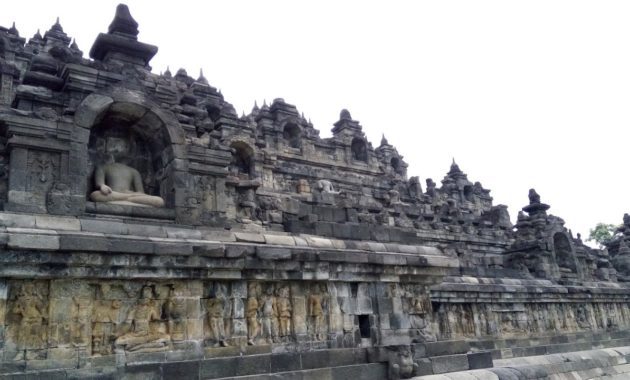
    This cultural wealth built by their predecessors thousands of years ago is very important to know. The average traditional house there has the concept of a stilt house with a height of about 3 meters.

    Types of South Sulawesi Traditional Houses and Their Characteristics

    To find out more about the traditional house of South Sulawesi, here is the review.

    1. The Tongkonan Traditional House of the Toraja Tribe

    The term Tongkonan comes from the Toraja tribe, namely “tongkon” which means to sit. This traditional house is the traditional house of the Toraja tribe, who live in the mountains of northern South Sulawesi.

    The shape of the house resembles a Chinese royal boat. This form is also a reminder that the ancestors of the Toraja tribe used to come to South Sulawesi by boat. This traditional house, apart from being used as a house, is also used to carry out traditional ceremonies.

    The Tongkonan traditional house is built using wood that is erected on a pile of wood. The type of wood used is Uru wood, one of the easiest to find in Sulawesi. In addition, construction is also carried out without metal elements, even nails are also very rarely used to build Tongkonan.

    Then just like other traditional houses, there are ornaments or decorations that are the hallmark of Tongkonan. Red, black and yellow are the dominant colors used by Torajans to beautify their Tongkonan.

    In society, the traditional house of the Toraja tribe is also known as the center of government. The term used is Toma’ Parenta. This house is one of the magnificent houses, so that in the past only noble people could make Tongkonan houses.

    Because of the concept of a stilt house, the lower part is usually used by the community as a place to raise livestock. The last characteristic that is no less unique is the statue of a buffalo head at the top of the house with different colors.

    In fact, the head of the buffalo in the Tongkonan house is also a marker of the social status of the homeowner. The more buffalo heads that are attached, the higher the person’s social status in society. Then, because the Toraja people still have faith in their ancestors, the process of building houses is not arbitrary.

    They must follow the standards or conditions set by their ancestors. Like the house must face north, as the beginning of life. Then the back faces south as the end of life.

    2. Balla Traditional House from Makassar

    The second traditional house is the one from Makassar, namely the Balla traditional house. The Makassar tribe inhabits South Sulawesi on the southwestern coast. Like other traditional houses, Balla was also a home for nobles.

    The house building also has the traditional concept of a stilt house. The architectural division is divided into three, namely the roof, the core of the house, and under it. The materials used are various kinds of wood, while the roof uses palm fiber or straw.

    Balla’s house is supported by 10 pillars. This house is known as wide and large, with a height of about 3 meters, so the interior is also spacious and large. Balla’s terrace room is called dego-dego, then the living room is called paddaserang dallekang. Then the living room will be used as a family room, and the bedroom is at the very back. The bedroom at the back is reserved for girls.

    The roof of Balla’s house is saddle-shaped, with the sharp end facing downwards. For the roof, apart from palm fiber, it can also be made of bamboo, thatch, or nipa. Then there is a triangle at the top which is called Timbaksela.
    The non-tiered triangles denote the houses of ordinary people, while the terraced ones indicate the owner is a nobleman. If there are more than three Timbakselas, this is a sign that the owner of the house is an aristocrat who has a government position.

    3. The Saoraja Traditional House from the Bugis Tribe

    Next is the traditional house of the Bugis tribe, namely Saoraja. The traditional house of the Bugis tribe is more influenced by Islam. You can see it from the direction of the house which always faces the Qibla. During the construction process, Bugis houses did not use nails, but wood or iron.

    There are two types of Saoraja houses, one Saoraja for the nobility, and the Bola house for the common people. Even so, but both have elements in common. Here are the 3 elements of the traditional Saoraja house:

    – Kalle Bala, or division of the room. There is a living room, bedroom and kitchen.
    – Rakkeang or in Bugis language means the part used to store heirlooms. In addition, this place is also used to store food.
    – Passiringan or Awasao, which is a room similar to a warehouse, used as a place to store farming equipment, as well as cattle pens.

    This Bugis house also uses the concept of a stilt house made of various types of wood. Its distinctive feature is the saddle-shaped roof with timpalaja whose number is adjusted to the social status of the homeowner. Overwriting Laja or gevel is a triangular area between the wall and the meeting roof.

    4. Traditional house of the Luwuk tribe

    The fourth is the traditional house for the Luwuk tribe. The original tribes of Luwuk are the Saluan, Banggai, and Balantak tribes. Even though the Banggai tribe has been established, many people still live in the city of Luwuk.

    In the past, the traditional house of the Luwuk tribe was a house inhabited by the king of Luwuk. The main material for making the house is 88 wooden poles. This house has a rectangular shape with carvings on the doors and windows that are made the same. The sculptural ornaments that are usually found on doors, windows, and stairs are called Parengreng. Parengreng is a symbol of uninterrupted life.

    5. Boyang Traditional House from the Mandar Tribe

    The last South Sulawesi traditional house is the traditional house of the Mandar Tribe, namely the Boyang traditional house. The Mandar tribe is known to occupy parts of South Sulawesi and West Sulawesi.

    Some people know them through their traditional celebrations, namely Sayyang Pattu’du or dancing horses and Passandeq, the tradition of crossing the sea with outriggers. This traditional house of the Mandar tribe is also a stilt house supported by wooden pillars.

    The Boyang house is actually almost the same as the Bugis house. It’s just that the terrace or lego of Boyang’s house is much wider and bigger. The roof is also unique, like a bucket that tilts forward.

    Another unique thing about this Boyang house lies in the placement of the pillars which are not driven into the ground, but are placed on flat stones to prevent weathering. This house has two stairs, one at the front and one at the back.

    In accordance with customary provisions, the number of stairs must be odd, between 7-13 steps. Then for the walls of the house use wooden planks carved using typical Mandar carvings, South Sulawesi.
    Philosophy of Traditional Houses of Each Tribe in South Sulawesi

    Every traditional house, of course, has a philosophy that makes it different from other houses. Various things, starting from the materials used to calculating any amount, must have their own meaning.

    Likewise with the traditional houses of the tribes in South Sulawesi. Although almost all of them have the concept of a stilt house, each house also has its own rules and meanings. Here are some of the philosophical meanings of each traditional house there:

    1. The Philosophical Meaning of the Tongkonan House

    As mentioned above, tongkonan comes from the word tongkon which means to sit or occupy. This name was taken because in the past, Tongkonan was a place for Toraja nobles to gather and discuss.

    Then on the front of the house, there is decoration with 2 kinds of motifs, namely pa’manuk londong or rooster, and pa’barre allo or round sun rays. The two carvings are always installed together in front of the house.

    Pa Manuk londong or rooster has the meaning of truth or katonganan and justice or sanda salunna. Then the rooster can also know the rotation of the sun or the allo mark, including measuring day and night or ussuka’ bong.

    Second, the meaning of pa barre allo, shows the energy and strength needed to build justice. So, with this decoration or statue, it is hoped that every occupant of the house can have an attitude according to the meaning of each statue. Under this motif there will be betel leaves which are used as the main offering in traditional events.

    The Tongkonan traditional house consists of 3 layers in a rectangular shape. This rectangular shape symbolizes the four human lives which consist of birth, life, worship, and death.

    The quadrilateral used is also a symbol of the cardinal directions, namely east, west, south and north. A house that must face north which depicts life is also a characteristic as well as local customary rules.
    The 3 parts of the Tongkonan traditional house include the following:

    a. The top or Rattiang Banua

    The first part is used as a place to store heirlooms. The heirlooms that are stored certainly have sacredness as well as become valuable assets for the Toraja people. Then the roof. Tongkonan is made of bamboo arranged and tied using palm fiber and rattan. Because it uses palm fiber and rattan, the roof is very strong and can last for hundreds of years.

    b. Kale Banua

    The second part or the middle part is Kale Banua. This section is further divided into three parts. To the north, there is Tengalok which functions as a living room and bedroom for children.

    In addition, sometimes this space is also used to place offerings. Then in the middle, there is the Sall room which is used as a family meeting room, kitchen, place to eat, and also a place where deceased families are buried.

    For the community, the presence of bodies in this room is considered normal, even as a sign that they are close to their ancestors. Then the last part is a special room for the head of the family.

    c. Suluk Banua

    The last is the lower part of the house or suluk banua. This place is usually used for pets and a place to store agricultural tools.

    Then, for ornaments or decorations worn by Toraja people usually use 4 types of colors, namely white, black, yellow, and red. Of course these four colors were chosen not without reason, but because they have their own meaning.

    For the white color was chosen as a symbol of purity and bone color. Then the yellow color becomes a symbol of the grace of the Almighty, or is called Puang Matua by the Toraja people. Meanwhile, red symbolizes life, and black symbolizes death.

    2. The Philosophical Meaning of the Balla House

    Balla Lampoa typical of the Makassar tribe is also made with the concept of a stilt house. This Balla Lampoa house has a triangular roof top, commonly called Timbaksela. Timbaksela is considered unique, because it is a marker for the social status of the Balla owner.

    If not tiered, then the homeowners are ordinary people. However, if Timbaksela is composed of 3 and above, it means that the Balla house is owned by aristocrats. If there are more than 3, for example 5, it means that the owner of the house is a noble who has a position in the local government.

    The Balla traditional house has two kinds of stairs, namely sapana and ulcer. The difference is in the number of steps and materials used. Sapana uses bamboo with more than three plaited steps. Meanwhile, ulcers are made using wood. This sapana is used specifically for nobles, and the tukak is used by common people.

    3. The philosophical meaning of the Bugis house

    Furthermore, there is a meaning contained in the traditional house of South Sulawesi from the Bugis tribe, which is as follows:

    1. Bonting sky, namely the part of the roof of the house that is given a cavity. This is the sign of marriage in the sky, which was carried out by We Tenriabeng, the twin brother of Sawerigading, the empress of Remmang ri Langi or commonly known as Hulontalangi (the first king of Gorontalo).
    2. Ale kawaq, which is the middle part of the house which describes the condition of the motherland.
    3. Buri liy, which is the part under or under the house which is a symbol of the underworld and the sea. This place is used as a place to raise livestock.
    4. The philosophical meaning of the Luwuk traditional house

    The main characteristic of the Luwuk house is the same shape and size of the door. So, according to history, the traditional house of the Luwuk Tribe came from King Luwuk. Where the supporting pillars are 88 with the basic ingredients of wood.

    Like other traditional houses, there are social class markers in the Luwuk traditional house. An ornament called pangreng has a philosophical meaning as life that spreads tendrils or life that is not interrupted. This house has three or five peaks, which are commonly called ridges. This ridge is a sign of each homeowner’s caste.

    5. The philosophical meaning of the Mandar tribe

    Finally, there is the traditional house of the Mandar tribe, namely the Boyang house. This house consists of two types, the Boyang Adaq house and the Boyang Beasa house. The Boyang Adaq is reserved for the traditional houses of the nobles, while the Boyang Beasa houses are used for the common people.

    At Boyang Adaq’s house, certain ornaments or ornaments will be installed to mark the social status of the nobility of the family. This house is also made with a high ridge, where the higher it indicates the higher the level of nobility.

    Those were some of the traditional South Sulawesi houses that you should know about as an effort to preserve culture. Apart from that, there are still many things about South Sulawesi that are no less interesting.

  • The Origins and Architecture of the Construction of Borobudur Temple

    The Origins and Architecture of the Construction of Borobudur Temple

    The Origins and Architecture of the Construction of the Borobudur Temple – Borobudur (Javanese: ꦕꦤ꧀ꦝꦶ​ꦧꦫꦧꦸꦝꦸꦂ , translit.  Candhi Båråbudhur ) is a Buddhist temple located in Borobudur, Magelang, Central Java. This temple is located approximately 100 km southwest of Semarang, 86 km west of Surakarta, and 40 km northwest of Yogyakarta. This temple with many stupas was founded by adherents of Mahayana Buddhism around the year 800 AD during the reign of the Syailendra dynasty. Borobudur is the largest Buddhist temple or shrine in the world, as well as one of the largest Buddhist monuments in the world.

    This monument consists of six square terraces on which there are three circular courtyards, the walls are decorated with 2,672 relief panels and originally there were 504 Buddha statues. Borobudur has the most complete and largest collection of Buddhist reliefs in the world. The largest main stupa is located in the center as well as crowning this building, surrounded by three circular rows of 72 perforated stupas in which there is a Buddha statue sitting cross-legged in a perfect lotus position with the Dharmachakra mudra ( turning the wheel of dharma).

    This monument is a model of the universe and was built as a holy place to glorify Buddha as well as to function as a place of pilgrimage to guide mankind from the world of worldly desires to enlightenment and wisdom according to Buddhist teachings. Pilgrims enter via the east side and start the ritual at the base of the temple by walking around this sacred building in a clockwise direction, while continuing to ascend to the next steps through three levels of realms in Buddhist cosmology. The three levels are Kāmadhātu (the realm of lust), Rupadhatu (the realm of form), and Arupadhatu(intangible realm). On their way the pilgrims walk through a series of aisles and stairs to witness no less than 1,460 beautiful relief panels engraved on the walls and balustrades.

    According to historical evidence, Borobudur was abandoned in the 14th century as the influence of the Hindu and Buddhist kingdoms on Java weakened and the influence of Islam began to enter. The world began to realize the existence of this building since it was discovered in 1814 by Sir Thomas Stamford Raffles, who at that time served as the British Governor General over Java. Since then Borobudur has undergone a series of rescue and restoration efforts. The largest restoration project was carried out from 1975 to 1982 under the efforts of the Government of the Republic of Indonesia and UNESCO, then this historic site was included in the list of World Heritage Sites.

    Borobudur

    The Origins of the Name Borobudur

    Borobudur Stupa with Menoreh hills. Over the centuries this sacred building was forgotten.

    In Indonesian, ancient religious buildings are called temples ; temple term is also used more broadly to refer to all the ancient buildings originating from the Hindu-Buddhist in the archipelago, such as gates , gate , and petirtaan (swimming baths and showers). The origin of the name Borobudur is unclear, although the original names of most temples in Indonesia are unknown.

    The name Borobudur was first written in the book “History of the Island of Java” by Sir Thomas Stamford Raffles. Raffles wrote about a monument called borobudur , but there are no older documents that mention the exact same name. The only ancient Javanese text that gives clues about the existence of a sacred Buddhist building that may refer to Borobudur is Nagarakretagama, written by Mpu Prapanca in 1365.

    The name Bore-Budur , which was later written BoroBudur , was probably written by Raffles in English grammar to refer to the village closest to the temple, namely the village of Bore (Boro); Most temples are often named after the village where the temple is located. Raffles also suspects that the term Budur may be related to the term Buda in Javanese which means “ancient” – hence meaning, “ancient Boro”. However, other archaeologists think that the name Budur comes from the term bhudhara which means mountain.

    Many theories attempt to explain the name of this temple. One of them states that this name probably comes from the word Sambharabhudhara , which means “mountain” ( bhudara ) whose slopes are terraces. In addition there are several other folk etymologies, for example the word Borobudur comes from the saying “Buddhas” which due to a shift in sound becomes Borobudur .

    Another explanation is that this name comes from the two words “bara” and “beduhur”. The word coal is said to have come from the word vihara , while there are also other explanations that consider coal to come from Sanskrit which means temple or monastery complex and beduhur which means “high”, or reminiscent of Balinese which means “above”. So, the meaning is a monastery or hostel on high ground.

    Historian JG de Casparis in his dissertation to obtain a doctorate in 1950 argued that Borobudur was a place of worship. Based on the Karangtengah and Tri Tepusan inscriptions, Casparis estimates that the founder of Borobudur was a Mataram king from the Syailendra dynasty named Samaratungga, who undertook construction around 824 AD. The giant building was only completed during the time of his daughter, Ratu Pramudawardhani.

    The construction of Borobudur is estimated to take half a century. In the Karangtengah inscription it is also mentioned about the awarding of sima land (tax free land) by Çrī Kahulunan (Pramudawardhani) to look after Kamūlān called Bhūmisambhāra . The term Kamūlān itself comes from the word mula which means the place of origin, a sacred building to honor the ancestors, possibly the ancestors of the Sailendra dynasty. Casparis estimates that Bhūmi Sambhāra Bhudhāra in Sanskrit which means “Hill of the ten levels of bodhisattwa virtues”, is the original name of Borobudur.

    Borobudur

    Borobudur Building Architecture

    Borobudur is a masterpiece of Indonesian Buddhist art, as an example of the pinnacle of achieving the harmony of architectural techniques and the aesthetics of Buddhist art in Java. This building was inspired by dharma ideas from India, namely stupas and mandalas, but is believed to also be a continuation of local elements; megalithic structures punden terraces or terraced pyramids found from the prehistoric period of Indonesia. As a combination of native Indonesian ancestor worship and the struggle to reach Nirvana in Buddhism.

    Design Concept

    In essence, Borobudur is a stupa which, when viewed from above, forms a large Mandala pattern. Mandalas are intricate patterns composed of squares and concentric circles that symbolize the cosmos or universe which are commonly found in Vajrayana-Mahayana Buddhists. The ten courtyards owned by Borobudur clearly illustrate the philosophy of the Mahayana school which simultaneously describes the cosmology of the concept of the universe, as well as the levels of the mind in Buddhism.

    Like a book, Borobudur describes the ten Bodhisattva levels that must be passed to reach perfection to become a Buddha. The floor plan of the square measures 123 meters (404 ft) on each side. This building has nine terraces, namely the bottom six terraces are square and the top three terraces are circular.

    In 1885, accidentally found a hidden structure at the foot of Borobudur. This hidden foot has reliefs of which 160 are about Karmawibhangga . In this relief panel there are carved characters which are instructions for the sculptor to create scenes in relief images. This original foot is covered by the addition of a stone structure that forms a fairly large courtyard, its true function is still a mystery.

    Initially, it was suspected that the addition of these legs was to prevent the monument from sliding. Another theory proposes that the addition of the legs is due to an error in the design of the original legs, and is not in accordance with Wastu Sastra, an Indian book on architecture and urban planning. Whatever the reason for the addition of these legs, the addition and manufacture of these additional legs is done carefully by considering religious, aesthetic and technical reasons.

    The three levels of the spiritual realm in Buddhist cosmology are as follows.

    1. Kamadhatu

    The foot of Borobudur symbolizes Kamadhatu , namely the world which is still ruled by kama or “low desire”. This section is mostly covered by piles of stones which are thought to have been made to strengthen the construction of the temple. At the original foot which is covered by this additional structure, there are 160 panels of Karmawibhangga’s story which are now hidden. A small additional structure in the southeast corner is set aside, so one can still see some of the relief in this section. The additional foot of andesite stone structure that covers the original foot has a volume of 13,000 cubic meters.

    2. Rupadhatu

    The four terraced steps that form a circular passageway, the walls of which are decorated with relief galleries, are called Rupadhatu by experts . The floor is square. Rupadhatu consists of four passages with 1,300 relief images. The total relief is 2.5 km long with 1,212 decorative carved panels. Rupadhatu is a world that has been able to free itself from lust, but is still bound by shape and form. This level represents the intermediate realm, that is, between the lower realms and the upper realms .

    In this part of the Rupadhatu , Buddha statues are found in niches or recesses of the walls above the balustrades or passages. Originally, there were 432 Buddha statues in open niches along the outer side of the balustrade. On the balustrades there is a slight difference in design which symbolizes the transition from the Kamadhatu realm to the Rupadhatu realm ; The lowest balustrades are crowned with ratna, while the four levels of balustrades above are crowned with stupika (small stupas). The rectilinear terraces are richly decorated and carved in relief.

    3. Arupadhatu

    In contrast to the Rupadhatu halls , which are rich in reliefs, from the fifth to the seventh floor, the walls are devoid of relief. This level is called Arupadhatu (which means no tangible form or not). Circular floor plan. This level symbolizes the upper realm, when humans are free from all desires and bonds of form and appearance, but have not yet reached nirvana.

    In the courtyard of the circle there are 72 two small stupas arranged in three rows surrounding a large stupa as the main stupa. This small bell-shaped stupa is arranged in 3 circular terraces, each numbering 32, 24 and 16 (total 72 stupas). The two lower terraces of the stupa are larger with a rhombus-shaped hole, the top terrace of the stupa is slightly smaller and the hole is in the shape of a square box.

    Buddha statues are placed in stupas which are covered with holes like in a cage. From outside the statues were still vaguely visible. This design cleverly explains the concept of transition to a state of formlessness, i.e. the Buddha statue is present, but invisible.

    The highest level that describes the lack of perfect form is symbolized in the form of the largest and highest stupa. The stupa is described as plain without any holes. In this largest stupa, an incomplete Buddha statue or also called an incomplete Buddha was found, which was mistaken for an Adibuddha statue , even though through further research there was never a statue in the main stupa, the unfinished statue was the fault of the sculptor at that time. formerly.

    According to belief, statues that go wrong during the manufacturing process cannot be tampered with. Archaeological excavations carried out in the courtyard of this temple unearthed many statues like this. The main stupa that is left empty is thought to mean the highest wisdom, namely absoluteness, solitude, and complete absence when the human soul is free from desire, desire, and form and is free from the cycle of samsara.

    Pramodawardhani Inauguration of Borobudur 

    The arrangement and division of story reliefs on the walls and balustrades of the temple are as follows.

    1. Karmawibhangga

    In accordance with the symbolic meaning at the foot of the temple, the reliefs that adorn the veiled batur walls depict the law of karma. Karmawibhangga is a text that describes the teachings of karma, namely the causes and effects of good and evil actions. The row of reliefs is not a serial story, but each frame depicts a story that has a causal relationship.

    The relief not only gives an illustration of human disgraceful actions accompanied by the punishment they will receive, but also human good deeds and rewards. As a whole, it is a depiction of human life in a cycle of birth, life and death (samsara) that never ends, and by Buddhism it is this chain that will end towards perfection. Now, only the southeastern part is open and can be seen by visitors. A complete photo of the Karmawibhangga relief can be seen at the Karmawibhangga Museum on the north side of Borobudur temple.

    2. Lalitawistara

    It is a depiction of the history of the Buddha in a series of reliefs (but not a complete history) which begins with the descent of the Buddha from the Tushita heaven, and ends with the first sermon in the Deer Park near the city of Banaras. These reliefs line up from the stairs on the south side, after passing a series of reliefs of 27 frames starting from the east side of the stairs. The 27 frames depict busyness, both in heaven and on earth, in preparation for welcoming the presence of the Bodhisattwa’s final incarnation as a future Buddha.

    The relief depicts the birth of the Buddha in this statue as Prince Siddhartha, son of King Suddhodana and Empress Maya from Kapilawastu Country. The reliefs number 120 frames, which end with the first discourse, which is symbolically stated as the Turning of the Dharma Wheel. The teachings of the Buddha are called dharma which also means “law”, while dharma is symbolized as a wheel.

    3. Jatakas and Awadana

    The Jatakas are various stories about the Buddha before being born as Prince Siddhartha. Its content is the highlight of good deeds, such as self-sacrifice and helpfulness that distinguishes the Bodhisattva from any other being. Several Jataka stories feature fables, namely stories involving animal characters who act and think like humans. In fact, the accumulation of merit or good deeds is a preparatory stage in the quest for Buddhahood.

    The Awadana is basically almost the same as the Jataka, but the perpetrators are not the Bodhisattwa, but other people and the stories are compiled in the Diwyawadana book which means noble deeds of deity, and the Awadanasataka book or one hundred Awadana stories. In the reliefs of the Borobudur temple, Jataka and Awadana are treated the same, meaning that both are in the same row without being distinguished. The most famous collection from the life of the Bodhisattva is the Jatakamala or Jataka tales, by the poet Aryasura who lived in the 4th century AD.

    4. Gandawyuha

    A series of reliefs adorning the walls of the 2nd aisle, is the story of Sudhana who wanders tirelessly in his search for the Supreme Knowledge of the Ultimate Truth by Sudhana. His depiction in 460 frames is based on the Mahayana Buddhist scripture entitled Gandawyuha , and the closing part is based on another book, namely Bhadracari .

    So, that’s a brief explanation of the origins and architecture of the construction of the Borobudur Temple . Borobudur is still used as a place of religious pilgrimage to this day; every year Buddhists who come from all over Indonesia and abroad gather at Borobudur to commemorate the Vesak Trisuci. Regarding tourism, Borobudur is the single tourist attraction in Indonesia that is visited by the most tourists. On February 11, 2022, the government formalized the status of Borobudur Temple again as a place of worship for Buddhists in Indonesia and the world.

    • The Founder of the Kutai Kingdom: History, Heyday, and Legacy
    • The Founder of the Majapahit Empire: History and the First King
    • Founder of the Singhasari Kingdom: Origins and a Brief History
    • History of the Founders of the Sriwijaya Kingdom and Their Lineages
    • History of the Kingdom of Sunda and its Legacy
  • The Origin of the Distribution of Ancestors in Indonesia

    The Origins of the Distribution of Ancestors in Indonesia – The many tribes in Indonesia have had an impact on the emergence of regional language and cultural diversity that applies in everyday life. This wealth can become a problem if you are not good at managing the diversity and differences that exist. Of course this is also related to the origin of the arrival of ethnic groups and when they arrived in Indonesia.

    In Indonesia, there are many ancient human species with different body characteristics from present-day humans. In its development, it is possible that these ancient human species have become extinct. Meanwhile, the Homo Sapiens type has evolved or changed slowly. Children will definitely ask who their real ancestors were.

    With the motto “Unity in Diversity” which belongs to the Indonesian people, it unites the diversity that exists within it, including ethnic groups. In the book Encyclopedia of Indonesian Tribes by Dr. Zulyani Hidayah, you can learn about various ethnic groups in Indonesia.

    The Origin of the Distribution of Ancestors in Indonesia

    In understanding the origins of Indonesian ancestors, we must first look at the history of human birth, which Sinaumed’s can learn from the book Graphic Sapiens: The Birth of Humanity by Yuval Noah Harari.

    In the opinion of the Sarasin brothers, the natives of the Indonesian archipelago are a race of dark skin and small stature. At first they lived in Southeast Asia. When the ice age melted and sea water rose to form the South China Sea and the Java Sea, separating the volcanic mountains of the Indonesian archipelago from the mainland.

    Some of the original inhabitants of the Indonesian archipelago remained and settled in inland areas, while the coastal areas were inhabited by immigrants. The natives are called the Veddas by the Sarasins. The races included in this group are the Hieng people in Cambodia, the Miaotse, Yao-Jen in China, and the Senoi in the Malay Peninsula.

    Several ethnic groups, such as the Kubu, Lubu, Talang Mamak who inhabit Sumatra and Toala in Sulawesi, are the oldest inhabitants in the Indonesian archipelago. They have a close relationship with the ancestors of today’s Melanesians and the Vedda people who still exist today in Africa, South Asia, and Oceania. Vedda was the first human to come to the islands that are already inhabited. They brought the stone tool culture with them. The Melanesian and Vedda races lived in a mesolithic culture.

    1. Proto-Malay

    The Proto-Malays are believed to be the ancestors of the Polynesian Malays who spread from Madagascar to the easternmost island in the Pacific. They are thought to have come from southern China. This Malay race has the following characteristics: straight hair, brownish yellow skin and slanted eyes.

    From southern China (Yunan) they migrated to Indochina and Siam then to the Indonesian archipelago. They initially occupied the coasts of North Sumatra, West Kalimantan and West Sulawesi.

    When new immigrants arrived (Deutro Melayu or Ras Melayu Muda), they were of the Proto Malay race moving into the interior and looking for new places in the forest to be used as dwellings. Life in the forest makes them isolated from the outside world, thus fading their civilization. The original inhabitants and the Proto Malay race then merged and later became the Batak, Dayak, Toraja, Alas and Gayo tribes.

    The life of this isolated race then caused Proto-Malay to gain influence from Hindu and Islamic culture in the future. The Proto-Malay race received Christian influences since they knew evangelists who entered their territory to introduce Christianity and a new civilization into their lives.

    The distribution of the Dayak tribes to the southern Philippines, Sarawak and Malacca shows their migration route from the Indonesian archipelago. While the Batak tribes took the route to the West along the coast of Burma and West Malacca. Therefore, some similarities in the language used by the Karen people in Burma contain many similarities with the Batak language.

    2. Deutero Malays

    The Deutero Malay race is a race that came from northern Indochina. This race brought a new culture in the form of iron tools and weapons in the Indonesian archipelago or the Dongson culture. Some call them the Dongson people.

    Their civilization is higher than the Proto Malay race. They could make tools out of bronze. Their civilization is marked by skill in working metal. Their move to the Indonesian archipelago can be seen from the distribution routes of the tools they left behind in several islands in Indonesia such as rectangular axes. This civilization can be found in Sumatra, Kalimantan, Malacca, Sulawesi, Java and East Nusa Tenggara.

    In terms of tillage, they have the ability to irrigate agricultural lands that have been successfully created by clearing forests first. The Deutero Malay race also had a more advanced seafaring civilization than their predecessors because their adventures as sailors were aided by their mastery of astrology. Migration of the Deutero Malay race also uses sea shipping routes. Some of the Deutero Malay race have reached the Japanese archipelago and even up to Madagascar.

    The arrival of the Deutero Malay race in Indonesia has been increasing over time. They then moved to look for a new place in the forest as their place of residence. In the end the Proto and Deutero Malays merged and became residents of the Indonesian archipelago.

    In later times they became difficult to distinguish. Proto Malay includes the population in Gayo and Alas in northern Sumatra and Toraja in Sulawesi. Meanwhile, all residents in the Indonesian archipelago except the Papuan population who live around the Papua islands are of the Deutero Malay race.

    3. Melanesoids

    This Melanesoid race is spread across the Pacific Ocean on the islands to the east, namely Irian and the Australian continent. In the Indonesian archipelago they live in Papua, along with Papua New Guinea, Bismarck, Solomon, New Caledonia and Fiji, they are a Melanesoid family. As Daldjoeni said, around 70% of the Melanesoid tribe live in Papua while 30% inhabit several islands around Papua and Papua New Guinea.

    Initially, the arrival of Melanesoids in Papua began during the last ice age or in 70,000 BC. At that time the Indonesian archipelago was uninhabited. When the temperature drops to maximum freezing and the sea water becomes frozen. Sea level is 100 m lower than today’s level. It was at that time that new islands appeared. The existence of these islands makes it easier for living things to move from Asia to the Oceania region.

    The Melanesoid tribe moved eastward to Papua and then to the Australian continent which was previously an archipelago related to Papua. The Melanesoid tribe at that time reached 100 thousand people covering the regions of Papua and Australia. The civilization of the Melanesoid peoples is known as the paleoticum.

    When the ice age ended and sea water began to rise again in 5000 BC, the islands of New Guinea and the Australian continent were separated as can be seen today. At that time the population reached 0.25 million and in 500 BC it reached 0.5 inhabitants.

    The origin of the Melanesian people is the Proto Melanesians who are indigenous people in Java. They were human beings who were scattered in the eastern part and occupied Papua before the ice age ended and before the sea level rise that occurred at that time. In Papua, Wajak humans live in small groups along river estuaries.

    They live by catching fish in the river and gathering plants. Their residence is in the form of settlements made of light materials. The houses are actually just tents or wind shelters that are often erected against the walls of a large cave. The tents and wind shelters are only used as places to sleep and take shelter while other activities are carried out at home.

    The Proto Melanesoid nation continues to be pushed back by the Malay nation. Those who had not yet had time to reach the islands of Papua finally mixed with this new race. The mixing of Malays with Melanesoids produces Melanesoid Malays. Currently they are residents of East Nusa Tenggara and Maluku.

    4. Negrito and Weddid

    Prior to the arrival of the old and young Malay groups, Negrito and Weddid people had already entered Indonesia. Negrito is the name given by the Spaniards because those they meet have black skin similar to the types of Negroes. To what extent this Negrito group is blood related to the Negro types found in Africa and the Melanesian islands, as well as how the history of their movement is also not known with certainty.

    This Weddid group consists of people with mesocephalic heads and deep-set eyes that look like otters. Their skin is dark brown and the males average 155 cm tall. Weddid means the type of Vedda (a nation found on the island of Ceylon-Sri Lanka). The distribution of the Weddid people in Indonesia is quite wide, for example in Palembang and Jambi (Kubu), Siak, and southeast Sulawesi (Toala, Tokea and Tomuna).

    The period of immigration spanned centuries. It is possible that they belong to the same racial group and from the same culture. They are the ancestors of today’s Indonesians.

    About 170 languages ​​spoken in the Indonesian Archipelago are Austronesian, namely Malayo-Polynesian. These languages ​​were further grouped into two by Sarasin, namely Acehnese and languages ​​in the interior of Sumatra, Kalimantan and Sulawesi.

    The second group is Batak, standard Malay, Javanese and Balinese. This group is related to the Malagi languages ​​of Madagascar and Tagalog of Luzon. The geographical distribution of the two languages ​​shows that the users were sailors in the past who already had more advanced civilizations.

    Besides these languages, there are also North Halmahera and Papuan languages ​​spoken in the interior of Papua and the northern island of Halmahera.

    Theory of Indonesian Ancestors

    According to several experts, several theories regarding the origins of the Indonesian nation’s ancestors.

    1. Drs. Moh Ali

    According to Drs. Moh Ali, the Indonesian nation comes from the Yunan-China region. This opinion was influenced by the opinion of Mens who argued that the Indonesian people came from the Mongol area which was pushed by stronger nations so they moved south, including Indonesia.

    Moh Ali said that the ancestors of the Indonesian people came from the headwaters of the large rivers located on the Asian mainland and they came in waves. The first wave took place from 3000 to 1500 BC (Proto Malay) and the second wave occurred from 1500 to 500 BC (Deutero Malay).

    The first and second waves can be distinguished by the shape of the boat used. The characteristics of the first wave are the Neolithic culture with one outrigger boat, while the second wave uses two outrigger boats.

    2. Prof. Muhammad Yamin

    Prof. Mohammad Yamin said that Indonesians are native to Indonesia’s own territory. Moh Yamin believes that there are some nations or tribes abroad who come from Indonesia.

    Mohammad Yamin said that the findings of fossils and artifacts were more numerous and complete in Indonesia than other regions in Asia, such as the findings of Homo or Pithecanthropus Soloensis and Wajakensis fossils which were not found in other Asian regions including Southeast Asia.

    3. Willem Smith

    According to Willem Smith’s view, the origins of the Indonesian nation through the use of language by Indonesian people. Willem Smith categorizes the peoples of Asia on the basis of the language used, namely people who speak Togon, people who speak German and people who speak Austria.

    Then the Austrian language is divided into two, namely nations that use Austro Asian languages ​​and nations that use Austronesian languages. These Austronesian-speaking nations inhabit the Indonesian territory (Melanesia and Polynesia).

    In the Out of Africa and Out of Taiwan theories explaining the origins of Indonesian ancestors it can be seen that how closely the dynamics of Melanesian history are related to the archipelago. The word Melanesia was first introduced by Dumot d’urville, a French explorer to refer to the ethnic area of ​​the population with black skin and curly hair in the Pacific region.

    According to Harry Truman, around 60,000 years ago, there was a group of people who with a spirit of courage crossed the straits and seas to reach the Indonesian archipelago.

    They are Homo Sapiens which in literature books are called early modern humans. When departing from their native land, namely Africa, they have no destination. According to experts, this theory is called the Pout of Africa theory. In their thoughts there is only how they can find a new field of life that is more promising.

    They are fortunate in their wanderings to be able to overcome all natural obstacles, from generation to generation they reach new areas of life in the origins and distribution of the ancestors of the Indonesian nation.

    In a new place, they explore the available environmental resources to sustain life. They concocted from a variety of fruits, tubers that exist in the region. The animals are also hunted by them to make ends meet. For this purpose, stone tools and organic materials such as wood and bamboo were made.

    In studying history, the main concept of this science is humans which is described in the book Humans and History: A Philosophical Review by Yulia Siska.

    The Life Style of the Ancestors of the Indonesian Nation

    The style of life of the ancestors of the Indonesian nation includes agrarian life, maritime life, social life, cultural arts life, and religious life.

    a. Agrarian life

    The ancestors of the Indonesian people lived by farming. This is evidenced by the discovery of special agricultural tools in the form of a square pickaxe and an oblong axe. We still find this agrarian life today in several areas, especially in rural areas.

    b. marine life

    The ancestors of the Indonesian people have been able to sail the sea. They also had knowledge of seas, winds, seasons and astronomy. They also built an outrigger boat, so they were able to fulfill their daily needs from the sea.

    c. Social life

    The ancestors of the Indonesian nation lived in an orderly society in their daily lives in mutual cooperation. With gotong royong, development in the area is accelerated, for example, a bridge was built in a village which was completed in a relatively short time because the residents worked together.

    d. Cultural arts life

    The ancestors of the Indonesian people were familiar with jewelery made of stone, bronze, beads and glass. Not only that, they are also good at painting, dancing, and so on, so they are known for their artistic and cultural life.

    e. Religious life

    The ancestors of the Indonesian people were familiar with forms of belief such as: worship of ancestral spirits, animism (the belief that an object has a spirit or soul), dynamism (the belief that every object has supernatural powers), and monotheism (the belief that outside oneself one power that exceeds himself, namely the power of God Almighty).

    Basically, the ancestors of the Indonesian people already had a belief, namely recognizing the existence of extraordinary powers that are outside of human beings. Therefore, since ancient times, our ancestors have had a religious life.

    From the explanation that has been explained above, it can be said that the origins of the distribution of ancestors in Indonesia were almost dominated by the Malay race. In addition, the distribution generally occurs through the sea or the ancestors did it by sailing.

    Scholastic friends, the explanation above is the Origin of the Distribution of Ancestors in Indonesia . After reading the description above, hopefully it will further add to our understanding of history. Hope it is useful.

  • The Opposition is the Opposing Party, Check Out the Explanation!

    Opposition is – In the political life of the country, of course, it is no stranger to the existence of friends and foes. The opposing party or the opposite side of the authority is referred to as the opposition. Can contradict both his words and actions which will then correct an error from the authorities.

    This team is generally very firm in voicing the truth. This team also often colors the democratic process, both in democracy that runs within the scope of parliament or other bureaucracy. Below is the definition of the opposition team, its function and role in politics that you need to know.

    Opposition in Government

    In a democratic government system, the terms coalition and opposition often appear. After the holding of the general election the position of these parties which will become the opposition as well as the coalition will be seen.

    According to political researchers from the Indonesian Institute of Sciences (LIPI), coalitions are parties or coalitions of parties which are then formed in a certain period with common political goals. The nature of the coalition itself generally works within a certain period.

    For example, coalitions of political parties are then initiated during elections to be able to nominate and support candidates in a presidential and vice presidential or regional head election.

    In addition, the government coalition formed by political parties then succeeded in winning their candidates in the presidential election, as well as working together during a government period to support government performance specifically with support from within parliament when making policies.

    While the opposition can then be interpreted as a position opposite from the government, or as a political party that acts as an opponent in the representative assembly. They criticize the opinions and various political policies of the ruling majority group. Those who become the opposition are a combination of parties with positions outside the government coalition within a certain period.

    Coalition positions are generally determined by the party’s vision and mission and ideology. With roles that are opposite to each other, being in the opposition and coalition in a government then has various advantages as well as disadvantages.

    There are a number of notes. The advantage of being part of a government coalition is being able to be involved in influencing the direction and shape of a policy. However, the coalition parties themselves have limitations in further criticizing various government policies because of their attachment to the coalition’s commitment to supporting the government and their involvement in a government policy. Meanwhile for opposition groups, access to influence government policies directly.

    However, the opposition has the ability to be flexible and objective in monitoring and criticizing government policies. In the concept of parliamentary and presidential democracy, the existence of the opposition is important as a group of supervisors and counterweights ( checks and balances ) on government and executive policies. The role of the opposition in a self-government is very important in preventing the practice of abuse of power which will lead to authoritarian rule.

    Definition of Opposition According to Experts

    Etymologically, opposition comes from English opposition with the meaning of confronting, refuting, and refuting. While in terms of terminology, the opposition is a group or party which then opposes the ongoing government politics.

    The opposition team is a team or group whose positions are opposite each other, but can also be interpreted as a party opposing parliament or the bureaucracy which then criticizes opinions and various policies that are not in accordance with existing norms.

    Definition of Opposition According to KBBI

    According to the Big Indonesian Dictionary (KBBI), the meaning of the word opposition is an opposing party in the representative assembly whose function is to oppose and criticize the opinions and various political policies of the ruling class. Another meaning of opposition is the conflict between two elements of language to show various differences in meaning.

    Definition of Opposition According to Expert Opinion

    The following is the definition of opposition based on several expert opinions.

    1. Kamil

    Understanding according to Kamil is as a rational side as a consequence of the institutionalization of control to power.

    2. Rooney

    Understanding according to Rooney is an opponent or resistance to something.

    3. Robert A. Dahl

    Understanding according to Robert A. Dahl is as an inseparable part and becomes one of the foundations, apart from participation in what is called polyarchy or a form of government with democratic overtones.

    4. Shapiro

    Understanding according to Shapiro is as its essence as a consequence of people’s participation in a government.

    5. Eep Saifullah Fatah

    Understanding according to Eep Saifullah Fatah is every word and deed that will correct mistakes while underlining and supporting everything that is already true. So, the point is to carry out monitoring activities on political power that can be wrong and right. While in political science, the definition of this term is a party with policies or stances that conflict with the group’s policy lines that run a government.

    Opposition Team Functions

    Opposition as a group or party that does not approve or does not support a political policy that is being conveyed. This team often plays an important role in the world of politics, namely in controlling the running of government so that it remains in accordance with a corridor of law and national values.

    The format itself is in the form of the teaching of balancing the power ( check and balance ) of the state which is then placed in the framework of the constitution. The check and balance system itself is a mechanism to be able to correct and straighten a government and encourage growth in a better direction.

    Therefore, any restriction on freedom and ban on expressing thoughts is a very principle violation of the demands of a state’s philosophy or human rights.

    The role of the opposition political party itself is very important in monitoring and balancing power in an objective, consistent and truthful manner. In addition to siding with the interests of the people at large. Opposition in parliament will then narrow the possibility of tyrannism and authoritarianism.

    1. As a Balancer of Power

    As a counterweight to power, the meaning of the counterweight itself is the existence of forces outside the government that provide alternative thoughts and attitudes and cause a balance so that the government is not too far from the interests of the majority of the people. The existence of the opposition itself is to alert a democratically elected government if the policies it takes are contrary to the will of the people.

    2. Keeping a Voiced Policy Alternative

    The presence of the opposition then allows the emergence of many policy options that can be used as a complement to government policies.

    3. As a Stimulus of Healthy Competition in Government Elites

    Government generally experiences stagnation or decline, if it does not receive challenges from parties who are competent and able to show the public about policies that are better and make sense when compared to a government policy.

    Types of Opposition

    In the world of politics, there are various terms that we may have often heard. One that is very familiar is the ‘opposition’. This opposition itself is closely related to a political party. Ahead of general elections, such as presidential elections, there are always political parties which then declare themselves as opposition parties.

    What exactly is the opposition? According to the Big Indonesian Dictionary (KBBI), the opposition itself is defined in two different fields. In this world of politics, the opposition is then interpreted as ‘the opposing party in the representative assembly and so on which criticizes and opposes the opinions or political policies of the ruling groups.

    While in the linguistic field, the meaning of the word opposition itself is interpreted as a conflict between two elements of language to then show a difference in meaning. From the two meanings of the word opposition according to the Big Indonesian Dictionary (KBBI), the meaning of the word opposition with its linguistic meaning is then more often associated with the world of political opposition. In fact, people still often define the word opposition as something that is opposite to each other.

    The presence of parties as an opposition in government then becomes important, especially for a country with a democratic government system. In accordance with Lord Acton’s quote ‘Power tends to corrupt, and absolute power corrupts absolutely’, namely an absolute government is then believed to give birth to absolute evil as well.

    Therefore the government needs opposition groups to keep its government not absolute and remain balanced. Along with the development of government systems in the world, the opposition then appeared in several conceptual forms. Currently, there are at least four opposition concepts that have developed in various parts of the world:

    1. Ceremonial Opposition

    This opposition is also interpreted as something that is ceremonial and ceremonial. However, if interpreted further, the ceremony itself can be interpreted as something that is official and more formal. Based on this definition, ceremonial can then be interpreted as an oppositional concept formed only as a formality and a trick.

    2. Opportunist Destructive Opposition

    Opportunist destructive opposition is a concept that always tries to damage the government’s image by using any means. All policies made by the government will then always be criticized and found fault, even when these policies are actually good for the people.

    The government’s weaknesses highlighted in this destructive-opportunist concept are then expected to undermine the authority of the authorities so that this group can carry out coups more easily. The aim of the opportunist destructive opposition group is to overthrow the ruler quickly in order to take over the government.

    3. Ideological Fundamental Opposition

    This opposition is not much different from the destructive opportunists because they both want the ruler to fall so that he can be replaced by another ruler. The difference is in the ideological elements brought in the ideological fundamental opposition.

    This concept is not just wanting a change of rulers, but also at the ideological level. They consider the basis of a country that has been adhered to so far is inappropriate, so they want to replace it with a state basis that is considered better.

    4. Democratic Constructive Opposition

    This opposition is the best when compared to other types, formed because of the struggle of the opposition groups for the benefit of the general public. If the three previous concepts of opposition actually have the potential to disrupt the existing order because they will only replace the old authoritarians with new authoritarians, then the constructive then democratic opposition functions in creating a real balance.

    The concept of democratic constructive opposition will then criticize the government if the government’s policies are judged by the people. This opposition group is also still able to see the positive side that can be achieved by the government so that the people then evaluate the government in a balanced way.

    Related Book Recommendations

    1. Democracy and Bureaucratic Culture

    As a social thinker and humanist, Dr. Kuntowijoyo is always serious and responsible. His works of thought which have been collected in this book demonstrate his clarity, authenticity and radicality in dissecting the fundamental and urgent problems of our nation.

    For example, Pancasila, democracy, social diseases found in bureaucratic culture, land issues, industrialization, changes at the village level, and undercurrents, all are highlighted and discussed sharply, so that the reader will not only be able to understand the problem, but also grasp the direction of the problem. .

    2. Consolidation of Democracy and Leadership


    Hendardi’s writings, which are summarized in this book, document and analyze important historical periods when Indonesia underwent a change from the New Order to the Reformation era.

    With a writing style that tends to be straightforward, readers can clearly understand the issues raised. Take for example the article “DPR Interpellation: An Event for Washing Dirty Clothes” , July 29, 2000. He highlighted the session for submitting the DPR’s right of interpellation to President Abdurrahman Wahid a few days earlier.

    He wrote, “Instead of being a manifestation of the DPR’s control over the government, the DPR session has been used as an arena for ‘washing dirty clothes’ by some political parties in the DPR, especially Golkar, with President Abdurrahman Wahid as the rinse-off point.”

    In the same article, he regretted that such a large amount of political energy in the DPR was not mobilized to encourage national attention in the current crisis in Maluku. So reading this book, it is clear that Hendardi has a thorough understanding of issues surrounding democracy, power and political relations, and national leadership.

    As documentation, this book also invites us to understand how important it is to maintain alignment in efforts to strengthen civil society. This is the contribution of Hendari, a human rights (HAM) activist who has worked at the Indonesian Legal Aid Foundation (YLBHI), then founded the Indonesian Legal Aid and Human Rights Association (PBHI) and the Setara Institute.

    3. Tempo Series: Struggle for Liberal Democracy 1950-1959


    In the 1950s, Indonesia experimented with implementing Parliamentary Democracy—commonly called liberal democracy—in order to bring the new country out of various problems. However, during 1950–1959, debate after debate never ended and seven cabinets took turns controlling the country.

    Even though it has to be admitted that during this period the Supreme Court had teeth, prosecutors and judges had prowess, and human rights were respected, undermining arose. On October 17, 1952, two tanks aimed their muzzles at the Palace. Soekarno was asked to immediately dissolve parliament, but he refused because he did not want to be seen as a dictator.

    Ultimately, however, in 1959, Parliamentary Democracy breathed its last. Based on special coverage of the weekly news magazine Tempo, August 2007, the 1950–1959 Liberal Democracy Struggle explores the details of Indonesia’s experiments in democracy in the 1950s.

    This book is the first edition of the “History of the Republic” series, a series that examines and rereads the early days of the Republic of Indonesia.

    4. Democracy in the Post Truth Era (2021)


    Disinformation in the post-truth era is a serious threat to the development of a healthy electoral democracy. Why not. In the post-truth era , personal emotions and beliefs are more important than objective facts in building public opinion, so that lies and truth are difficult to identify.

    Post-truth politics develops thanks to various forms of disinformation through new media platforms , especially social media. This book shows that social media has the capacity to spread misinformation, generate wild conspiracy theories, speak negatively about certain groups without any clear basis, and cause polarization in society.

    Post-truth political practices bring negative consequences to the eroding of healthy debate traditions in society, the occurrence of political deadlocks, uncertainty related to policies, and can even make people alienate themselves from political dynamics.

    Written in easy-to-digest language, Democracy in the Post Truth Era gives us a fairly complete description of post-truth politics , especially in Indonesia.

    Now we can better understand that the opposition is a party that seeks to balance the forces that are in power. Sinaumed’s can learn about politics by reading books that you can get at sinaumedia.com . As #FriendsWithoutLimits, sinaumedia always provides the best products so you have #MoreWithReading information.

    Also read:

  • The Nature of Language: The Nature, Functions, and Specialties of Language as a Human Communication Tool

    The Nature of Language – Sinaumed’s must have known that the existence of language in everyday life is the most important thing because it acts as a means of communication and interaction with other humans. Even though in this world, the number of languages ​​is very large and varied, even in a certain area it can contain hundreds to thousands of languages ​​that are often used by many people.

    As science develops, scientific disciplines that study language internally and externally will also develop. The study of science that examines language internally is called linguistics which discusses the structure of the language itself, both in terms of phonological structure, morphological structure, to syntactic structure. If externally, the study of science that examines language is called sociolinguistics, discussing matters related to the use of language by speakers (humans) in a social group in society.

    Then, what is the nature or meaning of that language? How can the existence of language in a society work until it finally becomes a communication tool that is understood by the members of the community?

    So, so that Sinaumed’s isn’t confused about this, let’s look at the following review!

    The nature of language

    Basically, language is a system, meaning that language is formed by a number of components with a fixed pattern and can have several rules in it. Based on the statement that language is a system that has a certain pattern, it is clear that in a language there will be subsystems in it. This subsystem includes phonology, morphology, and syntax.

    According to Keraf (2001) language is a means of communication between members of society in the form of sound symbols produced by human speech organs. Returning to the concept of individuals who live in society as social beings, then of course it requires the ability to communicate in language with fellow individuals so that social characteristics can be realized. Then, according to Chaer (2009), argues that language is a verbal tool used to communicate , while language is the process of conveying information in communication. Several other linguists also state that language “runs” as a symbol system that is arbitrary.

    Based on the explanation above, it can be concluded about the nature of language, which is a verbal communication tool that humans use in daily life and has a system with a certain pattern. 

    Language Properties

    Previously, it was mentioned that language is arbitrary. When in fact, there is a language that has other characteristics besides these arbitrary properties. It is these properties that build language into a patterned system. Well, here is an explanation of the existing language properties.

    1. Language as a System

    Sinaumed’s must have understood that ‘system’ means an ordered, patterned arrangement that forms a meaningful or functioning whole. Likewise with language, which has a certain system in it. The components contained in a language system must be arranged in an orderly manner so that speakers and opponents can understand them.

    In Indonesian, these components are Subject (S), Predicate (P), Object (O), and Description (K). To learn about the components that govern a language can be found in the discipline of morphology.

    2. Language is a symbol

    As it has been written that language is a system, in this nature it is in the form of sound symbols. That is, these symbols are in the form of sounds which are usually referred to as language sounds. Each symbol of language can symbolize something which will later be called a meaning or concept.

    For example, you read the word [goat], surely you imagine a meaning or concept about ‘a kind of four-legged animal that has a bleating voice and is often used as food for satay’.

    All sound symbols that have or express a meaning or concept can be referred to as speech symbols. So it can be concluded that in Indonesian, sound units such as [cable], [mirror], and [cotton] are real manifestations of speech symbols because they have meaning. Meanwhile, sound units such as [akud], [ea], and [ajem] are not speech symbols because they do not have a definite meaning.

    3. Language is Arbitrary

    Language is arbitrary meaning ‘whichever it likes’, so it can be concluded that the relationship between the sound symbol and the one symbolized is not mandatory, it can change at any time, and it cannot be explained why the sound symbol can “conceive” a certain meaning.

    For example, the sound symbol [buffalo] is usually used for the concept or meaning of ‘a kind of four-legged animal that has horns and is used for plowing fields], but it cannot be explained concretely. If you want to call it [kebo], [buffalo], or [bull] that’s fine. This can be seen in the number of sound symbols that have equivalent words for the same meaning or concept.

    4. Language is Conventional

    In this case, every speaker of a language (human) must comply with the relationship between the symbol and the concept it symbolizes. If the speaker of a language does not understand this relationship, it is likely that the communication he is currently developing will be hampered.

    For example, to say ‘clear glass that casts a shadow’ you could use the sound symbol [mirror]. If there is someone who arbitrarily changes the sound symbol to [mincer], [nimrec], or [recnim], of course it will hinder communication with other individuals.

    5. Language is Productive

    Does Sinaumed’s realize that language is so productive that it can develop an unlimited number of times. Yep, in line with the dynamic nature of language, the speech units of that language have an almost unlimited number. For example, the General Indonesian Dictionary alone contains approximately 23,000 words, which can also be made into an unlimited number of sentences.

    6. Language is Dynamic

    In this case, the meaning is that the language will not be separated from the possibility of changes that occur at any time. Moreover, the language develops following the development of the culture of the times, which of course these two things will not just stop and be steady, but will develop continuously. These changes can occur at all levels of language, starting from phonology, morphology, syntax, semantics, to the lexicon.

    The language level with the most obvious dynamics is the lexicon. At any given time, new vocabulary will appear, then old vocabulary will sink and not be used anymore, or even vice versa. An example is the words “perigi”, “felt”, and “tick-swimmer” in fact nowadays they are no longer used by speakers of the language. While words such as “research”, “conclusion”, and “pandemic” which were not well known before, are now commonly used.

    7. Languages ​​Are Diverse

    In this case, even though the language has the same rules or patterns, if it is delivered by heterogeneous speakers who have different social backgrounds and habits, the language can become diverse. This diversity can be seen at the phonological, morphological, syntactic, and lexicon levels.

    For example, Javanese basically has the same rules or patterns, but if it is spoken by the people in Surabaya and in Pekalongan, of course it will “look” different.

    8. Language is Humane

    In the case of humane language, this means that language is a verbal communication tool that is only owned and spoken by humans, while animals and plants cannot do it. Even though animals can communicate, they don’t necessarily use this human language, but instead use sounds or gestures towards fellow animals.

    Language Functions

    In the discipline of sociolinguistics, these language functions refer to the point of view of speakers, listeners, topics, codes, and messages of speech.

    Viewed from the point of view of the speaker, language can function as a personal or personal. The point is that the speaker can express an attitude depending on what utterance he wants to say. The speaker not only expresses his emotions through language, but also shows these emotions when conveying his speech. In this case, the other party or the listener can guess whether the speaker is in sad, angry, or happy emotions based on what he says.

    Viewed from the point of view of the listener or interlocutor , language can function as a directive, that is, to regulate the behavior of the listener. That is, the language can make the listener willing to do something or activity according to the will of the speaker. This can be done by the speaker by using a sentence that states an order, appeal, request, or seduction.

    Viewed from the point of view of contact between speakers and listeners , language has a fatigue or interactional function. That is, this function establishes relationships, maintains, shows friendly feelings, or social solidarity between speakers and listeners. Expressions commonly used in this case are when meeting, saying goodbye, talking about the weather, or asking how other family members are.

    In terms of the topic of speech , language is referential or informative. That is, language functions as a tool to talk about objects or events that are happening around speakers or that exist in culture in general.

    In terms of the code used , the language functions metalingual or metalinguistic. That is, the language is used to talk about the language itself. It’s a bit strange, Sinaumed’s , but in fact language can be used to talk about various areas of problems that exist in human life, from politics, economics, social, law, to agriculture.

    From the point of view of the mandate , language functions imaginatively. That is, language can be used to convey thoughts, ideas, and feelings, both actual and imaginary. This imaginative function is usually in the form of literary works, for example poetry, stories, fairy tales, jokes, rhymes, and others.

    The Specialties of Human Language

    In the properties of language, it is stated that language is humane, which is only used by humans, while animals are not. There are at least three linguists who discuss this matter, namely Hockett, McNeill, and Chomsky. Here are some of the advantages or features of language as a means of human communication compared to means of communication in the animal kingdom.

    • The language uses the auditory vowel pathway . In this case, although many animals use sound communication systems, such as crickets, frogs or animals. However, in using language as a communication system, these animals do not have fifteen other characteristics that are not like humans.
    • Language can be broadcast in all directions, but its reception is directional. That is, the sound of the language spoken by the speaker can be heard in all directions because basically the sound propagates through the sound, but only the recipient can know exactly the sound of the language in a clear context.
    • The sound symbol in the form of a sound quickly disappears after being spoken. This is different from other signs or symbols which have marks, for example animal footprints or heroic statues. Therefore, since ancient times until now, many humans have “recorded” it in written or audio form.
    • Participants in language communication can communicate with each other. That is, a speaker can be a symbol sender and vice versa. In contrast to animals, especially crickets where only male crickets can make sounds, while female crickets can only hear and understand these sounds.
    • Language symbols can be complete feedback . That is, speakers can hear the symbols of the spoken language themselves. In contrast to communication in the animal world, especially bees that use bee dances to communicate, but the sender of information cannot see the important parts of the dance.
    • Language communication has specialization. That is, humans can speak without having to issue physical movements that support the communication process. In fact, humans can also talk while carrying out an activity that is completely unrelated to the topic of conversation.
    • Sound symbols in language communication are meaningful or refer to certain things . For example, if there is a sentence Kirino kicks a ball , then this sentence means that there is a human named Kirino who is doing the act of kicking a round object called a ball.
    • The relationship between language symbols and their meanings is not determined by the existence of a bond between the two, but is determined by an agreement among speakers of a language (society). This is related to the nature of language, which is arbitrary or whichever one likes.
    • Language as a communication tool can be separated into certain units, namely phonemes, morphemes, words, sentences, and so on. In contrast to the means of communication in other creatures (plants and animals) which cannot be separated.
    • The reference or context that is being discussed in that language does not always have to be in the current place and time. Humans as speakers can also use language to talk about something that was past, in the future, that is happening, or even in a distant place.
    • Language is open. The point is that symbols of new speech can be made according to human needs. Unlike the means of communication in the animal world, especially chimpanzees. Chimpanzees communicate with screams that are closed, because what is shouted by the chimpanzee is certain and cannot be added to variations.
    • The intelligence and skills to master the rules and habits of human language are only obtained through the learning process , not through genes that are innate. In contrast to animal communication tools, which are mostly innate.
    • Language can be used to state what is right, what is wrong, or what is not logically meaningful . In other words, language as a means of human communication can also be used to lie, while animals and plants obviously cannot.
    • Language has two subsystems, namely the sound subsystem and the meaning subsystem, which allows the language to have an economical function. This is due to the existence of various sound units.
    • Language can be used to talk about language itself. While the means of communication from animals cannot be used to talk about the communication of the animals themselves.

    Well, that’s the commentary on the nature of language and the special features of a language as a human communication tool in its efforts to become a social being in community life.

  • The Names of Angels and Their Duties

    Names of Angels – In Islam, we recognize the existence of angels. A holy
    being whose life is only carrying out God’s commands.
    They are known to be obedient and have no
    lust.
    They are also assigned to accompany humans, record good and bad deeds.

    The opposite of angels is satan, whose life always leads humans in a bad direction. They
    invite people to jointly inhabit hell.
    Satan and angels are like two sides of life, between
    evil and good.

    Then, who are angels, what are their characteristics, what are their duties? The following
    will explain these three things.
    Sinaumed’s can read carefully.

    Definition of Angel

    Angels are creatures created by God who never eat or drink and do not have lust like humans.
    They become creatures who always obey Allah and never disobey His commands. The angels
    themselves were created from light.

    Meanwhile, according to the Ministry of Education and Culture (Kemendikbud) formulates the meaning of
    angels.
    Angels are defined as creatures created by God that have something in common with
    humans, namely to worship God.
    Angels themselves must be believed to exist, because believing
    in the existence of angels is the second pillar of faith.
    Angels were created by Allah from Nur
    (light).
    Angels are created to have tasks that have been given by God.

    Believing in or believing in the existence of angels is one of the six pillars of faith in Islam.
    Precisely the second pillar of faith. Angels are supernatural beings. Its
    existence is invisible to humans.

    However, as a human being must believe in its existence. Humans must believe that angels are
    also one of God’s creations in the universe.
    As for the number of angels themselves, it is
    immeasurable.
    However, as humans must know and believe in the existence of 10 angels that must
    be known.

    Angel Traits

    Angels have characteristics and characteristics that are different from humans and jinn. The
    following are the characteristics and characteristics of angels.

    • Angels are always obedient and obedient to God’s commands. Angels are afraid of Allah.
      They are not like humans who sometimes obey and sometimes disobey.
    • Angels have no gender. They are not the same as humans who have sex, women and
      men.
    • Angels do not eat and drink. Angels are not provided with lust by God including appetite
      for food and drink.
    • Angels become holy beings who are never bored and tired in carrying out the commands of Allah SWT.
    • Angels always pray for God’s servants who are sitting waiting for congregational prayers
    • Angels are able to change themselves at the will of God
    • Angels always glorify Allah in the day and night. Praising has become the custom of the
      angels.
      Even though they have the main task, the tasbih is never left behind.
    • As living beings, angels also experience death. This is contained in the Koran sura
      Al-Qasas verse 88, which means as follows.

    Do not worship beside (worship) Allah, any other god. There is no God (who has the
    right to be worshiped) but Him.
    Everything must perish, except Allah. To Him
    is all determination and to Him you will be returned.

    The difference between Angels, Humans and Jinn

    Humans, jinns, and angels are all God’s creatures. However, the three of them have
    differences, especially regarding obedience.
    Here are the differences between humans, jinn and
    angels.

    No Angel djinn Man
    1 Created from nur or light Created from fire Created from the ground
    2 Do not eat and drink Needs to eat and drink Needs to eat and drink
    3 Always obey and obey Allah Some are obedient and some are disobedient and disobedient to Allah Some are obedient and some are disobedient and disobedient to Allah
    4 Have no passion Have lust Have lust
    5 Magical creature Magical creature Real creature
    6 Have clear and righteous thoughts His thoughts fluctuated His thoughts fluctuated

    Tasks of 10 Angels You Must Know

    As humans, we are obliged to believe in angels even though we have never seen them. The number
    of angels was immeasurable.
    No one knows except Allah SWT. Here are ten names of
    angels and their duties that humans should know.

    1. Jibril was given the responsibility by Allah to deliver revelations to the prophets and apostles.
    2. Mikail has the duty to send rain and provide sustenance to God’s creatures.
    3. Israfil’s job is to blow the trumpet at the end of the world.
    4. Azrael has the responsibility to take the lives of all living things in the world.
    5. Munkar served as a questioner for humans who had died in the grave.
    6. Nakir is in charge of questioning humans who have died in the grave.
    7. Raqib’s duty is to record the good deeds of all humans in the life he lives.
    8. Atid has the responsibility to record the bad deeds of humans throughout his life.
    9. Malik is tasked with guarding the gates of hell.
    10. Ridwan has a responsibility as a gatekeeper to heaven.

    Angels and Their Tasks Rarely
    Known by Humans

    In addition to the 10 angels that humans must know and are more often taught in schools. The
    following are the names of angels and their duties that are rarely known to humans.

    1. Harut and Marut who descended on Babylon.
    2. Zabaniah are 19 tormenting angels in hell who are cruel and violent.
    3. The angels around the Throne consist of the ‘Arsy, hamalat al-‘Arsy (four angels carrying the ‘Arsy of
      Allah, on the Day of Judgment their number will be increased from four to eight) and Haffun angels (angels
      circling the Throne while glorifying).
    4. Darda’il is tasked with finding people who are praying, repenting, asking for forgiveness, other mall funds
      in the month of Ramadan.
    5. Qarin is an angel who accompanies humans from birth to death. He is in charge of
      whispering things of truth and goodness to people.
    6. Arham assumes the responsibility of being a soul blower, determining sustenance, death, charity, misfortune,
      and happiness at 4 months of pregnancy.
    7. Junbadallah was responsible for helping the prophet during times of war.
    8. Ahlul Adli is a great angel whose magnitude is estimated to exceed the earth and its contents.
      It has 70 thousand heads.
    9. Ad-Dama’u is an angel who always cries when he sees human mistakes.
    10. An-Nuqmah is an angel who always deals with the element of fire and sits on a throne in the form of a
      flame.
      His face was copper yellow.

    Wisdom of Faith in Angels

    The wisdom of believing in angels is as follows.

    1. Angels watch over every word and deed of man so as to make him more careful in saying and acting.
    2. Be patient in obeying God’s commands as angels do in carrying out God’s commands.
    3. Feel serenity and peace for following in the footsteps of angels who live for Allah.
    4. Making humans always fear and obey God as angels do.
    5. Always remember that living in this world is only temporary. Eternal life only exists in
      the afterlife.
      We can know this through the tasks performed by angels. One of
      them blows the trumpet that marks the end of life in the world.

    Proof of the Koran and
    Hadith Regarding the Requirement to Believe in Angels

    1. Surah Ar-Ra’ad Verse 11

    For him (man) there are angels who always take care of him in turn, from the front and behind him.
    They guarded it at the command of Allah. Surely Allah will not change the condition of
    a people before they change their own condition.
    And if Allah wills evil against a people, then
    no one can reject it and there is no protector for them besides Him.

    2. Surah Fatir Verse 13-14

    “He causes the night to enter into the day and causes the day to enter into the night and subdues the sun
    and the moon, each running according to an appointed time.
    Who (does) that is Allah your Lord,
    to Him belongs all the kingdoms.
    And those whom you call (worship) besides Allah have nothing
    even if it is a thin skin of the epidermis.

    If you call on them, they will not hear your cry, and if they do, they will not accept your request either.
    And on the Day of Judgment they will deny your polytheism and no one will be able to give you
    information as given by (Allah) the All-Seeking.”

    3. Surah Al-Infitar verses 10-12

    And verily for you there are (angels) who watch over (your work), who are noble (with Allah) and who record (your
    deeds), they know what you do.

    4. Surah An-Nisa Verse 136

    “O you who believe, keep believing in Allah and His Messenger and in the book that Allah sent down to His
    Messenger and the book that Allah sent down before.
    Whoever disbelieves in Allah, His angels,
    His books, His messengers, and the Last Day, then surely that person has strayed far astray.”

    5. Surah Al-Baqarah Verse 98

    “Whoever is an enemy of Allah, His angels, His messengers, Jibril and Mikail, then surely Allah is the enemy of
    the disbelievers.”

    6. Surah Al Baqarah Verse 30

    “Remember when your Lord said to the Angels: “Indeed I want to make a caliph on earth.” they
    said: “Why do you want to make (the caliph) on earth someone who will make damage to it and shed blood, even
    though we always glorify you by praising you and purify you?”
    God said: “Surely I know what you
    do not know.”

    7. Surah An-Nisa Verse 172

    “Al Masih is never reluctant to be a servant to Allah, and not (nor are reluctant) the closest angels (to
    Allah).
    Whoever refuses to worship Him and is arrogant, Allah will gather them all to Him
    later.”

    8. Surah Al-Haqqah Verse 17

    “And angels are in every corner of the sky. and on that day eight Angels uphold the ‘Throne of
    your Lord above (head) them.”

    9. Surah Al-Anbiyaa’ Verses 19-20

    “And to Him belongs all that is in the heavens and on earth. and the angels who are by His
    side, they do not have the pride to worship Him and do not (also) feel tired.
    They always
    glorify the night and day without ceasing.”

    10. Surah Al-An’am verse 61

    “And it is He who has the highest authority over all His servants, and He sent guardian angels to you, so that
    when death comes to one of you, Our angels pass him over, and Our angels do not neglect of duty.”

    11. Surah Al-Mu’min Verse 7

    “(The angels) who carry the Throne and (the angels) who are around it glorify their Lord and they believe in Him
    and ask forgiveness for those who believe (while saying), “O our Lord, mercy and knowledge that which is with
    You includes everything, so forgive those who repent and follow Your way (religion) and protect them from the
    punishment of hell.”

    12. Hadith History of Muslim

    “Angels were created from light, jinn were created from fire, and Adam was created as described (explained) to
    you (ie from the ground).”

  • The Multiverse Is: The Definition, Levels, Theories, and Formation of the Universe

    The Multiverse Is – Have you seen Doctor Strange in The Multiverse of Madness yet?
    This Marvel film is still part of the Marvel Cinematic Universe,
    you know…
    Or has Sinaumed’s ever watched a Korean drama series called The King: Eternal
    Monarch or W ? Yep, the Korean film and drama series both take the
    storyline concept of the Multiverse.

    When watching Doctor Strange in The Multiverse of Madness, did Sinaumed’s wonder what the
    Multiverse was?
    Does the Multiverse really exist in this real world or is it just
    Sci-Fi (Science Fiction)?

    When discussing the Multiverse, there are actually various theories that support the truth of this matter.
    In short, the Multiverse is a term used to describe that outside the
    universe in which we live, there are other universes.
    So there is a possibility that we
    ourselves have twins who live in that other universe.

    Then, what exactly is the Multiverse? What are the theories that support the existence of the
    Multiverse?
    What is the concept of the universe according to experts? So, so that
    Sinaumed’s isn’t confused about this, let’s look at the following description!

    What is the Multiverse?

    Fundamentally, the universe is vast and it is not even known whether it has an end or a limit, because it
    really exists that wide!
    According to Zenius.net , the concept of the
    Multiverse was introduced to the public by an American physicist named
    Hugh Everett
    III
    .

    In 1954, Hugh was chatting with his friends in the halls of Princeton University while contemplating a
    theme for his final assignment in the form of a thesis.
    While chatting, Hugh suddenly thought
    what if the existing quantum effects could actually cause the universe to split.
    Then, another
    universe appeared.
    Well, the idea that suddenly occurred to him was later developed into a
    thesis and even the theory still survives today.

    Based on Hugh Everett’s thesis entitled Theory of The Universal Wave Function , there is
    a theory that says that all of us on earth from this universe actually have copies
    living in other universes.
    In short, there are other versions of us in other universes
    and maybe we are not the only ones in existence.

    Levels Within the Multiverse

    Since the existence of the universe is so vast that even its limits and ends cannot be measured, this
    theory has not yet been resolved or disproved.
    This is also supported by a physicist named
    Max Tegmark from the Massachusetts Institute of Technology (MIT) who
    revealed the existence of this Multiverse.
    In 2014, he revealed in his book entitled
    Our Mathematical Universe that our entire universe may only consist of elements, atoms,
    or endless cosmic islands.

    Reported on icons.id , Max Tegmark also wrote a scientific article entitled ” Parallel
    Universe” with the result that there are 4 levels in the Multiverse.

    Level 1: Beyond Our Cosmic Horizon

    At this level, it illustrates that the universe where we live has a form of air bubbles jostling each other
    in space-time which is called the universe.
    Tegmark uses an analogy like we are looking at a
    ship in the middle of the sea.
    When the ship is beyond the horizon or eye sight, we cannot see
    it.
    However, when the ship enters the horizon and approaches us, then of course we can see the
    ship bit by bit.

    Level II: Other Postivation Bubbles

    At this level, it is based on the Chaotic Eternal Inflation Theory , which states that the universe
    continues to grow and gets ‘larger’ since the Big Bang turned out to be, and that has been happening
    until now.
    In Level II:
    Other Postiflation Bubbles it
    states that the universes at level I can later be grouped into one Multiverse, so that means that this
    universe will have many Multiverses.

    Well, based on this theory, we will never be able to see the other Multiverse, because the development of the
    universe is moving fast.

    Level III: Quantum Many Worlds

    In theory based on the Theory of Quantum Mechanics, which states that random quantum processes can cause the
    universe to branch off and be infinite in number.

    There is a difference at levels I and III, namely the location of the universe. At level I,
    states that our universe with the ‘other’ universe is beyond the horizon.
    Meanwhile at level
    III, it states that our universe and the ‘other’ universe are on a different quantum branch.

    Level III, which is based on Quantum Mechanics Theory, is the most controversial concept.

    Level IV: Other Mathematical Structures

    In this level IV, it has been proven by two physicists named Dr. Robert Foot and Dr.
    Saibal Mitra from Australia. They managed to find the research asteroid Eros in the
    form of
    Mirror Matter . In this Mirror
    Matter , there is a mirror image of something that exists in the universe, which functions as a
    stabilizer for the universe.
    The existence of this
    Mirror Matter has
    two sides, namely the left side is the universe, while the right side is
    the Mirror
    Matter itself. Currently, we cannot see the existence of the Mirror
    Matter because it interacts with our universe only through gravity.

    The parallel world level in level IV actually states that the ‘other’ universe is not only outside the
    horizon of our universe, but also different in various aspects, starting from time, laws, and physics with
    our universe.
    Therefore, the level at level IV is difficult to visualize.

    So, it can be concluded that the Multiverse or this parallel world is a hypothesis which states that
    outside the universe in which we live, there are other universes. So there is a
    possibility that we ourselves have twins who have almost the same life and live in that other
    universe.

    Theories Supporting the Multiverse Concept

    Discussion of the Multiverse does not just happen, because it turns out that there are various theories
    that support the concept of parallel worlds, mostly from the fields of physics and philosophy.
    So, here are some theories that support the concept of the Multiverse!

    1. Infinite Universe

    In this theory, scientists cannot be certain about what the shape of space-time in the universe is like,
    but they have a hypothesis that the shape of space-time in this universe is flat and its expanse is
    infinitely wide.
    However, if this space-time can last forever, then it means that it can be
    repeated at any one time, because there are finite and manageable particles in that space-time.

    In short, you can find other versions of yourself in other space-times. Some of these ‘twins’
    may be doing the same thing you are doing right now, while other ‘twins’ are doing something different.
    In fact, in this theory there is a possibility that your ‘twin’ actually makes different decisions
    (eg majoring in college) with you in this universe.

    2. Daughter Universe

    The theory of the existence of the Multiverse concept actually follows the theory of Quantum Mechanics. The
    Daughter Universe or Many Worlds Theory was put forward by Hugh
    Everett
    , who stated that this universe has created a ‘copy’ for every possible outcome of
    the situation that is currently happening.

    For example, in this universe, you are reading a Detective Conan comic, then in another universe it could
    be that you are writing your Indonesian language assignment essay or even gardening.
    It
    corresponds to “every possible outcome of the current situation.”

    3. Bubble Universe

    This theory was coined by a cosmologist named Alexander Vilenkin from Tufts
    University.
    He stated that we can see space-time as a whole, with some areas of space
    bulging and increasing in size.
    This theory is almost the same as the Mutiverse level at
    level II
    huh !

    In this theory, the ‘other’ universe actually has very different physical laws from what exists in this universe,
    because the two are not related.

    4. Mathematical Universe

    This theory was coined by Max Tegmark of the Massachusetts Institute of Technology in
    2012, who stated that there is a mathematical structure that can change depending on where you are currently
    located.

    5. Parallel Universe

    This theory is the most discussed theory of the concept of the Multiverse. This is because in this theory
    it states that human life both in this universe and in other universes can occur simultaneously.
    Not only that, quantum experts believe that every second of this universe, another universe or
    parallel world will be created.
    However, each of these universes is oblivious to the existence
    of the other universes and cannot determine which is the “real” universe.

    The Formation of the Universe Based on the
    Big Bang Theory

    According to KBBI (Big Indonesian Dictionary), “nature” means “everything that exists in the heavens and the
    earth (including the earth itself, stars, power)” ; while “universal” means ”
    whole “, ” whole “, ” everything “. So it
    can be concluded that the universe or the universe is everything that is in the space-time where we are,
    including the energy and matter in it.

    In this universe includes the microcosm and macrocosm. Microcosm are objects that are so small
    that they cannot even be seen with the naked eye, such as atoms, cells, electrons, amoebae, and others.
    Then, the macrocosm are objects that have a very large size, even the planet Earth is also included
    in the macrocosm.
    Examples are stars, planets, galaxies, and others. It should be
    noted that there are many events that occur in this universe that cannot be disclosed or explained through
    scientific theories by humans, including the concept of the Multiverse.

    Previously, it has been written several times about the Big Bang Theory, which is a theory that is still
    believed to be the formation of the universe.
    Well, here is an explanation of the Big Bang
    Theory which is the forerunner of various theories about the universe, including the concept of the
    Multiverse!

    The Big Bang Theory

    This theory was first coined by Edwin Hubble , who later also received support from a
    prominent physicist, namely
    Albert Einstein . The Big Bang
    theory states that the universe was formed due to a large explosion of giant atoms that occurred about
    13.7 billion years ago.
    Not only that, this theory also received support from a Muslim
    scientist named
    Prof.
    Baiquni
    , according to him, this theory is in accordance with
    what is stated in the Al-Quran.

    Basically, the Big Bang Theory states that at that time the universe was still a primeval atom containing
    matter in a very dense state.
    Then one day, the atom exploded and resulted in all its matter
    being thrown into the space of the universe.
    From this, two opposing forces arise, which are
    called the gravitational force and the cosmic force.
    Due to the existence of these two forces,
    the cosmic force becomes more dominant so that the universe will continue to experience expansion.

    Development of the Big Bang Theory

    Before Edwin Hubble sparked this theory, at that time Vesto
    Slipher
    (1942) managed to measure the Doppler shift of the “spiral nebula” for the
    first time.
    “Spiral Nebula” is an old term for a spiral galaxy. Slipher at
    that time found that almost all of the nebulae were actually moving away from planet Earth.
    Then, the controversy arose about whether these nebulae are “Islands of the Universe” outside
    the Milky Way galaxy.

    Then, a cosmologist and mathematician from Russia, Alexander Friedmann also derived
    the equations of general relativity.
    In this equation, it shows that in this universe there
    is a possibility to expand and contrary to the static model of the universe, almost the same as what was
    sparked by
    Albert Einstein.

    In 1924, Edwin Hubble succeeded in measuring the distance of the closest spiral
    nebula to planet Earth.
    The result is that the spiral nebula is another galaxy.
    Furthermore, in 1927,
    George Lematre also derived
    Friedmann’s equation which stated that the recession of the nebula was caused by the expanding
    universe.

    Then, it was only in 1948 to 1949, Fred Hoyle coined the term Big Bang on a radio
    broadcast.
    Even though before that, Hoyle had previously put forward the existence of
    the Steady State Theory which was actually the opposite of the Big Bang Theory.
    The Steady State Theory states that the universe has infinite size and will last
    forever.

    In 1964, there was the discovery of the CMB which strengthened the existence of the Big Bang theory as a theory
    of the creation of the universe in the form of a gigantic explosion from point zero with an infinitely high
    density and temperature.

    The Big Bang Theory in the Quran

    Believe it or not, it turns out that the theory of the formation of this universe has been contained in the
    holy book Al-Quran.
    Even this theory also received support from a Muslim scientist named Prof.
    Baiquni, who believes that this has been written by Allah SWT in the Al-Quran letter Al-Anbiya
    verse 30.

    أَ وَلَمْ يَرَ ٱلَّذِينَ كَفَرُوٓا۟ أَنَّ ٱلسَّمَٰوَٰتِ وَٱلْأَرْضَ
    كَانَتَا رَتْقًا فَفَتَقْنَٰهُمَا ۖ وَجَعَلْنَا مِنَ ٱلْمَآءِ كُلَّ شَىْءٍ حَىٍّ ۖ أَفَلَا
    يُؤْمِنُونَ

    It means:

    And do those who disbelieve not know that the heavens and the earth together were one thing, then We
    separated them?
    And from water We made every living thing. So why don’t they also
    have faith?
    (QS Al-Anbiya: 30)

    The verse explains that the beginning of the occurrence of the heavens and the earth (the universe) is almost
    identical to the Big Bang theory, that is, at first it was something unified, then a separation occurred to
    become the heavens and the earth.

    So, that’s an explanation of what the multiverse is and the theory that supports the existence of these
    parallel worlds.
    Does Sinaumed’s believe in this parallel world concept?
    If so, do you think
    Sinaumed’s himself is in another universe, what activities
    are he doing …

  • The Most Western Country In The World And Its Profile!

    The Westernmost Country – Do you know what country Sinaumed’s is in the westernmost
    part of the earth?
    If you look at the world map, the westernmost countries in the world are
    the United States and Kiribati.
    The westernmost country can be identified by the
    astronomical position of that country.

    This can be seen through latitude, which is an imaginary line on a map or globe that is parallel to the
    equator.
    It should be understood that the area of ​​the United States is very large and is the
    third largest country in the world.
    The United States of America, as the name suggests, is a
    united state, whose territory is divided into several states.

    Guam, is one of the dependent countries of the United States of America which is the westernmost point of
    the world when viewed based on the map.
    Apart from the United States, which is the westernmost
    point on Guam, there is also the country of Kiribati, which is the westernmost country on earth.
    Kiribati is an island nation in the Pacific Ocean.

    Profile of the Most Western Country in the World

    1. United States

    Reporting from Britannica, the westernmost point in the world is in the dependent territory of the United
    States, namely Guam, which is located at Orote Point.
    The astronomical location of Orote Point
    or the Orote Peninsula is 144°37’5.5″ East Longitude.
    However, if you put aside its status as a
    dependent country, of course it will then be in the state.

    The westernmost state of the United States is Alaska, at Cape Wrangell on Attu Island to be precise.
    So, if you look at the astronomical point, the westernmost country in the world is the United
    States, whether it’s seen from the territory of its state or its dependent countries.

    United States of America or abbreviated as AS or AS (English: United States of America , abbreviated USA or
    USA or
    United States , abbreviated US or US, which literally means: “United States of
    America”), and is generally known as America alone, is a federal constitutional republic consisting of
    fifty states and a federal district.
    This country is located in the central part of North
    America, which is the location of forty-five contiguous states, and the capital district of Washington,
    DC The United States is flanked by the Pacific and Atlantic Oceans on the west and east, bordered by
    Canada on the north, and Mexico in the south.

    Two other states, namely Hawaii and Alaska, are separated from the mainland United States. The
    state of Alaska is located in the far northwest of North America, is bordered by Canada to the east and
    Russia to the west, and is separated by the Bering Strait.
    While the state of Hawaii is an
    archipelago located in the Pacific Ocean.
    The United States also has several territories in the
    Pacific and the Caribbean.

    With an area of ​​3.79 million square miles (9.83 million km2) and a population of up to 315 million
    people, the United States is the third largest country in the world and the third largest by population.
    The United States is a multicultural and multiethnic country in the world, just like Indonesia.
    This can happen because of massive immigration from various parts of the world. The
    climate and geography of the United States are also very diverse and this country is home to various species
    of flora and fauna.

    The Native Americans, the Indians, began migrating from Asia to the land that is now the United States of
    America 15,000 years ago.
    After 1500 AD, the arrival of Caucasians from Europe and many disease
    outbreaks slowly began to reduce the Indian population.
    Migration and Colonization of
    Caucasians from Europe began around the 1600s, especially from the British.
    The United States
    of America was formed from thirteen British Colonies that stretched along the Atlantic seaboard, and
    developed its own democratic political and economic system that was separate from that of the British
    Empire.

    The current constitution was first formulated on 17 September 1787; several amendments were
    made at a later date by modifying various articles, but still did not change the contents of the original
    text.
    The first ten amendments which were carried out collectively known as the Bill of
    Rights , were passed in 1791 and regulated matters of freedom and guarantees of human rights.

    With the encouragement of the doctrine of ” Manifest Destiny “, during the 19th century, the United
    States began massive expansion into other North American regions, then removed the indigenous
    population, occupied and bought new territories gradually, and made it a state. the new one.
    The Civil War that occurred in 1861-1865 led to the end of slavery in the United States.
    At the end of the 19th century, the United States national economy became the most advanced
    economy in the world.
    The victory of the United States in the Spanish-American War and
    World War I further clarified the status of the United States as a world military power.

    After World War II, the United States emerged as the world’s new superpower, being the first country to
    develop nuclear weapons, as well as being a permanent member of the UN Security Council.
    The
    end of the Cold War and the collapse of the Soviet Union made the United States the only superpower in the
    world.

    The United States is classified as a post-industrial developed country, and is the country with the most advanced
    economy in the world, with an estimated 2012 GDP of up to $15.6 trillion – 19% of global GDP according to
    spending ability in 2011. US GDP per capita is the most number six in the world in 2010. The progress of the
    United States economy is supported by the availability of abundant natural resources, high productivity, and
    well-developed infrastructure.

    Even though the United States is included in the group of post-industrial countries, the United States
    remains the largest producer in the world.
    The United States is also the country that has the
    highest military spending in the world, and is at the forefront of economic, cultural, and political
    matters, and a leader in scientific research and technological innovation.

    United States etymology

    In 1507, the German cartographer Martin Waldseemüller made a world map which contained the word “America”
    ​​which refers to the area in the western continent.
    This naming was done based on an explorer
    and cartographer from Italy named Amerigo Vespucci.

    The first documentation related to the use of the phrase “United States of America” ​​is in an anonymous
    essay published in the Virginia Gazette newspaper in Williamsburg, Virginia on April 6, 1776. Two months
    later, namely in June 1776, Thomas Jefferson used the phrase “UNITED STATES OF AMERICA” in capital letters
    in the title line of the draft Declaration of Independence.
    However, in the final version of
    the Declaration of Independence, the title was changed to “United States of America”.
    In 1977,
    the Articles of Confederation officially stated: “The name of this Confederation shall be ‘The United States
    of America’”.

    The short form of “United States” is also often used as the standard form of this country.
    Other common forms are “US”, “USA”, and “America”. Its daily designation is “US of
    A.”, and internationally it is sometimes simply referred to as “the States”.
    “Columbia”, the
    word that was popular and used in poetry and songs in the late 1700s, was taken from the name of Christopher
    Columbus;
    this word became the basis of the name “District of Columbia”.

    The standard term that is often used to refer to citizens of the United States, namely “American”.
    “United States”, “American” and “US” are also used to refer to things related to the United States.
    In English itself, the term “American” is rarely used to refer to subjects that have nothing to do
    with the United States.
    Despite the fact that America is a continent and there are many other
    countries within the continent, the term “America” ​​is generally used only to refer to anything related to
    the United States of America.

    In non-English languages, the name of this country is often translated from the phrase “United States” or
    from “United States of America”, and in general it is also known as “America”.
    Additionally,
    initials or abbreviations are sometimes used.
    For example, in Spanish, the general designation
    for “United States” is “Estados Unidos” which comes from the words “states” and “united”, then abbreviated
    as “EE.UU.”;
    the double letters indicate that the word is used in the plural in Spanish.
    In Indonesian, the name used is the United States of America, derived from the phrase “United
    States of America”, with the abbreviated form AS, and in general it is also called “America”.

    2. Kiribati

    Kiribati is a small country in the Pacific Ocean. Despite having a relatively small area of
    ​​only 811 square kilometers, in fact Kiribati is an archipelago.
    The country of Kiribati has
    33 islands in it, and Banaba Island is the westernmost point of the country of Kiribati.
    Its
    name is a transliteration of “Gilberts” which is the English name for the largest group of islands, the
    Gilbert Islands in Kiribati.

    Banaba Island is located at 169°32’13” East Longitude (East Longitude). So, the westernmost
    point in the world in the Republic of Kiribati is on Banaba Island, most of whose territory is located in
    the western hemisphere.

    Kiribati has been independent from the United Kingdom since 1979. Its capital is South Tarawa, which is today the
    most densely populated area, consisting of many smaller islands connected by a series of causeways that cover
    about half the area of ​​Tarawa atoll.

    Kiribati is a member of the South Pacific Community (SPC), Commonwealth of Nations, IMF and World Bank, and
    became a full member of the United Nations in 1999.

    Kiribati is inhabited by a Micronesian ethnic group who used a common type of Oceanic language for
    approximately 2,000 years before coming into contact with people from European nations.
    The
    islands were named the Gilbert Islands in 1820 by an Estonian admiral named Adam von Krusenstern and a
    French captain, namely Louis Duperrey;
    Derived from the name of Thomas Gilbert, who crossed the
    Kiribati archipelago in 1788.

    In 1892, the Gilbert Islands formed a protectorate of Great Britain along with the adjacent Ellice Islands.
    Both became colonies in 1916 and finally became autonomous regions in 1971. In 1943, the Battle of
    Tarawa took place in the capital city of Kiribati on the island of Tarawa.

    In 1978, the Ellice Islands became an independent nation with Tuvalu, and Kiribati also became independent on
    July 12, 1979. After Kiribati’s independence, the United States withdrew all claims to Phoenix Island and all
    islands in the Line Islands (except three islands) that later became the territory of Kiribati.

    Kiribati etymology

    The name Kiribati was adopted at independence. Kiribati is the local pronunciation of the word
    Gilberts .
    The name is derived from the main islands that make up this country. At
    first, the island was named the Gilbert Islands, which was taken from the name of an English explorer,
    Thomas Gilbert.
    Thomas saw many of the islands in 1788 while charting the outer route from Port
    Jackson to the Guangzhou area, China.

    The Kiribati Islands were given the name Îles Gilbert (Gilbert Islands), around 1820, by Russian admiral
    Adam von Krusenstern and French captain Louis Duperrey.
    Both of their maps, published in 1820,
    were written in French.
    In English, the islands were often referred to as Kingsmills in the
    19th century, although the name Gilbert Islands is increasingly being used, including in the Western Pacific
    Order in Council in 1877.

    Kerap kali diusulkan bahwa nama lokal untuk Kepulauan Gilbert adalah Tungaru (dilakukan oleh Arthur Grimble pada
    tahun 1989). Akan tetapi, nama Kiribati dipilih sebagai nama negara merdeka yang baru dengan melalui konsensus
    lokal yang alasannya, yaitu nama tersebut lebih terdengar modern serta sebagai pengakuan atas dimasukannya
    pulau-pulau seperti Kepulauan Phoenix dan Kepulauan Line yang sebelumnya tak pernah dianggap menjadi bagian dari
    rantai kepulauan Tungaru (atau Gilberts).

    The pronunciation is different: Kiribas is the official pronunciation because ti in Gilbert sounds s.
    Kiribati.
    The country was inhabited by a Micronesian ethnic group who spoke a common type of
    Oceanic language for 2,000 years before coming into contact with Europeans.
    The islands were
    named the Gilbert Islands in 1820 by an Estonian admiral, Adam von Krusenstern, and a French captain, Louis
    Duperrey;
    Derived from the name of Thomas Gilbert, who crossed the archipelago in 1788.

    • The Theory of Dependence of Countries in the World
    • Definition of Developed Countries: Characteristics, and Examples
    • Theory of the Formation of the State and Forms of the State
    • Definition of State Foreign Exchange to Sources of State Foreign Exchange
    • Scope of Interstate Trade
  • The Most Popular English Dictionary for Learning English

    Most Popular English Dictionaries – The need for English today is almost a priority for some people. In order to improve self-quality, learning English is something that must be done. Mainly for professionals who want to expand their business abroad and also students who want to seek knowledge in developed countries.
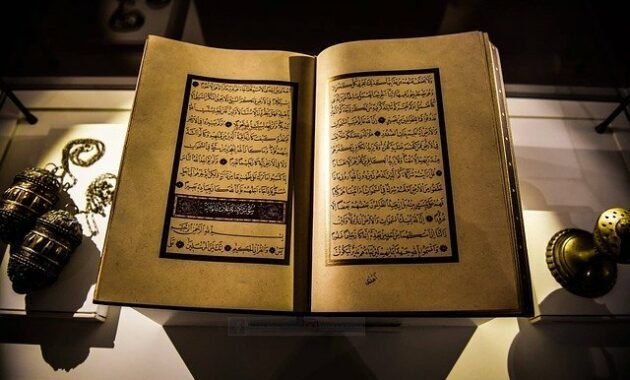
    Therefore, do not be surprised if starting from toddlers, children have started to be introduced to this language. In fact, this higher need is also accompanied by more and more English learning facilities. You can learn from anywhere, either through books or the internet.

    But when you want to start learning a language, a dictionary is an important thing to have. Today’s most popular English dictionary can be the most appropriate recommendation for you to develop your language skills. To find out what these dictionaries are, see the following reviews.

    5 Most Popular English Dictionary Recommendations

    1. Updated Edition Indonesian English Dictionary – John Echols & Hasan Shadily

    The first most popular English dictionary is the English Dictionary by John Echols and Hassan Shadily. This dictionary was first published in 1975, and is one of the best-selling dictionaries on the market and is widely used in public schools. Apart from the completeness of its contents which is mentioned number one, this dictionary has also gone through several revisions. So the quality of the filling can not be doubted.

    For beginners who want to master a lot of vocabulary, this updated edition dictionary is the right choice. The contents are not only word translations, but also derivatives of verbs, adjectives, nouns, and so on.

    Previously, Hasan Shadily was a news reporter, while John Echols was a former United States soldier. Both of them have very good English skills, so they collaborated to create a dictionary. This popular Indonesian English dictionary has been published three times, namely in 1975, 2014, and 2015.

    2. Indonesian English Dictionary Third Edition Updated – John M. Echols, Hasan Shadily

    For beginners who want to learn English, a dictionary is an important resource. If https://www.Sinaumedia.com/products/kamus-indonesia-inggris-edisi-ketiga-yang-diperbarui-hc-1 you want to really study, not only the English – Indonesian dictionary that can be used, you can also using Indonesian – English dictionary.

    One of the recommended dictionaries for you to use is the Indonesian English Dictionary by John Echols and Hassan Shadily. Everyone’s comfort in learning a language is different. Some prefer an English Indonesian dictionary, some use an Indonesian English dictionary. You can just choose one of them.

    The Indonesian English dictionary, which was published in 2014 and 2015, is equipped with a large number of vocabularies. Not only that, you will also find the meaning of words and their derivatives, such as verbs, nouns, adjectives, and so on. So, for those of you who are still beginners, this dictionary will be very helpful in learning every word.

    Especially at the beginning of learning, of course you will more often make essays in Indonesian which are then translated into English as a learning method.

    3. Paperback Oxford English Dictionary – Oxford University Press

    The Paperback Oxford English Dictionary is the next most popular English dictionary that you must have. This Oxford paperback is also published directly by Oxford University Press. This dictionary is one of the best English dictionaries ever. The contents in it contain a very complete and in-depth discussion.

    However, the level of discussion is indeed quite difficult, especially for those of you who have not mastered basic English. So this dictionary is more intended for those who have mastered basic English and want to improve their language skills. By studying this dictionary, your skills are guaranteed to develop properly.

    In this Oxford paperback, there are around 120 thousand English words, along with long definitions. Through this dictionary, not only words can be learned, but also the meaning and definition of these words. Including the use of the word or the right time to use the word. Wow, that’s perfect, isn’t it? Therefore, you must have this book with 1056 pages if you want to learn more about English.

    4. English Pocket Dictionary – Kirizki Setiana

    The next dictionary that can also improve your English speaking skills is the pocket English dictionary by Kirizki Setiana. Don’t get me wrong, Indonesians also have extraordinary talent. This pocket dictionary was created by Kirizki who is an Indonesian.

    The dictionary published by Quantum Science contains word meanings, pronunciation, spelling, and so on. With its slim shape, it will be easier for you to learn English anywhere. In addition, the quality of the content in it is also not in doubt.

    This pocket dictionary, published in 2018, has a clear and simple explanation. So it’s very easy to understand, even for those of you who are just about to start learning a language. Kirizki’s discussion is not long-winded, so it’s easier to digest.

    In addition, this blue cover book will also improve your ability to learn everyday conversations. This small dictionary is not as complete as the Oxford Dictionary, but the words in it are the words that are used most often. So it is highly recommended for beginners who want to learn English.

    5. Cambridge English Pronouncing Dictionary – Daniel Jones, Peter Roach, Jane Setter, John Esling

    The next Most Popular English Dictionary is the Cambridge English Pronouncing Dictionary. This one book is published directly by Cambridge University Press. This book, published in 2011, is about word pronunciation. For those of you who already feel that you have good English skills, this dictionary is highly recommended to have.

    This dictionary is more specifically for those of you who want to develop your English speaking skills. Especially for learning the pronunciation accent of each word, be it American English or British English accents. This book by Daniel Jones and his team will really help you in learning vocabulary and pronunciation.

    Overall there are about 230 thousand English words, including names and phrases that are equipped with how to pronounce. If you are practicing to improve your speaking skills, it is of course very important to learn accent and pronunciation. So, with this book, you can increase your confidence when you speak. Especially for those who want to use English in the professional realm.

    Tips for Choosing the Right English Dictionary According to Needs

    So that you can maximize your mastery of English according to the stage. Because each dictionary has its own criteria, such as the number of vocabularies, types of entries, completeness, price, and practicality. For those of you who want to buy an English dictionary, here are tips for choosing it.

    1. Select the size of the dictionary based on your needs

    There are two dictionaries that can be selected, one pocket dictionary, and two book dictionaries. Both of these dictionaries can improve language skills. Let’s discuss them one by one. Starting from the Pocket Dictionary, where this dictionary is perfect for those of you who like traveling.

    Once the two islands have passed, besides being able to go on vacation, bringing a pocket dictionary, you can also learn vocabulary while at the same time. The pocket dictionary is small, so you can put it in your pants, jacket or shirt pocket.

    Besides being easy to carry everywhere, you don’t need to doubt the completeness of its contents. The current pocket or pocket dictionary is also very complete. The form is small because the contents are actually more concise, to the point, and are also adapted to sentences that are often used in everyday conversations.

    Even though the contents are not as complete as a book dictionary, they are very effective for beginners who are learning vocabulary that is often used in everyday life. But for those of you who have vision problems, maybe the small writing on a pocket dictionary is not suitable for use.

    If you want a more complete dictionary, then the second choice is a book dictionary. The size is of course much bigger and thicker than a pocket dictionary. Like most other dictionaries, the English book dictionary also has solid, full text, and bold entries.

    This type of dictionary is perfect for you to use for studying at home. Whether it’s to increase vocabulary or to translate English essays or make your own essays from Indonesian to English.

    In addition, the book dictionary does not only contain vocabulary translations. There are already many dictionaries that discuss antonyms, synonyms, and also contain complete lessons on how to use words and make sentences in English.

    2. Choose a dictionary based on the completeness of its contents

    When choosing a dictionary, you should also pay attention to its contents. In addition, you also need to consider the need for using a dictionary. With different thicknesses, this dictionary also has different contents.

    If you are a beginner, you should choose a dictionary that gives the meaning of the word, how to use the word, and also the pronunciation. Then if you have mastered basic English, and want to further improve your speaking skills, choose a dictionary like Cambridge English Pronouncing. The contents of the dictionary are of course much more useful for those of you who want to learn British and American accents.

    A thick dictionary certainly has far more complete contents. And usually also comes with a complete discussion. There are also smaller or thinner dictionaries, usually containing only the definitions of words.

    Or there is also a dictionary that contains discussions about conversations and their responses that are commonly used in everyday English. This kind of dictionary might be suitable for use as a guide for those who like to travel, whether to bid on goods or just ask for addresses. So, don’t forget to look at the contents of the dictionary before buying it.

    3. Pay attention to the age of the dictionary user

    English dictionaries are currently available for all ages, from toddlers to adults. Because now, not only teenagers or adults who want to learn languages. Many young children and parents also want to learn English. So, when buying a dictionary, also look at the age recommendations.

    For children of course the dictionary provided will be much more colorful. The discussion is also very light, because it only introduces the basics. The contents are usually about English objects around them, such as animals, fruit, vegetables, toiletries, school tools, numbers, and others. So that children are more interested, you can also choose a dictionary that has colorful pictures. That way, they will be much more enthusiastic about learning each vocabulary.

    Then for children who have entered the school level, the dictionary needed is even different. The size must be thicker, because the information needed is more and more complex. Especially for students who have entered the junior high school level and equivalent high school level. Moreover, it is during these times that you can encourage vocabulary memorization.

    4. Don’t forget to check reputation and buy authentic dictionaries

    Even the most popular English dictionary today has quite a lot. Moreover, the frills on the titles used are also very tempting, such as “quickly master English”, “Learn a language in 24 hours”, “the most complete dictionary”, and so on.

    Don’t be fooled by the title alone without looking at the quality of the content. Before buying the dictionary, you can look for reviews on the internet first. See who the publisher is, author, reputation, and also the background or review of the dictionary. That way, you won’t be fooled by pirated dictionaries that don’t suit your needs.

    So, those were the recommendations for the most popular English dictionaries that you can use. The use of a dictionary needs to be adjusted to your needs, so don’t just choose it when you buy it.

  • The Meaning or Meaning of Lauhul Mahfudz and Its Characteristics Mentioned in the Qur’an

    The Meaning or Meaning of Lauhul Mahfudz and Its Characteristics Mentioned in the Qur’an

    Lately, many people are talking about the meaning or meaning of lauhul mahfudz. Lauhul mahfudz itself is actually very familiar to many people, especially Muslims. However, do you know the true meaning of lauhul mahfudz?

    This article will explain the meaning and significance of lauhul mahfudz. Not only that, there will also be a discussion of the characteristics of lauhul mahfudz to the part of the relationship with a mate or matters of marriage. Let’s watch it to the end!

    A. Meaning of Lauhul Mahfudz

    Lauhul Mahfudz is generally understood by many people as a book that writes down all records regarding destiny and events that occur in the universe. Lauhul mahfudz also has the nature of being awake and already existed and was created before the creation of the universe and humankind began.

    Literally, the term Lauhul Mahfudz comes from Arabic, namely the word Lauh which means wide bone and can be written on. Meanwhile, the word Mahfudz itself can be interpreted as that which is preserved. So, these two words can be said to have meaning as a book that is preserved and everything written in it will not be changed or damaged.

    Lauhul Mahfudz himself has several other names, starting from Kitaabun Min Qabli which means the book of decrees, then Umm Al-Kitab which means the main book, then Kitabbim Maknuun which means the preserved book, to the Kitabbim Mubiin which means the real book.

    In the Koran, the word Lauhul Mahfudz has been mentioned up to 13 times. However, the mention of lauhul mahfudz is not clear and complete, because it is only a brief explanation.

    B. The Meaning of Lauhul Mahfudz According to the Scholars

    1. Ibn Manzur

    As previously stated, Ibn Mandzur also said that the word lauh means a wide plinth made of wooden planks. Meanwhile, Azhari also revealed that Lauh can be understood as a plank of wood. And, according to what is contained in the Al-Quran, that in the Qur’an “which is stored” in the Tablets of Mahfuzh.” This can be interpreted as the Al-Quran which is stored by Allah’s will.

    2. Ibn Kathir

    Ibn Kathir Rahimahullah said that what was “stored” in the Lawh Mahfuzh. Tafsir from Ibn Kathir can be interpreted that the Al-Quran is in the highest place and is protected from additions, subtractions, deviations and substitutions.

    3. Ibn Qoyim

    Ibn Qoyim Rahimahullah revealed, that the expression “Mahfudz or the one who is awake” most qiroat experts read it with jar as an attribute for seah. This can be understood if in Lauhul Mahfudz there will be no demons that can enter. Lauhul Mahfudz has been determined to be awake from Satan’s actions, either to increase or decrease.

    In At-Tibyan Fi Aqsamil Qur’an, p. 62 reads, then Allah subhanahu guard the place. Guard against additions, subtractions and substitutions. Keeping the meaning from distortion is the same as protecting the pronunciation from being replaced. And He determines who keeps the letters from addition and subtraction and keeps their meaning from distortion and alteration.

    4. Then, some Tafsir books say that Lauhul Mahfud is the forehead of the angel Israfil or a creature made of green emeralds, or something other than that. However, this opinion has no stipulations so that it includes unseen matters that cannot be trusted. With a note, there is an opinion that comes from the one who gave the revelation to him.

    C. The characteristics of Lauhul Mahfudz

    After knowing the meaning of Lauhul Mahfudz, in this section we will start learning about the characteristics of Lauhul Mahfudz which have been mentioned in many verses in the Koran. Some of the characteristics of Lauhul Mahfudz include the following:

    1. Nothing is left behind or forgotten

    Allah SWT says:

    وَعِنۡدَهٗ مَفَاتِحُ الۡغَيۡبِ لَا يَعۡلَمُهَاۤ اِلَّا هُوَ‌ؕ وَيَعۡلَمُ مَا فِى الۡبَرِّ وَالۡبَحۡرِ‌ؕ وَمَا تَسۡقُطُ مِنۡ وَّرَقَةٍ اِلَّا يَعۡلَمُهَا وَلَا حَبَّةٍ فِىۡ ظُلُمٰتِ الۡاَرۡضِ وَلَا رَطۡبٍ وَّلَا يَابِسٍ اِلَّا فِىۡ كِتٰبٍ مُّبِيۡنٍ

    Meaning:
    And the keys to all that is unseen are with Him; no one knows but Him. He knows what is on land and in sea. Not a leaf falls that He doesn’t know about. There is not a grain in the darkness of the earth nor anything wet or dry that is not written in a clear Book (Lauh Mahfuzh).

    2. All life in the world is recorded in it

    Allah SWT says:

    وَمَا مِنْ دَابَّةٍ فِي الْأَرْضِ وَلَا طَائِرٍ يَطِيرُ بِجَنَاحَيْهِ إِلَّا أُمَمٌ أَمْثَالُكُمْ ۚ مَا فَرَّطْنَا فِي الْكِتَابِ مِنْ شَيْءٍ ۚ ثُمَّ إِلَىٰ رَبِّهِمْ يُحْشَرُونَ

    Meaning:
    And there are no animals on earth and birds that fly on their two wings, but people (also) like you. We have forgotten nothing in the Bible, then to God they will be gathered.

    3. All information about humans is recorded in it

    Allah SWT says:

    {ق وَالْقُرْآنِ الْمَجِيدِ (1) بَلْ عَجِبُوا أَنْ جَاءَهُمْ مُنْذِرٌ مِنْهُمْ فَقَالَ الْكَافِرُونَ هَذَا شَيْءٌ عَجِيبٌ (2) أَئِذَا مِتْنَا وَكُنَّا تُرَابًا ذَلِكَ رَجْعٌ بَعِيدٌ (3) قَدْ عَلِمْنَا مَا تَنْقُصُ الأرْضُ مِنْهُمْ وَعِنْدَنَا كِتَابٌ حَفِيظٌ (4)

    It means:

    Qaf. For the sake of the glorious Qur’an. (They did not accept it) they were even astonished because a warner had come to them from their own (amongst their own), so the disbelievers said, “This is something very miraculous.” What are we after death and after becoming soil (we will come back again)? That is an impossible return. Indeed, We already know what the earth destroys from their (bodies), and with Us there is also a book that keeps (records).

    4. Allah’s sentence that is in it will never end

    Allah SWT says:

    وَلَوْ أَنَّمَا فِى ٱلْأَرْضِ مِن شَجَرَةٍ أَقْلَٰمٌ وَٱلْبَحْرُ يَمُدُّهُۥ مِنۢ بَعْدِهِۦ سَبْعَةُ أَبْحُرٍ مَّا نَفِدَتْ كَلِمَٰتُ ٱللَّهِ ۗ إِنَّ ٱللَّهَ عَزِيزٌ حَكِيمٌ

    Meaning:
    And if the trees on earth were pens and the sea (become ink), seven seas (again) were added after (dry) it, surely the words of Allah would not be exhausted (written). Verily Allah is Mighty, Most Wise.

    D. Lauhul Mahfudz A Match That Has Been Determined by Allah SWT

    Many people understand that Lauhul Mahfudz is a term used to reveal the destiny of a person based on the decree of Allah SWT. Due to a decree from Allah SWT, no human being has knowledge of the truth from Lauhul Mahfudz, including the Prophet Muhammad SAW.

    In a book entitled Following the Age Without Turning Away from Religion by M. Aqil said, that a good woman or man will be met with a good mate, while a bad man or woman will also get a bad mate. However, in the process of finding a mate, one still has to make an effort and endeavor to find a mate.

    In a hadith, Rasulullah SAW said about a mate as a reflection of a person. The hadith reads as follows:

    “The souls are likened to pairs of soldiers, those who know each other beforehand will unite and those who deny each other will be at odds.” (Narrated by Bukhari and Muslim)

    E. The essence of Lauhul Mahfudz Matchmaking

    Talking about Lauhul Mahfudz, of course, is incomplete without knowing the nature and position of the soul mate in it. In this section, we will discuss in depth the nature of Lauhul Mahfudz’s mate.

    Lauhul mahfudz mate is actually an absolute provision given to humans. As destiny from Allah SWT, a soul mate has basically been written since 50,000 years ago. This means that before humans were born on earth, destiny related to mate was written first.

    In a hadith, Rasulullah SAW said:

    كَتَبَ اللَّهُ مَقَادِيرَ الْخَلاَئِقِ قَبْلَ أَنْ يَخْلُقَ السَّمَوَاتِ وَالأَرْضَ بِخَمْسِينَ أَلْفَ سَنَة

    “Allah recorded the fate of every creature 50,000 years before the creation of the heavens and the earth.” (HR. Muslim)

    Even though a mate has been set in Lauhul Mahfudz, a devout Muslim still has to fight for his mate. A Muslim is encouraged to always try and try his best to get the best mate for himself.

    In several hadiths, Rasulullah SAW has given several notes to encourage people to choose a good mate. The following are five marriage criteria that must be considered for a Muslim, including:

    1. Women or men who are good in religion

    According to Ahmad Zakarsih in the book Measuring Kufu in Choosing a Mate, in choosing a good potential partner, a Muslim is encouraged to consider his religion. This is in accordance with the hadith of Rasulullah SAW, as follows:

    تنكح المرأة لأربع: لمالها ولحسبها وجمالها ولدينها، فاظفر بذات الدين تربت يداك

    It means:

    “Women are usually married for four reasons: because of their wealth, because of their position, because of their appearance and because of their religion. So, you should choose because of your religion (Islam), because if you don’t, you will surely lose out.” (Narrated by Bukhari-Muslim)

    2. A loving and fertile woman

    تزوجوا الودود الولود فاني مكاثر بكم الأمم

    “Marry a loving and fertile woman! Because I am proud of my many people.” (Narrated by An Nasa’i and Abu Dawud)

    3. Know both religion and morals

    عن أبي هريرة قال رسول الله صلى الله عليه و سلم : إذا أتاكم من ترضون خلقه و دينه فانكحوه إلا تفعلوا تكن فتنة في الأرض وفسيد ع. رواه الحاكم وقال هذا حديث صحيح الإسناد و لم يخرجاه

    “From Abu Hurairah ra, Rasulullah SAW said:” If it comes to you who you approve of his morals and religion, then marry him. If you don’t do it, there will be slander on the face of the earth and extensive damage.” (Narrated by Al-Hakim – his sanad is authentic)

    4. The best decoration for a man is a sholihah woman

    Peace be upon you

    “The world is an ornament, and the best decoration of the world is a Sholehah woman.” (Muslim HR)

    5. Marry an independent woman

    مَنْ أَرَادَ أَنْ يَلْقَى اللَّهَ طَاهِرًا مُطَهَّرًا فَلْيَتَزَوَّجْ الْحَرَائِرَ

    “Whoever wants Allah to be pure and purified, let him marry a free woman.” (Narrated by Imam ibn Majah)

    Thus is the discussion about the meaning of the meaning of Lauhul Mahfudz. Based on the discussion above, we can see that Lauhul Mahfudz is a book that writes down all the records regarding destiny and events that occur in the universe. In addition, Lauhul mahfudz is also awake and has been created before the creation of the universe and humankind began.

  • The Meaning of Unity and Unity of the Indonesian Nation

    Definition of Unity and Oneness – Indonesia is a great nation, has thousands of islands and abundant wealth. In addition, Indonesia has various ethnic groups, cultures and languages. All of that would not unite if the ancestors did not unite the Indonesian nation’s fighting spirit for independence.

    Indonesia won its independence is not a gift given by the invaders, but Indonesia itself is determined to liberate itself. The unity of the Indonesian nation is even included in the 3rd principle of Pancasila, which is used as the ideology and guideline for the life of the nation and state.

    The unity of the Indonesian nation contains elements of the ideals of brotherhood and friendship, filled with an atmosphere of goodness, purity and beauty. The unity and unity of the nation must always be maintained, so that the Indonesian state becomes an independent country. Below will be explained further about the unity and integrity of the Indonesian nation.

    The Meaning of Unity and Unity 

    Simply put, unity means joining, bonding, and assembling several parts into a unified whole. In other words, unity is uniting various patterns into a container so that they become one. The unity of the Indonesian nation is driven by a conscious will to achieve an independent, sovereign, just and prosperous nation. Therefore, we must continue to foster national unity.

    In the unity and oneness of the nation, we must always be united. History teaches how important unity and unity is. In the past, colonialists succeeded in colonizing Indonesia for hundreds of years. This is because we, the Indonesian people, have not been able to unite, the people have not understood the unity and integrity of the nation. This negligence was of course exploited by the colonialists to continue to divide Indonesia.

    The concept of the unity of the Indonesian nation includes regional and social unity. The territorial unit of the Indonesian nation includes land, sea and air units. Based on the concept of the archipelago’s insight as territorial politics, Indonesia is an archipelagic country, a country that is mostly ocean and is surrounded by large and small islands. The territorial waters become the main area, not just a complementary area. The sea becomes a part that unites with the land, not as a separator between one island and another.

    The unity of the nation in the social aspect is manifested in several aspects of life, namely political, economic and socio-cultural unity. The embodiment of the concept of national unity in political unity means acknowledging that the integrity of the national territory and all its wealth is one territorial unit, one unit of the entire nation which belongs together. The Indonesian nation consists of various tribes, languages, and embraces various religions, forming a unified national unity.

    Unity in the political field means that psychologically the Indonesian people must feel the same fate and have the determination to realize the ideals of the Indonesian nation. In addition, recognizing that Pancasila is the philosophy and ideology that is the foundation and guide for the nation to achieve its goals. Understanding that the Indonesian nation must coexist in harmony with other countries and participate in bringing order to the world.

    In economic unity, realization begins with acknowledging that the wealth owned by the Indonesian nation is shared capital and also the necessities of people’s daily life must be available equally from Sabang to Merauke. The level of economic development must be balanced in all regions of Indonesia, without eliminating the characteristics possessed by each region in Indonesia. Economic life in all regions of Indonesia is a unit that is carried out together based on the principle of kinship.

    The embodiment of a single socio-cultural unit encompassing a diverse Indonesian society is one, having a harmonious, balanced and harmonious life. Two, Indonesian culture is one unit, even though the existing cultural patterns are very diverse. This cultural diversity is a wealth that belongs together and is the basis for the development of a nation that can be enjoyed by the people of Indonesia.

    The Benefits of Unity and Unity 

    1. Strengthen national identity
    2. Strengthening national resilience so that it is ready to face threats or disturbances from enemies.
    3. Unity and oneness will create a harmonious life in community life.
    4. Mutual cooperation will be carried out well.
    5. The sense of helping each other and working together is always ingrained in everyday life.
    6. Harmony and hospitality is always maintained.
    7. Conflicts in social life can be avoided.
    8. Can overcome the differences that exist with full awareness.
    9. National development can run smoothly and safely.
    10. Facilitate the advancement of the nation in various fields.
    11. The national goals stated in the preamble of the 1945 Constitution are easier to achieve.
    12. The creation of a peaceful and safe atmosphere in the life of the nation is due to the fact that the people highly uphold solidarity and tolerance.
    13. Interaction between people becomes more familiar.
    14. Avoiding quarrels or hostility in Indonesian society.
    15. People feel safer and more comfortable.

    Factors Driving the Unity and Unity of the Indonesian Nation 

    1. A sense of pride and love for the country 

    A unified country is the main factor in the success of the development being carried out. It is the same as the State of Indonesia which is in the process of being developed in all fields, this of course requires the unity of the Indonesian people. A development program will be carried out well if the conditions of a country are not divided and there are no conflicts among its citizens. Therefore, the unity and integrity of the Indonesian nation has an important role in determining the success of the development that is being carried out.

    2. Aspirations of the Nation

    The unity and unity of the state also has an important role in increasing the nation’s self-esteem in the presence of other countries. Other nations and countries will respect our nation, and will not dare to interfere in our country’s affairs. Thus, our own nation is not easy to be divided if our people mutually reinforce the unity and integrity that exists in our country. If our nation is divided, then other countries will consider our nation low and easy to colonize again.

    3. Mutual Respect and Appreciation

    The unity of the Indonesian nation is something that must be maintained and strengthened. We as a society must avoid things that can divide our nation. For example, demeaning other ethnic groups or assuming that our own tribe is the best among other tribes. We should value and respect each other. Apart from that, we must also foster a sense of brotherhood with fellow Indonesians so that the unity and integrity of our country is maintained.

    4. The Desire To Unite

    The unity and unity of the country is strengthened by three factors, namely the Youth Pledge, Pancasila and Bhinneka Tunggal Ika. These factors unify the Indonesian nation. These three factors can unite the differences and diversity that exist in the life of the Indonesian people. Differences ranging from language, ethnicity, religion and others can be unified by carrying out the basic values ​​contained in the Youth Pledge, Pancasila and Bhinneka Tunggal Ika.

    The Youth Pledge was the first oath voiced on 28 October 1928 in Batavia. The youth oath is a major milestone in the history of Indonesian independence. This oath is considered as a spirit trigger to realize the ideals of Indonesian independence. The youth oath affirms that the Indonesian homeland, the Indonesian nation and the Indonesian language are the ideals of Indonesia.

    The term Youth Pledge did not appear on the day of the congress, but was given afterwards. The youth oath reads:

    “We, sons and daughters of Indonesia, acknowledge that we have one blood, the land of Indonesia.”

    “We, sons and daughters of Indonesia, claim to be one nation, the Indonesian nation.”

    “We, sons and daughters of Indonesia, uphold the language of unity, the Indonesian language.”

    The formulation of this youth oath was written by Muhammad Yamin on a piece of paper given to Soegondo. The paper was given when Mr. Sunario was making a speech. Soegondo read out the contents of the Youth Pledge which were then explained in more detail by Muhammad Yamin.

    The Youth Oath Pledge is an encouragement for the Indonesian nation as well as providing other benefits. The Youth Pledge unifies the family relations and brotherhood of the Indonesian people. The Youth Pledge becomes a builder in a harmonious social life. In addition, the Youth Pledge also raises awareness that a threat to one island means a threat to all Indonesian people.

    5. Pancasila

    Pancasila is a tool to strengthen the unity and integrity of the Indonesian nation. This is because Pancasila has universal characteristics. What is meant by universal or comprehensive is that the values ​​contained in Pancasila are not only created for one ethnic group, not intended for adherents of certain religions, but become guidelines for the Indonesian people regardless of differences in nationality, religion, culture, language and so on. .

    Pancasila is an ideological pillar derived from Sanskrit. Panca which means five and Sila which means principle. The journey of formulating Pancasila is a long journey. Initially, on March 1, 1945, the Investigative Body for Preparatory Work for Indonesian Independence was formed. The Chairman of this Agency, Dr. Radjiman initially asked the question, ‘What is the basis for the Indonesian state that will be formed?’.

    There are several figures who propose the basics of Pancasila, namely Muhammad Yamin, Ir. Soekarno and Soepomo. On June 1, when Soekarno revealed the basic formulation of the state, the term Pancasila was put forward for the first time. Soekarno also explained what Pancasila meant. He said that it was from these five foundations that the ancestors founded the eternal and eternal Indonesian nation. After the Pancasila formulation was accepted, finally Pancasila was stipulated in several documents.

    These documents are the Jakarta Charter, the preamble to the 1945 Constitution, the Preamble to the Constitution of the United States of Indonesia, the Preamble to the Provisional Basic Law and the Presidential Decree of 5 July 1959. Pancasila as the basis of the state also has several functions and positions, namely Pancasila as the soul of the Indonesian nation; Pancasila as the personality of the Indonesian nation; Pancasila as the way of life of the Indonesian nation; Pancasila as the basis of the Indonesian state; Pancasila as the source of all sources of state law; Pancasila as the nation’s sublime agreement; and Pancasila as the ideals of the Indonesian nation.

    Attitudes and behavior that are guided by Pancasila are highly expected of every Indonesian citizen. The measurement of behavior for the first to the fifth precepts of Pancasila is in accordance with the measurement. Precept 1, attitude towards God, Precept 2, identification with humanity, Precept 3 patriotism, Precept 4 Support for democratic principles and Precept 5 humanitarianism. This Pancasila measurement is in line with the virtues of character, such as humanity, courage, transcendence, and justice.

    6. Unity in Diversity

    Another factor that strengthens the unity and integrity of the Indonesian nation is Bhinneka Tunggal Ika. Bhineka Tunggal Ika is the motto of the Indonesian people. This motto is written on the Indonesian state symbol, Garuda Pancasila. The motto of the Indonesian nation comes from the Old Javanese language which means ‘different but still one’. Bhineka which means various kinds, Tunggal which means one, and Ika which means that.

    This motto is a description of the unity and integrity of the Indonesian nation which consists of various cultures, races, ethnicities and also religions. This motto is a quote from an ancient Javanese book, namely the Sutasoma Book, which was composed by Mpu Tantular during the Majapahit kingdom under the reign of King Rajasanagara or better known as Hayam Wuruk. The Sutasoma Book is a special book because it teaches tolerance between Hindus and Buddhists.

    Bhineka Tunggal Ika is the motto for encouraging the Indonesian people to realize the unity of the Indonesian nation in the midst of the storms of differences that each of its people has. The unity and oneness of the Indonesian nation will always be maintained if the values ​​in the Youth Pledge, Pancasila and Unity in Diversity are always applied by all levels of Indonesian society in the life of the nation and state.

    Factors Inhibiting the Unity and Unity of the Indonesian Nation 

    1. The diversity that exists in Indonesian society 

    The diversity that has always existed in the life of the Indonesian people is one of the factors hindering the unity and integrity of Indonesia if it is not accompanied by an attitude of mutual respect, tolerance and mutual respect. Cultural differences certainly give rise to differences of opinion which can also foster excessive regional feelings which can lead to conflicts between tribes.

    2. Geographic 

    Indonesia is a country consisting of thousands of islands. Thousands of islands, of course, also have different characteristics. The area that has the potential to separate itself from the country is the area farthest from the Capital area. In addition, areas that have influence from border countries or neighboring countries and can also be areas that have a large global influence such as tourist areas or those that have abundant natural wealth. From the different geographical conditions, this could be a factor that weakens the unity and unity if the inequality and inequality of development cannot be handled.

    3. Appears Symptoms of Ethnocentrism 

    Ethnocentrism is an attitude that really highlights the advantages of its culture and views the culture of other people. If this ethnocentric attitude is not overcome, of course it will weaken the unity and integrity of the nation.

    4. Weak Cultural Values 

    A strong foreign culture that weakens the nation’s cultural values, either directly or indirectly, can be a factor that weakens the unity and integrity of the nation. The direct influence of foreign culture, for example, through the elements of tourism. The influence of foreign culture indirectly, for example through print media, even electronic.

    5. Uneven Development 

    The development process that is only focused on certain areas can be one of the factors that weakens the unity and integrity of the nation. This of course will lead to disparities in various sectors.

  • The Meaning of Trias Politica and Its Application in the Indonesian Government System

    Trias Politica – A country can be said to be running well if there is a legal territory or territory, in which it has a legitimate government, is recognized, sovereign, and is given legal power to regulate its people. Legitimate power here means that a sovereign government is representative of all the people and exercises power at the will of the people.

    Power itself is authority over something or to determine something (to command, represent, manage, and so on). The government in this case exercises power over the will of the people, which means that based on the consensus contained in the Preamble to the 1945 Constitution of the Republic of Indonesia it has been agreed that the people give authority to the government to govern, represent and manage government affairs.

    The division or separation of powers is often known as the ” trias politica “. This term comes from the Greek, namely tri which means “three”, as which means “axis” or “center”, and politica which means “power”. The definition of trias politica is a teaching which assumes that state power consists of three kinds of power, namely legislative, executive and judicial.

    Legislative power is the power to make laws, executive power is the power to implement laws, and judicial power is the power to prosecute violations of laws.

    Originator of the Trias Politica Concept

    What is Trias Politica ?

    The term trias politica comes from the Greek which means “triad politics”. In simple terms trias politica is a political concept which means separation of powers. According to Wahyu Eko Nugroho in his journal entitled Implementation of Trias Politica in the Government System in Indonesia , trias politica is an idea that a sovereign government must be separated between two or more independent strong units. The goal is to prevent absolute state power.

    The concept of trias politica was first put forward by John Locke, a British philosopher who was later developed by Montesquieu in his book entitled L’Esprit des Lois. This concept divides a state government into three types of powers, namely executive, legislative, and judicial. Indonesia as our beloved homeland is a democratic country that adheres to this concept.

    Montesquieu, whose full name was Charles-Louis de Secondat, Baron de La Brède et de Montesquieu (18 January 1689–10 February 1755), was a French political thinker who lived during the Age of Enlightenment (English: enlightenment ) . He is famous for his theory of separation of powers which has been widely adapted in discussions on government and implemented in many constitutions around the world. He played an important role in popularizing the terms “feudalism” and “Byzantine Empire”.

    Montesquieu is best known for his trias politica (separation of state power into three) teachings, namely the executive (executing laws), the legislature (making laws), and the judiciary or judiciary (monitoring the implementation of laws).

    According to Montesquieu, the trias politica  includes:

    1. Executive Powers

    Executive power is an institution that implements laws. The executive branch is led by a king or president and his cabinet. Not only implementing laws, this institution also has several authorities.

    According to Miriam Budiardjo, the executive branch has diplomatic, judicial, administrative, as well as legislative and military powers. Diplomatic authority is the authority to carry out diplomatic relations with other countries, while judicial authority is the authority to grant clemency and amnesty to citizens who violate the law.

    Meanwhile, administrative authority is the authority to implement laws and regulations in state administration. Through its legislative powers, a president or minister can make laws with the legislature. The executive branch also has the authority to regulate the armed forces, declare war when necessary, and maintain state security.

    2. Legislative Power

    Legislative power is an institution established to prevent the arbitrariness of the king or president. The legislature which is the representative of the people is given the power to make laws and enact them. Not only that, this institution is also given the right to ask for information on policies of the executive branch that will be implemented or are being implemented.

    In addition to requesting information from the executive branch, this body also has the right to investigate itself by forming an investigative committee. The right to vote of no confidence is also owned by this institution. This right is a right that has great potential to bring down the executive branch.

    3. Judicial power

    Judicial power is the power to control all state institutions that deviate from the laws that apply to that country. The judiciary was formed as a means of law enforcement, the right to examine materials, the settlement of disputes, and the right to pass legal regulations or cancel regulations if they are contrary to state principles.

    Application of Trias Politica in Indonesia

    In the following, we explain one by one the application of Trias Politica in Indonesia based on each division of power:

    1. Executive Powers

    Executive power is the power to carry out laws and the wheels of government. This power in Indonesia is held by the president. However, bearing in mind that it is impossible to carry out law enforcement activities alone, the president has the authority to delegate executive tasks to other government officials who help him, namely ministers.

    2. Legislative Power

    Legislative power is the power to make laws. There are three institutions that are given legislative authority in Indonesia, namely the People’s Consultative Assembly (MPR), the People’s Representative Council (DPR), and the Regional Representatives Council (DPD).

    3. Judicial power

    Judicial power is the power that is obliged to defend the law and has the right to provide justice to its people or simply called judicial power. Article 24 paragraph (1) of the 1945 Constitution states that the judicial power is an independent power to administer justice to uphold law and justice.

    The judicial function in Indonesia is carried out by the Supreme Court (MA) and the Constitutional Court (MK). The Supreme Court is the court of cassation or the last and highest state court, one of whose functions is to foster uniformity in the application of law through cassation decisions and judicial review. Meanwhile, one of the powers of the Constitutional Court is to review laws against the Constitution.

    It should be noted, in addition to the three divisions of power mentioned above, in Indonesia there is also an examinative power as mandated in Article 23E paragraph (1) of the 1945 Constitution, namely as a power that functions to audit state finances, namely the Audit Board of the Republic of Indonesia (BPK).

    A country can be said to be running well if there is a legal territory or territory, in which it has a legitimate government, is recognized, sovereign, and is given legal power to regulate its people. Legitimate power here means that a sovereign government is representative of all the people and exercises power at the will of the people.

    Power itself is authority over something or to determine something (to command, represent, manage, and so on). The government in this case exercises power over the will of the people, which means that based on the consensus contained in the Preamble to the 1945 Constitution of the Republic of Indonesia it has been agreed that the people give authority to the government to govern, represent and manage government affairs.

    When running the wheels of government, the government needs a “government system”. The government system is a combination of two terms, namely “system” and “government”. The system is a whole consisting of several parts that have a functional relationship between the parts and the relationship to the whole, so that the relationship creates dependence between the parts which if one part does not work properly will affect the whole.

    Meanwhile, governance in a broad sense is all the affairs carried out by the state in carrying out people’s welfare and the interests of the state itself; so it is not interpreted as a government that only carries out executive duties, but also includes other tasks including the legislature and the judiciary.

    When discussing the system of government, it is closely related to the distribution of powers and the relationship between state institutions that exercise the powers of the state, in order to carry out the interests of the people, namely achieving the national ideals contained in the Preamble to the 1945 Constitution of the Republic of Indonesia, Paragraph IV, namely protecting all of Indonesia’s bloodshed, promoting public welfare, educating the nation’s life, and participating in carrying out world order based on freedom, eternal peace and social justice.

    State institutions in carrying out state powers need to be limited so that they are not arbitrary, do not overlap in authority, and do not concentrate power in one institution. This is what makes it necessary to have a division or separation of powers. This is intended solely to guarantee the human rights of its citizens so that they are not treated arbitrarily by the authorities.

    The statement above is in line with the expression of Lord Acton ” power tends to corrupt, but absolute power corrupts absolutely ” (humans who have power tend to abuse it, but humans who have unlimited power will definitely abuse it). Therefore, power must be divided or separated so that it is not abused.

    The division or separation of powers is often known as the ” trias politica “. The concept of trias politica was put forward by a French philosopher named Montesquieu. Trias politica comes from the Greek tri meaning “three”, as meaning “axis” or “center”, and politica meaning “power”.

    The definition of trias politica is a teaching which assumes that state power consists of three kinds of power, namely legislative, executive and judicial. Legislative power is to make laws, executive power is the power to implement laws, and judicial power is the power to judge violations of laws.

    The concept of trias politica is a normative principle that powers should not be handed over to the same person to prevent abuse of power by those in power. That is, the concept of trias politica from Montesquieu which was written in his book entitled L’esprit des lois ( The Spirit of Laws ) offers a concept regarding state life by carrying out a separation of powers which are expected to be mutually exclusive in equal positions, so that they can control and balance each other. each other ( check and balance ).

    In addition, through this concept it is hoped that it can limit power so that there is no concentration of power in one hand which will later give birth to arbitrariness. In terms of the division of powers, state institutions or government agencies can be divided into two parts, namely:

    1. Vertically, namely the division of power according to its level. The point is the division of power between several levels of government, for example between the central government and regional governments in a unitary state.
    2. Horizontally, namely the division of power according to its function. That is, this division focuses more on the distinction between legislative, executive and judicial functions of government.

    The division of powers referred to in this study is the horizontal division of powers, namely the division of powers based on the nature of the tasks of different types and functions which give rise to various kinds of institutions within a country (legislative, executive and judicial).

    Almost all countries in the world apply the concept of Trias Politica from Montesquieu. What about the country of Indonesia? To see whether the Indonesian government system applies the concept of trias politica or not, it can be seen in the Indonesian state constitution, namely the 194 Constitution of the Republic of Indonesia. , that is both legislative, executive, and judiciary into state institutions or government agencies.

    It should be understood that the Indonesian state constitution has been amended. Amendment is the process of changing the provisions of a regulation, either in the form of adding, subtracting or removing certain regulations. The amendments to the 1945 Constitution of the Republic of Indonesia have been amended four times, namely:

    1. The first amendment was carried out on 14 October 1999–21 October 1999 and was determined through the MPR General Session.
    2. The second amendment was carried out on 7 August 2000–18 August 2000 and was adopted at the MPR Annual Session.
    3. The third amendment was implemented on 1 November 2001–9 November 2001 and was determined at the MPR Annual Session.
    4. The fourth amendment was implemented on 1 August 2002–11 August 2002 and was adopted at the MPR Annual Session.

    In connection with the amendments to the Constitution of the Republic of Indonesia, the division of powers over state institutions or government agencies in Indonesia has also undergone changes. Theoretically, these changes will at least bring about structural changes and state administration mechanisms.

    Implicitly, both before and after the amendment to the 1945 Constitution, the concept of Montesquieu’s trias politica was applied in the system of government of the Republic of Indonesia, but the application of the concept was not absolute . executive, and judiciary.

    The division of powers based on state functions in the system of government of the Republic of Indonesia based on the 1945 Constitution before the amendment turned out to be not only the legislature (MPR and DPR), the executive (president) and the judiciary (MA). However, apart from these three functions, they are still divided into consultative powers (DPA) and examining powers (BPK).

    As for the division of powers based on state functions in the system of government of the Republic of Indonesia based on the 1945 Constitution after the amendment, it turns out that it is not only legislative (MPR, DPR and DPD), executive (President) and judiciary (MA and MK), but is still divided into the Examinative Authority (BPK).

    Conclusion

    The results of a comparative study regarding the application of the concept of trias politica in the system of government of the Republic of Indonesia on the 1945 Constitution, before and after the amendment, it can be seen that the division of powers based on state functions in the system of government of the Republic of Indonesia based on the 1945 Constitution before the amendment was not only the legislature (MPR and DPR), the executive (president) and the judiciary (MA), but apart from these three functions they are further divided, namely into consultative power (DPA) and examination power (BPK).

    As for the division of powers based on state functions in the system of government of the Republic of Indonesia based on the 1945 Constitution after the amendment, it turns out that it is not only legislative (MPR, DPR and DPD), executive (President) and judiciary (MA and MK), but is still divided into the Examinative Authority (BPK).

    The division of power from one period to another always changes according to the development of society. Therefore, it is necessary before making changes (amendments) to be discussed and consolidated with due regard to the ius constitutum and ius constituendum , so that they can accommodate any problems that arise.

    Regarding changes (amendments) in Indonesia, there have been four changes in a span of four years, namely from 1999 to 2002; short span of time and there is talk of a fifth change. If this is true, the substance of the change should be adapted to the constitutional legal culture that is in accordance with the Indonesian nation.

    Legal basis

    • The 1945 Constitution of the Republic of Indonesia .
  • The Meaning of the Youth Pledge for Young Generation in the Digital Age

    The meaning of the Youth Pledge – The meaning of the Youth Pledge which was pledged on October 28, 1928 should continue to be updated so that it is in accordance with the times. M. Yamin, Amir Sjarifuddin, Sugondo Djojopuspito, WR Soepratman, Johanes Leimana, and other youths succeeded in providing a strong foundation for Indonesia’s younger generations. They instilled a spirit of unity, pride and wholeness in the Youth Pledge.

    As the next generation, we cannot eliminate the positive values ​​from the spirit of the Youth Pledge. Therefore, it is fitting for us to understand the meaning of the Youth Pledge so that we can maintain and pass on the values ​​contained therein.

    While it won’t be easy, that doesn’t mean it’s an impossible task. Moreover, the Youth Pledge has actually become the identity of Indonesian citizens. The culture of gotong royong, mutual respect, upholding harmony, and maintaining unity will never completely disappear within us.

    In this article, I will invite all readers to review the meaning of the Youth Pledge from the most important to its developments in the digital era.

    The Main Meaning of the Youth Oath

    The Youth Pledge is one of Indonesia’s sacred historical milestones, without the pledge of these youths, the spirit of independence in society might have existed much longer. If you look at the current conditions, many Indonesian youths do not understand the importance of the meaning of the Youth Pledge.

    This is reflected in the daily lives of today’s younger generation, who, in a way, tend to be individualistic and do not have a solid foundation. To overcome this requires long steps, but understanding the most important meaning of the Youth Pledge can be a good start.

    One Motherland

    The first paragraph of the Youth Pledge states that Indonesian youth only have one homeland, namely Indonesia. Whatever the region of origin, we both breathe air, grow and develop in Indonesia. In this country, we cry for the first time when we are born and here we will spend all the time until we die later.

    In the past, before the youth oath was read, the Indonesian people were only proud of the superiority of their own region. They defend their area from invaders on their own. Therefore, the Dutch troops could control Indonesia quickly.

    After the youth oath was read, awareness of a single motherland began to emerge. The spirit of unity was agitated and the fighters fought to defend all regions in the country, without discrimination at all.

    This is what we have to take care of at this time. The spirit of unity regardless of which region is better and worse because Indonesia is vast. The 17,000 islands that stretch from Sabang to Merauke are the motherland that we must protect as much as possible.

    This spirit can embody a strong, sincere and authentic sense of love for the homeland. If we don’t love Indonesia, who will? Do you want culture, history, territory, and everything in this country to be recognized by other nations?

    One Indonesian Nation

    Towards the start of the II Youth Congress, the youth who attended stayed in dormitories and rented houses that were close to the building where the Congress was being held. In this place, they gather and do various activities together.

    After that, the youths who came used the name “national youth” as their identity. Not Sundanese youth, Javanese youth, or anything else. They describe the unity of various tribes in Indonesia, in accordance with the motto of this country ” Unity in Diversity “.

    Differences in ethnicity and customs should not be seen as a drawback, because it will only bring this nation into disunity. On the contrary, this diversity is precisely an advantage that we should be proud of. We have succeeded in uniting hundreds of ethnic groups in one nation, namely the Indonesian nation.

    One Indonesian

    One of the most prominent results of the Youth Pledge is the use of Indonesian as the language of unity. The youths who were present at that time realized that it would be difficult for the Indonesian people to unite if there were still obstacles in communication.

    Yes, try to imagine, how could the fighters formulate a strategy to fight the invaders if they were constrained by language differences? There was no time to learn all the regional languages ​​spoken at that time. The most appropriate way out is to use the same language to communicate.

    Moh even. Yamin, who served as secretary during the Second Youth Congress, had to translate speakers who used Dutch. If Indonesian is not set to be the unified language, maybe this article should be translated into hundreds of regional languages ​​so that all readers of the sinaumedia Blog can understand it.

    There are many more lessons that can be taken from the event of the Youth Pledge. You can find it in the book Caring for Indonesia written by Lukman Hakiem.

    This book is able to tell very personal things and memories that may not exist in other history books.

    Interpreting the Youth Pledge in the Digital Age

    The three meanings of the youth oath above are the basic foundation that we must maintain forever. Meanwhile, the application of values ​​and the way we interpret the youth oath must always be adapted to the times. Of course, by still using the existing basic foundation.

    In this way, we can pass on the values ​​and spirit of the Youth Pledge to our children and grandchildren. In this digital era, there are several ways we can interpret the Youth Pledge. Here’s the explanation:

    1. Utilizing technology to produce innovative works

    The rapid development of technology is currently opening up many opportunities for the younger generation who want to contribute to the country. The Covid-19 pandemic played a role in encouraging a sense of unity and togetherness.

    The younger generation, in these two years, has never stopped working together to help others who have been affected by the pandemic. Both from an economic standpoint, housing, and others.

    Various technological innovations were created to bridge the youth and all Indonesian people. Websites , applications, digital media, learning platforms , delivery services, to marketplaces are proof that the younger generation is able to utilize technology to produce innovative works.

    Indirectly, they have practiced the spirit of maintaining the unity and integrity of the Indonesian nation. Something that has been passed down by the younger generation almost a century ago.

    On the other hand, this breakthrough also helps improve the quality of life and spreads good values ​​to all Indonesian people.

    2. Manage information wisely and fight hoaxes

    Along with the expansion of the internet, the information faucet seems to be wide open. Nowadays everyone can get the necessary information easily. Unfortunately, the presence of hoaxes becomes a ghost that terrorizes people’s lives.

    Children, youth, adults, and the elderly can be consumed by the fake news they find on the internet. This is where the task of the younger generation who are more familiar with technology is needed.

    The younger generation must be the bulwark of defense as well as the main spearhead in fighting hoaxes . Therefore a critical attitude towards oneself and the surrounding environment is absolute. We must play an active role in teaching parents and younger siblings about hoaxes .

    At least, raise awareness about freedom of information and critical attitude towards them. Give an example of how to manage the information obtained. If necessary, teach how to use it as an opportunity to improve the quality of life.

    3. Appreciate and respect others

    Indonesia had experienced a crisis of tolerance for several years. Discrimination and polarization in society has strengthened to an alarming point. Currently, Indonesia is slowly starting to return to being a country that upholds a culture of mutual respect and respect.

    As the younger generation, we must maintain this culture as strong as possible so that there will be no more tolerance crises in the future. Our predecessors have proven that by being united, the Indonesian nation succeeded in expelling the invaders. So what makes us have to be separated again?

    Differences in religion, thought, ethnicity, culture, traditions, thoughts, and others should not be seen as weaknesses that can be exploited. On the contrary, these differences are actually pieces of a puzzle which, if put together, will become a strong Indonesia.

    By appreciating and respecting others, we have practiced the same spirit of unity as the previous younger generation.

    4. Using domestic products

    In the internet era like now, product marketing runs very fast. Many large companies consider Indonesia as a potential market that must be prioritized. Hence, some of them often present the latest products in Indonesia.

    At the same time, domestic products are also surfacing with the help of digital marketing. Competition to grab consumers’ attention is getting tougher, companies as producers cannot only rely on one marketing strategy.

    Unfortunately, not a few young people think that domestic products are not of good quality compared to foreign products. As a result, products made in Indonesia are often underestimated. In fact, there are already many domestic products whose quality is no less, or even better, than foreign products.

    Our duty here is to increase the love for the sweat of our brothers and sisters. This is done by appreciating more and not looking down on domestic products.

    In this way, we have helped support the people’s economy and appreciate the work of the Indonesian people.

    5. Maintain Indonesian and regional languages

    Indonesian is a heritage that we must protect. One way is by using good and correct Indonesian to communicate. In addition, we must preserve the local language.

    It is true, nowadays we are required to master foreign languages ​​in order to get information and improve self-quality. However, Indonesian and regional languages ​​should not be forgotten. After all, both are the identity of the Indonesian nation.

    Some people find it easier to express themselves in a foreign language, while others feel that Indonesian is not very important to learn because it is often used in everyday life. But in fact, there are still many people who don’t know how to use good and correct Indonesian. The same goes for regional languages.

    This alarming condition will not change if we do not start studying Indonesian and regional languages ​​seriously. Remember, Indonesian allows us to make friends with more people, without having to learn all the regional languages.

    Ivan Lanin through his book Xenoglosophilia: Why English? highlights this and tries to make his readers aware that using good Indonesian is not difficult.

    6. Use social media wisely

    Social media cannot be separated from the life of Indonesian people. Like any other technology product, there are positive and negative sides to social media – depending on how we use it.

    On the positive side, social media can be a place to learn new knowledge that is not taught in schools. Especially those related to the digital world. Content creators and companies are competing to present educative and useful content to their audience.

    On the negative side, social media can also be a medium for spreading hoaxes, hate speech, and even fraud. Often criminals on social media disguise themselves in such a way that it is difficult to trace them. After there is a victim, then his true identity is revealed.

    Seeing conditions like this, the younger generation must play an active role in spreading positive messages and educating the public regarding the proper and correct use of social media. This is part of the effort to protect Indonesia’s homeland and national unity.

    7. Preserving native Indonesian culture

    Some say, youth is the right time to try many things and explore one’s abilities. Only by capitalizing on high curiosity, one can study one field until it is proficient.

    We can channel this passionate enthusiasm to learn Indonesian original culture and preserve it. In fact, Indonesian culture is not so rigid and can blend with technological advances.

    Just look at Weird Genius’ song Lathi , which went viral in 2020. Reza “Arap” Oktovian, Eka Gustiwarna, and Gerald Liu managed to combine traditional culture with modern music to produce works that are both authentic and unique.

    Behavior Incompatible with the Spirit of the Youth Pledge

    To maintain the unity and oneness of the Indonesian nation, young people like us must avoid behavior that is inconsistent with the spirit of the Youth Pledge. The following are some examples of this behavior:

    1. Individualist or selfish

    Individualism is a behavior that can harm many people. Because people who are selfish often don’t care about the people around them. He may even not care about the interests of the group at all. All that was on his mind was how to make a profit for himself.

    For example, when you are selected as a member of the volleyball team that will compete in the Inter-Class Sports Week, you have the responsibility to give your best so you can become a champion. However, during practice, you prefer to go play with friends. Actions like this can harm your other friends.

    2. Do whatever you want

    Traits like this can lead to indifference and do not want to care about other people’s business. Not infrequently, this attitude also endangers others and himself. For example, at school, you will be shunned by your classmates. Or in your neighborhood, you may be ostracized by your neighbors from association because you are considered unable to respect other people.

    In the end, when you need someone’s help, no one reaches out to you. In fact, humans are basically social beings who need the presence of other humans in their lives.

    If you want to know how great the Indonesian people are, try reading the book Encyclopedia of Tribes in Indonesia written by Dr. Zulyani Hidayah. This book provides basic information about various ethnic groups in Indonesia, some of which have been researched and disclosed, but much more has not been properly identified.

    3. Arrogant

    Arrogant people tend to feel superior to others. This kind of nature will only undermine the unity and integrity of the community group. When someone thinks himself very great, he will look down on others.

    Everyone has the same dignity and worth since birth so that no one is higher or lower. As the same creature, we should respect each other. After all, arrogant people are more difficult to make friends.

    4. Excessive religious fanaticism

    The Indonesian Constitution has guaranteed the freedom of every citizen to embrace the religion he believes in. So that anyone has the right to worship according to his religion.

    Excessive religious fanaticism will lead to religious conflict in society. Because this trait will make you not open to differences in religion, even though you are still in the same religion.

    Didn’t God create humans with reason and mind so they could understand each other? Moreover, every religion basically teaches harmony and instructs its adherents to stay away from evil. A little difference does not necessarily make one religion better than another.

    That is a review of the meaning of the Youth Pledge for the current generation in the digital era. Sinaumed’s can add insight by reading related books available on sinaumedia.com so that you have #MoreWithReading information.

    Author: Gill

    Also read:

  • The Meaning of the Title Al-Amin Rasulullah SAW and His Example

    The Meaning of the Title Al-Amin Rasulullah and His Example – For Muslims, of course, they are very close to and familiar with the figure of the prophet Muhammad SAW, the prophet and the last apostle who became a role model for his people.

    Through his figure who is a role model for his people, it is not surprising that the prophet Muhammad received many titles, one of which is the title Al-Amin. What is the meaning of the title Al-Amin given to the Prophet?

    The Meaning and Meaning of the Title Al-Amin Rasulullah

    Al-Amin means trustworthy. The Prophet Muhammad SAW bears the title Al-Amin because of the Prophet’s exemplary attitude, trustworthiness, trustworthiness and honesty.

    This title was given by the inhabitants of Mecca directly to the Prophet. His example and good demeanor became a role model and were so respected by the people of Mecca that they made them believe in the Prophet Muhammad as the right person to bear this title.

    This exemplary attitude of the Prophet has been proven in various situations. People realized that the Messenger of Allah was an honest person, when he traded he would tell the truth about the condition of his merchandise.

    The Prophet Muhammad would also tell the truth if the goods had defects or things happened that affected his merchandise.

    In addition, the Prophet Muhammad also did not take profit or advantage in determining the selling price. He is also very trustworthy in delivering goods according to the quality that customers want and is known to be very kind when doing trade.

    This has become the habit of the Prophet to always be kind, trustworthy and honest and make many people believe and follow his example.

    Background of the Awarding of Al-Amin Title

    At one time, when the Prophet Muhammad was 35 years old, an incident that was quite large and detrimental occurred in Mecca. At that time there was a big flash flood in the Grand Mosque and damaged the Kaaba. Therefore, the people of Quraysh wanted to repair the damaged Kaaba.

    After the repair of the Kaaba, there was a considerable dispute among the people of Quraysh regarding who was the right person to place the Black Stone. This dispute also found a bright spot when finally one of the oldest people there, namely Abu Umayyah bin Mughirah, provided a solution.

    He said that whoever steps first to the as-Shofa door will determine the placement of the Black Stone later. As if it had become destiny from Allah SWT, the first person to pass through the door was the Prophet Muhammad SAW.

    Immediately after going through it, the Quraysh said that he was Al-Amin, who had been destined and carried the mandate to carry out the laying of the Black Stone. The Quraysh also said that they were pleased if the Prophet placed the Black Stone.

    Together with the tribal leaders, the Prophet Muhammad was helped to put the Black Stone back to its original place. Since then the Prophet was given the title Al-Amin which has been recognized by people.

    The nature and example of the Prophet Muhammad who became a role model

    1. Sidiq

    One of the characteristics and exemplary of the Prophet Muhammad that his people need to emulate is sidiq which means true. In this case it means that everything he did was truthful, honest and without covering it up. The behavior of the Prophet Muhammad was also always in line with his words, making the Prophet always a role model for those around him.

    2. Trust

    In addition to being sidiq, the Messenger of Allah is also a figure who has the character of being trustworthy or trustworthy. This characteristic is a characteristic that all prophets and apostles naturally have, because of their existence as role models for their followers. Must be someone who is trustworthy, who carries out his duties properly and honestly according to what is ordered.

    3. Tablighi

    Tabligh has the meaning of conveying, which means that the Prophet Muhammad had the nature of tabligh as a messenger from Allah SWT to Muslims. The existence of the Prophet Muhammad as the bridge of Allah’s revelation for friends and ummah made him a tabligh figure.

    Having this trait does not merely need to be conveyed, but accompanied by other exemplary qualities such as trustworthiness and sidiq.

    4. Fathonah

    A prophet certainly needs to have the nature of fathonah which means intelligent, because with intelligence he can be a good role model. The intelligence of the Messenger of Allah can help him fight people who are not in his way, and to be able to fight people who have evil intentions against him and his people.


    5. Humble

    Another example of the Prophet Muhammad SAW is that he is known as a very humble person. This trait makes so many people love him for his kindness and non-arrogance.

    The Prophet taught and gave an example of living far from being arrogant, because he realized that there was Allah SWT who was much better than himself. So that as a human being he shows humility and always invites his people to behave the same way so that life becomes easier and calmer.

    6. Obey Allah SWT

    The Prophet Muhammad has also become a person who is so obedient to all the commands of Allah SWT. That is why many Muslims make the Prophet as a role model in their religious life. How commendable behavior of the Prophet Muhammad is very exemplary.

    7. Always give and love

    The Messenger of Allah became such a good figure and always gave and loved fellow human beings. Even when people had bad intentions towards him, he still showed good behavior.

    The Prophet is known as a figure who likes to give alms. Once upon a time, he entrusted some money to Aisyah, his wife. Then later when the Prophet Muhammad began to fall ill, he asked where the whereabouts of the money.

    When he found out that the money was still with Aisyah, he asked Aisyah to distribute the money on the street for people who needed it more. When asked why the Prophet Muhammad made this decision. The Messenger of Allah replied that he would be ashamed if he still had some accumulated wealth.

    8. Manners

    Having good manners is something that is ingrained in the Prophet Muhammad. This politeness of the Prophet Muhammad did not reduce his authority. His consistent polite nature and being so polite when talking to other people made him highly respected and highly respected by his people.

    Not only the exemplary ones that have been described in the review above, in fact there are many other examples of the Prophet Muhammad that can be used as examples and we also need to apply in our lives today. Read more about the stories of the Al-Amin in this book.

    Travel History of the Prophet Muhammad SAW

    1. Childhood

    Prophet muhammad SAW was born in around 570M in Mecca. He is the son of Abdullah and Aminah who are a respectable family in the Bani Hasyim tribe. But his father died when the Prophet Muhammad was still in the womb, and his mother died when Muhammad was 6 years old.

    Muhammad grew up and was raised by his grandfather named Abdul Muthalib and then since 8 years he was cared for by his uncle Abu Talib until adulthood. Born in a good family and growing up with religious teachings that were so attached made Muhammad a person who was also so kind, humble and full of examples.

    Young Muhammad works as a trader who is well known and honest in carrying out his duties. In his daily life, Muhammad always studied and deepened his religious knowledge, practiced self-defense and also often did archery. Until finally the news of Muhammad’s example brought him together with Khadijah, who later became his wife.

    2. Acquire the apostleship

    Muhammad lived among a society that was fond of violence and all the fighting at that time, more or less matured Muhammad. From his youth until around the age of 40, he became more and more isolated in the cave of Hira which is on the east side of Mecca.

    There Muhammad often meditated for days to find peace. Which action seems to be inversely proportional to the Arab culture in the past who liked to congregate.

    Until finally Muhammad received his first revelation on the 17th of Ramadan delivered by the Angel Gabriel. The first Surah delivered was Al-Alaq. Right after that he was finally appointed as an apostle.

    The Prophet Muhammad received a miracle in the form of the holy book Al-Quran gradually or one by one. Every verse and surah was conveyed to the Prophet Muhammad bit by bit for 23 years, according to the situation that occurred at that time.

    3. Spread of Islam

    The situation of the Arab nation at that time had spread cultures that were contrary to Islamic teachings, making the Prophet Muhammad unable to openly carry out da’wah. In order to minimize riots, during the first three years of the Prophet Muhammad as an apostle he only spread the religion of Islam to his closest friends and family.

    It can be said that the Prophet Muhammad seemed to use an underground route, he spread Islamic teachings slowly and secretly. So it is not uncommon for those who embraced Islam after the Prophet Muhammad were his closest people.

    Three years later, the Prophet Muhammad began to spread Islam openly in Mecca. However, this was not responded well by the people at that time. This was because the religious teachings brought by the Prophet Muhammad were so contrary to the culture and perspective of Arab society at that time.

    The Prophet Muhammad was even considered to have damaged their order and culture so that not a few of the first adherents of Islam and the Prophet Muhammad were tortured, persecuted to the point of being ostracized. Abu Jahl as the leader of the Arab nation, was so against the Prophet and made all people hate him.

    The magnitude of the rejection by the ignorant community in Mecca did not dampen the spirit of the Prophet Muhammad and his companions to stick to their mandate. The teachings of the Islamic religion that had been heard bore fruit, the Prophet Muhammad gained many followers who became Muslims at that time.

    It was these people of the Prophet Muhammad who ultimately helped spread Islam throughout the world through foreign trade. Some of them are Persia, Syria and also the Arabian peninsula.

    All the examples of the Prophet Muhammad that were heard throughout the region also triggered many people to sympathize with him and were curious to know and learn about the religious teachings of the Prophet Muhammad directly. One of the major figures, namely Umar bin Khattab, who was a respected leader in the Quraysh clan, finally established himself to embrace Islam according to the teachings of the Prophet Muhammad.

    4. Hijrah to Medina

    The increasing number of followers of the Prophet Muhammad who participated in spreading the Islamic religion made more and more Muslims from abroad. Most Arab people who have embraced Islam also have the habit of always visiting Mecca for a pilgrimage to the Kaaba.

    Some of them are Yathrib people who are interested in Islam. This opened the opportunity for the Prophet Muhammad to further expand the spread of Islam with other Yathrib people. They had met the Prophet Muhammad at Aqabah and embraced Islam.

    In the following year, the Yathrib people came back to Mecca to invite the Muslims in Mecca to migrate to Yathrib because the situation in Mecca was not very good and did not support Islam.

    However, this was known by ignorant people who did not want the Prophet Muhammad to spread Islam there because they realized that this great opportunity could make Islam more massive.

    The jahiliyah prevented Muslims from migrating to Yathrib and caused wars that were unavoidable. The war even took about two months, until in the end these people made a number of agreements and the Muslims were able to migrate to Yathrib.

    Eight years after the migration, the Prophet Muhammad returned to Mecca to conquer the city with thousands of his people. The leader of Mecca at that time felt that they did not have sufficient defense against the Prophet Muhammad, so he decided to surrender.

    According to the promise, Mecca was handed over to the Prophet Muhammad the following year, and since then the Prophet Muhammad succeeded in uniting Mecca and Medina and spreading Islamic teachings there.

    Already Know the Meaning of the Prophet Muhammad’s Al-Amin Title?

    Born into a respectable family that highly valued kindness and exemplary behavior, the Prophet Muhammad was nicknamed Al-Amin as a trustworthy figure.

    Since young until now, everyone knows all the role models of the Prophet Muhammad, who is an example for all Muslims and Muslim women around the world. All the hard work and effort, as well as the persistence of the Prophet Muhammad succeeded in making Islam so big and strong today.

    If you are a Muslim, of course the Prophet Muhammad must be a real example as a role model for us throughout our life as a religion and as a nation. All of his examples are not merely examples but also change and are able to lead us to become the best version of ourselves.

    Interested in the attitude and example of the Prophet Muhammad and his meaningful life story? Then the following books can add to your insight about the Prophet Muhammad and Islam itself!

    • The story of Prophet Adam
    • The story of the Prophet Job
    • The story of the prophet Hud
    • The story of the Prophet Abraham
    • The story of Prophet Idris
    • The story of Prophet Ilyas
    • The story of Prophet Isa
    • The story of the prophet Isaac
    • The story of Prophet Lut
    • The story of the Prophet Moses
    • The story of Prophet Jonah
    • The story of Prophet Yusuf
    • The story of the prophet Zakaria
    • Acts of 25 Prophets and Apostles
    • The story of the Companions of the Prophet