
Blog

  • Kidney Function, Parts of the Kidney, and How to Maintain Kidney Health

    Do you already know about the function of the kidneys in your body? It should be noted, in the body of every human being there is a kidney as one of the supporting and important organs in supporting life.

    In general, there are two kidney organs in the human body. This organ will then support various metabolic systems in the body so that they can run properly. Therefore, kidney function in the body is very important.

    The location of the kidney organ itself is at the bottom of the rib cage at the back of the human body. Even though the size is only the size of a human fist, the kidney is an organ that must be maintained for its existence and health.

    The reason is, if the organ is disturbed or damaged, then the metabolism in the body will also be disturbed. As a result, other organs of the body will also be affected.

    So, what exactly is the function of the kidney itself? Curious? To find out more about this, see the following review. Come on, get to know the function of the kidneys, one of the important organs of the body.


    What are Kidneys?

    Kidney is one of the organs in the human body. This organ has a bean-like shape with a length of about 10 to 12 cm. With such a size, it is not uncommon for this organ to be analogous to the size of an adult’s fist.

    The location of this kidney organ is under the back of the human rib cage. It is also located close to the middle of the back on both sides of the spine.

    The kidney is one of the organs with the most vital function in supporting human life. Just like the lungs, the kidneys also have two parts that are connected to each other. The parts of the kidney are the right and the left. In other words, the kidneys are a pair of human organs.

    Inside this bean-shaped organ, there are approximately one million nephrons that work on metabolism at all times. The nephrons contained in the kidney organ consist of a blood filter with a very very small size. With a fairly small organ size and a very complex arrangement of nephrons, the kidneys still have an important role for human health.

    The main task of the kidneys is to filter blood flow. Every day, this organ is even able to filter about 200 liters of blood. Therefore, if kidney function is disturbed or has problems, there will be many other problems that occur in a person’s body.

    Recognize Kidney Function

    As mentioned above, the main function of the kidneys is to filter the blood flow in a person’s body. With a very large number of nephrons, this organ is able to filter up to 200 liters of blood per day.

    On the other hand, the kidneys can also have another function as a converter of vitamin D in the body. This organ will help supply vitamins throughout the body. In addition, regulating the balance between acids and bases in the body is also the main function of the kidneys themselves, you know .


    Here are some kidney functions that you need to know. Check this out !

    1. Controlling the balance of water in the body

    The first function of the kidneys that must be known is to control the balance of water levels in the body. The kidneys will monitor the availability of water in the body and make sure that all the tissues in the body have received enough water so that they can still work very well.

    In addition, the kidneys will also react if there is a change in water levels in a person’s body. When water intake is detected to be reduced and shows signs of dehydration, the kidneys are able to retain water so that not much is wasted. It is this kidney function that helps humans not to become dehydrated when they lack fluids.

    2. Filter and dispose of waste in the body

    The next function of the kidneys is to filter and dispose of waste that is no longer needed in the body. The waste contained in the human body itself consists of toxic substances, excess salt levels, and excess levels of minerals and water.

    In addition, the kidneys also have the function of removing urea waste or nitrogen-containing waste produced from protein metabolism in the body. The formed urea will then be transported by the blood to the kidneys. After that, urea will be excreted from the body through urine or feces.

    Blood is responsible for draining all types of waste into the kidneys to be filtered and then discarded. This waste will later be converted into urine and collected in the renal pelvis before finally being excreted from the body.

    Kidneys have a very important role in health. If the kidney is impaired, it will also affect other systems and organs. The reason is, if there are no kidneys, then the waste and toxic substances from the rest of the metabolism can accumulate in the blood and cause various health problems.

    3. Regulating salt levels and blood pressure

    Regulating salt levels and blood pressure in the body is another function of the kidneys. As a process, the kidneys will produce the enzyme renin which will then play a role in regulating salt levels and blood pressure. When filtering blood, this enzyme is what will help to stabilize blood flow and pressure in the body so that it remains normal and according to what is needed by the kidneys.

    4. Regulate the circulation of red blood cells

    Every blood circulation that occurs in the body, always requires sufficient oxygen. When a person’s body does not get the supply of oxygen it needs, the kidneys will help by releasing a hormone called erythropoietin .

    This hormone will then stimulate the production of more red blood cells and be able to meet the oxygen levels the body needs. If the level of oxygen or red blood cells is fulfilled, then this hormone will also stop producing.


    5. Filter blood

    As previously explained, the kidneys have an important role in filtering blood in the body. When the kidneys work to filter the blood, electrolytes and various proteins will also be filtered and re-absorbed by the body.

    Then, for waste or waste substances will be changed and excreted in the form of urine. The urine will flow through the ureters and be carried to the bladder before finally being discharged as urine. If kidney function is impaired, the excess protein will be excreted through the urine, this is what requires further examination from a doctor.

    6. Activate vitamin D

    Previously, it was mentioned that the kidneys also have a function to regulate or activate vitamin D in the body. Vitamin D is a vitamin that is needed for bone health and helps maintain the balance of chemicals in the body.

    7. Regulating acid-base in the blood

    The acid-base or pH content in normal human blood has a fairly small difference, which is in the range of 7.35 to 7.45. If the pH gets lower, then the blood will turn into acidosis or a condition in which the blood is increasingly acidic. Vice versa, if the blood pH is higher, the blood will turn alkaline or also known as alkalosis.

    So it can be concluded, if the acid-base balance in the body is very important. It is intended that the metabolic processes that occur in each cell can run normally.

    Existing Parts of the Kidney

    After discussing kidney function, you also need to know the parts contained in this vital organ. When grouped or classified, the kidney in the human body actually consists of three parts, namely the renal cortex, renal pelvis, and renal medulla. The explanation of the three sections is as follows.

    1. Renal cortex

    The renal cortex is the outermost part of the kidney itself and is surrounded or protected by the kidney capsule. In this section, it will usually be surrounded by a layer of fat. It is useful as a protector of the inner kidney structure from damage on the outside.

    2. Renal medulla

    Actually, the renal medulla is the smallest structure that contains the tubules and nephrons. The renal medulla is also further divided into two parts, which are named the renal pyramids and loops of Henle.

    The function of the tubules in the renal medulla is to transport fluid into the kidney and carry urine out of the kidney. As for the nephrons, their function is to take blood, metabolize nutrients, and help the kidneys excrete waste that has been filtered and is no longer used by the body.

    3. Renal pelvis

    The last part of the kidney is the renal pelvis. The pelvis is the deepest part of the kidney organ which has a funnel-like shape. This section is useful as a temporary container to collect urine and as a pathway for fluid transfer from the kidney to the bladder. Then, urine that is no longer needed by the body will flow into the ureters to be excreted out of the body.

    How to Maintain Healthy Kidney Function

    As previously explained, the kidneys have a very important role in maintaining body stability and supporting human life. Therefore, we need to maintain kidney health so that it continues to function as it should.

    It is only natural that we maintain and maintain healthy kidney function. Because, if the kidney is experiencing problems and damage, other organs of the body will also be affected. Of course, prevention is better than we have to treat later on.

    Even though they have to take good care of kidney function, there are still many people who don’t know how to maintain it. Here are some ways you can do to maintain kidney health.

    1. Drink more water

    The first and easiest way to treat kidney health is to have enough fluid intake. Things that can be done to meet the body’s need for fluids include drinking plenty of water.

    If there is sufficient fluid in the body, the process of filtering blood in the kidneys will run more smoothly. The reason is, in addition to maintaining fluid stability, drinking water is also needed to support one of the main kidney functions, which is to cleanse the remaining toxins in the body.

    2. No smoking

    Indirectly, smoking can impede the distribution of blood to various body tissues, including the kidneys. This can occur due to damage to blood vessels due to smoking habits.

    3. Set a diet

    Having a healthy diet is one of the keys to maintaining and caring for a healthy body, including the health of the kidneys. This is because most of the triggers for kidney disease come from high blood pressure and diabetes which are also caused by unhealthy foods.

    To have a healthy diet, you can start by reducing the consumption of salt and glucose in food, especially processed foods and fast food. Apart from that, you can also start by consuming low-sugar menus, such as whole wheat, fish, and cabbage.

    4. Exercise regularly

    By doing regular exercise, you can maintain a healthy body so that you still have stable or normal blood pressure. This is because blood pressure that is too high can increase the risk of developing various types of diseases, including damage to the kidneys.

    In addition to maintaining blood pressure stability, by diligently exercising, you will also make it easier for the body to control the body’s glucose and cholesterol levels. The reason is, if the body does not manage to control the three major components, then the potential and risk of a person getting kidney disease will be even greater.

    5. Regulate blood sugar

    The risk of damage and kidney failure is actually higher than in people with diabetes. This is none other than because insulin levels in the body of diabetics are too low, making blood sugar unable to be utilized optimally as energy.

    If blood sugar is not used properly, then blood sugar must be wasted in the urine. Wasting blood sugar in vain will make the kidneys work harder to filter the blood and lead to complications in the kidneys.

    6. Maintain weight

    Maintaining body weight and having an ideal weight is certainly a dream for everyone. Besides being able to make a person more confident in terms of appearance, maintaining an ideal body weight is also very good for the health of the organs, especially the kidneys.

    One of the benefits of maintaining body weight is to reduce the risk of damage to kidney function. Because, if a person’s weight exceeds the ideal number, then the blood pressure in the body will also increase so that it has a negative impact on kidney health.

    Conclusion

    The kidney is one of the organs of the body that has a vital and important function to support human life. This organ has a bean-like shape with a size of about 10 to 12 cm. Located under the back ribs and close to the middle of the back, the size of the kidneys is often analogous to the size of an adult’s fist.

    Kidneys have a very important role to maintain the stability of the body’s metabolic system. The functions of the kidneys in the human body include controlling the balance of water levels, filtering and disposing of metabolic waste residue, regulating the circulation of red blood cells, and so on.

    Seeing the very important function of the kidneys, it is only natural that we maintain and care for the health of these organs. One way or effort that can be done to maintain healthy kidney function is to drink more water and exercise regularly.

    If the kidneys are healthy, then kidney function will work well. Conversely, if kidney function is disturbed, the body’s metabolism will not run normally and lead to various damage or disease in other organs of the body.

    Well, that’s a discussion about kidney function for #FriendsWithoutLimits. Let’s love and care for our organs so that they are always healthy and strong.

    If you want to find various kinds of books about body health, then you can get them at sinaumedia.com . Reading lots of books and articles will never hurt you, because Sinaumed’s will get #MoreWithReading information and knowledge.

    Author: Raden Putri

  • Kepler’s Laws 1, 2, 3 and their relationship to Newton’s Laws

    Kepler’s Laws 1, 2, 3 and their relationship to Newton’s Laws

    Kepler’s Laws, Newton’s Laws, and Their Equations –  Hello Sinaumed’s ! Have you ever sat outside your house, balcony, or  rooftop  at night while looking at the night sky? Especially when you are in an area with minimal light pollution and that night, the weather is very bright and not cloudy. surely you will see full of stars scattered, twinkling, and shining beautifully

    Apart from  being refreshing , looking at the night sky also has many benefits, you know. One of them is for the development of science. An example is Kepler’s 1st law, whose initial discovery came from observing the night sky. For further explanation, let’s look at the following article

    KEPLER’S LAW

    Kepler’s 1, 2, 3 laws are used to calculate the motions of the planets orbiting the sun and are a supporter of the heliocentric theory. Kepler’s laws emerged after the collapse of the geocentric theory which assumed that planet Earth was the center of the solar system. After that, Nicolaus Copernicus put forward the heliocentric theory which stated that the sun was the main center of the solar system. Earth is just one of the planets that moves around the sun in its orbit. The heliocentric theory became a science that updated the previously developed theory of the motion of the planets.

    Actually, the science of astrology or what is often called astronomy has been known to humans since thousands of years ago. The movement of stars and planets is often of concern to sky watchers. Over time and science, models of the universe also developed. There were two theories that were quite popular at that time, namely the geocentric theory and the heliocentric theory.

    1. Geocentric Theory (Ptolemaic Theory)

    The geocentric theory is a universe theory which states that planet Earth is the center of the universe. As the center of the universe; the sun, stars and other planets move around the earth. This theory was coined by a Greek astrologer, Claudius Ptolemaeus, around 140 AD. This theory is based on direct observation of the motion of the sun, stars and other planets relative to planet Earth.

    2. Heliocentric Theory (Copernicus Theory)

    The heliocentric theory is considered one of the most important discoveries in the history of astrology. This theory states that the sun is the center of the solar system. This theory, of course, contradicts the previously existing theory, namely the geocentric theory, which states that the earth is the center of the solar system, which means that all objects in the sky move around the earth.

    Meanwhile, the heliocentric theory states otherwise. The sun is the center of the solar system and the objects in the sky surround it, including the planet Earth. They circle the sun in a circular orbit. This theory was coined by Copernicus and supported by Galileo Galilei. However, the heliocentric theory was rejected by the church because it contradicted the geocentric theory which had received support from Aristotle.

    Also based on this theory, according to the Ministry of Education and Culture’s Learning Resources page, a scientist named Johannes Kepler (1571 – 1639) gave his opinion that the orbit of the planets around the sun is not perfectly spherical. Even so, said Kepler, these orbits tend to have an elliptical or oval shape.

    Kepler’s Laws

    Kepler’s research on the motion of all the planets around the sun gave rise to the theory of Kepler’s Laws. Kepler has divided the theory into three theories, and also created a formula for them. Here are Kepler’s Laws:

    1. Kepler’s First Law

    Kepler’s first law states that, “All the planets move in elliptical paths when they revolve around the sun, where the sun is located at one of the foci of the ellipse.”

    2. Kepler’s Second Law

    The sound of Kepler’s II law states that, “A planet’s orbit around the sun reaches an area of ​​the same triangular area, and with the same period of time.” Based on this law, when the distance of the planet to the sun is getting closer, the motion of the planet’s orbit is also faster. The area of ​​the orbit and the travel time are the same as when the planet is farther from the sun.

    3. Kepler’s III Law

    The sound of Kepler’s III law states that, “The ratio of the square at the time of the planet’s period to the cube of the planet’s distance to the sun is the same for all planets.”

    From this law, the equation formula is also determined, namely:

    T1 squared / T2 squared = R1 to the power of 3 / R2 to the power of 3

    T1: period of revolution of planet 1

    T2: the period of revolution of planet 2 R1: the average distance of planet 1 to the sun

    R2: planet 2’s average distance to the sun

    Kepler’s laws in modern life are used to estimate the paths of planets or other space objects orbiting the sun. Examples are asteroids and other planets that have not appeared in Kepler’s lifetime. Kepler’s laws can also be applied to calculate the motion of the moon orbiting planet Earth, or other new objects that orbit planet Earth besides the moon.

    NEWTON’S LAW OF GRAVITY

    Newton’s Law of Gravity is one of the important materials studied in physics. The law of gravity has a scope of discussion in the form of gravitational interactions between two objects at a certain distance.

    Gravity doesn’t just have a role to keep every object on earth from being thrown into outer space even though planet earth is rotating on its axis of rotation.

    Gravity is also what makes planet Earth and all objects in our solar system move very beautifully and regularly according to their orbit in orbiting the sun.

    The force of gravity is also the guardian of the position of the earth and other objects so they don’t fall to the surface of the sun. The laws of gravity govern the movement and circulation of space objects in the solar system so that one object does not collide with another.

    Understanding Newton’s Law of Gravity

    Newton’s Law of Gravity is a law in physics that discusses the interaction of attraction between two objects that have mass. Two objects that have mass will experience a force of mutual attraction between the two.

    The force of attraction between the two objects with mass is what will later be known as the gravitational force between the two objects.

    When Sinaumed’s has two apples that are separated by a certain distance, in fact they will also experience a gravitational force that attracts each other between the two.

    If the two apples have a gravitational force between one another, why don’t the two fruits stick together for a long time? The answer is simple, because the gravitational attraction between the two apples tends to be so small that the effect is not significant at all.

    A more complete explanation will be discussed in the discussion section regarding the following Law of Gravity Formula. In fact, Newton’s Law of Gravity can not only be applied to understand a number of phenomena that exist on planet Earth.

    The Law of Gravity can also be used to understand the interaction between two space objects that have mass. For example, to determine the circulation of planets and satellites. For example, like the moon which is a natural satellite of the earth and so on.

    History of the Discovery of Newton’s Laws

    The discussion on Newton’s Law of Gravity has quite an interesting historical story. According to a number of sources, Newton did not immediately derive or discover the law of gravity which is phenomenal as well as enduring long enough in the study of physics.

    Sir Issac Newton, who is a physicist, mathematician, theologian and philosopher, got the inspiration for this theory of gravity when he accidentally fell an apple while sitting under an apple tree.

    Driven by curiosity and curiosity, Newton also developed a number of questions and made efforts to find answers to the questions that arose from himself.

    He also believes that there is something on earth that not many people know about. It is this thing that makes the apple, which at first is still hanging from the tree, moves and falls to the ground.

    Not only that, Newton also developed his realm of thought into a wider scope. Then, he realized that this something should also make the moon in its current position and not move to fall to the earth.

    Newton’s Law of Gravity

    As with the laws in other physics, Newton’s Law of Gravity also has a sound formula that is important to understand. Newton’s Law of Gravity can be expressed as follows:

    Each object that has mass, attracts each other’s masses with inline force and connects the two cores of objects with mass to each other with the magnitude of the attractive force that occurs. The attractive force will be directly proportional to the product of the two masses and inversely proportional to the square of the distance from the two point masses.

    So, apart from depending on the masses of the two objects that interact with each other, the magnitude of the gravitational force also depends on the distance that separates the two objects.

    That is, the closer the distance between the two objects that have mass, the greater the gravitational force acting on them. The gravitational force is a vector quantity.

    In simple terms, a vector quantity is a quantity in physics that has both magnitude and direction. Mathematically, the equation of Newton’s law of gravity on two objects with mass and which are separated by a distance of equal is:

    With information in the form of:

    F : gravitational force.

    G : The magnitude of Newton’s Gravity Constant

    M 1 : the mass of the first object.

    M 2 : the mass of the second object.

    r: the distance between the two objects.

    The negative sign (-) in Newton’s law of gravity equation that has been described indicates that the gravitational force that occurs is a force that attracts each other. For two objects that are in a straight line, the direction of action of the gravitational force is along the straight line that connects the two mass points.

    Newton’s Law Formulas

    Based on Newton’s Law of Gravity formula, we can calculate the gravitational force between two objects that have a known mass and the total distance between them.

    F = G x (m1.m2/r sq.)

    Newton’s Law of Gravity is very important material to understand because this law of gravity can be expanded and applied to the realm of space, for example to predict the circulation and or period of revolution of a celestial body about the sun.

    Newton’s Law of Gravity Equations and Kepler’s Laws

    Newton’s Law of Gravity and Kepler’s Laws are very important parts of physics. Kepler’s laws were discovered first, namely in 1571 – 1630 by Johannes Kepler. Johannes Kepler wrote an astronomical work describing the motion of various planets around the sun. Kepler’s discovery is also based on data collected by Tycho Brahe.

    Then, Isac Newton researched the gravity of planets based on Kepler’s Laws. To understand these two laws along with the equations of Newton’s Law of Gravity and Kepler’s Law, let’s look at the explanation below.

    Before learning more about the equations of Kepler’s Law and Newton’s Law of Gravity, it is better if Sinaumed’s looks back at the two laws. Kepler’s laws discuss the circulation of planets around the sun.

    The essence of Kepler’s First Law is that every planetary trajectory around the sun has an eclipse or oval shape and the sun is the focal point. Kepler’s II law states that the area of ​​the line connecting the planets and the sun in the same major difference has the same time as well. Meanwhile, Kepler’s III Law states that the square ratio of a planet’s period around the sun is proportional to the cube of the planet’s distance to the sun.

    Meanwhile, Newton’s Law of Gravity is a law that studies the gravitational force between 2 objects. The sound of Newton’s Law of Gravity is as follows: The gravitational force between 2 objects is an attractive force whose magnitude is directly proportional to the mass of the object and inversely proportional to the square of the distance from the two objects.

    Newton issued a statement that Kepler’s Laws can be derived from natural laws. Based on Newton’s second law, Kepler’s law can be substituted using centripetal acceleration.

    Relationship of Newton’s Law of Gravity and Kepler’s Laws

    According to Isaac Newton, mathematically Kepler’s III Law can be related to Newton’s Law regarding universal gravitational forces and also centripetal movement. The formula of Kepler’s III Law is as follows

    If Newton’s Law II and the law of centripetal motion are used, then the formula F = mxa is used, where F means the magnitude of the attractive force of attraction of the two objects in units of N and m is the mass of the object in units of kg. Then, it is reduced to the following formula for the universal gravitational force equation.

    Rumus neutron 2

    Information :

    m1 = planetary time

    r1 = the average distance between the planet and the sun

    v1 = average speed of the planet’s orbit

    M = mass of the sun

    Final Equation Formula

    When the above two equations are combined, it will produce the equation of Kepler’s Law III which sounds like this

    Information :

    T1 = period (time needed for planet A for one orbit)

    T2 = period (time needed for planet B for one orbit)

    r1 = distance of planet A from the sun

    r2 = distance of planet B from the sun

    That’s a summary of Newton’s Law of Gravity equations and Kepler’s Laws. Kepler’s III law can indeed be equated with the force of gravity and the concept of centripetal motion discovered by Sir Isaac Newton. This equation has been proven systematically. Hopefully this review can help Sinaumed’s in understanding the world of physics. Thank you for visiting and hopefully useful.

  • Karang Taruna: Definition, Vision and Mission, Goals, and Main Duties

    Understanding Karang Taruna – Friends of Sinaumed’s, you need to know that teenagers are the generation that will inherit the Indonesian state in the future. Various hopes are placed so that they try to become useful individuals, and be able to contribute to the welfare of the country as a whole.

    But in reality, various parties are starting to worry about the social phenomena that hit teenagers and undermine the morals of today ‘s teenagers . Without realizing it, the development of these social phenomena is increasing day by day . Every day, various stories about deviations committed by teenagers are presented.

    This also illustrates how serious this phenomenon is and that firm steps need to be taken to stem the deviant behavior committed by Indonesian teenagers . Mass media such as newspapers , magazines, radio, television and the internet often broadcast various news about juvenile delinquency in big cities.

    Regarding the normality of delinquent behavior or deviant behavior , Emile Durkheim (1985) in his book entitled Ruler of Sociological Method explains that deviant behavior within certain limits is considered a normal social fact. This is because it is impossible to completely remove the behavior .

    Thus , a behavior is said to be normal as long as the behavior does not cause unrest in society .

    To solve the problems that hit the younger generation, we need a platform that can guide and direct them. The implementation of this guidance is the duty and obligation of the executive board, both from the central and regional levels in accordance with their field, which is then translated into the community by forming an organization which will later become a place for fostering the younger generation.

    One of the forums for fostering and developing the younger generation is a youth organization or youth organization. Karang Taruna is one of the most familiar youth organizations, especially in rural areas. One of the visions of this organization is a place for fostering and developing the creativity of the younger generation in a sustainable manner, as well as establishing brotherhood and a sense of togetherness with institutional partners, both youth and government in developing creativity.

    In addition to trying to realize social welfare in the village or sub-district environment, the function and role of youth organizations are continuously being improved so that they can gather, mobilize and channel the participation of the younger generation in the development process.

    The following will explain the meaning

    Definition of Karang Taruna

    Taruna emblem.

    According to the Big Indonesian Dictionary (KBBI), youth organizations are places where youth (youth) gather and gather. In essence, Karang Taruna is a place for fostering and developing the younger generation for the sake of prosperity.

    Karang Taruna has a sincere, sincere and full of humane mission in an effort to overcome all forms of problems for the younger generation. His role is always needed anytime and anywhere for the realization of a brighter future for the younger generation, nation, state and all Indonesian people.

    Based on Article 1 number 14 of the Minister of Home Affairs Regulation No. 5 of 2007 concerning Guidelines for the Arrangement of Community Institutions (“Permendagri 5/2007), youth organizations are social institutions that become a forum for the development of the younger generation , which grow and develop on the basis of awareness and a sense of social responsibility from, by, and for the community, especially the younger generation . youth in the village/kelurahan area or equivalent customary community.

    Karang Taruna is engaged in the field of social welfare business , which is functionally fostered and developed by the Ministry of Social Affairs. Karang Taruna consists of young men and women (in the AD/ART, membership is regulated, ranging from young men and women aged 11-40 years) and the limit as administrators is 17-35 years old.

    Guided by the definition above, Karang Taruna can be defined as follows.

    1. A place for fostering and developing the younger generation;
    2. Growing awareness and sense of social responsibility;
    3. Engaged primarily in the field of social welfare;
    4. Functionally fostered and developed by the Ministry of Social Affairs.

    Karang Taruna is located in a village/kelurahan whose members are aged 17-40 years with a membership system that adheres to a passive system, in the sense that all young people in the village/kelurahan are members of youth organizations, hereinafter referred to as active or passive Karang Taruna members.

    All members of Karang Taruna have the same rights and obligations regardless of their ancestry, ethnicity, gender, social position, and religion.

    Here are some examples of actions that youth youth organizations can take to contribute big things to society.

    1. To practice cohesive and healthy organization with gathering events, for example holding a gathering agenda once a week or every two weeks to establish friendship and strengthen brotherhood, coupled with joint discussions;
    2. Carrying out community service activities and environmental management, for example holding clean Fridays and cleaning the mosque together every Sunday, or if this is not possible by cleaning the streets once a month with residents and other youths;
    3. Promoting the planting of live pharmacies and live stalls, for example inviting housewives to plant live apothecary plants in their yard or certain planting media;
    4. Holding competitions every anniversary of the Republic of Indonesia, for example sports competitions (volleyball, football and badminton), religious competitions (memorization of short letters, Islamic poetry, call to prayer, lectures), cooking competitions, and others;
    5. Holding additional schools with local village children after school, for example making handicrafts from used materials that can still be used as an effort to turn used materials into crafts to reduce waste. Through this activity, it is hoped that an entrepreneurial and creative spirit will be created, and children can develop well;
    6. Establishing a simple library, for example, utilizing an unused location or space to become a simple reading garden for the local village.

    There are many other things that youth members of youth organizations can do and use in an effort to increase their role as the nation’s next generation.

    Youth Organization Vision and Mission

    According to the Directorate of Youth Organization Development (2005), the vision and mission of youth organizations are stated as follows.

    1. Vision of Karang Taruna

    Karang Taruna is a forum for fostering and developing the creativity of the younger generation in a sustainable manner to establish brotherhood and a sense of togetherness to become a partner of institutional organizations, both youth and government in the development of creativity. Capability in the field of social welfare is good for the community in the surrounding environment or in other areas.

    2. Youth Organization Mission

    1. Improving human resources (HR) for a better future through the community sector and establishing cooperation with government agencies or other parties, through the development of business groups;
    2. The realization of increasing social welfare for villagers in general and especially the younger generation which enables the implementation of their social functions as human beings of development who are able to overcome social problems in their environment;
    3. Preserving regional arts and developing an interest in sports;
    4. Increase the role of youth and women and provide awareness of the importance of legal protection of women’s rights as children or adolescents, as wives, and as housewives through socialization on the development of women’s empowerment involving youth groups;
    5. The realization of young men and women who fear God Almighty, are attentive and sensitive to problems with strong physical and mental strength, are firm and firm in their stance, and are able to be creative, work, and be honest as a reference in society.
    6. Participate in efforts to improve health status through clean and healthy living behavior (PHBS), as well as make anticipatory efforts in the framework of disease prevention.

    Youth Organization Objectives

    The purpose of forming youth organizations is stated as follows.

    1. The realization of awareness and social responsibility of every young generation of youth members in preventing, preventing, overcoming, and anticipating various social problems that arise;
    2. The formation of the soul and fighting spirit of the younger generation who are skilled, knowledgeable and knowledgeable;
    3. Growing potential and abilities of the younger generation in order to develop citizen empowerment;
    4. It motivates every young generation to be able to establish tolerance and become the glue of unity in the diversity of social life;
    5. The establishment of cooperation among the younger generation in order to realize the level of social welfare for youth and society;
    6. The realization of increasing social welfare for the younger generation or equal customary communities, which enables the implementation of social functions as human beings that are constructive and capable of overcoming social welfare problems in their environment;
    7. The realization of social welfare development for the younger generation in a comprehensive, integrated, directed and sustainable manner with the government and other components of society.

    According to Permensos 77/HUK/2010 concerning the Basic Guidelines for Youth Organizations it is stated as follows.

    1. The growth and development of every member of society who is qualified, skilled, intelligent, innovative, has character, and has social awareness and responsibility in preventing, preventing, overcoming, and anticipating various social welfare problems, especially the younger generation;
    2. Business development towards the independence of every member of society, especially the younger generation;
    3. Development of partnerships that guarantee the improvement of the capabilities and potential of the younger generation in a directed and sustainable manner;
    4. The quality of the social welfare of every member of society, especially the younger generation in the village/kelurahan, in an integrated, directed, comprehensive and sustainable manner.

    Based on the description above, it can be concluded that Karang Taruna was established so that it is easier for the younger generation to solve the problems they face, as well as to make the younger generation or adolescents have a high attitude of discipline in living life in the future.

    Karang Taruna also functions to educate the younger generation as the nation’s successors who are resilient and tough through various kinds of activities that have positive values.

    Functions of Youth Organizations

    The function of forming youth organizations is stated as follows.

    1. As the organizer of the implementation of social welfare efforts;
    2. Organizers of education and training activities for the community;
    3. Organizing community empowerment, especially for the younger generation in their environment, both in a comprehensive, integrated, directed and sustainable manner;
    4. Organizing activities in terms of developing an entrepreneurial spirit for the younger generation in their environment;
    5. Instilling understanding, nurturing, and increasing the awareness and sense of social responsibility of the younger generation;
    6. Growing and developing the spirit of togetherness, the spirit of kinship, social solidarity, and strengthening the values ​​of wisdom within the framework of the Unitary State of the Republic of Indonesia (NKRI);
    7. Fostering the creativity of the younger generation to be able to develop social responsibility that is recreational, creative, educative, economical, productive, and other practical activities by utilizing all sources and potential for social welfare in their environment independently.

    According to this description, it is understandable that Karang Taruna is very beneficial in preventing negative behavior from teenagers. As a forum that maintains and fosters the creativity of the younger generation, youth organizations are expected to be able to carry out tasks, both in the social and governmental fields. In addition, youth organizations are also expected to foster a sense of brotherhood among youth, so they can avoid fights.

    Main Duties of Karang Taruna

    Tackling various social welfare problems, especially those faced by the younger generation, together with the government and other components of society, whether preventive, rehabilitative or developing the potential of the younger generation in their environment in the context of increasing the level of social welfare of the community.

    Functional Position of Karang Taruna

    As a social organization that is managed and manages young people (youth generation), youth organizations have a foundation in the form of the Indonesian Ministry of Social Affairs which positions them as a functional component of society. This prototype is illustrated as Family Welfare Development (PKK) in empowering women, Scouts in the scouting movement, and the Indonesian Red Cross (PMI) in humanitarian assistance.

    This is what causes the management of youth organizations, which are functional organizations and are confirmed by the Trustees/Heads of Regions, to be held under the following conditions.

    1. Has a secretariat/representative office;
    2. Obtain subsidies for the management of the organization;
    3. Having the closest access to social empowerment programs, particularly in the development of social welfare;
    4. Has the right to be actively involved in the process of planning and decision making of social welfare programs;
    5. Have strong access to building partnerships in internal social institutions outside of social empowerment programs;
    6. Has significant access to building partnerships with other agencies which are technical advisors for youth organizations;
    7. Become the spearhead of social welfare development that is given full trust by the government and society.

    Youth Organization Management

    Organizationally, youth organizations stand alone and because of their roots in the village/kelurahan or equal customary community, management strengthening and empowerment (as the executor of the youth organization’s function) is also in the village/kelurahan.

    Administrators at the sub-district to national levels are the executors of developing and strengthening networks between youth organizations and other parties. This is what causes it to be called the Karang Taruna Forum (FKT), with the following functions.

    1. Organizers of program partnerships with social and technical agencies;
    2. Organizers of organizational decision-making mechanisms;
    3. Information and communication system manager;
    4. Empowerment, developer, and strengthening of the cooperation network system between youth organizations and other related parties;
    5. Organizer of policy consolidation and outreach;
    6. Organizers of coordination and consolidation of social problem solving activities, including with separate technical units;
    7. Maintaining social solidarity, consistency, and organizational image;
    8. Organizer of the system and coordination of human resource development and cadet regeneration;
    9. Organizer of the system and coordination of youth assistance and advocacy;
    10. System administrator and coordination for the development of social welfare services and economic activities.

    Conclusion

    Karang Taruna is a youth organization in Indonesia. Karang Taruna is a forum for the development of a non-partisan young generation, which grows on the basis of awareness and a sense of social responsibility from, by and for the community, especially the younger generation in the village/kelurahan area or equivalent social community, which is engaged in social welfare.

    As a youth social organization, Karang Taruna is a forum for coaching and development, as well as empowerment in efforts to develop productive economic activities by utilizing all the potential available in the surrounding environment.

    So, that’s information about the Definition, Vision and Mission, Objectives, Functions, and Main Duties of Karang Taruna . Karang Taruna are guided by basic guidelines and household guidelines that have regulated the board structure and term of office in each region, starting from the village or sub-district to the national level. All of this is a form of organizational regeneration for the sake of the continuation of the organization, as well as the development of youth youth members, both now and in the future.


  • Kamilin’s Prayer and the Law and the Right Time to Read It!

    Kamilin prayer – For Muslims, when the month of Ramadan arrives it is very synonymous with the implementation of the tarawih prayer. When the tarawih prayer is finished, there is one prayer that is usually recited before the witr prayer, namely the Kamilin prayer.

    During the month of Ramadan, it is sunnah for Muslims to carry out the tarawih prayer. Tarawih prayers can be done in mosques, prayer rooms, or at home. After completing the tarawih and witir prayers, we should not immediately move on. We need to read the Kamilin prayer, the prayer after the tarawih and witr prayers.

    Then, what is meant by the Kamilin prayer and how does it sound? In this article, we will discuss more about the kamilin prayer. However, before discussing the Kamilin prayer, it is better for us to discuss the Tarawih prayer first.

    Meaning of Tarawih Prayer

    During Ramadan, Muslims fast during the day and pray Tarawih at night. Tarawih prayers are held after the evening prayer until just before dawn. Tarawih prayer itself is a worship that is highly recommended when entering the holy month of Ramadan.

    Quoted from the book Qiyamul Lail and Ramadhan (Rumah Fiqh) by Ustadz Isnan Anshory, Lc. M.Ag, linguistically, tarawih comes from the word tarawih (which is the plural form of the word tarwihah) which means rest. So, in meaning, this tarawih prayer is a prayer that is done with lots of breaks in its cycles. In addition, Tarawih prayers are also performed specifically in the holy month of Ramadan.

    In the hadith of the Prophet there is also much mention about how the priority of this Tarawih Prayer is. Tarawih prayer is a sunnah prayer performed during the month of Ramadan.

    Rasulullah SAW said that the person who performs Tarawih prayers with faith and sincerity, Allah SWT will forgive his past sins.

    مَنْ قَامَ رَمَضَانَ إيمَانًا وَاحْتِسَابًا غُفِرَ لَهُ مَا تَقَدَّمَ مِنْ ذَنْبِهِ

    Meaning: “Whoever worships (tarawih) in the month of Ramadan while having faith and sincerity, then his past sins will be forgiven.” (HR Bukhari, Muslim, and others). Bukhari narrated in the Book of Faith with the degree of authentic.

    The law of carrying out the tarawih prayer is sunnah. This extinction is stated in a hadith narrated by Imam Bukhari, Muslim, and others.

    مَنْ قَامَ رَمَضَانَ إيمَانًا وَاحْتِسَابًا غُفِرَ لَهُ مَا تَقَدَّمَ مِنْ ذَنْبِهِ

    Meaning: “Whoever worships (tarawih) in the month of Ramadan while having faith and sincerity, then his past sins will be forgiven.”

    The number of cycles of Taraweeh prayer varies. There are those who choose 8, 20, and 36 cycles. Everything has a clear reason or basis.

    Procedure for Tarawih Prayers

    The procedure for carrying out Tarawih prayers can be done in 4 cycles, 4 cycles without initial tasyahud, and 3 cycles of witr without initial tasyahud.

    Tarawih prayers can also be done in 2 cycles, 2 cycles, 2 cycles, 2 cycles, 2 cycles and 1 cycle witir.

    In the book al-Adzkar an-Nawawiyah , Imam Yahya bin Syaraf an-Nawawi mentions that the Tarawih prayer is a sunnah. The way to perform the tarawih prayer is the same as other prayers, as well as all prayer readings are read, such as the iftitah prayer, other dhikr with perfect readings, to the prayer after tasyahud.

    Imam Nawawi recommends that the verses read in the tarawih prayer are the verses of the Al-Qur’an sequentially so that they finish within the month of Ramadan. Assuming that Ramadan lasts 30 days, there are 30 nights for tarawih prayers, so the recommendation is to read one juz every night.

    The performance of the 20 cycles of Tarawih prayers refers to the history of tabiin such as Said bin Yazid, Yazid bin Rauman, Yahya bin Said al-Qathan, and Abdul Aziz bin Rafi’.

    In Ma’ruf Khozin’s Pocket Book of Success in Ramadan Worship , it is stated that Said bin Yazid narrated, “Umar gathered Muslims in the month of Ramadan with imams Ubay bin Ka’b and Tamim al-Dari, with 21 cycles (or 23 cycles in other narrations) ). They read verses hundreds. Just finished when before dawn.

    Tribunnews.com quoted from the writings of DR Marabona Munthe ME Sy, Lecturer at the Riau State Islamic University (UIN) Riau, in his article Procedures for Tarawih Prayers in Congregational Homes and Individually , the following is the order of Tarawih prayers:

    1. Saying the intention of Tarawih prayer according to his position as an imam or makmum
    2. Intentions in the heart
    3. When takbiratul ihram say takbir
    4. When takbiratul ihram read Surah Al-Fatihah
    5. Then read one of the letters in the Qur’an
    6. bow
    7. I’tidal
    8. First prostration
    9. Sit between two prostrations
    10. Second prostration
    11. Sit to rest or sit for a while before getting up to do the second cycle.
      Get up from sitting
    12. Do the second cycle with the same movements as the first cycle
    13. Greetings in the second rak’ah (if following two cycles-two cycles), continue until the fourth cycle then greeting (if following the opinion of four cycles-four cycles).

    Procedure for Tarawih Prayer 20 Rakat

    Tarawih prayers are usually performed in congregation at the mosque or musala. However, you can also pray Tarawih at home individually (alone).

    The following is the procedure for the Taraweeh prayer with a total of 20 cycles followed by the witr prayer of 3 cycles.

    1. Saying the intention to perform the tarawih prayer, depending on whether the prayer itself (munfarid), as an imam, or as a congregation.
    2. Saying the intention in the heart when takbiratul ihram, say takbir.
    3. Read Surah Al-Fatihah followed by reading one of the surahs in the Qur’an.
    4. Ruku, recite the recitation of bowing.
    5. I’tidal , recite the i’tidal reading .
    6. The first prostration, recite the prostration reading.
    7. Sitting between two prostrations, reciting the reading sitting between two prostrations.
    8. The second prostration, recite the prostration reading.
    9. Sit for a moment before getting up to do the second cycle.
    10. Get up from sitting, then do the second cycle like the first cycle (start from reading Al-Fatihah to the second prostration)
    11. Sit the final tasyahud and salute in the second cycle.
    12. Back to performing Tarawih prayers 2 cycles with one greeting up to 10 times.
    13. Doing the witir prayer 3 cycles with 2 greetings, formation of 2 cycles first, followed by 1 cycle.

    Reading Nida’ (Call) Tarawih Prayer

    In congregational tarawih prayers at mosques or prayer rooms, nida’ (calls) are often sung to the community to perform or continue tarawih prayers. Usually, the munadi (who calls) will recite the words, “Ash-sholatu jami’atan rakhimakumullah.” The congregation answered this by saying “la haula wala quwwata illa billahil ‘aliyyil ‘adzimi” or “asholatu la ilaha illallah”.

    When the tarawih prayer has been going on for 4 cycles (2 times the greeting), after the greeting, the munadi utters the following sentence.

    لْخَلِيْفَةُ اْلاُوْلَى سَيِّدُنَا اَبُوْ بَكَرْ الصِّدِّيْقُ رَضِيَ اللهُ عَنْهُ

    Al-khalifatul ula, sayyidina abu bakrin as siddiq radhiallahu anhu.

    Meaning: “The first caliph, Abu Bakr As-Siddiq, may Allah SWT. bless him. The congregation answered by reading “رَضِيَ اللهُ عَنْهُ ” (Radi Yallu anhu) which means “May Allah have mercy on him.”

    The congregation answered by reading “رَضِيَ اللهُ عَنْهُ” (Radi Yallu anhu) which means “May Allah have mercy on him.”

    When the tarawih prayer has been going on for 8 cycles (4 times the greeting), after the greeting, the munadi utters the following sentence.

    ???

    Al-khalifah ast tsaniyah, Sayyidina Umar bin Khattab radhiyallahu anhu.

    Meaning: “The second caliph, Umar bin Khattab, may Allah be pleased with him.”

    The congregation answered by reading “رَضِيَ اللهُ عَنْهُ” (Radi Yallu anhu) which means “May Allah have mercy on him.”

    When the tarawih prayer has been going on for 12 cycles (6 greetings), after the greeting, the munadi utters the following sentence.

    ???

    Al-kholifatus tsalitsah, Sayyidina Uthman bin Affan radhiyallahu anhu

    Meaning: “The third caliph, Uthman bin Affan, may Allah be pleased with him.”

    The congregation answered by reading “رَضِيَ اللهُ عَنْهُ” (Radi Yallu anhu) which means “May Allah have mercy on him.”

    When the tarawih prayer has been going on for 16 cycles (8 greetings), after the greeting, the munadi utters the following sentence.

    ???

    “Al-khulafaur rabi’atul, Sayyidina Ali bin Abi Talib radhiyallahu anhu.”

    Meaning: “The third caliph, Ali bin Abi Talib, may Allah be pleased with him.”

    The congregation answered by reading “karamallahu wajhah” which means “May Allah glorify him”.

    The intention of the Tarawih Prayer and the Witr Prayer

    Taraweeh prayer

    The intention to pray Tarawih in congregation is 2 cycles

    ???

    Ushalli sunnatat taraawiihi rak’ataini mustaqbilal qiblati ma’muman lillahi ta’aalaa

    Meaning: “I intend to pray Tarawih two rak’ahs facing the Qiblah as a makmum because of Allah Ta’ala.”

    Intention of Own Tarawih Prayer (Munfarid) – 2 cycles

    ???

    Usholli sunnatattarawihi rak’ataini mustaqbilal qiblati lillahi ta’ala

    Meaning: “I intend to pray Tarawih two rak’ahs facing the Qiblah because of Allah Ta’ala.”

    Intention of Tarawih Prayer as Priest – 2 cycles

    ???

    Ushollii sunnatat-taraawiihi rok’ataini mustaqbilal qiblati imaaman lillaahi ta’alaa

    Meaning: “I intend to pray the sunnah tarawih prayer two rak’ahs facing the Qibla as an imam because of Allah Ta’ala.”

    Witr prayer

    After the Tarawih prayer, you should continue to perform the Witr prayer, at least one cycle. However, in general, the Witr prayer is done in three cycles with two greetings. However, it is also permissible if you do three cycles with one greeting.

    The intention of the Witir Prayer is 1 cycle

    اُصَلِّى سُنًّةَ الْوِتْرِرَكْعَتَيْنِ مُسْتَقْبِلَ الْقِبْلَةِ اَدَاءً مَأْمُوْمًاِللهِ تَعَالَى

    Ushallii sunnatal witri rok ‘atan mustaqbilal qiblati adaa an (mammum / priest) lillahi ta’ala

    Meaning: “I intend to pray witir one rak’ah facing the Qiblah to be makmum because of Allah ta’ala”

    The intention of the Witr prayer is 3 cycles

    ???

    Ushallii sunnatal witri tsalaatsa roka’aatin mustaqbilal qiblati adaa an (mammuman/imaman) lillahi ta’ala

    Meaning: “I intend to pray three cycles of witir facing the Qiblah to be (ma’muman/imaaman) because of Allah ta’ala”

    Definition of Kamilin Prayer

    One suggestion after the tarawih prayer is to read the Kamilin prayer. Badruddin Hasyim Subki in his book entitled The Mystery of the Two Hands in Prayer, Remembrance, and Prayer says that the Kamilin prayer is a prayer offered to ask for the perfection of faith. Kamilin prayer is a prayer that is recommended to be recited after the tarawih prayer.

    Prayers done earnestly will bring goodness and also make it possible to be granted by Allah SWT.

    Kamilin prayer is a good prayer in which there are expressions of gratitude and requests for blessings and strength of faith. Reading this Kamilin prayer seriously is a form of our piety to Allah SWT. The Kamilin prayer itself is actually a prayer that is not written in the Al-Quran or Hadith, and does not even have recommendations or statements.

    Kamilin Prayer Time

    The time suggested by the scholars to read the Kamilin prayer is after completing 8 or 20 cycles of Tarawih prayers. Because the Kamilin prayer contains goodness, the virtue of those who read it can always be awarded the extraordinary perfection of faith.

    Kamilin prayer that can be read after completing the twentieth cycle if the tarawih prayer is 20 cycles. It can also be read in the eighth cycle, if the tarawih prayers are performed only 8 cycles.

    Kamilin Prayer Reading

    The reading of the Kamilin prayer recommended by the scholars is as follows:

    اَللّٰهُمَّ اجْعَلْنَا بِالْإِيْمَانِ كَامِلِيْنَ، وَلِلْفَرَائِضِ مُؤَدِّيْنَ، وَلِلصَّلَاةِ حَافِظِيْنَ، وَلِلزَّكَاةِ فَاعِلِيْنَ، وَلِمَا عِنْدَكَ طَالِبِيْنَ، وَلِعَفْوِكَ رَاجِيْنَ، وَبِالْهُدَى مُتَمَسِّكِيْنَ، وَعَنِ اللَّغْوِ مُعْرِضِيْنَ، وَفِي الدُّنْيَا زَاهِدِيْنَ، وَفِي الْاٰخِرَةِ رَاغِبِيْنَ، وَبِالْقَضَاءِ رَاضِيْنَ، وَلِلنَّعْمَاءِ شَاكِرِيْنَ، وَعَلَى الْبَلَاءِ صَابِرِيْنَ، وَتَحْتَ لِوَاءِ مُحَمَّدٍ صَلَّى اللهُ عَلَيْهِ وَسَلَّمَ يَوْمَ الْقِيَامَةِ سَائِرِيْنَ، وَعَلَى الْحَوْضِ وَارِدِيْن، وَإِلَى الْجَنَّةِ دَاخِلِيْنَ، وَمِنَ النَّارِ نَاجِيْنَ، وَعَلَى سَرِيْرِ الْكَرَامَةِ قَاعِدِيْنَ، وَبِحُوْرٍعِيْنٍ مُتَزَوِّجِيْنَ، وَمِنْ سُنْدُسٍ وَاِسْتَبْرَقٍ وَدِيْبَاجٍ مُتَلَبِّسِيْنَ، وَمِنْ طَعَامِ الْجَنَّةِ آكِلِيْنَ، وَمِنْ لَبَنٍ وَعَسَلٍ مُصَفًّى شَارِبِيْنَ، بِأَكْوَابٍ وَّأَبَارِيْقَ وَكَأْسٍ مِّنْ مَعِيْنٍ مَعَالَّذِيْنَ أَنْعَمْتَ عَلَيْهِمْ مِنَ النَّبِيِّيْنَ وَالصِّدِّيْقِيْنَ وَالشُّهَدَاءِ وَالصَّالِحِيْنَ وَحَسُنَ أُولئِكَ رَفِيْقًا، ذٰلِكَ الْفَضْلُ مِنَ اللهِ وَكَفَى بِاللهِ عَلِيْمًا، اَللّٰهُمَّ اجْعَلْنَا فِي هٰذِهِ لَيْلَةِ الشَّهْرِ الشَّرِيْفَةِ الْمُبَارَكَةِ مِنَ السُّعَدَاءِ الْمَقْبُوْلِيْنَ، وَلَا تَجْعَلْنَا مِنَ اْلأَشْقِيَاءِ الْمَرْدُوْدِيْنَ، وَصَلَّى اللهُ عَلَى سَيِّدِنَا مُحَمَّدٍ وَاٰلِه وَصَحْبِهِ أَجْمَعِيْنَ، بِرَحْمَتِكَ يَا أَرْحَمَ الرَّاحِمِيْنَ، وَالْحَمْدُ لِلّٰهِ رَبِّ الْعَالَمِيْنَالْمَرْدُوْدِيْنَ، وَصَلَّى اللهُ عَلَى سَيِّدِنَا مُحَمَّدٍ وَاٰلِه وَصَحْبِهِ أَجْمَعِيْنَ، بِرَحْمَتِكَ يَا أَرْحَمَ الرَّاحِمِيْنَ، وَالْحَمْدُ لِلّٰهِ رَبِّ الْعَالَمِيْنَالْمَرْدُوْدِيْنَ، وَصَلَّى اللهُ عَلَى سَيِّدِنَا مُحَمَّدٍ وَاٰلِه وَصَحْبِهِ أَجْمَعِيْنَ، بِرَحْمَتِكَ يَا أَرْحَمَ الرَّاحِمِيْنَ، وَالْحَمْدُ لِلّٰهِ رَبِّ الْعَالَمِيْنَ

    Allahumaj’alna bil iimaani kaamiliin, walil faraaidi muaddiin, walish sholaati hafidin, waliz zakaati faa’ilihi, wa lima ‘indaka thaalibiin, wali’afika rojiin, wabil huda mutamassikin, wa ‘anillaghwi mu’ridhuun, Wafid dunyaa zahidin, wafil aakhirati raghibin , wa bil qadhaa i rahadian, walin na’ama i syakirin, wa ‘alal bala’i shabirin, wa tanjung lawaa i muhammadin shollallohu alaihi wasallam yaumal qiyaamati sairin, wa Ilal haudi waaritsiin, wa Ilal jannati rohadilin, wa minan naari naajihin, wa ‘ala syairil karaamati quaidin, wamin hurin ‘inin mutazawwijin, win sundusin wa istabraqin wadiibaajin mutalabbisiin, wamin tho’amil jannati aakiliin, wamin Labanin wasalim musaffan syaari bin, bi aswabin wa aba ariqo Waka sin min ma’iin.ma’alladziina an’ amta ‘alaihim Mina nabiyyina wa shiddiqin wa syuhada wa sholihin, wa hasuna ulaa ika rafiiqa,dzalikal Fadhlu minallahi wakafaa billaahi ‘aliima.

    Allahumaj’alna fii haadzal lailati Syahril mubaarakati Monas su’adaail maqbulin wala taj’alna minal asyqiyaail marduudin.

    It means:“O Allah, make us, thanks to faith, people who are perfect, do things that are fardhu, maintain prayer, pay zakat, hope for rewards that are on your side, hope for your forgiveness, people who hold fast to guidance, people who turn away from vain deeds, people who are ascetic towards worldly things, people who hope for rewards in the hereafter, people who are pleased with qada, people who are grateful for favors, people who are patient with trials and calamities, and those who walk under the banner of the Prophet Muhammad SAW, later on the Day of Resurrection, those who are herded to the lake (Kautsar) to drink its water, those who enter heaven, those who are saved from hell , those seated on couches of glory,those who marry maidens with sharp eyes, those who dress in thin and thick silk, those who eat the food of heaven, and drink from milk and honey using straight glasses and kettles and shotguns. from its sources.

    That is, with those whom You have bestowed favors on them from among the prophets, shiddiqin, martyrs and pious people, they are the best of friends, that is a gift from Allah, and sufficient is Allah, the All-Knowing. .

    O Allah, make us happy people whose deeds are accepted in this noble and blessed month, and do not make us miserable people whose deeds are rejected. May additional blessings and safety continue to flow to Sayyidina Muhammad, his family and friends. All praise belongs to Allah alone.”

    Closing

    Thus the discussion about the Kamilin prayer along with the procedures for the Tarawih prayer. Hopefully all the discussion above is useful for Sinaumed’s.

    Sinaumed’s can get more information by reading the books available at sinaumedia.com . As #FriendsWithoutLimits we always try to give the best. To support Sinaumed’s in adding insight, sinaumedia always provides quality and original books so that Sinaumed’s has #MoreWithReading information .

    Author: Yufi Cantika Sukma Divine

    Also read:

  • K3 : Definition, Interpretation, Mission, and Threats of K3

    Definition of K3 – Hi, Sinaumed’s friends, do you know about K3? For some people it might be foreign when they hear the word K3, especially for someone who hasn’t worked. For workers, usually they already understand what is meant by K3, especially for those who work with dangerous tools.

    In addition, when talking about K3, it cannot be separated from worker safety. In fact, K3 is not only in Indonesia, but also in several foreign countries. The reason is because the ILO ( International Labor Organization ) estimates that around 2.3 million workers worldwide die from accidents or work-related illnesses each year (ILO, 2020).

    Not only that, accidents and Activity Impact Diseases (PAK) also cause loss of modules, morale and area contamination and even affect productivity. It is hoped that with the application of K3, disasters and Activity Impact Diseases (PAK) can be prevented.

    Then, what is K3? For those of you who don’t know, there’s no need to worry because in this article, we will discuss OSH in more depth.

    Well, Sinaumed’s friends, before discussing the meaning or interpretation of K3, how good is it for us to first understand what K3 stands for?

    What does K3 stand for?

    Activity Health and Safety , commonly abbreviated as K3, is an effort to develop similar activities, inter-interpretation, and the effective participation of entrepreneurs or caregivers and activity capacity at activity sites to carry out joint obligations and roles in the health and safety aspects of activities in the planning program creation effort.

    Through the implementation of K3, it is hoped that this area of ​​work activity will create a place for activities that is comfortable, fresh, and free from area contamination. That way, it can reduce or be free from activity accidents and disease caused by activities. So, the application of K3 in the activity area can increase the ability and productivity of activities.

    Definition of K3

    There is also an understanding that is broken down into 2 interpretations, namely philosophically and scientifically.

    In a Philosophical Way

    An idea or effort to ensure the perfection and integrity of both body and spirit, activity power in particular and society in general, for its production and culture leads to a balanced and capable society.


    The Scientific Way

    Insight knowledge and its implementation in an effort to avoid the possibility of the formation of accidents and diseases due to activities.

    Based on the K3 Interpretation above, we can conclude that the position of K3 in the activity area includes several things, including:

    1. Every powerful activity force gets protection for its safety in carrying out work for the sake of saving life and increasing national creativity and productivity;
    2. Everyone who is different at the activity site needs to be safe;
    3. Each creation base needs to be used and used in a comfortable and efficient manner;
    4. To reduce industry fees if there is an activity disaster and illness due to activity ties because there has been predictive action from the industry.

    In practice, K3 is a form of effort to create a place for activities that is comfortable, fresh, and free from environmental contamination, so that it can reduce and/or be free from accidents and PAK which in turn can increase the system and activity productivity.

    In K3 there are 3 rules that must always be understood, namely:

    1. Provisions relating to the health and safety of activities;
    2. Used to prevent power activity;
    3. Risk of disaster and illness due to activities.

    The targets of K3 are:

    1. Ensure the safety of operators and other people;
    2. Ensuring the use of equipment is comfortable to operate;
    3. Guarantees a convenient and easy way of creation.

    Common Threats in K3

    Theoretically, the terms threats that are often encountered in the area of ​​activity cover several things, among others.

    1. HAZARD (Threat Base)

    A condition that allows or can cause disaster, disease, destruction, or limits the ability of existing workers.

    2. DANGER (Threat Level)

    The threat opportunity has emerged (a threat situation has existed but can be protected by various protective measures.

    3. RISK

    Estimated level of severity if a threat occurs in a particular cycle.

    4. INCIDENT

    The occurrence of threatening events (events that are not desired, which can or has made contact with an energy base that exceeds the threshold of the body or form.

    5. ACCIDENT

    Threat events accompanied by the presence of victims and or loss of (people or goods).


    Aspects on K3

    Why do so many views only focus on K3? Even so, in reality, there are indeed many companies that focus on Safety, Health, and Activities only. In fact, if you look more deeply there are 4 things that need to be considered in the field of management that can be integrated. Management of safety, health, protecting area, and quality.

    However, the application of security ( safety ), health ( health ), protecting the area ( environment ) and quality ( quality ) management is often combined into a management system for safety and activity health (K3), protecting the area ( environment ), and quality ( quality ). , abbreviated as QHSE. Especially nowadays, the views above are combined with security to become QHSSE.

    Q = Quality

    H = Health

    S = Safety

    S = Security

    E = Environment

    So, don’t worry anymore if you look at QHSSE records. Even though there are those who think that K3 and QHSSE are different, the purpose of the two terms is to prioritize worker safety.

    For those of you who want to know more about OSH, then you don’t need to worry because there are lots of books that discuss OSH, one of the books is Effective Techniques in Cultivating Occupational Safety and Health. Through this book, readers will know how important OSH is in the world of work.

    Meaning or Interpretation of K3 (Activity Safety and Health)

    Next, here are 10 interpretations of K3 (Activity Safety and Health) that you must know. Starting from the interpretation of OSH for philosophy, ILO, OSH experts, and regulations.

    1. Interpretation of OSH for Philosophy

    Philosophically, OSH is a vision and effort to ensure perfection and integrity: the activities and people in general (both physically and spiritually), production and culture lead to a balanced, capable and safe society (FTUNY, 2014).

    2. Interpretation of K3 in a scientific way

    From a scientific point of view, the meaning of activity safety and health (K3) is defined as a science and its implementation in an effort to prevent accidents, fires, explosions, contamination, disease, and the like (FTUNY, 2014).

    Or Health Sciences and Activity Safety which is part of Public Health Sciences is the science and art of managing hazards at work sites that have the potential to undermine the safety and health status of workers. Threat management is defined as including prediction, identification, assessment and regulation (FKM UI).

    3. Interpretation of K3 originates from SMK3 PP Number 50 of 2012

    For Government Regulation Number 50 of 2012, the interpretation of K3 is all activities to ensure and prevent the safety and health of activities through efforts to prevent activity accidents and disease caused by activities.

    4. Interpretation of OSH for MoM Singapore

    The Ministry of Manpower Singapore said that Safety and Health Activities (K3) covers legal requirements, certification and registration, control and supervision, coverage of accidents and compensation for injuries to activities.

    5. The interpretation of K3 originates from the Director General of Mineral and Coal Decree Number 185. K of 2019

    There is also the meaning of K3 for the Director General of Mineral and Coal, Safety and Health of Mining Activities (K3 Mining) which is all activities to guarantee and prevent workers from being safe and healthy through efforts to manage activity safety, activity health, activity areas, and activity safety and health management systems.

    6. Interpretation of OSH for the ILO

    The interpretation of OSH for the ILO, Occupational Safety and Health (OSH) is usually defined as the science of predicting, identifying, assessing and managing threats arising in or from the place of activity that may affect the health and safety of workers, taking into account the possible consequences for the immediate area of ​​the community and area in the usual way.

    7. The interpretation of OSH originates from PTK 005 SKK Migas

    Health, Activity Safety and Area Assurance (“K3”) are all activities to ensure and prevent the health, safety of activity resources and areas through efforts to prevent activity accidents and activity-related illnesses.

    8. Interpretation of K3 is sourced from SKKNI 2019-038

    The next meaning of K3 comes from the Ministry of Manpower No. 38 of 2019, it is explained that Activity Safety and Health, hereinafter abbreviated as K3, is a science of knowledge and its implementation in an effort to prevent accidents and disease caused by activities.

    9. Interpretation of K3 for PUPR Regulation Number 10 of 2021

    K3 or Architectural Security are all technical activities to support the Architectural Profession in creating compliance with Safety, Security, Health and Sustainability Standards that guarantee architectural engineering safety, activity safety and health, public safety and area security.

    10. Interpretation of K3 for Gunawan, F. A, et al 

    Gunawan, F. A, et al described OSH as an action to manage the risk of surgical or creative threats ( an action to control the risk from operational hazard ). It was explained that without understanding the core meaning of OSH, it would not be confusing if OSH efforts were not scrutinized by the surgical apparatus (supervisor). Further explained.

    • It is impossible to manage the risk of surgical threats left to the K3 apparatus, because the risk of surgery arises due to weaknesses in the management of surgery that are not under the authority of the K3 apparatus. All functions must contribute to managing the risk of surgery.
    • Because those who are victims of the risks of surgery are not OSH apparatus, but surgery and procedures in the field, the main responsibility for managing surgical risks lies in surgical management. The function of the OSH apparatus is only an important supporter of surgical risk management efforts.
    • In order for surgical risk management to work properly, this effort must be integrated throughout the surgical life cycle. Starting from planning, logistics, development, surgery, to treatment through the application of the K3 management system.

    Studying or exploring K3 science is arguably not so easy. Therefore, companies or management who take care of OSH matters must know this carefully. OSH System and Management book . This book is perfect for beginners who want to explore K3 because the language used in this book is simple.

    Mission K3

    In essence, Activity Safety and Health (K3) is a view that must be regulated and implemented in all institutions. Because there are 3 important K3 missions for Law Number 1 of 1970, namely:

    1. Prevent and guarantee the safety of each activity power and other people at the activity site.
    2. Ensuring that each production base can be used comfortably and efficiently.
    3. Increasing safety and national production capacity.

    Occupational Health Hazard Management Method

    1. Engineering settings

    Illustration:

    • Changing work methods
    • Cover or minimize hazardous materials
    • Using worker automation
    • Ventilation as a substitute for sufficient air

    2. Administration settings

    Illustration:

    • Set a suitable duration between hours of activity and rest
    • Compile K3 regulations
    • Put up a warning signal
    • Make information on risky and safe materials
    • Organize and carry out nursery upgrading of emergency response systems

    3. Occupational Safety Standards

    Guarding as a security activity activity.

    1. Body protection that covers the whole body.
    2. Machine protection.
    3. Electrical maintenance that must be carried out regularly.
    4. Room maintenance, including a siren system, fire fighting equipment, adequate lighting, adequate windows, and special transfer routes.

    4. Personal Protection Equipment

    Self-protection equipment is a mandatory tool that is used when on duty according to the threats and risks of activities to protect the safety of the workers themselves and those around them. There is also a form of equipment from guard equipment.

    1. Safety helmet
    2. Acts as head guard from items that can hurt the head.
    3. Safety belts
    4. Acts as a safety device when using transfer equipment.
    5. Earmuffs
    6. Serves as earplugs when working in a noisy place.
    7. Safety glasses
    8. Serves as eye protection when working from splashes.
    9. Face guard
    10. Acts as a face guard while on duty.
    11. Face mask
    12. Acts as an air filter that is sucked in places where the air quality is not good.

    So, based on the safety requirements for the activity above, it can be concluded that the K3 mission in the activity area includes the following:

    1. In order to achieve the maximum health benefits for both employees, farmers, fishermen, state employees, or casual workers.
    2. To prevent and eradicate disease and accidents caused by activities, it is necessary to maintain and improve the health of the abilities and energy production capacity of activities and increase the excitement and enjoyment of activities.


    So, there is a lot to discuss about K3, one of which is the principles of K3. Not only that, there are also K3LH principles. The K3LH Principles book will make it easier for readers to understand K3LH.

    That is the explanation of the meaning of K3, up to the mission of K3. If Sinaumed’s is interested in reading more about other information, then Sinaumed’s can find out more by visiting our website or by reading books. As #Friends Without Limits,  sinaumedia.com provides various quality and original books for Sinaumed’s.

    Reading lots of books and articles will never hurt you, because Sinaumed’s will get #MoreWithReading information and knowledge.

    Author: Mochamad Aris Yusuf

    Source: 

    • https://disnakertrans.bantenprov.go.id/Berita/topic/288#:~:text=Pengertian%20K3%20According%20Keilmuan%20Safety, fire%2C%20explosion%20and%20pollution %20environment.
    • https://temank3.id/page/detail_news/5/62e5d2b779e51361bec18520e075af19
    • https://www.sases-k3.com/pengertian-maksud-dan-purpose-k3-dalam-environment-work/
    • https://spkep-spsi.org/2022/01/18/pengertian-k3-keselamatan-dan-kesehatan-kerja-yang-harus-kamu-ketahui/
    • https://viramakarya.co.id/xs-content/uploads/2018/02/1-Kebijakan-Pemerintak-about-K3.pdf
  • Junk Food: Definition, Types, and Dangers to Health

    Junk Food is – With the times and rapid technological advances, it is now very easy to do something. In addition, this also plays a role in changing patterns and lifestyles of humans at this time. One example is the increasing number of ready-to-eat foods, also known as junk food or fast food .

    Junk food has recently become one of the most popular foods among young people, are you one of them? This food is also very diverse, ranging from snacks to main meals. Junk food as an informal term applied to several foods which are then considered to have little or no nutritional value at all.

    Then, actually what is meant by junk food and what are the types. In this article, we will explain more about junk food, from the definition to its types. So, read this article to the end, Sinaumed’s.

    Definition of Junk Food

    Junk food is a term used to describe food with a high content of calories, fat, sugar and salt. However, the content of vitamins and fiber in junk food can be considered very low. Usually, junk food also contains various food additives (BTP), such as sweeteners, flavors and preservatives.

    Not only that, junk food also contains high fat and salt, for example, hamburgers, pizza, fried chicken, french fries which are then served without fruit and include vegetables and various types of chips.

    Generally, these foods contain saturated fat which can cause various risks of obesity and if consumed too much can cause health problems. In fact, high salt levels exceed the salt levels needed by the body can also trigger high blood pressure.

    Examples of junk food that contains high sugar include soft drinks, donuts, candy, and cakes. Sugar that is too high can also cause damage to teeth and diabetes. Junk food is not good if consumed continuously, so it needs to be replaced by eating healthy food. Examples of healthy foods include various fruits, vegetables, and nuts such as soybeans, red beans, and almonds. So, have you started to eat healthy food today?

    Types of Junk Food and Their Dangers

    1. Burgers

    The first famous junk food in Indonesia is burgers. This food can be said to have very little nutritional value, and is loaded with everything that is bad for health. Burgers available in fast food restaurants have also been linked to obesity, heart disease, and various other health problems. Therefore, it is not recommended to consume these foods too often.

    2. French Fries

    The next famous junk food in Indonesia is French fries. These snacks have been around for hundreds of years. Even so, this one food is still considered bad if people consume it too often. Basically, any food that is fried using vegetable oil will have a negative impact on health.

    Therefore, french fries fried in vegetable oil will contain quite a lot of unsaturated fats. These unsaturated fats will produce cancer free radicals in the body. What’s more, french fries tend to contain a cancer-causing chemical called acrylamide. So, don’t eat French fries too often, Sinaumed’s.

    3. Ice Cream

    Who doesn’t know ice cream, food made from milk and various other ingredients that are loved by people of all ages, from children to adults. Ice cream is also very delicious especially when consumed when the weather is hot. However, behind the pleasure, ice cream also contains a lot of calories and sugar that is no less than a bottle of soda.

    Ice cream becomes even more dangerous when mixed with milk and made into milkshakes. Especially if it is made into a milkshake, then you are said to have consumed around 1,000 calories.

    4. Donuts

    Plain donuts don’t contain many calories, and they don’t harm your body. However, now donuts have many flavors and contain lots of sugar. If you only consume one, maybe it won’t be a problem, but it’s a different matter if you consume it in large quantities.

    But in reality, the average individual then consumes two to three donuts. You need to remember that in a donut that contains no nutrients at all, which will make the consumer feel hungry. In fact, consuming donuts in excess can cause obesity.

    5. Pizzas

    The most popular fast food in Indonesia is pizza. This food is also often served mixed with lots of cheese, meat, sauces, and many other ingredients, with a content of 600 calories per slice .

    Because, these foods then contain saturated fat, sodium, and high carbohydrates. If this typical Italian food is consumed too often, it can have a negative impact on health, the most famous of which often triggers obesity.

    6. Fish Nuggets

    These fish nuggets are often given by parents to their children. This may not be good if given too often let alone in large quantities. If you want to be healthy, eat fish that is really fresh, and don’t choose fish that has been processed like this. Remember, the average processed fish contains a lot of preservatives, especially if consumed by frying.

    7. Hot Dogs

    This long beef-covered bun is then mixed with a little mayonnaise, chili sauce, and tomato sauce, which also contain unhealthy ingredients for the body.

    Hot dogs are also directly related to an increased risk of heart disease, cancer and diabetes. In this case, what becomes a problem is not only the meat in the food, but the high levels of salt and preservatives that are often used. If you really want to eat these foods, you should also choose organic ones, with low fat and sodium content.

    8. Cheese Sticks

    Next, although the cheese itself is not so harmful to health. But it will be a problem if this cheese is then mixed with breadcrumbs and fried. This is because in a cheese stick there is also fat and sodium which is very high and is definitely very harmful to the body. So, it is not recommended to make cheese sticks as a daily snack, especially for children.

    9. Fried

    Who doesn’t like fried foods, especially those served hot. But did you know that fried food has dangers for its connoisseurs? This fried food also has a very high calorie, fat and oil content. So, if consumed in excess, can trigger cancer.

    10. Canned Food

    Foods that are processed in the form of cans, be it fruit, vegetables, meat, and so on, are not good for consumption every day. This is due to the large amount of nutrients that have been damaged in the canning process. On the other hand, canned food also contains a lot of preservatives which are not good for liver health. So, from now on we have to reduce canned food, Sinaumed’s.

    11. Potato Chips and French Fries

    Who doesn’t like fried potatoes that have a savory taste. Even though it is very tasty, if you consume too many french fries, it can cause excess weight gain or you can say make someone obese. This can happen because of the content of acrylamides compounds which are carcinogenic and appear when burned and fried.

    12. Cakes, Biscuits and Pastries

    Foods that are usually sold in this packaged form should also be reduced or avoided. This is because this food is made from wheat flour with added sugar and butter which contains saturated fat. If you consume too much, it can lead to obesity and various other diseases.

    13. Instant Noodles

    Instant noodles can be considered as a food that is relatively cheap, easy to make, and of course very tasty, so it is not good for continuous consumption. What’s more, instant instant noodles contain translucent which can exacerbate blood vessels.

    The Danger of Junk Food for Health

    If the body consumes too much low-nutrient food, it will cause health problems, as well as if you eat too much junk food. Here below are some of the dangers of junk food for health.

    Disturbing Heart Health and Stroke

    This fast food will increase bad cholesterol and saturated fat. This will then trigger a blockage of the arteries. This condition will also cause heart attacks and strokes.

    Increases High Blood Pressure

    Junk food can cause hypertension because these foods contain high sodium or salt. Therefore, usually the taste of fast food has a salty taste. If consumed in excess, it can cause an increase in high blood pressure and trigger heart disease.

    Increases Cancer Risk

    The next danger of fast food is that it can cause cancer, especially colon cancer. Some foods that can increase the risk of this disease include sausages, smoked meats, and bacon.

    Cause Diabetes

    Diabetes can also be caused by excessive consumption of junk food . This is because food contains high calorie content, while fiber and vitamins are low. These foods can then quickly cause other sugar levels to rise.

    The content of trans fats in junk food can be said to be quite a lot, so it can cause fat accumulation in the abdominal area. This will then make insulin not work optimally. Thus, sugar in the blood is also difficult to control and increases the risk of diabetes.

    Disturbing Kidney Function

    Another danger of junk food is that it can interfere with kidney function. This can happen because of the high sodium content in it. Therefore, if consumed in excess it will interfere with the performance of the kidneys in filtering toxins in the blood.

    Damage to Liver Organs

    Consumption of fast food then damages the liver. Excessive consumption of low-nutrient foods can also cause disturbances in the stomach tissue in the liver. This will then make the liver work not optimal.

    Makes Teeth Damage Quickly

    Fast food generally contains high sugar. This turns out to be causing the teeth to become damaged quickly. Because sugar makes the pH of the mouth more acidic. This acid content will also cause plaque and cause the enamel on the teeth to be damaged.

    Closing

    It is a common thing that junk food is very delicious, but behind that pleasure there are dangers that can interfere with the health of the body. Therefore, there have been many studies that say that you have to reduce your consumption of junk food.

    Thus the discussion about junk food along with its dangers to the health of the body. Hopefully all of the discussion above can open Sinaumed’s’ insight into junk food . Even though it’s dangerous, if you don’t consume it excessively, it’s still okay.

    If you want to find various kinds of books about healthy food, then you can get them at sinaumedia.com . To support Sinaumed’s in adding insight, sinaumedia always provides quality and original books so that Sinaumed’s has #MoreWithReading information .

    Author: Sofyan

    Source: From various sources

    Recommended Books Related to Junk Food

    Food Combining: Healthy Food Combinations For Slim And Healthy

    Books on matching food combinations, or more popularly known as Food Combining , have been written by so many followers around the world. Most of them are those who have experienced illness and cannot recover medically but are healthy again after adopting this diet. Unfortunately, the books written about this diet apart from being in foreign languages, the instructions are more suitable for the lifestyle of Westerners.

    Adapted to the lifestyle and eating patterns of the Indonesian people, this book on the Perfect Food Combination provides knowledge about the right diet, which is in harmony with the body’s digestive cycle. With an eating pattern that utilizes the body’s natural instincts, you don’t need to count calories, let alone reduce food portions.

    You just need to know when to eat and what combinations go well. Naturally the body will achieve and maintain its ideal body weight; Your health and fitness will also remain excellent. Inside is also equipped with information on combinations of foods that are compatible and not compatible along with examples of daily menus and recipes, making it easier for beginners to implement this eating pattern.

    Healthy & Healing Longevity Recipes

    “My Plate” is a balanced nutrition portion guide that has been proclaimed by the Ministry of Health of the Republic of Indonesia. 50% of the plate portion is filled with fresh vegetables and fruit. Then, how to combine fresh vegetable concoctions (which are not “salads”) with healthy side dishes? What about the skills of selecting, preparing and processing food which for today’s generation feels burdensome? This book is the answer. The educational description is concise, light, with reliable references so that it gives weight to why certain food ingredients are chosen, how to mix them properly, and what kind of processing method maintains the nutritional quality of the food.

    Guaranteed to make healthy food for the family easy and fun, without losing the delicious taste that spoils the tongue. The Recipe Book for Longevity, Health & Healing —which was published ten years ago, and has been reprinted many times—has undergone many changes and is accompanied by the latest nutritional information. Simple but not poor in taste, easy but not lost in practicality, this book comes with 32 recipes for fresh vegetable concoctions and 40 recipes for side dishes with real spices without having to add sugar and cooking oil let alone refined products.

    Healthy But Delicious, 25 Healthy Recipes Based on the Properties of Food Colors

    “Honestly, if I may say that healthy food is not delicious. Why? Because good food is synonymous with fatty food.” This healthy and delicious food menu is what I will try to present to readers. In this cookbook I try to suggest some tricks and ways to cook so that we can still enjoy the food we like with a better nutritional offer. – Sheila Gondowijoyo –

    “A healthy lifestyle includes proper diet, regular exercise and adequate rest. Diet is a point that is quite influential on the level of people’s health.”

    As the host of DAPUR NUTRITION on Kompas TV, the author wants to teach how to cook healthily and correctly by reducing the use of sugar and salt, and especially eliminating the use of MSG (vetsin).

    When I met Sheila Gondowijoyo—one of the best chefs who graduated from Melbourn (Australia)—the writer felt that she had met the right partner, because Sheila also had the same vision, namely wanting everyone to be able to cook healthily. – John Sunardi –

    Also read:

  • Job Prospects for Graduates of Communication Studies

    Job Prospects for Communication Science Graduates – The rapid development of the media in Indonesia makes career opportunities for Communication Science graduates wide open. Therefore you don’t need to worry because the opportunity to get a job for graduates is quite promising.

    Starting from working in television, radio, newspapers to digital media, they really need a Bachelor of Communication. Not only that, you can also work in various companies, especially in the public relations division . PR has a vital role, namely as the spearhead of the company in communicating with other parties.

    Not only that, the marketing division also requires graduates from Sinaumed’s Communication Studies. Communication is needed in all areas of work.

    Because basically communication science was born from various social science disciplines such as sociology, political science, anthropology, and international relations, it’s no wonder that the job prospects for its graduates are quite varied, here are some of them, Sinaumed’s:


    Profession Work Department of Communication Science

    1. Public Relations

    Public relations also designs press releases and contacts people in the media who may be able to broadcast the material, from radio, television, online media to print media. Public Relations is not the same as marketing, but has a very close relationship with each other, if Public Relations is in charge of managing all communication activities, then marketing concentrates on sales.

    Public relations also plays an important role in supporting marketing by building product and company images, developing loyalty, and solving various customer problems. Becoming Public Relations itself is required Having good communication skills, both oral and written, as well as excellent interpersonal skills Having presentation skills Having the ability to prioritize and carry out effective planning, as well as knowledge of business principles, resource allocation, HR modeling, etc. other.

    Have a point of view and understanding of sales and marketing, including marketing strategies and tactics, product demonstrations, sales techniques, and sales control systems. Have communication and media skills, namely knowledge about media production, communication, as well as techniques and methods of dissemination. Including alternatives to inform and entertain through written, spoken, and visual media. Public Relations responsibilities include:

    • Organizing promotional events such as press conferences, open days, exhibitions, tours and visits
    • Editing and producing internal and external media, ranging from presentations, press releases, articles, leaflets, journals, reports, publicity brochures, information for websites and promotional videos
    • Creating two-way communication by disseminating information to the public, and channeling public opinion to the organization
    • Analyze media coverage
    • Commissioning or conducting relevant market research
    • Compile and distribute news releases for consumption by the mass media
    • Make programs to take deliberate and planned actions in an effort to maintain, create, and maintain mutual understanding between organizations and society.

    2. Copywriters

    This job is much needed in various companies ranging from newspapers, TV, radio and various other online media . The scope of work for a copywriter is quite broad, from writing a brand slogan to writing a dialogue script for television commercials. From making online shop captions to composing words for an event poster. This job is suitable for you who like a free atmosphere, like to learn new things, or you who are not suitable for the same routine work every day. The professional responsibilities include:

    • Copywriters will play with persuasive words that can influence consumer buying interest and present a variety of interesting and creative content.
    • Understand the media production, communication, as well as techniques and methods of dissemination. Writing advertising content in each media has different characteristics. Writing ad content on Twitter will be different from Instagram. As with the number of Twitter characters and their various limitations, you are required to create clear and immediately understandable advertising content. Meanwhile, Instagram content has various forms, such as IG Feed and IG Story, so the content that will be posted will also be different. Another case with writing blog content, YouTube and others.
    • Copywriters are required to be able to create various attractive and effective taglines , both in oral and written form that suit the needs of the audience .
    • Together with  the account executive , the copywriter discusses the target audience and the core message to be conveyed to the client.
    • Copywriters explore ideas and concepts for visuals and text with other members of the creative team, and present initial ideas to present to the creative director.
    • Copywriters oversee the production stage, while working closely with designers, illustrators, printers, photographers and production companies.

    3. Radio Announcer

    If further elaborated, radio broadcasters function as communicators whose job is to provide services to the community ( public service ) by conveying valid and interesting updated information. A broadcaster is also required to have broad insights including understanding music, Sinaumed’s.

    So many media are used to convey news today, ranging from print and electronic media, one of which is radio.

    Although in general people prefer to seek information through social media, radio still exists among its loyal listeners. This is because radio has the effect of personal closeness with listeners.

    Proximity is the great strength of radio compared to other media. As a profession that is based on oral communication, radio broadcasters have links with several other professions such as news announcers, news anchors, newscasters , and reporters.

    In general, the main skill needed to become a radio announcer is the ability to speak orally because their job is to convey the information they have to listeners through the medium of sound. However, speaking skill is not the only skill that must be mastered by a radio announcer.

    A broadcaster must also have good writing skills in order to compile and organize information so that it is effective and appropriate. Without good writing skills, the preparation and arrangement of information will not be formed properly and the delivery will not be good either.

    4. Journalist

    This profession is tasked with finding, collecting, selecting, processing and presenting news as quickly as possible to the wider community through the mass media, both print and electronic media. Some political experts argue that journalists are the fourth power in a country after the legislature, executive and judiciary. If this opinion is not exaggerated because in reality a journalist can create or shape public opinion, so that he is able to mobilize a very large power, Sinaumed’s.

    5. Reporters

    The results of the reporter’s own coverage will go through the editing of the editor or news producer before being broadcast to the public. Based on the Indonesian Journalist Code of Ethics (KEWI) there are several things that a reporter must pay attention to in covering an event, including:

    • Fairness Doctrine: Getting the story right is more important than being the first reporter to broadcast or write it.
    • Cover Both Side: Fair treatment of all parties who are the object of the news, by covering all or both parties involved in an event.
    • Check and double check: Examining the truth of a fact or data several times before writing or reporting it.

    6. Marketing Communications

    To succeed in his work, a Marcomm is very familiar with the term ‘4P’ in marketing namely product, price, place and promotion. The product here means an idea packaged in a product or service to be marketed. Price and place are the prices offered when selling a product or service, where the product or service will be offered, based on predetermined target consumers. Marcomm also may not leave promotions to attract market attention to the products or services offered.

    A Marcomm, is required to have good marketing and communication skills. Have observant skills , that is, like to analyze to understand the uniqueness and uniqueness of the company’s products or services. Apart from that, Marcomm must also be outgoing, energetic, and open minded as well as being a plus in the work he carries out. ship, or other form. Aims to promote a product or service.

    7. Account Executives

    An Account Executive must also understand the process and how the sales team works or the sales themselves. Most Account Executive professions also require qualified communication skills, both verbal and non-verbal in order to attract and maintain good relationships with clients. In addition, Negotiation skills are also needed, because Account Executives  will be required to frequently negotiate in order to reach an agreement between clients and prospective clients.

    Project management capabilities because an Account Executive will manage more than one client, as well as the ability to assess the needs of each client to assist in appropriate and effective strategic planning. Finally, presentation skills are needed for this profession, because Account Executives must share concept ideas and reports with clients and stakeholders.

    8. Event Organizer

    EO also arranges accommodation and transportation for event attendees. An EO must have a high level of creativity, starting from managing production, concept and decoration until the event is over, and dedicating free time during the event to provide the right service to clients.

    Therefore, this profession is suitable for you who are creative, cheerful, enthusiastic, confident and think positively about the project while still considering the various risks that arise when taking the planning steps. The professional responsibilities include:

    • Meet with clients, and the Company. An event organizer will often meet with clients to discuss the scope of the event
    • Observation, because event organizer services need to know a clear picture of what is projected from an event and what venues can accommodate the size and requirements of the client
    • Hire vendors EO Companies will meet and hire vendors such as caterers, musicians, disc jockeys, photographers, rental companies and decorators, the sooner you book, the better
    • Preparing accommodation, If inviting guests or speakers from out of town for the event or if the event lasts more than one day, then the EO is responsible for preparing accommodation for them
    • Hire speakers. If there will be speakers at the event, the EO is responsible for scheduling their speeches at the event. Usually this applies to corporate clients
    • Coordination and supervision. The next duties and responsibilities of the event organizer are to contact each vendor prior to the event to confirm their duties and request that they arrive earlier to assist with any issues that may occur during the preparation and coordination process
    • Follow Up, When the event is over, you still have to maintain good relations with clients and ensure that they are satisfied with the services provided.

    Also read articles related to “Job Prospects for the Department of Communication Science” :

    • Prospects of the Department of Agrotechnology
    • Management Prospects
    • Legal Profession
    • Agribusiness Job Prospects
    • Astronomy Department Job Prospects
    • Job Prospects for Accounting Graduates

    Source: from various sources

  • Izhar Syafawi: Definition, Letters, How to Read, and Reading Examples

    Izhar halqi and Izhar Syafawi are included in the law of reading nun mati (نْ) or tanwin ( ـًـــٍـــٌ) and the letters mim mati ( م ) meet Hijaiyah letters. The meaning of Izhar in the science of recitation is clear pronunciation without a buzzing sound or ghunnah. Every reader of the Qur’an must understand the science of recitation, including the reading laws of Izhar Halqi and Izhar Syafawi.

    However, these two concepts are fundamental topics in the science of recitation and are often encountered when reciting the Qur’an. The suggestion for learning tajwid is stated in surah Al Baqarah verse 121 as follows:

    “Those whom We have given the Book (including the Qur’an) to them, they read it with the true reading, they believe in it” . ( QS. Al Baqarah [2]: 121 ).

    The purpose of reading the Qur’an with the actual reading is reciting it according to the rules of tajwid. Because, without the rules of recitation, the reading of the holy verses of the Qur’an is off the mark and their meaning is no longer appropriate. Among the topics of recitation that must be mastered are the concepts of Izhar Halqi and Izhar Syafawi.

    So, what is the meaning of Izhar halqi and Izhar Syafawi, along with examples in the Qur’an? For those of you who don’t know about the meaning of izhar Syafawi and its examples, then you can see the discussion in this article. So, read this article to the end, huh, Sinaumed’s.

    Definition of Izhar Halqi and Izhar Syafawi

    By definition, Izhar ( إظها) means clear or bright. Meanwhile, in terms, Izhar is a way of reading hijaiyah letters which are pronounced clearly without ghunnah or hum. Izhar occurs because the letters nun mati (نْ) or tanwin (ـًـــٍـــٌ) and mim mati (مْ) meet with the letters Izhar, the pronunciation is read clearly according to the makhraj.

    First, Izhar halqi occurs when the letters nun mati (نْ) or tanwin (ـًـــٍـــٌ) meet the letters Izhar halqi. In this case, the letters Izhar halqi are pronounced clearly through the throat, consisting of ا (alif), ھ (Ha), غ (gho), ع (‘ain), خ (kho), ح (ha), and ء ( hamzah).

    Second, izhar syafawi occurs when the letters mim breadfruit ( مْ ) meet all hijaiyah letters, except mim (م) and ba (ب),

    As written by Marzuki and Sun Choirol Ummah in the book Basic Knowledge of Tajwid (2020). Izhar Syafawi’s reading law must be pronounced clearly, clearly and without buzzing.

    Example of Izhar Halqi

    Examples of Izhar halqi in the Qur’an are found in several letters, including:

    1. Surah Al Lahab Verse 2

    مَآ أَغْنَىٰ عَنْهُ مَالُهُۥ وَمَا كَسَبَ

    Latin reading: “Mā agnā ‘an-hu māluhụ wa mā kasab”.

    Meaning: “It is not beneficial to him his possessions and what he earns” . ( Surah Al-Lahab [111]: 2 ).

    2. Surah Al-Kahf Verse 5

    مَّا لَهُم بِهِۦ مِنْ عِل sharpe

    Latin reading: ” Mā lahum bihī min ‘ilmiw wa lā li`ābā`ihim, blurat in the sentence takhruju min afwāhihim, iy yaqụlụna illā każibā “.

    Meaning: ” They never have knowledge about it, and neither did their ancestors. How bad are the words that come out of their mouths; they do not say (anything) but lie “. ( Surah Al-Kahfi [18]: 5 ).

    3. Surah Al-Baqarah Verse 285

    ءَامَنَ ٱلرَّسُولُ بِمَآ أُنزِلَ إِلَيْهِ مِن رَّبِّهِۦ وَٱلْمُؤْمِنُونَ ۚ كُلٌّ ءَامَنَ بِٱللَّهِ وَمَلَٰٓئِكَتِهِۦ وَكُتُبِهِۦ وَرُسُلِهِۦ لَا نُفَرِّقُ بَيْنَ أَحَدٍ مِّن رُّسُلِهِۦ ۚ وَقَالُوا۟ سَمِعْنَا وَأَطَعْنَا ۖ غُفْرَانَكَ رَبَّنَا وَإِلَيْكَ ٱلْمَصِيرُ

    Latin reading: “Amanar-rasụlu bimā unzila ilaihi mir rabbihī wal-mu`minụn, kullu āmana billāhi wa malā`ikatihī wa polatihī wa rulusih, lā nufarriqu baina aḥadim mir rulusih, wa qālụ sami’nā wa aṭa’nā gufrānaka rabbanā wa ilaikal -maṣīr” .

    Meaning: “The Messenger of Allah has believed in the Qur’an which was revealed to him from his Lord, so do those who believe. All believe in Allah, His angels, His books and His messengers. (They say): “We do not discriminate between anyone (with another) of His messengers”, and they say: “We hear and we obey”. (They pray): “Forgive us, O our Lord and to You is the return,” ( QS. Al-Baqarah [2]: 285 ).

    Example of Izhar Syafawi

    Examples of Izhar Syafawi in the Koran are found in several letters, including:

    1. Surah Ar-Ra’d Verse 16

    Amen

    Latin reading: “Am ja’alu lillahi syurakaa a kholaq kakhalqihi fatasyaabahal kholqu ‘alaihim.”

    Meaning: “Do they make some partners for Allah who can create like His creation so that the two creations are similar in their eyes?” ( QS. Ar-Ra’d [13]: 16 ).

    2. Surah Al-Maidah Verse 105

    يَٰٓأَيُّهَا ​​ٱلَّذِينَ ءَامَنُوا۟ عَلَيْكُمْ أَنفُسَكُمْ ۖ لَا يَضُرُّكُم مَّن ضَلَّ إِذَا ٱهْتَدَيْتُمْ ۚ إِلَى ٱللَّهِ مَرْجِعُكُمْ جَمِيعًا فَيُنَبِّئُكُم بِمَا كُنتُمْ تَعْمَلُونَ

    Latin reading: “Yā ayyuhallażīna āmanụ ‘alaikum anfusakum, lā yaḍurrukum man ḍalla iżahtadaitum, ilallāhi marji’ukum jamī’an fa yunabbiukum bimā kuntum ta’malụn”.

    Meaning: “O you who believe, take care of yourselves; no one who goes astray will harm you when you are guided. Only to Allah you all return, then He will explain to you what you have done “ . ( Surah Al-Maidah [5]: 105 ).

    3. Surah Al-Baqarah Verse 33

    قَالَ يَٰٓـَٔادَمُ أَنۢبِئْهُم بِأَسْمَآئِهِمْ ۖ فَلَمَّآ أَنۢبَأَهُم بِأَسْمَآئِهِمْ قَالَ أَلَمْ أَقُل لَّكُمْ إِنِّىٓ أَعْلَمُ غَيْبَ ٱلسَّمَٰوَٰتِ وَٱلْأَرْضِ وَأَعْلَمُ مَا تُبْدُونَ وَمَا كُنتُمْ تَكْتُمُونَ

    Latin reading: “Qāla yā ādamu ambi`hum bi`asmā`ihim, fa lammā amba`ahum bi`asmā`ihim qāla a lam aqullakum innī a’lamu gaibas-samāwāti wal-arḍi wa a’lamu mā tubdụna wa mā kuntum taktumụn”

    Meaning: “Allah said: “O Adam, tell them the names of these objects”. So after he told them the names of the objects, Allah said: “Didn’t I tell you that I actually know the secrets of the heavens and the earth and know what you give birth to and what you hide?” ( Surah Al-Baqarah [2]: 33 ).

    Izhar Syafawi is one of the laws of tajwid mim mati (مْ) if it meets one of the Hijaiyah letters except for the letters mim and ba. The law of mim dead or other mim breadfruit is ikhfa Syafawi and idgham mimi or idgham mutamatsilain.

    Another opinion of Izhar Syafawi is that when mim breadfruit meets all hijaiyah letters except mim ( م) and ba ( ب). Quoted from the Fundamentals of Tajwid Science written by Dr Marzuki, MAg and Sun Choirol Ummah, SAg, MSI, Izhar means to disguise and Syafawi is lips.

    Following are the letters, how to read, and examples of Izhar Syafawi

    How to read Izhar Syafawi

    For some people, they may not know exactly how to read Syafawi’s Izhar. The way to read Izhar Syafawi’s reading law is to pronounce Mim Mati ( مْ ) clearly on your lips and your mouth closed.

    Letter Izhar Syafawi

    The letters included in the izhar Syafawi letters are:
    alif ( ا ), ta ( ت ), tsa ( ث ), jim ( ج ), ha ( ج ), kho ( خ ), dal ( د ), dzal ( ذ ) , ro ( ر ), za ( ز ), sin ( س ), syin ( ش ), shod ( ص ), dhod ( ض ), tho ( ط ), zho ( ظ ), ain ( ع ), ghoin ( غ ) , fa ( ف ), qof ( ق ), kaf ( ك ), lam ( ل ), nun ( ن ), ha ( هـ ), wa ( و ), and ya ( ي ).

    All hijaiyah letters are part of Izhar Syafawi except mim ( م ) and ba ( ب).

    Example of Izhar Syafawi

    هُمْ نَائِمُوْن .1 read hum naaaaaimuuna
    Cause: admin met nun

    2. قُلْ نَعَمْ وَاَنْتُمْ read qul na’am wa antum
    Reason: Mim met with wa

    3. اَنْتُمْ دَاخِرُوْنَ is read antum dokhi runna
    because: admin met dal

    4. اَمْ لَمْ تُنْذِرْهُمْ read am lam tundzirhum
    Cause: admin met ta

    5. يَمْكُرُوْنَ is read as yamkuruna
    Cause: Mim met kaf

    6. اَمْهَلْهُمْ رُوَيْدًا read amhil hum suwaidan
    Because: Mim met Roro’.

    How to Read Idgham Mimi and Examples in the Quran

    Idgham Mimi is one of the laws of reciting tajwid when the letter mim breadfruit (مْ) meets the letter mim with a vowel. The way to read it is to merge the two mim sounds into one accompanied by a ghunnah or hum.

    Mimi’s idgham reading laws and understanding in the science of recitation by definition, idgham ( ﺇﺩﻏﺎﻡ) means to include. Meanwhile, Mimi (ممي) means two letters mim (م) lined up. Another name for idgham mimi is idgham mutamatsilain or idgham mitsli.

    Thus, it can be said that Mimi’s idgham in tajwid science means to include the readings of Mim letters lined up (مْ meets م). In this case, the two letters mim have the same or similar characteristics and makhraj.

    How to read Mimi’s idgham is like reciting a mim which is tasydid. The first meme is entered into the second meme, then echoed or given a ghunnah.

    The law of reading Mimi’s idgham is to recite mim while echoing it, and it is obligatory to put the first mim letter into the second mim letter. Mimi’s idgham reading is pronounced with a length of 2-3 vowels. The position of the lips when reading Mimi’s idgham is in a closed state and vibrates slightly to hum the reading of the meme.

    Examples of Idgham Mimi Readings in the Qur’an

    There are many verses of the Qur’an that contain the Mimi idgham tajwid rule. Examples of examples are as follows:

    1. Surah Al-Qadr verse 4

    تَنَزَّلُ ٱلْمَلَٰٓئِكَةُ وَٱلرُّوحُ فِيهَا بِإِذْنِ رَبِّهِم مِّن كُلِّ أَمْرٍ

    Latin reading: “Tanazzalul-malā`ikatu war-rụḥu fīhā bi`iżni rabbihim, min kulli amr”

    Meaning: “On that night the angels and the angel Gabriel descended with the permission of their Lord to arrange all matters . ” ( QS. Al Qadr [97]: 4 ).

    2. Surah Al-Humazah Verse 8

    إِنَّهَا عَلَيْهِم مُّؤْصَدَةٌ

    Latin reading: “Innahā ‘alaihim mu’sadah”

    Meaning: “Surely the fire was closed over them”. ( QS. Al-Humazah [104]: 8 ).

    3. Surah Al-Quraysh Verse 4

    ٱلَّذِىٓ أَطْعَمَهُم مِّن جُوعٍ وَءَامَنَهُم مِّنْ خَوْفٍۭ

    Latin reading: “Allażī aṭ’amahum min jụ’iw wa āmanahum min khaụf” .

    Meaning: “Who has given food to them to relieve hunger and secure them from fear” . ( QS. Al Quraysh [106]: 104 ).

    4. Surah Al-Muthaffifin verse 4

    أَلَا يَظُنُّ أُو۟لَٰٓئِكَ أَنَّهُم مَّبْعُوثُونَ

    Latin reading: “Alā yaẓunnu ulā`ika annahum mab’ụsuun” .

    Meaning: “Those people did not think that they would be resurrected . ” ( Surah Al Muthaffifin [83]: 83 ).

    5. Surah Al-Buruj Verse 20

    وَٱللَّهُ مِن وَرَآئِهِم مُّحِيطٌۢ

    Latin reading: “Wallāhu miw warā`ihim muhiith”

    Meaning: “Even though Allah surrounded them from behind them” . ( QS. Al Buruj [85] )

    How to Read Waqf Signs in the Qur’an, Kinds and Examples

    In Arabic, waqaf means to stop or hold. Meanwhile, in terms, waqaf is stopping for a moment when reading a recitation or recitation of the Qur’an that has a sign of waqf, then continuing reading to the next verse. In general, there are various signs for reading the Qur’an, ranging from signs that prohibit stopping to those that require you to pause to take a breath before continuing reciting the Qur’an.

    The function of the waqaf is to adapt the reading to the meaning of the verses of the Qur’an, starting from signs that prohibit stopping to those that require stopping for a moment to take a breath before continuing reciting the Qur’an. For example, when a verse has a connection with the previous verse, but the reader stops, then the meaning will be lame or distorted. To prevent this, a waqaf sign is given which prohibits reading the Qur’an to continue reading and it is mandatory to stop.

    Thus, understanding the sign of waqf is very important to know for the perfection of reading the Qur’an for Muslims to memorize it.

    Ordinary Waqf

    Ordinary waqf is a sign of waqf indicating that the reader of the Qur’an must stop at that place. Because, the meaning of the verse is complete. If the reader continues his tartil, the meaning of the Qur’anic verse will change. Ordinary waqf usually has a lowercase mime at the top of the verse. Examples of verses with common endowments are found in surah Al-An’am verse 20:

    ٱلَّذِينَ master اتَيْنَٰهُمُ ٱلْكِتَ يَعْرِفُونَهُۥ كَمَا يَعْرِفُون abs

    Latin reading: “Allażīna ātaināhumul-kitāba ya’rifụnahụ kamā ya’rifụna abnā`ahum, allażīna Khasirū anfusahum fa hum lā yu`minụn”.

    Meaning: “Those whom We have given the book to, they know him (Muhammad) as they know their own children. People who harm themselves, they do not believe (in Allah) “ . ( QS. Al An’am [6]: 20 ).

    Waqf Jaiz

    The existence of the Jaiz waqaf sign indicates that the reader of the Qur’an may stop and may also continue reading. This sign is an optional choice for the reader, and does not affect the meaning of the verses of the Qur’an he reads. Nevertheless, the Jaiz waqaf sign also has levels, there are Jaiz waqafs who are better at continuing their reading. There are also those that are better off stopping, as well as waqaf Jaiz which is of the same level as stopping or continuing reading that has no effect at all.

    Mamnu Waqf

    Waqaf mamnu in Arabic, mamnu means forbidden. In other words, if there is a mamnu waqaf sign, the reader of the Qur’an is prohibited from stopping and must continue reading. This sign also shows that the meaning of the sentence is related to the previous sentence. If the reader stops, the meaning of the verses of the Qur’an will change and become distorted. Waqf mamnu has a sign (لا).

    An example of reciting the Qur’an with the mamnu waqaf sign is listed in surah Al-Baqarah verse 262:

    أَنفَقُوا۟ مَنًّا وَلَآ أَذًى ۙ لَّهُمْ أَجْرُهُمْ عِندَ رَبِّهِمْ وَلَا خَوْفٌ عَلَيْهِمْ وَلَا هُمْ

    Latin reading: “Allażīna yunfiqụna amwālahum fī sabīlillāhi ṡumma lā yutbi’ụna mā anfaqụ mannaw wa lā ażal lahum ajruhum ‘inda rabbihim, wa lā khaufun ‘alaihim wa lā hum yaḥzanụn”.

    Meaning: “Those who spend their wealth in the way of Allah, then they do not accompany what is spent blue By mentioning the gift and by not hurting (the recipient’s feelings), they get a reward from their Lord. There is no concern for them and they do not (also) grieve “ . ( QS Al Baqarah [2]: 262 ).

    Until it’s at the end, so, when reading tajwid izhar, it must be read clearly or not vaguely or not buzzing. Thus the discussion about izhar syafawi , starting from the definition to the examples. Hopefully all the discussion in this article is useful.

    Sinaumed’s can learn recitation by reading books available at sinaumedia.com . To support Sinaumed’s in adding insight, sinaumedia always provides quality and original books so that Sinaumed’s has #MoreWithReading information.

    Author: Yufi Cantika Sukma Divine

    Also read:

  • Izhar Halqi: Definition, Letters, and How to Pronounce

    Izhar Halqi – Basically, izhar halqi is included in the Science of Tajwid which deals with reading nun mati (نْ) or tanwin (ـًـــٍـــٌ) and the letter mim mati ( م ) which meets the letters hijaiyah. It should be noted that reading nun mati (نْ) or tanwin (ـًـــٍـــٌ) when meeting one of the hijaiyah letters, has 4 reading laws namely Izhar Halqi, Idgham, Iqlab, and Ikhfa’. In the case of izhar, not only izhar halqi but also izhar syafawi.

    For Muslims, the existence of the Science of Tajweed is very necessary and important to learn because it contains various “rules” for how to pronounce the letters of the Al-Quran properly and correctly. The existence of izhar halqi is also found in the Al-Quran. So, in this article, we will discuss what izhar halqi is, what are the letters, and how to pronounce it. Of course this is very useful for Muslims. What are you waiting for, let’s look at the following reviews!

    What Are the Definitions of Dead Nun and Tanwin?

    This nun mati (نْ) can also be referred to as nun sakinah, namely nun which does not line up and only uses the vowel breadfruit so it cannot be sounded, unless it is started with another letter.

    While the tanwin (ـًـــٍـــٌ) in question is the dead nun which is placed at the end of the visible noun. When it is read, it can make it a washal alias connected with other words and it disappears when it is written (waqf). So, the existence of nun (نْ) and tanwin (ـًـــٍـــٌ) has similarities as well as differences. The similarity lies in the dead nun. While the difference lies in nun mati (نْ), both when spoken and written it will still appear; and tanwin (ـًـــٍـــٌ) only shows the nun when spoken.

    What is Izhar Halqi’s reading?

    According to the language, the word “izhar” means ‘bright, clear and visible’. Meanwhile, according to the term, the word “izhar” means ‘to bring out each letter from the place where it comes out without buzzing’, so that when nun mati (نْ) or tanwin (ـًـــٍـــٌ) meets one of the halqi letters, then the reading law is clear or firm. Based on this, it can be concluded that in izhar halqi the sound of nun mati (نْ) or tanwin (ـًــٍـــٌ) is real or clear, without any buzzing sound at all. So, the izhar letters are also called halqiyah letters, because these letters come from the throat.

    What are the letters of Izhar Halqi and where to read them?

    Example:

    How to Pronounce Izhar Halqi Letters?

    When you want to recite the izhar halqi reading, if there is nun mati (نْ) or tanwin (ـًــــــٌ) that meets one of the six halqi letters, then it must be read clearly or clearly. However, don’t expect a pressure or a jolt, either in one sentence or another.

    A little trivia, this clear way of reading also applies to izhar Syafawi which “regulates” the reading of Mim Mati.

    Examples of Izhar Halqi Reading and How to Read It

    The following is an example of reading nun mati (نْ) meeting the letters izhar halqi and how to read them in one sentence.

    While the following is an example of reading tanwin (ـًـــٍـــٌ) which meets the letters izhar halqi and how to read them in one sentence.

    Getting to Know What are the Laws of Nun Mati and Tanwin Readings

    As previously explained, in the Science of Tajwid which regulates the law of reading nun mati (نْ) or tanwin (ـًــــــٌ), there is not only izhar halqi, but also idgham, iqlab, and ikhfa’. So, so that Sinaumed’s knows the other three reading laws of nun mati (نْ) or tanwin (ـًـــٍـــٌ), let’s look at the following reviews!

    1. Idham

    Linguistically, idgham means ‘to put something into something’. The point is to include the dead nun (نْ) in idgham. Meanwhile, according to the term, idgham can mean ‘meeting of consonants with vowels so that the two letters become one letter which is tasydid. So in conclusion, this idgham reading is in the form of inserting (نْ) or tanwin (ـًـــٍـــٌ) in the idgham letters and it is as if the two letters are one.

    In this idgham, the distribution of letters depends on the types of the idgham itself, which are 6 letters in total. So if nun mati (نْ) or tanwin (ـًـــٍـــٌ) meets one of the six letters, nun mati (نْ) or tanwin (ـًـــٍـــٌ) must be entered into it. There are six letters that are read by buzzing, some are not.

    Types of Idghams

    a) Idgham Bigunnah

    The rule for reading idgham bigunnah is that the first letter in the form of nun mati (نْ) or tanwin (ـًــــــٌ) will be included in the second letter in the form of idgham bighunnah as well, of course accompanied by a hum. For example:

    Little information, the reading rules will be excluded if there is a bigunnah idgham which is included in izhar. “If nun mati (نْ) meets the letter wawu (ﻭ) or yes (ﻱ) in one sentence, then “N” must be read clearly and clearly.

    b) Idgham Bilaghunnah

    Namely the type of idgham that is not accompanied by a hum (ghunnah) when there is a dead nun (نْ) or tanwin (ـًـــٍـــٌ) that meets the letters of the idgham bilagunnah, namely ل and ر.

    In this bilaghunnah idgham, there are certain reading rules, namely the first letter in the form of nun mati (نْ) or tanwin (ـًـــٍـــٌ) is entered into one of the two letters, so how to read it does not need to be accompanied by a buzzing sound.

    2) Iqlab

    According to the language, iqlab means ‘change’, ‘reversing’, or ‘exchanging’. Meanwhile, according to the term, iqlab can mean ‘to change the sound of nun mati (نْ) or tanwin (ـًــٍـــٌ) to “M”, especially when meeting with ba’ (ب). In this iqlab, the reading rule is “the sound of nun mati (نْ) or tanwin (ـًـــٍـــٌ) is replaced or exchanged for the sound of mim, which is accompanied by a hum as it encounters the letter ba’ (ب).

    Basically, there is only one iqlab letter, namely ba’ (ب). So, when nun mati (نْ) or tanwin (ـًـــٍـــٌ) meets the letter ba’, then nun mati (نْ) or tanwin (ـًـــٍـــٌ) must be read as mim ( م ).

    3) Ikhfa’

    According to the language, the word “Ikhfa” means ‘covered or closed’. Meanwhile, according to the term, the word “Ikhfa” means ‘pronouncing the letters that are ikhfakan (disguised) with characteristics between izhar and idgham without tasydid while still being accompanied by ghunnah in the first letter’. That is, the sound in this ikhfa must be read in a vague way, namely between clear and resonant, then held for a moment. This reading is called “ikfha” because of the complete loss of the nun (ن).

    Ikhfa is due to the existence of tawassuth (middle). That is, when there are letters nun breadfruit ( نْ ) and letters ikhfa that are not too close, like idgham letters and not far away like izhar letters. Ikhfa letters actually number 15, namely:

    There are three things that must be considered when reciting the ikhfa’, namely:

    • First: by preparing the mouth for the next letter makhraj, especially after the nun that has been disguised.
    • Second: by pronouncing ghunnah (rumbling) completely from the nostrils.
    • Third: it is also accompanied by sound coming out of the mouth which is caused by the uncovering of the makhraj nun (in the oral part). This can happen except for the letters qaf (ﻕ) and kaf (ﻙ), so it will be completely closed completely. Therefore, the pronunciation of both with pure ghunnah (perfect hum) that is coming from the nasal cavity without the slightest sound from the mouth.

    Understanding the Science of Tajweed

    Basically, etymologically (according to language) the word “tajwid” means ‘to beautify something’. Meanwhile, according to the term, this Tajwid Science has a definition in the form of ‘knowledge of the rules and ways to read the Al-Quran as well as possible. The main purpose of studying Tajweed is to protect the reading of the Al-Quran from errors and changes and to protect the oral (mouth) from reading errors. In addition, studying recitation is fardlu kifayah, while reading the Koran properly (according to tajwid) is fardlu ‘ain.

    The existence of the science of recitation is not merely knowledge, but has also been narrated in the Al-Quran, namely:

    • QS Al-Muzzammil (73: 4)

    Meaning: And read the Qur’an slowly / tartil (praying)

    • QS Al-Furqaan (25:32)

    Meaning: And We (Allah) have read (the Qur’an) to (Muhammad saw) tartil (praying).

    In these two verses it clearly shows that Allah SWT ordered the Prophet to read the Al-Qur’an which was revealed to him with tartil, namely to beautify the pronunciation of each of its letters (magic).

    • Proof of As-Sunnah

    In a hadith narrated by Umm Salamah ra (wife of the Prophet SAW). At that time, he was asked about how the Prophet Muhammad read and prayed, then he replied:

    Meaning: “Know that His Majesty prays and then sleeps for the same duration as when he was praying earlier, then His Majesty returns to praying for the same length as when he slept earlier, then sleeps again for the same duration as when he prayed earlier until dawn. Then she (Um Salamah) exemplified the method of reading Rasulullah SAW by showing (one) reading which explained the (pronunciation) of the letters one by one.” (Hadith 2847 Jamik At-Tirmizi)

    • Proof of Ijma’ Ulama

    Since the time of Rasulullah SAW until now, the scholars have agreed by stating that reading the Koran in tajwid is something that is fardhu and obligatory. The author of the book Nihayah also states that: “Actually, it has been ijma’ (agreed) by all the priests from among the scholars who believe that tajwid is an obligatory matter from the time of the Prophet SAW until now and no one disputes this obligation.”

    Levels of Reading in Tajweed

    In the Science of Tajwid, there are 4 levels when reading the Al-Quran which are seen from the aspect of fast or slowly reading the holy verses of the Al-Quran, namely in the form of:

    1) At-Tahqiq

    At this level, the reading is like tartil only slower and slower, such as correcting the reading of the letters from the makhraj, and correcting the reading levels of mad (extended reading) and ghunnah (reverberation).

    This level of reading tahqiq is usually for those who are just learning to read the Koran so that they can train their tongue to pronounce letters and character traits correctly and correctly.

    2. Al Hadar

    In this second level, it will be read quickly and maintain the laws of tajwid reading. The hadar reading level is also usually done for those who have memorized the Al-Quran, so they can repeat their reading in a short time.

    3. At-Tadwir

    In this third level, it is carried out between the levels of tartil and hadar reading, as well as maintaining the tajwid laws.

    4. At-Tartil

    In the fourth level of this last alias, it is done by reading slowly, calmly and pronouncing each letter of the makhraj correctly. Apart from that, this is also done by following the laws of reciting the tajwid perfectly, contemplating its meaning and the law, to the teachings of the verse in everyday life.

    This level of tartil reading is usually for those who are familiar with the makhrajs of letters, the characteristics of letters and the laws of tajwid. This level of reading is better and more preferred.

    Outline of the Subjects of Tajwid Science

    As with other disciplines, the existence of this tajwid science also has a subject matter which is broadly divided into two parts, namely:

    1. Haqqul Letters

    Namely everything that is customary (must exist) in each letter. The right to this letter includes its characteristics (adjectives) and the places where letters appear (makhorijul letters). If the letter rights are abolished, it is impossible for all the sounds that are spoken to contain meaning because the sound becomes unclear.

    1. Mustahaqul Letters

    Namely new laws (Aridla) that arise for certain reasons after letter rights are attached to each letter. Mustahaqqul Letters include laws such as Idzhar, Ikhfa’, Iqlab, Idgham, Qalqalah, Ghunnah, Tafkhim, Tarqiq, Mad, Waqaf, etc.

    The Purpose of Studying Tajweed

    Indeed, basically, the existence of this tajwid science is to guard our tongues, especially when reading the Al-Quran so that we can avoid any mistakes. Remembering that the verses in the Al-Quran are holy verses, so they must be kept pure. As mentioned by Shaykh Mahmud Khalil al-Hushari al-Qari’ in his book Ahkamu Qira’atil Qur’anil Karim , p. 34-35, states that:

    1. Allahnul Jaliyyu

    Namely mistakes that occur when reading verses in the Koran, whether they can change the meaning or not, so that they violate ‘urf qurro (such as ‘ain being read as hamzah, or changing the vowel fathah to dhommah, etc.). If you make this mistake intentionally, then the law is unlawful.

    2. Allahnul Khofiyyu

    That is an error that occurs when reading verses in the Koran which actually violates ‘urf qurro, but does not change the meaning. For example, not reading ghunnah (drum), reading mad (long sound), obligatory muttashil, etc. If you make this mistake intentionally, then the law is makruh.

    Well, that’s a review of what is idzhar halqi and the law of reading nun mati or other tanwin. Has Sinaumed’s applied the law of reading when he was reading the holy Al-Quran?

    Also Read!

    • Definition, Types, and Examples of Ikhfa Readings
    • Idzhar letters and how to pronounce them
    • Understanding Ain’s Disease and Prayer to Avoid It
    • Surah At-Tin Accompanied by Translation and Its Excellence
    • The Meaning of the Word Tabakarallah and Its Benefits in Life
    • Understanding Wisdom and Examples in Everyday Life
    • Definition of Infaq and the Difference with Alms, Zakat, and Waqf
    • Proper Procedures for Prostration as a Form of Gratitude
    • Understanding and How to Perform Idain Prayer
    • The Intention of Shawwal Fasting and Its Virtue
  • It’s the Ups and Downs of LDR with a Partner, Do You Do The Same?

    The Ups and Downs of LDR with a Partner – In an era like this, LDR ( Long Distance Relationship ) or what is often referred to as a long distance relationship is common in any area. Long-distance relationships, be it between cities or even between countries, both provide ups and downs that test loyalty!

    The Ups and Downs of LDR with a Partner

    Then, what are the joys and sorrows experienced by these LDR fighters? Let’s see!

    1. If you miss your partner, it’s hard to meet

    Geographical distance is the main barrier that is often encountered by each of these LDR fighters. Whether it’s the distance between cities or between countries, still the distance makes the two people seem to have a partition or boundary between the two.

    If both people miss each other, like it or not, they have to endure longing first. If you want to meet , don’t go spontaneously that day, you can meet because the distance you have to travel is not close, so it can take a lot of money and time.

    2. Communication is sometimes hindered by busyness and other obstacles

    LDR fighters definitely agree with making intense communication the key to their lasting relationship. Currently, with the sophistication of existing technology, communication with partners can be done through social media. Be it via text ( chat ), via telephone, or even via video call .

    However, not infrequently this communication can also be hampered by several things, such as each one’s busyness which of course is different. For example, you are missing your partner and then communicating with him, but it turns out that your partner is busy doing his work so that communication between the two parties does not go smoothly. It could have happened the other way around.

    Another obstacle that occurs in partner communication is the signal. If you or your partner are in an area that rarely has a network signal, it will definitely disrupt the communication process.

    3. Getting bored quickly with a partner

    LDR couples are always faced with a breakup that causes them to separate. Why? Because LDR couples usually feel bored with their partners because they rarely meet face to face or meet.

    Saturation and boredom can indeed happen to all couples, not just LDR couples. However, the many experiences of former LDR fighters say that the long-distance relationship they experience can actually cause boredom in partners so that in the end they decide to separate.

    4. Become more possessive to your partner

    After communication between the two is hampered, surely you or your partner may feel suspicious. Negative questions arise that fill our minds like “Why isn’t he picking up my phone, is he cheating on me?”

    The emergence of negative thinking in the minds of LDR fighters unconsciously causes a feeling of possessiveness and suspicion towards partners. This can happen because we don’t know what our partners are doing there.

    There are even some couples who are obliged to provide a “report” about what their activities are today, with whom they are going, where they are going at this time, to their partner. This is actually not just news, but instead a report that seems to be done. If not, it is likely that our partner will be angry and increase suspicion.

    5. Become easily angry with your partner

    After the appearance of suspicion and possessiveness towards your partner due to blocked communication, you or your partner may become annoyed and then angry. Getting angry with your partner and then blaming them for not responding quickly to your messages, for example, can actually make matters worse.

    Even though it is not certain that the negative thinking that is passing through your mind is reality. Lower your ego a little to apologize to your partner for your suspicions and possessiveness…

    6. Being jealous of other couples

    While on the way to campus or work, for example, we meet another couple who are making love together. You will definitely feel jealous and think “Why can they be together like that while me and my partner are so far away like this?”

    Such thoughts are commonly encountered by LDR fighters. Jealousy of other people does not only apply to aspects of luxury or intelligence, but can also occur in the harmony of other couples.

    7. Chance of temptation to have an affair is greater

    You must have often encountered stories from LDR fighters who were forced to end their relationship because their partners were caught having an affair. For that matter, it really depends on each individual. Not all LDR fighters will be confronted with stories of infidelity because in fact there are many LDR fighters who are still loyal to their partners.

    However, why is it that the average LDR fighter ends the relationship because of an affair problem. The simple answer is, because we don’t know what your partner was doing there, so the opportunity to play with fire behind your back could have happened because you weren’t clearly caught.

    8. There is no fee for meeting agendas

    In the previous point, the obstacles that are often encountered by LDR fighters in communicating are busy times and network signals. However, it turns out that financial problems can also be a frightening specter in fighting for this long-distance relationship.

    This can happen if you or your partner are in an unstable financial condition. For example, you and your partner are both not well-off and are working for a salary that is not too high. Meanwhile, the geographical distance between you and your partner is quite far. When using public transportation and back and forth, it costs a lot. Of course that’s an obstacle not in your meeting agenda with your partner?

    Then, how do we outsmart this? The answer is saving. Set an agenda to meet with your partner, for example every three or four months. So that your love and financial life can be equally lasting and not burden you completely.

    9. Can’t be with your partner all the time

    Because of the distance, of course, these LDR fighters cannot be with their partners every time and every day. It’s sometimes difficult to just meet because there are always obstacles, let alone being together all the time.

    As the name implies, namely a long distance relationship, the process of the relationship is remotely and not close.

    10. The possibility of breaking up is greater

    Actually, the chance of breaking up can happen to every couple, not only to LDR fighters. This depends on the loyalty that you and your partner have. If you and your partner have a big commitment to be loyal to each other so that you can continue to a more serious level, of course the word ” breaking up ” will not appear from both sides.

    It does not rule out the possibility that LDR fighters can be lasting and durable. However, there are many cases that are often encountered today regarding LDR fighters who have to let their relationship end because of distance.

    Feelings of boredom, suspicion, and not being able to endure such homesickness are common causes of breakups between these long-distance relationship partners. Maybe for some people, this LDR can be a spice in a romance story, but for some other people, this LDR can be a frightening specter that can be avoided as much as possible.

    The Positive Impact of LDR Relationships

    In any discussion, LDR is often considered a frightening specter for every couple. This is because more grief is experienced as a result of the LDR process. Even though it turns out, there are also many aspects of liking that are obtained from this LDR process! What are the positive effects that can be obtained from a long distance relationship? Let’s see!

    1. Become a more frugal figure

    LDR warriors, have you ever realized that the long-distance relationship you have made can make you a much more economical person than before?

    Of course yes!

    I wonder why? Because for LDR couples, meeting is rare, so expenses for dating with a partner are reduced. Then, what should we use the money for the date for?

    The answer is yes use it to save! By saving, you will unconsciously help you when you are in a difficult situation, later. Saving to go to a more serious level is also possible.

    2. Become an independent person

    In general, young couples often do any activity together with their partners. However, what about LDR fighters who are even difficult to meet?

    So, don’t worry for you LDR fighters, because it turns out that the long-distance relationship that you are doing will actually have a lot of positive impacts. One of them is to make you and your partner as individuals who are more independent than before.

    You can do your daily activities by yourself. Don’t be afraid to travel and do your own activities, because it’s even more fun ! You can do assignments in the library alone which can make you more focused. You can also invite your friends to help decorate your room and so on.

    Anyway, from this long distance relationship you can be someone who doesn’t depend on other people (including your partner) and you can do your own quality time !

    3. More can appreciate the time

    When the scheduled meeting with your partner is carried out, don’t be busy playing on your cellphone. You and your partner can exchange stories about each other’s busy lives, solve problems that occurred in the past, chat about random things , joke, take pictures together, and more.

    When you can finally meet your partner after being separated by distance and time, you have to appreciate that the time you have to meet each other is not long. After that, you and your partner will return to their respective activities as before.

    Therefore, make the best use of the time you have so that the quality time spent feels more romantic.

    4. Can process into a better version

    LDR usually occurs for certain reasons, such as work or education reasons. If you and your partner are separated for the same reason, namely education, then you and your partner can process to become better versions.

    How to? Namely by developing the potential and talents of each, both you and your partner. You and your partner must have dreams and goals that are certainly not the same. For example, you have a dream to be the author of a book while your partner wants to be a graphic designer.

    Well, you and your partner can focus on developing yourself through these dreams. Motivate yourself and your partner that one day these dreams will definitely come true. For example, by thinking that one day you and your partner can create a children’s story book by having you as the writer and your partner as the graphic designer .

    5. Practicing trust in partners

    In dealing with the opposite sex, trust is the key to a lasting relationship. You and your partner have to trust each other, huh…

    You have to believe that your partner will be loyal and will not betray you, and vice versa. This trust must be built slowly. Throw away the negative thinking that often goes around in your brain.

    But remember, if you have been given complete trust by your partner, don’t betray that trust!

    6. Focus more on doing something

    When you are busy, for example, busy doing assignments, tell your partner that you can’t be bothered for a moment so that the task is completed. After that, you will definitely feel “calm” and focused when doing something.

    Do not underestimate the focus in the process of doing something. If you focus and concentrate when doing something, whether it’s a college assignment or office assignment, the results will definitely be maximal and much better.

    Remember the previous point, even though you and your partner are in a long distance relationship, it will not dampen the process of developing yourself and your partner.

    7. Wise time management

    When doing LDR or long-distance relationships, communication between you and your partner is only through social media. Therefore, you can focus more on activities. In addition, you will also be smart in managing the time between busyness and communicating with your partner.

    For example, set a time to communicate with your partner during the day right at rest and at night at 19.00. Outside of that time, you can use it to develop yourself, study, do homework, and so on.

    • Personality type
    • Stoicist philosophy
    • Mindset
    • Passion
    • Child Parenting
    • Zodiac Order
    • Cancer zodiac
    • Order of Shio
    • Long Distance Relationship
    • Characteristics of Puberty
    • Clean and Healthy Lifestyle
    • How to take advantage of school vacation time
    • The simple Life
    • Social Anxiety Disorder
    • Panic Attack
    • gestures
    • Impact of Free Association
    • LoveLanguage
    • Human Personality Type
    • Human nature

    Well, those are the ups and downs that are often obtained from this long distance relationship or LDR. Whether it’s LDR or not, remember that the key to the longevity of a relationship is communication. Don’t hesitate to say sorry if you did make a mistake.

    The spirit of the LDR fighters!

  • Iqlab Meaning: Definition, How to Read, and Examples in the Al-Quran

    Iqlab in Arabic is إقلاب‎ which is one part of the law of nun mati and tanwin. According to the language, Iqlab means replacing. Meanwhile, according to the science of tajwid, Iqlab means changing the sound of reading nun dead or tanwin to mim, if the letter after is the letter ba.

    In general, iqlab is marked with a standing lowercase mim like م which is a sign that the sentence has an iqlab reading law.

    Iqlab is one of the tajwid reading laws used by Muslims when reading the Koran. For Muslims, reading the Koran according to its tajwid is an obligation because knowing the science of recitation can improve recitation of the Koran. Therefore, Sinaumed’s must learn the science of recitation and one of them is regarding iqlab. The following is a further explanation about iqlab.

    Complete Explanation About Tajwid Science

    Before understanding iqlab, it is better for Sinaumed’s to understand the science of recitation first, because iqlab is part of the science of recitation.

    Tajwid literally comes from the Arabic word Jawadah which means to do something beautiful. Meanwhile, tajwid in reading science is the removal of letters from place by giving certain characteristics.

    In other cases, namely in the science of qiraah, tajwid is removing letters from their places. That is, removing letters from places by giving certain properties. The number of places where the tajwid comes out of each hijaiyah letter makes the tajwid have quite a lot of types.

    Tajwid can also be interpreted as a science that discusses the pronunciation of letters. There are several parts of the science of recitation, including the science of Makarijul letters, the science of oral letters, the law of the past and palaces, the science of wise letters, the law of endowments and beginnings, the Ottomans and calligraphy.

    The purpose of studying the science of recitation such as iqlab is to read the Koran according to the example of the Prophet Muhammad and to protect the oral from all forms of errors and to maintain the purity of the holy book of Islam, namely the Koran.

    The law of learning tajwid in Islam is fardhu kifayah. The meaning of fardhu kifayah is if there is someone in a group who studies tajwid, then the obligations of other group members have also been dropped.

    However, if no one learns the science of tajwid in the group, then all members of the group will get sin. This is in accordance with the word of God in Surah Al-Baqarah verse 121. The following is the meaning of the letter:

    “O people we gave the book (including the Koran), they read it with the true reading, they believe in it.” (QS. Al-Baqarah (2): 121)

    Based on this verse, the scholars who are experts in reading from the Shafi’i school of thought, namely Ibnu Al Jazari, also stated that reading the Al-Quran with recitation of tajwid is legally obligatory.

    People who read the Al-Quran without using the reading rules are considered sinful because Allah has sent down the Al-Quran with the reading rules or tajwid.

    According to a hadith narrated by At-Tirmidhi, it is explained that learning tajwid is a priority for a Muslim and Allah will elevate those who are willing to study the Koran in this world and the hereafter. Here’s the hadith:

    “The best of you are (people) who learn and teach the Koran.” (History of At-Tirmidhi).

    Some Types of Tajwid Science

    Please note that the science of recitation has several types of reading. The purpose of the types of tajwid is to be able to distinguish the pronunciation of each applicable reading law. Here are some types of tajwid science.

    1. Law of Nun Sukun and Tanwin

    If there are nun breadfruit and tanwin such as fathah tain, kasroh tain and dhommah tain that meet hijaiyah letters, the sound will change.

    Readings for nun breadfruit and tanwin are divided into several reading laws including idzhar, idghom, ikhfa’ and iqlab.

    2. Mim Breadfruit Law

    In the law of reading Mim Sukun, it is divided into several types of law including Ikhfa Syafawi, Idzhar Syafawi and Idgham Mimi. How to read Mim Sukun’s law is more or less the same as reading Nuun Mati or Tanwin’s law, it’s just that the difference is in the letters that meet, namely Mim Mati.

    3. Law of Nun Tasydid and Mim Tasydid

    The third type of tajwid knowledge is the law of nun tasydid and mim tasydid, that is, if there are letters nun and mim that have the vowel tasydid, then there will be a change in the way of reading.

    The way to read nun tasydid and mim tasydid laws is by humming or what is known as ghunnah. As for the length of reading it is one alif or for two vowels.

    4. Lam Ta’rif Reading Law

    When reading the holy verses of the Koran, then Sinaumed’s found lam ta’rif or alif lam, then Sinaumed’s found two reading laws. Alif lam must be read clearly or called idzhar qomariyah or read with a buzz and called idghom syamsiyah.

    5. Mad Reading Law

    The length and shortness of a recitation of the Al-Quran is referred to as the law of recitation mad. The way to read the Tajwid Mad book is to extend the reading of the sound of the letters with a length of one alif or as long as two vowels, two alifs or as long as four vowels and three alifs or as long as six vowels.

    6. The Law of Reading Tarqiq and Tafkhim

    When reading the Koran and Sinaumed’s encounters the letters lam and ro in a lafadz, Sinaumed’s must be careful in reading it. Because there is a condition where the letters lam and ro are read tarqiq or thin and there is also the opposite condition when the letters lam and ro must be read in tafkhim or bold.

    7. Law of Qolqolah Reading

    The law of reading qolqolah means a sudden sound shock or reflection, so that a sound will be heard or it will sound like a sound vibration.

    The qolqolah letters themselves are qof, tho’, ba’, jiem and dal, the qolqolah reading laws are also divided into two, namely qolqolah sugro and qolqolah kubro.

    8. Waqof 

    The last type of tajwid reading law is waqof. Waqof means to stop for a moment or stop the sound and then change your breath. The reading of this waqof is at the end of the lafadz. In the Al-Quran, the sign of waqaf is in the form of small hijaiyah letters that are above the hijaiyah letters.

    Iqlab Meaning and How to Read

    After knowing what recitation is and how the law of studying recitation is in Islam, then Sinaumed’s is ready to learn more about one of the recitation laws, namely iqlab.

    In the science of recitation of the laws of nun breadfruit and tanwin, iqlab is the number one letter in a series of hijaiyah letters, namely the letter ba or (ب). When Sinaumed’s reads the Koran and finds nun breadfruit or tanwin, followed by the letter ba (ب), the recitation of the Koran will also change.

    To make it clearer, here are the reading rules for nun breadfruit or tanwin that meet the letter ba (ب).

    • The Law of Nun Sukun and Tanwin Meets the Letter Ba’

    The law of reading Iqlab occurs when nun breadfruit or tanwin meets the letter ba’ (ب). How to read iqlab is to pronounce nun breadfruit or tanwin with the letter ba’ (ب). The characteristics of iqlab can be seen in the Al-Quran itself, which is indicated by a lowercase letter in the form of a small mim (م) which is between the two letters mim (م) and the letter ba’ (ب).

    • Definition of Iqlab

    To be able to understand the law of recitation of iqlab, Sinaumed’s needs to know the meaning of iqlab first in the science of recitation. Iqlab is one of the basic discussions in the science of recitation.

    The following is an explanation of the meaning of iqlab in language and terminology or in terms:

    • In Arabic, iqlab means replacing or exchanging.
    • In terms of terminology, iqlab can be interpreted as one of the laws of reading which is pronounced by replacing the sound of the letter nun breadfruit or tanwin with the sound of the letter mim breadfruit and then accompanied by a hum and hidden.
    • Causes of the Occurrence of Iqlab Law

    Then why does the law of iqlab appear in the recitation of the Koran? Quoted from the Hukumtajwid.com page, it is explained that there are at least three reasons behind the iqlab law. Here’s an explanation.

    • The first reason is because the letters nun ( نْ ) and tanwin ( ــًــ, ــٍــ, ــٌــ ) contain ghunnah, meanwhile, to pronounce the letter ba’ (ب) the lips must be closed. This then becomes the cause of obstruction of ghunnah reading if it is read using the tajwid idzhar law.
    • Between the letters nun ( نْ ) and tanwin ( ــًــ, ــٍــ, ــٌــ ) the letter ba’ has a makhraj that is different from its nature. Because of this, it cannot fulfill the requirements if it is read according to the tajwid idghom law.
    • If read with the law of ikhfa, reading iqlab is also considered impossible. Because it is still between idzhar and idgham.

    Because of these things, according to Jumhur Ulama, the best way is to replace the letters nun ( نْ ) and tanwin ( ــًــ, ــٍــ, ــٌــ ) with mim. Apart from the fact that the letter mim has the same characteristics as the letter nun, namely ghunnah, another reason is because the makhraj is the same as ba’ (ب), so that the pronunciation becomes easier and the character of ghunnah in the reading is not lost.

    • How to Read Iqlab

    The way to read iqlab is to change the sound of the letter nun breadfruit or tanwin to the sound of the letter mim dead and accompanied by a buzzing sound. The method is with the upper and lower lips in a closed position and accompanied by a buzzing sound for about 2 vowels or for one alif.

    Example of Iqlab Reading

    An example of the law for reading nun breadfruit can be found in the fragment of Surah Al Bayyinah, to be precise in verse 4 in lafadz اِلَّا مِنۡۢ بَعۡدِ in the fragment of the verse, Sinaumed’s can read it with il-la min ba’di. However, because there is a tajwid iqlab law in the form of nun breadfruit becoming min breadfruit, the reading must also be changed to il-la mim ba’di.

    To make it easier to understand the iqlab law, Sinaumed’s can see examples of iqlab readings from the following verses of the Al-Quran and explanations about how to read them correctly.

    • لَنَسْفَعًا بِالنَّاصِيَةِ

    (QS Al Alaq verse 15), in this verse, tanwin meets ba’ so that the verse reads la nasfa’am bin nasiyah.

    • وَاَنۡتَ حِلٌّ ۢ بِهٰذَا الۡبَلَدِۙ

    (QS Al Balad verse 2), in the verse fragment of Surah Al Balad, there is a tanwin that meets ba’ so that the reading above is read as wa anta hillum bihaazal balad.

    • وَاَمَّا مَنۡۢ بَخِلَ وَاسۡتَغۡنٰىۙ

    (QS Al Lail verse 8), in the fragment of the verse of Surah Al Lail verse 8, there is a nun Sukun who meets ba’ so that the fragment of the verse reads as wa ammaa mam bakhila wastaghnaa.

    • صُمٌّۢ بُكْمٌ

    (QS Al Baqarah verse 18) In the verse fragment of Surah Al Baqarah verse 18, there is a tanwin meeting with the letter ba’ so that the lafadz fragment is read as Shummum bukmun.

    • -كَلَّا‌ لَيُنۡۢبَذَنَّ فِى الۡحُطَمَة

    (QS. Al Humazah verse 4) in the fragment of the letter Al Humazah verse 4 there is a nun breadfruit that meets the letter ba’, so that the piece of lafadz is read as kalla layum ba dzanna fil hutamah

    • Allah

    (QS. Al Baqarah verse 27) in the fragment of the letter Al Baqarah verse 27 there is a law of iqlab which occurs because there is a breadfruit nun who meets the letter Ba’ in the pronunciation of مِنْۢ بَعْدِ

    • ثُمَّ اتَّخَذْتُمُ الْعِجْلَ مِ نْۢ بَ عْدِهٖ وَاَنْتُمْ ظٰلِمُوْنَ

    (QS. Al Baqarah verse 51) in the fragment of the letter Al Baqarah verse 51, there is a law of iqlab in it because there is a nun breadfruit that meets the letter ba’ in the pronunciation of مِنْۢ بَعْدِهٖ

    • مِ نْۢ بَ قْلِهَا وَقِثَّاۤىِٕهَا وَفُوْمِهَا وَعَدَسِهَا وَبَصَلِهَا

    (QS. Al Baqarah verse 61) in the fragment of Surah Al Baqarah verse 61 there is a law of iqlab because there is a nun breadfruit that meets the letter ba’ in the pronunciation of مِنْۢ بَقْلِهَا

    • عَوَا نٌۢ بَ يْنَ ذٰلِكَ ۗ فَافْعَلُوْا مَا تُؤْمَرُوْنَ

    (QS. Al Baqarah verse 68) In the fragment of Surah Al Baqarah verse 68, there is an iqlab law that occurs because there is a dhommahtain that meets the letter hijaiyah ba’ in the pronunciation of عَوَانٌۢ بَيْنَ

    • ??? _ _ _ _

    (QS. Al Baqarah verse 246) In the fragment of Surah Al Baqarah there is a law of iqlab which occurs because there is a breadfruit nun that meets the letter ba; on the pronunciation of مِنْۢ بَنِيْٓ and مِنْۢ بَعْدِ

    • قَالَ يَٰٓـَٔادَمُ أَنۢبِئْهُم بِأَسْمَآئِهِمْ ۖ فَلَمَّآ أَنۢبَأَهُم

    (QS. Al Baqarah verse 33) in the fragment of the letter Al Baqarah verse 33, there is an Iqlab law in the pronunciation of ambi`hum, so the above verse is read as Qāla yā ādamu ambi`hum bi`asmā`ihim, fa lammā amba`ahum .

    • مَّا خَلْقُكُمْ وَلَا بَعْثُكُمْ إِلَّا كَنَفْسٍ وَٰحِدَةٍ ۗ إِنَّ ٱللَّهَ سَمِيعٌۢ بصَِيرٌ

    (QS. Luqman verse 28) in the fragment of the letter above there is an iqlab law in the pronunciation of samī’um baṣīr, so the verse above is read as Mā khalqukum wa lā ba’ṡukum illā kanafsiw wāḥidah, innallāha samī’um baṣīr.

    Thus the explanation regarding iqlab means to exchange or replace in Arabic and in terms of terminology, iqlab is defined as one of the reading laws which is pronounced by replacing the sound letters of nun breadfruit and tanwin with the sound of the letter mim breadfruit and accompanied by a hidden hum.

    If Sinaumed’s wants to study the law of recitation or learn to read the Koran, then Sinaumed’s can learn it by reading books. As #Friends Without Limits, sinaumedia.com provides various kinds of original and quality books for Sinaumed’s.

    Reading lots of books and articles will never hurt you, because Sinaumed’s will get #MoreWithReading information and knowledge.

    Author: Khansa

  • Inventors of Electric Current: This History and Characters

    Inventor of Electric Current – Currently electricity has become a primary need for many people. Now all technology requires electric current to make it easier for humans to use. Almost every aspect of our life is related to electricity. Looking at PLN data, the Indonesian population’s electricity consumption will reach 146 Watt hours (TWh) from January to July 2021. This number has increased by 4.44% compared to 2020.

    This data is only collected in Indonesia. Imagine collecting all the data about the world’s electricity consumption. The world will be dark without lights (candles, flashlights and other lighting), electronic devices such as cellphones and laptops will die at some point, and telephone towers will go down.

    That is, there is no remote communication or the Internet. All machines or technologies that consume electricity will stop working, vehicles without lights, traffic lights will turn off, industry will die (except agriculture), and many other worst things will certainly have a negative impact on the world economy.

    Electricity as part of a natural phenomenon has actually been known to humans for a long time. Electricity exists naturally and has been studied by various scientists for thousands of years. However, the use of electricity in our daily life is completely new in human history. Humans have studied electricity for a long time, but cannot use it in everyday life.

    Well, until finally a number of great scientists like Benjamin Franklin, Michael Faraday, Nikola Tesla were born, then we can then find ways and tools to use electricity in our daily lives.

    Therefore, we must thank the father of electricity in the world. Thanks to his high curiosity and perseverance, we can be at the current level of life. The following is the history of how the inventors of electric current developed their experiments so that we can use electricity today:

    History of the Discovery of Electric Current

    The electricity we use today has proven to be a trivial phenomenon. It was proposed by the Greek thinker Thales, who lived and founded it in 640546 BC. He was just starting to see the amber and bits of cat hair that could be pulled away as dry grass. Thales was still shocked at the time, but his records show that ancient people had already observed the phenomenon of static electricity.

    Thales’ electrostatic phenomena became well known in the early 18th century. At that time, people used static electricity for entertainment, that is, for damage. People started rubbing glass rods on the woolen cloth and touching everyone in shock, even one Louis XV did it too. He could be knocked unconscious by it because he once ordered his army of 180 men to join hands.

    From the city of Baghdad, there is also a big mystery about the history of electricity. A 2000 year old relic was discovered in the form of a vase containing a composite structure resembling a wet battery. This vase is believed to be used as a medical device for electrotherapy. However, in the absence of clear evidence, this phenomenon is considered to be pure coincidence.

    Electrical phenomena were then studied by the British scientist William Gilbert. In 1600 he was the first to investigate the existence of electric attraction and electric fields. Carl DuFay, a French chemist also observed in 1733 that electricity has two charges, positive and negative.

    Talking about the history of electricity, how was this kind of energy first discovered, and who discovered the first electric current? it is a very long story. As Sinaumed’s knows, electricity has been around for a long time. That is, electricity is not found, but its use is growing to facilitate people’s lives. Basically, electricity has existed in nature since ancient times.

    Electrical Development Phases

    To understand the history of the development of electric current, the following phases of the development of electricity are based on the discoveries made by scientists at that time:

    1. Ancient Egypt

    How about the first story of the discovery of electric current? Some sources say that the existence of electricity was first “acknowledged” from ancient Egyptian texts hundreds of years ago. At that time, Malapterurus Electricus was used as a method of treatment on the Nile River. They know that there are fish that can actually transmit some amount of energy. This can have a “paralytic” effect on the body. This medicine, which is said to relieve pain and headaches, was practiced until the end of the 17th century.

    2. Amber Thales of Miletus

    In addition, the history of electricity is related to the works of the Greek philosopher and scientist Thales of Miletus around 600 BC which are interconnected. Thales wrote about rubbing amber with animal hair, trying to create a flow of energy. The result of Thales’ experiment is what we call static electricity. This stone is called electron in Latin and rectron in Greek.

    3. Gilbert & Brown

    The development of other experiments was continued in the 17th century by the English physicist William Gilbert. He wrote about a book called De Magnete. Gilbert was the first scientist to use the term electricity to describe his experimental results regarding electric forces, magnetic forces, and electric attraction. Then Sir Thomas Brown, an English physicist, first mentioned the word electricity in his book to describe Gilbert’s experiments.

    4. Gericke and Charles Francois du Faye

    In 1663, German scientist Otto Von Guericke conducted an experiment that contributed to the history of electricity. He experimented with a sulfur ball that was rotated with a wooden stick. His experiment is known as the start of the generator. Gericke’s work was continued by the French physicist Charles François du Fay, who defined the resin charge or negative (-) and vitreous charge or positive (+) charge of these charges.

    Figure Inventor of Electric Current and Its History

    Based on the description of the history and development of electricity above, there are several figures who carried out major experiments on electricity and are considered the fathers of world electricity, who are they? Here is a short biography:

    1. Benjamin Franklin

    The problem of electricity was then investigated by a famous American thinker and researcher named Benjamin Franklin. In 1751 Franklin managed to publish a book on electricity entitled “Experiments and Observations of Electricity”. This book contains his observations about the rapid growth of electricity due to static electricity.

    Franklin mentions in his book several electrical terms, such as the existence of two poles in the flow of electricity, namely the negative pole and the positive pole. Franklin considered lightning to be an electrical phenomenon. Not quite satisfied, he directly experimented with kites. If Sinaumed’s ever saw a picture of Franklin lightning striking while flying a kite, that’s wrong. But the story continues, namely Franklin flying a kite attached to a sharp iron spike when it rains.

    He wanted to prove that rain can cause a lot of static electricity. Then Franklin locked the metal lock at the bottom of the kite line, about 0.5 meters from the handlebars. Meanwhile, he used a silk attachment to the grip to prevent the anesthetic from directly touching his hand. Without the lightning, Franklin slowly tried to reach the shadow lock, and was done. There was a small electric shock that pierced him.

    This experiment shows that electricity and electrons move from the cloud to the positive electrode, the body itself. Franklin’s experiments also showed that electricity could be explored, studied, and even controlled on a large scale. That made it viral worldwide and the study of electricity is interesting to study again.

    Franklin’s experiments were supported by his own son. From these experiments, it can be seen that there is a relationship between lightning and electricity. In his experiments, Franklin used other devices such as locks and Rayden Glass to store electricity.

    Another unforgettable scientist is the Italian scientist Alessandro Volta. Of course Sinaumed’s knows who he is, right? Volta is the inventor of the first battery. In addition, Humphry Davy invented the first arc lamp or light bulb in 1808. After 1820, Hans Christian Elstead, AM Ampere and DFG Arago managed to confirm the relationship between electricity and magnetism.

    In 1831, Michael Faraday invented the dynamo. Since then, the use of electricity has become more sophisticated with the discovery of light bulbs that can emit light for a long time. We know the scientist who invented this lamp by the name of Thomas Alva Edison.

    2. Michael Faraday

    After Franklin’s experiments, there were many amazing discoveries about electricity. In 1800, Italian physicist Alessandro Volta managed to find the battery as a source of electricity. Humphry Davy also succeeded in converting electrical energy into light in 1808 with his arc lamp. These discoveries continued until they reached a British electrical scientist named Michael Faraday.

    Michael Faraday was born in 1791 in New Inton. Faraday initially worked as a bookbinder and read many research papers. Because of his interest, he was invited to lectures by the famous scientist Humphry Davy, and even became an assistant in Davy’s lab. Since then, reported by sciencehistory.org in 1813 Faraday began working at Davie and studied chemistry directly with him.

    Who really was Sir Humphry Davy? Davy was one of the most famous chemists of his time. He discovered sodium and potassium, and later studied the decomposition of hydrochloric acid (hydrochloric acid). Consequently, Davy discovered the element chlorine in 1822.

    Faraday continued his research on electricity and magnetism into the 1820s. Until finally he married Sara Bernard in 1821 and lived at the Royal Institute. It was there that Faraday began his experiments, one of which is noteworthy in the discovery of electromagnetic phenomena. Through the battery, he observed that the copper coil connected to the battery was causing a magnetic field. Faraday later hypothesized that if electricity could create magnets, then magnets could also generate electricity.

    Faraday also used a copper coil to wrap around a magnet, but found that current flowed when the magnet moved. As a result, Faraday concluded that a magnet moving in a closed copper coil produced an electric current. From this experiment Faraday discovered the existence of electromagnetic induction, and from this research Faraday made his first discoveries in the field of physics, namely the electric motor. Faraday’s invention helped build today’s electric motors.

    After that, this electromagnetic induction became the precursor of the dynamo and was able to generate electrical energy with kinetic energy (motion). Until 1931, he demonstrated a dynamo by means of electromagnetic induction. Thanks to this ingenious invention, he is called the father of electricity in the world which allows him to use electricity directly.

    In 1839, Michael Faraday was suffering from memory impairment. Since then, Faraday’s health began to deteriorate. He began to cut back on his studies, but continued to work as a teacher until 1861. At age 75, the inventor of the electric current died on August 25, 1867, while studying at his home in Hampton Court. He is buried in Highgate Cemetery in north London. A plaque was erected commemorating his monumental work at Westminster Abbey Church near Isaac Newton’s funeral.

    Faraday is known as the father of electricity because his discoveries made electricity the most useful technology today. But Michael Faraday’s life is not as simple as we think. He comes from a poor family and worked hard on his own to acquire most of his knowledge.

    3. Nikola Tesla

    Born July 10, 1856, Nikola Tesla is the inventor of alternating electric current and radio who is known for his genius. Nikola Tesla was born in Croatia and raised in a family of orthodox priests. Initially, his father recommended that Tesla become a priest, but he preferred science. From the biography, Nikola Tesla graduated from Charles University. In the 1870s he moved to Budapest and worked for a telephone company.

    It was in this city that Nikola Tesla came up with the idea of ​​building an electric motor. At the age of 28, he decided to leave Europe and move to the United States (US). Nikola Tesla worked for Thomas Edison’s company on Uncle Sam’s land. It wasn’t until 1884, that he officially became employed in Edison’s office in industrial DC. These two scientists quickly worked to develop many innovations. These innovations were primarily Edison’s inventions. Unfortunately, their collaboration did not last long.

    Due to disagreements, Nikola Tesla decided to stop working with Edison. The business-oriented Edison and not the Tesla mindset. In 1885, Nikola Tesla started his own invention. Relying on history, he created more than 30 patents for his inventions in 1887 and 1888. Nikola Tesla made many inventions throughout his life that are useful today, such as AC systems with power, radio remote control, electric motors, high-voltage transformers.

    Despite his many inventions, Nikola Tesla was not immediately honored. In fact, he is often considered crazy because his original ideas are considered strange. In 1895, Nikola Tesla’s laboratory was burned down. Many records of his discoveries were also burned. After the fire, Nikola Tesla continued to be unhappy. In 1917 he went bankrupt.

    Nikola Tesla spent the rest of his life working on new inventions. When he first launched History, his obsession with No. 3 made Tesla think about mental illness. Nikola Tesla’s days were finally spent feeding the pigeons. As a result of the disturbance he experienced, Tesla even claimed to be able to communicate with pigeons. Nikola Tesla died in a hotel room in New York on January 7, 1943. He died at the age of 86.

    Well, that’s an explanation of the history of the inventors of electric current. If Sinaumed’s asks who actually invented electricity for the first time in the world, the answer is of course long, because each scientist complements and contributes to the comfort of our lives today in every experiment.

    Inventions can always be thought of in a way that develops into a unique story, so it doesn’t really matter much about it. Perhaps Benjamin Franklin could light up the problem of electrical phenomena, but Faraday was able to turn Franklin’s idea into a larger spark, electricity that was used. Of course, the great inventor started with deep observations of science.

    Sinaumed’s can learn a lot from the inspirational stories of influential figures in the world for their great works through the sinaumedia book collection at www.sinaumedia.com , such as the following recommendations for stories from world inspirational figures: Enjoy studying. #Friends Without Limits.

  • Inventor of the Thermometer and the Development of the Thermometer

    Inventor of the Thermometer – Today, who is not familiar with a temperature measuring device that is often used to check our body temperature, the thermometer. Almost all parents will immediately look for a thermometer when their child is experiencing a high fever and adults will do the same thing when holding a body that turns out to be hot. Without a thermometer, it will be difficult for us to know our body temperature, so we can endanger ourselves.

    Thanks to its important uses, almost everyone will have a thermometer in their house. Basically, there are many types of thermometers, but what humans often use when they want to check their body temperature is a mercury thermometer. As the name suggests, the thermometer that is often used by humans is coated with glass so that the mercury in it. With coated glass, when using a thermometer there is no need to worry if mercury will come out of the glass.

    However, some people are confused about why a thermometer can be used to measure room temperature, air temperature, and human temperature. Things like this are not a big problem. Basically, this temperature measuring device has been around since the time of the Romans. After that, along with the times, the companion of the thermometer continues to experience development.

    Therefore, we need to read this article about thermometers to the end so that our insights about thermometers increase.

    Meaning of thermometer

    The word thermometer consists of two words, namely thermo and meter, termo comes from the Latin, namely thermo which means heat and meter can be interpreted as to measure. Therefore, a thermometer is a tool for measuring body heat or checking changes in body temperature (cold or hot). This is in line with the meaning of a thermometer according to the Big Indonesian Dictionary (KBBI), namely a temperature measuring device.

    Almost everyone has a thermometer or body temperature measuring device. The thermometer that is often used by many people, especially in the world of health, is a mercury thermometer. Making a thermometer can be said to use a concept that objects in nature will expand or increase in size because the temperature of the object has increased. By using this concept, the temperature of the thermometer will increase (hot temperature).

    The number of people who use a mercury thermometer to measure their body temperature is not without reason, the price is relatively cheap when compared to other types of thermometers. Even though the price is relatively affordable, the level of accuracy (to check body temperature) cannot be doubted.

    The thermometer itself consists of a capillary tube which is usually made of glass and this section serves as a storage reservoir. As we know that humans often use mercury thermometers. This is because mercury has a uniqueness in that the color of the water can be shiny, so that body temperature can be seen, whether it is normal temperature or hot temperature.

    Not only that, mercury also has several advantages, such as the temperature of the mercury will quickly react to the object or body being measured; mercury can measure the temperature from the lowest to the highest; purification of mercury is very regular.

    However, to measure the freezing point temperature, an alcohol thermometer is superior because it can measure freezing points down to -130 degrees Celsius. Meanwhile, mercury is only able to measure the freezing point down to -40 degrees Celsius.

    When humans experience a rise in body temperature or when held, the body feels warm or hot, indicating that the health condition is being disturbed. If you experience something like this, you should immediately go to the doctor to find out your health condition. The sooner you get treatment, the body’s health can return more quickly.

    The mercury in the thermometer is a liquid, so when the temperature changes, the water reacts. We can see this when cooking boiling water, the water will release bubbles indicating that the water is already at a hot temperature. Likewise, with the mercury in the thermometer, the water will react in the form of leading to a higher temperature.

    The scale on a mercury thermometer starts from 35 degrees Celsius to 42 degrees Celsius. In addition, the thermometer will show the number 37 in red, why is only the number 37 red? This is because 37 degrees Celsius is the limit temperature of the human body. If when using a thermometer, the mercury shows or stops above 37, then it is included in a hot body temperature. This applies vice versa, if the thermometer number is below 37 and not less than 35, it indicates that the body temperature is normal.

    Behind the uniqueness or privilege of mercury, it turns out that the water can be said to be water that has poison, so that it can harm someone’s self. Therefore, we must keep the thermometer from breaking. To prevent the thermometer from breaking, you can do it by placing the thermometer in a really safe place. Of course, parents do not want their children to be exposed to mercury poisoning, so the thermometer should be placed in a place where children cannot reach it.

    Thermometer Temperature Inventor

    After discussing the meaning of the thermometer, we will now discuss the inventors of the thermometer. As we know that a thermometer is a tool for measuring body temperature, but not all use degrees Celsius. Therefore, the inventors of the thermometer can be regarded as the inventors of temperature degrees as well, such as degrees Fahrenheit, Reamur, Celsius, and others.

    The following are thermometer inventors or scientists who have a role in the development of thermometers.

    Galileo Galilei

    The thermometer was first invented by a scientist named Galileo Galilei. 15 February 1564 was his birth date and he was born in Pisa, Tuscany. He is the first child. His father was named Vicenzo Galilei who was an expert in mathematics as well as a musician from Florence and Giulia Ammannati.

    Galileo Galilei had studied at the University of Pisa, but had to stop because of financial problems. Despite having to drop out of the University of Pisa, he was offered a job teaching mathematics in 1589. Not only teaching mathematics, he moved to the University of Padua to give lessons in geometry, astronomy, and mechanics. This teaching activity was carried out until 1610. Thanks to this teaching activity, Galileo Galilei had studied and deepened science and had made various kinds of discoveries.

    At that time, astronomers and natural science scientists had not been able to find a tool that could function to measure temperature. Basically, these scientists have realized that a substance will expand when subjected to a change in temperature. However, the substance used to measure temperature with precision and the right scale has not yet been found. However, thanks to his tenacity to find a temperature measuring device, Galileo Galilei was able to find a temperature measuring device.

    One of the inventions of Galileo Galilei that is well known by many people is the thermoscope or air thermometer. He found this measuring instrument in 1593 and made it by utilizing the expansion of air. Although the measuring instrument created by Galileo Galilei was very simple, this tool can measure temperature.

    The big balls will move to the surface or sink, when there is a change in temperature. With the changes that occur in the large balls in the long pipe filled with water, it shows that there is a changing temperature scale.

    Santorio Santorio

    Santorio Santorio was born into a noble family, his father named Antonio was from a noble family from Friuli and his mother named Elisabetta Cordonia came from a noble family. He was born in Capodistria on March 29, 1561. After completing his studies, he continued his studies in Venice, then continued his studies at the University of Padua in 1575. When he finished studying at the University of Padua, he earned a medical degree.

    After obtaining a doctor’s degree, he later became the personal physician of a Croatian nobleman from 1589 to 1599. His interest in the medical field was unquestionable, and he was even entrusted with becoming the President of the Venetian College of Physicians and Chief Medical Officer. In addition, Santorio Santorio has invented several inventions, such as an anemometer, a device for measuring water waves and a pulsilogium , or a device for measuring heart rate.

    All of these discoveries can be said to be improvements from the measuring instruments that had been invented by Galileo Galilei. In fact, in the history of medicine, the heart measuring instrument pulsilogium was the first to be discovered.

    Ferdinand II

    The scientist who played a role in the advancement of the thermometer or the next temperature measuring device was Ferdinand II (Grand Duke of Tuscany). He conducted various kinds of research and experiments in order to create a better thermometer than previous inventors. Likewise with Santorio Santorio who thought that the invention of the thermoscope from Galileo Galilei still had deficiencies, so he created a better measuring instrument.

    After conducting various kinds of research and conducting various kinds of experiments, Ferdinand II finally created a measuring instrument (thermometer) that uses liquid in glass. The thermometer made of glass is the first in the world. The liquid used by Ferdinand II was alcohol.

    Even though the thermometer created by Ferdinand II was the result of improvements and developments from the thermometers that had been found before, this thermometer still had some drawbacks. The drawback is that the level of accuracy is still not good and there is no standard scale.

    Daniel Gabriel Fahrenheit

    Daniel Gabriel Fahrenheit is a physicist from Germany. Even though he is a physicist from Germany, he was born in Danzig, Poland on May 24, 1686. He showed his love for the world of physics through various kinds of research and experiments, so that he could fly almost all over Europe and be pleased with various scientific figures, such as Gottfried Leibniz.

    After previously Ferdinand II created the first glass thermometer with a liquid in the form of alcohol, Daniel Gabriel Fahrenheit began to develop this invention. This he did to correct the deficiencies of the thermometer that had been found previously. Until finally in 1714, he invented the first thermometer that uses mercury or mercury. Ten years later or more precisely in 1724, he published a standard temperature scale so that temperature changes could be made or calculated accurately. The temperature scale is known as the Fahrenheit temperature scale, which is taken from its name, namely Daniel Gabriel Fahrenheit.

    Daniel Gabriel Fahrenheit uses mercury instead of alcohol because he thinks mercury is better for dealing with changes in body temperature. In addition, mercury will remain stable even in a state of freezing and boiling, even mercury does not evaporate.

    Daniel Gabriel Fahrenheit also set a new temperature point on his homemade thermometer. The temperature point is the hot point and freezing point in 180 degrees and the bottom point is 32 degrees. He did this so that the measured temperature did not reach a negative temperature.

    Rene Antonie Ferchault de Reamur

    Rene Antonie Ferchauld de Reamur is a French scientist. He was born in La Rochelle, France on February 28, 1683. He was also part of the development of world thermometers. There have been many contributions made by Rene Antonie Ferchauld de Reamur in various scientific fields, especially entomology. Contributions in the field of entomology need not be doubted.

    Almost the same as Daniel Gabriel Fahreinheit, Reamur also determined the thermometer scale based on the freezing and boiling points of water. The invention of the thermometer scale created by Rene Antonie Ferchauld de Reamur is named Reamur. The Reamur thermometer scale is often used in various European countries, especially France and Germany. In addition, the Reamur scale is often used in the candy and cheese industries.

    Anders Celsius

    The development of the next thermometer was carried out by an astronomer from Sweden. Anders Celsius was born on November 27, 1701 in Ovanaker, Sweden. Intelligence in astronomy can be proven by the professor of astronomy at Uppsala University, from 1730 to 1744.

    In developing the thermometer, Anders Celsius wanted to develop from the shortcomings of the previous inventors of the thermometer scale. He conducted various kinds of research and experiments in order to get a good thermometer temperature scale. Until 1742, Anders Celsius created a thermometer temperature scale.

    The temperature scale created by Anders Celsius is the freezing point of water at 0 degrees and the boiling point of water at 100 degrees at standard atmospheric pressure. This thermometer scale is named the Celsius thermometer scale. The scale created by Anders Celsius is still widely used by many people. Not only that, almost all body thermometers use the Anders Celsius thermometer scale.

    Lord Kelvin

    The last scientist who played a role in the development of the thermometer was Lord Kelvin. He was born in Britain in 1824 and he was born with the name William Thomson. Lord Kelvin can be said to be the first to propose an absolute scale of temperature.

    After the Celsius scale was discovered, Lord Kelvin invented or created a new thermometer scale. The scale created by Lord Kelvin is the result of the development of the idea of ​​absolute temperature or known as the “Second Law of Theory of Dynamics”. The thermometer scale invented by Lord Kelvin is called the Kelvin thermometer scale.

    Source: From various sources

    Author: Restu Nasik Kamaluddin

  • Inventor of the Pascal Program and Its Development History

    Inventor of the Pascal Program – When it comes to programming languages, Pascal is one of the things that is often used by most programmers. Where the programming language is a standard instruction or command that is used and utilized to govern the computer.

    Anyone know, what is the Pascal program and who invented it? If Sinaumed’s is someone who is interested in getting involved in the world of programming, of course he is no stranger to this. Now here, the author will explain about the inventor of the Pascal program and a complete explanation of the Pascal program itself. So, for curious Sinaumed’s, read this article until it’s finished.

    Inventor of the Pascal Program and its Brief History

    Starting in 1971, Professor named Niklaus Wirth from the Technical University of Zurich, Switzerland, introduced the Pascal program for the first time. The term Pascal is taken from the name of a mathematician from France, namely Blaise Pascal. He created the Pascal programming language with the aim of being used as a programming learning aid for his students.

    The program was also used to complement the deficiencies of the programming languages ​​that existed at that time. In general, Pascal is a programming language that has a high level level or High Level Language and has structured and very systematic instructions.

    In addition, Pascal also has standard data types and is available in most programming languages. Pascal’s standard data types are boolean, real, integer, char, and string. Apart from these types, Pascal also supports User defined Data Types. This is a programmer can create data types that are derived from standard data types.

    In the Pascal program, the programmer must determine the type of data derived from a variable. Where this variable cannot be used to store other data types that do not come from a predetermined format. There are some exceptions related to data types, namely real data types that can be used to store integer data types or become real data.

    Similarly, the string data type can store char type data. The syntax in Pascal can be broken down into functions and procedures. So that it can be used repeatedly. With a simple or simple structure and having a language that is almost similar to everyday human language (English), making the Pascal program easier to learn.

    In the Pascal programming language, there is no difference between uppercase and lowercase letters (not case sensitive). So the way to write START syntax is the same as start or start writing. This also applies to all reserve words or reverse words and variables. The Pascal language is also classified as the language used as the standard programming language for the Indonesian Computer Olympiad national team or TOKI. Not only that, the Pascal language is also still used in the International Olympiad in Informatics or IOI.

    Here is an example of a Pascal program:

    Search_Area_Segitiga Program;
    Const
    Set = 0.5;
    Var
    Base, Height : integer;
    Area : real;
    Begin
    Length := 5;
    Area := Define * Base * Height;
    Writeln(Area);
    end.

    What is a Pascal Program?

    Simply put, Pascal is a programming language that is often used when someone is studying algorithms and programming in the academic field. In other words, it can be explained that Pascal is a programming language where the method of writing is very close to the way of writing English structure algorithms.

    As already explained, Pascal is structured and composed of blocks which are generally known as subprograms. The smaller blocks can later be used to make larger blocks. Pascal is a programming language designed by someone who is a member of IFIP or the International Federation of Information Processing, back in 1971.

    As explained above, the inventor of the Pascal program was Niklaus Wirth. The Pascal programming language is still one of the standard programming languages ​​for the National Science Olympiad or OSN, especially for the computer field. Not only OSN, even the majority of computer majors in Indonesia also use the Pascal program for lecture material in the first semester.

    Pascal also implements programming procedures and structures that can be assessed as a good programming language. Therefore, Pascal is touted as a very suitable choice for someone who wants to learn about programming concepts. Even the commands in the Pascal program are almost similar to the English used for daily communication. For example, the words read, begin, end, write. and others.

    As part of a programming language, Pascal also does not have its own advantages and disadvantages. The following are the advantages of the Pascal program:

    a. Pascal is classified as a simple and expressive programming language and is closer to human language in general. So that this one programming language is easier to understand and also learn.
    b. In addition, Pascal is also more structured because it has a syntax that still allows it to break down writing programs into small functions that can be used repeatedly.
    c. Strongly Typed, namely a programmer must determine the data type of a variable. The variable referred to here is a variable that can be used to store data types that have a format other than the specified format.
    d. User Defined Data Type, where programmers can create other data types that are derived from standard data types.
    e. Pascal has standard data types such as char, string, integer, real, and boolean which are usually available in various types of programming languages.

    As for the shortcomings of the Pascal program, which reached its peak in the 1970s to early 1990s, here is a full explanation:

    a. Pascal tends to be inflexible and has many of the deficiencies needed to create large applications.
    b. Does not support object-oriented programming systems.
    c. The syntax of the Pascal program tends to be too wordy.
    d. The initial version of Pascal was not suitable and not suitable for use in business applications, because Pascal’s database support was quite limited.

    Examples of Pascal Programs for Beginner Programmers

    a. Example of a Pascal Program to Find Predicates

    Uses crt;
    Var
    Nila:byte;
    A,B,C,D,E:strings;

    Begin
    Clrscr;
    Stire (input score =’);readln(value);
    If score<70 then
    Writeln(‘predicate D’);
    If score<80 then
    Writeln(‘predicate C’);
    If score<90 then
    Writeln(‘predicate B’);
    If score<101 then
    Writeln(‘predicate A’);
    Readln;
    end

    b. Pascal Program To Create .txt Files

    Uses crt;
    Text Var
    :text;
    a,b,c:bytes;
    d:bytes;

    begin
    clrscr;
    writeln(‘input first number =’);readln(a);
    writeln(‘input second number =’);readln(b);
    writeln(‘input the third number =’);readln(c);
    d:a+b+c;
    writeln(‘if totaled, the value is =’,d);
    assign(text,’count.txt’);
    rewrite(writing);
    write(writing,a);
    write(writing,’+’);
    write(writing,b);
    write(writing,’+’);
    write(writing,c);
    write(writing,’=’);
    write(writing,d);
    close(text);
    readln;
    end.

    c. Determine the Price of Rice According to Quality

    Uses
    Crt;

    Var
    Weight, price, price per kg: integer;
    Quality:char;

    Begin
    Clrscr;
    Write(‘input rice quality [/Y/Z] :’); readln(quality);
    Write(‘many kg purchased’); readln(weight);
    Case quality of
    ‘X’,’x’:price per kg:=10000;
    ‘Y’,’y’:price per kg:=7500;
    ‘Z’,’z’:price per kg:=5000;
    Else
    Begin
    Price per kg:=0;
    Writeln(‘incorrect input’);
    end;
    end:

    Price: = price per kg * weight;
    Writeln(‘price per kg: Rp’, price per kg);
    Writeln(‘total price: Rp’,price);
    end.

    d. Calculating the Area of ​​a Triangle

    Uses crt;

    Var

    Base,height:integer;

    Procedurecount_width(a,t:integer);

    Var

    Area:real;

    Begin

    clrscr;

    Area:=a*t/2;

    Writeln(‘area of ​​triangle=’,area);

    end;

    Begin

    Writeln(‘input base size=’); readln(base);

    Writeln(‘input height =’); readln(height);

    Calculate_area(base,height);

    Readln;

    end

    Pascal Language Features

    Pascal has several features that make this programming language very suitable to be used as a learning medium for programmers and also used to create commercial applications. The following are some features of Pascal that need to be understood.

    a. Default Data Type

    Pascal has standard data types that are commonly used in other computer programming language systems, such as real, integer, character, and also Boolean.

    b. Form Data Type

    In the Pascal system, programmers are allowed to create data types that have a form with their own definition.

    c. Has Various Data Structures

    Pascal has provided various data structures such as files, sets, arrays, and records.

    d. Strict Data Type Rules

    Pascal greatly restricted the use of data types in a fairly strict way. So, users can only use variables for one data type and that variable must be declared first.

    e. Has Supported Structural Programming

    Pascal programs are made with structured programming concepts and support sub-programs through their procedures and functions.

    f. Simple and Expressive

    As explained above, Pascal uses many commands using simple English. So the program is very easy to understand.

    g. Has Supported Object Programming

    Although not much explained, Pascal also supports object-based programming. Especially for the last version of the compiler.

    Understanding Borland Turbo Pascal

    When discussing applications using the Pascal program, the most popular and widely used is Turbo Pascal. This program is a compiler or program to run the Pascal language designed by an American company, namely Borland. Turbo Pascal is one of many existing or available compilers. In the 1980s, there were UCSD Pascal applications, Quick Pascal, and also Microsoft Pascal, all of which were used to run the language from the Pascal program.

    Compiler Free Pascal

    Although popular, Turbo Pascal is now far out of date. The last version of Turbo Pascal was Turbo Pascal 7 which was released in 1992 and was used for the Microsoft DOS operating system. The program runs on a 6-bit architecture. So programmers cannot run Turbo Pascal applications on modern operating systems such as Windows 7 or Windows 8 which use 32-bit to 64-bit architectures. In addition, Turbo Pascal is also no longer being developed by Borland.

    The method that we can use to be able to run the Turbo Pascal 7 application is by using an MS DOS emulator such as DOSBox. Emulator is a program that simulates a system that is in another system. So that we can run the Turbo Pascal system from within DOSBox.

    Apart from that, there are other alternatives that we can also use to run Pascal, namely by using the Free Pascal compiler. This is a Pascal compiler application that has always been developed voluntarily by many programmers around the world. Free Pascal can be used for free and can also be installed directly into modern operating systems and does not require an emulator or additional applications.

    Is Learning Pascal Program Important?

    If we look at job vacancies in the programming field today, almost all of them do not require Pascal language skills, so is it still important to learn about Pascal programming? In addition, due to various reasons and also a long history, Pascal programs are currently unable to compete with other programming. For example, C, C ++, Java and even the BASIC language in Microsoft Visual Basic. This happened not because the Pascal program was not good, but more because of the promotion or marketing side and also the lack of industry support.

    For example, many people think that the Pascal program is better and more structured than the BASIC program. However, BASIC has been supported by companies like Microsoft. So it will definitely be more popular than Borland Delphi or Visual Basic type applications that use the Pascal program. Although not as popular as the C, C = + or Java languages, nowadays the Pascal program is still widely used as a programming language for introductions at schools and universities.

    The Pascal program is intended for those of us who want to learn about algorithms and also programming from the basics. For example, for high school students who want to take part in the computer olympiad. The Pascal program is also very suitable for high school students who wish to major in Computer Science or Informatics Engineering. We can steal a start by learning the Pascal program. If we already understand the algorithm in general and master the language of the world of work, then the Pascal program may not be very suitable for learning. We can immediately learn about C++, C#, Python, Java, and other modern programming languages.

    Those are some explanations about the inventor of the Pascal program and its brief history. For those of you who want to continue their education through a computer or informatics major, the material above will certainly be needed. So, to prepare everything, you might want to learn Pascal program early on.

    Is Sinaumed’s interested in learning this programming language?

  • Inventor of the Game of Volleyball and Its History

    Inventor of the Game of Volleyball – Does Sinaumed’s like sports? What’s your favorite sport? Sinaumed’s must be familiar with the game of volleyball. We have even known this sport since elementary school. Close to the popularity of football, basketball, volleyball is also a popular sport in Indonesia.

    Due to its popularity, does Sinaumed’s know who invented volleyball for the first time? The history of the invention of volleyball certainly cannot be separated from other sports, namely basketball and other ball sports. To find out and understand it, here is an explanation of the history of development and the inventors of the game of volleyball:

    History of Invention of the Game of Volleyball

    Volleyball is a game played by two teams, usually consisting of six people on each side or teams, in which one can hit the ball back and forth with both hands on a high net and touch the ball first in the opponent’s stadium. To prevent this, players on the opposing team swing the ball up towards their teammate before the ball hits the ground.

    In volleyball games, this teammate can throw the ball back into the net or hit a volleyball to a teammate up to three strokes or pushing to throw a volleyball over the net into the opponent’s area. This means that volleyball players on a team may only touch the ball three times before it must be returned to the opponent.

    In an effort to save the ball, volleyball players will perform several techniques such as smashes, blocks and so on to keep the volleyball from dying on its own land.

    The inventor of the game of volleyball is William G. Morgan which he did in 1895. William G Morgan was a physical director of the Young Men’s Christian Association (YMCA) in Holyoke, Massachusetts.

    This volleyball game was first designed as an indoor sport for entrepreneurs who have an old or old age where they are on average too heavy to play basketball. Morgan then referred to this sport as “Mintnet” until finally a professor at Springfield College, Massachusetts, saw the nature of the game of volleyball and suggested the name or designation be “volleyball.”

    Just like other sports, the game of volleyball also has a set of game rules that make it even more exciting in the match. The basic rules for the game of volleyball were first written down by Morgan and reprinted in the first edition of the Official Handbook of the North American Christian Youth Association Athletic League League in 1897.

    The game quickly proved to be of great interest to men and women in schools, playgrounds, the military, and other organizations in the United States, and was soon introduced in other countries.

    In 1916, the rules were jointly published by the YMCA and the National Collegiate Athletic Association (NCAA). The first national convention in the United States was organized by the YMCA National Committee for Physical Education in New York City in 1922. The US Volleyball Association (USVBA) was founded in 1928 and is recognized as the US governing body.

    Since 1928, the USVBA (now known as USA Volleyball (USAV)) has been the annual national volleyball championship for men and the elderly (35+), except in 1944 and 1945. It is being held. In 1977, the Senior Women’s Division (from age 30) was added. Other national events in the United States are run by USAF members such as the YMCA and NCAA.

    The game of volleyball was then introduced to Europe by the US Army during World War I. The Federation Internationale de Volleyball (FIVB) was held in Paris in 1947 and moved to Lausanne, Switzerland in 1984. In its development, the USVBA became one of the 13 member institutions others founded the FIVB and by the end of the 20th century, its membership had grown to more than 210 member countries.

    The first time an International Volleyball tournament started in 1913 the first Eastern Championship Game was held in Manila. In Asia, from the early 1900s until the end of World War II, volleyball was played on large courts with a low net and nine players on a team. The FIVB-sponsored Volleyball World Championship in 1949 was only for men, men and women since 1952 and this game led to the application of unified play and refereeing rules.

    At the 1964 Tokyo Olympics, volleyball became an Olympic sport for both men and women. The European Championships have long been dominated by teams from Czechoslovakia, Hungary, Poland, Bulgaria, Romania and the Soviet Union (later Russia). At the world and Olympic levels, the Soviet team has won more titles for both men and women than any other team in any other country. Their success stems from their widespread interest in grassroots and well-organized play and education at all levels.

    The famous Japanese women’s team, the 1964 Olympic Champions, reflected the private sector’s interest in the sport. Young women working for sponsoring companies spend their free time on fitness training, team training and competitions under strict professional guidance. Supported by the Japan Volleyball Association, the women’s team made progress in international competition, winning the 1962, 1966, 1967 World Championships and the 1964 Olympics.

    But at the end of the 20th century, the Cuban women’s team dominated the world championships and the Olympics. The 1955 Pan American Games (South, Central and North America) added volleyball records, with Brazil, Mexico, Canada, Cuba and the United States frequent candidates for the Grand Prize. In Asia, China, Japan and South Korea dominate the competition. Volleyball, especially beach volleyball, is played throughout Australia, New Zealand and the South Pacific.


    The FIVB-recommended four-year cycle of international volleyball events, began with the World Championships in 1969, a year after the Olympics. The second year is the world championship. We hold regional events in 3rd place (eg European Championships, Asian Games, African Games, Pan American Games) and fourth year Olympics.

    Beach volleyball, as the name suggests is usually played on clay courts with two players per team, but was introduced in California in 1930. The first official beach volleyball tournament was held in 1948 at Will Rogers State Beach in Santa Monica, California. And the first World Championships recognized by the FIVB were held in Rio de Janeiro in 1986. Beach volleyball was added to the roster for the 1996 Olympics in Atlanta, Georgia.

    Due to the great enthusiasm and popularity of this sport, the Federation Internationale de Volleyball (FIVB) was finally founded in 1947. The association is the parent of the international sport of volleyball. Representatives from the parent company’s 14 countries came from Belgium, Brazil, the Czech Republic, Egypt, France, the Netherlands, Hungary, Italy, Poland, Portugal, Romania, Uruguay, the United States and Yugoslavia.

    Representatives met in Paris under the direction of Paul Libaud from France who had founded the FIVB. President Paul Libaud of the French Union has been elected the first president of the FIVB. The first FIVB headquarters was established in Paris, and Ribot led the FIVB for 37 years until 1984. It was created by a doctor named Ruben Acosta who is a Mexican national.

    Biography of William G. Morgan, the Inventor of the Game of Volleyball

    The game of volleyball is probably very popular both in the city and in the countryside. This is because this sport is played in groups and relies on group or team cohesiveness. There are several rules that must be followed when playing volleyball to highlight sportsmanship. However, not many know who invented volleyball.

    He is William G. Morgan who is an instructor at the Youth Christian Youth Association (YMCA) in Holyoke, Massachusetts, USA. William G Morgan was born in 1870 in Lockport, New York. Morgan studied at Springfield College which is run by the YMCA (Youth Christian Youth Association). It was at this university that William was easily born and raised.

    While in college, William Morgan was a teammate of basketball writer James Naismith. Like Morgan, Naismith devoted his life as a PE teacher. Acquaintance with the inventor of basketball brought many great ideas for the development of Morgan’s life. The climax was when Morgan met James Naismith and changed the sport of basketball four years after creating Mintonette in 1895.

    As part of the change, Morgan made several changes to basketball. He believes that basketball is too difficult for some people, especially older people. According to him, basketball is full of dynamic physical movements and often requires physical duels.

    William Morgan went beyond his creative process to include only basketball elements. There are other elements such as baseball, tennis and handball to facilitate play with less physical contact. According to him, the combination of these sports is a unique combination to create the game of volleyball that is widely practiced today.

    Initially, this volleyball game was not as dynamic as basketball. When volleyball was created just for YMCA members who are no longer young. The game has not spread to other circles. William Morgan conducted many experiments by testing various sports equipment. One of the experiments was to make a volleyball net or we are now familiar with the net. Back then, he borrowed a net while playing tennis and raised it four inches above the average person’s head.

    After conceptual maturity, the sport known as the Internet at the time was featured at a conference at the YMCA. During the meeting, the members present provided various inputs. During the meeting, one of the participants, Alfred T. Halstead, suggested changing Mintonette’s name to “volleyball” or volley. Morgan and the meeting participants agreed with Alfred’s proposal.

    After that, the official name for volleyball is often used today. As the creator of the game of volleyball, William Morgan edited the rules of recorded volleyball. These rules were published in July 1896 and incorporated into the YMCA North American Athletic League rules a year later. After the official rules for volleyball were announced, the sport became popular in many parts of the world. Until finally various championships were held.

    Out of the game’s various championships, it was decided in 1918 that the number of volleyball players would include up to six players on the court. Basic rules, players may only touch the ball three times in the game. After several adjustments, the game of volleyball officially made its debut at the location that was slated to become Springfield College eight months later.

    The game was accepted as a successful sport, but it was decided that it needed to be renamed. After that, according to the FIVB volleyball became the most popular team sport in the world. After finding his game or sport popular, the inventor of volleyball finally left the YMCA in 1900 and pursued various careers in business. He died on December 27, 1942. In 1985 he became a founding member of the Volleyball Hall of Fame.


    Unique Facts About Volleyball Games

    Based on its history and popularity, Sinaumed’s needs to know some unique facts about the game of soccer, such as the following:

    1. In the past, volleyball materials were as hard as basketballs

    The ball material that is played in volleyball is the ball that is in the basketball. But, of course, that doesn’t apply now. William G. Morgan, the inventor of this volleyball game, used basketball materials in 1895 to make this sport more difficult and playable by parents. This ball became the standard volleyball game until Spalding made a special ball. The game was later renamed Volleyball, based on another German sport called faustball.

    2. Smash is the best way to kill opponents

    The game of volleyball is certainly interesting because everything that happens in the game of volleyball is very stressful. But of course playing volleyball is even more exciting. Volleyball has a smash technique, a common way to get points. Kick this one is certainly very deadly. The smash is a big step that many volleyball teams take to win the game.

    3. Playing volleyball is not fixed in one position

    Actually the game of volleyball has nothing to do with positions like soccer players who have to be defenders and attackers. Every volleyball player must be able to play several roles, both in front of and behind the net.

    Volleyball has three roles, namely pitcher or feeder, and regulator of attacks. Or the player can play the role of a spiker or his job is to smash. Or Libero whose job is to take attacks from enemies or fight enemies. This volleyball game takes place every time we serve, so we must be prepared to be in the front or back position.

    4. Ranked Second Most Popular in Indonesia

    Volleyball is not as old as soccer. However, quite a lot of fans of this sport. In fact, volleyball fans are second only to football in Indonesia. In Indonesia, volleyball is the sport most played by Indonesian people. Apart from its wide field, volleyball is an inexpensive sport and the rules are not as complicated as basketball. According to data, 800 million people around the world play volleyball every week.

    So, that’s an explanation of the history of development and the inventors of volleyball. Is volleyball a favorite sport for Sinaumed’s? If you want to learn about the history of volleyball or other sports, you can visit the sinaumedia book collection at www.sinaumedia.com , such as the following book recommendations: Enjoy studying. #Friends Without Limits.

  • Inventor of the Game of Football: This is the history of its development

    Inventor of the Game of Soccer – Soccer is one of the most popular sports in the world. In every sporting event, Sinaumed’s will definitely find this sport with lots of enthusiasts and supporters from children, young and old alike. Football can usually be found in various urban, rural and even remote areas. Very easy to find even for novice ball players, especially young kids.

    Soccer, another name for the game of soccer is not a new game for people around the world, especially Indonesia. Football games can be played by children and adults. Well, the sport of football itself has a long history. Want to know more about how history made soccer the most popular sport in the world? The following is an explanation of the history of the development and invention of the game of football for the first time in the world:

    History of World Football

    History Football is a popular sport in China from the 2nd to 3rd centuries. During the Han dynasty, people dribbled leather balls in small nets called tutu. When it evolved into soccer itself, it was played in Japan with the game name Cuju. Not only that, in the 16th century, football penetrated to Italy and started to gain popularity. After that, football matches themselves could be watched in many countries, from England, Mexico, Rome, Central America to ancient Rome.

    Football, which was recorded in 1365, continued to grow until it finally arrived in England. When the sport started in England, Edward III banned it. Playing soccer during matches leads to violence and acts of brutality. Then in 1360 Edward III allowed the revival of the game of football. But the football match itself has not changed, aka the violence and cruelty on the field is still the same.

    Until 1572, Queen Elizabeth banned him from playing football again without compromise, accompanied by severe sanctions for those who continued to play football, namely imprisonment for that person. At the end of 1680, the ban was lifted again by Charles II. The following is the history of the origin of modern football by year and country.

    1. The English Football Association was founded in 1863
    2. In 1885, a football match was played outside England, namely the Canada vs America match
    3. The first meeting was held in 1886 to discuss the formation of a group, the World Football Association
    4. There was a referee who became full owner of the game of football in 1888
    5. In 1904, the International Football Federation (FIFA) consisting of Sweden, Switzerland, Spain, the Netherlands and Belgium was founded in France.


    History of the Inventor of the Game of Football

    Does Sinaumed’s know who invented the game of football and how did he find it? Actually the history of the first game of football is divided into two parts. The first is ancient times dating from about 4,500 BC and modern times. The following is the history of the discovery of the game of football from the start of this game:

    1. Football In Ancient Times

    Some artifacts show that football has been played since the time of the ancient Maya, ancient Egypt, ancient China and Rome.

    2. Ancient Egyptian Football

    Around 2500 BC the Ancient Egyptians used balls made of linen. The ball was found in an ancient tomb, a relic of the ancient Egyptians. They also make balls using materials made from animal intestines or skin, with the aim of making the balls more elastic. Archaeologists claim that the ancient Egyptians played a game like football when they celebrated birth festivals as a sign of appreciation for a good harvest.

    3. Football in the Ancient Mayans

    The game of football in the Mayan era existed around 3000 or 1400 BC. Popol Vuh is someone who can explain how the Mayans played soccer. Mayan football was a death sport. Players who win are considered heroes and those who lose suffer the misfortune of death. As the Mayans believed at the time, they were killed and sacrificed to give birth and blessings to be dedicated to the gods.

    In this soccer game, the Mayans used a rubber ball about 20 inches in diameter. Sports take place in an arena with walls made of stone on the left and right, with a field size ranging from 34 meters to 139 meters.

    A rock shaped like a ring hangs on the wall from the player and the player is only allowed to use his hips and thighs to get the ball into the hole in the ring rock. They can’t touch it. The game usually ends when the player can get the ball into the stone hoop.

    4. Football in Ancient China

    2000 years later, a game like football appeared in China. To be precise, around 476 BC to 221 BC The ancient Chinese called this soccer game the term Cuju. Cuju is defined as “kicking a ball with the foot” and the ball is made of leather filled with stuffed animals. Then play on a rectangular field.

    In order to score a goal, they had to shoot it into the hole suspended between two posts. The Cuju game itself is the game most played by soldiers and military leaders to stay fit and healthy. Cuju soccer rules allow players to touch the ball in any part of the body except the arms and hands. Referees also participate in these rules to ensure that players comply with the rules of the game.

    In this Cuju game, the number of players is very flexible, from 2 to 10 people. However, in the official Empire-sponsored games, the number of players ranged from 12 to 16. By the mid-17th century, however, the popularity of the game Cuju itself began to decline.

    5. Roman Football

    The Romans may have also played a game like football. In fact, ancient Roman football had no rules, strategy or tactics. The game is played by up to 54 players, consisting of 27 players from each team. The goal of the game itself is to get the ball into the opponent’s goal. This game is very popular when following the Rome Olympics. It was very popular and came to be included in the early part of the Olympics. Of course, many players were injured and returned home during these games.

    6. Medieval Football

    In the Middle Ages, England was known as a country that further developed the tradition of medieval football around the 14th century. At that time, English football was played with an unlimited number of players and was not regulated until now. The player may continue playing as long as his actions towards his opponent do not lead to violence. And these soccer games sometimes use roads to turn cities into enormous soccer fields.

    Anyone can participate in these games, so riots can break out due to a lack of clear rules. The game continued to grow and became popular at the end of the 14th century and became a culture of British society. As a result, many believe that football originated in England, and many believe that England is the home of football.


    The Beginning of the Football Game

    Football’s long historical roots date back to the 2nd and 3rd centuries BC. Initially, soccer was played by dribbling the ball into a small goal. Over time, this sport was brought to Europe, or rather to England.

    1. From Chinese to English

    From China to England, soccer thrived with the introduction of different rules of the game. Western football started in school and college fields and was played between them. Little by little, it officially started as an independent league. The sport of football itself has developed and is held for professional competition.

    2. Establishment of a Football Club

    Sheffield FC is the oldest registered football club in the world. Founded in 1857. Until now, the domination of football itself is the most popular sport.

    The Development of Modern Football

    Modern football began to develop for the first time in England and was highly appreciated by the public. In some competitions, the game causes a lot of violence and injuries during the game. This was because unified rules for soccer had not yet been established, there was rapid development in 1815 and soccer was widespread in colleges and schools.

    Modern football was born again at the Freemasons’ Tavern in 1863 when 11 schools and clubs got together to develop standard rules for the game of football. In this meeting, rugby and football (soccer) were very clearly distinguished. In 1869, possession of the ball was banned.

    During the 19th century, the sport was introduced and promoted by British sailors, traders and soldiers around the world. Football started to spread to England after the 14th century and was very popular in England. In 1860, for a game of football that was as messy as the game before it. The game rules have been remade to avoid confusion. Unfortunately, at that time, the rules between one team and another team had their own rules.

    In 1863, several clubs with a total of 12 teams gathered in London to agree on the rules for football matches. After that, because of this association, a football association called the Football Association (FA) was born in Great Britain, and the first football tournament called the FA Cup was held.

    Based on these 12 teams, regulation football has spread to other European countries such as the Netherlands, France, Spain and Sweden. The inventor of football is still controversial, but many sources state that England is known as the inventor of the game of football in 1863. As the clock passed, it became clear that many countries around the world were enjoying soccer, so a federation of several countries called FIFA (Federation International Football) in Paris, France on May 21, 1904.

    Talking about the history of the game of football cannot be separated from the World Cup, which is the most prestigious championship in the world of sports. The history of World Football itself has been well known since 1930, when the World Cup was first held in Uruguay, more precisely 13-30 July 1930. So far, the World Cup has been held 20 times. The World Cup is held regularly every four years and usually one or more countries are selected to host this major tournament. In 2014, Brazil was the last hosting nation of the World Cup, where Germany emerged victorious. The next World Cups will be held in Russia in 2018 and in Qatar in 2022.

    Brazil has collected the most trophies with five trophies since the first World Cup, followed by Italy with four trophies. Indonesia itself can be said to be a brake on current performance, but it turns out that the history of Indonesian football is also written in the history books of the World Cup.

    Founding of the Football Federation

    Football continues to grow rapidly and has become the most popular sport in the world. The International Football Association was founded in 1904. After the establishment of FIFA, football began to develop in various countries, building established systems and structures to support competition.

    Until now, various leagues and championships have been organized and played around the world, starting from the national, continental and world levels. The most popular tournaments with the highest broadcast markets are the English Premier League, the UEFA Champions Cup for European clubs, and the World Cup, a world-class national club tournament.

    History of Indonesian Football

    The history of Indonesian football begins in 1914, when most of the archipelago was colonized by the Dutch government. Competition between cities in Java was dominated by two teams that still existed at that time: the city of Batavia and the city of Surabaya. There have been ups and downs in the history of Indonesian football. In the 20th century, the Indonesian Football Association (PSSI) was acquired by Ir. Soeratin Sosrosoegondo in Yogyakarta on 19 April 1930.

    The main goal is to be the best forum for football sports activities in Indonesia. The date of the founding of the PSSI organization is April 19, 1930, and is located in the city of Yogyakarta. Later, with the entry of Nusantara Football into the 1938 World Cup, the development of Indonesian football was increasing.

    In this case, PSSI experienced an expansion of the national football competition. One of these competitions is the Indonesian Super League and various other football competitions. In addition, PSSI has created special women’s soccer tournaments and categories for male players of a certain age. For the category of certain age men consist of U15, U17, U19, U21, and finally U23.

    Not only that. The development of football in the archipelago continues with the presence of new clubs that are still playing today, including:

    • Club PSM MAKASSAR (1915)
    • Club PPSM Sakti Magellan (1919)
    • Club Persis Solo (1923)
    • Surabaya Persebaya Club (1927)
    • Jakarta Persija Club (1928)
    • Club PSIS Semarang (1932)

    PSSI moved to the FIFA World Football Association in 1952 and to the AFC Asian Football Confederation two years later, and started work almost immediately. Regarding tournaments, Indonesia previously held two types of tournaments: trade union and great football (GALATAMA). However, in order to expedite the implementation and tighten the competition, PSSI decided to combine the two types of competition in the Indonesian league as we know it today.

    h Since its inception, the Indonesian National Team has won several competitions, including the Maritime Competition and the Independence Cup. Indonesia should also be proud to be the first to participate in the World Cup for Countries in Asia.

    Well, that’s an explanation of the history of the development of the inventor of the game of football. Is soccer a favorite sport for Sinaumed’s? If Sinaumed’s wants to learn more about the history of the inventor of the game of football or other sports, then you can visit sinaumedia’s book collection at www.sinaumedia.com , enjoy learning. #Friends Without Limits.

  • Inventor of the Computer and the History of Its Development

    The Inventor of Computers and the History of Its Development – The world that is increasingly developing makes technology from time to time also experience development, one of the technological developments that until now can be felt by many people is the computer. It is common for everyone that computer technology makes it easier for us as users to complete a job. What’s more, nowadays almost every job will be related to a computer, be it a computer at home or a computer in the office. Maybe you feel the benefits of this computer technology.

    This computer technology can be in its development the same as other technologies. Developments in computer technology make this one thing increasingly sophisticated and increasingly easier for us to get the job done. Therefore, it is inconceivable if computers do not currently exist, it is likely that the tasks or jobs we have will be difficult to complete on time.

    Computer technology is getting more sophisticated, we can see it in the storage that computers have that are getting bigger and bigger, so that they can accommodate the many tasks or jobs we have. In addition, computers can also be connected to the internet which makes it easy for us to interact with other people and can do work online In other words, the computer can be used as a support for us in doing work and completing work.

    The sophistication that exists on computers indicates that computers continue to experience development by following the times and technological developments. Every development that occurs in computer technology is a refinement of previous computer inventions.

    The computer itself was originally discovered by a scientist named Charles Babbage who was then continuously developed by subsequent inventors. Below will be explained in more detail about the scientists who participated in the development of computers. So, read this article to the end, Sinaumed’s.

    Definition of Computer

    Before discussing who are the scientists who took part in developments that have been used by many people today, what will be discussed first is the meaning of the computer itself.

    The word computer actually comes from the Latin, namely computare which means counting. Therefore, it can be said that simply a computer is a tool that can be used to calculate.

    In the Big Indonesian Dictionary (KBBI), a computer is an automatic electronic device that can calculate or process data carefully according to instructions, and provide processing results, and can run multimedia systems (film, music, television, facsimile, and so on), usually consisting of on input units, output units, storage units, and control units.

    Basically, a computer is an electronic device that consists of various components and already has programming that can process data and provide information to its users. A computer that can process data and provide information to its users is because every computer device works together or is well connected to each other. The term computer as an electronic device that can be used began to appear since the 1800s.

    If a component in the computer is damaged, then overall it will make the performance of the computer system less than optimal. However, if the computer components are not damaged, then each component can work together and be connected properly, so that it will produce a maximum computer work system. A computer system that can work optimally can run a program according to what was ordered. From the program that is executed according to the command, we as users will get the information provided by the computer.

    Computer components usually consist of hardware or hardware and software or software . In general, hardware ( hardware ) consists of a processor, hard disk, motherboard, RAM, ROM, and so on. Meanwhile, software ( software ) is usually in the form of programming, such as a computer operating system, various kinds of applications (photo applications, video applications, games, and others). Each software will be installed on the hardware ( hardware ). After being installed on the hardware , the software can work properly according to orders or requests from its users.

    Therefore, it can be said that a computer is an electronic device that can perform various tasks, from entering data, then processing data, to outputting data in the form of information.

    Computer Inventor

    1.Charles Babbage

    Based on some historical records, it is said that Charles Babbage was the person who first invented the computer, so he was given the nickname “Father of the Computer”. Charles Babbage really loved the science of mathematics, so he continued his education at Cambridge University in 1810. The mathematical abilities possessed by Charles Babbage could be said to be quite proficient, even his abilities were able to exceed those of his instructors.

    Charles Babbage was born in London, England on December 26, 1791. He was very interested in the world of mathematics, especially the science of calculus functions. Apparently, thanks to his abilities in mathematics, Charles Babbage became a member of the Royal Society in 1816. The Royal Society is an independent scientific and academic organization in Great Britain, the scientific organization is still active today.

    After entering 1820 to 1821, Charles Babbage became interested in calculating machines. He began to create and develop a machine called the Difference Engine . The machine he has made has the ability to compile mathematical tables. Charles Babbage, who always wanted to develop the machine he invented, had an idea, namely that his machine would not only be able to do one type of arithmetic, but could solve various types of arithmetic. The idea that Charles Babbage came up with appeared in 1832.

    After developing his invention engine ( Difference Engine ), until finally Charles Babbage began to succeed and the machine he created was not only able to do one type of arithmetic, but could manipulate general symbols. Not only that, this machine made by Charles Babbage became the forerunner of the modern computer. The machine that was successfully developed in 1856 was named the Analytical Engine .

    Not only that, the Analytical Engine that was created and developed by Charles Babbage has the characteristics of a modern computer. In this case, what is meant by modern characteristics, such as the use of punched cards , the existence of a memory area that functions to enter numbers, and several other basic computer components.

    Thanks to his ability in mathematics, Charles Babbage in 1828-1839 earned the title The Lucasian Chair of Mathematics (a title of the most prestigious mathematics professor in the world). Charles Babbage’s degree was obtained from the University of Cambridge.

    On October 18, 1871, Charles Babbage died leaving a very valuable invention, namely the computer machine. He died at the age of 79 years. Thanks to these valuable discoveries, we can use computer electronics properly and optimally.

    2. Alan Turing

    After Charles Babbage, the development of computer machines continued and was continued by a mathematical researcher and computer researcher named Alan Mathison Turing or in a computer development figure known as Alan Turing. He was born on June 23, 1912 in London, England. Based on historical records about computer engine developers, Alan Turing was the first modern digital computer researcher. Alan Turing thought that computer machines could be used for many kinds of tasks and computers could run many kinds of programs.

    Alan Turing began his education at the age of six and entered elementary school at St. Michael. It was while studying that, the ability and genius of Alan Turing began to be seen. In fact, the leader of the school was very impressed and proud of the intelligence possessed by his student. After graduating from the elementary level, he started attending Sheboene School and continued his education by studying at Cambridge University. When he entered Cambridge University (1931), Alan Turing chose to major in mathematics.

    After graduating from Cambridge University, Alan Turing sparked an idea about the Turing Machine or Turing machine. The machine created by Alan Turing is a machine that is capable of operating or executing a simple set of commands. Through his creation machine, Alan Turing explains the shape of the concept of algorithms and computation.

    Even though it is given the name “Turing Machine”, but actually “Turing Machine” is not a tool but a computational concept that can explain the logic of computer systems used to date. Therefore, “Turing Machine” can be regarded as one of the concepts that have an influence on the development of computers.

    Alan Turing, who has quite good achievements at Cambridge University, received a scholarship to continue his education at Princeton University, United States of America. After graduating in 1936, Alan Turing earned his doctorate. After getting his doctorate, Alan Turing began to return to England and work in the UK Department of Communications.

    When World War II occurred from 1939 to 1945, he was given an order to reveal the information contained in an encryption machine made by Nazi Germany. Alan Turing managed to reveal this information by creating a machine called The Bombe .

    Alan Turing breathed his last after eating an apple containing cyanide poison. He died on June 7, 1954 in Woslow, England.

    3. Konrad Zuse

    After Alan Turing, the inventor who contributed to the development of the next computer was Konrad Zuse. He is someone who took part in the development of computers with a background in civil engineering. Konrad Zuse was born on June 22, 1910 and is a German national. His ability in civil engineering made Konrad Zuse enrolled at the Technische Hochschule Berlin-Charlottenburg where he majored in engineering and architecture.

    In 1935, Konrad Zuse started developing computers and he did various experiments until in 1936 he succeeded in finding the Z1. The Z1 invention was a binary floating point (blueprint) mechanical calculator equipped with programmability . The discovery of the Z1 was successfully completed in 1938. However, the Z1 blueprints that had been made by Konrad Zuse had to be destroyed in his parents’ house. The destruction of the Z1 was caused by the British carrying out air attacks that occurred during World War II, or more precisely on January 30, 1944.

    After successfully creating the Z1, Konrad Zuse became interested in developing his invention and he succeeded in making the Z3 program. This Z3 program is a program that can control a perfecting Turing computer and began operating in May 1941 via paper tape. Konrad Zuse, who invented the Z1 and Z3, got the Werner von Siemens Ring . Apart from that, thanks to his discovery, he is believed to be someone who has a role in the development of computers.

    In fact, Konrad Zuse is not only known as the inventor of the Z1 and Z3, but he is also known for other inventions, namely programming languages. The programming language he had discovered was later named Plankalkul . In fact, Konrad Zuse’s programming language is one of the most complex and high-level programming languages ​​in the world.

    Konrad Zuse died of heart failure on December 18, 1955. He died in Germany. Even though Konrad Zuse is no longer around, his discoveries had an influence on the development of computers, so he became one of the scientists who played a role in computer development.

    Grace Hopper

    Grace Murray Hpoper or better known as Grace Hopper is a computer scientist from the United States. He was born in New York City, USA on December 9, 1906. His interest in the world of computers led him to believe that a program must be written in a language that is not much different from English than machine code.

    From his desire to create a language that could explain a program, Mika Grace Hopper started making computer programming languages. The programming language created by Grace Hopper is named COBOL. The COBOL programming language is able to assist computer users in giving commands in English. Therefore, the COBOL programming language is one of the first modern programming languages ​​in the world.

    Thanks to that discovery, Grace Hopper was given a position as director of the Navy Programming Language Group in the Office of the Navy Information Systems Planning. Not only that, he was also promoted to captain in 1973. Later, the COBOL programming language became the standard program for the entire United States Navy at that time.

    Grace Hopper died on January 1, 1992. He was buried at Arlington National Cemetery and was given military honors.


    5. Ada Lovelace

    Lovelace is the world’s first female programmer. Lovelace was also a well-known mathematician and writer. But many do not know what this great woman looks like. Lovelace is a female programmer who changed the world. Although little is known by his name, Lovelace was instrumental in creating the world’s first mechanical computer.

    Lovelace was born with the full name Augusta Ada Byron on 10 December 1815 in London. She was the only daughter of the famous poet Sir George Gordon Byron. Lovelace did not know his father at all because his mother and father’s marriage was so brief. This was exacerbated by Lovelace’s condition, which was often sickly.

    After a bitter breakup in Byron’s marriage, Mrs Byron returned to her parents’ home with her five week old daughter. Shortly thereafter, Sir Byron left England for the Mediterranean and never saw his daughter again.

    Ada Lovelace’s mother, Annabella, always taught her daughter to use the left hemisphere more often so as not to follow her father’s career. When Lovelace was 17 years old, his ability in this field was already visible. One of her teachers, Augustus De Morgan, directed Lovelace’s talents to mathematics.

    As time went on, Lovelace also met Charles Babbage, who was nicknamed “The Father of the Computer”. He is a mathematician. Charles Babbage taught mathematics to Lovelace. Lovelace was impressed and intrigued by Babbage’s ideas. Babbage also created the “Difference Engine” which can perform mathematical operations.

    Lovelace is known as a very smart and talented child in an activity called writing code or programming. Babbage even gave Lovelace the nickname “The Enchantress of Numbers.”

    Then, they formed a partnership. In her article, Lovelace explains how to generate code so that the machine can process letters and symbols along with numbers. Within a year, Lovelace and Babbage contributed to the creation of extensive knowledge, one of which was the science of Menabrea.

    Lovelace’s notes are made from the letters A to G. The magic of the analysis engine is amazing. This is evident in the notion that the logarithmic basis appears in Lovelace’s notes. Lovelace also shows how machines can produce authentic music and even create graphics.

    In addition, he also theorized that machines could repeat multiple instructions. This process is called a current loop. In this work, Lovelace is known as the world’s first programmer . Even Lovelace tried to develop mathematical calculations to win the bet, but unfortunately his efforts failed.

    The book is very suitable for those of you who are learning the basics of computer programming. This book teaches logic to solve various problems handled by computers using Flowgorithm.

    On July 8, 1835, Lovelace married William King, who three years later became Earl of Lovelace. She was given the title “Countess of Lovelace”. They had three children, namely Byron, Ralph Gordon, and Anne Isabella. Later, Lovelace died on November 27, 1852 at the age of 36 from uterine cancer and bleeding. This prevented Lovelace from continuing his advancement in the computer world.

    However, Lovelace’s services were not simply forgotten. In 1980, the United States Department of Defense named the programming language “Ada” in honor of Lovelace. Lady Lovelace is also remembered in the plot of the film “Conceiving Ada”. There is also “Difference Engine”, a novel by William Gibson and Bruce Sterling. This novel is almost identical to the Sydney Padua 2D comic strip dedicated to Lovelace’s memories.

    A Brief History of Computer Development

    After discussing the scientific figures who play a role in the world of computers, the next discussion is the history of computer development. Based on historical records, until now the development of computers is divided into five generations, namely:

    1. First Generation (Vacuum Tube Computer)

    This first generation of computers appeared in 1946 and the main component of the first generation of computers was the vacuum tube. Therefore, the weight of this computer can reach 30 tons. Machine language became the language used on the first generation of computers. Besides that,

    2. Second Generation (Computer with Transistor)

    The second generation of computers started around 1959-1965. In this generation, computers already use transistors. Transistor technology replaced the vacuum tube, so this generation of computers was less heavy. The language used on second generation computers is the FORTRAN and COBOL programming languages.

    3. Third Generation (IC Computer)

    Computer development continued into the third generation. In this generation, the form of transistor technology is reduced in size. In addition, this third generation of computers is the generation of computers that use monitors and keyboards for the first time. What’s more, systems from third-generation computers operate faster.

    4. Fourth Generation (Microprocessor Computer)

    Fourth generation computers or computers using microprocessors. At first this generation of computers was made by IBM in 1971, but in 1984, Apple began releasing the Macintosh. This fourth generation computer is a computer that has been widely used by many people today. In fact, this computer already uses the chip as the memory of the computer.

    5. Fifth Generation (AI Computer)

    Fifth generation computers are computers that have artificial intelligence. Therefore, fifth generation computers are known as AI computers. This AI technology can be considered very sophisticated because it can process everyday language, adjust to our circumstances, and can understand an environment.

    Source: From various sources

  • Inventor of Telescopes and Types of Telescopes

    Inventor of the telescope – Some people may already know what is meant by a telescope or an instrument used to observe celestial bodies or things related to space. Usually these telescopes only exist in several research centers or places to observe celestial bodies, also known as observatories. Therefore, only a few people are really good at using telescopes.

    The telescopes in this observatory are generally permanent or cannot be moved from one place to another. In addition, usually this permanent telescope is located in a building covered with a dome. The dome that covers the telescope is usually swivel or detachable.

    It is true, to use a telescope requires special skills and telescopes are usually in the observatory. However, we as ordinary people who cannot use a telescope can actually study it at several observatories in Indonesia. In general, when looking at the telescope we have to come to the observatory. Therefore, we will explain how to use a telescope by the experts there, so that we can find out a lot about telescopes.

    In Indonesia, there are several observatories that have telescopes, such as the Bosscha observatory, the Jakarta observatory (Planetarium), the Yogyakarta Planetarium, the Tenggarong Raya Jagad Planetarium, and the Timau observatory.

    Talking about telescopes is incomplete without discussing the inventor of the telescope and the function of the telescope itself. The inventor of the telescope named Hans Lippershey which was later developed again by Galileo Galilei. Until now, telescopes continue to experience development, so that more and more are using them for research, especially those related to celestial bodies.

    Well, of course you want to know more about the inventor of the telescope and its functions. So, immediately read this article until it runs out.

    Definition of Telescope

    Talking about telescopes is always related to the field of astronomy because when we want to see objects in the sky, we will use a telescope. According to the Big Indonesian Dictionary (KBBI), a telescope is a large telescope for viewing distant objects (stars). So, it can be said that the telescope itself is part of the binoculars. In addition, quoted from the Encyclopedia of Inventors and Discoveries , a telescope is an instrument or observation device whose function is to collect electromagnetic radiation and form an image of the object being observed.

    By using a telescope when looking at celestial bodies, these celestial objects will appear large even though they are very far away. In this case, the celestial bodies in question are usually the stars and the moon. Therefore, we will be given the convenience to observe celestial objects when using a telescope. This can happen because the telescope has the ability to amplify the light as well as magnify the image.

    The ability of the telescope to see celestial objects, especially stars and the moon, is indeed very helpful for observations made by researchers. In addition, telescopes can also make ordinary people (not astronomical researchers) able to see stars. Therefore, this telescope is often dubbed as star binoculars.

    Thus, this telescope tool which is star binoculars can help humans to see celestial objects with the naked eye. Have you ever seen celestial objects using a telescope? Maybe you can try to do it at an observatory, such as the planetarium in Jakarta or the planetarium in Jogja.


    Telescope Inventor

    1. Hans Lippershey

    At one time, Hans Lippershey, who is an expert in the field of lenses, wanted to do something to magnify objects, then he held a lens in front of another lens. After that, the two lenses that had been held began to be placed in the ark which was made of wood. From that experiment, Hans Lippershey is believed to have sparked the idea of ​​combining one lens with another. In addition, the experiment also formed a community of glass makers.

    Basically, there is no definite record or literature that says that Hans Lippershey was the one who invented the telescope. Although it is still being debated, many also believe that Lippershey is the inventor of the telescope. This belief is based on a note written by Hans Lippershey on October 2, 1608 who attempted to obtain a patent for the invention of the telescope.

    However, it turned out that Lippershey failed to obtain or receive a patent for his telescope invention. This is because at that time many inventions of telescopes have been found. Therefore, they think that the telescope or binoculars are not the invention of Hans Lippershey.

    Although, failed to get a patent for the invention of the telescope. But Lippershey was rewarded by the Dutch Government for a duplicate of his design. The prize was named ” The Dutch Perspective Glass” . Star binoculars that have been discovered by Lippershey are only able to magnify three times the magnification.

    The emergence of the idea to obtain a patent for this invention lies at the end of the report to be submitted to the Dutch Embassy from the Kingdom of Siam. At that time, the Kingdom of Siam was led by a king named Ekasthotsarot. Then, the diplomatic report began to be disseminated on European soil and gave directions to all scientists to modify the Lippershey telescope.

    There are several versions of the story about Hans Lippershey’s invention of the telescope. This first version depicts Hans Lippershey looking at and observing children who are having fun playing using the lenses in his shop, then he says, “how can they move away, then come closer when viewed through two lenses.” Another version explains that Hans Lippershey found the idea to make a telescope or Hans Lippershey duplicated the findings of others.

    Whatever the version, still no one knows for sure how the telescope was created by Hans Lippershey. However, the thing that needs to be underlined from the discovery of the telescope believed to be invented by Lippershey is that the telescope consists of two convex lenses with an inverted image or a convex lens to see objects and a concave lens placed in the eye, so that the image seen becomes upright.

    Hans Lippershey, lived and settled in Middleburg until the end of his life. He breathed his last in September 1619.

    2.Galileo Galilei

    After one year of Hans Lippershey failing to obtain a patent for the telescope, Galileo Galilei began developing the telescope that had been invented by Hans Lippershey. Therefore, not a few people say that Galileo Galilei was a scientist who had an important role in perfecting telescopes, especially binoculars used for celestial bodies.

    In 1609, Galileo Galilei began hearing news from the Netherlands that a glass tool had been found there. After hearing the news, he began to carry out various kinds of experiments or experiments so he could imitate the mackerel tools from the Netherlands. From the results of that experiment, Galileo Galilei created a tool in the form of binoculars. Thanks to his findings, Galileo Galilei was able to see celestial objects around the solar system, such as stars, moon, earth, and others.

    Although at first glance the telescope of Galileo Galilei was the same as the telescope found in the Netherlands, thanks to Galileo Galilei, the telescope could be used to see celestial objects. The telescope developed by Galileo Galilei is included in the type of refracting telescope. A refracting telescope has a convex lens at the front and a concave lens at the back. In addition, the images produced by this refracting telescope are less clear or blurry. This is due to the difference in the index of refraction of the two lenses that have been combined.

    From a refracting telescope which still has a lack of blurry images, a reflecting telescope was created. A reflecting telescope has two mirrors and one lens. The combination of mirrors and lenses is a solution to problems related to the length of the tube and the color deviation of the object being observed.

    Galileo Galilei, who had created a telescope that could see celestial objects, made himself aware that the surface of the earth was uneven or you could say it was full of craters and mountains. Not only that, with his telescope findings, Galileo Galilei also assumed that celestial bodies with an uneven surface, not only the earth, but almost all celestial objects have an uneven and slippery surface.

    Galileo Galilei observed not only the heavenly bodies, but also the Milky Way galaxy he observed. Galileo Galilei argued that the Milky Way galaxy is not a kind of fog, but in the form of a collection of many stars which, when seen with the naked eye, seem to blend or do not merge with each other.

    Galileo Galilei made observations of the planet visible with a telescope, namely the planet Jupiter, which has four moons or satellites. From that observation, Galileo Galilei argued that not only the planet Earth orbits other planets.

    Thus, it can be said that the telescope perfected by Galileo Galilei is very useful for observing celestial bodies or matters related to astronomy. In fact, those telescopes or binoculars have been used by many people across the country.

    3. Edwin Powell Hubble

    The Hubble Telescope was sent into space for orbit on April 24, 1990. With the creation of the Hubble telescope, NASA’s observations of celestial bodies, the solar system and outer space became easier. In fact, it could be said that this telescope is a flagship telescope for NASA.

    The Hubble telescope has a length of 13 meters and a diameter of 4.27 meters and the weight of this telescope is 11 tons. Meanwhile, the mirror and lens in this telescope have a diameter of 2.8 meters and weigh 826 kg. This telescope mirror is made of silica glass which has been coated with pure aluminum which functions to reflect light. In addition, the mirror on this telescope is also coated with magnesium fluoride. There is a layer of magnesium fluoride to prevent oxidation and provide protection to the lens to avoid ultraviolet rays. If the lens is exposed to ultraviolet light, the telescope lens will be damaged, so the resulting image will not be good.

    This telescope began to be designed and manufactured in 1923, but its implementation took place only in 1970. Actually, the launch of this telescope was planned to be carried out in 1983, but after the space shuttle Challenger incident, the launch of this telescope was carried out in 1990.

    Types of Telescopes

    Telescopes that continue to experience development, then telescopes are divided into several types, among them.

    1. Reflecting Telescope or Reflector

    Reflecting telescope is a telescope that uses a curved mirror instead of a lens that can collect light coming from stars. In this telescope, the mirror will be made into a sharp concave shape to the inside. This concave mirror serves to reflect light to a focal point which is located under the mirror. In general, this reflecting telescope is very useful for collecting light coming from faint objects.

    2. Refraction Telescope or Refractor

    A refracting telescope is a telescope that uses lenses to magnify objects or objects. In addition, the glass lens in the refracting telescope functions to bend the light coming from the star which is then forwarded to the focal point. The lens used in this telescope is usually a convex lens which is quite thick in the middle. In general, a simple refracting telescope has two convex lenses.

    3. Catadioptric telescope

    A catadioptric telescope is a telescope in which the way it works is not much different from a reflecting telescope and a refracting telescope. This is because the catadioptric telescope is a combination of a reflecting telescope and a refracting telescope. In other words, this telescope has a mirror and lens in one telescope that functions to collect light.

    4. Radio telescope

    A radio telescope is a telescope that has the form of a directional radio antenna and is usually used in radio astronomy. The antenna in a radio telescope is the same type of antenna used when tracking and collecting data from satellites and spacecraft.

    Conclusion

    Without the discovery of telescopes created by scientists, until now we would not be able to see celestial objects such as stars or the moon with the naked eye. In fact, astronomers will find it difficult to observe and research objects in outer space if they do not use a telescope.

    Source: From various sources

  • Inventor of Morse Code and a Brief History of Morse Code

    Inventor of Morse Code – In the world of Scouting, you will definitely be taught various things, especially things related to nature. Therefore, when learning and practicing Scouts will be taught how to treat themselves or others who have been injured or are sick, how to survive in the open or cook, to how to communicate. The activity of communicating in Scouts is quite unique because we are taught how to communicate using tools. One tool that can be used to communicate (in Scouting) is a whistle.

    For some people must know a whistle tool. The whistle itself is a tool that can emit a beeping sound when the tool is blown. With the whistle in the Scout equipment attribute, the way to communicate is using Morse code. Like a cipher, we have to memorize the codes in Morse code. This needs to be done so that the whistle can function optimally and the communication can run optimally.

    When talking about Morse code, it is actually not only intended as a means of communication for Scout members, but has been widely used in various tools, such as the telegraph. At the beginning of its appearance, this Morse code was used to send messages between two places that were not close to each other. The telegraph was a communication tool that had a fairly wide and fast reach at that time.

    Thus, it can be said that this Morse code is indeed a code that functions to communicate. It is inconceivable that at that time Morse code was not found, it is likely that we would find it difficult to communicate.

    Who invented morse code? Maybe almost everyone doesn’t know who invented Morse code. In this article, we will explain the inventor of Morse code, so you can find out as soon as possible. So, read this article until it’s finished.

    Definition of Morse Code

    Basically, Morse code is also often referred to as Morse code, both Morse code and Morse code both have an important role in communication tools at that time. What’s more, Morse code is something important in the development of the field of communication between two very different places, so that at that time Morse code was often used as CW ( constant wave ) radio technology.

    Meanwhile, morse code or morse code in the Big Indonesian Language Dictionary (KBBI) means a code in the form of dots and dashes instead of letters, numbers and punctuation used in sending and receiving telecommunications news. Therefore, Morse code can be regarded as a medium that can be used to communicate. In Morse code, it will usually be composed of a period symbol (.) and a line symbol (-). The two symbols will have a certain pattern in order to communicate. In the dot symbol, the sound produced is a short sound. Meanwhile, in the line symbol, the sound produced is a long sound.

    At the beginning of its emergence, this Morse code is thought to have appeared around the 20th century or during the time when the telegraph was invented. Therefore, you can say that Morse code and the telegraph cannot be separated because, when Morse code was sent via telegraph, it was one of the communication media that had a fairly wide and fast reach at that time. Due to its wide and fast reach, almost every office in the world uses telegraph to communicate. However, after the invention of the telephone, the use of Morse code and the telegraph began to decrease and shifted to the telephone.

    In addition, in 1997, Morse code was also discontinued as an official communications module for the International Navy. The replacement for Morse code as a Navy module is the GMDSS system. Unlike the telegraph, which uses radio waves, the GMDSS system uses satellites to carry out long-distance communications between ships and international land towers.

    Even though Morse code is rarely used as a medium of communication, Morse code is still listed in the International Civil Aviation Organization’s radiotelephone guidelines or shortened to ICAO. In general, in Morse code, the most frequently used signal is the “SOS” signal (··· ––– ···). The “SOS” signal is a signal that is often used to signal a danger and this signal has been agreed upon in various international maritime agreements.

    Although Morse code is seen to be used more often as a medium of long-distance communication, Morse code is also often used in Scouting activities. Morse code for Scouts uses a whistle as its medium. In addition, the morse code in Scouting is one of the conditions for obtaining a Special Mark of Proficiency. So, can you use Morse code in Scout activities?

    Thus, several signals originating from Morse code have been agreed upon by many countries, especially those directly related to the marine world. In addition, Morse code is arguably one of the media which is the forerunner of humans being able to communicate remotely.

    A Brief History of Morse Code

    The following discussion is a brief history of Morse code. Talking about the history of Morse code can be said to be quite important because we can find out the origins of Morse code being created in this world.

    The history of the emergence of Morse code or Morse code is always related to the beginning of the telegraph being used as a medium for communication. The emergence of the telegraph was motivated by the sending of messages that took a long time to reach the destination. Then, around the 1800s to 1900s, a communication tool known as the telegraph began to appear. Telegraph is a communication tool that can send and receive messages over long distances.

    Morse codes consist of letter codes and numeric codes. Each letter of the alphabet contained in a telegraph message can be sent by tapping on it within the dash symbol and dot symbol. The line symbol indicates that the signal is long and the dot symbol indicates that the signal is short.

    Every message sent by telegraph operators uses Morse codes. At that time, Morse codes were better known as telegrams. From there, Morse codes were used more often to support telegraph machines so that messages sent arrived properly. With the use of the telegraph machine which was increasingly being used, it had even become a necessity at that time, Morse codes were increasingly recognized by many people.

    Morse code also underwent development, so that the Morse code that was first used was different from the Morse code that we know today. The Morse code used today is the Morse code that was officially established at the Conference that took place in Berlin in 1851.

    The Morse code used in this telegraph machine was invented by a man named Samuel Finley Breese Morse, or better known as Samuel Morse. He is also assisted by his partner named Alfred Vail and

    Morse Code Inventor Biography

    His interest in drawing emerged when Samuel Morse was studying at Yale College. At one time, Samuel Morse tried to make a statue made of clay and he made a statue of Hercules. After the teacher saw the statue made by his student, then advised Samuel Morse to take part in the competition. Sure enough, while participating in the competition, Samuel Morse managed to win for his work, so that in the end his self-confidence increased.

    After believing that the world of drawing was “his world”, Samuel Morse and several other painters began to try to establish the National Academy and he became its first president. Then, he chose to become a painter from seven in the morning until midnight. In fact, he was also chosen as one of the painters in the circular room in the US Capitol.

    After working in the world of drawing for a long time, Samuel Morse became interested in the world of electricity when he saw electromagnetic phenomena that occurred when he sailed from Europe to America around the 1830s. The electromagnetic idea that interested Samuel Morse originated with Cooke and Wheatstone.

    His interest in the electromagnetic field made Samuel Morse want to increase his knowledge by studying the sciences that came from an American physicist named Joseph Henry. After studying electromagnetic Joseph Henry, then Samuel Morse began to develop an electric telegraph using a single circuit or single circuit in 1835. Then, Samuel Morse operated his telegraph for the first time at New York University.

    When developing the electric telegraph in 1837, Samuel Morse did not work alone, but was assisted by two of his friends, namely Leonard Gale and Alfred Vail. The workings of the electric telegraph developed by Samuel Morse is by pressing the operator button. In this case, the purpose of pressing the telegraph operator’s button was to complete the electrical circuit. After the electric circuit appears, then the electrical signal will move through the cable until the message can be received properly.

    In the same year (1837), Samuel Morse and his two friends began patenting his newest telegraph. When applying for a patent, he explained that the telegraph he made contained lines and dots. These lines and dots serve to represent numbers and letters, so they can produce words that can be read. These symbols and lines are now known as Morse code or Morse code.

    After the success of developing and perfecting his telegraph, Samuel Morse began sending messages for the first time using his telegraph. The first message was about “What is God doing!”. The success of Samuel Morse in making a telegraph, apparently made many companies at that time start using Samuel Morse’s telegraph and start building telegraph networks from Washington to Buffalo and Boston.

    Samuel Morse died on April 2, 1872 in New York City at the age of 80. He died due to pneumonia, then was buried in the Greenwood cemetery, Brooklyn, United States. Samuel Morse who has passed away left important and historic discoveries for the world. Even the invention of the telegraph and Morse code or Morse code at that time was used by the military. The military uses the telegraph and Morse code for the purpose of conducting long-distance communications and exchanging messages.

    How to Memorize Morse Code

    To memorize Morse code is divided into 3 methods, namely:

    1. Koch’s method

    The Koch method is a method commonly used to memorize Morse code with a gradual system. When using this method, we will start with two letters that can be repeated many times. The intervals in this method use the letters E and T.

    2. Substitution Method

    The substitution method is a method of memorizing Morse code which is usually used in Scouting activities. The equivalent letter in this method is the letter “O”. the letter “O” as a line symbol (-) and the vowels A, I, U, E, O are used as dot symbols (.).

    3. Grouping Method

    The grouping method is a method of memorizing Morse code by grouping each letter of the alphabet.

    Benefits of Morse Code

    The Morse code that was created and developed by Samuel Morse has several benefits, including:

    1. Can Be Used On Telegraphs

    The first benefit of Morse code is that it can be used in telegraphs. With Morse code, the telegraph can function properly, so that every message sent via telegraph can be received properly by the recipient. Therefore, Morse code cannot be separated from the telegraph. Not only that, Morse code also played a role in the development of the telegraph at that time, so that the military also used the telegraph to send and receive messages.

    2. As a Communication Media

    It’s no stranger that Morse code is very useful for communicating over long distances. Until now, Morse code is still used as a medium of communication, especially in emergencies and dangers. Morse code “SOS” will usually be used to send aid. In addition, the Morse code “SOS” is more often used in the marine world, both national maritime and international maritime.

    3. Can be used in Scout Activities

    The next benefit of Morse code is that it can be used in Scout activities. Every Scout activity will definitely be explained how to use Morse code. In Scouting activities, Morse code is usually used using a whistle. Whistle is a tool that when blown will produce a sound, priit . In Scouting activities, Morse code is used to call members to gather somewhere.

    4. Can Give Secret Messages

    The last benefit that can be felt by using Morse code is being able to send secret messages. In this case, the secret message in question is a message that can only be read by certain individuals or people. Therefore, the benefits of Morse code for secret messages are usually only used in the field of intelligence. In addition, the Morse codes used are only known by individuals and groups who have mutually agreed.

    Conclusion

    After discussing the biography of the inventor of Morse code to the benefits of Morse code, it can be said that Morse code has a very important role and is always related to the development of the telegraph. Currently, Morse code is rarely used by many people because of the invention of the telephone, so that cellphones are more effective and efficient when used. However, in the marine world, one of the Morse codes that are still used is the Morse code “SOS” which functions to give distress signals and ask for help.

    Source: From various sources

  • Inventor of Balancing Notes and History of Balancing Notes

    Inventor of Not Beams – Music, who is not familiar with that term, almost everyone will recognize that term, even children already know it. Some children have been taught more about music, but some others know little about music. It’s no stranger to music being loved by many people because sometimes when you play music or listen to music you will feel happy, sad, and so on. Those feelings make music more colorful and feels more “alive”.

    As many people already know that there are people who prefer to play music and there are also those who prefer to listen to music, not even a few also like to play music and at the same time like to listen to music, if you include listening to or playing music more? Whatever the choice, the point is that music always entertains us.

    In general, someone who listens to music or plays music will follow the development of age and era. For example, when children are old they will like children’s music, when teenagers will like youth music, and so on. In addition, the development of music must follow the times and the music tastes of the listeners. So, it is natural for someone to like more than one type of music.

    Everyone who plays music knows the term tone, but someone who only listens to music is usually less familiar with the tone. Things like that are natural because someone who plays music needs to know the tone so that the music being played is pleasing to the ear. What’s more, for musicians who are definitely able to process notes into something special.

    Talking about tone cannot be separated from the name of notation, there are various types of notation, one of which is beam notation. Usually, this block notation already exists in Elementary School (SD) art subjects, but not all of them study it. In addition, the omo block notation has actually been around for a long time or around 500 AD. Who invented block notation? To find out who invented musical notes, you can see the following review.

    Definition of Balancing Notes

    It is common or mandatory that musical notation must be present in a piece of music. Therefore, musical notation is a system used for writing musical works. In general, the standard of musical notation that exists today is beam notation or better known as musical notes. Each musical note written always represents the duration and pitch of the note when it is played. The pitch of the note is described vertically and the duration or rhythm is described horizontally. In addition, the duration of the note is usually shown in the form of beats.

    Some historical records say that the word “note beam” comes from the Dutch language, namely noten balk which means the notes in music that use five horizontal lines to position the note points. Therefore, in musical notation, the five-lined stave system is the basis. When reading musical notes, we need to know what the tempo, beat, dynamics, and instrumentation will be used. In addition, the musical notes will be placed on the stave and the musical notes will be read from left to right.

    In the Big Indonesian Dictionary (KBBI), musical notes are notes that are not denoted by numbers, but by lines, circles, and other signs.

    When reading musical notes, we will definitely see different notes. It is these different note positions that will determine the duration or rhythm of the tone and pitch when it is played later. Therefore, when you first started learning musical notes, you shouldn’t be surprised why there are so many different notes.

    In musical notes, when reading them, there are usually note intervals between spaces or between lines. First, the terts interval is two notes separated by a stave or the notes are in two adjacent spaces (top and bottom). Second, the second interval is two notes close together, one note in the space and one note in the stave.

    Basically, every note in a musical note has a different or different frequency. With these different frequencies, each note placement on the stave is made according to the high and low of the note itself. Not only that, beam notation is often referred to as absolute notation, why is that? Because beam notation has a fairly high benchmark for a fixed tone, which is around (a=440 Hz). Therefore, beam notation is very effective when used when playing music.

    Talking about musical notes feels incomplete if you don’t discuss the beats of each musical note. In general, there are 6 beats in musical notes, namely: 4 beats, 2 beats, 1 beat, 1/2 beat, 1/4 beat, 1/8 beat. For more details, you can see the table below.

    From the picture above it can be said that the smaller the value of a note, the more flags on a note. In addition, notes that already have a cavity may not be given an additional flag.

    The History of Balancing Notes

    Talking about musical notes cannot be separated from music. Music itself has actually been around for thousands of years, so music can be said to be part of human culture and art. There are already many artistic heritages related to music, such as musical instruments, songs, and many more. Every legacy that occurs in the field of music art and music knowledge, generally comes from kingdoms or countries, such as Rome, Greece, Egypt, China, and others.

    Musical games with complete compositions (songs and lyrics) began to occur and were developed by the ancient Greeks. At that time, complete musical compositions were known as Seikilos Epitaph . In fact, relics of complete musical compositions have been engraved on tombstones in Turkey which are thought to have existed since the 1st century.

    After the emergence of complete musical compositions, a notation similar to “sol-fa” or western solmization appeared, which used the letters A to G. Notations similar to “sol-fa” grew in the Byzantine Empire (Byzantine). The empire grew and developed during the time of the Roman empire. Some people say that the use of “sol-fa” notation is almost the same as “Boethian notation”. “Boethian notation” is a notation that was discovered and developed by a Roman philosopher named Boethius, he developed his notation around the 6th century. In addition, Boethius was the first person to use the 14 letters of the alphabet in making notations.

    Slowly but surely music notation continues to experience development from churches in European countries. The early appearance of musical notation in Europe was used to perform choirs in churches. At that time, the notation was positioned at the top of the word or syllable of the text of a song to be sung. The development of musical notation that occurred at that time was known as Plainchant or Gregorian Chant . At that time also to determine the high and low of a tone only from the previous tone.

    Apparently, the notation problem continues to be repaired or perfected by using a 1 tone line at the beginning to using 4 stave lines. Talking about the stave which consists of 4 pieces, it is always connected with Guido of Arezzo. He was someone who was already an expert in the field of music theory at that time. In fact, Guido is also believed to be the inventor of musical notes which at that time replaced the neumatic notation.

    In a note that is quite famous and entitled Micrologus . The notes contain singing and a way to teach Gregorian chant , as well as discussing polyphonic musical composition. Some historical records say that this Micrologus existed around 1025 or 1026 AD.

    Apart from that, Guido is also quite known for his solfege . In the early appearance of Guido’s solfege consisted of only 6 notes and was often known as the hexachord . The 6 notes in question are ut, re, mi, fa, sol, la. Then, along with the times, not ut , in some countries changed to do . In addition, the number of notes was also added to seven with the addition of the note ti ( si ) by many people. Until finally, the notes we know become “solmization” of seven notes. Even the seven-tone “solmization” has been used in many countries and has become a standard in playing a piece of music.

    Not only changes to notes and additions to Guido’s notes, but music that continues to evolve makes old musical notes or musical notes also develop. Other developments occurred in the stave where previously there were only 4 lines, now there are 5 stave lines. These 5 staves are the staves that we know and use today.

    Although, Guido is believed to be the inventor of musical notes, it is a pity that his name is not well known by some people. This could happen because at that time, the discovery of Guido’s notes was very little publicized.

    Inventor of Balancing Notes

    After discussing the history of musical notes briefly, it can be said that the inventor of musical notation or musical notes is Guido of Arezzo and he is also known as Guido Aretinus. He is thought to have been born in 991 or 992 AD and is also known as an expert in music theory. However, some historical records, some say that Guido came from Italy and some say he came from France. If seen based on the works that have been created or made, the use of language tends to lead to Italian.

    Not only as a music theorist, but Guido is a Benedictine monk from Arezzo. He studied at the Benedictine Monastery or at that time known as Pomposa Abbey. His love for music, he also poured by teaching singing. Until 1025, he felt he was experiencing a mismatch with some “people” in the church, so he chose to leave the church. Even though he had left the church, Guido still taught singing at the cathedral school owned by a bishop from Arezzo.

    While at Pompisa, Guido began to develop a new way of writing Gregorian Chant . He uses a stave of 4 lines and uses a clef. Each Gregorian Chant was rewritten by Guido and presented to Pope John XIX.

    Guido, who was very interested in the world of music, continued to develop the notation he found, by practicing listening to each note and reading pre-existing scores. Until one day, in a hymn to Saint John the Baptist which is quite famous with the title Ut queant laxis , Guido makes a melody by creating 6 notes, namely ut, re, mi, fa, sol, la . The six notes were named by Guido as the hexachord . It was from Guido’s six that modern “solmization” began to emerge.

    Along with the times, there was a change in the name of the note ut that was made by Guido, the note was changed to the word do . The word do occurred around the 1600s and was taken from the first syllable of the family name “doni”. Changing the name not ut to do is named Giovanni Battista Doni. Apart from that, there is also an addition to Guido’s hexachord , namely ti . However, in some countries there are those who replace the word ti with the word si . This is done so that the initial letters do not experience the sameness. As for someone who replaces the word ti into a wordthe is Sarah Ann Glover.

    Beam Note Section

    When we study musical notes, we will definitely see the shape of the musical notes which consist of the musical note flags, the stem of the musical notes, and the heads of the musical notes. For more details, see the image below.

    Advantages and Disadvantages of Balancing Notes

    Excess Balancing Notes

    Quoted from various sources that there are three advantages of musical notes, namely:

    1. Musical notes have become a standard in music applied by many countries, including Indonesia. In fact, it can be said to be the language of world music.

    2. Each note has a different symbol, so readers and users will easily understand it.

    3. The values ​​contained in the note are very clear, such as dynamic markings or the high and low of a note that are easy to understand.

    Lack of Balancing Notes

    Quoted from various sources, there are three drawbacks to musical notes, namely:

    1. Writing musical notes is very difficult, so only certain people can actually write them.

    2. Not flexible, especially when there is a change in the basic tone.

    3. It takes a long time to write musical notes because it requires high accuracy.

    Conclusion

    Musical notes are one of the basics that need to be learned and understood in playing music. This needs to be done because using the right musical notes will produce special notes, which will result in complete musical compositions (songs and lyrics) that are pleasant to hear. In learning musical notes you can do it yourself, but it would be nice to be taught by experts so that the knowledge received can be maximized. More importantly, learning musical notes is not easy, so it takes a lot of enthusiasm and patience.

    Source: From various sources

  • Inventor of Airplanes: This is the History of His Discovery

    Inventor of Airplanes – Has Sinaumed’s ever traveled by airplane? That’s right, we must be familiar with one of the biggest transportation. Based on the sophistication of aircraft technology, does Sinaumed’s know who the genius inventor of the airplane is? As one of the greatest inventions in the world, airplanes have a long history of discovery until now we can even fly hundreds of miles in the air.

    Airplane Inventor

    The Wright Brothers (Wright Brother) are Orville (born August 19, 1871) and Wilbur Wright (born April 16, 1867) who are two American siblings who are believed to be the inventors of airplanes. On December 17, 1903, they succeeded in making an airplane with its first human-controlled flight. Two years after its invention, the two brothers developed a “flying machine” into the shape of a winged airplane, as we know it today.

    Although not the first aircraft inventors to manufacture experimental aircraft, the Wright brothers were the first brothers to control aircraft so that they could steer the aircraft with the wings firmly attached. Their invention based on the first hot air balloon flight invented by French citizens Joseph Montgolfier and Etienne Montgolfier occurred in 1782, after which a German named Ferdinand von Zeppelin detained passengers and goods in 1900.

    The following year, the Zeppelin balloon completed the airlift to the Zeppelin shipwreck on a transatlantic voyage in New Jersey. The year 1936 before World War II, marked the end of the Zeppelin era. After the Wright era, the aircraft has undergone many changes in design, shape, and engine to meet the needs of aviation.

    The work of the two brothers is interdependent, so they are included in the list together and can explain the history of the invention of the airplane. Wilbur Wright was born in 1867 in Milville, Indiana, while Orville Wright (his younger brother) was born in 1871 in Dayton, Ohio. Both boys went to college, but neither had a diploma. Wright two brothers of seven children.

    In 1878, his father bought a toy helicopter for the youngest of two children. The toy is made of bamboo and rubber and the propeller rotates. Wilbur and Orville played with it until it broke. Then they make their own toys. They stated that the experience of playing with bamboo dragonflies was the source of their love for airplane engines.

    Both have a gift for mechanics and are interested in the problem of people flying in the sky. In 1892 they joined the business, selling, repairing and manufacturing of bicycles. With this transaction, the fund has added research in its objective, namely aviation. In 1899 they started to focus on aviation itself. In December 1903, after more than four years of struggle, his efforts succeeded brilliantly.

    The Wright brothers learned to fly gliders together. First they learn how to work kites, then paragliders. The following year, they brought gliders large enough to carry humans to Kitty Hawk, North Carolina. This aircraft is being tested. They then built and worked on a complete glider in 1901 and built it in 1902.

    This third glider is a combination of the most important inventions. Many of the basic patents applied for in 1903 related to this glider, not to earlier aircraft. They managed to fly the third glider more than 1000 times. The two Wright brothers have been some of the best and most experienced glider pilots in the world since they started building electric airplanes.

    Experience in the air with the glider is the essence of his third and most important success. Many who have attempted to build airplanes before have absolute apprehension about how their work will spread. The Wright brothers soon realized that the main problem was how to control the plane once it was in the air.

    For this reason, they spend most of their time and attention on the question of how to achieve aircraft stability in flight. They managed to build three main categories of devices to control the aircraft, which resulted in a successful demonstration. The Wright brothers also made significant contributions to wing design. They realized that the discovery data that was originally sent could not serve as a guide.

    For this reason, they created their own wind tunnel and worked on more than 2000 different types of wing surface shapes. The key point of the experiment was that the two brothers were able to make their own maps to explain that the air pressure on a wing depends on the shape of the wing. This information is used in aircraft wing work.


    Attempts to use aviation engines in the first half of the 19th century tended to fail. The bright steam engines were too heavy for air traffic. The internal combustion engine was invented when the Wright brothers appeared. However, these engines are intended for general engineering purposes only and are too heavy for use in aircraft aviation. When no factory could produce a mechanical design that was light enough, the Wright brothers developed their own (with the help of a mechanic).

    This shows their intelligence, as they can come up with better engine designs in a relatively short amount of time than almost any other manufacturer. In addition, the Wright brothers had developed their own propeller design which they used in 1903 with a 66% success rate.

    The first flight occurred on December 17, 1903, at Kill Devil Hills near Kitty Hawk, North Carolina. That day, the two brothers made two flights each. The first flight made by Orville Wright lasted 12 seconds and covered 120 feet. Wilbur Wright’s final flight took 59 seconds and covered 852 feet. The plane they called the Flyer I (now Kitty Hawk) cost less than $1,000.

    The plane had a wingspan of 40 feet, weighed about 750 pounds, was equipped with a 12 hp engine, and only 170 pounds. The original aircraft is now in the Washington, DC Aerospace Museum. After flying in Kitty Hawk, the Wright brothers returned to their hometown of Dayton. So they designed and manufactured a second plane, the Flyer II. With this second aircraft, they made 105 flights in 1904, but did not attract public attention.

    The improved and more practical Flyer III aircraft was produced in 1905. They often flew around the city of Dayton, but many still do not believe that the so-called airplane was born. In 1908, his findings dispelled all common fears and suspicions. Wilbur Wright flew his plane to France, performed aerial acrobatics, and organized a company to sell his work.

    Meanwhile, Orville Wright gave a similar demonstration in the United States. Unfortunately, the plane crashed on September 17, 1908. This was the only misfortune that the two of them had. One passenger died and Orville broke his leg and two ribs, but he recovered quickly. The successful flight led the US government to sign a US Department of Defense aircraft manufacturing contract.

    In 1909 the government procurement budget was carried out including a $30,000 air force contract. A patent lawsuit was filed between the Wright brothers and their rivals, but in 1914 their charges were dismissed by the courts. Needless to say, Wilbur Wright contracted typhoid fever in 1912 and died at the age of 45. Orville Wright, who sold his stake in the company in 1915, lived until 1948.

    In fact there have been many researchers or inventors of airplanes, but it was undoubtedly the Wright brothers who pioneered the more comprehensive invention of airplanes. The invention of the airplane is an absolute phenomenon for both peaceful and war purposes.

    Flying has been a human dream for centuries. They want to soar in the clouds on a flying carpet, just like the Arabian Midnight fairy tale. It was the genius of the Wright brothers who actually flew in a plane and made this dream come true, rather than sitting cross-legged on a fairytale rug.


    History of the Development of the Discovery of Airplanes

    1. “The Phoenix” by Ibn Firnas (852)

    Armed with a simple falcon-shaped device attached to a silk cloak and a wooden frame, Ibn Firnas glided down a hill in Cordoba (Spain) witnessed by the Moomin poet Ibn Sa’id, in the fall of 852.

    2. Gliders (1050)

    The flight was not very successful, but the apparatus used by Firnas received a lot of attention from scientists. Two centuries after Firnas, a priest from Malmesbury, England improved Firnas’ plan by adding a tail, he called the tool a glider. He managed to fly for 15 minutes at a distance of 200 meters from the church tower.

    3. Ornithopter (1488)

    Discovered in 1488 by the Italian scientist Leonardo da Vinci. This concept is called ornithopter. The term comes from the Greek words, ornito meaning bird and pteron meaning wing. This tool uses the working principle of bird and insect wings. Da Vinci thought that humans would be quite heavy if only supported by sturdy wings. Therefore, humans need more dynamic wings to fly longer and farther.

    4. Airships (1709)

    Author Francesco Lana de Terzi concluded that an object could be lighter than air if it used a large copper chamber to store gas. The space is used as a transport power. Air circulation must be maintained as well as possible so that objects can still fly. This work inspired the invention of the airship by Bartolomeo Gusmao, a Portuguese in 1709. This was the first human flight without wings.

    5. Hot Air Balloon (1783)

    Two brothers, Joseph and Jack Montgolfier, were able to fly an object in 1783 using the airship principle. They replaced the copper material with giant silk balls. There is a slit at the bottom of the ball for burning straw. Hot air is a source of energy. A box without a lid is attached to the ball. Passengers get into the box.


    6. Monoplanes (1790s)

    After the “fly lighter than air” experiment without wings, scientists started to think again with wings. Sir George Cayley, a British explorer, designed a simple airplane and its working principles in the late 18th century. He is believed to be the inventor of the modern airplane. Scientists William Samuel Henson and John Stringfellow worked together to perfect the use of wings. They created a single-winged steam-powered aviation engine in 1840.

    7. Zeppelins (1900)

    Ferdinand Adolf Heinrich August von Zeppelin was a German aviation expert who had created a large cigar-shaped hot air balloon that was easy to maneuver. Because of the airship principle, this plane called Zeppelin can fly more accurately. The aircraft is equipped with fins, engines and ladders. In 1900, Zeppelin successfully completed its first flight test. This wingless aircraft made its first commercial flight in 1909.

    8. Biplanes (1903)

    Two brothers from the United States, Orville and Wilbur Wright, built a two-bladed aircraft with a 12 hp engine. They call it a flyer. Wright invited the media and the general public for a test flight at Kitty Hawk Hill on December 17, 1903. With the pilot lying under the wing, the aircraft could fly at an altitude of 36 meters for 12 seconds. This success is seen as a new milestone in the development of winged and powered aircraft.

    9. Fixed Wing (1904)

    In 1904, a paper on the fixed wing concept of the modern aircraft was published in Germany. Professor Ludwig Prandtl’s work is seen as a new milestone in aerodynamic technology (the science of air friction in solid bodies). Fixed-wing is a concept that allows airplanes to fly without wings because they can balance air friction. This technology increases the lift of the aircraft.

    10. Triple (1908)

    Four years after Prandtl’s work was published, the Dreiflugler was introduced in France. The addition of wings was designed to improve performance and ease of handling, but the technology didn’t help. In fact, it makes it difficult for the pilot to maneuver.

    11. Fabre Hydravion (1910)

    For the first time in history, a single-winged aircraft landed on the surface of the water in 1910. The aircraft was named after its manufacturer, Fabre Hydravion. At the same time, Andre Billing introduced the first airplane simulation engine.

    12. Boeing 247 (1933)

    With the end of World War I, aircraft technology, especially aircraft with two or more people, developed rapidly. Boeing, the American aircraft manufacturer, introduced the first commercial airplane in 1933. Two pilots were required to fly and land this aircraft. This aircraft has twin engines and single wing.

    13. Heinkel HE178 (1937)

    The jet engine was invented by Englishman Frank Whittle in 1930, but until 1937 all modern airplanes still used propellers. The development of jet aircraft began in 1937. Two years later, an airplane equipped with a jet engine could fly. The use of jet engines has changed the shape of the wings. The wings are no longer rectangular. A slightly oblong edge, just below or just below the torso. This aircraft was known as the Heinkel HE 178 and was manufactured by the German aircraft company Heinkel.

    14. Supersonic (1947)

    This plane can fly faster than the speed of sound. The Bell X1 is the world’s first supersonic aircraft. Its first flight took place on October 14, 1947 by American pilot Chuck Yeager. The most famous supersonic aircraft is the Concorde, a joint venture between England and France.

    15. Commercial Jets (1949)

    After World War II, the British developed jet aircraft for commercial purposes and successfully developed this with the support of the British aircraft manufacturer De Havilland. Comet De Havilland first flew from London to South Africa in July 1949.


    16. Fokker 28 (1967)

    This aircraft has been the backbone of Indonesia’s regional aviation (short and medium haul flights that can accommodate 35,100 passengers) since 1971. The aircraft first flew on May 9, 1967 and quickly received worldwide attention. Several airlines around the world enjoy it, including Garuda Indonesia. Fokker 28 is believed to suit the characteristics of Indonesian runways which are not yet fully paved. This aircraft last flew in Indonesia in 2001.

    17. Boeing 747 (1970)

    Tracing the success of the Fokker aircraft company, Boeing did not want to be outdone. The world’s largest passenger aircraft was introduced in 1970. This 70 meter long and 59 meter wide aircraft is known as the jumbo jet. This aircraft is divided into two decks / floors. The 747, which can accommodate 400 passengers, remains the longest operating aircraft.

    As Boeing’s rival, Airbus does not want to lose. After building the largest B707 of its time in 1969, Boeing built the B747. It is even bigger and in 2005 it was the largest airplane in history. Later, Airbus built the giant A380. The standard version has 854 passenger seats, which will be 525 if it is designed for three classes, namely Executive, Business, Economy.

    Well, that’s an explanation of the inventor of the airplane and the history of its development. If Sinaumed’s is interested in the invention of other airplanes or other great inventions, then you can visit sinaumedia’s book collection at www.sinaumedia.com , such as the following book recommendations: #Friends Without Limits.

  • Introduction to Microeconomics: Definition, Theory, Purpose and Scope

    Microeconomic Theory – Is Sinaumed’s looking for references on microeconomic theory? That’s right, sometimes there are still many people who cannot distinguish between micro and macro economics. Even though this theoretical study will often be encountered by Sinaumed’s when studying economics. In order to get to know and understand more about the study of the theory, here is a specific explanation of microeconomic theory, starting from the definition, objectives, scope, problems, and examples of practice: 

    Definition of Microeconomics

    The definition of microeconomics is a study of economics specifically to study the behavior of consumers and a company and determine market prices and the quantity of inputs, goods and services to be traded. Microeconomics is also referred to as microeconomics which can directly influence decision making regarding the supply and demand for goods or services. 

    So, the definition of microeconomics is having the main goal for companies, namely analyzing the market and how the mechanism is to form relative prices for products or services. Microeconomic theory also studies demand and supply curves so that it helps understand the relationship between changes in wages, the right pattern of work, and understanding what cost variables are in the production of certain goods and services. 

     Aspects in analyzing microeconomics include: cost and benefit analysis, demand and supply theory, elasticity, market models, industry, production theory, and price theory. This aspect of analysis can play a role in helping to analyze market failures and theoretically describe conditions in a perfectly competitive market. To understand the broader meaning of microeconomics, the following is the definition of microeconomics based on the opinions of experts:

    1. According to Mary A Marchant and William M Snell

    Microeconomics is the study of individuals, households and a firm in making decisions within a larger economic process. 

    2. According to David A. Moss

    Microeconomics is a step of analysis of a decision made by an individual or group, starting from the factors to the form of consideration of costs and benefits. 

    3. According to Adam Smith

    Microeconomics is a rational consideration in making decisions made by business people. 

    4. According to NG Mankiw 

    Microeconomics is a study of science that discusses the role of individual economic actors in household and corporate matters to make decisions and how they interact in the market. 

    5. According to Sadono Sukirno in his book entitled Introduction to Microeconomics

    Microeconomics is a branch of economics that studies the behavior of consumers, companies and their inventors. This microeconomic theory serves to analyze how all forms of decisions and their behavior then affect the supply and demand for goods or services. The convenience of this can determine the price, supply, and demand for these goods or services. 

    6. According to David Ricardo

    Microeconomics is a condition where economic actors already have information about the ins and outs of a particular market. Thus, microeconomics is becoming a determining factor in the global economic market. 

    7. According to Marshal and Pigou

    Microeconomics is a form of high mobility in the market, so that economic actors can immediately adapt and adjust to changes in the market. 

    Microeconomics Goals

    In practice, microeconomics has the following main objectives in economics:

    1. Can perform analysis on the mechanisms that form the relative price of products, both in the form of goods and services and their applications from limited sources among the many alternative uses
    2. Can carry out market failure analysis, namely when the market fails to produce efficient results and explain various theoretical and strategic situations that require a market with a form of perfect competition

    Scope of Microeconomics

    1. Interaction in the Goods Market

    In this economic concept there must be interaction in the goods market. The market is a place that becomes a meeting between supply and demand transactions. This place then becomes a meeting between sellers and buyers to make real buying and selling transactions. 

    2. Seller and Consumer Behavior

    Sellers and consumers have a rational nature, where sellers want maximum profits, while consumers or buyers need optimal satisfaction, both in terms of quality and price of goods and services. The behavior of sellers and buyers can be analyzed using assumptions and it is necessary to pay attention to their economic activities which are carried out rationally and openly. 

    3. Factor Market Interaction of Production 

    The scope of microeconomics also involves market interaction with factors of production, where sellers have products to meet the needs of factors of production which they do by becoming buyers too. Meanwhile, buyers or consumers then need money to be able to continue to meet their needs and satisfaction. 

    4. Use Value Theory

    Use value in microeconomic theory is a way to study how an item can generate benefits or satisfaction for buyers or consumers who use the goods or services. 

    5. Market Structure Theory

    The theory of market structure is to explain the form of market classification based on a number of existing companies, characteristics, and types of products. This theory also discusses aspects of convenience for companies or producers to enter and exit a market scheme. A market structure that is generally non-competitive will occur if the company does not have the power and ability to influence the quantity of certain goods and their prices. 

    Meanwhile, if the company has the power or ability to influence the quantity of certain goods and prices, then the market structure becomes a competitive market structure.  

    6. Price Elasticity

    Price elasticity is a useful form of analysis for studying how the prices of certain goods or services are formed in a market. Price formation is influenced by the large number of requests in the market. 

    7. Industry 

    In microeconomic theory it also discusses how the flow of product circulation, both goods and services, can be formed in the market. This theory will then analyze production, producer, consumer, and distribution goods in terms of what makes it possible or rational to make the right economic decisions. 

    8. Input Markets

    The scope of the input market learns about how producers obtain production materials at the minimum possible cost and can produce goods or services that have a higher selling value. This means that in this scope it discusses the product process itself from the start which does not yet have as high a value as when it reaches the consumer or buyer. 

    Microeconomic Theory

    1. Price Theory

    In theory, prices are usually carried out in the price formation process, factors that can affect changes in demand and supply in the market. In addition, it also examines the relationship between demand and supply prices, as well as the shape of the market and the concept of elasticity of demand and supply.

    Price theory also discusses the balance that occurs between sellers and buyers, where both of them will carry out a bidding process until an agreement is reached at a certain price. 

    2. Production Theory

    Production theory is used as a basis for analyzing the levels and costs required for a particular production process.

    This analysis is then carried out on all matters related to the cost of producing goods and services in the market. The combination of factors that occur in microeconomics needs to be determined by producers in order to get maximum profits. 

    3. Distribution Theory

    Distribution theory aims to analyze labor wages, profits, and the amount of interest that must be paid to owners of capital. This theory becomes the activity of distributing products from producers to final consumers through distribution channels.

    Generally, this theory in microeconomics is used as a material for consideration of ordering time, product durability, and the distance between producers and consumers. Distribution is not only a matter of distributing a product from producers to consumers, but also forms of business promotion and packaging of products or forms of services. 

    4. Consumption Theory 

    This theory refers to consumer religious behavior in the context of fulfilling a need. Consumption theory will also discuss the occurrence of a market demand curve which is considered as a derivative of the individual customer demand curve. In addition, it also discusses the occurrence of a decrease in the curve that can use this theoretical approach. 

    Microeconomics Problems

    In microeconomics, economic actors can certainly face problems or obstacles that are economic in nature or related to the economy. The application of microeconomic theory is what can make the best choice from various alternative choices that suit the needs and conditions of the problem at hand. This can happen because there are activities of producing or consuming goods and services. 

    In this situation economic actors need to make decisions with the aim that available resources can be used efficiently. In addition, this choice can also create better welfare for economic actors and even more broadly. The following are economic problems that can occur in the scheme of microeconomic theory:  

    1. The Problem of Scarcity

    The problem of scarcity can occur because of an imbalance between people’s needs and the available factors of production. Factors of production that can be used to produce these goods are limited. That is why people find it difficult to obtain all the goods they want. In the end, people make the decision to choose other options so that they can still meet their needs. 

    2. Community Needs

    In microeconomics there must be problems related to community needs because basically community needs are a form of need and desire to consume goods or services. Generally, these are goods or services imported from abroad. Even so, it remains the most produced domestically. In microeconomic theory, it shows that people’s desire to obtain goods and services can be divided into two forms, as follows:

    • Desire followed by the ability to buy or called effective demand
    • A desire that is not followed by the ability to buy

    Example of Microeconomics

    In practice, microeconomics can be seen when producers and consumers carry out rational economic activities. The following is an example of the occurrence of microeconomics that applies in Indonesia:

    1. Request

    Demand is an example of microeconomics that shows the amount of goods and services demanded and the ability to buy for consumers at a certain price level and time. When there is demand when the price of goods or services is higher, the amount of demand for goods or services will decrease. Conversely, if the price of goods or services decreases, the higher the demand of buyers for goods or services. 

    2. Offer

    In addition to demand, there is supply which is also an example of microeconomics which shows the amount of goods or services available for sale or offered to consumers at a certain price level and period of time. Actors who make offers are producers, where the higher the price, the higher the quantity supplied. Conversely, if the price decreases, the quantity of goods or goods offered will also decrease.  

    3. Consumer and producer behavior

    The behavior of consumers and producers is also an example in microeconomics which shows the activities and processes carried out by economic actors in selecting, searching, buying, evaluating, and using goods or services for certain needs. 

    4. Price

    Price is of course part of microeconomics because it has a relationship with the value of goods. Price is an element of the marketing mix that shows a profit. The price function in microeconomic theory is a measuring tool that shows the value of a good or service. So when the price is determined it is influenced by economic conditions, demand and supply curves, as well as costs which can continue to change. 

    5. Inside Charge

    Internal costs are sacrifices that are used by companies or individuals to get more benefits from the various economic activities they carry out. These internal costs can affect price changes, for example high raw material costs cause an increase in the price of the product itself. These costs are also commonly referred to as costs because they are incurred for output according to the target to be achieved. 

    6. Market

    The market is the place where buying and selling activities occur, namely bringing them together to obtain a sale and purchase agreement. The market is then not only interpreted as a physical form, but can take a broader form, such as a marketplace or buying and selling activities online using the internet. 

    When talking about microeconomic theory, it cannot be separated from macroeconomics. Both have a fundamental difference, namely the scope that includes it. If microeconomics has an effort to find factors that contribute to decisions and their possible impact on the general market, then macroeconomics discusses the holistic study of the structure, performance, behavior, and processes of economic policy-making at the national level. 

    So, that’s an explanation of the introduction to microeconomics , starting from the definition, goals, scope, problems, and examples. Can Sinaumed’s understand it? Most people may still have difficulty distinguishing between micro and macro economics. The two economic theories both discuss the same economic objects, such as producers, consumers, prices, impacts, and so on.

  • Intervals Are: Properties, Types, How to Do Intervals

    The interval is – In Mathematics there is material that discusses the comparison of the sizes of two or more things, namely inequality. To carry out its function, an inequality requires several signs such as < (less than), < (less than or equal to), > (more than), > (more than or equal to).

    For example, you want to say that the value of x is “less than” a, then it can be written as “x<a”. Or you want to say that the value of x is “more than or equal to” a, if written it will be “x>a”.

    So, to understand inequality material, you have to know the properties of inequality, intervals, and ways to solve inequalities. In this article, we will focus on intervals by alluding a little to the nature of inequalities. Listen to the end, OK!

    Properties of Inequality

    Inequalities in mathematics have certain properties, including:

    Nature 1

    “The sign of the inequality will never change if you subtract or add it with other numbers or mathematical expressions.”

    For example, if there is an inequality that says a > b then this means:

    a + c > b + c and a – c > b – c

    But if the inequality is a < b, then it means:

    a + c < b + c and a – c < b – c To make it more understandable, let’s try to enter a real example like this: x + 6 > 8 -> x + 6 – 6 > 8 – 6 -> x > 2

    Nature 2

    “The sign of the inequality also won’t change if you divide or multiply it by a positive number.”

    For example, there is an inequality which states that a > b and c > 0, it means:

    ac > bc and a/c > b/c

    For example, an inequality 4x > 12 if each side is divided by 4 (positive) then the result will be like this:

    4x/4 ≥ 12/ 4 -> x ≥ 3

    Nature 3

    “The sign of the inequality is reversed when divided or multiplied by a negative number.”

    If the inequality a > b and c < 0, it means ac < bc and a/c < b/c. Be careful, quite a few people forget that they have to flip signs after multiplying or dividing an inequality. For example like this: -3x > 9 can only be solved by dividing the right and left sides by the number -3 or you can also multiply each side by the number -⅓. Why so? Yes because if the inequality is multiplied by a negative number, then the sign will be reversed.

    If written in full it would be like this: -3x > 9 -> 3x/-3 < 9/3 -> x < -3. Property 4 “If the inequality is raised to a power, then the sign can be reversed or not, depending on the odd or even rank.” For example, if there is an inequality a > b > 0, this means:

    a2 > b2 > 0
    a3 > b3 > 0
    a4 ​​> b4 > 0
    a5 > b5 > 0
    and so on. Generally an > n if a is a natural number

    If a < b < 0, then it becomes: a2 > b2 > 0
    a3 < b3 < 0 a4 ​​> b4 > 0
    a5 < b5 < 0 And so on. Generally, an > bn if n is even and an < bn if n is odd.

    Definition of Intervals

    When studying inequalities you will definitely find a line of real numbers in it. This is a one-to-one combination between the points in the horizontal straight line and the numbers in the real set.

    Simply put, the number line is a ruler for placing each real number in order based on its value. Like the example below:

    In the picture you can see that you can know or estimate the position of each number on a straight line. For example the integers (0, 2, and 4) occupy their respective places where 0 is to the left of 2 and 2 to the left of 4.

    Or the rational number (4/5) whose position is on the left–almost close to–1 because the value of 4/5 is equal to 0.8. Likewise with the irrational number (root 2) which is to the left of the number 2 because its value is 1.4.

    Every real number has a position on the number line and you can determine the position of a number by looking at the positions of other numbers that are close in value.

    Now, in this number line there is something called an interval or a set of real numbers that is limited by one or two number boundaries. For example, like 2 < x < 5. This set of real numbers can be understood as the set of numbers whose value is greater than 2 but less than 5.

    This means that there are numbers 3, 4, 8/3, 10, -5, and ½ which are part of the set. The numbers 3, 4, and 8/3 are numbers that enter the set and are called interior points. While the numbers 10, -5, ½ are outside the set and are called exterior points.

    From this explanation it can be concluded that the interval is a set that is part of the real number line which has at least 2 different real numbers and all the real numbers that are in between.

    Types of Intervals

    Generally the interval is divided into several types, namely:

    1. Open Intervals

    This is an interval that does not include the extreme points to which it is included but includes all values ​​that fall between them. Open intervals are represented by:

    a < x < b or (a;b).

    For example 2 < x < 6 can be written (2,6) which means the set of all real numbers whose values ​​are greater than 2 and less than 6. This means that 2 and 6 are interval boundaries that are outside the interval itself (exterior point). If depicted on a number line it will be like this:

    The sign in numbers 2 and 6 is a circle without content because they do not enter into the set of real numbers in that interval.

    2. Closed intervals

    This is an interval type that includes the extremes of the interval as well as all values ​​in between. Closed intervals are represented by: a ≤ x ≤ b or [a; b].

    For example 0 < x < 72 can be written as [0, 72] which means the set of real numbers with values ​​greater than or equal to 0 and less than or equal to 72.

    The difference between closed intervals and open intervals lies in the boundary of the interval that enters the interior point. If depicted on a number line it would be like this:

    The interval boundaries 0 and 72 are circles that have this because these boundaries enter into the subset of the set or interior points.

    3. Semi Open Intervals

    The third type is an interval that only includes one of the extreme values ​​between the two, so that the other extreme values ​​are excluded. Including right end and left end, can be included or can be excluded. Semi-open intervals are represented by a ≤ x < b or a < x ≤ b

    For example, you have a semi-open interval (1, 5], so you will have a set of numbers whose value is greater than 1 and less than or equal to 5, but 1 is not included, yes. If you describe it more or less like this:

    4. Infinite intervals

    Infinite intervals are often referred to as infinite intervals. This is a type of interval that has an infinite value at either or both ends where the infinite end will be the open end. Meanwhile, if both ends have infinity then it will become a real line.

    Infinite intervals are represented by a ≤ x or x ≤ a, which will be [a, ∞) or (-∞, a). Or it can also be written like this: [a; ∞).

    For example you have an infinite interval [1; ∞), then you will have a set of numbers whose value is greater than or equal to 1 and so on until infinity. If described more or less like this:

    5. Limited Intervals

    The last type, namely bounded intervals, has two other categories, namely right bounded intervals and left bounded intervals. So, right and left here mean the maximum and minimum of each number.

    For example, a right-open interval means no maximum and a left-open interval has no minimum.

    How to Write Intervals

    The limits that an interval has are usually indicated by “brackets”. For semi-open intervals and open intervals, square brackets are used. For example like [a ; b] for open intervals and [a ; b and a ; b] for semi-open intervals.

    When writing intervals, the intervals are always written in ascending order and never in descending order. If the parentheses are closed, any boundary points are included while if the parentheses are open, the endpoints are omitted.

    For example, the set of integers { 0 ; 1 ; 2 ; 3 ; 4 ; 5 ; 6 ; 7 ; 8 ; 9}. This set contains all integers from 0 to 9 inclusively.

    However, not all sets are written using integers like that, there are also abstract sets which are written using letters and these are usually found in algebra materials.

    Some letters that are often used in abstract sets are:

    You’ll also find math marks tasked with indicating the two sets of real numbers and the interactions they have. At first, these signs can seem very complicated and abstract, but with enough practice, they can seem simple and easier to work with.

    Apart from showing two sets of real numbers, these mathematical signs can also be used to visualize mathematical data which is usually used when you want to see the interactions that exist in an interval.

    Here are the most frequently used signs:

    Intervals Example

    To make it easier for you to understand the concept of intervals, here are examples of intervals, classifications, and numbers entered.

    Ways to Complete Intervals

    You can complete an interval by reading and planning it and then seeing what will be included and what will not be included. But remember, pay attention to the direction of the symbols “> (more than)” and “< (less than)” because they determine the end point of an interval. For example like this:

    Closed Intervals

    A closed interval is an interval that has an endpoint. Thus you can use two different ways when there are two real numbers that interact with x.

    [a ; b] = a ≤ x ≤ b [a ; b] = a ≤ x < b

    ]a ; b] = a < x ≤ b

    ]a ; b[= a < x < b If the brackets are closed, it means that x is greater than or equal to b.

    Meanwhile, if the brackets are opened, it means that x is more than and less than b. Open Interval Open interval is the interval in which a and b are two different numbers.

    [a ; ∞[= x ≥ a ]a ; ∞[= x > a

    ]- ∞ ; b] = x ≤ b

    ]- ∞ ; b[= x < b

    Well, this open interval doesn’t include the endpoints so you won’t know where the endpoints are.

    Types of Interaction Between Intervals

    The slice that exists between the interval [a ; b] with [c ; d] is a set of real numbers x located at [a ; b] and [c ; d]. This condition is denoted by the symbol ∩.

    Try to imagine that a, b, c, and d are integers with intersection I like this:

  • Interrogative Sentences: Definition, Characteristics, Types and Example Sentences

    Interrogative sentences are – A sentence is the smallest unit of spoken or written language that expresses a complete thought. In spoken form, sentences are pronounced in a loud ascending and descending pitch, interrupted by pauses, and ending with a final intonation followed by silence which prevents the mixing or assimilation of sounds or other phonological processes.

    In written form, Latin sentences begin with a capital letter and end with a period (.), a question mark (?), or an exclamation point (!); At the same time, it also includes various punctuation marks such as commas (, ), colons (:), hyphens (-), and spaces. Periods, question marks, and exclamation points correspond to ending sentiments, while other punctuation marks correspond to pauses. Spaces after periods, question marks, and exclamation points represent silence.

    Sinaumed’s friends , If you watch talk shows on television or anywhere else, you will definitely find a scene where the host will gather information from the source by asking several questions.

    Without realizing it, the moderator will definitely use interrogative sentences when communicating with speakers or resource persons. This application is based on how the question sentence works to understand it.

    In Indonesian there are several types of sentences. When viewed based on the syntactic category, sentences are grouped into four types, namely declarative sentences, imperative sentences, exclamative sentences, and imperative sentences.

    From the KBBI V perspective, interrogative sentences are defined as the types of sentences used to express or contain questions. Interrogative sentences are certainly not foreign words in everyday life. Of course this expression is often used by the community, both in written and oral form.

    Sinaumed’s friends , on this occasion, we will review what an interrogative sentence is, starting from its definition, characteristics, types and examples. Let’s see the review!

    What are Interrogative Sentences?

    Interrogative sentences are interrogative sentences whose components consist of 5W + 1H elements (what, when, who, why, where, and how). Generally, interrogative sentences function as asking for answers about something, from a listener (opposite) or reader.

    According to the Big Indonesian Dictionary, interrogative sentences mean showing or containing questions. So it can be interpreted that what is meant by interrogative sentences is a type of sentence that states a question, another name for interrogative sentences is interrogative sentences. The purpose of this sentence is to ask for information about something.

    Interrogative sentences have different intonation patterns from declarative sentences. According to Ramlan (2005, 28), the intonation pattern of news sentences ends in a low tone, while the intonation pattern of interrogative sentences ends in an ascending tone.

    According to Awaludin in his e-book development of Indonesian language syntax textbooks, interrogative sentences are sentences that are presented to elicit responses in the form of answers. The end of a question sentence is a question mark (?).

    According to Yunus (2009:133) According to its meaning, interrogative sentences or interrogative sentences are usually used to ask something or someone. If we want to know the answer to something, we ask for it and the sentences used are interrogative sentences.

    According to Markhamah (2011: 73), interrogative sentences or interrogative sentences are sentences whose contents ask something or someone to the listener or reader. These sentences are often called interrogative sentences.

    Quotations from the book Pragmatics (2005:78) R. Kunjana Rahardi, interrogative sentences are sentences that are formed or uttered with the aim of asking something to the interlocutor. In other words, when the speaker wants to know the answer to something, a situation, the speaker uses interrogative sentences to the interlocutor.

    In addition, R. Kunjana Rahardi also stated on page 79 of the same book that answers “yes”, “no”, “already”, “not yet” and “no” are also called general questions. While those that require answers in the form of information are called sub-questions.

    Lindawati in a journal entitled Indonesian Interrogative Sentences : A Study of Forms and Functions (2016) states that interrogative sentences can be identified not only from their sentence structure, but also from the speaker’s attitude when asking questions.

    Maryanto (2014: 43) In the book Self-Expression Indonesian and Academic Class X SMA/MAK (2014:43) Interrogative sentences mentioned in Maryanto’s work can be further divided into two types, namely interrogative sentences that require “yes” or “no”. , and interrogative sentences that require answers in the form of information.

    Interrogative sentences can be said to be sentences whose contents expect a reaction or answer. The reactions or answers varied and could be in the form of acknowledgments, justifications, explanations or opinions from the audience. These sentences are usually marked with question words like ” what”, “who”, “when”, “how” and “how much”.

    Characteristics of Interrogative Sentences

    • Interrogative sentences always end with a question mark (?)
    • Interrogative sentences always contain question words or (5W+1H), like what, who, when, where, why, and how
    • In spoken language, interrogative sentences have a rising intonation pattern
    • Interrogative sentences can be used to ask for a “yes” or “no” answer or ask for information about something from the other person or reader
    • The particle kah- which is added to the questioner’s particle means to emphasize the question. For example: Have you taken a shower?

    Types of Interrogative Sentences

    According to Chaer (1988:397) there are several types of interrogative sentences, namely:

    1. Interrogative Sentences Asking for Recognition: yes – no , or yes – no.

    Interrogative sentences asking for a yes-no or yes-no answer can form:

    1. Provide question intonation in the clause; In intonation written language, this question tone is replaced or denoted by a question mark.

    Example:

    • Palestine attacked again by Israel?
    • They cooperate with officials?

    Sentence answers to questions like that can be in short form, but can also be in full form. For example, the answer to the question sentence above.
    Example:

    • Yes or yes, Israel is attacking Palestine again
    • No, they will not cooperate with officials or not.
    1. Place the question word what or whether before the sentence.

    Example:

    • Did Israel attack Beirut again?
    • Do they work with people?

    The answer is the same as above.

    Give a question particle to the part or element of the sentence you want to ask. In this case, the interrogative sentence gets the particle kah, which indicates the particle kah is usually placed at the beginning of the sentence.

    • Do they work with officials?
    • Is the bathroom dark?

    The answer sentence is also constructed in the same way as the answer sentence of the question sentence above.

    2. Interrogative Sentences Asking for Information Regarding One of the Sentence Elements.

    Question sentences that require an answer in the form of information about a sentence element are formed from the question words who, what, where, how much and when. Usually accompanied by a question particle. This interrogative sentence is placed in the part of the sentence in question. Usually, the sentence order is changed by placing the question word at the beginning of the sentence.

    1. To ask about someone or several people, the question word is used and is usually placed at the beginning of the sentence. If the question about who is at the beginning of the sentence, it can be given or attached to the particle – kah; but if it is at the end of a sentence, it cannot be completed with the -kah particle.

    Example:

    • Who’s that guy sitting over there?

    Answer:

    – Mr. Mayor or – The person sitting there is Mr. Mayor

    • To whom did you give the letter? Answer:

    – For the teacher. or – I give the letter to the teacher

    1. To ask something that is not a person or personification, use the question word what is usually placed at the beginning of a sentence. If the question word is at the beginning of the sentence, it can be given or attached to the -kah particle; but if it is at the end of a sentence, it cannot be completed with the -kah particle.

    Example:

    • What’s in the cupboard?

    Answers: – Books or – The contents of this cupboard are books

    • What is this cake made of?

    Answer: Flour and sugar or – Cassava mixed with sweet potato and coconut

    1. Asking where the object is, what question words are used.

    When a question word is at the beginning of a sentence, whether or not it can be a particle (but usually isn’t); If at the end of a sentence, can’t it be given a particle?

    Example:

    • Where’s the book?

    Answer:

    – It’s in my pocket… or – I put it back in the library

    • Which child are you?

    Answer:

    – That’s the one in the red shirt or – Oh, it’s not here anymore.

    1. If you want to ask about the amount or amount, then you have to use the question word which is usually found at the beginning of the sentence. If you want to get the question particle, you must put the particle after the auxiliary number or object name.

    Example:

    • How much does it cost?

    Answer:
    Rp. 3000.00 or – Not expensive, only IDR 3000.00

    • How tall is the national monument?

    Answer:

    – Ten sheets or – I need ten sheets

    1. To ask when, you have to use the question word when or when, which is usually placed at the beginning of the sentence. In this case it can also be accompanied by a particle kah; but if the question word is at the end of the sentence, the particle doesn’t need to be used.

    Example:

    • When will your brother come?

    Answer:- this afternoon. or – my brother I will come in the afternoon

    • When did East Timor join our country?

    Answer: – 1976 or – East Timor was annexed by our country in 1976.

    If you want to ask when an event started, you should use the question word since when; and to ask for a time limit for holding an event, you must use the question word until when.

    3. Interrogative Sentences Asking Reasons

    Interrogative sentences asking for answers in the form of reasons are usually formed with the question word why or why is placed at the beginning of the sentence and can also be equipped with question particles. If the question word why or why is at the end of the sentence, the question particle cannot be used.

    Example:

    Why are you often late?
    Answer:
    – because my house is far away. or – because it is difficult to find a vehicle

    (43) Why is the child only crying?
    Answer:

    – he lives with his mother. or – stomach hurts.

    4. Interrogative Sentences Asking for Other People’s Opinions or Thoughts.

    Interrogative sentences ask for opinions or thoughts of others. Interrogative sentences that ask for events or opinions are usually formed with question words as in sentences and can also be equipped with interrogative particles. But when the question word appears at the end of a sentence, the question particle should not be used.

    Example:

    • How do you lift a rock this big? J

    Answer:
    – with a pulley machine or pulled together – amai

    • He once tricked us, if now he’s tricking us again, how about that?

    Answer:

    – We will report to the authorities or – we must no longer trust him

    Functions of Interrogative Sentences

    Like other sentences, interrogative sentences (question sentences) have functions and uses in Indonesian. So what are these functions, as follows:

    • First, interrogative sentences are used to ask questions (Ramlan, 2005).
    • Second, interrogative sentences are also used to ask for answers in the form of clarification, information or confirmation.
    • Third, interrogative sentences serve a specific purpose that is not meant to ask for an answer. This goal is called a hidden question. In addition, interrogative sentences in rhetorical interrogative sentences function to ask questions without answers.

    4 Differences between Imperative, Declarative and Interrogative Sentences

    The difference from imperative, declarative and interrogative sentences, namely:

    1. Imperative Sentences

    Imperative sentences or imperative sentences are sentences whose function is to instruct others to follow the orders we tell them. Apart from declarative sentences, interrogative sentences and exclamations, these sentences are also classified into types of sentences because of their function. The characteristics associated with this sentence are:

    • There are examples of using an exclamation point (!) at the end of a sentence.
    • It is often preceded by the words no or please.
    • Sometimes it contains the particle -lah or -kan in a word. The goal is to control other people.
    • Sometimes the intonation goes up and sometimes it goes down.
    • What I need is a response from the other person subject to the statement, when the response follows the intent conveyed to the other by the command statement.

    2. Declarative Sentences

    Declarative sentences or declarative sentences are sentences whose function is to express something to someone without waiting for an answer from the other. Like imperative clauses, declarative clauses have several characteristics, these characteristics include:

    • Use a period (.) at the end of a sentence.
    • Sentence intonation is usually flat or neutral.
    • It serves to convey something to others, be it news or important information.
    • No response or reaction is required from the person to whom this statement is made.

    3. Interrogative Sentences

    Interrogative sentences or interrogative sentences are sentences whose function is to ask something from another person, be it news or information. In contrast to declarative sentences that do not expect a response from other people, declarative sentences actually require responses from other people who are subject to the sentence. However, there are also types of interrogative sentences that do not require an answer from the other person, namely rhetorical sentences.

    From the discussion above, we can conclude that the difference between imperative, declarative, and interrogative sentences is:

    Sentence Functions

    Imperative sentences are used to regulate other people, while declarative sentences provide information or news to other people. Interrogative sentences are sentences whose function is to ask someone else to do something. The use of punctuation in it Imperative sentences use an exclamation point (!) at the end of the sentence, while declarative sentences use a period (.) at the end of the sentence. On the other hand, interrogative sentences use a question mark (?) at the end of the sentence.

    Use of Special Words or Particles in It

    The words don’t/please are often used in imperative sentences. Otherwise, the particle -lah/-kan is often added to prepositions. At the same time, interrogative words are often used in interrogative sentences. Otherwise, the particle -kah is often added to the preposition in this sentence. On the other hand, a declarative sentence does not use a specific word or particle in it.

    Feedback from Others on the Sentence

    Imperative sentences really need a response from others in the form of following orders. Meanwhile, interrogative sentences really need a response from another person who is the subject of the sentence, in the form of an answer or explanation. On the other hand, declarative sentences do not require any reaction from the other person who is the subject of the sentence, whether it’s someone else’s answer or action.

    Closing

    Sinaumed’s friends, this is an article about the meaning, characteristics, types and examples of interrogative sentences. With this article, it is hoped that you will be able to find out about interrogative sentences.

  • Interrogation Is: Definition, Purpose, and Explanation of Interrogative Sentences

    Interrogation is a series that is quite important in the investigative process carried out by investigators. The purpose of interrogation is to obtain information about a crime. Not infrequently, there is also news about violence committed by investigators during the interrogation process.

    This kind of interrogation is included in coercive communication which is a communication technique. The diversity of the characters of each individual makes investigators have to use various types of communication techniques in interrogating, be it coercive, persuasive, informative communication, as well as human relations.

    Interviews and interrogations are important investigative techniques or tools. Where the interview itself is non-accusatory. In this non-accusatory way, we can develop a respectful relationship with the people they interview.

    But on the other hand, the purpose of interrogation is to find out what actually happened, who was involved in it, and so on.

    Definition of Interrogation

    Interrogation is an examination of a person through verbal questions, generally carried out by the police to help facilitate the examination process.

    Interrogation is a legal method of gathering evidence as well as tactical communication to obtain statements that actually happened. In this context, the examination of suspects, namely affected persons and witnesses by criminal prosecution authorities in criminal proceedings or administrative violations as part of cases being resolved will be urgently needed.

    This interrogation is not a normal legal action, but as a process of communication which is a special social action. Therefore, interrogation is not only aimed at exchanging information, but is also useful for demonstrating the power and influence of the investigative agency.

    In the process of interrogation, of course we must know the type of sentence that corresponds to the information we want to get. Therefore, we need to understand interrogative sentences and their various types so that the interrogation process can produce results that are in accordance with the information we want to know. The following is an explanation.

    Interrogative Sentences 

    In Indonesian, a sentence can be interpreted as a collection of words that are arranged in an orderly manner based on certain formation rules. The formation of sentences in Indonesian varies, depending on the type of sentence formed. One type of sentence formation is grouping based on its communicative value. In this grouping process, sentences can be divided into five types, one of which is interrogative sentences.

    This interrogative sentence is a sentence made to provoke a response from the other person in the form of an answer. That means, someone intends to know the answer to the question asked.

    Interrogative sentences can also be called interrogative sentences. Formally, this sentence is marked by the presence of a question word. For example, what, who, when, why, how, and so on. In writing, this sentence will end with a question mark.

    According to the Big Indonesian Dictionary or KBBI, this interrogative sentence has the meaning of showing or containing a question. So, we can conclude that what is meant by an interrogative sentence is a type of sentence that states a question. It should be understood that this interrogative sentence has a different notation pattern from the news sentence.

    Meanwhile, according to Ramlan (2005, 28), the intonation pattern of news sentences will end in a low tone, while the intonation pattern of this interrogative sentence will end in a high tone.

    According to Awaludin in the e-book development of Indonesian syntax textbooks, interrogative sentences are sentences that are presented to elicit responses in the form of answers. The end of this interrogative sentence is usually a question mark.

    Then according to Yunus (2009:133), this interrogation sentence is usually used to ask something or someone. If we want to know the answer to something, then we need to ask for it and the sentences used are interrogative sentences.

    Forms of Interrogative Sentences

    In practice, these interrogative sentences are divided into two types, the following is a full explanation:

    1. Total Interrogative Sentences

    This total interrogative sentence is useful for asking all the information in the question. Generally, this sentence is used to ask for approval or disapproval from the other person. This total interrogative sentence functions to demand two possible responses, namely yes or no responses.

    2. Partial Interrogative Sentences

    Partial interrogative sentences are interrogative sentences that aim to ask some information from the questions submitted. Where this one sentence is generally conveyed using question words whose types and types are determined by the nature of the object intended in the sentence. For example, sentences used to ask about “personified” things, then the words used are “who” or “from whom”, “for whom”, “when” which is to ask for the time, and other question words used based on the context of the sentence .

    Types of Interrogative Sentences

    According to Chaer (1988:397), there are several types of interrogative sentences, including:

    1. Interrogative Sentences Asking for Confession: Yes – No, or Yes – No

    Interrogative sentences asking for yes or no and yes or no answers can form the following:

    1. Give intonation to clause questions, where in written language intonation, the question tone will be replaced or denoted by a question mark.

    For example:

    • You attack the victim with a weapon?
    • You cooperate with other criminals?

    Answer sentences of this kind of interrogative sentences can be short, but can also be complete. For example, the answer to the question sentence above is:

    • Yes or no, I attack the victim with a gun.
    • Yes or No, I cooperate with other criminals.
    1. Place the interrogative sentence what or whether before the sentence

    For example:

    • Did you attack the victim with a weapon?
    • Are you working with other criminals?

    The answer is the same as the answer described above.

    1. Give the particle whether in interrogative sentences

    In this case, the interrogative sentence is added with the particle kah, which indicates that the particle kah will usually be placed at the beginning of the sentence.

    For example:

    • Cooperate with other criminals?
    • Did the victim who was attacked die?

    The answer sentence will also be constructed in a similar way to the answer sentence from the previous question.

    2. Interrogative Sentences Asking for Information About One of the Sentence Elements

    Question sentences that require an answer in the form of information about a sentence element are formed from the question words who, what, where, when, and how much. Generally, the sentence will be accompanied by the particle kah. The question sentence will be placed in the questioned part of the sentence. Usually, the order of the sentences is changed by placing the question word at the beginning of the sentence:

    1. To ask about someone or several people use interrogative sentences and are generally placed at the beginning of the sentence. If the question about who is at the beginning of the sentence can be given or attached to the -kah particle, but if it is at the end of the sentence, it cannot be equipped with -kah particle.

    For example:

    – Who is that man sitting over there?

    Answer: Mr. Mayor or – The person sitting there is Mr. Mayor

    – Who did you give the letter to? Answer:

    Answer: For the teacher. or – I give the letter to the teacher

    1. To ask something that is not a person or person, use the question word what, which is usually placed at the beginning of a sentence. If the question word is at the beginning of the sentence, then it can be given or attached to the -kah particle, but if the word is at the end of the sentence, then it cannot be equipped with -kah particle.

    For example:

    – What’s in the cupboard?

    Answer: Books or The contents of my cupboard are books

    – What is this cake made of?

    Answer: Flour and sugar or – Cassava mixed with sweet potato and coconut

    1. To ask where the object is, what question word should be used. When the question word is at the beginning of the sentence, “whether” can be in the form of a particle or not, but if it is at the end of the sentence, then “whether” cannot be given a particle “?”

    For example:

    – Where is the book?

    Answer: It’s in my pocket… or – I returned it to the library

    – Which of your children?

    Answer: That’s the one wearing the red shirt or – Oh, it’s not here anymore.

    1. If you want to ask about the amount or amount, then you have to use the question word which is generally at the beginning of the sentence. If you want to get a question particle, you have to put the particle after the auxiliary number or the name of the object.

    Example:

    – How much does it cost?

    Answer: Rp. 3,000.00 or Not too expensive, only Rp. 3,000.00

    – How tall is the national monument?

    Answer: 10 sheets or I only need 10 sheets

    1. To ask the time, you have to use the question word when or if, which is usually at the beginning of the sentence. In this case, it can also be accompanied by the particle -kah, but if the question word is at the end of the sentence, then the particle doesn’t need to be used.

    Example:

    – When will your brother come?

    Answer:- this afternoon or my brother will come this afternoon

    – When did East Timor join our country?

    Answer: 1976 or East Timor was annexed by the Indonesian state in 1976.

    If you want to ask when an event will start, you have to use the question word since when and to ask for a time limit related to holding an event, you have to use the question word until when.

    3. Interrogative Sentences Asking Reasons

    Interrogative sentences to ask for answers in the form of reasons are generally formed with the question words “why” or “why” which are usually placed at the beginning of the sentence and can be supplemented with question particles. If the question word “why” or “why” is at the end of the sentence, the question particle cannot be used.

    For example:

    – Why are you often late?

    Answer: because my house is far away. or – because it is difficult to find a vehicle

    – Why is the child only crying?

    Answer: he lives with his mother. or – stomach hurts.

    4. Interrogative Sentences Asking for an Opinion and Thoughts from Others

    Interrogative sentences that ask for opinions or thoughts from other people are interrogative sentences that usually ask for events or opinions that are formed with question words such as those in sentences and can be equipped with interrogative particles. But when the question word is at the end of the sentence, the question particle cannot be used.

    For example:

    – How do you lift a rock this big? J

    Answer: with a pulley machine or pulled together – amai

    – He once deceived us, if now he deceives us again, how?

    Answer: We will report to the authorities or we can no longer trust them anymore

    Functions of Interrogative Sentences

    As with other types of sentences, these interrogative sentences have functions and uses in Indonesian. The following are some of the functions of interrogative sentences, including:

    1. Interrogative sentences are usually used to ask a question.
    2. This interrogative sentence is also usually used to ask for answers in the form of information, clarification, and confirmation.
    3. Question sentences usually serve a specific purpose that is not intended to ask for an answer. This goal is called a hidden question. In addition, the interrogative sentence in a rhetorical interrogative sentence usually functions to ask a question without an answer.

    Difference between Imperative, Declarative and Interrogative Sentences

    The following are some of the differences between imperative, declarative, and also interrogative sentences, including:

    1. Imperative Sentences

    Imperative sentences or what are called imperative sentences are sentences that function to order others to follow the orders we give them. Apart from interrogative sentences, declarative sentences, and also exclamations, this one sentence is also categorized into types of sentences because of its function. The characteristics of imperative sentences include:

    • There are examples of using exclamation marks at the end of sentences.
    • This sentence is often preceded by the word no or please.
    • Sometimes it contains the particle -lah or -kah in a word. The goal is to control other people.
    • The intonation rises and falls.
    • e. All that is needed is a response from another person who submits to the statement, when the response follows the intent conveyed to the other person through the commanding statement.

    2. Declarative Sentences

    Declarative sentences or so-called declarative sentences are sentences that function to express something to someone without waiting for an answer from other people. Like the imperative clause, this declarative clause has several characteristics, including:

    • Use periods at the end of sentences.
    • Intonation in sentences is generally flat or neutral.
    • Serves to convey something to someone, be it news or important information.
    • No response or reaction is required from the person to whom this statement is made.

    3. Interrogative Sentences

    Interrogative sentences or what are called interrogative sentences are sentences that function to ask other people for something, be it information or news. Unlike the case with declarative sentences which do not wait for a response from other people, interrogative sentences instead wait for responses from other people who are subject to the sentence. However, there are types of interrogative sentences that do not require an answer from the other person, namely rhetorical sentences.

    From the explanation above, it can be said that interrogation is an examination of someone through verbal questions. This is an explanation of what interrogation is and some explanations about interrogative sentences that can be used in the interrogation process.

    For Sinaumed’s who want to know more deeply about what interrogation is, you can read related books by visiting sinaumedia.com .

    To support Sinaumed’s in adding insight, sinaumedia always provides quality and original books so that Sinaumed’s has #MoreWithReading information.

    Author: Umm

    Reference:

    • https://www.serasanciptaabadi.com/teknik-introgasi-2/
    • https://sinaumedia.com/literasi/kalimat-interrogative-ada/
    • https://id.wikipedia.org/wiki/Interrogation
  • Interpersonal Communication : Interpersonal Communication

    Intrapersonal communication leads to a communication within a person. This is a process of thinking, evaluating, feeling, and interpreting an event in one’s mind.

    Intrapersonal communication is the purest and most basic form of human communication. At every moment in life, humans receive messages through their eyes, skin, ears, nose or other sense organs.

    Before starting to answer or respond to the message, humans carry out intrapersonal communication to themselves based on perceptions and previous experiences.

    Different people may respond to a single message differently because of these differences in their perceptions and experiences.

    The discussion concluded that this intrapersonal communication occurs when someone has communicated with himself. It is a basic form of communication. When someone gets a message or observes something, the response depends on intrapersonal communication.

    Definition of Interpersonal Communication

    Interpersonal communication will occur when both individuals are involved in the communication process. In a broader sense,

    Interpersonal communication is an exchange of ideas, information, opinions and feelings related to personal, social, organizational, family, national and international events between two people who are in the same location.

    Communicating with interpersonal becomes a basic need for human survival. People engage in interpersonal communication not only at home or in the office but also when they are walking, working, traveling, reading newspapers, shopping, or watching games and movies.

    In general, interpersonal communication will take place with face-to-face conversations. However, this can be a telephone dialogue if the individual connects emotionally.

    We can conclude that in these two individuals exchanging feelings, views, and attitudes about any issue, this is also said to be interpersonal communication.

    You can learn about
    Ngalimun’s Interpersonal Communication

    Understanding Interpersonal Communication According to Experts 

    Quoting from the journal “Interpersonal Communication” written by Drs. Syahrul Abidin, MA, there are several meanings of understanding interpersonal communication according to experts, namely:

    1. Joe Ayres

    According to him, there is no the same meaning among experts when defining interpersonal communication. Some people mark that this communication as a level of the process of ongoing communication between humans.

    1. Dean Barnlund

    Dean Barnlund said that interpersonal communication is a communication process that involves connecting other people. Interpersonal communication will occur during interactions that focus on verbal and nonverbal cues and reciprocate each other. If there is no process of verbal or nonverbal exchange, then this cannot be said to be an interpersonal communication process.

    1. Gerald Miller

    Gerald Miller separates interpersonal communication and not it as interpersonal communication. The difference lies in sociology (group membership) or cultural. This interpersonal communication is based on perceptions and reactions to the unique psychological characteristics of individuals.

    1. John Stewart and Gary D’Angelo

    He said that interpersonal communication focuses on a quality of communication that is established from each individual. By having a relationship with one another, it has feelings, is unique, useful, and self-reflective. In communication a person can act and choose his role as a communicator as well as a communicator.

    1. Joseph DeVito

    Joseph DeVito defines interpersonal communication as the process of sending and receiving messages to two people or small groups of people that provide a feedback effect.

    1. Barnlund Johannessen

    Barnlund Johannessen describes interpersonal communication when people meet face to face, interact, and focus on verbal and nonverbal exchanges.

    1. Effendi

    According to Effendi, interpersonal communication is communication that can occur between two people and have a conversation. In this contact can be face to face or by telephone so that it can lead to reciprocity.

    The Difference Between Intrapersonal And Interpersonal Communication

    Intrapersonal and interpersonal are two basic forms of human communication. In both types of communication it spreads to all aspects of human life. From the cradle to the grave, humans will continue to carry out intrapersonal communication.

    Below are the main differences between these two types of communication:

    Means

    Intrapersonal communication can occur when a person communicates with himself. As well as interpersonal communication is an exchange of information, ideas, opinions, even feelings between two people.

    Natural

    In Intrapersonal Communication this can occur in the form of sensing, thinking and even self-evaluation. This interpersonal communication will occur in the form of exchange and exchange of information and ideas between people.

    People Involved

    In an intrapersonal communication only the communicator is involved in intrapersonal communication. And in this Interpersonal communication involves two people in communication.

    Media Use

    This intrapersonal communication is a type of communication that does not require any media. And in interpersonal communication, people need to use verbal and nonverbal media to be able to communicate.

    Information flow

    Intrapersonal communication on the exchange of information does not go beyond one’s mind. As well as in interpersonal communication here, information passes from one mind to another.

    Visibility

    Intrapersonal communication would be invisible in nature. And in interpersonal communication itself is visible.

    You can learn about Interpersonal Communication: Human Behavior in Educational Organizations
    by Edi Harapan & Syarwani Ahmad, Dr. Edi Harapan, M,Pd


    Interpersonal and Intrapersonal Communication Theory

    After knowing the differences between these two forms of communication according to experts, the following are interpersonal and intrapersonal communication theories that we need to know, namely:

    Constructivism

    The theory of constructivism will be introduced by Jesse Delia. This theory states the factors behind individuals who communicate according to their wishes and how there can be far more successful communicators than other messengers.

    Symbolic Interactionism

    The theory of interaction symbolism is a part of the sociological perspective that is influenced by many theorists, such as George Herbert Mead and Herbert Blumer. This theory provides an overview related to the use of language as a communication tool in forming meaning in individuals.

    This will relate to the ability to understand the style of communication that will be used in order to be able to convey about oneself, as well as in choosing language in interacting with others through symbols to be able to form society. At the same time, it is useful as well as one’s ability to apply communication as a way to build personal branding.

    Attribution Theory

    Attribution theory is a theory to be able to understand how each individual describes his own behavior and the behavior of others. Because humans tend to be motivated to be able to understand personality and explain their behavior patterns. This is according to the theory of Fritz Heider.

    Fundamental Interpersonal Relationship Orientation Theory

    Can we realize that every individual will be motivated to be able to fulfill inclusion and the need to feel belonging? Then on the control, namely the need to form interactions with the surrounding environment, as well as affection as the need to want to be liked, and establish relationships. This theory was introduced by William Schutz.

    Action Assembly Theory

    In the theory of action assembly theory aims to be able to explain where our thoughts come from, then how can we interpret these thoughts in verbal and nonverbal communication. This action assembly theory has been introduced by an expert named John Green.

    Communication Accommodation Theory

    In principle, apart from focusing on background and how individuals modify communication behavior, of course, situations will always be different. This theory has been developed by Howard Giles, et al.

    Social Penetration Theory

    In the theory of social penetration theory describes how self-disclosure can move a relationship or communication process from the superficial to the intimate part. This is the first theory introduced by Irving Altman and Dalmas Taylor about how changes in communication patterns affect changes in a relationship.

    Interpersonal Communication Classification

    It has been quoted by Muhammad (2004, p. 159-160) who has described the classification of an interpersonal communication into an intimate interaction, social conversation, interrogation as well as in an examination and interview.

    Intimate interactions

    Intimate interactions include communication between family members, good friends, and people who have strong emotional ties.

    Social conversation

    Social conversation becomes an interaction to be able to please someone simply. In this type of face-to-face communication it is very important for an informal relationship development in the organization.

    Interrogation or examination

    Interactions that occur between someone who is in control, can ask or even demand information from others.

    Interview

    The interview is a way of interpersonal communication in which two people are involved in a question and answer conversation.

    You can learn about the Theory of Interpersonal Communication
    by M. Budyatna Leila Mona Ganiem


    Interpersonal Communication Purposes

    As many as 6 objectives have been explained, including:

    Finding Yourself.

    One that can be an objective of interpersonal communication is to find personal and personal. When we are involved in interpersonal encounters with other people, we learn a lot about ourselves and others. This interpersonal communication also provides an opportunity for us to be able to talk about what we like, as well as about ourselves. By discussing ourselves with others, we also provide a source of feedback that will be tremendous in our feelings, thoughts, and behavior.

    Discovering the Outside World.

    Only with interpersonal communication can we understand more about ourselves and also other people with whom we communicate.

    Forming And Maintaining Meaningful Relationships.

    In a person’s greatest desires will be the form of maintaining a relationship with other people.

    Changing Attitude And Behavior.

    A lot of time that we can use to be able to change the attitude and behavior of others with interpersonal encounters

    For Play and Fun.

    In deep play includes all activities that can have the main goal of seeking pleasure. Talking with friends about our activities on weekends, discussing sports, telling stories and funny stories in general, these are talks to pass the time.

    To help.

    Psychologists, clinical psychologists, and therapists use interpersonal communication techniques in their professional activities to direct their clients. We can all also be useful in helping others in our interpersonal interactions in everyday life. Our example can be to encourage a friend when experiencing a breakup.

    Interpersonal Communication Effectiveness

    An effectiveness in Interpersonal Communication certainly starts with five general qualities, as follows:

    1. Openness

    This quality of openness will refer to at least three aspects of interpersonal communication.

    • Effective interpersonal communicators must be able to open up with their interlocutors. That doesn’t mean that you have to reveal the entire contents of his life history.
    • This aspect of openness leads to the willingness of communicators to be able to react honestly with incoming stimuli.
    • The third aspect concerns the “ownership” of feelings and thoughts. Being open means admitting that the feelings and thoughts expressed are ours and we are also responsible for them.
    •  

    2. Empathy

    Henry Backrack (1976) defines empathy as ”a person’s ability to be able to ‘know’ what is being experienced by another person at a certain moment. Empathy is feeling something the same as others who are experiencing it, being in the same boat and also feeling the same feelings in the same way.

    3. Supportiveness

    Effective interpersonal relationships are relationships where there is an attitude of support (supportiveness). The concept is based on the work of Jack Gibb. Open and empathetic communication cannot take place in an unsupportive environment. We can show our support by being descriptive, not evaluative, spontaneous, not strategic, provisional, not too sure.

    4. Positive attitude (positiveness)

    We can communicate our positive attitude to interpersonal communication in two ways:

    • By expressing our positive attitude positively, we can encourage people to become interacting friends. A positive attitude that refers to at least two aspects of an interpersonal communication.
    • This positive feeling for the communication situation is generally very important for effective interaction.
    •  

    5. Equality

    There will never be two people who are truly equal in all respects. Despite this inequality, in interpersonal communication it will be more effective if the atmosphere is equal. That is, it requires a tacit acknowledgment that both parties are equally valuable or valuable, and that each of these parties has something important to contribute.

    You can learn about Interpersonal Communication: A Psychological Review
    by Dr. A. Supratiknya

    Characteristics of Interpersonal Communication

    There are five aspects that characterize interpersonal communication, including:

    • This interpersonal communication will usually occur spontaneously and without any purpose in advance. That is, in general this interpersonal communication will occur by chance or without a plan so that it will occur spontaneously.
    • This type of communication has both planned and unplanned consequences.
    • Interpersonal communication will generally take place reciprocally. One of the characteristics of interpersonal communication is the existence of alternating reciprocity in giving and receiving information between communicators and communicants who take turns which will create a dialogic atmosphere.
    • Interpersonal communication is mostly in an atmosphere of closeness or intimacy. To be able to lead in an atmosphere of closeness, familiarity of course on these two parties, communicators and communicants must have the courage to open their hearts, and be ready to accept openness to other parties.
    • Interpersonal communication at its stage will be more prominent in the psychological approach compared to the sociological one. This is because the elements of familiarity and closeness are limited to two or a maximum of three individuals who can be involved. In the end it is these factors that can affect a person’s psyche that are easier to be revealed in such communication.

    Interpersonal Communication Process 

    De Vito describes a general model of interpersonal communication. Based on the journal “Interpersonal Communication Process of Deaf-Speech Impaired Subordinates with Their Superiors” written by Immanuel Khomala Wijaya, this section of the model is used for interpersonal communication processes.

    1. Sender (Source) and Recipient (Receiver) Message

    In interpersonal communication there are two or more people who communicate. One person will send the message while the other person receives and translates the message. In communicating itself there is a process of decoding and encoding.

    Decoding is an activity to give meaning to the message conveyed. Meanwhile, encoding itself is an activity of producing messages. In both these activities describe the process of an interpersonal communication. An example of encoding interpersonal communication is when speaking or writing. Meanwhile, decoding is done when listening and reading.

    2. Message (message)

    The message is a signal that can work as a stimulus for the communicant (receiver). The message itself can take the form of taste, smell, sound, visuals, and their combinations. This message can be carried out by accident, planned, as well as just talking. In interpersonal communication can send and receive messages that can be expressed verbally and non-verbally. Nonverbal messages can be in the form of mouth, hand, and even eye gestures.

    3. Feedback (feedback)

    In the process of conveying the message will receive a feedback process. Feedback is a reaction that appears when someone conveys a message. The person receiving this message can hear as well as write to the message.

    4. Opening sentence

    This opening sentence will contain a collection of information that can be given as an introduction, before the main information. This opening sentence or feedforward can aim to convince the person receiving the message so that it can be understood better.

    5. Channels or Media

    In this communication process requires media to be able to channel the message to the recipient. The media in an interpersonal communication itself can be in the form of e-mail, telephone, or meeting in person.

    6. Noise (obstacles)

    In an interpersonal communication there are obstacles that interfere. These barriers can hinder the recipient of the message in processing the information. People who will receive this message may misunderstand. An example of an obstacle to interpersonal communication is when the power goes out which can cause communication channels to be obstructed.

  • International Organizations: Definition, History, Types and Membership Indonesian

    International organizations are organizations that are formed and are members of more than one country that are made voluntarily on the basis of common ground, the aim of which is to create world peace in the system of international relations.

    International organizations generally have countries as members, but often other entities can also apply for membership. Both make international law and are governed by it.

    This paper will discuss the definition, history, types, functions and organizational structure for international organizations.

    Definition and role of international organizations

    International organizations can be defined, according to the International Law Commission as organizations that are established by treaties or other instruments governed by international law and have their own international legal personality. According to Quincy Wright, international organization is the art of creating and managing general and regional organizations consisting of independent nations to facilitate cooperation in the same aims and objectives.

    International organizations were born out of the need for cooperation. Along with social development, dependence on others is increasing, this applies in domestic society and also in the international community. This general problem requiring concerted action was first felt on the non-political front. Initially international organizations were formed to meet the needs of cooperation during the industrial revolution.

    International organizations have a role as a forum for fostering cooperation and preventing the intensity of conflict among fellow members. In addition, international organizations are also a vehicle for negotiations and produce decisions that are mutually agreed upon and mutually beneficial to the parties involved. International organizations also act as independent institutions in carrying out activities such as social activities, humanity and environmental preservation assistance.

    International organizations have a role in political, economic and social issues. In social issues, international organizations play a role in securing and maintaining fair and humane working conditions for men, women and children in the territory of the organization’s members. In addition, international organizations play a role in promoting and assisting Red Cross organizations that aim to improve health, prevent poets and reduce suffering around the world.

    Sinaumed’s can study various international organizations and forms of rules, cultural and other social norms related to the book Regime & International Organization by Citra Hennida.


    History of international organizations

    The beginning of the process of forming international organizations dates back to the 19th century. Innovations related to the rise of industrialization, communications and methods of transport led to the creation of special purpose bodies that were formerly called public international unions.

    The union is designed to facilitate government cooperation in addressing economic and social issues. The most famous unions include the Telegraphic Union (1985) and the Universal Postal Union (1874). The two organizations are the surviving organizations as specialized agencies of the United Nations.

    In the political field, efforts to institutionalize the European great powers were made at the Congress of Vienna in 1815. At that time European governments envisioned the European family of states as an organized entity. Finally, this concept was extended by the Hague Conferences in 1899 and 1907. At the Hague Conference, small extra-European states were also allowed to participate in political deliberations.

    Toward the end of the 19th century, the Pan American Union and inter-American confederations began to form. These conferences reinforced the Monroe Doctrine and Simon Bolivar’s assertions by promoting the notion that the states of the Western Hemisphere were distinct subgroups within a larger multi-state system. In the early 19th century it provided most of the foundations for the development of international organizations since World War I.

    The differences that emerged between political and non-political bodies, between big countries and small countries, between regional and non-regional organizations during this period were very significant in the course of subsequent international organizations. In this period, basic patterns of organizational structure and procedures were developed. During this period, the expansion of the concept of international organizations to include other entities outside the European state system has also begun.

    During this period the development of international institutions had the dual objective of promoting coordinated responses by states to problems of peace relations in an era of economic, social and technical interdependence. In addition, institutions recognizing the need to moderate conflicts in the political and military fields became very operative during this period.

    The creation of the League of Nations and the International Labor Organization at the end of World War I was the first attempt to combine these organizations into one general organization. The League of Nations was the first general international organization.

    The League of Nations at that time brought together the threads of the council of the great powers, the general conference of statesmen and the international bureau. The League of Nations is a multipurpose organization that was formerly focused on the political and security goals of war and world peace.

    After World War II, the League of Nations was replaced by the United Nations. The United Nations became a public organization that inherited and learned from the good and bad experiences of the League of Nations. The United Nations is becoming a central component of a varied and decentralized system of international institutions.

    The organizational plan formulated in the United Nations Charter calls for the coordination of specialized agencies by a central agency, especially that of the Economic and Social Council and the utilization and control of regional bodies mainly through the Security Council.

    The organizational system in the post-World War I era involved specialized agencies that were newly formed and coordinated by the United Nations (UN) . By that time the post-1945 system had involved the development of various kinds of local organizations which for the most part functioned independently without ties to the central organization.

    Therefore, the term United Nations System can be used appropriately to refer to the United Nations and its specialized agencies. However, the term United Nations does not cover a number of regional organizations that have developed independently.

    Types of international organizations

    International organizations are organizations that have members from more than one country. Some international organizations are very large, for example business companies. There are also international organizations which are small in size and dedicated to specific goals such as the conservation of a species. Following are the types of international organizations.

    1. International Governmental Organizations (IGOs)

    Intergovernmental organizations or IGOs ​​are formed because many governments create international organizations. There are more than 300 intergovernmental organizations worldwide. The intergovernmental organization consists of sovereign states. Intergovernmental organizations are an important aspect of international law.

    One of the best known and largest intergovernmental organizations is the United Nations (UN). The United Nations was created at the end of World War II, with the aim of avoiding future wars. The main goal of the UN itself is to maintain peace throughout the world.

    The United Nations has several special subgroups such as the World Health Organization (WHO) or the World Health Organization. WHO has a responsibility to provide guidance on international health matters and to set health standards.

    Besides WHO, there are also organizations that focus on culture such as the United Nations Educational Scientific and Cultural Organizations (UNESCO). There are also several countries that form multi-state organizations with economic, political and military objectives such as the United States, Canada, European countries, which are members of the North Atlantic Treaty Organization (NATO). NATO is a defense organization. Countries that are members of NATO have had agreements to support each other during conflicts.

    2. International Nongovernmental Organizations (INGOs or NGOs)

    Unlike intergovernmental organizations, INGOs are made up of individuals, not corporations or governments. INGOs serve a variety of functions and represent a variety of interests. Non-governmental actors are organizations that have no affiliation with the government but play an important role in international politics.

    3. Multinational Corporations

    Some international groups are looking for profits. An example is the Toyota company, the world’s largest automaker. Toyota itself is a multinational company. Toyota is headquartered in Japan and has factories around the world including China, the United States and South Africa.

    Toyota sells and manufactures cars in various countries. Multinational companies like Toyota must consider local culture and traditions when setting up factories and products in a particular country.

    Another multinational company is Atlanta-based Coca-Cola. Apart from that there are also diamond companies de Beers based in South Africa and Adidas based in Germany.

    4. Non-profit Organizations

    Non-profit organization means this organization is not looking for material gain. Non-profit organizations usually have the same focus or interest as the environment, humanitarian aid and even entertainment. One example of a non-profit organization is the National Geographic Society.

    The National Geographic Society was formed in 1888 and is based in Washington DC The National Geographic Society is one of the largest scientific and educational institutions in the world. The organization focuses on exploration, geography, archeology and natural sciences.

    Another international organization with more specific interests is the International Olympic Committee, an international non-profit organization based in Switzerland. The International Olympic Committee regulates the Olympics, sports and athletes from around the world.

    Another well-known non-profit organization is The Red Cross or Red Cross. The Red Cross is tasked with providing assistance to areas experiencing difficulties. The Red Cross is an organization based in Switzerland.

    5. Other International Organizations<

    Some international organizations combine all three types of organizations. They create income or profits to support themselves. There are also international organizations that do not have these goals, for example, organized religion.

    Sometimes, religion can directly influence government. For example, the Israeli government supports Jews and Judaism around the world. Jews from other countries have legal entry into Israel and can establish citizenship.

    Organized religion can also influence government indirectly. For example the priests and bishops of the Catholic Church. They influenced their large congregation.

    Catholics are led by the Pope whose head office is in the Vatican, Italy. The Catholic Church is also run like an international company. Local priests, nuns and bishops work with their congregations to make life better for their communities. This is similar to the way international companies regulate their members in other countries.

    With the various international organizations that exist, their objectives also vary, such as humanitarian, cultural, social, economic activities, maintenance of order, security, and international peace. Sinaumed’s can learn all of that in the book Why? International Organization which is packaged in an attractive way.


    Organizational structure of international organizations

    The following is the international organizational structure:

    1. Headquarters
    International organizations set up and also improve the head office.

    2. Membership
    In international organizations, there are two types of membership namely; original members or founders and other members who follow. These two members govern the same laws and facilities.

    3. Objectives
    International organizations have several objectives. And the main role of international organizations is to achieve these goals.

    4. Organs
    International organizations have at least one main organ to carry out the tasks of international organizations.

    5. Plenary Board
    The plenary body is the policy-making body for the organization. All members occupy the plenary body. The name of the plenary body is the general assembly, assembly, etc. The main function of the plenary body is to control the budget, adopt agreements, etc.

    6. Executive body
    The executive body is a small body consisting of a number of elected members. For example the UN security council has 5 elected members.

    6. Secretariat
    The Secretariat is a permanent administrative body. The main function of the secretariat is to coordinate the organization.

    7. Decision-Making
    International organizations establish a voting system for every decision-making. The voting system can be based on single or majority vote.

    8. Membership Expulsion and Monitoring
    International organizations have the option of expulsion of membership. International membership can be suspended for any reason.

    9. Amendments
    Agreements of international organizations can be changed in accordance with the rules and regulations.

    Indonesia’s membership in international organizations

    The following is a list of Indonesia’s membership in international organizations:

    1. Inter-Parliamentary Union (IPU) – Member since 1974
    2. Association of Secretary General of Parliaments (ASGP) – Member since 1976
    3. The Parliamentary Union of Islamic Countries (PUIC) – Member since 1999
    4. ASEAN Inter-Parliamentary Assembly (AIPA) – Member since 1977
    5. International Organization of Supreme Audit Institutions (INTOSAI) – Member since 1956
    6. Asian Organization of Supreme Audit Institutions (ASOSAI) – Member since 1979
    7. International Association of Anti Corruption Authorities (IAACA) – Member since 2006
    8. International Association of Prosecutors (IAP) – Member since 2006
    9. Attorney General’s Forum China – ASEAN – Member since 2004
    10. Center on Integrated Rural Development for the Asia and Pacific (CIRDAP) Member since 1979
    11. Sub Regional Office of the Center on Integrated Rural Development for Asia and the Pacific in Southeast Asia (SOCSEA) – Member
    12. United Nations Organization (UN) – Member since 1950
    13. Association of the Southeast Asian Nations (ASEAN) – Member since 1967
    14. Asia Pacific Economic Cooperation (APEC) – Member since 1989
    15. United Nations Development Program (UNDP) – Member since 1950
    16. International Organization of Securities Commissions (IOSCO) – Member
    17. World Customs Organization (WCO) – Member
    18. International Fund for Agricultural Development (IFAD) – Member since 1977
    19. OPEC Fund – Contributors
    20. World Trade Organization (WTO) – Member since 1994
    21. International Textiles and Clothing Bureau (ITCB) – Member since 1984
    22. Association of Natural Rubber Producing Countries (ANRPC) – Member since 1970
    23. International Pepper Community (IPC) – Member since 1977
    24. Asian and Pacific Coconut Community (APCC) – Member since 1969
    25. International Coffee Organization (ICO) – Member
    26. ASEAN Promotion Center on Trade, Investment and Tourism (APCTIT) / ASEAN – Japan Center – Member since 1981
    27. Bureau International des Expositions (BIE) – Member
    28. Global System of Trade Preferences (GSTP) – Member
    29. Animal Production and Health Commission (APHCA) for Asia and the Pacific – Member since 1977
    30. Center for Alleviation of Poverty through Secondary Crops Development in Asia and the Pacific (CAPSA) – Member since 1982
    31. Food and Agriculture Organization (FAO) – Member since 1949
    32. Office International des Epizooties (OIE) / World Organization for Animal Health – Member since 1954
    33. World Food Program (WFP) – Member since 2006
    34. International Cocoa Organization (ICCO) – Observer (in the process of becoming a member)
    35. FAO Representative Office in Jakarta – Member since 1980
    36. International Sugar Organization (ISO) – Observer
    37. ASEAN Animal Health Trust Fund (AHTF) – Member since 2006
    38. International Treaty on Plant Genetic Resources for Food and Agriculture (IT-PGRFA) – Member since 2006
    39. International Seed Testing Association (ISTA) – Member since 2006

    Book Recommendations & Related Articles

    International Organization Books

    1. Why? International Organization (International Organization)

    2. Law of International Organizations

    Source:

    • kemlu.go.id
    • Cogan, Jacob Katz et al. 2016. The Oxford Handbook of International Organizations.
    • Iqbal, Sajid. 2007. An Introduction to International Organizations. Caravan Enterprises Lahore: Pakistan.
    • Politicalscienceview.com. The Function of International Organization. University of Political Science. Accessed from: https://www.politicalscienceview.com/the-functions-of-international-organizations/
  • International Cooperation: Definition, Purpose, Benefits, Forms and Examples

    Understanding International Cooperation – Every country certainly needs other countries, so that the country can make its population prosperous. In fact, no country is capable of working and building its own country independently without assistance from other countries.

    Therefore, every country has a relationship and even cooperates with other countries. The cooperation carried out by the two countries is known as international cooperation.

    The main goal of international cooperation is to mutually benefit and benefit the two cooperating countries, but still comply with the political and economic guidelines of the cooperating countries.

    International cooperation is also carried out so that a country can increase its economic potential.

    For more details, Sinaumed’s needs to listen to this one article to the end in order to better understand the material on international cooperation.

    Definition of International Cooperation

    International cooperation can be interpreted in general as cooperation involving countries all over the world and most of the countries in the world.

    International economic cooperation is intended to provide benefits to each country. International cooperation is a cooperative relationship between two or more countries to achieve certain goals.

    International cooperation is carried out between countries to meet the needs of the people and other interests.

    At a glance, that is the meaning of international cooperation. There are several experts who express opinions regarding the notion of international cooperation. The following is the definition of international cooperation according to experts.

    1. Perwita and Yani

    Perwita and Yani stated that international cooperation is a system of relations based on international life and is divided into various fields such as ideology, economy, socio-culture, politics, environment, health, defense and security.

    2. Dougherty and Pfaltzgraff

    International cooperation according to Dougherty and Pfaltzgraff is a relationship that is forged between countries and there is no element of violence or coercion and is legalized under international law in an effort to give freedom to build its own country.

    3. Holsty

    Holsti argues that cooperation is a collaboration that is carried out by every country when it sees that there are national problems that occur in their country. This problem is considered to need to be handled properly because it can threaten the unity and integrity of the country, therefore the state is trying to solve the problem by establishing cooperation with other countries.

    4. Charles Armor McCleland

    The definition of international cooperation according to Charles he put forward through his writing entitled Theory and the International System in 1966. In his writings, Charles argued that international cooperation is all forms of interaction that exist between people and countries and are carried out by the government and its citizens.

    5. Koesnadi Kartasasmita

    Koesnadi believes that international cooperation is the result of international relations and the result of increasing complexity in human life in the international community.

    6.Willian D Coplin

    William also expressed his opinion regarding international cooperation through his writing entitled Introduction to International Politics: A Theoretical Overview (1971), according to him international cooperation is cooperation that was originally formed for one reason, namely the state wants to carry out new and good routine interactions to achieve common goals.

    7. Theodore A Couloumbis and James H Wolfe

    Couloumbis and Wolfe argue that international cooperation is international relations in the form of interactions between citizens of a country with other countries. Couloumbis and Wolfe put forward this understanding through their writing entitled Introduction to International Relations in 1986.

    That is the understanding of international cooperation in general and according to some experts, from this understanding some experts reveal that international cooperation is carried out to achieve a goal. What is the purpose of this collaboration? Here’s an explanation.

    International Cooperation Objectives

    As explained by experts regarding the notion of international cooperation. This international cooperation is carried out by several countries that want to achieve common goals. The main goal, of course, is to gain mutual benefit. But there are several other objectives of international cooperation.

    1. Strengthen Friendship

    The first goal of international cooperation is to strengthen friendship between cooperating countries. By strengthening friendship or relations between countries, it will prevent these countries from feeling hostile.

    2. Creating World Peace

    In line with the first goal, friendship that is established between cooperating countries can create world peace.

    World peace is of course what everyone dreams of. Because with the creation of peace, a better situation will also be created.

    3. Increasing Economic Growth

    This third goal is a goal that every country generally wants to achieve, because one of the factors for a country to establish cooperation is to be able to support and increase economic growth in the country.

    An example is Indonesia which is a developing country. Because it is still developing, Indonesia wants to achieve its goal of becoming a developed country so that it carries out various kinds of international cooperation, such as exports and imports.

    4. Expanding the Workforce

    Through international cooperation, a country can carry out a student exchange program so that it can form new experts.

    The birth of new experts will have a good impact on the country. In addition, citizens who have become experts can create new jobs and expand the existing workforce in the country.

    5. Improving Progress in Various Fields

    Countries that establish international cooperation with other countries hope that this cooperation can increase the country’s progress in various fields.

    With international cooperation, it is hoped that it will bring equal progress in various fields.

    6. To Complement State Needs

    Different geographical conditions and climatic conditions make it difficult for several countries to fulfill the country’s needs, such as harvesting food from crops.

    Therefore, international cooperation has a goal to be able to complement the needs of these countries.

    For example, like Indonesia which is an agricultural country, Indonesia certainly has more rice reserves compared to countries that do not have land for farming, like most countries in Europe. Therefore several other countries have established international cooperation with Indonesia to be able to complement their country’s needs.

    7. Prevent Conflict

    In line with the second goal, international cooperation also has the goal of being able to prevent conflicts between countries.

    By establishing cooperation, a close friendship will be formed with the cooperating countries, so as to minimize conflicts with countries that agree to work together.

    Sinaumed’s, those are the seven goals that a country wants to achieve when establishing international cooperation with other countries. Then, does international cooperation have benefits that can be obtained by a country? Of course, the answer is that international cooperation allows countries to benefit from this cooperation. What are the benefits of international cooperation? Give me an explanation.

    Benefits of International Cooperation

    International cooperation certainly has many benefits that can be felt by citizens and governments of countries that cooperate, what are the benefits?

    1. Advancing the country’s economy, the progress of a country’s economy can be seen from travel or export transactions and imports of goods and services carried out by that country.
    2. Get opportunities and opportunities to be able to seek knowledge and technology in more developed countries.
    3. Strengthen the country’s bargaining power and position in the eyes of the international community.
    4. Capital from foreign countries can enter more easily, when the development of the country’s economic activities is better through international cooperation.
    5. With international cooperation, it will increase the demand for goods and services from a country, thereby reducing the basic price per unit in that country.
    6. Countries that cooperate internationally can also import goods that have a higher price.
    7. The workforce will become smarter, improve skills and creativity because the workforce is required to be smart, creative in carrying out export activities to other countries rapidly.
    8. Countries that establish international cooperation will find it easier to obtain raw materials and auxiliary materials that can be used for the production process.
    9. International cooperation can open up new jobs, thereby reducing the unemployment rate in the country.
    10. Maintain the price of goods and remain stable by importing or exporting excess or shortage of goods to other countries.
    11. International cooperation can accelerate the national development of a country, the method is by borrowing funds through the World Bank.
    12. International cooperation can make a country take steps to prevent the destruction or oblivion of a culture in that country.
    13. International cooperation can make a country improve its country’s defense and security sector.

    Those are the thirteen benefits that can be obtained by a country when conducting international cooperation with other countries. After knowing the meaning, purpose and benefits of international cooperation, has Sinaumed’s understood international cooperation more deeply?

    If not, the following authors present examples of international cooperation.

    Kinds & Forms of International Cooperation

    International cooperation has three forms, so that it is clearer the author will describe the three forms of international cooperation along with these examples.

    1. Bilateral Cooperation

    Bilateral international cooperation is cooperation carried out by two countries. Bilateral cooperation has the goal of being able to foster relationships that have previously existed and then re-establish cooperative relations in trade.

    An example is cooperation between Indonesia and Asia Pacific in the form of economic and trade agreements in Asia Pacific and involving several other countries such as Africa, the Middle East, Eastern Europe, Western Europe to Latin America.

    Another example of bilateral international cooperation is cooperation between Indonesia and Saudi Arabia regarding the pilgrimage.

    2. Multilateral Cooperation

    Multilateral cooperation is the opposite of bilateral cooperation. Multilateral cooperation is cooperation that is established by several countries and is not limited to regions or regions.

    Multilateral cooperation has two types of members, namely main members and active members. Main members are countries that have medium power, while active members are small countries that play a limited role or it can be said that they also have less power than the main members.

    An example of multilateral international cooperation is

    • North American Free Trade Agreement or (NAFTA)
    • Organization of Petroleum Exporting Countries or (OPEC)
    • United Nations (UN) or the United Nations (UN)
    • World Trade Center Organization (WTO)
    • International Monetary Fund (IMF)
    • World Bank or World Bank Economic and Social Council (ECOSOC)
    • Organization of Islamic Cooperation (OIC) Non-Aligned Movement (NAM)

    3. Regional Cooperation

    Regional cooperation is a form of cooperation carried out by countries in a region or region. The aim of regional cooperation is to create free trade in countries that are in certain regions or regions.

    There are a number of regional collaborations that are certainly familiar to Sinaumed’s’ ears, for example, such as the regional commission relations by the United Nations in the East Asia, Europe and Latin America regions.

    Another example of regional cooperation is as follows.

    • Association of Southeast Asian Nations (ASEAN) , is an association consisting of nations in the Southeast Asian region and was formed on August 8, 1967.
    • Asia Pacific Economic Cooperation (APEC) , is cooperation carried out by countries or nations in the Asia Pacific region in the economic field. This one multilateral cooperation is a special cooperation forum in the economic field that was first coined by Bob Hawke.
    • European Union (EU) or European Union

    Some Examples of International Cooperation

    International cooperation is cooperation carried out by countries around the world and is not limited to regions or regions. Examples of international cooperation are as follows.

    1. World Trade Organization (WTO)

    This one international collaboration has the goal of being able to discuss and solve problems regarding trade that exists between countries. The WTO has several principles, namely the principle of trade liberalization, non-discrimination, and the stability of trade relations between countries.

    2. International Monetary Fund (IMF)

    This one collaboration is in the form of an organization and is a collaboration that can provide loans to countries that need loan funds. Generally, countries that need funds from loans are countries that have unstable currency values ​​and are unable to pay debts. The IMF has a goal of increasing international financial stability.

    3. South East Asia Treaty Organization (SEATO)

    This one organization is a form of cooperation established to prevent the growth of communism in the Southeast Asian region. This cooperation was established by a military pact.

    4. Australia, New Zealand, United States (ANZUS)

    This international cooperation is a military pact established to prevent the development of communism in the three regions of the country.

    5. North Atlantic Treaty Organization (NATO)

    This one military pact is in the North Atlantic and was established to achieve the goal of eliminating all forms of international political disputes, preventing military threats that occur in international circles, trying to resolve disputes in a peaceful way and defending member states from NATO.

    6. Asian-African Conference (KAA)

    This one organization is certainly very familiar to Sinaumed’s’ ears, KAA is a non-aligned organization that was founded in 1955 to be precise on April 18 to 24. KAA was founded to achieve the goal of creating peace and tranquility in the lives of countries in the Asia-Africa region.

    Sinaumed’s, that is a brief explanation of international cooperation. You can also learn more about international cooperation through books available at sinaumedia.

    Because, sinaumedia as #FriendsWithoutLimits will continue to present quality and interesting books for all Sinaumed’s. Let’s study and read together! Buy the book right now!

    Author: Khansa Amira

  • Interesting facts about Sunan Muria and his various relics

    Sunan Muria is one of the Wali Songo who is known for his quite unique way of preaching, namely by using the free course method. It should be noted that Sunan Muria is one of the children of Sunan Kalijaga and Dewi Saroh, who is the daughter of Sheikh Maulana Ishaq.

    The name Sunan Kalijaga may be familiar to most people. He is a Wali Songo figure who is quite influential in the spread of Islam in the island of Java. He is a Wali Allah who is the son of the Duke of Tuban.

    Not far from his father, Sunan Muria also had an influence in spreading Islam in Java. It is not known exactly when Sunan Muria was born, but in history it is recorded that he died in 1551. Even though he is good at preaching, Sunan Muria chose to preach in remote areas compared to urban areas.

    Get to know Sunan Muria

    Raden Umar Said or better known as Sunan Muria is one of the Wali Songo who lives in the Mount Muria area. Muria’s name was taken from his last residence, namely on the slopes of Mount Muria, 18 kilometers to the north from the Holy City. Besides having pious morals, he is also known to have supernatural powers in battle.

    There is one version which says that Sunan Muria is the son of Sunan Kalijaga. Historians named AM Noertjahjo and Solihin Salam are sure of this version. Based on his research, the marriage between Sunan Kalijaga and Dewi Saroh bint Maulana Ishaq produced three children, namely Sunan Muria, Dewi Rukayah, and also Dewi Sofiah.

    There is another version which reveals that Sunan Muria is the son of Raden Usman Haji or Sunan Ngudung. R. Darmowasito’s work, Pustoko Darat Agung, which contains history and also genealogies of Javanese walis and kings, reveals that Sunan Muria was the son of Raden Usman Haji. In fact, there are also those who say that he is of Chinese descent.

    In a book entitled The Collapse of the Hindu-Javanese Empire and the Emergence of Islamic Countries in the Archipelago (1968), Prof. Dr. Slamet Muljana revealed that Sunan Muria’s father, Sunan Kalijaga, was none other than a Chinese captain named Gan Sie. Sunan Muria is said to be not good at speaking Chinese because he has mingled with the Javanese.

    Slamet himself refers to an ancient manuscript found in the Sam Po Kong Temple, Semarang in 1928. The New Order government at that time was worried that Slamet’s discovery could cause a public uproar. As a result, Slamet’s work was included in the list of books banned by the Attorney General’s Office in 1971. Unfortunately, there has been no further study of the various versions.

    So far, Usman Hasyim’s work entitled Sunan Muria: Between Facts and Legend (1983), can be classified as an initial study that attempts to trace the lineage of Sunan Muria more scientifically. He also attempted to distinguish folklore from fact. For example, about Sunan Muria as a Chinese descendant.

    Umar tried to collect a number of opinions from historians. As it turned out, the validity of the ancient text was still in doubt, because it was mixed with folk tales. However, Umar admits that he is sometimes forced to rely on his interpretation in tracing Sunan Muria’s footsteps. As a result, Umar tended to believe more in the version that Sunan Muria was the son of Sunan Kalijaga.

    How to Preach Sunan Muria

    From the various versions, no one doubts Sunan Muria’s reputation in doing his preaching. His moderate style, following Sunan Kalijaga, is infiltrating through various Javanese cultural traditions. For example, the custom of feasts that are held on certain days after someone’s death, such as nelung dino to nyewu, which is not prohibited. It’s just that traditions that have a clinical smell, such as burning incense or offering offerings, have been replaced by praying or praying.

    Apart from that, Sunan Muria also preached through various kinds of Javanese arts. For example, he wrote macapat, Javanese songs, sinom and also kinanti songs which are believed to be the works of Sunan Muria, which are still preserved today. Through these songs, he invites his people to practice Islamic teachings.

    Therefore, Sunan Muria preferred to preach to the common people compared to the nobility. That is why the preaching area is quite wide and spread to various regions. Starting from the slopes of Mount Muria, Kudus, remote Pati, Juana, to the north coast.

    It was this way of preaching that caused Sunan Muria to be known as a sunan who likes to preach topo ngeli. That means, by “immersing yourself” in society. The targets of Sunan Muria’s da’wah were fishermen, traders, sailors, and other common people. He is the only wali who still maintains gamelan and wayang as tools of da’wah to convey Islamic teachings.

    The skills of farming, trading, and also fishing are his favorite. Sunan Muria was used as a mediator in the internal conflicts that existed in the Sultanate of Demak (1518-1530). He is known as someone who can solve various kinds of problems no matter how complicated the problem is.

    The solution is also always acceptable to all conflicting parties. Sunan Muria preached from Tayu, Jepara, Juana, to the vicinity of Kudus and Pati. One of the results of his da’wah through art media is the song Sinom and Kinanti.

    The place of preaching itself is around Mount Muria, then expanded again to Tayu, Kudus, Juana, and the slopes of Mount Muria. He is known as Sunan Muria because he lives on Mount Muria. Until now, the Sunan Muria tomb complex in Colo Village has never been empty of pilgrims. In a day, the place can be visited by 15,000 pilgrims who come from various regions.

    Interesting Facts about Sunan Muria

    The following are some interesting facts about Sunan Muria during his lifetime, including:

    1. Sunan Muria likes to live in the interior

    There is one unique thing that Sunan Muria has. Even though his name is very well known and he is a very influential figure in the Sultanate of Demak, Sunan Muria prefers to live in remote areas and away from downtown life. He also decided to stay and settle down on Mount Muria. Mount Muria is one of the mountains on the north coast of Central Java. The place itself is located in the northeast of Semarang City.

    Mount Muria is included in three district areas, namely Kudus Regency, Jepara Regency, and also Pati Regency. It is said that one of the reasons why Sunan Muria chose to preach in the interior was because he felt that people in remote villages did not gain knowledge of Islamic teachings.

    In addition, the economic conditions of the people there are classified as underprivileged. So that Sunan Muria wanted to preach while at the same time advancing the economic life that was there. Even though the center of his preaching was on Mount Muria, Sunan Muria’s influence was very broad. His preaching could even reach the areas of Tayu, Jepara, Juwana, and also the area around Kudus.

    2. Modifying Old Javanese Cultural Traditions

    The Javanese people, who at that time had quite strong cultural traditions, made it difficult for Islamic teachings to be accepted. Therefore, Sunan Muria, who has high tolerance, also modifies old Javanese old traditions with Islamic teachings. So, it can be said that Sunan Muria did not preach black and white. He acculturated Javanese culture with Islamic teachings. One strategy is to modify the tradition of offerings.

    The Javanese people, who at that time mostly adhered to Hinduism, Buddhism, and also animism, were taught not to offer food to the spirits of their ancestors, but to distribute food to their neighbors who were around them. Therefore, if someone has an intention, they can gather neighbors and pray for the ancestors together in the Islamic way. The local people at that time named it the Kenduri tradition.

    This tradition is now better known as sending prayers which are carried out before the month of Ramadan, before weddings, until before carrying out other big events. The goal itself is still the same, praying for the ancestors or relatives who have died. However, they do not present offerings, but send prayers by reciting verses from the Al-Quran and also blessings.

    3. Preaching by Providing Free Skills Courses

    Sunan Muria is known for his way of preaching which can be said to be different from other methods of preaching. Where he chose the preaching method by giving free courses to the local community. It is known, if people who live in remote areas have less knowledge and skills. Sunan Muria then provided special skills courses for farmers, traders, sailors, and fishermen. In the course, the community will be given knowledge about how to grow crops, how to trade, catch fish, make boats, and more.

    After teaching a free course on these skills, then Sunan Muria will teach them Islamic teachings. By building the trust of the community, Sunan Muria can more easily spread the teachings of Islam there.

    Not only the people living on Mount Muria and its surroundings, but people from outside the city to outside Java also came to see Sunan Muria to get the free course. That is what later made Sunan Muria known to people from outside Central Java.

    4. Sunan Muria Preaching with Art

    The form of struggle from Sunan Muria in spreading the teachings of Islam is by preaching and combining it with art. Not much different from his father and teacher, namely Sunan Kalijaga. Sunan Muria has the ability to perform a puppet like his father. One of the puppet stories that is often performed by Sunan Muria is Topo Ngeli.

    In the Topo Ngeli story, there is a main character named Dewa Ruci who is the master of the Majapahit Kingdom. Dewa Ruci is said to mingle with the local community, especially the common people. By mingling with the common people, Dewa Ruci then establishes kinship and eliminates social status.

    In fact, he also often held puppet shows based on his father’s compositions such as Dewi Ruci, Semar Ambarang, Dewa Srani, Jamus Kalimasada, Begawan Ciptaning, and many more. When masterminding, he will include Islamic elements in the puppet show. Thus, the people who watch the show can learn about Islam.

    5. Death of Sunan Muria

    No reliable information has been found about when Sunan Muria died. However, some data states that Sunan Muria died in 1560 AD He was buried in Celo Village, Dawe District, Kudus. Currently, his burial place is located at the top of Mount Muria. To get to the cemetery, visitors have to climb hundreds of steps to get to the tomb complex.

    Relics of Sunan Muria

    As one of the most influential figures, surely he has so many relics. The following are some relics of Sunan Muria, among others:

    1. The mosque at the top of Mount Muria

    This mosque is located at an altitude of 1,600 meters above sea level. Inside this mosque, there are several objects that were used by Sunan Muria during his lifetime. To be able to reach this mosque, visitors must walk as far as 3 km. This mosque has undergone many changes, but some parts are still maintained today.

    One part that is maintained is the place of the priesthood. The form of the mosque’s imam is indented. This has the meaning that Muslims must prioritize the interests of the hereafter rather than world affairs. The structure of the building is still the same as the original condition of the mosque. Other objects that are still being maintained are drums made of teak wood with carvings of dragons and roosters.

    2. The Sacred Gentong Water Site

    This water barrel site is near the Sunan Muria burial complex. Where this site is usually visited when the visitors have finished pilgrimage. The water from the site is believed to be able to cure various kinds of strange diseases that are medically incurable.

    3. Parijoto

    Parijoto is a fruit that has the size of a peanut, is pink when it is still unripe, and will be black when it is ripe, and has a sour taste. This fruit has a fairly good nutritional content and is suitable for pregnant mothers. In addition, this fruit is also said to be one of Sunan Muria’s heritage. Pregnant women often look for pari jot because it is believed to be good for the unborn baby.

    4. Hajj fern

    Pakis Haji is a plant that is believed to have originated from the supernatural power of Sunan Muria. In general, this one plant is used to repel rats. When visiting the tomb area, visitors can see the Hajj fern being sold there. This Hajj fern has a brown parallelogram batik motif. The base is bone white and slightly brown.

    If it can be described, this plant at first glance looks like a python. The people believe that this pilgrimage fern can save the rice fields which are threatened with crop failure due to the rat plague. In ancient times, rats ate rice in the fields, then the farmers complained to Sunan Muria. Then, Sunan Muria gave the idea to use the pilgrim fern as a way to fight these rat pests.

    This is an explanation of the history of Sunan Muria and some interesting facts about it. For Sinaumed’s who want to know more about Sunan Muria and other Walisongo, you can read related books by visiting sinaumedia.com .

    •  
  • Intercultural Communication: Definition, Functions, and Forms

    Intercultural communication is a process of communication that occurs between people who have different cultures, be it different races, ethnicities, socio-economics, or a combination of all these differences. Intercultural communication continues to grow, especially when humans can freely communicate because of technological developments.

    Culture is a way of life that develops and is embraced by the community and continues from generation to generation. Communication that is established because of differences is the result of diversity, experiences, values, and also perspectives from each culture. Hamid Mowlana said that intercultural communication is a human flow across national boundaries . Meanwhile, Fred E. Jandt said that intercultural communication is a face-to-face interaction between people who have differences in their culture.

    Definition of Intercultural Communication

    Guo-Ming Chen and William J. Sartosa said that intercultural communication is a process of negotiation or exchange of symbolic systems that guide human behavior and limit them in carrying out their functions as a group. Furthermore, intercultural communication is carried out by:

    1. By negotiating to involve humans in intercultural meetings which also discuss a theme that is being contested. The symbol itself does not have a meaning but it can mean something in a context and that meaning is negotiated or fought for.
    2. Through the exchange of symbol systems that depend on agreement between the subjects involved in the communication, a decision is made to participate in the process of assigning the same meaning.
    3. As a guide a cultural behavior that is not programmed but useful because it has an influence on our behavior.
    4. Shows the function of a group so that we can distinguish ourselves from other groups and identify with various ways.

    In addition, the study of intercultural communication is rooted in several other scientific studies, such as sociolinguistics, sociology, cultural anthropology, and psychology. Of the four scientific studies, psychology is the main reference in explaining cross-cultural communication, especially cross-cultural psychology.

    The Role of Language in Intercultural Communication

    Communication that occurs between cultures is often heard. This is because their different culture or lifestyle will create misunderstandings between the two individuals. Thus, it is necessary to have something that can reduce the level of misunderstanding between the two individuals so that conflict does not occur. It can be found in both verbal and nonverbal language.

    The Nature of Intercultural Communication

    There are several kinds of the nature of intercultural communication, namely:

    1. Enculturation

    Enculturation refers to the process by which culture or culture is transmitted from one generation to the next. We can learn culture, not inherit it. Culture is transmitted through learning, not through genes. And for parents, groups, friends, schools, religious institutions, and government agencies are the main teachers in the field of culture.

    2. Acculturation

    Acculturation refers to the process by which one’s culture is modified through contact or direct exposure to other cultures.

    Intercultural Communication Function

    1. Personal Functions

    Personal function is a communication function that is shown through communication behavior originating from an individual. Here’s the identity on the private function:

    a. Declare Social Identity

    In the process of intercultural communication there are several individual communication behaviors that can be used to express social identity. The behavior is expressed through language actions both verbally and non-verbally.

    It is from language behavior that self and social identity can be known, for example, one can know the origin of one’s ethnicity, religion, or level of education.

    b. Declare Social Integration

    The essence of the concept of social integration is accepting unity and unity between individuals, between groups but still recognizing the differences that each element has. And it should also be understood that one of the goals of communication is to give the same meaning to the message that is shared between the communicator and the communicant.

    In the case of intercultural communication involving cultural differences between the communicator and the communicant, social integration is the main goal of communication. And the main principle in the process of exchanging intercultural communication messages is that I treat you as your culture treats you and not as I wish. In this way communicators and communicants can increase the social integration of their relationships.

    c. Increase knowledge

    Often in interpersonal and intercultural communication we gain shared knowledge, learn from each other’s culture.

    d. Escape

    Sometimes we communicate with other people to escape or find a way out of the problems we are facing. We call such communication choices functioning as communication to create complementary and symmetrical relationships. Complementary relations are always carried out by two parties having different behaviors.

    Behavior in a person functions as a complementary behavioral stimulus from another. In a complementary relationship, the difference between the two parties is maximized. Conversely, a symmetrical relationship is carried out by two people who mirror each other’s behavior.

    2. Social Functions

    a. Supervision Social Function

    The first social function is supervision. The practice of intercultural communication between communicators and communicants of different cultures functions to supervise one another. In any process of intercultural communication this function is useful for informing “developments” about the environment.

    This function is mostly carried out by the mass media which routinely disseminates the development of events that occur around us even though the events occur in a different cultural context.

    b. Bridge

    In the process of intercultural communication, the communication function carried out between two people of different cultures is a bridge for the differences between them.

    The bridging function can be controlled through the messages they exchange, the two of them will explain each other’s different interpretations of a message so as to produce the same meaning. This function is carried out by various communication contexts including mass communication.

    c. Value Socialization

    The function of socialization is a function to teach and introduce the cultural values ​​of a society to other people.

    d. Entertain

    The entertaining function also often appears in the process of intercultural communication. For example watching traditional dances. This entertainment is included in the category of intercultural entertainment.

    3. Expressing Social Identity

    With intercultural communication, the individual can show his own social identity.

    4. Expressing Social Integration

    Intercultural communication can unite and unite between individuals in these interactions.

    5. Increase Knowledge

    Intercultural communication can also provide new insights, even insights that the individual has never known.

    6. Relationship Interaction

    In addition, intercultural communication can also create complementary and harmonious relationships.

    Principles of Intercultural Communication

    1. Relativity of Language

    It is the general idea that language influences thinking as well as behavior that has been voiced most by linguistic anthropologists. In the late 1920’s and throughout the 1930’s, it was proposed that language characteristics influence the cognitive processing of words.

    Because the world’s languages ​​differ so much in terms of their semantic characteristics and structure, it seems reasonable to say that people who speak different languages ​​will also differ in how they perceive and think about the world.

    2. Language as a Mirror of Culture

    Language certainly reflects a culture. The greater the cultural differences, the more visible the differences in communication, both in language and in non-verbal cues. The greater the differences between cultures, the more difficult it is to communicate.

    3. Reducing Ambiguity Between Cultures

    Do you know Sinaumed’s, the greater the differences between cultures, the greater the uncertainty and ambiguity in a communication. Much of our communication seeks to reduce this uncertainty so that we can better describe, predict, and explain the behavior of others.

    Due to greater uncertainty and ambiguity, it takes more time and effort to reduce uncertainty and to communicate more meaningfully.

    4. Differences Between Cultures

    The greater the differences between cultures, the greater the self-awareness of the participants during the communication. This has both positive and negative consequences. On the plus side, this self-awareness may make us more alert. it prevents us from saying things that might feel insensitive or inappropriate. And the negative, of course, this will make us too careful, not spontaneous, and lack confidence.

    5. Early Interaction and Differences Between Cultures

    Cross-cultural differences are particularly important in early interactions and gradually diminish in importance as relationships become more intimate. Although we always face the possibility of misperceptions and misjudgments of others, this possibility is especially great in situations of intercultural communication.

    6. Maximizing Interaction Results

    In intercultural communication as in all communication, we certainly try to maximize the outcome of the interaction. The three consequences discussed by Sunnafrank (1989) suggest important implications for intercultural communication. For example, people will interact with other people who they think will lead to positive results.

    This is because intercultural communication is difficult, and maybe Sinaumed’s will avoid it. Thus, for example, Sinaumed’s will choose to talk to classmates who have a lot in common with you rather than people who are very different.

    Second, if we get positive results, we continue to engage and improve our communications. When we get negative results, we start to withdraw and communicate less.

    Third, if we make predictions about the meaning of our behavior that will produce positive results. In communication, Sinaumed’s tries to predict the outcome of, for example, the choice of topic, the position you take, the nonverbal behavior you display, and so on. Then, Sinaumed’s can do what you think will give a positive result and try not to do what you think will give a negative result.

    Forms of Intercultural Communication

    Intercultural communication certainly has its forms. The following forms of intercultural communication, namely:

    1. International Communications

    International Communications or international communication is a form of intercultural communication that occurs between two or more countries. This form can be seen from various kinds of diplomacy and propaganda activities which are often related to intercultural or intercultural and interracial or interracial conditions.

    This form of communication tends to be related to the interests of a country with other countries which include economic, political, defense and other issues.

    2. Interracial Communication

    Interracial communication or interracial communication is a form of communication that occurs when there is an interaction or communication process between individuals or groups of different races. This form of communication has the main characteristic that the communicant and communicator come from different races. Race itself is a classification of a group of individuals based on biological characteristics.

    3. Inter-Ethnic Communication

    Interethnic communication or Interethnic Communication is a form of communication in which the communication process comes from different ethnicities. Ethnic groups are groups of people characterized by a common language and origin. Therefore, inter-ethnic communication is intercultural communication.

    Factors Occurrence of Intercultural Communication

    In the occurrence of intercultural communication there are several factors, namely:

    1. Mobility

    Travel from one country to another is no longer a special thing, or activities like this have become common activities carried out by the community. This happens because of the lucrative business opportunities and guaranteed education. So that there was widespread mobility and there were various cultures that united in one area.

    2. Economy

    Economic factors also affect the existence of intercultural communication. As an example, the country of Indonesia which has a developing economy will experience dependence on countries that have a high level of economy. Thus, there was a transfer of work and there was a unification of the culture within

    Technology has been growing rapidly lately. So that technology is also able to bring a broad culture into an area that can influence the nation’s culture. Therefore, technology is able to make intercultural communication easier and more practical. Even sooner or later, technology can have an impact on cultural exchange on a large scale.

    4. Immigration

    It’s not strange anymore, when we walk in our own house, we see strangers around us. This happened because of immigration activities for an interest. Thus, there was a unification of culture or commonly known as acculturation. Acculturation causes intercultural communication.

    5. Politics

    Political interests also contribute to the impact of the emergence of intercultural communication. Like when the Arab King visited Indonesia, or vice versa, when President Jokowi visited Australia. It is this country visit that brings intercultural communication.


    Benefits of Studying Intercultural Communication

    Unlike the case with intercultural communication. Communication that lies in a person’s lifestyle or way of life is different and often creates misunderstandings between individuals when communicating. So, we need to study this intercultural communication.

    If we want to learn this intercultural communication, then we will get benefits in communicating. It’s like when we meet people whose lifestyle is different from ours. This is so that misunderstandings and even disputes do not occur when communicating with that person.

    Then another benefit that we can get is when our position as a third person sees two people fighting because their communication misunderstood each other. So, that’s where we can become a bridge between the two until the misunderstanding is over.

    If Sinaumed’s is interested in studying intercultural communication, you can read books as additional knowledge and information that you can get at www.sinaumedia.com . As #FriendsWithoutLimits, we always give our best so that you have #MoreWithReading information.

  • Intercessory Prayer: Definition and Examples of Prayers

    For Christians, intercessory prayer is no stranger. Prayer itself is a way for Christians to be able to communicate with God, have conversations with God or as a medium to ask and give thanks to God. In Christianity, prayer is also interpreted as sacred.

    Prayer can be done anywhere, such as when going to do work activities, when going to rest at night or getting up early. Prayers are also performed during Sunday services, family worship, youth services, or Sunday school.

    Maybe there are still many who do not understand the meaning of intercessory prayer. Intercessory prayer can be interpreted briefly as humans praying on behalf of others. To understand more fully what intercessory prayer is, Sinaumed’s can listen to the article below.

    What Is Intercessory Prayer?

    As mentioned above, intercessory prayer is praying on behalf of other people, meaning praying for a person or group of people who are not carrying out worship together under the same church roof. More simply, this intercessory prayer means ‘praying for others’.


    There are several types of intercessory prayer that can be prayed, starting from intercessory prayer for the nation and state of Indonesia, churches and ministries, companies, office friends, relatives, schools, church youth, sick people, enemies or people who persecute and not doing good to us and many more.

    Usually. an intercessory prayer will be recited at the beginning of the service. The priest who prays this prayer can use various languages, both standard Indonesian and regional languages ​​such as Batak, Javanese, Sundanese, Manado or other regional languages. However, it remains at its core, namely praying for the good and safety of other people, both known and unknown.

    Intercessory Prayer in the Bible

    In the Bible itself it is noted about its own intercessory prayer. For example that people must pray for all who have authority (1 Timothy 2: 2), God’s servants (Philippians 1: 19); the church (Psalm 122:6); friends (Job 42:8); countrymen (Romans 10:1); the sick (James 5:14); enemies (Jeremiah 29:7); those who persecute us (Matthew 5: 44); those who banish us (2 Timothy 4: 16) and all people (1 Timothy 2:1).

    In the Bible, intercessory prayer was also first mentioned by Abraham who prayed for Sodom which was full of evil. At that time, Abraham prayed because he knew God would destroy Sodom, which was occupied by Lot, his nephew.


    Diligently and earnestly, Abraham offered intercession to God. He begged God that the city could not be destroyed if there were 10 righteous people. But in reality, there are less than 10 righteous people in the City of Sodom. The cities of Sodom and Gomorrah were finally destroyed. Even so, Lot and his two children survived thanks to Abraham’s prayers.

    In addition to Abraham’s story, an intercessory prayer was also prayed by Moses who was assisted by Aaron and Hur as a team of intercessors who determined victory in the wars of the Israelites. Apart from that, it was Daniel who interceded for the Jews who were in exile in Babylon. In addition, there is Nehemiah who intercedes for the destroyed city of Jerusalem, and there is Esther who intercedes for all the Jews in exile.

    Prophetic Intercession

    Prophetic Intercessory Prayer is an intercessory prayer related to prophecy, the voice of God, to be conveyed to the congregation/other people and/or to become a burden for prayer. People who do prophetic intercession, pray not only for the struggles of others but receive the burden of prayer that is in them from the Holy Spirit. He would stop praying after the Holy Spirit gave an answer or confirmed that heaven had heard or responded.

    This intercessory prayer is one of the specifications of intercessory prayer that only people at a certain level of vocation can do. Like a call to be intercessors. In this prayer, God’s message is characteristic.

    It is also stated in the Bible that Peter experienced the same thing in the spirit while praying in the attic of a house in Joppa. God’s message is clear, that God did not want Peter to convey the Gospel exclusively to the Jewish nation but to other nations as well.

    Examples of Intercessory Prayer

    Sinaumed’s can read the examples of intercessory prayer below for daily reading.

    1. Short Intercessory Prayer for Sunday Worship

    Good Lord Jesus, I thank you for the blessings and inclusion that You have given us so that you can gather today to praise and glorify Your name.

    Lord Jesus, there are many things that you want to struggle with on this occasion but let you pray according to what you know about what will happen.

    We ask You, bless this church, your worship activities that you are currently carrying out so that they can add to your body and soul, so that you can worship together with us.

    You also ask to bless the church’s servants, ushers, tamborine players, worship leaders, spiritual singers, Sunday school teachers to the congregation who are currently attending this service.

    Bless also O Lord the congregations in other churches who are both praising and glorifying Your name. Always protect us from evil spirits who want to disturb us and keep us away from you, O God.

    The truth is we still have much to say, but You know better what we want to say. Let this prayer happen according to Your will like when You accompanied us with sunny weather today.

    May You be willing to give joy to this room, may God grant you a long life so that this struggle and worship will be repeated in the future. Amen.

    2. Intercessory Prayer in the Morning

    O good God, we thank you and thank you very much because you have blessed our mornings with full of happiness and joy. Thank you, O God, for giving you a good night’s sleep, cool morning air and a peaceful atmosphere. We are very grateful for your gift this morning which is truly beautiful.

    Lord Jesus, bless my whole family, the people I love like my friends and friends and all Indonesian people and living things on this earth so they can get beautiful and cool mornings like we got.

    Bless also those who are sleep deprived because of work factors so that You give them enough time to rest and are kept away from all diseases. Bless also those who have not been able to find peace in the morning.

    We believe that You will give joy to every creature that believes in You. In the name of the Lord Jesus we pray and ask. Amen.

    3. Intercessory Prayer for the Nation and State

    Most glorious and all-good God, we are grateful for what you have given to make us part of the Indonesian nation which has many ethnic, cultural and linguistic diversity.

    We are grateful because the Indonesian nation is a developing country and is well regarded by the world, so that it becomes a tourist spot for tourists and can advance the economy of each tourist area.

    We are also grateful because the economy is stable, the political conditions are good and the tolerance of religious life is also very good. We are very happy to be able to live and grow in this rich country.

    However, there are still several cases of this nation experiencing setbacks, there are some things that are not good that are still happening in this country. For example, in terms of pursuing justice and law, social inequality is still high, unemployment is still high and there is still a lot of discrimination committed by several other elements.

    However, we ask You, O God, that our country, the Indonesian nation, can become better in the future, always led by wise and good leaders.

    4. Examples of Short and Clear Intercessory Prayers

    The Lord God the Father is eternal in the kingdom of heaven. On this day we still and always give thanks. Lord Jesus, at this time we want to pray for our brothers, our families, our parents, the pastor, may you always bless them. bless them so that we are all guided to enter the path of truth.

    We also pray for the president, vice president and high-ranking state officials, bless them. Give them health and strength so they can carry out their duties and responsibilities properly. We also pray for our sick brothers and sisters, heal them with your love, bless them so that you will give them healing and miracles.

    We also pray for orphans and neglected children, widowers and widows, may You always give them health and strength. Bless also the offering you have given. We know that the offerings are few and not worth the blessings You have given us. May this offering be useful for expanding Your work on this earth.

    Please accept our Prayer, O Father, only in the name of Your son Jesus Christ, Amen.

    5. Long Intercession

    Heavenly Father, we praise and thank You for Your blessings and inclusion, so that today we can gather together to glorify Your name.

    Lord, we ask You, bless this church, and the worship we do. Give us health so we can gather again to praise Your majesty.

    We also pray for our brothers and sisters who have not been able to attend with us. If they are sick, heal them. If they are lazy, knock on their hearts to be moved to come and offer their hearts to worship You.

    Father, we ask that Your servant, as well as Your church, You will always give strength and health to continue to provide the best service for You.

    We do not forget to ask that this pandemic end soon so that life can return and go better than before. Heal those who are sick, help those who have lost their jobs, accompany those who are lonely in their hearts.

    Oh God, bless us too when we start work. Give us health and bless our every work for a decent life so that there will be no misery.

    Find a mate for those who are alone, give the best partner for them so they can build a good, happy and God-fearing household.

    We beg You Father, bless our country so that it becomes a sovereign and prosperous country, far from disaster. Strengthen the faith of our leaders to be able to walk under Your guidance, strengthen their shoulders to do their best for the sake of the nation.

    To be honest, there are still many prayers that we want to convey to You, but we are sure that You have heard them long before our prayers were said.

    In the name of Jesus as our Living Saviour, we have prayed and given thanks, I hope you will hear it, Amen.

    6. Intercessory Prayer for Prosperous Households

    Dear Lord Jesus, thank you for the opportunity to gather with our family that we can do this afternoon. Previously we asked forgiveness for all the sins we have done so far. We realize that these things only double Your heart and our neighbors.

    We want to pray for the well-being of this household and family. Lord Jesus, help us so that we are able to emulate every reflection of love and the greatness of faith in living our daily life. You believe that you have provided every blessing for you and for our prosperous life.

    Thank you God for all the blessings that never run out for our family, father, mother, brothers and sisters. In the name of the Lord Jesus we pray. Amen.

    7. Christmas Worship Intercessory Prayer

    Lord Jesus at night right on Christmas Eve we celebrate Your birthday into the world. With glorious love, let us always follow directions and be a light to our neighbors.

    Bless our Church for preparing this Christmas event in the best possible way. Bless every pastor, caretaker and also all the congregation who have taken part in this celebration of Your birth. Bestow your blessings and mercy and beautiful love for us.

    Always give peace in every Christmas and New Year celebration that will be held around the world. May this warning always remind us of the meaning of holy birth for Christ’s redemption work. Thank you almighty Father. Amen.

    8. Intercessory Prayer Asking for Ease of Life

    Lord Jesus, who is full of blessings and your inclusion to all of us, bestow ease on all of our work affairs so that we can live in prosperity.

    Expand our steps and open the door of Your miracle for the hope of all of us who are in this place. Lord Jesus, bless all of us here and all the people who support our worship activities whenever needed.

    You always give us what we need at the right time. But we are still too proud of what we have today. God, thank you for your endless love for us. Amen.

    9. Intercessory Prayer for Help

    Lord Jesus, the most merciful and merciful, open the way for all of us who are in this Church, we always need healthy bodies for us and our families.

    Lord Jesus, please maintain our good relationship with all the congregation in this Church so that we can help each other in our life’s difficulties and can become easier because of you.

    Jesus we pray to you and ask for your blessings for all of us here so that you will be given the best help in a difficult situation. Amen.

    10. Intercessory Prayer in Study

    Lord Jesus, We ask for Your guidance in carrying out our duties today. Direct your thoughts, your words and your actions so that in you we can start and finish well.

    Guide us so that we can learn in a spirit of love cheerfully, diligently and honestly so that we can work together with You and our friends. Make it easy for us when we have difficulties and difficulties so that we can solve them properly

    And keep us away from all carelessness and negligence. Make us not give up in facing all difficulties. In the rules of this holy spirit and for all time. Amen.

    Sinaumed’s is an explanation of Intercessory Prayer that you can find out from the understanding, meaning to examples of prayer. It would be nice if we always pray for our friends or other people who need our prayers.

    If Sinaumed’s wants to read a book about prayers or other books, Sinaumed’s can read and buy the book at sinaumedia.com .

    To support Sinaumed’s in adding insight, sinaumedia always provides quality and original books so that Sinaumed’s has #MoreWithReading information.

    Author: Christin Devina

  • Intentions to take a postpartum bath, starting from understanding it and its procedures

    Intention to take a postpartum bath – As you know, after giving birth, a mother will
    certainly experience a postpartum period.
    The postpartum period for a Muslim is certainly not
    able to pray first.
    Then, what is prohibited during childbirth? And how do you
    purify it?
    Here’s an explanation.

    Definition of Nifas

    Puerperal is blood that comes out of the uterus due to childbirth or after childbirth.
    Postpartum blood comes out for 40 days after giving birth. During the postpartum
    period, a woman is prohibited from praying, fasting and having sex with her husband.

    Puerperal in terms of language comes from the word “na fi sa” which means giving birth.
    Postpartum blood is blood that is stuck and cannot get out of the uterus during pregnancy.
    When giving birth, the blood will come out little by little.

    Blood that comes out before giving birth, accompanied by signs of birth, is also known as puerperal blood.
    In this case, the jurists limit two or three days before giving birth. According to
    Imam Asy-Syafi’i, postpartum blood is blood that comes out of the womb of a woman who previously experienced
    pregnancy, even though the blood that comes out is only a clot of blood.

    The least postpartum period is a few moments after the birth process. Meanwhile, the longest
    postpartum period is forty days, if the postpartum period is more than forty days and coincides with the
    arrival of menstruation before pregnancy, then the days that are more than forty days are
    menstruation.

    However, if the blood that comes out is not during menstruation, then the blood is istihadhah (disease).
    The laws for women who are in childbirth are the same as those for women who are
    menstruating.

    In general, the limit for the duration of the puerperium is 40 days, starting from delivery or before
    delivery accompanied by signs of birth.
    Umm Salamah Ra. said, ”
    Women experienced the puerperium during the time of Rasulullah SAW. is for 40
    days”.
    (HR. Tirmidhi).

    There are two kinds of blood that comes out of a pregnant woman due to a miscarriage. First,
    it is said to be postpartum blood when what comes out is in human form.
    So, women are obliged
    to leave prayer, cannot fast, and cannot have sex with their husbands.

    Second, it is said that blood is damaged (facade) if what comes out is not in human form. In
    this case, the blood that comes out is not said to be postpartum blood, but istihadhah (disease)
    blood.

    “When the nutfah (zygote) has passed forty-two nights (in other narrations; forty nights), then Allah SWT.
    Sent an angel to him, then he formed the nutfah. He made his hearing, his sight, his
    skin, his flesh and his bones.
    Then, the angel asked (to Allah SWT), ” O my
    Lord, will he (You determine) to be male or female?”
    then Allah then gives a decision “.
    (HR. Muslim).

    The hadith explains that the beginning of the creation of the fetus and the appearance of its limbs after 40 days
    has passed and the fetus is in human form.

    Imam Asy-Syafi’i explained the blood of the puerperium as follows: “ The blood of the puerperal is
    the blood that comes out of the woman’s womb after giving birth.
    It’s the same whether
    those who are born are alive or dead, intact or lacking (disabled)”.

    Some scholars say that childbirth during caesarean delivery is the same as that of other women who
    experience childbirth due to normal delivery.
    If he sees that his genitals are bleeding, he
    must leave prayer and fasting until he is pure.
    However, if she does not see that her genitals
    are bleeding, then she must bathe (purify), pray and fast like a pure woman.

    Definition of Obligatory Bathing for Postpartum or
    Menstruation

    Menstruation, menstruation or menstruation are physiological changes in a woman’s body that occur periodically
    and are influenced by reproductive hormones, either FSH-Estrogen or LH-Progesterone.

    This period is important in terms of reproduction. In humans, this usually occurs every month
    from menarche (first menstruation) to menopause (menstruation stops).

    In women the average menstrual cycle occurs around 28 days, although this is generally accepted, but not all
    women have the same menstrual cycle, sometimes cycles occur every 21 days to 30 days.

    Usually, menstruation occurs on average 5 days, sometimes menstruation can also occur around 2 days to 7
    days, a maximum of 15 days.
    If the blood comes out more than 15 days, then it includes blood
    disease.
    Generally, blood loss due to menstruation is 10 mL to 80 mL per day but usually with
    an average of 35 mL per day.

    Mandatory bathing is bathing done to remove hadas or major uncleanness. Some things that
    oblige a person to take a junub bath are when finishing menstruation or childbirth, after having intercourse
    with husband and wife, and discharge of semen.

    Bathing must be done so that a person is pure from major hadas before he worships before Allah.
    For verily Allah loves those who are clean and pure.

    So, people who are in childbirth or menstruating are not required to perform acts of worship such as
    praying, fasting, having intercourse and reading or touching the Qur’an before they are truly pure.
    To purify themselves, women must read the obligatory bath prayer after menstruation.

    A sign that menstruation is over is that there are no more blood spots, even if it’s only one line.
    Apart from that, it could also be the appearance of white lumps or white mucus coming out of the
    uterus (farji’).
    To find out for sure, Aisyah RA suggested using cotton that was put in the
    farji’.

    The difference between Menstruation, Nifas and Istihadhah

    Asy-Syaikh Abdurrahman bin Nashir As-Sa’di said “ The three kinds of blood come out of one path.
    But the names are different, and so are the laws, because of the different causes of their
    discharge.”
    As for puerperal blood, the reason is clear, namely blood that comes out
    of a woman due to childbirth.

    1. Postpartum

    This puerperal blood is the remaining blood that is stuck in the uterus during pregnancy. When
    a woman has given birth to her womb, the blood comes out little by little.
    It could be a
    long/long exit time, and sometimes it’s short.
    There is no minimum limit for this postpartum
    period.

    As for the maximum time according to the Hambali school of thought, it is 40 days, and if more than 40 days the
    blood still comes out while it does not coincide with the customary arrival of menstruation, then the blood is
    istihadhah blood. .

    2. Menstruation

    Blood that comes out not because of childbirth is menstrual blood as a decree and sunnatullah for a woman.
    Where if the woman is able to get pregnant and give birth, then in general her menstruation will
    come at certain times, according to the circumstances and habits of the woman.
    A pregnant woman
    generally does not experience menstruation, because the fetus she contains gets the nutrients with the
    retained blood.

    The discharge of menstrual blood shows the woman’s health and normalcy. On the other hand, the
    absence of menstrual blood indicates a woman’s unhealthy and abnormal condition.

    This meaning is agreed upon by experts in syar’i and medical sciences, even understood by human knowledge
    and habits.
    Their experience shows this. That’s why when giving the definition of
    menstruation, scholars say that menstruation is natural blood that comes out of a woman at understandable
    times.

    According to the valid opinion, there is no minimum age limit for a woman to have menstruation.
    Likewise, the minimum time limit for the duration of menstruation, as there is no maximum limit.
    There is also no minimum limit for the sacred period between two menstruations.

    Based on the existing zahir texts of the syar’i, and zahir from the practice of the Muslims it is stated that
    menstruation is the presence of blood, and what is called sacred is the absence of blood even though the time
    increases or decreases, backwards or forwards,

    3. Istihadhah

    As for istihadhah, it is blood that comes out of a woman out of habit and naturalness, due to illness or
    something like that.
    If a woman continues to bleed from her genitals without stopping, you can
    find out whether the blood is menstrual blood or istihadhah blood in the following three ways in
    sequence:

    1. If she has a habit of menstruating in a time that is not long enough. Meanwhile, if the
      menstrual period exceeds the usual, it is certain that the area is istihadhah blood.
    2. If it turns out that the woman does not have ‘adat’ and the blood can be distinguished, at some times
      the blood is thick/thick and at other times thin/watery, or at some times the blood is black, at other
      times it is red, or at some times the blood smells rotten/not delicious and at other times it is not
      rotten, then blood that is thick/thick, black in color, and has a foul smell is menstrual blood.
      The other is the blood of istihadhah.
    3. If the woman does not have an ‘adah and cannot distinguish the blood that comes out of her genitals, then in
      every month (during the period of bleeding) she has her period for six or seven days because there are
      hadiths that are related in this regard.

    Then, he took a bath after the six or seven days were over even though the blood was still coming out.
    As much as possible he plugs the place where the blood is coming out (if the blood continues to
    flow) and makes ablution every time he wants to pray.

    Things Prohibited to Do During
    Postpartum and Menstruation

    All that is not permissible during menstruation, it is also not permissible during childbirth, namely prayer,
    fasting, touching and reading the Qur’an, thawaf and sexual intercourse.

    Here are some explanations:

    1. Prayer The Prophet Muhammad saw said, “When menstruation starts, leave the prayer.”
    2. Tawaf The Prophet Muhammad saw said, “Do all what needs to be done when you are performing the pilgrimage,
      but don’t do the tawaf around the Kaaba before you become pure again.”
    3. Having a husband and wife relationship. As Allah says in QS Al-Baqarah: 222 which means
      “They ask you about menstruation. Say, “Menstruation is dirt”.
      Therefore, you should abstain from (not having intercourse) with women during
      their menstruation;
      and do not approach them before they are holy. When
      they are pure, then interfere with them where Allah has commanded you.
      Indeed, Allah
      loves those who repent and purify themselves.
    4. Reading the Al-Qur’an is highly recommended for women who are not pure, menstruating or postpartum,
      not to read the Al-Quran orally, unless needed.
      Dhikr, or saying Allahu Akbar,
      Alhamdulillah, Subhanallah, Bismillah, listening to people reciting the Qur’an, praying, or saying Amin
      to other people’s prayers, all of that is not prohibited.
    5. I’tikaf in the mosque.
    6. Asking her husband for a divorce, or vice versa.

    Intentions and Procedures for Postpartum Bathing

    From the discussion above, it can be said that puerperium is blood that comes out after giving birth.
    After discussing the meaning of childbirth, the next discussion is the intention and procedures for
    bathing postpartum.
    The following is the intention for obligatory bathing after childbirth and
    menstruation along with the procedure:

    Intention to take a bath after childbirth

    How to take a mandatory shower after childbirth is almost the same as how to take a mandatory shower after
    menstruation.
    It’s just that the prayer or intention that was read earlier is slightly
    different.

    Nawaitul ghusla liraf’il hadatsil nifas lillahi Ta’ala.

    Meaning: “I intend to take a mandatory bath to purify the large hadas from the puerperium because of Allah
    Ta’ala.”

    Postpartum Bath Procedures

    After knowing the intention, it is also necessary to know the procedures for bathing the puerperium.
    As for the procedures for bathing the puerperium, among others.

    1. Reading the intention to take a bath after the puerperium is obligatory
    2. Wash both hands three times
    3. Cleaning the parts around the reproductive organs
    4. Back to washing hands with soap
    5. Take ablution
    6. Start by wetting your head down to the base of your hair three times
    7. Part the hair using your fingers
    8. Wet the whole body evenly

    Intentions and Mandatory Bathing Procedures After
    Menstruation

    Below will be given an explanation of the intention and procedures for obligatory bathing after menstruation.

    1. The intention to bathe after menstruation is mandatory

    Menstruation or menstruation is an event of blood coming out of the uterus of a woman who has reached
    adulthood or baligh.
    When a woman is in a state of menstruation, her body will be dirty or
    impure.
    So, after the completion of the menstrual period, women are obliged to take a big
    bath.

    Meaning: “I intend to take a mandatory bath to remove large hadas caused by menstruation because of Allah
    ta’ala.”

    2. Mandatory Bathing Procedures After Menstruation

    After knowing the intention of obligatory bathing after menstruation, so that it is more complete an explanation
    will be given regarding the procedures for obligatory bathing after menstruation.

    1. Read basmalah.
    2. Reading the intention of bathing is mandatory.
      Reading the prayer of intention at the
      beginning of the law is obligatory.
      This prayer of intention is what distinguishes
      menstrual baths from ordinary baths.
      How to read this prayer for the intention of
      bathing menstruation can be silent or out loud.
    3. Wash your hands two or three times.
    4. Flushing the entire left hand with the right hand.
    5. Washing the genitals and other parts with the left hand.
    6. Washing hands after cleaning genitals with soap.
      Clean the genitals with the dirt that sticks
      around them with your left hand.
      The parts of the body that are usually dirty and
      hidden are the genitals, rectum, under the armpits, navel, and so
      on.

      After cleaning the genitals, wash your hands by rubbing them with
      dirt or soap.
      After cleaning the dirty and hidden body parts, hands need to be washed
      again.

      The procedure for bathing is obligatory after the next menstruation,
      namely rubbing your hands on the ground or walls, then rinsing with water directly or washing them with
      soap and then rinsing.
    7. Perfect ablution like when you want to pray.
    8. When carrying out the mandatory bathing procedure after menstruation, make sure that all skin folds and
      hidden parts are also cleaned.
    9. Pour water over the head three times.
    10. Pouring water on the head three times to the base of the hair and/or scalp by rubbing.
    11. Pouring water all over the body starting from the right contents then to the left side.

    In Islam, the discharge of blood in the female genital area is a big hadas. Therefore, women
    are not allowed to pray, fast, have intercourse, hold and read the Koran.
    Women must clean
    themselves first by taking a mandatory bath, then they can perform prayers, read the Koran, have
    intercourse, and fast.

    Thus the discussion about childbirth, the intention to bathe after childbirth to menstruation.
    Hopefully this article is useful for Sinaumed’s.

    To get more information, Sinaumed’s can read books available at sinaumedia.com .
    As #FriendsWithoutLimits we always try to give the best. To support Sinaumed’s in
    adding insight, sinaumedia always provides quality and original books so that Sinaumed’s has #MoreWithReading
    information.

  • Intentions to Change Fasting and Procedures for Making Up the Fasting of Ramadan

    Intention to Change Fasting – For Muslims, enduring hunger and thirst from sunrise to sunset is an activity that is better known as fasting. Fasting itself is mandatory and some are sunnah.

    Fasting is obligatory in Islam, it is in the month of Ramadan and if it is abandoned, it must be paid for at a later date. As for the intention of fasting to replace the obligatory fast, not all Muslims know about it. On this occasion, we will discuss the intention of fasting for Ramadan and the procedure for making up Ramadan fasts.

    Understanding Fasting

    Before discussing the intention to replace the obligatory fast, we will discuss the meaning of fasting first.

    For Muslims must know about fasting. Fasting is worship that requires humans to carry out worship to hold hunger, thirst, and everything based on Islamic law. Fasting is often carried out by Muslims in order to fulfill the obligatory worship and Sunnah in Islam.

    In Islam, fasting is one of the obligatory acts of worship because it is proven by the fact that fasting is one of the pillars of Islam, which in this case is third.

    Obligatory fasting in Islam is fasting during Ramadan. As the name implies, this Ramadan fasting is carried out in the month of Ramadan when it enters the 1st of the month of Ramadan according to the Hijri calendar.

    Literally, the implementation of Ramadan fasting is carried out for a full month in Ramadan, which means around 29-30 days. In Islam, to carry out fasting, Muslims are obliged to refrain from hunger, thirst and various things that have the potential to cancel fasting.

    The period of fasting itself begins at sunrise which is marked by the entry of the Subuh call to prayer and ends when the sun has set which is marked by the call to prayer for Maghrib. As stated above that fasting is one of the acts of worship that is carried out by enduring hunger and thirst by hoping for the pleasure of Allah SWT alone.

    In addition, fasting itself has other meanings, both the general understanding and the meaning of fasting in Islam.

    In general, fasting is an activity that is considered as a voluntary activity carried out by refraining from food, drink or both, bad behavior and all things that have the potential to break the fast.

    Pure fasting is usually done by refraining from eating and drinking within one day or for 24 hours, or it can also be several days. The length of this fasting period depends on the conditions of the fast.

    Please note that there are other fasts that only limit a person from consuming certain substances or foods. In addition, we also need to know that fasting can also limit a person from various activities related to daily activities or sexual activity.

    Because generally fasting is carried out to perform worship in the Islamic religion, when carrying out fasting the aim is to increase our faith as Muslims in Allah.

    Fasting with such a purpose is usually carried out by someone who has often meditated or monks. In conclusion, fasting is done to restrain oneself by restraining oneself from various kinds of goals and desires.

    In Islam, fasting is often interpreted as an activity that is very useful for suppressing or restraining worldly desires in humans. According to Islam, fasting is called Shaum which comes from Arabic which is an obligatory worship to be carried out when the month of Ramadan has arrived. Therefore, Muslims, especially men, may not leave fasting if their bodies are still healthy.

    Fasting is also carried out for a full month, then it will be closed with the celebration of Eid al-Fitr. The implementation of fasting in accordance with Islamic law is to refrain from eating, drinking and all actions that can break the fast from sunrise to sunset.

    When you want to carry out the obligatory fast, it must begin with the intention that has been stated in the holy book of the Qur’an. Fasting is intended to be able to form and instill exemplary attitudes and increase a Muslim’s piety to Allah SWT.

    Fasting itself is a translation of the original term which comes from Arabic, namely the word Shaum . The word literally means to prevent or restrain.


    Types of Fasting in Islam

    Fasting in Islam is divided into two laws, namely obligatory fasting and sunnah fasting.

    Compulsory Fasting

    Compulsory fasting is a type of fast that must be observed by Muslims. If a Muslim performs this fast, then he will get a reward. On the other hand, if Muslims do not observe this type of fast, they will be subject to sin. As for what is included in the obligatory fasting in Islam, namely:

    • The obligatory fasting of Ramadan, namely the fasting of Ramadan is carried out throughout the holy month of Ramadan, with an amount of approximately 29 to 30 days.
    • Fasting caused by vows. By making a vow, worship which was originally ruled by sunnah or fardhu kifayah becomes obligatory for that person.
    • Fasting fine or expiation. Penalty fasting is a fast of penance for sins. Kafarat fasting is fasting that is obligatory for someone who intentionally has sex during the day while fasting during Ramadan.
    • Alternate fasting or qadha fasting of Ramadan

    sunnah fasting

    Sunnah fasting is a type of fasting that if done will get a reward. But if you don’t do it, you won’t get sin and reward. The following is a list of fasts that are included in sunnah fasting, namely:

    • Fasting Monday Thursday
    • The six-day sunnah fasting is carried out in the month of Shawwal, except during Eid al-Fitr.
    • Sunnah Fasting of Arafah which is carried out on the 9th of Dzulhijjah for Muslims who do not perform the pilgrimage.
    • Tarwiyah fasting on the 8th of Dzulhijah for Muslims who do not perform the pilgrimage.
    • Fasting of David or a day of fasting a day not, this fast is carried out to emulate the fast of the Prophet David.
    • Tasu’a fast on the 9th of Muharram.
    • Ashura fast on 10 Muharram.
    • Yaumul Bidh fast, around the 13th, 14th and 15th of each month.
    • The Nisfu Sha’ban fast is held in the middle of the month of Sha’ban.
    • Asyhurul Hurum fasting which is done in the month of Dzulqa’dah, Dzulhijjah, Muharram and the month of Rajab.

    Groups of People Who Can Leave Fasting

    Fasting in the month of Ramadan is certainly an obligation for all Muslims who have reached puberty or are adults. However, there are some Muslims who may not be able to fast for the entire month during the month of Ramadan.

    Ramadan fasting is mandatory for all Muslims who meet the requirements. However, for those who cannot complete the full Ramadan fast, Allah SWT provides relief for his people by fasting qadha.

    It’s just that, someone may leave the fast of Ramadan due to certain circumstances. Women who are menstruating cannot fast, someone who is sick is certainly not obliged to fast, as well as those who are on a journey. Here are some people who may leave Ramadan fasting along with their explanations.

    There are four groups that are allowed not to fast during Ramadan and one group that is prohibited from fasting. Even though it is permissible not to fast, these four groups are still required to make up for their fast at a later date. Here are four groups that are allowed to leave fasting:

    1. A sick person

    Sick people who are allowed not to fast are sick people who, when fasting, can worsen the condition in question. Although not fasting, but the person must pay for the fast.

    2. People who are on a long journey

    The Prophet Muhammad SAW said in a hadith narrated by Muslim, “The Prophet sallallaahu ‘alaihi wasallam while traveling saw people jostling. Then, there is someone who is given shade. Then the Prophet Shallallahu ‘alaihi wasallam said, “Who is this?” People also say, “This is a person who is fasting”. Then the Prophet sallallaahu ‘alaihi wasallam said, “It is not good for someone to fast when he is traveling”.

    So, if someone is traveling long distances while fasting, it is permissible not to fast if his condition is severe and difficult. However, the person is obliged to make up for his fast at a later date.

    3. Elderly people

    Parents who are unable to fast are given leeway not to fast. Instead, the person is required to pay fidyah, namely by feeding the poor every time that person is not fasting. The size of one fidyah is half a sha’ , dates or wheat or rice, which is equal to 1.5 kg of rice.

    4. Pregnant and lactating women

    The Prophet said in the hadith narrated by Ahmad, “Indeed, Allah ‘azza wa Kalla removes half of the prayer from the traveler. Allah also eliminates fasting on travelers, pregnant women and nursing women.

    If a mother who is pregnant and breastfeeding is unable to fast, Allah makes it easy for her not to fast and make up for it at a later date. While one group prohibited from fasting is women in a state of menstruation and childbirth. The Prophet said in the hadith of Bukhari’s history, “Isn’t that during menstruation, a woman doesn’t pray and also doesn’t fast. This is the lack of religion.”

    Women who are menstruating and postpartum are prohibited from fasting during these menstrual and postpartum periods. However, they still have to make up for fasting at a later date.

    Even though it is permissible not to fast during Ramadan, you must make up for it on another day after Ramadan. That is, the debt of fasting must be paid according to the number of missed fasts. This fast is also known as the qada fast. Replacing the Ramadan fast should be done immediately so you don’t forget, so it doesn’t become a sin in the future.

    There is no need to fast consecutively, so the schedule can be adjusted according to one’s own abilities. The procedure for paying the debt of fasting is the same as fasting in general. This activity begins with reading the intention to pay the debt of fasting at night or at dawn.

    The intention to pay the debt of fasting is different from the intention to fast during Ramadan. The intention to pay the debt of fasting must be said because the intention is a mandatory requirement of the fast itself. If you have a fasting debt, pay attention to the reading of the intention of fasting to pay off the debt, along with the procedures summarized in various sources.


    Understanding and Procedures for Compulsory Fasting

    For Muslims who want to pay their fasting debts, they can do it on any day, as long as that day is not an unlawful day for fasting or, it can also be done on Monday or Thursday to get several fasting rewards at once.

    There are two opinions of scholars regarding the payment of qada fasting. First, the deadline for making up the fasts of Ramadan is until the next Ramadan fast comes. In this case, if someone does not make up the fasting of Ramadan until the next Ramadan arrives, then he is sinful.

    On the other hand, the person is still obliged to make up his fast. In addition, he is also obliged to give fidyah to the poor as much as one mud in every day of fasting as a ransom for negligence because he has passed the deadline for making up the fasts of Ramadan.

    The second opinion is that there is no deadline for making up the fasts of Ramadan. This opinion is the opinion of Hanafiyah scholars, who say that the fasting of Ramadan can be made up at any time, either after the abandoned fasting year of Ramadan or the following years.

    According to Hanafiyah scholars, if a person does not make up the fasts of Ramadan until the next Ramadan fast arrives, then he is not sinful and he is not obliged to give fidyah. So, it is permissible to make up the fast at any time, without a certain deadline.

    Intentions to Change Fasting and Procedures to Change Ramadan Fasts Due to Menstruation, Long Travels, and Sickness

    The reading of the intention to fast for Ramadan due to menstruation is the same as the intention to make up the fast due to other emergency factors such as illness, long trips and so on. The reading is:

    نَوَيْتُ صَوْمَ غَدٍ عَنْ قَضَاءِ فَرْضِ شَهْرِ رَمَضَانَ لِلهِ تَعَالَى

    Latin pronunciation: Nawaitu shauma ghodin an qadha’i fardhi syahri Ramadhana lillahi ta’ala.

    Meaning: “I intend to face the fasting month of Ramadan tomorrow because of Allah SWT”.

    The main thing in replacing Ramadan fasting is intention. After making the intention, the Muslim community in question may not do things that are prohibited, and continue to carry out other obligations, such as praying. The qadha fast ends when the Maghrib call to prayer resounds. The prayer for breaking the fast is as follows:

    Allah

    Latin reading: Allahumma lakasumtu wabika amantu wa’ alaa rizqika afthortu birohmatika yaa arhamar roohimiin .

    Meaning: O Allah because of You I fast, with You I believe. To You I surrender and with Your sustenance I break my fast (fasting), with Your mercy, O Allah, the Most Merciful God.

    It is better if the fasting of Ramadan qadha is done as soon as possible. Even so, in the book Smart Fasting Obligatory and Sunnah written by Nur Solikhin, there are two opinions regarding the order of its implementation, namely:

    1. If the fasts are missed consecutively, they must be replaced sequentially
    2. Qadha fasting does not have to be carried out sequentially.

    The Meaning of Sacrificing Fasting

    The person who is obliged to perform the expiation of fasting is the person who intentionally has sexual intercourse through the genitals or anus. Meanwhile, the person who has sexual intercourse is not subject to a fine for expiation. This applies to both men and women.

    The person who is obliged to fast for expiation is for the person who deliberately breaks his fast with intercourse. Where the person has intercourse even though he knows he is fasting and knows that this act is prohibited during fasting.

    Someone who is obliged to replace a fine or expiate fasting is a person who has had special intercourse during the month of Ramadan. Sexual intercourse in question also includes anal sex, both with humans, corpses and animals, even though sperm does not come out.

    Fines or expatriate fasting are imposed with clear and unquestionable time rules. Where someone has intercourse during the day during Ramadan, it is different if it is already night time, then it is legal for him to have sexual activity.

    Intentions to replace fasting and procedures for changing expatriate fasting

    1. Reading Intentions

    The intention of fasting instead of what is recited for someone who wants to fast kifarat is:

    ‘Nawaitu shauma ghadin likafarati fardlon lillahi ta’ala’.

    Meaning: “I intend to fast tomorrow to carry out fardhu expiation because of Allah Ta’ala.”

    2. Doing Sahur

    Sahur in exchange for fasting for expiation is almost the same as fasting in general, that is, it is not permissible to eat, drink, and things that are prohibited during fasting, from the dawn call to prayer to the Maghrib call to prayer.

    3. Resist Self Lust

    A person who replaces the fast of expiation must be able to restrain his desires so that the fast is not invalidated.

    4. Iftar

    Break the fast according to the advice of the Islamic religion so that you can keep your body healthy.


    Sinaumed’s can understand more about fasting by reading books that are available at www.sinaumedia.com . As #Friends Without Limits, sinaumedia always provides the best products, so you have #MoreWithReading information.

  • Intentions, Terms, and Pillars of the Complete Body Prayer

    Pillars of the Body Prayer – The funeral prayer is one of the fardhu kifayah or collective obligations. Therefore, if one person somewhere has carried out the obligation of the funeral prayer, then the obligation for other people has dropped.

    Even so, carrying out the funeral prayer is a recommendation for anyone who knows that a Muslim relative has died. When going to carry out the funeral prayer, there are several pillars that must be carried out, the goal is that the funeral prayer is valid. The following are the complete intentions, terms and pillars of the funeral prayer.

    Requirements for the funeral prayer

    There are several conditions for the funeral prayer that you need to know, here are some of the conditions.

    • As is the case when performing the obligatory and sunnah prayers, when performing the funeral prayer one must cover the private parts, be clean from small and large hadas, be pure in terms of clothing, body and place and must face the Qibla.
    • The corpse that will be prayed must have been washed and shrouded in accordance with the Shari’a.
    • The location of the corpse that will be prayed is next to the Qibla of the person praying it. Except when the corpse prayer is performed over the grave or the unseen prayer.

    The intention of the funeral prayer

    The intention to perform the funeral prayer can be recited in the heart and must coincide with the implementation of takbiratul ihram when praying, as is the case when reading the intention when performing fardhu prayers.

    The following is the pronunciation of the intention to perform the funeral prayer, alone and the male body.

    Ushalli ‘alâ hâdzal mayyiti fardlan lillâhi ta’âlâ 

    Meaning: I intend to perform this man’s funeral prayer fardhu because of Allah Ta’ala.

    If the corpse to be prayed for is a woman, then the following is the intention to perform the funeral prayer.

    Ushalli ‘alâ hâdzihil mayyitati fardlan lillâhi ta’âlâ

    Meaning: I intend to carry out this woman’s funeral prayer fardhu because of Allah Ta’aala.

    When carrying out the funeral prayer in congregation and Sinaumed’s becomes a congregation, then the following are the intentions that must be recited in the heart when carrying out the funeral prayer, whether the corpse is male or female.

    Ushalli ‘alâ man shalla ‘alaihil imâmu ma’mûman fardlan lillâhi ta’âlâ

    Meaning: I intend to perform prayers over the bodies that are prayed by the priest, fardhu because of Allah Ta’ala.

    Pillars of Performing the Body Prayer

    When going to carry out the funeral prayer, there are several pillars that must be carried out so that the funeral prayer is valid and acceptable to Allah. According to Sheikh Muhammad Nawawi Al Bantani, in a book he wrote entitled Tausyih ala Ibni Qasim explains several pillars of the funeral prayer. Here’s an explanation. 

    1. Read intent

    As previously explained, when going to perform the funeral prayer, the intention must be recited in the heart along with the takbiratul ihram.


    2. Stand up 

    When performing the funeral prayer, it is obligatory to perform the prayer standing up. This is because the funeral prayer is included in the class of fardhu prayer, whereas when performing fardhu prayer it is obligatory to carry it out standing up.

    However, of course the law of praying standing is different if someone is unable to stand. Therefore, he can perform the funeral prayer sitting down, as is the rule when performing the five daily obligatory prayers.

    3. Perform takbir four times

    When carrying out the funeral prayer, it is included in it to say the takbir four times, including the takbir said when takbiratul ihram.

    Therefore, the funeral prayer will be invalid if the number of takbirs uttered is less than four takbirs. When reading the takbir, it is sunnah to raise both hands parallel to the two shoulders, this movement is the same as when doing the takbir in the five daily fardhu prayers.

    4. Read Surah Al Fatihah

    As with the fardhu prayer, when carrying out the funeral prayer it is obligatory to read the letter al-Fatihah. Read the letter al-Fatihah when the funeral prayer is performed after the first takbir or when takbiratul ihram.

    When reading Surah Al-Fatihah, it is best to lower your voice or read slowly. Reading slowly what is meant is, if you can only hear the reading of the letter al Fatihah yourself, even though the funeral prayer is performed at night.

    According to the sunnah, before reading the letter al Fatihah after takbiratul ihram , it is better to read ta’awwudz in accordance with the strongest opinion, but when praying the body is not sunnah to read iftitah prayers such as fardhu prayers.

    In addition, the funeral prayer should be carried out briefly, therefore it is better not to read the iftitah prayer because it is considered too long to read when carrying out the funeral prayer.

    5. Read blessings

    The fifth pillar of the funeral prayer is reading the sholawat which is read after saying the second takbir. At the funeral prayer, the sholawat can be read briefly, at a minimum, it is in accordance with the validity of the funeral prayer, namely the following.

    Allâhumma shalli ‘alâ sayyidinâ Muhammad

    Meaning: O Allah, give abundance of mercy to the Prophet Muhammad.

    Meanwhile, the perfect sholawat reading is the Abrahamic sholawat, which is a prayer that is read at the end of the final tasyahud when the fardhu prayer is recited, along with the Abrahamic sholawat reading.

    Allâhumma shalli ‘alâ sayyidinâ Muhammad wa ‘alâ âli sayyidinâ Muhammad, kamâ shallaita ‘alâ sayyidinâ Ibrâhîm wa ‘alâ âli sayyidinâ Ibrâhim, wa bârik ‘alâ sayyidinâ Muhammad, wa ‘alâ âli sayyidinâ Muhammad, kamâ bârakta ‘alâ sayyidina Ibrâhîm wa ‘alâ âli sayyidinâ Ibrâhîm fil ‘âlamîna innaka hamîdun majîd.

    It means:

    O Allah, give abundance of grace to the Prophet Muhammad and to the family of the Prophet Muhammad. As You gave an abundance of grace to Prophet Abraham and the families of Prophet Abraham. Give abundance and blessings to the Prophet Muhammad and to the family of the Prophet Muhammad, as You have given an abundance of blessings to the Prophet Abraham and to the families of the Prophet Abraham. Because actually in this universe, only You are the Most Praised and the Most Great.

    6. Pray for the corpse that is prayed for

    The sixth pillar of the funeral prayer is to pray for the body that is prayed for. Praying for the corpse is done after the third takbir during the funeral prayer. Prayers for the bodies, can be read briefly, here is a short prayer for the bodies of men.

    Allâhumaghfir lahu

    Meaning: O Allah, forgive him men.

    Meanwhile, a short prayer when praying for a female body is as follows.

    Allâhumaghfir laâ

    Meaning: O Allah, forgive women.

    However, if you want to read a complete prayer for the body, of course it is permissible. Here is a prayer with the perfect reading for the body of the male sex.

    Allâhummaghfir lahu warhamhu wa ‘âfihi wa’fu anhu wa akrim nuzulahu wa wassi’ madkhalahu waghsilhu bilmâ’i wats tsalji wal baradi, wa naqqihi minal khathâyâ kamâ naqaita ats-tsauba al-abyadh minad danasi, wa abdilhu dâran khairan min dârihi wa ahlan khairan min experthi wa zaujan khairan min zaujihi wa adkhilhu al-jannata wa a’udhu min ‘adzâbil qabri wa min adzâbinnâr

    It means:

    O Allah, forgive him, have mercy on him, set him free and forgive him. Give him a glorious place, widen his grave and bathe him with water, snow or ice. Cleanse him from all faults, as You clean a white garment from all dirt. Then, give him a better home than the house he has in the world, give him a better family than his family in the world, and a better partner than his partner in the world. Then enter him into heaven and give him protection from the torment of the grave and the torment of hell.

    As for the complete prayer addressed to the woman’s corpse during the funeral prayer, it is as follows.

    Allâhummaghfir lahâ warhamhâ wa ‘âfihâ wa’fu anhâ wa akrim nuzulahâ wa wassi’ madkhalahâ waghsilhâ bilmâ’i wats tsalji wal baradi, wa naqqihâ minal khathâyâ kamâ naqaita ats-tsauba al-abyadh minad danasi, wa abdilhâ dâran khairan min dârihâ wa ahlan khairan min experthâ wa zaujan khairan min zaujihâ wa adkhilhâ al-jannata wa a’idzhâ min ‘adzâbil qabri wa min adzâbinnâr

    It means:

    O Allah, forgive him, have mercy on him, and set him free and forgive him. Give him a glorious place, widen his grave and bathe him with water, snow or ice. Cleanse himself from all faults, just as you clean a white shirt from all dirt. Then give him a better home than the house he has in the world, give him a better family than his family in the world, and a better partner than the partner he has in the world. Then, enter him into heaven and protect him from the torment of the grave and the torment of hell.

    After reading the complete prayer for the body according to gender, the person who prays can continue his prayer by saying the fourth takbir. After that, it is sunnah to read a prayer. Here’s the prayer.

    Prayer after the fourth takbir, for a male corpse.

    Allâhumma lâ tahrimnâ ajrahu wa la taftinna ba’dahu waghfir lanâ wa lahu

    It means:

    O Allah, do not forbid us the reward and do not give us slander or trials after his departure. Then forgive us and forgive him.

    Prayer after the fourth takbir, for a woman’s corpse.

    Allâhumma lâ tahrimnâ ajrahâ wa la taftinna ba’dahâ waghfir lanâ wa lahâ

    It means:

    O Allah, do not make it forbidden for us to reward and do not give us slander or trials after his departure. Forgive us and forgive him.

    7. Read greetings

    Greetings can be said after carrying out the fourth takbir and after reading the prayer said after the fourth takbir during the funeral prayer, if the person praying for the corpse reads the sunnah prayer.

    The reading of the greetings during the funeral prayer is the same as the reading of the greetings that are read when carrying out the five daily fardhu prayers. In addition, according to the sunnah when saying greetings, the face can be turned to the right during the first greeting. Then in the second greeting, the face can be turned to the left. This also applies when carrying out the funeral prayer.

    When reading greetings, it is recommended to read greetings perfectly without abbreviating them as follows.

    Peace be upon you, and Allah’s mercy and blessings 

    Meaning: may safety, love, and blessings that come from Allah will pour out on you.

    Those are the seven pillars that must be carried out when performing the funeral prayer. If one of the seven pillars is left out, it is feared that the funeral prayer will become invalid.


    Prayer for the Body When the Body’s Gender is Not Known

    Previously, Sinaumed’s already knew the correct intention and pillars to carry out the funeral prayer, both when the body being prayed for was male or female. So, what if you want to pray a corpse, but don’t know the gender of the corpse to pray for?

    According to scholars from the Syafi’iyah school of thought, when one does not know the gender of the corpse to be prayed over, it is free for someone to pray over the corpse. Both the people who recited the opinion that the body was a man or a woman.

    So, intentions, prayers and others can also be adjusted according to the assumptions of the person performing the funeral prayer. This law is also in the Mughnil Muhtaj Book .

    In Asy Syarbini’s book, Mughnil Muhtaj on page one page 343, it is explained about a corpse whose sex is unknown. The following is the description of the book.

    In qiyas, actually if it is not known whether the corpse is male or female, then the word corpse can be pronounced using the word mamluk or other similar pronunciations. Apart from that, it is permissible in prayer to use dhamir mudzakkar or men by wanting the word, namely As Syakhs or Al Mayyit. As well as, it is also permissible to use dhamir muannats or women by using the word al janazah. 

    In accordance with the opinion of scholars from the Shafi’iyah school, it is permissible to use dhamir ‘hu’ or ‘ha when reading a prayer after the third takbir.

    When using dhamir ‘hu’ in someone’s pronunciation in Arabic grammar, it will be classified as a mudzakkar pronunciation or a word that denotes a man. Apart from using dhamir ‘hu’, it is also permissible to say a prayer after the third takbir and use dhamir ‘ha’ in the pronunciation of the corpse because in Arabic grammar, it is classified as the word muannats which refers to women.

    Referring to the contents of the book, therefore the intention that can be pronounced to pray for the corpse if the gender is not known is to use the pronoun for deceased.

    As for the following intentions that can be uttered when going to perform the funeral prayer, if the sex of the corpse is not known, it is sufficient to read the following intention.

    Usholli ala hada mayyiti fardhu lillahi taala. 

    Meaning: I intend to pray for this deceased, as a fardhu prayer for Allah Ta’ala.

    So, by using the choice of the word corpse, it is enough to show the corpse in front and is considered sufficient. Although the person who will pray for him does not actually know the gender of the corpse.

    This is because the deceased’s kara in the intention of the funeral prayer is considered to accommodate the gender of the corpse. Both the corpses were male or female.

    That is an explanation of the intention, pillars and procedures for praying the funeral in accordance with Islamic law and also equipped with the method of praying the funeral, if the sex of the body to be prayed for is not known.

    If Sinaumed’s still wants to find out more about funeral prayers, readings or other cases such as wanting to pray for a corpse at a cemetery, Sinaumed’s can find information and material in the books available at sinaumedia.com

    As #Friends Without Limits, sinaumedia always provides a variety of interesting, original books for Sinaumed’s ! So what are you waiting for? Buy and own the book right now!

  • Intentions of the Votive Fast: Procedures, Consequences, and its Kinds

    Intention of Fasting Nazar – Nazar comes from Arabic which means promise. Promises made can be both good and bad. More specifically, a vow is a promise that we make to undertake an act of worship that was originally not obligatory to become obligatory. As we know that promises must be kept, let alone promises with Allah SWT. to perform an act of worship. If not definitely have to accept sanctions or consequences.

    Nazar was originally a sunnah fast, but it becomes an obligatory fast if someone promises or vows to perform worship because of a vow. Most of the scholars also say that votive fasts are obligatory fasts because of paying promises. However, a vow will not be valid if someone makes a vow on the basis of behavior that is permissible, makruh or unlawful.

    Regarding the vows, it has also been written in the hadith narrated by Bukhari, where Rasulullah SAW. said, “Whoever vows to obey Allah, then fulfill that vow. Whoever vows to disobey Allah, then do not disobey Him.” (Reported by Bukhari).

    Islam allows its followers to make vows. Even Allah SWT. He also praises those who make vows and fulfill their vows. Allah SWT. once said that, “And let them perfect their vows.” (QS Al-Hajj: 29).

    Al Quran Al-Faaiq : Color Tajweed And Translation A5 Hc. Equipped with Transliteration Guidelines, Waqf Signs, Sifir Signs, List of Sajdah Verses, Recitations of Prostration Prayer, Color Tajwid Guide, Asbabun Nujul, Fadhilah Verses, Al-Hadith, Adab of Reading Al-Quran, Prayer of Khatmil Quran.

    Intention of Nazar Fasting

    The intention of fasting vows can be said in the heart or verbally for someone who has made a vow before. In this case, votive fasts include acts of worship. A Muslim who wants to carry it out must read his intention first. Here is the intention of fasting vows.

    نَوَيْتُ صَوْمَ النَّذَرِ لِلّٰهِ تَعَالىَ

    Nawaitu shaumannadzri lillâhi ta’a la

    Meaning: I intend to fast vows because of Allah ta’aala

    The intention of the votive fast must be recited at night, that is, the night before the votive fast. In the opinion of Fuqaha Syafii said that the votive fast will not be valid if someone reads his intention during the day.

    Ordinances of the Votive Fast

    This votive fast is the same as fasting in general, where we are required to endure hunger and thirst during fasting. In addition, we are also prohibited from doing things that break the fast from sunrise to sunset. For more details, the procedure is as follows.

    • It is obligatory to recite the intention of fasting vows at night before starting the fast;
    • Then, fasting begins with sunnah sahur before the time for imsak arrives;
    • Enduring hunger and thirst and other things that cancel it;
    • Then, breaking the fast at sunset or when the maghrib call to prayer resounds.

    After hearing the maghrib call to prayer, of course, you have to read a prayer to break your fast before eating the food. Here is the prayer for breaking the fast.

    اللهُمَّ لَكَ صُمْتُ وَعَلَى رِزْقِكَ أَفْطَرْتُ فَتَقَبَّلْ مَنِّي إِنَّكَ أَنْتَ السَمِيْعُ الْعَلِيِ

    Allâhumma laka shumtu wa ‘alâ rizqika afthartu, taqabbal minnii innaka antassamii’ul aliim

    Meaning: “O Allah, for You is my fast and for Your sustenance I break my fast, so accept it from me, verily You are All Hearing and All Knowing.”

    As it is said that those who are obliged to fast vows are those who make vows, or agreements with Allah SWT. for what he wants to do. If not, of course he must accept the consequences and sins, and must pay expiation.

    For example, someone vows that he will fast Monday – Thursday for two months if he is accepted at a college he wants. In this case fasting Monday – Thursday which was originally a sunnah fast becomes a mandatory fast because of a vow from that person.

    Not only for Monday – Thursday fasting, vows fasting can also be intended with other fasts such as David’s fast, Ayyamul Bidh fast (white days), Ashura fast (10 Muharam), Arafah fast (9 Zulhijah), six days of fasting in the month of Shawwal, and others. What is not permissible is the vow of fasting during Ramadan, because fasting during Ramadan is a mandatory fast for Muslims in the month of Ramadan.

    Kinds of Nazar

    In general, vows are divided into two, namely vows lajjaj and vows tabarrur. Here is an explanation of both.

    1. Nazar Lajjaj

    Nazar lajjaj is a vow that aims to motivate someone, prevent someone, or to convince someone about a news that has been delivered.

    An example of a vow that is intended as motivation is like, “If I don’t finish this reading book within three days then I will give charity worth IDR 500,000.” The vows that are spoken have a motivational basis for oneself. Where will he be excited to finish his reading book with that vow, because if not he has to pay the vow with alms worth IDR 500,000.00.

    The next example is a vow that aims to prevent, “If I am lazy to study again, I will give charity worth IDR 500,000.” This vow certainly means that someone is not lazy when studying. With this, someone who makes a vow will always study hard, because if not he will give charity worth Rp. 500,000.00.

    The next example is a vow with the aim of convincing someone about a news such as, “If the news that I convey is false, then I will help with your school assignments.” With someone making this vow, the other person will feel confident that the news he gets is true, even though he may not believe it at first.

    2. Nazar Tabarrur

    Nazar tabarrur is also known as votive mujazah. Nazar tabarrur is someone who intends to undertake a service ( qurbah ) without expecting anything else or by relying on it ( marghu fih ).

    An example of a tabarrur vow that does not expect anything else is something like, “I vow to give 1 million rupiah in alms.” After someone says this, it is obligatory for that person to give 1 million rupiah in charity if he already has the money.

    The obligation of the vow that he has said that wanting alms is a broad obligation, where a person is not obliged to immediately give alms, unless he is ready with the money he wants to give alms. However, if he is sure that he will not have 1 million rupiah other than that time, then he is obliged to donate the money before it runs out for other purposes.

    Then the example of tabarrur vows that are hung with something expected, such as “If Allah heals the disease in my body, then I will fast David for one month.” This means that if someone who makes a vow has recovered from his illness, then he is obliged to fast David for one month.

    This book explains the benefits of fasting Monday – Thursday and David’s fast. the benefits obtained include being able to stay young, the body becomes slimmer, more beautiful naturally, the body becomes healthy, is blessed with husnul khatimah, and enters heaven through the door of Ar-Royan.

    Violable and Unbreakable Votives

    Of the various vows, such as the lajjaj vow and the tabarrur vow, the vow that someone who has made a vow can break is the lajjaj vow. This is because the lajjaj vows have the objectives of the vower such as motivation, self-prevention, and to convince others.

    As for tabarrur vows, it does not appear that these vows can be violated. This is because the vows have a specific purpose, so a person who makes a vow must carry out his vows after his goal is achieved.

    In lajjaj vows, the three examples of his behavior can be violated, but of course he must pay a fine according to what he has vowed. As in a motivation vow, if a person does not reach his target then he must carry out his vow, the same goes for self-prevention vows and also vows with the aim of convincing others.

    When you say a lajjaj vow, you are given a choice when you break that vow. You can carry out as the vow says, for example donating 1 million rupiah in alms or you pay a fine of vows, namely yamin expiation .

    Even though someone who utters a lajjaj vow is given two choices when they break it, it is still best to have the one with more value. For example, if someone vows to give 1 million rupiahs in alms, while paying a penalty of expiation by feeding 10 poor people only costs 200 thousand rupiahs, then it is best to do what is promised. Vice versa.

    Consequences of Breaking the Votives

    Saying a vow is not an obligation, but if you make a vow then there will be obligations that you must fulfill according to the vow you made. If you violate the vows that have been spoken then you have to pay a penalty of expiation.

    Some scholars even say that making vows is something that is makruh. This is as written in a hadith which says that, “The Prophet Muhammad Saw. forbidding to say, vows are absolutely not able to refuse something, vows are only issued from people who are curmudgeonly or stingy.” (Reported by Bukhari).

    Another hadith in the hadith narrated by Abu Hurairah says that Rasulullah SAW. said, “Indeed, vows do not bring someone close to what Allah has not predestined.”

    “The outcome of the vows is what God wills. Nazar is only issued by people who are stingy. The person who made the vow took out treasure that he did not really want to spend.” (Reported by Bukhari).

    So, it’s better when you have made your vows, you should immediately pay what has been vowed or promised to Allah SWT. This must be done because Allah SWT. have granted your request and now it’s your turn to keep your promise.

    In QS Al-Hajj verse 29 it is also said that, “Then, let them remove the dirt that is on their bodies and let them complete their vows.”

    If someone has violated his vow, it is obligatory to pay the penalty for expiation which has been explained in QS Al-Maidah verse 89 which reads, “Allah will not punish you because of your unintentional oaths (to swear), but He will punish you because of your unintentional oaths. what you did on purpose. So, the expiation (fines for breaking an oath) is to feed ten poor people from the food you (usually) give to your family, clothe them, or free a slave.

    Whoever is unable to do so, then (his expiation) fasts three days. That is expiation of your oaths if you swear (and you break them). Keep your vows! Thus Allah explains to you His laws so that you may be grateful (to Him).”

    Following are details regarding the expiation fines that must be paid when violating a vow according to QS Al-Maidah verse 89.

    • Feeding 10 poor or underprivileged people;
    • Freed one slave;
    • Giving clothes to 10 poor or underprivileged people.

    If a person cannot carry out the payment of the fines of the three expatriates because of violating a vow, then someone who violates the vow must fast for three days.

    Conclusion

    Nazar is a promise, namely our promise to God to carry out an act, whether it’s worship or alms and other good things. When you want to make a vow, of course it must be based on intention, both in prayer and with a sincere heart. If someone makes a vow with bad intentions then the vow will not be valid.

    The procedure for fasting vows is the same as for other fasts. A person who fasts because of a vow must say his intention at night before fasting, then do sunnah sahur before imsak, hold back hunger and thirst and other things that break the fast, and also break the fast after the call to prayer echoes.

    Nazar is divided into two, namely Nazar Jallaj and Nazar Tabarrur. Both have different purposes. Nazar jalaj has a goal of self-motivation, self-defense, and convincing others. Meanwhile, vows of tabarrur aim to undertake an act of worship by placing hope behind it or not placing any hope, just making a vow.

    If you break your vows, of course you have to carry out what was said in your vows. However, if you don’t do it, you will have to pay the penalty of expiation that was mentioned earlier. If you can’t either then you have to be willing to fast for three days.

    • Procedure for Ablution
    • Names of Angels and Their Duties
    • Definition of Al-Quran and Hadith
    • Definition of Morals
    • Noble Qualities
    • Honest Behavior in Islam
    • Definition of Zakat
    • Pillars of Hajj
    • Understanding Faith In Angels
    • Understanding Aurat
    • List of 99 Asmaul Husna
    • Zakat Fitrah and Zakat Mal
    • Meaning of Tablighi
    • Definition of Zakat Mal
    • The Meaning of the Title Al-Amin Rasulullah SAW
    • Definition of Faith in Language and Terms

    Sinaumed’s, this is a brief explanation regarding the intention of the vows, the procedures, consequences, and also the types of vows. Nazar is certainly a good thing to do, but one must also be responsible for what has been said. If not, then the consequences must be to pay the fines that have been mentioned.

    For those of you who want to learn more about votives and other Islamic laws, you can buy and read books that have been provided by sinaumedia. sinaumedia as #Friends Without Limits has provided books that you can get. Come on Sinaumed’s, buy the book now!

    This book is structured “as” Islamic Law with its branches, but limited to Islamic Civil Law, all of which are an introduction to Islamic Law as a whole.

  • Intensive Reading: Definition, Purpose, Types, & How to Do It

    Intensive Reading – Interest in reading is still relatively low in Indonesia. It is not surprising that the government strongly supports reading awareness from an early age. In fact, one of the keys to the success of developed countries is determined by reading awareness.

    The importance of reading for everyone will provide a lot of knowledge. This knowledge is a mature and mature way of thinking and can be used as a preventive measure.

    Unfortunately, reading culture is still a dream. Speaking of reading, what is meant by intensive reading and how is it different from other ways of reading? Take this opportunity to focus on ascertaining the meaning, purpose, type and method of this intensive reading. The following is a complete explanation that Sinaumed’s can see through:

    Definition of Intensive Reading

    Intensive reading in general is reading activities carefully, thoroughly, and thoroughly. This reading model is used to find reading information. Reading in this way can also be interpreted as an in-depth reading process that involves trying to understand the reader’s problem and the idea of ​​the text from main ideas to descriptive ideas.

    Intensive reading is also known as careful and thorough reading. Why must be careful and thorough? The goal is to have a detailed and comprehensive understanding of the text we read. This reading technique is also commonly referred to as “reading to really learn”.

    Therefore, you need to concentrate as best you can to understand what you have read. So that’s why this discussion is suitable for those who are preparing for UTBK. With this reading technique, you can learn by digging up information in just one read.

    Intensive reading is different from extensive reading. What is the difference between these two ways of reading? The difference between extensive and intensive reading lies in the goal you want to achieve. For example, when Sinaumed’s wants to read widely for entertainment purposes. Although the purpose of reading in depth is for you to fully understand.

    1. Lalremruati

    According to Lalremruati, intensive reading is a type of reading that requires a person to read certain information. This way of reading can be compared to extensive reading. In reading, intensive techniques not only receive information, but also joy and entertainment from the messages read.

     2. Dance

    On the other hand, according to Tarigan, this way of reading does more than just read. So he defines reading with intensive techniques, including reading activities at a higher level. It understands and demands a longer retention period.

    Tarigan also divides this intensive reading into two forms, namely reading the content and reading the language. It is called content review reading because it emphasizes the content of the reading in detail. While reading the language on the other hand is an attempt to demand an understanding of the language used.

    3.Brown

    This is different from Brown’s view which defines this method as reading that requires high concentration. Reading creatively and carefully while reading intensively can be used for reading literature (linguistic studies) or reading critical content studies.


    Intensive Reading Goals

    Intensive reading is more than just understanding what the author is trying to convey. However, there are several other things you should know, such as the following goals:

    1. Understanding Reading

    The general purpose of reading in this way is to gain reading comprehension. The initial purpose of reading is to understand the content of the reading so that it can develop through other perspectives, perspectives, and experiences from new experiences.

    2. Knowing Structured Text Patterns

    Sometimes we read something based on desire. When we read intensively, whether we realize it or not, we will have knowledge about the structure of the text we read. Now, for literature students, reading in this way can be used to find text patterns and text structures. They practice a lot because it is useful for linguistics

    3. Understand the Author’s Purpose and Purpose

    The real meaning automatically obtained from reading this is to understand the contents of the message the author wants to convey. Whereas, when we talk about the author’s message, we are not only talking about the explicit message, but also what is called the implicit message.

    Especially if the message has not been publicly communicated by the author to the reader. Therefore, not all readers can understand the message. Only readers with extensive reading skills can view written messages.

    4. Become a Linguistic Means

    This linguistic goal is actually related to the study of literature and language. This way of reading can be used not only to gain knowledge and views that the author wants to convey, but also as a means of analyzing existing language structures. This is part of the purpose of reading this method and can indicate whether you are feeling conscious or unconscious. Then you can discuss the types of reading yourself from start to finish.


    Types of Intensive Reading

    As previously mentioned, according to Tarigan, there are two types of intensive reading as follows:

    1. Read the Contents

    Content reading is a reading activity by understanding the content with the aim of finding interesting, useful, and in-depth reading material. Understanding ideas and messages from writers requires skills in the form of accuracy, critical ability, understanding, and thinking.

    2. Reading Language

    Reading language is said to be a reading activity that requires the reader to understand the language used to compose the reading itself. This way of reading uni is also known as Language Reading and Literary Reading, if the reading is low on the voice or on the heart.

    Language reading studies are generally conducted to analyze linguistic aspects and literary values. According to Tarigan, there are two types of intensive reading. Which of the two types of reading above do Sinaumed’s do more often?

    3. Thorough Reading

    This reading is intended to provide a detailed understanding of the ideas contained in the reading text to identify the composition of the writing and the approach used by the author. Readers in this case must be able to see and relate existing ideas, both the ideas contained in the text and the ideas contained in each paragraph.

    4. Reading Comprehension

    Reading According to Tarigan (1986: 56), reading comprehension is a way of reading that is intended to understand literary standards and norms, critical reviews, written plays, and fictional models.


    5. Critical Reading

    Critical Reading is a type of reading that is thoughtful, deliberate, detailed, skeptical, analytical, and goes beyond faultfinding.

    6. Reading Ideas

    This method is a type of reading activity that aims to find, obtain, and use the ideas contained in the reading. According to Tarigan (1986: 56), reading ideas is a reading activity that aims to find answers or further questions from reading. What problems are discussed or explained in reading and what do the characters learn and do?

    7. Reading Foreign Languages

    Reading a foreign language at a lower level generally aims to improve speaking fluency. It also develops vocabulary at a broader level.

    8. Reading Literature

    Reading literature is an activity of reading literary works both for the sake of appreciation and research and research purposes.


    Intensive Reading Process

    Maybe some people think that reading aloud is just reading. You can see that there are several intensive centralized reading processes like the process below.

    1. Understanding

    The human brain is unique. The brain works the way we want it to. A simple example when reading is an obligation. For example, the teacher is required to read aloud in front of the class without paying attention to the content of the reading and the core message of the content. So let’s just read. The brain does not have the enthusiasm to record the important contents of the reading.

    Another example is the task of memorizing several paragraphs in a book. Oral and memory can memorize several paragraphs. The ability to remember does not necessarily correlate with the ability to understand the completed paragraphs. When understanding a passage, you cannot remember every word exactly.

    But you know the nature and meaning of the contents of the reading. From this we can conclude that intensive reading comprehension is a basic process that must be applied. Understanding itself is a form of interpretation or critical understanding, and we understand the information conveyed.

    2. Interpretation

    The second process of intensive reading is the process of interpretation. When we diligently read, our brain is in a state of focus. If we focus and understand all the sentences conveyed, our brain will automatically think and continue to grow. If you love a particular reading set or series, you will definitely be hooked and impressed.

    The impressions created are our subconscious reactions to information that is interesting to us, new to us, or big news to us. Did you know that interpretations that are easy to remember are usually also easy to maintain in the long or short term. If you keep interpretations for a long time while reading other texts, a lot of important information is stored in the brain.

    Three interpretations from different perspectives are collected, consciously or unconsciously compared and analyzed, which then leads to ideas, ideas and innovations. That’s why reading is very important to come up with something new.

    3. Critical Understanding

    On the other hand, understanding is important as the ability to absorb the necessary information quickly and accurately. This was accidental, not because it was done quickly. But it’s also based on reflex, a long analysis. Technically, God designed the human brain that way, so you don’t need to dig deep here.

    Our brains can automatically analyze and think critically, subject to our normal thoughts, questions, and frequent reading. This is a very simple and intensive reading process. But when we look and explore, it gets really complicated.


    How to Read Intensive

    Here are ways you can do intensive reading:

    1. Jelly

    Please read carefully first. When we read, we are actually looking for its contents. If you don’t dig into the contents, then only the details of the words will come out as reading material. On the other hand, if you pay attention every time you dig into the contents, you will find many other things.

    Each quest can earn gold or much higher and more valuable reading this way. If you pay more attention to what makes a book useful, it’s not just the author’s fault. But by looking for information carefully on our own. A simple analogy: God has spread knowledge everywhere.

    But not everyone can see what God spreads. Many people seek knowledge through the public domain, educational institutions. In fact, if we are careful, we can receive the knowledge that God has given us. Likewise when reading with intensive techniques. Foresight is required to interpret messages.

    2. Self Preparation

    Actually, it has something to do with evaluating the first point. Your readiness determines the number of messages received. Generalize Baron & Byrne’s theory that a person’s negative emotions affect judgment. When we are happy, cheerful and happy, we can better take messages from the books we read.

    From the case above, it is clear that you need to prepare yourself to be able to read intensively. Of course, the form of self-preparation is the ability to manage and control emotions. That negative and positive emotions affect us in processing information.

    3. References

    How to read intensively it is important to consider references to references. In this era of digitalization and increasing reference choices, we must be selective. Especially now a lot of fake news everywhere. Hoax news is also difficult to distinguish.

    There are also many questionable references to accountability. Now, it is very important to be more careful to avoid such thing. If necessary, look for references in books, magazines and newspapers to avoid ambiguity and misinformation.

    4. Concentration

    Concentration is also important and is a factor that you have to do. If you feel lazy or not feeling well, it is advisable to rest. If you feel good, read on. It’s the same with writing. If you feel lazy and bored, you should turn off the laptop and stop typing. When you feel better, then re-read it.

    This makes reading much more effective when you are in a good mood. At least when the heart is in the mood, our brain is relaxed. You are in a happy situation. This makes it easier to adjust emotions and to focus thoughts and thoughts, including reading. The brain automatically stores important information when we can focus on what we read.

    Difference between Intensive and Extensive Reading

    Intensive extensive
    Reading is done carefully Widely done
    The goal is to understand the content of the reading as a whole Understand content by speed reading
    Research readings Skimming reading for the sake of certain things (for example when buying a book at an online bookstore, you can read skimming by reading the table of contents and synopsis of the book)
    The goal is to gain understanding Used to read survey reading
    Instigates critical thinking in reading Shallow reading
    The goal is to get ideas that are suitable for writers to find new insights to create new things  

    Those are some of the differences between intensive and extensive reading. If you look closely and in context, intensive reading and extensive reading complement each other. So sometimes we need to read extensively, sometimes we need to read intensively. Therefore, it can be adapted to the situation, conditions and intended use.

    Hope this little review of intensive reading helps. If you have questions or other references, Sinaumed’s can visit the sinaumedia book collection for more details at www.sinaumedia.com . Happy reading, #SahabatUnlimited!

  • Integration: Definition, Types, and Formation Factors

    Definition of Integration – It is a common thing that Indonesia has a very diverse culture, so it is also known as a multicultural country. In fact, the designation of the term has reached abroad. It is not without reason why Indonesia can be called a multicultural country, because Indonesia consists of various religions, cultures, ethnic groups and races. Even though they are rich in differences, they can still coexist.
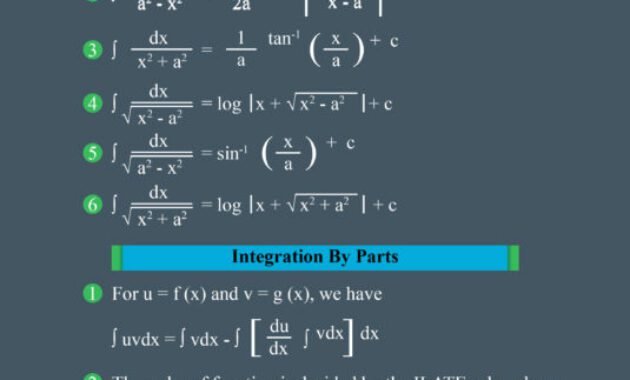
    This diversity that is owned by Indonesia makes the Indonesian people able to live together even though they are different. Like the meaning of the motto Bhineka Tunggal Ika , “different but still one”. The motto taken from the Sutasoma book written by Mpu Tantular illustrates that the unity and integrity of the Unitary State of the Republic of Indonesia (NKRI) must be maintained.

    Even though the differences in Indonesia can be said to be the greatest wealth that has been given by God, behind these differences it is very vulnerable to conflict. Conflicts that occur can occur from individuals to individuals to groups with groups. If a conflict occurs due to differences, then the unity of the Indonesian nation and state can be threatened.

    Of course, it is hoped that conflicts caused by differences between Indonesian people will not occur. Therefore, as fellow Indonesians, we should maintain unity and oneness, which can be started by making all Indonesian people aware that maintaining peace is something that must be done.

    The many differences that exist in Indonesia do not mean that we as fellow Indonesians cannot bring each other down, be it between individuals and individuals, individuals and groups or groups and groups. The nation and state of Indonesia will be stronger if fellow citizens continue to work together and do not bring each other down. That way, unity and oneness will never fade.

    Talking about one unit, it cannot be separated from what is called integrity. Then, what is integrity? For those of you who want to know the answer, you can see this review until it’s finished, Sinaumed’s. In addition, you will find out the types of integration.

    Definition of Integration

    Integration comes from English, namely integration which means unity or rounding. In addition, integration can also be interpreted as a method for coordinating various functions, parts, and tasks that exist in a job. In other words, integration is a way for cooperation that does not conflict with each other in order to achieve a goal.

    Meanwhile, integration can also be interpreted as a safe condition where every ethnic and racial group can live together while maintaining their respective cultures. Therefore, so that fellow Indonesians can live side by side without eliminating the culture of each individual, awareness is needed for all Indonesian people.

    In the Big Indonesian Dictionary or commonly known as the KBBI, integration is assimilation to become a complete or unified whole. Integration will run smoothly and well as long as fellow individuals respect, understand, and respect each other, thus reducing the risk of a conflict that can lead to division.

    The existence of a split caused because the unity and wholeness has been lost or damaged is also called disintegration. It would be nice if fellow Indonesian citizens could maintain one unit so that there would be no divisions that could harm themselves and others. So, start now to realize how important integration is in order to avoid conflict and division.

    Definition of Integration According to Experts

    Experts also express the meaning of integration. The following is the definition of integration expressed by several experts.

    Yron Weiner

    According to Myron Weiner, integration is a process to unite various cultural and social groups into one unified area in order to realize the formation of a national identity.

    Dr. Nazaruddin Sjamsuddin

    Dr. Nazaruddin Sjamsuddin said that integration is a process of uniting a nation which consists of all aspects of life, starting from political aspects, economic aspects, cultural aspects, and social aspects.

    Safroedin Bahar

    Safroedin Bahar stated that integration is a way to perfect a path or goal by uniting every element of a nation that has started to separate.

    Soedjati Djiwadono

    According to Soedjati Djiwadono, integration is a way to maintain national sustainability which can be reconciled with a right in the form of self-determination.

    That is the meaning of integration from several experts. From some of these meanings, it can be said that integration is something that is highly expected in people’s daily lives because with integration, every member of society, even though they have different cultures, can still live in peace and side by side. Therefore, every citizen, especially Indonesian citizens, should maintain unity by maintaining integration.

    Integration Type

    Integration is something that can happen because of a long process, so many people say that integration doesn’t just happen. Integration that is generally known by many people consists of three types, namely cultural integration, social integration, and social integration. Below will be explained in more detail about the types of integration.

    1. Cultural Integration

    Cultural integration is an adjustment between each of the different cultural elements, so that they can achieve a degree of equality or similarity of functions that exist in people’s lives. This cultural integration can occur because a region or country has a lot of culture in it. Without cultural integration, conflicts are likely to occur because there is no mutual respect and respect.

    2. Social Integration

    Social integration is an adjustment between every element that is different from one another in the social life of the community, so that it can create a pattern of life that is the same and peaceful for the community itself. This social integration has actually existed since we lived in an area. Therefore, we also often see that in that area there are many community members who are not compatible with each other, then these community members have not yet implemented social integration.

    3. National Integration

    National integration is a process of adjusting every different element that exists in the life of society nationally. The existence of national integration will create a pattern of life in which every member of the community can carry out their respective functions and roles without any interference from other members of the community. The success of national integration will determine unity and unity. In other words, if national integration cannot be realized, the meaning of unity and oneness will turn into division.

    Of the three types of integration, it can be said that the role of community members in realizing or implementing integration in people’s daily lives is very important. Therefore, community members must be good at adjusting themselves to other community members when living in an area.

    Factors Forming Integration

    Strong integration is not just formed, but there are factors behind it. If these factors work well, successful integration is likely to be achieved. The following will explain the factors that determine whether the integration will be successful or not.

    1. The existence of mixed marriages between one tribe and another

    Integration can be formed through a marriage carried out by a pair of lovers who come from different tribes. With this marriage, it will unite the two large families from different cultures as well, so that one family with another family can respect one another. The integration formed through this marriage signifies that differences can turn into one unit and a feeling of love.

    However, in carrying out mixed marriages between tribes, there are things that need to be noted, namely the two bride and groom must be as happy as they like. In other words, getting married is not due to coercion from other people in order to create a harmonious family, so that two different cultures can unite in one area.

    2. Increasing mutual cooperation behavior

    Indonesia is very much with the life of its people who like to live together. In fact, the habit of gotong royong has existed since the colonial era, so it can be said that mutual cooperation behavior is one of the factors in the formation of integration between community members. Mutual cooperation can build a sense of solidarity, so that each member can live in peace and happiness.

    We can usually see mutual cooperation behavior in Indonesia when a group of community members in an area is building a facility, such as a bridge, a place of worship, a road, and so on. A development that is carried out in mutual cooperation will be easily completed, so that members of the local community can experience the facilities being built more quickly.

    3. Performing Government Functions Properly

    The formation of integrity in a region or country cannot be separated from the role of government, especially in making rules. Without rules regarding integrity, it will be difficult for community members to apply integrity in social life. In making a regulation, the government must be able to act fairly and not harm one party or benefit only one party.

    The function of government that runs well can not only be seen from how to make regulations or laws, but also must be seen from how the government can serve the community well. Simply put, the government must provide maximum service regardless of religion, ethnicity, race, and cultural background.

    4. Improving Communication and Transportation in Each Region

    Factors that can form further integration are improving communication and transportation in each region. This must be done so that each region can be connected easily, so that communication between the people of different regions can run optimally and the economy becomes easier. An increasingly growing economy will easily increase the welfare of the members of the community itself.

    In addition, the development of communication and transportation in each region should be carried out evenly, not just certain areas that will experience this development. With equitable development, there will be no social disparities between regions, so that national integrity can be realized.

    5. Maintain Tolerance, Respect and Appreciation

    Attitudes and behaviors of tolerance, respect and respect are part of the formation of integrity. These three things can be said to have become a unit that is difficult to separate. These three behaviors can actually be taught to children from a young age, so that when they grow up, they are able to apply these three behaviors wisely and at the same time form an integrity.

    By doing these three behaviors, the occurrence of a conflict and division is less likely to occur. In fact, on the contrary, every member of society can live more peacefully and prosperously. We can see the behavior of tolerance, respect and appreciation when there are members of the community who are worshiping and other members of the community do not interfere.

    From the factors explained above, it can be concluded that integration can be realized well as long as all individuals and groups in one region can maintain good relations with each other and build communication and transportation so that each region can be connected.

    In addition, without government assistance or support, the integration process is difficult to materialize. So, the government must be able to carry out its functions and duties properly and correctly.

    Example of Integration Behavior

    Talking about examples of integration behavior is indeed endless, so examples are easily found around us. As for some examples of examples of integration behavior as follows.

    1. Obey the School Rules

    The existence of a rule serves to create a good environment, so students, teachers, and school employees can respect one another. Therefore, when you comply with school rules, then you have implemented integrity. Obeying school rules indicates that you already have a love for school, so you can study optimally.

    2. Implement Mutual Cooperation Behavior

    Mutual cooperation behavior is one of the forming factors of integration, so that mutual cooperation behavior is an example of integration behavior. Mutual cooperation that often occurs in Indonesian society is community service which is usually carried out every few months or once a few weeks. In addition, mutual cooperation behavior can also increase a sense of solidarity among members of the community.

    3. Implementing Mutual Tolerance 

    Similar to mutual cooperation, tolerant behavior is part of the forming factors of integration, so tolerant behavior is included as an example of integrity behavior. Mutual tolerance behavior allows every member of society to appreciate and respect one another.

    4. Mutual Respect for Different Cultures

    Indonesia is very well known for its very diverse culture. Therefore, in order to avoid a conflict caused by cultural differences, we need to have culturally respectful behavior. With this mutual respect behavior makes people aware not to vilify one culture with another.

    5. Obey the Law

    We live in a region or country, there must be a rule or law, so that we as members of society must comply with the law. The behavior of complying with this Law is a form of integration behavior. By complying with the law, members of the public cannot do bad things that can damage unity and unity.

    Conclusion

    This integration must be applied to community members who live socially in one unified area, so as to create an environment that builds a sense of peace and happiness. Forming integration requires cooperation between community members in the same area and community members in different areas. What’s more, the role of government to establish integrity is very influential, especially in serving and making regulations or laws.

    Thus, the integrity that is formed by members of the community and government, the benefits will also be felt by members of the community and government as well. So, never delay to build or form integrity.

    Book Recommendations & Related Articles

    Source: From various sources

  • Integers: Count Operations, and Example Problems

    Integers: Count Operations, and Example Problems

    Integer Numbers – When discussing mathematics, it must be very synonymous with numbers. Because of course mathematics is a study that studies calculation problems that require numbers as the main subject of the lesson.
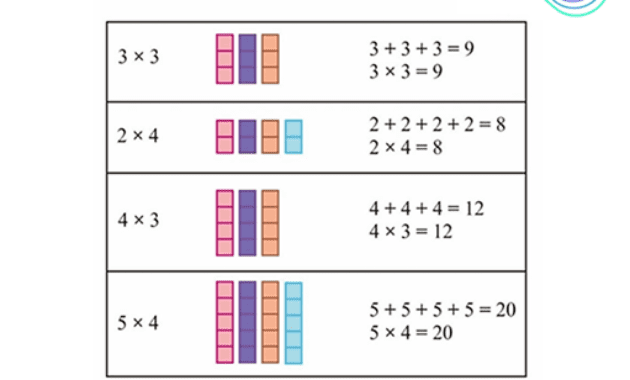
    There are many types of numbers. There are complex numbers, real numbers, imaginary numbers, rational numbers, irrational numbers, integers, fractional numbers, whole numbers, real numbers and many others.

    Of all the numbers that can be studied in mathematics lessons, there is one number that is quite common, namely, integers. Integers are divided into two types, positive and negative integers. Positive integers can also be referred to as natural numbers or sets of positive values. Negative integers are the set of integers that have a negative value.

    Number is a mathematical concept that assigns a total value to the thing being counted. That is why numbers are used in measuring and counting. Well, a number has a symbol or symbol. These symbols are called numbers.

    For more details in understanding what integers are, in this discussion we have summarized various information about integers, how to calculate them, and examples of questions that all of you Sinaumed’s friends can listen to.

    You can see further discussion about integers below!

    Definition of Integer

    What is an integer? Integers are sets or groups whose values ​​are integers. Integer itself consists of positive integers and negative integers. The set of integers is denoted by the letter Z. The letter Z comes from the word zahlen (German) which means number.

    Sinaumed’s friends already know about integers, right? Yes! Integers consist of zero and positive integers. So integers consist of original integers, zero and negative integers. Therefore, decimals and fractions are not included in the set of integers.

    Natural numbers, or positive integers, consist of the numbers 1, 2, 3, etc. Natural numbers are divided into odd, even, prime and composite. Odd numbers are the set of natural numbers whose value is not divisible by two. Conversely, even numbers are the set of natural numbers whose value is divisible by two.

    Conversely, a prime number is a natural number greater than 1 which is only divisible by one or itself. Natural numbers greater than 1 which are not prime numbers are called composite numbers. Integers are numbers that consist of positive integers, zero, and negative integers.

    From this we can conclude that there are two forms of integers, namely positive integers and negative integers. As the name suggests, positive integers are the positive numbers to the right of zero on the number line. For example 1,2,3,4,5,6,7,8,9 etc. In contrast, negative integers are negative numbers to the left of zero on the number line. For example -1,-2,-3,-4,-5,-6,-7,-8,-9 etc.

    Integers can be thought of as discrete points, equally spaced along the number line.

    Integer Calculation Operations

    Arithmetic operations are required to calculate integers. In mathematics, arithmetic operations are defined as the process of working with a number, namely in the form of addition, subtraction, multiplication, division, and so on.

    • sum

    If you add integers of the same suit, you get a number of the same suit. That is, if you add positive integers, the result is a positive integer. The same goes for negative numbers. But if the addition occurs in positive and negative numbers. Then the type is determined by the type of integer with the largest value.

    There are three ways to add integers:

    • Adding positive integers with positive integers results in positive integers. For example: 8 + 9 = 17.
    • Add negative integers to negative integers to get negative integers. For example: (-13) + (-8) = -21
    • Adding negative integers with positive integers or vice versa gives the result:
    • A negative integer if the negative integer is greater than the positive integer. For example: (-8) + 6 = -2.
    • A positive integer if the negative integer is less than the positive integer. For example: (-8) + 10 = 2.
    • A negative integer if it is equal to a positive integer. For example: (-8) + 8 = 0.

    The properties of addition in integer arithmetic include:

    • Commutative property → a + b = b + a.
    • Compound attribute → (a + b) + c = a + (b + c).
    • Zero property (0) → a + 0 = 0 + a.
    • Mutual property of numbers → a + (-a) = 0.
    • Subtraction

    In integer subtraction, if the minus sign “-” in the integer meets the subtraction symbol, the result of the calculation will be added up. The computation of reduced integers can be divided into:

    Subtraction of positive integers by positive integers, the result is:

    • A positive integer if the number of numbers being subtracted is greater than the number being subtracted. For example: 6 – 5 = 1
    • A negative integer if the number of positive integers subtracted is less than the sum of the positive integers subtracted. For example: 8 – 9 = -1.
    • Zero if the sum of the positive integers subtracted equals the sum of the positive integers subtracted. For example: 9 – 9 = 0.

    Subtracting a negative integer from a negative integer gives:

    • A positive integer if the sum of the minus integers being subtracted is less than the sum of the negative integers being subtracted. For example: (-6)-(-8)=2.
    • A negative integer if the number of negative integers being subtracted is greater than the number of negative integers being subtracted. For example: (-8) – (-5) = -3.
    • Zero if the sum of the negative integers being subtracted is equal to the sum of the negative integers being subtracted. For example: (-7) – (-7) = 0.

    Subtracting a negative integer by a positive integer always results in a negative integer. For example: (-5) – 5 = -10

    Subtract a positive integer by a negative integer, the result is always a positive integer. For example: 6 – (-7) = 13

    Properties of subtraction in integer arithmetic include:

    • a – b = (a+c) – (b+c).
    • a(b + c) = (ab)–c.
    • (a+b)-c=a+(bc).
    • Multiplication

    If two positive numbers are added, the result is a positive integer. Whereas multiplication involving two negative integers will result in a positive integer. However, if a positive integer and a negative integer are multiplied, the result is a negative integer.

    How to calculate the multiplication of integers can be seen as follows:

    • Multiplying a positive integer by a positive integer gives a positive integer. For example: 8×5=40.
    • Multiply a positive integer by a negative integer, or vice versa, the result is a negative integer. For example: 6 x -3 = -18.
    • Multiplying a negative integer by a negative number gives a positive integer. For example: -7 x -4 = 28.
    • Multiply the integer by zero, the result is zero. For example: 0x0=0.

    The properties of multiplication in integer arithmetic include:

    • Commutative property → axb = bxa.
    • Associative property → ax (bxc) = (axb) x c. The distributive property of multiplication over addition → ax (b + c) = (axb) + (axc).
    • The distributive property of multiplication over subtraction → ax (b – c) = (axb) – (axc).
    • Distribution

    Regardless of whether it is a positive or negative number, if two integers of the same type are divided, the result will be a positive integer. However, if you divide a positive integer by a negative integer, the result is a negative integer. This concept is basically the same as the multiplication arithmetic operation.

    How to calculate the division of integers can be seen as follows:

    • Divide a positive integer by a positive integer to get a positive integer. For example: (8): (2) = (4).
    • Dividing positive integers by negative integers or vice versa to get negative integers. For example: (6): (-3) = (-2).
    • Multiplying a negative integer by a negative number gives a positive integer. For example: (-8):(4) = (-2).

    Properties of division in integer arithmetic include:

    • The nature of the distribution of division over addition → (a + b) : c = (a : c) + (b : c).
    • The nature of the distribution of division against subtraction → (a – b) : c = (a : c) – (b : c).

    How to Compare Integers

    To compare integers, you must first know the order of the integers. Sorting integers means sorting integers from the smallest value to the largest value or vice versa. Based on the order of the numbers, the further to the right of the number, the higher the value. While the more to the left of the number, the smaller the value.

    Now, after knowing the order, we can compare these integers. Comparing integers means determining the value of an integer if it is greater than, equal to, or less than another integer. The symbols used to compare integers are:

    Assuming a and b belong to the set of integers, then

    – If a is greater than b, then a > b

    – If a equals b, then a = b

    – If a is less than b, then a < b

    Example :

    5 > -1

    -4 < 2

    3 = 3

    Examples of Integers

    After knowing the meaning of integers, you should also know examples of integers.

    Integers are divided into three, namely negative integers (-), zero (0) and positive integers (+), which are explained below:

    • Negative integer (-)

    Is the number to the left of the number (0) on the number line. Examples of negative integers: -1, -2, -3, -4, etc.

    • Zero (0)

    These are independent numbers and are right in the middle of the sequence.

    • Positive integer (+)

    Is the number to the right of 0 on the number line. Examples of positive integers (+):

    1, 2, 3, 4, etc.

    Examples of Integer Problems

    • Calculate the following deductions:

    Problem : 321-(-125)

    Results:

    321-(-125)= 321+ 125 = 446

    Problem: 216-326

    Results:

    216-326-(326-216)= -110

    Problem: -222-(-111)

    Results:

    -222-(-111)=-222+111–(222-111) = -111

    • Calculate the following multiplication and division:

    Problem: 245x(-123)

    Results:

    -245 × (-123) = 30.135

    Problem: -234×25

    Results:

    234 x 25 = -5.850

    • Calculate the following example questions:

    Problem: 47×77+ 47×23

    Results:

    47 × 77 + 47 × 23 = 47 × (77 + 23)

    = 47 x 100

    = 4,700

    Problem: 26×891+ 26×109

    Results:

    26×891 + 26×109 = 26x (891 + 109)

    = 26 x 1000

    = 26,000

    • Simplify the following problem:

    Problem: 23x22x25

    Results:

    23x22x25 = 23+2+5 = 1024

    • Other Example Questions:

    What is the result of -9 x 17?

    Results:

    -153

    Explanation:

    The result -9 x 17 can be determined by the distributive property of multiplication:

    ax (b + c) = (axb) + (axc)

    So :

    -9×17 = -9x (10=7)

    = (-9×10) + (-9×7)

    = -90 + (-63)

    = -153

    Here are some other sample problems on the topic of integers:

    QUESTION:

    • The result of 5 + [6:(-3 is ?

    Answer:

    5+[6:(3)] ​​= 5 + (2) = 5-2 = 3

    • Mrs. Salwa has 92 mangoes. All mangoes were distributed almost equally among 28 neighbours. The number of mangoes each neighbor received was approximately… fruit (use the best estimate)

    Answer:

    Math phrases Word problems: 92: 28 best guess: 92 -> 90 28 -> 30 Most accurate prediction: 92: 28 = 90: 30 = 3 So the number of mangoes each hamlet receives is 3.

    • Rizki has IDR 20,000 in cash. He used the money to buy 2.5 kg of rice. It turns out that the price of rice per kg is IDR 10,000. Considering that the distance between Rizki’s family and the rice shop was very far, Rizki finally decided to take out debt first because of the shortage.

    Answer:

    Rizki’s money = IDR 20,000 Price of 2.5 kg of rice = IDR 10,000 × 2.5 = IDR 25,000 Debt = price of rice – Rizki’s money Debt = IDR 25,000 – IDR 20,000 = IDR 5,000 or can be written -5000

    • Pay attention to the following numbers:

    -15, -17, -21, -9, -51. What is the correct order of these numbers if sorted from smallest to largest?

    Answer:

    If sorted from the smallest it will be -51, -21, -17, -15, -9.

    • At first the temperature of a room is 18°C, after noon the temperature rises 5°C. And at night, the temperature in the room drops 7°C. So the room is now… ºC.

    Answer:

    18ºC + 5ºC – 7ºC = 23ºC – 7ºC = 16ºC

    • The result of (−18 + 30): (−3−1) is?

    Answer:

    (−18 + 30): (−3 − 1) = 12: (4) = 3

    • Pak Raeng has 36 sheets of colored paper. All sheets of colored paper are divided equally among the three children. Each child receives colored paper.

    Answer:

    Number of sheets = 36 sheets Number of children = 3 people The number of sheets of paper each child receives is: 3 = 12. So each child gets 12 sheets of colored paper.

    Conclusion

    That’s a brief discussion of Integer Numbers. Not only discussing the meaning of integers, but also discussing integer arithmetic operations, how to compare integers, and examples of problems that can be listened to properly.

    Knowing about the meaning of integers is a new additional knowledge in understanding the basics of studying mathematics for those of you who are interested in these mathematics subjects.

  • Integer Multiplication Operation: Definition, Formulas, and Problems

    Integer Multiplication Operation: Definition, Formulas, and Problems

    Integer multiplication operations – From the time we enter school, we already know numbers we start to know addition and subtraction. After entering elementary school, we learn multiplication from 1 to 10. Our father or teacher at school educates us that we have to memorize multiplication from 1 to 10. After graduating from junior high school, we are required to study again or be tested again by our teacher’s father or mother. After we know and master multiplication, we will be introduced to the name number.

    Of course you already know the numbers right? In this article we will talk about integers. Here’s an explanation.

    Do you know what a number is? Numbers are mathematical concepts used for counting and measuring. In short, it can be said that numbers are used to represent the amount or quantity of an object.

    Numbers are represented by numbers. There are groups of numbers such as integers, fractions, even numbers, odd numbers, etc. This time we will discuss operations on integers.

    Definition of Integer

    Traditionally, number theory was understood as a branch of pure mathematics that studies the properties of integers. It also addresses a wide range of open-ended problems that non-mathematicians can easily understand.

    Reporting from coil.com numbers are built arithmetic operations as one of the operations that involve addition, subtraction, division and multiplication in the calculation of sorting numbers. Referring to this understanding, there are several types of number operations as follows.

    • Addition is the combination or addition of two or more numbers to form a new number.
    • Subtraction is taking a certain number from a certain number so that the number of the number is reduced.
    • Multiplication is repeated addition. Multiplication can also be understood as the process of adding the same number, as many times as the multiplier.
    • Division is repeated subtraction. Can also be understood as dividing a number into several groups with the same number.

    In addition to the number operations mentioned above, there are also mixed types of arithmetic operations. In general, in an arithmetic operation on mixed numbers, you will find various types of arithmetic operations in one problem.

    For example, questions whose solutions use addition, multiplication, subtraction, and/or division in one problem. Therefore, to calculate with mixed number operations, several things must be considered as follows.

    • If the arithmetic operation includes addition and subtraction, then do the left arithmetic operation first
    • If in arithmetic operations there are multiplication and division, then do the left arithmetic operations first
    • If in arithmetic operations there is addition or subtraction and multiplication or division, then do the multiplication or division first
    • If there are arithmetic operations in parentheses, then do the arithmetic operations in parentheses first

    After knowing number theory, let’s discuss the meaning of integers. An integer is a non-fractional number consisting of

    Positive integers : 1, 2, 3, 4, . . .

    Zero: 0

    Negative integer : . . ., -4, -3, -2, -1

    In general, the set of integers is written as { . . ., -4, -3, -2, -1, 0, 1, 2, 3, 4}. Integers are denoted by Z, which comes from the word “zahlen” (German) which means number.

    These integers can be written down and sorted on the number line. The use of the current number line is useful when we perform integer arithmetic operations. In integers can also be grouped into two parts viz

    Even number : . . ., -6, -4, -2, 0, 2, 4, 6, . . . The even numbers are the set of numbers which, when divided by 2, gives a remainder of 0.

    Odd numbers : . . ., -5, -3, -1, 1, 3, 5, . . . Odd numbers are the sets of numbers which, when divided by 2, leaves 1 or -1.

    Arithmetic operations are the operations of addition, subtraction, division, multiplication, and so on. There are four types of arithmetic operations, namely multiplication, division, subtraction, and addition.

    This time we will learn the multiplication operation. Multiplication is an arithmetic operation that multiplies a number by its exponent. To learn more about multiplication, pay attention to the following explanation!

    Multiplication is a form of operation on numbers which can be said to be repeated addition operations using numbers of the same size.

    For more details, let’s look at the following example description…

    3 x 4 = 3 + 3 + 3 + 3 = 12

    4 x 3 = 4 + 4 + 4 = 12

    In the multiplication example above, even though the end result is the same, the multiplication 3 x 4 and 4 x 3 have different meanings, where 3 x 4 means three times four, and for 4 x 3 it means four times three.

    We can find the application of the multiplication concept in our daily life activities, such as when we go to a hospital or clinic, or health clinic. Then the doctor gives the medicine in the form of syrup, the doctor’s prescription usually says 3 x 1 on the syrup box, meaning that in a day the patient has to take 1 teaspoon of medicine three times a day in the dosage recommended by the doctor.

    Doctors usually order to take medicine in the morning, afternoon and evening after eating. It’s another case if the syrup box says 1 x 3, that is, the patient is advised to drink 3 tablespoons according to the doctor’s recommendations once a day, namely in the morning, afternoon and evening.

    Examples of Integers

    Examples of Integers

    An integer can be represented on the number line as follows.

    Integer Line

    In a sequence, there are integers that are grouped into parts. The integer groups are shown in the section below.

    Integer Grouping

    Integers are grouped into three parts, namely positive integers, zero and negative integers. In this section, we will explain positive and negative integers.

    Positive Integer

    The ring of positive numbers is the set of numbers consisting of 1, 2, 3, 4,. . . Positive integers are also known as natural numbers.

    Negative Integer

    A negative integer is the set of all numbers {. . . , -4, -3, -2, -1}. On the number line, negative integers are to the left of 0.

    Next, we will approach the arithmetic operations involved in integers.

    Operation Formula for Multiplication of Integers

    If am and b are members of integers then:

    a × b = + ( a × b )

    –a × (-b) = + ( a × b )

    a × (-b) = – ( a × b )

    –a × b = – ( a × b )

    So it can be concluded that the product of two integers can be determined based on the sign of the number in the following way:

    ( + ) × (+) = +

    ( – ) × ( – ) = +

    ( + ) × ( – ) = –

    ( – ) × (+) = –

    Multiplication of Positive and Negative Integers

    To find out more about multiplication of integers, both positive and negative, please refer to the following examples;

    1. 2 × (-7) = -14
    2. 3 × (-7) = -21
    3. 4 × (-7) = -28
    4. 5 × (-7) = -35
    5. 6 × (-7) = -42

    In the example above, we can understand that the product of a positive integer and a negative integer will always produce a negative integer, so we can say “For each integer a and b, ax (-b) = – (axb) always applies.”

    Multiplication of Two Negative Numbers

    To be able to understand the multiplication of two negative integers, Sinaumed’s can   see the following example;

    1. -4 x (-3) = 12
    2. -5 x (-2) = 10
    3. -7 x (-5) = 35
    4. -1 x (-33) = 33
    5. -9 x (-2) = 18
    6. -3 x (-3) = 9

    In the example of multiplying two negative integers above, it can be concluded that the product of two negative integers will always result in a positive integer, so it can be stated “Every integer a and b always applies (-a) x (-b) = axb

    Multiplication of Integers By 0 (Zero)

    You can understand multiplication of integers by 0 (zero) by looking at the following example:

    1. 39 X 0 = 0
    2. 0 x -15 = 0
    3. -23 x 0 = 0
    4. 98 x 0 =0
    5. -11 x 0 = 0
    6. 0 x 346 = 0

    According to the example above, it can be concluded that all numbers when multiplied by 0 (zero) will always produce 0 (zero).

    Elements of Identity in Multiplication

    Elements of Identity in Multiplication you can learn by looking at the following examples;

    1. 9 x 1 = 9
    2. -5 x 1 = -5
    3. 1 x -22 = -22
    4. 88 x 1 = 88
    5. 1 x 23 = 23
    6. 1 x -42 = -42

    In the multiplication example above, we can conclude that any integer multiplied by 1 will produce itself. In this case, the number 1 is called the identifying factor in multiplication. so that it can be said “all integers a will always contain ax 1 = 1 xa = a

    From the explanation above, it can be concluded that the operation of multiplying integers is a mathematical operation that involves the sign “x”. Multiplication is also known as repeated addition.

    The properties of the multiplication operation are described in the following sections.

    axb = ab : the product of two positive integers is a positive integer.

    Example: 5 x 6 = 30. 5, 6, 30 are positive integers.

    ax (-b) = -ab : the result of multiplying a positive integer by a negative integer results in a negative integer.

    Example: 3 x (-4) = -12. The result of the operation is -12 (negative integer).

    (-a) x (-b )= ab : the product of two negative integers is a positive integer.

    Example: (-5) x (-2) = 10, resulting in a positive integer that is 10.

    Properties of Multiplication in Integers

    1. Closed Nature

    The closed property is one of the properties of the integer addition operation, where this property can also be found in the multiplication operation. In multiplication, the closure property means that any multiplication of integers always results in an integer. It can be stated as “For any integers p and q, there will always be pxq = r, where r is also an integer”.

    For more details about the closing properties of integer multiplication, you can see the sample questions below:

    4 x 3 = 12

    where 4 and 3 we know are integers, as well as 12 which is also an integer.

    5 x (-4) = -20

    where 5 and -4 we know are integers, and so is -20 which is also an integer.

    -7 x 2 = -14

    where -7 and 2 we know are integers, as well as -14 which is also an integer.

    -6 x (-4) = 24

    where -6 and -4 we know are integers, as well as 24 which is also an integer.

    2. Commutative Nature (Exchange)

    The commutative property (exchange) in the multiplication operation is that multiplication will always receive the same output even if the two numbers are swapped. So that this can be written “For every sapta p & q will always apply pxq = qxp”.

    For details about the commutative property in the multiplication operation, you can see the problem model below:

    6 x (-4) = (-4) x 6 =-24

    (-5) x (-8) = (-8) x (-5) = 40

    3. Associative nature (grouping)

    In this property, it is expressed as “For every number p, and q and r, will always hold ( pxq ) xr = px ( qxr)”.

    To make it easier for sinaumedia friends to understand the associative nature (grouping) of integer multiplication operations, take a look at the following example questions;

    problems example;

    3 x (-5 x 2) = ( 3 x (-5) ) x 2 = -30

    ( -4 x 6 ) x 3 = -4 x ( 6 x 3) = -72

    4. Distributive Properties of Multiplication Against Addition

    In this property it is stated that “For every number p, q, and r which are integers, it will always apply

    px (q + r) = (pxq) + (pxr)”.

    For more details about the distributive property of multiplication over addition in the multiplication operation of integers, you can refer to the description of the problem below;

    problems example;

    4 x ( 5 + (-3) ) = 4 x 2 = 8

    can also be solved by, ( 4 x 5) + ( 4 x (-3) ) = 20 + (-12) = 8

    so, 4 x ( 5 + (-3) ) = ( 4 x 5) + ( 4 x (-3) ) = 8

    (- 5) x ( -3 + 6) = (-5) x 3 = -15

    can also be solved by, ( (-5) x (-3) ) + ( (-5) x 6 ) = 15 + (-30) = -15

    so, (- 5) x ( -3 + 6) = ( (-5) x (-3) ) + ( (-5) x 6 ) = -15

    5. Distributive Properties of Multiplication Against Subtraction

    This property is expressed as “For every p, q, and r which are integers, will always apply

    px ( q – r ) = (pxq) – ( ​​pxr) “.

    For more details about the Distributive Property of Multiplication Against Subtraction in the multiplication operation of integers, you can refer to the description of the problem below;

    problems example;

    3 x ( 7 – (-6) ) = 3 x 13 = 39

    can also be solved by, (3 x 7) – (3 x (-6) ) = 21 – (-18) = 21 +18 = 39

    so, 3 x ( 7 – (-6) ) = (3 x 7) – (3 x (-6) ) = 39

    5 x ( -4 – 2) = 5 x (-6) = -30

    can also be solved by, (5 x (-4) ) – (5 x 2) ) = -20 – 10 = -30

    so, 5 x ( -4 – 2) = (5 x (-4) ) – (5 x 2) ) = -30

    6. Has an Element of Identity

    The number 1 is the identity element in multiplication. This means that any integer when multiplied by the number 1 will produce the number itself.

    this can be stated by “For every number p which is an integer, it will always apply px 1 = 1 xp = p”.

    for example;

    13 x1 = 13 or 1 x 13 = 13

    34 x 1 = 34 or 1 x 34 =34

    Problems example

    Examples of Positive Number Multiplication Operation Problems

    1.(+12)x(+5)

    (+4) x (+40)

    Discussion:

    Multiplication of positive numbers is calculated the same as when we multiply numbers in general.

    (+12) x (+5) = 12 x 5 = 60

    (+4) x (+40) = 4 x 40 = 160

    2. Topic received a donation of 8 sacks of rice. Each sack weighs 85 kg. The rice was distributed to 17 employees. Each employee gets as much rice as…

    1. 18 kgs
    2. 24 kgs
    3. 36 kgs
    4. 40 kgs

    The answer to the multiplication of the total integer number of rice received by Topik is…

    8 x 85 kg = 680 kg

    Each employee gets 680 kg of rice: 17 = 40 kg

    Answer: D

    3. Tony sent letters to 3 of his friends. 2 pieces of letter wearing stamps worth @ 500 and a letter wearing a postage of Rp. 250. So, the amount of money needed to buy the stamps is..

    1. 1,000
    2. 1,250
    3. 1,500
    4. 1,750

    Answer:

    The amount of money needed to buy stamps is

    =(2 x 500) + (1 x 250)

    = 1,000 + 250

    = 1,250

    Answer: B

    4. Calculate the multiplication operation of this positive number with associative property

    9 x (13 x 2)

    (20 x 36) x 3

    Discussion:

    Enter the formula for calculating multiplication of integers with associative properties first.

    (axb) xc = ax (bxc) = d

    Then, enter the multiplied numbers in the problem according to the associative property formula.

    9 x (13 x 2)

    (axb) xc = ax (bxc) = d

    9 x (13 x 2) = (9 x 13) x 2 = 117 x 2 = 234

    (20 x 36) x 3

    (20 x 36) x 3 = 20 x (36 x 2) = 20 x 72 = 1440

    Examples of Problems with Multiplication of Negative Numbers

    1.(-6) x (-12)

    (-4) x (-23)

    Or more concisely, the multiplication result between numbers with the same sign produces a positive number.

    The calculation method is quoted from the Mathematics book for Middle School Class VII of the Freedom Learning Curriculum.

    (-6) x (-12) = 72

    (-4) x (-23) = 92

    Examples of Operational Problems Adding Positive and Negative Numbers

    1.(-80) x (+15)

    (-5) x (+56)

    Discussion:

    Based on the Mathematics book for Class VII Middle School Independent Learning Curriculum, the product of numbers with different signs produces a negative number.

    (-80) x (+15) = -1200

    (-5) x (+56) = -280

    2. ((-80) x 15) x 4)

    (-2) x ((-5) x 56)

    Discussion:

    ((-80) x 15) x 4) = (-80) x (15 x 4) = (-80) x 60 = -4800

    (-2) x ((-5) x 56) = ((-2) x (-5)) x 56 = 10 x 56 = 560

    3. The result of the number operation from 7 x (-13) is ….

    1. A.91
    2. B. -20
    3. C.20
    4. D. 91

    Discussion:

    7 x (-13) = ….

    7 is positively charged while

    (-3) is negatively charged

    Multiplying a positive number by a negative number will result in a negative number, so it becomes:

    7 x (-13) = – (7 x 13)

    = -91

    4. 19. -11 x 8 ….. (-8) x 11

    The appropriate comparison sign to complete the statement above is ….

    1. <
    2. >
    3. =

    Discussion:

    -11 x 8 = (-88) whereas

    (-8) x 11 = (-88)

    Then -11 x 8 and (-8) x 11 result in the same number. So the exact comparison sign is equal to or (=).

    Closing

    That’s all Sinaumed’s friends , a little explanation about multiplication on integers that we can convey, sorry if there are errors in writing and calculations. 

  • Integer Is One Of The Data Types In Programming, Let’s Meet Together!

    Integer is – In the world of programming, data is an important part that cannot be forgotten or omitted. The reason is, programming will always be related to the activities of processing data into the information needed.

    So, in order to keep the data consistent and use computer memory more efficiently, a programmer must be familiar with the various types of data used when working.

    Because the data type will help the computer to interpret the value of a variable correctly so that errors are avoided. One type of data that is often used by programmers is integer or integer data.

    In this article, we will discuss this integer data type in full to help those of you who are new to programming. So without further ado, let’s begin!

    Integers Is

    Strictly speaking, a computer program is a collection of pieces of data that are manipulated in various ways. “Data” here is of various types, some are in the form of numbers such as positive and negative numbers, integers, fractional numbers, small numbers, large numbers, and so on. There is also data in the form of characters, such as names, addresses, and others.

    When a programmer works, he must determine the type of information to be used. For example, when creating a program to determine the distance from Indonesia to South Korea, what kind of data is needed so that the information is clear.

    Well, an integer is an integer data type, both positive and negative, with a certain range . In other words, in integer data there are no letters or decimal numbers. Examples of integer data are 1, 59, 899, -20, and so on.

    FYI, to use negative numbers, just add a minus sign (-) in front of the number. Then, for numbers whose value is thousands, tens of thousands, or more, they cannot be written with a separator (both full stop and comma). For example, to write one thousand five hundred, just write 1500 instead of 1500 or 1500.

    Integer Data Value And Representation

    Because it doesn’t recognize letters and decimal numbers, you could say the value of integer data is an integer like you find in Mathematics. Representation here refers to the manner or method of storing the value in computer memory.

    Thus, integer data is divided into two categories, namely signed and unsigned. Signed integers represent negative integer values ​​(-1, -10, and so on) while unsigned integers represent positive integers (1, 10, and so on).

    Then the representation of unsigned integers in the computer is a string of bits that uses a binary number system with varying orders, some are in the form of Big Endian, some are in the form of Little Endian.

    Oh yes, apart from width, size, or precision, integer data also has other variations depending on the number of bits represented by it. For an integer that has n bits it can encode 2n and if the data type is an unsigned integer then the range is from 0 to 2n – 1.

    Usually, a programmer has his own considerations for using the integer data type, for example like:

    • The amount of memory that can be used by the variable
    • The largest and the smallest number that can be stored in a variable
    • Whether the variable handles positive, negative, or only positive (unsigned) storage
    • And others

    Types of Integers in Several Programming Languages

    • C language

    In the C programming language, integer data types are divided into four types, namely byte, short, int, and long which have their own characteristics. The following is a brief explanation for the four types of integer data types:

    Bytes

    The integer byte type is generally used when programmers work with data streams on networks or files. Its function is to carry out processes such as writing or reading data.

    In addition, it can also be used when programmers use binary data that is not supported by other types of the Java programming language.

    An example of a byte integer data type:

    public class Main {
    public static void main(String [] args)
    //Variable declaration
    byte value = 1;
    //Output
    System.out.println(“Value of bytes = ” + value);
    }

    short

    The short type is generally used on computers with a 16-bit capacity, that’s why this type is quite difficult to find nowadays because both laptops and 16-bit computers are becoming rare.

    Short integer data type example

    public class Main {
    public static void main(String[] args)
    //Variable declaration
    short value = 2;
    //result
    System.out.println(“Value of short = ” + value);
    }

    int

    The int type is the most used type today because it represents numbers in programming. In addition, the int type is also considered more efficient than other integer data types.

    Int integer data type example
    public class Main {
    public static void main(String[] args)
    //Variable declaration
    int value = 20;
    //result
    System.out.println(“Value of int = ” + value);
    }

    In theory, any expression that includes a byte, short, and long type, must pass an int procedure to be promoted before entering the calculation process. For example like this:

    public class Main {
    public static void main (String []args)
    //Creates a variable of some data type
    byte value = 1;
    short anotherValue = 2;
    int results = 3;
    int anotherResult;
    //Sum byte, short, and int variables
    anotherResult = value + anotherValue + result;
    //Prints the result
    System.out.println(“Value of result = ” + anotherResult);
    }

    Long

    The last integer data type is more often used when the data value used is more than the capacity range of type int, byte, or short. The reason is because the long type does have the widest range compared to the other types.

    Integer data type example long
    public class Main {
    public static void main (String [] args)
    //
    long value variable declaration = 22121;
    //result
    System.out.println(“Value of long = ” + value);
    }

    All data types above can store negative integers and positive integers. For storing positive and zero integers, you can use the keyword “unsigned” in front of the data type, for example:

    • unsigned short in, 2 bytes, range 0 to 60,000
    • unsigned int, 4 bytes, range 0 to 4,294,900,290

    In addition, below is a table that contains the different ranges of each integer data type:

    Data Type Size (Bit) Range
    Bytes 8 -128 to 127
    short 16 -32768 to 32767
    int 32 -2147483648 to 2147483647
    Long 64 -9223372036854775808 to 9223372036854775807

    The range of each data type above is related to the memory capacity needed to store that number. So the greater the range , the greater the required memory capacity.

    • Pascal language

    In the Pascal programming language, the integer data type can hold 16-bit data, however, because integer itself is a signed data type, it can only be assigned values ​​from -215 to 215-1 or -32768 to 32767. Why is that? ? Because 1 bit is used as a marker for positive or negative.

    • C# language

    In the C# programming language there are several types of integer data types that can be used, namely:

    Bytes

    An unsigned integer with size 8-bit. The same as the System Byte data type in the Microsoft NET Framework.

    Sbyte:

    A signed integer with the same 8-bit size as the System Sybte data type in the Microsoft NET Framework.

    short

    A signed integer with the same 16-bit size as the System Int16 data type in the Microsoft NET Framework.

    Ushort:

    An unsigned integer with the same 16-bit size as the System UInt16 data type in the Microsoft NET Framework.

    int

    A signed integer with the same 32-bit size as the System Int32 data type in the Microsoft NET Framework.

    Uint

    An unsigned integer that has a 32-bit size and is the same as the System UInt32 data type in the Microsoft NET Framework.

    Long

    A signed integer that has a 64-bit size and is the same as the System Int64 data type in the Microsoft NET Framework.

    Ulong
    An unsigned integer that has the same 64-bit size as the System UInt64 data type in the Microsoft NET Framework.

    To make it easier to distinguish integer data type names in the C# programming language and the Microsoft NET Framework, you can see the comparison in the image below:

    • PHP language

    Integer data types can also be found in the PHP programming language which is commonly used to write integer data, such as 25, 100, 300, or others. Integers in PHP can also be positive or negative numbers.

    An example of an integer data type in PHP:
    <?php
    //an example of an integer in PHP
    $sale_price=120000;
    $item_amount=100;
    $shipping_cost=500000;

    echo $selling_price;
    echo “<br />”;
    echo $item_amount;
    echo “<br /”;
    echo $shipping_cost;
    ?>

    In the PHP programming language, integer data types can also be combined with mathematical operations, such as multiplication, addition, division, or subtraction. For example:

    <?php
    // adding integer
    $a=10;
    $b=5;
    $c= $a + $b;

    echo “result is $c”
    echo “<hr>;
    ?>

    How to Write Integer Data Type in C Programming Language

    To be able to learn to write integer data types, Sinaumed’s must first understand what is called a variable. Because the two are related to each other, where the variable is a place to store a value and the data type is the type of value that can be stored in the variable.

    For example, in math class you often meet x and y, right? Now, “x” and “y” are called variables because they are places to store a value. For example x = 3 and y = 4.

    In comparison, variables are the same as containers and data types are the objects that will be stored in the container.

    First, write down the data type first, then write down the variable name and the contents of the data. For example, you want to create a weight variable with an integer (int) data type in the form of the number 59, then the writing becomes:

    int weight = 59;

    Remember, every time you create a variable it must end with a semicolon (;). In addition, you should immediately fill in the data values ​​that you want to store like the example above.

    After that, remember carefully the rules for writing variables in the C programming language, which consist of:

    • Variable names cannot begin with a number or symbol
    • Variable names may not use keywords that already exist in the C programming language such as void, int, if, or something else
    • Variable names are case sensitive, meaning uppercase and lowercase letters are very different. For example the address variable with Address are two different variables.
    • Use an underscore (_) to write a variable name consisting of two or more words, such as home_address, cellphone_number, or something else.

    Example Program With Integer Data Type

    After learning to write the integer data type, next we will try to make a program with the integer data type. To make it easier, you should first download the Codeblocks software.

    If the Codeblocks software is already installed on your laptop, then open the software and create a new program with the name data_integer, then write the code below:

    #include <stdio.h>
    int main(void)
    {
    int number3;

    number3 = 2147483647;

    printf(“Enter number3(int): %d\n”,number3);

    returns 0;
    }

    After that, run the program code, the result will be like this:

    Sinaumed’s can also write code that combines all four types of integer data types in the C programming language, from char, short, int, and long. You do this by creating a new variable for each type of data type, for example:

    #include <stdio.h>
    int main(void)
    {
    first char;
    second short;
    third int;
    fourth long;

    first = 10;
    second = 100;
    third = 1000;
    fourth = 10000;

    printf(“Enter the first variable (char): %d\n”, first);
    printf(“Enter the second (short) variable %d\n”, second);
    printf(“Enter the third variable (int): %d\n”, third);
    printf(“Enter the fourth variable (long): %d\n”, fourth);

    printf(“\n”);
    returns 0;
    }

    When this program code is executed, the output will be like this:

    After defining each variable, then proceed with filling in the variables using numbers. The numbers are free as long as they do not exceed the maximum value each data value can hold.

    In the example above, we use the numbers 10 for the first variable, 100 for the second variable, 1000 for the third variable, and 10000 for the fourth variable. Then each variable is displayed with the printif command.

    Then, what happens if we try to enter a value that is outside the maximum limit that can be accommodated by each type of data? Let’s try it right away:

    #include <stdio. h>

    int main(void)
    {
    first unsigned char;
    second unsigned short;
    third unsigned int;
    fourth unsigned long;

    first = 299;
    second = 65599;
    third = 4294967299;
    fourth = 4294967299;

    printf(“Enter the first variable (char): %d\n”, number1);
    printf(“Enter the second variable (short) %d\n”, number2);
    printf(“Enter the third variable (int): %u\n”, number3);
    printf(“Enter the fourth variable (long): %u\n”, number4);

    printf(“\n”);
    returns 0;
    }

    After running, the results that appear are as follows:

    From the discussion above, it can be said that an integer is a positive or negative integer data type with a certain range . Thus the discussion about integers. Hopefully all the discussion above is useful and can add to your insight. If you want to find books about coding, then you can get them at sinaumedia.com .

    To support Sinaumed’s in adding insight, sinaumedia always provides quality and original books so that Sinaumed’s has #MoreWithReading information.

    Author: Gilang Oktaviana Putra

    Source:

    https://kumparan.com/how-to-tekno/integer-ada-tipe-data-dalam-language-pemrograman-1xrO1L2kiwn/full

    https://www.petanikode.com/c-variabel/

    https://www.babastudio.com/blog/Type-Data-Integer-dan-Cara-Penulisan-Integer-PHP

    https://p2k.unkris.ac.id/id3/3065-2962/Integer-Ilmu-Komputer_54824_p2k-unkris.html

    https://www.digitalocean.com/community/tutorials/public-static-void-main-string-args-java-main-method

    Edi Budiman (2015) Fundamentals of algorithms & programming

    Suprapto, et al. (2008) Programming Language for Vocational Schools

  • Inspiring Is: Definition and 5 Indonesian Inspiring Figures

    Inspirational Is – The term “inspirational” must be foreign to You’ minds , because its use is often applied in everyday conversation. Remembering that everyone living in this world will always need inspiration and motivation, especially to live their daily lives. The existence of inspiration and motivation can even make people who are down due to circumstances feel positive energy so they are more enthusiastic about living their lives. Yep, inspiration will always be related to inspiration and figure. The cool term to refer to this inspirational figure is role-modelwhich is mostly used by young people today. So, what is inspirational? How can we determine the inspirational figure in this life? What is the difference between inspiration and motivation? So, so that You can understand these things, let’s look at the following review!

    What Is Inspirational?

    According to the Big Indonesian Dictionary (KBBI), the term “inspirational” means ‘inspiring’. While the term “inspiration” can mean ‘inspiration’ which is then defined as ‘thoughts (dreams) that arise from the heart ‘ and ‘something that moves the heart to create (poems, songs, etc.)’ . then these inspirational things become things that make people feel inspired or move their heart in living life, no matter how difficult the situation is.

    The use of the word “inspirational” is also often considered the same as “inspirator” which is a figure or person who inspires others. Yep, an inspiration is a more specific definition that refers to a person or person with a great life story, so that other people who listen to the story feel impressed and moved to do the same thing. For example, a businessman named Merry Riana is often used as an inspirational figure because of the story of her life’s struggles in starting her business from a young age. People who hear or read Merry Riana’s story will usually feel inspired so that their hearts seem to be tapped to have the same passion, especially in starting a business.

    Previously, it was explained that inspiration is related to things that are inspirational, right? Well, feeling inspired doesn’t always have to feel like you have the same passion, but it can also be an encouragement to keep thinking creatively. What’s more, if You is getting an assignment or a job in the field of writing, design, or marketing, he must always get inspiration from an inspirational figure, so it’s easier to do it.

    Reporting from merdeka , the Oxford Dictionary has a specific definition of the term “inspiration”, namely ‘ as a process that occurs when someone sees or listens to something, then that person can have new ideas that are more unique and interesting’ . In contrast to the Cambridge Dictionary which reveals that the word “inspiration” has a definition as ‘someone or something that gives ideas for others to do something more interesting’. From some of these definitions, it can be concluded that things that are inspirational will definitely be related to the mental and emotional state of each individual.

    Meanwhile, the term “inspirational” is more often used in the figure of a person. That is, the use of this term refers more to a real person who usually gives positive energy, both in the work, authority, perspective, and way of speaking. However, the term “inspirational” can also be used in a story or life story from that figure. For example, the figure of Bill Gates is often used as an inspirational figure by many people, especially those who are in the business of technology. So, not only is he an inspirational figure, but the life story of Bill Gates can also be an inspirational story for some people.

    In fact, even if examined from the word class, the words “inspirational” and “inspiration” are already different. The word “inspirational” is an adjective, while the word “inspiration” is a noun.

    Differences Inspiration and Motivation

    Even though both are almost the same, which both influence a person’s mindset to be more enthusiastic and creative in viewing this world, it turns out that both have different things, you know… So, here are some differences between inspiration and motivation, as reported by idntimes .

    Inspiration Motivation
    Can come from anywhere. Starting from reading books, movies, songs, circumstances in the environment, even the people around you. Come from yourself. Even a motivator is actually “only on duty” to stimulate motivation, while the one who can generate it is yourself.
    It seems to be a calling of the soul to do activities that are in accordance with the interests from within. Being the reason or motive behind every thing that is done every day.
    Present new and interesting creative ideas, even from reading a book or listening to a song. Become a reason to help yourself to work harder , especially in getting through the day.
    Become a “pull” so that you can continue to do these things, especially those that are in accordance with yourself. Become an “encouragement” so that you are willing and willing to do something.
    Become a liaison between the things that are inside with every activity that will be carried out. Being a reason for you to do something as best as possible.

    5 Indonesian Inspiring Figures Who Can Become Role-Models

    There are so many people around us who can even be inspirational figures in life. Parents are no exception where they have a high enthusiasm to fight for their children’s lives so that they can be what they are today. In fact, inspirational figures are not always related to famous figures who have successfully owned a well-known company, because even ordinary people can also be inspirational figures. Since the word “inspirational” is an adjective, aka an adjective, the definition of which is also relative. So, here are some inspirational figures that can inspire you to continue living life.

    1. RA. Kartini

    Who knows this fighter for women’s emancipation in Indonesia? Yep, the name Raden Adjeng Kartini who was born in 1879 is included in the ranks of National Heroes as well as being an inspirational figure for Indonesian women. Remembering during the colonial period, the existence of women was so underestimated by society. They think that a woman’s place should be in the kitchen to cook and take care of the children, so that only a small percentage can go to school, and even then they come from respected families.

    Luckily, Kartini came from a noble family in the Jepara area. Yep, Kartini’s father, Raden Mas Adipati Ario Sosroningrat, is a regent, so he can send his son to a European elementary school (ELS). Despite having a privilege , Kartini did not arbitrarily treat ordinary people. Instead, she has thoughts related to women’s emancipation in Indonesia. This thought developed because of his friends in the Netherlands.

    Thanks to her interest in the mindset of women in the European hemisphere, which she knew through magazines, newspapers and books, then Kartini started thinking about advancing women in Indonesia. She really fought for the position of indigenous women who were always seen as having a low social status.

    2. Susi Pudjiastuti

    The former Minister of Maritime Affairs and Fisheries of the Republic of Indonesia in the Working Cabinet of Jokowi and Jusuf Kalla (2014) has always been considered the coolest minister and different from the others. One of His iconic words is “Drown!” when there were 40 foreign fishing vessels entering Indonesian waters. He was not afraid to sink the 40 foreign fishing vessels for the welfare of Indonesia’s seas.

    Before serving as Minister of Maritime Affairs and Fisheries, Susi Pudjiastuti was the owner and president director of PT ASI Pudjiastuti Marine Products, PT ASI Pudjiastuti Aviation (Susi Air Airline), and several exporters of fishery products. Since 2004, she has often received major awards and has been called the figure of “Indonesian Inspiring Women”. Some of these awards include the Tourism Pioneer from the West Java Culture and Tourism Office (2004), Extraordinary Leadership and Significant Contributions to The Economy at APEC (2011), the Ganesha Widya Jasa Aditama Award from ITB (2011), and others.

    3.Jerome Polin

    The name Jerome Polin Sijuang or who is often called Jerome Polin is widely used everywhere. In fact, his name has been included in the ranks of role-models for today’s youth. Actually, even without being a Youtuber, Jerome Polin has become an inspirational figure because he managed to qualify to become a student at Waseda University, Japan, with an applied mathematics study program, even with a scholarship. Considering getting into such a great university, not everyone can do it due to being one of the best private universities in Japan.

    Jerome tried his luck by becoming a Youtuber while studying in Japan with content in the form of tips on learning Japanese. Over time, Jerome’s Youtube content has become more varied, even his friends, who are now called the Waseda Boys, also often appear in his videos. The figure of Jerome is inspiring because apart from being good at math which is the most “scary” subject for many people, he is also fluent in Japanese, has good public speaking, and is currently developing a business with his older brother, Jehian Panangian Sijib, with the Menantea brand .

    4. Maudy Ayunda

    The millennial generation will definitely agree if Maudy Ayunda is appointed as an inspirational figure who should be followed by an example. Even netizens often comment that Maudy Ayunda is an inspirational figure with a complete package! Starting from being academically smart as evidenced by graduating from Oxford University, good at singing, to his extraordinary acting skills in several prominent films. In fact, it was so inspiring, when Maudy Ayunda was appointed to play Mrs. Ainun in the film Habibie and Ainun, people agreed because it was commensurate with Mrs. Ainun’s intelligence.

    Maudy Ayunda’s existence is not only in the Indonesian film and music industry, you know… At Oxford University, she is already familiar with her talents and achievements. In fact, Maudy Ayunda was once appointed as the youngest speaker at an international forum and served as Head of Speaker at the University of Oxford! Wow, how cool!

    5. Rio Haryanto

    Rio Haryanto can be an inspirational figure in the world of sports, especially in four-wheel racing. Yep, Rio Haryanto’s name is increasingly recognized by the people of Indonesia and the world when he successfully passed the GP3 and GP2 races. Even in 2016, Rio was mentioned as one of the youngest racers to take part in the F1 event. Even though he had to experience several accidents on the circuit, Rio did not immediately lose heart. Because he struggled with the dream of becoming a reliable racer, he was willing to lose his youth because he had to focus on training.

    So, that’s a review of what inspirational words are and some inspirational figures that can be emulated by young people. Does You have an inspirational figure who always gives a positive influence to live this life?

  • Inspiration for the design concept of a small shop in front of the house

    Making a small shop in front of the house will look attractive and efficient because it doesn’t require an additional location. Moreover, if the budget we have is still quite small. That wouldn’t be a problem with a small shop in front of the house.

    Turning part of the house into a small shop can keep costs down. Because, we do not need to rent or build a place. Not only that, this one concept is also quite effective for new businessmen. So, it’s only natural that we look for inspiration for the design concept of a small shop in front of the house.

    It should be noted, forming a small shop or stall design certainly requires an appropriate and attractive design. The goal, of course, is to make the atmosphere of the house and shop feel “alive” and attract customers. This article could be a great place to find that design inspiration! Because, we will see various designs that will be suitable for a small shop in front of the house, according to business needs.

    Tips for Making a Minimalist Stall Design

    If you want our shop to attract attention, of course, you need an attractive design. Check out the tips below!

    1. Determine Design Inspiration

    Before making a shop in front of the house, be sure to search and find as much inspiration as possible first. We can try to find as much inspiration as possible about the interior, exterior, or the right material for the shop.

    Of course, we can also look for inspiration on the internet, social media, and even go around ourselves to see the designs in the stalls around the house. Do the math, take a walk.

    2. The design must match the type of stall

    Stalls have various types. We have to make sure the design we choose is in accordance with the type of shop. For example, drink stalls, snack stalls, toy stalls, to basic food stalls.

    For example, the design of a coffee shop definitely needs to look simpler and have an artistic spirit than a shop that sells various basic necessities, this type of shop usually provides small tables and chairs.

    Meanwhile, food stalls must apply a minimalist design and support a larger load of goods. So, make a maximum plan so that the shop doesn’t get the wrong concept later.

    3. Use a Unique and Attractive Stall Display

    Not infrequently, the shop that we will open at home will be side by side with other small shops on the side of the road. So, there’s nothing wrong with making a shop design that stands out more, right?

    The goal, none other than is for passing visitors to become more interested and interested in buying at the stall.

    Making an attractive shop doesn’t have to use flashy colors. It could just use a clean simple concept or a small shop design but looks modern. There are many concepts that can make a shop look more beautiful.


    You can learn about Interior Textbook: Internal Environment Principles

    by DYAN AGUSTIN; NINIEK ANGGRIANI

    4. Placement of Products to be Sold

    We usually definitely choose to buy goods in stalls that look clean and orderly. Because, we believe that a tidy place has good product quality. With that in mind, we also have to be able to create stalls whose products are organized.

    If we are going to build a drink shop, we have to make sure the glasses, blender, arrangement of ingredients, and everything in the shop are clean and tidy. In addition, there must also be discipline in product arrangement even if what is being sold is children’s toys.

    5. Make sure buyers feel comfortable while shopping

    Treat buyers well when shopping. Because, the expression “the buyer is king” is not just words. If we open a shop that does not serve customers in a friendly manner, it is not impossible that the image of the shop will not be good.

    According to the type of stall, we need to provide adequate equipment for buyers. For example, like a clean glass in a coffee shop, a clean table in a small restaurant, and so on.

    With good service, even a small shop can be liked by many people and make it more profitable.

    Advantages and Disadvantages of Procuring Stalls in Front of the House

    Opening a small shop or kiosk does not require renting additional space. By utilizing the house as a business stall, we can create a stall that is cost-effective in capital and the salaries of employees or shopkeepers.

    Even so, that does not mean there are no drawbacks at all. In the business world, there are always advantages and disadvantages, that’s what innovation is for.

    What are the advantages and disadvantages of making a stall in front of the house? Check it out below!

    Excess

    1. No Transportation Fees

    One of the cost-effective steps that comes with setting up a shop in front of the house is zero transportation costs, nothing at all. We don’t need to go back and forth from the house to the shop and only need to walk a few steps to open a shop.

    Try to use the terrace, yard or front room of the house to be used as a business stall. That way, the place feels more efficient and expenses incurred can be minimized.

    2. Simpler Legal Rules

    By opening a shop at home, it means that we are included in the class of micro entrepreneurs. Thus, fewer employees are needed (or even not needed at all) and the legal procedures are simpler.

    This is because, based on Law Number 3 of 1982 concerning Compulsory Company Registration Article 6 paragraph (1) letter b, small companies do not need a trading license or register their business with a legal entity.

    Even so, perhaps the business is growing and getting bigger with an income of more than IDR 600 million per year, we will be required to pay taxes.

    3. Less Capital

    Opening a business certainly requires a sizable amount of capital. However, by opening a shop in your own home, the capital required will be less. Our financing is also more efficient because it can be used for other needs, for example restocking basic food products with a longer expiration date.

    Lack

    Apart from the advantages, here are some disadvantages of opening a shop at your own home:

    1. At the Beginning, the Profits Are Still Relatively Small

    Don’t be surprised if the business makes less profit at the start, especially with the concept of a simple shop in front of your own house. Because, initially, the customers who come must only be neighbors around the house or complex, or our own friends.

    Even so, we can overcome this by fixing prices that are more competitive than other stalls. Of course this must be accompanied by buying goods at a lower price than usual. Take advantage of discounts or shopping packages!

    2. The House Is Noisy

    Sooner or later, it is certain that the house which is also the place of business will be more troublesome than usual. This is because a place that was previously used as a means of relaxing or resting has become one with a business location.

    It is possible that there are family members or even our children who feel disturbed and finally protest. We can also lack time to relax with our family, even though we are always at home.

    3. Lack of Socialization

    Nowadays, it’s not uncommon for home-based entrepreneurs to be a little less updated about the times. The reason is, they are busy spending their daily lives taking care of the shop at home.

    This is not good enough because we can lack information about developments around and will be further away from progress, including in marketing techniques.


    You can learn about Color Inspiration in Home Interiors

    by Brian Taufik Wicaksono


    Important Things in Building a Stall at Home

    Talking about the application of a business concept, there must be some special things that we need to pay attention to. For example, about investment. Actually, business is the most profitable and easy form of investment because it can be done anywhere and by anyone.

    Building a business means that income will increase and we can manage it to continue to survive, or even grow for a long time. That way, our children and grandchildren can continue the business. Be a hereditary family business.

    Moreover, if the business being worked on does not have to rent additional space or land that requires more costs. The reason is, it is not certain that we or our business successors will be able to rent a place like that.

    With this in mind, the concept was born when our business can be carried out without additional space and only through our own housing. Now, this concept is also quite popular and has become a priority because of changes in people’s behavior.

    These changes are related to the perception that the home as a place of business will make it easier for us to control our business life while relaxing at home. It’s undeniable, we can better control things that are close together, right? Growing faster is not something that is impossible to achieve.

    To make this happen, there are several things that we must pay attention to when opening a shop at home. Because, the place of business does not always match a certain house. Several influencing factors that need to be considered are as follows:

    1. Separating the Home Room from the Shop Room

    Wouldn’t it be tidier if we used a separate room between the shop and the house with the family? This separation can help so that our home activities are not mixed with shop matters. Everyday mobility becomes smoother and more organized.

    Take advantage of an empty or rarely used room as a storage area for stock or even the shop itself. But before that, make sure the room is strategic enough. We also need a little renovation of the room to make it more functional and seem “alive”. Don’t forget to adjust it according to the type of business.

    What if we don’t have an empty room at home? No need to worry, we can use other rooms that are still used, but less often than other rooms. Move things in the room and combine it with other spaces.

    Generally, building a shop business at home often takes advantage of unused space. In fact, including the back porch of the house, guest rooms, front porch, even the attic or garage. So, there are various choices we can take.

    2. Get to know the type of business that will be used in the stall

    In addition to preparing the place, we also have to pay attention to the type of business we are. Perhaps, we have thought about the advantages to be gained in opening a business at home. However, of course, success is not only seen from the amount of our turnover, right?

    Remember that not all types of businesses can continue to be developed in our homes. There are several types of businesses that, if developed, will require a wider area of ​​land, not even impossible, new buildings.

    Of course, the size of our homes is more limited to keep up with these developments. It could be enough in a terraced or spacious house. However, the possibility is very less if our house is smaller. It takes deeper consideration when following the development of our type of business.

    For example, it is not possible for us to open a hydraulic car or motorbike wash business, until the workshop at home is of medium or small size. We also definitely need more land for food stalls that are starting to develop.

    However, for types of businesses such as groceries, children’s toy stores, or laundry, they can still be opened in the same location as a medium-sized house. We can put several washing machines in one room plus an ironing board in one corner.

    That way, narrow land can be utilized.

    3. Locations of houses that support business activities

    Apart from the various things above, of course a strategic location is needed to support a successful business. We have to understand the location of the house, is it close to the center of community activities or is it just on a street corner?

    Location determines the success of a business. In the concept of a business that opens at the same time as a house, no matter how strong the business plan we make, a location that is not affordable for buyers will make it difficult.

    Another case when our house is in a strategic environment such as near a market or highway. Starting from children playing, neighbors who need certain items, even strangers can reach our shop.

    Therefore, pay attention to the location of the house before deciding to use it as a place of business. It could be that the house is even wider and strategic so that it allows for business development in the future.


    You can learn about 150 Best Mini Interior Ideas

    by Francesc Zamora Mola


    9 Minimalist Warung Design Inspirations in Front of the House

    1. Modern Minimalist Warung

    The minimalist design will match the concept of a small shop at home. Because, this concept makes the shop look wider and simpler. Especially with a modern feel, the shop will also look “advanced”.

    We can make a minimalist and modern shop design by utilizing the living room area or the garage of the house. There, mini department stores or food stalls can be designed.

    So that security is maintained, don’t forget to add a rolling door in front of the shop.

    2. Unique Inspiring Clothing Stalls

    We can also use designs that take advantage of the garden area or front yard of the house. With a square shape plus walls with wooden nuances and black paint, we can create a small shop that sells fashion needs, such as clothes or other accessories.

    Not to be missed too, the name of the business brand that can be placed on the wall as a decoration and a characteristic that can attract buyers!

    3. Elegant Stall Design, More Classy

    Take advantage of the carport or garden area in front of the house to make a small shop or shop. We can make it look classy even though it’s small.

    This area can be used as a small shop, complete with a rolling door and a canopy roof at the front. This method helps to make the shop look cooler!

    We can use this shop design for various types of businesses, such as laundry, modern drinks, and so on. With an elegant design, visitors will definitely be tempted to come.

    4. Stalls in the open space

    Stalls can be placed at the front of the house close to the entrance. A design like this can appear minimalist with two open parts of the shop, so that buyers can enter in two directions.

    With this concept, we can build food stalls, clothes, and even a small salon!

    5. Factory-style industrial design in a shop

    Maybe the house is smaller, we can get around this by turning the inside of the house into a shop. For example, using the living room.

    Use black walls to make it seem more spacious and elegant. However, leave the other side exposed with exposed red bricks. We can also use doors made of clear glass which will look appropriate.

    This type of design is perfect for cake shops, small cafes, even co-working spaces .

    6. A simple tone stall in front of the house

    We are certainly no strangers to the simple concept of a warung. Because, this design is often seen in residential areas, where we live. For this design, usually the building used is integrated with the house.

    So, this concept would be very suitable for grocery businesses or delivery agents.

    7. Natural stalls with natural nuances

    This one concept looks very beautiful and beautiful because it is full of natural nuances from the plants on the right and left sides. Generally, we find this design in stalls in the garden area in front of the house.

    A shop with this design would be suitable for a clothing business because the concept is simple, natural, but luxurious at the same time.

    8. Size 8 × 12 M Can be for Stalls

    Spacious gardens and carports are usually found in houses measuring 8×12. With this area, we can use the area in front of the house to make a small, minimalist shop.

    This simple but modern concept can be used for a cake or boutique business.

    9. Stalls at the front of the house 9×10 M

    90 square meters of land can be used to build a shop. We can take advantage of the garden area in front of the house.

    Even though it looks simple, this concept is quite interesting because it looks modern and compact. With this design, a grocery store business to a laundry would be suitable to open.

  • Inspiration for the Contemporary Outdoor Cafe Design Concept

    Along with the times, the design concept of a coffee shop or cafe continues to develop and change. One of the most popular designs today is the open and outdoor concept.

    Cafes with this concept are sought after because they offer an atmosphere and feel that blends with nature.

    Things to consider when opening an outdoor cafe 

    Cafes and restaurants with an outdoor concept are now the target of many people. Apart from being safer and more comfortable during a pandemic like today, cafes with an outdoor concept will offer a different vibe or feel from cafes in general. This could be a business opportunity! Those of you who are interested and want to open an outdoor cafe can see the following tips before starting.

    1. Pay attention to the Outdoor Cafe Layout

    One of the main keys to the comfort of a cafe with an outdoor concept is the wide distance between tables. This is why the table layout is the main thing that needs to be considered.

    In addition to adjusting the distance between tables, make sure the outdoor roomy area has enough space to serve as a waiter and deliver orders. Also take into account the distance and flow from the outdoor area to the kitchen, so that orders can reach the hands of customers.

    2. Choose Special Outdoor Furniture

    Among the many things that can be explored, customer convenience must remain the main thing. In addition to installing chairs and tables with materials that are more durable outdoors, we can also add umbrella accents or canopy shapes as anticipation when the weather is hot or sunny.

    We can also customize equipment and furniture with the concept and theme of the cafe that we have. Never be afraid to experiment.

    3. Pay attention to the cleanliness of the outdoor cafe

    For this one thing it is mandatory to pay attention, to be able to maintain the safety and comfort of customers. Carry out this cleaning process regularly, and provide equipment such as hand sanitizers and hand washing sinks that are easily accessible in the outdoor area.

    4. Use the Digital Menu

    In order to make the flow of purchases and transactions more practical, you can alternatively use an online cashier application that has a digital menu feature. Apart from being more practical, the use of a digital menu with minimal contact will be a solution as a safe order during a pandemic.


    You can learn about the Blogging Guide

    by Jeffery Helianthusonfri

    5 Advantages of Outdoor Furniture for Cafes

    Furniture is an important aspect when planning to build a cafe or restaurant. Furniture that can be used, of course, is adjusted to the theme of the cafe that we are planning, as well as the budget or financial situation that we have. But did you know that to beautify the interior design of a cafe, you don’t have to always use furniture in the room. We can also use furniture both outdoors and outdoors. With the right form of selection, the advantages of outdoor furniture can help produce a unique and beautiful layout.

    As we already know, outdoor furniture is designed to be placed outdoors without any protection, so it will be resistant to extreme weather changes such as rain and heat. For indoor furniture itself, it is generally not designed to withstand changes in the weather, so it is damaged more quickly when exposed to excessive sunlight or heavy rain.

    Here are 5 advantages of outdoor furniture for cafes:

    1. More durable

    As has been said, outdoor furniture has been specially designed with quality materials that are resistant to extreme weather changes, so that the furniture will last longer. Especially in cafes and restaurants where the furniture is used continuously by many people, the use of outdoor furniture is very appropriate even for indoor use. So that the quality of outdoor furniture, will minimize the occurrence of damage and will last longer.

    2. Design of All Time

    This outdoor furniture may be considered old-fashioned for some people, the design tends to look similar over the years. But instead we can take advantage of this simple model to become a hallmark of cafes and restaurants. If you look at it from the other side, we will actually benefit from a design that is timeless as well as sturdy materials, no need to worry about furniture that will look old even though it has been used for a long time.

    3. Easy to clean

    Because it has been used by many people, it is not surprising that furniture in cafes and restaurants will get dirty faster. While cleanliness is the reason visitors will feel at home and will return to visit the cafe. So, the use of waterproof outdoor furniture will be easy to clean. Just use clean water, soap and a brush to clean outdoor furniture.

    4. Natural color

    Outdoor furniture comes with natural color choices such as white, green, brown, orange, and even other colors. Because of the advantages of outdoor furniture, namely that this furniture is made specifically to be placed in garden areas, patios or on terraces, the choice of colors will blend more with nature. With natural color choices, it’s easier to combine with cafe themes. In addition, outdoor furniture can give a natural touch to the cafe which can help reduce boredom.

    5. More efficient

    Prices for furniture vary, both for indoor furniture and outdoor furniture. However, with the advantages of outdoor furniture that lasts longer, we can unknowingly save on furniture spending for the foreseeable future. For outdoor furniture itself, we can use materials made of strong and sturdy plastic, aluminum or wood. The wood that will be suggested is a type of teak wood that is sturdy and resistant to rain and heat.

    Outdoor furniture will indeed have many types of choices. According to needs, also choose furniture that has high quality so that apart from beauty, comfort and even security will also be maintained.

    Tips for Designing a Contemporary Outdoor Cafe, Suitable During a Pandemic

    In the current cafe business, it is increasingly proliferating in various regions because most Indonesian people like to gather and chat with relatives and those closest to them, usually young people dominate cafe visitors in order to carry out socialite activities.

    Most of the cafes located in urban areas are usually made indoors, the reason is to avoid the scorching heat of the sun, rain and air pollution. On the other hand, cafes that are located in highlands or on the outskirts of cities are generally designed with an outdoor concept so that visitors can enjoy the cool air and even be supported by beautiful views.

    If any of you want to decide to build a cafe business, and choose to use the outdoor cafe design concept, it would be highly recommended, because it is not only instagramable but also has a contemporary feel. Even more so at this time if we are experiencing a covid-19 pandemic, because cafes that carry the outdoor concept will be very supportive of this because it will be safer as a place to greet.


    You can learn about the Blogging Guide

    by Jeffery Helianthusonfri


    5 Instagramable Outdoor Cafe Concepts

    This time, there are 5 examples of outdoor cafe design concepts that can support visitors in capturing their moments with friends and family. This happens because a cafe is visited more by millennials. Carrying out an outdoor theme in a cafe that is highly recommended, especially cafes located in suburban or highland environments, this is a form of instagramable outdoor cafe design.

    1. Outdoor cafe design with a natural touch

    One of these concepts is quite suitable to be held at a cafe that wants an outdoor concept. Because outdoor cafes are usually located in highland areas where the air is cool, and they look good when creating a natural cafe concept. Natural elements can be used, such as natural stones, or green plants.

    For the floor area, we can use wooden decking to minimize slippage when walking on the surface, because it is equipped with slip resistance, or use pebbles which can stagnate when it rains. So, in addition to covering the ground floor, it will benefit and add a natural impression.

    As for the table and chairs, you can use wood elements so that a natural and natural feel will really be felt, besides being suitable as a natural design but also has significant artistic value.

    2. Modern minimalist outdoor cafe design

    For an outdoor cafe design with a modern style and a bit of a simple or minimalist impression, it is perfect for us to be able to present a cheerful atmosphere without any decorations in it. The use of color and pattern will be one of the keys to being able to produce this outdoor cafe concept.

    We can get all of them in the form of long chairs, modern tables, unique and attractive patterns on the exterior, and coupled with a special color combination. In order for outdoor cafes to really look modern with a minimalist concept, we can add plug terminals to charge cellphones at the bottom of the table or present beautiful wall themes.

    3. Industrial outdoor cafe design

    In addition to cafe designs that are in great demand by millennials, there is one outdoor cafe design concept that is no less popular, namely the cafe concept with an industrial style, because of its shape and style that looks simple and looks as it is. The elements of decoration needed will not be complicated and many, enough with long tables and chairs or those made of concrete.

    For the ground floor, you can use a concrete floor to match the feel of a chair or table, also add green plants to the pots and lights to support additional decorative accents.

    So that this industrial-style outdoor cafe doesn’t seem cold, we need to use wooden accents from the shape of the tables and seats. And also present a green garden that adorns the walls of the cafe.

    4. Semi-indoor cafe design

    The design concept of this cafe will be quite unique because it can present indoor and outdoor concepts in one coherent with a minimalist concept, the use of material elements can use wood elements, starting from chairs, tables, floors, even wooden ceilings.

    This semi-indoor cafe design invites visitors to be able to enjoy the cool air without feeling the cramped atmosphere in the cafe area all the time. Even though the sun is hot and even when it’s raining, they will still be able to feel comfortable in the cafe.

    5. Simple outdoor cafe design

    As a beginner businessman who is already engaged in the cafe business, of course he will build a minimalist cafe with land use that is not too large and the theme is quite simple. Of course, this is very necessary, so we can use vintage and shabby chic styles.

    The decoration elements needed don’t take up much, as long as they are simple and can match the concept and style that we present in a cafe. Choose a table that has the dimensions of a small box or circle as well as the seat.

    As a sweetener, you can also add small ornamental plants in the corners of the room or place them in the middle of the table, and don’t forget to decorate the walls with unique and attractive display parts and decorative plants, you can also write slang or poetic. .


    You can learn about Cafe-style Coffee & Tea Variations

    by Anti Apriliyanti Suganti

    7 Outdoor Cafe Design Inspirations at Home


    1. Exposed Brick Outdoor Cafe Design

    If you want to make a small cafe behind the house, or design the rest of the land in a cafe-style house, this simple design concept can be your inspiration.

    The way to make it is quite easy by ignoring brick walls without being plastered or coated with cement. Then you can add cafe tables and chairs and some with ornamental plants. In addition to saving expenses, this design will also look unique.


    2. Home Cafe Design from Bamboo

    The next outdoor cafe design can look natural with the help of using bamboo and booths as a kitchen as well as a minimalist and simple bar table.

    The appearance will look simple, this can also be applied to an open kitchen in the house. Don’t forget to also add a canopy roof so that cooking activities will be more comfortable and not exposed to the hot sun.


    3. Simple Outdoor Cafe Design

    If you have a room or land that is not used at home, you can use it to become something useful, such as creating a simple cafe.

    As seen in the picture, you can see a small building in the form of a place to mix drink orders. On the outside you can add chairs or tables for visiting guests.

    To make it feel shady and comfortable, you can also add plants and trees around the area.


    4. Outdoor Cafe Design in a Wide Yard

    If you have a large yard, of course, it will provide a lot of advantages for the owner. Which, we can use to become a comfortable outdoor cafe.

    It is enough to add some furniture such as a number of neatly arranged chairs and cafe tables. In making the evening atmosphere warmer, we can also provide warm yellow string lights.


    5. Industrial Cafe Design

    Industrial is a design concept that is very suitable to be applied to cafes and coffee shops. If you like this concept, don’t hesitate to use it for a home cafe.

    In addition to the unique feel, this design concept is also fairly easy to implement. One that can be an inspiration is this one picture.

    For example, a small, industrial-style shop with glass doors and walls and exposed hebel brick walls painted white for the top of the cafe.


    1. Scandinavian Cafe Design

    Apart from the industrial design concept, Scandinavian design will also be a unique choice for an outdoor cafe.

    The way to design it is also quite easy and simple, just by presenting the predominance of white on the walls and roof.

    If you want to beautify the atmosphere, we can add wooden elements to the floor or table.


    1. Semi Outdoor Cafe

    If you want to make an outdoor cafe but still protected from the heat of the sun or rain, then designing a cafe with a semi-outdoor concept can be an attractive choice.

    We can provide a canopy with a wooden frame or alderon canopy so that sunlight will still penetrate into the cafe. The atmosphere will feel more comfortable and shady.

  • Innovators: Definition, Characteristics, Figures of Innovators

    Definition of Innovators and Figures of Innovators in Indonesia and the World – Life that goes hand in hand with the development of technology and science makes people required to be able to invent various new innovations. With a variety of new ideas and innovations, it can be said that a person shows his will and ability in certain fields. Someone with brilliant innovation spread across various scientific fields. This has led to exciting new breakthroughs and the opening of new jobs.

    In finding innovation, of course there are many obstacles and obstacles. Therefore, one still has to work diligently. We can also learn a variety of good new things from researchers or inventors of innovation who have previously had outstanding discoveries. The following is an explanation of various things about innovators and well-known innovators.

    Definition of Innovator

    In the Big Indonesian Dictionary, an innovator is defined as a person who introduces new ideas, methods, etc. Innovators can also be interpreted as people who have various innovations, meanwhile innovation according to the Big Indonesian Dictionary is the introduction or introduction of new things. Innovation is something that is attached and inseparable from an innovator, therefore, before discussing various things about innovators, here are some definitions of innovation according to experts.

    1. Stephen Robbins argues that innovation is a new idea that is applied to initiate or update a product or process and service.
    2. Everett M. Rogers argues that innovation is an idea, ideas, objects and practices that are based on and accepted as something new by a person or certain group to be applied or adopted.
    3. Kuniyoshi Urabe argues that innovation is not a one-time phenomenon, but a long and cumulative process that includes many decision-making processes in and by organizations starting from the discovery of ideas to their implementation in the market.
    4. Van de Ven, Andrew H argues that innovation is the development and implementation of new ideas by people within a certain period of time which is carried out with various transaction activities within a certain organizational setting.
    5. Sa’ud argues that innovation is a creative choice, arrangement and set of new human and material resources or using a unique method that will result in increased achievement of the expected goals.
    6. Nurdin argues that innovation is something new, namely by introducing and carrying out new practices or processes (goods or services) or by adopting new patterns from other organizations.

    It can be concluded that innovation is an idea, opinion, idea, to a creative idea from someone that is used to create something new and useful, while an innovator can also be interpreted as a person who has the capacity to transform knowledge, problems, and skills into a solution in the form of successful product or service.

    An innovator produces many big things and is recognized by many people. The results or output of an innovator are also very useful and bring positive changes to society.

    Although there are still many people who do not know the figures behind the sparking of ideas for the products and services they use. However, the public knows that these companies have a high innovative side.

    Innovator Type

    An innovator usually has ideas or ideas that are driven by stimulants and inspiration that come suddenly at a certain time, only then emerge to become a new innovation. These innovators certainly have their own way of finding innovation. Therefore an innovator has their own creativity model which can be divided into two types, namely as follows.

    a. Conceptual Innovator

    According to Weinberg and co-researcher David Galenson of the University of Chocago, people who tend to do their best work in their 20s are more likely conceptual investors.

    The younger conceptual innovator is usually seen as a creative thinker who has ideas that challenge current conditions. The art and science practice that they do is usually carried out practically and adapted to the paradigm

    b. Experimental Innovator

    Experimental innovator is someone who performs various productivity activities or in his work in his 50s. Those experimental innovators who are seen as older build their innovations on the great thinkers of the past, and use their own methods.

    Experimental innovators usually change their ideas from time to time based on experience, so they reinvent their own skills throughout their lives.

    Characteristics of a Good Innovator

    A good innovator, of course, has several characteristics that can be taken advantage of. These good characteristics make an innovator successful. Some of these characteristics include the following.

    1. Appreciate the Smallest Innovation

    A good innovator, will appreciate all forms of innovation, no matter how small. That’s because an investor also realizes that innovation is the only right way to be truly competitive.

    2. Dynamic and Open Minded

    Being able to commit to building a dynamic company is one of the characteristics of a good innovator. An innovator will give his workers the opportunity to grow, that is what will make him valued and respected.

    3. Dare to Take Risks

    Dare to take risks is very important for an innovator. With this courageous attitude, one means pushing new ideas and learning from failure. A good innovator will see it as a great opportunity to continue to develop in a better direction

    4. Persistent in Learning

    Good innovators realize that creating innovation is not something that is done only once. Therefore, an innovator will continue to try and be persistent in learning because they are aware that they still have to move forward and continue to innovate.

    5. Open to New Ideas

    Some people might think about moving forward if they are sure of an idea that they think is the best. However, a good innovator will realize that he will never know the idea is feasible or not without trying to execute it first. They will be open to new ideas coming in and not afraid to try them.

    6. Confident

    A good innovator must have high self-confidence. They will believe as much as possible that all problems must have their own solution. A good innovator will have high confidence in the opportunities that will come. This self-confidence is important, because an innovator must have a positive attitude even in less than ideal circumstances.

    Various Types of Innovators Personality

    An innovator certainly has personality types that we can feel the difference. This personality type is a manifestation of attitudes, priorities, behavior, and external factors that support their personality. The Forbes Insight has conducted a survey of more than 1,200 executives in Europe, the results are then described by the five types of personality that play a role in the innovation cycle. As reported by Forbes, here are the five personality types of innovators.

    1. Movers and Shakers

    Movers and Shakers can be interpreted as a strong personality and has the power to motivate and influence others. People with this personality usually like to be in front, they can give encouragement to others. However, this type has a downside, they can be a bit arrogant and impatient when working with a team.

    2. Experimenters

    Innovators with this personality type are usually persistent and open to trying new things. They will be good at processing new ideas from the stages of development to execution. Innovators with this personality usually tend to be perfectionists and have high enthusiasm when working which demands extraordinary dedication and time.

    3. Star Pupils

    Star pupils means star pupils. If interpreted, this star pupil is a term for people who are ambitious and will try in every way to develop themselves. The interesting thing about this personality type is that these people will be more able to grow and develop anywhere.

    4.Controllers _

    This controller personality type is the type that does not like risk and likes to be in control. They will desire to get things on track to where they belong. They will know exactly where they stand and control the things they can control. Usually innovators with the controller personality type are people who work in sales, marketing, and finance.

    5. Hangers-On

    This hangers-on personality type is almost the same as the controller. Innovators with this personality will be in a structured environment. They will tend to choose a further step and decide with conventional policies. They will like to take on challenges, one of which is trying something new and untested. They also tend to choose the middle ground when deciding something.

    Indonesian Innovators

    Many innovators from Indonesia are also widely known to the world for their extraordinary creations. This makes the assumption that local creations are not of better quality than imports to be incorrect. The following are Indonesian innovators from different fields.

    1. Prof. Dr. Khoirul Anwar: Broadband technology inventor

    Prof. Dr. Khoirul Anwar is one of the innovators from Indonesia who created broadband technology which is the first step in creating mobile 4G LTE which can be used in various cellphones today. He is an Indonesian citizen who works at the Nara Institute of Science and Technology, Japan.

    2. Yogi Ahmad Erlangga: inventor of the mathematical formula in petroleum problems

    Yogi Ahmad Erlangga is an Indonesian citizen who is studying at Delft University of Technology, the Netherlands. He is listed as the youngest doctor of mathematics. The formula he found was used to solve various problems in the petroleum sector. In fact, his discovery attracted the attention of one of the world’s oil companies of the caliber of Shell.

    3. Ir. RM Sedyatmo: inventor of the chicken claw foundation system

    Prof. Ir. RM Sedyatmo is an innovator from Indonesia who invented an infrastructure architectural system known as the chicken claw foundation in 1962. This system is so stable on unstable land, that it allows it to be used by many buildings around the world.

    4. Muhammad Nurhuda: Inventor of eco-friendly household stoves

    Muhammad Nurhuda is one of the innovators from Indonesia who is a lecturer at the Faculty of Mathematics and Natural Sciences, Brawijaya University, Malang. He managed to find an environmentally friendly household stove. He has succeeded in creating an environmentally friendly stove that has ‘waste’ that is below the minimum limit set by the WHO. His creation attracted the attention of Asia Pacific countries and America.

    5. Randall Hartolaksono: inventor of anti-heat and anti-fire ingredients from cassava

    Randall Hartolaksono is an innovator from Indonesia who graduated from the University of London and succeeded in creating heat-resistant and fire-resistant materials from cassava peels. His invention was also appreciated by the world’s automotive companies such as Petronas, Ford, and others.

    6. Tjokarda Raka Sukawati: inventor of the flyover support system

    Tjokarda Raka Sukawati is one of the innovators from Indonesia who created an overpass support system. The system is made parallel to the street below and can be rotated easily to adjust it. The system he created was later recognized by the world because it is able to save space and is very efficient for transportation.

    7. Warsito P. Taruno: the inventor of the cancer killing machine

    Warsito P. Taruno is an innovator from Indonesia who is the creator of a tool capable of killing cancer cells. His device has passed Lab in Vitri trials and is then declared to be truly capable of fighting cancer cells in the infectious body. In fact, the tool he created has been recognized and used by the Japanese state because it is considered effective as a cancer fighter.

    World Innovators

    Many of the world’s inventions were created by innovators so that they can change the world. Of course, without these innovations, the world would be very different. Here are some of the world’s innovators who created great inventions.

    1. Thomas Edison

    Thomas Edison was a world innovator who developed many devices in the fields of electric power generation, mass communication, sound recorders, and films. Some of his inventions include the phonograph, the moving picture camera, and an early version of the electric light bulb. Thanks to such miraculous innovations, Edison largely shaped the modern world.

    2.Leonardo da Vinci

    Leonardo da Vinci was a world painter, sculptor, architect, artist and innovator. Apart from creating the most influential paintings in world art, such as his Magnum opus and Mona Lisa , he conceptualized a flying machine, a type of armored fighting vehicle, to concentrated solar power. In addition, Leonardo da Vinci also made substantial discoveries in anatomy, civil engineering, hydrodynamics, geology, optics, and tribology, but did not publish them.

    3. Steve Jobs

    Steve Jobs is the creator of Apple’s world innovator. In 1985, he was fired from Apple but returned with even greater success, launching the iMac, iPod, and iPad. His uncompromising vision and talent has proven to have radically changed the world of technology.

    4.Galileo Galilei

    Galileo Galilei was a world innovator who was also an Italian astronomer, philosopher and physicist who played a major role in the scientific revolution. He is also called the “Father of the scientific method”. His role as a world innovator in the scientific field is the refinement of the telescope, as well as the first and second laws of motion (dynamics). His ideas and innovations are still alive today.

    5. The Wright Brothers

    The Wright Brothers were two American brothers who built and flew the world’s first effective airplane and made the first controlled flight using a heavier-than-air powered aircraft. Their design revolutionized aviation, especially the invention of the three-axis control. Due to the persistence of the two, they succeeded in achieving the world’s first powered flight which made modern flight possible.

    Conclusion

    Based on the explanation above, we can find out more about innovators and their various miraculous innovations that are able to provide benefits to people’s lives at this time. These innovators are able to create a change just like that, but with real effort. They are able to realize their brilliant ideas and ideas for something that is beneficial to many people.

    Through an innovator, we can learn how they come up with these ideas so they can realize them so as to create something new and useful for many people. We can learn good things from an innovator when paying attention to his various characteristics.

    So, that’s a complete explanation of the meaning of innovators, characteristics, and figures of Indonesian and world innovators that are expected to help Sinaumed’s get more in-depth information and new ideas.

    If Sinaumed’s has an interest in learning about innovators, you can learn about it by reading references on the internet and available books that you can get on the official website www.sinaumedia.com with various choices.

  • Informatics Management Department: Definition, Courses to Job Prospects

    Informatics Management – ​​Entering the final years of senior high school (SMA) education, students will be faced with the process of selecting universities and majors where they will continue their education. This activity should be carried out seriously so that students do not regret having chosen the wrong major.

    Some of the Sinaumed’s who are currently in class XII of high school may have started to feel this. Some of your friends or even yourself may have taken tutoring lessons or consulted with other people regarding the university and major that will be your choice later.

    Selection of majors and universities can be based on various factors. Starting from interests and talents, future study locations, to applicants from the desired university or major. This must be considered carefully in order to increase your chances of getting into the department or university.

    In this article, we will discuss a major that many Sinaumed’s may not know about, but which has interesting activities and job prospects for your future. The major that will be discussed in this article is the Department of Informatics Management.

    The hope is that this article can help Sinaumed’s to add to your references in choosing a major when entering college. Who knows, it might turn out that you are interested in studying Information Management because of the explanation in this article. Let’s look together at the discussion below.

    Definition of Informatics Management

    From the name of the department alone, there could be some from Sinaumed’s who think that the Informatics Management Department is a branch of the Management Department. However, this major also contains the word “informatics”, which is also a separate department.

    So, is the Informatics Management Department a part of the Management Department or the Informatics Department? In this session, together we will try to understand what is the Information Management Department, and what is the big picture of what will be studied in this department.

    Even though there is the word “management” in it, the Information Management Department is in fact part of the Faculty of Computer Science Technology or the Faculty of Information Science. So, basically what Sinaumed’s learns in this department is not much different from other Informatics Departments.

    The difference here is that Sinaumed’s will be focused on learning how to create programs or software that can later be useful for businesses. Here, programs that can address a variety of things for related businesses.

    The purpose of this program and software is so that the business of the company concerned will be more effective and efficient. This causes the company to get more profit because of the program or software that has been made before.

    For this reason, besides learning about programming languages, Sinaumed’s who are interested in entering the Informatics Management Department will also be equipped with business knowledge and management knowledge so that you can understand what a business needs and translate it into programming.

    It can be said that the Informatics Management Department is a 2 in 1 package, because you will get 2 knowledge at the same time in the same major. This can make you a very flexible person in the future when looking for work.

    With this, Sinaumed’s who are interested in informatics or management can try to enter this department. Of course, you don’t need to worry if you can’t program yet, because you will definitely be taught the basics of programming at the beginning of the lecture.

    Or Sinaumed’s can also learn programming on their own with various sources such as the internet or books. One of the books that Sinaumed’s can read to understand the basics of programming is the book “SMK/MAK Class X Basic Programming Computer & Informatics Technology Expertise Program” .

    Courses in the Department of Informatics Management

    It was discussed earlier that in the Informatics Management Department, Sinaumed’s will study several subjects or courses related to both informatics and management science. Both are equally important so that you can become Informatics Management graduates that suit the needs of the current job market.

    If Sinaumed’s is too focused on the management aspect, you may have difficulty in making programs or software. However, if you are only interested in the informatics aspect, you may not know what the business really needs.

    In order for Sinaumed’s to get a broader picture of what will be studied in the Informatics Management Department, here are some required courses that you should find if you decide to enter this department.
    Of course, each university will have different compulsory courses in the Informatics Management Department. So, what you find here will only be a big picture regarding courses in the Department of Informatics Management. Here’s the information.

    1. Software Development

    Sinaumed’s, who will later enter not only the Department of Informatics Management, but other departments in Informatics Science will certainly study software development . In the Informatics Management Department, this lesson will also narrow down from software as a whole to software that focuses on the business sector.

    2. Information System Design

    Information system design is also definitely something that any Informatics major student will learn. Here, they will later learn about how to design information systems, from finding problems with old systems to creating new systems as solutions to old system problems.

    3. Computer Network

    In addition to information systems, someone who deals with information technology, of course, also needs to understand things related to computers. For this reason, students from the Department of Informatics Management will later study computer network courses to find out the intricacies between one computer and another.

    4. Business Management

    It’s not the Department of Informatics Management if students don’t study things related to management. Although not much, this is essential so that someone can understand the business world in general. One of the courses that study this is the business management course, which will study the basics of business activities in general, starting from planning, monitoring and execution.

    5. Technopreneurship

    The last subject that will be discussed in this article is technopreneurship. This course will teach students to take advantage of information technology so that they can be self-employed without having to rely on other people to work.

    Informatics Management Job Prospects

    Based on several courses that will be studied by students of the Informatics Management Department, Sinaumed’s can conclude that the job prospects of this department will be quite broad because students will get provisions in the world of informatics and the world of management at the same time.

    Sinaumed’s who are interested in entering the Department of Informatics Management will usually be more focused on getting involved in the world of informatics. This is because what the majority of students learn is informatics.

    Even so, because they get provision related to a number of things regarding management knowledge, it is not impossible for them to work in the field of management itself. Moreover, if the person seriously studies the elements of management in the Information Management Department.

    Below, there will be an explanation of several job prospects for graduates of the Informatics Management Department. Of course, this, again, this job prospect is only an overview in accordance with what students learn when they are in college.

    1. Programmers

    Becoming a programmer is something that many Informatics students have been after after they graduate from campus. This is because they get provisions when they learn about various things related to programming systems.

    Of course, Information Management majors can also become programmers after they graduate from campus. What they learn is not much different from students from several other Informatics Departments, so this work is still within their reach.

    2. Web Designer

    As the name implies, a web designer is in charge of managing the appearance of a website or website for a company or agency. This one job might be said to be one of the most suitable jobs for Informatics Management graduates.
    This is because students should have been educated to know what a company or agency needs on their site so that visitors get a wearing and satisfying experience when they open the site.

    3. Software Engineer

    Software engineer is also a job that is quite common for graduates of the Informatics Management Department. In this job, someone is required to develop a software from scratch and test whether the software is feasible or not to be launched.

    Especially for graduates of the Informatics Management Department, your chances of being accepted at a business-based company are quite large, because again here they already have the basic knowledge to understand what is needed in a business.

    4. IT Consultants

    New graduates or fresh graduates may not be able to get this job right away, given their relatively large role in the company. However, with sufficient experience, graduates from the Department of Informatics including the Department of Informatics Management can work as IT Consultants.

    People who work as IT Consultants are tasked with helping develop technology within a company by providing advice and advice as well as monitoring and supervising technological developments. Naturally, someone who will work in this field must have quite a lot of experience first.

    5. Entrepreneurs

    Finally, Informatics Management students can start developing their careers as entrepreneurs or entrepreneurs because, as discussed several times above, they gain a number of knowledge related to management.

    Knowledge of this management can be useful for those who are already planning to become an entrepreneur after graduation. What’s more, this Informatics Management graduate has something that not many other entrepreneurs have, namely an understanding of programming that can help them later in entrepreneurship.

    That is why students studying in the Department of Informatics Management do not underestimate learning about management, because they do not know how much benefit they can get from knowledge related to this field. The book “Fundamentals of Management ” can be a reference in learning related to basic things about management.

    Other Informatics Majors

    From earlier, we have focused on discussing various things about the Information Management Department. However, there may be some from Sinaumed’s who are less interested in entering the Informatics Management Department for certain reasons.

    If that’s the case, don’t worry. In this last session, we will discuss other majors that are still related to informatics. Because even though they are the same, in fact each department has its own main focus so that their proficiency in informatics is not completely the same.

    Hopefully, this information can help Sinaumed’s who are interested in informatics so that they can choose the right major that suits your interests and talents. Or at least, if Sinaumed’s hasn’t found the above, you can get additional references for the future.

    Informatics Engineering

    Basically, informatics engineering is a science that studies various kinds of things regarding technology so that humans can use the existence of technology, especially computers, optimally in order to be able to help the advancement of human civilization.

    This goal seems quite heavy. However, in reality, for Sinaumed’s who are interested in the world of computer technology, you will learn various interesting things about computers later. Informatics Engineering will usually be very liked by people who like to think logically and solve a problem.

    Information Technology Department

    In fact, what the Information Technology Department learns from the Informatics Engineering Department is not much different. It’s just that the Information Technology Department will focus more on the application of technology, especially computers, to the wider community.

    So, students who enter this department will later use their technology-related knowledge to apply and apply it to various fields in the wider community, such as the health sector, the economics sector and also the education sector.

    Information Systems Major

    Finally, the Informatics Department that we will discuss at the end of this article is the Information Systems Department. Among the 2 other majors that we have discussed in this article, the Information Systems Department can be said to be the most similar to the

    Informatics Management

    This is because students of the Information Systems Department will later be required to do business-related programming. This allows students to learn a number of things in the field of business and management in order to make their work easier in the future.

    What is clear, what all these majors have in common is programming. If any of the Sinaumed’s are interested in getting into one of these majors, it would be wise for you to learn the basics of programming. One of the books that can help you achieve this is the book “Basic Computer Programming Logic (Update Version)” .

    With this, the articles that have discussed the Department of Informatics Management have ended. Hopefully some of the Sinaumed’s will find this article useful and can be of use to you both now and in the future.

    If Sinaumed’s is interested in buying the books mentioned above regarding Informatics Management, you can visit our site directly at sinaumedia.com . We, sinaumedia, #UnlimitedFriends , always try our best to provide quality reading books to increase your knowledge and insight #MoreWithReading .

    Author: M. Adrianto S.

    Also read:

  • Infinite Limit: Definition, Questions and Discussion, and History

    Infinite Limit – Does Sinaumed’s like math? If so, what material is your favorite, is it algebra or limits? Algebra and limits are different , yes , even though both of them have variables and various numbers in them. But don’t think that the material in mathematics is just calculations, but can also be applied in everyday life, you know… Then, what is an infinite limit? Who are the great figures who find limits in everyday life? What is the concept and nature of a limit? Come on, see the following reviews!

    The Concept and Nature of the Infinite Limit

    A simple concept so that Sinaumed’s understands what a limit is, you can take the following example. When at a shop, try to take the candy in the jar by holding it. On the first grip, you get 5 candy wrappers. Then on the second grip, get 6 candy wrappers. At hand when, get 5 candy wrappers. Then on the fourth grip, get 7 candy wrappers. Finally alias on the fifth grip, get 6 candy wrappers. So, the average of the five grips is 5 packs and is almost close to 6. Now, “almost close” is what is analogous to the concept of limit.

    Infinite Limit is a limit concept involving the symbols ∞ and -∞, that is, if the value of the function f(x) increases or decreases without limit or if x increases or decreases without limit. The first concept is about the limit of the function f at point c for the function f which is limited to an interval containing c. While the second concept is about the limit of the function f for a variable x that increases without limit (x→∞) or for a variable x that decreases without limit x→-∞), which is known as an infinite limit. 

    Then, the properties of the limit at one point and the limit of the composition function for functions that have limits, and the principle of clamping also applies to limits at infinity. The statement of the theorem is exactly the same, but x→c is replaced by x→∞, or replaced by x→ – ∞, and the origin of f is adjusted.

    In short, this infinite limit is a form of study to find out the trend of a function, if the value of the variable is indeed made bigger. If it is said that x goes to infinity, then it will be written as (x→∞). That is, the value of x will get bigger or bigger until it is unlimited.

    Infinite Limit Formula

    To calculate the tendency of a function that is made bigger, of course you have to use a certain formula. Reporting from edmodo.id , an infinite limit has its own formula depending on its shape.

    Infinite Limit Formula with Polynomial Form

    The polynomial form in variable X to the highest power of one, if depicted in a Cartesian diagram, will form a straight line. Well, the limit value in the polynomial form really depends on the highest power of the polynomial. The limit of a function that has a variable x, will have a direct effect on the function f(x).

    Infinite Limit Formula in Fractional Form

    Infinity Limit Formula in Trigonometry Form

    Infinite Limit Questions and Discussion

    Example Question 1

    DISCUSSION

    Example Problem 2

    DISCUSSION

    Example Problem 3

    DISCUSSION

    Know the History of Limits

    Before discussing what an infinite limit is, it would be nice if Sinaumed’s knew the history of limits first. Basically, the limit of a function is a misconception in calculus and analysis regarding the behavior of a function as it approaches a certain input point. A function will later map the output f(x) for each input x. The function has a limit L at the input point p, when f(x) is “approaching” to L, as well as when x is close to p. In other words, f(x) gets closer to L, as x also gets closer to p.

    If analyzed further, if f is applied to any input that is close enough to p, then the result is an output that is (arbitrarily) close to L. Well, if the input that is close to p turns out to be mapped to very different outputs, then the function f It can be said that there is no limit.

    Has Sinaumed’s ever wondered what the history of the existence of limits is? Well, it turns out that this definition of limit has been studied since the 19th century, you know…

    It should be noted that the history of the development of calculus can be seen from the period of ancient times, medieval times, and modern times. In the ancient period, some ideas about integral calculus arose, but unfortunately it was not developed properly and systematically. The reason was simple, because at that time there was a lack of knowledge or references related to calculus. Calculations of volume and area which are the main functions of integral calculus have been traced to and preserved in an Egyptian Moscow Papyrus (1800 BC). Here’s a little trivia, papyrus is a manuscript of material that resembles thick paper and is usually used for writing media in ancient times. Well, the Moscow Papyrus stated that the Egyptians had been able to calculate the volume of the pyramid which was later developed again by Archimedes and at the same time created a heuristic that resembled integral calculus.

    Continuing in the Middle Ages, an Indian mathematician named Aryabhata used the concept of infinity in 499 and at the same time expressed matters relating to astronomy in the form of basic differential equations. This equation was developed again by Bhaskara II in the 12th century to become the initial form of the derivative which represented infinitely small changes. This is also the initial form of Rolle’s Theorem.

    Around 1000, there was an Iraqi mathematician named Ibn al-Haytham, who became the first person to derive a formula for calculating the sum of the powers of four using mathematical induction. Ibn al-Haytham also developed a method for deriving the general formula from the product of the power of the integral, which of course became important in the development of integral calculus. Continuing in the 12th century, a Persian mathematician named Sharaf al-Din al-Tusi emerged who managed to find the derivative of cubic functions which became important in differential calculus.

    Meanwhile, in modern times, independent discoveries emerged, precisely at the beginning of the 17th century in Japan, which were initiated by a mathematician named Seki Kowa. Different countries, different mathematicians who sparked their discovery of limits. In Europe, there are several mathematicians who have made breakthroughs in calculus material, for example, there are John Wallis and Isaac Barrow. Even James Gregory also helped prove calculus with a special case of the fundamental theorem of calculus in 1886 to be exact.

    Some of the other notable experts who encouraged the discovery of this calculus are Leibniz and Newton. These two experts are considered to be the inventors of calculus separately but at about the same time. Newton applied calculus in general to physics, while Leibniz developed calculus in everyday life. So, when Leibniz and Newton succeeded in publishing the results of their research for the first time, a controversy arose which “debated” about which mathematician was more deserving of the award. Newton is considered to have completed his research results first, but Leibniz was the first to publish them. In fact, Newton accused Leibniz of stealing his ideas through his notes, which at that time he often lent to several members of the Royal Society.

    So, to solve this problem, a detailed examination was carried out to show that the two mathematicians were indeed working separately, with Leibniz starting from integrals, while Newton started from derivatives. After the examination, both Newton and Leibniz were declared mathematicians who played a major role in the field of calculus and received awards. Leibniz is considered to be the person who gave the name to this branch of mathematics namely “Calculus”, while Newton is considered to be the figure who gave the name “The Science of Fluxions”.

    Since then, many mathematicians have contributed to the development of calculus, one of which is Maria Gaetana Agnesi in 1748. Maria discovered further developments from calculus in the form of finite and infinitesimal analysis. Apart from that, there is also Cauchy who also discusses limits in his research entitled Cours d’analyse in 1821 and is considered a standard method for explaining limits.

    In general, this calculus was developed by manipulating very small quantities, of course the objects are numbers. An infinitely small dx number can be greater than 0, but can also be smaller than any number in the sequence 1, ½, ⅓, and so on; and any positive real number. Also, any multiplication by an ‘infinitely small’ number is still ‘infinitely small’. In other words, this infinitesimal does not satisfy Archimedes’ point of view. Therefore, calculus is a set of techniques for manipulating ‘small infinity’.

    In the 19th century, the concept of ‘infinitely small’ was abandoned as unconvincing and replaced by the concept of limit. Limit describes the value of a function at a certain input value with the result of the closest input value. It is from this point of view that calculus is a set of techniques for manipulating certain limits.

    If we analyze it again, the definition of the limit of a function is: “Given a function f(x) which is defined at intervals around p, with the possible exception of p itself. We say that the limit f(x) when x approaches p is L ”, then the writing is:

    Scientists Contributing to Limits

    1. Augustin-Louis Cauchy 

    Previously, Sinaumed’s must have realized that Cauchy’s name appeared in the history of Limit’s emergence. Yep, he was born on August 21, 1789 in Paris, France, and then died on May 23, 1857 at the age of 67, which was known as a French mathematician. Cauchy pursued his education at the Ecole Polytechnique, because his health was not so good, he made a career as a professor at the Ecole Polytechnique and the College de France.

    Although calculus was invented around the 17th century, its basics remained muddled and messy until Cauchy and his colleagues conducted further research.

    1. Sir Isaac Newton

    Newton, besides being a physicist, was also an English mathematician, astronomer, natural philosopher, to theologian, who was born on January 4, 1643 and died on March 31, 1727 at the age of 84. He was a follower of the heliocentric school and became the most influential scientist in history. Even Newton is also called the “Father of Classical Physics”.

    His book Philosophiæ Naturalis Principia Mathematica , published in 1687, is considered the most influential book in the history of science, because it discusses the foundations of classical mechanics. In the book, Newton helped to describe the law of gravity and the three laws of motion that dominated the scientific view of the universe for three centuries. Newton also managed to show that the motion of objects on Earth and other celestial bodies is governed by the same set of natural laws. Newton became a figure who was able to prove the relationship between Kepler’s laws of planetary motion and his theory of gravity.

    1. Gottfried Wilhelm Leibniz

    Leibniz is a German philosopher born on July 1, 1646 who is famous for the Theodicee concept he created. This understanding reveals that humans live in the best possible world because this world was created by a perfect God. Apart from being a philosopher, he is also a mathematician, diplomat, physicist, historian, and a doctorate in church law. His contribution to science was enormous, so many journals and manuscripts were published under his name.

    Also Read!

    • The formula for the surface area of ​​a block and examples of problems
    • Understanding and Steps to Determine Rotational Symmetry in Flat Figures
    • Definition of Inverse Matrix and its terms
    • Definition, Functions, Formulas, and Examples of Problems from Logarithms
    • What is Commutative Properties and Example Problems
    • The Distributive Property As A Way Of Solving Equations
    • Definition of Constants, Variables, and Terms Accompanied by Example Problems
    • Characteristics of Beams and Discussion of Problems
    • Formulas for Calculating Volume, Surface Area, and Base Circumference in Cylindrical Constructs
    • Who Invented Zero?
    • How to Convert Common Fractions to Decimals 
    • The Characteristics and Properties of Flat Shapes
    • How to Calculate the Volume of a Block
    • Getting to Know the Types of Angles
  • Ineffective Sentences: Definition, Characteristics, Elements and Examples

    Definition of Ineffective Sentences – In the science of Indonesian language certainly cannot be separated from the name of the sentence. Sentences themselves are formed from a collection of letters that make up a word, then words compose a clause, and clauses form a sentence.

    In making sentences, you should not be too wordy so that the reader or listener can easily understand the meaning of the sentence conveyed by the writer or speaker. If there is a sentence like this, then the sentence is an ineffective sentence.

    You need to know these ineffective sentences, starting from their meaning, characteristics, conditions, to examples of ineffective sentences. By knowing more about ineffective sentences, you can avoid making ineffective sentences. See an explanation of ineffective sentences below

    Definition of Ineffective Sentences

    Ineffective sentences are sentences whose sentence structure is not easy to understand and cannot convey a complete and clear message to the reader or listener. Because the message that the writer or speaker wants to convey is not easy to understand, it is very likely that the reader or listener misunderstands the intent and purpose of the message conveyed by the speaker or writer.

    In an academic environment, ineffective sentences are highly discouraged for use in various kinds of scientific writing, why is that? Because sentences are not effective, research results will not be easily understood by academics. Scientific work that is not accepted in an academic environment will not be developed. Even the author of the scientific paper will be considered less competent in his field.

    Therefore, when writing research results, writing scientific articles, and the like, it is appropriate for academics to use effective sentence structure so that it can be understood by many people, especially academics.

    So that you don’t make mistakes in writing effective sentences, you should recognize the characteristics of ineffective sentences. By knowing the characteristics of ineffective sentences, you can avoid ineffective sentences and immediately rewrite using effective sentences.

    The thing that needs to be underlined from writing effective sentences is that effective sentences can still be read or heard. Even though it can be read or heard, the message or intent of the sentence is difficult to convey to the reader or listener.

    Characteristics of Ineffective Sentences

    Same with other sentences that have characteristics. The following are the characteristics of ineffective sentences.

    1. Unclear Sentence Elements

    The first feature of an ineffective sentence is an unclear sentence element. You can see this unclear element in the building structure of the sentence itself. In general, every sentence will have a subject, object, predicate, and adverb. However, in an ineffective sentence there is no subject in the sentence. The absence of a subject in a sentence indicates that the sentence cannot be a main sentence.

    Sentence building structures are placed out of position so that the reader or listener takes a long time to understand the meaning of the sentence. In fact, some people don’t want to read or listen to sentences that have been conveyed by the author or speaker.

    2. Improper Use of Multiple Sentence Diction

    The use of inappropriate diction in a sentence has an influence on the content or intent of the sentence. Content that is not conveyed in a sentence can cause misunderstandings between readers and writers as well as listeners and speakers. The occurrence of misunderstandings in the sentences conveyed indicates that the sentences are difficult to understand.

    If there is no diction, a sentence will not be formed. Therefore, never underestimate the use of diction in sentences. Even though the use of diction is correct, it is better to use language that is easily understood by readers or listeners. Easy-to-understand works are likely to be liked by many people too. So, have you used diction correctly?

    3. The use of Indonesian spelling is not in accordance with PUEBI

    It is common that in writing it is best to refer to PUEBI (General Guidelines for Indonesian Spelling), especially writing scientific papers. In PUEBI, you will find out various ways to use spelling in accordance with PUEBI, such as writing capital letters, using italics, punctuation, and so on. In short, PUEBI is strongly recommended to be used as a reference in writing.

    However, in the ineffective sentence the use of Indonesian spelling is very inconsistent with PUEBI. Writing that is not in accordance with PUEBI will be difficult for readers to understand. For example, there is no comma before the word “but or but”, the beginning of a sentence that does not use capital letters, and so on.

    4. There is no main idea in the sentence

    The next characteristic of an ineffective sentence is that there is no main idea in a sentence. If there is no main idea in a sentence, the paragraph becomes incomplete. Therefore, ineffective sentences can reduce the information conveyed to readers or listeners.

    Thus, each sentence that is collected will produce a paragraph. Paragraphs are in an essay which usually contain one main idea. However, the main idea becomes invisible if using sentences is not effective. In the absence of a main idea, the information to be conveyed becomes less than optimal or incomplete. Information that is not optimal can lead to misunderstandings between writers and readers.

    5. Extravagant in the use of words

    In ineffective sentences, the use of words is very wasteful so that it makes a sentence less pleasant to read. We can see the wastage of words in sentences when reading sentences where there are lots of the same words. Besides being unpleasant to read, wastage of words can eliminate the message or intent of the sentence.

    In fact, there are various ways to increase vocabulary so that you can make sentences that interest readers. One way is to read books, articles, literary works, and so on. By reading various kinds of writing, indirectly your vocabulary will increase slowly.

    Writing Indonesian grammar should be taught since children are still in elementary school so that when they get older they are used to writing good and effective grammar. For you parents, you can teach your children who are still in elementary school to use the Indonesian Elementary School Sentence Book .

    Books that discuss Indonesian sentence grammar can be studied by students and teachers so that their writing is easily understood by many people. You want to get this book? Don’t worry, the method is very easy, just click the “buy now” button, all you have to do is wait for the book to arrive at its destination.

    Ineffective Sentence Elements

    Similar to other sentences that have elements, the ineffective sentence also has elements. The following are elements of an ineffective sentence.

    1. No subject or predicate
    2. Inappropriate Predicate Location
    3. Inappropriate Object Location
    4. Place Inappropriate Information
    5. Spelling Not In Accordance with PUEBI

    Ineffective Sentence Terms

    The formation of a sentence is not effective due to several conditions. Check out the conditions for forming ineffective sentences.

    1. Sentence structure is not one unit

    Sentences that have a good structure have one unit, such as a subject and predicate. However, in sentences that are not effective, the sentence structure does not have one unit, so it is very difficult to understand.

    2. Unparalleled Sentences

    The condition for making the next ineffective sentence is a misaligned sentence. Parallel sentences can be interpreted as sentences that do not have the same elements.

    3. Sentences Are Very Extravagant Or Long-winded

    Ineffective sentences are sentences that are convoluted or whose content is difficult to understand. Usually an ineffective sentence is proven by the presence of unnecessary repetition of words.

    4. Illogical Sentences

    In writing ineffective sentences, conditions are needed in the form of illogical or unacceptable sentence content. Therefore, ineffective sentences will be very difficult for many people to understand.

    5. Words in Sentences Overlap

    The existence of overlapping words in a sentence is a condition for the formation of an ineffective sentence. You can see overlapping words in the writing that places the words “so” and “so” close together.

    6. No subject or predicate

    The absence of a subject or predicate is a condition for the formation of an ineffective sentence. When the subject or predicate is not in a sentence, the information in the sentence will be difficult to understand.

    7. Wrong word formation

    As we know that Indonesia has a Big Indonesian Dictionary (KBBI) which contains the correct word writing. If in a sentence there are words that are not in accordance with KBBI, then the sentence can be said to be an ineffective sentence.

    8. Use of Unnecessary Prepositions

    Prepositions really help a sentence to make it easier to understand. However, this does not apply to ineffective sentences. The condition for making the last ineffective sentence is the use of unnecessary prepositions.

    5 Books That Make You More Understanding About Writing According to EYD

    1. Good at Writing Letters, Words, and Sentences

    2. Sentence Editing Practice

    3. The EYD Book

    4. General Guidelines for Indonesian Spelling

    5. Complete Guide to EYD with Terms Formation Guidelines

    The difference between Effective Sentences and Ineffective Sentences

    Ineffective sentences have some differences with effective sentences. As quoted from the book Indonesian in Higher Education Based on Active Learning  (2017), the difference between effective sentences and ineffective sentences is divided into five parts, namely:

    1. Based on Sentence Forms

    Effective sentence

    Effective sentences have a very concise and short sentence form so that the reader or listener really understands each sentence conveyed. Sentences that are easy to understand make the reader or listener want to read or listen to the sentence again.

    Ineffective Sentences

    Ineffective sentences have sentences that are not dense and wordy. Long-winded information contained in sentences will be difficult for readers or listeners to accept. This is because ineffective sentences are very difficult for readers or listeners to understand.

    2. Based on Reader’s Understanding

    Effective sentence

    Sentences that are made effectively will make it easier for the reader to accept the intent and purpose to be conveyed by the author. The large number of people who understand your writing, it is possible if your writing or work will be liked by many people.

    Ineffective Sentences

    Information in ineffective sentences will be difficult to understand or understand by readers or listeners. In fact, for some people feel confused when reading sentences is not effective. Readers will feel bored when the use of ineffective sentences is used continuously.

    3. Based on Completeness of Sentence Elements

    Effective sentence 

    In an effective sentence there are complete and explicit elements or at least there is a subject and predicate. This makes effective sentences easy to understand or understand. So, often use effective sentences in every writing you make.

    Ineffective Sentences

    Ineffective sentences do not have complete elements. Incomplete elements usually occur because of the loss of a subject or predicate in a sentence. Incomplete elements will make it difficult for the reader to understand ineffective sentences.

    4. Based on its nature

    Effective sentence

    The properties possessed by effective sentences are very logical and can be accepted by common sense. Sentences that are acceptable to common sense will make it easier for readers to understand the content or intent of effective sentences.

    Ineffective Sentences

    The nature of ineffective sentences is very illogical and cannot be accepted by common sense. In other words, ineffective sentences will make it difficult for the reader to get information so that the reader will quickly get bored.

    5. Based on the composition of the sentences

    Effective sentence

    Effective sentences have a very clear and concise sentence structure. Therefore, the information in effective sentences will be easy to understand so that readers really want to repeat their reading.

    Ineffective Sentences

    Sentences are not effective, the sentence structure is very ambiguous because it is not in accordance with the structure of the Indonesian language. The arrangement of sentences that are not in accordance with the Indonesian language structure makes it difficult for readers to understand the meaning of ineffective sentences.

    After discussing the differences between ineffective sentences and effective sentences, are you interested in learning how to write sentences? Writing sentences can be done by knowing letters and words. In order to know more about how to write sentences, you can learn through a book entitled Good at Writing Letters, Words and Sentences .

    This book is perfect for parents when they want to teach their children to be good at writing. This book is equipped with crossword puzzles (crosswords) to how to write simple sentences. Sinaumed’s, what are you waiting for, buy this book immediately. It’s very easy, just click the “buy now” button.

    Examples of Ineffective Sentences

    1. Andi and Budi play the ball on the field

    2. Counterfeit money must be checked because it is seen, touched, dreamy

    3. Andi lost his wallet at the market

    4. Agus planted fruit trees

    5. Workspace read newspapers

    6. Students study mathematics at school

    7. Burning trees causes pollution

    8. At school student council chairman Farhan

    9. The book can be sold, burned, thrown away

    10. All guests are welcome to take food

    11. To Mr. Anto, we welcome the time and place

    12. I exercise before I go to work

    13. Eating kale

    14. Grow guava

    15. Father’s car was taken since morning

    Conclusion

    In writing an article it is highly discouraged to use ineffective sentences because it will make it difficult for the reader to understand the message and intent of the sentence. Therefore, every individual must diligently read and understand the spelling of PUEBI, which is a way that can be used when writing so that the writing results are in the form of effective sentences.

  • Indonesia’s Geographical & Astronomical Location and Its Influence on Indonesia

    Geographical and astronomical location of Indonesia – Geographical and astronomical location of Indonesia is the position of the Indonesian state which is defined in the boundaries that surround Indonesia. This country has many islands that are composed from Sabang to Merauke.

    In this article, we will discuss more deeply the astronomical geographic location of Indonesia. For those of you who are curious about the explanation, see the information below.

    The appearance of Indonesia’s natural surface consists of land and water with a ratio of 4:1. The appearance of the land itself is in the form of the highest mountain, the longest river in Indonesia, the lake which makes Indonesia the 15th largest country in the world.

    Indonesia itself is an archipelagic country which is located in a strategic position and is described in terms of geographical position and astronomical position. The following is a full explanation.

    Indonesia is the largest archipelagic country in the world. This country also has a geographical position that is quite unique and makes it strategic. We can see this from the location of Indonesia which is between two oceans and also two continents and has waters which are one of the hearts of international trade.

    Geographical Location of Indonesia

    Geographical location is one of the determinants that will determine the future of a country in conducting international relations. Even though it is being ignored for the time being, the geographical conditions that exist in a country will determine various kinds of events that have a global impact.

    According to Robert Kaplan, geography broadly can be a determinant and influence various events more than ever before.

    In the future, Indonesia’s existence will be influenced by its geographical condition and location. Therefore, management of natural resources, capable defense, and qualified border areas are urgently needed.

    Due to its strategic location, Indonesia has long been an arena for foreign influence struggles. This country has gone through several periods of control and struggle for influence.

    Starting from the Netherlands, Portugal, to the United States and also the Soviet Union during the Cold War. In the future, it is possible that Indonesia will again become an area of ​​struggle for influence by other major powers. We can see this with the presence of China as the new hegemon in the region which has shifted the balance of power and also eroded America’s influence in the region.

    Not only that, Indonesia and the surrounding region can become areas prone to disputes. This dispute can occur because Indonesia still has not resolved issues such as maritime boundaries with Australia, the Philippines, Timor Leste, Papua New Guinea, and islands.

    The border negotiation process requires a lot of time, while it will make Indonesia more vulnerable to foreign influence due to weak border controls. Starting from terrorism to transnational crimes that may be committed in Indonesia which is very broad with its geographical conditions and quite limited supervision.

    When viewed geographically, the Indonesian Archipelago is between the Asian Continent and also the Australian Continent and between the Indian Ocean and the Pacific Ocean.

    For the borders of Indonesia itself, namely:

    1. To the north: the South China Sea and the Pacific Ocean.
    2. To the east: Papua New Guinea.
    3. To the south: Indian Ocean.
    4. West: Indian Ocean.

    Meanwhile, the area of ​​Indonesia reaches 5,194,143 km2 and two-thirds of Indonesia’s area is ocean.

    Indonesian Natural Appearance

    As we mentioned above, Indonesia is the largest archipelagic country in the world. Therefore, Indonesia is very rich in natural landscapes. In addition, the natural resources in Indonesia are also very abundant. Where natural wealth is one of the basic capital for Indonesia’s development. For that, it would be better if we use the existing natural wealth as well as possible.

    Several land areas in Indonesia were formed from volcanic activity. This is marked by the appearance of the islands which have shapes like mountains of dust, lava, and also mud from volcanic eruptions which make the surrounding soil more fertile. Therefore, most of Indonesia’s population utilizes existing land for plantations and also agriculture.

    While the series of mountains in Indonesia stretches from the tip of Sumatra Island to the northern tip of Sulawesi Island. One of the most famous mountains in Indonesia is Mount Anak Krakatau. This mountain is located between the islands of Java and Sumatra.

    In the past, a very powerful eruption of Mount Krakatau occurred in 1883. From the eruption, three-fourths of the volcanic island was destroyed and caused a tsunami wave that killed thousands of people.

    After the eruption of Mount Krakatau, a new mountain emerged which is now called Mount Anak Krakatau. The territory of Indonesia itself is located on the equator. This causes Indonesia to have a tropical climate.

    Meanwhile, the difference in temperature in each region tends to be very small, except in Puncak Jaya, which is in Papua Province. This mountain peak is covered with eternal snow. Puncak Jaya is located in the Sudirman Mountains area.

    Rainfall in various regions in Indonesia also varies. The wettest places in Indonesia are the mountains in Sumatra, Kalimantan, Sulawesi and Papua. Meanwhile, rainfall in these places reaches 3,000 mm per year.

    Title: Geographic Information System

    There are thousands of plant species that can be found in this region. The types of fauna in Indonesia are divided into two main groups, namely the Asian type and the Australian type. This Asian type of fauna lives in the northern and western regions. For example, Asian-type fauna, namely elephants and tigers.

    As for the Australian type fauna, it lives in the eastern part of Indonesia, especially Papua. On remote islands also found quite unique fauna. For example, the Komodo dragon on Rinca Island and Komodo Island.

    Condition of the Indonesian Population

    In 2006, Indonesia’s population reached 206,265,000 people. There are more than 300 ethnic groups in Indonesia. Where most of the population adheres to Islam. Other religions that are developing in Indonesia are Protestant, Catholic, Hindu, Buddhist and Confucianism.

    Meanwhile, the main economic activity of the Indonesian population is agriculture. Apart from rice, agriculture in Indonesia also produces cassava, corn, rubber, tea and soybeans. Other economic activities in Indonesia are animal husbandry, fishing, mining and industry.

    Location of Indonesian Astronomy

    In addition to geographical location, there is also an astronomical location in which Indonesia’s position is influenced by imaginary lines of the earth, namely the latitudes and longitudes that surround the earth. This imaginary line is called because it is actually on the surface of the earth.

    This one line does not only exist in the development of astronomy in the branches of biology. The following is the location of Indonesian astronomy based on latitude and longitude, namely:

    a. Latitude

    Latitude divides the structure of the earth into 2 equal parts, namely between north and south. Where is the line of latitude that is parallel to the imaginary equator (equator) that stretches to the north pole and south pole. The astronomical location of Indonesia is at 6o North Latitude (N) to 11o South Latitude (S).

    b. Longitude

    This longitude has divided the earth horizontally, namely from west to east. This longitude is also called the meridian which limits the astronomical position of Indonesia between 95o east longitude (BT) – 141o east longitude (BT).

    The Influence of Indonesia’s Geographical and Astronomical Positions

    The following are some of the things that affect Indonesia based on its geographical location.

    a. Influence Season

    Indonesia’s geographical location is traversed by monsoon or monsoon winds. This monsoon wind brings different seasons in Indonesia. Which will affect the process of rain in the rainy season and hot dry season. In addition, the monsoon itself will move alternately throughout the year twice.

    b. Strategic area

    As we have discussed above, the location of Indonesia itself is between two continents and two oceans. This makes Indonesia an international crossing route, be it by sea or by air. That way, this event will affect economic development in Indonesia’s exclusive economic zone which is passed by large industries.

    c. Having Cultural Diversity

    Because the location of Indonesia’s territory is between two continents, namely the Australian Continent and the Asian Continent, so that Indonesia is in a cross position. That reason makes Indonesia has cultural diversity in the form of language, art, religion, and also civilization.

    d. Has a Strategic Trading Location

    Indonesia’s geographical location makes this country a strategic trading location. This is because the territory of Indonesia is a distribution channel for trade goods. This reason makes Indonesia have trade partners with surrounding countries. So that trading activity is increasing.

    Furthermore, the following is the influence of Indonesia’s astronomical position, as follows:

    a. Affecting Climate

    Indonesia is located along the equator which means Indonesia has a tropical climate. Regions that have a tropical climate will get sunlight as the center of the solar system all the time. This of course will be different from what happens in countries that have a four-season subtropical climate. The same goes for polar climates.

    Characteristics of Regions with a Tropical Climate

    • High rainfall
    • There is a vast tropical rain forest
    • Sunshine all year round
    • High air humidity

    b. Affects the Time Difference

    This astronomical location can affect the time difference set starting from latitude and also 0 o longitude in Greenwich City, England. For Indonesia itself, it is divided into three time zones, namely WIB (West Indonesia Time), WIT (East Indonesia Time), and WITA (Central Indonesia Time) in accordance with Presidential Decree No.41 of 1987.

    • Western Indonesia Time (WIB): covers the western part of Indonesia such as Sumatra, Java, Madura, West Kalimantan, Central Kalimantan, and the surrounding small islands.
    • Central Indonesian Time (WITA): covers the central part of Indonesia such as Bali, Nusa Tenggara, South Kalimantan, East Kalimantan, Sulawesi, and the surrounding small islands.
    • Eastern Indonesia Time (WIT) covers the eastern part of Indonesia such as the Maluku Islands, Papua, West Papua and the surrounding small islands.

    This is an explanation of Indonesia’s astronomical geographical location that needs to be understood. With the brief explanation above, we can better understand how the location of a country affects natural conditions and its economy.