
Author: Johannes Surya

  • Kapan Waktu yang Pas untuk Ambil Paket Umroh Plus Turki Cappadocia?

    Kapan Waktu yang Pas untuk Ambil Paket Umroh Plus Turki Cappadocia?

    Perjalanan umroh kini tidak hanya sebatas ibadah di Tanah Suci. Banyak jamaah yang memilih menambahkan destinasi wisata religi dan sejarah sebagai bagian dari perjalanan mereka. Salah satu yang paling diminati adalah Umroh Plus Turki, khususnya kawasan Cappadocia, yang terkenal dengan balon udara dan lanskap bebatuan uniknya. Tapi, kapan sebenarnya waktu terbaik untuk ambil paket umroh plus Turki Cappadocia?

    Buat Anda yang sedang mempertimbangkan program ini, mari kita ulas bersama berbagai aspek yang perlu diperhatikan—mulai dari musim, cuaca, kenyamanan, hingga keunggulan memilih travel terpercaya seperti Dewangga Umroh Jogja.

    1. Musim Semi dan Gugur: Favorit Banyak Jamaah

    Secara umum, waktu terbaik untuk mengunjungi Turki, terutama Cappadocia, adalah saat musim semi (April–Mei) dan musim gugur (September–Oktober). Cuacanya sejuk, tidak terlalu panas ataupun dingin ekstrem. Inilah saat yang tepat untuk menikmati pemandangan alam dan naik balon udara dengan nyaman.

    Musim semi menawarkan bunga-bunga mekar dan udara segar, sangat cocok untuk Anda yang ingin menikmati sisi romantis dan indah dari Turki setelah menyelesaikan ibadah umroh. Sementara musim gugur menghadirkan warna-warna keemasan dari dedaunan dan atmosfer yang tenang, cocok untuk refleksi spiritual pasca umroh.

    2. Musim Dingin: Suasana Magis tapi Butuh Persiapan

    Banyak yang tidak tahu bahwa Cappadocia di musim dingin (Desember–Februari) menyajikan pemandangan seperti negeri dongeng. Salju putih menutupi batu-batu unik dan lembah-lembah yang eksotis. Jika beruntung, Anda bisa naik balon udara di atas lanskap bersalju yang sangat menakjubkan.

    Namun, perlu dicatat bahwa cuaca bisa ekstrem dan beberapa aktivitas outdoor mungkin ditunda karena salju atau angin kencang. Oleh karena itu, jika Anda memilih bulan-bulan ini, pastikan membawa pakaian musim dingin lengkap dan siap dengan kondisi cuaca yang cepat berubah.

    3. Hindari Musim Panas (Juli–Agustus) Jika Tak Tahan Panas

    Suhu di Turki saat musim panas bisa mencapai 35–40°C, terutama di siang hari. Ini bisa sangat melelahkan, terutama setelah jadwal padat umroh yang cukup menguras tenaga. Selain itu, musim panas juga bertepatan dengan masa liburan sekolah di Eropa, sehingga tempat wisata bisa jadi lebih padat dan biaya akomodasi cenderung naik.

    Kalau Anda tidak tahan cuaca panas, sebaiknya hindari bulan Juli dan Agustus. Meski begitu, bila Anda tetap ingin berangkat di waktu ini karena libur kerja atau sekolah, pilihlah travel yang menyediakan akomodasi nyaman dan jadwal wisata yang tidak padat, seperti yang ditawarkan oleh Dewangga Umroh Jogja.

    4. Pertimbangkan Jadwal Umroh dan Libur Nasional

    Waktu terbaik untuk ambil paket umroh plus Turki Cappadocia juga sangat bergantung pada ketersediaan waktu pribadi Anda, seperti:

    • Libur panjang sekolah
    • Cuti bersama
    • Ramadhan (bagi yang ingin merasakan suasana ibadah yang istimewa)
    • Akhir tahun

    Beberapa jamaah memilih akhir tahun agar bisa menutup tahun dengan ibadah dan perjalanan spiritual yang berkesan. Tapi perlu diingat, harga paket umroh plus Turki bisa naik di musim ramai. Maka dari itu, penting untuk booking jauh-jauh hari agar mendapatkan harga terbaik dan jadwal yang sesuai keinginan.

    5. Peran Travel Terpercaya Sangat Penting

    Apa pun waktu yang Anda pilih, satu hal yang tidak boleh diabaikan adalah memilih travel umroh yang terpercaya dan berpengalaman dalam mengelola perjalanan umroh plus luar negeri.

    Dewangga Umroh Jogja, melalui situs resminya umrohjogja.id, menawarkan berbagai pilihan paket Umroh Plus Turki, termasuk kunjungan ke Cappadocia, Istanbul, Hagia Sophia, dan destinasi populer lainnya. Keunggulan dari Dewangga antara lain:

    • Jadwal terstruktur dengan kombinasi spiritual dan wisata sejarah
    • Hotel berbintang di Mekkah, Madinah, dan Turki
    • Pemandu berpengalaman selama umroh dan tur di Turki
    • Manasik lengkap sebelum keberangkatan
    • Pendaftaran mudah dan layanan customer service responsif

    Dengan dukungan tim profesional dan pengalaman dalam memberangkatkan jamaah dari Yogyakarta dan sekitarnya, Anda tidak perlu repot memikirkan teknis perjalanan. Semua sudah ditangani dengan rapi, sehingga Anda bisa fokus menikmati ibadah dan keindahan Turki dengan tenang.

    6. Kapan Sebaiknya Booking?

    Jika Anda sudah menentukan bulan keberangkatan, booking setidaknya 3–6 bulan sebelumnya adalah langkah bijak. Selain memastikan ketersediaan seat, Anda juga punya cukup waktu untuk mengurus dokumen, menabung, dan menyiapkan perlengkapan.

    Apalagi paket umroh plus Turki cukup cepat penuh, terutama untuk jadwal musim semi dan akhir tahun. Early booking juga sering mendapatkan promo harga khusus dan bonus tambahan seperti city tour lebih lengkap atau upgrade hotel.


    Kesimpulan

    Kapan waktu yang pas untuk ambil paket umroh plus Turki Cappadocia? Jawabannya tergantung pada kebutuhan dan kenyamanan Anda. Jika ingin suasana sejuk dan nyaman, pilih musim semi atau gugur. Ingin pemandangan bersalju yang unik? Musim dingin bisa jadi pilihan. Tapi hindari musim panas jika Anda tidak kuat panas terik.

    Apa pun musim yang Anda pilih, pastikan perjalanan Anda diurus oleh penyelenggara yang kompeten dan terpercaya. Dewangga Umroh Jogja siap menemani Anda dalam perjalanan suci ke Tanah Haram sekaligus menjelajah keindahan Turki dengan penuh makna.

    Kunjungi situs umrohjogja.id sekarang juga, temukan paket terbaik yang sesuai dengan waktu dan keinginan Anda. Karena umroh bukan hanya soal ke Tanah Suci, tapi juga tentang menjadikan perjalanan ini sebagai pengalaman spiritual dan sejarah yang tak terlupakan.

  • What are Conspiracy Theories & Famous Conspiracy Theories

    Conspiracy theories – Conspiracies have recently become one of the topics of interest to society. Not even a few content creators create content that discusses conspiracies. However, does Sinaumed’s know the meaning of the conspiracy?
    In general, Sinaumed’s can interpret a conspiracy as an allegation of a conspiracy to carry out a grand plan. Various kinds of events and tragedies that are considered odd are often associated with conspiracies. In order not to misunderstand, this article will discuss conspiracy theories and examples. Listen to the end of the article, OK!


    Definition of Conspiracy Theory

    Conspiracy theory or conspiracy theory can be interpreted as a theory that seeks to explain that the highest cause of one or a series of events is something that is confidential and often deceives a person, planned secretly by certain parties such as a group of people or organizations that have high power and very influential. Generally, events associated with conspiracies are political, historical or social events.

    The word conspiracy itself is taken from English which means conspiracy which has the meaning that is a secret plan carried out by a group of people to be able to do something that violates or harms the law,

    According to the Big Indonesian Dictionary or KBBI itself, the word conspiracy means conspiracy or conspiracy. According to the meaning of the word conspiracy according to KBBI, the word conspiracy implies a wrong and illegal act carried out by the conspirators because several parties do not need to carry out the conspiracy in order to be involved in activities that are illegal or unethical.

    Based on this explanation, it can be concluded that conspiracy is an act that seeks to explain a cause of one or a series of secret events. Meanwhile, a conspiracy theory is a theory that attempts to explain the main cause of an event or a series of events.

    Some experts also provide opinions regarding the meaning of conspiracy. Here’s an explanation.

    1. Robert O Zelency

    According to Robbert O Zelency he expressed an opinion in 1987 regarding conspiracy, according to Zelency, the meaning of conspiracy is a secret action with a very planned to be able to carry out an action that is illegal or wrong.

    1. Yenni Salim

    Yenni said that conspiracy is a plan or action carried out by a group of people in a secret way by conspiring to be able to commit an act that violates the law and is included in bad faith.

    1. Oxford Dictionary

    According to the Oxford dictionary, conspiracy can be interpreted as a plan that has a secret nature and can be carried out by a certain group of people who have illegal purposes and can harm certain parties.


    Types of Conspiracies

    In practice, conspiracies can be divided into several different types, the following is an explanation of the types of conspiracies.

    1. Political Conspiracies are conspiracies that occur among certain people who have the goal of being able to obtain political power or fulfill political goals. Political conspiracy can also be interpreted as a conspiracy that believes that there is an agreement that occurs between several groups or people who have the goal of gaining political power.
    2. Criminal conspiracy is a conspiracy that believes that there is an agreement that takes place or occurs between several people or groups to be able to violate existing laws in the future.
    3. Civil conspiracy is a conspiracy that occurs between several people to be able to commit an act of fraud that is misleading or deceives other people from the legal rights obtained by that person, the aim is to gain unilateral benefits.
    4. Hub and spoke conspiracy, what is meant by a hub and spoke conspiracy is a conspiracy in which one or more main conspirators commit the same conspiracy as other people and the success of the conspiracy depends on several parties participating in the conspiracy.

    Sinaumed’s can find out more about conspiracies, or conspiracy theories that have emerged and become books by reading one of the book recommendations below. This book is entitled “The Conspiracy of the Universe” and was written by Fiersa Besari which not only explains conspiracy theories but several other questions that often arise in the minds of readers.


    Purpose of Conspiracy

    When viewed from the various types of conspiracies that exist, conspiracies have a variety of goals which in general are to achieve benefits that only a few people or certain groups can get. From the objectives of the several types of conspiracies, it can be seen that conspiracies are detrimental.

    In general, the public themselves do not know what the purpose of certain groups or people are for conspiracies because the events carried out are confidential. Each conspiracy according to the type of conspiracy certainly has a different purpose.

    However, in general, the purpose of a conspiracy is to blame one party or to lead public opinion towards an event or a series of events and issues that at that time received the public attention and were considered important by the public.

    Conspiracies themselves can occur anywhere, starting from the business environment, work, regional areas, countries and even events and a series of events that occur in the world. However, even if the act of the conspiracy occurs, it is very rare that a party is able to prove the conspiracy to the public because it does not have solid evidence. This is due to the confidential nature of the conspiracy and is only known by the parties involved.


    Conspiracy Theory Examples

    Conspiracies and conspiracy theories that try to reveal an event or issue is nothing new. Even these conspiracies and conspiracy theories have been around for many years. There are even some conspiracy theories that eventually influence people’s minds. Here are some conspiracy theories that have happened before.

    1. There is Weather Manipulation

    The first conspiracy existed in 1993 when a US research and defense project agency partnered with the US military and the University of Alaska. The research project then started a program called the High Frequency Active Auroral Research Program or shortened to HAARP.

    HAARP is a project that is not disclosed by the public and raises a lot of suspicion. The public makes many assumptions about the HAARP project which is kept secret by the US government.

    Several conspiracy theories suggest that the HAARP project is a satellite project that has a large enough impact, namely an earthquake. Then, the HAARP project is a project of a large transmitter capable of creating tornadoes and even tsunamis. However, it turns out that the HAARP project in collaboration with the US military is a continuation of an old project from the US government where a cloud seeding technique was carried out to increase rainfall.

    Even though it didn’t cause a tornado, the HAARP project has proven to provide several results in the form of impacting weather manipulation, especially to generate heavy rainfall. So, the conspiracy theory from the HAARP project is considered quite correct about manipulating the weather.

    2. The existence of the moon is not real

    This conspiracy theory was first put forward by a former football player, book author and public speaker named David Icke who stated that the moon was not real.

    Icke argued that the moon was not real at first because it was inspired by an American writer who said that the size of the moon was considered quite strange. David Icke then believed the conspiracy theory put forward by the American writer, then theorized that the moon wasn’t real.

    David Icke has a conspiracy theory in the form of a control system capable of manipulating people’s feelings towards a reality. Icke revealed that this manipulation of feelings causes humans to become a slave race. Icke said that everything in this world is a lie that is built in such a way that people can believe it.

    3. The Earth Is Not Round, But Flat

    The third conspiracy theory is a conspiracy theory that is quite popular and even has quite a number of followers. Is a flat earth conspiracy theory that allegedly existed unofficially in the 19th century and gave rise to a flat earth society or flat earth society.

    After unofficially attending and establishing the flat earth community, in 2004 the president of the flat earth community, Daniel Shenton, revived the flat earth conspiracy theory again.

    Flat earth community groups argue that the landing of humans on the moon is a fraud. Furthermore, the flat earth society group explained the flat earth conspiracy theory that if the earth is indeed round, then humans should be able to see the curvature of the earth from airplanes.

    Not only that, the data community also says that the light on the satellite in orbit is a false light that is deliberately installed to deceive humans. Flat earth community groups also believe that the force of gravity is another false phenomenon.

    4. The Tragedy of the 9/11 Terrorist Attacks 

    The 9/11 terrorist attack conspiracy theory is also one of the most well-known conspiracy theories. When the tragedy of the 9/11 terrorist attacks, in the end began to emerge several conspiracy theories that are quite trusted by the public.

    According to the conspiracy theory of the 9/11 terrorist attacks, many people believe that there was a conspiracy behind the collapse of the building which ultimately killed many victims. Many believe that the United States government itself carried out the attacks on 9/11 and that the attacks were not terrorist attacks.

    Some conspiracy theories suggest that the United States government actually knew that terrorists would come and attack on 9/11. But the United States government refused to act and convinced the public to declare war on the Middle East.

    5. Princess Diana’s Death Wasn’t an Accident

    Princess Diana is the daughter of a British occupation that has taken a lot of attention, because Princess Diana’s family origins are not from royal or aristocratic families but from ordinary people.

    When she married Prince Charles, their love relationship immediately came under the spotlight because it was considered romantic. However, after being married for some time Prince Charles was also laughed at having cheated on Princess Diana.

    Princess Diana eventually died in an accident, but the accident was deemed intentional by the royal party.

    Princess Diana’s accident conspiracy theory says that the car crash in Paris that eventually killed Princess Diana and Dodi Fayed in 1997 had been one part of the palace’s efforts to save Prince Charles’ image.

    Not just one or five, but there are about 175 conspiracy theories about the accident that happened to Princess Diana. Muhamad Fayed, the father of Dodi Fayed, denied that the car accident that killed his son occurred because the driver was drunk and drove at high speed to avoid being chased by journalists at that time.

    Muhammad Fayed admitted that when the accident occurred, Princess Diana was pregnant with Dodi Fayed’s child and the couple was happy and would soon announce their second engagement. Muhamad Fayed explained that it was the British palace itself that deliberately and had the heart to kill Princess Diana and Dodi Fayed. The goal is to prevent Dodi and his family from joining the British working family.

    However, the conspiracy theory presented by Muhammad Fayed was refuted. Because a doctor and close friend of Princess Diana denied that Princess Diana was pregnant at that time. Meanwhile, Princess Diana’s oldest sister, Lady Sarah McCorquodale, even questioned the relationship between Princess Diana and Dodi Fayed, because Princess Diana admitted to her friend, Lady Annabel Goldsmith, that marriage for Princess Diana was just like an itch on the face.

    6. The assassination of the President of the United States, John F. Kennedy

    Another well-known conspiracy theory is the assassination that befell the President of the United States, namely John F Kennedy in November 1963 in Dallas, Texas. When the murder occurred, John F Kennedy’s wife, Jackie, Texas Governor John Connelly and Nelli’s wife were also in the same car.

    The first conspiracy theory, is a theory that is widely believed by the public. That Soviet supporter Lee Harvey Oswald fired three shots from the sixth floor of the building at the Texas School Book Depository, moments after President John F Kennedy’s motorcade crossed his position.

    The first bullet that was found missed, but the second bullet then allegedly penetrated John F Kennedy’s body and then came out through the throat and then hit Governor Connelly’s ribs who was sitting in the chair in front of the President. Then, the third bullet hit the side of John F Kennedy’s head.

    Meanwhile, according to witnesses and secret agents, namely Clint Hill, had different views when the murder took place. So that raises a lot of other suspicions from the public.

    According to Hill, four shots hit John F Kennedy in the back and all four shots came from behind. Meanwhile, according to the witnesses, some claimed that they heard gunshots coming from the bushes and several other witnesses stated that there were those who saw the smoke from John F Kennedy’s shot, but there were also witnesses who said that there were only three shots and not four that were fired. regarding John F Kennedy.

    Until now, conspiracy theories about the assassination of John F Kennedy are still widely circulated and believed, because it is considered that the murder case is still unfinished and unsolved.

    That is an explanation of conspiracies, the definition of conspiracy theories, types, and purposes of conspiracy theories along with six examples of famous conspiracy theories.

    Sinaumed’s can find out more about famous and interesting conspiracy theories by reading and buying books available at sinaumedia, because as #SahabatUnlimits, sinaumedia always provides quality and interesting books for Sinaumed’s to read. Buy and read the book right now!

  • What are Atoms? History and Its Components

    What are Atoms? History and Its Components

    What are Atoms? –  Hello Sinaumed’s friends, When you were in 10th grade high school, you will get information about atomic theory, such as understanding, types and other aspects related to atomic theory and models. also understand the development of atomic theory in this world.

    Especially for those of you who are majoring in chemistry, you will find courses that explain atomic matter. Thus, not all students will be able to re-learn this material. For those of you who later decide to become lecturers or teachers, there is the possibility of learning information about atoms.

    Specifically used as a reference in the preparation of materials or teaching materials. Because if you only rely on memory, compiling teaching materials is not enough. However, it must also be supported by relevant and qualified sources. Because it could be a lot of science or material theory of atoms that have been developed.

    Basically every object in this world must have a very small part, so if that small part is divided again, there will be even smaller parts. Well, this smallest fraction is called an atom.

    The atom itself can be considered as the smallest element of all existing matter. In a matter of atoms can be explained like this. Especially in the scientific world, the atom is experiencing development. Every development in the atom is the result of an evaluation of the previous atomic theory.

    Want a more complete explanation about the meaning of atoms and their history and want to know the atomic components? Don’t hesitate anymore, let’s read this article right away, then you will know the meaning and history and components of the atom.

    Understanding Atoms

    The atom is a basic unit of matter consisting of an atomic nucleus and a cloud of negatively charged electrons that surrounds it. The atomic nucleus consists of positively charged protons and neutrally charged neutrons (except in the hydrogen-1 atomic nucleus, which has no neutrons). The electrons in an atom are bound in the atomic nucleus by electromagnetic forces.

    A collection of such atoms can also bond with each other and form a molecule. Atoms containing the same number of protons and electrons are neutral, while those containing an asynchronous number of protons and electrons are either positive or negative and are claimed to be ions. Atoms are grouped according to the number of protons and neutrons that are still present in the atomic nucleus. The number of protons in an atom determines the chemical element of that atom and the number of neutrons determines the isotope of that element.

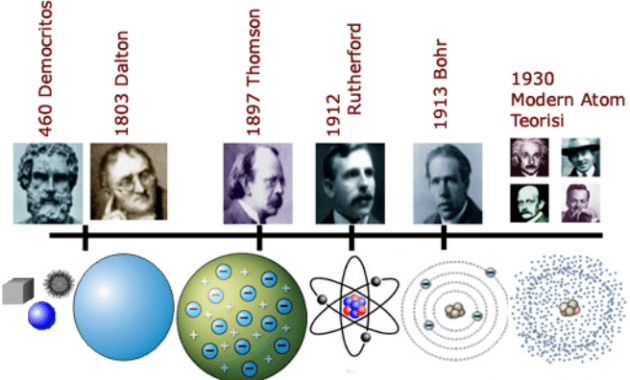
    The Greek word for an atom is (ἄτομος/átomos, α-τεμνω) , which means something that cannot be cut or divided. The concept of the atom as an indivisible component was first proposed by Indian & Greek philosophers. In the 17th and 18th centuries, chemists laid down the foundations of this idea using and demonstrating that specific substances could not be further broken down using chemical methods.

    During the late 19th and early 20th centuries, physicists discovered the structure and subatomic components within the atom, demonstrating that the ‘atom’ was indivisible. The principles of quantum mechanics were used by physicists who succeeded in modeling the atom.

    In everyday observations, it is relatively believed that the atom is a very small object that has a proportionally small mass. Atoms can only be monitored using specific tools such as an atomic force microscope. Over 99.9% of an atom’s mass is centered in the atomic nucleus, with protons and neutrons of nearly the same mass. Every element has at least one isotope with an unstable nucleus, which can undergo radioactive decay.

    This can cause transmutation, which changes the number of protons and neutrons in the nucleus. Electrons bound in atoms contain a number of energy levels, or orbitals, that are stable and can undergo transitions between these levels and absorb or emit photons synchronously with the energy disparity between the levels. The electrons in an atom determine the chemical properties of an element, and influence the magnetic properties of that atom.

    Understanding Atom According to Experts

    1. John Dalton

    Atoms are the smallest particles of a substance that cannot be broken down into smaller particles by normal chemical reactions.

    2. Leucippus and Democritus

    Atom is the smallest part of matter that cannot be divided into certain parts. Atoms are the building blocks of all matter in this world.

    3.Joseph John Thomson

    Atoms are positively charged balls surrounded by electrons like raisins.

    4. Ernest Rutherford

    Atoms are particles consisting of neutrons and protons and surrounded by electrons.

    Whereas in the Big Indonesian Dictionary (KBBI), atom means the smallest chemical element (after the nucleus) that can stand alone and combine with other elements. Not only that, from the four definitions of atoms put forward, atoms can be understood as the smallest and inseparable particles.

    “The smallest and indivisible particle” , this thought comes from Democritus. He was the first scientist to reveal it. Atomic thoughts or opinions are not scientific research, but only Democritus thoughts.

    From the thoughts of Democritus, many scientists are challenged to do research on atoms. In fact, until now, atomic research is still ongoing.

    In general, atoms are circular in shape with diameters ranging from 6 to 30 mm. The electromagnetic force that exists in atoms can bind particles such as protons, neutrons, and electrons. Atomic bonds with protons, neutrons, and electrons make these atoms and particles form molecules. So far, atoms have not been seen with various technological tools.

    The atomic nucleus is often called the daughter nucleus. An atom has a nucleus surrounded by electrons, protons and neutrons. Electrons carry a negative charge. On the other hand, the proton is positive. After having a positive and negative charge, a neutron can be said to have a charge that is not useful to anyone, simply that a neutron is neutral.

    A Brief History of the Atom

    The idea that matter is made up of indivisible units has been around for a millennium. However, these thoughts remain abstract and philosophical, not based on empirical observations and experiences.

    Philosophically, descriptions of the nature of the atom vary according to culture and philosophical school, and often contain spiritual elements. However, the basic idea of ​​the atom was accepted by scientists thousands of years ago because it could elegantly explain new discoveries in chemistry.

    The first reference to the concept of the atom comes from ancient India in 800 BC, it is described in Jainist philosophical texts such as this and the like. The Nyaya and Vaisesika schools developed theories explaining how atoms combine to form more complex objects. A century later, Leucippos referred to the atom in the West, which was later codified by his student Democritus

    Around 450 BC, Democritus coined the term átomos (Greek: ἄτομος) , meaning “uncut” or “undividable”. Democritus’ atomic theory was not an attempt to describe physical phenomena in detail, but a philosophy that attempted to provide answers to the changes that occurred in nature.

    Similar philosophy also exists in India, however, modern science has decided to use the term “atom” coined by Democritus. Democritus also said that the atoms in water are so slippery that water can flow everywhere while the atoms in salt are covered with sharp thorns which give a salty taste to the tongue.

    Further advances in the understanding of atoms began with developments in chemistry. In 1661, Robert Boyle published The Skeptical Chymist , who argued that the world’s matter was composed of various combinations of “corpuscles”, that is, different atoms.

    This contrasts with the classical view that matter is composed of the elements air, earth, fire and water. In 1789, the term element or element was defined by Antoine Lavoisier, a French aristocrat and researcher, as a basic substance that cannot be divided by chemical methods.

    Aristotle said that there are 4 basic elements in the earth and when they are all combined they will form the compounds we see. At that time his student asked: “Can we make gold if we combine all the basic elements earlier?” Aristotle answered “Yes” .

    It made scientists wonder where it was 200 years later. In 1669, German chemist Hennig Brand distilled 60 buckets of urine because he thought there was real gold in it (because urine is golden yellow) and as a result his chemical apparatus glowed in the dark.

    He named him Phosphorus (Phosphorus) after the Greek word “Phosphoros” which means evening star. He was the first person in the era of AD, which was previously the discovery of arsenic 300 BC.

    In 1803, John Dalton used the concept of atoms to explain why elements always react in spherical and fixed proportions, and why some gases are more soluble in water than others. . He proposed that each element contains a single, unique atom, and these atoms can then combine to form chemical compounds.

    This particle theory was confirmed in 1827, when the botanist Robert Brown used a microscope to observe dust floating on water and found that it moved randomly.

    This phenomenon is known as “Brownian movement”. In 1877 J Desaulx proposed that this phenomenon was caused by the thermal motion of water molecules, and in 1905 Albert Einstein carried out a mathematical analysis of this motion. French physicist Jean Perrin later used Einstein’s work to experimentally determine the mass and size of an atom, which would become the final verification of Dalton’s atomic theory.

    Based on his work on cathode rays, JJ Thomson in 1897 discovered the electron and its subatomic properties. This destroys the concept of the atom as an indivisible unit. Thomson believed that electrons were evenly distributed throughout the atom and that the charges were balanced by the presence of a sea of ​​positive charge (the plum pudding model).

    Atomic Components

    1. Subatomic Particles

    Although originally the term atom meant a particle that could not be chopped up or further reduced into smaller particles, in modern scientific terminology, atoms are composed of a large number of subatomic particles. The particles that make up the atom are electrons, protons and neutrons. But hydrogen-1 has no neutrons. The same is true for the positive hydrogen ion H+.

    Of these subatomic particles, the electron is the lightest, has a mass of 9.11 × 10⁻³¹ kg and has a negative charge. The size of the electron is so small that there is no measuring technique that can be used to measure its size. The proton has a positive charge and a mass 1,836 times that of the electron (1.6726 × 10⁻²⁷ kg). Neutrons have no electrical charge and have a free mass 1,839 times that of electrons or (1.6929 × 10⁻²⁷ kg).

    In the standard example of physics, both protons and neutrons are composed of elementary particles called quarks. Quarks belong to the class of fermion particles which are one of two basic building blocks (the other being leptons). There are six types of quarks and each has a fractional electric charge of +2/3 or −1/3. Protons are made up of two up and one down quarks, while neutrons are made up of one up and 2 down quarks.

    This difference in the composition of the quarks affects the mass and charge disparity between the two particles. The quarks are held together by a powerful nuclear force mediated by the gluons. Gluons are members of the benchmark bosons which are mediators of physical forces.

    2. Atomic Nucleus

    The atomic nucleus consists of protons and neutrons bound together at the center of the atom. Collectively, these protons and neutrons are called nucleons (particles that make up the nucleus). The diameter of the atomic nucleus varies from 10−15 to 10−14 m. The approximate radius of the nucleus is 1.07 fm, where A is the number of nucleons.

    This is very small compared to the atomic radius. The nucleons are held together by a potential gravitational force called the strong residual force. At distances less than 2.5 fm, these forces are stronger than the electrostatic forces that cause the protons to repel each other.

    Atoms of the same chemical element have the same number of protons, which is called the atomic number. The nucleus of an atom with a specific atomic number, specific mass number, and half-life is called a nucleotide. An element can have a varying number of neutrons. These variations are called isotopes.

    Isotopes are elements with the same mass number but different atomic numbers. Isotopes of elements with the same number of electrons but different atomic numbers and masses. The number of protons and neutrons in an atom will determine the atomic nuclide, while the number of neutrons relative to the number of protons will determine the stability of the atomic nucleus, with isotopes of a particular element undergoing radioactive decay.

    Neutrons and protons are two different types of fermions. The Pauli exclusion principle prohibits the existence of identical fermions (such as many protons) occupying the same quantum physical state at the same time.

    Therefore, each proton in the atomic nucleus must occupy a different quantum state with its own energy level. The Pauli principle also applies to neutrons. This prohibition does not apply to protons and neutrons which have the same quantum state.

    For atoms with low atomic numbers, atomic nuclei with more protons than neutrons tend to fall to a lower energy level through radioactive decay, leading to an equilibrium of protons and neutrons. Therefore, an atom with a balanced number of protons and neutrons is more stable and less likely to decay.

    However, as the number of atoms increases, the repulsion between protons causes the atomic nucleus to require a higher proportion of neutrons to maintain its stability. In the heaviest nuclei, the neutron/proton ratio needed to maintain stability increases to 1.5.

    3. Electron Cloud

    Electrons in an atom are attracted by protons in the atomic nucleus through electromagnetic forces. This force holds the electrons in the wells of the electrostatic potential around the nucleus. This means that an external force is required for electrons to escape from atoms. The closer an electron is to the nucleus, the greater the force of attraction, as a result, electrons that are close to the center of the potential well require greater energy to escape.

    Electrons, like other particles, have properties such as particles as well as waves (wave-particle dualism). The electron cloud is a region in the potential well where each electron makes a homogeneous 3-dimensional stationary wave (i.e. a wave that is not moving relative to the nucleus).

    This behavior is influenced by the atomic orbital, which is a mathematical function that calculates the probability that an electron will be in a particular location when its position is measured. There will only be a specific set of orbitals around the core, as other wave patterns will rapidly decay to more stable forms.

    Each atomic orbital corresponds to a specific electron energy level. Electrons can change their state to a higher energy level by absorbing a photon. As well as being able to rise to a higher energy level, an electron can also descend to a lower energy state by radiating the excess energy into a photon.

    The energy required to remove or add an electron (electron binding energy) is less than the binding energy for nucleons. For example, it takes only 13.6 eV to remove an electron from a hydrogen atom. Compare that to the 2.3 MeV required to split a deuterium nucleus.

    Atoms are electrically neutral because they have the same number of protons and electrons. Atoms that lack or gain electrons are claimed to be ions. Electrons that are located outside of the nucleus can be transferred or shared with other nearby atoms. In this way, atoms can bond together to create molecules.

  • What are Anniversary? Steps to Choose Gifts and Gift Ideas

    What is an Anniversary – Anniversary is a special moment that is routinely celebrated by every couple, including those who are married. At this moment, the husband and wife will be reminded of the journey of love they have been through. Whether it’s for those who have been for years or for those who are just starting to build a household.

    It’s not always beautiful, sometimes marriage can also be colored with sadness and difficulties. However, in order to remain lasting and harmonious, it takes a shared commitment and love from both parties.

    In addition, to make the relationship harmonious, you can do it by celebrating anniversaries. Speaking of anniversaries, every couple has their own way and ritual of celebrating it. There are those who plan a vacation to the city or country of their dreams and there are those who only celebrate it by giving special gifts to their partners.

    For those of you who are soon celebrating a relationship anniversary and are confused about what to celebrate it with, then you can see reviews about gift ideas suitable for anniversaries.

    Steps to Choose Anniversary Gifts

    Below are some things you can think about before choosing an anniversary gift:

    1. Choose Based on Hobbies Liked by Partners

    Choose based on the hobbies that your partner likes. In between the daily activities, doing activities that are in accordance with hobbies are sure to be fun. After working in an office or taking care of children, husband or wife definitely need refreshing and me time .

    Pampering your partner by supporting his hobby can then be an expression of your love for your partner. His hobbies can be an inspiration when choosing gifts for couples. Then, you can see her smile as she opens gifts that support her hobby.

    If your partner has a hobby of cooking, a gift in the form of cooking utensils can then motivate him to cook healthy and delicious dishes. A gift like this will then mean a lot and be a joy in itself because your partner will always remember you every time he does his hobby.

    2. Find out what your partner’s Wishlist is

    Find out the couple’s wishes by giving a wedding anniversary gift according to their wishes. Start paying attention to items that couples often see on online shopping site applications . Apart from that, you can also try asking your family or closest friends secretly about what you want.

    If you don’t get it, then just ask your partner directly which will then become a romantic act. This is better done than by setting up suRp. rose gifts, but apparently not what he wanted.

    3. Give gifts that are useful and can be used everyday

    Give gifts that are useful and can be used everyday so that your partner will then feel how caring you are when they receive gifts that can be used everyday. Giving a functional gift that will accompany him every day will then make your partner feel cared for.

    Partners will also use it with extreme caution. Before finally choosing, you should first pay attention to the habits of your partner every day. In addition, observe what products are always with him and he uses every day. Your partner will also really appreciate your hard work in getting to know him deeper. Alternative gifts that can accompany her on a daily basis include perfume, skincare, and watches.

    4. Provide Original Products that Guarantee Quality

    Give the original product which then guarantees quality. Also be careful with products that resemble the original even though the price is much cheaper. The appearance of the product may resemble the original product, but the quality may differ. It could be that your partner then wants to take care of and use your gift very carefully. So that your partner is not disappointed, you should choose original products with the best quality.

    5. Give a Flower Bouquet according to the age of marriage

    Be a romantic partner, give him a flower bouquet that matches your anniversary. Flower bouquet is also a gift that is romantic, classic, and timeless. Each type of flower certainly has its own meaning, such as carnation, cosmos, sunflower, geranium and daisy flowers which are suitable for use as anniversary gifts in the first to fifth years.

    In addition, also get to know the various types of your partner’s favorite flowers. One type of flower that is often given to couples is red roses. Red roses themselves symbolize a deep and very strong sense of love. In addition, lilies, tulips, or orchids will also be the right choice. These three types of flowers then both show true love that is sincere and everlasting.

    Anniversary Gift Ideas

    Following below are interesting and memorable anniversary gift ideas that you can give to your partner:

    1. Flower Bouquet

    For some people, flowers then become a romantic symbol that symbolizes love and affection. This can then be the right choice to be used as a wedding anniversary gift. You can also use fresh or artificial flowers, depending on your partner’s taste.

    2. Wall Clocks or Watches

    The clock can then symbolize the time you will then spend with your partner in the years to come. A wooden wall clock with an elegant and minimalist design can be an anniversary gift choice. If you choose a watch, you should also make sure the design is adjusted to the tastes of your partner.

    3. Hourglass

    The hourglass then comes with a romantic and touching sentiment. This clock seems to symbolize the eternity of love. As an option, you can engrave the couple’s name and anniversary date on the clock frame. This can be a sweet and classy decoration. In addition, the hourglass will remind you that the time spent with the people you love will not be wasted.

    4. Perfume

    This one item will certainly be liked by everyone. You can choose a scent that is usually used by your partner, such as sweet, woody, floral, or masculine scents. Besides being able to be used daily, perfume will also make you stick with your partner.

    5. Scrapbooks

    A scrapbook which is then personalized with a photo together can be an interesting anniversary gift. Better yet, make a memorable scrapbook for him by pasting in your favorite photos. This photo can be the first portrait of the date and other photos. Also, don’t forget to add a romantic note to every photo you want to stick.

    6. Tumblr

    Give a custom tumblr gift to your partner. Even better, you can use a romantic photo or make a poetic caption for the design. Besides being memorable, this gift can also be used everyday. For example, to drink coffee or drink tea.

    7. Coffee machine

    If your partner is a coffee fan, then you can give a gift in the form of a coffee machine which can be one of the best ideas for celebrating an anniversary. Give him an automatic espresso coffee machine that will make it easier for him to brew coffee anytime at home.

    8. Sports equipment

    If your partner likes sports, then this gift can be the right choice. This can then be used to support activities so that they run more optimally. You can also ask your partner what kind of sports equipment is needed. Complete sports equipment, then will encourage him to adopt a healthier lifestyle.

    9. Wallet

    Wallet as one of the favorite items for some people. You can give him the best quality wallet like a leather wallet. In addition, this wallet itself is designed to store cards and coin pockets with a super slim design.

    10.Acrylic

    If you have a special song with your partner, then an acrylic music box can be the right choice for an anniversary gift. You can engrave or order acrylic which is then installed with your favorite music. In fact, you can scan the music code to open it in the app and listen to it live.

    Restaurant Ideas to Celebrate Anniversary

    1. OSO Ristorante

    The Ristorante is located on the 46th floor, OSO Ristorante will amaze you with the view. In this restaurant you and your partner can enjoy and taste Italian cuisine made from the best ingredients from nature. OSO Ristorante also has a large selection of wine lists, including more than 200 wine labels from 60 different regions of Italy, as well as classic Italian spirits and Italian cocktails.

    • Phone Number: (021) 29922448
    • Social Media: @osoristorante.id on Instagram
    • Address: The Plaza Office Tower, Jl. MH Thamrin No. 28 – 30, RT. 9/RW. 5, Gondangdia, Kec. Menteng, Central Jakarta City, Special Capital Region of Jakarta 10350
    • Price range: Rp. .600,000.00 for 2 people
    • Operating Hours: 11.00 – 15.00, 18.00 – 23.00 (Monday – Sunday)

    2. Vong Kitchen

    Vong Kitchen is a contemporary restaurant with seasonal dishes and has been curated by renowned chefs Jean-Georges and Cedric Vongerichten. Distinctive taste between the exotic and aromatic flavors of Jean from the East and peRp. the blend of French, American and Asian flavors will then amaze you. Experience a memorable Anniversary by indulging in their delicious food and cocktails.

    • Vong Kitchen Phone Number: (021) 50808787
    • Vong Kitchen Social Media: @vongkitchen on Instagram
    • Vong Kitchen Address: Alila SCBD Jakarta, Lot 11, Jl. Gen. Sudirman No. Kav. 52-53, RT.5/RW.3, Senayan, Kec. Kby. Baru, City of South Jakarta, Special Capital Region of Jakarta 12190
    • Vong Kitchen Price Range: Rp. 800,000.00 for 2 people (approx.) without alcohol Rp. 70,000.00 for a glass of beer (approx.)
    • Vong Kitchen Operating Hours: 11.00 – 22.00 (Monday – Sunday)

    3. Sofia at The Gunawarman

    Sitting inside the luxurious building of The Gunawarman, Sofia Resto presents a romantic dining experience. Known for their food which is then cooked using only the finest ingredients, Sofia also serves up a variety of mouth-watering desserts. Dining here will bring you an authentic sensation that you can’t get anywhere else:

    • Sofia The Gunawarman Phone Number: (021) 22770007
    • Sofia The Gunawarman Social Media: @thegunawarman on Instagram
    • Address of Sofia The Gunawarman: Jl. Gunawarman No.3, RT.6/RW.3, Selong, Kec. Kby. Baru, City of South Jakarta, Special Capital Region of Jakarta 12110
    • Sofia The Gunawarman Price Range: Rp. 700,000.00 for 2 people (approx.) without alcohol
    • Operational Hours of Sofia The Gunawarman: 06.00 – 01.00 (Monday – Tuesday, Thursday, Sunday) 06.00 – 03.00 (Wednesday, Friday – Saturday).

    After reading this article to the end, you will know what an anniversary is and what gift ideas are suitable for celebrating it. That way, the relationship between you and your lover can get closer and closer.
    Thus the discussion about the anniversary along with the gift ideas, we hope that all the discussion above will make it easier for Sinaumed’s to choose the right gift for the anniversary.

    Recommended Books Related to Anniversary

    1. Don’t make a small problem in a love relationship a big problem

    Heartache, anger, insecurities, and a variety of everyday problems can cause friction, even for the happiest couples. For married couples who have lived together for years, the problem is generally that each one becomes less respectful and doesn’t put enough energy into keeping the relationship passionate.

    This book shows you how to keep your relationship with your partner burning with passion, how to prevent small fights from turning into big ones, and how to respect your partner. In one hundred beautifully written but incredibly practical tips, Richard and Kris Carlson show us how not to overreact to criticism from loved ones, how to get over old grudges. jealousy, a way to ignore your partner’s strange habits, and a way to choose peace without showing resentment.

    2. The Things You Can See Only When You Slow Down

    The multi-million-copy bestseller is spiritual wisdom on the importance of slowing down in our fast-paced world, by the Buddhist author of Love for Imperfect Things, “Wise advice on how to reflect and slow down.” Elle Is the world busy, or is it my mind?

    The world moves fast, but that doesn’t mean we have to. This best-selling mindfulness guide by Haemin Sunim (which means “spontaneous wisdom”), a renowned Buddhist meditation teacher born in Korea and educated in the United States, illuminates the path to inner peace and balance amidst the many demands of everyday life.

    Offering clues on the path to well-being and happiness in eight areas – including relationships, love, and spirituality – Haemin Sunim emphasizes the importance of forging deeper connections with others and being compassionate and forgiving towards oneself. The more than twenty colorful illustrations that accompany his teachings serve as a relaxing visual distraction, prompting us to notice that when you slow down, the world slows down with you.

    3. We Sometimes, Yes, That Is

    Sometimes we feel that we are the laziest people to read until one day for fun we enter the PERP. library or to a bookstore and came home with a tote bag in hand containing several anthologies of short stories. en. Many men often feel they don’t need anything, but when he goes to the market, he comes home with whatever is filled in a number of plastic bags that are pressing against the handlebars of his motorcycle.

    In the middle of the month, a young mother often feels that she is poor because her husband has not yet been paid, but that feeling rushes away when a clothing salesperson spreads her wares on the living room floor. Sometimes we, yes, that’s how it goes. Unless, we have fled to the mountains and meditated in caves while constantly building illusions about the feeling that we don’t need anything anymore because we have succeeded in seeing ourselves as demigods.

    This book summarizes a number of strange human behaviors around us, (perhaps) including ourselves, whether we realize it or not. Many ridiculous and intriguing events that reflect; there are times when it makes us flinch, smile, then giggle to ourselves. This book is truly an inspiring, entertaining, and enlightening read.

  • Ways to Grow an Attitude of Love for the Motherland for the Young Generation

    It doesn’t feel like this year, our country has turned 77 years old. If equated with human age, then the age of our country is very well established. The pleasure that can be felt today is inseparable from the struggle of the nation against the invaders until finally the Indonesian state was able to become independent. It has been 77 years, Indonesia is still trying to show its existence to the world. Moreover, our country has the largest youth generation. So that in the future, Indonesia is expected to become one of the developed countries to be reckoned with.

    We should be grateful for not having to take up arms to maintain peace like the warriors and heroes of the past. In an easier way, we can show love for the motherland. As the younger generation, we play a very important role in protecting this beloved country. Even more so during a pandemic that brought an epidemic to this country, because it is in the hands of young people that Indonesia’s future will be held.

    What is Love of the Motherland?

    Love for the motherland is a feeling of pride and also belonging to a certain territory. This feeling is manifested in the form of a willingness to sacrifice to protect its territory from various kinds of disturbances and threats. The importance of having a sense of love for the motherland will make it a natural human trait that is possessed from birth. According to the Big Indonesian Dictionary, love for the motherland is a feeling that arises and emerges from the heart of a citizen to serve, defend, maintain, protect the motherland from various kinds of threats and disturbances.

    This love for the motherland means that we defend against all kinds of disturbances and threats that can come from anywhere. In addition, love for the motherland is also a feeling of pride, belonging, respect, respect, and also the high loyalty that every individual has to the country where they live which can be reflected in the behavior of defending the motherland, guarding and protecting the motherland. willing to sacrifice for the sake of the nation and the country and love the customs and culture of the nation.

    Love for the motherland is also often known as nationalism. In essence, nationalism is the notion of nationalism which is the highest loyalty to the nation and also to its homeland. In essence, love for the motherland is an integral part of every nation. As the definition of love for the motherland has been explained previously, love for the motherland is always synonymous with the term nationalism. In addition, love for the motherland is also an experience and also a manifestation of the precepts of Indonesian Unity which can be realized in everyday life in families, schools, and also in society. The awareness of loving the motherland is essentially devoted to the country and its willingness to sacrifice to defend the country.

    Therefore, a sense of love for the motherland also needs to be cultivated in the soul of everyone from an early age who become citizens of a country or nation so that the goal of living together can be achieved. Love for the motherland is reflected in the behavior of defending the country, guarding and protecting the homeland.

    Example of an Attitude of Love for the Motherland

    The following are some examples of the attitude of love for the motherland for the millennial generation, including:

    1. Proud to Use Original Products Made in Indonesia

    Proud to use products made by our own country is one of the ways we can show our love for Indonesia. Don’t get me wrong, original products made in Indonesia are no less good and of better quality than those made abroad. In fact, several products such as bags, shoes and clothes have been successfully marketed abroad. With pride, they use products made in Indonesia. Therefore, we as a nation of Indonesia must participate in advancing the economy by appreciating products made in our own country.

    2. Maintaining and Caring for Environmental Cleanliness

    Even though it seems trivial, in reality environmental cleanliness is still very difficult to do, especially for the community in general. From now on, let’s try to form self-awareness to always keep the environment clean. Simply put, don’t litter. Maintaining and caring for the environment is not only the responsibility of the government. However, the community must also play a role in protecting it together.

    3. Not Spreading Hate Speech or Fake News

    As a millennial generation born in an era of increasingly advanced technology, of course we are very familiar with the existence of the internet and cyberspace. However, the internet is like a double-edged sword. On the one hand, it can have a positive impact on the progress of the nation and state, but on the other hand, it can be disastrous if used in an inappropriate manner. The internet itself can be a means of channeling love for Indonesia. For example, by not doing or spreading hate speech and fake news.

    We must always check the source of the news before finally posting it to social media accounts or not spreading hate speech that can offend sensitive matters. By minimizing fake news and hate speech, we will be more comfortable when surfing the internet. So, let’s start being a smart young generation when using the internet so that not only your gadgets are smart, but also their users.

    4. Respect the Artists by Not Buying Pirated Works

    The habit of the Indonesian people in downloading movies or songs for free seems to have been going on since ancient times. Where we prefer to use an instant and also free method compared to having to pay. To create a sense of love for the homeland, from now on, let’s learn to appreciate the work of artists together. The method is very easy, we only need to buy their original works, not pirated ones.

    Making good music or movies is not an easy job. Likewise filmmakers who have worked hard to be able to produce cool films. Even though it is more expensive, at least we have a small contribution in stopping illegal piracy which is detrimental to artists and also the country.

    5. Obey the Traffic When Driving on the Streets

    Drivers’ awareness to always obey traffic on the streets is currently still quite low. In order to get there faster, it’s not uncommon for people who are selfish and also go around violating street rules. Even so, it’s not too late for us to change for the better. There is still plenty of time for the younger generation to start learning to obey traffic. Such as not running through red lights, not using sidewalks for vehicles, not using busway lanes, and other rules. Let’s start being disciplined while driving for safety together.

    6. Enjoy the beauty of Indonesia

    Indonesia itself is very famous for its natural beauty and extraordinary culture. The natural beauty of Indonesia is very special because it was painted and created directly by God Almighty. Of course it would be a shame if we didn’t enjoy all the natural beauty that exists in Indonesia. If usually your vacation destinations are only abroad, then try occasionally to travel or take a vacation to remote parts of the country. Enjoy all the charm of nature and culture of this country which is very cool and beautiful. By enjoying the charms of Indonesia, our love and affection for our homeland will grow by itself.

    7. Maintaining the Unity and Integrity of the Indonesian State

    The next way to foster a sense of love for the motherland is to maintain the unity and integrity of the nation. Never forget our country’s very beautiful motto, Bhinneka Tunggal Ika. The future of this nation is in the hands of all of us, especially the younger generation. As young people, we must appreciate every difference that is around us. Do not let our differences make us divided. However, we must be strong to be able to make Indonesia more special.

    8. Proud to be Indonesian

    As people born and raised in Indonesia, we should be proud to be Indonesian. For example, by speaking Indonesian properly and correctly. Loving the culture in Indonesia, such as using batik and traditional clothes during celebrations so that they can foster a sense of love for the motherland.

    9. Maintaining Indonesia’s Good Name

    Has Sinaumed’s ever traveled abroad? If so, then maintain the good name of Indonesia by complying with the regulations in that country. If your goal abroad is just to travel, then don’t ever pollute these tourist spots and dispose of trash in its place.

    10. Creating Harmony in the Community

    Respect for every difference is carried out in accordance with the legal norms that apply in the country and society. If there are differences, then deliberation to reach a consensus is one of the best ways. From an early age, we need to cultivate an attitude of respecting differences properly regardless of religion, race, age, culture, and others.

    Those are some easy ways for the younger generation to love their homeland more. The sense of comfort that we feel today is the result of the efforts of the heroes and the ancient people in liberating this country from the invaders.

  • Watch out for the Inferiority Complex! These are the Characteristics and How to Overcome Them!

    Definition of Inferiority Complex – Feeling insecure or not as good as others is very natural. However, be careful if these feelings make you feel inferior and hesitate to do many things. It could be, you have experienced an inferiority complex.

    Inferiority complex , or inferiority complex is a condition where a person thinks that he is lower than the people around him. This situation is similar to someone who has low self-confidence or more often called when people feel down , that is, they feel that the people around them are better than themselves. It’s just that, what is different from someone who feels down , in a state of inferiority complex , a person accepts that he is indeed inferior, or lower than other people.

    The feeling is ingrained in his mind and hard to get rid of. Acceptance of this inferiority has a considerable impact on one’s life. This feeling can affect the way a person gets along, the way he lives and also the way he makes important decisions.

    This inferior state, if it only infects a person, is only a problem for that person and the people around him. However, it is a problem in itself if many people, or even a nation is infected with this mental condition. If this happens, it is not only individual decisions that are affected by this condition, but also state decisions and policies that are also affected. This can be detrimental to many people, because the state is no longer able to objectively determine what is good and what is not for the nation.

    Conditions in which a nation is infected with an inferiority complex have in fact occurred in our country, Indonesia. Many people think that foreign cultures and their nations are superior to us. One example is the rise of Indonesians who have a “hobby” of asking for photos with visiting foreign tourists. Another example is when someone prefers foreign products to local products. This problem, if not handled quickly, of course, can lead to bigger problems.

    What is an Inferiority Complex?

    The term inferiority complex was introduced by Alfred Adler in 1907 to describe a condition in which a person experiences feelings of inferiority and self-doubt that originate from factors such as real or imagined physical or psychological limitations. This condition can lead to cowardice and shyness, so that the quality of achievement itself is far compared to others.

    Inferiority complex is a term to describe intense feelings of weakness and inadequacy in a person. Inferiority complex is more than just a feeling of disappointment and sadness in the face of failure. People who have this tendency always feel that their achievements, abilities, attractiveness, or happiness are insignificant when compared to other people.

    Due to their negative self-image, they are often pessimistic and fearful that they will not be able to live up to the expectations of themselves or others. The feeling of not being good enough is a barrier for them to achieve their dreams. Inferiority complex is divided into two types, namely primary inferiority and secondary inferiority. Primary inferiority occurs in childhood, when parents often compare their child with other children.

    Children who are often scolded and doubted about their abilities can grow into individuals who feel they have no self-esteem. Meanwhile, secondary inferiority is the inability of adults to achieve goals due to feelings of inferiority they have. Many factors can cause inferiority to emerge in adulthood, including poor body image, difficult economic conditions, and the social environment in which one lives.

    Characteristics of the Inferiority Complex

    When individuals experience an inferiority complex there are several symptoms they experience, namely low self-esteem, insecurity , inability to achieve a goal, easy to give up, desire to withdraw from social situations, often feel gloomy, and experience anxiety and depression.

    According to the theory of Individual Psychology by Alfred Adler it is said that humans are controlled by feelings of less and imperfect which then encourage individuals to compensate for these feelings in many ways to seek perfection, freedom and excellence. In an inferiority complex, all of these feelings tend to be shown through compensation or overreaction driven by the individual’s subconscious to compensate or overreact to something.

    Overreaction or overreaction in everyday life, can be seen through the attitude of people who value foreign works too much. Overreaction can also be seen in the form of the existence of people who want to be recognized. For example, when responding to foreign media that upload positive content about Indonesia, people easily give positive reactions that boast.

    On the other hand, when there is criticism, the public does not want to hear it and instead looks for loopholes to bring down the media. Without realizing it, the existence that this society wants to show is actually created to show a lack of self-esteem that is veiled in an inferiority complex .

    When a person experiences an inferiority complex continuously, there is a possibility that he will instead experience a superiority complex . It is actually a form of defense mechanism that people use to hide their feelings of inferiority namely, through overcompensation. This overcompensation manifested in bluffing is what is often mistakenly understood as a superiority complex . The difference lies in the false feeling of inferiority expressed in aggressive boasting and in the egocentric genuineness of the superior feeling expressed in intellectual indifference.

    Signs of Inferiority Complex

    People with inferiority problems show signs of it in different ways. They have feelings of inferiority with specific signs which include:

    • tend to avoid eye contact with other people when talking,
    • have a passive communication style
    • have low motivation and energy,
    • withdrawing from family, friends, and other people,
    • experiencing rapid and unpredictable mood swings (mood swings),
    • constantly seeking validation and praise from others,
    • tendency to overanalyze praise and criticism
    • avoid competitive activities so as not to be compared with others,
    • unable to give praise for himself, as well
    • underestimate one’s achievements and positive qualities.

    Sometimes, people who have an inferiority complex like to make other people feel uncomfortable or insecure as a projection of their feelings of inferiority.

    How to Overcome Inferiority Complex?

    There are times when the tendency for an inferiority complex comes from a mental disorder that you have. To identify the cause, you may need help from professionals such as a psychologist or psychiatrist. If there really is an underlying mental condition, this is what needs to be addressed first in order to reduce the impact of inferiority. Handling can be through therapy or with drugs.

    Apart from that, having a psychological consultation is still important, especially if the signs of low self-esteem that you feel are hindering your daily activities. Through consultation sessions, the therapist will evaluate your response and mindset to certain situations. After that, they can dig into the root cause of the response.

    In addition, you are also told how to deal effectively with situations that trigger an inferiority complex. You will learn to be more self-respecting. Through approaches such as behavioral and cognitive therapy, for example, negative self-concepts can be transformed into positive views. This will also help you to deny bad thoughts that arise in some situations.

    Remember, the most important thing is to understand that every human being has their own uniqueness and strengths. There are some things about you that other people might not have. Don’t be afraid to show that you can do this well.

    The Impact of Inferiority on Everyday Life

    An inferiority complex is something that can interfere with life if left unchecked. Not only does it damage your relationships with those closest to you, inferiority can trigger you to vent in unhealthy ways.

    A 2011 study has shown that prolonged feelings of inferiority can increase the risk of dangerous addiction. An inferior person may turn to consuming alcohol or drugs as a coping mechanism that will help him stay out of trouble.

    Worrying too much about not looking competent will also distract from your focus on work. Instead of trying to do your best, you are constantly fixated on the results and how your co-workers or superiors think of you.

    It is not impossible, later feelings of inferiority will lead to feelings of anxiety or anxiety disorders, difficulty sleeping, and even develop into depression later in life.

    The Impact of Inferiority Complex in National Life

    The impact of an inferiority complex can occur in the life of the nation and state. A citizen from a developing country may feel inferior to other citizens from a developed country or a country he considers better. The first example that can be criticized is the special response of Indonesian citizens to foreign nationals, especially those from the West. An excessively ‘friendly’ attitude towards foreigners is inseparable from the influence of Western imperialism and colonialism which has long been embedded in the minds of the people.

    During the Dutch colonial era, the population was divided into European groups, Bumiputera groups, and Eastern Foreign groups as regulated in the Indische Staatsregeling . As a result of this classification, the natives were in the third group, so it is not surprising that they were often discriminated against by European colonialists, including writings that could be found in several meeting places at that time, such as “Natives and dogs are prohibited from entering.”

    Starting from that, Western colonialism slowly instilled its hegemony over the understanding of the Indonesian people. Local people who feel that they are inferior compared to foreign people slowly begin to believe that standards regarding good things are those that are oriented towards the West, because they themselves doubt their own standards. Such a situation can give birth to local people’s adherence to what they consider ideal, and then manifested in excessive ‘politeness’ towards those who are considered superior.

    On a broader issue, an inferiority complex can also make a person hesitate in competing with people they perceive as superior. In concrete terms, a citizen who feels inferior will feel doubtful, inferior, or pessimistic in competing with foreign nationals who are considered superior because they come from developed countries.

    This certainly hinders the progress of human resources in a country. An inferiority complex degrades one’s potential to do something. Instead of thinking about what should be done, someone who feels he is inferior is actually too busy thinking about whether he is able to compete or not with someone he considers superior.

    As a nation that was once colonized by other nations for hundreds of years, the Indonesian nation has experienced an inferiority complex for hundreds of years as well. This was demonstrated and was the result of the existence of social groups that were introduced during the Dutch colonial period.

    The original Indonesian people, who at that time were referred to as the native Indonesians, were prohibited from enjoying the educational facilities that were only provided for Europeans and Foreign Easterners. The feeling that arises from not getting what the other group gets creates a feeling of admiration for the two groups.

    Norman Vincent Peale, an American pastor and author known for popularizing positive thinking, offers several suggestions for dealing with the inferiority complex that many people suffer from. In the book The Power of Positive Thinking , Peale invites all of his readers to avoid negative thinking in order to avoid an inferiority complex .

    To deal with feelings of inferiority complex , all you have to do is formulate in your mind a successful mental picture of yourself. In the life of the nation and state, Indonesia is a country that is struggling to attract more investors to enter the country. This certainly creates feelings of inferiority among domestic investors. In fact, if you take a closer look, they shouldn’t be afraid or even insecure because they are the ones who know better about the situation in that country.

    It is equally important not to feel small compared to foreign investors. Moreover, in his book, Peale also recommends never thinking about failure. By not thinking about a failure does not mean overly confident about a success. Not thinking about failure means having the courage to take steps that are considered right to move forward.

    The next step that must be taken is to avoid feeling too much admiration for something. Judging from life in Indonesia, this is what happens very often. One example is the habit of inviting foreigners or better known as Caucasians to take pictures together.

    Things like that are common in various tourist areas in Indonesia. Indonesians who tend to have an inferiority complex will have great admiration for people of other nations who have an impact on bringing down their own nation. If this method is carried out, the Indonesian people will be better able to respect their own nation. Admiration for other nations is okay, but don’t overdo it.

    It is also important to instill a sense of nationalism in society so that we love and are proud to be Indonesian. We need to know that excessive feelings of love, pride and awe can backfire on our own nation. This excessive feeling of love, awe, and pride is what is often referred to as chauvinism.

    Therefore, love and be proud of your country enough. We can indeed admire other nations, but let us not forget that this nation still needs us to develop. Don’t let us become lulled by our admiration for other nations that make us forget our national identity and have feelings of inferiority.

  • Watch Inventor: This History and Biography

    Inventor of Watches – Does Sinaumed’s like wearing watches? But does Sinaumed’s know who invented the first watch? Currently, watches are one of the most popular fashion trends with various types of models and advanced technology that complement them. Just like the discovery of other useful items, the invention of watches has also experienced a long journey. To understand it, here is an explanation of the history of the development and biography of the inventor of the watch:

    History of the Development of Watches

    The invention of the wristwatch for the first time has a long history in the history of clocks in the world. Today, it is natural to believe that the civilization of watch development began in Switzerland, but in fact, based on important records and testimonies from watch history, it came from a German man named Peter Henlein. Peter is considered the inventor of the watch and made the watch a luxury accessory of his time.

    Looking at the world’s oldest wristwatch, the answer is one that belonged to Elizabeth I of England as a gift from Robert Dudley in the 16th century. The watch was a new watch or pocket watch at the time because it was a pocket watch with a leather bracelet and strap. The concept of a watch itself has existed since the 16th century in the form of a special watch given by Robert Dudley to Queen Elizabeth I of England to tuck into her arm.

    However, many believe that the history of the watch cannot be separated from Abraham-Louis Breguet, creator of the first wristwatch for Napoleon’s sister and Queen Napoleon, Caroline Murat.

    The form and function of the watch, which was originally a pocket watch or a chain, began to change into a wrist watch. Watches used for pointers were originally exclusively for women as jewelry.

    In addition to their features and requirements, wristwatches have been used as part of strategic decisions in war since World War I. From 1923, John Harwood created the first self-winding wristwatch. It was manufactured in 1957 by Hamilton Watch Company (now part of The Swatch Group), a watch maker in Lancaster, Pennsylvania, USA. Hamilton’s watch still needed updating and in 1961 Hamilton updated the watch conductor.

    The watch industry is developing in the United States, one of which is the Bulova Accutron watch. The technology developed by Bulova uses a vibrating tuning fork or tuning fork (a “U” shaped plate), to maintain the accuracy of the watch. The Bulova watch was launched in 1960.

    Meanwhile, Switzerland is also increasingly challenged by the precision of the watch developed by Bulova. Ultimately, Switzerland took the lead in collaborative research by funding the Center Electronique Horloger (CEH) (now Center Suisse d’Electronique et Microtechnique (CESM)). The study focuses on watchmaking using quartz as a precision watchmaker.

    In the past, quartz was used in large watches, but not in small ones. In 1967, CEH finally produced its first prototype of the quartz wristwatch. However, it was Seikola that created the Quartz Astron as the first mass-market quartz watch and pioneered the quartz technology used by watchmakers around the world, including Japan and the United States.


    Biography of Peter Henlein, Inventor of the Watch

    Portable watches with a spring or electric movement are designed to be carried or carried in a pocket. The first clock appeared shortly after 1500. It is an early copy by Peter Henlein, a locksmith in Nuremberg.

    Henlein grew up in Nuremberg. His parents were the brass blacksmiths Peter and Barbara Henlein, who had lived in Nuremberg since 1461. He had an older brother, Herman Henlein, who became a butcher in 1496.

    When he was young, he was apprenticed to a locksmith. At the time, locksmiths were one of the few craftsmen who had the skills and tools to enter the new field of watchmaking.

    On September 7, 1504, a dramatic event occurred in the life of Peter Henlein. He enters the battle in which fellow locksmith Georg Glazer is killed. As one of the accused, he applied for asylum at the Nuremberg Franciscan Monastery.

    During his asylum in the convent, he may have acquired a deeper knowledge of the watch-making industry. Author Ulrich Schmidt detailed and documented the history of the abbey where Henlein sought asylum between 1504 and 1508. In Henlein’s time, the abbey was magnificent. Many details about artisans and scholars are recorded in this book. For example, the monk Friedrich Craft built elaborate astrology at this monastery.

    During Henlein’s time, many highly educated people, mathematicians and astronomers entered the monastery. In this way, Peter Henlein taps into the educational and intellectual environment of his craft, as well as new techniques and tools. Starting off, the accumulated knowledge of astronomy, mathematics, watchmaking, and history from the east reached Europe during the Middle Ages and early Renaissance.

    Primarily through the trade routes and networks of the Caliphs from Muslim Spain and its centers of knowledge (i.e. Toledo), especially the Arabic and Greek to Latin translation movements, and later the Italian Renaissance, through the resulting Italian and Venetian merchants and their resonant effects.

    In 1505 he invented the world’s first watch, a pomander gold plated. In November 1509, he became lord of the Town Locksmiths’ Guild . He is best known for making small portable brass watches with decorative springs.

    It was extremely rare and expensive, as well as being popular with the nobility of the time, wearing it as a pendant or attaching it to clothing known as a pomander watch.

    Peter Henlein is listed in the city archives as a supplier of small spring watches that were given as gifts to important people. He was the first craftsman to turn the dial into a “muskrat” called a pomander, which is a small vessel made of precious metal for perfumes and disinfectants. According to further accounts, Henlein sold a musk ball (Pomander) watch in 1524.

    In 1529, Henlein visited Strasbourg on behalf of the Nuremberg Council and obtained the celestial sphere. Six years later, he made watches for the Nuremberg Council. He also built the clock tower of Lichtenau Castle in 1541 and is known as the creator of advanced astronomical instruments.


    How Old Watches Work

    Early watches were mainly made with German and French blowers, and were mostly worn either hand-held or on a neck chain. Usually they only have one hand for hours. The mainspring that powers the watch consists of flat spring steel bands that are compressed when bent or wound. When we wind the spring mechanism like a clock, the curvature of the spring increases and energy is stored.

    This energy is transmitted to the vibrating part of the watch (called the balance wheel) by means of a gear train and an electric discharge, and the movement of the balance wheel itself controls the trigger of the watch and controls the time measurement of the watch.

    Swipe actuation allows us to adjust the pointer. One of the major drawbacks to these ancient watches is the torque fluctuations applied by the royal ferns. In other words, the strength of a fern is greater when it is fully broken than when it is almost broken.

    This problem is especially serious because watches with threshold escape are heavily affected by thrust. A solution to this problem was developed soon after the invention of the king’s fern (1450) using a fused, conical grooved pulley used in combination with a barrel filled with the king’s fern. In this arrangement, the mainspring is created and the barrel in which it is placed rotates. The clock rod is wound on top of it, which is then replaced by a chain, with the other end wound around the fuse.

    When the mainspring is completely broken, the casing or chain is pulled to the minimum radius of the fuse cone. Lowering the mainspring gradually increases the size of the lever when pulling the casing or chain with a larger radius. The correct ratio of the ferns to locking radius maintains nearly constant torque when the ferns are released.

    Later barrel runs, in which the main barrel drives the gear train directly, have been incorporated into all modern mechanical watches and have replaced the worm. As the quality of the balance spring is improved, torque fluctuations are minimized, and the balance spring and balance spring are properly adjusted to ensure precise timing.

    Until around 1580, German watch hands were made almost entirely of iron. Around this time, brass was introduced. Early watches used a smooth wheel, called a balance wheel, to control the movement of the mechanism. It doesn’t experience any resistance. Therefore, the oscillation cycle, and therefore the timer clock rate, depends on the driving force. This explains the importance of backups.

    Using a spring to control the vibration of a balance is an important step in the history of timekeeping. English physicist Robert Hooke designed the spring scale wrist watch in the late 1650s.

    However, there seems to be no evidence that the spring is spiral. It is an essential element that is widely used. The Dutch scientist Christiaan Huygens may have first designed a wristwatch with a spiral spring (1674–75).

    Coil springs are thin strips of steel or other suitable spring material and are generally wound in a spiral. The inner edge is attached to the collet (small collar). This corresponds to the friction of the balance rod and the outer end being pressed against the pin attached to the movement.

    This spring works in balance like a gravity pendulum. If the balance shifts to one side, the spring will break and energy will be stored. This energy is then brought back into balance, so when it is released, it swings a lot to the other side in much the same way.

    In the absence of any damage to friction (air friction, internal spring material friction, shaft friction, etc.), the equilibrium will swing exactly the same amount on opposite sides and then indefinitely.

    But because of this loss, the vibration completely disappeared. It is energy stored in the royal ferns and supplied unbalanced through the vibration-sustaining wheel slides and trigger.

    The performance of this watch depends on the cyclic regularity of the balance vibration, that is, the regularity of its movement. The balance wheel is a wheel with a heavy rim, and the spring attached to it provides restoring torque.

    Equilibrium has inertia depending on its mass and composition. The spring should ideally provide a restoring force that is directly proportional to the no load or displacement from zero.

    The balance is mounted on a stem with a pivot and works with a high quality watch made of precious stones. Two gems are used at either end of the balance rod, one is hollowed out for storage and the other provides axial position by holding the domed end of the shaft. These are flat end stones. The effect of friction on the fulcrum affects how the watch performs in various positions. For example when lying down or hanging position.

    The balance and the spring can be in the same position or “adjusted” by changing the return clutch of the spring or the moment of inertia of the balance. The first (much more common) case is generally accomplished by providing a pair of limiters attached to a moving index regulator which lengthens or shortens the counterweight spring as needed.

    The second case, there is a screw on the opposite side of the balance edge. This screw withstands friction in the hole and can be pulled and stretched to adjust the inertia of the balance. “Free spring” watches have no adjusting indices, the only setting being the balance screw.

    Modern Watches

    Many modern mechanical watches use a lever lever invented by the British Thomas Mudge around 1755. This allows the balance to swing freely, the pulse is transmitted, the ferns are lifted by means of the slide and balance wheel. It evolved into a more modern form with the Clas Gear Gear car in the early 19th century, but did not become generally accepted until the early 20th century.

    On a fine watch, the Mace’s drag wheel is made of hardened steel and the work surface is polished. An improved form of lever release is characterized by a double roller safety device in which the junction between the guard pin and the roller occurring below the roller is much deeper than in early single roll watches. As a result, there is less friction from impact when worn, fewer balance problems, and less risk of the timekeeping characteristics of the watch.

    The most important method of watches today is the trigger lever. Moderate to high quality watches are used in jewel form, and steel pallet pins and less expensive watches (known as pallet pin watches) use a simplified fork and roller movement. For newer watch wheel trolleys the ratio of barrel to idler wheel should be around 1-4000.

    There are four pairs of gears, and the ratio per pair is usually between 6:1 and 10:1. For reasons of space, the pinion requires a small number of blades (teeth), usually 6 to 12. This creates a lot of special gearing problems which are exacerbated by the subtlety of the watch’s pitch. Therefore, errors of center distance, shape, or concentricity are proportionally more important than with a larger wheelset .

    The first patent for the use of jewelry in watches was granted in London in 1704. Diamonds and sapphires were used. Synthetic gems made from liquid aluminum oxide (aluminum oxide) powder are widely used today.

    Watch jewelery is very sophisticated. The uniform outer diameter of the gemstone bearing is critical because it is pushed into a dimensionally accurate hole smaller than the gemstone itself and held there by friction.

    The first patent for an automatic pocket watch was granted in London in 1780. An English invention patented in 1924, the Louis Recordon automatic watch contains a vibrating weight which rotates around a central movement and is connected to the barrel shaft by means of a reduction gear. The latest self-winding watches are equipped with a weight or rotor that rotates 360 degrees and winds in two directions.

    Well, that’s an explanation of the history of the development and inventor of a watch named Peter Henlein who turned out to be a locksmith. If Sinaumed’s is interested in learning about other amazing discoveries in the world, then you can visit sinaumedia’s book collection at www.sinaumedia.com , such as the following book recommendations; Have a good study. #Friends Without Limits.

  • Walimatul Ursy Prayer on Marriage and Its Meanings and Understanding!

    Walimatul Ursy Prayer – In Islam, when carrying out a wedding, good prayers are usually given so that the marriage runs smoothly and married life can last a long time. The prayer that is often read at a wedding reception is the Walimatul Ursy prayer.

    Before we discuss about the Walimatul Ursy prayer, it would be nice for us to understand what Walimatul Ursy is first.

    Meaning of Walimatul Ursy

    In society, walimatul ursy is often referred to as a wedding reception. Walimatul ursy itself is interpreted as an event of thanksgiving to Allah SWT for the implementation of the marriage contract. In society, walimatul ursy is often referred to as a party or wedding reception.

    Walimah means gathering. Meanwhile, the meaning of walimah itself is a special banquet for marriage. The Walimatul Ursy prayer is commonly read after the marriage contract as an expression of gratitude to Allah SWT for the implementation of the marriage.

    Marriage is a transitional phase of human life from adolescence and youth to family time. Marriage is a way that Allah SWT has chosen as a way for humans to legally fulfill their biological needs in order to avoid the pit of sin by committing adultery. Marriage is also one of the efforts to obtain offspring and inner peace.

    Allah SWT says:

    Marriage is also a sunnah of Rasulullah SAW, even the Prophet Muhammad SAW stated that people who hate marriage are not included in their group.

    Walimatul Ursy prayer

    So that the walimatul ursy reception will be filled with blessings, it is also recommended that you read the walimatul ursy prayer for the bride and groom after the marriage contract. The following is the pronunciation and meaning of the prayer:

    1. Short Walimatul Ursy Prayer

    a. First prayer

    Allaahummaghfir Lahum warhamhum wa barik lahum fiimaa razaqtana hum.

    Meaning: ” O Allah, forgive them, love them and bless them in what You bestow.” (Narrated by Ahmad).

    b. Second prayer

    Barakallahu laka wa jama’a bainakuma fî khairin.

    Meaning: “May Allah SWT bless you, determine blessings for you, and gather you both in his goodness.” (Narrated by Ahmad, Abu Daud, Tirmidhi, and Ibn Majah).

    c. Third prayer

    Allahumma atim man ath amanda was taqi mansa haanii.

    Meaning: ” O Allah, give food in exchange to those who have fed me, and give in exchange to drink to those who have given me a drink.” (HR. Muslim).

    2. Walimatul Ursy Prayer for the Bride and Groom

    Quoting the book Sakinah Cinta by Umm Azzam, the following is the walimatul ursy prayer for the groom and bride as taught by Rasulullah SAW as narrated by Abu Hurairah.

    Meaning: “May Allah SWT bless you, determine blessings for you, and gather you both in his goodness.” (Narrated by Ahmad, Abu Daud, Tirmidhi, and Ibn Majah).

    Apart from reciting the prayer, you can also recite a longer version of the prayer as follows.

    Meaning: “May Allah’s blessings always be poured out on you. May Allah gather you both in goodness. May Allah’s blessings be poured out on each of you for your partner, and may Allah gather you both in goodness.” (Narrated by Bukhari).

    3. Prayer for the Bridegroom

    For the groom when he meets his wife for the first time in the aisle, he should pray (while holding the wife’s crown). Here is the groom’s prayer:

    4. Walimatul Ursy Prayer after the Marriage Contract

    Walimatul ursy’s prayer is a long version of KH. Maimun Zubair was quoted by PISS-KTB :

    O Allah, grant Your mercy to our lord the Prophet Muhammad, with a light-filled mercy as a deposit with Allah and become ease, happiness and joy for us and the believers and (give Your mercy) to his family and companions, and save them with perfect safety. 

    O Allah, make this contract, a contract that is full of blessings, a contract that does not exist after separation (divorce) or enmity, a contract that is blessed for both of them and for both of them from the beginning until the end until both of them meet You and You are pleased with both of them, O Lord of the Worlds. O Allah, expand sustenance for both of them and good morals for both of them and protect them both from shirk, doubt, nifaq and bad morals. 

    O Allah, O our Lord, make harmony between the two of them that has no end and no end and keep them away from enmity and separation by Your mercy, O One, the Most Merciful, the merciful. O Allah, make this marriage an eternal and lasting marriage until you meet and you are pleased with both of them, O Lord of the Worlds. 

    5. Invited Guest Walimatul Ursy Prayer

    Walimatul ursy invited guests can offer the following prayer:

    Meaning: “O Allah, forgive them, love them and bless them in what You bestow.” (Narrated by Ahmad)

    In addition to the prayer above, invited guests may also read the following prayer:

    Meaning: “O Allah, give food in exchange to the person who has fed me, and give in exchange to the drink to the person who has given me a drink.” (HR. Muslim)

    Prayers for invited guests attending walimatul ursy or wedding receptions are as follows:

    Meaning: “O Allah, forgive them, have mercy on them and bless them in what You have bestowed upon them.” (Narrated by Ahmad)

    The following is the walimatul ursy prayer taught by Rasulullah SAW when attending a wedding reception quoted from the book Javanese Islamic Rituals and Traditions by KH Muhammad Sholikhin:

    Meaning: “May Allah bless you, may Allah bless you and unite you both (as husband and wife) in goodness.”

    6. Marriage Prayer for Friends

    Meaning: “May Allah bless you, bless you, and may He gather between you both in goodness.” (HR. Ahmad and Hakim).

    Meanwhile, there is also a prayer that is often recited by religious leaders when attending weddings, especially during the ceremony:

    Furthermore, there are additional prayers for the bride and groom that are more specific, such as asking Allah SWT to give good offspring to halal sustenance.

    Law Comes to Walimatul Ursy

    In Islamic teachings, every Muslim who receives an invitation to walimatul ursy from friends or relatives who are getting married has an obligation to attend. Rasulullah SAW also emphasized, as narrated in a hadith by Imam Bukhari, namely:

    “If one of you is invited to a walimah, then come attend.” (HR. Muslim).

    There is another history that explains Walimatul Ursy, which is narrated by Imam Bukhari in a hadith, “If one of you is invited to a walimah, then come attend.” (HR. Muslim)

    Walimatul ursy law is sunnah. But the implementation must still be considered, such as praying for the groom and the bride. Muslims are encouraged to read the wedding prayer for the good of the bride and groom.

    Rasulullah SAW said that the law in fulfilling invitations such as wedding receptions or walimatul ursy is mandatory.

    He also once said the following:

    Not only that, the Prophet Muhammad SAW said that prospective guests who are fasting should still come to fulfill the invitation, as he stated below:

    Indonesians have a tradition of holding weddings or walimatul ursy. The bride and groom invite family, relatives, neighbors and friends for the happy occasion. Even so, there are prayers that can be made by invited guests for the bride and groom who are holding the walimatul ursy.

    Often Muslims give a short prayer ‘Samawa’ which has three words long, namely ‘sakinah, mawaddah, warahmah’ to people who have just married. However, it turns out that it is also good to read prayers for the bride and groom who are happy.

    In Islam, fulfilling a Muslim’s invitation is prescribed, but this is subject to conditions, namely:

    1. The person who invites is a Muslim,
    2. The person who invites is not open in committing immorality,
    3. There is no immorality that cannot be eliminated in the event that will take place.

    However, there is one invitation that according to the majority of scholars must be fulfilled, namely a wedding invitation, and invitations other than marriage are only recommended (not mandatory). However, it is obligatory to fulfill the walimah invitation if it fulfills the three conditions previously mentioned.

    In another hadith, the Prophet sallallaahu ‘alaihi wa sallam also said:

    “Whoever does not attend the walimah/wedding invitation, indeed he has disobeyed Allah and His Messenger.” (HR. Muslim).

    The Priority of Marriage

    After knowing the various kinds of marriage prayer readings, then you must also understand the virtues of marriage. Marriage is one of the most beautiful moments in the life of a Muslim and a Muslim woman. In fact, in Islam, there is a great virtue in a marriage.

    Hadith from Anas bin Malik radhiyallahu ‘anhu, he said that Rasulullah shallallahu ‘alaihi wa sallam said,

    “If someone marries, then he has perfected half of his religion. Therefore, fear Allah in the other half.” (Narrated by Al Baihaqi in Syu’abul Iman).

    In the hadith above it is stated that one of the great virtues of marriage is to complete half of the religion. In addition, the scholars explain that one’s religion can be damaged by two things, namely the genitals and stomach. The genitals will lead to adultery, while the stomach can lead someone to greed. Therefore, by marriage, we have fortified ourselves from one of these two things, namely adultery.

    Al Ghazali Rahimahullah (in the book Mirqotul Mafatih) said, “Generally there are two things that damage a person’s religion, namely his genitals and stomach. Getting married means keeping yourself away from one of them. By getting married, it means that someone fortifies himself from the temptations of the devil, fortifies himself from lust (which agitates) and lowers his gaze more.

    Another virtue of marriage is the promise of Allah SWT to provide for those who marry. Unfortunately, this is what often becomes an obstacle for someone to get married.

    In fact, Allah SWT has said in one of his verses,

    That is the walimatul ursy prayer that you can read when you are going to have a wedding reception. Thus the discussion about Walimatul Ursy’s prayer, hopefully it will be useful for Sinaumed’s.

    Sinaumed’s can get more information about the walimatul ursy prayer by reading the books available at sinaumedia.com . As #FriendsWithoutLimits we always try to give the best. To support Sinaumed’s in adding insight, sinaumedia always provides quality and original books so that Sinaumed’s has #MoreWithReading information.

  • VOC Policy in the Economic Sector

    VOC Policy in the Economic Sector – Of course, Sinaumed’s is no stranger to hearing the word VOC. A trading partnership institution from the Netherlands which has a very wide monopoly in the Asian region. VOC itself stands for Vereenigde Oostindische Compagnie in Dutch.

    Even though it was only a trade partnership institution, the VOC had privileges and was facilitated by the state. This became natural when the VOC was able to compete with trade unions from Portugal and England. In addition, several VOC policies helped the development of this trading partnership very rapidly. Many policies are made in various fields, but the main policies focus on the economic sector.

    So, for more details, let’s see the discussion below!

    Formation of the VOC 

    The formation of the VOC began after the Dutch succeeded in organizing their first expedition to Asia in 1595-1597 by Compagnie van Verre . This proves that the Dutch were able to make voyages in Asia while simultaneously controlling several existing fleets. This was the beginning of the formation of the VOC, which was a combination of six small companies.

    The VOC was formed in 1602. The existence of the VOC was part of the expedition’s mission, because it was this trade partnership that bore all the expenses of a voyage. The VOC then grew rapidly to form trading institutions similar to the VOC in Amsterdam, Rotterdam and New Zealand.

    The VOC trade partnership would carry out transactions in the form of investment and shares every time ships sailed to Asia. Therefore, in a short time the VOC was able to do a lot of cooperation with local traders. Until his territory expanded.

    After the rapid development of the VOC, the Dutch formed a central institution called Geunieerde Amsterdam Oost Indische Compagnie. Furthermore, various countries apart from Asia collaborated with the VOC. By 1600 the VOC’s power was increasing.

    However, the expansion of the territory of the VOC made it necessary to face new, controversial problems with Spain and Portugal. It was from this problem that the Staten General finally issued an oktroi which discussed several points of limitations and new regulations from the Dutch government. Apart from that, the octroi also discusses the procedures for managing partnerships, the position of directors and members and how to raise capital.

    Behind the success of the VOC, there were many people in Asia who experienced a cruel trade monopoly. However, the VOC’s power continued until it was extended. This is because the Dutch Government fully supports and maintains the existence of such trading partnerships as the VOC.

    VOC As The Richest Company Of All Time

    Many sources say that the VOC was the richest company in the world at that time. What is even more surprising is that the VOC’s vast net worth may make it the richest company of all time. Yes, all the time. he said.

    How come? The VOC’s wealth at its heyday, namely around the beginning of 1600, reached 78 million guilders. It should be noted that the guilder currency is no longer valid because it has been replaced by the euro since 2002. According to this information, if converted to the current value, a nominal value of 78 million guilders is equivalent to $7.9 trillion or 113,627,280,000,000,000 rupiah. For ease of reading, the VOC’s wealth is equivalent to 1.1 quadrillion.

    This figure is certainly fantastic. That said, to achieve this value requires a combination of the twenty largest companies today. Call it Apple, Microsoft, Alphabet, Amazon, Facebook (meta), Alibaba, Exxon Mobil, Berkshire Hathaway, Wells Fargo, Samsung, and so on.

    However, there are corrections that need to be made to ensure the correctness of this data. A study by Aria W. Yudhistira at Kata Data states that 78 million guilders are equivalent to $1.1 billion in 2020. This value is equivalent to 15.2 trillion rupiah.

    This value certainly has a very large difference from the many articles on this issue. When compared to Apple’s capitalization value, which reached 33,600 trillion rupiah (October 2021), this is certainly very far away. Even VOC capitalization is not a very fantastic figure in this era.

    Origin of VOC Wealth

    The question that often arises is where did the VOC get this fantastic wealth? Unfortunately, until now there has been no authoritative study that states how the VOC had such a large capitalization value. So far, this is still speculative.

    The argument in the article published by the Motley Fool stated that the VOC experienced a surge in capitalization when a bubble occurred in the European stock market, namely in 1632. It is said that at that time the valuation of VOC companies skyrocketed by 1200% in an event known as the “Tulip Mania”. The incident was reminiscent of speculation over the price of tulip bulbs and it sparked a scandal on the Dutch financial markets.

    However, this opinion was refuted by Jan De Vries and Ad Van der Woude. In their scientific studies, they stated that the VOC’s share price was actually declining in the 1630s. This information seems to give a signal that a 1200% spike could be in error.

    VOC Policy in the Economic Sector

    Even though there are studies that show contrariness with most references, it cannot be denied that the VOC was a large company in its era. In fact, because it was too superior, the VOC had its own armed forces to secure its business activities. Therefore, it is important for you to know the VOC’s policies in the economic field.

    The following are the policies implemented by the VOC in the economic field:

    1. Right of Extirpation

    In social science, the right of extirpation is the right to clear vegetation and cut down forests. In this case the VOC had the right to slash and cut down the spice plants when the yield was excessive. The VOC made rules as well as agreements with kings and country leaders to destroy excess spices, especially nutmeg and cloves.

    The VOC did this not without intent. The main purpose of the right of extirpation is to prevent a decline in the price of spices on the international market when crops are abundant. This step was detrimental to the people who grew spices because there was no compensation payment system and of course it only benefited the VOC.

    2. Contingent

    Contingenten can be interpreted as imposing an obligation on the people to pay taxes in accordance with the nominal determined by the VOC. This tax is paid in the form of agricultural produce. Unfortunately, there is no compensation system in place.

    The purpose of the VOC in implementing this policy was clear, namely so that their financial cash was guaranteed. The amount of tax that must be paid by the people is adjusted to the nominal value set by the VOC. This policy is certainly detrimental to the people.

    3. Verplichte Leverantie

    The next policy that is no less detrimental to the people is Verplichte Leverantie . This policy obliged the people to hand over their crops only to the VOC. Sales of spices to non-VOC is not permitted.

    It didn’t stop there, in this policy, the selling price of spices was determined by the VOC. The crops sold by the people include pepper, wood, indigo, cotton, sugar, nutmeg, cloves, tobacco, coffee, and so on.

    4. Oktroi rights

    Oktroi rights are privileges owned by the VOC as a trading partner. This right aims to further strengthen the position of the VOC. The Octroi rights made the VOC like a state within a state.

    The Oktroi rights set by the VOC were as follows:

    • Formed an armed force by themselves.
    • Doing a trade monopoly throughout its territory, including from the Cape of Good Hope to the Straits of Magellan. The Archipelago was one of the areas controlled by the VOC.
    • Make agreements with the kings or leaders of the local country. Of course this agreement benefited the VOC.
    • Doing war with other parties who are at odds with VOC policies.
    •  Issuing and printing VOC’s own currency.
    • Appoint and assign their own employees.
    • Hold the government in the colony.

    5. Hongi Cruise

    In order for the trade monopoly that had been practiced by the VOC to run smoothly, the VOC made the Hongi voyage. This policy, which is also called Hongi Tochten, is carried out by conducting shipping expeditions, especially in eastern Indonesia such as Ambon, Maluku, Seram Island, and Ternate-Tidore. Because the eastern part of Indonesia consists of many small islands, this expedition, which was carried out by Kora-Kora ship, could only be carried out by sea.

    This policy aims to control the production of spices as well as supervise the operation of the trade monopoly. With Hongi’s voyages, the VOC could control and regulate who could grow and sell spices. The VOC carried out this policy with elements of confiscation, robbery, enslavement and even murder.

    Traders from England, Spain and Portugal also operate in this area. So to ensure the operation runs safely, the Kora-Kora ship is equipped with military members with complete weapons and cannons. Kora-kora ships were provided by authorities in the Maluku and Ambon areas who had collaborated with the Dutch colonialists.

    6. Preangerstelsel

    This policy was issued by the Dutch and the VOC to make huge profits in their colonies. This policy focuses on the Parahyangan or Priangan area to cultivate coffee commodities. The name preanger is taken from Priangan which is known as an area that can produce superior quality copri.

    This policy obligated the Priangan people to plant coffee and hand it over to regional aristocrats who then traded the coffee to Europe by the Dutch. The nobles involved in the practice of this policy benefited in the form of a sizable commission. This is in contrast to the suffering felt by the people.

    After this policy had been running for six years, the VOC became an important player in the coffee commodity. It is rumored that they can control half to three quarters of the world’s coffee trade. Preangerstelsel became the forerunner of the forced cultivation policy or cultuurstelsel implemented by the Dutch and the VOC later on.

    7. Utilizing natives as extensions

    In carrying out these policies, the Netherlands and the VOC often did not intervene directly. They often collaborated with local kings or officials who were obsessed with power and wealth. Through them, the Netherlands and the VOC made profits for their interests.

    The Netherlands and the VOC used them with the lure of large commissions. It’s not enough to stop there, they are given a guarantee that their power will be guarded against political enemies or anyone who opposes it. Certainly an offer that is hard to refuse for people who are dazzled by wealth and thrones.

    The policies implemented by the Dutch and the VOC made it clear to the Indonesian people that they were only being used by officials and colonialists. The produce they produce is bought at a low price. The sweat that pours out because of hard work is paid with minimal wages.

    On the other hand, the trade carried out by the Dutch and the VOC was a great success. The European market enjoys products in the form of commodities from Indonesian soil. Exports from Indonesia to Europe experienced a rapid increase at that time, even though they were under the name of the Netherlands and the VOC.

    Meanwhile, production costs, which consisted of low prices for raw materials and labor services, made the Netherlands and the VOC earn more and more money. So do not be surprised if the VOC was able to attract the interest of 1,800 investors spread across the Netherlands. And it’s no wonder that the VOC became the richest company of its time.

    The end of the VOC’s position

    The VOC’s power has long been felt by various countries, especially in Asia or the East Indies region. However, in December 1780 to be precise, the VOC experienced chaos due to the outbreak of war between the Netherlands and England. This resulted in the company experiencing a financial crisis, so that trading partners such as the VOC were no longer able to bear the proposed costs.

    Borrowing money from outside was also carried out so that the credibility of the VOC began to be questioned. In addition, the government also insisted on maintaining the VOC by sending some of the existing assistance. Unfortunately, this made the VOC dependent on existing aid and loans.

    The VOC continued to exist with several external loans. However, many directors have been laid off, employees have been reduced, offices have been dismantled and trade activities that require large funds have been minimized. Then the oktroi as the basis for VOC rule were no longer able to provide guidance and control over the VOC which had gotten out of control.

    In addition to changes outside Asia, the VOC also experienced a downturn in Indonesia. Many VOC leaders were later replaced. In addition, the sending of two envoys from the Netherlands to stop the decline of companies in Indonesia also did not bring about significant changes.

    Two years of that dark period, the Netherlands was dragged into the great war between England and France. As a result, many VOC offices were occupied by the British government. As a result of this chaos, shipping was disrupted, so that trade was not running effectively.

    Apart from that, the Netherlands also had to face resistance from the Indonesian people. This added to the burden of costs and responsibilities of the VOC which could no longer be borne. Until there was a massive reorganization carried out by General HW Daendels as a sign of the end of the VOC’s reign in Indonesia, specifically Java.

    Conclusion

    Sinaumed’s , after discussing several points related to the VOC above, certainly makes us understand more, especially its policies in the economic field. In the past, the VOC was a successful trading partnership, and its wealth even rivaled that of the British and Portuguese trading partners. This is what made the VOC able to survive in the economic field for quite a long time.

    Some of the policies made by the VOC also made it even more invincible. However, over time, this large trading partnership experienced a decline. The chaos arose from an unexpected direction so that the VOC was reported to be bankrupt.

  • Verbal Communication: Definition, Forms, and Examples

    Verbal Communication – The famous Greek philosopher, Aristotle, expressed his famous thought that human beings are zoon politicon . This means that humans are creatures that are predestined to live in social groups and depend on one another.

    To meet their needs, humans as social beings must interact with each other. The interaction or process carried out in exchanging information or messages between individuals is called communication.

    In the communication process, there is information or intent to be conveyed by the sender of the message to the recipient. The information contains a series of words or writing or is verbal. So, the process of conveying messages in the form of language products is called verbal communication.

    Understanding Verbal Communication

    Verbal communication is the process of transmitting messages using language from the sender of the message (communicator) to the recipient of the message (communicant). The words we speak are verbal cues used for communication purposes. Verbal communication is often considered as the main part of communication.

    Verbal communication mostly occurs in face-to-face situations. However, verbal communication is now increasingly widespread by utilizing electronic instruments or devices such as telephones and electronic mail ( e-mail ). The most important factor in verbal communication is the existence of verbal symbols in the message conveyed, such as the use of language through the arrangement of words or sentences.

    Types of Verbal Communication

    Verbal communication is divided into two types, namely verbal communication reading and listening, then one more writing and speaking. To make it clearer, let’s first read the explanation below!

    1. Speaking and writing

    Talking is a type of vocal verbal communication that we use most often every day, where we communicate directly with other people. While writing is verbal non-vocal communication, because to convey this information we use other media in the form of writing without speaking anything.

    2. Listening and reading

    By listening, we can get a new information. Likewise with reading, reading is also a way to get information, and therefore both reading and listening are part of verbal communication.

    Forms of Verbal Communication

    1. Written Communication

    Written communication is a form of verbal communication that is carried out through writing. Written communication is usually done because of the limited distance between the communicator and the communicant. In addition, written communication is also carried out if notes or documentation are needed to be used as evidence.

    In conducting written communication, both communicators and communicants must have good skills in writing and reading. This is because written communication is the process of converting oral communication into symbols of the alphabet, words or sentences. Both of these abilities are needed so that the message to be conveyed can be understood properly.

    Referring to India National Institute of Agricultural Extension Management , there are several advantages and disadvantages of written communication. The advantages of written communication are:

    • The product of written communication can serve as evidence of what happened or what was said.
    • Written communications can become permanent records for future use or study
    • The possibility of misinterpretation that has the potential to occur during the communication process is reduced because written communication products are in the form of writing so that the intent and purpose of the message is clearly recorded. That way, the results of written communication have strong validity.
    • This form of verbal communication can be relied upon when the communicator wants to send long information, for example about finance, production or other important data.
    • Many companies are now implementing anonymous communication methods (whistle blowing system) when employees want to submit complaints or reports that are sensitive. Verbal communication is clearly needed as the medium and written communication is the most appropriate choice.

    Even so, written communication also has some disadvantages:

    • Written communication is generally an expensive and time consuming process. This is because sending messages can experience distortion so that it takes several processes to ensure whether the message is understood properly. In addition, if the written communication product is in the form of a document or a long series of data, it requires a short delivery and costs a lot.
    • Even though written communication has been transmitted in written form, it is not certain whether the recipient has understood the message properly.
    • Written communication sometimes seems old-fashioned even though it is still very relevant and needed in this era. However, another weakness that often occurs is that written documents leak prematurely. This happened to the script for The Avengers film which was leaked to the public in 2011. The film The Avengers itself was released in 2012. Not only was it leaked prematurely, even some confidential written information was leaked to the public. For example, Hillary Clinton’s email containing the 2016 US Presidential election scandal was leaked by WikiLeaks.
    • Written communication sometimes also causes excessive formality and rigidity between individuals which impacts on personal relationships.

    2. Oral Communication

    Oral communication or also often called oral communication is a form of verbal communication through direct or face-to-face interaction between the communicator and the communicant. Conversations in oral communication can involve more than two individuals.

    Oral communication is often referred to as content-rich communication. This is because oral communication involves intense interaction between the communicator and the communicant so as to produce quality communication products.

    This type of verbal communication has advantages and disadvantages according to the Indian National Institute of Agricultural Extension Management. Some of the advantages of oral communication include:

    • Oral communication is a form of verbal communication that does not take up time because it has a low probability of distortion. Because it is conveyed directly, any confusion or ambiguity that may occur during the communication process can be confirmed by the communicant right away.
    • Oral communication is also included in the simplest form of verbal communication because it does not require media, instruments or other means of communication.
    • Oral communication does not cost much or is called the cheapest type of communication. This is due to the characteristics of oral communication that do not take time or require an intermediary.
    • If you want to apply effective communication, then verbal communication through word of mouth is the right choice. Direct face-to-face communication can avoid complicated bureaucratic affairs, delays and formalities.
    • One category of communication success is seen from the feedback conveyed by the communicant. Through oral communication, the communicator will receive immediate feedback. This direct feedback is very beneficial because the communicant can get a response from the communicator immediately after the question is asked.
    • Oral communication can convey complete information, because much information cannot be translated in writing and can only be conveyed through direct instructions.

    However, verbal communication also has some drawbacks. These drawbacks are:

    • Information that is important but long, broad, and many cannot be conveyed effectively by verbal communication. Direct speech that is too long will make the listener bored. This will disrupt the focus of the communicant so that the information conveyed may not be understood properly.
    • Oral communication is often distorted when the communicator and communicant lose motivation or interest in the ongoing communication. It’s not easy to pay full attention to a face-to-face conversation, especially if it lasts for a long time.
    • Words spoken in spoken communication are more easily misunderstood than in writing. This is because oral communication does not only rely on word order but also intonation, tone of voice, pronunciation which is often misinterpreted. Oral communication is very dependent on skills in speaking.
    • The information resulting from oral communication is potentially inadequate because the communicant often requires information that is permanent and in a fixed format for review.
    • Sometimes, spoken communication creates communication gaps. This results from various factors such as differences in status, physical limitations, or other personal barriers. For example, an entrepreneur will find it difficult to explain business concepts in front of an audience who are in elementary school. This situation causes the communication to be incomplete.
    • Oral communication creates a superior feature that is immediate feedback. However, this can also be a gap for communicants to throw out spontaneous responses which sometimes interfere with the communication process.

    Watch Talking Has Art

    Examples of Verbal Communication

    The following is an example of verbal communication based on its form.

    Example of Written Communication

    • Letter

    Letters are one of the oldest written verbal communication media. Letters contain information in the form of writing affixed to a piece of paper. Nowadays letters are rarely written manually, but are typed via software on a computer device.

    In order to reach the recipient, letters need to be sent via courier or postal services so that it takes longer to receive compared to electronic messages. Even so, correspondence activities still exist today

    • Postcard

    Postcards are a mini or shorter version of a letter. This verbal communication also includes writing on a piece of paper called a postcard which is usually sold or provided by the post office.

    Postcards have a standard size of 3R so that the information contained is very limited. In a postcard there is a template of the message body, address, and area for stamps, while the letter has a freer format.

    • E-mail

    Email is one of the modern era verbal communication tools. Email is an advanced or updated version of manual mail. E-mail has the same concept as a letter, contains a structure of sentences that contains information, but is sent via the internet network. At first, email could only be sent between two people. Now, an email can be addressed to many recipients at once.

    In addition, e-mail is an inexpensive verbal communication because it only requires an internet network and a computer device. Email can cover long distances in a short amount of time.

    Email also does not only contain information in the form of writing. Users can insert various forms of soft files such as images, videos, documents, or audio. However, there is a limit to the size of the file that can be uploaded in one email.

    • Short message

    Short messages are also a form of written verbal communication. Short messages have the same features as email, which can insert soft files such as audio, images, documents and videos. We can also send short messages or talk with several people at once.

    The difference between short messages and e-mail lies in the service provider. Short messages are more popular via chat applications or social media, while e-mail must be made through an account created at an e-mail service provider. Short messages are more informal and personal, while emails are used for more professional matters.

    Examples of Oral Communication

    • Public speech

    Public speech is one of the verbal communication that is often carried out by communicators who have important positions. Public speeches are usually one-way. An example is a state address delivered by a president in front of a public audience.

    In a public speech, the message conveyed is thematic, sometimes adjusted to the audience and the context of the ongoing event, but can also carry a specific topic. The contents of a public speech can be prepared by the communicator himself, often involving a special drafting team.

    • Face-to-face or electronic talk

    This verbal communication is simple communication, often involving only two individuals. Conversations can be carried out in a planned or spontaneous manner. The topics discussed also vary, can be personal or professional or have been scheduled.

    Since the pandemic hit, face-to-face conversations have greatly reduced their intensity. Now many people are conducting conversations through electronic media such as application-based voice or video calls. Did Sinaumed’s also experience something similar?

    • Meeting

    Meetings are verbal communication carried out by people who are bound in an institution or organization. Meetings are usually carried out by planning or prior notification of meeting participants. Some institutions even implement a regular schedule of meetings.

    In holding a meeting, the topics discussed are related to the institution that oversees them. To adapt to the new normal era, meetings are more often held online. Online meetings are also a solution to distance barriers.

    • Conference

    According to the Big Indonesian Dictionary (KBBI) a conference is a meeting or meeting to negotiate or exchange opinions on a problem that is faced together. One of these oral verbal communications is also referred to as deliberation efforts to find solutions.

    • Counseling

    KBBI defines counseling as providing guidance by an expert to someone using psychological methods and so on. An expert who provides assistance is called a counselor while a person who receives counseling is called a counselee.

    Counseling is usually personal and occurs between two people, namely a counselor and a counselee. However, marriage counseling can be done simultaneously between the couple and the counselor.

    There is a fee that must be paid by the counselee to the counselor at each counseling session conducted. This fee does not apply to social or humanitarian counseling such as counseling for victims of natural disasters.

    Principles in Verbal Communication

    Basically, this type has three main principles in its use, namely:

    1. Interpretation influences meaning

    Everything in our life, such as the environment, culture, habits, and personality, in fact, not only influences our mindset, but also affects us in interpreting every sentence. To avoid ambiguity and misunderstanding, we are advised to use sentences that are concise and easy to understand. Apart from that, we also need grammar, so that everyone has the same meaning for every word they say.

    2. The practice is guided by rules

    Everything has its own rules, including when we do verbal communication. All the words we say must be chosen and adapted to the interlocutors we are dealing with at this time. For example, the way we communicate with a teacher will certainly not be the same as when we talk with peers. Likewise when we talk to strangers, it is impossible to compare it to when we talk to friends we have known for years.

    3. The stress of each word changes the meaning

    In addition to grammar, emphasis is also one of the things that greatly affects our verbal communication. Emphasis on a word is usually done in two ways. The first is to repeat a word to show important points in the conversation. The second way is to use punctuation. You know, every punctuation mark has its own meaning. Placing punctuation marks in a sentence not only makes the way of reading a sentence different, but also changes the meaning of the sentence.

    Characteristics of Verbal Communication

    In addition to being divided into main types and principles, verbal communication also has certain characteristics. Here are the features!

    1. Delivered orally or in writing

    The main feature of verbal communication is the delivery of information, either verbally by speaking directly in front of other people or by telephone, or conveying it in writing. For example by sending a letter to the person concerned, sending a message via a chat application, or you can also send an email to that person.

    2. Using words from one or several languages

    Unlike non-verbal communication which is conveyed by movement without sound, verbal communication sometimes requires us to speak and make sounds. Most people communicate in one language, but it’s not uncommon for them to mix up two languages ​​in a sentence. People who live in the area, for example, they will speak two languages ​​at once, namely Indonesian and regional languages.

    3. Communication is two-way

    Verbal communication is two-way. It is called two-way because, both speakers and listeners respond to one another. When one person speaks, the other person in front of him will listen, and respond back afterwards. The response itself varies, can be a question, statement, objection, or approval.

    Influencing Factors

    Do you realize that everyone has their own way of speaking. Usually the way a person speaks is greatly influenced by many factors in his life, and here are some factors that affect verbal communication!

    1. Cultural and language factors

    Indonesia is diverse, not only in terms of tourist options, but also in language and culture. This country has 718 regional languages, and one unifying language, namely Indonesian. In addition, each region has a culture that is very different from one another.

    With all these diverse languages ​​and cultures, it is clear that it will greatly influence Indonesians when communicating verbally with other people. Not infrequently, people are so influenced by their own regional culture and language that even when speaking Indonesian we can still hear their regional accent.

    2. Knowledge factor

    Believe it or not, a person’s knowledge also greatly influences his communication. Those who have extensive experience will usually be cool friends to talk to. How not, they never run out of things to talk about, and can connect to any topic of conversation.

    As a bonus, knowledgeable people also always have a ton of things to share, and you don’t feel like you’re wasting time with them. Plus, they are also usually fluent when speaking and make other people feel at home when listening to them.

    3. Experience factor

    Not everyone can be a good speaker. Never mind giving speeches in front of hundreds of people, presenting in front of classmates, sometimes we still tremble. But that will not apply to those who are experienced.

    People who are used to talking to many people will always have much better verbal communication skills than those around them. They were not only able to make people sit quietly listening to him, but also influence people to follow what he said.

    4. Personality factors

    A person’s personality can easily be seen when they talk. People with extroverted personalities tend to have good verbal communication. They can easily mingle, find topics and speak comfortably in front of many strangers they just met minutes ago. This is inversely proportional to introverts.

    People with this personality are usually a little shy. They talk less, and think more for themselves. While many extroverts like to be on stage and talk to many people, introverts are the type of person who is more comfortable talking to certain people they have known for a long time.

    5. Biological factors

    Biological factors are the last thing that affects a person’s verbal communication. Certain people who have disabilities sometimes find it difficult to communicate verbally, plus it’s also sometimes difficult for people who hear it to understand it.

    Even so, things like this really just take some getting used to. When you get used to hearing someone talk, gradually you will definitely begin to understand what he is saying, no matter how complicated it is.

    Benefits of Doing Verbal Communication

    Verbal communication is an activity that we do every day. But did you know that this type of communication has a myriad of benefits? What are the benefits? Here’s the full list!

    1. Naming or labeling

    In a way, naming or labeling is the most basic benefit in verbal communication. By using verbal communication, we can easily identify an object, be it an object, animal or human. For example, if you meet someone you don’t know, you can identify them by asking their name.

    2. Media for interaction

    Humans cannot live alone, and are almost always in need of other people around them. With verbal communication, you can build interaction with the people around you. The interaction itself can be in the form of just greetings, small talk, or even exchanging ideas. It is this interaction that ultimately makes us never alone, and it is clear that this will be difficult to do using non-verbal communication.

    3. As a means of sharing information

    In addition to creating interaction with people around us, verbal communication is also a means for us to share information with others. By doing verbal communication such as speaking, writing, listening, or reading, you can convey or get important information from other people. The opposite is also true for other people. They can get the information they need from you by talking, listening, writing or reading.

    4. Media to develop language

    A language will become extinct if it is never used. But by carrying out verbal communication, we not only keep a language alive, but also make the language continue to develop according to the changing times. One simple example is the development of the Indonesian language. You must have realized that Indonesian in the past was very different from Indonesian today.

    Yes, without realizing it, the Indonesian language has experienced many developments. If the Indonesian language in the past decades tended to be formal and stilted, today’s Indonesian is even more simple and far from formal. Especially with the many new slang that have sprung up, making our country’s language grow and change far from its roots, namely Malay.

    5. Maintain a relationship

    In addition to mutual trust, verbal communication is also the main key to the running of a relationship. Whether it’s a relationship with your partner, family, friends, or people around you. With good verbal communication, no misunderstandings will arise. Everything will go well, even making your relationship with people tighter.

    6. As a means of learning

    Reading as one of the most beneficial types of verbal communication for us. By diligently reading books, you will not only know many things, but also learn from other people’s experiences. In addition, the habit of reading for years will hone our memory.

    Even more amazing, not a few people who like to read have photographic memory , where they can remember an event, information, pictures, as well as numbers in great detail. Then whenever they need it, they can easily recall the information as if they just got it yesterday.

    7. Demonstrate self-existence

    Writing is a form of non-verbal verbal communication. Interestingly, writing can also be a way to show your existence. For those of you who like to write, you can show your existence through various works. Whether it’s short articles, poetry, short stories, or it could be a book. Through this writing, people from various places will recognize you, it is not even impossible for your work to go viral and make you even more famous.

    8. Add vocabulary

    Do you realize, by writing, reading, and speaking, you are unknowingly increasing your vocabulary? The activities above make you acquainted with many new words and their meanings.

    What’s more, we live in Indonesia, where the majority of the population is young, every month there are bound to be new terms that go viral and reach our ears. Now the words you get from these activities, you can reuse when talking to other people, or when you write a new work. Very interesting isn’t it?

    9. Media to express feelings

    We must have unek-unek or something that we really want to convey to others.

    Well, verbal communication is the only way to convey those feelings. You can express it verbally by speaking directly to the person concerned, via a message in the application, or you can also write a handwritten letter.

    10. Media to share knowledge

    When you have more knowledge in a field, it’s better if you don’t keep that knowledge to yourself. You can share it with others through verbal communication. The methods themselves vary, you can write down your knowledge and publish it in a book, or even simpler by teaching people around you who are new to that field.

    At first glance verbal communication sounds so trivial because we do it every day. But sometimes, what we take for granted is not always as simple as we think. Who would have thought that what we do every day in the form of talking, reading, listening or writing actually has a myriad of benefits that we never realized before.

    How to Improve Verbal Communication Skills

    Sinaumed’s can implement some of the tips below to improve verbal communication skills.

    1. Read and write more

    Verbal communication is an activity centered on word play. Through writing in a reading, readers can examine how a word is chosen from the many choices of words with the same meaning.

    By reading, Sinaumed’s will be trained in arranging words into a series of ideas. Reading is also an activity to update the vocabulary bank which will be very influential when conveying messages.

    After reading, we also have to train ourselves to write. Writing is an exercise to get the ideas out of our heads into a structured plan. Through writing we can arrange messages that we want to convey later in a more organized manner.

    2. Prepare the message to be conveyed

    Every time you want to start a conversation, Sinaumed’s needs to keep in mind that every word you want to say must be thought of beforehand. This means that the communication we do is right on target and does not have the potential to cause misunderstandings.

    Sinaumed’s also needs to pay attention to every situation and condition when communication takes place. If the person we are talking to is grieving, then we must carefully choose words of consolation that will not offend him.

    3. Practice speaking

    Without good self-confidence, we often falter when speaking in public. Even anxiety or nervousness is often felt by many people when making presentations. So, how do you overcome this one verbal communication barrier?

    Sinaumed’s can increase self-confidence by continuing to practice speaking. We can try reading aloud in front of a mirror. Next, the practice pattern was changed by speaking without text. Do this exercise regularly to hone Sinaumed’s’ verbal communication skills.

    Conclusion

    The writing above explains that verbal communication has a big role in the whole communication process that we do. For this reason, verbal communication is important to understand and learn in order to support our social life.

    In practice, written verbal communication and written verbal communication cannot be separated. These two patterns of verbal communication are often used in combination. This is done to answer increasingly complex human needs.

    Is Sinaumed’s interested in applying verbal communication skills in everyday life? Sinaumed’s can learn more about communication through the recommended books below. Sinaumed’s can get all of these books by accessing www.sinaumedia.com . Let’s read!

  • Vehicle Engine Cooling System Functions, Components, and How It Works!

    Function of the engine cooling system – When someone drives their vehicle for a long time, the vehicle will certainly get hot and if that has happened, the role of the cooling system is needed which functions as a temperature stabilizer.

    The car cooling system plays an important role in maintaining optimal engine performance. As we know, a machine performs a combustion process to produce energy so it can produce heat.

    However, if the temperature rises too high because the car engine is working too hard, then the engine will overheat. As a result, the vehicle can experience various problems, starting from the way out, deformation of the engine cylinder head, etc. In fact, the problem of an overheated vehicle can cause the engine to die if not taken seriously. Therefore a cooling system is needed.

    The cooling system basically functions to prevent the engine from overheating or overheating. This cooling system helps remove excess heat from the engine and keeps the engine operating temperature ideal so that the engine can continue to operate optimally.

    For this reason, for Sinaumed’s friends, so that they don’t experience the problem of an overheated vehicle engine, it’s a good idea for you to understand well the meaning of the cooling system, as well as understand its functions and how it works.

    Further related information can be seen below!

    What is Engine Cooling System?

    The vehicle engine cooling system is a system whose job is to maintain engine temperature in a stable temperature condition. The internal combustion engine (and external combustion engine) carries out the combustion process to produce energy, and this is converted into mechanical energy by means of the engine mechanism.

    The engine is not a completely efficient instrument, all the heat generated during combustion is not converted into energy, some is wasted through the exhaust ducts and some is absorbed into the material surrounding the combustion chamber. Efficient engines have the ability to convert heat from combustion into energy that is converted into mechanical motion, with very little heat wasted. Machines are always designed to achieve the highest efficiency, but economics, durability, safety and environmental friendliness are also taken into account.

    The continuous combustion process of the engine causes very high engine temperatures. Extremely high temperatures make machine construction uneconomical, most of the machines are also located in an environment that is not too far from humans thereby reducing the safety factor. Very low temperatures are also not very favorable in the working process of the machine. The cooling system is used to maintain the engine temperature within ideal operating temperature limits.

    The principle of cooling is to release engine heat to the air, the type that is released directly into the air is called air cooling, the type that uses liquid is called water cooling.

    The cooling system is an additional set of parts to an engine that prevent the engine from overheating. With this system the engine temperature is maintained so it doesn’t overheat.

    So even though the engine works at high rpm and lives for a long time, the engine temperature is not too high. In this way, the machine works efficiently and safely for a long time.

    Cooling System Type

    In order to make it easier for Sinaumed’s friends to understand the cooling system on the machine, three types of cooling systems will be explained, you need to know the following:

    1. Air Conditioner (Air Conditioner)

    This cooling system uses air to cool the car engine, either naturally or produced by a cooling fan. This cooling system is usually found in low power engines such as motorcycle engines.

    AC is an engine cooling mechanism that uses air or wind from outside the vehicle. The air conditioning system has a simpler mechanism, as this cooling component consists only of air rods placed on the surface of the engine block.

    The function of these air fins is to release engine heat into the air flowing through the engine. This layer of air can absorb and release heat because it is a conductor.

    The advantages of the following AC systems:

    • Compact design and doesn’t take up much space
    • Fast cooling due to the position of the engine outside
    • No maintenance required

    Disadvantages of the air conditioning system:

    •  Cooling is affected by vehicle speed, not engine temperature.
    •  Possible Overheating If Road Is Clogged

    2. Water Cooling System

    Water Cooling System is a system that cools the engine with water or liquid to release heat. Generally this cooling system is used in high power engines such as cars.

    In a water cooling system, the liquid used as a coolant can be mineral water or a special cooling system liquid (coolant).

    In contrast to natural cooling, water cooling uses an additional component in the form of a radiator which releases heat from the engine.

    Water cooling is usually used in closed engine cars.

    Advantages of the water cooling system

    • The ability to accelerate the engine to reach working temperature
    • In modern cars, this system can encourage more efficient use of fuel.
    • The cooling system works regardless of the vehicle’s position

    Lack of water cooling system

    • Cooling water should be checked periodically
    • Their construction is more complex, so if some components fail, the engine will overheat.

    3. Oil cooling system

    Oil cooler, you may have heard of it. The oil cooling system basically only works to cool the engine oil.

    Engine oil, can also function as a coolant because oil can absorb and release heat.

    In this case, the circulating oil is directed through the oil cooler. The oil cooler is a radiator-like component that releases the heat carried by the engine oil to the open air.

    Of the three types of cooling systems mentioned above, the most widely used is of course the water cooling system.

    Engine Cooling System Function

    The function of the cooling system on the engine is usually as follows:

    1. Absorb engine heat

    The function of the first cooling system is to absorb heat from the engine, namely. unused portion of heat. converted into kinetic energy, the cooling system absorbs heat. If heat is not absorbed, the engine will overheat and engine parts will fail.

    2. Maintaining the Working Temperature of the Machine

    Another function of the cooling system is to maintain the working temperature of the engine. The engine operating temperature occurs around 80-90 degrees Celsius, when the engine has reached its operating temperature, the engine performance is optimal, but if the engine operating temperature is low or too high, it will reduce the operating temperature and engine performance, so this cooling system keeps the engine temperature at operating temperature.

    An engine that is still cold (has not yet reached operating temperature) will cause suboptimal engine performance, excessive wear and excess emissions. However, an engine that is too hot (too high operating temperature) can cause rapid damage to engine parts due to expansion.

    3. Acceleration of the engine to reach operating temperature

    The third function of the cooling system is to accelerate the engine to reach operating temperature. As explained above, optimal engine performance when the engine operates at its operating temperature. To accelerate the engine to reach operating temperature, the cooling system is equipped with a thermostatic component whose function is to accelerate the engine to reach operating temperature.

    Engine Cooling System Components

    The water cooling system is used to cool the hot vehicle engine. The following are the components it contains.

    1. Radiator

    The radiator is a component in the form of an iron plate whose function is to cool the water used to dissipate heat from the engine. It works by using airflow through radiator fins.

    Thus, hot water is initially supplied to the radiator core. In this process, heat is transferred to the radiator core and directed directly to the radiator fins. Additionally, as air passes through the radiator fins, heat is released into the air stream.

    2. Close the radiator

    The radiator cap is a component that functions as a cover for the top tank radiator and regulates air pressure in the car’s cooling system. The top tank itself is a tank to collect hot water or water from the machine.

    Please note that the air pressure in the cooling system may change due to water temperature. The higher the water temperature, the faster the water evaporates. This then increases the air pressure in the cooling system and the radiator cap monitors that air pressure and keeps it normal.

    3. Radiator hose

    The next component of the car cooling system is the radiator hose. The main task of this component is to drain cooling water from the radiator to the engine (bottom hose) or vice versa, from the engine to the radiator (top hose). Usually this radiator hose is made of rubber which is flexible and can withstand hot temperatures, so it can flow high temperature or even boiling water.

    4. Thermostat

    The thermostat plays an important role as a component of the car’s cooling system. The first job is to help acceleration so that the engine quickly reaches its operating temperature or temperature. Then the second is to regulate the circulation of cooling water.

    Note that the thermostat only works when the engine has reached a certain temperature. If the vehicle’s engine heat has not reached operating temperature, this component prevents the flow of cooling water. But once the engine reaches operating temperature, this component automatically opens the channel. Thus, the liquid can flow into the radiator.

    5. Water jacket

    The water jacket is part of the car’s cooling system which is designed as a water channel. Its main function is the space where the cooling water flows.

    Therefore, cooling water flows inside the water jacket and absorbs heat from the engine parts involved in the combustion process. After the cooling water brings hot temperatures, the water must first enter the water jacket.

    In addition, when the thermostat valve is open, hot cooling water flows into the radiator to achieve the cooling process. In the next process, after the water cools down, the water flows back into the water jacket to be reused to absorb heat from the engine.

    6. Reservoir

    The reservoir is a thick plastic tube that sits near the radiator head. This component functions as a reservoir for radiator cooling water.

    In addition, the tank is also used as a pipe to receive water vapor when the car engine is at high temperatures. In addition, the vapor in the pipe condenses so that it can become a liquid.

    7. Cooling fan

    The cooling fan cools the radiator by directing outside air through the radiator fins. There are two types of fans, namely manual fans driven by a crankshaft and electric fans driven by electric motors.

    8. Water pump

    The water pump works as the name suggests by pumping cooling water from the radiator to the engine. This component allows cooling water to circulate properly so that the engine temperature does not overheat during operation. The location itself is next to the time zone or time chain.

    9. Temperature thermometer

    The temperature thermometer is used to measure the temperature of the cooling water. Later, this information will be displayed on the panel on the engine temperature gauge. But you need to know that in modern cars this temperature thermometer component has been replaced with an ECT sensor.

    The car cooling system has many components, each of which is important. With these various components, the car engine remains at an ideal operating temperature and does not cause overheating.

    How Does the Cooling System Work?

    The cooling system works on the principle of heat transfer. We know that heat is a form of energy and energy cannot be created or destroyed.

    Therefore, to lower the engine temperature, the heat is not removed, but transferred.

    What is the direction of heat transfer?

    Engine heat is transferred to the outside air through a mechanism called the cooling system. This heat transfer process requires a medium that can absorb, store and release heat. Water and air are usually used as intermediaries.

    When the engine temperature is high, the coolant absorbs heat inside the engine. The coolant is then directed to a component called a radiator.

    Inside the radiator, engine heat absorbed and stored by the coolant is released into the open air.

    The ultimate goal of this cooling system is to transfer heat from the engine to the outside air. But in reality, the car engine is closed under the hood, so a radiator component is needed to dissipate heat.

    The car cooling system has three stages based on engine temperature, let’s see the review below:

    1. Engine temperature is cold

    When the engine is cold, the cooling system does not work at all, even though the engine is running. This is because engines need heat to ensure the best possible combustion.

    So the radiator does not cool the heat generated by the engine. The detailed stages are as follows:

    •  The machine is turned on
    •  Heat is produced
    •  Cooling water absorbs heat
    •  Water continues to circulate around the engine while the thermostat is still closed
    •  Engine temperature 80 degrees Celsius

    When the engine temperature is detected to reach 80 degrees Celsius, the thermostat opens, so that the circulation of cooling water begins to flow to the cooler.

    In this mode, the thermostat is open but the cooling fan is not running. This is because 80 degrees is the optimal engine operating temperature. Thus, the cooling system maintains the engine temperature between 80 and 90 degrees Celsius.

    2. The engine temperature is above 90 degrees Celsius

    When the engine temperature is above 90 degrees Celsius, the cooling fan will turn on and circulate air to the radiator fins.

    This fan has three speed levels: low, medium and high. When the engine temperature has exceeded the optimal operating temperature, the fan rotates at high speed.

    In this process, the car’s engine cooling system is fully active. As a result of this process, water is cooled in a low temperature cooler.

    The fan will continue to rotate until the ECU detects the car’s engine temperature returns to 80-90 degrees Celsius. When it is stable, the fan will stop by itself.

    Conclusion

    That’s all for a brief discussion of what a cooling system is, its functions, benefits, and how it works. Not only knowing what an engine cooling system is, but also discussing the types, functions, benefits, and proper working methods so that the engine is maintained.

    Knowing what an engine cooling system is for automotive enthusiasts is very useful to know how the cooling system works on their four-wheeled vehicles so that they always pay attention to engine performance whether it is too hot or not so that the engine lasts longer and is healthier. Thus a review of the function of the engine cooling system.

  • Vegetable Food Ingredients: Definition, Types, Examples

    Vegetable Food Ingredients– Food is a source of food which is the main need for the life of living things, especially humans. Humans need food as a source of nutrition that will help growth and provide energy to carry out various daily activities. In general, human foodstuffs can be grouped into two, namely plant-based foodstuffs and animal-based foodstuffs. Both of these foodstuffs are equally a source of food that is needed by humans. However, foodstuffs that are usually a staple or main food source for humans are plant-based foodstuffs. From the name alone, you may already know that this food comes from plants. However, if you want to know more about the meaning, types, examples, characteristics, and benefits of plant-based food,

    The following is a book on material knowledge and food consumption that will provide a better understanding of food diversification.


    Definition of Vegetable Food Ingredients

    Vegetable food ingredients are food ingredients produced by plants that can be consumed by humans. Vegetable food ingredients can be consumed after being processed or consumed directly. This type of food contains various nutrients needed by the human body, such as vitamins, minerals, fiber, carbohydrates, calcium, iron, and protein.


    Types of Vegetable Food Ingredients

    Vegetable food ingredients are divided into 2 (two) types, namely food derived from horticultural crops and food derived from food plants.

    1. Horticultural Plants

    2. Crops


    Examples of Vegetable Food Materials

    Here are some examples of plant-based foodstuffs.

    1. Fruits

      Fruit is known as a food that tastes good and fresh and contains many nutrients that are useful for the human body. This type of food is a source of food sources that are rich in minerals, fiber, and various vitamins, such as vitamin A, vitamin B, vitamin B1, vitamin B6, and vitamin C. Some examples of fruits, namely apples, pineapples, mangoes, guavas , mangosteen, banana, orange, melon, and watermelon.

    2. Vegetables

    3. Cereals

      Cereals are foodstuffs produced from the seeds of food plants which are grown as a staple food source for humans. This type of grain is a food source that has the main content in the form of carbohydrates. In addition, this plant is also rich in protein, has a low fat content, contains a lot of crude fiber, contains a lot of minerals, and contains vitamins, such as vitamin E and vitamin B. Some examples of cereal crops, namely rice, corn, wheat, sorghum , and barley.

    4. Nuts

      Legumes are produced from food plants that have relatively larger seeds than cereal grains. Nuts contain lots of fiber, protein, healthy fats, minerals, and vitamins, especially vitamin E. Some examples of nuts, namely peanuts, kidney beans, green beans, soybeans, almonds, cashews, and pine nuts .

    5. tubers

      Tubers are plant food ingredients that are formed in the soil. Tubers are a food source that has the main content in the form of carbohydrates or starch. In addition, tubers also contain fiber, vitamins, minerals, protein, calcium, iron, phosphorus, potassium, and others. Some examples of tubers are potatoes, cassava, taro, sweet potatoes, onions, onions and yam.

    6. Herbs and spices

      Spices are food ingredients that are usually used as a flavor enhancer in food. Apart from acting as a flavor enhancer, spices also have various ingredients that are beneficial to the health of the human body. Spices can be used to lower sugar levels, fight inflammation, overcome nausea and stomach pain, maintain heart health, relieve pain, boost the immune system, prevent allergies and nasal congestion, maintain digestive health, lower cholesterol, and reduce weight and body fat. Some examples of spices, namely ginger, cinnamon, turmeric, kencur, cumin, lemongrass, cardamom, coriander, ginseng, nutmeg, and black pepper.
      Here is a book about the benefits of spices and seasonings for health.

    Characteristics of Vegetable Food Ingredients

    Vegetable food ingredients have characteristics that can be distinguished based on physical texture and taste.

    1. Based on Physical Texture

    Vegetable food ingredients based on their physical texture can be divided into 5 (five) groups, namely:

    • Soft Texture
      Examples of vegetable food ingredients that have a soft texture are vegetables and several types of fruit, such as papaya, mango, banana, pineapple, duku, orange and strawberry.
    • Hard Texture
      Several examples of plant foodstuffs having a hard texture, namely tubers, foodstuffs derived from stems, as well as several types of fruit, such as apples, salak, and pears.
    • Tenacious Texture
      Vegetable food ingredients that have a tenacious texture are food ingredients derived from stems or plant roots, such as lotus roots.
    • Fragile Texture
      Vegetable food ingredients that have a brittle texture are foods that are processed by drying, such as cassava and shelled corn.
    • Chewy, Flexible, and Elastic Texture
      Vegetable food ingredients with a chewy, flexible, and elastic texture are owned by certain types of fruits.

    2. Based on Taste

    Vegetable food ingredients based on taste are divided into 3 (three) groups, namely:

    • Sweet Taste
      Some examples of vegetable food ingredients that have a sweet taste are papaya, banana, guava, longan, rambutan, melon, watermelon and pear.
    • Sour Taste
      Examples of vegetable food ingredients that have a sour taste are passion fruit, kedondong, oranges and tamarind.
    • Bitter Taste
      Some examples of vegetable food ingredients that have a bitter taste are papaya leaves, bitter gourd, cocoa, coffee, and various kinds of findings.


    Benefits of Protein Content in Vegetable Food Ingredients

    Protein content is very beneficial for the body to support all human activities in their daily lives. Protein forms 20 percent of body parts, such as hair and nails. Protein also plays an important role in repairing body tissues, building muscles, and producing hormones, enzymes and biochemistry. However, protein cannot be stored in the body for a long time. Therefore, it is very necessary to ensure adequate amounts of protein in the body.

    Animal protein can actually be said to have a more complete content than vegetable protein. However, vegetable protein also has various important benefits for the body. Some examples of plant foods that have the best protein content are tempeh, tofu, edamame (Japanese soybeans), quinoa, chickpeas (chickpeas), almonds, chia seeds, spinach, broccoli, potatoes and avocados. Here are some of the benefits that will be obtained by consuming vegetable protein.

    1. Can Maintain Weight

      Protein contained in plant-based foodstuffs tends to have fewer calories and fat compared to animal-based foodstuffs. In addition, plant-based foods also contain high fiber and various important nutrients for the body. Replacing some of your protein intake with food sources that contain plant protein can control weight and help lose weight for someone who is on a diet without losing important nutrients.

    2. Can Make The Body Become Healthier

      Consuming protein from plant-based food sources has been shown to make a person live healthier and longer. Maggie Berghoff, a health consultant, said that consuming protein from plant-based foods is important for making life longer, stronger and healthier. The results of research conducted by JAMA Internal Medicine also reveal the same thing. The results of this research explain that consuming protein obtained from nuts and seeds tends to make a person have a lower risk of death compared to those who consume protein from animal foodstuffs.

    3. Can Reduce the Risk of Heart Disease

      The protein contained in plant foods has less saturated fat and no cholesterol. In addition, several types of plant-based foods, such as avocados and nuts, are also sources of protein with healthy fats and are good for the heart. Consuming lots of vegetable protein can lower cholesterol and blood pressure, which are risk factors for heart disease.

    4. Can Reduce the Risk of Cancer

      The content of fiber and nutrients contained in plant-based foods is very important for maintaining healthy digestion so that it will reduce the risk of various diseases, especially cancer. In addition, the World Health Organization (WHO) has also stated that processed red meat has carcinogenic properties, which can cause colorectal, pancreatic and prostate cancer.

    5. Can Reduce the Risk of Type 2 Diabetes

      In addition to heart disease and cancer, consuming protein from plant-based foodstuffs can also reduce the risk of type 2 diabetes. In a small study involving type 2 diabetics, it was found that cholesterol and blood sugar levels could be improved when replacing consumption of red meat with legumes (a type of pea).

    6. Can Improve Sports Performance

      Maybe many people think that an athlete must consume a lot of protein that comes from animal foodstuffs. However, consuming a lot of protein that comes from plant-based foodstuffs actually makes an athlete perform better. One of them is Tom Brady, a football athlete from America who usually consumes protein derived from plant foods. This was then followed by his teammates and they also felt the extraordinary effect. Those who consumed this vegetable protein experienced increased performance, energy, and faster recovery times.

  • Various Wisdoms of Prayer and the Consequences of Leaving Prayer Services

    Prayer Wisdom – Every religion has its own way of worship. This also applies to Islam, which uses prayer as a form of worship to God. In the teachings of Islam, there are not only obligatory prayers.

    But there are also sunnah prayers that can be performed by adherents of Islam. In the holy book of the Koran and hadith, it has also been explained how the wisdom of prayer is if it is carried out seriously and solemnly.

    There are so many virtues from carrying out the obligatory and sunnah prayers. Prayer is not just a form of worship. But behind prayer worship can also provide peace of mind, peace of mind and so forth.

    This article will provide an explanation of matters related to prayer services. One of them is about the benefits or wisdom of prayer if carried out in earnest. Therefore for those of you who want to know more about all the privileges of praying. There’s nothing wrong with reading the reviews in this article.

    Prayer Wisdom

    Previously, it was explained that in the teachings of Islam, prayer is a form of worship to Allah SWT that must be carried out by Muslims. But prayer is not just worship. There are many lessons behind praying.

    Even so, not many people know the wisdom of prayer. So that you also understand more and become more solemn in carrying out the obligatory prayer services and the Sunnah prayer services. Then the explanation below can help you more easily understand what the wisdom of prayer is in this worship.

    1. Prevent Someone from Doing Bad Deeds

    Prayers that are carried out so solemnly will make a person better than before. Of course, those who pray fervently will also be prevented from carrying out bad deeds.

    This has also been mentioned in the word of Allah SWT in the letter Al-Ankabut verse 45: “Surely prayer prevents from abominable and unjust acts.”

    Those who carry out prayer services so solemnly will realize that Allah SWT is always watching over him at all times wherever he is. Because awareness of this can trigger a person to be able to stay away from every prohibition, such as avoiding bad deeds in his life.

    If someone has performed the prayer but still carries out bad deeds in his life. That means that the prayers that he performs may not be solemn and cannot feel the presence of Allah SWT in his life.

    2. Educational steps to become a more disciplined person

    In Islam, everything has its rules, such as prayer services, which must be obeyed by Muslims. Like the time of prayer, which already has its own provisions.

    Because prayer services have certain times. So when the call to prayer comes, Muslims will immediately pray. Because they are used to the provisions of the times of prayer.

    Indirectly, prayer is also a means to educate a Muslim to be more disciplined and at the same time respect time.

    3. Train to Become a Tough Person

    Who would have thought that behind the scenes the prayer performed by Muslims could be a means of practicing being a stronger person when facing problems in his life. Allah SWT says in Surah Al-Ma’arij verses 19-23:

    “Verily, man was created to be complaining and miserly. When trouble befalls him he complains, except for those who pray, they are consistent in praying.”

    From the explanation above, it can be concluded that someone who always complains in his life usually does not have a lifeline. He will be busy complaining instead of carrying out prayer services in his life.

    While those who always carry out the prayer service so solemnly. So that person has a life support, namely Allah SWT. This means that when there is a problem in his life, that person will ask for forgiveness, always think positively while asking for the best help from Allah SWT.

    4. Able to Increase Degrees

    Those who pray so fervently will be elevated in rank by Allah SWT. In addition, Allah SWT will also erase mistakes in his life.

    Rasulullah SAW said, “You should multiply prostration to Allah. Because you do not bow down to Allah once, but Allah will raise you one degree and remove one mistake from you. (Narrated by Muslim from Tsauban)

    5. Cleansing Errors and Sins within

    When someone prays so fervently. Then Allah will erase the sins that are between one prayer and the next prayer. In addition, people who carry out prayer services will also be forgiven for their mistakes and sins that have been committed, whether intentionally or unintentionally by Allah SWT.

    Those who carry out their prayers in such a solemn way will always try to be clean, both physically and spiritually. External hygiene can be carried out in a number of useful activities, such as keeping the house clean, body clean, and the clothes you wear clean.

    Then for inner cleanliness can be done by staying away from actions that are forbidden. In his mind will not cross the slightest to do evil or tarnish the sanctity that he has guarded.

    6. Reaching help from Allah SWT

    Prayer worship is one way to be able to talk closely to Allah SWT. That way his servant can ask for help by praying and praying fervently.

    The companions of Rasulullah SAW will never give up, let alone complain when facing such a difficult ordeal. They will always pray to Allah to ask for His help. Because they know that only Allah SWT is the Almighty and the Most Helper.

    7. His heart will be brighter

    Those who pray fervently will get a brighter heart condition. All the darkness in his heart will vanish because of the help of Allah SWT.

    8. Parts of the face will look brighter

    One of the procedures and rules when going to pray is to perform the ablution process. Physically, the ablution process will clean the dirt attached to the human face area. In addition, those who carry out the prayer service so solemnly that their faces will look brighter.

    9. The body becomes healthier

    Everyone who performs prayer services will have a healthier body. Because every movement in prayer can always make certain areas of the body healthier.

    In addition, when a person prays so solemnly, all limbs from head to toe will continue to move. This is the same as someone who is running a sports routine.

    10. Making Peace When in the Grave Realm

    Prayer worship is one of the acts of worship that can help us when we are in the afterlife. A hadith mentions that the first practice that is asked when in the afterlife is prayer. Therefore those who pray so fervently will feel calmer when they are in the grave because it is illuminated by the deeds of their prayers.

    11. Facilitate the descent of the Grace of Allah SWT

    Those who carry out prayer services so solemnly will be facilitated by Allah SWT.

    Losses If Someone Leaving Prayer Worship

    If previously it has been discussed what wisdom will be obtained when someone prays so earnestly. So the explanation this time will focus on the losses that will be obtained by someone when leaving the prayer service in his life.

    Because many people know the wisdom of prayer but still leave this obligation as Muslims. Therefore, so that you are also more solemn in carrying out prayer services. The following is an explanation of the losses that will be obtained by a Muslim who leaves the prayer service.

    1. The first practice to be accounted for on the Day of Resurrection

    In worship is the first type of practice that will be accounted for on the Day of Resurrection. This has also been explained in the hadith as below.

    Rasulullah SAW. He said, “Surely the charity that a servant will first be brought to account for on the Day of Judgment is his prayer. If the prayer is good, then he wins and is successful. And if his prayer is broken, then he regrets and loses. So if there is something lacking from his obligatory prayers, God Almighty says, ‘Look at you, does my servant have (charity) sunnah prayers, then that can make up for his fardhu deficiencies, then all his deeds (also) are like that.” (Narrated by At-Tirmidhi)

    3. Prayer is difficult to answer

    When a Muslim leaves the prayer service. Then the prayers they pray will be difficult to be granted by Allah SWT. As we all know if every human being has a desire.

    From this desire someone will pray to Allah SWT. However, Allah SWT will grant the prayer of his servant also depending on how the Muslim people worship to Allah SWT. As is the case with how he performs prayer services. Is he obedient or even he neglects his obligations as a Muslim.

    This has also been explained in QS Al-Baqarah verse 186: “And when My servant asks about Me, then surely I am close. I grant the prayer when he prays to Me, then in fact they should obey all my commands, and let them have faith so that they will always be in the truth.”

    3. Entered into Hell

    Prayer is an obligation for Muslims as a form of obedience and one way to get closer to Allah SWT. But what if a Muslim leaves the prayer service which incidentally is his obligation. Then those who die praying will be put into hell.

    This has also been explained in the verse in the Koran: “What caused you to enter (hell) Saqar?” They replied, “We were not one of those who prayed.” (QS. Al-Mudatsir verses 42-43)

    Therefore, as Muslims who obey His commands, they must still be able to carry out whatever is required, such as carrying out prayer services.

    4. Enter the Class of Unbelievers

    Even though they already know that prayer is the obligation of a Muslim. But there are still some people who deliberately leave the prayer service even though they have many opportunities in their lives.

    Of course those who leave the prayer service will also get a loss in themselves. In addition, those who neglect the obligation to pray are also included in the group of disbelievers.

    This has also been explained in a hadith: “The agreement between us and them (unbelievers) is prayer. Whoever leaves it, it means he has disbelieved. (Narrated by Tirmidhi)

    5. Not Getting Help in the Hereafter

    On the last day all deeds will be taken into account including the charity of prayer. Previously it has also been explained that the deeds of prayer will be brought to account at the very first when the Day of Judgment comes.

    However, for those who do not carry out the prayer service as it should. Then they will get losses in themselves such as not getting help when in the afterlife.

    Rasulullah Shallallahu ‘alaihi wa Sallam once said: “Whoever does not maintain prayer, he will not shine, will not have proof (reason) and will not be saved. On the Day of Resurrection, he will be gathered with Qarun, Pharaoh, Haman and Ubay bin Khalaf.” (Narrated by Ahmad)

    6. Enter the Great Sin

    Leaving the obligation to pray is the same as a Muslim committing a major sin in his life. This is because prayer is a mandatory worship, which when left out will also result in a big sin.

    This has also been explained by Imam Adz-Dzahabi: “A person who ends the prayer from its time is classified as a major sin. While those who leave it (only once) are the same as those who commit adultery and criminal acts of theft. Leaving all prayers (which are five times) in total, including major sins. If this is done repeatedly, then the culprit is considered to have committed major sins, unless the person repents. Then if he continues to do so, then he is among the losers, wretched and sinful.”

    7. Get the Grave Torment So Painful

    Those who leave the prayer service will get a more painful punishment in the grave. Quoted fromdalamislam.com, there is an explanation about the consequences of leaving prayer.

    Allah SWT will make the graves of those who leave prayer services narrower with the darkest conditions. Even the torture of the grave that is given until the Day of Resurrection will not be able to stop.

    8. Sakaratul Maut Will Be More Painful

    Not only get a big sin. But for those who leave the prayer service will also get a more painful torment of death. The more poignant torment of death is like the condition of dying in such a lowly condition, dying hungry and also very thirsty.

    Therefore a Muslim is not allowed to leave prayer during his lifetime. Of course, the prayers that are carried out must also be full of solemnity so that they can get the pleasure of Allah SWT.

    From the explanation above, Sinaumed’s as a Muslim, of course, already knows what wisdom will be obtained when carrying out prayer services. You also know that if you leave the prayer service you will also get a fairly large reward.

    Some of them are going to get the torments of hell, death is even more painful, even to the point where death is so painful. Therefore, we as Muslims must also be able to continue to carry out His commands, including praying and staying away from His prohibitions.

    This is a review of the wisdom of prayer which is of course very meaningful and a reminder for Muslims to pray properly. Sinaumed’s can increase their knowledge about prayer by reading books available at sinaumedia.com . As #FriendsWithoutLimits, sinaumedia always provides the best products, so you have #MoreWithReading information.

    Author: Hendrik

  • Various Ways To Control Population Growth

    Population Growth Control – Sinaumed’s , it’s no secret that population growth in Indonesia is very high. Population growth is the addition or reduction of the population due to births, deaths and migration.

    Even so, it turns out that Indonesia’s population growth in the last few decades is considered to be slower when compared to the period before 1980.

    Ways to Overcome Population Growth

    Here are some ways that can be done to overcome high population growth.

    1. Promoting the Transmigration Program

    One program that is useful for overcoming population density without suppressing population growth is to promote the transmigration program. Transmigration is a program to move people from areas that are densely populated to areas that are still sparsely populated. This transmigration will encourage the creation of an even distribution of population.

    If the population is evenly distributed, then this will contribute to the occurrence of equitable development. The transmigration program will reduce population density in densely populated areas by transferring them to various parts of Indonesia that have less dense populations.

    As we already know, the area in Indonesia that has the densest population is on the island of Java. Even Java Island is also known as one of the most densely populated islands in the world. So far, the Indonesian government has carried out a massive transmigration program. The target of the government’s transmigration program are people from the island of Java and are usually placed in eastern Indonesia, for example on the island of Kalimantan.

    Transmigration participants will generally be facilitated with housing and given land for planting. In this way, there are several positive impacts that can be felt, not just for equal distribution of the population, but also for the number of unemployed people on the island of Java to be reduced and this will make land in the eastern region that was previously empty become productive land.

    2. Equal Employment

    It is undeniable that most of the reasons why people like to change their place of residence are because of work. It’s true, today’s number of jobs is still very unequal where many jobs are only available in busy areas such as big cities.

    In addition, jobs are also usually found in areas that already have a large population, because this allows for the availability of many potential customers and the workforce is not scarce so that producers can reduce employee salaries.

    To realize this, the Indonesian government has actually done it. One of the proofs is that it can be seen that many job vacancies in government agencies today are placed in areas outside Java. This will reduce population density, because many people will move outside Java to work.

    3. Suppressing Population Growth with the Family Planning Program

    One way that has proven effective as a solution to overcoming population density is to promote family planning or family planning programs. Family planning is a program created by the government for the people of Indonesia by limiting the number of children, where it is recommended that only 2 children be sufficient in one family.

    In the family planning program, mothers are given various special methods so they don’t get pregnant. These methods include taking certain drugs, using contraceptives, using injections and needles, and so on. The Family Planning Program has proven successful in reducing the rate of population growth so that the current population in Indonesia is not too high.

    The socialization of the Family Planning program has been carried out optimally and can be accessed at the puskesmas level. The Family Planning Program has been carried out by many Indonesian citizens, but there are still some Indonesian citizens who do not want to implement family planning because they think that family planning is not in accordance with the beliefs and principles they adhere to.

    4. Make a law that determines the minimum age for marriage

    In recent years there have been cases that have been rife in Indonesia, namely regarding deviations from norms by adolescents. Many children of school age become pregnant out of wedlock and are then expelled from school. This is not only happening in Indonesia, but almost every country has experienced a similar case.

    Not only will it have a negative impact on the future of students, but in the long run this will also have a negative impact on the population density in Indonesia. Try it, imagine if a child with junior high school age will give birth to a baby, then this means that children at a young age are already producing other young children.

    If many children at school age have babies, population growth in Indonesia will surely explode. Not just getting pregnant out of wedlock, sometimes you can still find parents in several areas in Indonesia deliberately marrying off their children at a young age, especially girls.

    Therefore, to overcome this, the government issued a law that discusses this matter. This law provides regulations regarding the determination of the minimum age for marriage for a person. This aims to reduce population growth rates and overcome population density.

    5. Limiting child benefits for civil servants and ABRI up to the second child

    One of the reasons why people don’t mind the number of children is because they receive child support from both the government and the private sector. The allowance is obtained together with the salary earned every month. Therefore, the method taken by the government to suppress population growth is to limit child benefits to a maximum of only the second child.

    This goes hand in hand with the Family Planning program which recommends that each family only have two children. By limiting child support, that person will definitely reconsider having many children, given the increasingly expensive cost of living, especially the cost of education.

    However, this program is difficult to implement in rural areas, because in the villages there are not many available employees and villagers have the idea that “more children, more luck”. However, in urban areas, it can help to deal with overcrowding.

    6. Imposing High Tariffs for Immigrants

    Many factors can support Indonesia to experience population density, not only in terms of the number of indigenous Indonesians, but also from the large number of foreign residents.

    Foreign tourists who do not only travel one day (return in one day) from their country to Indonesia and return to their country. There are also many tourists who feel fit and settle in Indonesia, even if only for a while. Well, this kind of thing can increase population density in Indonesia.

    The activities of foreigners entering Indonesia are known as immigration. Actors from immigration are called immigrants. In general, when immigrants enter Indonesia, they will take care of various kinds of administrative documents along with the costs. Well, one of the efforts to reduce population density in terms of immigrants is to increase the administrative fee rate. It is hoped that this will have an impact that will make immigrants think more before settling in Indonesia.

    7. Disseminate Population Education to Various Levels of Education

    The problem of population density can be regarded as a problem that is quite serious. Not just “PR” for the government, but also for the people. Awareness about the negative impact of overcrowding must also be realized by the community because the community is also the main cause of overcrowding.

    So that if the people themselves are aware of the dangers and impacts of overcrowding, the community will also be aware of having the right number of children.

    8. Facilitate and improve services in the field of education

    Education also has a very large role in relation to controlling population growth. This is especially for teenagers who want to get married at a young age. In ancient times, we found many teenagers who had just graduated from junior high school, then did not continue their high school education, and decided to get married.

    Therefore, the government is trying to overcome this by improving services in the education sector so that many students are interested in continuing their education to a higher level.

    With the desire to continue their education to a higher level, the desire to marry at a very young age can be delayed. This needs to be encouraged because it will have a positive impact on many parties.

    Factors Causing Population Growth

    Then, what are the factors driving this density of population growth? Population growth shows the number of additions in a region or country with a certain period of time.

    Population growth is the change in population in the form of increase and decrease that occurs in the field. There are several factors that influence the occurrence of population density, including:

    1. Mortality

    Death can be caused by various factors, for example the influence of age and/or the condition of the environment around where he lives, which lacks the means to meet his needs. For example, the unavailability of food, the low level of cleanliness of the living environment, and also the health factor of the population.

    In addition, there are many factors that occur beyond human control that can cause high mortality rates, for example natural disasters. If this factor occurs, it will cause the population number to decrease and vice versa if the death rate decreases.

    2. Birth (Fertility)

    Birth can be considered as the main factor of population growth in the world. If the birth rate is high compared to the death rate, the soul growth rate will also increase. Birth factors can also encourage the creation of acceleration in health technology.

    Even so, this will also have an impact on an increase in population which can increase drastically due to an increase in the birth rate. In contrast to death which has the function of reducing the population, births will contribute to increasing the population growth rate.

    Factors that encourage birth can be categorized into two, namely birth supporting factors ( pronatal ) and birth inhibiting factors ( antinatal ). The pro-natality factor can occur with the encouragement of young marriages and the assumption and principle that many children have a lot of fortune.

    Meanwhile, anti-natality can occur if a family planning (KB) program is implemented by limiting the number of children in a family.

    3. Migration (Migration)

    Migration is the movement of a group from one area to another. Migration is carried out to seek new sources of livelihood to avoid scarcity due to increasing population density.

    Negative Impact of Population Density

    1. Lots of Unemployment

    One of the negative effects of population density is unemployment. This is because the population is always increasing while the number of job vacancies is not increasing and or the increase is not proportional.

    2. Increased Crime

    The visible impact of the presence of other population density is the crime rate increases. This impact is also included in the indirect impact. Many people who do not get a job will force people to do things that are criminal in nature, such as stealing, pickpocketing, robbery, and so on.

    3. A lot of garbage is thrown away carelessly

    Population density also contributes to a dirty environment because of the waste that is disposed of carelessly. Overly dense population settlements will automatically generate a lot of waste that cannot be accommodated from household waste.

    Also read:

    • Factors Causing High Population Growth
    • Definition of Economic Growth: Characteristics, Factors
    • Population Growth: Formulas, Types, Factors
    • Why is Indonesia’s population not evenly distributed?
    • Purpose and Benefits of the Population Census
  • Various Theory of Needs According to Experts

    Needs Theory – Sinaumed’s, every human being must have needs that must be met, right? To meet these needs, humans carry out economic activities, whether working, running a business, trading, and others. What needs must we fulfill? Well, this time we will discuss the theory of needs in depth.

    Definition of Needs

    Needs, if interpreted freely, are all things that humans need in order to maintain and develop their lives. The fulfillment of these needs can be achieved by achieving welfare. Of course, everyone’s needs are different depending on natural conditions, place of residence, individual traits and characteristics, lifestyle, religion, and culture.

    The basic principle of need is the desire possessed by humans. If a need has been fulfilled, another new need will emerge. It can be said, humans have multilevel needs.

    There are many human needs. Starting from primary needs which include clothing, food and drink, and housing. Now the primary needs increase education and health services. Besides that, secondary and tertiary needs such as motorized vehicles, communication services, gadgets , and others. In fact, not only needs that are concrete, humans also need self-existence, motivation, being appreciated, respected, considered to exist, and so on.

    Needs are divided into several types, namely based on the intensity of use, nature, time of fulfillment, subject, and socio-culture. Each type has a few more needs.

    Based on the intensity of use, needs are divided into primary, secondary and tertiary needs. Based on the nature, needs are divided into physical and spiritual needs. Based on the time of fulfillment, needs can be divided into present, future, uncertain time, and forever or all time needs. Based on the subject, needs are divided into individual and group needs. And according to socio-culture, needs are divided into social and psychological needs.

    Various Theory of Needs According to Experts

    The importance of needs and their fulfillment moves experts to spark theories that explain needs. We will discuss these theories in more depth in the explanation below. But before we start, it should be noted that the theories below may complement each other, or they may contradict each other.

    1. Maslow’s Theory of Needs

    Among the existing needs theories, Maslow’s needs theory is one of the most popular theories. Lots of academics or writers use Maslow’s theory of needs when talking about needs.

    Is Abraham Maslow, an expert in psychology, who sparked this theory. This American psychologist who is also famous for his self-actualization psychological theory arranges a hierarchy (levels) of needs into five levels. The levels are arranged in a pyramid-shaped scheme.

    Maslow’s hypothesis states that a person will try to fulfill a level of need if the lower level of need has been met. For example, if someone is thirsty, then he will tend to find ways to satisfy his thirst and thirst. He can withstand hunger for a longer time because the need for water is greater than the need for water. If a need at one level is not met or is not satisfied, the person can return to the level below it.

    Maslow stated that the fulfillment of needs can be achieved in two ways. First, motivation due to deficiencies or what can be called deficiency motivation . This motivation encourages people to overcome problems by realizing that there are conditions that are not ideal and must immediately rise from these conditions.

    Second, motivation due to the desire to develop or can be called growth motivation. This motivation encourages a person to develop and grow so as to improve his welfare. In order to achieve prosperity, one must increase one’s capacity.

    In his needs theory, Maslow explained in detail about human needs. For more details, we refer to Maslow’s explanation below.

    a. Physiological Needs _

    Physiological needs are needs that are at the lowest level that must be met by a person such as eating, drinking, breathing, and other biological needs such as sleep, a smooth metabolic system, and others.

    Physiological needs are basic needs that absolutely must be met because these needs are very basic needs. Without the fulfillment of this need, humans will not be able to carry out life activities smoothly.

    b. Security Needs _

    The second level need after physiological needs is the need for safety. A person needs a sense of security so that he can carry out activities that support him to meet other needs.

    Examples of the need for security include protection, freedom from fear, distance from threats, stability, and security from disturbance. In this case, the existence of traffic rules, work safety regulations, health protocols, social norms, religious norms, and customary norms exist to fulfill a sense of security in living life. Thus, the danger posed by accidents, war, crime, epidemics, riots, and others can be minimized.

    This need for security cannot be completely fulfilled one hundred percent, therefore this need is different from physiological needs. The need for security cannot completely eliminate the fear of threats such as natural disasters or the harmful actions of others.

    c. Needs of belonging and social ( Belongingness and Social Needs )

    Social needs are at the third level after the need for safety. After the need for security is met, humans need a sense of belonging, affection, and social interaction. This need arises automatically.

    This need includes the desire to interact with others. As we understand by Sinaumed’s, humans are social creatures. This means that humans cannot live alone and always need other people in their life. During social interaction, someone wants to be loved.

    d. Self- Esteem Needs

    Self-esteem needs are advanced needs. When social needs have been met, humans need self-esteem needs . The need for self-esteem calls for self-confidence, self-fulfillment, strength, confidence, and self-respect.

    The need for self-esteem is divided into two types. First, the need for achievement, the ability to provide confidence, independence, freedom, authority, and life. Second, the need for recognition, respect, appreciation, status and good name.

    e. Self Actualization Needs ( Self Actualization )

    The need for self-actualization is the highest level of needs. And as Maslow’s theory of needs, this fifth level need can only be met if the four previous levels of need have been met.

    This need for self-actualization encourages a person to release all of his potential into works. How to unleash this potential by actualizing themselves in the things they like.

    Sinaumed’s, those of you who want to dive deeper into Abraham Maslow’s thoughts can read this book.

    2. Gardner Murphy’s Theory of Needs

    Gardner Murphy is a psychologist from the United States who specializes in social and personality psychology and parapsychology . Murphy explained, human needs are divided into four groups. The four groups are basic needs, needs for activity, sensory needs, and the need to refuse.

    The basic needs referred to in Murphy’s theory of needs are needs related to biology or important parts of the human body. For example, eating to meet energy, drink to quench thirst, and air to breathe.

    The need for activity gives the sense that humans need activity to keep moving. As one of the characteristics of moving creatures, humans need to move.

    Sensory needs are human needs related to receiving a response or the surrounding environment. For example, the need for color in life, sound, music, and other needs that are oriented towards the surrounding environment.

    The need to refuse means that humans have the need to reject all things that are not in accordance with their will. For example, humans need to reject pain, fear, lies, threats, and so on.

    3. Virginia Henderson’s Theory of Needs

    The full name of the originator of this theory is Virginia Avenel Henderson. She is a nurse from the United States. Virginia initially entered nursing because of her interest in caring for injured soldiers in the First World War.

    Friends who want to know how to communicate with nurses can read our recommended book.

    This intention led him to define nursing and its goals. Through her profession, Virginia explains that the goal of nursing is to work independently to provide health services to clients. So that clients can return to their activities independently within a short period of time since the start of treatment.

    Virginia considers that a human life consists of four components. The four components include biological, psychological, cultural, and spiritual. Based on these four components, Virginia Henderson explains 14 basic human needs.

    The very first need is to be able to breathe normally. Second, eat and drink enough. Third, defecate normally. Fourth, maintaining motion and maintaining the desired position. Fifth, adequate and quality sleep and rest.

    While the sixth need, humans need appropriate clothing according to their personality and condition. Seventh, maintain body temperature within the normal range and choose clothing that suits your condition. Eighth, maintain personal hygiene and care for appearance. Ninth, make sure he is safe from harm or harm to others.

    Then the tenth need is to establish good communication with others through the expression of emotions, needs, expressing opinions, and expressing concerns. Eleventh, can worship according to belief calmly and comfortably. Twelfth, work in order to make ends meet. Thirteenth, recreation or refreshing. And finally, fourteenth, fulfill curiosity, live a normal life, and get health services and facilities easily.

    4. Henry Murray’s Theory of Needs

    This need theory was coined by Henry Murray, a psychologist from the United States. Murray is known to have taught at Harvard University for more than 30 years. He is famous for the theory of personality psychology. Although he has a bachelor’s degree in medicine, a master’s in biochemistry, and a doctorate in biochemistry, he is well versed in psychology.

    When he taught at a school, the government called him to conduct a selection by interviewing soldiers who wanted to join the second world war. In 1930, he and Christiana Morgan, who would become his wife, developed the Thematic Apperception Test (TAT).

    According to Murray, human needs are divided into three major groups, namely:

    1. Needs that are motivated to achieve power, wealth, achievement, knowledge, prestige, and the like.

    This kind of need includes the need for achievement, attainment or acquisition, aggression, order, overcoming weakness, dominance, interpretation, recognition, and understanding.

    2. Needs that are motivated by love, admiration, sympathy, dependence, and affection.

    These types of needs include the need for affiliation, respect, nurturing, sexual satisfaction, and help in times of trouble.

    3. Needs that are motivated by the desire for independence, stimulation, change, and play.

    These types of needs include the need for autonomy (the need to be free and independent from others), change, adventure, travel, existence and play.

    5. Malcolm S. Knowles’ Theory of Needs

    Malcolm Shepherd Knowles is someone who is known as an adult educator. In educating adults, he adopted the andragogy method from Alexander Kapp who was a teacher from Germany.

    Andragogy itself is an art that applies knowledge to teach adults. In andragogy, adult participants are considered to have a need to be independent and self-directed.

    Thus, today’s adult students learn independently relying on themselves. The teacher only directs how to direct the interaction to the participants. Therefore, such a system is suitable for non-formal education.

    Knowles, with this capacity, describes that humans have several needs, namely:

    1. Physical Needs

    Physical needs are the easiest needs to be accepted by the senses. In practice in the world of education, physical needs relate to sight, hearing, and rest.

    Vision will be less comfortable if the student’s writing is too small or hard to read. Students’ hearing will be disturbed if a chair is shifted causing a squeak of friction between the chair and the floor. And rest is needed if students are tired.

    2. Developing Needs

    In his theory of needs, Knowles said that the need to develop is a basic need for every human being. Someone who does not have the opportunity to develop feels that he has no hope of living, or at least feels that his life is useless.

    The need to develop is a strong motivating factor for adults to want to learn and gain knowledge. Education basically makes a person to develop in terms of knowledge, skills, discipline, interests, talents and passion for experimentation. By knowing new things from the learning process, a person can feel a development within himself.

    3. The Need for Security

    The sense of security referred to by Knowles is a sense of security both physically and psychologically. Someone tends to look for safe conditions. If the safe conditions are not guaranteed, someone will withdraw.

    4. The Need to Gain New Experiences

    The search for new experiences discussed this time could be the opposite of the need for security. This is because new experiences sometimes invite risks that negate safe conditions.

    Routines that are usually done repeatedly and continuously can cause boredom and boredom. If left alone, boredom can drive someone to be indifferent, impulsive, and easily angry. Therefore, looking for new experiences needs to be done. By seeking new experiences, someone will visit new places, meet new friends, new ideas, new ways, and so on.

    5. The Need to Be Liked

    An individual has a tendency to be liked. So that he will try all kinds of ways to be liked by others.

    6. The Need for Recognition

    Recognition from others can give a person a sense of worth. Because of this need, a person is driven to get a position in a group or society so as to get status and attention from others.

    For those of you who want to know more about basic human needs, this book is for you.

    Sinaumed’s, our discussion on the theory of needs is over. With our collection of the best books, sinaumedia is ready to become #FriendsWithoutLimits in exploring the world of science.

    Book Recommendations & Related Articles

    Author: Nanda Iriawan Ramadhan

  • Various Theories of the Formation of the Solar System

    The solar system is an arrangement of various celestial bodies that revolve around the sun which is the center. The composition in the solar system itself is diverse and consists of planets, satellites, dwarf planets, meteoroids, planetoids or asteroids, and also comets.

    Based on the existing order, there are eight planets that have the closest to farthest distance from the sun, consisting of Mercury, Venus, Earth, Mars, Jupiter, Saturn, Uranus and Neptune. The planets circle or surround the sun through their respective trajectories and orbits.

    However, did Sinaumed’s know how the existing solar system was formed? Several experts expressed their opinions regarding this matter which we can see through the theory of the formation of the solar system which will be discussed here. Check out the following information.

    What is the Solar System

    The earth which is home to humans is in a system that can be called the solar system. The solar system itself is one of the star systems in the Milky Way galaxy.

    The solar system itself is a unit consisting of the sun which is the center of the solar system surrounded by planets, moons, meteors, comets, and various other celestial bodies which are continuously moving. In the solar system, the sun is the only celestial body that can emit its own light. Meanwhile, various other celestial bodies can only reflect light.

    Sinaumed’s can also learn interesting facts about the existing solar system through the book Fun Questions and Answers About the Solar System which answers all questions about the solar system with detailed, concise and clear answers.

    Book Description

    Filled with questions based on children’s curiosity about science in the world. For example “What is a shooting star?”, “Why does a comet have such a long, flaming tail?”, “How many astronauts have landed on the Moon?” These questions will be answered with detailed, concise and clear answers.


    Theory of the Formation of the Solar System

    1. Vortex Models

    The first theory of the formation of the solar system is the vortex model. Where is the first modern cosmological hypothesis theory put forward and introduced by a French philosopher and mathematician in 1642 named Rene Descartes.

    He stated in his theory that the existing solar system originated from a cloud of rotating particles resembling a whirlpool with an orbit close to a circle.

    Initially, the location of the Sun, which is in the center, and the prospective planets are located in the main vortex or disk of the material that forms it, while the existing satellites are located in additional vortices around the vortices of the prospective planets.

    You can learn about the solar system and its various members starting from the sun, various planets, and much more through the book Exploration of the Solar System by A. Gunawan Admiranto.

    Description Buku

    For thousands of years, humans have been fascinated by the universe and the celestial bodies that inhabit it, which is why astronomy is one of the oldest branches of science. The celestial bodies that concern humans the most are the celestial bodies that are members of the solar system because their position is close enough so that the uniqueness of each of these celestial bodies can be easily observed even with the naked eye. The development of science and technology has so far revealed more and more mysteries covering celestial bodies in the universe, including the solar system, although there are still many unsolved mysteries.

    This book reviews the solar system and its members starting from the sun, planets, and small members. The discussion is made popular so that readers who do not have an astronomy background can understand it easily. In addition, a QR-code is included for each discussion that points to a Youtube site so that the description of a particular topic will be clearer by viewing a film or animation on that link. The appendix to this book contains scientific refutations of the flat earth “theory”, a pseudo-scientific hypothesis that has strangely resurfaced recently after being buried for centuries.

    2. The Nebular Hypothesis

    The nebula theory was first put forward by a Swedish astronomer named Emanuel Swedenborg in 1734 to be precise. Later by a German scientist named Immanuel Kant, the idea of ​​the theory was welcomed back in 1755 through his book entitled Allgemeine Naturgeschichte und Theorie des Himmels.

    Then in 1796, this theory was supplemented by a French scientist named Marquis Pierre Simon de Laplace in his book entitled Exposition du système du monde.

    The second theory of the formation of the solar system is the nebula hypothesis. Where in this nebula theory it is stated that the solar system originates from the process of condensation or clumping of matter mist and has the form of material in the form of a mixture of gas and dust which has a much larger size when compared to the size of the solar system.

    These various materials can often be found in the universe. Over time, the existing material spins and rotates and cannot be separated from the interaction of gravitational forces.

    The nebula theory also reveals how the mass of matter collects at the center. This is because the rotation makes the center denser and also in the end it gets hotter which then forms a protostar. This process is also known as primary condensation or primary clumping.

    Meanwhile, in the disk wings a condensation process also occurs or what can be called the next agglomeration which has the form of a ring of material that forms a protoplanet to a proto-satellite.

    In certain situations, if the existing nebula has a very large mass, there will also be condensation stages that occur repeatedly. The process that occurs is called the fragmentation process.

    3. Planetesimal Hypothesis

    The third theory of the formation of the solar system is the planetesimal hypothesis. This theory emerged after an astronomer from the United States named Forest Ray Moulton in 1900 suggested and demonstrated the discrepancy between the hypotheses of the nebula theory and the results of observations based on research.

    Furthermore, in 1904 to 1905, together with a geologist named Thomas Crowder Chamberlain, he offered a new idea which was named the planetesimal hypothesis. With his observations of the shape of the spiral nebula, it further strengthened his view.

    In a 2015 Encyclopaedia Britannica, planetesimals are defined as any of a group of bodies that have theorized to have joined in forming the Earth with other planets after condensing from diffuse concentrations of matter that existed in the early history of the solar system.

    The blobs with the largest size at the center of the gyre turn into the sun, while some of the blobs that have a relatively smaller size turn into planets that revolve around the sun together or evolve around the sun.

    4. The Tidal Theory

    The fourth theory of the formation of the solar system is the tidal theory. This theory was first introduced by Georges-Louis Leclerc Comte de Buffon. In this theory it is stated that the existing solar system originated from the sun’s material that was thrown after it collided with a comet.

    However, the tide theory was later corrected by James Hopwood Jeans who was an astronomer from England in 1917. According to the tide theory, he stated that the existing solar system was thought to have formed as a result of the passing of a star near the sun.

    This is what causes some of the material in the sun to be sucked in and thrown out which makes the various planets form.

    5. The Double Star Theory

    The fifth theory of the formation of the solar system is the multiple star theory. Where Ray Lyttleton in the 1930s suggested and concluded that the sun was originally a multiple star system. Later, the sun’s partner collided with another star.

    The result of the explosion produces residue that eventually forms a planet. There is also the next alternative, namely the three-star system and two sun companion stars colliding and eventually becoming the planets that exist today.

    To understand more about the ins and outs of the solar system, the structure of the earth, and also other things related to the existing solar system, Sinaumed’s can read the book Earth and the Solar System by Danang which is below.

    Book Description

    The Solar System is a unified system that contains a collection of celestial bodies consisting of the sun, and all objects bound by its gravitational force. Specifically, in our solar system, the unity of the system consists of the Sun, 8 planets including the earth, satellites of each planet, and millions of other celestial bodies (asteroids, meteors and comets). Then, why is this book entitled Earth and the Solar System, isn’t the earth itself part of the solar system?

    This book is titled so because apart from discussing the solar system it also discusses planet Earth in detail. So by reading this book we can not only learn about the solar system, but we can also learn about the ins and outs of planet earth, the structure of the earth, parts of the earth such as mountains, deserts, atmosphere, seas, rivers, soil, as well as various forms of phenomena. common nature on earth. This book can be used as a source of teaching materials for Natural Sciences so that it can be used by both students and teachers. Full review and easy to understand.

    6. Interstellar Cloud Theory

    The sixth theory of the formation of the solar system is the theory of interstellar clouds put forward and stated by a Soviet astronomer named Otto Schmidt in 1943.

    In studying this theory, many Soviet astronomers also joined and focused on this theory. Where, Lyttelton also participated in modifying this theory based on the mechanism of the clumping of matter clouds similar to planetesimals.

    In the interstellar cloud theory, if the sun passes through a dense cloud of material. With the process of withdrawing the material, this is what makes the disk of matter around the sun form.

    7. The Dust Cloud Theory or Proto-Planet

    The seventh theory of the formation of the solar system is the theory of dust clouds or protoplanets. This theory was put forward by an astronomer from Germany named Carl von Weizsaecker in the 1940s who through this proto-planet theory expressed his opinion about how the existing solar system was formed.

    This dust cloud theory was perfected again in the 1950s by Gerard P. Kuiper, where he made improvements to various previous theories. This theory itself is the theory that is most widely accepted by many people, this is because this theory is considered to meet the conditions that are found, both inside and outside the solar system.

    The protoplanetary or dust cloud theory itself is based on the sun and its planets originating from a gas fog. The existing gas fog is spread thinly in the sky in large quantities.

    With the influence that comes from the intermolecular forces of attraction in the gas mist, it slowly turns the fog into a lump which over time becomes solid. The situation itself is caused by the rotating and irregular motion of the gas in the fog collection.

    However, the motion then gradually becomes slow and rotates which makes the fog dense and flat. One of the existing lumps experienced a condensation in the middle, while several other small lumps drifted around the central environment. The lump in the middle is what we know as the sun.

    8. The Great Explosion or Big Bang Theory

    The eighth theory of the formation of the solar system is the theory of the all-powerful explosion or also known as the big bang theory. This theory was expressed by Ralph Alpher, George Gamow, and Robert Herman in 1948 which stated that the existing universe has infinite dimensions, where the universe has no beginning and is also eternal.

    With its basis in materialist philosophy, this view then refutes the Creator theory, in which the Big Bang theory itself states that the universe exists as a constant, immutable and stable collection of matter.

    However, with the development of science and technology in the 20th century, this primitive concept was destroyed. Then, at the beginning of the 21st century, where a number of observations, calculations, and modern physics experiments were carried out, it succeeded in producing a conclusion, namely that the entire existing universe, along with the dimension of time, appeared as a result of a giant explosion that occurred within a certain period of time, which occurred in an instant. .

    The existing nature then becomes matter, which then turns into matter that is very small in size and dense, the mass itself has great pressure and is very heavy. This was due to a core reaction which then resulted in a large, violent explosion.

    The mass then scattered and continued to grow over a fast period of time and moved away from the center of the explosion which formed various groups with much smaller specific gravity and continued to experience movement away from the existing center point.

    The big bang itself occurred when all the matter in the cosmos, with its great density and very high temperature, came from a very small volume. The self-existent universe was born from the existence of a physical singularity under extreme circumstances.

    The theory of the gigantic explosion or the big bang theory itself also strengthens the opinion that the universe that exists today did not exist at first, but about twenty billion years ago it was created from nothing.

    This event was then known as the gigantic explosion “Big Bang” which formed the entire universe to be precise about fifteen billion years ago. This theory also states that the universe itself was created from nothingness from the results of an explosion that existed at a single point.

    9. Float Theory

    The ninth theory of the formation of the solar system is the buoyancy theory. This theory itself was first expressed by the association of geologists Frankfurt from Germany which is called the theory of continental drift and drift.

    This theory was also first popularized in book form in 1915 which had the title Die Entstehung der Konfjnenfe und Ozeane which means the origin of the oceans and continents.

    The book then caused great controversy among geologists, where until finally the situation subsided precisely in the sixties after Wegener’s theory of continental drift received a lot of support.

    Wegener put forward this floating theory himself based on various considerations, as follows.

    1. There are similarities between the contour lines on the east coast of the North American continent and the South continent with the contour lines of Africa and the west coast of Europe. The similarity of the contour line patterns on the coast itself shows that basically the continents of North and South America as well as Europe and Africa were formerly bento lands that were located adjacent to each other.

    Through the facts of the geological formations that exist in the parts that meet and their similarities. Circumstances themselves managed to prove its correctness. Where the geological formations that exist along the coast of West Africa that extends from the cape of South Africa and Sierra Leone are the same as the geological formations that exist on the East coast of Africa, from Bahia Blanca and Peru.

    2. The various continents were also formerly referred to as the Pangea Continent which later broke up due to the movement of the large southern continent which experienced westward and northward movement towards the equator.

    The area itself is then moving at a speed of 36 m/year moving away from the European continent while the Madagascar Islands are moving away from South Africa at a speed of 9 m/year. Based on this event, there were many stretches of oceans and continents that floated separately.

    The Atlantic Ocean itself also became wider and wider because the American continent was still moving westward, which caused various folds in the earth’s crust to form mountain ranges stretching from the south and north along the coast of South America. as well as North.

    The extraordinary seismic activity that occurred along the St. Andreas, which is located near the west coast of the United States. The boundary of the Indian Ocean is increasingly pressing to the north. Where the existing Indian subcontinent continued to narrow and approach the Eurasian Continent, which eventually led to folds in the Himalayas. The movement of the continent itself is still ongoing and is evidenced by the widening of the gaps in the ocean’s interior.

    So, that’s a brief explanation of the various formations of the solar system that can help Sinaumed’s better understand and know the origin of the existing solar system. You can also learn more about various other celestial bodies through the various books available at sinaumedia, as #SahabatUnlimits, sinaumedia will always provide books with quality and useful choices. Buy the book right now!

    Recommended Books & Articles Related to the Theory of the Formation of the Solar System

  • Various Tajwid Laws and Examples

    Various Tajweed Laws and Examples – For Muslims, reading the Koran properly and correctly is an obligation. Reading the Al-Quran must be correct and tartil, and must know when to stop and when to continue reading.

    Therefore, in order to read the Al-Quran properly and correctly, you must learn the science of recitation. By reading the Koran slowly, it will help to understand and reflect on the meaning of reading the Koran. Below we will explain more about the laws of tajwid science, along with examples.

    Meaning of Tajweed

    Tajweed is an Arabic term which literally means ‘to do something beautifully or well’. Tajwid comes from the word ‘Jawadda’. Tajweed also means removing letters from their places by giving the properties that exist in each letter. Broadly speaking, the science of tajwid is the study of how to pronounce the letters in the holy book Al-Quran.

    The history of recitation of the Qur’an is related to the history of qira’at, as each reciter has their own set of tajwid rules, with a great deal of overlap between them.

    Abu Ubaid al-Qasim bin Salam (774 – 838 AD) was the first to develop the science of recitation. He gave the rule of the name tajwid and wrote it in his book entitled al-Qiraat. He wrote about 25 reciters, including 7 mutawatir reciters.

    Abu Bakr Ibn Mujahid (859 – 936 AD) wrote a book entitled Kitab al-Sab’ fil-qirā’āt “Seven Readings”. He was the first to limit the number of readings to the known seven.

    Imam Al-Shatibi (1320 – 1388 AD) wrote a poem which outlines the two most famous ways that were passed down from each of the seven powerful Imams, known as Ash-Shatibiyyah. In it, he documents the reading rules of Naafi’, Ibn Katsir, Abu ‘Amr, Ibn ‘Aamir, ‘Aasim, al-Kisaa’i, and Hamza.

    Ibn al-Jazari (1350 – 1429 AD) wrote two great poems on Qira’at and tajwid. One of them is Durrat Al-Maa’nia, in the recitation of the three main reciters, added to the seven in Shatibiyyah, making it ten. The other is Tayyibat An-Nasr, which is 1014 lines to the ten main reciters in great detail.

    The Law of Studying the Science of Tajweed

    Knowledge of the true science of recitation is Fardhu Kifayah, meaning that there is at least one person in every community who can or understands this science. The majority of scholars agree that it is not obligatory to apply the tajwid law.

    There are differences of opinion about the law of learning tajwid for each individual. Shadee el-Masry stated that learning the science of recitation is an individual obligation or Fardhu Ain. Sheikh Zakariyya al-Ansari stated that reading by changing the meaning or changing the grammar is a sin. If you do not change these two things, then there is no sin.

    As for the argument for studying the science of recitation, as Allah says in Surat Al-Muzzamil verse 4, which reads:

    اَوْ زِدْ عَلَيْهِ وَرَتِّلِ الْقُرْاٰنَ تَرْتِيْلًاۗ

    “or more than half that, and read the Koran slowly.”

    This verse clearly shows that Allah SWT told the Prophet Muhammad to read the Koran with tartil, by beautifying the words in each of the letters.

    There is also in the letter Al-Baqarah verse 121, Allah says,

    اَلَّذِيْنَ اٰتَيْنٰهُمُ الْكِتٰبَ يَتْلُوْنَهٗ حَقَّ تِلَاوَتِهٖۗ اُولٰۤىِٕكَ يُؤْمِنُوْنَ بِهٖ ۗ وَمَنْ يَّكْفُرْ بِهٖ فَاُولٰۤىِٕكَ هُمُ الْخٰسِرُوْنَ

    “Those to whom We have given the Book, they read it as it should be, they are the ones who believe in it. And whoever disbelieves in them, it is they who are the losers.”

    Tajweed Laws and Examples

    Here are the tajwid laws along with examples:

    1. Breadfruit and Tanwin

    a. Idzhar

    If nun mati or tanwin meets the letters idzhar, then the way to read it is clear, clear. The letters of the idzhar are read clearly because the place where the letters come out is the mouth, in the esophagus or throat.

    Idzhar letters: ا ع غ ح خ ها

    Example: مِنْ آَلِ فِرْعَوْنَ   Nun meets أ

    • فَكُلُوا مِنْهَا حَيْثُ Nun dies meets ه ـ
    • بِغَافِلٍ عَمَّا تَعْمَلُونَ Nun died to meet ع
    • مِنْ غَفُورٍ رَحِيم Nun died to meet غ
    • أَنَّ اللَّهَ عَزِيزٌ حَكِيمٌ Tanwin meets ح
    • كُونُوا قِرَدَةً خَاسِئِينَ Tanwin meets خ

    b. Idgham Bigunnah

    If nun mati or tanwin meets the letters idgham bigunnah, they read it with a buzz. Idgham means to enter, and bigunnah means to buzz. So how to read it by ditasydid into one of the idham letters with a buzzing sound.

    Bigunnah idgham letters: ي ن م و

    Example: مِنْ قَبْلِ أَنْ يَتَمَاسَّا Nun died to meet ي

    • إِلَّا سَاعَةً مِنْ نَهَارٍ Nun died to meet ن
    • وَأَنْفِقُوا مِنْ مَا رَزَقْنَاكُمْ Nun dies meets م
    • مِنْ دُونِهِ مِنْ وَالٍ Nun death meets و
    • بِبُهْتَانٍ يَفْتَرِينَهُ Tanwin met with ي
    • حِطَّةٌ نَغْفِرْ لَكُمْ Tanwin meets ن
    • رَقَبَةٍ مِنْ قَبْلِ Tanwin meets م
    • مِنْ خَيْلٍ وَلَا رِكَابٍ Tanwin meets و

    c. Idgham Bilagunnah

    If the nun mati or tanwin meets the letters idgham Bilagunnah, it is read by inserting it but not buzzing. Idgham means to enter, and bilagunnah means not to buzz. So how to read it by ditasydid into one of the idham letters in a voice that is not buzzing.

    Bigunnah idgham letters: ل ر

    Example: 

    • فَضْلًا مِنْ رَبِّكَ Nun Mati meets ر
    • قَالَ لَمْ أَكُنْ لِأَسْجُدَ Nun Mati meets ل
    • لَا تَجْعَلْنَا فِتْنَةً لِلَّذِينَ Tanwin met with ل
    • سَيَقُولُونَ ثَلَاثَةٌ رَابِعُهُمْ Tanwin meets ر

    d. Iqlab

    If nun dies or tanwin meets the letter iqlab, then it is read by exchanging it. Iqlab means to melt or more easily how to read it by changing the letters to mim letters.

    Iqlab letters: ب

    Example:

    • أَنْ تُنْبِتُوا Nun died meets ب
    • كُلُّ حِزْبٍ بِمَا Tanwin meets ب

    e. Ikhfa Haqiqi

    If nun mati or tanwin meets the letters of ikhfa haqiqi, then they read it vaguely. Ikhfa means to disguise or hide while haqiqi means earnestly. So how to read it should be bright with the presence of buzz.

    Haqiqi Ikhfa letters: ت ث ج د ذ ز س ش ص ض ط ظ ف ق ك

    Example:

    • أَنْتُمْ Nun dies meets ت 
    • مَنْثُورًا Nun died to meet ث 
    • فَأَنْجَيْنَاه Nun died to meet ج
    • عِنْدَهُ Nun died meeting د
    • لِيُنْذِرَكُمْ Nun dies meets ذ
    • أُنْزِلَ Nun died to meet ز
    • نَنْسَخْ Nun died to meet س
    • مَنْشُورً Nun died to meet ش
    • رِيحًا صَرْصَرًا Tanwin met with ص
    • وَكُلًّا ضَرَبْنَا Tanwin meets ض
    • صَعِيدًا طَيِّبًا Tanwin meets ط
    • ظِلًّا ظَلِيلً Tanwin meets ظ
    • سَفَرٍ فَعِدَّةٌ Tanwin meets ف
    • عَلِيمٌ قَدِيرٌ Tanwin meets ق
    • وَرِزْقٌ كَرِيمٌ Tanwin meets ك

    2. Mim Breadfruit

    a. Ikhfa Syafawi

    If Mim dies meets the Ikhfa Syafawi letters, then it is read in a faint way. The trick is to disguise the sound of Mim dying with the accompaniment of a hum. Although the hum is not very clear because the letters mim die and ba have the same exit, namely two lips. Ikhfa Syafawi letter is only one. The letters are the same as iqlab, but how to read them is not merged like iqlab.

    Ikhfa Syafawi letters: ب

    Example:

    • وَمَا هُمْ بِمُؤْمِنِينَ Mim dies meets the letter ب
    • وَهُمْ بِالْآَخِرَةِ Mim dies meets the letter ب
    • عَلَيْهِمْ بِعِلْمٍ Mim die meets the letter ب

    b. Idham Mimi

    If the dead mim meets the idgham mimi letters, then the reading merges into one. There is only one idgham Mimi letter, namely Mim. So, idgham mimi is a confluence of two letters meme. The way to pronounce it is the same as saying mim which is tasydid. Because, Mim Tasydid is a combination of dead Mim and living Mim.

    Idgham Mimi: م

    Example:

    • وَكَمْ مِنْ قَرْيَةٍ Mim died to meet م
    • كُلَّمَا أَضَاءَ لَهُمْ مَشَوْا فِيهِ Mim died to meet م
    • إِلَيْكُمْ مِنْ رَبِّكُمْ Mim died meeting with م

    c. Idzhar Syafawi

    If the dead mim meets the letters of Idzhar Syafawi, then it still has to be read clearly even though the mouth is closed. There are many letters of idzhar syafawi, except for mim and ba, because these two letters belong to ikhfa syafawi and idgham mimi.

    Letter idzhar syafawi: ا ت ث ج ح خ د ذ ر ز س ش ص ض ط ظ ع غ ف ق ك ل ن و ه ي

    Example:

    • أَأَنْذَرْتَهُمْ أَم Mim died meeting with ا
    • أَنْعَمْتَ Mim died meeting ت
    • ثُمَّ يُمِيتُكُمْ ثُمَّ يُحْيِيكُمْ Mim died meeting with ث
    • أَنَّ لَهُمْ جَنَّاتٍ Mim died to meet ج
    • يَمْحَقُ اللَّهُ الرِّبَا Mim died to meet ح
    • ذَلِكُمْ خَيْرٌ لَكُمْ Mim died meeting with خ
    • الْحَمْدُ لِلَّ Mim died meeting with د
    • أَنْفُسَكُمْ ذَلِكُمْ Mim died meeting with ذ
    • حَتَّى يَأْتِيَ اللَّهُ بِأَمْرِهِ Mim die meets ر
    • ثَلَاثَةَ أَيَّامٍ إِلَّا رَمْزًا Mim died meeting with ز
    • وَإِنْ يَمْسَسْكَ اللَّهُ بِضُرٍّ Mim died meeting with س
    • وَيَمْشِي فِي الْأَسْوَاقِ Mim died to meet ش
    • إِنْ كُنْتُمْ صَادِقِينَ Mim die meets ص
    • أَوْ أَمْضِيَ حُقُبًا Mim died meeting with ض
    • وَأَمْطَرْنَا عَلَيْهِمْ Mim died meeting with ط
    • وَأَنْتُمْ ظَالِمُونَ Mim died to meet ظ
    • بِسَمْعِهِمْ Mim died to meet ع
    • عَلَيْهِمْ غَيْرِ الْمَغْضُوب Mim died meeting with غ 
    • وَتَرَكَهُمْ فِي ظُلُمَاتٍ Mim died to meet ف
    • إِلَى شَيَاطِينِهِمْ قَالُوا Mim died meeting with ق
    • مَثَلُهُمْ كَمَثَلِ Mim died to meet ك
    • وَإِذَا قِيلَ لَهُمْ لَا تُفْسِدُوا Mim died meeting with ل
    • وَيَمْنَعُونَ الْمَاعُونَ Mim died to meet ن
    • عَلَيْهِمْ وَلَا الضَّالِّين Mim died to meet و
    • أَلَا إِنَّهُمْ هُمُ الْمُفْسِدُونَ Mim died to meet ه
    • هُمْ يُوقِنُون Mim died meeting with ي

    3. Mim Tasydid and Nun Tasydid:

    If the mim is tasydid and the nun is tasydid, they are read by echoing it. This is also called gunnah reading. This gunaah is called ghunna ashliyyah. Gunnah in language means a buzzing sound, a light sound coming from the nasal cavity and no use of the tongue at all. How to read extended up to two harokat.

    Letters: mim tasydid and nun tasydid

    example: إِنَّ الَّذِينَ كَفَرُوا there is nun tasydid

    وَمِمَّا رَزَقْنَاهُمْ يُنْفِقُون there is mim tasydid

    كَمَا آَمَنَ النَّاس there is nun tasydid

    4. Lam ta’rief:

    Alif and lam are associated with words or names of things.

    a. Idzhar Qamariyah

    If there is a lam ta’rief meeting with the letters of idzhar qamariyah, then how to read it must be clear. Qamar in Arabic means month. Meanwhile, lam ta’rief is likened to a star. This is because the stars are still visible even though they meet the moon.

    Idzhar Qamariyah letters: ء ب ج ح خ ع غ ف ق ك م و ه ي

    Example;

    • لَكُمُ الْأَرْضَ ذَلُولً Alif lam meets with ء
    • فَارْجِعِ الْبَصَرَ Alif lam met with ب
    • أَصْحَابَ الْجَنَّةِ Alif lam meets with ج
    • خَلَقَ الْمَوْتَ وَالْحَيَاةَ Alif lam met with ح
    • وَهُوَ اللَّطِيفُ الْخَبِيرُ Alif lam meets with خ
    • وَهُوَ الْعَزِيزُ الْغَفُورُ Alif lam meets ع
    • تَكَادُ تَمَيَّزُ مِنَ الْغَيْظِ Alif lam meets with غ
    • وَظَنَّ أَنَّهُ الْفِرَاقُ Alif lam met with ف
    • لِيَوْمِ الْفَصْلِ Alif lam meets with ق
    • إِنِ الْكَافِرُونَ Alif lam meets with ك
    • وَبِئْسَ الْمَصِيرُ Alif lam met with م
    • فَيَوْمَئِذٍ وَقَعَتِ الْوَاقِعَةُ Alif lam meets و
    • وَأَنَّا لَمَّا سَمِعْنَا الْهُدَى Alif lam meets with ه
    • وَإِنَّهُ لَحَقُّ الْيَقِينِ Alif lam met with ي

    b. Idgham Syamsiyah

    If there is a lam ta’rief meeting with other qamariyah letters, besides the qamariyah idzhar letters, then it is called idhgam. Syamsiyah means the sun, so if alif lam, which is like a star, meets the sun, it will not be too visible. Because it is not readable, the alif lam that meets the syamsiyah letters, such as being tasydid, or is entered into the next letter.

    syamsiyah idhgam letters: ت ث د ذ ر ز س ش ص ض ط ظ ل ن 

    Example:

    • وَأَنْزَلَ التَّوْرَاةَ Alif lam met with ت
    • مِنَ الثَّمَرَاتِ Alif lam met with ث
    • يَوْمِ الدِّينِ Alif lam met with د
    • وَالذَّاكِرِينَ Alif lam met with ذ
    • الرَّحْمَنِ Alif lam met with ر
    • وَالزَّيْتُوْنِ Alif lam meets with ز
    • هُمُ السُّفَهَاءُ Alif lam meets س
    • هَذِهِ الشَّجَرَةَ Alif lam met with ش
    • وَأَقِيمُوا الصَّلَاةَ Alif lam met with ص
    • وَلَا الضَّالِّينَ Alif lam met with ض
    • فَوْقَكُمُ الطُّورَ Alif lam meets with ط 
    • مِنَ الظَّالِمِينَ Alif lam met with ظ
    • وَيَلْعَنُهُمُ اللَّاعِنُونَ Alif lam met with ل
    • أَتَأْمُرُونَ النَّاسَ Alif lam met with ن

    5. Qalqalah

    if there is a dead qalqalah letter, then how to read it must be reversed. There are two kinds of qalqalah, qalqalah sugra and qalqalah kubro. The letters are the same, but the placement is different. Read qalqalah sughra if the letter qalqalah is in the middle of the sentence. Read qalqalah kubro if the letter qalqalah is at the end of the sentence.

    Qalqalah sughra is read thinner, like the meaning of sughra itself which means small. As for qalqalah kubro, how to read it is reflected clearer and louder, like the meaning of kubro which means big.

    Qalqalah letters: ب ج د ط ق 

    Example:

    • ثُمَّ لِيَقْطَعْ فَلْيَنْظُرْ There is a dead letter Qaf in the middle of the word
    • ثَانِيَ عِطْفِهِ   There is a dead letter Tho in the middle of the word
    • وَقَوْمُ إِبْرَاهِيمَ There is a dead letter Ba in the middle of the word
    • فَعَلَيَّ إِجْرَامِي There is a dead letter Ja in the middle of the word
    • يَدْعُو مِنْ دُونِ اللَّهِ   There is a dead letter Da in the middle of the word
    • بَيْنِ الصُّلْبِ وَالتَّرَائِبِ There is the letter Ba at the end of the sentence
    • وَالسَّمَاءِ ذَاتِ الْبُرُوجِ There is the letter Ja at the end of the sentence
    • وَالْيَوْمِ الْمَوْعُودِ There is the letter Da at the end of the sentence
    • قَائِمًا بِالْقِسْطِ There is the letter Tho at the end of the sentence
    • وَالسَّمَاءِ وَالطَّارِقِ There is the letter Qaf at the end of the sentence
    • Procedure for Ablution
    • Definition of Al-Quran and Hadith
    • Definition of Morals
    • Noble Qualities
    • Honest Behavior in Islam
    • Definition of Zakat
    • Pillars of Hajj
    • Understanding Faith In Angels
    • Understanding Aurat
    • List of 99 Asmaul Husna
    • Zakat Fitrah and Zakat Mal
    • Meaning of Tablighi
    • Definition of Zakat Mal
    • The Meaning of the Title Al-Amin Rasulullah SAW
    • Definition of Faith in Language and Terms
    • Readings of Ayat Kursi and 12 of Its Virtue in Life
  • Various Skin Colors

    Various Kinds of Skin Color – Talking about human skin color, of course, remember about race. The problem that still often occurs in this world is the act of racism which can interfere with the freedom of life of a person or a group. This of course raises our curiosity, how many races are there in this world? And how many types of human skin color are there in the world? Sinaumed’s, on this occasion we will review the various colors of human skin. Come on, let’s just look at the following reviews.

    The Human Race in the World

    What is the first thing you think of when you hear the word “race”? The word race comes from Western culture, to be precise the French-Italian razza which means there are differences in various types of population based on physical appearance. The indicators in racial division include skin color, eye color, hair shape and color, body shape, and eye shape.

    Other meanings of race refer to the temperament or physical appearance or attitude of a group, which often describes the population of a particular geography. Not only that, race is also often associated with clan, family, and lineage in a group. The definition of human race that is closest to the truth is the classification of humans based on biological characteristics, not sociocultural.

    Various Races

    Based on the skin color of Alfred Louis Kroeber, an anthropologist from the United States, humans are divided into three major racial groups and several special races. Below we will outline the various races according to the classification made by Kroeber.

    1. The Mongoloid race

    This type of human race generally has the physical characteristics of yellow skin. Although the assumption of yellow skin color is not true, but the majority. For example, Southeast Asians tend to have light brown and dark brown skin. The Mongoloid race is mostly spread in East Asia, Southeast Asia, Madagascar, some parts of North Europe, North America, South America, Northeast India, and Oceania.

    The Mongoloid race is further grouped into three racial groups. First, Asiatic Mongoloid which includes Central Asia, East Asia, and North Asia). The second, Malayan Mongoloid, includes Indonesia, the indigenous people of Taiwan, and Southeast Asia. Third, the American Mongoloid who are native to the Americas.

    2. Negroid race

    The Negroid race is a human race whose general characteristics are their black skin and curly hair. The Negroid race is spread all over the world, but mainly they inhabit the African continent which is south of the Sahara desert. They have many ancestry spread across North America, South America, the Middle East and Europe.

    The Negroid race is divided into three more groups. First, African Negroids who are native Africans. Second, the Negritos who are spread across the Malay Peninsula which are also commonly known by the Semang people in the Philippines.

    Third, Melanesians. The term Melanesia in Greek means black island. This naming is because the majority of the inhabitants of these islands are people who have black skin. Melanesia are areas in East Nusa Tenggara, Irian who live in the area of ​​Irian Jaya or Papua, Timor Leste, Vanuatu, French Polynesia, Fiji and Solomon.

    3. Caucasian Race

    The main characteristic of the Caucasian race is that they generally have white skin. Most of this race settled in North Africa, North India, Pakistan, the Middle East and Europe. They have many ancestry and are distributed in North America and Australia. Not only that, they are also scattered in parts of South Africa, South America, and New Zealand.

    Even though the majority of this race has white skin, not all people of the Caucasian race have white skin. Somalis and Ethiopians can be examples in this regard. Even though their physical characteristics are like Negroids, namely curly hair and black skin, their skulls are more similar to the Caucasian race so they are included in the Caucasian race group.

    The Caucasian race is divided into four more groups. First, Nordic which is in Northern Europe for the area around the Baltic Sea. Second, Alpine for Central Europe and Eastern Europe. Third, the Mediterranean which includes North Africa, the Mediterranean, Arabia, Armenia and Iran. And the fourth, Indic which includes India, Pakistan, Sri Lanka and Bangladesh.

    Skin color is often the source of discrimination cases in social and political life. You can learn this in political influence due to the color of women’s skin. You don’t need to worry because we recommend the best books for you.

    4. Special Races

    Apart from the three big races above, in the world there are still some special races that are not too big but cannot be included in the other three races. This is certainly the source of the uniqueness of these special races. It is noted that there are four other special races that we need to recognize.

    First, the Bushman race who are residents of the Kalahari Desert area in South Africa. Second, the Veddoid race that inhabits the interior of Sri Lanka. Third, the Polynesian race that inhabits the Islands of Micronesia and Polynesia. Fourth, the Ainu race in the Karafuto and Hokkaido Islands in Japan.

    Why is Human Skin Color Different?

    After getting to know various kinds of races in the world that have different skin colors, now we enter into a discussion of why human skin color. What do you think, Sinaumed’s? Anyone knows?

    Correct. There are various factors that cause different human skin colors. First, because of differences in the amount of melanin produced. People who have less melanin tend to have white skin, while people with lots of melanin tend to have black skin.

    Second, the environment. Environmental conditions that are slightly exposed to light exposure tend to have light-colored skin. Third, genetic factors. For the third factor, this is a factor that has quite a big influence and even influences the first factor, namely the amount of melanin production. The role of racial factors is also involved in genetic factors.

    Various Human Skin Colors

    Although skin color based on race is divided into three major groups and added to several small groups, human skin color is much more than that. For example, for white skin color, there are pale white skin colors and some are reddish white. Of course these two types of skin color have different skin tones .

    About forty years ago, a dermatologist or dermatologist in the United States named Thomas Bernard Fitzpatrick conducted research and succeeded in creating a human skin color scale. The skin color scale is known as the Fitzpatrick Scale.

    Because of the results of these studies, Fitzpatrick was dubbed the father of modern dermatology . He concluded that there are fundamental differences in each human skin due to burning. Then, the research he conducted developed and the idea was widely used by scientists as a general standard and further research.

    Broadly speaking, human skin tones are divided into six types. Do you think Sinaumed’s knows what your skin type is? If you don’t know, let’s review together the various colors of human skin below.

    1. Group I for Pale White Skin Color

    This pale white or ivory skin color group is often classified for the skin color of people of the Caucasian race. Caucasian people on average have a pale white skin color.

    Other accompanying physical characteristics are generally, they have red or light blonde hair. Their eye color can vary between light blue, light green, and light gray. Pale white skin color is generally owned by the natives of Europe and Northeast Asia.

    On their faces, freckles or freckles can be found. Fitzpatrick revealed that these spots are formed due to exposure to sunlight that stings the skin. They, people with pale white skin, have the skin pigment melanin, a type of pheomelanin.

    Unfortunately, this type of pigment cannot protect the skin from exposure to ultraviolet (UV) rays. This condition stimulates their bodies to produce more melanin than usual so that the spots appear.

    People with pale white skin have a skin condition that is super sensitive to sunlight. Their skin will always look burnt when exposed to sunlight. However, their skin color will not turn brown even if sunburn hits their skin.

    2. Group II for white skin

    People with white skin can be seen in Europeans in general and North Africa such as Egypt, Tunisia, Algeria, and so on. Physical characteristics apart from skin are having blue, green, and gray eye colors. Their natural hair is blonde.

    Just like skin type I, this type of skin produces pheomelanin type melanin which cannot protect the skin from exposure to the sun’s ultraviolet rays. They have a higher risk of developing skin cancer than people with other skin types.

    People with fair skin color have skin that burns easily and is difficult to tan when exposed to sunlight. However, this white skin color can still be brown even though it is very difficult.

    3. Group III for Light Brown Skin Color

    This light brown skin color has a color close to beige , which is a very light brown. Their hair color is usually dark blonde or light brown. Their eye color is red-brown or light brown. Sinaumed’s can find this skin color in Asian people in general.

    In many medical explanations, this type of skin has a high enough risk of developing skin cancer when exposed to ultraviolet light, just like pale white skin color and white skin color. If exposed to the sun’s ultraviolet rays, this type of skin can turn dark brown, mottled, or burn.

    4. Group IV for Brown Skin Color

    This skin type can be named with a medium brown or medium brown skin color . Many people with brown skin have dark brown eyes and dark hair. Sinaumed’s will mostly encounter people with this skin type in people in parts of the Mediterranean (Spain, France, Monaco, Italy, Greece, and Malta), the Middle East, South Asia, and some in Southeast Asia.

    This group has more melanin than groups I, II, and III. So that skin group IV is relatively safer from the risk of skin cancer due to sun exposure. When exposed to the sun’s UV rays, this type of skin color can change to a darker brown. However, the effect of the presence of spots and burns does not occur.

    5. Group V for Dark Brown Skin Color

    Dark brown skin tones have more melanin than brown skin tones. As a result, the resistance of this type of skin to sun exposure is better because it can adapt very well. Groups that have dark brown skin color can also be called dark brown.

    Not only that, due to the large amount of melanin in dark brown skin tones, type V skin has better protection against aging. Because it is protected from aging, the appearance of wrinkles and fine lines can be minimized. The darker a person’s skin, it is said that the more youthful they look compared to those with pale white skin.

    Physical characteristics other than skin color of people who have skin type V are dark brown eyes and dark brown or black hair. If the skin is exposed to UV rays from the sun, their skin easily turns darker in color. However, this type of skin rarely burns or spots appear. You can find these traits in many Africans and Hispanics.

    6. Group VI for very dark brown skin color to black

    The last skin color group mentioned by Fitzpatrick in his theory of skin color scale is very dark brown . Yes, you are right Sinaumed’s. This very dark brown skin color group has a very large amount of melanin and causes the skin color to turn brown to black.

    The average person has brown eyes and black hair. Many people who have very dark brown skin inhabit the African Continent and the Aborigines (indigenous inhabitants of the Australian Continent).

    Skin that is this type is the safest skin from the risk of skin cancer. Even though it is exposed to UV rays from the sun, this type of skin has the best adaptability compared to other skin types. If exposed to UV rays from the sun, very dark brown skin does not appear freckles, never burns, but always turns dark.

    For those of you who are still curious about how to take care of your skin based on your skin type, you can read our selection of books.

    Skin Care Tips

    Because each skin color type has a different amount of melanin pigment, adaptability under UV exposure to sunlight, and different characteristics, each skin color type has a different treatment method. For skin types I to III, you have skin that has a high risk of burning, melanoma, skin cancer, and aging due to exposure to the sun’s UV rays.

    Therefore, dermatologists or skin doctors recommend that you do the following tips:

    1. Use a sunscreen that has a sun protection factor (SPF) of at least 30.
    2. Limit your skin from exposure to the sun’s UV rays by finding a shady spot whenever you are in a place that is hot in the sun.
    3. Wear a hat that can protect your head and face from sun exposure.
    4. Wear UV-resistant glasses to block out the sun.
    5. If you plan to be out in the sun for a long time, make sure you wear protective clothing that has an ultraviolet protection factor (UPF) of 30 or more.
    6. Regularly check your skin from head to toe every month.
    7. Don’t forget to consult a dermatologist.

    Meanwhile, for those of you who have skin tones of types IV to VI, the tips given are basically almost the same as those given to skin tones of types I to III. It’s just that the protective clothing used is not required to have a UPF of 30. And you can simply use a sunscreen that has a minimum SPF of 15 if you are out in the sun.

    Sinaumed’s, our review of the types of human skin color has come to an end. We’re sure there’s still a lot of talk about skin color and skin care. Therefore, sinaumedia is your #best friend without limits to dig deeper into knowledge and knowledge with our selected books.

    Author: Nanda Iriawan Ramadhan

  • Various Principal Quantity in Physics

    Various fundamental quantities in physics – Physics is a natural science that studies matter, its motion and behavior in space and time with related concepts such as energy and force. As one of the most fundamental sciences, the main goal of physics is to understand how the universe works. People or scientists who are experts in physics are called physicists or physicists.

    Physics is one of the oldest scientific disciplines, perhaps the oldest also including astronomy. For more than two millennia, physics has been part of the natural sciences along with chemistry, biology and, to a lesser extent, branches of mathematics, but when the scientific revolution broke out in the 17th century, natural sciences had developed as a well-rounded program of study.

    Physics was developed alongside many other disciplines, such as biophysics and quantum chemistry, and its physical boundaries are not clearly defined. New physics is sometimes used to explain the mechanisms underlying other sciences and pave the way for other fields of study such as mathematics and philosophy.

    Physics also makes an important contribution to the development of technology that develops from theoretical thinking. For example, a broad understanding of electromagnetism and nuclear physics has directly led to the development of new products that have dramatically shaped modern society, such as televisions, computers, household appliances, and nuclear weapons. Advances in thermodynamics, industrialization, and advances in mechanics have influenced the development of computing.

    In developing a product, of course, a unit value is needed to measure it. For that physics also acts as a science to calculate a fundamental quantity. The base quantity is a unit value. Therefore, on this occasion Sinaumedia will discuss basic quantities in physics. To find out more about the principal amount, let’s look at the following review.

    Definition of Principal Amount

    Magnitude is anything that has size, calculation, value, and unit of measure. The value increases the object’s properties. This property is displayed as a number after the measurement result. Since one quantity is different from another, a unit of measure is assigned to each quantity. Units also indicate that each quantity is measured differently.

    On the other hand, fundamental quantities are quantities with a single value that physicists agree on. Children in junior high and high school will receive these materials. More precisely, in physics.

    The most common base quantities are length (m), mass (kg), time (s), temperature (K), current (A), luminous intensity (cd), and the amount of substance (mol). Fundamental quantities, among other things, have special properties, are taken directly from measurements, have units (not many units), and are predetermined.

    Various Principal Amounts

    Based on the International Unit (SI) system, there are 7 basic quantities that have been agreed upon. Here are the various principal quantities.

    Long

    Length is used to measure the length of an object. In the International System of Units, the unit used for this quantity is the meter (m) and has dimensions (L). The tools used to measure length are then a ruler or ruler, measuring tape or tape measure, and vernier calipers.

    In 1960, scientists determined that the meter is 1,650,763.73 times the wavelength of the orange-red radiation emitted by 86 krypton atoms in a vacuum. In 1983, the meter was redefined as the length of the path traveled by light in a vacuum during an interval of 1/299,792,458 second.

    Mass

    Mass is the amount of matter contained in an object. In SI, the unit of mass is the kilogram (kg). The kilogram is the mass of a metal cylinder made of platinum-iridium alloy kept at The International Bureau Of Weighs and Measures in Paris. The kilogram is the only non-transferable standard unit. Mass measuring tools include:

    • Arm Balance, which includes two or three arms.
    • Chemical balance, usually used to measure small masses.
    • Electronic/digital balance.

    Time

    Time was originally defined as 1/86,400 hour day based on the Earth’s rotation on its axis. In SI, the unit of time is the second. In order to measure more accurate time, nowadays people prefer to use atomic clocks. These clocks are governed by the motion of certain atoms such as cesium, where 1 second corresponds to 9,192,631,770 vibrational periods of a cesium atom. Tools that can be used to measure units of time are clocks, hourglasses, sundials, watches, and stopwatches .

    Temperature

    Temperature is a measure of the high and low temperature of an object. The SI unit for temperature is the Kelvin (K). The definition of temperature is based on the phase diagram of water or the location of the triple point of water (the temperature where the three phases of water coexist) is defined as 273.16 Kelvin. Absolute zero is defined as 0 Kelvin, so 1 Kelvin is defined as 1/273.16 times the temperature of water. An instrument that accurately measures the temperature of an object and expresses it numerically is called a thermometer.

    Strong currents

    Current strength is the basic quantity used to determine the amount of current flowing from one place to another. The unit used for this current is Ampere (A). This is to maintain the amperage value generated. The magnitude of this current is indicated by the letter “I”. The tool that can be used to measure current strength is an ammeter.

    Substance Amount

    The next base quantity is the amount of substance. This amount of substance is used to calculate the number of particles in an object. The amount of this substance allowed in the SI system must use units of measurement in the form of moles. So the dimensions are N-shaped.

    Light intensity

    The last principal quantity is the intensity of light. It is used to measure whether light hits the surface of an object or not. The unit commonly used to determine the intensity of light is the candela (cd). In this case, the dimension used is J. On the other hand, you can also measure the light intensity using a tool called LuxMeter or LightMeter .

    You, that’s the article about the various base quantities. Maybe you already know some measuring tools and units. However, this article provides an explanation of what is behind the units of measurement that we have used so far, namely the basic quantities that have been determined by physicists.

  • Various New Employee Career Goals and Planning

    You definitely want to have a good and brilliant career so you can earn the income you expect. Careers are often associated with office jobs, but not only that because careers are closely related to education, as well as the right skills. In order to know the exact definition of career goals, you can read the following article.

    What Are Career Goals?

    Choosing the right career does take time and a lot of consideration. Therefore, a career actually has two definitions that refer to work, vocation, profession, and trade.

    Meanwhile, career goals are what a person’s views or plans are for completing work in the future. Certainly, you have planning or plans to be carried out in the future, what can be achieved or what you want to achieve.

    By having career goals, you will know exactly why you should take the job, why you should work if only to make a living. Steps to become successful will become lighter.

    This is very important because it can determine a person’s journey or what he will do for a living, so that the range from requiring training to extensive education can be done. You can do that with a high school diploma and a willingness to keep learning.

    Career itself can mean various things, such as someone who works as a teacher, lawyer, doctor, carpenter, electrician, electric guard, hairdresser, to a veterinary assistant. Another definition of career refers to steps taken over years of work in life.

    This can happen from any number of jobs you have held, even titles and jobs you have accomplished over a long period of time. When viewed from this context, a career can include everything related to job development, it can also be a profession or progress towards these activities. Singles career means it includes differences in the different paths taken.

    Types of Career Paths

    1. Unrelated Work

    What does it mean some unrelated work? Careers can have jobs that are not related to each other. For example, you could have a job as a sales associate in a retail setting, but you could also be a restaurant server. In the next time, who would have thought that you would become a receptionist at a veterinary clinic?

    Each job can be considered very different from another or subsequent jobs. There is no solution to predict future roads or jobs. Every job has some things in common, so you’ll tend to compare significant pay increases from one job to the next.

    However, it is not only salary that is a problem or subject to change because a significant increase in responsibilities can occur. Just try and be patient in building a career, then you will have great hopes.

    2. Advance in One Job

    This track talks about progressing from similar jobs, such as whether you work at the same organization or a different company. For example, you work as a cashier in a major shopping center, but you are transferred to a customer service position.

    With this position, the task or job will change quite a bit, where you have to use the cash register while dealing with customer problems. Finally, you can enjoy being the head cashier and can supervise other cashiers.

    3. Are in the Same Industry

    You don’t have to be in the same job, even if you are in a similar industry. For example, when you become a restaurant manager and work can be started by washing dishes first, then you can move to a server position.

    From a server position, you also have the opportunity to become an assistant manager and eventually get a manager position. All of that can be done in stages while cultivating as much work experience as possible.

    Planning to Achieve Career Goals

    Without a workforce, of course every company will find it difficult to develop opportunities and use them properly. For this reason, employees are an important element that is owned by a company.

    Not only giving assignments, but also providing opportunities for workers to develop their potential and talents from within. The company provides space for employees to develop their careers as long as they are part of the workplace.

    Efforts in developing this career can also be referred to as career planning. Career planning is a process, in which individuals choose career paths and goals to be followed to achieve certain goals.

    Of course, this spirit must be owned by every workforce so that their quality of life can be better. For this reason, career planning can also be interpreted as a process when someone has their own goals and pathways to achieve certain goals.

    A person must be able to recognize himself by seeing opportunities, realizing the consequences, and obstacles to his career. The following is the process and stages to realize career planning in accordance with expectations.

    1. Identify Career Aspirations

    This stage invites individuals to explore work experiences in order to understand and learn about career aspirations. You can download the material via the internet, get in touch with professionals in their fields, and get the latest information regarding career goals.

    Psychometric tests conducted to test talent and intelligence will also be just as helpful. Adjust the activities carried out with the goals and expectations to be achieved in the near future.

    2. Conduct an Analysis of Market Opportunities

    The stages in which Human Resources (HR) plan realistic careers already apply to all employees. In the following cases, the company’s HR department must communicate with workers to accommodate their opinions related to career mobility and promotion.

    3. Match Career Needs with Available Opportunities

    The next stage is to make adjustments to career needs and job opportunities in a company. The first thing that needs to be done is to understand the abilities and talents possessed by workers.

    Interventions can also be created for employees so that their abilities can improve and be ready for future competencies. The quality of life will certainly be better by making this one effort, right?

    4. Pay Attention to Evaluation and Review

    The last stage is to pay attention to planning and evaluation to correct mistakes, as well as improve the quality they have. The success of career planning is obtained from strong motivation or enthusiasm to achieve the best goals immediately.

    Career Goals for New Employees

    1. Have a Clear Target

    Someone must have a clear target in making a choice. For example, you have determined to achieve sales of several units by working for one year.

    2. Have a Daily Plan

    The pattern of work that will be done every day will certainly make it easier for you to manage your time. The result is that you can achieve big goals at the end of the year.

     3. Make an Evaluation

    You can make evaluations after doing work or contributions so you can improve yourself. That way, the opportunity to grow with the company by interacting will become easier.

    4. Specific Goals

    Specific goals mean you already have clear goals, like this month you have to get clients from out of town. Book sales can increase by 10% or profits must be more in this amount.

    When you want to know your career goals, the most important thing is to evaluate yourself and adjust them to your abilities. Think about the possible impact of your own strengths and weaknesses.

    Consulting with trusted parties will also be very profitable and make you more confident. You can talk to close friends or relatives who have similar experience with the job to be taken.

    Opening new networks is also very important, such as expanding networking so that there are no more positions that are felt to be incompatible with work. Immediately find a new place to develop yourself, so that there will be new opportunities to maximize potential.

    You can also define a timeline where it is very important to achieve certain goals. Is the goal that is not achieved due to the quality of the company or yourself that has not been maximized at work? You also have to always be committed to setting goals and being present. Make mini notes to schedule yourself regularly and well so that each job can be completed.

    Factors That Can Affect the Development of Career Goals

    1. Have Basic Ability to Write, Count, or Read

    The ability to read may often be considered trivial by most people. Those who are high school or undergraduate graduates believe that everyone can read well. In fact, many workers have not been able to master the ability to read to the fullest.

    Companies are of course looking for people who can read well, such as writing coherently or calculating math in the business world using fractions or percents. Add basic modern skills such as basic computer knowledge using modern tools, such as basic word processing programs or fax machines.

    In order to fulfill the complete set of basic skills, something that is needed is the success of the recruiter. So, it is indeed very important to note and use further.

    2. Have Personal Skills

    Each individual or human certainly has the ability or expertise of its own. For example, prospective employees can communicate properly and correctly. Or, they need to be able to answer customer questions in an informative and positive way.

    Can an employee provide the best service to his customer? Indeed, not everyone has sales and marketing skills. Employees who have dreams of success can communicate positively and non-confrontationally with subordinates, customers, management and team members.

    The abilities possessed by a person can make him work better to be successful in all jobs. As long as you are confident and willing to develop your abilities, you are guaranteed to be successful in your career.

    3. Experience

    Experience is the most important provision that a person must have when pursuing a career. Finding a job requires a process of dedication, as well as attention to be successful.

    Simply put, as you sow, so shall you reap.

    If you make bad efforts, the results will be bad. Companies are definitely looking for employees who know how to present themselves positively and show enthusiasm, to knowledge when getting work done.

    Candidates will not only be reviewed and evaluated according to their abilities, but also according to the achievements and accomplishments of other employees. This assessment can be based on comparisons in achieving what must be pursued.

    4. Endurance in a Job

    Lots of employees have been laid off due to several underlying factors. Layoffs are not only a matter of numbers, but also how the performance is given while working in a company.

    Employees who consistently show performance, take initiative, and establish themselves as a valuable asset of a company. They will be less likely to be laid off than employees who are mediocre at getting the job done.

    Staying in a company when other employees have to face layoffs or move freely to climb the career ladder is a success skill. These skills must be owned by a professional worker, they will even be successful in achieving their goals.

    5. Ready to Face Technological Developments

    The harsh world of work must be able to keep pace with the rapid development of technology. With its rapid development, competition in the world of work will be even tighter and will leave out many top employees.

    If you are not ready to accept the rapid development of technology, you can easily collapse and fail. Look for new skills that also apply new concepts, so that skills can always be updated to be successful.

    Successful people always want to learn for the rest of their lives. Entrepreneurs will look for people who are successful and want to continue to develop themselves to meet their needs.

    6. Have Planning for Career Development

    Career development has significant differences from professional development, where professional development means new skills or skill updates. Career development can be defined as a goal setting and planning process.

    Individuals who want to be successful will definitely plan long or short term career development through writing. They will describe career goals from point A to point B as a plan in achieving their dreams.

    Employers will look for individuals who wish to remain employed for a long time. Career development is a high selling point for candidates who will contribute to employers in a company.

    So, what is your goal in working or pursuing a career? If your goal is to be successful and have lots of money, don’t hesitate to develop your talent. Be a loved employee and make the company proud to have

    • Biography of Bob Sadino, Career Journey from Zero to Success
    • Kim Soo Hyun Profile, Biography, Career and List of Korean Dramas
    • Get to know Lee Min Ho: His Biography, Profile, Career, Film & Drama List
    • The Difference between a Psychiatrist and a Psychologist, What’s the Difference?
    • Biography of Ji Chang Wook, Career Journey to List of Dramas & Films
  • Various Leaf Bones in Plants

    Types of Leaves in Plants – Plants provide food for all life on this planet. Leaves provide food for plants, plants provide food for all living organisms on earth.

    Without plants, all other food chains would fail. You can add to his knowledge about leaves in order to know the best conditions for growing flowers, fruits and vegetables through this article.

    If You wants to have knowledge about leaves, you can understand how plants relate to other organisms and the biodiversity of an area.

    What is a Leaf?

    Of course, You knows that every plant has leaves with the same basic structure, namely midribs, stalks and leaf blades. Leaves are one of the most important plant organs for plants.

    Leaves can absorb solar energy to be used as a material for photosynthesis. The process of photosynthesis is able to provide the food that plants need to survive.

    Through this process, incoming sunlight energy will convert carbon dioxide and water into oxygen and glucose. The resulting glucose acts as a food source for plants. It can be said that the survival of plants is greatly influenced by leaves.

    Classified as obligate autotrophic organisms, plants must be able to produce their own food to meet their energy needs. In general, green leaves contain a substance called chlorophyll .

    Then the leaf color has a difference on the top and bottom surfaces. Usually the upper surface of the leaf looks more shiny green when compared to the lower surface of the leaf.

    The difference in color on the surface occurs because the upper surface of the leaf has more green matter than the lower surface of the leaf. As the first food producers in the food chain, plants have the ability to cook their own food.

    In addition, leaves have important organs called stomata as respiratory organs for plants. In conclusion, in general leaves have a function as a place for photosynthesis, evaporation of water, respiration, and absorbing oxygen in the air.

    Each type of plant has different shapes and leaf veins because leaves are one of the biometrics that plants have. Leaf shapes vary, some are elongated, oval, heart, and others.

    Then there are leaves that are modified and shaped like cactus plants. Based on the structure of the leaves are divided into two, namely complete leaves and incomplete leaves.

    A leaf with a complete structure will have a leaf sheath ( vagina), stalk ( petilous), and leaf blade ( lamina ). The leaf midrib ( vagina), is generally only owned by monocotyledoneae plants .

    Part of the leaf stalk ( petilous) serves as a support for the leaf blade to position the leaves to get sunlight perfectly. In the leaf blade ( lamina) the processes of photosynthesis, respiration, and so on occur.

    The leaves of each plant have different shapes, colors and sizes. Inside the strand of each leaf there are leaf bones. Leaves can be categorized based on the leaf bones.

    You can add to their knowledge by studying or getting to know more about leaves based on their veins. How many types of leaf bones do you know? This article will take you to understand the types of leaf bones. So, read this article to the end.

    Leaf Bone Function

    This part of the leaf acts as a support so that the leaves become strong like bones in the human or animal body. In addition to functioning as a support, leaf bones are one of the organs for transporting substances needed by plants in the process of growth and development.

    Leaf veins can also determine the characteristics and classification of the leaf itself. Why? Because the leaf bones will form a skeletal structure that forms the basis of the leaf shape.

    Different leaf vein patterns can be used to differentiate leaf species of the same shape. Leaf veins have a shape resembling veins and are one of the unique features of leaves.

    Types of Leaf Bones Based on the Size

    Vein-shaped veins are one of the unique features that scientists are interested in doing research on. Based on the size, the leaf veins can be divided into three types, namely the mother bone ( costa), branch bones ( lateral nerve), and leaf veins ( veins).

    The three types of leaf bones are interconnected with one another. All three mutually determine the formation of the bones of the leaves. Check out the following explanation.

    1. Mother Bone ( costa)

    The mother bone is usually the largest leaf bone which becomes a continuation of the petiole. Costa is found in the middle of the leaf, longitudinally, and splits the leaf.

    The mother bone or costa can be said to be the largest leaf bone when compared to other leaf bones. The mother strand of bone or ribs is generally divided into two parts, namely symmetrical or symmetrical and asymmetrical or not.

    In the symmetrical or symmetrical section, the midrib will be located in the middle of the leaf blade so that the right and left sides of the leaf are the same. However, there are plants that do not have a mother leaf bone or rib in the middle of the leaf. This makes both the right and left leaves become asymmetrical or not symmetrical.

    2. Branches ( lateral nerve )

    This leaf bone has a smaller size when compared to the mother bone or costa. The lateral nerve usually originates from the mother bone or the branches of this leaf.

    Why are they called branch bones? Because the position of the leaf bone is visible based on how close it is to the mother bone. Branches originating from the mother bone are called first-order branches, then first-order branches that branch out are called second-order branches, and so on. Each of the branch bones will depend on the mother bone.

    3. Leaf veins ( veins)

    Leaf veins or veins are branch bones that are smaller in size and have a soft or smooth texture between one another. Leaf veins or veins will usually form like roads or paths. The formation of leaf veins will be assisted by larger branch bones.

    Kinds of Leaves Based on the Arrangement

    After understanding the types of veins based on their size, now is the time for You to study the veins based on their arrangement. Leaf veins based on their arrangement are classified into four types, namely pinnate veins ( penninervis), finger veins ( palminervis), curved veins ( cervinervis), and parallel veins ( rectinervis). Check out the explanation below.

    1. Pinnate Leaf Bone ( penninervis)

    As the name suggests, this one leaf bone has a shape like the arrangement of fish bones. Leaf veins of this type are often seen in dicotyledonous seed plants ( Dicotyledoneae). Plants with pinnate or penninervis bones include guava leaves, mango leaves, jackfruit leaves, rambutan leaves, durian leaves, melinjo leaves, and others.

    2. Finger Leaf Bones ( palminervis)

    This type of leaf bone has an arrangement like extended fingers. The tip of the leaf stalk will release several bones that radiate like a finger arrangement.

    Usually, the finger bones are odd in number with the middle part being the largest and elongated. While the side will look shorter. Plants with finger bones or palminervis include cassava leaves, papaya leaves, castor leaves, cucumber leaves, pumpkin leaves, and others.

    3. Curved Leaf Bone ( cervinervis)

    As the name implies, this one leaf bone has an arrangement of curved lines. Generally these leaves will have one large bone in the middle and the other bones will follow the edge of the leaf.

    The scattered veins will return in one direction at the leaf tip. The ends of the leaf bones will appear curved and fused. Plants with curved leaf bones or cervinervis include genjer leaves, hibiscus leaves, betel leaves, water hyacinth leaves, gadung leaves, and others.

    4. Parallel Leaf Bones ( rectinervis)

    The bones of this leaf will generally be shaped like parallel straight lines as the name suggests. In the form of a parallel or rectinervis leaf vein , the leaf has one large longitudinal bone in the middle and the other bones appear smaller.

    All parallel veins are usually seen to be parallel to the main spine. Plants with parallel veins or rectinervis include corn leaves, sugarcane leaves, rice leaves, coconut leaves, and all types of grass.

  • Various Kinds of Eid Gifts Suitable for Parents, Siblings, and Friends

    When Eid comes, Indonesian people have an annual tradition of sharing gifts with family, relatives and other relatives. The custom of giving gifts is a form of expression of gratitude for being given the opportunity to meet a holy day or Eid al-Fitr.

    So, do you already have an idea for Eid gifts for your parents, siblings and relatives?

    If you are still confused and haven’t found any ideas for Eid gifts, here are some types of Eid gifts that you can use as inspiration to share happiness on Victory Day.

    A. Kinds of Eid Gifts for Family and Friends

    1. Clothing

    The first kinds of Eid gifts are clothes. Clothing is the Eid gift that most people choose when Idul Fitri. Several types of clothing such as shirts, pants, robes, headscarves, and so on are very suitable to be given to family and relatives. This is because the tradition of the Indonesian people on Eid day is to wear new clothes.

    The clothes chosen mostly contain shades of white. For a Muslim, Eid or Eid al-Fitr is known as a holy day and is interpreted as a process to return to purity. Therefore, the white color is considered to symbolize purity, so it is very suitable as a typical dress for Eid.

    2. Food parcels

    The second variety of Eid gifts is food parcels. Food parcels can be simple Eid gifts but leave a lasting impression on the recipient. Food parcels for Eid usually contain various types of food and drinks. All you have to do is buy it at the nearest shops or minimarkets and then pack it attractively.

    However, if you don’t really have time to make food parcels. No need to worry, when entering the month of Ramadan or approaching Eid al-Fitr, there are lots of special Eid food parcel sales services, both in minimarkets and supermarkets. You can choose a food parcel that suits your intended relative’s tastes and fits your finances.

    3. Assorted Pastries

    The third variety of Eid gifts is various pastries. Pastries are still a mandatory food to be served during Eid al-Fitr. Especially children who make the Eid moment a time to enjoy various types of delicious food. There are many types of pastries sold to welcome Eid, ranging from snow white cakes, nastar, kastengel, peanut cakes, cheese sago, chocolate syringes, and so on.

    Not only pastries, you can also give Eid gifts in the form of cakes of any type. Especially if you already know the favorite type of cake from your family, relatives or friends, surely sending these pastries will make them very happy.

    In today’s era, there are many types of pastries available in various online stores, both e-commerce and Instagram. All you have to do is make a purchase, then the pastries will be sent directly to the recipient’s address.

    However, for those of you who like to make pastries to celebrate Eid. You can make your own to be given directly or sent via expeditionary services. Homemade pastries are certainly different from pastries on the market, because homemade pastries can give a special feeling, especially during holidays.

    4. Prayer equipment

    The fourth variety of Eid gifts is prayer equipment. By providing worship equipment such as prayer rugs, mukenas, sarongs, tasbih, caps, or the Qur’an, it will certainly be very beneficial for loved ones. This is because prayer equipment is not only useful once. However, it would also be very useful on an ordinary day. In addition, your gift will be recorded as a charity when it is used by the recipient.

    5. Health Hampers

    The fifth variety of Eid gifts are health hampers. Considering that we are still in a pandemic situation, health hampers will be very useful for those who are given them. You can make hampers containing medical equipment, including masks, hand sanitizers, hand washing soap, and various other medical devices.

    In these health hampers, you can also gift cloth masks with various interesting motifs. The function of the mask itself is very important during a pandemic like now. Therefore, giving masks will be a very useful gift for them.

    6. Body Care Products

    The sixth variety of Eid gifts is suitable for women. Maybe it could be, body care or beauty products can be one of the most preferred Eid gifts. You can give some care products such as skin care to make up to your loved ones.

    There are lots of brands that have provided special care or beauty packages as Eid gifts. You can also add various other products, such as soap, moisturizer, perfume and many more.

    7. Accessories Package

    The seventh Eid gifts are accessories packages. Eid gifts are not only limited to clothes, you can make accessory packages such as bags, watches, wallets, and shoes for your loved ones. However, it would be nice if you first search for information regarding what items the recipient needs, so that your Eid gift can be of maximum benefit.

    8. Cutlery and Cooking Equipment

    The eighth Eid gifts are cutlery and cooking utensils. Cutlery and cooking utensils are currently becoming a trend in society. This is of course caused by the pandemic which has made many people spend more time at home.

    One of the cutlery that is currently popular is wooden cutlery. Cutlery made from wood itself will be very useful if it is used as a Eid gift for family or friends. The reason is, wooden utensils will give an exotic impression on their dining table. In addition, wooden utensils are also more durable.

    For those of you who want to make this tool a Eid gift, you can order it online. There are tons of cutlery or cooking utensils provided online, of course according to your budget and taste.

    9. Coffee

    The ninth Eid gift is coffee. Coffee is now a special item for some people. With the popularity of coffee culture, Coffee is perfect to give as a Eid gift to family members or friends.

    There are lots of coffee shops that sell various coffee variants, starting with a 1 liter size to various bundling packages that already contain 3 types of coffee with 1 liter each. Of course, the coffee that most people like is the palm sugar milk coffee variant.

    10. Hobby and Collection Packages

    The tenth Eid gift is a hobby or collection package. As specific items, hobby and collection packages can be your alternative in choosing Eid gifts. However, of course, it must be adjusted first to the wishes of the relatives or friends that you will give.

    For example, for your relatives or friends who like to read books, you can give them novels or various types of interesting reading. You can also give them packets of flower or plant seeds, considering that caring for plants is a culture that is quite popular during this pandemic.

    11. THR

    Everyone likes the latest Eid gifts, namely holiday allowances or commonly known as THR. THR can be said to be the simplest gift, but it can give a significant impression to relatives or friends, especially children or teenagers. THR itself is usually in the form of cash.

    You put your cash in an envelope to make it feel more attractive and polite. However, if you can’t meet, you can also send it through various applications. There are lots of digital wallet services that provide various online money transfer packages specifically for Eid.

    B. Kinds of Gifts for Parents

    After knowing the various Eid gifts that are suitable to be given to relatives or friends, this section will provide recommendations on the types of Eid gifts that can be given to parents. Eid gifts for parents are certainly different from Eid gifts for adults and children.

    So, here are a variety of Eid gifts that are perfect for giving to parents, including:

    1. Electronic Magic Pot

    The first Eid gift for parents is an electronic magic pot. The electronic magic pot itself is a type of pot that has many benefits, from steaming, boiling, frying, to sautéing. This Eid gift is perfect for making special items for your beloved mother. Electronic magic pots are currently popular, because they have a function that can make it easier for them to cook without the need to replace the pan when cooking.

    2. Folding Table

    The second Eid gift for parents is a folding table. A folding table can lighten parents’ activities when in bed or on the couch. We know for ourselves that getting older will make the condition of the waist decrease. In everyday life, folding tables will be very useful because they can be used to read the Koran, read books, sew, write, and various other activities. In addition, a folding table can be used practically, so it will greatly relieve any activity that requires sitting for a long time.

    3. Wall Shelf

    The third Eid gift for parents is a wall shelf. Recalling the popularity of planting practices during the pandemic. Wall shelves are an alternative gift on Eid for parents who like to raise plants. Wall shelves can be used to place plants so that they are more beautiful and beautiful. In addition to being used as a plant holder, the wall shelf can also be used as a storage place for various household furniture so that your parents’ house can be tidier.

    4. Precious Metals

    Eid gifts for fourth parents are precious metals. Precious metals can be a form of Eid gift that is liked by many people, including parents. Precious metals themselves have a function that can be used as an asset or investment for your parents. Most parents still think that the safest investment assets from inflation are precious metals or gold. By owning precious metals, they can use them when they retire from work. You can also buy a safe so that parents can store their precious metals more safely.

    5. Umrah Travel Tickets

    The last Eid gift for parents is, of course, Umrah travel tickets. As a Muslim, the happiest holiday is visiting the holy land, Mecca. What’s more for your parents who until now have never visited the holy land. Umrah travel tickets can be one of the most appropriate alternative Eid gifts to parents. Parents can be sure to be very happy if their children can send them to go on an Umrah trip.

    Those are various recommendations for Eid gifts that are suitable for you to give to your parents, family, relatives, and friends. Choose Eid gifts that suit your budget and taste. Basically various is one way to get closer to Allah SWT. Therefore, giving gifts should be as much as possible and based on a sense of sincerity.

  • Various Kinds of Earth Surface Theories You Need to Know

    Types of Earth Surface Theories – The earth that we live in today has been formed millions or even billions of years ago. One theory regarding the formation of the earth states that the sun existed first with the nebula that surrounds it. The nebula, which consists of clouds, dust and cosmic gas, rotates and eventually unites under the influence of gravity which then forms planets, one of which is Earth. See a more complete explanation of the Earth’s Surface Theory, Sinaumed’s.

    The earth we live in has had a long process of development to the state we see today. Various theories put forward by experts to describe the process of development of the shape of the earth’s surface. This time we will discuss what theories describe the development of the shape of the earth’s surface.

    To be able to understand more about everything about the universe, the solar system, and the celestial world, Sinaumed’s can read the book Getting to Know the Universe, the Solar System, and the Celestial Bodies below.

    The theory of the formation of the earth has gone through a long and long way to reach the point where it is now known as the theory of Plate Tectonics. If we look far back, we can see traces of quite interesting theoretical developments.

    At the time of Ancient Greece, people believed that the earth was the center of the universe in the form of a plate that ended in the form of a waterfall, based on hell and overshadowed by heaven. There is even a myth that the world is above the tortoise shell.

    Ferdinand Magellan’s success circumnavigating the earth from Spain to South America-Pacific back to Spain via the Cape of Good Hope in South Africa in 1519-1521 proved that the earth was indeed round, breaking various earth theories that had developed at that time.

    Kinds of Earth Surface Theory

    1. Contraction Theory

    The theory put forward by Descartes (1596-1650), who said that the earth will shrink and shrink over time from cooling so that the surface has various reliefs such as mountains, plains and valleys.

    This theory received support from James Dana (1847- Elie de Baumant (1852), both of whom argued that the earth experienced shrinkage due to a cooling process occurring in the interior of the earth which resulted in the surface of the earth contracting and forming mountains and valleys.

    2. The Two Continents Theory (Laurasia-Gondwana Theory)

    Initially the earth consisted of two continents namely Laurasia which is around the north pole and Gondwana around the south pole of the earth. The two continents moved slowly towards the earth’s equator which eventually split to form small continents.

    Laurasia split into North America, Asia, Europe. Meanwhile, Gondwana was divided into South America, Australia and Africa. The Laurasia-Gondwana theory was first discovered in 1884 by Edward Zeuss.

    3. Continental Drift Theory

    Continental Drift Theory The theory of continental drift was put forward by Alfred Lothar Wegener in 1912 in his book The Origin of the Continents and Oceans. Wegener put forward a theory about the development of the shape of the earth’s surface related to continental drift. According to Wegener, at the beginning of the earth’s surface there was only a large continent called Pangea (in Greek it means the whole earth), and an ocean called Panthalasa.

    The continent then shifted slowly towards the equator and west to reach its present position. The theory of continental drift is reinforced by the similarity of the coastlines between South America and Africa, as well as the similarity of rock layers and fossils in layers in the two regions.

    The movement, according to Wegener, is caused by the earth’s rotation which produces a centrifugal force so that the movement tends towards the equator, while the force of attraction between the earth and the moon produces a westward motion. This westward movement occurs as it does during a tidal wave, which is due to the revolution of the moon moving from west to east.

    However, around the 1960s there was criticism of the theory which questioned the possibility of very large and heavy continental masses could slide on the hard ocean.

    4. Convection Theory

    This convection theory was first coined by Arthur Holmes around 1927 and then developed by Harry H. Hess and Robert Diesz. This theory states that there are convection currents from within the earth’s mantle which consist of masses in the form of lava.

    When these convection currents bring lava to the surface of the earth in the mid-oceanic ridge, it will cause the lava to freeze and form a new layer of earth’s crust so that it shifts and replaces the old earth’s crust.

    This theory is supported by evidence that there are parts of the mid-oceanic ridge itself, such as the mid-Atlantic Ridge and the Pacific Atlantic Ridge. Besides that, based on a study on the age of the sea, it is also proven that the farther from the mid-ocean ridge, the older the rocks are.

    5. Tectonic Plate Theory

    The theory put forward by Tozo Wilson around 1965 states that the earth’s crust consists of several tectonic plates that are above the asthenosphere layer, and the plates that make up the earth’s crust are always moving due to the influence of convection currents from the asthenosphere layer.

    The movement of these tectonic plates can be divided into three types based on their direction, namely Convergence in the form of mutually colliding movements between tectonic plates, both continental and oceanic plates. Several mountains such as the young Himalayas, Alps, Rockies and Andes are said to be reliefs formed as a result of this convergence process.

    Divergences, namely the movement away from each other between tectonic plates and Horizontal Faults, namely movements in opposite directions that cause friction between tectonic plates. The San Andreas Fault which stretches for 1,200 km is one of the reliefs formed as a result of this transform process. The following is a more detailed explanation:

    • The movement of the plates approaching each other (Convergent) will cause collisions where one of the plates will sink under the other. The subduction area forms a deep trough, which is usually the path of strong earthquakes. Behind the subduction path, a series of magmatic and volcanic activities will form as well as various depositional basins. One example occurs in Indonesia, the meeting between the Indo-Australian plate and the Eurasian plate produces a subduction line in the south of Java and the Sumatran Volcano line.
    • The movement of the plates away from each other (divergent) will cause thinning and stretching of the Earth’s crust and eventually new material will be released from the mantle to form magmatic or volcanic paths. An example of the formation of volcanoes in the Mid-Ocean Rims in the Pacific Ocean and the African Continent.
    • The movement of each other (Transform) is characterized by the presence of large horizontal faults such as the great San Andreas fault in America

    6. The Big Bang Theory

    The Big Bang theory is the most popular theory and recently discovered by scientists. In this theory it is argued that the solar system did not occur by itself, but through a process over billions of years.

    This theory itself states that in this universe there is a giant cloud of fog rotating on its axis. You can find a discussion of this and other solar systems in the Exploration of the Solar System book.

    This spin is so fast that it causes some to go off center. In this theory it is also stated that there is a large part that forms a giant disc. This giant disk exploded to form a nebula.

    This nebula (smoke) cooled over 4.6 billion years. From this process eventually formed the Milky Way. However, small parts of the giant fog cooled and condensed until they finally became planets, one of which is the earth we live in now.

    7. Gas Tidal Tori (Tidal)

    The theory put forward by James Jeans and Harold Jeffrey in 1918, a large star that approaches the sun at a short distance, which in turn causes tides on the body of the sun, when the sun is in a gaseous state. The cause of the tides is the mass of the moon and the distance between the moon and the earth is 60 times the radius of the orbit on earth.

    However, if a star whose mass is approaching its magnitude with the sun approaches, then it will form a kind of mountain wave on the sun’s body, which occurs due to the star’s attraction. The mountains will become incredibly high and then form a kind of very large flare, which is extended by the mass of the sun and pointed towards the big star. Gradually these columns will break apart and then they will become separate objects.

    In this hot tongue there is a density of gases and eventually these columns will break, then separate into separate objects, namely planets. The big star that causes the pulling on the parts of the sun’s body, continues its journey in the universe, so that gradually it will lose its influence on the planet in the shape of earlier.

    The planets will revolve around the sun but when they surround the large planets the cooling process will be slow while on the small planets it will run faster.

    8. Planetsimal Theory

    This theory was put forward by Forest Ray Morton, an American astronomer and Thomas C. Chamberlein, a geologist in 1916. In their theory they argued that the sun had existed from the beginning. Once upon a time, there was a star that was bigger than the size of the sun approaching the sun.

    This results in a tidal pull on the sun so that some of the sun’s material is detached and scattered in its orbit. Over time, the material resembles a giant flame and moves away from the sun. However, the smaller materials are swept up by the larger materials and then unite and rotate in their orbits. In the end, planets were created from this material, one of which is the earth we live on.

    9. The Nebula Theory

    Fog Theory Or What is Often Called (Nebula) From the era before Christ, experts have been thinking about how the earth formed. And one of them is the theory of fog or what is called a nebula which was introduced by Immanuel Kant in 1755 and Piere de Laplace in 1796.

    Where they are both famous for Kant Laplace’s fog theory. This theory says that in the universe there are gases that gather to form fog or nebulae. Where is the attractive force between the gases which then forms a very large collection of fog and rotates faster and faster. In this very fast rotation process, the fog material on the equator is thrown and separated and solidifies due to cooling.

    The part that is thrown becomes the planets in the solar system. The nebula theory is divided into several stages. The sun and the planets are still in the form of gas, where the fog is still very thick and large. The fog is still rotating and twisting strongly and compaction occurs at the center of the circle and then forms the sun.

    You can find a deeper discussion about the solar system and the earth in Danang’s book below with the title Earth and the Solar System.

    Then at the same time other matter formed into a smaller mass than the sun and then became planets, and moved around the sun. Then the material got bigger and always made regular movements around the sun in a fixed orbit then formed the levels of the sun family.

    At this time on the surface of the earth there are six main plates.

    • The Eurasian Plate, its territory includes Europe, Asia, and its suburbs include Indonesia.
    • The American Plate, its area includes North America, South America, and the western half of the Atlantic Ocean.
    • The African Plate, its territory includes Africa, the eastern half of the Atlantic Ocean, and the western part of the Indian Ocean.
    • Pacific Plate, its area includes all plates in the Pacific Ocean.
    • The India-Australia Plate, its territory includes the Indian Ocean plate and the Indian subcontinent in western Australia.
    • The Antarctic Plate, its territory includes the Antarctic continent and the Antarctic Ocean plate. The movement of tectonic plates can cause different formations on the earth’s surface. The diversity of these forms is influenced by the direction and strength of plate motion. There are 3 possible strengths for the movement of the 2 plates, namely equally strong, equally weak, and one is strong, while the other is weak. The boundaries of tectonic plates are marked by the existence of natural formations due to the activity of the plates themselves. Tectonic plate boundaries can be divided into three types, namely convergent boundaries, divergent boundaries, and horizontal fault boundaries.

    The Period of the Formation of the Earth

    According to the geological calendar, the development of the earth can be divided into four eras, namely Archeozoic, Paleozoic, Mesozoic, and Neozoic (Cenozoic). During the Archean Period, which took place around 2.5 billion years ago, the earth at that time was still like a hot ball so there was no life.

    The next period is the Paleozoic Period which lasted around 500–245 million years ago. The earth’s temperature is still unstable, but the rainfall is quite high and there are single-celled creatures. The Paleozoic is divided into five periods, namely the Cambrian (animals, namely jellyfish and fish), Silurian (living things, namely mosses, vascular plants, and small terrestrial arthropods), Devonian (animals, namely several types of sharks and amphibians), Carbon (the emergence of reptiles), and the Permian (the development of amphibians and other animals on land and water).

    During the Mesozoic Era It took place around 245–65 million years ago. The earth’s temperature has stabilized and giant animals (dinosaurs) have appeared. This period is divided into three periods, namely the Triassic (dominated by reptile species), Jurassic (one of the animals, namely the reptile species), and Cretaceous (appeared primates and flowering plants, the period of the mass extinction of dinosaurs).

    This period ended when a meteor hit the earth causing nearly 75% of life on earth to become extinct, as well as ending the age of the dinosaurs.

    During the Neozoic or Cenozoic era, which took place about 60 million years ago, the natural state of the earth became more stable. The Neozoic Era is divided into two, namely the Tertiary Age and the Quaternary Age. In the Tertiary Age, various types of mammals emerged, namely apes and monkeys. The Quaternary Period, lasted 600,000 years ago. Beginning to appear signs of ancient human life. The Quaternary Age is divided into two periods, namely the Pleistocene (Diluvium) and the Holocene (Alluvium).

    That’s all the information about the Theory of the Development of the Shape of the Earth’s Surface, hopefully this is useful, Sinaumed’s.

    Source: from various sources

    Book & Article Recommendations Related to Theory of the Earth’s Surface

  • Various Human Organ Systems and Their Functions

    Various Human Organ Systems and Their Functions – Anatomy of the human body is the study of the structure of the human body. The anatomy of the human body is composed of cells, tissues, organs and organ systems. Organ systems are the parts that make up the human body. This system consists of various types of organs, which have specific structures and functions. Organ systems have distinct structures and functions. Each organ system is interdependent, either directly or indirectly.

    1. Frame System

    The human body is supported by the skeletal system, which is made up of 206 bones connected by tendons, ligaments and cartilage. This bone is composed by the axial skeleton and the appendicular skeleton. The axial skeleton consists of 80 bones which are located along the axis of the human body. The axial skeleton includes the skull, middle ear bones, hyoid bone, ribs, and vertebrae.

    The appendicular skeleton consists of 126 bones which are appendages that connect the axial skeleton. The appendicular skeleton is located in the upper leg, lower leg, hip and shoulder area. The function of the skeletal system is to move, support and shape the body, protect internal organs, and act as a place for muscles to attach.

    The human skeletal system is a collection of bones that are interconnected with each other to form a locomotion system. In the locomotion system, the skeleton cannot move on its own, but instead works together with the muscles. The cooperation between the two is known as the musculoskeletal system. Muscles with the help of joints and other supporting structures (ligaments, tendons, fascia and bursae) allow the bones of the skeleton to move.

    The human skeleton is made up of single or composite bones (such as the skull) that are supported by other structures such as ligaments, tendons, muscles, and other organs. The average adult human has 206 bones, although this number can vary between individuals. The 206 bones have different structures and functions.

    The human skeleton has many functions, including:

    • Gives body shape;
    • Protects organs and soft body parts/tissues;
    • Upright body;
    • Place of attachment of skeletal muscles;
    • passive motion apparatus;
    • Place of production of red blood cells (hematopoiesis); And
    • Reserves for calcium and phosphate.

    2. Muscular System

    The muscular system consists of about 650 muscles that help with movement, blood flow, and other bodily functions. There are three types of muscles namely skeletal muscles which are connected to bones, smooth muscles which are found within the digestive organs, and cardiac muscles which are found in the heart and help pump blood.

    a. Skeletal/Striated Muscles

    Skeletal muscles are muscles attached to the skeleton. The fleshy parts of our body are the skeletal muscles. This muscle is also called striated muscle, because when viewed from the side, these muscle fibers show a transverse or striped fiber pattern.

    Cross section of this muscle shows thousands of muscle fibers. The fibers are arranged in parallel bundles, and are held together by connective tissue through which blood vessels and nerves pass. The diameter of this muscle is 50 microns with a length of 2.5 cm.

    Skeletal muscle contractions are fast, forceful and conscious. Each muscle fiber is covered by an endomysium, a collection of fiber bundles is wrapped by the fascia propia/perimisium, while the muscles (flesh) are covered by the superficial fascia/epimisium. The endomysium, perimysium, and epimysium join to form the tendons that attach muscles to bones.

    b. Smooth muscle

    Smooth muscle cells have an elongated shape with both ends pointed and the nucleus is located in the center of the muscle cell. Myofibril fibers in smooth muscle are homogeneous and smaller than striated muscle fibers. Smooth muscle is found in the walls of blood vessels, walls of the digestive tract, lungs and ovaries. This muscle is slow to react in receiving stimulation, but is resistant to fatigue, and works under the influence of unconscious nerves.

    c. Cardiac muscle

    Cardiac muscle is found only in the walls of the heart. The structure of cardiac muscle resembles that of striated muscle, but the nucleus is located in the center of the cell and is branched. Each branch of the cardiac muscle has a connective tissue called the intercalated disc. Cardiac muscle works under the influence of unconscious nerves, reacts quickly to stimuli, and is resistant to fatigue.

    3. Circulatory System

    The circulatory system consists of the heart, blood vessels, and about 5 liters of blood carried by the blood vessels. The circulatory system is supported by the heart, which is only the size of a closed fist. Even at rest, the average heart easily pumps more than 5 liters of blood around the body every minute.

    The circulatory system has three main functions:

    • Circulates blood throughout the body. Blood provides essential nutrients and oxygen and removes waste and carbon dioxide to be removed from the body. Hormones are transported throughout the body via blood plasma fluids.
    • Protects the body through white blood cells by fighting pathogens (germs) that have entered the body. Platelets function to stop bleeding during wounds and prevent pathogens from entering the body. Blood also carries antibodies that provide specific immunity to pathogens that the body has previously been exposed to or been vaccinated against.
    • Maintaining homeostasis (balance of body conditions) in several internal conditions. Blood vessels help maintain a stable body temperature by controlling blood flow to the surface of the skin.

    There are two types of circulatory systems: open circulatory systems, and closed circulatory systems. the circulatory system, which is also part of the performance of the heart and blood vessel network (cardiovascular system) is formed. This system ensures the survival of organisms, is supported by the metabolism of every cell in the body and maintains the chemical and physiological properties of body fluids.

    First, blood carries oxygen from the lungs to the cells and carbon dioxide in the opposite direction. Second, what is transported are nutrients derived from digestion such as fat, sugar and protein from the digestive tract in the respective tissues to consume, according to their needs, processed or stored.

    The resulting metabolites or waste products such as urea or uric acid are then transported to other tissues or excretory organs of the kidney and colon. It also distributes blood like hormones, immune cells and parts of the clotting system in the body.

    The heart is a vital organ of the circulatory system. The function of the heart in the circulation process is to pump blood throughout the body. The heart cooperates with the blood vessels in the circulation process. Blood vessels have the role of circulating blood to and from the heart.

    Blood is also a core component in this process, blood contains oxygen and nutrients that will be distributed to every cell of the body. Apart from these organs, there are other additional organs, namely the lungs. The lungs do not only play a role in the process of respiration. In the circulatory system, the lungs are in charge of exchanging carbon dioxide in the blood with oxygen that is inhaled during the breathing process.

    4. Digestive System

    The digestive system is a group of organs that work to receive food, convert and process food into energy, absorb nutrients contained in food into the bloodstream, and dispose of food scraps that are left or cannot be digested by the body.

    Food passes through the digestive tract which consists of the oral cavity, pharynx (throat), larynx (oesophagus), stomach, small intestine, large intestine, and ends at the anus. Apart from the digestive tract, there are several important accessory organs in the anatomy of the human body that help digest food. The accessory organs of the digestive system include the teeth, tongue, salivary glands, liver, gallbladder, and pancreas.

    Organs included in the digestive system are divided into two groups, namely the digestive tract and accessory digestive organs. The digestive system has the main function of converting food into the nutrients the body needs.

    These nutrients are needed for the process of development, repair of body cells, including as a source of daily energy. When that process is complete, the digestive organs then easily package the solid food waste to be excreted as feces.

    The digestive tract is a continuous canal in the form of a tube surrounded by muscles. The digestive tract digests food, breaks it down into smaller parts and absorbs these parts into the blood vessels. The organs included in it are the mouth, pharynx, esophagus, stomach, small intestine and large intestine. From the large intestine, food is excreted out of the body through the anus.

    This additional digestive organ functions to assist the digestive tract in doing its work. The teeth and tongue are present in the oral cavity, the gallbladder and digestive glands are connected to the digestive tract by means of a canal. Additional digestive glands will produce secretions that contribute to the breakdown of food materials. Teeth, tongue, gallbladder, several digestive glands such as salivary glands, liver and pancreas.

    5. Endocrine System

    The endocrine system consists of several glands that secrete hormones into the blood. These glands include the hypothalamus, pituitary gland, pineal gland, thyroid gland, parathyroid glands, adrenal glands, pancreas, and gonads. The glands are controlled directly by stimuli from the nervous system as well as by chemical receptors in the blood and hormones produced by other glands.

    By regulating the function of organs in the body, these glands help maintain the body’s homeostasis. Cellular metabolism, reproduction, sexual development, sugar and mineral homeostasis, heart rate, and digestion are among the many processes regulated by hormones.

    The endocrine system is part of the coordinating system that functions to regulate activities in the body. The endocrine system does not include exocrine glands such as salivary glands, sweat glands, and other glands in the gastrointestinal tract.

    Overall, all the hormone-producing cells in an animal make up the endocrine system. The hormone-secreting organs are known as endocrine glands, and they are also called ductless or ductless glands because they secrete their chemical messengers directly into body fluids. Substances secreted by endocrine glands are called secretions. The process of spending it is called secretion. The secretions of the endocrine glands are called hormones.

    According to the Big Indonesian Dictionary, the term endocrine has a meaning, namely a gland that does not have a channel to drain its secretions. The science of the endocrine glands in humans and other vertebrates, especially regarding the hormones they produce and their effects on internal body processes, is known as endocrinology.

    6. Nervous System

    The nervous system consists of the brain, spinal cord, sensory organs, and all the nerves that connect these organs to the rest of the body. These organs are responsible for the control of the body and the communication between its parts.

    The brain and spinal cord form a control center known as the central nervous system. The sensory nerves and sense organs of the peripheral nervous system monitor conditions inside and outside the body and transmit information to the central nervous system. Efferent nerves in the peripheral nervous system carry signals from control centers to muscles, glands, and organs to regulate their function.

    7. Respiratory System

    The cells of the human body need oxygen flow to stay alive. The respiratory system provides oxygen to the body’s cells while expelling carbon dioxide and waste products that can be lethal if allowed to accumulate. There are three main parts of the respiratory system: the airways, the lungs, and the muscles of respiration.

    The airways include the nose, mouth, pharynx, larynx, trachea, bronchi and bronchioles. This tube carries air through the nose to the lungs. The lungs function as the main organs of the respiratory system by exchanging oxygen into the body and carbon dioxide out of the body. Respiratory muscles, including the diaphragm and intercostal muscles, work together to pump, pushing air in and out of the lungs during breathing.

    8. Immune System

    The immune system is the body’s defense against bacteria, viruses, and other potentially harmful pathogens, by defending against and attacking these pathogens. These include lymph nodes, spleen, bone marrow, lymphocytes (including B cells and T cells), thymus, and leukocytes, which are white blood cells.

    9. Lymphatic System

    In human anatomy, the lymphatic system includes lymph nodes, lymph ducts, and lymph vessels, and also plays a role in the body’s defense. Its main job is to make and move lymph, a clear fluid that contains white blood cells, which help the body fight infection. The lymphatic system also removes excess lymph fluid from body tissues, and returns it to the blood.

    10. Excretion and Urinary System

    The excretory system removes residual substances that are no longer needed by humans. In the anatomy of the human body, the excretory organs consist of the kidneys, liver, skin, and lungs. The urinary or urinary system is included in the excretory system which consists of the kidneys, ureters, bladder and urethra.

    Kidneys filter blood to remove waste and produce urine. The ureters, bladder, and urethra together form the urinary tract, which functions as a system for carrying urine from the kidneys, storing it, and then releasing it during urination.

    In addition to filtering and eliminating waste from the body, the urinary system also maintains homeostasis of water, ions, pH, blood pressure, calcium, and red blood cells. The liver functions to secrete bile, the skin functions to secrete sweat, while the lungs function to remove water vapor and carbon dioxide.

    11. Reproductive System

    The reproductive system allows humans to reproduce. The male reproductive system includes the penis and testicles, which produce sperm. The female reproductive system consists of the vagina, uterus and ovaries, which produce ova (egg cells).

    During fertilization, the sperm cell meets the egg in the fallopian tube. The two cells then carry out fertilization which is implanted and grows in the uterine wall. If not fertilized, the lining of the uterus which has thickened to prepare for pregnancy will shed into menstruation.

    12. Integumentary System

    The skin or integumentary system is the largest organ in the anatomy of the human body. This system protects against the outside world, and is the body’s first line of defense against bacteria, viruses and other pathogens. The skin also helps regulate body temperature and removes waste products through sweat. In addition to skin, the integumentary system includes hair and nails.

  • Various Functions of Plant Parts to Their Characteristics and Benefits

    Functions of Plant Parts  – The world is not only filled with humans. In it also live animals and plants. Plants are fundamental things that must be preserved. It provides oxygen and food materials for humans.

    Unfortunately, humans with all their greed injure the rights of others, both fellow humans and other living things. For example by cutting down trees on a large scale and in a way that is not environmentally friendly. Of course this will be bad for the environment.

    Plants are also like us, humans who have pain when injured. It’s just that, plants do not have body parts that can express. We cannot see the injured parts of the plant directly.

    We can only see torn leaves, broken branches, peeling bark, and so on. We can’t see the network inside. As a human being equipped with a mind, it is appropriate to respect the rights of others, including other living things.

    To get to know plants better, Sinaumed’s can listen to the explanation below.

    Definition of Plants According to Experts

    Plants are members of the kingdom plantae, one of the abilities of plants that other living things do not have is the ability to create their own food.

    Plants are multicellular organisms at the plantae kingdom level which are capable of photosynthesis to make their own food. For example trees, shrubs, and grass.

    Meanwhile, according to the Big Indonesian Dictionary (KBBI), plants are living things that grow with nucleated cells containing chlorophyll or anything that is alive and has stems, leaves, roots, and so on (such as grass, bamboo).

    Biology Online defines a plant as any eukaryotic organism from the biological kingdom plantae, which is characterized by photosynthesis and has a rigid cell wall. The plant itself is etymologically derived from the Latin planta which means bud, shoot, cut.

    Plant characteristics

    Plants have several characteristics or characteristics that we can recognize. The following are the characteristics of plants.

    1. Multicellular Organisms with Eukaryotic Cells

    Plants are living things that consist of many cells. Eukaryotic cells themselves are relatively large cells with a true nucleus and other organelles that carry out specific functions. For example Protists, fungi, plants, and animals.

    Cells are distinguished from one another or separated by cell walls containing cellulose. In plants there are also chloroplasts that function in the process of photosynthesis. Water retainer and freshness keeper, plants have a large central vacuole.

    Cells are also differentiated into prokaryotic cells which are small in size without a nucleus or true organelles except ribosomes which produce proteins. For example bacteria and archaea.

    2. Cuticles

    Plants have a waxy layer called cuticle. Its function is to maintain and protect itself from drying out.

    3. Autotrophs

    Plants cook or produce their own food. Therefore, it is called an autotroph. The process of growth by making nutrients (such as sugar from solar energy and carbon dioxide) is carried out by photosynthesis.

    Photosynthesis itself occurs in chloroplasts which contain carotenoids and chlorophyll, molecules that absorb sunlight energy and convert it into forms to be used. Due to their autotrophic nature, plants are the main producers in many ecosystems. It takes on an important role in maintaining the survival of most other organisms.

    4. Vessel or Carrier Network

    Xylem and phloem become vascular or transport tissues in plants. Xylem functions as a carrier of water and minerals from the roots to the leaves. The phloem functions as a carrier of the results of photosynthesis from the leaves to the entire plant body.

    5. Plastids

    The existence of plastids in eukaryotic cells is more likely to occur in plants, not in animals, let alone humans. There are several types of plastids, one of which is chloroplasts. Chloroplasts are plastids that contain chlorophyll or green pigments that function in photosynthesis.

    6. Reproduce Sexually or Asexually

    Plants reproduce sexually or asexually by alternating generations. The haploid stage will be replaced by the diploid stage. Haploid itself is a condition in a tissue or stage where the cell nucleus has only one set of unpaired chromosomes.

    Diploidy is a condition or trait characterized by the presence of two sets of chromosomes in one cell. In plant growth and development, two haploid gametes will join to form a diploid zygote.

    The diploid zygote will divide via metosis to become a multicellular organism. This process is known as the sporophyte. Meanwhile, when it is an adult, it will produce haploid spores in an asexual way.

    In its growth, haploid spores will germinate into multicellular organisms known as gametophytes. Gametophytes produce haploid gametes which function as forming haploid organisms. After that the switch between diploid and haploid will occur again from the beginning.

    7. Breathe Through Stomata

    Plants breathe with stomata. The carbon dioxide that is around goes into the plant cells. Then, through photosynthesis will come out into oxygen.

    8. Does not have sense organs

    Plants do not have senses like humans and animals. However, they can respond to stimuli though not as clearly as humans and animals.

    Types of Plants

    Each plant is unique in terms of structure, physiology, or physiological behavior. Not only that, diversity also exists in habitat, nutritional needs, and tolerance. Therefore, plants can be grouped into two, namely vascular and nonvascular.

    The following is a general classification of plants.

    1. Vascular

    Plants that are included in the vascular have a special tissue culture that helps transfer materials (such as water) in plants. Furthermore, vascular plants are further grouped into flowering and non-flowering plants. Trees, flowers and shrubs belong to the vascular group.

    The following is a further classification of vascular plants.

    • Pteridophyta

    Pteridophyta are seedless plants. It cannot pass genetic material to offspring through seeds or fruit. Instead, this plant classification produces spores on the underside of leaves called sporophylls.

    Plants belonging to the pteridophyta, namely salvia natans, horsetail, clover, ferns, wire nails. Rane nails, and several other types.

    • Gymnosperms

    Gynosperms are plants with open seeds in ovaries. Gymnosperm plants can be seen from their seeds which are not protected by fruit leaves, stems and will have cambium so that they grow big and are always thick, have taproots, and so on.

    Gymnospermai is the tallest and oldest plant compared to other plant phyla. They are widely distributed on earth, but predominate in temperate and arctic regions.

    Examples of plants included in gymnosperms  include melinjo, resin, pilgrimage clothes, fir, pine, giant sequoia trees, rumbia, maidenhair trees, and so on.

    • Angiosperms

    Angiospermai are flowering plants and closed seeds. It has approximately 260,000 species. Not only does it have many species, there are also various types which include trees, shrubs, plants, bulbs, epiphytes (parasitic plants), and plants that live in marine and freshwater habitats.

    Examples of angiosperm plants include sunflowers, lotuses, turmeric plants, ginger, tubers, roses, papaya trees, tomatoes, eggplants, paper flowers, manga, and so on.

    2. Nonvascular

    Nonvascular are smaller plants, such as mosses, that use osmosis and diffusion to transport materials through the plant. Bryophyta belongs to the nonvascular plants.

    The phylum bryophyta is the most diverse group with more than 10,000 plant species. For example liver lumyt, hedgehog moss, and moss. Moss does not have a network of blood vessels and wood that can support it structurally.

    The most common and observable features are the lack of true stems, leaves, and roots that transport water and nutrients. Therefore, they are confined to a narrow range of habitats.

    Functions of Plant Parts

    In general, plants have several body parts as follows.

    1. Roots

    The function of the first part of the plant is the root. Roots function as plant supports, absorb water and mineral salts, and store food reserves in certain plants. Plant support means that the roots can hold the plant upright even if it is blown by the wind or washed away by rain water.

    In some types of tubers, roots are used to store food reserves. There are two types of roots, namely taproots and fibrous roots. The taproot is part of a dicot plant. Meanwhile, fibrous roots in monocot plants.

    2. Stem

    The function of the second part of the plant is the stem. The stem functions as a link between the roots and leaves, where the leaves attach, upholds the plant, and as a food reserve in plants. Not only that, the stem also functions as a distribution channel for food essences resulting from photosynthesis to be distributed to all parts of the plant.

    3. Leaves

    The function of the third part of the plant is the leaves. Leaves serve as a place for photosynthesis. It contains chlorophyll or green leaf substances to help the process of photosynthesis

    4 pieces

    The function of the fourth part of the plant is the fruit. The fruit functions as a food storage, wrapping, and seed protector. The pistil which is in the flower structure has three pistil parts, namely the stigma (stigma), the stigma (style), and the ovary (ovary).

    The fruit will develop into fruit. The ovary will develop into seeds.

    5. Flowers

    A complete flower consists of petals, stamens, corolla and pistil. Meanwhile, incomplete flowers can be seen from the absence of one of the flower parts.

    Flowers are divided into 3 types based on the genitals. First, perfect flowers that have stamens and pistils. Second, the male flowers only have stamens. Third, female flowers only have pistils.

    6. Seeds

    Seeds serve as storage of food reserves, breeding tools, and forming new plants. Seeds come from ovule.

    As for the classification, seeds are divided into two, namely open seeds and closed seeds. Open seeds or gymnosperms are plants with seeds not covered with fruit. The closed seeds or angiosperms are plants whose seeds are closed and have flowers.

    Plant Benefits

    Plants have benefits for other living things (humans and animals). Given that plants can reproduce their own food. Here are the benefits of plants.

    1. Plants become producers in the food chain so that the survival of animals or humans depends on plants. Plants store starch, various mineral resources, and important compounds needed by humans and animals.
    2. Plants produce oxygen which supplies life to animals and humans.
    3. Plants become the home or habitat of certain organisms such as insects.
    4. Plants can be used as medicine for certain diseases. For example plantain leaves which can be used to reduce pain and inflammation.
    5. Plants can maintain the climate and prevent air pollution. On a small scale, plants become a shelter for other organisms. However, on a large scale, such as a tropical rain forest, vegetation will change rainfall patterns. Not only that, plants in open spaces are also useful for fighting pollutants.
    6. Plants are used as building materials. For example, teak wood is used as a house.
    7. As a raw material for making various products such as cosmetics, varnish, ink, rubber, resin, eucalyptus oil, and so on.
    8. Plants can conserve soil. Plant roots help hold the soil together so that it can help reduce erosion. Plants that have died and decayed can help the soil enrichment process.
    9. Plants provide habitat for other organisms either above, below, or inside the plant. For example, plants are used as a home for birds.
    10. Plants also play an important role in minimizing erosion along water bodies, carrying out the water cycle, regulating forest nutrition, and regulating temperature in permafrost. One of the plants that play some of these roles is moss.

    Book Recommendations & Related Articles

    • Dicot plant characteristics and examples
    • The function of water for plants
    • Examples of plants that reproduce by spores
    • Plant cell constituent
    • Monocot plants
  • Various Factors Causing Soil Pollution & Its Impacts

    Factors Causing Soil Pollution – We often do not realize that it is not only water and air that can be polluted. But self-pollution can also occur in the soil. Soil pollution is a condition where both surface and underground are contaminated by various pollutants and contaminants.

    Various factors can cause soil pollution which can disrupt existing ecosystems and also the health of living things, especially humans. Here are some factors that cause soil pollution.

    Causes of Soil Pollution

    Various things can cause soil pollution in an area, here are some examples along with explanations.

    1. Solid Waste

    The first factor causing soil pollution in an area is solid waste which is usually produced by various things such as sugar, paper, rayon, fish, plywood, fruit preservative factories, and many more.

    Solid waste as the name suggests is in solid form which is often produced by the factory industry in the form of slurry or sludge. Accumulated solid waste can contaminate the soil and cause soil pollution. In addition, the presence of solid waste in an area can damage and worsen the landscape.

    2. Liquid Waste

    The second factor causing soil pollution in an area is liquid waste which is usually in the form of residue from chemical and metal industrial waste processing. This is caused by irresponsible parties disposing of liquid waste onto the ground without treating it first.

    Generally, liquid waste is produced by the factory industry. But in reality, activities carried out within the scope of the household can also produce this liquid waste such as water left over from washing which usually contains soap or detergent.

    Soil pollution caused by liquid waste does not only occur on the surface of the soil but also reaches the deep layers of the soil because of its absorbent nature.

    3. Inorganic Waste

    The third factor causing soil pollution in an area is inorganic waste which is waste that cannot undergo a fast decomposition process.

    Examples of inorganic waste are various products made from plastic-based materials such as used bottles or other beverage packaging, iron, cans, zinc, and various other types of basic materials that are difficult to decompose.

    In addition, organic waste can also become a breeding ground for mosquitoes if left continuously because it is not easily destroyed and can hold water, therefore a solution must be found to decompose this inorganic waste, such as burning which can overcome this problem.

    4. Organic Waste

    The fourth factor causing soil pollution in an area is organic waste which usually comes from various kinds of faeces and feces, to accumulated household waste such as leftover rice, vegetables, and fruit, as well as animal waste and various other types.

    Organic waste itself is often considered to be better and harmless to soil when compared to other wastes such as inorganic waste. However, if there is too much organic waste, it can affect soil contamination in the area and also inhibit plant growth.

    Organic waste can trigger soil contamination if not managed properly. Therefore, it is important to decompose organic waste properly, because if you just leave it alone, the decomposition process will take a long time even though there are microorganisms that naturally help the process.

    5. Industrial Waste

    The fifth factor causing soil pollution in an area is industrial factory waste, where both large and small industries can cause soil pollution.

    This is because from every production process they carry out, there will be a processing process that produces waste which, if not treated properly, can cause pollution. Whether it’s the tourism industry, the clothing industry, and other types of industry, if the waste or garbage produced is not treated properly, it will cause soil pollution.

    6. Agricultural Waste

    The sixth factor causing soil pollution in an area is agricultural waste, which can be caused by the excessive and continuous use of chemical-based fertilizers and liquid pesticides.

    This is because, using liquid pesticides excessively can erode natural nutrients in the soil and if not controlled, this can cause failure of a plant to reproduce and also damage the soil.

    Soil that has been damaged will be difficult to replant or even unable to produce the expected harvest at all. Therefore, it is very important to pay attention to things like this, in addition to preventing soil contamination, it can also affect crop fertility.

    7. Natural Disasters

    The seventh factor causing soil pollution in an area is a natural disaster that occurs in an area. For example, if an area is affected by a flood, the nutrient layer from the soil will disappear with the flow of water, causing contamination of the soil.

    Another case example is when a volcano erupts, where the ground will be covered by piles of volcanic ash, sand, and various other materials that have the potential to make the ground dry. However, volcanic eruptions have the benefit that when things return to normal over time, the damaged land will return to be more fertile in the future.

    8. Forest Fire

    The eighth factor causing soil pollution in an area is forest fires which are often caused by irresponsible parties for personal gain which can cause soil pollution.

    It is often difficult for a forest that has been burned to be replanted because the substances and compounds that are important in the soil have been damaged and died because of the fire.

    9. Deforestation and soil erosion

    The ninth factor causing soil pollution in an area is deforestation and soil erosion. Deforestation is often done to make dry land which is often a big problem. This is because, land that is converted to dry land will not be able to become fertile again as before, regardless of the process that is carried out to overcome this.

    By converting the land itself, it means that there is a process of changing and modifying the original properties of the land for a specific purpose that the party wants to achieve. However, doing this made the land permanently damaged.

    Often we see various land that used to be land used for the construction and construction of buildings which makes the soil loose due to this process. Without trees in the land, over time the land will become barren and begin to erode. 

    10. Mining Activities

    The tenth factor causing soil pollution in an area is mining activities which often require the construction of basements beneath the earth’s surface. The process of making or creating large open spaces under the ground often makes the land dangerous.

    The existence of caves or underground rooms can endanger the integrity of the soil. Where naturally the land will usually collapse to fill in the space or cave that has been left by the mining party after carrying out its activities and extraction activities.

    In addition, the mining process often produces various hazardous chemical substances and compounds such as uranium which is a chemical that can decompose into radioactive materials such as radium and uranium itself which can release a dangerous gas, namely radon. If uranium is released into the environment it can harm the soil.

    11. Industrialization

    The eleventh factor causing soil pollution in an area is industrialization which is one of the main causes and the biggest contributor to the pollution problem. This is because, with the high public demand for a product, the industry will grow and become even bigger.

    For example, if there is an increase in population in an area, there will also be an increase in demand for food, a place to live, and various other household needs. This can cause even more waste to be generated.

    With this rapid development it often brings positive changes to a region, where their economy and society become more prosperous, but we also have to understand that by doing so the level of risk of soil contamination is also getting higher.

    The high interest in various household needs can make the processing of the waste that is disposed of inefficient because there is too much of it, besides that the use of various materials and chemical compounds that can damage the ecosystem, can cause soil pollution.

    12. Garbage Disposal

    The cause of the twelfth soil pollution in an area is a landfill. If an area continues to increase in population, the waste generated from daily activities and households will also increase.

    With the booming amount of waste in landfills, more and more toxic substances and compounds will eventually seep into the ground. In addition, if there is rain, these chemicals will spread easily.

    13. Human Waste

    The thirteenth cause of soil pollution in an area is human waste which is a form of solid waste that remains after being processed. This is because, the residual waste is then sent to a final disposal site which can cause environmental pollution, especially soil.

    Existing waste can reduce soil quality because of these negative impacts. Apart from that, the surrounding soil can also be contaminated and there is also an increased possibility for dangerous viruses to spread and infect humans, causing health problems.

    14. Nuclear Waste

    The fourteenth cause of soil pollution in an area is nuclear waste. Usually this occurs in nuclear power plants which produce large amounts of energy through nuclear fission as well as fusion.

    The remaining radioactive material also often contains various substances and chemical compounds that are dangerous and toxic in nature which can affect the health of living things, especially humans. Therefore, nuclear waste is often dumped under the earth to avoid direct human contact to avoid loss of life.

    Impact of Soil Pollution

    Various things can arise as a result of soil pollution in an area, along with information about some of the impacts along with explanations that can be caused by soil pollution.

    1. Disruption of ecosystem life in an area

    The first impact of soil pollution in an area is the disruption of life in an ecosystem in that area. This is because the soil can easily experience changes in the chemical content in it and the existing structure at once.

    This often causes changes in metabolism in living things such as organisms that live in the soil. These changes can have a big impact which breaks the food chain in the ecosystem.

    2. The emergence of health problems and various diseases

    The second impact of soil pollution in an area is the emergence of health problems and various types of diseases for humans. This is because when you inhale gas that is caused by soil pollution moving upwards or inhaling an object that is on the ground because it is transported by the wind caused by various human activities.

    Various health problems can arise due to soil contamination such as headaches, nausea, fatigue, skin rashes, eye irritation, and various other health problems. In addition to these various health problems, continuous exposure to polluted soil can potentially result in more serious health conditions, such as dangerous kidney, liver and cancer damage, as well as neuromuscular blockage.

    Solution Steps from Soil Pollution

    Here are some things you can do to prevent soil contamination from getting bigger.

    1. Doing the 3R system 

    The first solution to reduce soil pollution is to carry out the 3R system which consists of Reduce, Reuse and Recycle. The purpose of this system is, we must start implementing a system in our lives not to waste any existing goods or products, reduce the use of items that are not too important, reuse, and recycle materials that can be recycled.

    This system has been widely applied in various places such as homes, offices, and so on. By implementing this system, we become aware of the importance of recycling items that are still used for various other functions before deciding to throw them away.

    2. Carry out a reforestation program

    The second solution to reduce soil pollution is to carry out a reforestation program by replanting plants as an important aspect of protecting the environment from soil contamination.

    In addition, reforestation has various functions such as maintaining natural balance, preventing floods, preventing soil erosion, and maintaining soil fertility in the future.

    3. Prevent with remediation

    The third solution to reduce soil pollution is to carry out remediation aimed at cleaning again. Carrying out remediation activities has the goal of breaking down or degrading pollutant substances and turning them into non-toxic materials or reducing levels of existing poisons such as carbon dioxide. This is done to control, reduce various materials that can create pollution in the soil.

    4. Bioremediation

    The fourth solution to reduce soil pollution is to carry out bioremediation which is an activity using microorganisms that aim to reduce pollutants in an environment. Bioremediation works by using microorganisms that produce an enzyme to modify pollutants that were originally toxic to be non-toxic by changing the chemical structure in them.

    5. Buy and use products that are more environmentally friendly

    The fifth solution to reduce soil pollution is to buy and use products that are more environmentally friendly because they can reduce the damage and pollution that has already occurred, especially to the soil.

    You can easily find a variety of eco-friendly products, such as non-disposable cloth-based cotton, recycled tissue, eco-friendly toothbrushes, and many more.

    Author : Andrew

  • Various Examples of Criminal Law and Their Complete Explanations

    Examples of Criminal Law – It should be understood that everyone should be able to study law. Indeed, there are still many people who easily feel lazy when studying law. Their main reason is that they are lazy because there are too many things to understand. Not to mention the terms which are very difficult for most people. However, if you think back, knowledge of law should be a very important basic knowledge for everyone to learn. Given the law is part of the life of the nation and state. What’s more, the Indonesian state has an identity as a state of law.

    Studying law can be a means to increase your awareness of applicable laws. Even more so for those of you who are currently studying at the Department of Law or the Department of Politics. Well, for those of you who have started to learn basic things about law, of course you will be familiar with various kinds of legal terms and also types of law. One of the types of law that we often hear is criminal law.

    This type of law is indeed one type of law that often appears in matters relating to law. Because, this type of law regulates almost all human activities in acting and acting. Legal cases that are in the news media also often mention criminal law issues. Starting from cases of corruption, theft, robbery, fraud, and so forth. In this article, we will discuss what criminal law is and what are examples of criminal law. Let’s see the full explanation below.

    What Is Criminal Law?

    As previously explained that criminal law is one type of law that exists in Indonesia. There are various types of law, depending on the basis of division. However, in general, the types of law in Indonesia are divided into two, namely public law and private law.

    Public law refers more to the law that regulates the relationship between citizens and the state itself. Where this one law is comprehensive and applies to every citizen. While private law is the opposite of public law. This one law will generally regulate the relationship between one human being and another human being and usually concerns individual matters.

    Most of the experts stated that criminal law is a type of law that is included in public law, considering that this law has the characteristic of regulating the relationship between citizens and the state itself. Even so, in this case there are still rules in criminal law that are private or individual in nature. What’s safe is that the state cannot automatically enforce these rules without requests coming from the aggrieved party.

    There are several experts who have views on the meaning of criminal law. But before that you need to know that the understanding of the law itself in general has not yet found a point of understanding that is evenly distributed. Law cannot be interpreted through one view only, given the multidimensional nature of law. Even so, there are several limitations that can explain the law, including in criminal law.

    According to Derkje Hazewinkel-Suringa, a writer from the Netherlands, that there are several limitations that can define criminal law, including:

    a. There are orders and prohibitions in which violations of these orders and prohibitions have been determined with the threat of sanctions set by the competent state institution.
    b. There are rules that determine how or with what tools the state can react to those who violate these rules.
    c. There are rules that will determine the scope of enactment of these regulations at a certain time in certain areas of the country.

    Definition of Criminal Law by Experts

    The following are some definitions of criminal law from experts, including:

    1. Definition of Criminal Law According to WLG Lemaire

    According to him, criminal law is a law that consists of norms that contain orders and prohibitions, formed by legislators and has been associated with a sanction in the form of a special punishment of suffering.

    2. Definition of Criminal Law According to Mezger

    Mezger revealed that criminal law is rules related to law that are binding on certain actions and meet certain requirements as well as having a consequence in the form of a crime.

    3. Definition of Criminal Law According to Moeljatno

    Moeljatno explained more clearly that criminal law can be seen as part of the overall law that applies in a country and contains the basic rules and regulations regarding what cannot be done, prohibitions and also criminal threats for those who do it.

    The rules contained therein also contain regarding when and in what cases sanctions can apply to those who violate them and in what way the imposition of criminal fines can be carried out. Seeing from the definitions according to the experts above, we can take an outline of the meaning of criminal law.

    Criminal law is the law that regulates the orders and also prohibitions of society in their activities as citizens which are made by authorized state institutions and have strong sanctions for anyone who violates them.

    Maybe some of you are wondering and curious about why a country should have laws that regulate the activities and behavior of its people in the nation and state? Is it not possible for a country to run without these laws?

    So, to answer the question above, you must first know the functions and duties of the enactment of criminal law in a country. Check out the full explanation below:

    Criminal Law Functions and Duties

    In simple terms, the functions and duties of criminal law are similar to those of law in general, namely to regulate people’s behavior in order to realize justice, order, comfort, protection, and also people’s welfare. Just imagine if society was freed from the rules that apply now. Of course they will do whatever they want without regard to the interests of others, right?

    While the function of criminal law itself is divided into two, namely general functions and special functions. The general function of criminal law is to regulate social life and carry out the rules that exist in society. As for the legal function specifically, namely to protect legal interests in actions that will disturb them, with sanctions in the form of criminal sanctions which are binding and coercive in nature. The legal interests that matter are individuals, groups, communities, countries, and so on.

    If we look at this, we can conclude that the main task of criminal law is to protect society from various kinds of crimes that arise due to violations of applicable laws or regulations. Criminal law itself does not aim to improve the perpetrators of crimes, but to prevent society from committing crimes themselves.

    Meanwhile, Wilkins has his own views regarding the purpose of criminal law. According to him, the main purpose of the existence of criminal law is to minimize the possibility of criminals to repeat their actions.

    From some of the views of these experts, we can draw a conclusion that criminal law has two main functions, namely prevention or preventive and controlling or repressive. Both of these functions are carried out through rules that regulate and compel its members. This is done so that people obey and obey the existing rules. So that it is expected to create an ideal, peaceful, just, and prosperous society.

    Types of Criminal Law

    Criminal law itself turns out to have derivatives or types of law in it. Types of criminal law are divided into two, namely general criminal and special criminal.

    General criminal law usually refers to criminal law that applies to each society as a whole regardless of status, class, and so on. The source of this type of criminal law is sourced from the Criminal Code (KUHP), both the Criminal Code regarding general provisions, the Criminal Code regarding violations, and the Criminal Code for crimes.

    Meanwhile, special criminal law tends to refer to the rules contained in criminal law which deviate from general criminal law and apply specifically to certain people. Deviating here means that the provision will only apply to certain legal subjects and only regulates certain actions.

    As for criminal examples from special criminal law, there are three classifications or legal groupings, including:

    1. Laws that are not codified or not written down, for example, such as the Narcotics Law, the Corruption Eradication Law, the Highway Traffic Law, and others.
    2. Regulations regarding administrative law that contain criminal sanctions, for example, such as the Labor Law, the Conservation of Biological Resources Law, the Law on the Scope of Life, and so on.
    3. Laws that contain specific criminal laws and regulate criminal acts for certain classes and actions. For example, such as the Tax Criminal Code, the Military Criminal Code, the Economic Crime Criminal Code, and so on.

    Nature of Criminal Law

    As explained above, criminal law is part of public law. Therefore, the nature of criminal law is that it is public in nature and regulates the relationship between citizens and the state itself. This nature is very different from civil law which is only private and only regulates personal or individual interests. In determining the rules in the law, criminal law also has its own characteristics.

    Criminal law does not have its own rules, but only takes rules from other laws such as constitutional law, civil law, and so on. Where the criminal law which acts as a means of social control is also more likely to have subsidiary or substitute properties. Which criminal law should apply or be used if efforts made through other laws are deemed inadequate.

    Sources of Criminal Law in Indonesia

    Then, where did the established rules come from? So, there are several sources of criminal law that apply especially in Indonesia, including through:

    1. Criminal Code

    The Criminal Code is one of the main sources of Indonesian criminal law. As previously mentioned, the Criminal Code which can be the source of criminal law is the Criminal Code regarding general provisions, the Criminal Code regarding crimes, and also the Criminal Code regarding violations.

    2. Laws outside the Criminal Code

    This law contains rules for specific criminal acts such as the eradication of criminal acts of corruption, narcotics, domestic violence, and others.

    3. Customary Law

    In certain areas, for actions that are not listed in written regulations such as laws and the Criminal Code, the existing criminal law in an area is still valid.

    Sanctions in Criminal Law

    Do you still remember the previous explanation that criminal law contains strict sanctions for anyone who violates the rules? Then, what strict sanctions are stipulated in criminal law?

    If you look at what is written in article 10 of the Criminal Code, there are several kinds of sanctions or penalties that can be imposed on criminals who are declared to have violated the provisions of the criminal law. The sanctions that will be imposed on criminal offenders are divided into two, namely main and additional.

    The main laws include prison sentences, death sentences, confinement, fines, and also imprisonment. Meanwhile, additional punishments include confiscation of goods, revocation of certain rights, and announcement of judge’s decisions.

    If we look at the various kinds of sanctions mentioned above, we can understand that criminal law sanctions are included in sanctions that are binding and compel every citizen. Because, this can be about property, body honor, to life. While the imposition of sanctions under the law is certainly carried out for reasons based on common interests, namely for the sake of realizing an orderly, just, safe and also prosperous country.

    Examples of Criminal Law that Have Been Crazy in Indonesia

    The following are examples of criminal law cases that have occurred in Indonesia, including:

    1. The Case of the Murder of Wayan Mirna Salihin with Cyanide Coffee

    Mirna is a woman who died after drinking coffee at the Olivier Cafe, which is located at Grand Indonesia Mall, Central Jakarta, on January 6 2016. Jessica Kumala Wongso is one of Mirna’s friends who arrived earlier and ordered coffee for Mirna . Therefore, Jessica became a witness of Mirna’s death. After the police conducted a crime scene analysis and held a laboratory test case on some of the evidence they had collected. A number of surprising facts were discovered. One of them is the presence of cyanide in Mirna’s coffee and indications indicating that the perpetrator of the incident was Jessica.

    2. The Antasari Azhar case

    Antasari Azhar is a former KPK chairman who was sentenced to 18 years for being found guilty of premeditated murder of the boss of PT Putra Rajawali Banjaran named Nasrudin Zulkarnaen on March 14, 2009.

    The case had caused a stir. Because Antasari is the leader of an institution whose performance is highly anticipated. There is an allegation that the case hampered Antasari’s career. This happened because during his tenure as chairman of the KPK, Antasari was known to be very brave in taking action against anyone, including when he tried to uncover the scandal behind the Bank Century and IT KPU cases, whose tenders were won by a company owned by Hartati Murdaya. This case was recorded in the “Antasari Conspiracy, Medpress Team, 2012.

    Those were some explanations about what criminal law is and examples of criminal law in Indonesia. For those of you who are studying law, this article will be very helpful in understanding several types of laws that we often encounter in everyday life.

    Book Recommendations & Related Articles

  • Various Drawing Techniques for Beginners

    Drawing Techniques – Drawing is an activity that is always of interest to many people. The proof, the number of this hobby community is increasing in Indonesia. For Sinaumed’s who want to be good at doodling, there is one thing you have to learn as a basis, namely drawing techniques.

    Why drawing techniques? Because images or works of art that are done with the right technique and earnestly, will have more value. You may draw for any reason, for example as entertainment, work, or a show. But there’s nothing wrong if the image you make has a sale value?

    It’s not easy to get to the stage where your drawings are seen by many people and appreciated – both materially and non-materially. What is clear, every effort you put in must pay off, it’s just that the timing is different.

    So if at this point your work hasn’t sold well or isn’t liked by many people, don’t give up yet. Try to learn again from the beginning, who knows your drawing technique might not be fully mature.

    After all, there’s nothing to lose if Sinaumed’s continues to hone his drawing skills. No matter how small the benefits you get, it will definitely come in handy someday. That’s why, this time, sinaumedia will discuss some drawing techniques and media that you may not know about.

    Basic Drawing Techniques

    1. Back and Forth Drawing Technique (Back and Back)

    Many artists say that back and forth is the most basic drawing technique and must be mastered by beginners. In this technique, you have to fill in the image area by crossing it back and forth. The image area can be anything from shadows, image blogs, silhouettes, or something else.

    The technique of scribbling back and forth actually exists in every human being and is the first instinct that arises when drawing. If you pay attention further, this technique can have a special impact according to the pressure of the pencil when drawing.

    For example, if you want to draw fine and thin strokes, you don’t need to put too much pressure on the pencil, and vice versa.

    There is one important thing that you must remember when making doodles on drawing media–especially if you are using a pencil–that is the streaks. Every time you make a stroke, the pencil will leave a mark, and this is normal.

    Don’t force yourself to cover or erase these marks, because the function of a pencil is to produce markings or streaks. You can get a smoother texture by using paint.

    As written in the book Basic Form Drawing Techniques compiled by Miky Endro Santoso, S. SN., MT This book can describe how to draw in a sequential manner, easy to understand, and can be followed by anyone.


    2. Shading Technique

    The shading technique is a technique of drawing parallel small lines and doing it repeatedly until the image of the empty field is completely filled. Apart from that, this technique can also be used to create a shadow effect on the object you are drawing.

    A reliable artist usually uses hatching techniques to make the image look like the original. Therefore, this technique cannot be learned by halves, and requires intelligence in choosing the type of shading used. If Sinaumed’s wants to draw objects in detail, keep practicing this technique.

    Veri Apriyatno in the book “Easy Ways to Draw With a Pencil” explains that hatching is a random repetition of lines and crossing each other to fill in an empty image.

    Yes, shading can indeed be applied randomly or crosswise, but the main point is still drawing with repeated small parallel lines. So, here are the different types of hatching that you can use:

    a. Single shading (unidirectional).

    Single or unidirectional hatching is a technique of drawing repeated small parallel lines to fill a field.

    b. Crosshatching (two-way).

    Cross hatching or cross hatching is a technique of drawing lines from two different directions that cross.

    c. Free shading (scribbling).

    Just like before, in this technique you still have to draw lines to cover the field, but the direction is more free and random.

    d. Gradative hatching.

    This is the hatch used to create the shadows. In principle, the darker the object you are drawing, the distance between the line pulls is also getting tighter. And the brighter the object, the distance between the lines also becomes increasingly tenuous.

    3. Stippling Technique (Pointilis)

    The stippling or pointillism technique is a drawing technique that relies on dots. Usually this technique is widely used by artists to draw rocks, soil, or other natural textures.

    In this technique, you can produce dark images by making solid dots on top of the image medium. And if you want to draw a bright object, make the dots more spaced out.

    4. Blending (Dussel)

    The blending technique is a technique of rubbing pencils to make subtle gradations. The initial stage of this technique is to make smooth alternating lines without leaving too harsh pencil marks.

    If Sinaumed’s wants to use this technique, it’s best to choose a charcoal pencil or charcoal pencil so it’s easy to manipulate with rubbing.

    5. Typical/Alternative Drawing Techniques

    Besides the four basic drawing techniques above, Sinaumed’s can also develop other techniques that suit your character. But remember, you should create or develop a technique based on the basic techniques above.

    Drawing Technique Perception Ability

    In drawing, techniques related to hand skills are important, but you also have to master intelligence skills that can improve and maximize your drawing skills.

    This intelligence ability is knowledge about the image you are making, how you see the object, how your eyes receive input from nature and turn it into a work, as well as sensitivity to light and dark elements, object edges, and so on.

    So, below are some perceptions that you can use to improve your drawing skills:

    1. Edge Perception

    What is meant by edge? Yes, this is the boundary of the image you created. Then why should you pay attention to this edge? The answer is because there are certain edge criteria when drawing.

    There are some images that must have soft edges, but there are also those whose edges must be sharp or firm. For example, the outline of a person’s cheek that has a shadow should be drawn gently. Meanwhile, the bright edges must be drawn sharply so that the results look more real.

    There are many novice artists or draftsman who make all the edges bold and produce images that are too cartoonish or appear unreal when drawing manually.

    Meanwhile, when drawing in digital media, it actually makes all the edges smoother because they are used to using air bursh tools to make streaks.

    2. Perception of Dark-Light (Value)

    Actually drawing can also be regarded as an activity or activity of filling a bright image area with darkness so that shadows appear, and vice versa. Well, this balance between dark and light colors will make your drawing even more beautiful and in accordance with the principles of art.

    3. Spatial Perception

    Space is also known as mass or something that envelops the object being drawn. Simply put, without free space, you will not be able to produce an image.

    So why should you pay attention to it? Yes, because the form of space is basically abstract or simple. By knowing this, Sinaumed’s can make a picture of the object or model that you will draw.

    4. Perception of Connectedness

    An image will always have a connection between one composition and another. For example, if a gray object is placed on a white background it will appear darker. Meanwhile, if the background color is black, the gray object will actually appear brighter.

    Now, imagine that you are drawing human skin which is heavily influenced by the objects around it. Automatically you have to relate skin color to all of these things.

    For example, someone with dark skin will be darker if you dye their clothes light colors.

    So, besides elements and colors, the perception of connectedness can also be applied in proportion and balance. Is the size of the object you are drawing in accordance with the original? Are the ear positions correct?

    5. Perception of Oneness

    The last perception is the perception of unity which pertains to your whole image. Usually this perception is used after Sinaumed’s has made all the pictures and details. You do this by assessing whether all the images are already felt together or not.

    Perception will also be very useful when Sinaumed’s learns to draw digitally. As written by Aditya Septian Pamungkas in the book Manual & Digital Drawing is Easy.


    Drawing Media

    All of the previously mentioned drawing and perception techniques have a relationship with the media or tools for drawing them. Moreover, sometimes the media and drawing techniques can influence one another. So that you understand better, let’s immediately refer to the following explanation, okay!

    1. Charcoal Sketch

    Charcoal sketches are generally used by painters to draw portraits. Charcoal. in this technique, it becomes a substitute for a pencil or brush. Interestingly, the result of burning blackened wood is one of the first reality drawing tools used by humans. And are still used today, especially for tracing lines and shading.

    Charcoal can also create greater fine detail, depending on how it’s used. In other words, you can create striking drawings using just one charcoal pencil.

    But not all charcoal is good for drawing. If you are interested in this medium, you should use one specifically for drawing. Even then there are more variations, such as variations in the softness and level of hardness.

    2. Graphite for Contrast

    If Sinaumed’s wants to make comics or drawing journals, use graphite pencils as your main weapon. This pencil has a silvery gray color with a soft texture so it is perfect for creating depth and color sense for your works.

    After all, you have been very familiar with graphite pencils since childhood. You remember how teachers in kindergarten or school taught how to hold a pencil and use it to write.

    Not only that, prehistoric humans who lived in ancient times also used graphite to draw in caves. Along with the development of technology, graphite pencils began to appear in various shapes, sizes and categories, for example, namely 9H to 9B pencils. “H” here stands for the word “hard” or hard; then “B” stands for “black” or black. Then there are also HB category pencils which are black and have the same hardness.

    3. Colored Pencils for Gradations

    Colored pencils are synonymous with children because they have many colors. However, this pencil can actually be used by artists or draftsman, only with an even more difficult technique.

    For example, like making shadows and color gradients in your image. Unfortunately, the use of colored pencils for drawing is quite controversial. Not a few people ask whether making streaks with colored pencils is called drawing or painting.

    Apart from this controversy, you still have the freedom to use colored pencil media when drawing. So if you want to draw with this medium, you should start with simple shapes like apples.

    Why is that? Because even though it looks simple, an apple can have a lot of fine details that you have to draw. After you start to feel comfortable drawing “still life”, then continue with your own drawing technique.

    To be more proficient, Sinaumed’s can buy the book Master Drawing with Colored Pencils by C. Hariadi because this book is the best reference in drawing with colored pencils for both beginners and advanced levels.


    4. Pen for Originality

    Everyone must have scribbled on a notebook at school with a pencil, either because they were bored or because they really enjoyed doing it. Regardless of the motive, these doodling activities are a great first step if you want to become an artist or a draftsman.

    Although indeed, in general, the pen is not used much in art. However, this tool can help you to draw an object. Remember, learning drawing techniques doesn’t always have to come from books and theories, nor does it have to comply with existing rules.

    An artist must have creativity and create a style according to his own creativity.

    5. Pastels for Drawing Cues

    Apart from colored pencils, children also often use pastels when drawing. This tool, which is made from a mixture of powdered color pigments with a non-greasy binder, can also be used by Sinaumed’s.

    But first, you have to know the two categories of pastels and their differences:

    1. Oil pastels, softer and more suitable for blending
    2. Hard pastels are tougher and perfect for drawing lines or creating details for a picture.

    Apart from categories, you also have to master several drawing techniques with pastels, such as:

    a. Hatching

    The technique of drawing lines and strokes, either perpendicular or otherwise, with side-by-side spacing. Hatching using two different pastel colors can create an optical mix.

    b. light touch

    A necessary technique if you want to create details by using fine lines to highlight certain areas or darken them.

    c. glaze

    A technique used to cover some colors with other colors. In this technique, layered colors can usually create more harmony in the image. For example, a light color overlaid by a dark color will bring out the brightness; whereas dark colors overlaid with pale colors can provide greater depth.

    d. Fragmentation and dotting

    This technique uses thick pastels to create an image from a dot. The end result is a combination of points and lines without blurring or blending. The fragmentation and dotting techniques are a bit tricky to work with, but if you focus on two or three colors and keep an eye on rendering, the results will be stunning.

    So that Sinaumed’s’s ability to draw with pastels continues to improve, try practicing drawing animals in motion and then incorporating their movements into your work.

    The drawing medium you use to create a work of art and develop your personal drawing technique really depends on your goals and references.

    Some materials and techniques may suit you better than others. So keep practicing with an open mind while trying new methods!

    Those are some basic drawing techniques that Sinaumed’s can practice, because basically everyone can draw. 

  • Various Causes Why Frequent Sprue and How to Treat It

    Canker sores are sores in the mouth that can heal by themselves within 7 to 14 days. Although it can heal on its own, canker sores can also cause pain and discomfort, especially if they recur frequently. Everyone must have experienced what is called canker sores in the mouth, gums, and also the tongue. In the medical world, this canker sore is known as Recurrent Aphthous Stomatitis or SAR. This one wound can appear small or even large in size and feel very painful. About half of people with canker sores can experience canker sores again within 3 months.

    Thrush itself is more common in women. This is presumably because women experience more frequent hormonal changes than men. Until now, the cause of canker sores is not known with certainty. However, many factors trigger canker sores. The trigger factors for canker sores can come from within the body or from outside the body. In this article, we will discuss more about the reasons why canker sores often arise?

    Various Causes Why Often Sprue

    Quoted from the Mayo Clinic, canker sores are usually oval or caterpillar in shape. In the middle it will generally be white or yellowish. While on the edges are reddish. Although not contagious, the pain can make it difficult for sufferers to eat and talk. The appearance of this canker sores can only be in one part or several fruits at once. Unlike herpes, thrush is not a type of contagious disease and tends to be easy to treat.

    Generally, a person will experience canker sores due to accidentally biting the tongue or cheek. However, it turns out that there are many things that without us knowing it can also cause canker sores. The following are some of the frequent causes of canker sores that need to be understood, including:

    1. Brushing Teeth Too Hard

    Maybe many of us feel that the more we exert energy to brush our teeth, the more clean and white the result will be guaranteed. Even though in reality, brushing your teeth too hard can actually cause the gums and also the soft tissue in the mouth to hurt until they can also bleed. As a result, this is what later becomes one of the reasons why frequent canker sores. It is important for us to understand that the oral cavity is composed of thin soft tissues. That is why, friction and also hard impacts that are exposed to the mouth are very likely to cause sores or canker sores.

    Keep in mind, we are strongly encouraged to brush our teeth diligently. However, make sure that we use the right tooth brushing technique. No need to rush and be too hard when brushing your teeth. Brush your teeth slowly and gently. Besides teeth and gums are always healthy, we will also avoid the risk of getting canker sores.

    2. After Installing Braces or Braces

    Every medical procedure will definitely have its own side effects. One of the side effects of installing braces that usually occurs is canker sores. Generally, canker sores will appear in the first week of use or after the braces are tightened. Friction between the wire or bracket and the inside of the gums, cheek, tongue or lips can cause injury. That wound is one of the causes of canker sores. Pain due to canker sores due to using stirrup can be reduced by gargling cold water. In addition, compressing ice cubes in the problematic part of the mouth can also reduce pain and inflammation in the mouth.

    3. Dry Mouth

    We may never think that apart from causing bad breath, dry mouth can also be one of the causes of canker sores. When our mouth is dry, it is easier for bacteria and germs to grow and develop in the mouth. It is the uncontrolled growth of bacteria and germs that can make us more susceptible to inflammation or infection in the mouth. To prevent dry mouth, make sure to drink lots of water every day. There is no specific measure of how much water we should drink. Basically, drink water whenever we feel thirsty.

    4. Lack of Vitamins

    Do you often experience canker sores for no reason? This could be the cause because you lack vitamin B. This is because low intake of vitamin B-3 (niacin), vitamin B-9 (folic acid), and also vitamin B-12 (cobalamin) can be one of the reasons you often ulcer. Several studies have also shown that low zinc, calcium, and iron intake can trigger or even exacerbate canker sores. In principle, when you don’t get enough nutrition, the function of the immune response will decrease. That’s what can make you more susceptible to canker sores. Therefore, it is important to always meet nutritional needs and daily nutrition properly. Also make sure to always eat foods that are rich in vitamins and minerals every day.

    5. Food Allergies

    Try to remember, the food you eat in a week. Perhaps, you eat foods that accidentally trigger allergies. Not only can it make your whole body itchy, food allergies can also be one of the frequent causes of canker sores. In addition, food allergies can also occur when the body’s immune system responds to foods that are actually harmless. There are many types of food. However, milk, chocolate, eggs, and also seafood are types of food that often trigger allergies. Avoiding allergy-triggering foods is the best way to prevent thrush.

    6. Irritation in the Mouth

    Do you have sour and spicy food? If so, then you have to be careful. Because these two types of food can be one of the reasons why frequent canker sores. In fact, all sour and spicy foods can also exacerbate the symptoms of canker sores that you experience. Why is that? Because in fact, foods that are too sour and spicy can irritate the soft tissues in the mouth. That’s what can trigger sores or trauma in the mouth.

    Apparently, not only food is the cause. Mouth irritation can also be caused because you often chew tobacco. Using toothpaste that contains sodium lauryl sulfate can also cause canker sores. Therefore, try to be more careful in choosing the toothpaste that you use every day. For some people, the content of sodium lauryl sulfate in toothpaste can cause irritation which eventually causes canker sores.

    7. Hormonal changes

    Did you know that women are more susceptible to canker sores than men? Without us realizing it, the hormonal changes experienced by women during monthly menstruation, pregnancy, and menopause can also be one of the reasons you often experience canker sores. Changes or imbalances in the hormone progesterone during these times can affect blood circulation in the mouth area. This will cause the soft tissue in the mouth to become more sensitive. In fact, not only can it be a cause of canker sores, hormonal changes during menstrual periods can also make women more susceptible to various oral problems. Like the gums are inflamed, bleeding, and also swollen.

    8. Immune System Disorders

    Children, the elderly, and also people who are known to have HIV/AIDS are more susceptible to developing thrush than healthy people. So do cancer patients who are undergoing chemotherapy treatment. This happens because they have a weak immune system or are weakened by the disease they are suffering from. A weak immune system usually makes it easier for you to experience various kinds of health problems. One of them is the cause of canker sores.

    9. Other Diseases

    Thrush that doesn’t go away can be caused because you have certain diseases. For example, anemia or other blood disorders. Skin problems and also the digestive system can also be a cause of canker sores. Other diseases such as Bechet, lupus, Celiac disease, ulcerative colitis, and Crohn’s disease can also be one of the reasons you often experience canker sores. In serious cases, oral cancer can also be one of the reasons you often experience canker sores. The most characteristic sign of oral cancer is canker sores that suddenly appear for no apparent reason. So, if you experience canker sores that don’t heal for several weeks, then immediately consult and see a doctor.

    Natural thrush medicine to be free from pain and pain

    Canker sores often make it difficult for sufferers to eat and drink. When the condition is urgent and you haven’t found a cure for canker sores, you can use natural canker sores. There are several natural canker sores that can be used to treat pain and speed up the healing of canker sores. Treatment of thrush itself depends on the cause. If the canker sores that you experience are caused by an infection, the doctor will usually prescribe antibiotics, antifungals, or drugs to relieve canker sores. You can apply an ointment that contains benzocaine. However, if you haven’t had time to see a doctor, you can use natural remedies to relieve canker sores, including:

    1. Salt Solution

    Gargling using a salt solution is considered effective for relieving pain, reducing inflammation, and can also speed up the healing process of gum tissue, lips, or mouth affected by canker sores. You can mix 1 teaspoon of salt in half a cup of warm water, then gargle with the solution for 15 to 30 seconds. Apart from using salt, you can also use baking soda as a thrush remedy.

    2. Chamomile tea

    This chamomile tea contains anti-inflammatory and antiseptic compounds, namely azulene and levomenol, which are believed to relieve and speed up the healing process of canker sores. To treat canker sores, you can soak a chamomile tea bag in warm water. Then, compress the canker sores using the tea bag for about 5 minutes 3 to 4 times a day.

    3. Honey

    Apart from chamomile tea, honey also has anti-inflammatory and antibacterial properties. So it is good to use as a natural thrush remedy. You can apply honey to canker sores 3 to 4 times a day until the canker sores heal. The type of honey that is good for treating canker sores is a type of pure honey that has not gone through the pasteurization process.

    4. Vegetables and Fruits

    So that canker sores can heal quickly, you are also advised to meet nutritional needs, such as B vitamins, zinc, vitamin C, iron, and folate. We can get these nutrients from vegetables and fruits. Not only vegetables and fruits, various nutrients to deal with canker sores can also be obtained from additional supplements. Do not forget to meet the needs of water in the body. This is because canker sores can cause dry mouth and increase the risk of dehydration. Therefore, drink lots of water so that the canker sores you experience get better quickly.

    Drug Options To Treat Thrush

    In some conditions, canker sores can be quite large and occur continuously and can cause annoying pain. So that it can make it difficult for you to eat, drink, and also talk. To speed up the healing process of canker sores, you can use several types of drugs below according to a doctor’s prescription.

    1. Pain Reliever Drugs

    As a pain reliever due to canker sores, you can use paracetamol which is easy to get at stalls or pharmacies without a doctor’s prescription. Paracetamol tends to be safe for consumption, both for children, adults, and the elderly. For a stronger effect, ibuprofen can also be used to relieve pain while reducing inflammation due to canker sores. In taking ibuprofen, it would be better for you to first look at the recommendations for use or follow the doctor’s prescription first. Especially if ibuprofen is used to treat canker sores in children.

    2. Antiviral drugs

    If the canker sores that you experience are caused by a virus, then the doctor may prescribe effective drugs to fight the virus. One of the viruses that can cause canker sores is the herpes simplex virus-1.

    3. Corticosteroid drugs

    This drug is usually used to treat canker sores which are generally available in topical form, lozenges, and also drink. These corticosteroids work by reducing pain and reducing swelling. Before taking this medicine, you need to understand first what causes canker sores that you experience. Consult with your doctor first to understand the causes and also the right type of treatment to treat canker sores that you experience.

    4. Antifungal Drugs

    Canker sores in the mouth and gums can be caused by Candida Albicans fungal infections. To speed up the healing process of canker sores, you can take antifungal drugs according to a doctor’s prescription.

    5. Antibiotic Drugs

    This method is used to treat canker sores caused by a bacterial infection. Consumption of antibiotics should not be done haphazardly and it would be better if it was adjusted first with a doctor’s prescription.

    6. Mouthwash

    Apart from natural mouthwashes as explained above, you can also use certain mouthwashes. However, not all types of mouthwash can be used as a thrush remedy. Most mouthwash products on the market can only be used to treat mild and superficial canker sores. For example, due to scratched food or bitten when chewing. Certain types of canker sores caused by bacterial infections are also included. Therefore, you can choose a mouthwash containing antiseptic, antihistamines, antifungals, and corticosteroids to treat canker sores.

    This is an explanation of the causes of frequent canker sores and how to overcome them. If you experience canker sores that don’t go away even though you’ve been treated repeatedly, then immediately see a doctor to make sure it’s related to how to treat it.

    Book Recommendations & Related Articles

  • Unique Facts About the Average Human IQ and How to Increase It

    As humans who were created with an IQ or Intelligence Quotient above average, does You know what the average IQ of humans in this world is? So, the average human in this world has an intelligence level or intelligence quotient in the range of 90 to 130. Although there are some humans who are born with a higher IQ. But that doesn’t mean those of you who have a low IQ can’t improve it. You can increase your IQ in several ways below.

    What Is IQ?

    IQ is the nature of the human mind which refers to several human intellectual abilities to think, understand lessons, solve a problem, reason, read, and also think abstractly. A psychologist will generally use psychometric tools to calculate IQ test results and also analyze them using psychological theory. Through the test given by the psychologist, you will find out what your score or IQ score is after completing some of the test questions given.

    Types of Human Intelligence

    Humans themselves have various types of intelligence that are useful in the world of work. Some of these types of intelligence that are very important and you must have include:

    1. Linguistics or Language Intelligence

    Language or linguistic intelligence is a type of human intelligence that is usually possessed by writers, public relations, journalists, government spokespersons, and presenters. You can acquire this linguistic ability by reading more and more to increase your vocabulary. So when speaking more straightforward, short, and easy to understand.

    2. Intrapersonal Intelligence

    Intrapersonal intelligence is one of the human abilities to know themselves, determine their desires and also what they are feeling. In addition, this intrapersonal intelligence is also very important for you in determining future life goals. Especially for those of you who have aspirations of becoming an entrepreneur.

    3. Interpersonal Intelligence

    Interpersonal intelligence is no less important and we need to have. With interpersonal intelligence, it will be easier for us to socialize, understand other people’s characters, lead others, and also empathize with others.

    4. Numerical Intelligence

    Humans who have numerical intelligence will generally work in the banking sector, become an accountant expert, or an economist. Someone who has numerical intelligence or quickly calculates will tend to be able to solve a problem by using logic and thinking rationally.

    How to Increase IQ

    The level of human intelligence can be influenced by several factors. Starting from genetic factors, food nutrition, educational history, parents’ IQ, life at home, and also the parenting patterns received. The average human IQ score is not fixed. So, for those of you who intend to increase it, you can use the following methods, including:

    1. Reading

    You can exceed the average human IQ score if you are diligent in reading books. According to several studies that have been conducted, reading books or reading books to children can improve one’s cognitive abilities and also language skills. So that reading books to children is not just a lullaby.

    2. Learn Musical Instruments

    Besides reading books, you can also increase your IQ score if you enjoy playing a musical instrument. According to a study, those who like to learn musical instruments will have a better memory than those who do not learn music.

    3. Through the Game

    Not all games can have a bad impact, in fact some of these games have the benefit of training one’s intelligence. Where you can increase your IQ intelligence by using brain sharpening games. For example, with crossword puzzles, sudoku, and puzzles. Some of these games can train memory, reasoning skills, and also language skills.

    4. Applying a Healthy Lifestyle

    Adopting a healthy lifestyle is considered to be able to help improve brain function optimally. You can improve brain function by regularly consuming foods that contain various nutrients, vitamins C, B, K, and also zinc. You can get some of these ingredients from fish, seeds, eggs, fruit, tea, and vegetables. Apart from food intake, adequate sleep and regular exercise you can also do to strengthen memory in your brain in the morning.

    Generally, the lowest average human IQ ranges from 90 to 110, for normal itself it is 111 to 120, while for those with high IQ it usually ranges from 120 to 130. If it is below 90, then it can be said that they are stupid, while if above 130, it can be said they are very intelligent. If you have a low IQ, you can try the methods mentioned above to increase your IQ in the future.

    Facts of IQ Tests that Need to be Understood

    Usually, the IQ test is considered as one of the absolute benchmarks for assessing the level of human intelligence. There are also those who consider the results of an IQ test as a determinant of success as well as one’s interests and talents. So, what exactly is an IQ test? Is there any benefit in it? The following are some facts about the IQ test that you should understand.

    What Is an IQ Test?

    IQ test or Intelligence Quotient is an assessment that is intended to measure various kinds of cognitive abilities of a person. The test results will be displayed in the form of a score as a measure of a person’s ability and intellectual potential. Until now, the IQ test is still one of the psychological tests that is often carried out. The IQ test was first created by a French psychologist named Alfred Binet in the early 20th century. The form of the test itself, namely the Stanford-Binet, is still used today.

    Then, this one test began to be developed again by a psychologist named Charles Spearman with the concept of overall intelligence or mental ability to perform various kinds of cognitive tasks. Some of the aspects that are considered include language skills, mathematics, speed in processing or learning, memory storage, visual processing, and also reasoning abilities.

    The following are the levels of IQ scores:

    – 69 and below: Intellectual Disability (very low)
    – 70-79: Borderline (limit intellectual function)
    – 80-89: Low Average
    – 90-109: Average
    – 110-119: High Average
    – 120-129: Superior (above average)
    – 130 and above: Very Superior (intelligent)

    Higher IQ scores are often associated with higher academic ability. People who have a high IQ are judged to be easier to achieve higher achievements in school. Meanwhile, people who have low IQ scores are often associated with intellectual disorders.

    Facts to Understand Before Taking an IQ Test

    Before deciding to take an IQ test, there are several important things that you must understand about this cognitive intelligence test, including:

    1. IQ Tests Are Not the Only Determinants of Someone’s Intelligence

    This IQ test can indeed provide an overview regarding a person’s ability to learn something or at work. However, you don’t need to rely solely on an IQ test. Because this test will only show intelligence from a cognitive perspective. Meanwhile, intelligence itself is not limited to just a matter of logic. But also creativity, empathy, spiritual, social, and so forth. It cannot be measured on an IQ test.

    Not only that, a study proves that the background of the test taker can also affect the results of a person’s IQ test. Where people who often play computer games will tend to get higher scores on reasoning tests and also short term memory. Whereas test takers who have anxiety problems will get lower short-term memory test results. Then, the complexity of the human brain today has begun to evolve. IQ test questions that were created in ancient times may no longer be relevant.

    2. IQ Score Cannot Reflect Who You Are

    People who have high IQs such as Albert Einstein, Stephen Hawking, and also Terence Tao, where they are successful and well known to the world. However, a high IQ score cannot guarantee that someone will be happier, smarter, sane, and also prosperous. Vice versa, a low IQ score does not always mean that the person has intellectual retardation, is mentally disturbed, and also cannot be a financially successful person. There is also someone who theoretically belongs to intelligent people but has mediocre achievements.

    Even though he has a score of 50 on the IQ test and is declared a stupid person or even has academic special needs. But in reality, the ability to drive can still be obtained by people who have an IQ score between 50 to 75. On average, people who have a low IQ are proven to be successful in their field of work. In addition, they can also have offspring with an average or even higher IQ and can live successfully.

    3. The Higher the IQ, The Higher the Risk of Mental Disorders

    Have you ever watched a movie called A Beautiful Mind starring Russell Crowe? The film is a biography that tells about the life of John Nash, a famous mathematician and also a Nobel laureate in economics, but he has schizophrenia.

    In addition, David Foster Wallace, a world-famous writer, also struggled with depression for more than 20 years before he finally decided to commit suicide in 2008. So, the link between IQ test scores and the risk of mental illness has also earned names. names like Abraham Lincoln, Isaac Newton, and Ernest Hemingway. No one knows for sure what causes an increased risk of mental disorders in someone with a high IQ. However, a study found that this possibility is influenced by the NCS-1 gene which is responsible for maintaining the activity and also the strength of the connections between nerves in the brain.

    People who are classified as intelligent have a higher number of NCS-1 receptors compared to other ordinary people. This increase in the number of NCS-1 receptors has been linked to the risk of schizophrenia as well as bipolar disorder. Not only that, other studies have also found that people who show the best intelligence performance on math tests, they will tend to have bipolar disorder.

    4. IQ Test Scores Can Go Up and Down

    The next fact about the IQ test is that the score on this intelligence test will not always be the same from time to time. IQ test results are very subject to change since the first time you took the test as a child. Because, a person’s intelligence is not only influenced by academic history, but also from life experiences and also how they socialize in society.

    The rise and fall of this IQ score is also associated with changes in the brain with age. The brains of young children are not fully developed. So, maybe the IQ test results will be lower when compared to when they started growing. Then, the theory according to Richard Nisbett, a psychology lecturer from the University of Michigan, can change at any time. In modern society, the ability of the brain will also increase. So it is very likely that the IQ score will increase by 3 points every 10 years.

    However, whatever the results, this cognitive intelligence test is not a determinant that can predict our future. Actually, it is human character that is more complex than just the level of intelligence. So, don’t let your IQ test score keep you from continuing to strive for success.

  • Understanding what the ITE Law is and what is regulated in it

    What is the ITE Law – In this day and age, there are several things that cannot be separated from the life of an individual in society. One of them is information technology. Information technology or if it is called in English, namely Information Technology is a very general term for any technology that can help humans change, create, store, communicate, and disseminate various kinds of information.

    People who live in society are generally very dependent on information technology in their daily activities. For example, not many people can go through their daily lives without holding their cell phones. This shows that information technology is very vital in people’s lives. The greater the influence of technology in people’s lives, the greater the risk of misuse of information technology that we can do.

    In fact, a lot of bad things can happen through information technology. Therefore, it seems that the government needs to feel that information technology does not only have to be considered, but also needs to be regulated in written law.

    Currently, one of the legal instruments that regulate information technology is Law Number 11 of 2008 concerning Information and Electronic Transactions and Law Number 19 of 2016 concerning Amendments to Law Number 11 of 2008 concerning Information and Electronic Transactions or Law ITE.

    What is the ITE Law?

    Surely many of us are still confused about what the ITE Law is? So, the ITE Law or the Electronic Information and Transaction Law is a law that regulates electronic information and electronic transactions. Electronic information here is as one or a set of electronic data, but not limited to writing. Which includes sound, maps, pictures, designs, electronic data interchange or EDI, photos, electronic mail or e-mail, telex, telegrams, letters, signs, symbols, access codes, or perforations that have been processed and have meaning and can be understood by people who can understand it. While electronic transactions are legal actions carried out by using computers, computer networks, and also other electronic media.

    The Articles in the ITE Law

    The presence of the ITE Law is indeed needed in social life, especially with the development of the times and technology which is very rapid. However, with all the functions and objectives of the promulgation of the ITE Law, there are still problems in its contents. Since the ITE Law was promulgated, criminal cases regarding insult involving internet users have begun to increase, especially in Indonesia.

    But the problem is, Indonesia itself has geographical conditions which are one of its own challenges to improve access to justice for suspected perpetrators of internet abuse. Not only that problem, the availability of lawyers or advocates who understand internet issues is also not that much. Especially the lawyer who gave the nuances of human rights in the criminal case.

    According to a report from the Institute for Criminal Justice Reform, there is a problem in article 27 paragraph 3 and article 45 paragraph 1 of the ITE Law. This is because a number of terms contained in the article, such as those concerning distribution and transmission, are technical terms which in practice are not the same as those in the world of information technology or the real world. The model for the formulation of the offense in Article 27 paragraph 3 and Article 45 paragraph 1 of the ITE Law provides its own consequences because in practice the court will decide differently on the formulation of the offense.

    Meanwhile, according to the ideas of the Southeast Asia Freedom of Expression Network, there are several problems in the ITE Law, namely in articles 27 to 29 of the ITE Law in the chapter on cyber crimes and also in articles 26, 36, 40, and 45. The problems in this article include the interpretation of law. Which is the formulation of the articles in the ITE Law is not strict or rubber. As well as in it also creates legal uncertainty or multiple interpretations and is not appropriate.

    Not only that, in practice, many law enforcement officers in the field lack understanding. Then the last is about the social impact provided. Where this article can cause negative consequences such as barter cases, revenge events, shock therapy tools and also provide a chilling effect.

    Prohibited Actions in UU ITE

    Does anyone still remember the Baiq Nurul case? He is one of the many people who have been entangled in legal cases due to the ITE Law, especially in Article 27 paragraph 1 which is considered to be spreading electronic information containing immoral content. However, do you already know the substance of the ITE Law? If not, see this article until it’s finished.

    Based on this law, what are the actions that are prohibited and can be punished according to the ITE Law? Below are some explanations that will answer the question.

    1. Spreading Immoral Videos

    In the ITE Law, arrangements regarding the prohibition of distributing immoral videos are regulated in article 45 paragraph 1 of Law No. 19 of 2016. The same thing is also regulated in article 4 paragraph 1 of Law No. 44 of 2008 concerning Pornography and the Criminal Code. The sound of the article is as follows:

    “Any person who intentionally and without rights distributes or transmits or makes accessible electronic information or electronic documents that have content that violates decency as referred to in Article 27 paragraph (1) of the ITE Law shall be punished with imprisonment for a maximum of six years or a fine of up to Rp. 1,000,000,000.00 (one billion rupiah).”

    2. Online Gambling

    Apart from immoral videos, it turns out that online gambling is also regulated in the ITE Law. This has been regulated in article 45 paragraph 2 of Law no. 19 of 2016. Not only that, this is also regulated in article 303 bis of the Criminal Code and Law no. 7 of 1974 regarding Gambling Issuance.

    So, you need to be careful, don’t fall into the world of online gambling. In addition, this online gambling issue can also be subject to a maximum imprisonment of 6 years or a maximum fine of Rp. 1,000,000,000 or one billion rupiah.

    3. Defamation

    Recently, cases of defamation have often been used as the mainstay of articles to convict someone. However, did you know that the content of insults or defamation is also regulated in the ITE Law and can be subject to criminal sanctions?

    This regulation has been regulated in article 45 paragraph 3 of Law no. 19 of 2016 which reads as follows:

    “Anyone who intentionally and without rights distributes and/or transmits and/or makes accessible Electronic Information and/or Electronic Documents that contain insults and/or defamation as referred to in Article 27 paragraph (3) shall be punished with imprisonment a maximum of 4 (four) years and/or a maximum fine of Rp. 750,000,000.00 (seven hundred and fifty million rupiah).”

    4. Threats and Extortion

    Have you ever received threats or extortion by other people through social media? Or has personal information been shared by other people that we may not know before? Or being asked for a ransom for personal data? Well, for those of you who have experienced this incident, it turns out that the above issues have been regulated in the ITE Law. Namely in article 45 paragraph 4 of Law No. 19 of 2016 which reads as follows:

    “Anyone who intentionally and without rights distributes and/or transmits and/or makes accessible Electronic Information and/or Electronic Documents that contain extortion and/or threats as referred to in Article 27 paragraph (4) shall be punished with imprisonment for a maximum 6 (six) years and/or a maximum fine of IDR 1,000,000,000.00 (one billion rupiah).”

    5. Hate Speech

    Indonesian history has taught society lessons about divisions that occurred because of wars between certain tribes or communities. Not wanting this incident to happen again, the government made regulations regarding the prohibition of spreading SARA-based hate speech through article 45A paragraph 2 of Law no. 19 of 2016. The sound of the article is as follows.

    “And for anyone who commits and spreads hatred based on SARA which is intended to create feelings of hatred or hostility towards certain individuals and/or community groups, shall be punished with imprisonment for a maximum of 6 (six) years and/or a fine of up to IDR 1,000,000,000 , – (one billion rupiah).”

    6. Online Terror

    Acts of terror are the scariest thing that can be experienced by someone through social media. Of course, this problem will make victims feel insecure and uncomfortable. Especially if the case is not clear, such as random calls, sending indecent pictures, and so on.

    For anyone who has experienced online terror, you need to know that this act has also been regulated in the ITE Law. Especially in article 45B of Law no. 19 of 2016. No kidding, the perpetrators who commit acts of terror can be subject to criminal threats, namely imprisonment for a maximum of four years and a fine of up to Rp. 750,000,000.

    7. Hacking Other People’s Social Media Accounts

    Never play games with other people’s social media. Because, if you hack someone else’s social media account, you can be subject to article 32 paragraph 1 and also article 48 paragraph 1 of the ITE Law. The sound of the article is as follows:

    “For anyone who intentionally and without rights or violates the law by changing, adding, reducing, transmitting, damaging, removing, moving, hiding an Electronic Information and/or Electronic Document belonging to another person or public property. Shall be punished with imprisonment for a maximum of 8 (eight) years and/or a fine of up to Rp. 2,000,000,000.- (two billion rupiah).”

    8. Spreading Fake News or Hoaxes

    Be careful, because anyone who deliberately spreads fake news or hoaxes will be subject to Article 45A paragraph 1 of the ITE Law. The sound of the article is as follows:

    “Anyone who deliberately and without rights spreads false and misleading news that causes consumer losses in electronic transactions as referred to in Article 28 paragraph (1) shall be punished with imprisonment for a maximum of six years or a fine of up to Rp. 1,000,000,000.00 ( one billion rupiah).

    So, you have to be careful in spreading various kinds of information on social media. Try to check first through a trusted source.

    Benefits and Implementation of UU ITE

    Even though it was controversial because there were several rubber articles in the ITE Law, you need to understand that with the existence of the ITE Law, the law has provided benefits to society. What are the benefits of UU ITE? Let’s see the explanation below:

    1. Benefits of the ITE Law

    The following are some of the benefits of the ITE Law in Indonesia, including:

    a. Guarantee legal certainty for people who carry out electronic transactions
    b. Encouraging economic growth in Indonesia
    c. One of the efforts to prevent crimes committed via the internet
    d. Protect the public and other internet users from various online crimes

    With the existence of the ITE Law, you will get various benefits as below:

    a. All transactions as well as electronic systems and supporting devices receive legal protection. Communities must maximize their economic potential digitally.
    b. The community also needs to maximize tourism potential through E-tourism.
    c. Internet traffic available in Indonesia is really used for the progress of Indonesia. People need to take advantage of the internet by creating educational content and other useful content.
    d. Export products can be received on time and people must maximize their creative potential to compete with other countries.

    One of the reasons for the existence of the ITE Law is due to the influence of globalization and also the very rapid development of communication technology. This has resulted in quite significant changes in the implementation and also in the public’s perspective on telecommunications. The existence of the ITE Law has made several significant changes, especially in the world of information technology and telecommunications.

    Telecommunications itself is one of the infrastructure that is quite important in the life of the nation and state. The rapid development of technology is not only limited to the telecommunications sector. But it has also thrived in IT. With the development of communication technology, of course we are required to follow the norms and policies that exist in Indonesia.

    The presence of the ITE Law is comprehensive enough to regulate electronic information and electronic transactions. We can see this from the scope of material contained in the ITE Law, which is a new breakthrough. Various things that have not been regulated in the ITE Law, will be regulated in Government Regulations and other laws and regulations.

    But unfortunately, the ITE Law is often seen as a barrier for internet users on social media. This is because not everything they want to convey on social media, including suggestions, posts, and criticisms, cannot be uploaded safely on social media.

    Those are some explanations about what the ITE Law or the ITE Law is. The hope is that by providing an overview and explanation of prohibited acts carried out via the internet, it can provide a complete picture of the proper use of information and communication technology.

    Book Recommendations & Related Articles

  • Understanding what streaming is up to examples of streaming applications

    What is streaming – Have you ever streamed ? Surely some of you have done it before, whether it’s streaming music, movies, or something else. In the era of sophisticated and modern technology like today, streaming has become an activity that is fun and close to our daily lives.

    However, do you know what streaming is? So, in this article, sinaumedia will review a little about streaming so you can find out more about what streaming is. Come on, let’s look at the explanation below!

    Definition of Streaming

    Streaming means a technology for sending data, both audio and video in compressed form via the internet network. Then, the data is displayed in the player or player application in real-time.

    You as a user need an application that can decompress, so that the data you have sent can appear on your monitor screen or device. The application can be in the form of software or part of the browser. This is because it is done directly and in real-time right away, so users don’t need to download anything that has to be stored on a PC or cellphone.

    You can watch music or videos continuously without having to download or download them first. That way, it won’t make your device memory full.

    Generally, audio or video is created first, then uploaded to the streaming application or website. However, there are several sites and applications that provide features or services to be able to download these videos, so they can be watched offline.


    Kinds of Streaming

    There are two kinds of streaming that we know, namely live streaming & prerecord streaming. What is live streaming? And what is prerecord streaming? Check out the explanation as follows.

    live streaming

    The first type of streaming is live streaming, maybe some of you are familiar with this name. Streaming of this type has indeed been done a lot. Live Streaming is a live broadcast activity, which means content creators or content owners carry out activities by recording live and broadcasting through the media used.

    In live streaming activities, every second the audience can see what you do with the content. So, viewers can also respond and interact directly, and this can also help social media to become lively and engagement to increase.

    Prerecord Streaming

    Apart from live streaming, there is also prerecord streaming. In contrast to live streaming, if live streaming is carried out and recorded directly, then for pre-record streaming is a broadcast that is carried out after the content owner has made the video first.

    So, the content owner first creates audio or video which is then stored first, after which it is uploaded on the social media that he uses. After uploading, other users can start watching the content.

    Legal Streaming App

    For those of you who always watch streaming, here are some legal streaming applications that you can use.

    YouTube application 

    The first application is YouTube. It seems that almost everyone has used this application, even from children to adults. In the YouTube application, you can watch and listen to music, watch various videos here. You can also download it so you can watch it offline .

    Now, the YouTube site already has millions of users, and currently Youtube has equipped it with a live streaming feature. So, you can see your favorite YouTubers live, both live streaming music, podcasts, video games, and so on.

    So, who doesn’t know this YouTube site? For those of you who want to find YouTube creator content, you can read the book Race to Become Popular on YouTube. In this book, readers will find out how we can become youtube content known to many people. Get this book immediately, by clicking the image below.

    Video

    Then the next application is Vidio. Initially, this content only appeared to broadcast content from television such as Indosiar, SCTV, and Vidio users. However, since 2015, this application can be used as live streaming, and also streaming various kinds of films.

    You can also access it for free or premium. If you use premium, of course you have to subscribe, but you will get more features and facilities. There will be various live streams that you can watch, starting from concerts, news, local and even foreign radio. Very interesting isn’t it?

    Netflix

    Furthermore, there is also a streaming application called Netflix, in which this application provides various streaming services that are original and of course legal. There are many films here that you can watch, ranging from local films, film series, to foreign films such as Asian films and Korean dramas, and so on.

    Apart from that, this application also provides a feature to be able to download movies first, and can watch them offline later. So, if you want to get all that access, and your favorite movies, then you have to have an account and subscribe every month.

    So, are you a fan of enigmatic movies? Or Drama? Everything is available on Netflix. For you fans of enigmatic films, the book Innocent (The Innocent Man).


    viu

    The last legal streaming application is Viu. The Viu application is no less cool and popular than Netflix, because Viu also broadcasts various kinds of films, reality shows, and dramas from various countries that are not broadcast in Indonesia.

    So, you can access it through the site or directly download it via the App Store or Play store. The Viu application is the same as other live streaming, which provides free and paid services.

    Application of Streaming in the Modern Era

    In this modern, all-digital era, streaming technology has really helped many people. By streaming, it can help the broadcasting process more effectively and help the publication process of interest. Apart from saving time, this allows content creators to be closer to their audience.

    Even though it is sometimes considered wasteful because it uses up a lot of quota, this method is still widely chosen, because viewers also don’t have to bother downloading it first, which will actually make your device’s memory full.

    This streaming service has helped many users and many parties. Among them we often know, for example in the eSports industry which broadcasts their tournaments live. With live broadcasts like this, you will automatically get a large number of viewers and in a short time.

    Video applications other than YouTube that are no less cool

    Who doesn’t know the YouTube site? The most popular video streaming site, founded in 2005. Now, YouTube is never empty of visitors. Almost every day people use this YouTube application, to watch various video shows, both for educational purposes and just for entertainment. However, did you know that there are also alternative streaming applications besides YouTube that are no less cool?

    For those of you who don’t know, here sinaumedia will provide a list of cool streaming applications other than YouTube, which you might want to know about. What are the applications? Here’s the list!

    1. Video

    The first, there is Video. This video can be an alternative application besides YouTube, which can also be used to watch videos. This website is quite popular to use, moreover Vidio is the work of the nation’s children which is quite proud.

    Apart from providing entertainment broadcasts or services such as soap operas, national films, and sports shows, the Vidio application can also be used to view live streaming national television broadcasts. Even Korean drama fans don’t need to worry! In this Vidio application you can also watch your favorite Korean drama films. But unfortunately, there are some selected or exclusive shows that you can only enjoy if you subscribe to a premium account.

    2. TED

    Do you need inspirational shows to fill your spare time? Maybe the TED app is right for you! On Apps TED, you can watch video talk shows, seminars, live streaming presentations, to podcasts with great moderators. For example, Michelle Obama, Jeff Bezos, and Bill Gates have appeared as speakers on TED broadcasts.

    TED stands for Technology, Entertainment, and Design which is a non-profit organization that initially only held conferences that referred to the fields of design and technology, known as the TED Talk.

    Now, as technology develops, TED expands the topic of events to personal growth, business, activists, environment, culture, health, and many others. So, TED shows are shows that can fill your free time and increase knowledge.

    3. Dailymotion

    Another site besides YouTube, namely Dailymotion, is one of the websites with lots of videos, which has been visited a lot, and maybe you want to try it? Dailymotion has several categories of shows as its video collection, including sports, entertainment, news, and music.

    Almost the same as YouTube, this streaming site provides various types of content, ranging from entertainment to sports to politics. Dailymotion also has a video sharing feature that you can use, the interface looks pretty good compared to other competitors.

    4. Plex

    This streaming service also provides various entertainment broadcasts that you can watch to fill your free time. Here more than 20,000 films are available, as well as Live TV shows of up to 130 channels that you can enjoy for free only at Plex. In addition, they provide an interesting collection of podcasts.

    Both iOS and Android users, you can download Plex on a PC or cellphone. So, you can watch Plex broadcasts that you have downloaded on the device you have. Like the others, Plex also provides premium or paid accounts. Facilities that you can get include watching 4K shows, being able to download videos, record live TV, and more.

    5. iQIYI

    Next up is iQIYI. iQIYI is also a streaming service that can be an alternative to YouTube, which you might try. On iQIYI you can watch various series, such as Korean, Chinese and Japanese dramas.

    More than that, you can also watch a collection of famous anime series such as Attack on Titan, Sailormoon, One Piece, Naruto, and many others. If you are a fan of anime films, you should try it.

    iQIYI is available for free, but if you want to get more facilities and a comfortable viewing experience, you can register for a paid or premium account. With a paid account, users can watch shows in 1080P quality, and without any ad breaks.

    6. Twitch

    For you gaming fans, the Twitch site seems like a suitable alternative for you. Twitch is a popular platform for video game lovers, to be able to share their content directly with each other, especially gaming videos.

    For its users, Twitch is also often used to learn video game tutorials, software development, and other things related to technology. On Twitch you can also chat with other people to find references and information about trending games.

    7. Nimo TV

    Another site is Nimo TV. Apart from Twitch, Nimo TV is also a game provider site for gaming fans . The video streaming platform on Nimo TV is quite popular among gamers.

    Nimo TV users can watch live streaming video recordings or live broadcasts of game matches that are being updated. Game choices start from PUBG, Free Fire, Mobile Legends, to GTA5, and of course there are many more.

    You only need to select your favorite game category, both in PC games and mobile games, then select the game session shows from famous gamers that you want to see. Not only that, here you can also watch E-sport matches provided on this Nimo TV. So, Nimo TV has become a complete package for gamers to fill their free time.

    8. 9Gag

    There is another 9Gag site. Maybe the name is not well known, but this site can be a choice of platforms other than YouTube for watching videos. Especially funny or witty content. Although more limited than others, these short clips on 9Gag are quite entertaining for the audience.

    This alternative video platform can also be used to fill spare time and drive away boredom. Apart from videos, 9Gag also provides entertaining GIFs and funny memes.

    9. Metacafe

    There’s more, a video site that’s no less exciting, namely Metacafe. You can try this application as an alternative to streaming besides YouTube. Because, Metacafe is also almost similar to YouTube, you can watch various kinds of content, ranging from games, entertainment, sports, and more.

    The interface display is also quite good, although in terms of quality, the videos on YouTube are better and still win the hearts of many users. Even so, Metacafe can be used as a website of choice for watching and sharing videos other than YouTube.

    10. Imgur

    The final choice is Imgur. It may sound foreign to local viewing, but this website is also a site for sharing content in the form of videos, images and memes that are well known around the world. Here, you can find varied contents, ranging from entertainment to educational ones.

    The display design of this site is slightly different from the others, if you are not used to it it might be a little difficult. However, if you get used to it you will be able to adapt.

    This is a discussion of what streaming is, and examples of streaming applications. Hopefully all the discussion above is useful for you, Sinaumed’s.

    If you want to find books about streaming information or other social media, then you can get them at sinaumedia.com . To support Sinaumed’s in adding insight, sinaumedia always provides quality and original books so that Sinaumed’s has #MoreWithReading information.

    Author: Veronika Novi 

    Reference:

    • https://hipoin.com/artikel/pengertian-streaming-dan-live-streaming/
    • https://www.baktikominfo.id/id/formasi/knowledge/pengertian_streaming_serta_tipe_dan_penerapannya-1065
    • https://kumparan.com/berita-update/pengertian-dari-streaming-dalam-dunia-internet-1xZb3W327pw
    • https://www.dewaweb.com/blog/apa-itu-streaming/
  • Understanding What Mock Up Is Along with Functions and Examples

    For those of you who work in the world of design, the term mockup is certainly no stranger to you. Usually, before a design is made, graphic designers will start by creating a mockup. Then, what is the meaning of mock up? So, in this article, we will discuss in more detail about the mock up, starting from its meaning, function, and so on.

    Making a mock up itself is very important to support the design that will be made for clients. From the mock up, clients will be able to see an overview of a design when it is implemented in a real field. In general, a mock up is a form of visualization that represents the design of a product before it is realized. Generally, mock ups will be used when making presentations or pitching in front of clients. Simply put, a mock up will help them to better understand the information and also the design concept that will be made.

    Making this mock up can be used for almost all types of products, be it websites, applications, or food packaging products. Then, what is an example of the mock up itself? Let’s see the full explanation below.

    Mock Ups Are

    Mock up is a design or product design model that is made as a reference before it is realized. In other words, a mock up is a visualization to make it easier for the designer to execute the finished product. Generally, a mock up will be displayed during the presentation process, so that other people can get an overview of the product. Related to this, mock up is the most important key to determine whether a design concept is acceptable or not, especially when dealing with superiors at work or clients. The existence of this mock up can also make it easier for designers or related parties to receive suggestions.

    The mock up itself consists of two categories, namely low fidelity and high fidelity. This low fidelity mock up category is a design that is still very simple. Meanwhile, the high fidelity mock up is a design that is quite complex in displaying its product.

    Mockup function

    Referring to its meaning, it can be said that the function of the mock up itself is to facilitate the execution process of the product design. A simple design might be helpful enough to convey a design idea, but a mock up is a real picture of the product and is the most realistic to resemble the final product. Therefore, mock ups have an important role in the new product release process. The following are some of the mock up functions, including:

    1. Provide a Real Picture of the Product

    This mock up design is a realistic representation of a product. Therefore, having this mock up will help related parties, such as UI/UX designers, to observe every element in the product. The design can be a reference to obtain appropriate and precise results. In addition, this mock up design is easier to convey than just a plain design display or even in the form of writing.

    2. Save Costs

    The function of the mock up is to save the budget for the release of a product because any deficiencies or errors that may occur can be overcome in the presentation process of this mock up. Generally, designers will submit their mock up designs and then other people will submit their criticisms, opinions, and suggestions. This is considered to be able to save costs by minimizing revisions during the process of making the finished product. Thus, if there are several things that must be changed, there is no need for refinancing to make a similar product.

    3. Time Effectiveness

    Besides being able to save costs, the function of the mock up is to increase the effectiveness of processing time. If errors can be minimized during the mock up design process, then the time needed will also be faster to correct errors. This is certainly different if the product is ready for the market but there are still errors that must be corrected. The time needed to make a mock up will certainly be much shorter when compared to remaking a finished product. Therefore, if there are improvements or additions from the client’s suggestions or opinions, the process will be faster.

    4. Media For Presentations

    Apart from the functions mentioned above, mock ups are a visualization medium used by designers to convey their designs. Without a mock up, conveying ideas or information will be much more difficult because everyone’s picture will definitely be different.

    5. Facilitate the Revision Process

    Besides being able to save a lot of time, a mock up will certainly make it easier to make product improvements. As we understand that in the world of design, revision is a fairly common thing to do. In fact, revisions to a product can happen many times. For example, in making a website, there are several coding processes that need to be done to add features, improve appearance, and so on. When you want to improve a website that has gone through the process of writing code, you need a budget and also more time to do it. Repairing a mock up from scratch will be easier to do when compared to having to repair a product that is already in the final stage.

    Why is Mock Up Important?

    Based on the function of the mock up itself, there are several reasons why it is important to create a mock up before realizing a product. Here is an explanation.

    1. Attract Investors’ Attention

    Mock up is the initial stage of designing a product that is also useful for convincing others, including bringing in investors. Why is that? Investors certainly will not invest capital in something that is unclear and unpromising. The existence of this mock up is one way to provide a detailed, attractive and detailed design picture to investors. In developing a product, whether in the form of an application or a product of investor funds, it is certainly important to support business development.

    2. Estimation of Working Time

    The mock up design is one of the references used to estimate the processing time and also the development of a product. Even though it’s only a two-dimensional design, a mock up will provide a detailed description of each element in the product. This of course will make it easier for the developer to plan the timeframe and also which parts must be worked on immediately.

    3. Simplify the Coding Process

    When we talk about the mock up design of an application or website, the design certainly aims to make it easier for developers to prepare what elements are needed. In addition, the mock up will also facilitate the coding process because the workflow or application algorithm has also been mapped in the design.

    Anatomy Mock Ups

    In a design, there are several aspects that we need to pay attention to. Each type of design has its own mockup anatomy. The following are some of the aspects in the anatomy mock up that need to be understood, including:

    1. Layouts

    The layout on the mockup is an illustration of the placement of the content that will be displayed on a design. Some examples of layouts are F-shape, Z-shape, single column, split screen and so on.

    2. Color

    Color is one of the components in the mockup. The use of color can affect the user’s feelings towards the product. This will have an impact on user comfort when using your product. Therefore, the determination of color is very important when you want to design a product.

    3. Contrast

    As important as color, contrast is also very influential for user comfort. This is because if the contrast in the appearance of the website or application is not good, then the user will find it difficult to read the text displayed. Therefore, contrast is a component that every designer needs to pay attention to.

    4. Typography

    Typography or typeface is one of the mockup anatomy components. This is because using the right font type, size, and spacing for text will make a design more attractive and comfortable to look at.

    5. Spacing

    A design doesn’t have to be full and solid. The existence of empty space in a design will actually enhance the appearance. In fact, empty space or space is a good element. This space will make it easier for users to read the content displayed.

    6. Navigation

    Navigation is one of the mockup’s anatomy components. With proper navigation, users can easily explore the site or application being developed. As with designing layouts, designing navigation in a product will make all the components or elements in the design usable by users.

    Mockup Application

    Basically, this mock up design can be made manually. However, in today’s era, there are many mockup applications that we can use. The following are some examples of mockup applications that you need to know, including:

    1. Figma

    The Figma application will help you do wireframing. Apart from being free, this application also provides various features and convenience for web designers to create their mockup designs. Not only that, Figma’s appearance and features are also quite simple. So it is very suitable for use by beginners.

    2. Canva

    Canva is one of the most popular mockup applications because of its ease of use. There are various templates available to help you create a website prototype or a product. Some of the assets available on Canva are both free and paid to use.

    3. Mockflow

    Mockflow is a mockup application that allows you to create interactive wireframes and UI prototypes. Apart from that, Mockflow also allows you to collaborate with each other in the process.

    4. Proto.io

    Proto.io is a prototyping platform specially designed for creating mobile application mockups. There are various features available to support the process of creating an interesting and complex mockup. Proto.io can also be accessed on many types of devices, such as iPad, iPhone, and Android.

    5. Wirefy

    Wirefy is one of the online wireframing software made specifically for the process of creating websites and developing tools. By using this one application, you can speed up the design process because this software will create smoother transitions between the initial sketch and the work.

    Sample Mockups

    After understanding what a mockup is, its benefits, functions, and also an example of its application. Now, to complete our understanding of mock ups, here are some mockup examples of various types of products, including:

    1. Website or Application Mockup

    In making a website or application, a mockup design is needed to see how the concept that we are compiling. This is useful so that each team and also the client can understand a real picture of the product, what it looks like, colors, the use of typography, navigation, and other elements that can support user comfort.

    2.Logo Mockups

    Besides being useful for making websites or applications, mockups can also be used in making logos for certain companies or businesses. Usually, designers will be asked to create a logo design that the company needs. Then, the logo will be placed on several objects, for example on letterhead, business cards, banners, or company merchandise items such as bags, t-shirts, and so on.

    3. Packaging Mockups

    Another mockup example is a physical product, namely product packaging. In contrast to digital products, physical products have a shape, size, and volume that can be held. Therefore, these items require a mockup to be able to display product packaging. So that can be imagined by the client.

    From the explanation above, we can understand that a mock up is a visualization or draft design concept that will be applied to a product. In the world of UI/UX design, a mock up is a concept design that includes visual display elements, typography, colors, and also navigation for a product.

    Book Recommendations & Related Articles

  • Understanding What is Musaqah: Rules of Cooperation in the Islamic Religion

    Musaqah is – As we understand that Islam has regulated every behavior of its followers, including in terms of agricultural activities. One of them is musaqah. Musaqah is a collaboration that occurs in the Islamic Religion in caring for plants.

    Quoted from a book entitled The Law of the Islamic Economic System by Dr. Mardani, a resident of Madina, calls this musaqah a muamalah. Musaqah itself comes from the word saqa which means to water. As explained in the letter Ar-Raad verse 4 which reads as follows:

    It means:

    “And in this earth there were parts adjoining, and vineyards, crops, and date palms, branched and not branched, were watered with the same water. We favor some of those plants over others in terms of taste. Indeed, in that there are signs (of Allah’s greatness) for people who think.”

    To make it clearer, below we will discuss more about the meaning of musaqah, terms, pillars, and others.

    Definition of Musaqah

    According to the book entitled Fiqh Muamalat by Prof. Dr. H. Abd. Rahman Ghazaly, MA (2016: 109), etymologically, the meaning of musaqah is a transaction in irrigation by residents of Medina called al-Muamalah. Meanwhile, in terms of terminology, musaqah is a form of cooperation between the owner of the garden and the sharecroppers with the aim that the garden is maintained and cared for properly, so that later it will give maximum results.

    However, cooperation in the form of musaqah is different from gardeners, musaqah itself is cooperation to take care of certain trees and later the reward that will be obtained is part of the tree. As explained in the hadith narrated from Ibn Umar RA, the following reads:

    “That Rasulullah Shallallahu ‘alaihi wa sallam ordered the people of Khaibar to cultivate the land in Khaibar in return for half of the crops or fruits that the land cultivated.” (Muttafaq ‘alaih).

    Musaqah can also be interpreted as a simpler form than muzara’ah. Where cultivators will only be responsible for watering and maintaining the plants. In return, cultivators are entitled to obtain a certain ratio of the harvest.

    In general, this musaqah is a form of cooperation between the land owner and the cultivator, where the cultivator has the task of taking care of the plants only. The two parties continue to share the results in accordance with the agreement in the contract.

    The fiqh scholars themselves, like Abdurrahman Al-Jazari, quoted from Abd’s book Fiqh Muamalat . Rahman Ghazaly explained that a musaqah is like a contract for maintenance of date palms, plants, and others with certain conditions.

    Meanwhile, the Syafi’iyah scholars revealed that musaqah is employing sharecroppers to cultivate grapevines or dates only by watering and tending them. Then, the results of the dates or grapes are shared between the owner and the sharecroppers.

    This cooperation in the form of a musaqah is different from hiring a gardener who is in charge of caring for the plants. This is because the results received are not in the form of wages with a predetermined size. Most of the scholars are of the opinion that musaqah itself is permissible or easy.

    Musaqah Pillars

    Most of the scholars consisting of Syafi’iyah, Malikiyah, and Hambaliyah scholars gave their opinion that the pillars of the musaqah consist of five matters, including:

    1. Two people/parties make a transaction.
    2. Land that is used as a musaqah object.
    3. The type of business to be carried out by sharecroppers.
    4. Provisions regarding profit sharing.
    5. Shighat (expression) consent granted.

    Meanwhile, the opinion of the Hanafiyah scholars is that the pillars of this musaqah are the consent of the owner of the land and garden, then the acceptance of the cultivator, and also the work of the cultivator.

    However, when described, in essence musaqah activities must fulfill the five pillars mentioned above. Until here, let us not be confused in understanding it. For more details, here is the full explanation.

    1. The Pillars of Two People with Mutual Agreement

    Fuqaha Hanafiyah, Hanabilah, and Malikiyah stipulate that the party conducting the transaction must be aqil or have common sense. Baligh is not part of the requirements, so young children are also allowed to enter into this musaqah contract. For this, you can see it in Badâi’us Shanâi’, chapter VI, page 185 and Kasyâf al-Qinâ’, chapter III, page 532.

    Meanwhile, among the Shafi’iyah, there is a requirement that the party who enters into the contract must consist of ahlul tasharruf, so that later akad which is carried out by aqil but has not yet reached the age of puberty is considered invalid. If you force the occurrence of this musaqah contract, then the young child’s contract falls on the guardian who has the mandate to take care of him as a form of maintaining benefit.

    2. Shighat or Akad Pronunciation

    In the contract shighat, it is required to include clarity on the purpose of the musaqah contract. Whether it’s in the form of pronunciation or meaning. Scholars themselves have different opinions regarding the limits of the shighat lafadh musaqah, so that they are considered to represent a contract, both in terms of meaning and in terms of the pronunciation. However, they all agree that in terms of terms, shighat must be understood by both parties who enter into a musaqah contract with each other.

    3. Objects of the Contract Related to the Cultivated Field or Types of Trees

    The fuqaha’ agreed on the plant objects that can be done in a musaqa contract, namely on dates and also yellow grapes or Kediri grapes. However, opinions differ on the type of ‘inab’ grapes or red and black grapes. This difference of opinion also occurs in the types of trees, namely between trees that bear fruit and trees that do not bear fruit, nutmeg, green dates, and the like. The risk of this difference will also give birth to differences in several special conditions related to the category of trees that may be used as a musaqah contract.

    4. Fruit or At-Tsimar

    The fuqaha often term this fourth pillar as a result of production or harvest only. In this case, there are several special conditions governing production results, including:

    • The garden owner as well as the manager both have the right to the harvest. It is not permissible for one of the parties involved in this cooperation to feel the most entitled to the harvest or that there are third parties involved in it.
    • The share of each party must be known together and must be of an understandable degree or calculation, for example, both parties agree to get half of the crop or one-fifth of the crop, and so on.
    • The togetherness that is built between the two parties must be of the nature of togetherness which is ‘syuyu’ in nature or both work together or bear the results of a prior determination or a certain percentage that has been calculated first. For example, every time they harvest, the manager will immediately receive a share of two million. Then on the second download, the manager will also receive another two million, and so on. This kind of contract is included in the type of broken ijarah contract.

    5. Field of work or work

    There are also three conditions that you must meet in relation to the management field, including:

    • Management work will be carried out by an amil, without any conditions with the involvement of the garden owner.
    • There should be no other conditions that bind the manager, other than maintaining and also caring for the garden and trees that have been handed over to him.
    • The manager maintains and also manages the garden alone. There should be no other managers who participate in managing the garden.

    Musaqah requirements

    There are several conditions that you must meet in carrying out this musaqah, including:

    1. Both parties involved in the transaction must be reasonable and reasonable.

    2. The musaqah object must consist of trees that have fruit. There are differences of opinion in determining the object of this musaqah, the following is the explanation:

    1. According to the Malikiyah clerics, the objects of the musaqah are perennial crops as well as secondary crops, such as dates, apples, eggplants, and grapes, which are done before the fruit is fit for harvest. In addition, the time limit must also be clear, the contract must be made after the plants have grown, and the owner is unable or unable to process and maintain the plants.
    2. Syafi’iyah scholars revealed that the objects of the musaqah were only dates and grapes.

    3. The land to be cultivated must be fully handed over to the sharecroppers after the contract is made to then be worked on without any interference from the land owner.

    4. The produce or fruit produced from the garden is a shared right, whether it will be divided into two, three, and so on.

    5. The duration of the agreement must be clear, because the transaction is the same as a leasing transaction so that uncertainty cannot be avoided.

    Then when will this musaqah cooperation agreement end? So this musaqah will end if,

    1. The previously agreed deadline has expired.
    2. One of the parties died.
    3. There is an excuse that prevents one of the parties from continuing the contract, such as for example a sharecropper known as someone who likes to steal and the sharecropper is sick, making it impossible for him to work.

    Musaqah Wisdom

    The wisdom of having a musaqah contract is the realization of benefit and sharing of means to meet the needs of the two people who make the contract. Most people have gardens and have planted trees. However, due to busyness or the large area of ​​the plantation, they are unable to care for and manage it themselves. Therefore, the garden owners will enter into a musaqah contract.

    They will invite the farmers to serve as other parties in charge of managing and caring for the plants, but the cultivators do not have their own land. Then the harvest is shared between the two people who carry out the contract. How big is the share of each party, depending on the agreement that has been made between the two.

    That is the beauty of Islamic law. Apart from providing a way to help each other, the Shari’a also safeguards the rights of each party so that the wheel of life continues to turn. Helping doesn’t have to be in the form of a tabarru’ contract or voluntarily, sometimes helping can also be in the form of giving jobs to cultivators who are economically weak so they can maintain their honor. As the word of Allah SWT which reads:

    Therefore, so that the element of mutual help which aims to maintain this benefit can continue to be carried out, the Shari’a provides guidance on terms and also the pillars of mutual help in the form of entering into a cooperation agreement or musaqah. The conditions and also the pillars are established with the aim that the Shari’a can still be achieved and neither party involved in the agreement feels wronged.

    For Sinaumed’s who want to know more deeply about musaqah or other muamalah fiqh, they can read related books by visiting sinaumedia.com .

    To support Sinaumed’s in adding insight, sinaumedia always provides quality and original books so that Sinaumed’s has #MoreWithReading information .

    Author: Human

    Related Books

    The following are some book recommendations that discuss Fiqh Muamalah along with their synopsis

    Fiqh Muamalah Discusses Islamic Economics

    This book discusses fundamental themes in Fiqh Muamalah. His studies include material (muamalah Madiyah) and decency (muamalah Adabiyah), such as the position of property, property rights, buying and selling, bank interest and usury, musyarakah, ijarah, mudayanah, cooperatives, insurance, business ethics, and others.

    This book, in the midst of the emergence of new legal cases, is very helpful for students, researchers, academics, practitioners, as well as policy makers of Islamic law in understanding the legal foundations of muamalah in Islam. The strength of this book lies in its more basic approach, especially the various themes discussed.

    Sharia Economic Law and Muamalah Fiqh Economics

    Book description:

    The material in this book consists of three major sections, namely theoretical material, application material, and material related to sharia economic dispute resolution. In the theoretical part of this book, it describes theoretical studies related to Sharia Economic Law and Muamalah Fiqh; Subject, Ownership and Assets; Contract Law in Sharia; Exchange Transactions (Buying and Selling); Mixing Contract (Syirkah, mudharabah, muzara’ah, musaqah Business Cooperation Transactions); Lease and Wages Transactions; and Trust Granting Transactions ( hawalah , rahn , wakalah , wadi’ah , ju’alah , and sharf ).

    The second part of this book describes the application of Sharia Economic Law and Muamalah Fiqh to Financial and Business Institutions including applications in Banking, Money Markets, Monetary Instruments, Securities, Capital Markets, Insurance, Pension Funds, Health Social Security, Pawnshops, Financial Institutions Micro, Cooperatives and Baitul Mal Wat Tamwil, Financing Institutions, Venture Capital, Multi Level Marketing, Commodity Exchanges, Brokerage Business, Multi-benefit Voucher Transactions, Hospital Operations, and Tourism Organizations. In the last part of the book, it closes with an explanation regarding the resolution of sharia economic disputes in Indonesia

    Contemporary Muamalah Fiqh

    Book description:

    This Contemporary Mu’amalah Fiqh book discusses various contract and transaction theories in contemporary mu’amalah. The studies in this book are sourced from various fiqh books, both classical and contemporary. In addition, the study in this book is complemented by the perspective of the legal regulations in force in Indonesia, particularly the Compilation of Sharia Economic Law (KHES). Moreover, this theoretical study is accompanied by a discussion of contract practices or implementation that occurs in Islamic Financial Institutions today.

    Also read:

  • Understanding What is Moral Value and its Types

    What are moral values ​​- In carrying out daily activities, of course, you will always be in contact with other individuals. In addition, it will also relate to a habit that exists in an environment. That way, there will be social interaction. In social interaction, there are many values ​​that must be followed, one of which is moral values.

    In this article, we will discuss more about the notion of morality. For those of you who don’t know about the meaning of moral values, then you can see this article until it’s finished.

    Definition of Moral Values

    Moral values ​​are principles or standards used to determine what is right or wrong in behavior and decisions taken by a person or group of people. Moral values ​​can vary from one individual to another, and can also differ from one group or society to another.

    Some examples of common moral values ​​are honesty, fairness, tolerance, kindness, and responsibility. In addition, moral values ​​are also often associated with one’s religion or belief system, although moral values ​​can also come from other sources such as philosophy or societal norms.

    Universal moral values ​​are principles or standards that are recognized by many people around the world as the basis for good and right behavior. These universal moral values ​​are not tied to a particular religion or culture, but are values ​​that are recognized by many people around the world as standards of good behavior. These moral values ​​help a person understand how to live a good and responsible life according to the norms that apply in society.

    Cultural moral values ​​are principles or standards that are only recognized by some people, depending on the culture and religion of each individual. These cultural moral values ​​can vary in each country or society, because they are influenced by factors such as religion, customs, and culture that apply in each place.

    For example, in some countries it is considered polite to eat with the right hand, while in others it is considered impolite to eat with the left hand. In some societies it is considered impolite to marry someone from the same family, while in others it is considered normal. These cultural moral values ​​can change according to cultural and religious developments prevailing in each place.

    Understanding Moral According to Experts

    Several well-known philosophers have opinions about moral values. The following are some of their opinions:

    1. Aristotle

    Aristotle argued that moral values ​​are a part of virtue, and that people who have virtue will always act in the right way. According to him, people who have virtue will always act for the good of others, not only for their own sake.

    2. Immanuel Kant

    Kant believed that moral values ​​should be based on universal principles that apply to all people. According to him, a moral action is one that conforms to the principle of “give others what you want others to give you.”

    3. John Rawls

    Rawls argues that moral values ​​must be based on the principles of social justice. According to him, a moral action is one that treats everyone fairly and equally.

    4. Jean-Paul Sartre

    Sartre argued that everyone has the freedom to choose the course of action that he deems appropriate, and that moral action is one that treats others with respect.

    5. Martha Nussbaum

    Nussbaum argues that moral values ​​must be based on empathy and concern for others. According to him, moral action is one that treats others with respect and shows empathy for their needs.

    Source of Moral Values

    Sources of moral values ​​can come from various sources, depending on one’s background, experience, and understanding of the world. Some common sources of moral values ​​are as follows.

    1. Religion

    Many religions teach moral principles, such as honesty, justice, and forgiveness, which are considered essential to a person’s spiritual life.

    2. Tradition

    Moral values ​​can come from traditions or habits that have been built up in a particular society over the years.

    3. Social norms

    Moral values ​​can also come from social norms adopted by society. These norms can vary from society to society, but can include principles such as tolerance, justice and humanity.

    4. Education

    Education can also help a person understand and shape his moral values. Through the learning process, a person can understand the principles that are considered important in social life and develop the ability to make decisions according to these values.

    5. Private

    A person’s moral values ​​can also come from personal experience and the individual’s understanding of the world. Everyone has unique views and principles about what is right or wrong, and these can shape their moral values.

    Example of Moral Values

    Moral values ​​can continue to change and develop along with changes in society and philosophical views. However, some values ​​such as justice, truth, and compassion are generally still respected and shared by most people around the world.

    Moral values ​​in Indonesia are a set of principles that form the basis of one’s behavior in society. These moral values ​​vary according to the culture and traditions of each region in Indonesia. However, there are several moral values ​​that are generally shared by Indonesian people, including:

    • Religiosity

    Religion is one of the main sources of moral values ​​in Indonesia. The majority of Indonesian people are Muslim, so Islamic values ​​are very strongly felt in society.

    • Mutual respect

    This value teaches a person to respect other people, including diversity and differences.

    • familial

    Families are highly valued in Indonesian society, especially in the relationship between parents and children. Parents are considered as the leaders of the family and must be respected by their children.

    • Honesty

    Honesty is considered a very important moral value in Indonesia. Honest people are considered to have high self-confidence and are valued by society.

    • Mutual cooperation

    This value teaches a person to help each other and work together in completing a job. Gotong royong is a strong value in Indonesian society.

    • Tolerance

    The value of tolerance teaches a person to accept the differences and diversity that exist in society, and not to judge or exclude other people because of these differences.

    The Function of Moral Values

    Moral values ​​are rules or standards that govern how a person should act or behave in social life.

    Moral values ​​help a person determine what is right or wrong, good or bad, and appropriate or inappropriate in interactions with others. Moral values ​​also provide guidelines for a person in making decisions and acting in accordance with the principles he adheres to.

    Moral values ​​can also shape a person’s identity and help others understand and predict how a person will act in different situations. Moral values ​​can also form the basis of legal systems and public policies, because they reflect principles that society considers important.

    Moral values ​​can also help individuals or communities in dealing with the problems they face. For example, moral values ​​can help individuals or society in making the right choices in uncertain or difficult situations, such as in dealing with conflicts or social problems.

    Overall, moral values ​​have a very important role in the life of individuals or society, because moral values ​​provide direction and become a reference for actions taken, and help individuals or communities in maintaining social harmony and justice.

    Moral values ​​are principles or standards that govern how a person should behave and act in everyday life. The function of moral values ​​in everyday life is as follows:

    1. Provide a basis for one’s actions

    Moral values ​​provide a guide for a person to determine what is right or wrong, good or bad, in their actions.

    2. Maintain social harmony

    Moral values ​​help maintain harmony in society by teaching the principles of tolerance, justice and honesty.

    3. Become a guide in making decisions

    Moral values ​​assist a person in making the right and responsible decisions by considering the consequences of the actions to be taken.

    4. Encourage personal development

    Moral values ​​can help a person develop a good and commendable personality, such as a sense of responsibility, empathy and courage.

    5. Become the basis for laws and regulations

    Moral values ​​are often used as the basis for making laws and regulations in society, so they can help maintain justice and order in society.

    Types of Morality 

    1. Conventional morality

    Conventional morality is a system of values ​​and norms accepted by a social group or society that regulates the behavior of individuals in that group. This conventional morality is usually widely accepted by society and is considered a norm that must be obeyed by every member of the group.

    Conventional morality usually consists of social norms that have long existed and are widely accepted by society, such as norms of honor, honesty, and responsibility. However, conventional morality can also change from time to time according to the development of society and the values ​​that are considered important by these social groups.

    Conventional morality is often related to conventional ethics, namely the system of values ​​and principles that govern individual behavior in a social group or society. Conventional ethics is often part of conventional morality, but can also consist of principles that are more specific and applicable to a particular group, such as a profession or a religious group.

    For example, in most societies, stealing is considered an immoral and dishonorable act, so that it is considered an act that is not permissible for members of society.

    2. Legal morality

    Legal morality are ethical principles recognized by the legal system and used as the basis for regulating human action in society. These principles emphasize human rights, fairness and decency. Legal morality is also part of the legal system that helps determine whether an action or legal decision is morally right or wrong.

    Legal morality can also relate to other ethical principles, such as fairness, social justice, and decency. These principles can help determine whether a legal action or decision is morally right or wrong. For example, the principle of social justice emphasizes that all people must be recognized with equal rights before the law, regardless of their background or social status.

    3. Religious morality

    Religious morality is a moral system based on certain religious teachings. Many religions teach moral principles that are considered essential for the life of individuals and society. For example, most religions teach the concepts of truth, justice, good, and evil. Some religions also teach concepts such as obedience to God or Gods, devotion, and acknowledgment of the existence of other beings in the world.

    Religious morality can vary greatly between religions and even between traditions within the same religion. An example is morality which says that lying is an act that is not right because it is considered to violate religious teachings.

    4. Universal morality

    Universal morality are moral principles that are assumed to apply to all people, in all places, and at all times. These principles are usually considered to be universal standards that can be accepted by all people in the world, and can be used as a reference for making moral decisions. Some examples of universal moral principles might include fairness, honesty, forgiveness, and tolerance for others.

    5. Personal morality

    Personal morality is a system of values ​​and principles that determine what an individual considers right or wrong. It is part of a person’s personality and can change with life experiences and personal growth. Personal morality is often influenced by factors such as religion, family, culture, and life experiences.

    Everyone has different personal morality and there is no one right or wrong answer as to what should be considered right or wrong. This depends on individual views and principles. However, there are some universal moral principles that are often widely recognized, such as honesty, justice, and mercy.

    Personal morality can help a person make the right decisions and become a respectable person in the eyes of others. However, it is also important to respect the different morality of others and respect the same human rights for everyone. An example is morality which says that it is wrong to openly criticize others because it is considered impolite.

    Conclusion

    Moral values ​​are the principles that guide a person’s behavior and provide a basis for decisions taken. These values ​​are usually standards recognized by society or by a particular group and are often considered as the basis for determining whether something is good or bad, right or wrong.

    Moral values ​​may vary from one society or group to another, but some moral values ​​are universally recognized, such as honesty, loyalty, justice, and forgiveness.

    So, Sinaumed’s, our article about what moral values ​​are has been completed, after knowing what good morals are in general, to the types of morality and their examples, do Sinaumed’s friends feel that they have gained new knowledge? Or, Buddy Sinaumed’s, is starting to have an interest in studying the morality that exists in a certain social order?

    sinaumedia as #FriendsWithoutLimits, participates in providing knowledge and information, therefore sinaumedia presents books that can add to the knowledge and information that readers need.

    If sinaumedia friends are interested and want to learn more about morality and ethics in a particular culture, then sinaumedia.com is ready to accompany and fill your reading with books available at sinaumedia. Reading lots of books and articles will never hurt you, because Sinaumed’s will get #MoreWithReading information and knowledge.

    Author: Mutual

    Reference:

    • https://www.maxmanroe.com/vid/umum/value-moral.html
    • https://hot.liputan6.com/read/4666032/dinding-moral-ada-tanding-yang-jadi-standard-good-or-bad-know-characteristics
    • https://dosensosiologi.com/pengertian-value-moral-and-examples/
    • https://pakdosen.co.id/moral-Jadi/
  • Understanding What is an Access Point and Its Functions

    What is an access point – The internet has become a basic need for everyone, in this digital era, everyone needs the internet to access everything, especially for all smartphone users. Without the internet, cell phones cannot become smartphones that are known to be sophisticated and smart.

    Therefore, the internet has become a mandatory component that must be there if you have a cellphone. But unfortunately, buying internet quota is expensive, while the need for internet will use up a lot of quota, so in a month we can spend hundreds of thousands just to buy internet quota.

    So, for those of you who claim to be young people, you must often hang out together to get free WiFi. By using this WiFi facility, you can hang out for hours and spend gigabytes of quota for free. Usually, places that provide free WiFi services such as cafes, airports, city parks, hospitals, to office areas.

    Well, WiFi users certainly know that to access the internet network using WiFi, you usually have to enter a user and password first, after that, only then will you be able to enjoy WiFi for free. If the password entered is incorrect, of course it will fail to connect to the internet, but if the password is correct, then you will automatically be connected to the WiFi internet network.

    So this is where there is hardware or a tool that is used to connect or reject devices that will be connected to the internet network, this device is called an Access Point. So, in general, the use of access points is inseparable from the world of the internet.

    Then, what exactly is meant by Access Point? You can find the answer here. However, before that, it’s better if we discuss about the meaning of the internet first.

    Definition of the Internet

    In this era of all-digital and advanced technology, the internet has become a major necessity for all people. Starting for teaching and learning activities, seeking information, communication between people, supporting work, and so on. Until now, the internet has become a basic need or mandatory in human daily life to support all activities.

    The definition of the internet itself in general is a communication network to connect a certain electronic device with other devices, precisely and quickly, in order to carry out digital activities. For internet network protocols determined by the Internet Protocol or Transmission Control Protocol, commonly called IP or TCP, as the global standard for the internet network.

    IP stands for Internet Protocol, while TCP stands for Transmission Control Protocol, and the TCP and IP protocols are usually put together, because they have the same function, namely working together. Understanding IP or TCP itself is a software that is in the internet network.

    History of the Internet

    Maybe not many people know, if the internet first appeared around 1969, which was then created by the Advance Research Projects Agency or abbreviated as ARPA, then given the name ARPANET. This was the first version of an Internet, and the ARPANET was the forerunner to the formation of the Internet network it is today.

    Early use of the internet began in 1980 and was used on various popular campuses in the United States at that time. And some are used in large companies in America. In the process of internet travel, the ARPANET was later replaced by the NSFNET, namely as a research in the United States. Starting from this NSFNET, the internet was then developed for inter-country needs, namely a wider network or international network.

    In its historical development, the ARPANET internet was later deployed around 1990. However, the results of its research and development are still there today.

    In Indonesia, it was recorded that there were several well-known or popular figures in Indonesian internet history, such as Adisoemarta, Putu, Muhammad Ihsan, RMS Ibrahim, Suryono, Firman Siregar, Onno Purbo, Robby Soebiakto, and Adi Indrayanto to be precise in 1992 to 1994. They have dedicates himself and his expertise to build the development of the internet in Indonesia.

    Do you want to know internet facts? Find all kinds of internet facts through books can read the book Everybody Lies: Big Data and What the Internet Reveals About Who We Really Are


    Internet function

    After knowing what the internet is and how the internet was created, maybe you already have a little idea about what the internet is like. Well, here we will explain the specific functions of the internet. There are three functions of the internet, namely:

    1. To Seek Information

    The first function is of course a very important function, and the one most often used by many people, namely to search for certain information. In this case, the internet really helps us to find the information needed quickly. For example, news that occurs in Indonesia or abroad, easily and without distance and time.

    2. As a Communication Media

    Then, secondly, the internet has a function as a medium of communication. Nowadays, there are many social medical services that make it easier for someone to communicate via the internet without time and distance limits. You can communicate with anyone, anytime, and anywhere quickly and easily.

    3. Helping All Activities and Work

    The internet also has a function that is no less important, which is to help all human activities and work. With various features and internet services, all activities and work can be completed quickly.

    In addition, the internet also functions as a social media that makes it easy for users to do business, for example online business. In this case someone will also be very dependent and need the internet for their business activities.

    How do you take advantage of social media as a promising online business? You can read the book Online Business: The Benefits of Social Media in Earning Money.


    Definition of Intranets

    Maybe some people already know the meaning of the Internet. However, there is also a system called Intranet, you know? What is an intranet?

    Intranet itself is an internal network in an agency or company using technology from the internet. Therefore, usually companies have their own internet network, to secure and maintain their company information, data and secrets.

    Difference between Intranet and Internet 

    There are several differences between the intranet and the internet, including:

    1. Internet

    • Coverage area covers the international scale
    • The rapid development of the internet
    • A more stable and robust network
    • Can be accessed anytime and anywhere

    2.Intranets

    • The area coverage is narrow or only covers the local area
    • Progress is slower
    • Usually only used in an agency or company

    Definition of Access Points 

    Usually, we will easily find Access Point devices in offices that have many employees to be able to connect to the internet network and do various jobs, usually offices use wireless Access Points, so employees will be more flexible, easy, practical, and fast in doing work if always connected to the internet, even if moving from one room to another. Then, what is an Access Point?

    Maybe some of you already know what an Access Point is. Understanding Access Point is a PC network hardware device that connects wireless devices (not using cables) with local internet networks using technologies such as wireless, WiFi, bluetooth, and others.

    Usually, an Access Point is often known as a WLAN or wireless local area network, where the function of this device is to receive or send data originating from a wireless adapter.

    The Access Point has two components, namely the transceiver and the antenna, in which the two components function to receive internet signals and transmit internet signals or signals that are connected to the client server. Usually the Access Point will be connected to other hardware, such as a hub, switch, or router via an ethernet cable so that it can transmit signals.

    All hardware products have advantages, including Access Points. The advantage that we will get if we use an Access Point is that the WiFi signal that is emitted is quite wide, that is, it reaches all rooms, even if it is blocked by walls or partitions between rooms.

    Access Point function

    The use of an Access Point does have many functions, but its main function is to accept or reject devices that will be connected to the same local network.

    Here are some of the functions of the access point:

    1. Has a role as a Hub. Access Points

    Serves to connect between cables that use wireless or wireless with the available local internet network.

    2. The range of the Access Point depends on the signal strength

    If the signal is strong, the Access Point’s range will be wide, and vice versa, if the signal is weak, the Access Point’s range will be narrow.

    3. The Access Point also acts as DHCP or Dynamic Host Configuration Protocol

    Automatically the Access Point device can provide an IP address for a device to be connected.

    4. Another function of the Access Point is to function to regulate the number of accesses

    This setting is based on the MAC Address of the device by the user.

    5. Access Point can install security features WPA or WiFi Protected Access and WEP or Personal Wired Equivalent

    Both are wireless network security. WEP itself is for network security by way of authentication or matching the password provided by the client at the Access Point. Then WAP serves as additional security, with decryption that must be equipped with WEP.

    How Access Point Devices Work

    As we know, an Access Point is a hardware device on a computer or PC network that is connected to other devices to access the internet network. In general, if you connect a device such as a smartphone or laptop, a request to enter a password or password will appear on the computer or laptop screen.

    Then, after the password is entered, the Access Point will automatically arrange for your device to connect to the internet by matching the WiFi password that you have entered into the Access Point before, whether it is correct or incorrect.

    If the password you entered is correct, the device will automatically connect to the internet network. And the data path used by the Access Point is in the form of a radio frequency or RF signal data path that is formed by WiFi using electrical paths on Internet cables.

    Types of Access Point Devices

    The following are the types of Access Point devices:

    1. Repeater Mode

    Access Point of this type serves to increase the coverage of wireless signal coverage with a Service Set Identifier or SSID and for the same security. Usually, this mode is used to strengthen the signal in places that have wireless networks but the signal transmission is weak or uneven, for example in the mountains.

    2. Access Point Mode

    Then, Access Point of this type, is a device that can be used to connect wireless and wired networks. This Access Point work system is almost the same as a switch, and is usually located behind a router. Access Point of this type, we will often encounter in places that provide wired networks.

    3.Client Mode

    Then the client mode function. We can find this type of Access Point on electronic devices that have ethernet ports, for example PCs, laptops, and so on.

    4. Wireless Router Mode

    Then as wireless router mode. Access Point of this type has the ability to share an internet connection with several clients at once. In this wireless router mode, there is only one Wide Area Network or WAN port which can support several types of connections.

    5. Bridge Mode

    Finally, there is Access, which is of the bridge mode type, which has a way of working by creating individual or independent networks via one internet for two groups. This tool also works to take advantage of the wireless network and then spread it using the SSID, with the same password. We often encounter this type of Access Point in places such as housing, cafes and offices that provide this service without having to enter a password.

    Those are the types of Access Point devices that most people often use to meet their internet network needs.

    Want to know the right solution to build a wireless network without an Access Point?

    Closing

    Access Point is a hardware device that is useful for receiving data and accessing the internet without using a cable or wireless. There are also many types of Access Point modes, so they can be adjusted to the needs of their users. Maybe you already use an Access Point or wireless network?

    And when compared to LAN networks, which use physical cables, the use of Access Point devices is more practical and greatly facilitates work, and benefits the company. Because, in addition to a neater layout, this feature also offers a fairly significant signal range.

    Even though it has many conveniences and advantages to offer, it is very important for ordinary users to be careful and protect their internet connection from various crimes. What’s more, if you use a public WiFi Access Point which is usually prone to being abused.

    If this happens, you can overcome it by utilizing a service in the form of a VPN or Virtual Private Network which is used to encrypt data.

    Thus, an explanation regarding the internet and the use of Access Point devices. Hopefully all the discussions that have been presented will be useful for Sinaumed’s.

    If you want to find books about information about Internet Networks and the use of Access Point Devices, then you can get them at sinaumedia.com . To support Sinaumed’s in adding insight, sinaumedia always provides quality and original books so that Sinaumed’s has #MoreWithReading information.

    Author: Veronika Novi 

    Reference:

    • https://installation.com/function-and-how-to-work-access-point/
    • https://www.peta-network.com/pengertian-access-point/
    • https://www.jurnalponsel.com/pengertian-access-point-beserta-fungsi-cara-kerja-kelebihan-dan-kekurangan-access-point/
    • https://qwords.com/blog/pengertian-access-point/
    • https://www.peta-network.com/pengertian-internet/
  • Understanding what is a dilep and how to get rid of it for women!

    Dilep is – When women are entering their menstrual period, they will experience pain in the waist. However, the pain that lasts a long time even though the menstrual period has stopped, can in fact be a trigger for disturbances in the reproductive system. So, on this occasion, we will discuss more deeply about dips and also the dangers of left-sided low back pain.

    Meaning of Dilemma

    Dilep is menstrual pain that is often experienced by women. Dilep is a pain that squeezes the lower part of the abdomen, which is very painful, even because the pain is unbearable, making it difficult for women to carry out normal activities.

    Normal menstrual pain occurs the day before menstruation until the third day of menstruation. Women can experience menstrual pain for years because they are sensitive to the hormone prostaglandin. This condition is called dysmenorrhea. Not only stomach cramps, menstrual pain is also often accompanied by nausea, vomiting, and diarrhea. Menstrual pain is generally normal. However, there are several health problems that can cause abnormal menstrual pain.

    In some cases, a dilep can make a woman faint from it. If you experience persistent dips, which cause you to only be able to lie down during your period, then you shouldn’t underestimate this.

    Menstrual pain or dysmenorrhea is common for every woman during menstruation. There are various causes of menstrual pain. However, you need to be vigilant if menstrual pain that appears is unbearable and doesn’t go away, because this could indicate the presence of certain diseases or disorders.

    Menstrual pain is generally experienced by women at the beginning of the menstrual period. Pain in the lower abdomen is not so excruciating for some women, so they can still do their usual activities.

    However, some women may feel menstrual pain so unbearable that they are unable to do anything. Pain due to menstruation is a natural thing. So, women don’t need to worry as long as this is within reasonable limits and doesn’t interfere with activities.

    Usually, menstrual pain will disappear by itself for 1-2 days from the menstrual cycle. If it’s uncomfortable to the point where it’s difficult to focus, don’t hesitate to take pain relievers.

    However, most Indonesians believe that taking menstrual pain relievers can be addictive. In fact this is not true. Menstrual pain caused by endometriosis is different from pain in general. The effect is so extraordinary that it interferes with activities, so first aid is needed to overcome it.

    Danger of Dilep If Left

    Dileps that are left alone can actually trigger several ongoing disturbances. Therefore, for women, don’t let it dip for too long or better yet, see a doctor immediately. Here are some reasons if the dip should not be left alone.

    1. As a sign of the emergence of endometriosis

    If you have a severe dip, it may be a sign of endometriosis. Endometriosis is a condition in which the lining of the uterus or endometrium is found outside the uterus.

    Where in other structures throughout the pelvis, including the ovaries, bladder, liver, ovum duct, lungs, and diaphragm. Endometriosis can cause cramps and pain during sex, which can affect fertility.

    2. Usually Happens When Menstruating Women

    Stomach cramps, diarrhea, and constipation all night are very common. Which is accompanied by a feeling of dilep during menstruation, this usually occurs before and also while you are menstruating.

    However, if after your period you still feel unbearable or excruciating pain and are also prolonged, then this might be a sign of endometriosis or irritable bowel syndrome, so you need to see a specialist immediately.

    3. Can be a sign that the shape of the uterus is not normal

    In some cases, a woman’s uterus does not form normally, which can cause excruciating pain during menstruation. It can also cause pain during sex to cause infertility.

    There are several cases of this abnormal uterine shape, such as two uteruses on one cervix. Dilep pain is originating from the obstruction, then also the membrane that is divided between the uterus and vagina.

    4. Don’t Rely on Pills

    You also need to know that never depend on pills, which can reduce the pain of a dip quickly. Both with a doctor’s prescription and without a doctor’s prescription. You should always remember that these pills only reduce pain, not cure it.

    If you take pills on an ongoing basis, it can make the work process more difficult. Therefore, it should be known which is the main cause of the pain you feel and how to treat it.

    5. Contractions can occur in the uterus

    Not only occurs in pregnant women, uterine contractions can also be experienced by women who are menstruating. Primary dysmenorrhea cramps can affect many menstruating women, these cramps are not caused by a structural defect.

    However, due to levels of fatty acid hormones that stimulate the uterus to contract or unbalanced prostaglandins. Where this imbalance causes contractions, which makes you feel pain in the lower abdomen.

    It’s important for you to remember that a dip is a condition that needs to be watched out for, even if it’s only a mild dip. This is because a dilep can also be dangerous for you, where the pain itself cannot be standardized because everyone has different sensitivities.

    However, if your dilep gets worse from time to time, year after year, then you should see a specialist. This is for your own good, which is to find out the condition of your health.

    To overcome the dilep, you can do it naturally, one of which is by compressing the stomach using warm water. You just need to deflate the heating pad too or you can use a bottle filled with warm water.

    This will help the muscles and organs in the uterus relax more, which will relieve cramps from the dip. One other tip is to do light exercise, because doing exercises such as yoga, light stretching, and light walking will help your body release endorphins.

    Factors That Can Increase the Risk of Severe Menstrual Pain

    Some women may feel menstrual pain so unbearable that they are unable to do anything. There are several factors that can increase a woman’s risk of experiencing more severe menstrual pain, including:

    1. Under 30 years old
    2. History of first menstruation when aged 11 years or earlier
    3. Menorrhagia
    4. Excessive bleeding during menstruation (metrorrhagia)
    5. History of complaints of severe menstrual pain in the family
    6. Overweight or underweight
    7. Smoking habits and consumption of alcoholic beverages

    How to Relieve Menstrual Pain or Dilep

    If you feel menstrual pain that bothers you, there are several simple ways you can do to relieve these complaints, including:

    • Give warm compresses

      The first step is to compress the lower abdomen that feels pain or cramps.
      The trick, you can pour hot water into a glass bottle or compress bottle. So that it is not too hot when held, wrap the bottle with a cloth.
      Roll or massage the bottle on the sore stomach until the bottle starts to cool. You can also try taking a warm bath to reduce pain.

    • Sport

      Who said that when you have menstrual pain, you shouldn’t do activities or even exercise? Precisely during menstrual pain we are encouraged to increase physical activity or exercise.
      However, not all sports can be done. Here are some sports that can be done during menstruation:

      • Walk
      • Bicycle
      • Light exercise
      • Yoga and pilates
    • Do relaxation techniques
      You can do some relaxation such as meditation, yoga, and breathing exercises.
    • Reducing fatty foods and caffeine
      Limit consumption of fatty foods and drinks that contain caffeine and alcohol
    • Meet your fluid needs by drinking water
    • Consume herbal teas, such as chamomile and ginger teas
    • Reduce stress
    • Using over-the-counter pain relievers, such as paracetamol

    Menstrual pain that appears occasionally is not a dangerous thing. However, you need to be vigilant if menstrual pain feels very severe and appears every time your period comes. Likewise if menstrual pain appears along with other complaints, such as excessive bleeding, menstrual periods longer than usual, abnormal vaginal discharge, intense pain in the pelvic area, and fever.

    If the various methods above are not able to reduce the menstrual pain that you feel, try to see a doctor. After examining your condition and determining the cause of menstrual pain that you feel, the doctor can provide the appropriate treatment.

    Disease Behind Abnormal Menstrual Pain/Secondary Dysmenorrhea

    Basically, there are several disorders of the reproductive system that are generally triggered by excessive menstrual pain, including:

    1. Endometriosis

    Endometriosis is quite often the cause of menstrual pain. Based on its prevalence, around 6-10% of women have endometriosis and the average age of diagnosis is 27 years.

    Symptoms that appear in endometriosis can vary. Some of the symptoms that appear include severe pain during menstruation, a lot of menstrual blood that comes out so that you have to change pads, fatigue, diarrhea, constipation, and pain during bowel movements.

    Signs and symptoms of endometriosis, namely:

    a. Gastrointestinal Problems

    If you have frequent stomachaches, constipation and diarrhea, all of these could be signs of Irritable Bowel Syndrome (IBS).

    However, if these symptoms get worse during your period, it could be a sign of endometrial growth somewhere in your digestive system.

    b. Pain in the Upper Body or Pain When Breathing

    The thing that baffles doctors the most about endometriosis is the fact that endometrial cells can migrate to any part of the body.

    Beyond their normal placement in the female abdominal cavity, the cells can also be found on the arms, thighs and even the diaphragm.

    The inability of a woman to move her hands can be related to endometriosis.

    c. Difficult to Get Pregnant

    When the female reproductive system is functioning properly, an egg will be released from the ovary into one of the fallopian tubes to meet sperm cells.

    With endometriosis, there is endometrial scarring and scarring of the fallopian tubes which can make it difficult to conceive. According to Breton Barrier, MD, a woman should have a 20 percent chance of getting pregnant each month.

    d. Frequent urination

    Similar to the symptoms of a urinary tract infection, endometrial lesions in the bladder can cause you to urinate frequently.

    In addition, endometriosis is also associated with a condition called interstitial cystitis, which is pressure and pain in the bladder.

    2. Adenomyosis

    Adenomyosis is the growth of uterine tissue into the muscular wall of the uterus. This situation can cause uterine enlargement and pain during menstruation or menstruation.

    Symptoms that appear in adenomyosis are menstrual bleeding that is excessive or longer than usual, which is accompanied by excess pain in the pelvis and abdomen. Not infrequently this condition causes a woman to experience anemia so that further treatment is needed.

    3. Fibroids

    Fibroids are benign tumors that grow on the uterine muscle. This condition does not show specific symptoms, but in some women it can cause prolonged bleeding, pain around the pelvis, to digestive problems such as nausea and vomiting.

    Approximately 70% of women are diagnosed with fibroids by the age of 45, and many affect women who have a high BMI. In addition, history of childbirth and smoking habits can also be risk factors for fibroids.

    4. Pelvic Inflammation

    Riska Ismalilia Puteri Iskandar added, This disease is caused by an infection caused by bacteria that starts from the uterus, so that it can spread to other reproductive organs.

    Pelvic inflammatory disease is an infection of the upper female reproductive organs, namely the endometrium, myometrium, fallopian tubes, ovaries and pelvic peritoneum. The main transmission is through sexual intercourse.

    Symptoms of pelvic inflammation are as follows:

    • The main symptom is intense pain in the lower abdomen.
    • Abnormal cervical and vaginal discharges were found.
    • Dyspareunia (pain during intercourse).
    • Fever (temperature above 38.3 degrees Celsius).
    • Pain when urinating

    To be able to find out the diagnosis of an existing disease, it is highly recommended to hold a direct consultation with a specialist in obstetrics and gynecology to do a physical examination and get optimal therapy.

    5. Cervical Stenosis

    If this condition is also known as narrowing of the cervix. This disorder is often caused by the presence of scar tissue. To deal with menstrual pain, you can place a warm compress on the lower abdomen for 10-15 minutes while massaging your stomach with your fingers.

    You can take painkillers such as mefenamic acid or paracetamol if the pain doesn’t go away with warm compresses. If you experience prolonged menstrual pain and it does not improve even though you have taken medication, immediately consult an obstetrician and obstetrician to find the cause.

    Closing

    Basically, pain during menstruation is a natural thing. However, if you have passed your menstrual period, but you still feel pain in your hips, then you should immediately see a doctor. This is because low back pain can be a sign of a disease that is quite dangerous.

    Thus the discussion about dilep, I hope all the discussion above can be useful for Sinaumed’s. Sinaumed’s can get more information by reading books available at .sinaumedia.com . As #FriendsWithoutLimits we always try to give the best. To support Sinaumed’s in adding insight, sinaumedia always provides quality and original books so that Sinaumed’s has #MoreWithReading information.

  • Understanding What Is 5W 1H In The News Text

    5W 1H – Sinaumed’s must know what 5W 1H is, which is often used before writing news texts or even analyzing problems in the field of marketing? Yep, the use of 5W 1H which is often considered to be the main elements in making a news text, especially when determining a news subject. Before writing a news text, of course, Sinaumed’s must make a text outline first using 5W 1H. In short, this 5W 1H is a guide to the questions that form the basis of news composition. After the news text framework has been compiled, Sinaumed’sjust need to perfect it. So, what exactly is 5W 1H? What are the benefits of using the 5W 1H guidelines in compiling a text, especially news texts? So, so that Sinaumed’s understands it, let’s look at the following review!

    What Is 5W 1H?

    Basically, the definition of 5W 1H is a guide that contains questions for compiling a news text. Well, these questions will be “answered” by the news text compilers themselves. Through these answers, information about news texts will be compiled and then perfected according to the structure and rules of the language. In 5W 1H there are 6 elements in the form of: What , Who , Where , When , Why , and How . Through these 6 questions or 6 elements, Sinaumed’s will find it helpful to compose news texts easily.

    • what _

    In a news story, this What element must be the main thing to pay attention to. “What is the problem/event that happened?” 

    • Who _

    This second element relates to who or people related to the event that will be made news. Not infrequently, a news text will also contain statement statements from the people involved. “Who was involved in the problem/event?”

    • Where _

    This third element relates to the place or location of the problem/event. As a rule, it can be described in more detail. For example in Ambarawa District, Semarang Regency, Central Java, Indonesia. “Where is the place where the problem/event happened?”

    • when _

    The fourth element relates to the time when the problem/event occurred. Since the news text is factual text, then this fourth element cannot be falsified, right? It must really correspond to the time when the problem/event occurred. “When did the problem/event happen?”

    • Why _

    This fifth element relates to the reasons why these problems/events can occur. This element must be investigated in detail so that when composing the news text, Sinaumed’s is not confused or forgets about the events that have occurred. “Why did this event happen?”

    • How _

    The last element is about how the process of occurrence of the problem/event being discussed. Usually, it is this element that must be explained in detail so that readers or listeners are not confused with the core of the news. In the elaboration must also use causality conjunctions (cause and effect). The how element will also support the statement of the why element. “How did this problem/event happen?”

    Well, all of these elements must be contained in an article or news text. In fact, not infrequently, writing literary works such as short stories also requires this 5W 1H guide so that it is easier for the writer to compile the information. In journalism, the 5W 1H guidelines are more commonly referred to as the “Inverted Pyramid”. Just a little trivia , 5W 1H will usually use question words. Example 5W 1H for compiling information in a news text.

    1. What is your motivation to become an employee of a government agency?
    2. Who is eligible to take the 2022 CPNS exam?
    3. Where will the 2022 CPNS exam be held?
    4. When will the 2022 CPNS exam be held by the central government?
    5. Why are you interested in taking the 2022 CPNS exam?
    6. What is the registration process for the 2022 CPNS exam?

    Benefits of Using 5W 1H in Composing News Texts

    In general, the use of 5W 1H in the effort to compose news texts will actually make it easier for Sinaumed’s to compose good and correct news texts. When receiving information from an event either through the answers of sources or analyzing it alone, the use of 5W 1H must still be the main guide for compiling news texts. Even today, the use of 5W 1H is not only applied to the preparation of news texts, but also in the company’s business analysis activities.

    In short, the use of the 5W 1H method makes it very easy for writers to organize the complete information they get so that it can become a good and correct text.

    Know What is News Text

    Since earlier, Sinaumed’s often encounters the term “news text”, especially in the use of 5W 1H. Really, what is the text of the news? Come on, see the following review!

    News Text Definition

    Actually, learning about this news text has been taught since elementary school level, especially with the 2013 Curriculum in the subject of Indonesian. If you look at the Big Indonesian Dictionary (KBBI), the word “news” has the meaning of ‘a story or description of a hot incident or event’. Meanwhile, according to JB Wahyudi, news text is ‘a type of narrative text that contains reports of incidents, events, or information about something that has happened or is happening’. Meanwhile, according to Putra (2007), he argues that news is a report about an incident that causes a stir in the community, whether those who hear or know about it firsthand. Well, since the news is closely related to society,

    On that basis, news texts can be defined as ‘texts that contain all events that have occurred or are currently happening in society’. This news text will usually be disseminated by reading it through various mass media. Starting from television, radio, internet, to special websites that contain news from around the world.

    News Text Elements

    Regarding the elements of the news text, actually it has been explained before. However, there’s nothing wrong if Sinaumed’s reviews it again. The elements of the news text are 5W 1H, namely in the form of What , Who , Where , When , Why , and How . Here’s an explanation.

    • what _

    In a news story, this What element must be the main thing to pay attention to. “What is the problem/event that happened?” 

    • Who _

    This second element relates to who or people related to the event that will be made news. Not infrequently, a news text will also contain statement statements from the people involved. “Who was involved in the problem/event?”

    • Where _

    This third element relates to the place or location of the problem/event. As a rule, it can be described in more detail. For example in Ambarawa District, Semarang Regency, Central Java, Indonesia. “Where is the place where the problem/event happened?”

    • when _

    The fourth element relates to the time when the problem/event occurred. Since the news text is factual text, then this fourth element cannot be falsified, right? It must really correspond to the time when the problem/event occurred. “When did the problem/event happen?”

    • Why _

    This fifth element relates to the reasons why these problems/events can occur. This element must be investigated in detail so that when composing the news text, Sinaumed’s is not confused or forgets about the events that have occurred. “Why did this event happen?”

    • How _

    The last element is about how the process of occurrence of the problem/event being discussed. Usually, it is this element that must be explained in detail so that readers or listeners are not confused with the core of the news. In the elaboration must also use causality conjunctions (cause and effect). The how element will also support the statement of the why element. “How did this problem/event happen?”

    News Text Features

    Since the text of the news will be disseminated to the wider community, the information must also be factual or actually happened in real terms. Even in the journalistic code of ethics, it prohibits compiling news texts with lies. Well, here are the characteristics of a news text.

    1. Factual

    The point is that the events or events discussed in the news text must actually occur in reality. To see whether the event was real or not, the truth can be proven by documentation.

    2. Actual

    That is, the events or events discussed in the news text must be things that are new, current, and are being discussed by many people. This is because the purpose of people reading news texts is only to find out about current events in their area or outside their area.

    3. Unique and Interesting

    Unique means that every journalist or news provider portal must have their own style of enclosure created by a unique editorial, editorial and dictionary team. Meanwhile, the characteristics of news must also be interesting, which means that news information must attract the attention of many people. If a news text has attracted the attention of many people, they will feel so curious to read or listen to the news text.

    4. Influencing the Broad Society

    That is, a news text must really be able to give a big impact on the interests of the wider community. For example, there is news about natural disasters. Well, this news will be able to influence the general public to donate aid to the victims of the natural disaster.

    5. Objective

    A news text besides being factual, must also be objective alias in its preparation not influenced by the views or opinions of other people, even journalists.

    6. Using Standard, Simple, and Communicative Language

    In contrast to short stories or other narrative texts which can use informal language, this news text is characterized by standard language. Standard language is a variety of languages ​​whose pronunciation and writing are in accordance with EYD (Enhanced Spelling) rules and standard grammar. In addition, in a news text, language must be simple and communicative to listeners and readers.

    News Text Structure

    As with other Indonesian language texts, news texts also have their own structure. According to Romli (2018), there are 3 news text structures, namely news orientation, events, and news sources. Well, here is the explanation.

    1. News Orientation

    Namely in the form of an introduction to the problem or what things will be discussed in the news text. If you look at the elements of the 5W 1H news text, this structure contains what elements .

    2. Events

    Namely in the form of a series of events that occur and are explained in detail and sequentially. If you look at the elements of the 5W 1H news text, this structure contains elements of Who , Where , When , Why , and How .

    3. News Sources

    The actual news source can be placed at the beginning of the news, but at the end is also allowed. Usually, this news source is written in print media such as newspapers.

    Language Rules of News Text

    Linguistic rules are used as a guideline for compiling a text, including news texts. According to Romli (2018), the linguistic rules of news texts are:

    1. Using Direct Sentences

    If you want to use direct speech, it will usually be in the form of a quote from the speaker’s conversation in an interview.

    2. Using Indirect Sentences

    If you want to use indirect sentences, it is advisable to report the text of the news with the general sentence structure.

    3. Using Transitive Verbs

    Namely in the form of a verb (verb) that can be changed into a passive form.

    4. Using Preachers

    Namely in the form of a verb (verb) that indicates a conversation.

    News Text Writing Techniques

    According to Harahap (2006), a news text must be written using certain techniques, namely as follows.

    1. Title

    In the title section, it should be arranged in short sentences, but can describe the contents of the news as a whole. Currently, the arrangement of sentences in the title section is the responsibility of a copywriter and must attract the attention of the reader.

    2. Core News

    The core part of the news is also important, because it will determine whether a reader will continue reading or not. In its preparation, it will not be separated from the elements of 5W 1H.

    3. News Body

    In this section, it will contain a more detailed explanation of the core part of the news. The description in the body of the news will be more complete because it contains information from sources that are important points. The description is also written in paragraph form while paying attention to conjunctions. Usually, the preparation of the body of the news will be easy to write if the title and core of the news have been worked on.

    Source:

    Hidayat, Arif. (2011). News Text Writing Learning. INSANIA, Vol 16(3). 

    Pratiwi, Ni Wayan Eviyanti Siska. (2018). Ability of Class VIII B Students of SMP Negeri 1 Torue in Writing News Texts. Journal of Language and Literature, Vol 3(4). 

    http://portaluniversitasquality.ac.id:55555/

    Also Read!

    • Various Types of News and Fact Functions
    • Definition, Characteristics, Structure, and Language Rules of News Text
    • 51 Examples of Intransitive Sentences and Other Types of Sentences
    • Definition, Types, and Examples of Using Temporal Conjunctions
    • 5 Examples of Clippings with Different Themes
    • Duties and Capabilities of an Editor
  • Understanding Units of Mass: Definition, Formulas, and How to Convert Them

    Unit of mass – Hello Sinaumed’s friends , Did you know? The unit of mass is one type of unit that is commonly used in everyday life.

    The most well-known unit of mass is the kilogram. You must have often heard that kilograms are widely used to measure the weight of an object.

    For example, in kitchen needs such as sugar, eggs, flour, everything is measured or weighed in kilograms of mass. Check out the review of getting to know mass units to learn together, Sinaumed’s!

    Definition of Unit of Mass

    A unit of mass is a unit used to measure mass. Mass is a physical property of an object that is used to explain various observed object behaviors.

    In everyday life, mass is always synonymous with weight. But in reality, mass and weight are different. The weight is caused by the interaction between the mass and the Earth’s gravitational field.

    For example, an object with a weight on earth, when it is sent into outer space or to another planet, the object has no weight because there is no gravity. However, the object still has the same mass.

    For example, a person lifting a heavy object on Earth could relate the object’s weight to its mass. This alignment is acceptable for objects on Earth. But if the object is on the Moon, then the weight of the object will be less, it will be easier to lift, but the mass will remain the same.

    The human body is equipped with taste buds that allow us to feel various phenomena related to mass. One can observe an object to determine its size, lift the object to feel its weight, and push it to feel its inertia.

    These senses are part of our understanding of mass, but none of them fully express the abstract concept of mass. Abstract concepts do not come from the senses, but from a combination of many different human experiences.

    Mass Units

    One kilogram (1 kg) is the standard for measuring mass. The weight of one kilogram is determined by the mass of the cylinder made of platinum-iridium alloy. The standard instrument for determining mass is kept at the International Bureau of Weights and Measures in Sèvres, France. Strict and controlled maintenance of anti-damage metal vessels. The definition of standard mass has not changed since its inception. Copies of standard volumes are produced by several countries and maintained at the metrology offices of each country. One country that has doubled the mass of the standard kilogram is the United States. This copy is kept at the National Institute of Standards and Technology.

    The standard unit of time was established in 1967 at the 13th Conference on Weights and Measures. The results of the conference determined that one second was based on the frequency of the light waves emitted by a cesium atom. The standardization of the cesium atom is due to the fact that the frequency of the emitted waves can be easily generated and can be measured with very high accuracy.

    The vibration of the cesium atomic beam occurs 9,192,631,770 times per second. So, one second is defined as the time it takes for a beam of light from a cesium atom to vibrate 9,192,631,770 times.

    Standard time was set by making atomic clocks based on wave oscillations emitted by cesium atoms. The first atomic clock is kept at the National Institute of Standards and Technology, USA. In 30,000 years, there will only be one mistake. Atomic clocks are now installed on every Global Positioning System satellite orbiting Earth from space.

    The tool used to measure mass is usually a scale. In SI units, mass is measured in kilograms, kg. There are also various other units of mass, for example:

    • grams: 1 g = 0.001 kg (1000 g = 1 kg)
    • tons: 1 ton = 1000 kg
    • MeV/c2 (Generally used to observe the masses of subatomic particles.)

    Under normal circumstances, the weight of an object is proportional to its mass. But the difference between mass and weight is necessary for high-precision measurements.

    Because of the relativistic relationship between mass and energy, it is possible to use units of energy to represent mass. For example, eV is normally used as a unit of mass (approximately 1.783×10−36 kg) in particle physics.

    To measure mass units, there are two tools that can be used, namely as follows.

    1. Scales

    Scales are measuring instruments used to measure mass using a spring, usually a mass measuring instrument in the form of a balance that uses a spring or a spring to operate the balance.

    The function of the scales is used as a household tool or body scales. Scales are often used to prepare dishes or cakes from recipes. Scales are also a tool for weighing the body on a larger scale.

    2. Balance sheet

    The balance uses the principle of balance between the load on one side and the load on the other. The use of balances is often found in markets or shops that sell per kilogram (sell per object weight). The object or load to be measured is placed on one side of the balance.

    On the other hand, weight is defined as a measure. So there is a balance between this side and the other side. Several types of balances include a two-handed balance and a three-handed balance (OHaus Balance). A two-handed balance can measure mass more accurately, such as measuring the mass of gold, silver and others in grams.

    Arm balances are usually used to buy and sell valuables such as gold and silver. The OHaus balance is usually used in the laboratory with an accuracy of 1 gram. The OHaus balance is known as a three-pronged balance. Using the OHaus balance involves moving a load across the three scale arms until balance is reached.

    At present, there is a type of balance with an electronic operating principle called electronic balance. Electronic scales are commonly used in modern markets such as supermarkets or commercial centers.

    The way to use an electronic balance is to place an object with a mass to be measured in the charging area of ​​the electronic device. Next, a number will appear indicating the mass (or weight) of the object being measured.

    How to Convert Mass Units

    The unit of mass in the International System of Units (SI) is the kilogram with the symbol kg. This unit is commonly used in all countries. Scientists chose the kilogram as the unit of mass in 1889. First, scientists debated which unit of mass to use.

    Then it was agreed that 1 kilogram (kg) is equivalent to an object measuring 4 centimeters (cm) with a composition of 90% platinum and 10% iridium. Only after that was agreed by the parties and began to be distributed to all countries in the world as a standard size of an object.

    Trade is one sector that uses the kilogram as a unit of mass measurement the most. The unit of mass in kilograms has its own series in the form of a mass scale.

    For more details, Sinaumed’s can immediately see the mass unit scale below.

    From the mass unit scale it is known that the upper order is kg with the largest value. As for the lowest scale, the milligram (mg) is the smallest unit of mass.

    For more details, the order of mass units is as follows:

    • Kilograms (kg)
    • Hectograms (hg) or ounces
    • Decagram (dag)
    • grams (grams)
    • decigrams (dg)
    • Sentiment (cg)
    • Milligram (mg)

    On the bulk scale, if you go one step down, you multiply by 10.

    But if you go up one step, it must be divided by 10.

    Before converting mass units, Sinaumed’s must pay attention that in this mass conversion, certain weight units are usually used, such as dumbbells and tons.

    Weight is per kilogram, tons per kilogram and dumbbells are on the scales.

    1 quintal = 100 kg

    1 ton = 1000 kg

    In addition to weight and tons, pounds appear when converting units of mass to units of weight. Because the pound itself is equivalent to 5 ounces.

    1 pound = 5 ounces (hg)

    1 kg = 2 pounds

    This is because from kilograms to hg (ounces) you have to subtract one order, so you have to multiply by 10.

    Examples of Mass Unit Problems

    To make conversion calculations easier, of course, Sinaumed’s practices by asking questions. There are many variable mass units that we may encounter. Here there will be many examples of questions with different variables that can be done by Sinaumed’s, as follows.

    Example Question 1

    Example question 1

    Father bought 2 kg of rice, how many grams of rice did mother buy?

    Answer:

    The first problem is the easiest problem that Sinaumed’s can solve because you just need to multiply it.

    Judging from the mass unit ladder, the kg is three levels above the gram. If you want to convert kg to grams, you have to go down three steps so that later the kg will be multiplied by 1,000.

    2 kg x 1,000 = 2,000 grams.

    Example Problem 2

    Yesterday my sister bought canned milk at the supermarket. In the can of milk, the time is stated, namely net 400 g. Express the mass in kg and mg units!

    a) 400 grams =… kg

    From g to kg increase 3 steps then divide again by (10) 3 = 1000, so:

    400g = 400 / 1000kg = 0.4kg

    b) 400 g = … mg

    From g to mg, go down another 3 steps and then multiply (10) 3 = 1000, so:

    400g = 400 x 1000mg = 400,000mg

    There are also unit conversions that apply in some countries. This unit can be converted to kg, namely:

    1 pound = 0.454 kg

    1 ton = 1000 kg

    1 quintal = 100 kg

    1 ounce (oz) = 0.02835 kg

    1 pound (lb) = 0.4536 kg

    1 slug = 14.59 kg

    Example Problem 3

    Brother pours 600 grams of toy sand, how many ounces of toy sand does younger sibling have?

    Answer:

    The units of mass used in this problem are grams and ounces. In the mass unit ladder, from grams to ounces (hg) has to go up two ladders. So grams must be divided by 100.

    600 grams : 100 = 6 ounces (hg)

    Example Problem 4

    A trader has 5 tons of sugar. He had sold it for 34 quintals.

    How many kg of sugar does the trader have now?

    Answer:

    For the last example, this question is a bit complicated because it involves kg, tons, and quintals. In order to do it easily, Sinaumed’s needs to equate the unit first to kg.

    5 tonnes = 5 x 1,000 = 5,000 kg

    34 quintals = 34 x 100 kg = 3,400

    From here Moms can do calculations easily. If you read it again, the question given will be that a trader has 5,000 kg of granulated sugar and has sold 3,400 kg.

    So the remainder is 5,000 kg – 3,400 kg = 1,600 kg. That is an explanation of the unit of mass that Sinaumed’s needs to know so that later it can be easily taught to others.

    Difference between Mass and Weight

    There is a difference between mass and weight. Mass is an intrinsic property of matter. It doesn’t change depending on where you measure it. It is a scalar value, meaning it has magnitude, but no direction associated with it.

    The mass of an object is never zero. You measure mass using normal equilibrium on Earth or inertial equilibrium in outer space.

    Weight depends on the effects of gravity, so it can vary depending on where it is measured. In the absence of gravity, the weight could be zero. Since weight is a force, it is a vector. It has magnitude and direction. You measure your weight on a spring scale.

    Units of Mass and Weight

    We tend to measure weight in grams, kilograms, ounces, and pounds. Technically, grams (g) and kilograms (kg) are units of mass. The SI unit for weight is the Newton (N), with a mass of 1 kg exerting a force of 9.8 N on Earth. The US unit of weight is the pound (lb), while the unit of mass is called the slug. A pound is the force required to move the mass of the snail at 1 ft/s 2. The weight of the snail is 32.2 pounds.

    While it is acceptable to use pounds and kilograms interchangeably in most practical cases, in science it is preferable to use kilograms for mass and Newtons for weight.

    Mass Concepts

    In physics, we can conceptually distinguish at least seven types of mass or seven physical phenomena that can be described using the concept of mass:

    Inertial mass is a measure of the ability of an object to change its state of motion when a force is applied. It is determined by applying a force to an object and measuring the acceleration produced by that force. An object with a low inertial mass will accelerate faster than an object with a high inertial mass. It can be said that the greater the mass of an object, the greater its inertia.

    The amount of matter in a particular type of sample can be determined accurately by electrical deposition or other processes. The exact mass of a sample is determined by counting the number and types of atoms it contains. In addition, the energy involved in the bonding of these atoms is also calculated (responsible for the lack or loss of mass).

    Active gravitational mass is a unit of measurement for the strength of gravitational currents. The gravitational field can be measured by letting an object fall freely and measuring the free fall acceleration of the object. For example, an object free-falling on the Moon would receive less of a gravitational field, so it would accelerate more slowly than if the object were free-falling on Earth. The Moon’s gravitational field is weaker because the Moon has a smaller active gravitational mass.

    Passive gravitational mass is a measure of the strength of the interaction of an object with a gravitational field. Passive gravity is determined by dividing the mass of the object by the free fall acceleration of the object itself. Two objects with the same gravity will have the same acceleration. However, an object with a smaller passive gravitational mass will experience a smaller force (it weighs less than an object with a larger passive gravitational mass).

    Energy also has mass according to the principle of mass-energy equivalence. This equality can be seen in nuclear fusion and gravitational lensing. In nuclear fusion, some of the mass is converted into energy. In a gravitational lens, photons with energy exhibit a behavior similar to that of a passive gravitational mass.

    The bending of space-time is a relativistic manifestation of the existence of mass. This curvature is very small and difficult to measure. Therefore, this phenomenon was discovered only after Einstein’s general theory of relativity predicted it. Highly accurate atomic clocks have been found to run on Earth more slowly than atomic clocks running in outer space. This time difference is called gravitational time dilation.

    Quantum mass is the difference between the quantum frequency of an object and its wave number. The quantum mass of an electron can be determined using a variety of spectroscopic methods and primarily involves the Rydberg constant, the Bohr radius and the classical electron radius. The quantum mass of larger objects can be measured directly on the watt scale.

  • Understanding the Use of Passive Sentences in English

    Understanding the Use of Passive Sentences in English – A sentence is a linguistic unit in the form of a word or a series of words that can express a complete meaning and can stand alone. Furthermore, sentences can also be understood as the smallest linguistic unit that expresses the contents of thoughts expressed in writing or orally. When expressed verbally, sentences can be loud or low, voices rise or fall, and so on.

    Whereas if stated in writing, sentences are pronounced in Latin letters, using capital letters and using a dot at the end. Based on the relationship between subject, predicate and meaning value, sentences are classified into two types: active sentences and passive sentences.

    The function of passive sentences in grammar is to understand the meaning of a sentence so that it is used correctly in writing. Passive sentences are used in any language in every writing, and English is no exception. In English, the active sentence can be changed to passive by changing the subject, then using the appropriate word to be and ending with a third verb. The object in the active sentence changes to the subject in the passive sentence.

    The role of the sentence in writing is very important in terms of its function as a founder of a more detailed language structure. The existence of both active and passive sentences is universally used in all languages ​​in the world, including English. So, from the two types of sentences, both active and passive, in this discussion we will focus more on examples of passive sentences in English, what is the definition? The types and examples of their proper use in an English writing. Here is the discussion.

  • Understanding the Understanding of Syarifah and the Views of Scholars About Syarifah

    Syarifah is – Are you familiar with the word Syarifah? In general, sharifah is closely related to the descendants of the Prophet Muhammad who have survived to this day. Syarif or sharifah for women themselves are descendants of the Prophet Muhammad from Hasan’s path. Meanwhile, sayyid ( sayyidah for women) are descendants of the Prophet Muhammad from the Husein line. Hasan and Husein are the children of Ali bin Abu Talib who married the Prophet Muhammad’s daughter, Fatimah. To find out a deeper explanation of sharifah, you can see this article, Sinaumed’s

    The Virtue of Syarifah in Marriage

    One of Syarifah’s virtues that is widely discussed is her presence as the successor to the descendants of the Prophet Muhammad. Therefore, one of the emphasis is on marriage. In the Repository study of UIN Sunan Kalijaga, it has been stated that there is a concept of kafa’ah in marriage, which is an equivalence between men and women who wish to marry in various ways, including religion, lineage, and work.

    This concept eventually gave birth to a ban on marriage between Syarifah and non Sayyid , because they were considered not to be equal and could damage or break the lineage of the Prophet Muhammad.

    This research also shows the views of Habaib Jam’iyyah Rabi ṭah Alawiyyah Yogyakarta, namely a condition where a Syarifah is then prohibited from marrying a non Sayyid man because he is considered not to be of the same class. However, in this case, the prohibition is not carried out absolutely.

    This is because kafā’ah is very dependent on the permission or approval of the guardian or woman or Sharifah. When Syarifah is married to a man who is not Sayyid and his guardian is pleased, then it is permissible for the marriage law to be carried out.

    On the other hand, with a Syarifah who marries a non Sayyid man without the permission of the guardian, it will be considered as breaking the relationship between the descendants of the Prophet Muhammad.

    In the following discussion, we will discuss the views of the scholars on Syarifah.

    Views of Ulama Regarding the Virtue of Sharifah

    Regarding the priority of Syarifah which is closely related to marriage and lineage, there are some scholars who then call it Kufu ‘ or Kafa’ah . For example, can a billionaire woman marry a motorcycle taxi driver? Can a woman who graduated from a doctoral degree be married to a man who graduated from junior high school? Etc. From this issue of kufu’, the scholars then have differing opinions regarding whether kufu’ is a condition for a valid marriage, whether kufu’ is a must or not.

    Disagreeing Scholars

    Scholars who disagree with the priority of Syarifah include Sheikh Sufyan Ats Saury, Sheikh Al-hasan Al Bishry and one of the Hanafi madzhab scholars, namely Sheikh Al Karakhy. The argument used is that all servants of Allah SWT are the same, whether they are Arabs or non-Arabs, rich or poor, all are equal in the eyes of Allah SWT.

    The difference is only piety. Another example is the marriage of Bilal Bin Rabah RA with an Ansar woman . This marriage itself is an order from Rasulullah SAW. If kufu’ was a condition for a valid marriage or a standard of equivalence, surely the Prophet Muhammad would not order it.

    Agreed Scholars

    The Imams of the 4 Madzhabs namely Al Hanafi, Al Maliki, As-Syafi’I and Al Hambali then said that kufu ‘is not a condition for a valid marriage. That is, the marriage remains valid without kufu ‘. They also then included kufu ‘in the luzum condition , meaning that the marriage could be prosecuted for fasakh by the guardian if a husband is later judged to be disabled as a result of not being kufu’. The priests of this school also say that the purpose of kufu ‘ is to maintain the longevity, benefit, and happiness of the marital relationship between husband and wife.

    Several other reasons are the hadith of Aisyah RA which contains advice for guardians to marry their daughters to men who are equal. He did this so that one day he could get good offspring.

    There is also the hadith of Abi Hatim Al Muzanny RA regarding the order for guardians to marry their daughters to men who are good in religion and morals. And the priests of this school also reasoned that kufu’ is a very rational and natural thing in marriage.

    The scholars who agree with the existence of kufu ‘ then only limit it to women. This is because they think that there is no problem if his wife is lower than him, for example, from the aspect of social strata. In addition, it could also be, for example, that a husband works as a director of a company and his wife is only a housewife.

    Among the imams of the 4 schools of thought, only Imam Malik did not include lineages in the kufu’ aspect. Meanwhile, Imam Hanafi, Imam Syafi’I and Imam Hambali included lineages in an aspect of kufu .

    Privileges of Ahlul Bayt

    The virtue of Syarifah is also related to the descendants of the Prophet Muhammad who later became known as Ahlul Bait. His descendants deserve the respect and love he received.

    As suggested by Abu Bakar Ash-Shiddiq who later said: ” Love Muhammad through love for his descendants (Ahlul Bait) .”

    In Islam, Allah SWT and His Messenger have obligated a Muslim to respect and love the Ahlul Bait. This command regarding the Ahlul Bait is also explained as one of the two things that must be adhered to by the people of Rasulullah SAW.

    Rasulullah SAW said: ” I leave two things that are very valuable to you. The first is the Book of Allah, the second is my Ahlul Bait .” (Muslim HR)

    Even though in the history of Hakim it is stated ‘The second is my sunnah’, but this history of Imam Muslim was later recognized by all scholars because it is stronger in its transmission. In fact, in the Al-Quran there is also an order to love Ahlul Bait in the Ash-Shura verse 23

    قُلْ لَّآ اَسْـَٔلُكُمْ عَلَيْهِ اَجْرًا اِلَّا الْمَوَدَّةَ فِى الْقُرْبٰىۗ

    Qul lā asalokum ‘alaihi ajran illal-mawaddata fil-qurbā )

    Meaning: ” Say (O Muhammad): I do not ask you for a reward except love for my relatives, “

    In the interpretation, it is stated that what is meant by relatives is Ahlul Bait. This is because it is a direct order from Allah SWT, of course this verse must then be known by Muslims. Basically, the verses of the Al-Quran which then mention the virtues and glory of the ahlul bait in general are the arguments that underlie the implementation of kafa’ah in Syarifah marriages.

    However, there are other features that Ahlul Bait has and become Syarifah’s priority. This is because, by nature and nature, the Ahlul Bait have virtues because of their blood relationship and descent with the chosen human of Allah SWT, namely the Prophet Muhammad SAW.

    This biological relationship is a fact that cannot be denied and cannot possibly be balanced by other people. In addition, this is also reinforced by the existence of information from Allah SWT in the Al-Quran in the letter Al-Ahzab verse 33:

    إنّما يريد الله ليذهب عنكم الرّجس اهل البيت ويطهّركم تطهيرا

    … Innamā yurīdullāhu liyuż-hiba ‘angkumur-rijsa ahlal-baiti wa yuṭahhirakum taṭ-hīrā) which means: “Indeed, Allah SWT has intended to remove sins from you, O ahlu al-bait and cleanse you as cleanly as possible. “

    Even though there is Syarifah’s priority as Ahlul Bait, Rasulullah SAW also continues to encourage them to increase their piety to Allah SWT. Don’t just rely on your relationship with him.

    This is because a noble relationship that is not accompanied by good deeds will not bring them to a high dignity in the sight of Allah SWT.

    Syarif and Syarifah’s wedding

    The meeting point of Islam and the local culture of the archipelago then explains that syarif and sharifah are titles obtained through the father’s line. Because the sharif and sharifah are the direct lineage of the Prophet, then they must maintain that lineage or lineage.

    Children of Syarif who marry non- Sayyid women can then still carry the title Syarif or Syarifah . However, on the other hand, children of sharifah who marry non- sayyid men are then not entitled to use the title syarif or sharifah .

    Quoted from the journal Syarifah’s Marriage Law with Non Sayyid Men by Nurul Fatah, marriage between fellow sharifs is also called a patrilineal system. This system also aims to preserve and determine one’s lineage. It is with this system that then requires syarifah women to marry people who are as kufu’ or equal to them.

    If Syarifah’s marriage to a non -sayyid occurs , then the risk is the separation of the Prophet’s descendants. Then, this woman is considered to have violated what has been set by the Prophet in his hadith.

    Quoted from Muhammad Zainuddin’s Journal of Marriage with Non-Sayid Men , this decision is then discussed in a hadith from Siti Fatimah Az Zahra. When Umar Bin Khattab proposed to his daughter, Umar ra said, ” I don’t want a position, but I have heard the Messenger of Allah say: All causes and lineage will be cut off on the Day of Resurrection except for my cause and my lineage. All children born to their mothers will be related to their father except Fatimah’s child, I am their father and to me they are related. Then, Umar said: I am his friend, equivalent to living with Umm Kulthum I want to have a cause and lineage relationship with him (Rasulullah). ” (Narrated by Al-Baihaqi and Imam Thabrani)

    However, the salaf scholars later explained that a syarifah woman is still legally married to a non -sayyid man if her guardian approves and gives her permission. As the hadith narrated by Abu Musa Al-Asyari ra, Rasulullah SAW said, ” No marriage is considered valid except for a marriage attended by the guardian .” (Narrated by Ibn Majah)

    Closing

    From the explanation above, it can be said that Syarifah had to marry a Sayyid man in order to maintain the descendants of the Prophet Muhammad. Thus the discussion about Syarifah , I hope all the discussion above is useful for Sinaumed’s.

    If you want to find a book about Islamic marriage, then you can get it at sinaumedia.com . To support Sinaumed’s in adding insight, sinaumedia always provides quality and original books so that Sinaumed’s has #MoreWithReading information .

    Author: Sofyan
    Source: from various sources

    Recommended Books Related to Syarifah that You Must Read

    Islamic Marriage Guidance

    ” Shaykh Muhammad Nashiruddin al-Albani’s Islamic Marriage Guidelines Is it Difficult to Implement Islamic Marriage Procedures? The answer is no, because actually the procedure for Islamic marriage is simpler and easier. Islam has regulated manners (ethics) for everyone who will get married. However, of all the etiquettes of marriage that have been regulated by Islam, the fact is that many people are still forgotten, even though they are experts in worship, most people do not even know about it. On that basis, the author compiled this book to explain these adabs as well as a guide for Muslim brothers and sisters so that they can live marriages according to the guidance of the Prophet’s sunnah and obtain blessings in navigating the ark of domestic life.

    This Islamic Marriage Guide is the work of the renowned hadith expert scholar, Shaykh Muhammad Nashiruddin al-Albani. Through this work, he tries to revive the sunnah of the Prophet in organizing marriages by explaining various matters related to marriage etiquette, such as holding walimah, the obligation to fulfill walimah invitations, prohibitions when holding walimah and its sunnahs, etiquette of husbands to wives, and ending with advice for husband and wife.

    Complete and clear discussion and flowing language, make this book easy for anyone to understand and practice. Hopefully this book will benefit the people so that it will make us more enthusiastic about following the sunnah of the Prophet Muhammad.”

    Fiqh of Marriage: Study of Early Marriage in the View of Scholars

    Fierce and long struggle occurred in the context of early marriage among Central Javanese scholars. Most of them allow early marriage. The yellow book texts and the practice of the Prophet show that. In fact, limiting marriage is a violation of Islamic law, because it was not prescribed by the Prophet Muhammad SAW.

    In fact, in the midst of the spread of free sex, the legalization of marriage at an early age is of great benefit in curbing the rate of adultery that is happening everywhere, supported by an open and limitless flow of information. Some other scholars do not allow and support government laws that limit the age of marriage for women to 16 years and men to 19 years.

    In fact, this group supports increasing the age of marriage to 19 years for women and 21 years for men. This group gives the government full authority to regulate public affairs, including those of the age of marriage. The reason for this group is that the government is the party that has full authority to uphold the public good. Marriage is a public matter, especially accompanied by research that shows the many negative impacts felt due to early childhood marriage.

    The Most Beautiful Wedding Gift

    Getting married is one of the most historic episodes of one’s life. So, it’s no exaggeration if anyone wants to present the best gift for their partner, or close friend, or sibling. This book presents a special menu that every couple hopes for. This book talks about four very special things: The beauty and blessings of marriage, 9 romantic family secrets,

    Building a rich and happy family, Practical tips for dealing with household problems. I hope the couple you gift this book with will get these four most prestigious pearls in their family. So that they are able to sail the family ship full of sakinah, mawaddah, and rahmah.

    Special Wedding Gift

    Talking about households that are coveted will definitely be offensive and not far from romantic. Romance is an exciting intimacy taken from the Indonesian dictionary. Does it have to be a romantic husband? Does it have to be a romantic wife too? the answer is Yes. Even though it’s difficult, you should always try because it’s a matter of perspective.

    All issues related to household and romance will be thoroughly discussed in the Special Wedding Gift Book . We can see the best romantic stories of all time, namely the Prophet Muhammad Shallallahu Alaihi Wasallam with his wives. Every problem that occurs in the household is overcome in the most romantic way that has never existed in a romance movie. We hope that the presence of this Special Wedding Gift Book can be a provision for us to try to revive the romantic and intimate nuances that today have begun to fade and even disappear. And start decorating our household by imitating what the Messenger of Allah has taught us, the most romantic human figure in his family.

  • Understanding the System and Types of Payment Instruments in Indonesia

    Types of Payment Instruments in Indonesia – The payment system is a system that includes a set of rules, institutions and mechanisms used to carry out transfers of funds to fulfill an obligation arising from an economic activity. Then what is included in the payment system? Check out the full explanation below, Sinaumed’s:

    Definition of Payment System

    A payment system is a system that includes a set of rules, institutions and mechanisms used to carry out transfers of funds in order to fulfill an obligation arising from an economic activity. The Payment System is a system related to the transfer of a sum of money from one party to another.

    The media used to transfer the value of money are very diverse, ranging from the use of simple payment instruments to the use of complex systems involving various institutions and the rules of the game. The authority to regulate and maintain the smooth operation of the payment system in Indonesia is exercised by Bank Indonesia as stipulated in the Bank Indonesia Law. The components that make up the creation of a payment system in society.

    • Means of Payment – An example of a means of payment for cash is money and a means of non-cash payment is a credit card.
    • Interbank Fund Transfer System – This system allows the transfer of funds from one bank to another.
    • Furthermore, what is contained in the payment system component is in the form of an operator, this component is an institution that can ensure the final settlement of all transactions that occur in its use. Payment System Processing Institutions – Institutions that are technical operators in the payment system in Indonesia are Bank Indonesia, the Indonesian Central Securities Depository (KSEI) for the capital market, and Card Payment Instrument Clearing Operators (APMK).
    • Payment channels – Several payment channels in Indonesia are debit cards, credit cards, teller input, ATM machines, mobile banking, internet banking, phone banking, and electronic data capturing (EDC).
    • The regulator is a component that has the authority to regulate the rules of the game, provisions and policies that bind all components in the payment system.
    • Infrastructure – In this component, infrastructure is a physical facility that supports the operational process of the payment system carried out by the person making the transaction.
    • Instruments Next is the instrument component. The component of this instrument is a means of payment made both in cash and in non-cash which is agreed upon by the users in conducting a transaction.
    • User And this last component is the user. This user is a component of the payment system which is a consumer in utilizing the payment system.

    According to the CPSS Glossary (2003), Payment Systems are interactions between entities consisting of instruments, procedures, interbank funds transfer systems to smooth the circulation of money.

    According to Guitian (1998) Payment System is a tool and facility that is accepted in making payments in general, institutions and organizations that regulate these payments (including Prudential Regulations), operating procedures and communication networks used to initiate and send payment information from payers to payee and complete the payment.

    According to Bank Indonesia Law No.23/1999, the payment system is a system that includes a set of rules, institutions and mechanisms used to transfer funds to fulfill obligations arising from economic activities.

    Payment System Principles

    Broadly speaking, payment systems are divided into two types, namely cash payment systems and non-cash payment systems. The fundamental difference between the two types of payment systems lies in the instruments used.

    In the cash payment system, the instruments used are currency, namely money in the physical form of banknotes and coins, while in the non-cash payment system, the instruments used are card payment instruments (APMK), checks, demand deposits, debit notes, and electronic money. Bank Indonesia itself in regulating the payment system refers to four principles, namely security, efficiency, equality of access and consumer protection, with the following explanation, Sinaumed’s:

    • Safe – All risks in the payment system such as liquidity risk, credit risk, fraud risk must be properly managed and mitigated by each payment system operator.
    • Efficient – ​​The principle of efficiency emphasizes that the implementation of a payment system must be widely used so that costs borne by the community will be cheaper due to increased economies of scale.
    • Equality of Access – The principle of equal access means that Bank Indonesia does not want monopolistic practices in the administration of a system that can prevent other players from entering. Finally, it is the obligation of all payment system operators to pay attention to these aspects
    • Consumer protection. Meanwhile, in terms of being an institution that circulates money, the smoothness of the payment system is manifested by maintaining the amount of cash circulating in the community and in a condition suitable for circulation or what is commonly called a clean money policy.

    The Role of the Payment System and Bank Indonesia

    In Indonesia, the authority to regulate and maintain the smooth operation of the payment system is carried out by the central bank of Indonesia, namely Bank Indonesia. Regulating and maintaining its own smooth running is carried out as one of the efforts in realizing the objectives of Bank Indonesia, namely to maintain rupiah stability in order to support the improvement of the national economy.

    To find out more about the history of Bank Indonesia, which has been the central bank in Indonesia since 1828, the book From De Javasche Bank to Bank Indonesia, Fragments of the History of Central Banks in Indonesia can be an appropriate reference.

    Based on this authority, Bank Indonesia has the right to determine and enforce payment system policies in Indonesia through the Bank Indonesia Law in Law Number 23 of 1999 which was later revised in Law Number 6 of 2009. The role of Bank Indonesia in the payment system includes :

    • Authority as the operator of the interbank clearing system for certain types of payment instruments through the Bank Indonesia National Clearing System or SKNBI.
    • Authority to give permission and approval to payment service providers to participate in the payment system (Anyone who can issue or process these payment instruments)
    • Determine certain standards for payment instruments and determine what payment instruments can be used in the payment system in Indonesia.
    • Regulate and oversee which institutions may administer payment systems (both banks and non-bank institutions).
    • Risk control policies, efficiency, governance, and others
    • Authority in running the Bank Indonesia system – Real Time Gross Settlement or BI-RTGS. BI-RTGS itself is used to make large-value non-cash transactions.


    Types of Payment Instruments

    The evolution of Payment Instruments developed very rapidly, beginning with the barter system between traded goods which was common in the pre-modern era. In its development, certain units have become known which have a payment value that is better known as money. Until now, money is still one of the main means of payment in society.

    Furthermore, payment instruments continued to evolve from cash-based payment instruments to non-cash payment instruments such as paper-based payment instruments, for example, checks and giro bills. Besides that, paperless payment instruments are also known, such as electronic fund transfers and card-based payment instruments (ATMs, Credit Cards, Debit Cards and Prepaid Cards). Here’s a more complete explanation:

    1. Cash Payment Tool

    Cash payment instruments use more currency (notes and coins). Currency still plays an important role especially for transactions of small value. In today’s modern society, the use of cash payment instruments such as currency tends to be smaller than demand deposits.

    However, it should be noted that the use of currency has constraints in terms of efficiency. This can happen because the cost of procurement and management (cash handling) is relatively expensive. Not to mention accounting for inefficiencies in payment timing. For example, when waiting to make a payment at a payment counter which takes a relatively long time due to long queues.

    Meanwhile, when making transactions in large quantities it also invites risks such as theft, robbery and counterfeiting of money. Recognizing the inconvenience and inefficiency of using currency, BI took the initiative and will continue to push to build a society that is accustomed to using non-cash payment instruments or the Less Cash Society (LCS).

    2. Non-cash Payment Instruments

    Non-cash payment instruments have developed and are increasingly commonly used by the public. Non-cash payment transactions with large values ​​are organized by Bank Indonesia through the BI-RTGS (Real Time Gross Settlement) system and the Clearing System. In addition to efficiency in paying large amounts of transactions, non-cash payment instruments have a small theft risk because the transactions can be tracked.

    In addition, the people involved in the transaction do not need to count the money because the nominal value is clearly stated so that the checking process does not take a long time. Accepted payments also have an unlimited amount. Included in non-cash payment instruments include:

    • Check – is proof of the customer’s request to the bank to disburse funds according to the amount and name of the recipient written on the check.
    • Giro – is proof of a request to transfer an amount of money from one person’s account to another customer’s account according to the amount and name written.
    • Debit note – is proof of a transaction to reduce business debts that must be repaid.
    • Credit Card – is a means of payment in the form of a card issued by a bank where the bank first lends money to customers to make payments.
    • Electronic Money – is a substitute for cash, customers deposit their cash into electronic money.

    In order to make good use of credit cards, there are a number of things that Sinaumed’s must know beforehand, such as the various types, functions, and benefits of credit cards. Everything is discussed in detail in the Smart Book Surviving the Credit Card Trap.


    3. International Payment Instruments

    We know that every country has a different currency used in every transaction. For example, Indonesia uses Rupiah, Singapore uses Singapore Dollars, Japan uses Yen, China uses Yuan, America uses US Dollars, the European Union uses Euros, and so on.

    The question is how to pay for international transactions such as export and import activities, bearing in mind that each country has its own currency and has different exchange rates. International payments can be made in various ways, both cash and non-cash.

    An example of an international cash payment is when a foreign tourist makes a cash transaction in another country. While non-cash payment instruments can be in the form of:

    • Check – The buyer can pay the amount paid by check through the seller’s bank in the seller’s country.
    • Wesel – Postal Orders Buyers can use the services of banks that have postal money orders to send money from within the country to abroad according to the name and nominal value written on the money order. One of the largest international postal money order companies is Western Union.
    • Credit Card – Shoppers can use credit cards according to the card network (Union Pay, MasterCard, Visa, and others). The use of a credit card is suitable for doing online shopping with shipments from abroad such as Amazon, eBay, ASOS, and others or paying for foreign travel such as hotel payments. The card network will convert the domestic currency into the currency used in the seller’s country in accordance with the exchange rate regulations of each network.
    • Online Payment – ​​In addition to credit cards, buyers can use online payment tools to make international payments. This online payment is similar to electronic money where customers can top up cash into a customer’s account or connect their online payment account with a credit card. One of the largest online payment companies is PayPal.
    • Cryptocurrency – Recently it has become a digital means of payment where transactions are carried out online. This tool is compiled based on complex digital codes, making it different from most. Several countries have accepted payments using cryptocurrency as a payment instrument. Cryptocurrencies themselves are believed to be almost unhackable which allows for security in these currencies which Sinaumed’s can also learn more about in the book Why? Cryptocurrencies & Blockchain.

    However, in Indonesia, Bank Indonesia stated that BI did not recognize Cryptocurrency as a legal tender because it was not in accordance with Law no. 7 concerning Currency. In addition, cryptocurrencies have high risks such as the difficulty of tracking transactions (so they can be used to carry out illegal transactions such as purchasing illegal goods), fluctuating values, and there is no authority responsible for the circulation of this currency. One type of cryptocurrency that is well known in the world is BitCoin and Ethereum.

    The presence of BitCoin itself shakes the world because it is an alternative way of payment and investment systems that are of public interest. Learn the history and concept of money and how BitCoin with its technology can provide benefits in the future through the book Is Bitcoin the Future Money Standard?


    Payment System in Indonesia

    In the journal article Development of Payment Systems in Indonesia (2006) by Vera Intanie Dewi, it is explained that there are two types of payment systems in Indonesia, namely:

    1. Retail payment system or small value (Retail payment system/small value)

    This payment system is usually used for types of transactions under one hundred million, such as individual transactions (checks, giro slips, transfers), credit card or debit card transactions, and bulk transactions. Retail payments usually use cash payment instruments.

    There are also those who use non-cash payment instruments, but the number is small. While settlement of payments is usually done through the clearing process. Clearing is the exchange of electronic financial documents or data between banks, both on behalf of the bank and the customer, the calculation results of which are completed at a certain time. The clearing process is organized by Bank Indonesia as the central bank.

    The clearing organized by Bank Indonesia is referred to as the Bank Indonesia National Clearing System (SKNBI). SKNBI is Bank Indonesia’s clearing system which includes debit clearing and credit clearing, the final settlement of which is carried out nationally. The purpose of implementing the SKNBI is to increase the efficiency of the retail payment system and to comply with risk management principles in clearing operations.

    2. High value payment system

    This payment system is usually used for types of fund transactions above one hundred million rupiah, transactions of an urgent nature, as well as transactions in the capital market, foreign exchange and money market. Large value payments tend to use non-cash payment instruments.

    Meanwhile, the payment settlement process uses the Bank Indonesia-Real Time Gross Settlement (BI-RTGS) system. BI-RTGS is a transaction settlement process that is carried out per transaction and is real time. The difference between the clearing system and BI-RTGS lies in the final transaction settlement time. In the BI-RTGS system this is done for every transaction, while in the clearing system it is done at the end of the transaction day.

    Source: from various sources

  • Understanding the Role of Accounting As an Information System

    The Role of Accounting in Information Systems – One of the main functions of accounting is to present periodic reports to management, owners and parties outside the company. The main financial statements produced by accounting are the balance sheet and income statement. Although the form of this second report may vary from one company to another, the main objective remains the same.

    The balance sheet is prepared with the aim of describing the financial position of an organization at a certain time, while the income statement is prepared with the intention of describing the business results achieved in a certain period.

    Understanding the Role of Accounting as an Information System

    The meaning of accounting as an information system is as a process of identifying, measuring, and reporting economic information, which raises the possibility of clear and firm assessments and decision-making by users of the financial information.

    To understand more clearly about accounting you can read here. From the brief explanation of accounting above, there are three things that we can conclude about accounting, these three things are as follows: Input, from an economic information from transaction activities that occur in a company.

    The information input is then managed through various processes starting from identification, measurement and reporting to produce what is known as output, which is financial report information. This financial report information output then becomes a reference for company leaders to make decisions.

    This is why accounting is also called the language of business, because with accounting we obtain information about the state of a company that we can assess the level of success of the company in running its business. On the other hand, company leaders need accounting reports from their companies in order to make business decisions based on accounting information.

    With the development of information technology and the increase in Internet users, various companies have emerged that organize Trading Through Electronic Systems which make data and information processing activities increasingly important and you can learn about all of that in the Accounting Information Systems book.

    The following is the role of accounting in information systems:

    • Provide financial reports . Financial reports contain information on company assets, capital, liabilities/debt and information on company profits/losses.
    • Basic decision making . Accounting information provides data on a company’s financial position. Management can manage the business by looking at data on receivables that must be collected, debts that must be paid and other things to maximize profits.
    • Additional business capital . Business entities need capital to run their business. Capital can be obtained from creditors. Creditors need accounting information to see company performance.
    • Audits and taxes. Every year companies are required to submit financial statements to the government, for tax purposes.

    You can also find various complete accounting information system concepts accompanied by examples in Krismiaji’s book entitled Accounting Information Systems which can help you to better understand this topic.


    Accounting Principles

    In order to be useful for users, accounting information must be prepared and reported objectively. Therefore financial accounting must be based on certain standards or guidelines that have been tested and generally accepted. These standards are known as generally accepted accounting principles.

    Given that accounting is more of an art than a science (science), these principles are not absolute laws as found in the exact sciences. Accounting principles are more of a guide to action and can change from time to time.

    Accounting principles must be formulated by a competent body. In Indonesia these principles are established by the Indonesian Association of Accountants (IAI) which is the only body authorized to make regulations in the field of accounting.


    1. Economic entity or Economic Entity

    This principle states that the accounting for entities (companies) must be separate from the accounting for the owners of these entities. With this assumption, the economic resources and obligations presented in the statement of financial position, the economic resources and liabilities of users can be distinguished from those of the company.

    2. Going Concern or Continuity

    This principle states that a business or company will operate for life, as long as there is no strong evidence that the company will experience bankruptcy or bankruptcy. This principle impacts other accounting procedures, such as depreciation, revenue recognition and asset valuation based on future cash flows.

    3. Historical cost or historical cost

    This principle is the basis for valuing assets and liabilities, where assets and liabilities must be recorded for the first time and reported at the cost or original value of the asset or liability (historical cost).

    4. Monetary units or Monetary Units

    This principle states that accounting only records business transactions that can be expressed in monetary units or money. The accounting concepts or principles contained in the Profit/Loss Statement are as follows:

    5. Periodicity or Period of Time

    This principle states that financial reports which are a measure of company activity are prepared based on a certain period of time, usually within a month. This is because accounting users need periodic financial reports to find out how the company is run.

    . Accrual Accounting or Accrual Accounting

    This principle states that the economic impact of transactions should be recorded when they occur, not when cash is received. The accrual accounting principle is the most fundamental accounting concept which does not only apply to financial reports but to generally accepted accounting principles. The accrual accounting principle is often referred to as Accounting Principle I.

    7. Revenue recognition or Revenue Recognition

    This principle states that income or income from selling goods or services should be recorded if the amount and time can be clearly determined and when the income was received.

    8. Matching or Pairing

    This principle states that expenses or costs incurred or incurred in the process of sending, producing and delivering goods or services are recorded in the same period as the revenue associated with these costs.

    9. Conservatism or Conservative

    This principle states that financial reports must be able to assume that the value recorded in the financial statements is the result of conservative calculations so as not to be overstated (more than the true value) and misleading.

    10. Full Disclosure or Full Disclosure

    This principle states that financial reports and notes related to financial statements must include any information that is significant enough for the decision making of users of financial statements. In other words, this principle states that all relevant information is disclosed and nothing is hidden.

    Accounting Information Users

    Accounting has a role as part of being the language of economic communication for both individuals and an institution. In the accounting cycle will produce a report that will present basic information to the users. In practice, parties who use or need accounting information are divided into two, namely internal parties and external parties.

    You can also find various examples of concepts and applications of accounting information systems in a company in the book Accounting Information Systems: Concepts & Applications.

    The following is an explanation and examples from internal and external parties of users of accounting information. In general, there are two groups that use accounting information, and the following are the two groups, complete with explanations:

    1. Internal Users

    To determine whether or not a company is able to repay debts in a timely manner to creditors (bankers, suppliers), they need accounting information about the amount of cash available at the company when the loan or debt is due.

    • Director of Operations and Marketing Manager : To determine the effectiveness or not of a product distribution channel or marketing activities that have been carried out by the company, they need accounting information regarding sales levels (sales trends).
    • Production Managers and Supervisors : They need cost accounting information to determine the cost of production which in turn is also used as the basis for setting the selling price of products per unit.
    • Owner or Owner : A company owner will always want to know whether his business is going well or not. The owner needs to know the company’s financial position, see the investment and compare the number of accounts with the previous period and how the prospects for the company will be in the future as well as the presentation of the results to be achieved by the company.
    • Employee : An employee needs financial information from the company as a material for consideration regarding the work contract that will be carried out, such as applying for welfare and other employee interests. If it is known that the financial position of a company is good, it will relieve employees in carrying out their work.

    2. External Users

    External parties are parties who have an interest in the company. However, it does not have direct involvement in decision making or making company operational decisions and policies. Meanwhile, those included in the category of external users include:

    • Creditors :Such as suppliers and bankers, use debtor accounting information to evaluate the risk level of extending credit or borrowing money. In this case, creditors can minimize risk by finding out how much the level of bona fide and liquidity of the debtor is through the financial statements of the debtor concerned. Creditors or creditors are parties who can provide assistance in the form of goods on credit or loans in the form of funds to the company. A creditor needs financial information from a company because they want to know the financial position and financial health of the company that receives the loan from them. From the results of the company’s accounting reports, the creditor can find out whether the company will be able to return the loan it has received or not. On the other hand,
    • Investors (investors) : Investors are a group of people who invest in the company. They need information on the company’s financial statements to measure the company’s ability to obtain profitability or the company’s sustainability prospects in the future. The accounting reports from the company allow investors to add or stop investing in the company, as well as to find out the level of security in investing or investing in the company.
    • Government : Interested in the company’s financial statements (taxpayers) in terms of calculating and determining the amount of income tax that must be paid to the state treasury.
    • Capital market supervisory agency : Requires public corporations (issuers) to attach financial reports regularly to BAPEPAM. In this case, BAPEPAM has an interest in the issuer’s financial performance with the aim of protecting investors.
    • Economists, practitioners, and analysts : Using accounting information to predict the economic situation, determine inflation rates, national income growth, and so on.
    • Consumers or Customers – This company’s business partners (consumers) use accounting information to evaluate future trade or business relationships. Society The use of a company’s accounting information for the community is to find out how much the company contributes and plays a role in the national economy, the latest trends and developments in the welfare of the company and its series of activities.
    • Research Fellowship : Accounting information is a reflection of the performance of a company or business entity. Academics need detailed company accounting information relating to assets, liabilities, sales, expenses or costs as well as shareholder data contained in the company’s accounting records.
    • Financial Institutions : For financial institutions, information on the accounting reports of a company is used in order to provide credit or loans as well as to assess the feasibility and analyze the financial position of the company.
    • Tax Authorities : To determine a tax credibility a company must include its financial information. This aims to see the financial track record that can be seen in the financial statements of the company concerned .
    • Regulatory Agent : In addition, accounting information is also needed by government agencies such as the Department of Justice, Registrars, and others to ensure that all activities of the company comply with applicable laws and regulations.

    Information Quality Specifications in Accounting

    Accounting is an art of recording, classifying, summarizing, and expressed in units of currency. In general, accounting can be interpreted as an information system that measures business activities, processes data into reports, communicates results to decision makers, and provides reports to users of accounting information or to parties who have an interest (stakeholders) in the results of performance and company financial condition.

    Accounting is also often considered a business language because with accounting most of the business information is communicated, where business information is communicated to stakeholders through accounting reports. The better you master the language of business, the better you will manage the company.

    Initially a business transaction will be identified (analyzed), recorded, and then reported through accounting reports which are accounting information communication media. Business transactions here can be interpreted as an event or economic events that affect changes in the company’s financial position. There are at least 9 conditions that must be owned by accounting information that is considered qualified by users of accounting information. And here are the 9 conditions complete with explanations:

    • Comparison between benefits and costs, the purpose of the comparison between benefits and costs is that the accounting information received must not be greater than the cost of making the accounting report. Or it could be said that the costs of making the accounting reports are not greater than the benefits that will be received by the users of the information.
    • Understandable, information received by the user can be easily understood by the user of the information, which is adjusted to the limits of understanding or knowledge of the user.
    • Relevant, what is meant by relevant is the use of financial accounting measurement and reporting methods that will assist information users in making decisions that require the use of accounting data.
    • Reliable, tested, neutral, presents the information it should.
    • Predictive value, information about current or past financial conditions has predictive value, which means it can be the basis for predicting the company’s sustainability in the future.
    • Feedback or feedback, feedback here is intended as a prediction to justify or reject plans that have been made before.
    • On time, information must be delivered as soon as possible to become material for decision making by the users of the information.
    • Comparable or consistent, the purpose of being comparable here is that financial reports can easily find out the similarities and differences between the companies concerned.
    • Materiality or quite mean.

    In the development of the Accounting Information System which is carried out manually, it is automated using a set of computer systems to speed up the process, increase the accuracy and increase the number of transactions processed in a shorter time which is discussed in the Accounting Information Systems book.


    Book Recommendations

    1. Introduction to Accounting Second Edition

    2. Introduction to Accounting 1: The Accounting Cycle Approach

    3. Financial Accounting

    Articles Related to Accounting as an Information System


    Source: from various sources

  • Understanding the Purpose and Function of Education in Indonesia

    Understanding the Purpose and Functions of Education in Indonesia – Education is actually something that has a role as a foundation in human life. Therefore, the implementation of education must be carried out as well as possible and oriented towards the future. Education itself has the main goal of becoming a medium for developing potential and educating people so that they are ready to face life in the future.

    Education in a country can be said to be one of the most important things to pay attention to and improve. The reason is that improving the education system that is running well is directly the success of a country in carrying out human resource development which will later hold the responsibility of a country.

    In a broad scope, education can be regarded as a process of acquiring knowledge, skills and habits that will be used as a legacy from one generation to the next. The learning process itself starts from teaching, training, to research. Education can also be a way to improve intelligence, character, personality, and skills that will benefit oneself and others around them.

    In a narrow context, education is usually understood as a school. School is a place for students or pupils to carry out the learning process with the aim of gaining knowledge and having an understanding of something that makes them critical and creative human beings.

    A. Educational Objectives

    One of the main goals that should be an orientation in education is to develop human potential and educate people to be better. The purpose of this education is contained in Law Number 20 of 2003 which reads as follows:

    “Developing capabilities and forming dignified national character and civilization in the framework of educating the nation’s life, aims to develop the potential of students to become human beings who believe and fear God Almighty, have noble character, are healthy, knowledgeable, capable, creative, independent, and become democratic and responsible citizens.”

    However, before continuing to discuss the goals of national education according to Law Number 20 of 2003. We need to look at the development of educational goals from the beginning of independence to the most recent. The following are the educational objectives of regulations that have been passed by the Indonesian government from year to year:

    1. Educational Objectives According to Law Number 4 of 1950

    Law Number 4 of 1950 or changed to Law Number 12 of 1954 is the Law concerning the National Education System which was first ratified and used by the Indonesian government. The implementation of education is actually not born right away, many Indonesian educations go through quite a long process to achieve Indonesia’s own unique education.

    Education itself is not preparation for life, but education is life for humanity itself. Even though the Indonesian government at the beginning of independence had passed Law no. 4 of 1950, but the educational process that occurs in society is still ongoing using the colonial education system, and is beginning to be implemented slowly.

    As a law passed by the newly independent country, Law no. 4 of 1950 had the aim of changing from a colonial education system to an education system that paid more attention to the people who had just become independent. The spirit of liberating the Indonesian people is the main objective of this Law. This can be seen in article 3 and article 4 below:

    a. Article 3

    Based on Chapter III Article 3 of Law Number 4 of 1950, the purpose of Indonesian state education is to form capable moral men and make them citizens who are democratic and responsible for the welfare of society and the Indonesian homeland.

    b. Article 4

    Based on Chapter II Article 4 of Law Number 4 of 1950, the objectives of education and teaching to be achieved are to create human beings who believe in and are devoted to God Almighty and have noble character, have knowledge and skills, physical and spiritual health, personality steady and independent as well as a sense of social and national responsibility. The purpose of education is directly adjusted to the principles contained in the five precepts of Pancasila and are written in the 1945 Constitution.

    2. Educational Objectives According to Law no. 2 of 1985

    After Law No. 4 of 1950 became the basis of the goals of education in the early days of independence. The development of the times finally made the government of President Soeharto’s era at that time make additions to Indonesia’s educational goals.

    Based on Law no. 2 of 1985, the purpose of education is to educate the nation’s life and also to develop a complete human being. The meaning of the whole human being mentioned in article 4 can be interpreted as a comprehensively intelligent human being.

    This is in accordance with the eight types of intelligence that have been formulated in the Strategic Plan of the Ministry of Education, namely: faith and piety to God Almighty, noble character, adequate skills and knowledge, good physical and spiritual health, and a strong personality, independent, and also have a sense of responsibility in the affairs of society and the nation.

    3. Educational Objectives According to Law No. 20 of 2003

    Based on Chapter II Article 2 of Law Number 20 of 2003, the basis of national education is national education based on Pancasila and the 1945 Constitution of the Republic of Indonesia. Normatively, these basic provisions on national education are similar to the previous law.

    Furthermore, referring to article 3 of Law Number 20 of 2003 concerning the National Education System, it reads that the purpose of national education is to develop the potential of students so that they become human beings who believe and fear God Almighty, have noble character, are healthy, knowledgeable, capable, creative. , independent, and become citizens of a democratic and responsible.

    The National Education Goals contained in Law no. 20 of 2003 is an educational goal that makes Pancasila and the 1945 Constitution of the Republic of Indonesia as the basis for organizing education.

    Law Number 20 of 2003 can be concluded that the purpose of Indonesian education is to develop the potential of students, in this case students, so that they can become human beings who believe and fear God Almighty.
    In addition, students are also expected to have a personality that is noble, knowledgeable, independent, noble, creative, healthy, and the most important thing is to shape students to become citizens who have a democratic attitude and are also responsible.

    Acquisition and development of education can make students have the will or motivation to become better individuals in various aspects of life. A good education from kindergarten to university is also a major requirement needed to help advance the Indonesian nation.

    Law Number 20 of 2003 also provides limitations on what is the meaning of education. This limitation emphasizes that education is a conscious and planned effort that is carried out to create a learning atmosphere and learning process so that students can play an active role in developing their potential.

    Efforts in an effort to develop this potential will help students to have spiritual strength in religious matters, self-control, intelligence, noble character, personality, and also the skills needed by students personally, society, nation, and also the state.

    B. Educational Objectives According to Experts

    Discussing the goals of education in Indonesia, there are various opinions from education experts expressed both in writing and orally. The following are some opinions regarding educational goals that need to be known, including:

    1. Dr. John Dewey

    John Dewey as an educational expert reveals the purpose of education based on a process of experience. According to him, education is a process of experience. For John Dewey, life is a growth, the purpose of this opinion is to make education can be interpreted as an effort to help human inner growth without being limited by age. The growth process itself is a process of adapting to each phase by adding skills in human development.

    2. Ki Hadjar Dewantara

    Ki Hajar Dewantara as the first Indonesian minister of education revealed that the purpose of education is to meet the needs of children’s growth and development. This opinion can be interpreted as an attempt to guide students according to their natural abilities. The hope is that humans and members of society can achieve the highest safety and happiness in life.

    According to Ki Hajar Dewantara, the purpose of education is to educate children so they can become human beings who have perfection in life. A perfect life can be interpreted as someone who has a life and livelihood that is in harmony with nature or in other words according to his nature, and also in harmony with society.


    3. Aristotle

    According to the philosopher from Greece, Aristotle, the purpose of education is preparation or provision for a decent job or activity. Education should be organized based on guidelines on law so that it corresponds (correspondence) with the results of psychological analysis, and also follows gradual progress, both physically (physically) and mentally (mentally or spirit).

    The implementation of education at some point must be the responsibility of the state, this is because education is in the interests of the state in developing its human resources. The state is the highest social institution whose duty is to guarantee the highest human goal, namely human happiness.

    4. Al-Ghazali

    According to the philosopher from the Middle East, Al-Ghazali, the goal of education is the process of becoming a perfect human being. This process is a learning process that humanizes humans through a variety of knowledge which is conveyed in stages from the appearance of the human until the human dies. The learning process itself is the responsibility of parents and society, with their attitude towards God.

    5. Umar Tirtarahardja and La Sulo

    Umar Tirtarahardja and La Sulo revealed that educational goals actually have abstract values. Educational goals should be general, ideal, and have a very broad content. As a result, these educational goals can be realized in actual practice.

    Both of these experts have the opinion that education should be a form of action whose object is the target or addressed to students when they are in certain situations and conditions, and also at certain times and places, by using certain tools or media.
    Education itself must be carried out and only allows it to be realized, provided that the goals to be achieved have been made clearer or explicit, are concrete, and also cover a limited scope of content.

    The general goals of education must be presented in greater detail. This has the intention that educational goals are more specific and limited. That way, the process of realizing educational goals can be carried out more easily, especially in practice.

    6. Ahmadis

    Furthermore, the purpose of education according to Ahmadi is revealed in his work entitled “Educational Sciences”. Ahmadi believes that the purpose of education according to the Islamic view is to give birth to a generation of people who have intelligence, obedience, health, and obedience to Allah SWT and stay away from His prohibitions.

    7. Suardi

    In his book entitled “Introduction to Theory and Application of Education”, Suardi argues that the purpose of education is a result of reflection that will be obtained as a result of the process of giving or delivering education to students or students who have completed it.

    The process for achieving these educational goals is referred to as the learning process and the teaching process. This teaching and learning process is also included in the activity of providing a stimulus in the form of knowledge conveyed from the teacher or teacher to students or students.

    The process of achieving educational goals also includes allowing students to work on several practice questions and various useful activities carried out during the teaching and learning process. All of these processes are carried out so that students achieve their educational goals while simultaneously moving towards the direction and goals of education in total.

    8. H. Alamsyah Queen Prawira Negara

    According to H. Alamsyah Ratu Prawira Negara, the goal of national education is a process directed at increasing piety to God Almighty. This process also needs assistance as an effort to improve intelligence, skills, expertise, and various other effective aspects.
    The effective aspects that become companions in an effort to achieve educational goals include guiding students to have higher and better character, forming a strong personality, and also strengthening enthusiasm in national affairs.

    C. Educational Function

    The purpose of education can ultimately be reduced to educational functions such as developing abilities, forming personality so that you can become a better person. The following are educational functions that you need to know, including:

    1. To prepare all human beings to be independent in earning their own living
    2. Building and developing the interests and talents of every human being for personal satisfaction and public interest
    3. Realizing the preservation of community culture
    4. Training skills needed for participation in democracy
    5. Providing resources social innovation in society


    D. Types of Education

    After understanding the purpose and function of education, then we will discuss the types of education. The following is an explanation of the three types of education, namely formal education, non-formal education and informal education:

    1. Formal Education

    Formal education is a type of education that is structured because it is under the responsibility of the ministry. Formal education generally has levels of education from Early Childhood Education (PAUD), Basic Education (SD), Secondary Education (SMP), Secondary Education (SMA) and Higher Education (University).

    2. Non-Formal Education

    Non-formal education is a type of education outside of formal education which is carried out in stages and structured. This type of education has equality with the results of formal education programs through an assessment process from the authorities. Examples include Course Institutions, Islamic Boarding Schools, Taklim Assembly, Playgroups, Studios and others.

    3. Informal Education

    Informal education is education that comes from family and environment. Information education has a goal so that students can learn more independently. Forms of informal education that we often find such as religion, character, ethics, manners, morals and socialization.

    Related Book & Article Recommendations:

  • Understanding the Process of Menstruation in Women

    The Process of Menstruation – For women, menstruation is a guest who will always come. That’s why Sinaumed’s has to know a lot about menstruation. In practice, Sinaumed’s must have found many myths about the menstrual process. In order to stay safe to maintain health, we need to know well how the process of menstruation occurs.

    Starting from the symptoms, the hormones involved, the possible medical problems. So that we can deal with myths about menstruation with medically proven facts. The following is an explanation of the process of menstruation that Sinaumed’s can watch until it’s finished:

    Definition of Menstruation

    Menstruation is bleeding in the uterus that flows out of the uterus and through the vagina. This condition is a woman’s normal menstrual cycle and usually occurs every month. Menstruation is sometimes also called menstruation or menstruation . The menstrual cycle is caused by hormonal fluctuations in a woman’s body. The menstrual cycle usually occurs every 28 days and lasts approximately 4 to 6 days.

    The amount of blood that comes out during menstruation is 20-60 milliliters. There are many things that need to be known about menstruation, especially for women who have started to grow up because menstruation is an important thing in the human reproductive process.

    The book #The Guest Comes Month by Maria Angela summarizes various facts and myths related to menstruation. Starting from medical discussions and mystical myths are also diskussed in this book.


    The Process of Menstruation

    The process of menstruation is the discharge of blood from the vagina due to the release of the uterine wall because the egg in the uterus is not fertilized by sperm. Menstruation usually occurs every 28 days.

    However, every woman has a different menstrual cycle. The menstrual cycle is a hormonal cycle that occurs in a woman’s body every month in preparation for pregnancy.

    If pregnancy does not occur, the preparations that have been made before are shed and come out as blood, which is known as menstruation or menstruation. The process of menstruation occurs in four stages and usually repeats every month.

    The menstrual cycle begins on the first day of menstruation and ends on the first day of menstruation in the following month. All women have different menstrual cycle lengths.

    This cycle usually lasts 21 to 35 days and the average woman’s cycle lasts 28 days. During the menstrual cycle, the body goes through four stages, namely the menstrual phase, the follicular phase, the ovulation phase, and the luteal phase.

    As soon as the luteal phase is over, the body enters the menstrual phase, a cycle that continues until a woman reaches menopause. The following is the process of menstruation from phase to phase.

    1. Menstrual Phase

    The menstrual period or phase is the first stage of the menstrual cycle. The beginning of this stage is marked by the discharge of menstrual blood from the vagina. The blood that comes out is endometrial tissue that sheds because it’s not pregnant.

    Every month, a mother automatically prepares herself to get pregnant. Therefore, the body is ready to care for the baby so that the existing egg can grow safely if it is fertilized at any time.

    One of the preparations made by the body is to thicken the lining of the uterus. This is because when an egg is normally fertilized, its cells attach to the uterine wall and grow there until they eventually become a fetus. If pregnancy does not occur, it is not used because the uterine wall is already thick. As a result, the network collapses on itself. Stool comes out as blood, which is known as menstrual blood.

    That is why women do not have menstruation during pregnancy. This is because the thickened uterine wall tissue is actually used as a place for the baby’s growth and development later.

    If the sperm does not fertilize the egg, the intima lining of the lining of the uterus (endometrium), which contains blood vessels, parietal cells, and mucus, will slough off and leak from the vagina during menstruation.

    This stage begins on the first day of the menstrual cycle and can last 4 to 6 days. At this stage, women usually experience lower abdominal and back pain as the uterus contracts to shed the endometrium.

    2. Follicular phase

    The follicular phase is the second phase of the menstrual process. The onset of this stage is marked by the release of follicle stimulating hormone (FSH) by the pituitary gland. With this hormone, the ovaries begin to produce small sacs called follicles that contain immature eggs. The oocyte then goes through a maturation process and not all of the cells survive.

    Only the healthiest cells are truly mature. During that time, other cells are absorbed by the body. This stage continues from the first day of menstruation until the start of the ovulation stage. At this stage, the ovum, or ovary, produces follicles that contain eggs.

    When the follicle grows, the endometrial wall also thickens which will ‘welcome’ the egg that is expected to be fertilized by sperm. This ripening process usually lasts for 16 days. However, the normal range of the follicular phase varies from 11 days to 27 days, depending on the length of the menstrual cycle.

    3. Ovulation Phase

    When the egg cell matures, the level of the hormone estrogen begins to increase in the body. This increase in estrogen triggers the pituitary gland to release luteinizing hormone (LH). The presence of LH marks the beginning of the ovulatory period.

    Ovulation is the process of releasing mature eggs from the ovaries into the fallopian tubes in the uterus, where they can be fertilized by sperm. During this period of ovulation, women are said to be in their fertile period.

    During ovulation, the follicle produced by the ovary releases and fertilizes an egg. The mature egg moves down the fallopian tube to the uterus. This egg only lasts 24 hours. Without sperm fertilization, the egg will die. However, when the egg is fertilized with sperm, it becomes pregnant. The ovulation period shows the gestation period of a tall woman.

    If you have sexual intercourse during the ovulation phase without using contraception, it will be more likely to get pregnant. The egg released during ovulation stays in the uterus for 24 hours. The cells then die or spread in the surrounding tissue, which doesn’t mean that you can only get pregnant one day a month.

    This is because sperm can survive in the uterus for up to 5 days. Therefore, if you have sexual intercourse 3-4 days before ovulation, fertilization of the egg will occur and it is possible to get pregnant. In women with a 28-day menstrual cycle, ovulation usually occurs on the 14th day.

    4. Luteal phase

    The luteal phase is characterized by the formation of the corpus luteum from the follicle which houses the mature egg. After the egg is released into the uterus, the follicle turns into a corpus luteum, which secretes hormones, mainly estrogen and progesterone. Increased levels of these two hormones thicken the lining of the uterus and then function as a place for implantation or attachment of the egg when implantation by sperm is successful.

    After a successful pregnancy, the body produces human chorionic gonadotropin (hCG). This is a hormone that is only present during pregnancy. This hormone is usually detected with a pregnancy test kit. This hormone helps regulate the corpus luteum and keeps the lining of the uterus thick and continues to function to secrete the hormones it needs.

    Instead, if the pregnancy is unsuccessful, luteinoscriminum shrinks and absorbs the body. When this structure is lost, the levels of estrogen and progesterone decrease and the lining of the uterine wall sheds. When the uterine lining tissue begins to move forward, the monthly phase and cycle return to the repeat or first phase. After the ovulation stage, the follicle with the disrupted egg forms lutein at this stage.

    Corpus Luteum breaks the hormone program to increase the uterine lining. This stage, also known as the premenstrual stage, is generally characterized by a variety of symptoms, including enlarged breasts, breakouts, weakness, frustration, or emotional distress. This menstrual process continues and ends when a woman enters menopause. Menopause usually occurs when a woman is over 40 years old.

    The Process of Abnormal Menstruation

    The normal course of menstruation can be seen from the length of the cycle and the length of menstruation. The normal menstrual cycle lasts 2135 days. However, if the cycle is shorter or longer than this period, it does not mean there is a break. Irregular menstrual cycles can be caused by various things, not all of which are dangerous. Menstrual blood usually comes out for 2 to 7 days.

    Some women experience symptoms such as abdominal pain and cramps during and a few days before their menstrual cycle. However, others go through their menstrual cycle without experiencing any symptoms. The normal understanding of the menstrual process is arguably broad. Normal processes in your body are not always normal in other people’s bodies, and vice versa.

    Therefore, when menstrual cycle disorders occur, a medical diagnosis is needed to find out the cause. So consult a doctor immediately if during the menstrual process, the following things appear.

    • The menstrual process suddenly stops for almost more than three months, even though you are not pregnant.
    • The menstrual cycle is suddenly a mess, even though it was regular before.
    • Menstrual blood out for more than seven days.
    • The volume of menstrual blood discharge is very large, so you have to change tampons or pads every two hours or even once an hour.
    • The cycle of the process of menstruation occurs faster or slower than normal conditions that are usually experienced.
    • Experiencing bleeding in the middle of the menstrual cycle.
    • Suddenly the body feels feverish and sore after using tampons.

    In practice, the process of menstruation is not uncommon to experience problems or disturbances. This book Bluntly Breast and Menstrual Disorders by Melinda D. Hapsari explores the problems or disorders that often occur in the process of menstruation. The explanation in this book is complete and practical tips for dealing with it.


    Hormones that affect Menstruation

    The process of menstruation can be successful because there are hormones that regulate the menstrual cycle. Here are the hormones that play a role in each stage of menstruation that Sinaumed’s needs to know.

    1. Estrogen Hormone

    Estrogen is a hormone involved in the growth and maturation of the uterine lining which thickens during the luteal phase. At this stage, the level of estrogen in the body increases. When menstruation begins, estrogen levels fall again because the body no longer needs to make the lining of the uterus thick. Most of the estrogen in the body is produced in the ovaries, and a small part is produced in the adrenal glands and adipose tissue.

    2. Progesterone hormone

    Progesterone is a hormone that plays a major role in the luteal phase. At this stage, the hormone progesterone controls the growth of the lining of the uterus, maintaining its structure throughout pregnancy and preventing it from growing too much. If pregnancy does not occur, levels drop as the body enters the menstrual cycle.

    3. Follicle-stimulating hormone (FSH)

    Follicle-stimulating hormone (FSH) is a hormone produced in the pituitary gland of the brain and plays a role in stimulating ovarian follicles to produce mature eggs. The onset of production of the hormone FSH marks the start of the follicular phase. This usually lasts 16 days.

    4. Luteinizing Hormone (LH)

    Like the FSH hormone, LH hormone is also produced in the pituitary gland. With the LH hormone, the mature egg with the FSH hormone will be released into the uterus and can be fertilized, so this hormone also marks the start of the ovulation phase.

    If Sinaumed’s is interested in learning about various medical matters regarding menstruation, including hormones and the syndromes involved in the process of menstruation, then you can read the book Healthy Nutrition Menstrual Syndrome by Nirmala Devi below at www.sinaumedia.com .


    Symptoms that Appear During Menstruation

    When a woman goes through her menstrual cycle, her body goes through changes in hormone levels. This condition can affect many things, including physically and emotionally, and can occur a few days before menstruation occurs when bleeding from the sex organs. Symptoms that occur before menstruation are also known as premenstrual syndrome (PMS).

    Symptoms that are sure to appear during menstruation include additional signs such as headaches, pimples, bloating, lower abdominal pain, fatigue, itchy skin, irritable mood, acne breakouts, thirst, excretion, chest pain, diarrhea, accompanied by bleeding. Sinaumed’s can learn the complete symptoms from the book Ready to Face Menstruation & Menopause written by Rudi Haryono.


    How to Minimize Pain During Menstruation

    Menstruation can generally cause quite disturbing symptoms, so it is important for Sinaumed’s to take steps not to disrupt their daily routine. Some things that work to relieve the symptoms you are experiencing include:

    • Compress your lower abdomen with a warm water bottle or use a heating pad to help ease the pain
    • Drink more water than and don’t consume anything containing salt or caffeinated drinks. This helps prevent swelling and water retention in the uterus
    • Exercise regularly
    • Eat a balanced diet rich in iron and calcium
    • Take Vitamin E to help prevent inflammation and increase the body’s immune response
    • Choose fun activities to relieve stress from menstruation

    Treatment of menstrual pain depends on the following causes: Oral contraceptives, menorrhagia, use of IUDs, use of non-inflammatory steroids (NSAIDs). In addition to the methods above, other ways to relieve period pain include taking ibuprofen, aspirin, and over-the-counter painkillers to relieve pain and cramps.

    So, that’s an explanation of the process of menstruation that Sinaumed’s can learn. This relates to a woman’s habit of recognizing herself in order to remain healthy in her reproductive process.

    Learn more about the process of menstruation through the collection of books at sinaumedia.com . As #FriendsWithoutLimits, sinaumedia will always try to provide the best and most complete for Sinaumed’s.

  • Understanding the Process of Making Tofu, from Beginning to Ready to Eat

    Tofu Making Process – Tofu is one of the main ingredients of food. This tofu can be processed into various types of preparations that are very delicious to eat, for example stir-fried dishes, tofu vegetables, and so on. With a delicious and delicious taste, tofu has many fans. Similar to tempeh, tofu is also known as people’s food.

    Foods whose processing comes from these raw materials have a distinctive taste and of course delicious. Tofu has a price that can be said to be economical or affordable by the community. However, do you know how to make tofu? What are the benefits contained in it?

    The following is a discussion related to tofu. Starting from the definition of tofu, how to make tofu, to the benefits contained in tofu. Let’s look at the discussion below.

    A. Definition of Tofu

    Tofu is a traditional food made from soybeans. It is rich in protein, calcium, iron, low in sodium, cholesterol and calories. In addition, tofu also has advantages, namely low saturated fat content.


    B. How to make tofu

    Tofu is basically made from coagulated soy bean seed sediment, then its juice is extracted. Similar to tempeh, but the difference is that there is no fermentation process in making tofu. So, here are the materials, tools, and the process or method of making tofu that you need to understand, including:

    1. Ingredients for Making Tofu

    There are several ingredients needed in the process of making tofu, including the following:

    a. Soybeans

    b. 1 gram of tofu stone or calcium sulfate or CaSO4 or 3 ml of vinegar plus lemon juice

    c. Enough water

    2.Tofu Making Tools

    In the process of making tofu, several tools are needed to support the success of making tofu, including the following:

    a. Tub or large barrel or basin

    b. Knife

    c. Thin cloth

    d. Filter

    e. Baking sheet for printing tofu

    f. Tampah or mimic

    g. Furnace or stove

    h. Crusher or milling machine or blender

    i. Stirring cloth

    j. Mold tofu

    k. Basket

    l. Wok

    3. How to make tofu

    Broadly speaking, the method of making tofu begins with selecting soybean raw materials, soaking, grinding, cooking, filtering, clumping, and printing. In order to find out the complete discussion, let’s pay attention to the discussion below.

    a. Immersion

    The first method of making tofu is soaking the tofu. This soaking process is done to soften the soybean cell structure. So as to reduce the energy required during the milling process. In addition, the soft cell structure also makes it easier to extract juice from the dregs.

    Soaking is done with a time of about 3 to 4 hours for imported soybeans. Meanwhile, for local soybeans it takes 4 to 5 hours.

    b. Milling

    The second method of making tofu is grinding. At this stage the soybean seeds will be ground with the aim of reducing the soybean particles so that later it can be easily extracted protein into soy milk. During this milling process, it is necessary to add water with a debit of 1.8 liters per minute.

    c. Cooking

    The next method of making tofu is cooking the soy gruel obtained from the milling process. Then, put it in the cooking tub by adding water so that the soybean porridge becomes runny.

    The process of cooking soybean porridge will affect the quality of the tofu that will be produced. If the temperature of the pan is too high, the slurry sediment will crust over. The crust will leave a strong smell and this smell will carry over to the printing process. Therefore, this cooking process needs to pay attention to the temperature of the pan and not to cause a crust and a pungent odor.

    d. Filtering

    The next way to make tofu is filtering. At this stage, the cooked soy slurry will be filtered to get the soy juice. This filtering process can be done by placing the soybean pulp on calico or chiffon cloth that has been placed over the reservoir. Then, the soybean pulp is squeezed to get the soy juice.

    e. clumping

    The next method of making tofu is clumping. The clumping process is the process of coagulating soymilk. A number of tofu producers agglomerate the soymilk by adding an acidic substance implanted by the seeds. Where the seeds are the remaining acidic material from the clumping process the day before.

    f. Packaging and Printing

    The last method of making tofu, namely packaging and printing. At this stage, the coagulated soybean slurry will later be molded into tofu. At this stage it can be done using a wrap printing technique with the help of a press that has a mold. The tofu that will be printed is first wrapped using calico cloth which is cut into small rectangular shapes.

    C. Nutritional Content in Tofu

    Tofu has a high content of protein and essential amino acids needed by the human body. Not only that, tofu also contains fat, carbohydrates, and various types of vitamins and minerals in it. In 100 grams of tofu, there are as many nutrients as:

    1. Protein content as much as 8 grams.

    2. Carbohydrate content of 2 grams.

    3. Fiber content of 1 gram.

    4. Fat content as much as 4 grams.

    5. Manganese content is as much as 31% of the daily needs of the human body.

    6. Calcium content is as much as 20% of the daily needs of the human body.

    7. Selenium content is as much as 14% of the daily needs of the human body.

    8. Phosphorus content is as much as 11% of the daily needs of the human body.

    9. The copper content is as much as 11% of the daily needs of the human body.

    10. The iron content is as much as 9% of the daily needs of the human body.

    11. The magnesium content is as much as 9% of the daily needs of the human body.

    12. Zinc content is as much as 6% of the daily requirement of the human body.

    13. Tofu has a total of 70 calories. No wonder, if tofu is a food that is very rich in nutrients.

    D. History Created Know

    Apart from tempeh, a food that is also rich in health benefits and has a very good taste is tofu. This year’s food is a source of vegetable protein which can be processed into various other very delicious and appetizing dishes.

    Talking about tofu, this time we will discuss the origin of tofu. Although tofu is very easy to find in a number of cities and areas that have spread across Indonesia. Reporting from the unicurd.com page, tofu is a food originating from the Chinese region, China.

    Some opinions say that Bila Tofu was invented in North China in 164 BC by a prince named Liu An who came from Huainan Island during the Han Dynasty. The Huainan region itself is a soybean-producing region with an abundance of soy beans.

    Meanwhile, another opinion says that tofu was created accidentally when the soy pulp mixed with pure sea salt water to form tofu. In addition, there are other opinions that say that tofu was made by the ancient Chinese by coagulating soy milk.

    This technique of curdling milk itself is a technique that is often imitated from the technique of storing milk by Indians and Mongolians by curdling milk. As well as other opinions that are reinforced by the existence of the Chinese term tofu, namely doufu or tofu which is the same as the typical Mongolian fermented milk called rufu.

    This tofu food itself began to come out of China during the Tang dynasty. Tofu entered Japan, known as tofu. Then, tofu began to spread widely to various countries in the world, for example Korea, Thailand, Vietnam, Indonesia and Malaysia.

    Meanwhile, in western countries, tofu food was first produced in 1880 by a French national named Pailieux. Since then, various tofu companies have started to appear in the San Francisco, California, and other countries.

    E. Kinds of Tofu

    In Indonesia, tofu food has various types. Usually known as the place where it is made, such as Sumedang tofu and Kediri tofu. However, here are the types of tofu that you generally encounter in everyday life, including:

    1. Yellow Tofu.

    2. White Tofu.

    3. Tofu Pong.

    4. Silk Tofu

    5. Tofu Skin.

    6. Round Tofu

    Apart from these kinds of tofu, tofu can also be processed into various other types of food, for example such as tofu cakes, marinated tofu, mixed tofu, tofu meatballs, tofu crackers, stuffed tofu, and so on.

    F. Benefits of Tofu for Health

    Tofu has very many benefits for health. What are the benefits? Let’s find out together in the following discussion.

    1. Cardiovascular Disease

    The isoflavones in soy have been shown to help reduce bad LDL cholesterol levels. Although it does not appear to increase HDL or good cholesterol levels.

    A study shows that consuming soy every day can reduce cardiovascular disease risk markers, such as body weight, body mass index, and total cholesterol. The FDA has determined that 25 grams of soy protein a day is the minimum intake needed to affect cholesterol levels.

    Consuming tofu is an alternative to animal protein that can help lower LDL cholesterol levels. It can reduce the risk of atherosclerosis and high blood pressure.

    2. Type 2 Diabetes

    People with type 2 diabetes often have kidney disease. This causes the body to excrete large amounts of protein through the urine.

    A study also proves that someone who only consumes soy protein in their diet will excrete less protein than those who only consume animal protein. So the researchers argue that tofu which contains soy is very beneficial for type 2 diabetes patients.

    3. Kidney Function

    The protein content in soybeans can improve human kidney function and is also very beneficial for people who are undergoing dialysis or kidney transplants.

    A meta-analysis of nine trials proved the positive effect of soy on several biologic markers of chronic kidney disease.

    4. Osteoporosis

    The isoflavones contained in soybeans can actually help reduce bone loss and increase bone mineral density, especially after menopause. In addition, the soybeans in this tofu are also able to reduce a number of other menopausal symptoms.

    G. The difference between Tofu and Tofu


    Even though they look the same at first glance, both are foods that actually have differences that are rarely known by many people. To find out the differences, let’s pay attention to the discussion below.

    1. Texture

    The first difference between tofu and tofu lies in the texture. Tofu has a softer texture and crumbles easily because the manufacturing process does not go through pressing. Tofu has a taste that tends to be more savory than tofu.

    Meanwhile, tofu has a denser and harder texture. Because the manufacturing process is by pressing which makes the texture of tofu not easily crushed and more chewy. So that the tofu quickly seeps into the sauce and broth.

    2. Manufacturing Process

    Tofu and tofu are both made from soybeans, but both go through different manufacturing processes. The process of making tofu itself does not require pressing soybeans and the coagulant ingredient is only Glucono Delta Lactone (GDL), which is usually used at 0.2 to 0.3 percent of the amount of soy milk.

    Meanwhile, tofu undergoes a manufacturing process in the form of agglomerating ingredients which include acetic acid, GDL or calcium sulfate or liquid left over from making tofu beforehand. GDL itself is used in the process of making tofu more than tofu.

    3. How to Cook

    The next difference between tofu and tofu is how to cook it. Having a soft and crumbly texture makes tofu often used as a soup filling. Meanwhile, this tofu is processed as the main ingredient of the Sapo Tahu menu. Apart from that, tofu can also be processed into anything from stir-fry, gravy, fried dishes, and so on.

    4. Water content

    The last difference between tofu and tofu is the water content. The process of making tofu without going through this pressing process makes tofu have a very high water content compared to tofu. Meanwhile, tofu has a fairly low water content because the process of making tofu goes through the pressing stage.

    This is information regarding how to make tofu and its good health benefits. Hopefully the discussion above can be helpful and useful for readers.

  • Understanding the Procedures, Pillars, and Examples of Friday Sermons

    Sermon Example – Apart from the Friday prayer, there is no other prayer that must be performed once a week. Therefore, the Friday prayer is a unique prayer. But there are still several other reasons that make this prayer unique.

    First, the positions cancel each other with the midday prayer. That is, if you have performed the Friday prayer, you do not need to perform the midday prayer because the obligation has fallen. Vice versa, if you cannot pray Friday due to certain obstacles, you must perform the midday prayer.

    Second, the Friday prayer is not valid if done alone or together. Scholars agree on this, but there is a difference regarding the minimum number of worshipers which is a legal requirement for Friday prayers. However, in general, it is limited to a minimum of 40 people.

    Third, the Friday prayer must have two sermons, otherwise it will be invalid. Some scholars believe that the two Friday prayer sermons are a substitute for the abolished two rak’ahs.

    Speaking of sermons, did you know that sermons also have laws, pillars, conditions, and sunnahs? If not, don’t worry, in this article we will discuss the Friday sermon briefly, concisely, but clearly.

    Friday Sermon Law

    The sermon is one of the legal conditions for the Friday prayer. This means that Friday prayers are only considered valid if there are two sermons with a sitting interval between them. Because, Rasulullah SAW never preached Friday unless his sermon consisted of two sermons which were interspersed with sitting. As explained by Asy Shaykh Abdul Qadir Ar Rahbawi in his book entitled Fiqh Prayers of the Four Madzhabs.

    Friday Sermon Pillars

    1. The khatib or the person delivering the Friday sermon is obliged to praise Allah and recite alhamdulillah in the first and second sermons.
    2. The khatib is obliged to read blessings on the Prophet Muhammad SAW in the first and second sermons.
    3. The khatib is obliged to invite the Friday congregation to be devoted to Allah SWT in two sermons.
    4. The khatib is required to read a verse of the Qur’an in one of the two sermons
    5. The preacher is obliged to read a prayer for all Muslims in the second sermon.

    Friday Sermon Terms

    1. The holy obligatory sermon of two hadats
    2. The khotib’s clothes must be clean from uncleanness
    3. The preacher must cover his private parts
    4. The preacher must stand up for two sermons if possible and alternate with sitting.
    5. The sermon must be held at noon time, approximately when the sun has left the meridian or 2 minutes after noon
    6. The preacher must sit quietly for a while between the two sermons
    7. The preacher must raise his voice when preaching so that the Friday prayer congregation can hear it (you can use a loudspeaker)
    8. The preacher must carry out the sermons successively, both between the first and second sermons and between the two sermons and the Friday prayer.
    9. The preacher must convey the pillars of the sermon in Arabic. Apart from being harmonious, it may be conveyed in the respective regional languages.

    Sunnah-Sunnah Friday Sermons

    1. The sermon is spoken from the pulpit
    2. The preacher should say his greetings after standing on the pulpit
    3. The preacher should sit when Bilal calls the call to prayer
    4. The preacher should hold a stick in his left hand
    5. The preacher should deliver the sermon in a clear voice so that it is easily understood by the congregation
    6. The preacher should shorten his sermon.

    Sample Friday Sermon Complete with Opening and Closing

    Examples of Friday sermons about youth or students

    a. Adab To The Teacher

    First sermon

    Let us give thanks to Allah SWT, the One who has bestowed His grace. Shalawat and greetings may be conveyed to the Prophet Muhammad SAW, the messenger who brings mercy to the universe.

    Through this glorious pulpit, the khatib has made a will to ourselves personally, and in general to all congregations to always increase piety to Allah Ta’ala. By carrying out His commands, and staying away from His prohibitions.

    Ladies and gentlemen, the congregation of Friday prayers that are glorified by Allah. Every November 25th we commemorate National Teacher’s Day. Officially, National Teacher’s Day has been established since 1994. To be precise, it was through Presidential Decree Number 78 of 1994. This decision reflects the great appreciation from the Indonesian government and people for the services of teachers.

    The struggle of teachers is very big for the nation and state of Indonesia. So it’s not an exaggeration if the government sets November 25 as National Teacher’s Day. Every year, various lively activities are held, both by government agencies, schools, or other elements of society.

    This is an expression of respect and gratitude to teachers. If at the time of the independence movement, the teacher was a prerequisite for efforts to build awareness for independence, then at this time, the teacher is a prerequisite for efforts to fill independence. The achievements that have been achieved by the younger generation today cannot be separated from the services of teachers.

    Ladies and gentlemen, hafidzakumullah

    In Islam, glorifying a teacher is a must. Sayidina Ali bin Abi Talib ra in a history claimed to be the slave of a teacher who had taught him, even if only one letter.

    He further emphasized that he was ready to be released or sold as a slave by his teacher. This story reflects the great degree of a teacher. Students must obey and glorify him so that they can understand and utilize the knowledge learned more easily.

    Shaykh al-Zarnuji in the book Talim al-Muta’allim emphasized that a student will not benefit from knowledge without glorifying his teacher.

    From this point on, we as the next generation of young people must glorify our teachers. If any of us have been able to reach a higher level of education or have succeeded in pursuing a career, then don’t forget the services of a teacher. Both teachers who used to teach us in TPA, Kindergarten, Elementary, Middle and High School.

    For three money, if we are still in the process of taking the education level above, then it is forbidden for us to fight or be disobedient to the teacher. Because, teachers are like parents for our spirit and thinking maturity.

    Second sermon

    There are not a few verses of the Koran and hadith that explain manners and ethics to teachers. In Surah al-Nahl verse 43, Allah Ta’ala orders to ask questions and ask for explanations from people who have knowledge. This command is an obligation that we must fulfill when we do not understand something. Especially in matters of religion.

    In a story originating from a friend of Abi Said al-Khudri ra, it is told that when the friends were sitting in the knowledge assembly with Rasulullah SAW, none of the friends joked and talked if it was not necessary.

    In more detail, in the book Adab al-‘Alim wa al-Muta’allim, Shaykh Hasyim Asy’ari mentions twelve adab of a student to his teacher. Three of them are speaking with good words. Second, listen carefully to the teacher’s advice. Third, pray and ask for forgiveness for teacher mistakes, both when a teacher is still alive or after he dies.

    Therefore, both inside and outside school, teachers must be respected. We must not say impolitely. Let alone say rude and against. If you ask a question or ask for an explanation, then say it as best you can. because from the teacher’s explanation, the door of our understanding will be opened.

    In addition, the role of the teacher is also irreplaceable in assisting the growth of student awareness. Both religious and national awareness. Related to this, the existence of teachers or mentors is very important in student organizations. It’s just that, in recent years, the existence of student organizations is a bit at a crossroads. In a sense, student organizations that were originally intended to forge the next generation of the nation were instead used as a vehicle for indoctrination. Introducing students to an exclusive and unwise understanding of religion in living amidst pluralism.

    From this, it is important that religious knowledge be obtained from a proper teacher. As well as with proper manners and ethics. With this manners and ethics, we hope that the knowledge we learn can be understood properly and correctly. Likewise in practice. Teacher guidance determines the success of learning. Both in religion and other sciences. That way, we can be wiser in accessing information on the internet so we don’t get caught up in the doctrines of irresponsible parties.

    Likewise, with the right teacher’s guidance, we will get the right understanding that can help us to achieve success and the future.

    May Allah Ta’ala always guide our steps. Amen ya rabbal ‘alamin.

    Examples of Friday Sermons in the Month of Shawwal

    Upholding the 5 Time Prayers

    Through the pulpit of Friday’s sermon this time I will instruct myself personally in particular and to all congregations in general, let us always try to improve the quality of faith and piety to Allah SWT by fulfilling all His commands and staying away from all His prohibitions with full awareness, patience and sincerity for the sake of Allah alone.

    Hopefully we all belong to the group of servants of Allah who receive His blessing and are always under His protection so that finally we can get true happiness both in this world and in the hereafter. Amen.

    Attendees of the Friday congregation, mercy and blessings of Allah be upon him

    Among the several worships that are ordered to Muslims, prayer is the most important and most important worship.

    Rasulullah SAW in one of his hadiths mentions that:

    As a pillar that keeps Islam strong, prayer is the first charity to be weighed on the Day of Judgment. If a servant’s prayer is considered good, then all his deeds will also be good. Vice versa.

    Attendees of the Friday congregation, mercy and blessings of Allah be upon him

    One of the features of the prayer service is in the order to do it. If in other worship God revealed to the Prophet Muhammad through the Angel Gabriel, but for prayer worship God directly conveyed the order to the Prophet SAW. Through the events of Isra Mi’raj. This direct revelation process makes prayer believed by the scholars as a worship that has certain special values.

    Prof. KH. Ahmad Zahro in his book states that there are at least 4 important spiritual values ​​in prayer: First, Hikmatut Tha’ah or the value of obedience to Allah. When we pray, whether we know the benefits or not, we have obeyed Allah because we have done what is obligatory upon us.

    Second, Hikmatul Kaifiyah was Shihhah or the value of procedures and health. Many scientific studies have revealed that prayer movements have extraordinary health dimensions. Likewise, the existence of prayer times which turns out to have benefits for the spiritual and psychological health of humans.

    Third, Hikmatul Adzkar or the value of remembrance and prayer. The readings in prayer are actually our requests or prayers to Allah in order to get the benefit of this world and the hereafter. Plus when praying, someone is in the closest position to Allah SWT. But unfortunately we sometimes lose this opportunity because our minds don’t focus on what we read when praying. Therefore we need to learn to understand what we read during prayer so that we can be solemn and our thoughts don’t go anywhere.

    Fourth, the Wisdom of Aqibah wa Qurbah, namely the value of the effect of closeness to Allah. In the Qur’an it is stated:

    Someone who prays as well as possible, God willing, will be prevented from the desire to do evil or evil because prayer has wisdom in the form of the effect of closeness to Allah. If there is someone who has prayed but is still doing bad things, then that person needs to re-evaluate his prayer because he has not been able to prevent him from this heinous and evil act.

    Rasulullah SAW also explained in one of his hadiths that whoever performs a prayer, while the prayer does not prevent him from committing heinous and unjust acts, then there is no prayer for him but further distances him from Allah SWT.

    Attendees of the Friday congregation, mercy and blessings of Allah be upon him

    Imam Izzuddin Abdus Salam in his book entitled Maqashidul ‘Ibadah explains that the biggest goal in prayer is to renew the agreement with Allah SWT. Therefore, the times of prayer are given close together so that the tempo for remembering Allah is not too far away.

    Regarding these prayer times, KH. On one occasion, Bahauddin Nur Salim, or better known as Gus Baha, said that the time between one prayer and another prayer can be used as an easy way to become God’s lover. He quoted the hadith of the Prophet Muhammad which reads:

    This hadith can be used as a way for us to become God’s lover through knowledge, that is, the work that we do everyday should always be our intention to wait for the time of prayer to come, so that if our lives are taken away, we will die waiting for good to come.

    Attendees of the congregation Friday Rahikumullah

    Thus today’s sermon, may we all always be given the strength to be able to maintain our consistency in doing the five daily prayers. Hopefully the prayers that we do can make ourselves more with Allah SWT and can prevent ourselves from heinous and evil deeds.

    Examples of Friday Sermons on the Virtue of the Month of Sha’ban

    The Wisdom of the Month of Sha’ban

    This Friday we all have entered the month of Sha’ban. That means we are getting closer to the holy month of Ramadan, the month that Muslims have been waiting for. Therefore, through the pulpit of Friday’s sermon this time I will instruct myself personally in particular and to all congregations in general, let us always try to improve the quality of faith and piety to Allah SWT by fulfilling all His commands and completely avoiding all His prohibitions. awareness, patience and sincerity for the sake of Allah alone. Hopefully this year Allah will extend all of our lives, so that we can again feel the pleasure of worship in the month of Ramadan. Amen.

    Attendees of the Friday congregation, mercy and blessings of Allah be upon him.

    The month of Sha’ban is the month between the two noble months, namely Rajab and Ramadhan. Like the two glorious months that flank it, this month also contains a very great privilege and glory. Sayyid Muhammad bin Alawy in his book “Madza fi Sya’ban” explained that the naming of Sha’ban for the eighth month in the Islamic calendar is due to the many good branches in it.

    Some other scholars say that Sha’ban means the radiance of virtue. There are also those who interpret Sha’ban as the month of mending, that is, Allah mends or comforts the broken hearts of His servants with the privileges that are passed down in this month.

    If seen from the statements of the scholars, there are several features in this month of Sha’ban that are not found in other months. Sayyid Muhammad bin Alawy mentioned that there are at least three virtues and privileges of this month of Sha’ban. The first is the shifting of the Qibla of Muslims to the Grand Mosque as our current Qibla.

    Previously, the Qibla of Muslims when praying did not face the Grand Mosque, but faced the Aqsa Mosque in Palestine. However, after running for 16 months, Allah then moved the Qibla of Muslims to the Kaaba in the Grand Mosque. The change of Qibla itself is actually something that the Prophet Muhammad SAW has been waiting for.

    Even in a history it is told that the Prophet Muhammad stood facing the sky every day waiting for revelations regarding this Qibla direction. Until finally Allah sent down the letter al-Baqarah verse 144 which reads:

    This event, according to Imam al-Qurtubi in his interpretation, occurred on Tuesday night which at that time also coincided with the nisfu Sha’ban night.

    Attendees of the Friday congregation, mercy and blessings of Allah be upon him

    The specialty of the second month of Sha’ban is the revelation of a verse which encourages prayer to the Prophet Muhammad, namely surah al-Ahzab verse 56 which reads:

    Because of the revelation of this verse, the scholars called the month of Sha’ban a month of prayer. Moreover, in one hadith, the Prophet Muhammad said:

    In the hadith it is clearly stated that this month of Sha’ban is the month of the Prophet. So shalawat to the Prophet Muhammad is highly recommended this month. Even for all of us as people, this prayer should have become a must, because as mentioned in the verse above, Allah and the angels also prayed to the Prophet Muhammad SAW.

    This is the special of shalawat, when Allah commands us to pray, Allah himself does not pray, when Allah orders us to give zakat, Allah does not perform zakat because the purpose of zakat is to purify, while Allah is the holiest Essence. When Allah commands us to perform Hajj, Allah does not perform Hajj because Allah is the host.

    However, when Allah commanded us to pray, before angels and humans offered blessings, Allah had first offered blessings by giving ta’dzim grace to the Prophet Muhammad SAW.

    Attendees of the Friday congregation, mercy and blessings of Allah be upon him

    The third important event in the month of Sha’ban is the surrender of all our deeds to Allah SWT.

    There is a hadith from Nasa’i which tells about the habit of fasting carried out by the Prophet Muhammad in the month of Sha’ban. Because of this habit, Usama bin Zaid’s friend then asked the Prophet: “O Messenger of Allah, I don’t see you fasting in other months as you fast in the month of Sha’ban?”

    The Prophet then replied, “Many people are negligent in the month of Sha’ban. In this month all charity is submitted to Allah SWT. And I am happy when my deeds are submitted to Allah, I am in a state of fasting.”

    From this hadith we can take the lesson that it is highly recommended for all of us to always increase our worship and good deeds in this month of Sha’ban, so that later when the deeds we do are submitted to Allah, this surrender is accompanied by good deeds and worship. we’re doing. This is what the Prophet did during the month of Sha’ban, hopefully we can all imitate what the Prophet Muhammad, the role model and owner of the month of Sha’ban, has exemplified.

    Reading lots of books and articles will never hurt you, because Sinaumed’s will get #MoreWithReading information and knowledge.

  • Understanding the Prayers of Both Parents and Their Meanings

    Prayers of both parents – Parents have cared for us from childhood to adulthood, so it should be for us as filial children to both parents. Basically, there are many ways to be devoted to both parents, one of which is by reading the prayers of both parents.

    In Islam, there is a prayer for both parents, both for the living and the dead. On this occasion, we will learn about the prayers of both parents, so watch this review until it’s finished, Sinaumed’s.

    What is filial piety to both parents?

    As a child, it is appropriate to be filial to both parents. One form, is to pray for both parents as a form of gratitude. Here are the prayers of both parents. The devotion of a child to parents is not only seen from the attitude shown.

    Saying the prayers of both parents is also a form of affection and gratitude that can be shown. Moreover, in Islam it is commanded to be a pious child to both parents. A child is also encouraged to always pray for his parents.

    Apart from praying for both parents, a child can also show his devotion by respecting both parents, being polite in speech and actions towards both parents, not speaking in a high and loud tone, then being diligent in studying and worshiping.

    On the other hand, research from the Arts and Social Sciences Journal shows that a good mother-father relationship will also have an impact on the academic side of the child. When we want to get used to a kindness, it will be seen from our treatment of the Little One. Because, giving an example will make a more lasting impression on the child’s memory than just teaching it.

    When a child prays for both parents, it is a practice that will never end, even when the parents are gone. Wanting both parents to always be healthy and happy is the prayer of all children. Especially if you are far away and not in the same city as them. Therefore, you can pray for them to stay healthy and happy.

    This is in accordance with the words of Rasulullah SAW:

    “When someone dies, his deeds are cut off except for 3 things. Namely: charity, useful knowledge and pious children.” ( Muslim HR ).

    How to Serve Parents

    Parents have an important role in a child’s education, Moms can also instill that loving parents can be in the form of prayer. Because, there are no children who don’t love their parents, the only difference is the shape. Fostering a child’s love for parents will prevent him from the wrath of Allah SWT.

    Rasulullah SAW said: “The pleasure of Allah depends on the pleasure of the parents, and the displeasure of Allah depends on the displeasure of the parents.” ( HR Thabrani ).

    There are several ways to be devoted to your parents that you can get used to from childhood, such as:

    1. Instill a sense of courtesy and respect for both parents
    2. Obey the second order as long as it does not conflict with religion,
    3. Don’t speak harshly to either of them,
    4. Follow their advice. So when reprimanded, the child will realize that his actions were not approved by his parents.
    5. Help parents work in daily activities,
    6. Maintain the good name of both parents by always doing good,
    7. Looking after and caring for parents, especially if they are sick or old and vulnerable,
    8. If a parent has passed away, another way to be filial can be shown by:
    9. Carry out the advice both of them were given while still alive
    10. Maintain the good name of parents
    11. Often read prayers for both parents so that their sins are forgiven and their graves widened by Allah SWT.

    Prayers for Both Parents

    The following is the prayer of both parents, both living and deceased. The following prayer can be read at least after every five prayers, namely:

    1. Prayer for Living Parents

    When you have parents who are still by your side, children will show their affection directly to their parents. However, there is nothing wrong with teaching him prayers for both parents from an early age.

    Apart from making it a habit to always pray to Allah SWT for what you do, Moms can also bring children closer to daily activities that are worth rewarding. If done early, children will begin to understand according to their development.

    The prayer is:

    رَبِّ اغْفِرْ لِيْ وَلِوَالِدَيَّ وَارْحَمْهُمَا كَمَا رَبَّيَانِيْ صَغِيْرَا

    Rabbighfir lī, wa li wālidayya, warham humā kamā rabbayānī shaghīrā.

    Meaning: “My Lord, forgive my sins and (the sins of) my parents. Love them both as they loved me when I was little.”

    The obligation to serve both parents can be found in the Qur’an, one of which is in Surah Al-Isra’ verse 23:

    Amen

    Meaning: “Your Lord has commanded you not to worship other than Him and you should do good to your parents as well as possible …” (Sura Al-Isra ‘verse 23 ).

    There are also verses from the Qur’an and the hadith of the Prophet which command and explain the virtue of being filial to both parents. While praying for both parents, is a form of filial piety to both parents.

    2. Prayer for Forgiveness for Both Parents who Died

    This is a service that can be done because it can no longer give happiness to parents. If one or both parents are gone, then what can make them happy is to be a righteous child and always pray for them.

    The prayer is as follows:

    اللَّهُمَّ اغْفِرْ لِلْمُسْلِمِيْنَ وَالْمُسْلِمَاتِ وَالْمُؤْمِنِيْنَ وَالْمُؤْمِنَاتِ الأَحْيَاءِ مِنْهُمْ وَالأَمْوَاتِ مِنْ مَشَارِقِ الْاَرْضِ إِلَى مَغَارِبِهَا بَرِّهَا وَبَحْرِهَا، خُصُوْصًا إِلَى آبَاءِنَا وَاُمَّهَاتِنَا وَأَجْدَادِنَا وَجَدَّاتِنَا وَأَسَاتِذَتِنَا وَمُعَلِّمِيْنَا وَلِمَنْ أَحْسَنَ إِلَيْنَا وَلِأَصْحَابِ الحُقُوْقِ عَلَيْنَا

    Allāhummaghfir lil muslimīna wal muslimāt, wal mukminīna wal mukmināt, al-ahyā’i minhum wal amwāt, min masyāriqil ardhi ila maghāribihā, barrihā wa bahrihā, khushūshan ila ābā’inā, wa ummahātinā, wa ajdādinā, wa jaddārinā, wa asātidzatinā, wa asātidzatinā, mu ‘allimīnā, wa li man ahsana ilainā, wa li ashhābil huquqi ‘alaynā.

    Meaning: “O Allah, forgive the believers, believers, Muslims, Muslims, those who are still alive, those who have died, those who are scattered from east to west, on land and at sea, especially fathers, mothers, grandfathers, grandmothers, ustadz, teachers, they who have done good to us, and those who still have rights against us.”

    Continuation of the prayer which can be read as a request for mercy, forgiveness, and intercession for those who confess in general,

    ??? اللَّهُمَّ اَنْزِلِ الرَّحْمَةَ وَالْمَغْفِرَةَ وَالشَّفَاعَةَ عَلَى أَهْلِ الْقُبُوْرِ مِنْ

    Allāhummaghfir lahum, warhamhum, wa ‘āfihim, wa’fu ‘anhum. Allāhumma anzilir rahmata, wal maghfirota, was syafā’ata ‘alā expertl qubūri min expert lā ilāha illallāhu Muhammadun rasūlullāh.

    Meaning: “O Allah, give forgiveness, compassion, benefit, and forgiveness for them. O Allah, send down mercy, forgiveness, intercession for the people of the graves who adhere to the two sentences of creed.”

    Prayers for both parents who have died should be closed with a prayer to sweep the universe, blessings on the prophet, and reading Surah Al-Fatihah. Here’s the reading,

    رَبَّنَا آتِنَا فِى الدُّنْيَا حَسَنَةً، وَفِى الْآخِرَةِ حَسَنَةً، وَقِنَا عَذَابَ النَّارِ، سًبْحَانَ رَبَّكَ رَبِّ الْعِزَّةِ عَمَّا يَصِفُوْنَ، وَسَلَامٌ عَلَى الْمُرْسَلِيْنَ، وَصَلَّى اللهُ علَى سَيِّدِنَا مُحَمَّدٍ وَعَلَى اَلِهِ وَصَحْبِهِ وَسَلَّمَ وَالْحَمْدُ لِلهِ رَبِّ الْعَلَمِيْنَ. اَلْفَاتِحَةْ …

    Rabbanā ātina fid duniā hasanah, wa fil ākhirati hasanah, wa qinā ‘adzāban nār. Subhāna rabbika rabbil ‘izzati ‘an mā yashifūna, wa salāmun ‘alal mursalīna, wa shallallāhu ‘alā sayyidinā Muhammadin, wa ‘alā ālihī, wa shahbihī, wa sallama, wal hamdulillāhi rabbil ‘alamīn. Al Fatihah.

    Meaning: “Our Lord, give us good in this world and good in the hereafter. Protect us from the torment of hellfire. Glory be to your Lord, the Lord of glory, from all that they depict. May prosperity abound for the apostles. May Allah bestow blessings and greetings on Prophet Muhammad SAW, his family and friends. All praise be to Allah, Lord of the worlds.” (read Surah Al-Fatihah ).”

    3. Prayers for Both Parents Who Are Sick

    Seeing parents lying sick, every child must feel sad. In addition to caring for him, we must also always pray for him to be given a speedy recovery.

    اللَّهُمَّ رَبَّ النَّاسِ اَذْهِبِ الْبorn

    Allahumma Rabbannaasi Adzhibil Ba’sa Wasy Fihu, Wa Antas Syaafi, Laa Syifaa-a Illa Syifaauka, Syifaan Laa Yughaadiru Saqamaa.

    Meaning: “O Allah, Lord of Humans, remove the disease and give him healing, You are the Most Healing Essence. There is no healing except healing from You, healing that does not leave other diseases.”

    4. Prayer for Seriously Ill Parents

    Praying for both parents who are sick is a common thing for a child to do. Praying can be said as a way of interacting with Allah, where the disease is not solely given except with Allah’s permission. So, only to Him you can ask for healing.

    The prayer is as follows:

    O Lord

    Allahumma ahyini maa kaanatil hayatu khairali, watawaf fanny idza kaanat aafaati khiralli

    Meaning: “O Allah, cure his illness if it is better for him. And take his life if death is better for him.”

    5. Prayer for Longevity of Both Parents

    ??? وَلِجَمِيْعِ الْمُسْلِمِيْنَ وَالْمُسْلِمَاتِ وَالْمُؤْمِنِيْنَ وَالْمُؤْمِنَاتِ، َاْلاَحْيَآءِ مِنْهُمْ وَاْلاَمْوَاتِ، وَتَابِعْ بَيْنَنَا وَبَيْنَهُمْ بِالْخَيْرَاتِ، رَبِّ اغْفِرْ وَارْحَمْ وَاَنْتَ خَيْرُالرَّاحِمِيْنَ، وَلاَحَوْلَ وَلاَقُوَّةَ اِلاَّبِاللهِ الْعَلِيِّ الْعَظِيْمِ

    Allaahummaghfirlii dzunuubii waliwaalidayya warhamhumaa kamaa robbayaanii shoghiiron. Walijamii’il muslimiina wal muslimaati, wal believer wal mukminat al ahyaI minhum wal amwaati, watabi’ bainana wa bainahum bil khairat, robbighfir warham wa anta khoirur roohimiin, walaa haula walaa quwwata illaa billaahil ‘aliyyil adhiimi.

    Meaning: “O Allah, forgive me for my sins and the sins of my parents, and have mercy on both of them as they both took care of me when I was small, as well as to all Muslims and Muslims, all believers, men men and women who are still alive and who have died, and follow between us and them with goodness. O Allah, forgive and have mercy because You are a God who is more compassionate and has no power and effort except with Your help.”

    6. Prayer for Forgiveness for Both Parents

    This prayer can always be said so that Allah SWT will lighten the burden on parents by eliminating their sins. Because, a pious child whose prayers are always heard by Allah SWT. In addition, Rasulullah SAW ordered to be devoted to parents even though they are gone.

    The following prayer begs forgiveness for both parents:

    اللَّهُمَّ اغْفِرْ لِلْمُسْلِمِيْنَ وَالْمُسْلِمَاتِ وَالْمُؤْمِنِيْنَ وَالْمُؤْمِنَاتِ الأَحْيَاءِ مِنْهُمْ وَالأَمْوَاتِ مِنْ مَشَارِقِ الْاَرْضِ إِلَى مَغَارِبِهَا بَرِّهَا وَبَحْرِهَا، خُصُوْصًا إِلَى آبَاءِنَا وَاُمَّهَاتِنَا وَأَجْدَادِنَا وَجَدَّاتِنَا وَأَسَاتِذَتِنَا وَمُعَلِّمِيْنَا وَلِمَنْ أَحْسَنَ إِلَيْنَا وَلِأَصْحَابِ الحُقُوْقِ عَلَيْنَا

    “Allaahummaghfirlii dzunuubii waliwaalidayya warhamhumaa kamaa robbayaanii shoghiiro, waliljamii’il muslimiina wal muslimaati wal mu’minina wal mukminat Al ahyai minhum wal amwaati, watabi’ bainana wa bainahum bil khairat robbighfir warham wa anta khoirur roohimiin, walaa haula walaa walaa quwwata illaaaah. ”

    Meaning: “O Allah, forgive me for my sins and the sins of my parents, and have mercy on both of them as they both took care of me when I was small, as well as to all Muslims and Muslims, all believers, men as well as women who are still alive and who have died, and follow between us and them with kindness. O Allah, forgive and have mercy because You are a God who is more compassionate and has no power and effort except with Your help.”

    7. Prayers for Parents and Siblings

    اللَّهُمَّ اغْفِرْلِى ذُنُوْبِى وَلِوَالِدَىَّ وَارْ حَمْهُمَا كَمَا رَبَّيَانِى صَغِيْرَا . God bless you. اَلْاَحْيَاءِ مِنْهُمْ
    وَالْاَمْوَاتِ . وَتَابِعْ بَيْنَنَا وَبَيْنَهُمْ بِالْخَيْرَاتِ . رَبِّ اغْفِرْ وَارْ حَمْ وَاَنْتَ خَيْرُالرَّ احِمِيْنَ . God bless you

    “Allahummaghfirlii, waliwaalidayya, warhamhumaa, kamaa robbayaanii shoghiiroo. Walijami’il Muslimina, wal Muslimati, wal mu’minina, wal mukminaati, al ahyai minhum wal amwat. Watabi ‘bainana, wa bainahum bil khairat, robbighfir warham wa anta khoirur roohimiin, walaa quwwata, illa billahil ‘aliyyil adzim.”

    Meaning: “O Allah, forgive me for all my sins and all the sins of my parents and have mercy on them as they both loved me when I was small. Likewise to all Muslims and Muslims, all believers, both men and women who are still alive and who have died, and join us and them with Your goodness. O Allah, forgive and have mercy because You are a God who is more compassionate and has no power and effort except with Your help.”

    The Correct Procedure for Prayer

    It is important to know how to pray so that prayers can be answered by Allah SWT. It is known, prayer is also part of the recommended worship. Prayer is a command from Allah SWT to humans.

    As stated in the letter Al-Mu’min verse 60 as follows:

    وَقَالَ رَبُّكُمُ ٱدْعُونِىٓ أَسْlection

    “Wa qāla rabbukumud’ụnī astajib lakum, innallażīna yastakbirụna ‘an ‘ibādatī sayadkhulụna jahannama dākhirīn”

    Meaning: “And your Lord said: “Pray to Me, I will surely allow it for you. Verily, those who are arrogant from worshiping Me will enter the Hell of Jahannam in a state of humiliation.”

    There are adab that regulate prayer, which includes the ethics of prayer and the procedure for praying. Here are some of the correct ways to pray according to Islamic etiquette:

    1. Start by praising Allah SWT.
    2. Say shalawat to Rasulullah SAW.
    3. Ask forgiveness from Allah SWT.
      Convey the troubles and noble deeds that parents have done.
    4. Say your prayers for both parents, in this case, asking for healing.
    5. Closing pray.

    Sinaumed’s can get more information by reading the books available at sinaumedia.com . As #FriendsWithoutLimits we always try to give the best. To support Sinaumed’s in adding insight, sinaumedia always provides quality and original books so that Sinaumed’s has #MoreWithReading information.

    Author: Yufi Cantika Sukma Divine

    Also read: