
Blog

  • What is History? This is the understanding according to experts

    What is history? Sinaumed’s is certainly no stranger to the term “history”. According to the most common definition, the word  history  (English) means “the past of mankind”. The word can be compared to  geschichte  (German), which comes from the word  geschehen , which means “something that has happened”. The meaning of the word history is often found in everyday sayings, such as “all history teaches something” or “lessons of history”.

    What is History? Understanding History

    The word  history (English) comes from the noun  historia  (Greek) or read  istoria  which means “knowledge”. Aristotle uses this term as a systematic and non-chronological account of a set of natural phenomena, either in the form of a systematic or non-chronological arrangement.

    However, the word scientia  (Latin) in its development is more often used to refer to systematic accounts, while the word istoria  is usually reserved for descriptions of phenomena (especially human affairs) in chronological order.

    This understanding emphasizes that history concerns both events and time. Therefore, the problem of time is very important in understanding an event. It is here that historians tend to overcome this problem by making periodizations.

    Based on that, Sinaumed’s can realize that history cannot be reconstructed. Humans’ past for the most part cannot be recalled, even those who are gifted with sharp memories will not be able to reconstruct their past, because in everyone’s life there must be events, people, words, thoughts, places, and images that when they occurred made no impression or are now forgotten.

    Furthermore, the experience of a generation that has long been dead, most of whose members have left no records, or whose records, if any, have never reached historians, is unlikely to be fully recalled.

    Thus, the reconstruction of humanity’s total past is a goal they fully realize is unattainable, even if it is the goal of historians.

    History, babad, saga, history, or tambo in Indonesian can then be interpreted as incidents and events that really happened in the past or genealogies for kings.

    Understanding History According to Experts

    According to some experts, the word “history” has the following meanings.

    1. J. Bank

    History is all past events or events. History serves to understand past, present, and future behavior.

    2. Robin Winks

    History is the study of humans in social life.

    3.Bernheim

    History is a science that traces and locates events in time and space regarding
    human development.

    4.Sir Charles Firth

    History records human life, its continuous changes, ideas, and material conditions that have helped or hindered its development.

    5. John Tosh

    History is a collective memory as well as experience through the development of a sense of human social identity and the prospects for that human being in the future.

    6. Motahhari

    He argues that there are three ways of defining history, namely:

    1. Tarikh naqli (traditional history) is knowledge of events, incidents, and
      circumstances in the past that are related to the present.
    2. ilmy date (scientific history) is knowledge of the laws that governed past lives through the approach and analysis of past events.
    3. Philosophical history (philosophy of history) is knowledge of changes that occur gradually.

    7. Sidi Gazalba

    History as the human past and its surroundings which are compiled scientifically and completely, includes a sequence of facts with interpretations that give meaning and understanding of something that is happening.

    8. Sartono Kartodirjo

    History is a picture of the past of humans and their surroundings as social beings, which are compiled scientifically and completely. History in it includes the sequence of facts of that period with interpretations and explanations that provide an understanding of something that has passed.

    Historical Rules

    History Is Fact

    Sinaumed’s needs to know that the main difference between history and fiction is the presentation. History presents facts, while works of fiction present imagination, fantasy, and fantasy. As for the chronicles, saga, poetry, and babad which were mostly written long after the events, the standard procedure of historical criticism must be applied.

    Such, for example, are the books History of Malays, Hikayat Raja-Raja Pasai, Poems of the Berkas War, and Chronicle of Tanah Jawi. For historians, there is not a single historical source that escapes historical criticism.

    History Is Diachronic, Ideographical, and Unique

    History is diachronic, while social science is synchronic. That is, history extends in time, while social science extends in space. History will talk about one place from time A to time B.

    History tries to see everything from a span of time. That is, seeing change, continuity, lagging behind, and leaps and bounds. Meanwhile, social science is synchronic, meaning it extends in space. The space is wide, but the time is short. Like studying a tree, the synchronic sciences are interested in discussing the structure that forms it.

    History is also diachronic, meaning that it describes (describes, describes, tells) only. Social science is nomothetic (Greek) which means law. That is, trying to put forward the laws. For example, they both wrote about revolution.

    History is considered successful if it can describe a revolution in detail down to the smallest details. Instead, social science will investigate revolutions and try to find the laws that are common to all revolutions.

    This is what causes history to be unique, while social science is generic. Historical research will look for things that are unique and unique, applicable only to something at a time. For this reason, history is also referred to as an ideographic science.

    Historical topics, such as the Revolution in Indonesia, the Revolution in France, and the Revolution in China did not occur anywhere else and only happened once at a time. As for the topics of social science, for example Sociology of Revolution, Sociology of Rural Communities, and Sociology of Urban Areas, they will discuss the general laws that apply to all revolutions.

    If diachronic and synchronic have merged, history will become social theory. Meanwhile, ideographic and unique elements still remain. The historical approach in the social sciences, on the other hand, has always existed, as has it in political, social, and economic research. For the rest, there is a narrative historical tendency, so it is similar to a novel.

    History is Empirical

    This is what distinguishes between history and religious knowledge. History is empirical, while religious knowledge is normative. Because, history rests on real human experience. Religious knowledge that is normative does not mean that it does not have empirical elements, only that which is normative is the reference.

    For example, unclean boundaries stem from normative law. It’s the same as Hasan Bangil who allows someone to keep a dog, and he has a different definition from the Shafi’i school of uncleanness.

    There is an empirical element, but the legal basis is syar’i, uncleanness is normative. Meanwhile, history is purely empirical, based on facts, and not based on laws (whether normative, scientific or constitutional). Without empirical, experience, and facts, historians cannot speak.

    History and Definition of Social Sciences

    Despite many concerns, the use of natural science generalizations by historians is growing. For example, it is no coincidence that recently there has been a great deal of attention from the histories of cities, railroads, and commerce to the history of prices and social thinking.

    It is here that the scope of attention of historians tends to be dominated by the law of demand and supply, while the needs of other disciplines for certain types of data encourage historians to try to fulfill that need.

    Thus, the historians seek to:

    1. Finding single cases that will provide illustrations for social science generalizations;
    2. Finding single cases that would refute a social science generalization;
    3. Applying a social science generalization to a historical trend or series of concurrent events.

    In these three attempts, historians try to change, strengthen, or propose exceptions to a general idea, which is borrowed from other social disciplines in the hope that sociological propositions will shed some light on the causal relationship between historical phenomena.

    Also Read

    • The Concept of Historical Thinking, A Complete Review of How to Analyze the Past
    • After the Proclamation, Why Should the Indonesian Nation Defend Independence?
    • Definition of Periodization: Purpose, Types, and Influencing Factors
    • Definition of History: Elements, Functions, and Benefits
    • History and Meaning of the Proclamation of Independence for Indonesia

    Historical Methodology

    Method is a procedural way to do and do something in an orderly and planned system. So, there are strict prerequisites in a historical research, which are procedural and systematic.

    This is where methodology is often referred to as the study of methods. The method is more of a person’s way of acquiring knowledge, while the methodology has a higher level because it is a way of knowing.

    Methodology must consider the framework of concepts, categories, models, hypotheses, and general procedures in developing a theory. The theory is the rule that underlies a symptom and has been verified.

    By understanding the theoretical framework and concepts, historians can explain phenomena critically. Likewise history can explain theories in the world of philosophy into something concrete because it departs from the reality on the ground.

    That is why the cultivation of history requires theory and methodology. Methodology as a science and thinking about methods cannot be studied without discussing theoretical and conceptual issues.

    At least, there are two major groups in the flow of historical writing, namely:

    1. Narrative history ( narrative history ), namely the writing of history in the form of narrative without utilizing theory and methodology. The author simply narrates the events and processes chronologically, without explaining the causes of these events.
    2. History of analysis ( analytical history ) , namely historical writing that utilizes theory and methodology. The author explains the origins, causes, tendencies, conditions, and changes at that time by linking political, social, cultural, and so on issues.

    The analytical knife used is adjusted to the object to be studied. To make an analysis, a theoretical framework and concept of thought is needed. The theoretical framework is not considered important in narrative history writing because it is included in the description. Instead, the theoretical framework characterizes the writing of analytical history.

    Narrative explanations of history are only able to answer initial questions and are unable to provide answers to more comprehensive follow-up questions.

    Historical analysis is considered capable of answering the weaknesses of narrative history. To arrive at the history of analysis, the presence of theories and concepts is a must. In the context of writing the history of this analysis, a method and methodology are needed.

    Historical Methodology Flow

    As a procedure, the method proposes the following prerequisites.

    heuristics

    Derived from the Greek heuristiken which means to find or gather sources. In relation to history, of course what is meant by sources are scattered historical sources in the form of notes, testimonies, and other facts that can provide a description of an event that concerns human life. This can be categorized as a historical source.

    Materials as historical sources are then used as a tool, not a goal. In other words, someone must have data beforehand to write history. The study of sources is a separate science called heuristics.

    Writing history is not possible without the availability of historical sources. Historical sources are divided into four categories, namely:

    • Material sources , namely historical sources in the form of objects that can be seen physically. These sources can be divided into written sources ( records ), such as documents, archives, letters, diaries, photos, and files.
    • Physical sources in the form of objects ( remains ) in the form of artifacts such as ceramics, household tools, weapons, agricultural or hunting tools, paintings, and jewelry. The location of the artifacts according to their function is called a site;
    • Non-material or immaterial sources , namely in the form of traditions, religions, beliefs, and so on;
    • Oral sources, namely in the form of testimonies, saga, songs, songs, and so on.

    Source Criticism

    The sources that have been collected are then verified or tested through a series of criticisms, both external and internal.

    Interpretation

    After the facts are compiled, then interpretation is carried out. Interpretation is very essential and crucial in historical methodology.

    historiography

    Historiography is the final stage in historical research. It was at this stage that the writing of history became the consciousness of the chroniclers of their time.

    Compilation of Historical Data

    Sinaumed’s, it should be noted that the most reasonable arrangement of historical data is chronological arrangement, namely in time periods. This is because chronology seems to be the only objective and constant norm which historians must take into account.

    Chronology is relatively objective, as periodization can often be arbitrary. This arbitrariness is most prominent in the periodization of the history of thought or movement, for example the mention of the Age of Faith, the Barque Period, the Age of Enlightenment, the Industrial Revolution, and the Age of Progress.

    These terms sometimes lead to misrepresentations, thus offsetting the expected didactic gains. Too easy mentions give the impression that such prominent developments or ideals did not exist in other times in such conspicuous circumstances.

    The act of giving a historical period a descriptive name is perhaps the best way to understand its values. However, this advantage is lost if the search for other frames of reference is neglected.

    There is no single era that can be named precisely by giving a single, exclusive character. Such attempts often result in the use of obscure and allegorical terms that provide characterization.

    Well, that’s an explanation of the meaning, rules, history and understanding of social science, as well as historical methodology. There is a saying that the past is the best teacher, which is why history can be used as a lesson for someone in the future if it is interpreted properly.

    Appreciating and learning from history is one’s wise way to continue to grow and develop, without the accompanying tendencies. Forgotten history also means turning off conscience and intellect to continue to grow.

    Sinaumed’s can visit sinaumedia’s book collection at www.sinaumedia.com to obtain references on history, from Indonesian history to world history. Sinaumed’s can also find history textbooks to support learning at school because the books at sinaumedia are in accordance with the applicable curriculum. The following are recommendations for sinaumedia books that Sinaumed’s can read to learn about history so they can fully interpret it. Have a good study.

    Find other interesting things at www.sinaumedia.com. sinaumedia as #FriendsWithoutLimits will always present interesting articles and recommendations for the best books for Sinaumed’s.

    Book Recommendations & Related Articles

    Author: Fandy Aprianto Rohman

  • What is Geography? Scope and Supporting Science of Geography

    Boundaries of Geography on Earth – Geography as a scientific discipline that studies the environment and all the phenomena that occur with humans.

    Not only the earth object that is also studied in geography is space. On the surface of the earth, things are learned, for example, population problems, flora, fauna, air, climate and everything that has to do with the earth.

    The term Geography itself was only used in 1972. Here is an explanation of the meaning and boundaries of geography that you need to know, Sinaumed’s.

    A. What is Geography?

    Geography comes from the Greek, geo which means earth and graphhein which means writing. So literally, geography is writing about the earth.

    Therefore geography is often also referred to as earth science. However, what is studied in geography is not only about the surface of the earth, but various things that exist on the surface of the earth, outside the earth, even objects in outer space are also the objects of study of geography.

    Geography can be defined as the study or study of the earth and everything that is on it, such as population, fauna, flora, climate, air, and all their interactions. Geography was first introduced by Eratosthenes which was described in a book entitled Geography (276-104 BC).

    The term geography itself is taken from the Greek language where geo means earth and graphein means writing. So if interpreted geography is writing about the earth or it can be called the science that studies about the earth.

    Even though it has the meaning of writing about the earth or the study of the earth, geography does not only discuss the earth, geography also discusses the entire universe both inside and outside the earth.

    Like the solar system, weather and climate, oceans, and much more that Sinaumed’s can also learn through the Encyclopedia of Geography with the Complete World Atlas below.

    So the meaning of geography can be expanded by combining some of the things mentioned above.

    Geography is a branch of science that studies the earth, climate, flora, fauna, population, weather, air and others that interact with it. Geographic Limitations according to experts:

    • Ferdinand Von Richthofen, said geography is a branch of science that studies the characteristics and symptoms of the earth’s surface and its inhabitants. In addition, geography also explains causal relationships as well as the existence of symptoms and characteristics simultaneously.
    • Sidney E. Ekblaw and DJD Mulkurne, geography is a branch of science that studies the earth and its contents which can influence how we live, what food we consume, the clothes or clothing we wear, houses for us to take shelter in, as well as all the recreational activities that we feel.
    • Halim Khan, said that the science of geography is the natural and social environment is an area to carry out activities, describe, analyze, and enjoy human behavior on earth that is beneficial for their survival.
    • Bintarto, geography is a branch of science that images, explains the characteristics of the earth, analyzes natural phenomena and populations, and studies the distinctive patterns of livelihoods and tries to find the function of the elements of the earth in space and time.
    • Based on the results of the Semarang seminar and workshop in 1988 , Geography is a branch of science that studies the similarities and differences of natural phenomena and life on earth (geosphere symptoms) as well as the interactions of humans and their environment which are included in spatial and regional contexts.

    B. Scope of Geography

    Broadly speaking, all objects of study of geography can be divided into two main aspects, namely physical aspects and social aspects. Physical aspects include chemical, biological, astronomical, and so on, while social aspects include anthropological, political, economic, and so on. The interaction of geography with other sciences gave birth to a new discipline which is a separate branch.

    For example, the interaction between geography and biology gave birth to biogeography, the interaction between geography and anthropology gave birth to anthropogeography or ethnography, the interaction between geography and mathematics gave birth to mathematical geography. If the earth is viewed in terms of environmental theory, the earth’s surface can be grouped into three categories, namely:

    • The physical or abiotic environment is everything around humans in the form of non-living things, for example soil, air, water and sunlight.
    • The biological environment (biological environment) or biotic is everything around humans in the form of living things, such as animals, plants including humans.
    • The social environment is everything around humans in the form of human actions or activities both in relation to the natural environment and human relations.

    C. Supporting Science of Geography

    The scope of geography is very broad, involving all phenomena or symptoms in the geosphere. The geosphere as a scope of geographic study consists of four main components, namely the atmosphere, hydrosphere, lithosphere and biosphere. Geography can be applied in life to improve human welfare. In geography only helps humans in the utilization of natural resources available on earth. Below are the sciences that have geography:

    • Meteorology: The study of atmospheric problems, for example, temperature, air, weather, wind, and various other physical and chemical properties of the atmosphere. One of the books that discusses the science of meteorology, namely the book Aviation Meteorology and the Influence of weather phenomena and their relationship to the operation of aircraft.
    • Climatology : The science that investigates climate problems.
    • Astronomy: The study of celestial bodies outside the earth’s atmosphere, for example, the sun, moon, stars and outer space which is also discussed in the Astronomy Olympiad’s Sacred Book.
    • Geology : The study of the earth as a whole, especially its rocks, for example, the history of occurrence, composition, structure, and processes of rock development. You can also find a deeper discussion of engineering geology in the Engineering Geology book below.
    • Geomorphology : The study of the shape of the earth’s surface and all the processes that produce these forms. This is because life cannot be separated from the surface of the earth which is always undergoing processes, resulting in the aging of the young face of the earth in various forms and this is discussed in the Geomorphology book which you can get at sinaumedia!
    • Soil science : The study of soils as a whole, including the physical and chemical properties of soil, soil structure, distribution of soil types, and so on, which you can learn from the book Fundamentals of Soil Science by Dr. Ir. Kemas Ali Hanafiah, MS.
    • Hydrography or hydrology : Science related to recording, surveying, and mapping the (fresh) water cycle in the earth’s crust, both on the surface and in the earth’s crust, including distribution patterns, properties, and characteristics of water. Derivatives of hydrology include limnology (studying lakes), hydrometeorology (studying the condition of water in the air), fluvial hydrology (rivers) and groundwater hydrology (groundwater hydrology).
    • Oceanography: The study of the physical and chemical properties of the ocean. Physical properties include ocean currents, waves, and sea water temperature. Chemical properties include the salinity and acidity of seawater. Both of these characteristics affect the ecosystem and utilization of the sea.
    • Ecology: The science of the environment, including the reciprocal relationship between humans and their environment.
    • Biogeography: The branch of geography that studies natural factors that influence the distribution of living things.
    • Human Geography : A branch of geography that examines social, economic and population aspects.
    • Political geography : The branch of geography that studies countries from the point of view of the country’s location on the face of the earth, so that its natural conditions, population characteristics, and the basis for making political policies from that country can be known.
    • Geophysics: The study of the properties of the earth (inside) by physical methods or techniques, for example in studying earthquakes, gravity and magnetic fields.
    • Population Geography : A branch of geography that examines population and its relation to the influence of their environment so that they can display various characters and socio-cultures.
    • Economic Geography : A branch of geography that specifically studies population economics, including the distribution of the population’s economy which is influenced by natural conditions.
    • Anthropogeography : The branch of geography that studies the distribution of nations on earth from a geographical point of view, is also called ethnography.
    • Paleontology: The study of the fossils of ancient life forms beneath the earth’s layers.
    • Regional Geography: The branch of geography that studies certain regions in particular, for example, the geography of the Middle East and the geography of Southeast Asia.
    • Physical Geography: The branch of geography that studies the shape and structure of the earth’s surface.
    • Mathematical geography : A branch of geography that can be used to show the shape, size, and movement of the earth, for example, geographical latitude and longitude, meridians, parallels, and the surface area of ​​the earth.
    • Historical geography : The branch of geography that studies the earth in terms of its history and development.

    Recommended Books & Articles Related to Geography


  • What is genetic inheritance and its causative factors

    Have you ever compared your own face to that of your parents or siblings when you looked in the mirror? Who do you think your face is more similar to? Then, is your skin color the same as your parents or siblings?

    When you compare your face with the faces of your parents or siblings. Then it’s likely that you’ll see a lot in common. Why? Because some of the traits that you have are actually inherited from both parents. Therefore, you will have a resemblance to your parents or siblings.

    The role of genetic material in the process of inheritance of genetic traits is undeniably one of the most important things. Where the shape of the face, skin color, or maybe the type of disease that a person has doesn’t necessarily just appear in the body. That means, the nature and also the characteristics of a person is an inheritance from their parents which is given through genetic material.

    Genetic material that comes from parents will be combined in the fertilization process. From this merger, genetic material will appear characteristics that are almost the same as the father or mother. The molecules that have a role in genetic material are nucleic acids which consist of DNA and also RNA. In a sequence of DNA there is an order that will affect the nature or determine the characteristics of living things which we call genes.

    In this article, we will discuss the inheritance of genetic traits which are very important to understand. Let’s see the full explanation below:

    What Is Genetic Inheritance?

    When learning about the role of genetic material in the inheritance of genetic traits, we will recognize the names of dominant traits and also recessive traits. Dominant traits are traits that stand out and usually overpower other traits. While recessive traits are traits that will be lost or characteristics that will be covered.

    Usually, the dominant gene or dominant trait is written in capital letters. While recessive genes or recessive traits will be written in lower case. For example, someone who has a tall body shape will be written with a dominant T. Meanwhile, someone who has a short body shape will be written with a recessive t.

    Alternative forms or variations of the gene are called alleles. Traits or characters that can be seen by the eye, such as hair shape, skin color, and also the type of earlobe. Not only that, in the inheritance of genetic traits, we will also be familiar with the terms phenotype and genotype.

    Phenotype is the manifestation of gene “expression” or character expression that we can see. Meanwhile, the composition of the genetic information of an individual that codes for physical characteristics is called the genotype. Individual phenotypes can be estimated if we know the respective genotypes. This is because gene expression depends on whether the allele is dominant or recessive.

    For example, A represents the genotype of an individual. Therefore, the genotype of these plants will show the yellow seed phenotype.

    Chromosome

    The constituent chromosomes derived from sex cells will be different from the chromosomes in body cells. In sex cells, chromosomes are haploid or unpaired. While the chromosomes in body cells, the arrangement of chromosomes is called diploid or in pairs. So it can be concluded that sex cells have half the number of chromosomes of the chromosome cells in the body.

    The number of chromosomes in the body cells is 23 pairs. This is because the chromosomes in the body are diploid. For this reason, the total number of chromosomes in the body, which is 23 x 2, equals 46 chromosomes. Generally, the writing of chromosomes from the male sex can be written with the letter XY. The karyotype or male chromosome arrangement can be written using the formula 22 AA + XY. Meanwhile, the female chromosome can be denoted by the letter XX. Meanwhile, the karyotype or female chromosome arrangement will be written using the formula 22 AA + XX.

    The chromosomal genes in the male genitalia are X and Y. Both of them have an important role in determining the sex of certain egg cells and sperm cells. When the Y gene chromosome in a male body meets the X gene chromosome in a female. Then it will produce offspring or children with male sex or XY.

    If the chromosome from the X gene in a boy meets the X gene chromosome in a girl, it will produce a girl or XX. In terms of genetic inheritance, parents are known as parental or P. Meanwhile, the offspring produced in this process are called filial or F.

    Gen

    Gene is the smallest unit of genetic material that has a role in controlling the inheritance of traits. Within a chromosome, a gene or a family of genes resides in a specific location. The location serves as the focus. Because humans have two pairs of chromosomes, therefore, humans also have two pairs of loci for certain types of genes.

    Where each gene that occupies a locus is called an allele. In Mendelian genetics, alleles are described as genotypes. This is because the genotype is a trait that is on the chromosome. Genotypes have traits that are hidden or not directly visible. Even though this genotype has properties that are invisible, the genotype will later determine the visible external characteristics of the organism’s body or what is called the phenotype.

    The gene itself is the outer part of the DNA or Deoxyribonucleic Acid strand which symbolizes protein or RNA (Ribonucleic Acid). Protein or RNA that will then affect the nature of living things. This process is called gej expression. Then, how can genes affect the nature of living things?

    Suppose there is a gene that symbolizes the nature of the eyes in blue. When the gene expression process takes place, DNA will be transcribed into RNA. Then the RNA will be translated into a protein. This protein will eventually be involved in the metabolism that makes the eye color blue.

    Kinds of Crosses and Processes

    The following are several types of crosses and their processes that must be understood:

    1. Monohybrid Cross

    Monohybrid cross is a cross made with one distinguishing trait. In this cross, Mendel’s First Law applies, because when the formation of gametes in the second generation, the allele natural genes will experience independent separation in the two gamete cells, the separation of the two genes is not influenced by one another or is independent.

    Where monohybrid crosses made with one distinguishing trait can show dominance traits that appear fully or incompletely or intermediately. If one of the alleles has a stronger trait than the other alleles, then the result will also show complete dominance. While in the results of the second intermediate cross, the gene properties have the same strong position.

    2. Dihybrid Cross

    Dihybrid crosses are generally derived from crosses that have two distinguishing characteristics. Mendel’s second law applies to this crossing process. There will be separation or segregation and merging or assorting freely when forming the second generation. This dihybrid cross will present dominant, intermediate, and recessive traits.

    Factors Affecting Phenotype on Inheritance of Traits

    Below are several factors that will affect the phenotype in the inheritance of genetic traits, including:

    a. Chromosome Characteristics

    As previously explained that the chromosome is one of the main components in the process of inheritance. Of course, when crossing is done, the chromosomes will determine what genetic information will be passed on to the offspring. Where the chromosomes in the body or autosomes will inherit the phenotype of the parent. While the sex chromosomes will determine the sex of the offspring.

    b. Gene Characteristics

    As previously explained that genes are divided into two, some are dominant and some are recessive. The characteristics of the gene will determine the results of crosses and the inheritance of hereditary traits.

    b. Nutrition

    In the process of inheritance, nature can also be influenced by nutrients that enter the body of living things. If the elements of the body are met properly, especially with protein, then the inheritance will also work well. For example, in a plant that grows to get good nutrition, the plant will also produce good offspring like its parent. Vice versa.

    c. Environmental conditions

    Environmental conditions are quite influential on the physiological processes that occur in the body. One of them is the inheritance of traits using crosses. Therefore, good environmental conditions will also have a good effect on the crossing process. For example, in the process of crossing corn plants that grow on land conditions that have lots of pests, of course the success of the crossing will not be maximized.

    From the explanation above, we can understand that an offspring will definitely have one or several of the traits possessed by its parent. Because there will be an influence of genetic inheritance. Surely we are no longer surprised, why do we sometimes feel similar to a family member.

    Genetic Factors That Bring Heredity

    As social beings, we must have heard someone say “it’s from nature” when commenting on someone’s character or behavior. That means, it’s destiny. However, can we review destiny from science? Basically, there are several hereditary factors that can be a destiny for someone to experience the same thing as their parents. Below are some genetic factors that can carry hereditary traits, including:

    1. Alcoholism

    Perhaps, the children of alcoholics are not targeted to become alcoholics either. However, a recent study revealed that about 50 percent of children of alcoholics are at risk of suffering the same fate as their parents. Meanwhile, the other 50 percent will be determined by the environment. This is because there are a number of parental genes that are passed on to children. This is a kind of dependency gene.

    2. Breast Cancer

    The cause of this gene inheritance is still a mystery. However, scientists have found that this can happen because there are mutations in a number of genes such as BRCA1 and BRCA2 which trigger it. Women who inherit this gene are at risk of developing breast cancer. Meanwhile, men will experience prostate cancer.

    3. Color Blind

    As many as 10 million men in the United States cannot tell which color is red and which is green. Visual impairment is indeed more common in men. Why? Because the green and red color receptor genes are located near the chromosomes.

    4. Violence

    This of course would be very terrible if a father who likes to commit violence also has the potential to pass it on to his child. Boys’ aggressive behavior or traits are generally inherited from their father’s genes. Not only the habit of committing violence, but also antisocial behavior and also likes to steal. Gene likes to steal it works more in girls.

    5. Obesity

    Obesity does not always occur due to the environment. There are lots of cases that have occurred regarding someone who has difficulty holding back his appetite. This is caused by a gene that makes the appetite suppression function not work properly. This gene will usually decrease. So, don’t be surprised if you see a family that has all fat bodies.

    6. Heart disease

    If you have a family member who suffers from stroke or diabetes, then you can be sure that your offspring will suffer from heart disease. Children who come from parents with heart and circulatory disorders will inherit the same disease. Especially for heart failure patients, they are also at risk of passing the same disease on to their offspring.

    7. Twin Brothers

    Does anyone have twins? Try to check it into the extended family. Usually twins are triggered by a gene that makes the mother release multiple eggs during evaluation. Twins don’t always pass directly to their children, but can also jump to grandchildren or cousins.

    8. Acne

    If you have severe acne, then both parents have the same problem. So the condition is rather difficult to cure. A study found that many school-age children who already had acne also had a family history of acne.

    9. Don’t Like Milk

    There are some people who are not fond of drinking animal milk which contains lactose. Indeed their bodies can not tolerate lactose at all. For babies, it can generally be replaced with soy milk, which has a lower lactose content. Such conditions are also hereditary in family members.

    10. Baldness

    Although baldness is considered normal for men, it turns out that it can be triggered by heredity. There is a gene that is passed down by one parent or maybe both of them cause their offspring to suffer from baldness. There are also those who suffer from permanent baldness, which of course is caused by one type of gene.

    11. Sickle Cell Anemia

    This one gene abnormality is caused by a gene error which turns out to affect the development of red blood cells. Red blood cells that have the disease have an unnatural shape. So that it can cause blood cells that cannot live as long as other healthy blood cells. Sickle cell anemia can cause a lot of problems, because it allows the blood cells to get stuck in the blood vessels. Children who have this condition from birth may experience anemia, be susceptible to infection, and be sick in several parts of the body. Even so there are also sufferers who only suffer a few symptoms and can live a normal life.

    Recommended Books & Articles Related to Genetic Traits

  • What is Gender? and Gender Equality?

    Gender is – Gender is the social difference between women and men. Gender generally refers to the relationship between men and women, boys and girls, and how these social relations are then constructed.

    Gender roles are generally dynamic and can change over time. The following below is an explanation of gender starting from the understanding, roles, gender equality and justice that you need to know.

    Definition of Gender

    Gender is a series of characteristics that are interrelated and differentiate between masculinity and femininity. These characteristics can then include gender, be it male, female, or intersex.

    This is determined based on gender, be it in social structures such as gender roles or gender identity. People who do not identify themselves as men or women are then grouped into non-binary or genderqueer societies.

    Several cultures themselves generally have specific gender roles, namely “men” and “women” which are collectively referred to as the third gender, such as the Bissu group in Bugis society in Sulawesi and hijra people in South Asia.

    A New Zealand sexologist, John Money, then sparked a debate about the differences in the use of biological sex and gender as roles in 1955. Previously, the word “gender” itself was rarely used to refer to anything other than grammatical gender in various linguistics.

    This definition itself was not immediately recognized, until finally in the 1970s feminist theory adopted the concept of the difference between biological sex and gender as a social construction.

    This definition is still used in several contexts such as social sciences and several documents published by the World Health Organization. Other contexts also use the term “gender” as a substitute for “sex”.

    For example, in animal or non-human studies, gender is then used to refer to gender.

    This change in the meaning of the word “gender” can be traced back to the 1980s. In 1993, the Food and Drug Administration (FDA) widely used gender as a substitute for the term gender.

    In 2011, the FDA began using gender or sex for biological classification as well as gender for “a person’s self-representation of a woman, or a man or how he then responds to social institutions based on a person’s gender presentation.”

    Some knowledge about gender is a branch of social science, namely gender studies. Sexology and neuroscience also then discuss a number of things about gender.

    Gender studies themselves generally discuss gender as a social construction while sciences in the natural sciences discuss the biological differences between men and women and their influence on the development of human gender.

    These two approaches then contribute to investigating how far biological differences will affect the formation of a person’s gender identity.

    Gender and Sex Differences

    The existence of men and women as two entities that are often differentiated in terms of gender (sex) and various other roles that must be performed.

    But often these two concepts (sex and gender) are then interpreted as the same characteristics for a woman and a man. This understanding itself then places men and women in an unequal situation and creates various injustices.

    Sex refers to gender differences which ultimately make natural differences between men and women based on their sex, biology, and are universally applicable and cannot be changed.

    Gender is a difference in sex that is not caused by biological differences and is not the nature of God, but is created by both men and women through a long socio-cultural process.

    Differences in behavior between men and women, apart from being caused by biological factors, are also mostly formed through social and cultural processes.

    So that you don’t misunderstand the difference between gender and sex, the following is the meaning of the two terms.

    Sex

    Sex is the division of two sexes, namely men and women, which are then determined biologically. Sex is also directly related to the basic physical characteristics and functions of humans, starting from hormone levels, chromosomes, and the shape of the reproductive organs.

    For example in men and women who have different reproductive organs. Both sexes also have different types and levels of hormones, even though they both have the hormones testosterone and estrogen. This is then called the primary sex characteristics.

    In addition to primary sex characteristics, there are also secondary sex characteristics, such as differences in facial hair, breast tissue, and voice. This is also a sex characteristic as well as differences in the primary sex characteristics mentioned above.

    Although the sex differences are quite clear, there are also congenital conditions that cause a person to be born with a combination of male and female sex characteristics (multiple sex), both physically and genetically. This condition is also known as intersex.

    Gender

    In contrast to sex, gender is a society’s perception that is socially constructed and refers to a person’s role, behavior and identity.

    In this case, gender is not determined by sex. There are several terms included in the discussion of gender, including the following.

    • Gender identity: Gender identity is a person’s view of their own gender, regardless of what gender they have at birth. Some common gender identities include male, female, non-binary, and genderqueer or transgender.
    • Cisgender: Cisgender is a term that is often used for an individual who feels that his gender identity is in line with the sex he has.
    • Transgender : The term transgender generally refers to someone who feels that his identity is different from the sex he has.
    • Non Binary : Non Binary is a term used to describe someone who does not want their identity to be categorized as male or female.

    Apart from these terms, there is also the term gender expression. This term itself refers to how a person then expresses himself, both in dress, voice, behavior, or choice of hairstyle without being fixated on his gender.

    This term is generally attached to gender expressions including, feminine, androgynous and masculine.

    In taking care of children, earning a living, and doing various household chores (cooking, washing, etc.) then there are roles that can be played by both men and women, so that they can then exchange places without violating each other’s nature.

    Thus, these jobs can then be termed as gender roles. If so gender roles are considered as something that can change and be adapted to the conditions experienced by a person.

    So there is no reason for us to think it’s strange for a husband whose daily job is cooking and taking care of his children, while his wife works outside the home.

    Because at other times and conditions, when the husband then chooses to work outside the home and the wife chooses to do household chores, it is also not something that is considered strange.

    Gender Equality and Justice

    Gender equality is a condition in which women and men can enjoy equal status and have the same conditions to fully realize their human rights and their potential for development in all areas of life.

    In other words, this means that all human beings have reasonable and equitable access and control over resources and their benefits, so that everyone can then participate in them, and make decisions about and benefit from existing development.

    Gender equality itself has to do with gender justice. Gender justice as a process and fair treatment of men and women. Gender justice as justice in the treatment of women and men, based on their respective needs.

    This includes equal treatment or treatment that is different but considered equal in terms of rights, benefits, obligations and opportunities. Gender justice means no standardization of roles, double burden, violence, subordination and marginalization.

    In some situations, there are still people who still think that talking about gender equality is something that is far-fetched or something that is too exaggerated. The group of people who think like this then assume that the position of men and women in the family and in society must be different.

    In addition, the terminology of gender equality is often misinterpreted by taking over jobs and responsibilities to men.

    This is an explanation of gender starting from the meaning, role, equality and justice of gender.

    Gender Related Books

    The following are books related to gender that can be your reading reference so you can better understand how gender works in everyday life.

    1. Gender Sociology

    Discussion of gender today still raises many pros and cons. Not only that, people’s understanding of gender is still not entirely correct. Because there are still many who interpret it as a gender difference.

    Gender itself is the difference in roles and responsibilities between women and men. In addition, these roles differ in each region, due to different social and cultural constructions.

    For this reason, these roles and responsibilities can still change, depending on the social and cultural context that influences them.

    This Gender Sociology book is an introductory lecture book, which is intended for students who want to understand gender in a basic way but still discuss it comprehensively. This book is compiled according to the values ​​that are developing in society at this time.

    For this reason, this book can certainly be the main guide for sociology students and lecturers, especially since the Gender Sociology course is a compulsory subject for all Sociology Departments in Indonesia.

    2. Gender Ideology in Indonesian Novels in the Reformation Era

    There will be four things that readers will find from this manuscript. First, Indonesian novels in the reform era represent the roles and identities of traditional, modern and postmodern men and women.

    Second, the forms of gender ideology include patriarchal ideology, familialism ideology, ibuism ideology, and general sexist ideology. The four gender ideologies created the domestication of women’s positions and roles.

    Third, religious interpretation; ethnic culture, economy, education, politics, mass media, and development have become factors that have contributed to, influenced, and supported the formation, institutionalization, and preservation of gender ideology in society which has resulted in women being marginalized and subordinated.

    Fourth, gender injustice tends to be experienced by female characters in all novels.

    3. Child Gender Development in a Psychological Perspective

    Gender is a social concept that develops in children and is learned by children from the early stages of life. To understand how the concept of child gender develops towards a more complex and mature direction as they get older, a reference is needed as a reference.

    The book on Child Gender Development in a Psychological Perspective describes how the concept of gender develops in children starting from the infant stage to the late childhood stage, where the concept of gender in children develops towards a more complex and more mature direction with age.

    The author uses developmental psychology as the main approach. Then assisted by social psychology approaches and biological approaches in analyzing and reflecting on various references so as to produce complete writings and critical and comprehensive discussions.

    4. Gender Responsive Policy Candidate Patterns for Women Regional Heads in Indonesia

    This book was written in 2019 as the closing series of a five-year major study (2015-2019) conducted by the Gender and Politics Team, LIPI Political Research Center, regarding women regional heads who have been elected through direct Pilkada since the reform era.

    This book is a synthesis of the results of a study by the LIPI Gender and Politics Team. The focus of this book is on the issue of candidacy (recruitment and candidacy) of women politicians to compete in direct local elections and gender responsive policies during the leadership of the female regional head.

    Now we know that gender is a characteristic that is attached to women and men. You can read and obtain books related to gender at Sinaumedia.com .

  • What is Gacha? This is the Origin, the Gacha Game, and the Mechanism!

    Gatcha is – Nowadays, there are various styles of games available that are suitable for everyone, be it through smartphones , game consoles , to PC games . In fact, these various types of games can entertain someone for hours.

    Thanks to the existence of mobile games, one or several types of games that were not popular before, now have a large fan base and become popular games . One of the means that makes this possible is through the gacha system.

    However, what is gacha and how can it make games even more popular?

    Learn Coding: Games and Animation


    What is Gacha?

    In general and basically, gacha or gachapon is the term used for toy machines in Japan. This machine is considered interesting because it provides various toy products randomly in small capsules and we will not know what items will be obtained.

    In gacha , the most interesting thing is opening the capsules which will show what kind of toys we managed to pick up/buy with coins.

    Subsequently, gacha became a monetization technique used in many Japanese games that eventually became successful. This technique is used for systems that will issue a random selection of data, characters, heroes, and so on.

    With real money or in- game money , we can buy random items or characters. This is certainly similar to the initial concept in the gacha capsule machine sold in Japan.

    Gatchas in Real Life

    In real life, the term gacha is also often used and is mushrooming in relation to something that is obtained randomly or randomly. For example, buying a new cellphone in a gacha way, applying for a job in a gacha way , and so on.

    Thus, gacha is also interpreted as something that is uncertain, random, and sometimes not according to our wishes.

    Gatchas in Games

    In games, gacha, especially gacha games, are games that feature this concept as one of its main features.

    This type of video game encourages players to spend in-game currency for the virtual items they will get. As for gacha games, it is the mechanism that determines the items to be obtained such as characters or cards, similar to a vending machine.

    This type of game was first called a gacha game in the 2010s, when they first became popular in Japan. As this phenomenon began to develop, similar games were called gashapon or gachapon, after the popular toy machines circulating throughout the country.

    Gradually, the term coined the name of the now super popular gacha game , especially in Japan and Asian countries where a large number of top-selling games use various gacha strategies to increase profits.

    One example of a popular and newest gacha game is Fire Emblem Heroes and Genshin Impact .

    Application of Gatcha

    The gacha system was once known as an automatic capsule box game which was very fun to play. The machine is also commonly found in shopping centers. Everyone who wanted to play had to buy coins and put them in the machine first. If he is lucky, then he can get a fun gift randomly.

    Gacha has a system similar to a spinning wheel or lucky draw in practice. So, of course there is no certainty that you will get something meaningful, even if it’s only a 0.01 percent chance.

    However, it has always been interesting to play gacha for game lovers since this system has finally been adapted to online games .

    Gatcha Psychology Mechanisms and Tricks

    There are similarities between gacha games and Collectible Card Game or CCG. The reason is, the items we can get have a direct effect on how we play. Thus, many players are willing to spend a lot of money to perfect their collection and get the best gacha.

    Even so, gacha is not completely like CCG because we can’t buy individual items at all. In CCG, Sinaumed’s can purchase one rare card from a fellow collector.
    The “spin” protest in gacha games is also similar to the designation of opening a loot box in Western titles. However, loot boxes are often not the main offering in the game. In fact, the results of the loot boxes themselves often don’t affect gameplay at all. For example, only contain costume items or animations for entertainment purposes only.

    Gacha game mechanics can vary widely because this monetization system can be applied to all types of games. For example, one suitable puzzle game is Puzzles and Dragons . For role-playing games , there is Final Fantasy Brave Exvius .

    Psychology Tricks

    Almost all gacha games can be played for free. That way, basically, we can play the game without spending any money at all. Even so, of course the developers design the game so that the players are encouraged to use their money in the game , one of which is with gacha .

    They use psychological tricks to encourage players to in-game purchases , one of which is using in-game currency. For example, like UC Cash in PUBG Mobile or diamonds in Mobile Legends . This trick is usually not only used by gacha game developers, but developers of other free-to-play games .

    When playing an MMORPG game, our character doesn’t have many chances to make a critical hit, or at least, the possibility is quite random. Even so, we don’t have to spend money to make the characters continue to do it. However, we have to buy items with in- game currency , such as orbs , gems , bucks , or other currency in gacha games .

    Basically, what we buy is the opportunity to get the item or character, not the item itself.

    The rarer an item or character, generally the lower the chance to get it. In fact, the chance to get an SSR character in a gacha game may be less than 1 percent. So, don’t be surprised if there are players who spend up to tens of millions to get the character they want.

    The use of in-game currency has its own purpose for the developers, namely so that the players don’t realize how much money they spent on targeting their favorite items or characters.

    The trick of using substitute currency is also used in the world of casinos, to be precise by the casino management. So, we don’t bet with cash, but with chips .

    Management’s reasons are the same as game developers’ reasons , namely to make the players not realize how much money they have spent.

    More broadly and generally, this is supported by research which states that consumers often spend more money when using a debit card than when using cash.

    Attractiveness

    When we get rare items or characters in gacha games, our brains will release the hormone dopamine, also known as the happiness hormone. Not only that, this hormone is even released when we are anticipating the item to be obtained, namely when opening a gacha .

    There is a concept called intermittent rewards in psychology. The concept underlies that we can form someone’s habits by giving gifts when the person does what we want. Only, the prizes we give have random intervals.

    For example, gacha game developers want players to spend money on games . They will give prizes in the form of rare items randomly to the player. This is the point, giving gifts randomly will actually make the player’s brain happier.

    Indeed, the certainty of items or characters that will be obtained can make the brain release dopamine. However, that doesn’t stop feeling disappointed when we don’t get the item we want. Quoting Hybrid.co , this feeling of disappointment can encourage gacha game players to spend more money to get the items they want.

    The reason is, almost every premium game has a clear ending, that is, the game ends after we have done all the tasks that need to be done. This is different from gacha games because usually these games don’t have a clear ending.

    Developers of this game will generally release updates regularly, including adding content in the form of new items or characters. that way, the players are always threatened with feelings of FOMO aka Fear of Missing Out . Moreover, this is also exacerbated by the presence of social media.

    A to Z Easy Development of Android Application Based Learning Game RPG Maker


    Problems Arise

    It’s so random to get something in the gacha game system that it often encourages players to spend money. This is one of the most addictive types of microtransactions.

    Some in the industry even refer to this as a form of gambling without payment of money. The most dedicated players will spend any amount of their money in a short amount of time trying to get the best.

    Another thing to worry about is that there aren’t too many obstacles to enter the world of this gacha game . Most of them are indeed mobile games so even kids can play them easily and buy gacha without their parents knowing.

    In fact, some developers have been accused of misrepresenting the possibility that players will get whatever they want on purpose. There has also been criticism for these games’ display designs that encourage players to buy lots of gacha in a row.

    The “ complete gacha ” system was banned in Japan in 2012, following several viral cases involving minors spending thousands of dollars on it. Complete gacha itself is a monetization scheme in which players can obtain rare items by purchasing a large set of other common items first.

    This of course invites a large number of players to do gacha many times.
    Not only Japan, other countries also implement laws that protect players from this practice. For example, in Europe, games with random items that will eventually cost money must now disclose their current collection drop rate.

    Popularity and Safety of Gatcha for Kids

    The happiness we feel when we anticipate the items we get and when we open the gacha is comparable to when we are about to open a gift box or turn over a card while playing. As befits an automatic gacha machine, there is an atmosphere full of mystery and surprises at the end.

    The emotions that were present at that time, coupled with gameplay elements such as fantasy, adventure, and so on, can sell many gacha game titles and are entertaining for the players. This is what makes gacha games popular and popular.

    What are the most popular gacha games?

    The concept of gacha is present in many popular games in Indonesia, even globally. We may have played it without realizing the gacha concept that the game’s developers used.

    For example, the popular game Genshin Impact , which is a role playing game , is also a gacha game . The anime-style game grossed over USD 3 billion in its first year of release, the first-ever revenue for a game .

    Furthermore, there is also the game Fate/Grand Order which is a turn-based fighting game. It was the sixth best-selling mobile game of 2017 and is still popular today, generating over USD 86 million in monthly revenue.

    Responding to its popularity, of course many young people, even minors, are tempted to play this kind of game too. For parents, here are tips on controlling children when playing gacha games:

    Set Game Playing Time Limits

    In order for children to balance their time between real life and playing online games, it is important to set boundaries as key. At best, video games are enjoyed at moderate intensity, not too little or too much. This is of course the same principle as anything else in life.

    Set time limits on certain games or let the children decide how to spend the time playing the video games you have set. Indeed, this can become complicated when children grow older and their cellphones are carried everywhere to support their activities.

    Therefore, you can also use a timer tool that can help parents control their children to set a time limit for each application or application category. That way, the use of games in children will remain consistent on a daily basis, even if the parents are not monitoring.

    Disable In-Game Purchases

    The next thing that can be done is to ensure that children do not have access or the opportunity to be tempted by purchases in gacha games. This is because the purchase feature can be turned off in the settings on cellphones and consoles.

    It is also recommended not to store the parent’s card number on any device (your own or a child’s) so that billing information cannot be used by anyone.

    Play with Children

    It’s good to get to know and play games downloaded by children together. Parents can buy the same game after knowing that their child is playing the game. Not only is it an opportunity to understand risky elements or gameplay , this method can also help establish bonds that are not too serious with children.

    The reason is, being involved with something that children like can make parents understand their interests better, as well as spend quality time with family.

    Conclusion

    Apparently, gacha is not just a random-based game that allows us to get things without knowing it. There are also distinct psychological mechanics and tricks used, even with the gacha game’s similarities to the casino and terms referring to other uncertainties!

    Dear Parents: Gamers Can Succeed Too


    Thus the review about gacha . if Sinaumed’s is interested in developing games or becoming a quality gamer , there’s nothing wrong with you also reading recommended books related to game development and e-sport available at sinaumedia.com so you have #MoreWithReading information.

    Author: Sevilla Nouval Evanda

    Also read:

  • What is Fungal Acne? Check out the Causes, and How to Prevent It!

    Fungal acne is a skin problem that often interferes with appearance. Therefore, sometimes some people who experience fungal acne feel insecure. Even so, not everyone knows for sure what fungal acne is, not even a few who don’t know how to prevent fungal acne.

    So what actually causes fungal acne? How to handle it? Here’s a further explanation.

    Definition of Fungal Acne

    Fungal acne is a skin problem caused by a fungal infection in the hair follicles which is affected by the sebum glands in the skin. The sebaceous glands in the skin produce an oil called sebum. When overproduced, the pores and hair follicles can become clogged with oil, bacteria, and skin fungus.

    Bacteria can cause pimples, while fungi can trigger inflammation of the hair follicles. This is what distinguishes fungal acne from ordinary acne. Fungal acne is not a sign that skin cleanliness is not maintained, but this condition is a skin infection and can be contagious.

    Actually, the fungus that causes fungal acne is always present on human skin. At normal levels, the body can naturally balance the amount of this fungus.

    However, when this natural balance is disturbed, the fungus will reproduce in too many quantities. As a result, the hair follicles become infected and look similar to pimples. Therefore, the treatment for this skin condition will be different from other types of acne and can be prevented or controlled.


    Symptoms of Fungal Acne

    Fungal acne is known by other names malassezia furfur (pityrosporum), folliculitis, or fungal acne because it looks similar to acne. Symptoms of fungal acne include:

    1. A lump filled with pus

    If we squeeze a lump, it usually contains pus or pus will come out. If on the face there are lumps like that, then it is a symptom of the appearance of fungal acne.

    2. The size of a small bump is even similar to a regular pimple

    The following characteristics can be seen in terms of size. Different from cystic acne which is large, acne due to fungus has a small size and usually has pus in it.

    3. Swelling and redness

    If there is fungal acne, the area will be swollen and the skin will turn reddish in color.

    4. Appears on the arms, chest, back, to the face

    Typically, fungal acne appears on the oiliest areas of the face, such as the forehead, nose and chin. In addition, it is not impossible that this type of acne can appear on the arms, chest, and back.

    5. Appearance in groups

    Different from other types of acne that appear one by one, this type of acne appears in groups in one adjacent area. This is caused by a fungus that settles in an area of ​​the skin.

    6. Cause itching

    At first, you might mistake fungal pimples for mosquito-borne spots. The resulting itchiness can force you to scratch it. However, it’s best to avoid scratching pimples as this will cause them to spread.

    7. Stinging sensation

    Its appearance which can cause swelling and redness will give pain to the skin that is visited. The stinging sensation that causes fungal acne can be irritating to the point of wanting to squeeze or scratch the pimple.

    Compared to other types of acne, fungal acne is not accompanied by blackheads, pustules or cysts that trigger pain. As the name implies, fungal acne is caused by a fungal infection, more precisely called Malassezia furfur which is a type of fungus on the skin.

    While they usually don’t cause problems, this fungus can lead to infection and irritation under certain conditions. Experts don’t know the exact cause, but it is known that the fungus can develop under certain conditions.

    Causes of Fungal Acne

    Here are some things that can trigger the development of fungi that can infect the skin to become fungal acne.

    1. Humid environment

    One of the factors that can make the fungus that causes fungal acne develop is a humid environment. Fungi certainly can reproduce quickly in hot and sweaty places.

    It’s no wonder that people who live in an environment with a hot and humid climate are more at risk of experiencing fungal acne. The development of the fungus can also be triggered by wearing tight sports clothing and sweating for a long time.

    2. Weather

    Environments with hot climates will sweat more often and are also at risk for experiencing fungal acne.

    3. Use of certain drugs

    In addition to a humid environment, the use of certain drugs can also trigger the growth of fungal acne. Side effects of drugs can also be one of the factors that cause fungal acne. Medications that can usually trigger fungal acne are types of oral antibiotics or oral steroids.

    4. Certain health conditions

    Humans are able to ward off all kinds of diseases with their immune system. However, if the immune system is weakened, the body will be susceptible to disease, including fungal infections.

    Any disease that can lower the immune system, such as HIV infection, puts you at greater risk for fungal acne. The mechanism of this disease is similar to the steroid drug prednisone which causes the body to be unable to control the fungus.

    Apart from illness, some bad habits that you do can also cause your immune system to decrease. Examples include less active movement, lack of sleep, dehydration, stress, and lack of daily nutritional intake.

    5. Clothes that are too tight

    Apart from making sure to wear dry clothes, wearing clothes that are comfortable on the skin is also important for you to pay attention to. This is because by wearing clothes that are too tight, the skin will actually find it difficult to breathe and ends up producing excessive sweat. As a result, the growth of the fungus that causes fungal acne also increases. So, don’t dress too tight, Sinaumed’s.

    6. Unhealthy diet

    Not much different from acne in general, the food you eat can actually affect the growth of skin fungus. Most mushrooms consume carbohydrates. This means that eating foods high in carbohydrates, especially sweet foods, might speed up the growth of the fungus.


    How to Prevent Fungal Acne

    Parts of the body that experience fungal acne can indeed recover gradually as long as they get the appropriate treatment. Unfortunately, this condition cannot go away completely because it can recur due to changes in seasons and lifestyle.

    Therefore, these various ways can be done to reduce the risk of fungal acne. Here are some ways you can do it as a prevention:

    1. Bathe regularly

    The first way to get rid of fungal acne is by keeping your body clean. Fungal acne does not only grow on facial skin, but in all parts of the body, especially the parts that often sweat.

    Make it a habit to shower two or three times a day on hot, humid days. It is the bacteria that grows by sweat that can trigger an infection in the hair follicles. Therefore, in order to inhibit the growth of bacteria and fungi that stick to clothes and skin surfaces when you sweat, be sure to clean your body after activities and do it regularly.

    2. Use anti-fungal soap at least once a week

    If fungal acne appears on parts other than the face, it is recommended that you use an anti-fungal bath soap at least once a week. This needs to be done as a deterrent so that acne does not continue to develop on the body.

    3. Replace regular shampoo regularly with antifungal shampoo

    It’s not only soap that should be replaced with anti-fungal soap, but shampoo too. This is done so that the hairline and forehead area still gets treatment in cleaning the fungus on the face.

    4. Clean your face regularly

    In order not to experience any skin problems, you must routinely clean your face at least 2 times, namely in the morning before your activities and at night before going to bed.

    Apply the double cleansing method to make sure the face is completely clean from dirt. Also make sure there is no residual makeup still attached to the face which can be one of the causes of blackheads and pimples to appear.

    The result of skin that is routinely cleaned with the right cleanser, will make the skin moist, soft, clean and not at all dry and rough. Dirt and dead skin cells that are removed also make the face free from pimples, blackheads, and breakouts.

    5. Reducing skincare made from Fatty Acid

    Fungi can live by ‘eating’ Fatty Acid or certain fatty acids. For example, linoleic acid, lauric acid, and coconut oil. Therefore, so that the fungus doesn’t multiply and become fungal acne, you should pay attention to the skincare you are using so that it doesn’t contain these things in large quantities.

    6. Using moisturizing products

    Always regularly use oil-free moisturizing products to moisturize and nourish the skin. Use toner and serum products before using moisturizer. Make sure you choose and use skincare products according to your facial skin type and skin problems you want to solve.

    7. Exfoliate your face

    The basic facial care step that is no less important is to exfoliate to remove dead skin cells. The skin cells that accumulate will be mixed with bacteria which can cause quite disturbing streaks.

    Facial exfoliation is done once a week using the right exfoliating product according to skin type. Exfoliation is a skincare step that needs to be done 1-2 times a week. This stage of facial skin care aims to help exfoliate dead skin cells so they don’t clog pores which triggers fungal acne and breakouts.

    8. Keep skin dry and clean during and after exercise

    If you are a person who likes sports, of course this is one of the reasons acne is hard to get rid of. The skin where fungal acne is found must be kept dry. If it is damp, fungus will easily grow on your body. So, try to keep your skin dry and clean during or after exercise, OK?

    9. Using products that contain petrolatum, salicylic, or glycolic acid

    Well, the type of acid content that you can use as a way to get rid of fungal acne on your facial skin is salicylic acid or salicylic acid. This one acid has anti-fungal properties that can help treat fungal acne.

    In addition, skincare containing salicylic acid can also help reduce the buildup of hair follicles which has the potential to cause fungal acne. Usually, you can find this ingredient in bath soaps, facial cleansers, and other skin treatments.

    10. Bed sterilization

    The bed is our ultimate goal to rest after a day of activities. At least you spend almost 6-9 hours on it. So, if the mattress, bolsters, pillows, and the bedroom area are dirty, of course it won’t be comfortable to live in. In addition, dirty bed conditions can also provide a place for microbes, bacteria, and even fungi to grow and stick to the body.

    If that’s the case, there will be potential for fungal acne to grow and allow allergies to recur. For that, it’s best to change bed linen in the ideal time, which is every 1-2 weeks.

    11. Do not use tight clothing, especially synthetic materials

    If you like wearing tight clothes, you should reconsider. Due to the fact, tight clothing will increase friction and limited air circulation which can trigger the growth of fungus on the skin.

    You should wear looser clothing, which will help your skin breathe more effectively and reduce the growth of yeast.

    12. Take anti-fungal medication according to the doctor’s prescription

    If the way to get rid of fungal acne on the face without medication is ineffective, you can also use antifungal drugs without a doctor’s prescription, which are obtained at pharmacies in topical or topical form.

    Some topical or topical antifungal drugs to get rid of fungal infections, such as ketoconazole, butenafine, and clotrimazole.

    13. Eat with a balanced pattern

    How to get rid of fungal acne on the face through a balanced diet can also be an option to do. This is because the fungus that causes fungal acne can multiply because they get intake from foods high in carbohydrates and sugar.

    So, balance your diet by consuming fruit, vegetables, and protein so that excess fungal growth can subside

    14. Immediately remove sweaty clothes and wash immediately

    Clothes that are wet from sweat should be washed immediately. If wet clothes are left alone, let alone traces of sweat, it will cause mold to grow rapidly.

    15. Avoid products containing benzoyl peroxide

    This needs to be done because to overcome dry skin, so that skin health is maintained.


    Skincare Ingredients to Avoid

    1. Fatty Acids

    The content of fatty acids is usually found in facial care products that function as an emollient or emulsifier (moisturizer). Fatty acids can increase skin hydration while being emollient.

    Even though it is beneficial for the skin, Malassezia mushrooms will get nutrition from fatty acid compounds. This is what can cause fungal acne on your face to get worse.

    2. Lipids

    Just like fatty acids, skincare with oil content that is rich in lipids or fat also needs to be avoided. Some skincare ingredients that are not for fungal acne are avocado oil, castor oil, coconut oil, and shea butter.

    Doctor Iqbal explained, “Coconut oil usually consists of lauric acid. The lauric acid in the coconut oil will be a nutrient for Malassezia which can cause fungal acne.”

    3. Fatty Acid Esters

    Fatty acid esters are compounds formed from a mixture of alcohol and fatty acids. In the composition of skincare products, ingredients that have esters have names ending in ‘ate’. Examples are decyl oleate, glyceryl stearate, polysorbate, and isopropyl palmitate.

    4. Fermentation Content

    Another ingredient that actually exacerbates fungal acne is that which contains fermentation. Fermented content, for example, is galactomyces which will trigger the growth of fungal acne.

    The content of galactomyces often appears in anti-aging care products. This ingredient causes fungal acne because it increases the activity of the aryl hydrocarbon receptor (AhR).

    5. Benzoyl Peroxide

    Fungal acne also needs to avoid benzoyl peroxide ingredients. Benzoyl peroxide can indeed cure acne caused by bacteria. However, for owners of fungal acne, it must be avoided. This is because it can make the skin too dry and cause dehydration which leads to the growth of the Malassezia fungus.

    Thus the discussion about fungal acne, from the discussion above, it can be said that fungal acne is a skin problem that interferes with appearance. Even so, we can prevent this type of acne, so you don’t need to worry. Hopefully all the discussion above can be useful for Sinaumed’s.

  • What is Food Self-sufficiency?

    self-sufficiency in food – Food is the most important basic human need and is the right of every Indonesian. Food order processing is very important as a key factor in realizing the quality of human resources that support national development. Therefore, it is necessary to make efforts to secure food security which forms the basis of national development, and is expected to trigger development efforts in other fields.

    Food crop commodities are also one of the main parts of the agricultural sector, and the government places them as the center of all development plans every year. Commodities from food crops are always sought to be available in sufficient conditions to meet the needs of domestic food, feed and industry, and these products serve to fulfill these needs. This commodity serves as the fulfillment of the basic need for carbohydrates in industrial raw materials.

    Due to the importance of food needs for the community, on this occasion sinaumedia will discuss what food self-sufficiency is. For those of you who don’t know, this will be a new knowledge for you. To find out more about food self-sufficiency, let’s look at the following review.

    Definition of Food Self-sufficiency

    Food self-sufficiency is greater ability and knowledge to carry out these economic activities, especially in the food sector, thus enabling us to provide our own food needs through various activities to meet the needs according to the needs of the Indonesian people. Natural resources that must be able to meet all the food needs of the Indonesian people. Efforts include various activities, including:

    • Establish laws and government regulations for farmers and agricultural land.
    • Providing infrastructure for cultivating food crops, such as purchasing land for irrigation and irrigation networks, printing land for growing food crops, especially rice, corn, wheat, soybeans, and economic road access to the land.
    • Consultation and ongoing development to increase the production of seeds, medicines, technology and human resources for farmers.
    • Food diversification so as not to depend on just one staple, in this case rice/rice. The most likely diversity options for Indonesia are sago, wheat and maize (especially eastern Indonesia).

    Therefore, diversification is part of a food self-sufficiency program that includes the development of other options/alternatives for rice/rice stocks (because rice/rice is the staple food in Indonesia). One way is by socializing various menus that do not require the consumption of carbohydrates such as rice, such as cassava, sweet potatoes and potatoes.

    Self-sufficiency Acceleration Policy

    Over the past few years, the government has made and implemented various policy breakthroughs for food production and self-sufficiency while still prioritizing GGCG ( Good Governance and Clean Government ). This policy mainly relates to:

    1. Auctions that are time consuming and not seasonal
    2. budget rebalancing;
    3. Expired seed aid;
    4. Rewards and sanctions;
    5. Agricultural insurance;
    6. HPP and HET;
    7. Increasing program synergy; And
    8. Increasing the intensity of assistance and escort.

    The strategy to encourage the implementation of national development programs must be effective not only in one or two breakthroughs, but also in a combination of mutually supportive policies.

    Achievement of Self-sufficiency

    The government has set priorities to achieve the goal of self-sufficiency in food. Achievement of the target of self-sufficiency in food is targeting rice, soybeans and corn in 2017. For this reason, the government continues to increase agricultural production.

    The Ministry of Agriculture continues to make internal improvements through organizational transformation to accelerate the achievement of food self-sufficiency targets. The transformations carried out include Reframing, Restructuring, Revitalizing, and Renewing .

    Reframing

    Reframing is changing the concept of the Ministry of Agriculture regarding the goals to be achieved and how to achieve them. This is related to the spirit of the organization. Meanwhile, we often get stuck following certain ways of thinking and lose our ability to develop new mental models of where you are and what you will be like in the future. The reframing dimension includes, getting mobilized, creating a vision and, building a measurement system. Reframing brings organizations to new ways of thinking and new determination to get there.

    Restructuring

    Restructuring is an effort to reorganize the Ministry of Agriculture into a more proactive organization and more responsive to the various dynamics that occur. Even though in a formal organization the organizational structure does not change, there is a systematic organization in implementing special efforts.

    At the operational level, the achievement of real goals is realized including the success of the program as a whole, namely by donating funds, mobilizing personnel, repairing damaged waterways, fertilizing support, availability of good seeds (type/variety, quantity, location, time, quality , prices), supporting tractors, machines supporting other preparation, harvesting, post-harvest activities, and including marketing assurance.

    Revitalizing

    Revitalizing is the Ministry of Agriculture’s move to encourage the attainment of goals by linking the Ministry of Agriculture with dynamic national and environmental development. All actors basically want to grow, but the sources of growth are often difficult to understand, so that the process of achieving goals becomes more difficult to achieve.

    On that basis, the Ministry of Agriculture continues to include stakeholders in the special effort program. Through the Upsus program, the government is determined to realize food sovereignty in 2017. Various strategies and efforts are being made to increase the planted area and productivity in food production centers.

    Renewing

    Renewing is a new effort from the Ministry of Agriculture on the actor’s side. This relates to investing in human capital with new skills and new goals, enabling the Ministry of Agriculture to continue to implement announced progress. Its implementation involves 3 (three) elements, namely, creating a reward structure , building individual learning , and organizational development. This step will increase the dissemination of knowledge about new policies and strategies and create the capacity to adapt quickly.

    Efforts to Strengthen Self-sufficiency

    Achieving self-sufficiency in food requires enormous effort and energy to achieve it. This nation must not only be trapped in the definition of self-sufficiency which states that the ability to achieve 90% production of food needs is called achieving self-sufficiency.

    The implementation, efforts to maintain food self-sufficiency so that it can continue on an ongoing basis at least until 2045, must be made harder so that the momentum does not return to the starting point and this nation’s energy is not drained to try to achieve self-sufficiency again.

    The realization of food sovereignty as mandated in the 1945 Constitution, cannot stop at the status of food self-sufficiency at certain times, but self-sufficiency must continue to be preserved and even increased so that this country achieves a food surplus and is able to contribute to national food security and world food security.

    The Problem of Realizing Food Self-Sufficiency in Indonesia

    Positive population growth forces Indonesia to continue to increase rice production so that it can be self-sufficient. Meanwhile, uncontrolled floods and droughts and the high rate of conversion of paddy fields to other uses recently means that the risk of the country to stop rice production is often increasing.

    The decline in the government’s financial ability to restore and expand irrigation networks has exacerbated production risk conditions. So it is very likely that in the future the country’s rice production will fall far below the level needed to meet the target of achieving self-sufficiency in rice. This means that there will be a scarcity of millions of tons of rice in Indonesia at that time.

    Indonesia clearly understands that the path to sustainable national food security lies in food self-sufficiency, not rice self-sufficiency. That is, whether we like it or not, whether we like it or not, the people of this country must diversify their food if they don’t want to face the ‘food apocalypse’ in the future.

    In fact, the government has long realized the importance of food diversification, and has even had various programs to promote it. However, an important matter that has long been neglected by the government is that the rice self-sufficiency program is not compatible with the food diversification program.

    As long as rice is available anywhere, anytime at a relatively low price, as it is today, the Indonesian people will not be interested in reducing rice consumption and compensating by increasing their consumption of other foods, such as corn and sago.

    The government should immediately make corrections to this wrong food policy. It seems that it is difficult for us to expect such a correction to occur in the near future. Self-sufficiency in rice has become an arena for satisfying a variety of different needs.

    This is actually what makes the people of this country like rice, not because their tastes are rigid. Because, in fact, every day Indonesians consume food packages which are a mixture of rice and not rice. This means that there is room for the substitution of rice with non-rice in the food consumption packages of Indonesian citizens.

    However, this substitution room has become very narrow at this time. As a result, nasi (rice) has become very generally controlled in the daily consumption package of the people of this country. This happens because the government has long implemented the wrong food policy.

    There are parties who use it to advance political interests, there are various other parties who use it to receive economic rents . For industries that pay their workers using cheap wages, self-sufficiency in rice which claims the availability of rice using cheap prices is obviously very important. This is because low-paid workers are unlikely to be productive if their food needs are insufficient. In order for permanent workers to be productive even though they are paid cheaply, food prices must be cheap.

    Meanwhile, for developed countries with huge food surpluses, it is important to support Indonesia in continuing to pursue self-sufficiency in rice through technical and financial assistance. By prioritizing rice production, Indonesia will be left behind in other food production, even though domestic demand is increasing, as is the national demand for rice.

    The resulting national production deficit will become a fragile export market for surplus food production. Though, this explains why Indonesia is currently heavily dependent on import markets for expensive products such as corn and soybeans, as state media disclosed in late 2009. The only way out of this rice self-sufficiency trap is the government’s determination to end rice self-sufficiency and replace it with food self-sufficiency based on various foods.

    Sinaumed’s, this is the discussion about what food self-sufficiency is. After reading this article, of course you understand how important food self-sufficiency is for a country. We also need to manage our food ingredients so they don’t run out quickly in the future.

    If you want to learn more about food self-sufficiency, agriculture, or other economics, you can buy books available at sinaumedia. sinaumedia as #FriendsWithoutLimits has provided a variety of quality books that you can own. Come on Sinaumed’s, buy the book now!

  • What is Flora and Fauna? This is the full explanation

    What is Flora and Fauna? – Flora and fauna are one of the inhabitants of this earth. Besides humans, flora and fauna have a role in balancing the earth’s ecosystem. However, what are flora and fauna?

    In a broad view, flora and fauna are only animals and plants. However, there is a lot of interesting information related to flora and fauna. This article will discuss the meaning, characteristics and impact factors of flora and fauna.

    Definition of Flora and Fauna

    1. Definition of Flora

    Flora has many and varied types. Even the number is countless. Various plants and animals spread all over the earth. Both on land and at sea.

    The term flora comes from Latin. Namely from the word flora which means “plant and vegetable address”. Flora can be interpreted as a group of plants or herbs. In the plant world, there are so-called endemic flora.

    Endemic flora is a group of plant species that live in a particular area. Such as Sumatran flora, Javanese flora, Kalimantan endemic flora and others. Endemic flora in an area has certain types. Sometimes, flora in one area cannot be found in other areas.

    This is because each region has certain characteristics. Like climate differences or weather differences. In addition, the type of soil also affects the differences in each region. An example is jasmine, which is an endemic flora in Java.

    2. Definition of Fauna

    Not only flora, fauna also has many diverse groups in each region. An example is the bird of paradise which is an endemic fauna native to Papua. The endemic fauna originating from Java is the one-horned rhinoceros. Fauna has a geographic affix name. Examples include Asian animals, Australian animals, and Transitional animals.

    Characteristics of Flora and Fauna

    1. Asiatic flora and fauna

    Asiatic flora and fauna cover the western part of Indonesia. Its territories include Java, Sumatra, Kalimantan and Bali. This is because the flora and fauna in the region have certain characteristics and characteristics. Its characteristics resemble those of the flora and fauna of the Asian continent. This is also due to its geographical location.

    Features :

    • There are mammals with large sizes. Examples: elephants, tigers, and rhinos
    • There are various types of monkeys
    • There are various types of reptiles
    • There are various types of freshwater fish
    • Bird species are more bird species that sing. Birds with striking colors are rarely seen
    • No animals found that have a pouch
    • Asiatis flora is a tropical forest flora
    • Plant species in the Asiatic region include: keruing, meranti, mahogany and camphor
    • The vegetation in the Asiatic zone is dominated by plants with dense leaves

    2. Transitional flora and fauna

    The transition zone is also known as the middle zone. Its territory covers the central part of Indonesia. Namely Sulawesi and the Nusa Tenggara islands. It is called a transition because the flora and fauna in this region are transitional. Transition between Asiatic flora and fauna and Australis flora and fauna.

    So that the flora and fauna in central Indonesia have mixed characteristics. The characteristics and characteristics of the mixture due to being in the transition area. There are many endemic animals that can only be found in Indonesia.

    3. Flora and fauna of Australia

    The Australian zone covers the eastern part of Indonesia. Like the Maluku Islands and Papua. The flora and fauna in these areas have characteristics and characteristics similar to those on the Australian continent. This is due to its geographical location adjacent to the Australian continent.

    Characteristic features:

    •   There are animals that have pouches
    •   There are mammals, but they tend to be small in size
    •   Fewer freshwater fish species
    •   Bird species have beautiful plumage, as well as striking colors
    •   Flora Australis has parallel leaves that are elongated in shape

    Examples of Flora and Fauna

    1. Asiatic flora and fauna

    An example of flora in the Asiatic region is Rafflesia Arnoldi. Apart from that, carrion flowers and semar sacs are also examples of fauna in the Asiatic region.

    2. Transitional flora and fauna (Central)

    Flora found in this area include ebony, longusei and gofasa. Apart from that, there are also Fiber and Ampupu orchids. Coarse forest cempaka and clove are also examples of flora in the transition area.

    3. Flora and fauna of Australia

    The flora in the Australis zone are ebony and ferns. In addition, matoa and siwalan are also plants in the Australis zone.

    Factors Distribution of Flora and Fauna

    However, the distribution of living things is often uneven. There are several factors that influence this distribution. Are as follows:

    1. Abiotic Factors

    Regions that have extreme climates certainly complicate the life of an organism. For example, the polar regions are always covered in snow. Apart from that, the eternal lapises or arid deserts are also areas with extreme weather.

    This causes a minimum distribution of flora and fauna in areas like the two examples above. Both in terms of type, and in terms of quantity. The opposite is true in the tropics. The tropics are the optimal place for flora and fauna to live life.

    Climatic factors that affect the distribution of living things are humidity, wind, temperature and rainfall levels.

    a. Temperature

    Earth gets a heat energy that comes from solar radiation. The intensity of the irradiation varies in each region. Areas that are in the tropical climate latitude zone will receive more sunlight. Each year, the area will get more sunlight than other areas.

    In addition to latitude position, factors that affect the intensity of solar radiation are the slope of the angle of arrival of sunlight, the distance of an area from sea level, altitude, sea depth and density of land cover with plants.

    The difference in the intensity of sunlight will cause the air temperature to vary. Air temperature conditions greatly affect the life of flora and fauna. That’s because some species require special temperatures to stay alive. An example is flora and fauna which have a higher level of resistance and tolerance to sharply identical temperatures during the day and night. This will be different when compared to the flora and fauna in the tropics.

    In areas with temperatures that are not too cold and hot, is a good or optimal habitat. That applies to most organisms in the world. Both humans, animals and plants.

    The reason is that excessive temperatures such as too cold or too hot are obstacles for living things. In flora or plant habitats, air temperature conditions are one of the factors that can control the distribution of vegetation. The distribution is in accordance with the altitude, latitude and topographical conditions.

    Therefore, the naming system for flora habitats is often named the same as the climatic conditions. Examples include tropical forest vegetation, desert vegetation, high mountain vegetation and temperate latitude vegetation.

    Based on the temperature factor, there are two groups of vegetation. Namely annual vegetation and perennial vegetation. Here is the explanation:

    1.) Manual vegetation group

    This group is a group whose development is only at certain moments. Especially during summer. If in winter, this type of plant will sleep.

    That’s because it is under a layer of ice that varies in thickness. Generally, this annual plant is a small plant. In addition, flowers that are in cold climates also belong to this group.

    2.) Perennial vegetation groups

    This group is a group of plants that have mechanisms to protect themselves. They will protect themselves from very low temperatures in winter. This will happen alternately. It will make it grow continuously. This ability causes the perennial vegetation group to have a lifespan of more than one year.

    b. Humidity

    Another factor besides temperature is air humidity. Air humidity also has an influence on the distribution of living things. Air humidity is the amount of water vapor contained in the air mass.

    The level of air humidity will directly affect the pattern of distribution of flora and fauna on earth. There are several types of plants that are suitable to live in humid areas. But on the contrary, there are several types of plants that can only grow in dry areas.

    c. Wind

    Wind functions as a means of transportation in the hydrologic cycle. Wind will move water vapor or clouds from one place to another. This natural phenomenon will certainly be beneficial for the life of living things on earth.

    This is because the distribution of water vapor from the atmosphere will reach the entire region. So naturally, organisms that need water will be fulfilled.

    Wind movement will also help move the seeds. In addition, the wind will also help plants. During the process of pollinating certain types of plants, the wind can help them.

    d. Rainfall

    The next factor is rainfall. Water is a necessity for all living things. It can be said that this includes vital needs. Without water, there would be no life forms on this earth.

    For living things whose homes are in the terrestrial biocycle, the main source of water to meet their life needs is from rain. Through rain, the process of distributing water on the surface of the earth will take place in a sustainable manner.

    2. Biotic Factors

    a. Seen from the cause of the spread

    Population Pressure. If the population increases, it causes the need for food to increase as well. As a result, food supplies will be dwindling, even hard to find. This will result in difficulty meeting daily needs. Then there will be a migration.

    Competition. There are several fauna that are unable to compete for their place of residence. In addition to the lost territory, food ingredients needed also experienced migration to other areas.

    Habitat change. Changing the environment or place of residence can also cause inability to adapt. Living things cannot experience these changes. This made him feel that he was no longer fit to live in the area he came from.

    b. Viewed from the means of distribution

    Air. Through the medium of air, fauna can migrate. In addition, flora can also use the wind to migrate. Through the weight or lightness of the seeds of these plants.

    Water. The ability of fauna to swim causes easy movement. Especially in animals that can swim. Apart from fauna, flora can also migrate. Plant seeds can be transported, then moved. This can be done with the media of river water flow or ocean currents.

    Land. land is where it matters. Almost all fauna that live on land need land. the land is a means for them to move places.

    Human transport. Intentionally or unintentionally, humans can also cause displacement between flora and fauna.

    with the medium of air, fauna can migrate from the power of flying, while flora can use the wind to migrate from the lightness of seeds.

    c. Judging from the barriers (barrier) distribution

    Climate Barriers. If the climatic conditions are extreme, it can inhibit the spread of flora and fauna. Such as during conditions of very high rainfall, disruption of air humidity or related to temperature conditions.

    Edaphic or ground barriers. Soil is one thing that has a major influence on plants. That’s because there are many important elements in the soil. Such as elements of air, nutrients, and sufficient water content. The thin and hard layer of soil will make the fauna accustomed to digging the ground. Thus making them live underground. It also causes them to seek loose, thick soil.

    Geographical barriers. The landscape of the earth’s surface can also become an obstacle to the spread of flora and fauna. Examples include deserts, oceans, mountains and rivers.

    Biological barriers. This factor is also the cause of the distribution of flora and fauna. Environmental conditions suitable for life, as well as abundant food supplies are the reasons for migrating flora and fauna. This is also related to the suitability of natural conditions.

    That’s some information about flora and fauna. There is still a lot of other interesting information that you can find at www.sinaumedia.com. sinaumedia as #FriendsWithoutLimits will always help Sinaumed’s to find the best recommended articles and books.

    Source: from various sources

    Also Read:

    • Flower Parts & Their Functions
    • Distribution of Flora and Fauna in Indonesia and in the World
    • 8 Cultivation of Food Crops: Guidelines, Types, and Their Characteristics
    • Seaweed Cultivation as a Business Field for Coastal Communities
    • Definition of Hope Animals: Types, Excellence and Stages of Cultivation
  • What is Feminism? Know All the Important Things!

    Feminism is a term that is certainly familiar to Sinaumed’s’ ears. In general, many ordinary people associate feminism with gender equality and women. Some others understand it as a term that refers to injustice against women to have equal opportunities in a society that tends to be controlled by men or also known as patriarchy.

    Does the term feminism really refer to this understanding? In order to get to know and understand this term better, here is an explanation of feminism that Sinaumed’s needs to know.

    Definition of Feminism

    The important struggle carried out by the feminist movement is to empower all women to realize their full property rights. For example, equalizing the playing field between men and women by ensuring that women have the same life opportunity to choose their roles and rights as men.

    This term actually comes from the French from the word feminine or femininity. Femininine is an adjective or adjective which means femininity or indicates female characteristics. So that it can be interpreted, that feminism is a flow of women’s movement that fights for women’s rights.

    This term can also be defined as a political, social and ideological movement that has the goal of fighting for women’s rights, among which is to build, define and achieve gender treatment under the auspices of Human Rights in the economic, political, personal and social spheres.

    This movement combines two positions, that society always prioritizes the point of view of men and women are always treated unfairly in society. So that feminism exists, as an effort to change this, including fighting gender stereotypes and trying to build educational and professional opportunities that are equal to men.

    Feminists continue to actively campaign for women’s rights, including the right to hold political office, vote, work, get fair wages, equal pay, own property, close the gender pay gap, get an education, have equal rights in marriage, get leave. pregnancy and entered into a contract.

    In addition, through their programs, feminists also try to protect women from all acts of social integration violence, protecting women from sexual harassment, rape and domestic violence.

    Some scholars consider that this campaign is the main force behind social changes in history, especially regarding women’s rights, especially in the West. Where feminists in the West are almost universally appreciated for their achievements in having women’s suffrage, gender neutral language, women’s reproductive rights and others.

    Although the main feminist movement focuses on women’s matters, some feminists such as Bell Hooks argue that male liberation needs to be included in the goals of feminism. Because feminists believe that men are also harmed by the traditional gender roles present in society.

    Feminist theories emerged from the feminist movement which aims to understand the nature of gender inequality by examining the social roles and life experiences of women, and has developed various theories in various disciplines to respond to issues regarding gender.

    Many feminist movements and ideologies have developed over the past few years and represent different points of view and goals of many parties. Some forms of feminism have also received criticism, because they are considered to only take into account the perspectives of white, highly educated and middle class people.

    The criticism then leads to the creation of forms that are more ethnically specific, multicultural, including intersectional and black.

    History of Feminism

    This movement first began in the late 18th century and began to grow rapidly throughout the 20th century, starting with a feminist voice on equal political rights for women.

    The writing of a feminist figure named Mary Wollstonecraft entitled A Vindication of The Right of Woman is considered one of the earliest feminist writings which contains criticism of the French Revolution which only applies to men, but not to women.

    A century later, in Indonesia Raden Ajeng Kartini also voiced her thoughts on criticism of the condition of Javanese women who did not get the opportunity to get an education equal to men, in addition to criticizing Dutch colonialism.

    Then in the 20th century, the feminist movement was widely seen as a Critical Legal Studies movement which provided a lot of criticism on legal logic that had been used so far, the manipulative nature and dependence of law on politics, economics, the role of law to shape patterns of social relations and the formation of hierarchies by legal provisions. which is not basic.

    Although feminist opinions are pluralistic, one thing that unites feminists is their belief that society and the legal order are patriarchal in nature.

    Legal rules that are said to be neutral and objective are often only a cover for political and social considerations driven by the ideology of decision makers, however, the ideology held by decision makers is often not in favor of women’s interests.

    Patriarchy that exists in society and the rule of law is the cause of subordination, domination and injustice to women. So as a consequence, feminists demand gender equality. However, gender equality cannot be achieved if the current ideological institutional structure does not change.

    Feminists focus their attention on the analysis of the role of law in maintaining patriarchal hegemony. All the analyzes and theories that have been put forward by feminists are expected to be put into practice.

    Because all feminist efforts are not only to decorate the history of human development, but rather to human efforts to survive. The emergence of the feminist movement is an illustration that abstract provisions cannot resolve gender inequality.

    Feminism is a paradigm, a comprehensive understanding of gender-based justice that can be used as a basis for movements, thoughts and policies. Feminism in general, can be grouped into three spectrums, namely as a social movement, science and analytical tool. The three spectrums complement each other feminism as a movement or ideology.

    Various Streams of Feminism

    As previously explained, the development of feminism actually presents criticism from several parties, because it is considered to only prioritize certain communities. Such as white people, middle class people and people who have higher education only. Thus, a more specific form of feminism is formed.

    Feminism has eight streams that have different perspectives on social and political issues. Because they have different perspectives, it is only natural that there are differences of opinion within feminist groups on various issues. What are the eight streams of feminism? Here’s an explanation.

    1. Liberals

    The first flow of feminists is liberal feminism which focuses on individual freedom for women. In the early days of its emergence, namely in the 19th to 20th centuries, the struggle of liberal feminism was more directed at individual women’s rights in the economic, political and social spheres.

    Liberal feminism is a view to place women in order to have full and individual freedom. This school states that equality and individual freedom are rooted in rationality and separation between the public and private worlds.

    According to adherents of liberal feminism, they argue that every human being has the capacity to think and act rationally, so does a woman.

    Adherents of liberal feminism have the view that the state has power and does not take sides with the interests of different groups, which originates from the theory of state pluralism. Liberal feminists are aware that the state is dominated by men which is reflected in interests that have masculine characteristics.

    The flow of liberal feminism tries to make women aware that they are an oppressed group. Work done by women in the domestic sector is campaigned as unproductive and places women in a subordinate position.

    The roots of this theory rest on the freedom and equality of rationality. Women are rational creatures, their abilities are the same as men, so women also deserve the same rights as men.

    Liberal feminism is divided into two parts, namely egalitarian liberal feminism and classical liberal feminism. The first form, namely liberal egalitarian feminism, focuses more on women’s opportunities to be equal and fair in accessing resources.

    Meanwhile, classical liberal feminism focuses more on freedom of individual civil rights such as the right to own land, women’s suffrage and freedom of expression.

    2. Radical

    Radical feminism is a flow of feminism that has a focus on more fundamental matters on the inequalities experienced by women. In the flow of radical feminism, there are two different perspectives, namely radical libertarian and cultural radical.

    Libertarian radical feminism first appeared in the 1960s to 1980s and the movement focuses on a wide variety of women’s personal choices regarding their sexuality and their bodies, whether those women are heterosexual, transgender or lesbian.

    Libertarian radical feminism believes that feminine gender identity can limit women from being able to develop as whole human beings and considers the main enemy of women to be patriarchy.

    This view is of course different from the second radical stream, namely the cultural radical. The flow of cultural radical feminism argues that apart from patriarchy, men are part of the emergence of oppression against women.

    Followers of this feminist school assume that men have control over women’s sexuality for men’s satisfaction only. Because of this view, many women who adhere to cultural radical feminists choose to be celibate and being a lesbian is a way to be free from the restrictions built by the heterosexual culture that exists in society.

    Radical feminism emerged as a reaction from the culture of sexism or sex-based social domination in the West around the 1960s, especially to fight sexual violence and the pornography industry that was rampant at that time.

    3. Socialist Marxists

    As the name implies, the socialist-Marxist movement is focused on liberating women from class, sex, patriarchal and capitalist barriers. This trend arose because of the issue of women workers in the domestic sphere as well as the public in campaigning for changes in domestic work for women, socialization of household work and child care.

    Socialist Marxist feminist views women’s problems within the framework of a critique of capitalism, which assumes that the source of women’s oppression comes from class exploitation and production methods.

    Friedrich Engels’ theory was later developed into the basis of the socialist Marxist school, which stated that the status of women fell due to the concept of personal wealth or private property. Production activities, which were originally aimed at fulfilling one’s own needs, turned into exchange needs.

    Men are considered to control production for exchange purposes and as a consequence, they dominate social relations in society. While women are reduced to one part of the property.

    The production system that was formed was then profit-oriented which led to the formation of classes in society such as the bourgeoisie and the proletariat. Thus, if capitalism collapses, the existing structures in society can be repaired and the oppression of women can be removed.

    Adherents of socialist-Marxist feminism argue that the state is capitalist in nature, the state is not only an institution but also a manifestation of social interaction and relations.

    Marxists argue that the state has the ability to maintain the welfare of society, but on the other hand the state is also capitalist which also uses the system of slavery for women as workers.

    4. Gender Psychoanalyst

    The emergence of the fourth stream of feminism is a form of resistance to psychoanalyst figures, namely Sigmund Freud. Sigmund Freud once said that women experience penis envy or envy men because women do not have a penis, so that women feel inferior compared to men.

    The school of gender psychoanalyst feminism challenged Freud’s statements and thoughts, saying that the oppression experienced by women is influenced by social construction and is not really related to women’s biology.

    5. Existentialist Feminism

    Existentialist school is a school of feminism that is included in the second wave of feminism and developed around the 1940s. This flow strongly supports women to be able to freely define the meaning of women’s existence in this world. Existentialist feminism also invites women to make themselves the subject they want, instead of just being objects.

    6. Post-Modern Feminism

    The flow which is also known as feminism for academics, this flow of feminism is more difficult to understand and is considered not involved in actual revolutionary struggles, such as boycotts, protests and demonstrations. The post-modern school reverses the situation by celebrating the oppression it receives.

    Even though the previous schools rejected the concept of gender that existed in society, the post-modern school has returned to accept femininity in women as gender that is present in society, celebrating women’s otherness by means of being, openness, thinking, difference and diversity.

    One of the invitations of the post-modern school is to write and seek information and knowledge by prioritizing feminine writing, because one of the sources of oppression of women is through language.

    7. Multicultural and Global Feminism

    Women are seen as heterogeneous by this school, but have various slices that are linked to social status, age and others. Each group of women can experience different forms of oppression in line with their diverse experiences and identities.


    8. Ecofeminism

    The last stream focuses more on women’s relationship spiritually to the ecology that surrounds them. The position of women is considered as nurses who are more in need and closer and sensitive to nature than men.

    As has been reviewed, feminism is a social movement and ideology that has a variety of different perspectives according to its flow. If Sinaumed’s is interested in learning more about the feminist movement, Sinaumed’s can read related books at sinaumedia.com . As #FriendsWithoutLimits, sinaumedia.com provides quality books so that Sinaumed’s has #MoreWithReading information.

  • What is Extractive Enterprises: Definition, Functions, Characteristics, and Examples

    Indonesia’s abundant natural wealth has succeeded in bringing this country into various extractive business fields. This extractive business is defined as a type of business related to natural resource management. For example, fishing, sand digging, and oil processing are some examples of the extractive business in question.

    In carrying out its work, this extractive business does not merely explore and also extract resources. However, it is also responsible for maintaining and processing it into useful products for human life. For more details, let’s discuss more about the meaning and examples of extractive business.

    Definition of Extractive Business

    In essence, this extractive business obtains and utilizes raw materials originating from nature to then be produced into a product that can meet the daily needs of humans in general. This is supported by statements from experts contained in various book titles. One of them is from a book entitled Creative Products and Entrepreneurship by Arif Suhrson. There it is explained that extractive business is an activity that takes various kinds of things that come directly from nature, such as making salt, fishing, and so on.

    In addition, in the integrated Social Sciences (Sociology, Economics, Geography, History) book by Nana Supriatna et al, it is explained that extractive businesses are companies that have business activities to take and exploit natural resources. In practice, this extractive business has the risk of destroying nature, especially in the environment where the extraction takes place.

    The economy and public health around the location can even be affected if business activists carry out their activities without regard to the surrounding environment and only seek profit. Therefore, the government will generally make regulations related to this extractive business. The purpose of this is so that the business sector does not only seek profit, but can also provide benefits to the country and the surrounding environment.

    In simple terms, extractive business is an industrial activity that obtains and utilizes production raw materials originating from nature. This business entity is an extractive company where they will carry out activities to manage natural resources by exploring, taking, and then processing them with the main objective of meeting market needs. The existence of these extractive companies can create jobs, gain profits, and also provide alternatives to fulfilling human needs.

    Characteristics of Extractive Enterprises

    To be able to distinguish forms and examples of extractive businesses from other businesses, there are several characteristics that you need to understand. Based on the process of its activities, this type of business has its own unique character. The following are some of the characteristics of extractive businesses, including:

    1. Seeking Fortune from Natural Products

    Like other forms of business activity, the purpose of this extractive business is to make a profit. Where the process of processing goods from a business activity can ensure the running of economic principles, namely trading to provide benefits to all parties involved.

    2. Materials Directly Taken from Nature

    In addition to taking advantage, this extractive business has a unique characteristic, namely in its own source of profit. Where this one business takes ingredients directly from nature.

    Extractive Business Function

    From the explanation regarding the definition of extractive business, we can understand that this business is very important for the availability of goods in the market. Some of the functions of this extractive business are as follows:

    a. Utilize natural resources

    The main function of this one economic activity is to process natural resources or natural wealth into products that are said to be beneficial.

    b. Open jobs

    Apart from functioning to utilize natural resources in a more positive direction, another function of extractive businesses is to create new jobs. So it will reduce the unemployment rate. This is because in processing existing natural resources, it will require human labor or human resources.

    c. Increase profits

    By exploiting or processing existing natural resources, it will automatically bring a profit. Companies in this type of extractive business will mostly get big profits. This is because the products produced are always needed and sought after by the community.

    d. As an Alternative

    The meaning of this one point is that extractive businesses will provide alternatives to human needs. Where the products produced from the processing of natural resources can become substitution needs so that people can meet all their needs.

    e. Enjoy Natural Resources

    Not only does it function to process natural resources or natural wealth, but the results that will later be circulated among the community can be enjoyed together. Surely this will be very good, because the available natural wealth will not be wasted.

    If you look at the existing functions, it reflects that this type of business is an economic activity that has a positive impact on society. Basic needs or daily living needs can be provided and utilized according to the needs of each individual.

    Examples of Extractive Enterprises

    Examples of extractive businesses themselves can be found in many fields, from food, clothing, to housing. Below are some examples of extractive businesses that are useful in meeting the needs of human life, including:

    1. Sea Fishery Business

    As we know that the sea is one of the largest natural resources in Indonesia where there are thousands to millions of marine biota that can benefit from it. The activities of companies that maximize marine fishery resources are generally in the form of packing, catching and distributing fish.

    2. Salt Making Business

    Another example of an extractive business is the business of making salt. Where this one business utilizes sea water by taking and then drying it into salt crystals. Not only from the sea, salt can also be obtained from mining on the mainland. Where the mining process is similar to stone mining. One of the results of salt mining on the mainland is Himalayan salt or Himalayan salt which is known to be very good for health.

    3. Businesses in the Forestry Sector

    Businesses in the forestry sector are also included in one example of an extractive business because they utilize forest products to be processed into various kinds of goods, ranging from paper, furniture, to building materials. This is no different from other forest products, such as plants and even rubber latex, which can be profitable if converted into something useful for human needs.

    4. Mining Business

    The next example of an extractive business engaged in the mining sector will carry out management activities as well as research on raw materials. The stages include investigation, feasibility analysis, regional exploration, construction, and processing of raw materials. In Indonesia alone, this mining business includes extracting minerals such as copper, gold, nickel, coal, and several other things. Likewise with oil and natural gas, all of which are the result of the bowels of the earth. For several types of mining that may often be heard of, namely gold mining in Papua, sand mining in Bangka, to coal mining in South Sumatra and also Kalimantan.

    5. Agricultural Business

    In Indonesia, agriculture is a business sector that has great potential to be maximized by the community as a source of income. Where this has actually been realized by the existence of many people who work as farmers. Indonesia’s fertile and supportive nature can make agricultural activities easier to develop. In fact, this one sector is considered a way out in overcoming poverty in Indonesia.

    Therefore, this agricultural sector continues to be encouraged to be further developed. No need to be a large company scale, individuals can also run this one line of business. As long as they take and make direct use of natural resources, they are classified as running an extractive business.

    6. Plantation

    Plantation is an extractive business that utilizes certain plants to be managed and marketed into more valuable products. Managing plantations requires knowledge, technology, capital, as well as qualified management so that the state, companies, and the community can enjoy the benefits. An example of a familiar plantation product is tea bags, which are now very easy to find in markets or supermarkets.

    7. Livestock

    Livestock is also known as an extractive business because it develops livestock to be used by the community. There are two types of livestock based on their size, namely large livestock such as goats, horses, cows, and others and small well-known animals such as ducks, chickens, turkeys, and so on.

    Based on the explanation above, we can conclude that this extractive business is a business whose activities take and utilize natural resources, which are then processed into products that are useful for human life. Where can we easily find examples of this extractive business in Indonesia, which is indeed filled with various natural resources.

    This extractive industry sector covers the business sector, ranging from marine, forestry, agriculture, animal husbandry, to mining. Each of them is expected to maintain and provide benefits to the surrounding environment.

  • What is Economic Growth Theory

    If discussing the theory of economic growth, of course we will understand that economic growth itself is interpreted as an increase in value and also the amount of production of goods and services that are generally calculated by a country in a certain period of time. A country’s economy can be said to grow when the economic activities of its people have a direct impact on increasing the production of goods and services. This activity is also a factor in increasing national income.

    In its development, there are several theories of economic growth put forward by experts. These theories appear to explain the growth cycle and also the factors that have a direct influence on the improvement of the national economy. Among the many theories that have sprung up from time to time, you can get to know more about the following five popular theories, including:

    1. Classical Theory

    One of the oldest theories of economic growth that has existed since the 18th century is the classical theory. The leading figure who is often associated with this theory is Adam Smith, in which he has the notion that the economy of the population in a country will be able to reach its highest point through a liberal system. This system consists of the main elements, namely population growth and output growth.

    Even so, the initial concept of this theory received opposition from another figure, namely David Ricardo. He believes that this population growth actually does not have a positive influence on national economic growth. On the contrary, it will only increase the number of productive workers. So that it can have an impact on reducing workers’ wages.

    2. Neoclassical theory

    This theory of economic growth is actually a development of the classical theory that was introduced by Adam Smith. The figures who put it forward were two senior economists named Robert Solow and SW Swan. Therefore, this theory is also known as the Solow-Swan economic growth model.

    The Neoclassical school will focus its theory on three factors that influence economic growth, namely capital, labor, and also technological developments. This theory believes that an increase in the number of workers can increase per capita income. However, without developing modern technology, this increase will not be able to provide positive results for national economic growth.

    3. Neo Keynesian theory

    The Neo Keynesian theory was coined by an economist named Roy F. Harrod and Evsey D. Domar, the Neo Keynesian theory argues that national economic growth is influenced by demand, capital, and investment. All three have an important role in increasing national production in a country which will also affect the improvement of the economy in that country. This can take place in the short or medium term.

    Some supporters of the Neo Keynesian theory also highlight the importance of investment activity in supporting economic growth. They think that investing will help to increase national production, whether on a small or large scale.

    4. New Economic Theory

    This new economic theory is also known as the endogenous growth model, where this theory was developed by Robert Lucas and Paul Romer. This new economic theory focuses its cycle on human resources which are the main capital for increasing production and also the national economy. According to Lucas and Romer, a workforce that has broad insight, higher education, and training can accelerate industrial and technological development. As a result, national production activities can also be increased more quickly.

    5. Historical Theory

    As one of the most popular economic theories, historical theory was developed by a number of economists who have different views, but both are centered on the economic activities of society. Several well-known experts as developers of the theory of economic growth are Karl Bucher, Werner Sombart, and Frederich List.

    Karl Bucher here coined his theory that national economic growth is influenced by the relationship between producers and consumers through the closed household level, community, city, to the world. Not much different from Bucher’s theory, Werner Sombart also classifies the role of society in economic growth, starting from the closed economic stage, the industrial growth stage, to the capitalist stage.

    Definition of Economic Growth

    Prof. Simon Kuznet explains economic growth as a long-term increase to provide people with an ever-increasing variety of economic goods. This ability grows on the basis of technological, ideological, and institutional advancements that it requires. This definition has three important components. The first is that economic growth in a country can be seen from the continuous increase in the supply of goods. Second, advanced technology is a factor in economic growth that determines the degree of growth in the ability to supply various kinds of goods to the public. Then the third is that the use of technology widely and efficiently requires adjustments in the institutional and ideological fields.

    Economic growth is one indicator of successful development in an economy. The progress of an economy is determined by the amount of growth indicated by changes in national output. This change in output in the economy is a short-term economic analysis. In general, theories that discuss economic growth can be grouped into two, namely classical economic growth theory and modern economic growth theory. In classical economic growth theory, the analysis will be based on trust and also the effectiveness of free market mechanisms. This theory is a theory coined by classical economists, namely Adam Smith and David Richard.

    Another theory that explains economic growth is modern economic theory. The Harrod-Domar growth theory is one of the modern economic growth theories, where this theory emphasizes the importance of investment formation for economic growth. So, the higher the investment, the better the economy will be. Investment here does not only affect aggregate demand, but also aggregate supply through its effect on production capacity. In a longer perspective, investment will increase the capital stock.

    Economic growth is an effort to increase production capacity in order to achieve additional output, which is measured using the Gross Domestic Product or GDP or Gross Regional Domestic Product or GRDP in a region. This economic growth is a process of increasing output per capita in the long run. Where the emphasis is on three aspects, namely process, per capita output, and also the long term. Economic growth is a process, not a picture of the economy at one time. Here, we can see the dynamic aspects of an economy, namely how an economy develops or changes from time to time. The emphasis itself is on change as well as development itself.

    According to Prof. Simon Kuznets, economic growth is an increase in the long-term capacity of a country concerned to provide various kinds of economic goods to its people. This increase in capacity is made possible by advances or technological, institutional, and ideological adjustments to various existing conditions. This economic development has a broader meaning and includes changes in the economic structure of society as a whole. Where economic development is usually defined as a process that causes an increase in the real per capita income of the people of a country in the long term which is also accompanied by improvements in the institutional system.

    In this case, it means that economic development is an active action effort that needs to be carried out by a country in order to increase per capita income. That way, the participation of the community, government, and all elements within a country is needed to actively participate in the development process.

    From the various theories of economic growth described above, there are three main factors or components involved in economic growth, including:

    1. Accumulation of capital, which includes all forms or types of new investments invested in land, capital or human resources, and physical equipment.
    2. Population growth in the next few years will increase the number of labor force.
    3. Advances in technology are increasingly advanced.

    Regional development is carried out to achieve three important goals, namely to achieve growth, equity or sustainability, and sustainability.

    1. Growth or growth: the first objective is growth which is determined to the extent where scarcity of resources can occur for human resources, natural resources, and humans can be optimally allocated and utilized to increase productive activities.
    2. Equity or equity: in this case it has implications for achieving the third goal, where resources can be sustainable, so you shouldn’t focus on just one area. So that the benefits obtained from growth can be enjoyed by all parties with equity.
    3. Sustainability: while the goal of sustainable regional development must fulfill various conditions, the use of resources, whether transacted through the market system or outside the market system, must not exceed production capacities.

    Regional development as well as sectoral development must always be carried out in harmony. So that the sectoral development that takes place in the regions is indeed true to the potential and also the priorities of the area. For overall development, the region really is a political, social, cultural and economic unit as well as defense and security in realizing national goals.

    Relationship Between Variables and Economic Growth

    The following are some of the relationships between variables and economic growth, including:

    1. Investment and Economic Growth

    Investment is one of the factors that can contribute to economic growth. With investment, a company can automatically increase both in terms of productivity and technology, because the investment itself is additional capital for the company that receives the investment. Harrod-Domar conducted a study on the effect of investment on economic growth by building a model based on the experience of developed countries.

    This research reveals that the effect of investment on the process of economic growth is positive and also significant, especially regarding the dual effect that investment has through the acceleration process and also the multiplier process. First, it creates income which is also called the “demand impact”. Second, increasing the production capacity of the economy by creating a capital stock, which is also called the “supply effect” of investment. As long as the net investment continues, real income and output will also always increase.

    Capital is the most important factor, because with capital, various other factors of production will be fulfilled. Investments invested in economic development prioritize service motives, namely providing services, encouraging the community, although economic considerations are also considered.

    The low equilibrium level trap theory reveals that at a low level of per capita income, the level of investment will also be low and cause growth in national income to be lower than the rate of population growth. Under these conditions, the level of social welfare will tend to return to the subsistence level. Therefore, even greater investment is needed, which can guarantee that in the long run, the rate of economic growth is always greater than the rate of population growth. So that it will create improvements in the level of social welfare.

    2. Labor and Economic Growth

    According to Todaro, population growth is closely related to the number of available workers and is one of the factors that will affect economic growth. In addition to production factors, the number of available labor will also increase from year to year. So that if utilized optimally, it will increase economic growth.

    Then when referring to Adam Smith’s theory, namely about the assumption that economic conditions are always in full employment conditions, then automatically everyone or labor can be productive, whether in the form of goods or services. Then, the theory put forward by David Ricardo who is considered to represent the classics in building his theory. As the characteristics of Ricardo’s classical school focus attention on the role of humans in economic growth or in other words, national output depends on labor.

    3. Government Spending and Economic Growth

    Government investment made through local government spending has a fairly close contribution to economic growth in an area. This government expenditure will be realized in the form of public facilities such as roads, airports, bridges, and so on. In addition, government spending will also be realized in the form of assistance, such as to finance productive communities and so on.

    According to Sukirno and Sitaniapessy, government spending is part of fiscal policy, namely a government action that aims to regulate the course of the economy by determining the amount of government revenue and spending each year, which is reflected in the State Budget or APBN document for the national and Revenue Budget documents. Regional Expenditure or APBD for regional or regional. The purpose of this fiscal policy is to stabilize prices, output levels, or employment opportunities and spur or encourage economic growth.

    Thus the explanation of what is the theory of economic growth. Hope it is useful.

  • What is Dividend: Definition, Types, and Payment Procedures.

    Understanding Dividends – Almost everyone who is investing in stocks expects a high return or rate of return. Well, there are two types of returns or rates of return in the world of stocks, namely capital gains and dividends. In general, capital gains mean the selling price minus the purchase price or the increase in price after you buy a stock product.

    For example, if you buy stock products belonging to Bank Rakyat Indonesia or BRI which have the code (BBRI) at a price of Rp. 4,000. Then, you make a sale when BBRI touches the price of Rp. 4,500. So, the capital gain you get is 500 per share, or if the percentage is 12.5%. That means you can enjoy the benefits of rising prices or value of BBRI shares.

    However, the benefits that can be felt in investing in stocks are not only capital gains. Another form of profit or return that you can get is dividends. In general, dividends are rights or allotments from companies that benefit from those who become investors or shareholders. In buying a stock or investing in a company, of course, what investors expect is that the company will get a large profit or profit. That is because companies that succeed in getting large profits, these companies can distribute profits to investors or shareholders in the form of dividends.

    So, therefore, this article will discuss what dividends are. Discussion of the meaning of dividends according to experts, types of dividends, factors that influence getting dividends to procedures and how to calculate your dividends.

    A. Definition of Dividend

    According to the introduction above, dividends are distributions to parties who own shares of a company, adjusted for the number of shares owned. The majority of dividend distributions are carried out with a fixed period of time, but sometimes there are also those who distribute special or additional dividends outside the specified distribution time. Dividends will be distributed to those who own shares, but with a note that the company has made a sizable profit and the board of directors of a company has deemed it appropriate to announce dividend distribution.

    The function of this dividend itself is as a return on investor services for having invested capital in a stock product from a company. That’s what makes a company that earns profits will provide benefits to investors or shareholders.

    In addition to this general opinion, dividends are also considered as a shareholder’s right or common stock to obtain a share that comes from the profits of a company. If a company has decided that it will share profits in the form of dividends, then all shareholders of the company will get the same rights according to the number of ownership. However, there are several reasons why companies don’t always give all the profits to shareholders. The reason used is usually for the benefit of increasing the company’s capital.

    A company may not distribute dividends because there are more prioritized needs. For example, company profits are prioritized for the benefit of business expansion or development, of course this can be the reason a company does not distribute dividends to its shareholders. However, companies usually still promise to issue dividends in order to increase shareholder confidence for long-term plans. In addition, the promise of issuing dividends is very influential in attracting interest from new investors who want to get a steady income.

    B. Definition of Dividend According to Experts

    Apart from the general understanding above, here are several opinions regarding the meaning of dividends from experts, including:

    1. Baridwan (1997)

    According to Baridwan, dividends are part of a profit or profit that can be distributed to shareholders whose number is in accordance with the number of shares owned by shareholders. The size of a dividend that can be obtained by shareholders can change from year to year. This amount depends on how much profit the company gets.

    2. Scott Besley and Eugene F. Brigham (2005)

    The definition of dividend according to Scott Besley and Eugene F. Brigham is the distribution of profits earned by a company to its shareholders, whether it’s from profits or profits earned during the current period or profits or profits during the previous period.

    3. Paul D. Kimmel, Jerry J. Weygandt, and Donald E. Kieso (2011)

    Paul D. Kimmel, Jerry J. Weygandt, and Donald E. Kieso argue that dividends are distributions made by a company to shareholders in a professional manner by adjusting the number of their shareholdings. This means that shareholders can only receive profits or profits according to the percentage of their investment in a company.

    4. Jamie Pratt (2011)

    Jamie Pratt revealed that dividends are distributions of cash, shares, or property to shareholders of a company. Dividends are also a resolution of the corporation’s board of directors every quarter with the amount declared on a per share basis.

    5. Nikiforous K. Laopodis (2013)]

    Finally, according to Nikiforous K. Laopodis, dividends are cash payment activities made by a company to shareholders. The dividend is a form of representation of the shareholders on direct or indirect receipts for their investment in the company.

    B. Types of Dividends

    After understanding the meaning of dividends, here are several types of dividends that you need to know, including:

    1. Cash Dividend

    Cash dividends are dividends distributed by a company to its shareholders in the form of cash or cash. This type of dividend can be said to be the most frequent distribution of dividends. Shareholders also really like the distribution of cash dividends, this is because shareholders will benefit in the form of cash. The cash dividend distribution period can be done from two to four times per year, the distribution depends on the period. For the record, this dividend distribution will also be taxed according to applicable regulations.

    2. Property Dividends

    Property dividends or goods dividends are dividends that are distributed in the form of assets. This dividend is a type of dividend that is quite rare, usually because the distribution process is relatively difficult. Companies also generally distribute dividends in this way because there is no cash. It could be because cash from one company is being used in investing in another company’s stock or for inventory purposes.

    If a large amount of cash comes out, it is feared that the selling price of investment or inventory will fall so that it can harm the company or shareholders. As a result, dividend distribution from the company to investors or shareholders is then tried to be carried out in the form of asset distribution

    3. Liquidation Dividend

    Basically, liquidation dividends are dividends distributed to shareholders in the form of a portion of profit and a partial return on capital. Companies that will provide liquidation dividends are generally companies that have plans to terminate their companies, such as joint ventures or companies that are experiencing bankruptcy.
    When a company goes bankrupt and still has remaining wealth, the remaining wealth will be distributed to the shareholders. This is what is referred to as a liquidation dividend. However, if the company does not have any remaining capital, then the company cannot share anything.

    4. Dividend Pledge Debt

    Payable dividends or commonly called script dividends are dividends distributed from the company to shareholders in the form of promissory notes. In this type of dividend, the company promises its investors that it will pay dividends at a predetermined time. This dividend distribution is also usually because the company does not have enough cash to pay dividends to shareholders. Therefore, promissory notes or scripts are made as guarantees for the payment of dividends to shareholders.


    5. Stock Dividends

    Stock dividend or stock dividend is the distribution of dividends made in the form of shares from a company to its investors. Stock dividends are almost like rearranging company capital or company recapitulation, but do not reduce the amount of ownership of the shareholders. In this type of dividend distribution, investors do not get cash, but they get an additional number of shares.

    In stock dividends, investors will get an increase in the number of shares. However, if the distribution of dividends is due to other factors, then the increase in the number of shares outstanding will affect the market price of the shares and have the potential to decrease. Overall, the value of investors’ shares did not change or increase. Now, for shareholders who need fast money, they can make sales of the additional shares obtained, by re-adjusting the number of shares before dividends.

    Stock dividends will greatly benefit shareholders if the company also pays dividends in cash. This allows shareholders to receive additional shares in the number of shares, but also receive dividends in the form of cash. In giving stock dividends, companies usually also aim to save the company’s cash so that it can be used for bigger and more profitable investment opportunities.

    C. Factors Influencing Stock Policy

    Now, after understanding the meaning and five types of dividends, the following will explain five factors that can influence stock policy, including:


    1. Need for Funds to Pay Obligations

    When a company is going to get new debt or sell debt securities to finance the company, it must have planned how to repay the debt beforehand. Debt can be repaid at maturity by replacing the debt with new debt. In addition to these methods, several companies usually also use other alternative methods, such as the company having to provide its own funds from profits to pay off the debt.

    2. Liquidity

    Company liquidity is a major consideration in many dividend policies. Dividend distribution for a company is cash out, it makes the greater the cash position and liquidity of the company as a whole, the greater the company’s ability to pay dividends. Companies that are experiencing growth and have enormous profit potential will require substantial capital to finance their investment. That is what makes the company less liquid because the capital that has been obtained is more invested in fixed assets and permanent current assets.

    3. Company Growth Rate

    The faster the growth rate of a company, the greater the need for funds to finance the company’s growth. The greater the need for funds to finance the company’s growth in the future, the greater the desire of a company to retain its earnings rather than being paid as dividends to shareholders.

    4. Condition of Shareholders

    If a company’s shareholding is relatively private, management generally understands the dividend expected by shareholders and can act accordingly. When almost all shareholders are in the high tax bracket and prefer to receive capital gains, it can make a company maintain a low dividend payout ratio.

    With a low dividend payout ratio, of course, one can predict whether the company will retain profits for profitable investment opportunities. For companies with a large number of shareholders, they can only assess the expected dividends of shareholders in the market context.

    5. Legal Restrictions

    Restrictions of a law can affect the distribution of the amount of dividends by a company.

    D. Dividend Payment Procedures

    Now, after understanding the meaning and types of dividends, here are some dividend payment procedures or dividend announcement dates that you need to pay attention to, including:

    1. Announcement Date

    The date of announcement of dividend payments or commonly called the declaration date is the date that the issuer or a public company officially announces the form and amount to be distributed as well as the schedule for dividend payments to be made. This announcement is usually also for the distribution of dividends on a regular basis. The date of the announcement usually conveys matters that are considered important, such as the date of recording, date of payment, to the amount of cash dividends per sheet.

    2. Date of Recording

    The date of recording or commonly called the date of record is the time when the company records who its shareholders are. Shareholders who are registered in the register of shareholders of a company are entitled to receive dividends. This means that shareholders who are not listed or sell their shares before the date of recording will not get the right to receive dividends.

    3. Cum-Dividend date

    Cum-Dividend Date is the time or date of the last day of stock trading for shareholders who wish to receive dividends in the form of cash dividends or stock dividends from an issuer or company.

    4. EX-Dividend date

    Ex-Dividend date means the date on which a company’s shares are traded and no longer has the right to receive dividends. This means that if an investor makes a purchase on this date or after, then the investor cannot enter his/her name into the dividend distribution list of a company.

    5. Payment Date

    The payment date or payment date is the time to make payments by a company to shareholders who have earned the right to receive dividends. Thus, on this payment date, the shareholders can take the dividend which is distributed according to the type of dividend that has been determined by the issuer, whether it’s a cash dividend or a stock dividend.


    E. How to Calculate Dividends

    Company CV. Water Drinking has 1,000,000 shares. This company managed to generate a net profit of IDR 500,000,000.-. The dividend payout policy or commonly called the Dividend Payout Ratio is 40% of the net profit generated by the company. By using this data, how to calculate dividends in the company CV. Drinking Water, namely, as follows:
    Dividend = Net Profit x Dividend Payout Ratio
    = IDR 500,000,000 x 40%
    = IDR 200,000,000
    Dividends/shares outstanding = IDR 200,000,000/1,000,000 shares
    = IDR 200 per share

    • Definition of Referral Marketing
    • Understanding MLM Business
    • How to Calculate Profit Margins
    • Small Capital Business Opportunities
    • 10 Best Securities Companies in Indonesia
  • What is Devaluation and Revaluation? Read Here Full Review

    Devaluation and revaluation – In the world of the world economy, there are many terms that we often encounter. In fact, conditions such as an increase and decrease in the value of the local currency against foreign currencies or vice versa are conditions that we certainly have encountered.

    Where the increase or decrease in the local currency is more widely known as devaluation and revaluation. Compared to these two terms, perhaps people are more familiar with the fluctuations in the value of the local currency against the value of foreign currencies.

    Of course, the existence of devaluation and revaluation has its own purpose. However, do you already know what is related to devaluation and revaluation? If not, you don’t need to worry about this because this article will explain more things related to these two terms in the world of economics. So, keep reading this article, until it’s finished, Sinaumed’s.

    Devaluation

    Definition of Devaluation

    The first thing we will discuss together is the meaning of devaluation. Devaluation itself is a decrease in the value of a country’s currency by the government in relation to another country’s currency.

    Conditions of devaluation can occur because of monetary policy which sets a benchmark exchange rate against foreign currencies. Basically, the devaluation policy is a step to improve the existing economic situation in a country. The devaluation policy will usually be carried out to be able to respond to economic conditions that have given the country an adjustment to the devaluation.

    Quoted from the Big Indonesian Dictionary or KBBI, devaluation is a deliberate reduction in the value of local currency against foreign currencies and gold. The existence of devaluation aims to improve the existing economic conditions in a country.

    In addition, devaluation is also used to reduce a country’s export costs so that it is finally able to increase competition in the global market and can reduce the intensity and cost of imports at the same time.

    The existence of a devaluation policy will also have the potential to encourage greater export activities because goods sold in foreign currencies abroad will be cheaper in price compared to using local currency whose value is in a declining condition. That way, it can automatically be said that with the devaluation will be able to increase foreign demand.

    Even so, devaluation will cause the currency to weaken, so import activities will also decrease. This is none other than because the purchase price is getting higher. When the intensity of imports decreases, this will indirectly lead to export growth and increase spending on domestic products by the public.

    The point is that devaluation conditions will have quite a broad influence on a country’s economy, especially those related to the international trade sector. Where these conditions will also have an impact on the long term, even in the medium term.

    Causes of Devaluation

    Devaluation is a condition of decreasing the value of local currency against foreign currency. Several factors can cause the issuance of a devaluation policy in a country.

    1. Balance of Payments Deficit

    One of the main causes of devaluation is related to the balance of payments deficit. Where when the amount of a country’s payments is greater than the amount of receipts, it will eventually put pressure on the economy at a broader level.

    The condition of devaluation will have an influence on people’s consumption behavior. The existence of dependence or the public’s need for foreign products that are so high can cause the level of payments abroad to also be higher.

    2. High Import Activity

    If import activity is high, if it is not matched by export activity, it will have an impact on the intensity and volume inequality of local currency exchanges against foreign currencies. An example is the exchange from Rupiah to US dollars.

    Where conditions like this will eventually make the buying rate of the dollar increase but the value of the Rupiah will decrease, leading to domestic inflation. When the condition of the devaluation policy exists, it can act as a countermeasure to this pressure and as a form of effort to restore a country’s economic stability.

    3. Restricted Export Practices

    Not only because of the high level of imports, devaluation can also occur due to export practices which tend to be very limited and fixated on basic ingredients or food ingredients only. This does not provide significant added value.

    4. The Country’s Economy is Getting Worse 

    In addition, devaluation can also be caused by a country’s economic situation that is getting worse due to the relatively high unemployment rate. The existence of a devaluation is expected to be one of the government’s strategies in improving the economy of a country.

    Devaluation Purpose

    As previously explained, devaluation is a monetary policy condition held to respond to a weakening economic situation in a country. With the existence of a devaluation policy, the country’s government is trying to give a boost to export activities, but this policy will also limit import activities.

    There are several specific purposes for holding a devaluation policy which you can read below.

    1. Strengthening a country’s economic conditions by using local products that will be able to compete, both at home and abroad. With the increase in the price of imported products, people will automatically use more local products.
    2. The devaluation will also help local products dominate the market more and will also encourage the creation of a healthier economic climate. This can happen because of an increase in consumption of local products which at the same time can spur a more competitive domestic business climate.
    3. The devaluation policy was able to encourage export activities and limit import activities. The goal is to make it easier to improve the balance of payments or the balance of costs in order to reach an equilibrium or ideal point. Where the ideal point is the condition of the country’s economy which is getting healthier with a more balanced intensity and value of imports and exports.
    4. A devaluation that is able to balance the balance of payments can eventually create a balance in the foreign exchange rate, so that it becomes more stable than before. In addition, the devaluation policy can also trigger an increase in the country’s foreign exchange reserves.

    From an economics point of view, the devaluation policy aims to stabilize currency exchange rates which can also help boost the domestic economy. Therefore, for the general public and business actors, the devaluation policy will be able to have quite a big influence on various things.

    As previously explained, devaluation can increase the value of the exposure. Then, when this happens, domestic production activities will also increase so that it requires resources in the production process being carried out. This also encourages the opening of greater job opportunities.

    Then, the devaluation policy can also increase output in the medium and long term. Where later there will be an increase in production indicating more and more business movements so that many investment schemes and new investment are opened in the country.

    Impact of Devaluation

    After knowing the purpose of the devaluation policy, next we will discuss related to the impact provided by the devaluation policy. The reason is, there are several impacts of the devaluation policy that will occur.

    So, for more details, here are some of the impacts of the devaluation policy.

    1. Suppressing the Amount of Imported Goods

    By implementing a devaluation policy, in the end it was able to change the mindset of the people to use local products compared to using foreign products. This makes the devaluation policy more able to increase the use of local products and reduce the number of imported products in the domestic market.

    2. Increased Export Activities

    When a country implements a devaluation that makes the value of the local currency lower than the value of foreign currency, then the devaluation policy can also make the price of local goods considered cheaper by foreigners. This will encourage increased demand for local products by foreigners, so as to increase domestic export activities.

    3. Making Local Products Able to Compete Overseas

    When the people of a country decide to use local products, this condition will encourage the quality of local products to be better. In addition, local products are also able to compete in international markets at more affordable prices.

    The existence of good quality, low prices and a wide selection of products makes foreigners prefer to use imported products at affordable prices which also have the best quality compared to using local products which tend to be more expensive.

    4. Increasing State Foreign Exchange

    When local products are able to compete in the international market and are widely used by foreigners, this condition will increase domestic export activities. Where an increase in export activity can have a positive impact on a country. Then, later the domestic foreign exchange will increase along with increased export activity.

    A devaluation policy that can increase the country’s foreign exchange can be used to establish many companies so that they can create more new jobs.

    5. Balance of Payments is More Balanced

    From the existence of a devaluation policy, a balance of payments will be created. Where an increase in foreign currency will be able to cause domestic export activities to increase and import activities to decrease. As a result of this condition, the trade balance will also experience a deficit and eventually the balance of payments will also be in a deficit.

    Revaluation

    Definition of Revaluation

    After knowing the meaning of devaluation, next we will learn about the meaning of revaluation. Strictly speaking, the revaluation condition is the opposite of the devaluation condition.

    Where revaluation is a policy that will be issued by the government in increasing the local currency against foreign currency. In addition, another opinion states that revaluation is a policy of adjusting the currency value upwards officially in a country against the selected baseline. Where the baseline can have coverage on wage levels, gold prices and foreign currencies.

    A revaluation policy can be issued by the government with the aim of improving a country’s economic condition. That way, it can also mean that there is intervention by the government to maintain the value of the domestic currency to remain stable.

    In general, a revaluation can indeed give a sign that a country is getting better. Even so, on the other hand the revaluation policy will have a negative and positive impact on a country, especially on the people’s economy related to the import and export sector.

    In essence, a revaluation will have an impact on the local currency exchange rate and thus affect the amount of prices that will be paid or received by business actors in the import and export sectors.

    Causes of Revaluation

    Revaluation policies can occur due to various triggering factors. Several causes of revaluation are such as changes in interest rates between countries and major events that can affect economic conditions, such as profitability and competitiveness.

    Revaluation can also be caused by a change in leadership in a country which ultimately results in changes to the stability of certain markets. In addition, speculative market demand can also have an influence on the value of a country’s currency.

    An example of this is speculation about Britain’s exit from the European Union in 2016. This event had an impact on fluctuations in currency values ​​in several countries such as GBP, USD and also Yuan.

    Where at that time there was no certainty whether Britain would actually leave and remain part of the European Union. This condition of uncertainty ultimately causes all forms of action to be considered speculative in nature.

    Revaluation Purpose

    The existence of a revaluation policy is for the economic interests of a country but in the long term. When the value of the local currency is stable over a long period of time, this can give a sign that the economic growth in a country is getting better.

    Moreover, if the trade balance can be said to be in surplus or deficit, it will also have an impact on the value of the local currency. Even so, there are also effects due to the revaluation policy, especially for business people.

    Where the revaluation policy will have an impact on competitiveness and profits for domestic entrepreneurs who carry out export-import activities. With the revaluation will make the price of local goods cheaper in the international market.

    This condition will also put pressure on local business actors to increase productivity, carry out greater promotion of goods so they can be more competitive in the international market and also reduce the price of goods.


    Revaluation Impact

    Like devaluation, revaluation also has its own impact. Where later the revaluation policy can help the country’s economic interests in the long term or the long term.

    Simply put, the revaluation policy will be able to make the value of the local currency in a fairly stable position for quite a long time. Where the condition of a fairly stable currency value can be a sign that a country’s economic growth is getting better.

    Even so, the revaluation policy can also have an unfavorable impact on business actors’ competitiveness and the benefits gained when carrying out export-import activities.

    The revaluation policy will make local product prices more affordable in the international market. If this happens, it will put pressure on local entrepreneurs in several aspects. Starting from increasing productivity, promoting greater goods in order to compete in the international market and lowering the price of products sold.

    Well, that’s a review related to devaluation and revaluation. Where both policies will have a significant influence on a country’s economic conditions. Hopefully all the discussion above can add to your insight.

    If you want to find books on accounting or economics, then you can get them at sinaumedia.com . To support Sinaumed’s in adding insight, sinaumedia always provides quality and original books so that Sinaumed’s has #MoreWithReading information.

    Author: Hendrik Nuryanto

  • What is Cultural Acculturation? Driving Factors and Process Occurrence

    Cultural acculturation will certainly occur in almost all regions in the world. Where cultural acculturation becomes a counterbalance to life that is absurd, but is actually very systematic. One of them is the environment and also the culture of this pluralistic Indonesian society. There is a lot of cultural acculturation that occurs naturally. These forms of cultural acculturation then encourage interaction, customary habits, and also cultural beliefs. In this article, we will discuss more about what cultural acculturation is and the factors that cause it.

    What is Cultural Acculturation?

    In language, acculturation is a word that comes from the Latin word “acculturate” which means to develop and grow together. Acculturation can be called an effort to develop and grow together. Starting from individual changes, then moving to affect a group.

    This cultural acculturation occurs between two different cultures, then meet and merge to become harmonious and peaceful. The combination of these two cultures can give birth to a new culture. Even though there is acculturation of two different cultures, it will not cause the old cultural elements to disappear. The original cultural elements or old elements will still be there, so we don’t need to worry about cultural acculturation. Generally, cultural acculturation occurs between the community or indigenous people and migrants from other areas.

    Understanding of Cultural Acculturation According to Experts

    The following are some definitions of cultural acculturation according to experts, including:

    1. Diaz & Grainer

    According to Diaz and Grainer, acculturation is an individual who adopts certain values, culture, beliefs, and also practices into the new culture they have.

    2. Koentjaraningrat

    According to Koentjaraningrat, cultural acculturation is a social process that usually arises due to the inclusion of foreign cultural elements and occurs continuously. So that these foreign cultural elements will gradually be accepted and become part of the culture itself.

    3. Redfield, Linton, and Herskovits

    According to him, acculturation is a phenomenon that can occur in individuals or groups. Where they actually have an old culture, then a new culture emerges that is interconnected and sustainable. Therefore, the impact will be a touch of change. Whether it’s a change in the original cultural pattern or a change in the two groups themselves.

    4. Berries

    According to Berry, acculturation is a process of cultural and psychological change resulting from contact between two or more cultural groups and their members. The acculturation of this group involves intuition and social structure. While the occurrence of individual acculturation will involve behavior.

    Those are some definitions of cultural acculturation according to some experts. From this explanation, we can conclude that cultural acculturation is a phenomenon that is born when there are individuals or groups who have different cultures. These differences will lead to changes in the original culture and the new culture. The cultural acculturation that occurs will lead to linkages and continuity with one another. It is a form of acceptance of change.

    Whereas if there is a rejection of cultural acculturation from the start, it is clear that acculturation will not be possible. Because, one of the conditions for the formation of acculturation is openness to the influence of other cultures.

    Acculturation Process

    Acculturation itself occurs because of the mixing of foreign cultures with their own culture. Some fields that often experience acculturation are culinary, fashion, architecture, and so on. As explained above, the acculturation process occurs very slowly or slowly. Where acculturation requires quite a long time, namely up to years in order to produce a new culture in society. As we understand, the acculturation process cannot be separated from foreign cultures or cultures from outside the community.

    Foreign culture that enters the community cannot be directly accepted. Community factors are still very influential on the acceptance or rejection of society in a culture in the community. Therefore, not all cultural mixing can become social change. This is what makes the acculturation process take a long time and process.

    Meanwhile, when viewed from the process of cultural acculturation, it can be caused by several factors. Among them are those who fulfill some of the elements below.

    1. Substitution

    It is said to be a substitution because cultural acculturation will replace the old culture with new cultural elements. For example, past and present culture of communication. In the past, long-distance communication would only use telecommunication shops or e-mail. Meanwhile, nowadays, we can communicate super fast using only the internet network. If in the past culture people used kentongan to call residents, now we only need to use a short message application to announce something to many people in an instant.

    2. Addition

    Addition is a mixture of old culture and new culture that directs society to modernity and convenience. For example, in the past, public transportation only used animal power, such as gigs, carts, or horses. Nowadays, transportation can use public transportation, motorbikes, cars, ships, and also airplanes.

    3. Origination

    The process of acculturation of origination culture is an element of culture that enters and is really the first time. So, when new cultural elements enter, it will cause quite prominent changes. For example, when electricity first came to the village, there used to be no electricity at all in the area. So that it changes the behavior of local people fundamentally. Not only can they enjoy the light from the lamp, but they can also watch television, listen to the radio, even now we can also cook using electricity.

    4. Syncretism

    Syncretism is a mixture of two cultural elements, namely the new culture and the old culture. For example, religious teachings from ancestors in Indonesia before the arrival of Islam. The average Indonesian will adhere to the teachings of Hinduism and Buddhism. When Islam began to enter the homeland, acculturation of beliefs began to occur. Where the teachings of Islam in Indonesia become a Javanese belief system due to the fusion of new culture and old culture.

    5. Deculturation

    Maybe many of us are still unfamiliar with the term deculturation. So, deculturation is cultural acculturation that occurs due to the process of losing old cultural elements and being replaced with new cultural elements. For example, in the past, the Indonesian people met their needs for rice from the harvest directly by pounding it in a mortar, only then could it be cooked into rice. But now, from the harvest it can be directly processed using a grinding machine.

    6. Rejection

    While what is meant by rejection is the process of rejection. Usually the rejection occurs because the community is not ready to make social changes. For regions that are still not ready for change, this can have a negative impact.

    Well, those are some of the elements of the process of acculturation. Of these several elements, have you ever felt any of the social changes above?

    Factors Driving Cultural Acculturation

    Cultural acculturation can occur slowly and requires quite a long time. There are several factors that can drive this acculturation. Below are several factors that support the process of cultural acculturation, including:

    1. Advanced Education

    One of the main factors driving acculturation is advanced education. Education can open people’s insight into cultures outside their current culture. The introduction of foreign cultures will have an impact on the imagination of advancing civilization to become even stronger in the face of increasingly advanced times. Not only that, education can also make people more aware of the social impact of culture that comes from outside or culture that already exists in society.

    2. Attitudes and Behavior of Mutual Respect for Culture

    In an effort to create a good relationship with other cultures, people must have attitudes and behaviors of mutual respect between cultures. The attitude and behavior of appreciating this culture cannot be denied as one of the driving factors for cultural acculturation. People who do not have this will be difficult to be influenced by culture that comes from outside. This can lead to feelings of hatred and dislike between cultures. So there will be no cultural acculturation.

    3. Tolerance of Other Cultures

    Everyone is certainly born from a different cultural background. In the midst of these conditions, cultural tolerance has an important role in giving birth to cultural acculturation. Where the attitude of tolerance makes meeting and mixing of cultures easier. This happens because tolerance can create a more open society, without the fear of losing the characteristics of their own culture.

    4. There is a Heterogeneous Society

    The driving factor for cultural acculturation which is quite fast is a heterogeneous society. Where people can meet different cultures. This will make it easier for individuals to learn from different cultures together.

    5. Oriented to the Future

    The future is indeed one thing that everyone will definitely face. Therefore, people who have a future orientation will be more familiar with various plans and preparations. So that it can encourage people to always be open to the development of the times or cultures outside of them.

    The five factors above are factors that encourage internal acculturation of culture. But besides internal factors, below are some external factors that can encourage cultural acculturation. These external factors occur from outside the group or individual. So they have to carry out cultural acculturation, including:

    1. Changes and Natural Phenomena

    One of the external factors that drives cultural acculturation is change and also natural phenomena, such as floods, earthquakes, and so on. Some of these natural phenomena require local people to move because their area can no longer be used as a place to live. This will force people to go and carry out cultural acculturation to a new place of residence.

    2. Foreign Cultural Influence Through Diffusion or Dissemination Process

    People who do not have advanced education will be slow to understand cultures that come from outside. Thus, the presence of people who travel and spread culture will greatly support this acculturation to occur.

    3. International Conflict

    War can be one of the drivers of cultural acculturation if people have the same feelings as victims of war. Apart from being a driving factor, there are also inhibiting factors. So, not all people in an area can undergo a process of cultural acculturation. So that their culture still looks original.

    Acculturation Inhibiting Factors

    The following are some of the inhibiting factors of acculturation in an area, including:

    1. Science in Slow Motion

    Science that moves slowly will greatly affect the quality of education. Where knowledge and education that do not develop will produce a stagnant culture. This greatly hampers acculturation, because people as cultural actors do not have sufficient insight and knowledge about cultures outside of them.

    2. Traditional Community Attitudes

    Usually, traditional people will always adhere to their own culture and assume that the arrival of a new culture can threaten the sustainability of their original culture. Therefore, traditional society is very difficult to accept foreign culture. Traditional societies will tend to close themselves off from foreign cultures because they feel that their culture is the best.

    3. New things are considered taboo

    Cultural acculturation will never happen if people judge that all new things are bad. One of the new things is change. People who find it difficult to accept a new culture will be a factor inhibiting the changes that occur in society. So that acculturation will never happen.

    4. Customs or Habits

    Customs or habits that have been instilled since childhood are one of the inhibiting factors of acculturation. Therefore, when people encounter a new culture, they will perceive it as something foreign. Generally, people who have strong customs tend to find it more difficult to accept a new culture.

    Example of Acculturation

    Examples of cultural acculturation in the lives of Indonesian people are actually very easy to find. This is due to the diversity of ethnicities, cultural entities, religions, and ethnic groups owned by the people of Indonesia. The following are some examples of acculturation that occurred in Indonesia:

    a. Semarang Gambang Art

    Gambang Semarang art is the result of acculturation of Javanese and Chinese culture.

    b. Pelabuhan Ratu, Sukabumi, West Java

    Ratu Sukabumi Harbor is the result of cultural acculturation of the Bugis and Sundanese people who are located in Sukabumi, West Java.

    c. Legit Lapis Cake (in the Dutch colonial era it was called spekkoek)

    Lapis legit cake is one of the traditional foods of the Indonesian people. It turns out that the lapis legit cake is the result of acculturation of Dutch and Indonesian culture.

    d. Soto

    Various soto in Indonesia are the result of acculturation of Chinese culture and Indonesian regions (such as Java, Makassar, Medan).

    e. Milk pie

    Pie Susu, which is usually used as souvenirs for tourists from Bali, turns out to be the result of acculturation of European (English and Portuguese), Chinese (Hong Kong) and Indonesian (Bali) cultures.

    f. Meatbun

    Bakpao is not authentic Indonesian food, it turns out that bakpao is the result of acculturation of Chinese and Indonesian culture in food

    g. Langgar Tinggi Mosque, Pekojan, West Jakarta

    The Langgar Tinggi Mosque is the result of acculturation of Chinese and Javanese culture.

    h. The Sacred Heart of Jesus Pugeran Church, Yogyakarta

    The Church of the Sacred Heart of Jesus Pugeran is the result of acculturation of traditional Javanese and European architectural cultures.

    i. Cekepung Theater Arts

    Cekepung theater art is the result of acculturation of Javanese, Balinese and Lombok cultures. This art is usually performed in Bali.

    j. Sweet soy sauce

    Sweet soy sauce that we use as a food topping is the result of acculturation of European, Chinese and Indonesian cultures.

    Book Recommendations & Related Articles

  • What is Counseling Guidance? Definition, Techniques, Functions, and Benefits

    When we were still in school, of course we were all familiar with counseling or counseling. Since school, the practice of guidance and counseling has become one of the important things for students and also the school itself. This is because an understanding is obtained that later the understanding of guidance and counseling has a very broad scope. Besides being able to play a big role in being an agent of good, counseling guidance can also provide other benefits.

    This counseling refers to the goal of realizing good behavior for young people or students obtained from their counseling guidance teacher so that they have a good personality for their future. The guidance and counseling teacher’s task is to re-polish the personality of their students. At the school level, counseling guidance will assist students in dealing with and solving various kinds of problems or things that exist outside of teaching and learning practices. So it is not surprising that many students are then directed to go to counseling when they have problems, whether they are in school or outside school.

    The goal itself is that this counseling can support the future achievements of its students, in addition to the educational goals and also the teaching that students get from school. Even so, this practice also needs to be balanced with students’ efforts to maximize their respective abilities in solving problems. Then, what is the true meaning of guidance counseling?

    What is Counseling Guidance?

    The definition of counseling guidance or what is often shortened to BK is a series of activities in the form of assistance carried out by an expert in face-to-face counseling, either individually or in groups by providing additional knowledge. It is hoped that this additional knowledge will become a way out to overcome and resolve problems experienced by counseling, namely in a continuous and systematic way. Counseling guidance has also been regulated in the Minister of Education and Culture Decree No. 025/1995 regarding Teacher Functional Guidelines and Credit Points.

    Here it is stated that guidance and counseling are assistance services aimed at students, both individuals and groups, so that they are independent and can still develop optimally. Not only that, the guidance provided also includes social, career, study, and other guidance through a variety of services and also support activities based on applicable norms. In essence, counseling guidance is a process of interaction between the counselor and the counselee. Either directly or indirectly in order to help counselees so they can develop the potential that exists within them or be able to solve the problems they are experiencing.

    In addition, counseling guidance can also be referred to as one of the efforts that are systematic, objective, sustainable, and logical, as well as programmed which is carried out by counselors to provide counselee development facilities so that they can achieve independence and achieve a better life.

    Definition of Guidance Counseling According to Experts

    The following are some definitions of counseling guidance from experts. Let’s get to know what guidance counseling is in more depth through the explanation below:

    1. Abu Ahmadi (1991)

    According to Abu Ahmadi, counseling is assistance given to individuals or groups so that with the potential they have, they are able to develop it optimally by understanding themselves, understanding their surroundings, and also overcoming obstacles to determine better future plans. .

    2. Priyatno and Erman Amti (2004)

    According to them both, guidance is a process of providing assistance carried out by an expert to a person or several individuals, be they children, adolescents, or adults. So that people who are guided can develop their own abilities better. In addition, they also hope to be independent by utilizing individual strengths as well as existing facilities and can be developed based on applicable norms.

    3. Bimo Walgito (2004)

    Meanwhile, Bimo Walgito said that guidance is assistance and assistance given to an individual or a group of individuals to achieve prosperity in their lives.

    4. Syamsu Yusuf (2009)

    According to Syamsu Yusuf, counseling is the process of providing counselor assistance to individuals or counselees on an ongoing basis so that they can understand the potential that exists within themselves and also their environment, accept themselves, develop themselves optimally, and adapt positively. In addition, the counselee is also expected to be constructive towards the demands of the norms of life both religiously and culturally. So that they can achieve a more meaningful life, both personally and socially.

    5. Regulation of the Minister of Education and Culture

    According to him, guidance and counseling is a systematic, logical, objective, as well as continuous and programmed effort carried out by counselors or guidance and counseling teachers. This BK teacher aims to facilitate the development of students or counselees to achieve independence in their respective lives.

    6. Tohirin

    According to Tohirin, guidance and counseling is a process of assistance provided to individuals or groups of counselors or mentors through face-to-face or reciprocal relationships between the two. So that the counselee has the ability or skill to see and find the problem. The counselee is also expected to have the ability to solve his own problems.

    The Purpose of Counseling Guidance

    After understanding the various meanings of guidance and counseling, it is certain that in its implementation, this guidance and counseling will be carried out without being separated from the goals to be achieved. Then, what are the objectives of this counseling guidance? Let’s find out the answer below:

    a. Planning study completion activities, career development, and also the lives of students in the future.
    b. Adapting to the educational environment and also the community environment.
    c. Knowing the difficulties and obstacles faced by students in their studies, adjustment to the educational environment that exists in society.
    d. Developing obstacles and difficulties faced by students in learning systems, adjustments to the educational environment and society.
    e. Develop all potentials by using the strengths possessed by students more optimally.
    f. Having awareness to describe the appearance and recognize the specificity that is in himself.
    g. Can carry out skills or learning techniques effectively.
    h. Can develop a positive attitude, such as describing people they admire.

    Techniques in Counseling and Explanation

    Below are the techniques that exist in counseling, including:

    1. Serving or Attending

    According to Carkhuff (1983), personally serving counselees is one of the efforts made by counselors in giving total attention to counselees. This is shown through gestures and facial expressions.

    2. Empathy

    This empathy technique is closely related to serving. Where empathy in counseling guidance means the counselor’s ability to be able to feel and also put himself in the client’s position by paying attention to the client’s posture and also his facial expressions. Then listen very carefully to what the client is telling and understand it well.

    3. Reflection

    The next technique in guidance and counseling is reflection, where this reflection is an attempt by counselors to get more information about what clients are feeling by reflecting back on the thoughts, feelings, and experiences of clients.

    4. Exploration

    Exploration is the skill of counselors to explore the infrastructure as well as the client’s mind. This exploratory technique allows clients to speak freely without fear, threat, or pressure.

    5. Capture Key Messages

    This one technique requires the counselor to be able to capture the main message conveyed by the client. This is very important and needed, because sometimes clients express their thoughts, feelings, and experiences in a convoluted, circular, and too long way.

    6. Ask to Open Conversation

    This technique is one way that can be used to provoke further conversation. The trick is that the client begins to ask questions, but does not start with the word why, why, and so on, but uses words like these: “what”, “how”, “is there”, “may”, or “can”.

    7. Ask Closed

    The closed question technique is a form of question that is often answered briefly by clients such as yes or no. Where this one technique is used to gather information, clarify and clarify things, and stop client chatter from going too far.

    8. Minimal Push

    This technique is one of the efforts of a counselor so that his client is always involved in the conversation and also opens himself up to the counselor. This encouragement is said with the words “then”, “oh yes”, “and”, and so on with the aim of making the client more enthusiastic in conveying his problem.

    9. Interpretation

    In the interpretation technique, the counselor will use counseling theories and adapt them to the client’s problems. This is done to avoid subjectivity in counseling relationships.

    10. Directing

    This technique requires counselors to have the ability to direct clients to participate fully in the counseling process so that clients are willing to do something directed by the counselor.

    Benefits of Counseling Guidance

    Why guidance and counseling is needed in schools? Guidance and counseling is given to students in schools with the consideration that these students can benefit, including:

    1. Creating a positive view of yourself with a feeling of being happier, better, and also calm and comfortable.
    2. Reducing the level of stress faced by students due to quite a lot of assignments and learning loads or because of other problems they have to face.
    3. Help students to better understand themselves or others. So it will create a close and effective kinship.
    4. Help students to be more able to develop themselves. So that it can use the potential that exists in itself optimally in the future.

    Counseling Guidance Functions in Schools

    Apart from being able to provide quite important benefits for students, guidance and counseling also functions as follows:

    1. Comprehension Function

    Through guidance and counseling, students will be helped to better understand who and how they are. So that they can recognize their potential or the environment they live in.

    2. Development Function

    BK will help students to develop what is their potential. So that later can be useful for the future. In carrying out the development function, counseling is provided through systematic and continuous guidance, facilities that support and create an environment that remains conducive.

    3. Preventive Function

    The preventive function is to provide anticipation for various kinds of problems that may occur and be experienced by students and then make efforts to prevent them.

    4. Facilitation Function

    BK will provide various facilities for students to achieve growth and development as optimal as possible, aligned, harmonious, and also balanced in all aspects of the student’s self.

  • What is Corruption? Causes and Effects

    The definition of corruption along with its causes and ways to overcome corruption is something that is very interesting to study. As you already know, corruption is a common practice in Indonesia. Efforts to eradicate corrupt practices are still being maximized today.

    Even so, it seems that the ingrained habit of corruption has yet to be completely eradicated. Where, corruption is a big homework for this country. In addition to strict enforcement officers to eliminate corruption, an individual mentality that is anti-corruption is also needed. In fact, it is not only the Indonesian state that has been undermined by corruption at almost all levels.

    Many other countries, especially developing countries, are experiencing the same thing. Then, what exactly is corruption? What causes this practice to grow and mushroom and hard to get rid of? The following is a discussion related to corruption, starting from the meaning of corruption, the causes of corruption, to how to deal with corruption.

    Definition of Corruption

    You can find the definition of corruption in various perspectives. As previously mentioned, the notion of corruption can occur from any aspect of life, not only in government. As a result, corruption also develops with so many definitions. Internationally there is no one definition that is the only reference in the whole world regarding what is meant by corruption.

    Corruption is a symptom of society that you can find almost anywhere. The word corruption itself comes from the Latin word corruptio or corruptus which means damage, ugliness, depravity, dishonesty, can be bribed, and immoral chastity.

    Where, the word then appears in English and French, namely “Corruption” which means abusing authority to benefit himself. Meanwhile, based on a complete dictionary called Webster’s Third New International Dictionary, that the notion of corruption is an invitation from a political official with improper consideration, for example a bribe to commit a violation of duty.

    Meanwhile, based on the Big Indonesian Dictionary (KBBI), states that the notion of corruption is the misappropriation or misuse of state funds (companies, foundations, organizations, and so on) for personal gain or for other people. Meanwhile, in a broad sense, the notion of corruption is the abuse of official office for personal gain.

    Where, all forms of government/government are prone to corruption in practice. The severity of corruption itself varies from the lightest in the form of the use of influence and support to give and receive help, to the serious corruption that is formalized and so on.

    Not only that, as quoted from kppu.go.id, based on a legal perspective, the definition of corruption has clearly been explained in 13 articles in Law no. 31 of 199 which has been amended by Law no. 20 of 2001 concerning the Eradication of Corruption Crimes. According to these articles, corruption is formulated into 30 forms or types of criminal acts of corruption. These articles explain in detail the actions that can be subject to criminal sanctions due to corruption.

    The 30 forms or types of corruption can basically be categorized into various groups, including the following:

    • State financial losses
    • Bribery bribe
    • Embezzlement in office
    • Extortion
    • Conflict of interest in procurement
    • Cheating
    • Gratification

    Definition of Corruption Based on Experts

    The following are a number of definitions of corruption according to experts. Well, what are they? Let’s get to know the full explanation below.

    1. Based on Syed Hussein Alatas

    In the book Corruption and the Disting of Asia it states that actions that can be categorized as corruption are bribery, nepotism, extortion, and abuse of trust or position for personal gain.

    2. Based on Robert Klitgaard

    The definition of corruption is behavior that deviates from the official duties of a state office due to status gains or money involving personal (individuals, close family, own groups, and others) or violating the rules of implementation of a number of personal behavior.

    3. Based on Jeremy Pope

    According to Jeremy Pope, corruption involves behavior on the part of public sector officials, be they politicians or civil servants. Where, they unfairly and illegally enrich themselves and those close to them to abuse the authority entrusted to them.

    4. Based on Nurdjanah

    The definition of corruption is a term that comes from the Greek language, namely corruptio which means an act that is not good, bad, fraudulent, can be bribed, immoral, deviates from holiness, violates religious, mental and legal norms.

    5. Based on Juniadi Suwartojo

    The definition of corruption is the behavior or actions of a person or more that violates applicable norms by using or abusing power or opportunity through the procurement process, determining receipts or providing facilities or other services carried out in the activities of receiving and disbursing money or assets, money fraud or wealth as well as in permits or other services with the aim of personal or group gain. So that it directly or indirectly harms the financial interests of the state and society.

    6. Based on Haryatmoko

    The definition of corruption is an attempt to use the ability to intervene because of its position to misuse information, decisions, influence, money, or wealth for the benefit of oneself.

    7. Based on Mubrayanto

    The definition of corruption is a political problem more than economics that touches on the legitimacy or legitimacy of government in the eyes of the younger generation, educated elites and officials in general. The consequence that arises from this corruption is reduced support to the government from elite groups at the provincial and district levels.

    Causes of Corruption

    When people’s consumptive behavior and the political system are still aimed at material things, this can increase the occurrence of money games which are the cause of corruption. Where, corruption itself is an act that will never break if there is no change in viewing wealth. The more people who misinterpret wealth, the more people who commit corruption.

    There are 2 (two) main factors that cause corruption, namely internal factors and external factors. So, what causes these two factors? Let’s find out together the explanation below.

    1. Internal Factors

    Internal factors are one of the factors that cause corruption that arise from a person’s self. It is generally characterized by the existence of human nature which belongs to 2 (two) aspects, including:

    Based on Individual Behavior Aspects

    There are several aspects of individual behavior, including the following:

    The Nature of Greed or Greed

    Greed or greed is one of the human traits that always feels lacking with what it has or it can also be said as someone who has a lack of gratitude. Greedy or greedy people will have a desire to increase wealth and wealth by taking actions that harm others, for example corruption.

    Less Strong Morale

    People who do not have strong morals will certainly be easily tempted to commit acts of corruption. One of the causes of this corruption is a milestone for a person’s self-reliance in his life. If a person does not have strong or inconsistent morals, it can make it easy for outside influences to enter into him.

    Consumptive Lifestyle

    Lifestyle is certainly one of the causes of corruption caused by internal factors. If someone has a consumptive lifestyle and their income is less than that consumption, this will be a cause of corruption. Surely this is very closely related to one’s income.

    Based on Social Aspects

    Based on the social aspect, a person can commit acts of corruption. This can happen because of encouragement and support from the family even though it is personal that the person does not want to do it. The environment in this case actually gives encouragement to commit corruption, instead of giving punishment.

    2. External Factors

    External factors that cause corruption will be more inclined to outside influences which include various aspects including:

    Aspects of Public Attitudes Against Corruption

    the cause of corruption in this aspect is when the values ​​in society are conducive to corruption. People do not realize that the main losers or victims of corruption are themselves. In addition, people are also less aware if they are involved in corruption.

    Corruption can certainly be prevented and eradicated if you take an active role in the agenda for preventing and eradicating corruption. Therefore, there is a need for socialization and education regarding awareness in responding to corruption for the community.

    Economic Aspect

    The economic aspect is almost the same as consumptive behavior, there are internal factors. The difference, here is more emphasis on a person’s income not on his consumptive nature. With insufficient income, it can be a cause for someone to commit corruption.

    Political Ace

    In the political aspect, corruption can occur because of political interests and gain and maintain power. In general, in the political aspect this can form unbroken chains of causes of corruption from one person to another.

    Organizational Aspects

    In the organizational aspect, the causes of corruption can occur due to several things, for example, lack of exemplary leadership, lack of the right organizational culture, lack of proper accountability systems, and weak management control systems and weak supervision.

    The Impact of Corruption on a Country

    Corruption is an act that is very detrimental to the country. Corruption causes a number of negative impacts, including the following:

    • Slowing down of a country’s economic growth
    • Increasing poverty
    • Decreasing investment
    • Increasing income inequality
    • Lowering the level of happiness of the people of a country

    In addition, corruption has a very large negative impact on Indonesian society from various walks of life. Starting from the impact on the economy, social, government bureaucracy, politics and democracy, law enforcement, defense and security, as well as the environment. The following are some of the impacts of corruption on the economy by covering:

    Productivity Decline

    Sluggish economic growth and the absence of investment causes productivity to decline. This is what hinders the development of the industrial and production sector to be able to develop even better.

    Sluggish Economic Growth and Investment

    Within the private sector, corruption increases the cost of commerce because of losses from illegal payments, management costs in negotiations with corrupt officials, and the risk of cancellation of agreements or investigations.

    Low Quality of Goods and Services for the Public

    Damaged roads, overturned trains, collapsed bridges, rice not fit to eat, explosions of gas cylinders, inadequate public transportation, fuel damaged people’s vehicles, collapsed school buildings are the reality of the low quality of goods and services as a result of corruption.

    Reducing Revenue From the Tax Sector

    About 70% of the APBN is financed by taxes. Where, Income Tax (Pph) and
    Value Added Tax (VAT) are one type of tax that contributes the most. The decline in income that occurred from the tax sector was exacerbated by the fact that many unscrupulous employees and officials were playing for personal gain and to enrich themselves.

    Increasing State Debt

    Corruption can occur in Indonesia, this can increase foreign debt to swell. Therefore, every citizen is prohibited from committing acts of corruption.

    Types of Corruption

    Quoted from the book “Theory & Practice of Anti-Corruption Education” based on a study conducted by Transparency International Indonesia, corrupt practices include manipulation of state funds, bribery and extortion, money politics and business collusion. Basically, corrupt practices can be grouped into various types, including the following:

    1. Bribery (Bribery)

    Bribery is a payment in the form of money or the like that is given or taken in a corrupt relationship. Thus, in the context of bribery, corruption is the act of paying or receiving bribes. In general, bribery is carried out with the aim of facilitating or facilitating action matters, especially when they have to go through a formal bureaucratic process.

    2. Embezzlement or Embezzlement

    Embezzlement and theft are acts of embezzlement or stealing public money committed by government employees, the private sector or bureaucratic officials.

    3. Fraud

    Fraud can be defined as an economic crime in the form of lies, deception, and behavior. This type of corruption itself is an organized economic crime and generally involves officials.

    In this way, fraudulent activities are also relative activities. Meanwhile, fraudulent activities are relatively more dangerous and have a wider scale than bribery and embezzlement.

    4. Blackmail (Exotic)

    Corruption is a form of extortion, which is a type of corruption that involves officials by forcing them to gain profits in exchange for services provided. There are usually extortion carried out by from above, including carried out by service providers and residents.

    5. Favoritism (favoritsm)

    Favoritism is commonly known as favoritism which means that it is an act of abuse of power which involves an act of privatization of resources.

    How to Eradicate Corruption in Indonesia

    Reporting from the website of the Inspectorate General of the Ministry of PUPR, in the guide to eradicating corruption in an easy and fun way by the KPK RI, there are 3 (three) strategies that can be implemented to eradicate corruption, including:

    1. Repressive

    The repressive strategy is carried out by means of the Corruption Eradication Commission to ensnare corruptors to court, reading out the charges, and presenting witnesses along with musical instruments to strengthen them.

    2. System Repair

    In the system improvement strategy, the KPK provides recommendations to related ministries or institutions to take corrective steps. Not only that, this strategy is also carried out through the arrangement of public services through coordination and supervision of prevention as well as encouraging transparency of state administrators. In order to encourage transparency of state administrators, the KPK accepts LHKPN and gratuities.

    3. Education and Campaigns

    Education and campaigns are carried out as part of prevention and have a strategic role in eradicating corruption. Through this education and campaign, the KPK raises public awareness about the impact of corruption, invites the public to be involved in the anti-corruption movement and builds anti-corruption behavior and society. These educational and campaign activities should be carried out as part of prevention which is carried out not only for students and the general public.

    So, those were some explanations regarding corruption and several other things. Hopefully the discussion above can be helpful and useful for readers.

    Book Recommendations & Related Articles

  • What is Content Creator? Job Prospects and How to Become a Content Creator

    Definition of Content Creator – The magnitude of the development of the internet in Indonesia along with the addition of infrastructure in technology has made business people have the flexibility to choose a media and what format will be used in conveying the best message to their consumers.

    One of the favorite formats for brand owners is endorsement via  content creators. This is considered more effective because it can reach more people with the same interests as the target audience they want.

    There are many brands that are interested in using content creator services to carry out promotions. Its own role in terms of creating interesting content about the product to be advertised. But not only that the content they create must also be creative and useful for their followers.

    A content creator now doesn’t have to be a public figure or a well-known celebrity. However, those who become famous for their skills and creativity in creating content can already become content creators. Check out more details about this profession, following Sinaumed’s:

    A. What is Content Creator?

    Content Creators are tasked with creating content in the form of writing, images or videos that will be displayed on various popular media such as YouTube, Snapchat, Instagram, and many more. Now content is not only limited to images and sound but also in the form of tutorials, vlogging, podcasting and so on.

    Content creators are tasked with collecting ideas and data, then conducting research to create concepts that will be turned into content. After that, they will create content that matches the desired identity and branding in meeting the agreed objectives of the content.

    The knowledge needed in this profession includes knowledge of media production, communication, and techniques and methods of its dissemination. Including alternatives to inform and entertain the audience through written, spoken, and visual media.

    Knowledge of the techniques, tools, and design principles involved in producing precise technical plans, blueprints, drawings, and models is required for this profession. In addition, a content creator is also required to multitask in various ways, ranging from soft skills to hard skills, has the ability to write attractive advertising language, can also collaborate, because a successful content creator does not stand alone.

    They build networks with other content creators to create content that audiences can enjoy . As you can see on YouTube today, there are many content creators  who create content together. They collaborate to increase the number of subscribers besides studying the success of each other’s content. This Professional Responsibilities include:

    • Collect ideas, data, and conduct research and create concepts to produce content that is attractive to audiences
    • Audience Research  to find out the various needs of your audience . FYI, your creativity must continue to follow the pattern of audience needs, so understand your audience as best you can
    • Customize content with the selected platform. In this case a content creator can produce works that are multi-platform
    • Not only with the ability to write, create video content and even dubber. A content creator must understand things related to SEO, because through good SEO management your content will be easily found through the Google search engine and will greatly affect traffic.
    • Re-evaluate every content that has been broadcast, and analyze what kind of content your audience needs and likes
    • Try to always be updated with everything that is happening in your industry. For example, if you are a Content Creator in the food vlogging category, then make sure you follow the cafe or food trends that are trending at the time.
    • Produce content that truly matches the desired identity and branding, as well as quality. As a content creator, you must be able to professionally create a variety of the highest quality content that you can provide to your audience

    The requirements to become a content creator include a bachelor’s degree from the majoring in English, Journalism, Marketing or other related fields. Experience uploading content to various content management systems (Content Management Systems/CMS), such as WordPress, Joomla, Drupal, Shopify, Wix, XSitePro, and others. Experience in creating strong and interesting content, as evidenced by the portfolio.

    It would be great if you have work experience as a Content Creator/Content Writer. Good understanding of SEO (Search Engine Optimization) practices. Demonstrates excellence in writing, proofreading, and editing. Excellent skills in research, organization and time management. Strong listening and communication skills. Capacity to work independently and collaboratively. Ability to work efficiently without compromising quality or accuracy.

    B. Content Creator Work Prospects

    Broadly speaking, the task of a content creator is to create content that is liked by the audience so that the account continues to grow. To be liked by the audience, content must be useful or enjoyable to view or consume. Specifically for content creators for personal accounts, they usually choose a topic to develop their content. Of course, becoming a content creator is not instantaneous, you must have persistence and certain skills. Content creators work for themselves and can work from anywhere, whether from home, cafe, studio and others. The difference between one content creator and another lies in the type of content and media they use, here are some of them, as you describe, Sinaumed’s:

    1. Youtubers

    • The most basic thing before starting a YouTube career is determining the goals you actually want to achieve. Are the videos you make to entertain the audience (make sketches), provide cooking tips, beauty, build robots, or just for fun, do you want to share your daily vlog with the audience? It could also be that your main goal is to work fully as a professional YouTuber.
    • Create content according to expertise. After determining the goal, the next step is to determine the content or video content. Content, of course, has a close relationship with the goals you have set and the skills you have mastered.
    • After determining the strategy, now is the time for you to prepare the tools for war. Video quality is one of the important points that you should pay attention to because no matter how good the content of your video is, poor video quality won’t invite people to see it. To produce quality video, of course you need a good camera, lighting for promising visual quality, and a mic for clear audio quality.
    • In the next stage, you need a laptop and the right program to enhance the video you recorded earlier. You can look for some program references for editing videos that you think are easy and comfortable to use.
    • Branding, this stage is arguably the most difficult stage in your journey to become a successful YouTuber. After your videos have been successfully uploaded on the YouTube channel, you need to think about how to get more people to know and get to know your channel.

    2. Instagrammers

    The way to have lots of followers on Instagram is easy, Sinaumed’s, first determine your Instagram theme (whether it’s about travel, food, tips, beauty fashion, choose one and be consistent with the theme), upload quality photos based on photography, don’t just do it. To get lots of likes in addition to good quality photos (composition, color, etc.), lastly, don’t forget to include captions that are interesting and informative or useful for others. Instagrammer’s duties include:

    • Produce Instagram content (visuals and captions) that match the concept or branding of their account
    • Uploading Instagram feed regularly
    • Most professional Instagrammers also take and edit pictures or videos
    • Promote their Instagram account
    • Take responsibility for the content of their Instagram

    The skills needed for this profession include the ability to think critically, use logic and reasoning to identify the strengths and weaknesses of alternative solutions, conclusions, or approach to the problems being handled.

    In addition, the ability to Persuasion or Persuading others to change their thoughts and behavior. Writing Ability Communicating effectively through writing that suits the needs of the audience Creative Ability to imagine and create original ideas, especially related to work that is artistic in nature.

    3. Travel bloggers

    Initially, the work of a travel blogger also started as a hobby of traveling which later turned into a travel blogger who earns, of course. For this work, a Travel Blogger must also maintain its existence so that it can continue to share travel stories in an updated manner.

    You could say travel blogger is one of the most popular professions of many people. In addition to channeling the hobby of traveling, a travel blogger will also earn money or enjoy various travel facilities with free plane tickets and lodging. Fun is not it? With the increasing public need for information about traveling , making the profession of a travel blogger more promising.

    C. Steps to Become a Successful Content Creator

    Some of the duties of being a content creator include writing, reviewing, editing, and updating content for websites, blogs, marketing materials, and other platforms prior to publication. Promote content on social networks and monitor the extent of engagement of followers (as seen from comments, likes and shares).

    Conduct research and in-person interviews (if needed) to learn more about recent trends, developments, and perceptions of the subject matter, and contextualize the findings. Assist creative team with promotional material design. Coordinate with marketing and design teams to illustrate articles.

    Use social media to engage consumers, respond to questions or complaints, and promote company initiatives. Collaborate with internal departments to set product campaign goals, complete tasks, and identify and solve problems.

    Monitor social media metrics and company website. Utilize SEO (Search Engine Optimization) methods to increase website/site traffic. Conduct keyword research and use SEO guidelines for content optimization. Suggest new ways/strategies to promote the company’s offerings and reach consumers.

    Researching industry or business related topics developed by the company. Prepare well-structured drafts using digital word processing and publishing platforms. Create and distribute marketing copy for the purpose of advertising the company and its products. There are several ways you can do it to become a successful content creator, including:

    • Choose Content According to Your Passion: The first thing you need to do is choose the type of content that suits your passion. Because, whatever you do with passion, the result will inspire many people.
    • Create Original Work: If you are interested in entering this world, then the most important thing to do is to create original work. Be yourself when you work, and don’t plagiarize other people’s work.
    • Always updated with the latest things: Always be updated with the latest news. By always following the latest news, the content you create will be more relevant and needed by the community.
    • A reliable content creator must also be up to date about things that are happening around him. By knowing the topics that are currently being discussed, you might be able to find content ideas that are relevant to the theme of your channel. The method is very easy, you can read news portals, social media trends, and explore Google Trends.
    • In creating content, of course, a content creator must produce original content. Original content is produced from the creativity of a content creator. To get content ideas, you can look for references to other creators’ content on the same platform or different platforms. If you find yourself having a hard time coming up with content ideas, worry not! Your creativity will be honed along with the amount of content you create.

    Does Sinaumed’s understand the currently hyped profession among Millennials, namely Content Creator? If you haven’t yet, Sinaumed’s can buy and read the book “New Content Marketing” by Iwan Setiawan & Yosanova Savitry. This book is available in soft cover and eBook form. Sinaumed’s can purchase the book through sinaumedia.com.

    sinaumedia will always be #Friends Without Limits by always providing quality and easily accessible books for all of you.

    Also read articles related to “Content Creator” :

    • Definition of Marketing Management
    • Definition of Goods Market
    • Banking Institution
    • Definition of APBN
    • Understanding the System and Types of Payment Instruments in Indonesia
    • Get to know the Types and Forms of Business Entities in Indonesia
    • Definition of Inflation: Causes, Types, Impact and Role of the Central Bank

    1. Quickly Become a Youtuber and Content Creator

    2. New Content Marketing

    Source: from various sources

  • What is Commissioner? How important is its role?

    What’s a commissioner? – Commissioner is one part of the company. Commissioner is an important position in the company. Not just anyone, to reach the position of commissioner is also not easy.

    Commissioners are people who will take part in the achievement of a company. Is the company running well or not. Commissioners are people who have to provide oversight and provide advice to the directors and their subordinates.

    Before knowing more about commissioners, see the explanations below

    Definition of Commissioner

    Commissioner is the highest position in a company. Sometimes, someone who serves as a commissioner can act as a shareholder or owner of the company. The position of the commissioner will work closely with the directors.

    In addition, commissioners also have responsibility for the progress of the company. As well as supervise the parties under it effectively.

    Commissioner is a designated position, the point is to oversee all company activities. Especially like the policies and management of a company. Generally, the position of commissioner will be filled by a group of people.

    This group of people is called the board of commissioners. The board of commissioners will be chaired by a main commissioner. The position of commissioner is important in a company.

    A company leader, such as directors will need supervision. The goal is to be able to make policies in accordance with the vision and mission of the company. Not only that, commissioners can also change the leadership of a company.

    This is done if it is felt that the company leader cannot carry out his responsibilities properly.

    As explained briefly above, the commissioner is the highest position in a company. Sometimes, the commissioners also act as a company owner. Not only that, the commissioner can also act as a shareholder of the company.

    The commissioners are people who work closely with the directors. Apart from being responsible for the development of the company, they will also command various parties within the company. In this case, the commissioner will also oversee the running of the company.

    Why is the commissioner a very important position? Because, the directors also need supervision. So that they can carry out their duties properly. Every company certainly has a commissioner.

    Commissioners Duties and Responsibilities

    • Give orders to the company, by implementing various policies and broad objectives of the company or organization it leads.
    • Has the right to support, elect, appoint and even give an assessment on the performance of the directors of the company he leads.
    • Duty to ensure that the company’s financial resources are sufficient.
    • Responsible for approving the annual budget.
    • Responsible for the performance of the company to the shareholders
    • Can determine the nominal salary and compensation that will be received by each member of the board of commissioners in the company.

    In article 114, Law no. 40 of 2007, regarding limited liability companies or UUPT, there are several main functions and main tasks of a commissioner. The main duties and main functions of a commissioner are as follows:

    • The board of commissioners can supervise company policies.
    • The board of commissioners can supervise operational management in general. Both matters related to the company and the company’s business.
    • The board of commissioners can provide advice to the board of directors.
    • Providing advice and supervision is carried out in the interests of the company. Conducted in accordance with the aims and objectives of the company.
    • The board of commissioners will carry out their duties with full attention, good intentions and be responsible for the interests of the company.
    • The board of commissioners must take responsibility if there is a loss suffered by the company, if they are negligent in carrying out their duties and functions.

    However, even though the commissioners must take personal responsibility for losses that may be experienced by the company, the board of commissioners cannot be held directly responsible for these losses. Especially if the commissioner proves several things, such as:

    • The commissioners have finished carrying out supervision with good intentions and are very careful, in the interests of the company. Also in accordance with the main goals and objectives of the company.
    • The commissioners have no personal interest, directly or indirectly, in an act of management of the directors which may result in a loss.
    • The commissioners have been able to give all their advice to the board of directors. To prevent the occurrence or continuation of such losses.

    Then, in article 116 of the Company Law, the board of commissioners also has several obligations in carrying out their functions and duties. The obligations of the commissioners are as follows:

    • The board of commissioners makes a minutes of meeting of the board of commissioners. Then keep a copy neatly. The goal is to make it easy to find when you need it later.
    • The board of commissioners must provide a report to the company or company. The report is related to share ownership or family to the company.
    • The board of commissioners must report on the duties and supervision that have been carried out during the new standard year that has just passed at the GMS.

    What is the difference between an Independent Commissioner and a Main Commissioner?

    Then, what is the difference between an independent commissioner and a delegation commissioner?

    Independent commissioners are commissioners who are from outsiders. Then, based on a decision he is appointed at the GMS or General Meeting of Shareholders. The legal position for an independent commissioner in the organ of the board of commissioners is a commissioner who is classified as independent.

    Therefore, an independent commissioner must at least be able to fulfill various main requirements. such as having no affiliation with any party, especially with major shareholders, other members of the board of commissioners, and members of the board of directors who have been regulated in an articles of association.

    While the delegation commissioner is a commissioner who is elected based on a decision from the meeting of the board of commissioners. In law, the position of delegation commissioner is an inseparable part of the board of commissioners.

    In addition, what distinguishes independent commissioners and delegation commissioners is the process of selecting or appointing them. Independent commissioners will be selected based on the resolution of the GMS or General Meeting of Shareholders. While the delegation commissioners will be selected based on the meeting of the board of commissioners.

    How Much is the Commissioner’s Salary?

    As you know, there are several types of companies. Is the company privately owned, or state-owned (BUMN). This will affect the salary of the commissioners.

    A commissioner’s salary is determined using the basis for calculating remuneration. Generally, the chief commissioner will earn around 45% of the salary earned by the chief director. If there are other commissioners, then the amount of salary they will get is 90% of the salary of the main commissioner.

    However, the size of this presentation also depends on the policies or rules of the company itself. Meanwhile, commissioners in state-owned companies or BUMN are regulated in the Minister of BUMN Regulation Number Per-12/MBU/11/2020.

    This regulation is the fifth amendment to the Minister of BUMN Regulation PER-04/MBU/2014, concerning Guidelines for Determining the Income of Directors, Board of Commissioners and Board of Trustees of State-Owned Enterprises.

    The amount of performance incentives from commissioners has been stipulated in CHAPTER 2, number 13, part E. It is stated that the main commissioner will receive a salary of around 45% of the salary earned by the main director.

    Meanwhile, the deputy main commissioner will receive a salary of around 42.5% of the salary earned by the main director. The board of commissioners will receive a salary of 90% of the main commissioner’s salary.

    Appointment or Election of Commissioners

    GMS is a meeting, where the shareholders can have exclusive authority. The authority referred to here is to obtain information about the company from the directors or commissioners. As well as decision making on policies in a company.

    In the law, it is explained that the GMS has a central function for shareholders. This function can be used in determining various policies regarding the company.

    The requirement to become a commissioner or board of commissioners is a person who is considered capable and capable of carrying out legal actions. A person who becomes a commissioner is not allowed to have ever been bankrupt, have committed a crime related to finance, or have the potential to bankrupt a company.

    Referring to Law no. 40 of 2007, shareholders who have represented at least 1/10 of the total shares with voting rights, can sue members of the board of commissioners who have negligence or mistakes that have the potential to cause losses to the company. The shareholder can report it to the district court.

    This case will certainly be different from the appointment or election of BUMN commissioners. This is because SOEs are companies owned by the state. Based on this, the appointment or selection of commissioners is also the authority of the government or the state.

    Based on Presidential Instruction No. 8, 2005, it is explained that the appointment of SOE commissioners must go through a feasibility test that is accountable and transparent. In addition, the names that are shortlisted to become commissioners must also have gone through an assessment from the TPA or the Final Assessment Team.

    The final assessment team consists of several key people. Such as the President, Vice President, Minister of Empowerment, Minister of BUMN, State Apparatus, Head of the State Intelligence Agency and Cabinet Secretary. As well as technical ministers in accordance with the business activities of the relevant BUMN company.

    After the candidate for BUMN commissioner has been deemed worthy by the final assessment team, he can then be appointed as a commissioner at the relevant BUMN GMS.

    Conclusion

    In addition, the board of commissioners also has the duty and responsibility to provide input and advice to the company’s board of directors. Apart from being the duties and responsibilities of the board of commissioners, this is also done so that the company has a good image in the eyes of the public and its shareholders.

    The board of commissioners must also be able to monitor the smooth running and health of the company’s finances. In this case, the directors of the company through their subordinates must be able to provide neat and accurate financial reports. The goal is to be reported to the board of commissioners. In order to be able to make the right policies in the future within the company.

    That is an explanation of what a commissioner is. Find more information at www.sinaumedia.com . sinaumedia as #FriendsWithoutLimits will always present interesting articles and recommendations for the best books for Sinaumed’s.

    Author: Wida Kurniasih

    Source: from various sources

    • Types of Economic Activities and Examples
    • Introduction to Microeconomics: Definition, Theory, Purpose and Scope
    • Understanding and Theory of International Trade According to Experts
    • Banking Institutions: Definition, History, Laws and Types
    • Definition of Entrepreneurship: Concept, Purpose, Nature and Types of Entrepreneurship
  • What is Caviar, its benefits and preparations

    What is caviar? For some people it might sound foreign when they hear the word “caviar”. Caviar is a food that is believed to be very expensive. Even so, the content in it is very much and beneficial to the health of the body.

    Then, what makes this one food expensive? And where does it come from and how is it processed? Here’s a further explanation.

    Origin of Caviar

    Caviar is a food made from certain fish eggs, generally sturgeon fish, which have been processed and salted. These foods are commercially marketed as luxury foods. Apart from that, this caviar is usually used as a complement to a dish.

    Caviar has various types with different price ranges. Each price of this caviar really depends on the quality and also the type of caviar itself. The price of caviar is estimated to be around IDR 1,549,000 to IDR 3,484,000 . This price is usually sold in 30 grams . Although the price is expensive, caviar has a very delicious taste.

    The highest quality caviar is harvested when the female sturgeon is ready to spawn. Then, when out in the wild, sturgeons that are about to spawn usually move from salt water to creeks. Here, it’s time for them to be caught.

    Meanwhile, female sturgeon fish in the farm are usually monitored using a special machine to find out when the eggs are ready to be harvested. The number of eggs produced in one harvest can vary. The difference is usually seen from the size of the sturgeon.

    In general, the most abundant black caviar comes from the caviar of the Caspian sea sturgeon in Azerbaijan, Iran, Russia and Kazakhstan. Meanwhile, the most expensive types of caviar are the Beluga, Ossetra and Sevruga varieties.


    Kinds of Caviar

    After discussing the origin of caviar, in the next discussion we will discuss the various types of caviar. The following is an explanation of the types of caviar:

    1. Beluga Caviar

    Beluga caviar is the most expensive variant, why is that? This is because the female fish takes about 10-15 years for caviar to start producing eggs.

    These caviar beads are large, plump, and sturdy. The color can range from light gray to dark gray. Beluga caviar has a distinctive taste, which is soft and almost like butter.

    Previously the female fish had to be killed to take the eggs. However, now with the advancement of technology, the environmentally friendly fishing methods used do not involve killing the female fish.

    2. Ossetra Caviar

    Ossetra caviar is one of the most valuable and expensive types of caviar (surpassed only by beluga caviar in price). This caviar is obtained from the Osetra sturgeon which weighs 50-400 pounds and can live up to 50 years.

    Ossetra caviar varies from dark brown to golden in color. The milder varieties are more sought after, as they have the richest flavor and come from the oldest sturgeon. Golden Ossetra is a rare form of Ossetra caviar, and is golden yellow in color with a very rich flavour.

    In Russia, there are different names for sturgeon species that live in different regions such as Beluga ( Huso huso ), Sevruga ( Acipenser stellatus ) and Sterlet ( Acipenser ruthenus ). The name Ossetra corresponds to the species Acipenser gueldenstaedtii which is much smaller than the beluga sturgeon ( Huso huso ), and has a firmer texture.

    On the territory of the Russian Federation there are other types of sturgeon, such as, Siberian sturgeon ( Acipenser Baerii ) which is cultivated worldwide because it can adapt to a wider range of habitats. It starts producing caviar faster than Acipenser gueldenstaedtii.

    3. Caviar Sevruga

    Salted roe of the sturgeon sevruga species is one of the most common and popular caviar variants in the world. This fish comes from the Black and Caspian Seas. Sevruga caviar is one of the highest priced varieties of caviar, only inferior in price to the beluga and ossetra varieties. Sevruga caviar can also be found, made from a mixture of Osetra and Sevruga caviar that has been heated in a salt solution.

    This caviar is harvested from a variety of endangered species of sturgeon fish, known for their tiny gray eggs. In Eastern Europe, it is harvested from the Sevruga sturgeon ( Acipenser stellatus ), Sterlet sturgeon ( Acipenser ruthenus ) and Siberian sturgeon ( Acipenser baerii ), which originate in the Caspian Sea and surrounding rivers.

    This fish reproduces faster than other sturgeon variants, resulting in abundant caviar production at a relatively more affordable price when compared to beluga and ossetra caviar. In addition, this type of caviar is also easy to find.

    It is estimated that about half of this caviar production comes from Sevruga. Sevruga caviar eggs are pearl gray in color, and they are smaller in size than other sturgeon. Talking about the taste, it tastes more salty when compared to other varieties. Even so, there are some variations depending on the origin of the fish. Caviar sevruga is usually packaged in red cans.

    Caviar has a small size with a salty and buttery taste. The general color ranges from light gray to black. This type of caviar is best served plain without any additives, or it can be enjoyed exclusively with pearls or a wooden spoon.

    4. Starlet Caviar

    Starlet caviar is a variant of caviar harvested from starlet sturgeon which is native to the rivers that flow into the Caspian, Black, Baltic, Barents and Azov seas. This breed is one of the smallest sturgeons.

    This type has a faster maturity rate than other sturgeon variants. In the IUCN list, the starlet sturgeon is included in the list of vulnerable fish. Currently, most of this type of fish is raised on farms.

    The eggs are small and smooth. The color ranges from light gray to dark gray. Caviar has a mild, slightly sweet, buttery taste. This food is perfect when combined with buttered toast, blini, potatoes or eggs.


    Caviar Nutrition

    Caviar is very fragile and must be kept cold before consumption. Pasteurized caviar has a slightly different texture, so this type of caviar is not brittle and may not be refrigerated before opening.

    Solid caviar consists of broken or brittle eggs and can be a combination of several different fish eggs, so this type of caviar is specially treated, salted and compacted.

    Although a spoonful of caviar can meet the needs of an adult for vitamin B12 in a day, the salt and cholesterol content is also high. Therefore, for those who have a risk of cholesterol disease, you should not consume caviar in excess.

    In one tablespoon of caviar or about 16 grams it contains several nutrients, such as:

    • Calories: 42
    • Fat: 2.86 grams
    • Carbs: 0.64 grams
    • Fiber: 0 grams
    • Protein: 3.94 grams
    • Sodium: 240 milli grams
    • Cholesterol: 94 milli grams

    Caviar Benefits for Health

    This expensive food if we consume it certainly has many benefits for the health of the body. The benefits of consuming caviar for health include:

    1. Maintain the Function of the Heart and Blood Vessels

    The content of omega-3 fatty acids in caviar has the benefit of optimizing the function of the heart and blood vessels.

    The following are the benefits of omega-3 fatty acids for the function of the heart and blood vessels:

    • Lowering triglyceride or blood fat levels.
    • Reducing the risk of irregular heartbeats (arrhythmias).
    • Slows the buildup of plaque that can clog arteries.
    • Lowers blood pressure.

    2. Maintain Skin Health

    Apart from food, caviar is often found in beauty products. For example skin care products for anti-aging or anti-aging. This is due to the high content of omega-3 fatty acids, vitamin A and vitamin E in caviar.

    That is why consuming caviar regularly helps maintain healthy skin. This includes dealing with scaly skin dermatitis, and the skin feels rough.

    3. Good for Bone Health

    Another benefit of caviar lies in its high calcium and vitamin D content. Adequate intake of calcium and vitamin D is important for maintaining long-term bone health.

    As we get older, bone-related diseases are at risk, such as arthritis and osteoporosis. That is why, it is important to meet calcium and vitamin D intake from a young age. There are various foods and drinks that are sources of calcium and vitamin D, one of which is found in caviar.

    4. Maintain Eye Health

    Vitamin A plays an important role in optimizing and maintaining visual function. One of the benefits of vitamin A for the eyes is to keep the cornea area, namely the clear and thin layer at the front of the eyeball, so that it stays good.

    In addition, vitamin A is a component in rhodopsin. Rhodopsin is the pigment in the eye which is responsible for receiving light, including when the light is low (a bit dark).

    5. Supports Brain Function and Health

    Omega 3 fatty acids, protein, and antioxidants play an important role in maintaining brain health and function.

    These nutrients are known to play a role in improving memory and concentration as well as preventing senility or dementia, especially in the elderly.

    6. Relieves Inflammation

    A research shows that the content of omega-3 fatty acids can relieve symptoms of rheumatoid arthritis, especially swelling in the joints. This benefit is due to the nature of omega-3 fatty acids which can reduce inflammation in the body.

    Those are some of the benefits of caviar, Sinaumed’s. After knowing the benefits of caviar, are you interested in consuming caviar?

    How to Eat Caviar

    The best way to enjoy caviar is to eat it with a spoon. It would be nice, avoid eating caviar using a metal spoon because it can affect the taste.

    There are also people who put caviar on the back of their hand, then immediately enjoy it. This method is actually to test the quality of caviar before people buy it.

    In addition, caviar is also suitable served with crackers , toast points, or blini. Not only that, caviar can be used as a complement in the final touch of appetizers and pasta toppings.

    Processed Caviar

    Interested in trying caviar? The following are processed menus that Sinaumed’s can try with caviar-based ingredients:

    1. Eggs Stuffed with Red Caviar and Cheese

    Ingredients:

    • 5 chicken eggs
    • 50 – 70 grams of hard cheese
    • 70 – 80 grams of red caviar
    • Mayonnaise
    • Salt
    • Green leaves

    How to make:

    1. Peel the previously boiled egg shell, halve and remove the yolk.
    2. Grate the cheese, mix with mayonnaise and yolks.
    3. Make sure you don’t add too much mayonnaise to keep the dough in shape.
    4. Mix and add a little salt.
    5. Fill the eggs with this dough. Do not fill too much.
    6. Top with caviar.

    2. Biscuit Topping Caviar

    For processing this one menu is quite easy. You only need biscuits as a base. Put cream cheese on top of the biscuits, and top with caviar. You can decorate them with leaves, or replace the biscuits with chips.

    You have to eat this snack as soon as possible so the biscuits or chips don’t get soggy. You can also serve caviar over cucumbers. Easy isn’t it?

    3. Caviar Topping Pancakes

    First of all, you have to make egg pancakes or omelette first. Then, brush the pancakes with cream cheese, and roll them up. Cut into small pieces and place vertically on a serving plate. Top with caviar.

    Apart from that, you can also make draniki, small potato pancakes and put cream cheese and caviar on top. Good luck!

    4. Salmon and Caviar Roll

    This menu is also fairly easy. You can simply slice salted or smoked salmon thinly lengthwise, or buy pre-made slices as a start. Then, put a teaspoon of butter, roll it up and place it vertically on a plate. You can tie the salmon with the leeks, then place the caviar on top.

    5. Starsky salad

    Ingredients:

    • Squid 300 grams
    • Cheese 200 grams
    • Boiled potatoes 6 pieces
    • 6 eggs
    • Red caviar 160 grams
    • Mayonnaise and salt

    How to make:

    1. Clean and boil the squid until they turn white for a maximum of five minutes.
    2. Slice the squid, eggs and potatoes.
    3. Grate the cheese in medium size.
    4. All raw materials must be placed on a plate in the following order: squid, potatoes, eggs and cheese.
    5. Cover the arrangement with mayonnaise and salt. Garnish with red caviar.

    6. Egg Topping Caviar

    Ingredients:

    • 6 eggs
    • 50 grams of mashed boiled potatoes
    • 1 tsp mustard
    • 1/2 tsp ground pepper
    • 1/2 tsp salt
    • 1/4 tsp granulated sugar
    • 1 1/2 tbsp tobiko

    How to make:

    1. Boil eggs until cooked.
    2. Peel the egg shell in half lengthwise while still hot.
    3. Take out the yolk and set aside the egg white.
    4. Grind the egg yolks and mix with the potatoes, mustard, pepper, salt, sugar and then mix well.
    5. Put in a triangular bag. Prepare a star syringe and then an egg yolk syringe into the egg white bowl pieces.
    6. Sprinkle caviar

    7. Caviar Sandwiches

    Ingredients:

    • Bread
    • Vegetables
    • Mayonnaise
    • Sauce
    • Meat

    How to make:

    1. Bake the bread until crisp
    2. Cut the vegetables and wash them clean.
    3. Put vegetables on the bread
    4. Fill with meat, sauce, mayonnaise
    5. Cover the sandwich with more bread on top.
    6. And don’t forget to top it with caviar
    7. Caviar sandwiches are ready to be enjoyed

    Caviar is a processed food whose price is quite expensive. Therefore, not everyone can enjoy caviar. Even so, consuming caviar, you should not overdo it because it can cause side effects and can interfere with the body’s health.

    Thus the discussion about caviar, from its origin to its processing. Then, is Sinaumed’s interested in trying this expensive caviar dish?

    To get more information, Sinaumed’s can read books available at sinaumedia.com . As #FriendsWithoutLimits we always try to give the best. To support Sinaumed’s in adding insight, sinaumedia always provides quality and original books so that Sinaumed’s has #MoreWithReading information .

    Author: Yufi Cantika Sukma Divine


  • What is Biochemistry and What are Biomolecules

    The term biochemistry was first introduced in 1903 by Karl Neuber, a German chemist. Since then, biochemistry has progressed, especially since the mid-20th century, with the advent of new techniques such as chromatography, X-ray diffraction, electrophoresis, RMI (nuclear magnetic resonance, NMR), radioisotope labeling, electron microscopy, and molecular dynamics simulations. . These techniques then enable the discovery and deeper analysis of various molecular and cellular metabolic pathways, such as glycolysis and the Krebs cycle. Let’s take a closer look at the following explanation of Biochemistry, Sinaumed’s:

    What is Biochemistry

    Biochemistry is a field of science that studies the knowledge of the structure, function and interactions of biomolecules that make up cells, reaction mechanisms of enzyme catalysis, energetics and cell metabolic reactions, signal transduction processes related to the biological and physiological functions of cells at the molecular level and genetic information.

    History of the Development of Biochemistry

    The biochemical renaissance began with the discovery of the first enzyme molecule, diastase, in 1833 by Anselme Payen. In 1828, Friedrich Wöhler published a book on the synthesis of urea, which proved that organic compounds could be made independently. Biochemistry also deals with the functions of molecules, elements, and chemical molecules found in living organisms, their functions, amounts and ratios, and how they interact with each other which are discussed in Biochemistry books.

    This discovery is contrary to the understanding that believes that organic compounds can only be made by organisms. The development of new sciences such as bioinformatics also helps a lot in forecasting and modeling the structure of giant molecules. Today, biochemical discoveries are used in a variety of fields, from genetics to molecular biology and from agriculture to medicine. Learn more in the book Health Analysis Practicum Biochemistry which discusses basic theory, reactions, and practice questions.

    The first application of biochemistry was probably in the manufacture of bread using yeast, some 5000 years ago. Another important discovery in the field of biochemistry is the discovery of genes and their role in transferring information within cells. This part of biochemistry is sometimes also called molecular biology. Next:

    • In the 1950s, James D. Watson, Francis Crick, Rosalind Franklin, and Maurice Wilkins discovered how the structure of DNA and tried to find its relationship with the transfer of genetic information.
    • In 1958, George Beadle and Edward Tatum won the Nobel Prize for their research on fungi which showed that one gene produces one enzyme.
    • In 1988, Colin Pitchfork was the first person to be convicted of a crime through DNA evidence.
    • More recently, Andrew Z. Fire and Craig C. Mello won the Nobel Prize in 2006 for discovering the function of RNA interference (RNAi).

    Learn various basic biochemical concepts systematically at the theoretical and practical levels through the book Biochemistry Concepts and Practice Questions by Dr. Yohanis Ngili, M.Sc.


    What are Biomolecules?

    Biomolecules are simple organic compounds that form living organisms and are characteristic as products of biological activity.

    In understanding various molecular aspects in an integrated manner, Sinaumed’s can read the book Biomolecular: For Basic Medical Science by Abdillah Imron Nasution which is below.

    Many biological molecules are “polymers.” In this case, monomers are macromolecules that are relatively small and combine together to form macromolecules, which are also called “polymers”. When many monomers combine to synthesize a biological polymer, they then go through a process known as dehydration synthesis. There are four main classes of molecules in biochemistry, namely:

    Carbohydrate

    Carbohydrates or Charcoal Hydrates are nutrients whose main function is to produce energy, where each gram produces 4 calories. Humans need energy as fuel for activities and most of this energy is met by the process of carbohydrate metabolism. In a series of reactions for the process of carbohydrate metabolism against a catalyst that works very specifically which you can study in detail in the Biochemistry book below.

    Although fat produces more energy, more carbohydrates are consumed daily as a staple food, especially in developing countries. In developing countries carbohydrates are consumed around 70-80% of total calories, even in poor areas it can reach 90%.

    Whereas in developed countries carbohydrates are consumed only about 40-60%. This is because food sources that contain carbohydrates are cheaper in price than food sources that are rich in fat or protein.

    Lipids

    Lipids are usually formed from one molecule of glycerol joined to another molecule. In triglycerides, there is one mole of glycerol and three molecules of fatty acids. In this case, the fatty acids are monomers. Lipids, especially phospholipids, are also used in some pharmaceutical products, for example as solvents (eg in parenteral infusions) or as components of drug carriers (eg in liposomes or transfersomes).

    Proteins

    Proteins are very large molecules-or macro-biopolymers that are composed of monomers called amino acids. There are 20 standard amino acids, each consisting of a carboxyl group, an amino group, and a side chain (referred to as an “R” group). This “R” group is what makes each amino acid different, and the characteristics of this side chain will have an overall effect on a protein.

    When amino acids join, they form special bonds called peptide bonds through dehydration synthesis, and become polypeptides, or proteins. Learn more about this in the book Protein – The Easy & Uplifting Biochemistry Series.


    Nucleic Acid

    Nucleic acids are the molecules that make up DNA, a very important substance used by all cellular organisms to store genetic information. The most common types of nucleic acids are deoxyribose nucleic acid (DNA) and ribonucleic acid (RNA). The monomers are also called nucleotides. The most common nucleotides include adenine, cytosine, guanine, thymine, and uracil. Adenine pairs with thymine and uracil, thymine pairs only with adenine, while cytosine and guanine can only pair with each other.

    saccharides

    Monosaccharides (mono- meaning ‘one’, -saccharides meaning ‘sugar’) are the simplest form of carbohydrates consisting of one sugar. In their structure, monosaccharides contain an aldehyde group (this group is called an aldose) or a ketone group (this group is called a ketose). Monosaccharides with three carbon atoms are called trioses, if four carbon atoms are called tetrose, five are called pentoses, six are called hexoses, and so on. Examples of monosaccharides are glucose, fructose, galactose, ribose, and deoxyribose. When consumed, glucose and fructose have different rates of gastric emptying, are absorbed differently, and have different metabolic fates, opening up many opportunities for the two types of saccharides to affect food intake differently. Most of the saccharides are used as fuel for cellular respiration. Disaccharides are formed when two monosaccharides form a glycosidic bond by removing a water molecule. One disaccharide molecule can also be separated into two monosaccharide molecules by hydrolysis. Examples of disaccharides are sucrose, maltose, and lactose. Polysaccharides are monosaccharides polymerized into complex carbohydrates. Examples are starch, cellulose, and glycogen. Polysaccharide molecules are generally large and often have complex branched connectivity. The shorter polysaccharides, with 3 to 10 monomers are called oligosaccharides. Polysaccharides are monosaccharides polymerized into complex carbohydrates. Examples are starch, cellulose, and glycogen. Polysaccharide molecules are generally large and often have complex branched connectivity. The shorter polysaccharides, with 3 to 10 monomers are called oligosaccharides. Polysaccharides are monosaccharides polymerized into complex carbohydrates. Examples are starch, cellulose, and glycogen. Polysaccharide molecules are generally large and often have complex branched connectivity. The shorter polysaccharides, with 3 to 10 monomers are called oligosaccharides.

    Carbohydrate

    Did you know, Sugar is a carbohydrate, but not all carbohydrates are sugar. There are more carbohydrates on earth alone than any other biomolecule. Carbohydrates are composed of monomers known as monosaccharides. Examples of monosaccharides are glucose (C6H12O6), fructose (C6H12O6), and deoxyribose (C5H10O4). When two monosaccharides go through a dehydration synthesis process, water is formed, because two hydrogen atoms and one oxygen atom are released from the two monosaccharide hydroxyl groups. Types of carbohydrates include:

    Monosaccharides

    The simplest type of carbohydrate is the monosaccharide, which usually consists of carbon, hydrogen, and oxygen atoms, usually in a 1:2:1 ratio (the general formula is CnH2nOn, where the smallest n is 3). Glucose, one of the most important carbohydrates, is an example of a monosaccharide. It also includes fructose, the sugar usually found in sweet fruits. Some carbohydrates (especially after condensation into oligo- and polysaccharides) have relatively lower carbon numbers than H and O. Monosaccharides can be grouped into aldoses (having an aldehyde group at the end of their chain, for example glucose) and ketoses (having a ketone group at the end of their chain, for example fructose).

    Disaccharides

    Two monosaccharides can be joined together by dehydration synthesis. Thus, one hydrogen atom and one hydroxyl group (OH-) will be released. Hydrogen and hydroxyl atoms will combine and form water molecules (H-OH or H2O), hence the name “dehydration”. This new molecule is called a “disaccharide”. The reaction can also be reversed (breakdown reaction), by using one water molecule to break down one disaccharide molecule, it will break the glycosidic bond in the disaccharide. This reaction is called hydrolysis. The best known type of disaccharide is sucrose or what we usually know as cane sugar. One sucrose molecule consists of one glucose molecule and one fructose molecule. Other disaccharides, such as lactose, consist of one molecule of glucose and one molecule of galactose. inside the body, It is known that the enzyme lactase breaks down lactose into glucose and galactose. Usually, in elderly people, less lactase production and the result is lactose intolerance.

    Oligosaccharides and Polysaccharides

    When several (about 3-6) monosaccharides are joined together, they are referred to as oligosaccharides (oligo- meaning “a few”). If many monosaccharides are joined together, it is called a polysaccharide. Monosaccharides may combine to form one long chain, or may branch. The two best known types of polysaccharides are cellulose and glycogen, both of which are composed of glucose monomers.

    • Cellulose is made by plants and is an important component that forms cell walls. Humans cannot make or digest cellulose.
    • Glycogen, or muscle sugar as it is also known, is used by humans and animals as a source of energy.

    Use of Carbohydrates as an Energy Source

    Glucose is the main source of energy for living things. For example, polysaccharides are broken down into their monomers (glycogen phosphorylase removes glucose residues from glycogen). Disaccharides such as lactose or sucrose are broken down into their 2 monosaccharide components.

    Glycolysis (anaerobic)

    Glucose will be digested in the body in respiration reactions. The first step in the respiration reaction is glycolysis. The stages of glycolysis start from one glucose molecule until the final stage will produce 2 pyruvate molecules. This stage will also produce 2 ATP and give two electrons and one hydrogen to NAD+ to become NADH. This stage does not require oxygen. If the supply of oxygen in the body is not sufficient, NADH will be used to convert pyruvate into lactic acid (in the human body) or into ethanol and carbon dioxide.

    aerobic

    In aerobic respiration, when cells receive enough oxygen, the pyruvate produced from the glycolysis stage will be digested again and converted into Acetyl Co-A. Pyruvate will remove one of its carbon atoms (to become carbon dioxide) and will give its electrons again to NAD+ to become NADH. 2 Acetyl Co-A molecules will enter the Krebs cycle stage, and will produce another 2 ATP, 6 NADH molecules, and 2 ubiquinone (FADH2), and carbon dioxide. The energy in NADH and FADH2 will later be used in electron transport. This energy is used by gradually releasing electrons and H+ from NADH and FADH2 in the electron transport system. The electron transport system will pump H+ out of the inner mitochondrial membrane. H+ concentration outside the mitochondrial inner membrane will cause a proton gradient,

    Gluconeogenesis

    In vertebrate bodies, striated muscles that are forced to work hard (for example when lifting weights or running), will not get enough oxygen so they will carry out anaerobic metabolism, which will convert glucose into lactic acid. The liver will re-produce the glucose, through a process called gluconeogenesis. The process of gluconeogenesis actually requires 3 times more energy than is produced in the process of glycolysis (there are 6 ATP made, whereas glycolysis only produces 2 ATP).


    Proteins

    Like carbohydrates, some proteins also have vital functions in the body. For example, the movement of the proteins actin and myosin play a role in striated muscle contraction. One of the characteristics of most proteins is that they can only bind specifically, only one particular molecule or one group of molecules, so they are very selective. An antibody is an example of a protein that can only bind to one type of molecule. One of the most important types of protein are enzymes. Enzyme molecules can only recognize one type of reactant molecule, this reactant is called a substrate. Enzymes will catalyze the reaction, so the activation energy will decrease, and the reaction speed can take place up to 1011 times faster. A reaction might take 3,000 years to completely complete, but with enzymes it might be less than a second. The enzymes themselves are not used in the reaction process, so they will directly catalyze other substrates. Basically, proteins are made up of chains of amino acids. An amino acid consists of one carbon atom bonded to four groups. The first group is an amino group, —NH2, the second group is a carboxylic acid, —COOH (although they exist as —NH3+ and —COO− under physiological conditions). The third group is the hydrogen atom. The fourth group is usually abbreviated as “—R”, and it is this group that differentiates between amino acids. An amino acid consists of one carbon atom bonded to four groups. The first group is an amino group, —NH2, the second group is a carboxylic acid, —COOH (although they exist as —NH3+ and —COO− under physiological conditions). The third group is the hydrogen atom. The fourth group is usually abbreviated as “—R”, and it is this group that differentiates between amino acids. An amino acid consists of one carbon atom bonded to four groups. The first group is an amino group, —NH2, the second group is a carboxylic acid, —COOH (although they exist as —NH3+ and —COO− under physiological conditions). The third group is the hydrogen atom. The fourth group is usually abbreviated as “—R”, and it is this group that differentiates between amino acids.


    Lipids

    The term lipid refers to a diverse group of molecules, including those that are poorly soluble in water, such as waxes, fatty acids, and their derivatives, such as phospholipids, sphingolipids, glycolipids, and terpenoids. Some lipids are linear aliphatic molecules, but some have a ring structure. Some are also aromatic molecules, and some are soft. Some lipids are polar although most of them are nonpolar or hydrophobic. However, some parts of its structure are hydrophilic or “water-loving”, thus making the molecule amphiphilic (has both hydrophobic and hydrophilic properties). In the case of cholesterol, the polar group is simply -OH (hydroxyl or alcohol). In the case of phospholipids, the polar group is larger so it is considered polar. Lipids are one of the important elements in the body. Most of the oil and dairy products we use to cook and eat such as butter, cheese and ghee are composed of fat. Foods that contain fat, when digested in the body it will be broken down into fatty acids and glycerol.

    Nucleic Acid

    Nucleic acids are complex biochemical macromolecules, consisting of nucleotide chains that store genetic information. The most common types of nucleic acids are deoxyribonucleic acid (DNA) and ribonucleic acid (RNA). Nucleic acids are found in all types of living cells and viruses. Aside from being a repository of genetic information, nucleic acids also play a role in delivering second messages, as well as forming the basic molecule for adenosine triphosphate. The monomers of nucleic acids are called nucleotides, and each nucleotide consists of 3 components:

    • Nitrogenous bases (purines and pyrimidines)
    • Pentose sugars or 5-carbon sugar compounds
    • Phosphate group

    Different types of nucleic acids can be found in the types of sugars in the chain (for example, DNA is made up of 2 deoxyribose). Also, the types of nitrogenous bases that may be present in nucleic acids can also differ: adenine, cytosine, and guanine can be present in both RNA and DNA, thymine only in DNA, and uracil only in RNA.

    Other Articles Related to Biochemistry and Biomolecules

  • What is Binahong Plant? Here are the benefits of the leaves

    18 Rarely Known Benefits of Binahong – Has Sinaumed’s ever heard of the binahong plant? Although it may sound foreign to some people, in fact, this vine has been used since ancient times as a traditional medicinal ingredient.

    Sinaumed’s may have seen binahong leaves that have a familiar shape. Binahong leaves which have a heart shape have a myriad of benefits for the health of the body.

    What is Binahong Plant?

    Binahong is a perennial vine with the Latin name Anredera cordifolia. The length of this perennial (long-lived) plant can grow up to 5 meters.

    The binahong plant, which belongs to the Caryophyllales order , is a potential medicinal plant that can treat various types of diseases. Binahong is known to have come from mainland China with the original name Dheng shan chi .

    The binahong plant belongs to the Basellaceae family originating from China and spreading to Southeast Asia. In Indonesia alone, the binahong plant is known as gendola which is often coiled over garden paths.

    Binahong leaves are known to be able to treat burns, chronic kidney disease, and other diseases. This medicinal plant is often found in the highlands to the lowlands.

    Morphologically, this vine has a soft trunk, single leaf, and compound flowers. The soft stems of the binahong plant are cylindrical and twisted together.

    This single leaf plant has very short stems with limp thin leaves. Then the flowers from the binahong plant are compound rhizomes with long stalks that appear in the leaf axils.

    The binahong plant flower has a cream-colored crown that smells good. While the roots of the binahong plant itself are in the form of rhizomes and have soft flesh.

    Besides being able to overcome burns, the binahong plant is efficacious to restore endurance and improve blood circulation.

    Consuming binahong leaves can be a natural alternative that can prevent several diseases. Actually, what are the ingredients of binahong so that they are good for consumption by the body?

    The following is an explanation of the nutritional content and benefits of binahong that sinaumedia.com has compiled from various sources. Check out the full review below.

    Binahong Nutrition Content

    As a medicinal plant, binahong with the Latin name Anredera cordifolia has a lot of nutritional content. The following is the nutritional content in binahong which is good for the health of the body.

    • Proteins
    • Beta carotene
    • Organic acids
    • Aldonic acid
    • Glucan C
    • D Galactose
    • L Arabinosa Mucopolysaccharide
    • Phenol
    • Iron
    • Calcium
    • Potassium
    • Vitamin A
    • Vitamin C

    In addition, the binahong plant contains flavonoids, steroids, alkaloids, triterpenoids, saponins, tannins, and essential oils. As an alternative herbal medicine, binahong plants are antioxidants, painkillers and anti-inflammatories. The following details the benefits of binahong that Sinaumed’s can get if they consume it regularly.

    Benefits of Binahong for Body Health

    1. Treat Burns

    This vine turns out to be efficacious for treating burns, you know, Sinaumed’s. Binahong leaf extract in an ointment can treat burns that require fast treatment.

    Binahong leaves contain antioxidants which are good for closing wound tissue quickly. Then the antiseptic content in binahong leaves can prevent infection of burns on the skin.

    The formation of collagen is the main key to the healing process of burns. Collagen itself is a part of the protein in human body tissues, including the skin. Binahong leaf extract can be a faster healing solution for burns.

    In addition, Sinaumed’s can grind fresh binahong leaves by mashing them to get this benefit. After that, paste the crushed binahong leaves on the injured skin.

    2. Treating ulcers

    Illustration of Heartburn (source: stylecraze.com)

    Binahong leaves can be a good solution for treating acute gastritis. Ulcer disease that often recurs when the eating schedule is messy can be overcome by consuming binahong leaves.

    Binahong leaves contain good nutrition to make the stomach calmer. In addition, consuming binahong juice or boiled water binahong regularly can treat dysentery in the digestive system.

    Stomach acid can be controlled by consuming binahong leaves regularly. That way, binahong leaves can be an alternative medicine to treat ulcer disease.

    3. Restore Stamina

    Consuming boiled water from binahong leaves is believed to be effective in restoring tired stamina. The nutritional content in binahong leaves can help reduce the effects of muscle inflammation after exercise.

    The catchecin content in binahong is considered suitable for restoring Sinaumed’s’ stamina, which often carries out strenuous activities. Curious how?

    Sinaumed’s only need to boil 1 sheet of binahong leaf with 2 cups of water. Bring the mixture to a boil. After that, consume the boiled water regularly to get maximum results.

    4. Prevent Diabetes

    Diabetes can be caused by high blood sugar levels in the body. The binahong plant is believed to be able to control blood sugar levels accompanied by a good diet.

    Alkaloid compounds in binahong leaves have hypoglycemic properties which can help prevent diabetes. Binahong leaves are known to be efficacious for optimally lowering blood sugar levels. Consuming binahong leaf boiled water regularly can keep blood sugar stable in diabetics.

    5. Prevent Heart Disease

    Illustration of Heart Disease (source: rd.com)

    Consuming binahong leaves regularly has proven effective in preventing heart disease. Binahong leaves contain saponins which can reduce bad cholesterol levels in the body.

    Sinaumed’s can brew binahong leaves like making herbal tea. Then you can add a little sugar or honey to make it sweeter. Sinaumed’s can consume binahong infusion twice a day to get maximum results.

    6. Prevent Cancer

    In addition to preventing heart disease, the binahong plant can help prevent cancer. Generally, cancer occurs when cell growth does not run normally in the body.

    Sinaumed’s can consume binahong leaves as a form of cancer prevention. The binahong plant itself thrives in tropical climates such as Indonesia. This single leaf plant is high in antioxidants, such as zeaxanthin, beta-carotene, and lutein.

    The antioxidant properties of binahong leaves have proven effective in preventing cancer. Sinaumed’s can drink boiled water binahong 3 times a day to get optimal benefits.

    7. Treating Uric Acid

    Binahong leaves contain good nutrition for treating gout. Sinaumed’s can reduce purine levels in the body by consuming boiled water from binahong leaves regularly.

    What are purines? Organic compounds in the body’s DNA that arise after consuming foods that trigger uric acid are called purines.

    Foods that trigger gout are organ meats, nuts, and red meat in excess portions. After consuming foods that trigger gout, Sinaumed’s can drink boiled water from binahong leaves as a preventive measure.

    8. Overcoming Anemia

    Anemia can occur when a person has blood pressure that is below normal. Sinaumed’s can overcome anemia by balancing iron intake in the body. Binahong leaves which are rich in iron can be a solution to increase one’s blood pressure.

    9. Increase Appetite

    Binahong leaves are efficacious to increase appetite in children. Binahong cooking water can be a good addition of vitamins to increase appetite. Routinely consuming boiled water from binahong leaves can have a positive effect on children who have difficulty eating.

    10. Prevent Premature Aging

    Side effects due to oxidative stress can increase the risk of premature aging. Then free radicals can exacerbate the natural process of aging.

    Free radicals that damage the skin can make skin wrinkles faster. Lutein, beta-carotene, vitamin A, vitamin C, and zeaxanthin are the antioxidants contained in binahong leaves.

    These nutrients can provide protection to the skin from free radicals. Binahong leaves contain high amounts of vitamin A and vitamin C to rejuvenate the skin, help the skin become more elastic and prevent premature aging.

    11. Counteract Free Radicals

    Apart from preventing premature aging, the bihanong plant is believed to be effective in counteracting free radicals. Binahong plants contain antioxidants, such as ethanol and flavonoids which are good for counteracting free radicals.

    12. Overcoming Brain Problems

    Bacteria, viruses, food intake, and too hard an impact can be the cause of brain problems. If explored further, brain problems can befall children to adults.

    Binahong leaves can be a solution to overcome problems in the brain. Sinaumed’s only need to consume boiled water from binahong leaves regularly to overcome brain problems.

    13. Provides Postoperative Healing Effects

    The nutritional content in binahong leaves is believed to be able to provide a healing effect on patients who have just had surgery. Grames who just had surgery can drink boiled water from binahong leaves every day as a natural healing solution. The good mineral and protein content in binahong leaves can provide an effective healing effect.

    14. Maintain Eye Health

    Illustration of Healthy Eyes (easyhealthoptions.com)

    Binahong leaves which have a heart shape can help maintain eye health. The content of vitamin A, vitamin C, beta-carotene, lutein, and zeaxanthin in binahong leaves can provide extra protection to maintain eye health. Eye diseases such as nearsightedness can be avoided by consuming boiled water from binahong leaves regularly.

    15. Prevent Kidney Disease

    Besides being able to maintain eye health, binahong leaves are efficacious for preventing kidney disease. Creatinine is a waste product that the body produces from muscle activity. Excess creatinine levels in the body can increase the risk of kidney disease.

    Routinely consuming binahong leaf extract is believed to be able to improve kidney function, especially chronic kidney failure. Several studies have proven that binahong leaf extract can repair kidney cells in people with kidney failure.

    16. Prevent Chronic Sprue

    Although not a worrying disease, canker sores often cause discomfort. The nutritional content of binahong leaves is believed to be effective in treating chronic canker sores. Sinaumed’s only needs to boil 1 sheet of binahong leaf with 2 cups of water to get the benefits of binahong as a preventative for chronic canker sores.

    17. Improve Memory

    Binahong leaves which are rich in folic acid and vitamin B complex are efficacious for improving memory. The nutritional content in the heart-shaped binahong leaves is considered good for supporting mental function and keeping the brain sharp.

    In addition, binahong leaves are rich in thiamine and biotin which play an important role in mental health. When Sinaumed’s lacks vitamin B complex, the risk of depression and fatigue will increase. For this reason, Sinaumed’s is advised to consume boiled water from binahong leaves to improve memory.

    18. Overcoming Dysentery

    Dysentery is an inflammatory bowel condition that can cause watery diarrhea accompanied by blood or mucus. The disease caused by this amoeba will increase the frequency of defecation. Dysentery often occurs when a person does not maintain personal, environmental and food hygiene.

    Then bacteria and contaminated water can cause dysentery. Binahong leaf cooking water is believed to be effective in reducing the symptoms that arise due to dysentery, such as nausea, vomiting, fever, cramps, and abdominal pain.

    • Bengkoang benefits
    • Benefits of Honey for Health and Beauty
    • Betel Leaf Benefits for Health
    • Black Seed Benefits
    • Benefits of Kencur for the Body
    • Benefits of Soy Milk for Health
    • Benefits of Waking Up Early
    • Benefits of Eating Raw Garlic
    • Benefits of Aloe Vera for Health
    • Benefits of Green Tea
    • Benefits of Pineapple Fruit
    • Benefits of Tomatoes

    Well, that’s an explanation of the content and benefits of the binahong plant for the health of the body. There is nothing wrong with trying the binahong plant as a hereditary herbal medicine which is good for the health of the body. Interested in reaping its benefits?

  • What is Ausubel’s Theory: How to Apply Meaningful Learning

    David Ausubel is an educational psychologist who is popular with the theory of meaningful learning or what is often called Ausubel’s theory. Ausubel himself emphasizes the importance of meaningful learning and also the importance of repetition before the start of learning. According to Ausubel, learning can be categorized into two dimensions. The first dimension is related to the way information or material is presented to students through acceptance or discovery. Then the second dimension is related to how students can relate this information to existing cognitive structures, which include facts, concepts, and also generalizations that students have learned and remembered.

    According to Ausubel, in the first stage of learning, information can be communicated to students in the form of acceptance learning by presenting information in a final form or requiring students to find their own material to be taught. Then at the second level, students connect or relate this information to the knowledge they already have. In this case, there will be a meaningful learning process.

    This Ausubel theory is a theory that was first put forward by David Paul Ausubel, who is a child psychiatrist and also a well-known academic working in the fields of educational psychology, ego development, general psychology, drug addiction, and also forensic psychiatry. Throughout his career, both as a child psychiatrist and as a Professor at New York University, he has published numerous scientific papers and books that have contributed to and influenced the field of educational psychology that he is devoted to.

    Until now, various kinds of thoughts, results from research, and also ausubel theories are still very relevant to be taught, and also applied, especially in the field of educational psychology. Below are some explanations about Ausubel’s theory.

    Ausubel’s biography

    David Paul Ausubel was born and raised in Brooklyn, New York in 1918. This Ausubel was a University of Pennsylvania alumnus who graduated from Middlesex University Medical School and earned a Ph.D in developmental educational psychology at Columbia University. The process of his journey in the world of education began in the world of medicine when he was an apprentice at the New York City Department Hospital, Manhattan, as well as in Little Italy and Chinatown in 1944 as an assistant surgeon and also a general psychiatrist.

    Then in 1950, he got a position with the Bureau of Educational Research at the University of Illinois. Where he worked there for approximately 16 years and it was there that Ausubel began to publish various works in the field of cognitive psychology extensively. Then in 1966, he finally left the University of Illinois to accept a position in the department of Applied Psychology at the Ontario Institute, Toronto. After that, in 1968 to be precise, he became a Professor and also Head of the Department of Psychology Education, New York University Undergraduate School until he retired from education in 1973.

    After Ausubel retired, he returned to practice child psychiatry at Rockland Psychiatric. His main interests in psychiatry are general psychopathology, drug addiction, ego development, and also forensic psychiatry. Ausubel has published several books discussing developmental and educational psychology as well as more than 150 articles in psychology and psychiatric journals. Then in 1976, he received the Thorndike Award from the American Association of Psychologists for “Honorary Degree for Contributions to Educational Psychology”. Ausubel retired from professional life in 1994 with the intention of spending time as a writer and producing four books. In the end, Ausubel passed away on July 9, 2008.

    Ausubel Learning Theory

    Ausubel’s theory relates to how individuals learn a number of meaningful materials from textual or verbal, presentations, or settings as well as other actions in schools or other educational institutions. According to Ausubel, learning is based on the types of superordinate processes, representations, and also combinations that occur during the reception of information. A major process in this learning is subsumption, in which new material is related to relevant ideas in existing cognitive structures, based on nonverbal substantives.

    In addition, according to Ausubel, learning can be classified into two dimensions, including:

    1. The first dimension is the dimension related to the way in which information is conveyed or subject matter can be communicated to students in the form of acceptance or discovery learning.
    2. The second dimension concerns how students can relate this information to existing cognitive structures. The two dimensions, namely acceptance or discovery and memorization or meaning, will not show a simple dichotomy, but are a continuum process.

    Types of Learning According to Ausubel

    Based on the two-dimensional classification of learning that has been described above, we can understand that acceptance as well as discovery from the learning process is not simple and includes a different continuum process. Thus, the process of acceptance and discovery also has several different types. According to Ausubel, there are four types of learning, which include the following:

    1. Learning By Meaningful Discovery

    This type of learning will link the knowledge they already have with the subject matter being studied. Or conversely, students find knowledge first compared to what they will learn. Then the discovery will be linked to existing knowledge.

    2. Learning By Meaningless Inventions

    This type of learning is a lesson that students will learn and discover for themselves without associating what they already have, then they memorize it.

    3. Learn to Accept Meaning

    Namely the subject matter that has been arranged logically and then conveyed to the students until the final form. Then, the new knowledge they get will be linked to other knowledge they already have.

    4. Learn To Accept Meaninglessness

    That is, lesson materials that have been arranged logically are then conveyed to students until the final form. After that, the new knowledge they get is memorized without associating it with other knowledge they already have.

    Meaningful Learning Process (Meaningful Learning)

    Through various kinds of thoughts about finding and accepting meaningful and meaningless, then the concept of meaningful learning or a meaningful learning process is formed. It is said that this learning process will be much more meaningful and useful for students if they experience or go through a meaningful learning process. Ausubel said that what is meant by meaningful learning is learning that can link the previous learning material with the learning material that will be studied later.

    Ausubel’s theory is closely related to Constructivism learning theory. Both emphasize the importance of learning to associate new phenomena, experiences, and facts into the understanding systems that students already have and emphasize the importance of an assimilation of new experiences into concepts that students already have.

    Ausubel also believes that educators must also be able to develop students’ cognitive potential through meaningful learning processes. That means, being able to associate a phenomenon, experience, and also various kinds of facts in their environment. Thus, students will have an attitude of social behavior that is formed from an experience that they apply, not just mere memorization and formality.

    Ausubel Learning Principles

    Based on Ausubel’s view of meaningful learning, he proposes three principles of learning, which are as follows:

    1. Presentation of Advance Organizer

    Advance organizers will direct students to the material they will later learn and help them to recall relevant information and can be used to help impart new knowledge. The advance organizer is concerned with the ideas conveyed in a lesson to provide information to students who are ready in their minds and provides a broad organizational scheme in the form of more specific information.

    2. Presentation of Learning Tasks or Materials

    A lesson that uses new material should be delivered by giving lectures, discussing a film, or giving assignments to students. Ausubel also emphasizes the need to maintain students’ attention as well as the need to organize course material clearly to relate to the arrangement that has been planned in the advance organizer. He suggested a process called progressive differentiation, in which a step-by-step progress from general concepts to specific concepts.

    3. Strengthening Cognitive Organization

    In the third phase of the ausubel learning principle, teachers are advised to incorporate new information into the planned lesson plans for the initial lesson by reminding their students how each particular detail relates to the big picture. In addition, students were also asked to see whether they understood the lesson with their previous knowledge and connected it to the organizations in the advance organizer.

    Meaningful Learning Steps

    Here are some steps in implementing meaningful learning or meaningful learning, including:

    1. Define a learning objective.
    2. Identify student characteristics, starting from initial abilities, learning styles, motivation, and so on.
    3. Choose subject matter according to student characteristics and organize it into core concept forms.
    4. Determine the topics and display them in the form of advance organizers that will be studied by students.
    5. Study the core concepts and apply them in a real or concrete form.

    Meanwhile, according to Herliani, the steps that are generally taken to apply Ausubel’s meaningful learning or meaningful learning are:

    1. Advance Organizer or Handout

    This is an initial presentation of the material that will be studied by students which can be in the form of handouts or a brief introduction about what students will learn in general. Through this handout, we can prepare students mentally to receive the material, if they already know the material that will be presented in the lesson.

    2. Progressive Differential

    The subject matter delivered by the teacher should be taught in stages. Starting with general things or concepts, then proceed to specific things with examples.

    3. Integrative Reconciliation

    In this stage, the teacher will provide an explanation of the similarities and differences between the concepts they already know and the concepts they have just learned.

    4. Consolidation

    Strengthening the material in the form of presenting more examples or exercises. So that students will understand better and be more ready to accept new material.

    Those are some explanations about what Ausubel’s theory is and some ways to apply it. Hope it is useful.

  • What is Archeology? Definition, Development History, and Benefits

    What is Archeology? Definition, History of Development, and Its Benefits in the Scientific Field – Surely you have studied at school about how the times progressed from prehistoric times to modern times as it is today. In the lesson on history, it must also be closely related to various remains such as for example the discovery of ancient human fossils, inscriptions from royal relics in the past, or even various artifacts that can be found from various eras which are part of history.

    In every discovery of these historical objects we can also know based on research conducted by people who are experts in that field. The studies that succeeded in finding historical objects were carried out by a professional in his field or commonly called an archaeologist.

    An archaeologist is a job performed by someone who is interested in and directly involved with world history and discoveries that are usually buried in the ground. These findings are not always located in places that have potential historical value but can also be found in the yards of local residents’ houses in certain areas.

    An archaeologist is an expert in the field of archeology, namely the field of science that studies history and its development and takes part in the process of finding these historical objects. Archeology plays an important role as the main source of knowledge about ancient prehistoric cultures and may have been considered extinct. Archeology studies human life and culture in the past.

    Research on archeology is carried out by exploration and excavation or excavation. As a branch of science, archeology conducts research by searching, profiling, analyzing and interpreting data, whether in the form of artifacts, inscriptions and other objects of historical value.

    Definition of Archeology

    What is archeology? Archeology is the study of human culture from different eras by combining historical and geological sciences. Someone who studies this scientific study is referred to as a student majoring in archeology who in their studies will study material on the cultural history of various artifacts from time to time, such as inscriptions and paintings found in various locations.

    Apart from that, someone who studies in this field of knowledge will also learn how to dig up ancient artifacts, study historical facts behind artifacts, estimate the age of artifacts, the initial movements of the evolution of objects, humans and of course will also learn about museum organization.

    Archeology or a scientific field that studies ancient history is a science that studies past (human) cultures through a systematic study of documentary data. Systematic studies include discovery, documentation, analysis, cultural values, norms, customs, customary laws, and interpretation of data in the form of artifacts (material culture, such as axes, stones and temples) and ecofac (environmental objects, such as rocks, earth features, and the like). ). Fossils and their characteristics (artifacts cannot be separated from their location (archaeological site).

    A special research technique is archaeological excavation (excavation), even though investigative techniques are still archaeological in nature. . The goals of archeology are varied and subject to long debate, including what are known as archaeological models, constructing cultural history, understanding changes in the attitudes of living things, and understanding the processes of cultural change. Because it aims to understand the culture of living things including humans, this science belongs to the humanities group.

    However, various supporting sciences are used, including history, anthropology, geology (with the knowledge of the layers of the earth’s formation as a reference for the relative age of a discovery), archeology), geography, architecture, paleontology and biological anthropology, physics (including carbon c-14 for absolute dating), metallurgy (for obtaining elements of metal objects), and philology (study of ancient manuscripts).

    Archeology today covers a wide range of related fields. For example, the discovery of a buried corpse will arouse the interest of experts from various fields to study the clothing and the type of material used, the shape of the pottery and how it is used, the pattern of distribution, beliefs about what was buried with the body. corpses, chemists can determine the age of excavations through methods such as carbon-14 measurements. Meanwhile, geneticists who wanted to know the movements of the first human migrations, they examined their DNA.

    In particular, archeology studies past, ancient cultures, both in prehistoric (before writing was known) and historical periods (when written evidence is available). In its development, archeology can also study contemporary culture, as is usual in the study of modern material culture (modern material culture). Because it is based on objects from the past, archeology really needs to preserve these objects as a source of reference data. From there, another discipline developed, namely management of archaeological resources (Archaeological Resources Management), or more broadly, management of cultural resources (CRM, Culture Resources Management).

    In the Big Indonesian Dictionary (KBBI), archeology is defined as the study of life and ancient culture through their remains, such as household utensils and statues. Archeology in English is called archeology or archeology. From the Encyclopedia Britannica (2015), archeology is the scientific study of the remains of material life and past human activities.

    Archeology plays an important role as a major source of knowledge of ancient and possibly extinct cultures. According to A. Nurkidam and Hasmiah Herawaty in their book Archeology as an Introduction (2019), etymologically the word archeology comes from the Greek archeo and logo. Archeo means ancient and logo means knowledge. Meanwhile, from a terminological point of view, archeology is defined as a science that studies the socio-cultural aspects of the past through the remains of found materials, with the aim of compiling and describing these ‘events’.

    Understanding Archeology According to Experts

    • Paul Bahn: Archeology is the systematic study of the past based on material culture with the aim of unraveling, interpreting and classifying cultural heritage, describing the forms and behavior of past peoples and studying human history.
    • Grahame Clark: Archeology as the systematic study of ancient documents to reshape history. It also explores how we became humans with souls and spirits before writing systems existed.
    • Brian Fagan: Archeology is the past science of ancient human behavior from time immemorial. It also puts all humans on the same footing.
    • Cottrell Leonard: Archeology as a human story concerns remains such as the tools used, monuments, human skeletons, and whatever is the result of their innovations.
    • Siegfried J. de Laet: Archeology as a discipline and a branch of history.
    • Nik Hassan Shuhaimi Nik Abd. Rahman: Originally a form of study of ancient documents through systematic descriptive methods around the 19th century and now as a discipline that aims to reshape cultural history, lifestyles and cultural processes of prehistoric, prehistoric and historical societies by studying artifacts and non-artifacts and looking at it in an environmental context.
    • Walter Taylor: Archeology is not history or anthropology. A distinct scientific discipline with a specific group of methods and techniques for gathering or gathering information about culture.

    History of Development

    Based on historical records, in the 6th century BC or around 556 BC to 539 BC, King Nabonidus and his daughter excavated the ruins of a communal house in the form of a temple in ancient times. The purpose of this excavation is to see the foundations of ancient buildings from the past. In the 5th century BC, Herodotus, a Greek scholar, collected ethnographic data and observations on the customs of the ancient Egyptians, Scythians, Greeks, and Persians. Herodotus is known as the father of anthropology and history. For centuries, ethnography has been the principal means of gathering research data on the past. Archeology was known during the Renaissance. At that time, many experts studied ancient ruins in Greece and Italy. Until 1800, archeology was not part of science. However, archeology continues to develop as a method of collecting ancient data. Final,

    • Age of antiquity (prehistory – 1820)

    Antiquity is a combination of the word “ancient” and the English ending “-ism”. According to the Dewan Language and Literature Dictionary, ancient means someone who studies, collects, and sells antiques while “-ism” means personality and behavior. It can be concluded that, “antiques” refers to the attitudes and behavior of those who research, collect, and trade antiques. The term most commonly used in English is archaic or archaic. The term first appeared in the 15th century as an offshoot of the history of Renaissance Humanism

    • Prehistoric Archeology (1820-1920)

    Prehistoric archeology flourished in Europe and the United States. The field of archeology today is more focused on depicting and recreating past life and looking at culture in a normative way. This is also reinforced by the existence of many theories that can be used in the field. In short, the story of today’s archaeological development is the construction and strengthening of research methods which are the results of theories collected from various scientific disciplines. This shows that archeology is a multidisciplinary field.

    From geology, the idea of ​​soil layers was derived by James Hutton while Charles Lyell’s theory of homogeneity was used to study the development of human archeology. This also proves that the view of the Bible at that time was not correct because for them human existence had existed since 4002 BC. But according to geological studies, the age of the earth is much older than the time suggested by the Bible. The three-age system proposed by Christian Jurgensen Thomsen facilitates the division of time according to artifacts, namely the Stone Age, Bronze Age and Iron Age.

    • Ancient Archaeological Age (1920-1960)

    Ancient archeology, also known as traditional archeology, is a period of great change from a theoretical and methodological point of view. Excavations were also carried out and important discoveries were discovered and recorded, such as the discovery of Tutankhamun’s tomb, Ur burial at Chalaea and a prehistoric cave at Lascaux. Surveying techniques such as photographic applications were developed by OGS Crawford whereas in terms of excavation techniques they are deeper and better than ever in excavating, documenting, illustrating and interpreting Mortimer Wheeler, common in excavation sites in southern England and northern France between 193 and 1937 .

    • New Age Archeology (1960–2000)

    New Archeology was introduced by Lewis Binford, an American archaeologist, and British David Clarke in the mid-1960s.

    • Developments in Indonesia

    Indonesian archaeologists are members of the Association of Indonesian Archaeologists or IAAI. Notable Indonesian archaeological figures include R. Soekmono, who directed the restoration of Borobudur Temple, and RP Soejono, founder and president of the first Indonesian Association of Archaeologists and former director of the National Center for Archaeological Research.

    Archeology in Indonesia is still characterized by chronological divisions, namely prehistoric, classical period (Hindu-Buddhist period), Islamic period and colonial period. So, in Indonesian archeology there are chronological specialties, namely prehistoric archeology, classical archeology, Islamic archeology, and colonial archeology. One feature of Indonesian archeology is the inclusion of the discipline of symbolism, which focuses on reading ancient inscriptions. Today, developments have given rise to special interests such as ethnographic archeology, underwater archeology and archeology. There are also sub-disciplines that develop as a result of contact with other sciences, such as environmental archeology or ecological archeology, economic archeology, art archeology, archeology and archeology, demography and architectural archeology.

    The Benefits of Archeology in the Scientific Field

    Archeology is a science that is useful in providing insight to people about life in the past. This knowledge is also useful in providing knowledge about human civilization. Archeology helps humans gain knowledge and understand the origins and events that have occurred. Archaeological research can also get a number of benefits, including;

    • Exploring Historical Objects

    Of course, to study archeology, one would know the remains of historical times. The reason is, in archeology, people are familiar with studying historical artifacts to find out the process of cultural change from the past to the present.

    • Increase historical scientific research

    Archaeological research also helps to further elevate a person by increasing the study of history that happened in his past. Because in archeology, new knowledge is obtained and can be used by archaeologists in carrying out their duties.

    • Knowing more about human culture

    Archeology also allows people to get to know human culture better, especially in the past. Because in this archeology, an archaeologist or someone who is an expert in their field will see and analyze human culture from the beginning, from the pre-literacy process to the post-literacy process.

    • Increase knowledge base

    The next benefit of archeology is that it can add to the knowledge base. Indirectly it can be ascertained that by studying archeology, one can gain new knowledge and know more historical sources. This is because in archeology itself what is most often studied is culture in historical times from the remains of its monuments.

    • Able to categorize every culture that exists in human life.

    By studying archeology, one can also classify every culture that exists in human life. This means that one can see how and when people in historical time have experienced cultural changes over time.

    • Tracing the Early History of Human Life From the Past to the Present

    Finally, the benefit of studying archeology is that it can reveal the early history of human life in the past to the earliest times. Cultural changes occur in the present. This of course must be adjusted to the historical chronological meaning of what happened.

    Goals of Archeology

    In the journal Center for Research and Research on Archeology of West Kalimantan (2013) by Benson Manalu, archeology in general aims to collect accurate data about past life. If described, the science of archeology has three main objectives, namely:

    • To present the cultural history of society in the past.
    • Show how people lived in the past.
    • Symbolizes the process of cultural change in the past.

    Research Stage in Archeology

    Stages of Archaeological Research According to the Archaeological Museum of Ontario, archaeological research is divided into four main stages, namely:

    • Data collection

    At this stage, archaeologists will try to get an idea of ​​the potential data in the area of ​​the archaeological site. This step is also done by studying maps and historical documents related to the place. Data collection also includes the process of surveying or observing the area of ​​ancient sites. In addition to surveys, data collection is also often carried out by systematic excavation or excavation methods.

    • Data processing

    After the initial stage, the data collected is usually in the form of artifacts (ancient historical objects), ecological artifacts (objects that are part of human life that do not change) and/or features (archaeological objects that cannot be separated) from the site. archeology). In the second step, the data must be classified into predefined groups. Examples are numbered and listed by category. This classification is intended to facilitate the data analysis process in the next step.

    • Data analysis

    After the data is processed, the next step is to analyze it. The analysis step is carried out by looking for relationships or relationships between the resulting data. This relationship can be seen from the production technique, size, color, decoration, usage or others. The process of data analysis takes a long time because many data results may be damaged. The process also requires extraordinary patience and precision in observing every detail.

    • Data Disclosure

    The final step is to report and publish the data. Reporting is intended as a form of accountability on the part of the clergy. At the same time, the data release is intended to inform the public about the results and analysis. Data publication can be done through the publication of books and/or journals. In addition, this can also be done by organizing photography and video publication exhibitions.


    Conclusion

    Thus a brief discussion of the definition of archeology. The discussion this time does not only discuss the definition of archeology but also discusses the definition of several experts regarding archeology, the history of archaeological development, the benefits of archeology in everyday life and the stages in archaeological research. Understanding the notion of archeology allows us to add new insights into the world’s historical setting and developments that we as laypeople rarely know.

    And make us to take part because we are also part of ongoing history. That’s a review of the notion of archeology. For Sinaumed’s who want to learn all about the notion of archeology and other historical related knowledge, you can visit sinaumedia.com to get related books. As #FriendsWithoutLimits, sinaumedia always provides the best products, so you have the best and latest information for you. To support Sinaumed’s in adding insight, sinaumedia always provides quality and original books so that Sinaumed’s has #MoreWithReading information.

    Author: Pandu Akram

  • What is Anxiety? Feelings of Fear that Don’t Know the Cause

    Anxiety that arises within is a natural thing to happen, because anxiety or feeling worried is a form of emotional outburst when you are feeling stressed or depressed. This situation often occurs in several ways, for example when you are about to face an exam or job interview or have to make an important decision that involves many people.
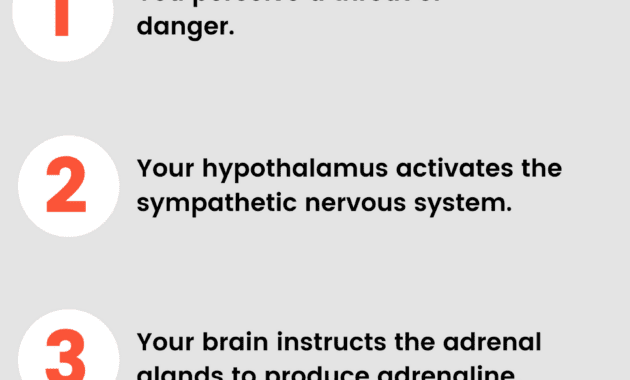
    Even so, you still need to pay attention to the anxiety that you experience. The reason is, the feeling of worry that cannot be controlled and ends in fear without cause is not something that is natural. It could be, you are suffering from an anxiety disorder called anxiety.

    So, what is meant by anxiety? In order to find out about discussions related to anxiety, you need to pay attention to the complete discussion about anxiety. Starting from the understanding of anxiety, the characteristics of anxiety, to the types of anxiety. Curious what it is? Let’s find out together.

    A. The definition of anxiety is

    Anxiety is a feeling of discomfort and fear for no reason or a fear that is not clear when the situation is not supported. Anxiety is also known as anxiety disorder or anxiety disorder.

    Of course, everyone has experienced anxiety in their life. For example, before appearing in public or before making a presentation or interview. If the anxiety is justified, then it is a natural thing. However, if anxiety is often experienced for no apparent reason, it could be a sign of an anxiety disorder.

    B. Characteristics of Anxiety

    Anxiety has several characteristics that you need to recognize, including the following:

    1. Hands or other members are shaking

    2. It’s hard to talk

    3. Breath fast or short

    4. The heart becomes pounding

    5. Fingertips become cold

    6. Choking sensation

    7. Stomach ache

    In addition, anxiety patients may also experience behavioral and cognitive changes. Examples of cognitive behavioral disorders are avoidance and dependence on people. Meanwhile, cognitive changes that occur such as having the belief that something bad will happen, being sensitive to body sensitivity, difficulty concentrating, and other disturbances.

    C. Causes of anxiety

    Reporting from the National Health Service, states that the cause of anxiety has not been found with certainty. However, there are a number of factors that have been proven to cause anxiety disorders or anxiety, including the following:

    1. Excessive activity on the brain

    2. The hormones serotonin and noradrenaline in the brain are not balanced

    3. Have a family history

    4. Having a traumatic experience

    5. Have a painful chronic disease, such as arthritis

    D. Symptoms and Signs of Anxiety

    Actually, the symptoms and signs of anxiety depend on the type of anxiety disorder the sufferer is experiencing. Are as follows:


    1. General Anxiety Disorder (GAD)

    A number of symptoms and signs that appear, if you have this type of anxiety disorder, include:

    a. Easily tired

    b. Constantly restless

    c. Difficulty concentrating

    d. Empty minded

    e. Easy to get angry

    f. Easily offended

    g. Muscle cramp

    h. Difficulty controlling feelings of worry

    i. Experiencing sleep disturbances, including feeling sleep deprived

    2. Panic Disorder

    The following are a number of symptoms and signs of a person experiencing panic disorder, including:

    a. Feeling uneasy

    b. Constant panic for no apparent reason

    c. Heart palpitations or increased heart rate

    d. Shortness of breath or hunting

    e. Sweating and shaking

    f. Hands and feet feel cramps, tingling to the point of numbness

    g. Difficulty controlling fear or anxiety

    h. Strained muscles

    3. Social Phobia

    Here are some of the symptoms and signs of social phobia, including:

    a. Excessive nervousness during social interactions

    b. Experiencing intense anxiety for days, weeks, and even months.

    c. An intense fear of how others will judge your feelings, especially people you don’t know.

    d. Avoid face-to-face encounters with opponents.

    e. Choose silence or hide to avoid people.

    f. Withdrawing from social activities.

    g. Face becomes red when asked to speak in front of many people.

    h. Short or rushed breaths

    i. Stomach ache

    j. Nauseous

    k. Trembling at heart

    l. The chest becomes congested

    m. Sweating

    n. Feeling dizzy or dizzy

    4. Specific Phobia

    As the name suggests, someone who has a specific phobia will have a very great fear of certain objects, objects or situations. Someone with this condition might scream or cry hysterically when the things they are afraid of are in front of them. A number of physical and emotional symptoms that may be experienced by people with specific phobias, include the following:

    a. The heartbeat and breathing become irregular when they see something that is feared.

    b. Excessive fear to the point of sweating profusely.

    c. Sudden nausea

    d. Feeling angry when in a place or situation where there are things that are feared.

    e. Strongly avoids everything related to things that are feared.

    f. Someone who is in this condition will suddenly become limp. When the perceived fear has reached its peak.

    There may be other symptoms and signs of anxiety disorders that are not described above. If you have concerns about these signs and symptoms, then you can consult a doctor.

    E. Types of Anxiety

    Once you know about anxiety. Following are some explanations regarding the types of anxiety, including:


    1. Generalized Anxiety Disorder

    Someone with generalized anxiety disorder can feel excessively anxious and worried about everything from work to health to other simple things, such as interacting with other people. Anxiety that arises due to generalized anxiety disorder can be felt every day and persists for more than 6 (six) months.

    As a result, sufferers will find it difficult to carry out daily activities and work. In addition to the emergence of disturbing feelings of anxiety, sufferers of generalized anxiety disorder can also feel tired, tense, nauseous, headaches, difficulty concentrating, shortness of breath, and insomnia.

    2. Phobias

    Phobia is a type of anxiety disorder that causes sufferers to have excessive fear and tend to be irrational towards certain objects, animals or situations that do not cause fear in many people. Someone who has a phobia can experience panic attacks or intense fear when they see an object or are in a place that can trigger a phobia.

    For example, spiders, blood, being in a crowd, high places, dark places, or closed rooms. Therefore, people with phobias will generally do everything they can to avoid things or situations that are scary.

    3. Social Anxiety Disorder

    People with social anxiety disorder or also called social phobia have extraordinary anxiety or fear of the social environment or situations where they have to interact with other people. People with this disorder will always feel watched and valued by others. As well as fear and excessive embarrassment when in a crowd. These things make sufferers always try to avoid situations that require them to meet or interact with many people.

    4. Post Traumatic Stress Disorder (PTSD)

    Post-traumatic stress disorder or Post Traumatic Stress Disorder can occur in someone who has experienced a traumatic event or is in a dangerous, life-threatening situation. For example, living in conflict or war areas, affected by natural disasters, or even victims of violence.

    It is often difficult for someone with Post Traumatic Stress Disorder to forget the experience of trauma. Whether it crosses your mind or when you dream, then you feel guilty, isolated, and find it difficult to socialize with other people. Sometimes someone who has a disorder like that can also experience insomnia to depression.

    5. Panic Disorder

    Anxiety and panic attacks cause this disorder to appear at any time and occur suddenly and repeatedly. When these panic symptoms appear, sufferers of panic disorder can generally feel several other symptoms. For example palpitations, dizziness, cold sweats, and the body feels weak and shaking.

    A person with panic disorder cannot predict when this disorder will appear or what triggers it. Therefore, not a few of those with panic disorder avoid themselves from the social environment for fear of an attack, so panic can appear in public places.

    6. Obsessive Compulsive Disorder (OCD)

    Someone who has Obsessive Compulsive Disorder (OCD) has a tendency to do everything repeatedly to relieve anxiety that arises in their own minds. For example, washing hands which must be done 3 times a day because he thinks his hands still feel dirty. This disorder is difficult to control and is sedentary. And can make a relapse at any time. So that it interferes with the patient’s daily activities.

    F. How to Overcome Anxiety

    There are 2 (two) ways you can deal with anxiety, including the following:

    1. Psychotherapy

    Psychotherapy or also known as speech therapy or psychological counseling is one way you can do to overcome anxiety. There are various types of psychotherapy, but the one most often used to treat anxiety is cognitive behavioral therapy.

    This therapy focuses on the relationship between problems, behaviors, and thought patterns. In this therapy, you will be asked to open up by telling the therapist about all the complaints you are facing.

    There’s no need to feel embarrassed or worried, because the therapist will treat you in a non-judgmental way and of course keep all your secrets. Guided by this therapist, you will be invited to find the root of the problem you want to solve and the final goal you want to achieve.

    2. Drugs

    The doctor will prescribe a certain number of drugs to relieve the symptoms of anxiety that you are experiencing. Here are a number of drugs that doctors often prescribe to treat anxiety, including:

    a. Antidepressant drugs, for example paroxetine, sertraline, fluoxetine, escitalopram, and citalopram.

    b. Anti-anxiety drugs, for example alprazolam or xanax, benzodiazepines, chlordiazepoxide or librium, clonazepam or klonopine, lorazepam, and diazepam or valium.

    In addition, the doctor will prescribe other drugs according to the condition of the anxiety sufferer. So please consult a doctor for more information.

    G. Anxiety Risk Factors

    Actually, the risk factors for each type of anxiety are very diverse. Likewise with the risk factors for anxiety which are also quite varied. The following are a number of common risk factors that can cause all types of anxiety, including:


    1. Trauma

    A child who has experienced sexual abuse or witnessed a traumatic event in the past is at increased risk of developing anxiety as an adult. Not only children, adults too.

    2. Genetic History

    Having blood relatives, especially parents and siblings can also increase the risk of developing anxiety disorders or anxiety.

    3. Certain Personalities

    Someone with a certain personality type will also be more susceptible to anxiety disorders than others.

    4. Mental Disorders

    Someone with a mental disorder, for example depression will also be at risk of experiencing anxiety.

    5. Users of Drugs and Alcohol

    The use of alcohol and illegal drugs can cause or even exacerbate anxiety disorders or anxiety experienced by a person.

    6. Stress Due to Illness

    Having a serious health condition or illness can also trigger feelings of excessive fear and anxiety. Especially regarding medical expenses, chances of recovery, and how to deal with it in the future. Apart from being sick, you can also experience anxiety due to the loss of loved ones, economic pressure, and even losing your job.


  • What Is Adrenaline? Know the Benefits and Dangers to the Body

    What Is Adrenaline? Know the Benefits and Dangers to the Body

    Adrenaline is- Have you ever been in a tense situation? Like being on an extreme ride on a playground, watching a horror movie, or almost facing death while driving a vehicle. When you are in that situation, usually a person will feel adrenaline in their body which is triggered by the stressful things mentioned above.

    The human body generally produces the hormone adrenaline which is used as a response for the human body when experiencing a stressful situation or when under stress to react quickly. However, it should be noted that the hormone adrenaline must also be controlled in normal amounts because it has an impact on the body if it is excess or lacking.

    For this reason, Sinaumed’s friends who have experienced being in a stressful situation need to know that the body’s quick response is present because of the adrenaline hormone in the body. So, in this discussion, we will also listen to interesting facts about the adrenaline hormone.

    Furthermore, the discussion about adrenaline can be listened to below!

    What Is Adrenaline?

    Adrenaline (English: adrenaline, epinephrine) is a drug and hormone involved in the regulation of visceral functions (eg breathing). Adrenaline is produced by the adrenal glands and a small number of nerve cells in the spinal cord. Adrenaline plays an important role in the fight-or-flight response by increasing muscle blood flow, cardiac output by acting on the SA node, the pupil dilation response, and blood sugar.

    Adrenaline performs this action by binding to adrenergic receptors: alpha and beta. Adrenaline is present in many animals and some unicellular organisms. Polish physiologist Napoleon Cybulski first isolated adrenaline in 1895.

    Adrenaline is a hormone produced by the body when faced with a dangerous or stressful situation. In a balanced amount, this hormone has an important role in maintaining the function of various organs in the body. However, a deficiency or excess of the adrenaline hormone can actually be dangerous to health.

    The hormone adrenaline, or sometimes also called epinephrine, is a hormone produced by the adrenal glands and the brain. The body releases this hormone when it feels stressed, depressed, scared, excited, or in a stressful and dangerous situation.

    “Adrenaline overload can result from prolonged stress, and this effect can increase a number of health risks. While adrenaline deficiency is rare, it can leave a person unable to react. Therefore, we must be able to manage stress well.”

    Adrenaline will bring about a number of changes to the body, including a faster heart rate and more efficient lung breathing. This causes blood vessels to send more blood to the brain and muscles, increases blood pressure, makes the brain more alert, and raises blood sugar to give you energy. The pupils will also dilate and you will sweat during the experience.

    When there’s more adrenaline in your blood, you don’t feel as much pain, so you can keep running or fighting, even if you get hurt. It makes you stronger and allows you to perform better.

    The body also makes a similar chemical called norepinephrine (or norepinephrine). It is made in the nervous system and released into the bloodstream continuously. Unlike adrenaline, which affects many parts of the body, noradrenaline’s main role is to control blood pressure.

    Adrenaline benefits

    As previously explained, the function of the adrenaline hormone is to trigger the body’s fight-or-flight response. This response causes the airways to widen to deliver the oxygen needed to the muscles to fight danger or escape.

    Vascular hormone explains that the hormone adrenaline also triggers the constriction of blood vessels to direct blood to major muscle groups, including the heart and lungs. The body’s ability to feel pain is also reduced by adrenaline, which is why one can continue to run away or fight danger even when injured.

    The hormone adrenaline causes a marked increase in strength and performance, as well as increased alertness, during times of stress. After the stress subsides, the effects of the adrenaline hormone can last up to an hour.

    When it enters the bloodstream, the hormone adrenaline will have an impact on various organs of the body such as:

    • The heart beats faster and works harder so alertness increases
    • Blood vessels dilate, increasing blood flow to the muscles and brain
    • Sweat production increases
    • The senses of sight and hearing become sharper
    • Blood sugar rises, which the body uses for energy
    • Breathing becomes faster
    • Pain is not felt

    This adrenaline hormone will be produced naturally by the body when the body is in a dangerous situation or experiencing severe stress. This response is a form of the body’s defense to deal with circumstances.

    Besides being produced naturally by the body, adrenaline can also be produced as a medicine. This artificial or synthetic adrenaline hormone is commonly used for:

    • Treatment of severe allergies or anaphylaxis, severe asthma attacks and heart attacks
    • Treating shock, for example due to bleeding, severe dehydration, or severe infection (sepsis)
    • Prolongs the duration of anesthetic effect in surgery.
    • Support cardiopulmonary resuscitation

    Impact of Excess Adrenaline on the Body

    Excess adrenaline hormone is common. This can be caused by prolonged stress which causes a person to have too much adrenaline.

    In addition, some rare medical conditions, such as tumors on the adrenal glands, can also cause a person to have too much adrenaline.

    This condition can cause you to experience several health symptoms or problems, such as:

    • High blood pressure
    • Headache or dizziness
    • Vision becomes blurred
    • Restless and irritable
    • Trouble sleeping or insomnia
    • sweating too much
    • Fast heart rate

    Over time, high levels of the hormone adrenaline can increase your risk of heart attack or stroke and lead to palpitations, high blood pressure, anxiety and weight loss.

    Impact of Adrenaline Deficiency for the Body

    Adrenaline deficiency is rare, even if you lose both adrenal glands due to illness or surgery. This is because 90% of the body’s norepinephrine comes from the nervous system. However, if your adrenaline is low, you may not respond well to stressful situations.

    Given that excess and deficiency of the hormone adrenaline has a negative effect, try to keep your hormone levels under control. When you’re stressed, you can lower adrenaline levels in your body by breathing slowly, meditating, practicing yoga, or tai chi which is beneficial for breathing. Excessive hormone levels can also be overcome by living a healthy lifestyle, such as consuming nutritious food, exercising regularly, and limiting caffeine and alcohol intake.

    The hormone adrenaline is not only dangerous when there is too much of it, but also dangerous when there is too little of it. Lack of adrenaline makes the body unable to react properly in stressful situations.

    In addition, low levels of the hormone adrenaline in the body will also cause:

    • Depression
    • sleep disorder
    • fibromyalgia
    • Easily tired
    • migraine headaches
    • restless leg syndrome
    • hypoglycemia

    There are several things you can do to keep your adrenaline levels in balance, including eating a healthy diet, exercising regularly, relaxing with meditation or yoga, and limiting your alcohol and caffeine intake. .

    If you are constantly experiencing stress or have certain diseases that can affect the production of the hormone adrenaline, such as an adrenal tumor, you should consult your doctor immediately.

    How does adrenaline work?

    Adrenaline starts in the brain. When you perceive a dangerous or stressful situation, that information is sent to a part of the brain called the amygdala. This area of ​​the brain is involved in processing emotions. If the amygdala detects danger, it sends signals to another area of ​​the brain called the hypothalamus. The hypothalamus itself is the command center of the brain. This part communicates with the rest of the body through the sympathetic nervous system.

    The hypothalamus sends signals via the autonomic nerves to the adrenal medulla. When the adrenal glands receive a signal, they respond by releasing adrenaline into the bloodstream.

    Once in the bloodstream, adrenaline will work in the following way:

    • Binds to receptors in liver cells to break down larger sugar molecules called glycogen into smaller, more usable sugars called glucose; it gives your muscles a boost of energy
    • Binds to muscle cell receptors in the lungs, making you breathe faster
    • Stimulates heart cells to beat faster
    • causes blood vessels to constrict and directs blood to major muscle groups
    • muscle cells contract beneath the surface of the skin to stimulate sweating
    • Binds to pancreatic receptors to inhibit insulin production

    The bodily changes that occur when adrenaline circulates in the blood are often called adrenaline because these changes occur quickly. In fact, it happened so quickly that you couldn’t fully process what was happening. It’s the adrenaline rush that gives you the ability to dodge oncoming cars before you even have a chance to think about it.

    Adrenaline Activating Activities

    When a person perceives a threat or danger, the hypothalamus or part of the limbic system at the base of the brain activates the sympathetic nervous system, also known as the fight or flight state.

    The brain instructs the adrenal glands to produce adrenaline, which is then released into the bloodstream. In addition to real threats and dangerous situations, people with certain mental health conditions can also experience increased adrenaline as part of their condition.

    People with post-traumatic stress disorder (PTSD) may also experience increased adrenaline from memories or thoughts about the trauma. People with panic disorders, such as agoraphobia or social anxiety disorder, may experience an adrenaline rush when faced with a situation they fear or another specific phobia. Some people love the feeling of adrenaline being released and enjoy the beating heart, dilated pupils, and sweating with excitement.

    Even though the purpose of adrenaline is to trigger the body’s quick response to stressful situations, sometimes some people do certain activities just to get the adrenaline pumping. Activities that can trigger adrenaline include:

    • Watch horror movies
    • Play Parachute
    • Jump off the cliff
    • Bungee jump
    • Diving with sharks
    • Playing bicycle on mountain track
    • Play rafting
    • Talk to your loved ones

    Adrenaline symptoms

    Adrenaline is a term sometimes described as an energy booster. Other symptoms of adrenaline rush are:

    • Increase heart rate
    • Sweat
    • Keen senses
    • Rapid breathing
    • Reduced ability to feel pain
    • Increased power and performance
    • The pupils are dilated
    • Feeling agitated or anxious
    • When the stress or danger wears off, the adrenaline effects can last up to an hour.

    How to Control Adrenaline

    It’s important to learn techniques to combat your body’s stress response. Experiencing stress is normal and sometimes good for your health.

    But over time, the constant rush of adrenaline can damage blood vessels, increase blood pressure and increase the risk of heart attack or stroke. It can also cause anxiety, weight gain, headaches, and insomnia.

    To help control adrenaline, you need to activate the parasympathetic nervous system, which is also known as the “rest and digestive system.” The resting and digesting response is the opposite of the fight-or-flight response. This helps promote balance in the body and allows your body to rest and repair itself.

    How to control adrenaline is:

    • Get to know the meaning of mental training and its types
    • Deep breathing exercises
    • Meditation
    • Yoga or tai chi exercises that combine movement and deep breathing
    • Talking to friends or family about stressful situations that you don’t think about at night; similarly, you can journal about your Feelings or thoughts
    • Have a healthy and balanced diet
    • Exercise regularly
    • Limit caffeine intake
    • Avoid cell phones, bright lights, computers, loud music, and television before bed

    Treatment and Treatment of Adrenaline Hormone Problems

    The main treatment for adrenaline or adrenal hormone disorders is to address the underlying cause.

    If the cause of your adrenaline problems is due to a biological disorder, your doctor may need time to test and find the necessary medication or other treatment. Most problems with the adrenaline hormone stem from stress.

    Adrenaline and other stress hormones are great for people when situations force them to fight or flee. However, it is important to learn how to neutralize the hormone adrenaline, so that the heart rate and blood pressure return to normal, the digestive and reproductive systems function or function regularly, and a person can feel good, ready and focused.

    While shutting off the stress response is not always easy, especially when life circumstances are difficult or when a person has been used to feeling stressed for long periods of time, there are several very effective treatments to help a person return to a relaxed state.

    Those are some explanations related to the hormone adrenaline. In the short term, the hormone adrenaline does not have a significant impact on health. But over time, high levels of the hormone adrenaline in a person’s body can cause real health problems. If a person is constantly feeling stressed, alert, anxious or panicked, it is best to make an appointment with a doctor. After all, the hormone adrenaline can increase heart rate, blood flow, and alertness.

    Conclusion

    That’s all the discussion about adrenaline which has benefits as well as dangers in the body. Not only discussing adrenaline, but also discussing the benefits of adrenaline in the body, the effects of excess and deficiency of adrenaline, knowing how adrenaline works in the body, symptoms of adrenaline, adrenaline trigger factors, and how to treat an excessive adrenaline reaction.

    Knowing about the hormone adrenaline gives more knowledge about every body reaction that we usually experience but we don’t know the trigger factors. Knowing about the adrenaline hormone allows us to know more about how the body reacts and not easily panic if the body’s reaction due to adrenaline is working.

  • What Is Acting? Understand the History and Essential Elements of Acting

    Acting, playing, or acting is the activity of telling a story through the actions of an actor who imitates the actions of a character. Acting may be performed in theatre, television, film, radio, or any other medium that uses mimetic modes. Most of the research from ancient sources on Western culture (Greek: ὑπόκρισις, hypocrisis ) considers acting as part of rhetoric.

    Acting involves a wide range of skills in terms of developing imagination, emotional control, physical expressiveness, vocal projection, speech prowess, and the ability to interpret drama. Acting also requires the ability to use dialect, accent, improvisation, observation. In addition, it requires emulation, pantomime and stage combat.

    Most novice actors develop their skills by attending specialist programs or colleges, while most professional actors receive regular and ongoing training. Instructors and teachers are provided to the cast for various trainings. Training activities include singing activities, work scenes, audition techniques, and acting in front of the camera.

    Acting History

    One of the first actors known to have been an ancient Greek was an Athens resident named Thespis. He is from Ikaria. Aristotle writes in his Poetics (ca. 335 BCE) that Thespis chose to stop working from the dithyrambic chorus .

    The name Thespis is derived from the word “thespian”. He called Thepsis a separate character. Before Thespis, he was a choir actor by mentioning a character named Dionysus. After he left, he replaced the name Dionysus with his own designation.

    Two centuries after that event, Aristotle then distinguished these two types of storytelling with action and narrative and used the terms “mimesis” for storytelling with action and “diegesis” for storytelling with narrative.

    Actor Training

    Member of First Studio when Konstantin Stanislavski began developing his actor training program. This program forms the basis for most of the professional training in the Western world.

    Conservatory and drama school training usually lasts anywhere from two to four years just to learn all aspects of acting. Meanwhile, most universities offer training programs of three to four years.

    Within universities, students may choose to focus on acting while studying other aspects of theatre. Each school uses a different approach to teaching acting. The most popular method in North America is the Konstantin Stanislavski program. This program was developed and popularized in America as a method used by Lee Strasberg, Stella Adler, and Sanford Meisner.

    Another approach is a physical-based orientation. This approach was promoted by theater practitioners, including Anne Bogart, Jacques Lecoq, Jerzy Grotowski and Vsevolod Meyerhold. Acting classes also include psychotechnics, mask work, physical theatre, improv, and acting on camera.

    In addition to the school approach, trainees must attend intensive training. This approach uses textual interpretation, sound and movement. Extensive auditions are generally used to select drama and conservatory programs to be awarded.

    Registrants come from participants who are over 18 years old. Some types of training can also be started at a younger age. Professional classes and schools with participants under the age of 18 are common. Young actors are introduced by coaches to various aspects of acting and theatre. One of these aspects is scene study.

    Physiologically calm and relaxed training takes place with increased speech training and exposure. Changes in stress are measured by counting the number of heartbeats of public speakers. Anxiety is measured when the heart rate increases. Performance-enhanced actors had lower heart rates and evidence of stress.

    Speech is an important exercise for actors, because it includes adaptation actions that can regulate anxiety from within and from outside oneself. Action physiology will increase by attending an institution with a specialization in acting. The body becomes more relaxed and stress can be reduced. The effects are hormonally healthy to cognitive health. These effects can affect quality of life and performance.


    Elements in Acting

    1. Improvisation in Acting

    Two masked characters from the commedia dell’arte , which involve a degree of improvisation.

    Several forms of classical acting make use of a substantial element. Acting is done with improvisation from the cast. An example of improvisation is in the commedia dell’arte troupe. This group is a form of masked comedy which is often performed in Italy.

    Russian theater practitioner Konstantin Stanislavski made improvisation his primary approach to acting. He developed a system of actor training in the 1910s. Late in 1910, Stanislavski was invited to Capri to discuss with playwright Maxim Gorky. The two discuss training and grammar in acting.

    Gorky was inspired by the popular theatrical performances in Naples which made use of the commedia dell’arte technique. He suggested that Stanislavski form a company with him. In addition, he suggested that this company emulate medieval walking players. In this drama model, a new play is co-designed by a scriptwriter and a group of young actors through improvisation.

    Stanislavski agreed and expanded on this use of improvisation in his work with his first studio at the Moscow Art Theatre. Stanislavski’s students developed his system of approach acting. Two of Stanislavski’s students were Michael Chekhov and Maria Knebel.

    The use of improvisation was pioneered in England in the 1930’s by Joan Littlewood. The use of improvised techniques was then continued by Keith Johnstone and Clive Barker. Meanwhile in the United States, Viola Spolin became the first person to promote improvisation. He began his promotion after starting work with Neva Boyd at the Hull House in Chicago, Illinois.

    Spolin was Boyd’s student from 1924 to 1927. Like British practitioners, Spolin believed play to be a useful tool in the training and improvement of actor performance. He believes that improvisation can make a person discover freedom of expression. The reason is that improvisation changes with certain conditions.

    Improvisation requires an open mind so that spontaneity can be maintained. This is different from planning a response in advance. Actors create a character without referring to the dramatic text so that a drama can be developed from spontaneous interactions with other actors. This approach has been substantially developed by British filmmaker Mike Leigh. He did this in films such as Secrets & Lies (1996), Vera Drake (2004), Another Year (2010), and Mr. Turners (2014).

    2. Physiological Effects in Acting

    Stress can arise when actors are talking or acting in front of an audience. This stress causes an increase in heart rate. However, an actor’s mistakes can also be covered by improvising.

    In 2017, a study was conducted of college students in the United States studying acting. The cast displayed the same elevated heart rates throughout their performances despite varying experience levels. This is in accordance with the results of previous studies that increased heart rate, both in professional actors and amateur actors.

    Stress is experienced by all types of actors, but there are differences in the varying number of heartbeats. More experienced actors have heart rates that change over a small range of values. While amateur actors have varying heart rates with a larger range. The stress experienced by more experienced actors is less than that of amateur actors. Heart rate stability is thus determined by the experience level of a cast.

    3. Semiotics in Acting

    Antonin Artaud compares the effect an actor’s performance has on the audience in the Theater of Cruelty . The comparison is done by means of a snake dance that can affect snakes.

    Acting uses the science of semiotics to know about ways to start a performance by using the audience as a sign. Semiotics mostly involves the formation of meanings that affect the performance of actors in a wider context. Dramatic action in the real world can shape the relationship between each actor.


    Difference between Stage and Film Acting

    Acting can be done on television, theater or stage and film. Acting performed in the theater or stage is known as stage acting, while acting in front of a camera is usually called film acting. Well, there is a difference between stage and film acting, you know!

    Stage acting is the motion, dialogue, and facial expressions shown by an actor or actress on the stage. Film acting is the movement and dialogue of the actors that will be recorded using a camera in a set. The sets are built by several divisions. These divisions include artistic, lighting, sound, image, make-up, costume, and so on. Both types of acting have their own criteria and ways of practicing. Here are five differences between stage and film acting that you should know about!

    1. Vocals

    Vocals are one of the most obvious differences. In doing stage acting, actors and actresses must have vocals that are loud and clear. Why? Because in stage acting, an actor and actress must be able to reach the audience’s hearing from the front row to the back row.

    In addition to loud and clear vocals, an actor and actress who performs stage acting is required to have proper articulation and intonation. In contrast to film acting, actors and actresses are not too burdened with vocals. This is because there is a sound engineer who installs a clip on for each player, and a boom mic to cover the atmosphere. The results of this sound recording will be edited by a sound engineer so that they can produce the desired sound.

    2. Body Movement

    In simple terms, the stage acting of the player’s gestures will be more exaggerated than the film acting. Why? Because stage acting must be good at representing characters and emotions so that the audience feels close to the ongoing story.

    Gesture and flexibility of body movements must be owned by an actor and actress who performs stage acting. An actor or actress who does film acting tends to be able to adapt from everyday habits, especially if the story is a drama. The gestures and gestures of film actors can be covered from various camera angles so that the audience is able to feel the emotion and closeness to the story and the characters.

    3. Facial expressions and expressions

    Facial expressions and facial expressions are similar, but not the same. Expression is an expression of feelings shown through body movements, speech and face. Facial expressions are more detailed than just expressions. Facial expressions can show eye glances, forehead wrinkles, cheek movements, mouth, jaw and neck continuously to form an expression.

    In stage acting, actors and actresses must have clear facial expressions and expressions. Eye play is one of the biggest supporting factors for expressing an expression. The eyes are the center of all expressions, ranging from feelings of anger, sadness, happiness, can radiate through the eyes. On stage performances, an actor and actress must be able to express all the feelings of the play he is playing. Expressions and facial expressions must be clear and strong, because they will affect the audience.

    In contrast to film acting, actors and actresses must have strong facial expressions and expressions but don’t have to overdo it like stage acting. This is because in film acting, actors and actresses will be exposed from many camera angles. Facial expressions and expressions must be able to convey to the audience, especially if you are acting in a drama or expressing sadness. So, if an actor or actress acting on camera can touch the audience’s heart to feel sad, then the story and acting are successful.

    4. Blocking

    The difference between stage acting and subsequent films is blocking . If actors and actresses are performing a stage act, they must be aware of the presence of the audience. This is because they must be able to tell the story well to the audience in front of them directly. Apart from the audience, actors and actresses acting on stage must be sensitive to the presence of the documentation team.

    Actors and actresses on stage cannot be aware of the camera, even though they know that there is a team of documentation, both photos and videos covering them. Blocking is very important in stage acting, considering that actors and actresses will import a lot and adapt their actions to one another. Coupled with the presence of an audience, the players may not turn their backs to the audience, because it will greatly disrupt the ongoing show.

    Blocking actors and actresses in film acting can be done repeatedly. This is very different from stage acting. Blocking is done during the recce , reherseal on location can even be done on the day of shooting. Blocking actors and actresses can also change when there is a change in location or set. This is because there are technical matters that are highly considered, it could be a matter of location, sets, camera techniques, or other technical divisions. Blocking film acting is required not to be aware of the camera, unless there is a concept that requires a subjective camera as the main character.

    5. Improvisation

    Stage acting and film acting certainly have a different kind of improvisation. Stage acts improvise when three things happen. First, when actors and actresses forget dialogue, they must be able to improvise. Actors and actresses must be sensitive to harmonize improvisation with their opponent’s dialogue according to the scenario that is running.

    Second, improvisation is done when an opponent forgets the dialogue or blocks it wrong . As a stage actor and actress, he must be able to cover up mistakes that occur on stage by improvising. Third, actors and actresses must be able to improvise in the event of an accident on a stage, for example, a player’s wardrobe falls off, a player falls, and so on.

    The sensitivity of the improvisation of an actor and actress on stage is intended so that the audience can still enjoy the presentation of the story without being disturbed by unwanted things. Actors and actresses who do film acting can improvise dialogue, but rarely can improvise scenes. This is due to careful planning through making floor plans, story boards , and blocking players. Dialogue improvisation is also carried out if there are words that are difficult to pronounce, then dialogue sentences can be simplified.

    So, those were 5 differences between stage and film acting. This difference can be used for your acting practice too, you know. Interested in learning and playing acting? Don’t hesitate to continue to develop the talents you have, OK?

  • What is Accumulation? Definition, Types, and How to Count

    Definition of accumulation – Accumulation is a periodic addition, for example returns or deposit interest . Have you heard the term accumulation? You may often encounter the word accrual when saving or buying items with rewards and points that can be accumulated. However, you still don’t know what accumulation is. Check out the following explanation.

    Definition of Accumulation

    According to the Big Indonesian Dictionary, accumulation is defined as collecting, hoarding, accumulating; as capital. In another sense, in general, accumulation is the activity of accumulating something for the purpose of generating higher returns in the future.

    In economics, accumulation is the periodic addition of capital from interest or other sources to principal to create more output or income in the future. In general, accumulation refers to the acquisition or getting of something with the same goal, i.e. greater success in the future.

    A simple example of accumulation practice is when buying an item. Usually when you shop, there will be offers to buy by collecting points and rewards . Later it will be accumulated and exchanged for a number of products with certain achievements.

    Types of Accumulation

    1. Capital Accumulation

    Capital accumulation is an activity that aims to achieve greater income or production in the future by saving part of the income and then reinvesting it.

    The profits can be in the form of interest, profits, rent, capital gains , royalties or other types of benefits.

    Capital accumulation focuses on increasing existing wealth through profitable investments and savings. This investment is concentrated in various ways throughout the economy. One method of capital growth is the purchase of tangible goods that stimulate production.

    This activity is the basis of the capitalist economic system, in which all economic activities are planned and prepared to raise capital. In other words, all investments are made to achieve financial gain.

    Capital accumulation can include physical assets such as machinery, labour, research and development which can increase production. In financial assets, capital accumulation can include stocks and bonds. Another important factor in capital accumulation is price appreciation.

    Measure capital accumulation

    Measurement of capital accumulation is done by calculating or measuring changes in asset values. For businesses, they will consider reinvesting profits back into the business.

    Depending on the type of business, this could be investing in tangible assets or human capital, and then determining the added value of that reinvestment. The capital structure and capital strength of a company can be determined by analyzing its financial statements.

    In Marxist economics and accounting, capital accumulation is often seen as an investment in the form of income or savings. This is especially true for the real means of production. The result of capital accumulation is centralization and centralization.

    For economic growth, it is often necessary to accumulate capital, both financial and non-financial, because more capital is required for additional production to increase the scale of production.

    More productive and wiser organizations can even increase their output without spending more capital. Capital creation does not always require additional investment. This can be done by improving the organization or by inventions that increase productivity, increase real estate sales, etc.

    As an example :

    companies that want to increase production capacity to boost economic growth in the short term. The method used is to increase physical capital to produce goods and services through bank loans or by issuing capital as a source of funding.

    The relationship between capital accumulation and the economy

    In the Harrod-Domar model of economic growth , an increase in the saving rate allows for more investment. This ultimately leads to higher rates of economic growth in the short and medium term.

    The answer is still controversial. Some economists, such as Solow, argue that increasing capital does not lead to long-term sustainable growth, as the Solow growth model proves.

    Instead, the rate of growth is determined by the rate of population growth and the rate of technical (technological) progress. Indeed, the ratio of capital to labor is assumed to experience a marginal downward trend.

    When the ratio of capital to labor is high (as in developed countries), the contribution of additional capital to economic growth is relatively small compared to when the ratio of capital to labor is low, as in developing countries.

    One example of capital accumulation

    The Government of the Republic of Indonesia intends to increase domestic food production by increasing farmers’ vegetable production. First, the Indonesian government is investing in infrastructure in the form of road construction.

    In addition, the government is investing again by providing new tractors to farmers. Investing in road construction and buying new tractors for farmers is to accumulate capital for the Indonesian government so that future vegetable production will be abundant and national food production will increase. This is in accordance with the accumulation goal to achieve great results in the future.

    2. Parking Accumulation

    Parking accumulation is the total number of vehicles at a given location. This parking space accumulation information is needed to control and plan parking space requirements in an area.

    Parking accumulation information surveys should be carried out to obtain a history of vehicles parked at any given time. Parking varies depending on the location of the business with parking/buildings, such as offices, shopping centers and apartments.

    Parking accumulation survey

    To obtain parking accumulation information, it is necessary to conduct a survey to obtain the history of parked vehicles in a day, the highest achievement level of the number of parked vehicles is called the highest parking accumulation.

    This amount varies depending on the event with parking/building. Offices peaked during the day, while the accumulation of shops/malls during the week was lower than the weekend accumulation in the afternoon, and the accumulation of housing/apartments at night.

    Great accumulation

    The amount of accumulated parking is given by the following formula:

    Where:

    AP is accumulated parking

    Ei is the number of vehicles that enter the parking lot

    Ex is a lot of vehicles leaving the parking lot

    If there were cars previously parked in the lot, then there are lots of cars so the cumulative number present is added to the parking lot.

    The vehicles that are inside are occasionally there. Because the vehicle arrived before the inspection or there was a damaged vehicle that was left overnight by the owner.

    Where :

    N = the number of vehicles that existed before

    When carrying out the survey

    When conducting a survey, it depends on the type of event where the survey is implemented, such as in the office, the event is dominated during working hours, at the market in the morning, schools at the entrance and after school, lodging/apartments at night.

    3. Accumulated Fees

    Cost accumulation is a method used to determine the total cost of a service or product. There are two types of accrued expenses, namely:

    Order Cost Accumulation

    Order costing is a method used to aggregate the cost of a product in which costs are aggregated for each separate order or contract or service and each order or contract can be segregated on the basis of its identity.

    This cumulative ordering cost can be applied to companies using discontinuous manufacturing processes such as; construction work, workshops, printing, catering, furniture , etc.

    Process Cost Accumulation

    Process cost accumulation is a method for aggregating product costs by aggregating costs for each specific unit of time. This process cost accumulation can be applied to companies that use continuous production processes, such as; auto assembly companies, pharmaceuticals, airlines, hospitals, etc.

    Both an actual costing system and a predetermined costing system can be used in order and process costing.

    4. Accumulated Depreciation

    Accumulated depreciation is an accounting term that refers to the decline in value of an asset due to its use over a period of time. Examples include buildings, mining equipment, and office electronics such as laptops and printers.

    In the financial statements there are two values ​​of depreciation, namely depreciation expense and accumulated depreciation. Depreciation costs are the calculated use or benefits of capital assets.

    Meanwhile, accumulated depreciation is a collection of periodic depreciation expenses. The two are also different in financial recording, where the depreciation expense must be recognized in the income statement and the accumulated depreciation must be recorded in the balance sheet.

    The accumulated depreciation in the first year of use of fixed assets is the same as the depreciation in the first year of use of fixed assets. Then, in the second year of use, the accumulated depreciation is the result of the total depreciation of fixed assets in the first and second years. The same goes for the third year and so on.

    In financial statements, the essence of accumulated depreciation is to reduce the value of fixed assets. Use automated accounting applications to support real-time and efficient business financial reporting.

    Variables in Accumulated Depreciation Calculations

    Acquisition Fee:

    costs incurred by the company to purchase fixed assets, including the purchase price plus various other costs, such as transportation, installation, assembly, etc.

    Residual value:

    Estimated or residual value of fixed assets after use. This residual value is not fixed, so fixed assets have no residual value. This is because when the withdrawal deadline arrives, it is not always possible for the asset to be sold and left alone.

    This is of course not recommended. It would be better if idle assets were sold or recycled, to extend their value function.

    Book price or historical value:

    The price at the time of acquisition of the asset, is the acquisition cost by deducting the accumulated depreciation of fixed assets over the economic life of the fixed assets.

    Economic age:

    Estimated useful life of fixed assets or useful life of fixed assets. It is divided into two, namely physical age and functional age.

    Age indicates that the condition still looks good even though its function has decreased. Meanwhile, functional age is related to the usefulness of an asset. Assets serve a lifetime if they are still active and able to contribute to the business.

    Shrinkage Type

    depreciation

    Depreciation is a widely used method and is similar to the straight-line method in terms of depreciation. The trick is to do a systematic sum and then divide the useful life of the asset.

    Usually, this depreciation is applied to assets that have different physical forms, such as computers, laptops, cars, motorbikes, furniture, printers, production machines, machines, copiers, and many other assets.

    Amortization

    Unlike depreciation, the amortization method can be applied to a variety of intangible assets, such as patents, trademarks, franchises for goodwill.

    Based on the Reporting of Financial Accounting Standards (PSAK), the useful lives of various assets affected by amortization may not exceed 20 years. The reason is simple, because 20 years is a very long time, there is a possibility that assets valued during that period will no longer have economic value after 20 years.

    depletion

    If in the previous explanation we have understood the explanation between tangible and intangible assets. So, in this type of amortization, assets experience a real decrease that consumes benefits and materials.

    A simple example of a depleted asset is a company’s natural resources. In accounting, assets that are natural resources decline in value, and during the same period, these assets continue to experience a decrease in physical value.

    How to calculate accumulated depreciation

    There are several ways to calculate this accrual, including the straight-line method and the declining balance method. Based on the accumulated depreciation from the EMBA journal, the following is the accumulated depreciation formula:

    Straight line method

    Depreciation expense is calculated on a straight-line basis, using the assumption that each asset can provide a reasonable contribution or benefit, without fluctuations over its useful life.

    The rate of decline in these assets will be the same every year, so the value of these assets will be deducted from their value in use. For this reason, this method is suitable when used to calculate the depreciation of fixed assets where wear and tear will not be affected by the finished product.

    The formula for calculating it is as follows:

    D = (AC – SV)/LT

    Information:

    D = depreciation

    AC = acquisition price

    SV = residual value

    LT = economic life

    Declining balance method

    The declining balance method is based on the assumption that each fixed asset has the potential to make a significant contribution at the outset of its use. As the economic life decreases, the degree of decline in asset function will also increase.

    This method is suitable for asset classes where usage will be affected by the volume of product produced. The formula for calculating this decreasing balance is as follows:

    D = d% x BV

    d% = 1 – n√SV/AC

    Information:

    D = depreciation

    d% = depreciation rate

    BV = previous book price

    SV = residual value

    AC = acquisition price

    Should be used in cost calculations and also for accumulated depreciation if it can be adjusted to the type of assets used in the calculation.

    In addition, the consistency of using this method will also make depreciation expense easier to measure and record in financial reports, both income statements and balance sheets, using mathematics will be more accurate.

    The difference between depreciation expense and accumulated depreciation

    After we know the depreciation expense together, the method is different, do you know the difference between depreciation expense and accumulated depreciation?

    Basically, the difference between the two is the time period. Accumulated depreciation is the total accumulated depreciation expense for one period or one year. This account has a deduction that in the first year the accumulated depreciation will equal the depreciation expense of business property in one year.

    However, for the second year or so, you can get the accumulated depreciation from the first year by adding up the accumulated depreciation of the second year. You just need to credit it to a reconciliation account, whether it’s office equipment, transportation, or other assets that are in a depreciable condition.

    Accumulating Wealth By Investment

    There are several advantages of investing over saving a certain amount, where the investment can always grow in the future. A simple example, when depositing 1 million in a savings bank, there won’t be much addition. In contrast to investment, with 1 million it will grow by about 20% per year. This proves that investing can be an option to accumulate wealth quickly.

  • What is a Turbocharger? Functions, Benefits, and How It Works

    What is a Turbocharger? Functions, Benefits, and How It Works

    Turbocharger function in diesel engines – Speaking of turbochargers, four-wheeled vehicle lovers will know the name. Turbochargers are often found in four-wheeled vehicles with diesel engines, such as trucks and other four-wheeled vehicles that use diesel engines. Turbocharger is also a very important component in diesel cars, because it is capable of producing very high power.

    Diesel cars usually have turbo engines. The goal is to increase engine power and the sound produced becomes smoother. Turbo itself is a forced intake system that can increase engine power by utilizing exhaust gas from the engine.

    Best Turbocharger Manufacturers and Suppliers in the World

    However, the turbo on a diesel engine can fail due to several factors. Some of them are due to damaged gaskets, too much engine oil burning and rarely paying attention to cleaning the air filter.

    As proof of the existence of this one component, it is certain that the car’s diesel engine does not have any residual power or strong engine power. So, for the discussion this time, we will try to discuss what is a turbocharger? functions, benefits, and how it works on diesel engines.

    For this reason, in this discussion, we have collected information about turbocharger sundries and their various functions that are interesting to discuss.

    Further related information you can see below!

    What is Turbocharger?

    A turbocharger is a centrifugal compressor that gets its power from a turbine powered by vehicle exhaust. Often used in internal combustion engines to increase engine power and efficiency by increasing the air pressure entering the engine. The main advantage of turbochargers is that they significantly increase engine power for just a little extra weight.

    The turbocharger was invented by Swiss engineer Alfred Büchi. His patent for a turbocharger was applied for in 1905. Locomotives and ships with diesel and turbocharged engines began to be seen in the 1920s.

    The disadvantage of gasoline engines is that the compression ratio must be reduced (to avoid exceeding maximum compression and to avoid knocking), which reduces the efficiency of the engine at low power. Specially designed turbocharged diesel engines do not have this drawback. However, when operating at altitude, the increase in turbocharger power greatly affects the total output of the two types of engines. It’s the latter factor that makes turbocharged aircraft engines so profitable; and this is the first idea to develop this tool.

    The engine component has three main parts: turbine wheel, compressor wheel and camshaft. The turbine wheel with the blades rotates with exhaust gas pressure, then through the rotating shaft of the turbine wheel, the compressor wheel also rotates with the blades in such a way as to pump air into a solid mass. Since these components frequently rotate in excess of 80,000 rpm, good lubrication is essential.

    In 1970, Mercedes Benz launched a turbocharged car, namely the Mercedes Benz 300 SD, followed by the Chevrolet Corvair Monza and Oldsmobile Jetfire which pioneered the emergence of turbocharger technology in the automotive world.

    It can be said that since the introduction of cars with the principle of operating a turbocharger, the social stigma towards turbocharged diesel engines has changed.

    Turbocharger is a part of a diesel engine that is useful for increasing engine power due to the volumetric efficiency of air entering the combustion chamber.

    The working principle of the turbocharger is forced induction with the main stock, using air from the exhaust of the vehicle, which is fed and directed to the combustion chamber.

    Forced induction or forced induction itself is a process where compressed air is supplied and directed to the engine intake to burn fuel in the combustion chamber.

    Puts extra pressure to produce power in the form of better engine efficiency. The turbocharger also has turbo pressure sensor technology which functions as a manifold pressure reading, which is then changed by the engine ECU to increase the amount of fuel injected by the injectors.

    Turbocharger function?

    One way to increase the power/efficiency of a diesel engine is to use a turbocharger. The working principle of the turbocharger is to use exhaust gas heat as energy to compress the combustion air so that high power is achieved. The exhaust gas from the combustion of each cylinder is then directed through the exhaust manifold, which then expands to the turbine-side turbocharger, creating mechanical energy which is then used as power to rotate the fan-side turbocharger.

    Now that the fan is on the intake side, the combustion air increases on the intake manifold side of the diesel engine. A powerful car engine requires a larger number of cylinders than usual. Therefore, it is natural for sports or racing cars to have more cylinders than cars of other classes.

    Cars with 6 cylinders, 8 cylinders, even 12 cylinders are suitable for sports or racing cars. The role of the cylinder in a car is to store fuel and oxygen, which are then burned to produce better and bigger engine power.

    No wonder if you want to get maximum performance from a car engine, you need a large number of cylinders. What about cars with less than 6 cylinders? Can’t get more car performance? Of course it can be equipped with a turbocharger that uses the principle of forced induction or forced induction.

    By forcing a certain amount of air into the cylinder chamber through the compression process, the air in the cylinder chamber which is then burned becomes denser and contains more oxygen, resulting in much greater power after combustion.

    It is not surprising that the turbocharger increases engine torque and power, improves fuel economy, improves engine power characteristics that are initially small or large, but can still reduce engine emissions.

    Turbocharger Benefits

    1. Fuel efficient, because the rest of the combustion is compressed and returned to the combustion chamber

    Installing a turbocharger on a diesel car that has been required and proven by several test results shows that a machine with perfect technology can reduce fuel consumption.

    2. More environmentally friendly, because there is a lot of air in the engine, so the combustion process is more optimal

    The presence of this technology is not only economical, but can reduce most of the emissions, making diesel cars more environmentally friendly, even the emissions that are visible when the engine is running. active, not as dense as a car without a turbocharger.

    3. Increasing diesel engine power

    The third advantage is that the car’s performance has obviously improved because the exhaust heat can be reused to make the engine more efficient, making the car more powerful and have a stronger performance.

    4. Engine noise is reduced because the exhaust duct is used to turn the turbine

    The sound of a real diesel engine is loud because of the large movement, with the turbo the sound is still smooth, but still has a manly aura because of the distinctive sound of the turbocharger.

    5. Not Wasteful of Fuel

    More economical in terms of fuel consumption, so you can travel freely without having to go back and forth to gas stations.

    6. Reducing power loss at altitude because the air at altitude is very thin, so the amount of air entering the turbocharged engine is stable

    Getting a turbocharger for a diesel engine has a huge advantage, especially for those of you who live in the mountains, because the way this technology works can increase the amount of air that enters the engine, even though the air is very thin. outside the car.

    7. Optimum combustion process engine structure. small and light turbocharger, but always very high power 30-60 %

    The light and small size of the turbocharger certainly makes the car cleaner under the hood, but on the other hand, such a large output power can also be increased.

    The use of turbochargers in diesel engines has many advantages, so it is not surprising that currently there are many cars on the market equipped with this technology, such as MPVs or city cars.

    also read : Best Turbocharger Manufacturers and Suppliers in the World

    How do turbochargers work?

    Turbochargers use the air flow generated by burning exhaust gases as an energy source. Air flows through the turbine then rotates the compressor. The resulting rotation can reach up to 150 thousand revolutions per minute. The rotating speed is 30 times higher than normal engine without turbo. However, a new turbocharger or turbo works when the engine is running at a certain speed.

    The new turbine turns when there is sufficient pressure on the exhaust gases. When the engine speed or RPM increases, the exhaust gas comes out. When the exhaust gas flow increases, the turbine also rotates faster. Turbo engines are usually equipped with an inter-radiator which stores the heat generated by the turbine rotation. The intercooler shrinks the molecules, lowering the air temperature at the inlet. The smaller the air molecules in the intake, the bigger the air molecules in the engine and the stronger the power.

    The turbocharger unit consists of two blades or a turbine on a single shaft mounted on the side of the exhaust manifold. One blade or turbine is connected to the exhaust duct, while the other blade or turbine is mounted relative to the inlet air.

    The two blades are in the form of wings, where when one of the blades or turbine rotates, the blade or turbine on the other side also rotates.

    Here is how the complete turbocharger works, which can be listened to below:

    1. How the turbine works

    The first relates to exhaust gas flow, meaning that the exhaust rotates when the car engine is started because the exhaust gas energy flows through the blades.

    The cylinder of a car engine under pressure throws the exhaust gases of combustion into the stream and drives the first blade or turbine.

    As in a cochlea in nature, when the first blade rotates automatically, the blade connected to the air inlet or compressor also rotates.

    2. The second mode of operation

    A turbine or blade or rotary compressor connected to the intake air stream compresses the air by sucking it into the passing air.

    The more exhaust energy that enters the first turbine, the greater the rotation of the second blade in the intake air stream.

    The reason is that when the turbine rotates more air enters. You can measure it by using the turbo pressure sensor to detect the manifold pressure sent to the engine ECU.

    At certain engine speeds, the turbine shaft can rotate up to 80,000 rpm.

    3. The third mode of operation

    Compressed air has a higher temperature. With warmer air, the air density is lower and it is less accurate to undergo the combustion process in the combustion chamber.

    Therefore, you should also install an intercooler that cools the compressed air before it enters the combustion chamber or cylinder.

    The shape of the intercooler is similar to a radiator which is placed in front of the car to allow outside air to easily reach, which facilitates cooling of the internal air.

    After the compressed air is cooled through the intercooler, it is forced into the combustion chamber or cylinder.

    Top Rated Turbocharger Repair Services – Find the Best Near You

    4. The fourth way of working

    The air entering the cylinder chamber has a higher oxygen content and denser air intensity, which helps speed up the combustion process in the cylinder chamber. The throttle, however, monitors the air entering the combustion chamber, so it knows exactly how much air is needed based on how deep the throttle is depressed.

    It should be noted that while high turbine speeds are good for engine acceleration, they can affect boost pressure to some extent.

    To avoid this, you can install a protector in the form of an exhaust valve, which is used to bypass the exhaust flow according to the turbocharger pressure.

    5. Fifth Operation Mode

    Looking at several turbocharger components such as air flow meter, turbo pressure sensor, throttle position, engine speed sensor, the turbocharger generates the engine ECU.

    The engine ECU calculates the exact amount of fuel that must be injected into the combustion chamber to achieve maximum efficiency of the car engine.

    In addition to engine power at maximum power, there is residual gas in the cylinder after combustion, which is discharged to reuse the turbine in the same way.

    How to Care for Turbochargers in Diesel Engines

    Car owners should be aware that turbochargers have a lag or lack of power from the turbo until a certain speed is reached. So even if you press the gas pedal hard, but because you haven’t reached a certain speed, the acceleration will feel like there was a pause right at the start. Here are (four) ways to care for a turbocharger engine:

    1. Timely Oil Change

    Turbocharger damage can actually be prevented by carrying out routine scheduled maintenance. It is recommended to check the engine oil change intervals regularly so that the quality of the engine oil is maintained and the oil filter can function normally. You can also check the engine oil pressure and keep the air filter clean.

    2. Diligently check the volume of engine oil

    One of the causes of damage to the turbo is old iron that gets into the turbine because the old engine oil is not replaced. On the other hand, a lack of engine oil can quickly damage a turbo. Extreme exhaust temperature due to failure of the cranking system or fuel injection can damage the turbo components.

    3. Get used to engine idling before turning off the engine

    The turbocharger is in a high temperature area because it uses exhaust gas energy. If you park your car immediately after driving at high speed, heat can build up in the engine bay. This happens because there is no more air flowing in the engine room. It is difficult to adapt the turbo to these conditions and can shorten the life of the turbo. Thus, after traveling at high speed, the car must be slowed down for the rest of the route.

    Do not immediately park the car and turn off the engine. This can make the turbo adaptable to high temperatures but less airflow in the engine bay.

    4. Clean/Replace Air Filter

    Always keep the intake manifold turbo air filter clean. In this way we must diligently check the condition of the air filter and clean it if it is dirty.

    If the air filter must be replaced regularly at each maintenance schedule, so that the air entering the intake through the turbo is also clean and the engine condition is maintained.

    Conclusion

    That’s all for a brief discussion of what a turbocharger is, its functions, benefits, and how it works. Not only knowing what a turbocharger is, but also discussing the functions, benefits, working methods and proper maintenance methods so that the engine is maintained.

    Knowing what a turbocharger is for automotive enthusiasts is very useful in knowing the capacity of diesel engine-based vehicles so that they are properly cared for so that the vehicle is maintained and works optimally when used.

    That’s a review of turbocharged engines. For Sinaumed’s who want to understand turbochargers and other knowledge related to the automotive world, you can visit sinaumedia.com to get related books.

  • What is a Traveling Wave? Check out the Characteristics and Full Explanation!

    Traveling Waves – Has Sinaumed’s ever casually thrown rocks into a pond or river? After being thrown with a stone, what happens to the water level of the pond or river? Did Sinaumed’s see any small circles forming where the rock fell?

    If so, try to pay more attention, later the small circles will widen to move away from the center point. Even if Sinaumed’s throws a leaf above the surface of the water, the circles can actually move the leaf up and down.

    Well, that’s a description of the existence of waves that propagate on the surface of the water though. The discussion of these waves is included in the study of Physics which divides them into several types based on the medium, direction of propagation, and amplitude. In this type of wave based on its amplitude, it can be divided into 2 namely traveling waves and stationary waves. So, what is a traveling wave? What are the formulas and examples of questions regarding these types of waves according to the study of Physics? Come on, look at the following reviews so that Sinaumed’s understands these things!

    What is a Wave?

    Before discussing traveling waves, Sinaumed’s must first understand what a wave is in the study of Physics. Basically, waves are vibrations that propagate either through a medium or not through a medium. If the vibrations of the wave propagate through the medium, then the wave will be transverse and longitudinal, while if it does not pass through the medium, it will be electromagnetic. Waves will later propagate vibrations without moving the particles, so the particles will only move around the balance point.

    Types of Waves

    The existence of this wave can be divided into several types, namely:

    Based on Medium

    1. Mechanical Waves , namely waves that require a medium to propagate its vibrations. Example: ocean waves, sound waves, and others.
    2. Electromagnetic waves , namely waves that do not need a medium to propagate their vibrations. Example: light waves.

    Based on the Direction of Propagation

    1. Transverse waves , namely waves that are perpendicular to the direction of propagation. Example: light waves.
    2. Longitudinal waves , namely waves that are in the same direction as the direction of propagation. Examples: surface waves, sound waves, spring waves, and others.

    Based on the Amplitude (Farthest Deviation Distance)

    1. Traveling Waves , namely waves that have a fixed amplitude.
    2. Stationary waves (silent) , namely waves that have a changing amplitude.

     What is a Traveling Wave?

    After understanding the definition of waves and their types according to physics studies, Sinaumed’s will then learn about what a traveling wave is.

    As previously explained, a traveling wave is a type of wave based on its amplitude, that is, a wave that has a fixed amplitude (farthest distance). That is, every point through which the wave will vibrate harmonicly with the same amplitude. A simple example of applying this traveling wave is when Sinaumed’s plays with a vibrating rope, aka battle ropes . On a string that is continuously vibrated, the amplitude will always be the same.

    Since this traveling wave material is included in the study of Physics, then of course it will have an equation in the form of a formula, namely:

    The Equation of Deviations in the Traveling Wave

    When Sinaumed’s is playing with a rope or is exercising battle ropes , surely the longer the vibrating rope will form a traveling wave. The wave will propagate from point 0 as the center of the coordinates, towards the positive x-axis direction, so it will look like the following figure.

    In the figure, it can be seen that point 0 has vibrated periodically for t (time) seconds. Therefore, the wave deviation at point 0 will also meet the harmonic vibration deviation, which is written in the form of the formula:

    Information:

    y = wave displacement or vibration deviation of the point through which it passes (m)

    A = amplitude or farthest deviation distance (m)

    ω = angular velocity (rad s-1)

    ω   = 2πf, where f is the vibration frequency (Hz)

    t = the length of time point 0 has vibrated (s)

    If Sinaumed’s pays attention once again, ω =2πf so that it can also be written in the form, then the equation can also be written in the formula form

    Then, what if Sinaumed’s wants to find the wave phase? Of course there is a separate formula, namely:

    So it can be concluded that the deviation equation on the traveling wave is:

    Through this formula, it can be concluded with the sign in front of the Amplitude A and the number k, namely to be

    +𝐴 means the initial upward deviation of the wave

    – 𝐴 means the initial deviation of the wave downward

    − 𝑘 means the wave propagates to the right

    + 𝑘 means the wave propagates to the left

    Velocity Equation On Traveling Waves

    In a traveling wave, the velocity equation can be derived from the displacement equation described earlier. Mathematically, the speed equation found in a traveling wave is:

    Information:

    v = wave speed (m/s)

    y = wave deviation (m)

    The Equation of Acceleration on a Traveling Wave

    So, what about the acceleration equation on a traveling wave? Of course it will be derived from the deviation equation or the velocity equation. Mathematically, the acceleration equation found in this traveling wave can be formulated as follows.

    Information:

    a = wave acceleration (m/s2)

    v = wave speed (m/s)

    y = wave deviation (m)

    The properties of a traveling wave

    Reporting from around knowledge , traveling waves have certain properties, namely.

    1. Diffraction (Deflected)

    The traveling wave will certainly be diffraction in the form of deflection of the wave when it passes through a certain gap. This deflection will be more clearly seen if the middle wave passes through a narrower gap.

    2. Refraction (Refraction)

    Refraction, aka refraction, is when there is a shift in the direction of wave propagation which is caused because the medium through which it passes has a different density. This can occur in traveling waves.

    3. Polarization (Absorbed Vibration Direction)

    Polarization is when there is absorption of the wave vibration direction when it is passing through a certain medium. In traveling waves in the form of sound, this property will usually occur when passing through a flexible medium such as foam or sponge.

    4. Reflection (Reflected)

    Reflection that occurs in traveling waves can be in the form of reversing the direction of wave propagation. This is due to a collision with a medium which turns out to be impenetrable by the wave itself.

    5. Interference (Combined)

    Wave interference or merging can occur in traveling waves. If there are 2 waves that are combined and have the same phase, then both will get amplification. For example: a rope wave that has the same phase, the amplitude will be even greater.

    6. Dispersion (Shape Change)

    Dispersion can occur in the form of changes in waveforms, especially when passing through a particular medium.

    The Difference between Running Waves and Stationary Waves

    Many people cannot distinguish between traveling waves and stationary waves (standing waves). Although both are included in the type of wave with the amplitude category, the definitions and explanations between the two are also different. Well, here’s the difference.

    No. Walking Wave Stationary Wave
    1. It has the same amplitude (farthest deviation distance) and phase, especially at every point it passes. Has variable amplitude (farthest deviation distance) and phase.
    2. An example is a wave that propagates on a long string. An example is the wave on the strings of a guitar instrument.
    3. Have a deviation equation. Has a knot and belly section on the waves.
    4. There is only one type, namely the traveling wave itself. It can be divided into 2 types, namely fixed end stationary waves and free end stationary waves.
    5. Can spread to the right and self with different equations. Frequency and amplitude meet in opposite directions.

    Well, that’s a review of what a traveling wave is along with the equation formula, its properties, and the difference between it and a stationary wave. Can Sinaumed’s name any other examples?

    Source:

    https://www.zenius.net/

    Class XI Physics Module. Traveling and Stationary Waves .

    Physics Teaching Materials for Class XI Semester II High School: RUNNING WAVES AND STATIONARY WAVES . Padang 9 Public High School.

    Sujoko. (2020). High School Physics Learning Module: Walking Waves & Stationary Waves . Ministry of Education and Culture. https://repositori.kemdikbud.go.id/

    Also Read!

    • The formula for fast propagation of waves and examples of problems
    • History, Sources, and Types of Electromagnetic Waves
    • Kinetic Energy Formulas Along with Examples of Problems and their Discussion
    • Definition, Formulas, and How to Convert Mass Units
    • History of Physics and its Definition and Benefits
    • Concept, History, and Examples of Problems About Magnetic Fields
    • Understanding Static Electricity and How It Works
    • Definition, History, and Examples of Archimedes’ Law Problems
    • Get to know what Kirchoff’s Laws 1 and 2 are
  • What is a Student Regiment? Definition and Brief History

    What is a Student Regiment – The student regiment or also known as Menwa is a civilian force that has been trained and prepared to defend the Unitary State of the Republic of Indonesia (NKRI) as a form of the Universal People’s Defense and Security System or also known as Sishankamrata.

    The Menwa or student regiment is one of the components of Indonesian citizens who have received military training in the student element. Some time ago, Menwa had garnered attention because in the process of training, or also known as Menwa basic education, it claimed lives. Actually what is the Student Regiment and what is its history? Listen to the explanation until the end, ok!

    What is a Student Regiment?

    The student regiment or abbreviated as Menwa is one of the civilian forces that has been trained and then prepared, so that its members are able to defend the Unitary State of the Republic of Indonesia as a manifestation of the Universal People’s Defense and Security System or Sishankamrata.

    Student regiments have also become one of the existing components for citizens to receive military training with student elements in them. The headquarters of the student regiment unit command, generally will be in the tertiary institution of the unit of each member who is a student or female student studying or receiving education on the campus.

    Menwa is one of the reserve components of national defense, because they have been given training in military science, such as in the use of weapons, survival or how to survive, military self-defence, battle tactics, parachuting, camouflage, military gymnastics to navigation and other military science training.

    Members of the student regiment are referred to as wiras, who are at each tertiary institution to form units that will become a part of the student organization in student activity units or UKM on a campus. Menwa is also given authority and responsibilities that are different from other SMEs and are directly under the authority of the rectorate.

    Menwa has a motto, namely “Widya Castrena Dharma Siddha” which comes from Sanskrit and has the meaning of perfection, dedication to science and warrior science.

    On this motto, the knowledge that is meant by science in the menwa motto is stated, all kinds of branches of knowledge that members get when they are students.

    This knowledge will be used by the wira to pursue his career path in the future without forgetting his main goal and serving the community. Meanwhile, warrior knowledge in the motto is concerned with the souls of officers, knights and leaders and not only skills that can be used for combat or similar activities.

    A Brief History of the Student Regiment

    From 13 June to 14 September 1959, compulsory training was held for students in West Java. In that period of time, students in West Java then received training, so that students were ready to defend the Unitary State of the Republic of Indonesia together with the TNI with the aim of preventing all threats and being ready to fight using weapons according to the military.

    Students who receive compulsory training or walawa are then educated at the Siliwangi Military Command VI. Walawa or students who get compulsory training, then get the right to use the Siliwangi symbol. The walawa were then prepared as reserve officers with the aim that the walawa would be able to support the TNI in the event of a critical situation befalling the Unitary State of the Republic of Indonesia at that time.

    On December 19, 1969 in Yogyakarta Bung Karno as the President of the Republic of Indonesia and the Command of the Great Leaders of the Indonesian Revolution at that time, then sparked Trikora. Because of the formation of the Trikora, all Indonesian people welcomed the command from Bung Karno with great fanfare accompanied by the spirit of revolution to seize West Irian, including the walawa who had been trained at that time.

    Trikora, which was coined by Bung Karno, contains three things as follows.

    • Extend the Saka Merah Putih (Indonesian flag) in West Irian.
    • Thwart the puppet state of Papua.
    • Organize general mobilization.

    Since Trikora resonated, the national vigilance of various factions has grown stronger and peaked until an educational plan emerged, where reserve officers would be present at tertiary institutions.

    Then, two decrees appeared from the Siliwangi Regional Military Commander, then on January 20, 1962 the tertiary institution formed a coordinating body with the name of the Preparatory Body for the Establishment of the VI Siliwangi Dam Multipurpose Student Regiment or abbreviated as the BPP VI Siliwangi Dam Student Regiment with four members, namely as following.

    • drg. R. G Surya Sumantri or Chancellor of Padjadjaran University who acted as coordinator.
    • Isrin Nurdin or Vice Chancellor of the Bandung Institute of Technology and serves as Deputy Coordinator I.
    • Kusdarminto or PR Unpar acts as Deputy Coordinator II.
    • Moch Sunarman from PUS PSYAD and at that time served as secretary.

    Then in February 1962, a ten-week Refreshing Course was held at the Main Infantry Regiment, followed by 14 days of training known as the Pasopati Training.

    After this training, on May 20, 1962, members of the student regiment or Menwa class of 1959 were appointed as the organic part of Kodam VI/SLW by the Pangdam VI/SLW.

    In the four-year work plan, it was stated that the formation of a core cadre was carried out at the beginning of the second semester in the 1962 to 1963 school year. The formation of these cadres also included the formation of a female core cadre. West Java students and female students, especially Bandung, then took part in training in Bihbul, which is where the TNI soldiers were formed. then, this unit from the student Yon as well as from several other colleges and academies was sent to a place under the tutelage of trainers at RINSIL.

    On June 12, 1964, a Decree issued by the Coordinating Minister for Defense and Security Components from Dr. A. H Nasution, the TNI General who at that time authorized the Duaja of the Mahawarman Regiment. The Coordinating Minister himself handed over the Duaja, and Garuda Mahawarman was finally officially established and side by side with the Siliwangi Tigers.

    Purpose of Establishment of Student Regiment

    The Student Regiment is present and included in the ranks of national youth institutions in Indonesia. Menwa’s presence has the intention of being able to galvanize the ‘backbone’ of the nation or students which will lead to life in Indonesia by prioritizing Pancasila and the legal basis of the country, namely the 1945 Constitution.

    The purpose of establishing Menwa can be seen from the basis used by Menwa when it was first coined by General AH Nasution. The basis was the intention to be able to contain communist ideas, then during the development of the Menwa organization, SKEP was issued by the Minister of Defense and Minister of Higher Education and Science in 1963 with the SKEP number, namely M/A/20/1963 regarding Implementation of Compulsory Training and Formation of Student Regiments at University. Then, in 1965 another SKEP was issued by the Coordinating Minister for Defense and Security/Kaad and the Minister of PTIP with the SKEP number M/A/165/1965 regarding the Organization and Procedures of the Student Regiment.

    Student Regiment Dynamics

    In its development, Menwa then experienced ups and downs, where this student organization experienced various kinds of changes and upheavals like other organizations. Changes to the student regiment were made from various sections. Starting from reorganization, repositioning, to re-functioning the organization which was repeatedly carried out, as part of the process of actualization in order to meet and respond to phenomena that occur in the nation and state of Indonesia. The changes that occurred in the student regiment occurred from 1978 until the last, namely in 2000.

    One of the upheavals faced by the Menwa occurred in 1944, when students at various universities in Semarang issued their statements regarding their concern that more acts of violence were being committed by members of the Menwa.

    Because of this concern, students in Semarang demanded the abolition of Menwa and this demand was also supported by several groups in Cipayung, namely PB HMI, PMKRI, GMNI and GMKI.

    This demand arose from students in Semarang, because one of the students at IAIN Walisongo Semarang was known to have been abused by members of the Menwa. Then in 2000, through a referendum, students at IAIN Walisongo rejected the Menwa organization on their campus.

    The protest by IAIN Walisongo students was successful, which resulted in several similar protest actions starting to appear in various other tertiary institutions.

    Finally, the government also stipulated a change in Menwa through a Joint Decree of the Minister of Defense, Minister of National Education and Minister of Home Affairs to designate Menwa as UKM.

    Until October 11, 2000, Menwa coaching as a student activity unit was then handed over to each university. However, the activities carried out by the Menwa are still in collaboration with the TNI Regional Command.

    Menwa Historical Review

    The student regiment was first formed by General Abdul Haris Nasution during the Old Order. when it was formed, Menwa had the main mission and goal, namely to stem the spread of communism in universities.

    With the presence of the Menwa at that time, it was hoped that the real threat posed could wipe out several party organizations based on the PKI with group aliases in universities such as the Concentration of the Indonesian Student Movement (CGMI).

    In accordance with the National Defense Act number 29 of 1954, Kosasih on June 13, 1959 then issued a policy and held Soldier Training with the title Battalion Wala 59, this training and battalion which later became the forerunner or origin of the Indonesian Student Regiment was formed.

    At that time, Battalion 59 Wala was also involved in the posse operation, which crushed the rebellion against DI/TII in West Java. Then in 1963, the name Menwa or Student Regiment became known. The validity of this Menwa is stated in the Joint Decree of the First Minister for Defense and Security or Wampa Hankam and the Minister of Higher Education and Science or PTOP regarding the implementation of compulsory training and the formation of student regiments at universities.

    Then in 1963 the student regiment was finally formed, in accordance with a joint decision by Wampa in the field of Defense and Security with the Minister of PTIP which came from students who had received basic soldiering training, because of this decision Menwa was formed in various provinces and not only in West Java.

    Then in 1967 there were several changes in the main idea which then combined the three forms of DIK HANKAMNAS into one, namely compulsory training for students. Walawa, namely students who have received soldiering training then are voluntary, extracurricular in tertiary institutions with a rector’s recommendation and are selective.

    After the evaluation of the Menwa was held in 1972, then although it was increased to Entrepreneurship Education and Reserve Officer Education through a joint decision of three ministers, namely the Minister of Defense, the Minister of Home Affairs and the Minister of Education and Culture regarding the organization of student regiments in order to involve the people in defending the country. Apart from that, the Menwa is also the responsibility of three departments at once, namely the Ministry of Defense and Security, the Department of P and K and the Ministry of Home Affairs whose implementation procedures have been regulated in accordance with the Joint Decree dated January 19, 1978 regarding the Guidelines for Implementing Student Regiment Organization Development.

    Duties and Functions of Menwa

    Following are the duties and functions of the student regiment as a component in national defense which has the task of planning, compiling and preparing all the potential possessed by students in each province which is at level one to carry out its function as a component of the state reserves. Student regiments, broadly speaking, have the following tasks and functions that must be fulfilled.

    • As one of the components in national defense, it has the task of preparing, compiling and planning all the potential possessed by students in each first-level regional province, in order to carry out the Menwa function as a state reserve component.
    • As one of the components in community protection, Menwa has the duty to prepare, plan as well as compile all the potential of students in each province at level one, in order to carry out its function as Linmas.
    • As a special UKM that is directly under the rectorate of a tertiary institution, Menwa has the duty to assist in building student awareness of defending the country, as well as the smooth running of other activities and programs at the university.

    In addition to the three tasks that must be carried out and fulfilled by members of the student regiment, Menwa also has the following functions:

    • Preparing students to become citizens who have faith and have morals and abilities in the academic and intellectual fields in the fields of science, technology and art, and have insight into defending the country who are able to develop their own potential as one of the components of national defense, the Menwa participates in realizing and maintaining all areas within the Unitary State of the Republic of Indonesia.
    • Help improve and foster the attitude of defending the country and the values ​​of love for the land in society.
    • Assist TNI units to carry out certain security development processes in accordance with applicable regulations in Indonesia, namely laws.
    • Help local government to carry out the functions of Linmas.
    • Help overcome the consequences of natural disasters with evacuation and provide humanitarian assistance.
    • Help find and help in the event of an accident.
    • Together with other students, Menwa helps create life in an orderly and peaceful social environment.

    Those are the seven functions and duties of the student regiment as one of the state reserves.

    So, regarding the student regiment or Menwa, is Sinaumed’s interested in digging deeper? Or does Sinaumed’s want to know what SMEs are in college or other things related to universities?

  • What is a Student Association? This is the full explanation

    What is a Student Association – Sinaumed’s who have just entered college or are about to study at a dream university, of course they are no strangers to the term student association or better known as Hima.

    When you become a student at a university and choose a particular major, Sinaumed’s will meet or even be offered to join as a member of Hima. What exactly is Hima? And what are the activities within the intra-campus organization? Check out the following explanation!

    What is a Student Association?

    The Student Association or Hima is a student organization that is at the department level and includes intra-campus organizations, as well as part of extra-curricular activities that every student can choose from and participate in. The presence of the Student Association organization comes from the principle of, by and for students.

    Hima is a medium for its members to be able to develop the mindset, personality and potential possessed by each student related to scientific disciplines, so that after graduating from college students are ready to go directly into society.

    Basically, there are two Student Associations, namely the Departmental Student Association or HMJ and the Study Program Student Association or HMPS which are at the faculty level and are under the coordination of the Faculty Student Senate or BEM, so that all activities held by HMJ or HMPS must have an affiliation. with programs in the Student Senate.

    Activities held by student associations are usually limited to activities that can be held at the environment or department level, especially activities that have a framework for studying and scientific development in each department. For example, in a Faculty of Education, there will be a PLS student association. and so forth.

    So that in each faculty, there are several student associations that are formed according to the departments in a faculty. However, if there is only one department in a faculty, then if in a faculty there is only one department, there will only be one student association.

    In student association organizations, the management structure consists of five administrators as follows, namely the chairman, vice chairman, secretary, treasurer, and several other board members according to the needs of the student association. Administrators of student associations are generally elected in a general election such as general elections involving all students in a department.

    Therefore, the principles that are carried out and owned by the Student Association are from, by and for students. So thus all the consequences, both costs and and will become the responsibility and burden of each student association, except if there are different policies from student organizations at the level above such as Faculty BEM, Dean or Student Senate.

    Broadly speaking, a student association can be interpreted as an association whose members are students from the same major, and have the same vision, mission and goals.

    Functions and Activities of the Student Association

    As an organization that has the goal of advancing its majors and increasing the potential, mindset and personality of students, student association organizations also have several functions and activities within them to realize these goals.

    1. Develop student abilities

    The first function of the student association organization is to develop student abilities. Hima is present as an organization that provides a platform or place for students to develop their abilities in various fields of science and not only limited to the knowledge studied in the department. However, it also develops abilities in other scientific fields such as art, science to sports.

    The form of developing student abilities carried out by Hima can be seen from the form of activities held. Such as organizing various workshops, competitions, forming clubs and communities to seminars.

    In the activities held, students and members of Hima can develop their abilities well.

    2. Connecting students with university parties

    The second function of the student association is to act as a bridge between students and several higher education institutions. Especially the campus related to the administration of the study program. As a student, of course, Sinaumed’s will encounter moments where Sinaumed’s has to deal directly with the campus to take care of academic and financial issues, such as tuition fees, taking time off, re-registering and so on.

    Apart from being a bridge between students and the campus, student associations can also be a place for students majoring in expressing their aspirations to the department through Hima members.

    Hima is also a collector of information regarding scholarships, student exchanges, and other activities organized by the campus. All of this information was provided by the campus to Hima members who then had the obligation to disseminate this information to students. Thus, the presence of this organization can help establish communication between students and the campus.

    3. Provide solutions to students who have problems

    Aside from being a bridge of communication between students and the campus as well as a source of information related to academics and administration and others, the student association is also an organization that functions to provide solutions to students who have problems.

    The third function of this student association can be seen from the division owned by Hima, namely the Student Welfare Advocacy Division or Adkesma. In particular, the Adkesma division in the student association is in charge of listening and providing solutions to students who complain of having problems. Whether it’s complaints about personal problems such as stress during college or problems related to the campus.

    4. Bringing the good name of the department to external parties of the study program

    The next function of the student association is to bring the good name of the department to outsiders of the department. Student associations have internal activities on campus that aim to develop the potential, mindset and personality of students better, through the Hima work program which includes external programs or commonly known as community service programs.

    The purpose of holding this community service program is to make a real contribution to the environment outside the campus, as well as to maintain relations between universities, especially the wider community.

    Some student association activities related to community service to bring the good name of the department include competitions, holding try outs for high school students, live in, workshops and so on.

    5. Train students and members to organize on a small scale

    The fifth function of the student association is to train students and members of the student association to be able to organize within a small scope.

    When students choose to join a student association, there will be rules that must be obeyed by every member of each division regardless of their position. Thus, the regulations that bind members will make students required to be more disciplined in allocating time, more committed and responsible for the tasks they have as members of student associations as well as being responsible for being a student to complete the study period well.

    Student associations can be a foothold for students who want to organize but are still afraid to take responsibility when joining large-scale organizations.

    So that the student association as an organization in a small scope, can be an exercise for students in organizing before finally deciding to join an organization with a larger scope or scope.

    As a student, Sinaumed’s is of course more mature and has bigger responsibilities too. While still a student, Sinaumed’s has many opportunities and time to hone his talents, potential and mindset.

    Sinaumed’s can choose to become an above average student who has achievements and a mature plan that can be used after graduating from college. Well, this book entitled “Above Average Students” written by Ratih Kartika can be a guide or reference for Sinaumed’s who want to become above average students with a myriad of achievements! So what are you waiting for? Buy and read the book right now at sinaumedia.com!

    Why Should You Join a Student Association?

    Why do you, as a Sinaumed’s student, have to join an organization, be it a small organization such as a student association or even a large scope such as BEM or an off-campus organization? Here are some reasons why Sinaumed’s, as a student, must join a student association organization.

    1. Have the same background

    The first reason Sinaumed’s should consider joining a student association is because of the similar background of each member and prospective members. Student associations, have a more exclusive character and are limited only to students in one department. Thus, only students who come from the same department, study program or department can join the student association. The same background of each of these members will create added value so that each student is able to establish good relationships, personally and organizationally.

    2. Become the closest family on campus

    Even though there are many other organizations at the university, the student association is arguably the closest family that Sinaumed’s has when they are on campus. Why? This is because the student association has a smaller scope, so fellow members of the student association will meet one another more often.

    Not only in organizational activities, but also in class. So that the student association will feel like a home for its members and a family for the students who are members.

    3. Relationships and acquaintances will be more

    By joining a student association, Sinaumed’s can add to relationships and acquaintances. Even though the student association is an organization with a small scope, Sinaumed’s can still add to relationships. Because of course during college, it is impossible for Sinaumed’s to know all of his students just by being in class.

    Therefore, by participating in various activities, even becoming a committee in events held by student associations, Sinaumed’s can add to relationships and acquaintances. At least within the scope of the department and the campus in the department or study program.

    4. Helping the process of study in the academic field

    Joining student associations will make it easier for Sinaumed’s to open up opportunities to be able to strengthen knowledge or scholarship in the field of study that has been taken.

    Together with members of other student associations, Sinaumed’s can form a study group or a group needed when they are about to take part in a scientific work competition or other to increase achievement.

    That way, Sinaumed’s can improve achievement as well as help the academic study process.

    5. Make it easy for yourself to get used to socializing

    As a student, having the skills to be able to socialize is important. In addition, social skills must also be possessed even after graduating from college.

    Social skills include the ability to speak in public, communicate, influence others and so on. The ability to socialize, Sinaumed’s cannot get in the classroom. So to get used to socializing, Sinaumed’s as a student must actively participate in organizations, one of which is the student association.

    6. Closer to the lecturer

    Joining a student association organization will make Sinaumed’s as a student closer to the lecturers. This is because in student associations, usually the activities held will collaborate a lot with the campus such as lecturers.

    An example is such as academic discussion activities with lecturers. So to hold the event, as a member of the student association, Sinaumed’s must be brave and have direct contact with the lecturers so that the activities can run smoothly.

    7. Become a place for discussion

    The seventh reason Sinaumed’s should consider joining a student association is because student associations can be a place for exchanging ideas and discussions.

    Not only to fellow members, but Sinaumed’s can also discuss with lecturers or other parties above the student association to convey Sinaumed’s’ concerns, ideas or aspirations as a student.

    Of course, ongoing discussions are not only about majors or academic fields, but can cover broad themes as well.

    8. Coordination between members is easier

    In contrast to other on-campus organizations that have members with different backgrounds, student associations are closer and fellow members have the same background.

    Thus, the coordination process between divisions will usually be easier. Because each member knows about the activities, courses, classes and other activities that each member participates in.

    This will make matching schedules to meet with members of student associations easier.

    9. Can hone and improve the spirit of leadership

    Even though they are not chairmen or leaders in student associations, students who join student associations can hone their leadership spirit.

    Through activities such as departmental ospects, being a committee in various events, students are used to leading an event or group.

    10. Train mentally

    The tenth reason Sinaumed’s should consider joining a student association is because it can train you mentally as a student so you can behave better.

    That is an explanation of what a student association is, the meaning, functions and activities held by a major student association or study program student association.

    Through student associations or other organizations, Sinaumed’s as students will have many new experiences and new achievements that can be achieved. Apart from participating in organizations, Sinaumed’s can also become an above average student who is active by opening his horizons through reading books.

  • What is a Socialist Economic System & a Socialist Economic Country

    The socialist economic system is an economic system that makes the government a party that plays an important role in controlling and regulating all economic activities. In this system, the government has full power in planning, making economic decisions, and managing all policies aimed at distributing people’s welfare, as well as providing equality in dealing with all people, whether poor or rich.

    The formation of a socialist economic system cannot be separated from the thoughts of Karl Marx and Frederic Engles. The two men began to introduce this economic system through his book entitled The Communist Manifesto . In the book they provide several criticisms of the implementation of the capitalist economic system. Where according to them the economic system raises many internal problems of the state. So it is not feasible to be implemented in a country.

    The capitalist economic system can cause problems between the owners of capital and the workers. In addition, this economic system also presents individuals who always want to compete in economic or production activities. Economic activities in the capitalist economic system are also not supervised by the government. So, the private sector has full control over their business or business.

    Then, the concept of socialism that was born by Karl Marx and Frederic Engles was a first step against the capitalist economic system that has been widely implemented in western countries. The necessary step in replacing the concept of capitalism is for the government to take over all production resources that were previously controlled by individuals or the private sector.

    In a socialist economic system, the government has a significant role in various economic activities. Where the government limits the freedom of individual rights in owning production resources.

    If the government is seen in every economic activity, it will be easier to monitor and also regulate the running of the existing economic system. In addition, the government can also prevent all forms of unhealthy competition and impact on social inequality.

    What is a Socialist Economic System?

    The socialist economic system is an economic system whose implementation is regulated directly by the government. In this system, all economic activities are fully the responsibility of a state or central government.

    Therefore, the socialist economic system is often referred to as a centralized economic system. Where everything must be regulated by the government and commanded from the central government. The government plays a full role in overseeing all economic activities. Learn more in depth through the Institutional Economics book below along with examples of cases in the transportation sector.


    History of the Socialist Economic System

    The origins of the socialist economic system started from the criticism of the capitalist system. In the 19th century, the bourgeoisie ruled the country. This happened under the banner of the capitalist system in Europe.

    They make the state as a tool or force to regulate economic and political and social organizations to fulfill their own interests.

    Then, the bourgeoisie also gained the legitimacy of the church to exploit the workers. The emergence of the industrial revolution at that time had a blessing for factory owners. However, this actually had a negative impact on the workers. Where they become increasingly poor and oppressed. Indeed, not everyone likes the bourgeoisie in acting in such a way. Then, those who do not like the attitude of the bourgeoisie, try to take revenge.

    The laborers and workers demonstrated and went berserk. They express their distaste for the self-serving bourgeoisie. This is what prompted Karl Marx to criticize the capitalist economic system which was deemed incompatible with social aspects.

    But actually, this kind of condition has given rise to various socialist ideas and thoughts. However, of the many socialist experts, the thoughts of Karl Marx are considered more influential. Karl Marx said that if private property rights were abolished, then society would not be separated into several groups, ranging from high to low class. According to him, capitalism is not worthy of being placed in this world.

    Therefore, various revolutionary efforts must be made to abolish capitalism. Where the means of production must be regulated and controlled by the state. It aims to protect the people.

    Characteristics of a Socialist Economic System

    If a country implements a socialist economic system, then the role of the government will appear which regulates and controls all economic activities and ownership of resources. This means that the government is the only economic actor and center of power that has an important role.

    To find out whether a country implements a socialist economic system, you need to know its characteristics. The following are the characteristics of a socialist economic system .

    1. The government regulates all production resources and individual or private parties do not have the rights of authority and freedom in owning existing resources.
    2. There is an assumption of equality of social status, between the poor and the rich are equally entitled to benefit in doing business.
    3. In this economic system, the government is the only party with power in planning and deciding matters related to the economy.
    4. There is no free competition so that the existence of entrepreneurs becomes less in the country.
    5. The government is the center in making decisions on all economic activities. Starting from foreign trade, consumption, distribution, and also investment.
    6. The creation of an equal distribution of social welfare as a whole.
    7. The amount of production is limited, because everything is related to production capabilities and also market needs.


    Advantages and Disadvantages of the Socialist Economic System

    As explained above, the socialist economic system is a form of criticism of the existence of a liberal economic system which led to the emergence of a capitalist society. According to adherents of socialism, the implementation of a capitalist economic system can cause some adverse effects that are felt by the government and the grassroots.

    Therefore, socialists want to continue to feel they have a role in all economic activities. One of them is having the duty to supervise and participate in deciding a policy. That way, the results of all economic activities can be felt by all groups, both the government and all levels of society.

    Advantages of the Socialist Economic System

    1. There are health and educational facilities for all levels of society at a more affordable cost.
    2. There is social equality for all individuals, from the rich to the poor.
    3. Elimination of monopolistic practices in the market.
    4. The creation of equal distribution of income.
    5. Inflation is easier to handle because it is controlled directly by the government.
    6. The government has an important role in conducting and supervising every economic activity.

    Disadvantages of the Socialist Economic System

    1. Economic growth is hampered, because in this economic system only the government is the only market actor.
    2. The number of entrepreneurs is getting smaller due to limited access to resources.
    3. The spirit of innovation and creativity of business actors is reduced. This happens because there is no reward for their creativity.
    4. There are quite high taxes
    5. Each individual is not given the freedom to own existing resources
    6. The availability of products and services is very limited.


    Countries Adhering to the Socialist Economic System

    The ongoing cold war that occurred in 1947, made the world powers at that time split into 2 blocks, namely the eastern block and the western block. The eastern block is a block made by the Soviet Union and other European countries, while the western block is a collection block between NATO and the United States.

    With regard to the economic system, the western and eastern blocks have different understandings when establishing a policy regarding the adopted economic system.

    The western block is known for its liberal economic system or commonly known as capitalist society. Meanwhile, the eastern bloc established the notion of a socialist economic system that could create a communist society.

    When viewed from the ideology and objectives of the socialist and liberalist economic systems have conflicting aspects, even though in essence all of these systems have advantages and disadvantages. Until finally the implementation of the two economic systems can create countries that have very strong and stable economic strength.

    The following is the implementation of a socialist economic system in 3 countries which are considered to be more socialist than the others.

    1. China

    The Chinese government has the most influential authority over several policy decisions and economic activities in China.

    However, for some parts of the Chinese government it has exercised capacity over policies that it had previously implemented, for example health care facilities which are currently not subsidized by the government.

    China’s economy initially adhered to a socialist economic system, but slowly the economy underwent many changes along with several policy guidelines aimed at reviving economic stability.

    At this time, China’s economy has adopted a liberal economic system or what is commonly called capitalism, you can see this from the various ways that the government has used to open international free markets.

    Despite the liberal elements, the government of love still labels its own country as one of the countries that support socialism. From the model of the economic system, in fact China has abandoned the pure form of the socialist system.

    You can see the form of socialism from the number of companies in China, around 70% are state-owned enterprises and 30% are owned by the private sector. The progress of the number of private companies is increasing every year. That is what shows the existence of socialist and liberal elements.

    With the transformation of the determination of the economic system, it will have a positive influence on the economy in China, namely positioning China as part of the second country with the largest economic development in the world after America.

    2. North Korea

    The socialist economic system in North Korea can be seen from the government’s complete domination and control of all economic activities.

    These indications show that North Korea is very closed and it is not easy to open up foreign investment in the country, and it can be said that the economic system in North Korea is more socialist than that of China.

    It can be said that the establishment of a socialist economic system in North Korea was not quite successful, considering that until now the country’s economic development has experienced setbacks and is also not better than that of its neighboring country, namely South Korea.

    3. Cuba

    If you know the characteristics of a socialist country so that all of these characteristics are similar, everything can be seen in Cuba. For example, the influence of the government’s role in controlling all economic activities of the country, the existence of health facilities established by the government for its people, and so on.

    Similar to North Korea, Cuba also does not have a stock exchange market so that the Cuban state implements a closed trading system from other countries and limits foreign investment.


    The Basic Concept of Socialism

    The term socialism or also called socialist can refer to several things related to ideology or ideological groups, the economic system to the state. The term began to be used since the early 19th century.

    In English, the term was first used to refer to members of Robert Owen in 1827. In France, the term refers to members of the Saint-Simon doctrine in 1832 which were made famous by J. Regnaud and Pierre Leroux in l’Encyclopédie Nouvelle.

    The term socialism is often used in a variety of different contexts by various groups, but almost all agree that the term stems from the upheaval of industrial workers and farm workers in the 19th to early 20th centuries which stems from the principle of solidarity and strives for an egalitarian society that through the economic system according to him can serve the community rather than just a handful of elites.

    The basic concept of socialism has in fact been developed by Plato in his book Republic. Plato illustrates that the government does not own personal wealth, all that belongs to the state, both production and consumption, is distributed equally among all the people in that country.

    The authority intended to create people’s welfare is clearly illustrated in Plato’s concept. This concept can be used as a basis for the idea of ​​the emergence of socialism in Europe at that time.

    In addition, the socialist economic system also has various influences, both through positive and negative aspects because the community is not fully authorized, and the government has a very important position in this economic system.

    Therefore, the positive influence of this socialist economic system is that equal distribution of welfare is easier and faster to achieve because there are several government interventions in market mechanisms, the economy is more stable under social life so that it is more controlled and calm, and there are no poor and rich people because of economic equality established by the government

    Meanwhile, from a positive point of view, the socialist economic system also has a negative influence, namely economic development is declining because it focuses more on development than equity. So that infrastructure development becomes slow, personal limitations to carry out business activities are limited by the government. That way, the community also functions to assist the government in efforts to develop the economy.

    Even if it’s in a small way, for example doing small business and carrying out your obligations to the government properly. This is because economic development has an influence on economic progress in a country.

    Those are some explanations about the socialist economic system . The economic system in a country does have its advantages and disadvantages. Therefore, a country will choose an economic system that suits their capacity and needs. This is intended so that all people and the government can advance the country’s economy well.

    For Sinaumed’s who want to study economics more deeply, sinaumedia as #FriendsWithoutLimits will recommend several books that can be used as reading references. Here are the economics books that the author recommends.

    Author : Laila Nur Azizah

  • What is a Semicolon? What does this have to do with Self Healing?

    Every language, especially in the written tradition, must have punctuation marks or signs used in the spelling system. Some of the most familiar and almost always present punctuation marks in every text are (.), (,), (?), and (!). You must also understand about the four punctuation marks. However, have you ever heard of the term “semicolon” and know what it means?

    Many people may have used the semicolon symbol. A semicolon is a punctuation mark that is often used in writing, whether in the form of a document or just an upload on social media. However, a semicolon is not just a punctuation mark. The Semicolon is also a symbol of a movement about mental health. The movement is known as the Semicolon Project.

    So, what is meant by a semicolon? Why is this symbol used as a symbol of mental health? Check out the following reviews!

    Definition of Semicolon

    Semicolon is a punctuation mark in the form of a semicolon which has various functions. In Indonesian, the semicolon is used as a substitute or separator for connecting words in similar parts of sentences. Meanwhile, in English semicolon is used as a substitute for conjunctions.

    Quoting a book entitled Grammar Superflash : Mastering Grammar with the Tutoring Method , the semicolon can also be used to separate two or more clauses. The following are examples of sentences using semicolon in English and Indonesian:

    • Mr. Smith decided not to apply the software to the computer office; it was too risky (Mr. Smith decided not to use the software on the office computer; it was too risky).
    • Joe and Sarah were romantic couple; the came to be the symbol of immortal love (Joe and Sarah are a romantic couple; they become the symbol of eternal love).
    • My sister, Dian, was graduated from a state university; she got the cum laude for all subjects.
      (My sister, Dian, graduated from a state university; she earned cum laude for all her subjects).

    In programming languages, semicolon has another meaning. Quoting a book titled Self-taught Javascript Programming by Jubilee Enterprise (2017), a semicolon is a semicolon which is generally used to mark the end of JavaScript code.

    The semicolon is optional, it doesn’t matter if the symbol is not used. Nevertheless, it’s a good idea to use the semicolon symbol so that the Javascript programming lines look neat and easy to understand.

    Here’s an example of using a semicolon in Javascript code:

    2. How to use Semicolon correctly

    There are still many people who do not understand the use of semicolon or semicolon in English. This time we will provide quite important information about how to use the semicolon correctly. In its own use there are some rules that must be observed. Check out some of the ways to use the following semicolon correctly along with some examples:

    a. Semicolon is used to connect two related independent clauses into one sentence

    The first use or function of the semicolon is used to connect two independent clauses that have a relationship and are used as one sentence. Apart from that, what you should know is that the clauses used here are clauses that must be equivalent because when they are used they will become a complete sentence. Then, it can also be replaced with a dot or full stop ( . ).

    So that you better understand how to use semicolon consistently, here are some examples of sentences:

    • Due to this situation, some people are working from home; others still have to go to the office (Because of this situation, some people are working from home; some others have to go to the office) // Due to this situation, some people are working from home. Others still have to go to the office.
    • Vivi went to the café; Bagas went to the library (Vivi went to the cafe; Bagas went to the library) // Vivi went to the cafe. Bagas went to the library (Vivi went to the cafe. Bagas went to the library).

    b. Semicolon is used to connect two independent clauses that are tied with adverbial conjunctions

    The next function of using semicolon punctuation is to connect two independent clauses which are tied with adverbial conjunctions. Maybe there are some of you who don’t know the information about adverbial conjunctions. We will explain briefly.

    Adverbial conjunctions are adverbs or adverbs that function as conjunctions or connecting words. Examples of adverbial conjunctions are hence (therefore), nevertheless (however), accordingly (consequently), henceforth (in the meantime), therefore (therefore), and so on.

    So that you understand more about the use of semicolon in this function, here are some examples that you can pay attention to:

    • Thalia will go to Seoul for a week starting tomorrow; accordingly ther will be no chemical class tomorrow (Ms. Thalia will go to Seoul for a week starting tomorrow; therefore there will be no chemistry class tomorrow).
    • Me and my brother stay at home all day because my Parents told us to clean up the house; meanwhile my sister went on vacation with her friends (me and my younger brother had to be at home all day because my parents told us to clean the house; while my sister went on vacation with her friends).
    • Roni forgets to bring his lunch to school; nevertheless he is still thankful because Nando shared his launch with him (Roni forgot to bring his lunch to school; however he is still grateful because Nando shared his lunch with him).

    The meaning of the Semicolon Project

    The semicolon symbol is a movement that helps sufferers overcome their difficulties. Project Semicolon is the driving force for spreading this movement in a dynamic society through cyberspace. Project Semicolon initiator was first coined by Amy Bleuel in April 2013 who was depressed after the death of her parents who committed suicide.

    As discussed above, the semicolon is also a symbol of the mental health movement called the Semicolon Project. Citing an explanation on the New Jersey website , the Semicolon Project is a movement dedicated to bringing hope to those who are struggling with mental health problems, such as suicidal ideation, self-harm, and addiction.

    The semicolon movement is performed by drawing a semicolon symbol tattoo somewhere visible on the body. Wrists, ankles, and behind the ears are some of the places that are often chosen for the placement of these tattoos. The semicolon movement has the following specific motto:

    A semicolon is used when a writer could have chosen to end their sentence, but they chose not to. The author is you yourself and the sentence is your life “.

    The reason the organization concerned chose the “semicolon” ​​symbol is because it is used when the writer seems to choose to end a sentence, but it doesn’t. Supposing, the author is yourself and the sentence is your life. Similarly, the meaning of this “semicolon” ​​tattoo. He becomes a physical representation of a person’s strength in his inner struggle.

    Even though this organization is based on Christianity, Project Semicolon does not exclude certain religions. Its founder, Amy Bleuel, allows members of other faiths to join the movement. Amy herself gave birth to this tattoo movement as a tribute to her father who died by suicide when he was 18 years old. This incident was really painful for Amy and her family. Inevitably it made him want to provide support and guidance to others dealing with the same problem.

    In a blog post, Bleuel said that his father’s death “hurt him more in his life than anything he has ever experienced”. Given her own struggles, her father’s, and the immense pain of being a family member who took her own life, Amy began to provide support and guidance to others dealing with the same issues.

    Initially, this tattoo was placed on the wrist, but now it can be embedded in any part of the body because this symbol has become a sign to represent the struggle for mental illness. Unfortunately, Ammy Bleuel died in 2017 by suicide. Therefore, his project regarding the semicolon since 2013 is still remembered and carried out today.

    This is where this project evolved from just scratching markers on the hands and then becoming permanent tattoos. So, it is clear that the connection between the semicolon and mental health is indeed close because the semicolon is a symbol of impaired mental health .

    Through its official website, Project Semicolon stated that this sign carved in the form of a tattoo reminds them to be able to control themselves to continue to consider their lives when the desire to hurt or commit suicide arises in their minds.

    Project Semicolon raises funds to help fight stigma and provide hope and love to those in need. Dusk Till Dawn Ink, a tattoo shop in Calgary, even donated a portion of the proceeds of the semicolon tattoo to the Canadian Mental Health Association.

    Now, nine years after the Project Semicolon movement officially started, “semicolon” ​​tattoos have spread to various places. Call it like a girl named Heather Parrie who felt helped by this movement. He wrote on his blog that he too was battling depression and anxiety. These two things made him have to leave the job he loved because it really hindered his work.

    Semicolon As Self Healing

    Some time ago, netizens highlighted a semicolon tattoo on one of the body parts of the capital’s artist, namely Ariel Tattum, who had made a post on his personal Instagram. “ Hello. How’s everyone doing ?” (Hello, what are you doing?),” wrote Ariel in a photo caption uploaded on Friday (27/3/2020). Launching Solo Tribune entitled “Ariel Tatum Has a ‘Semicolon’ Tattoo on the Wrist, This is the Important Meaning Behind it”.

    Through these tattoos, they express solidarity and remind themselves of the positive changes they have made throughout their lives. One of those who took part in this movement was Alex Bieger, a former drug addict. Explaining his decision to get the semicolon tattoo inked, Bieger said, “This is the first time trying to end his life.”

    It is necessary that our youth have a good understanding of what they are experiencing so that they can help themselves when dealing with the chaos they are experiencing well and not injure themselves.

    In the view of religion self-mutilation is an act that is unlawful. The majority of scholars are of the opinion that the law of self-mutilation is unlawful. This is because acts of self-injury include abuse, which can cause harm without any benefit. People who hurt themselves with the above motives, causing self-injury , will think “rather than causing trouble to other people, it is better for him to take it out on himself”.

    In its development, many of our youth are trapped in personal problems either with parents, peers or with the environment around them. The phenomenon of troubled youth should at least get attention from all of us, so that what happened to Amy Bleuel doesn’t happen to them.

    Their problems often develop into fireballs among their peers. We need to know that adolescence is a transitional period, namely a period that requires support from the people around it, especially from their families. Periods known as unrealistic times are often trapping and difficult to get back up because of the lack of treatment and assistance needed.

    The important role of parents in helping them is key in solving the problems they are experiencing. However, sometimes many parents pay less attention to the psychological development of their children when facing problems.

    In the end, they are easily exposed to depression, attempted suicide, addiction and self-harm. Good and intensive communication can at least be a therapy for them in overcoming the pressure they face so that it doesn’t get worse and becomes difficult to control again.

    It could also be a self-healing method to help those who are depressed with their psychological condition. Self Healing can be interpreted as a process of healing self-wounds from inner or mental wounds caused by various things. The inner wound itself can appear in the form of feelings of deep sadness, feelings of failure, and anxiety that lead to depression.

    Quoted from the Psychology Today page, self-healing is an effort made by oneself to heal oneself, even a study says that everyone is actually able to heal themselves with a percentage of success reaching 18-75 percent.

    The goal of self-healing is of course to be able to understand yourself, accept imperfections, and form positive thoughts about what is happening in life. Because, it is self-belief that drives them to healing.

    A simple form to ease the problem, easy to practice and doesn’t cost a lot of effort just to take the time to just pamper yourself with fun activities. One small effort to save future generations so they can be mentally healthier is our shared responsibility.

    In the future they will be the next generation who must be mentally prepared to face all changes and pressures. The foundation of the family in fostering mental health is absolutely necessary. If not, there is a serious threat to their growth and development, especially their psychological development.

    Wow, so goosebumps, guys! Mental health is indeed an issue that is not playing games. Considering that our country is not yet fully open to mental health problems. Now let’s start from ourselves, don’t wait for the people around us or even ourselves to be trapped by negative thoughts that can lead us down.

    Mental health is indeed very important and cannot be underestimated. If a simple symbol can give a person hope in life, how about the support of loved ones? Don’t forget to pay attention to your mental health and those of your loved ones, OK?

    It can be concluded that the semicolon and mental health are interrelated. So , if we meet someone who uses this symbol, it could be a sign of their mental health. If those with these signs are the closest people, don’t hesitate to provide support for them and care more about their mental health.

    Book Recommendations & Related Articles

  • What is a Rob Flood: Meaning, Causes, Characteristics, and Handling

    Rob floods are – Rob floods, also known as tidal floods in English, are temporary flooding in low-lying areas near the coast. Areas that are at risk may experience these floods several times a year.

    Even though tidal floods may not be known by many people, everyone needs to understand the meaning of tidal floods, the factors that cause them, and how to deal with them by the community.

    By knowing how to deal with it, we will recognize the signs, and take the right steps to handle it. In fact, don’t hesitate to ask for help and contact the authorities if you have trouble dealing with tidal floods yourself.

    To find out more about tidal flooding, you can watch this article until it’s finished, Sinaumed’s.

    Definition of Rob Flood

    Tidal floods are inundation of land in coastal areas during very high tides or storm surges. Meanwhile, this flood generally occurs temporarily and usually occurs in a short time only during high tide. However, these floods can also cause significant impacts on low-lying coastal areas very quickly.

    These floods usually come from a combination of winds, offshore storms, to full moon cycles during high tides, such as new moon and full moon. If Sinaumed’s finds that the roads around him are flooded even on a sunny day, it is very likely that it is a tidal flood because it is not affected by the weather except those that affect the water level.

    In more detail, this type of flooding is more common in cities to human-occupied coastal areas. This is because sea levels are getting higher due to climate change and environmental impacts that can be closely related to humans, such as coastal erosion or land subsidence due to a lot of infrastructure.

    Tidal floods can develop into coastal flooding which needs to be managed and adapted to more extensive climate change, so that flooding can be dealt with by utilizing regional management. Therefore, the practice of handling and preventing tidal floods is very necessary for vulnerable areas.

    Rob Flood Characteristics

    The water contained in tidal floods generally looks clearer than flash floods or river overflow floods. This is the main feature as well as what distinguishes tidal floods from other floods. Not only that, this type of flood also has special characteristics when it occurs, the color of the water, the season, and the condition of the land that is inundated.

    Tidal floods themselves are often associated with poor regional governance or natural factors which can be considered difficult to predict.

    Factors Causing Flood Rob

    The chance of tidal flooding can increase because it is influenced by several factors. Here are some of the factors that trigger tidal floods.

    1. High Temperature or Global Warming

    Higher temperatures mean the oceans can also get warmer. From 1950, the Risk Factor said that sea surface temperatures rose by about 1.5˚F and will be warmer by about 0.5˚F again in 2050.

    Higher sea surface temperatures can trigger offshore storms with more water and more power. So, tidal floods may occur far inland or far from the coast, be more intense, and last longer than usual.

    2. Land Level Dropped

    There are also other causes of tidal flooding, namely land subsidence. For information, this phenomenon occurs as a natural event caused by loading.

    So, when an area with rock mass at the top has a higher density than the bottom rock mass, subsidence can occur there.

    3. Sea Level Height

    For example, on most of the American coast, sea level rise is caused by global melting of ice, changes in ocean circulation, thermal expansion, and local sinking or subsidence of land masses. This rise in sea level creates higher tides and puts pressure on the coastal drainage system.

    Sea level height can affect tidal flooding. This is because storm surges are higher due to hurricanes and other storms. This is what results in a flood that is deeper, more far-reaching, and lasts longer.

    4. Intense Abrasion

    Do you know, Sinaumed’s, what is abrasion? Abrasion is erosion in coastal areas due to high sea waves. This is a natural process that causes the land area at the water’s edge to decrease. Therefore, areas with low elevations will be more susceptible to tidal flooding.

    5. Rainfall is quite high

    High rainfall can affect sea level rise which exacerbates the risk of tidal flooding and storms. When sea levels rise, a lot of water can contribute to forming storm surges. This means that water can flow further into areas that are less risky or stagnate deeper in settlements.

    Higher sea level rise pressure can push seawater into drainage pipes and “spill” water onto roads, during high tide events. This will cause tidal flooding even on a sunny day.

    Due to rising sea levels, homes that were previously safe from tidal flooding, experiencing the highest annual flooding, or even storm surges, may be more at risk in the near future.

    6. Drainage Damage

    Still related to the previous factor, sea water will inundate the land at the edge of the waters during high tide conditions. This is due to the reduced available accommodation space. Thus, sea water will enter the canals and cause the overflow of the rivers in the vicinity.

    When an overflow occurs, the water should flow into the drainage and through it to return to the sea. However, it will be difficult for water to flow if the drainage is damaged. If that happens, the area will be inundated by tidal floods for quite a long time.

    Examples of Rob Flood Cases

    It’s not complete if we already know about tidal floods, but don’t see real examples of how to clean up and prepare ourselves. Therefore, the following are examples of cases of tidal flooding, both at home and abroad.

    In Indonesia

    Entering the third week of August 2022, tidal floods are predicted to threaten the area around East Java waters from August 16 to August 18. This is due to the high waves and wind patterns in the northern part of Indonesia, which predominantly move from southeast to southwest. The speed reaches 5-20 knots. Meanwhile, the wind in the south moves from east to southeast at a speed of around 5-20 knots.

    On the other hand, on August 15, a tidal flood occurred in Semarang, in Kampung Tambak Lorok, Tanjung Emas to be precise. According to local residents, this disaster had even occurred since the previous week. The flood water usually comes to settlements every morning until evening and sometimes comes at night.

    The water level is estimated at approximately 1 meter in the settlement. As a result of this incident, many residents’ needs could not be met. In fact, school children are constrained and residents cannot use their vehicles for fear of damage.

    Abroad

    In 2005, Hurricane Katrina or Hurricane Katrina hit. The 27.8-foot storm surge collapsed the New Orleans levees and caused massive flooding. The storm ultimately claimed nearly 2000 lives, 1833 lives to be exact. Meanwhile, Hurricane Katrina caused more than $105 billion in damage.

    Scientists estimate that storm surge and floods were 15-60 percent higher than in 1900, when local sea levels were 2.4 feet lower. The First Street Foundation also found that rising sea levels since the 1970s contributed to an estimated 57,000 more homes being affected by storm surge during Hurricane Irma.

    When Hurricane Harvey hit Houston in 2017, the Gulf of Mexico experienced record-breaking sea temperatures, reaching over 86˚F. Warm waters sustained and intensified more severe storms, plus enough humidity to produce up to 60.58 inches of rain in some areas, and lasted 4 days. this made Hurricane Harvey the largest tropical cyclone ever recorded in the country.

    Types of Floods

    Flood refers to high flow, overflow, or stagnation of water that causes or threatens damage to property or life. However, basically, the flood itself consists of several types, namely storm floods, rainfall floods, flash floods, and river floods. For more details, you can see the explanation below.

    1. Storm Flood

    The storm creates a storm surge, a combination of wind and low pressure at the center of the storm, which pulls in the water and carries it inland. The more severe a storm, the bigger the storm surge and the farther water can travel inland. These floods are often exacerbated by rainfall that occurs along with thunderstorms.

    Did you know that in the United States, floods kill more people each year than tornadoes, hurricanes or lightning? Floods can be very dangerous if we don’t know how to handle them, Sinaumed’s.

    2. Rainfall Flood

    High intensity rainfall causes flooding when the sewage system and drainage channels in an area do not have the capacity needed to carry away the amount of rain that falls.

    Urban areas are especially vulnerable to this type of flooding because there is little open land to store water. In rural areas where there is more land, these floods often occur in valleys and other low-lying areas.

    3. Flash Floods

    Flash floods occur when there is a rapid and extreme flow of high water into an area that is normally dry, or a rapid rise in the water level of a river or creek. Sustained flooding can escalate and become flash floods. What’s more, if the rainfall is high and for a long time it causes the flood water waves to rise quickly.

    4. River Flood

    These floods are overflow floods from rivers and flows occur when there is an increase in the volume of water in the river channel, causing it to spill over and flood the adjacent land. Dams and levees that are not functioning properly can also cause river flooding. The cause of the dam was damaged because the water has exceeded its capacity.

    What to Do Before, During and After a Flood?

    After learning about tidal floods and other types of floods, it is important for us to know what to do before, during and after a flood occurs. What are these things? Here’s an explanation.

    Before the Flood

    Things to do before a flood occurs, including:

    1. Understand the potential flood risk of our own area. Check the flood risk in the area and in your own home by looking up the zip code.
    2. Make sure we can receive a flood warning service to receive free flood alerts related to tidal and/or major river flooding.
    3. Make sure we have safe and appropriate insurance to protect the building and its contents from damage due to flooding.
    4. Stay up to date with weather reports and warnings issued by local authorities.
    5. Know the flood warnings in our area.
    6. Know how to turn off the gas, electricity and water supply in your home.
    7. Prepare a flood plan personally, as a family, or as a group.
    8. Prepare a flood pack.
    9. Clean gutters and drains of debris regularly if it is safe to do so.
    10. Report any blocked sewers to the authorities.
    11. Prepare our homes with anti-flood equipment, for example through flood boards, airbrick covers or using more effective sandbags.

    During the Flood

    During a flood, we can call 112. However, there are also several other steps that can be taken during a flood, including:

    1. Avoid walking or driving through or near flood waters.
    2. Do not touch a power source while standing in water.
    3. Avoid contact with flood water and wash hands regularly.
    4. Gather a flood kit and make sure it’s always around us.
    5. Evacuate property if safe to do so. If it’s not safe, call emergency services and wait for further instructions.
    6. Help those around us who may be less able, such as the elderly or the disabled, but only when it is safe to do so. If not, notify emergency services in this regard.
    7. Stay informed. Listen to radio and TV, check social media.

    After the Flood

    1. In the event of a breakdown, contact the insurance company to advise them of the current situation and follow their advice on what to do next. Also make sure you take photos of damaged items before throwing them away.
    2. If you decide to return home, make sure it is completely safe and stable inside before entering.
    3. Do not turn on the gas or electricity if there is a possibility that it may still get wet. Only turn it on when it has been checked by a qualified technician.
    4. Do not eat food that has been in contact with flood waters.
    5. Do not eat food fresh from the fridge or freezer if the power has been off for more than four hours.
    6. Wash your hands frequently with clean water and soap. If you don’t have clean water, use wet wipes or hand sanitizer gel.
    7. Call 119 if you have a non-urgent health problem.
    8. Reach out to friends and family for support and help.
    9. Make sure there is good ventilation if Sinaumed’s uses portable indoor heating equipment inside. Do not use gasoline or diesel generators, or other similar fueled equipment indoors.
    10. Stay with friends or family, or ask local authorities or insurance companies to help you find alternative accommodation if your home is already damaged by flooding.
    11. Throw away used sandbags used for treatment or contact the environmental health department for disposal of sandbags and other things that are contaminated with chemicals or waste.

    Sinaumed’s, that’s a complete explanation regarding tidal flooding, starting from the meaning, characteristics, causal factors, to examples of old and new cases, outside or within the country. Thus, it is hoped that public knowledge regarding the tidal flood disaster will continue to increase.

    Don’t forget, apart from tidal flooding, you can also add other knowledge about natural disasters by reading books available at sinaumedia.com . sinaumedia always provides the best products and promos so you have #MoreWithReading information.

  • What is a Research Paradigm and Its Types and Terminology

    The word research is certainly very familiar to students. Because, throughout their study period, students often come into direct contact with research or matters related to research. Many courses use research as the basis of learning. Whether it’s as a literature study, assignment, or self-conducted research such as doing a final assignment or a thesis. In this article, we will discuss more about the research paradigm.

    Definition of Research

    Research is a scientific method in order to be able to master and obtain a solution to a problem that aims to get the truth that has the character of scientific validity. There are many truths that can be proven by the scientific method, generally any truths that are metaphysical or aesthetic in nature. For example, is the truth of religion or subjective beauty. The scientific truth is a truth based on senses and rational power. So that the scientific truth is quite limited and not the truth of the essence. So, the scientific truth has a tentative or not fixed behavior. If concluded, then the scientific truth that was once discovered is a truth that is not eternal. This is because the truth can be retested based on previous findings.

    Definition of Research Paradigm

    The research paradigm is the frame of mind used by researchers in viewing the reality of a problem as well as theory or science. According to the narrative of Guba (1990), the research paradigm is a set of beliefs and shared agreements between one scientist and another about how a problem should be handled and also understood.

    In general, there are two groups of paradigms that are often used by researchers. Where the paradigms that are often used by researchers are the quantitative and qualitative paradigms. Both paradigms have their own criteria and methods. Whether it’s a quantitative or qualitative research paradigm. Both have their own characteristics and advantages and disadvantages.

    Apart from these two paradigms, there are also other underlying research paradigms. Some of these paradigms include the positivism paradigm, the constructivism paradigm, the pragmatism paradigm, the critical paradigm, and also the subjectivism paradigm.

    – Constructivism : The meaning is to believe that there is no single truth or reality. This reality must be interpreted and each interpretation must be different. The approach in this paradigm uses a qualitative approach.
    – Positivism : Believing that there is a single truth of an event or view. The reality that exists in positivism can be measured by valid and reliable methods. The approach used in this paradigm is a quantitative approach.
    – Pragmatic: That means believing that reality or existing reality can be debated and interpreted. Therefore, the best way that can be used in research is to find solutions to every problem that comes up. The approach to the pragmatic paradigm is a combination of quantitative and qualitative.
    – Subjectivism : believing that reality is what researchers believe to be a real reality. So that subjectivists argue that knowledge is a matter of perspective. Where the subjectivist paradigm uses archaeological, deconstructive approaches, as well as discourse analysis.
    – Critical: Believing that reality is a form that is constructed so that it is always under an ongoing power relationship. The paradigm generally uses ideological criticism, ethnography, criticism, and discourse analysis.

    In addition, the paradigm also has several philosophical terminologies, namely epistemology, ontological, methodological, and also axiological.

    a. Epistemology : means how something can be known.
    b. Ontology : means what you want to know, generally related to existing reality.
    c. Axiology : means explaining the value of research.
    d. Methodology : means how scientists find out.

    Why Is It Important?

    The existence of epistemology and also ontology in a problem can be seen holistically or as a whole regarding how knowledge is viewed and how we researchers can see ourselves in relation to knowledge and also the methodological strategies that will be used to reveal it. With an awareness of philosophical assumptions, researchers will be able to improve the quality of research and can contribute to the development of a study.

    Types of Research Paradigm

    To make it easier for us to understand the research paradigm when we are about to compile a scientific paper that we will be working on, it would be better if we understood the types of research paradigms. Here is the full explanation:

    1. Quantitative Research Paradigm

    The quantitative paradigm is a paradigm based on the philosophy of positivism, which does not recognize the elements of theology or metaphysics. This paradigm believes that science is the only valid knowledge. The knowledge in question is knowledge gained from experience that we have gone through. Where we feel the experience by our senses which will be processed by our own minds.

    Because it starts from personal experience, the object of research is usually not far from the relationship and cause and effect between the experiences we have gone through and the phenomena that exist. Even though it comes from our experience, research is still based on existing facts. In addition, research can also be based on assumptions by looking at the facts. Thus, this paradigm uses our assumptions that we have built from facts that we get from our thought processes regarding certain phenomena or events.

    In addition, the quantitative paradigm also has the view that one of the sources of knowledge is rational thinking on empirical data. This thinking is based on compatibility with previous theories which are generally referred to as coherence. Where in the process, starting from assumptions or what we usually refer to as the formulation of hypotheses. To then be verified in order to get a new theory. In looking at an event, the quantitative paradigm holds that the variables in it may change depending on the conditions and situation. Therefore, in quantitative research only use certain variables. Where the variables used are generally only those related to the purpose of the research to be carried out.

    2. Qualitative Research Paradigm

    The qualitative research paradigm is research that places humans as research subjects. This paradigm includes adhering to a humanistic model because it makes humans the subject of research in the phenomena or events that we will study. In addition, the qualitative paradigm believes that humans will determine their own behavior and social events that occur. Edmund Husserl’s phenomenological philosophy which was later developed in sociology by Max Weber became the basis of this paradigm.

    This view considers that human behavior is based on the thoughts or doctrines possessed by that individual. So when we use a qualitative paradigm, an event is not only viewed singly. But many elements, aspects, and other things that make up this behavior. In essence, we can call it any reason that moves humans to act. Whether this is realized or not realized by the individual.

    In essence, this paradigm believes that humans have control over their behavior choices. In addition to emphasizing the individual, the qualitative paradigm also assesses that phenomena or events must be seen as a whole. It is not enough just to look at this phenomenon without looking at the reasons or causes of the events that occurred. When we want to see events that occur along with the causes of their occurrence, the qualitative paradigm can be the right choice for you to use.

    Unlike the quantitative research paradigm, the qualitative research paradigm is not limited to testing hypotheses using previous theories. But you have to find a new theory that exists systematically. So, this paradigm still recognizes empirical facts as a source of knowledge. However, it is not used to verify. Because, in a study with this paradigm trying to explore the factors behind the phenomenon, therefore the research process is considered more important than the research results obtained.

    That is an explanation of what a research paradigm is and the types of paradigms, ranging from quantitative to qualitative research paradigms. Hope it is useful!

  • What is a Manufacturing Company? These are Characteristics, Systems and Business Processes

    Manufacturing company is a form of company whose activities are to sell various raw materials or raw materials, as well as semi-finished products. The purpose of selling producers from manufacturing companies is to provide raw materials to be processed into products to meet market demand. The more demand in the market, the more production processes carried out by producers.

    In general, manufacturing companies also produce products according to market demand. Therefore, the manufacturing process involves a variety of factors, including: Human resources, natural resources, machine tools. Currently, a manufacturing company is a form of company that plays a large role in an increasingly sophisticated technological era.

    Manufacturing and sales companies are classified as trading companies because they function as sellers of goods and as business activities. For unique management purposes, production and sales are usually done in factories, making it more centralized. To know more about manufacturing companies, Sinaumed’s can see the following explanation:

    Definition of Manufacturing Company

    This company has many business activities. The more activities that are carried out, the more problems will occur. The problem that can occur is in the very limited elements of the organizational system. Therefore, someone performs two or more activities, records errors in purchasing and receiving raw materials, and records them in the inventory area.

    Therefore, it is very important to record and measure manufacturing costs using accounting methods. Company problems need to be prevented or minimized by managing the company’s operations properly. From a technical point of view, the word manufacturing itself is an activity of processing raw materials through chemical and physical processes with the aim of changing the type, shape and appearance of the product. Production activities involve compounding processes from several components to form the whole product.

    The definition of a manufacturing company from an economic point of view is the process of converting raw materials into a form of added value through one or more assembly processes. The expected end result is the creation of a product that is worth selling. Production itself consists of several labor steps, each labor step bringing the raw material closer to its final form. Then what is meant by a factory is a business unit that switches from raw materials to semi-finished products or finished products with a certain selling value.

    The cultivation of manufacturing companies is managing equipment, machines and workers in one medium. All processes and stages carried out in this manufacturing activity lead to standard operating procedures or commonly called SOPs belonging to each work unit. In Indonesia alone, manufacturing companies are commonly referred to as factories.

    In English, factory means factory and refers to a place or a description of a place. This factory or factory is used as an indicator of the location used in the process of making its product. Indonesia has several areas designated as industrial areas such as Cibitung and Cikarang. However, there may be industrial land in other parts of Indonesia.

    Manufacturing Company Character

    1. Manufacturing process 

    The first characteristic of a manufacturing company is the manufacturing process. In other words, companies that involve processing raw materials into final materials can be referred to as manufacturing companies. In addition, producers must also have products to sell. Because it is a place where business profits or gains are achieved. Of course this character is not called a manufacturing company if there is no manufacturing process.

    2. Inventory type 

    The second character is the storage type or inventory form. According to experts, there are three types of supplies for manufacturers: raw materials, semi-finished products and finished products. This symbol distinguishes between a manufacturing company and a trading company. This is because the trading company is only responsible for marketing the product and does not act as a supplier of materials for the manufacture of the product. From this point of view, a company can certainly be described as a producer if it includes the materials and the product itself to make that product.

    3. Production costs 

    The third sign is production costs, which means that if production costs are incurred, then the company is called a manufacturing company. The entire process of assembling raw materials into finished products is certainly associated with costs. About the cost of purchasing material processing machines, etc. Now, these costs are called production costs.

    Manufacturing Company System

    1. Implementation of a pull system 

    The pull system strategy means that items are only collected when needed. This needs to be done because it is intended to be more flexible, to be able to respond more quickly to customer needs, and to avoid waste.

    2. Focus on quality 

    We need to focus on maintaining quality so that the products we produce have the best quality. In this process, quality is determined in the manufacturing process. Therefore, the most important key to ensure the quality of a product is the manufacturing process. There are several methods that can be applied or used to maintain production quality, such as the Six Sigma method and the basic concept of quality, namely the production of goods and services that are free of defects.

    3. Planning and implementation 

    Planning is an important strategy that we cannot ignore. The goal is to minimize the possibility of waste generation and “defective” or damaged production, and enable companies to perform all tasks in the process clearly and smoothly.

    4. Ability to make decisions 

    The decision-making strategy is one of the most important points to be able to improve producer performance. In this system, fast and accurate decision making is one of the most effective choices needed in the production process.

    5. Good cooperation with suppliers 

    Collaboration is the most influential because it can influence suppliers or companies that use lean manufacturing methods, commonly referred to as suppliers.

    For the growth of a manufacturing company, various supports from suppliers, such as providing high-quality and perfect materials and on-time delivery, are essential. Therefore, suppliers or suppliers must be an important part of a  lean manufacturing company . This will enable companies to train not only their employees but also their suppliers.


    Manufacturing Company Business Process

    1. Procurement process 

    The procurement process is a process in which the business activities of a manufacturing company are related to the procurement of goods. Therefore, this process is always needed to support the continuity of the company.

    2. Stock in/out stock 

    The second store process has an inventory in/out process. The point is the business process of manufacturing companies in the form of processing raw materials into final products.

    3. Manufacturing process 

    The manufacturing process is a process related to the sale or marketing of company products. Of course the purpose of this manufacturing process is to get a large profit from the product produced.

    4. Accounting and Treasury 

    The next process for the producer is its accounting and financial system. This business process aims to keep the company’s finances healthy and running smoothly.

    5. General Affairs 

    Manufacturing company business processes are general management, including elements such as policies, records, decisions, controls, and penalties. However, in the accounting process itself, manufacturers are generally different from other manufacturers. For the manufacturing facility itself, there is a process for managing raw materials and calculating production and overhead costs . Of course, for manufacturers, manual bookkeeping is very time consuming and not the right choice.

    How To Make A Manufacturing Company Grow And Run Smoothly

    1. Productivity 

    When a product is low in stock, production costs, or even higher capital requirements, it is necessary to rethink the market strategy to follow before launching a manufacturing company. Profits obtained must also be maximized.

    2. Quality control 

    A company cannot survive unless its products and products are made with high quality. Especially if there are already many companies that can produce products at lower prices and maintain product quality. It is developed by many companies in China.

    3. Use the best Design 

    Manufacturing companies need to compete with their competitors. The best design is an absolute advantage when it comes to products, enabling companies to assert themselves against their competitors. For example, Apple makes a white speakerphone, but the cables are surprisingly annoying. Therefore, White’s hands-free kit was able to dominate the global market, and Apple made a huge profit by having the courage to bring a design concept that was different from other competitors to the market.

    4. Excellent financial management 

    Manufacturing company finance is one of the most important factors that influence the success of a company. Companies need to think about how to manage capital, income and production costs for maximum profit. In manufacturing financial accounting, there are bound to be minor differences between commercial and service companies. This is because it includes a production cost report. Manufacturing Cost (HPP) is the main financial statement of the manufacturer.

    Example of a manufacturing company

    1. Food 

    The food industry converts livestock and agricultural products into products for intermediate or final consumption. Industrial groups are distinguished based on the raw materials processed into food (usually obtained from animals and vegetables). Food produced in this business is usually sold to wholesalers or retailers for distribution to consumers.

    2. Textiles 

    This company is one of many industries operating in Indonesia. For example, this industry processes cotton into yarn and cloth, so that later these fabrics can be made into apparel. It is not uncommon for many people to work in the textile industry, because this industry can absorb a large workforce.

    3. Chemicals 

    The chemical industry is very important in this modern era because chemistry is needed for various economic activities. The chemical industry is divided into three main categories, such as heavy chemicals (using deposits or by-products), pharmaceuticals, and petrochemicals (chemicals obtained from fuel sources).

    4. Cars 

    The automotive industry is an industry that deals with the use of advanced technology in the manufacturing process. Many industrial products have been produced. Examples of car industry products include bicycles, motorcycles and cars.

    5. Electronic equipment 

    This is similar to the automotive industry, where electronics manufacturers use advanced technology to manufacture their products. This achievement of the electronics industry is one of the industries that Sinaumed’s uses most often in everyday life. Examples of this electronic industry are television, computers, fans, air conditioners, dispensers, electric stoves, and many other electronic products.

    6. Crafts 

    The craft industry is one type of industry that is widely used in Indonesian manufacturing. In most cases, if Sinaumed’s wants to set up a small business, you shouldn’t underestimate this example of a manufacturing company. The value of foreign exchange generated by this branch to promote Indonesia’s world economy has also become very high. Most of this production is directed to foreign consumption or export. To handle this kind of industrial production, it is usually made from various materials, especially used and environmentally friendly materials which make it a new product that has more visual value.

    The Development of the Manufacturing Industry in Indonesia

    The government wants to continue to change and coordinate its economy so that it is more focused on developing non-oil and gas companies. As quoted from the Investment Coordinating Commission website, abbreviated as BKPM, the manufacturing industry is more productive, can achieve various effects, add value to raw materials, and increase the number of workers. As the largest contributor of taxes and obligations.

    The Ministry of Industry found that production in many sectors exceeded the country’s GDP, with textiles and clothing at 7.53 percent, basic metals at 9.94 percent, and transportation equipment at 6.33 percent. This is because the number of buyers increases over time, and the number of production processes increases according to demand. Various Indonesian manufacturing industries are also being developed in other ASEAN countries such as Vietnam and the Philippines.

    This will encourage economic growth to be more competitive at the national, regional and global levels. Another difference that the Indonesian economy already has is its strength in the domestic market with an increase of 80 percent. The rest is for the export market, unlike Singapore and Vietnam which still have a dominant economic system that is geared towards export activities.

    So, that’s an explanation about manufacturing companies that Sinaumed’s needs to know before moving into this field. Based on its development, manufacturing companies are one of the segments that have good prospects, so Sinaumed’s can start to follow suit. If Sinaumed’s needs lots of references about manufacturing companies, then you can visit sinaumedia’s book collection at www.sinaumedia.com , such as the following book recommendations: Enjoy studying. #Friends Without Limits.

    • The Purpose of Forming Cooperatives in Indonesia
    • Definition of Distribution: Types, Channels, Objectives, Functions, Factors of Influence, and Strategy
    • 6 Goals of OPEC Formation: History, Background, Role of Indonesia
    • Definition of Economic Development: Objectives, Indicators, and Stages
    • Purpose of Formation WTO, World Trade Organization

    Manufacturing Product Design & Development

  • What is a Government System? Here’s the explanation

    Definition of Government System – The system of government is the basis of the state. It can be said that the system of government will determine how a country runs. This is what makes the system of government so important.

    Each country certainly has its own system of government. Through the government system, the country can run according to what has been determined. The system of government is not directly determined.

    There are factors that influence the system of government in a country. One of them is the state of Indonesia, which is a unitary and republican state. However, before knowing that, we need to know the meaning of the government system.

    What is a government system? This article will discuss the meaning of the government system and government system adopted by Indonesia.

    Definition of Government System

    The word system comes from the word “system”. The word is a word from English. Has the meaning of arrangement, way, network, order or method.

    In KBBI (Big Indonesian Dictionary) the system has three meanings. First, a set of elements that are regularly interrelated, thus forming a totality. An example of this understanding is the political system.

    Second, the system is an orderly arrangement of views, theories or principles. An example of this understanding is a system of government such as totalitarianism, democracy. The parliamentary system of government is also included in this definition.

    Third, the system is a method. Examples in this sense are ways of doing something. Like the system in rice cultivation.

    The origin of the word government is government. While the word government also comes from other words. The word government comes from the word command.

    In KBBI, these words have several meanings. First, command words are words that have the meaning of ordering to do something. Second, the word government has the meaning of power that governs a region, region or even a country.

    The meaning of kara government is an act, thing, way, or affairs in ordering something. Government also means all the affairs carried out by the state, these affairs are carried out to organize the welfare of the people as well as the interests of the state. Therefore, governance is an act or activity of government.

    This action was taken to organize the creation and enforcement of laws. The point is to create community welfare. Selqin, to carry out the interests of the state.

    Based on the two meanings of the word, it can now be concluded about the meaning of the government system. The system of government is an orderly arrangement. The composition is in the form of principles that underlie various activities.

    In addition, this principle also underlies the working relationship. Such as between the legislature, the executive branch, and the judiciary. These institutions will run the administration of government in a country.

    The government system is the relationship and arrangement between state institutions. The state institutions are intertwined. In addition, the institution is also continuous in one unit within the framework of administering the state.

    There are several systems of government within a country. Such as presidential, semi-presidential, parliamentary, monarchy, liberal, democratic, federal, tyrannical and aristocratic government systems.

    The people who run the government system are the government. Government is a combination of a group of people. Government is a number of institutions within the state. The government’s job is to make and enforce laws in a country.

    There are several other meanings of the government system. This understanding is conveyed by experts and people who are proficient in their fields, including the following:

    1. Moh Mahfud MD

    The government system according to Mahfud MD is a mechanism of work. The system of government is coordination or a relationship. The coordination occurs among the three branches of power. The branches of power include the legislature, executive and judiciary.

    2. Aristotle

    Aristotle divided the form of government based on the number of people who rule. In addition, Aristotle also divides based on the nature of his government. Aristotle’s division is divided into 6.

    These divisions include tyranny, monarchy, oligarchy, aristocracy, democracy and republic or politea.

    3. Polybius

    Polybius also divided the forms of government. This division is based on the number of people. In addition, the distribution is also done based on the nature of how the government.

    Based on Polybius’ point of view, the government system can be divided into six types of government. There is monarchy, oligarchy, tyranny, aristocracy, anarchy or ochloration and democracy.

    4. Kranenburg

    Kranenburg also said something about the system of government. According to him, there is uncertainty between users of the terms monarchy and republic. The uncertainty refers to the form of government or the form of the state.

    5. Leon Duguit

    The government system according to Duguit is also divided into several parts. This division is based on how to appoint the head of state. In a republic system, the head of state is appointed through elections. Whereas in a monarchy system, the head of state will be appointed from generation to generation or through a family tree.

    6. Jellinec

    The system of government according to Jlinec is also divided into two. There is a monarchical system of government and a republican system of government. The opinion expressed by Jellinec is also in line with what was stated by Leon Duguit.

    7. Constitutional Law

    According to constitutional law, there are 3 definitions of a government system, namely:

    a. In a narrow sense

    Government system in the narrow sense is a study that sees two relationships. This relationship occurs between the legislature and the executive branch. What are the two institutions in a country.

    Based on this study, two government systems were produced. First, the parliamentary system of government. Second, the presidential system of government.

    b. In a broad sense

    System of government in a broad sense is a study of state government. The study departs from the relationship between all state organs. Including the relationship between the central government and the existing parts of the country.

    Starting from this view, the state government system is divided into three. First, the unitary state system. Second, the state or federal state system. Third, the confederation of state systems.

    c. In a very broad sense

    In a very broad sense, the system of government is a study that emphasizes two relationships. The relationship between the state and its people. Based on this study, the government system is divided into three types.

    First, the monarchical system of government. Second, the aristocratic system of government. Third, the system of democratic government.

    8.David Apter

    The government system is a member who has roles and responsibilities. Members are able to maintain all cultures. Covers matters concerning the state and its government.

    This opinion conveyed by David Apter emphasizes that the system of government certainly has a practical monopoly. The practical monopoly in question is regarding forced power.

    9. Sayre

    The system of government according to Sayre is an organization at levels in a country. Within the organization there is dedication to the task. In addition, there are also different roles from one to another.

    This will eventually create a pattern. The pattern in question is the pattern of linkages. Apart from that, they will keep an eye on each other.

    10. Rosenal

    According to Rosenal, the system of government has a definition as a science. The knowledge is given the task and authority as a study. Regarding the ways of administering the state

    This happens either externally or internally. This causes it to have a different structure. These different structures are viewed from a global perspective.

    11. Haryanto

    The system of government is about the division of tasks. The division of tasks is carried out functionally. This is done in state organizations.

    Of course, state organizations have different functions and authorities. However, the organization remains connected. Among one another.

    How is the Government System in Indonesia?

    While the government in Indonesia is a republic. In addition to the form of a unitary state and a republican government, the holder of power as the head of state in Indonesia is the President. The president also holds the head of government in Indonesia.

    This is based on Article 4 Paragraph 1. It reads “The President of the Republic of Indonesia holds government power according to the Constitution”. Therefore, the government system in Indonesia adheres to a presidential system of government.

    The presidential government system is a government system that places the President as the head of government. The president has no responsibility to parliament or the legislature. Meanwhile, ministers will report directly to the president.

    That’s because the President has a very high position. In a presidential system of government, the President is the head of state. In addition, the president is also the head of government.

    That is information about the meaning of the system of government. Not only that, there are still many interesting things about the government system and other things. Find other interesting information at www.sinaumedia.com. sinaumedia as #FriendsWithoutLimits will present interesting articles and recommendations for the best books for Sinaumed’s.

  • What is a Focus Group Discussion (FGD)?

    FGD Is – Have you ever heard of the term FGD when talking about a serious discussion or conversation? What do you mean? So, to find out about FGDs, you can watch this article until it’s finished, Sinaumed’s.

    Definition of FGD

    Focus Group Discussion (FGD) is a qualitative data collection method that gathers community members to discuss certain topics. The questions are open-ended in nature with the aim of stimulating informal discussion and exploring people’s views in greater detail than is possible through surveys. FGDs usually last 60-90 minutes and involve between 6 and 12 participants.

    The strengths of FGDs depend on allowing participants to agree or disagree with each other, thus providing insight into how a group thinks about an issue, regarding the range of opinions and ideas, and the inconsistencies and variations that exist within a given community in terms of beliefs and experiences and practices they.

    FGDs can be used to explore the meaning of survey findings that cannot be explained statistically, share opinions or views on topics of interest and to collect various local terms. In bridging research and policy, FGDs can be useful in providing insight into differences of opinion among various parties involved in the change process, thereby enabling the process to be managed more smoothly. This FGD is also a good method to use before designing a questionnaire.

    Definition of FGD According to Experts

    Each of the experts has its own statement that can explain the purpose of the focus group discussion . Here’s each explanation that deserves a closer look:

    1. Krueger  

    Krueger defines FGDs as well-planned discussions to obtain data from respondents. Meanwhile, this discussion was carried out in a relaxed atmosphere and was guided by a moderator who could make the atmosphere as relaxed as possible until there was an occasional ice-breaking session .

    2. Anita Gibbs    

    Focus group discussion according to Anita Gibbs is a discussion that has the main objective of utilizing the attitudes, feelings, reactions, and experiences of respondents when discussing a specific issue. Meanwhile, aspects like this will not be easily obtained through other methods such as interviews.

    3. Irwanto

    Then, Irwanto said that focus group discussions are activities to collect data related to specific problems by involving groups in a systematic discussion.

    4. Peter & Zuzanna 

    FGD according to Peter and Zuzanna refers to research methods and data collection techniques that involve certain groups of people so that specific topics can be discussed in depth.

    5. Tobias, et al 

    Finally, Tobias et al. interpret focus group discussion as a qualitative research method that is often used to discuss a social issue in depth.

    FGD goals

    These frequently used terms as tools provide guidance or have objectives for conducting effective FGDs, including organization, roles and responsibilities, and questions to help us plan, monitor and evaluate approaches to community engagement.

    Process Outline

    The FGD session needs to be carefully prepared by identifying the main objectives of the meeting, developing key questions, developing an agenda, and planning how to record the session. The next step is to identify and invite appropriate discussion participants; the ideal number is between six and eight.

    An important element of the FGD is facilitation. Some important things to keep in mind in facilitating FGDs are ensuring equal participation, careful wording of key questions, maintaining a neutral demeanor and appearance, and summarizing the session to reflect opinions evenly and fairly.

    A detailed report should be prepared after the session is over. Any observations during the session should be recorded and included in the report.

    FGDs can also be conducted online . This is especially useful for overcoming the distance barrier. While the discussion is limited, a written format can help report the discussion.

    Stages in the FGD

    After we become more familiar with the concept of FGDs, there are other things that are no less important to know, namely the steps we must take to be able to conduct the FGDs themselves well. In this case, in fact there are many things that must be prepared. Even so, there are 6 main stages that can outline it. Here are the 6 stages!

    1. Select Moderators

    Sinaumed’s, the first step in starting to focus on FGDs is to choose a moderator who can be assigned to manage the discussion so that the goals can be achieved according to plan. Meanwhile, the main criteria for an FGD moderator are as follows:

    • Professional
    • critical thinking
    • Have good analytical skills
    • Speak plainly and clearly
    • Neutral and objective
    • Be firm and stay calm
    • Good observer and listener

    2. Prepare the Team

    The next step is to form a team for a smooth discussion process. In one team, the number of people can be adjusted according to our needs. Sinaumed’s, don’t forget to share clear tasks for each member involved.

    For example, there will be members tasked with recording time or important points, dealing with technical issues, and documenting activities. If the tasks and members have been formed, all that remains is to determine the location and date of the FGD.

    3. Present the Topic and Ask Questions 

    Next, we have to divide the existing members into several groups. In one group, it can consist of 4 to 5 members for the mini discussion model, and 8 to 12 people if the discussion model is larger. If everything is in order, the moderator only needs to explain regarding the topic, rules, and time distribution.

    In focus group discussions , the types of questions are open-ended so that group members can give each other opinions.

    4. Summarize the contents of the discussion 

    The team assigned as the note taker must record every important point during the discussion. This includes the responses expressed by the participants. These members can also perform recording techniques to be more effective in providing information. The reason is, there could have been missed by the minutes, right?

    5. Data Analysis

    When the discussion is over, the data recorded by the minutes will be analyzed by another team assigned to it. Meanwhile, the things that are analyzed are:

    • Opinion of each respondent
    • Respondent’s attitude in defending his opinion
    • Discussion patterns
    • General conclusion

    The importance of the analysis relates to the purpose of the discussion itself. Sinaumed’s needs to know that the purpose of the FGD is definitely to get comprehensive and in-depth information on a topic from the interactions that take place during the discussion.

    6. Make a Decision 

    The final stage is that the team will make a final decision based on the results of the analysis. Generally, this decision is in the form of a public opinion that will reflect the topics discussed in the FGD.

    The decision will be in the form of members who pass because they meet the recruiter’s criteria, if the FGD is held in the context of selection.

    Now, it is increasingly clear that the FGD is a focused discussion that is carried out in order to collect deeper data from several respondents. Sinaumed’s must be prepared for the FGD process if they are involved in research, applying for a job, or a special project, right!

    How Do FGDs Support Community Engagement?

    FGD can be used during assessment, planning, monitoring and evaluation. The following is a complete explanation.

    1. During the assessment

    FGDs can be used to gain a deeper understanding of the context in society including community beliefs and values, social and cultural characteristics, power dynamics, capacities, and perceptions in assessments for additional guidance.

    2. During planning

    FGDs can be used to identify and prioritize solutions with the community, agree on program outcomes, activities, roles and responsibilities, and how we should work with the community during the program.

    3. For monitoring

    FGDs can be used to find out how well the program meets the needs of the community, whether it reaches the right people, supports independence and resilience and whether the community is satisfied with the quality of information, participation and influence they have over the program.

    4. During the evaluation

    FGDs can be used to evaluate whether the program meets community needs, whether support is relevant and timely, whether they are satisfied with the quality of information, participation and influence they have over the program and if there is anything they would like to improve the program in the future.

    How to Conduct FGD in the Community

    Plan the FGD

    • FGDs need a facilitator and note taker. Ideally the facilitator should have prior experience in facilitating FGDs.
    • Make sure the facilitator and note taker can speak the community language fluently or can work with an interpreter. Always run questions with translators first to make sure they understand it.
    • Translate all FGD questions into the relevant local language and test them with native speakers to make sure they make sense and are culturally appropriate.
    • It can help to practice FGD first through role play with the team, including translators.
    • Plan with the local branch where and when the FGD will be held and who should participate, so they can plan it with the community. Try to avoid participants being voted for by community leaders as this could introduce bias.
    • Consider whether to provide food and drink, but don’t pay community members to take part.

    Setting up groups

    • Identify a private room to hold the FGD so that not many people are listening.
    • Limit the number of people taking part to a maximum of 12, otherwise the conversation will be difficult to control. Ask community volunteers or community representatives to help you control numbers and offer to hold additional FGDs if more people want to participate so they don’t feel left out.
    • The participation of a community leader can influence the answers people give. A good tactic is to have other team members conduct key informant interviews with community leaders at the same time as the FGD.
    • Have people sit in a circle according to the diagram below:

    Tool16

    At the beginning

    • Introduce yourself and explain the purpose and duration of the FGD and allow participants to introduce themselves.
    • Ask for people’s consent to participate and permission to take notes.
    • Explain clearly that participating in the FGD does not guarantee that the community will receive support, nor does the community have to participate to receive support.
    • It can help to agree on ground rules up front, such as everyone has the right to speak, not to interrupt one another, there are no right answers, people can choose not to answer questions, and that anything shared should be kept private.

    When asking a question:

    • Do not ask “yes/no” or leading questions (i.e., “Do you agree that…?”)
    • Don’t get hung up on questions and rush through them. FGDs are open conversations, not surveys, so ask follow-up questions if something interesting comes up.
    • Ask sensitive questions in a polite and sensitive way, and know when to move on if a topic makes people feel uncomfortable.
    • Encourage everyone to talk. If someone isn’t speaking, ask for their opinion or if someone is talking too much, ask what the rest of the group thinks.
    • Don’t judge what people say, listen openly, even if you disagree and don’t react negatively to people’s answers.
    • If people raise issues related to protection or sexual exploitation and abuse, let them talk as much as they want but don’t pressure them for details in front of the group. Speak with them separately at the end of the FGD and ask for their permission to follow up on the matter and take their contact details. Sinaumed’s may need to refer this to the authorities.

    At the end

    • Ask people if they have questions for us.
    • Explain the next steps and be careful not to make promises or raise expectations about what will happen next.
    • Express gratitude to everyone for their time.

    After Conducting FGD

    • Review notes and add additional details so they won’t be forgotten.
    • Debrief with the team to get additional information about group dynamics, or changes to be made for the next FGD.
    • Analyze and use the information gathered during the FGDs, otherwise it will be a waste of time and may cause frustration in the community. Analysis includes:
    • For assessments, the FGD findings should be incorporated into the assessment report and will provide a deeper understanding of the community context and how to ensure that the community can participate in the planning stages.
    • For planning, FGD findings should be used to inform program design including activities, methods and how to ensure good participation, information sharing and feedback management.
    • For monitoring and evaluation, the feedback findings can be organized into what is working or working well and what is not working well and needs to be changed either during the current program or for future programmes.
    • Don’t forget to provide feedback to community leaders, representatives or local volunteers about the results of the FGD. Too often people take part in FGDs and then never hear from the agency again and this affects their willingness to take part in future discussions.

    Difference between FGD and Interview

    FGD is often compared to the interview method by jobseekers . In fact, the FGD method is completely different from the interview. The two are not the same even though they are both used in the recruitment process.

    Channel Play said that the first difference between interviews and FGDs was the number of participants. If interviews are generally conducted individually when the candidate will be alone talking to the recruiter in a closed room, the FGD will be held with around 4-15 people in an open room.

    Meanwhile, each participant must follow certain rules that usually do not exist in conventional interviews.

    Not only that, the duration of the FGD is generally longer than the interview. The reason is, FGDs can last for 60 to 90 minutes, depending on the pattern of discussion during the process. Meanwhile, the interview will take at least 20 to 45 minutes, depending on how the candidate answers the recruiter’s questions.

    Lastly, this is the main difference between the interview and the FGD. Interviews are conducted so that recruiters see the career aspirations and goals of candidates if they are accepted by the company. Meanwhile, the FGD aims for companies to know the mindset, personality, and abilities of each candidate in depth.

    Sinaumed’s, that’s an explanation regarding FGD broadly in various purposes. You can visit the sinaumedia.com website for more insights regarding group activities or self-development! #MoreWithReading.


    Author: Sevilla Nouval Evanda

  • What is a Fairytale? Definition, characteristics, structure, and elements

    Definition of Fairy Tales – Fairy tales are imaginary stories or stories that do not really happen. In general, fairy tales are entertaining and contain educational value. This fairy tale itself is made up and retold repeatedly by people. The story was made because it was inspired by an event.

    This fairy tale is also an inheritance from our ancestors which from generation to generation needs to be preserved. Although true or not a fairy tale needs to be questioned again. This fairy tale itself is a literary work that can build a child’s character to learn imagination.

    In addition, fairy tales are an old literary form that tells about an extraordinary event that occurs beyond human reason with full of fantasy and fantasy or fiction. Fairy tales are considered by society as something that doesn’t really happen in the real world.

    A. Definition of Fairy Tales Based on Experts

    Here are some definitions based on experts that you need to know, including:

    1. According to James Danandjaja

    James Danandjaja, stated that a fairy tale is a folklore that is not considered to have really happened by the masters of the story. This fairy tale pyla is not bound by any place or time. Because fairy tales are told to entertain.

    2. According to Poerwadar Minta

    Based on Poerwadar Minta, stated that fairy tales are stories about strange ancient events or stories that did not really happen.

    Fairy tales are told specifically to entertain, although many also describe the truth, contain lessons or morals and even satire. The storytelling of fairy tales contains implicit and explicit hopes, wishes, and good advice.

    3.Charles Perrault

    According to Charles Perrault, stated that a fairy tale is a short story about an imaginary adventure with supernatural and extraordinary situations and characters.

    B. Characteristics of Fairy Tales

    After you know about some of the meanings of fairy tales from experts, then you also need to know the characteristics of fairy tales.


    These characteristics of fairy tales are used to distinguish whether the story presented is a fairy tale or not. Here are some of the characteristics of fairy tales that you need to know, including:

    1. Spread orally

    In ancient times, fairy tales were transmitted orally. Later, fairy tales became known after being spread by word of mouth through words and from generation to generation.

    2. Distributed With Long Enough Time

    People will understand the meaning of fairy tales and their contents because they were spread for quite a long time, namely since the time of their ancestors. Because it was spread orally, this fairy tale also reached listeners for quite a long time.

    3. There are various versions

    Because the spread of fairy tales is done orally, it is not surprising that there are various versions of fairy tales that appear.

    4. Anonymous

    The author and creator of this fairy tale generally do not know who. But this fairy tale is always known and popular in society, especially in children.

    5. Has a Pattern

    The definition of fairy tales generally has characteristics that have patterned or formulaic forms, for example cliché words, standard opening words, and closing words.

    6. Has a Function

    The characteristics of the next story that has a function. This fairy tale itself has a function and use in collective and social life as an educational tool, solace, social protest, and projection of hidden desires.

    7. Has a Pralogical or Logical Nature

    The next characteristic of fairy tales is that they have their own prelogical and logical nature that are not in accordance with general logic or logic beyond human reason.

    8. Belongs to the Commons

    Because it is not known who was the first author or creator, people can feel they own it or in the sense that fairy tales become stories that belong together.

    9. Has a Plain Nature

    Fairy tales are generally innocent and innocent. So that it often looks harsh and too spontaneous when the delivery is deeper. It is understandable that this fairy tale itself is a projection of the most honest human emotions.

    10. Characterizations that are not detailed

    In fairy tales, they generally do not explain in detail about the nature and characterization of a character.

    C. Fairy Tale Structure

    After you have understood the meaning and characteristics, this fairy tale also has a standard structure in each writing. Please note that this fairy tale itself consists of three important parts, including:


    1. Introduction

    Introduction is the introductory part that is in a fairy tale. This section is generally made to briefly describe the contents of fairy tales.

    2. Event Contents

    The contents of events are the main and most important part in a fairy tale where the contents describe sequential events.

    3. Cover

    Closing is the final part contained in a fairy tale. In general, it contains a moral message and also a closing word.

    D. Elements of Fairy Tales

    In a fairy tale, of course there are several intrinsic elements that complement one another. The goal is that the readers understand what message it conveys and can feel the storyline that the fairy tale tells. Here are some elements that need to be in a fairy tale, including:

    1. Theme

    The theme is the main idea or idea that underlies a fairy tale. There are two types of themes in a story, including implied stories and explicit stories.

    2. Background

    Setting is a description of space, time, and also the atmosphere at the time an event occurs in a literary work.

    3. Groove

    The plot is a sequence of events in a fairy tale that are interrelated based on a causal relationship. Understanding plot will make it easier for readers to understand and understand an event in a story.

    4. Figures

    Characters are the actors in a fairy tale who play various events in the story.

    5. Characterization

    Characterization is the author’s way of presenting several characters with characters in fairy tales, both the nature, character and physical condition of the characters.

    6. Point of View

    Point of view is the author’s way of placing himself in a fairy tale and from what point of view the author views the story.

    7. Figure of speech

    Figure of speech is a style of language used in fairy tales with the aim of giving a certain effect so that fairy tales become more alive.

    8. Mandate

    Mandate is a moral message that fairy tale writers want to convey to their readers.


    E. How to Write Fairy Tales

    Anyone can make a fairy tale with their own version. After you get to know about the definition, characteristics, structure, and elements, this time you can make a fairy tale. Some tips for writing fairy tales include:

    1. Determining Characters

    The first tip you can do when writing a fairy tale is to first determine who the characters are in the fairy tale.

    2. Creating Conflict

    Every fairy tale certainly has its own story conflict. Therefore, you need to create conflict in a fairy tale you want to make.

    3. Determine the plot and setting of the story

    After you determine the characters and conflicts in a fairy tale, a writer also needs to determine what will happen to the story characters who experience conflict and how these characters find solutions to solve problems, how problems are encountered, and finally achieve the expectations they want.

    Also determine where the events of the story take place. You need to remember that fairy tales don’t have to be about events in the real world. Writers can create their own dreamland in the fairy tales they create.

    4. Write a Story

    After all the elements in the fairy tale have all been found. It’s time for you as a writer to be able to tell stories in a fairy tale based on sentence by sentence. If you want to make it more interesting, the writer can describe the storyline or make narration and dialogue so that it is not too boring. Don’t forget to choose an interesting point of view and everyone can accept the story.

    5. Read a lot

    Before writing fairy tales, a writer needs to read a lot about various fairy tales that have been created in order to get an inspiration to write.

    6. Practice

    Don’t forget to always practice so that the writing in fairy tales is systematic and easy for readers to understand and understand.

    F. Types of Fairy Tales

    Here are some types of fairy tales that you need to know, including:


    1. Mites or Myths

    Mites or myths are a type of fairy tale that describes things related to spirits, such as jinns, demons, and others. Examples of this myth or myth itself are Joko Tarub, Nyi Roro Kidul, and so on.

    2. Sage

    Sage is a type of fairy tale that tells the story of a certain historical character who has heroism, courage, supernatural powers, and kindness. Examples of sage are Airlangga, Calon Arang, Ciung Wanara, and so on.

    3. Fables

    Fable is a type of fairy tale that describes the life of animals where the animals can behave like humans. Examples of fables are mouse deer and crocodiles, ants and grasshoppers, and so on.

    3. Legend

    Legend is a type of fairy tale that some locals believe is true but is not considered sacred. Examples of legends are the Crying Stone, Lutung Kasarung, Lake Toba, and so on.

    4. Parabel

    Parabel is a type of fairy tale whose story contains educational value, whether it is moral or moral education, religion, and even education which is conveyed implicitly. An example of parables is Malin Kundang.

    Book Recommendations & Related Articles

  • What is a Diffuser? Get to know the Types, Benefits, and Side Effects

    Diffusers are becoming a trend along with the widespread use of aromatherapy. However, it’s good if you recognize the type and use before buying it. This is done so that you don’t choose the wrong one and can get the maximum benefit from the aromatherapy used.

    A diffuser is a tool that functions to convert essential oils into fragrant or aromatherapy vapors and spread them in the air, making them easier to breathe. Its use indoors can create a comfortable atmosphere. Therefore, this tool is often used to calm the mind and reduce stress.

    Diffuser Benefits and Functions

    In general, the function of the diffuser can provide a therapeutic effect or healing effect because it produces particles of essential oil . These particles will stimulate the nervous system to send signals to the limbic system in the brain.

    The brain will then respond with various physiological functions, such as releasing hormones, reducing pain, or a positive boost in mood. Other benefits include breathing therapy, mood enhancement, relaxation, air purification, and many more depending on the essential oil used.

    The recommended way to use it is 30–60 minutes by dripping 3–5 drops of essential oil. In addition, make sure the room where the diffuser is used has good ventilation. In order to function optimally, it should be placed in strategic areas, such as at the desk, next to the bed, to the middle of the living room.

    1. For Body Relaxation

    In the essential oils that you blend in, there are essential oils that can effectively have a relaxing effect on the body. Therefore, you can keep it on your desk so your mind can be free from stress or keep it in the bedroom area to improve the quality of your sleep.

    2. To prevent flu and colds

    Essential oils contain organic compounds and anti-microbial properties, so when spread with a diffuser, these ingredients will come into direct contact with pathogens that are spread in the air to make it more difficult for bacteria to attack the body. In fact, essential oils can boost your immune system so that you are not susceptible to illnesses such as flu, colds and coughs.

    3. To Smooth Breathing

    For those of you who have respiratory allergies, its use with essential oils is also very good for reducing congestion and inflammation of the respiratory tract. As a result, using it effectively can make you breathe easier and overcome respiratory allergies while indoors.

    4. To Overcome Pain

    Essential oils can also effectively relieve headaches, muscle aches and joint pains by applying them to the affected area. Well, you can also expand the effect of essential oils using a diffuser so as to maximize their use to treat pain in a number of body parts.

    5. To Repel Mosquitoes and Insects

    As we know, flies and mosquitoes that settle in the house can be a source of dangerous diseases. The use of essential oils can effectively repel flies and mosquitoes. That way, you no longer need to use insect poisons that harm your health.

    6. For Essential Fragrance

    Aromatherapy candles or air fresheners are more commonly known to many people to provide a winning aromatherapy in the room. However, both are not necessarily safe because there is a risk of fire that can occur when using aromatherapy candles.

    Diffusers are superior because they act as air purifiers through the molecules that are dispersed and at the same time provide essential fragrances in the room. This tool provides features that you can adjust according to your wishes and room conditions.

    7. To Improve Sleep Quality

    With essential oils it provides a calming relaxing effect in the room. This created atmosphere helps people of all ages to fall asleep more quickly and soundly. To treat insomnia, you can mix lavender, Bulgarian rose, and Roman chamomile essential oils.

    With this tool, you can not only get creative with a blend of essential oils to create a relaxing scent. What’s more, it creates a gentle buzzing sound that helps calm a restless mind.

    8. To Control Appetite

    If you are trying to control your appetite, you should try using it in your home. Vaporized peppermint essential oil has been shown to curb appetite by triggering the body’s satiety response. Peppermint oil has also been shown to be able to increase energy, so you stay energized even if you reduce your portion sizes.

    9. To Improve Cognitive Function

    With essential oils it is proven to improve the body’s cognitive function because it has adaptogenic qualities. There are several types of essential oils that can increase focus, balance the body’s hormones, and have a calming effect. Its use can provide therapy to prevent factors that inhibit cognitive function.

    10. To Control Decongestion and Mucus

    Diffusers can be used as an alternative to vaporub and have a wider range. Vaporub is only focused on the chest and neck area, while the diffuser is all over the room.


    Use of Diffuser indoors

    For its use, you are free to choose according to the needs and size of the room. However, make sure the water mixing process is adjusted according to the size and type of essential oil you are using considering that several types of oil can be used without having to mix it with water.

    You need to know, aromatherapy tools also have a relatively small size so that their distribution only covers a small area. So, place the diffuser in a strategic area, for example on the desk, next to the bed or in the middle of the family room.

    It has many positive benefits for health and can provide natural freshness in the room, so there’s nothing wrong with using it as a natural room humidifier. So, please choose an aromatherapy tool that can beautify the room at the same time, and choose the essential oil that suits your needs!

    Types of Diffusers

    There are various types that can be used with essential oils as aromatherapy, including:

    1. Candle Diffuser

    The most traditional type that is easy to find and has a fairly affordable price. This type utilizes hot temperatures to produce aromatherapy steam. How to use it is by dripping essential oil and water in the diffuser container, then place a lit candle underneath. Although practical and easy to use, this heat may change the chemical structure of essential oils, making aromatherapy less effective.

    2. Ceramic Diffuser

    As the name implies, this type is made of ceramic or clay. Unlike the types of candles that use heat, ceramic diffusers use ultrasonic sound waves to turn liquid essential oils into aromatherapy vapors. How to use it is also very easy, you only need to put a drop of aromatherapy oil in the diffuser so that the aromatherapy spreads in the air. Ceramic diffusers are more suitable for use in small spaces.

    3. Reed Diffusers

    Reed diffusers are usually sold in a package with a bottle of aromatherapy oil. This type is unique because it does not use heat or electricity, but uses rattan sticks. The stems of this plant can absorb the aromatherapy oil stored in the bottle, then release it into the air to produce a fragrant aroma in the room.

    4.Electric Diffuser

    As with the previous type, this type does not use heat energy. How to use it is by dripping aromatherapy oil or essential oil into the water, then place the water and oil mixture into the diffuser container. An electric fan inside the diffuser will create the aromatherapy vapor and disperse it into the air.

    5. Nebulizer Diffusers

    Nebulizer diffusers work by breaking down essential oils into small molecules before diffusing them into the room. This device has a cylindrical glass bottle in the middle so it looks elegant. The advantage of this type is its wide range, making it suitable for use in large rooms. However, nebulizer diffusers are more difficult to clean than other types. In addition, this type can also cause noise.

    6.Ultrasonic Diffuser

    Ultrasonic diffuser works by producing a fine mist, so it is easily released into the air. This type of diffuser also functions to moisten dry room air. Some ultrasonic diffusers can turn off automatically to control the amount of essential oil that is dispersed into the air. Not only that, this type tends to be cheaper than diffuser nebulizers and is more sturdy.


    Diffuser recommendations

    1. Taffware Ultrasonic Humidifier HUMI ​​AJ213

    For those of you who have a minimalist style room or office, sinaumedia recommends this mini Taffware aromatherapy device. This diffuser only has a water capacity of 125 ml and the operating duration is quite long. You can leave it on for up to 180 minutes.

    Interestingly, you can set the time as you wish, starting from 30 minutes, 60 minutes, 120 minutes, or up to 180 minutes. When the time is up, the machine will automatically turn itself off. This diffuser also functions as a humidifier to keep the air moist in the room. This Taffware Diffuser is equipped with 7 different colors of LED lights that can replace your night light.

    2. GOTO Humion Humidifier Diffuser

    Need a recommendation that’s ethnic in design, but doesn’t look old-fashioned? GOTO Humion is the answer. Its modern and futuristic body design is wrapped in wood accents to accentuate a homey impression. Even if it’s not turned on, the GOTO diffuser is also suitable as a unique room decoration.

    It has a large water capacity because it can hold up to 300 ml of water with a steam spray duration of up to 6 hours. With that long duration, you might be wondering about the electric power. Calm. The GOTO diffuser doesn’t waste electricity. This aromatherapy tool is available in two color choices, namely Darkwood and Lightwood.

    3. Han River Aroma Diffuser HRXXJ01

    If you are looking for an aromatherapy tool with a water tank that can fit more, the next recommendation is the Han River Aroma Diffuser HRXXJ01. This 15-centimeter diameter diffuser can hold 500 ml of water to spray steam non-stop for up to 12 hours. Another plus point of this Han River diffuser is the choice of evaporation mode and the built-in remote control .

    You can select continuous, timed or intermittent spray modes by simply pressing the button on the remote control . With this remote control you can also choose the size of the water vapor molecule, big or small ( fine mist ). When turned on, this aromatherapy device is quiet when used so you can sleep peacefully.

    4. Bayfresh Reed Diffuser

    Want recommendations for aromatherapy tools without electricity or machines? You can choose a reed diffuser. Reed diffuser is an incense stick made of rattan. All you have to do is dip a few sticks of incense into a bottle filled with your favorite essential oil. It doesn’t take long for the incense stick to absorb the oil and spread the aroma naturally without creating a mist.

    Well, Bayfresh is one of the pocket-friendly reed diffuser recommendations. Bayfresh Reed has several fragrance variants that you can choose from, such as yuzu peach, vanilla bean, sakura bloom, amber lavender , and morning coffee . The fragrance consistently lasts up to 30 days.

    5. GOTO Tama Diffuser

    One more recommendation from the GOTO brand, but this one has a cute and adorable design. Especially if you like cat characters. The Tama diffuser has a capacity of 300 ml and can be used for 4–8 hours. There are two steam modes that you can choose from, namely continuous steam mode (lasts 4 hours) and intermittent steam mode (lasts 8 hours).

    This one GOTO diffuser has a silent system so it doesn’t make noise. The way to use it is the same as any other aromatherapy machine. But before the first use, you need to put the cotton stick in the water for 2 minutes, then turn it on. You can choose white, green or pink color variants.

    6. StarHome Air Humidifier

    StarHome humidifier is a recommendation for those of you who want to cover a large area. Because this diffuser has a tank capacity of up to 1 liter. The steam spray is soft (fine mist) and not noisy, very suitable for use in spaces of 30–40 m. One water charge can last up to 24 hours of use. Don’t be afraid of shorting when left out all day long. This diffuser is equipped with auto-off after 9 hours of use or when the water runs out.

    7. Basike LED Nano Water Mist Diffuser BSK-JSQ03

    This diffuser works with an atomization system to convert water molecules into nano vapor particles. The vapor droplets are so small that when they fall on the surface of an object, they won’t make them feel wet or damp like they’re exposed to water.

    The capacity of this diffuser’s water tank is 320 ml which can be used for up to 6 hours. The engine is not noisy either. Interestingly, apart from being a diffuser or humidifier, this one also has a projector feature. The diffuser base can emit star and moon patterns that make it feel like we are sleeping under the night sky.

    Tips for using the diffuser

    So, now that you know what the cheapest and best diffusers are, you also have to understand the tips for using them. Apart from that, you should also not forget to clean your diffuser regularly. This is because the remaining water can make the container damp and become a breeding ground for bacteria. As a result, when it is used again, the steam emitted actually becomes filled with bacteria.

    The easiest and safest way to clean a diffuser is to wipe it. Dampen a cotton swab or washcloth (cloth) with white vinegar or rubbing alcohol, and carefully wipe the entire unit. Make sure all the nooks and crannies are cleaned, then make sure the tool is dry before using it again. To be safer, first read how to care for the tool in the instruction sheet included in each product packaging.

    Types of Oil Diffuser that is Often Used

    Here are some essential oils that are often used because of their beneficial therapeutic effects and provide a refreshing diffuser aroma:

    1. Lavender

    Lavender is calming, good for relieving emotional and physical problems such as minor skin injuries, cramps and stuffy nose, headaches, anxiety disorders, and insomnia.

    2. Tea Tree

    Thai tree is believed to have antimicrobial activity, tea tree is known for its many benefits to help skin care, acne treatment, and nail fungus.

    3. Peppermint

    This type of essential oil is believed to improve respiratory function and relieve nasal congestion. The aroma can also stimulate the brain to relieve nausea and improve brain function.

    4. Oranges

    Orange essential oil is useful for reducing anxiety and stress. In addition, this oil can calm the nervous system and promote healthy lymphatic flow.

    5. Lemons

    This type of oil is used to increase endurance, improve blood circulation and lymphatic flow. The antibacterial and antiviral properties present in lemon make it useful in treating skin conditions from insect bites, boils, and acne.


    Side Effects of Using a Diffuser

    It is important to remember that these aromatherapy tools have not been proven to be safe and effective as a method for evaporating antiseptic liquids to sterilize air. This actually risks causing side effects, such as irritation to the respiratory tract and eyes.

    The use of aromatherapy tools so far has only been useful for optimizing the benefits of essential oils. The scattered aroma will stimulate the sense of smell and affect the emotions and nervous system. However, this depends on the type of aromatherapy used.

    Several types of aromatherapy with a diffuser are also claimed to have a relaxing effect, reduce pain, calm the mind, and make you sleep better. However, use it according to the directions for use and clean it after use to stay safe. Limit use so that it is not too long, which is around 30-60 minutes. When using an aromatherapy tool, make sure the room where it is used has good ventilation.

    Even though it is quite safe to use, you should stop using aromatherapy with a diffuser and consult a doctor if you experience symptoms of irritation or allergies, such as itching, watery eyes, and a runny nose after using the tool.

  • What is a commutative property: definition, formula, and examples

    In mathematics, there are several discussions about arithmetic operations. The arithmetic operations in mathematics generally have several properties in them. Starting from commutative, associative, and also distributive properties. Then, what is meant by commutative property? What is the definition of associative property? What is the meaning of the distributive property? What is an example of the commutative property? Where all three apply to the arithmetic operating system of division, subtraction, addition, and also multiplication. To work on various kinds of problems related to commutative properties, there are many different ways or methods.

    These three properties are indeed different, because they have the goal of making learning arithmetic operations easier for basic education. In learning mathematics, generally teachers will use more integers so that solving problems given to students does not cause them difficulties. In material for mathematical arithmetic operations, there will usually be an explanation of the meaning of commutative properties, overall understanding, examples of problems, and so on.

    As we already understand, mathematical operations such as multiplication, subtraction, addition, and division have various properties in them. This property is useful in learning mathematics that uses more integers. However, you need to know that the three properties above have different ways of working and methods for each arithmetic operation.

    In this article, we will discuss what the commutative property is, along with a brief explanation of the other two properties, such as associative and distributive properties. To be clearer, you can read the article below:

    Definition of Commutative Properties

    In general, Mathematics has basic arithmetic operations such as subtraction, addition, division, and multiplication. The arithmetic operations apply to the form of algebraic numbers, fractions, and so on. Because, its use is very broad, therefore the way to do it in each arithmetic operation also varies depending on the form of the number. But on the other hand, there are also several properties that are used in each arithmetic operation such as commutative properties, associative properties, and also distributive properties.

    As we discussed earlier, that mathematical arithmetic operations have several properties in them. Starting from commutative, distributive, and associative. In the following, there are several explanations regarding the notion of commutative properties, distributive properties, and associative properties along with examples of problems.

    Commutative or Exchange Properties

    The first thing we will discuss is the definition of the commutative property. So, commutative is the property of arithmetic operations that is used to swap the location of two numbers so that the resulting value is the same. The commutative property can also be called the commutative law. The following is the commutative property written by the formula:

    a + b = b + a = c

    Information:

    a and b are two numbers to be operated on
    c is the result of arithmetic operations

    note: The commutative nature of arithmetic operations has a provision that even if the numbers being counted have their positions interchanged, the results will be the same.

    The commutative property basically exists in the arithmetic operations of multiplication and addition. This is because the concepts in this nature fulfill the conditions in the arithmetic operation. The following is a full explanation:

    The Commutative Property of Addition

    After explaining the meaning of the commutative property, then we will discuss the application of the commutative property in addition operations. The following is the addition formula using the commutative property:

    a + b = b + a = c

    So that we can better understand the above formula, here are some examples of commutative problems in addition. For more details, see examples of addition problems that use the commutative property below:

    a. 4 + 5 = 5 + 4 = 9, where 4 + 5 = 9 and 5 + 4 = 9
    b. 7 + 8 = 8 + 7 = 15, where 7 + 8 = 15 and 8 + 7 = 15

    The Commutative Property of Multiplication

    The operation to calculate multiplication also uses the commutative property in it. The following is a formula for the commutative property that uses the multiplication arithmetic operation:

    a × b = b × a = c

    In order to better understand the above formula, in the following there will be an example of a problem regarding the commutative property in multiplication. An example of a multiplication problem that uses the commutative property is as follows:

    a. 2 x 3 = 3 x 2 = 6, where 2 x 3 = 6 and 3 x 2 = 6
    b. 4 x 5 = 5 x 4 = 20, where 4 x 5 = 20 and 5 x 4 = 20

    As previously discussed, that in the sense of the commutative property above it only applies to addition and multiplication arithmetic operations. Therefore, division as well as subtraction of integers will not apply the commutative property. This is because in this operation there are unequal values ​​if the numbers are exchanged. For example, as below:

    a. 5 – 3 = 2 is different from 3 – 5 = (-2)
    b. 9 : 3 = 3 in contrast to 3 : 9 = 0.33

    Examples of Commutative Properties in Addition and Multiplication

    The following are some examples of commutative property problems in addition and multiplication:

    1. Examples of Commutative Properties in the Addition of Positive/Negative Integers

    Below is an example of a commutative problem in adding positive or negative integers. Check out the full explanation to make it easier to understand.

    a. Examples of Commutative Properties in Adding Positive Integers with Positive

    Formula:

    a + b = b + a

    Example:

    2 + 3 = 3 + 2

    2 + 3 = 6 and 3 + 2 = 6

    In the pattern mentioned above, whether the numbers 2 or 3 are in front or behind, then the result of two plus three or three plus two is equal to six.

    b. Examples of Commutative Properties in Addition of Positive and Negative Integers

    Formula:

    a + b = b + a

    Example:

    4 + (-6) = -6 + 4

    4 + (-6)= -2 and -6 + 4= -2

    c. Examples of Commutative Properties in Adding Negative Integers with Negatives

    Formula:

    a + b = b + a

    Example:

    -2 + -5 = -5 + -2

    -2 + -5= -7 and -5 + -2 also = -7

    2. Examples of Commutative Properties in Multiplication of Positive and Negative Numbers

    The following are examples of questions about the commutative property of multiplying positive and negative numbers. For more details, see the full explanation below.

    a. Examples of Commutative Properties in Multiplying Positive Integers with Positives

    Formula:

    axb = bxa

    Example:

    4 x 5 = 5 x 4

    4 x 5 = 5 + 5 + 5 + 5 = 20
    5 x 4 = 4 + 4 + 4 + 4 + 4 = 20

    4 x 5 = 20 and 5 x 4 also equals 20

    In the pattern mentioned above, whether the number 4 or 5 is in front or behind, then the result of four times five or five times four is equally twenty

    b. Examples of Commutative Properties in Multiplying Positive and Negative Integers

    Formula:

    axb = bxa

    Example:

    2 x -5 = -5 x 2

    2 x -5 = -10 and -5 x 2 also = -10

    c. Examples of Commutative Properties in Multiplying Negative and Negative Integers

    Formula:

    axb = bxa

    Example:

    -3 x -4 = -4 x -3

    -3 x -4 = 12 and -4 x -3 also = 12

    Why doesn’t the commutative property apply to subtraction and division?

    We cannot apply the commutative property to subtraction and division. Because if the commutative nature of arithmetic operations, subtraction or division is applied, the results will not be the same.

    Here’s the proof:

    1. The commutative property formula cannot be applied to subtraction arithmetic operations because a – b ≠ b – a ( a minus b the result is not the same as b minus a)

    a – b ≠ b – a

    10 – 5 ≠ 5 – 10

    10 – 5 = 5, while 5 – 10 = -5

    Until here, explain that the results of 10-5 are not the same as the results of 5-10

    2. The commutative property formula cannot be applied to division arithmetic operations because a : b ≠ b : a ( a divided by b the result is not the same as b divided by a)

    a : b ≠ b : a

    20 : 4 ≠ 4 : 20

    20 : 4 = 5, while 4 : 20 = 0.2

    Book Recommendations

    Book Description

    Mathematics is a basic science that plays a very important role in the development of science and technology and advances human thinking. The presence of this book is expected to add to the reference and become a reference for students in particular and those who are interested in mathematics in general.

    Book Description

    This book briefly presents theories and mathematical problem solving related to: number systems, graphs, functions, limits, derivatives (differentials), use of derivatives, transcendent functions, integrals, integration techniques, use of integrals, conic sections and polar coordinates, derivative in n-dimensional space, integral in n-dimensional space,

    Book Description

    This book is different from other Applied Mathematics books because this book has advantages in its study. The theory given is brief and concise and accompanied by examples and solutions that are complete and complete.

  • What Happened at Rengasdengklok? Here’s the History and Chronology

    What Happened at Rengasdengklok – Sinaumed’s must be no stranger to the historical events of Rengasdengklok? Yep, the Rengasdengklok incident was touted as the first milestone of Indonesian independence after years of being colonized by the Dutch and Japanese. Thanks to this independence, Indonesia can become the country it is today, which is able to be on par with other countries.

    Then actually, what happened in Rengasdengklok? Why can it be the first milestone of Indonesian independence? Apart from that, why is it also called the Rengasdengklok Incident?

    So, so that Sinaumed’s can understand and answer these questions, let’s look at the following review!

    What happened at Rengasdengklok?

    In general, the incident that occurred at Rengasdengklok was a kidnapping carried out by a number of youth groups against Soekarno and Hatta. It is called the Rengasdengklok incident because when the two big figures were kidnapped, they were taken to a place called Rengasdengklok, which is located in Karawang Regency.

    So, it can be concluded that Rengasdengklok is the name of a city that became a silent witness to the kidnapping of these two great Indonesian figures.

    The kidnapping action was the idea of ​​young people, including Soekarni, Wikana, Sayuti Melik, and Chaerul Saleh. Even though it is called kidnapping which has a bad connotation, it turns out that the action turned out to be a good idea. The purpose of the kidnapping carried out by the youth group was so that Soekarno and Hatta, as representatives of Indonesian leaders, immediately accelerated the proclamation of Indonesian independence.

    What Happens If the Rengasdengklok Event Never Exists?

    Try to think about it again, what would have happened if the Rengasdengklok Incident, which was the first milestone of Indonesian independence, had never existed?

    The answer is that there are five possibilities and the biggest possibility is that Indonesia also may not be able to carry out its independence until it becomes the country it is today. The five possibilities are:

    1. Indonesia may not necessarily be independent.
    2. The older classes will be increasingly influenced by the Japanese.
    3. Japan will continue to colonize Indonesia, even though at that time their country was being bombed by the Allies.
    4. The suffering of the Indonesian people will increase because their country does not immediately achieve independence.
    5. Japan will get stronger especially in the eyes of the world.

    What is the Chronology of the Rengasdengklok Event?

    1. Japan Unconditionally Surrenders to the Allies

    At the end of 1943, Japan’s position in the Asia Pacific war began to be pushed. Several times the Japanese army had to lose to the Allied troops. Until finally, the United States military succeeded in bombing two cities in Japan namely in Hiroshima (on August 6, 1945) and Nagasaki (9 August 1945) which are located in Japan.

    As a result of the bombing, the political and economic conditions in Japan of course paralyzed immediately. This finally forced the Japanese to surrender unconditionally to the Allies on August 14, 1945.

    With Japan’s unconditional surrender it also affected the Indonesian nation in the form of a power vacuum (Indonesia was previously controlled by the Japanese).

    2. Opinion of the Old Group VS Opinion of the Young Group

    The news about Japan’s defeat against the Allies finally reached the ears of Indonesian youths in the city of Bandung. They heard the news of the defeat through BBC ( British Broadcasting Corporation ) radio broadcasts.

    The Indonesian youth or what is often referred to as the youth group consists of Wikana, Sukarni, Sayuti Melik, Yusuf Kunto, Iwa Kusuma, Chaerul Saleh, and Singgih.

    After hearing the news, they immediately met Bung Karno and Bung Hatta at Jalan Pegangsaan Timur No. 56. There, the youth group appointed Sutan Syahrir as the representative for the youth group by requesting that Bung Karno and Bung Hatta immediately make the proclamation of independence.

    However, Bung Karno did not approve of this idea. He thought that the proclamation of Indonesia needed to be discussed in advance at the PPKI (Committee for Indonesian Independence) meeting.

    The young people who were on fire with heroism finally had a discussion with some of their members. The discussion resulted in a decision in the form of the need to exile Bung Karno and Bung Hatta out of town so that they would avoid any influence from the Japanese.

    On August 16, 1945 at 04.30 in the morning, the youth group together with a PETA member succeeded in kidnapping Bung Karno and Bung Hatta to the Rengasdengklok area. Not only these two big figures, but the younger group also brought Bung Karno’s wife, Fatmawati, and their son, Guntur, along with them.

    At Rengasdengklok, Bung Karno and Bung Hatta were guarded by the PETA Company Commander, namely Cudanco Subeno. There, young groups tried to convince Bung Karno to immediately declare independence because there was still a power vacuum. Young people have also been prepared for any risks, including fighting the Japanese.

    Meanwhile, in Jakarta there were also discussions between the young and the old. In the old group there are several big figures, including Ahmad Subardjo with several BPUPKI and PPKI members.

    In the negotiations between the young and old groups, an agreement was reached that the proclamation of independence would and must be carried out in Jakarta. Finally, after the negotiation process between these big and formidable figures, Bung Karno and Bung Hatta were ready to declare independence when they returned to Jakarta.

    So after the negotiations got the desired result, Yusuf Kunto from the youth group accompanied Ahmad Soebardjo to Rengasdengklok. Then, together they picked up Bung Karno and Bung Hatta to return to Jakarta. Ahmad Soebardjo even guaranteed that the proclamation of Indonesian independence would be announced the following day, namely August 17, 1945.

    3. Preparation of the Text of the Proclamation

    After the Rengasdengklok incident occurred and Bung Karno was prepared to declare independence on August 17, 1945, when the group was in Jakarta, the proclamation text was prepared. In the evening of August 16, 1945, the drafting of the proclamation was carried out. The deliberation was held at the house of Admiral Maeda, a chief representative of the Japanese Navy, which is located at Jalan Imam Bonjol No.1 Jakarta.

    Sinaumed’s , you must be confused why Admiral Maeda, a head of the Japanese Navy allowed his house to be used as a headquarters in preparing the text of the proclamation?

    This is because Admiral Maeda happened to be close to Indonesian youths and was friendly with Ahmad Soebardjo. In addition, Admiral Maeda deeply sympathized with the struggle of the Indonesian people to achieve independence.

    The choice of Admiral Maeda’s house was a pretty brilliant idea because the house was guaranteed to be safe because Admiral Maeda had a high position and was highly respected by the Japanese Army around him. Now, the house has been used as the Museum of the Proclamation Manuscript Formulation.

    That same night, deliberations were immediately held between the young and old groups in order to draft the text of the proclamation. The preparation of the text of the proclamation went smoothly with the first sentence in the text being the result of the ideas of Bung Karno and Ahmad Soebardjo and the last sentence being the idea of ​​Bung Hatta.

    After the draft of the proclamation text was finished, written by Bung Karno, it was immediately read in front of the audience. Bung Karno and Bung Hatta suggested that the manuscript should be signed by all those present. However, Sukarni made a suggestion that it would be better if only Bung Karno and Bung Hatta signed the text, on behalf of the Indonesian nation.

    The proposal from Sukarni was approved by the audience and then the text of the proclamation was typed by Sayuti Melik using his typewriter.

    So, it was decided that the proclamation of Indonesian independence would be read at Bung Karno’s residence, located at Jalan Pegangsaan Timur No. 56 Jakarta, at exactly 10.00 WIB.

    4. Reading the Text of the Proclamation

    Before the text of the proclamation was read, Bung Karno first made a speech about how the struggle of the Indonesian nation to achieve its independence. After that, the Saka Merah Putih was hoisted by Suhud and Latief. Then, the last event was the remarks by the Mayor of Jakarta, namely Suwirjo and Dr. Muwardi.

    Things That Happened After the Rengasdengklok Incident

    After the kidnapping of Soekarno and Hatta by young people in Rengasdengklok, Karawang Regency, the proclamation of Indonesian independence was finally realized. Even though they only used makeshift facilities and places, through the support of the people, Indonesia finally succeeded in being free from foreign colonialism.

    Unfortunately, after the proclamation of independence was declared, there were even rebellions in several areas which could actually threaten the integrity of the country. So, here are some things that happened after the Proclamation of Independence of the Republic of Indonesia.

    1. Linggarjati Negotiations

    This negotiation was named that because it took place in Linggarjati, Kuningan, West Java. These negotiations took place between the Indonesian and Dutch parties, which then resulted in an agreement regarding the status of Indonesian independence. The Linggajati Agreement was finally legally signed at the Merdeka Palace, Jakarta, on March 25, 1947.

    Unfortunately, this agreement actually caused serious conflict between the two countries, because at that time AFNEI (Allied Forces Netherlands East Indies) was backed by NICA to Indonesia.

    It should be noted that AFNEI is the designation for the Allied forces whose job is to bring home and disarm the Japanese soldiers. Well, indirectly this caused the Allies to “enter” back into Indonesia.

    2. The Westerling Incident

    This event is actually history for the Indonesian people, because at that time the Dutch troops carried out a large-scale massacre of thousands of civilians in South Sulawesi.

    The Westerling Affair is so called because the attempted massacre was led by Raymond Pierre Paul Westerling from December 1946 to February 1747, during the Counter Insurgency military operation.

    As a result, the total number of people in South Sulawesi who were slaughtered in this inhumane event is not known. However, the Delegation of the Republic of Indonesia in 1947 conveyed to the UN Security Council that the number of victims of the massacre reached 40,000 people.

    The reason for this incident was due to the arrival of Allied troops to clear the South Sulawesi region from Republican fighters and quell popular resistance against the formation of the State of East Indonesia.

    3. Battle of Puputan Margarana

    The Puputan Margarana battle also took place between the Indonesian and Dutch sides, on November 20, 1946. The battle was led by Colonel I Gusti Ngurah Rai.

    Troops from the Indonesian side desperately drove out the Allied troops who had the guise of wanting to re-colonize Indonesia and re-establish the Dutch East Indies, after Japan lost in World War II.

    The Battle of Puputan Margarana killed all of Colonel I Gusti Ngurah Rai’s troops. As a result of the death of Colonel I Gusti Ngurah Rai and his troops, the Dutch succeeded in establishing the State of East Indonesia (NIT). Then, in the State of East Indonesia, Tjokorda Gedhe Raka Soekawati was appointed as its president through a Denpasar Conference, on 18-24 December 1946.

    It should be noted that the reason for the Dutch ” ngoyo ” to establish the State of East Indonesia was to compete with and force the Republic of Indonesia to accept the form of a federated state. The State of East Indonesia is one of the many “puppet” countries created by the Dutch.

    This battle is remembered as the Puputan Incident. In Balinese, “Puputan” means an effort to fight for victory to the last drop of blood which is done during war, rather than having to surrender to the enemy.

    4. Proclamation of the Pasundan State

    After establishing NIT, the Dutch continued to launch their actions in creating this puppet state. The next target is Pasundan. The Dutch succeeded in persuading Soeria Kartalegawa, Chairperson of the Pasundan People’s Party, to proclaim the State of Pasundan on 4 May 1947.

    This Pasundan country can be said to be very weak in its military, so it is very dependent on the Dutch for strength. When the Netherlands carried out Military Aggression, then this country existed in the eyes of the people.

    5. Military Aggression I

    Military Aggression I was a military operation carried out by the Dutch in Java and Sumatra, from 21 July 1947 – 5 August 1947. The term Military Aggression I was coined by Lieutenant Governor General Johannes van Mook, who emphasized that the results of the Linggarjati Negotiations were no longer valid. happen again. The Indonesian side considers this action to be a form of violation of the Linggajati Negotiations.

    Indonesia then complained about this action to the United Nations because it was considered to have violated an international agreement, namely the Linggajati Negotiations. With assistance from Australia and India who also requested that the issue of military aggression be put on the agenda of the UN Security Council, it was approved, on 31 July 1947.

    The United Nations passed a resolution calling for the armed conflict to end. Not only that, the United Nations also recognizes the existence of the Unitary State of the Republic of Indonesia by calling it “Indonesia” not “Netherlands Indies” or “Dutch East Indies” anymore.

    The Action of Military Aggression I was stopped on August 15, 1947 due to pressure from the UN to the Dutch Government.

    6. Appointment of Amir Syarifudin as Prime Minister

    After the first Military Aggression action, a political figure named Amir Syarifudin who previously served as Minister of Defense, was appointed to the post of Prime Minister to replace Sutan Sjahrir.

    Amir Syarifudin offered Kartosoewirjo the position of second deputy defense minister, but the offer was rejected. Kartosoewirjo had the desire to withdraw from politics, because he had witnessed that Indonesia’s political conditions were very unfavorable, due to the agreements previously made with the Dutch.

    Not only that, Kartosoewirjo also did not like Amir Syarifudin’s political direction which tended towards communism. It should be noted that the end of Amir Syarifudin’s life was by being executed. This was because he was considered involved in the 1948 Madiun incident.

    7. Renville Agreement

    Again, Indonesia made an agreement with the Dutch called the Renville Agreement, on January 17, 1948. This agreement was intended to resolve disputes over the Linggarjati Agreement that had been made previously. In this Renville agreement, the boundary between Indonesia and the Netherlands was created, which is known as the Van Mook Line.

    8. Mohammad Hatta Appointed as Prime Minister

    Previously, it was explained that Amir Syarifudin was appointed Prime Minister. So, after the Amir’s Cabinet collapsed, especially after the Renville Agreement was signed, President Soekarno appointed Moh. Hatta to become Prime Minister.

    Moh. Hatta was asked to lead an emergency “presidential cabinet” from 1948 to 1949, for which all accountability was reported to President Soekarno.

    9. Dutch Military Aggression II

    Again, the Dutch launched Military Aggression II. This action was preceded by an attack on Yogyakarta, which at that time was the capital of Indonesia. Military Aggression II occurred on December 19, 1948 and was accompanied by the arrest of several major figures, for example Soekarno, Moh. Hatta, Sjahrir, and others.

    This caused Indonesia to experience a power vacuum, which eventually led to the formation of the Emergency Government of the Republic of Indonesia in Bukittinggi, Sumatra, led by Sjafruddin Prawiranegara. It should be noted that Sjafruddin Prawiranegara is also a national hero who must be remembered, because without his services, Indonesian power could have fallen back into the hands of the Dutch.

    10. March 1st General Offensive

    As the name implies, this massive attack took place on March 1, 1949. This attack was planned by the Indonesian side, primarily based on the instructions of the Commander in Chief Sudirman. The March 1 General Offensive was carried out to prove that the Indonesian military still exists and is strong enough, so that it can indirectly strengthen Indonesia’s position, especially when the UN Security Council negotiations are in progress.

    So, that’s an explanation of what happened in Rengasdengklok and what events occurred when Indonesia succeeded in proclaiming its independence on August 17, 1945.

    Recommended Books & Articles Related to Rengasdengklok

  • What are VPNs? Definition, Benefits, Strengths and Weaknesses

    What are VPNs? – Currently, VPN is being hailed in the process of surfing the internet network. In fact, there are many different types of VPN available and users only have to choose according to their needs.

    Even when cases of theft of personal data in the digital world are rife, VPNs are said to be a safe solution for such cases. Is that true?

    Then, what exactly is a VPN? How does a VPN work so that it can be called “safe” for its users?

    So, so that Sinaumed’s knows the answers to these questions, let’s look at the following explanation about VPNs!

    Understanding VPN

    VPN stands for Virtual Private Network , aka a secure internet network connection for its users. Through a VPN, the access that you give to any website can run securely and privately , namely by changing the connection path through the server and hiding any data exchange that occurs.

    How does that mean?

    Now, a VPN connects a smartphone (can also be a PC or tablet) to another computer somewhere connected to the internet, so a VPN can be useful for “permissions” in browsing the internet to use a computer internet network.

    So, if the computer ( server ) is in a different country, then the internet connection that you use adjusts to the VPN from that country. A VPN can also be useful for accessing things that you previously couldn’t access from your country.

    In ancient times, VPN became a service that was often used by companies or organizations in an effort to protect their data. However, now with the development of the times, VPNs can be used by various users to access sites that have regional or connection restrictions.

    How Do VPNs Work?

    The way a VPN works is by encrypting data exchange before connecting publicly. Encryption is the process of turning information into a secret code to obscure data sent, received or stored on the internet network.

    Someone using a VPN is tantamount to accessing the internet through a special network so that other people don’t know about it.

    The VPN server will later be tasked with forwarding the connection to the destination site that you will access. So, the connection you make will be recognized as a connection from the VPN server network, not from the network used at that time.

    Simply put, if you access a site without using a VPN, then your network connection will be made directly ( directly ) without the encryption process. However, if you use a VPN, your network connection will first go through an encryption process via the VPN server.

    If you use a VPN to access Google, Youtube, or other entertainment platforms, it won’t cause any problems.

    However, if you use a VPN to access data in online banking processes or business emails, then of course it will cause problems. This is because in the network towards online banking, it has a more stringent security system.

    Is Using a VPN Legal and Safe?

    Reporting from Bisnis.com, using a VPN is of course a legal action and does not violate the law. This is because it refers to the usefulness of a VPN, which is to make the internet connection private and secure.

    However, as previously explained. VPNs are also illegal and problematic when used to access networks to online banking or business email .

    Even so, each VPN service has different deficiencies and levels of security, so it can be said that whether it is safe or not depends on the type of VPN service you are using.

    Whether or not using a VPN is safe is due to two main factors, namely

    1. Legal Restrictions

    In using a VPN there are legal and policy restrictions that greatly affect the level of security. Every country where VPN servers are located has laws regarding implementing VPNs in their service.

    2. Technology Limitations

    Limited technology is also a safe factor in using a VPN. This is because VPN development also depends on the type of internet network protocol and encryption used.

    How to Use a VPN?

    VPN use is usually on smartphones and computers. For smartphones, you can use the VPN application available on the PlayStore . After you finish downloading the VPN application, you can have a VPN service available according to your needs.

    Meanwhile, for laptops, you can click the ” Network ” icon on the taskbar and select ” Network Settings “. After that, select VPN and click “ Add a VPN Connection ”. If you have added a VPN connection according to your needs, then you can access the internet as usual.

    Benefits of VPNs

    This VPN or Virtual Private Network actually has many benefits, you know… What are the benefits of using a VPN?

    1.Remote Access

    Through VPN you can do remote access. What is remote access ? Remote access is a permit process to access the internet through an office network, no matter where you are, as long as you are still connected to the internet.

    2. Secure Personal Information Anonymously

    A VPN can be useful for hiding your location directly when accessing the internet. This is so that not just anyone can find out where you are when accessing the internet. Through a VPN, the detected location is based on the location of the VPN server you are using.

    3. Device Information Encryption

    By using a VPN, it will be useful in the form that not everyone can easily identify the device along with the internet history that you are using.

    4. ByPass

    If you want to stream video on a site, usually there will be restrictions on accessing the site because it is considered dangerous. So, by using a VPN, you can bypass these geographic restrictions.

    5. Data Encrypted

    Previously, it was explained that the encryption process is the process of turning information into a secret code to obscure data sent, received or stored on the internet network.

    When there is an exchange of data with a web application using a VPN, your data will be encrypted. Through this encryption process, if someone sees what the computer is sending related to your information, what you see is only the encrypted data and the raw data.

    Advantages and Disadvantages of Using a VPN

    Everything certainly has advantages and disadvantages, as well as using a VPN in the process of accessing the internet network. So, what are the advantages and disadvantages of using a VPN?

    Let’s look at the following reviews!

    Pros of Using a VPN

    • Data is safer and confidential
    • The original IP identity is not directly known by others
    • Can access from different locations (countries) according to the chosen VPN service
    • Can access websites that have been blocked by the government or other organizations

    Disadvantages of Using a VPN

    • Internet connection becomes slower
    • Manual configuration becomes quite complicated
    • There are restrictions on its use
    • Internet connection becomes unstable

    The Right Time To Use A VPN

    When can you use a VPN service? The VPN service can be used while doing the following activities!

    • When using public WiFi . This is so that the internet network connection that you use becomes more secure.
    • When you’re trying to hide your activities from people who want to find out secretly.
    • While hiding the location. This could be if the site you want to go to turns out to have geo-blocked content or the content on the site is blocked because of a certain geographic area.
    • When you want to be anonymous within a certain website.
    • When you want to access a site that is blocked by the government or certain organizations.

    So, that’s an explanation about VPN and things related to VPN. Does Sinaumed’s often use VPN to access the internet network? If so , use it as needed Try not to harm other parties and don’t take illegal actions!

    Book Recommendations & Related Articles

  • What are the Properties of Solids? This Example and Full Explanation

    Properties of solid objects – In everyday life, Sinaumed’s certainly often encounters various kinds of objects with various forms. In everyday life, there are three forms of matter that can easily be found, namely liquid, gas and solid. Each form of matter, has the characteristics and symptoms of each.

    Because it has its own symptoms, Sinaumed’s needs to understand each of these forms. In this article, we will explain the properties of solids. Solids are the easiest form of matter to be found. For example plates, glasses, cutlery are solid objects.

    One of the most obvious properties of solids is that they have a fixed shape and size. Although in the end solid objects are able to turn into liquid or even with the act of change. In order to understand it more clearly, here is an explanation of the properties of solid objects.

    Definition of Solids

    Before discussing the properties of solid objects, it is better if Sinaumed’s understands the meaning of solid objects first.

    Solids in general are forms of matter that have a solid form with mass and occupy a certain space or volume.

    The most obvious property of a solid object is that it has a fixed shape and size, before finally being given an action to make a change. Solid objects also have a very strong attraction between molecules, so that the shape of a solid object can have a fixed volume with a large molecular density.

    If a solid object is placed in a container or a place, the shape of the object will remain as before and will not follow the shape of the container. Unless the solid object is given energy so that certain changes occur, either to liquid or gas.

    This, of course, is very different from the properties of liquids and gases whose form will change according to the shape of the container when placed in a particular container.

    It should be noted that solids and solids have different meanings.

    A solid is a material that has a shape and volume or the space occupied by a solid, liquid or gaseous substance. There are two main ways that solid particles can be arranged, namely by neatly arranged rows in an erratic arrangement.

    Where solids with particles arranged in neat regular rows are usually called crystals. Examples of crystals are ice, metals, diamonds and salt crystals.

    Examples of amorphous solids are wax, glass, rubber and plastics. Because the particles of amorphous solids are arranged very closely and stick together, the solid cannot be compressed easily and cannot be reduced by pressing on the object.

    Inside the solid, the individual particles will not move quickly to overcome the attractive forces between them and make the particles vibrate, but remain tightly bound inside.

    Properties of Solids

    From the explanation of the definition of solids above, of course, Sinaumed’s can already know some of the properties of solids which are the characteristics or characteristics of solid bodies. Here are some properties of solids that Sinaumed’s needs to know.

    1. Having a fixed shape 

    The nature of the first solid object can be seen from its shape. Solid objects will have a fixed shape, always the same under certain conditions, even though these solid objects are placed in certain containers with closed containers or placed in open spaces.

    The shape of the fixed solid object is affected by the density of the molecules present in it. So that solid objects can survive under certain conditions to be able to maintain a fixed shape.

    Its solid form will also require certain methods or processes to be able to change its shape. So that means, solid objects are difficult to experience changes in form naturally for certain solid materials. Examples include wood, iron, plastic, metal, iron and so on. To change the shape of the solid object, heat and heat energy is needed. However, there are also solid objects that change easily, such as ice cubes.

    2. The volume is fixed

    Apart from having a fixed shape, solids also have a fixed volume. This is influenced by its fixed shape, so that the mass of solid objects tends to remain the same. Because the volume is always fixed, solid objects will not change easily under certain conditions.

    The volume of a solid object will remain the same, even if the object is moved from one container to another. To change the volume of a solid object, a process or method is needed to be able to change the shape and form of the object, so that it can reduce or increase its volume. The result of these changes will also determine the volume of the fixed solid.

    3. Can be changed by using certain methods and processes

    Just like the nature of other objects, solid objects can change shape or form, from solid to gas or liquid.

    Even though the shape and volume of solid objects tend to be the same, solid objects can change shape or even form in certain ways and through certain processes.

    Examples include melting or sublimation which can change the shape or form of solid objects by going through several symptoms such as changes in color and changes in smell.

    Changing solid objects can undergo different processes or methods, so that it will require time and special tools. For example, turning wood into paper, chairs, cupboards or even tables takes time and a certain way.

    However, there are changes in solid objects that can change their shape easily. For example, like melting ice cubes or by placing camphor in an open room, the two objects will change shape over time.

    4. Has mass

    Every shape or form of an object, of course, has mass, including solid objects that have mass properties. This mass will then affect various kinds of solid objects in one’s daily life.

    For example, when there is a change in the shape or shape of a solid object, the mass of the solid object will also change. Sinaumed’s can prove that solid objects have mass when holding or carrying solid objects, some objects feel light but some feel heavy.

    If Sinaumed’s feels this, it means that the solid object has mass properties. Mass in solids, usually can be measured in grams, kilograms and so on. Examples include metal, wood, iron, sand, soil and other solid objects.

    5. Incompressible 

    There are some solids that are incompressible. So that means, the solid object is quite difficult to suppress because it has a density or molecular density.

    Some solid objects do not have cavities, thus making them difficult to compress, for example wood, iron, stone, or plastic.

    Even though there are some solid objects with softer properties, there will still be solid objects that are hard and difficult to compress or compress. So, naturally, if solid objects have a fixed shape or volume because the properties of solid objects are also difficult to compress.

    6. Can not flow

    Solids don’t flow like liquids. That is, even solid objects will not easily propagate easily. Solids cannot flow because they have a fixed shape and volume.

    This can affect the process of flow, because flowing is a process that can change the shape or volume of an object, namely liquid objects will tend to follow the shape of their container, such as water and other liquids.

    Characteristics of Solids

    In order to better understand the properties of solids, Sinaumed’s also needs to know the characteristics or characteristics of solids and changes in solids. Here’s a more detailed explanation.

    Based on the properties of solids that have been described previously, Sinaumed’s can certainly draw the conclusion that solids have characteristics that are easy to recognize. The following is a summary of the characteristics of a solid state that Sinaumed’s needs to know:

    1. The shape of solid objects cannot change even though solid objects have been moved from one container to another.
    2. The size of a solid object will not change even if the object is moved from one container to another.
    3. The volume of a solid remains constant and does not change under certain conditions.
    4. The density or density of solid objects tends to be relatively higher.

    Solid Change

    Just like the shape of other objects, the shape of solid objects can change, even though the shape and volume of solid objects are always the same. Changes in solid objects, can be in the form of changes in form or shape which can be followed by changes in color and smell of these solid objects. Therefore, any change in shape or form will definitely be followed by a change in the color and smell of the object.

    Changes in the form of solid objects will also occur naturally or physical and chemical changes. Changes in solid objects can then be identified from the process of change, for example, such as sublimation, freezing, searching which requires energy and heat in the process of changing its form.

    The following is an explanation of changes in solid objects accompanied by examples of changes in shape that are often encountered in everyday life:

    1. Changes in form

    Deformation is a change in solid objects into other solid objects and has a different shape. Changing the shape of a solid object into another solid object, still requires a special way to change it and will still change the structure of the molecules of the solid object.

    So, changes in shape in solid objects can occur through physical changes, as well as chemical changes that can replace the chemical elements present in these solid objects.

    Changes in the shape of solid objects chemically cannot restore the original shape of the solid before certain changes occur. Some examples of solid objects that change shape are as follows:

    a. Plastic

    This one solid object is a solid object with a relatively high density or molecular density with the properties of a flexible, slightly strong and slippery object.

    When plastic undergoes a heating process, these objects can turn into various forms of objects such as basins, buckets, chairs, plates, glasses and even cupboards.

    Plastic material is considered a material that is easy to find and has a fairly affordable price. Because of this, Sinaumed’s will easily find solid objects with a plastic base.

    b. Paper 

    Paper is a solid object resulting from changes in solid objects, namely from wood and then cooked to become pulp or pulp. The paper material will then undergo various kinds of filtering processes, until it is finally formed into paper that is usually used for writing and other needs.

    2. Changes in form

    Changes in form are changes that occur in solid objects where not only the shape changes, but the shape of the object also changes.

    The change in form, in the form of changing objects that originally had a solid form changed to another form, namely the form of gas or even liquid.

    Generally, changes in the state of a liquid can undergo a process of physical change that can be returned to its original form. Meanwhile, the chemical changes that occur change the chemical elements, so that the shape of solid objects cannot be returned to their original form.

    Here are some examples of changes in the shape of objects that Sinaumed’s needs to know about:

    Ice 

    Ice cubes are solid objects and have properties that quickly change even though they are solid objects. Ice has a fixed density and size under certain conditions.

    However, when exposed to energy or heat, it becomes very easy for ice cubes to change form to liquid by the process of changing.

    The ice cubes will change into water with different properties from the previous object, which is solid. The change in the state of ice cubes from solid to liquid is a physical change and does not experience a chemical change, because only its shape changes.

    Margarine and butter

    Margarine and butter are solid objects, although margarine and butter are soft. If these two objects undergo a heating process, their form will change from solid to liquid.

    When experiencing a change in form, margarine and butter do not experience changes in their chemical elements, so they enter into physical changes. The elements from which the solid is formed are still the same, when it has changed its form to a liquid.

    Camphor

    Camphor is a solid object that can change its form when placed in an open space. Mothballs that are left in an open room will turn into a gas due to the process of subliming into the air.

    This can happen due to changes in pressure, air temperature which can make the form of camphor change.

    The properties of camphor will also turn into a gaseous object which will follow the shape of the container or the influence of air from a certain room. The changes that occur in camphor are chemical changes due to changes in the chemical elements of camphor which mix with air to become gas.

    That is the explanation of the nature of solids. Sinaumed’s can learn more about this by reading related books that discuss the shape of objects. Hopefully all the discussion above is useful as well as add to your insight.

    As #FriendsWithoutLimits, sinaumedia.com provides a variety of useful and original books. Reading lots of books and articles will never hurt you, because Sinaumed’s will get #MoreWithReading information and knowledge.

    Author: Khansa

  • What Are the Impacts of Earth’s Revolution?

    Impact of Earth Revolution  – Sinaumed’s, do you know what Earth revolution is? Earth’s revolution is the movement of the earth around the sun. Not only does the earth revolve around the sun, but the planets in the solar system all revolve around the sun, only at different times.

    The solar system is a collection of celestial bodies that interact with each other and have a center, namely the sun. Each planet interacts with other celestial bodies or is called a satellite. If the planets revolve around the sun, the satellites also evolve, that is, they revolve around their respective planets.

    The earth around the sun has its own orbit, this orbit is an ellipse. Orbit is a fixed and regular path on an object that surrounds another object. In its revolution, the earth will not be able to go off track because each planet has its own orbit. The orbit is also one of the determinants of the length of time it takes to evolve. The farther from the sun, the longer it takes for the planet to evolve.

    In its revolution, the earth also causes impacts on life on earth. The resulting impacts include the change of seasons, the difference in the frequency of day and night, the formation of constellations, the apparent annual motion of the sun, and the existence of the Gregorian calendar. Here is the impact of the earth’s revolution.

    Impact of the Earth Revolution

    1. Change of Seasons

    This revolution of the earth has an impact with the change of seasons and differences in seasons in each part of the world. The northern and southern hemispheres have four seasons that change each year, namely spring, summer, autumn and winter. However, it is different in the hemisphere where the equator passes, in this part it only has two seasons, namely the dry season and the rainy season.

    The seasons change based on certain dates. The change of seasons in the northern and southern hemispheres has differences because of course the sun cannot illuminate all parts of the earth.

    From March 21 to June 21, the sun begins to appear to the north. The northern hemisphere gets more sunlight. At that time the northern hemisphere experienced spring. Meanwhile, the southern hemisphere gets less sunlight. At that time the area experienced autumn. Both occur at the same time, but the seasons are different.

    Then when it enters June 21 to September 23, the sun begins to be located in the northernmost part of the earth. Sunlight in the northern hemisphere is starting to increase. At that time the northern hemisphere was experiencing summer. Conversely, the sun, which begins to move to the northernmost part of the earth, makes the southern part of the earth get less sunlight. That’s when the southern hemisphere experiences winter.

    Then from September 23 to December 22, the sun returns to the equator towards the southern part of the earth. At this time the sunlight in the northern hemisphere begins to decrease. Then autumn occurs in the northern hemisphere. While the southern hemisphere gets more sunlight. At that time the southern hemisphere experienced spring.

    Finally, from December 22 to March 21, the sun is in the southernmost part of the earth and begins to move north. This causes the northern hemisphere to get less irradiation. At that time the northern hemisphere experienced winter. While the southern hemisphere gets more sunlight, then at that time the southern hemisphere experiences summer. This season continues to rotate into the following years.

    The following is a brief explanation of the changing seasons during the earth’s revolution.

    Northern Earth:

    • Spring (21 March – 21 June)
    • Summer (June 21 – September 23)
    • Autumn (September 23 – December 22)
    • Winter (22 December – 21 March)

    Southern Hemisphere:

    • Spring (September 23 – December 22)
    • Summer (22 December – 21 March)
    • Autumn (21 March – 21 June)
    • Winter (June 21 – September 23)

    2. Day and Night Time Frequency Differences

    The impact of this revolution of the earth makes a difference in the frequency of day and night. Day and night in the northern and southern parts of the earth will be different from the part of the earth at the equator. In the middle part of the earth or the equator, it has day and night which are evenly divided, 12 hours each.

    The combination of the revolution and the tilt of the earth’s axis causes natural phenomena at the time frequency of day and night. The more northerly the time frequency of day or night will feel longer, the southernmost part also feels that way.

    Between March 21 and September 23, the sun begins to move toward the north pole and away from the south pole. At this time the northern hemisphere receives more sunlight. This causes the frequency of time during the day in the northern hemisphere to be longer than in the southern hemisphere.

    From the equator the sun appears to move north by 23.5 degrees on June 21. Some areas of the northern hemisphere experience 24 hours of day, and some areas of the southern hemisphere experience 24 hours of night.

    Then between September 23 and March 21, the opposite occurred. Where the south polar region experiences more sunlight than the north pole.

    The frequency of daylight hours in the southern hemisphere is longer than that of the northern hemisphere. On December 22, the sun moves to the southernmost earth by 23.5 degrees. This causes the south pole to experience 24 hours of day, and the north pole to experience 24 hours of night.

    Then only on March 21 and September 23 the sun is at the same distance between the north pole and the south pole. The northern and southern hemispheres receive the same amount of sunlight. This results in the length of day and night in all countries being the same. At the equator the sun is directly overhead at this time.

    3. Annual Apparent Motion of the Sun

    This apparent annual motion of the sun is the backdrop for the changing seasons and the differences in the frequency of day and night that exist on Earth. All the phenomena that occur are due to the position of the sun which changes every month. This revolution of the earth that makes the position of the sun change.

    The part of the earth that gets more sunlight experiences day and summer. Likewise happens on the contrary, if the part of the earth that is not exposed to sunlight will experience night and winter. This will happen again and again every year.

    As seen in the picture above, the motion of the sun always occurs every three months. From March 21 to June 21, the sun is at the equator and begins to move towards the Tropic of Cancer (GBU) at 23.5 degrees. Then, from June 21 to September 23, the sun returns to the equator.

    From September 23 to December 22, the sun moves from the equator to the Tropic of Cancer (GBS) by 23.5 degrees. Then, from December 22 to March 21, the sun returns to the equator.

    Why can there be an annual apparent motion of the sun? This happens because the earth revolves around the sun or revolution, and rotates on its axis. Because the earth’s axis has a tilt of 23.5 degrees, each part of the earth has a difference in solar radiation.

    When observing this phenomenon continuously, it looks as if the sun is moving from north to south and vice versa to illuminate the earth. This is why it is called the annual apparent motion of the sun. The sun doesn’t really move, but because of the Earth’s revolution, the sun looks like it’s moving. The trajectory of the sun’s apparent motion is called the ecliptic.

    There are several terms related to the apparent annual motion of the sun, including solar declination, equinoxes and solstices .

    The sun’s declination is the angular distance between a celestial body and the celestial equator. The celestial equator is simply a projection of the earth’s equator onto the sky. It is assumed that the sky has a round shape like the earth.

    The sun’s declination changes periodically every day, it can increase or decrease. This declination increases and decreases by about 0.9856 degrees per day. Thus the time it takes for the sun to declinate from +23.5 degrees to -23.5 degrees occurs for 182.6211 days.

    Then the equinoxes are the equal length of time between day and night in all parts of the earth. For people who live on the equator, the frequency of days and nights is the same, which is 12 hours. But not for people who live in the northern and southern parts of the earth.

    For example, people who live in Europe experience long nights in winter, while people who live in Australia experience longer days in summer. Once entered at the time of the equinoxes , all parts of the earth have the same time frequency.

    Then the solstices if translated from Greek means the sun remains. It is called fixed because on certain dates the sun does not move much to the north or south. Usually the sun goes from +25.3 degrees to -23.5 degrees and back again to +23.5 degrees.

    Equinoxes and soltices occur twice a year, namely on March 21 and September 23 are called equinoxes , then June 21 and December 22 are called soltices .

    4. Formation of Constellations

    A constellation is a group of stars that form a certain pattern. Actually the constellations that we see are not close to each other. The location between one star and another is far apart, when we observe it from the earth it looks close together and is arranged in a pattern.

    Because of the earth’s revolution, the constellations in each part of the earth will look different. The northern part of the earth can only see the constellations in the north, the southern part of the earth can only see the constellations in the south, as well as the rest of the earth.

    According to the International Astronomical Union in 1992 there are 88 constellations. Some of the famous ones are Ursa Major, Ursa Minor, Orion, Scorpius, and Leo. Of course, these constellations have their own history.

    Are you interested in getting a deeper look at these mysterious stars ? This book reviews the use of stars and constellations in depth.

    5. There is a Gregorian calendar

    This Gregorian calendar was created because of the earth’s revolution. Based on the division of longitude, the limit of the international calendar is at 180 degrees. If in the eastern hemisphere 180 degrees is on the 6th, then in the western hemisphere 180 degrees is still the 5th, this incident seems to have jumped a day. The Gregorian calendar counts one year with 365.25 days.

    This Gregorian calendar was originally used by Julius Caesar or known as the Julian calendar. The Julian calendar is calculated based on the time interval between spring and the following spring in the northern hemisphere. This time interval is exactly 365 days, 5 hours, 48 ​​minutes, 46 seconds.

    In later calculations, Julius Caesar determined the calculation of the Gregorian calendar as follows:

    • There are 365 days in a year, and 24 hours in a day.
    • Since the 365 days are a quarter more days each year, it exceeds one day every four years to 366 days. The logic is like ¼ multiplied by 4 which results in 1. This year which has 366 days is called a leap year. Usually occurs in February.
    • To remember easily, leap years are years that are divisible by four, such as 2000, 2004, 2008, and so on.

    Conclusion Impact of Earth Revolution

    Earth makes revolutions without stopping. The earth makes revolutions in a long time, which is 365 days or it can be called a year. That is, the earth takes one rotation around the earth with 365 days, one rotation means a year.

    At the time of evolution, the earth continues to walk according to its orbit, this makes the earth’s position not always fixed. This results in an annual apparent motion of the sun where on March 21 the sun is at the equator, then on June 21 the sun is at the Tropic of Cancer (GBU) 23.5 degrees, then on September 23 it returns again at the equator, and on December 22 the sun is at the Tropic of Cancer (GBS) 23.5 degrees.

    From the daily apparent motion of the sun it also causes the change of seasons and the frequency of day and night. In the northern hemisphere, which is exposed to more sunlight, it will experience summer and longer daylight hours. Meanwhile, the southern hemisphere will experience winter and longer nights.

    This revolution of the earth also allows us to see different constellations every month. This constellation will also look different in other parts of the earth. The constellations in the northern hemisphere will be different from the southern hemisphere, as well as in other parts.

    With the earth’s revolution, we also know the Gregorian calendar. This Gregorian calendar is divided by 180 degrees. Between one part of the earth to another as if it would be a day different. The existence of this Gregorian calendar also makes us know that every four years there is a leap year, where in February there will be more than one day.

    Sinaumed’s, you already understand what the earth’s revolution is and its implications for life on earth. If you want to learn more about the solar system and its contents, you can buy books at sinaumedia.

    sinaumedia as #Friends Without Limits has provided useful and entertaining books for you to own. Come on, buy the book now!

    Author: Ricky Atthariq

    Book & Article Recommendations Related to the Impact of Earth’s Revolution

  • What are the FIFO, LIFO, FEFO and Average Methods? This is an explanation of the four methods

    FIFO, LIFO, FEFO Methods – Talking about business, maybe one of the things that is in your mind is an advantage. Yes, it is indeed one of the important components in a business. However, in order to make a profit, the availability of goods is also required.

    Therefore, business in any field requires a fairly good inventory system. Currently there are at least four systems for recording the availability of goods or stock of goods. The four inventory recording systems are the FIFO, LIFO, FEFO and Average methods.

    If Sinaumed’s is already involved in the business world, maybe FIFO, LIFO, FEFO and Average are familiar. However, there are some people who do not really understand some of these stock recording methods.

    You don’t need to worry about that, because this article will provide an explanation of FIFO, LIFO, FEFO and Average. Good for those of you who have been in the business world for a long time or are just about to start.

    It’s really mandatory to read the explanation in this article regarding the FIFO, LIFO, FEFO and Average methods that are applied to the inventory recording system.

    Understanding the FIFO, LIFO, FEFO and Average methods

    The previous explanation has mentioned a little about the FIFO, LIFO, FEFO and Average methods. These four methods are so important in recording inventory in the business world. Of course the FIFO, LIFO, FEFO and Average methods have different meanings.

    From this understanding, it is hoped that we can learn or know in general terms what the FIFO, LIFO, FEFO and Average methods actually are in the business world. Or should the business world have to use the FIFO, LIFO, FEFO and Average methods for the process of recording inventory.

    So maybe at first many were confused and didn’t really know the meaning of the FIFO, LIFO, FEFO and Average methods. Therefore, we start from understanding the meaning of the FIFO, LIFO, FEFO and Average methods.

    Definition of the FIFO Method

    First, there is the FIFO method, which is included in one way of recording inventory. FIFO also stands for First In First Out . Just as the FIFO method stands for, it is a system that makes an item that enters the first order must come out first as well.

    Simply put, the FIFO method is a system that requires that the first goods in must also be the first goods out. In the business world, the FIFO method is widely used in retail businesses.

    An example is businesses in the F&B or Food and Beverage sector such as food shops, cakes and even minimarkets. Of course, you are also aware that every product sold in these places has a short expiration date. Therefore, these items must be sold quickly.

    LIFO Method Definition

    Next there is the LIFO method which is also included in one of the methods of recording goods. The LIFO method is arguably the opposite of the FIFO method. LIFO stands for Last In First Out.

    Where this method will implement a system of selling goods that enter the last order will be sold in the very first order. Then for goods that have existed since the first will be sold at some time later. You could say the LIFO method is easier in the process of structuring goods.

    Interestingly, the LIFO method also provides its own advantages for business owners. This is because the LIFO method can save the process of spending taxes when inflation occurs. It should be noted that when inflation occurs, the profits will decrease but will not affect the profits from the operations carried out.

    An example is a business actor in the field of selling clothes. The process of selling clothes will be carried out as an ongoing trend. This means that even though the clothes that are in stock are in the last order. Still will be sold because market demand is rising.

    This will also increase the profits received by business actors selling these clothes.

    Then what about stock items that are not trending? So the action taken is to keep back in the warehouse and resell it when it’s a trend.

    Definition of the FEFO Method

    The FEFO method is also a method of recording goods. FEFO itself is an acronym for First Expired First Out. From this abbreviation it can have a broader meaning, namely goods or products that have the fastest expiration date will be sold first.

    In the FEFO method, business owners don’t need to think about the order in which goods are to be sold. However, business actors will pay attention to the expiration date of the product.

    So even though there are new products coming in, the expiration date is near. Then the product will be sold first. The existence of the FEFO method is claimed to be able to minimize losses from ongoing business.

    As an example is the sales system in pharmacies. Pharmacy business actors will sell drug products according to the expiration date. Drug products with the closest expiry date will be sold first.

    One of the ways used to apply the FEFO method to the pharmacy business is to place drug products that have the closest expiry date in the front of the window. The hope is that potential buyers will know about these drug products.

    Average method

    Compared to the three methods above, the Average method is quite complicated. The application of the Average method is to obtain the results of calculating unit costs in the inventory section.

    Then to get these results is done by dividing all the units in the warehouse by the availability of units to be sold. Later the results obtained are an average cost of the product to be sold.

    Now that’s an explanation related to the meaning of the FIFO, LIFO, FEFO and Average methods. The four methods have different meanings. In addition, each method also has its own advantages and functions. Then what method do you apply in your personal business?

    The advantages of the FIFO, LIFO, FEFO and Average Methods

    Now, after knowing the meaning of the FIFO, LIFO, FEFO and Average methods. Of course, it is incomplete if you only know what the FIFO, LIFO, FEFO and Average methods mean. You also need to know the advantages of some of these methods.

    Both the FIFO, LIFO, FEFO and Average methods always have their respective advantages. Of course, by understanding the advantages of each inventory method, you will also better understand the best inventory method to apply to the type of business that is being run.

    So that you understand more about the advantages of the FIFO, LIFO, FEFO and Average methods. The following is a complete explanation regarding this matter.

    The advantages of the FIFO method

    The first will start from the advantages of the FIFO method. Even if only a few points of excess. However, the explanation below will be quite helpful in knowing in outline what the FIFO method can provide when applied to the business side.

    1. The process of recording the goods report will be the same as the data on the goods in the warehouse.
    2. The FIFO method is also able to make HPP or cost of goods sold relatively low. However, in terms of gross profit, it will get quite high results.
    3. The FIFO method is also more profitable, logical and also claimed to be very reliable.
    4. The FIFO method is able to suppress the decline in the quality of goods.
    5. The process of applying the FIFO method is somewhat easier to understand.
    6. Financial reports with the application of the FIFO method will also minimize manipulation.

    Advantages of the LIFO Method

    After understanding what are the advantages of the FIFO method. So at this point we will proceed to explaining the advantages of applying the LIFO method to stock items. So that you will also understand more quickly, here is an explanation of the advantages of the LIFO method.

    1. The process of arranging goods with the LIFO method system will be easier.
    2. Spending in terms of taxes will be more controlled and also economical.
    3. The possibility of getting a profit could be greater. This is because the LIFO method takes advantage of what is trending at the same time.
    4. The process of comparing the amount of costs or costs with the income generated is somewhat easier.
    5. Even though there is a possibility of inflation, operating profit will not affect this condition.

    The advantages of the FEFO method

    This third point will provide an explanation of the advantages of the FEFO method. The FEFO method is also often applied in the business sector. Just like the two previous points, the FEFO method also has several advantages.

    1. The FEFO method is claimed to reduce the possibility of losses to the company.
    2. The existence of the FEFO method is also able to reduce the occurrence of storage of product stock that has passed its expiration date.’

    Advantages of the Average Method

    Finally, there is the Average method which also has its advantages. Although not as much as the advantages of the previous method. However, the Average method can also help the continuity of business processes. Below are some explanations related to the advantages of the Average method.

    1. The existence of the Average method will also make it easier to get the value of the goods inside without having to worry about the entry time.
    2. The company is able to provide goods or products in the warehouse without having to think about which one will enter first.

    Those are some of the advantages that some of these methods have. After knowing some of the advantages of the FIFO, LIFO, FEFO and Average methods, of course, it will also make it easier for you to choose the method of recording stock of goods in the business that you are in.


    Disadvantages of FIFO, LIFO, FEFO and Average methods

    Although the FIFO, LIFO, FEFO and Average methods have their respective advantages. But still a system also has drawbacks. So maybe some of you don’t really know what are the drawbacks of the FIFO, LIFO, FEFO and Average methods.

    The explanation below can help you to provide an explanation regarding some of the shortcomings of the FIFO, LIFO, FEFO and Average methods.

    Disadvantages of the FIFO Method

    The first explanation will start from the shortcomings of the FIFO method. Here is the explanation.

    1. The application of the FIFO method allows the payment of the tax burden by companies to the government to be somewhat higher.
    2. The FIFO method is indeed able to provide its own profit. However, the calculation and profit income are somewhat less accurate.
    3. The difference between the capital used for production and the profit generated is quite large.

    Disadvantages of the LIFO Method

    Next is about the disadvantages of the LIFO method. The following describes the disadvantages of the LIFO method.

    1. The process of recording goods is somewhat more complicated. This is because the LIFO method is more contradictory to the flow of goods in and out of storage.
    2. The LIFO method is somewhat more complicated, this makes the bookkeeping costs carried out higher.
    3. Although able to provide profit on sales. However, sales profit from the application of the LIFO method is relatively low.

    Disadvantages of the FEFO Method

    Next are the disadvantages of the FEFO method. Similar to the two previous methods, the FEFO method also has its own drawbacks. Below are some of the disadvantages of the FEFO method.

    1. It takes more time because every day you have to look for products with the fastest expiration dates among the hundreds or thousands of products that will be sold.
    2. The level of accuracy is higher because the items sold are more than tens.
    3. Requires more than one worker to apply the FEFO method to recording inventory.

    Disadvantages of the Average Method

    The last is the weakness of the Average method. Below is an explanation of the drawbacks of the Average method.

    1. Although it can generate profits from the sales process. However, the application of the Average method is only able to generate profits with small or few conditions.
    2. Compared to the previous three methods, the Average method is the most complicated at its level.

    So those are some of the drawbacks of the FIFO, LIFO, FEFO and Average methods. Although it has drawbacks in each method. But still, when viewed from the advantages provided. The FIFO, LIFO, FEFO and Average methods can still be used for inventory records.


    Examples of the Application of the FIFO, LIFO, FEFO and Average Methods

    After knowing the meaning, advantages and disadvantages of the FIFO, LIFO, FEFO and Average methods. It’s still not enough if you don’t know examples of applying the FIFO, LIFO, FEFO and Average methods in a business sector.

    Because not all business fields are suitable for using inventory recording systems such as the FIFO, LIFO, FEFO and Average methods. So that you are not even more curious about examples of applying the FIFO, LIFO, FEFO and Average methods. The following is an explanation of this.

    Example of the Application of the FIFO Method

    Food companies will usually implement a goods recording system using the FIFO method. An example is the sale of bread, of course you also know that bakery products have a very fast expiration date.

    Example of LIFO Method Application

    Most applications of the LIFO method are in the clothing sales business. However, some in the business of selling electronic goods and books also apply the LIFO method of inventory recording.

    Example of the Application of the FEFO Method

    Companies in the pharmaceutical sector are an example of the application of the FEFO method as a goods recording system. Then companies that sell food and beverages will also implement a goods recording system using the FEFO method.

    Example of the Application of the Average Method

    Then for an example of applying the Average method as a goods recording system is in a business sector that does not have an expiration date on its products. Some of them are companies that sell furniture, stationery, building materials and so on.

    Those are some explanations about the FIFO, LIFO, FEFO and Average methods. The explanation above can help you choose the method of recording the most suitable stock of goods for the field of business that is being carried out.


  • What are the Differences in Rights and Obligations? Here’s an example

    Differences in Rights and Obligations – In this world there are many things that are important and must be understood by every individual. One of the important things to understand is rights and obligations. Rights and obligations are two components that cannot be separated in this life. The reason is that these two terms are already attached to each other and are always associated with various aspects of life.

    Because these two things are attached to each other does not mean these two things have no differences. Rights and obligations have several main differences in them, these differences are tangible as rights are all things that refer to something that we get, while obligations are all things that refer to something that we have to do. The difference between rights and obligations is what makes these two things have an important function in people’s lives.

    Rights and obligations also have the potential to provide stability and strength to the community. Both of these also focus on developing the social awareness of each individual that they are social beings. This social awareness serves to create an individual right which is commonly called freedom.

    As for obligations, we usually equate obligations with responsibilities. This responsibility takes the form of our responsibility as citizens. The two brief definitions clearly state that there is a close relationship between rights and obligations.

    Before delving deeper into the differences between rights and obligations, it would be incomplete if we did not mention the definitions of these two things.

    What are Rights?

    To be able to distinguish between rights and obligations, of course we must first know and understand what those rights mean. Rights can be interpreted as an opportunity to be able to do and even have something we want.

    Rights can provide various potentials to an individual to make them aware of what they can/may do and what they cannot/may not do.

    Own rights exist in various aspects of life, such as in social life and within a cultural group. The creation of rights is also driven by several supporting factors such as social boundaries, ethics and even law.

    Talking about rights, a statement will immediately appear which states that rights are a universal tool that is attached to individuals from the moment they are born into the world.

    These universal tools apply to every individual regardless of their gender, religion, culture, ethnic group or nationality. Rights with the above characteristics are usually referred to as human rights, which can be abbreviated as HAM.

    Human rights or human rights are in the form of law that has great influence and applies to every human being or individual who lives without any discrimination of difference.

    It is one of the obligations of a state to be able to implement these human rights. Not without reason, human rights can have their own influence on creating a safe and peaceful atmosphere in a country. Own rights have several types of their own, such as:

    There are also types of rights according to their source, namely:

    1. Legal rights

    Rights that are based on and originate from existing laws, such as statutes, laws, regulations, legal files, and so on. Rights of this type have criteria that focus more on law or society.

    We can take examples, such as the right to express opinion, the right to speak (family), the right to love (family), the right to education, the right to equal treatment, the right to live properly, the right to defend the territory of the country, and so on.

    2. Moral rights

    In contrast to legal rights, moral rights are grounded and derived from the culture, principles or rules of an ethnic group. Moral rights have properties that tend to refer to an individual only. Moral rights usually take the form of communication between the creator and an individual to do good things according to his morals.

    Rights are believed to be the basis for creating the function and stability of a society that acts effectively. We can take an example, such as giving children a number of things, such as things to get an education, the right to be loved and cared for by both parents, and the right to be cared for until adulthood by both parents.

    Providing the above rights will certainly make children grow into good individuals in the future, because they get the opportunity to enjoy their rights as children. That way, the grown children will carry out their obligations well too.

    That’s the meaning of rights, after knowing the meaning and several types of rights, surely you will wonder what the obligations are? Because we have already touched on it when we were explaining the meaning and types of rights. So in the following we will convey, what does this right mean?

    What is Liability?

    The time has come to discuss the meaning of obligation. Obligations themselves can be interpreted as a necessity that must be carried out by an individual to do something in order to fulfill this obligation, the obligations themselves have several groupings in their implementation. These groupings, such as being grouped on legal, moral, out of necessity, because it is a mandatory duty of the individual, and so on.

    There are also types of obligations according to their sources, namely:

    1. Legal obligations

    Legal obligations are in the form of responsibilities that are already bound by existing law. Every individual in a country is bound by legal obligations in force in that country, these obligations are called legal obligations. Legal obligations make an individual subject to sanctions if they do not carry out these obligations

    2. Moral obligation

    Moral obligations have the nature that must be done but are not bound by any law. So if an individual does not carry out these obligations, then he will not get any sanctions. But the individual will only feel bad, reluctant and so on. Moral obligations are obligations that exist in society that are carried out in accordance with existing conditions.

    For example, respecting elders and caring for and caring for our own parents when they are old is not a legal obligation. There has not even been any law urging an individual to do either of these things. These two things must be done because these two things have entered into the realm of an individual’s moral obligations. As stated earlier, obligations and rights both play an important role in social life.

    It would be inappropriate if an individual only competed for rights without fulfilling the obligations they had to carry out. Individuals who have a personality like this will certainly be the source of the impression and impact that has a negative value. Therefore, it becomes a necessity for an individual to be aware of the fact that like other individuals, before enjoying the sweetness

    their rights, they also have to carry out and complete their obligations both to other individuals and to a certain aspect.
    After knowing the meaning of rights and obligations, now is the time for us to discuss the differences between the two.

    Differences in Rights and Obligations

    There are several differences between rights and obligations from various aspects, here are the differences.

    1. Meaning of Rights and Obligations

    Right is an opportunity/ability of an individual to do or even get something. Whereas human rights are a privilege that is inherent in an individual from the moment they are born into the world, these rights are given to all people through government organizations in that country.

    Obligation is a necessity that must be done by an individual to fulfill the individual’s obligation/duty. it is the responsibility of each individual to carry out and fulfill their obligations. This responsibility is given by government organizations to each individual who is a citizen of that country.

    2. Function of Rights and Obligations

    – The right to function to be owned or obtained by all individuals.
    – Duties serve as a form of responsibility for an individual and they must fulfill them to obtain their rights.

    3. For whom

    – Right to self.
    – Obligations are for oneself and mostly for other people or groups.

    4. Community Relations

    – Rights are things that individuals get from their environment (the surrounding community)
    – Obligations are things that individuals do for their environment (the surrounding community)

    5. Provisions

    – Rights have the potential to be defended or even challenged by courts dealing with them.
    – The obligations of a citizen are not challenged by the court dealing with them.

    6. Anvil

    – Rights are based on all the rights granted to an individual.
    – Obligations are based on the performance of an individual in carrying out and fulfilling his duties and responsibilities.

    The right becomes a social, ethical or legal principle of the freedom of an individual to regulate himself, while the obligation is an individual’s responsibility to oblige himself to carry out and fulfill his duties. Rights and obligations are very close, so if we do not fulfill our obligations, we will not get our rights.

    We can interpret rights as normative rules that are owned by society and determined by existing legal jurisdictions. Every individual is legally obliged to get their rights, there is no limit why an individual cannot get their rights. Rights are usually written in law, so that people will easily oppose and defend these rights in court.

    Own rights are based on a collection of actions and responsibilities that have been agreed upon and become the hope of creating mutual respect and mutual cooperation behavior. Rights are not just a form of individual freedom to do and get what they want. Instead, rights are a foundation or foundation in improving people’s performance in describing their identity. It is with this increase that we can give birth to a society with our current culture.

    The other foundation or foundation is an obligation, because before getting a right, a person must carry out his obligations. This obligation usually takes the form of duties assigned to an individual. Assignments are usually given a deadline known as “due date” with this deadline making it appear as if the individual working on the assignment has a debt to the assignor. Completing tasks according to the deadline is considered important to protect these individual rights.

    The most important difference between rights and obligations is that rights are based on privileges that have been given to an individual since they were born into the world while obligations are given to individuals on the basis of the ability to carry out these obligations. it is a must to fulfill these obligations in order to obtain their rights as well.

    Individuals can get privileges when they have successfully fulfilled their obligations and we have alluded to these rights during this discussion. But you know what? It turns out that there are several characteristics of its own to be able to call a right a privilege. Here are the characteristics.

    – Privileges are rights that other people have granted you.
    – Privileges are usually owned by certain people and other people do not have these rights. We can take examples such as people who have the potential to continue their studies to tertiary institutions for free, while other people have to pay to continue their studies.
    – Privileges have the potential and are prone to become the subject of debate and disputes between individuals. We can take an example such as the privilege of an individual in treating his health for free.
    – Privileges have the potential to cause envy to other individuals who carry out their obligations but receive different rights.

    To be clear about the difference between rights and privileges. In the following, we will discuss the meaning of ordinary rights and privileges owned by an individual.

    – Rights are things that have been branded as owned by each individual and are believed by all individuals as the nature and form of quality benchmarks of an individual carrying out an obligation that they carry, including passive and negative obligations to other individuals.
    – Privileges are rights that an individual asks for after carrying out a special obligation or can also be given free of charge to that individual with the intention of being a form of assistance given to individuals who have fulfilled active or positive obligations from individuals who provide these obligations.

    Most people tend to see themselves as having rights and duties. This tendency has reached the point where they feel powerful and have all the rights over everything that exists. Whereas in the eyes of other individuals, they only have all the obligations that must be done and completed. With a mindset like this can raise the potential for what their behavior and actions will be like in the future.

    Meanwhile, we are all individuals who carry out the same obligations and receive the same rights, only the portion differs according to the abilities of each individual. Most individuals only focus on one concern and other concerns will be ignored.

    In essence, the difference between these two things, rights and obligations is that as we know rights are given to other individuals in order to maintain the basic freedoms and freedoms of these individuals, while for obligations to individuals who are judged to be able to complete these obligations to obtain these rights. their rights. Abuse of authority in assigning obligations and awarding rights to other individuals can cause confusion between individuals. Therefore, the giver of the obligation must really use his power appropriately so that there is no gap between individuals.

    So, those are some explanations about the difference between rights and obligations. Besides that, we have also provided several explanations regarding other types of rights, namely privileges and how the process of these privileges is formed. We also describe some of the problems caused by improper distribution of rights and duties. Hope this article helps!

  • What are the characteristics of the planet Mars? This is the full explanation

    Characteristics of the Planet Mars – Is Sinaumed’s interested in celestial bodies or outer space? That’s right, our universe is indeed very broad and very interesting to study, including about the planet Mars which is considered the most similar to earth. By now, we must be familiar with the planet Mars, because there has been a lot of news circulating about discoveries on the planet Mars. Based on research, the planet Mars is also often visible from Earth.

    In fact, there has been a lot of news that the planet Mars will be used as a replacement planet for Earth, if in the course of time it is no longer habitable. The issue may not be completely true and also not completely wrong. In order to better understand it, Sinaumed’s needs to get to know the planet Mars, from the characteristics and facts of discoveries on that planet.

    Get to know the Planet Mars

    Mars is the fourth closest planet to the Sun. Seen from Earth, this planet looks like a red star. This planet is called the Red Planet because the surface of Mars contains iron oxide. The planet’s name comes from the Roman god of war.

    The diameter of this planet is 6,780 kilometers, which is about half the diameter of Earth. The average distance from the Sun to Mars is 228 million kilometers or 1.5 AU. At the speed of light 300,000 km/s, it takes about 13 minutes for the sun to reach Mars.

    Due to Mars’ elliptical orbit, this planet may be both the closest and the farthest from the Sun. The closest distance from Mars to the Sun is 206.6 million kilometers. The farthest distance from Mars to the Sun is 248.2 million kilometers.

    Mars takes 687 days in one orbit around the Sun (Mars Revolution). Mars not only revolves around the Sun, but also around or around its own axis. This planet takes 24.6 hours to rotate. Not much different from Earth, which takes 23.9 hours to rotate. Mars’ axis of rotation is also tilted 25° to its orbital plane. Consequently, Mars has many seasons. Seasons on Mars that last longer than Earth are due to its orbit being larger than Earth’s.

    Mars is a terrestrial planet, like Mercury, Venus and Earth. The diameter of Mars is half that of Earth, but its surface is almost as large as the land on Earth. Because 2/3 of the earth’s surface is sea. Mars is home to Mount Olympus, the highest mountain in the solar system. The height of this mountain is about 21 km, which is about three times that of Everest, which is the highest mountain on the planet.

    Mars has a thin atmosphere consisting of carbon dioxide, nitrogen and argon gases. The maximum temperature on the surface of Mars is only 20 degrees Celsius, and the minimum temperature can reach 153 degrees Celsius.

    Mars has two moons, Phobos and Deimos. Phobos and Deimos are considered asteroids because of their irregular shapes. Phobos and Deimos are 9,377 km and 23,460 km from Mars, respectively. In 50 million years, Phobos is expected to collide around Mars to form a ring.

    Dozens of space probes have been sent to Mars from the Soviet Union, the United States, several European countries and Japan to study the planet’s surface, climate and geology. About two-thirds of spacecraft aimed at Mars fail in their mission.

    Mission failures are usually caused by technical problems such as, failure or loss of communications or spacecraft design flaws. Mars has two permanent polar caps.

    Water ice found at the poles of Mars is buried in layers of frozen dust and carbon dioxide. Scientists did not expect to find creatures currently thriving on Mars. Instead, they are looking for signs of life since Mars was still warm and covered in water.

    Characteristics of the Planet Mars

    After getting to know briefly about the planet Mars, we can recognize it more broadly from the characteristics of the planet Mars that have been proven to be discovered. The following are the characteristics of the planet Mars that distinguish it from other planets in space:

    1. The name Mars has existed since Roman times

    Mars seems to have been known for a long time. This planet was named by the Romans. Mars, according to ancient Roman beliefs, is the name of the god of war. The name cannot be separated from the reddish color of Mars. It reminded the ancient Romans of “blood” (war). Besides the ancient Romans, the ancient Egyptians also named this planet “Deshernya” which means “red”.

    2. Called the Red Planet

    As previously mentioned, Mars was originally named for its reddish color. The red color seen on the parent planets Phobos and Deimos is caused by the oxidation (rusting) of iron minerals within and on the surface, creating a red appearance when viewed from a distance. As quoted from space.com, the reddish color process on Mars has existed for 4.5 billion years, consistent with the formation of our solar system.

    At this time (the solar system was created), the planets then also formed. It brought iron ore mainly from the formation of the solar system. Due to the meteorite impact and gravity, the iron mineral sank to the center of the planets, including Earth. But uniquely, the Martian iron remains on the surface until it oxidizes and rusts.

    3. Being the Second Smallest Planet in the Solar System

    Mars is only bigger than Mercury, according to Spiff.rit.edu mars is the second smallest planet after Mercury. The diameter of the planet next to us is about 6779 kilometers. Mars is 50 percent smaller than Earth. However, this planet also has a size difference between the poles and the equator. This is inseparable from the rotation process. The polar diameter of Mars is about 6,752 kilometers. At the equator, the “red” diameter is about 6,794 kilometers.

    4. It has the highest mountain in the solar system

    The planet Mars has the highest mountains in the solar system. Most of us need to know that the highest mountain on earth is on the border between Nepal and China and is Everest at 8,849 meters above sea level.

    However, Everest is not that high compared to the highest mountain on Mars. This red planet has the highest mountain in the solar system, named Olympus. Quoting from boombastis.com, Olympus is three times higher than Everest. Also, the height of Mount Olympus exceeds the depth of the Mariana Trench, the deepest trench on the planet.

    5. The Period of Rotation and Tilt of the Axis Like the Earth

    Mars’ rotation period is not much different from Earth’s rotation period. If a day on Earth lasts 24 hours, then a day on the Red Planet lasts 24.6 hours. Even if we moved to this planet, we wouldn’t be too surprised by the time we spend there each day. Mars has a tilt angle or tilt angle that is almost the same as Earth, as well as the duration of its rotation. Mars’ tilt angle is 25 degrees compared to Earth, which has a tilt of 23.4 degrees.

    6. Mars Has a Longer Orbit Period than Earth

    The orbit of the planet mars is one year longer than that of Earth, that is, one year on Mars is 687 days or 1.88 years. The duration of revolution on the Red Planet is inseparable from the distance from the Sun and the distance around the Sun which is longer than Earth. Earth’s distance from the Sun is about 105 million kilometers, while Mars is about 228 million kilometers from the Sun.

    Despite its long orbital period, this planet near the asteroid belt has the same number of seasons as Earth (subtropical), but with very long seasons. Quoting from mars.nasa.gov, winter on Earth lasts about 89 days, while winter on Mars can last for 154 days or about 5 months.

    7. Distance Close to Earth

    As already mentioned, the planet Mars is a neighbor of Earth. When Sinaumed’s heard the word “neighbor”, he had to keep his distance. At about 56 million kilometers, this planet is the closest planet to Earth. Looks close, but the distance to land on Mars is very far. Quoting from image.gsfc.nasa.gov, the travel time from Earth to Mars is about 260 days. It also depends on the speed at which the rocket reaches the “red planet”.

    8. Thin Atmosphere

    The next characteristics of the planet !Ars are the elements of the atmosphere. One of the obstacles to human movement to Mars is the planet’s very thin atmosphere. Atmosphere is one of the supporting elements of life. The thickness of the atmosphere in “The Reds” is currently less than 1 percent of Earth’s atmosphere. As quoted from scienceefocus.com, solar storms have been the cause of the loss of Mars’ magnetic field for hundreds of millions of years. When the magnetic field is lost, the red planet loses its ability to hold on to its atmosphere. As a result, Mars has a cold, dry climate and no oxygen.

    9. Surface of Mars

    The most visible characteristics of the planet Mars are from the shape of the planet’s surface. Mars is known as a rocky “terrestrial” planet and is very similar to Earth. Mars is characterized by a dry, dusty and rocky surface.

    The southern half of Mars is much rougher and also has more craters and extreme plateaus. In the northern reaches of Mars, there are smooth depressions that look like dry lakes or meandering river beds.

    This difference in surface properties is known as the Mars dichotomy. Impact craters are part of a dichotomy, and planetary scientists suspect that long-lost seas and lakes explain the intricacies of some regions.

    The movement of the old melting glaciers may have created interesting terrain elsewhere. At both poles, there is ice that grows and shrinks with the changing seasons.

    10. Temperature and Atmosphere

    Apart from the shape of the surface, the characteristics of the planet Mars can also be identified from its temperature and atmosphere. The atmosphere on Mars is very thin and consists mostly of carbon dioxide (95%) and nitrogen, argon, oxygen and other gases.

    The atmospheric pressure is about one hundredth of that of the earth. Mars has an extreme range of day and night temperatures due to its thin atmosphere. The temperature of Mars never exceeds 20 ° C.

    Mars cannot retain heat energy. The average temperature on Mars is minus 60 degrees Celsius. In winter, temperatures near the poles can drop to minus 125 degrees Celsius. Summer on Mars can be as low as 20 degrees Celsius near the equator, but at night it can drop to minus 73 degrees Celsius.

    11. Seasons of Mars Like Earth

    Mars has four seasons. This is because the planet is tilted on its axis. The length of the seasons depends on the sun’s orbit on Mars. In the Northern Hemisphere, spring is the longest season at seven months. Summer and autumn are about 6 months.

    Winter lasts only four months. During a Martian summer, the polar cap, which is mostly composed of carbon dioxide ice, can shrink and disappear completely. In winter, the ice sheet will return to its original form.

    12. Satellite

    The characteristics of the planet Mars can be seen from the satellite. Mars is orbited by two moons, Phobos and Deimos. Both Phobos and Deimos appear to be covered in dust and loose rock, with the carbon-rich rock mixed with ice. Both of these satellites are smaller than the Moon and have an irregular shape.

    It is unclear how Phobos and Deimos were born. According to NASA, most scientists believe that the gravity of the red planet has pushed them into orbit past the moon, because they have a similar composition to asteroids found elsewhere in the solar system.

    So, that’s an explanation of the characteristics of the planet Mars that Sinaumed’s can recognize to differentiate it from other planets. Space studies always depend on the times, that is, it always develops with new discoveries.

    That’s what makes studying the universe interesting. If sinaumedia is interested in learning about celestial bodies and other space studies, you can visit sinaumedia’s book collection at www.sinaumedia.com , such as the following book recommendations:

    The book above can be used as a complete reference for teachers, lecturers, or students and students, for example conducting research or getting to know outer space in a basic way. This includes reviewing the characteristics of the planet Mars and other planets based on official discoveries by the parties concerned. Readers are prepared to be amazed by the space knowledge in this book.

    If we usually read the atlas of the earth, then Sinaumed’s can read this book to get to know the solar system in detail. This book contains explanations from the solar system to planets, everything about supernovas, and stars. This Space Atlas will invite readers to explore the amazing universe.

    Readers will be invited to travel around the solar system and explore the stars in this book. This book discusses more than seventy stunning illustrations of space objects, including planets. This book provides an interesting read with clear explanations of the latest and greatest discoveries in the study of astronomy, including dark matter and the shape of the surface of the planet Mars.

    This book also contains a sequence of historical events from the discovery of astronomy, including the history of the universe and where we live now, namely planet earth. Readers will also find tips on how to observe the stars, including showing how and where to observe the amazing sights of space. For those who are fans of the study of astronomy, this book is a treasure.

    In addition to the theoretical study of astronomy and space, Sinaumed’s can also find books on space for children. Usually children like to learn things that are proposed, including about the universe.

    Those are recommendations for books that Sinaumed’s can read to increase his knowledge about astronomy and space. If Sinaumed’s wants to find other interesting books, Sinaumed’s can visit www.sinaumedia.com to get the best readings.