
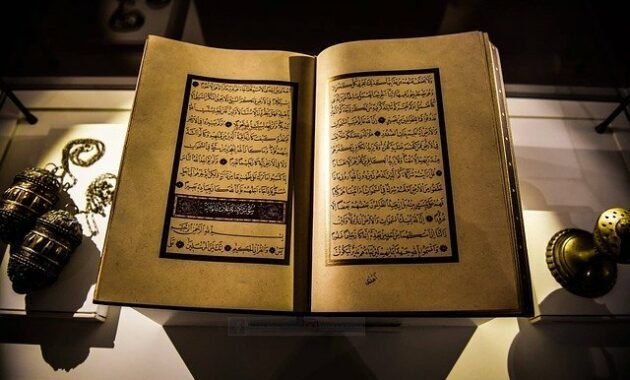
Blog

  • The Meaning or Meaning of Lauhul Mahfudz and Its Characteristics Mentioned in the Qur’an

    The Meaning or Meaning of Lauhul Mahfudz and Its Characteristics Mentioned in the Qur’an

    Lately, many people are talking about the meaning or meaning of lauhul mahfudz. Lauhul mahfudz itself is actually very familiar to many people, especially Muslims. However, do you know the true meaning of lauhul mahfudz?

    This article will explain the meaning and significance of lauhul mahfudz. Not only that, there will also be a discussion of the characteristics of lauhul mahfudz to the part of the relationship with a mate or matters of marriage. Let’s watch it to the end!

    A. Meaning of Lauhul Mahfudz

    Lauhul Mahfudz is generally understood by many people as a book that writes down all records regarding destiny and events that occur in the universe. Lauhul mahfudz also has the nature of being awake and already existed and was created before the creation of the universe and humankind began.

    Literally, the term Lauhul Mahfudz comes from Arabic, namely the word Lauh which means wide bone and can be written on. Meanwhile, the word Mahfudz itself can be interpreted as that which is preserved. So, these two words can be said to have meaning as a book that is preserved and everything written in it will not be changed or damaged.

    Lauhul Mahfudz himself has several other names, starting from Kitaabun Min Qabli which means the book of decrees, then Umm Al-Kitab which means the main book, then Kitabbim Maknuun which means the preserved book, to the Kitabbim Mubiin which means the real book.

    In the Koran, the word Lauhul Mahfudz has been mentioned up to 13 times. However, the mention of lauhul mahfudz is not clear and complete, because it is only a brief explanation.

    B. The Meaning of Lauhul Mahfudz According to the Scholars

    1. Ibn Manzur

    As previously stated, Ibn Mandzur also said that the word lauh means a wide plinth made of wooden planks. Meanwhile, Azhari also revealed that Lauh can be understood as a plank of wood. And, according to what is contained in the Al-Quran, that in the Qur’an “which is stored” in the Tablets of Mahfuzh.” This can be interpreted as the Al-Quran which is stored by Allah’s will.

    2. Ibn Kathir

    Ibn Kathir Rahimahullah said that what was “stored” in the Lawh Mahfuzh. Tafsir from Ibn Kathir can be interpreted that the Al-Quran is in the highest place and is protected from additions, subtractions, deviations and substitutions.

    3. Ibn Qoyim

    Ibn Qoyim Rahimahullah revealed, that the expression “Mahfudz or the one who is awake” most qiroat experts read it with jar as an attribute for seah. This can be understood if in Lauhul Mahfudz there will be no demons that can enter. Lauhul Mahfudz has been determined to be awake from Satan’s actions, either to increase or decrease.

    In At-Tibyan Fi Aqsamil Qur’an, p. 62 reads, then Allah subhanahu guard the place. Guard against additions, subtractions and substitutions. Keeping the meaning from distortion is the same as protecting the pronunciation from being replaced. And He determines who keeps the letters from addition and subtraction and keeps their meaning from distortion and alteration.

    4. Then, some Tafsir books say that Lauhul Mahfud is the forehead of the angel Israfil or a creature made of green emeralds, or something other than that. However, this opinion has no stipulations so that it includes unseen matters that cannot be trusted. With a note, there is an opinion that comes from the one who gave the revelation to him.

    C. The characteristics of Lauhul Mahfudz

    After knowing the meaning of Lauhul Mahfudz, in this section we will start learning about the characteristics of Lauhul Mahfudz which have been mentioned in many verses in the Koran. Some of the characteristics of Lauhul Mahfudz include the following:

    1. Nothing is left behind or forgotten

    Allah SWT says:

    وَعِنۡدَهٗ مَفَاتِحُ الۡغَيۡبِ لَا يَعۡلَمُهَاۤ اِلَّا هُوَ‌ؕ وَيَعۡلَمُ مَا فِى الۡبَرِّ وَالۡبَحۡرِ‌ؕ وَمَا تَسۡقُطُ مِنۡ وَّرَقَةٍ اِلَّا يَعۡلَمُهَا وَلَا حَبَّةٍ فِىۡ ظُلُمٰتِ الۡاَرۡضِ وَلَا رَطۡبٍ وَّلَا يَابِسٍ اِلَّا فِىۡ كِتٰبٍ مُّبِيۡنٍ

    Meaning:
    And the keys to all that is unseen are with Him; no one knows but Him. He knows what is on land and in sea. Not a leaf falls that He doesn’t know about. There is not a grain in the darkness of the earth nor anything wet or dry that is not written in a clear Book (Lauh Mahfuzh).

    2. All life in the world is recorded in it

    Allah SWT says:

    وَمَا مِنْ دَابَّةٍ فِي الْأَرْضِ وَلَا طَائِرٍ يَطِيرُ بِجَنَاحَيْهِ إِلَّا أُمَمٌ أَمْثَالُكُمْ ۚ مَا فَرَّطْنَا فِي الْكِتَابِ مِنْ شَيْءٍ ۚ ثُمَّ إِلَىٰ رَبِّهِمْ يُحْشَرُونَ

    Meaning:
    And there are no animals on earth and birds that fly on their two wings, but people (also) like you. We have forgotten nothing in the Bible, then to God they will be gathered.

    3. All information about humans is recorded in it

    Allah SWT says:

    {ق وَالْقُرْآنِ الْمَجِيدِ (1) بَلْ عَجِبُوا أَنْ جَاءَهُمْ مُنْذِرٌ مِنْهُمْ فَقَالَ الْكَافِرُونَ هَذَا شَيْءٌ عَجِيبٌ (2) أَئِذَا مِتْنَا وَكُنَّا تُرَابًا ذَلِكَ رَجْعٌ بَعِيدٌ (3) قَدْ عَلِمْنَا مَا تَنْقُصُ الأرْضُ مِنْهُمْ وَعِنْدَنَا كِتَابٌ حَفِيظٌ (4)

    It means:

    Qaf. For the sake of the glorious Qur’an. (They did not accept it) they were even astonished because a warner had come to them from their own (amongst their own), so the disbelievers said, “This is something very miraculous.” What are we after death and after becoming soil (we will come back again)? That is an impossible return. Indeed, We already know what the earth destroys from their (bodies), and with Us there is also a book that keeps (records).

    4. Allah’s sentence that is in it will never end

    Allah SWT says:

    وَلَوْ أَنَّمَا فِى ٱلْأَرْضِ مِن شَجَرَةٍ أَقْلَٰمٌ وَٱلْبَحْرُ يَمُدُّهُۥ مِنۢ بَعْدِهِۦ سَبْعَةُ أَبْحُرٍ مَّا نَفِدَتْ كَلِمَٰتُ ٱللَّهِ ۗ إِنَّ ٱللَّهَ عَزِيزٌ حَكِيمٌ

    Meaning:
    And if the trees on earth were pens and the sea (become ink), seven seas (again) were added after (dry) it, surely the words of Allah would not be exhausted (written). Verily Allah is Mighty, Most Wise.

    D. Lauhul Mahfudz A Match That Has Been Determined by Allah SWT

    Many people understand that Lauhul Mahfudz is a term used to reveal the destiny of a person based on the decree of Allah SWT. Due to a decree from Allah SWT, no human being has knowledge of the truth from Lauhul Mahfudz, including the Prophet Muhammad SAW.

    In a book entitled Following the Age Without Turning Away from Religion by M. Aqil said, that a good woman or man will be met with a good mate, while a bad man or woman will also get a bad mate. However, in the process of finding a mate, one still has to make an effort and endeavor to find a mate.

    In a hadith, Rasulullah SAW said about a mate as a reflection of a person. The hadith reads as follows:

    “The souls are likened to pairs of soldiers, those who know each other beforehand will unite and those who deny each other will be at odds.” (Narrated by Bukhari and Muslim)

    E. The essence of Lauhul Mahfudz Matchmaking

    Talking about Lauhul Mahfudz, of course, is incomplete without knowing the nature and position of the soul mate in it. In this section, we will discuss in depth the nature of Lauhul Mahfudz’s mate.

    Lauhul mahfudz mate is actually an absolute provision given to humans. As destiny from Allah SWT, a soul mate has basically been written since 50,000 years ago. This means that before humans were born on earth, destiny related to mate was written first.

    In a hadith, Rasulullah SAW said:

    كَتَبَ اللَّهُ مَقَادِيرَ الْخَلاَئِقِ قَبْلَ أَنْ يَخْلُقَ السَّمَوَاتِ وَالأَرْضَ بِخَمْسِينَ أَلْفَ سَنَة

    “Allah recorded the fate of every creature 50,000 years before the creation of the heavens and the earth.” (HR. Muslim)

    Even though a mate has been set in Lauhul Mahfudz, a devout Muslim still has to fight for his mate. A Muslim is encouraged to always try and try his best to get the best mate for himself.

    In several hadiths, Rasulullah SAW has given several notes to encourage people to choose a good mate. The following are five marriage criteria that must be considered for a Muslim, including:

    1. Women or men who are good in religion

    According to Ahmad Zakarsih in the book Measuring Kufu in Choosing a Mate, in choosing a good potential partner, a Muslim is encouraged to consider his religion. This is in accordance with the hadith of Rasulullah SAW, as follows:

    تنكح المرأة لأربع: لمالها ولحسبها وجمالها ولدينها، فاظفر بذات الدين تربت يداك

    It means:

    “Women are usually married for four reasons: because of their wealth, because of their position, because of their appearance and because of their religion. So, you should choose because of your religion (Islam), because if you don’t, you will surely lose out.” (Narrated by Bukhari-Muslim)

    2. A loving and fertile woman

    تزوجوا الودود الولود فاني مكاثر بكم الأمم

    “Marry a loving and fertile woman! Because I am proud of my many people.” (Narrated by An Nasa’i and Abu Dawud)

    3. Know both religion and morals

    عن أبي هريرة قال رسول الله صلى الله عليه و سلم : إذا أتاكم من ترضون خلقه و دينه فانكحوه إلا تفعلوا تكن فتنة في الأرض وفسيد ع. رواه الحاكم وقال هذا حديث صحيح الإسناد و لم يخرجاه

    “From Abu Hurairah ra, Rasulullah SAW said:” If it comes to you who you approve of his morals and religion, then marry him. If you don’t do it, there will be slander on the face of the earth and extensive damage.” (Narrated by Al-Hakim – his sanad is authentic)

    4. The best decoration for a man is a sholihah woman

    Peace be upon you

    “The world is an ornament, and the best decoration of the world is a Sholehah woman.” (Muslim HR)

    5. Marry an independent woman

    مَنْ أَرَادَ أَنْ يَلْقَى اللَّهَ طَاهِرًا مُطَهَّرًا فَلْيَتَزَوَّجْ الْحَرَائِرَ

    “Whoever wants Allah to be pure and purified, let him marry a free woman.” (Narrated by Imam ibn Majah)

    Thus is the discussion about the meaning of the meaning of Lauhul Mahfudz. Based on the discussion above, we can see that Lauhul Mahfudz is a book that writes down all the records regarding destiny and events that occur in the universe. In addition, Lauhul mahfudz is also awake and has been created before the creation of the universe and humankind began.

  • The Meaning of Unity and Unity of the Indonesian Nation

    Definition of Unity and Oneness – Indonesia is a great nation, has thousands of islands and abundant wealth. In addition, Indonesia has various ethnic groups, cultures and languages. All of that would not unite if the ancestors did not unite the Indonesian nation’s fighting spirit for independence.

    Indonesia won its independence is not a gift given by the invaders, but Indonesia itself is determined to liberate itself. The unity of the Indonesian nation is even included in the 3rd principle of Pancasila, which is used as the ideology and guideline for the life of the nation and state.

    The unity of the Indonesian nation contains elements of the ideals of brotherhood and friendship, filled with an atmosphere of goodness, purity and beauty. The unity and unity of the nation must always be maintained, so that the Indonesian state becomes an independent country. Below will be explained further about the unity and integrity of the Indonesian nation.

    The Meaning of Unity and Unity 

    Simply put, unity means joining, bonding, and assembling several parts into a unified whole. In other words, unity is uniting various patterns into a container so that they become one. The unity of the Indonesian nation is driven by a conscious will to achieve an independent, sovereign, just and prosperous nation. Therefore, we must continue to foster national unity.

    In the unity and oneness of the nation, we must always be united. History teaches how important unity and unity is. In the past, colonialists succeeded in colonizing Indonesia for hundreds of years. This is because we, the Indonesian people, have not been able to unite, the people have not understood the unity and integrity of the nation. This negligence was of course exploited by the colonialists to continue to divide Indonesia.

    The concept of the unity of the Indonesian nation includes regional and social unity. The territorial unit of the Indonesian nation includes land, sea and air units. Based on the concept of the archipelago’s insight as territorial politics, Indonesia is an archipelagic country, a country that is mostly ocean and is surrounded by large and small islands. The territorial waters become the main area, not just a complementary area. The sea becomes a part that unites with the land, not as a separator between one island and another.

    The unity of the nation in the social aspect is manifested in several aspects of life, namely political, economic and socio-cultural unity. The embodiment of the concept of national unity in political unity means acknowledging that the integrity of the national territory and all its wealth is one territorial unit, one unit of the entire nation which belongs together. The Indonesian nation consists of various tribes, languages, and embraces various religions, forming a unified national unity.

    Unity in the political field means that psychologically the Indonesian people must feel the same fate and have the determination to realize the ideals of the Indonesian nation. In addition, recognizing that Pancasila is the philosophy and ideology that is the foundation and guide for the nation to achieve its goals. Understanding that the Indonesian nation must coexist in harmony with other countries and participate in bringing order to the world.

    In economic unity, realization begins with acknowledging that the wealth owned by the Indonesian nation is shared capital and also the necessities of people’s daily life must be available equally from Sabang to Merauke. The level of economic development must be balanced in all regions of Indonesia, without eliminating the characteristics possessed by each region in Indonesia. Economic life in all regions of Indonesia is a unit that is carried out together based on the principle of kinship.

    The embodiment of a single socio-cultural unit encompassing a diverse Indonesian society is one, having a harmonious, balanced and harmonious life. Two, Indonesian culture is one unit, even though the existing cultural patterns are very diverse. This cultural diversity is a wealth that belongs together and is the basis for the development of a nation that can be enjoyed by the people of Indonesia.

    The Benefits of Unity and Unity 

    1. Strengthen national identity
    2. Strengthening national resilience so that it is ready to face threats or disturbances from enemies.
    3. Unity and oneness will create a harmonious life in community life.
    4. Mutual cooperation will be carried out well.
    5. The sense of helping each other and working together is always ingrained in everyday life.
    6. Harmony and hospitality is always maintained.
    7. Conflicts in social life can be avoided.
    8. Can overcome the differences that exist with full awareness.
    9. National development can run smoothly and safely.
    10. Facilitate the advancement of the nation in various fields.
    11. The national goals stated in the preamble of the 1945 Constitution are easier to achieve.
    12. The creation of a peaceful and safe atmosphere in the life of the nation is due to the fact that the people highly uphold solidarity and tolerance.
    13. Interaction between people becomes more familiar.
    14. Avoiding quarrels or hostility in Indonesian society.
    15. People feel safer and more comfortable.

    Factors Driving the Unity and Unity of the Indonesian Nation 

    1. A sense of pride and love for the country 

    A unified country is the main factor in the success of the development being carried out. It is the same as the State of Indonesia which is in the process of being developed in all fields, this of course requires the unity of the Indonesian people. A development program will be carried out well if the conditions of a country are not divided and there are no conflicts among its citizens. Therefore, the unity and integrity of the Indonesian nation has an important role in determining the success of the development that is being carried out.

    2. Aspirations of the Nation

    The unity and unity of the state also has an important role in increasing the nation’s self-esteem in the presence of other countries. Other nations and countries will respect our nation, and will not dare to interfere in our country’s affairs. Thus, our own nation is not easy to be divided if our people mutually reinforce the unity and integrity that exists in our country. If our nation is divided, then other countries will consider our nation low and easy to colonize again.

    3. Mutual Respect and Appreciation

    The unity of the Indonesian nation is something that must be maintained and strengthened. We as a society must avoid things that can divide our nation. For example, demeaning other ethnic groups or assuming that our own tribe is the best among other tribes. We should value and respect each other. Apart from that, we must also foster a sense of brotherhood with fellow Indonesians so that the unity and integrity of our country is maintained.

    4. The Desire To Unite

    The unity and unity of the country is strengthened by three factors, namely the Youth Pledge, Pancasila and Bhinneka Tunggal Ika. These factors unify the Indonesian nation. These three factors can unite the differences and diversity that exist in the life of the Indonesian people. Differences ranging from language, ethnicity, religion and others can be unified by carrying out the basic values ​​contained in the Youth Pledge, Pancasila and Bhinneka Tunggal Ika.

    The Youth Pledge was the first oath voiced on 28 October 1928 in Batavia. The youth oath is a major milestone in the history of Indonesian independence. This oath is considered as a spirit trigger to realize the ideals of Indonesian independence. The youth oath affirms that the Indonesian homeland, the Indonesian nation and the Indonesian language are the ideals of Indonesia.

    The term Youth Pledge did not appear on the day of the congress, but was given afterwards. The youth oath reads:

    “We, sons and daughters of Indonesia, acknowledge that we have one blood, the land of Indonesia.”

    “We, sons and daughters of Indonesia, claim to be one nation, the Indonesian nation.”

    “We, sons and daughters of Indonesia, uphold the language of unity, the Indonesian language.”

    The formulation of this youth oath was written by Muhammad Yamin on a piece of paper given to Soegondo. The paper was given when Mr. Sunario was making a speech. Soegondo read out the contents of the Youth Pledge which were then explained in more detail by Muhammad Yamin.

    The Youth Oath Pledge is an encouragement for the Indonesian nation as well as providing other benefits. The Youth Pledge unifies the family relations and brotherhood of the Indonesian people. The Youth Pledge becomes a builder in a harmonious social life. In addition, the Youth Pledge also raises awareness that a threat to one island means a threat to all Indonesian people.

    5. Pancasila

    Pancasila is a tool to strengthen the unity and integrity of the Indonesian nation. This is because Pancasila has universal characteristics. What is meant by universal or comprehensive is that the values ​​contained in Pancasila are not only created for one ethnic group, not intended for adherents of certain religions, but become guidelines for the Indonesian people regardless of differences in nationality, religion, culture, language and so on. .

    Pancasila is an ideological pillar derived from Sanskrit. Panca which means five and Sila which means principle. The journey of formulating Pancasila is a long journey. Initially, on March 1, 1945, the Investigative Body for Preparatory Work for Indonesian Independence was formed. The Chairman of this Agency, Dr. Radjiman initially asked the question, ‘What is the basis for the Indonesian state that will be formed?’.

    There are several figures who propose the basics of Pancasila, namely Muhammad Yamin, Ir. Soekarno and Soepomo. On June 1, when Soekarno revealed the basic formulation of the state, the term Pancasila was put forward for the first time. Soekarno also explained what Pancasila meant. He said that it was from these five foundations that the ancestors founded the eternal and eternal Indonesian nation. After the Pancasila formulation was accepted, finally Pancasila was stipulated in several documents.

    These documents are the Jakarta Charter, the preamble to the 1945 Constitution, the Preamble to the Constitution of the United States of Indonesia, the Preamble to the Provisional Basic Law and the Presidential Decree of 5 July 1959. Pancasila as the basis of the state also has several functions and positions, namely Pancasila as the soul of the Indonesian nation; Pancasila as the personality of the Indonesian nation; Pancasila as the way of life of the Indonesian nation; Pancasila as the basis of the Indonesian state; Pancasila as the source of all sources of state law; Pancasila as the nation’s sublime agreement; and Pancasila as the ideals of the Indonesian nation.

    Attitudes and behavior that are guided by Pancasila are highly expected of every Indonesian citizen. The measurement of behavior for the first to the fifth precepts of Pancasila is in accordance with the measurement. Precept 1, attitude towards God, Precept 2, identification with humanity, Precept 3 patriotism, Precept 4 Support for democratic principles and Precept 5 humanitarianism. This Pancasila measurement is in line with the virtues of character, such as humanity, courage, transcendence, and justice.

    6. Unity in Diversity

    Another factor that strengthens the unity and integrity of the Indonesian nation is Bhinneka Tunggal Ika. Bhineka Tunggal Ika is the motto of the Indonesian people. This motto is written on the Indonesian state symbol, Garuda Pancasila. The motto of the Indonesian nation comes from the Old Javanese language which means ‘different but still one’. Bhineka which means various kinds, Tunggal which means one, and Ika which means that.

    This motto is a description of the unity and integrity of the Indonesian nation which consists of various cultures, races, ethnicities and also religions. This motto is a quote from an ancient Javanese book, namely the Sutasoma Book, which was composed by Mpu Tantular during the Majapahit kingdom under the reign of King Rajasanagara or better known as Hayam Wuruk. The Sutasoma Book is a special book because it teaches tolerance between Hindus and Buddhists.

    Bhineka Tunggal Ika is the motto for encouraging the Indonesian people to realize the unity of the Indonesian nation in the midst of the storms of differences that each of its people has. The unity and oneness of the Indonesian nation will always be maintained if the values ​​in the Youth Pledge, Pancasila and Unity in Diversity are always applied by all levels of Indonesian society in the life of the nation and state.

    Factors Inhibiting the Unity and Unity of the Indonesian Nation 

    1. The diversity that exists in Indonesian society 

    The diversity that has always existed in the life of the Indonesian people is one of the factors hindering the unity and integrity of Indonesia if it is not accompanied by an attitude of mutual respect, tolerance and mutual respect. Cultural differences certainly give rise to differences of opinion which can also foster excessive regional feelings which can lead to conflicts between tribes.

    2. Geographic 

    Indonesia is a country consisting of thousands of islands. Thousands of islands, of course, also have different characteristics. The area that has the potential to separate itself from the country is the area farthest from the Capital area. In addition, areas that have influence from border countries or neighboring countries and can also be areas that have a large global influence such as tourist areas or those that have abundant natural wealth. From the different geographical conditions, this could be a factor that weakens the unity and unity if the inequality and inequality of development cannot be handled.

    3. Appears Symptoms of Ethnocentrism 

    Ethnocentrism is an attitude that really highlights the advantages of its culture and views the culture of other people. If this ethnocentric attitude is not overcome, of course it will weaken the unity and integrity of the nation.

    4. Weak Cultural Values 

    A strong foreign culture that weakens the nation’s cultural values, either directly or indirectly, can be a factor that weakens the unity and integrity of the nation. The direct influence of foreign culture, for example, through the elements of tourism. The influence of foreign culture indirectly, for example through print media, even electronic.

    5. Uneven Development 

    The development process that is only focused on certain areas can be one of the factors that weakens the unity and integrity of the nation. This of course will lead to disparities in various sectors.

  • The Meaning of Trias Politica and Its Application in the Indonesian Government System

    Trias Politica – A country can be said to be running well if there is a legal territory or territory, in which it has a legitimate government, is recognized, sovereign, and is given legal power to regulate its people. Legitimate power here means that a sovereign government is representative of all the people and exercises power at the will of the people.

    Power itself is authority over something or to determine something (to command, represent, manage, and so on). The government in this case exercises power over the will of the people, which means that based on the consensus contained in the Preamble to the 1945 Constitution of the Republic of Indonesia it has been agreed that the people give authority to the government to govern, represent and manage government affairs.

    The division or separation of powers is often known as the ” trias politica “. This term comes from the Greek, namely tri which means “three”, as which means “axis” or “center”, and politica which means “power”. The definition of trias politica is a teaching which assumes that state power consists of three kinds of power, namely legislative, executive and judicial.

    Legislative power is the power to make laws, executive power is the power to implement laws, and judicial power is the power to prosecute violations of laws.

    Originator of the Trias Politica Concept

    What is Trias Politica ?

    The term trias politica comes from the Greek which means “triad politics”. In simple terms trias politica is a political concept which means separation of powers. According to Wahyu Eko Nugroho in his journal entitled Implementation of Trias Politica in the Government System in Indonesia , trias politica is an idea that a sovereign government must be separated between two or more independent strong units. The goal is to prevent absolute state power.

    The concept of trias politica was first put forward by John Locke, a British philosopher who was later developed by Montesquieu in his book entitled L’Esprit des Lois. This concept divides a state government into three types of powers, namely executive, legislative, and judicial. Indonesia as our beloved homeland is a democratic country that adheres to this concept.

    Montesquieu, whose full name was Charles-Louis de Secondat, Baron de La Brède et de Montesquieu (18 January 1689–10 February 1755), was a French political thinker who lived during the Age of Enlightenment (English: enlightenment ) . He is famous for his theory of separation of powers which has been widely adapted in discussions on government and implemented in many constitutions around the world. He played an important role in popularizing the terms “feudalism” and “Byzantine Empire”.

    Montesquieu is best known for his trias politica (separation of state power into three) teachings, namely the executive (executing laws), the legislature (making laws), and the judiciary or judiciary (monitoring the implementation of laws).

    According to Montesquieu, the trias politica  includes:

    1. Executive Powers

    Executive power is an institution that implements laws. The executive branch is led by a king or president and his cabinet. Not only implementing laws, this institution also has several authorities.

    According to Miriam Budiardjo, the executive branch has diplomatic, judicial, administrative, as well as legislative and military powers. Diplomatic authority is the authority to carry out diplomatic relations with other countries, while judicial authority is the authority to grant clemency and amnesty to citizens who violate the law.

    Meanwhile, administrative authority is the authority to implement laws and regulations in state administration. Through its legislative powers, a president or minister can make laws with the legislature. The executive branch also has the authority to regulate the armed forces, declare war when necessary, and maintain state security.

    2. Legislative Power

    Legislative power is an institution established to prevent the arbitrariness of the king or president. The legislature which is the representative of the people is given the power to make laws and enact them. Not only that, this institution is also given the right to ask for information on policies of the executive branch that will be implemented or are being implemented.

    In addition to requesting information from the executive branch, this body also has the right to investigate itself by forming an investigative committee. The right to vote of no confidence is also owned by this institution. This right is a right that has great potential to bring down the executive branch.

    3. Judicial power

    Judicial power is the power to control all state institutions that deviate from the laws that apply to that country. The judiciary was formed as a means of law enforcement, the right to examine materials, the settlement of disputes, and the right to pass legal regulations or cancel regulations if they are contrary to state principles.

    Application of Trias Politica in Indonesia

    In the following, we explain one by one the application of Trias Politica in Indonesia based on each division of power:

    1. Executive Powers

    Executive power is the power to carry out laws and the wheels of government. This power in Indonesia is held by the president. However, bearing in mind that it is impossible to carry out law enforcement activities alone, the president has the authority to delegate executive tasks to other government officials who help him, namely ministers.

    2. Legislative Power

    Legislative power is the power to make laws. There are three institutions that are given legislative authority in Indonesia, namely the People’s Consultative Assembly (MPR), the People’s Representative Council (DPR), and the Regional Representatives Council (DPD).

    3. Judicial power

    Judicial power is the power that is obliged to defend the law and has the right to provide justice to its people or simply called judicial power. Article 24 paragraph (1) of the 1945 Constitution states that the judicial power is an independent power to administer justice to uphold law and justice.

    The judicial function in Indonesia is carried out by the Supreme Court (MA) and the Constitutional Court (MK). The Supreme Court is the court of cassation or the last and highest state court, one of whose functions is to foster uniformity in the application of law through cassation decisions and judicial review. Meanwhile, one of the powers of the Constitutional Court is to review laws against the Constitution.

    It should be noted, in addition to the three divisions of power mentioned above, in Indonesia there is also an examinative power as mandated in Article 23E paragraph (1) of the 1945 Constitution, namely as a power that functions to audit state finances, namely the Audit Board of the Republic of Indonesia (BPK).

    A country can be said to be running well if there is a legal territory or territory, in which it has a legitimate government, is recognized, sovereign, and is given legal power to regulate its people. Legitimate power here means that a sovereign government is representative of all the people and exercises power at the will of the people.

    Power itself is authority over something or to determine something (to command, represent, manage, and so on). The government in this case exercises power over the will of the people, which means that based on the consensus contained in the Preamble to the 1945 Constitution of the Republic of Indonesia it has been agreed that the people give authority to the government to govern, represent and manage government affairs.

    When running the wheels of government, the government needs a “government system”. The government system is a combination of two terms, namely “system” and “government”. The system is a whole consisting of several parts that have a functional relationship between the parts and the relationship to the whole, so that the relationship creates dependence between the parts which if one part does not work properly will affect the whole.

    Meanwhile, governance in a broad sense is all the affairs carried out by the state in carrying out people’s welfare and the interests of the state itself; so it is not interpreted as a government that only carries out executive duties, but also includes other tasks including the legislature and the judiciary.

    When discussing the system of government, it is closely related to the distribution of powers and the relationship between state institutions that exercise the powers of the state, in order to carry out the interests of the people, namely achieving the national ideals contained in the Preamble to the 1945 Constitution of the Republic of Indonesia, Paragraph IV, namely protecting all of Indonesia’s bloodshed, promoting public welfare, educating the nation’s life, and participating in carrying out world order based on freedom, eternal peace and social justice.

    State institutions in carrying out state powers need to be limited so that they are not arbitrary, do not overlap in authority, and do not concentrate power in one institution. This is what makes it necessary to have a division or separation of powers. This is intended solely to guarantee the human rights of its citizens so that they are not treated arbitrarily by the authorities.

    The statement above is in line with the expression of Lord Acton ” power tends to corrupt, but absolute power corrupts absolutely ” (humans who have power tend to abuse it, but humans who have unlimited power will definitely abuse it). Therefore, power must be divided or separated so that it is not abused.

    The division or separation of powers is often known as the ” trias politica “. The concept of trias politica was put forward by a French philosopher named Montesquieu. Trias politica comes from the Greek tri meaning “three”, as meaning “axis” or “center”, and politica meaning “power”.

    The definition of trias politica is a teaching which assumes that state power consists of three kinds of power, namely legislative, executive and judicial. Legislative power is to make laws, executive power is the power to implement laws, and judicial power is the power to judge violations of laws.

    The concept of trias politica is a normative principle that powers should not be handed over to the same person to prevent abuse of power by those in power. That is, the concept of trias politica from Montesquieu which was written in his book entitled L’esprit des lois ( The Spirit of Laws ) offers a concept regarding state life by carrying out a separation of powers which are expected to be mutually exclusive in equal positions, so that they can control and balance each other. each other ( check and balance ).

    In addition, through this concept it is hoped that it can limit power so that there is no concentration of power in one hand which will later give birth to arbitrariness. In terms of the division of powers, state institutions or government agencies can be divided into two parts, namely:

    1. Vertically, namely the division of power according to its level. The point is the division of power between several levels of government, for example between the central government and regional governments in a unitary state.
    2. Horizontally, namely the division of power according to its function. That is, this division focuses more on the distinction between legislative, executive and judicial functions of government.

    The division of powers referred to in this study is the horizontal division of powers, namely the division of powers based on the nature of the tasks of different types and functions which give rise to various kinds of institutions within a country (legislative, executive and judicial).

    Almost all countries in the world apply the concept of Trias Politica from Montesquieu. What about the country of Indonesia? To see whether the Indonesian government system applies the concept of trias politica or not, it can be seen in the Indonesian state constitution, namely the 194 Constitution of the Republic of Indonesia. , that is both legislative, executive, and judiciary into state institutions or government agencies.

    It should be understood that the Indonesian state constitution has been amended. Amendment is the process of changing the provisions of a regulation, either in the form of adding, subtracting or removing certain regulations. The amendments to the 1945 Constitution of the Republic of Indonesia have been amended four times, namely:

    1. The first amendment was carried out on 14 October 1999–21 October 1999 and was determined through the MPR General Session.
    2. The second amendment was carried out on 7 August 2000–18 August 2000 and was adopted at the MPR Annual Session.
    3. The third amendment was implemented on 1 November 2001–9 November 2001 and was determined at the MPR Annual Session.
    4. The fourth amendment was implemented on 1 August 2002–11 August 2002 and was adopted at the MPR Annual Session.

    In connection with the amendments to the Constitution of the Republic of Indonesia, the division of powers over state institutions or government agencies in Indonesia has also undergone changes. Theoretically, these changes will at least bring about structural changes and state administration mechanisms.

    Implicitly, both before and after the amendment to the 1945 Constitution, the concept of Montesquieu’s trias politica was applied in the system of government of the Republic of Indonesia, but the application of the concept was not absolute . executive, and judiciary.

    The division of powers based on state functions in the system of government of the Republic of Indonesia based on the 1945 Constitution before the amendment turned out to be not only the legislature (MPR and DPR), the executive (president) and the judiciary (MA). However, apart from these three functions, they are still divided into consultative powers (DPA) and examining powers (BPK).

    As for the division of powers based on state functions in the system of government of the Republic of Indonesia based on the 1945 Constitution after the amendment, it turns out that it is not only legislative (MPR, DPR and DPD), executive (President) and judiciary (MA and MK), but is still divided into the Examinative Authority (BPK).

    Conclusion

    The results of a comparative study regarding the application of the concept of trias politica in the system of government of the Republic of Indonesia on the 1945 Constitution, before and after the amendment, it can be seen that the division of powers based on state functions in the system of government of the Republic of Indonesia based on the 1945 Constitution before the amendment was not only the legislature (MPR and DPR), the executive (president) and the judiciary (MA), but apart from these three functions they are further divided, namely into consultative power (DPA) and examination power (BPK).

    As for the division of powers based on state functions in the system of government of the Republic of Indonesia based on the 1945 Constitution after the amendment, it turns out that it is not only legislative (MPR, DPR and DPD), executive (President) and judiciary (MA and MK), but is still divided into the Examinative Authority (BPK).

    The division of power from one period to another always changes according to the development of society. Therefore, it is necessary before making changes (amendments) to be discussed and consolidated with due regard to the ius constitutum and ius constituendum , so that they can accommodate any problems that arise.

    Regarding changes (amendments) in Indonesia, there have been four changes in a span of four years, namely from 1999 to 2002; short span of time and there is talk of a fifth change. If this is true, the substance of the change should be adapted to the constitutional legal culture that is in accordance with the Indonesian nation.

    Legal basis

    • The 1945 Constitution of the Republic of Indonesia .
  • The Meaning of the Youth Pledge for Young Generation in the Digital Age

    The meaning of the Youth Pledge – The meaning of the Youth Pledge which was pledged on October 28, 1928 should continue to be updated so that it is in accordance with the times. M. Yamin, Amir Sjarifuddin, Sugondo Djojopuspito, WR Soepratman, Johanes Leimana, and other youths succeeded in providing a strong foundation for Indonesia’s younger generations. They instilled a spirit of unity, pride and wholeness in the Youth Pledge.

    As the next generation, we cannot eliminate the positive values ​​from the spirit of the Youth Pledge. Therefore, it is fitting for us to understand the meaning of the Youth Pledge so that we can maintain and pass on the values ​​contained therein.

    While it won’t be easy, that doesn’t mean it’s an impossible task. Moreover, the Youth Pledge has actually become the identity of Indonesian citizens. The culture of gotong royong, mutual respect, upholding harmony, and maintaining unity will never completely disappear within us.

    In this article, I will invite all readers to review the meaning of the Youth Pledge from the most important to its developments in the digital era.

    The Main Meaning of the Youth Oath

    The Youth Pledge is one of Indonesia’s sacred historical milestones, without the pledge of these youths, the spirit of independence in society might have existed much longer. If you look at the current conditions, many Indonesian youths do not understand the importance of the meaning of the Youth Pledge.

    This is reflected in the daily lives of today’s younger generation, who, in a way, tend to be individualistic and do not have a solid foundation. To overcome this requires long steps, but understanding the most important meaning of the Youth Pledge can be a good start.

    One Motherland

    The first paragraph of the Youth Pledge states that Indonesian youth only have one homeland, namely Indonesia. Whatever the region of origin, we both breathe air, grow and develop in Indonesia. In this country, we cry for the first time when we are born and here we will spend all the time until we die later.

    In the past, before the youth oath was read, the Indonesian people were only proud of the superiority of their own region. They defend their area from invaders on their own. Therefore, the Dutch troops could control Indonesia quickly.

    After the youth oath was read, awareness of a single motherland began to emerge. The spirit of unity was agitated and the fighters fought to defend all regions in the country, without discrimination at all.

    This is what we have to take care of at this time. The spirit of unity regardless of which region is better and worse because Indonesia is vast. The 17,000 islands that stretch from Sabang to Merauke are the motherland that we must protect as much as possible.

    This spirit can embody a strong, sincere and authentic sense of love for the homeland. If we don’t love Indonesia, who will? Do you want culture, history, territory, and everything in this country to be recognized by other nations?

    One Indonesian Nation

    Towards the start of the II Youth Congress, the youth who attended stayed in dormitories and rented houses that were close to the building where the Congress was being held. In this place, they gather and do various activities together.

    After that, the youths who came used the name “national youth” as their identity. Not Sundanese youth, Javanese youth, or anything else. They describe the unity of various tribes in Indonesia, in accordance with the motto of this country ” Unity in Diversity “.

    Differences in ethnicity and customs should not be seen as a drawback, because it will only bring this nation into disunity. On the contrary, this diversity is precisely an advantage that we should be proud of. We have succeeded in uniting hundreds of ethnic groups in one nation, namely the Indonesian nation.

    One Indonesian

    One of the most prominent results of the Youth Pledge is the use of Indonesian as the language of unity. The youths who were present at that time realized that it would be difficult for the Indonesian people to unite if there were still obstacles in communication.

    Yes, try to imagine, how could the fighters formulate a strategy to fight the invaders if they were constrained by language differences? There was no time to learn all the regional languages ​​spoken at that time. The most appropriate way out is to use the same language to communicate.

    Moh even. Yamin, who served as secretary during the Second Youth Congress, had to translate speakers who used Dutch. If Indonesian is not set to be the unified language, maybe this article should be translated into hundreds of regional languages ​​so that all readers of the sinaumedia Blog can understand it.

    There are many more lessons that can be taken from the event of the Youth Pledge. You can find it in the book Caring for Indonesia written by Lukman Hakiem.

    This book is able to tell very personal things and memories that may not exist in other history books.

    Interpreting the Youth Pledge in the Digital Age

    The three meanings of the youth oath above are the basic foundation that we must maintain forever. Meanwhile, the application of values ​​and the way we interpret the youth oath must always be adapted to the times. Of course, by still using the existing basic foundation.

    In this way, we can pass on the values ​​and spirit of the Youth Pledge to our children and grandchildren. In this digital era, there are several ways we can interpret the Youth Pledge. Here’s the explanation:

    1. Utilizing technology to produce innovative works

    The rapid development of technology is currently opening up many opportunities for the younger generation who want to contribute to the country. The Covid-19 pandemic played a role in encouraging a sense of unity and togetherness.

    The younger generation, in these two years, has never stopped working together to help others who have been affected by the pandemic. Both from an economic standpoint, housing, and others.

    Various technological innovations were created to bridge the youth and all Indonesian people. Websites , applications, digital media, learning platforms , delivery services, to marketplaces are proof that the younger generation is able to utilize technology to produce innovative works.

    Indirectly, they have practiced the spirit of maintaining the unity and integrity of the Indonesian nation. Something that has been passed down by the younger generation almost a century ago.

    On the other hand, this breakthrough also helps improve the quality of life and spreads good values ​​to all Indonesian people.

    2. Manage information wisely and fight hoaxes

    Along with the expansion of the internet, the information faucet seems to be wide open. Nowadays everyone can get the necessary information easily. Unfortunately, the presence of hoaxes becomes a ghost that terrorizes people’s lives.

    Children, youth, adults, and the elderly can be consumed by the fake news they find on the internet. This is where the task of the younger generation who are more familiar with technology is needed.

    The younger generation must be the bulwark of defense as well as the main spearhead in fighting hoaxes . Therefore a critical attitude towards oneself and the surrounding environment is absolute. We must play an active role in teaching parents and younger siblings about hoaxes .

    At least, raise awareness about freedom of information and critical attitude towards them. Give an example of how to manage the information obtained. If necessary, teach how to use it as an opportunity to improve the quality of life.

    3. Appreciate and respect others

    Indonesia had experienced a crisis of tolerance for several years. Discrimination and polarization in society has strengthened to an alarming point. Currently, Indonesia is slowly starting to return to being a country that upholds a culture of mutual respect and respect.

    As the younger generation, we must maintain this culture as strong as possible so that there will be no more tolerance crises in the future. Our predecessors have proven that by being united, the Indonesian nation succeeded in expelling the invaders. So what makes us have to be separated again?

    Differences in religion, thought, ethnicity, culture, traditions, thoughts, and others should not be seen as weaknesses that can be exploited. On the contrary, these differences are actually pieces of a puzzle which, if put together, will become a strong Indonesia.

    By appreciating and respecting others, we have practiced the same spirit of unity as the previous younger generation.

    4. Using domestic products

    In the internet era like now, product marketing runs very fast. Many large companies consider Indonesia as a potential market that must be prioritized. Hence, some of them often present the latest products in Indonesia.

    At the same time, domestic products are also surfacing with the help of digital marketing. Competition to grab consumers’ attention is getting tougher, companies as producers cannot only rely on one marketing strategy.

    Unfortunately, not a few young people think that domestic products are not of good quality compared to foreign products. As a result, products made in Indonesia are often underestimated. In fact, there are already many domestic products whose quality is no less, or even better, than foreign products.

    Our duty here is to increase the love for the sweat of our brothers and sisters. This is done by appreciating more and not looking down on domestic products.

    In this way, we have helped support the people’s economy and appreciate the work of the Indonesian people.

    5. Maintain Indonesian and regional languages

    Indonesian is a heritage that we must protect. One way is by using good and correct Indonesian to communicate. In addition, we must preserve the local language.

    It is true, nowadays we are required to master foreign languages ​​in order to get information and improve self-quality. However, Indonesian and regional languages ​​should not be forgotten. After all, both are the identity of the Indonesian nation.

    Some people find it easier to express themselves in a foreign language, while others feel that Indonesian is not very important to learn because it is often used in everyday life. But in fact, there are still many people who don’t know how to use good and correct Indonesian. The same goes for regional languages.

    This alarming condition will not change if we do not start studying Indonesian and regional languages ​​seriously. Remember, Indonesian allows us to make friends with more people, without having to learn all the regional languages.

    Ivan Lanin through his book Xenoglosophilia: Why English? highlights this and tries to make his readers aware that using good Indonesian is not difficult.

    6. Use social media wisely

    Social media cannot be separated from the life of Indonesian people. Like any other technology product, there are positive and negative sides to social media – depending on how we use it.

    On the positive side, social media can be a place to learn new knowledge that is not taught in schools. Especially those related to the digital world. Content creators and companies are competing to present educative and useful content to their audience.

    On the negative side, social media can also be a medium for spreading hoaxes, hate speech, and even fraud. Often criminals on social media disguise themselves in such a way that it is difficult to trace them. After there is a victim, then his true identity is revealed.

    Seeing conditions like this, the younger generation must play an active role in spreading positive messages and educating the public regarding the proper and correct use of social media. This is part of the effort to protect Indonesia’s homeland and national unity.

    7. Preserving native Indonesian culture

    Some say, youth is the right time to try many things and explore one’s abilities. Only by capitalizing on high curiosity, one can study one field until it is proficient.

    We can channel this passionate enthusiasm to learn Indonesian original culture and preserve it. In fact, Indonesian culture is not so rigid and can blend with technological advances.

    Just look at Weird Genius’ song Lathi , which went viral in 2020. Reza “Arap” Oktovian, Eka Gustiwarna, and Gerald Liu managed to combine traditional culture with modern music to produce works that are both authentic and unique.

    Behavior Incompatible with the Spirit of the Youth Pledge

    To maintain the unity and oneness of the Indonesian nation, young people like us must avoid behavior that is inconsistent with the spirit of the Youth Pledge. The following are some examples of this behavior:

    1. Individualist or selfish

    Individualism is a behavior that can harm many people. Because people who are selfish often don’t care about the people around them. He may even not care about the interests of the group at all. All that was on his mind was how to make a profit for himself.

    For example, when you are selected as a member of the volleyball team that will compete in the Inter-Class Sports Week, you have the responsibility to give your best so you can become a champion. However, during practice, you prefer to go play with friends. Actions like this can harm your other friends.

    2. Do whatever you want

    Traits like this can lead to indifference and do not want to care about other people’s business. Not infrequently, this attitude also endangers others and himself. For example, at school, you will be shunned by your classmates. Or in your neighborhood, you may be ostracized by your neighbors from association because you are considered unable to respect other people.

    In the end, when you need someone’s help, no one reaches out to you. In fact, humans are basically social beings who need the presence of other humans in their lives.

    If you want to know how great the Indonesian people are, try reading the book Encyclopedia of Tribes in Indonesia written by Dr. Zulyani Hidayah. This book provides basic information about various ethnic groups in Indonesia, some of which have been researched and disclosed, but much more has not been properly identified.

    3. Arrogant

    Arrogant people tend to feel superior to others. This kind of nature will only undermine the unity and integrity of the community group. When someone thinks himself very great, he will look down on others.

    Everyone has the same dignity and worth since birth so that no one is higher or lower. As the same creature, we should respect each other. After all, arrogant people are more difficult to make friends.

    4. Excessive religious fanaticism

    The Indonesian Constitution has guaranteed the freedom of every citizen to embrace the religion he believes in. So that anyone has the right to worship according to his religion.

    Excessive religious fanaticism will lead to religious conflict in society. Because this trait will make you not open to differences in religion, even though you are still in the same religion.

    Didn’t God create humans with reason and mind so they could understand each other? Moreover, every religion basically teaches harmony and instructs its adherents to stay away from evil. A little difference does not necessarily make one religion better than another.

    That is a review of the meaning of the Youth Pledge for the current generation in the digital era. Sinaumed’s can add insight by reading related books available on sinaumedia.com so that you have #MoreWithReading information.

    Author: Gill

    Also read:

  • The Meaning of the Title Al-Amin Rasulullah SAW and His Example

    The Meaning of the Title Al-Amin Rasulullah and His Example – For Muslims, of course, they are very close to and familiar with the figure of the prophet Muhammad SAW, the prophet and the last apostle who became a role model for his people.

    Through his figure who is a role model for his people, it is not surprising that the prophet Muhammad received many titles, one of which is the title Al-Amin. What is the meaning of the title Al-Amin given to the Prophet?

    The Meaning and Meaning of the Title Al-Amin Rasulullah

    Al-Amin means trustworthy. The Prophet Muhammad SAW bears the title Al-Amin because of the Prophet’s exemplary attitude, trustworthiness, trustworthiness and honesty.

    This title was given by the inhabitants of Mecca directly to the Prophet. His example and good demeanor became a role model and were so respected by the people of Mecca that they made them believe in the Prophet Muhammad as the right person to bear this title.

    This exemplary attitude of the Prophet has been proven in various situations. People realized that the Messenger of Allah was an honest person, when he traded he would tell the truth about the condition of his merchandise.

    The Prophet Muhammad would also tell the truth if the goods had defects or things happened that affected his merchandise.

    In addition, the Prophet Muhammad also did not take profit or advantage in determining the selling price. He is also very trustworthy in delivering goods according to the quality that customers want and is known to be very kind when doing trade.

    This has become the habit of the Prophet to always be kind, trustworthy and honest and make many people believe and follow his example.

    Background of the Awarding of Al-Amin Title

    At one time, when the Prophet Muhammad was 35 years old, an incident that was quite large and detrimental occurred in Mecca. At that time there was a big flash flood in the Grand Mosque and damaged the Kaaba. Therefore, the people of Quraysh wanted to repair the damaged Kaaba.

    After the repair of the Kaaba, there was a considerable dispute among the people of Quraysh regarding who was the right person to place the Black Stone. This dispute also found a bright spot when finally one of the oldest people there, namely Abu Umayyah bin Mughirah, provided a solution.

    He said that whoever steps first to the as-Shofa door will determine the placement of the Black Stone later. As if it had become destiny from Allah SWT, the first person to pass through the door was the Prophet Muhammad SAW.

    Immediately after going through it, the Quraysh said that he was Al-Amin, who had been destined and carried the mandate to carry out the laying of the Black Stone. The Quraysh also said that they were pleased if the Prophet placed the Black Stone.

    Together with the tribal leaders, the Prophet Muhammad was helped to put the Black Stone back to its original place. Since then the Prophet was given the title Al-Amin which has been recognized by people.

    The nature and example of the Prophet Muhammad who became a role model

    1. Sidiq

    One of the characteristics and exemplary of the Prophet Muhammad that his people need to emulate is sidiq which means true. In this case it means that everything he did was truthful, honest and without covering it up. The behavior of the Prophet Muhammad was also always in line with his words, making the Prophet always a role model for those around him.

    2. Trust

    In addition to being sidiq, the Messenger of Allah is also a figure who has the character of being trustworthy or trustworthy. This characteristic is a characteristic that all prophets and apostles naturally have, because of their existence as role models for their followers. Must be someone who is trustworthy, who carries out his duties properly and honestly according to what is ordered.

    3. Tablighi

    Tabligh has the meaning of conveying, which means that the Prophet Muhammad had the nature of tabligh as a messenger from Allah SWT to Muslims. The existence of the Prophet Muhammad as the bridge of Allah’s revelation for friends and ummah made him a tabligh figure.

    Having this trait does not merely need to be conveyed, but accompanied by other exemplary qualities such as trustworthiness and sidiq.

    4. Fathonah

    A prophet certainly needs to have the nature of fathonah which means intelligent, because with intelligence he can be a good role model. The intelligence of the Messenger of Allah can help him fight people who are not in his way, and to be able to fight people who have evil intentions against him and his people.


    5. Humble

    Another example of the Prophet Muhammad SAW is that he is known as a very humble person. This trait makes so many people love him for his kindness and non-arrogance.

    The Prophet taught and gave an example of living far from being arrogant, because he realized that there was Allah SWT who was much better than himself. So that as a human being he shows humility and always invites his people to behave the same way so that life becomes easier and calmer.

    6. Obey Allah SWT

    The Prophet Muhammad has also become a person who is so obedient to all the commands of Allah SWT. That is why many Muslims make the Prophet as a role model in their religious life. How commendable behavior of the Prophet Muhammad is very exemplary.

    7. Always give and love

    The Messenger of Allah became such a good figure and always gave and loved fellow human beings. Even when people had bad intentions towards him, he still showed good behavior.

    The Prophet is known as a figure who likes to give alms. Once upon a time, he entrusted some money to Aisyah, his wife. Then later when the Prophet Muhammad began to fall ill, he asked where the whereabouts of the money.

    When he found out that the money was still with Aisyah, he asked Aisyah to distribute the money on the street for people who needed it more. When asked why the Prophet Muhammad made this decision. The Messenger of Allah replied that he would be ashamed if he still had some accumulated wealth.

    8. Manners

    Having good manners is something that is ingrained in the Prophet Muhammad. This politeness of the Prophet Muhammad did not reduce his authority. His consistent polite nature and being so polite when talking to other people made him highly respected and highly respected by his people.

    Not only the exemplary ones that have been described in the review above, in fact there are many other examples of the Prophet Muhammad that can be used as examples and we also need to apply in our lives today. Read more about the stories of the Al-Amin in this book.

    Travel History of the Prophet Muhammad SAW

    1. Childhood

    Prophet muhammad SAW was born in around 570M in Mecca. He is the son of Abdullah and Aminah who are a respectable family in the Bani Hasyim tribe. But his father died when the Prophet Muhammad was still in the womb, and his mother died when Muhammad was 6 years old.

    Muhammad grew up and was raised by his grandfather named Abdul Muthalib and then since 8 years he was cared for by his uncle Abu Talib until adulthood. Born in a good family and growing up with religious teachings that were so attached made Muhammad a person who was also so kind, humble and full of examples.

    Young Muhammad works as a trader who is well known and honest in carrying out his duties. In his daily life, Muhammad always studied and deepened his religious knowledge, practiced self-defense and also often did archery. Until finally the news of Muhammad’s example brought him together with Khadijah, who later became his wife.

    2. Acquire the apostleship

    Muhammad lived among a society that was fond of violence and all the fighting at that time, more or less matured Muhammad. From his youth until around the age of 40, he became more and more isolated in the cave of Hira which is on the east side of Mecca.

    There Muhammad often meditated for days to find peace. Which action seems to be inversely proportional to the Arab culture in the past who liked to congregate.

    Until finally Muhammad received his first revelation on the 17th of Ramadan delivered by the Angel Gabriel. The first Surah delivered was Al-Alaq. Right after that he was finally appointed as an apostle.

    The Prophet Muhammad received a miracle in the form of the holy book Al-Quran gradually or one by one. Every verse and surah was conveyed to the Prophet Muhammad bit by bit for 23 years, according to the situation that occurred at that time.

    3. Spread of Islam

    The situation of the Arab nation at that time had spread cultures that were contrary to Islamic teachings, making the Prophet Muhammad unable to openly carry out da’wah. In order to minimize riots, during the first three years of the Prophet Muhammad as an apostle he only spread the religion of Islam to his closest friends and family.

    It can be said that the Prophet Muhammad seemed to use an underground route, he spread Islamic teachings slowly and secretly. So it is not uncommon for those who embraced Islam after the Prophet Muhammad were his closest people.

    Three years later, the Prophet Muhammad began to spread Islam openly in Mecca. However, this was not responded well by the people at that time. This was because the religious teachings brought by the Prophet Muhammad were so contrary to the culture and perspective of Arab society at that time.

    The Prophet Muhammad was even considered to have damaged their order and culture so that not a few of the first adherents of Islam and the Prophet Muhammad were tortured, persecuted to the point of being ostracized. Abu Jahl as the leader of the Arab nation, was so against the Prophet and made all people hate him.

    The magnitude of the rejection by the ignorant community in Mecca did not dampen the spirit of the Prophet Muhammad and his companions to stick to their mandate. The teachings of the Islamic religion that had been heard bore fruit, the Prophet Muhammad gained many followers who became Muslims at that time.

    It was these people of the Prophet Muhammad who ultimately helped spread Islam throughout the world through foreign trade. Some of them are Persia, Syria and also the Arabian peninsula.

    All the examples of the Prophet Muhammad that were heard throughout the region also triggered many people to sympathize with him and were curious to know and learn about the religious teachings of the Prophet Muhammad directly. One of the major figures, namely Umar bin Khattab, who was a respected leader in the Quraysh clan, finally established himself to embrace Islam according to the teachings of the Prophet Muhammad.

    4. Hijrah to Medina

    The increasing number of followers of the Prophet Muhammad who participated in spreading the Islamic religion made more and more Muslims from abroad. Most Arab people who have embraced Islam also have the habit of always visiting Mecca for a pilgrimage to the Kaaba.

    Some of them are Yathrib people who are interested in Islam. This opened the opportunity for the Prophet Muhammad to further expand the spread of Islam with other Yathrib people. They had met the Prophet Muhammad at Aqabah and embraced Islam.

    In the following year, the Yathrib people came back to Mecca to invite the Muslims in Mecca to migrate to Yathrib because the situation in Mecca was not very good and did not support Islam.

    However, this was known by ignorant people who did not want the Prophet Muhammad to spread Islam there because they realized that this great opportunity could make Islam more massive.

    The jahiliyah prevented Muslims from migrating to Yathrib and caused wars that were unavoidable. The war even took about two months, until in the end these people made a number of agreements and the Muslims were able to migrate to Yathrib.

    Eight years after the migration, the Prophet Muhammad returned to Mecca to conquer the city with thousands of his people. The leader of Mecca at that time felt that they did not have sufficient defense against the Prophet Muhammad, so he decided to surrender.

    According to the promise, Mecca was handed over to the Prophet Muhammad the following year, and since then the Prophet Muhammad succeeded in uniting Mecca and Medina and spreading Islamic teachings there.

    Already Know the Meaning of the Prophet Muhammad’s Al-Amin Title?

    Born into a respectable family that highly valued kindness and exemplary behavior, the Prophet Muhammad was nicknamed Al-Amin as a trustworthy figure.

    Since young until now, everyone knows all the role models of the Prophet Muhammad, who is an example for all Muslims and Muslim women around the world. All the hard work and effort, as well as the persistence of the Prophet Muhammad succeeded in making Islam so big and strong today.

    If you are a Muslim, of course the Prophet Muhammad must be a real example as a role model for us throughout our life as a religion and as a nation. All of his examples are not merely examples but also change and are able to lead us to become the best version of ourselves.

    Interested in the attitude and example of the Prophet Muhammad and his meaningful life story? Then the following books can add to your insight about the Prophet Muhammad and Islam itself!

    • The story of Prophet Adam
    • The story of the Prophet Job
    • The story of the prophet Hud
    • The story of the Prophet Abraham
    • The story of Prophet Idris
    • The story of Prophet Ilyas
    • The story of Prophet Isa
    • The story of the prophet Isaac
    • The story of Prophet Lut
    • The story of the Prophet Moses
    • The story of Prophet Jonah
    • The story of Prophet Yusuf
    • The story of the prophet Zakaria
    • Acts of 25 Prophets and Apostles
    • The story of the Companions of the Prophet
  • The Meaning of the Symbol of Precepts 1-5 Pancasila in Garuda Pancasila

    The Meaning of the Symbol of Precepts 1-5 Pancasila in Garuda Pancasila – As good citizens, we must be familiar with Pancasila. Are Sinaumed’s friends well acquainted with the identity of our nation on this one? As a nation’s generation, we certainly need to know and know the national symbol as a national identity so that the goals and aspirations of the nation can be achieved.

    The Pancasila symbol certainly does not just appear. As the symbol of the Indonesian state, Pancasila symbols certainly have their own history and meaning. This symbol then becomes the identity, hopes and ideals of the nation that every Indonesian person needs to interpret in order to achieve the same goals for the Indonesian people. The following is an explanation of the Pancasila symbol and values ​​that can be understood and applied in everyday life:

    What is Pancasila?

    In language, Pancasila comes from two Sanskrit words, namely Panca which means five and Sila which means principle or principle. These five precepts become the formula for all Indonesian people who were born and live in Indonesia which then become the guidelines for the life of the nation and state.

    Pancasila is also often referred to as the basis and ideology of the state and is one of the four pillars of nationality, which consists of Pancasila, the 1945 Constitution, the Unitary State of the Republic of Indonesia, and Unity in Diversity which is explained in the Pancasila book.

    As a state ideology, Pancasila is certainly not formed haphazardly and carelessly. Pancasila has a long history and journey until now it has become a symbol as well as the ideology of the Indonesian nation.

    History records that August 18, 1944, that is, exactly one day after the proclamation of Indonesian independence, a meeting was held to formulate the ideological basis of the nation and state. Namely Pantja Sila (Pancasila) and the constitution of the 1945 Constitution.

    The meeting involved several figures representing the Preparatory Committee for Indonesian Independence from three Muslim representatives, namely the island of Java and two representatives from Sumatra. The following are the figures involved in the meeting:

    • Nahdlatul Ulama: Wachid Hasjim
    • Muhammadiyah Association: Ki Bagoes Hadikoesoemo
    • Muhammadiyah Association: Kasman Singodimedjo
    • West Sumatra: Mohammad Hatta
    • Aceh: Teoekoe Muhammad Hasan

    Although in the formulation process there was a bit of debate on the first precept, namely Belief in the One and Only God, which previously only included the Islamic religion. The debate can decide a joint agreement for the sake of shared hopes and aspirations, namely the creation of an independent Indonesia as a sovereign, calm, just and prosperous country.

    Pancasila is used for self-development and the realization of ideals in accordance with existing rules. And this is discussed through the values ​​that exist in Pancasila and can be studied in the book Pancasila and Citizenship Education.

    The historical values ​​of the struggle of the Indonesian nation became the basic source of the philosophy for the formation of Pancasila. That is why it is Pancasila that will later become the unifying ideology of cultural diversity in the archipelago so that it remains one unit, namely the Unitary State of the Republic of Indonesia (NKRI).

    Friends can read the following sinaumedia recommendation books to find out more about what Pancasila is and the history of Pancasila.

    Pancasila book by Prof. DRS H. Achmad Fauzi DH.MA provides a complete review of Pancasila, in which the material selection and historical and philosophical analysis are different from other books.

    This book is very comprehensive for Sinaumed’s to read as needed, for example students and the general public to present Pancasila to the nation’s generation.

    The Meaning of the Symbol of Precepts 1-5 Pancasila in Garuda Pancasila

    The national symbol certainly did not just appear, there is history behind their presence which was later crowned as the Indonesian state symbol. The formation of the state symbol is certainly not arbitrary, but rather through a long and mature negotiation process.

    Our nation needed to form a state symbol after the recognition of Indonesian sovereignty in 1949. It was because of this insistence that on January 10, 1955 a team was formed to design the Indonesian state symbol.

    The team later became known as the National Badge Team coordinated by Zoner Poto Folio and Sultan Hamid II. The team then had several members, namely KI Hajar Dewantara as chairman, Mohammad Natsir, RM Ng Poerbatjaraka, and MA Pellaupessy. The State Badge Team is tasked with finding, making, and selecting several proposed state symbols which will then be approved by the government.

    In January 1950, a cabinet meeting was held and it was decided that there would be a competition to make the state emblem which was announced by Minister Priyono. Of the many proposals, only two were selected and submitted to the government, namely the proposals of Sultan Hamid II and Mohammad Yamin. In the end, Sultan Hamid II’s proposal was chosen because Mohammad Yamin’s proposal used the sun symbol which could be misinterpreted as the symbol of the Japanese state.

    Sultan Hamid II’s proposal then went through the refinement stage and several inputs from Soekarno and Mohammad Hatta at that time, including the Masyumi Party. Thus the form of the Rajawali was created which was later called Garuda Pancasila. The Garuda Pancasila symbol was officially ratified on February 11, 1950 as the symbol of the Indonesian state. The Garuda Pancasila symbol was then introduced on February 15, 1950 for the first time to the Indonesian people at the Des Indes Hotel, Jakarta.

    Shortly after it was inaugurated, Soekarno thought that the eagle symbol was still similar to the eagle symbol belonging to the United States. So Soekarno ordered a painter named Dullah to perfect the Garuda bird symbol so that it had characteristics for the Indonesian people.

    The painter also made a number of changes, namely the addition of a crest to the Garuda Pancasila and the feet of the Garuda bird clutching a ribbon, which previously appeared behind the bird then changed to the front.

    So, that’s the history of how the Garuda Pancasila symbol can be called the symbol of the Indonesian state. Sinaumed’s friends can read sinaumedia’s collection of books to find out more about the history of Pancasila.

    Pancasila as the basis of the state certainly has its own meaning and value for the nation, which is why Sinaumed’s needs to study it.

    These values ​​form the basis of state philosophy as well as the philosophy of the Indonesian nation that exists today. Understand more deeply through the book Pancasila by Drs. H. Mahpudin Noor.


    The Meaning of the Symbol of Each Precept in the Garuda Pancasila Symbol

    The symbols that become the symbol of the country must have a noble meaning and meaning and represent the nation. Likewise with the Pancasila symbol which has a meaning and meaning that is not simple for the nation. The following is the Pancasila symbol and its meaning that Sinaumed’s needs to know in order to be able to interpret the values ​​contained in the Pancasila symbol:

    1. The Meaning of the Symbol of the First Precepts (Star)

    • It means light like the light emitted by God Almighty and then believed by all Indonesian people as a useful society
    • The star with five angles symbolizes the number of religions or beliefs that are recognized in Indonesia, namely Islam, Catholicism, Christianity, Hinduism and Buddhism
    • The black color as a basis shows the color of nature and means that Indonesia is under the protection and grace of God Almighty. This color also illustrates that God is the source of everything that exists on Earth, Indonesia Raya.

    2. The Meaning of the Symbol of the Second Precept (Chain)

    • The chains that are interrelated and unbroken in the shape of a round chain symbolize women, while the square-shaped chains symbolize men who then work hand in hand for Indonesia.
    • The unbroken chain shape symbolizes the bond between human beings that will never break and will help each other
    • The red base color stands for courage and strength

    3. The Meaning of the Symbol of the Third Precept (Bayan Tree)

    • The banyan tree is a tree that is large, sturdy, tall and has dense leaves. So this symbol means that Indonesia is a strong nation as a shelter and shelter for all Indonesian people.
    • The banyan tree also has large roots and spreads in all directions
    • The roots of the banyan tree mean the diversity of cultures, religions, customs and tribes that belong to the Indonesian people.
    • Apart from that, it also means the ability of the Indonesian people to unite and lead to a better nation

    4. Meaning of the Symbol of the 4th Precept (Bull’s Head)

    • Bulls or oxen are animals that like to gather and are always together in their habitat. The bull’s head symbolizes the Indonesian people who like to do things together, perpetuate mutual cooperation and help each other
    • The Indonesian people will solve problems by way of deliberation and produce joint decisions by consensus
    • The red base color symbolizes the courage of the Indonesian people and becomes a national identity that is deliberative and consensus-based.

    5. The Meaning of the Symbols of the Fifth Precept (Rice and Cotton)

    On the lower left of the Garuda shield is a white paddy and cotton symbol which has the following meanings:

    • Rice represents the staple food of the majority of Indonesia’s population and cotton as clothing or clothing. The two symbols mean the basic needs of the Indonesian people to carry on life
    • The rice and cotton symbols also mean social welfare for the Indonesian people which is the main goal of the Indonesian nation’s national development
    • Rice and cotton also mean that there are no social inequalities among the Indonesian people

    So, that’s the meaning and significance of the Pancasila symbol that Sinaumed’s needs to know. In order to better understand the broader meaning of Pancasila, Sinaumed’s can read the following sinaumedia collection books:

    The Pancasila Philosophy Book According to Bung Karno and the Description of Pancasila will give Sinaumed’s a wider focus on studying the meaning of Pancasila. The book contains Soekarno’s thoughts regarding his ideas for creating Pancasila and the interpretations of great figures on Pancasila.

    The Values ​​of Every Pancasila Precept in Everyday Life

    1. Precepts of Belief in the One and Only God

    • Believing in the existence of God and Taqwa to God Almighty in accordance with their respective religions and beliefs
    • Mutual respect, respect and cooperation between religious communities even though they embrace different religions or beliefs
    • Mutual respect and respect for one’s choice of religion and the freedom to practice one’s worship according to each religion and belief one adheres to
    • Do not force a religious teaching or belief on others to adhere to or practice it
    • Love animals more, take care of plants, and always maintain cleanliness

    2. Just and Civilized Humanity Precepts

    • Always maintain manners or politeness, delicacy and our good manners in society at home, school or workplace
    • Have awareness of the environment to keep it clean and green
    • Respect equality, rights and obligations between humans in society
    • Always appreciate, love, respect each other
    • Ters upholds human values
    • Dare to stand up for truth and justice for all mankind

    3. Precepts of Indonesian Unity

    • Love the motherland and always maintain unity and oneness in the community by having an awareness of having one homeland, Indonesia
    • Love domestic products more by continuing to support and use local brands to help the domestic economy improve
    • Prioritizing common interests and the state to realize better Indonesia’s national development goals
    • Always placing the unity, integrity, and interests of the nation above personal interests
    • Have a sense of self-sacrifice for the sake of the nation
    • Love the motherland by always maintaining and preserving the nation’s own culture
    • Feeling proud of all the wealth and culture that Indonesia has, even though it is different
    • Feel proud to use the unified language in everyday life, namely Indonesian

    4. Democracy Led by Wisdom, Wisdom in Deliberations and Representatives

    • In making decisions, prioritize deliberation methods to reach consensus which are carried out in a family manner
    • Always have the awareness to realize, grow, and develop a sense of responsibility to the community in managing the environment in harmony and peace with one another
    • Striving to develop business partnerships and mutual assistance in society
    • Don’t force your own will on others
    • Not forcing other people to agree to what we want, and vice versa, being able to maintain a position and not be forced to the will of others
    • Respect the results of the deliberations that have been reached even though they are contrary to our opinion and accept and implement them wholeheartedly

    5. The Precepts of Social Justice for All Indonesian People

    • Have social awareness and sensitivity by holding activities that can help others, for example in charity concerts, social services, blood donations, and other social activities
    • Always be fair in all activities, do not give unfair behavior to anyone
    • All our behavior and activities do not disturb other people and public order and security
    • Always respect and appreciate the work or results of other people’s creations
    • Dare to fight for justice for yourself or others in order to create a prosperous society

    So, that’s an explanation of the Pancasila symbol, starting from history, meaning, to values ​​that Sinaumed’s can take to apply in everyday life. So now there is no excuse for not knowing the meaning of the Pancasila symbol because this knowledge is important for Sinaumed’s to know as a good citizen.

    Book Recommendations & Related Articles

    sinaumedia friends can visit sinaumedia’s book collection at www.sinaumedia.com to get lots of references about Pancasila books. So, here are some book recommendations at sinaumedia that Sinaumed’s can read to get to know and understand more broadly about Pancasila: Enjoy studying. #Friends Without Limits

  • The Meaning of the Garuda Pancasila Symbol and Its Philosophy

    The Meaning of the Garuda Pancasila Symbol and Its Philosophy – Because Pancasila is not only the foundation of the state but also one of the four pillars of nationality, along with the 1945 Constitution, the Republic of Indonesia and Bhineka Tunggal Ika.

    In its formulation, Pancasila took a very long time, and through critical thinking efforts, not to mention the debates that the Founding Fathers went through, when they had to equate their views, assumptions and perceptions.

    Pancasila itself has the meaning of a combination of words that make it up, namely Panca which means five and sila which means foundation. So that it can be concluded as a whole that Pancasila means the five foundations of the Indonesian state.

    The following reads the five precepts of Pancasila which are very important and must be understood by the Indonesian people:

    1. Belief in the one and only God
    2. Just and civilized humanity
    3. the unity of Indonesia
    4. Democracy Led by Wisdom Wisdom in Deliberations and Representatives
    5. Social justice for all the people of Indonesia

    The meaning of the Garuda Pancasila symbol

    If Pancasila is the foundation of the Indonesian state, then Indonesia also has a State Emblem, namely Garuda, which is often referred to as Garuda Pancasila. Garuda Pancasila is used as a national symbol to show the identity of the strong and big Indonesian nation.

    Pancasila is also often referred to as the basis and ideology of the state and is one of the four pillars of nationality, which consists of Pancasila, the 1945 Constitution, the Unitary State of the Republic of Indonesia, and Unity in Diversity which is explained in the Pancasila book.

    The yellow color has the meaning of majesty that belongs to the Indonesian people. The shield on Garuda’s chest shows the symbol of struggle as well as self-protection on the way to achieving goals.

    Garuda also shows the existence of the equator through the thick black line on Pancasila, meaning that there is an equator that crosses a strong, independent and sovereign country.

    The number of feathers owned by Garuda Pancasila is also a symbol that has special meaning. The number of feathers means the following:

    • 17 feathers on each wing means the 17th
    • 8 feathers on the tail means the eighth month, namely August
    • The 19 feathers at the base of the tail mean the first two digits of the Republic of Indonesia’s independence year, 1945
    • The 45 feathers on the neck represent the last two digits of the Republic of Indonesia’s independence year, 1945

    If the total number of Garuda Pancasila feathers is combined, it symbolizes the date of Indonesian independence, which falls on August 17, 1945. The day on which Indonesia’s first President Soekarno proclaimed Indonesia as an independent nation.

    Garuda Pancasila also gripped a ribbon bearing the inscription Bhineka Tunggal Ika, which has different meanings but is still one. Finally, Garuda Pancasila has five symbols on the shield which have very deep meanings in each symbol.

    Pancasila is used for self-development and the realization of ideals in accordance with existing rules. And this is discussed through the values ​​that exist in Pancasila and can be studied in the book Pancasila and Citizenship Education.

    The Meaning of the Symbols of the Five Precepts in the Garuda Pancasila Symbol

    1. Star symbol

    The first Garuda Pancasila symbol is a star with a yellow color on a black background and is placed right in the middle of the shield. The star image itself is used as a symbol for the first precept of Pancasila, namely Belief in One Almighty God.

    From the star symbol there are five corners that represent the five major religions in Indonesia. While the black background which is the background for the gold star has a meaning that describes the blessing of the color Ala, the blessing of God Almighty who is the source of everything on Earth.

    The shining golden star symbol itself means the light from God Almighty which is emitted to all His creatures on earth.

    Overall this first precept symbol symbolizes that the Indonesian people are a nation that has faith and piety to God Almighty in accordance with the variety of beliefs that every citizen has.

    2. The Golden Chain Symbol

    The symbol for the second precept is represented by a gold chain on a red background. There are 17 links in the chain and all of them are related to one another. The chain with a square shape is a symbol of men and the chain with a round shape symbolizes women.

    From this form it can be interpreted that between men and women relate to each other explaining the reciprocal relationship between humans on earth both from the male and female sides, clearly showing equality.

    The second precept of Pancasila, namely just and civilized humanity, is symbolized by a gold chain showing that human relations are unbroken. Also explains that the next generation of the nation that is passed down from generation to generation will remain connected,

    3. The symbol of the Banyan Tree

    The symbol of the third precept of Pancasila is the banyan tree which is interpreted as the Unity of Indonesia. The banyan tree is placed at the top right of the shield, symbolizing a place to take shelter and take shelter. The banyan tree represents the strength and shade of the archipelago with its diversity but has strong unity.

    The banyan tree also has protruding roots which increasingly show its shade, making Pancasila the foundation of the state which is a shade and protector for the nation, giving a sense of security to the nation.

    The taproot that belongs to Pancasila means the unity of the Indonesian people, while the tendrils inside the banyan tree describe the differences in tribes, descent and different religions in Indonesia. But in line with Bhineka Tunggal Ika, even though Indonesia is different, it remains united as the Indonesian nation right under the Pancasila symbol.

    These values ​​form the basis of state philosophy as well as the philosophy of the Indonesian nation that exists today. Understand more deeply through the book Pancasila by Drs. H. Mahpudin Noor.

    4. The Bull’s Head Symbol

    The bull’s head is the next Pancasila symbol and is located right above the Garuda Pancasila shield. The head of the bull is a symbol of the fourth precept of Pancasila, namely Democracy Led by Wisdom in Representative Deliberations.

    Judging from its philosophy, the bull is an animal that lives in groups. Thus the bull symbolizes a pluralistic Indonesian society and likes to gather together, likes to discuss, likes to reach consensus.

    By always gathering, the bull becomes a strong animal and is difficult for opponents to attack. Indonesian culture itself is a nation that likes to gather, discuss, and agree. Using the bull as a parable when making decisions is done for the common good and taken firmly.

    5. Symbol of Rice and Cotton

    The fifth symbol which is also the final symbol of Pancasila is rice and cotton. Rice and cotton both show the prosperity of the Indonesian people and also the welfare of the Indonesian people.

    Pada and Kapas are located right at the bottom right of the shield and are symbols for the fifth precept of Pancasila, namely Social Justice for All Indonesian People.
    Rice and cotton are the basic and basic needs of humans, namely for food and clothing. If these basic needs are fulfilled, then the people of Indonesia will prosper and prosper.

    The rice represents the availability of food, and the cotton represents the availability of clothing. With the complete needs of food and clothing, humans can live comfortably.

    The meaning of “Unity in Diversity” in the Garuda Pancasila Symbol

    As we have always been taught, we all know that Bhinneka Tunggal Ika means that we are different but still one. Become the motto of the beloved country of Indonesia. With this motto, all Indonesian people know that the Indonesian nation is one unit. Through Bhineka Tunggal Ika, Indonesia is described and reflected as the unity and unity of the nation that is united under the same auspices, namely the Unitary State of the Republic of Indonesia.

    “Bhinneka” means diverse while “single” means “one” and “ika” means that. The existence of the motto Bhineka Tunggal Ika is a way to unite the Indonesian nation, maintain national unity, and also erode conflicts over personal or group interests with the ultimate goal of achieving the ideals of the Indonesian state.

    The motto of Bhineka Tunggal Ika comes from Sanskrit, Old Javanese from the book of Kakawin Sutasoma which was written by Empu Tantular during the Majapahit kingdom in the 14th century AD. From the kakawin book, inter-religious tolerance has already been taught, especially among Hindu-Shiva and Buddhist religions.

    Mohammad Yamin was the first to propose the motto Bhineka Tunggal Ika. According to him, Bhineka Tunggal Ika will be an inspiration for the Indonesian nation, which has various ethnicities, races, cultures, religions and even languages.

    Bhineka Tunggal Ika is an expression that unites the unity and integrity of the nation. Keeping Indonesia in one unit and being an inspiration to other countries, being an inspiration to the world.
    History of the Garuda Pancasila Coat of Arms

    The Garuda Pancasila symbol itself originated from a government initiative to find a painter who was believed to be able to depict the Unitary State of the Republic of Indonesia through a mighty symbol in 1947 AD.

    In the end the Garuda bird with a shield that has five columns became the choice to symbolize the country of Indonesia, and became a symbol with a history that has its own philosophical meaning.

    The process of establishing the Garuda bird as the symbol of Indonesia itself took quite a long time and went through quite tough discussions. At first, during a meeting of the Committee for drafting the 1945 Constitution which was held before independence, precisely on July 13, 1945, a young man named Parada Harahap proposed that Indonesia needed a State Emblem as a symbol of Indonesia.

    When the 1945 Constitution was enacted as well as Pancasila which had been established as the state ideology, it was different from the state symbol which had not yet been established. Therefore, as a first step on November 16, 1945, the Indonesia Raya Committee was formed to conduct research on the meaning of the symbols since civilization in Indonesia existed. But unfortunately, the Organizing Committee for Indonesia Raya, which made Ki Hajar Dewantara as chairman, had to postpone his work, because there were problems.

    Read more: History and Meaning of Bhinneka Tunggal Ika

    The Origins of the Garuda Pancasila Symbol

    The competition was then opened by the government. In this competition, the government is looking for painters who can create the best designs to give the best picture for the Unitary State of the Republic of Indonesia.

    However, many of the writers and painters do not understand or do not understand the history of Indonesia, to create national symbols in accordance with civilization. The government itself does not provide specific descriptions and explanations regarding the criteria for the painting to be painted for the state symbol.

    Unable to find common ground, in 1950, the government again held a second contest to create and depict a national symbol. This competition was held after the formation of the State Badge Committee, to be exact, was formed on January 10, 1950 and was directly coordinated by Sultan Hamid who was Minister at that time.

    As a future national symbol and symbol, discussions and opinions from state officials are needed so that the symbol can reach a point of perfection. Therefore this conversation involves many parties who are state officials. They were Sultan Hamid II, Muhammad Yamin and Soekarno. However, the works of Sultan Hamid II were actually works that were chosen by Soekarno and members of the DPR who were in office at that time.

    The reason Muhammad Yamin’s work was not selected in the design of his work was because Muhammad Yamin included several elements that contained elements from the country of Sakura. Muhammad Yamin included elements of sunlight in the design of the state symbol that he designed.

    Even though Muhammad Yamin’s work was not selected, he still provided suggestions and input on the paintings made by Sultan Hamid II. Muhammad Yamin firmly gave input to include the national motto, namely “Unity in Diversity” which was carried and gripped by the Garuda Bird through the ribbon at the Garuda Bird’s feet.

    In the negotiation process, this state symbol also received criticism from Masyumi, Masyumi itself is a party that has the largest number of Muslim members. Masyumi firmly stated their disagreement and objection to the Garuda bird, which is closely related to the mythological element attached to the Garuda bird.

    Garuda is depicted as having human arms and shoulders and holding a shield. Sultan Hamid, who received this criticism, accepted this aspiration positively, and perfected his design, from which it was originally in the form of Rajawali-Garuda Pancasila to be summarized again with Garuda Pancasila.

    With the help of Moh. Hatta who was prime minister at the time, Soekarno as president then brought and submitted the draft state emblem to the RIS Cabinet. On February 11, 1950, and finally in the RIS Cabinet meeting, Sultan Hamid’s state symbol was inaugurated.

    In the process of refinement, to be precise on February 8, 1950, the final form of Indonesia’s pride symbol, namely Garuda Pancasila, was finally completed and created. In the end, on February 20, 1950, the finished painting was displayed in the courtroom which coincided with the first DPR-RIS meeting held.

    Even though the national symbol had been inaugurated, during his journey, Soekarno continued to make improvements to the form of the Garuda Pancasila. According to Soekarno, the inaugurated Bald Eagle symbol bears a resemblance to the Bald Eagle, which is the symbol of the United States.

    So Soekarno asked for help from Dullah, who at that time was a court painter, to add a crest to the head of the Garuda bird, which became the national symbol. On March 20, 1950.

    Soekarno also continued to make revisions again by changing the position of the eagle’s claws. Previously, the ribbon was gripped in front of the ribbon, so it was gripped behind the ribbon. In the end, the Garuda bird entered the final stage by increasing the size of the Garuda bird and its current color scheme.

    After everything was finished and reached the final stage, a masterpiece was formed from the Garuda Pancasila design by making a gold-plated Garuda Pancasila statue. The statue is stored neatly in the Independence Room at Monas (National Monument) with a 3-dimensional shape scale, and afterwards it was determined to be the National Emblem of the Republic of Indonesia which has not undergone any design changes to date.

    Read more in: History of the Garuda Pancasila Symbol

    If readers want to get to know and know more about Pancasila in more depth and comprehensively, have the book available at sinaumedia.

    Book Recommendations & Related Articles

  • The Meaning of Sugoi and Other Popular Japanese Words

    Sugoi means – If Sinaumed’s likes watching some anime shows or series from Japan, of course Sinaumed’s will hear some of the popular vocabulary that is widely used on social media and in daily conversation in the film or anime. One of them is the word sugoi, which is an expression used to express admiration or you could say cool.

    Apart from the word sugoi , there are also several other popular Japanese words that can be used to express or say cool. In addition, there are also several other popular Japanese vocabulary. Check out the explanation in the following article to find out more.

    Sugoi Meaning

    Sugoi means cool, wow, great or can mean extraordinary. In Japanese, the word sugoi is written with すごい. This word sugoi is generally used by someone to express something because he is surprised at things that are considered cool, or things that make that person feel amazed and amazed.

    The word sugoi is included in class one adjectives or also known as i-keiyoushi, which are adjectives that end in -i in a sentence. One function of the word is to be able to describe nouns.

    If you meet a noun, the word sugoi will not change its form. However, if the word sugoi is used as a connecting word, then the word sugoi will change to the word sugoku.

    As previously explained, the word sugoi can also be interpreted as very similar to the word sugoi yasashii which means very kind. In addition, in non-formal or casual conversation, the word sugoi is more often pronounced as suggoi or sugee.

    Meanwhile, in its verbal form the word sugoi is sugoku or in Japanese it is すごく. If translated into Indonesian, the word sugoku means very or really and in general, the term sugoku is used to express that something is very good or very bad.

    So that means, the word sugoi can be used to express something that is considered extraordinary in a positive or negative form. The negative in question is when there is something that makes someone surprised and seems scary or terrible, so when using the word sugoi Sinaumed’s you have to pay attention to how to use it.

    Examples of Sentences Using the Word Sugoi

    The following are examples of sentences using the word sugoi in positive and negative contexts.

    • Positive Context

    • Watashi wa hontoni kakkoī suimā o mita

    私は本当にかっこいいスイマーを見た

    I saw some really cool swimmers


    • Shin’nen no hanabi wa saikōdeshita!

    新年の花火は最高でした!

    the fireworks in the new year were so amazing!


    • Hee, kiiboodo o mizu ni nyuryoku dekimasu. Suzushi.

    うーん、キーボードを見ずに入力できます。 涼しい。

    Hmm, you can type without looking at the keyboard. Cool..


    • Mitsuketa ze sugoi!

    見つけたぜ!すごいものを

    みつけたぜ!すごいものを

    “I found it! Amazing!”


    • Sugoi ne! Kon’na kandō-tekina hanashi wa hajimeteda yo.

    すごいね!こんな感動的な話は初めてだよ。

    すごいね!こんなかんどうてきなはなしははじめてだよ。

    Extraordinary! This is the first time I have heard such a touching story.


    • Kare wa sugoku chishiki ga aru hitoda yo.

    彼はすごく知識がある人だよ。

    かれはすごくちしきがあるひとだよ。

    He was someone who possessed quite extraordinary knowledge.


    • Ima aidea sugoiga omoitsuita yo.

    今すごいアイデアが思いついたよ

    いますごいアイデアがおもいついたよ

    Now I just came up with an awesome idea.


    • Kare wa byōki no toki ni sugoku yuki o misete kureta.

    彼は病気の時にすごく勇気を見せてくれた。

    かれはびょうきのときにすごくゆうきをみせてくれた。

    He showed great courage when he was sick


    • Gōkaku suru nante sugoi kotoda yo.

    合格するなんてすごいことだよ。

    ごうかくするなんてすごいことだよ。

    Passing is a great thing.


    • Sugoi! Chiaki-san hontou ni sugoi naa!

    すごい!ちあきさん本当にすごいなあ!

    Extraordinary! Chiaku-san is really awesome!, or wow! You really are amazing Chiaki!.


    • Sugoi desu! 

    すごいです!

    Great! or awesome!


    • Kono ryōri wa sugoi oishī desu

    この料理はすごい美味しいです。

    This food is very delicious.


    • Kanojo wa sugoi sainō wo motte imasu

    彼女はすごい才能を持っています。

    He has extraordinary talent.


    • Kono eiga wa sugoi omoshirokatta desu

    映画はすごい面白かったです。

    This film is very interesting.


    • Kare wa sugoi yuki wo misete kureta

    彼はすごい勇気を見せてくれた。

    He showed extraordinary courage.


    • Kono sukī-jō wa sugoi subarashi desu

    このスキー場はすごい素晴らしいです。

    This ski area is very beautiful.

    • Negative Context

    • Kono eiga wa sugoku tsumaranai

    映画はすごくつまらない。

    This film is very boring.


    • Ano hito wa sugoku kirai da.

    あの人はすごく嫌いだ。

    I really don’t like that person.


    • Kono ryōri wa sugoku karai. 

    この料理はすごく辛い。

    This food is very spicy.


    • Kono byōki wa sugoku kowai. 

    この病気はすごく怖い。

    The disease is very scary.


    • Kono shiken wa sugoku muzukashii. 

    この試験はすごく難しい。

    This exam is very difficult.


    • Kono hon wa sugoku tsumaranai. 

    この本はすごくつまらない。

    The book is very boring


    • Kono kaigi wa sugoku taikutsu da. 

    この会議はすごく退屈だ。

    This meeting is so boring.


    • Kono jiko wa sugoku hisan da. 

    この事故はすごく悲惨だ。

    That incident was very tragic.


    • Kono toraburu wa sugoku mendō da. 

    このトラブルはすごく面倒だ。

    This problem is really annoying.

    • Kono tenki wa sugoku warui.

    この天気はすごく悪い。

    Today’s weather is very bad.


    • Han-jikan hodo sugoi doshaburi datta.

    はんじかんほど すごい どしゃぶり だった。

    It rained unusually (very heavily) for about an hour and a half.

    How to Say Cool in Japanese (Kakkoii)

    Apart from the word sugoi , actually there are many cool terms in Japanese that are used to express the word cool and these expressions are used depending on the object or situation to describe things that are more specific.

    Japanese pays great attention to detail, so that different objects and situations will also affect the use of appropriate and correct expressions.

    If Sinaumed’s is seeing or witnessing something beautiful, but it rarely happens, then Sinaumed’s can use the word sugoi or sugoi ne. Because the word sugoi is used to express admiration for beautiful things.

    Meanwhile, when Sinaumed’s is looking at a good item and Sinaumed’s likes it, Sinaumed’s can use the word suteki to be able to express Sinaumed’s’ admiration for the item. The word suteki can mean good or beautiful.

    If Sinaumed’s is meeting someone or seeing a cute object, instead of using the word sugoi, Sinaumed’s can use the word kawaii, because the word kawaii means funny, cute, sweet or means adorable.

    Meanwhile, when Sinaumed’s meets a man with a beautiful face, the right word to describe it is kakkoii which means cool, cool or handsome.

    The word kakkoi when viewed from the author actually comes from the word kakkou which means appearance and attitude. However, if the ending -ii is added, the meaning changes to good. So if you add 99 to kakkou it will become kakkoii which means good appearance.

    Kakkoi belongs to group 1 adjectives and is also called i-keiyoushi or adjectives with the i ending like the word sugoi. One of its functions is to describe nouns. The word kakkoii can also be used to describe animate or inanimate objects or even abstract objects.

    In everyday life, the word kakkoi is not only used to compliment someone’s appearance, this word is also often used to express other expressions such as the following:

    • Used when looking at the face, appearance, appearance or attitude of someone who is very good.
    • Give a response to something that is considered interesting and pleasing to the eye.
    • Complimenting someone whose behavior makes a good impression.
    • Expressing expression towards something that makes someone fascinated.
    • Responding to something that is considered extraordinary.

    Here are some example sentences for using the word kakkoi:

    1. 彼はカッコいいです。

    Kare wa kakkoii desu .

    He is cool.

    1. その車はカッコいいです。

    Sono kuruma wa kakkoii desu .

    Cars are cool.

    1. 彼女はカッコいい服を着ています。

    Kanojo wa kakkoii fuku o kiite imasu. 

    He’s wearing a really cool outfit.

    1. このアイデアはカッコいいです。

    Kono aidea wa kakkoii desu. 

    The idea is really cool!

    1. 彼のパフォーマンスはカッコいいです。

    Kare no pafōmansu wa kakkoii desu. 

    Her appearance is very mesmerizing.

    1. このゲームはカッコいいグラフィックです。

    Kono gēmu wa kakkoii gurafikku desu. 

    This one game has very cool graphics.

    1. 彼女はカッコいい髪型をしています。

    Kanojo wa kakkoii kamigata o shite imasu.

    She has a really cool hairdo.

    1. この料理はカッコいい味です。

    Kono ryōri wa kakkoii aji desu.

    This food has an amazing taste.

    1. 彼はカッコいい技を持っています。

    Kare wa kakkoii waza o motte imasu. 

    He has a very amazing or cool ability.

    1. この絵はカッコいいデザインです。

    Kono e wa kakkoii dezain desu. 

    The image has a really cool design.

    1. 彼女の新しい髪型はカッコいいです。

    Kanojo no atarashii kamigata wa kakkoii desu. 

    Her new hairstyle is so cool.

    1. このスマホアプリはカッコいいインターフェイスがあります。

    Kono sumaho apuri wa kakkoii intāfeisu ga arimasu.

    This mobile phone has an application with a cool interface.

    How to Say Cool in Japanese (Subarashii)

    Apart from the word kakkoii , there are many other Japanese words that are used to express the word cool, great or amazing. For example like subarashii.

    As with sugoi and kakkoii , the word subarashii is also used to describe or express something that can be seen directly with the eyes and can be felt directly by the feelings of the speaker.

    In other words, the word subarashii is a word that is used to describe conditions that are seen and considered very good and to describe a situation in which the degree of something is much higher than the general view.

    The word subarashii is also included in group adjectives or such as sugoi and kakkoii. However, if the word subarashii meets a noun, this word will not change. However, when this word is confronted with a verb, the word subarashii will change to subarashiku and the verb that follows it.

    Another expression used to express the word great besides sugoi and kakkoi is erai. Then what is the difference between the words sugoi, subarashii and erai?

    • Subarashii is a word used when there is someone who wants to express something that is considered to have very good value and has the impression of being very liked or satisfying. In addition, most of the words subarashii are used to express good or positive opinions. Subarashii is a word that has a more polite, gentle and formal meaning than the word sugoi to express cool or great.
    • Sugoi is a word that has the same meaning as subarashii, but this sugoi word is more direct, firm, outspoken and verbal. Sugoi is also used to express the degree of something that has a positive or negative context.

    The word sugoi also has a scary or scary meaning, depending on the context of the sentence and the situation when the word is expressed.

    • Erai is an expression of the word great which is generally used to describe someone, for example, like erai sensei which means a great teacher or kaisha no erai hito ni hanashi wo kiku which means ask someone great in a company.

    The great meaning that exists in the word erai has the context of a high enough status or reputation that is owned by the person being talked about. The use of the word erai generally has a neutral nature.

    This means that the meaning contained in the sentence with the word erai can have a positive or negative context. For example, as in the following sentence, seijika no taiho de erai sawagi ni natteiru (the arrest of the politician caused an extraordinary uproar). The word erai in this sentence can indirectly bring up a negative context.

    Examples of Popular Words in Other Japanese

    Anime, films and series from Japan are quite popular in Indonesia. Therefore, many cultures from Japan also entered Indonesia, including the language.

    When watching broadcasts in Japanese, Sinaumed’s will hear conversations using everyday language in popular language or slang. This vocabulary will help Sinaumed’s who are interested in learning Japanese to become more proficient. What are some popular words in Japanese?

    • Good morning 

    This one sentence is a sentence that is used to greet in the morning and means good morning. Ohayou gozaimasu is also often shortened to ohayou.

    • Nani

    The next popular word in Japanese is nani which means what is and is usually pronounced in a tone that expresses surprise.

    • Konnichiwa 

    If the word ohayou gozaimasu means good morning, then konnichiwa means good afternoon. This sentence is used to greet someone during the day.

    • Arigato 

    Sinaumed’s is certainly no stranger to this word, because this word expresses gratitude and is very commonly used.

    • Onii-chan

    Onii chan is a greeting to call an older brother in Japanese.

    • Irasshaimase

    The next popular word in Japanese is irasshaimase which means welcome and is usually used to welcome or greet customers.

    • Hello

    The word moshi moshi means hello.

    • Konbawa 

    Konbawa is a word used to greet someone at night and is usually used to greet colleagues, relatives. The meaning of konbawa is good night.

    Thus the explanation about sugoi which means cool and some words that can be used to express cool, great and awe. If Sinaumed’s wants to learn Japanese further, Sinaumed’s can deepen it by reading books.

    As #FriendsWithoutBatas, sinaumedia.com provides a wide range of quality and of course original books for Sinaumed’s, don’t hesitate to buy books at sinaumedia. Reading lots of books and articles will never hurt you, because Sinaumed’s will get #MoreWithReading information and knowledge.

    Author: Khansa

    Reference:

    • https://www.superprof.co.id/blog/arti-kata-kakkoii/#:~:text=If%20we%20see%20or%20witnesses,%20admiration at%20thing%20that%20beautiful.
    • https://kepojepang.com/language-jepang/sugoi/
    • https://kepojepang.com/language-jepang/subarashii/
    • https://www.ayosemarang.com/umum/pr-772868296/23-language-jepang-yang-pasti-diketahui-wibu-dan-otaku?page=2
  • The Meaning of Qanaah in Islam, Five Cases, and Their Lessons in Life

    Qanaah Is – Basically, all religions on this earth always teach that we as humans should always be grateful and accept what God already has and has given us. Yep, in terms of wealth, the standard for labeling “rich” doesn’t have to be carved from the number of possessions one has, but rather the wealth of the soul. People who have soul wealth are those who are always willing and feel open-minded in receiving gifts from God.

    If in Islam, the attitude of always accepting what has been given by God is called qanaah. This qanaah refers to the attitude of gratitude which is always taught by families and teachers in our schools, right ? In fact, indirectly, the existence of this qanaah attitude also affects one’s leadership, you know… Then actually, what is qanaah? What are the lessons or benefits of applying the qanaah attribute in everyday life?

    So, so that Sinaumed’s isn’t confused about what qana’ah is, let’s look at the following review!

    Definition of qanaah

    The term “Qana’ah” in terms of language means ‘enough’ and ‘ satisfied with everything that has been bestowed by Allah SWT and submits and gets along with His gifts ‘. In short, this qanaah is an attitude of being grateful for what Allah SWT has given and feeling content with it all.

    According to Muhammad Ali Al-Tirmizi, the attitude of this Qanaah is in the form of a soul that is willing to provide sustenance that has been determined by Him. Then according to Abu Abdillah bin Khafif, Qanaah is the act of leaving wishful thinking about something that doesn’t exist and feeling content with something that already exists. Meanwhile, according to Abu Zakaria Ansari, this means that Qanaah is a person’s feeling that he is satisfied with what he has, especially in fulfilling life’s needs in the form of food, clothing, and others.

    In this case, Allah must have determined the level of trials for each of His servants, so that the trials and temptations that have existed so far are only meant to test the level of human faith. Even so, God also will not burden humans beyond their limits. In several sources, it is stated that a person who has the Qanaah characteristic will definitely not be tempted by the luxuries or wealth that is owned by other people, because he is satisfied with what he has so far.

    Dzunnun al-Masri once said that “Whoever behaves Qanaah, then he can feel comfortable in the midst of his contemporaries and respected by his colleagues”. Not only that, even Rasulullah SAW also said about the nature of this Qanaah which was narrated by Baihaqi from Abu Hurairah, reads: “Be you a sane person, with that you become a person who worships a lot, and you become a person who is qanaah, then thus you will be a person who is much grateful to fellow human beings.

    In this hadith, it is stated that the nature of character will make humans like to worship Allah SWT so that they will not waste their time and life in vain. After all, this time will be used to worship and draw closer to Allah SWT.

    You need to know , Sinaumed’s , that the nature of this Qanaah does not mean that we will abandon endeavor, because endeavor will still be carried out in upholding the foundations of life. If Sinaumed’s has made an effort, but it turns out that the effort has not been successful, then there is no need to be deeply disappointed or even discouraged. On the other hand, Sinaumed’s must accept it wholeheartedly and believe that Allah will make things easier for His servants, because the nature of Qanaah is for those who never give up on what has been given and do not forget to give thanks.

    Humans who continuously carry out this Qanaah characteristic will later feel sufficient of what Allah has given them, so that they can be free from some bad traits that Allah does not like. Yep, the application of this Qanaah trait can free people from ghurur (deceived), ‘ujub (self-proud) attitudes, and su’ul adab (bad morals) attitudes towards Allah SWT. In fact, the nature of Qanaah, which can also be called an attitude of gratitude, turns out to be effective as a self-therapy for mental illness, which often has a negative impact on physical health. This is because from within a person, an attitude of accepting reality will emerge, both in sickness and in health, and in both rich and poor conditions.

    The existence of this Qanaah is the beginning of rida . Rida itself comes from the word radhiya-yardha which means ‘to accept something gracefully without feeling disappointed or depressed’. According to Al-Hujwiri, rida is divided into two things, namely the pleasure of Allah towards His servants, and the pleasure of servants towards Allah. In the pleasure of Allah for His servants, this is by giving rewards, favors, and His gifts to His servants. Meanwhile, the pleasure of a servant towards Allah is to carry out all orders and obey all His laws.

    As a human being, whether you are a Muslim or not, you must have been taught about gratitude from an early age, right ? Now in Islam, this characteristic of Qanaah is the most steadfast capital when facing life, because it can generate enthusiasm to seek sustenance by keeping the mind steady, firm in the heart, putting trust in Allah, and hoping for His help so that one’s wishes can come true.

    Does Sinaumed’s know that the form of gratitude can be manifested in three aspects, namely:

    • Gratitude with the heart, in the form of realizing and believing that all the favors and gifts you receive at this moment are a form of grace from Allah SWT.
    • Gratitude verbally, in the form of praising Allah SWT as much as possible and saying Alhamdulillah .
    • Gratitude with deeds, in the form of obediently worshiping Him and using all his gifts for good things.

    The nature of this Qanaah can also distance oneself from the invitation of lust, especially for the deceit of worldly life, which can make a person forget Allah SWT so that he is negligent of his obligations as a Muslim. Regarding this, Abu Abakar al-Maraghi also said that: “A wise person is someone who is able to manage his world affairs with Qanaah, his afterlife affairs with a strong and earnest desire, and his religious affairs with science and jihad”. 

    Based on this statement, it is clear that this Qanaah is not only a person’s ability to control his desires, but also a person’s ability to manage worldly affairs and religious affairs.

    So, based on the description above, it can be concluded that this Qanaah is a condition where a Muslim is able to accept themselves, and has the will to face reality in their life conditions no matter what. People who have this Qanaah trait will also always be satisfied with what they get so they tend to be able to avoid bad things, one of which is arrogance and greed. This is because people who have this Qanaah character always think that whatever they are getting right now is just a deposit from Allah SWT which can be lost at any time.

    Five Cases in the Nature of Qanaah

    Previously, it was mentioned that the nature of this Qanaah is the beginning of ridha which will always feel sufficient even though the sustenance given by Allah SWT is small in number and does not pursue wealth in a way that is not commendable. In that nature, it turns out to contain five things, namely:

    1. Accept willingly for what is.
    2. Asking Allah SWT for the appropriate additions and always trying.
    3. Accept patiently the provisions of Allah SWT.
    4. Put your trust in Allah SWT.
    5. Not interested in human deception.

    Actually, the understanding of Qanaah is very broad. Even though we accept and are grateful for what Allah SWT has given us, we must also try actively to get the best again. Because it returns to Qanaah’s understanding which relates that the definition of “rich” is not always rich in wealth, but rather rich in heart. If you are only rich in wealth, the longer humans tend to have a greedy heart for other wealth.

    Rasulullah SAW also once said about this Qanaah, saying: “Whoever wants to be an owner, then Allah SWT is sufficient for him. Anyone who wants peace, the Al-Quran will suffice, and whoever wants wealth, then enough with Qana’ah. Then, whoever wants a piece of advice, death will suffice, and whoever feels that these four things are not enough, then hell will suffice him.

    However, through the nature of this Qanaah, it does not mean that a person cannot work or even just sit idly by, but he must also keep trying actively. At the time of Rasulullah SAW, his friends were also rich people with lots of wealth and luxurious houses, but they still applied this Qanaah characteristic. There are five basic ways to obtain Qana’ah characteristics, namely:

    1. Charity

    Namely from simplicity in life and shopping activities. So whoever wants this characteristic of Qanaah, then he should reduce expenses when shopping, alias save money. After all, this has also been explained in the Al-Quran Surah Al-A’raf verse 31.

    1. Short wishful thinking, so it does not constantly think about secondary and tertiary needs.

    In fact, Rasulullah SAW also once said that “There are two things that I fear the most for all of you, namely long wishful thinking and following lust. Because in fact, the long wishful thinking of neglecting the hereafter and following the passions can divorce the truth.. “

    So, based on this hadith, it can be concluded that through this characteristic of Qanaah, humans must be able to control their desires and dreams so that they do not fall into worldly matters and even forget about the afterlife.

    1. Looking down in terms of the world

    In worldly affairs, we should look at people who are lower, not people who are higher, as the words of the Prophet Muhammad, which reads: “Look at people who are lower than you and do not look at people who are higher than you, that is more worthy so that you do not underestimate the grace of Allah “ (Narrated by Bukhari and Muslim).

    1. Realizing how heavy the responsibility of property is

    Does Sinaumed’s know that the assets we have in this world must be accounted for in the afterlife? Yep, lots of wealth will actually result in disaster for the owner, especially if he gets all the wealth and luxuries in a bad way.

    1. Knowing what is contained in the nature of Qanaah

    Yep, every human being should know what is contained in the nature of Qanaah, namely in the form of glory and to avoid begging and greed.

    Wisdom In Life

    The existence of the Qanaah trait certainly has a lot of influence on one’s life, both physically and spiritually. This is because Qanaah teaches humans to accept sincerely for what has been and make it as inner peace so that they are not greedy. Apart from that, the nature of Qanaah also makes people to always be grateful and not easily give up on what Allah SWT has given them. Therefore, it is very important to apply the nature of Qanaah in any situation in order to get a sense of calm.

    In general, the lessons from the nature of Qanaah in everyday life are:

    • Gives a sense of serenity and calm to the human soul, because he is not haunted by greed and lack of worldly things.
    • Bringing a work ethic and working hard in an effort to get something that is deserved to get.
    • Optimistic, confident, and do not hesitate in facing life.
    • Simple life and what it is.
    • Making a Muslim someone who trusts and is patient in facing the happiness of life while at the same time encouraging Muslims to always try to get the true happiness of life, namely having a rich heart, not rich in wealth.
    • Making someone feel more satisfied and grateful for all circumstances.
    • Not enslaved by possessions.
    • Get a calm soul and avoid stress.
    • As a life balancer, because a Muslim who applies this Qanaah characteristic will later realize that everything he gets comes from Allah SWT and when he loses all of these things he doesn’t feel excessively disappointed or frustrated.
    • As the driving force of life, because a Muslim who applies this Qanaah trait tends to have an emotional attitude that allows him to achieve the goals of the world and victory, both in the life of this world and the hereafter.

    So, that’s a review of what Qanaah is and the wisdom of its application in everyday life. Has Sinaumed’s applied this Qanaah characteristic when receiving sustenance from Allah SWT?

    Also Read!

    • Concepts and Examples of Mudharabah
    • Various Wisdoms of Prayer and the Consequences of Leaving Prayer
    • The Benefits and Virtues of Sincerity that Must Be Known
    • What is the meaning of Samawa, which is often said in a marriage?
    • Definition and Characteristics of Miracles
    • Kinds of Destiny and Examples
    • The difference between Alms, Infaq, Waqf, and Zakat
    • 5 Important Reasons Why You Should Be Honest
    • The Practice of Calming Prayers To Avoid Confusion and Sadness
    • Benefits of Tahajud Prayer for Life
    • Names of Heaven and Their Descriptions
  • The Meaning of Pancasila as the Source of All Sources of Law

    The Meaning of Pancasila as the Source of All Sources of Law – Pancasila as the foundation of our country has a strategic position in the life of the nation and state. In addition, its position as a national ideology places Pancasila as the source of all sources of law in Indonesia. What’s that like?

    However, before discussing this concept, it is better for us to take a moment to look at the history of the birth of Pancasila. The founding fathers, the founders of this nation have formulated Pancasila as a paradigm in the life of the state.

    Pancasila is formulated by perfectly uniting the five basic principles of the state. The five principles are divinity or theism, humanity or humanism, nationalism or nationalism, democracy or democracy, and justice or socialism.

    June 1 has been designated by the government as the Birthday of Pancasila. The process of formulating the five basic precepts of the country involved five big figures as the drafting team. They were Soekarno, Mohammad Hatta, Mohammad Yamin, KH Abdul Wachid Hasyim, and Soepomo.

    The five figures had four days, namely 29 May—1 June 1945, to formulate the principles of the Indonesian state. The time of the formulation coincided with the initial session of the BPUPKI (Investigating Agency for the Preparatory Work for Indonesian Independence). The agenda for the meeting is to compile what is the philosophy of the Indonesian state.
    BPUPKI itself is the embodiment of Japan’s promise to give independence to the Indonesian nation. Kuniaki Koiso

    The Prime Minister of Japan at that time—then formed a body called BPUPKI.
    As the name suggests, BPUPKI was established with the aim of investigating and studying all matters related to the process of establishing the Unitary State of the Republic of Indonesia. Formulating the philosophy or basis of the state is an important agenda to be prioritized at the first meeting.

    Exactly on the fourth day, namely June 1, 1945, Soekarno also conveyed the results of the discussion of the team formulating the basis of the state. In his speech before the session participants—which consisted of 70 BPUPKI members—Soekarno presented the five principles of the Indonesian state which he called “Pancasila”.

    The five principles are belief in One Almighty God, Indonesian nationality, humanity or internationalism, unity and oneness, and social welfare. Pancasila was finally accepted by the trial participants as the basis of the Indonesian state. That is why June 1 is designated as the Birthday of Pancasila.

    Furthermore, on August 18, 1945 Pancasila was decided to become the ideology of the Indonesian nation. The moment of determination occurred at the first meeting of the Preparatory Committee for Indonesian Independence (PPKI) .

    A. The definition of Pancasila

    Apart from being the basis of the state, Pancasila is also the ideological pillar of the Indonesian nation. The name Pancasila itself is taken from two Sanskrit words, namely, panca which means five and sila means principle or principle.

    Thus, Pancasila is a set of formulations and guidelines for life in the nation and state. Therefore, it is an obligation for all Indonesian people to adhere to these guidelines.

    Meanwhile, the Big Indonesian Dictionary (KBBI) defines Pancasila as the basis of the state and the philosophy of the nation and state of the Republic of Indonesia which consists of five precepts.

    Pancasila is also often defined as the Indonesian nation’s way of life which means that the crystallization of life experiences in the course of the history of the Indonesian people has shaped attitudes, character, behavior, values, philosophical views, morals, ethics that have given birth to them which are discussed in the book Pancasila Democracy System Edition. Both below.

    The first precept of Pancasila is “Belief in One Almighty God”. The second precept is “Just and civilized humanity”. Next, “Indonesian Unity” is the third precept of Pancasila.

    The sound of the fourth precept is ” Populist which is led by wisdom in deliberations/representation”. Finally, the fifth precept of Pancasila, reads “Social justice for all Indonesian people” .

    The sound and order of the five precepts is not exactly the same as what was first proposed by the drafting team. Several times there has been a change in the wording of each precept as well as the sequence. Until finally we got the final editorial of the Pancasila sentence as we memorize it today.

    The five ideologies are contained in paragraph 4 of the Preamble to the 1945 Constitution. The symbols of the five precepts are also emblazoned on the chest of the Garuda bird as the symbol of the Indonesian state or what we know as the Garuda Pancasila.

    Various values ​​are contained in Pancasila and are often used as a guideline or legal basis in Indonesia, as discussed in the book People with Pancasila Character.

    The following are symbols that represent each of the precepts of Pancasila and their meanings:

    1. Single Star

    This symbol represents the first precept of Pancasila, Belief in One Almighty God. The single star has five corners, is golden yellow in color, and has a black background. This star is placed right in the middle of the shield on the chest of Garuda Pancasila.

    The golden yellow color on a single star is interpreted as the light of love emitted by God Almighty for all His creatures. Meanwhile, the single black star background represents the original color of nature created by God.
    It’s not without reason that this single star is described as having five angles. The five corners represent the five religions recognized in Indonesia, namely, Islam, Catholicism, Christianity, Buddhism and Hinduism.

    Thus, the first precept conveys the message that the Indonesian people believe in God. Also, this country recognizes the diversity of religions adhered to by its citizens while still upholding divine values.

    2. Gold Chain

    This symbol represents Just and Civilized Humanity which is the second precept of Pancasila. The location of this gold chain symbol is in the lower right area of ​​the Garuda Pancasila shield.

    If we observe carefully, there are two forms of links in this gold chain image, namely, a circle and a square. The circular chain links represent women. While men are symbolized by a square chain link.

    The two links are related to each other so that a complete chain is formed. The meaning of this is that every Indonesian human being—women and men—needs one another.

    The linkages between the links also symbolize strength if the entire Indonesian nation wants to unite. The link of the golden chain itself is as true as the hands clasping or joining each other.

    Therefore, the meaning of the second precept is the realization of a peaceful, harmonious and prosperous Indonesian human life. Indonesian people are also accustomed to helping each other and cultivate the habit of mutual cooperation in all things.

    3. Banyan Tree

    At the top right of the shield is a symbol of a banyan tree. It is a symbol of the third precept of Pancasila, namely, Indonesian Unity. Choosing a banyan tree to symbolize this precept is very appropriate.

    Yes, because the banyan is a large tree that is shady and lush, so many people choose it as a shelter. This philosophy is lifted from the depiction of the banyan tree as the third precept. All people are expected to take shelter under the protection of the Indonesian state.

    Not only that, there is also a part of the banyan tree which is also important, so it was chosen as a symbol of the third precept. This tree is known to have strong roots and tendrils that spread everywhere.

    This symbolizes the many and varied ethnic groups in Indonesia. However, all these tribes are united under the auspices of the Unitary State of the Republic of Indonesia.

    4. Bull Head

    This symbol is placed on the left above the Garuda Pancasila shield. This bull’s head symbol represents the fourth precept, Democracy which is led by wisdom in deliberations/representation.

    The bull was chosen as the symbol for the fourth precept because this animal is known to like gathering. Hence they are often referred to as social animals. This philosophy is very appropriate with the contents of the fourth precept itself.

    Yes, the “deliberations” referred to in Pancasila are people who gather to hold discussions. Then they come up with a mutually agreed upon decision.

    The fourth precept also mandates us that gathering for discussion is the solution for every difference. Apart from that, the fourth precept also guides us not to use violent means when solving problems.

    5. Rice and Cotton

    This rice and cotton symbol is depicted on the lower left in the Pancasila shield. This symbol symbolizes the fifth precept, namely social justice for all Indonesian people.

    Basic human needs are the meaning symbolized by rice and cotton. Rice symbolizes food, while cotton represents clothing or clothing. The availability of basic needs is a manifestation of social justice itself.
    Every Indonesian citizen has the right to obtain social justice regardless of position or status in society. This fifth precept is also the government’s commitment to realizing prosperity and prosperity for the entire Indonesian nation.

    You can learn a complete explanation of Pancasila as the basis and ideology of the state, starting from the long process of Pancasila from its initial formulation, philosophical and ideological interpretations in the Pancasila book by Prof. Drs H. Achmad Fauzi DH.MA below.

    B. The purpose of Pancasila

    Mainly, the purpose of Pancasila is to become the ideology of the Indonesian nation. As an ideology, the values ​​of Pancasila must be internalized in the souls of every Indonesian human being and carried out in their lives.

    Pancasila, which was formulated by the founding fathers of the state, is a crystallization of the social and cultural values ​​of the ancestors of the people and nation of Indonesia. With various positive values ​​drawn from all aspects of people’s lives, the formulation of Pancasila contains the values ​​of divinity, humanity, unity, democracy, and justice which are fully discussed in the book Pancasila Existence & Actualization.

    The goals of Pancasila are also implied in the National Goals which are stated in the fourth paragraph of the text of the Preamble to the 1945 Constitution as follows:

    “Then instead of that to form an Indonesian state government that protects the entire Indonesian nation and all of Indonesia’s bloodshed and to promote public welfare, educate the nation’s life, and participate in carrying out world order based on freedom, eternal peace and social justice…”

    However, in outline the following are the goals of Pancasila:
    a. Forming and elevating mutual respect and respect for the human rights of every human being
    b. Give birth to nationalism and strengthen a sense of love for the motherland in every Indonesian people
    c. Forming and strengthening democracy in the Indonesian nation, namely by prioritizing common interests for the welfare of the whole nation
    d. To give birth to a just nation both socially and economically so that all Indonesian people get equal opportunities in self-development.

    C. The Foundation of Pancasila as the Source of All Sources of Law

    In its position as the ideology of the Indonesian nation, Pancasila is the source of all sources of law. We can see the basis for this concept by referring to the Norm Theory put forward by Hans Kelsen and Nawiasky.
    The theory is titled die Stufenordnung der Rechtsnormen. It describes the levels of regulation in a country, namely:
    1. Staatsfundamentalnorm, which is a set of fundamental state norms that are abstract in nature and become a source of law
    2. Staatsgrundgesetz, includes basic rules, main rules, or the state constitution
    3. Formell Gesetz, namely laws
    4. Verordnung & Autonome Satzung, namely implementing regulations of government regulations and regional regulations.

    Based on the theory of Hans Kelsen and Nawiasky above, Pancasila is categorized into staatsfundamentalnorm. This was then determined by an official state document in the form of a law.

    MPRS Decree No. XX/MPRS/1966 was the first regulation that established Pancasila as the source of all sources of law. This regulation was refined with MPR Decree Number III/MPR/2000 concerning Sources of Law and Order of Legislation.

    This stipulation was later strengthened through Law Number 12 of 2011 concerning the Formation of Legislation. The law was then popularly known as the PPPU Law.

    Returning to the context of Pancasila, Article 2 of the PPPU Law states, “Pancasila is the source of all sources of state law.” Thus, juridically Pancasila has a constitutional basis in its position as a source of law in Indonesia.

    Pancasila, which is positioned as the source of all legal sources, is also in line with the Preamble to the 1945 Constitution. This is clearly stated in the fourth paragraph, as follows:

    “… then the Indonesian National Independence was compiled in a Constitution of the Republic of Indonesia, which was formed in a structure of the Republic of Indonesia which is people’s sovereignty based on Belief in One Almighty God, Just and Civilized Humanity, Indonesian Unity and Democracy Led by Wisdom Wisdom in deliberation/representation, as well as by realizing social justice for all Indonesian people.”

    But then the question arises, why is Pancasila not mentioned in the hierarchy of Legislation as stated in Article 7 Paragraph 1 of the PPPU Law?

    As it is known that in the article it is stated that the types and hierarchies of Legislation in Indonesia consist of:
    a. The 1945 Constitution of the Republic of Indonesia;
    b. Decree of the People’s Consultative Assembly;
    c. Laws/Government Regulations in Lieu of Laws;
    d. Government regulations;
    e. Presidential decree;
    f. Provincial Regulation; and
    g. District/City Regional Regulations.

    Pancasila is not mentioned in that order because its values ​​are already contained in the 1945 Constitution. Meanwhile, according to Article 3 Paragraph 1 of the PPPU Law, the 1945 Constitution is the basic law in Indonesian laws and regulations.

    If we refer back to the theory of Hans Kelsen and Nawiasky, it means that it can be concluded that the position of Pancasila as the Staatsfundamentalnorm is above the 1945 Constitution as the Staatsgrundgesetz.

    Thus, Pancasila is not the legal basis in Indonesian Legislation, but rather the source of all sources of law. Because the basis of Indonesian law is the 1945 Constitution.

    D. The Meaning of Pancasila as the Source of All Sources of Law

    The term “source of law” itself is interpreted as the source of a law. This includes values, rules, or legal norms. While Pancasila is a reflection of all the values ​​that live, grow and develop in the life of the nation and state in Indonesia.

    Pancasila, which forms the basis of the state philosophy and philosophy of life for the Indonesian people, contains values ​​that are systematic, fundamental, and comprehensive, as discussed in the Pancasila book below.

    Therefore, “Pancasila as the source of all sources of law” is a fundamental norm as the basis for the formation of the constitution of the Unitary State of the Republic of Indonesia.

    As a consequence of this, all the values ​​of Pancasila must be reflected and become the spirit of all the contents of the law or laws and regulations in Indonesia. Or in other words, the entire constitution that regulates the administration of government in Indonesia must not conflict with Pancasila.

    As a source of law, Pancasila constitutionally regulates the administration of the Republic of Indonesia. This is no exception for all elements of the Indonesian state, namely, the people, the territory, and the government. Various problems of the Indonesian nation such as threats to democracy, diversity and many more are regulated in Pancasila values ​​and you can learn in full in the book Democracy, Religion, Pancasila: Notes on Indonesian Politics Now.

    In its position as the basis of the state, Pancasila is also a spiritual principle, which includes legal ideals. Thus, Pancasila becomes a source of values, rules, and norms, both moral and positive law in Indonesia.

    In this context, Pancasila dominates the basic law, both written and unwritten in the form of the 1945 Constitution. For this reason, in its position as the foundation of the country, Pancasila has legally binding powers.

    The values ​​in Pancasila were further elaborated on the main ideas of the 1945 Constitution. Because the 1945 Constitution serves as the legal basis, the values ​​of Pancasila eventually animates positive laws in Indonesia.

    Thus, the meaning of Pancasila as the source of all sources of law , Pancasila should be the spirit that drives the administration of the Unitary State of the Republic of Indonesia. As people, we also need to actively take part in overseeing the running of the state so that it remains in accordance with Pancasila.

    Books Related to Pancasila

    1. The New Paradigm of Pancasila Education

    2. Pancasila and Citizenship Education in Higher Education

    Book Recommendations & Related Articles

  • The Meaning of Bhinneka Tunggal Ika, Purpose, and Its Meaning

    What is the motto of the Indonesian nation? The meaning of Bhinneka Tunggal Ika as the basis for realizing the unity and integrity of Indonesia is explained by the Ministry of Education and Culture as the motto of the Indonesian nation. The motto comes from a word (phrase) in Kakawin Sutasoma (Old Javanese poetry).

    The motto of Bhinneka Tunggal Ika comes from the word Bhinneka which means “multiple varieties”, Tunggal means “one”, and ika means “that.” When referring to its literal meaning, the motto of the Indonesian nation as a whole means “different, but one too”.

    Bhinneka Tunggal Ika is the national motto of Indonesia, which is written on the Garuda Pancasila bird ribbon. Constitutionally, the national motto is regulated in article 36A of the 1945 Constitution, namely “The State Symbol is Garuda Pancasila with the motto Bhinneka Tunggal Ika”.

    Bhinneka Tunggal Ika is the motto or motto of the Indonesian nation which is written on the Indonesian state symbol, Garuda Pancasila. This phrase comes from Old Javanese which means “Different, but still one”.

    Translated word by word, the word bhinnêka means “various” and consists of the words bhinna and ika , combined together. The word singular means “one”. The word ika means “that”. Literally, Bhinneka Tunggal Ika is translated as “Multiple Ones”, which means that despite the diversity, in essence the Indonesian nation is still one unit. This motto is used to describe the unity and integrity of the nation and the Unitary State of the Republic of Indonesia which consists of various cultures, regional languages, races, ethnic groups, religions and beliefs.

    This sentence is a quote from an Old Javanese kakawin, namely kakawin Sutasoma, written by Mpu Tantular during the Majapahit Kingdom around the 14th century, under the reign of King Rājasanagara, who was also known as Hayam Wuruk. Kakawin is special because it teaches tolerance between Shiva Hindus and Buddhists.

    Full Rhyme

    This quote comes from canto 139, stanza 5. This stanza in full is as follows:

    Rwâneka dhâtu winuwus Buddha Wiswa,
    Bhinnêki rakwa ring apan hit parwanosen,
    Mangka ng Jinatwa kalawan Siwatatwa single,
    Bhinnêka Tunggal Ika tan hana dharma mangrwa.

    Translation:

    It is said that Buddha and Shiva are two different substances.
    They are indeed different, but how can they be identified?
    Because the truth of Jina (Buddha) and Shiva is one, so
    divided, but it is also one. There is no confusion in the truth.

    This translation is based, with minor adaptations, on a critical text edition by Dr. Soewit Santoso.

    This gives inspirational meaning to the Indonesian nation. There is a wealth of diversity in various islands and regions across Indonesia. All the differences of culture, ethnicity, creed and many more, all lead to unity. The spirit of tolerance by upholding Bhinneka Tunggal Ika, as a form of respect for every difference.

    The Meaning of the Motto Bhinneka Tunggal Ika

    Based on a journal entitled Analytical Study of the Motto of Unity in Diversity by I Nyoman Pursika, it explains the history of the national motto. The word meaning of Bhinneka Tunggal Ika is taken from a quote from the Sutasoma Book written by Mpu Tantular. The national motto is taken from ancient Javanese. The word “Bhinneka” means various or different, the word “Single” means one, while “Ika” means that. Literally, Bhinneka Tunggal Ika is translated as “Diversity in One”, which means that even though they are different, in essence the Indonesian people are still one unit.

    This motto is used as a picture of the unity and integrity of the nation and the Unitary State of the Republic of Indonesia (NKRI). Indonesia itself consists of various cultures, regional languages, races, ethnic groups, religions and beliefs. The basic function of the meaning of Bhinneka Tunggal Ika is the foundation of unity and oneness. Basically, each group has its own strengths and weaknesses. The role of the state’s motto is to shape and instill diversity in society, so it doesn’t trigger conflict.

    The motto of Unity in Diversity in State Rules

    This motto is contained in Government Regulation Number 66/1951, State Symbol. Stipulated in Jakarta on October 17, 1951 by President Soekarno and Prime Minister, Sukiman Wirjosandjojo. It is stated in Article 5 which reads, “Under the symbol written in Latin letters a motto in Old Javanese, which reads: Unity in Diversity.

    The explanation from Article 5, the word Bhinneka is a combination of two words, namely bhinna and ika . The whole sentence can be copied, “different, but still one”. This sentence is old and used by a well-known poet, Empu Tantular in the meaning, “among the pusparagam is unity”.

    A ribbon bearing the motto Bhinneka Tunggal Ika

    The next meaning of the Pancasila symbol is at the very bottom, there is a white ribbon held by the claws of the Garuda bird. The ribbon reads “Unity in Diversity” in black ink. Taken from a fragment of the book Sutasoma by Mpu Tantular. Bhinneka means different, single means one, and ika means that. So that in language, Bhinneka Tunggal Ika means “different but still one”.

    The archipelago has a myriad of unique tribes, cultures, languages, and races. The diversity in each of these areas is a wealth to be proud of. Even though Indonesia is different, in essence it remains one unit. Describing the unity and integrity of the Nation and the Unitary State of the Republic of Indonesia.

    History of the Formulation and Birth of Pancasila

    On March 1, 1945, the Indonesian Independence Preparatory Investigation Agency (BPUPKI) was formed, chaired by Dr. Kanjeng Raden Tumenggung (KRT) Radjiman Wedyodiningrat. In his opening speech, dr. Radjiman, among other things, posed a question to members of the assembly, ” What is the basis for the State of Indonesia that we are going to form?

    In an effort to formulate Pancasila as the official basis of the state, there were personal suggestions put forward in the Investigative Body for the Preparatory Work for Indonesian Independence, namely:

    The Five Basics by Muhammad Yamin, who gave a speech on May 29, 1945. Yamin formulated the five basics as follows:

    • Nationality.
    • Humanity.
    • Fellowship.
    • Citizenship.
    • People’s welfare.

    He stated that the five precepts formulated were rooted in history, civilization, religion, and constitutional life that had long developed in Indonesia. However, in his memoirs, Mohammad Hatta doubted Yamin’s speech.

    Soekarno then proposed the Panca Sila which was stated on June 1, 1945 in his spontaneous speech which became known as “The Birth of Pancasila”. Soekarno put forward the basics, namely:

    1. Indonesian nationality or nationalism.
    2. Humanity or internationalism.
    3. Consensus or democracy.
    4. Social welfare.
    5. Cultural divinity.

    The name Pancasila was uttered by Soekarno in his speech on June 1, he said:

    Now there are many principles: nationality, internationalism, consensus, welfare, and Godhead, the five numbers. Its name is not Panca Dharma, but I named it at the suggestion of a friend of ours who is a linguist – his name is Pancasila. Sila means principle or basis, and it is on these five principles that we establish the state of Indonesia, eternal and everlasting.

    Before the first session ended, a Small Committee was formed to reformulate Pancasila as the basis of the state based on a speech uttered by Soekarno on June 1, 1945 and to make the document the text for proclaiming an independent Indonesia.

    Nine people, known as the Committee of Nine, were selected from the Small Committee to carry out the task. Their plan was approved on June 22, 1945 which was later named the Jakarta Charter.

    After the Pancasila Formulation was officially accepted as the foundation of the state, several of its stipulation documents were:

    • First Formula: Jakarta Charter ( Jakarta Charter ) – June 22, 1945.
    • Second Formula: Preamble to the 1945 Constitution – August 18, 1945.
    • Third Formula: Preamble to the Constitution of the United States of Indonesia – December 27, 1949.
    • Fourth Formula: Preamble to the Provisional Basic Law – August 15, 1950.
    • Fifth Formula: The First Formula animates the Second Formula and is an integral part of the Constitution (referring to Presidential Decree 5 July 1959).

    President Joko Widodo on 1 June 2016 has signed Presidential Decree (Keppres) Number 24 of 2016 concerning the Birthday of Pancasila, as well as designating it as a national holiday that will take effect from 2017.

    Pancasila Sanctity Day

    The depiction of Garuda Pancasila on the poster; each of the Pancasila precepts is written beside or below the symbol.

    On September 30, 1965, an event called the September 30th Movement (G30S) occurred. This incident itself is still being debated in academic circles about who was the activist and what was the motive behind it. However, military authorities and the largest religious group at the time spread the news that the incident was an attempt by the Indonesian Communist Party (PKI) to change Pancasila elements into communist ideology. They attempted to dissolve the Indonesian Communist Party and justify the 1965–1966 massacres in Indonesia.

    On that day, six generals and one captain and several others were killed by elements the government described as a coup attempt. The turmoil caused by the G30S itself was eventually suppressed by the Indonesian military authorities. The New Order government then designated 30 September as the Commemoration Day of the 30 September G30S Movement and 1 October as the Sanctity Day of Pancasila.

    History of the Garuda Pancasila Coat of Arms

    After independence, between 1945-1949, Indonesia needed a national symbol. So a team of State Badges Committee was formed under the coordinator of the state minister, Sultan Hamid II. They are tasked with selecting proposals for draft state symbols to be submitted to the government. Finally, two proposed symbols were chosen from Sultan Hamid II and M Yamin. But M Yamin’s work was rejected by the government, because it includes sunlight, while the symbol follows Japan.

    After long discussions and coordination with the president of the United States of Indonesia (RIS), Soekarno and his prime minister M Hatta, Sultan Hamid II attempted to perfect the Garuda Pancasila bird symbol. Until finally it was officially used on February 11, 1950 in the RIS session. As well as the president starting to introduce to the Indonesian public at the Des Indes hotel, on February 15, 1950.

    After it was inaugurated, Sultan Hamid II and Soekarno continued to try to improve the Garuda Pancasila symbol. Starting from the bald Garuda bird, it was replaced by Soekarno, because he was considered to resemble the symbol of the United States of America. As well as previously the claws of the Garuda bird holding the red and white flag. Now it has changed to a white ribbon that reads “Unity in Diversity”.

    The Garuda bird uses a shield, as a form of creative vermogen, as it is known in Indonesian civilization. Garuda bird from mythology, closely side by side with eagle eagle. Birds are depicted on several temples, including Dieng, Prambanan and Panataran.

    In general, the meaning of Garuda is well known in Indonesian archeology and literature. The Garuda badge was also worn by Airlangga in the 11th century, named Garudamukha. Another strong reason is that the Young Indonesia movement in 1928 used the banner of Garuda’s wings. In the center stands a keris on three gurisan.

    Points of Pancasila Practice

    In a book written by Sulastomo, entitled Ideals of the State of Pancasila , it is explained indirectly that Pancasila is a unifying tool, so it does not need to be forced into one unit. Pancasila has elements of the ideology of religious socialism, not materialistic or communist.

    Rayno Dwi Adityo in his article entitled Geneology of Islamic Values ​​in Pancasila and the 1945 Constitution added that the birth of Pancasila was the result of deep digging from sources, genealogy, and Islamic religious values ​​as well as the 1945 NKRI Constitution.

    Based on MPR Decree No.II/MPR/1978 the points of Pancasila practice are explained as follows.

    1. Belief in the One and Only God
    1. Belief in and piety to God Almighty in accordance with their respective religions and beliefs according to the basis of just and civilized humanity.
    2. Respect respect and work together between adherents of religions and adherents of different beliefs so as to foster harmony in life.
    3. Mutual respect for the freedom to practice worship according to each other’s religion and belief.
    4. Do not impose a religion or belief on others.
    2. Just and Civilized Humanity
    1. Recognizing equality of rights and equal obligations among human beings.
    2. Love one another human.
    3. Develop an attitude of tolerance.
    4. Not arbitrary to others.
    5. Uphold human values.
    6. Enjoy doing humanitarian activities.
    7. Dare to defend truth and justice.
    8. Develop an attitude of respect and cooperation with other nations, because the Indonesian nation is part of all humanity.
    3. Indonesian Unity
    1. Placing the unity, integrity, interests and safety of the nation and state above personal or group interests.
    2. Willing to sacrifice for the interests of the nation and state.
    3. Love the motherland and nation.
    4. Proud to be an Indonesian nation and have Indonesian waters.
    5. Promote association for the sake of unity and integrity of the nation with Bhinneka Tunggal Ika .
    4. Democracy Led by Wisdom of Wisdom in Deliberations and Representatives
    1. Prioritizing the interests of the state and society.
    2. Don’t force your will on others.
    3. Prioritizing deliberation in making decisions for the common good.
    4. Includes a family spirit to reach consensus in deliberations.
    5. Accept and carry out the results of deliberations in good faith and with open arms.
    6. Conduct deliberations with common sense and in accordance with a noble conscience.
    7. Decisions taken must be morally accountable to God Almighty, uphold human dignity and values ​​as well as truth and justice.
    5. Social Justice for All Indonesian People
    1. Develop noble deeds that reflect the attitude and atmosphere of kinship and mutual cooperation.
    2. Be fair.
    3. Maintain a balance between rights and obligations.
    4. Respect the rights of others.
    5. Likes to help others.
    6. Avoid blackmailing others.
    7. Not extravagant.
    8. Not a luxurious and extravagant lifestyle.
    9. Do not commit acts that are detrimental to the public interest.
    10. Likes to work hard.
    11. Appreciate and appreciate the work of others.
    12. Together we strive to achieve equitable and socially just progress.

    Implementation of Unity in Diversity

    1. Influsive Behavior

    The motto means Bhinneka Tunggal Ika sees itself as an individual or community group. This group becomes a unit in the wider community.

    2. Pluralistic nature

    The Indonesian nation is plural in terms of religious, cultural and ethnic diversity. Even though they are different, it is necessary to establish harmony, tolerance and mutual respect, so that no one looks down on the other party. An example of helping each other when hit by a disaster.

    3. Not Seeking His Own Win

    Quoting from the journal The Role of Pancasila and Bhineka Tunggal Ika in Overcoming Identity Politics by Rizal Habi Nugroho the application of the motto to respect and appreciate other parties. Appreciate this can accept and give opinions in diverse life.

    4. Deliberation

    Deliberations form unity and reach consensus. In this case there is the term common denominator , which is the core of similarity chosen to reach consensus. Some groups can find solutions from deliberations.

    5. Compassion and Willingness to Sacrifice

    Bhineka Tunggal Ika needs to be based on compassion for the life of the nation and state. Without love and selfless selfless sacrifice, unity cannot be realized.

    6. Tolerant in Differences

    Tolerance is a view to fostering mutual respect, spreading harmony, and fostering tolerance among individuals.

    Diversity and Examples of Unity in Diversity

    In everyday life, there is diversity that makes people unite and cohesive. Quoting the book Diversity in the Frame of Bhinneka Tunggal Ika published by the Ministry of Education and Culture, there are various kinds of diversity, namely:

    1. Ethnic Diversity

    From the Indonesian encyclopedia, ethnicity is a social group in a social or cultural system that has lineage, customs, religion, language, and so on. These ethnic groups have similarities in history, history or descent, language, value system, customs, and traditions. According to Koentjaraningrat, ethnic groups are a group of people who have cultural unity and are bound by an awareness of identity. Examples of ethnic groups in Indonesia with paternal lineage are the Javanese and the Batak. Tribes that follow the maternal line (mother/woman), for example, the Minangkabau tribe.

    2. Religious Diversity

    The first principle of Belief in One Almighty God is the basis and ideology of the state. In Indonesia, religion plays an important role in people’s lives. The state guarantees to worship according to each religion and belief. The guarantee of religion is contained in article 29 paragraph (2) of the 1945 Republic of Indonesia Constitution. In Indonesia there are 6 official religions recognized by the Government, namely Islam, Christianity, Catholicism, Hinduism, Buddhism and Confucianism.

    3. Racial Diversity

    According to the Big Indonesian Dictionary (KBBI), race is a national group based on physical characteristics and national family. Race is grouped by body shape, face, nose, and skin color. An example of race in Indonesia is the Mongoloid race, in Sumatra, Java, Bali, West Nusa Tenggara, Kalimantan and Sulawesi. The Melanesoid race lives in the regions of Papua, Maluku and East Nusa Tenggara. In addition, in Indonesia there are descendants of the Asiatic Mongoloid race, such as Chinese, Japanese and Korean people.

    4. Intergroup Diversity

    Groups are groups in a diverse society. In sociology known as Social Stratification. This term is a grouping of people in certain social classes. Even though there is diversity between groups, the existence of a national motto can promote harmony, unity and integrity of the nation. Diversity between groups can raise awareness for every citizen. An example of the diversity of groups is the company’s assistance in providing assistance to small entrepreneurs affected by Covid-19. Student groups provide free books and knowledge to orphans.

    5. National Integration

    National identity is a characteristic possessed by a nation. In the journal Bhinneka Tunggal Ika as a Bastion against the Risks of the Diversity of the Indonesian Nation, published by the Holy State Islamic Institute, national identity is a form of effort to unite diversity and prevent conflict.

    Forms of National Identity in Bhinneka Tunggal Ika

    • The state ideology is Pancasila.
    • The national language is Indonesian.
    • The national anthem is Indonesia Raya.
    • The national motto is Bhinneka Tunggal Ika.
    • The country’s flag is Sang Merah Putih.
    • The basic law of the state (constitution) is the 1945 Constitution.
    • The form of state and government is a republic
    • Various regional cultures that have been accepted as national culture.

    Sinaumed’s can also visit sinaumedia’s book collection at www.sinaumedia.com to obtain additional references about the culture of deliberation which is still being preserved in Indonesia. The following are recommendations for sinaumedia books that Sinaumed’s can read to study them in full. Happy reading.

    Find other interesting things in www.sinaumedia.com. sinaumedia as #FriendsWithoutLimits will always present interesting articles and recommendations for the best books for Sinaumed’s.

    Book Recommendations & Related Articles

  • The Meaning and Meaning of the Cooperative Symbol

    The Meaning of the Symbol on Cooperatives – In Indonesia, the existence of cooperatives has a major influence on the country’s economic system. The services provided in cooperatives to their members are of sufficient quality and quality so that the existence of cooperatives can be superior to other business entities.

    Then, what is the purpose of forming the cooperative? Why does the existence of cooperatives have such a big influence on the economic system?

    If Sinaumed’s doesn’t understand the purpose of forming a cooperative and matters related to cooperatives, let’s look at the following explanation!

    Cooperative Purpose

    Based on the objectives of cooperatives contained in Law Article 4 No.25 of 1992, the objectives of cooperatives are as follows:

    1. Providing welfare to members and society.
    2. Realizing an advanced, just, and prosperous society.
    3. Improving the lives of members and society, especially in the economic field.
    4. Building a national economic order.

    According to Law Article 4 No.25 of 1992, cooperatives have the following objectives:

    1. Build and develop the economic potential and capabilities of members in particular and the general public to improve economic and social welfare.
    2. Strengthening the people’s economy as the basis for the strength and resilience of the national economy with cooperatives as saka guru.
    3. Participate actively in efforts to improve the quality of human life and society.
    4. Trying to realize and develop the national economy which is a joint effort based on the principle of kinship and economic democracy.

    Meanwhile, according to Law Article 3 Number 25 of 1992, the purpose of cooperatives reads “Cooperatives aim to advance the welfare of members in particular and society in general, as well as participate in building a national economic order in order to create an advanced, just and prosperous society based on Pancasila and the Law of the Republic of Indonesia.” 1945 Constitution”.

    Definition of Cooperative According to Experts

    Based on Law Number 12 of 1967 , cooperatives have the meaning of people’s organizations with a social character and consisting of people and cooperative legal entities which are an economic structure as a joint venture based on the principle of kinship.

    According to Mohammad Hatta , cooperatives are a joint effort to improve the fate of economic livelihoods based on mutual assistance. The spirit of mutual help is driven by the desire to provide services to friends based on “one for all and all for someone”.

    According to Chaniago, a cooperative is an association consisting of people or legal entities, which gives freedom to members to enter and leave, by working together as a family to carry out efforts to enhance the physical welfare of the members.

    From the opinions of experts regarding cooperatives, it can be concluded that cooperatives are an organization or business founded by one person or several people in order to achieve the goal of mutual benefit based on the principle of kinship.

    The existence of cooperatives is not only developing in Indonesia, but also in every country in the world such as England, Sweden, Denmark, France, the United States, Korea and other countries.

    Cooperative Family Principles

    Based on Law Number 25 of 1992, cooperatives use the principle of kinship. This principle is the basis for running a cooperative where the ownership and management are carried out by its members.

    Cooperative Legal Basis

    Idyllic runway

    The ideal foundation or basic foundation in a cooperative business is Pancasila. Pancasila has implicit and explicit state objectives. Especially in the fifth Pancasila precept which reads “Social Justice for All Indonesian People” which is the spearhead in the cooperative movement both as administrators and members.

    Structural Foundation

    The structural foundation is the foundation of cooperatives in the structure of social life. The structural foundation of the cooperative business is the 1945 Constitution, especially Law No. 25 of 1992 and Article 33 of 1945.

    Why is the 1945 Constitution used as the structural basis for the cooperative movement?

    Because the 1945 Constitution contains procedures for the life of the state from all aspects of life including the economic field.

    Operational Platform

    The operational foundation in the cooperative business is Law Number 12 of 1967 concerning Indonesian Cooperatives. The law contains all types and types of activities that refer to ideal and structural foundations.

    Types of Cooperatives

    A. By function:

    1. Production Cooperative

    A production cooperative is a type of cooperative that carries out a production business or is engaged in the manufacture and sale of goods. For example, dairy cow cooperatives, tofu and tempeh cooperatives, agricultural cooperatives, and others.

    This type of cooperative usually consists of workers, small rulers, and people who have the ability to produce goods or services.

    Production cooperatives are divided into two types, namely:

    • Workers’ production cooperatives: their members are people who do not have their own company.
    • Cooperative production of producers: its members are people who have their own companies

    2. Consumption Cooperative

    This type of cooperative handles the procurement of various basic goods such as rice, electronic goods, soap, and others.

    Consumption cooperatives aim to serve the basic goods needs of their members.

    This cooperative has several functions, namely:

    • As a sole supplier of daily necessities
    • Prices of goods become cheap in the hands of consumers
    • Sales and purchase costs can be more efficient

    3. Credit Cooperatives or Savings and Loans Cooperatives

    This type of cooperative was established to provide opportunities for its members to obtain loans easily and at lower interest rates.

    Credit cooperatives are usually engaged in the field of capital formation through the savings of its members on a regular basis, then lending it to other members in an easier, cheaper and more appropriate way for productive and welfare purposes.

    Examples of credit cooperatives are Credit Union, Bukopin, Market Cooperative Bank, and others.

    This credit cooperative has its own objectives, namely:

    • Helping credit needs with light conditions to its members
    • Directing its members to be more organized in saving savings so they can form their own capital
    • Guiding its members to save more from their income
    • Increase knowledge about cooperatives

    4. Service Cooperatives

    This type of cooperative is engaged in the provision of certain services that can be used by members and the general public.

    In general, service cooperatives are formed in order to provide services to their members.

    Examples of this type of cooperative are Building Planning and Construction Cooperatives, Indonesian Insurance Cooperatives, National Housing Cooperatives (Kopenas), to Service Cooperatives in dealing with documents for driver’s licenses, STNK, passports, land certificates, and others.

    These services can be provided by each service cooperative, including:

    • Transportation cooperatives : provide goods transportation services to members and the general public. Capital is provided in the form of means of transportation and spare parts. Terms of use if by members, are subject to a lower rate than the general rate.
    • Housing cooperatives : provide housing offering services. Rent wages are usually lower and when selling at a lighter price.
    • Cooperative insurance i: provides life insurance coverage or accident insurance to its members.
    • Electricity service cooperatives : provide electricity services. This is done by buying electricity in large quantities and then distributing it to members at a lower rate.
    • Tourism cooperatives : provide lodging and consumption transportation services at lighter rates.

    5. Multi-Business Cooperative

    The formation of this type of cooperative is usually in rural areas on the advice of the Government, with the designation of Village Unit Cooperatives. The Village Unit Cooperative is built from one or several villages that have economic potential.

    Its members are people who live in the area of ​​the village unit by providing various needs.

    The Village Unit Cooperative has several functions, namely:

    • Credit
    • Distribution of agricultural production facilities and daily necessities
    • Processing and marketing of agricultural products

    The difference between KUD and Savings and Loans Cooperatives is that this type of cooperative prioritizes production for its members, while the Savings and Loans Cooperative carries out the business of borrowing a certain amount of money for the needs of its members.

    B. Based on the level and area of ​​the work area

    1. Primary Cooperative

    The minimum number of members is 20 people.

    2. Secondary Cooperative

    A combination of cooperative bodies with a wider scope of work.

    C. By Membership

    1. Cooperative Civil Servants

    Its members are central and regional civil servants. This type of cooperative aims to improve the welfare of its members (public servants) and is established within the scope of a department or an agency.

    2. Market Cooperative (Koppas)

    Its members are market traders.

    3. Village Unit Cooperatives (KUD)

    Its members are rural communities that focus on rural economic business activities, usually in agriculture. Activities carried out in KUD are providing fertilizer, plant pest eradication, plant seeds, agricultural tools, to agricultural technical counseling.

    4. School Cooperative

    Its members are school members namely teachers, staff, and students. This type of cooperative provides the needs of school members such as textbooks, stationery, light snacks, and so on. In addition, the existence of this school cooperative can train students to be organized, responsible, and honest.

    Cooperative Role

    Based on Law No. 25 of 1992 Article 4, the existence of cooperatives has certain roles and functions, namely:

    1. Build and develop the economic potential and capabilities of its members and the general public in order to improve social economic welfare.
    2. Play an active role in efforts to enhance the quality of human life and society.
    3. Strengthening the people’s economy as the basis for the strength and resilience of the national economy with cooperatives as the pillars.
    4. Trying to realize and develop the national economy, which is a joint effort based on the principle of kinship and economic democracy.
    5.  Develop creativity and build organization for students.

    Cooperative Principles

    Based on Law No. 25 of 1992 Article 5, a cooperative can operate using the following principles:

    1. Membership is voluntary and open
    2. Management is carried out democratically
    3. The distribution of the remaining results of operations (SHU) is carried out fairly
    4. Limited remuneration for capital
    5. Independent
    6. Cooperative education
    7. Cooperation between cooperatives

    Cooperative emblem

    Reporting from https://koperasi.kulonprogokab.go.id/ the logo of the cooperative has undergone a change. Previously, from 1947 to 2012 the cooperative logo used the symbol as above, but in 2012 the cooperative finally replaced it with a flower mosaic-shaped symbol.

    However, these changes did not last long. So based on the Decree of the Indonesian Cooperative Council No. SKEP/03/DEKOPIN-E/I/2015 concerning Changes to the Symbol/Logo of the Indonesian Cooperative Movement, the symbol of the cooperative in the form of a flower mosaic is stated to be changed back to the initial symbol.

    The reason for changing the symbol back is in accordance with the aspirations of the Indonesian Cooperative Movement which wants the Indonesian cooperative symbol to be returned to the symbol as it was originally set.

    Meaning and Explanation of Cooperative Symbol

    1. Gear Wheel

    This symbol has the meaning that hard efforts must be pursued continuously. This symbol refers to those hard workers who can become prospective members with qualifications.

    2. Chain (left side)

    This symbol has the meaning of family ties, unity, and strong friendship. This is in line with the members of the cooperative who are the owners of the cooperative, so that members must have a friendly and unified attitude like a family.

    What binds fellow members of the cooperative is the law of the Cooperative Statutes (AD) and Bylaws (ART).

    3. Cotton and Rice (right side)

    The symbols of cotton and rice mean the prosperity of members of the cooperative in particular and society in general which the cooperative strives for. Cotton means the basic material for clothing (clothing) and rice means the basic material for food (food).

    4. Scales

    The scales symbol means social justice for all its members. The scale symbol is also often a legal symbol. All cooperative members are entitled to receive fair treatment between “Chain” and “Cotton-Rice”.

    5. The Star in the Shield

    The shield symbol means Pancasila which is the ideal basis for cooperatives. Cooperative members who are obedient must pay attention to the values ​​contained in Pancasila.

    Meanwhile, the star symbol can be interpreted as “heart” and the shield is “body”.

    6. Banyan Tree

    The banyan tree symbol means a symbol of life as a tree in the wayang culture by Sunan Kalijaga. Tree branches mean life, so “Scales” and “Stars” become life values.

    7. Indonesian Cooperatives

    The words “Indonesian Cooperative” mean that the symbol belongs to the cooperative of the Indonesian state, not from another country.

    8. Red and White Color

    This color depicts the national character of Indonesia as well as the colors of the Sang Saka Merah Putih flag.

    • Definition of Economics: Objectives, Fields and Principles
    • Introduction to Microeconomics: Definition, Theory, Purpose and Scope
    • Definition and Difference between Needs and Desires
    • Definition of Demand Theory and its Explanation
    • Definition of Regional Autonomy: Objectives, Principles, Principles, and Legal Basis
    • Purpose of Forming Cooperatives
  • The Meaning and Meaning of the 4th Precept Symbol along with its Application in Everyday Life

    Meaning of the Symbol of the 4th Precept – In organizing, whether it is what is done at school, in the community environment, or in the office, when making a decision, it must be based on the results of the deliberations that have been carried out. For example, in the election of the student council president, making office policies, and much more.

    Everything that is done based on deliberation must be accepted wisely. Wise attitudes and behavior in deliberations illustrate that the individual prioritizes common interests. Therefore, deliberation is a decision taken for the common good, not for individual interests.

    However, not everyone is able to hold deliberations because they still have attitudes and behaviors that are more selfish. Therefore, Indonesia made Pancasila so that every member of Indonesian society was able to participate in deliberations and accept joint decisions.

    Pancasila can be said to be the basis of a very complete Indonesian state. In fact, decision making in deliberations is in Pancasila. Everything related to deliberation and democracy is contained in the 4th precept. With the 4th precept, the Indonesian people have guidelines in deliberating.

    Do you know what the symbols of the 4th precept and the values ​​of the 4th precept are? In this article you will know the symbols of the 4th precept to the values ​​of the 4th precept. For more details, let’s see the explanation below.

    Definition of the 4th precept

    When the Indonesian people have finished their activities in the General Election, Pilkada and Presidential Election, we will know which people’s representatives have the most votes and are the winners. Every elected representative of the people must carry out their duties with full responsibility because their duties greatly affect the lives of the people.

    Therefore, “populist” which is adhered to by the Indonesian nation is not only seeking the most votes, why is that? Because the Indonesian nation adheres to the ideology of “populist” it must be in accordance with what is stated in Pancasila, especially in the 4th precept. As for the sound of the 4th precept, namely “Populist Led by Wisdom in Deliberation/Representation”.

    Based on the content of the 4th precept, it can be said that the “populist” that is practiced must be in accordance with honesty, purity, truth, goodness, and beauty. In implementing the 4th precept, the 1st precept is needed which reads “Belief in the One and Only God”. This is because the value in the 1st precept will make each individual protect the “populist” from things that can harm the nation and state of Indonesia, such as corruption and disturbances of anarchy.

    Corruption and disturbances of anarchy must be avoided as much as possible by “the people” so that the nation and state of Indonesia can experience social justice. This social justice will make the life of the nation and state of Indonesia run cleanly and in accordance with the rules that have been set.

    In short, the 4th precept means that every Indonesian citizen has the same position in the eyes of law and government.

    The Meaning of the 4th Precept Symbol

    Sila has a symbol in the form of a bull’s head and the base color is red. For more details, see the meaning of the bull’s head and the basic red color below.

    1. Bull Head

    The bull is well known as an animal that has enormous strength. In addition, bulls are included in animals that like to live in groups rather than living alone. When bulls are in a group, these animals will help each other when a friend is injured. Therefore, the bull’s head is used as a symbol of the 4th precept.

    The bull’s head symbol fits perfectly to reflect the Indonesian people who really like the mutual cooperation that has been carried out since the colonial era. From the attitude and behavior of mutual cooperation, every problem will be easy to solve. Attitudes and behavior can be used for deliberation activities. Therefore, as it should be, the Indonesian people always prioritize the attitude and behavior of mutual cooperation.

    2. Red Base Color

    It is no stranger that red is a symbol of courage. This is in line with the attitude and behavior of the Indonesian people who are very brave and strong. Therefore, the Indonesian nation is also known or synonymous with a strong and brave nation.

    In deliberations, each individual must have the courage to express opinions based on facts. In addition, each individual must have power so that the tasks derived from deliberative decisions can be carried out with full responsibility.

    4th Precept Values

    The 4th precept also has values ​​that are very beneficial for social life. See an explanation of these values ​​below.

    1. Deliberation

    It is undeniable that the main value of the 4th precept is deliberation. Deliberation has the meaning of a discussion that is carried out together with the aim of solving a problem that occurs. Therefore, the decisions taken must prioritize the common interest.

    The 4th precept teaches that every individual, especially a “populist” individual, must try to put forward the common interest. If we put common interests first, then the Indonesian people will be able to live in harmony because they feel they are being treated fairly.

    2. Doing Something Not By Force

    In doing something, it is better not to force it, especially in deliberations. When conducting deliberations by coercion, it is possible that the results of the deliberations are not in accordance with logical thinking. Usually this compulsion comes from within or there is an order from someone else.

    Such a thing would be very dangerous because it could trigger the release of a decision not based on a joint decision. So that it will cause a lot of Indonesian people to experience losses and some other people experience quite a lot of benefits.

    Therefore, the 4th precept has a value that implies that the Indonesian people always make their own stand, especially in deliberation activities. In other words, any decision that comes from deliberations should not be based on compulsion.

    3. Have a big heart and respect every decision

    Not always the ideas that are owned by each individual can be used as a final decision. Surely something like that will feel sick and uncomfortable. Therefore, every individual should have a big soul in deliberations. It is with this great spirit that we can accept and respect every decision in the deliberations

    Attitudes and behavior with a big heart and respect for every deliberation decision will always be identical to the value of the 4th precept. In short, these two things are a reflection of the Indonesian nation. Therefore, the Indonesian people should apply this value in their deliberation activities.

    4. Accepting Other People’s Opinions

    In addition to respecting every decision, in deliberations we must be willing to accept other people’s opinions. The opinions of other people in question can be in the form of input or criticism and can also be in the form of ideas or ideas. If we are the ones receiving the criticism, then we must accept it with a big heart because this is all done for the common good.

    Indeed, at first it will be difficult to accept criticism, but when you get used to it, it will be easy to accept criticism. When you are able to accept criticism from other people, then you can already reflect the values ​​in the 4th precept. So, are you ready to accept criticism?

    5. Democracy

    Indonesia is well known as a democratic country. A democratic country can be said to be a country where all decisions must come from the aspirations of the people. “From the people by the people and back to the people” is more or less like the picture of a democracy. Therefore, as a form of democracy, every regional head election up to the President is through the votes of the Indonesian people.

    Because the voice comes from the people, the people have the right to oversee what the elected representatives of the people do. To oversee all the activities of people’s representatives has been stated in the 4th precept of Pancasila which reads “Populist Led by Wisdom in Deliberation/Representation”.

    Application of the 4th Precept in Daily Life

    In order to better understand what values ​​are in the 4th precept, then we should apply them in our daily lives. The following are examples of behaviors and attitudes that illustrate the 4th precept.

    1. Participate in General Elections, Regional Elections, Presidential Elections

    It’s not a strange thing anymore when conducting General Elections, Regional Elections, and Presidential Elections. All these activities are familiar because they are carried out every five years and are carried out openly or transparently. Disclosure of information in these activities indicates that the democratic system is running.

    Therefore, as citizens of Indonesia who uphold the values ​​of Pancasila should participate or participate in the election of representatives of the people. By participating in this activity, you are already doing activities that reflect the 4th precept.

    The thing that needs to be underlined in general elections, local elections, and presidential elections is age. Those of you who really want to participate in these activities must be 17 years old or older.

    2. Participate in Student Organizations

    When I was still in school, there must have been such a thing as a student organization or what is often known as OSIS. This student organization is very helpful in carrying out activities at school, such as art performances, 17s competitions, and many more. In addition, every student organization will definitely hold deliberations before making decisions, especially those related to student activities.

    By participating in every student organization activity, especially deliberation activities, you are already carrying out behavior that reflects the 4th precept. Therefore, students are advised to take part in student organization activities so they can practice the values ​​of Pancasila, the 4th precept.

    3. Parents And Children Accept Each Other’s Advice

    In a family relationship, parents and children should complement each other. To complement each other can be done by giving advice to each other. The activity of giving suggestions indicates that your family has information disclosure. In fact, the activity of giving each other advice can make a family grow in a better direction.

    Disclosure of information and mutual acceptance of advice in a family is one of the behaviors that reflect the 4th precept. By teaching things like this to children from an early age, when they grow up it will be easy to apply the 4th precept behavior in social life.

    4. Participate in Citizens Deliberations

    In a society, deliberations must have been held, especially in terms of development. Before carrying out the infrastructure development process in the environment, it is highly recommended to carry out deliberation activities. This deliberation will make it easier for every community member in an area to solve problems. Problems that are quickly resolved will make people’s lives more peaceful and harmonious.

    When you take part or even participate in deliberation activities that occur in the local community, it means you have practiced the 4th precept value. The more residents who participate in community meetings, the easier problems will be resolved. Then, have you participated in community meetings?

    5. Accept Wisely All Deliberation Decisions

    Selfishness in deliberations must continue to be avoided because if it is not avoided it will result in decisions that are not optimal. So the decision taken will cause a lot of losses. Therefore, we as a nation of Indonesia, should always try to wisely accept every decision that comes from deliberations.

    Therefore, the behavior of accepting wisely every deliberation decision is a behavior that describes the values ​​of the 4th precept in daily life. Accepting this is the same as training yourself to be proud. In addition, this kind of behavior indicates that a person who has a big heart will prioritize common interests.

    6. Each task resulting from the deliberation is completed with full responsibility

    Every decision from deliberation will not go well as long as there are individuals who do not leave their duties without a sense of responsibility. One who does not fulfill his duties responsibly does not reflect the 4th precept.

    The practice of the 4th precepts can be done by working on and completing each task as a result of the deliberations. Behavior like this can be regarded as behavior that shows a sense of responsibility.

    7. Every representative of the people must be willing to listen to the aspirations of the people

    Each representative of the people is elected based on the votes of the people. Therefore, it is appropriate for the people’s representatives to accept every aspiration of the Indonesian people. Every aspiration of the people is a wish or hope that really wants to be realized so that the people feel they are getting fair treatment.

    People’s representatives who are willing to accept and listen to people’s aspirations indicate that these people’s representatives have practiced the value behavior of the 4th precept. The more representatives of the people who practice the 4th precept, the “populist” will be filled with honesty, cleanliness, kindness, and truth.

    The Function of the 4th Precept in the Life of the Nation and State

    The 4th precept has several functions related to the life of the nation and state. Here we see the explanation below.

    1. Supervise the Indonesian Democratic System

    The democratic system in Indonesia cannot be separated from the representatives of the people and the people. Representatives of the people are elected by the people. Therefore, the people should always monitor the Indonesian democratic system. This is very much in line with the values ​​contained in the 4th precept.

    2. Guidelines for Conducting Deliberations

    For some individuals or groups, holding deliberations may be difficult because they do not understand how to start deliberations. Therefore, the 4th precept is here to overcome this problem. The 4th precept can be used as a guide in conducting deliberations because the values ​​in it provide lessons about deliberations.

    3. Maintaining Justice in the Implementation of General Elections, Local Elections and Presidential Elections

    The 4th precept serves to maintain fairness and openness in the implementation of General Elections, Pilkada and Presidential Elections. With the 4th precept, the risk of cheating in the implementation of this activity will be reduced. So that the Indonesian people will get results that are in accordance with honesty.

    Also read the article related to “The Meaning of the 4th Pancasila Precepts Symbol”

    • Dimensions of Pancasila as an Open Ideology
    • History of Pancasila
    • Understanding Pancasila as a Source of Value
    • The Meaning and Meaning of Pancasila as State Ideology
    • Understanding Pancasila Democracy
    • History of the Garuda Pancasila Coat of Arms
    • Understanding Archipelagic Insight
    • The Meaning of Pancasila as the Source of All Sources of Law
    • Meaning of the Youth Pledge
    • The Practice of Pancasila Values

    Conclusion

    The practice of the 4th precept is very closely related to “populist” which must carry out its duties and responsibilities in accordance with what the people aspire to. In fact, the duties of “populist” must be clean, holy, truth, and honesty. In addition to “populist”, the 4th precept also explains deliberation, especially within an organization.

  • The Meaning and Meaning of Pancasila as State Ideology

    Pancasila as the state ideology means that Pancasila is used as an ideology as a guide by the Indonesian people in carrying out their lives. The values ​​contained in the five principles of Pancasila form the foundation of society in socializing, religious life, human rights, and working together.

    A. Definition of Ideology

    Ideology is also called a system of ideas which will organize all thoughts about life, then complement it with various means as well as policies and strategies, where the goals to be achieved are adjusted to the reality of the values ​​that exist in the philosophy that is the source.

    Means, it can be concluded that ideology is the result of thought whose contents include certain values ​​in order to achieve a certain goal to be achieved. Ideology is also known as the identity of a country. Because ideology actually has a very important function for a country, where ideology is used as a thing that strengthens the identity of a state community.

    B. The Function of Ideology

    Just as an identity card is generally owned by everyone as an identification, ideology can also be used as an identification of a nation. In addition, ideology has other functions, namely cognitive function and basic orientation.

    As a cognitive function, ideology can be used as a basis for a nation in world life. Meanwhile, the basic orientation function means that ideology is something that can be used as a source of insight and meaning for the people, and can be a guide for the people in achieving goals.

    Ideology has a central position for every nation. This is because the ideology of its role includes various things and becomes a guide for the community in achieving its goals.

    Another role that ideology has is as a tool in preventing various conflicts in society. Of course this is with the aim that people can live in peace and at the same time have a high sense of solidarity. Ideology also has a role as a unifying nation. Because basically every nation in this world has a diversity of ethnicities, languages, customs, cultures, and religions.

    Ideology here acts as a unifier of the diversity that exists in society. Of course this has the goal of creating a good state life. Ideology as the identity of the Indonesian nation can be seen from the ideology of Pancasila that is owned. The Pancasila ideology was formulated by the Committee of Nine based on a speech by Ir. Sukarno.

    C. Position of Pancasila in the Life of the State

    The formulation of Pancasila as the state ideology was a long process, various philosophical and ideological interpretations were carried out in order to achieve the values ​​we know today. The book entitled Pancasila by Prof. Drs. H. Achmad Fauzi DH.MA will help Sinaumed’s understand more deeply about Pancasila as the national ideology.

    Pancasila itself has several positions in the state life of Indonesian society, namely:

    1. As the soul of the Indonesian nation
    2. As a characteristic of the personality of the Indonesian nation
    3. As a way of life for the Indonesian nation
    4. As the basis of the state
    5. As the source of all laws
    6. As a noble agreement when the Indonesian state was founded
    7. As the goals or ideals of the nation

    This position clearly states that Pancasila is a guideline for the Indonesian people in carrying out their activities as a nation. Therefore, it can be said that Pancasila is a guide in the life of the state for the community. Just as the direction of a ship without a compass is uncertain, so the country will be directionless if there is no Pancasila.

    In addition, Pancasila also has historical value because the process of its formation was the result of an agreement between group representatives when establishing the Indonesian state. Based on its position and function which turned out to be so important, Pancasila must be able to maintain its nobility by every citizen.

    D. The Role of Pancasila as State Ideology

    The role of Pancasila as the state ideology provides guidance to the Indonesian people in determining attitudes and behavior. The values ​​contained in the five principles of Pancasila are used as a benchmark for rules by this nation in acting in social and state life.

    The position of the values ​​contained in the five principles of Pancasila is as a moral rule. Therefore, its implementation must also be based on the beliefs and awareness of its users.

    If the rules of Pancasila as the state ideology are violated, then the punishment is in the form of moral and social sanctions. Those who violate and are not guided by Pancasila values ​​will not be subject to legal sanctions. It’s good that they feel ashamed of all their attitudes and behavior that violate Pancasila norms.

    Pancasila as the state ideology experienced several periods of development. Like Pancasila during the Old Order, Pancasila during the New Order, and Pancasila during the reform era. Various parties and experts agree that the ideology of Pancasila is a collection of mutually agreed upon ideas and is a characteristic of the Indonesian nation. The result of the agreement stated that Pancasila is the state ideology that must be maintained and practiced in the life of this nation of different ethnic groups.

    With Pancasila as the state ideology, it also played a role in the formation of the 1945 Constitution. Apart from that, Pancasila also played a role as a guide in making laws, both at the regional and national levels. Therefore, with the existence of Pancasila, every legislation that has been made must be based on the voice of the people and a reflection of the Indonesian people.

    Pancasila is also used so that the Indonesian nation has strong roots and foundations and has a clear identity and is a characteristic that distinguishes it from other nations. In a book entitled Pancasila Education from Ahmad Asroni, S. Fil, et al, Sinaumed’s will understand more deeply the existing values ​​of Pancasila ideology.

    E. The Function of Pancasila as State Ideology

    Not only its role, Pancasila as the state ideology also has a function. Then, what are the functions of Pancasila as the state ideology?

    1. Serves to provide Indonesian people with the ability to develop and maintain Indonesian national identity.

    2. Provide oversight of every societal behavior and be critical of various kinds of efforts so that the ideals of the nation contained in Pancasila can be realized.

    3. Directing the entire Indonesian nation so that they can achieve their goals, especially those related to the ideals of the Indonesian nation and state.

    4. Maintain, strengthen, and unite all Indonesian people to become one unit, so that the unity of the Indonesian nation is maintained and reduce the occurrence of conflicts between members of society.

    5. Serves to serve as a guideline for the life of the nation and state for the Indonesian nation, so that social life can be lived in harmony.

    From the several functions of Pancasila as the state ideology above, it can be said that Pancasila has the main function of maintaining the unity and integrity of the Indonesian nation and state.

    F. The Meaning of Pancasila as State Ideology

    In understanding Pancasila as the state ideology or the foundation of the Republic of Indonesia more deeply, a book entitled Pancasila in Meaning and Actualization by Ngadino Surip et al. will help Sinaumed’s have meaning and knowledge about Pancasila.

    The meaning of Pancasila as the state ideology is as follows:

    1. The values ​​contained in Pancasila are used as a reference in achieving goals related to the activities of the life of the state.
    2. The values ​​that exist in Pancasila are values ​​in the form of mutual agreement, and become a means of unifying the nation.

    Pancasila as the state ideology as well as the goal or ideals for the realization of the life of the state is contained in the MPR’s decree regarding the vision of Indonesia in the future, namely:

    1. The ideal vision is the noble ideals of the Indonesian nation as stated in the 1945 Constitution.
    2. The intermediate vision is the vision of the Indonesian nation until 2020.
    3. Five year vision, as stated in the GBHN.

    Realizing Pancasila as the ideals of the Indonesian nation means at the same time creating a nation that is devoutly religious, full of humanity, democratic, full of unity, just and prosperous. Thus, it can be said that this Pancasila is a guide for the Indonesian nation and state in maintaining the integrity, unity and integrity of the Republic of Indonesia.

    G. History of the Development of Pancasila Ideology from Time to Time

    1. Pancasila ideology in the Old Order era

    During the Old Order era, Pancasila was still in the stage of being built to become a belief as well as a characteristic of the Indonesian people. President Soekarno, who carries the concept of Pancasila, stated that even though it comes from an unclear mythology, it can still guide the Indonesian people towards prosperity.

    At this time the development of Pancasila was influenced by various conditions and situations in the world which were still in chaos. The Old Order period was a period of searching for the form of Pancasila, especially its influence on the life of the state.

    In understanding the origination of Pancasila values ​​promoted by President Soekarno, a book entitled The Birth of Pancasila: A Collection of Speeches by Bpupki (2019) will help Sinaumed’s have an overview and understanding of what happened during the long process of its origination.

    2. Pancasila Ideology in the New Order Era

    At this time the political turmoil in Indonesia was very worrying. It started with the outbreak of the G30S/PKI incident. Then the events of the issuance of the Eleven March Order (Supersemar) in 1966. Although the New Order government succeeded in defending Pancasila as the state ideology, its implementation in the following years turned out to be out of line. Many of the government policies are not in line with the values ​​in Pancasila.

    During the New Order era there were several government actions that deviated from Pancasila values, including the following:

    • The presidential power lasted for 32 years.
    • There is a unilateral interpretation of Pancasila through the p4 program.
    • There is suppression of ideas or thoughts unilaterally, so that people are afraid to express their opinions.
    • There is oppression in physical form as happened in East Timor, Aceh, Irian Jaya, and others.
    • There is discrimination against non-indigenous people, as well as minority groups.

    In a book entitled Unraveling the Veil of the New Order by Jusuf Wanandi, who is an insider in political circles who has worked with the President’s main advisors for decades, he gives an overview of all the events that occurred during the new order of the Indonesian state.

    3. Pancasila Ideology During the Reformation Period

    What is meant by reform is an activity of rearranging, reformatting, or rearranging everything that is considered out of track, and conditioned to return to its true form, in accordance with its original purpose. Reform can also be interpreted as an update towards something even better and in line with expectations.

    There are several conditions that must be considered in order to carry out reforms or updates, such as the following:

    • There are deviations.
    • Must refer to a certain framework structure.
    • Reform must be able to return the system to the basis of a democratic state.
    • Reform must strive to be done for the better.
    • Reform must be based on Belief in the One and Only God, and guarantee national unity.

    The objectives of the reforms are as follows:

    • To make gradual changes in order to find renewal of values ​​in the life of the nation.
    • To carry out arrangements for the entire state structure including laws and regulations that deviate from the goal.
    • To make improvements in various aspects of life, such as the political, economic, social and cultural fields, as well as defense and security.
    • Eliminate all activities and habits in society that are not in accordance with reform, such as KKN, authoritarian rule, irregularities and other irregularities.

    At this time, Pancasila, which was originally a source of values ​​and a reference for the code of ethics for the state and its apparatus, turned out to be changed and used as a tool to justify political activities in this country. all political activities in the name of Pancasila, when in reality its values ​​are completely contradictory.

    Reforms were carried out in various fields in the name of Pancasila. But apparently it still doesn’t have much effect on the socio-economic life of the community. The existence of globalization also adds to the challenge. The position of Pancasila as the state ideology is in danger of being displaced. Especially now that Pancasila carries an open ideology.

    Pancasila as the state ideology has experienced various developments. During the old order, Pancasila was still in the stage of being built to become a belief and characteristic of the Indonesian people. In fact, Pancasila is only used as a tool to perpetuate power with the existence of a presidential term for life.

    During the New Order era, Pancasila was made the basis of the state along with the 1945 Constitution by the Indonesian people. But it turned out that Pancasila was again only used as a tool to perpetuate the authorization of presidential powers for 32 years.

    The reformation era which was expected to bring good and new influences on Indonesian society also turned out to have deviated from its goals. Indonesian people are expected to return to practicing the noble values ​​of Pancasila. But the reality is that in the reform era, people’s state life is even further away from these values.

    The people in this country are experiencing moral decline, moreover because of the influence of globalization. Corruption is also carried out openly, as if it has become part of the culture in this country. The values ​​of Pancasila are increasingly far from being practiced by the community.

    This reform era took place after the end of President Soeharto’s term of office on May 21, 1998 and until now there have been no changes promised before, the form of KKN is still ongoing. In this book entitled Reformation & the Fall of Suharto by Basuki Agus Suparno, he will describe various political interests fighting in the name of reform.

    Conclusion

    Pancasila as the state ideology and way of life of the Indonesian nation should be used as a reference in everyday life. Even though the flow of globalization has entered this country very quickly, Pancasila should have been able to filter it. The noble values ​​contained in each of the Pancasila precepts must be able to become a filter for foreign cultures trying to enter.

    Pancasila as the view of the state is actually a manifestation of the cultural values ​​belonging to the Indonesian people whose truth is believed. The ideology of Pancasila comes from people’s habits from ancient times. These Pancasila values ​​grow and develop from time to time. That is why the Indonesian people should practice the values ​​contained therein, because Pancasila is a reflection of the nation’s personality.

    Pancasila as the state ideology has gone through several phases of development. Even though it was maintained, Pancasila experienced several deviations in practice. However, the roots of Pancasila values ​​are too strong so that they can still survive today. Pancasila as a way of life will continue to be a reference for the Indonesian people in living the life of the nation.

    So, that’s an explanation of Pancasila as the ideology of the Indonesian state which has its own meaning for the nation’s generation. Pancasila ideology has a historical journey starting from the beginning of the formation of the Indonesian state and even today it is still the main state ideology in this nation. That is why as a nation’s generation we need to know and understand the concept of Pancasila as the ideology of this country.

  • The Meaning and Meaning of National Awakening in the Development of Social Welfare

    Every May for the Indonesian nation has its own historical meaning, apart from May 2 we commemorate National Education Day, there is a special moment in May, namely National Awakening Day which is celebrated every May 20.

    Starting on May 20, 1908 as a milestone in the rise of Indonesian nationalism to fight colonialism in the Dutch East Indies at that time. In its development, there were five stages of nationalism in Indonesia, namely the pioneering period (before 1908), the affirming period (1928), the testing period (1938), the breaking period (1945), and the implementing period (1945 up to now).

    The national awakening was marked by the birth of the Budi Utomo Organization on May 20, 1908 by Dr. Wahidin Soedirohoesodo and Dr. Soetomo. This intellectual social organization unites the spirit of national unity and integrity to realize the independence of the Indonesian nation. The dream of wanting to be independent finally came true on August 17, 1945. This is proof that the independence of a nation is realized by the unity and integrity of the nation itself.

    National awakening is a way to fill independence with development in all fields, including the development of social welfare. The national awakening is to remember how the fighting spirit of the Indonesian people in the past was to fill independence with various development activities.

    Definition of National Awakening

    The Indonesian National Awakening was the period in the first half of the 20th century in the archipelago (now Indonesia), when the Indonesian people began to develop a sense of national consciousness as “Indonesians”. This period was marked by two important events, namely the founding of Budi Utomo (20 May 1908) and the Pledge of the Youth Pledge (28 October 1928).

    In order to pursue economic gains and dominate regional administration, the Dutch imposed a colonial system of government on people who previously had no common political identity. In the early 20th century, the Dutch established territorial boundaries in the Dutch East Indies, which became the forerunner of modern Indonesia.

    In the first half of the 20th century, a number of new leadership organizations emerged. Through the policy of the Ethical Policy, the Netherlands helped create a group of educated Indonesians. This profound change in the Indonesian people is often referred to as the “Indonesian National Awakening”. This event coincided with an increase in political activity which culminated in the Proclamation of Indonesian Independence on August 17, 1945. The national awakening was also caused by the inclusion of the development of minds from young people.

    Factors Driving National Awakening

    Broadly speaking, the driving factors for national awakening are divided into two, namely external and internal factors. Internal factors include prolonged suffering due to colonialism; memories of past glories, such as during the Sriwijaya or Majapahit Kingdoms; and the emergence of intellectuals who became leaders of the movement.

    The external factors include the emergence of new ideas in Europe and America such as nationalism, liberalism and socialism; the emergence of national awakening movements in Asia such as the Young Turks, the Indian National Congress, and Gandhism; and Japan’s victory over Russia in the Japan-Russia war which awakened countries in Asia to fight against the West.

    1. Education

    Agricultural school students in Tegalgondo, Central Java, circa 1900–1940.

    At the start of the 20th century, Indonesians with secondary education were virtually non-existent and since then, the Ethical Policy has enabled the expansion of secondary educational opportunities for indigenous Indonesians. In 1925, the colonial government’s focus shifted to providing three years of basic vocational education.

    By 1940, more than 2 million students were in school, bringing the literacy rate up to 6.3 percent recorded in the 1930 census. Dutch secondary education opened up new horizons and opportunities, and was in great demand among Indonesians.

    In 1940, between 65,000 and 80,000 Indonesian students attended Dutch or Dutch-supported primary schools, or the equivalent of 1 percent of the appropriate age group. Around the same time, there were 7,000 Indonesian students in Dutch secondary schools. Most high school students attend MULOs.

    Despite the relatively small number of students enrolled in the total school-age cohort, Dutch secondary education was of high quality and from the 1920s began to produce a new educated Indonesian elite.

    2. Indonesian Nationalism

    The delegates who attended the Youth Pledge agreed on an Indonesian framework, especially the same national language.

    Member of the Indonesian National Party, one of the main pro-independence organizations.

    The application of the Ethical Policy in the field of education did not provide extensive educational opportunities for the Dutch East Indies population, but only provided Dutch education for the children of the indigenous elite. Much of the education was intended to provide clerical labor for the growing colonial bureaucracy. Nonetheless, Western education brought with it Western political ideas of freedom and democracy. During the 1920s and 30s, this educated elite group began to voice a revival of anti-colonialism and national consciousness.

    During this period, Indonesian political parties began to emerge. The establishment of Budi Utomo on May 20, 1908 by Dr. Soetomo is seen as the beginning of the movement to achieve Indonesian independence. The date of the founding of Budi Utomo is commemorated as National Awakening Day.

    However, the determination of the time still invites discussions that generate polemics. The basis for selecting Budi Utomo as the pioneer of national revival was questioned because Budi Utomo’s membership was still limited to Javanese ethnicity and territoriality. The national awakening was considered to be more represented by Sarekat Islam, which had members throughout the Dutch East Indies.

    In 1912, Ernest Douwes Dekker together with Cipto Mangunkusumo and Suwardi Suryaningrat founded the Indische Partij (Indies Party). In the same year, the Sarekat Dagang Islam founded by Haji Samanhudi transformed from a cooperative of batik traders into a political organization. In addition, KH Ahmad Dahlan founded Muhammadiyah, an organization that is social and engaged in education.

    In November 1913, Suwardi Suryaningrat formed the Boemi Poetera Committee. The committee criticized the Dutch government which intended to celebrate one hundred years of the independence of the Netherlands from French colonialism, but with a celebration party paid for by the colonies. He also wrote ” Als ik eens Nederlander was ” (“I wish I was a Dutchman”) which was published in Douwes Dekker’s de Expresm newspaper . It was because of this writing that Suwardi Suryaningrat was sentenced to exile by the Dutch colonial government.

    Meanwhile, the Indonesian Communist Party (PKI), formed in 1920, was an independence-fighting party wholly inspired by European politics. In 1926, the PKI attempted to revolutionize through a revolt that panicked the Dutch, who then arrested and exiled thousands of communists thereby effectively neutralizing the PKI for the remainder of the Dutch occupation.

    On 4 July 1927, Sukarno and the Algemeene Studieclub initiated the establishment of the United National Indonesia as a new political party. In May 1928, the party’s name was changed to the Indonesian National Party. According to historian MC Ricklefs, this was the first important political party to have ethnic Indonesian members who only aspired to political independence.

    On October 28, 1928, the Youth Congress declared the Youth Pledge, which set a nationalist goal: “one homeland – Indonesia, one nation – Indonesia, and one language – Indonesia”.

    The meaning of National Awakening Day

    The celebration of National Awakening Day has the aim of always renewing the values ​​of unity, unity and nationalism of each Indonesian people. Because basically these values ​​need to be updated and improved so that the sustainability of the Indonesian state is maintained. Through love for the country, it is hoped that it can apply the spirit of nationalism to positive things that are useful for the Indonesian state.

    As a form of gratitude for the services of the freedom fighters during the colonial period, independence should have been filled with development in all fields. This aims to make Indonesia a developed country and can compete with other countries. That way, the struggle of the figures can be paid off by building a better Indonesia.

    National Awakening Day can be a source of the spirit of nationalism and public awareness to join the organization as a way to foster a sense of unity. The National Awakening Day functions as a whiplash for the enthusiasm of the younger generation to continue to prepare themselves to face increasingly competitive competition and always maintain unity between nations.

    Quoted from Pancasila and Citizenship Education by Yuyus Kardiman, et al, the following is the significance of national revival for the younger generation:

    • National awakening can be interpreted as a rise from adversity to reach the future. We can improve, improve, and also maintain the current achievements. As the younger generation, we must pursue the future by actively studying. In addition, we also have to apply Pancasila values ​​within ourselves.
    • National awakening can mean mastering skills that will be needed someday. One example is skills in the field of technology.
    • National awakening can be interpreted as raising awareness of the importance of trying. This is needed so that we don’t give up and keep fighting for the best possible future.

    Furthermore, the Minister of Communication and Informatics (Communication and Informatics) Johny Gerard Plate, quoted from an article on National Awakening in his speech at the 113th anniversary of National Awakening Day stated that the commemoration of National Awakening is the starting point in building awareness to move to overcome various problems of the Indonesian nation.

    One of the problems the nation is currently facing is the limited implementation of formal education due to the pandemic. The challenge for teachers is even greater because they must be demanded to be able to present the next generation of young people who have character and a global outlook for the sake of the continuity of the country in the future.

    It is through the moment of National Awakening that all stakeholders involved in the education sector are reminded to continue to maintain and strengthen the spirit of gotong royong as the basis for implementing the development of Indonesian education so that they are optimistic and progressive under any circumstances.

    The phrase from John F. Kennedy is very appropriate to describe how to arouse people’s support for the state. “Don’t ask what your country has given you, but ask what you can give your country.” This sentence illustrates that the people are required to make sacrifices by the state in order to build, advance, and foster a sense of belonging as an inseparable part of the country itself.

    Through a long process, the founding fathers of the state formulated Pancasila as the basis of the state which was excavated from the culture, norms, customs and habits of the Indonesian people of various ethnicities, cultures, races and religions. It is increasingly being felt now that the spirit of patriotism, nationalism and heroism as a nation is starting to fade. Pancasila as the inspirational values ​​embodied in the five precepts as the foundation of the state has been increasingly abandoned and forgotten.

    There are many indications that point to this, such as the occurrence of corruption cases, moral and ethical crises, the tendency of people to prioritize their own interests, groups or parties rather than public and public interests, the occurrence of clashes between religious groups, the behavior of those in power who are far from attitude of decency and not being able to set a good example to society and even the emergence of indications of treason against the state.

    Many ways can be done to revive the spirit of nationalism and love for the motherland. Revive a sense of belonging to the country, don’t bring up feelings of hatred towards the country. Avoid being indifferent to environmental conditions, both within the family, community and state development environment.

    Many irregularities in the administration of the state are carried out by certain individuals, so that a distinction must be made between the position of the state and government officials. Especially in corruption cases which are still happening and reaching almost all fields, even though law enforcement efforts have been made. However, all these efforts seem to have no impact whatsoever and acts of corruption have not been reduced, let alone to approach zero.

    Love and pride as Indonesian citizens must not fade even though the authority of the government has been abused and abused by elements who are unable to maintain their honor as public officials. Reflect and re-understand the goals and ideals of the formation of this country. The relentless struggle with the sacrifice of wealth and the lives of the nation’s predecessors has made Indonesia an independent country.

    The archipelago that stretches from Sabang to Merauke has been united into an inseparable part. Various threats and events that tried to shake Indonesia’s integrity as a nation were successfully resolved. Will the current generation no longer be able to survive all threats to maintain Indonesia’s authority as a nation?

    Implement state defense education or basic military training for all citizens who are of legal age. But unfortunately this discourse has not fully received support from all parties. The bill on state defense is still being debated at the legislative level and is far from being realized. In fact, building character and love for the motherland will be an important capital for the process of developing people’s personalities which will affect the attitude of being willing to sacrifice for the country. Just like what was done by the U-23 Indonesian National Team by practicing in the military style to increase motivation and a sense of togetherness to strengthen the spirit of competing to win on the gridiron.

    With a spirit of nationalism and a sense of pride, we can play an active role in the development process for national independence. Wherever we are, no matter how small our profession is and how small our role is, we must be oriented towards nationality. Based on the spirit of patriotism, every Indonesian person will have an independent spirit, a soul who understands his identity, a soul who understands his needs, a soul who is ready and able to sacrifice for the betterment of his nation and country.

    Let’s rise together through struggle and sacrifice with energy, funds and work to advance our beloved nation and country. If not us, who else? If not now, when? Start everything from yourself and start from small things, with hard work and real work. Hope, passion, and belief in a resurrection are imperatives that cannot be negotiated.

    The meaning of national awakening must be maintained and actualized across generations and always applied within a dynamic framework according to the context of the times. The spirit of national awakening teaches us to always be optimistic about the future. We face all challenges and problems together as heirs to the resilience of this nation.

    National Awakening Day reminds us of the spirit to move as a nation regardless of differences in ethnicity, religion, race and class. Our dream is to step on the gas to spur the economy and progress of civilization as a symbol of the nation’s awakening towards Digital Indonesia.

    Book Recommendations & Related Articles


  • The List of the Lowest Currency in the World, Indonesia is on the List

    List of the Lowest Currencies in the World – Exchange rates or currency exchange rates are the value of a country’s currency exchanged for another country’s currency. But in general, the category of a currency is said to be strong or weak depending on its exchange rate with the US dollar. Since the end of World War II, the dollar or American currency has become one of the most important currencies in the world.

    It can be said that the American currency is the most common currency around the world. This happens because the US dollar is one of the reserve currencies of the majority of countries in the world and is most widely used for transactions in international trade. The centrality of this currency has provided many benefits, especially for the ease of international trade. This includes loans from other countries.

    Currency exchange rates are classified as fluctuating or up and down and are influenced by many economic factors. In fact, several factors have a strong influence on currency values, namely the level of demand for currency. In addition, investor interest in a country, inflation, and the country’s commodities also greatly affect the value of the currency.

    List of the Lowest Currencies in the World

    But do you know, Sinaumed’s, which countries have the lowest currency values ​​in the world? Let’s see the full explanation below.

    1. Venezuelan bolivar

    Currently, the lowest currency in the world is still chosen by the Venezuelan Bolivar. Especially during the Covid-19 pandemic in early 2020, this currency immediately slumped significantly due to inflation. Thus, this currency is now listed as the lowest currency in the world. The Venezuelan bolivar is also considered the currency with the highest inflation worldwide. The Venezuelan Bolivar redenomy was established on August 20 2018. Where the main reason for this determination was due to hyperflation in the range of 830,000% which continues to increase every day.

    Prior to redenomination, 1 Dollar was equal to minus 248,487 VEF. Then the old version of the banknote was replaced with a new form with the new 1 VES exchange rate equaling the old 100,000 VEF. Sinaumed’s needs to know that cryptocurrency was actually created by the government with the aim of fighting the United States dollar. However, this only accelerated the pace of hyperinflation because the government itself determined the dollar exchange rate as they pleased.

    Currency code – VES (Old: VEF).
    Venezuelan Bolívar exchange rate:
    1 IDR = 280 VES (Indonesian Rupiah to Venezuelan Bolívar).
    1 USD = 4,000,815 VES (US Dollar to Venezuelan Bolívar).

    2. Iranian Rials

    World’s second lowest currency is the Iranian Rial. The devaluation that occurred in 1979 after the Islamic Resolution, at which time many businesses were withdrawn from the country of Iran due to the uncertain situation. After that, the Iran-Iraq war emerged and was followed by economic sanctions because of the nuclear program in this country. The Iranian government also began to limit access to foreign currency circulating among its citizens.

    This is because this is one of the triggers for a significant increase in the black market. The aftermath of all this has damaged the economy and reduced the value of the Iranian currency by almost 400%. Then in 2015, the Iranian government agreed to sign a nuclear agreement with the United States, Great Britain, France, Russia, Germany, and also China in order to obtain sanctions mitigation. This then helped in improving the condition and stability of the Iranian currency.

    But in 2018 the United States revealed that Iran would continue with its nuclear program. As a result of this, sanctions are increasingly sharpened and access to world commodity markets is increasingly restricted. Therefore, Iran cannot export petroleum, which has contributed 69% of the country’s annual income. This is what creates a crisis deficit in the national budget.

    Various sanctions have been imposed on other industries, including metallurgy and petrochemicals. After that, in 2020 yesterday, Iran faced moderate inflation which made its currency devalued by up to 600%. Because of this, the government decided to change the Rial currency to Toman and remove four zeros from the currency’s value. For example 10,000 old Rial becomes 1 Toman.

    Currency code – IRR.

    Iranian Rial exchange rate:
    1 IDR = 2.94 IRR (Rupiah to Iranian Rial).
    1 USD = ~278.800 IRR (US Dollar to Iranian Rial – black market exchange rate).
    1 USD = 42.025 IRR (US Dollar to Iranian Rial – official exchange rate).

    3. Vietnamese Dong

    The Vietnamese Dong is the currency with the third lowest value in the world. The country is still going through the most difficult times from a centralized economy to a market economy. Therefore, the consequence is that the currency of Vietnam has decreased in value to this day. Until now, the Dong currency has been ranked third in the list of the lowest currencies in the world. However, experts say that the Vietnamese government is doing the right thing and may soon overtake its closest Asian neighbour.

    Currency code – VND.
    Vietnamese Dong exchange rate:
    1 IDR = 1.59 VND (Indonesian Rupiah to Vietnamese Dong).
    1 USD = 22.764 VND (US Dollar to Vietnamese Dong).

    4. Indonesian Rupiah

    As a result of the lower exchange rate of old banknotes, now based on a presidential decree on September 5 2016, there are 7 newly issued banknotes in denominations, ranging from a nominal value of 1000 to 100 thousand rupiah. The State of Indonesia is actually classified as a developing country in the Southeast Asia region which has a stable economy. However, the currency owned by Indonesia has a fairly low exchange rate. The regulatory authorities within Indonesia have taken all steps to strengthen their national currency. However, these efforts turned out to only lead to changes that were not too significant.

    Currency code – IDR.
    Indonesian Rupiah exchange rate:
    1 USD = 14,253 IDR (US Dollar to Indonesian Rupiah).

    5. Sum of Uzbekistan

    The modern Sum has been entered into a circulation which has a ratio of 1 Sum equal to the value of 1000 Sum coupons as of July 1, 1994 according to Decree of the President of the State of Uzbekistan. This occurred as a result of the liberalization of monetary policy from September 5 2017. Where the Sum exchange rate against the US dollar is at a value of 1 USD equal to 8,100 UZS, with an estimate of 8,000 to 8,150 UZS for one US dollar.

    Currency code – UZS.
    Uzbekistan Sum exchange rate:
    1 IDR = 0.74 UZS (Indonesian Rupiah to Uzbekistan Sum).
    1 USD = 10.667 UZS (US Dollar to Uzbek Sum).

    6. Leon Sierra Leone

    Sierra Leone is one of the poorest countries in Africa. This country often experiences serious problems so that the local currency exchange rate becomes very weak. Even recently, the country experienced war and got cases of the Ebola virus again. Does Sinaumed’s know this country?

    Currency code – SLL.
    Sierra Leonean Leone exchange rate:
    1 IDR = 0.73 SLL (Indonesian Rupiah to Sierra Leonean Leone).
    1 USD = 10,430 SLL (US Dollar to Sierra Leonean Leone).

    7. Guinean Franc

    The existence of a fairly high inflation rate as well as increasing poverty rates and the high population of gangsters has further reduced the value of the Guinean currency. One of the countries in Africa is a country that has the most inflated currency. When compared with natural resources which are very abundant, for example, diamonds, gold, and also aluminum. The country’s currency should have a high exchange rate. But on the contrary, its natural wealth does not make this country a wealthy country.

    Currency code – GNF.
    Guinean Franc exchange rate:
    1 IDR = 0.68 GNF (Indonesian Rupiah to Guinean Franc).
    1 USD = 9.782 GNF (US Dollar to Guinean Franc).

    8. Lao Kip

    The country of Laos is one of the countries that actually does not have a low currency exchange rate. However, since the inception of the issuance of the currency, that value, the exchange rate has been very low. Not only that, since the issuance of the Lao currency in 1952, this currency has experienced strengthening against the US Dollar and its exchange rate continues to increase.

    Currency code – LAK.
    Lao Kip exchange rate:
    1 IDR = 0.67 LAK (Indonesian Rupiah to Lao Kip).
    1 USD = 9,574 LAK (US Dollar to Laotian Kip).

    9. Guarani Paraguay

    Paraguay is the second poorest country in South America. The country experienced a very drastic economic downturn. Then coupled with inflation, corruption, and also the very low quality of education. Not only that, the number of poor people is also high, coupled with the increasing unemployment rate, making this country even poorer. In fact, Paraguay became a sizeable exporter of cotton and soybeans. However, this cannot cover the high import costs. So the currency exchange rate is getting lower.

    Currency code – PYG.
    Paraguayan Guarani exchange rate:
    1 IDR = 0.48 PYG (Indonesian Rupiah to Paraguayan Guarani).
    1 USD = 6.914 PYG (US Dollar to Paraguayan Guarani).

    10. Cambodian Riel

    Cambodian Riel is one of the currencies of the monarchy in Southeast Asia, namely Cambodia. This monetary unit was issued in 1995 to serve as a substitute for the Indochinese Piastre. At first, the Riel had a fairly low exchange rate and was unpopular. So that local residents prefer to use foreign currency. Currently, many Cambodian people prefer to use US dollars as a means of payment. This certainly makes the Riel currency exchange rate decrease.

    Currency code – KHR.
    Cambodian Riel exchange rate:
    1 IDR = 0.28 KHR (Indonesian Rupiah to Cambodian Riel).
    1 USD = 4.077 KHR (US Dollar to Cambodian Riel).

    List of Re-Denominated Currencies

    Denomination is a change in the nominal value of paper money. Usually this occurs after inflation with the aim of stabilizing currency exchange rates and simplifying calculations. As long as the denomination occurs, the old version of banknotes will be replaced with the latest version according to the rules, where the unit value is smaller. Because of this one procedure, the list of currencies below can come out of the list of the lowest currencies in the world.

    1. Dobra Sao Tomé

    The denomination in this one currency was made on January 1 2018. Then the result is 1 new Dobra or STN, the value of which is the same as 1,000 Dobra or the old version of STD. There are two small islands in West Africa, namely St. Tome and Principe are two exporting regions for coffee, cocoa and coconut. However, this is not enough to support the local economy at an appropriate level. But recently an oil field has been discovered in the area of ​​St. Tome. By doing so, it is hoped that the value of the Dobra currency will soon rise.

    Currency code – STD.
    Dobra Sao Tome exchange rate:
    1 USD = 22,511 STD (US Dollar to Dobra Sao Tome – before denomination).

    2. Belarusian ruble

    After the denomination on July 1, 2016. 1 Belarusian Rube or the new version of BYN, the value is equal to 10,000 of the old version. The Belarusian state, which was established in 1992 due to the fall of the USSR, created their own currency, which was named the Belarusian Rube. The currency exchange rate was initially stable. However, due to high taxes, corruption, and political restrictions, the exchange rate of this currency weakens in global markets.

    Currency code – BYR.
    Belarusian Ruble exchange rate:
    1 USD = 24.155 BYR (US Dollar to Belarusian Ruble – before denomination).

    3. Ugandan Shilling

    In 1966, the Ugandan Shilling appeared for the first time to replace the East African Shilling. Then this currency was also used as the official means of payment in Kenya, Uagnda, Zanzibar, and also Tanganyika. These currencies are classified as currencies with relatively stable exchange rates. Over the past few years, its value has never decreased by more than 5%.

    Currency code – UGX.
    Ugandan Shilling exchange rate:
    1 IDR = 0.24 UGX (Indonesian Rupiah to Ugandan Shilling).
    1 USD = 3,528 UGX (US Dollar to Ugandan Shilling).

    Why Can Currency Exchange Rates Decrease?

    One of the causes of the decline in the currency of a country is due to the country’s economic conditions. This causes a decrease in the stability of the increase in the inflation rate and also the stability of payments.

    That is one of the consequences of an economic downturn due to war, declining GDP, falling commodity prices, political instability, and others. In addition, currency depreciation is also often associated with monetary policies that are not properly regulated and fiscal control decisions or the Central Banking System.

    Those are some lists of the lowest currencies in the world, including Indonesia. To find out more about a country’s currency or country’s economy, Sinaumed’s can read the book recommendations that the author has provided in this article. Hope it is useful.

    Book Recommendations & Related Articles

  • The Law of Conservation of Energy: Definition, Formulas, Types of Energy, and Their Benefits for Life

    Law of Conservation of Energy – What is eternal? If you look at the Big Indonesian Dictionary (KBBI), the word “eternal” can mean eternal , alias does not change . This conservation can also be part of Physics material, to be precise in the Law of the Conservation of Energy. Sinaumed’s must already know what kind of energy exists on this earth? There is kinetic energy, potential energy, heat energy, mechanical energy, and many more.

    Well, if examined based on the Law of the Conservation of Energy, it can mean that this energy can be eternal all the time, with the same value both before something happens and after. Then, what is the Law of the Conservation of Energy in terms of Physics? What types of Law of Conservation of Energy exist on this earth? Who invented the Law of the Conservation of Energy so that it can be applied by today’s technology? So that Sinaumed’s understands these things, let’s look at the following review!

    Understanding the Law of Conservation of Energy

    Basically, the law of the conservation of energy is one of the laws of Physics which states that energy is eternal, aka eternal, so it can’t change all the time, and has the same value both before something happens and after. Well, the existence of this energy can also be changed in form with a magnitude that will always be the same. In this law of conservation of energy, the energy in question is kinetic energy, potential energy, mechanical energy, and others.

    The law of the conservation of energy was discovered by a British physicist, James Prescott Joule, which reads: “Energy can neither be created nor destroyed, but can be transferred from one form to another….” . That is, an energy involved in chemical and physical processes can experience transfer or change of form. Example: radiant energy can be converted into heat energy, potential energy can be converted into electrical energy, chemical energy can be converted into electrical energy.

    Here’s a little trivia , apart from being eternal or eternal, the existence of energy has several characteristics, namely:

    • Energy transformation, meaning that energy can be converted into other forms.
    • Energy transfer, meaning that heat energy can be transferred from one material to another.
    • Energy can be transferred to other objects, especially through a force that causes a shift, that is what is called mechanical energy.
    • The energy is permanent alias immortal, but it can neither be created nor destroyed.

    The Law of the Conservation of Energy Formula

    As with other physical laws, the Law of the Conservation of Energy also has its own formula, namely:

    Em1 = ​​Em2

    Ek1 + Ep1 = Ek2 + Ep2

    Information:

    Em1 = ​​initial mechanical energy

    Em2 = final mechanical energy (J)

    Ek1 = initial kinetic energy

    Ek2 = final kinetic energy (J)

    Ep1 = initial potential energy

    Ep2 = final potential energy (J)

    Problems and Discussion Regarding the Law of Conservation of Energy

    Example Question 1

    Yuyun dropped a motorbike key from a height of 2 meters so that the moving key fell freely under the house. If the acceleration due to gravity is 10 m/s 2 , then the speed of the key after moving 0.5 meters from its initial position is

    Penjelasan
    h1 = 2 m, v1 = 0, g = 10 m/s2, h = 0,5 m, h2 = 2 – 0, 5 = 1,5 m
    v2 = ?

    Based on the law of conservation of mechanical energy

    Em1 = Em2
    Ep1 + Ek1 = Ep2 + Ek2
    m.g.h1 + ½ m.v12 = m.g.h2 + ½m.v22
    m. 10 (2) + 0 = m. 10 (1,5) + ½m.v22
    20 m = 15 m + ½m.v22
    20= 15 + ½ v22
    20 – 15 = ½ v22
    5 = ½ v22
    10 = v22
    v2 = √10 m/s

    Example Problem 2

    A block slides from the top of a smooth inclined plane to the bottom of the inclined plane. If the top of the inclined plane is at a height of 32 meters above the floor, then the speed of the block when it arrives at the bottom of the plane is

    Explanation
    1  = 32 m, v 1  = 0, h 2  = 0, g=10 m/s 2
    2  = ?


    Types of Laws of Conservation of Energy

    Since earlier, we have always discussed energy, what exactly is energy? According to Harjono (2007), energy is the ability to do work. An object will be said to have energy if the object produces a force that can do work. Meanwhile, according to Purwanti (2005), an object can be said to have energy if the object can produce something (through force) that can do work.

    In International Units (SI), the amount of energy is expressed in units of Joules (J). One joule is equal to 1 Newton Meter (1 J = 1 Nm). Well, in the Law of the Conservation of Energy there are several types, namely:

    1. Kinetic Energy

    An object that moves tends to have the ability to do business, if so then the object can be said to have energy. The energy in moving objects is called kinetic energy. For example: a stone thrown can break glass.

    To calculate the presence of kinetic energy contained in an object, it can be obtained by connecting the GLB equation (Regular Straight Motion) with the GLBB equation (Regularly Changing Straight Motion) for the initial velocity (v0) = 0 m/s. This kinetic energy can be calculated using the following formula:

    Information:

    m = Mass of object (kg)

    v = object speed (m/s)

    I = Energy kinetic (Joule)

    2. Potential Energy

    Potential energy is the energy possessed by an object because of its location or position from a certain reference. That is, this potential energy is energy that is indeed produced by forces that depend on the position of an object in relation to its environment. One of the most common potential energies encountered in everyday life is gravitational potential energy.

    What is gravitational potential energy? Gravitational potential energy is the energy possessed by an object due to its height relative to a certain reference plane. The higher the position of an object from the reference field, the greater the gravitational potential energy it has. For example: coconuts on a tree have gravitational potential energy, which if they fall and hit the tile, it can produce an effort in the form of breaking the tile.

    Mathematically, this potential energy can be formulated as follows:

    3. Mechanical Energy

    In the nature of energy previously described, there is one property which states that energy cannot be created or destroyed. However, this energy can change from one energy to another. Well, energy that can be transferred to other objects, especially through a force that causes a shift, is called mechanical energy.

    The law of conservation of mechanical energy states that “the sum of potential energy and kinetic energy at any point in a gravitational field is always the same…”. In addition, the law of the conservation of mechanical energy will also apply if we ignore friction or other non-conservative forces, or if only conservative forces act on an object. Usually, mechanical energy will be associated with the sum of potential energy and kinetic energy, resulting in a formula equation in the form of:

    Please note that this conservative force is a force that can produce a two-way change, namely between kinetic energy and potential energy. Examples of conservative forces are gravitational forces and spring forces. Now, if only conservative forces act on an object, then the total mechanical energy will neither decrease nor increase (in this case it means that the total mechanical energy will be constant).

    If kinetic energy increases, then potential energy must decrease by the same amount in order to compensate. Thus, the total potential energy plus kinetic energy, the result will remain constant. That is what is called the principle of conservation of mechanical energy for conservative forces.

    Examples of Application of the Law of Conservation of Energy

    The existence of the law of the conservation of energy is not merely a formula, but can also be applied in everyday life. Even without Sinaumed’s realizing it, the technologies around us are also the application of the law of the conservation of energy, you know… So here are some examples.

    1. Musical Instruments

    Does Sinaumed’s know that when we play a musical instrument, the law of the conservation of energy actually manifests? Yep, for example when using a guitar by plucking, it turns out that we are applying kinetic energy from the hand muscles, which the guitar then converts into sound energy.

    Many musical instruments apply the law of conservation of energy, especially this kinetic energy, namely drums, piano, violin, and harp.

    2. Heating Machine

    There are various types of heating machines, from water heating kettles, soldering irons, irons, water heaters, toasters, to heating machines, which both apply the law of the conservation of energy. In contrast to musical instruments that use kinetic energy, heating machines tend to use potential energy, especially electric potential energy.

    The electric potential energy is later converted by the heating element of the machine so that it can become heating energy.

    3. Motorized Vehicles

    Basically, all motorized vehicles in our lives, from cars, motorcycles, trucks, and others, use fossil fuels. Now in this case, the energy used is the chemical potential energy that comes from the fossil fuel, which is converted by the vehicle engine into kinetic energy so that it can move the vehicle. Therefore, without the chemical potential energy that comes from fossil fuels, motorized vehicles will not be able to run.

    4. Hydro Power Plant

    Due to the force of gravity on this earth, water will always flow from high places to lower places. The higher position of the water causes the potential energy to be greater. Through this, the power plant utilizes the potential energy of water, especially to rotate the electricity generator turbine. Later, the potential energy of the water will turn into kinetic energy which can turn turbines and generate electrical energy.

    Get to Know the Inventor of the Law of Conservation of Energy

    The existence of the law of the conservation of energy, which can be applied in today’s technology, clearly provides various benefits for everyday human life. All of these things cannot be separated from the thoughts of James Prescott Joule as the discoverer of the law of the conservation of energy. James Prescott Joule was born on December 24, 1818 and died on October 11, 1889 who was a British physicist. In terms of the law of the conservation of energy, he stated that “Energy can neither be created nor destroyed”. For his services, even the unit of energy was named Joule according to his name.

    James Prescott Joule was the second son of five siblings. His father, Benjamin Joule, was a brewery entrepreneur. Therefore, James can be called a rich child, but unfortunately, since childhood he could not go to school like other children in general because he suffered from a spinal disorder. Since he didn’t go to school, his father also found a private teacher to teach James at school. Apart from that, James is also a quiet and shy person.

    As the son of a rich businessman, James can do whatever he likes, one of which is reading books. Indeed since childhood, James has been interested in electricity that he even often conducts experiments to conduct electric currents in the human body! Although in a small capacity.

    Benjamin Joule as his father, noticed that his second child really liked science, so that at the age of 16, James was sent to the University of Manchester. There, he attended some science training by John Dalton. Well, back from science training, his father again built a private laboratory for James underground. This was done so that James could freely conduct experiments to find the relationship between heat energy and electrical energy.

    In 1840, James managed to publish a scientific work on the heat generated by electric currents. Then in 1843, James returned to publish the continuation of his scientific work on how to convert work into heat. He conducted experiments using pedal wheels. Finally, James formulated the concept of physics regarding the equivalence of mechanical energy and heat energy .

    Four years later, James succeeded in formulating the law of the conservation of energy which became the first law of the laws of thermodynamics. The law states that energy cannot be created or destroyed, but can be changed from one form to another.

    Then in 1847 James met Lord Kelvin or William Thomson at a science discussion event. Lord Kelvin was interested in James’ discoveries and the scientific works that had been published. He also invited James to work together. From this collaboration, a physics concept called the Joule-Thomson Effect was born . The Joule-Thomson effect has developed into a science that studies the properties of matter at very low temperatures. The science is called Cryogenics.

  • The Law and Virtue of Congregational Prayer

    The law and virtue of praying in congregation – Worship is obligatory for someone who adheres to a religion. In Islam, prayer is a worship that must be done by its people. There are 5 obligatory prayers in Islam, namely, Isha, Fajr, Noon, Asr, and Maghrib. Prayers can also be performed individually and in congregation, but they also have a different reward value, namely praying in congregation will get more rewards than praying alone.

    Before knowing some of the virtues of praying in congregation, what you need to know first is what are the commands for praying in congregation in the Al-Quran and Sunnah of the Prophet. In this case, there are two views of scholars regarding the law of congregational prayers. According to Jumhur Ulama, it is sunnah muakad, whereas according to Imam Ahmad Bin Hanbal, congregational prayers are obligatory.

    It should be noted that the Prophet always prayed in congregation and never left it. The Messenger of Allah also gave a stern warning about the obligation to pray in congregation as explained in the story of Imam Bukhari Muslim, viz.

    “For the sake of my soul which is in His power, really I am determined to order to collect firewood, then I order a call to prayer to pray and someone to lead the people, then I go to people who do not pray, then I burn their houses”

    In addition, in the hadith narrated by Imam Ahmad, Rasulullah SAW said,

    “It is not perfect to pray someone who is next door to the mosque except in congregation. In a history, except in the mosque.”

    The command to pray in congregation has been stated in the letter At-Taubah verse 18 which says that, “Only those who prosper Allah’s mosques are those who believe in Allah and the Last Day and continue to pray, pay zakat, and fear no other than Allah. .”

    In this case, Sinaumedia will discuss the law and the virtues of congregational prayers. To find out more, let’s look at the reviews below!

    The Law of Congregational Prayer

    It is important for us to know what is the ruling on praying in congregation. There are several rules in holding congregational prayers that you should pay attention to. This congregational prayer can be fardhu ain, fardhu kifayah, sunnah, even haram. The following is an explanation of the law of congregational prayers.

    1. Fardhu Ain’s Law

    Specifically, the law states that Friday prayers must be performed in congregation, specifically for men. Therefore, if it is not performed in congregation, the prayer will not be valid.

    2. Fardhu Kifayah Law

    Fardhu kifayah is a collective obligation, that is, when there are people who pray in congregation, the obligations of other people are reduced. And vice versa, if no one prays in congregation then the whole community will get sin.

    3. Sunnah Law

    Prayers may have sunnah laws that are carried out in congregation, such as Eid al-Fitr, Eid al-Adha, Istiwa and others.

    4. Makruh Law

    Congregational prayers can also get makruh if the prayer is carried out by a wicked priest.

    5. Mubah Law

    Congregational prayers may receive a mubah law, namely regarding prayers that are not obligatory to pray in congregation. Such as Duha prayer and Rawatib prayer or before and after prayer.

    6. Law of Khilaful Ula

    Khilaful Ula is when there is a difference in intentions between the priest and the congregation. For example, the imam intends to perform the regular prayer instead of making up the qadha, but the next congregation intends to perform the qadha prayer, or vice versa.

    7. Haram Law

    Congregational prayers are forbidden if they are on land that has been confiscated, or obtained in an unlawful way as a result of which the prayers may become invalid.

    The Virtue of Congregational Prayer

    Congregational prayers certainly have virtue in it. Here are the virtues in congregational prayers.

    1. Get Multiple Rewards

    The first priority, of course, we will receive multiple rewards. As previously explained, congregational prayers can give us many rewards. In fact, just doing the prayer, we have been given a reward of 27 times. Not to mention when we do other practices when we pray in congregation.

    Especially for certain moments. For example, if the morning prayer is performed in congregation, the reward will be up to 119 rewards. Where this has been stated in the hadith which says, “A person who performs the morning prayer in congregation, that person will get a reward 119 times compared to praying alone.” (Muslim HR).

    In addition to the morning prayer, if the evening prayer is performed in congregation, you will receive a greater reward, which is 59 times. This has also been explained in the hadith which says that, “A person who performs the evening prayer in congregation, he will get 59 times the reward.” (Muslim HR).

    Of course, not only that, when we are sick and cannot pray in congregation at the mosque and end up doing it at home, the reward we get is the same as the reward for praying in congregation at the mosque.

    2. Avoid Hypocrisy

    Hypocrisy is one of the traits that Allah SWT does not like, even hates. Basically this hypocrisy is a trait that is created intentionally or when a person claims to have followed all the teachings of Islam but he actually rejects it in his heart. This hypocrisy is despicable because it only pretends to worship.

    One of the virtues of praying in congregation is that it can prevent hypocrisy. The reason is, when someone prays diligently at the mosque, it reflects that he does not feel burdened when he is going to pray. Someone is said to be a hypocrite if this congregational prayer is not mentioned in the following hadith.

    “I have seen that people who leave congregational prayers are only hypocrites. Where he is a pure hypocrite. Because of the danger of leaving the congregational prayer like that, there was someone who was brought in holding on to two people until he could enter the row. (Muslim HR).

    Apart from this hadith, there are many other hadiths which explain that one of the attitudes of a hypocrite is not to pray in congregation. For this reason, Muslims, especially men, must always pray in congregation. Of course, more profit and wisdom can be obtained, especially to avoid this hypocrisy with multiple wisdom.

    3. Get Prayers from Angels

    Who doesn’t want angels to pray for us? The reason is, the prayer of this angel is often granted by Allah SWT. Apparently, when praying in congregation, you will tend to receive prayers from angels. Especially when you are in the front row during congregational prayers. This is explained in the hadith which says that, “Indeed, the Angels give congratulations to those who are in the first row.” (Narrated by Ibn Hibban).

    After the hadith came out, then the friends asked again. “Is it also for the people who are in the second row, O Messenger of Allah?” then, the Apostle replied, “Also to the people in the second row.” (Hasan: HR. Ahmad).

    4. Get Protection on the Day of Judgment

    If someone is always diligent in praying in congregation, especially in the mosque, then he is included in the class and will be protected on the Day of Resurrection. Of course, it is very convenient and will help when judgment day comes. This is also explained in the hadith.

    “There are seven groups who will be sheltered on the Day of Resurrection, one of which is someone whose heart is attached to the mosque. A young man whose heart is attached to the mosque, those people will receive Allah’s protection on the Day of Judgment.” (Narrated by Al Bukhari).

    5. Forgiven his sins

    We know for a fact that we are full of sins and mistakes. But sometimes we even get used to adding sins and not adding deeds that can erase them. Actually there are many simple ways and practices that can be done to erase all existing sins. One of them relates to the primacy of congregational prayers. Thus, we can be blotted out of our sins.

    This is explained in a narrated hadith from Uthman bin Affan who said that he once heard the Prophet said that, “Whoever performs ablution for prayer, then completes his ablution, then walks to perform the obligatory prayer, that is, he performs prayer with people or in congregation or pray in the mosque, then Allah will forgive his sins.” (HR. Muslim).

    Of course this shows that God is truly good and provides opportunities for his servants. Allah does this to relieve the sins of his servants by atonement for them with other practices. With this, you should make good use of it to erase past sins.

    6. Avoid the Torment of the Grave

    In Tanbih al Ghafilin which is a saying according to Abu al Lais as Samarkandi, it shows that there are several privileges and virtues in praying in congregation. Some of these privileges include the following.

    • Allah will make it easier for him to deal with all the affairs of his life and remove all the burdens of his life;
    • Allah will always lift or relieve the torment of the grave;
    • Someone who diligently prays in congregation will be facilitated when passing shirat al Mustaqim by using very easy tools such as lightning;
    • Allah will enter that person into heaven without reckoning;

    Even so, all these privileges must be followed also by how the prayer was established. Is it solemn and sincere? Or just fulfilling the obligation without going into the prayer.

    If the prayer can be done as best as possible solely for the sake of pleasing Allah, it is not impossible that the answer will be produced very easily in accordance with Allah’s provisions.

    7. Get Wisdom

    There are many virtues that accompany the virtues of congregational prayers. Not only are the rewards and various rewards abundant, but there are so many lessons we can take. Of course when we pray in congregation, many lessons can be learned from Islamic symbols, ukhuwah, signs of friendship to tolerance.

    From Zain bin Thabit, that the Messenger of Allah said, “The best prayer is the prayer (you) in your house, except fardu prayer.” The words of the Prophet explained that apart from praying fardu, it is better to do it at home. However, specifically for fardu prayers it is more complete if it is done in a congregation at the mosque.

    As already mentioned, praying in congregation at the mosque can bring many lessons. The wisdom that will be obtained is as follows.

    • Congregational prayers at the mosque can be used as a media for Muslims and a medium for preaching to the wider community and society. In this way, we can educate each other more about Islam and everyone around us will understand it better.
    • Most of us are often obsessed with worldly things. Like work, for example, which often makes people less mingle and even less familiar with one another. The wisdom of praying in congregation is of course to establish good friendship or ukhuwah ties with neighbors. That way, our affairs can be made easier because of this good relationship with other people.
    • Congregational prayers can make us appreciate differences more. As we know, even though we are all Muslims, sometimes the prayer procedures or movements are different. There could even be other differences based on class, ethnicity, and so on. However, when the two are brought together for congregational prayers, everything appears to be just a little different.

    Establishing congregational prayers has many virtues and privileges. Not only do we receive many rewards, but we also receive sins that can be easily erased by God’s provision.

    You, this is an article regarding the laws and virtues of congregational prayers . Of course someone who has faith in Islam has believed that praying in congregation is better than praying alone. Of course, if you do that, you will get the advantages as mentioned above.

  • The Journey of the Founder of KFC

    Founder of KFC – Who doesn’t know KFC? Of course 90 percent of Indonesian people, especially those who live in urban areas, have and often eat fast food which is quite popular. The main menu of KFC is the fried chicken. KFC or Kentucky Fried Chicken is indeed very popular and already has hundreds of branches spread in almost all corners of the world.

    This fast food restaurant which is synonymous with crispy fried chicken was founded by someone named Harland David Sanders. For those of you who have bought KFC, you will definitely be familiar with the faces of the grandparents in various corners of the restaurant. Well, the grandfather’s face is Harland David Sanders, the founder of KFC, our favorite fast food restaurant. Usually, he is known as Colonel Sanders.

    At KFC restaurants, most people don’t only make processed fried chicken. However, the biography of Colonel Sanders is also often sought after by many people, especially KFC or Kentucky Fried Chicken fans. Because, his story and also his life journey and his career journey to achieve success have inspired many people. So, for those of you who are curious about the founder of KFC alias Colonel Sanders, in this article we will thoroughly discuss the biography of the founder of KFC. You can use this as motivation to build your own business. The following is a full explanation.

    Colonel Sanders Brief Biography

    Harland Sanders or better known as Colonel Sanders was born on September 9, 1890 in Henryville, Indiana, United States. Sanders is the eldest child of the couple Wilbur David and Margaret Ann Sanders. The father works on one of the plantations and sometimes earns additional income by working in a slaughterhouse. While his mother is a housewife whose job is to look after and care for Sanders and also her two younger siblings. At the age of 6 years, Sanders has experienced a difficult period in his life. Where at that time the mother had to look for work outside to help the father support the needs of his family.

    Even Sanders had to switch positions to look after his siblings and also cook. Therefore, Sanders has become accustomed to cooking activities, because he has been doing these activities continuously since he was 10 years old. So Sanders felt that he had sufficient cooking skills. For a child at his age, Sanders can cook various kinds of menus and can use knives and other cooking utensils properly and skillfully.

    At the age of 12, his mother decided to remarry. Then after that it turned out that Sanders didn’t get along with his stepfather. Because of this, his performance at school fell apart. Then at the age of 13 when Sanders was in the 7th grade of middle school, Sanders was naked to get out of school and decided to leave the house. He then worked odd jobs to survive. Where one of the jobs he ever did was to be a horse-drawn carriage painter in Indianapolis. Then at the age of 14, Sanders moved to Southern Indiana and worked on one of Sam Wilson’s farms.

    When working as a farmhand, Sanders could only earn no more than sixteen cents. Not only that, Sanders also worked as a parking attendant. After obtaining approval from his mother, finally Sanders and his uncle went to New Albany Indiana in 1906. At that time, his uncle worked for a tram company and Sanders was also used as a conductor.

    Faking Date of Birth to Join the United States Army

    He has tried various kinds of jobs to be able to finance daily life for himself or his family. Even in 1906, when he was only 16 years old, he falsified his date of birth in order to enlist in the United States Army. The method turned out to be successful and Sanders got his first assignment in Cuba and one year later he was honorably discharged.

    Changing Places of Residence Until Marriage

    After quitting the United States Army in 1907, Sanders then returned to live with his uncle in Sheffield, Alabama. Sanders was working for the Southern Railway working as a blacksmith at the workshops. Then after that, Sanders had time to change residence and also work. Then in 1909, Sanders met a woman named Josephine and they finally married.

    Studying Law

    In the same year as when he met and married Josephine, Sanders then began studying law at La Salle Extension University. There, Sanders continued to explore his abilities until he finally got a diploma in law. Even though he has often handled a case in several courts in Little Arkansas. But Sanders still feels that his income is still far below standard. Until he thought that the diploma he had obtained was useless.

    Established a Ferry Company But Failed

    In 1920, Sanders founded a cherry boat company. This effort is considered quite successful. In just two years, the ferry company owned by Sanders has generated profits of up to thousands of duake and is also being looked at by investors. Ultimately, in 1923, Sanders gave up the company and sold it to investors. The proceeds from the sale of the company were used by Sanders to establish a new company, namely lighting in 1924. However, the company failed miserably in the middle of the journey because another power company emerged that was more dominant and could create new technology.

    Moved to Corbin, Kentucky, which became the forerunner to the creation of KFC

    After his lighting company failed, Sanders then decided to move from Indiana to Kentucky. This is where Sanders opened a gas station. But unfortunately this effort was also not successful because in 1930 the United States experienced a very severe economic crisis. Where the crisis is known to the world as “The Great Depression”. After the crisis, Sanders tried to return his luck by turning his gas station into a restaurant called “Harland Sanders Restaurant”. With his cooking skills, Sanders is able to provide a variety of food menus, from fried chicken to steak. Apparently, this one business was quite successful and lasted for dozens of years.

    Because the restaurant is quite famous in the Kentucky area. Sanders became known by the people there as “Colonel Sanders”. Despite the fact that Sanders never earned the title of colonel while he was still in the military. But the colonel here doesn’t mean the military force, but the colonel in the fried chicken bucket. The popularity of these foods is growing very rapidly. So that in 1939, Sanders was able to buy a motel in Asheville, North Carolina which he later turned into a restaurant. But sadly, in November 1939, that place caught fire. Therefore, Sanders had to rebuild his restaurant, with an increasing number of seats.

    Fall Bankrupt

    Several years later, the layout of the city of Kentucky began to change. So the Sanders restaurant is no longer strategic and attracts visitors to come. That is one of the reasons why he was forced to sell the place to eat through an open auction at a fairly cheap price of 70,000 dollars. This amount is not even enough to pay off all the debts.

    Love the Fried Chicken

    Sanders is a fan of fried chicken who doesn’t use the classic method, namely by using oil that doesn’t produce the flavor he wants. Then in 1939, Sanders found a fairly effective way to fry chicken. One of the things that helped him in discovering his new method was the invention of a pressure cooker or pressure cooker that could produce delicious and fresh chicken in just ten seconds by steaming.

    Spent More Than A Year Testing Fried Chicken Recipes

    Harland Sanders realized that all this time the customers at his restaurant really liked his fried chicken. Then he tried to redevelop the fried chicken recipe and make it a business. With the capital he had at that time, Sanders spent about 1 year doing various kinds of trials with his fried chicken recipe. Then in 1940, Sanders had succeeded in completing his secret recipe for frying chicken so that it was tasty, delicious and fresh.

    Experiencing Lots of Rejection

    Harland Sanders tries to sell a KFC-style fried chicken recipe to restaurants in the Outta area, USA. Sanders tried to offer the recipe for his discovery. At that time, Sanders went directly to markets to promote the idea of ​​selling his KFC chicken even though he was old and had rheumatic diseases. Sanders sometimes fell asleep in the car to meet the needs of his hotel. During the two years he went around offering his recipe, Sanders could only satisfy five restaurants. The chicken recipe he made was mostly laughed at and rejected. During his two years of touring, Sanders received more than 1000 rejections. But tirelessly, Sanders remains convinced that he will succeed if he keeps trying.

    Opened a Special Fried Chicken Restaurant

    Because Sanders’ fried chicken recipe was simply delicious, the small business paid off. Where in 1953, he decided to open another restaurant that specifically sells fried chicken. This one restaurant is named Kentucky Fried Chicken or KfC. In his restaurant, Sanders serves a variety of Colonel Sanders’ signature fried chicken menus which have been seasoned with eleven secret spices. That restaurant grew very rapidly and eventually became one of the largest fast food franchises in the world. Colonel Sanders’ KFC is finally successful. By the time KfC was famous, Sanders was nearly 70 years old at the time.

    Success in Old Age

    By 1963, the KFC franchise had successfully covered six hundred restaurants. This amount is certainly very large and it is impossible for Sander to manage it alone. Therefore, Sanders decided to sell his business or business to John Brown Junior and also a billionaire, Jack Mass for one million dollars. Not only that, from this, Sanders continued to earn a monthly salary of four thousand dollars for life and then increased to seventy thousand dollars in exchange for the consultant role, the advertisements Sanders had published, and his position as one of the company’s main directors.

    Still Working in Old Age

    Sanders could get KFC’s success when he was old. Of course, this made him accustomed to working with his old body. At the age of eight, Sanders is still working to promote KFC in various regions. Even though at that time his wealth was so great that it was countless. But Sanders still frequently visits KFC branches in various regions and even countries to provide motivation, promotions, or carry out inspections.

    Harland Sanders Dies

    In 1980, Sanders was diagnosed with leukemia. Then he died on December 6, 1980 at the age of 90 years. Sanders died at the Jewish Hospital in Louisville, Kentucky and was later buried at Cave Hill Cemetery in Louisville, Kentucky. After Sanders died, in 1982, the KFC franchise business became part of the Reynolds subsidiary and in 1986, KFC was bought again by the Pepsi Cola company for eight hundred and forty million dollars. Then in 1995, the number of fried chicken restaurants reached nine thousand. While the employees working at the restaurant reach seven hundred and fifty thousand people spread across ninety-two countries in the world.

    Success Lessons From the Founder of KFC

    The story of the founder of KFC’s career is certainly very inspiring for many people. Where it is possible that people at that time underestimated Sanders because he was too old to achieve success. But look, in the end Sanders was able to succeed and have a lot of achievements in his old age. The following are some lessons we can take from the success story of the founder of KFC: Colonel Sanders.

    a. We Must Go Through Failure To Achieve A Success

    In the discussion above, we already know that Sanders received more than 1,000 rejections before finally succeeding in selling his fried chicken recipe to restaurants or places to eat. Not only that, but Sanders also always fails in every career path he tries to take. Even Sanders has tried various jobs or businesses and all failed at the age of 10 to 40 years. By simply showing that no matter how many failures you face in life, there will always be time to become someone who succeeds. For anyone reading this article and thinking that it’s too late to make a new breakthrough in your life, then you think again.

    b. There is never an age limit to be successful

    By the time KFC achieved success and sold it for two million dollars, Colonel Sanders was already 75 years old. However, he still serves as one of the company’s spokespersons even though the company has been successfully sold. Maybe at the age of 75, most people will give up on doing great things and achieving unfulfilled dreams. In fact, many people have stopped thinking that they can be successful in their 30s. However, Sanders did not think so. Therefore, he was finally able to become the founder of KFC and was successful in his old age.

    Those are some explanations about the founder of KFC and how the story of his journey to become the most successful fried chicken restaurant in the world. Are you inspired by the hard work of Colonel Sanders?

  • The Islamic Empire in Indonesia (Archipelago) and Its History

    Islamic Kingdoms in Indonesia (Nusantara) and Its History – According to various historical sources, Islam entered the archipelago for the first time around the 6th century AD. When Islamic kingdoms entered Indonesia in the 13th century, various Hindu-Buddhist kingdoms had also ended their heyday.

    The Islamic empire in Indonesia that was developing at that time also became part of the formation of various cultures in Indonesia. Then, one of the factors that made Islamic empires more glorious a few centuries ago was because they were influenced by trade routes originating from the Middle East, India and other countries.

    History of Islamic Kingdoms in Indonesia Archipelago

    The growing development of Islamic kingdoms in Indonesia around the 13th century was also supported by the factor of the maritime trade traffic of the archipelago at that time. Many Islamic traders from all over the world, such as Arabs, Persians, Indians and Chinese, entered the archipelago.

    These Islamic traders eventually mingled with Indonesian society. The increasing spread of Islam in the homeland through this trade also brought many changes from the cultural side to the administration of the archipelago at that time.

    The emergence of various Islamic-style kingdoms spread throughout the archipelago marked the beginning of a change in the government system and culture in Indonesia. The involvement of Islamic kingdoms in Indonesia also played a role in the spread of Islam to all corners of the country.

    In understanding the history of the Islamic empires in the archipelago, you can read the book Getting to Know the Islamic Empires of the Archipelago below, because it contains an introduction to the various Islamic empires in the archipelago in their time.


    The First Islamic Empire in Indonesia

    The Kingdom of Samudera Pasai is the first Islamic kingdom in Indonesia located in Aceh

    Some of the oldest Islamic kingdoms in the country which are evidence of traces of Islamic heritage and can still be witnessed today include the Kingdom of Perlak (840-1292), the Kingdom of Ternate (1257), the Kingdom of Samudera Pasai (1267-1521), the Kingdom of Gowa (1300 -1945), the Sultanate of Malacca (1405-1511), the Islamic Kingdom of Cirebon (1430-1677), the Kingdom of Demak 1478-1554), the Islamic Kingdom of Banten (1526-1813), the Kingdom of Pajang (1568-1586), and the Islamic Mataram Kingdom ( 1588-1680).

    As the first Islamic kingdom, the Samudra Pasai Sultanate is often admired by various people. One of them is the world explorer from Italy Marco Polo which you can read in the book Tracing the City of Islamic Glory.


    Islamic Empire in Java

    1. Kingdom of Demak

    The Kingdom of Demak was the first Islamic kingdom on the island of Java. This kingdom was founded by Raden Patah in 1478. The Demak kingdom developed as a trading center as well as a center for the spread of Islam at that time. The spread of Islam at that time was greatly influenced by the services of the trustees both on the island of Java and those outside Java such as the Moluccas to the East Kalimantan region.

    During the reign of Raden Patah, the kingdom of Demak built a mosque which at that time was also assisted by the saints or sunan. Then, the culture that developed in the Demak kingdom also received support from the trustees, especially from Sunan Kalijaga. The life of the people around the Demak Kingdom was also regulated by Islamic rules but still did not abandon their old traditions.

    During the period of the Islamic kingdoms in Java, there was a political and religious transformation from the Hindu-Buddhist kingdoms to the Islamic kingdoms in Java and you can read about this in the book Genealogy of Islamic Empires in Java by P. Mardiyono which is below.


    2. The Kingdom of Banten

    The next Islamic kingdom in Indonesia is Banten which is at the tip of the island of Java, namely the Banten area. The sign of the spread of Islam in this region began when Fatahillah seized Banten and began spreading Islam. Islam spread well at that time because it was influenced by many foreign traders such as from Gujarat, Persia, Turkey, and so on. Banten Grand Mosque is one of the results of Islamic heritage which was built around the 16th century AD.

    3. Sultanate of Cirebon

    The Cirebon Sultanate entered as a well-known Islamic sultanate in the West Java region around the 15th and 16th centuries AD. The Cirebon area is also included in the strategic area of ​​inter-island trade routes.

    This kingdom was founded by Sunan Gunung Jati. Before establishing the Cirebon kingdom, Sunan Gunung Jati first spread Islam in the Land of Pasundan. He also traveled to Mecca and Pasai. Sunan Gunung Jati also succeeded in eliminating the power of the Padjadjaran kingdom, which at that time was still Hindu.

    Islamic Kingdom in Maluku

    1. Jailolo Kingdom

    The Jailolo kingdom was located on the north coast of the island of Seram and parts of Halmahera. This kingdom is included in the oldest kingdom in the Maluku region. According to the history of the Jailolo kingdom, it was established in 1321 and began to convert to Islam after the arrival of the preacher from Malacca.

    2. Kingdom of Ternate

    According to the history of the kingdom of Ternate, it was established around the 13th century AD. This kingdom is in North Maluku and has Simpalu as its capital. The spread of Islam in the kingdom of Ternate was influenced by scholars from Java, Arabic and Malay.

    Later, this kingdom officially embraced Islam after king Zainal Abidin learned about Islam from Sunan Giri in 1486 AD. As a center for the spice trade, many traders from all over the world stop by in the Ternate region.

    3. The Kingdom of Tidore

    This kingdom is located on part of the island of Halmahera and partly on the island of Seram. The Kingdom of Tidore embraced Islam around the 15th century AD. Cirali Lijitu is the sultan of Tidore who first embraced Islam and has the title Sultan Jamaludin.

    Sultan Jamaludin embraced Islam thanks to a preacher named Sheikh Mansyur. This kingdom itself is famous for its trading economy in the spice sector. According to historical sources, the Tidore kingdom at that time had an alliance called Ulisiwa which consisted of the Halmahera, Makyan, Kai, Jailolo and other islands in the eastern region of Maluku.

    4. Kingdom of Bacan

    The power of the Bacan kingdom has covered all the islands of Bacan, Obi, Waigeo, Solawati to the West Irian region. The spread of Islam in the Bacan kingdom itself began when a Mubalig from another Maluku Islamic kingdom came and started spreading Islam.

    The first king of the Bacan kingdom was named Zainal Abidin. When leading the Kingdom of Bacan, Zainal Abidin also began to apply Islamic teachings and rules in the Kingdom of Bacan.

    Islamic Kingdom in Sulawesi

    1. The Sultanate of Buton

    The Kingdom of the Sultanate of Buton is an Islamic kingdom located in Southeast Sulawesi. According to history, this kingdom has been around for a long time even before Islam entered Sulawesi. This kingdom appeared as early as the 14th AD.

    The kingdom of the Buton Sultanate itself initially had a Hindu-Buddhist style, but as Islam grew in the Sulawesi region, this kingdom later changed to an Islamic-style kingdom.

    The Kingdom of Buton controlled many areas in the Buton archipelago, including its territorial waters. The name Buton has indeed been famous since the Majapahit era. Even in the Negarakertagama book and in Gajah Mada’s Palapa Oath, the name Buton is often mentioned. To this day the Sultanate of Buton still exists and is a place frequented by many travelers.

    2. The Sultanate of Banggai

    The next Islamic kingdom in the Sulawesi region was the Banggai kingdom. The Kingdom of Banggai is located in the East Peninsula region of the island of Sulawesi and the Banggai Archipelago. The Sultanate of Banggai has been around for a long time, namely around the 16th century AD.

    To this day, the Kingdom of Banggai still exists and is always visited by many visitors. In fact, this kingdom has also experienced downturns as a result of losing to the Majapahit kingdom. However, after the fall of the Majapahit kingdom, the Banggai Kingdom revived and became an independent kingdom again and had an Islamic character.

    Kingdom of Gowa Tallo

    As the name implies, the Kingdom of Gowa Tallo actually consists of two kingdoms that form a union or alliance. The union of the two great kingdoms in the Sulawesi region then had such a big impact.

    The Kingdom of Gowa itself controlled the highlands, while the Tallo region controlled the coastal plains. The influence that was strong enough to make these two royal alliances a kingdom that was very influential on trade routes in the eastern region of the country. History also states that the kingdom of Gowa Tallo was established before Islam entered Sulawesi, or to be more precise, around 13 AD.

    This kingdom finally joined to become part of the Republic of Indonesia in 1946 with Andi Ijo Daeng Mattawang Karaeng Lalolang Sultan Muhammad Abdul Kadir Aidudin as its last king.

    2. The Kingdom of Bones

    When compared to other Islamic kingdoms in the Sulawesi region, the kingdom of Bone was a fairly small kingdom. Because of its position as a small kingdom, at that time the Kingdom of Bone was heavily influenced by the Kingdoms of Gowa and Tallo.

    The power of the Gowa Tallo kingdom was indeed very large in every small kingdom at that time. Therefore, due to the influence of the Gowa Tallo kingdom, the Bone kingdom finally made its kingdom an Islamic kingdom.

    The Islamic religion itself entered the kingdom of Bone during the reign of King Bone XI or around 1611 AD. After that, Islam spread even more because it was well received by the people in the territory of the kingdom of Bone.

    3. Konawe Kingdom

    The Konawe Kingdom is in the Southeast Sulawesi region. Before having an Islamic style, this kingdom was originally a Hindu-style kingdom. However, as Islam developed in Konawe, around 18 AD, the Konawe kingdom slowly began to experience changes in the government system and eventually became part of the Unitary State of the Republic of Indonesia.

    Some of the kingdoms mentioned above were the most victorious Islamic empires in the Sulawesi region in the past. Although some of them have collapsed, several kingdoms have also become cultural heritage that should be maintained.

    A number of Islamic kingdoms in the Sulawesi region is strong evidence that the influence of Islam in Sulawesi is growing rapidly. When several kingdoms still adhered to a Hindu-Buddhist style, slowly but surely, the spread of Islam in Sulawesi took over the Hindu-Buddhist style to become an Islamic-style kingdom.

    Islamic Kingdoms in West & East Nusa Tenggara

    1. Sultanate of Bima

    This sultanate was founded on February 7, 1621 AD. The arrival of Islam in the Bima kingdom began when in 1540 AD preachers and traders from the Demak Sultanate came and spread Islam.

    The spread of Islam continued and was continued by Sultan Alauddin around 1619. He sent preachers from the Sultanate of Luwu, the Kingdom of Tallo and the Kingdom of Bone.

    2. The Sultanate of Sumbawa

    According to Zolinger, before entering Lombok, Islam first entered Sumbawa, around 1450-1540. Islamic teachings were brought directly by Islamic traders from Java and Sumatra.

    The collapse of Majapahit power made many small kingdoms in the island of Sumbawa become independent. The conditions made it easier for the entry of Islam into the Sumbawa sultanate. Around 16 AD, Sunan Prapen, who was a descendant of Sunan Giri, entered the island of Sumbawa and spread Islam to Hindu kingdoms.

    3. Kingdom of Dompu

    The Kingdom of Dompu was located in the present-day Dompu Regency. This kingdom is in the area of ​​Bima Regency and Sumbawa Regency. The majority of the local population has now embraced Islam with Islamic traditions and culture.

    The descendants of the king or known as the Dompu Aristocracy still exist today. They are often called Ruma or Dae. The Dompu Palace, which was a symbol of ancient power, has now been converted into the Dompu Grand Mosque.

    Islamic Empire in Borneo

    1. Kingdom of Selimbau

    The first Islamic kingdom in the Kalimantan region was the Selimbau Kingdom. This kingdom is located in the Selimbau sub-district, Kapuas Hulu Regency, West Kalimantan Province. Before embracing Islam, the Selimbau kingdom was the oldest Hindu kingdom in West Kalimantan.

    For many years, the Selimbau Kingdom was ruled by a hereditary line that numbered 25 generations. Starting from the kings who were Hindus to the reign of the Islamic Kingdom.

    2. Mempawah Kingdom

    This kingdom is an Islamic kingdom located around the Mempawah Regency area, West Kalimantan. The name Mempawah itself is taken from the term Mempauh which means the name of a tree that grows in the headwaters of the river which became known as the Mempawah River.

    During its development, the government of the kingdom was divided into two periods, the first being the period of the Hindu-style Dayak kingdom and then the Islamic-style Sultanate period.

    3. The Kingdom of Tanjungpura

    One of the oldest kingdoms in West Kalimantan is the Kingdom of Tanjungpura or often also called Tanjompura. This kingdom has experienced several times the transfer of the royal capital.

    Initially the capital of the kingdom was located in Negeri Baru or in the current Ketapang Regency, after that it moved again to the Sukadana area which became the North Kayong Regency. Then, in the 15th century AD it changed its name to the Matan Kingdom when its King Sorgi or Giri Kesuma converted to Islam.

    4. The Hedgehog Kingdom

    The Hedgehog Kingdom or also known as the Ismahayana Hedgehog Kingdom is a kingdom located in Landak Regency, West Kalimantan. The Hedgehog Kingdom itself has a long historical chronicle. Some written sources regarding this kingdom are quite limited.

    However, various archaeological evidence in the form of royal palace buildings or palaces to various royal attributes that can still be seen today are proof of the existence of this kingdom. According to the history of the Landak kingdom, it was also divided into two phases, thematic of which was the period of the Hindu-style kingdom and then became the Islamic-style kingdom which began around 1257 AD.

    Taian Kingdom

    This Islamic kingdom is located in the Tayan Hilir sub-district, Tayan Regency, Kapuas Raya Province. The founder of the Tayan kingdom was Putra Brawijaya who came from the Majapahit Kingdom. His name is Gusti Likar or often called Lekar.

    Gusti Lekar himself is the second son of Panembahan Dikiri who is the King of Matan. The first child of Panembahan Dikiri was named Duli Maulana Sultan Muhammad Syarifuidin who later succeeded his father as King of Matan.

    Sultan Muhammad Syarifudin himself was the first king to convert to Islam thanks to the services of Sir Syech Syamsuddin. He then received a gift in the form of a small Qur’an and a ring with red emerald eyes that were obtained directly from the King of Mecca.

    6. The Paser Sultanate

    Previously the Paser Sultanate was called the Kingdom of Sadurangas which was a kingdom that was established around 1516. At that time the kingdom was led by a Queen named Putri Di Dalam Petung.

    Before the Queen married Abu Mansyur Indra Jaya, Princess Petong still adhered to animism or the belief in worshiping spirits. Through the marriage path between Ratu Petong and Abu Mansyur Indra Jaya, the Panzer Sultanate began to embrace Islam. In addition, trade routes originating from various Muslim traders also played a major role in the spread of Islam in the Paser Sultanate.

    Books Related to the Islamic Empire in Indonesia (Nusantara)

    History of Islam in Java

    It is not easy to study the history of Islam, especially in Java, because of the limited data on when and how Islam came and developed in Java. The narrative that is understood to date is that Islam entered Java brought by Muslim traders as well as preachers and then developed more creatively by the saints, especially Walisongo.

    However, is this narrative enough to explain the history of Islam in Java?
    Historians differ. Their various research results have been recorded based on different perspectives and study focuses, thus presenting a diversity of understanding. The many publications of books on the history of Islam in Java, including this book, can certainly enrich our understanding of how Islam is in the Land of Java.

    However, this book explains three main points, namely the beginning of the arrival of Islam, the spreaders of Islam and the strategy for spreading Islam in Java. The strength of this book lies in explaining the social conditions of the Javanese people, the origins of the Javanese, and the condition of pre-Hindu-Buddhist Java. Thus, the study of this book is more comprehensive than other books.

    Genealogy of Islamic Kingdoms in Java

    This book presents the history of the kingdoms in Java from the Hindu-Buddhist period to the transition to the Islamic period. The focus point raised in this paper is how the political and religious transformation from Hindu-Buddhist kingdoms to Islamic kingdoms in Java took place.

    In a popular language style, this book intends to provide a light and easy-to-understand explanation of the transition of civilization in Java in the past.

    Traces of Islam in Javanese Culture

    Religion and culture are strong bonds for society so that they are always connected with noble values, with social values, and with the warmth of the past. At a time when change is happening rapidly, religion and culture provide space to build social cohesiveness and a means to achieve spiritual peace.

    The role of Islam in Javanese culture cannot be ignored for the development of society and culture. This book appears as an attempt to see the traces of Islam in Javanese culture. Islam in Java is growing rapidly and becoming a strong and strengthening fabric with social values ​​that exist in society.

    This book is intended to provide an overview of the existence of Islamic values ​​in Javanese culture and how the creations, initiatives and creations of Javanese people are seen again as treasures to explore local wisdom, while continuing to encourage the development of superior and competitive human beings, so that readers can retrace the rich treasures. noble values ​​of religion in Javanese culture.

    Book & Article Recommendations Related to the Islamic Empire in Indonesia

  • The Inventor Of Zero Numbers You Need To Know

    Inventor of the number zero – Nowadays, many people must have known that there is a zero in a sequence of numbers. This zero is usually counted before the number one (1), so that it can be said that the zero is an even number. In addition, the number zero in mathematics also has an important role because it can act as an integer, a real number , and an algebraic structure. Therefore, without zeros, the number system would be difficult to interpret and use.

    Not only does it have an important role in the number system and mathematics, but the number zero also provides convenience in the multiplication system. This convenience will be seen when calculating the multiplication of zeros where every number multiplied by zero will add up to zero. Because in a multiplication, every number multiplied by zero then results in zero, then a division divided by zero becomes undefined.

    If a number is divided or multiplied by zero, the result will be undefined and zero, then it is different from a number that is added or subtracted by zero. A number that is added or subtracted by zero, the result will be the same or does not change. The number zero which has many roles in mathematics, it can be said that this number is a special number in mathematics.

    In fact, the number zero does not only play an important role in mathematics, but also plays a role in the life we ​​live, like the number zero as a place marker. For example, as a sign that the place is 0 kilometers from an area or you could say it is the zero point of an area. In general, the 0 kilometer point in an area is marked with “Indonesian Post Office”.

    The zero in the mathematical number system doesn’t just appear right away, but someone has found it. So, to find out who is the inventor of the number zero, you can read this article to the end, happy reading.

    A Brief History of Zero

    According to some historical records, the number zero has basically existed since Babylonian times which have existed since hundreds of BC. At that time, the concept of zero was more often used by the Babylonians to calculate the upcoming season. The use of zero by scientists at that time was due to the absence of numbers like today. The number zero represents an absence that was actually realized by people in Babylonian times or even hundreds of years BC.

    After hundreds of years, zero was used to calculate the seasons, then in the 7th century AD, zero became known as a number and was used in mathematics. The concept of zero first appeared in India. According to Indian culture, the zero represented by a circle signifies the circle of life. The mathematician who came from India is an astronaut and he is named Brahmagupta. He conducted various kinds of research on numbers and one of those numbers was zero.

    In addition, Brahmagupta not only conducted research on numbers or numbers, but also gave symbols to numbers, one of the symbols was given to zero in the form of 0. Not only did research on zero, Brahmagupta also developed research in the form of operating rules on numbers with zeros. The zero that began to be developed by Brahmagupta can be used to perform calculations with other numbers. In other words, the number zero can be used in calculation operations, such as addition, subtraction to multiplication.

    As time went on and the development of increasingly modern science made the concept of zero that had been developed by Brahmagupta become known to the people of the Middle East. At that time, the development of science in the Islamic world was at its peak. Until finally, there came an astronomer who came from India and he was named Kankah.

    Caliph Al Mansur was the leader who was visited by Kankah with a book entitled Shindind . The book contains how to accurately calculate the movement of stars. Caliph Al Mansur who read the book began to experience interest, so he gave orders to scientists at Bayt al Hikmah (a place for Muslim scientists to deepen knowledge) to translate a book with the title Shindid into Arabic. Then, a scientist, Muhammad Al Fasari began to carry out orders from Caliph Al Mansur. After being translated into Arabic, a book was created with the title Shind al Hindi Kabir .

    At a time when the zeros of Brahmagupta had begun to enter the Islamic world, there was a scientist as well as a mathematician who was interested in seeing and understanding a book entitled Shind al Hindi Kabir . Then, Muhammad ibn Musa Al-Kharizmi or better known as Al-Khwarizmi began to make improvements to the book he had read before. He perfected the book using the calculation method derived from the Brahmagupta zeros. The results of the improvements that have been made are recorded in a book entitled Al-Jami wa Al-Tafriq bi Hisab Al-Hind .

    Until finally, the book written by Al-Khwarizmi began to be disseminated to mainland Europe, although it faced several obstacles. After the book was spread across Europe, it was translated into Latin and produced a book entitled Algorithmi de Numero Indorum . Our spread to mainland Europe marked the beginning of the science of algorithms from Al-Khwarizmi began to develop.

    Zero Number Inventor

    As explained from the brief history of the concept of zero, it can be said that there were two mathematicians who played a major role in discovering and developing the number zero, namely Brahmagupta and Muhammad Ibn Musa Al-Khwarizmi.

    1. Brahmagupta

    Almost everyone knows the inventor of the number zero is Muhammad Ibn Musa Al-Khwarizmi or better known as Al-Khwarizmi, but according to existing historical records that the inventor of the number zero for the first time came from a mathematician who came from India. The mathematician named Brahmagupta, he is thought to have been born in 598 AD. In fact, he not only had influence on the field of mathematics, but was believed to have played a role in the development of astronomy.

    Brahmagupta’s name is increasingly famous since writing a book with the title Brahma Sphuta Siddhanta or if translated means “The Correctly Established Doctrine of Brahma”. The book contains about the world of astronomy, especially in calculating the movement of stars. It is most likely that the work was written by Brahmagupta in Bhillamala which was at that time the capital of the Gurjara-Pratihara dynasty.

    The book he wrote made Brahmagupta’s name increasingly known to the Arabs because his book was translated (estimated around 771 AD) into Arabic, or more precisely translated in the Baghdad area. As it turned out, the translated book became one of the triggers for Arab scientists to develop Islamic mathematical and astronomical knowledge.

    His love for science was not only about astronomy, but Brahmagupta was also very interested in the world of mathematics. In the book he has written ( Brahma Sphuta Siddhanta ), there are several chapters that discuss mathematics, such as chapters 12 and 18. In these two chapters in particular, Brahmagupta writes about the foundations of Indian mathematics, pati ganita (procedural mathematics or better known as algorithms) and bija ganita  (mathematics of seeds or equations). He also discussed arithmetic. Therefore, chapter 12 is named “mathematics”.

    Meanwhile, in chapter 18, Brahmagupta places more emphasis on qualifying to become someone skilled in mathematics or calculators ( ganaka ). Chapter 18 is named the “destroyer” chapter because it is in accordance with the discussion in chapter 18, namely “qualifications to become a mathematician”. However, some opinions say that it was named the “destroyer” chapter because at that time there was no specific name to discuss this field (algebra).

    His interest in the world of mathematics did not stop there. Brahmagupta also discussed geometric theory, how to calculate the area of ​​a triangle, and how to calculate the circumference of a circle. In fact, Brahmagupta also played a role in discovering and defining the number zero. Thanks to him, the number zero, which initially had no value, now has a significant value. Therefore, until now the number zero in mathematics has an important role, such as a real number , integer, and so on.

    Not only that, Brahmagupta in his book entitled Brahma Sphuta Siddhanta explains numbers with positive values ​​and numbers with negative values. Positive and negative numbers are the numbers we use until now, both in education and in our daily activities.

    A positive number and a negative number are multiplied together, such as a positive number multiplied by a negative number produces a negative number, a negative number multiplied by a negative number results in a positive number, and a positive number multiplied by a positive number results in a positive number.

    Brahmagupta is thought to have died around 665 AD. Besides writing the book Brahma Sphuta Siddhanta , Brahmagupta also wrote a book which talks a lot about astronomy using an Aryabhata system. This Aryabhata system starts every day and starts at midnight.

    2. Muhammad Ibn Musa Al-Khwarizmi

    Based on historical records, Al-Khwarizmi is estimated to have lived during the reign of Caliph Al-Ma’mun. Caliph Al-Ma’mun led the Abbasid dynasty from 813 AD to 833 AD. During his leadership, Al-Ma’mun began to really like the development of science, so he opened a scientific research center in the city of Baghdad and the research area was named Bayt Al-Hikmah . It was at the research site that Al-Khwarizmi began to build his career as a scientist in the field of mathematics. Apart from that, Al-Khwarizmi also worked as a member of Bayt Al-Hikmah .

    Before developing the concept of zero which can be used today, Al-Khwarizmi had already developed an algebraic theory. Thanks to the development of the algebraic theory, Al-Khwarizmi’s name is increasingly known by many people, so he is nicknamed the “Father of Algebra”. He recorded everything about algebra in his book entitled Al-Kitab Al-Jabr Wa Al-Muqalaba which, when translated into Latin, becomes The Compendious Book on Calculation by Completion and Balancing.

    After creating and making a book on algebra, Al-Khwarizmi who was interested in the world of mathematics began to develop the use of every number that exists including zero. He wrote all of these things into a work of Arithmetic with a book entitled Al-Jam’a wa Al-Tafriq bi Al-Hisab Al-Hindi. In Latin, the book written by Al-Khwarizmi is entitled The Book of Addition and Subtraction by the Method of Calculation of the Hindus . In that book, Al-Khwarizmi explains the use of numbers starting from number 1 to number 9. In addition, Al-Khwarizmi also develops the use of the number zero.

    In the book he wrote, Al-Khwarizmi not only discusses the uses of the numbers 1 to 9 and zero, but also discusses the origins of each number and the history of the numbers themselves. Thanks to the research conducted by Al-Khwarizmi, the Europeans began to study the use of the number zero. They learn how to use zero to make it easier to count tens, hundreds, thousands, and so on.

    Therefore, the use of the number zero in Arabic, Shifr began to be absorbed into several European countries’ languages, such as France which changed the word Shifr to the word Chiffre . Then, in German, the word Shifr became the word Ziffer and in English it became the word Cipher .

    Al-Khwarizmi developed not only the use of the numbers 1 to 9 and the number zero (0), but he also developed and introduced negative signs which were not widely used by Arab scientists at that time.

    Al-Khwarizmi breathed his last around 850 AD in Baghdad. Even though Al-Khwarizmi has passed away, thanks to the concept of zero that he has developed, it makes it easier for us to learn and calculate things in our lives, especially those in mathematics. In addition, we also know more about how important the number zero is in the study of science education.

    The Properties of Zero

    Below will explain some of the unique properties of the number zero, namely:

    1. A positive number added to zero will result in a positive number.

    2. A negative number which, when added to zero, results in a negative number. Results like this apply the same as subtraction.

    3. Zeros plus or minus zeros, the result is zero.

    4. If zero is reduced by a positive number, then the result is a negative number (0 – positive number = negative number).

    5. If the number zero minus a negative number will produce a positive number (0 – negative number = positive number).

    6. Any number, if multiplied by zero, the result is zero

    7. Any number divided by zero results in an undefined number.


    Source: From various sources

    Book Recommendations & Related Articles

  • The Inventor of the Steam Machine: This is the history of the development and biography of James Watt

    Steam Engine Inventor – Does Garmeds know who invented the steam engine? In our daily lives, we must be familiar with steam engines. One of the famous steam engine inventors named James Watt who managed to shake the world and even greatly influenced some of today’s technological sophistication, such as factory production machines, steam trains and so on. The following is an explanation of the history of the invention of the steam engine and the biography of the inventor of the steam engine who popularized it.

    History of the Invention of the Steam Engine

    Indeed, man has long known that the process of moving from liquid to gas by heating causes vapor. A simple example is when water boils in a kettle, the pressure on the funnel makes a whistle. As a result of the steam explosion, in the first century the invention of the steam engine was inspired by an Alexandrian mathematician named Hero to make a tool called the Aeolipile.

    The Aeolipile is a round iron device filled with water. The Aeolipile has two L-shaped chimneys on opposite sides. The iron ball is then heated until the water boils and the steam coming from the chimney will spin the iron ball. The application of Aeolipile is not very practical for human needs. However, it was only an experiment to demonstrate the power of nature back then. Although only used as a decorative ornament, Aeolipile turned out to be a pioneer in the use of steam power for electric machines in the future.

    The next inventor of the steam engine was born in 1606, namely a Spanish military and mining engineer named Heronimode Ayanz. Ayanz used a steam engine to use steam pressure to remove toxic gases and flood water from the mine. Ayanz boiled water in a vessel by placing two small pipes, one in the mine and the other outside. The water then boils to produce steam.

    Ayanz first invented the steam engine, but in 1698 an English engineer and inventor named Thomas Savery also patented the steam engine and claims to have invented it first. The function of the steam engine invented by Savery was to remove flood water from the mine and distribute it to the plantations.

    Save How the steam engine works also does not change much. In other words, it was an empty room with boiling water. This boiling water creates an outgoing vapor pressure (air) which pushes the water up. The savery machine still has drawbacks. The water it draws is confined to shallow depths. The flaw in the Savery steam engine was developed in 1712 by the English engineer and blacksmith Thomas Newcomen.

    Newcomen’s steam engine used atmospheric pressure. Therefore, the air pressure in the room increases or decreases due to the presence of steam driving a piston that pumps water. New entrants started with the development of steam power as the prime mover. Second, the conversion of energy into steam motion was the forerunner of the steam engines by James Watt.

    In 1764, after the Newcomen engine became widespread in mines, Scottish workshop worker James Watt began work on a steam engine. Watt discovered that the main drawback of Newcomen’s steam engine was that it wasted too much energy to operate. The development of more up-to-date engines was finally followed by the discoveries of James Watt.

    Biography of James Watt, the Inventor of the Steam Engine

    Like Thomas Alva Edison and the world’s greatest inventor, James Watt is considered one of the most important of all inventors of the steam engine. In the biography of James Watt, it is known that James Watt was born on January 19, 1736 in Greenock, Scotland. James Watt is a renowned engineer from Scotland, England. His father’s name was James Watt and his mother’s name was Agnes Muirhead. James Watt succeeded in developing the first efficient steam engine.

    Greenock was a fishing village that became a bustling town with a fleet of steamships during Watt’s life. James Jr., Thomas Watt’s grandfather was a distinguished mathematician and school principal. James Jr. Thomas was a prominent Greenock resident, a successful carpenter and shipbuilder as a ship fitment expert and repaired compasses and other navigational equipment. He also regularly serves as Chief Justice and Treasurer of Greenock.

    Despite James Watt’s mathematical talent, he was unable to attend his Greenock School regularly due to poor health. On the other hand, by helping his father with the carpentry, he gained knowledge of the mechanical engineering and tool handling that would be needed later. Young Watt was an avid reader and had found something of interest to him in every book he owned.

    At the age of six, he was solving geometric problems and using his mother’s kettle to study steam. In his early teens, he began to show his math skills in particular. In his spare time, Watt drew with a pencil, engraved wood and metal on the tool bench, and worked. He created many original mechanical tasks and models and happily helped his father repair navigational equipment.

    After his mother died in 1754, 18-year-old Watt went to London, where he trained as an instrument maker. He was unable to complete a proper apprenticeship due to health problems, but by 1756 he had had enough. Watt returned to Scotland in 1757.

    He settled in the main trading city of Glasgow and opened shop on the University of Glasgow campus to manufacture and repair mathematical instruments such as sextants, compasses, barometers and laboratory balances. During his research, he proved to be influential and befriended several scholars who supported his future career. Among them are the famous economist Adam Smith and the English physicist Joseph Black.

    In 1759, Watt partnered with Scottish architect and entrepreneur John Craig to manufacture and sell musical instruments and toys. This partnership lasted until 1765 and employed up to 16 workers. This steam engine turned out to be one of the drivers of the Industrial Revolution, especially in England and Europe in general. In honor of his accomplishments, his last name Watt was used to describe drive units such as power and engine power.

    In 1759, a student at the University of Glasgow presented Watt with a model of Newcomen’s steam engine and suggested using it to power chariots instead of horses. Patented by the English inventor Thomas Newcomen in 1703, this engine drew steam into the cylinder, increasing atmospheric pressure and creating a vacuum which pushed the piston into the cylinder. In the 18th century, Newcomen engines were used in England and Europe, mainly for pumping water from mines.

    Fascinated by the Newcomen engine, Watt set about creating a miniature model with a leaded steam cylinder and a piston attached to the drive wheel via a gearbox. In the winter of 1763-1764, John Anderson asked Watt of Glasgow to repair his model Newcomen engine. He was able to do that, but confused by the waste of steam, Watt began studying the history of the steam engine and experimenting with the properties of steam.

    Watt independently proved the latent heat (the heat required to turn water into steam) theorized by his leader and supporter Joseph Black. Watt passed his work on to Black. Black is happy to pass on his knowledge. Watt was born out of a collaboration with the idea of ​​a path to a better steam engine, based on his most famous invention, the split condenser.

    Watt realized that the greatest weakness of the Newcomen steam engine was its poor fuel economy due to the rapid loss of latent heat. Newcomen’s engine was superior to earlier steam engines, but less efficient than others in terms of the amount of coal burned to produce steam. In the Newcomen engine, jets of steam and cold water were alternately sprayed into the same cylinder.

    That is, each time the piston moves up and down, the cylinder walls are alternately heated and then cooled. Whenever steam enters the cylinder, it continues to condense until the cylinder is cooled to operating temperature by a jet of cold water. Consequently, some of the potential energy of the hot steam is lost with each cycle of the piston.

    Watt’s solution, developed in May 1765 was to equip the machine with another chamber called the “condenser” in which vapor condensation occurred. Condensation occurs with little heat loss from the cylinder because the condensing chamber is separated from the working cylinder by the piston. The condensing chamber is always cold and under atmospheric pressure, and the cylinder is always hot.

    In a watt steam engine, steam is drawn into the working cylinder under the boiler piston. When the piston reaches the top of the cylinder, the inlet valve that allows steam to enter the cylinder closes, while at the same time the valve that allows steam to escape from the condenser closes. Lower atmospheric pressure in the condenser pulls in the vapor, where it is cooled by the steam and condensed into liquid water by the steam.

    This condensation process maintains a constant negative pressure in the capacitor which is supplied to the cylinder via the connecting pipe. The high external pressure then pushes the piston back into the cylinder, completing the power stroke. By separating the cylinder and condenser, the heat loss that plagued the Newcomen engine was eliminated, and the Watt steam engine produced the same “horsepower” while at the same time burning 60% less coal.

    The savings will allow the machine’s watts to be used not only in mines, but wherever power is needed. However, Watt’s future success was never guaranteed and never would be. By the time he pioneered another capacitor idea in 1765, his research costs were mostly poor. After borrowing money from a friend, he finally had to find a job to support his family.

    For about two years, he worked as a civil engineer, observing and directing the construction of several canals in Scotland, exploring the Glasgow coal fields for city officials and continuing to work on discoveries. After creating a small, practical model in 1768, Watt partnered with English inventor and trader John Roebuck to build and sell full-size steam engines.

    In 1769 Watt patented another capacitor. Watt’s famous patent, entitled “A New Invented Method to Reduce Fire Engine Steam and Fuel Consumption,” remains one of the most important patents ever granted in England and is under consideration. While traveling to London in 1768 and applying for a patent, Watt met Matthew Boulton, the owner of a Birmingham manufacturing company known as the Soho Factory, which produced small metal objects.

    Bolton and his company were known and respected in the English Enlightenment Movement of the 18th century. Balton graduated from school as a boy to work in his father’s shop. He was an excellent scholar with ample knowledge of languages ​​and science, especially mathematics. In-store, he quickly introduces many valuable upgrades and is always looking for other ideas to bring to the business.

    He was also a member of the renowned Lunar Society of Birmingham and was a group of people who came together to discuss natural philosophy, engineering and industrial development. Other members included oxygen discoverer Joseph Priestley, Erasmus Darwin (Charles Darwin’s grandfather), and experimental potter Josiah Wedgwood. Watt joined the group after becoming a partner at Vaulton.

    A lavish and energetic scholar, Bolton met Benjamin Franklin in 1758. In 1766, these important men among other things responded and discussed the use of steam power for various useful purposes. They designed a new steam engine and Bolton was sent to Franklin to build a model to show in London. They still didn’t know Watt and his steam engine.

    When Bolton met Watt in 1768, he liked the machine and decided to patent it. With Roebuck’s approval, Watt gave Boulton one-third of the shares. Finally, despite some hassle, Roebuck proposed transferring half of his Watts inventions to Matthew Boulton for a total of £1,000. This proposal was approved in November 1769.

    In November 1774, Watt finally informed his old partner Roebuck that his steam engine had successfully completed field tests. When Watt wrote to Roebuck, he did not write with his usual enthusiasm and glamour. Instead, he simply said, “The fire engine I just found is a masterpiece, the answer is far better than any other fire engine ever made, and I hope that the invention will be of great help to me.”

    Since then, Boulton and Watt have been able to manufacture a wide variety of machines that work in real-world applications. Machines that can be used for milling, weaving and grinding are awarded new innovations and patents. Steam engines were used for land and water transportation. Nearly all of the successful and significant inventions that have shaped the history of the steam engine over the years have come from the workshops of Bolton and Watt.

    Working with Watt’s Bolton made him an internationally recognized figure. With 25 years of patents, he became wealthy, and he and Boulton became UK leaders in technology education with a reputation for innovative technology.

    James Watt died on 25 August 1819 at Heathfield Hall at the age of 83. He was buried on 2 September 1819. Mary of Handsworth. His grave is now in the enlarged church.

    Watt’s inventions made a very significant contribution to the Industrial Revolution and modern innovation, from the automobile to the railroad to the steamship to the factory, not to mention the social problems it caused. Today, Watt’s name is associated with streets, museums, and schools. Her story has influenced books, films and works of art, such as the Piccadilly Gardens and the statue of the Holy Cathedral.

    Well, that’s an explanation of the inventor of the steam engine and the history of its development. In conclusion, we cannot only determine one inventor of the steam engine because scientists at that time worked hand in hand to continue to find new things to find the latest technology. Based on the story above, we can learn a lot from the curiosity of a great science for the benefit of many people.

    If Sinaumed’s is interested in a more complete biography of James Watt or other world figure inventors, Sinaumed’s can visit sinaumedia’s book collection at www.sinaumedia.com , enjoy studying. #Friends Without Limits.

  • The Inventor of the Camera and Its Development Until Now

    Inventor of the Camera – Has Sinaumed’s ever thought, who invented the camera? Then, how about the appearance of the world’s first camera? To get all the answers to these questions, let’s see the full explanation below.

    So, the discovery of the camera for the first time is a very long process. This process begins when scientists and philosophers become aware of the existence of natural optical phenomena in human life. Where technology also participates in playing a fairly important role both in terms of practical knowledge or the equipment used. These days, almost everyone has a camera.

    Whether it’s a camera on a smartphone or the latest DSLR camera. That means, the world of photography has now begun to penetrate into every layer of people’s lives. Not only that, the impact of owning the camera has also given birth to various cultures and new jobs. For example, the work of photographers, models, selfies, and so on.

    Although actually, this trend would not have emerged if people like Andrea Gursky and Cindy Sherman had not provided an understanding of the keys to the world of photography. That the field of photography is an art that aims to create, produce, and also create an image from light.

    Apart from that, the art is also formed from a small tool which is hereinafter referred to as the “camera”. This is because this tool became one of the pioneers of all modern culture, which is quite narcissistic. With that said, everyone who has a camera seems to have to thank those who created the camera.

    But, before we thank you, it would be better if we first got to know the person who invented the camera and its developments up to now. If Sinaumed’s is curious about the discussion this time, don’t forget to watch and read the article until it’s finished.

    Principles and How the Camera Works

    There are lots of issues about who invented the camera. In this discussion, the author will divide it into two parts of the invention, namely the inventor of the principles and workings of the camera and the inventor of the modern camera. There are several sources who say that the principle and workings of the camera were first discovered by Al-Bayt Al-Muzlim.

    One of the leading media in England, namely, The Independent, in 2006 had made a special report on this matter to refute the camera inventor who had previously appeared. Meanwhile, other sources say otherwise. Then, who actually invented the camera? To discuss this, let’s discuss the discovery of the principle and also how the camera works first.

    1. Pinhole Camera

    Camera technology would never have been created if the pinhole had never been found. This discovery has actually existed since the time of the Greeks and also Ancient China. Where the philosopher from China, Mozi who was still alive during the Han Dynasty, which is around 391 BC, was the first to write about the principle of the pinhole camera. Apart from that, the philosopher from Ancient Greece, Aristotle, also wrote about the principle of the pinhole camera in his reflections on phenomena in the book Problema. In this reflection, Aristotle asked why the sun looks round even though it is projected through a rectangular hole.

    Then, what is the principle of this pinhole camera? So, the principle of the pinhole camera takes the form of a natural optical phenomenon that exists in this world. Where the image on one side or screen is projected through a hole onto the surface opposite the opening. The projection will basically produce an image upside down. Meanwhile, the camera obscura, which is a term that first appeared in the 16th century, also refers to this principle. However, the camera obscura has used other additional materials such as a special box that has the image projected upside down.

    2. Camera Obscura

    One of the differences between a pinhole camera and a camera obscura lies in the use of the lens. Where simply put, a pinhole camera is just a similar device that leaves its aperture open. Obscura technology began to develop in the 17th and 18th centuries when artists used the device to paint objects. This is because the use of such devices by artists is considered plagiarism or plagiarism. This happens because they are considered to be painting an object that already exists. While the workings of the camera obscura, as written by Bradley Steffans in his book entitled Ibn al-Haytham: First Scientist, is a projection of all images originating from outside the room.

    The Origins of the Camera Inventor

    From the brief historical explanation above, through the principles and workings of the camera, many people started writing and also put forward their ideas about cameras. Here are some of them:

    1. Johann Zahn

    In the 17th century, the use of the camera has led to the portable. This principle is of course very different from the camera obscura which must be taken from indoors. In other words, within this principle there is an improvement in the use of the camera. Although the camera still has a lot of weaknesses. Starting from the duration of taking pictures that are quite long, the device used, to the prints that are not neat. Johann Zahn, a light expert from Germany, once wrote unequivocally about camera obscura, telescopes, magic lanterns, and lenses. In 1685, he presented his idea, namely a design to architects intended to design a handheld reflex camera. However, it turned out that this proposal was never realized until 131 years ago, when the first reflex camera was invented.

    2. Joseph Nicephore Niepce

    Until now, almost everyone and even the world admits that Joseph Nicephore Niepce was the inventor of the camera for the first time. Niepce used a camera he made himself to make his first successful photograph captured by a camera in 1816. Then the photo was printed on paper which had been coated with silver chloride. Even though the photo is no longer there, the letter from Niepce addressed to his sister is one of the proofs that he managed to create a camera that can make a rough photo.

    As for one of the physical evidence of Niepce’s work that is still stored today is a photograph of a view of the building that he took from the window of Ie Graz, France in 1827. The photo is stored at the University of Texas-Austin and is one of the permanent collections of the campus. From the results of these photos, Niepce is considered the inventor of the world’s first functional camera.

    Niepce uses a technique called heligraphy. So that he managed to create a photo first in the world that can not be replicated. The formation of heliography is carried out on a glass or metal surface that has been coated with Bitumen of Judea. It is natural asphalt and can only harden in certain areas. Meanwhile, asphalt that cannot harden will leave photographic marks. This discovery is also one of the first steps to create a permanent photo in the future.

    3. Louis Daguerre and Daguerreotype

    In 1829, Niepce joined Louis Daguerre, an artist and photographer from France. Both of them conducted experiments to simplify the process of taking photos from the camera. So that the use of the camera will be easier. At that time, to produce just one photo, it required exposure to light for several days. It aims to develop asphalt-soaked slabs based on ideas from Niepce. The two people got the idea to change the way the camera works into a reflex that can work in a short time. But after Niepce’s death in 1833, Daguerre continued his experiments until he finally succeeded in creating the Daguerreotype.

    The tool was named after the name of the inventor and became a standard formula of today’s photographic equipment. The process was first introduced to the public in 1839. Basically the Daguerreotype required a silver plated copper sheet which would later be polished onto a mirror surface. Not only that, the plate also requires iodine vapor to be sensitive to light. Then after being exposed to light, the disc will be exposed to mercury vapor and then repaired again using sodium chloride. Using this method, Daguerre managed to make the first photograph that captures humans.

    Daguerre’s discovery then spread very quickly. In 1840, Alexander Wolcott granted the first photographic patent for the Daguerreotype camera in America. Even though at that time the camera had been invented, the process of taking photos at that time was still very expensive. In addition, only experienced photographers could take photos with customers from the nobility and the elite.

    The Development of Cameras in the World

    The following are some camera developments in the world from ancient times to modern times like today:

    1. Camera Obscura

    The camera obscura is a box-shaped camera with a dark or light-tight chamber inside. This type of camera can reflect light through two convex lenses. Then the camera will place the image on film or paper at the focal point of the camera lens. While the device of the camera obscura consists of a tent, a box, and a room that has a small hole on one side. The light coming from the external view passed through the hole and hit the surface that was inside. Where the scene is produced, best and best left to right, but still with the colors and also the perspective is maintained.

    Images can be projected onto paper and afterwards traced to produce a very accurate representation. To be able to produce a fairly accurate projected image, the number of apertures must be around 1/100 the distance to the screen or less. Many types of camera obscura use lenses instead of pinholes. Because, it allows a larger aperture. That way, the camera will produce brightness and can also maintain focus.

    Because the pinhole is made smaller, the resulting image will also be sharper. But the projected image becomes dimmer. By using a pinhole that is too small, it can make the sharpness of the image worse due to diffraction. Whereas using a mirror as in the overhead version in the 18th century, it would allow the camera to project the image above. There is another type that is more portable, namely a box with an angled mirror that is projected onto paper placed on top of the glass.

    2. Kodak Brownies

    In the early 1900’s, camera technology has begun to be developed again into two types. The first is a type of folding camera and the second is a type of box camera. For example, the Kodak brownie camera created by Ansco Buster Brown.

    3. Corona View Camera

    This type of camera is made by Gundlach in Rochester, New York. Corona View Camera is usually used for field photography matters.

    4. Nodak or North Dakota

    In the 1930s, Kodak made a camera that was quite innovative. Where the camera can be folded. So it’s very easy to carry everywhere. In addition, this type of camera has a design that has proven to be very popular. For example, Brownie 620 and Bantam.

    5. Mercury Univex

    The Mercury Univex camera was officially released in 1938. This type of camera has a distinctive design, which is a half-moon shape at the top of the camera shutter. The material used to make this camera is metal and is supported by a unique rotation system. This gives you a variety of shutter speed options that you can choose according to your needs.

    6. Focusing Lens Extension

    Then comes another new camera design which is displayed with a bellows-type concept. This type of camera uses a Focusing Lens Extension, which was then widely used by journalists in the 1950s. The concept continued to be developed until it became a Polaroid camera in the late 1960s.

    7. Imperial Camera

    This type of imperial camera is a major product of George Herbert Co. in Chicago. This is the official camera of Scouting and also the first camera made using bright colors.

    8. Zeiss Icon

    In 1926, the Zeiss Icon camera appeared, which was formed from four different camera makers. The name Icon itself is a combination of two companies, namely I as CA and Con as Tessa-Nettel.

    9. Digital Cameras

    Until the end of 1999, Nikon released the D1 type digital camera with lens specifications of 2.7 megapixels and 4.5 fps. Where most of these types of cameras are used by professional photographers.

    10. Mirrorless Camera

    Mirrorless is a digital camera that is almost the same as a DSLR camera. However, this camera has a lighter and smaller design. Mirrorless camera was first launched in 2004 which was named Epson R-D1.

    This is an explanation of the history of camera inventors and the development of cameras from the past until now. Knowing who invented the camera for the first time and who were the people involved in pioneering the working principles of the camera are the most important things to understand before you enter the world of photography. If there weren’t these people, then we would never be able to create a self-image through a photograph and use the camera freely. Hopefully this article can be useful for those of you who are interested in entering the world of photography.

  • The Inventor of Mathematics and His Complete Biography

    Inventor of Mathematics – Was Sinaumed’s one of those who loved mathematics? Exactly, mathematics is a branch of science that is certainly familiar to us. In practice, our daily activities cannot be separated from mathematics. Based on the major role of mathematics, does Sinaumed’s know who the inventor of mathematics is?

    To answer this question, Sinaumed’s can see the following explanation by the inventors of mathematics based on the history of its discovery and development:


    History of Mathematical Discoveries

    The field of study known as the history of mathematics is concerned with the study of the origins of mathematical discoveries, namely past mathematical activity and notation. Before modern times and science spread throughout the world, there are only a few places where written examples of the development of mathematics began to appear.

    The oldest mathematical books found are Plimpton 322 (Babylonian Mathematics, circa 1900 BC), Rhind Mathematical Sheets (Egyptian Mathematics, circa 2000-1800 BC), Moscow Mathematics Gazette (Egyptian Mathematics 1890 BC).

    These books all explain the theorem commonly known as the Pythagorean theorem. This theorem seems to be the oldest and most common in mathematics after basic arithmetic and geometry. The contributions of Greek mathematicians have refined the method (mainly by introducing mathematical rigor into deductive reasoning and mathematical proof) and broadened the subject of mathematics.

    The word “mathematics” itself comes from the ancient Greek word (mathema), which means “subject”. Chinese mathematics made early contributions, including scale notation. The Hindu-Arabic notation and operational calculations currently in use were probably developed through lectures on Indian mathematics in the first millennium AD and passed down to the West through Islamic mathematics.

    Islamic mathematics develops the science of mathematics and extends to this civilization. Many Greek and Arabic texts on mathematics were later translated into Latin, leading to the further development of mathematics in medieval Europe.

    From ancient times to the Middle Ages, bursts of mathematical creativity were often accompanied by centuries of stagnation. Beginning with the Italian Renaissance in the 16th century, new mathematics developed and interacted with new scientific discoveries, resulting in exponential growth that continues today.


    1. Prehistoric Mathematics

    The origin of mathematical thinking is thinking about numbers, quantities, and numbers. Modern research on animal fossils shows that this idea is not unique to humans. This idea could also become a daily member of a hunting herd. The idea that numbers evolve over time is evidence from some modern languages ​​that the distinction between “1”, “2”, and “many” is preserved, but numbers greater than 2 are not.

    The oldest known mathematical object (35,000 BC) is the Lebombo Bone found in the Lebombo Mountains in Swaziland. This bone contains 29 distinct notches that were intentionally carved into the baboon’s fibula. There is evidence that women count ahead when they remember their menstrual cycle.

    Prehistoric remains from 35,000 BC can also be found in Africa and France. The year 20,000 BC shows the earliest attempts to calculate time. The Ishango bone near the Nile basin (northeast Congo) contains a series of scratches carved into the bone in three vertical lines. The common definition is that the Ishango bones represent the oldest sequence of primes or demonstrations of the 6-month lunar calendar.

    2. Ancient Mathematics

    a. Mesopotamian mathematics

    Mesopotamia refers to all the mathematics developed by Mesopotamia (now Iraq) from early Sumer to early Hellenic civilization. It is called “Babylonian mathematics” because the Babylonian region played an important role as a place of research.

    During the Hellenistic civilization, Babylonian mathematics combined Greek and Egyptian mathematics to create Greek mathematics. Under the Islamic caliphate, Mesopotamia, especially Baghdad, again became an important center for Islamic mathematical research.

    The earliest evidence of written mathematics at this time is the work of the Sumerians who founded an ancient civilization in Mesopotamia. As early as 3000 BC they developed a measuring winding system. Since 2500 BC, the Sumerians had been writing multiplication tables on clay tablets, dealing with geometric exercises and division problems. Early traces of Babylonian notation also refer to this period.

    b. Egypt

    Egyptian mathematics refers to mathematics written in the Egyptian language. Since the Hellenistic civilization, Greek has replaced Egyptian as the written Egyptian language studied, and since then Egyptian mathematics has merged with Greek and Babylonian mathematics, leading to Hellenistic mathematics. The study of mathematics in Egypt was undertaken under the Kirafa of Islam as a member of Islamic mathematics when Arabic was the written language of Egyptian scholars.

    A very long Egyptian mathematical inscription is the Rhind Gazette of 1650 BC (sometimes called the “Ahmes Gazette” after its author). This sheet is a guide for math and geometry students. In addition to area formulas and how to manipulate multiplication, division, and fractions, this sheet also provides proofs for other mathematical sciences, such as compound numbers and prime numbers.

    3. Greek mathematics

    Greek mathematics refers to mathematics that took place during 600 BC. And the year AD 300 is written in Greek. Greek mathematicians lived in cities along the eastern Mediterranean coast, from Italy to North Africa, but they shared a common culture and language. Greek mathematicians after Alexander the Great are sometimes called Hellenistic mathematicians.

    The Greek form of Mathematics was more difficult than the mathematics that had developed from earlier times. All extant pre-Greek mathematical texts demonstrate the use of inductive reasoning, the continuous observations used to make practical approximations. In contrast, Greek mathematicians used deductive reasoning.

    The Greeks in their discoveries used reason to deduce primary characteristics and axioms, and still tended to be rigid. The founders of Greek Mathematics are Thales according to Miletus (approximately 624 to 546 BC) & Pythagoras according to Samos (approximately 582 to 507 BC). Pythagoras had traveled to Egypt to investigate mathematics, geometry and astronomy by Egyptian monks.

    4. Chinese Mathematics

    Early Chinese mathematics was different when compared to using origins from other parts of the world, so it was relatively logical if believed to be the output of independent development. The oldest known Chinese mathematical writing is the Chou Pei Suan Ching, dated between 1200 BC and 100 BC. Of particular note in Chinese mathematical usage is the seven-decimal positional notation system, also called “sapta-batg” at a time when a different cipher was used for numbers between 1 & 10, and another cipher for powers of ten.

    Thus, seven 123 is written using the symbol for “1”, followed by the symbol for “100”, then the symbol for “2” followed by the symbol for “10”. The number of bars allows serving as many saptas as required & allows calculations to be made in suuan pan, or (Chinese abacus). The date of Suanpan’s discovery is uncertain, but the oldest written record is from AD 190 in a postscript on the art of drawing by Xu Yue.

    The oldest surviving pieces of geometry in China come from the normative norms of Mohistic philosophy in 330 BC. Mo Jing explains various fields of many fields of natural science and also provides a lot of mathematical information. In 212 BC Emperor Qin Shǐ Huáng (Qin Shi Huang) ordered all the Qin Empire’s books to be burned, except for those officially recognized by the government. This decision was generally ignored, but the effect of this arrangement is that little information about ancient Chinese mathematics remains.

    The Eastern Han Dynasty (202 BC-220 AD), which burned at the Burning of Books in 212 BC, produced mathematical works that are extensions of works lost today. The most important is Chapter 9 which consists of 246 word assignments on agriculture, commerce, geometric work, range of tower heights and comparison of dimensions of Chinese towers, technique of right triangles, measurements and materials.

    He also used Cavalieri’s volume principle over 1000 years ago, before Cavalieri proposed it in the West. He created a mathematical proof of the Pythagorean theorem and the Gauss-Jordan formula. Liu Hui commented on the work as early as the 3rd century AD.


    5. Indian Mathematics

    The earliest mathematical discovery on the Indian subcontinent was the Indus Valley civilization, which lived between 2600 and 1900 BC beginning in BC in the catchment area of ​​the Indus River. Although their cities were arranged geometrically, no mathematical documents have survived from this civilization. Vedanta mathematics began in India from the Iron Age. The Brahman Shatapatha (9th century BC) and the Sulba Sutra (800-500 BC) are geometric books containing irrational numbers, prime numbers, approximations of 3, and cube roots to hundreds of thousands. I

    This book provides activities involving circles approximating squares by area, solving linear and quadratic equations. Algebraically it is developing Pythagorean triples and providing statements and numerical proofs of the Pythagorean theorem.

    The notation it uses is the same as modern mathematical notation, using meta rules, transformations, and recursion. Pingala (the period from about 300 BC to the first 100 years) uses tools consistent with its prosodic binary system. His argument about meter combinatorics is consistent with the basic version of the binomial theorem.

    Later Surya Siddhanta (400) introduced the trigonometric functions sine, cosine, and inverse sine and established rules that determined the actual motions of celestial bodies according to their actual positions in the sky. The time cycle of the universe described in the paper, which copies an earlier study, follows a mean sidereal time of 365.2563627 days, which is only 1.4 seconds longer than the current value of 365.25636305 days. This work was translated into Arabic and Latin in the Middle Ages.

    Aryabhata introduced version functions in 499, created India’s first trigonometry tables of sines and cosines, developed methods and algorithms for algebraic, minimal and differential equations, and incorporated the same activities as those used. Now we get integer solutions of linear equations through this activity, with accurate astronomical calculations based on the Heliocentric system of gravity.

    Biography of Al-Khwarizmi, the Inventor of Zero and Algebra

    Talking about the history of the discovery of mathematics, it cannot be separated from the role of an Islamic figure named Al-Khwarizmi. Born in Baghdad in 780, Al Khawarizmi had the real name Muhammad Ibn Musa al Khawarizmi. As a mathematician, he is very famous in various fields, a mathematician, astrologer, geographer. For his genius, many researchers have carried out basic research on his mathematical discoveries.

    As one of the authors of the history of mathematics, George Sarton revealed that Al Khwarizmi was one of the best in the field of science and many researchers and historians also spoke about Al-Khwarizmi. Because of his intelligence, he taught as a teacher at one of the Schools of Honor in Baghdad. In addition, Al-Khwarizmi was used as a teacher in European classes because his discoveries quickly revolutionized mathematics. At that time, the caliph Al-Khwarizmi was focusing on the development of science.

    The effect was enormous when the caliph built a place for developing science, Virtual Hikuma, a place for books and book studies that discussed science. The place is used as a university facility and as a place for scientific research and development. At the time Al-Khwarizmi was not the only inventor of mathematics or mathematician and astronomer, but there were scholars or titles known as triads.

    The triumvirate included Bani Musa Ibn Shakir, a friend of Al Khawarizmi while studying knowledge collected by the former caliph. The Caliphate of Maamun loved science so much that a special research team was formed. He and his friend Al-Khwarizmi participated in a project to measure the earth’s circumference along a straight line.

    The results of this study were the discovery of the circumference of the earth with a length of 1 degree and 360 degrees, and the making of Ptolemy’s map. For satisfactory results, he received various awards for his work. There are institutions that increasingly support Al-Khwarizmi’s work and become a point of contact for researchers in the Middle East and abroad. Because of his revolution in the world of science, he is called the father of algebra.

    His work provides a summary of algebraic formulas and their comparisons. This book also explains the concept of geometry. theorems, triangles, parallelograms, and circle formulas. This work was published by F. Rosen, an English mathematician in 1831. Its benefit was so great that many mathematicians competed to translate and carry out research. In fact, the understanding of all other mathematician translators and discoverers has increased.

    In the 12th century, this work became important for education and research. In this work, the first lesson is about the use of decimal numbers. The existence of this work is the starting point for the development of mathematics and science in the world. European students have expressed Al-Khwarizmi with a new arithmetic underlying number notation. This makes the description of Arabic numerals known as an algorithm.

    How important his work is because the first notation used Arabic numerals and placement values ​​from 1 to 9. In addition, there is also an explanation that is equipped with rules regarding the use of Arabic numerals. This work also explains four arithmetic operations, namely addition, subtraction, division, and multiplication. It also supports the use of commonly used numeric formats, namely roots and 6 decimal places.

    Apart from that, Al-Khwarizmi was also the one who introduced the number 0 (zero) to the world of mathematics. He introduced to the world that the number 0 is not just a number. His discoveries revolutionized the way we think about mathematics and modern science. The discovery of the number 0 revolutionized the way of thinking in mathematics and the natural sciences themselves. In fact, since the 9th century, the number 0 has been known in the Arab and Islamic world itself.

    However, the introduction of the number 0 in Europe dates back to the 13th century. The introduction of the number 0 by Al-Khwarizmi is more detailed than the introduction of other numbers. This number is so important to the function of numbers that numbers like hundreds or tens cannot be read as such if there is no 0. 0 represents positive and negative neutrality, so its shape is one of the greatest discoveries in the world of mathematics itself.

    So, that’s an explanation of the history of mathematics and the figures who played an important role as the inventors of mathematics. Al-Khwarizmi about being one of the most influential mathematical inventors in the world. Even today his findings are still the basis of mathematics. If Sinaumed’s is interested in learning more about the history of mathematics, then you can visit sinaumedia’s collection of books at www.sinaumedia.com , like the following recommendations: Enjoy studying. #FriendsWithoutLimits.

  • The Intention of the Subuh Qobliyah Prayer Along with the Procedures for Implementation and the 7 Virtue

    The Intention of Fajr Qobliyah Prayer – Has Sinaumed’s ever performed the Fajr Qobliyah prayer? If so, you must have memorized the reading intentHowever, if you haven’t, you must be confused about what the definition of the Fajr Qabliyah prayer is and how the intention is read. Basically, the qobliyah prayer is a sunnah prayer that is performed before performing the obligatory prayer. So, since this article discusses the Fajr Qabliyah prayer, it is also performed right before the Fajr prayer, usually in two cycles. Even though this prayer includes sunnah prayers, of course there are readings of intentions and procedures that must follow the rules. So, what is the intention of the Fajr Qabliyah prayer? What are the procedures for carrying out the Subuh Qabliyah prayer? What are the virtues of performing the Fajr Qabliyah prayer for Muslims?

    So, so that Sinaumed’s understands these things, let’s look at the following review!

    What is the intention of the Subuh Qobliyah Prayer?

    The Fajr Qabliyah prayer is the same as the Fajr Prayer, which is a sunnah prayer that is held when dawn arrives, to be precise before the dawn prayer begins. The implementation of the Subuh Qobliyah prayer only has 2 cycles. Well, as with other sunnah prayers, this Fajr Qabliyah prayer also has its own intention that needs to be recited before starting it. Here’s the intention of the Subuh Qobliyah prayer that Sinaumed’s should pay attention to!

    (Ushalli sunnatas shubhi rak’ataini lillahi ta’ala)

    Meaning: deliberately carry out the sunnah prayer at dawn two cycles because of Allah Ta’ala.

    Procedures for Carrying out the Subuh Qobliyah Prayer

    The procedure for carrying out the Fajr Qabliyah prayer is the same as for carrying out fardhu prayers and other sunnah prayers. However, there is one thing that makes a difference, namely that during the Fajr Qabliyah prayer it is recommended to read only short surahs, because the time is limited. Usually, people who perform the Fajr Qabliyah prayer will recite short surahs such as Al Insyirah, Al-Fil, Al-Ikhlas, to Al-Kafirun.

    The following is the procedure for carrying out the correct Fajr prayer.

    1. Read the intention of the sunnah prayer of the Fajr Qabliyah.
    2. Takbiratul Ihram.
    3. Read surah Al-Fatihah followed by one of the surahs in the Koran.
    4. bow.
    5. I’tidal.
    6. First prostration.
    7. Sit between two prostrations.
    8. The second prostration of the first rakaat.
    9. Stand up and repeat the above sequence from reading Al-Fatihah to the second prostration.
    10. Sit tasyahud.
    11. Greetings, turning to the right and left.

    So, after the Subuh Qobliyah prayer is finished, Sinaumed’s doesn’t necessarily just leave, right? It would be better if you read the dhikr in the form of ” Ya Hayyu Ya Qayyum Laa Ilaaha Illa Anta” which is read 40 times. After the dhikr reading is complete, it can be closed by reciting dhikr after the prayer in general, namely in the form of ” Subhanallah wa Bihamdihi, Subhanallahil Adzim, Astaghfirullah” 100 times.

    Then, if after the Fajr Qabliyah prayer is over but the call to prayer for the Fajr prayer has not yet resounded, what can we do? For this, we are advised to lie on our right side while waiting for the time for the morning prayer by reciting dhikr.


    The Virtue of Performing the Fajr Qabliyah Prayer

    Basically, all worship that we do accompanied by a sincere heart, of course, will definitely have the virtues that are liked by Allah SWT. No exception with the sunnah prayer in the form of the Fajr Qabliyah prayer. Considering that not everyone is willing to wake up early to carry out the sunnah prayer. So, what are the advantages that Sinaumed’s can get from carrying out this Subuh Qobliyah prayer service?

    1. Following the Example of Rasulullah SAW

    Carrying out the Fajr Qabliyah prayer is a form of our example to the Prophet Muhammad. Because, He also always maintains the routine of the Fajr Qabliyah prayer. There are several hadiths which state that the Fajr Qabliyah prayer is indeed performed with a light or small number of cycles, one of which reads:

    “The Prophet sallallaahu ‘alaihi wa sallam used to be silent between the muezzin’s call to prayer until the Fajr prayer. Before the Fajr prayer begins, he precedes it with 2 light cycles, “ (Narrated by Bukhari no. 618 and Muslim no. 723).

    2. Getting a Reply in the Form of a House in Heaven

    All human beings definitely want to go to heaven, right in the afterlife? Well, the main way to get this is by diligently worshiping Him, including by carrying out the Qobliyah Fajr prayer. Yep, this virtue is real by conveying it through a hadith by Umm Habibah RA, the wife of Rasulullah SAW. He said that: “I heard Rasulullah SAW say: “A Muslim servant performs sunnah prayers that are not obligatory, because of Allah, (as many as) 12 cycles in each day, Allah will build for him a house (palace) in heaven.”

    (Then) Umm Habibah radhiyallahu ‘anha said, “After I heard this hadith I never left the prayers,” (HSR Muslim (no. 728).

    3. Have Better Goodness than the World and Everything in It

    The third virtue of performing the Fajr Qabliyah prayer is that we will get better goodness from the world and everything in it. This is expressed in a hadith which reads: “Aisyah RA narrated from Rasulullah SAW, he said “Two cycles (before) dawn (Dawn prayer) is better (value) than the world and everything in it.” (HR Muslim and Tirmidhi).

    It also needs to be understood that if you have performed the Fajr Qabliyah prayer, it would be better if we read the dhikr while waiting for the call to prayer to ring out. Don’t even go back to sleep and leave the fardhu prayer at dawn. Abu Hurairah radhiyallahu ‘anhu also once said that Rasulullah SAW had said about the virtues obtained from the morning prayer for the afterlife, namely: ” If they knew the virtues that exist in the Isya prayer and the Fajr prayer, of course they would come to him while crawling.” (Narrated by Bukhari and Muslim).

    4. Becoming the Time for the Angels to Descend

    Does Sinaumed’s know that it turns out that dawn is the time when the angels are coming down from the sky and recording all the good things we do, including this Subuh Qobliyah prayer. So, when we perform this sunnah prayer, the angels will witness our good deeds and also pray for us to receive blessings from Allah SWT.

    5. Always get the protection of Allah SWT

    Not to mention the morning prayer, sunnah prayer which is in the form of the Fajr prayer, if we carry it out even though it is not an obligatory prayer, it will still get the priority of protection from Allah SWT. This was narrated by Jundub bin Sufyan who said that Rasulullah SAW once said: ” Whoever performs the Fajr prayer, he is under the guarantee of ALLAH SWT. So don’t try to make ALLAH SWT prove HIS promises. Whoever kills a person who performs the Fajr prayer, ALLAH SWT will sue him, so that he will sink his face into hell.” (Muslim HR).

    6. Can See Allah SWT

    Does Sinaumed’s know that it turns out that dawn is not only the time when angels descend to earth to record all good deeds, but also the time when Allah SWT shows His existence. Yep, that’s why many devout Muslims carry out this Fajr prayer. As narrated by Imam Bukhari and Muslim from Jabir bin Abdullah, that Rasulullah SAW once said:

    “We were sitting with Rasulullah SAW, when we saw the full moon. He said, ‘Indeed, you will see your Lord as you see the moon that is not hindered from seeing it. If you are able, do not give up praying before sunrise and pray before sunset. Then do it” . (Reported by Al-Bukhari and Muslim).

    7. Become a source of light when Doomsday

    Not many people know that on the Day of Resurrection, the world will be pitch black. Even humans would bump into each other because they couldn’t see anything. However, if Sinaumed’s always maintains prayer, including the sunnah Qobliyah Subuh prayer, then when the Day of Judgment arrives, we will be given light. Therefore, this light is only intended for certain of His servants, namely those who really perform the obligatory and sunnah prayers, including the Fajr Qabliyah prayer.


    Understanding What is Sunnah Rawatib Prayer

    Basically, the sunnah care prayer is a worship in the form of a sunnah prayer where the time of its implementation is before the five obligatory prayers. This Sunnah prayer can be performed before or after fardhu prayer. For sunnah prayers, which are performed before fardhu prayers, they are called Rawatib Qobliyah . Meanwhile, the sunnah prayers, which are performed after fardhu prayers, are called Rawatib Ba’diyah .

    Previously, it was explained that when they were about to perform the Fajr Qabliyah prayer, there were only 2 cycles. This rule also applies to the sunnah prayers, both before and after fardhu prayers, but the intentions are different. However, there are a number of things that need to be considered before carrying out this Sunnah prayer, including during the Subuh Qabliyah prayer, namely:

    • No need to be preceded by the chanting of the call to prayer and iqomah.
    • Implemented individually or alone.
    • Prayer readings do not need to be filtered.
    • If you want to carry out more than 2 cycles, then each cycle is one in.
    • It is better if the place for performing the sunnah prayers is moved a little from the place where the fardhu prayers are performed.
    • If you want to do it with 2 cycles, for the first cycle it is sunnah to read surah Al Kafirun; then in the second cycle read surah Al Ikhlas.
    • Starting with the intention, based on what you want to “follow” the obligatory prayer.

    Well, that’s a review of how the intention of the sunnah prayer of the dawn qobliyah along with the procedures and priorities in its implementation. Come on, let’s take care of our prayer services, be it fardhu prayers or sunnah prayers so that we can get blessings from Allah SWT.

  • The Intention of Shawwal Fasting and Its Virtue

    Intentions of Shawwal Fasting and Its Virtues – Muslims have a lot of sunnah worship. Starting from sunnah prayers to sunnah fasting. They can choose worship according to their heart’s desire. Sunnah worship in Islam is rewarded with extraordinary rewards and incomparable enjoyment of life.

    Not infrequently sunnah worship goes hand in hand with obligatory worship. For example, the five daily prayers are accompanied by the sunnah prayers. Ramadan fasting is also accompanied by Shawwal sunnah fasting. Then, what is Syawal fasting actually? Then, how to do it? What’s the intention?

    These questions will be thoroughly discussed through the explanation below. Sinaumed’s can listen to it.

    Understanding and Shawwal Fasting Time

    Shawwal fasting is a sunnah fast that is recommended to be done after performing the obligatory fasting in the month of Ramadan. The sunnah, Shawwal Fasting is done 6 days in a row after Eid al-Fitr. As for the end of Shawwal fasting, that is until the end of the month of Shawwal or 30 Shawwal. If not in a row, no problem.

    This is in accordance with the hadith narrated by Muslim which has the following meaning.

    Abu Ayyub al-Ansari (may Allah Most High be pleased with him) reported Rasulullah SAW saying, “He who fasts during Ramadan and continues it with six days of fasting during the month of Shawwal will be like doing continuous fasting.” (Muslim HR)

    Even though it is done in the month of Shawwal, dunah fasting is prohibited and unlawful when it is done to coincide with Eid al-Fitr. This is in accordance with the hadith narrated by Muslims which means as follows.

    “The Prophet sallallaahu ‘alaihi wa sallam forbade fasting on two days, namely Eid al-Fitr and Eid al-Adha.” (HR. Muslim)

    Even though fasting Shawwal is sunnah. However, the reward given is very abundant, which is equivalent to fasting for a full year. So, it would be better for each Muslim not to miss this sunnah fast.


    Syawal Fasting Intentions

    The intention of fasting Shawwal is as follows.

    Nawaitu shauma ghadin ‘an adâ’i sunnatis Syawwâli lillâhi ta’âlâ.

    Meaning: I intend to fast the Shawwal Sunnah tomorrow because of Allah SWT

    It should be noted beforehand that Shawwal fasting is mustahab (sunnah). This is in accordance with the words of the Prophet Muhammad SAW, “Whoever fasts Ramadan and then follows it with fasting six days in the month of Shawwal, then he gets the reward of fasting for a full year.”  (HR Muslim no. 1164)

    Ibn Qudamah in Al-Mughni said that,  “Fasting the six days in the month of Shawwal is obligatory according to the majority of the scholars.”  (Al-Mughni, 3/176)

    If Sinaumed’s wants to intend to fast Shawwal in the morning, the law is valid. Because the intention of fasting at night or before Fajr is only aimed at obligatory fasting. Intentions can be made as long as you haven’t done eating, drinking, and other things that break your fast. The following is the pronunciation of the intention of fasting in the morning or afternoon.

    Nawaitu shauma hâdzal yaumi ‘an adâ’i sunnatis Syawwâli lillâhi ta’âlâ.

    It means, I intend to fast the Shawwal Sunnah today because of Allah SWT.

    History of Shawwal Month

    The month of Shawwal is tenth in the Hijri calendar. This month is full of virtues and privileges. Right behind the month of Ramadan, scholars and jurists consider it the month of implementation of the concept of Eid al-Fitr, which means returning to nature.

    Ibnul ‘Allan Asy Syafii said, “The naming of the month of Shawwal is taken from the sentence  Sya-lat al Ibil  which means a camel that lifts or straightens its tail. Shawwal is interpreted in this way, because in the past the Arabs depended on their weapons of war, because it was close to the forbidden months, namely the months prohibited to fight. Al Falihin li Syarh Riyadh al Salihin  – by Muhammad bin ‘Allan al Shiddiqi al Syafii al Maki)

    The month of Shawwal itself means rising or increasing. It means. Namely, Muslims after carrying out the obligatory fasting in the month of Ramadan, the hope is that there will be an increase in acts of worship in the following months until we meet Syawal again.

    The month of Shawwal is also a reminder that you will enter the forbidden months (Dzulqaidah, Dzulhijjah, and Muharram). During these months, wars or hostilities between tribes, qabalah, or any group are not permitted.


    The Virtue of Shawwal Fasting

    Sunnah fasting is not only limited to holding lust. There are many benefits that can be taken when doing sunnah fasting. One of them is fasting Shawwal. The following are the benefits of fasting Shawwal that Sinaumed’s can consider when starting this sunnah fast.

    1. Get closer to Allah

    One of the virtues of carrying out the Sunnah fasting of Shawwal is getting closer to Allah. Every Muslim who fasts Shawwal for six days will get a noble place in the sight of Allah.

    Not only that, in the sight of Allah, the smell of the mouth of a fasting person is more fragrant than the smell of musk oil. The affirmation of the primacy of Shawwal fasting is in one of the Qudsi hadiths which has the following meaning.

    “Every human deed is for himself except fasting, he (fasting) is for Me and I will reward him with (the practice of fasting).” Then, the Messenger of Allah continued, “By Allah, in whose hand Muhammad’s soul is in His hands, the smell of the mouth of a fasting person is more fragrant in the sight of Allah than the smell of musk oil.”  (HR. Muslim)

    2. Improves the Immune System

    When fasting by holding hunger will trigger stem cells in the body to produce new white blood cells that can prevent or avoid infection. According to a study from the University of Southern California said that fasting can boost the immune system.

    This is caused by the creation of white blood cells that can regenerate the entire immune system. Therefore, fasting Shawwal has an important role in protecting the body from various viral and bacterial threats.

    3. Prevent Digestive Disorders

    Usually Muslims do not control food on Eid al-Fitr. This certainly has the potential to cause digestive disorders. Therefore, by carrying out the Sunnah fasting of Shawwal, it can be used as a way to control food portions.

    This is useful for controlling appetite. Not only that, sunnah fasting in the month of Shawwal is also useful for controlling the transition period after consuming large amounts of food while preventing digestive disorders.

    4. The reward given is equivalent to fasting for a full year

    Allah offers the sunnah fasting month of Shawwal the reward of fasting for a full year. This is narrated in a hadith with the following meaning.

    “Whoever has fasted Ramadan, then he follows it by fasting for 6 (six) days in the month of Shawwal, then he (gets the reward) as someone who fasted for one year.” (HR Muslim No 1.164)

    5. Multiple Rewards

    A Muslim who performs sunnah fasting in the month of Shawwal will get a double reward. You do this by carrying out sunnah fasting in the month of Shawwal for 6 consecutive days. These virtues are listed in a hadith which means as follows.

    “Whoever fasts six days after Eid al-Fitr, it is as if he has fasted the whole year. (Whoever does one good deed, then for him ten such good deeds).”  (Narrated by Ibn Majah)


    6. Perfecting Worship

    The primacy of sunnah fasting in the month of Shawwal can be one way to complete the obligatory worship, namely the obligatory fasting of the month of Ramadan. It is the same as the obligatory prayers which have a complementary worship, namely the sunnah prayers.

    By carrying out the sunnah fasting in the month of Shawwal, it can complete the deficiencies that exist during the obligatory fasting in the month of Ramadan. Ibn Rajab explained the virtues of fasting in the month of Shawwal as follows.

    “ The reward for a good deed is another good deed. Whoever does good then he continues with other good deeds, then that is a sign of acceptance of the first practice. Likewise, whoever does good and then continues with bad deeds, then this is a sign of rejection or non-acceptance of the good deeds that have been done.  (Latho-if Al Ma’arif, p. 394)

    7. As a sign that the fasting of Ramadan is accepted by Allah

    When a person’s good deeds are accepted by Allah, He will continue to give taufiq to that person. The sign is that the person continues to do pious deeds after doing one pious practice.

    One of the signs that the obligatory fast of the month of Ramadan is accepted by Allah is that a Muslim performs the voluntary fasting month of Shawwal. If you don’t do it, it’s not certain that the obligatory fast is not accepted by Allah. Because, actually Muslims are only ordered to perform worship. Accepted or not is the matter of Allah SWT

    8. Uninterrupted Good Practices Done

    The pious practices carried out in the month of Ramadan will continue in the following months until death picks up. This practice is included in the sunnah fasting of the month of Shawwal. These practices will be our provision when we meet Allah.

    Allah says in surah Al-Hijr verse 99 which means as follows.

    “And worship your Lord until it comes to you that is believed (death).”

    9. Being a Form of Gratitude

    Obligatory fasting in the month of Ramadan is one way to erase the sins of Muslims. Therefore, as a form of gratitude because Allah has erased sins, after the month of Ramadan it is recommended to carry out the sunnah fasting in the month of Shawwal for 6 consecutive days.

    This is in accordance with one of the following hadiths.

    “Whoever fasts Ramadan with faith and hoping for reward, his past sins will be forgiven.” (Narrated by Bukhari Muslim)

    10. Cleansed of all Sins

    When sunnah fasting in the month of Shawwal is carried out with full sincerity, it can erase the sins committed by Muslims. This is in accordance with the words of the Prophet Muhammad SAW as follows.

    ” Whoever fasts Ramadan, then connects it with the six days of fasting in the month of Shawwal, then he is considered clean from his sins (cleansed from all his prayers) like a child who has just been born (born) by his mother.” (Muslim HR)

    Book Recommendations & Related Articles

    • The intention of fasting for the qadha of Ramadan
    • The age of the child is obliged to fast
    • Prayer and intention to break the fast
    • Benefits of fasting
    • Things that break the fast
  • The Intention of Friday Prayer Understanding, Terms, Laws, to His Virtue!

    Intention of Friday prayer – Friday prayer is a special Muslim prayer which is held specifically on Friday and as a substitute for the midday prayer. The Friday prayer itself is carried out in congregation and carrying out the Friday prayer is an obligation for male Muslim men who have reached puberty.

    Because the Friday prayer is carried out in congregation, there is an intention for the Friday prayer for the imam and the congregation with different pronunciations. Then, what is the intention of the Friday prayer? See a more complete explanation in this article, Sinaumed’s.

    Meaning of Friday Prayer

    The definition of Friday prayer or in the people of the country who are more familiar with the title ” Friday “, is one of the obligatory worships to be performed. The Friday prayer is obligatory for Muslim men and is a sunnah for women. This is because, especially for women, when it comes time to perform the Friday prayers, it is enough for them to carry out the Zuhur prayers as usual. So, it’s not surprising, in general the understanding of the Friday prayer is obligatory worship for men.

    In fact, for Muslims, the understanding of the Friday prayer is an important worship. In addition, on Friday there are special things that cannot be obtained on other days and Friday is also a day when many important events occur. This is further strengthened by the hadith which reads,

    “The best day on which the sun rises is Friday. On that day Adam was then created, entered and left heaven and the Day of Judgment will only occur on Friday. (HR. Muslim).

    However, apart from understanding the meaning of the Friday prayer itself, it is no less important to understand the legal aspects of this worship.

    Legal Requirements and Requirements for Obligatory Friday Prayers

    After understanding a little about the meaning of the Friday prayer, it is also important for male Muslim maters to be able to understand what are the legal requirements for carrying out the Friday prayer. The conditions for the validity of the Friday prayer are as follows:

    1. Friday prayers are carried out in a place (be it in a village or town) that is included in the scope of the village.
    2. Friday prayers are performed when it has started midday
    3. Friday prayers must be performed in congregation with a minimum number of 40 people present.
    4. The Friday prayer begins with a sermon (including reading the pillars of the sermon) before finally carrying out the Friday prayer.
    5. Friday prayers can only begin when the khatib has read the pillars of the two khutbahs.

    In addition, there are mandatory requirements for Friday prayers which are equally important to understand, including:

    1. Islamic religion
    2. Has matured or baligh.
    3. Not crazy or experiencing various other mental disorders.
    4. Men (women are not required to perform Friday prayers).
    5. Healthy physically and mentally healthy (sick people are not required to perform Friday prayers).
    6. Have a permanent residence or live or reside (people who are then on a long journey are not required to perform Friday prayers).
    7. People who are on a long journey are not required to perform Friday prayers. This also refers to the hadith of Rasulullah SAW. Meaning: “It is not obligatory for travelers to perform Friday prayers. ” (HR. Daruquthni).

    Judgment of Friday Prayers

    In fact, the various conditions for carrying out Friday prayers are then derived from laws or provisions that have been stated in the Al-Quran and Hadith. The law of doing Friday prayers is obligatory for every Muslim male, where this has been stated in Surat Al Jumuah verse 9,

    يٰٓاَيُّهَا ​​الَّذِيْنَ اٰمَنُوْٓا اِذَا نُوْدِيَ لِلصَّلٰوةِ مِنْ يَّوْمِ الْجُمُعَةِ فَاسْعَوْا اِلٰى ذِكْرِ اللّٰهِ وَذَرُوا الْبَيْعَۗ ذٰلِكُمْ خَيْرٌ لَّكُمْ اِنْ كُنْتُمْ تَعْلَمُوْنَ

    It means:

    “O you who believe, when (the call) to carry out the prayers on Friday has been sounded, immediately remember Allah and leave buying and selling. That is better for you if you know.” (QS. Al Jumuah: 9).

    Apart from the Al-Quran, the obligatory Friday prayer law is also contained in the hadith. This is based on the hadith of Rasulullah SAW which was narrated by Abu Dawud, Daruquthni, Baihaqi and Hakim with the meaning that reads, “Friday prayer is obligatory for every Muslim in congregation except for four people: slaves, women, children or people sick.” (Narrated by Abu Dawud, Daruquthni, Baihaqi and Hakim).

    Sunnah Friday Prayer

    The following are sunnah Friday prayers that should be performed, including a clean bath. However, there are several other sunnah Friday prayers, viz

    1. Wear clean and neat clothes (preferably white clothes)
    2. Using fragrances
    3. When entering the mosque, put your right foot first while reading the prayer to enter the mosque.
    4. Carry out the sunnah tahiyatul prayer at the mosque
    5. Beri’tikaf (sitting) while reading the Koran, dhikr, and praying.
    6. Stopping dhikr or other reading when the preacher rises to the pulpit to deliver the Friday sermon.

    The following below are two prayer readings for entering the mosque that should be memorized and practiced, including:

    • Allahummaf tahlii abwaaba rohmatik
      Meaning: “O Allah, open for me the doors of Your grace”
    • Bismillahi wassalamu ‘ala Rasulullah. Allaahummaghfir lii dzunuubii waftahlii abwaaba rahmatik
      Meaning: “In the name of Allah and greetings to the Messenger of Allah. O Allah, forgive my sins and open to me the door of Your mercy.”

    Requirements for the Legitimacy of the Friday Prayer Khutbah

    In the sermon there are several things that need attention, including the following:

    1. Read hamdalah, or Alhamdu lillaah in the two sermons.
    2. Read blessings on the Prophet Muhammad SAW in two sermons.
    3. Willing with taqwa to Allah also in two sermons.
    4. Read the verses of the Al-Quran also in one of the sermons.
    5. Asking for maghfiroh (pardon) for all believers in the second khutbah.

    Meanwhile, the conditions for the Friday prayer sermon to be valid, it is necessary to fulfill the following:

    1. The contents of the sermon pillars that can be heard by the congregation.
    2. Successive between the first sermon and the second sermon.
    3. Obligation to cover genitals
    4. The condition of the body, clothing, and sacred places from hadats and uncleanness.

    The Priority of Friday Prayers

    In addition to trying to understand the meaning of the Friday prayer and its rulings, you also need to know what the priority is in this Friday prayer. Here below are the virtues of Friday prayers, including:

    Removes sins

    “Salat 5 times, from Friday to Friday, and from Ramadan to the next Ramadan is an eraser of sins committed between the two if major sins are avoided,” ( HR Muslim).

    Get Great Rewards

    “Whoever takes a bath on Friday like a janabah bath, then goes to the mosque, it is as if he is sacrificing a camel. Whoever comes at the second opportunity (time), it is as if he is sacrificing a cow. Whoever comes at the third opportunity (time), it is as if he is sacrificing a goat with horns.

    Whoever comes on the fourth occasion (time), it is as if he is sacrificing a chicken. And whoever then comes at the fifth (time) opportunity, then he is like an egg sacrifice. And if the priest has come out (to give the sermon), then the angels are present to listen to the dhikr (the sermon).” (Narrated by Bukhari and Muslim).

    In fact, every step taken by someone who is going to perform Friday prayers, is then equivalent to being rewarded with fasting and praying for a year

    “Whoever then takes a bath on Friday by washing his head and other limbs, then he goes at the start of the time or he goes and gets the first sermon, then he also approaches the imam, hears the sermon and is silent, then every step he takes is then counted as fasting and praying a year.” (HR. Tirmidhi).

    Threats Not to Perform Friday Prayers

    Bearing in mind the notion of the Friday prayer then having the nature of being obligatory, that is why there is a threat for those who then leave the Friday prayer. Regarding this threat itself, it has been mentioned in the hadith from Ibn Umar and Abu Hurairah who said that the Prophet Muhammad SAW said, “It should be for people who like to leave the Friday prayer and then stop their bad habits, or Allah will then lock the eyes of his heart, then he will also become the Ghafilins or the Heedless.” (HR. Muslim, No. 865).

    There are also other hadiths that also provide warnings in the form of threats for those who leave Friday prayers. It was narrated from Jabir bin Abdillah that Rasulullah SAW said, “whoever misses Friday prayers 3 times, not because of an emergency or an obstacle, Allah will lock his heart” (HR. Ibnu Majah).

    Friday prayer intentions

    Before carrying out the Friday prayer, it is highly recommended to complete it with the sunnah Friday prayer, such as bathing, using fragrances, wearing all-white clothes, arriving early to the mosque. When starting the Friday prayer, we should also not miss the time reading the intention for the Friday prayer. As for the intention for the Friday prayer for the congregation and the priest, it is different.

    The intention of the Imam’s Friday Prayer

    Arabic reading

    ???

    Latin:

    Usholli fardhol jum’ati rak’ataini mustaqbilal qiblati adaa’s imaaman lillahi ta’ala.

    It means:

    “I intend to perform two cycles of Friday prayers facing the Qiblah, at this time, as a priest because of Allah Ta’ala.”

    The intention of the Friday Prayer Makmum

    The intention is to pray Friday in congregation as a congregation

    Arabic reading

    ???

    Latin reading:

    Ushollii fardlol jum’ati rak’ataini mustaqbilal qiblati adaa-an ma-muuman lillahi ta’aala.

    It means:

    “I intend to perform two cycles of Friday prayers facing the Qibla, at this time, as a congregation because of Allah Ta’ala.” (OL-16)

    Closing

    As previously explained, Friday prayers are obligatory for Muslim men. Therefore, no matter how busy, Muslim men must still make time for Friday prayers.

    By understanding the meaning of the Friday prayer and its various supporting aspects, it can provide enlightenment and increase the practice of worship as a Muslim while still living in this temporary world. So, as best as possible don’t leave Friday prayers.

    Thus the discussion about the Friday prayer, starting from the understanding, law, to the intention of the Friday prayer. Hopefully all the discussion about Friday prayers can be useful for Sinaumed’s.

    If you want to find a book about Islam or about prayer, then you can get it at sinaumedia.com . To support Sinaumed’s in adding insight, sinaumedia always provides quality and original books so that Sinaumed’s has #MoreWithReading information .

    Author: Sofyan
    Source: from various sources

    Related Books

    The Miracle of Dhuha, Tahajjud, and Other Sunnah Prayers

    “Indeed, the first practice that will be brought to account by humans on the Day of Judgment is prayer. Allah ‘azza wa jalla said to His angels and He who knows better, ‘Look at my servant’s prayer. Is the prayer perfect or not?

    If the prayer is perfect, it will be recorded for him a perfect reward. However, if there is a slight deficiency in his prayer, then Allah says: see, whether my servant has sunnah practices. If My servant has a sunnah practice, Allah says: make up for the deficiencies that exist in the obligatory practice with his sunnah practice.’ Then other practices will be treated like this.” (Narrated by Abu Daud no. 864, Ibn Majah no. 1426 and Ahmad 2:425. Shaykh Al Albani says that this hadith is valid.) The Miracle of Tahajud and Other Sunnah Prayers.

    Through this book, you can find out how many sunnah prayers you can perform in addition to the good practices that can be used as provisions on the day of reckoning. Happy reading, may we be part of the people who always get priority from Him. Amen.

    The Power of Tahajud

    It is fitting for those who believe to always establish prayer. However, the real prayer is heavy, except for those who are humble in their prayers. Then, how can someone be humble when praying? Namely by knowing the virtues of the prayer.

    So one can easily get solemnity in worship. This book tries to diskuss the primacy of the various kinds of worship that we have often done. It is hoped that by knowing the various kinds of virtues, all of us as believers will become more enthusiastic and better at worshiping Allah SWT, especially in prayer.

    In addition to prayer, the book also diskusses blessings in the morning. Very lucky are those who are used to getting up in the morning and very much at a loss for those who spend their mornings just sleeping. We can see all of this and we imitate it from our role model, Rasulullah, Muhammad SAW. This book is also equipped with scientific research from the various worships that we live which turn out to be very good for our bodies. But even so, the most important thing and we must guard is that worship by faith, not by research.

    Practical & Complete Prayer Guide

    Prayer worship has such an important position. Because, prayer is the very first practice that will be brought to account on the Day of Resurrection. In a hadith it is stated, “Prayer is the pillar of religion; whoever upholds the prayer, then he upholds his religion.” Prayer worship is a determinant of human charity. If the prayer is good, then the charity is also good.

    If the prayer is bad, then the charity is also bad. Prayer is a mahdhah worship, namely worship whose methods and provisions have been specifically regulated in Islamic law. Therefore, understanding how to pray according to what was taught by Rasulullah SAW is an obligation. “Pray as you see me praying.” (Narrated by Bukhari)

    This prayer guide book is perfect for those of you who want to learn how to pray according to the guidance of the Prophet SAW. Not only are the obligatory prayers, the book also reviews material on the guidance of sunnah prayers.

  • The intention of fasting Monday Thursday: Procedures, virtues, and benefits

    Intention of Fasting Monday Thursday – Fasting Monday and Thursday is a sunnah fasting practice that can be done by Muslims. Even fasting on Mondays and Thursdays is also the fast that the Prophet Muhammad often did. during his lifetime. Monday and Thursday are the days that the Prophet Muhammad always looks forward to.

    This is evidenced in the hadith narrated from Aisyah RA that Rasulullah SAW. always waiting for monday thursday to fast. Aisyah RA in HR Ahmad said, “Rasulullah Saw. always looking forward to fasting on Mondays and Thursdays.

    This is because Monday is the day when our deeds are examined by angels. So, if you are fasting then the angels will certainly record your good deeds, and hopefully your bad deeds can be reduced because of fasting on Mondays and Thursdays.

    In addition, Rasulullah SAW. also emphasized to always fast Monday and Thursday. He very rarely left fasting on Mondays and Thursdays because of the many virtues and benefits he got from fasting Mondays and Thursdays. This was done by Rasulullah SAW. because he wanted when his charity was appointed by Allah SWT. was in a state of sham.


    This book tells what miracles were obtained after routinely fasting on Mondays and Thursdays. This book will also explain how to fast Monday and Thursday and practice it.

    Intentions of Fasting Monday Thursday

    In carrying out the Monday-Thursday fasting worship, there is an intention that must be said before carrying it out. This is an important step when you want to carry out worship. The following is the intention of fasting Monday and Thursday.

    1. The intention of fasting on Monday

    نَوَيْتُ صَوْمَ يَوْمَ اْلاِثْنَيْنِ سُنَّةً ِللهِ تَعَالَى

    Nawaitu sauma yaumal itsnaini sunnatan lillahi taa’ala.

    Meaning: “I intend to fast on Monday, it is sunnah because of Allah Ta’aalaa.”

    2. The intention of fasting on Thursday

    نَوَيْتُ صَوْمَ يَوْمَ الْخَمِيْسِ سُنَّةً ِللهِ تَعَالَى

    Nawaitu sauma yaumal khomiisi sunnatan lillahi ta’ala.

    Meaning: “I intend to fast on Thursday, it is sunnah because of Allah Ta’aalaa.”

    Procedure for Fasting Monday Thursday

    The procedures for fasting on Mondays and Thursdays are actually not much different from fasting in general, specifically the same as when you fast in Ramadan, but the only difference is the sunnah law. Here are the procedures for fasting Monday and Thursday.

    1. Reading the intention of fasting Monday Thursday

    In reading the intention of fasting on Monday and Thursday, it should be done at night before the day of fasting begins or before dawn. However, because fasting is sunnah fasting, it’s okay if you forget and read your intention in the morning. This is permissible if you haven’t consumed anything after dawn.

    2. Eat Suhoor

    In law, eating sahur is also included as sunnah in fasting. Where if you eat sahur then you will get a reward. However, if you don’t do that, that’s okay too. For example, when you wake up right at the dawn call to prayer, fasting without eating sahur is still considered valid.

    3. Avoiding Things That Invalidate Fasting

    In the time from sunrise to sunset or the maghrib call to prayer, those who are fasting are required to refrain from things that break their fast. These things include eating, drinking, having sex with husband and wife, and other things that break the fast.

    In addition to things that break fasting, those of you who fast on Mondays and Thursdays must also be able to avoid things that erase the reward of fasting. Things that can erase the reward of our fasting, such as lying, backbiting, and all other forms of immorality. Our fasting will be in vain if we do it all.

    4. Iftar

    After fasting Monday and Thursday all day, there is time to break the fast, which is at sunset or when the maghrib call to prayer resounds. At that time, you are advised to hasten to break your fast, because that is also one of the sunnahs in fasting.

    The two prayers for breaking the fast narrated by Abu Daud are as follows.

    • Dzahabazh zhama-u wabtallatil ‘uruuqu wa tsabatal ajru God willing.

    Meaning: “The thirst has disappeared and the veins have been moistened, and the reward has been established, God willing.”

    • Allahumma laka shumtu wa’ala rizqika afthartu.

    Meaning: “O Allah, to You I fast and to You I break my fast.”

    The Virtue of Fasting Monday Thursday

    Monday-Thursday fasting has its own advantages that can give you an advantage if you do it. The following are the virtues of fasting on Mondays and Thursdays that have been recommended by Rasulullah SAW.

    1. Birthday of Rasulullah SAW.

    Monday is the birthday of Rasulullah SAW. Not only that, Monday is also the time when the Al-Quran was revealed and also the prophetic treatise Muhammad Saw. brought by the angel Gabriel.

    The statement that Monday is the birthday of Rasulullah SAW. it is also written in the hadith from Abu Qotadah Al Anshori ra that Rasulullah SAW. said, “That day is the day I was born, the day I was sent or revelations were sent down for me.” (Muslim HR).

    2. Charity Examination Day

    When we were still living in the world, checks on charity records were carried out regularly, namely on Mondays and Thursdays. Therefore, it is better if when the angels check our deeds, we are fasting. By fasting, God willing, our good deeds will certainly increase and hopefully our bad deeds will also decrease.

    This is narrated in a hadith from Abu Hurairah ra, that Rasulullah SAW. said, “All human deeds on Mondays and Thursdays will be examined by angels, therefore I am happy when my deeds are examined I am in a state of fasting.” (HR. Tirmidhi).

    3. Hoping to Receive Allah’s Forgiveness.

    The Prophet advised his people to always fast Monday and Thursday. Because, on Mondays and Thursdays apart from checking our deeds, Allah SWT also gives forgiveness to His servants on those days when we fast on Mondays and Thursdays.

    This has also been narrated in a hadith from Abu Hurairah ra. who said that, “Indeed, these deeds are offered every Monday and Thursday, so Allah is willing to forgive every Muslim or every believer, except for two people who are enemies.”

    Although some of the bad things that we live are given forgiveness by Allah SWT. However, people who are hostile to each other are not given tolerance for forgiveness by Allah SWT. Therefore, let us not always be enemies with anyone, because their sins will be difficult to forgive.

    4. A Solution to Piety

    Someone who often fasts, especially fasting on Mondays and Thursdays, of course, gradually his piety will increase. This is because those who start fasting on Mondays and Thursdays are based on sincere intentions only because of Allah ta’aala.

    If we are sincere in fasting, of course carrying out other worship will also be sincere. Moreover, the fasting that is carried out is sunnah fasting, not just obligatory fasting like in the month of Ramadan.

    People who are sincere in carrying out sunnah fasting will certainly be enthusiastic in carrying out their fast. In fact, they are also waiting for the arrival of Monday and Thursday like Rasulullah SAW. All of this is difficult to do except by people who are sincere in worship.

    5. Heaven for People Who Fast

    Allah SWT. has provided Heaven Ar-Rayyan for those who are diligent in fasting. This statement is listed in the hadith narrated by Bukhari and Muslim.

    “Surely in Heaven there is a door called ‘Ar-Rayyan’ which will be entered by those who frequently fast later on the Day of Judgment, will not enter from that door except those who like to fast. It was said: where are the people who like to fast? So they got up and did not enter through the door except them. If they have entered, then the door is closed so that no one can enter through it again.” (Narrated by Bukhari and Muslim).

    6. The Prophet’s day. Safar

    Thursdays are the days of the Prophet who often carry out safar or travel. This statement is also stated in the hadith narrated by Bukhari that Ka’ab bin Malik ra. said that, “”It is very rare that Rasulullah Sholallahu ‘alaihi wasallam went out (to travel) except on Thursday.” – (Reported by Al-Bukhari).

    In addition, Ka’ab bin Malik also said in the same hadith in the form. “That the Prophet Sholallahu ‘alaihi wasallam went out on Thursday in the battle of Tabuk, and (indeed) he liked to go out (to travel) on Thursday.” – (Reported by Al-Bukhari).


    This book describes what privileges are obtained when carrying out fasting on Mondays and Thursdays. This book is also equipped with stories of practitioners from fasting Monday and Thursday.

    Benefits of Fasting Monday Thursday

    Carrying out Monday-Thursday fasting certainly has many benefits, especially health benefits. Here are the benefits of fasting Monday and Thursday.

    1. Maintain Heart Health

    By carrying out Monday-Thursday fasting worship can help maintain heart health. To be clear, fasting can reduce the risk of atherosclerosis , which means blockage of the arteries caused by fat particles. The risk decreases because when fasting, fat becomes our energy reserve, and does not accumulate and cause arteries to clog with fat.

    2. Reducing Fat in the Body

    As mentioned in the previous benefits, fasting on Mondays and Thursdays can reduce the levels of fat in our bodies. By carrying out fasting on Mondays and Thursdays, unhealthy fats will naturally disappear over time because they are used as energy reserves.

    Because it is used as an energy source, the fat that previously accumulated in our body will decrease. It also prevents us from various disease disorders such as cholesterol, heart disease, and high blood pressure.

    3. Removing Toxins in the Body

    Fasting Monday and Thursday can also remove toxins in the body. These toxins are usually mixed in the blood, fat, and other parts that come from the food and drink we consume every day.

    In theory, if we stop consuming food and drink for one day then of course toxins will be removed effectively. This toxin can be excreted in several ways, such as through sweat, urination, and also defecation. With the release of toxins in the body, the body will become healthier.

    4. Resting Digestive Organs

    The digestive system is certainly an important thing in our body. With digestion we can consume various foods and drinks easily. Therefore of course the digestive organs need more energy to do it all. By giving him a break like fasting on Mondays and Thursdays, it will certainly keep the performance of the digestive organs well maintained.

    Fasting Monday and Thursday will make the digestive organ system once in a while rest from the pressure of the food we consume every day. This is good to do because it can prevent digestive problems such as stomach problems, diarrhea, constipation, and other digestive problems.

    5. Controls Blood Sugar

    Fasting Monday and Thursday can also control blood sugar levels in our body. With fasting, glucose levels in the blood will be destroyed and become energy for our bodies.

    With the destruction of glucose, insulin production in the body will also decrease, which will lower blood sugar as well. If you regularly fast on Mondays and Thursdays, it will prevent spikes in blood sugar.

    In addition to lowering insulin, Monday fasting can also reduce insulin resistance. This will increase the body’s sensitivity to existing insulin. Then, insulin will easily move glucose from the blood to other cells that also need it with efficient distribution.

    6. Launching Body Metabolism

    Monday-Thursday fasting is also beneficial for the body to launch its metabolism. The way to do this is to increase the levels of the neurotransmitter norepinephrine . With this the body must survive without food and drink for several hours. Because there is no food that enters fat, it will be used as a source of energy, and toxins in the body will also be wasted.

    Because the body has survived without food and drink for hours, therefore you must break your fast with foods that are nutritionally balanced, so that your metabolism wakes up again and increases energy levels. Foods that need to be consumed when breaking the fast include fruit, vegetables, wheat, lean protein, and of course mineral water.

    7. Lose Weight

    Monday fasting is more effective in losing weight than doing calorie restriction to reduce fat. Fasting Monday and Thursday does not drastically reduce weight, but by fasting, of course, more attention will be paid to nutrition, which will make it easy to lose weight.

    In addition to nutrition, blood fats that increase due to fasting can also lose weight. As long as we fast, the cells in the body will be suppressed. This makes it easy to lose weight.

    8. Increases Immunity

    Monday-Thursday fasting can increase the body’s immunity because fasting can reduce free radicals that enter the body, and can regulate the body’s inflammatory conditions so that cancer cells starve.

    Animals will also stop eating if they are feeling sick inside. The instincts that animals have are quite good, because resting without eating will reduce stress and the body will fight the infection on its own. In contrast to humans who are sick always look for a lot of food.

    This book not only contains descriptions of the procedures and fadhilah of fasting on Mondays and Thursdays, but also contains inspirational stories from practitioners interviewed by the author who works as a journalist for the Islamic magazine Al-Furqan.

    • Procedure for Ablution
    • Names of Angels and Their Duties
    • Definition of Al-Quran and Hadith
    • Definition of Morals
    • Noble Qualities
    • Honest Behavior in Islam
    • Definition of Zakat
    • Pillars of Hajj
    • Understanding Faith In Angels
    • Understanding Aurat
    • List of 99 Asmaul Husna
    • Zakat Fitrah and Zakat Mal
    • Meaning of Tablighi
    • Definition of Zakat Mal
    • The Meaning of the Title Al-Amin Rasulullah SAW
    • Definition of Faith in Language and Terms

    Sinaumed’s, this is the explanation regarding the intention of fasting Monday and Thursday, the procedures for doing it, the virtues, and also the benefits that will be obtained if you do it. If you have never tried fasting on Mondays and Thursdays, after reading this article, you can try it. Besides getting the reward, surely your body will be healthier than before.

    If you want to learn more about Monday and Thursday fasting, you can read and buy books provided by sinaumedia. sinaumedia as #Friends Without Limits has provided books that might be useful for you. Come on Sinaumed’s, buy the book now!

  • The Intention of Compulsory Bathing After Menstruation and Knowledge About Menstruation

    Intention to Bathe Obligatory After Menstruation – Menstruation or menstruation is a normal cycle for a woman. Which women will experience bleeding from the vagina every month. So what exactly is menstruation? And how to purify it? Here’s a further explanation.

    Menstruation or menstruation is the event of bleeding from the uterus of a woman who has reached adulthood or baligh. Menstrual blood that originates from the lining of the uterus. Every month a woman’s body will prepare for pregnancy by producing egg cells from the ovaries, which process is ovulation. If pregnancy does not occur, the woman will experience menstruation.

    The menstrual cycle is calculated from the first day until the next menstruation. Menstruation calculation is certainly not the same for every woman. Normal cycles usually range from 21 to 35 days.

    Cycles are long in adolescence but usually shorten and become more regular with age. But sometimes cycles can be regular or irregular. If Sinaumed’s experiences a sudden change in your menstrual cycle and doesn’t get better, consult your doctor immediately.

    Several things can affect the menstrual cycle, such as overall health, both emotional, mental, and physical can certainly affect the menstrual cycle. Menstrual symptoms also vary for each woman.

    Sinaumed’s can also experience a mix of symptoms, emotional and physical, that begin before the menstrual cycle occurs. This condition is known as premenstrual syndrome or premenstrual syndrome (PMS). General symptoms of normal menstruation vary from woman to woman.

    Menstruation usually starts from the age of 11-14 and continues until the age of 51 years. During the cycle, Sinaumed’s will experience the following symptoms:

    1. Bleeding that lasts between three and five days
    2. stomach cramps
    3. Chest pain
    4. Bloating
    5. Food cravings
    6. Mood swings and irritability
    7. Headache
    8. Fatigue


    The Intention of Mandatory Bathing After Menstruation, as well as Prayers and Procedures

    When a woman is menstruating or menstruating her body will be dirty and impure. So that after the completion of the menstrual period women are required to do a big bath. The obligatory bath or also called the big bath or the junub bath is a bath that is done to remove hadas or major uncleanness. There are several things that oblige a person to take a junub bath, namely when the menstruation or postpartum period is over, after having intercourse with husband and wife and having semen released.

    Bathing must be done so that a person is pure from major hadas before he worships before Allah SWT. Because verily Allah loves people who are clean and pure. So people who are menstruating are not required to perform acts of worship such as prayer, fasting, intercourse and reading or touching the Qur’an before they are truly pure. To purify themselves, women must read the obligatory bath prayer after menstruation.

    For women, the obligatory bath consists of taking a junub bath and bathing after menstruation or after childbirth. In general, the procedures for bathing are obligatory for women the same as for men. But there are a few exceptions. When you want to do the obligatory bath, you need to read the intention first, the following is the reading of the intention that is read and the procedure for taking a mandatory bath:

    Reading Basmalah with the intention of taking a bath is obligatory

    نَوَيْتُ الْغُسْلَ لِرَفْعِ الْحَدَثِ اْلاَكْبَرِ مِنَ الحَيْضِ فَرْضًا ِللهِ تَعَالَى

    “Nawaitul Ghusla Liraf’il Hadatsil Akbari Minal Minal Haidhii Fardhan Lillaahi Ta’aalaa.”

    Meaning: “I intend to take a mandatory bath to remove large hadas due to menstruation because of Allah Ta’ala.”

    1. Wash or wash both hands 3 times before bathing or before putting them in the water.
    2. Washing the right and left hands until they feel clean and leave no dirt.
    3. Cleaning the genitals using the left hand
    4. Washing the left hand with soap or something used to clean the genitals.
    5. Make ablution using running water perfectly like ablution when you want to pray.
    6. Pour water from the top of the head to the right side of the body three times, repeat on the left three times
    7. Rub between hairs until completely wet with water. Women are forbidden to tie their hair.
    8. Use fragrance or soap to clean it, rub it all over the body
    9. Rinse with clean water by pouring water all over the body from the right side, then to the left side.

    Quoted from the Complete and Practical Book of Women’s Fiqh by Abdul Gratitude Al Azizi, a woman who takes a mandatory bath after her period can curl her hair. This provision is conveyed in the hadith that Umm Salamah asked:

    “O Messenger of Allah, I am a woman with big hair buns. Do I have to undo my hair when taking a junub bath?”

    Rasulullah SAW replied:

    “Don’t open it. It is enough for you to interrupt your head with water three times, then splash your head and body with water until you have purified yourself.” (HR. Muslim).

    In another narration, Aisha Ra said:

    “We (the Prophet’s wives) when one of us is junub, then he takes (water) with his two hands three times, then sends it over his head, then he takes water with one hand, then sends it over his head, then he takes water with one hand, then sends it to the right side of the body and with the other hand to the left side of the body.” (Narrated by Bukhari and Abu Dawud).

    Causes of Irregular Menstruation

    Menstruation or menstruation if late is usually an early sign of pregnancy. Even though this condition is not only experienced by people who are pregnant. Late menstruation can also be a symptom of a health problem that needs to be treated by a doctor. Every woman’s menstrual cycle is generally different. However, a normal cycle is 21 to 35 days, counting from the day of your last menstrual period.

    A woman can be said to have late menstruation if she has not had her period for 35 days or more. Even though this is a common occurrence, of course you are advised to remain vigilant, because there are several medical conditions that can cause late menstruation.

    Basically the symptoms of late menstruation can vary depending on the cause of late menstruation. However, generally you can still experience PMS symptoms like you are going to have your period even if you don’t experience bleeding. Apart from not having your period, symptoms of late menstruation include:

    1. The appearance of acne

    Acne will appear suddenly when the menstrual date is approaching. Sometimes a week before your period comes the pimples will appear.

    2. Flatulence

    Suddenly your stomach will feel bloated before menstruation comes, even though the food you eat is not wrong, then this can be one of the causes of menstruation.

    3. Breasts feel sore and more sensitive

    Usually some women will feel pain, sometimes even a little touch hurts and is more sensitive in the breast area. Things like this are certainly natural when approaching the menstrual schedule.

    4. Headaches

    Headache comes suddenly at the time of menstruation. But headaches will also suddenly disappear.

    5. Weak, lethargic, and not powered

    When you are about to menstruate, usually the most natural thing is that your body will feel weak, not passionate, lethargic and have no energy.

    6. Cramps in the lower abdomen and back

    Cramps that are felt below the navel with stomach and back pain. Sometimes it takes medicine to relieve it. Especially if menstruation is not smooth, women will feel pain that is different from usual.

    7. Pain in the hips

    Pain in the hips that usually occurs at the time of menstruation.

    Pain during menstruation can be studied more deeply by reading books available at www.sinaumedia.com . As #FriendsWithoutLimits we always try to give the best!


    Factors Causing Irregular Menstruation

    There are other factors that can also cause this condition, namely:

    1. Stress

    When the mind is stressed, the production of gonadotropin hormones and the performance of the hypothalamus, which is the part of the brain that is responsible for regulating the menstrual cycle, will be disrupted. This can disrupt the menstrual cycle and make the menstrual cycle late. If your period is disrupted due to stress you can deal with it by trying relaxation techniques, doing something you enjoy or listening to music.

    2. Obesity

    Weight gain can trigger hormonal changes in women. Research shows that women who are overweight or obese have a high risk of experiencing late menstruation. Diet and exercise will be advised by the doctor if obesity is a factor causing your late menstruation.

    3. Lose Weight

    Late menstruation may be experienced by women with eating disorders, such as anorexia or bulimia. If the body weight is too low from the ideal body weight, body functions will be disrupted and ovulation will stop. Treating eating disorders and promoting healthy weight gain can restore normal menstrual cycles.

    4. Smoking habits

    Smoking habits can cause disturbances in menstruation and one of them is late menstruation. This happens because the substances in cigarettes, including nicotine, can affect the hormones estrogen and progesterone which play a role in the menstrual cycle.

    5. Excess Prolactin Hormone

    Late menstruation can also be caused by abnormal production of the hormone prolactin. This hormone produced in the pituitary gland will increase during breastfeeding, but it can also occur due to certain medical conditions, such as kidney disease, hypothyroidism and pituitary gland tumors in the brain.

    This increase in the prolactin hormone can affect the performance of other hormones, namely estrogen and progesterone which play a role in the menstrual process so that it can trigger late menstruation.

    6. Effects of birth control pills

    Birth control pills contain the hormones estrogen and progesterone which can prevent the release of an egg. For your menstrual cycle to return to normal, it can take up to six months after stopping taking birth control pills. Other types of contraception that can also cause late menstruation are implanted birth control and birth control injections.

    7. PCOS ( Polycystic Ovary Syndrome )

    PCOS is a condition that causes your body to produce more androgen hormones. This condition can make menstruation irregular or even stop it. The exact cause of PCOS is not known, but it is thought to be related to other conditions, such as insulin resistance and meta-metabolic syndrome.

    Apart from late menstruation, other symptoms of PCOS are oily or acne-prone skin, sudden weight gain and dark spots appearing on the skin.

    8. Chronic Disease

    Chronic diseases, such as diabetes and celiac disease, can affect the menstrual cycle. Unstable blood sugar is closely related to hormonal changes. Therefore, uncontrolled diabetes makes menstruation irregular.

    Meanwhile, celiac disease causes inflammation that can cause damage to the small intestine. This condition can prevent the body from absorbing essential nutrients, causing menstruation to be late.

    9. Thyroid Disorders

    The thyroid gland regulates the body’s metabolism. If this hormone does not work properly, menstruation can be disrupted. Problems with the thyroid gland can be recognized by symptoms such as fatigue, drastic weight loss, hair loss and sensitivity to hot or cold temperatures. However, you don’t need to worry and because thyroid disorders can be treated with drugs and surgery. Menstruation will return to normal after thyroid disorders are treated by a doctor.

    10. Early menopause

    Early menopause occurs when the ovaries stop working before a woman turns 40. Early menopause causes the release of egg cells to stop, which is also characterized by symptoms of late menstruation, night sweats and difficulty sleeping.

    However, if you are over 40 years old and show symptoms of late menstruation, longer periods or bleeding after sex, you should immediately consult a doctor. This could be a symptom of cervical polyps, endometrial polyps or endometrial cancer.

    11. Pelvic Inflammatory Disease

    Inflammatory diseases of the uterus, ovaries or fallopian tubes can be a cause of late menstruation. This disease is usually caused by an untreated Chlamydia or gonorrhea infection.

    12. Pregnancy

    Pregnancy is a cause of late menstruation that you may often hear about. The process of pregnancy generally occurs 40 weeks between the time of the last menstruation and birth. When pregnancy occurs, the lining of the uterus does not shed and this causes late menstruation. If you have sexual intercourse and do not use contraception, then do a pregnancy check with a test pack and consult your midwife or obstetrician.

    13. Drugs

    Not only contraceptive pills, several types of drugs also have side effects that can affect the menstrual cycle, such as antidepressants, antipsychotics, blood pressure medications and chemotherapy drugs.

    14. Heavy exercise

    Exercising too often or doing physical activity with a fairly heavy intensity can indeed reduce body fat levels. However, it also makes the body become stressed or depressed so that it affects the menstrual cycle.

    This is a review regarding the intention to take a mandatory bath after menstruation. To get more in-depth information regarding the intention to take a mandatory bath after menstruation and other procedures for purification, Sinaumed’s can read books available at www.sinaumedia.com . sinaumedia always provides the best products so you have #MoreWithReading information.

  • The Influence of Indonesia’s Geographic Location & Its Impact

    The Influence of Indonesia’s Geographic Location – The establishment of a region cannot be separated from its geographical location. With the geographic location, the location or position of an area will be seen very clearly. If it is clear there will be many people who know the area. The geographical location of an area starts from the smallest, such as roads, to the largest, such as continents.

    Therefore, geographical location is also used as a way to know and recognize a country, including the Unitary State of the Republic of Indonesia (NKRI). When viewed from its geographical location, Indonesia is flanked by two continents, namely the continent of Australia and the continent of Asia. Besides being flanked by two continents, Indonesia is also located between the Indian Ocean and the Pacific Ocean.

    Sinaumed’s, want to know more about Indonesia’s geographical location, the influence of Indonesia’s geographical location, to the positive and negative impacts of Indonesia’s geographical location? Check out the review below, Sinaumed’s.

    Geographical Location of Indonesia

    Indonesia has always been known as an archipelagic country because Indonesia has so many islands. In fact, based on a record, Indonesia has approximately 17,500 islands, isn’t that a lot? We can see these islands, from Sabang to Merauke. In addition, Indonesia also crosses the Equator.

    You can imagine how large the country of Indonesia is if there are around 17,500 islands. The land area of ​​Indonesia is around 1.9 million km2. From that land area, a fairly large area will be further divided into several Provinces.

    Apart from having a vast land area, Indonesia also has the second longest coastline in the world. The length of the coastline is approximately 95,181 kilometers and the area of ​​Indonesian waters is approximately 5.8 square kilometers. Therefore, Indonesia is known as a maritime country.


    The Influence of Indonesia’s Geographical Location

    Every geographical location in a country will definitely have an influence from that geographical location. The influence of Indonesia’s geographical location, namely cultural diversity, there are two seasons in Indonesia, a very strategic location, there are many types of fish, prone to disasters, and very many natural resources.


    1. Cultural Diversity

    Indonesia, which is located between two continents, namely the continent of Asia and the continent of Australia, makes cultures enter Indonesia very quickly. Moreover, in this modern era, it is very easy to recognize or even imitate other cultures.

    South Korea, which is located on the Asian continent, can be said to be one of the foreign cultures that is easily accepted by the Indonesian people. The large number of Indonesian people who are familiar with South Korean culture, acculturation and cultural assimilation will occur. Therefore, Indonesian culture will be more diverse, such as music genres, film genres, and so on.

    Even though, many Indonesian people like foreign cultures like South Korea, but with Indonesia’s geographical location, Indonesian culture is also known by many countries, from food to art. For example, fried rice, Reog art, Wayang art, batik or how to make batik, and several regional languages.

    However, in order to maintain food, arts, achievements, and so on, the entire Indonesian nation must work together and work together in preserving Indonesian cultures.


    2. Rainy Season and Dry Season

    It is undeniable that Indonesia is located between two continents and two oceans and crosses the equator. These three things make Indonesia passed by the West Monsoon and East Monsoon winds. These two winds greatly affect the season conditions in Indonesia.

    The movement of the West Monsoon wind will pass through the Indian Ocean, then head to the Australian continent. From that movement, the West Monsoon wind will bring a lot of water vapor from the land, so that it will cause the rainy season to occur in several parts of Indonesia.

    Meanwhile, the movement of the East Monsoon wind will start from the Australian continent towards the Asian continent. Dry air from the desert in northern Australia will be carried by the East Monsoon through a very narrow sea. Therefore, the East Monsoon winds will cause the dry season to occur in Indonesia.

    Usually the rainy season in Indonesia occurs from October to March. Meanwhile, Indonesia’s dry season usually occurs from April to September. However, due to global warming which causes climate damage, the seasons in Indonesia become erratic.


    3. Strategic Location

    It is undeniable that the geographical location of Indonesia is very strategic because it is located between the crossroads of international trade traffic. In other words, Indonesia’s location can improve the trade economy. In this case, the intended traffic may be sea traffic or air traffic.

    Not only that, Indonesia’s strategic location is very suitable for connecting industrialized countries with developing countries. Therefore, Indonesia can be said to be a meeting point in world economic activities. An example of this meeting point can be seen when countries, such as China, South Korea, Japan trade with several countries in Africa, Australia and Europe.

    Thus, it is appropriate for Indonesia to take advantage of the country’s strategic location to advance or improve the country’s economy through cross-world trade routes.


    4. Has Many Types of Marine Fish and Other Marine Biota

    Indonesia, which is flanked by the Indian Ocean and the Indian Ocean and the Pacific Ocean, makes Indonesian sea waters tend to be warm. This warm sea water is caused by the Arlindo event (Indonesian Cross Flow). The Arlindo event could occur due to differences in seawater pressure from the Pacific Ocean to the Indian Ocean.

    Warm waters make a lot of fish and marine life to come to Indonesian waters. Therefore, it is no stranger if Indonesia has a lot of fishermen. The abundant marine life and fish are very suitable to be used as income for the country’s economy.

    There is a lot of protein contained in fish, so fish is very suitable for the growth of Indonesian society. More importantly, fish can increase one’s intelligence. So, never hesitate to eat fish.


    5. Prone to Disaster

    Indonesia’s geographical location can affect the occurrence of natural disasters. In fact, Indonesia is one of the countries prone to disasters. This is due to Indonesia’s geographical location which is in the Pacific Ring of Fire . This ring of fire is often known as the Pacific Ring of Fire.

    The Pacific Ring of Fire stretches from the Americas to Asia, including Indonesia. If it is estimated that there are approximately 40 countries traversed by the Pacific Ring of Fire and the path length is around 40,000 kilometers.

    This Pacific Ring of Fire path can cause very large tectonic earthquakes, so that it can also release large amounts of energy from the bowels of the earth. Therefore, it is not uncommon for earthquakes in Indonesia to be triggered due to volcanic activity from a volcano. In fact, it could be said that about 90 percent of the earthquakes that occur on earth are in the path of the Pacific Ring of Fire.

    In Indonesia, it is recorded that there are 129 volcanoes and around 70 active volcanoes. Java Island is the largest island in Indonesia that has active volcanoes. If it is estimated there are about 35 active volcanoes on the island of Java. Apart from erupting volcanoes, Indonesia also frequently experiences earthquakes and sometimes there are several tsunami disasters.

    6. Lots of Natural Resources

    Indonesia’s geographical location makes Indonesia has a tropical climate. An area with a tropical climate will usually have a lot of very diverse plants and animals that can survive longer.

    This tropical climate makes Indonesia produce a lot of abundant natural resources. These natural resources can be used to meet the needs of the Indonesian people or can also be exported to various countries.

    So, all Indonesian people should protect this abundant natural resource so that the needs of the Indonesian people can be met without having to import goods.


    Advantages of Indonesia’s Geographical Position

    Sinaumed’s, after discussing the influence of Indonesia’s geographical location, it feels incomplete if you don’t discuss the advantages of Indonesia’s geographical location. Here are some of the advantages that can be felt by Indonesia because of its geographical location.


    1. There are many natural attractions that can be visited

    The number of islands in Indonesia indicates that there are many natural attractions that can be visited by local or foreign tourists. The presence of tourists from abroad shows that Indonesia’s natural tourism is not inferior to foreign tourism or even more beautiful. The formation of natural tourism in Indonesia cannot be separated from Indonesia’s geographical location.

    The large number of tourists who come to natural tourist destinations will make the economy increase, be it the economy for residents who are around natural tourism or the country’s economy.

    Every major Indonesian island always has natural attractions that are often visited by many tourists, especially natural attractions that have gone viral on social media, such as Instagram, Facebook, Twitter, and others.


    2. Make it easier for Indonesia to carry out international trade

    Indonesian waters are vast, so Indonesia is known as a maritime country. This waterway is very often used as an international trade route. In other words, export and import activities can be carried out easily and can improve the country’s economy.

    The existence of export and import activities in Indonesian waters is because Indonesia is a meeting place for the economies of developed countries and developing countries. In fact, Indonesia can be said to be the center of international trade, especially shipping lanes.

    In this globalization, each country cannot be separated from export and import activities, especially in meeting the needs of a country. In this case, Indonesia greatly benefits because it already has the advantage of Indonesia’s geographical location.


    3. Helping and Improving the Community’s Economy

    With Indonesia’s very strategic geographical location, it can help and improve the people’s economy. The increase in the community’s economy means that the community’s welfare has also increased. Countries can export local products so that they are known and in demand in many countries. Of course, the products that are exported must be of the highest quality.

    In addition to improving export quality, the Indonesian state needs to reduce import activities so that it gets used to using local products. Reduced import activities, the expenditure of the state treasury is also reduced, so that the state treasury can be used for other needs.

    In helping and improving the community’s economy, the role of the community itself is also needed. This is because what can improve the quality of local products is the community itself.


    4. Having Abundant Natural Resources

    Thanks to its geographical location, Indonesia’s natural resources are very abundant. Abundant natural resources are very useful to meet every community need. Community needs that are met will lead to a sense of happiness for the community itself.

    In addition to meeting the needs of the community, abundant natural resources can be used to improve the people’s economy or the economy of the Indonesian state. For example, people who work as farmers can sell their crops, so they get income to meet their daily needs.

    However, some non-renewable natural resources should not be used excessively. If these natural resources run out, then Indonesia can lose state treasury income or even Indonesia can experience a state treasury deficit.


    5. Advancing Socio-Cultural Development

    Indonesia’s geographical location can be used as a way to advance socio-cultural development, especially in the field of Science and Technology (Science and Technology). The increasingly advanced development of science and technology indicates that Indonesia is ready to face technological developments in this modern era.

    In addition to the growing science and technology, the use of foreign languages ​​makes it easier for some Indonesian people to broaden their knowledge of science. It is undeniable that to develop knowledge one must be able to use foreign languages, one of which is English.

    The existence of socio-cultural developments gave rise to cultural acculturation, so that Indonesian people became more dynamic in keeping up with the times. One of the changes that can be followed by the Indonesian people is a change in dress.


    6. Abundant Fish and Marine Biota

    The next advantage of Indonesia’s geographical location is that fish and marine biota are very abundant, so it is very beneficial for the people and country of Indonesia. The benefit that can be felt directly by the community is consuming fish which can increase brain intelligence.

    The abundance of fish and marine biota is very suitable to be used as a country’s economic income. Fish and marine biota that have been caught or cultivated can be exported to other countries.

    Therefore, the Indonesian people and state should maintain the quality of seawater so that fish and marine biota always want to come to Indonesian waters.


    The Positive Impact of Indonesia’s Geographic Location

    Indonesia’s geographical location has a positive impact. Check out the positive impact of Indonesia’s geographical location below.

    1. Communication relations with foreign nationals are going well

    2. Indonesian citizens with foreign nationals are very easy to connect

    3. The occurrence of cultural exchange and mixing

    4. Improving the economy of society and the country

    5. Natural tourism is very much


    Negative Impact of Indonesia’s Geographic Location

    Indonesia’s geographical location has a negative impact. Check out the negative impact of Indonesia’s geographical location below.

    1. There is a change in behavior that is not in accordance with the characteristics of Indonesian culture

    2. Gradually the local language will disappear

    3. The emergence of a culture that is far from Indonesian cultural values

    4. Natural resources can run out quickly

    5. Very prone to disaster


    Conclusion

    Indonesia’s geographical location is very strategic, both in international trade, cultural development, many natural attractions, and so on. Even though Indonesia’s geographical location is strategic, Indonesia is very prone to natural disasters because it is located on the Pacific Ring of Fire.

  • The Indonesian Bank Restructuring Agency: Duties, History, and Journey

    Duties of the Indonesian Bank Restructuring Agency –  Sinaumed’s have you ever heard of the Indonesian Bank Restructuring Agency (IBRA)? This state institution was formed in 1998 based on Presidential Decree Number 27 of 1998 concerning the Establishment of IBRA. However, the performance of this state institution was considered not good until 27 February 2004 or six years after it was formed, IBRA was officially disbanded.

    IBRA was dissolved during the reign of the 5th president, Megawati Soekarno Putri by issuing Presidential Decree Number 15 of 2004 concerning Termination of Duties and Dissolution of IBRA. A government agency formed to carry out efforts to revitalize banks, manage troubled assets and administer government guarantee programs (Indonesia Bank Restructuring Agency/IBRA).


    History of IBRA

    The Indonesian Bank Restructuring Agency (IBRA) was established on January 26, 1998 and is planned to carry out its duties within five years. IBRA’s liquidation took longer than planned and finally ended on April 30, 2004.

    According to the decree establishing IBRA (Presidential Decree No. 27 of 1998) IBRA’s aim was to supervise, manage and restructure distressed banks. These objectives were extended on 27 February 1999 to include government asset management of banks under restructuring status and to optimize the rate of recovery for disposal of distressed bank assets.

    During its operation, IBRA carried out a series of comprehensive activities consisting of bank liability programs, bank restructuring, bank loan restructuring, shareholder settlement and recovery of state funds. This is carried out by the main operating units within IBRA (Bank Restructuring, Credit Asset Management, Investment Asset Management, Risk Management and Support and Administration).


    IBRA task

    Initially, the establishment of IBRA was aimed at establishing a state institution in charge of banking restructuring, managing troubled assets settlement, seeking to recover state funds channeled to the banking sector, and administering the government guarantee program (Indonesian Bank Restructuring Agency/IBRA).

    In fact, these tasks were not carried out properly, as seen by the many problematic banks at that time. IBRA is considered to have failed to solve banking problems as a task that should be carried out.

    IBRA’s Journey to Disbandment

    Even though it has been disbanded for a long time, there is nothing wrong with knowing the journey of this state institution from the time it was formed to its disbandment. This is because although in the end IBRA’s performance was deemed not good, this institution has succeeded in refunding state funds. As for IBRA’s journey since it was formed until it was disbanded:

    February 1998 

    The IBRA institution was formed in the midst of the 1998 monetary crisis with the main task of restructuring the banking system, settling problem assets and trying to recover state funds channeled to the banking sector. The government at that time did not say that there were unhealthy banks, but in fact many banks were in trouble.

    In carrying out its mission, IBRA is provided with the authority which officially forms the operational legal basis in Presidential Decree No. 34 of 1998 concerning Duties and Authorities of the Indonesian Bank Restructuring Agency.

    Mid 1998 

    IBRA led by Glenn Yusuf then strengthened its organization with a special division, namely the Asset Management Credit (AMC) division to handle non-performing loans to banks that were closed or taken over by the government. The two Asset Management Investment (AMI) divisions are in charge of handling bank assets or bank owners. The value of all assets in the hands of AMC and AMI at that time reached Rp. 640 trillion.

    September 1998-early 1999

    Initially, IBRA’s performance was quite good, with Rp. 112.643 trillion from the hands of nine conglomerate owners of banks. IBRA succeeded in getting five conglomerate bank owners to commit themselves to a Master Settlement and Acquisition Agreement (MSAA) and four other bank owners to agree to a Master Refinancing and Notes Issues Agreement (MRA). 

    IBRA and the bank owners also agreed to form a holding company to manage the sale of assets. Apart from MSAA and MRA, IBRA has also established a debt acknowledgment (APU) scheme for entrepreneurs as another option. IBRA’s authority was later strengthened by Government Regulation no. 17 of 1999 concerning IBRA (PP 17/1999).

    May 1999-December 2000

    Looking brilliant at the start, IBRA experienced problems in the process of returning assets that should have been handled and sold, in fact they are still experiencing various obstacles. Starting from the completeness of the documents, the owner’s shares that have changed hands to the creditor.

    In addition, there are differences in the valuation of the assets handed over to IBRA. The Salim Group, which on the auditor’s valuation, admits to having assets worth Rp. 52,667 trillion, it turns out that when due diligence was carried out by Holdiko, the asset value was no more than Rp. 20 trillion.

    May-July 2002

    With efforts to transfer constrained assets, IBRA made a new policy as an effort to accelerate and optimize returns covering the areas of Asset Transfer Kit (ATK) settlement , Debt Restructuring and Sale of Collection Rights.

    This method allows IBRA to sell directly and tender existing assets. This acceleration was also carried out because of the emergence of discourse on the dissolution of IBRA which was scheduled for 2004, because this institution was considered ineffective in carrying out its duties.

    June 2022

    In the middle of 2002, Syafruddin A Temenggung who was the head of IBRA at that time was determined to expedite the dissolution of IBRA in 2003 or ahead of schedule. Acceleration called the 2003 IBRA soft landing .

    This acceleration was followed by a program to sell 2,500 assets worth IDR 158 trillion simultaneously. Then, unsold assets will be managed by joint ventures, holding companies and clearing houses that specifically handle the exchange of assets and bonds.

    February-March 2003

    Together with Commission V of the Indonesian House of Representatives, Syafruddin discussed the fate of the institution he leads. He complained that there was no support from government institutions for IBRA to carry out its duties. Government Regulation No. 17 specifically regulates the authority of IBRA in fact not much use in the field.

    This can be seen from the 66 letters of confiscation issued against reduction assets, only three months which were won and successful confiscation was carried out. A month later in March 2003, IBRA presented a scenario for ending the state agency to officials from the Ministry of Finance.

    27 February 2004

    IBRA was officially dissolved by President Megawati and then appointed Boediono, Minister of Finance as Chair of the IBRA Management Team through Presidential Decree No. 16/2004 concerning the Establishment of IBRA Management Team, so this IBRA was officially dissolved.

    Chairman of the Indonesian Bank Restructuring Agency (IBRA)

    The IBRA chairmen are as follows:

    1. Bambang Subianto : January 1998-March 1998.
    2. Iwan Prawiranata : March 1998-22 June 1998.
    3. Glenn MS Yusuf: 22 June 1998-12 January 2000.
    4. Cacuk Sdarijanto: 12 January 2000-25 June 2001.
    5. Edwin Gerungan: 6 November 2000-25 June 2001.
    6. I Putu Gede Ary Suta: 25 June 2001-19 April 2002.
    7. Syafruddin Arsjad Temenggung : 19 April 2002-27 February 2004.

    Bank Under Special Supervision 

    The national banking restructuring program has been implemented through steps including the establishment of the Indonesian Bank Restructuring Agency (IBRA), the government guarantee program and the banking recapitalization program. In its development, there are still banks that are considered to be experiencing difficulties which could endanger the continuity of their business or the national banking system.

    So, banks need to take certain steps such as intensive supervision and special supervision so that a healthy banking system can be created effectively. For banks that still have prospects to become healthy, it is necessary to take steps to improve and revitalize the bank. Therefore, it is necessary to set clear and transparent requirements and criteria regarding the level of difficulty of the Bank in its business activities.

    In addition, there are coordinating steps and mechanisms needed in the context of implementing national banking restructuring. Coordinating steps between Bank Indonesia and IBRA in the context of restructuring the national banking sector are included in a joint agreement between the Governor of Bank Indonesia and the Chairperson of IBRA.

    In accordance with the banking recapitalization program, at the end of 2001 banks were required to meet a minimum capital adequacy ratio of equal to or greater than 8% (eight percent)

    Supervision strategy by Bank Indonesia 

    In carrying out supervisory duties, Bank Indonesia determines several types of supervision based on an analysis of the condition of a particular bank, namely:

    • Normal Supervision (Routine)
    • Intensive Supervision
    • Special Surveillance

    In practice, Bank Indonesia also continues to oversee Banks in Restructuring (BDP) and monitors the settlement of Banks Frozen Business Activities (BBKU) and Banks in Liquidation (BDL) as stipulated by applicable laws and regulations.

    Supervision Approach by Bank Indonesia 

    In carrying out the supervision strategy, the supervisory approach is divided into two types of activities, namely indirect supervision (off site supervision) and direct supervision (on site examination).

    Indirect supervision is an act of supervision and analysis carried out based on regular reports (regulatory reports) submitted by the Bank, information in other forms of communication and information from other parties. In addition, direct supervision is carried out by carrying out inspections on the Bank to examine and evaluate the level of compliance of the Bank with the applicable regulations. Included in the two types of supervisory approaches above is an analysis of the Bank’s condition, now and in the future (forward looking).

    Normal Oversight 

    This supervision is carried out on Banks that meet the criteria of not having potential or not endangering their business continuity. In general, the frequency of supervision and monitoring of bank conditions is carried out normally, while inspections of this type of bank are carried out periodically or at least once a year.

    Intensive Supervision 

    This intensive supervision is carried out by banks that meet potential difficulties that could endanger their business continuity. The steps taken by Bank Indonesia for Banks with Intensive Supervision status include:

    • Request the bank to report certain matters to Bank Indonesia.
    • Increasing the frequency of updating and evaluating work plans with adjustments to the targets to be achieved.
    • Ask the bank to develop an action plan according to the problems faced.
    • Placing Bank Indonesia supervisors and examiners at the Bank if necessary.

    For a Bank under intensive supervision which does not result in an improvement in financial and managerial conditions based on Bank Indonesia’s analysis it is known that the Bank can be classified as a Bank having difficulties which could jeopardize its business continuity. Thus, the bank is designated as a Bank with special supervision status.

    In addition, if the intensity of direct inspections at the Bank is required, supervision will usually be increased, especially in the context of monitoring performance developments based on the commitments and improvement plans submitted by the Bank’s management to Bank Indonesia.

    Special Supervision

    Supervision of banks that are considered to be experiencing difficulties that endanger the continuity of their business. So, there are several actions taken by Bank Indonesia, including:

    1. Instruct Banks or Bank shareholders to submit a capital restoration plan in writing to Bank Indonesia.
    2. Ordered the Bank to fulfill the obligation to carry out mandatory supervisory actions.
    3. Ordering the Bank or the Bank’s shareholders to take actions including:
    • Change the board of commissioners and directors of the Bank;
    • Writing off loans or financing based on sharia principles that are classified as loss and calculating bank losses with bank capital;
    • Performing mergers or consolidations with other banks;
    • Selling a bank to a buyer who is willing to take over all of the bank’s obligations;
    • Handing over the management of all or part of the bank’s activities to other parties;
    • Selling part or all of the bank’s assets and liabilities to other banks or parties;
    • Freezing certain bank business activities.

    The prohibitions and restrictions for banks under special supervision, among others:

    • Banks are prohibited from making capital distribution payments (dividend distribution or bonus distribution);
    • Banks are prohibited from conducting transactions with related parties or other parties determined by Bank Indonesia;
    • Banks are subject to asset growth restrictions;
    • Banks are prohibited from making payments on subordinated loans;
    • Banks are subject to compensation restrictions to related parties.

    Banks are in rejuvenation 

    A bank can be determined as a bank in restructuring if the bank is considered to still have the potential to be repaired, especially from a capital aspect. During the bank restructuring process by IBRA, communication and cooperation between Bank Indonesia and IBRA were carried out intensively, especially with regard to developments in the main indicators of bank performance. These include capital performance, liquidity ratios (minimum statutory reserves), non-performing loans, prudential provisions (BMPK, PDN, PPAP) and indications of achievement of work plans.

    If conditions improve and the restructuring program has been completed or declared successful, then the BDP status is revoked and the bank is returned to Bank Indonesia for the necessary supervision. Conversely, if the bank’s condition worsens, the status of the BDP may change to a Frozen Bank for Business Activities.

    Frozen Bank Business Activities 

    Banks are determined as Banks with Frozen Business Activities if the bank fulfills the requirements that the bank’s condition has declined very sharply or IBRA’s restructuring program for Banks Under Restructuring (BDP) cannot be completed by the bank within the agreed timeframe or based on IBRA’s considerations. The rehabilitation program cannot be carried out even though the agreed timeframe has not been exceeded.

    Then, in the case that IBRA has completed carrying out the necessary steps for the settlement of a bank with BBKU status, the next settlement will be the revocation of the business license, the dissolution of the legal entity and the liquidation of the bank.

    So, that’s about the history, duties, and journey of the Indonesian Bank Restructuring Agency (IBRA), yes Sinaumed’s. If Sinaumed’s is still confused, and needs related references about the complete history, duties, and journey of the Indonesian Bank Restructuring Agency, you can visit sinaumedia’s book collection at sinaumedia.com . I hope this article inspires you!

    As #FriendsWithoutLimits, we will always provide the best and most complete information for Sinaumed’s. To support Sinaumed’s in adding insight, sinaumedia always provides quality and original books so that Sinaumed’s has #MoreWithReading information.

    Author: Rosyda Nur Fauziyah

  • The implications are: understanding to real life examples

    The implication is – Sinaumed’s should have understood the term “cause and effect”. In short, the term refers to the presence of a cause, be it an event or a person, that causes another event to occur. These events can be good or bad.
    In this article, we will discuss a little about implication, a word that is also widely used to describe cause-and-effect relationships. Here, Sinaumed’s will focus on studying case studies of the causal relationship of these implication words.

    So, you will not only study the meaning of the word implication, but also learn what these words can be applied to in real case studies. Hopefully this article can be of benefit to Sinaumed’s who need information on this topic.

    What are the Implications? 

    In order to learn where implication can be applied, it is better if we study the definition or meaning of the word implication itself. For this reason, we will try to look at the definitions of implications from 2 types of dictionaries, namely the Big Indonesian Dictionary (KBBI) and the Oxford English Dictionary.

    In KBBI, it is explained that basically implication is “involvement or the state of being involved”. In addition, the word implication can also be interpreted as “what is included or concluded and or what is suggested, but not stated”.

    Meanwhile, the word implication in the Oxford English Dictionary which has been translated into Indonesian has the meaning as “a possible effect or result of an action or decision”, “something that is suggested or stated indirectly”, and “facts involved, or involving someone, in something, especially a crime”.

    Apart from the last definition which is quite specific, Sinaumed’s can conclude that implication can be interpreted as the involvement of a person or event that causes a certain end result. Because of that, it was explained earlier why the word implication can be included in the meaning of causation.

    Examples of Implications in Real Life

    After studying the definition of implication, now we will learn what are examples of implication in the real world. Sinaumed’s will study several events that have occurred in the world, and see behind the cause-and-effect relationships in related events.

    These events have different basic topics, ranging from sports, social studies, science, politics and so on. The hope is that Sinaumed’s can find that the word implication can be used in various cases and events. Happy reading and happy learning, Sinaumed’s.

    Police Implications in the Kanjuruhan Malang Tragedy

    The incident at the Kanjuruhan Stadium, Malang Regency, which occurred on October 1, 2022, is one of the worst tragedies in the history of world football. It was recorded that at least 135 supporters were killed and 583 suffered minor or serious injuries after the match between Arema Malang and Persebaya Surabaya.

    Even though there is a statement that the fans died because they were squashed and fell from the stairs, other facts say that not a few supporters lost their lives because they inhaled too much tear gas fired by the police at the supporters’ seats.

    Here, there is an implication or alleged involvement that the police are one of the causes of the many Arema Malang supporters who died that day. Until the time this article was released and written, there was no certainty about the next steps regarding how to prevent a heartbreaking event like this from happening again in the future.

    Community Implications in Flooding in Jakarta

    Floods in Jakarta have become an annual event that seems difficult to handle. The faces of the DKI Jakarta administration have often changed, but flooding is still one of the problems they have to deal with from year to year and until now it seems that there is no effective way to deal with this.

    Not a few people blame the DKI Jakarta government for failing to deal with flooding. However, in a number of flood cases, it appears that the overflow of the river causing the flood was filled with garbage and submerged the settlements of residents living beside the river.

    Here, there are implications or allegations of the involvement of the people of Jakarta in causing this annual flood. They still often throw garbage into the river and cause the river to overflow until it floods. The construction of houses on the banks of the river can also cause their houses to be submerged when there is heavy rainfall.

    Implications of the Ship’s Crew in the Sinking of the Titanic

    The RMS Titanic was one of the largest and most magnificent cruise ships of the early 20th century. Unlucky, the ship that was carrying around 2,224 passengers sank on April 15, 1912. At least 1,500 passengers on the Titanic were found dead in the sinking of this ship.

    It is known that the Titanic sank after hitting a giant ice rock at around 23:40 local time. After investigation, it seems that the incident of the Titanic crashing into the ice rock would not have happened if the ship’s crew had listened to instructions from the radio that there were ice cubes around the waters where the ship was sailing.

    Here, there are implications or allegations of the involvement of the ship’s crew who were negligent and decided to ignore the warning. The sinking of the Titanic is said to be one of the worst shipwrecks in human history.

    Joe Biden’s Implications in the Rise of the Taliban in Afghanistan

    The Taliban is one of the largest political groups in Afghanistan with jihadist and extreme Islamist views. The Taliban group has been running an insurgency against the Afghan government since 2001, before finally being able to completely control the Afghan government.

    It is reported that the success of the Taliban in controlling the government of Afghanistan was partly due to a decision made by the President of the United States (US) Joe Biden. Joe Biden, who at that time had just been sworn in as president, decided to withdraw US troops back to their homeland.

    Here, there is an implication or suspicion of Joe Biden’s involvement in making a rash decision, at which time the presence of US troops was one of the factors that made it difficult for the Taliban to penetrate the Afghan government. Until the time this article was written, the Taliban still control the Afghan government and there is no indication that they will back down.

    Implications of Queen Elizabeth in the Existence of the Commonwealth of Nations 

    After the death of Queen Elizabeth II on September 8 2022, the position of the throne of the United Kingdom was replaced by her eldest son, namely Charles III. However, this leadership transition caused many member countries of the Commonwealth of Nations to want to break away from this association.

    Although it has not yet been realized, this rumor has been blowing hard not long after the Queen’s death. Some of these Commonwealth of Nations countries consider that it is time for them to be more independent and no longer depend on Britain.

    Here, there are implications or alleged involvement of Queen Elizabeth in the existence of the Commonwealth of Nations. The member states of this association profess their loyalty to the Queen and not the King, so they do not feel the need to maintain their status. However, it is not known for certain whether this will happen or not.

    The Implications of Mao Zedong in the Death of Tens of Million People in China Due to Famine

    Voi

    China had experienced a dark history when the country had to watch their people die one by one due to starvation, around 1959 to 1961 to be precise. This was because at that time, there was a situation of drought and crop failure which caused tens of millions of people to die.

    Historians say that this crop failure is partly caused by insect pests that eat farmers’ crops in various regions in China. All of this started because of President Mao Zedong’s policy of killing all the animals that should have killed these insect pests.

    Here, there are implications or allegations of Mao Zedong’s involvement in making policies too easily without thinking about the side effects. As a result, insect pest populations have increased drastically and are eating up farmers’ crops, having no natural predators to kill them.

    Implications of the Mendur Brothers in Information Dissemination of Indonesian Independence

    kompas.com

    Sinaumed’s, who understands Indonesian history well, must have known that Indonesia declared itself as an independent country and free from colonialism on August 17, 1945. However, the fact that Indonesia’s independence was not heard by other countries until a year later.

    The Japanese colonialists are still trying their best so that Indonesian independence does not spread to other countries. However, in the end, it was Frans Mendur, Alex Mendur and their colleagues who told the world through their photographs that Indonesia was already independent.

    Here, there are implications or allegations of the involvement of Alex Mendur, Frans Mendur and their colleagues in the dissemination of information on Indonesian independence. These journalistic photographers were even chased by the Japanese occupiers to take their photos. Until finally, these photos were successfully disseminated to various media from other countries a year after they were taken.

    Diego Maradona’s Implications in the Split of Italian Supporters

    pixabay

    Diego Maradona is a legendary figure in the world of football. The game is able to bewitch anyone who watches it. His work in various major competitions in the world will always be awaited by fans, and this is very true in the World Cup tournament.

    At the 1990 World Cup, Diego Maradona, who defended Argentina, faced the hosts Italy and competed in the City of Naples. Interestingly, there are some Italian fans who even support the opposing team Argentina rather than their own country.

    Here, there are implications or allegations of Diego Maradona’s involvement in this discrepancy in support. Diego Maradona, who at that time played for Napoli, a club from Naples, was considered a “God” in the city. And it is known that many of these Italian supporters are residents of Naples and decided to support Argentina because their “God” plays on the opposing team.

    Human Implications in Increasing Earth’s Temperature

    Unsplash

    Planet Earth, slowly but surely, continues to experience an increase in temperature. Recorded since entering the 1980s, Earth’s temperature has increased by 0.32 degrees Celsius per year. Before entering that year, the Earth’s temperature only rose by 0.14 degrees Celsius per year.

    Research reveals that there are many factors that cause the Earth’s temperature to increase. Starting from vehicle exhaust fumes, methane gas produced from nature, to the reduction of trees as the world’s lungs to absorb some of these harmful gases.

    Here, there are implications or allegations of human involvement in the increasing temperature of this planet. Because humans continue to increase their use of motorized vehicles and actually reduce the availability of trees for other needs, the temperature of Planet Earth is increasing and it is said that it will continue to do so.

    Implications of Weather in Living Ecosystems

    Planet Earth has existed for billions of years and has gone through many eras with different living things in each of these ages. Some of the living things that lived in these different periods were sea creatures, dinosaurs, giant mammals and humans.

    Interestingly, many of these living things did not live in the same era or period. Dinosaurs, for example, that lived in the Mesozoic period did not coexist with the giant mammals and humans of the Cenozoic period.

    Here, there are implications or alleged involvement of the weather in the differences in creatures that live in each period. One study says dinosaurs that lived in warm weather could not adapt when the temperature dropped, causing their extinction and being the reason why more and more mammals lived in this world.

    Meteor Implications in the Extinction of the Dinosaurs

    Still on the topic of Dinosaurs, there are lots of mysteries surrounding this giant reptile. The simplest is that the existence of dinosaurs is still being debated by a number of scientists. In addition, the reason for the extinction of dinosaurs is still being questioned by many scientists.

    Apart from the reason for the decrease in temperature explained above, reportedly the eruption of many volcanoes in the world is also one of the causes of the extinction of dinosaurs. However, another theory suggests that a foreign body was the main cause of the extinction of this giant reptile.

    Here, there are implications or allegations of meteor involvement in the extinction of the dinosaurs. This is evidenced by the existence of several large meteor craters which are suspected of being dinosaur killers, such as the one in Arizona, United States. Even so, it still needs to be proven whether or not this fact is true with further research.

    Implications of the Drought in Perpetual Hunger in Africa

    Even though it is bitter, the reality is that the African continent is indeed known as a poor continent. Sinaumed’s himself probably already knows that on the African continent, there are still many people who do not have access to basic things, especially food and drink.

    Famine and drought have always occurred in Africa. Even so, it can be said that this has happened too often and is often seen as headlines in a number of media. Several photos of hunger in Africa have also been widely circulated on the internet and social media.

    Here, there are implications or allegations of the involvement of the dry season in the prolonged famine that befell many people on the African continent. It rarely rains because of the endless dry season, so many areas in Africa are dry, making it difficult for local people to find water and food.

    With this, the article that discusses the implications ends. Sinaumed’s has even studied the application of the word implication in several real world events. Hopefully, with this, Sinaumed’s’ understanding of related words can be deeper and clearer.

    You can buy and find books from sinaumedia, #Friends Without Limits, on our site, namely sinaumedia.com . We hope that Sinaumed’s can always find useful insights and knowledge.

    Reading lots of books and articles will never hurt you, because Sinaumed’s will get #MoreWithReading information and knowledge.

    Author: M. Adrianto S. 

  • The Impact of Waste Gas on the Environment and How to Overcome It!

    The Impact of Waste Gas on the Environment and How to Overcome It!

    Impact of Waste Gases – Currently the quality of air on earth is getting worse due to the large number of harmful gases released from the use of motorized vehicles, factory waste gases released through chimneys, and various related matters such as smoking which causes a reduction in the quality of clean air.

    Human activities are generally carried out every day and it is on each day that the quality of clean air decreases slowly due to the various factors mentioned above. Maintaining air quality so that it remains clean and comfortable to breathe is our shared duty so that one’s life expectancy is high and one can live a healthy life without getting respiratory problems.

    Oxygen as a source of human life which is useful for smoothing the performance of the brain to the body through red blood cells. If the body inhales air other than oxygen-containing air, the body’s reaction will definitely react to reject it and may even experience respiratory poisoning because of the smell of toxic gas or the smell of bad air.

    For this reason, it is very important for us to care about environmental health by maintaining clean air quality so that we can always breathe fresh air every day and live longer healthily. And, minimizing the production of gas waste starting from daily activities that worsen air quality.

    Therefore, we have summarized information about the bad impact of waste gas on air quality on earth.

    Furthermore, we have presented the discussion and can be listened to below!

    Definition of Waste Gas

    Gas waste can be caused by household activities to industrial activities. This condition causes a decrease in air quality and can cause death due to environmental damage.

    According to WHO, about nine out of ten people breathe air that contains a lot of toxins or pollutants. Airborne debris can be found in the air, especially in urban and industrial areas.

    At least around 7 million people die from the side effects of air pollution. The amount of poison that is inhaled and enters the body triggers the development of several dangerous diseases, such as lung and heart disorders.

    Because polluted air is very dangerous to health, WHO always recommends that every city in the world have a system that monitors the quality of clean air. In addition, pollution abatement measures should be implemented to reduce the impact.

    Gas waste is industrial waste in the form of gaseous substances. Gas waste can be produced from the remaining combustion or decomposition of materials. Gas waste is mostly generated in factories and industries, but can also come from households, agriculture, mining, offices, etc.

    Sources of waste gas can be caused by nature or human activities. Because it is in the form of a gas, this gaseous waste is sometimes quite difficult to detect, unlike visible examples of solid or liquid waste.

    Gas waste can cause air pollution and reduced clean air. The result can be acid rain or carbon dioxide emissions, which in the worst case can lead to global warming. Air pollution is also a source of oxygen deficiency.

    Although this type of waste is called gaseous waste, it is not entirely gaseous. Because this type of waste contains solid or liquid particles.

    Due to its very small particle shape, this waste easily spreads in the air. Mufflers usually also contain dust. Some examples of this type of waste are carbon monoxide, carbon dioxide, nitrogen oxides, sulfur oxides, hydrochloric acid, ammonia, methane, hydrogen fluoride, nitrogen sulfide, and chlorine.

    There is a hazard of inhalation of waste gas. Shortness of breath is just one result. In the long term, exhaust gas can cause lung problems, heart attacks, strokes and interfere with fetal brain development.

    Therefore, the surrounding community must also handle the impact of gas waste properly so that air quality is maintained and there is no air pollution. Some steps that can be taken are reducing emissions, planting trees and limiting the use of motorized vehicles.

    Type of Waste Gas

    Gas waste can usually be generated from industrial and household activities.

    Such as dust and thick smoke that contains many unhealthy particles.

    Waste gas has several types of content as follows:

    1. Carbon Monoxide CO

    This substance is produced in various combustion processes such as burning coal, burning wood and burning motor vehicles.

    This type of gas is odorless, colorless and cannot be felt. But it can poison you.

    Direct contact with this substance is very hazardous to health, but ventilation and air circulation are poor.

    2. Carbon dioxide CO2

    Carbon dioxide is beneficial to many organisms, so its concentration in the air must be maintained.

    That is why many factories have tall chimneys to protect nearby animals from direct exposure to the gas.

    3. Sulfur dioxide SO2

    Sulfur dioxide is produced from burning materials containing sulfur.

    Coal-fired power plants emit a lot of this gas.

    4. Ammonia gas NH3

    Sourced from the breakdown of protein and has an unpleasant odor.

    Usually it can still be found in your environment because it can come from rotting food and animal carcasses.

    Source of Waste Gas

    There are many sources of waste gas and sometimes we don’t know that we have contributed to it. What are the sources of radiation that can cause damage and also cause disturbances in the body? Read more below.

    1. Industry

    The air in industrial areas is darker than the air in mountainous areas. This can happen because industrial areas produce a lot of pollutants or emissions into the air.

    One proof that industry emits a lot of waste gas through the air is the many factory chimneys. This smoke contains harmful gases such as carbon dioxide, carbon monoxide and methane.

    2. Energy Production

    Energy such as electricity is not only produced by hydropower. There are also fossil fuel power plants. In addition, fossil fuels are also widely used as a source of energy for the manufacture of engines.

    This energy production process produces quite a lot of waste or residue. Most of the residue is gas carried by the wind and increases carbon dioxide emissions.

    3. Vehicle Emissions

    The large number of private and public vehicles in urban areas causes quite a lot of dangerous air waste.

    Therefore, air pollution in big cities like Jakarta or Surabaya is quite high. Especially during rush hours like morning and evening when many people use vehicles to get home from work.

    4. Forest fires

    Forest fires are an important cause of air pollution and often occur in Indonesia. This condition can be caused by two things. First, forest fires from illegal activities to rapid land clearing. Second, forest fires occur due to a long drought, so that parts of the forest catch fire easily.

    Air pollution due to forest fires is quite serious in Indonesia. The latest incident could cause months of smoke disaster. This condition can even spread to neighboring countries such as Singapore or Malaysia.

    5. Agricultural Activities

    Two agricultural activities can cause more air loss. The first is burning, which is cleaning up quite a lot of grass or weeds.

    Both operations use hazardous chemicals to spray pests. These hazardous materials can also be airborne and eventually cause contaminants to stick to plants.

    6. Household activities

    Household activities can also affect air pollution, although many people are often not aware of it. For example, some houses still use natural cooking utensils made from firewood.

    Using firewood adds smoke to the air. In fact, this practice is used by quite a number of households in Indonesia, especially in rural areas.

    In addition, household waste such as trash is also often burned. This waste may not be burned, especially plastic waste, where combustion produces hazardous substances such as carbon monoxide, dioxins, volatile substances and other particles.

    Impact of Waste Gas

    1. Gas Poisoning

    When people breathe in a gas other than oxygen, the gas replaces the oxygen bound to hemoglobin in the blood. As a result, the blood that should carry oxygen to the body and brain tissues instead carries foreign gases into the bloodstream. “The problem is that leaking or polluting gases replace the oxygen in the air around us.

    The gas flows into the heart, brain and vital organs. The blood oxygen level also drops and hypoxia, or lack of oxygen, occurs in the body. In fact, the cells and tissues of the body need oxygen to carry out their metabolic functions. The work of brain cells is also disrupted when the body lacks oxygen.

    The foreign gas prevents the oxidation of the cytochrome complex and weakens intracellular respiration. “The body runs out of oxygen until it finally runs out of oxygen for metabolism and ends with cell death.”

    The most important consequences are direct poisoning of the body’s cells and disturbances in the nervous system. It causes symptoms such as shortness of breath, dizziness, vomiting, weakness, bluish body, fainting, respiratory arrest, cardiac arrest, and death.

    When gas poisoning occurs, the body actually mounts a protective response to prevent further organ damage. The body’s cells and glands secrete chemicals in the form of mucus, which dilute the irritating poison and render it harmless.

    At the same time there is a muscle spasm in the airways, which tries to prevent the increased flow of gas into the lungs. But in severe gas poisoning, this condition can not only protect the lungs, but also prevent air from entering. As a result, he suffocated and died before the poison was diluted and the convulsions subsided. “The body’s first defense is coughing. And actually we can adapt to the lack of oxygen.

    First aid for victims of gas poisoning can be done by keeping the victim’s body warm. Give warm drinks and put the victim in the hospital. In the open air or near a window so that the victim can be given artificial respiration or oxygen.

    2. Carbon Emissions

    Emission is related to the process of moving a substance or object. In general, the word emission is used for heat, light emission or carbon emission. Based on the explanation above, the definition of carbon dioxide emissions is the gas released during the combustion of all carbon-containing compounds such as CO2, diesel, gasoline, LPG and other fuels.

    The phenomenon of carbon emissions is the process of releasing carbon into the earth’s atmosphere. Currently, carbon dioxide emissions, along with greenhouse gases, are one of the causes of climate change and warming. Both cause global temperature rise or the greenhouse effect. To calculate the amount of emissions produced, it is necessary to measure the carbon footprint.

    Carbon footprint is the sum of carbon dioxide and greenhouse gas emissions associated with any activity of a person or other entity, such as buildings, businesses, land, etc. The units used in calculating carbon dioxide emissions are calculated in tons of carbon dioxide equivalent (CO2). For example, Budi, who uses private vehicles such as motorbikes in Jakarta, produces a carbon footprint of 4.82 kg CO2 per day.

    Greenhouse gas emissions, including carbon, usually result from burning carbon-containing compounds. Burning of fossil fuels in industry and the production, transportation, and emission of goods and services consumed by humans. Apart from the use of fossil fuels, the use of electronic devices also contributes to the release of carbon dioxide. The use of smartphones also affects the release of carbon dioxide into the air.

    3. Global Warming

    Global warming (also known as climate change or climate crisis) is the process by which the average temperature of the earth, atmosphere, oceans and land masses is increasing. There were periods of climate change in the past, but climate change today is much more rapid and not due to natural causes.

    The biggest cause of global warming today is the pollution of greenhouse gases, especially carbon dioxide (CO2) and methane. Burning fossil fuels such as coal, gasoline and diesel to produce energy is the biggest source of this pollution. Other factors include certain agricultural practices, industrial processes and deforestation.

    Because of its transparency, sunlight can penetrate greenhouse gases that heat the earth’s surface. However, when the ultraviolet waves of sunlight are absorbed and then re-emitted to earth as infrared radiation, greenhouse gases absorb it, trapping heat at the earth’s surface and causing global warming.

    How to Reduce Gas Waste Properly

    This type of waste treatment requires a set of tools and certain conditions from the company, because it is difficult to obtain.

    But you can also help reduce pollution in the following ways:

    1. Grow more plants in your home

    Start planting trees or polluting plants in your home. Besides being suitable for home use, anti-pollution trees and plants also beautify your home.

    2. Don’t burn garbage carelessly

    Burning trash yourself sounds easier, but did you know what substances are produced during combustion with minimal processes?

    To minimize this, simply rely on local waste disposal sites (TPS).

    3. Use public transportation or choose to walk or cycle

    By walking or cycling you are active, besides burning calories you have reduced pollution and the amount of gas released.

    Public transportation is also an opportunity for you to minimize air pollution in the capital city.

    Conclusion

    This is a brief discussion of the impact of waste gas on air quality. Not only discussing the definition of waste gas, but also further discussing the types of waste gas, sources of waste gas, the adverse effects of waste gas, and how to properly handle waste gas.

    Knowing information about waste gas gives us a valuable lesson on how important it is to protect and care for nature from even the smallest things. Because, indirectly we also play a role in climate change, weather, and environmental health which is getting worse every day the impact of deteriorating environmental health, especially the reduced quality of clean air due to human activities that produce waste gas. Therefore, let’s take care of nature and the earth together so that we can provide a better life by creating a healthy environment for the next generation.

  • The Impact of Stunting, Causing Factors, and Steps to Overcome Children!

    The impact of stunting – Children’s growth is not only seen from their weight, but also from their height. This is because the child’s height itself is a factor that marks stunting and is a marker of whether the child’s nutrition has been fulfilled or not.

    Then, what is stunting and what are the effects of stunting and the factors that cause it? Check out the full explanation below!

    What is Stunting?

    Stunting is a condition characterized when a child’s height is less than children of his age. Simply put, stunting is a condition in which a child experiences growth disturbances which then causes his body to become shorter compared to his peers with the main cause of malnutrition.

    Many do not know that short children are a sign of chronic nutritional problems in their body growth. It’s just that you need to know that short children are not necessarily stunted, while stunted children definitely look short. Children who fall into the stunting category themselves are when their length or height shows a number below -2 standard deviations (SD).

    What’s more, if this condition is then experienced by children who are under the age of 2 years and must be treated immediately and appropriately. Assessment of nutritional status with this standard deviation itself usually uses the child growth chart (GPA) from WHO.

    Short stature in children who are below normal standards is then the result of malnutrition that has been going on for a long time. This in itself then makes the child’s height growth stunted so that then causes him to be classified as stunting.

    However, children with short stature do not necessarily experience the effects of stunting. This condition itself only occurs when a child’s daily nutritional intake is lacking, which then affects the development of his height.

    What are the causes and stunting in children?

    This health problem itself is the result of various factors that occurred in the past. These factors include poor nutritional intake, repeated infections, babies born prematurely, and low birth weight (LBW).

    The condition of insufficient nutritional intake itself generally does not only occur after the baby is born, but if it starts when he is still in the womb. Below are a number of points that are factors that cause stunting in children.

    Lack of Nutritional Intake During Pregnancy

    WHO or the world health agency then stated that around 20% of stunting incidents had occurred while the baby was still in the womb. This itself is caused by the mother’s intake during pregnancy which is less nutritious and of good quality so that the nutrition that the fetus receives then tends to be small.

    Finally, growth in the womb then begins to be stunted and continues after birth. Therefore, it is important to get enough of various important nutrients during pregnancy.

    Children’s Nutritional Needs Are Inadequate

    In addition, this condition can also occur due to insufficient food for toddlers under the age of 2 years, such as improper breastfeeding position, not being given exclusive breastfeeding, to low quality MPASI (complementary food for ASI).

    Many theories state that lack of food intake can also be one of the main factors causing stunting. Especially the intake of foods that contain protein and the mineral zinc (zinc) and iron when the child is still under five.

    Launching the Children’s and Adolescent Nutrition book, this event then generally begins to develop when the child is 3 months old. This development process itself gradually begins to slow down when the child is 3 years old.

    After that, the height assessment chart based on age (TB/U) continues to move following the standard curve but in a downward position. There is a slight difference in the stunting conditions experienced by the 2-3 year old age group and children over 3 years of age. In children under 2 – 3 years old, the low measurement of the height-for-age (TB/A) chart then illustrates the ongoing stunting process. Meanwhile, in children older than that, this condition then indicates that the child’s growth failure has indeed occurred (stunted) .

    Not Doing Postpartum Care

    After the baby is born, the mother and baby should then receive postnatal care. It is also highly recommended for babies to immediately receive breast milk so that they can strengthen their immune system. Postpartum care is also considered necessary to detect problems that may be experienced by the mother and child after delivery.

    Mental Disorders and Hypertension in Mothers

    Ineffective parenting also later becomes one of the causes of stunting in children. This parenting style is also related to the behavior and practice of feeding children. If parents do not provide good nutrition, then the child will experience stunting. In addition, the factor of the mother who was a teenager and during her pregnancy lacked nutrition and a poor lactation period will then affect the child’s growth and brain.

    Sanitary Factor

    Poor sanitation and limited access to clean water will also increase the risk of stunting in children. If a child grows up in an environment with inadequate sanitation and water conditions, this will affect their growth. Low access to health services is also one of the factors that causes stunting.

    Other Causative Factors

    In addition to those mentioned above, there are several other factors that cause stunting in children, including the lack of maternal knowledge regarding nutrition before pregnancy, during pregnancy, and after childbirth. Other factors are limited access to health services, including prenatal and postnatal (after delivery) services, lack of access to clean water and sanitation and lack of access to nutritious food because it is relatively expensive. To prevent this, pregnant women need to avoid some of the factors above.

    Characteristics of Stunting in Children

    It should be understood that not all toddlers with short stature automatically experience stunting. This health problem itself is a very short body condition when viewed from the standard for measuring height according to age from WHO.

    According to the Indonesian Ministry of Health, toddlers can also know the impact of stunting if their length or height has been measured, then when compared with the standard, and the results of these measurements are in the below normal range. A child is then included in stunting or not, depending on the results of these measurements.

    So it can’t just be estimated or guessed without measurement. In addition to the short stature of children of his age, there are also other characteristics, namely:

    • Slow body growth
    • His face looks younger than his age
    • Delayed growth of teeth
    • Poor performance on focus ability as well as on learning memory
    • At the age of 8-10 years, children then become more withdrawn, don’t make much eye contact with the people around them
    • The toddler’s weight also does not increase and even continues to tend to decrease.
    • The development of the child’s body is hampered, such as late menarche (first menstruation in girls).
    • Children are susceptible to various infectious diseases.
    • Meanwhile, to find out whether a child’s height is normal or not, you must regularly check it with the nearest health service.
    • You can also take your little one to the doctor, midwife, posyandu, or health center every month.

    How to prevent stunting?

    Realizing that stunting is a high-risk health problem and can affect the growth of children to adulthood, you also need to be familiar with various prevention efforts. Check out some of the preventive actions that can then be taken to prevent stunting. These precautions should be taken before, during and after pregnancy.

    Understand Nutrition Concept

    Make sure you get enough nutrition every day, especially during pregnancy. Also understand the concept of nutrition properly and apply it in parenting patterns.

    Various Menu Options

    Also try to always provide a varied food menu for children. Don’t forget the nutritional factors and the nutritional factors they need every day. During pregnancy and after, mothers also need to get good and balanced nutrition in order to avoid stunting problems.

    Routine Checkup

    During the pregnancy period, mothers need to do check-ups or carry out routine checks to then ensure that the weight is appropriate for gestational age. Pregnant women also should not experience anemia or lack of blood because then it will affect the fetus in the womb. This blood pressure control can then be carried out during routine check-ups .

    The importance of breast milk

    Mother’s milk (ASI) then contains a lot of good nutrition that will support the growth of children. In breast milk, there are substances that can build a child’s immune system so that they can keep them away from various health problems, one of which is stunting.

    Improve Cleanliness

    Recurrent infectious diseases in children are then caused by the body’s immune system not working optimally. When a child’s immune system is not functioning properly, the risk of various types of health problems, including stunting, is higher. Because stunting is a disease that is prone to attack children, it’s a good idea to always ensure that your child’s immunity is maintained so you can avoid infection.

    Sanitary Factor

    Sanitation factors and access to clean water are one of the focuses that you can do to prevent stunting in children. Also keep yourself and your environment clean so that there are no bacteria, fungi, germs, and viruses that contaminate your body and that of your little one. You are also advised to always pay attention to the cleanliness of your body and hands. This is because if hands are dirty, it is not impossible for germs to infect food, which then enters the body, causing malnutrition. In the long term, prolonged malnutrition will also lead to stunting.

    Stunting Impact

    Stunting as a disease caused by chronic malnutrition in the early days of a child’s life. The risks from the effects of stunting itself must be watched out for because they affect the growth and development of children directly, now or in the long term.

    Children who grow up then suffer from stunting problems which will experience brain development disorders. The effect will also be seen in the cognitive abilities of your little one. They also tend to have difficulty remembering and solving problems, as well as getting stuck in activities that involve mental or brain activity.

    Slow cognitive growth in the future will cause children to experience a decrease in intellectual function, difficulties in processing information, and difficulty communicating. This also certainly affects the learning process of children at school and at home, as well as difficulties for them to get along and play with their peers.

    The development of a child’s body will also automatically be slower when compared to children of his age. Short stature is one of the common characteristics of children with stunting problems.

    Chronic malnutrition will also inhibit muscle growth. Stunted children also seem to tire more easily and are not as agile as children in general. The impact itself has a large risk of obesity and difficulty doing basic daily activities.

    If your baby has problems due to stunting, the immune system itself is somewhat more vulnerable. Children are then susceptible to infectious diseases caused by various bacteria or viruses. Because their immune system is also low, the process of healing stunted children then takes longer compared to children in general.

    The condition of stunting itself is not only felt as a child, but its impact will continue to be felt into adulthood. The results of the Paediatrics and International Child Health research then stated that children who experience the effects of stunting increase the risk of developing diabetes as adults.

    This is because malnutrition during infancy will then disrupt the insulin and glucagon hormonal systems in the pancreas which then regulate the balance and metabolism of glucose.

    As a result, among others, the balance of blood sugar will be disrupted more quickly and it will be easier for the body to form fat tissue when children reach adulthood. Children affected by stunting are also at higher risk of suffering from various degenerative diseases, such as cancer, diabetes and obesity.

    This is partly because the needs for micro and macro nutrients in the body are not optimally fulfilled so that the formation of body cell functions and others is not perfect. Parents can also provide complementary nutritional milk for children, such as Nutren Junior with 50% whey protein which is high in cysteine ​​and essential amino acids.

    Nutren Junior also has various benefits of omega 3, 6 and DHA to be able to support children’s brain development. Nutren Junior can also be given to children aged 1-10 years to meet various daily nutritional needs.

    Stunting can then be prevented by maintaining the cleanliness of the living environment and adopting a healthy lifestyle. Parents are also advised to periodically check their children to the doctor. Let’s prevent stunting in children from an early age for their good in the future. The role of parents as the main key for children is to get the best nutrition and to grow according to their maximum potential.

    Related Books

    Prevent Stunting with a Family Approach

    The Community Nursing Management Book ” Preventing Stunting with a Family Approach ” is deliberately presented by the author with the aim of being able to provide an overview of the roles that can be taken by public health nursing staff, bearing in mind that public health nursing staff is one of the frontline professions in the field, including efforts to prevent stunting. .

    Furthermore, it is hoped that this book will be able to develop readers’ knowledge and understanding of the description and conditions of the community health nursing platform, from the concept of community nursing, government policies, to the application of the role of public health nurses in an effort to prevent stunting in the community.

    The Book on Community Nursing Management ” Preventing Stunting with a Family Approach ” consists of (six) Chapters which contain systematics of Community Field Science based on the mindset, knowledge, and experience of researchers, which consists of several discussion chapters.

    Chapter 1 Concept of Community Health Nursing, Chapter 2 Public Health Program Management Policy, Chapter 3 Family Approach in Achieving Health Development Priorities, Chapter 4 Family as the Focus of Community Health Nursing Intervention Bob 5 Stunting bob 6 Strengthening the Role of Public Health Centers in Stunting Prevention Efforts.

    This book on Community Nursing Management ” Preventing Stunting with a Family Approach ” is accompanied by related articles or journals so that the contents of this book are based on the latest evidence-based .

    Prevent stunting before it’s critical

    Stunting is a child health problem in Indonesia. Not only are they shorter than their age, but stunted children also experience stunted brain development.

    In the end, they are less likely to be able to catch up with their school studies, which has an impact on their future and the next generation. As prospective parents and agents of change , adolescents have a crucial role in stunting prevention.

    In this book, there are various interesting stunting prevention ideas divided into four categories, namely consumption patterns, parenting patterns, basic health services, and environmental health. All of that can be done by teenagers, starting from themselves to the wider community to prevent stunting.

    Educational Games to Develop Early Childhood Language Skills

    One method that can be used to develop children’s language skills is through language educational games. In simple terms, language educational games are games that are not only fun for children, but also contain learning content to develop children’s language.

    So, language games aim not only to have fun but also to train children’s language skills (listening, speaking, reading and writing). Broadly speaking, this book consists of two parts, the first part explains several introductory theories, such as language development, play, educational games, and learning media.

    The second part is some examples of language educational games that can be used by teachers and parents to develop children’s language skills. The discussion in this book uses simple and easy-to-understand language, making it very suitable for reading by PAUD students, PAUD teachers, and parents.

    AZ That Comes After Giving Birth

    Giving birth is a major event that is usually difficult for a mother to forget, until whenever. This historical event not only gave birth to a baby, but also the process of giving birth to a new figure, namely the mother.

    With the birth of the baby, a mother will learn many things from this tiny figure. Also, there will be many things that come after giving birth. Starting from the puerperium, the breastfeeding period, the tiring nights of staying up late, the unavoidable mother’s drama, to the emergence of a motherhood crisis and the existence of roses around.

    Therefore, preparing yourself with broad insight is very important for every expectant mother. This book will discuss any AZ that mothers will face after giving birth. Besides that, this book will also help her mother in preparing whatever is needed. The hope, even though it is tiring and requires struggle, being a happy mother is a necessity.

    This is a review of the impact of stunting and its prevention steps. Sinaumed’s can also read books about stunting and parenting by visiting sinaumedia.com . sinaumedia always provides the best products so you have #MoreWithReading information.

    Also read:

  • The Impact of Poverty: Definition, Internal External Factors, Ways to Overcome

    The Impact of Poverty – When you hear the word poverty, maybe everyone knows it. However, when discussing the impact of poverty, sometimes some people don’t know about it. In this article, we will discuss more about poverty and the effects of poverty, so, see this article until it’s finished, Sinaumed’s.

    Definition of Poverty

    Poverty is a problem that has always been difficult to overcome. Poverty is a social problem that is always present in developing countries like Indonesia.

    Poverty is considered as one of the social problems that is difficult to describe, if it is not addressed immediately and find the root causes of poverty.

    Poverty in general is a condition of a person’s economic inability to be able to meet the average standard of living of the people in an area. The condition of inability to meet these needs is characterized by the low ability of a person’s income to be able to meet basic needs such as clothing, food and shelter.

    Poverty is a problem in almost all countries, including Indonesia. The various causes of poverty make the poverty rate even higher. The causes of poverty in Indonesia are also quite diverse, although according to data from the Central Statistics Agency (BPS) Indonesia’s population in 2021 will decrease compared to 2020.

    The percentage of poor people in Indonesia in September 2021 was 9.71%, a decrease of around 0.43% compared to March 2021 and a decrease of 0.48% compared to September 2020.

    Definition of Poverty According to the explanation in the Journal of Applied Humanities Social 1(1), etymologically, “poverty” comes from the word “poor” which means having no possessions and all deprivation. BPS also interprets that poverty is a condition of individual inability to meet the minimum basic needs for a decent life.

    Soerjono Soekanto argues that poverty is a condition when an individual or group of individuals are unable to maintain themselves with the standard of living of groups in society, and are unable to utilize their energy, mental and physical to achieve the standard of living of that group.

    Indicators that are usually used to determine poverty are wage levels, income, consumption, under-five mortality, immunization, malnutrition in children, and so on. In addition, the benchmark for the level of poverty can also be seen from the level of health, education, and fair treatment before the law.

    Factors Causing Poverty

    The causes of poverty can be caused by two factors, namely internal or internal factors and external or external factors.

    Internal factors

    The internal factors that can cause poverty include:

    1. Attitude

    Attitude is a condition of the soul and mind that is prepared to respond to objects that are organized through experience and can directly influence behavior. The state of the soul is strongly influenced by traditions, customs, culture and social environment.

    2. Experience and Observations

    Experience can influence social observation of behavior. Usually, experience is gained from all past actions and can be learned. The results of social experience will form a view of something.

    3. Personality

    Personality is the configuration of individual characters and ways of behaving that determine the different attitudes of each person.

    4. Self-concept

    Another factor that causes poverty is self-concept. This internal factor has become a very widely known approach to describe the relationship between consumers’ self-concept and brand image.

    Self-concept as the core of personality patterns will determine individual behavior in dealing with life’s problems. Because self-concept is a frame of reference that becomes the beginning of behavior.

    5. Motive

    Individual behavior arises because of the motive of the need to feel safe. An example of a motive is the need for prestige. If one’s motive for the need for prestige is large, it will form a style that tends to lead to a hedonic lifestyle.

    6. Perception

    Perception is the process by which a person selects, organizes and interprets information to form meaningful pictures about the world.

    External Factors

    Apart from internal factors, other causes of poverty are external factors or external factors, including:

    1. Reference Group

    Reference group is a group that gives direct and indirect influence on a person’s attitude and behavior. The influence given can cause a person’s behavior and lifestyle.

    2. Family

    Who would have thought that the family could actually be the cause of poverty. This is because the family plays a big and long role in shaping a person’s attitude and behavior. This is because the parenting style of parents will shape the child’s habits, which indirectly affect the child’s lifestyle.

    3. Social Class

    Social classes are relatively homogeneous and enduring groups around society. There are two elements in the social system, namely position and role.

    Social position is a person’s place in the social environment as well as the prestige of his rights and obligations. Social position can be obtained by deliberate effort or by birth. If, a person carries out rights and obligations according to position, then he has carried out his role properly.

    4. Culture

    Culture includes knowledge, beliefs, arts, morals, laws, customs and habits acquired from individuals as members of society.

    Culture consists of everything that is learned from normative behavior patterns such as the characteristics of thinking, feeling and acting.

    Problem Factors in the State

    Factors causing poverty based on problems in developing countries are as follows:

    1. High Population Growth Rate

    A high birth rate in an area can result in a country’s population growth rate being greater. Thus, it can cause the available jobs to be limited to be able to recruit people who need jobs to get a salary so they can buy their basic needs.

    In addition, if the rate of population growth is high but not proportional to the rate of economic growth. This will result in an increase in the poverty rate.

    2. Unemployment Society Increases

    A high population growth rate can cause jobs in a country to be limited. Therefore, the unemployment rate in the area will increase. The more people are unemployed, the poverty rate will increase.

    3. Low Education

    Individuals who have low education tend not to have sufficient skills, insight or knowledge to get a job. Thus, people with low education cannot compete with people who have higher education in the world of work and business.

    This is what makes people with low education less competitive and causes unemployment and poverty to increase.

    4. A Natural Disaster Occurs

    Natural disasters can be a factor causing unavoidable poverty. Natural disasters such as floods, landslides and tsunamis can cause damage to infrastructure and psychological damage to the people affected by the disaster.

    In addition, natural disasters can be a cause of poverty, because the people affected by the disaster will lose their possessions.

    5. Unequal Income Distribution

    Unequal distribution of income can cause inequality in the pattern of resource ownership. Generally, people who have limited and low resources are generally below the poverty line.

    The Impact of Poverty in Indonesia

    The condition of poverty can actually have several impacts or consequences. Poverty as a social problem can have an impact on the individual and the wider community. The following are some of the impacts of poverty in Indonesia, including:

    1. Increasing unemployment

    Poor people will find it difficult to get access to proper education. Thus, the poor will find it difficult to compete for jobs with rich or affluent people. This is what can trigger an increase in the unemployment rate.

    2. The number of cases of dropping out of school

    In developing countries like Indonesia, the cost of education that must be paid by an individual is quite high, so that this will close the poor’s access to education. In fact, one of the causes of poverty is the low level of education, so that closed access to education can exacerbate the existing conditions of poverty in an area or country.

    3. There are various health problems in the community

    With poverty, various health problems will arise. There is an increase in need, but it is not affordable, then disease comes. For example dizziness, high blood pressure, stroke etc.

    4. Increasing Criminal Acts

    Poverty can be one of the causes of crime. This is because the poor will tend to want to fulfill their basic needs by using any means, including by means of crime. Some forms of crime that can be committed by an individual are fraud, theft, robbery and murder.

    5. Mortality Rate Increases

    Poor people who are unable to meet their basic needs will find it difficult to get access to adequate health for themselves and their families. This difficult access to health can cause the death rate of a population to increase, especially the death rate of the poor.

    6. Conflicts that Occur in Society will Emerge

    Poor people generally will get different treatment from rich people. Examples include gaining access to certain facilities. The gap that occurs in the community will trigger conflict in social life because of the jealousy that arises.

    Types of Poverty

    1. Absolute Poverty

    Absolute poverty is poverty which is a condition where the income of an individual or group of people is below the poverty line. Therefore, the individual or group of people will find it difficult to be sufficient and meet their standard needs such as clothing, food and shelter needed to improve their quality of life.

    The poverty line referred to in the sense of absolute poverty is the average expenditure or average consumption of an individual to meet basic needs related to the fulfillment of the individual’s welfare standards.

    This type of absolute poverty can be said to be the type of poverty that is most widely used as a concept to determine or define the criteria for an individual or group of people who are poor or not.

    2. Relative Poverty

    Relative poverty is a form of poverty that can occur, due to the influence of development policies that do not reach all levels of society, which can lead to income inequality. In addition, it can cause an imbalance in welfare standards in the country. Regions that have not received the reach of development programs are known as disadvantaged areas.

    3. Cultural Poverty

    Cultural poverty is a form of poverty that can occur as a result of the attitudes and habits of an individual or society. Which generally comes from culture and customs which are generally relatively unwilling to improve their standard of living in modern ways.

    The habits mentioned can be in the form of being lazy, less creative, wasteful and relatively dependent on other parties.

    4. Structural Poverty

    In contrast to cultural poverty, structural poverty is a form of poverty caused by low public access to resources which generally occurs in a social and cultural and socio-political order that does not support poverty liberation in a country. Generally, structural poverty sometimes has discriminatory elements.

    Ways to Overcome Poverty

    Poverty is a social problem that will be difficult to unravel if it is not handled early. Poverty can spread to areas that previously had low levels of poverty, because in a few years if poverty is not resolved immediately there will be an increase through other causes of poverty.

    For example, in Indonesia poverty occurs due to the low level of education that can be obtained by the community. Because it was not immediately resolved, poverty that occurred due to low levels of education also increased due to other factors such as the spread of epidemics, natural disasters and others.

    Therefore, it is important for the government to immediately overcome this social problem of poverty. There are several ways that the government can do to overcome poverty, namely:

    1. Updating Population Data

    The government can update population data, especially to complete data on poor and vulnerable populations who are then categorized as deserving of social assistance from the government.

    Thus, government budget funds that have been allocated for social assistance can be distributed to the right citizens and really need these social assistance funds. In addition, after updating the data, the government can increase the social assistance budget and expand the number of beneficiaries to residents who have fallen into poverty due to influencing factors, for example, the Covid-19 pandemic.

    2. Integrate Social Assistance Distribution in various places

    There are various forms of social assistance, differing in the type and amount that the government has measured. However, these differences actually created social tensions in several regions.

    This social tension then got worse, because there was a social assistance database, especially the Integrated Social Welfare Data (DTKS) which was used by the local government and did not include people who were not previously recorded. However, the unrecorded economic condition of the people has worsened due to several factors.

    To be able to overcome this problem, the government can update data as in the first solution and integrate the distribution of social assistance, through cooperation between state banks so that social assistance funds can directly enter and be received by beneficiaries.

    Integration of the distribution of social assistance funds can simplify the distribution process, and there will be no overlapping beneficiaries.

    3. Reducing the Expenditure Burden of the Poor and Nearly Poor

    One way to deal with poverty is to reduce the burden of spending on society, especially the poor and near-poor.

    Especially reducing costs controlled by the government or administered prices. There are four costs that are controlled by the government and can be reduced to ease the burden on the poor and near-poor, such as water tariffs for households, electricity tariffs, LPG prices and fuel prices.

    4. Providing incentives in the fields of agriculture, livestock and fisheries

    The government can tackle poverty by increasing incentives for farmers, ranchers and fishermen through product purchase schemes carried out by the government. In addition, the government can also improve logistics channels for agricultural, livestock and fishery products, so that residents who work in these fields can increase their production and face the lack of market absorption.

    By providing incentives in these three areas, the government will help to secure the availability of national food stocks, especially during times when food stocks are running low and hard to find.

    By securing stock availability, increases in basic prices can be suppressed, so that people who are almost poor can still meet their basic needs. So, the level of poverty can be reduced.

    5. Manage the APBN Carefully

    The government needs to manage its state budget carefully, in order to be able to increase the budget for social assistance that will be given to the poor and near-poor.

    By managing the state budget more carefully, the government can allocate special funds for the poor and near-poor in order to meet their basic needs.

    Poverty is one of the problems that usually occurs in a country. The causes of problems do not always come from mistakes in the state, but sometimes they are caused by factors from within ourselves. Therefore, it should be for us to know more about ourselves in order to avoid poverty.

    Sinaumed’s can get more information about the impact of poverty by reading books available at sinaumedia.com . As #FriendsWithoutLimits we always try to give the best. To support Sinaumed’s in adding insight, sinaumedia always provides quality and original books so that Sinaumed’s has #MoreWithReading information .

    Author: Yufi Cantika Sukma Divine

    Also read:


  • The Impact of Population Growth and How to Overcome It

    The Impact of Population Growth – In a country including Indonesia, it cannot be separated from the name of the population that has settled in an area that is in a country. When talking about the population, it will always be related to the number of residents, births, deaths, migration, and so on. The connection between these things and the population will affect population growth that occurs in a region or in a country. Therefore, population growth will always be attached to a country or region that is already occupied.

    Population growth that will always be inherent in a region or country can have an influence on development in that region. In fact, population growth can have an impact on the welfare of the population in an area, so we cannot underestimate population growth.

    By paying attention to population growth in a region or country, population growth can be controlled. If population growth can be controlled properly, it is highly unlikely that there will be overpopulation or underpopulation.

    If population growth continues to increase, so that an area can barely accommodate it, it can disrupt the state administration system. In this case, the growth in question is the number of birth rates rather than death rates. The faster population growth occurs, the more unavoidable population density, so that an area cannot run the population system optimally.

    In addition, increasingly dense population growth can also disrupt the education system and the shortage of health facilities. If population growth is allowed to increase continuously, it is likely that the population will find it difficult to get welfare.

    Therefore, population growth that is too fast will have a negative impact on the population or a region itself. Certainly every country will try its best to reduce or even avoid negative impacts caused by population growth. Not only does the state have an important role in controlling population growth, but we as citizens can also play a role in controlling population growth.

    How to deal with population growth? Some people may not know how to deal with population growth. Therefore, this article will discuss more about how to deal with population growth, so that we can know and apply ways to deal with population growth. Sinaumed’s, watch this review until it’s finished.

    Impact of Population Growth

    Before discussing how to deal with high population growth, we will discuss the effects of population growth. The impact of population growth is very important for us to know and to recognize so that when dealing with it can be done optimally, so that we residents can get a more prosperous life.

    As many people already know, population growth in an area must be different, giving rise to irregular population growth. What’s more, when population growth continues to occur, but is not matched by the quality of Human Resources (HR), this results in population problems.

    Not only problems with human resources, but very fast population growth will affect the environment which is quickly damaged, inadequate health facilities, the education system is not well distributed, and so on. Below will be explained in more detail about the impacts of population growth.

    1. Poverty

    The first and most important thing that will be felt from the impact of population growth which is growing rapidly is poverty or you could say that the poverty rate of the population will continue to increase. The increase in the poverty rate can be interpreted as spending too much compared to the income received by the population. In this case, the expenditure in question is expenditure that is used to meet the necessities of life, such as clothing, food, and boards that are suitable for use.

    The poverty rate that continues to increase indicates that the welfare of the population is decreasing, so that it will affect Human Resources (HR) in certain areas. If population growth is allowed to continue, it is likely that the poverty rate will continue to increase. Therefore, the government should reduce the rate of population growth slowly so that the poverty rate returns to stability and economic growth is also stable.

    The smaller the poverty rate, the more people who live close to prosperity. If this can happen, then the economy can experience an increase, so that it can be beneficial for the country or for the population itself.

    2. More Pollution

    Population growth continues to increase, making more and more people carry out various kinds of activities to fulfill their life needs, such as clothing, food, shelter, health, and so on. When humans try to fulfill their needs, things appear that can cause the amount of pollution to increase. The amount of pollution in an area can pollute the environment, so that the environment becomes dirty and unhealthy. In fact, it can transmit various diseases.

    Pollution caused by humans is very diverse, from water pollution, air pollution, to soil pollution. This water pollution is usually caused by some residents throwing their waste directly into the river or littering, air pollution is caused by the large number of residents using private transportation, so that air pollution gets worse, and soil pollution is caused by the large number of residents who throw garbage in certain areas.

    Various kinds of pollution caused by increasing growth should be addressed immediately so that pollution is reduced and the population or society can live a healthy life. The more residents who can experience a healthy life, the better the quality of human resources they have.

    3. Land for farming is running out

    Talking about land or land is heavily influenced by population growth because population growth which is always increasing indicates that agricultural land will decrease, why is that? Because humans will try to fulfill their life needs, which in this case is the need for boards or houses. In building a house, you definitely need land, either vacant land or agricultural land. Therefore, the more people there are, the less land there is in an area because it is used to build houses.

    If the land for farming is reduced, it will affect the stock or availability of food that is owned. In fact, it can affect the food supply to the community, so that it is difficult for the community to get proper food. Not only that, the diminishing farming land can result in the price of a staple commodity rising, because the demand for food needs increases, but the supply is dwindling.

    Thus, it can be said that the less land for farming, the greater the possibility of reducing the health of the community or residents. In addition, reduced farming land can cause farmers to lose their jobs.

    4. Unemployment

    As previously explained, if population growth can lead to poverty. This poverty can be caused by more and more unemployment. This large number of unemployed can occur because many people are looking for work, but job vacancies do not match the number of job applicants, so the unemployment rate appears. If a resident finds it difficult to get a job and is unemployed, it will have an impact on his life which is difficult to get proper clothing, food and shelter.

    Apparently, this high unemployment will affect the quality of one’s education. This is because there are no funds that can be used to finance education, so that the quality of Human Resources (HR) decreases. The declining quality of human resources makes the opportunity to get a job decrease as well, making it difficult to get income.

    Thus, it can be said that the higher unemployment rate is not only caused by increasing population growth but also due to poverty, this usually happens in developing countries. Therefore, in some developing countries, the quality of their human resources is arguably not very good in terms of knowledge or skills, so that people in developing countries will find it difficult to compete in the world of work.

    5. Less Clean Water

    Population growth that continues to increase can result in reduced quality of clean water. In fact, not only is the quality decreasing, but the availability of clean water is also decreasing. Two things can happen because the more the population, the more clean water will be used. Moreover, almost all of the clean water used comes from groundwater which can cause land subsidence in an area.

    Reduced clean water is not only caused by excessive use, but can also be caused because clean water has begun to be polluted by various kinds of waste or waste that is disposed of carelessly. Clean water that has been polluted by the environment can cause living things in it to die. Therefore, do not underestimate the lack of clean water.

    Even worse, the lack of clean water and polluted clean water can make people susceptible to disease. Therefore, every resident should be able to make waste into something that has high economic value.

    6. Health is getting less

    The next impact caused by rapidly increasing population growth is the declining health of the population. If the health of the population decreases, it indicates that the environment is dirty and clean water has been polluted or has run out. Decreasing health can also make people more susceptible to disease.

    What’s more, for some areas where the food condition is not good it can cause children’s health to be disrupted, especially to be exposed to malnutrition. Malnutrition is caused by a lack of good nutrition. This malnutrition can be caused by the reduced availability of nutritious food.

    Therefore, the government should reach out to areas that have difficulty getting nutritious food. This needs to be done so that no one suffers from malnutrition and no one suffers from stunting or delays in child development. The more healthy people will have a good impact on an area.

    Ways to Overcome Population Growth 

    After knowing the adverse effects caused by population growth which continues to increase, now what will be discussed next is how to deal with high population growth. Here’s how to deal with high population growth, namely:

    1. Family Planning Program (KB)

    As we know that population growth continues to increase due to the large number of births in one year. The birth rate that continues to increase without being accompanied by various kinds of development and good Human Resources (HR) will have a negative impact on the population and the region itself.

    Therefore, so that the birth rate does not continue to increase, one way is by disseminating information to the wider community about the Family Planning (KB) program. With family planning program information being disseminated properly, people will be aware that this program has many benefits for families and the environment. The environment will be controlled and not easily polluted because population growth can be controlled properly.

    2. Improving the Quality of Education

    The next way that can be used to overcome the high population growth is to improve the quality of education. The more people who get good quality education, the better the quality of Human Resources (HR). The better the quality of human resources, the greater the opportunity to have skills and knowledge, so that it will be easier to get a job.

    In addition, improving the quality of education will make many residents aware that the rate of population growth that is continuously allowed to increase will have a negative impact on the population or the community environment itself. To improve the quality of education, it should be done by increasing the number of schools and teachers who are competent, so that students can get the maximum knowledge and skills.

    3. Creating Jobs

    The third way to deal with high population growth is to create jobs. The number of jobs, it will reduce the unemployment rate, so that people have a steady income that can be used to meet the needs of everyday life. In addition, on the other hand, by creating jobs, it is hoped that the level of education will be higher.

    In addition, with many jobs, people’s lifestyles are expected to change, especially in terms of population growth. Controlled population growth will make the population system in an area under control, so that people can live more decently or more prosperously. If people live in prosperity, then the level of public health will also increase.

    4. Doing Equitable Development 

    Equitable distribution of buildings is one way to overcome the high population growth. This is because equitable development can prevent people from having to move or migrate only to certain areas, so that overcrowding can be avoided. In addition, it is also hoped that equitable distribution of development can reduce the unemployment rate, so that many people get jobs.

    This more equitable development needs to be carried out by the government because it can affect population density and build a better economy. This good economy can provide benefits for residents, the environment, and the country. Therefore, don’t delay too long in carrying out equitable development.

    5. Improving Health Facilities

    “A healthy nation is an intelligent nation” perhaps this adage still holds true today because without a healthy society a development will not run optimally. Therefore, the government should improve health facilities, especially in areas that are difficult to reach.

    What’s more, health facilities that continue to be improved will facilitate the dissemination of family planning program information to the public. If family planning programs spread more quickly, then population growth can also be controlled, so that population density does not occur. It would be nice if this health facility started with the construction of a Community Health Center (Puskesmas).

    Conclusion

    Population growth that continues to increase will have a negative impact on the population itself, starting from environmental damage, diminishing land, to increasing unemployment. Therefore, we should be aware that population growth must be controlled as well as possible. By maintaining population growth, it will be easy for the population agency to control it.

    Source: From various sources

  • The Impact of Industrial Waste that is Dangerous to Health and the Environment!

    Impact of Industrial Waste – Every major industrial sector that always produces their various products to be marketed to consumers will have a major impact on the environment around these industrial plants because of the waste they produce.

    Even though the industrial sector is a large company that supports human needs because of the products they make, unfortunately they are still not able to handle the disposal of industrial waste that they produce with a fairly good management.

    Industrial waste, especially in large companies, has an extraordinary impact on the environment which is definitely polluted because in fact there are still many irresponsible industrial factories disposing of their waste in places where it should not be. As a result, a lot of nature is polluted, such as river water, oceans, air polluted by severe pollution as a result of industrial waste disposal.

    As citizens who care about environmental health, it’s good for us to understand how dangerous the impact of industrial waste is which is very bad for the environment, not only for human needs but also for the needs of other affected living things.

    For this reason, in this discussion, we have presented related information regarding the harmful effects of industrial waste on environmental health.

    Further information about the impact of industrial waste can be seen below!

    Definition of Industrial Waste

    Waste is residue resulting from a business or activity that contains hazardous or toxic materials which, due to their nature, concentration and amount, can directly or indirectly threaten the environment, health, survival of humans and other living things.

    Substances commonly found in waste include biodegradable organic matter, volatile organic matter, organic matter which is difficult to decompose, toxic heavy metals, solids, nutrients, pathogenic microbes and parasites.

    Industrial waste is an object or material used in certain industrial activities that cannot be used anymore so that the object or material cannot be used again. The waste generated in different industries has different characteristics starting from its phase, shape, size and characteristics.

    Waste is usually generated from stopped activities. For example: plastic bottle waste is thrown away when the water in the bottle is finished being consumed, but it turns out that waste, especially industrial waste, can be produced through different processes. The sequence of industrial production process activities from the ongoing production process, the potential for industrial waste to arise can appear in different stages, namely before the start of the production process, during the production process and after the production process ends.

    This indicates that the industrial waste generated can be in the form of materials or resources that have been spilled, contaminated, obsolete, damaged and used in a way that cannot be used during industrial operations, be it preparation, use or delivery, processing, post-processing.

    Types of Industrial Waste

    Based on the stages formed, industrial waste can generally be grouped into three parts, namely industrial waste in the form of solid, liquid and gas. The following types and examples of industrial waste:

    1. Industrial solid waste

    Solid waste generated during processing or waste from industrial activities and public places. Industrial solid waste can be either organic or inorganic waste. Solid waste is the remaining waste from industrial activities, not only production waste which is actually solid, because sludge is also classified as solid waste.

    Solid waste that is dumped into the water pollutes the water and can damage or even kill its ecosystem. If solid waste is dumped on land without prior treatment, it will cause environmental pollution in the area. Examples of industrial solid waste include clothing waste, plastic waste, wood chips, pulp waste, cables, cement pulp waste and iron.

    Examples of solid household industrial waste include plastic, bags, leftover clothing, used paper, cables, electricity, excess cement, industrial waste sludge, etc.

    Industrial solid waste generated by different industries is usually grouped into two parts, namely B3 solid waste and non-B3 solid waste

    A.) B3 solid waste

    B3 solid waste can be generated from different industries, such as the pulp industry, the textile industry, the automotive industry, the zinc industry, the pharmaceutical industry. Solid B3 waste produced by industry is waste with properties that are usually explosive, flammable, reactive, toxic, infectious and corrosive.

    B.) Non-B3 Solid Waste

    Non-B3 Solid Waste is waste that is not contaminated or mixed with industrial waste which is hazardous and toxic.

    2. Industrial Liquid Waste

    Liquid waste as the name implies is liquid waste generated from industrial production. This waste is usually disposed of in ditches, rivers or even the sea. Liquid waste has different concentrations depending on industrial production. There are liquid industrial wastes that can be easily and quickly neutralized, and liquid industrial wastes with hazardous content. Disposal of hazardous liquid waste without prior treatment can cause water pollution and damage the ecosystem and kill the organisms in it. Liquid industrial waste, for example stamp residue, tofu residue, food or clothing coloring residue, preservative residue, washing water from production materials, iron content in water and other chemical residues.

    The emergence of industrial liquid waste is usually caused by resources in the form of spills, defects or product residue, when the industrial waste treatment process is complete (waste as liquid industrial waste in industrial waste treatment plants), processing in industrial waste processing plants, leaking or damaged solvents, etc.

    3. Industrial gas waste

    Gas waste is waste generated during industrial activities in the form of gas molecules. Gas molecules become waste if there are too many of them or exceed the norm. This waste pollutes the air, which has a negative impact on living things if not handled properly. Some examples of industrial emissions are gas leaks, factory smoke, factory combustion, excess methane gas, carbon monoxide, and hydrogen peroxide.

    The Impact of Industrial Waste on the Environment

    This waste has a toxic effect that damages the environment. Various cases of pollution due to industrial waste are clear examples of how dangerous this very important waste is. Of course, this problem requires special attention from all of us. Not only government and industry representatives, the waste problem must also be our shared responsibility.

    Industrial waste is usually included in the category of B3 waste. Namely waste that needs special handling before being released into nature. What if this waste is dumped carelessly? The following are the harmful effects that occur:

    1. Environmental pollution from industrial waste

    Industrial waste has important impacts, one of which is the environmental impact. In general, waste can pollute the environment, including water, soil and air. Black and polluted air damages lung health and causes health problems for organisms exposed to it.

    Although water is also often polluted, especially due to the dumping of industrial waste into rivers which often occurs in many cases. The effect can be seen in the destruction of ecosystems and aquatic life. This also has an impact on the lack of clean water.

    In fact, contamination of soil waste can have a negative impact, namely reducing soil fertility. Of course it’s bad for people. Because this country is the perfect place to provide people with food.

    2. Pollution of Industrial Waste for Health

    Indonesian people still often use groundwater as a source of clean water. Groundwater contamination causes various health problems. In addition, the existence of untreated solid waste also produces toxic waste.

    This can lead to bad consequences that affect the emergence of various diseases. Be it diseases that are spread through the food chain, diseases caused by flies, rats or other animals. It is a disease caused by the presence of toxic waste products.

    3. Dirty Polluted Environment

    The dirty environment due to industrial waste is also a negative impact that cannot be simply thrown away. Garbage collected without proper handling pollutes the environment.

    In addition, the air quality in this place is polluted and disturbing comfort. Also, with a high probability that insects that cause health problems live and breed in garbage heaps. This situation is troubling not only the people who work in the factory, but also the people who live in the vicinity.

    Thus, some of the impact of industrial waste pollution on humans and also on the environment. This negative effect is always felt when industrial activities are not accompanied by knowledge about how to handle waste properly and correctly.

    How to Handle Industrial Waste

    Business actors must also have a good understanding of waste management methods. The goal is to prevent and reduce the harmful effects that can occur in industrial waste. So that environmental damage can be prevented so as not to cause worse consequences. What actions should be taken in waste management? Here are the three main steps that are most effective:

    1. Do not dispose of waste directly into water sources

    One way to reduce the negative impact of waste is not to dump industrial waste into rivers. Liquid or solid waste must not be discharged into water bodies. Because it is fatal to aquatic ecosystem life.

    In addition to water pollution, dumping of industrial waste into rivers or water bodies is also detrimental to aquatic life. And cause the death of creatures and plants that live in it.

    Therefore waste must be handled first. Its purpose is to separate harmful substances from it. In this way, waste is safer when it enters nature and its potential for the environment is much lower.

    2. Separation of Organic and Inorganic Waste

    Industrial waste in solid form can be divided into two, viz. organic and inorganic waste. Organic waste is a type of waste that is easily decomposed, so this organic waste decomposes quickly when buried in the ground.

    Organic waste can be treated by placing it in a pit and then letting it decompose and decompose. In addition to making the environment cleaner and tidier, organic waste disposal sites are also very profitable. Because it makes the soil more fertile so that it can be used for certain purposes.

    However, inorganic waste or waste that cannot be decomposed even for decades. Inorganic waste that can still be used can be recycled. Namely by recycling and then making new stuff. In addition to dealing with solid waste, this recycling process helps save raw materials for production.

    3. Planting trees around the factory

    Planting trees around factories can also be a simple way to reduce the impact of industrial waste. In addition to liquid and solid waste, industrial activities usually also produce waste in the form of gas. What exhaust gases can pollute the air and deplete the ozone layer.

    Therefore, planting trees is one option that can be used. The goal is to neutralize polluted air. So that the air quality in the factory environment can be even better.

    The harmful effects of industrial waste can be reduced in several ways. Protecting the environment in order to remain sustainable must be a shared responsibility. One way is to process industrial waste properly and correctly.

    4. Reducing a consumptive lifestyle

    One of the efforts to overcome the problem of the large amount of industrial waste is to reduce a very consumptive lifestyle, such as reducing buying goods that are actually purchased not because of necessity but because of desire and eventually become goods that have no functional value.

    This consumptive culture is a walking bomb for environmental health because various household products are produced by factories that produce them because of their high selling value to the public. So that the more goods produced also results in the greater amount of industrial waste produced.

    Conclusion

    This is a brief discussion of the harmful effects of industrial waste on environmental health. Not only discussing the definition of industrial waste, but also discussing the types of industrial waste, the adverse effects of industrial waste, and how to properly handle industrial waste.

    Knowing information about industrial waste gives us valuable lessons on how important it is to protect and care for nature from even the smallest things. Because, indirectly we also play a role in climate change, weather, and environmental health which are getting worse every day the impact of environmental health is deteriorating due to human activities that produce industrial waste. Therefore, let’s take care of nature and the earth together so that we can provide a better life by creating a healthy environment for the next generation.

    This is a review of the adverse effects of industrial waste and how to handle it properly.

  • The Impact of Hazardous Waste on Health and How to Handle It!

    Impact of HAZMAT Waste – There are many types of waste generated from production such as processed household, industrial, and waste generated from mining processes. Although these various wastes are indeed the result of human production to meet their needs, it should also be noted that more and more of these wastes will produce dangerous problems in the future for human life and the environment if not handled properly.

    So it’s a good idea for us to carry out proper waste management so that any waste produced can be controlled and does not endanger human life and the surrounding natural environment where other living things live on earth.

    One of the many types of waste is what is called HAZMAT waste (Hazardous and Toxic Materials). This type of waste is the most environmentally unfriendly and very dangerous for nature and human survival.

    For this reason, in this discussion we have summarized various information regarding the impact of this HAZMAT waste so that we can get to know it better and care about the surrounding environment so as not to add to this type of HAZMAT waste.

    Further information regarding the impact of HAZMAT waste can be seen below!

    Definition of hazardous waste

    Leftover materials arising from activities and production processes, as well as in households, industries, mines, and others, are commonly called waste. Waste can be gas and dust, liquid or solid. Several of these different wastes are toxic or hazardous and are known as hazardous and toxic materials waste (HAZMAT waste).

    Waste is classified as HAZMAT waste if it contains hazardous or toxic materials whose nature and concentration, either directly or indirectly, can damage or pollute the environment or endanger human health. Waste that includes HAZMAT waste, for example, hazardous and toxic raw materials, not recycled due to damage, packaging residue, spills, process residues and used marine oil which requires special treatment and handling. These materials are classified as HAZMAT waste if they have one or more of the following characteristics: explosive, flammable, reactive, toxic, infectious, corrosive, etc., which can be identified as HAZMAT waste in toxicological tests.

    HAZMAT waste is a type of waste that causes serious damage to the environment and living things. HAZMAT itself stands for hazardous and toxic materials. There are many types of HAZMAT waste and their characteristics include flammable, explosive, toxic, harmful to the environment, etc. In Government Regulation Number 101 of 2014 concerning Management of Hazardous and Toxic Waste, Hazardous and Toxic Materials (HAZMAT ) are defined as substances, energy, and/or other objects which due to their nature, concentration, and/or amount, can directly or indirectly pollute and/or damage the environment and/or threaten the environment, health and survival of humans and other living things.

    Characteristics of hazardous waste

    HAZMAT waste has certain properties and characteristics. The characteristics of this HAZMAT waste differentiate HAZMAT waste from other wastes in general. We present the nature and characteristics of HAZMAT waste below.

    1. Explosive (Easy to Explode)

    Explosive nature means that waste can easily explode at normal temperature and pressure or during chemical and/or physical reactions so that gases are produced which quickly damage the surrounding environment.

    2. Oxidation

    HAZMAT waste is an oxidizing agent, meaning that the burning time for waste is the same or shorter than the standard composition in general.

    3. Flammable

    HAZMAT waste is also flammable, meaning that it can ignite if exposed to air, flame, water or other materials, even at normal temperature and pressure. This property is also divided into three, namely extremely flammable, highly flammable and flammable.

    4. Toxic

    HAZMAT waste is toxic because it can contain toxins that are harmful to humans and can cause illness or even death if it enters the body through the mouth, skin or respiratory system. This property is also divided into 3 (three) namely very very toxic (very toxic), very toxic (highly toxic) and toxic (moderately toxic).

    5. Dangerous

    HAZMAT waste is hazardous, meaning it can pose a certain health hazard to humans and other living things if inhaled or comes into contact with the mouth.

    6. Corrosive

    Hazardous waste is corrosive, namely in the form of materials that can irritate the skin and cause rust on SAE 1020 steel plates with a corrosion rate of more than 6.35 mm per year or a pH value of 2 HAZMAT or less: for acidic and equal to or greater than 12, 5 bases.

    7. Irritant properties

    HAZMAT waste is an irritant, so this type of waste can cause inflammatory diseases, skin sensitization and respiratory irritation if it is continuously in direct contact with the skin or mucous membranes.

    8. Not Environmentally Friendly

    HAZMAT waste is also very unfriendly to the environment and has characteristics that damage the environment, because this type of HAZMAT material can damage the environment and ecosystems throughout nature, such as destroying the ozone layer and causing it to be very bad for the environment.

    9. Carcinogenic

    HAZMAT waste is carcinogenic, meaning that HAZMAT waste contains materials that can cause cancer cells in humans and living things.

    10. Teratogenic

    HAZMAT waste is also teratogenic, meaning that it contains materials that can affect the formation and growth of embryos in living organisms.

    11. Mutagenic

    Another characteristic of HAZMAT waste is that it is mutagenic, meaning that HAZMAT waste contains materials that can cause chromosomal changes or alter the genetics of living things.

    Harmful Impact of Hazardous Waste

    At present it is very easy for us to know how many activities produce HAZMAT waste. This is because the products used do not meet factory and environmental safety standards, namely they come from unused or expired chemical residues. The nature of HAZMAT waste is explosive and flammable, reactive, toxic, causes inflammation and causes rust (corrosive), etc.

    Many products in our daily environment contain hazardous and toxic substances, such as air fresheners, clothing, bleach, bath products, detergents, pesticides, glue, hairspray, batteries, various electronic devices that are obsolete or no longer used, and others. .

    These goods are dangerous because they contain heavy metals such as Al, Cr, Cd, Cu, Fe, Pb, Mn, Hg and Zn as well as other chemicals used in various industries such as paint, paper, mining, tin smelting and Accu etc.

    Industries must comply with applicable regulations regarding the handling of HAZMAT waste, so that the waste produced is not disposed of by dumping it somewhere or on the ground, because it can damage the environment.

    Industries that dispose of HAZMAT waste anywhere are subject to sanctions based on the Environmental Law. In addition, as an industry that pollutes the environment, they receive criticism and objections from various walks of life.

    However, we, users of products that contain hazardous and toxic substances, can also damage the environment if we dispose of them carelessly.

    The release of waste into the environment causes problems that are evenly distributed and spread over a large area of ​​land. Wind carries exhaust gases from one place to another. Liquid or solid waste discharged into rivers is carried far downstream from upstream, across territorial boundaries, and finally ends up in the sea or lake, as if the sea or lake had become a landfill. Hazardous waste originates, for example, from residential, industrial, agricultural, mining and recreational activities.

    Industrial waste, whether in the form of gas, liquid or solid, generally belongs to the category or nature of HAZMAT waste. The most feared hazardous and toxic waste (B3) is waste from the chemical industry. Waste from the chemical industry usually contains various heavy metal elements that are cumulative and toxic so that they are harmful to human health. The most dangerous agricultural wastes are pesticides and fertilizers.

    Hazardous industrial waste that enters the environment ultimately affects human health. Exposure can be direct from the source to humans, such as through contaminated drinking water, or through the food chain, such as eating fish that have increased contamination from eating contaminated prey (biological amplification). The following are examples of the adverse effects of HAZMAT waste on the environment and health:

    1. Soil and Water Pollution

    HAZMAT waste that is simply dumped into the environment without special treatment can cause soil or water pollution. The toxic or dangerous substances contained therein threaten the sustainability of soil or water organisms. For example, batteries containing harmful metals disrupt the life of organisms in the vicinity if they are simply dumped on the ground.

    2. Cause health problems n

    HAZMAT waste does not only affect organisms (animals or plants), but also humans. If people consume ground water contaminated with HAZMAT waste, their health can be disrupted. HAZMAT waste can cause serious disturbances to the function of the nerves and organs of the human body. HAZMAT waste can also be inhaled directly as airborne particles. For example, TL lamps emit toxic mercury particles when broken.

    Procedure for handling hazardous waste

    Because we are not aware of the dangers of HAZMAT waste, we often ignore this waste product. It should be remembered that HAZMAT waste is very dangerous for humans, animals, plants, soil or the environment, even though the amount/level is small.

    Land where HAZMAT waste is stored without being treated can cause the productivity of plants in that location to decrease or the plants to die, it can even cause part of the land and all the plants in the land to die. This reduces the quality of soil contaminated with HAZMAT waste.

    The best way to prevent it is not to dump HAZMAT waste on land where there are plants and animals, including places inhabited by humans, because it will have a negative impact on all living things on earth.

    Protecting the environment is not only about controlling pollution, but also about improving the quality of the environment for the better. This requires us to consciously protect the environment by controlling environmental pollution.

    The bad consequences of land or land contaminated with HAZMAT waste are decreasing the quality of the soil, making it difficult to plant crops on the land, because it is difficult to plant crops in unsuitable soil conditions. Apart from soil, toxic substances mixed into the soil can also contaminate water and cause various diseases.

    The serious impact of HAZMAT waste that is accidentally disposed of naturally raises the question “how to deal with it?”. Based on Article 5 PP No. 18 of 1999, management of HAZMAT waste is handled by a responsible agency in accordance with the applicable laws and regulations. Assuming these rules, HAZMAT waste producing companies can take the following actions:

    1. Waste storage

    The first option a company can take in dealing with HAZMAT waste is to store it. However, it is not stored anywhere, but in a place equipped with special equipment. This technology must ensure that the HAZMAT waste contained in it does not pollute the surrounding environment. Some of the facilities that must be accessible include buildings, silos, tanks, landfills and landfills.

    2. Waste collection

    Business units that cannot provide a special place to store HAZMAT waste and obtain official permits can use this option. HAZMAT waste is not disposed of, but collected in a storage area. The waste is then delivered by scavengers who have permits for HAZMAT waste management.

    3. Recycle

    If the company can recycle HAZMAT waste, for example to replace raw materials, this is also permissible. The process of recycling HAZMAT waste can also be a way of managing waste, if it is accompanied by official permission.

    It would be even better if the company could also minimize the use of B3 products. With a lower level of use, the amount of HAZMAT waste produced is also reduced. This of course facilitates the work of handling HAZMAT waste, and also makes it easier for companies to store it before handing it over to the party.

    The company’s task is to support the prevention of environmental pollution through appropriate storage systems. The place used for temporary storage of HAZMAT waste must meet the standards set by the competent authority.

    Example of hazardous waste

    There are various types of HAZMAT waste that we can find around the environment, for example, leftover water from detergents, smoke or harmful gases from motorized vehicles, spoiled food, textile dye solutions, room fresheners, pest sprays and many other products around us that dangerous if we throw it carelessly.

    Therefore, we have presented information about various examples of HAZMAT waste (Hazardous and Toxic Materials) below!

    Examples of hazardous waste from factories (industrial sector):

    • Chlorobenzene
    • Methylene chloride
    • toluene
    • Acetone
    • nitrobenzene
    • Sodium hydroxide
    • Sulfuric acid
    • Phosphoric acid
    • Used battery
    • Laboratory waste
    • Used catalyst
    • Active carbon waste
    • Production process residue
    • Incinerator ash
    • Tank bottom residue
    • Sludge
    • Nickel slag
    • Copper slag
    • White tin slag
    • WWTP sludge
    • Copper cyanide
    • Carbon disulfide
    • Barium cyanide
    • endrin
    • Fluorine gas
    • Expired product
    • The rest of the packaging
    • Chemical residue
    • Production waste
    • Picric acid
    • chlorine
    • Infusion fluids
    • Hospital waste
    • Used catalyst
    • Pesticide waste
    • Sodium hydroxide
    • Formic acid
    • CFCs (chlorofluorocarbons)

    Examples of hazardous waste from household products:

    • Used air freshener
    • Laundry Detergent
    • clothes bleach
    • Glass cleaner
    • Floor cleaner
    • Bathroom cleaner
    • Insect exterminator
    • Glue
    • Hair spray
    • Oven cleaner
    • Wood polish
    • Used battery
    • Dye
    • Rotten fruit
    • Expired food

    Conclusion

    This is a brief discussion on the adverse effects of HAZMAT waste on public health and the environment. Not only discussing the definition of HAZMAT waste, but also discussing the characteristics of HAZMAT waste in full, its impact on the environment and health, as well as examples of HAZMAT waste.

    Recognizing HAZMAT waste, especially with products that can be easily found around us, invites us to be more concerned and careful because we see the bad effects of HAZMAT waste so that we can continue to enjoy a safe and healthy environment in the future.

    This is an overview of the bad effects of HAZMAT waste and how to handle it properly. For Sinaumed’s who want to understand about HAZMAT waste and other knowledge related to environmental health, you can visit sinaumedia.com to get related books.

    As #FriendsWithoutLimits, sinaumedia always provides the best products, so you have the best and latest information for you. To support Sinaumed’s in adding insight, sinaumedia always provides quality and original books so that Sinaumed’s has #MoreWithReading information.

  • The Impact of Global Warming & Its Causes

    The Impact of Global Warming & Causes of Global Warming – Global warming or which has another term global warming is a phenomenon where there is an increase in the average temperature of the atmosphere, oceans, and land on earth as a whole.

    With increasing temperatures on earth, there are several things that can happen. As one of them is the melting of ice at the Pole and various areas experiencing an increase in temperature.

    With global warming, various disasters can occur, where not only do temperatures increase, but the weather becomes more extreme and becomes erratic. Therefore, to prevent this from happening we must know the causes of global warming.

    The following is an explanation of the causes of global warming. Check out the following information.

    Causes of Global Warming

    1. There is an increase in greenhouse gases

    The first cause of global warming is an increase in greenhouse gases that occur due to the burning of petroleum, coal fuel and also the burning of natural gas.

    This is what causes the heating to be reflected back to the earth and not transmitted to outer space which makes the temperature on earth increase if it is done continuously.

    In addition, the gas produced by burning is very dangerous for the body, such as one of the most influential gases is carbon dioxide which can cause poisoning. Carbon dioxide can cause serious problems for the body such as acidosis, and it also interferes with oxygen in the blood making it difficult to release it into the body’s cells causing the body to become deprived of oxygen.

    2. Air Pollution Caused by Fuel

    The second cause of global warming is air pollution produced by engine fuel from various vehicles, both motorbikes, cars and other vehicles, which can produce carbon dioxide.

    As already explained how carbon dioxide is harmful to the body and also the environment. This is because this carbon dioxide gas produces heat which cannot be passed on to outer space resulting in precipitation on the earth which makes the overall temperature rise.

    3. The Greenhouse Effect

    The third cause of global warming is the danger of the greenhouse effect, where the heat that is on earth at this time cannot be reflected into space and becomes trapped in the earth’s atmosphere. If the greenhouse effect occurs continuously in excess, it will have an impact on the climate and weather conditions on earth.

    The greenhouse effect can also cause sea temperatures to rise which can make sea water expand and sea level rise which can be fatal for regions and island nations.

    However, the greenhouse effect also has some positive impacts that are good for the earth, such as maintaining the earth’s temperature where if there are no gases produced by this greenhouse effect, the average temperature on earth is only -18 degrees Celsius which is too low a temperature. for living things and that includes humans.

    4. Excessive use of CFCs

    The fourth cause of global warming is the excessive use of CFCs. CFC, which stands for Chloro Fluoro Carbon, is a chemical substance in the form of a compound that is produced and used for various household appliances that are used every day, such as air conditioners or air conditioners and refrigerators.

    CFC or Chloro Fluoro Carbon itself is a chemical compound consisting of carbon, chlorine and fluorine. This compound has the potential to be more dangerous than carbon dioxide which can increase the greenhouse effect.

    5. Deforestation

    The fifth cause of global warming is deforestation. Forests that function to produce oxygen and absorb existing carbon dioxide, the longer they are cleared, the more there is nothing to absorb and reduce the levels of carbon dioxide in the earth.

    6. Methane Pollution Caused by Livestock, Agriculture and Plantation

    The sixth cause of global warming is methane pollution caused by livestock, agriculture, and plantations. Apart from carbon dioxide, one of the things that play a role in global warming is methane. Where methane is a gas that comes from bacteria that lack oxygen which can break down organic matter.

    In addition, methane is also a highly flammable and explosive compound. Methane gas is also one of the causes that can influence climate change due to global warming because methane gas contains 23 times more dangerous greenhouse gas emissions when compared to carbon dioxide compounds.

    7. Use of excess electricity

    The seventh cause of global warming is the excessive use of electricity. This can cause global warming. By using electricity excessively, it can cause evaporation of electricity.

    Therefore, use electricity as needed and if you are no longer using electronic devices, it is better to turn off and remove the socket first. Besides being able to use electricity efficiently, we are protected from various disasters that can be caused by this.

    Imagine if suddenly there was no electricity in this world. Of course at night, everything will be pitch black. The lights won’t turn on, all food that needs cold temperatures from the refrigerator will spoil, electric train transportation can’t work, companies that need strong electric power will suffer losses, and others.

    This book will explain the basic principles of electricity from various energies that exist in this world and the importance of electricity in life. In addition, it will also explain how to save electricity. That way, at least we can help reduce the causes of global warming.

    8. Destruction of Forest Ecosystems

    The eighth cause of global warming is the destruction of forest ecosystems. As we know forests have various functions for humans. One of them is to absorb the harmful carbon dioxide gas and convert it into oxygen.

    With more and more illegal logging of forests and burning of forests to make land for private interests, the amount of carbon dioxide gas that is there will be more and more which can cause global warming .

    9. Air Pollution Caused by Manufacturing Industry

    The cause of the ninth global warming is air pollution caused by industrial factories. Where with the many industrial factories currently in the midst of the rapid development of various kinds of human needs, more and more smoke from factory production is produced. With so much smoke that produces air pollution, the longer it will become global warming or global warming.

    10. Uncontrolled Plastic Waste

    The cause of the tenth global warming is uncontrolled plastic waste, where we see in various news sources the problem of plastic waste has become a big thing in the world which causes environmental pollution everywhere.

    Based on research conducted, plastic emits methane gas and also ethylene which when exposed to sunlight can damage the environment. As we know, methane gas is something that is dangerous and can trigger climate change, both naturally and artificially. Based on the data, every 1 ton of solid waste can produce 50 kg of methane gas.

    11. Consumptive Behavior

    The cause of the eleventh global warming is a person’s consumptive behavior to meet the needs of everyday life. Based on the reusethisbag source, it states that at least 60% of the greenhouse effect results from various products used by humans.

    This can happen because, the energy that is poured into creating these products and also maintaining these products so that they can be used requires large amounts of energy such as using electricity or coal fuel.

    We can also see consumptive behavior through one example, purchasing clothes where we often buy clothes that are not certain to be used. Based on Eco Watch, there has been a 60% increase in transactions in the last 15 years in purchasing clothes.

    12. Excessive Tissue Use

    The cause of the twelfth global warming is excessive use of tissue which can cause global warming. We all use tissues for our daily needs.

    Excessive use of tissue can affect environmental problems, where as we know that tissue is made from wood fiber sourced from trees. The more tissue production that is made, the more trees are cut down.

    This affects the felling of trees and the function of forests to absorb harmful carbon dioxide gas and produce oxygen which can result in thinner layers of the earth’s atmosphere. In addition, excessive use also reflects how a person’s consumptive behavior can affect global warming .

    This e-book will explain how the process of global warming occurs, the impact on survival on Earth, and the actions we can take to prevent global warming from becoming unsustainable.

    This e-book  is here as a solution because it contains a solution to global warming that is easily implemented by every human being. In fact, the solution itself is actually a business opportunity that can drive world economic growth and increase people’s welfare and the environment.

    Impact of Global Warming

    Various things can cause global warming as mentioned above, and if these things are continuously carried out there will be impacts that can harm the environment. The following are the various impacts of global warming that occur.

    1. The Ice at the Poles is Melting

    The first impact of global warming that can occur is the melting of polar ice. In fact, this has happened and will continue to occur due to an increase in temperature on earth. Based on data, the amount of ice that has melted at the poles has reached 28 trillion tons in the last 30 years.

    2. The volume of seawater will increase

    The second impact of global warming that can occur is the increased volume of seawater, this is due to the melting of polar ice which reaches 28 trillion tons which causes the ice to turn into water and increases the volume of water than it should. If this continues, the various small islands will sink and the archipelago will be in danger.

    3. There is a Crisis for Clean Water

    The third impact of global warming that can occur is the clean water crisis. With the increasing temperature on the surface of the earth, the water on the surface of the ground will undergo a process of evaporation which makes access to clean water more difficult for the community.

    4. Forest Fire

    The fourth impact of global warming that can occur is forest fires. Same as before, with an increase in earth’s temperature, it can easily trigger forest fires. As we know from one example of a case that was hit by California, United States of America in 2020 which according to scientists was caused by global warming.

    5. Smog

    The fifth impact of global warming that can occur is haze, which will occur if forest fires continue to cause haze which can endanger not only the survival of forest ecosystems but also human health.

    6. The emergence of disease outbreaks

    The sixth impact of global warming or global warming that can occur is the emergence of disease outbreaks caused by high temperatures making the body’s immunity decrease. This can make a person or a living creature easily affected by disease outbreaks.

    7. Damage to Coral Reefs in the Sea

    The seventh impact of global warming that can occur is the destruction of coral reefs, where coral reefs are a habitat for living things in the sea and a source of food for them, and if coral reefs are damaged, the marine ecosystem will be disrupted.

    8. There is a Food Crisis

    The eighth impact of global warming or global warming that can occur is a food crisis, where with little clean water available and marine life that dies because they do not have habitat and food sources, there will be a food crisis.

    9. Allergy Cases Increase

    The ninth impact of global warming or global warming that can occur is that cases of allergies increase because the temperature on the surface continues to rise, it will affect how pollination of plants will take longer to make or trigger someone to get allergies easily.

    10. Extreme Natural Changes and Events

    The tenth impact of global warming that can occur is extreme natural changes and events. This is because with global warming, it will be easier for disasters to occur such as floods, tsunamis, and so on. With so many disasters and extreme climate change, it will take a lot of lives.

    Global Warming Prevention

    With the various causes of global warming described above, here are some steps to prevent this from happening, see the following information.

    1. Reducing Fuel Use

    Prevention of global warming can be done by reducing the use of fuel for vehicles or reducing exhaust emissions of a vehicle. If possible, instead of using private vehicles such as cars and motorbikes to travel, you can use alternative public transportation such as KRL, MRT, and also the busway to travel. Besides being able to reduce fuel use, you also help the government in managing public transportation and roads.

    2. Save Electricity Usage

    global warming is by saving electricity usage. What you can do is turn off the lights or unplug various electronic devices at home when you are going away or leaving the house for a long time.

    3. Save Water Use

    global warming is, by conserving the use of water. What is meant is by reducing the use of clean water for things that are not needed. Besides that, make sure the water tap is off and tightly closed when you’re done using it.

    4. Planting and Caring for Plants

    global warming is, planting and caring for plants. What you can do is to plant plants so that the existing carbon dioxide gas can be absorbed and creates more oxygen for the earth.

    The following is an explanation of the causes of global warming. As we can see from the information above, things that we are not aware of or that we feel are not important things turn out to be things that have an impact on the earth and also the environment around us.

    How does our self-consumptive behavior affect global warming, excessive use of electricity and water affects the environment and much more.

    Based on the information above, Sinaumed’s can learn more about global warming itself as well as the various factors that cause it and how to prevent it. sinaumedia as #FriendsWithoutLimits will always provide reliable information for you and of course various books and references that you can use to develop yourself and your knowledge. Hope it is useful!

    Author : Andrew

  • The Impact of Domestic Waste and the Right Way to Manage it

    Impact of Domestic Waste – For some Indonesian people who are consumptive by always buying various household products such as bathing, washing, cooking needs, most of which are plastic-based products, the amount of household waste is increasing every time.

    The habit of this consumptive society creates various impacts on the environment related to the waste generated from various instant products packaged in plastic. Moreover, the habit of the people who are still not regular when disposing of garbage in its place adds to the series of problems that must be overcome by the government to manage the waste from the products consumed by the community.

    For this reason, as citizens who care about environmental health and want to see the clean face of the country free from various wastes, the impact will certainly affect community activities which are disrupted by the abundant amount of waste that causes odors and is difficult to decompose, we must also take a stand to protect the environment is kept clean and well maintained.

    So in this discussion, we have provided related information regarding the domestic waste generated by these various household products and how to manage it properly so that the environment can be better preserved in the future.

    Furthermore, we have presented information related to the impact of domestic waste and can be seen below!

    Definition of Domestic Waste

    Waste is a substance that arises in the production process, both industrial and domestic (household). Waste can be trash, toilet water, and many other household wastes.

    Solid waste is better known as waste whose appearance is often undesirable because it has no economic value. In terms of chemistry, this waste consists of chemicals, organic compounds, and inorganic compounds. At certain concentrations and quantities, the presence of waste can have a negative impact on the environment, especially human health, therefore waste management is very important. The level of risk of poisoning caused by waste depends on the type and characteristics of the waste.

    Regulation of the Minister of Industry and Trade of the Republic of Indonesia concerning Procedures for Importing Waste 231/MPP/Kep/7/1997 Article I states that waste is used goods or leftover material from an activity or production process, whose function has changed.

    After that, Government Decree No. 18/1999 Jo.PP 85/1999, waste is defined as residue or waste of commercial activities and/or human activities. In other words, waste is the residue of an activity that is no longer useful or has economic value.

    In the book Quality Control of Agricultural Products, Prof. dr. Bernal Saragih, SP, M.Si (2020:139) stated that based on the source, the types of waste can be divided into urban waste, industrial waste and agricultural waste.

    Of the three types of waste, household waste is the easiest to find around us. Domestic waste is waste generated by urban and household activities.

    The definition of household waste is mentioned in the book Theoretical and Practical Reviews of Sustainable Environmental Management Policy, Dr. Albert Napitupulu, SE, MSi, ‎Dwi M Nastiti (2019: 16).

    Municipal waste is waste generated by households. Waste can come from residential areas such as places of business, markets or workplaces, hotels, agencies (eg government and private offices) and tourism.

    In addition, this book also states that household waste can be in the form of solid and liquid waste. The following are examples of household waste and its forms:

    • Household solid waste can be in the form of organic waste. It is difficult for microorganisms to break down the waste. For example plastic bags, drink containers, mineral water bottles, etc.
    • Household liquid waste in the form of faeces, detergent water, oil, paint and others. If the waste is absorbed into the soil, it will damage the soil water content and can kill microorganisms in the soil.

    Types of Domestic Waste

    Household waste (Domestic waste) is divided into two main categories, which are separated according to the form of waste produced.

    1. Liquid waste

    Domestic liquid waste, as the name implies, is liquid waste that arises from various activities or daily needs of the community. There are many examples of liquid waste, starting from washing water, water used to wash clothes, leftover food in liquid form, to water used for bathing you and your family.

    Various wastes from these activities contain chemicals that are not environmentally friendly and can cause health problems for humans. This is due to the different liquid residues, namely soap, detergent and cooking oil residues.

    2. Solid Waste

    Solid waste is various goods or materials that are no longer used or needed. Municipal solid waste tends to pollute the environment more because of its larger size than liquid waste. Solid waste is also more commonly classified as household (Domestic) waste.

    This type of household waste can be divided according to its recycling capacity.

    3. Organic Waste

    When preparing food, it is bound to produce organic waste, because there are always leftover vegetables or seasonings that cannot be used for cooking. Even if eating, household waste can range from rice to animal protein bones.

    Organic waste itself is waste generated in households that can decompose and decompose by itself. It can be said that this type of organic waste is generally more environmentally friendly than other types of waste.

    4. Inorganic waste

    In contrast to organic waste, which can and does decompose more quickly, inorganic waste is generally more dangerous for the environment because it is difficult to decompose and decompose. The ability of inorganic waste to decompose itself can take up to thousands of years. An example of inorganic waste is plastic waste.

    Inorganic household waste is certainly very easy to find. Plastic bags used to buy vegetables or fruits can turn into inorganic waste when disposed of. Laundry soap and even used detergent packaging are inorganic waste which can be very harmful to the environment if not handled properly.

    Impact of Domestic Waste on Community Health and Environment

    The environment is one of the areas most affected by the presence of domestic waste if not handled properly. This is because the disposal of urban waste such as liquid and solid waste can cause environmental changes which also affect the state of the environmental ecosystem.

    Following are the more obvious environmental impacts of household waste. Are there any environmental impacts from the waste that you are already starting to see and feel? The following is information regarding the impact of domestic waste on public health and the environment:

    1. Changing Soil Fertility

    The chemicals in detergents and other types of soap residue can actually affect soil acidity or soil pH. When acidity changes, soil fertility can also change. This is because acidity greatly affects the absorption of nutrients in the soil. This effect can occur when household waste is simply thrown away or hits the ground.

    Have you ever been annoyed because the plants you planted are difficult to grow? The reason may be due to the effect of household waste falling on the ground. The chemical content of household waste that is absorbed into the soil often makes the soil less fertile, which in turn makes it difficult for your plants to grow optimally. 

    2. Destruction of animals and plants

    Areas with very poor urban waste management can be killers of suburban populations. Domestic waste not only affects humans, but is likely to kill animals and plants as well. This can happen when animals eat chemical compounds in municipal waste. Animals can die because the chemical content is toxic. The same goes for when large amounts of household waste are absorbed into the ground. Soil fertility and acidity change, making it difficult for plants to grow properly, as explained in the previous section.

    3. Deoxygenation of water

    Household waste is material that contains large amounts of chemicals. When these chemicals come into contact with water, such as rivers or lakes, the quality of these water bodies changes in a negative direction, because exposure to large amounts of these chemicals in water bodies can reduce the oxygen levels of the water. Oxygen levels that continue to fall will endanger the entire aquatic ecosystem if it remains stagnant for a long time. Fish, which used to be a source of livelihood and food for residents living near water bodies, eventually died.

    Health effects of household waste

    Exposure to chemicals from properly treated household waste ultimately affects human health. People living in areas with poor municipal solid waste management rarely experience further health problems

    These health problems can be caused by liquid and solid waste. In the case of the two types of municipal waste, the effect of solid waste on decomposition is stronger. This is because this type of household waste emits toxic gases such as ammonia, methane, or sulfuric acid when decomposed.

    Below are various health impacts that can be caused by household waste.

    1. Itching

    These health problems are easily caused by contact with water contaminated with liquid waste. You may not only have hives, but also other, more serious skin irritation problems.

    2. Diarrhea

    Liquid toilet waste, such as faeces, mixes very easily with other liquids. If so, be prepared to be exposed to E.coli bacteria or other bacteria that can cause diarrhea when your body comes in contact with them.

    3. Typhus

    The slum living environment is often considered as one of the causes of typhus. However, the real cause is household waste that is not handled properly in the environment. This household waste can become an intermediary for the spread of E.coli and salmonella bacteria which in turn trigger typhoid fever.

    4. Liver and Kidney Disease

    Exposure to chemicals and toxic substances from liquid or solid household waste can irritate your body’s vital organs. One of the organs most susceptible to this harmful substance is the liver and kidneys. Liver and kidney functions are more easily decomposed when exposed to domestic waste for a long time.

    Proper Method of Domestic Waste Management

    There are several ways to deal with household waste. The recommended waste handling methods for proper domestic waste are as follows:

    1. Do Sorting

    Waste processing can be done by sorting organic and inorganic waste from each household. Households who own land can process wet waste into plant-friendly compost, while dry waste such as paper, bottles, plastic and cans should be sorted before being disposed of, because some waste can be recycled or managed again and what cannot be recycled can be discarded.

    2. Giving a Container

    Every family must have a container for collecting garbage, the container is placed in front of the house in the yard or on the side of the road to facilitate collection and transportation. The purpose of this bin is to sort waste based on material to facilitate further processing.

    Providing a container, which is a method of temporary storage of waste before being transferred to a temporary disposal site. To avoid emissions or odors that are harmful to the environment and respiration, all waste should be stored in closed, non-polluting and waterproof containers that can be emptied and transported easily and quickly, cheaply and easily recovered.

    3. Collection

    To overcome the problem of urban waste, waste is collected by cleaners who visit the place of origin of the waste and deliver it to the TPA. Another alternative collection model is the Direct Community model (a feature where waste is collected from any common point and transported directly to landfills without transportation).

    4. Waste management with the 3R concept

    Management efforts are expected to significantly reduce the amount of waste from the point of origin to the final storage location. There are several ways to deal with waste reduction which are better known as the 3R principle, namely Reduce, Reuse and Recycle.

    In the case of liquid waste, household waste treatment can be carried out by constructing drainage channels and impregnation tanks with the following rules:

    • Do not contaminate nearby drinking water sources, including surface and underground water.
    • Does not pollute the earth.
    • Avoid spreading hookworms in the soil.
    • To prevent the breeding of flies and other insects.
    • Does not produce a disturbing odor.
    • The building is made only of materials that are easily available and cheap.
    • The minimum distance between the water source and the infiltration pond is 10 m

    The simplest management method is to use sand and floating objects through sand traps and sieves. Floating objects can be removed with a relaxing bath specifically designed to remove oil and grease. Sludge from settling tanks is first stabilized in sludge decomposition troughs, where the sludge is compacted and more stable, then dried and discharged.

    Secondary treatment is carried out with special filters to remove organic matter through oxidation. Level 3 controls are for cleaning only. The treatment method used depends on local conditions, such as sunlight. High temperature can be used.

    Human waste such as faeces and urine during the construction of latrines. Sanitary toilets are a way of disposing of human waste so that it does not harm health and the environment. Then a septic tank is made which is connected to a pipe channel.

    Hopefully the information above helps friends, Sinaumed’s adds

    your understanding of the importance of household waste management in maintaining the ecosystem so that your home is safe from natural disasters and kept clean.

    Conclusions regarding the Impact of Domestic Waste

    This is a brief discussion of the impact of domestic waste on public health and the environment. Not only discussing the definition of domestic waste, but also discussing the types of domestic waste, their impact on health and the environment and the proper management method so that the waste can be reused.

    Learning about domestic waste is very important considering the current polluted world environmental conditions are a warning to world citizens to care more about the environment and help deal with it so as to create a healthy, clean and unpolluted environment in the future.

    This is a review of the negative impact of domestic waste on public health and the environment.

  • The Impact of Corruption on the Economy, Politics, Government & Law

    The Impact of Corruption on the Economy, Politics, Government and Law – Sinaumed’s, do you know what are the effects of corruption? Corruption has a negative impact that can occur in all existing fields. Corruption is considered very bad because it harms many people. This action is not only carried out by people who have high positions, corruption can also be done from small things such as lying.

    According to Law no. 31 of 1999 Article 2 Paragraph 1 states that anyone who unlawfully commits an act of enriching himself or another person or a corporation that can harm the state’s finances or the country’s economy, shall be punished with life imprisonment or imprisonment for a minimum of 4 (four) years and a maximum of 20 (twenty) years and a fine of at least Rp. 200,000,000.00 (two hundred million rupiahs) and a maximum of Rp. 1,000,000,000.00 (one billion rupiahs).

    Sinaumed’s can also read the book Understanding Interpretation of Articles of Corruption Crimes to better understand the references used to determine an appropriate punishment for someone who commits a criminal act of corruption.

    Of course, corruption must be eradicated quickly and no mercy is given, because theft of people’s money must be punished quickly and thoroughly. In the absence of corruption, the country will be safe and will not experience many losses incurred.

    This corruption also has impacts that can be detrimental to the state in all existing fields. Starting from the economic, social, government, political, educational and other fields. Here is the impact of corruption from all fields.

    This book specifically discusses corruption offenses and their application in court decisions. Corruption, a loss to state finances, has turned into a material offense, so it is absolute by proving a causal relationship.

    This book also describes corruption, embezzlement in office, extortion, fraudulent acts, and conflicts of interest in the procurement of goods.

    The Impact of Corruption on the Economy

    1. Decreased Productivity

    Productivity in every industry and production will decrease because of the impact of this corruption. The productivity of the companies will be hampered and they cannot develop further. This can lead to a reduction in the number of employees or layoffs, then there will be a lot of unemployment which causes the poverty rate to increase.

    2. Declining State Revenue from Taxes

    The APBN is financed by taxes of 70%. Income Tax (PPh) and Value Added Tax (VAT) are the types of taxes that contribute the most to state revenue.

    This decrease in income is due to the fact that many unscrupulous tax officials take advantage of this bad opportunity to enrich themselves. This has also resulted in public distrust of tax officials, and of course will hamper the development process and harm the community.

    3. Increasing the State Debt

    Corruption will certainly worsen the country’s finances. Besides previously the state already had debts with other countries, with corruption the debt would only increase. These thieves of people’s money are not aware that what they are doing can worsen the state of the country. They only think about personal gain.

    4. Decreasing Economic Growth and Investment

    The presence of corruption in a country will cause investors from abroad to no longer believe in legal certainty in acts of corruption to invest in a country’s industry. This condition complicates economic development.

    Within this private sector, corruption is detrimental to the commercial sector due to losses from illegal payments, risks of cancellation of agreements due to investigations, and management costs in negotiations with officials.

    5. Low Quality of Goods and Services

    Corruption will also hinder the growth of the country itself because the state’s money is made to enrich itself. The quality of goods and services is low and unfit for public use.

    Poor quality rice that is unfit for consumption, delays in repairs for collapsed bridges and buildings, improper gas cylinders have the potential to explode and damage public and private community facilities.

    Corruption will also reduce the quality of the foundation of development projects, because in it there is bribery, reducing the material for corruption. All of this is done for self-interest.

    6. Adding Expenses in Economic Transactions

    The existence of bribes, extortion, misappropriation of funds in an economy will make transaction costs even greater. The amount of transaction costs will cause inefficiencies in the economy such as the use of resources for creation, use, maintenance, change, and so on.

    The institutional system will be more efficient if transaction costs are low, but if it is the other way around, the institutional system will not be effective. It’s no longer a secret that Indonesia is used to extortion in the production of various documents such as birth certificates, driving licenses (SIM), and others. This causes high transaction costs and a bad institutional system.

    7. Income Inequality

    This act of corruption causes the transfer of resources for the public into the hands of the perpetrators. This reduces government spending. With this act of corruption, income inequality will occur between the corrupt elite and the community due to the transfer of resources to the public earlier.

    Several countries must always try to reduce acts of corruption to prevent income inequality because corruptors dredge public money for personal gain. However, Unslaner (2011) states that the impact of corruption on income inequality is reciprocal. This means that corruption causes income inequality, and income inequality also causes corruption.

    8. Increasing Poverty

    The Central Statistics Agency divides poverty into four categories, namely:

    1. Absolute poverty , means someone who has conditions below the poverty line or can be said to be unable to meet the needs of clothing, food, health and education to live and work properly.
    2. Relative poverty , meaning poverty due to the influence of policies that cause income inequality. This relative poverty standard is determined by the subjective views of the community.
    3. Cultural poverty , meaning poverty caused by cultural factors that make a person shackled in a poor condition.
    4. Structural poverty , meaning poverty that occurs due to the powerlessness of a person or group of people against certain policies and creates an unfair system, so that they are trapped in poverty.

    Corruption is the cause of poverty in society. Besides having a direct effect, corruption also has an indirect effect on poverty. Initially, this channel of corruption had the effect of decreasing economic growth which ultimately led to an increase in the poverty rate.

    People who experience poverty will feel the high price of public services, the low quality of services, access to water, health, and education.

    The prices of basic commodities are also not within the reach of the poor, livable housing, health and others are very difficult to access because legal information is not in favor of the poor.

    With the increase in the poverty rate, of course, the crime rate will also increase. Small communities will also commit corruption, not only high officials. In accordance with the explanation regarding income inequality which has reciprocity, in this case it will occur. Where the poor will do everything they can to stay alive, one of which is corruption.

    The Impact of Corruption in the Sector of Government

    1. Dead Social Ethics

    With the existence of acts of corruption from one member of the group, other members will cover up these actions in various ways. This is detrimental to society and the country. Of course it is very disappointing because people’s representatives even cover up cases of corruption that can harm society.

    Many state officials do not feel ashamed and wrong when they commit acts of corruption. This is the meaning of dead social ethics. People who have high positions do not feel wrong in taking the rights of people who need it more. There is no honesty and justice for society.

    2. Inefficient Bureaucracy

    Bureaucracy has a goal to provide services to the public. But what if the service is very difficult and convoluted. Of course, people will find it difficult if they want to take care of their documents. Not to mention if people are required to pay to speed up public services, this is what is called extortion. Government bureaucracy should be free for the people and not make it difficult.

    This government bureaucracy should prioritize the interests of society, not just personal and group interests. If there are lots of extortion and bribes, the state will not progress, corruption will continue to occur everywhere.

    3. Loss of Government Functions

    Corruption has an impact on the government because it is unable to carry out its actual functions. This condition is very worrying because what is feared is that more corruption will occur, but the government will become more lenient.

    Personal corruption can tarnish the good name of an organization

    The Impact of Corruption in the Field of Law

    1. Ineffective Legislation

    All parties can accept bribes and extortion. The rich will be made easy, the poor will be made difficult. Everything will be easy if there is money. Even justice can be bought easily. Laws that used to be fair can now be bought. Laws are sharp downwards and dull upwards.

    Therefore, it is very important for the government to take firm action and re-enforce the applicable law, as discussed in the Corruption Eradication book.

    2. Loss of Public Trust in the State

    Through the mass media we will get information about our own country and even the world. With cases of acts of corruption in their own country, there will be a lot of information from various mass media regarding the dilapidation of laws in Indonesia regarding corruption cases. Laws don’t really protect people. The corruptors look calm when they are prosecuted, as if there is no difference between being punished and not.

    This book will provide a review of criminal politics as an eradication of corruption from the perspective of legal culture.

    The Impact of Corruption in the Political Field

    1. Leader of Corruptors

    The practice of bribery from party leadership candidates during a democratic party will create an image that they will also become corrupt candidates. This tradition has been going on for a long time, prospective leaders always give money or in the form of groceries so that people vote for them during elections.

    Society seems to be required to elect corrupt leaders. They only promised things that might not be done when he took office. We have to stop this tradition.

    2. The Public No Longer Believes in Democracy

    Corruption also causes the public to no longer believe in democracy. All state officials, legislatures, and top state officials are no longer trusted by the public because there are many corruptors from within. In fact, the public may not vote for anyone during the general election because of this act of corruption, this can be a public consideration. Situations like this must be overcome with leadership that is clean, honest, and fair.

    3. Strengthening Plutocracy

    Plutocracy is a political system that is controlled by you who have large capital. Every major company has ties to certain parties. Some businessmen are also chairmen of certain political parties. This makes corporate and party interests incompatible. The chairman of this party can take bribes easily if they want to win because of the large amount of capital they have.

    4. People’s Sovereignty is Destroyed

    The world of politics only belongs to a group of people within a political party. They will continue to compete with other parties just to achieve their victory. Of course, the winner will be able to master everything. Only they are a group of people in political parties who win, the people only live in poverty and the future of the country is unclear.

    The Impact of Corruption in the Field of Defense and Security

    1. Defense and Security Vulnerabilities

    The state is supposed to have defense and security from the air, land and sea. This defense and security must be maintained and facilitated properly so that there is no disturbance of state sovereignty.

    However, this will be impossible if the budget for defense and security is corrupted by corruptors. Of course it will make weapons facilities and other things in defense and security not good. This is what creates the vulnerability of defense and security to protect the country.

    2. Weak State Boundaries

    Corruption also causes people living on the border of the country to experience poverty. There is no fleet guarding the national borders. The budget for the people is corrupted, this makes it difficult for people living on national borders to access water, electricity, education, and so on.

    The economy tends only to urban areas, while border areas are getting worse because they are not taken care of. This can be the cause of many people moving countries because there is no concern from the government. This area is also prone to smuggling of illegal goods.

    3. Violence in Society

    Public trust has been lost due to corruption. What the government says is ignored. Even all government policies the public will not care. They think that government programs will not change anything.

    This causes them to protect themselves and those closest to them in order to survive by using negative means. Violence and fights will arise if this situation occurs.

    Impact of Corruption in the Environmental Sector

    1. Low Environmental Quality

    Corruption causes environmental quality to be low. This is caused by many factors that damage the environment so that the quality becomes low, such as economic interests, deforestation, mines that are exploited on a large scale.

    All of these activities have links with high-ranking state officials and law enforcement officials. All forests in a country are deforested because state officials exploit nature. They don’t see the harm it causes, only take it for their personal gain.

    2. Decreased Quality of Life

    The existence of environmental damage and low quality of the environment will affect our quality of life as well. Starting from the destruction of forests that decompose oxygen, air pollution from more and more industrial factories, polluted waters due to toxic waste, and dead fish from toxic waste.

    If everything we need has been contaminated by toxins and pollution, many diseases will also arise in our bodies. This is a decreased quality of life. Humans and babies cannot meet the needs of good nutrition because of the damaged environment. Physically will weaken and get sick easily.

    Conclusion of the Impact of Corruption

    Well, Sinaumed’s, those are some of the impacts of corruption in all fields. With acts of corruption, the state and society will be affected. Corruption is absolutely not justified whatever the reason. Corruption must be eradicated thoroughly to its roots. Corruptors should be punished as severely as possible so they don’t repeat their mistakes that harm the country.

  • The Functions of Toe Bones and Finger Bones You Must Know!

    Function of the Toe Bones and Finger Bones – Every normal foot has five fingers. The bones, muscles and nerves in the toes help the foot to support the body when standing. The toes will become flexible and can extend to support the body when walking, running, and also standing. The toes will also continue to adapt and change in order to keep the body balanced so they don’t fall.

    Anatomy of the Bones of the Toe

    Each normal foot has 14 phalanges, while each toe has three phalanges namely proximal, middle, and distal. Except for the thumb or hallux, which only has two phalanges namely proximal and distal. Each toe is connected to the rest of the foot through the metatarsophalangeal joint located in the metatarsal bone.

    Functions of the Toe Bones

    In contrast to the bones of the fingers, whose role and function can be easily felt, the function of the bones of the toes may not be felt so much. Even so, if you want to try to feel it, Sinaumed’s can try standing on one leg, or use it to run or walk.

    So what are the functions of the toe bones? The following are 3 functions of the toe bones that Sinaumed’s needs to know.

    1. As a weight gainer

    The function of the first toe bone is to support Sinaumed’s’ weight . In this case, each toe on Sinaumed’s’ foot has the same role, except for the big toe which supports up to about 75% of the body’s weight. Therefore, don’t be surprised if Sinaumed’s has difficulty moving or walking when there is interference or injury to the big toe, given its very crucial role in this.

    2. As a counterweight when walking

    Besides having a function as a body weight support, another function of the toe bones is to maintain balance when Sinaumed’s moves, especially when running and walking. As with the previous function, this point also has a close relationship with the big toe which in this regard has a role as a fulcrum when the foot steps.

    When the toes bend in preparation for taking the next step, the rest of the foot is tensed. This is referred to as the windlass phenomenon, which is a mechanism that will facilitate the process of moving the legs. If disturbed, then Sinaumed’s will find it difficult to balance the body while walking, because Sinaumed’s will feel pain or feel uncomfortable when walking.

    3. As a provider of flexibility

    The function of the last toe bone is to provide flexibility. As mentioned in the previous point, the toe bones have many joints which in this case can provide the flexibility that Sinaumed’s needs when walking. This flexible nature will make it easier for Sinaumed’s to adapt to uneven ground conditions. That way, injuries can be avoided more easily.

    Threats to the Function of the Toe Bones

    Source: sumayyaphysio.com

    Because it is often overlooked, many people do not realize that the toe bones are also vulnerable to threats that can interfere with the function of the toes themselves. In this case, the threat that might arise is a broken toe bone caused by injury, either from being hit by a heavy object or injured as a result of doing the wrong sport.

    Apart from being caused by this, the toe bones are also prone to fractures if Sinaumed’s suffers from osteoporosis. In connection with this problem, light matters such as wearing shoes that tend to be narrow can break Sinaumed’s’ toe bones .

    When this fracture occurs, Sinaumed’s will feel several conditions that can interfere with activities such as pain, swelling, changes in the shape of the toes, and difficulty walking. If the symptoms are not too severe, Sinaumed’s can do first aid independently, namely by compressing the painful area, and placing the foot to be in a higher position. Even so, of course we advise Sinaumed’s to immediately contact a trusted doctor if Sinaumed’s has a broken toe, because if it is not treated properly, this can cause other serious complications.

    Anatomy of the Finger Bones

    The structure of the finger in human anatomy is built from ligaments or strong supporting tissues that connect bones to bones, tendons or muscle attachments to bones, and phalanges.

    Quoted from the Medicinet page, basically the finger bones do not have a muscular structure. This is because the fingers move with the pull of the arm muscles that are under the tendons.

    The ligaments in the finger bones also contribute to helping unite the bones in the palms or assisting the movement of the fingers.

    In the hand there are 14 phalanges, which are the bones that make up the fingers. Each finger generally has three phalanges, namely:

    1. The proximal phalanx extends from the tip of the palm and is the longest of the finger bones.
    2. Middle phalanges, finger bones which are part of the finger joints.
    3. Distal phalanx, the smallest finger bone and is at the end of the finger.

    The joints of the fingers are covered by cartilage which has a function to prevent friction between the bones when moving.

    Besides that, the finger bones are also connected to the wrist bones through the metacarpal bones which are the largest bones in the hand.

    Functions of the Finger Bones

    Typing, writing, and grasping food are some of the functions of Sinaumed’s’ finger bones . In essence, daily activities can be carried out easily thanks to the role of the finger bones.

    In the skeletal system, the finger bones are included in the framework of the body’s locomotion apparatus. Therefore, the fingers have an important role in carrying out various daily Sinaumed’s activities .

    The following are the functions of the movement of the finger bones, including:

    1. Flexion and extension

    With the help of joints, the bones of the fingers have the function of moving the bases of the fingers towards and away from the palm.

    Then, the finger bones can also move both parts of the fingers in one direction and away from the base of the fingers.

    1. Adduction and abduction

    The second function of the phalanx is to move the fingers toward and away from the middle finger.

    1. Thumb movement

    Sinaumed’s needs to know that the thumb in the finger bones can make different movements. In the carpometacarpal joints, the thumb can function as follows:

    • Move the joint under the thumb toward the palm.
    • Move the bottom of the thumb away from the hand.
    • Move your thumb to the back and front of your wrist.
    • Move the thumb across the palm to the other fingers.

    All movement and function of the bones of the fingers come from the muscles (palm and forearm) and flexors which are connected to each other.

    The finger bones also have two long flexors which are located on the forearm. These two flexors have the function of bending the fingers.

    There is also a thumb flexor that has other muscles so that it can help move in the opposite direction and grip objects.

    Disorders of the Toes

    Pain in the toes is generally caused by ingrown nails, blisters, calluses, and bunions or deformities of the big toe. Pain can also be caused by injury or disease such as sprains or arthritis.

    1. Stubbed toe – A common condition that occurs when the toe trips over a hard object, causing it to sprain and hurt.
    2. Toe deformities – An example is a claw-shaped toe, where the proximal joint projects upwards and the middle joint projects downwards. This disorder can be caused by footwear that does not fit, diabetes or arthritis. Other examples of deformities are hammer toe and trigger toe.
    3. Gout – This disease usually affects the big toe, caused by a buildup of uric acid in the joint area which causes the foot to hurt when walking.

    Types of Toe Procedures and Surgery

    1. Medications – Pain, gout, and inflammation can be treated with non-steroidal anti-inflammatory drugs.

    2. Surgery – Surgery may be needed if the finger bones are dislocated or broken and cannot be treated with non-invasive methods. Surgery needs to be done in order to move and hold the bone with a special tool until the bone heals.

    Disorders of the Fingers

    In fact, it’s not just the toes that can get injured, but also the fingers. Well, Sinaumed’s’ finger is actually covered by a lot of nerve endings when compared to other parts of the body.

    Injuries can easily damage these nerves. There are many types of finger injuries that are quite common, for example as follows:

    1. Scratched

    Even though it is classified as very common and trivial, being scratched is one of the injuries that Sinaumed’s still needs to pay attention to. Starting from scratches, peeling skin, to swollen fingers are finger injury problems that need to be considered so that complications do not occur.

    2. Sprains

    Sinaumed’s’ fingers and toes can also be sprained. Generally, sprains can occur when the finger is hit by a hard object, for example when hit by a ball that is traveling at high speed.

    The incident then resulted in making the joint surface affected so that it suffered an injury. Generally, this condition can also be referred to as arthritis caused by trauma.

    3. Injured fingertips

    Sinaumed’s may not realize it, but this condition can also occur in fingertips caused by car doors or glass doors. Generally, unintentionally, Sinaumed’s’ fingertips erode until they are injured and bleeding.

    In fact, not just the fingertips, the tips of Sinaumed’s’ nails can also be damaged because of this. This condition also causes finger bones to break, and it could be that Sinaumed’s has a bone infection.

    4. Subungual hematoma (blood clot under the nail)

    This condition often occurs due to cases of pinched fingers, for example when Sinaumed’s’s fingers were caught in a door. Even so, not only that, this injury can also occur if a heavy object accidentally presses on a finger or toe.

    Initially, this condition will indeed cause pain. Even so, if Sinaumed’s gets proper treatment from a doctor, the pain can be reduced. In addition, proper handling can reduce the risk of the nails falling off.

    5. Broken bones

    Finger or toe injuries that may occur are fractures or bone dislocations. This is one of the conditions that Sinaumed’s needs to be aware of.

    6. Tendon injuries

    It turns out that Sinaumed’s can also have tendon injuries to his fingers. Usually, this condition occurs due to an impact on the finger. When experiencing this injury, the tendon that is affected is where it is attached to the bone and is torn.

    7. Nerve injury

    Sinaumed’s can also experience nerve injuries to the fingers and toes. This condition can cause decreased tactile sensitivity in Sinaumed’s’ fingers . The reason is, damaged nerves can cause numbness in the fingers.

    Common Disorders Of The Fingers

    Apart from injury, Sinaumed’s’ finger can also experience various disorders that affect the function of the tendons and joints. Here are some disorders that attack the fingers and have the potential to cause injury if you don’t get proper treatment:

    1. Trigger finger

    When experiencing trigger finger , the fingers will be locked in a bent position so that they cannot be moved to a straight position. Yes, this condition can indeed cause movement in Sinaumed’s’ fingers to be limited because they cannot change position.

    This can happen due to swelling of the tendons. These conditions then prevent and limit Sinaumed’s to move his own fingers.

    2. De Quervain’s syndrome

    Meanwhile, De Quarvain’s syndrome is another disorder that occurs in the tendons of Sinaumed’s’ thumb . This can be painful, especially when the wrist is moved or when Sinaumed’s tries to reach for an object.

    Not only that, experts also suspect that this syndrome can occur due to swelling of the tendons, but there is no definite cause for this condition. Repetitive movements can make the pain worse.

    3. Osteoarthritis

    This musculoskeletal disorder can also cause swelling of the fingers along with pain, stiffness, and numbness. Actually, swelling is a very common condition that occurs in the fingers.

    However, apart from swelling, according to Medline Plus, osteoarthritis can also cause deformities in Sinaumed’s’ fingers .

    Treatment For Finger Injuries And Disorders

    As first aid for injuries, both to the fingers and toes, there are several things Sinaumed’s can do before bringing the condition to the doctor:

    1. Clean the injury first, then dress it using a sterile bandage to reduce bleeding and protect the injured part of the finger.
    2. Elevate the injured or injured finger to reduce swelling.
    3. Avoid moving your hands or wrists as long as you haven’t gotten treatment from a doctor.
  • The Functions of the Sole Bones You Must Know

    The sole function of the soles of the feet is one of the most important anatomical parts of the body whose function is to balance the body’s weight while walking. What is the function of the sole of the foot?

    Source: Pixabay

    The feet have a dorsal or ground-facing surface and a ventral or upward-facing surface. The lower or ventral surface of the foot is also often referred to as the sole or bottom of the foot. The foot is divided into three parts, namely the heel, the arch, and the anterior bone of the metacarpophalangeal joint. So, what are the functions of the soles of the feet?

    The function of the soles of the feet

    There are 3 main functions of the soles of the feet:

    1. Weight Transmission – Transmits body weight to the ground when standing and walking.
    2. Posture Balance – Maintain balance posture when standing and walking.
    3. Assist Ambulation – Ambulation is moving from one place to another.

    Quoted from the Epainassist.com page, here is an explanation of the function of the bones of the sole of the foot:

    1. Heavy Transmission

    Let’s understand the function of the foot bones in the western transmission category through the following anatomical structures:

    The arch has a function as a spring because of the elastic nature of the ligaments and tendons, which support the arch as well as to connect the joints. Weight is transmitted anteriorly and posteriorly through the arch.

    Posterior transmission of weight through the calcaneus bone to the ground. Anterior transmission of weight through the base of the great toe medially or on the inside and the base of the 4th toe laterally or on the outside.

    Most of the weight while in a standing position is transmitted to the ground via the big toe and calcaneus bone but a small portion of the weight is also transmitted to the ground via the remaining 4 toes and the lateral foot which is in direct contact with the ground.

    The transmission of body weight during walking, running and jumping depends on the part of the foot in contact with the ground. Let’s clarify one by one.

    2. Transmission of Weight Through the Arches of the Legs

    The arch of the foot is the center of the sole, which is between the heel and toe. Bones, ligaments and tendons support arches. The arch of the foot is divided into two, namely the longitudinal and transverse arches. After the bones support the arch, namely as follows:

    • 5 metatarsal bones
    • 1 cuboid bone
    • 1 navicular bone and
    • 3 tulang cuneiform.

    3. Transmission of Weight Through the Base of the Toes (Anterior Sole)

    The base of the toes is a raised bump that sits between the metatarsal bones and the phalanges. This lump is caused by the presence of the metatarsophalangeal joints.

    The lump that is located under the big toe is prominent and most of the anterior weight is transmitted past the lump that is under the big toe. During walking and walking action the weight is transmitted mainly over the anterior sole. Less than the weight is transmitted across the anterior sole when standing, resting or sitting.

    4. Transmission of Weight Through the Heel

    The heel is the posterior or rear end of the foot arch and sole.

    The heel supports the posterior or rear arch of the foot.

    The tuberosity of the calcaneal bone lies on the ground in the standing position.

    The bony prominence or tuberosity of the calcaneal bone is covered by ligaments, tendons and fat pads that lie beneath the subcutaneous tissue and skin.

    Body weight is transmitted primarily through the heel to the ground during walking. Weight is transferred to the ground through the heel while walking.

    5. Balance Posture

    Posture is a balanced position adopted to prevent falling or swaying when standing, sitting or lying down. Balancing and maintaining normal body posture involves contracting the leg and back muscles so as to prevent swaying in the upper body.

    Contraction of the muscles under the feet complements the force of gravity in order to achieve an appropriate balance posture. The muscles under the heel are the Gastrocnemius, Soleus, and Plantaris muscles. The arch of the foot transmits weight anteriorly and posteriorly through the tarsal and metatarsal bones which is useful for balancing posture.

    The spring action of the arch of the foot is achieved by the relationship between the tarsal bones and the anatomical position of the muscles, tendons and ligaments. The mobility of the arch of the foot can keep the bones and joints in proper alignment during various activities which makes the balance posture maintained. The tuberosity of the calcaneus bone from the heel anchors it to the ground during standing and maintains normal balance while in a standing position.

    6. Help Ambulation

    The function of the third solebone is for Ambulation including walking, running and jumping. The body is pushed forward, backward or laterally during ambulation.

    The ossicles also contain abundant nerves and the arch of the foot can aid in ambulation. The human body moves forward, backward or is in a lateral position when it is resting or moving.

    The sole and arch of the foot can reinforce forward, backward, circular and lateral movements. Ambulation is assisted by a wide range of motion of the ankle joints and toes.

    Movements at the ankle joint include:

    1. Plantar Flexion – The movement of the foot towards the ground is known as plantar flexion
    2. Dorsiflexion – The upward movement of the foot is known as dorsiflexion.
    3. Internal Rotation – The foot is turned inward also known as medial rotation.
    4. External rotation – The foot turning outward is also known as lateral rotation.
    5. Flexion – Toes are bent toward the ground.
    6. Extension Movement – ​​Toes are bent up or away from the ground.
    7. Abduction – Toes spread away from one another.
    8. Adduction – Toes brought together.

    Plantar flexion and toe flexion provide assistance to strengthen the foot on the ground during posture maintenance and ambulation. Plantar and foot extensions are useful for strengthening springs such as arch action as well as helping to propel the body in different directions.

    Thus, some data regarding the function of the bones of the soles of the feet. Hopefully it can help Sinaumed’s in understanding body anatomy.

    Diseases of the soles of the feet

    The soles of the feet are parts of the body that have a function as a pedestal when Sinaumed’s is walking. When this part of the body experiences a certain condition, of course your steps will be hampered. In the end, sore feet can interfere with all activities that require Sinaumed’s to stand and walk. There are various conditions that can cause pain in the soles of the feet.

    These conditions also have different symptoms and ways of handling. So, if Sinaumed’s is experiencing pain in the soles of the feet, Sinaumed’s may be experiencing one of the following conditions:

    1. Calluses

    Calluses are one of the most common skin problems on the soles of the feet. This thick, hardened layer of skin can form when the skin tries to protect itself from friction and pressure. This skin thickening sometimes causes pain when Sinaumed’s steps due to friction and pressure. If it doesn’t cause pain, calluses don’t need to be treated. However, if the condition is causing you discomfort, there are home remedies and topical medications that are useful for treating calluses.

    2. Plantar Warts

    These plantar warts actually have a shape that is quite similar to calluses. This one skin problem also often appears on the skin of the pads, for example on the heels or soles of the feet. Pressure and friction can cause plantar warts to grow inward under the hard, thick layer of skin (callus). The difference between plantar warts and calluses, plantar warts are caused by a virus, the human papillomavirus .

    This virus can enter the body through small cuts or other weak points on the bottom of the feet. In general , plantar warts are not a serious health problem and can disappear without special treatment.

    3. Plantar Fascilitis

    Plantar fasciitis is one of the most common causes of heel pain. This condition can occur when the band of thick tissue that runs down the bottom of the foot and connects the heel bone to the toes becomes inflamed. This inflammation is what causes the stabbing pain that generally occurs when taking the first steps in the morning. When Sinaumed’s is awake and moving around, the pain will generally decrease, but may return after a long period of standing or when standing after sitting.

    4. Tarsal Tunnel Syndrome

    Tarsal tunnel syndrome (TTS) is caused by repeated pressure which results in damage to the posterior tibial nerve or the nerves that are close to the ankle. The tibial nerve runs through the tarsal tunnel, which is a narrow passage inside an ankle. Damage to the tibial nerve in general can occur when there is consistent pressure.

    When experiencing TTS, Sinaumed’s may experience pain, numbness, or tingling. This pain can be felt anywhere along the tibial nerve, but is generally felt in the sole of the foot or in the ankle.

    5. Flat Feet (Flat Feet)

    The majority of people have an arch in the middle of the soles of their feet. Even so, in people who have flat feet , the soles of the feet do not have an arch and are just flat in shape. Most people have no signs or symptoms associated with flat feet. However, some people who have flat feet admit to experiencing foot pain, especially in the arch and heel areas.

    The pain may worsen when the person is active. Swelling along the inside of the ankle may also occur. Flat feet can occur when the arches don’t develop during childhood. In other cases, flat feet can develop after an injury or with age.

    6. Metatarsalgia

    Metatarsalgia is a condition in which the metatarsals or the soles of the feet experience pain caused by inflammation. This condition is often experienced by athletes jumping or running athletes. There are also a number of other causes, including foot deformities, and shoe sizes that are either too loose or too tight. Simple treatments at home, such as applying ice packs and resting, can often relieve symptoms. Wearing properly sized footwear with shock absorbing insoles or arch supports can prevent and minimize the occurrence of metatarsalgia

    7. Bunion

    A bunion is a disorder in the form of a lump of bone. Bunions form at the joint at the base of the big toe. Bunions can occur when some of the bones in the front of the foot move out of place. This can cause the tip of the big toe to pull toward the smaller toes, forcing the joint at the base of the big toe to bulge. The skin over the bunion may appear red and sore.

    Abnormalities of the metatarsal bones in children

    Bone growth in children occurs generally from the vulnerable parts of the bone and is referred to as the growth plate. During the remodeling or rebuilding process, the old bone tissue is gradually replaced by new bone tissue.

    However, many bone disorders stem from changes that occur in the musculoskeletal system of growing children. These disorders can improve or worsen as the child grows.

    Bone abnormalities can be congenital, meaning that the condition is inherited from parents and is sometimes associated with certain pathologies. However, this condition can also occur during childhood after experiencing an injury or accident, and can even occur without any clear cause.

    There are four types of bone disorders, namely:

    1. There are areas that bend in the bone or are called “angulations”.
    2. There is a twist in the bone, otherwise known as a “rotation or torsion”.
    3. Shift in bone position caused by a fracture or due to an osteotomy. This type of bone deformity is called a “translation or displacement”
    4. The difference in bone length compared to the contralateral, or what is also known as the “leg length difference”

    All of these types of bone deformities can occur alone, but often a combination of these bone abnormalities is found.

    Symptoms of Children’s Foot Bone Abnormalities by Type

    Early signs of a bone disorder in each child’s foot can vary depending on the type of bone abnormality experienced. Several foot bone abnormalities that are common in children, for example the cavus foot, clubfoot, tarsal coalition, accessory navicular, and juvenile bunion.

    1. Cavus foot

    Cavus foot generally occurs when a child has an arch that is too deep compared to normal. In many cases, the heel of the foot curves inward or is better known as the cavovarus deformity of the foot. This condition can affect both feet and can occur gradually.

    Children who have cavus foot abnormalities can experience symptoms in the form of pain and calluses appear because the feet are not in a parallel position, which causes the load to be uneven. Children with cavus foot disorders can also experience sprained ankles or even cause fractures.

    2. Tarsal Coalition

    Tarsal coalitions can occur when a child develops an abnormal connection between the bones in the midsection and the back of the foot. This condition is generally recognized in late childhood or early adolescence when the coalition begins to inhibit the movement of the legs, causing pain, and sometimes causing stiffness.

    3. Clubfoot

    Clubfoot can occur when one foot or sometimes both feet turns inward and points downward. This condition can be seen immediately after birth, because clubfoot is known to develop in infants during pregnancy, which is between 9 and 14 weeks of gestation. In many cases, these bony abnormalities can be detected using routine ultrasound.

    4. Navicular Accessories

    Accessory navicular is a condition where there is an extra bone growth center on the inside of the navicular as well as in the posterior tibialis tendon that attaches to the navicular. The main symptom of this protruding bone is pain.

    This congenital defect is thought to arise during development when the bones are calcified. Because the accessory bones and the navicular never grow together, over time, excessive movement between the two bones can cause pain.

    5. Juvenile Bunion

    As with bunions in adults, juvenile bunions also occur when the joint at the base of the big toe or metatarsophalangeal joint moves outward from alignment so that the big toe points inward.

    However, this bunion is not like the bunion that occurs in adults which is usually caused by the use of inappropriate footwear or having hereditary genes, juvenile bunion often occurs in children who have loose joints and loose ligaments. This leg bone abnormality often occurs in girls compared to boys.

    So, if Sinaumed’s sees that a child is experiencing pain in the legs or often slips and falls while walking, it is best to have your little one checked by the doctor immediately. Because, this can be an early sign of foot bone abnormalities in children and carry them into adulthood.

  • The function of water for animals is also a risk if the animals run out of water

    The function of water for animals – Water is certainly not a foreign element in our lives. Every day, we find water when bathing to drink. On the other hand, other living things such as animals and plants will generally need water in their life. Plants use water to obtain raw materials for energy, while animals use water in much the same way as we do.
    As humans, we need water to drink and even make food.

    To clean up even our homes and workplaces. At school, students on picket duty will clean the classroom floor with water and a mop. In public places, janitors also use water for various needs.

    Water has become the single most important nutrient in life. In the body, water is a nutrient that is present in the highest concentration, which is of course very crucial to sustain optimal life and productivity.

    This one element is also the cheapest nutrition. Therefore, all domestic species should have access to a quality water supply, right?

    Functions of Water for Animals

    • Plays a role in digestion (hydrolysis of proteins, fats, and carbohydrates)
    • Serves to absorb digested nutrients
    • Helps in the transportation of metabolites in the body
    • Important for the excretion process
    • Regulates body temperature which depends in part on the highly conductive properties of water to distribute heat within the body. Also by evaporation the release of excess water through metabolic reactions in cells.

    There is a direct relationship in the balance between the amount of water and the amount of feed consumed by an animal, including livestock, and its weight gain. Poor water intake can lead to poor feed intake, so that the overall growth of an animal species is poor.

    The Function of Water for Livestock

    Animal nutrition is one of the most important factors in livestock farming. This is because the level of nutrition an animal contains will determine whether they are able to reach their genetic potential. One of the factors that most influences feed intake is the amount of good quality clean water accessible to livestock.

    It is essential for the survival, growth, and reproduction of all animals. Water also contributes about 60 to 70 percent of the live weight of an adult animal, and about 80 percent of the live weight of a newborn.

    Indeed, water can be produced in the body through metabolic reactions, but most of the water an animal receives is through its feed, or drinks it directly from the container. Water is also constantly lost in the form of saliva, sweat, urine and feces, as well as through the air from the lungs in the process of breathing.

    How Much Water do Animals Need?

    The amount of water an animal needs will depend on its physiological stage, activity, age, growth rate, respiration rate, environment, type of feed, and feed intake. Pregnant or lactating animals, for example, will need more water than normal animals. This is because these animals are constantly producing milk, which is about 85 percent water.

    Animals that graze on pastures with a high water content do not need as much additional water as animals that are fed a diet containing only 10 percent water. Here’s an example:

    • Cattle: For temperatures above 35°C, cows should be given 8 to 15 liters of water per kg of dry food they consume.
    • Sheep: Adult sheep will need between 3 and 4 liters of water per day during the dry season months, and at least 2 liters of water per day during the wet or winter season.

    Water Sources For Livestock

    Life cannot be maintained without water, Sinaumed’s. Here are five sources of water for livestock:

    • Drinking water
    • Water contained in/on feed
    • Metabolic water is produced by metabolic processes in tissues, especially by the oxidation of nutrients.

    What Animals Depend on Water?

    If we think that the animals that depend most on water for consumption are aquatic animals, that’s wrong, Sinaumed’s. This is because the animal that needs the most water and needs water for its health is the cow, which is one of the mammals!

    A cow whose milk is mostly used in industrial feedlots can consume up to 100 gallons of water during the dry season months, and that number increases. It is estimated that 55 percent of the fresh water supply in the United States is used for food purposes in animal rearing.

    Every day, people around the world drink about 5.2 billion gallons of water. Meanwhile, cows drink roughly eight and a half times that amount a day, aka 45 billion gallons, Sinaumed’s!

    Strong Animals Live Without Water

    In the driest places on Earth, hydration is hard to come by and easy to lose, so animals are vulnerable to dehydration. Every moist breath exhaled, every drop of sweat, and every bladder emptied means wasted moisture and greater risk of death.

    However, some animals managed to survive in these places. They will hardly protest if they don’t get any water at all, thanks to clever adaptations that keep them extremely frugal and still hydrated.

    What animals are they? Let’s talk!

    1. Land Turtles

    In the Mojave and Sonoran deserts, several species of turtles survive on their urine. During lots, their bladder swells to hold about 16 ounces of urine. This is an impressive number for a reptile that is only about 12 inches long.

    These tortoises can later reabsorb water from their urine to survive a year or more without drinking.

    2. Kangaroo Rat

    The kangaroo rat never has to drink water, it only gets it from the grains it eats. To survive in the dry climate of the American West, their kidneys produce highly concentrated urine and they don’t pant or sweat.

    Some species can even lower their metabolic rate so they lose less moisture through breathing.

    3. Thorny Lizard

    The Australian spiny skink is more than just a master at warding off predators. The skin and spines of this lizard also function as an absorbent that sucks dew from the cool night air, rain, standing water, and other moisture that can dry out its little paws.

    Thin grooves in the skin also help trap water, which then directs it to the lizard’s mouth to drink. Amazing, right?

    4. Water Storage Frog or Litoria Platycephala

    During hot and dry summers, this Australian frog secretes a waterproof slime cocoon that keeps moisture out of its body. Meanwhile, it hibernates underground and waits for another rainy season. In this condition, they can survive for two years or more on the fluid stored in their bladders.

    5. I wish

    Sinaumed’s certainly knows that camels are animals that are famous for their ability to store food reserves in their humps. Actually, camels don’t store water in their humps, like food. Therefore, they must still save water.

    At night, after the cold Saharan air cools the camel’s nostrils, the mist in its breath condenses in its nose and it gets reabsorbed. The camel’s extra-tortuous nasal passages retain up to 60 percent of the moisture that is lost during the breathing process.

    6. Arabian Sand Gazelle or Arabian Sand Gazelle

    Sand deer in the scorching Arabian Desert have developed a strange ability to shrink organs that need oxygen when drought hits. They streamlined the heart and liver by 20 and 45 percent respectively, which allowed them to breathe less. Taking fewer breaths means less water is lost through respiratory evaporation, Sinaumed’s.

    Risks when Animals Are Short of Water

    Just like other living things, an animal will slowly die if it is deprived of water for too long. In the case of farm animals, the lives of those who depend on them will immediately be threatened if the animals die from dehydration.

    Learning from drought in Africa, human death will follow when animals start to die. Very scary, yes.

    Even so, animals don’t actually die just from thirst. One consequence of dehydration in animals is a weakened immune system. Moreover, when water is scarce, there will be no more land for animal husbandry. Animals become weak and malnourished because humans cannot help them. If that happened, it would not be surprising if the animals would quickly transmit disease to one another because of the lack of places where water was available, causing them to condense at one point where there was water.

    Another effect of water shortages is that livestock produce less milk. This is because animals lack the energy needed to produce them. An important source of human nutrition is thus lost. For toddlers, in particular, vitamin-rich goat or camel milk is essential.

    Awareness of the role played by water not only as a life giver, but also as a potential source of germs that cause disease in animals and humans, is critical to identifying health risks. This applies not only to those who care for livestock, but also to the millions of small farmers and small animal breeders in our backyards, and even to us humans in general.

    How Sea Animals Drink Water

    Isn’t Sinaumed’s confused about the need for water for animals that do live in water, especially salty sea water? Let’s discuss in this sub-chapter!

    Salt water and fresh water can be consumed by marine animals. They relied on various adaptations to survive when only salt water was available. Many marine mammals have a special organ called the reniculate kidney , which is a multi-lobed kidney that increases the efficiency of concentrating their urine more than humans do.

    These animals can handle the high concentrations of salt in seawater without becoming dehydrated from salt buildup, unlike humans. Even so, experts believe that many of these creatures drink seawater only occasionally. Instead, they get low-salt water from what they eat or manage to produce it themselves.

    Let’s use whales as an example. This one animal has a special kidney, but also requires much less water than land mammals. For the most part, whales get their water from small sea creatures such as krill, which make up their main diet.

    On the other hand, seabirds also have special organs called salt glands above their eyes. These glands extract excess salt from the bloodstream and expel it through the nostrils.


    Water Chemical Structure

    Chemically, water is composed of two hydrogen atoms and one oxygen atom. As we know, water is symbolized as H₂O. The main function of water in living things is to assist in:

    • Digestion
    • Transport of nutrients
    • Disposal
    • Temperature setting

    There are three sources of water: Consumed by drinking, water in feed ingredients, and water from metabolism. Metabolic water is chemically bound, which is why it is not available before metabolic processes.

    Specifically for water contained in feed such as silage, it is not chemically bound to feed, so it is only available to animals when consumed.

    For domestic species, there are five main routes for water to escape from their bodies. These routes include:

    • Urine
    • Dirt
    • Paru-paru
    • skin surface
    • Milk (for mammals)

    In addition to water availability, it is important to consider water quality. This quality can affect important production factors such as feed consumption and animal health. Examples of the more common water contaminants include: dissolved solids, salts, elements and compounds, microorganisms, and algae and protozoa.

    Because water quality changes over time can have a significant effect on productivity, and profitability, it is important to carry out regular water quality tests.

    There are several variations in the recommendations for testing frequency, one of the components of water quality that is present to some degree in most water sources is minerals. In addition to the total mineral content, it is important to identify the individual minerals present in the water source.

    The mineral content in water also varies. The minerals in water are important because they contribute to the total amount of dietary minerals provided to animals to meet their dietary requirements.

    Ensuring Water Intake for Animals

    Because of the importance of understanding the chemical structure in water, here’s how to ensure the quality of water supplied for animal consumption.

    In general, there are five characteristics to consider when assessing the quality of drinking water:

    • Taste and smell
    • Presence of heavy metals, minerals, hydrocarbons and more
    • There are bacteria
    • Hardness, pH, total water dissolved solids
    • Presence of excess minerals and compounds such as nitrates, sulfates and iron

    It should be noted, if an animal’s feed or water contains large amounts of salt, they may try to compensate independently by consuming excess amounts of water to remove excess minerals.

    Water should also be available at an acceptable temperature. Animals, particularly livestock, tend to drink water that is cooler and in the shade than water that is not.

    Conclusion

    Sinaumed’s, it’s interesting, isn’t it, studying the importance of the element of water in the life of animals? Even though we are humans, it is important to know the necessities of life for other creatures that live side by side with us.


  • The Function of the Eye Retina, Anatomy, How It Works and How to Take Care of It!

    Retina Function – The eye is the most important sense that humans have because it is the sense of sight. You need to know that about 80% of the information humans receive is visual. This is what causes the eye to be one of the senses that work the most among the five senses. All parts of the eye have their respective functions including the retina.

    We need to understand the function of the retina in the eye, so we can avoid and understand how to treat diseases that occur in the retina. In this article, we will discuss further about the complete explanation of the retina. So, read this article to the end, Sinaumed’s.

    Retinal definition

    Before knowing about the function of the retina, we need to know what the retina is. The retina is the thin layer of light-sensitive cells in the eye. This thin layer is located behind the eye and plays a role in capturing light. If this layer is disturbed, it can greatly affect your vision system.

    Physical structure, in the center there is an optical disc or what is known as a blind spot. This is due to the presence of photoreceptors in the area.

    Retinal Function

    The retina has a very important function for human vision. Inside the retina, there are cells namely rod cells (bacillus) and cone cells (conus). These cells function to trigger nerve impulses through the optics to the brain to form vision. Then the retina will send the signal to the brain through the optic nerve.

    Physical structure, in the center there is an optical disc or what is known as a blind spot. This is due to the presence of photoreceptors in the area. If the shadow of an object falls into the blind spot, then the light is not received by the two cells. So humans can’t see it.

    Primarily, the function of the retina is to capture light stimuli and organize them into visual information which is then sent to the brain via the optic nerve.

    Because the retina has a vital role in vision, the most severe damage can cause permanent blindness. Retinal function can be disrupted, among other things, due to the detachment of the position of the retina in the eye. This condition is known as retinal detachment . When the brain cannot receive information from the retina which eventually leads to blindness.

    Anatomy Retina

    The retinal area reaches 1100 mm2. The central part of the posterior retina is called the macula lutea. It has a diameter of about 5.5 mm. The color is yellowish due to the presence of luteal pigment (xanthophyll). This macula is responsible for central vision. It had the best visual acuity with the highest spatial resolution.

    The center of the macula is called the fovea. It is the thinnest part of the retina and consists only of cone cells (no rods).

    Layer of the Retina of the Eye

    The retina consists of 10 layers as follows:

    1. Retinal pigment epithelium or retinal pigment epithelium (RPE). It is the outermost layer of the retina that is in contact with the choroid layer.
    2. Inner segment or inner segment (IS) and outer segment or outer segment (OS)
    3. External limiting membrane (ELM).
    4. The outer nuclear layer of photoreceptor cells or the outer nuclear layer (ONL).
    5. The outer plexiform layer (OPL).
    6. The inner nuclear layer or inner nuclear layer (INL).
    7. The inner plexiform layer (IPL).
    8. The ganglion cell layer or ganglion cell layer (GCL).
    9. Nerve fiber layer or nerve fiber layer (NFL).
    10. Internal limiting membrane or inner limiting membrane (ILM).

    How the Retina Works

    1. Incoming Light

    First, the incoming light will be captured by the eye through the cornea. Next, the cornea will focus the incoming light so that it can enter through the pupil. The dilation of the pupils will be regulated by the iris muscles to determine how much light enters. Then, the light will pass through the eyepiece. The eye lens and cornea work together to focus light on the retina of the eye.

    2. Processing Signals

    In the retina, photoreceptor cells will receive incoming light, then the signal that is formed will be processed on another neuroretin. Not only detects light, the retina has a function to describe something that has been seen by the eye. This is because the retina has two light receptors, namely rod cells (bacillus) and cone cells (conus).

    3. Representing Light

    There are 125 million rods and cones in the retina that function as photoreceptors in the eye. When compared, rod cells are indeed more numerous than cone cells, around 18 : 1. Rod cells can function when you see in low light and represent black and white images without the help of a lot of light. When light is available the cones provide the ability to see colors and objects in greater detail. With cone cells, you can even read this text because these cells work to help you see things at high resolution.

    For eyes that experience minus or plus, the image captured by the cornea will not fall exactly on the retina. This condition causes what originally functioned as the retina to capture images of objects to appear blurry or even unclear or blurry.

    The information received by the rods and cones is then transmitted to nearly one million ganglion cells in the retina. Ganglion cells have the function of interpreting messages from the rods and cones and then sending information to the brain via the optic nerve.

    Types of Retinal Diseases

    As an important part of our eyesight, we should protect the retina of our eyes from the threat of disease that can infect and eliminate the function of the retina itself. Retinal disease can cause our eyesight to be disturbed, vision to be blurred, vision to be streaked, to the worst is loss of vision. Here are some types of retinal disease that you can know:

    1. Retinal detachment

    Retinal detachment is a condition where the sensory retinal layer separates or separates from the retinal pigment epithelium (RPE). Detachment of the sensory retinal layer from the RPE causes a shift in the focus of the light so that the sharpness of vision decreases.

    Retinal detachment can be said to be an emergency condition that can threaten vision. It can even cause permanent blindness in the most severe cases. Early detection and prompt and appropriate treatment can prevent the threat of this disease.

    Several factors that can cause retinal detachment are age, trauma, history of myopia, history of diabetes, and some history of immunological disorders.

    2. Diabetic Retinopathy

    Diabetic Retinopathy is a retinal microvascular disease due to chronic hyperglycemia in patients with diabetes mellitus (DM).

    Diabetes mellitus causes blood vessels throughout the body, including those in the eyes, to become fragile, making them prone to leaks. If these blood vessels leak, complications occur in the eye, especially the vitreous and retinal layers.

    Diabetic retinopathy is one of the main causes of visual impairment worldwide in patients aged 20-64 years. The risk factors are age, type, diabetes mellitus, clotting factor disorders, and kidney disease.

    3. Hypertensive Retinopathy

    Hypertensive retinopathy is a retinal microvascular disease caused by systemic hypertension. The risk of this disease increases the longer you suffer from high blood pressure.

    This disease is usually found in patients aged 40 years and over. But it can also occur at younger ages who have high blood pressure above 140 mmHg and diastolic above 90 mmHg.

    4. Retinoblastoma

    Retinoblastoma is a malignancy originating from primitive retinal cells, usually occurring in children under 4-5 years of age. This disease is caused by malignant transformation of primitive retinal cells, before the final stage of differentiation.

    5. Retinopathy of Prematurity

    Retinopathy of prematurity is a retinal vascular disorder in neonates who are born prematurely. This retinal disorder occurs in babies born less than 30 weeks, with a body that is less than 1500 grams. The risk factors for retinopathy are long-term oxygen consumption (more than 7 days) and when the baby is born, the condition does not immediately cry.

    6. Retinitis Pigmentosa

    Retinitis pigmentosa is a functional disorder of the photoreceptors in the retina, causing the patient to experience impaired vision. Retinitis is an inherited genetic disease.

    7. Retinoblastoma

    Retinoblastoma can also be said to be eye cancer. This disease is very serious, starting from the retina triggered by genetic changes in nerve cells. These nerve cells continue to develop into tumors, while normal nerve cells are even covered.

    Retinoblastoma usually affects children. But adults can also get this disease. Symptoms include swollen, red eyes and a white dot visible in the middle of the eyeball when exposed to light. Retinoblastoma is a very rare eye disease.

    8. Macular Degeneration

    Macular degeneration is a disease that is influenced by age. The cause of this disease due to damage to the macula. Generally this disease attacks people aged 50 years.

    When the macula is damaged, the function of the retina cannot be optimal. Macular degeneration is divided into two types, namely wet and dry. Dry degeneration is more common, but wet degeneration is more dangerous because of leaky blood vessels in the eye.

    9. Central serous retinopathy

    Central Serous Retinopathy is a disease that occurs when fluid builds up under the center of the retina and causes vision problems. The disease is more common in men ages 30 to 50 than women, and stress appears to be a major risk factor.

    10. Solar Retinopathy

    Solar retinopathy is macular damage from staring at the sun and can cause permanent blind spots (scotoma). The risk of this disorder is greatest when viewing a solar eclipse without adequate protection.

    11. Epiretinal membrane

    The epiretinal membrane is a fine scar tissue or membrane that looks like wrinkled cellophane that sits over the retina. This tissue can tug on the retina and change vision. this can cause objects to appear blurry or crooked.

    12. Macular Hole

    Macular Holes are small defects in the center of the retina at the back of the eye (macula). This defect can develop from abnormal attraction between the retina and vitreous or it may occur after an eye injury.

    13. Retinitis Pigmentosa

    Retinitis Pigmentosa is a congenital degenerative disease. This condition slowly affects the retina and causes loss of night vision and side vision. This situation occurs due to the gradual death of photoreceptor cells, especially stem cells caused by genetic disorders.

    Retinal Disease Symptoms

    Many retinal diseases share some of the same signs and symptoms. Some of the signs you can recognize are:

    • Floating black spots/spots (Floaters) or cobwebs,
    • Vision is covered in shadows or blurred (straight lines look wavy),
    • Narrowed or dark vision,
    • Flashes of light in vision (photopsia).

    How to Maintain Eye Retina Health

    To maintain eye retina health, you need to make sure your nutritional needs are met every day. You need to consume foods that contain vitamin A, vitamin C and vitamin E, lutein, zinc and fatty acids, Omega 3. You can also consume green vegetables, eggs, sea fish and nuts. Here are tips for you to maintain the health of the retina of the eye:

    1. Resting the eyes

    this is very important for you to do. Especially if you often stare at computer screens, laptops or cellphones and other gadgets. This can cause your eyes to get tired.

    You can take your eyes off your computer or gadget screen for 20 seconds every 20 minutes. This aims to maintain the health of the retina of your eyes.

    2. Using Sunglasses

    Not only used when outside or for fashion accessories, sunglasses also have other benefits such as protecting the retina of the eye. This is because long-term direct exposure to ultraviolet light to the eye can increase the risk of developing cataracts and macular degeneration.

    3. Stop Smoking

    As we know, smoking is bad for health. One of them is eye health. You can try to stop smoking.

    Supporting Examination For Retinal Disease

    There are several investigations that are usually done for retinal disease. The following are investigations for retinal disease:

    1. Tes Amsler Grid

    This examination is carried out to test the clarity of the central vision. This check is carried out using a tool that shows a line drawing. Then the doctor will ask whether the lines seen appear faded, broken, bent, and so on. Then you can see further damage to the retina.

    2. Optical Coherence Tomography (OCT)

    It can also be said that optical coherence tomography is a technique to capture precise images of the Retina to diagnose epiRetinal membrane, macular holes, and macular swellings. This aims to monitor the extent to which macular degeneration affects vision.

    3. Angiografi Fluoresens

    This test uses a dye that causes the blood vessels in the retina to show up clearly under a special light. This test aims to identify closed blood vessels, leaky blood vessels, new abnormal blood vessels and changes in the results behind the eye.

    4. Eye ultrasound

    This exam uses high-frequency sound waves to help see the retina and other structures inside the eye. In addition, ultrasound can also be done to identify certain tissue characteristics that can help diagnose and treat eye tumors.

    5. CT and MRI

    In some rare cases, this method can be used to help evaluate the presence of an eye injury or tumor which is a risk factor for retinal disease.

    Retinal Disease Treatment

    There are several treatments that can be done to cure retinal diseases, as follows:

    1. Laser
    2. Abnormal shrinkage of blood vessels
    3. Freezing (Cryopexy)
    4. Inject air or gas into the eye
    5. Scleral Buckling Operation
    6. Evacuate and replace fluid in the eye
    7. Inject medication into the eye


  • The Function of Plastids in the Photosynthesis Process and Their Structure and Types!

    Function of plastids – We can know that the cell is the basic structural and functional unit of a living thing. As a structural unit, it means that living things are made up of cells. Organisms that are made up of a single cell are called single-celled organisms (unicellular = monocellular) and those that are made up of several cells are called multicellular.

    The cell as a functional unit means that all important functions or vital activities (metabolism, reproduction, excitability, digestion, excretion, and other activities) in unicellular and multicellular organisms that take place in the body are carried out by cells. Cells are divided into two, namely prokaryotic cells and eukaryotic cells. An example of a eukaryotic cell is the plastids. Plastids are organelles present in all eukaryotic cells. The function of the plastids varies according to the type.

    Plastids are very dynamic organelles and are capable of dividing, growing and differentiating into various forms. In young cells of higher plants, the plastids are usually colorless and are called leucoplasts or proplastids. In leaves, the plastids are green and are called chloroplasts, and in ripe fruit they are sometimes yellow or red, called chromoplasts. Plastids function for photosynthesis, and also for the synthesis of fatty acids and terpenes which are necessary for the growth of plant cells.

    Definition of Plastids

    Plastids are highly dynamic organelles capable of dividing, growing and differentiating into various shapes. In young cells of higher plants, the plastids are usually colorless and are called leukocytes or proplastids. In leaves, green plastids are called chloroplasts, in ripe fruit they are sometimes yellow or red called pigments. In cells that do not turn green, such as epidermal cells or hair stem cells (eg Rhoeo discolored cells), plastids remain colorless, which are called leukocytes (in the narrow sense).

    Leucoplasts are also present in tissues that are not exposed to light. In tissues such as tubers, white blood cells form starch granules called trophoblasts. Statoliths are specialized fibroblasts enclosed in roots and in the nodes of some young plant stems, and are involved in gravity. Leucoplasts form oil or fat and are called elaioplas, for example in the epidermis and vanilla leaves.

    Plastids function

    1. Photosynthesis. The function of this plastid is carried out by chloroplasts as a unit that contains many chlorophyll pigments to carry out photosynthesis.
    2. Discoloration. The function of these plastids is very closely related to the process of pollination and dispersal of seeds in plants. With the change in color, organisms such as insects will be interested in pollinating. Therefore, many types of chromoplast plastids are also found in flowers.
    3. Increase the storage of food reserves. The function of these plastids is played by chromoplasts and leucoplasts. The change of chloroplasts into chromoplasts results in an increase in the ability of tissues and cells to absorb water-soluble materials such as carbohydrates.
    4. Food storage. The function of these plastids is played by chloroplasts in small quantities and leucoplasts such as amyloplasts for storage of starch, elaioplas for lipids or fats and proteinoplasts for proteins.
    5. Production of amino acids and proteins. The function of these plastids is carried out by leucoplasts.
    6. The place where the light reactions occur which are important in the process of forming food. This function, of course, occurs primarily in the chloroplast.

    Function of Plastids in Plant Reproduction

    The function of the plastids is to play a role in storing food in the form of leukocytes and pigment cells, as well as changing the color of leaves, especially green which has a photosynthetic effect for plants.

    Plastids are the main organelles found only in plants and algae. Plastids function in photosynthesis, as well as in the synthesis of fatty acids and terpenes necessary for plant cell growth.

    Depending on their function and morphology, plastids are generally classified as chloroplasts, leukocytes (including rods and protoblasts) or chromatophores. Plastids are the derivatives of proplastids, which are formed in the meristem parts of plants.

    Functions of Plastids in Algae Plants

    In algae, the term leucoplast is used for all non-pigmented plastids. Its function is different from leukocytes in plants. Ethioplast, amyloplast and chromoplast are only found in plants and not in algae. Algal plastids can also differ from plant plastids which contain pyrenoids in algae.

    The plastids themselves originate from cyanobacterial endogenous processes. In green algae and plants called chloroplasts, in red algae and their organelles. Plastids are distinguished by their pigmentation, but also by their superstructure.

    Plastid Structure

    Here are some plastid structures, consisting of:

    1. Outer Membrane

    2. Have a Flat Surface

    This outer membrane serves to regulate the entry and exit of substances.

    3. Space Between Membranes

    Permeable to incoming substances.

    4. Inner Membrane

    Functions as a wrapping for chloroplast fluid called stroma.

    5. Stroma

    Serves as the site of the dark reaction.

    6. Snow Tilakoid

    The inner membrane is folded in pairs called lamellae. These lamellae periodically enlarge to form flat, membrane-enclosed vesicles called thylakoids. The stack of thylakoids is called the granum. Serves as a place to store photosynthetic pigments.

    7. Thylakoid membrane

    Serves to help in light reactions (there are enzymes)

    8. Grain

    These are stacks of thylakoids. As the light reaction occurs.

    9. Tilakoid/Lamella

    Inside the thylakoids are a collection of particles called quantosomes (quantosomes = chlorophyll sites). Serves as a liaison between grana.

    10. Also

    Is an organelle / basic material for the formation of photosynthetic products = glucose.

    11. Ribosomes

    Where protein synthesis occurs.

    12. Plastid DNA

    Regulates activities in the cell.

    13. Plastoglobule

    A kind of lipid.

    Types of Plastids

    1. Chloroplasts

    Chloroplasts are the plastids that give leaves their green color, called chlorophyll. Chloroplasts are plastids that contain chlorophyll, carotenoids and other photosynthetic pigments.

    The chloroplast shell consists of two membranes. Within the chloroplast there is another membrane system in the form of flattened sacs called thylakoids. Thylakoids are stacked to form structures called grana (plural particles). Thylakoids contain photosynthetic pigments, namely chlorophyll and carotenoids. The space between the grana is called the stroma.

    Photosynthesis occurs in chloroplasts. Within the thylakoids, the pigment chlorophyll is responsible for capturing light energy, which is converted to chemical energy through a process called photoreactivity. The next reaction is the dark reaction, namely the formation of glucose. The dark reactions take place in the substrate using the chemical energy from the light reactions.

    Chloroplasts are generally lenticular in shape, usually 4-6 µm in size. Within the chloroplast there is one green pigment or chlorophyll, and at least two yellow or red dyes, or groups of dyes (carotenoids): one or more carotenes (C40H56) and xanthophylls (C40H56O2). Chloroplasts have the function of photosynthesis and in most plants also have the function of forming starch from dissolved carbohydrates through photosynthesis, and breaking it down again.

    Chloroplasts are green colored plastids. Chloroplasts develop in stem and leaf cells which contain green pigment, during photosynthesis, they absorb solar energy to convert carbon dioxide into sugar, which is a source of chemical energy and food for animals. Chloroplasts reproduce by dividing independently of the cell nucleus. This plastid functions to produce chlorophyll and serves as a place of photosynthesis. The chemical components of chloroplasts are proteins, phospholipids, green and yellow pigments, DNA and RNA.

    Based on the picture above, it can be seen that in the stroma there are membrane structures called thylakoids. The stack of thylakoids is called the granum. The inside of the thylakoid is called the locus. The thylakoids that connect the grana are called frets. Inside the thylakoid membrane are the enzymes for the light reactions of photosynthesis, and this is where the chlorophyll is located. Thus, the function of the thylakoids is to allow the reactions of photosynthesis to occur. Meanwhile, in the stroma there are enzymes that are very important for reducing CO2 into carbohydrates. Thus, the function of the substrate is where the dark reactions of photosynthesis take place.

    2. Chromoplast

    The yellow, red or brick red color of the chromoplast is due to its carotenoid content. Chromoplasts usually originate from chloroplasts, but can also originate from proplastids. Synthesis and placement of carotenoid pigments such as carotenoids (in carrots, Daucus) or lycopene (in tomatoes, Lycopersicon) are important in melanocyte differentiation. The development of pigmentation is associated with changes, or even complete remodeling, of the thylakoids. During this process, lipid balls (bubbles) proliferate. In some chromoplasts, pigment is stored in a spherical form (yellow pepper, orange).

    In other chromoplasts, the pigments aggregate into large numbers of protein filaments (chilli seeds). The third form of pigment is the crystalline form. In red tomatoes, lycopene grows as crystals bound to the thylakoid membrane. Some of the crystals become greatly elongated and the thylakoids elongate, while lycopene is formed. Carrot root carotenoid crystals form when the internal structure of the plastids breaks down and remains in contact with the lipoprotein shell.

    Chromoplasts give color to various parts of the plant apparatus. However, not all plant colors are produced by pigments in the plastids, because in the vacuoles they can also be found as dyes. Different pigments in chromoplasts, for example

    1. Phycocyanin causes a blue color, for example in Cyanophyta.
    2. Phycoerythrin causes a red color, for example in Rhodophyta.
    3. Carotene gives rise to a golden color, for example, in carrots and Chrysophyta.
    4. Xanthophyll causes a yellow color, for example on old leaves.
    5. Phycocyanin causes a blonde color, for example in Phaeophyta.

    3. Leukoplas

    These white plastids function as food storage, including:

    Amyloplast (for starch storage)

    In some places, chloroplasts form large starch grains for food storage, as in the pseudobulb of an orchid. However, the largest food reserves are formed in the chloroplasts of roots, tubers, rhizomes and seeds. Starch or amylum can be shown easily because it is blue or black with iodine. When heated to 70˚C, the color disappears and turns blue again after cooling. This reaction is known as surface reaction.

    The large element represents the layer that surrounds a central point, the hilum. The hilum may be in the middle of a starch grain or slightly on the edge. The cracks which are usually seen in a radial direction from the hilum appear to be caused by dehydration of starch granules. It is believed that the formation of this layer is due to the position of the molecules being denser at the beginning of layer formation and gradually becoming more brittle on the outside. This causes differences in the water content they contain.

    Thus, the presence of layers is considered to be due to differences in water content in successive layers, while the density level causes differences in refractive index. In spirit, all of these layers are lost, perhaps because dehydration affects the concentration difference. In cereal starch, the appearance of layers depends on the daily rhythm. In potatoes, the periodic changes that cause coating originate from within (endogenous). In starch grains, the radially arranged molecules must exhibit crystalline properties. Therefore, if the starch is observed to have a pair of polarizers at the cross positions, the starch will appear shiny, except for the cut whose center coincides with the grain vein.

    In seeds that are starting to germinate or tubers that are starting to develop, the starch granules start to erode from the outside and are gradually used up. In small starch grains, the hilum is located in the center of the surrounding layer. In larger grains, the hilum is often eccentric (not centered). If more than one starch granule is formed in a plastid, the granules will soon contact each other and form complex granules.

    So the grains are known as wheat flour (Avena) and rice (Oryza sativa), semi-compound flour in potatoes, and simple flour grains as in irrut flour (Maranta). ). If the starch granules fill the cell to the edge, the edges will be slanted. The location of the seed, the shape and size of the seed, as well as the nature of the single or double seed help determine the starch-producing plant species in question.

    Most plants only inherit plastids from their parents. Angiosperms usually inherit plastids from females while some gymnosperms inherit plastids from males. Algae also inherit plastids from their parents. Plastids in algae, the term leucoplast is used for all plastids that are not pigmented. Its function is different from leukocytes in plants. Ethioplast, amyloplast and chromoplast are only found in plants and not in algae. Algal plastids can also differ from plant plastids which contain pyrenoids in algae.

    Proteinoplas 

    are plastids that store protein and are mainly found in plant seeds.

    Elaioplas

    is a plastid that functions to store fats and oils that plants need, especially found in plant seeds.

    4. Gerontoplas

    Gerontoplasts are basically chloroplasts that are undergoing an aging process. Leaf chloroplasts that are starting to change into different organelles or are being reused.

    Because leaves no longer use photosynthesis, as they do in the autumn months. Depending on their morphology and function, plastids have the ability to differentiate again.

    The Role of Plastids in the Process of Photosynthesis

    Plants with green leaves are autotrophs. Autotrophs mean they can cook or synthesize food directly. of inorganic compounds. Plants absorb carbon dioxide and water to produce the sugar and oxygen needed for food. The energy to carry out this process comes from photosynthesis. Consider the following equation for the reaction that produces glucose:

    6H2O + 6CO2 + light → C6H12O6 (glucose) + 6O2

    Glucose can be used to form other organic compounds such as cellulose and is also used as a fuel. This process takes place through cellular respiration which occurs in animals and plants. In general, the reaction that occurs in cellular respiration is the opposite of the equation above. During respiration, sugar (glucose) and other compounds react with oxygen to produce carbon dioxide, water, and chemical energy.

    Plants absorb light because they contain a pigment called chlorophyll. This pigment gives plants their green color. Chlorophyll is found in organelles called chloroplasts. Chlorophyll absorbs light to be used in photosynthesis. Most of the photosynthetic energy is produced in the leaves, but it can also occur in the green organs of plants. Inside the leaf is a layer of cells called the mesoderm which contains half a million chloroplasts per square millimeter. Light passes through the epidermis, which is colorless and transparent, to the dermis, where most of photosynthesis takes place.

    The leaf surface is usually covered with a cuticle of impermeable wax to prevent excessive absorption of sunlight or moisture evaporation. Photosynthetic reaction in plants, the main organ of photosynthesis is the leaf. But in general, all cells with chloroplasts are capable of this reaction. This organelle is where photosynthesis takes place, precisely in the buffer.

    The products of photosynthesis (called photosynthesis) are usually delivered first to adjacent tissues. Basically, the chain reaction of photosynthesis can be divided into two main parts: the light reactions (because they need light) and the dark reactions (which don’t need light but do need carbon dioxide).

  • The Founders of the Kutai Kingdom: History, Heyday & Legacy

    The Founder of the Kutai Kingdom – Hi, Sinaumed’s, this time we will discuss the history of the Kutai Kingdom. Wow, you must be familiar, Sinaumed’s. Especially considering that when we were in junior high and high school, material was discussed about kingdoms in Indonesia.

    Well, now we will get to know more about one of the kingdoms in Indonesia, namely Kutai. The Kutai Kingdom is the oldest Hindu kingdom located in East Kalimantan close to the Mahakam River.

    This kingdom is estimated to have existed around the 4th century AD or 400 AD. In addition, this kingdom had very good trade relations with India, so that the spread of Hinduism occurred through trade routes that occurred. Come on, Sinaumed’s, let’s see more about the discussion below!

    The founder of the Kingdom of Kutai

    The Kutai Kingdom, which is known as the oldest Hindu kingdom in Indonesia, is a kingdom that has a long history as the forerunner to the birth of other kingdoms in Indonesia. The name Kutai itself is known by mythological experts after the discovery of an inscription, namely Yupa. The Yupa inscription is identified as an original relic from the influence of Hinduism and Buddhism which uses Sanskrit with Pallawa letters.

    It was from this inscription that the name of King Kudungga was found as the founder of the Kutai Kingdom. The name Maharaja Kudungga is interpreted by historians as a native Indonesian name that has not been influenced by Indian languages. Meanwhile, their descendants, such as Raja Mulawarman and Aswawarman, are thought to have had a major influence on Hindu culture from India.

    This is because the word “Warman” in each suffix of his name comes from the Sanskrit language which is commonly used by the people of southern India. This is what causes many people to say that the Kingdom of Kutai is a Hindu kingdom with strong Indian cultural influences. It is not surprising that the pattern of life at that time also resembled the life of the Hindu kingdoms in India.

    Furthermore, from the Yupa Inscription it is also known the names of the kings who ruled the Kingdom of Kutai after the death of the founder, namely as many as 20 generations as follows:

    1. Maharaja Kudungga, posthumously titled Dewawarman (as founder)
    2. Maharaja Aswawarman (son of King Kudungga)
    3. Maharaja Mulawarman (as the famous king)
    4. Maharaja Marawijaya Warman
    5. Maharaja Gajayana Warman
    6. Maharaja Tungga Warman
    7. Maharaja Jayanaga Warman
    8. Maharaja Nalasinga Warman
    9. Maharaja Gadingga Warman Dewa
    10. Maharaja Indra Warman Dewa
    11. Maharaja Sangga Warman Dewa
    12. Maharaja Chandravarman
    13. Maharaja Sri Lanka Dewa
    14. Maharaja Guna Parana Dewa
    15. Maharaja Wijaya Warman
    16. Maharaja Sri Aji Dewa
    17. Maharaja Mulia Putera
    18. Maharaja Nala Pandita
    19. Maharaja Indra Paruta Dewa
    20. Maharaja Dharma Setia

    Of these 20 generations, the famous king is King Mulawarman. However, after the legacy of King Kudungga, Kutai was led by Aswawarman. Aswawarman’s reign did not last long and was replaced by his son, Mulawarman.


    The Heyday of the Kutai Kingdom

    The glory during the reign of King Mulawarman is written in the Yupa Inscription. In the inscription it is said that Mulawarman had performed a very large amount of gold sacrifice. The gold was distributed to the people, besides that it was also used as an offering to the gods.

    Furthermore, the heyday of Mulawarman’s reign was not only marked by written evidence in the Yupa Inscription. Many aspects pushed the kingdom to reach its golden age. As if seen from several other aspects are as follows:

    1. Social Aspect

    Social life in this kingdom is characterized by the presence of many educated groups. This educated group masters Sanskrit and Pallawa letters. The groups are Brahmins and Kshatriyas. The knight class consisted of relatives of King Mulawarman at that time.

    This is evidenced by the existence of a blessing ceremony for someone who embraces Hinduism. Where the brahmanas use Sanskrit which is often used in certain traditional processions, but is difficult to learn. Therefore, it can be concluded that at that time, the brahmins had high intellectuals.

    2. Political Aspects

    During the reign of King Mulawarman, political stability was maintained. The political system becomes a force that has a great influence in leading an empire. It is also mentioned in the Yupa Inscription that King Mulawarman was said to be a powerful, strong and wise king.

    The contents of the Yupa Inscription are clear: “The very noble Maharaja Kudungga has a son who is manshur, named Sang Aswawarman, he is like the Anshuman (Sun God) by growing a very noble family. The Aswawarman has three sons, just like the three sacred fires. The foremost of the three sons was Sang Mulawarman, a good, strong and wise king. The Mulawarman had done a feast with a lot of gold. It is because of this feast that this stone monument was erected by the Brahmins.” From this we can know the political power of King Mulawarman. So strong, that the people and the brahmin groups even erected monuments as proof that he was very powerful at that time.

    3. Economic Aspect

    The location of the kingdom which was close to the Mahakam River made it easy for the people to grow crops. This is the main livelihood, while others are more likely to raise cattle and trade. This is evidenced by the existence of a written legacy which says that King Mulawarman once gave 20,000 cows to the Brahmins.

    Apart from that, the Kingdom of Kutai also implemented a system for withdrawing gifts that had to be given to the king for outside traders who wanted to trade in the Kutai area. Gift giving is usually in the form of expensive items or tributes which are considered as taxes. Therefore, Kutai gets a lot of income from various sources.

    4. Aspects of Religion

    The life of the Kutai people is so thick with their belief in their ancestors. Evidenced by the existence of the Yupa Inscription which is shaped like a stone monument. If you look at its origins, the stone monuments themselves are the remains of their ancestors in the Megalithic Age.

    Then there are menhirs and stepped stones, besides that in the Yupa inscription it mentions a sacred place of worship called Waprakeswara (place of worship of Lord Shiva). Therefore, it is believed that the King as a follower of the Shiva Hindu religion mixed with the Brahmin group. While the people are freed to embrace Hinduism in other streams.

    This heyday did not last long, after King Mulawarman died, Kutai experienced many leadership changes. Until finally this kingdom collapsed, during the reign of King Dharma Setia. It has been reported that King Dharma Setia was killed by the ruler of the Kingdom of Kutai Kartanegara, namely Prince Anum Panji Mandapa in the 13th century AD.

    It should be noted that the Kutai Kartanegara kingdom was different from the Kutai Kingdom led by Mulawarman. The Kingdom of Kutai Kartanegara is located in Tanjung Kute. Then this kingdom was mentioned in the Negarakertagama book in 1365.

    Furthermore, in its development, the Kutai Kartanegara Kingdom became an Islamic empire called the Kutai Kartanegara Sultanate. This was the beginning of the collapse of Kutai Mulawarman, also known as Kutai Martadipura. Furthermore, power was taken over by the Sultanate of Kutai Kertanegara.


    Relics of the Kingdom of Kutai

    The important and well-known remains of the Kutai Kingdom are seven Yupa inscriptions inscribed with pallawa letters in Sanskrit. This inscription tells many stories about the history of the Kutai royal family. Yupa itself is an auxiliary monument with a height of about 1 meter which is embedded in the ground, similar to a large pillar.

    At the bottom of the surface, the Kutai Inscription is engraved as the oldest kingdom in Indonesia. It is believed that the ancient person’s intention in writing these sentences was to introduce his kingdom. In addition, Yupa itself has a function as an inscription, animal binding pole, and a symbol of the king’s greatness.

    The contents of the seven Yupa which have been translated by experts are as follows:

    1. Contains the genealogy of kings who once ruled and had power in Kutai.
    2. The strategic location of the Kutai Kingdom is in the lower reaches of the Mahakam River, namely Muara Kaman.
    3. The spread of Hinduism during the reign of King Aswawarman.
    4. Aswawarman is said to be the founder of the kingdom with his title “Wangsekerta”.
    5. The territory of the written kingdom covered the entire area of ​​East Kalimantan.
    6. Tells about the safe and prosperous living conditions in Kutai.
    7. Tells the goodness and power of King Mulawarman who has donated 20,000 cows to the Brahmins.

    The establishment of the Kingdom of Kutai Kartanegara

    After the end of the reign of the Kingdom of Kutai Martadipura (Mulawarman), the Kingdom of Kutai Kartanegara was established. This kingdom stood in Tanjung Kue, East Kalimantan. However, at this time the location of the kingdom is known only left of shrubs and ancient tombs which are believed to be sacred tombs.

    The kingdom of Kutai Kartanegara is also mentioned in the saga of the sand kings and the Pararaton book. In addition, the story of the people about this kingdom is set forth in the book Salasilah Kutai. Namely a book or book in Malay Arabic to tell the life of the kings at that time.

    The story of the Kingdom of Kutai begins with a chief of the sea-stitching tribe who has a problem because he has not been blessed with offspring after being married for a long time. Then he miraculously got a golden ball in which there was a boy. Then the child was named Aji Batara Agung Dewa Sakti.

    At the same time, the head of the Hulu Dusun tribe also found a girl who was in the foam of the Mahakam River. This girl was then given the name Putri Karang Melenu or Putri Junjung Buih. The two children, namely Aji Batara and Putri Melenu, when they were adults, married and gave birth to a child.

    This descendant was a boy known as Aji Paduka Nira. After his son was born, Aji Batara finally decided to travel far away to the land of Java, namely the Majapahit Kingdom. Unfortunately, because she was left alone for too long, Putri Melenu could not bear to live alone, so she threw herself into the Mahakam River.

    After his return, Aji Batara was sad to learn that his wife had died. Finally he did the same thing by throwing himself into the Mahakam River like his wife. After his parents died, Aji Paduka Nira became the second legitimate king to lead the Kingdom of Kutai Kartanegara.

    Aji Paduka Nira finally married a princess named Putri Paduka Suri. From this marriage, 7 children were born. That includes 5 boys and 2 girls.

    It is known that his wife is a descendant of the Kutai Martadipura Kingdom (Mulawarman). He is the son of Raja Guna Perana Tungga, a descendant of the 20th generation. After his marriage, his name was known as Putri Paduka Suri, while his real name was Indra Perwati Dewi.

    One of the goals of this marriage was to strengthen the political power of the kingdom. However, many conclude that this marriage was only to avoid disputes between the two kingdoms. After his leadership period was over, the Kutai Kartanegara Kingdom was led by Maharaja Sultan.

    To expand his knowledge and power, Maharaja Sultan went to Majapahit to gain knowledge. After returning from Majapahit, Maharja Sultan married Aji Paduka Sari and was blessed with a child named Mandarsyah. It didn’t take long for his father’s leadership to be handed over to his son, Raja Mandarsyah.

    At the age of 4, his father died. Therefore, he was crowned king after coming of age as the sole legitimate heir. However, King Mandrasyah was not blessed with offspring during his reign. So he had to hand over his leadership to Tumenggung Baya-Baya, until the end of the leadership which kept changing with new successors.


    The lineage of the Kutai Kartanegara Kingdom

    The Kingdom of Kutai Kartanegara is a kingdom that has a long lineage. This is also due to the development and transition period of changing beliefs, namely Hinduism to Islam. Therefore, this kingdom is also known as the sultanate. The following is the leadership pedigree of the Kutai Kartanegara Kingdom:

    1. Aji Batara Agung Dewa Sakti 1300-1325 AD
    2. Aji Batara Agung Paduka Nira 1325-1360 AD
    3. Maharaja Sultan 1360-1420 AD
    4. King Mandarsyah 1420-1475 AD
    5. Prince Tumenggung Bayabaya 1475-1545 M
    6. King Makota 1454-1610 AD
    7. Aji Violated 1610-1635 AD
    8. Prince Sinum Panji Mendapa Ing Martadipura 1635-1650 AD
    9. Prince Dipati Agung Ing Martadipura 1650-1665 AD
    10. Prince Dipati Maja Kusuma Ing Martadipura 1665-1686 AD
    11. Aji Ragi Titled Great Queen 1686-1700 M
    12. Prince Dipati Tua Ing Martadipura 1700-1710 AD
    13. Prince Anum Panji Mendapa Ing Martadipura 1710-1735 AD
    14. Sultan Aji Muhammad Idris 1735-1778 AD
    15. Sultan Aji Muhammad Aliyeddin 1778-1780 AD
    16. Sultan Aji Muhammad Muslihuddin 1780-1816 AD
    17. Sultan Aji Muhammad Salehuddin 1816-1845 AD
    18. Trusteeship Council 1845-1850 A.D
    19. Sultan Aji Muhammad Sulaiman 1850-1899 AD
    20. Sultan Aji Muhammad Alimuddin 1899-1910 AD
    21. Prince Mangkunegoro 1910-1920 M
    22. Sultan Aji Muhammad Parikesit 1920-1960 AD

    Conclusion

    Sinaumed’s, after reading the discussion above, of course we know more and more about the long history of the Kingdom of Kutai. As we have read before, Kutai is the oldest Hindu kingdom in Indonesia. It is located in East Kalimantan, close to the Mahakam River.

    The Kutai kingdom was founded by Kudungga, a man who was originally considered the head of the tribe. Over time, the successor to the Kutai Kingdom, namely Kudungga’s son named Aswawarman, formed a kingdom system in Kutai. Until the heyday of Kutai led by King Mulawarman, one of Aswawarman’s children.

    All the stories and legacies of Kutai are told in a stone monument called the Yupa Inscription. Finally Kutai Mulawarman collapsed at the hands of Kutai Kartanegara. So, Sinaumed’s, we have finished discussing the Kingdom of Kutai. sinaumedia will continue to maintain the spirit to become #Friends Without Borders by presenting the best books for all of you.

    Author: Mutiani Eka Astutik

    Recommended Books & Articles Related to the Founder of the Kingdom of Kutai

  • The Founder of the Singosari Kingdom: Origins and a Brief History

    The Founder of the Singosari Kingdom – In the Malang area, East Java, once stood a large kingdom called the Singosari or Singhasari Kingdom. The kingdom is patterned Hindu-Buddhist. While the founder of the kingdom was Ken Arok, where he was the first king to have the title Sri Rajasa Batara Sang Amurwabumi in 1222 AD. Through a series of events that Ken Arok faced, the Singosari Kingdom came into existence and reached its heyday until it was famous until now.

    This great kingdom had left some historical evidence, starting from books, inscriptions, and temples. Even though it is known as the Singosari Kingdom, Singosari is actually not a kingdom but a capital city of the Tumapel Kingdom led by King Wisnuwardhana, namely Kertanegara. Because, at first the Tumapel Kingdom had a government center in Kutaraja. Even so, the name Singosari is still much better known than Tumapel. Therefore, the kingdom is better known as Singosari.

    The golden age of the Singosari Kingdom was reached when it was led by King Kertanegara. This is proven by the extent of the kingdom’s territory, which includes Bali, parts of Sunda, Kalimantan, Sumatra. This is also one of the foundations of the Indonesian State today.

    The founder of the Singosari Kingdom was Ken Arok

    The Pararaton Book and the Negarakertagama Book along with their inscriptions are silent witnesses and also historical sources for the Singosari Kingdom. According to the Pararaton Book, Singosari has stood thanks to the struggle of Ken Arok. Who is Ken Arok? If according to information circulating, Ken Arok is someone who comes from the lower classes.

    Where he started his career as a bodyguard for Tunggul Ametung who was a person who served as Akuwu or a kind of sub-district head for the Tumapel region. At that time, Tumapel was still the territory of the Kingdom of Kediri. However, this actually made him interested in the wife of Tunggul Ametung named Ken Dedes. Because the appearance of Ken Dedes is very beautiful and attractive.

    His desire grew so much that Ken Arok decided to kill Tunggul Ametung using the Empu Gandring Keris. This became even stronger after Ken Arok heard a prediction that Ken Dedes would one day bring down kings in the Land of Java. Therefore, Ken Arok wanted to marry Ken Dedes and declare himself as the new akuwu or camat in the Tumapel area.

    The Origin and Brief History of the Singosari Kingdom

    Singosari is a kingdom with a Hindu style, where the kingdom is growing rapidly in the East Java region, to be precise in the Malang area. The Singosari kingdom was originally named Tumapel with a thousand Singosari cities. However, the name of the capital is actually more widely known. Until now, the kingdom is still known as the Singosari Kingdom.

    The kingdom was founded in 1222 AD by its first king named Ken Arok. Where the Singosari Kingdom was originally part of the Kediri Kingdom which at that time was still led by Tunggul Ametung. As explained above, at that time Ken Arok was in love with his wife, Tunggul Ametung, named Ken Dedes. Therefore, Ken Arok then killed Tunggul Ametung and married Ken Dedes.

    However, Ken Arok was dissatisfied and was getting worse. Therefore, Ken Arok then decided to attack the Kingdom of Kediri which at that time was still led by King Kertajaya until finally the kingdom was conquered. All of the Kediri regions were then united into the Tumapel Kingdom which was then more popularly known as the Singosari Kingdom.

    Location and Founder of the Kingdom

    The government center of the Singosari Kingdom was located in eastern Java with its territory covering Sunda, Bali, parts of Kalimantan, parts of Sumatra and the Malacca Straits area. As previously explained, that the founder of the Singosari Kingdom was Ken Arok who was originally only a Regent in the Tumapel region. After making Ken Dedes his wife, who was the wife of the previous Tumapel regent, Tunggul Ametung or regent. Ken Arok at that time was obsessed with separating Tumapel from the Kingdom of Kediri and chose to establish his own kingdom. His wish came true after he succeeded in defeating King Kertajaya who at that time became the leader of the Kingdom of Kediri. Then Ken Arok appointed himself king for the Tumapel Kingdom by using the title Sri Rajasa Sang Amurwabhumi.

    Singosari Kingdom Life

    The following are some stories of life during the reign of the Singosari Kingdom.

    1. The Political Life of the Singosari Kingdom

    The political life that occurred in the Singosari Kingdom developed rapidly, especially during the reign of King Kertanegara. We can see this from the political implementation that existed at home and abroad during the reign of King Kertanegara. The domestic politics carried out, among other things, by replacing the assistant officials. Not only that, to further strengthen his power, he also carried out political marriages and strengthened aspects of the army.

    As for the foreign policy they carried out, among others, by carrying out a Pamalayu expedition aimed at controlling the Malay Kingdom and weakening the power of the Sriwijaya Kingdom. Meanwhile, other successes were obtained during the reign of King Kertanegara, namely one of them succeeded in controlling the Sunda, Bali and also Kalimantan, as well as Malacca.

    2. The Economic Life of the Singosari Kingdom

    For economic life at the time of the Singosari Kingdom, it was quite advanced. Because of its very strategic location, which is in the valley of the Brantas river, this makes the land in the area very fertile. For this reason, the majority of the people work as farmers. Not only being in a fertile valley, the Brantas River at that time also became one of the trade traffic between regions and regions.

    Therefore, not a few of the people who work as traders. Even so, in reality the economic life during the Singosari Kingdom had experienced fluctuations or ups and downs. When led by Ken Arok, economic life in the Singosari Kingdom was classified as very prosperous. But then when he was led by Anisapati, the people’s economic life became neglected. After that, economic life began to improve under the leadership of Wisnuwardhana. Until finally during the reign of King Kertanegara, the economic life of the Singosari Kingdom reached its peak of glory.

    3. Social Life of the Singosari Kingdom

    Not far from its economic life, the social life of the Singosari Kingdom also experienced its ups and downs. When he was still led by Ken Arok, social life at that time was quite advanced. This was proven by the existence of areas that joined the Tumapel Kingdom. Then, when led by Anusapati, the social life of the Singosari Kingdom became neglected. Because, the king has to be busy with cockfighting. Until the time when the Singosari Kingdom was led by Wisnuwardhana, its social life began to tidy up a bit. Then when led by King Tarumanegara, the social life of the Singosari Kingdom became more advanced.

    4. The Religious Life of the Singosari Kingdom

    Religious life in the Singosari Kingdom cannot be separated from the history of the development of Hinduism and Buddhism in Indonesia at that time. Where at that time adherents of Hinduism and Buddhism could live side by side peacefully.

    5. Cultural Life of the Singosari Kingdom

    The cultural life in the Singosari Kingdom was quite advanced. This can be proven by the inscriptions left behind as one of the proofs of the glory of the Singosari Kingdom at that time. There are lots of cultural products produced from this kingdom. Apart from the inscriptions, there are also statues and temples found throughout the Singosari Kingdom. The relics that are quite famous from the Singosari Kingdom are Singosari Temple, Jago Temple, and Kidal Temple. Apart from that, there are also other quite popular relics, namely the Ken Dedes Statue which is usually referred to as the Goddess of Fertility and the Tarumanegara Statue.

    System and Development of Singosari Kingdom Government

    The government of the Singosari Kingdom was centered in eastern Java. Where the government system had experienced very rapid development, but also had to experience setbacks due to disputes due to power struggles. This happened because at the time the kingdom was founded, the system of government and also the political life that was implemented was more focused on developing the territory of power. Of course, this cannot be denied because it brings its own success. Evidenced by the success in controlling the areas of Sunda, Malacca, Bali and Kalimantan. However, on the other hand, within the kingdom itself it experienced decay due to power struggles.

    Genealogy of the Kings of the Singosari Kingdom

    If based on the source of the inscriptions found, the genealogy of the kings who ruled the Singosari Kingdom is divided into two versions. The following is the most widely trusted genealogy, namely the one taken from the Kudadu Inscription.

    1. Ken Arok (1222-1227 AD)

    Based on the story engraved on the Kudadu inscription, Ken Arok was the founder of the Singosari Kingdom, previously known as the Tumapel Kingdom. Ken Arok, who was the founder and also the first king of the Singosari Kingdom, had the title Sri Rangga Rajasa Sang Amurwabhumi. The presence of Ken Arok as the first king also marked the emergence of a new dynasty, namely the Rajasa Dynasty or also called Rajasawangsa. In the Singosari Kingdom, Ken Arok only reigned for 5 years before being killed by Anusapati’s orders.

    2. Anusapati (1227-1248 AD)

    After killing Ken Arok, the throne of the Singosari Kingdom was then replaced by Anusapati who was one of Ken Arok’s stepsons. Even though he was in power and became king for quite a long time in the Singosari Kingdom. But Anusapati did not bring much change, either in political or economic life. This was because Anusapati often played cockfighting. So there was no development or renewal during his leadership. News of Ken Arok’s death then reached the ears of Tohjoyo, Ken Arok’s biological son. After that, Tohjoyo took revenge on Anusapati. He trapped Anusapati by inviting him to Tohjoyo’s residence to play cockfighting. But when he got there, Anusapati was actually killed with Mpu Gandring’s keris.

    3. Tohjoyo (1248 AD)

    After Anusapati’s death, the throne of the Singosari Kingdom fell into the hands of Tohjoyo. However, Tohjoyo’s reign did not last long. This is because Ranggawuni took revenge for the death of his father, Anusapati. Assisted by Mahesa Cempaka, Ranggawuni managed to overthrow Tohjoyo’s reign and replace him as the next king.

    4. Ranggawuni (1248-1268 AD)

    After Tohjoyo’s death, Ranggawuni officially became the next king in the Singosari Kingdom and received the title Sri Jaya Wisnuwardana. When reigning, Ranggawuni brought much glory and also peace to all the people and the Singosari Kingdom. In 1254, Wisnuwardana appointed Kertanegara, one of his sons, as viceroy or yuwaraja. The purpose of Kertanegara’s appointment was to prepare the next king of the Singosari Kingdom. Until then in 1268 Wisnuwardhana died and was buried in Candi Jago.

    5. Kertanegara (1268-1292 AD)

    Kertanegara was the last king of the Singosari Kingdom who ruled from 1268 to 1292. He ascended the throne for the first time in 1268, Kertanegara received the title Sri Maharajadiraja Sri Kertanegara. During his reign, the Singosari Kingdom experienced its heyday. When leading the kingdom, Kertanegara was assisted by three ministers and replaced all government officials who had an old-fashioned nature. The change of officials was carried out with the aim of being able to unite the archipelago smoothly. Kertanegara then succeeded in expanding his territory to Sunda, Bali, Sumatra, Kalimantan and Malacca. Kertanegara’s power finally had to end due to an attack from the Mongol troops and a power struggle occurred within the kingdom.

    The heyday of the Singosari Kingdom

    In the discussion above, we already know that the heyday of the Singosari Kingdom occurred during the reign of Kertanegara. While previous kings such as Ken Arok and Ranggawuni also experienced glory, but not the same as when led by Kertanegara. Where all aspects of life in the Singosari Kingdom experienced significant progress. One sign of the glory of the Singosari Kingdom at that time was in the political and economic fields. When viewed from the economic field, it can be proven by the increasing prosperity of farmers and traders.

    While the most prominent increase is in the political field. Where there was a massive expansion by Kertanegara to the Malacca region. Kertanegara’s leadership was quite firm and did not hesitate to replace several royal officials who were not working properly. That is one of the factors in increasing the glory of the kingdom. In addition, Kertanegara is also smarter in making friends with other countries. That was one of his advantages when he served as king so that the Singosari Kingdom could be more successful.

    Causes of the Collapse of the Singosari Kingdom

    Even though Kertanegara was one of the kings who brought the Singosari Kingdom to its peak. But he also became the king who brought the Singosari Kingdom to its downfall. This happened because Kertanegara was actually more focused on his strategy in developing the power of the Singosari Kingdom through its maritime defense system.

    Therefore, He is actually ignorant of the defense that comes from within the kingdom itself. When Kertanegara was focused on his mission to develop his power, Jayakatwang, who still had the lineage of the Kediri Kingdom, began to attack the Singosari Kingdom. This effort was increasingly launched because Jayakatwang was assisted by Wiraraja, who had previously been overthrown from the palace.

    From Wiraraja, finally Jayakatwang knew the right time to carry out an attack on the Singosari Kingdom. At that time, Singosari was attacked from two directions at once, namely from the north and south. However, it turned out that the attack coming from the north actually outwitted the troops led by Ardharaja and also Raden Wijaya. Meanwhile, the attack originating from the south had the most impact, killing Kertanegara. Kertanegara’s death later became the end of the heyday of the Singosari Kingdom. Then the Singosari area was controlled by Jayakatwang and he made a new capital.

    Heritage of the Singosari Kingdom

    The following are some of the remains of the Singosari Kingdom that you can find.

    1. Singosari Temple

    Singosari Temple is located in Singosari District, Malang Regency. The location is in a valley between the Arjuna Mountains and the Tengger Mountains. The temple is a place of worship from King Kertanegara. There are some people who think that the temple was not completed.

    2. Mula Malurung Inscription

    The next legacy of the Singosari Kingdom which is one of the proofs of the existence of the Singosari Kingdom is the Mula Malurung Inscription. The inscription was in the form of a copper plate issued by Kertanegara, who at that time was still a young king. In addition, the inscription is also a charter to legalize Malurung Village and Mula Village.

    3. Kidal Temple

    The next legacy is Kidal Temple. This is one of the last forms of respect for King Anusapati. The death of Anusapati due to being killed by Tohjaya brought the story that his death was part of the curse of Mpu Gandring’s keris. Not only that, there are many other relics that we can use as proof of the existence and glory of the Singosari Kingdom, which was centered in eastern Java.

    Recommended Books & Articles Related to the Founder of the Singosari Kingdom