
Blog

  • Understanding to Weaknesses of Parallel Circuits

    Understanding to Weaknesses of Parallel Circuits

    Weaknesses of parallel circuits – Electricity is one of the needs that is really needed in human life. In fact, without electricity, some human activities will also be hampered. From this we can know how important electricity is in human life.

    Since being in school, we have been introduced to electrical circuits. Starting from parallel circuits, series circuits to mixed circuits. Where each type of electrical circuit when applied will provide advantages and disadvantages of each.

    Maybe for a general understanding of each type of electrical circuit you already know, for example a parallel circuit. Talk about parallel circuits, this article will explain it more broadly.

    Starting from the understanding, advantages to weaknesses of parallel circuits. It is important for us to know more about parallel circuits when applied in real life so as not to cause anything harmful or detrimental.

    What is an Electrical Circuit

    Before getting to know more about parallel circuits, it would be better if we know what an electric circuit is. In general, an electric circuit is a path or electronic circuit that can flow from a source of voltage or electric current. Where the process of moving electrons is what will later be known as electricity.

    Electrons that flow in materials that carry electric current are conductors. It is because of this that the cables used in electrical circuits will be made of copper which can conduct electric current.

    Meanwhile, the lamp is an electric load with the battery as the source of electricity. Electricity will flow through the cable and to disconnect or connect the electricity will use a switch. Then, for the universal symbol for electrical loads is a resistance or resistor.

    In general, there are two types of electric circuits, namely parallel circuits and series circuits. However, the two electrical circuits can be combined to become a mixed circuit.

    Definition of Parallel Circuits

    Parallel circuits are one of two other types of electrical circuits. Like other electrical circuits, parallel circuits have a function as a distributor of electrical energy in an electronic object. Meanwhile, other electrical circuits that have the same function as parallel circuits are series electrical circuits and mixed electrical circuits.

    Even though they are functionally the same, the application process between series and parallel circuits is quite different. The reason is, a parallel circuit will have a number of circuits in it. Then, when viewed from the level of complexity, parallel circuits are more complicated than series circuits which only consist of one circuit.

    In a parallel circuit there will be components connected to each other along the existing path and each component will usually have a voltage equal to the voltage across the network. The electric current in a parallel circuit has the same magnitude as the sum of the currents in each of its components.

    However, if two or more components are connected in parallel, they will usually have the same potential difference or voltage at their ends. The existence of these differences can potentially affect all components of the same magnitude. Therefore, these differences can be said to be very identical.

    In addition, the same amount of voltage will be applied to all the components in a parallel circuit. Meanwhile, the total current in a parallel circuit is the sum of the currents that pass through each component.

    Usually, the introduction of parallel and series circuits as well as mixed circuits will be explained on one physics learning topic, especially in high school.

    Properties of Parallel Circuits

    Each electrical circuit will have different properties. Of course, this also applies to parallel circuits which also have different properties from series and parallel circuits. So that you understand even more, here are the properties possessed by parallel circuits.

    • Has a Larger Electric Current

    Most of the electrical components in a parallel circuit will cause a smaller total resistance. This will cause the overall current condition to be greater so that there are many nominal or power expenditure figures.

    Even so, it can also be interpreted that the overall resistance of each parallel circuit becomes smaller. This condition can be compared with the existence of the smallest components in the coil, although it does not rule out the possibility that the electric current obtained will be greater.

    • When One of the Streams is Disconnected, the Parallel Circuit Can Still Be On

    The nature of the next parallel circuit is that it can remain on even if one of the streams is interrupted. This will be very different from a series circuit which will completely die when one of its components is disconnected.

    Whereas in parallel electrical circuits it can still turn on even if one of the circuits is cut off. In addition, every component in a parallel electrical circuit will branch out instead of branching out. This is what can further minimize the occurrence of total blackouts in parallel circuits.

    • Each Branch of a Parallel Circuit Is an Individual Circuit

    The next characteristic of parallel electric circuits is that each branch that is owned is an individual circuit. Where each branch current from a parallel circuit is always separate or does not have to use the same conduction medium.

    It will also be in accordance with the understanding that explains if each electrical component is arranged in a branching manner. For a parallel circuit, it will have various electric current branches. Even though the source used is one, lighting can be made independently or individually.

    Advantages of Parallel Circuits

    Parallel circuits have advantages that other types of electrical circuits do not have. As for some of the advantages of parallel electrical circuits are as follows.

    1. The distribution of electric current will be evenly distributed in each section.
    2. If one component is disconnected it will not interfere with other component parts. That means other components can stay lit even if one of the components in a parallel circuit is disconnected.
    3. It saves more electricity because not all the components in it are lit simultaneously and continuously.

    Disadvantages of Parallel Circuits

    Previously it has been explained that parallel circuits have advantages when applied. Even so actually parallel circuits also have weaknesses. So, for more details, here are some of the disadvantages of parallel circuits.

    1. The installation process required in the installation of parallel circuits is somewhat more difficult.
    2. Because it is more difficult, parallel circuits require more wires compared to other types of electrical circuits.
    3. In terms of cost, parallel electrical circuits are also somewhat higher than other types of circuits.

    The Difference between Parallel Circuits and Series Circuits

    Although series circuits and parallel circuits are both electrical circuits. However, both have quite basic differences. If you don’t know what is the difference between a parallel circuit and a series circuit, then the explanation below can help.

    1. Components in a series circuit will be arranged in the form of a single path, namely from one end of the supply to the other. As for the parallel circuit, it will be arranged in several lines at the two terminals at the end of the battery.
    2. In a series circuit, current will simultaneously flow through all components of the circuit. Meanwhile, a parallel circuit will have a different amount of current in each stream that passes through a branch in a parallel circuit.
    3. Each component in a series circuit will have a different voltage. Whereas in a parallel circuit will have the same voltage on some of the components in it.
    4. When an error occurs in one component in a series circuit it will cause resistance to the entire operating circuit in it. Whereas in parallel circuits when an error occurs in one component in the network it will not be a barrier to the function of other parts in it.
    5. Error detection in series circuits will be more difficult than in parallel. Likewise with parallel circuits which will experience the opposite conditions from series circuits, namely error detection is easier.
    6. The resistance in the case of a series circuit will be more than the highest value of resistance that exists in the series connection. Whereas the equivalent resistance in a parallel circuit is always less than the individual resistances that exist in a parallel combination.
    7. In a series circuit if Vt is the total voltage, it will equal V1+V2+V3. Whereas in a parallel circuit Vt is the total voltage which will be equal to V1=V2=V3.

    Parallel Circuit Formula

    In a parallel circuit has several calculation formulas in it. Some of the formulas in the parallel circuit are as follows.

    Current

    The current in a parallel circuit will be symbolized by “I” and will have units of amperes. Where this unit was also taken from a scientist from France named André-Merry Amperé who also had an important role in the development of the theory of electrodynamics. Meanwhile, the formula for writing the current in a parallel circuit is as follows:

    Itotal = I1 + I2 + I3 + …..…. In = V (1/R1 + 1/R2 + 1/R3 + ……… 1/Rn)

    Voltage

    Voltage in an electrical circuit will be symbolized by “V” and has units of volts. The unit volt is taken from the name of the Italian scientist, Alessandro Volta. He also succeeded in discovering various things in the field of electricity, such as the theory of electric voltage. Meanwhile, the writing of the voltage formula is as follows:

    V = V1 = V2 = V3 = V4 = ……… Vn

    Barriers or Resistors

    Resistance or resistor in an electric circuit is written with the symbol “R” and has units of ohms. The unit was taken from a German scientist named Georg Ohm. Please note that Georg Ohm is the inventor of the theory of resistance or resistors.

    The following is the writing of the resistance formula:

    1/rtotal = 1/R1 + 1/R2 + 1/R3 + 1/R4 ……… 1/Rn

    Resistance or resistor is very related to current and this will make us need to find an electric current based on the information we get from the amount of voltage and resistance. Because of this we also need Ohm’s Theory such as:

    I = V/R

    Besides that, there is also an electrical contradiction when we are doing resistance calculations. Electrical contradiction is an event in which an electric current will flow through metal or non-metal materials. Electrical contradictions will usually be represented by the symbol “G” with siemens units. Meanwhile, the writing of electrical contradictions is as follows:

    Gtotal = G1 + G2 + G3 + G4 + …..…. mt

    inductors

    Inductors in electrical circuits will be written with the symbol “L” and have units named henry. The unit is taken from the name of a scientist from the United States named Joseph Henry. Where he managed to find electromagnetic theory that can be applied to various kinds of equipment. Then to write the formula is as follows:

    1/ltotal = 1/L1 + 1/L2 + 1/L3 + 1/L4 ……… 1/Ln

    capacitor

    The last one is about capacitors which are written with the symbol “C” and have units of farads. The unit is taken from the name of a British scientist named Michael Faraday. He succeeded in discovering a number of theories and objects, particularly in the fields of electromagnetics and electrochemistry. Then writing the capacitor formula is as follows:

    Ctotal = C1 + C2 + C3 + C4 + …..…. Cn

    Examples of Objects That Utilize Parallel Circuits

    Until now, parallel circuits are still being used in a variety of needs. So, below are some examples of objects that utilize parallel circuits.

    • LED light

    LED lights are one type of light that can shine brighter and often twinkle. The working principle of LED lamps also adopts parallel circuits, especially for those that twinkle.

    Did you know that if one light bulb goes out on an LED light it won’t make the other light components go out too. This is none other than because the switch in the LED lamp has a special branch that already uses a parallel circuit.

    This will make the LED light flicker and will not experience a dead condition simultaneously even though there are components that are in an off condition.

    • Traffic lights

    Traffic lights are also an example of an electronic object that uses the working principle of a parallel circuit. Where traffic lights have a function to regulate the flow of traffic by turning on different color lights such as red, green and yellow as a form of guidance for motorists in the area. With for the riders know when to stop and when to walk.

    The traffic light will have a detector or sensor that can move a switch that functions to regulate when the light should turn on and off. These switches can work without any influence from other switches.

    • Fire Alarm

    The next example is the fire alarm. As the name suggests, the fire alarm will be tasked with giving a sign to someone if there is a fire in a building using a loud sound like a siren.

    Then the way the fire alarm works is using a sensor that can detect the presence of smoke that has the potential to cause a fire. This alarm will usually be inside the building connected from one floor to another. In addition, the alarm on other floors may not necessarily turn on when a fire signal is detected from the other floors.

    Well, that’s an explanation of parallel circuits to the weaknesses of parallel circuits. Until this series is still being used by humans which is applied to various types of electronic objects.

  • Understanding Wisdom Along with Examples in Everyday Life

    Understanding Wisdom Along with Examples in Everyday Life

    Wisdom is – Wisdom is the result of consistent discipline or effort. Usually in the science of Sufism it is called istiqamah which is usually done for a long time.
    Understanding Wisdom

    Wisdom can be understood not only from the knowledge that we learn from books and not from the events that we experience in our daily life. Wisdom is one of contemplation and seriousness in utilizing knowledge, an afterthought and seriousness in making use of the knowledge of a room and seriousness in making use of knowledge and events that we study in our daily lives.

    There is also another opinion that wisdom is an afterthought and earnestness that makes use of knowledge and events. As well as looking at the relationships or links that are in it and discussing the source and purpose.

    Therefore, it is our duty and obligation to foster a sense of love for Al-hikmah in the lives of students at every level of learning and age of life.

    On the other hand, if we talk about wisdom, then we will be able to see thoughts about justice, wisdom, and about goodness in religious teachings, moral teachings and reason which actually originate from the Qur’an.

    Wisdom is a word that comes from the word ” hakama ” or a word that uses the letters ha , kaf and mim . What Ibnu Faris defines as ” al-mani ” which hinders, such as hakam which prevents persecution, control for animals is called hakama which means blocking the animal from leading to something unwanted or wild.

    According to Muhammad Quraish Shihab, wisdom is also taken from the word hakama which originally meant to hinder. From the beginning of the same word, a word is formed which has the meaning of control, namely something whose function is to lead to good and prevent bad.

    To achieve this purpose, knowledge and ability to apply it are needed. In essence, the relationship between humans and humans is a partnership relationship.

    From this it can be understood why the verses of the Qur’an describe wisdom related to the life of reason, justice, scholarship, thought and kindness as mutually perfecting relationships that cannot be fulfilled except on the basis of wisdom.

    In the books of interpretation, words of wisdom are sometimes defined with the meaning of the Qur’an, sometimes with the meaning of As-Sunnah or Prophethood.

    Because of that, it is narrated in several hadiths about the prayer of the Messenger of Allah to Abdullah bin Anas which reads, ” May Allah teach him wisdom and understanding in Religion “.

    The point is understanding the Qur’an and As Sunnah and practicing both, as confirmed by the majority of Tabi’in and confirmed by Syaikhul Islam, Ibn Taimiyah with his words. As for the wisdom in the Qur’an, then its meaning is about the truth and practicing it.

    Definition of Wisdom Science

    The obligation to seek knowledge is for every Muslim. Because, knowledge will facilitate all matters in everyday life. Both academics and religion, both are equally important.

    Even the Prophet obliges his people to seek knowledge. However, in seeking knowledge, it should also be accompanied by knowledge of wisdom. By understanding the science of wisdom, a Muslim will become a humble person.

    Wisdom is knowledge of the Qur’an and hadith with goodness that goes beyond the limits of the shari’ah, to penetrate the point of essence and meaning. With the knowledge of wisdom, a person will become a smart and wise person. Allah gives His wisdom to those whom He wills. This is stated in Surah Al Baqarah verse 269.

    Every Muslim should learn the science of wisdom. Because many things in life become messy and misguided because humans lose wisdom.

    Studying Wisdom

    There is only one way to learn the science of wisdom, namely through the transfer of knowledge. The transfer of knowledge in question is learning wisdom from experts by relying on all the senses that humans have.

    This is what the Companions did to the Prophet. When Rasulullah SAW conveyed knowledge to his friends, he conveyed it orally in the form of words or practices that could be seen directly by friends.

    Rasulullah SAW said, there are three things that save (from doom), three things that destroy (bring people to their damage), three things increase degrees (several levels in the hereafter), three things erase sins.

    There are 3 things that save, namely:

    1. Fear Allah in secret or openly.
    2. Being in poverty and wealth.
    3. Balanced in pleasure and anger (i.e. pleasure for Allah and anger for Allah).

    There are 3 things that damage, namely:

    1. Excessive curmudgeon by not wanting to give what is the right of Allah and the right of creatures. In another narration, miserly followed. Meanwhile, if miserliness exists in a person but is not followed up, then this is not detrimental because stinginess is a common trait in humans.
    2. Lust always follows.
    3. Be proud of yourself. This means that someone looks at himself with the view of his own perfection accompanied by neglect of the blessings of Allah Ta’ala and feels safe from losing those blessings.

    The Most Beloved Practice of Allah

    Humans were created for a noble purpose, namely to serve and worship Allah Ta’ala. Islam is a realistic religion because it is in line with human nature. Allah Ta’ala chose Islam as a religion that pleases Him.

    To achieve safety and happiness in this world and the hereafter, a servant must believe in and carry out all of His suari’at, namely the Qur’an and the Sunnah of the Prophet plus the ijtihad of the scholars.

    Talking about good deeds, there are many practices that can bring God’s blessing. Apart from reviving the five pillars of Islam, Muslims must carry out what was recommended by Rasulullah SAW.

    As the hadith narrated by Imam Bukhari and Muslim, from Abdullah Ibnu Mas’ud RA’s friend said, ‘I asked Prophet Muhammad SAW about the practice that Allah Ta’ala loves most? He SAW replied, ‘praying at its time’. Then what? He replied, “Jihad fiSabilillah”. Here are the 3 most beloved deeds to Allah:

    1. Pray on time

    Prayer is the second pillar of Islam that is obligatory for Muslims and prayer is also a pillar of religion. The matter of prayer is a serious matter in Islam. Prayer is a differentiator (separator) between a Muslim and a non-Muslim and is the first thing to be brought to account on the Day of Judgment.

    By praying on time Allah SWT will forgive our sins. Carrying out prayers on time is very loved by Allah SWT, one of which is by being forgiven the sins of his servants like falling leaves. Allah SWT will also reward heaven. Those who pray on time will get heaven as a reward.

    Praying on time will also make our hearts feel calmer. Prayer is conditioning the heart, entertainer and calming the soul. Prayer is an interaction between the servant and his Lord, when praying dhikr, by dhikr the heart becomes calm. Prayer will also be a light on the Day of Judgment.

    Praying on time will get 9 kinds of glory. Here’s the hadith:

    Uthman bin Affan said: “Whoever always prays five times a day at the main time, Allah will glorify him with nine kinds of glory, namely being loved by Allah, his body is always healthy, his existence is always guarded by angels, his house is blessed, his face reveals the identity of a righteous person, Allah softens his heart, makes it easier when he crosses the Shirath (bridge over hell) like lightning, he will be saved by Allah from the fires of hell and Allah will place him in heaven in the future as neighbors with people who have no fear for them nor are they sad. ”

    2. Devoted to Both Parents

    Besides praying at the beginning of time, the most beloved practice to Allah is serving parents. Being devoted to both parents is the most important charity. If our parents are pleased with what we do, then Allah SWT will be pleased. Allah will help all our affairs in this world and in the hereafter.

    By being devoted to both parents, you can get rid of the difficulties you are experiencing, namely by making tawasul with these good deeds. If we are devoted to both parents, then Allah SWT will expand our sustenance and extend our life. Replies in the afterlife for those who are devoted to both parents can make us enter jannah (heaven) by Allah.

    3. Jihad in the Way of Allah SWT

    The position of jihad in the sight of Allah is very great and its virtue is rewarded with great rewards. Allah promises paradise for those who strive. Rasulullah SAW said: “It is obligatory for you to strive in the way of Allah Ta’ala, because in fact jihad in the way of Allah is one of the doors of the gates of heaven, Allah will remove with it from sadness . “

    The following are the lessons of jihad in the way of Allah, namely:

    1. Spread, uphold and defend the religion of Islam
    2. Inviting Muslims to always work, preach and fight unceasingly, amar ma’ruf nahi munkar every time every time so as to create a good society in the sight of Allah swt.
    3. Forming the unity of the Muslim Ummah, instilling a sense of Muslim brotherhood
    4. Instill a sense of Muslim brotherhood
    5. Working together to spread, uphold and defend the word of Allah on earth, namely the religion of Islam.

    Examples of Wisdom in Everyday Life

    The wisdom we get is usually easy to find in everyday life. The following are examples of wisdom behavior in everyday life.

    Wisdom, for example, when we go through a period of quarter life crisis or a period which describes a period when a person experiences an emotional crisis that is within him. Usually this will occur at the age of a quarter of a century, that is, between the mid-20s and 30s of a person’s age.

    It is in this phase that a person is prone to experiencing emotional turmoil including feelings of sadness, confusion, fear, isolation and anxiety about his future.

    Triggering factors can come from financial problems, relationships, career and the values ​​that are believed. However, behind it all actually one just needs to live it as it should. Of course there must be wisdom in going through this phase. Some of the lessons that can be drawn from this phase include the following.

    1. Becoming an Optimistic Person and Keep Striving Forward in Life

    Wisdom is a long process that has been passed by someone. The wisdom behind us going through this phase is also very useful for our future, namely as a form for us to become someone who is optimistic and continues to struggle in living life.

    Life is not easy. With this we can live life with the hope that we can be better every day, and have the spirit of life to keep moving forward every day.

    2. More Accepting Current Life Circumstances

    Wisdom is a long process that someone has gone through. When a person is in this phase, it can also teach that person to be more accepting of his current life situation.

    The emotional crisis that you are facing at an age that is approaching adulthood is a process to train yourself to become a person who is more able to control the various emotions that are in you. Besides that, you can be more relieved in accepting your current life situation.

    3. Teach the Meaning of Maturity in Taking Attitude

    Wisdom is a process that a person has gone through in terms of religion and in his daily life. When that person is in the quarter life crisis phase, then the lesson we get is that it can teach us the meaning of maturity in taking a stand.

    You will be careful with each other in making every decision or step in life. This will also affect the way you behave and act. Because in this phase you will also be trained to become a more mature person.

    4. Learn to Understand Other People’s Ways of Mind

    If we do this, we will become people who don’t just look at facts and rush to judge things without understanding the process by which something happened.

    For example, before judging other people’s actions, we need to investigate further about the reasons or causes that person chose that action. That way, we can avoid being in a hurry to cause unnecessary fanfare.

    5. Appreciate and Respect the Rights of Others

    By learning to appreciate and respect the rights of others by reflecting on every incident. The formula is that we will be happy if we get respect and appreciation from others, and vice versa, people will be happy if we get respect from us. Therefore, try to choose an attitude that does not violate the rights of others.

    6. Knowing the Good That Others Do

    Try to find out what other people are doing to you. That way, you can find out how far the relationship between actions is with motivation, beliefs and interests. It can keep you from the possibility of wrong steps.

    7. Be careful of what you do

    Be more careful and thorough in your own actions. Keep in mind, don’t just judge other people’s actions, but we also need to examine every step we take. In an incident that we think is wrong, it could be that other people are more right than what you did.

  • Definition of Hikayat: Characteristics, Types, Forms and Examples

    Definition of Hikayat: Characteristics, Types, Forms and Examples

    Definition of Hikayat – Indonesia besides being rich in culture and race, is also rich in literary works. There are various types of literary works that have been used since time immemorial which have made various platforms for the talents of writers and artists. This diversity makes us realize that Indonesia is a country that is no less interesting than other countries.
    Currently there are many types of original Indonesian literature that are of high quality and are loved by many walks of life. Various types of literary works, writing or drama or film, have their respective fans.

    From every type of literary work, there are various genres. In each genre itself there are still various types of writing that make it a new type of literary work. So it can be concluded that there are many terms and types in the literary work itself.

    One of the works of Indonesian literature is the saga. Many of us are very familiar with the types of fiction and non-fiction literary works. However, not many people know that this saga is a work of fiction that has its own uniqueness.

    Definition of Saga

    Ever heard of a saga? Maybe at first glance the term saga sounds familiar. Literally saga has the same meaning as memento. Which has the intention of a work that becomes a memory or as a history of the thoughts of the poet to others.

    Whereas in Arabic hikayat comes from hikayah which means story, fairy tale or story. This saga is a fairy tale that is generally told in Malay. The theme raised in this saga literary work generally tells about the heroism or greatness of someone with their miracles and miracles.

    The settings in the stories written in the saga are mostly ancient settings such as kingdom stories. So that saga is also referred to as old prose which is commonly found in Malay and is rarely found today.

    This old prose is like fairy tales filled with miracles and miracles of a person. Judging from the narrative which is only based on the imagination of the author in his fictional world, this saga is categorized as a fictional story whose story is only fantasy. So that its appearance is only as entertainment.

    Like other fictional stories, intrinsically the saga also has the same elements. In one story the saga has elements in the form of plot, theme, characterization, point of view, setting and message.

    The saga most commonly found is in the Malay language, it is possible that there are several saga written in other languages. One example of a saga that Readers can find in the book The Story of the Hikayat Sahabat Rasul Vol 1 Abu Hurairah The Father of the Little Cat below.

    Story Features

    Some of the features of the story are as follows:

    1. Using Classical Malay

    Like prose and other old writings that in the background describe stories in ancient times. The use of language and the choice of diction in this saga literary work also uses classical language.

    The saga that is most often found is in the Malay language. So the Malay language used in the saga is also classified as classical Malay which is rarely used today. So that the saga will look unique and increasingly have high artistic value.

    2. Kingdom theme

    The plots and backgrounds taken for the stories in the saga most often have a royal theme. With a classic language style that adds an ‘old’ feel that is still attractive and has different ethnic values.

    The Hikayat Sounds book by Taufik Ikram Jamil consists of various collections of short stories worked on from various angles that you can get at Gramedia!


    3. Static

    The saga is a static or fixed literary work. During the writing and depiction of the stories in the saga, there are not many changes that are different from other saga, or saga from other countries. The story that is lifted, the intrinsic elements and everything in the saga are similar to one another.

    4. Traditional

    Saga literary works whose theme selection is never far from the story of the kingdom are also inseparable from all of its elements. Every content in the saga always carries the traditions and culture of the people of its time.

    All traditions are well described in the stories that are made into saga. In addition, the saga is also full of meaning and mandate that can be emulated. Most of the conflicts in the saga depict good triumphing over evil.

    5. Educational in nature

    Even though its presence only comes from the imagination of the poet, it does not rule out the possibility that the saga has a good message that can be used as learning by its readers. This saga whose true author is unknown has many elements that educate us to do good, be tolerant of others, respect each other, love fellow human beings and many other values ​​of life contained therein.

    Saga Type

    This old prose generally has historical, religious, biographical, epic, folklore themes with all the elements of miracles and miracles. The diversity of stories in the saga makes this prose divided into various types seen from two aspects. The type of saga is seen from a historical perspective and in terms of the contents of the story.

    1. Historical

    Most of the types of saga are found in Malay, but there are several other languages ​​that are also included in the saga. This happens because the saga itself originates from several countries with different languages, religious and historical backgrounds.

    a. Malay

    This Malay saga generally has religious elements, namely the religion of Islam. Some examples of saga stories originating from Malay are Hikayat Hang Tuah, Hikayat Indra Bangsawan, Hikayat Malim Deman and Hikayat Si Miskin.

    b. Java

    Javanese culture has many varieties and types influenced by Islam and Hinduism. So it is no longer surprising if the stories told have similar characteristics, characters, plot as those in India and Arabia. The existence of two cultural mixtures from two different religions gave birth to a new culture.

    This saga originating from Java has a lot of influence from Hinduism which is then adapted to Javanese society, which is predominantly Muslim. Some examples of saga literary works originating from Javanese influence are the Hikayat Panji Semirang, Hikayat Cekel Weneng Pati and Hikayat Indera Jaya which are taken from the Anglingdarma story.

    c. India

    This Indian saga has many religious elements derived from Hinduism. Stories with Hindu nuances are generally based on two main stories, namely the stories of Sri Rama and Mattabbhroto.

    Over time, these two main stories developed into the Tale of the Five Pandavas, which we often hear in wayang characters in Java.

    Some examples of Indian saga inspired by Hindu religious values ​​are the Hikayat of the Pandhawa War taken from the Mahabarata story, the Hikayat Sri Rama taken from the Ramayana story and the Hikayat Bayan Budiman.

    d. Arab-Persian

    In Arabic and Persian the majority of the religions adopted by the people are Islam. So, do not be surprised if most of the stories that appear there also have Islamic themes and have Islamic values.

    Some of the saga that comes from the influence of Arabic-Persian culture is the Hikayat One Thousand and One Nights, the Hikayat Bachtiar and also the Hikayat Amir Hamzah who is known as one of the heroes of Islam.

    2. Fill

    Other types of saga that can be seen based on the content or story are divided into several stories.

    a. History

    Historical saga often tells about other historical figures or events. This story is indeed just a fiction of the poet’s imagination but is often associated with historical stories that have happened at one time.

    Or simply based on an event in history. For example in a war, a historical event or a historical figure that actually existed in the real world. But the core of the story is still just the imagination of the story master.

    Events related to travel stories exploring unique tourist destinations that are rarely known to the public are also one of those discussed in the TEMPO Series: Hikayat 45 Lakes of Indonesia below.


    b. Biography

    This biographical story usually focuses on one main character. The main character may or may not be taken from a real character. But overall the storyline just tells everything about the character.

    For example, such as the background of a public figure who is considered a hero, his life story, all his conflicts and all the miraculous events that happened to him.

    c. Religion

    Most of these religious saga tell about a religious figure, one of the events in the history of that religion, or simply the values ​​taught in a religion. As explained earlier, there are many saga that carry religious stories from both Islam, Hinduism and a mixture of the two.

    Even though the average saga is not real, it still includes religious values ​​or religious teachings to educate listeners like the book Hikayat Auliya below.

    The purpose of the saga as entertainment and encouragement is an interesting way to convey religious teachings, as is often told by religious leaders.

    d. Incident

    The saga also tells of a major event that did occur, although in its depiction it is beautified with miracles and miracles. The goal, apart from being entertaining, can be encouragement at a party or fighting spirit.

    e. Story

    Saga sometimes also tells stories of romance romance. Sometimes these saga still have a historical background. However, fictional romance is also often found in several saga and one of them is the Saga of Malin Kundang which you can read in the book by Gin Subiharso below which is complemented by other interesting stories.

    Story Form

    This saga, which originates from a mixture of cultures, presents many types and forms. The form of the saga is seen from the way it is depicted.

    1. Folklore Saga

    This folklore saga is a saga that is humorously illustrated. In general, the core story of this saga tells of the origin of a place or object. One example of this saga is the Saga of Rhang Manyang.

    2. Romance

    As the name implies, this romance saga is a saga that tells about love stories and household stories. One example of this saga is the Hikayat Putroe Gambak Meuh.

    3. Epics

    Epic is a form of saga that tells about the heroism of a person. One example of an epic is the Hikayat Prang Kompeuni.

    4. Tambeh

    This tambeh saga is a saga that tells the guidelines of life so that the story contains many messages that can be learned. One example of this saga is Tambek Tujoh Blah.

    5. Chara

    This chara saga is a form of saga that focuses on a commendable figure. So that this character is included in the type of biographical saga. One example of this saga is the Hiyaken Tujoh Hikayat.

    Story Example

    There are many types and forms of saga that have existed since ancient times. Some of them are quite famous and their stories are still widely known by the public today, namely the Tale of the Five Pandavas and the Tale of the Thousand and One Nights. In Indonesia, these tales do not only exist in Java.

    In Aceh it is also known for having many works of saga which were quite famous at its time. Most of the saga originating from Aceh is in the form of poetry. One example of a tale originating from Aceh is the Tale of Prang Sabi, the Tale of the Kings of Pasai, the Tale of Prang Peuringgi and many others.

    Hikayat Aceh This is also included in the Hikayat category written in Malay. Apart from the other Aceh Hikayat written in Malay, namely:

    1. Abdullah story
    2. The story of Abu Nawas
    3. The Tale of Bayan Budiman
    4. The story of Amir Hamzah
    5. The story of Hang Tuah
    6. Banjar Saga
    7. Indraputra saga
    8. The story of Iskandar Zulkarnain
    9. The story of Kalila and Daminah
    10. Tale of the Young Captain
    11. The story of the Javanese Pandavas
    12. The Tale of the Kings of Pasai
    13. The Tale of Panji Semirang
    14. Tale of Panca Tanderan

    There are many other saga written in Malay, below are some examples of saga with explanations.

    1. Saga of Prang Sabi

    This Prang Sabi saga tells of the jihad of a hero. This saga belongs to two forms, namely epic and tambeh. The story of Prang Sabi in epic type describes the events of the war that took place in Aceh. With all the heroism, might and courage of the characters.

    Meanwhile, Hikayat Prang Sabi Tambeh focuses more on advice written by religious leaders to carry out jihad and uphold religion. The saga of Prang Sabi Tambeh was first presented in the form of an adaptation of Abdul Samad Al-Falimbani’s treatise written in 1834, which was 40 years before the Aceh war. The first saga about the Sabi War is entitled Saga of Prang Sabi written by Teungku Chik Pante Kulu.

    2. The Tale of the Kings of Pasai

    This saga was written in Malay. The contents tell about the first Islamic kings in Samudra-Pasai who are now located in Aceh. This saga briefly tells the story of Merah Silu who was dreaming of meeting the Prophet Muhammad.

    In his dream, the Prophet Muhammad converted to Islam Merah Silu. Then after the incident, Merah Silu was the first sultan in the kingdom of Pasai with the Islamic name Malik al-Saleh.

    3. Tale of Bayan Budiman 

    This saga is a framed story taken from India, namely Sukasaptati, then adapted into Persian culture. This saga tells of a parrot that reminds someone when they want to do something negative. So according to the title, this shadow bird is given the nickname Bayan Budiman.

    4. Abdullah’s story

    This saga is included in the type of biographical saga because it tells a story about a character named Abdullah. This literary work written in the mid-19th century tells about Abdullah bin Abdulkadir Munsyi who was a figure who was born into an educated family.

    He is of Arab, Yemeni descent. Abdullah’s ancestors were religious teachers who lived in India. Abdullah also has a Tamil wife who later moved to Malacca together.

    Abdullah’s father was a resource person for a British expert on the Malay language. This person even once wrote the book History of Sumatra (History of Sumatra), which is a reference for many historians today. This Abdullah saga tells many interesting things about Malacca and Singapore.


  • Definition of the Hydrosphere: Types, Elements and Cycles

    Definition of the Hydrosphere: Types, Elements and Cycles

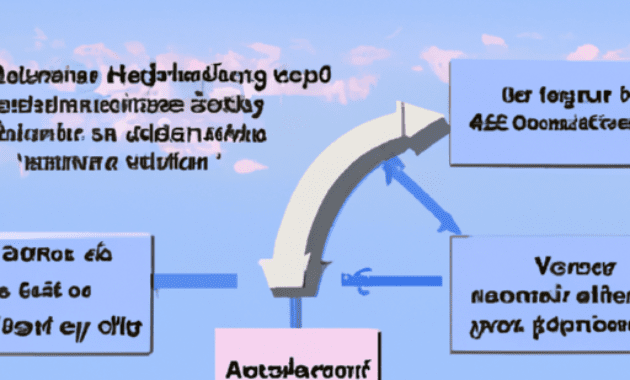
    Definition of the Hydrosphere – The hydrosphere is the layer of water that is on the surface of the earth. The word hydrosphere comes from the English word hydrosphere; hydro means water and sphere means circle or sphere. So, the hydrosphere is the layer of water that covers the earth. The hydrosphere on the surface of the earth includes lakes, rivers, seas, oceans, snow or glaciers, groundwater and water vapor contained in the air layer. Check out the complete explanation about the Hydrosphere below:
    Definition of Hydrosphere

    The hydrosphere is a layer of water that covers the earth’s crust because it is in liquid form, the hydrosphere comes from the word hydro which means water and shaaire which means layer. The surface of the earth that is covered by water, the layer that covers the surface of the earth is called the hydrosphere. Thus it can or can also be said that the hydrosphere is the layer of water that is the main source of life for humans. The hydrosphere is the name for the water that is on the surface of the Earth in the form of seas or oceans as well as water on land. This hydrosphere has several branches of scientists are as follows: 

    • Potamology, this is the science that studies the water that flows on the surface of the earth and rivers. Limnology, this is the science that studies the water that stagnates on the surface of the earth and lakes. 
    • Geohydrology, this is the study of water found under the earth and soil. Cryology is the science that studies snow and ice. Hydrometeorology, this is the study of meteorological factors.

    Learn more about the structure of the earth’s layers including the existing hydrosphere through the Smart Encyclopedia: Our Earth which also explains various other important information for Readers to know about our earth.

    Types of Surface Water in the Hydrosphere

    The various types of surface water that are included in the hydrosphere include:

    1. River Waters

    The waters of this river are fresh water which always flows at a point whose source goes to the estuary in the sea so that river water is larger which comes from runoff from ground springs. In general, river water can or can reach more, because it is called creek and wadi.

    2. Sea Waters

    This sea water is salty water that originates from the earth’s surface which is in salty waters, this covers all the water that is in the sea. Is the area of ​​the earth’s surface that is covered by the presence of salt water. Has several roles as a provider of water in the world and is also a major element in the process of the hydrological cycle. Examples are like: coast and beach.

    a. coast

    The coast is the surface of the earth that lies between the high and low tides and is also part of the area that forms the boundary between the sea and the land. These coasts can or can be classified as follows:

    • The mainland coast (coastal plain) is a coastal area that has undergone a lifting process that was originally under the sea.
    • Coastal alluvial plain (coastal alluvial plain) , namely the coast formed by the deposition of alluvium originating from the mainland which is characterized by the shape of a gentle slope
    • Coastal barrier islands (barrier island coastal) , namely the coast with shallow offshore waters that are broad and separated from the ocean by barrier islands.

    b. Beach

    This beach is the land border with the sea which seems to form a coastline, this consists of sand and is located in the coastal area of ​​the sea.

    Several types of beaches that can be found:

    • Sloping beach, a beach whose shape is almost flat with sea level. Steep beach, a beach whose shape is steep is caused by mountains with steep slopes that stretch along the coast facing and bordering the sea.
    • Coral beach, a beach formed as a result of erosion caused by ocean currents
    • Mangrove beaches, beaches covered by mangrove forests, are abundant in the tropics and have a lot of mud, and are also often flooded, especially at high tide.


    3. Inland Waters

    This inland water hydrosphere is fresh water that comes from shallow soil from the surface of the earth and also various waters found in rivers or lakes. Is the entire body of water that occurs and is on land. Types of inland waters include:

    a. River

    Rivers Formed from rainwater that falls to the surface of the ground are mostly surface runoff. This surface runoff flows to this lower place leading to ditches, ditches, and creeks. The river flows with different slopes. In the upstream area, the river is steeper, while in the downstream area the river is flat and more winding.

    Lake A broad basin on the surface of the earth filled with water and formed as a result of tectonic or volcanic processes. Lake water can come from river water, ground water, rain water or springs that empty into the basin.

    Based on the process of occurrence, this lake is divided into two, namely natural lakes and artificial lakes. Groundwater is water that is in the saturated area below the ground surface. 97% of fresh water consists of groundwater. This groundwater can or can be found under very dry deserts or also under the ground which is covered by a layer of snow.

    Swamps are wet lands that are often flooded with water due to their relatively low location. This swamp is usually overgrown with soft stems or grasses. There are two types of swamps, namely swamps in inland areas which contain fresh water and swamps caused by high tides and also low tides which contain salt water.

    Learn about the layers of the earth that exist through story books with interesting science content that can be accessed via smartphones. You can get the Smart Science Book Series: Layers of Earth and Fossils – Alpha & Mega Travel to Earth only at Gramedia!

    Elements of the Hydrosphere

    Earth is a planet in the solar system, as well as the only planet that can be inhabited by humans. besides that, the Earth is also the only planet that has the most water content.

    The surface of planet Earth is covered by two surface forms, namely land and water. The land is in the form of islands as well as continents, while the waters are in the form of oceans, various seas, and also waters on the mainland such as lakes (read: various lakes), rivers, and so on.

    Readers can find discussions about the layers of the hydrosphere, and much more in the Super Fun Encyclopedia: Hello, Earth! by Hemma.


    The surface in the form of water can also be in the form of ice (read: hail) or snow, this depends on each weather (read: division of seasons in Indonesia). All of the Earth’s surface in the form of water is known as the hydrosphere. So we call the seas, oceans, lakes, rivers, reservoirs, and so on (which are waters) as the hydrosphere. The hydrosphere makes up much of the Earth’s surface.

    Even if we compare between waters and land, Earth is more dominated by waters. That’s why the Earth is dominated by blue than other colors. The waters that exist on this Earth are purely in the form of oceans or seas, as well as in the form of waters that are located on land. on this occasion we will talk about the hydrosphere, so that later we will know more and understand more about what the hydrosphere is and what things we need to know. oceans and water on land. The elements contained in the hydrosphere are divided into:

    1. The element of wind is a source that determines the strength of the temperature of the air or also the condition of water vapor in a place.
    2. The cloud element is a collection of several water or ice point sources in large quantities or is also part of the ground condensation core.
    3. The element of Water and Land is a movement of water in the ground so that it has several layers of sandstone sources with aquifer layers.
    4. Evaporation element is an element that originates from an event or events from the change of water into ground surface vapor.
    5. Condensation Element is a process of changing water vapor to make the atmosphere cool.
    6. The Precipitation Element is a form of liquid that is sourced from the atmosphere to the earth’s surface.
    7. The run-off element is a movement of water that seeps into the ground in certain places
    8. The element of the body of water is the part of water that can come from various sources, such as rivers, swamps, lakes, reservoirs, and so on.

    Kinds of Hydrofer Cycle

    To recognize something, everything will start from understanding that thing. The meaning of the hydrosphere is the layer of water that is on the surface of the Earth.

    The word hydrosphere itself comes from the word “hidros” which means water and “sphere” which means layer. The hydrosphere on the surface of the Earth includes seas or oceans, lakes, rivers (read: the benefits of rivers), snow, glaciers, groundwater and even water vapor contained in the air layer.

    It is undeniable that the role of the hydrosphere is very important. This is because humans cannot live without water. And did you know that the amount of water on Earth is actually stable? Yes, the amount of water seems to change or if we think about why the water used in everyday life does not run out, this is because water experiences a cycle or recycling.

    Earth as a place where we live has many interesting things that you can learn such as types of animals, plants, big cities, and many more which are discussed in the book Junior Encyclopedia: Our Earth.

    So we need to know that the hydrosphere layer that covers the Earth is experiencing a cycle or rotation. The cycle or rotation of the hydrosphere is called the hydrologic cycle. The various types of the hydrological cycle are as follows:

    1. Short Hydrological Cycle

    The first type of cycle or hydrological cycle is the short water cycle. The short water cycle is a process of water circulation with a relatively short period of time. This short cycle process usually occurs in the sea. The process of this short cycle occurs because seawater has evaporated (caused by sunlight). The short water cycle process is briefly described as follows:

    • Sea water undergoes evaporation or evaporation because of the heat from the sun.
    • Water vapor from evaporation or evaporation rises up to a certain height.
    • The water vapor above will condense to form clouds (read: the process of clouds).
    • The clouds that are formed will get bigger and bigger, so they fall as rain on the sea water.
    • This falling water will return to sea water which will evaporate or evaporate again.


    2. Moderate Hydrological Cycle

    After there is a short hydrological cycle or cycle, then there is a medium hydrological cycle or cycle. This moderate hydrologic cycle or cycle is a cycle that occurs because seawater evaporates or evaporates into the atmosphere (read: the atmospheric layer), in the form of water vapor due to the sun’s heat. In general, the hydrological cycle or recycling process is described as follows:

    • Sea water evaporates or evaporates into the atmosphere in the form of water vapor due to heating from the sun.
    • The wind that blows will carry this water vapor towards the mainland.
    • When it reaches a certain height, more and more water vapor from the evaporation of sea, river and lake water will gather in the air.
    • One day, the gathered water vapor will experience saturation and experience condensation, and then it will become rain.
    • Rainwater that falls on this land will then flow into ditches, ditches, rivers, lakes and into the sea again.

    3. Long Hydrological Cycle

    We have known the explanation and also the stages of short and medium cycles or cycles. Then there is the long hydrological cycle or cycle. Same with short and medium cycles, this long cycle also begins due to evaporation or evaporation from seawater due to heat or irradiation by the sun. The process or stages of this long cycle or cycle will be explained as follows:

    • The sun’s heat that illuminates the Earth will cause seawater and also surfaces in the form of water to experience evaporation in the form of water vapor.
    • The wind that blows will carry the water vapor towards the land and join together with water vapor from lakes, rivers and other bodies of water, as well as the results of transpiration from plants.
    • This water vapor will turn into clouds and fall as precipitation or rain.
    • Rainwater that falls, some will seep into the ground or infiltrate into groundwater. This infiltration process is sometimes not in the form of rain, but in the form of snow or ice.
    • Some of this rainwater is absorbed by plants, and some will flow to the ground surface into ditches, ditches, rivers, lakes and will then empty into the sea. This groundwater flow is called percolation, and will end up going to the sea. Groundwater can also surface to form springs. That is a series of processes or stages of this long hydrological cycle or cycle. The long cycle is the cycle that lasts the longest and is also the most complete process.

    Members of the Hydrosphere The hydrosphere is the designation for water that is on the surface of the Earth, whether in the form of seas or oceans or water on land. The various types of surface water that are included in the hydrosphere will be explained below, including:

    • Waters that exist on land, including: Ground water, namely water that comes from snow, rain or other forms of rainfall that seeps into the ground and is accommodated in a waterproof layer. Surface water is the container of water that is on the surface of the Earth. Surface water includes rivers, lakes and swamps.
    • Sea or ocean waters. This sea or ocean water is all the water that is in the seas or oceans, which is water that contains salt or salty water.
    • Glaciers, ice and snow. The hydrosphere is not always water, but can also be glaciers, ice or snow.

    Those are some of the meanings and elements of the hydrosphere that exist on Earth and its various kinds. And the description above has also explained about the hydrosphere. Hopefully this article is useful.

  • Understanding Hydrology: Occurring Processes, Types, and Their Benefits!

    Understanding Hydrology: Occurring Processes, Types, and Their Benefits!

    Hydrology – Life is believed to have originated in the aqueous solutions of the world’s oceans and living organisms depend on aqueous solutions, such as blood and digestive juices, for biological processes. Water also exists on planets and moons, both within and outside the solar system.
    Water is known to have three completely different primary states on Earth, namely gas, solid, and liquid. Even though they have different forms, basically they come from the same unit. The form of water can change according to the ambient temperature. The water that exists on our earth flows in liquid form in rivers and oceans as solid as ice at the North and South poles and as a gas (steam) in the atmosphere.

    Water is also located behind the ground and in the plants and animals. Every living thing requires water in one form or another to survive on Earth. Humans may be able to live hungry for several weeks without anything to eat, but humans can only live for a few days without water.

    Water is one of the basic needs for every element of life on earth and plays a very big role for all living things. Not only does it play a big role for humans, but also for animals, and even for forests which contain various kinds of trees and plants that also need water for survival such as drinking, carrying out photosynthesis and many other interests.

    The human body itself is 50 to 70% water, without exception also including the skin, cells in the body and all other important organs. So, it is impossible for a human being to stay alive if he is dehydrated or what we call thirst. Water, which plays a major role as the source of life for every living thing on earth, is always changing.

    In fact, to become water itself, it must go through various long stages and other processes until it finally returns to its original form. The branch of science that deals with water is better known as hydrology.

    Then, what exactly is meant by the notion of hydrology and what are the types and benefits? You can find the answer in this article. So, watch this review till the end, Readers.

    Definition of Hydrology

    Understanding Hydrology is a branch of geography that studies the cycle of water movement, from the beginning it evaporates on the surface of the earth until it returns to become water which will evaporate.

    Understanding Hydrology is a branch of science whose main focus is studying the existence and movement of water on earth. In this case, including the movement, distribution and quality of water. This science is a branch of geography and has been studied since the 15th century AD.

    According to the general understanding of hydrology, the hydrologic cycle is the science that studies the water cycle in all its phases including evaporation, condensation, precipitation, and distribution of water on the surface, the earth’s surface, absorbing water into the ground, until recycling occurs again.

    Next we will try to give a more in-depth explanation of water, or in earth science it is better known as hydrology.

    Hydrological Cycle Process

    The rotation of the hydrological process can be called the water cycle because the word hydrology itself has the same meaning as water, the difference is only in the vocabulary. The water cycle itself means a rotation process that takes place in the aquatic environment.

    So, the hydrologic cycle is a process where water goes from the gas layer in the sky to the earth, then water returns to the gas layer in the sky and so on. The water cycle itself means one of the biogeochemical cycles that occur on earth in an effort to maintain the quantity and stock of water.

    Another different meaning, if interpreted linguistically, hydrology is the science of water which comes from Greek. So, hydrology literally can be understood as a branch of geography that studies various matters related to water.

    Series or Stages of Hydrological Cycle Process

    In general, the process of the hydrologic cycle is when all the water on the earth’s surface evaporates. Any water that evaporates into the atmosphere or into space will then turn into clouds in the sky. After that, the water that has turned into a cloud will change into another form, namely water droplets.

    These water droplets will then fall to earth as rain or in the form of ice which we call snow. After rain, water will enter the pores or openings in the soil with horizontal and vertical movement directions. The water will then return to become surface runoff which will continue to flow until it returns to rivers or lakes.

    1. Evaporation or Evaporation of All Water

    Evaporation is the first stage in the hydrologic cycle where evaporation occurs in water from rivers and the like. At that time, rivers, lakes, seas and other places were considered water objects, and water that evaporated would become gas.

    The water in all water bodies then evaporates because of the sun’s heat and the evaporation process is also called the evaporation stage of water molecules. Evaporation or more clearly the evaporation of water molecules is the process of turning liquid molecules into gaseous molecules and then water into vapor.

    Evaporation that occurs itself will then cause the effect of evaporating water that has been converted into gas in the atmosphere. Sunlight is the main intermediary in the evaporation step, so the hotter the light emitted, the higher the water molecules in the air.

    2. Evaporation or Evaporation of Water Molecules in Living Tissues

    Transpiration is an evaporation process. Although evaporation does not only occur in water, it is contained in water. Moreover, evaporation has a form of transpiration which occurs in the body parts of organisms, especially in animals and plants, and the process is similar to the transpiration phase.

    Liquid molecules of animals and plants are then converted into vapor or gaseous molecules. After the liquid molecules have evaporated, they rise into the atmosphere as in the evaporation step.

    Then, transpiration occurs in the tissues that exist in animals and plants, although from this stage the amount of water produced is not that great. During sweating, the fluid molecules that evaporate afterwards are not as important in the evaporation process.

    3. Evapotranspiration

    Evapotranspiration is a combination of the stages of transpiration and evaporation, so that more water evaporates at this stage. Evapotranspiration is a stage of evaporation where the liquid molecules that evaporate are all tissues in living things and water. The evapotranspiration stage itself is the stage that most influences the amount of water transported or the hydrological cycle.

    4. Sublimation

    Apart from the three processes above, it turns out that there is another evaporation process, namely sublimation. Sublimation itself has a meaning similar to the transformation of liquid molecules into gaseous molecules in the upper atmosphere or atmosphere. However, the evaporation that occurs is the transformation of ice in the mountains and at the North Pole, so it does not undergo liquidation.

    Subsequent water production is not as high as in the evaporation stage and other stages. Although the sublimation phase still influences the evolution of the hydrologic cycle, it is indispensable. It’s just that what distinguishes the evaporation step and the sublimation step is that this step requires a slower time.

    5. Condensation

    After going through the previous four stages, the next stage is the condensation stage where the water has evaporated and then turned into ice particles. The ice particles themselves are very small and form due to the cold temperatures at high altitudes in the upper atmosphere.

    The ice particles themselves then turn into clouds until the number of ice particles increases, the clouds become darker. Condensing or condensing itself is a process of change that occurs in a denser state, for example in a gas that turns into a liquid. Etymologically, condensate is a term derived from the Latin condensate which means closed. Evaporation itself is an example of a change in matter, that is, a temporary change in a substance.

    Examples of changes in size, shape and form. This change then does not become a new substance and the liquid that has condensed from this vapor is then called condensate. Meanwhile, the condenser is a tool used to condense vapor and turn it into liquid.

    6. Turbidity or Advection

    Turbidity is a stage that does not occur in a short hydrologic cycle but only occurs in a long hydrologic cycle. At this point, what happens is the movement of clouds from one point to another, which are also known as clouds in the sky, spread out.

    The movement of the clouds itself is caused by the wind which then moves from the ocean to the land and vice versa. Heat transfer is horizontal or transverse heat transfer. This movement then warms the air around it. Examples of this advection include differences in the ability to absorb and release heat on land and in the sea.

    7. Rainfall

    The seventh process is high rainfall or called the precipitation process which is the stage where the clouds melt because they cannot withstand the temperature rise. At this stage, one of the natural phenomena known as rain or falling water droplets will occur to the earth’s surface. If the ambient temperature is below 0 degrees Celsius, there will be hail accompanied by snow.

    8.Run off

    The phase of water movement from upstream to downstream is also called flowing water, at this stage, rainwater will move. Movement occurs from the upper surface to the lower surface with the previous surface through different channels. Channels in question include rivers, culverts, seas, lakes and oceans.

    9. Infiltration

    Infiltration is a stage of the hydrological cycle. At this stage rainwater is then converted into groundwater. Rainwater that falls to the ground itself does not flow completely like in the runoff phase, but will still flow to the ground. The process of rainwater into the pores of the soil is then called percolation and then returns to the rest of the oceans.

    10. Conduction

    The conduction process that heats up on touch or direct contact with an object. Heating occurs because the air molecules near the earth’s surface come into contact with the earth which receives direct heat from the sun so that the hot molecules come into contact with air molecules that are not yet warm.

    Types of Hydrological Cycle

    The hydrologic cycle undergoes various very long processes based on the explanation described above and in total there are up to nine hydrological cycle processes. There is also hydrological engineering, which is the science that explains the circulation, movement and distribution of water both in the atmosphere and on earth.

    The rotation of the hydrological process itself is divided into three cycle characteristics including short cycles, medium cycles, and long cycles. Furthermore, we will provide a more detailed explanation below.

    1. Short Hydrological Cycle

    A short hydrologic cycle will never be created if it is during the movement or advection phase of the cloud. The liquid molecules that have been transformed into vapor will then fall as rain around the sea area, in more detail the short hydrologic cycle then unfolds itself in the form of evaporation or evaporation of sea water due to the sun’s rays that shine to the maximum in the ocean.

    In addition, sea water itself will transform into molecular vapors, which will subsequently lead to the processing of ice particles in clouds or condensation. The last phase of the short hydrologic cycle itself is the rain clouds dropping above the sea level, in other words the sea water initially evaporates and will eventually return to the sea.

    2. Moderate Hydrological Cycle

    The next hydrologic cycle is the intermediate hydrologic cycle, which is somewhat different from the short hydrologic cycle. This one hydrological cycle will then create rain that will fall in the highlands and then the rainwater will return to the center of the water.

    The hydrologic cycle in the first stage, consists of the evaporation or collection of water which becomes steam in various collections of water in the center of the water, which are then converted into gas or vapor molecules and will be lifted to the uppermost layers of the atmosphere under the influence of sunlight.

    The steam will then move towards the continents due to advection effects. After reaching the earth’s atmosphere, this water vapor will then transform into clouds until the next stage then becomes rain which will fall to the earth.

    The next stage itself is that rainwater that falls on land will go through the runoff phase. The rainwater itself then experiences movement through different channels before finally turning back to the sea and repeating itself.

    3. Old Hydrological Cycle

    The third element of the hydrological cycle is the old hydrological cycle, which generally occurs in upland areas such as hills and mountains. Although it does not only take place in this zone, this longer hydrological cycle also occurs in different subtropical climate zones. The difference between the old hydrologic cycle and other hydrologic cycles is that clouds do not immediately turn into rain.

    The first stage of this precise cycle is that seawater evaporates, then settles on top, and then turns back into gaseous molecules and vapor. These changes occur due to the emission of light produced by the sun, until the sublimation of water vapor occurs.

    In addition, clouds filled with ice blocks form and pass by advection or movement of clouds to other points. During the advection phase, the frozen clouds will then turn towards the continents and will become various rainfall events. After precipitation, it rains to produce snow instead of water which melts into the ice.
    The terrestrial rock/iceberg will then melt under the effects of heat and pressure.

    Due to the melting of icebergs, the water that forms flows along rivers to produce river water. In addition, water that starts from snow will then turn into icebergs and form water that flows more and more towards the sea. At this point, all the water that has gone through various stages of the hydrological cycle will return to the sea.

    Benefits of the Hydrological Cycle

    1. Water Supply

    The amount of water participating in the hydrological cycle is 521,000 km3/year. Water is used by all aspects of life including the living things that live in it. Based on calculations, the water needs of all organisms have been sufficiently distributed. But in fact, there are areas that are still feeling the effects of drought and there are areas that have abundant water sources. This is because each region has different quality and quantity of water.

    2. Resources of Life

    Water is a basic need of living things. Without water, there will be no life. Water is the main constituent of cells and other levels of organisms. In oxidation and biotransformation, water is needed as an electron donor in water photolysis.

    Seeds can become buds because of the infiltration process, namely the entry of water into the seed. Reproductive plants need water. Animals and humans need water to drink. Every layer of the lithosphere contains life. In fact, when conditions are arid, there is life, even if it goes slowly. In fact, water is a basic need to sustain living things.

    3. Tourist Destinations

    Waterfalls, mists, underground rivers, wells, ocean waves, rain, clouds, and rivers are a kind of blood relation in a hydrological system. The environment shaped by hundreds of years of hydrological cycles offers a special and useful perspective for tourism development. Without a hydrological system, this beauty would not be possible.

    Conclusion

    This is a brief discussion of how a series of events and the meaning of hydrology were formed. Not just the definition, but how the process is created, the types, and the benefits of hydrology. The hydrological process is a natural process carried out by nature and is purely created naturally and we can enjoy its beauty.

    Thus a review of the notion of hydrology .

  • Definition of Hibernation and Examples of Hibernating Animals

    Definition of Hibernation and Examples of Hibernating Animals

    What is hibernation? Hibernation is something familiar. This hibernation is the process of an animal in surviving.

    Hibernating animals will look like they have died. After all, they were just sleeping. Hibernation is done in some time.

    It all depends on how the weather conditions in the area around which the animal lives. Despite sleep, hibernation is certainly different from sleep in general. What’s the difference?

    This article will discuss what hibernation is. Starting from understanding, process to examples of animals that hibernate.

    What Is Hibernation?

    Another purpose of this hibernation is so that you don’t have to look for food in winter. Also, not having to migrate to a warmer place is also one of the reasons for hibernating.

    Through hibernation, living things will not use their metabolism in conserving energy. During the hibernation process, some parts of the body will drop to a lower level. Such as heart rate, body temperature and respiratory rate.

    Those things will drop to a much lower level. Generally, hibernation is done by animals. Animals that do hibernation live in winter, because of the cold weather and scarcity of food.

    Hibernation is a fairly profitable way. The reason is, these animals can really close themselves. This was done for weeks.

    Instead of trying to live and survive in extreme weather conditions, they will prefer to hibernate. Animals or plants that hibernate are called hibernators.

    Hibernation function

    One of the functions of hibernation is to save energy. The energy that is in for will be saved for a certain period. Especially when there is no longer enough food available to survive.

    To achieve an energy saving, an endothermic process occurs. Endotherms are animals or animals that have a high body temperature, and are fixed and are not affected by the air temperature around their environment. At first, this endothermic process will lower the metabolic rate first.

    This will then result in a decrease in body temperature. The hibernation process can occur within a certain time. Like in a few days, a few weeks or even a few months.

    The length of the hibernation process depends on several things. What kind of species, how the temperature of the environment, what time of year and how the body condition of the hibernator itself.

    Hibernation Process

    The animal will do a hibernation phase to store fat reserves. These fat reserves will be stored in their bodies. This will allow them to adapt to winter, or a season where the climate temperature is lower than usual.

    In slowing their metabolism, animals will cool their bodies to an average of 5°C to 10°C. Hibernators love quiet, dark winter homes. Some will go into caves or underground.

    They’ll probably line the place where they hibernate with things. Like using grass, hair, or other materials that will make them feel comfortable. The hibernator’s body will respond to weather conditions.

    If the weather around becomes colder than before, then the animals will move to raise their body temperature. Meanwhile, animals that do not do this are threatened with death. The warmer temperatures will tell the animals to come out of hibernation.

    There are some animals that appear to eat when the hibernation process takes place. Then they will continue to hibernate until the weather around them returns to normal.

    In fact, after waking up from hibernation these animals will need some time to adapt to their environment. This was done before they resumed their normal activities.

    Some argue that hibernation is a sleep that resembles death. The reason is, during hibernation the heart rate will slow down. As well as several non-vital organs that become completely inactive. Moments like that are conditions where the body will use minimal energy.

    Then, what is the difference between hibernation and sleep? Check out the explanation below.

    Difference between Hibernation and Sleep

    Hibernation is a different thing from sleep. Many animals conserve energy in winter. They prefer to sleep more.

    However, these animals do not actually hibernate. When an animal goes to sleep, its body temperature doesn’t drop too much. In addition, the presence of noise or other disturbances can also wake sleeping animals.

    The metabolism of hibernating animals will slow down. In addition, their body temperature will decrease.

    Animals that are classified as mammals will eat a lot in autumn and summer. They will store fat for use throughout the winter. While hibernation is different from sleep in general, it is only one of many ways for animals to sleep, rest and survive their surroundings.

    How Do Animals Eat During Hibernation?

    True hibernators will be able to drastically reduce heart rate. Not only that, body temperature will also decrease when they decide to hibernate. Examples such as squirrels.

    Squirrels can reduce their heart rate. When hibernating, their heart rate will decrease from 350 beats per minute, to only about 4 beats per minute. Squirrels do this while hibernating.

    True hibernators only fully awaken every few weeks. They will eat some of the stored food. Then they will poop.

    These animals can drastically lower their body temperature. Lowering body temperature even below freezing, or salty body fluids can work to prevent tissue crystallization at very cold temperatures.

    Examples of Hibernating Animals

    There are several examples of animals hibernating. Are as follows:

    1. Golden Mantled Ground Squirrel ( Citellus lateralis )

    Normally, they hibernate from 3 months to 4 months. They will consume food quickly. This will make them gain weight. at the time before hibernation begins, in October.

    2. Some Insects

    3. Bats

    They will live in groups in large enough numbers when winter arrives. The bats will hang down and up with their wings and tail. They will cover her body.

    The goal is to keep the body warm. Their body temperature will drop. It would make them look like they were dead.

    Bats will hibernate for 7 months. In October to be precise, until April. They will only wake up once a month.

    Bats will build up all the warmth during the hibernation process. The trick is to make a mock hole the size of their thumb.

    This book will feature interesting stories related to bat animals. What are the bat beasts like? What shape is it? What are the unique facts? Listen in this book!

    4. Frog

    Woodland frogs are found under feces and under leaves. During winter, they will freeze. However, when spring comes they will melt again and wake up.

    5. Snake

    The holes made by the snakes can be found around the rocks. In addition, it can also be found in hidden pits and old well bottoms.

    6. Beetle

    That’s because they will eat a lot of aphids and pollen. Then, they would hide inside a building. In addition, their hiding places are under logs, mounds of leaves and rocks.

    7. Bear

    This is because bears do not show a significant decrease in metabolism. The temperature of his body is also fairly normal. Bears don’t actually hibernate.

    They just go into the hole. These holes can vary. Such as river banks, caves and wooden basins. They only slightly lower body temperature and slow heart rate.

    However, it can be argued that bears do not actually hibernate. The bears are just entering the torpor period. That can be said by sleeping temporarily, and being able to get up and take a walk in the surroundings.

    The little cubs that are still young are also in the hole during the winter. Bears will eat at the end of the rainy and hot season. This is done as an effort to store fat.

    Done before they get into the hole. When spring returned, the bear became very hungry and emaciated. In female bears, it will spend the winter in a burrow if they are about to give birth soon.

    Hibernation performed by this bear is unique. Implementation lasts from 3 months to 7 months. It is characterized by a body temperature that is close to normal.

    Others say that bears actually hibernate. As spring through autumn ends, the bears will eat much more than usual. It is intended that they have fat deposits.

    This eating habit is known as hyperphagia . Bears can eat anything. Starting from fruit, fish, insects, grass, roots, even other small animals. They can eat as much as 45 kg of food in a day.

    This makes the added weight per week reach 15 kg or 30 pounds. Bears will make nests under large trees. Apart from that, other places where he makes nests are like in tree holes, under waterfalls and in cave openings.

    Making the bear’s nest is somewhat complicated. The process can take from 3 days to 7 days. Then they would cover the nest with spruce branches. Air pockets at the base of the nest are also intended to trap heat energy.

    This book is one of nine books included in the Chinese Moral Tales Series. This series builds on kind-hearted, diligent, and courageous characters. This series can also be used to learn Mandarin. Told in two languages ​​(Indonesian and Mandarin), this series is equipped with vocabulary lists, practice questions and activities (matching words, answering questions, retelling), as well as Chinese audio.

    That’s the explanation of what hibernation is.

  • Definition of Grants, Legal Basis and Examples of Letters

    Definition of Grants, Legal Basis and Examples of Letters

    Meaning of Grant – In everyday life, surely you often hear the term grant. The term grant is used by many to mean some kind of gift. For example, in matters of state, some media often interpret grants as giving funds from one agency to another in a sizable amount.

    Basically, a gift can indeed be said as something that is given from someone while still alive to someone who is desired. Grants are quite often encountered in various social events, such as giving land from someone to be used by a social, educational, to religious institution.

    Sometimes also, grants are given in the form of goods or money. Giving this type of gift is common when parents give inheritance to their children before they die. Grants themselves can also be made by siblings to siblings such as assets or property.

    In the rules for grants made by the National Legal Development Agency, the Center for Counseling and Legal Aid, the Ministry of Law and Human Rights of the Republic of Indonesia, it states that everything regarding grant law is contained in Articles 1666 to Article 1693 of the Indonesian Civil Code, or commonly abbreviated as the Civil Code. .

    The regulations regarding grants that have been regulated in article 1666 of the Civil Code reads that “Grants are an agreement whereby the grantor, at the time of his life, freely and irrevocably, surrenders something for the purposes of the recipient of the grant who receives the handover. . The law does not recognize other gifts other than grants among people who are still alive.

    Well, this article will explain in full the meaning of grants, especially land grants. If you are wanting to know and understand the process of making a grant or receiving a grant in the form of land. The following is an explanation of the grant that will add insight and will be useful in the future.

    A. Definition of Grant

    As explained above, that a grant is a form of gift from someone who is still alive to another person. Grants can be realized in the form of several types of movable property and several types of immovable property. There are also examples of immovable property that are often encountered, namely property and land.

    Apart from being able to give to people, grants can also be given to a social, educational, to religious foundation. The grant is usually intended to give gifts as a form of someone’s support for an institution.

    However, many people equate the meaning of gift with inheritance, even though the two have different meanings. The difference between grants and inheritance lies in the person making the gift, inheritance is a gift made by someone who has died. In contrast to grants made by someone who is still alive.

    Inheritance is commonly referred to in grant law is a testamentary grant. The will grant itself has been regulated in Article 957 to Article 972 of the Civil Code. Article 957 of the Civil Code reads that “A testamentary grant is a special stipulation, in which the heir gives certain items or items to one or several people, or all items and certain types; for example, all movable or fixed assets, or usufructuary rights over some or all of the goods”.

    1. Definition of Grant

    In the Big Indonesian Dictionary, a grant means a voluntary gift with the procedure of transferring ownership rights to another person. The meaning of the definition in the KBBI is almost the same as the meaning understood by most people. In addition, grant recipients are no longer obliged to provide compensation to the grantor.

    However, the concept of grants that occurs is not as easy as the principle of giving and receiving. There are many forms of giving, from a sizable amount of money to an item of great value. In the applicable civil law rules, grants are required to include evidence. This is intended so that it cannot be sued by a third party.

    Giving a grant can be said to be valid and can apply to the various parties involved if the recipient of the grant has confirmed the acceptance using the basis of a notarial deed. This regulation has been regulated in article 1683 jo. In the Civil Law Act or the Civil Code, land grant letters already have a law in accordance with the regulations in article 1666.

    2. Explanation of Land Grants

    The procedure for implementing a grant for land and buildings is almost the same as for buying and selling. The components that are very necessary in carrying out grants are land and data from the grantor or recipient of the grant. In general, the land data that must be completed is:

    a. Original Land and Building Tax for the last 5 years including STTS (proof of payment)
    b. Original land certificate
    c. Original IMB
    d. Proof of payment for electricity, telephone and water bills (if any)
    e. If the land has a mortgage burden, it is necessary to attach a mortgage certificate on the land and building and complete a letter of settlement and original royal certificate from the bank.

    In implementing land grants, the procedure must have evidence in the form of a deed from the PPAT. The procedure for giving a grant or receiving a grant will be followed up by making a grant deed signed by the PPAT. Furthermore, the PPAT will register documents regarding the deed of grants related to the regional land office. Finally, a printed notification will be delivered that the deed of permit has been submitted to all parties concerned.

    When receiving a land grant, there is a potential for the grant that has been received to be accommodated with a tax object. This is because the recipient of the grant gets land ownership rights for free, so that the acquisition of rights from inheritance is a tax object that is subject to tax.

    B. Legal Basis for Land Grant Letters

    Land grant letters can be printed because they are regulated by articles 1666 to 1693 regarding grants in the Civil Code. Based on article 1666 of the Civil Code, it shows that a grant can be interpreted as a relationship related to an agreement from someone who makes a grant to hand over an item for free.

    According to the regulations, when a grant has been received, there is no provision for the giver to withdraw the grant. It is an interest that belongs to someone who has become the recipient of the delivery of the goods. In accordance with the law, grants will not be recognized other than activities carried out among living people.

    1. The Importance of Making a Land Grant Letter

    In grant activities, making land grant letters has a very important role. This is because grants generally have a fairly large amount. Therefore, giving land grants to someone needs strong evidence so that there is no potential for a lawsuit against the party receiving it.

    The thing that needs to be done to avoid this bad potential is that in making grants, a letter of approval from the heirs of the grantor, such as a biological child, must also be completed. Not only that, in making grants it should be in accordance with the absolute rights of the inheritance of the heirs that have been determined in the law.

    According to the grant regulations in the Civil Code, the provisions that need to be considered in implementing grant grants are the conditions used. The following are the terms of the grant that you need to know, including:

    1. Grant givers and grant recipients are adults according to law.
    2. Implementation of the grant must be carried out using the original notarial deed and kept at the notary.
    3. Implementation of grants to someone who is not old enough can be accepted by the person exercising authority as a parent.

    2. Grant Legal Basis

    Everything about grants has been regulated in article 1666 of the Civil Code or the Civil Code. Therefore, the explanation regarding grants is basically a gift from one person to another for free. However, there are several provisions that allow grants to be withdrawn if the implementation of the grant is from parents to their children.

    Grants can be implemented based on article 1682 of the Civil Code, where in that article it is stated that, “No gift except that referred to in Article 1687 can be made without a notarial deed, the original text of which must be kept at the notary and if this is not done then the grant will be invalid”.

    When quoting from other sources, the site of the Supreme Court Decision in article 1683 of the Civil Code states that, “No gift shall bind the grantor or cause something before the gift is received in firm words by the person who is given the grant or by his representative who has been authorized by him to receive the grant that has been or will be granted. If the receipt is not made with the deed of grant, then the acceptance can be made with an authentic deed later, the original text of which must be kept by the Notary, provided that this occurs while the grantor is still alive; in this case, for the grantor, the grant is only valid since the receipt of the grant is officially notified to him.

    However, in the understanding of article 1687 in the Civil Code, it can be explained that grants that use movable and tangible objects such as letters of credit can be paid in a submissive manner. This means that grants do not need to use a notarial deed and can become valid, provided that the gift made has been taken for granted by the recipient of the grant or someone who can pass it on to the recipient of the grant. As a result, a grant can become valid provided that the recipient has obtained the grant.

    3. Benefits of Land Grants

    As stated above, the letter of grant has very important benefits because it becomes official evidence or document. Therefore, the making of a letter is usually done by a land deed official or can be abbreviated as PPAT accompanied by witnesses who are in accordance with the applicable requirements.

    The benefits that can be felt by the community are clear provisions regarding someone who has immovable assets so that they can be given to the desired party, for example such as educational, social and educational foundations or can be made to heirs or children.

    Implementation of land grants can be used for social purposes such as the construction of schools, houses of worship, to orphanages. The benefits of land grants can certainly have a lot of influence on the grantor. And, the benefits that can be obtained by families such as children or close relatives, namely land grants are more based on asset security.


    Sample grant letter

    1. Example of a Land Grant Letter to the Government

    GRANT LETTER

    The undersigned:
    Name: Abdul Salam
    Place, date of birth: Semarang, 16 October 1956
    NIK: 389xxxxx
    Occupation: Entrepreneur
    Address: Jalan Makam Pahlawan No. 19, Semarang
    Hereinafter referred to as the First Party.

    Name: Semarang Village Office
    Address: Jendral Sudirman Street No. 7, Central Java
    Hereinafter referred to as the Second Party.

    On March 21, 2021, the First Party stated that it would grant a land area of ​​750 m² to the Second Party. The land is in the name of Abdul Salam and accompanied by proof of ownership certificate (write the SHM number). The land is located at Jalan Kariyadi 10, Semarang. The following are the boundaries of the land:

    • To the north it is bordered by: SD 12 Semarang
    • To the east it is bordered by: Baitussalam Mosque
    • To the south it is bordered by: Jalan Kariyadi 6
    • To the west it is bordered by: Jalan Kariyadi 8

    As long as it is owned by the First Party, the land mentioned has never been in dispute or sued by other parties. After this letter of grant has been signed by the First Party and the Second Party, the land mentioned will fully become the rights of the Second Party. Thus this letter of grant is made without coercion.

    Semarang, 15 December 2021

    (Abdul Salam) (Semarang Village Office)

    Second Party First Party

    2. Sample Land Grant Letter for Road

    LAND GRANTS

    The undersigned below:

    Name: Abdul Salam
    Place, date of birth: Jakarta, 23 April 1958
    NIK: 316xxxxx
    Occupation: Civil Servant
    Address: Jalan Menteng No. 76
    Hereinafter referred to as the First Party.

    Name: Rudi Hartono
    Place, date of birth: Bogor, March 18 1981
    NIK: 316xxxx
    Occupation: Private employee
    Address: Jalan Menteng No. 56
    Hereinafter referred to as the Second Party.

    On February 11, 2020, the First Party stated that it would grant a 100m² plot of land to the Second Party for road widening purposes. The land is in the name of Mr. Adam Kuncoro and is accompanied by proof of Freehold Certificate (write the SHM number). The land is located at Jalan Menteng No. 41. The following are the boundaries of the land:

    • To the north it is bordered by: Nurul Hidayah Mosque
    • To the east it is bordered by: Taman Kampung
    • To the south it is bordered by: Jalan Menteng No. 39
    • To the west it is bordered by: Jalan Bandung No. 42

    As long as it is owned by the First Party, the land mentioned has never been in dispute or sued by other parties. After this letter of grant has been signed by the First Party and the Second Party, the land mentioned will fully become the rights of the Second Party. Thus this letter of grant is made without coercion.

    Jakarta, 23 December 2021

    (Rudi Hartono) (Abdul Salam)

    Second Party First Party

    3. Example of a Land Grant Letter for a Mosque

    LAND GRANTS FOR MOSQUES

    The undersigned:
    Name: Heru Satrio
    Place, date of birth: Kudus, 27 September 1988
    NIK: 317xxxxx
    Occupation: Private Employee
    Address: Jalan Jambu No. 29, Jaculo

    Hereinafter referred to as the First Party.
    Mosque: Al-Firdaus
    Address: Jalan Jambu No. 28, Jekulo
    hereinafter referred to as the Second Party.

    On April 13, 2020, the First Party stated that it would grant a plot of land covering an area of ​​80 m² to the Second Party. The land is in the name of H. Anshori and accompanied by proof of ownership certificate (write the SHM number). The land is located at Jalan Jambu No. 27, Holy. The following are the boundaries of the land:

    • To the north it is bordered by: Al-Firdaus Mosque
    • To the east it is bordered by: Jalan Jambu No. 26, Jaculo
    • To the south it is bordered by: Pos Kamling
    • To the west it is bordered by: Jalan Jambu No.30, Jekulo

    As long as it is owned by the First Party, the land mentioned has never been in dispute or sued by other parties. After this letter of grant has been signed by the First Party and the Second Party, the land mentioned will fully become the rights of the Second Party. Thus this letter of grant is made without coercion.

    Kudus, 11 November 2021
    (Heru Satrio) (Al-Firdaus Mosque)

  • Definition of Reptiles: Characteristics and Examples

    Definition of Reptiles: Characteristics and Examples

    Understanding Reptiles – The deadliest reptiles are spread in almost all countries. They mostly live in natural forests and have a deadly poison to survive in their habitat. Reptiles are one of the most feared because some of these types are among the deadliest animals on earth.
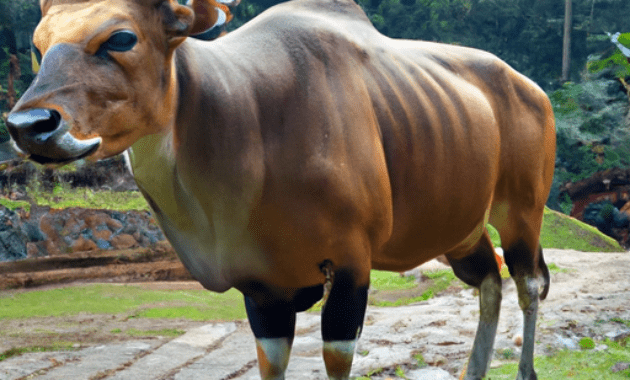
    However, it is also important to understand that no animal is naturally cruel or evil. They are just trying to survive by hunting for food or defending against predators that approach them. If humans encounter these animals, it is better to stay away so they don’t feel threatened and attack you back.

    Definition of Reptiles

    Reptiles or reptiles (in Latin ” reptans ” means “creeping” or “creeping”) are a group of cold-blooded vertebrate animals and have scales that cover their bodies. Reptiles are tetrapods (animals with four limbs) and lay eggs whose embryos are covered by the amniotic membrane. Today, they live on every continent except Antarctica.

    Some experts have suggested that reptiles were the first organisms to spread throughout homes, from dry habitats to small bodies of water. Examples of reptiles that live in such habitats are Komodo dragons and lizards. Reptiles not only live in dry and arid environments, but are also known as animals that live in two natural or scientific languages ​​called amphibians (water and land). However, only a few species live in the area. Examples are turtles, snakes, and crocodiles.

    Reptiles have an important habitat on land. When in the water, they can only feed or lower their body temperature. In addition, reptiles have different body heights, from the smallest to the largest.

    Characteristics and Grouping of Reptiles

    There are various characteristics in this reptile, here is the explanation:

    • Animal body that has been covered with scales.
    • Included among a group of animals that are cold-blooded.
    • Has a nervous system in the form of a brain.
    • Have a sensory device such as eyes, nose and ears.
    • Generally have a very long life.
    • Has a large breathing apparatus in the form of lungs.
    • Most reps can spawn.
    • A few produce ovoviviparous or viviparous.
    • Can live in an arid and dry place and live in two realms.

    Currently, reptiles are grouped into four types, namely:

    • Order Crocodilia (crocodiles, crocodiles, caimans, gavials and alligators): about 23 species.
    • Order Sphenodontia (New Zealand tuatara): approx. 2 species.
    • Order Squamata (lizards, snakes and amphisbaenia ( worm-lizards ): about 7,900 species.
    • Order Testudinata (turtles, turtles and terrapins): about 300 species.

    Because some reptiles are more closely related to birds than to other reptiles (crocodiles are more closely related to birds than to lizards), many modern scientists prefer to make Reptilia a monophyletic grouping and also include birds, which currently contain over 10,000 species.

    The majority of reptiles are oviparous (lay eggs), although some Squamata species are viviparous (give birth). Viviparous reptiles feed their fetuses using a type of placenta similar to that of mammals. Reptiles vary in size, from up to 1.6 centimeters (little gecko, Sphaerodactylus ariasae ) to up to 6 meters and weighing up to 1 ton (saltwater crocodile, Crocodylus porosus ). The branch of natural science that studies reptiles is herpetology.

    Examples of Reptiles

    The following are examples of reptiles including:

    1. King Cobra

    Lanang snake or king cobra ( Ophiophagus hannah ) is the longest venomous snake species in the world. This snake is endemic in parts of India to Southeast Asia. This snake is also one of India’s national reptiles. Local names for this snake include ” oray totog ” (Sunda), ” tedung selor ” or ” tedung selar ” (Malay), and ” ula anang ” (Java).

    Hamadryas hannah is the scientific name first used by naturalist Theodore Edward Cantor in 1836 who described four specimens of male snakes, three specimens obtained from Sundarban, India, and one specimen obtained from Kolkata. The Naja bungarus taxon was proposed by Hermann Schlegel in 1837 who described a specimen of the male snake from Java. The taxon of the genus Ophiophagus was proposed by Albert Günther in 1864. This taxon was derived from the tendency of this snake to eat other snakes.

    The male snake’s body length generally ranges from 3.18 to 4 meters. The longest specimen ever found was 5.85 meters long. Male snakes are larger than female snakes. The upper body (dorsal) is olive, yellowish brown, or grayish in color, with the head being lighter in color. The lower part of the body (ventral) is gray or brown, with a yellowish neck area decorated with blackish spots.

    In young snakes, the body is darker or blackish in color, and is decorated with small white or yellowish stripes. Even so, these stripes are sometimes still visible as adults, although they are more subtle.

    The head of the male snake is large with a muzzle that tends to be short and blunt. Unlike other snakes in general, behind the pariental shields (scales) there is a pair of large occipital shields. There are 7 labial (lip) shields, some of which are in contact with the eyes. The pupils of the eyes are large and round.

    The dorsal scales consist of as many as 15 rows in the middle of the body. Ventral scales as many as 215 to 262 pieces. Single anal scales, subcaudal scales as many as 80 to 120 pieces, some in the form of single scales and some in the form of paired scales.

    The male snake is widespread from parts of India (Maharashtra, Karnataka (Dandeli), Arunachal Pradesh, Sikkim, West Bengal, Bihar, Orissa, Andhra Pradesh, Kerala, Tamil Nadu, Madhya Pradesh, and the Andaman Islands), Nepal, Bhutan, Bangladesh, Myanmar, China (Fukien, Kwangtung, Hong Kong, Kwangsi, Hainan, Yunnan, SW Sichuan, Tibet), Laos, Vietnam, Cambodia, Thailand, Malaysia, Singapore, Indonesia (Sumatra, Mentawai Islands, Riau Islands, Bangka-Belitung , Java, Bali, Kalimantan, Sulawesi), and the Philippines (Balabac, Jolo, Luzon, Mindanao, Mindoro, Negros, Palawan, Panay, Cebu, Bohol, Samar).

    Lanang snakes live in lowland areas up to an altitude of 1800 meters above sea level. Its main habitat includes forests, swamps, bushland, agricultural land, and even around settlements. These snakes usually nest in earthen holes, piles of rocks, lush bushes, or between tree roots. This snake especially likes locations where bamboo grows and also mangrove forest areas.

    2. Crocodile

    Crocodiles are large-bodied reptiles that live in water. Scientifically, crocodiles include all species of members of the Crocodylidae tribe , including the sepit crocodile ( Tomistoma schlegelii ). However, this name can also be used loosely to refer to alligator, caiman and gavial crocodiles; namely relatives of crocodiles of different tribes.

    Crocodiles generally inhabit freshwater habitats such as rivers, lakes, swamps and other wetlands. However, there are also those who live in brackish water such as estuarine crocodiles. Crocodile’s main food is vertebrates such as fish, reptiles and mammals, sometimes it also preys on mollusks and crustaceans depending on the species. Crocodiles are ancient animals, which have changed little due to evolution since the time of the dinosaurs.

    3. Lizard

    Lizards or bengkarung are a group of scaly reptiles with four legs (some species are legless and snake-like, but not snakes) which are very widespread in the world. Scientifically, this large group is known as the suborder or children of the Lacertilians (some literature mentions Sauria) which are members of the scaly reptile nation (Squamata) along with snakes.

    In general, the term “lizard” or “bengkarung” (English: lizards ) also includes groups of lizards, geckos, chameleons, flying lizards, monitor lizards, iguanas, and others. Meanwhile, narrowly, the term lizard (and bengkarung) in Indonesian only refers to a group of lizards which are generally small in stature, dense, with smooth and shiny scales, and live on the ground (English: skink, i.e. all types of the Scincidae family, or species from the Scincomorpha infraorder).

    Lizards generally have four legs, external ear holes, and eyelids that can be opened and closed. Even so, there are also types that do not have some of these characteristics. An example is the glass snake ( glass snake or glass lizard , tribe Anguidae) which does not have six physical legs so it resembles a snake, but can still be distinguished from a snake based on other characteristics.

    4. Snake

    Snakes are a group of legless and long-bodied reptiles that are widespread in the world. Scientifically, all types of snakes are grouped in one sub-order, namely Serpentes and are also members of the order Squamata (scaly reptiles) along with lizards. However, snakes (Serpentes) themselves are classified in the clade branch (Ophidia), namely a group of reptiles-reptiles with or without legs, have a long body, and have very different physiology from lizards.

    Snakes are thought to have evolved from land lizards as early as the mid-Jurassic period (174.1-163.5 million years ago). The oldest known snake fossil, Eophis underwoodi , was a small snake that lived on the southern British mainland about 167 million years ago.

    The main characteristics of snakes are long bodies and no legs. However, these characteristics are also shared by some types of lizards, for example (Burton’s pencil lizard). The next characteristic is that snakes have no sense of hearing at all. However, snakes can feel vibrations through their mandibles when they stick to the ground or on a surface.

    Snakes do not have eyelids that can be opened and closed, and their eyes are kept open throughout their lives. Even so, the snake’s eyes are covered with clear scales that protect it from dirt. Another main feature is that the snake’s tongue is forked with each branch being long and pointed, and can be extended out through the cavity in the middle of the lips.


    5. Iguanas

    Iguanas are a genus of lizards that live in the tropics of Central America, South America and the Caribbean islands. These lizards were first described by an Austrian zoologist, Josephus Nicolaus Laurenti in 1768. So far, the genus Iguana consists of only two species, namely the green iguana (Iguana iguana) and the Lesser Antilles iguana ( Iguana delicatissima ).

    The term “iguana” is known to possibly originate from the Taino language (one of the Native American tribes) namely “iwana” which also refers to these lizards. Iguana body length between 1.5 meters to 1.8 meters, including the length of the tail. The characteristic feature of iguanas is that they have a crest (like roosters) under their jaws, as well as rows of scales forming large spines on their upper body, which run from the neck to the base of the tail.

    In addition, iguanas also have eye-like organs on the top of their heads. The organ serves to analyze the light around it. Iguana body color varies, ranging from bright green, green-brown, moss green, yellowish green or grayish, or caramel brown. The iguana’s tail is the same color as the body and is decorated with black or dark stripes from base to tip.

    Iguanas are well adapted as tree lizards and herbivorous lizards. However, they still need animal nutrition, usually by eating small insects in the plants they eat.

    6. Tortoise

    Turtles are scaly, four-legged animals that belong to the reptile group. The nation of animals called (order) Testudines (or Chelonians ) is distinctive and easily recognized by the presence of a hard and stiff “house” or shell ( bony shell ).

    The tortoise shell consists of two parts. The upper part that covers the back is called the carapace and the lower part (ventral, stomach) is called the plastron. Then each part is composed of two layers. The outer layer is generally large and hard scales, and arranged like tiles; while the inner layer is in the form of bone plates tightly arranged like a shell. Exceptions are found in the turtle group (Trionychoidea) and leatherback turtles, whose outer layers are scaly and replaced by a layer of skin on the outside of their bony shells.

    In Indonesian, we know three groups of animals that belong to this nation, namely turtles (English: sea turtles ), turtles or turtles ( freshwater turtles ), and turtles ( tortoises ). In English, distinguished again between land tortoises ( land tortoises ) and freshwater turtles ( freshwater tortoises or terrapins ).

    7. Turtle

    Sea turtles are sea turtles that are found in all the world’s oceans. According to data from scientists, turtles have existed since the end of the Jurassic period (145-208 million years ago) or are the same age as dhinosaurs. At that time, Archelon , which was six meters long, and Cimochelys were already swimming in ancient seas like today’s turtles.

    Turtles have a pair of forelimbs in the form of rowers’ feet which give them the agility to swim in the water. Even though they have wandered in the water all their lives, the vertebrate group of animals, the reptile class, still has to occasionally rise to the surface of the water to take a breath. That’s because turtles breathe with lungs. Sea turtles generally migrate long distances in not too long a time. A distance of 3,000 kilometers can be covered in 58-73 days.

    8. Komodo

    Komodo dragons or complete Komodo dragons ( Varanus komodoensis ) are large monitor lizard species found on the islands of Komodo, Rinca, Flores, Gili Motang and Gili Dasami in East Nusa Tenggara Province. This monitor lizard by the natives of the island of Komodo is also called by the local name “ora”. Another name for the Komodo dragon is land crocodile, although the Komodo dragon is not a species of crocodile.

    Komodo dragons are the largest species in the Varanidae family , as well as the largest lizards in the world, with an average length of 2–3 meters and can weigh up to 100 kilograms. The Komodo dragon is the top predator in its habitat because so far there is no known large carnivore other than this monitor lizard anywhere in its geography.

    Well, Readers. That’s a little story about reptiles. It turns out that the way these animals survive is very unique. However, even though most of these reptiles are wild animals, we must not hunt these animals so that the natural ecosystem is maintained.


  • Definition of Wild Animals and Their Types in Indonesia’s Free Nature

    Definition of Wild Animals and Their Types in Indonesia’s Free Nature

    The definition of wild animals in general is animals that are not kept by humans. The original habitat of these wild animals is in the wild, without direct contact with human activities. However, while the human population is increasing rapidly, biodiversity is doing the opposite.
    Recognizing the reduction in biodiversity, conservation is starting to exist to save animals or animals that are already in danger of extinction so that they don’t disappear from the face of this earth.

    Unlike pets, these wild animals have quite complex needs, which even scientists are still trying to understand. According to Born Free UK, the basic needs of wild animals include an adequate environment, proper diet, freedom to engage in normal behavior, social needs which are often very complex, as well as freedom from pain, disease or injury.

    Ensuring the needs of these wild animals can be properly met is one of the things that is quite difficult for conservationists to do. Especially private owners. It would be much easier if the wild animals could talk about it, but sadly that is impossible.

    People are allowed to keep exotic pets with special permits. For example, under The Dangerous Wild Animals Act 1976, UK citizens must obtain a permit for any animal that has been registered within a period under the law, including bears, primates, venomous reptiles, and also a big cat. A survey conducted in 2021 by Bron Free UK said that nearly 4,000 wild animals were kept as pets, including 61 big cats, more than 150 lemurs and 57 diamondback rattlesnakes.

    Then for Indonesia itself, people are allowed to bring home the third generation of animals obtained from captivity for conservation purposes. Does that automatically mean private ownership in the name of conservation animal advocates consider allowing private ownership of exotic animals to perpetuate the animal trade. With the increasing demand for exotic pets, especially as social media portrays how easy it is to own wild animals.

    Of course, many of us have seen a local celebrity playing with their pet tiger at their house, then suddenly also got a golden retriever as a pet. While owning exotic pets normalized and the demand was high, it was risky for the remaining wild animals to be caught from captivity and then traded.

    Risk of Attack and Disease from Wild Animals

    Maybe we can take wild animals from nature, but we can’t get rid of their wildness. Even though they are used to interacting with humans, wild animals still have movements that are quite dangerous for humans.

    In the United States for example, the Born Free USA database records more than 1,800 incidents due to exotic pets. The most recent was on September 9, 2021, when a five-year-old vervet monkey named Maliki was handed over to a wildlife sanctuary after biting his owner’s hand in a critical condition. Maliki has been kept privately as a pet since he was a baby.

    In addition, there is also a risk of zoonotic diseases, namely diseases caused by pathogens or viruses, bacteria, and also parasites that can be transmitted from animals to humans. These diseases include the Ebola virus, SARS, and also monkeypox. It is estimated that these zoonotic diseases contribute to 75 percent of current diseases, with non-domestic animals as their source of origin.

    Wild Animals Should Live in the Wild

    There are many reasons why private ownership of wild animals is not the best way to solve today’s biodiversity problems. In the end, all conservation efforts must try to keep these animals in their natural habitat. Wild animals are supposed to live in the wild, just like humans who live with clothing, food and boards, as well as bonds with other humans.

    However, when discussing animal conservation, it means we must realize that there is no one definite answer for this one problem. Climate change as well as the lack of attention to animal welfare are the reasons why animal conservation remains quite a challenge and an area that still needs to be explored. We can only hope that there will be good things that we can get with the knowledge we have.

    8 Types of Wild Animals That Can Be Found in Indonesia’s Wildlife

    For people who like to climb mountains or explore national parks, then of course they are already familiar with the wild animals that they can find in the wild in Indonesia. The following are some of the wild animals that we can find while on vacation or exploring the wild in Indonesia, including:

    1. Leeches

    Its relatively small shape and size might make us not aware of its existence. However, be careful because leeches are blood-eating wild animals and their bite marks can make the skin itchy and hard to get rid of.

    2. Bear

    Even though it is very unlikely to meet this one wild animal, don’t be surprised when you meet a sun bear when visiting the Sungai Wain Protection Forest in Balikpapan, East Kalimantan.

    3. Snake

    Various types of snakes live in the forests in Indonesia. Although not all types of snakes have poison, we still have to be careful especially with snakes that are quite large.

    4. Coyote

    Known as ajak, coyotes can be found on the islands of Java and Sumatra. Even though it has a body shape that is not as big as a wolf, we still have to be vigilant so as not to lure them closer. Don’t store leftovers near your tent to avoid being approached by coyotes in the middle of the night.

    5. Elephant

    Sumatra Island is one of the islands in the world that still has elephants living in their natural habitat even though they are already threatened with extinction. Therefore, it is better not to approach when you see elephants in the wild so they don’t think that we are threatening them.

    6. Tiger

    Clouded leopards, leopards, and panthers can still be found in forest areas in Indonesia. Even though it is very rare to meet them, we must find out if the place to be visited is their home and also make sure to explore the forest with a trusted guide.

    7. Monkey

    Even though the shape is not too big, monkeys have quite strong energy and some types of them tend to be fun. Avoid throwing food scraps carelessly so they don’t approach them.

    8. Wild Boar

    Wild boar can be found in various parts of the world, including Indonesia. This one wild animal is one of the animals most often encountered by hikers.

    Are Wild Animals and Wild Animals the Same?

    According to the Big Indonesian Dictionary or KBBI, wild animals are wild animals and are generally hostile to humans or animals that are very dangerous for humans because they can attack or hurt humans. Animals that are categorized as wild animals are those that are dangerous to humans. Both those who can attack with bites, scratches, horns, stings, pounces, and also other attacks that cause injuries to death.

    While wild animals are animals that live in the wild or in the wild and are not kept by humans. Not all wild animals are included in the wild animal category. But all wild animals definitely fall into the category of wild animals.

    Examples of Wild Animals

    There are lots of wild animals that exist in the wild life. The following are some examples of wild animals that need to be known to increase knowledge, including:

    1. Lion

    The lion can be said to be the king of the jungle. This one animal is a very feared carnivorous predator. It can prey on rodents, African buffalo, wildebeest, and zebras. This lion belongs to the category of the Felidae family, or the stocky big cat family. Where the body size is the second largest after the tiger. This animal is active at night and prefers grasslands, shrubs, savannas, and also open forests. Historically, lions ranged over large parts of Europe, Africa and Asia. However, today many lions are found in several areas of the Saharan South Africa.

    2. Wolf

    The wolf is a species of carnivorous mammal that belongs to the wild dog family. This type of gray wolf is very common in the northern hemisphere, such as in Europe, North America, to several areas in Asia. Wolves and humans have a long history of enmity. Because this animal often attacks livestock, they are often hunted and killed. The wolf is a predator that eats animals around its habitat, such as venison. On average, a gray wolf can eat around nearly 10 kg of meat in one sitting.

    3. Bear

    Even though it looks adorable and funny, the bear is one of the animals that often attacks humans. This one animal has a strong body and they can run fast, climb trees to swim. Bears are predators that are quite feared. This bear habitat is spread throughout America, Europe, and also Asia and the Arctic circle with various species. The majority of bear species are actually omnivores, meaning they will eat a variety of foods such as fish, bamboo, and fruit.

    4. Crocodile

    Crocodile is a large-bodied reptile animal whose habitat is in water. This one animal belongs to one type of amphibian which is usually large. Apart from that, these wild animals also include carnivores that prey on other animals such as reptiles and fish. Crocodile is known as one of the water predators and often attacks humans. One of the famous crocodiles as the deadliest predators is the type of Crocodylus palustris in Asia. With a protective layer of defense and also fast movements, these Asian crocodiles have ten times the strength when they attack quickly.

    5. Bull

    Banteng belong to the bovine family and can be found in various parts of Southeast Asia. This one animal belongs to the herbivore class and eats various kinds of plants such as grass, leaves, and also fruits. In Indonesia, the bull has a reputation as a wild animal that is quite dangerous. In fact, if it is not provoked, bulls will not attack humans.

    6. Snake

    Snakes are one of the wild animals that are quite deadly. This animal is a predator that preys with its mouth and also bites. Snakes are the animals most hated by birds, wild boars, and also raccoons. In fact, snakes also sometimes become enemies for other snakes. Not all snake species are dangerous, but it cannot be denied that some snake venoms are very dangerous for humans.

    7. Komodo

    This Komodo belongs to carnivorous animals which are part of the large lizards. It is included in a protected wild animal because its population is decreasing. Komodo dragons will rely on their teeth, nails and tail as a weapon in attacking their prey. He has 5 very sharp nails and can cut the skin of other animals. The structure of the Komodo dragon’s teeth is also similar to that of sharks, very sharp. In addition, the wild water produced from these animals contains 60 deadly and very dangerous bacteria.

    8. Sharks

    Sharks are included in the top predators in the ocean. They often carry out attacks that occur on the high seas and coastal waters. This animal has a large body shape and strong fangs. Sharks attack humans because they are mistaken for fish they will consume. Most sharks are color blind, so when humans swim they are mistaken for seals or sea lions.

    9. Gorillas

    Gorillas are carnivorous animals that tend to be quite calm, but they don’t hesitate to attack if they feel threatened by the peace of their family. Angry gorilla is as scary as any other beast. Based on the list of the International Union for Conservation of Nature or IUCN, the species Gorilla beringei or mountain gorilla is included in the red list. That means, this wild animal is included in the list that must be protected by its population.

    10. Rhino

    Rhino is a herbivorous animal that usually eats leaves or fruit. However, rhinos do not hesitate to attack anyone who disturbs their peace. This rhino is included in the protected animal population. Moreover, there are only 46 to 66 individuals left for the Javan rhinoceros and they are in the Ujung Kulon National Park in Indonesia.

    11. Amur Leopard

    The Amur leopard is one of the most endangered big cat species in the world. According to the IUCN list, between 2014 and 2015, there were only 92 Amur leopards left in the world. The Amur leopard is a carnivorous animal that eats all prey of various sizes such as rodents, birds, fish, monkeys and other animals in its habitat. This Amur leopard does not hesitate to attack humans with its claws until it can threaten human life.

    This is an explanation of the definition of wild animals and examples. 

  • Understanding Electrons: History, Properties, and Roles of Electrons in Everyday Life

    Understanding Electrons: History, Properties, and Roles of Electrons in Everyday Life

    Hello Readers friends , Did you know? Every tool we use today contains an electric charge, so every day we will always use a tool that is electrically charged. In fact, electric charge is one of the electric charges in the human body.
    When talking about electric charge, there must always be a negative charge and a positive charge because without it the charge will create a repulsive force. In other words, charges with the same charge will cause a repulsive force and charges with a different charge will cause an attractive force.

    Basically, elementary charge has interconnected particles, namely protons and electrons, both of which are part of the particles that make up the atom. However, in an electric charge, there are no neutrons. If there is no charge, current cannot flow.

    The negatively charged part of the atom is the electron. These electrons are an important and often discussed part of the theory of the two sciences. In chemistry, electrons play an important role in the properties of electrolytes, namely the parts that affect the flow of electricity.

    Because of its very important role, you must know and understand electrons as a basic science before studying other higher sciences. For more details, it’s a good idea to listen to the following reviews.

    Definition of Electron

    Electrons are subatomic particles with a negative charge and are often written as e-. Electrons have no known basic components or substructures, so they are said to be elementary particles. An electron has a mass of 1/1836 a proton. The intrinsic angular momentum (spin) of the electron is half its integer value in units, meaning it is a fermion.

    The antiparticle of the electron is called the positron, which is like the electron but has a positive charge. When an electron collides with a positron, the two can scatter or be completely annihilated, creating a pair (or more) of gamma photons.

    Electrons, belonging to the first generation of the lepton family, participate in gravitational, electromagnetic and weak interactions. Like all matter, electrons have both particle and wave properties (wave-particle duality), so they can collide with other particles and be diffracted like light. Since electrons belong to fermions, two different electrons cannot occupy the same quantum state according to the Pauli exclusion principle.

    The concept of indivisible charges natural philosopher Richard Laming theorized to explain the chemical properties of atoms in 1838; [6] The name electron was given to describe this charge in 1894 by the Irish physicist George Johnstone Stoney . The electron was identified as a particle in 1897 by JJ Thomson .

    In many physical phenomena, such as electricity, magnetism and thermal conduction, electrons play a very important role. An electron moving relative to an observer will generate a magnetic field and the path of the electron will also be deflected by the external magnetic field. When an electron is accelerated, it can absorb or emit energy in the form of photons.

    Electrons and atomic nuclei are made up of the protons and neutrons that make up the atom. However, electrons make up only 0.06% of the total atomic mass. The Coulomb attraction between electrons and protons causes electrons to bond within the atom. The exchange or sharing of electrons between two or more atoms is the main cause of chemical bonds.

    Theoretically, most electrons in the universe were generated in the Big Bang, but they can also be generated by the beta decay of radioactive isotopes as well as in high energetic collisions, such as when cosmic rays enter the atmosphere.

    Electrons can be destroyed by destroying a positron, or they can be absorbed during stellar nucleosynthesis. Modern experimental equipment can be used to charge or monitor individual electrons. Electrons have many applications in modern technology, for example in electron microscopy, radiation therapy and particle accelerators.

    Electron History

    The ancient Greeks noticed that amber attracted small objects when rubbed with animal hair. Apart from lightning, this phenomenon is one of the earliest human records regarding electricity. In his 1600 work De Magnete, English physicist William Gilbert coined the new term electricus to refer to the attracting property of small objects after being rubbed. The English word for electric is derived from the Latin ēlectrum , which comes from the Greek ήλεκτρον (ēlektron) for amber.

    In 1737, CF Du Fay and Hawksbee independently discovered what they believed to be two types of triboelectricity; one is produced by scrubbing glass, the other is produced by scrubbing plastic. From this, Du Fay hypothesized that electricity consists of two electrical fluids, namely “glass” and “plastic”, which are separated by friction and neutralize each other when combined.

    A decade later, Benjamin Franklin proposed that electricity did not come from different electrical fluids, but from the same electrolytic fluid under different pressures. He gave a nomenclature of positive and negative charges for these different pressures.

    Between 1838 and 1851, English naturalist Richard Laming developed the idea that the atom consisted of a core of matter surrounded by electrically charged subatomic particles. As early as 1846, the German physicist William Weber hypothesized that electricity consists of positively and negatively charged fluids, and their interaction obeys the inverse square law.

    After studying electrolysis in 1874, Irish physicist George Johnstone Stoney theorized that there was a “definite unit of electric charge” which was the divalent ionic charge. He succeeded in estimating the value of this elementary charge e thanks to Faraday’s laws of electrolysis. However, Stoney believed that this charge was permanently attached to the atom and could not be removed. In 1881, the German physicist Hermann von Helmholtz proposed that positive and negative charges were divided into fundamental parts, which “act like electrical atoms”.

    In 1894, Stoney coined the term electron to denote this elementary charge. The word electron, a combination of electromagnetism with the ending on, is now used to refer to subatomic particles such as protons and neutrons.

    Electron Inventor and Developer

    The discoverer of the electron is known to many as Joseph John Thomson , also known as JJ Thomson . But based on some historical records, JJ Thomson continued William Crookes’ experiments . After being developed by JJ Thomson , the discovery of electrons continues to be developed. If sorted, there are several inventors who played a role in the development of electrons, including:

    Johann William Hittorf and Eugen Goldstein

    The initial discovery of the electron started while a German physicist was working on it. discovered in 1869 in the form of a glow from the cathode. Light emission will increase as the gas pressure decreases. Physicist named Johann William Hittorf , he was born on March 27, 1824 in Bonn, Germany. He died on November 28, 1914. The German physicist Eugen Goldstein showed that these rays cast their shadows, and he named them cathode rays.

    William Crookes

    William Crookes was born in England in 1832 in England. He is a physicist and chemist. After the advent of cathode rays, in 1870, William Crookes conducted experiments to build the first vacuum cathode ray tube. Through the tube he built, William Crookes demonstrated the appearance of visible light rays from inside the tube and these rays carried energy and traveled from the cathode to the anode.

    In fact, he can use the magnetic field used to bend the fingers. Thus, he was able to show that visible light carried a negative charge. Thus, he stated that cathode rays were negatively charged particles that were present in all matter and had mass. Then in 1879, William Crookes named his discovery, radian materials.

    JJ Thomson is with John S. Townsend and HA Wilson

    JJ Thomson with his experimental friends, John S. Townsend and HA Wilson conducted experiments to develop the cathode ray tube invented by William Crookes . JJ Thomson and two colleagues not only developed the cathode ray tube, but also wanted to show that cathode rays were a new particle.

    They then carried out three experimental tests on the effects of magnetic and electric fields in a cathode ray tube. In accordance with the experiments that have been done. JJ Thomson concluded that cathode rays are one of the particles that make up atoms with a negative charge.

    After JJ Thomson’s discovery succeeded, an Irish physicist named George F. Fitzgerald named the particle he discovered, the electron. These negatively charged electrons are what we know today, especially in the process of forming atoms or subatomic particles.

    So it is often said that the electron was discovered by JJ Thomson . JJ Thomson was born in Cheetham Hill, Manchester, England on December 18, 1856. He died aged 83 on August 30, 1940 in Cambridge, England.

    Henri Becquerel

    After JJ Thomson conducted experiments and developed cathode rays and electrons, there was a physicist named Henri Becquerel and he came from France. In his experiments, Henri Becquerel said that there are alpha and beta particles. The appearance of these two particles is because they can penetrate physical objects.

    Then, in 1900, Henri Becquerel wanted to show that electrons are part of the particles that make up the atom. To prove it, he conducted research and from this research came to the conclusion that the beta rays emitted by radium could be deflected by an electric field. Furthermore, Henri Becquerel concluded that the mass-to-charge ratio is the same as the mass-to-charge ratio of cathode rays.

    Robert Andrews Millikan

    Robert Andrews Millikan also known as Robert Millikan was born on March 22, 1868 in Morrison. He was a physicist who wanted to measure electrons precisely by conducting an oil drop experiment. The experiment was carried out in 1909 and published in 1911. Robert Millikan ‘s experiment used an electric field.

    The electric field in this experiment prevented the falling of the charged oil droplets due to the gravitational force. The instrument used by Robert Millikan can measure charges from 1 to 150 ions with the warning that the error is less than 0.3%. He died on December 19, 1953.

    Charles Wilson

    In the early 20th century, it was discovered that there is a rapid movement of charged particles and under certain conditions can lead to the emergence of water vapor particles through saturation condensation along the particle stream. With such a principle, in 1911, Charles Wilson created a cloud chamber, in which the cloudy space can catch all paths of electrically charged particles that can move at high speed.

    Properties of Electrons

    Atoms consist of three constituent particles with very different electrical charges. The negatively charged particles that make up atoms are electrons. These are the properties of electrons!

    1. As Elementary Particles

    According to the Encyclopedia Britannica, electrons have no visible structure and cannot be reduced or broken down into smaller components. Thus, the electron is an elementary particle, also known as an elementary particle.

    2. Negatively Charged

    As mentioned earlier, electrons are the negatively charged particles that make up atoms. The charge of the electron is -1 (the reciprocal of the proton).

    3. Has a Small Mass 

    4. Found in Electron Atomic Orbitals

    Not found in the atomic nucleus or nucleus. The electrons found in the space around the atomic nucleus are called orbitals. In orbitals, electrons orbit the atomic nucleus at different energies. However, the exact position of the electron in an atom cannot be determined, according to the Heisenberg uncertainty principle.

    5. Spin

    The next property of electrons is spin or spin. According to Metaphysical Concepts, electrons have an intrinsic angular momentum and a magnetic moment that causes them to spin and is called the spin of the electron.

    The angular momentum of the quantum number it has. Meanwhile, electrons only have two possible spin directions, namely in the direction of the magnetic field (up) and away from the magnetic field (down). So the quantum number of an electronic battery can be +1/2 or -1/2. The two orientations of the electron spins lead to the filling of the orbitals.

    According to the Khan Institute, only two electrons can fill a given orbital with opposite spins. This consequence is known as the Pauli exclusion principle.

    Electron Interaction

    Electrons create an electric field that attracts positively charged particles such as protons and repels other negatively charged particles. This force of attraction/repulsion is determined by Coulomb’s law. When the electrons move, they create a magnetic field. The Ampere-Maxwell law relates the magnetic field to the motion of the electron mass (current) relative to an observer. The electromagnetic field of moving charge carriers is represented using Liénard-Wiechert potentials, which hold even for particles moving close to the speed of light.

    When electrons move in a magnetic field, Lorentz forces affect the direction of the electron orbitals perpendicular to the magnetic field lines and the speed of the electrons. This centripetal force causes the electron orbits to take a spiral shape.

    The acceleration resulting from this curved motion causes the electrons to emit energy in the form of synchrotron radiation. This energetic emission can then bounce off the electrons, known as the Abraham-Lorentz-Dirac force, which creates friction that slows the electrons down. . This force is due to the reverse reaction of the electron field with itself.

    In quantum electrodynamics, electromagnetic interactions between particles are mediated by photons. Isolated electrons that are not accelerated cannot emit or absorb photons; if it absorbs or emits a photon, it violates the law of conservation of energy and momentum.

    However, virtual photons can transfer momentum between two charged particles. It is this exchange of virtual photons that produces the Coulomb force. Energy emission can occur when moving electrons are deflected by charged particles such as protons. The acceleration of electrons causes the emission of Bremsstrahlung radiation.

    The elastic collision between photons (light) and free electrons is called Compton scattering. These collisions generate momentum and energy transfer between the particles, which changes the wavelength of the photon by some Compton shift.

    The maximum magnitude of this wavelength shift is h/mec, which is known as the Compton wavelength. For an electron, it is 2.43 × 10⁻¹² m. [60] If the wavelength of light is long (for example, the wavelength of visible light is 0.4-0.7 m) then the shift in wavelength becomes very small. The interaction between light and free electrons is called Thomson scattering.

    The relative strength of the electromagnetic interaction between two charge carriers such as electrons and protons is given by the fine structure constant. The value of this constant is dimensionless and is the ratio of two energies: the electrostatic energy of the attraction (or repulsion) at the Compton wavelength separation to the residual energy of the load. This is 7.297353 × 10⁻³, or approximately 1⁄137.

    When an electron and a positron collide, they annihilate each other, producing two or more gamma photon rays. If the electron and positron have negligible momentum, a positronium atom can form before annihilation, producing two or three gamma-ray photons with an energy of 1.022 MeV.

    On the other hand, high-energy photons can turn into electrons and positrons back in a process called pair production, but only in the presence of a nearby charged particle, such as the atomic nucleus.

    The Role of Electrons in Everyday Life

    Here are 5 complete roles of electrons in everyday life.

    1. Deep electron X-rays X-rays are used to diagnose or analyze disease, usually to examine damaged areas and the lungs.
    1. Electrons are also used in microscopes to manipulate light and display images, resulting in greater and better resolution.
    1. Making fireworks also requires electrons to make sparks of beautiful colors.
    1. Transport oxygen throughout the body.
    1. Electrons are also used in radiation therapy to cure cancer cells.
  • Definition of Carnivorous Animals: Types, and 4 Examples

    Definition of Carnivorous Animals: Types, and 4 Examples

    Definition of Carnivorous Animals – To sustain life, every living thing requires nutrition to be distributed throughout the body according to its needs. These nutrients are obtained from food intake that enters the mouth, then digested by the stomach with the help of enzymes.
    Judging from the type of food, kingdom animalia is divided into three groups of animals, namely herbivores, carnivores and omnivores. All three have their respective roles in the food chain. This time we will thoroughly examine everything about carnivorous animals, the definition of carnivorous animals, their characteristics and examples. Keep following, Readers review this time. Always activate your Gramedia Digital application, so you don’t miss other exciting information.

    Definition of carnivorous animals

    In simple terms, carnivores are meat-eating animals. In broad terms, carnivores, meat eaters, or food animals are living things that get the energy and nutrients they need from a food source in the form of animal tissue, either as a predator of other animals, or from animals that have died and decayed. From another source

    The definition of carnivore is taken from the Latin word caro which means meat and the word vorare which means food, thus it can be concluded that carnivores are meat-eating animals.

    Because the food source is meat, it is not uncommon for carnivorous animals to get their food by hunting other carnivorous animals around them, so carnivorous animals get the nickname as predators. Is it evil? Of course not, this is an important aspect in its role as an ecosystem balancer that prevents animal populations. Carnivorous animals are at the top of the food chain But not only animals, it turns out that there are also plants that catch insects, even other small animals, these plants are called carnivorous plants, as well as fungi that eat microscopic animals, also known as carnivore fungi .

    Characteristics of carnivorous animals

    Characteristically in the digestive system of carnivorous animals. The digestive system of carnivorous animals is shorter than herbivorous animals. The reason is that carnivorous animals have food that can be easily destroyed, in contrast to the cellulose component present in herbivores.

    Carnivorous animals have sharp and strong teeth. As a meat eater, the strong teeth of carnivorous animals help carnivorous animals to kill their prey and tear their prey’s flesh. This process is supported by a set of sharp and pointed canines and incisors, which are owned by carnivorous animals.

    The presence of sharp and pointy canines is not an indication that this animal is a carnivorous animal. This only provides information about dietary patterns that contain animal meat. After food is digested and broken down into a form ready for absorption, it is absorbed in the small intestine. Meanwhile, water, nutrients, a small amount of fat, and small amounts of other proteins are absorbed in the large intestine. Carnivorous animals do not have cellulose digestive enzymes.

    In the animal kingdom, each animal has its own characteristics. What other characteristics of carnivorous animals? What also distinguishes carnivorous animals from other animals? It’s good, we learn more about the characteristics of this carnivorous animal, so that we can more easily recognize its characteristics.

    1. The digestive system of carnivorous animals is the digestive system of carnivorous animals.
    2. The digestive system of carnivorous animals digests material of animal origin
    3. The digestive system in carnivorous animals has a single stomach with a shorter digestive tract.
    4. Have sharp and strong teeth to tear meat or prey
    5. Have sharp nails or claws to immobilize their prey
    6. Has the ability to run very fast to hunt and attack its prey
    7. Most are mammals that have mammary glands

    Types of carnivorous animals

    Readers, it turns out that carnivorous animals have many types. What kind?

    1. Obligate carnivores

    Some carnivorous animals, are referred to as obligate carnivores. In other terms, obligate carnivores are referred to as true carnivores, ie animals that only depend on nutrients from animal flesh to survive. Obligate carnivores do not have an adequate digestive system to digest plant matter. The body of an obligate carnivore cannot digest plants properly, and it seems as if it just goes through the process of emesis, which is forcibly expelling the contents of the stomach through the mouth or nose, so that the plant cannot provide sufficient nutrition for the obligate carnivore.

     2. Hypercarnivores

    Hypercarnivora is a group of animals where 70% of their food source is meat. Hypercarnivora includes carnivorous animals that are not obligatory carnivores. The characteristic of this carnivorous animal is that it has a strong skull and facial muscles, which function to hold prey, cut meat, and break bones. Oh yes, animals that are included in the hypercarnivora type, cannot digest plants, therefore, most of their food is meat.

    3. Mesocarnivores

    This type of carnivore is called a mesocarnivore, because 50% of its food for survival comes from meat. Why only 50%? Then, the other 50% is what? Apart from meat, this type of carnivorous animal can eat fruits, vegetables, and also mushrooms. The physique of this type of carnivorous animal is usually smaller than that of a hypercarnivore. What you need to know, Readers, carnivorous animals belonging to this type, usually live in an environment close to humans.

    4. Hypocarnivores

    Hypocarnivora is a carnivorous animal whose need for meat is only about 30% of all types of food. This type of carnivorous animal can eat meat, but most of this type of carnivorous animal eats fish, fruits, roots, and nuts. Because there are many types of food, this type of carnivorous animal can be classified as an omnivore. Wow, it’s amazing, Readers, it turns out that carnivorous animals are still classified into many other types of carnivorous animals.

    Examples of carnivorous animals

    Readers, what comes to your mind when you hear carnivorous animals? There must have been animal names like tigers, lions or crocodiles. Even though there are many examples of other carnivorous animals on this earth. What are some examples? Let’s see!

    1. Snake

    This group of legless, long-bodied reptiles is widely distributed throughout the world. According to scientific records, all types of snakes belong to the sub-order Serpentes and are members of the order Squamata or scaly reptiles, along with lizards. However, snakes (Serpentes) themselves are classified in the Ophidia clade branch or creeping reptiles, which are a group of reptiles with or without legs, have a long body, and have a completely different physiology from lizards.

    Snake prey is a variety of animals that are smaller than the body. Tree snakes and land snakes will prey on birds, mammals, frogs, other types of reptiles and their eggs.

    Large snakes like reticulated pythons can prey on animals the size of goats, antelopes, deer, and even humans. This type of snake will coil around its prey, then crush the bones, after which it swallows its prey. Snakes in the waters will prey on fish, frogs, tadpoles, and fish eggs.

    Snakes crush all of their prey without the slightest trace and are able to consume prey that is three times the diameter of the snake’s head. This is due to their lower jaw and can separate from the upper jaw. So that prey does not escape, snakes are able to hold their prey in their mouths, because snakes have teeth that face backwards.

    2. Komodo

    Komodo has the Latin name Varanus Komodoensis is a species of large monitor lizard found in the eastern region of Indonesia, namely on the islands of Komodo, Rinca, Flores, Gili Motang and Gili Dasami in East Nusa Tenggara Province.

    The Komodo dragon, which the natives of Komodo Island call the local name Ora, is the largest species of the Varanidae family , also the largest lizard in the world, having an average length of 2-3 meters and weighing up to 100 kg. Komodo dragons are the top predators in their habitat, because so far no other large carnivorous animals have been known in their geographical environment.

    Komodo has the ability to see up to 300 meters. However, these animals cannot see well in the dark at night, because their retinas only have cone cells. Like the other Squamata, the Komodo dragon uses its tongue to smell its prey.

    The Komodo dragon’s tongue captures odor particles in the air, then attaches them to an organ in the roof of its mouth, called the Jacobson’s organ, which detects signs of this odor.

    Komodo dragons are able to detect the presence of carrion as far as 4-9.5 km only through their habit of turning their heads to the right and left with the help of the wind. Komodo has nostrils that only function for breathing, not capturing smells, because the Komodo dragon does not have a scent-receiving membrane in its nose.

    Komodo dragons will hunt their live prey by sneaking and then following it with a sudden attack on their victim. When the prey is within reach, the Komodo dragon immediately attacks by biting on the lower body milk or throat of its prey.

    The way the Komodo dragon finds its prey is by using its tongue which can sense the smell of prey, carrion or dying animals at a distance of up to 9.5 kilometers. Meanwhile, the Komodo dragon eats its prey by tearing large chunks of its prey’s flesh, then swallowing it whole, while its forelimbs hold its prey’s body. For prey up to the size of a goat, the Komodo dragon is able to finish it in one swallow.

    3. Owl

    Owls have large, forward-facing eyes, unlike other types of birds whose eyes face sideways. The owl’s beak is bent sharply downwards, and the arrangement of the head feathers is coiled to form a circle of the face.

    The owl’s facial features are impressive, but sometimes creepy. This phenomenon is the origin of the name owl. Uniquely, the owl’s neck is flexible, so that its face can rotate 180 degrees backwards.

    Owls are hunting birds that mostly hunt at night. With the texture of the eyes facing forward, it will allow the owl to be able to accurately measure the range of its prey.

    Its sharp and strong beak and nimble legs are able to firmly grip its prey. Owls also have the ability to fly without making noise, this is the basis for owls to hunt at night.

    In the agricultural sector, owls are used by farmers to eradicate rats, because owls are the rat’s main enemy. Exterminating rats using owls is considered the most effective among other methods such as using rat poison, or by gropyokan (rat hunting involving many people together and simultaneously).

    Owls are natural predators, the Javanese Serak owl is a very reliable rat-hunting owl. A pair of owls, able to protect 25 hectares of rice farming land from rat attacks. Within one year, the owl is capable of 1300 mice. Control of rats using owls is more effective and efficient than using chemicals.

    4. Seals

    Seals are large mammals from the carnivore order that live in cool areas. Seals are generally smooth and quite large. Seal is the common name for pinnipeds, which comes from the Latin word pinna which means mammal with fins. Its body is well adapted to its aquatic habitat, where this seal spends most of its life.

    Seals are carnivores that eat fish, shellfish, squid, penguins and other sea creatures. In general, seals will eat common foods such as fish or squid. But there is a type of seal that has a special favorite food. Call the Ross seal and the southern elephant seal, whose main diet is squid. Crab-eating seals mostly eat krill, and ringed seals are especially fond of crustaceans.

    There are also seals that are predatory. Leopard seals are cold-blooded carnivorous animals. The leopard seals prey on penguins, crab-eating seals and Ross seals.

    Well, Readers. That’s a little story about carnivorous animals. It turns out that the way these animals survive is very unique. However, even though most of these carnivorous animals are wild animals, we must not hunt these animals, so that the natural ecosystem is maintained.

  • Definition of Hermaphrodite and Examples of Hermaphrodite Animals

    Definition of Hermaphrodite and Examples of Hermaphrodite Animals

    Hermaphrodites: Definition and Examples – In general, two sexes are known in every living thing, including animals and plants, namely spermatozoa or those that produce male sex cells, and those that produce female sex cells or ova (egg cells).

    In simple terms humans call it male and female. However, what actually happens in real life, the classification of the sexes of animals tends to be more complex and has many varieties. Some animals even have male and female genitalia that can function simultaneously.

    If human sex is generally determined from birth or even in the womb naturally, in animals this depends according to environmental factors and genetic factors. sinaumedia.com will summarize the various sexes in animals that are important for you to understand

    Sex in animals is determined based on the gametes. Gametes are reproductive cells that provide genetic information about sperm and eggs. The females have female gametes while the males have male gametes.

    Definition of Hemaphrodite

    Biologically hermaphrodites are individuals who have 2 organs/genitals, male and female, both of which are able to function fully. Hermaphrodites exist only in animals and plants. Hermaphrodites never occur in humans. It is important to understand that Hermaphrodites are not the same as intersex, intersex can happen to humans. The difference between intersex and hermaphrodites is that if they are hermaphrodites, all of the two organs can function while the intersex organs of the two organs cannot fully function.

    Hermaphroditism is not very common in the animal kingdom ( animalia ) but is very common and common in the plant kingdom ( plantae ). Terrestrial gastropods such as slugs and banana slugs are common examples of hermaphroditism in the animal kingdom. Hermaphrodite plant species are all plants that have the possibility of self-pollination .

    Hermaphrodite plants are generally plants that have perfect flowers or flowers that have male sex organs, namely stamens, and female sex organs, namely pistils or in other words, hermaphrodite plants are plants that have male and female flower organs found in one individual. Despite this, a number of plant species have developed certain systems or self-impairments to prevent self -fertilization .

    Hermaphrodites consist of 2 types, namely:

    1. Protandry : Birth of male organs and then changed into female organs.
    2. Protogyny : The birth of female organs and then changed into male organs.

    Examples of Hermaphrodite Animals

    What animals in this world are hermaphrodites or have multiple sexes? Come on! peep the answer in the summary below!

    1. Clownfish ( Amphiprioninae )

    Did you know that all clown fish are born with one sex, namely male? Then, over time, the most dominant male fish will change to a female fish. This process is commonly known as sequential hermaphroditism.

    If the female fish in the school dies, then the dominant male fish will change sex to replace the dead female. This is usually done to maintain the survival of the clown fish, explained the All That’s Interesting page.

    2. Banana snail ( Ariolimax )

    Banana snails are born with two sexes at once, male and female. This ability makes the banana slug classified as a hermaphrodite animal. Even so, they can still reproduce in pairs. When they find other snails of the same size, they will reproduce or impregnate each other.

    If no other banana slugs are suitable, they will impregnate themselves. Even so, this is classified as rare and rare behavior. What is even more surprising is that banana slugs are known to often gnaw their partners’ penises after having sex. According to the All That’s Interesting page, experts call this action apophallation and so far it is only known to be carried out by banana slugs, you know .

    3. Whip lizard ( Cnemidophorus )

    The whip lizard can fertilize itself without the help of a male whip lizard. This is because all whip lizards are born female. The way of reproduction can be said to be quite unique, because the female lizards will stimulate each other’s ovulation. Then, the lizard that is at the top lays eggs with a small size while the lizard that is below lays eggs with a size that tends to be bigger.

    Scientifically speaking, the whip lizard would have combined two different versions of its DNA code with each other. Then, they will make sure that each pair of chromosomes has various forms of the gene. This happens so that the offspring of the whip lizards have genetic diversity and to help their offspring stay healthy and be able to survive well, explains The Higher Learning page.

    4. Bearded Dragon Lizard ( Pogona Vitticeps )

    Not magic, not witchcraft. The bearded dragon lizard has almost the same ability as the clownfish ( amphiprioninae ) to change its gender from male to female. They have had this special ability since they were still in the egg! Researchers say that this phenomenon can occur naturally and is predicted because it is influenced by changes in temperature, weather, and also climate.

    According to Dr. Clare Holleley on the All That’s Interesting website , male dragon lizards are the object of research in the laboratory and are given in a room with an extreme increase in temperature, so they will genetically change to become females. In fact, male lizards that turn into females will tend to lay more eggs compared to lizards that are originally born with the female sex.

    5. Wrasse fish ( Labridae )

    In contrast to the clownfish ( amphiprioninae ), female wrasse fish can change their gender to become males. This happens when the dominant male fish in the school dies, the largest female fish changes its sex to male and leads the flock. This was conveyed by the All That’s Interesting page.

    Changes in sexual organs from female to male will last approximately up to 14 days. Female wrasse fish that turn into males will change their angle to become more aggressive. This is done in order to secure the territory and also secure other female wrasse fish that will be fertilized to maintain the survival of their herd.

    6. Cockatoos ( Scaridae )

    Cockatoo fish is a fish species that is unique in its sex organs. According to the All That’s Interesting page, parrot fish are hermaphrodites of the protogin type, namely female animals that have the ability to change their sexual organs to become male at every point in their lives.

    Although most parrotfish are born female, they have two sexes. Experts say that the two sexes in their body are used as a mechanism that is useful for maintaining gender balance in parrotfish schools.

    7. Squid ( Loligo )

    Squids can change one side of their body to look like a female squid, which is to reduce competition with other male squid. When a squid is in a crowd between male and female squid, the male squid will indicate that he is ‘female’ on the side that can be seen by other male squid.

    Conversely, on the side that the female squid can see, she will show herself as a male squid. Meanwhile, the competing male squid will be fooled and will only see two female squids. According to the website All That’s Interesting. This trick is done in order to get the attention of the female squid faster than the other males.

    8. Blackfin Goby ( Acanthogobius Flavimanus )

    Who would have thought that these little fish could change their gender? Sex changes in blackfin goby are carried out according to their needs. For example, when there is a death of male giby fish. So, other gnoy fish that originally had a female sex will change their sexual organs to become male organs.

    In fact, fish from the Gobiodon historio species have the ability to change their sex in two directions. If in one location there are two female fish that are born male, then one of them can change its sex to male. This change is very flexible and can be made at any time, explains the All That’s Interesting website .

    9. Frog ( Anura )

    What are the factors that can make frogs change sex? None other than the influence of the herbicide atrazine . Atrazine herbicide is a poison that can affect the hormone levels of amphibians. The All That’s Interesting page says that according to researchers, 10 percent of male frogs exposed to this type of poison will turn into female frogs.

    As a result of this poison, male frogs will lose the hormone testosterone and sperm. This was stated by Tyrone B. Hayes, a researcher from the University of California Berkeley. In many cases, this atrazine poison has a high possibility of being able to kill frogs, especially in large doses.

    10. Garter’s Snake ( Thamnophis )

    Garter snakes have unique abilities that many other types of snakes do not have. Some male garter snakes have the ability to change their body shape to that of a female garter snake. According to the All That’s Interesting page. This sexual trick is used so that the garter changer, which has changed, will be surrounded by other male snakes. This encirclement by many other snakes serves to protect them from their various natural predators, such as hawks.

    11. Tapeworm ( Taenia )

    The condition of tapeworms as internal parasites that reside in the bodies of other animals makes it very difficult for them to reproduce with other organisms. For this reason, tapeworms usually self-fertilize. However, if the opportunity arises and encounters with other organisms, they will choose to cross-fertilize with other tapeworms.

    12. Starfish (Asteroidea)

    One of the most popular hermaphrodites and loved by many people is the starfish. Starfish usually develop male reproductive organs when they are in their juvenile phase and turn into females when they are approaching their adult phase.

    Sea stars can also have asexual reproductive organs, which occurs when one of their arms is broken but still carries part of the starfish’s core. In this case, a starfish that has lost its arm will regenerate by growing its own arm while the arm will regenerate throughout its body. From this regeneration activity, two very identical individual starfish will emerge.

    Hermaphrodite Plants

    An example of a hermaphrodite plant is a plant that can produce perfect flowers. Self-pollination is the process of pollination (transfer of pollen from the anther to the stigma) which specifically occurs in the same flower or between different flowers but within two plants or between flowers on clones of the same plant.

    Pollination between plants originating from reproduction between plants in groups that have pure strains with the same genetic composition or a plant that is asexually the same will give the same results as pollination of flowers within one plant.

    Plants that self-pollinate will usually carry out the pollination process when the flowers are still closed or have not yet bloomed, which is also known as closed pollination ( cleistogamy ).

    Types of Self Pollination

    There are two types of self-pollination in plants that have perfect flowers. The first is natural self-pollination and the second is self-pollination but with assistance. For more details, let’s read the explanation below!

    Natural self-pollination

    Plants can be known whether they naturally self-pollinate by observing morphology, especially on the genitals or flowers and cross-breeding experiments that are still one relative. The completeness of the genitals in a flower in a plant is one of the main bases of natural pollination. If the pistils and stamens are present and complete in a flower, there is a possibility that the plant will self-pollinate. Vice versa also applies, if the stamens and pistils are separated in different flowers or maybe different plants, it is certain that these plants will not pollinate themselves naturally.

    In the perfect flower, further review is needed regarding the pollination time. If the plant pollinates before the flowers bloom, then the plant pollinates itself in a natural way. In the second way, namely crossbreeding experiments between plants that have the same relatives, observations can be seen in plants resulting from crossbreeding offspring. If the hereditary plants do not show any signs of decreasing quality either in terms of yield or appearance, then these plants are usually plants that have successfully self-pollinated.

    Artificial self-pollination

    In plants that naturally cross-pollinate, self-pollination can be carried out by engineering or man-made and is more commonly referred to as selfing or self-crossing. Artificial self-pollination is carried out by collecting pollen from the anthers of a plant, then placing it or applying it to the pistil of the same flower or the flower on the same plant before being pollinated. The goal of artificial self-pollination in cross-pollinated plants is to produce offspring that have the same genetic component as their parents. Offspring resulting from self-pollination, i.e. plants that carry out cross-pollination will usually experience a decrease both in terms of yield and in terms of appearance when compared to their parents.

    Examples of plants that have perfect flowers and can self-pollinate are rice, ginger, papaya, corn, mango, and hibiscus.


  • Understanding Healing Is: Benefits, and Trauma Healing

    Healing Is – In this day and age, young people often talk about the topic of healing and self-healing. Especially for those who are in a bad situation, such as a breakup, divorce, disaster, and whatever traumatic event that is. Even feeling tired from the workload at the office also often makes them do this healing process. They make serious efforts so that the worst situation can be “detached” from everyday life.
    There are many ways to do this healing effort, one of which is most often done is to take a vacation. Then actually, what is healing? Is the healing process really needed for an individual’s life? What are the things related to this healing process?

    So, so that Readers doesn’t get confused about what healing is and the things that go with it, let’s look at the following review!

    Definition of Healing

    The term ” healing ” comes from the root word ” heal ” which means to heal, make heal , and become sane . Therefore, ” healing ” in this discussion means a process that seeks to relieve and restore the mental burden of an individual . The process of recovering from the mental burden will usually be in the form of instilling a positive and realistic perspective on oneself.

    Even though in the translation of the term, healing means the process of healing, even though it’s not necessarily so. Healing is precisely referred to as recovery only, not really healing. This is because the inner wounds and traumatic experiences experienced by a person cannot truly heal one hundred percent.

    Yep, those inner wounds and traumatic experiences can’t really heal one hundred percent. However, we can still slowly “forgive” so that when our memory suddenly remembers these bad things, we will immediately accept them.

    Reporting from Kompas.com, revealed that a clinical psychologist named Veronica Adesla believes that the healing process can be carried out by yourself or assisted by professionals. One of the healing processes that can be done by yourself is by taking a vacation.

    What are the benefits of healing for an individual’s life?

    This healing is actually very beneficial for the life of an individual, regardless of age, whatever job, wherever where he lives. This is because it is impossible that someone does not have traumatic events and emotional wounds that accompany them during life. But unfortunately, not everyone can do this healing process due to several obstacles.

    The benefit of healing as a whole is that he can be wiser in making decisions about his actions and more productive when doing any work. So, the following will describe what are the benefits of healing that can be obtained by an individual for his life.

    1. Wise in Making Decisions

    The first benefit that can be obtained from the healing process is that we are considered to be wiser in living life, especially when making decisions about what actions to take. Most people do healing because they feel the heavy burden of life that affects their mindset.

    So, after efforts to recover from this mental burden, we will undoubtedly feel “pleasant” and when invited to negotiate about something, we will be more stable in making that decision. In addition, there will be no regrets about any decisions that have been taken because our minds are “clean” as if there were no mental burdens like before.

    2. Increase Productivity

    The second benefit that can be obtained from this healing process is that we are more able to increase productivity, both at work and in educational settings. It should be noted that the mental condition of an individual can affect the level of productivity, so it is necessary to “refresh” to restore mental stress.

    Especially for someone who has just experienced a traumatic event and burdened their life, this healing process is very important. After carrying out the healing process, it is believed to maximize productivity levels. In addition, concentration will not be split between the burden of mind and workload in the office or in education.

    3. Making Life More Meaningful

    It needs to be understood once again that the healing process means recovery, not healing that is truly one hundred percent healed. From this, it can be concluded that someone who has experienced emotional wounds and traumatic experiences cannot really forget these bad things, but can make peace with them.

    When you get inner wounds and traumatic experiences which of course make life seem “a mess”, immediately seek professional help for this healing process. However, it can also be done alone, one of which is on vacation.

    Well, after this healing process is complete, you will undoubtedly feel that life is far more meaningful than having to constantly reflect on these inner wounds and traumatic experiences.

    4. Making Ourselves As More Mature Figures

    Do you quote the “bad experience will give you maturity ” that is often spread in social media posts? Yep, this quote is not just content, but can really happen in someone’s life.

    If you manage to get through these bad experiences, whether it’s a breakup, being left by a loved one, and whatever traumatic event that happened, these things will undoubtedly make you a more mature person.

    It should be noted that “mature” cannot be measured based on age alone, namely the age of 20-30 years. But also on behavior and ways of thinking, both when facing a problem or when interacting with other individuals.

    Know What is Trauma Healing

    Previously it was written that the healing process was carried out because an individual experienced a traumatic event. Based on the Big Indonesian Dictionary (KBBI), trauma is a state of mind or abnormal behavior as a result of mental pressure or physical injury. Of course, everyone has traumatic events that happened in their lives, but there are also different ways to deal with and “get over” them.

    When viewed from a psychological perspective, trauma has meaning in the form of life experiences experienced by humans and disrupts the obiochemical balance that lies in the psychological processing information system of the human brain. In addition, this trauma can be in the form of injury or pain ( shock ) which causes mental disorders. The main cause of trauma is an event that is very burdensome and causes deep scars.

    Therefore, trauma healing is a process of psychological treatment carried out in the world of psychology to deal with traumatic problems experienced by humans. Similar to the things previously mentioned, these traumatic problems can be in the form of natural disasters, loss of loved ones, becoming victims of crime and criminal acts, becoming victims of sexual harassment, becoming victims of abuse, to breaking up.

    It should be understood that everyone has different mental “strengths”. For the problem of breaking up, for example, there are some people who think it’s just a passing wind and easily forget. However, there are also those who think that breaking up is a painful thing, so that without realizing it, it becomes a traumatic experience that leaves a lasting impression on them for the rest of their lives. Therefore, this trauma healing process can be done for all ages, because traumatic events do not hesitate to “attack” even children.

    In a research conducted by Muhammad entitled Trauma Healing by the Development Brigade Corps (CBP ), Ratih Zulhaqqi suggested that the trauma healing process can also be used as an activity to anticipate post-traumatic syndrome disorder (PTSD). This trauma healing treatment is included in the Acceptance category or acceptance of post-traumatic treatment.

    How Trauma Reactions Experienced By Someone?

    Everyone must have experienced a traumatic event differently, as well as the reaction. These trauma reactions take a wide variety of forms, which psychologists have developed into the following types.

    1. Complex Trauma
    2. PTSD (Post-Traumatic Stress Disorder)
    3. Developmental Trauma Disorder

    The first common form of reaction when a traumatic event occurs is rejection. After that, they will experience long-term reactions such as anger, sadness, and despair. Along with constantly being reminded of the traumatic event, the emotions that arise are also unpredictable or predictable. Starting from the emergence of feelings of guilt that don’t go away, nausea, to headaches, it’s as if we ourselves feel responsible for the traumatic event.

    What’s the Difference Between Stress and Trauma?

    Most people are often mistaken in interpreting this stress and trauma. There are some people who, even though they have experienced trauma, actually think it’s just stress, so they don’t make healing efforts because they think the stress will just go away. When in fact, these two things are very dangerous for human mental continuity, you know… Therefore, the healing process is very much needed to restore the burden that is felt within.

    Definition of Stress

    According to M.JD. Jordan, stress can be interpreted as changes in the human soul, both internally and externally. Some also say that stress is a form of the human body’s reaction to situations and circumstances that are not in accordance with their expectations, as well as pressing on the psychological aspects so that it can threaten someone.

    Previously, it was written that everyone’s reactions and “strength” in dealing with trauma and stress are different. However, even so, most people who experience stress are still able to face or even run away from the situation they are experiencing. If someone is facing it, then there will be two possibilities, namely whether he made it through or ended. However, if the stress experienced is too severe and can even occur continuously, it can cause him to experience physical disturbances, psychological changes (depression), to changes in attitude.

    Everyone, from the age of children to the elderly must experience stressful times in their lives. Especially if you have experienced things that are not desirable since childhood, you will definitely become traumatized over time. Stress can be categorized into the following:

    1) Positive Stress

    Stressful conditions are not always related to negative things, you know… There is also positive stress that causes good development in the human soul. This stress category really needs its existence once in a person’s life, if someone wants to move forward. For example: facing tests in life, starting a new life through marriage, starting a job in a new environment.

    2) Negative Stress

    If there is stress associated with positive things, there must be negative ones as well. In this category stress is defined as a reaction from a person’s psyche that causes misery and constantly negative thoughts. Signs of this stress category are feelings of tension, nervousness, fear, sadness, and confusion.

    Usually, this negative stress arises from the failure of pre-arranged plans. For example: failing an exam, divorce, poor health, an environment that is too toxic , and so on. Some of these causes of course affect the human psychological condition and feel uncomfortable to survive.

    3) Stress Due to Trauma

    Previously, it was written that everyone, from children to the elderly, must experience stressful times in their life. Especially if you have experienced things that are not desirable since childhood, you will definitely become traumatized over time. Well, this category of stress can be fatal if it occurs in humans who are too mentally shocked, because they can lose control over themselves to the point of being life threatening.

    Therefore, for this stress category, it is more advisable to consult a professional psychologist and get proper healing.

    Definition of Trauma

    Based on the Big Indonesian Dictionary (KBBI), trauma is a state of mind or abnormal behavior as a result of mental pressure or physical injury. Of course, everyone has traumatic events that happened in their lives, but there are also different ways to deal with and “get over” them.

    When viewed from a psychological perspective, trauma has meaning in the form of life experiences experienced by humans. In addition, this trauma can be in the form of injury or pain ( shock ) which causes mental disorders. The main cause of trauma is an event that is very burdensome and causes deep scars. So, here are things related to trauma, namely:

    1) Trauma usually occurs suddenly, even unexpectedly it can happen in his life so of course it disturbs the human psyche.

    2) Causing a person to feel helpless, helpless, and lose control over himself.

    3) Can threaten someone’s life.

    A person who is experiencing trauma certainly has characteristics, even these characteristics can be seen physically, in behavior, emotionally, to cognitively. Here are some of these characteristics:

    1) Physical Characteristics

    Dizziness, abdominal pain, frequent heart palpitations, high blood pressure, and faster breathing.

    2) Characteristics of Action (Behavior)

    Loss of appetite, often nervous, being clumsy, aggressive, and suddenly crying.

    3) Characteristics of Emotions

    Often feel anxious, angry, sad, frustrated, nervous, restless, and afraid.

    4) Characteristics in Cognitive

    In the form of concentration becomes easily distracted, easily pessimistic, loses self-confidence, has difficulty making decisions even in small matters, dreams a lot, and so on.


  • Definition of Doomsday: Types, Signs and Wisdom

    Definition of Doomsday: Types, Signs and Wisdom

    Meaning of the Day of Judgment: Types, Signs and Lessons from it – All living things will die, whether it’s the elderly, adults, teenagers, children, even babies can die at any time. However, no one knows when death will come. In the end everyone in the world will die, no one will live forever. This event is known as the apocalypse.
    Just like death, no one will be able to guess or predict the apocalypse. Even if that person has extraordinary intelligence, the event of the apocalypse can never be known when the time will come.

    So what we need to prepare as provisions to deal with it are good deeds throughout life that will save us all from the pain of the Day of Judgment. Before coming, there will be signs that start the big event. What is the perspective of doomsday in Islam and what are the signs of doomsday?

    Definition of Doomsday According to Islam

    Doomsday or the end of time in Islam is the culmination of all life on this earth in the form of the destruction of the universe and its contents including humans and other creatures. No creature can escape from the apocalypse. Muslims must believe in the existence of the Day of Judgment as a sign of their faith in Allah SWT.

    Doomsday is the beginning of life that will actually be passed by humans. Because, the life we ​​live now is mortal or temporary. While eternal life is life in the hereafter. For creatures of Allah SWT who believe, are pious, carry out all the commands, and stay away from His prohibitions during life will get happiness after passing through the apocalypse with eternal rewards in heaven.

    While creatures who do not believe and do not carry out orders and commit many sins without being able to repent when alive will feel suffering after doomsday, namely entering the fires of hell. In the Al-Qur’an there are many verses that explain the arrival of this day of destruction, one of which is in the Al-Qur’an Al-Hajj verse 7 which reads:

    “Surely the Day of Judgment will come, there is not the slightest doubt about it. Indeed, Allah will resurrect whoever is in the grave.

    Believing in Allah means also having to believe in all events that occur according to Allah’s will, such as the apocalypse. If Muslims believe in the end of the world, then they must know the signs of the coming of the last day which can be found in the Encyclopedia of Doomsday.

    The afterlife is a supernatural thing; no matter how sharp his mind, no matter how clear his heart, cannot be lifted. So, knowledge about it is only obtained through information from Allah and His Messenger. And in fact, the information has been conveyed not only in the form of gestures and symbols. Allah SWT. and Rasulullah saw. has disclosed it to us openly and in detail, so that there is no longer any reason to doubt. The “Ecyclopedia” of Doomsday collects, comments on, analyzes, and debates passages from the Koran and valid sunna concerning death and the afterlife, along with the various opinions of scholars that have developed around these passages, in full. Collecting three previous successful books. Minor Doomsday and Major Signs of Doomsday; Great Apocalypse; and Heaven and Hell. this book describes,

    Types of Apocalypse

    Before knowing what are the signs of the apocalypse, we must know that the apocalypse can be divided into two, namely the Sugra apocalypse and the Kubra apocalypse.

    1. Sugra’s Apocalypse

    Sugra Doomsday or known as a small doomsday is death that occurs in some of God’s creatures. The death of a person caused by disease or natural disasters such as floods, tsunamis, landslides, fires, and accidents is an example of a sugra apocalypse.

    Even though it is called a small apocalypse, a sugra apocalypse is an event that can cause the loss of a large number of lives, such as the tsunami in Aceh in 2004 which has left many sad stories to this day. How hundreds of thousands of lives were lost as a result of being swept away by the swift waves of the tsunami that began with an earthquake with an extraordinary magnitude at that time.

    2. Kubra’s Apocalypse

    The Aceh tsunami in 2004 was one of the major events that ever occurred. However, when compared to the Kubra apocalypse or the great apocalypse, the Aceh tsunami was only a small incident. When Kubra’s apocalypse comes, all creatures on this earth will be destroyed and none of them will be left.

    The whole world will be destroyed because of the enormity of this event. Houses that were magnificently built will be destroyed, historical monuments in the world will no longer be able to stand, all existing buildings will disappear in a matter of seconds. That is the magnitude of the Kubra doomsday event.

    If in the Sugra Judgment maybe some of them have signs such as people who die from illness will be able to see the signs or people who died as a result of previous natural disasters can feel the signs of the impending disaster, some even have no signs -a sign because of the speed with which the event occurred.

    However, in the Kubra doomsday the signs can clearly be felt and have been explained in detail in Islam. Then what are the signs of the apocalypse that will occur on the last day? 

    Signs of Doomsday According to Islam

    a. Dajjal appears

    The coming of the Dajjal is a sign that the end of the world is very near. Dajjal is a creature of Allah who has body characteristics, namely curly hair and only has one eye on the left because his right eye is blind. On the forehead written the word infidel. Dajjal will come out in a place called Lake Tiberias.

    With his power, Dajjal is able to order the sky to rain down because before that there will be a long drought. Due to drought, all plants and animals will experience hardship. However, Dajjal is able to order the earth to fertilize the soil so that plants and livestock can develop properly.

    Another extraordinary ability of the Dajjal is that he is able to revive dead people. With this ability, many people will follow him because they think he will think of himself as God. Whoever follows it will get heaven, and whoever rejects the teachings to worship, he will get very painful punishments and will even be killed if he refuses.

    In fact, what Dajjal promised was that heaven is hell for Allah and those who have a firm stand and only worship Allah as God will be saved from Allah’s hell. Dajjal will rule for approximately 40 days on earth.

    As stated in the Hadith of the Prophet Muhammad narrated by Ibn Majah,
    “Forty days, but a day can be a year, it can be a month, it can be a week, while the other days will be the same as how you feel now” .

    Get to know this event more deeply based on the preaching of the Qur’an and Hadith through the book Signs of the Apocalypse that you can get only at Gramedia!

    However, in this hadith, it is not stated whether the 40 days of the Dajjal’s reign are 40 days like the time on earth or 40 days according to other circumstances, it is not explained in more detail. The coming of the Dajjal will not necessarily make the earth prosperous, but he will do damage that will cause the earth to be destroyed.

    b. The emergence of Imam Mahdi

    The second signs of doomsday is the emergence of Imam Mahdi. However, Imam Mahdi is not a name, but rather a nickname given to someone sent by Allah.
    Imam in Arabic means leader, while Mahdi means one who gets guidance. So, Imam Mahdi is a messenger of Allah who is made a leader and has been given instructions.

    The characteristics of Imam Mahdi include that he is a descendant of the Prophet Muhammad SAW, has a wide forehead, and a sharp nose. Imam Mahdi came to fight the cruelty of the Dajjal who had ruled before. His presence will quell all forms of acts committed by the Dajjal.

    This is to show the truth to mankind that the teachings given by the Antichrist are heretical teachings and order mankind to return to the right path of believing in Allah as the only God.

    Book Recommendation: Apocalypse Mayhem

    The world is old. Various natural disasters that have claimed lives and property, ranging from flash floods, forest fires, global warming, landslides, hurricanes, volcanic eruptions, earthquakes, and so on, are some of the evidence. Even that has not been coupled with the outbreak of a number of diseases, plus the emergence of diseases for which no cure has been found until now. Actually, all the disasters that occur, are not empty of divine messages. It is as if nature reminds people to be aware of their temperament that is no longer fit to carry out the mandate of the caliphate on earth. Also a reminder, of this post-mortal eternal life.”

    c. The descent of Prophet Isa As

    Imam Mahdi will not be alone in fighting the Antichrist. Prophet Isa As was also sent by God to come down not bringing new teachings and Shari’a, but bringing teachings that had been given before, namely Faith in Allah.

    The descent of the Prophet Isa has been described in the Qur’an Surah Ali Imran verse 55

    “Allah said: O Isa, I will pass you off and bring you back to me, purify you from the disbelievers and make those who follow you over the disbelievers until the Hour comes. To Me you return and I give a decision about what is disputed by you “.

    The Prophet Isa has the characteristics that his body is not too tall and not too short, his hair is curly and long flowing down to his shoulders, his chest is broad, and he has reddish skin. The white tower to the east of the city of Syria is the place where the Prophet Isa descended to earth.

    The descent of the Prophet Isa as a sign of the apocalypse, namely with Imam Mahdi to fight the Dajjal and undermine his power for some time on this earth. The battle of Prophet Isa and Imam Mahdi to quell the Dajjal ended with the killing of the Dajjal as a result of being pierced in the chest by Prophet Isa As at the door of Lud in the Aqsa Mosque complex.

    d. The emergence of Gog and Magog

    The next signs of Kubra’s apocalypse are the release of Yakjuj and Magjuj. Al-Quran explains that what is meant by Gog and Magog are people who like to do damage on earth.

    It is stated that Yakjuj and Makjuj are human beings who have characteristics such as having slanted eyes, snub noses, and blond hair. Yakjuj and Makjuj are said to be trapped in a valley flanked by two mountains, king Zulkarnain who confined them. With a huge wall surrounding it, Gog and Magog cannot get out of it.

    However, in the Al-Qur’an Surat Al-Anbiya verse 96 it is stated that later the barrier will collapse, then Gog and Magjuj will come out to wreak havoc on earth. They will drink the water that is in Lake Tiberias, the place where the Antichrist is believed to come out. No human being is able to stop it except with the permission of Allah SWT.

    In the end, Yakjuj and Magjuj will die because they are attacked by a caterpillar-like animal which causes their bodies to decompose. Then come the birds that lift them from the earth, then rain falls to wash them away.

    e. Rising Sun from the West

    Signs of the apocalypse that are no less surprising to other human beings are the rising of the sun from where it sets. The rising of the sun from the west has been mentioned in the Hadith of Muslim History:

    “Doomsday will not come before the sun rises from the west. When the sun rises from the west, all will turn to faith. However, a person’s faith is no longer useful if he previously did not have faith or did not benefit from his faith.

    Not only Islam shows that the sun will one day rise from the west, Science also predicts that the sun rises from the west is not impossible. A number of studies state that the earth’s rotation that has occurred so far will experience a slowdown which causes the direction of rotation to be reversed.

    During this time the earth rotates from west to east so that the sun appears to rise from the west. Later the earth will rotate from east to west so that the sun seems to rise from the west. When the sun rises from the west, all good deeds are closed. All of God’s commands that have not been carried out so far will be carried out by humans, but they will no longer have any meaning because everything has been done in vain.

    f. Appearance of Deadly Smoke

    The appearance of smoke that makes people who breathe it die are other signs of the apocalypse. Smoke or Ad-Dukhan in the Qur’an is a threat to humans. Dukhan first appeared during the life of the Prophet Muhammad SAW. At that time Dukhan appeared to be the punishment for the Quraysh infidels who had been hostile to the Prophet.

    Dukhan will reappear at the end of the day for 40 days and 40 nights. The earth will feel dark due to the smoke. The smoke can kill people who inhale it. However, for human beings who believe in this smoke, it will only have an effect like someone having a cold. Conversely, in a sinful person it will result in heat like burning the skin.

    A practical guide for you to recognize and know the signs of the events of the doomsday and the afterlife can also be found in S. Royani Marhan’s book entitled Doomsday and Hereafter.

    Book Synopsis

    Human destiny does not end after death picks up or with the destruction of the universe. The death and destruction of the universe is only one phase of human journey to a new realm that is everlasting, namely the afterlife. The final fate of humans will be determined there, will they be put into heaven or hell. This book guides every Muslim to know and know more about the afterlife. By reading this book every Muslim is expected to know more about the purpose of his life in the world, whether to gain the pleasure of Allah SWT in exchange for heaven, or for the sake of worldly pleasures that will only lead him to hell.

    Wisdom From Believing in the Day of Judgment

    After knowing the signs of the apocalypse that will come one day, we can learn the wisdom of believing in these signs. As discussed through the book Dahsyatnya Doomsday which is the phenomenal work of the great scholar Ibu Katsir.

    Here’s a lesson that can be drawn from believing in the coming of the end of the world.

    1. All good and bad deeds will eventually be rewarded

    For people who believe, the signs of the apocalypse are a way to remind people that all the actions they are doing now will be rewarded later. Good deeds while in the world will bring him ease when his deeds are counted in the hereafter.

    Whereas those who commit bad deeds and are prohibited by religion will get painful and sad retribution as a consequence of what they have done in the world. The Day of Resurrection will show which people are good and which people are bad in the eyes of Allah SWT.

    2. Increasing piety to Allah SWT

    The signs of the apocalypse seem to be an alarm for us that the time of life on earth will not be long. Good deeds that are done may be rare. As beings who are gifted with intelligence in thinking, the signs of the apocalypse should appear as a way for us to increase our piety to Allah SWT by carrying out all the commands and staying away from what is forbidden.

    When the Day of Resurrection comes, the door of forgiveness will be closed and good deeds will not be recorded as a reward. The good deeds done by someone will be in vain if all of that is only realized when the end of the world arrives. Increasing taqwa to Allah must be done early so that it is not too late and safe from the pain of doomsday.

    2. Do not give priority to worldly interests compared to the interests of the hereafter

    For those who believe, the signs of the Last Hour are a sign that everything in this world will return to its origin, namely Allah. So for a believer, it is obligatory to prepare himself with the provision of good deeds while in the world. Not concerned with worldly affairs just because of indulging in lust to get it.

    Everything that is done is in vain if you are concerned with worldly affairs, because later when you are in the hereafter everything that is done while living in the world will be accounted for before Allah SWT. Life in the world must be in harmony and must be balanced, taking care of worldly interests and not forgetting matters with the afterlife is an obligation for all of us

    3. Realizing that nothing is permanent in this world

    All creatures in the world are creations of Allah SWT. In the end, all will return to Allah SWT. This means that nothing will last forever in the world. Beauty, good looks, wealth, possessions in the world are not things that will last forever, one day all of that could disappear in the twinkling of an eye.

    It should be for us who are still living in the world, developing good and noble deeds is a must. The signs of the apocalypse make us aware that everything in this world will be destroyed without anything left, only good deeds will lead to the next life (afterlife).

    That is the understanding and signs of the apocalypse that will happen later. As God’s creatures, it is our duty to have faith and believe in the coming of the Day of Judgment. Therefore, we must prepare well by developing good deeds, carrying out all commands, and staying away from all forms of Allah SWT’s prohibitions so that we can avoid the pain of the doomsday.

  • Definition of Price: Function, Type, Purpose, and Examples

    Definition of Price: Function, Type, Purpose, and Examples

    Definition of Price – Price is the value or money that customers give in exchange for certain offers that serve to satisfy their needs and wants. In simple terms, price is a measure of the value exchanged by customers buying an offer

    Price functions as an economic mechanism by means of supply which can be distributed among customers in the market. It also acts as an indicator of the extent to which an offer is requested and the extent to which it is provided or available.

    The price of a product is the total value of the offer including the value of all raw materials and services used to make an offer. The price of the service considers all the elements connected in making the service what it is.

    A. Definition of Price Based on Experts

    So that you can find out more clearly about prices, here are some definitions of prices based on experts.


    1. According to Kotler and Armstrong

    Kotler and Armstrong, stated that price is the amount of money charged to a product (goods or services) or the amount of value that must be paid by consumers to obtain the benefits of the product.

    2. According to Philip Kotler

    Kotler, stated that price is the amount of money charged for a product or service. This means that price is the sum of the values ​​that must be paid by consumers in order to own or benefit from a product or service.

    3. According to Joko Untoro

    Joko Untoro, stated that price is the ability possessed by a good or service expressed in the form of money.

    4. According to Samsul Ramli

    Samsul Ramli, stated that price is the relative value of a product. This value is not only an exact indicator that shows the amount of resources needed to produce a product.

    5. According to Imamul Arifin

    Imamul Arifin, stated that price is compensation that must be paid by consumers in order to obtain goods and services.

    B. Price Concept

    After knowing the meaning of price, this section will discuss the concept of price itself. In the Book of Management and Marketing of Services by Buchari Alma, which was published in 2005, states that in theory there are value and utility which become the concept of pricing. The following are some price concepts that you need to know, including:

    1.Utilities

    Utility is an attribute that has been attached to an item. By enabling goods to meet the needs of wants and satisfy consumers.

    2. Value or Value

    The value of a product in exchange for another product. This value is seen in situations of barter or the exchange of goods for goods. Currently, economic activities are no longer carried out by barter, but instead use money as a measure called price.

    C. Price Function

    In this section, we will present a review of several functions of the price that you need to know, including the following:

    1. Price Distribution Function

    Prices have the ability to redistribute scarce resources. The scarcity of resources results in high resource prices, so that only customers who buy show willingness and ability.

    For example, diamonds are a luxury item that can only be purchased by those who are willing and have sufficient financial resources to buy them.

    2. Price Signal Function

    Often, bid prices vary due to the volume of market bidding and supply. If the demand is high, but the supply is low, then the market will clearly see the price increase. For example, gold is a scarce resource that experiences constant price increases over the years as demand increases.

    Likewise, when the market has an excess of a particular commodity due to lower demand and higher supply, the price tends to fall. This makes it possible to eliminate surplus commodities in the market.

    3. Price Intensive Function

    Generally, when the price of a commodity rises, it is because demand increases. This allows suppliers to see changing customer demand trends in the marketplace. Therefore, they will prefer to make certain offers as they are more likely to be profitable.

    4. Price Transmission Function

    Price itself is known as one of the information that must be conveyed to all parties involved both in the market and other places which are carried out in turn. This will enable producers and customers to make decisions according to existing and applicable regulations. For example, offers with more expensive quality will be different from offers using cheaper raw materials.

    Therefore, in general, customers will get this information from drastic differences in the prices of similar offers. The bid price will be able to assist in the marketing process to determine the type of demand seen from the supply in the market.

    This will affect the decision results of suppliers or manufacturers to decide whether production goods or supply offers are able to help them gain more significant profits.

    Let’s see how the market price is determined. Is the market price in accordance with the provisions that have passed. Housewives will experience difficulties if market prices soar. Therefore, the determination of prices is determined based on the law of supply and demand. Which means, if the price rises or falls until the quantity demanded equals the quantity supplied. This is known as the equilibrium price.

    Conditions where the demand for an offer is greater than the offer, the price will rise causing only buyers who have access to the offer to be able to have the will and ability to buy the product. It will meet with the price equilibrium.

    The equilibrium point is often called supply exceeding demand which causes the price of goods to fall.

    D. Types of Prices

    After understanding and understanding what a price or fee is, let’s proceed with the following types of prices:

    1. Subjective price, namely the price set by someone’s opinion or estimate.

    2. The objective price (market price) is the price agreed between the buyer and the seller who sometimes makes an offer.

    3. Cost of goods, namely the real value for the product.

    4. The selling price is the price based on the increase in the amount of profit obtained from the seller or usually the selling price follows the market price in general.

    E. Purpose of Pricing

    Living in big cities requires a lot of spending to meet their daily needs. The average community is trying to meet their individual needs. Opening a business requires the right price. Price is very important in buying and selling transactions from producers to consumers. This will make it easier to determine the price and it will be seen for the position of the feasibility of the product from its economic value if it is examined carefully and carefully.

    So, here are some objectives of pricing that need attention, including:

    Price stability, in which the company will control the price. In addition, price control efforts will be properly and properly directed to prevent price wars from occurring. This event will allow for a drastic decline in demand, and so on.

    To achieve income or investment, the profit on this investment has been determined. Then the size of the profit from an investment will be determined from the percentage, after which the price of the goods produced will be determined

    A businessman must maintain and improve his business to achieve income goals and develop his business so that it develops well. Try to follow the recommendations that already exist if you have a business. In this case, the Government has now issued a policy for pricing to be in accordance with calculations to avoid losses. In addition, price fixing is able to increase profits, because it will depend on each individual business whether it is able to survive because each business really thinks about profits that are higher than its expenses.

    Basically, pricing is not arbitrary in determining, but must be in accordance with recommendations or existing methods. Therefore, let’s see what my method is for setting prices. There are four methods of pricing, including:

    1. Fee-based

    In general, this cost-based is an important aspect because it can influence supply and costs. Where the price will be determined based on production costs and product marketing costs. Sometimes it is enough to cover direct costs, profit, loss and overhead.

    2. Request based

    On demand-based is a method that emphasizes the various types of factors that affect your taste, then this will affect the ability and willingness of customers to transact.

    3. Profit-based

    Profit-based is a balance of costs between revenues. So in this profit-based approach, there are three approaches, namely target profit pricing (pricing based on profit targets), target return on sales pricing (pricing based on sales) and target return on investment pricing.

    4. Based on competition

    On this competition-based basis, pricing is determined by following competitors’ method of pricing. In this case, there are three methods of approach, namely: under-priced sales system or known as a discount, giving a much higher price but much better product quality and equalizing prices so that the competitors are not too big.

    F. Difference between price and cost

    The economy is always increasing with different price variants. In this day and age, the price of cooking oil rises non-stop and worries many residents. However, many people equate the words price and cost with the same meaning. Basically price and cost are concepts that are different in pronunciation but different in finance. For example: “Rani had to pay dearly for a sample test at the University of Indonesia laboratory that she recently paid for.” It was aimed at the pronunciation of costs, not prices.

    As for the bid price, which is the monetary amount paid by the customer to get a particular offer, which means that the cost of the offer takes into account the seller’s expenses in making the offer. This means that the price is related to the buyer, while costs involve the producer or buyer in making a bargaining transaction.

    Nowadays a lot of land is opened for business to build companies. Today’s companies have different goals but all are the same to maximize profits to reduce costs which will then affect the total price. This means that in this case they will get a much greater profit in general.

    In terms of the bid price, where the bid price is determined based on the lower point, the cost itself will be higher than the general price. Therefore many companies will experience losses due to sales that are unable to return to the amount spent in making offers.

    If the company experiences a situation where the price and bidding costs are the same, then the company is experiencing a breakeven point, which means it does not make a profit or loss.

    So before you do business or business you should make sure that the price you offer must be in accordance with the existing conditions. Which means apart from selling or as a producer you must benefit from the business or business that you are doing.

    In general, many businesses or companies always do pricing or record and calculate the costs incurred and so on, which is known as the accounting system. The accounting system will help you manage your income or money earned in business.

  • Definition of Human Rights as an Effort to Create Peace of Life

    Definition of Human Rights – Every human being has Human Rights that have been inherent since birth. Human rights that are owned cannot be seized or violated by other parties for whatever reason. However, unfortunately, human rights violations often occur in the neighborhood. Either on a small or large scale.

    If we pull back the history of Indonesia, we will find many violations of human rights. For example the 1965 incident, the 1998 incident, the Semanggi incident, the Kanjuruhan riot, and so on.

    Readers needs to understand human rights so they don’t take away other people’s rights. The following will discuss human rights which have been summarized from various pages on the internet.

    Definition of human rights

    Human Rights are the most basic rights possessed by humans. Quoting Jack Donnelly’s opinion, “human rights are rights that humans have solely because they are human. Humans have it not because it was given to them by society or based on positive law, but solely based on their dignity as human beings.

    Launching from the Hukumonline.com page, according to Soetandyo Wignjosoebroto, human rights are basic or fundamental rights that are universally recognized as inherent rights in humans because of their nature and nature as human beings.

    Human rights are called universal because these rights are stated as part of the humanity of every human being, regardless of skin color, gender, age, cultural background, religion or belief. Meanwhile, inherent nature because this right is owned by every human being because of his existence as a human being.

    Not a gift from any power. Therefore, being attached, Ham cannot be taken away by anyone. Meanwhile, Muladi also had an opinion on human rights. For him, human rights are rights that are inherent in human nature since human birth, and without these rights human beings cannot grow and develop as whole human beings.

    The existence of human rights is important, without human rights, humans are unable to develop their talents and meet their needs. Leah Levin also formulates the notion of human rights as rights inherent in humans without which it is impossible for humans to live as humans.

    For Thomas Hobbes, human rights are a way out to overcome the situation of rights attached to “homo homini lupus, bellum omnium contra omnes”. This means that humans can become wolves for other humans.

    Such a situation encourages the formation of a community agreement in which the people give up their rights to the authorities. Normatively the notion of human rights in Indonesia can be found in Article 1 point 1 of the Human Rights Law which reads as follows.

    ” Human rights are a set of rights that are inherent in the nature and existence of humans as creatures of God Almighty and are His gifts that must be respected, upheld and protected by the state, law, government and everyone for the honor and protection of human dignity man.”

    Article 1 of the Universal Declaration of Human Rights states that:

    “ All human beings are born free and equal in dignity and rights. They are endowed with reason and conscience and should act towards one another in the spirit of brotherhood.”

    Naturally, every human being has human rights. According to Rhona KM Smith, et al, “… even though everyone is born with different skin color, gender, language, culture and nationality, they still have these rights.”

    Human rights have two characteristics, namely universal and inalienable. Universal means that human rights apply to every human being. It doesn’t matter what shape, appearance, class, strata, or other human groupings.

    Meanwhile, being inalienable means that human rights are still inherent in all situations and conditions and can never be removed, as long as they become human. Quoting a statement from Rhona KM Smith, et al, “… no matter how bad the treatment that has been experienced by someone or how cruel someone’s treatment is, he will not stop being human and therefore still has these rights.”

    As an example of a universal and inalienable violation can be observed through the application of the death penalty in Indonesia for narcotics offenders. As regulated in Article 113, Article 114, Article 116, Article 118, Article 119, Article 121 and Article 133 of Law no. 35 of 2009 concerning Narcotics.

    In this law, the death penalty is a violation of the universal nature of human rights because the perpetrators of narcotics crimes are human beings. Not only that, violations of the inalienable nature of human rights because the perpetrators of narcotics crimes are still humans. No matter how bad his attitude and actions are or how many victims there are from the crime he has committed.       

    History of the Development of Human Rights

    Karl Vasak, a legal expert from the International Institute of Human Rights in Strasbourg, Germany, divides the development of Human Rights into three stages. He uses the term generation to emphasize the substance and scope of human rights at a certain time.

    Karl Vasak agrees with the slogan of the French revolution, “liberte, egalite and fraternite”. It means freedom, equality, and brotherhood. Quoting from Rhona KM Smith, et al, Vasak argues that each of these slogans reflects the development of different categories or generations of rights.

    Following are further details regarding the development of human rights as formulated by Karl Vasak.

    1. First Generation Human Rights

    The first generation of human rights was represented by “freedom”. The rights of the first generation are often referred to as classical rights because claims for these rights arose in the 17th and 18th centuries. When there was a revolution demanding equal rights in France, England and the United States.

    Quoting Rhona KM Smith, et al who explained the rights included in this first generation include, “… right to life, physical integrity, right to freedom of movement, right to asylum from oppression, protection of property rights, freedom of thought, religion and belief, freedom to to gather and express thoughts, the right to be free from arbitrary detention and arrest, the right to be free from torture, the right to be free from retroactive law, and the right to a fair trial process.”

    These first generation rights require no interference from the state or outside parties in fulfilling these rights. Interference by the state or outside parties into the rights of the first generation will actually be considered a violation.

    For this reason, first generation rights are often referred to as negative rights. This is precisely what makes the difference and characteristic of the rights of the first generation.

    2. The Second Generation of Human Rights

    The second generation of human rights is represented by the word “equality”. This generation demands the protection and fulfillment of social, cultural and economic rights from the state. The rights of this generation demand an active role from the state to fulfill them.

    Therefore, these second generation rights are referred to as positive rights. Rhona KM Smith, et al describe positive rights as follows.

    What is meant by positive here is that the fulfillment of these rights really requires the active role of the state. State involvement here must show a plus sign (positive), must not show a minus sign (negative). So to fulfill the rights that are grouped into this second generation, the state is obliged to develop and implement programs for the fulfillment of these rights.

    3. Third Generation Human Rights

    In the third generation, the word that represents this generation is “brotherhood”. Third generation rights arise because of demands from third world countries or developing countries for a just international order.

    Rhona KM Smith, et al described the rights included in the third generation including, “…(i) the right to development; (ii) the right to peace; (iii) rights to own natural resources; (iv) the right to a good environment; and (v) the right to own cultural heritage.”

    These rights are similar to the rights of the second generation, but exist on an international level. Seeing the development of human rights, it can be concluded that the demand for human rights (especially the first generation), originated from the demand to free oneself from the power of state absolutism and pressure from other social forces (eg pressure from the nobility).

    It is like that which emerged during the turbulent revolutions in France, England, and the United States of America in the 17th and 18th centuries. Demands for fulfillment of human rights have developed into the second generation and at the international level into the third generation.

    Types of Human Rights Violations

    Human rights violations are divided into two based on their types, namely serious human rights violations and minor human rights violations. Here’s an explanation of both.

    1. Minor Human Rights Violations

    Serious human rights violations do not result in the loss of the life of an individual or group. Examples of minor human rights violations are persecution, defamation, and so on.

    2. Serious Human Rights Violations

    Serious human rights violations have an impact on the loss of life of a person or group. For example genocide and human crimes. Genocide itself is a crime committed by individuals or groups to destroy a group, ethnicity, country, and race.

    Examples of genocide are clashes between tribes and incidents of terrorism. Meanwhile, human crimes committed against civilians. For example colonization of a country.

    Kinds of Human Rights

    Summarizing from the book “Citizenship Education” in the Universal Declaration of Human Rights in 1948 article 30, explaining the various types of human rights, among others.

    1. The right to freedom and equality in dignity.
    2. The right without distinction of any kind as well as the right to life, liberty and security of person.
    3. Rights must not be shackled by civilization in all its forms.
    4. The right not to be treated cruelly.
    5. Legal rights such as equality before the law, legal protection, compensation and the right not to make arrests, a fair and open trial, and the right to privacy.
    6. The right to leave the country and return to his country.
    7. The right to obtain asylum in another country.
    8. Right to citizenship.
    9. Right to wealth.
    10. The right to freedom of religious belief.
    11. The right to freedom of opinion and expression.
    12. The right to associate and assemble.
    13. The right to participate in government.
    14. The right to get a field of work.
    15. The right to education.
    16. The right to the field of culture.
    17. The right to social and international order.
    18. The obligation to implement human rights
    19. Restrictions not to damage the rights and freedoms in the declaration

    Contents of the Universal Declaration of Human Rights

    The Universal Declaration of Human Rights consists of 30 articles. The declaration has become a general standard of success for the entire nation and state so that every person and body in society always remembers the Declaration of Human Rights. So, it will not take away the rights of other people or groups.

    The following is the contents of the 30 articles of the Universal Declaration of Human Rights.

    • Article 1: All people are born free, have the same rights and dignity.
    • Article 2: Human Rights apply to all.
    • Article 3: Everyone has the right to life, liberty and security.
    • Article 4: No one shall be enslaved.
    • Article 5: No one shall be subject to torture or cruel treatment
    • Article 6: Everyone has the right to recognition before the law.
    • Article 7: Everyone is equal and entitled to legal protection.
    • Article 8: Everyone has the right to legal protection.
    • Article 9: No one may be arbitrarily arrested, detained or exiled.
    • Article 10: Everyone has the right to a fair and open trial.
    • Article 11: Everyone is innocent until proven guilty
    • Article 12: No one is allowed to be disturbed in his personal affairs.
    • Article 13: Everyone has the right to stay and move.
    • Article 14: Everyone has the right to protection.
    • Article 15: Everyone has the right to citizenship.
    • Article 16: Adult men and women have the right to marry and form a family.
    • Article 17: Everyone has the right to own property, both individually and collectively.
    • Article 18: Everyone has the right to freedom of thought, conscience and religion.
    • Article 19: Everyone has the right to hold and express opinions.
    • Article 20: Everyone has the right to freedom of assembly and association.
    • Article 21: Everyone has the right to participate in the government of his country.
    • Article 22: Everyone has the right to social security.
    • Article 23: Everyone has the right to work.
    • Article 24: Everyone has the right to rest and entertainment.
    • Article 25: Everyone has the right to an adequate standard of living.
    • Article 26: Everyone has the right to education.
    • Article 27: Everyone has the right to participate in cultural life.
    • Article 28: Everyone is entitled to a national and international order.
    • Article 29: In exercising their rights and liberties, everyone must comply with the law, the sole purpose of which is to guarantee justice.
    • Article 30: No one may construe freedom by destroying the rights and freedoms of others.
  • Definition of Human Rights: Characteristics, Types, and Examples

    Definition of Human Rights – In this world, every human being must have basic rights in life and these basic rights have existed since humans were born. In addition, these basic rights are universally recognized. These basic rights are known as Human Rights . With the existence of human rights, every human being has moral and legal protection, so that humans can be protected from various kinds of acts of violence, deprivation, persecution, and so on.

    Humans who are protected from various kinds of things that can harm themselves (deprivation, persecution, etc.) will make their life freer and not feel any pressure. In other words, humans as creations of God Almighty will have a more decent life because of human rights.

    Human rights itself began to be declared universally by the United Nations (UN) on December 10, 1948 or about 3 years after Indonesia experienced independence. The General Declaration of Human Rights ( The Universal Declaration of Human Rights ) was carried out with the aim of providing basic human rights freedoms to all people of the world. In addition, the declaration of human rights was also made with the aim of making people around the world aware to always respect and uphold human rights.

    The Human Rights Declaration that has been proclaimed and agreed upon by nations, every country that is a member of the United Nations must respect, value and uphold human rights. Upholding human rights must be upheld so that every country can commit to advancing human life in accordance with Human Rights . In short, human rights must become a shared commitment for all citizens of the country.

    Therefore, as part of the global community, we should participate in protecting and upholding human rights so that humans can live a freer and more worthy life. It doesn’t feel complete if you want to uphold human rights, but you don’t understand the meaning, characteristics, and types of human rights. So, in order to find out more about human rights, just read this article, Readers.

    Definition of Human Rights

    Humans, who are the creations of God Almighty, have the duty to maintain and maintain peace and prosperity for fellow human beings. This needs to be done so that environmental harmony can be maintained, so that human life becomes more prosperous and more worthy. Therefore, since birth, every human being has basic rights that are inherent in him. These basic rights must be respected, valued, maintained, and must not be taken away or taken forcibly by others so that human relations can become more harmonious.

    The basic rights possessed by humans are better known as Human Rights . Even though every human being has human rights, one human being with another human being must maintain the life of society, nation and state.

    These basic human rights that have been protected legally and universally can make fellow human beings have to respect and respect each other. In line with the understanding of human rights based on Law Number 39 of 1999 concerning Human Rights which reads “Human rights are a set of rights that are inherent in the nature and existence of humans as creatures of God Almighty and are His gifts that must be respected, upheld and protected by the state, law, government and everyone for the honor and protection of human dignity.”

    Human rights do not only apply to people in several countries, but also apply to people throughout the world because human rights have been recognized and protected by the United Nations (UN). In line with the understanding of human rights based on KBBI, namely rights that are protected internationally (namely the UN Declaration of Human Rights ), such as the right to life, the right to independence, the right to own, the right to express opinions.

    Therefore, human rights can protect humans from various kinds of torture that are carried out intentionally. However, human rights will not work properly or cannot be upheld, if humans do not carry out their obligations, namely to look after and protect fellow human beings properly.

    Understanding Human Rights According to Experts

    Some experts also state the notion of Human Rights . The definition of human rights according to some experts is as follows:

    1. Peter R. Baehr

    In a book entitled Human Rights in Foreign Politics , Peter R. Baehr reveals that human rights are basic rights that already exist within every human being which are used for his own development, these basic rights have an absolute nature. and cannot be contested.

    2.John Locke

    Talking about Human Rights cannot be separated from an expert named John Locke. Quoted from the book The Second Treatise of Civil Government and a Letter Concerning Toleration, John Locke stated that human rights are rights given by God to humans, which consist of equal rights and freedoms as well as the right to defend life and to protect the property they own. .

    3. AJM Milne

    According to AJM Milne, human rights are rights that are owned by every human being throughout the world regardless of the human background itself, such as religion, nationality, ethnicity, social and cultural gender, and social status.

    4. GJ Wolhoff

    Quoted from the book Introduction to Constitutional Law of the Republic of Indonesia , GJ Wolhoff stated that human rights are rights that already exist within humans and are inherent in humans from birth. These rights must always exist in humans and cannot be taken away because it can cause humans to lose their status.

    5. Austin Ranney

    According to Austin Ranney, human rights are a space of freedom that belongs to an individual that has been regulated or formulated in a legal constitution and whose implementation has been guaranteed by the government or the state.

    Characteristics of Human Rights

    After discussing the meaning of Human Rights based on the constitution and according to experts, we will now discuss the characteristics of Human Rights .

    1. Human Rights are Essential

    The first characteristic of human rights is that they are essential, which means that human rights are rights that are given to all human beings from birth. Therefore, every human being must uphold the basic rights that are already owned by other human beings. If fellow human beings can respect and uphold each other, it is very likely that harmony between humans can be well established.

    2. Human Rights are Universal

    The second characteristic of human rights is that they are universal, which means that human rights apply to every human being in the world regardless of the background of the human being himself. In this case, the background in question is gender, religion, social status, race, ethnicity, and so on. In other words, the existence of human rights can reduce the occurrence of conflicts that occur because of differences.

    3. Human Rights are Inalienable

    The third characteristic of human rights is that they are inalienable. This feature of Human Rights can be interpreted that the basic rights that have existed in humans since birth cannot be handed over to other people or cannot be taken away by other people. If basic human rights are deprived by other people, it is very easy for fellow human beings to have conflicts that can endanger the individual himself and his environment.

    4. Human rights cannot be divided

    The fourth characteristic of human rights is that they are indivisible, which means that every human being has the right to obtain all the same rights, such as civil and political rights, economic rights, and social and cultural rights. If human rights are divided, then there will be people who feel they are being treated unfairly because they do not get the same rights as other individuals.

    Types of Human Rights and Examples

    According to Law Number 39 of 1999 concerning Human Rights, Human Rights consist of several types, including:

    1. Human Right to Life

    An example of the basic right to life, such as every human being has the right to live, every human being has the right to defend his life, and every human being has the right to improve his welfare. Another example of the basic right to life is that every human being has the right to a healthy and clean environment and has the right to feel safe, peaceful, secure and physically and spiritually prosperous.

    2. Human Rights to Have a Family and Continuing Offspring

    There are several examples of the basic rights to have a family and continue offspring, that is, every human being or individual has the right to build a family without pressure and the right to have children through a legal marriage. In this case, the marriage is declared valid, if the prospective husband and wife have complied with the applicable legal provisions, be it religious law or state law.

    3. The Right to Self-Development

    Every human being has the right to develop himself properly. Therefore, the human right to self-development emerges. An example of this right is that every human being has the right to communicate and obtain information according to his needs, every human being has the right to benefit from knowledge, technology, art and culture. The final example of the right to self-development is that every human being has the right to fight for himself so that he can continue to develop, be it individually or in groups.

    4. The Right to Obtain Justice

    Every human being has the right to equal justice before the law, so there is no discrimination against certain individuals or groups. The right to justice has several examples, such as the presumption of innocence or a person’s right not to be found guilty, if there has not been a valid legal decision from a court hearing. In addition, every human being has the right to have legal assistance from the start of an investigation to a court decision.

    5. Right to Personal Freedom

    In everyday life, every human being has the right to determine the freedom he will choose. That freedom will still be allowed as long as it does not harm or harm other people. An example of the right to personal freedom is that everyone is free to choose the religion they will adhere to, everyone is free to make political choices, everyone is free to express opinions, everyone is free to determine their nationality, and so on.

    6. The right to feel safe

    Everyone has the right to feel safe, so that living life will be calmer. The right to feel safe has several examples, namely everyone has the right to get self and family protection, everyone has the right to be free from bad deeds (torture, violence, etc.), and everyone cannot be arrested, detained, forced, and exiled arbitrarily.

    7. Welfare Rights

    The existence of human rights gives humans the right to welfare. Humans who can live in prosperity, then his life can go well. With the right to welfare, everyone is not allowed to take by force or deprive other people’s basic rights. An example of the right to welfare, namely that everyone (male or female) has the right to get a job that is in accordance with human dignity, everyone has the right to choose a job according to the field they like.

    8. Right to Participate in Government 

    Indonesia, which adheres to a democratic government system, provides freedom of opinion for its people and gives freedom in choosing its political choices. Therefore, there is the right to participate in government where examples, such as everyone has the right to be appointed as an official or have a position in government, everyone has the right to express his opinion on the government system, and every citizen has the right to take part in elections. .

    9. Women’s Rights

    Based on Law Number 39 of 1999, there are women’s rights. Some examples of women’s rights, such as women have the right to obtain special protection in carrying out their work, women have the right to choose jobs in accordance with statutory regulations, women have the right to determine their nationality (after marrying a man with a foreign nationality.

    10. Children’s Rights

    Every child born into this world has the right to protection by parents, family, society and the state. Examples of children’s rights, such as every child has the right to get a name and citizenship status, every child has the right to worship, think, and express himself with the guidance of parents or guardians, and every child has the right to obtain legal protection from all kinds of acts of violence, be it physically or mentally.

    Those are the 10 kinds of human rights based on Law Number 39 of 1999 concerning Human Rights that we can all know. By knowing the various types of human rights, it will be easy for us to categorize human rights.

    Types of Human Rights According to the Universal Declaration of Human Rights (UDHR)

    According to the Universal Declaration of Human Rights (UDHR), there are five types of human rights, namely:

    1. Personal rights (related to individual needs)

    2. Legal rights (related to legal protection)

    3. Civil and political rights (related to the freedom to make political choices)

    4. Subsistence rights (related to resources to support life)

    5. Economic, social and cultural rights.

    Conclusion

    Basically, these Human Rights have existed since the man himself was born, so it can be said that since childhood humans have had basic rights for the development of their lives. With the General Declaration of Human Rights ( The Universal Declaration of Human Rights ), people all over the world should protect and uphold human rights. This needs to be done so that fellow human beings can live a more calm, peaceful, and decent life.

    In Indonesia, Human Rights have been regulated in Law Number 39 of 1999, in which there are many articles related to human rights and human rights protection institutions. Therefore, as good citizens of Indonesia, we need to uphold human rights.


  • Definition of Rights According to Experts, Types, and Examples

    Definition of Rights According to Experts – Every free human being has the right to himself and other rights as a citizen. The provisions of this right can be said to be something that is fully realized by someone to want to do or not related to the rights they have. Everything related to rights cannot be imposed if an individual chooses not to do so.

    The right is the power to do something. Of course, everyone living in that country has the same rights. The right becomes a power possessed by humans from birth even before birth.

    In the Big Indonesian Dictionary, rights are forms of truth, property, authority, power, rank and power according to law. Therefore, every citizen has the right to live and live safely.

    Rights and obligations are things that cannot be separated, but often become conflicts because of their imbalance. Right is the power to obtain something that should be owned by a certain party, but cannot be obtained by another party which in principle can be sued.

    The right is the power that everyone has to do or do something. Everyone has their own rights and the rights of each individual are different.

    Fulfillment of rights or human rights is guaranteed by law. Implementation of human rights is also part of international agreements. In addition to human rights regulated by law, various rights are also regulated, including legal rights and moral rights.

    For this reason, Readers who want to understand more about the meaning of these rights, in this discussion, we have provided various related information that Readers can see wherever and whenever you are.

    Further discussion regarding the meaning of rights can be seen below!

    Definition of Rights

    In the Indonesian Dictionary, rights mean something that is right, belonging, mastery, power, power, to do something (because it is required by law, regulations, etc.), claim rights to something or something, title or rank and authority according to law . Such as the right to life, the right to live with dignity, the right to education, the right to express opinions orally and in writing, the right to equality before the law, etc.

    Throughout history, the issue of rights is relatively younger than the issue of obligations, even though it was born earlier. The subject of rights was officially “born” in 1948 through the UN Declaration of Human Rights, while the subject of obligations (in general) previously appeared through religious teachings that humans must worship God and do good to others.

    Everyone has different rights and obligations depending on, for example, their status or position in society. Before discussing further about rights and obligations, the author wants to explain the meaning of rights and obligations. K. Bertens explains in his book Ethics that in ancient Roman thought the word ius-iurus (Latin: Right) meant law only in an objective sense. This means that rights are seen as a set of laws, rules and institutions that regulate people’s lives in the public interest (law in the sense of law, not rights).

    Rights in the subjective sense were not owned by anyone at the end of the Middle Ages, namely the ability of a person to control something or do as he pleased (not law per se). After all, the law at that time was a subjective law that reflected the law in an objective sense. Rights and obligations have a close relationship. Obligations are divided into two types, namely perfect obligations which always involve the rights of others, and imperfect obligations which do not involve the rights of others. Perfect obligations have a legal basis, whereas imperfect obligations have a moral basis.

    Definition of Rights According to Experts

    Some experts give their opinions to provide an overview of what is meant by rights. This is the definition of rights according to an expert.

    1. Definition of Rights according to Soerjono Soekanto

    Soerjono Soekanto divides rights into two parts, namely relative rights or which can be interpreted as unidirectional rights and absolute rights or which can be interpreted as rights with plural directions.

    Relative rights or one-way rights mean that relative rights are contractual rights or can be called binding rights. Examples of relative rights could be a person’s ability to collect profits or even the right to pay benefits.

    Then for absolute rights or rights that contain plural directions in the form of rights contained in laws regulated by the state. We can call it a constitutional right. In addition, other forms of absolute rights are personal rights, namely the right to life and the right to liberty; property rights over intangible goods in the form of trademarks and copyrights; and family rights in the form of child custody, spousal and parental authority.

    2. Understanding the rights of Prof. Dr. Notonegoro

    Prof. Dr. Notonegoro explained his opinion about the concept of rights, that rights are the power or ability of a person to carry out various activities such as. B. to receive, do, and have something that an individual must receive, do, and have. The rights granted to a person cannot be shared or transferred to another person. That is why everyone gets different rights according to their share.

    3. Definition of Rights according to John Salmond

    John Salmond divides the concept of rights into four versions, namely rights in the narrow sense, rights in the sense of independence, rights in the sense of power and finally rights in the sense of immunity or inviolability. For rights in a narrow sense, it means that rights are a concept that is often referred to as a partner of the tax concept.

    Although rights, in the sense of freedom, mean that rights give individuals the freedom or power to do, receive or even have whatever the individual has, the point is that nothing is offensive or disruptive and anything negative must have meaning.

    Thus, the exercise of these rights does not impede or take over the rights of others. According to power, rights mean that the rights obtained by a person can be used to deal with legal means and means, in other words, rights can be used to obtain rights, obligations, responsibilities or other things that still exist, namely to change relationships. by law.

    And the last is rights in the sense of protection or can also be called immunity rights, namely rights that have the potential and power to free someone from the power of another person’s law.

    4. Curzon’s definition of rights

    Curzon classifies rights into five types, namely absolute rights, positive rights, primary rights, public rights, and property rights. First, absolute rights are rights that can be realized and legally enforced. Second, positive rights are rights, actions or activities to claim. Third, basic rights are legal forms that are explained by other rights, because they have the task of completing basic rights with secondary rights from primary rights.

    Fourth, public rights are rights that apply in the general environment, whether in groups, in society, or even within the state, and civil rights reside in individuals. Finally, property rights are rights related to the ownership of things, and personality rights refer to the status or worth of a person.

    5. Definition of Rights according to Prof. RMT Sukamto Notonagoro

    Prof. RMT Sukamto Notonagoro expressed his views on the notion of rights that rights are authorities when a person is given the authority to receive or do something he wants and gets or has to do.

    This right cannot and cannot be transferred to other people, therefore other people cannot use and receive it. The rights and obligations of citizens have the right to sue those involved.

    Types of Rights

    1. Legal Rights and Moral Rights

    Legal rights are rights that are based in one form or another on law. These legal rights talk more about legal or social issues. For example, if the rule is that military veterans receive a monthly stipend, then any veteran who meets the specified requirements is entitled to receive the stipend.

    Moral rights are based only on ethical principles or rules. Moral rights are more solid or individual. For example, when an employer pays low wages to women who work in his company, even though their work performance is the same as the men who work in his company.

    In this way, the employer is exercising his legal rights, but violating the moral rights of the women employed in his company. This example makes it clear that legal rights are not the same as moral rights.

    L. Beauchamp argues that there are legal rights and moral rights, these rights are called customary rights. For example, if I become a member of the Indonesian futsal club, I get some rights. Generally, these rights arise because people are subject to mutually agreed rules and agreements. Traditional rights differ from moral rights in that they depend on rules agreed upon with other members, and they differ from legal rights in that they are not enshrined in the legal system.

    2. Positive rights and negative rights

    Negative rights are negative rights when I have the freedom to do or receive something, in the sense that other people cannot prevent me from doing or receiving it. Example: right to life, right to express opinion

    A positive right is a positive right if I have the right to make someone else do something for me. For example: the right to education, services and health. We must pay attention to negative rights because these rights are further divided into two parts, namely: active and passive rights.

    The active negative right is the right to do or not do whatever the person wants. For example, I have the right to go where I want or say what I want. This active right can be referred to as the right to liberty. Passive negative rights are rights that cannot be used by others in a certain way. For example, I have the right not to interfere in my personal affairs, not to reveal my secrets, not to damage my reputation. This passive right can be called security right.

    3. Special rights and general rights

    Special rights arise in special relationships between several people or because someone has special obligations towards other people.

    Example:
    if we borrow Rp. 10,000 from another person with a promise to return it within two days, then the other person gets the rights that belong to the other person. Human rights are not owed to people by a particular relationship or role, but simply because they are human. Everyone is entitled to this right without exception. In our country Indonesia, this is called “human rights”.

    4. Individual rights and social rights

    Individual rights refer mainly to the rights that individuals have in relation to the state. The state may not prevent or hinder individuals from exercising their rights. For example:
    the right to have a religion, the right to follow one’s conscience, the right to express one’s opinion, we must remember that all of these individual rights include what we talked about earlier, negative rights.

    Social rights are not only rights for the benefit of the state, but as members of society together with other members. These are called social rights. Example: Right to work, right to education, right to health, rights in positive terms.

    5. Absolute Rights

    Absolute or absolute rights are unqualified rights that apply everywhere, not affected by situations and circumstances. However, there are no absolute rights. According to ethicists, most rights are prima facie or prima facie, meaning that they last until overridden by other, stronger rights. Everyone has the right to life and that is a very important right.

    People have the right not to kill, but this does not apply in all circumstances without rational justification. A person who survives an attack has the right to kill if there is no other choice. Another example is a citizen whose duty is to defend his homeland in a state of war. These two examples are examples where the right to life should be important and can be considered as an absolute right, but in fact it has been lost due to sufficient circumstances, conditions and causes.

    Freedom is also a very important right, but this right cannot be called an absolute right, because this right can also override other rights. People with mental disorders who endanger the surrounding community are put in a mental hospital even if they refuse. That person’s freedom is his right, but that right eventually disappears from the rights of people who feel their lives are threatened.

    Examples of Rights in the 1945 Constitution

    1. The right to work and a decent living:

    “Every citizen has the right to work and livelihood with dignity” (Article 27 paragraph 2).

    2. The right to live and defend life:

    “Everyone has the right to live and has the right to defend his life and livelihood.” (Article 28a).

    3. The right to form a family and raise children through a legal marriage (Article 28B paragraph 1).

    4. The right to survival.

    “Every child has the right to live, grow and develop.”

    5. The right to self-development

    Through the fulfillment of basic needs and the right to education, science and technology, art and culture to improve the quality of life for the benefit of human life. (Section 28C(1))

    Conclusion

    This is a brief discussion of the definition of rights. The discussion this time does not only discuss the definition of rights but also discusses further how these rights can be obtained and then there is an understanding according to the opinions of experts, knowing the types, and knowing examples of the rights themselves.

    Understanding the meaning of rights gives us additional knowledge about the various rights that we can obtain as human beings and as citizens who need to receive equal treatment without discrimination.

  • Definition of Rights: Types of Rights and Examples

    Definition of Rights – Readers, who is not familiar with the term rights? Readers must have often heard and even been familiar with the term rights in everyday life. The term right itself is usually included in a package with the term obligation. Yep, rights and obligations.

    The term rights themselves are usually related to something that humans get after they successfully carry out or complete their obligations. In fact, the rights of a human being are inherent and become natural since a human being is born. A newborn human will automatically get rights and obligations.

    Basically all humans will get their rights after they do and complete their obligations. Are the rights and obligations that each person has the same? Obviously not, the rights and obligations possessed by every human being certainly have different contents and uses.

    The differences in rights and obligations received by humans are adjusted to several aspects that they have. These aspects make the rights and obligations of each human being different. We can mention some of these aspects, for example, aspects of the level of title, position or position that everyone has in a certain environment that is occupied by that human.

    There is a brief understanding of the rights and obligations of one expert named K. Bertens. He explained this brief understanding in his essay book which he entitled Ethics.

    In his book he explained that there were several opinions conveyed through ancient Roman thought (from the word ius-iuris) that rights can also be seen as rules that are usually contained in laws, also rights can be seen as several institutions that are given the power to regulate the course of people’s lives with the aim of creating general welfare (being in law which means law, and not right).

    It is said that when the world was still in the Middle Ages, the word ius was interpreted as a subjective word which meant that it was not interpreted as an object that belonged to someone. However, ius has the meaning of a person’s ability or habit to master something and own it (meaning right, not law).

    Thus, a conclusion and final result can be drawn that rights are something subjective and tangible as a reflection of objective law. Rights are something that is usually considered as an award for every individual who has completed their obligations and they are entitled to get it.

    Readers needs to know that not all obligations that have been completed will get their rights. Why is that? Because after we did a number of searches regarding rights, it turned out that there are several types and types of rights that are considered to be quite complex.

    In this article, we will invite Readers to study, understand, recognize, and memorize the meaning of one of the two things above, namely rights. We will invite Readers and provide all the information, especially information regarding the meaning of the right itself, the types of rights along with simple examples, as well as several examples of articles in the 1945 Constitution which contain rights.

    Definition of Rights

    As Readers knows, the term rights is not a term that feels foreign to hearing and reading in everyday life. We will mention and explain the meaning of rights from various existing perspectives. Below we will explain the meaning of rights in general, in language or according to KBBI, and according to the opinions of experts.

    1. Definition of Rights in General

    In general, rights are opportunities given to each individual to be able to get, do, and have something that individual wants.

    An individual who gets the right has the potential to realize that they have the power and ability to get, do, and have something. In addition, rights can make an individual aware of their limits in what they may or may do and cannot do.

    The right to take an important role and position in various aspects of an individual’s life. These aspects can be sampled such as aspects of an individual’s life in living and adapting in the community environment that is in a group. There are several factors that encourage the creation of rights, namely there are social boundaries, ethical boundaries, to the law.

    2. Definition of Rights According to Language or KBBI

    According to language or we can take references from KBBI (Big Indonesian Dictionary), rights can be interpreted as a form of authority, a power that allows an individual to act (on the basis of law because this matter has been regulated and determined by law or certain rules), as well as absolute power based on something or functioned to demand something.

    Still regarding rights, when Readers talks about rights, a statement will immediately emerge that rights are a device that is universal in nature that has been attached to or exists in an individual or every human being since they were born into the world.

    These universal rights or devices are very fair because they apply to everyone and regardless of any differences inherent in these humans, such as gender, religion, skin color, cultural group, nationality, caste, profession, and many more. The types of rights that have the meanings and characteristics as described above have a special name, namely Human Rights and we have already mentioned them earlier.

    3. Definition of Rights According to Expert Opinions

    There are several experts who contribute their opinions in providing an overview of the meaning of rights. The following is the definition of rights in the opinion of experts.

    1. Definition of Rights According to Soerjono Soekanto

    Soerjono Soekanto divides rights into two parts, namely relative rights or which can be interpreted as unidirectional rights and absolute rights or which can be interpreted as rights which have a plural direction.

    Relative rights or unidirectional rights mean that relative rights are a form of rights formed from an agreement or can be called the law of engagement. Relative rights can be exemplified by a person’s ability to collect their achievements or even the right to pay off their achievements.

    Then while for absolute rights or rights that have a plural direction in the form of a right contained in a law regulated by the state. We can call it constitutional law. In addition, other forms of absolute rights are personality rights in the form of the right to life and the right to liberty; ownership rights to an immaterial object in the form of brand rights and copyrights; as well as family rights in the form of child custody, husband and wife, and parental custody.

    2. Definition of Rights According to Prof. Dr. Notonegoro

    Prof. Dr. Notonegoro explained his opinion regarding the notion of rights that rights are the power or ability of an individual to be able to carry out several activities such as receiving, doing, and possessing something that the individual should have received, done, and owned. Rights that have been assigned to an individual cannot be distributed or transferred to other individuals. That is the reason why each individual receives different rights according to their portion.

    3. Definition of Rights According to John Salmond

    John Salmond divides the notion of rights into four versions, namely rights in the narrow sense, rights in the sense of independence, rights in the sense of power, and the last is rights in the sense of immunity or immunity. For rights in the narrow sense it means that rights are a term that is generally known as a partner of the term obligation.

    While rights in the sense of independence have the meaning that rights give freedom or power to an individual in doing, receiving, even possessing everything that the individual has but with the bottom line that something is not meant to violate, disturb, and all things that have a negative meaning . That way, the exercise of these rights will not interfere with or seize the rights of other individuals.

    Then for rights in the sense of power has the meaning that the rights received by an individual are used to go through legal ways and methods, in other words rights can be used to change rights, obligations, responsibilities or other things that still have relationship with the law.

    And the last is the right in the sense of immunity or can also be called the right of immunity is a right that has the potential and power to free an individual from the legal power of another individual.

    4. Definition of Rights According to Curzon

    Curzon classifies rights into five types, namely perfect rights, positive rights, primary rights, public rights, and property rights. First, perfect rights are types of rights that can have the potential to be implemented and enforced through legal channels. Second, positive rights are rights to demand an action or action. Third, the main right is a form of right that is clarified by other rights, as for additional rights in the main right, its use is to complement the main right.

    Fourthly, public rights are rights that apply in the general environment, both in groups, in society, and even in the state, and civil rights exist in an individual. And finally, property rights are rights that have a relationship with the ownership of goods and personal rights have a relationship with the position or rank of an individual.

    5. Definition of Rights According to Prof. RMT Sukamto Notonagoro

    Prof. RMT Sukamto Notonagoro expressed his opinion regarding the meaning of rights, that rights are an authority in which an individual has the authority to accept or do something he wants and that individual should receive or do. This right cannot and cannot be given to other individuals, so that it cannot be exercised and accepted by other individuals. Rights and obligations owned by citizens, have the power to be prosecuted by the parties concerned.

    Famous Types of Rights

    There are several types of rights that are well-known and often mentioned, these rights include absolute rights, positive rights and negative rights, legal rights and moral rights, special rights and general rights, as well as individual rights and social rights.

    1. Types of Absolute Rights

    Absolute rights are defined as rights that have absolute or absolute without exception, absolute rights can apply anywhere as long as they are not influenced by certain situations and circumstances. However, it should be noted that there are no absolute rights. According to ethics experts, the majority of existing rights are prima facie rights or rights that occur at first sight. This means that the right has a time limit, aka the right is only valid until it is defeated by other rights that are more proven and stronger.

    Examples of absolute rights: absolute rights can be compared with human rights, but they are not absolute rights.

    2. Types of Positive and Negative Rights

    Negative rights are types of rights that have a negative nature, these rights can be described with examples such as if I have the freedom to do something or have something, then other people may not prevent me from doing or having that thing. Examples of negative rights: the right to live and live life, the right to express thoughts and opinions.

    Positive rights are types of rights that have positive characteristics, these rights can be described by example as if I have the right that other people may do something for me. Examples of positive rights: the right to receive education, the right to receive services, and the right to receive health care.

    3. Types of Legal Rights and Moral Rights

    Legal rights are types of rights that make law the basis and basis for forming these rights. The discussion contained in this legal right mostly talks about legal truth. An example of legal rights: issuance of rules regarding the budget for benefits received by veterans each month.

    Meanwhile, moral rights are rights that use ethnic principles and rules as the foundation used to form these rights. Moral rights have characteristics that tend to be more individual or solidarity. An example of moral rights: the occurrence of giving unequal salaries even though both of them provide equally good work performance. From this it can be concluded that this superior succeeded in exercising his legal rights but he failed to exercise his moral rights by violating these rights.

    According to TL Beauchamp, it is true that there are legal and moral rights, these rights can be called conventional rights.

    4. Types of Special Rights and General Rights

    Special rights arise in a certain relationship that occurs between several individuals or because it has a special use that is owned by one individual against another individual. Example: if Person A borrows Rp. 35,000 from Person B. Then Person A promises to return the money within three days, then Person B will get the rights that belong to Person A.

    General rights can be owned by an individual not because of a special relationship or use, but because he is an individual. General rights can be owned by all individuals without discriminating in any aspect. Now, as we mentioned earlier, this right is also called Human Rights .

    5. Types of Individual Rights and Social Rights

    Individual rights are defined as the rights that individuals have against their country. The state is strictly prohibited from hindering or interfering with individuals who are also citizens in realizing and achieving the rights that these individuals have. Examples of individual rights: the right to have a religion, the right to follow one’s heart, the right to express thoughts and opinions.

    Social rights have a relationship not only to the rights of interests against the State, but these rights also concern individuals as members of society along with other individuals. Examples of social rights: the right to get and do work, the right to education, the right to receive health services.

    Examples of Rights in the 1945 Constitution

    According to the 1945 Constitution book, there are several rights over Indonesian citizens that are listed in the 1945 Constitution. The following are some examples of the sound of rights listed in the 1945 Constitution.

    1. The right to have a decent job and life from article 27 paragraph 2.
    2. The right to live and defend their life from article 28A.
    3. The right to have a family and have children through a legal marriage process is stipulated in Article 28B paragraph 1.
    4. The right to obtain and receive a proper and complete education is stipulated in Article 28C paragraph 1.
    5. The right to take over and participate in community activities is stipulated in Article 28C paragraph 2.
    6. The right to guarantee protection and be protected by law from article 28D paragraph 1.
    7. The right to live properly in the context of not being tortured and enslaved as well as being free and independent as an individual from article 28I paragraph 1.

    So, that’s information about the meanings of rights from various existing aspects, along with the types of rights and examples of rights contained in the 1945 Constitution. Rights are something that must be obtained by each individual and each individual has different rights too. according to their portion.

  • Definition of Gurindam: Characteristics, Types, Functions, and Examples

    Meaning of Gurindam – Do you still remember your friends with literary works of poetry in Indonesian? Of course you have often heard of poetry. It turns out that the poem is divided into two, you know. Old poetry and new poetry. Old poetry including Syair, Gurindam and poetry.

    But here will be thoroughly discussed about Gurindam only. Starting from the definition of gurindam, its characteristics, types, functions and complete examples. Let’s talk about it!

    Gurindam meaning

    According to the Big Indonesian Dictionary (KBBI) Gurindam in general is a poem consisting of two lines and containing life advice. Gurindam’s work is an advice to fellow human beings to do good.

    1. Masruchin (2017)

    Old literary works in the form of poetry, consisting of two lines of sentences that have the same rhyme or rhyme. Gurindam itself has more than one stanza consisting of two lines per stanza.

    In the first line as a line terms, problems, issues and agreements. While the second line is the answer as a result of a problem or thing that happened in the first line.

    2. Raja Ali Hajj (1989)

    A form of Malay poetry consisting of two paired lines, rhymes or rhymes and gives a complete or perfect idea in the pair. Under these circumstances, the first line can be considered as a condition (protasis) and the second line as an answer (apodosis).

    3. Ismail Hamid (1989)

    Gurindam comes from the Sanskrit word Kirindam which means parable. Gurindam developed in Malay society and has its own form of text or script.

    4. Sutan Takdir Alisjahbana

    A compound sentence that is divided into two rhyming lines. Each line is a connected sentence, which consists of a subordinate clause and a main clause, with an undetermined number of syllables for each line.

    5. Harun Mat Piah

    Gurindam is an old Malay poem, which has both bound and unbound forms. The bound form consists of two double lines and has three to six words with rhyme aa.

    Gurindam features

    As a form of literary work, gurindam certainly has its characteristics. Characteristics that are not found in other forms of literary works. The following are some characteristics of the classical Malay literary work, Gurindam.

    1. Consists of two lines

    The special feature of Gurindam literature is the structure of the text. The script on gurindam consists of only two lines. No more than two lines. This specificity is what distinguishes gurindam from new poetry which is more than two lines.

    2. The structure of the statement is followed by consequences

    A more obvious and deeper feature is the structure of the Gurindam text. The gurindam structure is built from two concepts.

    The first concept of gurindam contains a statement whether it is an event, a case, and so on. For example, in the first line of this gurindam, “knowledge should not only be memorized”. Look at the concept of the first line of the gurindam which has the concept of a statement on a case.

    Cases where many people have knowledge but do not practice it. The maker wants to record people who only have knowledge without any practice. Then proceed with the consequences in the second line. “But you also have to practice it.”

    3. The sound at the end of the sentence is the same

    Gurindam literary works, as explained above, have further distinctive characteristics. The consonant sound of the Gurindam text is the same. This means that when the consonant sound “A” is in the first line, so does the second line.

    The rhymes in gurindam always end in aa, bb, cc, dd, ee and so on. If not, it means that it is not included in the category of Gurindam Malay literary works.

    4. Wise advice

    One of the most profound special features of gurindam is that it contains life teachings. Wise advice to fellow human beings to do good while living in the world.

    In contrast to new poetry literary works that can have a general theme. Gurindam literary works can only be found in the form of life advice which is mostly influenced by religion.

    5. Each line is limited

    What is unique about this old poetry literary work is that each line only consists of 2 to 6 words. This is the short word that makes the reason that Gurindam is categorized as a literary work that contains noble life teachings. Even so, there are also gurindam with general themes.

    Gurindam type

    The Gurindam old poetry literary work has two types that Readers need to know about. Linked Gurindam and serial Gurindam. So that you don’t get confused about the difference, let’s just peel them one by one.

    1. Hooked Gurindam

    This first type of Gurindam has linked text between lines one and two. Likewise with the next new continues to be related.

    2. Gurindam series

    Unlike the hooked ones, this one has the same word in every two lines. So apart from having the same consonant sound, the first word also has something in common.

    Functions of Gurindam Literary Works

    Gurindam literary works are made in a special and profound way, they must have a function. Of course its function leads to good and avoids bad. Someone who reads Gurindam literature will get the intellectual function of the texts lined up with no more than 6 words.

    1. Educate the soul

    The authenticity of a literary work accompanied by an appreciation of life will automatically educate the soul of both the author and the reader. Gurindam, which are mostly in the form of religious advice, can serve to educate the human psyche.

    2. Entertaining humans

    As a work of human fiction besides functioning to better educate the human soul, gurindam can also serve to entertain you know. Gurindam themes set in “in love” are usually very entertaining for readers. Because from there you can see how exaggerated and ridiculous people who are in love can be.

    3. Record the social conditions of the community

    The creativity of gurindam writers who can record the social conditions of society makes this old poetry literary work function to observe the socio-cultural conditions of society. Gurindam is able to record all events in a few short sentences.

    4. Conveying religious preaching

    The existence of Gurindam literary works finally makes it easier for preachers to spread religious teachings. Any religion whose goal is for humans to do good and always avoid evil.

    In fact, many Gurindam literary works contain the values ​​of the noble teachings of Islam and national culture. Because gurindam sentyoun is from Malay culture which has a close relationship with religion.

  • Definition of Perfect Elasticity: History and Influencing Factors!

    Perfect Elasticity – Economics is considered as one of the most important subjects to learn for students, especially junior high school (SMP) and high school (SMA) students. This statement is certainly not without reason.

    By studying economics, students can understand the wheel of money circulation that occurs in their daily life. Students will open their eyes and get the opportunity to understand a system that has been formed for a long time, until they finally understand and understand where they are.

    There are lots of important topics that can be found in economics subjects. Students will be taught about economic motives, economic history, money, until in the end they will gain knowledge about microeconomics and macroeconomics.

    In this article, Readers will study the topic of elasticity, especially perfect elasticity in the economic sphere. This topic is quite important to study, because later it will directly intersect with one of the most widely used theories mentioned in discussions about economics.

    Definition of Elasticity

    In the scope of economics, elasticity is a variable to measure the percentage change in one economic variable in response to the percentage change in another. It can be said that elasticity is a fairly important concept in studying economic theory.

    The existence of elasticity allows one to understand and study various other economic concepts starting from the emergence of indirect taxes, the marginal concept related to the theory of companies, the distribution of wealth, and various types of goods related to the theory of consumer choice.

    It doesn’t stop there, an understanding of the theory of elasticity is also important when discussing the distribution of people’s welfare in a country, especially in the scope of consumer surplus, producer surplus, and also government surplus.

    The theory of elasticity can be found in various economic theories, where the concept of elasticity appears in several main indicators. Some examples of elasticity theory are price elasticity of demand, price elasticity of supply, income elasticity of demand, elasticity of substitution between factors of production, cross elasticity of demand, and elasticity of substitution over time.

    Nevertheless, the most common elasticities found in the market and in economics subjects are price elasticity of demand and price elasticity of supply. The description of elasticity itself can be done using the following formula:

    So, Readers can conclude that elasticity is a measure of the sensitivity of a variable to other variables. Variables that are highly elastic will respond more dramatically to changes in the variable on which they depend.

    Elasticity itself is a material that you can find in class X of high school. For Readers who need material on elasticity or want to review the material on elasticity, they can try reading the book “SMA/MA Class 10 Economics Specialization Group IPS Curriculum 2013”.

    Perfect Elasticity in Economic Scope

    Readers needs to know that there are several responses that can be found when discussing elasticity. These responses can be perfect inelasticity, inelastic, unitary elasticity, elastic, and perfect elasticity. This article will only focus on discussing perfect elasticity.

    Perfectly elastic means that the response to price is complete and infinite: a change in price causes quantity to fall to zero. That is, the goods offered will always have a lot of demand as long as the price of these goods does not change

    Examples of goods that fall into the category of perfect elasticity are staple goods, such as oil, rice, sugar and so on. When the price of goods is stable, the demand will never run out and the supply will never stop.

    It’s different if the price of groceries goes up just a little bit. This will affect the demand from the public, so that the supply of this object can even change to 0. Examples of other objects that have perfect elasticity can be found in fuel oil (BBM).

    When fuel is experiencing a price spike, demand from the public will decrease and supply may change to 0. However, if the price is stable, then the supply and demand curves will be infinite, because these types of goods are goods that are needed.

    If it is described in more detail, then the coefficient of perfect elasticity will be equal to infinity or ∞. You can pay attention to the table below as a form of representation of perfect elasticity. The following table represents perfect elasticity.

    The table above is a representation of perfect elasticity in the economic sphere, more specifically in terms of demand elasticity. Nonetheless, Readers can also get the same result if you look at the supply elasticity curve.

    History of the Definition of Elasticity

    It is known that the definition of elasticity in the economic sphere was first used in the late 19th century by a figure named Alfred Marshall. He mentioned the definition of elasticity in his book entitled “Principles of Economics” which was published in 1890.

    A little explanation about Alfred Marshall, himself an economist from England. Alfred Marshall was dubbed the “Father of Neoclassical Economics” because of his enormous influence in this field. The book Principles of Economics that Alfred Marshall published is considered to be a mecca besides neoclassical economics, as well as the realm of modern economics.

    For this reason, when talking about the term elasticity, Readers will also mention a little about the discussion of neoclassical economics promoted by Alfred Marshall. Neoclassical economics itself contains many things involving the law of demand, supply and elasticity.

    Basically, neoclassical economics is one of many economic approaches, in which the production, consumption and valuation (price) of goods and services are observed and driven by the law of supply and demand models.

    So, according to this line of thinking, the value of a good or service is determined through hypothetical utility maximization by individuals. with limited income and also profits by firms that face production costs and use both the information and the available factors of production.

    This approach is often justified by referring to rational choice theory, a theory that has been questioned a lot in recent years, which is why some Readers may hear the term “supply and demand” when talking about economics.

    Neoclassical economics is known to dominate microeconomics and together with Keynesian Economics, also known as Keynesianism, formed the neoclassical synthesis that dominated mainstream economics as “neo-Keynesian economics” from the 1950s to the 1970s.

    Therefore, neoclassical economics is considered to compete with Keynesian economics as a new form of explanation in describing macroeconomic phenomena from the 1970s to 1990s, which occurred when it was identified as part of the new neoclassical synthesis along with the new Keynesianism.

    Readers who studies economics must have known very well how many economic theories can be found from various experts. However, if you are not focused on economics but want to try to learn a little about this scope, the book “Economic Triangle Theory” can be reading material for you.

    Factors Affecting Elasticity

    There are several factors behind the occurrence of elasticity in the economic sphere. However, because each elasticity has its own factors and indicators, this article can be too condensed and may confuse some of the Readers.

    For this reason, we will discuss several factors that affect elasticity, especially in terms of elasticity of supply and elasticity of demand, which are the most common examples in discussions related to the topic of elasticity. Check out the discussion below.

    Factors Affecting the Price Elasticity of Demand

    The price elasticity of demand is a measure of how sensitive the quantity demanded is to its price. A simple example, when the price rises, the quantity demanded decreases for almost all goods, and when the price falls, the quantity demanded will also increase.

    In this case, there are at least 8 factors that affect the price elasticity of demand, starting from the availability of substitutes, the extent of product existence, the percentage of people’s income, people’s needs, the duration of price changes, loyalty to a brand, who buys the goods and finally, the products that can be purchased. addictive.

    1. Availability of Substitute Goods

    The more and more close substitutes available, the higher the probability of elasticity. This is because people can easily switch from one item to another if there is a small change in price. If there are no substitutes, the demand is likely to be inelastic.

    2. Breadth of Product Existence

    The wider the existence of a product, the lower its elasticity. For example, a western food company will tend to have a relatively high elasticity of demand if there are substitutes available. Meanwhile, Indonesian specialty food companies may have very low demand elasticity because there are no substitutes.

    3. Percentage of Community Income

    The higher the percentage of consumer income represented by the product’s price, the higher the elasticity, because people will pay more attention when buying goods because of the cost. Generally, products that are more expensive tend to be inelastic because they cannot represent the wider community.

    4. Community Needs

    The more needed an item, the lower the elasticity, because people will try to buy it regardless of price. Some items that can affect a person’s life such as oxygen cylinders or the hormone insulin fall into that category.

    5. Price Change Duration

    For most goods and products, such as fuel or groceries, the longer a price change lasts, the higher the likely elasticity will be, as more consumers find they have the time and inclination to find substitutes.

    6. Loyalty to a Brand

    Attachment to a particular brand, either because of tradition or because of barriers to ownership, is known to reduce a person’s sensitivity to price changes, resulting in demand that tends to be inelastic.

    7. Who Buys Goods

    If there are buyers who do not directly pay for the goods they consume, such as by using a company expense account, or by credit card, demand tends to be more inelastic. Goods of this type are generally in the form of tertiary category goods.

    8. Products that can be addictive

    Goods that are more addictive tend to have inelastic ones. Examples include cigarettes, heroin and alcohol. This is because consumers treat these goods as needed and are therefore forced to buy them, regardless of significant price changes.

    Factors Affecting Price Elasticity of Supply

    Price elasticity of supply is a form of measure or indicator used in economics to show responsiveness, or also known as elasticity, and also the quantity supplied of a good or service to changes in its price.

    There are at least 6 factors that affect price elasticity of supply, starting from the availability of raw materials, length and complexity of production time, mobility factors, time to respond to demand, availability of inventory and reserves or excess capacity in production. Here’s the presentation.

    1. Availability of Raw Materials

    For example, availability can limit the amount of gold that can be produced in a country regardless of price. Likewise, the price of a rare painting is of course unlikely to affect the supply of the painting.

    2. Length and Complexity of Production Time

    Quite a lot of objects depend on the complexity of the production process. An example is textile production which is relatively simple, so that the workforce is mostly unskilled and production facilities are nothing more than buildings and no special structures are needed, making the textile industry quite elastic.

    3. Mobility Factor

    If the factors of production are easily available and if a producer who produces one good can divert his resources and use them to create a product that is demanded, then it can be said that supply is relatively elastic. The reverse is true for this, to put it relatively inelastic.

    4. Time To Respond To Requests

    Simply put, the more time producers have to respond to price changes, the more elastic their supply will be. Conversely, if the time available for producers to respond to price changes is small, then the product becomes inelastic.

    5. Existence of Inventory

    A producer who has unused capacity can quickly respond to price changes in his market assuming that the variable factors are readily available. Of course this is different from manufacturers who do not have this capability.

    6. Reserves or Excess Capacity in Production

    The existence of spare capacity in a company, will show a more proportional response in the quantity supplied to price changes. This suggests that producers will be able to capitalize on the spare factor markets they have and therefore respond to changes in demand to match supply.

    The law of demand and the law of supply has actually entered the scope of macroeconomics. This book “Introduction to Macroeconomics” can be a source of reading if Readers has an interest in studying topics related to macroeconomics and its surroundings.

    The discussion above concludes this article. Earlier, Readers had studied various things about elasticity, starting from the definition of elasticity, perfect elasticity and also what factors affect elasticity. You even get a discussion on neoclassical economics and its history.

    Hopefully this article can be useful for Readers who really need information about elasticity in the economic sphere. Or at least, hopefully Readers will be able to get new information that can be useful in the future.

  • Understanding Wholesale – Types, Functions, Benefits, and Differences with Retail

    Definition of Wholesale – In the production goods supply industry, there is a term wholesale which also becomes a component in the product distribution process. In order for a product to reach consumers, there must be intervention from wholesale activities because it is also impossible for producers to go directly to consumers.

    The existence of this wholesaler is very profitable, especially in areas far from the center of direct production. Even though sometimes the price offered has a slight difference with the price from the center or even the price from the center becomes cheaper, this is not a problem for consumers.

    Take a look around you, there must be a lot of grocery stores right? Do you feel helped by the existence of these wholesale shops because you can get a need item quickly.

    Does Readers know the difference between a wholesaler and a retailer? Because some people can’t tell the difference between the two. So, so that Readers understands this, let’s look at the following review!

    Understanding Wholesale

    Wholesale is the second or third distribution channel after distributors or sub-distributors.

    According to Setyaningrum et al, wholesalers are business units whose activities buy or resell products to retailers, traders or industrial, institutional and commercial users.

    Furthermore, according to Alma (2011), wholesale is all marketing activities that move goods from producers to retailers or to other marketing institutions.

    Meanwhile, according to Griffin and Ronald (2007), wholesalers are independent entities that sell various types of consumer goods or business goods produced by various manufacturing companies.

    Wholesale can also be referred to as a type of activity in the sale of goods or services to those who wish to resell them for business purposes.

    Based on the definitions that have been described above, it can be concluded that wholesale is a marketing (technique) company that sells products in large quantities produced by various manufacturing companies and then resells them to retailers and other wholesalers.

    Various Kinds of Wholesale

    Although in general wholesale is part of the company’s marketing by selling products from manufacturing companies and then resale, it turns out that there are also three types of wholesale, you know, namely wholesale traders; brokers and agents; as well as branches and offices of manufacturers.

    Well, here is the description.

    Based on How It Works

    1. Merchant Wholesaler

    A wholesaler is a type of proprietary business that operates independently and takes title to the merchandise it handles. These wholesalers are also known as distributors, jobbers, or factory supply agencies.

    These wholesale traders are usually the largest single group of wholesalers, and it is even estimated that 50 percent of the wholesale business is controlled by them.

    Wholesale traders can be classified into two things, namely:

    • Full Service Wholesaler, which provides storage services, has a sales force, sells on credit, delivers goods, and has management assistance.
    • Limited-Service, which only offers some services to its suppliers and customers.

    2. Wholesale Brokers and Agents (Brokers and Agents)

    This type of wholesale is clearly different from wholesale traders. The most striking difference between the two is that in this type of wholesale they later take over the rights to the goods, then carry out only a small part of the sales functions.

    Meanwhile, the similarity with wholesalers is that they usually specialize in a certain type of product or type of customer.

    The main function of wholesale brokers and agents is to assist in the buying and selling process. For this, they will receive a commission from the sale price of the product.

    These wholesale brokers and agents account for 11 percent of total wholesale sales volume.

    This type of wholesale has special specialization on certain products and customers, namely:

    a) Brokers (Brokers)

    That is the type of intermediary that has the main function of bringing together sellers and buyers, as well as helping smooth the negotiation process. This broker or broker will later get a commission from the party who has hired his services.

    b) Agent (Agent)

    Namely intermediaries who represent sellers or buyers in the transaction process. In this case, it is usually more permanent than the broker. These agents have several types, namely:

    • Manufacturer’s Agent, namely a type of intermediary agent who works for several producers and handles products that do not compete with each other in an area with a certain agreement.
    • Selling Agent, which is a type of intermediary agent who is authorized to sell all products of a company. This authority usually includes responsibility for the entire marketing function of the manufacturer.
    • Buying Agent, which is a type of intermediary agent who purchases, receives, controls, warehousing, and delivers goods for its customers.
    • Commission Agent, which is a type of intermediary agent who handles goods that have been sent by producers to them, then sells them. After that, the sales proceeds (minus commissions and certain fees) will be handed over to the producers.
    • Auction Companies, which are types of company agents that provide a place for sellers and buyers to meet and then make transactions. Not only that, they also provide physical facilities to display their products.

    3. Branch Wholesalers and Manufacturer Sales Offices

    Well, the next type of wholesale is branch wholesale and producer sales offices, which account for approximately 31 percent of the total wholesale business sales volume. Manufacturers generally open their own branches and sales offices to enhance inventory control and sales and promotion efforts.

    In this type of wholesale, the sales branch has inventory and is usually found in the woodworking, equipment, and automotive parts industries.

    Based on the Area of ​​Business

    The distribution of wholesale based on the area of ​​business can be divided into three types, namely:

    1.  Regional or Provincial Wholesaler ( The Regional Wholesaler )

    That is the type of wholesaler that has a marketing area in a certain province or state only.

    1. Local Wholesaler (The Local Wholesaler)

    The next type of wholesaler is a local wholesaler which has an area in a certain city only, usually the regional levels are municipality, regency and residency.

    1. National Wholesaler ( The National Wholesaler )

    This type of wholesale has a marketing area for all regions within a country.

    Based on Field of Activity

    When viewed based on the field of activity, wholesalers have eight types, namely:

    1.  Full Wholesale ( The Service Wholesaler )

    A type of wholesaler whose business activities are purely in the form of buying and selling activities, such as wholesalers in general.

    1. Wholesale Collector ( The Whole Collector )

    This type of wholesale operates by collecting certain goods, either for its own needs or to fulfill orders from other parties (usually customers).

    1. Limited Wholesaler ( The Limited Function Wholesaler )

    This type of wholesale can only be done for some services. Limited because they only do “part” of the full wholesale party.

    1. Truck Wholesaler ( Truck Wholesaler )

    This type of wholesaler will carry out sales of merchandise, in the form of providing a service for the delivery of goods using truck transportation.

    1. Wholesale Cash ( Cash Carry Wholesaler )

    This type of wholesale is in the form of selling merchandise in cash and does not provide goods delivery services to the buyer.

    1. Wholesale Shipping ( Drop Shipment Wholesaler )

    This type of wholesale is usually in the form of sales activities and delivery of goods from producers directly to buyers.

    1. Wholesale Order by Post ( Mail Order Wholesaler )

    This type of wholesaler will carry out sales of merchandise by ordering via post.

    1. Factory Wholesaler ( Manufacture Wholesaler )

    This type of wholesaler will later carry out activities of selling merchandise as well as acting as a supplier, especially for industrial needs.

    Based on the Type of Goods Traded

    When viewed based on the type of goods to be traded, namely:

    1. The Specialist Wholesaler

    This type of wholesale is usually only specialized in selling certain items. For example, a grocery wholesaler that only sells basic needs such as cooking oil, rice, sugar, and others.

    1. General Goods Wholesaler (General Line Wholesaler)

    Namely the type of wholesaler or distributor who sells various types of goods.

    Wholesale function

    The existence of wholesalers and their traders certainly has various functions for the continuity of product sales until they reach the hands of consumers. Therefore, wholesalers and wholesalers have the following functions.

    1. Sales and Promotion ( Selling and Promoting )

    In this function, wholesalers’ sales force will help manufacturers to reach more consumers, especially those with small businesses, at a relatively low cost.

    Wholesalers usually have good relationships with buyers, so these buyers also tend to trust wholesalers over distant manufacturers.

    2. Purchase and Supply of Various Products ( Buying and Assortment Building )

    In this case, wholesalers are usually better able to choose and determine what product items are needed by consumers as their buyers. This capability is certainly very helpful for the customer.

    3. Breaking up large quantities ( Bulk Breaking )

    Wholesalers usually buy products from central producers in bulk, then sort or “break down” them into smaller units. This is done so that they can provide savings for their buyers.

    4. Warehousing ( Warehousing )

    Wholesalers will usually store inventory in a warehouse, thereby reducing inventory costs and risks for both suppliers and customers.

    5. Transportation ( Transportation )

    Wholesalers are usually able to distribute goods more quickly than the central producer, because generally these wholesalers tend to have a close relationship with customers.

    6. Financing _

    Wholesalers can also help finance consumers as customers and supply prices by credit, with the condition that they must pay on time.

    7. Risk Bearer ( Risk Bearing )

    Wholesalers can also bear the risks that occur in their goods, such as theft, damage to goods, expiration, and other losses related to the ownership of goods.

    8. Market Information

    Wholesalers can provide information to their suppliers as well as their customers regarding the activities of new product competitors. This information is of course very useful.

    9. Management and Consulting Services ( Management Service and Counseling )

    Wholesalers can help retailers with management, from training salespeople to layout and store displays. The governance process can create accounting and inventory control systems.

    Advantages of Wholesale Shopping

    This wholesale system has been widely practiced by the community, both as buyers and traders. This also provides direct benefits to the producing companies. Well, here is a description of the advantages of shopping for goods wholesale.

    1. Free to Choose Items

    When shopping at a wholesale center, we can have the opportunity to choose good quality goods for ourselves.

    1. No Need to Shop Often

    In contrast to buying goods in retail which tends to shop continuously when the goods are used up. Through this wholesaler, we can buy in large quantities and use it more economically.

    1. More Controllable Shopping Activities

    When shopping for wholesale, we will definitely focus more on picking up and buying the things that are really needed.

    1. Save Operational Costs

    Buying goods wholesale can actually save operational costs, you know. When shopping wholesale, we will automatically get a price difference that is quite cheap compared to buying retail.

    1. Stock Availability

    When making wholesale purchases, the stock of goods at the wholesale store will continue to be available. This is because grocery stores will usually continue to supply goods that run out to be replenished.

    Difference between Wholesale and Retail

    Aspect Wholesaler Retail
    Definition Sales of goods in large quantities but at a lower price Sales of goods to consumers in limited quantities, but the price tends to be more expensive than the original price
    Cost Cheaper More expensive
    Business Size Large, usually in the form of a store building with a large size Small, usually in the form of a simple shop
    Capital Higher, because they have to deal directly with the central producer It’s cheaper, because it can usually be obtained from the local wholesale center
    Sales Reach Can be reached in all provinces, cities, to different districts Has limited coverage space, only in villages or between villages
    The Art of Selling Not needed Needed
    Promotion It’s not needed, because wholesale places tend to be crowded with consumers Needed, especially in the village
    Product Display It doesn’t matter how the product looks, because consumers are only concerned with product quality Necessary to attract customers

    Well, that’s an explanation of the meaning of wholesale and the difference between it and retail. If you want to buy goods in large quantities at a more affordable price, you can do this at the wholesale center. However, if you only buy a limited number of items, you can do this at a shop that uses a retail system.

  • Definition of Green Marketing: Purpose, Components, Benefits & Application Examples

    The definition of green marketing – The more you come here, the more real the impact of environmental problems seems, right? Global warming, destruction of coral reefs, air and water pollution, deforestation of tropical forests, and bad waste management are starting to affect our lives.

    In the past, there were still many people who did not really think about environmental issues. Over time, slowly but surely, more and more people are starting to take this seriously. In fact, make this a consideration in making decisions, including buying or consuming products.

    Not a few who prefer products that are environmentally friendly. Because of this, now many companies are implementing environmental-based marketing strategies or commonly known as Green Marketing .

    So, what exactly is Green Marketing ? How is the concept? What are the benefits that companies and consumers get from green marketing? In this article, we will cover all of them in depth. Listen to the end, OK!

    Definition of Green Marketing

    Green Marketing , according to The American Marketing Association (AMA) is product marketing with more emphasis on environmental safety. It includes all company activities, from product modification, production process, packaging, and advertising.

    So you could say that the company takes advantage of various environmental preservation issues to devise ways to promote its products. This is done to respond to consumer expectations in preventing environmental damage. As explained by Ari Setiyaningrum, Jusuf Udaya and Efendi in the book Principles of Marketing .

    In addition, every company that implements green marketing usually chooses product marketing that is safe for the environment, designs product development so as not to have a negative impact on the environment, and produces, promotes, packages and claims products in a way that is more sensitive to environmental issues.

    Green Marketing Goals

    Basically, the company’s goal of implementing green marketing is to gain added value, increase competitiveness, and produce products that are more eco-friendly .

    Given that people’s awareness of environmental issues is increasing, if a company cannot meet consumer expectations, it will most likely find it difficult to survive.

    As proof, many companies are increasingly aggressively adopting green marketing activities into their projects, producing products that are more environmentally friendly, and reaching consumers with messages and ways that are environmentally friendly.

    In short, green marketing is chosen to meet the needs and affect the emotional feelings of consumers by reducing the impact of environmental damage.

    Green Marketing Components

    Green marketing has three main components, namely eco label , eco brand , and environmental advertisement . All three are green branding tools that can increase awareness of the features and aspects of products that are environmentally friendly.

    By implementing these three green marketing components , companies can “seduce” consumers to buy products that are environmentally friendly and help reduce the negative impact of the production process on the environment.

    Furthermore, Boztepe (2012) explains that green marketing also has factors that are usually taken into consideration by consumers when choosing environmentally friendly products, namely environmental awareness , green product features , green prices, and green promotion .

    In other words, if the company wants to be known as a company that pays attention to environmental preservation, then these four factors must really be considered.

    Environmental Awareness

    Environmental awareness is the company’s awareness of the condition of the surrounding environment and the importance of protecting the environment. With this, companies can introduce environmental problems and convince consumers that the products they get do not harm the environment and human health.

    Green Product Features

    This is a product feature that supports environmental care. At the very least, an environmentally friendly product must fulfill several things, namely:

    • Can be reused or recycled
    • The packaging can be accounted for
    • Does not contain hazardous materials
    • Wear green labels
    • Organic and certified

    Green Product Price

    Price is a very important marketing element in influencing consumers and showing product quality. Many consumers are willing to pay for products that are expensive as long as the product has more value for them.

    For example, they are willing to buy food whose ingredients are proven organic and do not harm health or the environment even though the price is relatively expensive. For them, the money spent is proportional to the benefits they get.

    Green Product Promotion & Advertising

    The last is the company’s efforts to introduce products to consumers by utilizing environmental advertisements in various media. That way, companies can invite consumers to buy environmentally friendly products and make them aware of the positive impact of purchasing these products on themselves and the environment.

    In order for an environmental advertisement to run smoothly, the company must include the following three elements:

    • Company statement on environmental concern
    • Shows that the company cares about and is dedicated to improving the environment
    • Demonstrate actions or actions of companies that care about the environment and show the results.

    You can learn more about green promotion in the book Strategic Marketing: Sustaining Lifetime Customer Value written by Sofjan Assauri. This book comprehensively describes the concept of customer satisfaction that makes strategic marketing, both strategic, segmentation, positioning, preparation, and implementation.


    Components of Green Marketing Outside the Company

    In addition to the four components above which are all carried out by the company, green marketing is also influenced by components carried out by parties outside the company, namely:

    Paying Customers

    Paying customer is a group of consumers who are committed to buying environmentally friendly products. These consumers have their own level of “greenness” and product needs.

    Providers

    Providers are suppliers of raw materials, energy, and office equipment using environmentally friendly methods. For example, a wood supplier who obtains his wood legally and pays attention to the sustainability of the forest.

    Politicians

    Politicians refer to government regulations regarding the environment that will affect companies in implementing green marketing . Companies can also play an active role in encouraging the government to draft regulations if necessary.

    Pressure Groups

    Pressure groups are parties that pressure companies to implement environmentally friendly production systems. For example, such as government, consumer agencies, or trade organization legal institutions.

    Problems

    The problems here are environmental and social issues related to the company.

    Predictions

    This is a prediction of the problems that will be faced by the company in the future.

    partners

    Partners or partners are third parties associated with companies involved in environmental and social issues.

    Benefits of Green Marketing

    The concept of green marketing is actually an alternative for companies to carry out marketing using limited resources effectively and efficiently. This is done in order to meet the needs and desires of consumers who are increasingly concerned about environmental issues.

    Especially now that many people are increasingly concerned about the environment. Starting from academics, consumers, practitioners, public regulators, to the wider community. By implementing green marketing, companies will also get other benefits, namely:

    • Get environmentally friendly products
    • Manufacturers and advertisers alike develop products to meet consumer desires
    • Become more innovative in input, output, and marketing strategy.

    Green Marketing Constraints

    In the process of implementing green marketing, companies may encounter several problems or obstacles. For example like:

    1. Choosing Inappropriate Green Marketing Activities

    There is a possibility that the green marketing activities chosen by the company are inappropriate. Especially if the activity misleads consumers and industry, and violates applicable rules or laws.

    2. Perception error

    When a company modifies a product to meet consumer demand, the product may not be of better quality than the previous product. This is most likely due to a misperception by the company. Therefore, companies must have good knowledge in order to take the right steps.

    3. Unsupportive Regulations

    Companies must ensure that regulations made by the government can support green marketing activities that will be carried out. In addition, regulations must be able to provide opportunities for consumers to make better decisions and motivate them to be environmentally responsible.

    Why Should You Implement Green Marketing?

    In Canada, India, Australia and several other countries, green marketing is a major requirement that must be met. In India, for example, 25% of people believe that green marketing is very important for protecting the environment in the future.

    Beyond that, green marketing can also make companies have a harmonious relationship with nature. That way, companies can use it as a foundation in various activities. For example, making buildings that are environmentally friendly.

    It doesn’t stop there, green marketing can also provide other benefits such as:

    1. Producing a Longer Lasting Product

    Products processed with green marketing principles are usually more durable than other products. The reason is because the production process uses environmentally friendly materials and the resulting product can be recycled again.

    This is what differentiates green marketing products from other products that usually can only be used once.

    Based on a survey of 30 thousand people conducted by the Nielsen Global Survey, 55% of them are willing to spend more money to get green marketing products.

    2. Save Expenditure Costs

    In carrying out green marketing, companies must ensure that all production processes are carried out in an environmentally friendly way, including using energy.

    Well, the use of environmentally friendly energy can actually save the company’s expenses in the long term.

    3. Changing Thinking Regarding the Environment

    Consumers are not the only party invited to care about environmental sustainability. The concept of green marketing must be able to encourage every company to use natural resources wisely, such as the use of water and electricity.

    In addition, this concept can indirectly change the way companies and consumers think about the environment. For example developing ways to deliver products that are more fuel efficient, utilizing alternative energy sources, or looking for renewable staples.

    Green Marketing marketing strategy

    Consumers in Indonesia actually have concern for environmental issues, unfortunately they do not know what steps must be taken to produce ” green ” activities. Moreover, they are also not the party that makes “ green ” goods or services.

    This can be used by companies to implement green marketing marketing strategies . That way, companies can change the behavior and lifestyle of consumers.

    As in the book Marketing Management Basic Concepts of Strategy compiled by Sofjan Assauri. This book teaches you about providing insight and knowledge about marketing management: an outline and systematic understanding of the basics of knowledge and its problems, and its application in managing the marketing field within a company.

    The steps that can be taken by companies in implementing green marketing marketing strategies are as follows:

    1. Segmenting

    Segmenting is market grouping by creating market segment profiles. Kottler (2009) defines a market segment as a group of customers who have the same desires. Companies can take advantage of SWOT analysis to create a conceptual framework and look for opportunities that exist in each segment.

    2. Targeting

    Targeting here means determining the market segment to be served by the company. In this stage, the company must be able to define the buying interest and purchasing power of consumers who claim to be ” green consumers “.

    Fortunately, most consumers who are looking for green marketing products are usually educated, so they are worthy of being a target market. To achieve this, companies can take advantage of various facilities, including the internet.

    3. Positioning

    Positioning is an attempt to design a company’s offer and image so that it has distinctive characteristics compared to other competitors in the minds of consumers. Here the company must look for what offers can create the image of an “environmentally friendly company” to consumers.

    One way is to conduct education, because this can shape the company’s image (Polonsky, 2009). For example by holding a program to introduce environmental problems to consumers and show the company’s efforts to overcome them. This can be done by introducing environmentally friendly products or work culture.

    4. Products

    To implement green marketing , companies must make consumers aware that the products they use are environmentally friendly products. This can be done by:

    • Adding eco labels to products
    • Include the message ” less environmentally harmfull ” to give the impression the company is trying to minimize environmental damage.
    • Use the green color which represents the environmental care movement

    5. Price

    When compared, the price of green marketing products is indeed more expensive than other products. However, the company also incurs less production costs in the long run.

    Companies also usually target the upper middle class market who already have knowledge of environmental issues so that companies will find it easier to convey their environmentally friendly messages.

    In addition, by targeting the upper middle market, the company can create opinion leaders who will influence the market segments below.

    6. Promotion

    In implementing green marketing , companies can use 4 ways of promotion, namely:

    Sales Promotions

    Sales promotion is a way for companies to introduce green products to the public by providing samples of their products.

    Publicity

    Publicity is the method most often used by companies when marketing green products. This method usually shows the implementation of CSR carried out by companies to the public while offering the products they have.

    Advertising

    Companies use online marketing advertising strategies to promote green products. 

    Distribution

    Companies can use two ways to distribute green products. First with direct marketing channels via online marketing . The second is with a 1-level channel for consumer goods companies .

    Examples of Green Marketing in Indonesia

    Green marketing is nothing new in Indonesia, although numerically not many companies have implemented it. According to data from the Ministry of Industry , there are 69 companies on the list of green industries. Some of them are Unilever, PT. Sinar Sosro, and PT. Holcim Indonesia.

    On a smaller scale, S. Sorong., J. Lapian & D. Soepono (2022) found that green marketing is a determining factor for high/low consumer purchasing decisions for products resulting from Unsrat’s micro, small and medium enterprises.

    In other words, green marketing is very influential in changing consumer purchasing decisions. The higher/better green marketing perceived by consumers, the purchasing decision will increase. Vice versa, if green marketing perceived by consumers is getting lower/worse, purchasing decisions will be lower.

    In addition, research conducted by Hindayani & Setyorini (2020) also found that eco labels, eco brands , and environmental advertisements used on Love Beauty and Planet products in Bandung have a partial and simultaneous effect on consumer purchasing decisions. This means, consumers have awareness about the importance of using environmentally friendly products.

    Closing

    Basically, with this green marketing , indirectly, natural conditions will be better maintained. Therefore, not a few companies are currently implementing green marketing. What we can see from marketing green marketing in general is the packaging and also the process of making a product where companies claim that the packaging and process of making their products are environmentally friendly.

    Thus the discussion of green marketing to examples. Hopefully all the discussion above can be useful for Readers.


  • Definition of Grand Theory and How to Determine Grand Theory in Thesis

    The term theory has been used in many different contexts, but its most common meaning is that of an explanation of observed regularities. For example, why do more TB sufferers come from the working class compared to the upper middle class, or why is the job classification based on technology? However, such theories tend not to be the subject of study within social theory, which usually focuses on theories with a higher level of abstraction. What we know here is a distinction between theory which is often called middle range theory and also grand theory, which operates at a more general and abstract level.
    In this article, we will discuss more about the grand theory and how to determine the grand theory in a scientific work or thesis.

    The definition of grand theory itself is usually used as a means to find the main theoretical foundation that is used as a basis for determining the concept of the research carried out. Grand theory, middle theory, and also applied theory are a single entity that is used as the basis for the preparation of scientific papers by experts. Examples of grand theory as well as middle theory in thesis or research proposal can be seen in the second chapter regarding the theoretical basis.

    The theoretical basis is the part that discusses the research that has been done, the creation of a variable and also the framework and understanding of each variable used. How to find a grand theory in research should be done after preparing the hypothesis. Determining the thesis title will have an impact on the research object used, including the search for primary variables and also secondary variables during the testing process using the SPSS application.

    Definition of Grand Theory

    Grand theory is a theory that explains the whole of social life, history, or human experience. Where this grand theory is abstract because it is composed of the main concepts used to understand the social world. The term grand theory was first coined by a social scientist named Charles Wright Mills in 1959. Grand theory emphasizes the concept of balance, systems, decision-making, and also forms of communication as a basic tool for studying international relations.

    So, in simple terms this grand theory is a main theory that is used to explain a phenomenon as a whole. This theory is abstract and far from operational. Therefore, a middle range theory is still needed so that it is more real and can be used to build a model.

    What is Grand Theory in Research?

    The grand theory in research is the main concept used by researchers to allocate information about the hypotheses they use. The purpose of this grand theory is to support research that is based on research gap results and also a certain scientific framework. What is grand theory, middle theory, and also applied theory can be applied in the fields of education, law, economics, and nursing. Research gap is a collection of previous research results compiled by researchers to determine the title of the research proposal and also the thesis written.

    Grand theory is used as the basis of the hypothesis used. The hypothesis is a temporary estimate of the dependent variable and also the independent variable. The scientific framework of thinking is the positive and negative relationships regarding the dependent variable that are used to create independent variables in research.

    Questions and Features of the Grand Theory

    Questions regarding the grand theory of qualitative and quantitative research must be made to ensure that the research is in line with previous information. The foundation of this theory contains research gaps, formulation of hypotheses as well as scientific frameworks and operational definitions of certain variables.

    The characteristics of grand theory, middle theory, and also applied theory are related to information in the preparation of scientific papers. The main theory or grand theory is a concept that links the social world in society with events according to the plot recorded in the researchers’ writings. Questions and also the characteristics of the grand theory must be based on the results of previous research. The purpose of the theoretical basis is to present theoretical problem information in relation to previous research that has been carried out based on certain knowledge.

    How to Determine the Grand Theory in Thesis and Research Proposals

    How to determine the grand theory in the thesis as well as research proposals can be found through the theoretical basis material. The purpose of this theoretical basis is to improve the quality of research results because researchers have received support from previous results with the same object. How to find this grand theory can be based on research journals and research methodology books that are delivered to students.

    The definition of grand theory according to experts is a main concept that connects written works with the social world in society to explain the relationship. How to compile grand theory, middle theory, and also applied theory based on certain information obtained by researchers. The process of assessing research problems must be based on a theory that is appropriate to the variables in order to obtain research results that are in line with testing certain hypotheses.

    What is Middle Range Theory?

    Middle range theory is a theory that is used to connect the gap between the limited hypotheses of empiricism studies and abstract grand theories. Some say that this middle range theory is a theory that we cannot yet believe in the truth, but it is needed for the development of the existing hypotheses in the research until a systematic effort is needed to develop a combined theory that will explain all similar research.

    This theory is used as the development of a hypothesis that must be tested, not as a research regulatory tool. Generally will produce a research model. This middle range theory is agreed upon as a field that is relatively broader than a phenomenon, but does not discuss the whole phenomenon, and pays great attention to discipline in building it.

    Use of Grand Theory and Middle Range Theory

    These grand theories offer some indications to researchers as to how they can guide or influence the gathering of empirical evidence. So if someone wants to test a theory or to draw conclusions that can be tested the level of abstractness tends to be greater. Researchers will find it difficult to make clear connections between theory and the real world.

    There must be a paradox here. Even very abstract notions such as Parsons’ notions of pattern variables and functional conditions must have a relationship with external reality. Where the idea might have resulted from Parsons’ reading of his research or thoughts about that reality or the writings of others before. However, the abstract level of the theory is so large that it is difficult for them to be used in research.

    For research purposes, this grand theory is used in a limited way in social research. Vice versa, this middle range theory is more reliable in seeing a phenomenon. Generally, it is not the grand theories that guide social research, but rather the middle range theories that are more likely to be the focus of empirical inquiry. However, that does not mean that grand theory is not important or not needed. Middle range theory is unlike grand theories, which operate in a limited domain.

    The theory differs slightly in the range of applications. Where the middle range theory is between the grand theory and also empirical findings. The theory represents an attempt to understand and also explain empirical aspects that are limited and impossible to explain by a grand theory. Even the distinction between grand theory and middle range theory does not completely clarify the problem of the deceptively simple question of what is a theory? This is because the term theory is often used in a somewhat broader way than the existing background literature in the field of social research.

    Social scientists are sometimes prone to being somewhat dismissive of research that has no clear link between grand theory and middle range theory. This kind of research is often considered as active empiricism. It would be very difficult to say that it was inaccurate, to label as naïve empiricism, many studies in which the publication strategy as theory was used simply because the authors had not been preoccupied with theory.

    Such research is directed and conditioned by research questions that arise from an analysis of the literature. Data collection as well as subsequent analysis will be directed to explain or find solutions to research problems or problems that have been identified at the outset. Literature acts as a proxy for theory. In many cases, theory is latent or implicit in the literature.

    Indeed, research that appears to have the characteristics of a fact-finding exercise should not be prematurely dismissed as naïve empiricism. McKeganey and Barnard’s (1996) research on prostitutes and their clients is an example. Even if one takes away the fear of HIV infection, the research too can be construed as naïve empiricism and perhaps of a rather prurient kind. However, this would be a rigorous assessment and may also be inaccurate.

    However, asking this question may invite consideration of other questions. For example, regarding the extent to which research is related to theory, what is the role of the theory? Until recently, there were many who spoke as if theory was something that guided and influenced the collection and analysis of data. In other words, the research was conducted to answer the search points raised by theoretical considerations.

    However, an alternative position is to view theory as something that happens after the collection and also analysis of some or all of the data related to a project. We begin by looking at the significance of the second fact or in considering the relationship between theory and research. Are we referring to inductive or deductive theory?

  • Definition of Gotong Royong and its Benefits and Examples

    Definition of Gotong Royong and its Benefits and Examples

    Understanding Gotong Royong – Gotong royong is one of the characteristics that is still inherent in the life of Indonesian society. Broadly speaking, gotong royong is contained in Pancasila in the third precept which reads Unity of Indonesia.

    Gotong royong is ingrained and has even become the personality of the nation, as well as a culture that is firmly rooted in people’s lives. In addition, as part of social life, almost all regions in Indonesia instill the value of gotong royong.

    Gotong-royong comes from the word gotong means work and royong means together. In order to find out a more complete explanation regarding mutual cooperation. Let’s pay attention to the discussion below.

    A. Definition of Gotong Royong

    The definition of gotong royong has various explanations with the same meaning, including:

    1. According to the Big Indonesian Dictionary (KBBI)

    Based on the Big Indonesian Dictionary (KBBI), states that gotong royong means working together. Such as helping each other, or helping to help among members in a community.

    2. According to Pudjiwati Sakjoyo

    According to Pudjiwati Sakjoyo, which she wrote in the book Rural Sociology, stated that gotong-royong is a custom of mutual help between people in various fields of social activity, be it according to kinship, neighbors, and practical efficient relations, as well as other collaborations. .

    3. According to Koentjaraningrat

    Based on Koentjaraningrat which he wrote in a book entitled Introduction to Anthropology, stated that mutual cooperation is a form of cooperation where a person is said to be a believer if he loves his brother as he loves himself.

    B. Benefits and Purpose of Gotong Royong

    The benefits and objectives of mutual cooperation carried out by the community include:

    1. Growing a sense and attitude of helping each other, volunteering, helping each other, and having a family nature.

    2. Fostering good social relations with the surrounding community.

    3. Creating a sense of togetherness and fostering a sense of affection.

    4. Strengthening friendship or brotherhood.

    5. Lighten the work and save time in completing a job.

    6. Increasing work productivity.

    7. The creation of a sense of unity and oneness in the surrounding environment.

    Benefits and Purpose of Gotong Royong
    Benefits and Purpose of Gotong Royong

    C. Types of Gotong Royong

    Gotong royong is divided into various types, such as:

    1. Community Service

    Community service is a joint activity in a social environment of the surrounding community. This activity is a form of being able to increase the sense of mutual help and care among others.

    2. Disaster Response

    Disaster response is a response from the community to work together in a condition affected by a disaster. The disaster response activity was formed from a sense of concern for the surrounding community to help others who were in a difficult situation.

    3. Deliberation

    Deliberation is a medium for reaching consensus and gathering with the aim of solving problems and making decisions together.

    With deliberation, the community can exchange thoughts and opinions with the aim of reaching the expected consensus and mutual benefit for all parties.

    4. Great Harvest

    The main harvest is the condition of the harvest season on a large scale from all types of agriculture. This harvest season generally occurs within a year twice or depending on the type of plant planted.

    5. Study Together

    Studying together is also included in the type of mutual cooperation, where a student and a student try to complete difficult material together until it is finished. As well as implementing knowledge as best as possible.

    D. Mutual Cooperation Values

    Gotong royong has mutual cooperation values ​​contained in it, including:

    1. Unity

    2. Unity

    3. Socialization

    4. Volunteer

    5. Please Help

    6. Family

    E. Characteristics of Mutual Cooperation

    Gotong royong has several characteristics that you must know and understand, including the following:

    1. Gotong-royong is one of the basic characteristics that is the pre-eminence of the Indonesian people and is not shared by citizens of other countries.

    2. With gotong royong, many people have a high sense of caring and togetherness is created in every activity carried out together. As well as having noble values ​​from ancient times to the present for generations.

    3. Gotong royong highly upholds the values ​​of humanity and concern for others. In gotong royong activities, all activities and work are carried out together. Does not discriminate or look at the position and degree of a person.

    4. Gotong royong also has the meaning of helping each other to achieve harmony and happiness in living life in society.

    5. Mutual cooperation activities are also carried out voluntarily so that they do not expect any reward or reward.

    F. Example of Gotong Royong

    Example of Gotong Royong

    You can do mutual cooperation anywhere. Here are some examples of mutual cooperation that you can do, including:

    1. In the School Environment

    Gotong royong in the school environment, such as:

    • Clean class together.
    • Do community service activities, for example cleaning the school yard together.
    • Doing group assignments together and fairly.

    2. Within the Community

    Gotong royong in the community, such as:

    • Mutual cooperation in building mosques.
    • Mutual cooperation in carrying out agricultural activities, such as planting and harvesting agricultural products.
    • Mutual cooperation when repairing the house.
    • Community service cleaning the village environment.
    • Mutual cooperation builds bridges between villages.

    G. Efforts to Preserve Mutual Cooperation

    Efforts to preserve gotong royong are one of the hopes of all members of the community so that the spirit of gotong royong will always exist and remain sustainable. Don’t let this fade away as the digital age advances. Therefore, several efforts are needed to preserve mutual cooperation behavior so that it can survive. Here are some efforts you can take to preserve mutual cooperation, including:

    1. In preserving the attitude of mutual cooperation, you need the awareness of all parties or members of the community to have an attitude of being willing to sacrifice for the public interest.

    2. Reducing and minimizing a number of assumptions that reveal that mutual cooperation behavior is not important to do. In this way, it is possible to motivate the community and make them aware that instilling mutual cooperation is important and needs to be done.

    3. There is no society that uses certain things or cases, such as race to ride it with mutual cooperation behavior. If this is done, it will hurt and tarnish the values ​​contained in the mutual cooperation attitude.

    4. Reducing the distance that exists between layers and members of society. With that in mind, of course when you want to do mutual cooperation, each individual has the potential to feel awkward.

    5. You need the government’s role to continue to voice the importance of mutual cooperation.

    Well, that’s information related to mutual cooperation. Hopefully the discussion on gotng royong above can be useful and help you. And always maintain mutual cooperation.

  • Definition of Good Governance: History, Objectives, and Its Implementation

    Definition of Good Governance – Since the reform era until now, the duties and responsibilities of the government have increased along with the demands from the public for fast, easy, inexpensive and good services. But to make it happen, cooperation between the government, the private sector, and the community is needed.

    Therefore, the government is committed to implementing good governance or good governance to overcome various kinds of problems that exist in Indonesia. Good governance is expected to help integrate the roles of the government, government sector and society so that the implementation can be more effective, efficient and accountable.

    So what exactly is meant by good governance? Why does it need to be implemented in Indonesia? and How has it been implemented so far? Find the answer below, yes!

    Definition of Good Governance

    Good governance is basically a concept of government that builds and implements the principles of professionalism, democracy, transparency, efficiency, accountability, effectiveness, excellent service, and can be accepted by all people (Anggara, 2012).

    Meanwhile, the World Bank defines good governance as solid, accountable government management, based on efficient market principles, capable of preventing corruption both politically and administratively.

    Good governance can also be interpreted as a value that upholds the will of the people and is able to increase the ability of the people to achieve social justice, the goal of independence, and sustainable development.

    In other words, good governance can be considered as a government that is professional, effective, efficient, puts the interests of the people first, and is committed to providing the best service and is free from corrupt practices.

    You can learn other good governance concepts with interesting analogies from DR. Gradios Nyoman Tio Rae, SH, MH in his book entitled Good Governance and Corruption Eradication.

    The concept of good governance that sounds utopian is actually not impossible to realize. However, in practice it requires good cooperation between the three main actors, namely the government, the private sector, and civil society.

    Principles of Good Governance

    To assess the success of the concept of good governance, we must know the principles behind it. That way, we can use it to measure the government’s performance in managing the government so far. Handayani (2019) explains that the principles of good governance consist of:

    Society participation

    This is community involvement in decision-making, either directly or through legitimate institutional representation. By paying attention to the voice of the people when making decisions, the government can make policies that are more lively and originate from the locality of its citizens.

    Law Supremacy

    Law has a very important role in upholding justice and truth, therefore every law made by the government or DPR must be fair, impartial, and also consistent. Good governance is required to apply the law indiscriminately, regardless of position, kinship, or material.

    Transparency

    Transparency in good governance can be interpreted as easy access to information about government administration activities for the community. This means that all members of the public can get the latest information that is correct and can be justified easily.

    Stakeholders

    Stakeholders in good governance can be decision makers or program implementers. Therefore, stakeholders are required to go hand in hand with the interests developed by the government and society.

    Consensus Oriented

    Basically, state, community and government activities are political activities in which there are two main things, namely consensus and conflict. Thus, when making decisions or solving problems, the government must prioritize consensus and then commit to implementing this consensus consistently.

    For the Indonesian people themselves, consensus is actually not a new thing, because our nation has always relied on deliberation to reach a consensus when solving a problem.

    equality

    All citizens must have the same opportunity to achieve their welfare and equal position before the law. This principle of equality plays an important role in triggering the impact of justice and stable economic development because all people have the same rights and opportunities to develop themselves without worrying about being intervened by anyone.

    Effectiveness and Efficiency

    To carry out programs and policies, the government must adhere to the principles of effectiveness and efficiency. This means that the government must ensure that each program runs according to the provisions that have been made by using the budget according to needs.

    Accountability

    All activities related to the public interest must be accountable to the public. In good governance, responsibility and accountability are given to superiors and also the wider community.

    As for this accountability, when viewed theoretically, it can be divided into five types, namely:

    1. Organizational accountability
    2. Legal accountability
    3. Political accountability
    4. Professional accountability
    5. Moral accountability

    Strategic Vision

    Strategic vision is an attempt to maintain the existence of the state. You do this by designing activities or programs that can help achieve the goals of the country.

    This vision can be in the form of a long-term vision or long-term vision which can last up to 25 years. Or it could be a short term vision or short term vision which is only about 5 years.

    As explained by Abd. Rohman, S. Sos., MAP and Dr. Willy Tri Hardianto, S.Sos., MM, MAP in the book Bureaucratic Reform and Good Governance. Through this book, the author invites us to re-examine the aspirations of the state in reforming the Indonesian bureaucracy as contained in various existing regulations, to evaluate and seek to revive the spirit of reform for the realization of accountability, equity and quality of public services.

    Elements of Good Governance

    A good government, according to Anggara (2012) must have four main elements, namely accountability, transparency, openness, and the rule of law .

    Accountability

    Accountability means that the government must be responsible for all actions and policies set.

    Transparency

    The government, starting from the central to the regional level, must be transparent to its people.

    Openness

    The government must provide an opportunity for all people to express their responses and criticisms of the government.

    The rule of law ( rule of law )

    Good governance is part of a democratic life. Well, one of the conditions is law enforcement that is just, firm and indiscriminate. Without this, a democratic life is only a dream that is difficult to realize.

    Without strict law enforcement, people can do anything to achieve their own goals. Including doing actions that violate the rules. Thus, good government must have a sound legal system.

    History of Good Governance in Indonesia

    The concept of good governance in Indonesia began to emerge after the reform era began, which was motivated by problems left by the New Order government. Such as a government centered on the president, high state institutions that are not running well, and a lack of public participation in government.

    During the reform era, the executive and legislative bodies succeeded in formulating 3 laws which later changed the system of government in Indonesia. These laws are:

    Law Number 32 of 2004 concerning granting greater authority to regional governments, both districts and cities, to manage governance and development. This law plays an important role in changing development policies and plans in the regions so that they are more in line with the conditions and circumstances of the people.

    Law Number 28 of 2004 concerning granting greater authority to regional governments to manage and allocate funds in carrying out development.

    Law Number 28 of 1999 concerning implementation in the field of development and implementation of government at the central and regional levels. Law Number 28 of 1999 is what then becomes the initial basis for implementing good governance as the basis for administering government.

    Well, the three laws above are the main foundation for implementing the concept of good governance in administering government in Indonesia. Unfortunately, the Indonesian government seems unable to understand good governance as a whole, so that this concept cannot be implemented properly. However, the government’s commitment to making good governance the foundation of governance values ​​must still be appreciated.

    If Readers wants to know about the history of good governance at the global level, the book Good Governance 3 Revisions compiled by Prof. Dr. Hj Sedarmayanti can be his main reference.

    The goal of Good Governance

    Basically, every government of any country would want to have a good governance system to ensure that the country remains safe and peaceful. The Indonesian government regulates the application of the concept of good governance through Permenpan Number: PER/15/M.PAN/7/2008 concerning General Guidelines for Bureaucratic Reform of the State Minister for Administrative Reform. In the Permenpan, it is explained about the purpose of good governance, namely:

    Creating a Clean Bureaucracy

    The first objective is to create a clean bureaucracy, meaning that it is free from corruption, collusion and nepotism.

    Creating an Effective, Efficient and Productive Bureaucracy

    The second goal is to create an effective, efficient and productive bureaucracy so that people can benefit from it. An example is the administration process which is more practical, free from illegal levies, and is not complicated.

    Creating a Transparent Bureaucracy

    The third goal of good governance is to create a transparent bureaucracy while protecting confidential information.

    Building a Bureaucracy that Serves the Community

    The government is committed to serving all the needs of society as well as possible. Like providing easy access for all people and so on. That way, public services can be done with prime and fast.

    Creating an Accountable Bureaucracy

    The last is to create a bureaucracy that is accountable or responsible for all actions taken. This means that the government will work hard to implement every policy or program. If something goes wrong then, the government will not look for scapegoats.

    How is the Implementation of Good Governance in Indonesia?

    As previously discussed, realizing the concept of good governance requires good cooperation between the government, the private sector, and civil society. That way, every policy and program that is made is always based on joint decisions.

    In this case, the government plays the role of administrator of the state, while the private sector becomes the driving force in the economic sector, and civil society acts as the adjusting party.

    These three parties have their respective roles in the administration of good governance. Therefore, the harmonization of the three will be a great strength. In other words, the government, private sector, and civil society must work together in managing the economy, natural resources, environment, and also the social sector.

    Examples of Good Governance in Indonesia

    • In order to realize good governance in Indonesia, the government has made many innovations and breakthroughs, since the reform era began until today. Here are some examples of good governance that we can still see.
    • The term of office has been changed from what was previously up to a lifetime, now it is limited to 5 years with a maximum of 2 terms. This means that after being elected President twice, he cannot run for a third term.
    • General elections for the legislature and executive involve the people from the campaign period to voting at TPS. This is different from the past where the election was represented by members of the DPR.
    • Changing the Civil Servant acceptance system to be open with the CPNS Test. This test can be taken by all Indonesian citizens who meet the requirements. In the past, civil servants were very thick with nepotism so that if one family member became a civil servant, other family members could also become civil servants.
    • APBN is made transparent to prevent corruption in APBN funds. In this way, the public and all parties can monitor and audit the use of the state budget by the government.

    Establish the Corruption Eradication Commission (KPK) whose task is to eradicate corruption in the executive and legislative branches, both central and regional. The Corruption Eradication Committee (KPK) is a line of defense as well as a state attack in fighting corruption in this country.

    Problems of Good Governance in Indonesia

    The government’s efforts to realize good governance like the examples above deserve praise and appreciation, but that doesn’t mean that the government in Indonesia is free from problems.

    This is because if you look at the reality on the ground, the application of the concept of good governance in this country is still not optimal. How did it happen? To answer this, we need to go back to the reformation era.

    At the time reforms broke out in Indonesia, the economic crisis ravaged the country. The reason is none other than bad governance during the New Order era and the rampant practices of KKN (Corruption, Collusion, Nepotism) in almost all elements of government.

    As a result, the quality of public services is not given proper attention. Even society seems to be underestimated. Government administrators are more concerned with filling their own stomachs and fulfilling personal interests.

    This has resulted in delays in the development process, an increase in the crime rate, an increase in the number of unemployed and poor people, a decline in the level of public health, a worsening of the quality of education, triggering conflicts in various regions.

    Now, twenty-four years have passed, these problems have not completely disappeared in this country. Even though the government has made good governance the foundation of governance. Unfortunately, good governance in Indonesia still has several problems, including:

    1. The bureaucratic reform planned and carried out by the government has not been able to meet the demands of the people’s needs
    2. There are still many problems found in the process of seeking a final decision or settling various existing cases in Indonesia.
    3. There are still practices of abuse and violation of authority, the rates of Corruption, Collusion and Nepotism are still high, and the procurement controls are still weak as well as controlling the work of government apparatus.
    4. The public is increasingly enthusiastic about taking part in the formulation and implementation of public policies. In addition, people’s demands on the government are getting higher.
    5. Society is increasingly demanding the government to implement the principles of good governance so that government governance can improve.
    6. The institutional system and governance in the regions are still inadequate, triggering the low performance of government apparatus resources in the regions.

    One of the main problems in implementing good governance in Indonesia is the lack of transparency, even though transparency itself is a basic requirement of good governance . So, no matter how much effort the government makes in realizing good governance, it will be difficult for the public to know and evaluate.

    As discussed by Roby Arya Brata in his book entitled Analysis of Good Governance and Strategic Governance Problems . This book also discusses strategic and controversial governance issues that often attract public attention, but policy solutions to create strong, effective and integrated governance.

    Thus the discussion on good governance , starting from its meaning to its purpose. Hopefully this article will provide inspiration and be useful for Readers.

  • Definition of Globalization: Process, Characteristics and Impact of Globalization

    Definition of Globalization – People say the world is now narrow. Where do you want to go in minutes? With anyone we can squeeze each other. News abroad there, in the country was a hit. Even viruses that are far from the country of the Bamboo Curtain can reach remote villages in Indonesia. All of that is the impact of globalization.

    Connect with anyone without using it for a long time because the internet is our mainstay. What do you want to see, just click. If you want Japanese food, you don’t need to fly to Japan. If you want Korean artist clothes, you don’t have to bother.

    Many things easily go viral because they spread easily. Many people are suddenly famous because their actions are watched by many people. All because of globalization. What is globalization? how did globalization happen? what is the impact of globalization? can we take advantage of globalization? What are some examples of globalization?

    Definition of Globalization

    Globalization is a process of international integration that occurs because of the exchange of world views, products, ideas, and other aspects of culture. Advances in transportation and telecommunication infrastructure, including the emergence of the telegraph and the Internet, are major factors in globalization which are increasingly encouraging the interdependence of economic and cultural activities.

    Many argue that globalization began in the modern era, some other experts have even succeeded in tracing the history of globalization to before the time of European discovery and voyages to the New World. There are also experts who note that globalization may have begun to appear in the third millennium BC.

    In the late 19th and early 20th centuries, the world’s economic and cultural interconnectedness took place at a rapid pace. The term globalization has been echoed more frequently since the mid-1980s and more frequently since the mid-1990s.

    In 2000, the International Monetary Fund (IMF) Grouped the four basic aspects of globalization: trade and transactions, movements of capital and investment, migration and movement of people, and the liberation of knowledge.

    In addition, environmental challenges such as climate change, trans-border water and air pollution, and over-fishing from the oceans are also related to globalization. The process of globalization ultimately affects and is affected by business and work procedures, the economy, socio-cultural resources, and the natural environment.

    In Indonesia itself, we can see perspectives that can spark openness and clarity of discourse regarding the direction of economic development due to globalization, which Readers can read in the books Globalization, Constitutional Economics, and Economic Novels.

    Basically, the notion of globalization does not yet have a precise definition, except for a working definition, so it depends on which side one sees it. Globalization is seen as a social process, or a historical process, or a natural process that will bring all nations and countries in the world increasingly bound to one another, creating a new order of life or co-existence by removing geographical, economic and social boundaries. .

    Globalization is synonymous with the term global village or global village, in which the boundaries of the country’s territories seem to be fading or even disappearing, aka becoming borderless due to advances in communication and transportation technology. Why do national borders seem to fade and even disappear? National boundaries are called faded because everyone can visit any country very easily because of the help of modern means of transportation.

    In addition, communication between people from different countries can be easily carried out with the help of communication tools and the internet network. National boundaries are called faded because now if we need an item we can even find trade goods from abroad very easily. In the twinkling of an eye, with finger exercises, any item can be ordered.

    Technological developments are one of the factors why globalization can be considered positive. The development of science, which then gave rise to innovations in the field of technology, has many benefits. Such as messaging technology.

    In the past, we had to painstakingly come to the post office to send news. It took several days to deliver messages via postage stamps. If you want to go a little faster, you can use the telegram, but via the telegram, only a few messages are conveyed.

    Not to mention that the post office is far from the house. It takes effort to get there. But the excitement is certainly irreplaceable. In the run-up to Hari Raya, the post office would be flooded with orders for Eid cards. We can send Eid cards to distant family or colleagues. Even we will be happy to hear the voice of the postman who delivers Eid cards for us.

    Currently, by only using technology such as smartphones with internet connections, it is very easy for us to send messages in seconds, even face-to-face. If it’s a holiday, say goodbye, copy and paste people’s posts if you distribute them. In just seconds our message has been received.

    Similar to transportation, technological developments encourage people to make innovations such as online motorcycle taxis. Now the people of Indonesia, especially in big cities with a high level of mobility, will be greatly helped by this online motorcycle taxi service application.

    Because of this globalization, various things become instantaneous and it becomes easier for us to fulfill our needs, as well as various sciences that have developed with globalization which are discussed in the book Globalization is a Myth by Paul Hirst.

    Definition of Globalization According to Experts

    1. Selo Soemardjan

    Selo Soemardjan argues, “globalization is the formation of a communication and organization between different people around the world who have the aim of following the same new rules.”

    2.Anthony Giddens

    Anthony Giddens states that “everything that happens, namely social relations eventually becomes intense between people in this world and connects one event to another which produces a reciprocal impact between one region and another so that it expands to aspects of life between the two. ”

    3. Cochrane and Pain

    Cochrane and Pain stated that globalization is marked by the emergence of a global cultural and economic system that can make people from all over the world become a single society that grows globally.

    4. Malcolm Waters

    Malcom Waters stated that globalization is a social process that can result in the emergence of geographical restrictions on socio-cultural conditions that become less important and exist in every human consciousness.

    Types of Globalization

    After discussing the notion of globalization, the next thing to discuss is the types of globalization. The scope of globalization is very broad, such as globalization in the field of transportation, economic globalization, socio-cultural globalization, science and technology globalization, communication globalization, and others.

    Transportation globalization

    The field of transportation will continue to experience changes along with globalization, moreover public transportation will also continue to develop. In this case, the development of transportation due to globalization can be in land, sea and air transportation. Thanks to globalization, the delivery of goods from one region to another will be faster.

    Economic globalization

    The second type of globalization is economic globalization. We can see this type of globalization because of international trade carried out by two or more countries. In fact, thanks to economic globalization, one does not need to leave the house to buy an item.

    Cultural globalization

    In accordance with the notion of globalization, the next type of globalization is cultural globalization. It is no longer a stranger if social culture is a type of globalization. One of the cultures that has started to enter Indonesia, namely Korean culture.

    Science and Technology Globalization

    Science and technology will continue to experience development from time to time, so that science and technology is a type of globalization. Therefore, the more advanced the times, the more science and technology that can be utilized by many people.

    Communication globalization

    The globalization of communication, as the name implies, this type of globalization is synonymous with matters of communication. One of the things that has begun to change since the globalization of communication is the reduction in the activity of sending messages which is replaced by sending  chats .

    Globalization Process

    Based on the notion of globalization, globalization does not suddenly occur, of course. Globalization doesn’t happen overnight. Globalization occurs through many processes. What’s the process?

    Globalization arises because of the development of science and the human mind that makes science continue to progress.

    The discovery of a theory by a scientist at one time will be perfected by the next scientist.

    With reason, humans do not necessarily accept theories from previous scientists. As time goes by, science also develops. The development of science is the beginning of advances in information technology, communication technology, and transportation technology.

    The discovery of communication tools, for example, which were initially so unexpectedly simple, are now increasingly sophisticated so that the communication process is very fast.

    If in the past we could only send messages via the SMS Short Message service, which had a limited number of words sent and the pulse price was relatively expensive, unexpectedly, now we can use a chat-reciprocating application.

    Even if at first we could only send messages to one person, now we can share messages with many people directly with the group facilities provided.

    If in the past only voices could greet each other, now distant forms can also be seen via video calls. Advances in technology eventually encourage a lot of innovation in social life. If in the past we were constrained by transportation to go anywhere, now even though we don’t have motorbikes or cars, the city only has to order online transportation wherever we are, wherever we are going.

    Characteristics of Globalization

    The definition of globalization, types, and processes have been discussed, so the next discussion is the characteristics of globalization. What are the characteristics of actual globalization? According to Cohen and Kennedy the characteristics of globalization are:

    1. Increased Common Problems

    Increasing common problems, such as the spread of virus-borne diseases of migratory people, foreign debts, and patterns of international crime. The spread of the virus as it is currently sweeping the world where Covid-19, which originated in Wuhan China, has now spread everywhere.

    2. Increased Cultural Interaction Between Countries

    Increased cultural interaction between countries through mass media and the internet. Some time ago a local private TV station held an interstate talent search event in Southeast Asia. Through this event we get to know what foreign singers are like and it also happens that we see their culture.

    3. Every Country is Interdependent in the Economic Sector

    The countries of the world have a high degree of dependence due to markets and economic production. Economic activities carried out globally have encouraged the birth of the World Trade Organization, which oversees the implementation of international trade economy.

    4. The occurrence of trade between countries

    Natural resources owned by a country are not necessarily owned by other countries. So to fulfill each other’s needs there is a process of trade between countries. Import and export process can not be avoided anymore. There was an international economy.

    5. Changes in the Concept of Space and Time

    Changes in the concept of space and time, where the state’s territorial boundaries are fading due to easy migration of the population. As we know, now Singapore or Malaysia is one of Indonesia’s tourist destinations.

    With the availability of many qualified and affordable airlines, the two countries are close to Indonesia. It is said that many are used to going back and forth there like it’s close.

    Features of Globalization

    In order to know more deeply about globalization, the characteristics of globalization will be explained below, namely:

    • Technology is getting more advanced, while examples of technological developments are the internet and some electronics.
    • Many countries carry out economic cooperation through bilateral or multilateral trade. That way, the needs of a country will be easily met.
    • Some of the world’s problems are common problems, such as the problem of environmental damage.
    • There is cultural acculturation that occurs because it is easy to get information about the culture of other countries.

    Impact of Globalization

    Globalization has also changed the pattern of people’s lives, one of which is leading people to know many cultures from countries outside. The impacts of globalization in the economic and socio-cultural fields are:

    1. The Impact of Globalization on the Economy

    Globalization has an impact on the economy. There are positive impacts as well as negative impacts. What are the impacts?

    a. The Positive Impact of Globalization

    The positive impact of globalization is triggering creative and innovative attitudes among the general public so that they can compete in the global realm.

    The rain of goods from abroad offering low prices and luxury quality goods has made local producers turn their heads so they can compete with foreign products. This of course increases creativity and sparks innovation among the wider community.

    It’s easy to get goods from abroad at affordable prices. It is undeniable that goods from China’s bamboo curtain country are now dominating the domestic market. With affordable prices and special quality we can get these goods. there are already many distributors who play in imported china goods.

    Increased types of employment due to foreign investment from abroad. Increased foreign investment creates job opportunities everywhere and this is clearly beneficial because it can suck up a lot of unemployment.

    There are opportunities to work abroad. Working abroad is no longer complicated now. Many agents channel labor abroad.

    b. Negative Impact of Globalization

    The ease of getting goods from abroad makes the national market dominated by imported goods. Moreover, if consumers prefer foreign products then fall on local traders.

    Triggering consumerism or non-thrifty lifestyle in society. The rise of Korean fever among young people makes them target Korean style. Their love for Korean bands causes them to buy merchandise from their favorite artists. Whatever the price is installed, no longer a complaint. that is why Indonesia is considered a promising market for them. Likewise with collectors of well-known foreign brands. Their ease in collecting items will be difficult to control.

    The entry of foreign workers in large numbers so as to dominate the local workforce. The ease of entry of foreign workers into our country has caused large numbers of foreign workers to invade Indonesia. even in the entertainment world, we are getting used to seeing foreign artists. Many foreign nationals are starting to have a place in the hearts of Indonesian citizens.

    The death of local businesses due to the sale of goods from abroad. If goods from abroad continue to flood Indonesia, then it is not impossible that local entrepreneurs will go out of business. Failing to compete with foreign products makes traders fall.

    With this globalization, everything is made easier with the emergence of E-Commerce, electronic contracts and others. However, this also increases the number of cyber crimes. Therefore, the existence of the book The Influence of the Era of Globalization on Business Law in Indonesia discusses the impact of globalization on business law that applies in Indonesia.


    2. The Impact of Globalization in the Socio-Cultural Sector

    As is the case in the economic field, in the social sector there are also impacts given by globalization, including:

    a. The Positive Impact of Globalization

    In terms of socio-culture, globalization has a positive impact, namely changing the mindset of people who were originally ancient to be modern. The ancients were known to be old-fashioned. Naturally, because their access to the outside world is limited. Meanwhile, nowadays any information from anywhere is easy to get. So the mindset of society has changed to be modern.

    Making people aware of cultural diversity in the world (world multiculturalism). In addition, fostering an attitude of tolerance between communities due to the interdependence of both work and education dependencies.

    b. Negative Impact of Globalization

    Failure to understand modernization will result in juvenile delinquency as a result of imitating broadcasts in cyberspace. The flurry of shows on television or the internet makes it easy for teenagers to accept the negative things from these shows.

    It is easy to be influenced by foreign culture so that you forget the local culture. As is currently happening. The Korean culture wave is sweeping. Teenagers are starting to love all things Korean, from music, drama, clothes and even food. When eating Korean food is considered cooler than eating warm, for example, it is a negative impact of globalization.

    Forgetting local culture because it is considered ancient. Lately, Indonesian culture has been abandoned by young people. They feel more proud to be able to imitate foreign dances than Indonesian dances.

    Factors Causing Globalization

    Based on the notion of globalization, globalization does not just happen, but there are several contributing factors, including:

    1. Easily Accessible Transportation

    Globalization can occur because transportation is easily accessible, so it is easy for someone to go abroad, such as an airplane.

    2. There is International Trade

    The next factor causing globalization is the existence of an open economy or international trade. With international trade, various kinds of products from abroad will easily enter Indonesia.

    3. Technology and and Transportation that continues to grow

    Technology and transportation that continues to grow is one of the causes of globalization. An example of technological developments can be seen with  e-commerce .

    Globalization Aspect

    After discussing the notion of globalization to its causal factors, the next discussion is the aspect of globalization. In general, the development of globalization is seen from 3 aspects, namely political aspects, economic aspects, and socio-cultural aspects.

    Political Aspect

    With globalization, world-class organizations emerged, so that political relations with many countries could occur. World-level organizations, such as  the World Bank ,  WTO, and so on.

    Economic Aspect

    The economic aspect experienced a significant development due to this globalization. This can happen because there are already many countries that can carry out international trade. In fact, there are already many  domestic and foreign e-commerce sites , making it easier for consumers to shop.

    Socio-Cultural Aspects

    Globalization is often seen from the entry of foreign cultures into the country. The entry of this culture generally occurs through the internet or social media.

    Benefits of Globalization

    In addition to having both positive and negative impacts, globalization also provides benefits. The benefits of globalization are as follows:

    1. Provide Convenience in Communicating

    Will provide an ease in the field of communication with other people. If there was no globalization, maybe our communication would only revolve around the local area.

    2. It’s easy to get goods from abroad

    Will provide convenience in obtaining various forms of goods which will satisfy the life of a human being. Want brand name clothes made in America? Want a sophisticated car made in Germany? easy to order. Goods are easy to get even from abroad.

    3. More Public Transportation

    There will be a form of mobility of the population which will be higher with the help of various forms of transportation vehicles. The distance between the place of work and home will not be an obstacle. Want day or night we easily get transportation.

    4. Opening New Jobs

    Will open various forms of job vacancies. This can reduce the number of unemployed, of course. That way, the level of community welfare can continue to increase.

    5. The Tourism Sector Can Increase

    Will increase the growth of the tourism sector. Indonesia will find it easier to introduce tourism spots to the eyes of the world. Beautiful places throughout the archipelago will soon reach the eyes of the world.

    6. A More Transparent Democracy

    Will improve the existing democracy to be more transparent. The ease of accessing information makes political parties such as elections easy to follow. This causes the democratic party to be more transparent. Fraudulent relative can be reduced.

    How to Deal with Globalization

    As previously explained that globalization has both negative and positive impacts. Therefore, we need to be good at dealing with globalization so as not to abandon our original cultural values. In this case, what is meant by “smart” is to keep trying to think critically when getting information from the mass media or social media, as well as when wanting to learn about foreign cultures, so that cultural values ​​are not abandoned.

    Another way to deal with globalization is to keep trying to buy local products, so that domestic businesses continue to run and remain able to compete with foreign products. In addition, it can improve the national economy.

    Example of Globalization

    After knowing the meaning of globalization to the positive impacts of globalization and the negative impacts of globalization, the following discussion is an example of globalization, namely:

    • There is trade between countries to meet domestic needs
    • Working abroad will be easier
    • It is easy to learn foreign cultures and languages
    • The attitude of tolerance respects the culture of other countries is greater
    • There are international organizations
    • Can play a role in carrying out world peace
    • Learn with modern and sophisticated technology
    • There is an exchange of students abroad.

    So how, after reading the notion of globalization to examples of globalization, have you understood more about globalization? Hopefully we can take positive things from globalization and throw away the negative impacts.


  • Understanding the Prayer Movement to the Prayer Movement

    Prayer movement – The obligation of Muslims is to carry out the commands of Allah SWT and stay away from His prohibitions. Carrying out His commands one of them is to pray. Prayer is very important in Islam so that it is included in the 2nd pillar of Islam. Even prayer is the pillar of religion. The obligatory prayers are the five daily prayers, including Fajr, Dzuhur, Asr, Maghrib and Isha.

    Prayer is a worship that must be done by Muslims. In carrying out the prayer, one should not be careless, there are pillars and conditions for the validity of the prayer that must be fulfilled so that the prayer is valid before Allah SWT. Then what is the meaning of prayer itself?

    Meaning of Prayer

    In Arabic, prayer is a prayer or a way of praying to ask Allah SWT.

    The meaning of prayer in this language is written in the meaning of QS At-Taubah verse 103, with the following sound:

    Amen

    Meaning: “And pray for them. Verily, your prayer becomes peace for their souls, and Allah is All-Hearing, All-Knowing.”

    Meanwhile, prayer in KBBI is described as worship to Allah SWT and must be done by every Muslim according to certain conditions, pillars, and readings.

    Prayers have legal requirements including being clean from hadas and uncleanness, purity of body, place and clothes, praying according to the time, covering the genitals and facing the Qibla.

    There are two kinds of prayer, namely fardhu prayer which is obligatory and sunnah prayer which is permissible but not obligatory.

    Procedures for Prayer Movement

    After discussing the meaning of prayer, this discussion will discuss the procedures for prayer movements. The following are procedures for prayer movements that you need to know.

    • Stand

    The procedure for standing is:

    1. The legs are stretched for about one inch (kilan) of approximately 20 cm.
    2. The body, especially the chest must face the Qibla.
    3. The gaze is directed to the place of prostration.
    • Intentions and Takbiratul Ihram

    The procedure for carrying out the intention is:

    1. The intention in the heart is carried out together with takbiratul ihram (pronounce ألله أكبر ). Things that must be intended (which must be presented in the heart), namely:

    If fardhu prayer:

    • Desire / intentional prayer.
    • The stupidity of prayer.
    • Determine the intended prayer, such as midday, ashar, etc. as well as if pronounced (  أصلي فرض الظهر / العصر. )

    If the sunnah prayers are timed or have a reason, then they must:

    • Desire or intentional prayer.
    • Determine the prayers such as qobliyah prayers, ‘Eid al-Fitr, kusufus syamsi etc., if pronounced as follows:

    ( أصلى سنة قبلية الظهر ) ( أصلي سنة عيد الفطر )

    1. If the sunnah prayer is absolute, then it is enough to wish or intentionally perform the prayer if it is pronounced ( أصلى سنة )

    Things that are sunnah intended:

    • Relying on prayer to Allah ( لله تعالى)
    • Explaining the nature of prayer ( أداء / قضاء )
    • Explain facing the Qibla and the number of cycles. So an example of the lafadz is:

    ( أصلي فرض الظهر أربع ركعات مستقبل القبلة أداء / قضاء الله تعالى )

    The procedure for takbiratul ihram is as follows:

    • Raised both hands
    • Both palms are directed to the Qibla in a slightly inclined position.
    • The condition of the fingers is allowed to stretch as usual.
    • Hands are raised so that the fingertips are in line with the upper ears, thumbs are in line with the lower ears and palms are in line with the shoulders.
    • After that place both hands on the left between the navel and chest in the following position:
    • The right hand supports the left hand. The thumb, ring finger and little finger of the right hand hold the left wrist.
    • The index finger and middle finger of the right hand are laid out on the left hand
    • After that, read the iftitah prayer, which is as follows:

    اللهُ اَكْبَرُ كَبِرًا وَالْحَمْدُ لِلهِ كَشِيْرًا وَسُبْحَانَ اللهِ بُكْرَةً وَاَصِيْلًا . اِنِّى وَجَّهْتُ وَجْهِيَ لِلَّذِيْ فَطَرَالسَّمَاوَاتِ وَالْnk ??? لاَ شَرِيْكَ لَهُ وَبِذَ لِكَ اُمِرْتُ وَاَنَ مِنَ الْمُسْلِمِيْنَ

    “Allaahu Akbaru Walhamdulillaahi Katsiiraa, Wasubhaanallaahi Bukratan Wa Ashiila, Innii Wajjahtu Wajhiya Lilladzii Fatharas Samaawaati Wal Ardha Hanifan Musliman Wama Anaa Minal Musyrikiina. Inna Shalaatii Wa Nusukii Wa Mahyaaya Wa Mamaatii Lillaahi Rabbil ‘Aalamiina. Laa Syariikalahu Wa Bidzaalika Umirtu Wa Ana Minal Muslimiin.”

    Then pause for a while as long as it is enough to read ( سبحان الله ) . Then, read the ta’awwudz prayer, and be silent for a while if it’s enough to read ( سبحان الله )     

    • Read Surah Al-Fatihah

    The procedure for reading Surah Al Fatihah is as follows:

    1. Starting from the bismillah verse, it is obligatory to keep tasydid, letters, makhraj and the collapse of the verse and continuously
    2. After reading Al Fatihah then read (رب اغفرلى) then read (آمين) , but for the public after the imam reads Alfatihah they are not allowed to read (رب اغفر لى)   but only read (آمين)
    3. After that, be silent for a while, if it’s enough to read ( سبحان الله ) if you pray alone. And it’s enough to read Al Fatihah if you become a priest.
    4. After that, read the letters, if you pray the Fajr prayer, the letters are long, if you pray the Maghrib, the letters are short, while the order is according to the order of the Mushaf.
    5. After reading the letter, be silent for a while, enough to read سبحان الله, then bowing.
    • Ruku’ and Tuma’ninah

    The procedure for bowing is as follows:

    1. After being silent for a while, he finished reading the letter, then read the takbir while raising both hands as when takbiratul ihram
    2. Then both palms hold the knees, the position of the back and head flat like a board
    3. The fingers are usually beber and directed to the Qibla.
    4. Both elbows are stretched from the stomach and the stomach is lifted.
    5. Recite tasbih three times (3 X)

    سُبْحَانَ رَبِّيَ الْعَظِيْمِ وَبِحَمْدِهِ

    Subhaana Rabbiyal ‘Adziimi Wa Bihamdih.

    • I’tidal and Tuma’ninah

    I’tidal procedures, namely:

    1. Reciting (سمع الله لمن حمده ) while raising your hands like takbiratul ihram and then placing them on the chest or releasing them, but more importantly releasing them on condition they don’t move them.
    2. Read the prayer ربنا لك الحمد … ) 

    سَمِعَ اللهُ لِمَنْ حَمِدَهُ

    Sami’Allahu Liman Hamidah

    1. Pause for a moment then say the takbir to prostrate without raising your hand.
    • prostrate 

    The procedure for prostration is:

    1. From i’tidal (standing straight) down and the first to reach the place of prostration are the two knees then the palms of the hands then the forehead together with the nose
    2. Both elbows are stretched away from the stomach
    3. Palms parallel to shoulders
    4. The legs are stretched and enforced until the toes face the Qiblah
    5. Abdomen lifted from both thighs.
    6. Read the prostration prayer three times.

    سبحان ربي الأعلى وبحمده

    Subhaana rabbiyal a’la wabihamdih.

    1. When prostrating, seven limbs must be attached to the place of prostration, namely the forehead, both knees, both palms, some of the inner toes, and there must be no obstructions between the forehead and the place of prostration.
    2. Read takbir then sit down.
    • Sitting Between Two Prostrations and Tuma’ninah

    The procedure for sitting is:

    1. Get up from prostration while reciting the takbir then both palms are placed on the thighs so that the fingertips are level with the knees.
    2. The fingers are exposed normally.
    3. The sole of the right foot is upheld, the tip is facing the Qibla while the left foot is occupied.
    4. Reading du’a (رب اغفرلى وارحمنى … )

    رب اغفر لي وارحمني واجبرني وارفعني وارزقني واهدني وعافني واعف عني

    Robbighfirlii warhamnii wajburnii warfa’nii warzuqnii wahdinii wa’aafinii wa’fu ‘annii.

    • Second prostration 

    The second way of prostration is:

    The prostration here is the same as the first prostration. After prostrating and getting up to continue the second rak’ah while reciting the takbir without raising your hands and being circumcised, sit down and rest for a while, then place your palms on the place of prostration and then stand up.

    Order of the second cycle:

    1. The method for the second cycle is the same as the first cycle except for takbiratul ihram, and in this second cycle it is circumcised to sit for the initial tahiyat if the prayer is more than two cycles and for the final tahiyat if there are two prayer cycles.

    2. Sit for the initial tahiyat

    The method is the same as sitting between two prostrations, except that here the fingers of the right hand are held except for the index finger and the more important position is that the thumb is held, the tip is placed on the edge of the palm under the index finger which is let go, while the other three fingers are also held. that implies the number fifty three ( 53 ).

    3. Then read the initial tahiyat prayer and read a special sholawat for the Prophet Muhammad, namely:

    التَّحِيَّاتُ الْمُبَارَكَاتُ الصَّلَوَاتُ الطَّيِّبَاتُ لِلَّهِ السَّلاَمُ عَلَيْكَ أَيُّهَا النَّبِىُّ وَرَحْمَةُ اللَّهِ وَبَرَكَاتُهُ السَّلاَمُ عَلَيْنَا وَعَلَى عِبَادِ اللَّهِ الصَّالِحِينَ أَشْهَدُ أَنْ لاَ إِلَهَ إِلاَّ اللَّهُ وَأَشْهَدُ أَنَّ مُحَمَّدًا رَسُولُ اللَّهِاَ . للَّهُمَّ صَلِّ عَلىَ مُحَمَّدٍ

    Attahiyyaatul mubaarakaatush sholawaatuth thayyibatu lillaah. Assalamu ‘alaika ayyuhan nabiyyu wa rohmatullahi wa barokatuh. Assalaaamu’alainaa wa ‘alaa’ibaadillaahish shoolihiin. Asyhadu allaa ilaaha illallaah wa asyhadu anna Muhammadar Rasulullah. Allahumma sholli ‘alaa Muhammad.

    4. When the reading reaches the lafadz (الا الله) the right index finger is raised slightly tilted to the right/qibla direction and the circumcision eye is directed at the tip of the index finger so that it will stand up.

    1. After reading the tahiyat and sholawat prayers and getting up while reading the takbir both palms are placed at the place of prostration, then after almost standing straight (up to the limit there is enough for bowing’) both hands are raised as when takbiratul ihram.
    2. Sit for the final tahiyat. Slightly different from sitting for the first tahiyat, that is, the left buttock is attached to the place of prayer, the sole of the right foot is upheld, while the sole of the left foot is extended towards the right foot (through underneath).
    • Read the Final Tahiyat

    The reading is the same as the initial tahiyat It is mandatory to keep tasydid, letters, makhroj and must be continuous, namely as follows:

    اَللَّهُمَّ صَلِّ عَلىَ مُحَمَّدٍ وَعَلىَ آلِ مُحَمَّدٍ كَماَ صَلَّيْتَ عَلىَ إِبْرَاهِيْمَ وَعَلىَ آلِ إِبْرَاهِيْمَ إِنـَّكَ حَمِيْدٌ مَجِيْدٌ اَللَّهُمَّ باَرِكْ عَلىَ مُحَمَّدٍ وَعَلىَ آلِ مُحَمَّدٍ كَماَ باَرَكْتَ عَلىَ إِبْرَاهِيْمَ وَعَلىَ آلِ إِبْرَاهِيْمَ إِنـَّكَ حَمِيْدٌ مَجِيْدٌ

    Allahumma sholli ‘alaa Muhammad wa ‘alaa aali Muhammad kamaa shollaita ‘alaa Ibrahim wa ‘alaa aali Ibrohim innaka hamidum majiid. Alloohumma baarik ‘alaa Muhammad wa ‘alaa aali Muhammad kamaa barakta ‘alaa Ibraahiim wa ‘alaa aali Ibrohim innaka hamidum majiid.

    • Read Sholawat Prophet

    1. At least read ( اللهم صل على سيدنا محمد … )
    2. After reading sholawat on the Prophet, he is circumcised to also read shalawat for the Prophet’s Family, namely lafadz ( وعلى آل سيدنا محمد … انك حميد مجيد and after that he is circumcised in prayer.
    • Greetings First

    1. When going to the first salutation, it is sunnah for the intention of completing the prayer.
    2. Then turn to the right until the right cheek is visible from behind the person greeting.
    3. After that say the second greeting while turning to the left.
    • Sort Pillars of Prayer

    1. It is obligatory to sort/order prayers, namely the sentences above which are written in capital letters (which are numbered).
    2. After the prayer is finished, both palms are rubbed on the forehead and face up to the chin.

    Things that need to be considered

    In carrying out the prayer, there are things that need to be considered, namely as follows:

    1. Before praying, the siwakan is circumcised and reads the letter An Naas
    2. The sunnah recites the intention, so that it makes it easier to present the intention in the heart
    3. For women when bowing, both elbows are pressed against the stomach (should not be stretched). At the time of prostration, both knees and the soles of his feet pressed against his thighs.
    4. In the dawn of the second rak’ah after i’tidal it is sunnah to pray qunut
    5. If you become a makmum, you must intend to become a makmum, that is, if you recite
      :
    6. The five pillars of qouly (recitation) must be heard by one’s own ears, namely:
    7. Takbiratul ihram
    8. Final tahiyat
    9. Surah Al Fatihah
    10. Sholawat on the final Tahiyat.
    11. First regards.

    Benefits of Prayer Movement for Health

    Running the prayer certainly has very good benefits for the body. Then, what are the benefits of prayer movement for health? The following are the benefits of prayer movements for health.

    1. Improve blood circulation
    2. Promotes Digestion
    3. Relieves back pain and joint pain
    4. Maintain heart health
    5. Healthy mentally
    6. Makes the soul more peaceful
    7. Affects posture

    Wisdom from Prayer

    After discussing the understanding, prayer movements to the benefits of prayer, below we will discuss a little about the wisdom of prayer. Here’s the wisdom of praying:

    1. When prostrating in a series of prayers when our position as servants is to surrender everything to Allah SWT because Allah SWT is the place of a servant who absolutely belongs to Allah SWT.
    2. Only Allah SWT is able to provide help to his servant by praying.
    3. Five times the obligatory prayer times. This is a form of Allah SWT’s love for his people to repent. Because we as His people every day must commit sins either intentionally or unintentionally.
    4. By praying we can add faith and taqwa to Allah SWT because as humans there are many worldly temptations.

    Closing

    Prayer is a mandatory worship for all Muslims. Therefore, no matter how busy a Muslim is, he still has to leave time for prayer. Thus the discussion about prayer movements. Hopefully all the discussion above is useful for you.


  • Definition of the Non-Aligned Movement: History and Objectives of the Non-Aligned Movement

    Definition of Non-Aligned Movement – ​​Does Readers know what non-aligned movement is? So, the meaning of this non-aligned movement is an international organization consisting of 100 countries that do not consider their countries to be allied with or against any big power bloc.

    The purpose of the existence of this non-aligned movement organization is certainly one of the ways to reduce tensions between the two blocks involved in a dispute. In addition, this organization also aims to unite countries that do not want to form an alliance with countries that participated in the Cold War.

    Then what exactly is the meaning of the non-aligned movement? For more details, let’s look at the explanation below regarding the meaning of the non-aligned movement and its brief history.

    Definition of Non-Aligned Movement

    The non-aligned movement or commonly abbreviated as NAM or Non Aligned Movement (NAM) is a movement pioneered by third world countries that have members of more than 100 countries and seek to carry out their foreign policies in a way that does not take sides with anyone or does not consider their own country has an alliance with the West Bloc or the East Bloc. The NAM was founded on September 1, 1961 which was spearheaded by several figures, including Soekarno from Indonesia, Jawaharlal Nehru from India, Gamal Abdul Nasser from Egypt, Kwame Nkrumah from Ghana, and also Joseph Broz Tito from Yugoslavia.

    The Western Block countries with the largest number are eight countries consisting of the United Kingdom, the United States, Belgium, France, Canada, the Netherlands, Luxembourg and Norway. Meanwhile, the Eastern Bloc consisted of only four countries, namely East Germany, Czechoslovakia, Romania, and also the Soviet Union. To be able to maintain the position of each block, the Western Bloc finally formed the North Atlantic Treaty Organization or NATO. Meanwhile, the Eastern Bloc formed the Warsaw Pact. In addition, the two blocs continue to look for allies to increase their defense in Asia, Africa and America.

    Even though currently the two blocs are no longer at war, the differences between the two blocs continue to be a problem material in international life. Therefore, in response to conditions that could heat up at any time, the countries that had just gained independence in the Asia-Africa region also finally held discussions through the Asian-African Conference or KAA which was held in Bandung, West Java.

    According to the website of the Indonesian Ministry of Foreign Affairs, the Asian-African Conference has a fairly close relationship with the NAM. At a meeting of KAA member countries in Indonesia in 1955, an agreement called the Ten Principles of Bandung was born. The agreement contains the principles of implementing international cooperation. After that, from 1 to 6 September 1961, the First Summit was held again in Boegorg, Yugoslavia. The conference was attended by approximately 25 countries including Indonesia.

    Through this conference, a neutral country organization or NAM was born. Therefore, the NAM was finally officially established on September 1, 1961. Several countries that were in the NAM and participated in attending the Summit I included Algeria, Afghanistan, Saudi Arabia, Sri Lanka, Burma, Congo, Cambodia, Cuba, Ethiopia, Cyprus, Ghansa, India, Guinea, Indonesia, Lebanon, Iraq, Morocco, Mali, Sudan, Somalia, Tunisia, RPA, Yugoslavia, Yemen and Nepal.

    At the First Summit, the NAM founding countries agreed to establish a movement, not an organization to avoid all bureaucratic implications in building a work effort between each NAM country. Then the First Summit emphasized that the NAM would not be directed to a passive role in international politics. But to formulate the country’s own position in an independent way that can reflect all the interests of member countries.

    NAM succeeded in occupying a special position in foreign policy in Indonesia. This is because since the beginning of the formation of the NAM, Indonesia has played a central role, the KAA has also become one of the proofs of Indonesia’s role and contribution in pioneering the establishment of the Non-Aligned Movement. In particular, President Soekarno was also recognized as one of the initiating figures and also the founder of the NAM organization. Indonesia considers that the NAM has an important role. Because the principles and goals of the NAM are to reflect on the struggles and goals of the Indonesian people, as stated in the 1945 Constitution.

    History of the Non-Aligned Movement

    The word “Non-Aligned” was first introduced by the Prime Minister of India, namely Jawaharlal Nehru in his speech in 1954 in Colombo, Sri Lanka. In that speech, Nehru explained the five pillars that can be used as guidelines to form Sino-Indian relations which are called the Panchsheel or the five controllers. This principle was then used as the basis of the Non-Aligned Movement. The contents of the five principles include:

    1. Mutual respect for territorial integrity and sovereignty.
    2. Non-aggression agreement
    3. Non-interference in other countries’ internal affairs
    4. Equality and mutual benefit
    5. Maintaining peace

    The Non-Aligned Movement originated from an Asian-African Summit held in Bandung, Indonesia in 1955. At the conference, countries that sided with a particular bloc would declare their desire not to be involved in a confrontation between Western or Eastern ideologies. The founders of this movement were five world leaders, including Josip Broz Tito the president of Yugoslavia, Soekarno the president of Indonesia, Gamal Abdul Nasser the president of Egypt, Pandit Jawaharlal Nehru the prime minister of India, and Kwame Nkrumah from Ghana.

    This movement had lost its credibility in the late 1960s when its members began to split and join other blocs, including the Eastern Bloc. After that, the question arose about how a country allied with the Soviet Union like Cuba could claim to be a non-aligned country. The movement then began to split completely during the Soviet invasion of Afghanistan in 1979.
    The ASEAN Summit or Summit is the culmination of meetings between leaders of ASEAN member countries in relation to economic and cultural development among Southeast Asian countries. In order to achieve the ASEAN goals that have been formulated, it is necessary to conduct business and activities. During implementation, 11 committees have been formed, for example, food ingredients and committees for agriculture, finance, tourism, and also the mass media. This committee has a goal to improve the form of cooperation between the six member countries. In addition, it also forms committees from the Ad Hoc Committee or Working Committee. These committees include the Special Committee which has the duty to improve trade relations with the ECC. Then the committee is also tasked with increasing cooperation between ASEAN and Australia, New Zealand, Canada,

    Purpose of the Non-Aligned Movement

    The main purpose of the existence of the non-aligned movement or NAM is to support the right to self-determination, sovereignty, national independence, and also the national integrity of member countries. In addition, the main objectives of the NAM are as follows:

    1. Against apartheid.
    2. Not taking sides in multilateral military pacts.
    3. Struggle to oppose all forms and manifestations of imperialism.
    4. Fight for and oppose colonialism, occupation, racism, neo-colonialism, and foreign domination.
    5. Disarmament.
    6. Will not interfere in the internal affairs of other countries and coexist peacefully.
    7. Refuse to use or threaten force in international relations.
    8. Building a social economy and restructuring the international economic system.
    9. Carry out international cooperation in accordance with equal rights.
    10. Developing solidarity among developing countries to achieve prosperity, togetherness and independence.
    11. Alleviating world tension, due to the emergence of feuds between the two blocks, namely the West Block and the East Block.

    Implementation of the Non-Aligned Summit

    The Non-Aligned Summit is a high-level conference held by countries that adhere to political principles that are not bound by any of the blocs.

    1. First Conference

    The first meeting was held in 1961 in Belgrade to spark political principles together. The meaning of this policy reads “politics based on peaceful coexistence, free from blocs, not members of military alliances and dreams of aspirations to eliminate colonialism in all its forms and manifestations”.

    The first Non-Aligned Conference which was held in September 1961 in Belgrade was seen as a continuation of the Asian-African Conference in Bandung. A total of 25 countries took part, 8 from Asia, 9 from Africa, 1 from Europe, Yugoslavia, then one from Latin America, Cuba and 6 from Arabia. The conference was the driving force of President Tito who shifted to the Third World as they wanted to escape the second block of isolation. Threesome with Nehru as well as Nasser, Tito played vocal group meeting. Where the conference discussed racial discrimination, assistance for progress, and also development and disarmament.

    2. Second Conference

    The second conference was held in October 1964 in Cairo. Where the conference was attended by delegates from 48 countries and 10 countries with official observer status, most of which were Latin America. The two conferences saw conflict between the moderate leaders of the Nehru state group and also the leaders of the radical groups Soekarno and Kwame Nkrumah.

    3. Third Conference

    In September 1970, the third Conference was held in Lusaka, the Capital of Zambia. The number of participants present at that time increased to 54 countries, 9 countries sent observers. The main theme of this conference, led by the President of Zambia, Kenneth Kaunda, is the dispute over the racist white minority regime in South Africa. The principle of non-alignment was stated not to reduce its power as it had been formulated in Cairo and also Belgrade.


    4. Fourth Conference

    The fourth high-level conference took place in September 1973 and was attended by 75 countries in Algeria. Where at that time, Prince Sihanouk who came from Cambodia represented the royal government. The observers consisted of organizations from the independence and liberation movements of South Africa and also Latin America. The main theme presented at the conference chaired by Algerian President Boumediene was regarding the problems of poor countries. In closing, the right of resolution is formulated to nationalize foreign companies.

    5. Fifth Conference

    The fifth conference was held in August 1976 in Colombo, the capital of Sri Lanka. In this conference, apart from being strengthened by non-aligned countries which are detrimental to the world economic order that is unjust and can threaten world peace, a joint formulation was also formulated to fight non-aligned countries in the field of trade. industry, information technology media, which includes ways to strengthen non-aligned countries. From the conference, they succeeded in formulating a joint action program called the declaration of struggle.

    6. VI Conference

    The sixth conference was held in September 1979 in Havana, the capital of Cuba. The number of participants who took part in the conference were 94 countries, 20 observers, and 18 organizations as well as countries with guest status. Even though the atmosphere was filled with conflict between moderates and radicals, the conference succeeded in formulating a resolution to strengthen the non-aligned principles formulated in a political declaration. Not only that, an economic declaration strengthening the non-aligned attitude towards what they claim is detrimental to the domination of foreign economic wealth by developing countries was also successfully formulated.

    7. VIIth Conference

    Cambodian membership was not completed successfully. Thus, both Heng Samrin’s government and the Pol Pot regime only became observer status, the Non-Aligned Summit, which was supposed to be held in September 1982 in Baghdad, the capital of Iraq, was canceled due to the war between Iraq and Iran which had not been successfully resolved. Then, Delhi, the capital of India, became the substitute venue for this seventh non-aligned conference.

    This is an explanation of the meaning of the non-aligned movement, history, and also the purpose of the existence of the non-aligned movement. Hope it is useful.

  • Understanding Locomotor Movement: Know the Benefits and Examples

    Locomotor, non-locomotor and manipulative movements can be found in daily activities, including during various sporting activities. However, not many people know about these two types of motion.

    Locomotor movement itself is a movement that causes displacement or movement of the body from one place to another. Locomotor skills are defined as the skills of moving individuals from one place to another, for example, jumping, walking, running and climbing.

    In locomotor movement one has to move the body from position A to B and when moving, the body will be lifted to move to the second position. These movements are usually taught to children at an early age, namely when practicing movement skills. Most children will learn to walk when they are around 1 year old and run when they are around 2 years old. Locomotor movement skills can develop from the results of a certain level of developmental maturity. However, regular practice and experience also have an important role to achieve one’s locomotor skills.

    To understand more deeply about locomotor movements, you can find out the types, benefits and examples. The following is a summary of the types, benefits and examples of locomotor movements. Check out the full explanation below!

    Definition of Locomotor Movement

    Locomotor movement is a body movement by moving from one position to another which consists of basic movements. So, in an individual movement, it is then required to be able to move the body from position A to position B or to position C. When moving independently the body will be lifted and then projected upwards to go to the second position.

    Basically, basic locomotor movements are a domain movement of fundamental basic movements. In a locomotor skill then it can be defined as a skill that is moving individuals from one place to another.

    Most of the locomotor skills themselves develop as a result of a certain level of maturity. However, experience and practice are also important in achieving mature proficiency. In a locomotor skill, for example, galloping, gliding, fast running, and jumping, which may be more difficult to do because these are a combination of other basic movement patterns.

    A locomotor skill in the form of basic or gross motor coordination foundation or gross skill which basically involves a lot of large muscle movements. Locomotor movements are also movements that go anywhere. Experts also define locomotor movement as one of the movements that causes the body to move from one place to another or to various places, so that in English it is also called Traveling.

    This is of course the opposite of non-locomotor movement, which does not cause the body to move from one place to another. A locomotor movement is also one of the foundations for the development of movement coordination which generally involves large muscles, muscle growth, endurance and stamina or power.

    Examples of Locomotor Movement

    Locomotor movement as a movement of the whole body to go through a certain space or distance. This movement will also make a person move from one place to another. Many activities can be done with this locomotor movement.

    When doing sports there will be a lot of locomotor movements that are carried out. Not only helping friends to move on exercise, locomotor motion also has various benefits. Know the following examples of locomotor movements:

    1. Walk

    The first example of locomotor movement is walking. Walking as a movement to move the body from one place to another. Walking is a process of losing balance and returning it alternately when moving forward in an upright position.

    In practice, gait shows very little up and down movement and sideways movement. Arms and legs move in opposite directions. In walking, the legs move alternately, with one foot always in contact with the ground or floor. This means that the stepping foot must be placed on the ground before the other foot is lifted. So there is no hover moment.

    Body weight is transferred from the heel to the ball of the foot and then to the toes for propulsion. Toes point straight ahead and arms swing free from shoulders in the opposite direction to feet. Body erect, eyes focused forward and directed slightly lower than eye level. The legs swing gently from the pelvis, with the knees bent until they are just a little off the ground.

    A gait that has reached the mature stage is soft, smooth, and completed in easy sequences. Assessing the walking patterns of children, pay attention to the following aspects:

    • Bouncing walk – too much vertical (upward) thrust.
    • Excessive swing of arms out to side.
    • Failure of arm swing at (not originating from) shoulder.
    • The feet step too close so that the whole body looks stiff when walking.
    • Both feet went too far like a duck walk.
    • Big toe pointing out.
    • The big toe points inward – dove toe.
    • Head too far forward – body leans forward before lead foot hits the ground.

    2. Running

    Running is also included in locomotor motion. Running as one of the movements of moving the body from one place to another with a step change technique while the body is in the air. Compared to walking, running is the movement of the feet rapidly alternately, in an instant, both feet leave the earth before one foot immediately rests on it.

    Running is distinguished from fast (sprint) to slow. The body, although it differs in degree according to speed, must lean slightly forward. Knees bent and lifted, arms swinging in front and back of shoulders, and elbows bent.

    During the early stages of running (2 years of age), a child will develop an unstable balance. The child makes exaggerated leg movements, specifically the knees of the legs swinging outward then rotating forward in preparation for the grounding phase. This knee action is accompanied by the feet pointing the toes out. This excessive movement gradually disappears as the child’s limbs become longer and stronger.

    3. Stand on tiptoe

    Apart from running, another example of locomotor movement is tiptoeing or the movement of moving the body from one place to another using one foot to land and rest on.

    4. Jumping

    Another example of locomotor movement is jumping. The jumping movement as a type of movement skills projects the body and involves landing and refusing using both feet.

    5. Jumping

    Jumping is the movement of resisting and absorbing force by landing on one foot. This movement requires muscle strength, body coordination, and dynamic balance.

    6. Galloping

    Apart from jumping, another example of locomotor motion is galloping. This movement is often referred to as galloping. Galloping as a walking motion activity combined with jumping ( jumping ). The direction of galloping can also be backwards or forwards. This movement itself is done with two legs.

    7. Creeping

    The next example of locomotor movement is the creeping movement. The creeping movement itself can be interpreted as the movement of moving the body from place A to place B or B to A with the body positioned face down on the surface.

    8. Climb

    Apart from creeping, another example of locomotor movement is climbing as a movement of moving the body up and down using both hands and feet. The upper limbs themselves are in charge of keeping the body from falling.

    9. Leaping

    Another example of locomotor movement is leaping. Leaping itself can be interpreted as a split movement in the air by extending a step to reach a considerable distance. Usually this movement is also combined with a running movement.

    10. Sliding

    Apart from leaping , there is also a locomotor movement called sliding. Slidding is a jumping movement to the right or left with one foot always in front, from a position with both feet wide apart.

    11. Skipping

    The next example of locomotor movement is skipping which can be interpreted as a movement that comes from a combination of alternating walking and lifting movements. One walk, one tiptoe and so on.

    12. Rolling

    The last example of locomotor motion is rolling or rolling. In a simple sense, rolling is a rotating motion without stopping along a surface. This movement can also be done in a forward, backward, and sideways direction.

    Examples of Locomotor Game

    Doing locomotor movements will also help make your friends aware of your body. In addition, this movement will also help train agility and dexterity in moving. This locomotor movement is also a basic movement that can be done by humans.

    Practicing this locomotor movement can also help train body strength and balance. This movement will also be the basic movement in various types of sports. Therefore, this movement will nourish the body. Below are various types of locomotor movements that you can often do.

    Locomotor movement as a movement that involves the body in humans. Locomotor movements are also usually often carried out by sportsmen such as football, basketball, volleyball, running and so on.

    Because basically locomotor movement also has the characteristics of moving places. For example, moving from one place to another. Meanwhile, when we play soccer without realizing it, we are already doing some of the locomotor movements.

    Fundamental basic movements according to Harrow (1972) are an inherent movement pattern that forms the basis for complex movement skills including non-locomotor movements, locomotor movements; and manipulative movements.

    The game of softball itself has a series of basic locomotor, non-locomotor and manipulative movements. Locomotor movement as a movement to change places. In locomotor movements, certain body parts move or change places. Examples of locomotor movements include running, jumping and climbing. Meanwhile, non-locomotor movements include movements that are not accompanied by a change of place.

    After hitting in softball, it means that certain body parts make movements with the body position in place. Examples of non-locomotor movements themselves are shaking, bending, turning, and swinging. There is a manipulative movement which is a movement that involves mastery of an object or a movement that involves a tool.

    Some examples of manipulative movements are hitting, catching, throwing and bouncing the ball. In the game of softball itself there is a combination of basic locomotor, non-locomotor, and manipulative movements. The following are examples of traditional locomotor games:

    • Cak Engkleng or Engklek.
    • Gobak Sodor.
    • Patil Lele.
    • Yeye Stilts or Rubber Jump.
    • Rangku Pestle Bekel Ball or Stick Dance.

    The benefit of the locomotor movement itself is to develop an awareness related to a body’s presence in space. Experts usually refer to it as motor perceptual awareness which consists of: Awareness of one’s own body, Awareness of a spatial relationship (spatial), Awareness of the concept of direction and Visual and auditory awareness from an early age, this awareness will also be seen in a child when imitating the teacher’s movements or imitating other children.

    The difference between locomotor and non-locomotor movements is in daily activities. The two basic movements then appear naturally. However, as a means of agility training, this movement is then taught from an early age to children. Educators then realized the importance of honing both locomotor and non-locomotor movements, so that these two things were later included in the sports education curriculum at the elementary school level.

    While non-locomotor movement can be known from the beginning of the movement. Non-locomotor movements as basic movements which can then be carried out without any displacement. This movement skill is also done by moving the limbs involving muscles and joints in a stationary or static state of the body.

    Non-locomotor movements are also divided into four types, including twisting the body, bending the body, twisting the body, and changing the position of the limbs. If the locomotor movement is described by running, tiptoeing, crawling, and walking. While non-locomotor movements are twisting the body, bending and changing body position or movements to change the position of the limbs that are not accompanied by making the body move completely to another place.

    Benefits and Purpose of Locomotor Movement

    Benefits of Locomotor Movement

    Locomotor movements have several benefits, namely:

    • Self-awareness of the body.
    • Awareness of direction concept.
    • Train agility and dexterity.
    • As a basic movement that is usually done by humans.
    • Train skills and courage in carrying out a movement.
    • Train the strength and balance of the body.
    • Develop the ability to recognize space.
    • Maintain body health and fitness.

    Purpose of Locomotor Movement

    The purpose of basic locomotor movements in rhythmic gymnastics is to support the achievement of the goal of perfecting motion which is used as a basis for channeling interests and talents and complementing efforts to develop the whole person. From these goals, children’s movements can be created in the future which can then be directed to other useful activities, especially in the development of sports.

    The purpose of rhythmic activity in the first rhythmic gymnastics is to stimulate creativity through freedom of fantasy and an emphasis on spontaneous movement. Second, forming personality, especially individual abilities, personal and social maturity. Third, cultivating movement cooperation aimed at oneself is impossible without paying attention to the movements of others. So that in rhythmic gymnastics there are three things that must be considered, namely rhythm, body flexibility (flexibility), and movement continuity.

  • Definition of Rhythmic Movement: History, Types, Elements, Examples, and Benefits

    Meaning of Rhythmic Movement – Rhythmic motion or commonly known as rhythmic gymnastics is a type of sport that can be done alone or with many people. This sport is usually an alternative for people to always maintain body fitness.

    Readers needs to know, there are lots of elements contained in every movement of rhythmic motion. For example, flexibility, balance, continuity, body flexibility, rhythm, to flexibility.

    In this article, we will explain the ins and outs of rhythmic motion, starting from the meaning, history, types, elements, stages, to the benefits that need to be known. Let’s see the full review!

    Definition of Rhythmic Movement

    In general, rhythmic motion or often referred to as rhythmic gymnastics is an activity performed with music or songs as accompaniment. In the Big Indonesian Dictionary (KBBI), rhythmic gymnastics is the activity of moving the body to the rhythm of a song or music.

    Quoted from Encyclopaedia Britannica (2015), rhythmic motion or better known in English as rhythmic gymnastics is a physical activity that is carried out with the help of, for example, balls, ropes and ribbons.

    Meanwhile, according to Oktariyana and Oktariyani in their book entitled Multimedia-Based Rhythmic Gymnastic Movement Learning , rhythmic motion is mostly done as a goal to improve fitness, health, and of course body flexibility, especially to increase cardiovascular endurance and body joint flexibility.

    Rhythmic motion can also be done using tools or without tools. For example, several tools that are often used, such as maces, hoops, sticks, balls, ribbons, and hats. The series of rhythmic gymnastics can also be done by walking, running, jumping, jumping, and swinging and rotating the hands.

    As the name implies, rhythmic motion is a sport in which there are elements of motion coordination that follow the rhythm (beats), both from music and without music. Therefore, rhythmic motion requires a very good harmony between movement and rhythm.

    In its development, rhythmic motion has become a sport that is contested. The Federation Internationale de Gymnastique , or FIG for short, is an international organization that oversees rhythmic movement athletes.

    History of Rhythmic Movement

    Rhythmic motion originally had a very long history. Quoted from the Olympic.org online page, rhythmic motion was first recognized in the 18th century. At that time, this activity was better known as group gymnastic movements accompanied by some basic choreography.

    European society’s interest in gymnastic activities at that time led to the emergence of many competitions for rhythmic motion. Rhythmic movement is a very interesting blend of several disciplines. For example, classical ballet, such as plies and arabesques.

    In Indonesia alone, rhythmic motion became known in 1912 during the Dutch colonial era. Rhythmic movements entered at the same time as the establishment of physical education as one of the compulsory subjects in various Dutch East Indies schools. Meanwhile, during the Japanese colonial era, rhythmic movement was banned, so it was replaced with Taiso or morning exercises which had to be carried out in schools.

    During its development, rhythmic motion began to be included as a sport by the Federation Internationale de Gymnastique (FIG) in 1963. A year later, more precisely in 1964 in Budapest, Hungary, for the first time an international competition or tournament was held for the sport of rhythmic motion.

    Ludmila Savinkova from the Soviet Union was an athlete who became the first world champion in the rhythmic gymnastics category. By holding this international competition, of course it succeeded in making the world community more enthusiastic. No wonder that every year, the number of athletes for rhythmic gymnastics is increasing.

    Over time, in 1984 to be precise, rhythmic motion was officially registered as one of the sports in the biggest competition in the world, namely the Olympics. The athlete who won the gold medal in the rhythmic motion category was Lori Fung from Canada.

    Until 1992, competition for rhythmic gymnastics was only held specifically for the women’s singles category. Only in 1996, the team or group category for rhythmic gymnastics began to be contested in the Olympics.

    Types of Rhythmic Movement

    According to the Physical Education and Health book, there are three types of rhythmic motion which ultimately make rhythmic motion what it is today. The three types of rhythmic motion include:

    1. Delsarte

    Rhythmic motion was first pioneered by a director named Delsarte (1811 to 1871). Therefore, until now this type of rhythmic motion is called Delsarte rhythmic motion.

    This rhythmic motion basically comes from a theatrical art. Delsarte himself wanted every movement of the cast to be carried out as if it were a natural movement.

    2. Jacques-Dalcroze

    Rhythmic motion also comes from the art of music fronted by a music teacher named Jacques-Dalcroze. Dalcroze hoped that each song would become a movement in rhythmic motion. In this system, of course music takes precedence over movement.

    Meanwhile, Dalcroze’s student Bode agreed that a move should be made from the inside to the ferries. So do not be surprised if the rhythmic movement itself is also known as ” Ausdruck Gymnastiek ” or can be interpreted as gymnastics that is carried out with feeling.

    Over time, Bode’s disciples continued to experience growth. In fact, Bode’s students admit that they are very happy to give them during practice with tools such as balls, clubs and hoops.

    3. Rudolf Laban

    Rudolf Laban (1879 – 1958) became the pioneer of rhythmic movement which departed from the art of dance. This rhythmic movement can be regarded as a sports activity similar to dance, especially ballet. The rhythmic movements taught by Rudolf Laban prioritize the beauty and harmony of the movements. Therefore, to perform this rhythmic motion requires flexibility of the body in order to produce very beautiful movements.

    Elements of Rhythmic Movement

    According to the book entitled Multimedia-Based Rhythmic Gymnastic Movement Learning (2018) by Oktariyana and Oktariyani it is known that there are three elements that need to be emphasized in rhythmic motion, namely flexibility, balance, continuity, body flexibility, rhythm, and flexibility. The following are some elements that need to be known from rhythmic motion, including:

    1. Body Flexibility

    In rhythmic motion, the element of body flexibility can be understood as the ability to move the limbs freely without pain. This is due to the flexibility of the body in rhythmic motion in accordance with the joints and muscles that can move freely.

    For example, when doing movements such as twisting, bending, or stretching the body. Therefore, when ordinary people see someone doing rhythmic movements, it is like seeing a broken body.

    2. Body Balance

    The element of body balance is a person’s ability to control or control the balance of the body when performing rhythmic movements. This element can be said to be very important because it makes a person more stable when moving.

    In order for someone to have body balance when doing rhythmic gymnastics or rhythmic movements, they can use hand swings and stepping exercises and of course it must also be accompanied by the rhythm of music.

    3. Continuity of Movement

    Continuity of movement in rhythmic motion can be understood as one of the elements that make a series of movements always continuous or uninterrupted. If one part of the movement is over, one can continue the movement to the next part according to the rhythm of the song that accompanies the exercise.

    Therefore, it’s a good idea to arrange a series of rhythmic movements that you want to display so that activities can run well and smoothly. Rhythmic motion is basically a gymnastics performed to express a sense of art or beauty. In addition, rhythmic motion also has the goal of fostering and improving the art of movement with rhythm.

    4. Body Dexterity

    The body’s flexibility when performing rhythmic movements can be seen after the body gets used to all kinds of gymnastic movements. Several characteristics related to the flexibility of the body in rhythmic motion can be seen when the body parts are not too stiff in movement. In order to get used to doing rhythmic movements, it takes a long time, so you have to be diligent and tenacious.

    5. Rhythm

    As the name implies, rhythmic motion is a combination of movement with rhythm. Good rhythmic movement depends on having a rhythm that fits the sequence of movements. Rhythm itself is a movement that is carried out simultaneously with the tempo of the movement.

    Rhythm that is widely known and used by many people, especially students, among others, rhythm 2/3, 3/2, or also 4/4. For example, the 2/3 rhythm song is the duck goose cut, the 3/4 rhythm is the parrot, and the 4/4 rhythm is an example of the rice cut song.

    6. Flexibility (body flexibility)

    The last element of rhythmic motion is flexibility or often also called body flexibility. Flexibility is a person’s ability to dynamically move joints and muscles at a certain angle. Flexibility itself is adjusted to the ease in folding the body and limbs, starting from twisting, stretching, bending and bending movements.

    Flexibility is important because it can make a person not afraid of getting injured when doing a series of rhythmic gymnastic movements. Flexibility in rhythmic motion itself can be seen from the agility of movement. This of course can be obtained from a routine and consistent rhythmic motion training.

    Example of Rhythmic Movement

    The following are several forms or combinations of step pattern movements in rhythmic motion sports from the class VII Physical Education, Sports and Health Education modules, namely:

    1. Rhythmic motion of regular steps or loops

    How to do regular step patterns or loops, namely:

    • Someone has the initial attitude of standing straight while both hands are on the waist.
    • During the first count, the right foot can be stepped from the heel, sole, followed by the fingertips.
    • By the time it reaches the second count, the next step is to step with the left foot, just as it was done when stepping on the right foot.

    2. Rhythmic movement of meeting step patterns or bijtrekpass

    How to do a meeting step pattern or bijtrek pass, namely:

    • The initial attitude is to stand straight while both hands are placed on the waist.
    • On the first count, the right foot steps forward.
    • Next, when it reaches the second count, the left foot follows to step forward.
    • Then, the left foot can be moved to step forward until it is parallel to the right foot.
    • Alternate the movement of both legs.

    3. Rhythmic movement of the front step pattern or galoppas

    How to do the front step pattern or galoppas, namely:

    • The initial stance is standing straight with both hands placed on the waist.
    • Starting on the first count, the right foot should step forward.
    • By the time it reaches the second count, the left foot can be moved forward by stepping the right foot together.
    • Next, both feet can step alternately for several counts forward alternately. (Counts can be adjusted according to the rhythm leader’s instructions or the rhythm beat of a song or music).

    4. Rhythmic motion of a cross pattern

    How to do cross pattern motion, namely:

    • The movement begins with the initial attitude, namely standing straight with both hands that are right on the waist.
    • Next, on the first count, the left leg can be crossed with the right leg through the front.
    • Then, on the second count, the right foot can step towards the left side.
    • This movement can be continued continuously. Up to the opposite with a 2/4 beat. Movement is done 4 x 8 counts.

    5. The rhythmic movement of the side step pattern or called zijpas

    How to do a side step pattern or called zijpas, namely:

    • The side pattern movement starts with the initial attitude of standing straight with both hands placed on the waist.
    • At the first count, the right foot can step towards the right side.
    • Then, at the second count, the left foot can be moved to catch up with the right leg until it is tight or parallel.
    • Next, do the same movement to the left side.
    • Movements can be done repeatedly or alternately using a 4 x 8 count pattern.

    6. The rhythmic motion of the jump pattern forward

    How to do the forward jump pattern, namely:

    • The forward jump movement begins with the initial attitude of standing upright with both hands on the waist.
    • At the time of counting to one, the right leg jumps together swinging the left leg.
    • Next, on the count of two, jump for the left leg while swinging the right leg.
    • Do these movements alternately or repeatedly for 4 x 8 counts.

    7. The rhythmic motion of the jump pattern by opening and closing the legs

    How to do a jump pattern by opening and closing your legs, namely:

    • Begin the movement with the initial attitude of standing straight with the position of both hands placed on the waist.
    • On the first count, both legs can be moved open wide to the side.
    • After that or the count of two, close both legs tightly and together again.
    • Do this movement repeatedly and continuously according to the count applied (4 x 8 counts or more).

    Benefits of Rhythmic Movement

    After discussing various things about rhythmic motion, here are some of the benefits of rhythmic motion that Readers can feel. According to the book Multimedia-Based Rhythmic Gymnastic Movement Learning there are several benefits of rhythmic motion, including:

    • Rhythmic motion can be used to burn excess fat, increase heart and lung endurance, improve the appearance of certain body parts.
    • Rhythmic motion is a type of exercise or gymnastics that can be used to lose weight.
    • If done lightly, the body’s system can be improved while eliminating bad habits, such as smoking.
    • This sport can improve coordination, agility, endurance, flexibility, balance and various other activities.
    • The body becomes healthier and the mood is happier because of the influence of music.

    Thus the discussion about rhythmic motion as a sport that is very suitable for Readers to be fitter and healthier. 

  • Definition of Expansion: Types, Stages, and Examples

    Definition of Expansion – The term expansion is not something that is foreign to people in the business world. Expansion is generally carried out when the business has reached a point of growth or development and in an effort to generate more profits, where the company enlarges or increases the number of certain interests. Meanwhile, expansion is taken from the word expandere which is an absorption word in English expansion which means to spread.

    To find out more about the expansion, you can see this article, Readers.

    Definition of Expansion

    In general, the meaning of expansion in the economic environment itself is an effort made to increase economic activity and growth of the business world. According to the Bank Indonesia dictionary, this economic expansion has meaning in economic development. In this case, development then follows a conjuncture pattern, namely the process of economic growth or decline that occurs continuously and alternately.

    Usually, the marker of economic development is an increase in prices, an increase in the amount of money circulating among the people, an increase in total production, and also an increase in consumption.

    Market expansion can be said as an activity that the company carries out with the aim of expanding new markets with various products that the company already has before. The purpose of the company to expand is to reach the market in a new location. By expanding, it is hoped that the company will be able to get new customers and introduce new products.

    Meanwhile, from a business point of view, expansion is an effort to expand or enlarge the company’s business network as an effort to increase the company’s profits in the future. To find out the meaning of business expansion, you can refer to the following discussion.

    Definition of Business Expansion According to Experts

    The following is the definition of business expansion according to experts.

    1. Financial Services Authority (OJK)

    According to the OJK, business expansion is an activity aimed at expanding or enlarging the scale of a business, which is usually marked by the creation of a new market, expansion of facilities, and recruitment of new employees. In addition, according to the OJK, expansion can also refer to an increase in economic activity and the business world.

    2. Bambang Riyanto

    According to Bambang Riyanto, expansion in business is a company activity that aims to enable the expansion of business capital, both fixed capital and working capital, within a company.

    3. Alex S. Nitisemito

    Alex then explained expansion as a form of the company’s efforts to expand its market coverage and production capacity. According to Alex, the reason for this condition then occurred was because there was an increase in demand for the company’s product and service capacities.

    4. Suad Husnan and Enny Pudjiastuti

    According to Suad Husnan and Enny Pudjiastuti, expansion is a form of business expansion by adding capital, adding capacity, adding units to meet different production needs, and acquiring (merging) with several other companies.

    Expansion Type

    As previously mentioned expansion is a strategy to expand a business. Therefore, in its application it cannot be done haphazardly, companies must adjust to their business needs.

    With careful planning, it will help minimize the risk of expansion failure, such as financial losses, ineffective management, instability, and so on.

    In addition, the expansion itself has several types, including:

    1. Mergers

    The first type of expansion is a merger in which two or more companies are combined into one company. This type itself is done as an effort to expand the business. Companies that are more dominant will maintain their corporate identity, while other companies’ identities will become unclear. Before merging, it is important to know the reputation of the companies to be merged. The merger itself can be divided into three parts, namely:

    • A conglomerate that acquired several companies.
    • Horizontal merger where the company will then buy another company with another operational level or level.
    • Vertical mergers are companies that are in the same industry but have differences at the operational level.

    2. Acquisition

    The purpose of acquisitions in expansion is to increase the company’s income. Acquisition as a take over process or acquisition of share ownership or company assets driven by one or a certain group of investors.

    The purpose of the acquisition is as a form of expansion by increasing the company’s income or to increase income from other sectors. It is possible that a company will then acquire a raw material producer so that later the company can continue to maintain it.

    3. Hostile takeover

    The next type of merger is a hostile takeover in which forced acquisitions are made to a company. In other words, a business person will then buy shares of other companies. This is done when the shareholder opens an offer to his business.

    Then, these shares will be acquired at a price higher than the market price. In addition, the company will also immediately change ownership, usually what happens is a change in management and employees as a whole.

    4. Leveraged buyouts

    The leveraged buyout of expansion then requires a large amount of capital. Leveraged buyout is an attempt to own a business by borrowing money and making purchases. Expansion of this type can be said to be one of the expansions that will spend quite a lot of capital. Of course this is because money or capital is obtained by way of debt to other parties.

    5. Internal Growth Expansion

    One type of expansion is internal growth expansion. In this type of expansion, the company then relies on internal resources and capabilities to increase business size. Some examples of activities that are generally carried out in an internal growth expansion are:

    • Buy new machines or build new factories to increase production capacity.
    • Reach a wider range of consumers by opening new outlets or branch offices.
    • Increase advertising costs with the aim of increasing sales
    • Offering a new variant of an existing product to the market.
    • Expanding market segments, for example by reaching other segments related to the current segment. Expanding into new markets, for example by selling products abroad.

    6. External Growth Expansion

    As the name implies, this type of expansion then involves external parties to grow. External growth expansion itself incorporates the resources and capabilities of other firms. This form of external expansion can be carried out in several ways, including:

    a. Acquiring another company

    This acquisition itself involves taking over and controlling another company. After the acquisition, the target company then becomes a subsidiary of the acquirer. However, each then still operates independently.

    b. Merger with another company

    This merger is the result of the merger of the two companies into one larger entity so that after the merger, only one company survives.

    c. Establishing a joint venture

    Under the joint venture, the two companies then agreed to build a new business. This strategy itself allows companies to combine capacities, expertise, technology, and complementary resources. The company will share the risk with business partners.

    • Building a strategic alliance – Finally, this strategic alliance then involves an agreement between two or more companies to be able to share resources and carry out a particular project. Each of them would then remain independent of the other.

    3 Stages of Expansion

    1. Make Careful Planning

    A business can be considered ready to grow if the company has good planning, and this also supports the expansion process. For this reason, companies should ask a number of questions, such as what goals do they want to achieve by expanding their business? Then what’s the target? How will the business develop in the next five years? as well as how the company’s current sales?

    If this question has been answered, at least the company will get four main conclusions:

    • First, the business is ready to expand because the sales flow is smooth and it already has many regular customers.
    • Second, the business must then have a product, brand, and can be self-produced within the next five years.
    • Third, market share has begun to expand and already has a lot of demand, so new markets must be presented to accommodate business sales.
    • Fourth, new employees are needed so that every form of operational activity can be carried out on an ongoing basis and so that the sales process can be more effective and faster.

    2. Determine How the Business Model

    Later when carrying out expansion activities, the current business model will no longer be the same as the future business model. In the application of length, SOP or Standard Operating Procedures are also needed, and if you want to add employees, then business activities will also change slowly.

    In addition, the method of selling will also of course change over time. For this reason, it is very important to determine a business model so that it can help determine the right standard or method which can then be used in business activities.

    More than that, if you have determined a new target market and already have many types of new products that are very varied, then you must also determine what methods should be applied to reach a larger target market, gain engagement, and carry out sales actions within your target market. the market.

    3. Prepare the Capital Required During the Expansion Process

    Business capital will certainly be needed in carrying out expansion activities. This capital itself is needed to rent or build a new building, buy an online store, also pay employees, build a physical store to build a production factory or warehouse.

    You can also get this capital from the profit of the sales process. Apart from that, you can also make capital loans. Applying for a business capital loan does not always indicate that the business is unhealthy or unable to expand. Sometimes, applying for a business capital loan is also needed by business people to manage the company’s financial cash flow.

    Expansion Example

    Many activities can then be carried out through business expansion, starting from opening a new branch, also building partnerships with other companies, creating new products, increasing marketing and many more. One example of business expansion is:

    • Semen Gresik Tbk, where they set up a holding company or holding company for Semen Gresik, as well as expanding by opening new branches or agencies under it. Business expansion in the sense of expanding business operations to other countries or abroad is one of the strategic agendas for a company. This is because overseas expansion has very important implications in maximizing business growth. For example:
    • Alibaba Group Holding Ltd is one of many multinational companies (corporations) which are currently developing rapidly in the field of digital business (e-commerce). Alibaba Group is also actively expanding its business to various parts of the world. The European and American regions have succeeded in becoming its expansion targets.

    Thus the discussion of the definition of expansion to examples of expansion. Hopefully all the discussion above can be useful as well as add insight to Readers.

  • Understanding Generators: Types, Working Principles, and Their Functions

    Understanding Generator – In everyday life, of course, we are familiar with electric generators. Usually, this tool is then needed in buildings that require a constant source of electricity, such as sewage treatment plants, hotels, airports, and hospitals. With a generator, it is able to prevent discontinuity and interruption of business operations. An electric generator is a device that produces electrical energy from a mechanical energy source, usually by means of electromagnetic induction.

    Simply put, a generator is a machine with motion (mechanical) energy that is capable of converting it into electrical (electrical) energy. There are various sources of motion energy from generators. For example, in a wind power plant , this generator can move because of the wind that drives the wheel to rotate. So, what are the functions of the generator and how does it work? Check out the full review below:

    Definition of Generators

    An electric generator is a machine used to generate electrical energy from mechanical energy sources. The working principle of an electric generator is electromagnetic induction. Based on the type of electric current, generators are then divided into direct current generators and alternating current generators.

    The difference between the two is in the use of a commutator in direct current generators and slip rings in alternating current generators. The working process of an electric generator is also known as a power plant. An electric generator also has much in common with an electric motor, but an electric motor is a device that converts electrical energy into mechanical energy.

    In addition, the generator also encourages electric charge to be able to move through an external electric circuit, but the generator does not create electricity that is already in the windings of the coils. This is analogous to a water pump, which then creates a flow of water but does not create any water in it.

    The source of mechanical energy can then be a reciprocating or turbine steam engine, water falling through a turbine or waterwheel, internal combustion engines, wind turbines, hand cranks, solar energy as well as the sun, compressed air, or whatever source of mechanical energy is passing through it. .

    Generator Type

    1. Direct Current Generator

    The working basis of the direct current generator is the occurrence of electromagnetic induction events. Direct current generators can also produce induced failures in one direction by changing the shape of their terminal rings. The terminal ring in this form is also known as a split ring or commutator.

    A direct current generator will only use a single ring commutator that is split in half, thereby producing direct current, while an alternating current generator has two separate rings.

    When an electromotive force arises, the contact with the load circuit then switches terminals, so that the output voltage has only one sign and produces a direct current. The addition of the number of coils which are then connected to the commutator with a commutator ring consisting of several segments, is also able to reduce the ripple in the direct current voltage.

    2. Alternating Current Generator

    The first alternating current system was made by William Stanley in Great Barrington, Massachusetts. The project for making this system itself was funded by Westinghouse. At the same time, the alternating current system was traded by Nikola Tesla.

    The use of alternating current continued to increase after CS Bradley made a 3-phase alternating current generator in 1887. This three-phase alternating current generator has high efficiency, so it has been used as a general power generator in the world since 1900 AD.

    This alternating current generator consists of a coil and a coil of wire which is rotated in a magnetic field. The inside of the alternating current generator is also known as the armature. The contents of the armature are iron cylinders that are used as a place for coils of wire to be wound.

    In addition, the generator terminal also has two rotating rings which are connected to the electrical load by means of soft copper bushings. The magnetic field is then formed by permanent magnets or electromagnets. The energy to rotate the armature can be in the form of human power, combustion, or the potential energy of water

    Generator Working Principle

    In a journal published by the Sriwijaya State Polytechnic, it is explained that the basic principle of a generator is alternating current. The principle of the generator also uses Faraday’s law which states that if a conductor is in a changing magnetic field, an electromotive force will form on this conductor. The magnitude of the generator voltage will then depend on:

    • Rotation speed(N)
    • The number of wires in the coil that cut the flux (Z)
    • The amount of magnetic flux which is then generated by the magnetic field (f)
    • Generator Construction

    It was also explained that the number of poles of this alternating current generator depends on the speed of the rotor and the frequency of the generated EMF. This relationship can be determined by the following equation: F = pn/120 Description: f = voltage frequency (Hz) p = number of poles on the rotor n = rotor speed (rpm).

    As we know that an electric generator is a device that converts mechanical energy into electrical energy, the generator does not create electrical energy, but only uses the supplied mechanical energy to drive electric charges.

    In addition, the working principle of the synchronous generator is also based on electromagnetic induction, after the rotor is rotated by the prime mover, the poles on the rotor will rotate automatically. If the pole coil is supplied by direct voltage, a rotating magnetic field will arise on the surface of the pole.

    Meanwhile, modern generators work based on the principle of electromagnetic induction which was first discovered by Michael Faraday in 1831. Faraday also discovered that electricity can be induced by moving an electric conductor, such as a wire containing an electric charge, into a magnetic field.

    Therefore, this movement can create a voltage difference between the two ends of the cable or the electric conductor, which in turn causes electric charges to flow and produce an electric current.

    Generator Function

    The main function of the generator is to produce electrical energy by changing the force of motion in it. In addition, the number of electronic equipment today also makes generators have many functions. The functions of generators in everyday life include the following:

    1. Power Plant

    The generator is the main component that can generate electricity. The sources of energy used are various, such as water, sun, natural gas, ocean waves, wind, and so on. Thus, the function of the generator is to make us not easily run out of electrical energy.

    2. As a Power Backup

    As we know, there are lots of public places that use generators. Of course, it is used as a backup power supply. Some places, such as supermarkets, hotels, and hospitals, use generators in the form of generators to store electricity in them.

    With a generator, this backup electricity can then help with daily activities. That way, you don’t have to worry anymore in the event of a power outage.

    Generator Development

    Before the relationship between magnetism and electricity was discovered, generators used electrostatic principles. The Wimshurst machine also uses electrostatic induction or “influence”. A Van de Graaff generator that uses one of two mechanisms:

    • Transfer of charge from high-voltage electrodes
    • The charge created by the triboelectric effect by means of the separation of two insulators

    1. Faraday

    Soundproof 3-phase generator made circa 1831-1832 Michael Faraday later discovered that a potential difference is produced between the ends of an electrical conductor which moves perpendicular to a magnetic field. He also built the first electromagnetic generator based on this effect by using a copper disc rotating between the poles of a horseshoe magnet.

    This process also generates a small direct current. In addition, the design of the device, dubbed the ‘Faraday disk’, is inefficient due to the flow of electric current in the opposite direction to the part of the disk that is not affected by the magnetic field. The current induced directly under the magnet will flow back to the disk outside of the influence of the magnetic field.

    The reverse current also limits the power delivered to the conducting wires and induces the heat generated by the copper discs. The homopolar generator which was later developed was able to solve this problem by using a number of magnets arranged around the edge of the disc to be able to maintain a stable magnetic field effect.

    Another weakness of the development of this generator is the small voltage generated by this tool. This can occur due to a single current path through the magnetic flux.

    2. Dynamo

    The dynamo was the first electric generator capable of delivering power to industry, and is still the most important generator used in the 21st century. Dinamo also uses the principle of electromagnetism to be able to convert mechanical rotation into alternating current electricity.

    The first dynamo based on Faraday’s principle was built in 1832 by Hippolyte Pixii, a French instrument maker. This tool also uses a permanent magnet that is rotated by a “crank”.

    This rotating magnet is positioned so that its north and south poles pass through a piece of iron wrapped in wire. Pixii also discovered that magnets rotate by producing a pulse of current in the wire each time a pole passes through the coil.

    Furthermore, the magnetic north and south poles induce currents in opposite directions. By adding a commutator, Pixii will convert alternating current into direct current.

    Closing

    From all the discussion above, it can be said that a generator is a machine that has the function of producing electrical energy and also providing electricity reserves. Therefore, these generators are usually owned by hospitals, supermarkets, and so on. Generators that function to provide electrical energy reserves are usually known as generators.

    Thus the discussion about generators, starting from their understanding, functions, to their working principles. Hopefully all the discussion above can provide benefits as well as add to your insight.

  • Definition of echo and reflected sound

    Definition of Echo and Reflected Sound – In everyday life, did Readers ever realize that all sounds that Readers can hear actually have the ability to reflect?

    Just like a basketball being bounced off a wall, sounds that can be produced by anything including humans, animals, plants, and also inanimate objects also have the ability to bounce, it’s just that the reflected sound has no form because sound also has no exist, right? Readers needs to know that sound is also a form of energy that can be utilized in human life.

    Then, what are the kinds of reflected sounds? Come on, let’s look at the following article so that Readers can understand reflected sounds better!

    What Is Meant By Sound?

    Before discussing the types of reflected sounds, Readers needs to first understand the meaning of the sounds. Sound and sound actually have the same meaning. Sound can be produced by all things including humans, animals, plants, and even inanimate objects around.

    According to the Big Indonesian Online Dictionary, sound means something that can be heard by the human ear. If illustrated, sound has a wave-like shape. As previously explained, sound is also a form of energy. Sound energy generally comes from vibrating objects and vibrations can propagate.

    The definition of sound is a longitudinal wave that propagates tightly and at the same time tenuously formed by air molecules and can be generated from a sound source that is capable of vibrating. From the propagation of the sound will later be heard by the ear and in the end can be understood by the brain.

    In general, sound can be measured using Hertz (Hz) units, and the loudness of sound can be measured using decibel units.

    What Is Sound Energy?

    Sound energy is all abilities that arise as the influence of sound.

    When Readers is talking, he must make a sound, or when he doesn’t intend to make a sound, he can still make a sound, for example when he runs, hits, and opens a door. Well, of course all of these sounds are produced by a sound source.

    Sound Source

    Sound sources are all objects that have the ability to be able to produce a sound and have various types because not all sounds can be produced by just one source. An example is the ukulele, the source of the sound is in the form of strings. In addition, the workings of sound sources to be able to produce a sound also have various kinds.

    Discussion about sound sources will not be far from resonance. Resonance is the vibration of an object caused by another object, so that the sound produced becomes louder and stronger. The existence of this resonance is generally used for musical events, using a resonator.

    The existing sound has several characteristics, namely strong, weak, shrill, and low pitch.

    Based on the frequency, sound can be divided into 3 types, namely:

    1. Infrasound

    Infrasound is a sound that is classified as weak because it has a number of sound vibrations of less than 20 Hz per second. The human ear is generally unable to hear infrasound, only certain animals can hear it, such as cats, crickets, dogs, and so on.

    2. Audiosonics

    Audiosonics is a type of sound that has a number of vibrations of approximately 20-20,000 Hz per second. With this number of vibration sizes, audiosonic sounds can reach and be heard by the human ear.

    3. Ultrasonic

    Ultrasonic is a type of sound whose frequency is very strong, and its level is above audiosonic sound. The number of sound vibrations is more than 20,000 Hz per second. However, even though the ultrasonic sound has a strong vibration, the human ear is unable to perceive and hear it. Just like infrasound, ultrasonic sound can only be heard by certain animals. For example, like bats and dolphins.

    Kinds of Reflective Sounds

    Readers  must know that reflected sound is sound that is created as a result of a sound wave hitting a reflective plane and then the sound wave is reflected back. There are three types of reflected sound, namely echo, echo, and amplify the original sound.

    1. Echo Sound

    Echo sound is a type of reflected sound that occurs after the original sound. This means that the sound of the reflected sound will be heard with a short pause after the original sound has been created. Echoes can occur because there is a considerable distance between the sound source and the reflecting wall.

    In contrast to the echo type of reflected sound, this echo sound often occurs on hillsides, cliffs, caves, and soccer stadiums. The similarity of these places is that the distance between the reflecting walls is more than 20 meters. For example, when Readers is in a cave, when Readers shouts “Hi”, then the reflected sound of the word “Hi” will come out after the original sound is no longer heard.

    2. Echoes

    An echo sound is a type of reflected sound that sounds as if it is not clear, even the clarity is not the same as the original sound. This echo sound can occur as a result of mixing the original sound with the reflected sound.

    Reverberation generally occurs at a distance between reflective walls of about 10 to 20 meters, such as inside buildings, such as cinemas, concert halls and conference halls.

    For example, when Readers is watching a concert from a singer he likes, then the singer shouts the word “Biar”, later as a result of the echo sound, Readers will listen to the word “Biar” with a pause. Here’s an illustration:

    Original sound: bi – ar

    Reflected sound: bi — ar

    Sounds heard: Let ———— ar

    3. Amplify Original Sound

    The next type of reflected sound is that which has the properties of amplifying the original sound. In contrast to the type of reflected sound that has been described, in this type the reflected sound will actually become an amplifier for the original sound, this can happen because the distance between the sound source and the reflecting wall is close enough, so the time needed by the sound to reflect back the sound also tend to be shorter.

    Therefore, this type of reflected sound will be heard and considered at the same time as the original sound. The original sound can actually sound louder, generally this happens when Readers sings in a small closed room like a bathroom.

    Whether the sound is strong or not depends on several factors, namely:

    • Resonance
    • Amplitude (maximum deviation of a wave that will affect the sound strength) of the sound source
    • The distance between the sound source and the listener
    • The distance between the listener and the reflecting wall

    Benefits of Reflected Sound:

    • Can be used to measure the depth of the sea, especially in ultrasonic sound.
    • To detect the fetus in the womb, usually using infrasound.
    • To detect damage to a metal.
    • There are speakers on the radio, television, to cell phones. Usually using audiosonic sound.
    • For the search for ships or metal treasures on the seabed.

    Properties of Sound Energy

    Sound energy has special properties, namely it can move to another place, by propagating in certain media. Not only that, sound can also be absorbed and can be reflected.

    1. Sound Can Travel Through Liquids, Gases, and Solids

    Many think that sound can only travel through solids, when in fact, sound can also travel through gases and liquids.

    The vibrations created by sound will propagate through the waveform. Therefore, the propagation is called a sound wave. Well, these sound waves can propagate through liquids, gases, and solids. Even the fastest propagation is when through the air. An example is when ringing the gong.

    • Through solid objects, for example when playing a can phone using strings and cans. Sound waves will propagate through the strings to the end of the phone and up to the ear.
    • Through liquid objects such as when a rock falls into water
    • Through gaseous substances, for example when there is thunder in the rainy season

    You also need to know, Readers , that sound cannot propagate in a vacuum. A vacuum is a room that has no air in it.

    2. Sound Can Be Absorbed and Reflected (Reflection)

    When sound waves propagate in solid objects and the surface of these objects, the sound will be absorbed and even reflected. For example, if sound hits the surface of a cave, it will reflect and create an echo.

    3. Sounds Can Experience Refraction (Refraction)

    Not only light can experience refraction, but also sound. This is because light and sound both have waves, where the main characteristic of the wave is refraction.

    An example of sound refraction is when the sound of thunder sounds louder at night than during the day.

    This can happen because during the day, the upper layer of air tends to be colder than the lower layer. Therefore, the speed of sound propagation becomes smaller in cold temperatures when compared to hot temperatures, thus making the speed of sound in the upper layers of air smaller than that in the lower layers.

    4. Sound Can Experiencing Flexion (Diffraction)

    Sound waves are very easy to experience bending or diffraction because sound waves in the air have wavelengths in the range of centimeters to several meters.

    An example of this sound diffraction is when Readers can already hear the sound of the engine of a vehicle at the corner, even though Readers has not seen the vehicle because it is blocked by the buildings around the corner.

    5. Sounds Experiencing Mixture (Interference)

    It turns out that sound waves can experience symptoms of combination or interference. Well, this interference is divided into two types, namely constructive interference (sound amplification) and destructive interference (sound attenuation).

    An example of sound wave interference is when Readers is between two loudspeakers with the same frequency and amplitude, then later Readers will hear alternating loud and weak sounds.

    Sound Requirements

    Even though anyone and anything can produce sound, in order for it to be heard by human ears and animal ears, it also requires several conditions, namely there must be a medium, a source of sound, and a listener.

    1. There is Medium

    Previously, it was explained that sound can travel through solid, liquid, and gas objects. Well, these objects can become a medium for sound propagation to occur. Therefore there is a statement that sound cannot be produced in a vacuum.

    The existence of the medium also influences the speed of sound. An example is the sound of thunder. The sound of thunder can be caught by human and animal ears because it propagates through the air. If the air has a temperature of around 20०C then the speed of sound is 343 m per second.

    Another thing if the medium is a liquid, then the speed of sound is around 1,500 m per second. The speed of sound is generally used to search for treasure or ships that have sunk on the seabed.

    Then in the medium in the form of solid objects, especially steel, the speed of propagation is around 6,000 m per second. This experiment on the speed of propagation of sound in a solid medium can be done simply by tapping the table with a pencil.

    2. There is a Sound Source

    The source of the sound is the vibration of the object that produces the sound. If Readers’ ear is closer to the sound source, the sound will be clearer and louder. Examples of sound sources are the sound of a guitar coming from plucked strings, the sound of a drum coming from animal skins being beaten, and so on.

    3. There is a Listener

    So, those who can hear various sounds around Readers are humans and animals. How can sound be heard? Namely by relying on the sense of hearing in the form of ears.

    Sound Characteristics

    • Tone is a sound that has a regular frequency
    • Wheezing is a sound that has an irregular frequency
    • Timbre, namely the color of the sound, which is in the form of the overall auditory impression obtained by the ear of Readers from the sound source.
    • A boom is a sound that has a large amplitude and is heard suddenly.

    Benefits of Sound for Human Life

    The presence of sound is of course very beneficial for human life in various fields, even including in the health sector though. So, here are the benefits of sound:

    • Detects the presence of tumors in the human body.
    • Destroys kidney stones in the human body.
    • Ultrasound (Ultrasonography), which is a method for detecting a fetus in a mother’s womb. In this case, it will usually use ultrasonic waves.
    • To measure the depth of the sea, detect the presence of mines, search for sunken ships, and locate fish groups using SONAR (Sound Navigating Ranging) tools.
    • To detect the oil and mineral content in the earth, especially using ultrasonic waves.
    • To measure the length of cave passages and investigate metal damage, using sound reflection.
    • Tones sung by humans can be used to study the expression of human thoughts, motivations and emotions.

    Well, that’s an explanation of the types of reflected sounds and the benefits of sound for everyday human life. Even though sound is closely related to Readers’ life , without realizing it, it turns out that the existence of sound is very useful


  • Definition of Waves, Types, Properties, Utilization to the Magnitude!

    Definition of waves – Waves are vibrations that propagate. The ideal form of a wave will follow the sinusoid movement.

    In addition to electromagnetic radiation, and perhaps gravitational radiation, which can travel through a vacuum, waves are also present in the medium (which due to deformation can generate spring forces) which can travel and transfer energy from one place to another without causing the particles of the medium to move randomly. permanent; i.e. no mass transfer.

    The following is an explanation of the definition of waves. Read more!

    Definition of Waves

    Based on the explanation above, the notion of a wave can be defined as a propagation symptom of a vibration or disturbance. Understanding Waves will continue to occur if the source of this vibration vibrates continuously. Waves carry energy from one place to another .

    A medium is called:

    • Linear if the different waves at all given points in the medium can be summed.
    • Limited if limited, otherwise it is “infinite”.
    • Uniform if the physical characteristics do not change at different points.
    • Isotropic if the physical properties are “same” in different directions.

    A simple example of a wave, if we tie one end of a rope to a pole, and shake the other end of the rope, many hills and valleys will form on the shaken rope. This is what is called a wave.

    In the information age like today, waves play a very important role in human life. One of them is the fetus that is still in the womb can be seen with the naked eye because there are ultrasonic waves.

    Other examples can be seen in the following events.

    • We can hear music because there are sound waves .
    • Kidney stones are destroyed with ultrasonic waves.
    • The distance from Venus to Earth can be measured with great precision.
    • The state of the bowels of the earth and its contents can be known with the help of seismic waves.
    • We can enjoy radio and television because there are radio waves.
    • We can communicate with each other by phone and many other things.

    In general, waves are divided into groups of waves based on the direction of propagation and wave groups based on the medium of propagation. Based on the direction of propagation, waves can be grouped into longitudinal waves and transverse waves. Based on the medium of propagation, waves are grouped into mechanical waves and electromagnetic waves.

    Wave Type

    When we throw a stone into a lake or pool of water, circular waves are formed and spread out. Waves will also travel along a string stretched straight across a table if we vibrate one end back and forth . Water waves and waves on the rope are two common examples of mechanical waves.

    If a wave propagates to cause motion in the medium in which the wave propagates it is called a mechanical wave . On a mechanical wave , travel Waves in the medium occur due to interactions in the medium. The stronger the interaction in a medium , the wave travel will be faster.

    Travel pace the wave depends on the inertial medium where the greater the inertial medium, the slower the wave will travel . In contrast to mechanical waves, electromagnetic waves propagate without the need for an intermediary medium such as radio, microwave, infrared, UV and X-ray waves.

    1. Types of Waves Based on the Medium

    Based on the discussion above , waves can be divided into two types based on the medium of propagation , namely :

    • Mechanical wave _ _, which is a type of wave that requires an intermediate medium in its propagation. Examples are waves on a string, water waves, and sound waves.
    • Electromagnetic waves _, which is a type of wave that can propagate even though there is no medium. Based on the frequency, the sequence of electromagnetic waves, namely radio and television waves , microwaves , infrared rays , visible rays , ultraviolet rays , X rays , and gamma rays.

    2. Types of Waves Based on the Vibration Direction

    Based on the direction of vibration, waves can be divided into two types, namely transverse and longitudinal.

    a. Transverse Wave

    If we observe a string wave , the pattern that is formed propagates along the rope, while the movement of the rope components (distortions) occurs in a direction perpendicular to the rope. Waves with the direction of vibration perpendicular to the direction of propagation are called transverse waves . For sound waves that are produced due to pressure, the direction of vibration that occurs is in the direction of the wave propagation. An example is sound waves in air.

    This wave is generated by periodically applying pressure to one part of the air , so that the air molecules around that area also vibrate . The vibrating molecules strike the molecules around them that are at rest, so the molecules that were initially at rest also vibrate in the same direction. And so on , so that the molecules that are farther apart vibrate. This is the phenomenon of wave propagation. The vibration direction is exactly the same as the wave propagation direction.

    Description:
    I : wave crest .
    II : wave hill .
    III : valley wave .
    IV : one wave cycle abbreviated by one wave .
    V : the length of one wave cycle (the distance between the crest of the wave to the crest of the next wave) abbreviated by the wavelength. VI : wave amplitude = biggest wave deviation.

    The phase or phase angle of the wave is the same as the phase of the vibration that caused it. In the picture above, if the phase angle at point A is 0 0 , the phase angle at point B = 90 o , point C = 180 o , point D = 270 o , point E = 360 o , point F = 630 o . As for the magnitude of the phase is as follows.

    b. Longitudinal Waves

    Waves with the direction of vibration the same as the direction of wave propagation are called longitudinal waves.

    In the picture above it appears that the direction of vibration is parallel to the direction of wave propagation. A series of density and strain propagates along the length of the spring. Density is the area when the spring coils approach each other, while strain is the area where the spring coils move away from each other .

    While transverse waves have patterns of peaks and valleys, longitudinal waves consist of patterns of density and strain. Wavelength is the distance between successive densities or strains ; _ _ what is meant here is the distance from two points that are the same and successive in density or strain.

    One of An example of a longitudinal wave is sound waves in air. Air as a medium for sound wave propagation, contracts and stretches along the direction of air wave propagation. Unlike water waves or string waves, sound waves cannot be seen by us eye.

    Properties of Waves

    1. Reflection or Reflection of Waves

    Of course, friends already understand very well about this reflection, so in general I think we agree. In wave reflection, the law of wave reflection applies :

    The angle of incidence of the wave is equal to the angle of reflection of the wave. The incident wave, reflected wave, and normal line lie on the same plane.

    2. Refraction Wave

    The change in the direction of the wave when the wave enters a new medium causing the wave to move at a different speed is called refraction . In refraction there is a change in the rate of propagation. The wavelength increases or decreases with changes in speed, but there is no change in frequency. This event is shown in the following figure.

    In this picture the wave speed in medium m 2 is smaller than medium 1. In this case , the direction of the wave bends so that its propagation is more nearly perpendicular to limit. So, the angle of refraction (θ 2 ) , is smaller than the angle of incidence ( θ 1 ), so the Snell’s Law equation is obtained as follows.

    or

    or

    Snell’s law can be used to calculate the angle of incidence or the angle of refraction, and in experiments to calculate the refractive index of a material.

    In 1637, René Descartes independently used the heuristic argument of the conservation of momentum in the sine form in his Discourse on Method to explain this law. Light is said to have a higher speed in a denser medium because light is a wave that arises as a result of the disturbances of the plenum , the continuous substance that makes up the universe. In French, Snell’s law is called la loi de Descartes or loi de Snell-Descartes .

    Previously, between 100 and 170 AD Ptolemy of Thebaid found an empirical relation of the angle of refraction which was only accurate at small angles. The concept of Snell’s law was first described with mathematical accuracy in 984 by Ibn Sahl of Baghdad in his manuscript On Burning Mirrors and Lenses .

    With this concept, Ibn Sahl was able to create lenses that could focus light without geometric aberrations, known as aspherical lenses. The Ibn Sahl manuscript was discovered by Thomas Harriot in 1602, but was not published although he worked with Johannes Kepler in this area.

    In 1678, in Traité de la Lumiere , Christiaan Huygens explained Snell’s law from the derivation of Huygens’ principle of the wave nature of light. Snell’s law is said to apply only to isotropic or “regular” mediums under conditions of monochromatic light which only has a single frequency, so it is reversible.

    Snell’s law is translated into ratios as follows


    3. Mixture (Interference) Waves

    Wave fusion occurs when there are waves with different frequencies and phases that meet each other. There will be two results of wave interference, namely constructive (mutually reinforcing) and destructive (mutually weakening). Constructive interference occurs when two waves meet on the same phase, whereas destructive interference occurs when two waves meet on opposite phases.

    4. Deflection (Diffraction) Waves

    Wave diffraction is the deflection or scattering of waves when they pass through a gap. Diffraction symptoms will become more obvious if the gap is narrower.

    5. Wave Dispersion

    Wave dispersion is the event of the decomposition of light rays which are a mixture of several wavelengths into their components due to refraction . Dispersion occurs because of the difference in deviation for each wavelength, which is caused by the difference in the speed of each wave when it passes through the refracting medium. If a ray of white light falls on one side of the prism, that white light will unravel into its components and the full spectrum of visible light is visible .

    6. Wave Dispolarization

    Wave dispolarization is the absorption of part of the direction of the wave vibration , so that it only has one direction. Polarization will only occur in transverse waves, because the wave direction matches the polarization direction, and vice versa, it will be absorbed if the wave direction does not match the polarization direction of the gap.

    Utilization of Waves

    There are so many uses of waves taking into account the various characteristics of the waves that are around us. Some of them include:

    • TV and radio waves for communication.
    • Microwaves are used to cook food or what we know as microwaves .
    • Sound waves that are very helpful in the health sector , namely ultrasound on ultrasound equipment to check for the presence or absence of disease.

    Wave Magnitude

    The magnitudes of the waves include:

    1. Wavelength

    When you observe waves on the surface of the water, then drop a rock on the surface of the water, that’s where peaks and valleys will be seen which are called the wavelength, which is the distance between two adjacent peaks or the distance between two adjacent valleys.

    2. Fast Propagation of Waves

    Fast wave propagation to see how fast the waves move from one place to another.

    3. Deviation

    As long as the wave propagates, the deviation in a medium is always changing , starting from its minimum value to its maximum value. The maximum and minimum values ​​are obtained periodically.

    4. Amplitude

    Amplitude is a non-negative scalar measurement of the magnitude of the oscillation of a wave. Amplitude can also be defined as the farthest distance or deviation from the equilibrium point in sinusoidal waves that we study in physics and mathematics – geometric subjects. The amplitude in the international system is usually symbolized by (A) and has units of meters (m).

    5. Period

    The period is the oscillation time needed by an object to return to its original oscillation. Suppose a point is at zero deviation .

    6. Frequency

    Frequency is the number of oscillations per second in a medium. To calculate frequency, one sets the time interval, counts the number of times the event occurs, and divides this count by the length of the time interval. In the International System of Units, the results of this calculation are expressed in units of hertz (Hz), which is the name of a German physicist named Heinrich Rudolf Hertz who discovered this phenomenon for the first time. A frequency of 1 Hz denotes an event that occurs once per second.


    where f is the frequency (hertz) and T the period (seconds or seconds).

    In addition, the frequency is also related to the number of vibrations with the formula:-

    In rotating mechanical devices, the measurement of vibration frequency per minute, abbreviated r/min or rpm, is often used. 60 rpm is equal to one hertz.

    7. Oscillation Speed

    Oscillations are periodic variations over time of a measurement result, for example a pendulum swing. The term vibration or vibration is often used synonymously with oscillation, although vibration actually refers to a specific type of oscillation, namely mechanical oscillation.

    Oscillations do not only occur in a physical system, but also in biological systems and even in society. Oscillations are divided into two types, namely simple harmonic oscillations and complex harmonic oscillations. In simple harmonic oscillations there is simple harmonic motion, which can occur in an object, molecule, or atom.

    For other terms in the results of electrical measurements, oscillations can be called flickers or disturbances that change the shape of the wave to be damaged/defective.

    Oscillation speed to find out how fast there is a change in deviation in the medium. In transverse waves , the speed of oscillation is seen up and down the deviation, while for longitudinal waves , the speed of oscillation is seen from the fast vibration back and forth.

    So, that’s a review of the meaning of waves and a complete explanation behind it. 


  • Definition of Non-Touch Force and Examples

    Definition of non-touch force and examples – Does Readers still remember the material about touch and non-touch force? Yep, that is physics material at the elementary and junior high school levels. At that school level, the discussion of touch and non-touch styles is really just the basics.

    When Readers moved the chair, did he realize that at that time we were exerting a force on the chair?

    Yep, a push or a pull that can cause inanimate objects around to move or move. Well, because there is a non-contact force, it means that there is also a touch force.

    Apart from moving chairs, what else is an example of this non-touch force? Come on, see the following reviews!

    Definition of Non-Touch Force

    The non-contact force is a force that will work even though there is no touch to the object being addressed. In this case, the force released by the force source can still be “felt” by the object, even though the two are not in direct contact.

    So, it can be said that objects can move or get the influence of a force even without human touch or a source of force. Some types of non-contact forces include gravitational forces, electric forces, and magnetic forces.

    This non-touch force is of course different from the touch force, the difference lies in the “touch” given by the source of the force to the object being addressed. However, even though this non-contact force does not get a direct touch from the source, objects can still move. In conclusion, this non-contact force requires other means so that the object can move.

    Gravity

    The gravitational force is one type of non-contact force. In this gravitational force, all the particles in an object (which has mass) will appear attractive forces. This gravitational force is the source of the force not from humans, but from the sun or the earth.

    An example is the force of gravity that comes from the earth. Planet Earth has a very large mass, so it produces a large gravitational force to be able to attract objects around it. These objects are the moon, meteors, to man-made satellites.

    Even though planet Earth has a large gravitational force, the center of the universe is the sun. Therefore, the gravitational force on the sun causes the position of the planets around it to always be in accordance with the orbits and together around the sun as its axis.

    Meanwhile, the gravitational force of the earth is not only on objects around it, but also living things and objects on planet earth. This gravitational force was proposed by Newton.

    Earth’s Gravity

    Previously, it was discussed that the gravitational force on the earth is not the greatest gravitational force, because the sun is the center of the solar system. So it can be said that planet Earth also “follows” the gravitational force of the sun.

    Then, what about humans and objects on earth, do they follow the sun’s gravitational force? Of course not. Humans and objects that are around it follow the force of gravity of the earth.

    Around 1687, a physicist as well as a mathematician, astronomer, chemist, philosopher and theologian, namely Sir Isaac Newton put forward the law of universal gravitation. The results of the idea were written in a journal entitled Philosophiae Naturalis Principia Mathematica and described the force of gravity in human everyday life.

    In this idea, Newton stated that the fall of every object comes from the pull of the earth, with the following formula:

    Why is there a formula? Of course there is, because the force of falling objects due to the pull of the earth can be calculated using a certain formula. Based on this formula, it is described as follows:

    F = the magnitude of the gravitational force between the two masses

    G = gravitational constant

    m1 = mass of the first object

    m2 = mass of the second object

    r = distance between the two masses

    A simple example to prove whether the earth’s gravitational force really exists is the fall of objects from top to bottom. Try throwing the ball up, of course the ball will come back down. If the ball bounces, it will definitely move from top to bottom.

    It is the gravitational force that causes you, the people, your house, bridges, and all other objects on planet Earth to remain in a stable position and not scatter or float in the air.

    Electric Force

    Electric force is a force generated by electric charges, so that it can indirectly move objects. In the electric force, there is an attractive or repulsive force that arises from two objects with electrons.

    On average, all objects around us have an electric charge or electrons, even if it’s water. There are two types of electric charge in an object, namely positive charge and negative charge.

    Meanwhile, there are two types of electric forces, namely static electric forces and dynamic electric forces. An example of static electricity is a simple experiment between a scrap of paper and a plastic ruler.

    If you’re curious, experiment with small scraps of paper and a plastic ruler. The plastic ruler is rubbed on the hair first, then stick it on the scrap of paper. Then the two will attract each other.

    This happens because hair, especially when it is dry, has an excess of electrons. In the electric force, it is usually denoted by the letter F.

    Static Electric Force

    Static electricity is a term for a collection of electric charges that have a fixed or static amount, causing an imbalance of electric charges in or on the surface of an object.

    An example of an experiment to prove the existence of static electricity is an experiment between small pieces of paper with a plastic ruler. When we rub a plastic ruler on our hair, the ruler becomes negatively charged, while the hair becomes positively charged. Now, when the two of them are brought together by rubbing them, it will make the materials release their charge until finally they are electrified or charged.

    Dynamic Electric Force

    In contrast to static electricity, this dynamic electric force has a moving electric source, namely direct current and alternating electric current. The use of this dynamic electric force is usually electronic goods that require electricity to flow through cables.

    Electric field

    The electric field is an area or room that is around electrically charged objects, so that these objects will feel or experience an electric force. The direction in the electric field varies.

    The strength of the electric quantity on objects that are in an electric field depends on the magnitude of the Coulomb force per unit charge at a point.


    Magnetic Force

    Magnetism is the force of attraction or repulsion on magnetic objects. These objects usually occur in metal or iron objects. There are magnetic properties in an object that are obtained naturally and there are also those that must be deliberately made by humans, so that they become artificial magnets.

    Every object around it basically has a small magnetic element called an elementary magnet. However, not all of these elementary elements are arranged in an orderly manner, there are also non-magnetic objects whose elementary magnetic directions are irregular.

    This magnetic force is almost the same as the electric force due to the mutual attraction or pushing between the two objects.

    Each magnet generally has two poles, namely the north pole and the south pole. For example, if you take a permanent magnet and cut it into smaller pieces, you will still get parts of the north pole and south pole, because the elementary magnetic elements are arranged in an orderly manner. Magnets also have certain properties, namely:

    • Magnetic poles of the same kind (the north pole with the north pole; or the south pole with the south pole) then the two will repel each other.
    • Magnetic poles are not the same (north pole and south pole) then the two will attract each other.

    Magnetic field

    The electric field is the area, area, or space around a magnet, where other magnets or other objects get magnetic influence so that they experience a magnetic force. Almost the same as the electric field huh…

    The magnetic force that exists in this magnetic field when described, seems to have lines, which are as follows:

    • Magnetic lines of force will always come out from the north pole to the south pole on a magnet.
    • The density of lines of force per unit area that exists at a point, illustrates the strength of the magnetic field at that point.
    • The greatest density of force lines can be observed at the magnetic poles. Therefore, the magnetic field is strongest in the polar regions.
    • The farther from the poles, the smaller the density of the lines of force. This proves that the further away from the poles, the weaker the magnetic field will be.

    Did Readers know that in the magnetic force there is an electric charge? Yep, in a magnetic field there are moving electric charges, called the Lorentz force. From this event, of course, it is used by humans for their daily needs.

    Examples of Touchless Style in Everyday Life

    Gravity

    • Objects thrown up, will always fall downwards
    • Humans can sleep on a bed quietly, not floating in the air (like in outer space, because there is no gravitational force)
    • Humans can stand upright on the surface of the earth
    • Means of transportation can walk upright on the surface of the earth, not hovering in the air (stable)
    • Houses, bridges and buildings can stand upright and stably
    • Slide game rides
    • The planets in outer space rotate on their axis. If there were no gravitational force, the planets would be unstable and collide with each other.
    • The fruit falls from the tree
    • Drinking water is poured from the teapot
    • Rainwater from the atmosphere falls downwards
    • Tidal events
    • Play basketball, volleyball and tennis
    • The aircraft can be in the air and descend to the surface in a stable manner
    • Tap water always falls downwards

    Electric Force

    • Got electric shock
    • Lightning when it rains
    • Use of batteries and lights
    • Rub a plastic ruler on the hair and then bring it closer to the small pieces of paper
    • Turn on the refrigerator, tv and other electronic equipment
    • A plastic ruler is rubbed against a woolen cloth
    • Sparks on vehicle tires, while on the highway
    • Turn on the electric drill
    • Use of photocopiers
    • Charge cell phones and laptops
    • Use of spray paint
    • Use of laser printers

    Magnetic Force

    • The use of magnets on the refrigerator door, which allows the door and refrigerator body to stick together and then close tightly
    • Use of magnets on microphones
    • The use of magnets in loudspeakers on televisions, earphones or smartphones
    • Electric motor
    • Compass equipment
    • Cars lifting junk and nails on the highway
    • Metal Detector, to detect the presence of metal underground
    • Turtle migration
    • Magnets for notes on the fridge
    • Magnets to stick the paper on the board
    • Bird migration
    • Darts game

    Well, that’s an explanation of the non-touch force and examples in everyday life. Maybe we are not aware of the existence of some types of non-touch force, even though in fact it has great benefits for our daily life.

    1.  
  • Definition of Style: Characteristics and Types

    What is the meaning of style? As we know, force is a push and a push. However, style does not stop there. There are many things about style.

    This article will discuss these matters. Starting from the definition of style, the characteristics of the style, the types of styles so that there are various styles. Make sure Readers reads it to the end to find out all the information about style.

    Definition of Style

    Forces can move free objects or objects that are not bound. In addition, the definition of force in physics is a quantity that has a certain magnitude and direction. Force is an interaction which, when acting alone, will cause a change in the state of motion of an object.

    Forces can affect changes in motion, position or changes in the shape of objects. Style is an inseparable part of everyday human life. Style can start from many things.

    Like body movement, moving things to do a job. It can be said that style is something that always accompanies human activity.

    The concept of understanding force can be explained in Isaac Newton’s laws of motion. There are three legal terms defined in his work. The work is Principia Mathematica in 1687.

    According to Newton’s first principle, an object that is at rest or moving at a uniform speed in a straight line will remain in that state. Until there is a force applied to it.

    The second law says that when an external force acts on a body it will produce an acceleration. Acceleration or change in velocity of the body in the direction of the force. The magnitude of the acceleration will be directly proportional to the magnitude of the external force. And will be inversely proportional to the amount of matter in the object.

    Newton’s third law states that when an object is given a force from another object, both objects will exert a force. The style is the same as the style of the first object. The principle of action and reaction will explain something. Explain why a force will tend to change the shape of an object. Regardless of whether the force will cause the object to move or not.

    Style Properties

    1. Force can change the shape of things

    This property is one of the main stylistic properties. force can change the shape of an object or a particular object. For example, in clay. Through style, clay can be made into a shape. That is an example of the property of force in changing the shape of objects.

    2. Forces can change the direction of objects

    Not only the shape of objects, force can also change the direction of objects. Forces can change the direction of a moving object. An object in motion can be turned in another direction by means of a force.

    An example is the game of football. When someone kicks a ball towards the kipper, the kipper can change the direction of the ball again. Through kick style, the kipper can make the ball away from the goal and himself.

    3. Force can change a stationary object into motion

    The nature of the next style is that it can change objects that are still to move. For example, like the objects around us. Like a silent table. Through a pulling or pushing force, the table can turn into a move.

    4. Force can change a moving object into a stationary object

    The nature of the force this time is the opposite of the previous point. Through force, objects in motion can become still. An example is the game of baseball. When someone catches the ball, the ball that was originally moving becomes still. This is one example of the nature of force that can change a moving object into a stationary object.

    5. Force can change the speed of motion of objects

    The fifth characteristic of force is that it can change the speed of the moving object. Through force, a moving object can be set its speed limit. Can be made slower or even faster.

    For example, like driving a car. Through force, the car can be set speed. Cars can go very fast or very slow. It all depends on the force exerted by the person driving the car.

    Style Types

    Examples of touch forces include muscle force, frictional force and spring force. While the non-contact force is a type of force that occurs when the source of the force is not in contact. The point is that the source of the force does not experience direct contact with the object that receives the force. Examples of non-contact forces are gravitational forces, magnetic forces and electric forces.

    Various Styles

    1. Normal style

    The normal force is a reaction force that arises when an object is placed. The position of the object is perpendicular to the plane surface. The magnitude of the normal force that occurs on an object is determined by the magnitude of the other force.

    The force also acts on objects at the same time. For example, like books resting on a surface. Then the surface will exert an upward force on the book.

    The goal is to prop the bobo off the books. Sometimes, the normal force is exerted horizontally between two objects that are touching each other. For example, someone who is leaning against a wall.

    Then the wall will push the person who is leaning on it. the thrust given will be done horizontally. That is an example of the normal force.

    2. Muscle Style

    Muscular force is the type or type of force possessed by living things that have muscles. This muscle force arises because of a coordination. This coordination occurs between the muscular and skeletal structures of the body.

    Muscle style is included in the touch force group. For example when there is someone who lifts weights. To be able to lift weights, the muscles in the body will coordinate.

    That’s what can help someone to lift the burden. The muscles in the body will coordinate. This will allow the hands to move so that the existing burden will be lifted.

    3. Spring style

    Spring force is the force generated by a spring. The spring referred to here is a handle that has elastic properties. Spring force can appear because the spring is moving.

    Like stretched or docked. It allows its shape to return to its original state after the force has occurred. For example, like people who are archery. When they want to shoot, someone will issue a force in the form of pulling hot children. The arrows will certainly stretch and bring out the style.

    4. The force of gravity

    Gravity is a type of attraction force. This gravitational force will pull on all objects with mass. The pull will lead to the surface.

    The simplest example is the force of gravity on the earth. If there were no earth’s gravitational force, all objects on earth would certainly float. It’s the same as in outer space. Therefore, the earth attracts all existing objects so that these objects lead to the surface of the earth.

    5. Friction force

    Friction is a variety of forces that appear because there is a touch. The touch occurs directly between the two surfaces of the object. Frictional force has a direction that is always opposite.

    The direction of the frictional force will be opposite to the direction the object is moving. The size of the frictional force will be determined by the surface of the object. As smooth or rough surface of the object.

    The smoother the surface of the object, the smaller the friction force that appears. Conversely, the rougher the surface of the object, the greater the frictional force that appears. Friction is also divided into two, namely kinetic friction and static friction.

    6. Electric force

    Electric force is a type of force that comes from objects with an electric charge. These electrically charged objects will produce an electric field. An example is a fan. Through the flow of electricity, the fan can become motion energy which will then rotate.

    7. Machine style

    The next style is the engine style. Machine force is the force that arises as a result of the work of a machine. Examples include motorbike engines, cars or electronic equipment. Inside these objects is a machine.

    Machine style is considered very effective in helping to relieve human work. That’s because it makes humans do not need to issue full force in using it. Thanks to the help of machines, things can run easily.

    8. Magnetic force

    The next kinds of forces are magnetic forces. The magnetic force is a consequence of the existence of the electromagnetic force. One of the four styles on a natural basis.

    The magnetic force is caused by a moving charge. Two objects that contain a charge in the same direction in motion. The two objects each have a magnetic attraction.

    Likewise, charged objects moving in opposite directions will have a repulsive force on each of them. The magnitude of the magnetic force between the two objects is uncertain. It depends on how far apart the two objects are. the direction of the force also depends on the direction of motion relative to the charge in each case.

    9. Tension force

    Tension forces are various forces whose channels use ropes, wires or cables. The force will appear when these objects are pulled tightly. The pull is through a force acting from the ends and opposite.

    This tension force will be directed along the cable. Next, it will draw evenly on the object. The object in question is the object at the end of the cable in the opposite direction.

    10. Air resistance force

    This air resistance force is a special type of frictional force. This force will work on objects when moving in the air. Air resistance is often observed.

    The goal is to counter motion in an object. This force can also be seen in moving objects. However, the movement occurred at high speed. Examples include skiers moving down a hill, skydrivers, or objects that have a large surface area.

  • Definition of Magnetic Force: Properties, Benefits, and Examples

    Understanding Magnetic Force – Has Readers ever encountered magnetic objects? Talking about magnetic objects, something must be attached to something that can stick together. This can happen because the magnetic object has a magnetic force that can react with each other. In the study of physics, magnetic force is a theory that Readers might have encountered since he was in junior high school. 

    So, Readers needs to know and understand more about the magnetic force because apart from being related to subjects at school, we will find many examples of the magnetic force in everyday life. The following is an explanation of the meaning, properties, benefits, and examples of using magnetic force in everyday life. 

    DEFINITION OF MAGNETIC FORCES

    Magnet is one of the elements that has the ability to attract other elements around it which have special properties to produce a force reaction. So every magnet must have a magnetic force to attract other objects around it. Of the various types of force, there is a magnetic force that we often encounter in everyday life, for example a pin attached to a magnet. 

    So, the magnetic force is a form of force that has the ability to attract objects made of special materials caused by the presence of a magnet in it. Magnets have the ability to repel objects as well as being able to attract and keep other objects attached. Magnets will attract magnetic objects, while objects that cannot be attracted are non-magnetic objects or also called diamagnetic. 

    The magnetic force is one part of the electromagnetic force, where the other four forces are the basic natural forces caused by charge movements. Because magnets only attract special objects, magnets can also not work or have no force at all, or even some special objects may reject the magnet. In this case there will be a tug of war if they contain charges with the same direction of motion. 

    Meanwhile, it will move in the opposite direction if it has a repulsive force between the two objects. It is considered as a form of Attractive and Repulsive energy that exists between the magnetic poles and the electrically charged moving particles. This moving charge will then create a magnetic field that interacts to create a magnet. 

    PROPERTIES OF MAGNETIC FORCES

    Based on the explanation of the meaning of force and magnetism above, we can conclude that the magnetic force also has properties that characterize the symptoms of magnetic force. The following are the properties of the magnetic force that Readers needs to know: 

    1. Has a Magnetic Field

    In practice, the magnetic force has a magnetic field which is the area around the magnetic source that is still affected by the object’s magnetic force. The strength of the magnetic force on the magnetic field is not the same because the farther outside the magnetic field the weaker it is. 

    2. Can Penetrate Objects

    The force generated by the magnet can penetrate the particles of non-magnetic objects even if they are blocked by other objects. The penetrating power of the magnet can also be lost if the coating is too thick and overcomes the disproportionate strength of the magnetic force. 

    3. Has a Repulsive and Attractive Force

    Magnets have both attractive and repulsive forces because they have two poles, namely the north and south poles. If the second pole is brought closer to the same one, they will repel each other, otherwise if they are brought closer to a different pole, they will attract each other. 

    4. Only Interesting Certain Objects Around It

    Because it has a magnetic field, magnets can only attract objects that are around it. The distance a magnet can attract others also depends on the size of the magnet which can also create a larger magnetic field. 

    5. Magnetism Can Weaken 

    The magnetic force can also be weakened because it has a magnetic field and has a certain magnetic strength. The magnetic field will be denser the closer it is to the magnet, while the magnetic field will fade the closer it is to the magnet. 

    TYPES OF MAGNETS

    From the properties of the above magnets, magnets have several types of materials that can produce different magnetic forces. The following are the types of magnets that Readers needs to know:

    1. Ferromagnetic Or Magnetic Materials

    Ferromagnetism is a form of matter that can be strongly attracted by a magnet or has a very strong magnetic force. If this type of object is near a magnet, it will be attracted to the magnetic object. Because of the strong magnetic force on ferromagnets, this material can also be used as a magnet itself. Examples of magnetic or ferromagnetic objects are iron, nickel, steel, and cobalt. 

    2. Paramagnetic

    Paramagnetic is a non-magnetic material but can still be attracted by a magnet even though it has a weak magnetic force. Paramagnetic objects have unpaired electrons so they cannot align their magnetic moments in all directions. That is why its magnetic strength is very weak even in the presence of an external magnetic field. This magnetic moment will tend to adjust in the direction of the magnetic field that has been applied, so that it can strengthen it even more. Examples of paramagnetic objects are Oxygen, Manganese, Aluminum, Platinum, Lithium, and so on. 

    3. Diamagnetic

    Diamagnetic is a non-magnetic material that repels magnets. That means various diamagnetic objects cannot be attracted by a magnet at all even though they are located close to a very strong magnet. Diamagnetic is a material that does not have unpaired electrons. 

    Almost all of these materials have a diamagnetic material so they have a tendency to oppose the existing magnetic field. The material is finally repelled by the magnetic field. Examples of non-magnetic or diamagnetic objects are zinc, mercury, gold, and so on. 

    Of the types of magnets above, magnets are then divided into several forms as follows:

    • Bar magnets are shaped like bars or blocks or cubes
    • Cylindrical magnets are shaped like long tubes
    • A needle magnet is shaped like a compass needle with both pointed ends or magnetic poles
    • U magnets (shoeshoe magnets) are shaped like a horseshoe or like the shape of the letter U
    • Ring magnets are round like rings
    • Chip magnets are shaped like metal strips

    BENEFITS OF MAGNETIC FORCES 

    Readers needs to know that physics studies related to magnetic forces can be easily found around the environment where they are used. Readers must have been unable to compete with the benefits of the magnetic force because he can find it in his daily needs. Following are the benefits of the magnetic force in everyday life that Readers needs to know so he can make the most of it:

    1. Attracts Other Things

    Magnets have the main benefit of attracting other objects, especially objects that are made of special materials, such as steel and iron. This magnetic force can be used for the iron industry to facilitate iron from one place to another using an iron pulley with a large hanger made of magnets to attract iron objects. 

    2. Power Plant

    Magnets can be used to support electricity generation on a small scale to even a large scale. An example of a magnet that can generate electricity on a small scale is the magnet in a bicycle dynamo which is useful for emitting bicycle lights. An example on a large scale is in a generator for electricity generation which requires a large magnetic force.   

    3. Directions

    Magnets can be used for directions because they have two poles, namely the north pole and the south pole. These magnetic properties can be used in the form of artificial magnets with characteristics resembling a needle that will point north and south. One of the benefits of a magnet as a direction can be found in a compass object that will point the clock hands towards the magnetic poles. 

    4. As a Vibration Into Sound Converter

    Magnets can also be useful as a converter of electrical vibrations into sound vibrations. One example of the use of magnets can be found in loudspeakers such as speakers or headsets. Inside these tools there must be a magnet which is a type of artificial magnet. That is why the sides of the headset when brought together will repel each other because the magnetic poles of the two are the same. 

    5. As an adhesive to the closing mechanism

    Magnets can act as adhesives on closing mechanisms applied to mechanisms such as bag or purse closures and refrigerator door closers. The way the magnetic force works is that the magnetic poles will be faced with different types of magnetic poles so that the meeting between the two can attract each other and succeed in creating an effective and efficient closing mechanism. 

    6. Electrical Measuring Instruments

    Magnets can be used in electrical measuring instruments such as ammeters or voltmeters. This tool requires a magnet to play the direction of magnetic force or a magnetic field with a coil of wire with a magnet in the middle. The way the magnetic force works on the electric measuring device is that it will produce a direction that can rotate the coil and then it will be held by a spring so that the coil does not move. So that the size guide will deviate and be in accordance with the running electric current. 

    7. Electric Motor Products

    Magnets can also be useful for technology products such as electric motors that use electrical energy which is then converted into motion. Inside the electric motor material is the component of the wire coil wrapped around the magnet. This component will produce a magnetic force in the opposite direction, so that the coil component will rotate according to its axis and eventually produce motion. 

    8. To Find a Needle

    Readers can use magnets to find needles that might fall in places that are hard to reach. Because of its small size, it is difficult to find a needle if it is lost. In addition, the sharp tip of the needle can be dangerous, so it must be found immediately if it is dropped or lost. 

    9. Maglev Railway

    Modern inventions about maglev trains or magnetic levitation were excited and popular at that time. The train moves on a magnetic rail which means it uses a magnetic force on the sides of the magnetic poles which repel each other if they are of the same kind. So that the train can run on the magnetic rail at a speed that is more than the speed of the usual train. 

    EXAMPLES OF MAGNETIC FORCES IN DAILY LIFE

    After knowing the benefits of magnets, Readers can listen to examples of objects that use magnetic forces in everyday life. The following is a detailed explanation of how the magnetic force works on objects that Readers might often encounter everyday: 

    1. Compass

    A compass is an object that uses a magnet to perform its function to show the direction of the wind. A compass has a needle that can rotate freely and then will always point north and south. Now that’s the movement of the needle that uses magnetic force to be able to show the south and north poles. 

    2.MRI scanner

    Magnetic resonance imaging (MRI) scanning is a form of medical imaging technique that is widely used by diagnostic centers around the world. This MRI scanner utilizes a very strong magnetic field, magnetic field gradient, and radio waves to produce images of the internal organs of the human body. 

    3. Electric Motors

    Moving electric motors say that there is electrical energy that turns into energy of motion thanks to the magnetic force. This electric motor generates a magnetic field through a coil with an electric current. This magnetic force then causes motion to rotate which eventually drives the motor. 

    4. Computer

    Does Readers know that the computers that we usually use also use magnets, namely the part of the data stored on the hard disk drive on computers that use a magnetic base. In the assembly there is a layer of magnetic material consisting of billions and even trillions of tiny magnets. Using an electromagnetic head, the data can be stored on the disk. 

    5. Microwave Ovens

    Microwave ovens are now widely used as household appliances for cooking or heating food. This tool uses the help of magnetic force to work, namely using megatron material to generate power for cooking and removing heat. 

    Megatron material is a form of vacuum tube specially designed to cause electrons to circulate in a circle inside the tube. Magnets are then placed around the tube to provide a force that causes the electrons to move in a circle of the device. 

    6. Cars

    Cars are electromagnetic generated from car engines to create movement. The fossil fuel engine then generates energy from the hearth. This energy will rotate the magnetic coil attached to the axle of the car wheel, so that the car wheels also rotate, as well as the car that moves too. 

    7. Fridge Or Refrigerator

    The refrigerator uses a magnet located on the door so that the refrigerator can be closed perfectly. The magnetic force used in the magnetic door is very strong because the refrigerator must be completely closed in order to work according to its function. 

    8. Fan

    The fan also uses magnetic force so that it can work according to its function with the magnet in the fan rotor being repelled by the magnet in the stator. It is this repeated process that makes each cycle of the rotor keep moving, so that the fan can move and produce wind with electrical energy. 

    Book & Article Recommendations

    Well, that’s an explanation of the meaning, properties, benefits, and examples of using magnetic force in everyday life. Did Readers understand it? Magnetic force is actually familiar to us since childhood because many children’s toys use magnets for their application. In addition, the magnetic force is also useful to meet the needs of daily activities. If Readers can recognize and understand the theory of magnetic force, then he will not only be able to master physics at school but can also use it to facilitate daily activities. 

  • Understanding Lines: Functions and Types of Lines

    Definition of lines – Various kinds of lines are often outlined in a work of art which will later become a work. However, sometimes there are still many people who do not understand what the lines in a work of art actually mean.

    Not only does it have its own meaning and definition, it turns out that lines also have quite a variety of types and types. One of the functions of actual lines is to add to the beauty of the artwork and make it look perfect.

    A real line is a set of points that are parallel and equal in size and aligned in such a way that a prominent longitudinal dimension has a direction. These dimensions produce a variety of shapes, ranging from long, short, smooth, thick, curved, straight and many more.

    To discuss further about lines, then you can see this article. In this article, it is not only explained about the meaning of lines, but also explained about the benefits as well as various kinds of lines. In the following we will explain the meaning of lines and types of lines.

    Definition of Lines

    A line is a combination of a number of points that are parallel and have the same size. The line itself has dimensions that are elongated in shape and have a direction. It can be short, thick, long, smooth, wavy, straight, curved and so on. What has become the measure of the line as well as for the line itself is not marked by sentimentality.

    In the Big Indonesian Dictionary (KBBI), a line is a long stroke (straight, crooked or curved).

    However, using a relative size, what is meant by size is relative. What is meant by relative size includes high, low, long, short, big, thick, small, and also thin. There are three types of line directions, namely horizontal, vertical and diagonal.

    Not only in works of art, lines are also known in geography. In geography itself consists of three lines, namely the Wallace line, the Weber line, and the Lydekker line.

    Line Function

    As it is said that there are no lines on this earth, of course the way people move will be very, very different. Why? Because in various aspects of life, we will use lines. What are the properties in our daily life? For example, on the aspect of road markings.

    Path markings are longitudinal lines that are used as route signs. The existence of a marking line, can protect our safety when driving on the highway. Without marking lines, the helmsman of the means of transportation will at will give priority to other drivers and change routes.

    In the health sector, for example, the line is used as a large marker of low temperature on a thermometer. With the current spread of Covid-19, who would have thought that in fact the line was also used as a sign of whether or not a person was infected when taking a swab test. 

    With the existence of a line, at this time we can also understand aspects of linear meeting research, which also covers linear meeting. The linear meeting itself is a significant key to science.

    Kinds of Geographical Lines

    1. Definition of Wallace’s Line

    Quoting from the Class XI Geography Learning Module compiled by Cipta Suhud Wiguna that the wallace line is the line that separates the geographical areas of the fauna of Asia and Australia. Where the wallace line starts from the Lombok Strait to the Makassar Strait, the Sulawesi Sea, to the Sangihe Islands.

    Why is it called the wallace line? Because this concept was researched by Alfred Russel Wallace who was a British scientist who conducted research from 1854 to 1862. In detail, the types of fauna that are in Wallace’s line can be found in Kalimantan, Bali, Sulawesi, to Bali.

    So that the area in the western part which is on the Wallace line can be found Asiatic flora and fauna. On the other hand, in the eastern part which is on the Wallace line, transitional or Wallace flora and fauna can be found.


    2. Definition of Weber’s Line

    The Weber line is a line that shows the center where there is a transition between the transition area which is dominated by Asiatic fauna and the transition area which is filled with Australian fauna species. The person who is credited with formulating Weber’s line is the German social scientist Max Weber. Where in 1919 Weber sparked that the area east of this line would be known as the Sahul shelf while the area west of this line would be known as the Sunda shelf.

    This Weber line concludes that the ocean depth is the dividing gap between the distribution of fauna in Asia and Australia. Where the Weber line shows that the western part is more than 50% influenced by Asian fauna, while the eastern part is more than 50% influenced by Australia.

    3. Definition of Lydekker’s Line

    The Lydekker line is the line that separates the Wallacea region from eastern Indonesia which is occupied by Australian flora and fauna. Where to the west is the transition area and the area to the east is an area filled with Australian flora and fauna.

    Quoting from Visionlearning (2013) linear algebra can help you on the mortuary team to identify gangs of United States war who became victims in Earth War II, only by measuring the distant samples of the bones found.

    Not only that, the line is listed at the bottom on the architectural concept aspect. Then, what happens when there are no lines? It is true that most likely, we have not been able to see the concept of ordinary houses at this time.

    So, now you can imagine, if the function of the line really affects people’s daily lives. Next, we understand about the types of lines, let’s go!

    Types of Lines in Fine Arts

    1. Diagonal Lines

    The first type of line in art is the diagonal line. Diagonals are straight lines that slope to the right or left. These diagonal lines give the impression of something that is unstable, moving or dynamic. Meanwhile, diagonal lines or slashes to the right or left are lines that are analogous to a person running and a horse jumping, as well as a sloping tree and so on.

    2. Horizontal Lines

    The next type of line is a horizontal line, which is a line with a straight horizontal appearance. Horizontal lines or better known as horizontal lines tend to be associated with horizontal sea horizons, as well as fallen trees, people sleeping or dead people and various other flat objects as well. This line has a calm and steady character.

    3. Vertical Lines

    The next type of line is vertical which means a straight line, and the next definition of a vertical line is a vertical line which is analogous to objects that stand straight and straight, such as tree trunks, monuments, people standing and so on. The line gave the impression of being motionless and pointing towards the sky.

    4. Zig-Zag lines

    Various kinds of zig-zag lines are also one of the types of lines that exist in art. The line model is similar to straight lines made in opposite directions and then reconnected. The meaning and meaning of the Zig-Zag line actually describes excitement, joy and something intense and can also mean passion and burning passion.

    5. Curved Lines

    Curved lines are lines whose direction bends and there are three kinds of these lines, namely major arcs, dome curves, and floating curves. For the meaning and impression of curved lines that give the impression of elegance, flexibility and refinement. But it can also symbolize uncertainty.

    6. Broken Lines

    From its appearance, this line is formed from a collection of several lines separated by distance between one another. Dotted lines are also often used in geometry material, here. For example, to show the area that intersects a plane.

    7. Parallel Lines

    Parallel lines are the relationship of two identical and parallel lines. The characteristic of parallel lines is that no matter how long the line is made, there will never be an intersection between the two lines. Usually parallel lines are denoted by the symbol “//”. So, if you write parallel lines in the figure, you can use AB // BC.

    8. Joint Lines

    Composite line is a combination of two or more line types in art. The line model usually forms a more complex line structure.

    9. Wavy Lines

    The next line is a wavy line which is included in the category of compound lines that are curved and continuous. This line is sometimes called the S-curved line which often describes rhythm and movement.

    Types of Lines in the Field of Engineering Drawings

    1. Thick Continuous Line

    Thick continuous line is a type of line that is used as shape lines, object lines and border lines.

    2. Bold Spot Stripes

    Next is the dotted solid line, which is a type of line used to indicate the inner surface of an object that requires special handling.

    3. Thin Continuous Line

    The continuous thin line is the line used for auxiliary, measuring, guiding, imaginary, short axis and hatching lines.

    4. Dotted Line

    Dotted line is a type of line that has a function as an object line or an obstructed edge line.

    5. Bold Dotted Dotted Line

    Dotted solid line is a type of line used to indicate the inner surface of an object that requires special handling.

    6. Dotted Line Thin Dots

    The thin dotted line is a type of line used for track lines, axis lines, symmetry lines. If this line thickens at the end and bends, then its function changes to a secant line.

    7. Free Continuous Line

    Free or thin continuous line is a line that is used to delimit parts of objects that are cut into pieces.


    Line Formation Process

    After knowing the meaning of lines, then we will discuss the process of forming lines. A line is a pattern whose shape extends from a point. In conceptual language, a line has length but no depth or width.

    If a point is naturally static, then a line will be able to express movement, direction and growth, visually in providing an idea of ​​the path of movement of a point. Which means the line is the result of a known real streak or calligraphy.

    The Benefits of Life Lines

    1. Lines For Instructions

    Lines in everyday life can be used as a guide. For example, guide lines that show directions, lines that connect information, and also lines used on maps to show cities, rivers, places where they are located, and so on.

    2. Lines As Markers

    Lines are also used in everyday life as markers. For example, lines on soccer fields and other sports fields, on carrom boards, road markings, and also vehicle parking marking lines.

    3. Lines Form Letters and Numbers

    Lines are useful for forming letters as well as numbers in many languages. There are letters that are only composed of straight lines, such as the letters I, A, H, K, L, and there are also letters that are composed of curved lines, such as C, U, O, and also S.

    4. Mark important things in an article

    Lines can also be used to mark sentences or words that are considered important in a piece of writing. A horizontal line can be placed just below the marked word or sentence. The line used to cross out a word or sentence shows that the word or sentence is wrong.

    5. Lines Arranging Geometric Shapes

    Lines are also useful for constructing various geometric shapes. For example, squares, rectangles, blocks, cubes, trapezoids, kites all use lines as their basic elements.

    6. Lines as Art Elements

    According to The Art of Education University, line is a design element and an important part of many art forms. This means that lines are needed to create various forms of art, such as painting, crafts, even dance, sometimes using lines in floor patterns.

    7. Lines as Architectural Elements

    Quoting from The Constructor , the line is the most expressive aspect and is a universal language for describing a structure to be built. Lines are used to draw building designs as well as objects by an architect. Examples of architectural drawings that use lines are designs for houses, buildings, inns, bridges, highways, city parks, toll roads, railroads, schools, sports facilities, swimming pools, and various regional infrastructure.

    Thus a review of the meaning of the line to the benefits of the line in everyday life. I hope this is useful, all the discussion above is useful as well as makes it easier for you to group lines.

  • Definition of Illustration Image: Purpose, Type, Function and Role

    Definition of illustration images – When talking about images, of course there are many types of images. Of the many types of images, one of the types of images that many people like is illustrative images. Then, what exactly is meant by illustration? For those of you who want to know more about illustrative images, then you can see this article to the end, Readers.

    Definition of Illustration

    Drawing illustrations can be said as an activity that aims to clarify story ideas or narratives, where the main goal is to clarify, strengthen, reinforce and beautify the story both from the news and from the message. In creating an illustration, a graphic designer will certainly need a strong mind to combine design elements. So they can produce something different from the others.

    Illustration comes from the Dutch language ( illustratie ) which means decoration with a picture or making something clear. The average use of this illustration is in the form of a book in cartoon form. Illustration as the highest element as an attraction in the design of a book. With an illustration, it will help readers imagine when reading a book. In other words, it is hoped that the meaning or message in the book can be conveyed more easily.

    Meanwhile, according to the Big Indonesian Dictionary, an illustration is a picture to help clarify a book, essay and others. Then, the illustration is also an image, design or decorative diagram. In addition, the KBBI also says that an illustration is an additional explanation to explain an explanation.

    Illustrative images are also images that provide explanations or tell the story or written text, so that illustrations are not only used as a means of supporting the story, but can also decorate empty space.

    Examples include tabloids, magazines, newspapers and so on. Apart from that, illustrations can also take various forms such as painting, graphics, cultural, sketch artwork and even recently many have used bitmap images to work on a photograph.

    With illustrations, it will be communicative, informative which is easy to understand, arouse feelings and desires, new ideas that are original are not plagiarism, have strong appeal and have good quality in manufacturing techniques and artistic value.

    So, it can be said that illustration itself is a visual form of text and sentences by clarifying the scene description in a story. So that the picture in general will explain the character or the whole of the story. Not only that, illustrations also serve to attract readers so that reading interest increases.

    Purpose of Using Illustration Images

    The purpose of using illustrations is as follows:

    1. Illustrations will make it easier for Readers who read to remember the ideas and concepts that have been conveyed through the existing illustrations.
    2. Illustrations will provide variations on teaching materials, so that they become more motivating, interesting, communicative and better understand the Readers who are reading to be able to understand a message.
    3. Illustrations are used to clarify information or messages conveyed.
    4. In addition, illustrations can also save presentation. Because with illustrations, it can present a complex and broad concept in a limited space or place.

    Types of Illustration Images

    After discussing the meaning of illustration images and also their purpose, then at this point, we will discuss the types of illustration images.

    1. Naturalist illustrations 

    A naturalist illustration is an image that has the same color and shape as reality without adding or subtracting the image.

    2. Figure decorative illustration

    Decorative illustration image is an image that has a function to decorate something with a simplified form or vice versa, exaggerated. In this decorative illustration image made with a certain style as style .

    3. Cartoon image

    Cartoon images are images that have certain characteristic forms or are funny. It is usually used to decorate children’s magazines, illustrated stories and comics.

    4. Draw a caricature

    A caricature image is an image of satire or criticism or input which in its depiction has experienced a storage form of body proportions.

    5. Illustrated stories

    Picture story is a kind of comic or picture with text. The techniques for drawing comic strips are based on stories with various interesting depiction points of view.

    6. Textbook illustration

    In illustration, textbooks have a function to explain a text or a description of an event, both scientifically and in part pictures. The illustrations for this textbook have forms in the form of natural images, photographs or in the form of charts.

    7. An imaginary illustration

    As an image of the processing of creativity imaginatively or imaginatively. This depiction technique is commonly found in story illustrations, novels, romance and comics.

    Illustration Image Function

    Illustrative also has several functions, including:

    1. Descriptive Function

    The descriptive function is to replace a description of something narratively and verbally by describing or using long sentences. With the existence of illustrations can be used to describe so that it will be easier to understand and faster.

    2. Expressive Functions

    This function can express and show an intention, feeling, idea, abstract concept or situation to be real in a precise and striking manner so that it will be easily understood quickly.

    3. Analytical or Structural Functions 

    This illustration shows the details of one part with another in detail so that it will also be easy to understand.

    4. Qualitative function

    This function is used in commonly used illustrations, such as tables, lists, cartoons, graphs, pictures, sketches, symbols, and schematics.


    Illustrated Figure Roles

    Illustration is an art that has a role and purpose in conveying a certain purpose in order to explain the events that occur. The role of illustration, among others:

    1. Can attract attention

    In a magazine or book that is not accompanied by illustrations, it is less attractive, will be bland and the reader’s interest will decrease. However, if it is accompanied by an illustration, it will further invite the reader’s interest.

    2. Make it easy to read the text clearly

    The presence of illustrations in a story can cause the text to be read clearly, periodically then attention will also lead to illustrations. At the same time trying to find the relationship between the text and the illustration, during this process the two hemispheres of the brain are also involved in storing more memory of the newly incoming information.

    3. Expressing the meaning of text or information

    Provide a visual picture of what is in the content of a piece of writing related to the story being told and represent it in the form of an image. In addition, as a means of expressing the experience of an event that is expressed in an image. The characteristics of the image provide information in written form and then represent it with a representative visual image.

    4. Make it easy to understand an explanation or description of an article

    With illustrations, it will be easy for every reader to understand the meaning. Not infrequently, sometimes illustrations place positions as a form of understanding and explanation of an event. So, the benefit of having an illustration is to facilitate understanding of the text and describe the semantic process by providing connections for text elements in an image.

    In addition to the four roles above, there are other roles of illustration, including:

    5. As an information tool

    With detailed, intricate shapes and black and white lines, illustrations are often used to record the physical and intellectual world. This can be found in educational books, knowledge and encyclopedias.

    Illustrations are used as a tool to document and fully explain the subject being studied, from natural life to anatomy. In addition, illustration is also used as a means of reconstructing an important event in human history. For example, there is cooperation between experts and illustrators.

    In general, illustration is a good medium of instruction, making information easily digestible visually. Illustrations can also explain simply to play musical instruments, sports or games to complex things, installation techniques, architectural structures and so on.

    6. As an opinion 

    This role can be seen Readers in the editorial world. This has the main function of being a symbiosis with journalism in a newspaper or magazine. The contents are themed such as lifestyle, politics and issues that are currently happening. Editorial illustrations will stimulate thought and debate, present questionable arguments and make provocative statements. For example, in writings with a lifestyle theme in a magazine, illustrations are made in a light form to make it more entertaining for readers.


    7. As a tool to tell stories

    This illustration is often found in children’s books, graphics, novels and comics. In adult books, illustrations are also often used for book covers that function as packaging and point of sale.

    This illustration style depends on the genre of a piece of writing. If Readers is going to make an illustration, it is necessary to pay attention to the balance between text and images. Readers also has to be careful whether the images created must show in detail part of the script or give a more mysterious impression to produce an interesting narrative.

    8. As a means of persuasion

    The role of this illustration is evident in the commercial world of advertising. For illustrations in advertising are also planned in detail. The concept of a product forms the basis of how the illustration is created. Planning communication so that the message from a product is conveyed to the audience.


    9. As identity

    The role of illustration as a product or company introduction context. So, illustrators will work closely with graphic designers for placement in below the line media, point of sale, packaging and others. Apart from being a brand recognition tool, illustrations also serve as the identity of a company or an organization.

    In addition, the role of illustration itself is widely used in retail and promotional media, so that it will provide a visual impact related to information and promotion of a product or service. In companies, illustrations are often used to describe an abstract theme, such as products from financial companies, banks and others.

    With illustrations, it will make a product more attractive and can increase interest in consumers. For example, in children’s food products. Not infrequently, at first children will be interested in the outer packaging because it has cute illustrations that make them interested in buying.

    In addition to food products, illustrations are found on book covers with visual product packaging. Therefore, understanding the contents of the book is also very important in determining the visual cover of the book. Apart from being a point of sale, the function of the cover is also an existing identity and marketing strategy.

    10. As design

    The close relationship between design and illustration provides opportunities for illustrators to also act as designers. Some examples are toki oki, an illustration product by illustrator Simone Legno. This illustration with a fashion theme is applied to t-shirts, bags and so on. Illustrations form the basis for designing products and other visual communications.

    Illustration Image Characteristics 

    Besides having a role, illustration images also have characteristics. The following are the characteristics of the illustrative image.

    1. There is communication

    Illustration as an image that implements or provides communication of a concept or message. This illustration can be a comment or opinion on a problem.

    2. There is a relationship between pictures and words

    The initial function of the illustration as a complement to the text. With the interaction between text and images creates a harmony. In line with developments, illustration develops and has a broader role than just a complement.

    3. As an arousing factor 

    The existence of visual communication makes Readers feel something, present drama and evoke existing emotions. This factor makes people interested in an illustration and determines whether this illustration will be successful or not.

    4. Mass production and print media

    The purpose of creating illustrations is to ensure that the message is received or not. This production technique has advantages and disadvantages that can affect the visual appearance of an illustration. In addition, the influence of color must also be adjusted to the marketing strategy that has been implemented.

    5. Displays 

    Unlike the art of painting, illustrations are not to be exhibited or displayed. In general, original illustration works may differ from the final result due to the effects of print and scale issues. If Readers want to enjoy an illustration in the media, they can visit or buy such as in print media, magazines, books or where the entire virtual concept is seen in detail.

    Well, that’s a discussion about the meaning of illustration images to the characteristics of illustration images. After reading this article to the end, are you interested in making illustrative images? In this all-digital era, it can be said that it makes it easy to make illustrations. Therefore, understanding the nature and role of illustration is very important, yes.

  • Definition, Function, History, and Types of Money

    Types of Money – Money is one of the massive transaction tools used by the majority of people. Usually, the physical form of money is paper and metal. However, in this modern era, transactions can use other than physical money, such as payments via Qris.

    In Law Number 7 of 2011 concerning Currency, money is a legal means of payment. Meanwhile, in the Big Indonesian Dictionary (KBBI), money is defined as a valid medium of exchange or a standard measure of value (unit of account), issued by the government of a country in the form of paper, gold, silver or other metal printed with certain shapes and images.

    To understand more about money, Readers can listen to the opinions of several experts about money. In the view of Albert Gailort Hart, money is a wealth by its owner that can be used in making transactions or paying debts immediately and without delaying.

    Meanwhile, according to Arthur Cecil Pigou, money is anything that is used as a medium of exchange. Meanwhile George N. Halm argues that money is a tool used to facilitate exchange and overcome all forms of difficulties in bartering or transactions.

    Dennis, Holme Robertson also argues that money is considered as anything that can be accepted to make payments in order to obtain money. Meanwhile, Frederic S. Mishkin defines money from an economic standpoint as something that is generally accepted in payment for goods and services or payment of debt.

    From the several expert opinions above, it can be concluded that money is a type of transaction tool used to obtain goods or services with the basic ingredients of making paper, silver, gold, or other metals.

    Money Function

    Launching from the Cnnindonesia.com and Id.wikipedia.org pages, money has several functions as follows.

    1. Original Function of Money

    Money has three original functions, namely as a legal medium of exchange, a unit of account, and a store of value. The legal medium of exchange means that the person who will make the exchange does not need to exchange it for goods, but only uses money.

    Money as a calculating tool means that money can be used as a pointer or giver of value to various kinds of goods or services that are traded. Money can also show the amount of wealth. As well as calculating the loan amount.

    Money as a store of value means that money can be used as a transfer of purchasing power from the present to the future. When someone receives money for the sale of goods or services, the money can be saved and reused in the future.


    2. Money Derivative Function

    In addition to the main function, money also has a derivative function as written in Id.wikipedia.org as follows.

    • Money as Legal Instrument of Payment

    Complex human needs cannot be met simply by bartering. Therefore, money appears as a transaction solution to make it easier and more efficient.

    • Money as Debt Payment Instrument

    Money can be used as a measure of payment in the future, one of which is for debt payments.

    • Money as a Tool for Hoarding Wealth

    When the money is left by the community, it will usually be saved. Or they deliberately set aside money for future needs.

    • Money as a Transferring Tool for Wealth

    Money can be used as a means of transferring wealth, for example land or other property is sold to be transferred in the form of money. The money can be used for various purposes, such as education, health, and so forth.

    • Money as a Driving Tool for Economic Activity

    When the value of money is stable, people will be more enthusiastic or passionate about investing. Investment can encourage economic activity to increase.

    History of Money

    In the beginning, humans fulfilled their daily needs by utilizing natural resources. They try to meet their needs with their own efforts. For example by making their own clothes, looking for their own fruit, and so on.

    Gradually, people realize that their own products or efforts to meet their daily needs are not enough. Therefore, to meet their daily needs, they barter or exchange goods to complement each other’s needs.

    However, this method is also not effective. Because of the difficulty finding people who have the desired goods and are willing to barter. Not only that, barter does not have an equal or nearly equal exchange value. The bad political situation also caused fear to barter.

    From this anxiety, came the idea to use certain objects to barter. Objects designated as a medium of exchange are objects that are generally accepted, have high value (do not have magical or mystical value), or are different objects that are primary needs.

    For example, salt was used by the Romans as a medium of exchange or wages. The Roman influence is still visible from the British people who call wages as salary which comes from the Latin, salarium which means salt.

    Then, coins appeared in 1000 BC in China. Metal was chosen because it has a high value and is popular in general, is easy to break without reducing value, is durable, easy to move around, and is not easily damaged.

    Gold and silver are used as a medium of exchange because they fulfill these conditions. Silver and gold money is also referred to as full money ( full bodied money ). Full money means the intrinsic value (material value) of money is equal to its nominal value (the value stated on the currency).

    At that time, everyone had the right to forge money, sell it, melt it, or use it. Also has unlimited right to save it. Over time, the notion emerged that the need for coins was getting higher. but the amount of precious metals (gold and silver) is very limited.

    Large transactions are also difficult when using coins. Therefore, paper money appeared. Paper money was first used by Chinese people in the Tang Dynasty. In the beginning, paper money was used as proof of ownership of gold and silver as a tool or intermediary for making transactions.

    Simply put, banknotes (as proof of transactions) in circulation at that time were money guaranteed by 100% gold or silver kept at a gold or silversmith which could be exchanged at any time in full with the guarantee. Gradually, people no longer use gold as a medium of exchange, but use the evidence as a medium of exchange.


    Types of Money

    Money can be grouped based on four categories, namely the material it is made of, the institution that issues it, the value it has, and the area where it is used. The following details the types of money.

    1. Types of Money Based on Materials Made

    Based on the material it is made of, money can be grouped into several categories as follows.

    • Paper Money

    Paper money is made from paper with certain images and stamps. According to Law No. 23 of 1999 concerning Bank Indonesia, paper money is money in the form of sheets made of paper or other materials that resemble paper.

    • Coin

    Coins are usually made of gold or silver. The two types of metal were chosen because they met the requirements for efficient money. Not only that, the relatively high prices of gold and silver made these two materials more acceptable to people.

    However, currently, the type of coin is not seen from the gold or silver weight, but the nominal value. Coins also have their own exchange rate. Among them are the intrinsic value or the value of the materials it is made of and also the exchange rate.

    2. Types of Money Based on Institutions That Issue It

    Based on the issuing institution, money can be categorized into several groups as follows.

    • Currency

    Currency is usually issued by the Central Bank. For example, in Indonesia, currency is produced by Bank Indonesia which is used throughout Indonesia. Currency consists of coins and paper money.

    Following are the characteristics of currency which can be used by all Indonesian people; the nominal value of the currency has been stated and is limited; currency value guaranteed by the government; there is certainty of payment in accordance with the existing nominal.

    • Giral Money

    Demand deposits in the form of banknotes and coins issued by commercial banks. Not only that, the form of money issued was in the form of a check or giro. To better understand demand deposit, Readers can examine its characteristics, including that it can only be used in certain circles.

    Not only that, the nominal must be written according to the desired needs, besides that the nominal of the demand deposit is not limited; the value is only guaranteed by the issuing commercial bank; there is no certainty of payment.


    3. Types of Money Based on Value

    Money can be categorized based on its value as follows.

    • Full Value ( Full Bodied Money )

    Money’s full value is intrinsic value and face value is the same. Usually applies to precious metal money made of gold or silver.

    • Not Full Value ( Full Bodied Money Representative )

    Incomplete value means that the intrinsic value is less than the nominal value. Money whose value is not full is usually found in banknotes.

    4. Types of Money Based on the Area of ​​Use

    Based on the area of ​​use, money is categorized into three groups as follows.

    • Local Money

    Local money only applies in one particular country. For example, the Rupiah currency is only valid in Indonesia.

    • Regional Money

    Regional money is money whose use is wider than local money. For example, the euro currency can be used in several European countries, such as Germany, Spain, Austria, and so on.

    • International Money

    International money applies all over the world. It can be used as a means of payment in any country. The international currency used and the standard for payment is US Dollars.

    Money Terms

    Launching from the Ruangguru.com page, an agreement regarding money must meet at least the following 7 conditions.

    • There is a guarantee, meaning that it must be guaranteed by the government so that its use for various purposes can be trusted by the public.
    • Generally accepted ( acceptability ), namely its use must be accepted as a medium of exchange, hoarding wealth, or paying debts.
    • Its value is stable ( stability of value ) meaning it does not fluctuate (fluctuate) so that people want to use it as a medium of exchange.
    • Easily stored ( storable ) means the physical form should not be too large.
    • Portability means that it must be easily transferred from one hand to another.
    • Not easily damaged ( durability ) so that it can last for a relatively long period of time.
    • Easy to divide ( divisibility ) means that if the nominal amount of money only consists of one type of denomination, it does not allow us to make transactions. Imagine if you wanted to buy clothes for Rp. 80,000, but the nominal denominations available were only Rp. 100,000. Then, what about the return? It’s difficult if there is no other nominal?
  • Definition, Functions and Distribution of State Institutions

    Definition, Functions and Distribution of State Institutions – In managing a country, there will definitely be state institutions. The existence of these state institutions can help carry out their functions, with the aim of advancing the nation and state.

    Therefore, the existence of state institutions is an important element in the establishment of a state.

    Different countries have different state institutions. This is adjusted to the needs of the people in the country concerned.

    Then, what exactly is the meaning of state institutions? What is its function for the survival of a country?

    Come on, see the explanation about the following state institutions!

    Definition of State Institutions

    According to Dewi Oktaviani, state institutions are government institutions located at the center whose duties, functions and authorities are expressly regulated in laws.

    Simply put, state institutions are government institutions ( Civilized Organizations ) created by the state, from the state, and for the state, in order to achieve the goals of the state.

    In state institutions, its members also help maintain the stability of their performance in order to achieve the country’s goals.

    According to George Jellinek, state institutions are divided into two major parts, namely 1) direct state equipment ( unmittebare organs ), and (2) indirect state equipment ( mitterbare organs ).

    There are several state institutions in Indonesia, namely the legislative, executive and judicial institutions. However, the existence of state institutions in a country is not only limited to these three institutions.

    The existence of state institutions in Indonesia is fully regulated by the 1945 Constitution and other laws and regulations. Thus, the position of every state institution in Indonesia depends on the authority, duties and functions granted by the 1945 Constitution.

    Duties of State Institutions in General

    1. Maintain security, political, legal, Human Rights and cultural stability in the country concerned.
    2. Creating a conducive, safe, and harmonious country environment.
    3. Maintain liaison between the state and the people.
    4. Become a source of inspiration and aspirator of the people.
    5. Help run the wheels of state government.
    6. Eradicate acts of corruption, collusion and nepotism (KKN).

    Distribution of State Institutions in Indonesia

    Indonesia as a democratic country, runs the government by applying the trias politica theory . Trias Politica is the division of government power into three areas with equal positions. The three fields are Executive, Legislative and Judiciary.

    1. The executive, in charge of implementing and implementing legislation, namely the President and vice president, along with the ministers.
    2. Legislature, tasked with making laws, namely the People’s Representative Council (DPR)
    3. Judiciary, tasked with maintaining the implementation of legislation, namely the Supreme Court (MA) and the Constitutional Court (MK).

    Functions of State Institutions in Indonesia

    Previously, it was written that the existence of state institutions is one of the important elements in a state. Based on the application of the trias politica , there are three state institutions in Indonesia, namely the Executive, Legislative and Judiciary institutions.

    What are the duties, powers and functions of the three institutions?

    Come on, see the following explanation so that you understand it better!

    Executive Agency

    The executive branch is a governmental institution whose function is to implement the laws stipulated by the legislature. In countries that adopt democratic government, usually the executive branch consists of the head of state, either the king or the president, accompanied by ministers.

    In Indonesia, the executive branch is the MPR (People’s Consultative Assembly), the President and Vice President, and the ministers.

    1. MPR (People’s Consultative Assembly)

    Prior to the Amendment to the 1945 Constitution, sovereignty in the hands of the people was fully exercised by the MPR, therefore the MPR was often referred to as the “highest state institution” with authority under the Constitution.

    However, after the Amendment to the 1945 Constitution, people’s sovereignty was no longer exercised by the MPR, but carried out “according to the Constitution”.

    Members of the MPR are a combination of members of the DPR (People’s Representative Council) and DPD (Regional Representative Council) who are elected by the people through an election process. Provisions regarding the number of members have been regulated in the Act.

    The MPR holds a session at least once in five years. The most “visible” authority of the MPR is to inaugurate the President and Vice President who have been elected by the people through an electoral process.

    Based on Article 3 Paragraph 1 of the 1945 Constitution, the MPR has the following duties and powers:

    • Amend and establish legislation
    • Appoint the president and vice president
    • Dismissing the president and vice president during their term of office according to the Constitution

    MPR members in carrying out their duties and powers, have certain rights, namely:

    • Submit proposals related to amendments to articles in the law
    • Determine attitudes and choices in the decision-making process
    • Choose and be chosen
    • Self-defense
    • Immunity (the right to carry out their duties and authorities without being prosecuted in court)
    • Protocol (the right to obtain respect in relation to his position)
    • Financial and administrative


    2. President

    Prior to the Amendment to the 1945 Constitution, the president was elected by the MPR. However, after there was an amendment to the 1945 Constitution, the president and his deputy were elected by the people through elections.

    The president and his deputy serve a five-year term and may be re-elected only once in the next general election.

    The president is the head of state as well as the head of government. As a head of state, the president has the authority regulated by the 1945 Constitution, namely:

    • Make agreements with other countries with the approval of the DPR (People’s Representative Council)
    • Appoint ambassadors and consuls to be stationed in the capitals of other countries and the state of Indonesia.
    • Receive ambassadors from other countries.
    • Giving titles, decorations, and honors to citizens, both Indonesian citizens and foreign citizens who have contributed.

    Meanwhile, as the head of government who administers state government, the President has the following rights and obligations:

    • Holds government power based on the 1945 Constitution
    • Submitting the Draft Law (RUU) to the DPR
    • Establish government regulations
    • Uphold and implement the Constitution
    • Granting clemency (pardoning convicts) and rehabilitation (restoration of the accused person’s good name) based on the considerations of the Supreme Court (MA)
    • Provide amnesty (reduction of prison sentences) and abolition (cancellation of criminal charges) based on the DPR’s considerations.

    Apart from acting as the head of state and head of government, the president is also the commander-in-chief of the armed forces, so he has the following powers:

    • Declare war, make peace with other countries on the basis of the approval of the DPR
    • Making international agreements based on the approval of the DPR
    • Declare a state of danger to a situation and condition that takes place in the country.

    Legislative Institution

    The legislature is a government institution that has a general function in making laws. This legislative body has several legislative functions and control functions.

    In Indonesia, the legislative body is the People’s Representative Council (DPR).

    1. DPR (House of Representatives)

    Members of the DPR come from political parties that are elected by the people through an electoral process. The DPR is located at the central level, while those at the provincial and district/city levels are the DPRD (Regional People’s Representative Council).

    The duties and authorities possessed by the DPR are as follows,

    • Forming legislation that is discussed with the President
    • Provide approval of regional regulations in lieu of laws
    • Receive and discuss the Bill (Draft Law) submitted by the DPD
    • Considering the DPD on the draft APBN Law relating to taxes, education, and religion
    • Establish the APBN (State Income and Expenditure Budget) with the President by taking into account the considerations of the DPD
    • Select members of the Audit Board of the Republic of Indonesia with consideration of the DPD
    • Choose three candidates for members of the constitutional justices and submit them to the President
    • and others

    In carrying out these duties and authorities, the DPR has certain rights, namely:

    • Right of Interpellation, namely the right to ask for information from the President
    • Right of Inquiry, namely the right to conduct an investigation of a government policy
    • Right of Initiative, namely the right to submit a Draft Law to the government
    • Amendment Right, namely the right to make changes to the Draft Law
    • Budget rights, namely the right to submit a RAPBN (Draft State Revenue and Expenditure Budget)
    • Right to Petition, namely the right to ask questions about government policy

    Article 20A of the 1945 Constitution states that the DPR holds the highest authority in forming legislation. Therefore, the DPR has 3 important functions, namely:

    • Legislative function, namely the DPR as a legislature maker with the President
    • The function of the Budget, namely the DPR as the holder of authority in determining the APBN proposed by the President
    • Oversight function, namely the DPR supervises the running of government.

    The DPR holds a meeting at least once a year.

    2. Regional Representative Council (DPD)

    DPD members consist of representatives from the provinces who have been selected through an electoral process. DPD membership is inaugurated by presidential decree and takes place in his constituency.

    DPD members are not from political parties, but from social organizations. The term of office for the DPD is five years.

    Based on Article 22D of the 1945 Constitution, DPD members have the following powers:

    1. Submitting draft laws to the DPR relating to regional autonomy, central and regional relations, formation, expansion and merger of regions, management of natural resources, and central regional finance.
    2. Provide consideration to the DPR on the draft law on the state budget and bills related to taxes, education and religion.
    3. Supervise the implementation of these matters and report it to the DPR.

    Judicial Institution

    The judiciary is a government institution authorized to interpret the contents of laws and provide sanctions for violations of their implementation.

    In its implementation, the judiciary must be free from the interference of the executive branch. This is so that law enforcement and justice are not one-sided or too partial.

    1. Supreme Court (MA)

    The Supreme Court (MA) is the holder of the highest judicial authority in all judicial environments. The MA institution is chaired by a Supreme Court Justice who is assisted by several other judges.

    The Supreme Court justices were proposed by the DPR from the Judicial Commission’s proposals. MA institutions have their own obligations and authorities, namely:

    1. Tries at the cassation level, examines laws and regulations, and other powers granted by law
    2. Nominate three members of the constitutional justices
    3. Give consideration to clemency and rehabilitation proposed by the President

    2. Constitutional Court (MK)

    The Constitutional Court has the authority to exercise judicial power within the general, military, religious and state administration courts. The Constitutional Court has the authority to try at the first and last levels.

    In the Constitutional Court, there are 9 constitutional judges who have been appointed by the President. The following are the duties and functions of the Constitutional Court:

    1. Examine laws against the Constitution
    2. Deciding disputes over the authority of state institutions whose powers are granted by the Constitution
    3. Decide the dissolution of political parties
    4. Resolve disputes regarding election results


    3. Judicial Commission (KY)

    This Judicial Commission (KY) institution was formed to oversee the behavior of judges and dirty practices in the process of administering justice.

    In the 1945 Constitution (amended), the position of the Judicial Commission is independent, whose existence is formed and dismissed by the President with the approval of the DPR.


    New Independent Institutions

    1. The Supreme Audit Agency (BPK)

    The BPK institution is a state institution that holds power in the field of auditors. BPK certainly has the main task of examining and managing state finances.

    The results of the inspection of BPK institutions will be submitted to the DPR, DPD and DPRD in accordance with their authority. Members of the BPK are elected by the DPR and inaugurated by the President.

    The BPK institution is based in the national capital and has representatives in each of its provinces.

    2. Corruption Eradication Commission (KPK)

    This institution was formed through the 1945 Constitution No. 30 of 2002 concerning the eradication of criminal acts of corruption.

    The establishment of the Corruption Eradication Committee (KPK) is the government’s response to public pessimism about the performance and reputation of the prosecutor’s office and the police in eradicating corruption.

    3. National Commission on Violence Against Women (Komnas Perempuan)

    This Komnas Perempuan institution was founded in 1998 based on presidential decree No. 181 of 1998. This institution is independent as a form of national effort to eliminate violence against women.

    Komnas Perempuan is a form of the government’s answer to the demands of civil society, especially women, in dealing with issues of violence.

    In carrying out their duties and authorities as well as obtaining certain rights, members of state institutions still have the obligation to practice Pancasila and the 1945 Constitution. In addition, they are also obliged to prioritize the interests of the people over their personal interests.

  • Definition of Exothermic and Endothermic: Characteristics, Theory, and Examples

    Definition of Exothermic and Endothermic – Especially for Readers who have graduated from high school or are still in high school, chemistry is one of the subjects that must be studied. For most people, chemistry is a difficult subject to understand.

    Although chemistry itself is very easy to find in everyday life. In fact, there are also many chemistry that can explain various phenomena in human life.

    Just a reminder, you should know that in this chemistry subject there is a learning material that discusses the heat of a substance that accompanies a chemical reaction which is known as thermochemistry.

    An example of a discussion in thermochemistry is the process of burning firewood. In the burning process, the wood that is burned and the environment around it have different temperatures. This difference eventually causes the transfer of energy from objects with higher temperatures to objects with lower temperatures.

    This energy transfer will continue until the wood and the environment are at the same temperature. This transferred energy is also known as heat. The heat change will be expressed in an enthalpy change (∆H).

    Now, if you look at the enthalpy change, chemical reactions can be divided into two parts: exothermic reactions and endothermic reactions.

    thermochemistry

    In order for you to understand more deeply about exothermic reactions, it is important for you to know thermochemistry. In short, thermochemistry is a science that discusses changes in heat (heat) of a substance that involves physical and chemical processes.

    Thermochemistry enters into the section on thermodynamics which discusses energy changes in a chemical reaction and is manifested as the heat of reaction. The particles that make up the substance continue to move consistently resulting in kinetic energy. And this kinetic energy is directly proportional to the absolute temperature.

    In other words, when an object is hot, its constituent atoms and molecules move quickly so that the kinetic energy generated is also large. The potential energy of the substance comes from the attractive and repulsive forces that occur between the particles that make up the substance. The most common form of energy is heat energy.

    While heat itself is a form of energy that can be exchanged between the environment and the system. While the heat of reaction is the change in energy in a chemical reaction in the form of heat.

    In general, to be able to detect heat in an object, you can measure the temperature of that object. If the temperature is high then the heat inside is also large, conversely if the temperature is low then the amount of heat is also small.

    The tool that can be used to measure it is called a calorimeter. This tool utilizes the technique of mixing two substances in a container. The calorimeter is usually used to determine the heat of a substance. There are two types of calorimeters that you can use, namely the constant pressure calorimeter and the constant volume calorimeter.

    Thermochemistry itself is an example of applying the laws of thermodynamics to chemical events that study heat in chemical reactions. Thermochemistry can also be interpreted as a science in chemistry that studies changes or dynamics in chemical reactions by simply observing heat.

    An example of the application of this science in everyday life is the chemical reaction that occurs in the human body when producing energy needed for all daily activities. Or burning coal which is used to generate electricity.

    You can find and also learn other terms in chemistry easily through Manihar Situmorang’s Environmental Chemistry book. Especially those related to chemicals, the composition of water and eels, drinking water treatment, water pollution, and so on.

    Definition of Exothermic and Endothermic

    1. Definition of exothermic

    The term exothermic itself is taken from the Greek, namely exposed (outside) and also term (heat or heat). Therefore exothermic can be interpreted as a chemical reaction that can produce heat. This reaction occurs because of the transfer of heat (heat) from the system to the environment which causes the environment to become hotter.

    Exothermic reactions can occur naturally (naturally) and also artificially (intentionally). Examples of natural exothermic reactions that occur in nature are burning wood, running water, or rusting iron.

    While artificial (deliberate) exothermic reactions usually occur in the laboratory which are the result of an experiment. For example, a mixture of water and concentrated acid, the reaction of water and sodium peroxide, the reaction that occurs between HCl and zinc powder, or something else.

    Even so, generally exothermic reactions occur just like that or spontaneously. Such as glucose fermentation or ethanol manufacture. Another example is the reaction that occurs in the formation of NaCl.

    HCl(aq) + NaOH(aq) → NaCl(aq) + H2O(l)

    In this sequence of reactions, the reactants are HCl and NaOH solutions. While the products are a solution of NaCl and H2O.

    2. Definition of Endotherms

    Just like exothermic, the term endotherm is also taken from the Greek words endon (in) and also term (heat). In other words, an endothermic reaction means a reaction in which heat from the environment enters the system. In short this is a reaction that absorbs heat.

    In this endothermic reaction, heat is transferred from the environment to the system causing the temperature of the region to decrease and become colder. Because this endothermic reaction absorbs energy, it can cause the energy of the system to increase. Therefore the enthalpy also increases so that the change has a positive sign.

    One example of an endothermic reaction in everyday life is photosynthesis. In this event, the trees absorb heat from the sun which then increases the enthalpy of the reaction.

    System and Environment

    In the discussion of the terms exothermic and endothermic above, you will find the terms “system” and “environment”. So what exactly is meant by the system and the environment itself? Here’s an explanation.

    The term system is generally used in the process of analyzing energy changes associated with chemical reactions. The system is defined as that part of nature that is of concern to humans.
    Meanwhile for chemists, systems are generally substances involved in physical and chemical changes. The remainder of nature that exists outside the system is then known as the environment or surrounding.

    For example the reaction between water and calcium metal in a beaker. Water and calcium metal are part of the reaction system while the beaker, air pressure and air temperature are the environment.

    Kinds of systems

    Based on interactions with the environment, systems in chemistry can be classified into three types, namely open systems, closed systems, and isolated systems.

    1. Open System

    An open system is a system resulting from the transfer of energy and matter that occurs due to the interaction of the system with the environment. An example is the process of dissolving table salt in an open beaker.

    2. Closed System

    In a closed system, material transfer is not possible, but energy transfer can still occur between the system and its surroundings. For example, when observing the dissolution above, in this situation the material cannot get out or enter the glass beaker because the glass beaker is closed.

    Even so, energy can still enter and leave the glass beaker. This is usually indicated by the presence of heat attached to the walls of the glass beaker. Or it could also be that the heat energy is channeled into the system by heating it over a burning fire.

    3. Isolated System

    While an isolated system is a system that does not support the transfer of matter or energy between the system and the environment. Like for example hot water in a thermos. The water is put in a thermos so that the heat does not dissipate and the volume of water remains constant. In other words, neither the heat nor the water undergoes a change.

    Readers can also find a complete discussion of systems and the environment in chemistry in the book Fundamentals of Physical Chemistry by Don Shillady. This book has quite a lot of advantages such as a more interesting presentation, can be used as a guide to understand the principles of mathematical derivatives, and easy-to-understand explanations.


    Characteristics of Exothermic and Endothermic Reactions

    To identify an exothermic reaction, you can rely on its characteristics as follows:

    • The system absorbs heat from the surroundings
    • The surroundings absorb heat from the system
    • The surroundings and the system have the same amount of heat
    • When the ambient and system heats are added together, the result is zero
    • At the end of the reaction, the heat in the environment is always less than the heat in the system
    • Usually the sum of the enthalpies in the product value is less than the enthalpy of the reaction.
    • The enthalpy change has a negative value
    • When the system is releasing energy, the temperature increase can be seen by increasing temperature or fire. and when the heat is stopped, the reaction will still go on.

    Like exothermic reactions, endothermic reactions also have their own characteristics. Here are some of its features:

    • The products have more energy than the reactants
    • The formation of chemical bonds can release energy
    • The bond energy in the products is greater than in the reactants
    • The enthalpy change is negative

    Exothermic Reaction Theory

    Combustion, fermentation or other chemical reactions date back to ancient times. The ancient Greek philosophers were figures who developed theories about these chemical reactions.

    For example, Empedocles with his theory of the four elements. He said that every material has four basic elements namely earth, air, water, and fire. In medieval times, chemical transformations themselves were usually studied using alchemists.

    An example is turning lead into gold by utilizing the reaction that occurs between lead and a mixture of sulfur and copper.

    Many scientists are also trying to produce non-earthly chemical compounds such as nitric acid, and sulfuric acid synthesis. This process was carried out by the alchemist Jabir ibn Hayyan. He tried to heat sulfur and nitrate minerals.

    Then in the 17th century, Johan Rudolph Glauber succeeded in producing hydrochloric acid and sodium sulfate by reacting sodium chloride with sulfuric acid. Later in 1746, a development of the lead chamber process was carried out and also the Leblanc process was able to produce large quantities of sodium carbonate and sulfuric acid. So that chemical reactions become possible in industry.

    In the 1880s, advanced sulfate-origin technology was first introduced and from 1909 to 1910 the Haber process was developed for the synthesis of ammonia.

    In the field of organic chemistry, it is believed that it is impossible for any compound found in living organisms to be obtained by chemical synthesis processes. Based on the concept of vitalism, these organic compounds have been endowed with “essential skills different from organic matter.”

    Then Friedrich Wohler succeeded in solving this concept in 1828 with his urea synthesis. Other chemists who also contributed to the field of organic chemistry were Christopher Kelk Ingold with the Subs reaction mechanism and also William Williamson with the synthesis of ethers.

    Examples of Exothermic and Endothermic Reactions

    The easiest example of an exothermic reaction is a campfire. When you burn wood to make a bonfire, the heat released into the environment can make your body warmer when you are around the firewood.

    Besides that, there are also other examples that can be found in everyday life, such as the eruption of fireworks which always celebrate the turn of the year.

    While the most common and widely used example for defining an endothermic reaction is the process of frying tempeh in cooking oil using a frying pan. In this process, the system is tempeh, while the environment is cooking oil and air. While the type of system is open.

    As time goes by, the fried tempeh will gradually get hotter. This means that tempeh gets heat from its environment, namely cooking oil, although some of the heat escapes into the air.

    In this process there is a transfer of matter and heat from the system to the surroundings, therefore the system is an open system. The flow of heat transfer is that the fire transfers the heat to the pan, then the pan gives the heat to the cooking oil, and the cooking oil transfers the heat to the tempeh.

    Difference between Exothermic and Endothermic Reactions

    The first difference between exothermic and endothermic reactions is the enthalpy change. In an exothermic reaction, the change is negative. These changes are usually calculated by Hess’s Law. The law says that enthalpy is directly proportional to the change in temperature.

    The temperature drop that occurs in an exothermic reaction can change the temperature to negative. As a result, the enthalpy change will also have a negative value. While the change in enthalpy in an endothermic reaction is positive because there is an increase in temperature resulting in a positive temperature change.

    Other differences regarding exothermic reactions and endothermic reactions that you should know are as follows:

    Exothermic Reaction:

    1. There is liberation of heat
    2. The system temperature level is higher than the environment
    3. The position of heat is transferred from the system to the surroundings
    4. The enthalpy of the system decreases
    5. There is an increase in temperature

    Endothermic Reaction

    1. Requires heat to be absorbed
    2. Ambient temperature level is lower than system temperature
    3. The position of heat is transferred from the surroundings to the system
    4. There is a drop in temperature

    Thus a complete explanation of the meaning of exothermic, system and environment, characteristics of exothermic reactions, theory and examples. By knowing these things you will automatically increase the knowledge you have. Mainly in the field of chemistry. One of the subjects that is considered difficult to learn by students and students. See you in the next article, okay!

  • Definition, Function, and Disorders of the Excretory System in Humans

    The Excretory System in Humans – Hello Readers friends , do you know the excretory system? There is a biological process in the human body called the excretory system. The excretory system is the process of removing metabolic waste products that are no longer used by the body. These substances can be carbon dioxide, urine, urea, sweat, and other toxic or toxic compounds.

    If poisons or toxins are not removed immediately, all these substances accumulate in the body and can cause health problems. To get rid of this poison, there are several organs in the body that help excretion.

    These organs include: organs namely the lungs, skin, liver, large intestine and kidneys. Each of these excretory organs has a different function and way of working to remove waste products and toxins from the body.

    In general, the excretory system can be understood as the process of removing metabolic waste products that are no longer used by organisms. The remnants of this metabolism are in the form of toxic compounds or poisons, if not disposed of it can interfere with the function of organs in the body.

    Definition of Excretory System

    The excretory system is the system responsible for processing and metabolizing waste products and toxins and then removing them from the body. Indeed, these waste products and toxins can cause health problems if they are not removed from the body.

    In the human excretory system, there are several organs responsible for the cleansing process such as the skin, lungs, liver, large intestine and kidneys. Each organ has a different function and way of working to remove metabolic waste and toxins from your body.

    Understanding the Excretory System According to Experts

    Excretion is the process of removing waste products of metabolism, either as liquid or gas. Residues in the form of urine are excreted by the kidneys, sweat is excreted through the skin, bile is excreted by the liver, and CO2 is excreted through the lungs.

    These substances must be removed from the body because if not removed they can interfere with and even poison the body. Apart from excretion, there are also defecation and secretions. Defecation is the removal of waste products from the digestive process in the form of feces (feces) through the anus.

    Meanwhile, the secretions released by cells and glands are in the form of latex and are still used by the body for other processes such as enzymes and hormones (Pratiwi et al., 2009: 58).

    The urinary system consists of: The kidneys excrete urine. The ureters carry urine from the kidneys to the bladder. The bladder functions as a reservoir. The urethra drains urine from the bladder (Pearce, 2002: 25).

    Functions of the Excretory System

    As previously mentioned, there are several organs in the body that function for the excretory system. Below is a complete review of how the body’s system works to remove metabolic waste from the body. The following is an explanation of each organ in the body:


    1. Liver

    A rather large excretory organ is the liver, weighing about a kilogram. This organ is very important for the body’s metabolism because it acts as a defense organ and the immune system. Located in the upper right part of the abdominal cavity, just below the diaphragm.

    In the body’s work system, the liver converts ammonia into urea. Then, urea which is processed in the liver will be excreted through the urinary system to the kidneys through urine. Apart from ammonia, other substances secreted or excreted by the liver are toxic substances in the blood, such as from drinking alcohol or drugs.

    2. Kidneys

    The kidneys are organs located below the back of the rib cage, near the middle of the back on either side of the spine. Kidney is one of the most important organs in the human body.

    The kidney has the following characteristics, consisting of two parts (left and right). Simply put, the kidneys are a pair of organs that measure 10 to 12 centimeters or the size of a fist. Furthermore, the kidney has about a million nephrons which are very small and filter blood relatively small, but have enormous benefits.

    The first organ responsible for the performance of the excretory system is the kidneys. This organ is located on both sides of the spine, precisely at the back of the abdominal cavity. Kidneys are shaped like kidney beans and have a reddish-brown color. Humans have a pair of kidneys located on the right and left sides of the body.

    The function of the kidneys is to filter food waste, drugs or toxins from the blood. In addition, the kidneys also play a role in controlling fluid balance and electrolyte levels in the body. If your body has excess salt or minerals, your kidneys will excrete them. The collected waste will then be converted into urine and will come out when you urinate.

    3. Colon

    The next organ that acts as the excretory system is the large intestine. The large intestine is responsible for absorbing water and any remaining nutrients that the small intestine cannot digest. Once absorbed, the remaining food and drink is converted into feces and then excreted through the anus when you have a bowel movement.

    4. Lungs

    The next organ with an excretory system is the lungs. Its existence is the main support for the human respiratory system. During breathing, the lungs are responsible for transferring the oxygen obtained from the air into the blood.

    Oxygenated blood will be distributed to all tissues and organs of the body to function properly. Upon receiving oxygen, every cell in the body produces carbon dioxide as a metabolite which is then excreted.

    Carbon dioxide is a toxic substance that can be harmful to health if it accumulates in the blood. During the cleansing process, carbon dioxide is carried by the blood to the lungs and exhaled when you exhale. Coughing or sneezing is also a natural mechanism of the body that involves the lungs and respiratory tract to expel harmful chemicals or gases, dust, germs, viruses and foreign objects into the respiratory system.

    In the excretory system, the lungs have the function of removing carbon dioxide (CO2) and water vapor (H2O). This carbon dioxide and water vapor are then released and expelled from the lungs through the nasal passages. Instead, oxygen is taken.

    The amount of oxygen absorbed by the air varies with demand and is often affected by many different things. Call it the type of work, body size, amount and type of food consumed. As a result of metabolic waste, CO2 is transported by blood in three ways, namely:

    1. Carbon dioxide dissolves in the plasma and forms carbonic acid with anhydrase enzymes (contributing 7% of total CO2);
    1. Carbon dioxide is bound to hemoglobin as carbomino hemoglobin (23% of total CO2)
    1. Carbon dioxide is bound to a bicarbonate ion group (HCO3) through a chloride exchange chain process (70% of total CO2).

    In the body, the main function of the lungs is actually the respiratory organ, but because this organ also excretes metabolic waste, the lungs also play a role in the excretory system. Carbon dioxide and water from metabolism in the tissues are carried by the blood through the blood vessels to the heart.

    From the heart, it is pumped to the lungs to diffuse into the alveoli. In addition, H2O and CO2 can diffuse into or be secreted into the alveoli of the lungs because the alveoli open many thin membrane capillaries.

    5. Skin

    Human skin contains three to four million sweat glands. These glands are scattered throughout the body, but are most numerous on the palms, feet, face and armpits.

    Sweat glands are divided into two types, namely eccrine glands and apocrine glands. The eccrine glands are in direct contact with the surface of the skin and secrete a watery, odorless sweat.

    Meanwhile, apocrine glands secrete sweat which contains fat and is concentrated and is found in hair follicles, such as the armpits and scalp.

    There are several types of toxins that are secreted through the sweat glands in the skin, including metals, bisphenol A, polychlorinated biphenyls, urea, phthalates, and bicarbonates. Not only remove toxins, sweat glands in the skin also kill and eliminate bacteria.

    The process of breaking down toxic compounds is called liver detoxification. As an organ that plays a role in the excretory system – because it secretes bile and urea, the liver has several functions, including:

    Production of bile: Bile is a product of the breakdown of red blood cells. This resin consists of two components, bile salts and bile dyes. Bile salts emulsify fats, while bile dyes form faeces and urine, which are excreted with the yellow latex.

    Urea and Ammonia Products: Urea and Ammonia are protein breakdown products that must be excreted from the body because they are toxic. This amount of urea will be absorbed into the blood, filtered by the kidneys and excreted from the body through urine.

    Meanwhile, ammonia will be bound to ornithine and then excreted through the urine or into the bile. Ammonia is what makes urine smell sharp.

    Breaking down old red blood cells: The products of this breakdown of red blood cells are called globin, iron and heme. Because the iron and globin itself will be reprocessed to make new hemoglobin, which can be reused by the body.

    While heme will be converted into bilirubin and biliverdin in the intestine will be oxidized to urobilin, which is used as a urine and feces dye.

    Synthesis of several substances: Apart from acting as a place to produce bile, the liver also functions to synthesize substances. Indeed, the liver secretes several enzymes, one of which is the enzyme arginase. This enzyme has the effect of converting arginine to urea and ornifi can increase NH3 and CO2.

    6. Epidermis (Ari Skin Layer)

    The epidermis is the outermost and very thin layer of the skin. The epidermis consists of the stratum corneum and a layer of scales. The stratum corneum is a layer of dead cells that sloughs off easily and doesn’t contain blood vessels or nerve fibers, so it can’t bleed when it’s detached.

    While the squamous layer is the layer below the stratum corneum, which consists of living and dividing cells. The scab contains pigments that determine skin color and protect cells from sun damage.

    7. Bronchus

    The bronchi, commonly known as the tracheal branches, have the function of removing foreign bodies and debris that enter the respiratory tract. This function is performed by cilia on the walls of the bronchi.

    The main bronchi are the first branches of the trachea, consisting of the right main bronchus (the bronchus leading to the right lung) and the left main bronchus (the bronchi leading to the left lung). Moreover, bronchial branches will become bronchioles.

    8. Dermis

    The dermis is the layer of skin beneath the epidermis. This layer is thicker than the epidermis and is made up of several tissues, including capillaries that deliver nutrients to the hair roots and skin cells.

    Sweat glands are responsible for the production of sweat, sebaceous glands will produce oil so that the skin and hair do not dry out, blood vessels to circulate blood to all cells or tissues, nerve endings including taste, touch, pain, heat, and touch nerve endings; and hair follicles, which contain the hair root, shaft, and sebaceous glands.

    9. Underlayer Skin

    This layer is located beneath the dermis, between the layers of connective tissue under the skin, and the dermis is lined with fat cells. And this fat plays a role in protecting the body from shocks, as a source of energy and maintaining body temperature.

    With so many components in the human body, from muscles, senses, brain, heart and much more, each with a function, my favorite Encyclopedia: The Human Body is here to help Readers find it all!.

    10. Trachea

    The trachea is the continuation of the airways from the larynx and serves as an intermediary between the larynx and the rest of the lungs. The trachea is also the boundary between the lower and upper respiratory systems. The upper respiratory system includes the nose and larynx.

    Excretory System Disorders

    1. Kidney Stones

    Kidney stones are a disorder in which calcium salts are deposited in the cavities of the kidneys, renal tract or bladder. Kidney stones appear as insoluble crystals. These deposits are formed because a person consumes too much mineral salt and consumes too little water.

    2. Jaundice

    Jaundice is an illness caused by a blocked bile duct that prevents bile from flowing into the duodenum. Bile and also then in the blood and the color of the blood becomes yellow.

    The skin of people with jaundice will be pale yellow. Then the whites of the eyeballs and nails are also yellowish.

    3. Diabetes Mellitus

    A person can get diabetes because the pancreas does not produce insulin or produces little insulin. Insulin is a hormone that controls the amount of sugar (glucose) in the blood. In this condition, the concentration of glucose in the patient’s urine and blood is very high, so care must be taken not to affect other diseases.

    4. Prickly heat

    Prickly heat is a disorder that attacks the skin organs. Prickly heat occurs due to clogged sweat glands. This condition causes the skin to appear red and accompanied by itching.

    5. Albuminuria

    Albuminuria is a kidney disease characterized by high levels of albumin in the urine. Albumin is protein, you guys. This condition occurs because there is too much albumin because part of the glomerulus plays a role in filtering blood.

    6. Nephritis

    Nephritis is a disorder of the glomerulus. Nephritis is caused by infection with the Streptococcus nephritis bacteria. This infection can cause acidic urine and urea to back up into the veins, as well as water retention in the feet due to poor water absorption.

    7. Urethral

    Apart from the kidneys, organs that can interfere with the excretory system are the ureters. The ureter itself is a tube-shaped organ. The ureters are also known to have muscles that are used to help the passage of urine from the kidneys to the bladder.

    One of the diseases that can attack the ureter is urethritis. Urethritis can be defined as inflammation of the ureter caused by a bacterial or viral infection.

    For patients, men and women have very different symptoms. Symptoms of urethritis in men are usually manifested by the appearance of blood in the urine and semen. Not only that, when you urinate, you also feel a burning sensation. While the symptoms of urethritis in women that can be observed are lower abdominal pain, pain when urinating, fever.

    8. Pneumonia

    Pneumonia is a disease of the excretory system in which the lungs function as a place for exchanging carbon dioxide and oxygen. Pneumonia is caused by a bacterial, viral, or fungal infection in the alveoli. As a result, oxygen becomes difficult to enter because the alveoli where exchange is filled with fluid.

    9. Asthma

    One condition that often attacks the lungs is asthma. Asthma is a lung disorder that may be familiar to many people. Asthma is caused by narrowing of the air passages in the lungs. People with asthma often experience shortness of breath or even chest tightness.

    Asthma is a non-communicable disease, it can only be transmitted to children. Asthmatics are often caused by a bad air environment. Therefore, the first way to treat someone who is experiencing an asthma attack is to give medication to relieve the respiratory tract.

    Some of these medications include injections (hydrocortisone), ventolin syrup (salbutamol), or nebulizers (salbutamol gas). Also discuss the function of the excretory system in humans. There are five human excretory systems, namely the kidneys, liver, colon, skin and lungs. By always maintaining the health of your internal organs, you can have a healthy body.

  • Definition of Phrases: Characteristics and Types that Need to be Understood!

    Definition of Phrases – In Indonesian, a sentence certainly consists of words, phrases, and clauses. Each of these elements has its own meaning. Likewise with the understanding of the phrase. Well, on this occasion, we will explore further about the phrase. So, see the review until it’s finished, Readers.

    Definition of the Phrase

    Phrases are one of the materials in Indonesian subjects. In addition, phrases can also be said to be the lowest syntactic units. Syntax is the study of sentences. However, the phrase is not the smallest unit in the group. Because, the word is still the smallest unit of syntax.

    The phrase is used frequently in everyday speech, even though you may not realize it. Some opinions on the meaning of the phrase as follows:

    1. The definition of a phrase according to the book Translation Skill by Kadaruddin is a combination of two or more words that form a single unit. However, these words do not form subject-predicate and do not form new meanings. In other words, it can be said that the new form does not have a different meaning from the meaning of the previous word.
    2. In the Big Indonesian Dictionary (KBBI), a phrase is a combination of two or more words that are non-predicative (for example, the high mountain is called a phrase because it is a non-predicative construction).
    3. According to several sources, a phrase is a unit consisting of two or more words that occupy one sentence function. Phrases cannot form a perfect sentence because they do not have a predicate or are non-predicative.

    From the several meanings of the phrase that have been mentioned, it can be said that the phrase is a combination or grouping of two or more words, but cannot form a perfect sentence because it does not have a predicate.

    Phrase features

    After discussing the meaning of phrases, it feels incomplete if you don’t discuss the characteristics of phrases. Here are some characteristics of the phrase you need to know.

    1. Phrases must consist of at least two words or more.
    2. Occupy or have a grammatical function in a sentence.
    3. Phrases must have a grammatical meaning.
    4. Phrases are nonpredicative.
    5. Phrases always occupy one sentence function.

    Phrase Types

    1. Verb Phrases

    A verb phrase is a phrase that has a core verb in its formation and can also function as a substitute for the position of a verb in a sentence. Verb phrases have a core verb and other words as modifiers.

    It should be emphasized that the elements that fill in the subject, object and complement are not included in the verb phrase. Syntactically, verb phrases can be given the word ‘is’ for active verbs and the word ‘already’ for conditional verbs.

    Verb phrases can be grouped into three, namely:

    • Modifying verb phrase
    • Coordinating verb phrase
    • Appositive verb phrases

    Examples of verb phrases in the following sentences:

    • Two students are reading a book in the classroom
    • Two students reading a book in the classroom

    The phrase is reading in the sentence is a combination of the word being and the verb reading. So, the phrase is reading is included in the category of verb phrases. An example of a verb phrase with more than two words but a unit of language with a verb as its core is as follows:

    • The ship has sailed
    • My mother is cooking

    2. Nominal Phrases

    A nominal phrase is a phrase that has a noun core in its formation and can also function as a substitute for a noun. Noun phrases can consist of several nouns, but there are also noun phrases consisting of nouns and words from other word classes.

    The essence of a noun phrase is a noun, while other accompanying words are delimiters or explanations of these nouns. Noun phrases can consist of nouns with nouns or nouns with words from other word classes.

    The following forms of noun phrases are as follows:

    • Noun + Noun, namely all the words contained in a phrase in the form of words from the noun word class. For example:
    • My sister doesn’t know where the fish pond is.
    • Serena looks for blotting paper.
    • Noun + Verb means that noun phrases are composed of nouns accompanied by verbs as modifiers. For example:
    • Jodi brought a lunchbox.
    • Andi is a new student in his class
    • Noun + Adjective is a noun phrase formed from a noun followed by an adjective as a modifier. For example:
    • Budi came with a beautiful girl.
    • Santi studies diligently so she doesn’t become a stupid child.
    • Noun + Numeral is a noun phrase formed from a noun followed by a number. For example:
    • Dani brings three candies.
    • Sintia is the second person to enter the final.
    • The noun is preceded by the article si or sang. For example:
    • Redhead is my favorite character
    • The King has arrived.

    3. Adjective Phrase

    An adjective phrase is a phrase that has a core in the form of an adjective in its forming element. This phrase consists of a core and a delimiter. Adjective phrases have a core in the form of adjectives or adjectives and delimiters in the form of other word classes, usually adverbs or adverbs, verbs or verbs, and nouns or nouns.

    The construction of adjective phrases can be distinguished as follows:

    1) Coordinating adjective phrases

    Coordinating adjective phrases are composed of two main words that complement each other.

    Adjective + Adjective , this construction has a grammatical meaning of ‘choice’.

    • good bad
    • far near

    Adjective + Adjective , this construction has a grammatical meaning ‘very’.

    • old age
    • young young

    Adjective + Adjective , this construction has a grammatical meaning ‘set’.

    • tall skinny
    • safe and peaceful

    Adjective + Adjective , this construction has the meaning of ‘opposite’ so that the word but can be inserted.

    • hassle but fun
    • cheap but good

    2) Subordinating adjective phrases

    Subordinating adjective phrases are composed of two words, each of which functions as a core and a delimiter.

    Adjective + Noun , this construction has a grammatical meaning ‘like’. The first element has a meaning component (+color), while the second element has a meaning component (+comparison).

    • blood red
    • blue sky

    Adjective + Verb , the first element has a meaning component (+inner attitude) and the second element has a meaning component (+action or event).

    • embarrassed to ask
    • dare to die

    Adverb + Adjective , this construction has a grammatical meaning ‘deny’. The first element has a meaning component (+ denial), while the second element has a meaning component (+ inner state or attitude).

    • not afraid
    • not angry

    Adverb + Adjective , this construction has a grammatical meaning of ‘degree’. The first element has a meaning component (+ degree or level), (+ necessity), (+ completion), (+ limitation, or (+ denial), while the second element has a meaning component (+ situation or nature).

    • not good
    • smarter
    • pretty good
    • kinda smart
    • getting fed up
    • must recover
    • not ready
    • just sad
    • do not like

    Adjective + Adverb , this construction has a grammatical meaning ‘very’. The first element has a meaning component (+state), while the second element has a meaning component (+most), (+repetition), (+inclusion), or (+limitation).

    • long time
    • sick again
    • not bad
    • just lazy

    The construction of adjective phrases in the form of idioms has neither lexical nor grammatical meaning. Some idioms of adjective phrases, among others:

    • stubborn
    • persistent
    • thick face
    • helpful
    • topic

    4. Adverb phrases

    Adverb phrases are phrases that contain the core elements of adverbs and can be substituted for adverbs in a sentence.

    The function of the adverb phrase syntax is to modify sentences or other expressions which include verbs or verbs, adjectives and adverbs or adverbs.

    Adverb phrases are divided into two types, namely complementary adverbs and modifier adverbs. For example:

    • He ran very fast, the adverb very fast is an adverb phrase that modifies the verb to run. If examined more deeply, the word very fast also consists of two adverbs, namely very and fast, where the word fast modifies the verb to convey information about how to run (for example, he runs fast or he runs slowly).

    Meanwhile, words greatly change the degree of information conveyed, regarding the extent to which the act of running fast is achieved (for example, he doesn’t just run fast, he runs very fast).

    5. Numeral Phrase

    Numerical phrases are phrases formed from number words. This phrase expresses the amount, quantity, and order in a series.

    6. Prepositional Phrases

    Prepositional phrases are phrases that contain prepositions and prepositional objects that can act as adverbs in a sentence.

    Basically, prepositional phrases show several meanings, including:

    • ‘place’, as in the market, to the house and against the wall.
    • ‘origin of direction’, such as from the village and from school
    • ‘origin of materials, such as (rings) from gold, (cakes) from rice flour
    • ‘destination’, such as to Lampung, to Campus
    • ‘shows a turn’, as I say, (belief) in God
    • ‘regarding’, such as about the economy, (remembered) the goodness
    • ‘purpose’, as for you, for me
    • ‘because’, such as because, since, because, because of (you)
    • ‘becoming, as because of, for that
    • ‘participation’, as with you’, with him
    • ‘way, as well, with pleasure
    • ‘tools’ such as with hoes and with tractors
    • ‘continuation’, such as since yesterday, from earlier, until tomorrow, until later
    • ‘equal’, as in tune with, in accordance with, in line with
    • ‘comparison’, as like him, in comparison.

    7. Conjunction Phrases

    Conjunctional phrases are phrases that contain conjunctions or conjunctions.

    8. Endocentric Phrases

    Endocentric phrases are phrases that have the same distribution that have a relationship or equality, so that when one of the elements is omitted, the phrase will still be used.

    The location or position of the core components can be located in front, for example in the phrases loyal husband, good house, fast runner, and diligent student; it can also be located at the back, for example in further phrases, very diligent, a memory, currently teaching, and really like it.

    In addition, this phrase also has one part called the superior component and the subordinate component. These two components are due to the fact that endocentric phrases have the same distribution and one of them acts as a support or limit.

    9. Coordinating Phrases

    Coordinating phrases are phrases whose constituent components consist of two or more equal or equivalent components. Because of the equivalent form, this phrase can be connected with a single coordinating conjunction such as and, or, but, nor and other conjunctions.

    Therefore, the elements can be connected by coordinating conjunctions, for example the word and, or, but (single conjunction) or divided conjunctions such as either…good, more…more, good…nor. For example husband and wife, education and training, parents, the sooner the better, and both now and in the future.

    In general, there are three types of endocentric phrases, namely attributive, appositive, and coordinating endocentric phrases.

    10. Attributive Phrases

    Attributive phrases are phrases that consist of a main and a modifier. So, this phrase contains only one body which can be preceded or followed by a modifier. The core and the modifier can consist of one of the word classes, such as nouns, verbs, adjectives or adverbs.

    So, there is only one central element or core element, while the other elements are unequal attributes because they cannot be connected by conjunctions and or. For example, diligent students, public libraries, good kids, beautiful girls, big houses.

    11. Appositive Phrases

    Phrases that have added or clarified information. This phrase is synonymous with a noun (noun). The interesting thing about phrases is that they always consist of free morphemes.

    In a sense, when a word combination consists of a combination of free morphemes such as, the neighbor’s grass or has eaten, the word combination can be said to be a phrase.

    The building blocks of a positive phrase have the same position so they can replace one another. For example:

    • Siti Sunarsih, daughter of the Regent of Serang, yesterday afternoon gave birth to her fifth child at the Serang General Hospital.
    • new teacher phrases on sentences,

    “Mr. Ahmad is a new teacher at our school,”. The new teacher’s phrase serves to explain Pak Ahmad’s identity.

    12. Exocentric Phrases

    Exocentric phrases are phrases that do not have a core element. Because it does not have a core element, this sentence cannot be separated or differentiated.

    In general, there are three forms of exocentric phrases that are commonly used in words. The three forms of these phrases are directive, non-directive, and connective exocentric phrases.

    13. Equivalent Phrases

    Equivalent phrases are phrases that have equivalent elements between them.

    14. Stratified Equivalent Phrases

    Equivalent multilevel phrases are phrases that have elements that are not equivalent or have certain levels.

    15. Common Phrases

    Ordinary phrases are phrases that are formed from denotative meanings (true meanings).

    16. Idiomatic Phrases

    Idiomatic phrases are phrases that have no real meaning or have certain connotations.

    17. Ambiguous Phrases

    Ambiguous phrases are phrases that have multiple meanings that can raise doubts. Therefore, ambiguous phrases generally require more explanation.

    18. Subordinating Phrases

    A subordinating phrase is a phrase whose elements do not have an equal position. This resulted in the elements being unable to replace each other and the word and or could not be inserted. For example, long short phrases can be inserted coordinating conjunctions into long and short and long or short.

    From the definition of the phrase above, it can be concluded that the phrase is a part of the syntax that is written after the word. In other words, a phrase is a collection of words. Even so, phrases don’t have a predicate or are non-predicative, so sometimes phrases are only connected by conjunctions.

    Thus the discussion about the meaning of the phrase to the types of phrases. Hopefully all the discussion above is useful for you and makes it easier for you to make phrases.

  • Definition of Photosynthesis: Stages, Terms, Factors, and Benefits

    Photosynthesis is – Photosynthesis is a natural phenomenon that occurs in plants to get their food substances. This process is also very necessary so that plants or plants can develop and survive in all conditions. Every plant that lives on planet Earth can then generally carry out photosynthesis. In addition, this process also requires sunlight to convert carbon dioxide and water into carbohydrates.

    According to a number of experts, photosynthesis is a reaction that will occur in plants in order to obtain glucose and oxygen with the help of sunlight. In short, this process is then the same as how other living things get energy intake.

    Lessons about photosynthesis are usually given when someone enters junior high school (SMP). However, there is nothing wrong if this material is studied again because it is closely related to everyday life. Compiled from a number of sources, below is an explanation of what photosynthesis is and how this natural process occurs in plants. So, see the explanation about photosynthesis until it’s finished, Readers.

    Definition of Photosynthesis

    Photosynthesis as a natural event that occurs repeatedly in plants. Leaves are the main organ in plants where photosynthesis takes place. Apart from plants, photosynthesis then becomes a natural process that plays an important role in the life of organisms, such as in humans and animals. This is because when the process of photosynthesis occurs, it will produce oxygen which is needed by living things to breathe.

    After that, photosynthesis will also help recycle carbon dioxide (CO2) produced in the respiratory system. That way, air pollution can be reduced thanks to photosynthesis.

    In the Big Indonesian Dictionary (KBBI), the word photosynthesis means the utilization of light energy in plants or bacteria to then convert carbon dioxide and water into carbohydrates. In the process, photosynthesis will then result in net photosynthesis if the amount of this photosynthetic product has been reduced by respiration. Materials regarding photosynthesis are also often discussed in plant physiology.

    By knowing this knowledge, we can know more deeply how important sunlight is in the process of photosynthesis, especially in producing carbohydrates from an inorganic raw material in the form of water and carbon dioxide. Later, these carbohydrates will then become nutrients as well as a source of energy for plants. These carbohydrates will be stored as food reserves. When plants are consumed by humans or by animals, there will be a transfer of energy.

    Photosynthesis Process

    In the process, this chemical change then really needs these 4 things, namely water, carbon dioxide, chlorophyll, and sunlight. The following is the process of photosynthesis that you need to know:

    1. Plants will obtain water from the soil which is then absorbed by the roots, and from these roots it is distributed using a transportation system, namely xylem tissue and phloem tissue which are then distributed to all plant organs including leaves.
    2. Carbon dioxide will be obtained from the air which then enters through the stomata. The location of these stomata is on the underside of the leaf.
    3. Then, photosynthesis occurs in the leaf area. This photosynthesis process will also occur when the chlorophyll in the leaves has captured sunlight, which is then used to convert water and carbon dioxide into sugar and oxygen.
    4. Sugar produced from photosynthesis can be directly used by plants, or can be stored in other organs in plants, for example in fruit.
    5. In addition to sugar, the oxygen produced will later exit through the stomata and then into the air. This oxygen is also used by humans and animals to breathe.
    6. Through polymerization reactions, the glucose or sugar produced through this process will be arranged into a starch or starch substance. This starch substance will then be stored in the roots of plants

    The Occurrence of Photosynthesis

    According to the Supercomplete Middle School Biology book , green plants will then obtain food by producing it themselves. This process is then called photosynthesis. Green plants are also producers which can then convert inorganic substances into organic ones. Considering that only green plants can carry out photosynthesis, animals and humans then need these plants to be used as their own food.

    As mentioned above, photosynthesis can then only occur in an organism that has chlorophyll. Chlorophyll as a plant pigment found in chloroplasts. This natural green dye then functions to absorb energy from sunlight. Humans can also experience the health benefits of chlorophyll by consuming a variety of green leafy vegetables, for example, in spinach or wheatgrass .

    This process of photosynthesis then consists of two series which are divided according to the need for light and where it occurs. The following is a complete explanation of the series of photosynthetic processes in plants and organisms that have natural green pigments:

    Light reaction

    In the light reaction there is a hill reaction which then really needs light in the process of making sugar and oxygen. The light energy captured by chlorophyll functions as a breaker for water molecules. This splitting of water molecules is also known as photolysis.

    Meanwhile, different types of chlorophyll pigments can only absorb wavelengths with different magnitudes of photons (light energy). The grana are where the light reactions take place. These grana are stacks of thylakoids. The light energy in the grana will then help accelerate the release of electrons from the photosystems inside the thylakoid membrane.

    Thylakoids, proteins, and other molecules in the leaf cells will then form a photosystem. The photosystem is the site of hundreds of photosynthetic pigment molecules. This photosystem is divided into two, namely photosystem 1 and photosystem II. Then, the two will work together to produce ATP and NADPH2 as the main products of the light reactions.

    Dark Reaction

    The dark reaction is known as the Calvin-Benson cycle. In the dark reaction or in the Calvin reaction, sunlight is not required in the process of producing sugar and oxygen. This dark reaction phenomenon then occurs after the light reaction.

    The dark reaction is the process by which ATP and NADPH are fertilized by CO2 and then become sugar. The stroma is also where the dark reactions take place. In the stroma fixation, reduction, and regeneration occur. The phases that occur in the stroma, namely:

    • CO2 binding (fixation).
    • reduction
    • Formation of RuBP (Ribulose Bisphosphate).

    This dark reaction is then divided through several processes, including carbon dioxide which is bound by RuBp to give rise to phosphoglycerate (PGA). PGA is reduced giving birth to PGAL (phosphoglyceraldehyde) . PGAL will then be regenerated into glucose and RuBp.

    Conditions for the Occurrence of Photosynthesis

    The place where photosynthesis occurs is in the leaves. Then, so that plants can produce carbohydrates more quickly in the photosynthesis process, there are a number of conditions that must then be met, such as the following:

    1. This leaf consists of cells that are arranged regularly so that sunlight can then be received efficiently.
    2. These regularly arranged cells must contain chloroplasts within them.
    3. Between the cells that are arranged in an orderly manner, there are spaces between the cells so that air and the outside can enter through the spaces between the cells.
    4. These tightly arranged cells must be protected by epidermal tissue so that they are not scattered later.

    Factors Affecting Photosynthesis

    The success of plants and autotrophic organisms in a process of making food through the process of photosynthesis is influenced and requires several factors. As for the factors of photosynthesis, among others?

    Light

    Light as a main component so that photosynthesis can take place properly:

    Light intensity

    Each plant has different light requirements. C3 type plants (ie legumes, cotton, soybeans, potatoes and wheat) have very low light tolerance, so when they are exposed to high light intensity, they will not increase their photosynthetic intensity. Meanwhile, C4 plants (sugarcane, corn, and sorghum) have very high light tolerance. At high light intensity it will then help increase the intensity of photosynthesis.

    Light Wavelength

    Each color spectrum then has a different wavelength. However, chlorophyll can absorb more red and blue colors, because the wavelength of light is very effective.

    Temperature

    All plants will require different temperatures. For C3 plants, the optimal temperature then needed is around 20-26℃. Meanwhile for C4 plants the optimal temperature needed to photosynthesize is around 35-40℃. When the plant is mature, all the tissues in the plant or plant will then be formed more perfectly, so that it can help increase the effectiveness and rate of the photosynthesis process.

    Carbon Dioxide (CO2) and Oxygen (O2) Concentrations

    Carbon dioxide will greatly affect a photosynthesis. The higher the concentration of carbon dioxide in the air, the rate of photosynthesis will increase. In contrast to carbon dioxide, the more O2 concentration, the lower the intensity of photosynthesis.

    Water and Nutrient Content

    The process of photosynthesis will then be disrupted if a plant lacks water. Likewise with abundant water, this will also interfere with the process of photosynthesis. Chlorophyll also really needs the elements Mg (magnesium) and N (nitrogen). When these two elements are deficient, the rate of photosynthesis will decrease.

    Benefits of Photosynthesis

    The benefits of the process of photosynthesis and the chemical processes that occur in autotrophic organisms are not only beneficial for plants, but also beneficial for all living things. Some of the benefits of photosynthesis that you need include:

    Producing Oxygen for Living Things

    In the process of photosynthesis, plants will also help remove by-products, including oxygen. This oxygen itself is needed by living things to breathe. In addition, when this chemical change occurs, plants will then absorb carbon dioxide that comes from pollution. When carbon dioxide is absorbed, the air around the plants will then feel cleaner and fresher.

    Forming Fruits and Tubers in Plants

    Fruits and tubers are food reserves resulting from this chemical process. Fruits and tubers can also be used by humans and animals as a food source. These fruits and tubers contain vitamins and compounds that are beneficial to the human body.

    Produces Glucose

    Besides oxygen and fruit, there is also glucose. Glucose in plants is then used as fuel in building other food substances, such as fat or protein. Both of these substances are needed in animals and humans, especially protein is also very good for the body. This is because protein can repair cells and help boost human immunity.

    Humidify the Air in the Surrounding Environment

    Natural 10% air humidity comes from plants. This increased humidity will then have an effect on humans, namely a calming effect, overcoming fatigue, and making sleep more restful.

    Producing Foodstuffs

    The main function of a photosynthetic process, is its ability to produce food. For example, fruit, tubers and glucose. The content of nutrients in this plant itself is very useful for consumption by humans and animals. Therefore, the ability of plants to convert sunlight energy into chemical energy (food substances) is then always a link in a food chain.

    Closing

    Based on all the explanations above, it can be concluded that photosynthesis is a process of compiling simple compounds to become complex compounds, in plant parts which then contain chlorophyll.

    The process of photosynthesis will also help produce the main product in the form of carbohydrates which are stored as a food reserve including fruit. This process will also really need the help of sunlight. When fruit is eaten by other living things, a phenomenon of energy transfer has occurred.

  • Fiscal Definition: Kinds and Examples!

    Definition of fiscal – The government uses fiscal as a form of state revenue that is collected from the public, for example obtained from taxes paid by its people. Thus it can be said that this policy is one of the factors that shape a country’s economy.

    Does the word fiscal sound familiar to you? So what exactly is fiscal? Check out the explanation of the article below so that you know more about what fiscal is.

    Fiscal & Monetary Policy: Theory & Empirical

    Fiscal Definition

    According to the Big Indonesian Dictionary

    Fiscal / fis·cal / a relating to matters of tax or state income.
    The word fiscal itself comes from the Latin word fiscus which is the name of someone who has or holds power over finances in ancient Roman times.

    Then, in fiscal English it is called fisc which means treasury or regulation of the entry and exit of money in the kingdom.

    According to the Financial Services Authority (OJK)

    Matters concerning finance, especially with regard to matters of tax or state revenue (fiscal) .

    In general

    Fiscal is all matters relating to taxes or state income, Fiscal comes from the community and is considered by the government as income that is used for spending various programs. Fiscal is used to produce achievements on national income, production and the economy and is used as a balance device in the economy.

    Definition of Fiscal Policy

    Fiscal policy is an economic policy carried out by the government in managing state finances. Fiscal policy is limited to sources of state revenue and state expenditure allocations, which are listed in the State Revenue and Expenditure Budget (APBN). The purpose of fiscal policy is to make the country’s economic conditions better

    According to the Financial Services Authority (OJK), fiscal policy is a policy on taxation, revenue, accounts payable, and government spending with specific economic goals.

    For developed countries, the role of fiscal policy from the government will be even greater in the mechanism for establishing the level of national income. Meanwhile, in developing countries, the role of fiscal policy is more directed at efforts to increase investment through capital formation.

    Fiscal Policy Objectives

    Broadly speaking, the objective of fiscal policy is to influence the course of the economy with the following objectives:

    1. Increasing GDP (country GDP and GDP per capita)

    Fiscal policy will affect various lines of the economy, so that every time the government makes changes or updates to fiscal policy, it is expected to be able to stimulate growth in various sectors. In this case, various economic lines are meant, i.e. customs and excise, land and building taxes, income taxes, foreign exchange, imports, tourism, and others.

    The more state income grows, the industrial sector will grow as well, so that a country’s economy can continue to experience growth. To measure the level of the country’s economy usually uses the calculation of the Gross Domestic Product (GDP) or commonly called the Gross Domestic Product (GDP). Currently, Indonesia is one of the countries with the largest GDP in Asia, namely 15,434 trillion rupiah in 2020.

    The greater the country’s GDP value, the more fiscal policies issued by the government will also affect the level of GDP per capita or per capita income of the people which is also increasing.

    2. Expanding Employment and Reducing Unemployment

    Unemployment is a problem that is a scourge in a country. In Indonesia, due to the COVID-19 pandemic, the Central Statistics Agency (BPS) noted that the number of unemployed people in Indonesia in the February 2021 period was 8.75 million people.

    This number continues to grow and even rises 26.26% compared to the same period last year and the number of poor people in March 2021 reached 27.54 million people. This number has also increased compared to March last year which amounted to 26.42 million people.

    As the economy develops, the industrial sector and the business world also develop, the labor market will also be boosted. The greater the economic growth in the country, the demand for labor from the labor-intensive sector will also increase. Therefore, fiscal policy will also affect labor conditions.

    3. Stabilize the prices of goods/ Overcome Inflation

    Government policies in regulating inflation will then affect economic and social conditions. When the government decides to increase fuel or food prices, many people will be affected economically, so demand will also decrease.

    The response from the public will affect the condition of the oil and gas industry which will then have wider implications for various other economic sectors. Meanwhile, inflation can provide benefits such as creating full employment opportunities.

    The problem of unstable inflation has the potential to reduce public trust in the government. Fiscal policy, ideally issued by the government with the aim of fixing prices, for example increasing prices when the value is too low or controlling prices and lowering them when prices are too high.

    Through fiscal policy, it is hoped that the level of national income, employment opportunities, the level of national investment, and the distribution of national income will increase and run well.

    Introduction to Fiscal Policy

    Types of Fiscal Policy

    Fiscal policy is basically divided into two kinds, namely according to theory, according to the amount of income and expenditure, and according to its application. Here is the full explanation:

    Theoretical Fiscal Policy

    1. Functional Fiscal Policy

    Functional policy is to improve the quality of the economy at the macro level, the effect of which can only be seen in the long term, such as looking at the indirect effects on national income, especially to increase employment opportunities. For example, by awarding college scholarships, initial financial assistance, and others.

    2. Intentional or Planned Fiscal Policy

    This policy is a policy in overcoming the economic problems that are being faced by deliberately manipulating the budget, either through changes in taxation or changes in government spending.

    The function of this fiscal policy is to deal with certain problems, such as epidemics and economic crises. For example, the state budget allocation for the health sector during a pandemic.

    There are three forms of intentional fiscal policy, namely first, making changes to government spending. Second, make changes to the tax collection system. Three, make changes simultaneously either in government management or the tax collection system.

    3. Accidental Fiscal Policy

    Unintentional fiscal policy is a policy in controlling the speed of the business cycle so that it is not too volatile. This policy protects the economic stability of the non-government sector in the form of decisions or rules, such as fixing maximum retail prices. Types of involuntary fiscal policies, such as proposals, progressive taxes, minimum price policies, and unemployment insurance.

    Fiscal Policy of Total Receipts and Expenditures

    1. Surplus Fiscal Policy

    This fiscal policy is oriented towards the goal of creating a surplus in income, or the value of income that the government records is more than expenditure. The purpose of this surplus fiscal policy is to avoid a spike in the inflation rate.

    To achieve this, it can be done by reducing the budget for spending. In addition, it can accelerate a number of revenue components, such as taxation and excise. Intervention on taxation and excise policies will affect the realization of government revenues.

    2. Deficit Fiscal Policy

    Deficit fiscal policy is the opposite of the type of surplus fiscal policy, this type is oriented towards the goal of making the value of spending greater than the value of income.

    Usually, this policy is taken to inject the economy so that it is more vibrant, in the sense that the state government is usually willing to experience a deficit by increasing budget spending so that the economy can be boosted more.

    One of the advantages of this policy is overcoming the sluggishness and depression of economic growth. As for the drawback, the country is always in a state of deficit.

    3. Balanced Fiscal Policy

    Balanced fiscal policy is a policy that makes revenue and spending the same amount. There are positive and negative impacts of this one fiscal policy. On a positive note, the state does not need to borrow a certain amount of funds, both from within the country and abroad. Negatively, economic conditions will deteriorate if the country’s economy is in unfavorable conditions.

    4. Dynamic Fiscal Policy

    This type of policy is a fiscal policy that is looser in nature or easy to regulate when conditions change significantly. The purpose of this policy is to provide revenue that can be used to meet the growing needs of the government over time.

    Application Policy

    1. Expansive Fiscal Policy

    This type of policy is usually used when the unemployment rate is higher and or during periods of a low business cycle.

    The purpose of expansionary fiscal policy is to provide money to the public. That way, people can use the money to carry out economic activities, so that it will stimulate the country’s economic rate.

    2. Contractive Fiscal Policy

    Contractive fiscal policy is generally used rarely. The goal is to slow economic growth and stamp out inflation. The long-term impact of inflation can damage people’s living standards due to recession. This policy is carried out by tightening or reducing state spending or spending activities and increasing taxes.

    Fiscal Policy Instruments

    Practically, financial (fiscal) policy instruments can be divided into several types, such as:

    1. State Income

    According to Law no. 17 of 2013, State Revenue is money that enters the state treasury. the main sources of state revenue are tax revenues, Non-Tax State Revenues (PNBP) and Grants, from these three sources which are commonly used as active instruments are Tax Revenues.

    Tax revenue can be regarded as the main source of state revenue. Tax revenue itself can be categorized into two types, namely Domestic Tax and International Trade Tax. Domestic Tax is divided into several types, namely Income Tax (PPh), Value Added Tax and Sales Tax on Luxury Goods (PPn and PPnBM), Land and Building Tax (PBB).

    With an optimal tax ratio measure, it will encourage the country’s development without burdening the economy as a whole. Taxes can also support overall economic growth, the ability of taxes to stimulate the economy is called tax buoyancy.

    Another source of state revenue is Non-Tax State Revenue (PNBP). PNBP consists of Revenue from Natural Resources (SDA) which consists of oil and gas natural resources and non-oil and gas natural resources, profit share of State-Owned Enterprises (BUMN) which is specified based on banking and non-banking SOEs, Revenue from Public Service Agencies such as Hospitals , Universities and others as well as other PNBP Revenues such as payment of ticket fines, results of auctions of confiscated goods and so on.

    2. State Expenditures

    According to Law no. 17 of 2013, State Expenditure is an obligation of the central government which is recognized as a deduction from net worth. there are 2 types of state spending namely Central Government expenditure and Transfer Expenditures to Regions and Village Funds (TKDD).

    Central Government Expenditure is generally divided into two categories, namely Expenditure Based on Organization and Expenditure Based on Function. When viewed based on the organization, Central government spending can be subdivided into spending for ministries or institutions and spending on non-ministerial institutions (such as subsidies and debt interest payments).

    State spending can be said as a form of government commitment to the economy as a whole. The amount of state spending on the economy is the government’s contribution to growth. Therefore, state spending is expected to be used as an instrument to achieve development goals, such as reducing poverty, reducing inequality, increasing growth and so on.

    3. Financing

    According to Law no. 17 of 2013, Financing is any revenue that needs to be repaid and/or expenses that will be received back, both in the relevant fiscal year and in subsequent fiscal years. Financing is an implication that occurs when State Expenditure is greater than State Revenue (based on Law no. 2013 article 12 paragraph 3). Financing consists of Debt Financing, Investment Financing, Lenders, Borrowing Obligations, and other financing.

    Debt financing can be done by issuing government securities and making loans. Furthermore, loans can come from domestic sources and foreign sources. The government always maintains the quality of its credit in order to obtain optimal debt financing.

    Examples of Fiscal Policy in Indonesia

    The following are examples of fiscal policies in Indonesia:

    1. Tax Incentives During the Covid-19 Pandemic

    The government provides relief in the form of eliminating a number of taxes for corporations during the Covid-19 pandemic. This affects the performance of the government’s revenue from taxes, which in terms of the percentage portion in the state budget is quite high. When tax incentives are implemented, it means that the government will give up less and less value of tax revenue to be received. But on the other hand, this step was taken as an effort to keep the economy stable.

    When the corporate tax is abolished, the company’s burden will be smaller, so that it can help the company’s activities in carrying out production. In this way, it is hoped that the tax relief stimulus will be able to stimulate the economy so that the effects of the pandemic on the economy are not too severe.

    2. Increasing the Budget for Handling Covid-19

    The government has also again increased the value of the budget for handling Covid-19 through the 2021 national economic recovery program (PEN) to more than IDR 700 trillion, this is up from around IDR 690 trillion last year.

    This large budget certainly sucks up a lot of the government’s budget which was originally allocated for certain programs and then diverted to deal with the pandemic. In addition, this increase in the value of the budget makes the need for funds even higher which, at the same time, the government experiences a decrease in revenue. To finance the budget deficit, the government will be more diligent in withdrawing debt.

    Closing

    Well Readers, that’s an explanation of the meaning of fiscal, to examples of fiscal policy in Indonesia. Hopefully all the discussion that has been explained can be useful for Readers.


  • Understanding Physics: History, Properties, and Benefits

    Understanding Physics – When studying the nature of physics, maybe Readers will like it, because he is really interested in that science. Even so, there are those who are guaranteed to feel otherwise, because they are not really interested in physics. Physics itself is almost the same as mathematics, which many say is a science that is difficult to understand.

    If pure mathematics contains numbers with calculations, then physics contains a combination of theory with calculations. Physics is a subject that has been known since sitting on the bench class VII junior high school. If Readers at the high school level enters the science major, then physics lessons will also become friends because this subject will appear more frequently in the lesson schedule every day.

    In certain departments or study programs, students at tertiary institutions will also get physics courses. So, check again the types of courses that will be obtained. If you have avoided physics all this time, then also avoid study programs that provide these courses.

    Although, few people like physics, but this one lesson is actually interesting to learn. After understanding the formula and how to calculate each material, it is guaranteed that the calculation process will become easier and the same goes for the process of understanding word problems.

    Therefore, it never hurts to learn about the nature of physics which is one of the most useful lessons in everyday life. This means that physics is an important science to understand because it is from this knowledge that many useful things can be found.

    What is Physics?

    Learning about physics can begin with understanding the meaning of physics itself. Physics according to the Big Indonesian Dictionary (KBBI) has a definition as a science that discusses and studies matter and energy, which includes light, heat, and sound energy.

    The definition of physics continues to develop and is put forward by many experts. Among them are:

    1. Efrizon Umar

    According to Efrizon Umar, physics has a definition as one of the most basic sciences of all sciences. So that physics becomes a basic science that is useful for understanding, studying, and developing other knowledge from various fields.

    2. Young Hugh D

    Meanwhile, according to Young Hugh D, physics is said to be one of the sciences which is the underlying science of other sciences. This definition is of course no different from the definition stated by Efrizon Umar.

    3. Bambang Ruwanto

    Bambang Ruwanto also expressed his opinion regarding the understanding and nature of physics. Physics is characterized by Ruwanto as basic sciences (science) and is included in the fundamental sciences. So Ruwanto also mentioned that physics is a science that forms the basis of various other sciences.

    4. Osa Pauliza

    Osa Pauliza also expressed his opinion related to the understanding of physics. Pauliza said that physics is a science that studies something that can be measured and has a value expressed in a certain unit. This unit varies according to the type of substance or object being measured.

    5. Goris Seran D

    Goris Seran D also explained the meaning of physics. According to Goris, physics is a branch of natural science and is one of the foundations for advanced and modern technological developments now and in the future.

    6. Ari Damari

    Ari Damari also conveyed the understanding of physics as a science that studies various phenomena and natural phenomena. So that all events and phenomena in nature will be studied in depth through physics.

    History of the Development of Physics

    After understanding the meaning of physics in terms of the definition in the previous explanation, Readers also needs to know the history of physics from birth to development and becomes the basis of other sciences.

    Since ancient times, people have been curious about the nature of matter on earth. For example, why can fruit fall from a tree and then fall not far from the tree? Then, the question is why every different material has different properties?

    Another thing that makes human curiosity and curiosity arise is about various things that exist on earth. For example, with the shape of the earth, the appearance of the sky during the day and night. the process of rising and setting the sun in the afternoon, and so on.

    Various things and events as well as all kinds of objects around humans basically attract human interest. So that this encourages the birth of basic knowledge in science, namely physics.

    Dikp from various sources, the nature of physics continues to grow rapidly since the Egyptian people began to do various kinds of research which then gave birth to a lot of practical knowledge. This physics was then used by the ancient Egyptians to create pyramids.

    Because, in physics, all the processes of calculating inclined planes and the mechanical advantages of pyramid construction are studied. These two things then encouraged the construction of the pyramids and is one of the wonders of the world.

    Then, the Greeks also had a high interest in physics and made the Greeks widely known as a society that admired physics. In the end, many physicists or scientists emerged from Greece and Egypt.

    The theory of physics then continued to develop, starting from the 17th century, when many theories of physics were still wrong. Entering the early 17th century, Galileo Galilei conducted experiments to find out more about physics. Research conducted by Galileo later became the key to the scientific method to the present.

    For example, being the originator of Newton’s Law of Motion and then also sparking the theory of Newton’s Law of Gravity. Since they were first released and published, these two basic laws of physics are still relevant and studied today by many people.

    The theory and development of the nature of physics then continues and finds various things in the scientific field of physics. In his time scientists Robert Boyle, Thomas Young, and others were the forerunners of the presence of the best physicists and physicists around the world.

    Properties of Physics

    The next point to be discussed is regarding the various properties of physics. What is meant by the nature of physics is all the properties of matter that can be seen directly by the sense of sight, namely the eye. In addition, physical properties can also change shape.

    For example changes in shape from liquid to solid, from solid to gas, from gas to liquid, and so on. All these changes indicate the existence of physical properties of an object that is being treated in a special way. Whether it’s warmed, frozen, and so on to observe the results.

    1. Physical Form of Substance

    The first type of physical property is the state of matter, which is the study of all states of matter that exist in nature. The form of this substance is then divided into three, namely:

    A. Solid

    The first state of matter in physics is solid, that is, a state of matter that has a fixed shape and volume. Solids are composed of particles that are arranged regularly and close together, so that their shape and volume are always the same.

    B. Liquid

    Next is liquid, which is a form of a substance that has a fixed volume, but its shape can easily change. The particles that make up liquids are close together, but are loose and arranged in an orderly manner like solids, but the attractive force is weak.

    The state of the liquid is easy to change, but the volume is fixed because the particles in the liquid cannot leave other particles. So even though the shape is easy to change, the volume will remain the same.

    C. Gas

    The last form is gas. Gas is a form of matter that has shape and volume properties that can easily change. The particles that make up the gas are far from each other, irregular, and the attractive force between the particles is also weak.

    This makes the gas form easy to change because the particles that compose it can move freely without being bound by anything. In addition, the volume is also easy to change.

    2. Substance Turbidity

    The second physical property is turbidity or what can be said to be the degree of turbidity of a liquid. Because the term turbidity is only owned by liquid substances. Turbid liquid can deflect light or light that is shot at it, while clear liquid will continue the light.

    3. Substance Boiling Point

    In the essence of physics there is also a physical property called the boiling point. The boiling point is the temperature of a liquid when it boils (is heated). Some people after knowing the definition of the boiling point may feel confused about the difference between yawning and yawning.

    So, boiling and evaporating are two different things. Boiling means the temperature at which a substance comes to the boiling point. While evaporating means the temperature at which a substance is below the boiling point. For example, clothes that are dried in the sun, the water inside the cloth will evaporate and not boil.

    However, when boiling water on the stove, the water will boil and not evaporate. Boiling does not change the structure and volume of liquids. However, when it evaporates, it changes state, from liquid to vapor or gas.

    4. Substance Solubility

    The next property is the solubility of substances, or what is often referred to as a solution. Solution is a condition in which a homogeneous mixture is formed between two substances or two different components. One of these two substances has a role as a solvent, and the other becomes a solute.

    Substances that are solvents generally have a greater amount, and vice versa. In substances that have a role as a solute has a smaller amount. For example, when dissolving detergent in a bucket of water, the amount of detergent is generally only one or two tablespoons, while the amount of water can be up to one liter.

    The solubility process is also known to be influenced by various factors, for example:

    1. Temperature, because it dissolves substances at high temperatures faster than substances dissolved at room temperature. For example, stirring sugar dissolves faster in warm water than in cold water.
    2. The volume of solvent, the greater the amount or volume of the solvent, the faster the dissolution process. For example, dissolving a teaspoon of sugar in 100 ml of water will be slower than dissolving it in 500 ml of water.
    3. The size of the solute, because the larger the size of the substance, the more difficult it will be for the substance to dissolve. For example, dissolving granulated sugar in 100 ml of water will be faster than dissolving rock sugar in 100 ml of water. Because the size of rock sugar is bigger when compared to granulated sugar.

    5. Viscosity

    The next characteristic in the nature of physics is viscosity or what is more familiar with the name viscosity. Viscosity itself is the resistance of a liquid to flow, so that a dilute liquid will flow faster when compared to a thick liquid. An instrument for measuring the viscosity of liquids is known as a viscometer.

    Branch of Physics

    Physics is included in the basic science of all sciences and then has many branches of science. Some of them are:

    1. Mechanics, namely the branch of physics that specifically studies motion.
    2. Quantum Physics, which is a branch of physics that studies atoms and sub-atoms.
    3. Electronics, namely physics that studies about the flow of electrons in a device. For example on TV and various electronic equipment.
    4. Thermodynamics, namely the branch of physics that studies heat energy or temperature transfer.
    5. Astronomy, namely a branch of physics that specifically studies about the stars or about objects in outer space.
    6. Medical Physics, which is a branch of physics that studies medicine.
    7. Biomechanics, namely studying the forces and laws of fluids that exist in the human body.
    8. Biooptics, namely studying the organs of the eye and also its use of various optical devices such as glasses and contact lenses.
    9. Bioelectric, namely studying about striated cells in cells in the body.
    10. Geometric Optics, namely a branch of physics that studies light and various tools that can be used to help human vision.

    Benefits and Role of Physics in Life

    Physics for most people is a science that is difficult to understand, understand, and so on. Even so, physics has been taught since junior high and even elementary school and is still integrated with science lessons. This is inseparable from the benefits of physics in everyday life, such as:

    1. Physics will help humans to always think logically, because they can think about everything and all events in a systematic and explainable manner.
    2. Helping to understand all natural phenomena that are good for the development of human civilization, so that they can understand which natural phenomena can be enjoyed and which ones are classified as dangerous.
    3. Make it easy to learn science from other fields because physics is very relevant to all fields of science.
    4. Supporting technological progress, because all technology until now is based on physics.