
Category: Social Politic

  • Know the Written Law and Examples

    Definition of Written Law – In social life, there are regulations in the form of norms and sanctions that are made by mutual agreement. Laws are made with the aim of regulating and maintaining order, justice so that chaos can be controlled or prevented.

    Every country has different legal regulations, including Indonesia. In accordance with article 1, paragraph 3, Indonesia is a constitutional state and every Indonesian citizen must obey the laws that apply in Indonesia.

    Laws in each country are regulations that are customary, officially considered binding and formalized by the state or government authorities. There are lots of laws in Indonesia, laws, government regulations, presidential decrees, to regional regulations.

    In law regulations are also distinguished into two forms, namely, written and unwritten. In general, written legal regulations are laws officially made by the local government that have been mutually agreed upon, while unwritten laws are generally laws in the form of customs that are recognized and obeyed by the people around the area without any recorded source of law.

    For this reason, so that Sinaumed’s friends are not confused about the meaning of written law and how to apply examples of it in Indonesian law, in this discussion we have summarized various information related to written law and examples that can be found in Indonesian law.

    You can see further discussion regarding the meaning of written law below!

    Definition of Law

    Before discussing further the written law contained in the law in Indonesia, it’s a good idea for Sinaumed’s friends to also understand the meaning of general legal terms first, as explained below!

    Law (Absorption from Arabic: حكم) is a collection of rules consisting of norms and sanctions. The law is very closely related to human life and is the most important system in the administration of the police within a series of police powers, because all human life is limited by law.

    The law regulates in many ways sanctions for abuse of power in the political, economic and social fields and acts as the main mediator in social relations between communities against violations of individual rights in civil and criminal cases that seek the state’s way of adjudicating. . the perpetrators. violation of public law.

    Administrative law is used to adjudicate a government, whereas international law regulates matters between independent nations relating to business, the environment, regulations or military action. The philosopher Aristotle said that “the rule of law is far better than a tyrannical government”. The word law comes from the Arabic al-hukmu which means judgment, decree, order, government, power and punishment.

    Experts and legal scholars try to provide legal definitions or understandings, but no legal experts or scholars have yet been able to provide a legal understanding that can be accepted by all parties.

    In turn, the absence of a legal definition that is accepted by all experts and jurists creates a problem of disagreement about legal definitions. So is it possible to define law, or is it possible to define law? Then it develops again: Do we need to define laws?

    The absence of a legal definition is clearly an obstacle for those who only wish to study law. Of course, before starting to study what law is in its various aspects, a preliminary understanding is needed, or an understanding of law in general.

    For ordinary people, the meaning of law is not so important. What is more important is community enforcement and legal protection. However, if you want to learn more about the law, you certainly need to know what is meant by law. In general, the wording of the legal definition contains at least the following elements:

    Law regulates the behavior or activities of people in society. Rules contain dos and don’ts for doing or not doing something. This aims to regulate people’s behavior in such a way that it does not violate or harm the public interest.

    Legal regulations are determined by the competent institution or authority. Laws and regulations are not made by everyone, but by institutions or bodies that have the power to set regulations that are binding on the wider community.

    Law enforcement is mandatory. Laws were not made to be broken, but made to be obeyed. To fulfill it, the apparatus authorized to control and fulfill it is also regulated, even in terms of repressive measures. However, there are also optional/additional legal standards.

    The law provides for sanctions, and any violations or acts against the law will be subject to severe penalties. Sanctions have also been regulated in law.

    Definition of Written Law

    After knowing the general meaning of law above, an explanation of the meaning of law in writing can be seen below!

    The Basic Law is divided into written law and unwritten law. The basic written law is the constitution of the country, while the unwritten law is also known as a contract. Between the two forms of state administration, there are characteristics or characteristics that can distinguish between written law and unwritten law. When an unwritten legal relationship becomes a complement to written law.

    A written constitution is a form of constitution that is written and incorporated into the rule of law. Written law becomes the state constitution as the basis and source of regulations or other laws. There are two types of basic written law, namely codified and non-codified written law.

    Codified written law is written law written in a systematic, complete and orderly manner. The type of codified written law is recorded, so there is no need to apply regulations.

    While written law that is not codified is written law whose composition is incomplete, not systematic and fragmented. In practice, written law that is not codified still requires implementing regulations.

    Codification is the process of collecting and systematically compiling various laws, regulations or orders in certain fields determined by the government.

    Written law is law that is written and embodied in state legislation, both codified and non-codified.

    Examples of written law: Civil law is written in civil law, criminal law is written in criminal law.

    Codified written law refers to constitutional law that has been stipulated and promulgated/regulated in a government publication. If the law is codified, the advantages are legal certainty, legal competence and legal simplification.

    At the same time, the disadvantage is that legal movement is slow and cannot quickly keep up with developments. Laws are not codified otherwise. An example of codified written law is the Criminal Code (KUHP).

    Examples of written law that are not codified are PP (Government Regulations), Laws (UU), Presidential Decrees (Keppres). Written law can also be interpreted as rules or provisions that are presented in a formal form that is systematically arranged. Laws that can function directly as instructions and warnings to the public.

    Examples of Written Law in Indonesia

    The following are some examples of laws made in writing in the applicable laws in Indonesia:

    • 1945 Constitution

    As the main source of law in Indonesia, the 1945 Constitution is an example of a law formed in writing so that its contents can be recorded and accounted for.

    The 1945 Constitution of the Republic of Indonesia (abbreviated as UUD 1945; sometimes also abbreviated as UUD ’45, UUD RI 1945 or UUD NRI 1945) is the constitution and the highest source of law applicable in the Republic of Indonesia. The 1945 Constitution is the embodiment of the ideology of the Indonesian state, namely Pancasila, which is clearly stated in the opening of the 1945 Constitution.

    The drafting of the 1945 Constitution began with the formation of the Pancasila state on June 1, 1945 at the first meeting of the BPUPKI. The formulation of the UUD itself actually began on July 10, 1945, when the second session of the BPUPKI to draft the constitution began. The 1945 Constitution was officially ratified by PPKI on August 18, 1945 as the constitution of the State of Indonesia. Its validity was suspended for 9 years with the enactment of the RIS Constitution (1950) and the UUD. The 1945 Constitution was re-established as the state constitution through President Soekarno’s decree on July 5, 1959. After the reform period, four amendments (revisions) were made to the 1945 Constitution in 1999-2002.

    The 1945 Constitution is the highest legal authority in the Indonesian constitutional system, therefore all Indonesian state institutions must comply with the 1945 Constitution and state administration must comply with the provisions of the 1945 Constitution. In addition, all laws and regulations in Indonesia may not conflict with the 1945 Constitution. The Constitutional Court has the authority to review laws, while the Supreme Court has the authority to handle laws that violate the provisions of the 1945 Constitution.

    • Presidential Decree (Presidential Decree)

    As a decision based on a leader of a country, a presidential decree or presidential decree can also be categorized as an example of a law made in writing.

    Presidential decrees have different roles in the old order, new order and reform. During the Old Order and New Order eras, presidential decrees had two characteristics, namely regulatory decisions (regeling) and decisive decisions (beschikking).

    The Presidential Decree has these two characteristics based on the Attachment to MPRS Decree No. XX/MPRS/1966, which states that the Presidential Decree contains special (unique) provisions to amend the provisions of the relevant Constitution, MPR Leadership Decrees or Government Regulations (“PP”) to be implemented.

    According to Hamid S. Tamim, the word “einmalig” means an accusatory decision. Meanwhile, presidential decrees implementing the provisions of the constitution, MPR decrees and government decrees are legislative decrees. An example of a decision is Presidential Decree No. 63 of 2004, which concerns the security of national vital sites. An example of confusing presidential decisions is the appointment of ambassadors and consuls. The current Presidential Decree is only one of the government’s concrete legal actions (beschikking).

    However, it should also be noted that Article 100 of Law 12/2011 stipulates the following:

    Any presidential decree, ministerial decision, governor’s decision, governor/mayor decision, or other official decision as referred to in Article 97, which is regulatory in nature and existed before the enactment of this Law, is considered as a decision, unless it is against the Law.

    • Criminal Code

    As a reference in deciding criminal penalties on legal subjects, the Criminal Code is deliberately made in writing so that each legal article can be used as a reference in making legal decisions.

    The Criminal Code (Dutch: Wetboek van Strafrecht, commonly known as the Criminal Code or Criminal Code)) are laws and regulations that form the basis of Indonesian criminal law. The possibility of deviating from the Decree of the President of the Republic of Indonesia dated October 10, 1945 No. 2 states that the current provisions of the Criminal Code are the provisions of the Criminal Code which took effect on March 8, 1942.

    Criminal Law or Criminal Law are laws and regulations that regulate substantive crimes in Indonesia. The criminal law currently in effect is the Dutch Colonial Criminal Code, namely Wetboek van Strafrecht voor Nederlands-Indië. It was ratified by Staatsblad No. 732 of 1915 and came into force on January 1, 1918. After independence, the criminal law was enforced further and its provisions were harmonized by canceling articles that were no longer relevant. This is based on the transitional provisions of Article II of the 1945 Constitution which states that:

    “All existing government institutions and regulations must be implemented immediately until new ones are enacted under that constitution.” This law later became the legal basis for implementing all laws under the colonial administration at the time of independence.

    • PP (Government Regulation)

    Government regulations (abbreviated as PP) in Indonesia are statutory regulations issued by the president to comply with the law properly. The content of government decisions is important for the implementation of the law. Law Number 12 of 2011 concerning the Laws and Regulations of the Republic of Indonesia states that government laws as “organic” rules and as hierarchical laws may not overlap or conflict with each other.

    The Government Regulation Letter is signed by the President.

    Government regulations are administrative regulations, because they cannot regulate or make any constitutional provisions. No authority can make these rules, except as provided by law. It can be said that government regulations play a role in providing additional provisions for the implementation of laws.

    This provision is intended to enforce the law or enforce the law as long as necessary, without deviating from the contents of the relevant law. The content of government regulations also contains material on the implementation of good laws.

    • Civil Code

    Indonesian civil law is essentially derived from Napoleonic law and then based on Staatsblaad No. 23 of 1847 for Burgerlijk Wetboek voor Indonesia (abbreviated BW) or known as the Civil Code. BW was actually a legal instrument created by the Dutch East Indies government for non-indigenous citizen groups, namely Europeans and Chinese.

    However, based on Article 2 of the Transitional Provisions of the 1945 Constitution states: “All organs and regulations of the State that must be carried out according to the Constitution until the founding of the Republic of Indonesia on the 17th”, meaning that this will take effect before 17 August 1945 takes effect because of the many changes to years after the independence of the Republic of Indonesia before 1946, all regulations issued by the Dutch East Indies Government did not apply to Indonesian citizens (unity principle). estate, mortgage and trustee rights.

    The codification of the Indonesian Civil Code is contained in Staatsblad No. 23 dated 30 April 1847 and entered into force in January 1848. After Indonesia’s independence, based on the provisions of Article 2 of the Transitional Provisions of the 1945 Constitution, the Dutch East Indies Civil Code remained in effect.

    Conclusion

    Thus a brief discussion of the definition of written law. The discussion this time does not only discuss the definition of written law, but also discusses further examples of the application of written law that Sinaumed’s friends can see well.

    Understanding the meaning of written law gives us additional knowledge about the various legal regulations that apply in the Unitary State of the Republic of Indonesia, especially laws that are made in writing in order to regulate every citizen to obey the law and try to avoid any actions that violate applicable law,

  • Dimensions of Pancasila as an Open Ideology

    Dimensions of Pancasila in Pancasila as an Open Ideology – Pancasila is the form of the ideology of the Indonesian nation and state. Pancasila is realized not only from the contemplation of a person or group of people, but Pancasila is manifested from cultural values, customs and also religious values ​​that are present in the life of Indonesian society.

    Therefore, the ideology of a country determines the person of a nation or country. The ideology of a country is used as a guide and a source of enthusiasm to guide a nation in its development. The ideology of a country must be dynamic and reformative in order to adapt to changes in that country.

    An open state ideology is a necessity in today’s modern world which has very fast and dynamic changes. Pancasila as an open ideology is needed to answer the needs of the times. To understand further what Pancasila is as an open ideology, see the article below.

    Understanding the Dimensions of Pancasila as an Open Ideology

    Ideology is a term from the Greek. Ideology consists of two words, namely idea and logos. Idea means seeing and logos means theory or knowledge. In language, ideology is the result of invention or thought in the form of knowledge about ideas.

    According to Karl Marx, ideology is a way of life that is developed by following the interests of certain groups in social politics. According to Carl J. Friedrich, ideology is a system of thought related to an action. Meanwhile, according to CC Rodee, ideology is an idea related to values ​​and logically gives legitimacy to political institutions.

    Ideology is grouped into two types, namely open ideology and closed ideology. Closed ideology is a view of life that is absolute. Closed ideology is a philosophy that determines goals and social political norms that must be accepted as an understanding and must also be obeyed. A closed ideology is not an ideal that exists in the life of the people of that country.

    Closed ideology is the ideals of a group that is used as a guide to change society in that country. In a country that has a closed ideology, the values ​​and norms that already exist in people’s lives will be changed according to the ideology of the group that controls the country. Closed ideology is totalitarian, this means closed ideology governs all areas of state life.

    A country that adheres to a closed ideology will negate views and culture and also set aside human rights. A country with a closed ideology demands its people to always be loyal to that ideology. Some countries that adhere to a closed ideology are North Korea, China, Cuba, Russia and Saudi Arabia.

    While open ideology is an ideology that has values ​​and ideals that are not absolute and not forced. An open ideology is formed based on the rich culture and values ​​of the people of the country itself. Open ideology is dynamic, so it can easily interact with the times. Open ideology is not based on the thinking of a group only.

    Open ideology is not created by the state, but is found in the values ​​that exist in society. These values ​​belong to the people of that country. People in countries with open ideologies can explore the philosophy of that ideology again. A country with an open ideology will not gain freedom in people’s lives, but this ideology will become an inspiration or guide to be responsible in society.

    Open ideology really appreciates the diversity that exists in society, so that all levels of society can accept this ideology. Countries that adhere to an open ideology are Indonesia, South Korea, France, the United States and the Philippines.

    In the book Pancasila World Ideology: Synthesis of Capitalism, Socialism below, it is discussed how Pancasila as a product of the creative synthesis of its formulators will be able to become a solution in the midst of the crisis that has hit world political ideology today.

    Characteristics of Open Ideology

    Indonesia, which is a country that applies an open ideology, also has these characteristics. The characteristics of open ideology are as follows.

    1. Sourced from the Community or the People

    This open ideology comes from a society in which there are several groups. Therefore, there will be various kinds of opinions. Even so, every opinion or idea will create an open state ideology, so that the social system and relations between community members can run optimally.

    2. There is Freedom of Opinion

    The next characteristic of an open ideology is freedom of expression. In this case, freedom of opinion can be interpreted as being free to express anything, including criticizing something that is not good. However, even though you are free to express your opinion, you should not insult other people when expressing your opinion. In other words, must still pay attention to the norms that apply in society.

    3. It is dynamic in nature

    Open ideology has the characteristic of being dynamic, this is in line with its name which is open to various developments of the times. By accepting the development of the times, people’s thinking can also be open, so that mutual respect even though different views or opinions can emerge.

    4. Same with Community Culture

    Indonesia is well known by many people that it has various kinds of culture because its people are spread across many islands. With the open ideology of Pancasila, diversity in Indonesia can unify the Indonesian nation, so that one unit can grow well. That way, the risk of conflict due to cultural diversity can be reduced.

    5. Open Government System

    In an open ideology, the government system must also be open. In this case, an open government system can be interpreted as transparency in making public policies. With this transparency, the public can monitor every policy or can even criticize the policies that have been made.

    6. Uphold Human Rights (HAM)

    In an open ideology, Human Rights (HAM) are highly respected, so that equality between citizens can be maintained properly. In addition, by upholding human rights, the security and peace of citizens can be protected to the maximum. That way, citizens can also carry out an open ideology that has been adopted by a country.

    7. Support Diversity

    The level of solidarity in an open ideology is quite high because fellow citizens support diversity. Thanks to the presence of solidarity behavior, the relationship of unity and oneness can grow optimally and the community can live a peaceful life.

    8. Have a Fair Legal System

    The eighth feature of an open ideology is a fair legal system. In other words, the law is not selective or no citizen is immune to the law.

    The Dimensional Value of Pancasila as an Open Ideology

    Pancasila as an open ideology is dynamic, reformative, not rigid and not closed. This means that Pancasila is able to adapt to the times, technology, science that develops in people’s lives. The open ideology in Pancasila does not mean that existing values ​​can be changed, but that existing insights can be made more concrete.

    That is why an ideology can solve problems that are always developing in accordance with the guidelines and ideals that are believed. There are values ​​contained in Pancasila ideology as an open ideology as follows:

    1. Basic Values

    The basic values ​​in question are the basic values ​​that exist in ideology do not change. These values ​​are divinity, humanity, unity, democracy and justice. These values ​​are the core of the Pancasila precepts. Pancasila, which has universal characteristics, contains good and true ideals. The basic values ​​of Pancasila ideology are contained in the preamble to the 1945 Constitution. The preamble to the 1945 Constitution is the basic norm which is the highest law as a source of Indonesian state law.

    2. Instrumental Value

    Instrumental value is a direction, policy, goals and implementing institutions. Instrumental values ​​in Pancasila ideology are more than the elaboration of basic values. The translation of Pancasila values ​​is included in the 1945 Constitution, MPR Decrees and statutory regulations. This elaboration is an adjustment in the implementation of Pancasila ideology. For example, the GBHN is always adjusted every five years. So are the aspirations of the people, laws and implementing agencies.

    3. The Value of Praxis

    The value of praxis is a form of realization of instrumental values ​​in the life of society and the state. In the realization of this praxis value, the elaboration of Pancasila values ​​will always develop and can be made for changes and even improvements in accordance with the development of science and technology that grows in society.

    As a national person, Pancasila reflects the mentality and behavior of the nation’s children as well as Indonesian leaders and statesmen. This book Understanding and Interpreting Pancasila as the Ideology and Basis of the State explains how to understand and reinterpret the dimensions of Pancasila as the ideology and basis of the state.

    Dimensions of Pancasila as an Open Ideology

    1. The idealistic dimension of Pancasila

    The dimension of ideality means that in Pancasila there are basic values ​​as a way of life and ideals. These ideals are realized to achieve a better future for the country. The basic values ​​of Pancasila dimensions are systematic, comprehensive and also rational. The basic values ​​contained in Pancasila are divinity, humanity, unity, democracy and justice.

    The idealism that exists in the Pancasila dimension can provide hope, enthusiasm and motivation for the community so that they can realize shared ideals. The idealistic Pancasila dimension makes the ideology of a nation strong and resilient in its role as a form of state.

    2. The Normative Pancasila Dimension

    The normative dimension means that the basic values ​​in Pancasila are taught in norms which are the norms of the state. Pancasila is in the preamble of the 1945 Constitution, this is the highest rule of law in Indonesia. Pancasila and the 1945 Constitution are also the basic principles of the fundamental state. This means that Pancasila ideology can be translated into operational steps.

    3. The Reality Dimension of Pancasila

    The reality dimension means that the values ​​in Pancasila are rooted in society and also live in society itself. In addition to the dimensions above, Pancasila must be able to be translated in society in a concrete or real way. Pancasila must be translated in everyday people’s lives.

    So, that’s an explanation of the dimensions of Pancasila as an open ideology for the Indonesian nation.

  • Definition of Public Administration: Nature, Scope, Function, Purpose, and Theory

    Definition of Public Administration: Nature, Scope, Function, Purpose, and Theory

    Definition of Public Administration – What does Sinaumed know about public administration? Public administration is a social science that examines a country’s constitutional system and everything related to the public, including public organizations, public policy, public management, and public services.

    Public administration is the same as other administrations running for shared interests. Thus, in public administration, some definitions are pretty diverse and from various kinds of experts.

    For example, some academics argue that all government-related jobs fall under the public administration category. In contrast, others prefer that only the executive aspect of government functions comprises public administration.

    In this modern era, public administration is often considered responsible for determining government policies and programs. Specifically, it is the planning, organizing, directing, coordinating, and controlling of government operations. Public administration is practiced in a country at the central, middle, and local levels.

    Of course, the relationship between the various levels of government within a country is a growing matter of public administration. To clarify Sinaumed’s’ understanding of the notion of public administration, this article will review how the notion of public administration, its nature and scope, theory, functions, and objectives of public administration.

    What Is Public Administration?

    Public administration is one of the social sciences that examines the state management system about policy, organization, management, and services. Public administration is always associated with the Legislature, Judiciary, and Executive.

    In addition, public administration is closely related to various regulations and policies related to the public, state objectives, development administration, and ethics that govern the administration of the state properly.

    If viewed grammatically, public administration has two constituent words: administration and public. Thus, administration can be interpreted as an activity or cooperation of a group of people who aim to achieve predetermined goals. While the word masses is defined as the state and citizens or society

    That way, we can interpret public administration as making decisions or policies for the benefit of the state, citizens, or society. We all need to know that public administration, like other administrations, is carried out to serve the public interest.

    Marx defines administration as administration determined by the actions taken to achieve goals that have been realized. This is a systematic arrangement of affairs and the calculated use of resources to understand what a person/organization desires.

    The following opinion came from Frederic Lane, who defined administration as organizing and maintaining human and fiscal resources to achieve the goals of a group. However, a complete definition of public administration is difficult to achieve because of the many tasks involved in this public administration.

    Meanwhile, according to LD White, public administration consists of all operations to fulfill or enforce public policies. On the other hand, according to Woodrow Wilson, public administration is a detailed and systematic application of the law. It can also be said that public administration is nothing but policies, practices, rules and regulations, and so on.

    Currently, can public administration be separated from social and political systems? The answer is, of course, no. Because of this, another definition is given by FA Nigro, who argues that public administration is essentially a cooperative group effort in a public setting.

    Second, it covers the three branches of the three main branches of government, namely the executive, legislative, and judiciary. Furthermore, it was explained that because public administration plays a vital role in formulating policies, it is, therefore, part of the political process, for example, Bills and Laws.

    In addition, Nigro also revealed that public administration is different from private administration in many ways. Furthermore, public administration interacts with various private groups and individuals in providing services to the public.

    What is the Nature of Public Administration?

    Of course, on the nature of public administration, two views are popular with us: an integral view and a managerial one.

    The integral view includes all and consists of the total of all managerial, administrative, technical, and manual activities and employees at all levels. LD White and Dimock later supported this view. This may vary from one institution to another depending on the field of work involved.

    On the other hand, according to the managerial view, as the name implies, public administration only involves administrative activities. This view was then supported by several figures, including SSeveral figures, including Simon, Smithburg, Thompson, and Luther Gulick then supported this viewd can vary in meaning and definition from one organization to another openly.

    Thus, if you want to understand it from the context and set of an organization, it can be roughly explained that the top leadership or the board decides on the vision, mission, and goals, both short-term and long-term, and the head of the business unit then makes an action plan and creates or reforms the process. Distribute responsibilities, direct planning, invite people to join, and start working to achieve the goals set by the specified guidelines.

    In essence, administrators can be government leaders and business units, and their teams can be public administrators who are the executors and the people who run the show.

    What is the Nature and Scope of Public Administration?

    Public administration is the most critical aspect of bureaucracy worldwide, be it a country with democratic, socialist, or even capitalist characteristics. Moreover, in a socialist country, because all aspects of citizens’ lives are influenced and determined by the government, the role of government is very, very strong.

    However, there was a significant change in how public administration was implemented from ancient and medieval times when initiatives were little more than sporadic administrative functions such as maintaining law and order and collecting income with little or no activity to promote prosperity.

    The kings choose the people who carry out these public administration activities and are no better than their servants. Along with the times, the goals of public administration also changed, and in the nineteenth century, an organized approach to civil service and public administration was adopted.

    This approach is based on a complete legal framework replacing patriarchal and hereditary functions with a deeply entrenched bureaucracy. The existence of a new system of public administration occurs for several reasons. One of the primary and most important reasons is the industrial revolution.

    With the industrial revolution, the government in a country entered into trade, followed by isms, namely imperialism, nationalism, and internationalism which increased the expansion of the duties and responsibilities of a government.

    In this day and age, it is a far cry from what it was a century ago. In addition, the scope of public administration has also experienced a shift, including the difficulty in deciding whether it is a paradigm or not.

    However, as people in developed countries increase awareness, especially in developing countries, and acquire knowledge about rights, privileges, and laws among people in developed countries (for example, the debate on the Health Care and Education Reconciliation Act 2010) ) has created new challenges for public administrators and policymakers/ makers in a government.

    The demand for unified national services, the conflict of interests between different parts of the economy in a society, and global migration and globalization, protection of the interests of multi-ethnic groups of society has led to busy public administrators.

    This administration is essential because it is insufficient to make policies and laws on white paper alone. Interpretation, translating policies and regulations into action, and implementation is not easy.

    Therefore, public administrators must play an essential role in running the government as a running machine. The existence of a bureaucracy may often be ridiculed by society, but when administrative work is stopped, nothing happens.

    In almost all countries of the world, the number of people employed in public administration work is huge; for example, in the United States of America, the figure is approximately 2,036,000 civilians, excluding employees of Congress and Federal courts. In addition to the United States, in England, the figure reaches several thousand, and in India, there is also an exam to become a civil servant.

    Of the various vital roles played by the state administration, the most important is implementing laws and policies properly, optimally, and complying and acting as an adjudicator.

    What is the Function of Public Administration?

    There are several functions of public administration, including:

    1. Traditional Functions

    The traditional function is the primary function in public administration. This function includes general welfare, taxation, foreign relations, domestic order, defense and security, public works, etc.

    2. The Function of Nation Development

    The second function is nation-building which aims to foster a sense of love for the homeland and the nation of Indonesia amid a very heterogeneous Indonesian society and unstoppable globalization.

    3. Economic Management Function

    Another function is public administration as a regulator for economic management.

    4. Social Welfare Function

    The fourth function is the social welfare function which is directly related to the welfare service system for citizens. The government is obliged to intervene in improving social welfare by providing services to citizens or the community, such as public housing, health services, and social security for social welfare by the constitution’s mandate.

    5. Environmental Control Function

    The environmental control function aims to prevent environmental damage due to human greed in exploiting nature. Therefore, control of the domain is carried out by research and development, conservation, urban planning, and so on,, which aims to protect the environment.

    6. Function of Human Rights

    The last function is the function of human rights which guarantees democracy for citizens so that the government can adequately serve and protect the public. One of these rights’ functions is the protection of Human Rights.

    What is the Purpose of Public Administration?

    When viewed in general, public administration has several objectives, namely:

    1. Ensuring public safety properly
    2. Ensuring public welfare equally
    3. Ensuring justice for all citizens regardless of anything

    So, to achieve this goal, good cooperation is needed between government agencies and citizens or the community.

    It is undeniable that the primary goal of public administration is to achieve state goals by the wishes of the public. Some of these public desires are security, welfare, and and justice.

    To be able to achieve the goals of public administration, the following things are needed:

    1. Social participation

    Social participation is community participation in the implementation of public administration so that it is carried out properly

    2. Social responsibility

    Social responsibility is the accountability carried out by executors of public administration to the community or citizens.

    3. Social support

    This social support is the support provided by the public for the implementation of public administration

    4. Social control

    This social control is control or supervision by the people on public administration activities carried out by the government.

    From this, we understand that public administration can participate in determining what development goals are and determining how to achieve these goals—moreover, those related to public or public services for all Indonesian citizens.

    Public administration can develop according to the needs of a country and its conditions. With increasingly complex problems in a country, new ways will also emerge as solutions to these problems. That is why the science of public administration develops dynamically according to the times, people, and country.

    What are Public Administration Theories?

    Public Administration Theory is an amalgamation of history, organizational theory, social theory, political theory, and related studies focusing on the meaning, structure, and function of public service in all its forms.

    The theory of public administration often explains the main historical underpinnings for the study of bureaucracy and the epistemological issues closely related to public service as a profession and as an academic field. There are several groups of theories regarding public administration, including:

    1. Explanative descriptive theory

    Descriptive theory is a theory that gives an abstract explanation of the reality of state administration. An example is the theory that explains administrative incompetence.

    2. Normative Theory

    Normative theory aims to explain a situation in the future, ideally from a condition. An example is the theory of ideal leadership about the future.

    3. Assumptive Theory

    Assumptive theory emphasizes preconditions, the assumption that there is a social reality behind a theory or a proposition. An example is McGregor’s X and Y theory which states that humans have good (Y) and not good (X) abilities.

    4. Instrumental Theory

    Instrumental theories focus on “how and when,” more on the application or application of the theory. For example, namely, the theory of policy, how the policy is implemented, and when the policy is implemented.

  • Discrimination: Understanding Its Definition, Causes, and Various Types.

    Discrimination: Understanding Its Definition, Causes, and Various Types.

    Discrimination is an action, attitude, or behavior carried out by a person or group to corner another group. Usually discrimination is carried out by one group with a larger population to another group with a much smaller population or what we usually call the minority.

    The behavior, attitudes, and actions of this corner itself are triggered by the big differences between the two groups. Whether differences in ethnicity, culture, skin color, social status to religion. Discrimination that is left unchecked can lead to a conflict.

    Discrimination is most common in homogeneous countries, where the majority of the population is of the same race with exactly the same living habits as one another. Therefore, with many similarities, it is not uncommon for residents of homogeneous countries to feel superior to residents of other countries.

    They feel that their rank is much higher than those who are different from them. As a result of this mindset, when foreigners with different skin colors visit, they will be treated in a different way than local people.

    This discriminatory behavior itself can occur everywhere, especially in public facilities, such as supermarkets, restaurants, buses, means of transportation, and so on. In addition, the name of public facilities, is usually always filled with many people.

    However, sadly, although many people saw this discriminatory behavior, most decided to remain silent without taking any action to stop it. Worse yet, not a few of these people actually agree and consider this act of discrimination as the right step.

    Not infrequently this discriminatory behavior causes big fights that can involve many people. The discriminatory behavior received by a tourist will make him give up on visiting the country again, not infrequently even causing deep enough trauma. If things like that happen often, the tourism sector could experience a decline.


    Causes of Discrimination

    There will be no smoke if there is no fire. The same adage applies to discrimination. However, discriminatory actions or behaviors do not appear suddenly, but are caused by something. In this case, most discrimination is caused by prejudice or stereotypes that develop in society.

    Prejudice and stereotypes that arise are usually caused by a lack of knowledge. But instead of finding out from books or the internet, they prefer to believe from what they know. For example, people in South Asian countries sometimes discriminate against people from Southeast Asia because they think that Southeast Asia is not more developed than countries in South Asia, especially in terms of economy.

    This is exacerbated by the lack of desire to find out, so they continue to think that the countries in Southeast Asia are poor and undeveloped. In fact, the world does not only develop around them.

    The world is also changing, and every country is also developing, including countries in Southeast Asia, Indonesia for example. When compared to Indonesia in the 90s, our country is clearly running very fast, both in the fields of economy, infrastructure, and technology.

    Prejudice  and  stereotypes is what ultimately makes a person tend to treat others in a different way. They will treat people who come from developed countries and of equal or higher social status in a better way.

    Meanwhile, people who are considered to be from developing countries or middle to lower economic status will be treated in a bad way. The lower the social status, skin color or economic status, the worse the treatment will be.


    Types of Discrimination

    Although at first glance acts of discrimination look the same, in fact discrimination is also divided into several types. These types of discrimination are divided based on race, gender, age, and political views.

    Even though Indonesians respect differences, some types of discrimination are still common in this country. So, what types of discrimination are there? Here are the most common types of discrimination in the world!

    1. Racism

    Racism, this one term must be quite familiar to all of us. When compared to other types of discrimination, racism is the most common type of discrimination to date. From the name, you can conclude that racism is the belief that one race is far superior to another.

    Today, racism is usually based on skin color. As you know, every race has a different skin color from each other. There are races whose people have black, brown, olive, to white skin.

    In certain countries, people tend to think that white skin is a symbol of beauty. People with white skin are always considered much more beautiful and attractive than those with dark skin. In fact, this racist attitude makes many women try to change their skin color to be brighter because they feel ugly and are not confident with their natural skin color.

    Although the term racism is popular today, discrimination based on race has in fact been around for decades. If you’ve read any history books about World War II, you probably know that Adolf Hitler once tried to commit genocide on the Jews living in Europe. This action was actually based on many factors, one of which was Hitler’s belief that the Aryan race was far superior to the Jews.

    As a result, millions of Jews in Europe were deprived of their rights, arrested, imprisoned, and tortured in concentration camps spread across several countries already occupied by Germany and the Nazis. At the end of World War II, as many as 5 million Jews died from disease, starvation, torture, and murder by the Nazis in their concentration camps.

    Racism has also occurred in the United States around the 16th century, at which time white people considered them far more honorable than black people. As a result, black people not only lost their rights as human beings, but also became slaves and traded like animals. This slavery just ended when Abraham Lincoln led the land of Uncle Sam.

    2. Sexism

    If racism is based on the belief that one race is superior to another, then sexism is the belief that men are smarter and stronger than women. Sexism in the end makes women always be number two in many ways, especially work.

    Although sexism is not as bad as racism, this type of discrimination is very detrimental to women. In the past, women were not allowed to apply for certain jobs because they were deemed unable to do so. Sexism has also occurred in Indonesia in the colonial era.

    At that time, women’s only job was to stay at home, in the kitchen, taking care of their husbands and children. Because their job is to stay at home, women are prohibited from receiving higher education. In the era before Kartini, many indigenous women could not read because they never had the opportunity to get an education.

    Worse, even though today the world is very modern, sexism is still found in many countries. In South Korea, for example, women’s salaries are not the same as men’s. Many companies also prefer to hire male employees over women because they are considered more profitable.

    Such an opinion is based on the fact that women will someday marry, give birth, and have children. They can no longer work because they have to take care of their children and their families.

    3. ageism

    Ageism is an act of discrimination based on a person’s age. Interestingly, compared to other types of discrimination, ageism is rarely realized by many people. In fact, ageism occurs very often in our daily lives.

    One example of this type of ageism discrimination is the assumption that older people are wiser than younger people. While the old are considered wise, the young are often seen as reckless, selfish, ignorant, and incompetent.

    This is actually very reasonable because in their teens, they have less stable emotions. When problems arise, young people will choose the easiest solution, without thinking about the consequences of that choice. But not all young people are like that right?

    However, a person’s attitude, actions, and mindset do not always match his age. Likewise, many people who are adults in age still have a childish mindset, and even often do trouble and trouble those around them.

    It is not only young people who are victims of this type of discrimination. Parents are also sometimes the aggrieved parties from this type of ageism discrimination. For example, when applying for a job, many companies prefer to hire young people because they are considered to have a stronger physique than older people.

    Therefore, many parents find it difficult to find jobs that match their skills. Even if they have a lot of experience, they are still limited by the age requirements set by the company.

    4. Discrimination against Persons with Disabilities

    Life as a person with a disability is not easy, physical limitations are one of the reasons. However, the lives of people with disabilities are made more difficult than it should be because people often look at them with one eye.

    In the surrounding environment, people with disabilities are often seen as weak and always need a helping hand from others. It’s true that sometimes they need help, but that doesn’t mean they are weak and can’t do anything on their own.

    Today, many people with disabilities have higher education. However, they still find it difficult to get a job because the company is reluctant to give them a chance to prove themselves. As a result, they have to fend for themselves to live.

    In fact, regardless of their physical limitations, people with disabilities can also work well just like other people as long as they get the opportunity to try, the opportunity to prove themselves, and get the opportunity to be equal to others.

    5. Discrimination of Different Political Views

    Now, this discrimination is quite unique, because it only occurs at certain times. Unfortunately, this type of discrimination also occurs in Indonesia. Usually political discrimination occurs before the presidential election which occurs every 5 years.

    As the general election draws near, the people tend to split into two camps. The camps of candidate A and candidate B. This discrimination can be said to be very annoying, because the two camps not only support each other, but also vilify each other.


    How to Avoid Discrimination

    Basically, there are several ways to avoid discrimination, including:

    1. Upholding Human Rights
    2. Enhancing the Spirit of Association and Unity
    3. Get used to not looking at other people from the looks of it
    4. Mutual Respect and Appreciation

    Conclusion

    Regardless of how many and types, discrimination is not something that can be justified, whatever the reason. Discrimination is initially just prejudice, but if left unchecked, this prejudice will turn into attacks, even prolonged hostility.

    People who experience discrimination will not only feel offended and hurt, if left unchecked they will also feel prolonged trauma. In fact, victims of discrimination can be traumatized.

  • Understanding Intervention: Definition, Types, and Applications

    Understanding Intervention: Definition, Types, and Applications

    The definition of intervention in general is an action taken by a body to include its “understanding” like someone who wants to help. It can be said that the interventionist is a third party.

    There are also those who argue that intervention is an act of interfering in the political, economic, and cultural affairs of another country.

    Not a few people claim that intervention is an exaggeration, but basically intervention is done because of the intention to help.

    For more details, here sinaumedia will describe it specifically. In addition, we also present articles on the meaning of mitigation to add to your knowledge.

    Definition of Intervention According to Experts

    Experts have their own opinions on the intervention. To better understand it, you can refer to the opinions of experts as follows:

    1. Dr. Wirjono Prodojodikoro

    According to Dr. Wirjono Prodojodikoro, the notion of intervention is an intervention of a foreign country which is suppressive by means of violence or by threats of violence, if its wishes are not fulfilled.

    2. Parry and Grant

    Parry and Grant argue that the notion of intervention is the intervention of a dictatorial state against other countries with the aim of maintaining or changing certain actual conditions.

    3rd JG Starke

    JG Starke argued, the notion of intervention is a form of propaganda or other activities carried out by a country with the aim of encouraging a revolution or civil war in another country.

    4. Oppenheiman Lauterpacht

    Oppenheiman Lauterpacht stated, the meaning of intervention is the dictatorial intervention of a country in the affairs of other countries with the intention of maintaining or changing a situation, situation, or goods in that country.

    5. Black’s Law Dictionary

    Meanwhile, in the book Black’s Law Dictionary, the notion of intervention is the interference of a country in the affairs of another country by exploiting the power or threat it has.

    Kinds of Intervention

    Interventions are often used in various fields, such as law, government, health, nursing, psychology, education, and others. The following describes interventions in several areas:

    • Legal Intervention

    Third party interference in a matter or ongoing civil law between the plaintiff and the defendant.

    • Government Intervention

    Efforts and actions to pressure certain parties launched by the government in a work plan with the aim of achieving something even better.

    • Health Intervention

    Advertisement

    Rational actions carried out in the interests of patients on the basis of decisions of doctors or nurses or collaborative interventions between the two.

    • Nursing Intervention

    The intervention of a doctor or nurse made to help a patient move to a stage of health or complete recovery.

    • Psychological Intervention

    The form of psychological services individually, in pairs, groups or with families where patients come to the psychology bureau to treat certain psychological conditions.

    Forms of Intervention

    Kalevi J. Holsti revealed that intervention has six forms. The forms are as follows:

    1. Diplomatic Intervention

    A form of intervention in which a diplomat comments in favor of a political case or issue affecting the country in which he or she serves.

    2. Classical Intervention

    Interventions carried out with dark activities or secret missions. As an example of tapping information on a country with a specific purpose.

    3. Military Strength Exhibition

    This form is considered efficient because the cost is relatively cheap and the risk is low compared to sending a real military expedition to a place.

    4. Subversion 

    Subversion is known as the underground movement. Subversion is a political and military movement that is organized, supported, and directed by a foreign country, the purpose of which is to exploit various elements in the target country.

    5. Guerrilla

    Guerrilla is a combination of subversion with conventional warfare systems. Guerrillas are not always the result of intervention by foreign powers, but quite a number of guerrilla activities are manifestations of intervention.

    6. Military Intervention

    This form of intervention is manifested by sending military expeditions to support a government in power or assist rebel groups.

    Types of Interventions

    Based on the type, interventions are divided into two types, namely based on their reach and impact. Here’s the explanation:

    1. Interventions Based on Reach

    • Internal intervention : The act of intervening by a foreign country to support certain groups in order to defect or rebel against the legitimate government.
    • External Intervention : The act of intervention by a foreign country in the ongoing war between two other countries, which has the aim of reconciling or reducing conflict without defending one of the parties involved in the war.
    • Reprisal Intervention : Intervention activities carried out by a country with the aim of retaliating for losses suffered by other countries by causing losses, such as an example of a blockade.

    2. Interventions Based on Impact

    • Positive Intervention : Actions from foreign countries or world institutions that aim to uphold justice. One of the international organizations that often makes positive interventions is the United Nations (UN).
    • Negative Intervention : Reaction from foreign countries with the aim of obtaining or utilizing various products that exist in a country. This form of negative intervention is usually carried out by developed countries against developing countries.

    Examples of Intervention Actions

    • Carry out an embargo against a country that is hostile to other state institutions.
    • Sending soldiers to a warring country that was clearly none of his business.
    • Waging war by means of blockades to other countries, and having no connection at all.

    Thus the definition of intervention along with the types, forms, types, and examples of intervention actions. Hopefully it can be useful.

  • The Beauty of Multiculturalism: Definition and Significance

    The Beauty of Multiculturalism: Definition and Significance

    Indonesia is country that has a variety of cultures or a multicultural country. What does multiculturalism actually mean?

    This article will discuss more about multiculturalism. So watch and pay close attention.

    Understanding Multiculturalism in General

    Multiculturalism comes from English, namely from the words multi and cultural.

    Multi means many or more than one while cultural means culture. So multicultural is a culture that has many or more than one.

    While the term multiculturalism is a term used to describe a person’s view of the variety of life in the world.

    Multiculturalism can also be referred to as a cultural policy that emphasizes acceptance of the diversity and various kinds of cultures (multicultural) that exist in people’s lives.

    The culture concerns the values, norms, systems, culture, habits, customs, and politics adopted by them.

    Understanding Multiculturalism According to Experts

    Experts express their opinions regarding the meaning of multiculturalism, including the following:

    1. Lawrence Blum

    Multiculturalism is something that includes understanding, appreciating, and appraising one’s culture, as well as respect and curiosity about the ethnic culture of other people.

    2. Azyumardi Azra

    Multiculturalism is a world view that can be translated into various cultural policies.

    The cultural policy emphasizes the acceptance of the reality of religious plurality and multiculturalism in the life of a society.

    Multiculturalism can also be understood as a world view which is then manifested in political consciousness.

    3. Parekh

    Multiculturalism is an agreement that exists in society that is carried out to anticipate social conflicts through cooperation.

    The agreement itself was made because of the opportunity for various differences, such as habits and customs.

    4. Nasikun

    Multiculturalism is a condition of a pluralistic society which structurally has sub-cultures which are characterized by a lack of development of the value system, resulting in various conflicts.

    5. Rifai Harahap

    Multiculturalism is a community unit that is characterized by the merging of various forms of difference to be able to live together.

    By living together that has been planned, it is expected to be able to handle the impact of social phenomena such as conflicts that still often occur in the community.

    Types of Multiculturalism

    Multiculturalism is divided into 5 types, namely:

    1.  Accommodative Multiculturalism

    This accommodative multiculturalism includes people who have a dominant culture that makes certain adjustments and accommodations for the cultural needs of minorities.

    The community here formulates and applies culturally sensitive laws, statutes, and provisions.

    Society also gives freedom to minorities to maintain and develop their culture.

    On the other hand, minorities do not challenge the dominant culture.

    This accommodative multiculturalism is applied in several countries in Europe.

    2.  Autonomous Multiculturalism

    Autonomous multiculturalism includes a plural society in which the main cultural groups seek to achieve equality.

    They challenge the dominant group and seek to create a society in which all groups can exist on an equal footing.

    3.  Interactive or Critical Multiculturalism

    Interactive or critical multiculturalism includes a plural society where cultural groups are not too focused or concerned with autonomous cultural life.

    They rather form a collective creation that reflects and affirms their own distinctive perspectives.

    4.  Isolationist Multiculturalism

    Isolationist multiculturalism refers to a society in which various cultural groups live autonomously and engage in minimal interaction with one another.

    5. Cosmopolitan Multiculturalism

    This cosmopolitan multiculturalism includes efforts to eliminate cultural boundaries to create a society that is no longer bound to a particular culture.

    And conversely, freely involved in intercultural experiments and at the same time develop their own cultural life.

    Elements of Multiculturalism

    here are several elements of multiculturalism, especially in Indonesia. The following are the elements of multiculturalism in Indonesia:

    1. Tribes; ethnic groups in Indonesia are very diverse, ranging from Sabang to Merauke.
    2. Race; Race in Indonesia arises because of the large grouping of humans who have biological characteristics, such as hair color, skin color, body size, and so on.
    3. Religion and Belief; Religion and belief in Indonesia is quite diverse, ranging from Islam, Christianity, Catholicism, Hinduism, Buddhism, to Kong Hu Cu.
    4. Ideology; ideology has a strong influence on behavior.
    5. Political; Politics is an attempt to enforce social order.
    6. Manners; Manners are all actions, behaviors, customs, manners, greetings, words and abilities in accordance with certain rules and norms.
    7. Social gap; there is a classification of people based on caste.
    8. Economic Gap; There are differences in income between people.

    Characteristics of Multiculturalism

    The characteristics of a multicultural society are as follows:

    1. Experiencing segmentation in groups with different sub-cultures.
    2. Has a social structure that is divided into non-complementary institutions.
    3. Low consensus among institutional members.
    4. There are relatively frequent conflicts and debates.
    5. Integration tends to occur by coercion.
    6. There is political dominance over other groups.

    The Cause of Multiculturalism

    Multiculturalism happens for a reason. Here are some of the reasons for the occurrence of multiculturalism:

    1. Geographical factors; In an area that has different geographical conditions, there will definitely be differences in the community.
    2. climatic factors;  In an area that has different climatic conditions, there will definitely be differences in the community.
    3. Foreign cultural influences; people who already know foreign cultures are likely to be affected by these foreign cultural habits.

    Multiculturalism Concept

    The concept of multiculturalism is a world view that is ultimately implemented in policy.

    The policy is about the willingness to accept other groups equally as a unit, regardless of differences in culture, ethnicity, gender, language, or religion.

    Forms of Multicultural Society

    The form of multicultural society is divided into 5 forms, namely:

    1. Primordialism

    Primordialism is a view or understanding that holds fast to various things that have existed since childhood.

    This view can be in the form of beliefs, traditions, customs, or everything that is in the first environment of an individual’s life.

    Primordialism has a function to preserve the culture of the group.

    However, this primordialism can also make an individual or group have an ethnocentrism attitude.

    Ethnocentrism is an attitude that tends to be subjective in viewing other people’s cultures.

    They will find it difficult to accept other understandings other than the understanding they have brought since childhood.

    So primordialism can be interpreted with an ingrained belief.

    2. Ethnocentrism

    Ethnocentrism is the assumption of a social group that their group is the most superior compared to other groups.

    They will find it difficult to accept other understandings other than the understanding they have brought since childhood (primordialism).

    So ethnocentrism can be interpreted with an assumption from social groups that their group is the most superior compared to other groups.

    3. Intersection

    Advertisement

    Intersection is a meeting or intersection which is known as a plural ethnic group in sociology.

    Intersection is also a meeting or crossing membership of a social group from various sections.

    Whether in the form of ethnicity, religion, social class, gender, and so on in a pluralistic society in sociology.

    This intersection will be formed through social interaction or intensive association of its members.

    This social interaction will be formed through the means of association in human culture, including language, art, means of transportation, markets, schools, and so on.

    So intersection can be interpreted as a society consisting of many tribes, cultures, religions, races, and others that blend into one unit in a particular community.

    4. Consolidation

    Consolidation is a process of strengthening thoughts on beliefs that have been believed to be getting stronger.

    Consolidation is also a strengthening process carried out to provide additional faith for someone on what someone already believes.

    So consolidation can be interpreted with a strengthening of what has been attached to him.

    5. Stream Politics

    Stream politics is a group of people who are incorporated into mass organizations that have a unifying force.

    The unifier can be in the form of political parties within a country.

    Political flow is also a community organization that is used to maintain and prosper members of the community.

    So political flow can be interpreted as a political party that has the support of community organizations as a power builder in general elections.

    Difference between Multiculturalism and Pluralism

    There are several differences between multiculturalism and pluralism, including the following:

    1. First

    Multiculturalism is an ideology that glorifies cultural differences or a belief that recognizes cultural pluralism as a way of life for people.

    While pluralism is an ideology that provides a comfortable space for the paradigm of difference as one of the fundamental entities of a human being.

    2. Second

    Multiculturalism is an understanding that requires people to live in tolerance, mutual understanding between cultures and between nations in building a new world.

    While pluralism is an understanding that recognizes the differences between ethnic groups, religions, cultures, and so on.

    3. Third

    Multiculturalism is an understanding which states that a society should consist of many different cultural groups in the same social status, or at least allow these different cultural groups to live in one area.

    While pluralism is an understanding which holds that people of different races, religions, and political beliefs can live peacefully in the same society.

    4. Fourth

    Multiculturalism only accepts cultural differences and does not study other cultures or explore other cultures

    While pluralism accepts the existence of other cultural differences and studies other cultures that are useful for avoiding conflicts.

    Also read: Understanding Culture

    Factors of Multicultural Society in Indonesia

    There are several factors of multicultural society in Indonesia, including the following:

    1. Geographical Factor

    The geographical location of Indonesia, which is between 2 continents and 2 oceans, has resulted in Indonesia being visited by many ethnic groups from all over the world.

    With this geographical location, Indonesia is also used as an international trade route.

    Thus many foreign countries come to Indonesia with the aim of trading, such as Arab, Indian, Chinese, and others.

    This is what adds to the entry of foreign cultures into Indonesia and the creation of a multicultural society.

    2. Climate Factor

    Due to the different climate in Indonesia, the pattern of livelihood, social order, livelihoods, and types of people are also different.

    For example, people who live in urban areas, the majority of people will work in offices or companies.

    While people who live on the coast, the majority of people will work as fishermen or fish traders.

    3. Indonesian History Factors

    This historical factor in Indonesia is a factor where other countries want to have what Indonesia produces, such as spices.

    So many foreign countries colonized Indonesia, such as Japan, the Netherlands, England, and Portugal.

    Members of these countries stay long enough in Indonesia and some even marry members of the Indonesian state.

    This is what adds to the richness of culture and race in Indonesia.

    4. Ethnic and Cultural Factors

    Indonesia has very diverse ethnic groups and cultures. This can make the community become multicultural.

    These ethnic groups and cultures can be in the form of:

    • Local language
    • Folk songs
    • Regional dance
    • Regional art
    • Regional specialties
    • Customs
    • Traditional clothes
    • Custom home
    • Musical instrument
    • Traditional weapon

    5. Race Factor

    There are 3 races in Indonesia that make society multicultural, namely:

    • The Mongoloid race, with the characteristics of a brown skin color, a little body hair, straight hair, and slanted eyes.
    • Negroid race, with characteristics of black skin color, curly hair, thick lips, and straight eyelids.
    • Caucasoid race, with the characteristics of white skin color, blond to brown hair color, pointed nose, and straight eyelids.

    6. Physical and Geological Factors

    Indonesia’s geological structure is located between 3 different plates, namely Asia, Australia and the Pacific.

    This makes Indonesia an archipelagic country that has several geological types, such as the Asiatic type, the transitional type, and the Australis type.

    Thus, the life of the people of each island will be different according to the conditions of the island.

    For example, people living on small islands will experience difficulties with natural resources.

    While people who are on the big island they have a lot of natural resources.

    This is what makes the culture of each island different.

    7. Factors of Religion and Belief

    Religion and belief in Indonesia is also a factor in a multicultural society.

    The reason is that religions and beliefs in Indonesia are quite diverse, ranging from Islam, Christianity, Catholicism, Hinduism, Buddhism, to Kong hu cu.

    Examples of Multiculturalism

    There are many examples of multiculturalism, including the following:

    1. Respect interfaith.
    2. Attending invitations from other ethnic groups other than the tribes they believe in.
    3. Balinese people who can accept culture from other regions.
    4. Do not offend each other’s beliefs held by other communities.
    5. Does not mention the characteristics of the race owned by friends.
    6. It is not allowed to use loudspeakers when calling the call to prayer.
    7. Anti-discrimination regulations in the use of public facilities.
    8. They mingle with one another regardless of the background of people who share the same vision and mission as us.
    9. There is a prohibition in holding worship due to the disturbing sound.
    10. Holding mutual cooperation activities every Sunday to maintain the cleanliness and preservation of the living environment.

    Conclusion

    From the above explanation about the notion of multiculturalism, you must know that multiculturalism in Indonesia is very diverse.

    Although there are many definitions of multicultural, basically multicultural has the meaning of diverse cultures.

    These cultures coexist with each other, live in peace even though sometimes there are conflicts.

    So as a good Indonesian society, you must be able to accept the cultural diversity that exists in Indonesia.

    Thus, we can convey about the meaning, types, elements, characteristics, causes, concepts, forms of society, factors, and examples of multiculturalism.

    Hopefully with this article you can understand what multiculturalism is and apply it in everyday life. Thank you

    Question and answer

    What is the meaning of multiculturalism?
    Multiculturalism is a term used to describe a person’s view of the variety of life in the world.
    Multiculturalism can also be referred to as a cultural policy that emphasizes acceptance of the diversity and various kinds of cultures (multicultural) that exist in people’s lives.
    The culture concerns the values, norms, systems, culture, habits, customs, and politics adopted by them.
    Mention 5 types of multiculturalism!
    Accommodative
    Multiculturalism Autonomous
    Multiculturalism Interactive or Critical
    Multiculturalism Isolationist
    Multiculturalism Cosmopolitan
    What are the elements of multiculturalism?
    Ethnicity
    Race
    Religion and Beliefs
    Ideology
    Politics
    Manners
    Social
    Disparities Economic Gaps
    What are the characteristics of a multicultural society?
    Experiencing segmentation in groups with different sub-cultures.
    Has a social structure that is divided into non-complementary institutions.
    Low consensus among institutional members.
    There are relatively frequent conflicts and debates.
    Integration tends to occur by coercion.
    There is political dominance over other groups.
    What are the causes of multiculturalism?
    Geographical
    factors Climatic factors
    Foreign cultural influences
    Mention 5 forms of multicultural society!
    Primordialism
    Ethnocentrism
    Intersection
    Consolidation
    Political Stream
    What are the factors of multicultural society in Indonesia?
    Geographic
    Factors Climate
    Factors Indonesian History
    Factors Ethnic and Cultural
    Factors Race
    Factors Physical and Geological
    Factors Religion and Belief Factors
    Mention some examples of multiculturalism that you know!
    Respect interfaith.
    Attending invitations from other ethnic groups other than the tribes they believe in.
    Balinese people who can accept culture from other regions.
    Do not offend each other’s beliefs held by other communities.
    Does not mention the characteristics of the race owned by friends.
    It is not allowed to use loudspeakers when calling the call to prayer.
    Anti-discrimination regulations in the use of public facilities.
    They mingle with one another regardless of the background of people who share the same vision and mission as us.
    There is a prohibition in holding worship due to the disturbing sound.
    Holding mutual cooperation activities every Sunday to maintain the cleanliness and preservation of the living environment.
  • Why Plurality Matters: An Overview of Definition and Examples

    Why Plurality Matters: An Overview of Definition and Examples

    Plurality is an understanding of diversity to be able to live tolerantly in the midst of society. The community here is a pluralistic society both culturally, religiously, linguistically , politically, and so on. Plurality is also known as pluralism.

    Understanding Pluralism

    Webster’s Revised Unabridge Dictionary

    According to Webster’s Revised Unabridged Dictionar , plurality is

    • results or circumstances being plural.
    • the state of being a pluralist; have more than one about belief.

    Pluralism according to experts

    The following are some experts who contribute their views regarding the notion of pluralism or plurality.

    • Mohammad Shofan
      Pluralism is an effort to build a theological normative awareness and social awareness.
    • Syamsul Maa’arif
      According to Syamsul Maa’rif, pluralism is an attitude of mutual understanding and respect for differences in order to achieve inter-religious harmony.
    • Webster
      Pluralism is a social condition that exists in various ethnicities, religions, races and ethnicities that maintain the tradition of participating in society. This situation creates a pattern of people living side by side in the existing diversity.
    • Anton M. Moeliono
      Pluralism is a thing that gives plural meaning in terms of different cultures in a society. Respect for other cultural values ​​and mutual respect are the basic foundations for the creation of pluralism.
    • Santrock
      Santrock states that Santrock is the acceptance of each individual who believes that cultural differences must be maintained and respected.

    plurality attitude

    Attitudes that reflect plurality include the following:

    • Living in Difference (Attitude of Tolerance/Tasamuh)
      The attitude of accepting other people who are different in view of our personal way of life.
    • Mutual Respect Place
      all human beings in a relation of equality, no one is higher or lower.
    • Mutual trust
      Mutual trust is one of the most important elements in living relationships between human beings in a culture or society.
    • Interdependence (the attitude of mutual need / interdependence)
      Humans are social creatures (homo socius) , between one another are mutual need and complement each other.

    An example of a plurality attitude

    Examples of the application of the attitude of plurality in being carried out are as follows.

    • A company that accommodates people who have different ethnicities, races, and religions
    • The four houses of worship that were built side by side in Kalipuru Hamlet, Kendal, Central Java are a small example of the high plurality of Indonesian society.
    • Balinese people who are predominantly Hindu can live side by side with immigrant communities living in Bali who in fact have religions outside of Hinduism.
    • Help others when they have an accident or become a victim of a natural disaster.
    • Togetherness in mutual cooperation activities to clean up the surrounding environment.

    The impact of the attitude of plurality

    The direct and indirect consequences of the existence of a plurality attitude will provide benefits, among others, as follows:

    • The emergence of mutual respect.
    • Tolerance everywhere.
    • Creating a pluralistic society
    • etc
  • Definition of Radicalism, History, Characteristics, Causes of Radicalism

    Definition of Radicalism, History, Characteristics, Causes of Radicalism

    What does radicalism actually mean? In simple terms, the notion of radicalism is an understanding that requires extreme changes or changes to a system of society to its roots.

    Radicalism is one of the social problems that haunts people’s lives in  the world. The existence of globalization is one of the triggers for the emergence of radicalism understanding or ideology, both in social and political life.

    Currently, radicalism is often associated with the concepts of terrorism and extremism. In fact, there are many definitions of radicalism, depending on the context discussed.

    Definition of Radicalism

    The word radicalism comes from the Latin word radix which means root. This term is intended for the basics, the fundamental principles, the subject matter, and the essence of various phenomena.

    there are three meanings of radicalism. First, radicalism is a radical sect or understanding in politics, second, radicalism is a school or understanding that requires drastic social and political changes, and third, radicalism is a political school that has an extreme attitude.

    Meanwhile, according to Merriam Webster’s online dictionary, radicalism is the behavior or opinion of people who want or like extreme changes in the government or political system.

    In the socio-political concept, radicalism is an ideology that wants change, replacement, and penetration of a community system to its roots.

    the term radical does not always have a negative meaning but can also have a positive meaning, depending on the context of space and time behind the use of the term. So, basically, radicalism refers to the political doctrine adopted by certain parties who support individual and collective freedom.

    According to experts, the notion of radicalism is an ideology (idea or idea) and an understanding that wants to make changes to the social and political system by using violent/extreme means.

    The essence of acts of radicalism are the attitudes and actions of a particular person or group that uses extreme and even violent means in bringing about the desired change.

    Radical groups generally want these changes in a short time and drastically which is often contrary to the prevailing social system.

    Radicalism is often associated with terrorism because radical groups can use any means to achieve their wishes, including terrorizing those who disagree with them.

    Although many associate radicalism with certain religions, fundamentally radicalism is a political issue and not a religious teaching.

    History of Radicalism

    Radicalism has existed since time immemorial because the “seeds” are already in humans. According to the Encyclopedia Britanica, the term radicalism was first recognized after Charles James Fox described the notion in 1797.

    At that time, Charles James Fox called for “Radical Reforms” in the system of government in Great Britain (England). These reforms were used to explain the movement in favor of a parliamentary revolution in the country. In the end the ideology of radicalism began to develop and then mingled with the ideology of liberalism.

    In France prior to 1848, the use of the term radical referred to those who supported universal or republican suffrage. Entering the 19th century, the term radicalism changed its meaning to humans who can control the social environment with collective action.

    Meanwhile in America, the definition of radicalism is political extremism in any form. Communism is considered a radical left, and fascism is considered a radical right. American youth movements that denounced traditional social and political values ​​at the time were called radicals.

    Radicalism is often associated with certain religions, especially Islam. One example can be seen from the existence of the ISIS (Islamic State of Iraq and Syria) group which wants to change the world order by means of violence and terror by bringing/mentioning symbols of the Islamic religion in their every action.

    The actions of ISIS and the support of a small number of Muslims against ISIS were then considered a true form of radicalism. This in the end makes some people of the world think ISIS is a picture of Islamic teachings. However, of course this is not true because most Muslims actually condemn the heinous acts carried out by the ISIS group.

    Characteristics of Radicalism

    Radicalism is very easy to recognize. This is because in general, adherents of this ideology want to be known and want more support from people. That is why radicalism always uses extreme means.

    The following are the characteristics of radicalism:

    1. Radicalism is a response to current conditions, the response is then manifested in the form of evaluation, rejection, and even hard resistance.
    2. Making constant resistance efforts and demanding the desired drastic changes occur.
    3. People who embrace radicalism usually have strong beliefs about the program they want to run.
    4. Adherents of radicalism do not hesitate to use violent means in realizing their wishes.
    5. Adherents of radicalism have the assumption that all parties who have different views with him are guilty.

    Factors Causing Radicalism

    Referring to the definition of radicalism above, this understanding can occur due to several factors, including:

    1. Thinking Factor.  Radicalism can develop because of the idea that everything must be returned to religion, even if in a rigid and violent way.
    2. Economic Factors . Economic problems also play a role in making radicalism appear in various countries. It is human nature to survive, and when pressed by economic problems, humans can do anything, including terrorizing other humans.
    3. Political Factors . Some people think that a state leader only sided with certain parties, resulting in the emergence of community groups that seem to want to uphold justice. These groups can be from social, religious, or political groups. Instead of upholding justice, these groups often make things worse.
    4. Social Factors . Still closely related to economic factors. Some of the weak economic class people are generally narrow-minded so it is easy to believe in radical figures because they are considered to be able to bring drastic changes to their lives.
    5. Psychological Factors. Bitter events in one’s life can also be a factor causing radicalism. Economic problems, family problems, love problems, hatred and revenge, all of these have the potential to make someone a radical.
    6. Education Factor . Wrong education is a factor causing the emergence of radicals in various places, especially religious education. Educators who give teachings in the wrong way can cause radicalism in a person.

    Advantages and Disadvantages of Radicalism

    Don’t get me wrong, since the beginning of this article, it has been stated that radicalism is a misunderstanding and many consider it heretical. However, in radicalism there are also advantages.

    1. Advantages

    • Adherents of radicalism have a clear goal and are very sure of that goal.
    • Adherents of radicalism have great loyalty and fighting spirit in realizing their goals.

    2. Weaknesses

    • Adherents of radicalism cannot see the real reality because they think that all opposing opinions are wrong.
    • They generally use violence and other negative methods in an effort to achieve their goals.
    • Adherents of radicalism consider all parties who have different views with him are enemies who must be eliminated.
    • Adherents of radicalism do not care about human rights (Human Rights).

    This is a brief explanation of the meaning of radicalism, the history of radicalism, the characteristics of radicalism, and the causes of radicalism in various places. Hopefully this article is useful and adds to your insight.

  • Types of Social Control (Preventive, Repressive, Coercive)

    Types of Social Control (Preventive, Repressive, Coercive)

    In living side by side with other people in the community environment where the importance and the need for social control of the community in it. If there is no social control, various things can happen such as robbery, brawl, or even murder that can harm the environment and the people in it.
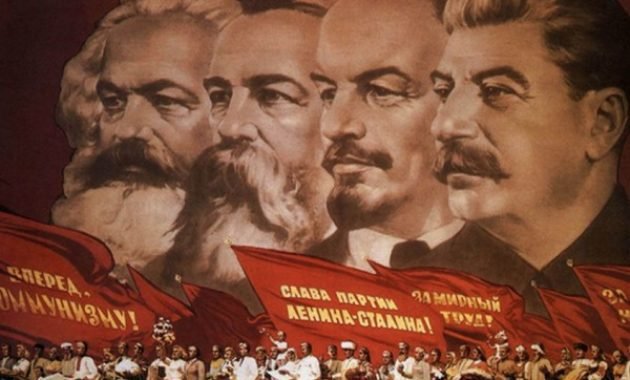
    However, what is the true meaning of social control itself? Check out the following information regarding social control which is one of the efforts to prevent social deviations, both individually and collectively.


    Definition of Social Control

    The definition of social control based on the website of the Ministry of Education and Culture or the Ministry of Education and Culture is a mechanism used to direct community members in an environment to implement social values ​​and norms that apply in it.

    According to the sociologist Peter L. Berger, the definition of social control is all the ways in which the community tries to discipline or regulate members within the community when they disobey. In addition, Joseph S. Roucek also defines social control as a collective term that has a reference to a planned process.

    Where each individual is persuaded, encouraged or even forced to adapt to the habits and values ​​of life that exist in a community group. Bruce J. Cohen who is a sociologist in his understanding of social control as various ways used to encourage every individual in a society to have behavior in accordance with the will of the community group.

    Robert MZ Lawang defines social control as all means used by a community environment to return or help perpetrators of social deviations to return to a good path.

    Social control according to Karel J. Veeger is a continuation of a socialization process that is carried out and has a relationship with various ways and methods used to encourage each individual to have thoughts and behaviors that are in harmony with the community group and the community environment in which they are located.

    Based on the various definitions expressed by these experts, it can be concluded that social control is a process that is owned or used by a person or group with the aim of influencing, inviting, or even forcing other existing members to instill in themselves the values ​​and norms that apply in the community. that’s where they are.


    The Purpose of Social Control

    After understanding what social control is, there are several reasons why it exists in a society.

    • Reducing social deviant behavior that may be carried out by someone, with the instillation of values ​​and norms, a person will understand not to do things that can harm himself and others.
    • Creating peace and harmony in coexistence in the community, with awareness in every individual in society, the risks of social deviation will be minimized so that it will create peace in an environment.
    • Making the perpetrator aware of the mistakes he made and willing to improve himself and his behavior towards others.
    • Make the perpetrators of social deviation have the awareness to comply with the values ​​and norms that exist and apply in the community.
    • Making people understand and instill in themselves the values ​​and norms that exist both self-awareness and coercion or encouragement from various factors.


    Characteristics of Social Control

    Social control that exists in a community environment itself has various characteristics that we can find, as follows.

    • The first characteristic of social control is to have a method or technique used to control the people in the environment.
    • The second characteristic of social control is that it aims to achieve a balance between stability and changes that are taking place in the community.
    • The third characteristic of social control is that it is usually carried out by a group of people against the individual concerned or other groups in a society.
    • The fourth characteristic of social control is that it has a two-way system that is often not realized by the parties concerned.


    Types of Social Control

    Based on the implementation time, the types of social control can be divided into two, namely, preventive social control and representative social control which are explained as follows.

    1. Preventive social control

    The first type of social control based on the time of its implementation is preventive social control which is a control that occurs in the community before the existence or occurrence of a deviant behavior.

    This preventive social control is usually carried out by someone through socialization of existing norms, education of the surrounding community, community education, and providing advice and consequences so that social deviations do not occur.

    2. Repressive social control

    The second type of social control based on the time of its implementation is repressive social control which is a control that occurs in a community environment after deviant behavior occurs in the community.

    Repressive social control
    Repressive social control

    This repressive social control itself is usually in the form of an effort made through giving consequences for those who violate, commensurate punishments, advice and counseling so as not to repeat it again and realize that it is a mistake. Based on the implementing officers, the types of social control can also be divided into two, namely, formal control and informal control.

    3. Formal controls

    The first type of social control based on its implementing officers is formal control which is usually carried out by various official institutions that officially declare regulations and values ​​and norms in an existing environment.

    In general, the rules as well as values ​​and norms that exist in the formal control environment are made in writing and there are already standards that apply in it. Formal control itself can be seen in several environments such as in the company environment, trade union associations, and existing judicial institutions.

    4. Informal controls

    The second type of social control based on its implementing officers is informal control which is usually made in a community group that has an unofficial nature and the existing rules or values ​​and norms are not written.

    Informal control can generally be seen in everyday life, such as when we gather with family or friends. These informal controls are also generally unplanned and occur spontaneously. For example, when we gather with friends and play a game.

    When someone cheats, that person will be ridiculed. This is a form of informal control. Based on its nature, the types of social control can also be divided into two, namely, curative social control and participatory social control.

    5. Curative social control

    The first type of social control based on its nature is curative social control which is a form of social control that is carried out through various coaching and healing to perpetrators of social deviations to change the values ​​and norms that exist in themselves. We can see curative social control through the rehabilitation provided to users of illegal drugs or drugs and alcoholic beverages.

    6. Participatory social control

    The second type of social control based on its nature is participatory social control which is a form of social control carried out by inviting or involving social deviants who have changed themselves to help improve the values ​​and norms of other social deviants.

    We can see participatory social control through how a former drug user or drug user is used as an anti-drug ambassador to invite other people who are still doing this to have a desire to change and become better.


    Social Control Function

    The following are some of the functions of social control in the community. Check out the following information.

    The first function of social control is to strengthen existing societal beliefs about social values ​​and norms. With the planting and strengthening of this belief, it can directly affect the sustainability of the existing community order. Ways that can be done to strengthen this belief are through various institutions such as schools, families, or through suggestions from the social environment.

    The second function of social control is to provide rewards to each party who is able to comply with social values ​​and norms that apply to the community. What is meant by reward here is to give praise, respect, and give gifts to members of the community. The purpose of giving these rewards is so that everyone continues to carry out existing values ​​and norms and provides an example for other members to become even better.

    The third function of social control is to develop inner shame. What is meant is that when a person who is a social deviant realizes his mistake, he will be ashamed to admit his mistake and his self-esteem will decrease. In addition, the consequences for the perpetrators of social deviance such as criticism or negative comments that come from the community will make him feel ashamed and deterred. That way, the person will have a sense of shame so that in the future they will not commit social deviations again.

    Social Control Function

    The fourth function of social control is to develop inner fear. When a person has a fear of doing an act or thing that can pose a risk of getting consequences, it will indirectly make him aware to avoid these things. With that fear, he will try to do good things and avoid things that are risky to harm himself and others.

    The fifth function of social control is to create a legal system in a society. In order for a common goal or agreement to be achieved in an environment, it is necessary to apply values ​​and norms to regulate every member of the community in it. With this legal system, which contains rules and consequences that can be accepted by any social deviant behavior, people will be aware not to do this if they do not want to get a reward for their actions.


    Forms of Social Control

    In people’s lives, there are various forms of social control that can be done or seen. Here are some forms of social control.

    1. Gossip

    The first form of social control is gossip or what is often referred to as hearsay, which is a behavior of exchanging information carried out by someone without clear concrete evidence of an event or negative behavior.

    2. Reprimand

    The second form of social control is a reprimand which is generally carried out by a person or a group against perpetrators of social deviance that can disrupt the harmony of the community environment. By doing this, someone gives direct and open criticism so that the perpetrator of the social deviation can immediately realize the mistake he has made.

    3. Sanctions

    The third form of social control is sanctions or punishments given to people who commit social deviant behavior. For example, in everyday life, when we go to school and someone is reprimanded for cheating on an exam, the score given is zero. That way he became aware of being afraid and not doing it again. This form of sanction itself also has two benefits, namely, helping someone to be aware of the social deviant behavior that he has committed, and being a warning or reminder for other community members not to make the same mistake.

    4. Education

    The fourth form of social control is education, where the higher the education a person has, the better understanding of existing values ​​and norms, and can practice them in real situations and help bring about change in the community environment.

    5. Religion

    The fifth form of social control is religion, where in religion it is taught for everyone to maintain good relations between each other, relations with other creatures, and also their relationship with those in power. In religious teachings, there are also various prohibitions and orders to stay away from negative things that can become social deviations, because later they will get sanctions.


    Ways of Social Control

    Here are some ways that can be done to carry out social control in a community environment.

    1. Persuasive Social Control

    The first method used to exercise social control is to use persuasive methods. Where by using this method, there is no violence against perpetrators of social deviance, but the method used is to advise, provide advice and guidance so as not to commit deviant behavior in the future. Persuasive methods are usually carried out within the community through verbal or symbolic forms in the form of banners, posters, or public service advertisements that are distributed to community members.

    2. Coercive Social Control

    The second method used to exercise social control is to use coercive methods. Where by using this method, the occurrence of coercion or violence against perpetrators of social deviance both in physical and psychological forms. This is often done by the authorities when there is no other way to make the perpetrator aware.

    However, using this method often leads to consequences such as negative reactions from the other party. One example that we can see is the expulsion and control of street vendors or street vendors who sell on the highway which often makes the roads narrow and causes congestion. Therefore, often the patrolling police warn them to move, but are still ignored until they use this coercive method.

    3. Socialization

    The third method used to carry out social control is to use socialization methods. Where by using this method, community members are taught to create a habit and instill in themselves the values ​​and norms that apply to a community environment. This method is carried out through socialization to the surrounding community, by introducing existing norms and values ​​and their application to attitudes and behavior in everyday life in the community.

    4. Social Emphasis

    The fourth method used to exercise social control is through social suppression. Where by using this method, it is expected to be able to control the behavior of each member of the environment in it. By doing this, it is hoped that a community environment can instill in itself the values ​​and norms that exist in each individual so that they can live side by side properly.

    5. Preventive social control

    namely prevention before deviations from the norms and values ​​of society occur. For example, parents who forbid their children to hang out with friends who like to gamble. This is so that his son does not become a gambler later.

    6. Repressive social control

    namely an effort to restore the situation after the deviation of the values ​​and norms of society. For example, someone who breaks a promise is reported to the court, so the judge imposes a sentence by paying a debt and a fine.

  • Totalitarian Political System, Definition, Type and Characteristics

    Totalitarian Political System, Definition, Type and Characteristics

    The political system consists of several kinds, one of which is the totalitarian political system. Over the years, many countries have experienced transitions in political systems. Initially using a totalitarian political system then changed to a democratic political system.

    So what exactly is the meaning of this totalitarian political system, what are the types and characteristics and which countries use the system. Let’s take a look at the following review of sinaumedia.com .


    Understanding Totalitarian Political System

    As a totalitarian term, it was first coined by an Italian dictator named Benito Mussolini. Then along with the development of the times, political scientists used this term to describe the phenomenon of the Soviet Union and the Adolf Hitler Regime, the Nazis in Germany.

    The totalitarian political system is a system of governance that controls society as a whole both at the social, cultural, economic and political levels. In this system the state is not present as a referee but the state is present as the main player.

    That is, there is no clear boundary between the state and citizens. In other words, the state is served by citizens, not the other way around, citizens are served by the state.

    By adopting this system, a country will impose consensus on the community even in situations of internal and external conflict. In addition, the totalitarian system uses state ideology as a way of life in the social order.

    Furthermore, totalitarianism views that individual human existence is not important because for this system a human being is only limited to carrying out his role as a supporter of the ideals of the state.

    There is no freedom of citizens, the government will blatantly eliminate an individual or group of different opinions.

    Sadly, this system will also regulate all aspects of life, from the dress code to the hair style of the citizens of the country. On the other hand, the assessment of good and bad behavior of citizens is also determined by the taste of the state.

    The military, police, communication tools to the media are all under the control of the government. This means that a citizen cannot contribute criticism and suggestions to the government.

    This non-democratic form of government prioritizes ideological indoctrination and the implementation of a government that tends to impose its will.


    Types of Totalitarian Political Systems

    Based on the background of its nature, this system is divided into two as follows:


    1.Communism

    Communism is an idea pioneered by German philosophers, namely Karl Marx and Friedrich Engels . These two philosophers made a phenomenal work entitled The Manifesto of the Communist Party in 1848.

    Communism itself is a political ideology which believes that society can gain prosperity by eliminating private property. Private ownership in question is ownership of the means of production.

    Thus the means of production are controlled by the state but the state is obliged to ensure the welfare of its citizens by meeting the needs of each of its citizens.

    Based on history, communism is actually a criticism of the capitalist and liberal economic system, which according to him is very exploitative. Despite the fact that communism is trapped in a dictatorial and authoritarian monopoly of power over what they call the proletariat.

    Countries that still adopt this system are China, North Korea, Cuba, Albania, and Vietnam.


    2. Fascism

    Fascism is more or less the same as communism, but fascism does not only see the problem of class struggle. They assume that society has experienced chaos and moral decay so that it needs improvement.

    As a system, fascism is an ideology that rejects the narratives of capitalism, liberalism, communism and conservativeism. Fascism is based more on an authoritarian nationalist system of government.

    Countries that adopt a fascist ideological system tend to sacrifice aspects of social life for the sake of the state. Fascism will put the interests of a single party above the interests of the people in the name of the interests of the state.

    However, in practice, Benito Mussolini, the originator of the term totalitarianism, vehemently denied that the fascism that Adolf Hitler practiced was the same as what he did in Italy. For Mussolini Hitler’s racism was not part of the narrative of fascism in Italy because humans were not testing instruments for the benefit of a handful of other humans.

    Fascism is an idea that binds many people with a spirit of nationalism accompanied by pressure and threats. Countries that embraced fascism were the countries of Eastern Europe, West Germany, and the Soviet Union before it collapsed. Fascism clearly rejects parliamentary and democratic methods because these methods will open up space for public participation.


    Characteristics of Totalitarian Political Systems

    1. The existence of political repression, namely the state has a more role in regulating and limiting its citizens from participating in the political world.

    2. Aspects of individual and community life become a political concern.

    3. There is only one ruling party. This political party has strong legal force and can control politics as a whole so that competition, recruitment and opposition can be regulated in such a way.

    4. Ideological indoctrination of the people in order to regulate the views of the nation and state and how their political activities are carried out. Indoctrination usually covers all aspects of people’s lives.

    5. There is control over the people’s economy because there is no private ownership and the means of production are wholly state-owned.

    6. There is a limit to express voice. No people can protest or criticize the government.

    7. The existence of control over the mass media so that there is a lack of transparency, the cult of a leader to the arbitrariness of the state against its people.

    8. There is mobilization of the people to get mass support. Usually this mobilization is in the name of democracy so that it seems as if the ruling regime has the legitimacy of the people.

  • Liberal Democracy Political System, Definition, Type and Characteristics

    Liberal Democracy Political System, Definition, Type and Characteristics

    Liberal Democracy Political System is one of the popular political systems after the cold war. Geopolitical changes that accelerate the flow of globalization have resulted in many countries adopting a liberal democratic political system. This is because this political system prioritizes individual freedom and people’s sovereignty.
    So what exactly is this liberal democratic political system, what are its types and characteristics and which countries have adopted this political system as their state system. Let’s look at the full review at Sinaumedia.com below.

    Definition of Liberal Democratic Political System

    Liberal Democracy Political System is a political system that gives freedom to the people at large. People are free individually and in groups to form associations. This means that in a liberal democratic system, individual freedom is the main pioneer in social life.

    On the other hand, government decisions must not violate individual freedoms and rights as stated in the constitution.

    This liberal democracy is rooted in the social contract theory that was born during the Enlightenment by thinkers such as Jean-Jacques Rousseau, John Locke and Thomas Hobbes.

    After the cold war there was a significant shift in the political and economic situation. The flow of industrialization has touched various countries so that the economy crosses borders without knowing territory.

    The advantages of economic power and resources are used by developed countries to spread their ideology. Of course, one of them is a liberal democratic political system. It’s no wonder that liberal democracy is the formula for western countries to become the antithesis of the ideology of Chinese communism.

    The narrative of individual freedom is characteristic of a liberal democratic system. As a result, the highest constitution of this system is held by the people. However, there are things that are prerequisites for a liberal democratic system to work well, one of which is the formation of a stable legislative composition, balanced opposition, and information disclosure.

    In practice, this system places the President as the head of state, and the prime minister as the head of government and the head of the cabinet.

    This system can only work well if the parliament has a balanced and steady composition between the supporters of the government and the opposition. The composition of the government’s supporters and opposition that often changes will mean that the cabinet can be dropped at any time.

    Types of Democracy Based on Their Ideology

    1. People’s Democracy

    People’s democracy is a democratic system based on the notion of communism or socialism in which individual interests have no space at the societal level. The interests of the state and the public interest are important factors in social life.

    In practice, the state has full authority over its people.

    2. Liberal Democracy

    Liberal democracy is a democratic system that places individual freedom as the main pioneer. With this, the state has limited power and is tasked with providing protection for the freedom of its citizens.

    In this system, criticism can be done by anyone and at any time as long as it does not harm others. This means that the government and the opposition are very important instruments for the realization of a stable government.

    Features of Liberal Democracy

    1. The President and Vice President serve as Heads of State

    In a liberal democratic system, the President and Vice President are heads of state, while the government process is carried out by the prime minister.

    2. Policy Based on Majority Decision

    In taking a policy, a liberal democratic system must be based on the majority vote of the people based on the vote in the legislature.

    3. Parliament can control Cabinet

    As a system that places individuals above the government, parliament is certainly able to carry out its role and function as an institution that controls government policies.

    4. There is a General Election 

    The succession of leadership in a liberal democratic system must be through free and open elections. The election results are able to legitimize that the winning government is the people’s choice.

    5. Executive powers are limited by the Constitution, Legislation and Law

    Executive power is limited to avoid abuse of power. In addition, this limitation aims to keep the government on the right track in accordance with the agreement of the state.

    6. Minority Groups Can Fight For Their Groups

    Freedom in a liberal democratic system is not only for individuals but also for groups. As a result, any group with a majority and a minority scale has the same right to freedom.

    7. Allocation of Natural and Human Resources can be controlled

    Natural resources as well as human resources are entirely for the benefit of citizens

    8. Open criticism and votes of no confidence are common.

    In this liberal democratic system, criticism and motions of no confidence often occur either from the public or from the parliament to the cabinet.

    9. The Head of Government is headed by the Prime Minister

    The prime minister runs the government process as well as heads the cabinet.

    10. Prime Ministers and Ministers are appointed and dismissed by Parliament

    In this system, the parliament has control over who is entitled to become a minister.

    11. Legislative is stronger than Executive 

    For the sake of government stability, the legislative role is the key to good governance. As a result, the legislative power is stronger.

    Thus a brief explanation of the political system of liberal democracy, Happy Reading!

  • Difference Between Psychology and Sociology

    Difference Between Psychology and Sociology

    In this article we will review the Difference between Psychology and Sociology . Psychology and Sociology are two broad sciences related to the study of human beings, wherein ‘psychology’ refers to the study of the human mind, i.e. it deals with what happens inside a person’s brain, in order to understand his reasons/behavior under different circumstances. In contrast, ‘sociology’ implies the study of human behavior in a group or society and the reasons for it.

    Where psychology focuses on an individual, namely studying the individual, his behavior, thoughts, feelings and mental characteristics at a time. Sociology aims to analyze the behavior patterns of a group of people. It also studies the reasons that make them follow a particular religion, belief, culture, customs,

    So, basically, psychology is about the ‘nature’ of a person, i.e. what you were born into, whereas sociology is about ‘upbringing’, i.e. what a person was raised with. Read the article below to the end to understand the difference between psychology and sociology .

    Definition of Psychology

    Psychology can be understood as the methodical research and study of mental processes, experiences and human behavior and the relationships between them, whether real or not. It is the study of a person’s mind, such as how it functions and influences behavior.

    The term ‘psychology’ is a combination of two Greek words ‘psyche’ and ‘logos’ which mean ‘soul’ and ‘study’ respectively. In this way, psychology refers to the study of the soul. It analyzes three main aspects of human nature, namely:

    1. Experience: Some personal human experiences and privacy are studied by psychologists to understand one’s private world. This includes dreams, one’s conscious experiences at various phases of life and altered consciousness experiences, by means of medication or meditation.
    2. Mental Processing: It also studies the human mental processes in which the thoughts that occur in a person’s brain are read. In this study, a person’s internal mental activity is investigated, with their attitudes and behavior in certain situations. This includes the investigation of perception, thinking, learning and remembering, etc.
    3. Behavior: Psychology also studies a person’s behavior, which includes the analysis of basic reflexes, response patterns, and complex behaviors, either through direct observation or measurement through scientific instruments. Basically, a person’s behavior is reflected in his activities such as body language, gestures, facial expressions, when he responds to stimuli in certain situations.

    When observing a person’s behavior, psychologists try to find out the processes that influence a person’s behavior. The process is represented in the image below:

    Difference Between Psychology and Sociology

    Definition of Sociology

    Sociology can be understood as a social science that systematically studies social relations, interactions, culture and behavior of a person in society. The subject area of ​​sociology is not the individual, but seeks to look further, i.e. examine society, regarding certain associations or groups of individuals.

    The term ‘sociology’ is a combination of the Latin word ‘socius’ and the Greek word ‘logu’, meaning ‘associate or associate’ and ‘study’. So, sociology refers to the study of friendship or human relations.

    Sociology studies how people in a group interact with each other and how a person’s behavior is determined by social groups, categories, like age, class, gender, etc., and institutions, i.e. religion, caste, education, politics etc. scientific studies, as in it investigates and analyzes social reality using logical methods, considering verifiable evidence and interpretations. Furthermore, social status, movement, stratification and change, are also studied in this discipline.

    Difference Between Psychology and Sociology

    The differences between psychology and sociology discussed above can be summed up in the following points:

    • Psychology is the study of humans in relation to their experiences, mental well-being and behavioral patterns. On the other hand, sociology is the science of human association, which studies the actions of individuals in a social context.
    • Psychology is a specialized science that studies the individual mind and its functions, which direct and control behavior. Sociology is a general science in which sociologists analyze the structure of groups, societies and institutions and the way people interact.
    • When it comes to subject areas, psychology studies the human mind and behavior, whereas sociology studies the behavior of a person when he is in a group or in the midst of people.
    • In psychology, psychologists tend to examine and analyze one person at a time. In contrast, in sociology, sociologists analyze society or groups as a whole.
    • In psychology reading a person’s mind and the reasons for his behavior in a certain way is an experimental process. On the other hand, in sociology, sociologists observe the behavior of individuals in society and the way society views, beliefs and cultures, etc. Influence someone.
    • While psychology deals with human emotions, sociology deals with human interactions.
    • Psychology assumes that a person’s mental characteristics govern his behavior. In contrast, sociology assumes that individuals are significantly influenced by society, which regulates individual behavior.

    Conclusion:

    Social Psychology is a branch of psychology, which studies the impact of people on the thoughts, feelings and behavior of individuals. Psychology tends to study the individual, in terms of his mental characteristics to find out the reasons for his behavior in a certain way. On the other hand, psychology is concerned with the origin, development and structure of human society.

  • Differences in Social Differentiation with Social Stratification

    Differences in Social Differentiation with Social Stratification

    The following is an explanation of the similarities and differences between social differentiation and social stratification, along with their respective meanings.

    tirto.id – Interactions between community members involve different individual behaviors and habits. This difference is influenced by the social structure as a pattern that regulates people’s daily lives.

    In the study of sociology, the classification of differences in society includes 2 aspects, namely social differentiation and social stratification. So, the social structure affects the diversity of people’s behavior which in the end gives rise to social differentiation and social stratification. The last two concepts have differences and similarities.

    The similarity between social differentiation and social stratification is that the two concepts describe the existence of distinctions or classifications in society.

    However, the two concepts refer to different realities because they use unequal measures in defining differences between members of society. In social differentiation, group differences in society are seen as pluralistic.

    This means that the gap in the position between groups in society due to these differences is not considered. Meanwhile, in social stratification, differences between groups in society are seen based on stratified layers, thus giving rise to identification of social classes.

    It can be concluded, the difference between social differentiation and social stratification lies in the way of looking at the differences between groups in society. Social differentiation shows differences between groups in society in the context of equal, or horizontal (not hierarchical) relationships.

    In contrast, social stratification describes the differences between groups in society, which occur vertically or hierarchically (tiered). To better understand the similarities and differences between social differentiation and social stratification, it is necessary to understand the meaning of each of these concepts along with examples in society.

    Definition of Social Differentiation and Examples

    Through the concept of social differentiation, sociological studies examine the relationship between members of society in an equal position. In the study of sociology, the notion of social differentiation is the horizontal differentiation of society which is characterized by the absence of hierarchical classification. Thus, social differentiation shows plurality and social heterogeneity in society.

    However, this plurality does not show differences in social strata. Social differentiation arises because of the division of labor, gender differences, and differences in religion, race, ethnicity (grouping of individuals on the basis of similar cultural characteristics, such as language, customs, history, attitudes, region).

    Horizontally, society is characterized by the fact that there are social units separated by differences in ethnicity, religion, race, customs, regional elements, and professions.

    One example is social differentiation based on religion. In Indonesia, the people are diverse because they consist of adherents of Christianity, Catholicism, Islam, Hinduism, Buddhism, Confucianism, to local religions and beliefs.

    There are no groups that are higher or lower in social differentiation based on religion, as happened in the distinction between Indonesian people based on their beliefs. The same applies to the example of social differentiation based on sex. Men and women have different social roles and functions.

    Definition of Social Stratification and Examples

    Social stratification is the classification of society into layers that are arranged in stages or hierarchies. This classification refers to the division of community members into vertically tiered levels or strata.

    The emergence of social stratification is driven by the existence of values ​​as something that is valued and upheld in society.

    The value referred to in the context of social stratification relates to resources or valuables that are needed by the community. For example: power, wealth, education, and skills.

    Therefore, it can be concluded that social stratification shows the relationship between community members in an unequal position. So, broadly speaking, social stratification shows the classification of community members based on differences in access to utilizing resources. privilege  and  prestige , but some are not.

    There are a number of basic forms of social stratification in society. The various forms are economic stratification, education/work stratification, and political stratification.

    Meanwhile, Jeffries and Ransford formulated there are 3 kinds of social stratification in society. The explanation of the 3 kinds of social stratification and their examples are as follows.

    1. Class Hierarchy

    This first type of social stratification is based on the classification of society from an economic perspective, namely control over resources to produce goods and services (means of production).

    The economic element can simply be measured by wealth. This type of stratification can apply differently in each society, depending on the mode of production in its economy.

    For example, in a village community whose economy is based on agriculture, the determinant of social class is ownership of land and houses. Meanwhile, in coastal communities where the majority of fishermen are fishermen, the determinant of class hierarchy is ownership of the boat.

    It is different in urban communities, where the layers of society are determined by differences in access to capital. Community groups with strong capital will control the means of production for industry and business, as the economic foundation of urban areas. Capital can be in the form of money or valuable assets that can be used for investment.

    2. Hierarchy of power

    The hierarchy of power is determined by the ability to influence authoritative values. This classification is related to the political aspect. For example, members of society who occupy the position of kings or heads of state and government officials will have different degrees from ordinary citizens.

    3. Status Hierarchy

    The status hierarchy is based on differences in honor and position in society. Size in layers in this type of hierarchy generally occurs in traditional or religious societies.

    An example of this classification can be seen in Javanese society, in which there is a distinction between the priyayi and the wong cilik. The traditional elders whose position is exalted in a number of tribes are also another example. As for the religious community, religious leaders generally get a higher position than ordinary citizens.

  • 9 Inhibiting Factors of Social Change: Lack Education & Ideology

    9 Inhibiting Factors of Social Change: Lack Education & Ideology

    Customs and habits can be a factor that hinders social change. Overall, there are 9 factors that hinder social change.
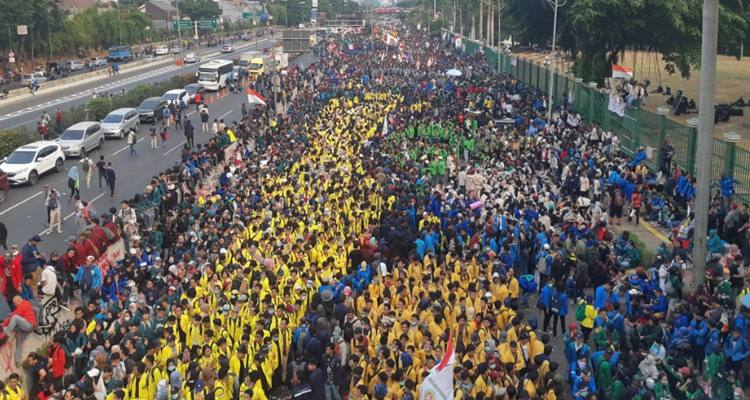
    Social change cannot be avoided from social life. Even so, these changes can be slow, due to a number of factors that influence it.

    Social change has 4 characteristics that are most commonly known, according to the sociologist, Selo Soemardjan . First, people feel social changes in their environment, be it slow or fast. This change is relentless.

    Second, when changes are experienced by social institutions, there will also be changes in other social institutions. Third, disorganization can occur if social change takes place very quickly in a community group. However, the nature of this disorganization is only temporary.

    Fourth or last, changes can occur in the material (material) and spiritual fields. These two fields have a reciprocal relationship.

    Definition of Social Change

    Etymologically, social change means changes in various social institutions that affect the social system of society, including values, attitudes, patterns, behavior among groups in society.

    Priotr Sztompka describes social change as a change that occurs within or includes a social system, with the explanation that there are differences between the state of certain systems at different times.

    The basic concept of social change relates to three criteria including:

    1. The study of differences, in the sense of being able to see differences or changes in the condition of the object that is the focus of the study. These studies must be carried out at different times, in the sense that comparative studies are carried out in different time dimensions.
    2. Observations on the same social system, in the sense that the object of the comparative study must be the same object. So the discussion of social change is always related to the dimensions of space and time.
    3. The spatial dimension refers to the area of ​​social change and the conditions that surround it. Of course, this dimension cannot be separated from the historical aspects that occurred in the region. The time dimension in the sense of social change looks at the past (past ), present ( present ), and future ( future) . From time to time will be compared so that social changes can be found.

    In the process of social change there are also drivers (reinforcers) and barriers to social change. This is caused by several factors.

    The driving factors make the process of socio-cultural change faster, while the inhibiting factors make the process of social change slower and even fail.

    Inhibiting Factors of Social Change

    The following are the inhibiting factors for socio-cultural change

    1. Lack of Relationships with Other

    Communities Communities that are less connected with other communities experience slow change. This is because these people do not know the development of other communities that can enrich their own culture.

    They are trapped in their culture and patterns of thought that are still simple. For example, ethnic groups who still live in the interior.

    2. Traditional Society

    In general, traditional society holds strongly the existing customs. They reject all new things related to social life. Traditions and customs are glorified. This attitude prevents the community from progressing.

    3. Low Education

    People with low education generally cannot accept new things. Their mindset and perspective is still simple.

    They are generally reluctant to follow the existing changes. That is, society is static and does not experience significant changes.

    4. There is a strong vested interest in a group of people ( vested interest )

    The existence of a strong vested interest in a group makes it difficult for change to occur. This is because each group that has enjoyed its position will reject all forms of change.

    They will try to maintain the existing system. They are afraid that any change will change their position and status in society.

    5. Fear of Unsteadiness in Integration

    The creation of integration is the hope and aspiration of society in general. Therefore, integration is something that is protected by society. Everything new is rejected to avoid swaying in the integration of society.

    6. Bad Prejudice Against Foreign Cultural Elements

    Such attitudes are often found in societies that have been colonized by foreign nations. Past experiences cause them to always have a bad attitude towards foreign cultures.

    As a result, they reject all new things, especially from foreign nations, even though it will bring changes for the better.

    7. Ideological Barriers

    Ideological change is very difficult to do. Why is that? Everyone views ideology as the most basic way of life.

    Therefore, ideological changes are not possible, especially in traditional societies when ideology is firmly held in social life.

    8. Ingrained Customs and Habits

    Habits are patterns of behavior for community members to fulfill their basic needs. If then these behavioral patterns are no longer effective in meeting needs, a crisis will occur.

    For example, in the adoption of innovations which can then replace human labor, it is not always easy to happen because on a certain side technology can replace the presence of human labor so that effectiveness and savings occur. On the other hand, it raises a new problem, namely unemployment.

    9. The Value That Life is Essentially Bad and Impossible to Improve

    This value is owned by some individuals who have a background of failure so that they feel that in essence life is bad and cannot be repaired.

    Feelings of despair and giving up are more dominant than wanting to get up and try something new again. So this value is a barrier to social change.

  • Definition of Sociology According to Experts: Karl Marx to Giddens

    Definition of Sociology According to Experts: Karl Marx to Giddens

    Definition of sociology according to experts such as Emile Durkeim, Karl Marx, and Max Weber is different. But the essence of sociology is the study of society.
    As social beings, our daily activities can be studied through a social science or better known as sociology. Furthermore, according to Max Weber, sociology tries to understand social action to arrive at a causal explanation of how it works and the consequences of that action.

    As a scientific discipline, sociology was born around the 19th century, namely in 1837. The term sociology itself was first used by a French social scientist named Auguste Comte. The term consists of a combination of two Latin words, namely  socius  which means society and  logos  which means knowledge. So that literally sociology is a science that studies society.

    Although Comte was the first social scientist to use the term sociology, the existence of sociological theory actually exists in the philosophy of several philosophers such as Emile Durkeim, Karl Marx, and Max Weber.

    Thoughts of 3 Main Figures of Sociology

    Karl Marx

    In social science, Marx issued a theory on the issue of capitalism. Marx thought that the existence of capitalism has the potential to damage the good relations between humans and the earth. This is because of the exploitation carried out by capitalists who aim to enrich themselves.

    The works of Marx that are still frequently encountered today include social class, social class conflicts, oppression, and alienation. One of the concepts used as the main perspective in sociology, is the theory of social conflict.

    Then, entering the 20th century, various neo-Marxist notions or various social analyzes emerged which made the theory of Marx the main reference. One theory that claims to be neo-Marxist is the dual movement theory of Karl Polanyi, an economic historian. The theory describes a form of response in environmental movements. Examples such as organized labor, to the excesses of capitalism.

    Based on the various theories he put forward, Marx thought that sociology could be used as a tool to help the oppressed in fighting and realizing ideals without the concept of class.

    Max Weber

    One of Weber’s most famous works is  the Protestant Ethic and the Spirit of Capitalism (1905) and Economics and Society  (1920)

    In his book,  Economy and Society , Weber argues that the spread of capitalism has led to the rationalization of society. This has an impact on the development of life with the creation of new technologies. In this regard, Weber was also the first theorist to believe in the independent role of the state in the spread of capitalism.

    In general, Max Weber has a study that is used as the main theory in sociology, namely social action. According to him, social action refers to all forms of action that affect and are influenced by other people.

    So as a sociologist, Weber argues that it must lead to subjective meaning, that is, each person interprets their own behavior or attaches their own behavior.

    Emile Durkheim

    Durkheim in the study of sociology has carried out various types of analysis, among which are well-known such as  Subcultural Variations in Suicide  (1897),  Sociology of Religion  (1912) and  Rules of Sociological Methods  (1895).

    In addition, one of his most important works in sociology is on the division of labor. He thought that the longer the population density and size would increase. So that in terms of work there will be a clearer division between people who come from urbanization and globalization.

    Opinions of Other Social Experts related to Sociology

    Apart from the three main figures in this science, there are several other experts who have also contributed to the development of sociology to date, including:

    Erving Goffman

    According to Goffman, sociology is the study of social interactions in everyday life. .

    Anthony Giddens

    In contrast to Goffman, Giddens explains that sociology is a study of the social life of humans, groups, and society.

    C. Wright Mills

    Meanwhile, C. Wright Mills thinks that to understand what is happening in the world, it is necessary to have a sociological imagination. That way we can understand the life history of the community, personal history, to the relationship between the two.


  • Differences in Conflict Theory of Karl Marx and Ralf Dahrendorf

    Differences in Conflict Theory of Karl Marx and Ralf Dahrendorf

    Social conflict is a form of conflict in society that occurs due to various factors. The complexity of social conflict makes studying this phenomenon give rise to multiple theories. Among the sociological thinkers who formulated specific theories to analyze social conflict were Karl Marx and Ralf Dahrendorf.
    Conflict theory was born to oppose the theory of structural functionalism. This is because the last theory provides an understanding that it is as if the development of society is balanced and static.

    Conflict theory comes with the understanding that society is changing because of the ongoing conflicts in life.

    Conflict also turns out to be derived from class conflicts, for example, the ruling group and the oppressed community group. This was one of the factors that brought about social changes or social systems in social life.

    An unbalanced condition ignores generally accepted norms and values but still affects people’s lives. In other words, social life cannot be separated from the various conflicts that occur in it.

    So, what are the Differences in the Conflict Theory of Karl Marx and Ralf Dahrendorf?

    Karl Marx’s Conflict Theory

    Karl Marx considers that a class conflict occurs due to differences in access to power. In this case, the key meant by Karl Marx is the facility of capital (money) which can create two classes, namely the bourgeoisie and the proletariat.

    Furthermore, Elena G. Bystova and Petter Gottschalk, in their research, add that Karl Marx views conflict as a form of class conflict. Karl Marx also explained the concept of class structure in a society full of inequality.

    Both class differences and social inequality can cause conflicts in everyday life. Some groups can dominate, and some are controlled only because of differences in economic class.

    The following are the main concepts in Karl Marx’s conflict theory:

    • There is a class structure in society
    • There are conflicting economic interests in each of the different classes
    • There is a significant influence of economic class on a person’s lifestyle
    • The influence of class conflict can lead to changes in social structure

    Ralf Dahrendorf’s Conflict Theory

    Ralf Dahrendorf’s opinion about conflict theory. He wrote that Ralf Dahrendorf proposed an idea that concluded: conflict occurs because of the social relations in a system.

    Thus, it can be concluded that conflict only occurs with groups belonging to one system. The relations were also classified by power. The existence of the controller with sanctions makes those who have power can benefit from those they control.

    This conflict finally conveyed a conflict between the owners of power and those who were not in control.

    Not only that, but Ralf Dahrendorf’s conflict theory also explains that society has two sides, namely conflict and cooperation.

    In the end, both the theory of Karl Marx and Ralf Dahrendorf explain that conflicts that occur in society can be a factor in social change. In other words, conflict, discontinuity, inequality, and deviation of norms and values also become an unavoidable part of society.

  • Conflict Theory according to Dahrendorf

    Conflict Theory according to Dahrendorf

    Another quite popular conflict theory is Dahrendorf. Ralf Dahrendorf is a German intellectual who became famous through his work ” Class and Class Conflict in Industrial Society ” in 1959.
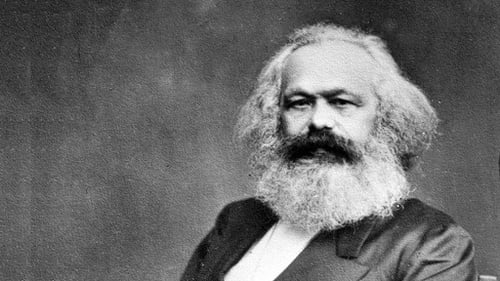
    For Dahrendorf, the functionalist explanations of integration, value and consensus, and stability needed to be revised. He rejected these functionalist assumptions and sought to base his theory on a modern Marxist perspective. For him, social conflicts based on the opposition of interests and the consequences of disputes can be widespread and, at the same time, can give birth to social change. (Johnson: 1986: 183).

    Although Dahrendorf has the same thoughts in viewing class conflict, Dahrendorf does not agree with the proposition offered by Marx. Dahrendorf considers Marx’s view irrelevant to post-industrial society (modern industry).

    That is why Marx’s theories and concepts are recommended to be modified so that they can be adapted to analyze modern industrial society. Dahrendorf views that Marx only refers to capitalist society. Since Marx wrote his thoughts, there have been significant changes in the social structure. (Dahrendorf 1988).

    That is why, Dahrendorf offers a concept and theory that pays more attention to explaining capitalist and post-capitalist society. Dahrendorf then built his new theory through this framework.

    Dahrendorf had quite a few conflicts with Marx. He even rejected Marx’s concept of a classless society. Dahrendorf considers that the analysis of a classless society is highly speculative, and there is no empirical evidence that it can be realized.

    Furthermore, Dahrendorf views several of Marx’s theses as not supported by empirical facts. In reality, class division cannot be carried out solely based on ownership of the means of production.

    In conflict theory, Ralf Dahrendolf assumes that society is loyal when subject to change and conflict processes. Conflicts and various elements of culture that exist in the social system are considered to contribute to disintegration and change.

    For him, the order that can be created in society is nothing but coercion on its members, carried out by those with power. This means that power in this social system plays a role in efforts to maintain order in society.

    Dahrendorf also put forward the idea of ​​a dialectical conflict theory. This theory states that society is a subject with two faces, namely conflict, and consensus. From this, Dahrendorf proposed the division of sociological theory into two parts, namely conflict theory and consensus theory.

    In conflict theory, we can examine conflicts of interest and the use of violence in society. In consensus theory, we can examine the value of integration in society.

    Dahrendorf assumes that society cannot exist without consensus and conflict because the unification of society occurs because of enforced non-freedom. This also reflects that in certain societal positions, there is authority over other positions that delegate power.

    That’s it; Conflict Theory, according to Dahrendorf, I hope it is useful.

  • Conflict Theory according to Karl Marx

    Conflict Theory according to Karl Marx

    Karl Marx (1818-1883) is considered a major pioneer of conflict theory. In fact, many figures in sociology calls him the master of conflict perspective.
    The basis of Marx’s thought is about the massive exploitation which is considered as the prime mover of historical forces. Marx views the existence of class differences, one of which is caused by the industrialization project, and this is only the pursuit of economic gain.

    The struggle of class society is a fundamental concept that was conceptualized by Karl Marx at that time. This was triggered by the condition of society at that time which was surrounded by industrialization in the 19th century. Industrialization gave rise to a class of workers and industrialists which in turn led to alienation.

    The conflict perspective which is rooted in the thought of Karl Marx is recognized by sociologists as one way out so that it is very closely related to revolution. However, the conflict here is not meant to be a radical revolution, let alone to the point of spilling blood. Because, after all, Marx was a humanist.

    In essence, conflict theory sees the existence of conflict and conflict in social systems. So, society will not always be in order. In this theory, different authorities are also discussed, which result in superordination and subordination.

    The difference in the interests of these two things then creates a conflict. However, conflict theory itself also reveals that conflict in this social process is needed to create a social change, both in a negative and positive direction.

    The conflict theory according to Karl Marx has long been ignored by sociologists. However, it was not until the 1960s that this theory was re-emerged. Some sociologists who have revived conflict theory include C. Wright Mills [1956-1959], Lewis Coser: [1956] and others [Aron, 1957; Dahrendorf, 1959, 1964; Chambliss, 1973; Collins, 1975].

    In contrast to functionalists who view the normal state of society as a static equilibrium, conflict theorists tend to see society as being in constant conflict within groups and classes.

    Conflict theorists even claim that functionalists have failed to ask the “functionally useful” question, who is this aimed at. The harmonious balance referred to by functionalists is considered only beneficial for some people, while for others it is detrimental.

    Conflict theorists view that a social balance as intended by these functionalists is a mere fantasy, because they are unable to explain how the dominant group exploits other groups and silences them.

    In Marx’s theory, the existence of personal relations in production and social classes is seen as a key element that exists in many societies. Marx in Das kapital also argues that the social changes that are created are largely influenced by the existence of conflicts between the dominant class and the subordinated class.

    The marxian-modern conflict strategy, which is mentioned by Stephen K Sanderson , is as follows:

    • Social life is an arena of conflict or conflict within opposing groups.
    • Various economic resources and political power are important, so various groups try to seize it.
    • A typical consequence of this conflict is the division of society into economically determined groups and subordinated groups.
    • The basic social pattern of a society is strongly influenced by the social conditions of the group which is economically a determining group.
    • Conflicts and deep social conflicts that exist in various societies give birth to forces capable of driving social change.
    • Because conflicts and contradictions are the basic criteria of social life, social change is also a common thing that often occurs.
  • Structural Functional Theory according to Robert K. Merton

    Structural Functional Theory according to Robert K. Merton

    As a proponent of the structural-functional theory, Robert K Marton only makes more limited demands for this perspective. Merton assumes that this functional, structural approach significantly influences the advancement of sociological knowledge. However, he considered structural functionalism still impossible to solve all social problems.

    Merton himself proposed Merton’s functional analysis model, which he got due to the development of a thorough knowledge of classical theories, including the work of Max Weber. Weber influenced Merton’s thinking regarding bureaucracy, thus making Merton more limited in viewing bureaucracy, as was Weber.

    As for the modern bureaucratic organization, according to Merton, it contains the following concepts:

    • bureaucracy is a form of social structure that is organized rationally and formally;
    • bureaucracy includes a pattern of activities with clear boundaries;
    • the actions that take place in the system are ideally related to the goals of the organization;
    • positions in the organization are integrated into the overall bureaucratic structure;
    • The existing statuses in the bureaucracy are arranged in a hierarchical arrangement;
    • Detailed rules limit obligations and rights in the bureaucracy;
    • authority lies in the position, not in the person;
    • the relationships that exist between people are formally restricted.

    The bureaucratic model, as described by Merton, can be illustrated in the form of large-scale organizations. For example, such as companies, universities, or academies.

    Merton’s functional analysis theory can be summarized in three postulates as available analysis, which he then refines individually. In summary, the first postulate is the postulate of the functional unity of society, which shows that the available unit of society has parts that work together in an adequate level of internal consistency without producing a prolonged unresolved conflict.

    The second postulate is the postulate of universal functionalism, assuming that all standardized social and cultural forms have their positive functions, which can establish a balance in the social system.

    The third postulate completes the trio of postulates of functionalism in the form of the postulate of indispensability; namely in every type of civilization, every habit, idea, material object, and belief all fulfill several essential functions and tasks that must be carried out so that they cannot be separated in the activities of the system as a whole.

    Put, in this third postulate, all aspects of society’s standards have a positive function and represent inseparable parts of the whole. This postulate leads to the idea that all structures and functions are functionally necessary for society.

  • Marxism Theory : History, Figures, and Main Ideas in Political Economy

    Marxism Theory : History, Figures, and Main Ideas in Political Economy

    When we talk about socialism or marxism, we will often come into contact with the concept of liberalism. Not because these two ideologies have much in common, but on the contrary, these two ideologies are completely opposite. In fact, the emergence of Marxism is none other than his rejection of the ideas of classical liberalism proposed by Adam Smith.
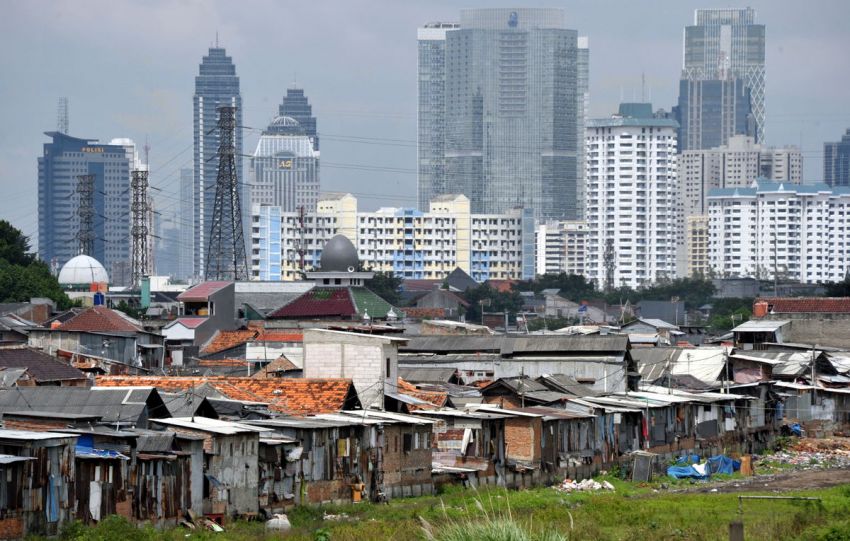
    Marxism itself is also closely related to socialism, because the two are often considered to have the same basic concept. However, socialism and marxism are fundamentally different . Marxism is an ideology based on the teachings of Karl Marx. This is why it is called Marxism or the teachings of Marx.

    Socialism is a form of idea or thought that existed long before Marx. The ideas in socialism talk a lot about togetherness and collectivism. Even so, there are teachings about togetherness that make the two seem attached.

    That is why, discussions of socialism will usually be divided into three groups , which include:

    1. socialism before Marx;
    2. Marx’s socialism (Marxism);
    3. socialism after Marx (Deliarnov, 2005).

    Discussions about socialism can be done through various perspectives, ranging from philosophy, ideals, movements, politics, teachings, ideology or political economy systems. However, this time our focus is on socialism from the point of view of political economy.

    From the point of view of political economy, socialism is a social system based on the principle of commune or togetherness, with the nature of distribution and ownership of the means of production or collective means of production . So, the most prominent character of this socialist society is its togetherness.

    In its most extreme form, socialism can develop into a form of communism, in which various economic decisions are drawn up, planned and controlled by the state.

    History of Marxism

    The era of industrialization has indeed brought major changes in the world economic system, including the emergence of new thinkers, such as Karl Marx (1818-1883). The ideas of Karl Marx are not really fresh and new ideas. What Karl Marx was trying to bring up was actually the idea of ​​togetherness in a commune, just like the socialist thought.

    However, Marx himself more developed the idea of ​​socialism in the form of a system. This is why, when talking about socialism in the form of a system, what is often used as a reference is the teachings of Karl Marx in the form of Marxism.

    So, here it can be seen that the basic difference between socialism and Marxism apart from their originators, lies in the line of thought. In socialism, the line of thought is broader based on the concept of togetherness. Whereas Marxism emphasizes more on how socialism can be realized in a comprehensive system in people’s lives.

    The history of Marxism itself was driven by the development of industrialization after the industrial revolution in England. Many of Karl Marx’s thoughts are a form of refutation of the classical liberal-leaning thoughts, which build their economy based on the market mechanism.

    Through his ideas, Karl Marx is called the main pioneer of the scientific socialism movement. The beginning of Marx’s popularity began when he published his first book together with Friederich Engels, the financial supporter of Marx.

    The book is entitled Communist Manifesto in 1847. In this book, Marx expresses a series of criticisms of Adam Smith’s ideas along with the concept of capitalism that he carries. This book also describes the conflicts between classes. Marx also said that the state is an instrument of oppression.

    Apart from the Communist Manifesto, Marx’s ideas are also included in many other books, all of which lead to socialist concepts. One of the most popular works of Marx is a book entitled Das Capital, which was published in 1867. It was Marx’s works that eventually became the basis for the emergence of Marxist ideology or Marxism (Deliarnov, 2005: 52).

    In fact, Marx himself never explicitly stated the ideology of Marxism. The concepts of his thought were also never designed into an ideology or ideology called Marxism.

    The term Marxism as a new ideology began to be developed after the death of Marx in 1883. Marx’s thought which was quite interesting began to be summarized as a new ideology which was given the name Marxist by German thinkers (Ritzer, 2005: 478).

    Because of this history, the concept of Marxism is often difficult to define precisely. What can be concluded is that basically, Marxist teachings try to harmonize reality, theories and concepts of thought in the life of an ideal society, through the commune system (Albert, Hahnel, 1991: 13).

    It should be noted that the philosophy of Karl Marx took a lot of dialectics developed by Hegel in 1818 as a basis. What Marx took from Hegel was about the philosophy of idealism and history.

    In Hegel’s philosophy, it is explained how social turmoil relates to the future of civilization. It was Hegel’s thoughts regarding the cycle of historical change that later inspired Marx’s ideas. Marx thought of a revolutionary concept in shaping the theory of society (Chilcote, 2010: 114).

    Scope of Marxist Ideology

    Mainly, many criticisms of Karl Marx were directed at Adam Smith’s idea of ​​deifying the market economy. In his attempt to criticize the idea of ​​capitalism, Marx used many foundations from various disciplines. He tried his best to prove that the ideas of capitalism are actually ” rotten from within ” ideas and are a reflection of an unfair system.

    Various disciplines used by Karl Marx in challenging the thought of capitalism, including:

    1. From a moral point of view, Marx claims that capitalism inherits injustice from within. This is based on capitalism’s indifference to the social inequalities that arise in society.
    2. From a social point of view, Marx stated that capitalism is a source of class conflict. This conflict can arise between the bourgeoisie and the proletariat, between the landlords and farm workers, and between the capitalists and their workers. This happens because one party acts as a suppressor ( oppressor ) and the other party as the oppressed ( opressed ).
    3. From an economic point of view, Marx views capitalism as a tool of capitalists which is solely used to obtain as much profit as possible, even if by suppressing the workers as hard as possible.

    Marx who uses various glasses to present his ideas is what makes Marx’s concept of ‘socialism’ more comprehensive. Marx also thought that the approach to the deductive procedure he used was far superior to that of the classical economists.

    Marx and his followers believed that the world should be understood as an integrated superior unit. Based on this, Marxism offers an idea or system based on the totality method, and not just a mere economic foundation.

    Marxism’s Critique of Capitalism

    As explained earlier, Marxism emerged as a response to Classical thinkers. Therefore, the teachings of Marxism are also based on many forms of criticism of the teachings of the Classical Liberals, especially against the teachings of Adam Smith in the form of capitalism.

    Marx saw capitalism as a system with many weaknesses. Here are some of Karl Marx’s critiques of capitalism, which at the same time illustrate how the mindset of Marx’s ideology is.

    # Capitalism creates classes in society

    Marx believed that the formation of social classes in society was the impact of capitalism. Capitalism forms classes based on economic aspects. The most obvious is the emergence of the ruling class and the working class or workers.

    # Capitalism makes the distribution of wealth unequal

    The rulers who want to make as much profit as possible tend to suppress the workers. In the end, the workers only receive wages that can only be used to survive.

    Marx based his thinking on Ricardo’s theory which proposed a low wage rate. Ricardo stated that in this subsystem of capitalism, such a low wage rate is determined by a value that can only be for survival.

    This form of so-called ” iron wage ” or iron wages is only equivalent to the cost of fuel for the machine to work, or as much as “the cost of animal feed”. This means that the remuneration given to the owners of capital or capitalists is much greater than the remuneration for the owners of labor or labor.

    The owners of capital will be getting stronger and richer, while the owners of labor will be getting poorer and weaker. Capitalism tends to distribute wealth unequally. Until in the end, this system also gave rise to stratified power (Deliarnov, 2006: 42-43).

    # Capitalism allows the ruling class to exploit

    In economics-oriented capitalism, the ruling class or capitalists will try to make as much profit as possible. The greater the efforts of the capitalists to seek profit, the harder the pressure is exerted on the workers.

    That is, this concept allows the ruling class to exploit the workers. In other words, according to Marx, capitalism is a form of exploitation of workers.

    # Capitalism triggers class conflict

    Marx believed that state capitalism would side with the rulers. Why is that? This is because the economically ruling class tends to have the potential to gain political power. This is because money or wealth is considered a form of power.

    This “rotten from within” capitalist country has an unfair system. Capitalism triggers class conflict. One side acts as an oppressor (oppressor) and on the other side there is an oppressed ( oppressed person). This happens because the capitalists will make as much profit as possible by suppressing the workers (Deliarnov, 2006: 41-42).

    # Capitalism makes workers experience alienates

    The system created by capitalism makes the workers experience alienates . Workers who are used as means or tools to meet the needs of the capitalists, will tend to be exploited in order to complete their work as quickly and as well as possible.

    In the end, workers will only focus on their work and have minimal interaction with social life or with other humans. This forces workers to be isolated and unable to grow. In other words, workers are alienated from their basic human nature (Ritzer, Goodman, 2011: 36).

    # Capitalism is Self Destructive

    Marx rejected the notion of the Classics which stated that capitalism is a system that is considered self-sustained ( self- developing). In the eyes of Marxism, capitalism is more referred to as self-destructive ( self-destructive ).

    This condition occurs because the pressure of the capitalists on the workers is so great. This convinced Karl Marx, and even stated his prediction that there would be a revolution of the workers.

    In order to make as much profit as possible, the capitalists will put more pressure on the workers. Workers who are increasingly pressured by these capitalists will certainly not remain silent. There will be resistance so that in the end, this system will self-destruct (Deliarnov, 2005: 42).

    Karl Marx’s Ideas

    The strength of Marxism is in the system it offers, which is all-encompassing. That is, the ideas of Karl Marx have a comprehensive discussion and have interconnections in all types of existing social institutions. Marxism also shows the interconnection between politics and economics.

    This is why the teachings of Marxism are considered the most comprehensive teachings in the concept of political economy. This all-encompassing concept led Marx to believe that his teachings were far superior to the deductive approach of classical political economy.

    # Dialectical Materialism

    Marx carried out an analysis of political economy by combining dialectical methods and materialism. By Engels, this is called dialectical materialism or historical materialism. The view that the world is a single integrated unit makes Marx’s approach able to cover everything with the totality method.

    This conception of Marx’s dialectical materialism draws on Hegel’s thoughts regarding the cycle of historical change. Marx stated that there would be a revolutionary concept in shaping the theory of society through the struggle of the workers to overthrow the rulers, and in the end the formation of all classless society.

    Even so, Marx rejected Hegel’s idealism which stated that these changes were most influenced by ideas. According to Marx, what is more decisive is the power of materialism.

    # Materialistic

    Marx’s materialistic conception is a form of political subordination and the decisions of public authorities under the inherent power of operating in society. Simply put, materialistic ideas are what determine everything, whether in terms of politics, culture, social, morals, philosophy, as well as ideology, is ‘economic’, namely material .

    More simply, matter is the center of life. The material conditions the process of political, social and intellectual life in general. So, when we talk about the mode of production of life, we will focus on the economy. This economy is then able to influence various other modes of life, from various aspects. This also includes, the economy influences politics.

    # Politics is a medium to exercise power and authority

    Politics, power and material things are basically related. However, the most powerful influence is material. According to Marx, politics is only a tool or media used by the authorities as a medium to exercise and legitimize their control.

    Meanwhile, according to Marx, the role is to exercise power and authority, which is influenced by material things. The state must play a role in preparing the political conditions and pressures necessary to maintain each mode of production (Staniland, 1985).

    In linking politics to a market economy, Marx believes that there is a domination structure in every economic organization. Politics for Marx is only a bridge for the ruling class to legitimize its control in order to obtain materials (Deliarnov, 2005: 44).

    # Country Removal

    According to Marx, the expansion of wealth is the same as the expansion of power . This makes Marx believe that wealth is not only used in the concept of power to , but also power over . The power possessed by the capitalists will be used as much as possible to suppress the workers, so this must be abolished.

    The state is only a creation of civil society which is used solely to protect the interests of the ruling classes. This affects the occurrence of conflicts of interest between classes that encourage conflicts between classes or conflicts within the State. Marx proposed that both the state and the ruling class should be abolished (Chilcote, 2010: 148).

    # Co-ownership is replaced by collective distribution

    Capitalism must be immediately replaced with a social system based on collective ownership and distribution (Deliarnov, 2005: 42). In a Marxist perspective, economic change is capable of transforming the ideological superstructure. Human actions depend on changes in the economic structure (Chilcote, 2010: 161).

    # Leaders of the proletarian class to form an authoritarian state

    Marx’s analysis states that the existence of classes is only tied to certain historical phases in the form of the development of production. For this reason, it is necessary to form an authoritarian state to ensure that the historical revolution takes place properly.

    To form an authoritarian state, a leader from the proletariat or the working class is needed. In order to lead to this dictatorship of the proletariat a class struggle is necessary. By itself, this dictatorship will be a transition to the abolition of the entire class.

    According to Marx, the existence of this class must be abolished. In the end, the state will also be abolished. The world will be a single unit without class and without state.

    # Elimination of classes in society

    The social situation will lead to the realization of a classless society, where private property rights to property are abolished. For Marx, the existence of property rights is indicated by the ownership of goods and income opportunities. In fact, this is a hallmark of the existence of class in society, so this must be abolished (Chilcote, 2010: 171).

    The development of Marxism

    Marx after the era of Karl Marx is still experiencing development. Many other thinkers have tried to develop the ideas of Marxism by being seasoned with various other ideas in order to perfect the system that has been offered by Karl Marx. One of them, there is Lenin.

    From the thought of Marx and Engels, Lenin put forward the theory of the State which he expressed in the book State and Revolution in 1932. Lenin argued that the state at that time was a form of manifestation of irreconcilability of class antagonisms .

    Therefore, state power had to be abolished by violent revolution. A form of effort through compromise and reformist solutions is considered unable to solve these class antagonisms (Chilcote, 2010: 259).

    The proletariat is tasked with carrying out the struggle against the state and its instruments of power. The next power is held by the proletariat. The modes of production are then transformed from private ownership to state ownership.

    This transition of capitalism power will then give rise to a form of proletarian government or dictatorship of the proletariat. Bourgeois democracy turned into proletarian democracy. So in essence, the reform aims to establish prosperity for the proletariat.

    The functions of the state will eventually be handed over to the people, until there is no longer a need for this kind of power. After the development of production reaches the highest level, the existence of class is no longer needed. Likewise, the state must also be abolished.

    The function of the state will be replaced by control by the whole community. As a result, people will work voluntarily according to their abilities and receive according to their needs. This is where socialism was created (Chilcote, 2010: 260).

    Criticism of Marxism

    Just as Marxism critiqued the Classical Liberals, it seems that Marxism is not free from criticism. Not a few thinkers claim that the teachings of Marx are not ideal teachings, and even have many shortcomings. Some of the criticisms leveled against Marxism are as follows:

    # Impressed Dogmatic

    After the era of Karl Marx, there were thinkers who carried out critical theory. This critical theory is one that criticizes Marxism. According to critical theory, in general, Marxism has a weakness because this ideology simply imitates Marx’s analysis outright. Karl Marx’s words were used as ideology and tried to be applied to modern society.

    It is this direct application that makes Marxism as an ideology more dogmatic than scientific. The analysis offered by Critical theory itself is a reconceptualization of the basic theory of Karl Marx, namely the liberation of humans from various shackles of oppression.

    # The idea of ​​social revolution occurs automatically is irrational

    According to Marx, capitalism which is “rotten from within” will automatically be destroyed by social revolution. This social revolution carried out by workers will occur automatically, so that in the end it will replace the capitalist order by itself.

    This idea is considered by revisionists as a weakness of Marxism, and seems excessive or irrational. The idea that the collapse of capitalism can happen automatically is irrational.

    Moreover, when referring to the view that socialism will only emerge when capitalism collapses, this means that as long as capitalism is able to maintain its surplus value , this social revolution will not automatically occur.

    Described by Bernstein, as long as countries that support capitalism are still successful in maintaining various anti-monopoly policies and free markets, then capitalism is not on the way to destruction. To put it simply, to expect a social revolution to happen automatically is an exaggeration or even irrationality.

    # Too deify Materialism and ignore ideas

    Marx’s concept of materialism too idolizes matter as part of the economic aspect. In fact, Marx ignores the importance of ideas or ideas and their contribution to history. Marx argued that reality is material and that social revolutions can occur mainly because of this material aspect.

    Material or economy is the only thing that is important and becomes the standard of human life, not thoughts or ideas. Marx’s attitude that put every interest only as part of economic interests is considered excessive and illogical.

    Marx believed, directly or indirectly, that political power is a tool for the benefit of the function of economic power only. Likewise in social and cultural conditions, all are based on a materialistic perspective.

    In his perspective, Marx stated that the historical and revolutionary forces of society are not determined by ideas or ideas, nor are the ideals of freedom. The absence of ideas or ideas, and the attitude of being too deifying of the material is what makes Marx’s teachings widely criticized.

    Reference :

    1. Albert, Michael, Robin Hahnel. Marxist and Socialist Theory . Ho Chin Minh: South End Press.
    2. Deliarnov. 2006. Political Economy . Jakarta: Erlangga.
    3. Your shaft. Tt. Tracing Marxism through the Thoughts of Karl Marx . accessed from http://www.porosilmu.com/2014/12/menelursuri-marxisme-via-pemikiran.html
    4. Ritzer, George and Douglas J. Goodman. 2004. Marxist Theory and Various Neo-Marxian Theories. Bantul: Offset Discourse Creation.
    5. Ritzer, George. 2005. Encyclopedia of Social Theory . New Delhi: Sage Publications.


  • Definition of Social Inequality: 3 Analysis of the Approach

    Definition of Social Inequality: 3 Analysis of the Approach

    What do you understand about the definition of social inequality? How the analysis can be used.

    Want to know the answer, let’s look at the following explanation and review and there are three analytical approaches that you can try to understand.
    Understanding Social Inequality

    What is the meaning of social inequality that you need to know, where social inequality is an imbalance.

    As well as social inequalities that occur in society. Where indeed this condition will cause a significant difference between the community.

    We can see this social gap in poverty, low levels of education, social problems related to criminal acts, and others.

    For example, in terms of the need for health, economy, employment, we can also see that there are many gaps there. Let’s see below.

    Analysis of Social Inequality Approach

    There are several approaches that can be used in conducting or analyzing or describing social inequality in people’s lives, namely:

    1. Historical Approach

    For those of you who want to understand social inequality, it is also obligatory to know the existence of social inequality that arises due to differences in life.

    Both in terms of social, economic, and political existence and we often encounter in the daily activities of people’s daily activities.

    For example, if you remember, in the 19th century, there was a great war in Europe, namely World War II.

    Where the occurrence of this war also brought many social changes to the lives of its people, and brought the destruction of most countries in the world to destruction.

    Now this destruction also causes and results in poverty, social inequality, and misery.

    2. Sociological Approach

    Of course, the gaps that occur in the world in particular have made some people restless and worried about these social problems.

    In reality, it can be seen how the lower and upper classes exist in people’s lives.

    Between the rich and the poor who increasingly show the gulf of difference so far. Where the distribution of wealth resources is increasingly not targeting the small community.

    It is precisely the upper classes who are closer to power who benefit from the various uses of this wealth.

    Poverty that occurs in Indonesia is an example of how social inequality appears to be real and compared so far when viewed, the control of these assets.

    Where it is said that a nation can be considered advanced if it has succeeded in improving the welfare of its people.

    However, as well as developed countries will be separated from the problem of poverty that has been faced by many countries.

    3. Juridical Approach 

    The social inequality that we see in the lives of the people around us is one thing that does not reflect the existence of justice.

    Moreover, the state should be able to provide welfare for all its citizens.

    However, in fact and reality, everything seems to be inversely proportional to what is happening in society today.

    But if we look at it, social inequality is still a concern for many people and is a scary ‘ghost’.

    So that’s a glimpse of the discussion and explanation as well as a review of the topic of Understanding Social Inequality: 3 Analysis of the Approach.

  • Conflict Theory According to C. Wright Mills

    Conflict Theory According to C. Wright Mills

    What are the views and understandings of C. Wright Mills conflict Theory? Let’s look at the explanation of conflict theory according to this one sociological figure. 
    Want to know more fully, how we view the conflict version of this critical figure, it is important to study. Let’s read.

    Understanding the Thought of C. Wright Mills

    There are several important figures in sociology who also gave their views on conflict, ranging from Karl Marx, Lewis Coser, Jonathan Turner, Ralf Dahrendorf, and many others.

    The discussion of conflict is indeed interesting to study. Moreover, in the community itself, there will certainly be various disputes and conflicts. 

    There are also those who say that conflict always leads to negative things. However, there are also those who say that conflict can lead to positive things.

    Indeed, there are many views and perspectives given by figures and experts on conflicts that occur in society.

    So on this occasion, we will briefly review the understanding of conflict from the character, namely conflict according to C Wright Mills.

    Charles Wright Mills is an American sociologist who was born in Waco Texas on August 28, 1916. 

    He died in West Nyack, New York, on March 20, 1962. Mills was indeed known as a radical thinker who was rich in ideas, open and courageous. 

    He is known as a sociologist who is intense in observing the reality of the state and power. 

    Then he is famous for putting forward a very famous theory, namely the power elite theory. 

    That’s a glimpse of a popular figure in sociology with his phenomenal works, in his thoughts and perspectives.

    So what do you think about conflict? Check out the explanations and reviews below, let’s read.

    Conflict Theory in the Perspective of C. Wright Mills

    Understanding C. Wright Mills’s thoughts on conflict let’s see, read the plan yes. 

    Mills said that to be able to create a good society on the basis of knowledge and its formation.

    It is the responsibility of the intellectuals to socialize liberally and support the revolution in Cuba.

    He also condemned the American reaction to the revolution in Cuba because he believed that the revolution in Cuba would unite revolutionary socialism and freedom. 

    The theme of the theme discussed in depth and specifically in Mills Sociology is the relationship between alienation and bureaucracy as well as the power of the elite.

    First, a Glimpse Understanding the Alienation of Bureaucracy

    According to Mills explaining the economic difficulties experienced by workers in the past have been replaced.

    Today by psychological dissatisfaction rooted in alienation. The workers of what they work for. 

    He views these workers who work in offices as apathetic, fearful and shaped by mass culture. 

    Where in modern society, those in power often use it covertly.

    With the aim of doing manipulation manipulation. Therefore, Mills argues that bureaucracy is synonymous with manipulation. 

    According to him, the rational system hides their power so that no one understands their calculations. For the biocracy, the world is an object of manipulation. 

    Second, Elite Group Power

    For Mills himself in America at that time, it was controlled by a group of ruling elites, which consisted of people who produced dominant positions in the field.

    Politics, military and economy. Where the three areas of power have a relationship with one another.

    Until the people in power in the field, work together to create a group of elites in power in America.

    It is therefore not surprising that a high-ranking military official could become a capitalist.

    Likewise, the head of government can apply his style of government like an army. Mills explained that he believed where power could be based on other factors.

    Indeed and not on mere ownership. However, it is the same interests of this elite group that have united them and sustained the economy.

    So, that’s just a brief overview of the basics that friends can read from the reference sources below. Then, what about conflict in a sociological sense? 

    Where conflict is defined as a social process between two or more people. In which one party excludes the other.

    By destroying it or making it helpless, and the weakness of a person or group of people. 

    Indeed, every element of society or policy makers will contribute to the conflict. 

    Yes, you may not realize it, the danger that threatens social disintegration in people’s social life. 

    Which will have an impact on the integrity of the country. Mills said conflict in society occurs because of differences in interests, and resources.

    He continues that social structures are created through conflicts between people with different interests and resources. 

    Moreover, at this time, sometimes the government’s position is often unstable, which is the main trigger for conflict in society. 

    The difference in interests between the community and the government in national development often creates an open conflict.

    Indeed, this social conflict usually occurs because of one party or group who feels that their interests or rights have been taken by certain parties. 

    In an unfair way, this term is known as surplus value in Karl Marx’s view. 

    In essence, society will not be separated from the existence of social dynamics and conflict. Especially in the process and social relations.

    There are bound to be disputes and conflicts that overshadow people’s daily lives. Thus conflict becomes a color in various human lives.

    So that’s a glimpse of understanding, explanations and perspectives or views on Conflict Theory According to C Wright MillsHopefully useful, fellow readers.

  • 13 Major Figures in Sociology and Their Theories

    13 Major Figures in Sociology and Their Theories

    Sociology is a social science that studies social behavior between groups and other groups or from individuals to other individuals. Humans are social creatures whose daily activities will always be related to social relationships. As a field of study, of course, the scope of sociology is very broad.

    Not only studying how people influence other people but also in other fields. In a field of study, of course there are figures in it who have a role in developing the field of science. So, here are some of the world’s Major Figures  in sociology, as follows:

    1. Auguste Comte (1798-1857)

    Auguste Comte is a French scientist who is also known as the Father of Sociology. The term sociology was first proposed by Comte in 1839. Here are some of the contents of Augustthe Comte’s theory as a figure in sociology:

    • Previously, the use of the term social physics was used which was adapted from Adholpe Quetelet used to denote statistical studies related to the phenomenon of minerals.
    • Then Comte transformed it into sociology which marked it as a new science for society.
    • Comte is a figure who adheres to the flow of positivism which is quite well known. These positivists believe that society is one part of nature which uses empirical research methods to apply social laws.

    2. Herbet Spencer (1820-1903)

    Herbet Spencer is a British philosopher and thinker of classical liberal theory that is prominent. Although most of his works write about politics, he is better known by the nickname “Father of Social Darwinism”. Spencer analyzed society as an evolutionary system. Some of the theories found in Herbet Spencer in his formulation as a sociological figure:

    • According to Specer, the main objects of sociology are family, religion, politics, industry, and social control. It also includes the local community, division of labor, associations, social stratification, science, and research on beauty and the arts.
    • In 1879, Specer put forward the theory of Social Evolution which is still in use today despite many changes.
    • Specer believes that society undergoes evolution, from what was originally a primitive society and then became an industrial society.
    • As an organism, humans evolved independently of their responsibilities and desires and under a law.

    3. Emile Durkheim (1859-1917)

    Durkheim talks more about collective consciousness which is used as a moral force to bind individuals in a society. Through his writings, The Division of Labor in Society, Durkheim uses a collectivist approach to an understanding if society can be said to be modern or primitive. This solidarity is in the form of shared values, customs, and beliefs.

    In primitive society, they are united by strong moral ties and have an intertwined relationship called Mechanical Solidarity. As for modern society, the collective consciousness is declining due to the existence of bonds with a complex division of labor and interdependence called Organic Solidarity, as follows from the political foundation of Emile Durkheim as a sociological figure which he formulated:

    • In his next work, The Role of Sociological Method, Dhurkeim explains the workings known as social facts, namely facts that come from outside the individual which can control the individual so that he can think, act, and has coercive power.
    • Social facts are divided into two, namely material and non-material. Furthermore, Durkheim was also able to prove that there is an influence between social facts and patterns of suicide.
    • This he concluded that there are 4 types of suicide, namely egoistic, altruistic, anomic, and fatalistic.

    4. Karl Marx (1818-1883)

    Karl Marx used the historical materialism approach to believe that the driving force of human history was class conflict. Marx argues that power and wealth are not evenly distributed in society, so that there are rulers who have the means of production which are always involved in problems by exploited workers.

    Marxist sociology explains more about capitalism in which the production of commodities can affect the overall pursuit of profit. This is because production values ​​have permeated all areas of life. The level of profit earned will determine how much service will be provided. This is what Marx meant if the economic infrastructure will determine the superstructure.

    The Marxist sociological approach does have a conclusion regarding the idea of ​​social reform which has been proven to be quite a brilliant idea in the twentieth century, here are the details.

    • Society is built on conflict
    • Society must be seen as a form of totality in the economy which is the dominant factor.
    • The basic driver of all existing social change is the economy.
    • Historical developments and changes do not occur randomly but can be seen from the relationship between humans and economic groups.
    • Individuals are indeed formed by society but can change society itself through rational actions based on scientific premises.
    • Working in a capitalist society can lead to alienation.
    • Through existing criticism, humans can understand and change the position of their own history.

    5. Max Weber (1846-1920)

    The theory put forward by Max Weber does not agree with Marx, which states that the economy is the main force of social change. From his work, “Protestant Ethics and the Spirit of Capitalism”, Weber argues that it is the revival of a certain religious view (Protestanism) that has brought society towards the development of capitalism. Protestants who have a Calvinist tradition claim that financial success is a major sign that God is on their side. So to get this sign, they will live a frugal lifestyle, be diligent in saving, and invest the profits in order to get a lot of capital.

    Another view of Weber is about individual behavior that can affect society at large, this is what is called Social Action. According to him, social action can be understood as long as we can understand ideas, intentions, values, and beliefs as a form of social motivation. This approach is called  Verstehen. 

    6. Georg Simmel (1859-1919)

    Georg Simmel is indeed famous for his work which explains the specifics of individual actions and interactions, for example on the form of interaction, types of interaction, prostitution, poverty, and problems on a small scale. In fact, Simmel’s works have become a reference for figures in sociology in America, and there are also some theoretical foundations, as follows:

    • One of his most famous works is on the Philosophy of Money. Simmel is known as a sociologist whose attitude tends to oppose modernization or who is known as a pessimistic vision.
    • This view is often known as Cultural Pessimism. According to him, modernization makes humans grow and develop without quality because they are stuck with their own rationality.

    In addition, monetization symptoms that take place in various aspects of life can in fact shackle the community, especially in terms of freezing individual creativity, even in this case it can change awareness. This is because money is a means of payment, but power can be a human liberator over humans. So that money is not only used as a tool but as a goal.

    7. Ferdinand Tonnies (1855-1936)

    Ferdinand Tonnies has studied the forms and patterns of social ties and the organization which results in social classification. According to Tonnies, society has the nature of gemeinschaft or gesselschaft. The gemeinschaft community is a society that has closed social relations, is valued by each of its members, and is based on social compliance and family relationships.

    • Meanwhile, the Gesselschaft community is a society that has faded familial relations, its social relations tend to be more impersonal because of the complicated division of labor.
    • This form of society can be seen in urban communities. Tonnies’ theory has finally succeeded in distinguishing between traditional and modern concepts in the social sphere by using gemeinschaft and gesselschaft.

    8. Herbert Marcuse (1898-1979)

    Herbert Marcuse, a German scientist who is also a member of the Frankfurt School, became famous in the 1960s due to his support for radical and anti-establishment movements.

    Here are some understandings found in Herbert Marcuse’s theory in his statement as follows:

    • Even Herbert Marcuse was nicknamed the “Grandfather of Terrorists” because of his criticism of capitalist society.
    • In his 1964 work, One Dimensional Man, he stated that capitalism creates false needs and consciousness and a mass culture which enslaves workers

    9. Leopold Von Wiese (1876-1949)

    Von Wiese, who is a scientist from Germany, stated that sociology is an empirical and independent science. The object of sociology itself is a study of the relationship between humans and other humans which is a social reality. So according to him the special object of sociology is a social process or social interaction. Subsequent research focused on the social structure which is the channel of human relations.

    The following is the meaning of the formulation and some important theories in Leopold Von Wiese’s character as a figure in sociology:

    • According to Wiese, sociology is research that focuses on the relationship between humans which is a social reality.
    • Wiese researched on the classification of social processes with an emphasis on associative and dissociative social processes.
    • The process categories are then subdivided into smaller processes.
    • Sociology must focus its attention on human relations without being associated with existing goals and rules. Sociology must also begin with observations of certain concrete behaviors.

    10. Antonio Gramsci (1891-1937)

    The Italian sociologist was one of the key thinkers of redefining the debate about class and power. His concept is about hegemony which discusses the complexity of modern society.

    The following are some of the theoretical foundations taught by Antonio Gramsi during his famous period as a figure in sociology:

    • Gramsci argues that the bourgeoisie have power not because of coercion but because of agreement, forming political alliances with other groups and working ideologically in order to dominate in society.
    • The idea of ​​hegemony (winning power on the basis of the consent of the people) is indeed an interesting thing because in reality individuals always have reactions and redefine the society and culture in which they are located.
    • Gramsci’s ideas did have a lot of influence on the study of popular culture.

    11. George Herbert Mead (1863-1931)

    George Herbert Mead Is one of the figures from the center of symbolic interactionism who has a picture of self formation or what is known as the stage of socialization in describing children’s growth. According to him, children’s growth consists of 3 stages, namely the play stage, the game stage, and the stage of taking the role of the other.

    • Humans will not react to the world around them directly, but they will react to the meaning associated with events or objects around them.
    • WI Thomas stated if the definition of a situation, where we can only act appropriately if we have determined the nature of the situation.
    • Failure when formulating a situation correctly and correctly can lead to unpleasant consequences.

    12. Lester Frank Ward (1841-1913)

    According to him, Sociology has a goal to conduct research on human progress. Lester Frank Ward himself distinguishes between pure sociology, which focuses on the origin and development of social phenomena, and applied sociology, which focuses on changes that occur in society due to human efforts. Ward stated that if humans developed from a low level to their current status, here’s the theory:

    Here are some of the theories found in Lester Frank Ward’s formulation of his becoming a figure in sociology:

    • Ward believed that ancient societies could be characterized by modesty and moral poverty.
    • Whereas in modern society it can be characterized by things that are more complex, happy, and get excess freedom.
    • Applied sociology includes awareness in using scientific knowledge that is used to be able to achieve people’s lives to be better than before.

    13. Vilfredo Pareto (1848-1923)

    According to Vilfredo Pareto, sociology is based on observations made on actions, experiments on facts and mathematical formulas. Society is a very balanced power system, the balance depends on the characteristics of human behavior and actions. And these actions depend on the desires and impulses that exist in humans.

    • Pareto is known for his criteria of economic efficiency, he is even recognized as the founder of sociology in the 20th century along with Durkheim and Weber.
    • The emphasis of Pareto theory is more on the legal roots that exist in sources that oppose orthodox rational analysis and its construction that justifies logic on non-logos foundations.
    • In his work entitled “The Mind and Society”, Pareto tries to refute the statement of Marxism by using the existence of the ruling class or what is known as the elite group.
    • Pareto stated that the elite did not need to get a position because of their economic supremacy and social and political changes could occur due to the circulation of the elite which was not supported by economic factors.

    So, those were some of the figures in world sociology and their theories that were quite famous and influential. Some of the existing theories are still used today even though they have changed according to the existing era. And of course these theories are very helpful in the development of sociology to this day. Hopefully the above information can be useful for you.

  • Factors Causing Social Change: Internal and External Factors

    Factors Causing Social Change: Internal and External Factors

    Social change occurs because of a mismatch between social elements in society, which are different. Because of social changes, people will create a new pattern of life that is different from the previous one.
    Social change is unavoidable in social life and will continue to occur throughout time. This is because humans are intelligent, social creatures and always dissatisfied with the existing conditions, so they make changes.

    From the point of view of sociological studies, the nature of social change is understood as the desire of each individual to always change so that the situation becomes better according to his needs.

    Therefore, the scope of social change is also vast, so it is necessary to observe this phenomenon. Observations were made by comparing the community’s living conditions after social changes occurred and before.

    Selo Seomarjan formulated the notion of social change as a change in social institutions in a society, which can affect the social system, including values, attitudes, and behavior patterns among groups in that society.

    Based on the above definition, social change can occur in the social system, structure, and function of society within it.

    Meanwhile, according to Kingsley Davis, one of the most prominent 20th-century American sociologists, the notion of social change is the changes that occur in the structure and function of society.

    For example, the emergence of labor organizations in capitalist society has triggered changes in the relationship between workers and employers and, in turn, led to changes in economic and political organization..


    Examples of Socio-Cultural Changes in Society

    All humans and community groups will definitely experience changes in their daily lives, including static community groups where environmental changes run more slowly than in dynamic societies.

    This change can occur in all aspects, both narrow aspects such as individual behavior and thinking. As well as in broader aspects such as structures that affect developments in social life.

    Social changes in society are also inseparable from cultural changes. William F. Ogburn stated that the scope of social change includes elements of culture, both material and non-material.

    However, the emphasis is on the significant influence of material elements of culture on non-material elements.

    Cultural change occurs in the elements of human culture, either in the form of artifacts, objects, or ideas. This cultural change is heavily influenced by modernization or technology, which causes symptoms of social change in society.

    For example, the sociocultural changes that occurred after the presence of smartphone and internet technology. Various aspects of human life are made easier by this new technology.

    One of the impacts of changes seen due to the emergence of smartphone and internet technology is in the trade sector.

    In the past, when you wanted to buy goods, transactions would be made at the shop where the goods were sold. As for now, only with a smartphone and internet access people can buy and sell goods online without the need to move from their seats. Ordered goods can also arrive at your home by courier delivery services.

    In conclusion, the presence of Internet and smartphone technology causes major changes in the trade sector, one of which results in cost and time efficiency.

    Another example of sociocultural change occurs in financial transactions. Changes in the electronic field as a symptom of modernization have had an impact on remittance activities.

    In the past, money was sent via money orders; now, people can send money via ATM, internet banking, or sms banking. The current money transfer process can be done quickly and easily so that there is efficiency, at least in terms of time.


    Factors Causing Internal and External Social Change

    Sociocultural changes in society can occur if triggered by certain factors. The factors that cause sociocultural change can be grouped into two categories: internal and external.

    A. Internal Factors Triggering Socio-Cultural Change

    Sociocultural changes in society can occur if triggered by certain factors. The factors that cause sociocultural change can be grouped into two categories: internal and external.

    1. Changes in Population (Population)

    Increasing or decreasing population in an area causes social changes both in the destination and abandoned areas.

    For example, when the inhabitants of the island of Java moved to the island of Borneo. So, on the island of Kalimantan, there will be changes in the structure of society, especially its social institutions, in the form of rules and norms. Meanwhile, in Java, there will be a reduction in population which affects the division of labor and social stratification of social institutions.

    2. New Inventions or Innovations

    The birth of new discoveries and innovations greatly affects the changes that occur in society. For example, the invention of the Internet made it easier for people to access information.

    3. Social Conflict

    The social conflict between community groups can encourage social change. For example, conflicts that occur between local residents and residents outside the area make it difficult for local residents to accept the presence of residents from other areas in their territory.

    4. Rebellion and Revolution in Society

    The rebellion occurred because of the people’s dissatisfaction with the government’s power system. This can trigger the emergence of a revolutionary movement that will bring about major changes in society.

    B. External Factors Triggering Socio-Cultural Change

    External factors are factors that cause social change that come from outside the community. The external factors consist of three.

    1. Changes in the Natural Environment

    Environmental changes occur due to natural disasters such as floods, earthquakes, tsunamis, hurricanes, and so on. In this category, including environmental changes due to natural destruction by humans, it is one of the factors causing social change.

    This condition forces people to evacuate and move places. There will be social changes in the new place, both from social institutions and the surrounding environment.

    2. War

    The war won by the opposing side can cause social changes in the region that was defeated. The new policies of a victorious government enacted could be the cause of this change.

    3. The Influence of Other Community Cultures

    The entry of foreign cultural influences into an area through the process of cultural exchange and mass media can affect the indigenous culture of the region.

    the influence of foreign cultures can trigger cultural assimilation and acculturation that give birth to social changes in society.


    Pushing & Inhibiting Factors of Socio-Cultural Change

    Like what happens in a process, there are several driving and inhibiting factors for social change in society. These factors can trigger a process of social change to be faster or vice versa.

    A. Factors Driving Socio-Cultural Change

    1. Contact with other cultures
    2. Respect for the work of others
    3. Advanced education system
    4. Desire to progress
    5. Heterogeneous population
    6. Dissatisfaction with certain areas of life
    7. Open layering system
    8. Orientation to the future

    B. Inhibiting Factors for Socio-Cultural Change

    1. Lack of relationship with other communities
    2. Traditional society
    3. Low education
    4. Strongly entrenched interests
    5. Fear of unsteady integration
    6. Bad prejudice against foreign cultural elements
    7. Ideological barriers.

  • Social Conflict Theory According to Max Weber

    Social Conflict Theory According to Max Weber

    Max Weber views social stratification in society as influencing the emergence of social conflict.

    Social interactions involving relationships between individuals in society will bring about two side effects of the coin, associative and dissociative. Associative impact will make their relationship closer. On the other hand, the dissociative impact of the relationship becomes more tenuous.
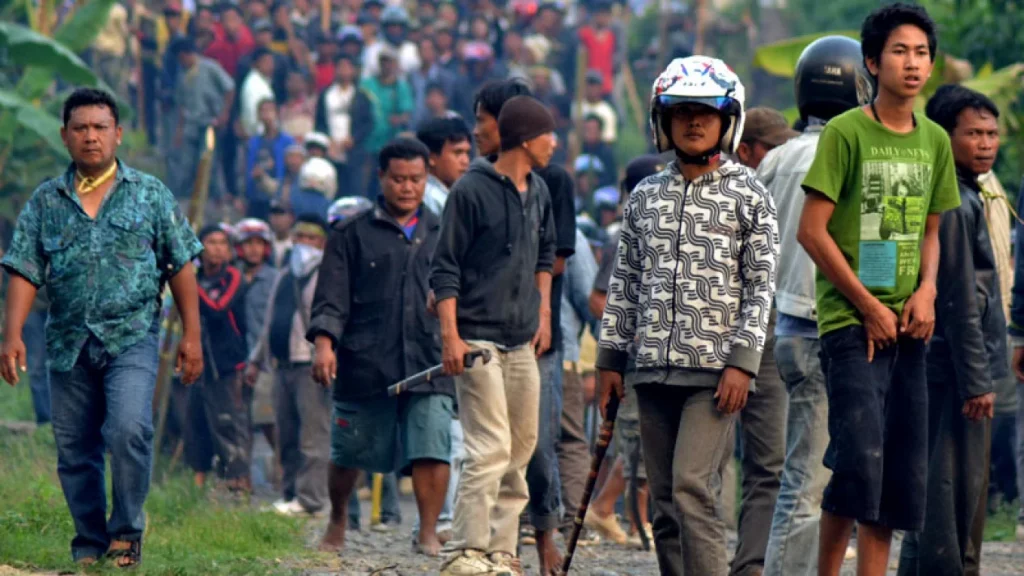
    The sparse relationship between these interactions can lead to social conflict. The main cause is differences in society with various triggers such as cultural differences, unequal interests, social changes that are too fast, to differences in thinking between individuals.

    Max Weber’s Theory of Social Conflict

    Several experts research on social conflict, one of which is Max Weber. According to Weber, conflict arises from the existence of social stratification in society.

    Each of these stratifications is a position worthy of being fought for by humans and their groups. Social relations are an attempt to get a high position in society.

    In his theory of conflict, Weber argues that power has significance for every type of social relationship. Power becomes the driving force of social dynamics that places individuals or groups to be mobilized or mobilized.

    As a result of power and interests, it can simultaneously lead to conflict. This social conflict generally occurs in a combination of the interests of each social structure that gives rise to the dynamics of the conflict.

    Weber’s theory does not discuss conflict theory specifically. Weber attempted to analyze the relationship between social movements and conflict. For him, social movements can lead to conflicts such as those experienced by society during the French Revolution.

    Social Conflict Theory According to Other Expert

    The founder of the famous conflict theory is not only Max Weber. There are still Karl Marx and George Simmel who put forward their respective theories of conflict. In fact, between theories are also “conflicted” because of differences in views such as the thoughts of Karl Marx and Max Weber.

    Conflict theory according to Karl Marx states that social change arises because of a conflict which ultimately results in a different compromise from the initial state. Society will be divided into two classes, namely the capitalist class (bourgeoisie) and the working poor class (proletariat). They are conflicted because of the different nature of the two.

    the conflict between the bourgeoisie and the proletariat cannot be separated from the implementation of capitalism by the bourgeoisie. Capitalism is an economic system that allows some individuals to control vital productive resources. The bourgeois class uses this access to achieve maximum profit by utilizing the services of the proletarian class as laborers.

    Max Weber refuted the opinion of Kari Marx’s conflict theory regarding historical materialism. The historical materialism in Marx’s opinion only emphasizes attention to one side of class. According to Weber, a balance is needed by also emphasizing the role of the idea factors that cause historical change.

    Weber focused on understanding the growth of the rational capitalist system in the Western world on a large scale. On the other hand, the capitalist system did not experience much development in the East and was not liked. Weber argues that the void of religious transformation in the East is an obstacle to the development of capitalism in the region.

  • Definition of Social Conflict and Its Theory According to the Experts

    Definition of Social Conflict and Its Theory According to the Experts

    From several conflict theories known in sociology, there are two groups, namely first, functional conflict theory and second, class conflict theory.
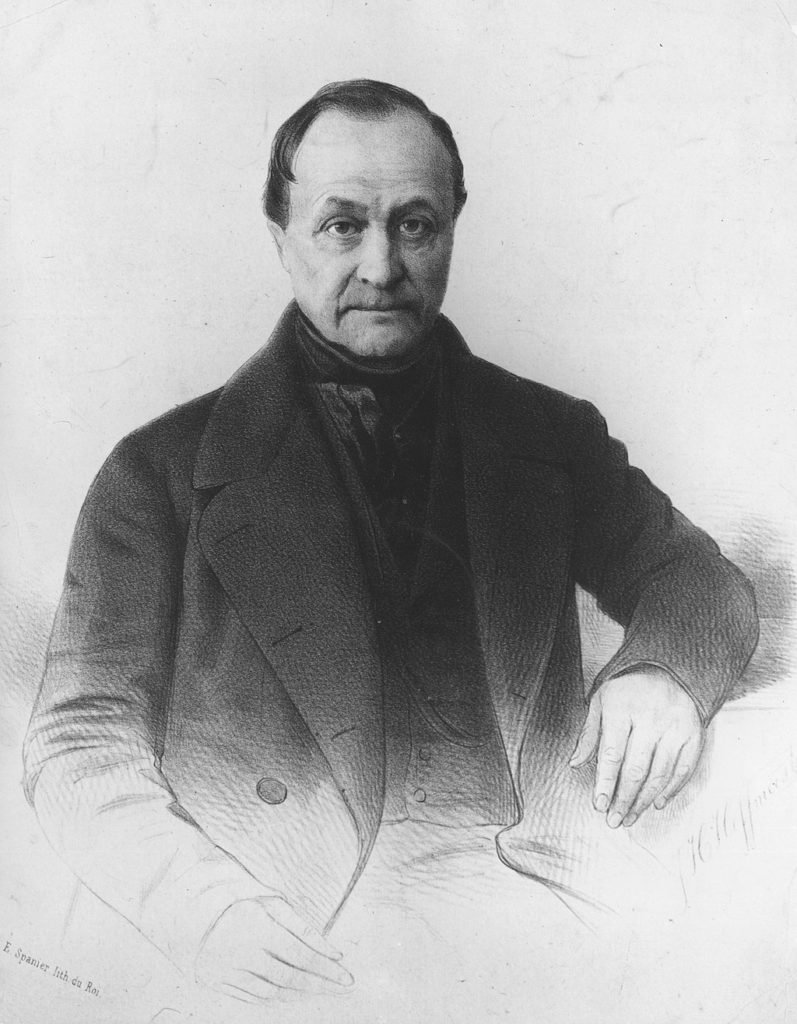
    There are various social groups in society. This diversity can lead to social conflicts that can have an impact on the disruption of the regularity of people’s lives.

    Social conflict can be triggered by several things, such as the presence of community members who do not understand the goals of the group or society.

    Conflicts that take place in society can also occur between individuals, individuals with groups, and groups with groups.

    According to Webster, the term “conflict” in English means a fight, war or struggle, which is a physical conflict between several parties.

    The meaning of the word then develops with the inclusion of “sharp disagreements or oppositions over various interests, ideas, ideas, etc.”. So the term “conflict” also touches on the psychological aspect behind the physical conflict itself.

    Meanwhile, according to Gurr, the criteria that mark a conflict as a conflict are as follows:

    1. A conflict must involve two or more parties in it;
    2. The parties attract each other in mutually opposing actions;
    3. They usually tend to engage in coercive behavior to confront and destroy the “enemy”;
    4. The conflicting interactions between the parties are in a definite state, therefore the existence of conflicting events can be easily described by social observers who are not involved in the conflict.

    Definition of Social Conflict According to Experts

    Several expert opinions regarding the definition of social conflict include:

    a. Soerjono Soekanto: Conflict is a social process of individuals or groups of people trying to fulfill their goals by opposing the opposing party accompanied by threats and/or violence.

    b. Robert MZ Lawang: Conflict is a struggle for value, status, and power in which their goal is not only to gain advantage, but also to subdue their rivals.

    c. Berstein: Conflict is a disagreement or difference that cannot be prevented. This conflict can have a positive or negative influence when interacting with other people.

    Social Conflict Theories According to Experts

    From several conflict theories known in sociology, there are two groups, namely first, functional conflict theory and second, class conflict theory.

    These two groups of theories are rooted in the thoughts of two figures, namely Georg Simmel and Karl Marx. Simmel’s thinking was then followed by Lewis Coser, while Marx was followed by Ralf Dahrendorf.

    More fully, the following are theories of social conflict according to experts in the field of sociology:

    1. Conflict Theory According to Lewis A. Coser

    Lewis A. Coser
    Lewis A. Coser

    According to Coser, conflicts that occur in society are caused by lower-level groups who increasingly question the legitimacy of the existence of the distribution of resources. rare source.

    Coser considers that conflict is not always negative, but conflict can strengthen and establish harmony within a group.

    Three factors that influence the duration of a conflict in society are as follows:

    a. The breadth and narrowness of the goals of social conflict.

    b. There is knowledge and defeat in conflict.

    c. There is a leader’s role in understanding the costs of conflict and persuading followers.

    Conflict can maintain intergroup relations and reinforce group identity. The benefits of conflict according to Coser, are as follows:

    a. Conflict can be a medium for communication.

    b. Conflict can strengthen group solidarity.

    c. Conflicts with other groups can produce solidarity within the group and that

    solidarity can lead to alliances with other groups.

    d. Conflict can cause isolated community members to play an active role.

    Then, Coser classifies social conflicts into two types, namely realistic conflicts and non-realistic conflicts.

    a. Realistic Conflict Realistic

    conflict is a conflict that comes from individual or group disappointment over the demands or estimates of benefits that occur in social relationships.

    b. Non-Realistic

    Conflict Non-realistic conflict is conflict that stems not from conflicting rival goals, but from a need to defuse tension.

    2. Conflict Theory According to Karl Marx

    Karl Marx
    Karl Marx

    Karl Marx has a view of social conflict as a class struggle. Communities in conflict are dominated by dominant groups.

    The existence of a more dominant party appears the party in power with the party being controlled. The two parties have different or conflicting interests that can lead to conflict.

    In Karl Marx’s theory, there are several facts as follows:

    a. The existence of a class structure in society

    b. There are conflicting economic interests among people who are in different classes.

    c. There is a great influence seen from the economic class on a person’s lifestyle.

    d. There are various effects of class conflict in causing changes in social structure.

    3. Conflict Theory According to Ralf Dahrendorf

    Ralf Dahrendorf
    Ralf Dahrendorf

    Dahrendorf sees conflict theory as a partial theory used to analyze social phenomena.

    Dahrendorf sees society as having two different sides, namely conflict and cooperation. Dahrendorf uses Marxian theory of class struggle to build a theory of class and class struggle in contemporary industrial society.

    The class struggle in modern society lies in the control of power.

  • What is Positivism, A Sociological Theory of Auguste Comte

    What is Positivism, A Sociological Theory of Auguste Comte

    Auguste Comte (1798-1857) was a French philosopher who is often referred to as the founder of sociology. He also introduced the term “Sociology”. The term was first introduced in 1838 in his book Cours De Philosophie Positive .

    In his work, Comte explained that the word “sociology” comes from the Latin “socius” which means “friend or friend”, and “logos” which means “science”.

    Thus, sociology is a branch of science that studies society, including community behavior, and human social behavior by observing the behavior of the groups it builds. These groups include families, ethnic groups, countries, and various political, economic, social organizations.

    Three Stage Theory by Auguste Comte

    Through this book, Comte introduced the stages of intellectual development, each of which is a development from the previous stage.

    The three stages include:

    a) Theological stage , namely the level of human thinking that all objects in the world have a soul and it is caused by a power that is above humans;

    b) Metaphysical stage , which at this stage humans assume that in every symptom there are certain forces or cores that will eventually be revealed; and

    c) Positive Stage , namely the stage where humans begin to think scientifically.

    The last three stages of intellectual development, or the Positive Stage , eventually brought people to know his famous thought: Positivism.

    Recognizing Positivism

    In science, positivism is a form of thought that emphasizes the factual aspects of knowledge, especially scientific knowledge. Generally, positivism describes factual statements on a basis of perception (sensation).

    In other words, positivism is a school of thought which states that the natural (empirical) sciences are the only true source of knowledge and rejects the cognitive value of philosophical or metaphysical studies.

    According to Anthony Flew in A Dictionary of Philosophy (1984), when viewed from the origin of its development, positivism is a philosophical understanding in the flow of the Galilean tradition that emerged and developed in the XVIII century. Comte himself has tried to use the Galilean paradigm to explain human life in society.

    According to Comte, the concepts and methods of natural science can be used to explain human collective life. Furthermore, it is said that human life also occurs under the imperative of the law of cause and effect with all the conditions and probability factors.

    As events in the universe are subject to universal laws, Comte stated that human life can always be explained as a process of actualizing the law of cause and effect. Every event or action in human life that is casuistic can always be explained in terms of rational and natural cause and effect and is therefore scientific .

    According to him, every action cannot be interpreted from the substance in the form of its own moral-altruistic and metaphysical intentions and goals. Because, that is something that can be considered unscientific (unscientific) .

    Pros and Cons of Positivism

    As a thought, positivism has its advantages and disadvantages.  positivism has advantages and disadvantages as follows:

    a.) Strengths

    • Positivism produces a knowledge in which humans will be able to explain the reality of life not speculatively, but concretely, definitely, absolutely, regularly and validly;
    • With progress and with a spirit of optimism, people will be encouraged to act actively and creatively, in the sense of not only gathering facts, but also predicting the future;
    • Positivism has been able to push the pace of progress in the physical and technological sectors;
    • Positivism places great emphasis on rational-scientific aspects, both in epistemology and ontological beliefs that are used as the basis of their thinking.

    b.) Weaknesses

    • Biological analysis which is transformed into social analysis is considered as the root of the decline of spiritual values ​​and even human values. This is because humans are reduced to a physical-biological sense;
    • Man will lose meaning, art or beauty, so man cannot feel happy and pleasure does not exist;
    • Just stop at something that is visible and empirical so that it cannot find valid knowledge.
  • Understanding Pierre Bourdieu’s Theory: Habitus and Examples of Social Phenomena

    Understanding Pierre Bourdieu’s Theory: Habitus and Examples of Social Phenomena

    Pierre Felix Bourdieu’s theory of thought can be easily remembered by the composition of social practice, namely (Habitus X Modal) + Realm = Practice.

    Pierre Felix Bourdieu’s thoughts give us a reflection to understand social phenomena which we ourselves unconsciously make habits or Bourdieu calls Habitus. 

    Now, for the theoretical formula of Pierre Felix Bourdieu’s thought, we can easily remember the composition of social practice, namely (Habitus X Modal) + Realm = Practice.

    In this first article, we will briefly discuss Habitus written by Pierre Felix Bourdieu, let’s see!

    A Brief Introduction to the Sociological Figure Pierre Felix Bourdieu.

    He was a philosopher, anthropologist and sociologist whose work had a major impact on the social sciences in the second half of the 20th century.

    Bourdieu also became one of the leaders of cultural sociology. Bourdieu’s thought was influenced by thinkers such as Aristotle, Thomas Aquinas, Hegel, Marx, Durkheim, Max Weber, Picasso, Franz Fanon, Jeane Paul Sartre, Huserl, Sausure, Levi Strauss, Wittgenstein, Martin Heidegger, and Michel Foucault.

    Then, Bourdieu gave the concept of practical theory which people are familiar with with the formula (Habitus X Modal) + Realm = Practice. He provides a new thought formula called the structuralism-constructive method. 

    Through this method, he synthesizes a theory that emphasizes structure and objectivity with a theory that emphasizes the role of actors and subjectivity.

    His thoughts have an influence in the field of social science, especially in cultural studies. The theory that he put forward is known as the theory of practice.

    Practical theory is a blend or mixture of agent- or actor-centered theory with structure-centered theory in shaping social life. 

    Understanding Pierre Bourdieu’s Thoughts on Habitus. 

    Humans as social beings certainly cannot be separated from the process of social interaction and communication between individuals, as well as between community groups.

    This social interaction and communication occurs when humans are born, which begins with the process of internalizing the prevailing values ​​and norms. Where we ourselves run the habitus without us knowing it. 

    Then, how does Bourdiue define habitus? Well, here’s Sociology Info quoting from the Journal of Cultural Studies (2016) Volume I No. 2: 79-82, Pierre-Felix Bourdieu Theory Research Report by Mangihut Siregar Udayana University, the following is the review: 

    For Bourdieu habitus is a system through a combination of objective structures and personal histories, enduring and changing dispositions that serves as a generative basis for objectively structured and integrated practices. Understanding the concept of habitus is the key in Bourdieu’s theoretical synthesis. 

    Where Habitus is a process of internalizing various socio-cultural values ​​and a sense of the game (feel for the game) that gives birth to various movements that are adapted to the game being played. Habitus is the result of internalizing the structure of the social world, or the inner social structure. 

    Habitus is a historical product that is formed after humans are born and interacts with society in a certain space and time. Habitus is not innate or natural but is the result of learning through parenting and socializing in society. 

    The learning process is very subtle, unconscious and appears as a natural thing. Individuals are not completely free agents, nor are they passive products of social structures. Habitus is closely related to the field, because the practices or actions of agents are habits formed by the field, so that habitus is understood as a cultural action. 

    Bourdieu’s theoretical approach is to illustrate that what a person says and does in his life is basically something other than his desires or just from social and material structures. 

    Individuals in their actions are influenced by the structure or the collective/social. The existing structures in society are internalized by social actors so that they function effectively. Internalization takes place through parenting, play activities, and also education in the community both consciously and unconsciously.

    At first glance, habitus seems like something natural or a gift, but it is a construction. Actors or agents in acting are not like puppets or machines that move when someone orders them. Agents are individuals who are free to move according to their wishes. 

    On the one hand, the agent is an individual who is bound in a collective/social structure, but on the other hand, the agent is an individual who is free to act.

    This synthesis and dialectic between the objective structure and subjective phenomena is known as habitus. The result of the dialectical relationship between structure and agent is seen in practice. Practice is neither objectively determined nor free will.

    Habitus that exists at a certain time is the result of long-lasting collective life. Habitus can last a long time but can also change from time to time. Habitus produces and is produced by social life, meaning that habitus is a social structure and habitus is a structured structure. 

    Thus Bourdieu defines habitus as a durable, transposable disposition system that serves as a generative basis for objectively structured and integrated practices.

    Examples of Social Phenomenon of Society.

    Habitus is a habit that is inherent and repeated by humans in their daily lives. 

    We can see this habit in the behavior and actions taken, such as village communities who are used to mutual cooperation activities, helping when there is a celebration or rewang. 

    Well, we can see how this habit has been ingrained for a long time, so that it becomes a habit that is carried out continuously and repeatedly. 

    Thus, we can form the habit by ourselves without us realizing it. That is when we look at the village community who have been instilled in the values ​​of gotong royong as a habit that has been ingrained for a long time.

    What else can we see in giving examples of habitus? Well, for example in students, students who they familiarize themselves as students and students by learning, behave according to the values ​​and norms as well as their obedience in being students and students. 

    Such as coming on time, doing assignments well and maximally, and applying teachings that are in accordance with existing values ​​and norms. This is where there is a process of social interaction and communication that builds the habitus by continuously repeating these patterns. 

    Well, for examples and analysis of social phenomena in society, yo

  • Erving Goffman’s Theory of Dramaturgy, This is the Latest Explanation and Examples

    Erving Goffman’s Theory of Dramaturgy, This is the Latest Explanation and Examples

    Erving Goffman’s Dramaturgical Theory. The following are explanations and examples of social phenomena in everyday life that we may often encounter.

    The existing social life is part of the play. This explanation of Erving Goffman’s Dramaturgy Theory will explain how we understand the play.

    The following are explanations and examples of social phenomena in everyday life that we may often encounter.

    Get to know Erving Goffman, this is his explanation about dramaturgy

    Erving Goffman, is a character who is familiar to some circles. Especially for those who belong to academics, students, or students. Erving Goffman was born in Alberta, Canada June 11, 1992. 

    He was a major Canadian-American sociologist who played an important role in the development of Modern American sociology. 

    An academic who graduated from the University of Chicago, he is known as a member of the Chicago school and as a theorist of symbolic interactionism. He made a theory that is dramaturgy. 

    Dramaturgy theory is widely used for various research purposes, scientific papers, and learning materials. 

    Dramaturgy comes from English, namely “dramaturgy”, from the word “drama” which means the art or technique of drama in the form of theatre. 

    According to Goffman (1959), dramaturgy is a play of life presented by humans. Dramatic situations that seem to occur on stage as illustrations to describe individuals and their interactions in everyday life. 

    So it can be concluded that dramatugy is a view of social life as a form of storyline for drama performances in a stage. 

    (Melati, 8: 2016) explains that dramaturgy is a theory that can interpret the daily life of humans. 

    Humans are like playing a show on stage. The stage consists of a front stage and a back stage. 

    In the front stage there are settings and personal fronts, which can then be divided into appearance and style.”

    Examples of Understanding Dramaturgy Theory in Everyday Life

    Now our discussion this time, how dramaturgy theory is very relevant and closely related to our daily lives. 

    I’ll just give an example with a student, his name is Farhan. Farhan is a student, he also participates in several organizational activities. When you want to go to campus, canteen, library.

    Or other campus facilities, he must adjust himself as best he can, dress like a student, bring books, pens, and laptops. The attitude that he formed is called dramaturgy. 

    Farhan as an individual plays his role as a student, he goes to campus with books, pens, and laptops to support his studies. 

    Besides that, he embellished himself by wearing student-like clothes (with his fashion sense). 

    Farhan as an individual student is he who is characterized above when interacting and dealing with the community, especially with the campus community. This social life is the object of the front stage or front stage. 

    When Farhan is at home, rented, or in a boarding house, he is a different individual or is rarely highlighted. Such a situation is called a back stage or (behind the stage / screen). Like a theater stage, event studio, or shooting location. 

    The actors who are on the back stage, of course, do different things when on the front stage, they can relax and be themselves when they are behind the screen. 

    Likewise Farhan, in the back stage condition Farhan did things he didn’t do when he was on campus, it could be a habit that is not pleasing to the general public. 

    So don’t be surprised if you see a different friend when in a formal environment such as an office, campus, or school with him when in a non-formal environment such as a home, cafe, or other place. 

    Consciously or not, he is applying dramaturgy theory. Maybe, subconsciously you also apply it, hehehehe.

    What are the Benefits of Learning to Understand Dramaturgy Theory

    This theory is very useful for us to be able to position ourselves according to the existing situation. 

    We become wiser and understand how to look when we meet important people such as officials, work clients, lecturers, or our own friends. In a formal situation, we must understand how the policies and values ​​and norms exist in that situation. 

    For example, when you are attending a webinar held by a government institution. From the committee’s policy, it is stated in it, namely “invited guests, committee.

    And participants are prohibited from eating, drinking, and smoking during the event, “so automatically you who get a position as a participant must of course heed this order. 

    When you violate it, you are considered unethical and labeled impolite. If this continues, it is feared that it will become a habit. 

    There is nothing wrong with a habit or a habit, the benchmark for which is whether it is a good standard or a bad one. 

    Therefore, we must be able to position ourselves as best we can, don’t make it a habit when we are on the back stage (house, rented house, boarding house, hangout) brought to the front stage (workplace, campus, and school). 

    On the other hand, dramaturgy theory conveys a message that it is not too easy to judge people’s appearance. Humans still have two sides, nice personality or bad personality. 

    The good and bad of an individual is seen by the public, it depends on himself and depends on the values ​​and norms of his environment. Life is indeed drama, acting, and personal branding. 

    The effect given later will be felt again, as the saying goes “what you sow, that’s what you reap.” 

    So always consider if you want to appear in front of the audience with the thoughts you have, Are these thoughts or ideologies in accordance with your conscience? 

    Are you able, if what you do becomes a problem in the public? And when do you want to start? 

    Questions like that often cross our minds, I personally do too. When you are ready, please go ahead. 

    Do not procrastinate too long due to insecurity and validation of people. The point is, don’t forget to always read books, listen to criticism and advice, and look at your surroundings. 

    That way when applying dramaturgy theory, we can become more realistic, critical, and unselfish people.

    Reference sources :

    (Melati, 2016)Melati, MR (2016). ANALYSIS OF ERVING GOFFMAN’S DRAMATURGY CONCEPT IN PATTERNS OF USE OF PUBLIC SPACE BY STUDENTS IN THE CITY OF SURAKARTA. Thesis, III(2), 2016.

    https://cubic.id/journals/dramaturgy-theory, accessed 27 June 2021

  • Georg Simmel: Sociology Without Sociologists

    Georg Simmel: Sociology Without Sociologists

    Who is Georg Simmel?

    Georg Simmel was born in Berlin on March 1, 1858 and died on September 26, 1918 in Alsace, Strasbourg.

    Although now known as one of the classic sociology figures, Georg Simmel’s academic career is arguably not as big as his work which is still often used as a reference.

    Simmel was a sociologist who was formally alienated, but had a profound influence on some of the intellectuals who had been his students.

    Some of them are Albion Small, George Herbert Mead, Robert Park, and WI Thomas.

    Simmel was also a colleague of some of the great thinkers of his time such as Max Weber and Wilhelm Dilthey.

    Seeing Georg Simmel’s intellectual contributions in the field of sociology, he is undoubtedly one of the most influential intellectuals in Europe and America. His name may be less heard in other parts of the world, but some of Simmel’s concepts are well known.

    Sociological studies of social networks and social interactions that are now popular often place Simmel’s work as the theoretical foundation.

    Georg Simmel was descended from a Jewish family, the last of seven children. Despite his Jewish heritage, Simmel as a young man changed his religious affiliation to become a Protestant.

    At that time in Germany it was not uncommon for a child to convert from Judaism to Protestantism. Affiliation to Judaism is considered to be a barrier to one’s career, especially in 19th century Germany to the early 20th century.

    In 1876, Simmel began studying history and philosophy at the King Fredrick William University. At the age of 23, Simmel received an academic degree after successfully defending his dissertation on Kantian philosophy.

    Georg Simmel began his career as a private lecturer in Berlin, teaching ethics, philosophy, sociology and social psychology for a fee depending on the audience.

    Simmel’s lectures were famous for being fashionable and attracted many guests from Berlin’s intellectual circles. His colleague Wilhel Dilthey of the philosophy department repeatedly sponsored Simmel for a full professorship.

    Although universities and faculties have the authority to apply for full professorship titles, the decision rests with the state through the Prussian ministry.

    In the end Simmel earned a professorship but not full. Its powers are limited to teaching and the use of degrees. Recruiting students and guiding students is not his authority.

    This limitation is indicated for two reasons. First, his race is of Jewish descent. Second, the sociology that Simmel taught was considered anti-positivist, a school of thought that was considered a threat to the stability of the country at that time. Simmel taught sociology without formal support as a sociologist.

    Contribution in Sociology

    Some of Simmel’s important contributions to sociology and other social sciences include elaboration in an attempt to answer the question, “What is a gesellschaft?”

    In his essay in the book Soziologie (1908), Simmel argues that sociology is not a science, but a methodology. Sociology is a methodology for exploring the ongoing process of socialization.

    The concept of socialization described by Simmel is now more often referred to as social interaction. As a methodology, sociological research data comes from other disciplines, such as psychology and anthropology.

    One of the important concepts that Simmel coined in sociology is formen or forms. The use of the concept of formen makes it possible for the social world to be understood.

    According to Simmel, all people in this world interact, and through forms , these interactions can be categorized. Georg Simmel looked at the task of sociology to identify categories and types of social interaction. Formen can be defined as a process of sociation, namely the process of socially categorizing reality.

    For example, in a society there is a leader and several followers. The relationship between the leader and the follower forms a certain pattern of interaction.

    For example, when a follower meets a leader, he kisses the leader’s hand as a form of respect or courtesy or whatever his name is. Kissing hands is a form of interaction.

    This form of interaction can be understood through formen , namely the categorization between leaders and followers.

    We can also identify which leaders are followers when we see the kissing scene. Thus the social world can be understood according to Simmel.

    Other concepts that are also important and are also considered as the theoretical foundation of the concept of network society are dyads and triads.

    The concept of dyad describes two entities that are bound to each other. While the triad is three or more entities that are bound to each other. Dyad and triad are two concepts that determine how the formen process takes place.

    Dyad is a unique concept because it consists of two entities or let’s call it two people, where without one of them, the form of interaction can be lost. For example, I can argue with you, but if you leave, I can’t argue anymore.

    While the triads are different. Triads form formations with different processes because interactions can still take place dynamically even though several people come and go.

    For example, three students eat in the cafeteria while chatting. When one said goodbye to take fried food, the others were still able to chat.

    Interaction can still exist. An easy-to-understand illustration of the difference between a dyad and a triad is a ball and chess match.

    When a player gets a red card, the ball game can still be continued, but not chess. The concepts of dyad and triad can explain interaction patterns in more complex contexts, such as urban communities and network communities.

  • Impact Of Social Mobility: Positive And Negative

    Impact Of Social Mobility: Positive And Negative

    There are many impacts caused by the existence of social mobility. What are the impacts of social mobility and how to respond to these positive or negative impacts? let’s learn together here.

    In the midst of running a social life, surely you have heard the term social mobility. Social mobility in people’s lives does have many contexts and anyone may experience social mobility . In fact, many have experienced social impacts, both the perpetrators and the people around them.

    The impact of social mobility in the midst of people’s lives can be felt. Moreover, this social phenomenon seems to be very close to us and related to people’s lives. But not many understand that he has a high social impact.

    Actually, what is the impact of social mobility and how does this social impact affect people’s daily lives? Before discussing what the impact of social mobility is, we will explain several things covering social mobility, starting from the general understanding to the impact itself.

    Understanding Social Mobility in General

    Before discussing the impact of social mobility, you must first understand what social mobility is in general. By understanding the definition of social mobility in general, you will also understand how social mobility impacts, both positive and negative impacts.

    In general, the notion of social mobility is a change in the position of citizens in one social class to another. Social mobility which will have an impact due to social mobility means the movement of individuals, families, or groups through a system of hierarchies or social stratification .

    Social mobility which will later have an impact on social mobility is also referred to as a social movement which is defined as the movement of people or groups from one social stratum to another. The results of the transfer of social status can be higher, lower, or even remain the same.

    In addition, social mobility can also be interpreted as a transfer of status both vertically and horizontally which will then have an impact on social mobility, both positive and negative impacts.

    Social Mobility Channel

    After understanding the meaning of social mobility which will have an impact, you must also understand that there are various channels of social mobility which will then affect or have an impact on social mobility. At least, there are several channels of social mobility within the community.

    The social mobility channel which will later have this impact serves as a means to carry out social mobility. There are many examples of social mobility channels in the community, but we will explain several channels of social mobility which can then have a social impact on society at large.

    1. Education

    One channel of social mobility that will have an impact on social mobility is in the world of education or educational institutions.

    As we know, educational institutions are places where the educational process or teaching and learning process takes place which has the aim of being able to change human behavior or behavior for the better.

    In the channel of social mobility, namely education, it is divided into several types:

    a. formal education

    Formal education in this channel of social mobility will have a considerable social impact on the community. This formal education covers the school level from elementary or elementary school to university. This educational social mobility channel is systematic, regular, tiered, and has clear requirements.

    Formal education is further divided into several parts, namely general education, special education, vocational education, profession, to religion. This educational institution was founded by the government and the private sector which has a large social impact on community life.

    b. Non-formal education

    This non-formal education also has a social impact, although it is not as big as formal education. Non-formal education is held for the benefit of citizens who need educational services as a complement to formal education.

    Examples of non-formal education are place for courses, study groups, training centers, taklim assemblies, centers for learning activities, and many more.

    The results or values ​​that can be obtained from non-formal education are equivalent to the results or values ​​in formal education, as long as the non-formal education center has received equivalence from a special institution or has referred to national education standards.

    c. Informal education

    In contrast to formal and non-formal education, informal education is usually in the form of family education activities which are usually referred to as human first education because of the role of the family in it. Even so, informal education also has a significant impact on social mobility.

    2. Political Organization

    The second channel of social mobility that also has an impact is political organization. Political organizations are engaged and have an interest in the political process and state science. The impact of this mobility from this political organization is important in shaping a social order that plays a role in determining the fate of the nation.

    Channels of social mobility that have an impact on social mobility, namely political organizations, are divided into several types.

    a. Advocacy group

    An advocacy group is an association that aims to influence political decisions and convince public officials to act in accordance with the voices and interests of the group’s members so that the impact can be felt by the wider community.

    b. Think tank or think tank

    This type of political organization also has an impact because it is tasked with conducting research funded by clients, both government and commercial parties that are useful for the interests of political, social, technological, and weapons members that have a very social impact on a particular group.

    c. Political parties

    This political organization has quite a big impact because they will carry out a certain ideology and the organization is formed with a specific purpose. The purpose of this organization is to gain political power constitutionally so that their various policies can be implemented in a country.

    d. Terrorist group

    The impact of mobility from this organization is also felt by the wider community. This organization has certain ideologies and goals that seek to achieve its goals by means of violence or terror so that the impact of social mobility for the wider community is considered quite dangerous.

    3. Professional Organization

    The channel of social mobility, namely this professional organization, has a great impact on society at large and even individuals. A professional organization is a group of people who have the same goals based on expertise education, including certain skills and vocational.

    This professional organization is a union that is a legal entity and is formed from the same individuals who then develop knowledge, expertise, and so on.

    This professional organization has a social impact for members or the community that is able to improve the skills and abilities of workers or members who are members of it and protect their rights.

    4. Economic Organization

    The next channel of social mobility is economic organization. This economic organization or what is also known as a commercial organization has an impact that is also felt by the wider community. This organization aims to obtain or obtain the maximum profit.

    The main activity of this economic organization has a wide impact because it produces and distributes goods or services which are then offered to the wider community. The goods or services have tariffs that must be paid by consumers. Then, the rate paid becomes the profit or profit of the organization.

    Therefore, organizations that have a fairly large impact on economic mobility are often referred to as profit organizations . These organizations are divided into two types, namely private and government organizations. Of these two types, it is further divided into several types.

    a. Private organizations are divided into Firms (Fa), Limited Liability Companies (CV), Limited Liability Companies (PT), and Cooperatives.

    b. Meanwhile, the government’s economic organizations are divided into State Limited Liability Companies (Persero), Regional Companies, Public State Companies (Perum), and State Service Companies (Perjan).

    In addition to the two types of economic organizations above, there are also other types of economic organizations with social ownership, such as Joint Ventures , Cartels, Foundations, Syndicates, Trusts , Holding Companies , and others.

    Positive Impact of Social Mobility

    The occurrence of social mobility certainly has a positive and negative impact. The following is social mobility that has a positive impact on society at large or individuals.

    1. Encourage one’s progress

    The first positive impact is to encourage one’s progress. This is because social mobility can have an impact on a person’s social status from being low to a higher social status. For example, what many people feel is when Indonesia was colonized and Indonesia became independent as it is today.

    2. Accelerating social change

    The second positive impact is the changes that occur in society and have an impact on the social system. An example of social change that occurs is social change due to social mobility due to globalization. People are becoming more aware of technology, and so on.

    3. Increase social integration

    The last positive impact is increased social integration. This means that the impact of social mobility can affect and increase community integration. For example, a family who moves to a new environment will experience social changes by adjusting their lifestyle, and so on.

    The Negative Impact of Social Mobility and Its Solution

    In addition to the positive impact, social mobility can also have a negative impact. The following will explain some of the negative impacts and their solutions.

    1. Conflict occurs

    One of the unfavorable impacts is that it triggers conflict. Conflict is unavoidable by people who carry out social interactions, as well as when social mobility occurs. It could be because of competition or a sense of injustice, then the conflict arises. is unavoidable by people who carry out social interactions, as well as when social mobility occurs. It could be because of competition or a sense of injustice, then the

    Solutions to avoid conflicts can be done in several ways, for example:

    • Avoid cornering one party,
    • Make decisions together, and
    • Conduct evaluations or good communication.

    2. Affects health

    The next negative impact is that it can affect a person’s health. Usually this happens when a person experiences a downward vertical social impact or experiences a decline in social status. It is undeniable, people will feel depressed, uncomfortable, and so on which then triggers the occurrence of disease, especially psychological.

    To overcome this, a solution is needed, namely:

    • work and socialize as well as possible so as not to experience the impact of downward vertical social mobility or a decline in social status,
    • adapt and not bother with the impact of social mobility, and
    • trying to do the best every time.

    How to Deal with Social Mobility

    To address the impact of social mobility, efforts or methods are needed to prevent the detrimental impact on the wider community or an individual.

    • Distributing free education for the underprivileged.
    • Build a healthy political organization.
    • Build an economic organization that benefits both parties.
    • Build professional organizations to create wider employment opportunities.


  • Social Action: Definition, Types And Examples

    Social Action: Definition, Types And Examples

    Have you ever felt angry or sad over the words or actions of those around you? This reaction in sociology is referred to as social action. In socializing or interacting with people around, two things will appear. Come on, understand the meaning and examples of social action and its types.

    The first is social interaction, and from here comes social action, for example, as mentioned earlier. When someone communicates with other people (social interaction), there will be actions, responses, and the like from both parties.

    Whatever actions, responses, etc., are included in the social actions that arise as an effect of social interaction. Everyone, without exception then, every day, even every second, is doing social actions. Then, what exactly is meant by this social action?

    Definition of Social Action

    Social action, in general, is an action that is influenced and affects other people during social interactions. At the same time, social interaction is a relationship between two or more individuals who influence each other.

    This social interaction’s influence is referred to as the social action earlier. So when there is a social action, the background for the emergence of this action is because there is interaction. With interaction, social action will occur.

    In simple terms, social action can be interpreted as a response or reaction visible to the naked eye after social interaction. The forms then vary so that the types of social action are also very diverse, which will be explained below.

    An example is when there is communication between two people, this communication occurs as an effort to exchange information. After the data is conveyed by one of them, the listener will react.

    Whether it’s happy, surprised, amazed, angry, and so on, it is a form of emotional, social action. Then when the listeners of this information decide to cry, yell, and laugh out loud, it also includes social actions that the perpetrators physically carry out.

    Social actions taken then need to be thought out carefully and wisely because this action will lead to other social actions, which can lead to good or even new problems.

    An example is when someone scolds someone because of that person’s social actions. If the person being scolded does not accept it, they will take social actions to get angry at the first party, gossip, slander behind their backs, and so on.

    So, social action is shaped like a cycle. When you do good actions, the actions of those around you are also good. Vice versa. So in sociology, it is discussed in depth how to interact socially well to minimize social actions with negative effects.

    Understanding According to Experts

    Several experts then explained the definition of social action. These experts then expressed their opinion. In sociology, two experts define social action and are widely known worldwide. That is:

    A. Max Weber

    The first expert to define social action was Max Weber, a figure in sociology. According to Weber, the notion of social action is an action based on social facts that have a major influence on social life, where the social system in this influence is created from the relationship of individuals in their groups.

    B. Ritzer

    Ritzer conveyed the second opinion; according to him, the notion of social action is a repetitive behavior carried out intentionally due to passively influencing situations with similar goals in certain conditions.

    Through the definitions presented by the two experts, it can be concluded. That social action is a repetitive action or behavior carried out intentionally due to the influence of certain situations.

    Situations in social interaction will shape the social actions of all individuals in the relationship. A tense situation will create fear and force the mind to look for ideas as a solution.

    The solution obtained is then immediately applied, and this is also included in social action. In practice, no individual does not perform social action. Even getting up early because you want to go to school or work every day is included in it.

    Types of Social Action

    As explained earlier, the types of social action are as diverse as the forms of social action itself. When viewed from the aspect of things that encourage social action. So social action is divided into 4 (four) types, namely:

    1. Instrumental Rational Action

    The first type is instrumental rational action; as the name implies, this social action is rational. So when someone takes an action, it will be adjusted to the final goal to be achieved.

    A person will not take action without a clear purpose; then, his nature becomes rational and logical. Actions with a clear purpose lead to a clear way as well.

    For example, the social action of a high school student studying hard all night. The goal is to be better prepared for the exam the next day. So learning becomes a social act, and the goal is to be ready for exams.

    2. Value Oriented Action

    The second type is value-oriented social action, which is carried out by considering the values ​​that exist in society. So this action adapts to what is considered good by the wider community.

    The scope of values ​​starts from ethical values, aesthetics (beauty), religion, and other values ​​that exist in society. Value-oriented social action focuses on the benefits and pros and cons of the action in the eyes of society, which overrides the goal.

    An example of this type of social action is when children stop playing football because the call to prayer for the midday prayer has sounded. So they decided to stop playing and pray first, then continue the game.

    3. Affective Action

    The third type is affective action, namely social action that is carried out based on the feelings or emotions felt by an individual. So that this social action is unacceptable, considered illogical, or irrational.

    It is said so because this social action is carried out by prioritizing feelings or emotions so that this action does not involve the mind, which also makes the action unacceptable.

    An example is when a teacher scolds a student in class for being caught cheating, then this student cries. Crying here is a form of affective action because it relies on emotions or feelings.

    Namely the feeling of fear of being scolded and the feeling of worrying about getting a bad grade. Whereas logically, students who cheat should immediately apologize and take responsibility for their actions. Not by crying.

    4. Traditional Action

    The last is traditional action, which is a type of social action carried out because it has become a habit or an action based on a habit and is ingrained.

    Then it relates to all forms of culture or customs so that all social actions of this type are based on the culture applied by the community. This action is hereditary, so it has been happening for a while.

    An example is any action that is done because of custom, such as the Ngaben ceremony for the people in Bali, the Ngebali ceremony in Lampung, the Batu Bakar Party event in Papua, and so on.

    All actions that are carried out based on customs then enter into traditional social actions. This action will continue to be carried out by the community as long as it is inherited or taught to children and grandchildren.

    Examples of Social Action

    It is also possible to know examples of social action to make it easier to understand social action. The form of social action will then be following the types previously stated. The following details an example of social action:

    A. Instrumental Social Action

    In instrumental social action, namely social action based on clear goals. So there are several examples of social action in everyday life related to this type, including:

    1. Ani decided to go to bed early to wake up for the tahajjud prayer at 3 am. (Going to bed early is an act, while the goal is to wake up at 3 am – wake up early for prayer).
    2. Mother sweeps the floor twice a day to keep the house clean. (Sweeping is a social act that aims to keep the house clean.)
    3. Ika eats quickly because she doesn’t want to be late for school. (Eating quickly is a social act, and the goal is to get to school on time.)
    4. Value Oriented Social Action

    B. Value Oriented Social Action

    Social action that is oriented or paying attention to societal values is a value-oriented social action. Examples of social actions include:

    1. Ahmad stopped playing football because it was time for the Asr prayer. (Quitting football for prayer is a social act, its basis is a religious value – prayer times).
    2. We will eat and drink with our right hand at home and public events such as wedding receptions because it is considered better. (Eating and drinking with the right hand is a social act, the basis of which is an ethical value in society – politeness).
    3. A soldier will give his soul and body to the nation and state. (willing to give up body and soul is a social act; the basis is the value of patriotism).
    4. Andi gave up his seat on the city bus to a pregnant woman who happened to be standing. (Giving up a seat is a social act; its basis is an ethical value).

    C. Affective Social Action

    Examples of effective social actions carried out based on feelings and emotions felt are as follows:

    1. Supporters of soccer team A immediately roared with joy in the stadium when their flagship team scored a goal in the opponent’s goal.
    2. Ani cried at the funeral because her mother had just died.
    3. Ika was annoyed on the bus because two young men always teased her along the way even though they didn’t know her.

    D. Traditional Social Action

    Social action based on custom or culture is called traditional social action. Here are some examples of social actions:

    1. Following the Ngaben ceremony for the people in Bali.
    2. Following the Ngababali ceremony in Lampung.
    3. Participate in the Burning Stone Festival in Papua.

    Social action is something that everyone in the community group will always do. This action is a form of overflowing feelings, necessities of life, and so on. So that it will always be there and interesting to understand or study because it can help wiser in acting in the community.

  • Definition of Embargo, Types, and Case Examples

    Definition of Embargo, Types, and Case Examples

    In short, the definition of an embargo is a prohibition issued by the government in a country to import or export certain goods or products to other countries.
    This term is common and familiar used in the world of economics, especially in trade and politics. For more on the meaning of embargo and its types, read this article to the end, okay!

    Definition of Embargo

    The definition of embargo is a prohibition imposed by the government of a country, to export or import certain goods or products to other countries in the framework of policies related to economics, politics, and other policies.

    Therefore, the term embargo can be concluded as an order given by a country, which aims to limit trade and exchange with certain countries.

    The term embargo is generally used in international politics and commerce. An embargo is declared in the form of a policy by the government in a country against other countries in order to isolate the country concerned.

    This will cause the government of an isolated country to be in a fairly difficult internal situation. This difficult internal situation occurred because of the influence of the embargo which caused the economy of the opposing country to suffer.

    The policy, will also limit all trade with a country or aim to reduce the exchange of certain goods.

    In general, embargoes are used as a political punishment for violations of a policy or agreement.

    In general, embargo policies are enforced to force a country to submit to and comply with countries that prohibit exports and imports.

    In other words, an embargo is a weapon that can paralyze a country’s economy.

    If the embargo is enforced for a long period of time, then of course the people in it will experience the impact of the embargo.

    People’s welfare will also decline and can have an impact on other sectors in a country.

    In addition, embargoes are also treated as a result of unfavorable political and economic relations between nations.

    For example, a military embargo is intended to prevent the exchange of military goods from occurring with a country.

    Indonesia itself had received an embargo from the United States. The US embargo was in the form of a ban on exports and imports of military weapons procurement from 1999 to 2005, due to human rights violations committed by ABRI in East Timor.

    America has often made trade embargo decisions and other economic sanctions because of the mandate from the United Nations.

    An example is after the attacks on September 11 in 2001, the United States imposed an embargo on trading commodities to several countries in the Middle East which were accused of being the cause of the attack.

    The embargo does not only apply to all goods and commodities that are exported or imported from the borders of a country.

    Often times, embargoes only apply to certain goods, such as oil and military equipment.


    Purpose of the Embargo

    As previously explained, a country is forced to impose an embargo on another country with the aim of making it difficult for the target country to obtain various kinds of commodities, and especially goods that are the country’s needs.

    The implementation of this embargo policy was triggered by a conflict of interest that occurred between the two conflicting countries, where the country that carried out the embargo hoped that the policy would be able to force other countries to voluntarily sit down together and resolve the issues that were going on between the two.

    The United States, is one of the countries that often implements embargo policies on countries that are considered problematic by them. Both with superpowers and countries globally.

    North Korea, Cuba, to Iran and Indonesia are examples of countries that had been hit by the economic sanctions embargo from the United States.

    Even so, the United States was also affected by this embargo regulation. America is suffering from a shortage as well as an increase in fuel prices, because members of the Organization of the Petroleum Exporting Countries (OPEC) carry out an oil embargo on America.

    Embargoes are carried out by certain countries such as America, because they are considered a tool to influence.

    This embargo is quite often used by several countries that have trade agreements between countries, especially exports and imports.

    Because many countries depend on global trade, embargoes are also considered a powerful tool that can affect a country.


    Types of Embargo

    In general, embargoes are divided into two types. Here’s the explanation.

    1. Economic Embargo

    The first type of embargo is an economic embargo. Prohibition or stopping of commodity traffic from one country to another that has interests or is experiencing conflict.

    Including export and import activities between countries, such as trade embargoes on the defense system or defense equipment and oil.

    In short, the economic embargo is the prohibition of all forms of economic activities. Both export and import activities in countries that are currently receiving sanctions from the embargo.

    Considering the need for certain raw materials, this economic embargo will have an impact on shocks for a production company.

    So the production of certain goods, of course, will require raw materials imported from other countries at much more expensive prices and different levels of quality.

    The policy of this embargo, of course, will have a negative impact. Especially if the country concerned has a level of dependence on raw materials that must be imported or commodities from a country that is ready to import.

    This will bring considerable losses to countries experiencing embargo sanctions.

    The policy of the embargo will also have an impact on economic conditions in a country, namely making the affected economy unstable.

    Huge losses and a fairly severe impact of the economic embargo was massive layoffs.

    In addition, the two countries, both those that impose embargoes and are subject to embargo sanctions, can also be involved in a cold war.

    Because of that, many countries have finally implemented negotiations and even involved the WTO and the United Nations in order to be able to implement the steps they feel are the best in implementing the embargo action.

    This is done in the interest of peace between the two countries and the lives of the people in those countries.

    In addition, the embargo policy also has a certain period of time and has previously been adjusted to the decision of the country of the embargo giver.

    However, it must first contain an agreement between the two countries, if the previous embargo policy is to be lifted.

    In order to be able to lift the embargo policy, of course it will not be easy to do.

    In fact, in general, there will be negotiations that are quite tough and will take a long time to be able to lift the embargo policy.

    2. Information Embargo

    The second type of embargo is the cessation of publication or distribution of all news, both news and information within a certain period of time.

    In the Press Freedom Law itself, it has been stated that the prohibition of embargoes is a legal provision that must be obeyed.

    If a violation occurs, the news company will also receive strict sanctions and fines whose punishment will be determined later.

    A simple example of this information embargo is when a company announces the company’s profits in the mass media, then the public relations party of the company will also provide the data and information needed for publicity.

    However, there is some information that will explain that there is an embargo.

    Where previously the company would officially state that it was led by the leader of the company, then the data and all information provided would be prohibited from being published by the media.


    Impact of the Embargo

    As we knows, that the main purpose of imposing an embargo is to force the target country so that the country can remain subject to the wishes of the country implementing the embargo.

    This step is one of the weapons that is considered quite powerful to cripple the economy of the country affected by the embargo.

    The unavailability of products and basic needs in a country will certainly make the economy in that country shake.

    The existence of this instability, will have an impact on the decline in the level of welfare in the country.

    Not only the economic downturn, the embargo sanctions can also have an impact on the cold war and disrupt world peace.


    How to Overcome the Embargo?

    Considering the impact that can harm many parties, the embargo has become an event that is often difficult to avoid.

    Countries that have been subject to embargo sanctions, will feel some adverse effects.

    However, there are several efforts that can be made by countries that are subject to sanctions to survive the embargo, namely by focusing on surviving by optimizing the resources owned by the country.

    For example, when a country is subject to economic embargo sanctions which then cause imports to that country to be stopped.

    So, the way to overcome this situation is to develop products independently according to the needs of the community.

    However, maybe the quality and quantity of these products will be different, but by taking these steps, at least they are able to cover people’s needs for these products.

    Another effort that can be made by countries that are subject to embargo sanctions is to establish good relations with other countries.

    This needs to be done, so that the country is able to survive even though the country is experiencing an embargo.


    Some Examples of Embargo Cases

    For a more complete explanation of this embargo, here are some cases of embargoes that have previously occurred in various countries.

    1. Economic Embargo on Iran by the United States

    America often imposes sanctions embargoes, including economic embargo sanctions on Iran, namely in the form of prohibiting exports of crude oil to Iran and the sanctions embargo, announced by Barack Obama, who serves as President of the United States.

    At that time, Iran also experienced a number of losses such as its potential market for oil exports.

    In fact, when the economic embargo sanctions were applied, oil exports from Iran immediately fell to 1.5 million barrels per day.

    Thus, Iran can only rely on exports to a few countries in Europe and the Middle East.

    Then in 2015, the United States lifted the sanctions embargo on the condition that Iran must be willing to reduce its nuclear weapons production capacity.

    By lifting the sanctions of the economic embargo, the export activities of crude oil in Iran again increased to 1 million bpd and Iran became part of the Comprehensive Plan of Action (JCPOA) as a form of Iran’s commitment to the nuclear weapons control program.

    Then in 2018, America again imposed an embargo on Iran. The embargo sanctions did not only affect the two countries involved, but also had an impact on the global economy.

    2. An arms embargo by the European Union on Guinea

    In 2018 the United Nations passed a resolution to impose an arms embargo on the country in South Sudan. The policy was adopted by the United Nations, as a response to the existence of conflicts and ethnic violence that continues to occur in the country.

    The resolution, proposed by America. Of the 15 members of the UN Security Council, nine countries supported the embargo policy, including Russia, Ethiopia, China, Equatorial Guinea, Kazakhstan and Bolivia, which abstained.

    In addition to implementing an arms embargo, the UN Security Council also passed another resolution in the form of imposing a travel ban and imposing an asset freeze on South Sudan’s deputy defense chief.

    South Sudan’s deputy defense chief is considered one of the main actors responsible for the conflict and ethnic violence in his country.

    3. Embargo on Cuba

    In 2014, the United States also imposed economic sanctions on Cuba and it has cost Cuba 3.9 billion US dollars or approximately more than Rp. 49.9 trillion in the last year in the foreign trade sector.

    The total loss due to the embargo from America for 55 years even reached Rp1, 377 T, as stated by the Cuban government ahead of Cuba’s annual report to the United Nations in 2014.

    The report is submitted by the Cuban side to the United Nations every year to encourage the lifting of the economic embargo on the country.

    Then for decades, Cuba has also received support from many countries, which is then manifested in UN resolutions relating to the urge to lift the embargo.

    In 2013, 188 countries also supported the resolution, but only two countries voted against it, namely America and Israel.

    It is known that America first imposed an economic embargo on Cuba in 1960 and had begun a full embargo in 1961 after Fidel Castro won his victory in the Cuban uprising in 1959.

    According to reports, if Cuba does not get the sanctions of the embargo, Cuba can make a profit of up to 205.8 million US dollars from the sale of rum and cigars.

  • 3 Main Theories of Sociology

    3 Main Theories of Sociology

    Actually, the scope of sociology itself is very broad because it covers almost all fields in people’s lives. Such as economics, education, politics, religion, or culture. And of course all these fields are seen from a sociological perspective.

    The majority of science has its own theory. Like medical science, for example, it must have a theory on how to carry out disease examinations on patients. Likewise, sociology has a theory to explain various things that happen in society.

    Each theory has its own level of certainty. Generally, natural science theories have a higher degree of certainty than social sciences. In social science, theory is more subjective which depends on the point of view of seeing a phenomenon.

    3 Main Theories of Sociology

    In addition, social reality is always changing from time to time, so a social science theory rarely changes. Until there is no other theory that can prove otherwise, a social science theory will not change at all.

    1. Symbolic Interactionism

    Symbolic Interactionism is a combination of the thoughts of George Herbert Mead, Herbert Blumer, and Max Weber. The first theory analyzes society based on the subjective meaning of an individual in social interaction.

    This theory also assumes that individual actions tend to be based on things that are believed, not objectively true. This belief is what is referred to as the product of the represented social construction. The result of this interpretation is then known as the situation.

    Symbolic interactionism is a part of micro-sociological theory because its analysis is based on individual aspects. The concept of this theory also tends to have a tendency to deal with one’s identity.

    2. Conflict

    Conflict theory assumes that differences in the interests of social classes result in conflictual social relations. This theory was initiated by Karl Marx.

    Social inequality is created because of the unequal distribution of wealth so that when the gap gets worse, the potential for conflict to arise is even greater.

    The social class referred to here is the proletariat and the bourgeoisie. The first group is the working class or people who have no control over resources. Meanwhile, the second group controls the resources because they have large capital.

    From the two classes, it is clear that the interests and goals of the two are very different. The proletariat wants wealth to be evenly distributed. While the bourgeoisie actually wants to increase power or maintain the power it already has.

    The friction between these two groups if left unchecked will trigger a revolution. Especially when coupled with class consciousness that makes the proletariat know that they have actually been exploited.

    3. Structural Functionalism

    The last theory was born from Emile Durkheim. He has the imagination that society is an organism consisting of various components, these components influence each other so that they can function continuously.

    Structural functionalism emphasizes that society is composed of structural systems that have their own roles. Therefore, the result of the overall system that runs can create social stability.

    In this theory, social institutions will survive as long as they function properly. If there is a malfunction, then the institution will slowly disappear.

    In addition, there must be good cooperation among social institutions (such as government, religion, economy, education, family, media, etc.) so that the system can be maintained.


  • Getting To Know Max Weber’s Theory Of Social Action

    Getting To Know Max Weber’s Theory Of Social Action

    Young people this time we will discuss one of the popular theories in the scientific realm of sociology, namely the Theory of Social Action. This sociological theory becomes important to be reviewed when the condition of society is experiencing polarization due to the tsunami of information like now.

    Social Action Theory is a theory that concentrates on motives and goals. With this theoretical approach we will be able to examine the behavior of a person or group in taking action. We certainly understand that all actions have different motives and goals and this is where the important starting point is to study this theory.

    In sociology study, Social Action Theory is a theory coined by a modern sociologist, Max Weber. A person who has a big influence on the development of sociological studies. Weber’s influence can be seen through his masterpieces such as Basic Sociological Terms, The Types of Legitimate Domination, The Protestant Ethic and the Spirit of Capitalism, Objectivity in Social Science, Economy and Society, Sociology of Religion, and Methodological Essays.

    Some of Weber’s writings above had a significant impact on the scientific development of sociology. Weber’s thought criticized Marx’s thought which was very materialistic. For example about capitalism, Weber stated that it is not right for western civilization to be built from the ruins of religious values. He considered that religious values ​​were the foundation of the West in winning capitalism. This opinion can be read further in his work entitled The Protestant Ethic and the Spirit of Capitalism.

    Apart from criticizing, Weber also focuses on discussing ideas and values ​​which then become alternatives. Besides that, his writings are also a reference for other scientific treasures such as law, economics and politics.

    Who is Max Weber?

    Born in the city of Erfurt, Germany in a bourgeois family environment in 1864 to a bureaucrat named Max Weber Sr and mother Helene Fallenstein. Little Weber’s real name is Maximilian Karl Emil Weber and has a brother named Alfred. He lived for 56 years, died in Munich in 1920.

    Weber’s interest in academia began when he entered Heidelberg University. Due to the political situation he had to leave Heidelberg in the 3rd semester for military service. In 1884 he returned to Berlin to continue his studies. Besides studying at Berlin Weber also studied at the University of Goettingen. In 1896, Weber was awarded the title of professor of economics at the University of Heidelberg .

    In general, Weber’s thoughts have influenced the discourse of modernity and post-modernity a lot. In addition, his works became a reference for later sociologists such as Pierre Bourdieu and Anthony Gidden.

    Weber’s Theory of Sociology: Theory of Social Action

    Social Action Theory is a theory that examines the motives and behavior of a human. A subjective approach to meaning that allows a person to be able to influence and accept the influence of others. Weber further stated that every individual action directed at another individual or group has a subjective meaning.

    On the other hand, Weber argues that the best way to understand various groups is to appreciate the typical forms of action that characterize them. As a result, we can understand the reasons why these community members act. In general, one of the goals of sociology is to deeply understand the subjective meaning of social actions taken by the individual.

    This theory is useful for understanding the types of behavior and actions of each individual or group. By understanding the behavior of each individual or group, just as we have appreciated and understood their reasons for taking these actions.

    In the context of the motives of the perpetrators Weber divides the theory of social action into four parts, namely traditional action, affective action, action of instrumental rationality and action of value rationality.

    1.Traditional Actions are actions that are determined by habits that have been rooted from generation to generation. This action refers to actions that are based on tradition or actions that have been repeated since ancient times.

    Weber considers traditional actions to be actions that do not go through rational thinking. Because this action is carried out spontaneously without going through thought, planning and consideration. The basis for this action is usually custom, a tradition passed down from generation to generation. This means that this traditional action is carried out repeatedly and is the same as before.

    In the Indonesian context we can see an example of this traditional action from the homecoming phenomenon. That people who have migrated in big cities will carry out their homecoming to their hometowns during Eid. This means that whatever the community does on the basis of existing customs or traditions is a form of traditional action

    2. Affective action is an action that is determined by the conditions and emotional orientations of the actor / actor. This action refers to actions that are based on individual feelings. Just like before, this action is also not done through rational thinking because the emotional impulse is stronger.

    We need to understand that emisional is different from rational. Emotional prioritizes spontaneous reactions to what happens and is experienced, while rational prioritizes thought considerations.

    This affective action can be seen from the phenomenon of crying during a funeral procession. This act of crying was spontaneous and just like that. Happy when you get a gift from your parents or lover. The two actions above include examples of affective action

    3. Actions of Instrumental Rationality are actions aimed at achieving goals that are rationally calculated and pursued by the actor concerned. This action refers to actions that are based on the actor’s rationality in order to achieve certain goals.

    This action is also called an instrumental action aimed because this action is carried out through efforts and efforts to achieve the expected goals. The word rational contains implicit logical and instrumental meanings to achieve goals. This means that this action is carried out through careful planning and prior consideration.

    We can see this phenomenon of rational action from the following examples. Because you want to go to college at 10 o’clock, you choose to ride a motorbike taxi instead of crazy because you don’t want to be late because you wake up late at 9:45. Choosing a motorbike taxi is an example of instrumental rational action because the choice of a motorcycle taxi is based on clear reasons so that you are on time.

    4. Value Rationality Actions are rational actions based on values, which are carried out for reasons and purposes that are related to personally believed values ​​without taking into account the prospects associated with the success or failure of the action. This action refers to actions based on belief in certain values.

    Of course, this action is through thinking rationally and caring out various kinds of values ​​that exist. This means that individuals who act prioritize what is considered good, normal, reasonable or right in society above individual goals. What is considered good can come from ethics, religion, or other forms of value sources.

    We can see this act of value rationality from our choosing to wear trousers over shorts when praying. We choose to shake hands using the right hand rather than the left hand. Both decisions were made because of value considerations. If we don’t do this, we are considered unnatural or even considered insulting, resulting in rejection from the community.

    Finally, understanding social action theory means understanding society interpretatively. This is where sociology can provide a causal explanation of social phenomena and this is one of the intellectual contributions of Max Weber in the scientific realm of sociology.

    By understanding the four parts of the theory of social action above, we can analyze the symbolic meaning of actions taken by individuals. Then we are able to interpret, identify and clarify what types of social actions are carried out by individuals or groups.

    Weber also stated that with the concept of subjective meaning, sociology can understand the orientation, motivation, and causes of actions taken by individuals even though these motives cannot be observed. Hopefully the young people today have the spirit to maintain their intellectuality by reading so that the analysis knife is sharp and organized. Hopefully!


  • Conflict Theory According to Lewis A Coser’s Perspective

    Conflict Theory According to Lewis A Coser’s Perspective

    Conflict can also be positive for the fabric of a society or social group. Well, here is the conflict according to Luwis Coser, which states that conflict has a positive function.
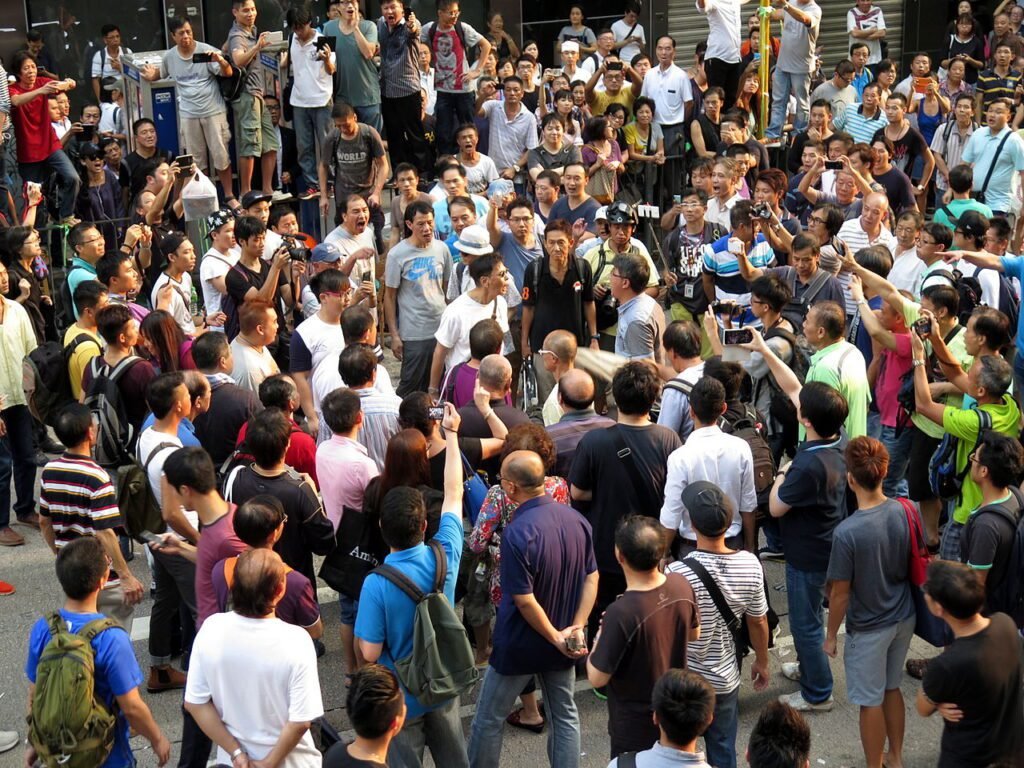
    According to Coser’s perspective, conflict theory is a functional social system. According to Coser, conflicts that occur in society do not merely show a negative function. However, conflict can also positively impact the ongoing social order.

    For Coser, conflict is a form of interaction and does not need to be denied. Coser means that conflict does not have to be destructive or dysfunctional for the system concerned because conflict can also have positive consequences.

    Coser shows us that conflict is a dispute about values ​​or demands regarding power, status, and sources of wealth whose supply is insufficient.

    Furthermore, Coser stated that disputes or conflicts could occur between individuals, collectivities, or individuals within the group. We can see the conflict between individuals and individuals; we still remember that when we attended high school, we unconsciously created positive conflicts, namely at the level of competition, in competition events, competing to become class winners, and experiencing positive conflict. We’ve been through.

    In negative conflicts, we can see the final results of the competition where the results are not in line with expectations, such as fights between football supporters/fans, coachmen debate that do not teach us lessons, and examples of negative conflicts that can harm many communities. Therefore, we should avoid these negative conflicts.

    Conflict is an important element of interaction, and it cannot be said that it is always bad, divisive, or destructive. Conflict can contribute greatly to the group’s sustainability and unite/strengthen relationships between its members. Such as facing a common enemy can integrate people, generate solidarity and engagement, and make people forget their internal strife.

    Positive Function of Conflict According to Lewis Coser. Conflict is a way or tool to maintain, unite and reinforce the existing social system. For example, the positive function of conflict is in matters relating to the dynamics of the relationship between the in-group and the out-group. Here are some propositions made by Lewis Coser:

    First, the strength of internal solidarity and inner group integration will increase if the level of hostility or conflict with outside groups increases.

    Second, the increased integrity of groups involved in conflict can help strengthen boundaries between that group and other groups in the environment, especially hostile or potentially hostile groups.

    Third, within the group, there is the possibility of a reduced tolerance for division or divisions and an increased emphasis on consensus and conformity.

    •  Consensus is a phrase to produce or make an agreement that is mutually agreed upon between groups or individuals after debates and research are carried out in the intelligence collective to obtain consensus decision-making.
    •  Conformity is a type of social influence when someone changes their attitudes and behavior to suit existing social norms. (Source: id.wikipedia.org)

    Fourth, deviants in the group are no longer tolerated; if they cannot be persuaded to enter the right path, they may be expelled or put under close surveillance.

    Fifth, on the other hand, if the group is not threatened by conflict with hostile outsiders, the strong pressure on cohesiveness, conformity, and commitment to the group may decrease.

    Internal disagreements may surface and be discussed, and deviants may be more tolerated. Generally, individuals will get greater space to pursue their personal interests.

    According to Coser, the function of external conflict can also be to strengthen internal cohesiveness and increase group morale so that groups can provoke antagonism with outside groups or create enemies with outsiders in order to maintain or increase internal solidarity.

    Tensions that occur in a group due to friction make conflict occur. To be able to solve the conflict problems that occur, Lewis Coser has a way or mechanism to be able to reduce or resolve a conflict.

    The mechanism that Coser mentioned is called a safety valve or other designation a safety valve. Coser admits that conflict can jeopardize unity. Therefore, it is necessary to have a solution called Coser as a safety valve.

    For Coser, this safety valve is an institution (safety valve institution). In society’s broad order of elements, we will find many social interests that may take time to fulfill. There needs to be an institution or institution that becomes the safety valve of these interests so that there will be no conflict in the community.

    Let us look at the legislative institution or body which consists of representatives of the people, such as the Indonesian Parliament in Indonesia. The existence of this institution is as a savior or as a safety valve for high conflicts. This is because each region already has representatives in the realm of delivering the community’s social needs in each region.

    Regarding the implementation in the field, it depends on how the community responds and the representatives give the right of their constituents. Thus, a large conflict does not need to occur because there is already a place to convey aspirations.

    In addition, according to Coser, safety valves also do not have to be on institutions; they can also be safety valves based on actions or habits that can reduce tension because conflicts cannot be channeled.

    For example, a joke inserted in a tense situation can reduce or eliminate the tension at that time, even though the joke itself may still contain critical values.

    Coser’s opinion regarding conflicts is that conflict is functional (good) and/or dysfunctional (bad) for relationships and structures that are not encapsulated in the social system. Coser focuses more on the functional conflict; Coser does not see it as dysfunctional.

    Coser defines social conflict as a struggle for value and recognition of rare status, then powers and sources of conflict are neutralized or perpetuated, and rivals are eliminated.

    Coser’s view of functional conflict states that conflict can change the form of interaction, whereas the expression of feelings of hostility is not the case. Therefore, conflicts that occur in society, either individually with individuals or groups with groups, as well as individuals and groups, are one way of unifying elements of society.

    This is because the conflict that occurs is not always negative but also positive in terms of uniting various social interests in it.


  • 3 Characteristics of Social Facts According to Emile Durkheim

    3 Characteristics of Social Facts According to Emile Durkheim

    According to Durkheim, social facts are all ways of acting, thinking, and feeling outside the individual, coercive and general. Come see the reviews.

    As one of the figures who contributed to the development of Sociology, Emile Durkheim separated Sociology and Social Philosophy and strengthened Sociology as an independent branch of science.

    ” Sociology is a science that studies the Social Fact,” firmly Emile Durkheim.

    Social facts in Emile Durkheim’s perspective. 

    Most of us view social facts as relationships that are all visible and can be grasped by the five senses.

    According to Durkheim, social facts are all ways of acting, thinking, and feeling that are outside the individual, coercive, and general.

    Social facts have three characteristics, namely:

    First, External, which is outside the individual. This means that social facts existed before the individual existed and will remain after the individual did not exist.

    Second, Determined Coercive, namely social facts forcing individuals to always conform to them (social facts).

    Third, General, spread out in the community/society, is jointly owned, not individually.

    According to Durkheim’s view, individual interests and motives are not included in social facts because interests and motives are internal to an individual.

    Let’s try to understand one of the following examples; for example, we want to do a study of consumption using social facts.

    So, we will internalize our thinking that consumption is seen as a social fact, such as clothing patterns, consumption patterns, or ways of eating.

    It is an external, general, and compelling reality. Why can? Try to pay attention to the matter of clothing if you want to dress differently when you want to attend an official event or a wedding ceremony.

    Surely you will follow the fashion etiquette when coming to the event, or in everyday clothes; surely we will wear normal clothes.

    It’s different when you want to look extreme, by wearing a swimsuit you come to a formal event, or your daily activities, you can say it’s a mess, uh, crazy people, uh people are crazy, go to parties wearing swimsuits, in public places how come wearing a swimsuit.

    Or you who want to go to college wearing a swimsuit to campus can die of being bullied and beaten by crazy people straying to campus.

    So therefore, we also have to adjust in terms of our clothes or our patterns in everyday dress because this has become a fashion pattern.

    Externally, it is shown by our unwillingness to dress / clothing patterns that are different from what already exists in society and has been going on for a long time, since you were not born and or until you die later.

    Another example is that you are a married woman, and recently your husband died; you will certainly show your sadness and grief.

    If you are not sad as a woman left behind by your husband, the residents will give you a negative stigma.

    For example, you are reported to have had a new husband, so you don’t have to be sad and grieving.

    Or people will sneer at you that you have a new affair because you don’t show that sadness and grief.

    Now this has been socialized by all people, which is general in nature and external to oneself because it is all the result of the socialization process.

    As for the nature of force, it can be seen from the stigma imposed by society on someone who feels, acts, and behaves that are not following social facts, that is, if they do not look sad and grieving (in the example above)

    Assumptions in Social Facts. 

    What are the assumptions behind social facts? The assumptions include: First, social symptoms are real and affect individual consciousness and behavior.

    Members of society feel social facts and become a guide for individuals in feeling, behaving, and behaving.

    Social fact is something that is shared and shared. Second, because social phenomena are real facts, they can be observed/studied using empiric methods.

    As we explained above, social facts can be understood as a reality that can be felt through the human senses.

    Therefore, human senses can also grasp and feel the presence of social facts, so they can be observed or studied.

    Two forms of Real Social Facts.

    Social facts must be considered as real things. According to Emile Durkheim, as a real thing, it can take two forms, as said by Ritzer, namely:

    • In the form of a material, namely something that can be listened to, captured, and observed, such as architecture and legal norms.
    • In the Non-Material form, something considered real appears in human consciousness, such as compassion, anger, sadness, joy, happiness, and others.

    Well, that’s, guys, some of the characteristics in social facts, according to Emile Durkheim, and two forms of social facts are seen as real: material and non-material.

  • The Principle of Analysis and Conflict Model According to Randall Collins

    The Principle of Analysis and Conflict Model According to Randall Collins

    Conflict is a central process in people’s lives. According to Randall Collins, there are 5 Principles of Analysis and 3 Models of Social Stratification Conflict.
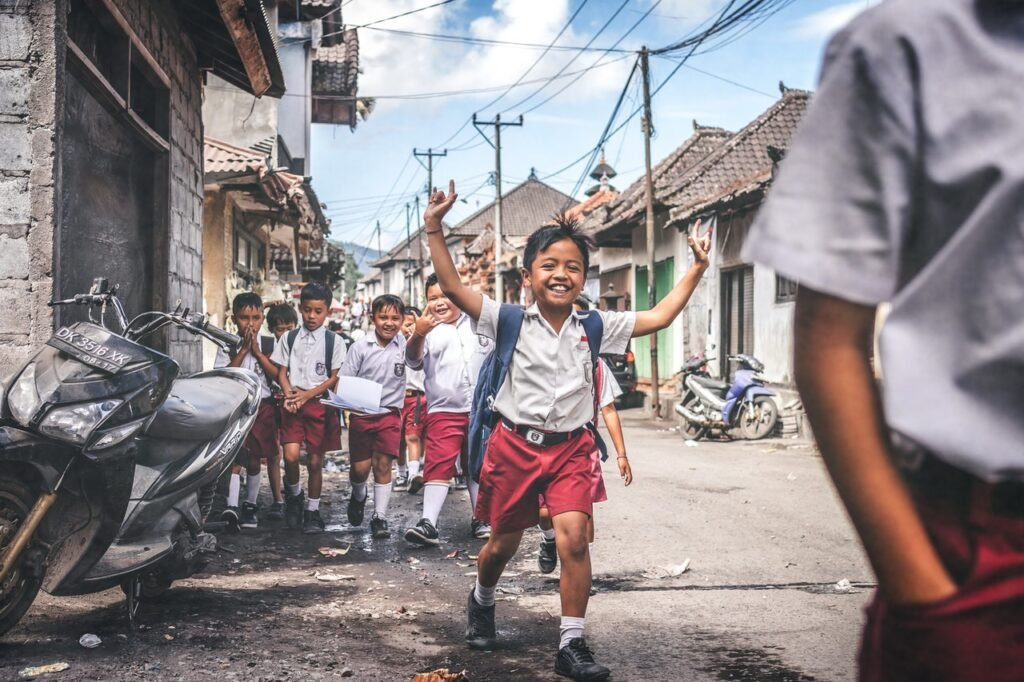
    Examples of Visible Social Phenomena.

    According to Randall Collins, organization is an arena of conflict. Conflict between an organization and another or conflict within the organization itself, namely individuals between individuals.

    Social interactions carried out by individuals are related to their interests, power, wealth, social status, which each individual wants to achieve in social organizations.

    The visible example can be seen from political organizations, where interests and power give each other power of influence to members and followers.

    The existence of a high ego causes conflict within political parties to be inevitable, conflict will always exist in political organizations.

    For example, we can see the conflict over the general chairman, which usually has dualism of leadership in political parties.

    In the end, among individuals who conflict because of an emotional drive or ego, they will leave the party structure.

    And of course, will establish their own political party with other individuals who feel they did not get space in the previous political party.

    That’s a glimpse of what we can see in conflict, because of the maneuvers of each individual.

    Social process.

    Conflict is a central process in people’s lives. The social structure is inseparable from the actors who build it.

    Social structure is the essence of individual interaction patterns in the structure of continually re-creating their social organization.

    Three Models of Social Stratification Conflict According to Randall Collins , namely:

    1. Individuals who live in the world, subjectively constructed where they build themselves.

    2. Some people / individuals have the power to be able to influence or influence the construction of the individual’s subjective world, or to control the subjective experience of the individual.

    3. The existence of several people to try to influence the subjective construction, as well as the tendency of individuals to control different people or to oppose the individual’s subjectivity.

    The Five Principles of Conflict Analysis According to Randall Collins , namely:

    1. Conflict theory should focus on the real world rather than the abstract world.

    2. Stratification conflict theory should examine the arrangement of materials that influence interactions.

    3. In an unbalanced situation, the resource ruling group will likely try to exploit the limited resource pool.

    4. Cultural phenomena (beliefs + ideas) are seen from the point of view of interests, resources and power.

    5. In looking at stratification, conflict theory must conduct empirical research.

  • Definition of Cultural Change

    Definition of Cultural Change

    Along with advances in science and technology have a significant impact on human life. One of them, with the internet which has a very big influence on changes in the world of education. With the many advantages of the internet, both in terms of time efficiency, complete information, and flexibility, books are no longer the only source of knowledge. These are all examples of cultural changes in the world of education today. Then, what exactly is the meaning of cultural change?

    In general, cultural change is a change in a system involving ideas in people’s lives. Cultural change can also be said to be the occurrence of conditions of incompatibility between existing cultural elements and ultimately creating conditions that are incompatible for life.

    Cultural change actually refers to a change in the social order process in society. Where, this cultural change can take place very quickly or slowly and generally cannot be realized by the people in a country.

    There are several basic elements of culture known as seven universal elements, among others:

    Living equipment systems and technology

    This includes cooking utensils, clothes, weapons, cleaning tools, means of transportation and others. For example, in the days of our ancestors, we used to cook food by baking, but in modern times we can bake in the oven, or fry in a pan.

    Language

    In ancient times, language was only conveyed by word of mouth. However, nowadays language can be conveyed through writing such as newspapers, media, scientific journals, and many more.

    Knowledge system

    This is the logic or basis of society’s thinking that continues to evolve over time.

    Social system

    As time goes by, science is getting more advanced. In the past, humans could only trace what was visible to the eye but now humans can examine even the very smallest such as atoms and particles.

    Economic systems and livelihoods

    In the past, most of the livelihoods were controlled by men in terms of agriculture, industry, and offices, while women were usually at home taking care of the household. Unlike the case today, women can also seek other livelihoods and help the family economy.

    Religious system

    If in the past humans only believed in the existence of spirits, no longer. Today, humans often use reason and logic.

    Art

    This includes fine arts, dance and sound arts. In the past, Javanese people thought that a dark house was a beautiful house. However, today many Javanese have homes with light or pastel shades.

  • The Role of Social Responsibility in Promoting Sustainable and Equitable Communities

    The Role of Social Responsibility in Promoting Sustainable and Equitable Communities

    Social responsibility refers to the ethical and moral obligations and duties that organizations and individuals have towards their communities and the environment. It entails taking actions and making decisions that promote the well-being and sustainable development of society. Sustainable and equitable communities, on the other hand, refer to those communities that have managed to strike a balance between their social, economic, and environmental aspects, and provide opportunities, resources, and services that meet the needs and aspirations of its residents, regardless of their race, ethnicity, or social status.

    Over the past few decades, social responsibility has emerged as a critical component of corporate and individual behavior, leading to the adoption of various policies, practices, and activities that promote sustainable and equitable communities. This article explores the role that social responsibility plays in promoting sustainable and equitable communities, the challenges that organizations and individuals face in fulfilling their social obligations, and the benefits that accrue from responsible practices.

    The role of social responsibility in promoting sustainable and equitable communities

    Social responsibility plays a significant role in promoting sustainable and equitable communities in various ways, including:

    1. Encouraging environmentally-friendly activities

    One of the primary ways that social responsibility promotes sustainable communities is through the encouragement of environmentally-friendly activities. Such activities include the adoption of green energy, sustainable production practices, and recycling, among others. Organizations that embrace social responsibility are keen to reduce their carbon footprint, protect natural resources, and promote biodiversity. By doing so, they contribute to the development of sustainable communities that are less vulnerable to environmental degradation and climate change, ultimately improving the well-being of their residents.

    2. Supporting socially-aware initiatives

    Socially-responsible organizations also play a vital role in supporting socially-aware initiatives that promote the welfare of vulnerable members of society. These initiatives include education, healthcare, and employment opportunities, among others. They are designed to enhance the quality of life for all members of the community, regardless of their social status. When organizations support these initiatives, they help to build stronger and more equitable communities that promote social justice and cohesion.

    3. Fostering ethical business practices

    Social responsibility also fosters ethical business practices that promote accountability, transparency, and integrity. By doing so, organizations build trust and earn the confidence of their stakeholders, including employees, customers, and investors. Ethical business practices also help to minimize the negative impact that organizations have on their communities, leading to sustainable and equitable development.

    4. Empowering local communities

    Social responsibility is also instrumental in empowering local communities by providing them with resources, skills, and knowledge that allow them to participate in the decision-making processes that affect their lives. Through collaboration and partnership with local communities, socially responsible organizations can identify the most pressing needs and opportunities for development in the communities and devise strategies that promote sustainable and equitable development.

    Challenges facing organizations and individuals in fulfilling their social responsibility obligations

    Although social responsibility has many benefits, fulfilling these obligations is not without challenges. The following are some of the challenges that organizations and individuals face when trying to promote sustainable and equitable communities:

    1. Insufficient resources

    Social responsibility often requires organizations and individuals to provide resources and support to various initiatives and causes. However, this can be challenging, especially when resources are limited or when there are competing demands on resources. As a result, organizations and individuals may need to prioritize their commitments and make difficult choices about where to allocate their resources.

    2. Resistance to change

    Promoting sustainable and equitable communities often requires a change in mindset and behavior, which can be challenging. Some organizations and individuals may resist change, fearing that it will cost them profits, opportunities, or influence. Overcoming such resistance requires a concerted effort to educate and persuade others about the benefits of responsible practices.

    3. Lack of awareness

    Many organizations and individuals may not be aware of their social responsibility obligations, or they may not have a clear understanding of the issues that affect their communities. This can make it challenging to develop appropriate strategies and initiatives that promote sustainable and equitable development.

    4. Political and regulatory barriers

    Political and regulatory barriers can also be a challenge to fulfilling social responsibility obligations. Some governments and regulatory bodies may have policies that restrict or discourage responsible practices, or that favor certain industries over others. Overcoming these barriers requires working with stakeholders and policymakers to identify and address underlying causes of these barriers.

    Benefits of social responsibility

    Despite the challenges, there are significant benefits to being socially responsible, including:

    1. Enhanced reputation and brand image

    Organizations that embrace social responsibility are seen as more trustworthy and accountable than those that do not. This enhances their reputation and brand image and ultimately contributes to their long-term success.

    2. Increased customer loyalty and retention

    Customers are more likely to remain loyal to organizations that demonstrate a commitment to social responsibility. This is because customers are more aware of the impact of their purchasing decisions on their communities and the environment.

    3. Enhanced employee engagement

    Employees who work for socially responsible organizations are more engaged and motivated, leading to improved productivity and job satisfaction.

    4. Improved relationships with stakeholders

    Socially responsible organizations are better able to build stronger relationships with stakeholders, including customers, employees, suppliers, and investors. This improves their ability to influence industry-wide practices and policies and ultimately contributes to sustainable and equitable development.

    Conclusion

    Social responsibility plays a vital role in promoting sustainable and equitable communities. It encourages environmentally-friendly activities, supports socially-aware initiatives, fosters ethical business practices, and empowers local communities. However, fulfilling social responsibility obligations is not without challenges, including resistance to change, insufficient resources, and political and regulatory barriers. Nonetheless, the benefits of being socially responsible, including enhanced reputation and brand image, increased customer loyalty and retention, enhanced employee engagement, and improved relationships with stakeholders, make it a worthwhile endeavor. As such, organizations and individuals that embrace social responsibility are better equipped to promote sustainable and equitable communities, leading to improved well-being and the long-term success of their organizations.

  • The Challenges and Rewards of a Career in Social Work

    The Challenges and Rewards of a Career in Social Work

    Social work is a challenging yet rewarding profession that requires individuals to have strong values and a passion for helping people. Social workers are often considered “helpers” by a society that values the strength of the individual over the importance of community. Social workers work with people of all ages, from children to seniors, who are facing difficulties in their lives. They provide support, counseling, and advocacy to help their clients overcome life’s obstacles.

    Despite the challenges that social work presents, it is an incredibly rewarding career that allows professionals to make a real difference in the lives of those they work with. In this article, we will explore the challenges and rewards of a career in social work.

    Challenges of Social Work

    Stressful Work Environment: Social work is not for the faint of heart. Social workers are often exposed to the most challenging situations and deal with high levels of stress regularly. They work with clients who are often in crisis, experiencing trauma, or at risk of harm. Additionally, they must deal with bureaucratic red tape, work overload, and difficult cases that can take a significant toll on mental and emotional health.

    Risk of Burnout: The high levels of stress and workload can lead to burnout, which is a widespread issue among social workers. Burnout is a type of physical and emotional exhaustion that can result in feeling overwhelmed, depersonalization, and a decreased sense of personal accomplishment. To prevent burnout, social workers must take self-care seriously and find stress-reducing techniques that work for them.

    Managing Client Expectations: Social work entails managing client expectations, which can be challenging at times. Most clients come to social workers with a specific goal in mind and expect social workers to provide a solution to their problem. This can lead to unrealistic expectations that social workers must manage effectively.

    Rewards of Social Work

    Making a Difference: Social work is a fulfilling and rewarding career that allows professionals to make a real difference in the lives of others. Social workers provide support, counseling, and advocacy to help their clients overcome life’s challenges. They help clients navigate the challenges they face in their lives, whether it be helping children living in poverty, assisting people experiencing mental health issues or supporting seniors with mobility issues.

    Social Justice: Social work is a profession rooted in social justice that aims to promote equality, fairness, and dignity for all people. Social workers advocate for the most vulnerable individuals in society, fight against structural inequality, and promote social justice issues.

    Flexibility: Social work offers a high degree of flexibility in terms of work location, type of work, and work hours. Social workers can find work across a variety of settings such as child welfare, healthcare, education, and social services. They can also work independently, in groups, or as part of a larger organization. Furthermore, social workers can work remotely, offering a flexible work environment.

    Career Advancement: Social work offers a range of career advancement opportunities, including higher education, promotions to management positions, and opportunities to specialize in particular areas of social work. Social work is a profession with a high demand, and an increased need for professionals in the field, which means that career advancement opportunities are readily available.

    Conclusion

    Social work is a challenging and rewarding career that offers professionals the opportunity to make a real difference in the lives of their clients. The rewards of social work include working toward social justice, making a difference in clients’ lives, career advancement, and versatility. Despite the challenges of social work, including stressful work environments, burnout, and managing client expectations, social work offers a fulfilling career that can be both personally and professionally rewarding. If you have a passion for helping others and are looking for a rewarding career, consider social work.

  • The Science behind Social Support: How It Helps to Build Resilience

    The Science behind Social Support: How It Helps to Build Resilience

    Social support is an essential aspect of human life. We all need someone to turn to when life takes a toll on us. According to a research article published in the Journal of Health and Social Behaviour, individuals with more significant social support tend to have better psychological and physical health than those with limited social support. In this article, we delve deeper into the concept of social support, its benefits, and how it helps to build resilience.

    What is Social Support?

    Social support is defined as the networks of people in our lives who provide practical and emotional support, including positive social interaction, advice, and tangible assistance. These individuals are our family members, friends, colleagues, neighbours or members of a community group that provide a sense of belongingness, acceptance, and love.

    According to the social support theory, social support contributes to providing an individual with a sense of well-being that allows them to cope better with stress or adversity. Researchers have been studying the link between social support and resilience for many years and have found that social support improves a person’s ability to cope with stress and adversity, become more resilient, and improve mental health.

    How Social Support Helps Build Resilience

    Resilience is defined as the ability to cope with stress and adversity and bounce back stronger from difficult situations. In today’s fast-paced world, resilience has become more important than ever before. Social support plays a critical role in building resilience, and here’s how:

    1. Increase Sense of Belongingness

    When individuals feel connected to others, they are more likely to feel a sense of belongingness, which is essential for psychological well-being. Social support provides individuals with the feeling of being accepted, valued, and loved, which ultimately fosters a sense of belongingness. This sense of belongingness can help individuals better cope with stress and adversity, making them more resilient.

    2. Encourages Seeking Help When Needed

    Individuals with strong social support structures are more likely to seek help when they are experiencing stress or adversity. Seeking help when needed is crucial in building resilience. People with healthy social support structures often feel more comfortable accessing help from individuals and community resources for support.

    3. Provides Emotional Support

    Emotional support is one of the essential kinds of social support. When individuals are going through difficult times, they need someone to turn to who can provide emotional support. Social support networks provide individuals with a safe space to share their struggles, doubts, and anxieties without any fear of judgment. This emotional support from friends and family helps individuals build resilience against stressors.

    4. Acts as a Buffer Against Adversity

    Strong social support structures act as a buffer against adversity by helping individuals cope during difficult times. When individuals are supported by others, they feel a greater sense of control over life challenges. Even in the face of significant adversity, individuals with strong social support structures are more likely to cope well and ultimately become more resilient.

    5. Provides Positive Social Interactions

    Positive social interactions are essential components of social support. Social interactions provide individuals with opportunities to connect, develop friendships, and create memories. Positive social interactions boost morale and increase individuals’ self-esteem and self-worth. These positive social interactions act as a buffer against the negative effects of stress and boost resilience levels.

    Conclusion

    Social support plays a critical role in building resilience. It provides individuals with a sense of belongingness, encourages seeking help when needed, provides emotional support, acts as a buffer against adversity, and facilitates positive social interactions. While social support can come from various sources, including family, friends, and community groups, it is critical to seek and maintain healthy social support structures.

    In conclusion, the science behind social support is clear – it plays a vital role in building resilience. Taking steps to nurture and maintain healthy social support networks is essential for better mental health and overall well-being. By doing so, individuals can develop resilience that can help them cope better with stressful life situations.

  • The Impact of Social Policy on Lives of Different Social Classes

    The Impact of Social Policy on Lives of Different Social Classes

    Introduction

    Social policy is one of the most crucial aspects of a country’s governance. It refers to the decisions that a government makes to promote the well-being of its citizens. Social policies are implemented to address social issues such as poverty, inequality, and unemployment. They aim to provide individuals with equal opportunities and improve their living conditions. Social policies have far-reaching effects on the lives of different social classes. In this article, we will explore the impact of social policy on the lives of different social classes.

    Social policy and its impact on low-income families

    Low-income families are often the most vulnerable to societal issues such as poverty, unemployment, and lack of access to healthcare. Social policies aimed at providing assistance to these families include welfare benefits, affordable housing initiatives, and financial aid for education. These benefits help low-income families achieve a better standard of living and offer them access to essential services.

    For instance, welfare benefits provide assistance to low-income families by giving them financial aid. This benefit can go a long way in providing necessities such as food, shelter, and clothing. Additionally, affordable housing initiatives can give low-income families access to affordable accommodation. This helps to alleviate some of the struggles associated with homelessness, rent burden, and live in terrible conditions.

    Furthermore, social policies aimed at providing financial aid for education can play a significant role in lifting low-income families out of poverty. Education often translates to better-paying jobs, and people from low-income households are often excluded from quality education due to financial constraints.

    Therefore, social policies aimed at providing scholarships and other forms of financial aid can make education more accessible to low-income families. This way, they can move out of the poverty cycle and progress to better economic conditions.

    Social policy and its impact on the middle class

    The middle class constitutes a significant portion of the population, and its well-being is crucial to the country’s economy’s stability. Therefore, social policies that aim to improve the middle class’s standard of living are essential.

    One of the key issues that the middle class faces is the cost of healthcare. Social policies that provide universal healthcare access can go a long way in improving the lives of middle-class individuals. This way, they can access healthcare services without putting a strain on their finances.

    Additionally, social policies that promote access to education for the middle class can play a significant role in their socio-economic mobility. Education is a powerful tool in improving an individual’s life chances, and making it affordable for middle-class families can increase their upward mobility.

    Furthermore, social policies that facilitate access to affordable housing can play a role in improving the middle class’s living conditions. The cost of housing is often a major source of financial strain for many middle-class families.

    Therefore, initiatives that provide affordable housing can help alleviate some of the problems associated with housing costs. This can free up resources that middle-class families can use to invest in other areas crucial to their financial well-being.

    Social policy and its impact on the wealthy

    The wealthy section of society is often excluded from social policies due to their affluence. However, they are still subject to the societal issues that social policies aim to address.

    For instance, the wealthy can experience inequality in the distribution of public goods and services that are necessary for social cohesion. Social policies that aim to address inequality can help create a more stable society, which benefits everyone in the long run.

    Furthermore, the wealthy can experience social and economic problems due to issues such as income inequality, lack of public stability, and inadequate social security. Social policies that aim to address these issues can promote the wealthier class’s security and stability, benefiting society as a whole.

    Conclusion

    In conclusion, social policy plays an essential role in addressing social issues and creating a better society. Social policies have a far-reaching impact on the lives of people from different social classes. They help vulnerable individuals access basic services and provide opportunities for socio-economic mobility.

    Therefore, it is crucial that policymakers consider the different social classes’ unique needs when designing social policies. This way, policies can be created to promote the well-being of the entire population, creating a more stable and cohesive society.

  • Revolutionizing the Norms: Examining the Impact of Social Change on Society

    Revolutionizing the Norms: Examining the Impact of Social Change on Society

    Introduction

    Human beings have always been social animals with the innate tendency to conform to societal norms. However, with time, change is an inevitable reality that we cannot avoid. Social change movements have had a tremendous impact on the way society functions, and it is essential to examine this impact to revolutionize the norms. This article will explore the various social change movements that have occurred globally and how they have challenged the traditional norms and improved the quality of people’s lives.

    What is Social Change?

    Social change refers to the transformation of culture, institutions, and people’s behaviors over time. It involves altering social norms, beliefs, and values to create a new status quo. The actions of individuals or groups seeking a significant shift in social attitudes and behavior are what bring about social change.

    Social change movements have diverse objectives, from addressing specific issues such as inequality and human rights to challenging the broader context of power relations in society.

    Types of Social Change Movements

    There are several types of social change movements, including:

    1. Civil Rights and Racial Justice Movements

    Civil rights movements address issues of racial inequality and focus on expanding the rights and opportunities of underrepresented groups. Racial justice movements advocate for policies and practices that create an equal society where all individuals are treated with dignity and respect, and justice is served.

    2. Feminist and Gender Equality Movements

    Feminism and gender equality movements aim to eradicate gender-based discrimination and expand opportunities available to women globally. These movements advocate for equal pay, reproductive rights, and greater representation in leadership positions.

    3. Environmental Justice Movements

    Environmental justice movements aim to address the disproportionate impact of pollution and environmental degradation on disadvantaged communities globally. These movements focus on policy change and advocacy for conservation efforts to preserve the natural resources for future generations.

    4. LGBTQ+ Rights and Social Change Movements

    LGBTQ+ rights and social change movements advocate for fair and equal treatment of individuals regardless of their sexual orientation, gender identity, or expression. They work towards ending discrimination and harassment in society and building an inclusive community.

    Impact of Social Change Movements on Society

    Social change movements play a vital role in transforming society and making it more equitable and just. The impact of social change movements is multifaceted, and it can be seen in various aspects of society.

    1. Changing Social Norms and Attitudes

    Social change movements challenge the dominant culture and create new social norms and attitudes that promote inclusivity, fairness, and equality. For example, the feminist movement in the 1960s and 1970s transformed gender roles and challenged traditional attitudes towards women’s rights.

    2. Increased Participation in Democratic Processes

    Social change movements motivate people to participate in democratic processes, including voting, demonstrations, and rallies. This increased participation improves civic engagement and strengthens democracy’s institutions.

    3. Policy Change

    Social change movements advocate for policy change at the national and international levels, leading to the creation of laws that promote equality, justice, and human rights. For example, the 1964 Civil Rights Act banned segregation and discrimination on the basis of race, religion, or national origin in public accommodations.

    4. Improved Quality of Life

    Social change movements have improved the quality of life of individuals globally by addressing issues of poverty, inequality, health, and education. For example, the United Nations Sustainable Development Goals (SDGs) aim to eradicate poverty, reduce inequality, and promote access to quality education and healthcare for all.

    Conclusion

    Social change movements have created a profound and lasting impact on society at large. The changes wrought by these movements have transformed social norms and attitudes, leading to greater inclusivity, fairness, and equality. The impact they have had on democratic processes, policy change, and improving people’s quality of life cannot be overstated. We must continue to examine the impact of these movements on society to revolutionize the norms and create a more equitable world for all.

  • From Weber to Bourdieu: The Evolution of Social Theory

    From Weber to Bourdieu: The Evolution of Social Theory

    There is no denying that social theory has come a long way in the past couple of centuries. From the early days of sociological thinking with the works of Auguste Comte, Emile Durkheim and Max Weber to the contemporary theorizing of Pierre Bourdieu, social theory has undoubtedly evolved.

    In this article, we will take a closer look at the evolution of social theory from Weber to Bourdieu, highlighting the key concepts and contributions made by each thinker and exploring how their ideas have influenced contemporary social thought.

    Max Weber

    Max Weber, often referred to as the father of sociology, was a German sociologist, philosopher and political economist who is best known for his work on the foundations of modern social theory. Weber’s ideas greatly influenced the development of sociology, with some considering him to be the founder of modern sociology. His legacy can also be seen in fields such as social psychology, anthropology, and political science.

    One of Weber’s most significant contributions to social theory was his concept of the “ideal type.” An ideal type is a conceptual model that reflects the unique features of a particular social phenomenon, such as bureaucracy or religion. Ideal types are used to identify commonalities and patterns in social structures, making it easier to compare and analyze different societies and cultures.

    Another significant contribution of Weber’s was his theory of social stratification. Weber argued that society is organized into a hierarchy of social classes based on differences in wealth, power and prestige. He believed that social stratification is an important feature of modern societies, and that it is tied to the distribution of economic resources, political power and status.

    Weber’s work also emphasized the importance of culture and religion in shaping society. He argued that cultural and religious beliefs have a significant impact on the way people live, behave and interact with one another. For Weber, culture and religion were important factors in the development of modern capitalism, with his famous book, The Protestant Ethic and the Spirit of Capitalism, exploring how the Protestant work ethic contributed to the rise of capitalism in Western Europe.

    Emile Durkheim

    While Weber focused on individual agency and the role of culture and religion in shaping society, Emile Durkheim, a French sociologist, took a more macro-level approach to social theory. Durkheim is best known for his work on social integration and solidarity, arguing that a strong sense of social cohesion is necessary for a functional society.

    Durkheim’s most significant contribution to social theory was his concept of “social fact.” Social facts are the collective ways of thinking, feeling and acting that exist within a society, independent of individual will. Examples of social facts include language, customs, and laws. Durkheim believed that social facts exert a powerful influence on individual behavior, and that they are essential to understanding society as a whole.

    Durkheim also developed the concept of “anomie,” which refers to a sense of normlessness or lack of social integration. Durkheim argued that when norms and values are not clearly defined, individuals can become disconnected from society and become prone to deviant behavior. Anomie was seen as a crucial factor in understanding the rise of suicide rates in modern societies.

    In addition to his work on social integration and solidarity, Durkheim also made significant contributions to the study of religion. He believed that religion is a social institution that reinforces social cohesion by providing a sense of shared values and beliefs. For Durkheim, religion was an important factor in shaping society and maintaining social order.

    Pierre Bourdieu

    Pierre Bourdieu was a French sociologist who is known for his critical approach to social theory. Bourdieu challenged traditional sociological thinking, arguing that society is not solely determined by economic factors, but also by cultural and symbolic systems.

    One of Bourdieu’s most significant contributions to social theory was his concept of “habitus.” Habitus is a set of deeply ingrained habits, dispositions and attitudes that shape an individual’s perception and behavior. Habitus is acquired through socialization and is influenced by factors such as class, gender, ethnicity and education. Bourdieu argued that habitus plays a significant role in shaping social structures, such as the distribution of power and resources.

    Bourdieu also developed the concept of “cultural capital.” Cultural capital refers to the knowledge, skills and cultural norms that are valued in a particular society. Bourdieu argued that cultural capital is a form of symbolic capital that is used to maintain social inequality. He believed that those with more cultural capital were more likely to succeed in society, and that the acquisition of cultural capital is strongly tied to social class.

    In addition to his work on habitus and cultural capital, Bourdieu also made significant contributions to the study of the sociology of education and the cultural field. Bourdieu’s work on the cultural field highlighted the role of cultural producers, such as artists and intellectuals, in shaping cultural values and norms.

    Conclusion

    From Weber to Bourdieu, the evolution of social theory has been marked by significant contributions from influential thinkers. While each theorist had their own unique perspective, there are several key themes that run through their work, such as the importance of culture and religion in shaping society, the role of social integration and solidarity in maintaining social order, and the impact of social class on individual behavior and opportunities.

    Contemporary social theory has been heavily influenced by the work of these thinkers, with sociologists, anthropologists and other scholars continuing to build on their ideas and develop new ones. By understanding the evolution of social theory, we can gain a better understanding of the ways in which society functions and the forces that shape it.

  • Black Lives Matter: The Ongoing Fight for Racial Justice

    Black Lives Matter: The Ongoing Fight for Racial Justice

    Introduction

    Since its inception in 2013, the Black Lives Matter (BLM) movement has gained worldwide attention and garnered support and opposition alike. The movement has sparked protests, debates, and conversations about the ongoing struggle for racial justice and equality in America. In recent years, the BLM movement has grown in response to the continuous killings of unarmed black people by the police and the criminal justice system’s disproportionate treatment of black people. This article explores the ongoing fight for racial justice and what the BLM movement signifies in this fight.

    The Roots of the Black Lives Matter Movement

    The BLM movement began in 2013, in response to the killing of Trayvon Martin, an unarmed 17-year-old black boy, by a neighborhood watch volunteer in Florida. The verdict that found the volunteer, George Zimmerman, not guilty of murder, despite the evidence, led to protests and outrage throughout the country. The killing of Trayvon Martin was a catalyst that exposed the continuing racism and injustice that black people face in America.

    The movement gained momentum after the deaths of Michael Brown in Ferguson, Missouri, and Eric Garner in New York City. Both men were killed by police officers, and their deaths were captured on video, which highlighted the violence and brutality that black people face from the police. The BLM movement demanded an end to police brutality, racial profiling, and the criminal justice system’s injustices.

    The BLM movement has grown to highlight the broader structural inequalities that black people face in America. It is not just about police brutality, but also employment discrimination, housing discrimination, educational disparities, and healthcare disparities. The BLM movement seeks to address the root causes of systemic racism and inequality and create a society where black lives matter.

    Recent Developments in the Black Lives Matter Movement

    The BLM movement has gained widespread attention and support, with protests taking place in cities throughout the world. The protests highlight the urgent need for systemic change in America to address the racial injustices that continue to plague the country.

    In 2020, the BLM movement saw a resurgence in response to the killing of George Floyd by police officers in Minneapolis. The shocking video of his death sparked protests and civil unrest throughout the country. The protests led to a renewed focus on police reform and calls for racial justice and equity.

    The BLM movement has also focused on addressing other forms of systemic racism and inequality. In recent years, the movement has highlighted the disparities in healthcare outcomes for black people, especially during the COVID-19 pandemic. The virus has disproportionately affected black people, who are more likely to have pre-existing conditions and less likely to have access to healthcare.

    The movement has also brought attention to the structural inequalities that have led to the wealth gap between black and white people. Black people are more likely to live in poverty, have less access to education, and are less likely to own their homes. The movement seeks to address these disparities by advocating for policies that support economic justice and equity.

    The Importance of Black Lives Matter in the Fight for Racial Justice

    The BLM movement is important because it highlights the ongoing struggle for racial justice and equality in America. The movement has brought attention to the systematic racism and inequality that black people face and the urgent need for change. The protests and activism have forced policymakers to consider measures that address these issues, such as police reform, affordable housing, and access to healthcare.

    The BLM movement has also empowered and engaged communities of color to speak out against injustice and demand change. The movement’s focus on intersectionality recognizes that racial justice is connected to other forms of oppression and that multiple issues must be addressed to ensure that black lives matter.

    The movement has also inspired people from all walks of life to get involved in activism and advocacy work. The protests have brought attention to the importance of allyship and solidarity in the fight for racial justice.

    Conclusion

    The ongoing fight for racial justice and equality in America has been a long and difficult journey. The BLM movement is a reminder that this struggle is far from over and that urgent action is required to create a just and equitable society. The movement has brought attention to the systematic racism and injustice that black people face and has forced policymakers to consider measures to address these issues.

    The BLM movement emphasizes the intersectional nature of oppression and the need to address multiple issues to ensure that black lives matter. The movement has inspired people from all walks of life to get involved in activism and advocacy work and has highlighted the importance of allyship and solidarity.

    In conclusion, the BLM movement is an essential component of the ongoing fight for racial justice in America. The movement’s dedication to addressing systematic racism and inequality and empowering communities of color is crucial in creating a more just and equitable society. Black lives matter, and the fight for racial justice must continue until this fundamental truth is recognized and acted upon.

  • Why Social Identity Matters More Now Than Ever Before

    Why Social Identity Matters More Now Than Ever Before

    In today’s fast-paced digital age, social identity has become more important than ever before. Social identity is the way people define themselves in terms of their social connections and the roles they play in different groups. It is the collective awareness of who we are, who we associate with, and how we present ourselves online and offline.

    With the rise of social media usage worldwide, we are now living in a world where social identity matters more than ever before. Social media platforms offer a platform for users to create, maintain, and refine their social identities. This has led to an immensely diverse and complex landscape of social identities that are dynamically evolving.

    In this article, we explore why social identity is essential and why it matters now more than ever in our digital age.

    1. The rise of social media usage.

    The rise of social media usage is one of the primary reasons why social identity matters more than ever before. Social media platforms such as Facebook, Twitter, Instagram, and Tiktok provide a platform for us to create, maintain and nurture our social identities. Through social media, we can project the image of the person we want to be, and we may selectively showcase different aspects of our identity to different audiences.

    Today, social media has evolved to become a primary means for people to interact and connect with each other, and at the same time, a virtual stage for users to act out their social identity.

    2. Social identities as a source of social capital.

    Social identities are a critical source of social capital, which has become an essential currency in today’s world. Social capital refers to the social resources that an individual can access through their social networks. Social capital can range from information, advice, emotional support, job opportunities, and financial resources.

    By having a robust social network, individuals can benefit from the social capital generated by their relationships. A well-curated social identity can project an image that attracts like-minded individuals, which can lead to opportunities that may not be available otherwise.

    3. The proliferation of remote work.

    The COVID-19 pandemic has accelerated the proliferation of remote work, leading to a shift in the way we interact with each other. With remote work becoming ubiquitous and more companies adopting virtual environments, social identities have become a critical aspect of workplace collaboration and success.

    In the virtual environment, social identity can mitigate the challenges of remote work. A clearly defined social identity can help individuals communicate their work style, skills, and personality to colleagues and supervisors effectively.

    4. Social identity and political polarization.

    In today’s political landscape, social identity has become a critical factor in political polarization. Social identity can divide people along cultural, ethnic, or religious lines, leading to the formation of social bubbles and echo chambers where people only engage with like-minded individuals.

    This kind of polarization can have a profound impact on society and politics, leading to information bubbles and undermining democratic norms. Social identity can be leveraged by political and social movements to rally support and sow division.

    5. Social identity and personal branding.

    Our social identity is, in many ways, a personal brand that we project through our social media profiles, professional portfolios, and the way we present ourselves online and offline. A well-curated social identity can lead to personal branding that enhances our reputation and opens up opportunities in life.

    Personal branding involves creating a unique narrative around oneself, which can increase visibility and help individuals stand out in a crowded digital world. A strong personal brand can make it easier to network and connect with others, leading to opportunities that might not be available otherwise.

    In conclusion, social identity matters more now than ever before in our digital age. With the rise of social media, the proliferation of remote work, and political polarization, social identity influences many aspects of our lives. Social identity helps us create and maintain social networks, project a personal brand, and navigate a rapidly changing world. With these trends on the rise, there is no doubt that social identity will continue to shape our lives and society significantly.

  • Societal Hierarchies: Understanding the Role of Social Stratification

    Societal Hierarchies: Understanding the Role of Social Stratification

    Introduction

    Social stratification is a system of categorizing individuals based on their social statuses within a society. Societal hierarchies have existed throughout human history, and continue to exist in modern society. These hierarchies play a significant role in shaping the way individuals and groups interact with one another, and the opportunities and resources available to them. Understanding societal hierarchies and their effects is crucial for creating more equitable and just societies.

    What are Societal Hierarchies?

    Societal hierarchies refer to the categorization of individuals in a society based on factors such as race, gender, class, and education. These hierarchies determine the opportunities, resources, and privileges available to individuals based on their social status. For example, individuals with higher socioeconomic status have better access to education, healthcare, and job opportunities than those with lower status.

    These hierarchies are maintained through cultural norms, policies, and practices that reinforce differences in social status. For example, schools may have higher academic standards for individuals from lower socioeconomic backgrounds, making it more difficult for them to advance to higher education. Similarly, job applications may require specific types of experience or education that are only available to individuals with higher social status.

    Effects of Societal Hierarchies

    Societal hierarchies can have significant effects on individuals and groups within a society. Some of these effects include:

    1. Limited access to resources and opportunities: Individuals with lower social status may have limited access to education, healthcare, job opportunities, and other resources necessary for social mobility.

    2. Discrimination: Individuals from marginalized groups may experience discrimination and prejudice based on their social status. For example, women may be paid less than men for the same job, or individuals from racial minorities may be more likely to be stopped by the police.

    3. Social division and conflict: Societal hierarchies can create social divisions between groups, leading to tension and conflict. For example, racial divides may lead to tensions between communities, or class divisions may lead to conflict between the rich and poor.

    4. Inequality: Societal hierarchies can exacerbate income and wealth inequality, making it more difficult for individuals from lower social status to change their position.

    Understanding the Role of Social Stratification

    Understanding societal hierarchies is crucial for creating more just and equitable societies. By understanding the effects of social stratification, individuals and organizations can work towards creating policies and practices that minimize discrimination and promote social mobility.

    Some ways of promoting social mobility include:

    1. Education: Investing in education for individuals from lower socioeconomic backgrounds can increase their chances of success and social mobility.

    2. Policies to reduce inequalities: Policies that reduce income and wealth inequality can create more opportunities for individuals from lower social status.

    3. Diversity and inclusion: Creating diverse and inclusive workplaces and communities can promote a sense of belonging and reduce discrimination.

    Conclusion

    Societal hierarchies play a crucial role in shaping the lives of individuals and groups within a society. Understanding these hierarchies and their effects is crucial for creating more equitable and just societies. By promoting social mobility, reducing inequality, and creating diverse and inclusive communities, we can work towards creating a society where individuals have equal opportunities and access to resources, regardless of their social status.