
Category: General

  • Betawi Traditional Clothing: Types, Functions, Uniqueness, and Explanations

    Betawi Traditional Clothing   – Sinaumed’s, have you ever watched the legendary Si Doel Anak Sekolahan serial or film? Some of the footage displays Betawi traditional clothing. These traditional clothes are also often displayed at the Jakarta Fair to introduce the variety of cultures in Jakarta. Sinaumed’s, come on, let’s just discuss the traditional clothes of the Betawi tribe.

    Overview of Betawi

    The Betawi tribe are people who are descendants of residents in the city of Batavia. This city is the old name of the city of Jakarta when it was in the Dutch colonial period. The name Betawi itself comes from Batavia, then changes to Batavia, Batawi and then adjusts the language of the local community to become Betawi.
    Currently, many Betawi people live in the Jabodetabek area and its surroundings. Biologically, this tribe was actually a blend of ethnic groups because in Batavia there were various ethnic groups who later married and gave birth to children.

    The inter-ethnic mix came from other ethnic groups who migrated to Batavia, such as Javanese, Sundanese, Malay, Bugis, Batak, Chinese, Arabic, English, Dutch, Portuguese, Ambonese, Balinese and others. Overall, in terms of tradition, culture, customs, arts, culinary arts, the Betawi people are inspired by Malay, Islam and Chinese. Moreover, Malay and Islamic patterns are very strong there.

    Now, the existence of the Betawi tribe is a minority because many residents from outside the area come to Jakarta. Currently, this tribe, both its people and culture, is somewhat marginalized from the daily life of Jakarta residents. To overcome this, in Jakarta a cultural heritage site was established in Situ Babakan.

    Types, Uniqueness, Functions, and Explanations of Betawi Traditional Clothing

    Sinaumed’s will witness a lively festival in DKI Jakarta Province every June 22. On that date, DKI Jakarta as the capital of our country commemorates his birthday. The commemoration is celebrated by holding the Jakarta Fair which showcases Jakarta’s cultural diversity, including Betawi. Ranging from culinary, music, performances, to traditional clothing also appeared at the event.

    As the nation’s capital, it’s no wonder that the excitement is felt by all regions in Indonesia. In fact, it is not uncommon for TV presenters who do news coverage to also wear Betawi traditional clothing. From the display of these traditional clothes, at a glance you can describe the various models, colors, decorations, and motifs. Not infrequently there is a mixture of Malay, Islamic, Chinese, Arabic, Indian, Dutch, and other cultures.

    As a tribe that grew up in the capital city, we should know more about this tribe. Sinaumed’s, let’s discuss them one by one in detail so we can recognize this Betawi traditional dress.

    1. Kebaya Encim

    One of the most frequently displayed Betawi traditional clothes is the Kebaya Encim for women. Both from teenage girls, young women, to middle-aged Betawi women like simple, simple kebaya, but can still convey this impression of elegance.

    This Betawi traditional dress is often used during Jakarta Fair moments, uniforms for employees of government and private agencies, commemorations of holidays, receiving special guests, performing arts and culture, and other events.

    In the past, when European culture still had a strong influence in Batavia or Jakarta, this kebaya was made of European-made lace or brocade combined with local embroidery. As a result, the kebaya looks like it was directly embroidered. The embroidery usually has a floral pattern that you can find on the bottom of the kebaya or on the wrist.

    The embroidery used in Kebaya Encim also varies, one of which is an embroidery with lots of holes called a design. In earlier times, the design was soft and the appearance was refined close to perfection.

    Now, many designs are made with the help of computer technology. The result is faster and more innovative but the design feels a bit rough, tough and less than perfect. When compared to designs made by hand, the results are far-fetched.

    The neck forms a V (V-neck). The original model of Kebaya Keraancang tapers down on the lower front. The spur measures 12 cm to 30 cm from the woman’s pelvic floor. This tapered model is called Kebaya Sonday.

    Then widen under the arm so that it looks a bit bigger than the size of the circle at the base of the arm. The model, called the Kebaya Model Goeng, is again in demand by many women today. Kebaya Encim underwent modification and modernization with the presence of materials such as brocade, silk, organdy, natural silk, and others.

    As subordinates, Kebaya Encim is combined with sarongs with various models. Starting from the bouquet model, bamboo shoots, morning and afternoon cloth (a long cloth sheathed at the waist, bouquet, tumbak, or rhombus. However, many young women combine Kebaya Encim with trousers or long skirts.

    At first, there was no scarf on the Kebaya Encim suit. But over time, the addition of a shawl became a modification of this Betawi traditional dress. The result was unexpected, the use of shawls turned out to make women who wore them more authoritative and more official.

    In general, the hair of women who wear it is decorated with a bun with a model that is tailored to the wishes of the wearer. Then if you want, a veil is attached by showing a little hair in the front. But for women who wear hijab, there is no need to use a bun. The headscarf that has been worn is simply covered with a veil by showing the front and neck of the headscarf.

    To add beauty, the women wore jewelery in the form of a kettle of water or asur earrings, triple chain pins, eye rings, listering bracelets or snake bracelets, and scatter necklaces. Most importantly, the mix of jewelry and clothing matched. So it’s up to which one you want to use.

    The women use closed slippers as footwear. The blend of Kebaya Encim from top to bottom aims to maintain women’s honor and elegance. The philosophy of this Betawi traditional dress is beauty, maturity, beauty, joy, wisdom, and obedience to the rules and guidance of the ancestors.

    2. Sadaria’s clothes

    The Sadaria shirt is worn by Betawi men and is often paired with the Kebaya Encim. This outfit is often used in the Abang None festival and also the Jakarta Fair. The appearance of this simple but understated dress is certainly familiar to all Sinaumed’s.

    This Sadaria shirt is in the form of a taqwa shirt or a koko shirt with a Shanghai collar (closed collar) 3-4 cm high. Generally, these clothes are white and long-sleeved. When viewed from history, this clothing is inspired by Chinese culture, where many men wear koko clothes. It is called baju koko because it is widely worn by koko (older brothers in Mandarin).

    Sadaria’s clothes are made of cotton, but sometimes they are also made of natural silk and linen silk. This shirt is buttoned from top to bottom and has pockets on the right and left sides of the bottom. Not infrequently on the side of the bottom is given a slit of about 15 cm so that the man who wears it does not feel too tight and a bit free.

    Sometimes, Sadaria’s clothes are embroidered on the collar in the middle or right and left. The material chosen in making the embroidery can be cotton, natural silk, or other.

    Sadaria’s shirt is matched with two choices of pants. Namely, trousers made of dark material or long trousers with batik motifs.

    Selection of pants will affect the footwear that must be worn. If dark trousers are chosen, then loafers are appropriate to wear to make it look harmonious. If you use batik trousers with a komprang model, then pumped sandals are more suitable to be chosen as footwear.

    As a complement, Betawi men use a plain black skullcap (cap) as a head covering. Then there is a folded sarong (cukin) hanging around the neck which is usually held with both hands during a photo session. The purpose of using courgettes is to make sarongs or prayer mats when performing prayers, weapons or tools to fight criminals encountered.

    This Sadaria shirt is worn by employees from government or private agencies at certain times, traditional events, tourism attractions, welcoming special guests, and commemorating holidays. There is no particular philosophy of this outfit. It’s just that this clothing is to show the identity of the wearer as a man who is humble, dynamic, polite and has authority.

    3. Betawi Pangsi

    This Betawi traditional costume is often worn by Betawi champions who incidentally are warriors. One set of clothes consists of a Tikim shirt and Pangsi pants. It’s just that, lately this outfit is better known as Pangsi Shirt.

    Based on historical records, the Tikim shirt and Pangsi pants are influenced by Chinese culture. Tikim clothes come from the Hokkien language, namely Tui Kim. And Pangsi Pants are from Phang Si. Both were adapted from the clothes of the Chinese who lived in Batavia.

    This Pangsi shirt has a round neck shape like the letter O or the modern language is O-neck. Accompanied by long sleeves, the Pangsi Shirt is made in a loose fit compared to the size of the wearer’s body.

    Previously, this shirt was made without buttons but now generally uses buttons. Betawi men wear plain white T-shirts as an underlay for the Pangsi Shirt, so that sometimes the shirt can be unbuttoned.

    While Pangsi Pants are trousers that are a bit loose so they look too big. The color of the pants matches the color of the shirt you are wearing. Previously, this Pangsi traditional dress was used by Betawi men in their daily activities. However, over time, these clothes were worn more and more by warriors, warriors, punches, and Betawi farmers.

    On the waist of Betawi men, there is a belt that is wider in size than an ordinary belt. And around his neck, there is a neatly folded sarong. The function of this sarong varies because it can be used for prayer mats and sarongs during prayers as well as weapons during duels.

    The color of this Pangsi Betawi shirt is not only black, but also red, green and white. Each color has its own meaning. White or cream Pangsi clothes are usually worn by martial arts experts who are also religious leaders.

    The religious knowledge acquired by the fighter was obtained from studying with Engkong Haji. Black Pangsi clothes are usually worn by thugs. And the red Pangsi shirt is used by someone who has high martial arts skills and religious knowledge so that his abilities cannot be doubted.

    The color of the shirt certainly affects the color of other attributes, such as the cap. The color of the attribute indicates who is wearing the shirt. In ancient times, anyone who wore a red cap was someone who was recognized by society as someone who had high knowledge, was a street carpenter, and had eaten a lot of salt and sour, alias had a lot of experience. If the cap has intervened, the situation is extraordinarily precarious.

    If compared to today, the red cap might be equated with a red beret. People who wear the red cap are the spearhead of resistance against anything that is considered a disturbance to the security, peace and harmony of society.

    Therefore, the red cap along with the red Pangsi shirt are sacred clothes and cannot be worn by just anyone. However, if the use is for artistic purposes, these clothes may be worn by ordinary people.

    4. Attire of the Aristocrats of Ujung Serong

    Furthermore, Betawi traditional clothes are specifically for nobles and demang. This attire is called the Aristocrat’s Clothing or Ujung Serong and is generally only worn by men.

    This one outfit is often used by the State Civil Apparatus (ASN) or Civil Servants (PNS) in government offices, weddings as guests or guardians, commemorations of holidays, welcoming special guests, and other official events.

    As an inner layer, Betawi men use white shirts. Then a black or dark suit jacket is used after the white shirt. As a subordinate, use matching colored trousers with a closed jacket. Then around the waist wrapped batik cloth that has been arranged in such a way and the length reaches the thigh.

    The matching footwear is loafers. To impress classy aristocrats, pinned a gold watch. Finally, the head covering is in the form of a cap to add to the impression of authority.

    5. Betawi wedding attire

    As the name implies, Betawi wedding attire is for married couples. Like wedding dresses in other areas, this Betawi wedding dress has the characteristics and features of other traditional clothes from the same area. Because marriage is a sacred event.

    This Betawi wedding dress is a fusion of Arabic, Chinese, Indian and European cultures, so it’s no wonder that this Betawi traditional dress has a quite unique model. For men, the wedding dress is called Dressing Care Haji. Meanwhile, for women, the wedding dress is called Cine Bride Dressing Care None.

    How about the wedding dress? Come on, let’s discuss it a bit in depth below.

    A. Hajj Care Makeup

    This outfit consists of a long, brightly colored robe and a head covering in the form of a turban. The color of the turban matches the color of the robe and is decorated with bright sequins. On the left side of the front, there is a string of jasmine flowers that hangs down to the shoulder.

    B. Cine Bride’s Care None Makeup

    Clothing for the bride consists of many types, ranging from top clothes, bottoms, crowns, and jewelry. Below we will discuss one by one section.

    a. Tuaki

    The upper part of the shirt is in the form of a blouse which is divided into several models, the famous ones being the Malay baju kuning and the Chinese Shanghai model. Tuaki looks resplendent and full of sheen. This shirt is also decorated with golden sequins, especially around the chest, shoulders and cuffs.

    b. Kun

    The equivalent of the Tuaki that is this subordinate is a skirt that widens at the bottom. The length is up to the ankles of the woman wearing it. Kuns are often also decorated with loose thread in colors and combinations that match the top.

    c. Lotus

    This accessory is made of velvet covered in metal with a floral headpiece. The lotus is an ornament that is placed on the shoulders and chest so that both are covered. There are eight sheets in total which are arranged symmetrically so that they look neat and aesthetically pleasing.

    d. Bun
    e. Hairpin

    That said, this hairpin is similar to the letter lam in Arabic which symbolizes the oneness of Allah in Islam. The hairpin is used by sticking it in a small casket that closes the knot of the veil rope.

    f. The Veiled Xiangko

    A veiled Siangko is a face covering like a veil, although it does not completely cover the face. In general, this Siangko is made of gold or silver and is 30 cm long and hangs down in front of the face.

    Siangko symbolizes the purity of a girl who is well maintained. Not only that, from the Siangko used, the social status of the bride and groom can be recognized. When the bride and groom use the Siangko, usually those who are married are people from the upper middle class.

    g. Twenty of the Goyang Flowers.
    h. Phoenix Bird Ornament

    This decoration is also known as a large flower which has four in number but its shape is also similar to a Phoenix bird. If we remember about this legendary bird, it likes to fly high into the sky and likes to whistle beautifully as a symbol of happiness.

    Thus, the bride and groom are expected to be happy in living a married life.

    i. Scatter necklace
    j. Sumping or Ear Editing

    It is said that if this chopstick is worn by a bride who is no longer a girl or a virgin, the bride will experience dizziness and even fainting.

    k. Kerabu

    The combination of earrings and studs that are used as one ear jewelry for the bride.

    Sinaumed’s, finally we have finished discussing Betawi traditional clothing. Don’t forget, if you are looking for #Friends Without Limits in exploring knowledge, sinaumedia will always be at the forefront with the best books we choose.

    Book Recommendations & Related Articles

  • Bernoulli’s Law: Definition, Equations, and Example Problems

    Bernoulli’s Law – Bernoulli’s Law originates from a Dutch mathematician named Daniel Bernoulli, a figure born in a family who has a high dedication to science. The mother named Dorothea Falkner and father named Johann Bernoulli was a head of mathematics in Groningen. Until the emergence of Bernoulli’s law which was created by the second child of three siblings.

    Long story short, Bernoulli’s success in publishing research results related to mechanical fluids was the beginning of the development of science. Bernoulli explained the basis of the kinetic theory of gases and their relationship to Boyle’s law. Through his research, Bernoulli explained the lift force that appears on the plane so it can make it fly in the air.

    Bernoulli’s Law Inventor Biography

    Daniel Bernoulli.

    Bernoulli’s law was discovered by Daniel Bernoulli. He was a mathematician and physicist who was born in the city of Groningen, Netherlands and died in Basel, Switzerland. One of his thoughts which is important in the field of physics is the Bernoulli principle on the flow tube which is used to measure the velocity of fluid flow due to pressure.

    1. Childhood

    Daniel Bernoulli is the son of Johann Bernoulli, a mathematician who was born in the city of Groningen. His brother named Nicolaus (II) Bernoulli, his younger brother named Johann (II) Bernoulli, and his uncle named Jacob Bernoulli was also a mathematician. This situation gave rise to rivalry and envy in the family.

    At first, his father wanted Daniel to become a trader or work in business. At the age of 13, Daniel studied logic and philosophy at the University of Basel. However, while in college he continued to study calculus from his father and older brother. Daniel also studied medicine and earned a doctorate in medicine for the applications of physical mathematics in medicine that he advanced.

    As a result, Bernoulli studied philosophy and logic at the age of 13, then graduated with a bachelor’s degree in 1715, and won a master’s degree in 1716. From 1718 to 1720, Bernoulli had to return to medical education at the undergraduate and doctoral levels in Heidelberg, Strasbourg , and Basel. In fact, at that point, Bernoulli wanted to study mathematics, but Johann still disagreed.

    Johann agreed to privately tutor Bernoulli in advanced mathematics and physics. In 1738, Bernoulli managed to publish his research results related to mechanical fluids in an article entitled ” Hydrodynamica “. In this article, Bernoulli explained the basic kinetic theory of gases and their relationship to Boyle’s law, and collaborated with Euler for the development of the Euler-Bernoulli equation.

    He applied the idea of ​​conservation of energy to moving fluids based on the initial ideas he had learned from Johann long ago. Through his research, Bernoulli also formulated the Bernoulli Effect, which explains the lift force of an airplane.

    2. Scientific Contribution

    Daniel Bernoulli is one of the scholars who thinks that natural behavior can be understood through the concept of small particles. Bernoulli’s principle is one of the principles of physics created by Daniel Bernoulli. The application of this principle to the concept of pressure and height of fluid dynamics.

    Bernoulli’s principle is the statement that the velocity of a dynamic fluid is inversely proportional to the degree of pressure it experiences during displacement. The faster the dynamic fluid moves, the less pressure it experiences. Conversely, the slower the dynamic fluid moves, the greater the pressure.

    Bernoulli’s principle applies to both compressed and incompressible fluid flows. The formulation of this principle was carried out by Bernoulli using the basic operations of mathematics. One of its uses is the manufacture of airplane wings that are able to adjust to air speed and air pressure.

    Definition of Bernoulli’s Law

    The sound of Bernoulli’s law states that an increase in the flow velocity of a fluid can cause a decrease in fluid pressure simultaneously. Or it can also be interpreted as a decrease in the potential energy of the fluid. What’s interesting about Bernoulli’s law is that it can be applied to various types of fluid flow with a number of assumptions.

    Please note that Bernoulli’s law can only be applied to liquids flowing, at different speeds through a pipe. This law essentially emphasizes that a pressure will decrease if the velocity of the fluid flow increases or increases, this law is taken from the book written by the inventor entitled Hydrodynamica.

    Another understanding of Bernoulli’s law is a fluid in an ideal composition that fulfills the characteristics or characteristics of flowing. Through soft flows and current lines, it is not thick to the point where it is incomparable, meanwhile, according to experts, there is no further explanation regarding Bernoulli’s law. However, this is not a problem because what needs to be understood in this case is not the understanding of experts.

    But a few important things related to Bernoulli’s law, starting from fluid pressure that arises from anything, how the law of continuity sounds, the understanding of the sound of Stokes’ law, the ideal line to the principle of aircraft and fluid transport forces from the smallest pressure occurs at what number, as follows Some of the assumptions used in Bernoulli’s law.

    • The fluid in this case is incompressible.
    • The fluid has no inviscid or viscosity.
    • Fluid flow does not change with time.
    • The fluid flow is laminar, it is fixed and there are no eddies.
    • There is no loss of energy due to fluid and wall friction.
    • There is no loss of energy due to the turbulence that appears.
    • No heat energy is delivered to the fluid.

    Bernoulli’s Law Equation

    Bernoulli’s law equation is closely related to the pressure, velocity, and height of two points with a fluid flow that has a density. The emergence of the Bernoulli equation is obtained from the balance of mechanical energy or kinetic energy and potential energy together with the pressure that appears to produce the following implementation.

    Pressure + E kinetic + E potential = constant

    Where:

    P : pressure (Pascal)
    rho : density of fluid (kg/m3)
    v : velocity of fluid (m/s)
    g : acceleration due to gravity (g = 9.8 m/s2)
    h : height (m)

    This one Bernoulli equation can be written as below:

    Figures 1 and 2 indicate the point or location where the fluid is observed. For example, as shown below, point 1 has a larger diameter than point 2. Bernoulli’s law can be solved for every two point locations in fluid flow.

    How do we know where is the best location to choose a point location?

    If we want to know a quantity at a location in the fluid flow, then we must make that location one of the location points. The second point is a location where we already know the quantities at that location, so we can find the quantity we want to find (at point 1) with the Bernoulli equation formula.

    Principles of Bernoulli’s Law

    The principle of Bernoulli’s law is one of the terms used in fluid mechanics that describes an increase in a fluid. This increase in fluid will cause a decrease in the flow pressure contained in the fluid flow. The principle of Bernoulli’s law is a simplification of the Bernoulli equation.

    This principle was also explained again by mathematicians, who is none other than Daniel Bernoulli. This Dutch mathematician devised a form of equation that applies to both stagnant and unstoppable fluid flows. Bernoulli’s law explains knowledge and knowledge that can interpret something that is around.

    Bernoulli’s Law Formula

    1. Incompressible Flow

    Is a fluid flow that has characteristics with no change in the amount of mass density or density of a fluid along the existing flow. Simple examples such as materials contained in incompressible fluid flows, including water, emulsions, all types of oil and others.

    The form of the Bernoulli Equation for an incompressible flow is as follows:


    with:

    The above equation is valid for incompressible flow with the following assumptions:

    • Flow is steady ( steady state )
    • There is no friction ( inviscid )

    In another form, the Bernoulli Equation can be written as follows:


    2. Compressed Flow

    Compressed flow is characterized by a change in the mass density or also called the density of the fluid along the flow. Examples of materials that include compressed fluid flow are air, natural gas and the like.

    Compressed flow is a fluid flow which is characterized by a change in the density of the fluid along the flow. Examples of compressed fluids are: air, natural gas, etc. Bernoulli’s equation for compressed flow is as follows:

    with:

    Bernoulli’s law states that the amount of pressure is denoted by p, the kinetic energy per unit volume by (1/2 PV^2 ), the potential energy per unit volume or (ɋgh). All have the same value at every point along a current line, to carry out the discussion requires Bernoulli’s understanding to find the equation and write it down.

    Bernoulli’s Law in Everyday Life

    1. Leaky Water Tank

    When draining the water tank, the first thing to think about is of course how long it will take to wait for the water to run out. This question can be answered using Bernoulli’s understanding, this legal equation can be used to find out how fast the water is coming out of the small hole in the water tank.

    Open the lid of the water tank which is at the top, if it doesn’t have a lid and there are parts with holes it means that these two parts will directly meet the atmosphere in the air. The pressure in that section both comes from atmospheric pressure. After that, you can find the formula related to how long it will take to wait for the water to run out.

    2. Riding a Motorcycle

    Usually someone who rides a motorbike without a jacket and only wears a shirt, the back of the shirt flies and swells. Conditions that indirectly show the application of Bernoulli, why is that? when riding a motorcycle fast, the airspeed at the rear becomes smaller.

    The air pressure that appears behind the body will be greater, because it is this difference in air pressure that ultimately makes the air pressure push the clothes back. Until it flew and bloated abysmally.

    3. Pressing the Water Hose

    Conditions that are usually done when watering flowers, cleaning motorbikes and the like are by pressing the water hose. The goal is for the water flow to be faster and the shot distance to be farther, this condition is related to Bernoulli’s equation. The smaller the surface area of ​​an object, the greater the pressure.

    4. Aircraft Lift

    If you pay close attention, when the plane is about to take off, it can be seen that the shape of the wings changes to bend downwards. This condition is not done without reason, this is because the aircraft manufacturers take into account the use of Bernoulli carefully. Speed ​​and pressure are inversely proportional, at high speed the pressure will be low.

    The airplane lift formula itself is as follows:

    Meanwhile, when the plane is already at a certain height and maintains its speed, then the following formula will apply

    Information:

    Examples of Bernoulli’s Law Problems

    Example Question 1

    Water flows through the pipe as shown above. At point 1 it is known from the measurement of the water velocity v 1 = 3 m/s and the pressure P 1 = 12300 Pa. At point 2, the pipe has a height of 1.2 meters higher than point 1 and flows at a speed v 2 = 0.75 m/s. Using Bernoulli’s law, determine the pressure at point 2.

    Discussion:

    Bernoulli’s (Law) Equation Formula:

    It is known that point 1 has no height (h 1 = 0), so:

    Then, the magnitude of P 2  can be found by:

    2 = 4.080 Pa

    Example Problem 2

    A pipe system for the fountain is installed as shown above. The pipe is buried underground and then the water flow is flowed vertically upwards with a smaller diameter pipe. Calculate how much pressure (P 1 ) is needed so that the fountain can work as it should.

    Discussion:

    We first write down the known quantities from the problem:

    in 1 = ?
    1 = ?

    Before looking for the pressure value at point 1 (P 1 ), we must find the velocity value at point 1 (v 1 ) so that Bernoulli’s law formula can be applied.

    Using the law of the conservation of mass:

    So, the magnitude of v 1 is obtained  , namely:

    Then, the Bernoulli equation formula can be used:

    Since point 1 has no height (h 1 = 0), then:

    The magnitude of P 1  can be found by:

    For simplicity, we use the value of P 2 = 0, so:

    This is an explanation of Bernoulli’s law, starting from the definition, formula, to examples of easy problems to do. sinaumedia not only provides scientific material, such as Bernoulli’s law, but also invites students to practice directly applying Bernoulli’s law.

  • Benefits of Saving Energy for the Environment, Economy & Health

    Benefits of Saving Energy – Indonesia is one of the most populous countries in the world with a population of more than 273 million people in 2020. Indonesia’s population density has an impact on very large energy consumption. Launching from Statista, Indonesia is ranked 12th in primary energy consumption in the world. The data also shows that Indonesia is the largest consumer of primary energy in Southeast Asia.

    Indonesia does have abundant energy resources. In fact, Indonesia’s main foreign exchange earnings come from the oil and gas sector. However, the Ministry of Energy and Mineral Resources predicts that Indonesia’s gas reserves will run out in the next 20 years, while coal reserves will run out in 63 years.

    Energy is essential for life and survival. To overcome this, various steps are being taken to secure oil and gas reserves, one of which is the use of renewable energy. Unfortunately, switching to renewable energy requires a lot of time and money. This is because various infrastructures need to be built by the government to support the use of alternative energy.

    While the use of renewable energy is still being applied in stages, both the public and the government need to conserve energy use. Not only to secure national reserves, saving energy also has a healthier environment.

    The following is an explanation of energy saving and the benefits that can be obtained from saving energy.

    Energy Saving with Energy Efficiency and Energy Conservation

    When discussing energy saving, we will refer to the concepts of energy efficiency and energy conservation. Both are two different things although they are often associated or even considered the same. Improvements in energy efficiency can be a means to achieve energy conservation, but not the other way around.

    Energy Efficiency

    Smith and Parmenter in the book Energy Management Principles: Applications, Benefits, Savings define energy efficiency as the use of alternative methods, processes or equipment to produce certain results (products or services, for example) with less energy. Implementation of this type of change is largely dependent on the availability of technology and economic justification.

    According to Martinez, Ebenhack, and Wagner in the book Energy Efficiency: Concepts and Calculations, energy efficiency refers to the ability of energy conversion devices or processes to successfully convert one form of energy into another form that is more useful, while minimizing unwanted energy conversions that exist due to the law thermodynamics, such as low-level heat loss that cannot be used for a useful purpose. In addition, efficiency improvements refer specifically to technical improvements in devices and processes, which reduce the cost of any excess inputs while maintaining the same level of energy service over a measurable timeframe.

    In an energy conversion process, for example coal that is burned to be converted into electric power, there is always energy that is wasted in its stages. This naturally occurs because it is a result of the laws of thermodynamics. However, the company or various parties involved will always try to minimize wasted energy. Usually they will change technical related factors such as device or method updates while still reducing input costs. This step is called energy efficiency.

    Energy efficiency also sometimes refers to unit energy consumption which determines the amount of energy required to produce a given amount of product or service from a particular device or process. The smaller the amount of energy used to produce a number of valuable products or services, the more efficient the device or process is. An example of unit energy is the calculation of how many joules of energy are needed to produce one ton of steel or how many liters of fuel are needed to propel a vehicle 100 kilometers. In order to reduce unit energy consumption in a device or process, thus increasing efficiency, the device or process needs to undergo design or operational changes.

    Energy Conservation

    Energy conservation is often considered synonymous with energy efficiency. Though both have different concepts. Energy conservation does not refer to technical improvements in processes, but to policy decisions and behavioral choices. Efficiency is a technical function of the relative inflow of energy into a usable form. Meanwhile, choosing to eliminate an activity that does not increase efficiency, but can lead to measurable energy savings is called conservation.

    According to Baharuddin and Ismail in the journal Development of Energy Saving Conservation for Educational , energy conservation is an effort made to reduce energy consumption in order to preserve resources for the future and reduce environmental pollution. This can be achieved through efficient use of energy (when energy use is reduced while achieving the same results) or by reducing the consumption of energy services.

    Conservation refers to actions to reduce energy use. These measures could include savings options to reduce energy consumption activities or incentives to use more efficient technologies to do the same with less energy input. Conservation involves making choices, which often include decisions to eliminate some activities or change the way they are carried out.

    Actions included in energy conservation can also be in the form of decisions to seek or invest in technology improvements. Policies can be designed to demand the development of energy efficiency (eg, fuel economy standards) and to encourage the development of energy efficiency products (eg, use of equipment labeled as energy efficient). This causes the concept of energy conservation to overlap with the concept of energy efficiency.

    However, many conservation choices are voluntary behaviors to avoid or delay consumption. These choices can range from somewhat obvious and non-coercive choices, such as turning off lights and electronics when not in use, to choices that can reduce benefits, such as turning off the thermostat in the winter.

    Efficiency and conservation are certainly related, though not identical. Improved efficiency usually leads to energy savings.

    Benefits of Saving Energy

    1. Economic Benefits

    Saving energy can provide a number of important economic benefits for people, communities and entire national economies. Saving energy also impacts the economy both directly and indirectly, by influencing individuals, businesses or institutions directly involved in investing and by influencing others who are less directly involved. The following are the economic benefits that can be obtained by saving energy.

    a. Reduced energy consumption costs

    Saving energy is not only aimed at supporting environmental protection. By saving energy, we can also save costs incurred to pay for energy use.

    An example is by turning off any electricity that is not needed, we save on electricity bills. Choosing to take a shower instead of a bathtub is an effort to reduce water consumption or water bills. If we save fuel energy by choosing public transportation or turning off the vehicle’s engine while waiting, we also save on fuel expenses.

    In short, the energy savings that we do also have an impact on cost savings. Our revenue budget can be bigger by saving energy. This does not only apply to the household context, the reduced costs can also be felt by companies that run energy management programs.

    b. Higher property values

    Housing or buildings that implement energy saving (eco residence and eco building) have a higher selling price. If an eco building is intended for economic activities such as offices or buying and selling activities, energy consumption can be reduced. This has an impact on reducing the company’s production costs.

    In addition to saving expenses, eco residences and eco buildings also have a good impact on the health of their residents. This is because buildings or residential areas that apply energy efficiency will create a healthier and cleaner environment from pollution. This reason makes this type of building have a higher selling value.

    c. Increase in economic output

    Energy-saving programs that stimulate new investment and spending within a country can increase output , which is defined as the total value of all goods and services produced in an economy, including all intermediate goods purchased and all value added. Higher sales of energy efficient goods in the local economy, increased government spending, greater levels of investment, and higher exports of energy efficient or renewable energy products by country industries will increase output .

    In addition, the results of the production of goods and services can be increased by implementing energy savings. A company that saves energy will experience cost cuts for energy consumption. Companies can also allocate these funds for the production process, so that the amount of goods or services produced can increase.

    d. Improved innovation

    Energy savings can also result in increased innovation. Cost savings obtained from the results of saving energy can be used to create innovations or new breakthroughs for a business. Increasing innovation is one way for businesses to continue to grow and create profits.

    e. Increasing competitiveness

    With increased innovation, competitiveness in the market economy will also be boosted through funds obtained from energy savings. Various businesses or companies continue to strive to improve innovation to compete with competitors. This energy saving also plays an important role in creating a healthy business climate.

    f. Creating new jobs

    One way that can be done to save energy is to carry out energy efficiency and renewable energy initiatives. Both of these programs can create jobs. These jobs can be short-term or long-term, created directly from energy efficiency and renewable energy activities (for example, in companies that are growing due to increased demand for their products) and indirectly through economic multiplier effects (for example, from restaurants and retail stores that get more customers because of new job).

    g. Increased revenue

    Increases in net income associated with energy savings can occur due to increased employment or wages. The income effect of energy efficiency and renewable energy investments includes changes in personal income or disposable income.

    2. Environmental Benefits

    Environmental benefits are the main benefits that can be felt from energy saving measures. The less energy we use, the less energy we need to produce ready-to-use forms of energy. This means less damage to the earth.

    a. Reduction of greenhouse gas emissions

    According to the New Mexico Energy Association, United States (US), the main cause of the greenhouse effect is vehicle and factory exhaust. By saving energy through driving behavior, we can reduce greenhouse gas emissions. Examples of environment-based driving behavior are reducing the intensity of driving private vehicles, using public transportation more often, turning off vehicle engines while waiting, and many more.

    Meanwhile, a factory needs to save energy by implementing energy management that supports energy efficiency and conservation. Factories that adopt energy-saving programs are expected to reduce the disposal of products that are destructive to the environment.

    b. Maintain energy reserves

    It is undeniable that the world is still very dependent on the supply of primary energy or energy that comes from nature and is not renewable. Environment-based daily behavior such as saving energy is very important to maintain energy supply. By reducing energy consumption, including water, fuel, and electricity, we are helping to maintain these energy reserves.

    c. Energy price moderation

    By conserving energy reserves, we also support the stability or moderation of world energy prices. Because, the scarcity of a product or conditions when demand is greater than supply, will result in an increase in the price of the product.

    d. Air quality improvement

    Pollution released from power plants contributes to climate change. Coal-fired power plants also release radiation. With small steps, starting with saving electricity, we will contribute to improving air quality. Energy efficiency and renewable energy policies that reduce air pollutant criteria can also improve air quality.

    3. Health Benefits

    Air pollution is cited as a major problem for many human health problems. In fact, a study found that air pollution is also a cause of cancer. Energy savings that have an impact on improving air quality produce direct health benefits for humans and other living things. Improved air quality can also strengthen ecosystem health, increase crop yields, and increase visibility.

    With improved public health, the phenomenon of premature death, asthma attacks, and respiratory and heart diseases, as well as other health hazards can be avoided. There are fewer diseases that can infect the community, so students and employees take fewer sick days. Healthy employees will create better business productivity. Fewer worker deaths can also generate sustainable economic benefits for the country.

    Conclusion

    Saving energy is not just a lifestyle or a trend today. Saving energy is an obligation for every human being. Rapid climate change and a drastic decrease in the earth’s temperature are the main reasons for living an environment-based life.

    Saving energy is a very simple action that can be done to save the environment. We can start from small things such as turning off electricity when not in use, saving water use, reducing the use of private vehicles and so on.

    Apart from conserving natural resources, saving energy also has an impact on other sectors such as the economy and health. Sinaumed’s can support the productivity of economic activities through small actions to save energy. Creating a healthier and more comfortable environment to live in is another impact that can be obtained through saving energy.

  • Benefits of Living in Harmony at Home, School and Community

    Benefits of Living in Harmony – As social beings, humans have a tendency to survive by gathering and interacting with one another. In the social sciences, the existence of humans who gather will produce culture and communication between them. It is this tendency that makes humans need to have good relationships with each other because in truth they need each other to survive in order to achieve certain goals, one of which is the benefits of living in harmony.

    Discussing further about a person’s social life, you will agree that this is not much related to social norms themselves. You need to know that every human being has unique traits and characters that are different from one another. That uniqueness is the color in a social relationship that will generally bring together many differences in a person in a particular group.

    Then how can they coexist together? The answer is that they can still live together because they don’t need to be exactly the same, but synchronous and interrelated. So this synchronous situation requires norms so that they can still live together comfortably and peacefully even though they are different. These social norms are then known to us as harmony. In practice, the norms we use aim to achieve harmony itself.

    You must have encountered a phenomenon in school, for example, there is one class that contains several students of different religions. In this case they can study together in one class comfortably without feeling disturbed by each other because they adopt a harmonious lifestyle that accepts differences. That is one small example, of the many forms of harmonious living patterns that greatly impact social benefits. The benefits of living in harmony as a person are very important because it determines the quality of a person’s life as a social being.

    The pattern of living in harmony needs attention because this is a pattern of life that is important for everyone to do. This is because a pattern of living in harmony will guarantee healthy social continuity and of course make everyone live comfortably and peacefully. Who doesn’t yearn for peace? The answer is none. A pattern of living in harmony is needed in every environment, starting from living in harmony at home, at school, and in society.

    A harmonious lifestyle certainly cannot come alone. To realize the importance of living in harmony you need to know in advance what living in harmony is, what are the benefits, and how to do it. In the following, let’s learn together about living in harmony and the benefits of living in harmony at home, school and society.

    A. Knowing What Living in Harmony Is

    Living in harmony is a pattern of life of a person or group that respects one another and loves one another among human beings. By adopting a harmonious lifestyle, a person or group will have good quality and harmonious relationships. The atmosphere created from this harmonious lifestyle will then make the environment more peaceful and peaceful because these individuals and groups can understand each other.

    Shoulder to shoulder, helping each other, staying away from disputes, avoiding fights, respecting opinions are the visible conditions of a harmonious life. The fact is that there are many benefits of living in harmony that can be felt by someone if they succeed in creating good relationships between people.

    So, it is clear that living in harmony will definitely bring good things rather than harm from it. Learn how to live in harmony in the book Z1 SD/Mi Kl/li Theme 1 Living in harmony K/13 Rev 2017.

    B. Values ​​of Living in Harmony

    You can feel the enormity of this lifestyle because living in harmony has broad values. The values ​​of living in harmony are as follows:

    1. Togetherness Values

    Living in harmony will create cohesiveness and togetherness in every action of each individual or between groups. This lifestyle will make a person or group feel the same fate.

    2. Strength Value

    Living in harmony means uniting to create great power. The pattern of living in harmony will further strengthen individuals or groups in a certain environment because they have a common goal.

    3. High Tolerance

    To be able to live in harmony, humans need to understand every difference from other people. So that the concept of understanding this will create high tolerance because someone can accept someone’s differences and not make a problem of it.

    4. The Value of Unity

    The value of unity will be very attached to the pattern of living in harmony because this pattern of life has a united goal for the welfare of others.

    5. Hone, Asih, Foster

    Sharpening, compassionate, nurturing values ​​will appear by themselves because a harmonious lifestyle will make a person or group of people to help each other out of difficulties that are very difficult to solve alone.

    So, living in harmony can increase the sense of belonging to one another. it is one of the many benefits of living in harmony. Therefore, it is very important for us to instill existing values ​​and this is also discussed in the book SD/MI Interactive Books Kl.2 Theme 1 Living in Rukun Rev.2021 Kur.2.

    In the following, I will discuss one by one the benefits of living in harmony at home, school and society so that we can benefit from the knowledge to be practiced in real life.

    C. Lessons and Benefits of Living in Harmony with Families at Home

    Who doesn’t want to have a harmonious family? Home as a place to go home must be coveted to be a comfortable and peaceful place. Having habits and awareness of harmonious living patterns will be very beneficial for families at home. Besides being useful for parents, children at home can also learn a lot about the values ​​of living in harmony at home. Here are the benefits of living in harmony at home with family members.

    1. Prevent Premature Aging

    Living in harmony at home will make the home atmosphere positive, harmonious, and fun. Indirectly, the condition of the house will also be filled with jokes, warm chats, who can make the occupants of the house happy.

    This feeling of happiness directly affects a person’s mentality so that he is more youthful. Poor relationship conditions between fathers and mothers will also affect their children. So parents also have to get along well for the example of their children at home.

    2. Lowers Stress Levels

    A family must be busy what else if you have a baby. For example, both parents are busy working outside the home, but must still take care of the children. This can trigger stress and make relationships in the family less harmonious.

    However, living in harmony at home will make members better understand each other’s roles and activities. This harmony will make family members in the house able to carry out their daily activities pleasantly.

    3. Healthy Mental

    Living in harmony at home will reduce conflicts in the household. This of course will be healthier for the mentality of family members. By living in harmony family members can live peacefully and understand each other.

    There are even many terms that say no one can help you when there are problems except family. That is why harmony in family members can also strengthen family ties.

    4. Physical Strengthening

    The pattern of living in harmony apparently is also beneficial for the health of the body. All activities carried out at home become happiness in itself. A harmonious family must also have a healthy lifestyle to look after each other.

    5. Helping Children’s Brain Development

    A harmonious family must have good habits, especially how parents educate their children at home. Many studies have revealed that happiness and positive interactions in the family will help children’s brain development. Living in harmony at home will also create a good atmosphere for children to learn many things.

    6. Maximizing Children’s Talents

    Home may be where children learn something for the first time. That is why a comfortable, peaceful home will be better for children’s learning. Living in harmony at home with family will also bring family members closer, starting from knowing and what a child likes, what interests they have, and what talents they actually have.

    Living in harmony with the family will make children more expressive with their talents without being afraid and ashamed to show them to other family members.

    7. Respect Opinion

    In our family, we often have different opinions about something or if we want to determine something. By living in harmony we will be more tolerant of other people and not force circumstances on our family.

    For parents who want to invite their children to start learning to live in harmony, www.sinaumedia.com has an interesting collection of children’s books on living in harmony. These books will certainly help children learn simple harmonious living practices at home, school and in society. A collection of books with the theme of living in harmony at www.sinaumedia.com is available for all levels of education, starting from early childhood education, kindergarten, elementary school, to junior high school.

    D. Benefits of Living in Harmony at School

    Popular term school is the second home for a student. This is also true because we spend almost half a day at school when we are students. Even at school we can also get good friends or the closest people because of the intensity we interact with other people for a long time.

    That is why one needs to live in harmony and socialize well at school. Comfortable with school conditions will also affect the quality of our learning at school. The following are the benefits of living a healthy life at school that you will experience if you can socialize well:

    1. Comfortable Classroom Atmosphere and School Environment

    Getting along well with friends at school will make you more comfortable at school. If you have good friends and best friends, you can definitely go through school, which may be hard for you because of the many assignments, difficult lessons, or fierce teachers.

    Getting along well with people around the school will also make you more comfortable at school, for example with Mr. Security who always greets you, TU staff who will always deal with you, librarians who will help you, cleaning staff who you chat with, to security guards. friendly canteen. All of that will make it hard for you to forget the good times at school.

    2. Conducive atmosphere

    Living in harmony at school will certainly make the atmosphere in the classroom or in the school environment more conducive. This condition will further motivate students to be more diligent in learning and do it in a fun way.

    3. The material will be easy to understand

    If you get along well with your schoolmates, difficult material or assignments can definitely be completed together and it’s easier to understand. Living in harmony at school will create closeness between students, teachers and other school staff to help each other.

    4. Not Much Uproar

    Living in harmony at school will make students, teachers and other school staff get along better so that chaos rarely occurs. This happens because living in harmony at school shows mutual respect for one another even though they have differences.

    5. There is always deliberation

    Living in harmony at school will definitely practice deliberation in making decisions. This is because living in harmony does not stand with self-interest but common interests. You will also often find the phenomenon of deliberation in class, for example group work or other things.

    6. Fights Rarely Happen

    A harmonious school environment will rarely have fights because they will understand each other, respect each other, and be tolerant of each other.

    7. Life Becomes Peaceful

    Because there is rarely noise and fighting, a harmonious school will be peaceful for students, teachers and other school staff. they can live in harmony side by side with differences but still get along well.

    Based on the various benefits above, it is very important for us to instill the value of living in harmony from an early age. Because of that, many schools are participating in making this a subject. Get the book SD/Mi Pr Thematic Kl.2 Theme 1 Living in Rukun Rev.2020 Kur.2013 below.

    E. Benefits of Living in Harmony in Society

    In a community environment, living in harmony must be very beneficial. This is because in society we will meet with big things that are different and affect our lives as social beings. Here are the benefits of living in harmony in society that you can feel.

    1. Experience a Calmer Life

    Living in harmony in society will certainly make you calm because you can coexist harmoniously with the community. Harmony will make society harmonious, respect each other, and appreciate one another.

    2. Life is Easier by Helping Each Other

    Getting along well with neighbors will be very beneficial for one’s life. A harmonious community will help each other. In Indonesian society, the behavior of helping each other is probably already familiar. There are many Indonesian cultures that make the people harmonious.

    3. Creating a Safe Environment

    Living in harmony will make people care for each other. This concern will also have an impact on taking care of each other in their environment.

    4. People live well

    Living in harmony will make people feel comfortable and happy. If there is a problem, the community will not feel alone because harmony with neighbors makes them stronger. The level of harmony in society determines the welfare of the community.

    5. Strong Brotherhood

    Living in harmony will further strengthen the bonds of brotherhood between communities. This is because they will feel the same destiny as people who live in a certain environment. Community harmony will also increase concern for one another because they feel they have the same vision, mission or goals as a community.

    6. Avoid Conflict

    The wider community context is very risky with conflicts and disputes between residents. But by living in harmony we can accept and understand each other so that serious conflicts are avoided. Prosperity and peace in society greatly minimize conflict between them.

    7. More Tolerant Society

    Harmony will awaken people to be more tolerant of the differences they have. The benefits of living in harmony can also be of greater benefit to societal tolerance even with the most sensitive issues, for example tolerance of differences in religion, race and ethnicity.

    Well, that’s the benefit of living in harmony at home, school, and society. The impact is huge, isn’t it? Not grandiose beneficial to the nation and state, we can also feel the benefits of living in harmony in our immediate environment.

    So now don’t hesitate anymore to be kind and get along well with others. Not only do you feel the benefits of living in harmony now, but in the future the pattern of living in harmony with your environment will also have an impact.

    Talking about living in harmony, the current social phenomenon seems a little unsettling. Many problems arise in society because of a lack of tolerance. To add references to understanding tolerance which is the basis of living in harmony, you can read the following sinaumedia collection books.

    Apart from broadening your repertoire with issues of tolerance, you can also learn to be wise in responding to issues of tolerance which are actually very important for the Indonesian nation which has many cultural and religious differences.

    Related Book Recommendations

    1. Paying Tolerance

    2. Dialogue of Civilizations

    3. (In)tolerance-Understanding Hate & Violence in the Name of Religion

    Also read the article on “Benefits of Living in Harmony” :

    • Characteristics of a Hypocrite
    • Procedure for Ablution
    • Definition of Al-Quran and Hadith
    • Definition of Morals
    • Noble Qualities
    • Honest Behavior in Islam
    • Definition of Zakat
    • Understanding Aurat
    • List of 99 Asmaul Husna and their meanings
    • Understanding Faith In God’s Angels
    • Pillars of Hajj
  • Benefits of Infusion along with Micro and Macro Infusion Drop Formulas for Patients

    Infusion Drop Formula – To find out the formula for infusion drops, you must first know the volume of fluid, the duration of administration, and the drop factor. You can learn it yourself too. Knowing how to calculate the required infusion drops according to the patient’s needs is as important as understanding the type and dosage of medicine that must be given to the patient so that he recovers quickly.

    This task is usually performed by medical personnel who monitor your condition. However, as a patient, there is nothing wrong with learning this basic technique with simple calculations.

    Definition of Infusion

    Intravenous infusion or therapy is the infusion of a liquid or drug into the body via the intravenous route at a constant rate over a period of time. Infusion is done for a patient who needs medicine very quickly or who needs to give medicine slowly, but continuously.

    Administering drugs or fluids into the body through the mouth will enter the digestive process first, so they are not quickly absorbed by the body. During the digestion process, it is also possible that there are digestive enzymes that will change or break down the medicine you are taking, so it will be less effective and better if it enters the bloodstream directly through an IV.

    Infusion is done by inserting a small needle into a vein. Usually, the needle is implanted near the patient’s elbow, wrist, or on the back of the hand. Apart from the hands, the infusion can also be placed on the legs. The speed at which the patient absorbs infusion fluids depends on the patient’s body condition and the disease he is suffering from. The number of infusion drops every minute will be monitored by a nurse using the infusion drip formula which will be explained in the next section.

    Infusion Purpose

    The purpose of infusion is differentiated based on the fluid given. The two types of fluids include:

    1. Crystalloid Liquid

    This type of liquid contains sodium chloride, sodium gluconate, sodium acetate, potassium chloride, magnesium chloride and glucose. Generally given to maintain electrolyte balance, hydrate the body, restore pH and as fluid resuscitation.

    Three types are included in crystalloid fluids, namely:

    • Saline liquid, which contains sodium and chloride as much as 0.9%.
    • Ringer’s lactate, which contains potassium, calcium, lactate, sodium, water, and chloride.
    • Dextrose, which contains simple sugars to increase blood sugar levels in hypoglycemia patients (low blood sugar).

    2. Colloidal liquid

    This liquid has a heavier molecular content than crystalloids. Colloid fluids are given to critically ill patients, major surgeries, and for fluid resuscitation.

    Three types are included in colloidal fluids, namely:

    • Gelatin, which contains animal protein to prevent reduced blood volume in the body.
    • Albumin, which contains albumin to replace lost levels due to surgery, serious injury, or sepsis.
    • Dextran, which contains glucose polymers to improve the recovery process for patients who have lost a lot of blood.

    Benefits of Infusion

    This method is given to patients who experience a lack of electrolytes and body fluids due to dehydration. Infusions are also given to patients who cannot eat and drink and whose nutritional intake is not met.

    When to Do an Infusion?

    Not all diseases require infusion. This method is only needed for patients with emergency conditions that require the drug to enter the body quickly. Some of these conditions include heart attack, poisoning, or stroke.

    Some of the conditions mentioned earlier make it impossible to take medication by mouth because it takes longer for it to be absorbed into the bloodstream. This can cause exacerbation of the disease experienced. Infusions are also needed when the patient experiences vomiting and diarrhea and loses a lot of body fluids. With an infusion, the process of changing electrolytes and fluids becomes faster.

    Conditions that require infusion include:

    • Severe dehydration.
    • Food poisoning.
    • Strokes.
    • Heart attack.
    • Immune system disorders.
    • Infection.
    • Administration of chemotherapy drugs.
    • Chronic inflammation.

    Infusion procedure:

    First of all, the medical team will determine the type of infusion to be given to the patient. Furthermore, the infusion is injected through the skin that has been cleaned beforehand into a vein. Infusion must be carried out by an experienced medical team. This method can be done at a health care provider or clinic. If you wish to do so, please make a hospital appointment for the procedure.

    Preparation How to Count Infusion Drops

    To learn how to count these infusion drops, you have to prepare basic equipment such as needles and syringes to remove medicine or liquid from the bottle. In addition, a flush is also needed to push the drug into the intravenous tubing or fluid bag.

    There are two methods of administering intravenous fluids, also known as the drip factor, namely the macro set and the micro set.

    1. Macro Set

    To give 1 mL of infusion fluid, during the infusion process, the nurse will open the infusion drip hole with a larger diameter, so that the number of drops that comes out is also smaller, namely only 10-20 drops.

    2. Micro Sets

    To give 1 ml of infusion, the infusion drip hole is only slightly opened, so that the number of drops that comes out is also more, namely 45-60 drops.

    Determination of macro or micro sets will depend on preferences and needs according to doctor’s instructions. However, the standard that is usually used depends on the type of fluid that must be put into your body. If the fluid is clear and watery, the nurse may infuse it at 20 drops/1 mL. Meanwhile, if the IV fluids are thicker like blood, you will probably get 15 drops/1 mL.

    Infusion Drop Factor

    1. Macro Drip Factor

    There are only two macro drips used in Indonesia. It depends on the brand of the infusion set and the drip factor. For the Otsuka brand infusion set , the drop factor used was 15 drops/ml, while for the Terumo brand infusion set, the drop factor used was 20 drops/ml.

    For a drop factor of 10 drops/ml, it is rarely used in Indonesia. However, they can usually be found in central public hospitals, national referral hospitals, and teaching hospitals. The macro drop factor is usually used to calculate the amount of fluid requirements for adults. For blood transfusions, a drop factor of 15 drops/ml is usually used.

    2. Micro Drip Factor

    In contrast to adults, children weighing less than 7 kg require different infusion sets and drip factors. Usually, for children, a drop factor called micro drip is used , which is 60 drops/ml.

    Infusion Drop Formula

    In administering infusion drops with an automatic machine, the nurse only has to input the amount of fluid that must enter your body and the time needed to put it into the body. Meanwhile, if intravenous fluids are added manually, how to count infusion drops is done by knowing the number of drops per minute (TPM).

    The TPM calculation formula itself is:
    (drop factor x fluid volume) / (60 x administration time in hours)

    The drip factor is an important element in how to calculate infusion drops that medical personnel need to know. As explained above, the nurse can choose either a macro or a micro set. For example, a doctor instructs a patient to receive 500 mL of infusion fluids within 8 hours, while the set drop factor is 20. With this data, how to calculate the infusion drops that must be given to the patient, namely:

    (500 x 20) / (60 x 8) = 20.83.

    That is, you will get about 20–21 drops of IV fluids in 1 minute before the fluid in the IV bag runs out and is replaced with new fluid.

    Know the Types of Infusion Liquids

    After knowing how to calculate and the formula for infusion drops, it is also important for you to recognize the type of infusion fluid itself. Based on its use, the types of infusion fluids themselves are divided into four groups, namely maintenance fluids, replacement fluids, special fluids, and nutritional fluids.

    1. Maintenance Fluid

    This intravenous fluid is usually given to patients who cannot meet electrolyte needs, but are not yet at a critical or chronic stage. The goal of giving these fluids is to provide enough fluid and electrolytes to cover insensible losses (500–1000 mL), maintain normal body status, and allow renal excretion of waste products (500–1500 mL).

    The types of infusion fluids that can be used are 0.9% NaCl, 5% glucose, glucose saline, and Ringer’s lactate or acetate. Giving intravenous fluids must still be recommended by a doctor or competent health worker.

    2. Substitute Fluid

    These intravenous fluids are given to patients with electrolyte deficiencies and internal fluid redistribution problems. These fluids are usually needed in patients who have problems with the gastrointestinal tract (ileostomy, fistula, nasogastric drainage, and surgical drainage) or urinary tract (eg, during recovery from acute renal failure).

    3. Special Liquid

    The special liquid in question is a crystalloid such as 7.5% sodium bicarbonate or calcium gluconate. The purpose of giving intravenous fluids is to relieve electrolyte balance disturbances that occur in the body.

    4. Nutrition Liquid

    When the patient doesn’t want to eat, can’t eat, or can’t eat by mouth, this nutrient-filled IV will be put into the body. This nutritional liquid is given if the patient experiences:

    • Impaired absorption of food, such as enterocunateus fistula, intestinal atresia, infectious colitis, or small bowel obstruction.
    • Conditions requiring bowel rest, such as severe pancreatitis, preoperative state with severe malnutrition, intestinal angina, mesenteric artery stenosis, and recurrent diarrhea.
    • Bowel motility disorders, such as prolonged ileus, pseudo-obstruction, and scleroderma.
    • Eating disorders, persistent vomiting, hemodynamic disturbances, and hyperemesis gravidarum.

    Regardless of the type of liquid, the way to calculate infusion drops remains the same, namely using the infusion drops per minute (TPM) formula.

    Sample Problem Counting Macro Infusion Drops

    Problem 1

    Patient A intends to be given 250 cc of 0.9% NaCl in 2 hours. It is known that the drip infusion factor is 15 drops/minute. The number of drops per minute (TPM) is…

    Answer:

    TPM = (fluid requirement x macro drop factor)/(time of administration x 60 minutes)
    TPM = (250 x 15)/(2×60)
    TPM = 3750/120
    TPM = 31.25
    TPM = 32 drops/minute (rounded)

    Problem 2

    Patient B intends to be given 250 cc of 0.9% NaCl in 10 hours. It is known that the drip infusion factor is 60 drops/minute. The number of drops per minute (TPM) is…

    Answer:

    TPM = (fluid requirement x macro drop factor)/(time of administration x 60 minutes)
    TPM = (250 x 60)/(10×60)
    TPM = 15000/600
    TPM = 25
    TPM = 25 drops/minute

    Problem 3

    The available 500 cc of liquid must be used up in 10 hours. How many drops per minute?

    Answer :

    TPM = (fluid requirement x macro drop factor)/drip determined (hours) x 60 minutes
    TPM = (500 x 20)/(10 x 60)
    TPM = 16.6
    TPM = 17 drops/minute (rounded)

    Problem 4

    The available 500 cc of liquid must be used up in 12 hours. How many drops per minute?

    Answer :

    TPM = (fluid requirement x micro-drop factor)/(set time (hours) x 60 minutes
    TPM = (500 x 60)/(12 x 60)
    TPM = 41.6 drops/minute
    TPM = 60 seconds/41.6 TPM drops
    = 1.4 (1 drop every 1.4 seconds)

    Problem 5

    The available liquid is 500 cc of 0.9% NaCl. Administered by infusion titration of 40 drops/minute. How many hours will it take for the liquid to run out?

    Answer :

    TPM = (fluid requirement x microdrop factor)/(droplets determined (hours) x 60 minutes
    TPM = (500 x 60)/(40 x 60)
    TPM = 12.5 hours

    That’s an article related to “Benefits of Infusion Along with Micro and Macro Infusion Drop Formulas for Patients” that you can use as a reference. If there are suggestions, questions and criticisms, please write in the comments box below. Also share this article on social media accounts so that your friends can also get the same benefit.

    To get more information, Sinaumed’s can also read books available at sinaumedia.com . As #FriendsWithoutLimits we always try to give the best. To support Sinaumed’s in adding insight and knowledge, sinaumedia always provides quality and original books so that Sinaumed’s has #MoreWithMemreading information . Hope it is useful!

    Related Book and E-Book Recommendations

    1. Analysis of Health Sector Research Data

    Health is one indicator of human health development. This is because health is a basic need in productivity efforts for life. Health consists of three elements, namely mentally, socially and physically healthy and free from disease. These three elements are important things that must be met and paid attention to by the government. This is because the existence of good quality public health will increase productivity and will have an impact on the country’s productivity as well.

    In photographing a picture of health and determining the causes of health problems, a fast research effort is needed using the right research design and samples. To make decisions on research results, we need a tool called statistics.

    The use of these statistics is adjusted to the field conditions and the research design used. This book discusses, among other things , parametric statistics, non-parametric statistics, different proportion tests, correlation tests, mean difference tests, validity tests, normality tests, types of statistical analysis, validity and reliability tests, statistics and research, as well as discussion of other matters related to statistics.

    At present, there are still many health students who are confused about the steps of analyzing research data and determining the appropriate statistical analysis for the conditions of the research being carried out. This is a serious problem because it will affect the quality of research results.

    This book answers these problems in an easy-to-understand and applicable way. There are steps in conducting research analysis using SPSS, research case examples, steps for determining the appropriate analysis according to the conditions of the research being carried out, and there are examples of interpretation of statistical results so that readers are not confused in reading statistical output tables.

    Some of the materials discussed in this book include parametric statistics, non-parametric statistics, test of different proportions, correlation test, mean difference test, validity test, normality test, types of statistical analysis, validity and reliability tests, statistics and research, as well as several discussions of other matters relating to statistics. Thus, this book is suitable for use by health students at various health colleges (universities, institutes, high schools, and polytechnics), and this book can be used by health agencies and health practitioners.

    2. Working as a Midwife: Career Guidance Reference

    This “working as” series aims to provide information to readers, especially junior/high school/vocational high school students, regarding various types of professions in Indonesia. This book discusses the midwifery profession. What are they doing? What qualifications are required of them? How is their career path? What philosophy must be adhered to? We can get all that information in this book. The midwifery profession is a profession full of dedication and sacrifice. He is tasked with assisting deliveries to providing care for newborns and toddlers.

  • Benefits of Good Cassava Tape for Body Health

    Benefits of Cassava Tape – Cassava tape is one of Indonesia’s traditional traditional foods which is usually used as a snack or even processed into various foods.

    Who would have thought, this one food apparently has a myriad of good benefits for the body. One of the benefits of cassava tape is that it can increase the body’s immunity. In addition, cassava tape has other benefits that are good for the body.

    Come on, find out the various benefits of cassava tape below!

    Benefits of Cassava Tape

    There are two known types of cassava tape, namely dry cassava tape which is usually hung and has the appearance of white powder and ordinary tape which is softer and wetter.

    Both have nutritional content that is not much different and good benefits for the body. Here’s an explanation of some of the benefits of cassava tape.

    1. Increase immunity

    Cassava tape contains lactic acid which is believed to be able to increase the body’s resistance or immunity. So that the body will not be easily infected by viruses or diseases and become healthier.

    According to the Agritech Journal, cassava tape is believed to be able to ward off flu or seasonal colds. The flu is a disease caused by a virus and can be cured if the body’s immune system is strong.

    So, if you consume a certain amount of cassava tape, not too much and not too little, it can ward off the seasonal flu virus.

    2. Prevent anemia

    Besides being able to increase the body’s immunity, another benefit of cassava tape is that it can prevent anemia. According to the Mayo Clinic, anemia is a disease caused by decreased red blood cell production, so the body will feel weak and powerless.

    Cassava tape is made by a fermentation process where during the process, there are several microorganisms that increase the production of vitamin B12. This vitamin is very important to support the production of more red blood cells in the body and prevent anemia.

    3. Strengthen muscle functions

    When the cassava tape fermentation process takes place, there will be many chemical processes that occur, one of which is to increase thiamin production.

    Thiamin is known to function to improve the muscular system and human neurons. So when consuming cassava tape, the body will feel fresher and energized.

    Because of this, cassava tape is suitable for consumption by people with back pain or back pain, because it can strengthen muscles.

    4. Smooth digestion because it functions as a probiotic

    Cassava tape also functions as a probiotic which is certainly beneficial for digestion.

    According to a World Journal of Pharmaceutical and Life Sciences, the fermentation process that occurs to make cassava tape can increase the production of probiotics and lactic acid.

    These two essences are very useful for improving the digestive system by killing all bad bacteria and helping good bacteria to improve digestion.

    By consuming a certain amount of cassava tape, of course, in the right portion, it can effectively help get rid of toxins from the body by the process of secretion and prevent constipation.

    5. Prevent hypertension and cardiovascular disease

    As is known, that hypertension is one of the common diseases suffered in Indonesia. This disease is quite serious, because it can stimulate other diseases such as strokes to heart attacks.

    Hypertension sufferers can prevent and even control high blood pressure by consuming cassava tape. Because cassava tape contains quite a lot of potassium and can help control blood pressure, maintain heart rate and keep blood vessels clean and smooth.

    6. Lower cholesterol levels

    According to the International Journal of Agricultural Technology, it was found that in cassava tape there are ingredients that can lower plasma cholesterol levels.

    Through the fermentation process to make cassava tape, tape then has good bacteria and lactic acid content in it which plays a role in reducing cholesterol levels in the body.

    High cholesterol is often one of the triggers for heart attacks and strokes in elderly patients. Thus, cholesterol sufferers are advised to consume the right amount of cassava tape to make the body feel healthier.

    7. Killing free radicals in the body

    Tape cassava does contain lactic acid which can help control plasma cholesterol levels in the body.

    In addition to preventing cholesterol, lactic acid seems to have other benefits, namely being able to prevent the formation of cancer-causing cells and kill free radicals in the body because they contain high antioxidants.

    8. As an anti-inflammatory

    Besides having a myriad of good benefits for the body, cassava tape also has good benefits for skin health. Cassava tape can be useful as an anti-inflammatory which accelerates the healing process of wounds or minor irritations that occur on the skin.

    9. Helps treat acne

    Who would have thought, apparently cassava tape can overcome common facial skin problems, namely acne. To treat acne, cassava tape can be used as an alternative to get rid of acne on the skin of the face or body, because cassava tape can help the body neutralize toxins that can clog skin pores.

    As it is known that skin pores that are clogged with dirt or toxins, of course, will increase the risk of the skin experiencing problems such as acne. How to treat acne with cassava tape is to consume it directly.

    10. Increase sexual arousal

    Carbohydrates contain carbohydrates and proteins which are a source of energy. These two ingredients apparently can also stimulate sexual function slowly.

    In addition, in several regions in Indonesia, cassava tape is also consumed for its benefits, namely increasing the function of sexual arousal, even cassava tape is considered more effective than drugs.

    11. As an alternative to rice

    As it is known that cassava tape is made from cassava which contains high carbohydrates.

    Because it contains high carbohydrates such as rice, cassava tape is said to be an alternative to rice. Because it will give the same effect or not much different when consuming rice as a source of carbohydrates.

    But of course, cassava tape should not be consumed as much as Sinaumed’s consumes rice in general. So if you want to replace rice with tape as a source of carbohydrates, it can be applied only under certain conditions and the portions are not excessive.

    As a source of carbohydrates, cassava tape can also be useful as a very potential source of energy for the body and helps break down protein to feed cells, so the body will feel fit and fresh.

    12. Warms the body

    Through the fermentation process, cassava tape has a low alcohol content. Even though it is low, the alcohol content in cassava tape can help warm the body and stimulate the skin to be warmer.

    In general, a warm feeling that is felt by someone who consumes cassava tape is felt in the chest and stomach. Because of this, cassava tape is good for Sinaumed’s who are feeling lethargic or have a fever.

    Manufacturing Process and Nutrition in Cassava Tape

    Tape cassava is known as a special food from Purwakarta and Subang which is often used as a souvenir. Cassava tape has a distinctive aroma and taste, because it is made by fermenting it.

    Cassava that is processed into tape is usually sweet cassava and is white or yellow in color. So that it can produce a sweet but also sour taste of tape from the fermentation process.

    Before going through the fermentation process, cassava is usually washed first and steamed until cooked. After that, then the cassava sprinkled with yeast.

    The fermentation process is usually carried out by wrapping the cassava in banana leaves or placing the cassava in a special airtight container for about two to three days.

    The longer the cassava fermentation process lasts, the more tender the texture of the cassava tape will be.

    With the right fermentation process, cassava tape will taste slightly sweeter, sour and has a distinctive aroma like alcohol. The sweet taste produced by tape comes from yeast which works to break down carbohydrates in cassava into simple sugars.

    Because of this, the tape becomes sweet even though it is not given sugar. In addition, cassava is chosen to be used as tape, usually cassava which has its own taste.

    Because of this distinctive taste, tape is often used as a processed food such as fried foods, brownies, cakes, compote, pudding or even as a mixture in fruit ice.

    Apart from its delicious taste, cassava tape has nutritional content like other fermented foods such as tofu, tempeh, kefir, cheese and yogurt.

    According to the List of Composition of Indonesian Food Ingredients published by the Central Leadership Council of the Indonesian Nutritionist Association (DPP PERSAGI) 100 grams of cassava tape has the following nutritional content.

    • 173 calories
    • 0.5 grams of protein
    • 0.1 grams of fat
    • 42.5 grams of carbohydrates
    • 30 grams of calcium
    • 30 milligrams of phosphorus
    • 56 grams of water

    From the nutritional content recorded in cassava tape, Sinaumed’s certainly knows that tape is a good food for the body. Even so, it is not recommended to consume tape in large quantities at one time.

    Fermented foods such as cassava tape do contain good bacteria that are beneficial to the body.

    However, if consumed in excess, it will endanger health, because it is feared that good bacteria can accumulate in the body which causes gas and bloating in the stomach.

    In addition, tape also produces a by-product in the form of alcohol, even though the alcohol content in cassava tape is only a little.

    However, when consumed in a certain amount, it will affect the health of the body. So, eat cassava tape in reasonable portions and not overdo it.

    How to Make Home-style Cassava Tape

    After knowing the myriad benefits of cassava tape, Sinaumed’s can try making his own cassava tape at home in an easy way.

    It should be noted that when making cassava tape, you need to pay attention to the type of yeast used. Usually the yeast used to make cassava tape is Saccharomyces cerevisiae and usually takes approximately two to three days.

    Here are the steps to make cassava tape easily at home.

    Materials needed:

    • 2 kg of fresh cassava
    • 2 pieces of yeast tape
    • Some clean banana leaves

    How to make cassava tape:

    • Clean the cassava skin and scrape the outer part.
    • Cut cassava according to taste and wash thoroughly.
    • Boil or steam cassava until about ¾ cooked. The maturity level of cassava can be seen when the cassava is soft when it is poked with a fork or toothpick.
    • After the cassava is ¾ cooked, remove the cassava and let it cool. Allow the cassava to cool completely, about 10 hours.
    • After it’s cold, prepare a plastic container with an airtight lid and line the container with banana leaves.
    • Crush more or less two pieces of cassava tape yeast until completely smooth.
    • Arrange cassava in a container that has been lined with banana leaves.
    • Then sprinkle cassava with mashed yeast.
    • Cover cassava that has been given yeast with banana leaves. Cover again with the container lid. For the record, for the fermentation process to be successful, make sure that all the cassava is properly covered and perfectly coated with yeast.
    • Store the container in a dry place, ring and at room temperature. Leave the cassava for about two to three days.

    There are several tips that Sinaumed’s can pay attention to when making cassava tape at home.

    Pay attention right after steaming or boiling the tape until it’s ¾ cooked, try not to touch the cassava with your hands. This is done to prevent cassava from being contaminated with bacteria on hands and to thwart the fermentation process.

    Instead of touching by hand, Sinaumed’s can use sterile gloves, tongs or a fork when he wants to move the cassava.

    Also make sure the cassava is cooked to the desired level of doneness, by checking it using a tool such as a toothpick, stick, knife or fork.

    After being cooked and going through the fermentation process, you should immediately store cassava tape in the refrigerator. Also make sure that the cassava is cold before placing it in a container and sprinkling it with yeast.

    If you want to get the benefits of tape, but are bored with the same tape taste, Sinaumed’s can also process tape into various kinds of delicious snacks. One of the healthy and delicious snack ideas from cassava tape is rondo royal.

    For those who don’t know, rondo royal is a typical Jepara fried tape that has a sweet taste. The main ingredients are cassava tape, rice flour, wheat flour and brown sugar.

    To make rondo royal, Sinaumed’s needs to crush the cooked cassava tape a little, then mix it with other ingredients. Once mixed perfectly, fry the tape until cooked and ready to be enjoyed while warm.

    Apart from rondo royal, cassava tape is also commonly processed into steamed cakes, prol tape, apem and other typical traditional snacks. The distinctive taste of cassava tape with a mixture of ingredients to make traditional cakes will create a sweet but unique taste.

    If you don’t want to go through the hassle of making cassava tape, Sinaumed’s can bake cassava tape and add your favorite toppings such as cheese, chocolate missis, milk or even grated coconut that has been sprinkled with palm sugar.

    That is an explanation of the benefits of cassava tape which has good ingredients for the body and skin. Besides having good content for the body, cassava tape also has a delicious taste, so it is suitable as a snack and can be created with traditional Indonesian cake recipes.

    Those are the various benefits of cassava tape and if Sinaumed’s is interested in making cassava tape, or wants to process cassava tape into traditional food creations, you can find the recipe by reading books at sinaumedia.com . As #FriendsWithoutLimits, sinaumedia always provides a variety of interesting and useful books for Sinaumed’s!

  • Benefits of Cycling in the Morning for Physical and Mental Health

    Benefits of Cycling in the Morning – Currently, cycling is still a trend in various circles. Young and old, men and women, adults and children from officials, business people, office workers, freelancers, and so on, pedaling bicycles together.

    In the morning, especially weekends or national holidays, the streets are busy with cyclists. Likewise in the afternoon and at night. There are those who cycle alone or in pairs, many also cycle with groups or bicycle associations that they follow.

    This trend raises an appeal for cyclists to continue to comply with applicable traffic rules in order to maintain their own safety and that of other road users.

    Cycling has indeed become one of the favorite sports because it is easy to keep the body healthy, as well as a means of refreshing (releasing fatigue) during the Covid-19 pandemic. As is known, the call to stay at home causes us difficulties to travel far because of the risks that lurk. Cycling can be an option to express your longing to see the “nature around you” and maintain your health.

    This trend then makes the demand for purchasing this environmentally friendly means of transportation increase significantly. Shops selling bicycles are in demand.

    Cycling does have many health benefits, not only physical, but also mental. Cycling is a low-impact exercise option , which is a type of exercise that is generally recommended for people who are just starting to exercise, are obese, or are prone to injury. Check out the complete information regarding the benefits of cycling in the morning!

    Benefits of Cycling

    Cycling is a recreational or sporting activity, and is a mode of land transportation that uses bicycles. Bicycles were first introduced in the 19th century AD.

    Many cycling enthusiasts carry out these activities in various types of terrain, such as hills, steep terrain or just in rural and urban areas.

    People who use bicycles as a routine mode of transportation may also be referred to as commuters. The use of bicycles as a routine mode of transportation is not only carried out by workers who work in the non-formal sector, but also by workers who work in the formal sector. Apart from workers, bicycles are also widely used by school children.

    Most of the formal sector workers in Indonesia who use bicycles as a routine mode of transportation are members of the cycling community, known as Bike To Work Indonesia (B2W Indonesia).

    Apart from the fact that using a bicycle does not require additional costs, cycling can also be done on even less good roads. The benefits of cycling in the morning for school children can also reduce the danger of driving accidents.

    Benefits of Cycling in the Morning

    Cycling is very easy to do, but if you just want to start, it’s good to know some of the benefits of cycling in the morning for physical and mental fitness as explained below.

    1. Increase Leg Strength

    The benefits of cycling in the morning can improve overall function in the lower body and strengthen the leg muscles without overstressing them, especially the quadriceps, gluteus, hamstrings and calves. To make our legs stronger, try weightlifting exercises, such as squats, leg presses, and lunges several times per week to increase cycling performance.

    2. Core Muscle Training

    The benefits of cycling in the morning also train our core muscles, including the back and abs. Keeping the body upright and keeping the bike in a steady position requires a certain amount of core strength. Strong abdominals and back muscles support our spine, increase stability and increase comfort while cycling.

    3. Suitable for someone with joint problems

    The benefits of cycling in the morning are easy for our bodies. This activity makes it a good choice for people who want an intense workout without stressing their joints. Cycling is a great option for people with joint problems or overall stiffness, especially in the lower body.

    Dr. Safran-Norton of Harvard Health Publishing suggests cycling for people with age-related joint pain and lower body stiffness. This exercise can still be done at moderate to high intensity, without worrying about burdening the joints.

    When sitting on a bicycle seat, we will put the weight of a pair of pelvic bones called the ischial tuberosities . Cycling is different from walking or jogging, which puts more weight on the feet and is more prone to triggering injury.

    4. Controls Weight

    Getting used to cycling, especially at high intensity, helps reduce body fat levels and control healthy weight. In addition, the benefits of cycling in the morning will increase metabolism and build muscle, which allows us to burn more calories, even at rest.

    So that you can get effective results, make sure the energy expenditure from cycling is greater than the food intake. If you are trying to lose weight, you need a combination of cycling with a healthy and balanced diet. The number of calories burned while cycling will depend on the duration, distance and speed of your cycling.

    5. Stabilize Diabetes

    Lack of sports activity is a risk factor for diabetes. Diabetes is a dangerous and deadly disease. It’s not only very mature people who are at risk of suffering from diabetes, today’s young people are also very likely to be at risk of diabetes, especially if they don’t have a healthy lifestyle.

    One way to avoid a lazy lifestyle is by cycling. Cycling regularly for more than 30 minutes per day can help reduce the risk of diabetes and other diseases.

    6. Prevent High Blood Risk

    Cycling is a very good healthy activity for preventing the risk of high blood pressure. Cycling can also control heart rate, melt fat in the body, and strengthen body muscles, especially the legs.

    7. Prevent Heart Risk

    Besides being very good at preventing the risk of high blood pressure, cycling also helps prevent heart risks. Cycling for at least 20 minutes each day will help control heart rate, prevent the risk of fatigue, and prevent obesity.

    8. Increases Brain Power

    Exercise has repeatedly been linked to brain health and a reduction in cognitive changes that can make us vulnerable to dementia later in life. Not only that, cycling keeps blood flow in some areas up to 40 percent, even after exercise. At least, we have to cycle for 45-60 minutes every four times a week.

    9. Increase Sex Ability

    Cycling can build several important muscle groups. Dr. Matthew Forsyth, a urologist and cyclist from Portland, Oregon, says all the muscles formed while cycling are used during sexual intercourse. The better develop these muscles, will improve sexual ability.

    10. Overcoming Insomnia

    For those of you who experience insomnia, cycling is believed to overcome this disorder that you are experiencing. Try cycling for 20–30 minutes every other day. That way, your bedtime will come faster. The benefits of cycling in the morning when the sun is not too hot can help the biological clock return to normal, and get rid of the hormone cortisol which can cause insomnia.

    11. Lowers Cancer Risk

    Another benefit of cycling that you can get is reducing the risk of cancer. Someone who has a fit body, even old age, has a lower risk of developing lung cancer and colorectal cancer. In addition, the benefits of regular cycling are that it can reduce the risk of colon and breast cancer.

    If you maintain a healthy and balanced diet along with cycling regularly, these two things will help you reduce your risk of cancer. Someone who has a fit body into old age has a lower risk of developing lung cancer and colorectal cancer. Meanwhile, for cancer survivors, cycling can reduce the side effects of cancer treatment and improve overall quality of life.

    12. Lowering the Risk of Depression

    Cycling in the morning or evening can help reduce stress, depression and anxiety. Cycling will also increase the quality of happiness and comfort in the heart.

    13. Preventing vascular disease

    Cycling as a cardio sport can stimulate and improve lung health, blood circulation, and help reduce the risk of cardiovascular disease. The benefits of cycling also include helping strengthen the heart muscle and reducing blood fat levels.

    Incorporating cycling into daily exercise can help prevent the risk of high blood pressure (hypertension). Exercising with a certain intensity such as cycling can improve hypertension. The effects are the same as when the person is taking prescription drugs. Even so, still consult a doctor to get the best medical advice.

    14. Increases the Power of Balance and Coordination

    Maintaining an upright posture while riding can help improve balance strength and overall body coordination. Improved balance as one of the benefits of cycling can prevent the risk of falls and fractures.

    Although it doesn’t directly reduce risk, cycling is an ideal form of exercise for people with osteoarthritis (chronic inflammation of the joints due to breakdown of cartilage). The reason is, the benefits of cycling can put a little pressure on the joints.

    15. Improves Mental Health Disorders

    The benefits of cycling and other physical activities can help our bodies produce more dopamine hormones. The hormone dopamine functions to increase feelings of happiness, so it can relieve feelings of stress, depression, and other natural anxiety disorders. Cyclists experience fewer mental health problems than other sports, such as aerobics, including those who don’t do any physical activity at all.

    16. Prevents the Risk of Parkinson’s Disease

    One of the other serious diseases that can be prevented by cycling is Parkinson’s. Exercising at moderate to high intensity can reduce the risk of Parkinson’s disease which affects men. Based on this, of course you have to adjust the speed, duration and distance traveled to help reduce the risk of this disease.

    17. Helps Extend Age

    High-intensity exercise by cycling has benefits for preventing aging down to the cellular level. Strenuous physical activity can increase mitochondrial capacity and function, thus making a person more youthful. Doing regular exercise can also reduce the risk of premature death, as well as extend life.

    18. Make Body Fitter

    If you are new to fitness or recovering from an injury or illness, you can go for a low intensity bike ride. When your body is fitter, you can increase the intensity of cycling.

    Tips to Look For When Cycling

    Make sure your friends follow safety cycling tips to prevent the risk of injury, even accidents that you don’t want. Here are some tips that you need to pay attention to so that cycling activities are safer and your health is maintained.

    • Before starting cycling, make sure you consult your doctor first if you suffer from heart disease, arthritis, or bone loss;
    • For people with balance, vision and hearing problems, it is more advisable to use stationary bicycles rather than outdoor cycling;
    • Do not just choose a bicycle, choose the right bicycle so that you can pedal more easily, efficiently, and reduce pain;
    • Check the condition of the bicycle before riding, such as tires, brakes, handlebars, seats and other bicycle parts;
    • Always wear head, elbow and knee protection to minimize cuts and injuries if you fall off the bicycle;
    • Consider wearing sunscreen, sunglasses, and a hat if you ride during the day for long periods;
    • Avoid cycling if the air pollution conditions are not good;
    • Use cycling-specific clothing or avoid loose clothing that can easily get caught in bicycle chains;
    • Obey traffic regulations and pay attention to motorized vehicles and pedestrians around. Better, use a special bicycle lane if available;
    • Use bicycle lights when cycling at night;
    • Even though it is often underestimated, you need to choose the right and comfortable saddle;
    • For mountain bikes, use the gear to go up an incline or hill so you don’t tire your knees;
    • Not pedaling in high gear for long periods of time as it will strain your knees;
    • When riding a bicycle, occasionally move your hands on the handlebars and move your seat from the saddle so you don’t feel numb;
    • When riding a bicycle, raise your head so that your view can reach obstacles far ahead;
    • Avoid cycling with a headset because this will make you not aware of your surroundings;

    Good Cycling Duration

    Until now, there has been no research that specifically mentions the best time to cycle. Because, cycling in the morning or at night, each has its own advantages and disadvantages.

    Morning can indeed be the right time for cycling. However, not a few people have difficulty setting aside their time, especially on weekdays. For some people, cycling in the morning is difficult to make a routine. Even so, cycling at night might make it difficult for someone to sleep. It’s best to choose the right time to cycle at night so as not to disturb your sleep schedule.

    Adults are recommended to get at least 150 minutes of moderate aerobic exercise, such as cycling, per week. We can divide it into several sessions, such as 30-60 minutes once cycling 3-5 days a week. We can also adjust the time of cycling with the activities that are undertaken.

    To ride safely, start by warming up first. Cycle slowly for the first 5 to 10 minutes. After that, increase the speed until it starts to sweat. When ending your cycling session, take 5 minutes to cycle at a slow pace to cool off.

    That’s a brief explanation of the benefits and tips of cycling for physical and mental health, especially for beginners. So, are you guys ready to cycle to school or work? If the distance is not too far, it is more advisable to cycle or walk times. Guaranteed healthier, you know!

    sinaumedia can also visit sinaumedia’s book collection at www.sinaumedia.com to obtain additional references on how to repair bicycles. The following are recommendations for sinaumedia books that Sinaumed’s can read to study them in full. Happy reading.

    Find other interesting things in www.sinaumedia.com. sinaumedia as #FriendsWithoutLimits will always present interesting articles and recommendations for the best books for Sinaumed’s.

    • 8 Benefits of Sunbathing in the Morning
    • Types and Benefits of Jamu and its Explanation
    • The Founder of the Game of Football in Indonesia and Its History
    • The history of bicycle inventors and their development in Indonesia
    • Tips for Maintaining Health While Studying at Home
  • Benefits of Animals for the Surrounding Environment

    Animals have various types. Not only do they have a variety of species, it turns out that animals also have benefits for the surrounding environment besides plants. As he already knows that humans, nature, plants and animals have a special symbiosis that can bring benefits to each ecosystem and its habitat.

    A. Some of the Benefits of Animals for the Surrounding Environment

    The benefits of animals for the surrounding environment are actually very diverse and you need to know about them. Then, what are the benefits of animals for the environment? Here are some of the benefits of animals for the surrounding environment, including:

    1. Benefits of Animals as Producers of Food for the Surrounding Environment

    Animal meat is a high source of protein and very good for humans. Not only that, the products of this animal can also be used as a food source, such as honey, milk, and others.

    2. Benefits of Animals as a Means of Transportation for the Surrounding Environment

    For humans, animals can be used as a means of transportation. Animals such as horses and cows are often used by humans as rides or means of transporting goods.

    Where, horses and cows have been used by the community since ancient times as a means of transportation. Either it is used as a cart or ridden directly. Indonesia itself has many traditional means of transportation that use horses, for example gigs, golden carriages, and delman.

    This is the benefit of animals for the surrounding environment, especially humans. In fact, horses are so attached as a means of transportation for international units to show the amount of vehicle engine power or commonly known as horse power.

    3. Benefits of Animals as Consumers in the Food Chain for the Surrounding Environment

    Animals are consumers who eat plants or even other animals in the food chain. If there were no animals, then producers such as plants would live very prolific and uncontrollable. So that it can invade human habitation.

    Therefore, animals have benefits for the environment as consumers in the food chain.

    4. Benefits of Animals as Producers of Organic Fertilizers for the Surrounding Environment

    Animal manure is naturally used as plant fertilizer. This animal waste is broken down by decomposers into substances needed by plants, for example nitrogen.

    5. Benefits of Animals as Helpers for the Pollination of Flowers for the Surrounding Environment

    Butterflies, bees and birds are animals that help pollinate plants. With the help of these animals, plants can reproduce better.

    These animals pollinate plants, such as trees, plants, and so on. In addition, this animal can also be used as a sign that scientists study in seeing what is happening to environmental and climate change.

    These butterfly animals tend to migrate to other areas when the temperature increases. They will live in a climate that is milder and more hospitable to them. Therefore, you will know that an environment can be promising as a place to live for humans or not when there are butterflies.

    6. Benefits of Animals as Plant Seed Dispersers for the Surrounding Environment

    Bats are one of the largest insect consumers. These animals help the environment in controlling the insect population. Insect animals themselves have the ability to destroy plants and plant life if not controlled, especially insect pests.

    Bats can also help control mosquito populations in areas where malaria and other mosquito-borne diseases or viruses may be a problem. Bat droppings can also help the process of dispersal of seeds and help plants reproduce and various types.

    7. Benefits of Animals as Human Friends for the Surrounding Environment

    Dogs are one type of animal that is very loyal to humans. There are several types of dogs that have duties in various service institutions, for example as bomb sniffer dogs, rescue dogs, and so on. That is the reason why dogs are called man’s best friend.

    Because, these dogs are very useful for humans. Where, many dogs work in the police and military. There are also dogs trained to help people with disabilities. Also, there are also dogs that are trained to feel seizures, and others. Of course, this one animal can help humans get treatment.

    In addition, several studies state that dogs have benefits for a person’s mental health and can even support someone with mental health problems, such as depression, anxiety, and many others. Therefore, many dogs are used as life companions or friends who are loyal and willing to sacrifice for humans who take good care of them.

    8. Benefits of Animals as Oxygen Producers for the Surrounding Environment

    Plankton are microscopic organisms that you can find in the ocean. This animal can actually be classified as a plant as well as an animal. These plankton absorb energy from the sun and nutrients from water.

    This one animal produces about half of the world’s oxygen production through the process of photosynthesis. Meanwhile, the other half comes from land seaweed, plant life, and trees. Plankton may be threatened in the long term if the world’s oceans continue to warm. When plankton decreases, the supply of oxygen for living things to breathe will be threatened in the future.

    9. Benefits of Animals as Guardian Primates of the Tropical Rain Forest for the Surrounding Environment

    Primates are important ecologically and in tropical and subtropical climates. They disperse seeds and pollen when eating, defecating, and other activities. In addition, they also help keep rainforests healthy, diverse and thriving. This becomes something very important because tropical rain forests can affect rainfall patterns globally.

    10. Benefits of Animals as Ecosystem Balancing for the Surrounding Environment

    Balancing the ecosystem is one of the benefits of animals for the environment. There are herbivorous and carnivorous animals. Where, carnivorous animals eat the meat of other animals. Meanwhile, herbivorous animals are grass or plant eaters.

    These herbivorous animals obtain food from weeds, tree leaves, and so on. So that animals and the natural environment around them interact like that.

    In addition to the benefits of animals for the surrounding environment which have been mentioned above. Animals also have other benefits, namely as a producer of craft materials. For example, wayang kulit comes from cowhide.

    Clothes made of animal skins and fur are known to be able to maintain human body temperature. So it can survive in cold weather. The skin and fur of these animals are still used in the world of fashion as materials for clothing, robes, jackets, bags, shoes and wallets. Although for several other reasons, it is prohibited and considered illegal.

    So, those are some of the benefits of animals for the environment that you need to know about. Hopefully the discussion above can add to your knowledge and be useful for you.

  • Be careful! Recognize the Signs of a Shifting IUD and the Causes

    Signs of a Shifting IUD – “ Intrauterine device (IUD) is a contraception which is considered effective in preventing pregnancy if it is installed correctly. However, for several reasons, the birth control device can move from the uterus. Actually, it is recommended that you check the position of the IUD contraception regularly at home to find out if there are any changes. However, when the contraceptive has moved from the uterus, there are usually a number of signs that women can feel.

    The IUD is a contraceptive method commonly used by women. These contraceptives are T-shaped, small and made of plastic that are inserted into the uterus to prevent pregnancy and other purposes.

    Depending on the type and brand of IUD, these contraceptives can last for 3–12 years. So, during that time, you don’t need to think about your contraception. Even so, in rare cases, the IUD contraception can also shift from the uterus, or even fall. If the IUD contraception is not in the right place, you can get pregnant. Therefore, it is important to know the signs that the IUD has moved from the uterus here.

    What Causes the IUD to Move?

    IUD contraception that has been installed correctly actually rarely shifts or moves. However, it can still happen, especially in the first few months after inclusion. Here are some things that can cause the IUD contraception to shift:

    • You experience strong uterine contractions during your menstrual period.
    • You have a small uterine cavity.
    • Your uterus is tilted.
    • The IUD is installed by a doctor who is not experienced in performing this procedure.

    Apart from that, there are also several factors that can make your IUD KB more likely to shift, including:

    • Under 20 years old.
    • Currently breastfeeding.
    • IUD installation is done immediately after delivery.

    Examination of IUD contraception Position Can Be Done Independently

    Did you know that IUD birth control has a string hanging from the cervix that you should be able to feel? To make sure your IUD doesn’t move, some experts recommend checking the threads every month after you get your period. This is because the contraceptive is more likely to shift during your period.

    Here’s how to check whether your IUD contraception is still installed properly or not:

    • First of all, wash your hands first.
    • Then, sit or squat so you can easily access your vagina.
    • Insert your finger into your vagina until you feel the cervix.
    • Feel for the end of the string that should come out past the cervix.
    • Avoid pulling on the rope.

    If you can feel the strings, chances are your IUD contraception is still attached. If you can’t feel the strings, they are longer or shorter than usual, or you can feel the plastic of your birth control IUD, chances are the device has moved. However, not being able to feel the strings does not mean the IUD has moved. Most likely the cord is coiled inside the cervix.

    Signs that the IUD contraception has shifted from the uterus

    The following are signs that the IUD has shifted from the uterus:

    • You can’t feel the rope. When you do an examination and can’t find the IUD birth control strap, there is a possibility that the rope is coiled in the uterus, but there is also a possibility that the contraceptive has shifted. Talk to your doctor to be sure.
    • The IUD strings feel shorter or longer than normal. If the length of the rope is different, there is a possibility that the IUD contraception will shift. Checking your leash regularly makes it easier for you to notice these changes.
    • You can feel the IUD contraception. When the IUD is in the right place, you should just feel the strings. However, if you can feel the hard plastic part of the IUD poking out, it means that the device has moved.
    • Couples can feel the IUD contraception. When the IUD is still installed properly, you and your partner shouldn’t feel it during intercourse. Your partner may feel the string, but not the plastic. If your partner can feel the hard plastic part, the device may have moved.
    • Pain. If you experience excruciating pain, get worse, or don’t go away 3–6 months after you get the IUD, chances are the device isn’t in place.
    • Heavy or abnormal bleeding. Spotting and bleeding are common after you’ve just gotten an IUD, but heavy or abnormal bleeding can be a sign the device is in the wrong place.
    • Severe cramping, abnormal vaginal discharge, or fever. These can all be signs your contraceptive device has shifted, but they may also be signs of infection.

    The IUD can also move from the uterus without causing signs. So check the strap regularly to see if the tool is still in the right place or has shifted.

    Signs of a Problematic IUD to Watch Out for

    Signs that the IUD contraception has shifted can be caused by a number of factors, one of which is because the KB spiral has shifted or has expired. If you experience the following problematic spiral birth control characteristics, contact your doctor immediately:

    1. Position of the IUD Shifts

    If the sign is that the position of the IUD has only shifted slightly, this condition may not cause symptoms or the complaints are very mild, so you won’t feel them. However, if the shift in position is classified as severe, it will show the characteristics of the IUD family planning shift with the following signs:

    • The IUD strings cannot be felt with the fingers.
    • The partner feels that his penis is touching the IUD during sex.
    • Bleeding outside the menstrual cycle.
    • The vagina is bleeding badly.
    • Abdominal cramps that are severe and exceed menstrual cramps.
    • Lower abdomen hurts.
    • Unusual discharge.

    The causes of the IUD contraception shifting and triggering signs of a problematic IUD include:

    • Strong uterine contractions during menstruation.
    • Small uterine cavity.
    • Highly tilted uterus.
    • Improper IUD installation.

    2. The IUD Has Expired

    Apart from shifting, using an expired IUD will also cause complications for the user. The effect of using an IUD that exceeds the usage time limit will cause inflammation or bleeding.

    Signs that IUDs have problems due to expiration can cause symptoms such as the following in users:

    • Terrible pain.
    • Vomiting.
    • Fever.
    • Inflammation and bleeding.

    So that you don’t experience these problems, it’s important to know the expiration date of the IUD spiral contraception. IUD expiration period is generally 3 to 5 years. However, IUD spiral contraception which is made of copper layers can last longer, which is up to 10 years.

    3. Pregnancy Occurs

    Although rare, another sign of a problematic IUD can be pregnancy. At least, one study states that 0.8 percent of spiral birth control users can still get pregnant. One of the reasons pregnancy can still appear is that spiral birth control users have sexual intercourse within seven days after insertion, removal, and shifting of the IUD.

    Experiencing pregnancy even though you have used an IUD will usually bring up a series of symptoms typical of pregnant women in general. Starting from nausea, fatigue, no menstruation, breasts that are more sensitive to touch, cravings, and mood changes.

    The Risk of Ectopic Pregnancy When Using an IUD

    Pregnancy while still using spiral birth control is also more at risk in the form of a medical disorder called an ectopic pregnancy. This condition occurs when the embryo does not grow inside the birth, but outside the uterus. Generally, the location of the growth is in the fallopian tubes, aka the ovaries. This condition can be characterized by:

    • Mild or severe pain in the abdomen or pelvis.
    • Lower back pain.
    • Unusual vaginal bleeding.
    • Cramps on one side of the pelvis.
    • Weak.
    • Dizzy.
    • Faint.

    Risks of Problematic IUDs in Pregnant Women

    Some women may be more at risk of having problems with inserting an IUD, such as loose or shifted spiral birth control. Who are they?

    1. Young Women

    A research shows that young women and teenagers are more at risk of having loose spiral birth control. Their ages range from 14 to 19 years. The risk of releasing this spiral birth control will decrease in women over 19 years of age.

    2. Recently Undergo a Medical Abortion

    Another group of women who are at risk of having their IUD dislodged are those who have had an abortion procedure (curette) for medical reasons. Certain studies suggest that if the IUD is inserted two weeks after the abortion, it is more at risk for it to fall out. This risk will be slightly reduced if the insertion is done at least three weeks after the curettage.

    If the IUD is inserted earlier, 6.7 percent of women may experience signs of a problematic IUD due to its release within six months. Meanwhile, if done after three weeks, the percentage drops to 3.3 percent.

    What to do if the IUD contraception shifts?

    If you feel that the IUD has moved from the uterus, don’t try to put it back on yourself, but contact your doctor and make an appointment to see him as soon as possible. The doctor will carry out examinations and tests to see if the contraceptive has shifted. If so, the doctor will talk with you about options for dealing with it. If you plan to have sex before seeing the doctor, use a backup method of contraception.

  • Basic Elements of Dance, Elements, and Functions, and Types of Dance

    Basic Elements of Dance – Dance is a form of art and culture. In Indonesia itself has various types of dance from each region. You could say that every region has a different type of dance.

    From the different types of dance that are owned by each region, it makes a unique culture and continues to be maintained today. Different types of dance can also be the identity of a region.

    Maybe you have heard in school lessons that the art of dance has supporting elements in it. So, let’s learn together about all things related to the art of dance.

    One of the discussions that will be explained in this article is about the basic elements of dance. Therefore, so that you also understand more about all things related to the art of dance, see the explanation below.

    Definition of Dance

    Simply put, dance is a movement of the whole or part of the body that is done rhythmically. Dance is also performed at certain times which can express a purpose, feeling and thought. In addition, dance can be performed with musical accompaniment or without using musical accompaniment.

    In dance that uses musical accompaniment, the dancers will follow the rhythm of the music. This means that those who play the music will arrange all the dancers’ movements according to the rhythm so that the message, meaning and purpose can be conveyed properly to the audience.

    Even though it has movements that are almost the same as everyday life. But actually the movements in dance are so different from the movements in everyday life. An example is the movement of walking and running in the art of dance will be different from the movements that are carried out every day.

    It should be noted that in dance every movement is always very rhythmic. It can even be said that every movement in dance is an elastic and expressive movement. In addition, the movement in dance also comes from three elements, namely wiraga or body, wirama or rhythm and wirasa or taste.

    According to the Big Indonesian Dictionary (KBBI), dance is an art that involves dancing or rhythmic movements. Then for the definition of dance in the Big Indonesian Dictionary (KBBI) is a rhythmic movement of the body (hands and so on), usually accompanied by sounds (music, gamelan, and so on). From the explanation above, it can be concluded that the element in the art of dance is the movement itself.

    Basic Elements of Dance

    In the art of dance there are basic elements. According to Eko Purnomo, the basic element of dance is motion. Where the motion includes space, time and energy. An explanation of the scope of the basic elements of dance is below.

    1. Space

    Space is an area that is used to perform dance movements. Whether it’s a closed room or open space, dance can be done. Some examples of spaces used for dance performances are stages, stages or other places that can be used for dance performances.

    2. Time

    Every move you make always takes time. Both aesthetic and functional movements always have their own time. Aesthetic movement is a movement that exists in the art of dance and is so pleasing to the eye. While functional movement is a movement that is usually done in everyday life such as walking and running.

    In time there is a tempo. This means that each movement always has a different tempo. If the movement is done with a fast tempo. Then the time needed will also be less.

    Meanwhile, if a vibration has a very slow tempo. Then the time needed for the movement will also be longer. In dance, tempo is used to create a dynamic impression. Of course this will also make the audience more comfortable enjoying the dance being demonstrated.

    3. Energy

    Every movement you make requires energy. In the art of dance, the energy used also includes several important things. Among them are as explained below.

    • Intensity related to the quantity of energy in dance and produces a certain level of tension in the movement.
    • Accents or pressure will appear when a dance movement is carried out suddenly and in contrast.
    • Quality relates to the energy used. Where when the dance moves have a high intensity. Then the power used will also be stronger and vice versa.

    Elements in the Art of Dance

    As explained earlier, if there are several elements in the art of dance. These elements include hero, hero and hero. So that you also understand more about the elements. Here is an explanation of unusr in the art of dance.

    1. Body or Body

    Wiraga or raga element is one of the elements in the art of dance. The presence of this heroic element will show movements such as jumping, sitting, standing and other movements in the art of dance.

    You could say that the element of wiraga is the main element in the art of dance. Because every dance art always has movements that are full of meaning. Every movement in the art of dance is usually known as the choreographer. The existence of the wiraga element makes the movements in dance look so beautiful.

    2. Rhythm Or Rhythm

    Next there is the element of wirama or element of rhythm. The element of rhythm in dance is created by the accompanists playing music. Basically the dancers must be able to adjust or adapt their movements to the rhythm of the music that accompanies them. Not only that, because the dancers must also be able to follow the tempo of the music.

    3. Sense Or Taste

    Lastly, there is wirasa or the element of taste. A dance art cannot be displayed just like that without an element of taste in it. When a dance art that is shown does not have a sense in it.

    So the art of dance cannot touch the feelings of the audience. Because of this, the element of taste in dance is very important. The element of taste in this dance art can be shown by dancers through expressions and also rhythmic movements. The existence of expressions and rhythmic movements carried out by the dancers will make the audience able to be touched by the dance art that is being displayed.

    From the explanation above, it can be concluded that the elements in the art of dance must exist. Every movement shown cannot be called a dance if it does not have these three main elements in it.

    Supporting Elements in Dance

    The art of dance does not only have main elements. But in it there is also a supporting element. Some of these supporting elements can make the audience so interested to see the dance which is full of rhythmic movements in it.

    So that you also understand more about the supporting elements in the art of dance. Then the explanation below will help you more easily.

    1. Accompaniment

    The first supporting element is the accompaniment element. This accompaniment element can be from the music as well as the dancers themselves. The existence of musical accompaniment will be able to make every movement made by the dancers more rhythmic and more rhythmic.

    The combination of musical accompaniment and dance will make the audience more interested in watching it. This is because the attraction given by this combination makes the art of dance more attractive.

    Next is the accompaniment of the dancers themselves. An example is shouting, pounding, clapping and so on. The accompaniment of the dancers will make the art of dance look more beautiful to watch.

    2. Costumes

    Next is the costume which can be a supporting element of the art of dance itself. Each costume worn by the dancers must be adapted to the atmosphere and type of dance itself.

    Even dance from each region also has its own costume. From the dance costumes that are different in each region, it will be able to show a more prominent regional element when witnessed by the audience.

    3. Makeup

    Makeup can also be a supporting element in the art of dance. When dancers don’t use maximum make-up. So there is a possibility that if the expressions shown by the dancers are not optimal at the same time the message and atmosphere of the dance performed will not be conveyed to the audience.

    This means that the make-up used in dance must be in accordance with the dance to be performed. Make-up can be done by the dancers themselves or by using the services of a make-up artist.

    4. Floor Pattern or Blocking

    The art of dance which can always focus on rhythmic movements will make the dancers not only remain silent on the stage. The dancers will be able to move to and fro. Therefore it is very important for a dancer to be able to master the stage.

    This is also done so that every movement made by the dancer is able to captivate the attraction of the audience. Mastery of the stage can be done in several ways such as rehearsals before performing, the position of the audience to the size of the stage or place.

    When a dancer can master the stage. Then the dance moves that he brings will be able to captivate the audience who witnessed his performance. Then when the dance moves are performed in groups, stage control must also be carried out more thoroughly. This is done so that the dance movements performed by the group of dancers can be seen even more optimally.

    5. Movement

    Finally, there is movement which also enters into one of the supporting elements in the art of dance. Every dance movement performed by the dancers can be combined with additional movements. Examples are claps, stomps and so forth.

    The movements are not only from the hands and feet. However, facial expressions should also be paid more attention. When the art of dance is performed it can be combined with additional movements as well as facial expressions. Then the dance art will look more aesthetic and more stunning.

    Dance Function

    Dance performance on stage has several functions. You can read some of the functions of this dance in full as the explanation below.

    1. Performing Arts

    Dance can have a function as a form of performance from art performances, especially for regional arts. The existence of art performances that present dance can make people know the beauty of every dance movement performed by dancers.

    Especially when the dance movements that are delivered are already conceptualized. So the art of dance performed by dancers can have its own charm. Even the audience can be more touched by the dance moves on the stage. Besides that, the existence of dance in art performances is also able to increase the tourism aspect of the local area.

    2. Traditional Ceremonial Facilities

    Indonesia is rich in culture such as dance which is displayed to coincide with traditional ceremonies. Even the art of dance is sometimes also displayed during certain religious rituals.

    There are certain goals that are expected when dance is performed during certain traditional ceremonies or religious rituals such as asking for a smooth harvest, begging for rain and so on.

    3. Entertainment Facilities

    Spectators who watch dance art do not only want to get the meaning that the dancer wants to convey. But the audience also wants to get entertainment from the dance that is being presented before them.

    Therefore dance also has a function as a means of entertainment, both for dance lovers and for the common people as well. The more interesting the art of dance that is displayed. Then the audience will be easier to entertain.

    4. Association

    The final function of dance is as a means of association. Where the existence of dance will facilitate association while increasing social relations from one person to another. Both for fellow dancers and those who help the success of the dance performance.


    Types of Dance Arts

    The types of dance are divided into two groups, namely types of dance based on the number of dancers and types of dance based on genre. The two groups are further divided into several other categories. So that you also know more about the types of dance. Then the explanation below will help you.

    1. Types of Dance Based on the Number of Dancers

    Types of dance based on the number of dancers can be categorized into three categories as explained below.

    a. Single or Solo Dance

    As the name suggests, this type of solo or solo dance is only performed by one dancer on stage, both male and female dancers.

    b. Pair or Duet Dance

    Next is the type of dance in pairs or duets. Where later two dancers, be it male dancers with male dancers, female dancers with female dancers or even male dancers with female dancers will bring dance art.

    c. Group Dance or Group

    Finally, there is the type of group or group dance, in which later dance performances will be performed by a group of dancers. In this type of dance can be done by anyone. This means that both male dancers and female dancers can perform dance performances.

    2. Types of Dance by Genre

    Types of dance based on genre are still divided into several categories as explained below.

    a. Traditional dance

    Traditional dance is a dance art that has existed in an area for a long time. Traditional dance arts will be passed on from one generation to the next continuously to create an artistic culture.

    b. New Creation Dance

    New creation dance is a dance art that keeps up with the times. Several new creations in the art of dance were created from traditional dances which were developed with choreographers who kept up with the current times.

    c. Contemporary Dance

    Finally, there is the type of contemporary dance. Where in contemporary dance art will use symbolic movements, have uniqueness and have certain meanings in it.

    Thus a review of the basic elements of dance as well as the elements and various types of dance. Sinaumed’s can increase their knowledge about the art of dance by reading books available at sinaumedia.com . As #FriendsWithoutLimits, sinaumedia always provides the best products so you have #MoreWithReading information.

    Author: Hendrik

  • Basic Concepts of Economics: Definition, Classification, Branches, Problems, Methodology and Benefits

    Basic Concepts of Economics – Since the writing and publication of a book entitled “The Wealth of Nation” in 1776 by Smith, economics has experienced rapid development. 1776 is often considered the birth year of economics. Smith is also called the father of economics.

    Economics was growing and Smith’s ideas became the basis for other economists, namely Malthus, Ricardo, and John Stuart Mill. The later economists are classified as classical economists.

    This classical economist was later developed by the Austrian School and then continued by Leon Walras, Alfred Marshall, and others in the 1890s, then gave birth to the development of a part of economic theory known as microeconomic theory .

    The economic situation that occurred in the 1930s gave rise to new economists. In 1936, a book “The General Theory of Employment, Interest and Money” was born, published by John Maynard Keynes, a great economist who succeeded in giving birth to other works in the economic field.

    The work convinced economists and stakeholders in overcoming the economic crises that were experienced at that time. These two major works in the world of science, especially economics, continue to grow in both developed and developing countries.

    1. Definition of Economics

    The word economy comes from the Greek word “oikonomia” , which means household management. The origin of the word “oikos” which means family or household, and “nomos” which means rules, rules, or law. ” Oikonomia ” is defined as the rules of society as a natural law that determines a good household.

    Whereas science, according to the Big Indonesian Dictionary, is a field that is systematically arranged according to certain methods that can be used to explain certain phenomena in that field of knowledge.

    So, economics as stated by the father of economics, Smith defines economics as systematically studying human behavior in an effort to allocate limited resources to achieve goals.

    Sadono Sukirno (2016) in his book Microeconomics defines economics to analyze costs and benefits and improve patterns of resource use, both natural resources and human resources.

    In a book entitled “Economic” by Paul Samuelson it is stated that economics is a study of the behavior of people and society in choosing to use scarce resources and have alternative uses in order to produce various commodities to continue distributing them both now and in the future to various individuals and groups in a society.

    According to Bangun (2007), economics begins with the gap between available resources and human desires . As it is known that resources with human desires have different properties. Resources are limited in nature while human wants are unlimited. Then a gap arises between the two which results in problems related to the use of resources.

    Robert B Ekelund Jr and Robert D Tollison explain, economics is that the study of how individuals and societies, experiencing virtually limitless wants, prefer to allocate scarce resources to best satisfy their wants.

    Which means that economics is a science that studies how people and people who have unlimited wants choose to allocate limited resources to fulfill their wants.

    Based on several definitions of economics put forward by experts, it is clear that economics is a science that studies human endeavors in meeting their unlimited needs with limited resources.

    In understanding economics from understanding to other things, Sinaumed’s can read the book Introduction to Economics which is below.

    2. Classification of Economics

    a. Descriptive Economics

    The descriptive economic group works by collecting information or factual information about economic problems and describing the actual economic situation in society.

    Descriptive economics provides an explanation that involves initial determination (identification), providing understanding, compiling information, measuring conditions, and collecting data. With this activity, some knowledge is obtained about existing facts or empirical data, for example: the number of the workforce, the origin of economic institutions, the structure of labor unions, and so on.

    b. Economic Theory (Economic Theory)

    Economic theory (economic theory) is a science that studies theoretically and the basic concepts of individual and community behavior in determining the allocation of scarce resources in an effort to fulfill and improve the quality of life.

    This means economic analysis that explains, seeks understanding, causal relationships, and the workings of the economic system. This economic theory is a conceptual framework derived from some real data that is compiled, processed, and tested so as to form general assumptions. This economic theory is divided into two, namely macroeconomics and microeconomics.

    1) Macroeconomics

    Part of economics that specifically studies the working mechanism of the economy as a whole. Macroeconomics covers broad economic phenomena such as unemployment rates, economic growth rates, inflation, national income, and price levels. The goal of macroeconomics is to understand economic events and to formulate and improve economic policies. There are basic concepts in Macroeconomic Theory and this can be learned by Sinaumed’s in the book Introduction to Macroeconomics.


    2) Microeconomics

    Microeconomics is a part of economics that studies the behavior of individuals and production households or companies in making decisions to allocate limited resources. Examples are consumer or producer behavior, demand, supply, production costs, and others. Economics also learns about mathematical analysis which is discussed in the Microeconomic Theory book which is below.


    c. Applied Economics

    Applied economics (applied economics) means economics that examines theoretical economics to be applied in real life where it is practical and can be applied in various fields.

    This applied economics is an analysis of theoretical economics to formulate appropriate policies and guidelines for dealing with economic problems on certain issues such as economics in companies, banking economics, and others.

    As one of them is in making business decisions within a company that are in accordance with expectations and this is discussed in the book Managerial Economics by Iman Supriadi, ST., MM.

    3. Branch of Economics

    Economics is divided into eight branches, including:

    a. Monetary economics

    Monetary economics is a branch of economics that discusses money, banking and other financial institutions such as inflation , interest rates, the amount of money in circulation, and so on. Or simply, it is part of economics that studies the nature, function, and influence of money in various economic activities, which Sinaumed’s can learn from the book Monetary Economics: A Case Study of Indonesia.


    b. Public economics

    Public economics is a branch of economics that talks about government policies in the economy. Matters discussed in public economics include the APBN , APBD , government debt, taxes , levies, and others that Sinaumed’s can learn from in the book Public Economics by Bambang Suprayitno below.


    c. Industrial economics

    Industrial economics is a branch of economics that focuses on the interaction of companies in an industry. The interaction can be in the form of company performance or business competition. The discussion on this branch of industrial economics is included in the scope of microeconomics. You can learn about topics such as market structure, market competition behavior, monopolies and many others in the book Industrial Economics by Muhammad Teguh below.


    d. International economics

    International economics is defined as a branch of economics that discusses economic activity between countries. This economic activity can be in the form of trade transactions between countries, state investment flows, and balance of payments. International Economics itself has an important role in the international business cycle according to the International Economics book below.


    e. Regional economics

    Regional economics is a branch of economics which, among other things, discusses economic interactions between regions and the development process of a region. In order to better understand both the theory and practice of economics, Sinaumed’s can read the book Regional Economics Theory and Practice.


    f. Natural resource economics

    Natural Resource Economics (SDA) is a branch of economics which discusses the problems and optimal allocation of natural resources from an economic perspective. The subject matter of natural resource economics includes positive and negative externalities.

    g. Human resource economics

    Economics Human Resources (HR) is a branch of economics that discusses the factors of production of labor in. Discussions in this branch include: the issue of unemployment, minimum wages, and the education level of prospective workers which Sinaumed’s can learn from in the Revised Edition of The Economics of Human Resources: In Perspective of Development by Mulyadi Subri.


    h. Islamic economics

    Islamic economics is economics that aims to implement Islamic economics. The main points of discussion include the principle of profit sharing, the elimination of usury, zakat, and others which are discussed in the book Sharia Economics by Chatarina Vista Okta Frida below.


    4. Economic Problems

    In general, people must have diverse needs ranging from personal needs to community needs, both primary needs, secondary needs, and tertiary. Human needs are unlimited while the means of satisfying needs are very limited. This is the main problem in economics, where there is a gap between expectations and reality, there is a gap between needs and means of satisfying needs.

    a. According to the classical flow

    The main economic problems according to the classical school are production (human activities to produce goods or services), distribution (activities of channeling goods or services from producers to consumers), and consumption (human activities reduce the use value of a product, namely goods or services).

    b. According to the modern flow

    The main economic problems according to modern schools are what (what), how (how), and for whom (for whom). What means what goods and services will be produced and in what quantity.

    To determine production, one must understand the goods needed by society, so it is necessary to take into account natural resources and human resources. How means discussing the process of the goods being made and how to combine the factors of production or natural resources in production . With limited economic resources available, producers must be able to combine.

    For whom (for whom the goods are produced) means for whom the goods will be produced or for which layer of society will enjoy the goods and services provided and how the goods and services will reach the hands of consumers.

    In studying economic issues, the book Contemporary Problems of the National and Regional Economy below specifically discusses various national economic issues such as exchange rates, exports of the manufacturing industry, and many more.


    5. Methodology of Economics

    In general, the method of economics in analyzing economic problems starts from observing the object of the problem, determining the relationship of the problem with related economic theory, determining hypotheses, identifying problems through questions, determining the variables to be studied, and determining the assumptions and models used to obtain solution.

    a. Make observations and choose a theory

    Observation and theory also have a relationship in the economic field. For example: an economist who lives in another country outside Indonesia experiencing an increase in the price of goods is quickly moved to make observations of this phenomenon. The economist can use the theory of inflation.

    This theory could conclude that high inflation occurs because the government prints too much money. To confirm this theory, the economist collects data on price increases and the amount of money in circulation from several different countries.

    If the amount of money printed has no effect on price increases, the economist will doubt the suitability of the inflation theory to explain the conditions under study. If these facts have a strong correlation with price increases, the economist will be more convinced of the truth of the inflation theory.

    b. Identify problems and determine variables and hypotheses

    The next methodology is to identify the problem in the form of a question. Questions that will be asked to parties related to the object to be analyzed must be precise so that problems can be identified clearly.

    Then the appropriate variables can be determined in determining hypotheses or temporary answers to the problems that occur, economics uses the ceteris paribus assumption. The term ceteris paribus assumption is often used to simplify various formulations and descriptions of various economic assumptions.

    According to the definition of ceteris paribus, the focus of attention is only on certain variables. While the other variables do not affect the analysis being carried out. After the hypothesis is obtained, then a hypothesis test is carried out by focusing on the variables studied. At the same time, other factors are assumed to be considered in the trial.

    c. Using assumptions and models

    The limitations commonly faced by economics include:
    1) The object of research in economics cannot be localized.
    2) In economics, humans are the subject and object of investigation. Therefore the conclusions and generalizations generated cannot be absolute.
    3) Economics does not have a laboratory to conduct economic experiments.

    Some economists devise a theory, collect data, then analyze the data to prove the theory. To draw a conclusion, economists usually use the model assumption method.

    Economists make assumptions to simplify a complex problem to make it easier. To examine the effect of international trade, for example, it can be assumed that there are only two countries that produce two types of goods in the world.

    Even though the world actually consists of hundreds of countries, each country produces different types of goods. By understanding international trade in the assumption of two countries and two types of goods, it will be easier to understand international trade .

    6. Benefits of Economics

    Everyone needs to master or study economics because everyone may face scarcity in meeting their needs. Some of the benefits of studying economics include:

    a. Teaches ways of thinking that can be used every day when you need to make decisions

    The way of thinking in question is the three fundamental concepts in economics, namely opportunity costs, marginality, and efficient markets. Opportunity cost is the best alternative that is sacrificed or stopped when making a decision.

    Marginality is the process of analyzing the additional costs or benefits that arise from a decision. And an efficient market is a market where the opportunity to earn profits is almost instantly eliminated because some people are looking for the same profit opportunities so there are only a few opportunities left.

    b. To understand society better

    By studying economics, you can find answers to several questions such as why people decide to shop, build buildings, buy transportation or manufacture it, build factories, and so on.

    c. To understand global issues

    A good understanding of economics is very important in helping one understand the world’s problems. Just an example of war in other countries. The war in Iraq and the Venezuelan attack in 2003 caused the world oil market to experience turmoil which resulted in rising energy costs around the world.

    Recommendations for Economic Books and Articles

    For those of you who are studying economics, here are some recommendations for studying economics that you can have:

    1. Globalization, Constitutional Economics, and the Economics Nobel

    2. Monetary Economy: Case Study of Indonesia

    3. Indonesian Economic Politics

    Reference:
    Wake up, Wilson. 2007. Microeconomic Theory. Bandung: PT Refika Aditama.
    Sukurno, Sadono. 2016. Microeconomics. Jakarta: Raja Grafindo Persada.

  • Basic Accounting & Basic Concepts of Accounting

    Basic Accounting and Basic Concepts of Accounting – A business or business is certainly closely related to the basic concepts of accounting. Why is that? This is because the basic concepts of accounting are the foundation or main foundation in carrying out the process of recording, summarizing, clarifying, displaying and processing data.

    This is what makes the basic concept of accounting inseparable from every business or business activity. A company that uses basic accounting concepts in running its business will certainly get convenience in every matter related to company finances. 

    If you have a business entity or business, it is very important for you to understand every financial record. By knowing the amount of debits and credits in the company, the company’s financial reports become easier to do. However, the process of such financial records is certainly not easy. You need basic and mature accounting concepts first. 

    1. Basic Concepts of Accounting

    The basic concept of accounting itself is defined as a formula or concept that applies in general to obtain a unified analysis, views and opinions from parties providing financial information to other parties. 

    This concept needs to be understood carefully and carefully. A mature understanding will help companies avoid mistakes in making financial records. If this risk occurs, it can cause a lot of losses or lead to bankruptcy for the company. Overall, these basic accounting concepts serve as guidelines in preparing various types of financial issues, especially for accounting practices. 

    In understanding accounting concepts and related topics such as the accounting cycle, trading company accounting, cash and control, and many more, Sinaumed’s can learn the Essentials of Basic Concepts of Accounting.

    2. Formulation of the Basic Concepts of Accounting

    The opinion of Paton and Littleton quoted from Suwardjono in 2005 states that the basic concept of accounting consists of the concept of business entity or entity theory , business continuity or going concern , award agreement, effort and results or effort and accomplishment, attached price or cost attached, assumptions and the last consists of verified evidence. 

    Then, Anthony, Hawkins, and Merchants also added details about this basic accounting concept. Quoted by Suwardjono in 2005, they explained

    if the basic concept of accounting has several points such as the concept of measurement with units of money, the entity concept, the concept of business continuity, multiple aspects, conservatism, the concept of cost, accounting period, realization, matching, materiality and consistency.

    Also find an explanation of the basics of accounting that you should know before going further through the book Basics of Accounting by Lili M.

    To better understand the formulation of the basic accounting concepts that have been mentioned. The following are some of the basic accounting formulas in more detail. 


    2.1 Accounting Unit

    The accounting entity is the data and information provided in the financial statements. The data and information must clearly state the unit or company being reported. Clear financial data and information from a company will make it easier for companies to carry out financial reporting. 


    2.2 Corporate Continuity

    Company continuity in the basic concept of accounting is very necessary. With the continuity of the company, the company’s financial information can also be monitored. If a business entity only runs for a few weeks or only in a matter of months, of course the accounting information obtained is just in vain. 

    Therefore, a company must continue to exist or continue to run continuously. Thus, various information or company financial data can be continuously monitored. 


    2.3 Accounting Period

    The existence of an accounting period is needed by a company in monitoring its financial position. This accounting period is also closely related to the reporting of financial information within the company where a sustainable company can be divided into periods in the form of financial reports.

    A certain period in the company can be used as a benchmark for the financial condition of the company. Thus, company management can use financial reports as a strong foundation in making further company decisions. 

    2.4 Measurement in the Value of Money

    Accounting information in a business must also have language uniformity which is called the value of money. Language uniformity with money is important in presenting company information or data. 

    If the units of measurement are different, of course it will be difficult to compare any available information. Overall, the monetary value and financial position or results of operations of a company form the basis of unity in the language of accounting. 


    2.5 Basic Accounting Acquisition Price

    Any assets acquired must be recorded in the financial statements. Any value paid in obtaining these assets is the value that will be recorded in the financial statements. Furthermore, this value will be presented in the company’s financial statements. 

    Various information related to basic accounting that is also needed by the community in everyday life is also discussed in Basic Accounting: A Smart Book for Beginners.

    2.6 Determination of Income and Expenses

    For the problem of determining income and costs, the company must clearly indicate the reporting period. Reporting of income and expenses is also closely related to the assets and debts of the company or related parties. Basically, the determination of income and costs requires that transparent records also require consistent recording every year. 


    2.7 Consistency of the Basic Concepts of Accounting

    The principle of consistency in the basic concepts of accounting is also important for a company. A company that consistently applies this principle from one period to the next will make it easier for them to obtain financial data and information presented in financial reports. Accurate financial reports can be the basis for making important decisions in the company. 


    2.8 Objectivity and Materiality

    Objectivity can be defined as data and financial information presented without considering one or certain parties. The notion of materiality can be interpreted as data or financial information arising from transactions with small amounts. This materiality can be said to have no effect on the company’s financial statements, so it can be ignored. 


    2.9 Conservatism and Realization

    The concept of conservatism and realization should be emphasized in the basis and concept of accounting. The concept of conservatism itself focuses on presenting financial information where those who record and receive fees must be more careful. 

    By emphasizing the principle of conservatism, the financial information that will be presented will be accurate. Then, the notion of realization is that the financial data and information presented must be transparent. The financial statements must display the basis for recognizing revenue that already exists in the profit and loss summary.  


    2.10 Open Statement

    An open statement relates to various known information or data as well as information that has the potential or could occur. All of this information should be presented in the financial statements. The form of the statement can be in the form of a footnote or in the form of a note in the financial statements. 

    3. Accrual Basic

    The accrual basis is also known as the accrual basis and accrual basis. This accrual basis is the basis of accounting where economic transactions or financial transactions are recognized, recorded and presented in the financial statements. The financial statements are based on the effects of transactions when these transactions occur without regard to when cash is received or when it is paid.  


    4. Basic Cash ( Cash Basic )

    In contrast to the accrual basis, the cash basis or cash basis is a recording model on the basic accounting concept in which the process of recording transactions is carried out when cash is received or disbursed. 

    So, if there is a transaction in the form of payables and receivables, but there is no incoming or outgoing cash, then this type of transaction cannot be included in the financial records with the basic cash model. 

    For example, if your company gets income from a company but the money will be given at a later time then this transaction event will not be recorded. This is because there is no incoming cash so it is not considered as company income. 

    5. Concept of Business Unity

    The concept of a business entity can be interpreted as the presentation of data or financial information about the company that provides information on the company’s own financial problems. Basically the company’s financial concept is separate from anyone, including the owner of the company.

     The company’s finances must also be separated from the finances of its employees and so is the case with the finances of the company’s directors. Therefore, the company is considered as a body or organization that stands alone without the interference of any party. 

    In addition, the principle of business unity is also considered important in the world of accounting because all types of transactions recorded by accounting must be viewed from the perspective of a business entity. Thus, accounting displays performance results, financial condition and other financial information about the company as an independent entity and separate from its owners. 

    In simple terms, it can be said that although most of the company’s assets come from company owners, these assets must still be under the auspices of the company and not the company owner. 

    You can find various basic accounting information which is a combination of conceptual and procedural in the Accounting Fundamentals book, With Simple Examples for a More Concrete Picture.

    6. Continuity ( Going Concern )

    A productive company will certainly carry out various activities so that its business can run continuously at any time. During the period when the company is running, it takes the name of the company’s financial statements. 

    The company’s financial reports that are made every period or at a certain time will be very useful to be used as a comparison of the company’s progress from time to time. With these financial reports, accurate data and information will be obtained regarding the ebb and flow of income and expenses in a company. 


    Thus, the company can make new decisions or stick to the old strategy in developing its business through data from the financial statements. 

    Basically, most accounting principles are based on the going concern assumption. A business company will still have a long life, this is what underlies the concept of the assumption of survival in accounting. 

    Experience indicates that some companies even though they have experienced many failures, they still survive and experience a long viability. 


    7. Determination of Expenses and Income ( Matching Concept )

    Determination of expenses and income or known as the matching concept can only be recognized in a certain period so that the company’s expenses or income that have actually been incurred have been realized. 

    As for the process of calculating company profits and losses, it must be reported with an overview that is in accordance with the circumstances that occur and for a certain period of time within a certain period. Small-scale business entities can use the concept of cash basis because they only have a few trade receivables and payables. However, for large companies, they are required to use the accrual basis concept.

    8. Acquisition Price ( Cost )

    Every transaction with a business entity or company when purchasing goods must be recorded in the financial statements. For example, if a company buys equipment for 10 million rupiah and then the tool is charged an installation fee of 2 million rupiah, the acquisition price will be 12 million rupiah. 

    The burden or cost of installation must be added up with the price of the tool so that the total is 12 million rupiah. This value is then entered in the company’s accounting records. Thus, the acquisition price is the amount of money spent when obtaining goods or services. 

    Some experts also have their own views regarding this acquisition price. According to Haryono Jusup, the acquisition cost is the total amount of expenses sacrificed by a person. 

    Meanwhile, according to Wit and Erhans, the acquisition cost is the purchase price plus all the costs used. Overall, fixed assets and acquisition costs are a very important component in every company. 

    Therefore, these two elements cannot be separated from one another. This is because, both assets and acquisition costs are a single entity that supports the success of a business entity. If the two do not go hand in hand then the risk of loss can occur within the company. 

    To answer questions related to basic accounting concepts, book 225 Basic Accounting Questions and Answers is here to help you answer all the questions.

    9. Accounting Period

    The accounting period plays a major role in the principles of a company’s financial statements. Therefore any financial data or information must be reported periodically. The reporting period can be calculated monthly, quarterly, every six months, or once a year. Reporting of this type of financial information is referred to as the accounting period. With this accounting period system, the company will also find it easier to determine the next company strategy or policy. 

    In Indonesia, the most frequently used accounting periods are monthly, quarterly and annually. From a big company to even the smallest business entity, if you want to develop into a bigger company, then of course you need periodic reports. This periodic report will support the development of the company from time to time. 


    10. Measurement of the Value of Money

    Every type of transaction that exists in a company must be measured using a certain unit of money. The same is true for matters of assets, debts and capital in a business entity. With this measurement using the value of money, the value of all the company’s wealth or income can be calculated. 

    Accounting related articles

    • Public Sector Accounting: Definition According to Experts, Objectives, Types
    • Closing Journal: Definition, Examples of Closing Journals, How to Make


    11. Examples of Basic Books and Accounting Concepts

    One of the books that can be used as a guidebook in studying the basics and concepts of accounting is a book entitled Digest of Basic Concepts of Accounting. This book was written by one of the Indonesian accounting experts or experts, namely Mr. Hery, Se, M.si., Crp., Rsa., Cfrm. 

    This book, entitled Digest of Basic Accounting Concepts, was created to help readers, especially novice accountants, to become proficient in mastering accounting principles independently. At the beginning of this book, you will be presented with topics that address the accounting cycle. Then readers will also find other accounting topics such as Accounting for Trading Companies, Cash and Control, Accounts Receivable Accounting, Inventory, Fixed Assets, Bonds Payable, to Bond investments and also Stocks. As for the second part of this book, it will also invite readers to better understand accounting concepts using the accounting dictionary format. 

    Examples of other basic accounting introductory books


    Material Related to Basic Accounting

  • Barista Is: Skill, Duties, and Salary

    Barista is – Barista is a very popular contemporary term, especially among today’s youth. With the expansion of cafes and coffee shops, the word “barista” no longer feels foreign. In general, the barista is someone who is in charge of preparing and serving coffee. So, is this 100% true?

    Barista turns out to be someone who then specializes in making and serving various drinks. Plus, most baristas do more than just make great-tasting drinks. In fact, the barista is also tasked with helping to manage inventory, run the cash register, and solve various other problems.

    Many of the baristas then receive an hourly fee, but are often able to earn tips in addition to their hourly wages. In addition, to become a barista, special skills are needed in preparing drinks.

    Want to know, what skills are needed by baristas, especially coffee baristas? To find out the info, then you can refer to this review, Sinaumed’s. So, what are you waiting for, see the review until it’s finished, OK?

    Barista Skills

    The word barista comes from Italian, which means “bartender”. Baristas in Italy serve alcoholic and non-alcoholic drinks, including coffee and espresso drinks. In the United States and Indonesia the term itself is limited to coffee-based drinks.

    Below are some coffee barista skills that you need to have if you want to become a coffee barista, starting from technical skills and also soft skills :

    1. Knowledge of Coffee

    Baristas must have technical skills and knowledge about coffee. There are many things a barista should know about coffee. For example, knowledge about the different types of coffee and their different tastes. For example, Arabica coffee has a more sour taste when compared to Robusta coffee.

    Differences in the size of the coffee bean grinder, the right temperature to use for steaming milk, roasting (temperature and time affect the final result and taste of coffee), coffee brewing methods, and so on. With basic knowledge about coffee and good technical skills , a barista can then work optimally and be able to serve quality coffee with the right taste.

    2. Good Communication

    In addition to knowledge about coffee, a barista must also have good communication skills. Baristas must be able to receive and convey information properly. For example, he must be able to accept customer orders as well as provide information about drinks, food, recommend menus, as well as discounts and various other information related to coffee shops.

    The barista approach does not only apply to customers, but also to fellow co-workers. This is important to do in order to avoid miscommunication and create a more conducive working atmosphere.

    3. Teamwork (Teamwork)

    When it comes to rush hour for a coffee shop, there is a lot of work to be done. For example, with the number of incoming orders, tables that must be cleaned, payments that must then be processed, and so on. In order for conditions like this to remain conducive, good teamwork skills are also needed so that customer satisfaction can then be fulfilled.

    Teamwork itself can be done by dividing tasks, such as someone in charge of preparing orders in the kitchen, someone in charge of receiving orders and processing payments at the cashier, also in charge of keeping the coffee shop clean.

    4. Multitasking

    Multitasking is a skill that allows a barista to be able to handle several tasks at once. This is often required in coffee shops, especially during rush hours. In terms of multitasking , a barista then needs to complete all tasks quickly and precisely.

    During peak hours, a barista is required to take orders, receive payments, operate the cash register, deliver orders, all at the same time. Therefore, multitasking skills and also focus are then needed in a barista.

    5. Must be detailed and thorough

    This detail and thoroughness is necessary for a barista so that a barista can reduce the possibility of making mistakes and increase customer satisfaction. For example, by remembering customer orders, making orders correctly, also cleaning the espresso machine thoroughly. Apart from that, a barista must also understand customer special orders, present orders according to the order in which orders were received, and so on.

    6. Customer Service Skills

    Customer service skills are a customer service skill. According to Kotler and Keller (2007), the quality of this service then affects customer satisfaction which will increase interest in buying or reusing the product. So, the better the quality of service provided by the barista to customers, it will increase the likelihood of customers coming back to the coffee shop.

    Barista Responsibilities

    The duties of a barista do not only make coffee, here are 5 responsibilities of a barista:

    1. Preparing and Serving Coffee

    The barista’s first task is to make and serve good coffee to customers. Not only coffee, but all types of drinks on the menu list. This is because there are also coffee shops that provide non-coffee menus such as chocolate, green tea, pulled tea, thai tea, and so on.

    So, not infrequently, a barista is then in charge of preparing snacks or various snacks. Each coffee shop may have a different way of making coffee. Some use machines, some are still manual, or use both of these methods simultaneously.

    2. Maintaining and Cleaning Espresso Machines

    Apart from having to be able to operate an espresso machine, a barista is also responsible for maintaining and maintaining the cleanliness of the machine. Cleaning the espresso machine itself has its own way so that the machine can stay clean, then it can operate properly and is not damaged.

    How to clean the porta filter can be done by soaking it in hot water for approximately 30 minutes after use. Or cleaning the steam wand (to make milk froth) is also different. This machine must also always be clean, so every time you finish using it, you must wipe the steam wand using a damp cloth. This cloth itself is specifically used to clean the steam wand so that the cleanliness of the machine is maintained.

    3. Keeping the Coffee Shop Clean

    Coffee shop cleanliness can also be part of a barista’s duties. A clean and tidy coffee shop will make customers feel comfortable and want to come again. The cleanliness of the coffee shop that needs to be maintained includes the dining area such as the dining table, cashier area, kitchen, and so on.

    4. Receiving And Serving Customer Orders

    If you go to a coffee shop, you can also see the number of employees, which are usually only 2-3 people. Therefore, the barista is also in charge of receiving and serving customer orders. Not only that, a barista is also in charge of receiving and processing customer payments. So, a barista must have a friendly attitude and be able to operate a cash register.

    5. Explaining and Suggesting Menus for Consumers

    Customers who come to coffee shops certainly vary. Some are used to drinking coffee and know what to order. However, there are also customers who are still very new to coffee and are still confused about what to order. A barista is then tasked with explaining and recommending the menu to his customers.

    For example, the barista could ask “How do you like coffee?” After hearing an explanation from the customer, the barista then explains and recommends a menu according to what the customer wants. Or when a customer asks “what’s the most recommended drink here, sis?” You can explain the details of the menu well so that customers have an idea of ​​the coffee they want to order.

    Barista Salary

    Barista is one of the jobs that young people or millennials then dream of. The barista looks cool while making coffee for the visitors who come. So, how much is a barista salary?

    Take a peek at the barista salaries at the newest Starbucks in 2022. Barista salaries are divided into two, namely the salary of a barista who works full time and the salary of a part-time barista. According to various sources, the salary of a full time barista according to the local UMK (City Minimum Wage), is around IDR 4,000,000-IDR 4,500,000.

    This nominal itself does not include intensive. Meanwhile, part-time baristas will be given a salary of IDR 1,500,000-IDR 2,000,000, depending on working hours. Because the part time barista is then calculated per 4 hours of work or 8 hours of work.

    Criteria Required Barista

    If you are interested in becoming a barista, there are several specific criteria that you need to meet, including:

    1. Can operate an espresso machine. This is the main thing that is needed for a barista because the main responsibility of a barista is none other than making coffee.
    2. Assessing the quality of the ingredients, whether the coffee used is good and suitable for use, whether the available materials are still suitable for serving coffee, and so on.
    3. Can use a grinding machine. A machine used to grind coffee beans.
    4. The barista is in charge of dispensing drinks according to a predetermined measure.
    5. A barista must be patient, thorough, and diligent. These three characteristics need to be owned by a barista. Accuracy, patience, and persistence are closely related in producing a delicious coffee concoction.

    From all the discussion above, it can be said that a barista is someone who works as a concoction or drink maker. In Indonesia, the term barista is better known as someone who mixes coffee.

    Thus the discussion about the barista along with the skills that must be possessed. Hopefully all the discussion above can add to your insight. So, are you interested in becoming a barista?

    Are you interested in deepening your knowledge about coffee? If you want to find books about coffee, then you can get them at sinaumedia.com . To support Sinaumed’s in adding insight, sinaumedia always provides quality and original books so that Sinaumed’s has #MoreWithReading information.

    Author: Sofyan

    Source: From various sources

    Recommended Books Related to Barista

    Trubus Bundle 2017 Vol 3: Coffee Business With Low Capital

    Coffee business people take advantage from the plantation by selling fresh fruit, roasted beans, and ready-to-serve drinks in cafes which are now mushrooming. Then in which segment are coffee’s big profits? Which segment is capital efficient, but the profit is big? The answer to that question can be found in the 2017 Trubus Special Collection (TCS) 3. Apart from coffee business opportunities, TCS also provides other information that is no less interesting. Call it the trick to opening the world’s organic market, quail business opportunities, portraits of the orange market, and how to dilute oranges in Italian-style pots. You can also learn from the experiences of young entrepreneurs and heroines who are successful in agriculture. All of this information is fully presented in this TCS which is supported by attractive photos and illustrations.


    Home Brewing Coffee; An Easy Way to Make Barista-style Coffee at Home


    Coffee Gardening


    Trubus Bundle 2017 Vol 3: Coffee Business With Low Capital

  • Barcodes Are: Definition, History, Characters, and Types

    To make it easier for someone to identify goods, usually using a barcode. Therefore, on the back of a product there are usually lines accompanied by numbers. Then, what exactly is meant by a barcode? Find the answer here, Sinaumed’s.

    Definition of Barcodes

    Barcode is a unique identification system consisting of horizontal and spaced lines that have different lengths and spacing. Barcodes can be read by scanners or cameras, and can be used to identify data precisely and quickly.

    Barcodes were first created by Bernard Silver and Norman Woodland in 1948. They managed to find a way to convert text information into machine-readable lines and spaces. At first, barcodes were only used to identify products in grocery stores, but along with technological developments, barcodes began to be used to identify products in various fields.

    Currently, there are several types of barcodes that can be used, including Barcode EAN-13, Barcode UPC-A, Barcode Code 39, Barcode QR Code, Barcode Code 128, Barcode Datamatrix, Barcode PDF417, and Barcode MaxiCode. Each type of barcode has advantages and disadvantages, so it must be selected according to needs.

    Using barcodes has several advantages, including increasing efficiency and accuracy in store services, facilitating product search, and being able to store more complete information about products. However, there are also some disadvantages of using barcodes, such as the costs that must be incurred to purchase the required equipment and software, as well as the difficulty in reading barcodes that read blurry or damaged.

    Even so, the use of barcodes is still considered an effective way of identifying products in stores. With barcodes, product search and service processes can be carried out more quickly and accurately, thereby increasing customer satisfaction and the smooth running of business in stores.

    History of Barcodes

    The history of barcodes begins in 1948, when Bernard Silver and Norman Woodland managed to find a way to convert text information into machine-readable lines and spaces. This discovery is very useful in increasing efficiency and accuracy in servicing in grocery stores.

    After the invention of the barcode, Bernard Silver and Norman Woodland continued to develop barcode technology to increase its storage capacity and reading speed. In 1952, they founded a company called International Business Machines (IBM) to sell barcode equipment and software to grocery stores around the world.

    In 1973, the UPC-A (Universal Product Code) became the first barcoding standard used in the United States. UPC-A can hold up to 12 alphanumeric characters, and is typically used to identify small products such as snacks or drinks.

    In the 1980s, barcode technology began to develop rapidly, and several types of barcodes were found, including Barcode EAN-13, Barcode Code 39, Barcode QR Code, Barcode Code 128, Barcode Datamatrix, Barcode PDF417, and Barcode MaxiCode. Each type of barcode has advantages and disadvantages, so it must be selected according to needs.

    Currently, the use of barcodes is still considered as an effective way of identifying products in stores. With barcodes, product search and service processes can be carried out more quickly and accurately, thereby increasing customer satisfaction and the smooth running of business in stores.

    Figure Inventor Barcode

    Barcode inventors are Bernard Silver and Norman Woodland. Bernard Silver was born on June 28, 1922 in New York City, United States. He is a scientist and engineer known for his inventions in the field of information technology.

    After graduating from Columbia University in 1943, Bernard Silver worked as an engineer for the National Defense Research Committee during World War II. After the war, he joined the Drexel Institute of Technology in Philadelphia as an assistant professor of mathematics.

    At Drexel, Bernard Silver met Norman Woodland, a mathematics student who was looking for ideas for his thesis. Together, Bernard Silver and Norman Woodland developed the idea of ​​converting text information into machine-readable lines and spaces.

    In 1948, Bernard Silver and Norman Woodland managed to find a way to create barcodes. They use ultraviolet light to measure the distance between lines and spaces on a barcode, so it can be read by a scanner. Their invention is very useful in increasing the efficiency and accuracy of service in grocery stores.

    After inventing the barcode, Bernard Silver and Norman Woodland continued to develop barcode technology to increase its storage capacity and reading speed. In 1952, they founded a company called International Business Machines (IBM) to sell barcode equipment and software to grocery stores around the world.

    Bernard Silver died on May 24, 1963 in Philadelphia, United States. He is known as one of the inventors of barcodes that contributed to increasing efficiency and accuracy in services at grocery stores.

    Barcode Types

    1. Barcode EAN-13

    The EAN-13 barcode is the most commonly used barcode type in the world. This barcode consists of 13 digit numbers that can be read by a scanner or camera. The EAN-13 barcode is usually used to identify products in supermarkets.

    Barcode EAN-13 (European Article Number) is a type of barcode that can contain up to 13 alphanumeric characters. This barcode is usually used to identify products that have more complete information.

    The EAN-13 barcode uses symbols that can be read by a scanner or camera. These symbols consist of horizontal, vertical, and diagonal lines that have different lengths and spacing. Each symbol has a different meaning, so it can be used to identify data correctly.

    EAN-13 barcodes can be generated using special software available on the internet or can be purchased at stores that sell computer equipment. Once created, the EAN-13 barcode can be printed and affixed to the products to be sold. When the product is checked at the cashier, the scanner will read the existing EAN-13 barcode and display information related to the product, such as price, description, and so on.

    The EAN-13 barcode is very useful in identifying products that have more complete information. With the EAN-13 barcode, these products can be identified precisely and quickly, thereby helping to improve efficiency and accuracy in store services.

    2. Barcode UPC-A

    The UPC-A barcode is a type of barcode that is similar to the EAN-13 barcode, except that this barcode consists of 12 digit numbers. The UPC-A barcode is typically used to identify products in the United States.

    The UPC-A barcode is a type of barcode that is similar to the EAN-13 barcode, except that this barcode consists of 12 digit numbers. The UPC-A barcode is typically used to identify products in the United States.

    UPC-A barcodes use symbols that can be read by scanners or cameras. These symbols consist of horizontal lines and spaces that have different lengths and spacing. Each symbol has a different meaning, so it can be used to identify data correctly.

    UPC-A barcodes can be generated using special software available on the internet or can be purchased at stores that sell computer equipment. Once created, the UPC-A barcode can be printed and affixed to the product to be sold. When the product is checked at the checkout, the scanner will read the existing UPC-A barcode and display information related to the product, such as price, description, and so on.

    UPC-A barcodes are very useful in organizing and managing product data in stores in the United States more efficiently and accurately. The UPC-A barcode can also help improve the quality of service in stores, so consumers can feel more satisfied and comfortable.

    3. Barcode Code 39 

    Barcode Code 39 is a type of barcode that can contain up to 39 alphanumeric characters. This barcode is usually used to identify products that have long names.

    Barcode Code 39 is a type of barcode that can contain up to 39 alphanumeric characters. This barcode is usually used to identify products that have long names.

    Barcode Code 39 uses symbols that can be read by scanners or cameras. These symbols consist of horizontal lines and spaces that have different lengths and spacing. Each symbol has a different meaning, so it can be used to identify data correctly.

    Barcode Code 39 can be made using special software available on the internet or can be purchased at stores that sell computer equipment. Once created, the Code 39 barcode can be printed and affixed to the product to be sold. When the product is checked at the cashier, the scanner will read the existing Code 39 barcode and display information related to the product, such as price, description, and others.

    Barcode Code 39 is very useful in identifying products with long names. With the Code 39 barcode, these products can be identified precisely and quickly, so that they can help improve efficiency and accuracy in store services.

    4. QR code barcodes

    Barcode QR Code is a type of barcode that can contain up to 4000 alphanumeric characters. This barcode is usually used to identify products that have more complete information.

    Barcode QR Code is a type of barcode that can contain up to 4000 alphanumeric characters. This barcode is usually used to identify products that have more complete information.

    Barcode QR Code uses symbols that can be read by a scanner or camera. These symbols consist of horizontal, vertical, and diagonal lines that have different lengths and spacing. Each symbol has a different meaning, so it can be used to identify data correctly.

    Barcode QR Code can be made using special software available on the internet or can be purchased at stores that sell computer equipment. Once created, the QR Code barcode can be printed and affixed to the product to be sold. When the product is checked at the cashier, the scanner will read the existing QR Code barcode and display information related to the product, such as price, description, and so on.

    Barcode QR Code is very useful in identifying products that have more complete information. With the QR Code barcode, these products can be identified precisely and quickly, so that they can help improve efficiency and accuracy in store services.

    5. Barcode Code 128

    Barcode Code 128 is a type of barcode that can contain up to 110 alphanumeric characters. This barcode is usually used to identify products that have very complete information.

    Barcode Code 128 is a type of barcode that can contain up to 107 alphanumeric characters. This barcode is usually used to identify products that have more detailed information.

    Barcode Code 128 uses symbols that can be read by scanners or cameras. These symbols consist of horizontal lines and spaces that have different lengths and spacing. Each symbol has a different meaning, so it can be used to identify data correctly.

    Barcode Code 128 can be made using special software available on the internet or can be purchased at stores that sell computer equipment. Once created, the Code 128 barcode can be printed and affixed to the product to be sold. When the product is checked at the cashier, the scanner will read the existing Code 128 barcode and display information related to the product, such as price, description, and so on.

    Barcode Code 128 is very useful in identifying products that have more detailed information. With the Code 128 barcode, these products can be identified quickly and precisely, so that they can help improve efficiency and accuracy in store services.

    6. Barcode Datamatrix

    Datamatrix barcode is a type of barcode that can accommodate up to 2,335 alphanumeric characters. This barcode is usually used to identify products that have very sensitive information.

    Datamatrix barcode is a type of barcode that can hold up to 2335 alphanumeric characters. This barcode is usually used to identify products that have very complete information.

    Datamatrix barcodes use symbols that can be read by scanners or cameras. These symbols consist of horizontal, vertical, and diagonal lines that have different lengths and spacing. Each symbol has a different meaning, so it can be used to identify data correctly.

    Datamatrix barcodes can be made using special software available on the internet or can be purchased at stores that sell computer equipment. Once created, Datamatrix barcodes can be printed and affixed to the products to be sold. When the product is checked at the cashier, the scanner will read the existing Datamatrix barcode and display information related to the product, such as price, description, and so on.

    Barcode Datamatrix is ​​very useful in identifying products that have very complete information. With Datamatrix barcodes, these products can be identified precisely and quickly, thereby helping to improve efficiency and accuracy in store services.

    7. Barcode PDF417

    Barcode PDF417 is a type of barcode that can contain up to 1,800 alphanumeric characters. This barcode is usually used to identify products that have very important information.

    Barcode PDF417 is a barcode type that can hold up to 1890 alphanumeric characters. This barcode is usually used to identify products that have quite a lot of information.

    PDF417 barcodes use symbols that can be read by scanners or cameras. These symbols consist of horizontal, vertical, and diagonal lines that have different lengths and spacing. Each symbol has a different meaning, so it can be used to identify data correctly.

    PDF417 barcodes can be created using special software available on the internet or can be purchased at stores that sell computer equipment. Once created, the PDF417 barcode can be printed and affixed to the products to be sold. When the product is checked at the cashier, the scanner will read the existing PDF417 barcode and display information related to the product, such as price, description, and so on.

    Barcode PDF417 is very useful in identifying products that have quite a lot of information. With the PDF417 barcode, these products can be identified precisely and quickly, thereby helping to improve efficiency and accuracy in store services.

    8. Barcode MaxiCode

    Barcode MaxiCode is a type of barcode that can contain up to 93 alphanumeric characters. This barcode is usually used to identify products that have highly confidential information.

    Barcode MaxiCode is a type of barcode that can contain up to 93 alphanumeric characters. This barcode is usually used to identify products that have complex information.

    Barcode MaxiCode uses symbols that can be read by scanners or cameras. These symbols consist of horizontal, vertical, and diagonal lines that have different lengths and spacing. Each symbol has a different meaning, so it can be used to identify data correctly.

    MaxiCode barcodes can be made using special software available on the internet or can be purchased at stores that sell computer equipment. Once created, the MaxiCode barcode can be printed and affixed to the product to be sold. When the product is checked at the checkout, the scanner will read the existing MaxiCode barcode and display information related to the product, such as price, description, and so on.

    Barcode MaxiCode is very useful in identifying products that have complex information. With the MaxiCode barcode, these products can be identified precisely and quickly, thereby helping to improve efficiency and accuracy in store services.

    Barcodes function

    The function of the barcode is to identify data accurately and quickly. Barcodes can be read by scanners or cameras, and are usually used to identify products in stores.

    By using a barcode, the search process and product service can be done more quickly and accurately. Barcodes can also store more complete information about products, so that they can help increase customer satisfaction and smooth business in stores.

    In addition, barcodes can also be used to identify data in other fields, such as logistics, health, education, and others. With barcodes, data processing and monitoring can be done more quickly and accurately, so that it can help increase efficiency and productivity in this field.

    Some of the functions of the barcode are as follows:

    1. Identify products in the store precisely and quickly. With barcodes, products can be identified easily, thereby helping to improve efficiency and accuracy in store services.
    2. Store more complete information about the product. Barcodes can store more complete information about products, such as prices, descriptions, categories, and so on. With more complete information, services in stores can be done better and more precisely.
    3. Facilitate product search. With barcodes, the product search process can be done quickly and accurately. Scanners or cameras can read barcodes on products, so they can display information related to these products.
    4. Reducing the possibility of errors in service in the store. With barcodes, the service process in stores can be carried out more accurately and precisely, thereby reducing the possibility of errors in service.
    5. Identify data in other fields. Barcodes can also be used to identify data in other fields, such as logistics, health, education, and others. With barcodes, data processing and monitoring can be done more quickly and accurately, so that it can help increase efficiency and productivity in this field.

    Benefits of Barcodes

    Some of the benefits of barcodes are as follows:

    1. Increase efficiency and accuracy in store services. By using barcodes, the search process and product service can be carried out more quickly and accurately, thereby increasing customer satisfaction and the smooth running of business in stores.
    2. Facilitate product search. Barcodes can help in finding the desired product quickly and accurately. Scanners or cameras can read barcodes on products, so they can display information related to these products.
    3. Store more complete information about the product. Barcodes can store more complete information about products, such as prices, descriptions, categories, and so on. With more complete information, services in stores can be done better and more precisely.
    4. Reducing the possibility of errors in service in the store. With barcodes, the service process in stores can be carried out more accurately and precisely, thereby reducing the possibility of errors in service.
    5. Identify data in other fields. Barcodes can also be used to identify data in other fields, such as logistics, health, education, and others. With barcodes, data processing and monitoring can be done more quickly and accurately, so that it can help increase efficiency and productivity in this field.

    Conclusion

    Barcode is a marking system that uses a machine-readable pattern of horizontal stripes to identify certain information. Barcodes are commonly found on products sold in stores and can assist with shipping, stock keeping, and payment processes. Barcodes also make it possible to read information quickly and accurately. Based on this, of course this Barcode is very useful for human life today, Sinaumed’s friends! Surely you also feel the benefits right.

    Well, Sinaumed’s, our article about a technology called Barcode has been completed. After knowing what Barcode is, its history, types, and benefits, do you feel that you have gained new knowledge?

    Or, Sinaumed’s friends, are you interested in learning about stories of technological inventions that make things easier for humans, such as Barcodes? sinaumedia as #FriendsWithoutLimits, participates in providing knowledge and information, therefore sinaumedia presents books that can add to the knowledge and information that readers need.

    If Sinaumed’s friends are interested and want to learn more and more about technological advances such as Barcodes? then sinaumedia.com is ready to accompany and fill your reading with books available at sinaumedia. #MoreWithReading.

    author : Mutual

    Reference:

    • https://www.aturtoko.id/en/blog/technology/arti-barcode-pengertian-tipe-dan-fungsinya-pada-product
  • Barakallah Fii Umrik: Meaning, Law, Adab, and Example Sentences

    Barakallah Fii Umrik: Meaning, Law, Adab, and Example Sentences

    Do you often hear the phrase barakallah fii umrik on your birthday? The phrase barakallah fii umrik itself is often said when someone is having a birthday. In Islam, this sentence then has a good meaning, namely as a form of prayer on birthdays.

    Therefore, it is not surprising that this sentence is often associated with ‘ yaumul milad ‘ which means happy birthday. Then, what does barakallah fii umrik actually mean ?

    On this occasion, we will discuss more deeply about barakallah fii umrik , starting from the meaning to the law for pronouncing it.

    Meaning of Barakallah Fii Umrik

    Understanding the meaning of barakallah fii umrik which is often used to wish someone a happy birthday on their birthday. The main purpose of this utterance is to pray that others will then be blessed.

    If seen from the meaning of the word ‘ barakallah fii umrik ‘. The first is ” barakallah ” which comes from the root word ” baaraka ” which in Arabic means blessing , benefit and goodness . Second, the word “Allah” which definitely means Allah SWT . Barakallah fii umrik is based on the word ” fii ” which in Arabic means to, on, on which, about and many more.

    Then, when combined into barakallah fii, the meaning becomes ” May Allah SWT Give Blessings to ” or ” May Allah then Give to .” Another word ” umrik ” which in Arabic means age or age , birth and life. If these three words are combined, the meaning of barakallah fii umrik becomes “ May Allah SWT Bless Your Age” or “ May Allah then Bless Your Age.

    The following below is the meaning of barakallah fii umrik:

    1. “May Allah SWT Give Blessing to Your Age.”
    2. “May Allah SWT Give Blessing to Your Age.”
    3. “May Allah SWT Give Blessing to Your Birth.”
    4. “May Allah SWT Give Blessings to Your Life.”

    Law of Saying Happy Birthday in Islam

    Next, we will discuss the law of wishing a happy birthday in Islam. In Islam itself, giving birthday greetings or milad is mubah which means it is still permissible. Mubah itself is an act that refers to being recommended, but there is no guarantee that someone who gives this speech will get a reward.

    This refers to the book Al-Iqna’ fi Halli Alfazhi Abi Syuja by Asy Syarbini . Opinions regarding the law of congratulating one’s own birthday are actually still being debated by scholars. However, his opinion has been determined that tahniah (congratulations) is permissible.

    “Not sunnah and not bid’ah ,”. The law in giving birthday greetings is permissible, but with a note that there are no evil deeds such as lighting and blowing out candles, mixing between men and women, playing music, putting up pictures, statues and so on.

    The right answer to answer someone who says barakallah fii umrik to us when we are having a birthday is ” Jazakallahu khairan ” which means “May Allah reward you with kindness.”

    Manners of Celebrating Birthdays

    Barakallah Fii Umrik

    Birthday or birthday can be regarded as a day that is quite special and sacred for most people. Therefore, many of them then often celebrate birthdays with great joy.

    As Muslims, to be able to commemorate increasing age and decreasing time in this world, it is better if we know the adab in celebrating birthdays. Not by partying or by wasting money, but by introspection and starting to stay away from all immoral and useless actions.

    This then becomes one of the best ways to celebrate birthdays. Do you need to give gifts or gifts on birthdays? Giving gifts when friends or family have birthdays has become a tradition that has been passed down from generation to generation. This is of course good and can be done as long as it’s not burdensome.

    According to HR Bukhari, No. 2585: ” The Prophet sallallaahu ‘alaihi wa sallam used to receive gifts and also used to reply to them. ” So, besides being allowed to say happy birthday, you are also allowed to give gifts or gifts as long as it doesn’t burden yourself.

    Examples of Sentences Barakallah fii Umrik

    Barakallah fii umrik means may Allah SWT bless your age. The sentence that is often combined with yaumul milad becomes ‘ Yaumul milad, barakallah fii umrik ‘ (Happy birthday, may Allah SWT bless your age).

    The words barakallah fii umrik itself can be placed in front or at the end of the sentence depending on the prayer you give. Still confused about giving an Islamic birthday greeting with barakallah fii umrik? Check out the series of sentences barakallah fii umrik in Indonesian below.

    • Yaumul milad , barakallah fii umrik . Thank you for making this life worthwhile. May Allah SWT then grant all prayers will forgive all mistakes in the past as you get older, amen.
    • Happy birthday. Be happy and always faithful. Barakallah fii umrik , dear.
    • Thank God, I recite this as a form of happiness because of your increasing age. ” Barakallah Fii Umrik ” dear husband. May all your hard work be a blessing to the family.
    • Dear God, thank you for sending me the best woman in my life. Now my beloved wife is 27 years old. May your life always be in the blessings and pleasure of Allah.
    • Milad Mubarak . Barakallah Fii Umrik boss. Good luck, healthy and always in blessings always.

    Barakallah Fii Umrik

    • Piety does not have to increase as you get older. But piety must always increase in every second. Barakallah Fii Umrik brother. May you then become God’s people who are increasingly pious.
    • I put a bright candle on top of this cake. Your age is engraved. Always think positively friends and increase your level of piety to Him.
    • Barakallah Fii Umrik . We wish you a successful graduation and get a job soon. (This Islamic birthday greeting is then addressed to a female friend or female friend. The nickname ” Uk is an abbreviation of ” ukhti “).
    • The paper that used to be white is now full of writing. All the themes of this paper are in that collection of papers. One of them is ” Barakallah Fii Umrik ” brother. May you always be under God’s protection. Health is always with you and accompanied by its blessings.
    • Barakallah Fii Umrik Dear Mother. May you always be healthy, long and happy.
    • Barakallah Fii Umrik ya friends. May you always be in blessings.
    • As you blow out the candles tonight, I silently continue to make requests to Allah SWT to guide you throughout life and protect you at all times. Barakallah fii umrik , my love.
    • Happy milad barakallah fii umrik , my dear husband, thank you Allah SWT, it is truly extraordinary for sending an extraordinary partner like you. I pray that these special days will be filled with many beautiful and very happy moments for you.
    • Miladuki sa’i , dear, barakallah fii umrik. May you continue to be someone who is missed by heaven and a partner who is always blessed with happiness.
    • Every day in my prayers, I always say your name and ask for health, happiness and prosperity for a better life. May you get blessings from Allah SWT. Miladuki sa’idah , dear, barakallah fii umrik.
    • Barakallah fii umrik ya, husband, and father of my children. May you always be in blessings, amen.
    • Dear husband, happy birthday, barakallah fii umrik . May Allah SWT will fulfill all your dreams and ease all difficulties. I love you so much. Always be brave and generous.
    • Happy milad barakallah fii umrik , my husband. May the love and blessings of Allah SWT always be with you today. May Allah SWT make your day bright and may the years ahead be filled with health and happiness.
    • On your birthday, I pray to Allah SWT to give you a happy life. I am very grateful to Allah SWT for blessing me by being your partner. Happy milad barakallah fii umrik , love.
    • Yaumul milad, barakallah fii umrik , may Allah then fill your life with endless happy moments, countless beautiful surprises and limitless success.
    • My dear friend, I hope that you will continue to receive gifts and all kinds of goodness. Yaumul milad, barakallah fii umrik .
    • Happy birthday , my best friend, barakallah fii umrik. Hopefully you can become a more pious person. May you always get the ease of the world and the hereafter.
    • Barakallah fii umrik , yaumul milad my dear son. May Allah then give you a long life and blessings in your life. Blessed sustenance and always grateful. Hopefully someday you will be a pious child.
    • Barakallah fii umrik , may Allah then fill your life with endless happy moments, countless beautiful surprises and limitless success. Happy birthday my love!
    • Happy birthday my dearest friend who is always there for me anytime. Thank you, I hope we can always pray for and support each other in goodness. Barakallah fii umrik .
    • Barakallah fii umrik my son, yaumul milad dear. Hopefully the dreams that you have built can then be achieved properly. Mama and Papa’s prayers will always be with you in every step of your life.
    • Barakallah fii umrik . Hopefully on your birthday, you will become a better person and all your dreams will come true.

    Closing

    In Islam, the law of wishing happy birthday is mubah , which means it is still permissible. So, when was the last time you said happy birthday? Thus the discussion about barakallah fii umrik, I hope all the discussion above is useful for Sinaumed’s.

  • Banking Law: Definition, Scope, Principles, Functions and Objectives

    Definition of Banking Law – In this modern era, various methods of saving money have developed with the guarantee of maintaining and managing money properly offered by financial institutions commonly referred to as banks. Apart from saving money, banks can also be used as a place to borrow capital or make transactions that are easier and more efficient in terms of distance and time.

    The presence of a bank as a mode of financial transactions based on mutual trust between the bank and the customer to entrust the customer’s finances to the bank makes it very easy for us in various needs. Having a bank also minimizes the money we have that is damaged or lost in the house because the bank guarantees our finances which they will save and manage in their own way, which of course has established an agreement between the two parties between the bank and its customers.

    However, from this brief explanation about the bank, did Sinaumed’s’ friends already know about banking law? In general, banking law is known as everything that regulates banking affairs, work systems, and activities such as: money transactions, saving, or borrowing capital that has been regulated according to banking laws. For this reason, in order to make it easier for Sinaumed’s friends to understand banking law, in this discussion we have summarized various information related to banking law that you can refer to as additional insight.

    You can see further discussion regarding banking law below!

  • Banking Institutions: Definition, History, Laws and Types

    Definition of Banking Institutions – Currently, technological developments are sophisticated. All fields have used technology to save time and achieve convenience, of course. In financial services, it is known as fintech or financial technology .

    This fintech has a function to maximize the various services provided by financial institutions. Even though there are many financial institutions, users still have to be careful and choose a trusted financial institution.

    In the era of modern economic life, banking institutions have a very important role. Banking institutions in Indonesia have a crucial role in the national financial system. Because of the important role of financial institutions, financial institutions need to be protected by legal instruments such as laws.

    What is meant by a banking institution? What are the functions of financial institutions and types of financial institutions? To understand more about banking institutions, see the article below.

    Definition of Banking Institution

    Based on Law no. 14 of 1967 which was replaced by Law No.7 of 1992 article 1,

    Banking is everything related to banks, including institutions, business activities and methods and processes in carrying out their business activities.

    Financial institutions are all bodies which, through their activities in the financial sector, withdraw money from and channel it into society. Meanwhile, according to Kep. Decree of the Minister of Finance of the Republic of Indonesia no. 792 of 1990, financial institutions are all business entities in the financial sector, where these institutions collect funds, distribute them to the community and provide development investment costs.

    Services or services provided by financial institutions to the public are money transfer services, collection services, foreign currency sales services, clearing services, and others.

    To help Sinaumed’s better understand banks and their scope as well as various other financial institutions, the book Banks and Other Financial Institutions is here to assist in solving these problems.

    History of Banking in Indonesia

    The banking institutions that were present in Indonesia for the first time certainly could not be separated from the Dutch East Indies colonialism. in 1746, the VOC established De Bank van Leening to facilitate VOC trading activities in Indonesia.

    Along the way, De Bank van Leening did not operate properly. Finally, on September 1, 1752, De Bank Courant en Bank van leening was established. However, De Bank Courant en Bank van leening also failed to operate properly which ended in bankruptcy.

    At the end of the 18th century, the VOC in Indonesia was taken over by the Dutch royal government. The East Indies fell to the British after the reigns of Herman William Daendels and Janssen. History records that there were several banks that played an important role in the Dutch East Indies. These banks are De Javasce NV, De Post Poar Bank, Hulp en Spaar Bank, De Escompto bank NV nationale Handles Bank, De, Algemenevolks Crediet Bank and Nederland Handles Maatschappij.

    The Dutch bank that succeeded in developing and becoming the forerunner of Indonesia’s central bank was De Javasche Bank. De Javasche Bank was established in 1828. The Dutch East Indies government gave a monopoly to De Javasche Bank to issue money in which the circulation of money was handled by its own government. Since then, De Javasche Bank has been known as a bank of issues or a circulation bank.

    Although not yet a full-fledged central bank, De Javasche Bank had a function as a banker for the Dutch East Indies government. This is because De Javasche Bank only carries out a number of tasks that can be carried out by the central bank. Some of the tasks carried out by De Javasche Bank include discounting notes and short-term notes, issuing banknotes, serving as a government cashier, storing foreign exchange funds and serving as a clearing center.

    As time went on and the development of the Indonesian economy, other foreign banks finally began to operate. Some of them are The Chartered Bank of India, Australia and China, Hong Kong and Shanghai Banking Corporation, Yokohama Specie Bank, Taiwan Bank, Mitsui Bank, China and Southern Ltd, and Overseas China Banking Corporation.

    On the eve of World War II, the Dutch East Indies liquidated three Japanese banks that were operating at the time. however, when Japan controlled Asia Pacific, Dutch, British and several Chinese banks were liquidated by the Japanese. At that time Japan only wanted to control all finances in one bank. The bank is Bank Rakyat Indonesia, a bank operated by Indonesian sons.

    After Indonesia’s independence, De Javasche Bank began to operate again and function as the central bank. Even though at that time De Javasche Bank was still a private business entity and some of its shares were still owned by foreigners. Finally in 1951, De Javasche Bank was nationalized under Law number 24 of 1951.

    Since Indonesia’s independence and the allies have succeeded in defeating Japan, finally Dutch banks and foreign banks have resumed operations. On January 2, 1946, the Governor General of the Dutch East Indies gave permission to reopen Dutch banks in Indonesia. De Javasche Bank still operates as a central bank with its status as a private business entity.

    Finally, in 1953 to make it easier to carry out monetary and other economic policies, the Basic Bank Indonesia Law was enacted as stated in Law no. 11 of 1953. This law was issued considering that De Javasche Bank was still legally incorporated as a Limited Liability Company and was not yet able to freely implement economic policies.

    In the following years, the Government of Indonesia inaugurated Bank Rakyat Indonesia as the first state-owned bank in Indonesia. Bank Rakyat Indonesia had stopped operating, but the bank resumed operations after the formation of the Renville agreement. In 1960, the Farmers and Fishermen Cooperative Bank was formed. The Farmers and Fishermen Cooperative Bank is the result of a fusion of Bank Rakyat Indonesia, Bank Farmers and Fishermen and the Nederlandsche Maatschappij.

    In 1946, Bank Negara Indonesia was established, serving as the central bank. The Poesat Bank Indonesia Foundation was merged into Bank Negara Indonesia. Over time, the Indonesian government strengthened the position of Bank Negara Indonesia. Finally, during the Round Table Conference, the Governments of Indonesia and the Netherlands agreed to change the function of Bank Negara Indonesia to become a commercial bank, which was originally a central bank.

    Laws Governing Banking in Indonesia

    Currently, the applicable Banking Law is Law no. 10 of 1998, which is an amendment to Law no. 7 of 1992. There are several articles that have been amended, such as the article regarding the licensing authority for opening bank offices. Initially the licensing authority was the authority of the Ministry of Finance, but in the end this authority was handed over to the central bank, Bank Indonesia.

    Bank is a business entity that is different from other business entities or institutions. Bank is a profit-oriented business entity. Banks are part of the national financial system and national economic system. As a trusted institution, banking is a pillar of the banking industry. The existence of banks is interrelated, if one bank collapses, of course it will affect the other banks.

    Because of these conditions, Bank Indonesia has taken steps to develop banks over time. Bank Indonesia even assigned coaching duties to the Directorate of Bank Supervision and Development. Until the end of 1999, apart from being given monetary authority, Bank Indonesia was also given authority as the Lender of the last resort. As a lender of last resort, Bank Indonesia can provide credit in the Bank Indonesia Liquidity Credit scheme and also Bank Indonesia Liquidity Assistance.

    Over time, Bank Indonesia was positioned as an independent institution and no longer extended credit. This is also stated in the Bank Indonesia Law. However, until now, people still do not understand the difference in the functions of banks and cooperatives because both institutions are both institutions that collect funds from the public.

    Functions of Banking Institutions

    The following are some of the functions that banking institutions have, namely:

    1. As an Intermediary Institution

    Banking institutions have a function as intermediary institutions. The intermediary institution in question is an institution that collects funds from the public in the form of deposits by providing deposits to the public. For example, such as hajj savings, time deposits, school savings and other savings.

    2. As a distributor of funds to the community

    Banking institutions apart from being intermediary institutions also have the benefit of being institutions that channel funds to the public in the form of loan products. This loan is also determined by credit interest rates which are useful for increasing the country’s economic growth .

    3. Helping the People’s Economy

    Banking institutions can be elements that help the people’s economy so that they can overcome modern economic problems that are often faced by business people.

    4. As a Payment System

    Banking institutions are providers of payment systems such as demand deposits, checks, money transfers, credit cards, interbank clearing and others, so they can assist in payments between businesses.

    As explained above, where banks have many functions in society, Sinaumed’s can deepen the basic concepts of banking and other financial institutions through the book Banks and Financial Institutions Edition 2.

    5. As a Service Provider for Economic Activities

    Banking institutions become providers of services that are closely related to economic activities. Bank services such as safekeeping of valuables, bill settlement services and guarantee services.

    6. As a Development agent

    Banking institutions become agents of development. Banks have the task of collecting funds and channeling funds to the public which is very important for the smooth running of the real sector. These activities allow people to invest, and also consumption related to money.

    Financial institutions become trusted agents. The basis of bank activities is a trust. If people want to deposit their funds with banks, of course, it must be based on trust.


    Type of Banking Institution

    The following are the types of banking institutions namely,

    1. Central banks

    The central bank is a financial institution that has the responsibility to maintain the stability of currency exchange rates. The central bank in Indonesia is Bank Indonesia. As a central bank, Bank Indonesia has the main objective of maintaining the value of the currency or maintaining the stability of the rupiah currency. This stability includes stable goods or services, stable exchange rates with foreign currencies.

    Bank Indonesia has an operational legal basis as regulated in Law no. 23 of 1999 which was amended by Law no. 3 of 2004. The duties of the Indonesian bank are to establish and implement monetary policy, regulate and maintain the payment system, regulate and supervise commercial banks. Bank Indonesia is an institution that is part of the Indonesian government.

    Bank Indonesia can issue business licenses as a commercial bank or a people’s credit bank. In addition, Bank Indonesia must also pay attention to the requirements that must be met. Bank Indonesia must also pay attention to the existing competition among banks in Indonesia, the saturation level of the number of banks in certain areas and also the distribution of national economic development.

    Bank Indonesia as the central bank is authorized to distribute Bank Indonesia Liquidity Credit and to regulate money in circulation and control inflation. This authority is often considered vulnerable because it can be intervened by anyone, including the government.

    Apart from being the central bank, Bank Indonesia is also the Lender of the last resort. Lender of the last resort is a liquidity facility provided to a financial institution in response to turmoil that could lead to a soaring increase in demand. The concept of Lender of the last resort was put forward by Henry Thornton in the 19th century. Henry Thornton put forward the elements of a good central bank.

    In its own implementation, the central bank has policies that fall into the theoretical and empirical foundations of Monetary policy as well as applicable principles and practices. Learn it all in the book Central Bank Policy : Theory & Practice.

    2. Commercial banks

    Based on Law no. 10 of 1998, the definition of a commercial bank is a bank that carries out business activities conventionally and or based on sharia principles which in its activities provide services in payment traffic.

    Based on sharia principles, in providing credit, commercial banks are required to have confidence based on analysis and the customer’s ability and ability to pay off their debts as promised. This is stated in Law no. 10 of 1998 article 8. In addition, commercial banks must also have and apply guidelines for credit and financing based on sharia principles that have been established by the central bank or Bank Indonesia.

    According to Law no. 10 of 1998 article 12, Commercial banks can cooperate with Bank Indonesia and the government to implement programs to improve people’s living standards through cooperatives, small or even medium businesses. Commercial banks can also buy part or all of the collateral through an auction or not through an auction. Conditions for purchasing collateral are further regulated in government regulations.

    The legal form of a commercial bank can be a Limited Liability Company, a cooperative or a regional company. The establishment of a commercial bank can only be done by Indonesian citizens or legal entities in Indonesia. Indonesian legal entities with foreign nationals in partnership can also establish commercial banks.

    Commercial banks are further divided into two types, namely foreign exchange commercial banks and non-foreign exchange commercial banks. Examples of commercial foreign exchange banks are Bank Bukopin, Bank BCA, Bank CIMB Niaga, Bank BRI Agroniaga and others. Meanwhile, non-foreign exchange commercial banks, for example, are Bank BCA Syariah, Bank Mayora, Bank Panin Syariah and others.

    Sinaumed’s can learn the workings of commercial banks as well as other explanations about commercial banks which are certainly important through the book Management of Commercial Banks by Julius R. Latumaerissa.

    3. Rural Credit Banks

    According to Law no. 10 of 1998, people’s credit banks have the meaning of banks that carry out business activities conventionally or based on sharia principles which in their activities do not provide services in payment traffic.

    If there are people’s credit banks that carry out their financial business activities based on sharia principles, they are not allowed to carry out their financial activities according to conventional principles. This also applies vice versa, if rural credit banks carry out their financial activities based on conventional principles, they are not allowed to carry out financial activities based on sharia principles.

    In carrying out financial activities, rural credit banks are not much different from commercial banks. These activities include collecting funds from the community and channeling funds to the community. However, there is a slight difference between people’s credit banks and commercial banks, namely that people’s credit banks are not allowed to provide financial services such as accepting demand deposits, foreign exchange and insurance.

    There are 1545 people’s credit banks currently spread across Indonesia. This is based on data submitted by the Financial Services Authority. An example of a people’s credit bank in Indonesia, namely Pt. BPR Pesona Letris Pratama, PT. BPR Nusantara and PT. Business Fund BPR.

    Related Books & Recommendations

  • Banker is an Important Job in a Bank, What are the Jobdesc?

    Banker is – In modern civilization, the existence of a bank is sometimes underestimated by many people. In fact, the existence of a bank allows a person to save money, whether it’s gift money or income money safely. If there is no bank, it may be difficult for us to find a safe place to save.

    What’s more, with advances in technology in the digital era, it’s easier for us to put the money we have into a deposit. We don’t have to bother coming to a bank branch office and then queuing and filling out forms, before finally we can put money into a deposit.

    Even so, bank branch offices are still needed by a handful of people, especially those who don’t understand technology. Therefore, many banks try to provide the best service for people who need their services at branch offices.

    There are many workers that Sinaumed’s can find in branch offices and bank head offices. Among all these workers, it can be said that a banker is one of the workers who plays an important role in the continuity of the bank, both bank workers and their customers.

    Definition of Bankers

    Sinaumed’s may have heard the term “banker”. From the name, you can definitely conclude that a banker is a person who works at a bank. However, do you know what a banker means and what bankers do in their jobs?

    First of all, we will first study the meaning of a banker. For this reason, we will open two types of dictionaries in order to gain a deeper understanding of bankers. The two dictionaries are the Big Indonesian Dictionary (KBBI) and the Oxford Dictionary in English.

    If you open the KBBI, you can find three definitions of banker. A banker, or in formal terms referred to as a “banker”, is a person who manages a bank, a person who trades money, or a person who is a supporter in financial matters, also known as a “cukong”.

    Meanwhile, the definition of banker from the Oxford Dictionary is not much different from the KBBI. Translated into Indonesian, a banker is an official or owner of a bank or a group of banks. Even so, there are also other definitions of bankers that are not in accordance with the topic this time.

    Banker according to the Oxford Dictionary can also be interpreted as a person who runs the table, controls the game, or acts as a dealer in some gambling or board games. This term is only used in gambling, and is rarely heard in everyday life.

    Therefore, Sinaumed’s can conclude that a banker is a person who serves as one of the most important workers of a bank. They have a big hand in the circulation of money in a bank, and take care of the bank’s finances in general.

    The job of a banker is actually not a job that is foreign to the ears of the general public. Even so, there are still a handful of people who have not got an idea about this work. The book “ Ok to the Bank – 8 Notes of a Banker @work ” can at least provide a rough overview of the work and daily life of a banker.

    Jobdesk Banker

    Generally, the higher a position in a company, the more jobdesk they have. Even if in the end the jobdesk with this position is not as many as expected, the jobdesk should have a heavier weight than the other positions below it.

    The explanation above also applies to bankers. Although not the highest position in a bank, a banker also has a number of important job desks. As previously said, its role in a bank is quite vital and can even affect the sustainability of the bank’s ecosystem.

    Basically, bankers have a duty to assist clients’ personal and commercial needs through questions related to their needs and financial conditions at that time. This task may involve setting up accounts, planning a budget or offering financial advice.

    In addition, bankers also have the responsibility to raise capital for the financial institutions where they work so they can provide loans to clients. This loan is also useful for investing in a number of other business opportunities.

    So, if we outline, there are at least 5 things or jobdesks that bankers need to do in their jobs. The following is a summary of the tasks that a banker must perform.

    • Opening and closing various accounts, such as checking and savings accounts.
    • Provide valid and appropriate advice to customers regarding financial services.
    • Promote and sell products and services, including loans and investments.
    • Provide customer service, including welcoming new clients and handling customer complaints.
    • Raising capital to enable banks to issue loans.

    For Sinaumed’s, who have started to be interested in the job of a banker, you may be wondering how you can be accepted to work in this position. This includes what degree can be used to apply for a banker position, qualifications, and hard skills or soft skills required.

    To answer some of the questions above, you need to know what abilities a person has so that they can be accepted to work as a banker. At least, there are 7 skills both soft skills and hard skills that must be possessed by bankers. The 7 skills are:

    • Thorough understanding of banking and financial solutions.
    • Good interpersonal and communication skills.
    • Excellent number crunching skills and an understanding of how banking software works.
    • Knowledge of regulations and best practices regarding personal, commercial or business banking.
    • Ability to find opportunities for sales referrals.
    • A customer-focused approach to solving problems
    • Careful attention to detail

    Apart from a number of soft skills that can be learned by anyone from various majors, some of the hard skills above are generally only found in several departments on campus. These majors are the Department of Management, the Department of Mathematics, the Department of Economics, and of course, the Department of Banking.

    Even so, Sinaumed’s, who comes from that department, shouldn’t be too quick to have fun. Generally, banker jobs do not accept fresh graduates to work in this position. Generally, banks look for people who have experience working in a bank for at least 2 to 3 years before being able to work as a banker.

    Banker salaries can be said to be above average, although when compared to other higher positions, the difference will be quite significant. Generally, bankers receive a salary of around 5 million to 6 million rupiah per month.

    In closing on the topic of banker work, Sinaumed’s needs to know that the jobdesk, qualifications, job criteria, and salary mentioned above are not information that applies to all bank companies, but only general information.

    If Sinaumed’s is really interested in working as a banker, it would be better if you make sure yourself regarding the jobdesk, criteria and qualifications, and salary. This is because each bank office has different policies, so they cannot be generalized from one to another.

    It was already explained that a banker is one of the most important positions in a bank, and whether someone is successful or not in carrying out that role can affect the condition of a bank. Sinaumed’s can read the book ” The Existence of Bankers in Indonesian Banking Dynamics ” to prove the truth of the facts above.

    Other Bank Workers

    It is true that the existence of a banker is important for a bank. However, that does not mean that other positions in a bank can be ruled out just like that. In every field of work, the smallest position still plays an important role.

    For example, a job that many people may underestimate is a security guard unit or commonly called a security guard. Even though it seems trivial, the presence of a security guard can actually guarantee security at a location.

    Of course the same thing also applies in positions in the bank. Whether it’s a position that is quite below or a position that is above, all have their respective roles. Not if someone feels that their position is more important than the others.

    In this closing session, Sinaumed’s will study a number of positions or positions that you can find in offices at banks. The hope is that Sinaumed’s’ knowledge of work in a bank can increase, and you can also appreciate and not underestimate other jobs.

    1. Tellers

    Salary range: 3 million rupiah – 4.5 million rupiah

    The first job we will cover is a teller, or also known as a bank teller. A bank teller has the responsibility of assisting their customers in cashing checks, withdrawing money, transferring transactions to different accounts, setting up checking and savings accounts, and presenting checks to customers.

    Therefore, bank tellers are required to have ethical skills and be able to maintain confidentiality and must uphold account information held by their customers. In addition, bank tellers must also have good problem solving skills and be able to communicate verbally.

    In general, prospective bank tellers require at least a high school diploma (SMA). Someone who has a diploma, bachelor’s degree or other higher degree can certainly be of added value in the eyes of recruiters.

    2. Credit Analyst

    Salary range: 3.5 million rupiah (junior) – 8 million rupiah (senior)

    Credit analysts, or in Indonesian they are also known as credit analysts, usually work for investment banks, investment firms, credit card companies, or other institutions and companies that involve the process of lending money to their customers.

    They are responsible for reviewing the financial history and also the credit scores of customers requesting credit loans. The main difference between credit analysts and other professions in similar fields is that they can only provide recommendations whether or not customers can request loans.

    To become a credit analyst, generally the degree that recruiters are looking for is a Bachelor of Finance or Bachelor of Economics degree. In addition, applicants are also required to have extensive knowledge of statistical topics, financial reports and ratio analysis.

    3. Mortgage Consultants

    Salary range: 5 million rupiah – 6 million rupiah

    Also known as a mortgage consultant in Indonesian. This position is usually filled by casual workers in a company. It could also be that the worker is the owner of a business engaged in the mortgage sector and its surroundings.

    The mortgage consultant’s job is basically to help companies or individuals identify their mortgage needs, assess the client’s financial history and determine the type of mortgage that suits their needs and abilities. From the jobdesk above, they can help clients determine which lending institution is most likely to give them a loan.

    Mortgage consultants who work freelance can use a high school diploma, provided they have extensive knowledge in that field. While those who wish to work in a bank or agency, it is more advisable to have a bachelor’s degree in finance, real estate or a related field.

    4. Financial Advisors

    Salary range: 3.5 million rupiah – 6 million rupiah

    Commonly referred to as financial advisors in Indonesian, they usually work as part of financial institutions such as banks to assist clients and customers in determining their financial goals and the best way to achieve them.

    Therefore, financial advisors should also be involved in the stock market of customers or clients to review their financial records and provide customers or clients with advice on the best decisions they can make for their finances.

    Typically, financial advisor candidates must have at least a bachelor’s degree in a field such as economics, statistics, finance or business. They must also have at least several years of experience in a finance-related field, such as an investment specialist, banker or credit analyst.

    5. Relationship Managers

    Salary range: 4.5 million rupiah (junior) – 12 million rupiah (senior)

    Relationship managers work for banks or other similar financial institutions and act as the main communicator between customers and the financial institution itself. The main jobdesk of a relationship manager is to maintain customer loyalty, generally by contacting them via email or telephone.

    In addition, the relationship manager is also burdened with the responsibility of fostering relationships with customers or new customers by helping them get bank membership and making them the type of savings they need.

    Those wishing to work as relationship managers are usually required to hold a bachelor’s degree in communications, finance or business administration. In addition, they must also have good communication skills, especially with customers and clients.

    With the many explanations above, starting from the definition of a banker, jobdesk banker, to other jobs at a bank, it can make Sinaumed’s confused in absorbing the information. If so, Sinaumed’s can try to find additional information from articles or other books related to banks, such as the book ” Understanding the Bank’s Business “.

    From the article above, it is also possible that some of the Sinaumed’s understand how broad the world of work is. The majority of this article only discusses related to bankers, starting from understanding and jobdesk. However, the topic broadens and leads to other topics of discussion that are in line with the previous banker theme.

    We hope that, apart from being able to open up Sinaumed’s’ insight into something that you did not know before, this article can also make Sinaumed’s dare to dream about your work in the future. Because, it doesn’t matter what job you want in the future, as long as it’s halal and able to support you.

  • Bank Functions and Types of Banks We Should Know

    The Roles and Functions of Banks and Their Types That We Should Know- Modern society like us must have used many bank services for various types of financial-related activities such as saving, borrowing money, and making various transactions that make it easier for us not to bother using Cash, of course, will also be at high risk if we carry large amounts of cash.

    The presence of a bank as a mode of financial transactions based on mutual trust between the bank and the customer to entrust the customer’s finances to the bank makes it very easy for us in various needs. Having a bank also minimizes the money we have that is damaged or lost in the house because the bank guarantees our finances which they will save and manage in their own way, of course with the agreement of both parties between the bank and its customers.

    But do we all know what the role of the bank is? Which is actually one of the most vital human needs, namely money transactions, where when it comes to money matters, great caution is needed so that our money is guaranteed to be safe. And, maybe what we know about banks is only a place to keep money in general without knowing as a whole that there are many types of banks based on their functions that we don’t know yet.
    So, in this discussion we will try to discuss the role of bank functions and the types that we need to know below.

  • Balance of Payments: Definition, Functions, Objectives, and Its Components

    Get to know the meaning of the balance of payments – Export and import activities of goods
    are not the only economic transactions carried out by Indonesia with other countries.
    Indonesia
    also exports and imports services, such as insurance, tourism and transportation.
    The most
    important thing in export and import transactions or other transactions is that it must be recorded in the
    balance of payments.

    Recording of all economic transactions with the balance of payments needs to be done in order to make it easier
    for a country to analyze domestic goods or services favored by other countries so that it can increase state
    income.

    Not only that, with the balance of payments, a country can evaluate deficiencies that need to be corrected in
    economic transactions between countries.

    What is balance of payments? Check out the explanation of the balance of payments starting
    from the definition to the components of the balance of payments.

    A. Definition of Balance of Payments

    The balance of payments ( BOP) is a systemic record of all economic transactions carried out
    by a country with other countries in the form of trade in goods and services, financial and monetary
    transfers between Indonesian residents and residents abroad during a certain period. .

    Meanwhile, in the Big Indonesian Language Dictionary (KBBI) balance of payments means the ratio of receipts
    of money between two countries (in world trade);
    a detailed approximate list of trade
    transactions held by a country within a certain period of time.

    In simple terms, the balance of payments is a systematic record of economic transactions (international trade)
    carried out within one period.

    B. Balance of Payment Transactions

    In Indonesia, balance of payments transactions are grouped into three, namely the current account, capital
    transaction, and financial transaction.
    Each transaction has its own role.
    Consider the explanation of the three types of balance of payments transactions as follows:

    1. Current transactions

    Current transactions are transactions related to exports and imports in the form of goods and services
    within one year.
    The current account consists of the trade balance (goods transactions),
    service transactions, primary income, and secondary income.
    However, in general, the current
    account is used to assess or measure the trade balance.

    a. Goods transactions

    Goods transactions include export and import transactions of goods classified into oil and gas and non-oil
    and gas.
    Due to the process of receiving payments, all exports of goods are included in credit
    transactions.
    Meanwhile, the import of goods is included in a debit transaction because it
    creates payment obligations to other countries.

    In foreign investment, if the export value exceeds the import value then the country will experience a
    trade balance surplus or get a positive (+) result.
    However, if the value of imports exceeds
    the value of exports, the country will experience a trade balance deficit or loss because it has a reduction
    (-).

    In order to better understand export-import administration activities, Sinaumed’s can use the book Export-Import:
    Theory and Practice of Export-Import Activities for Logistics and Business Practitioners as a reference.

    b. Service transactions

    Service transactions include the provision of services by Indonesian residents to foreign residents
    (exports) and foreign residents to Indonesian residents (imports).
    International transportation
    and travel
    are part of service transactions.

    c. Primary income

    Primary income consists of receipts and payments. Meanwhile, primary income itself can be
    interpreted as an acquisition or result derived from the provision of labor production factors and financial
    capital.
    Which is included in the primary income in the form of dividends (coupons, discounts,
    interest).

    d. Secondary income

    Secondary income consists of receipts and payments. Included in secondary income are transfers
    of income or remittances from TKA/TKI and other transfers (gifts, grants, services, money)

    2. Capital transactions

    Capital transactions are usually used to record the net results obtained from capital expenditure and
    income transactions.
    Capital transactions consist of fixed assets and investment grants.
    Most capital transactions are in the form of capital transfers.

    The capital transaction has less contribution to the balance of payments so that this transaction is not
    used very often.
    Capital transactions have two elements, namely capital transfers and
    non-production non-financial assets.

    Capital transactions are calculated by adding up the net value obtained from transfers of capital and
    non-produced non-financial assets . Then, the credit side is represented by capital
    inflow transactions
    , meanwhile, the debit side is represented by capital outflow
    transactions.

    3. Financial transactions

    Financial transactions are transactions that notify changes in ownership of foreign financial assets and
    liabilities within one period.
    The categories in financial transactions, namely direct
    investment, portfolio investment, financial derivatives, and other investments.
    For a clearer
    view, see the explanation of the categories of financial transactions as follows:

    a. Direct investment ( Direct
    Investment )

    Direct investment is an investment made by investors by investing their capital which aims to invest in the
    long term in an Indonesian or foreign company.
    The capital that should be invested is quite
    large, around 10% of the company’s total capital.

    b. Portfolio investment (
    Portfolio Investment )

    Portfolio investment is an investment whose profits are obtained from investing in securities.
    This investment is short term.

    c. Financial derivatives

    Financial derivatives are documents containing the recording of derivatives obtained from financial instruments
    including options ( warrants ) and other derivatives ( forward, future, and swap ).

    d. Other investments

    Included in other investments are all types of finance that are not included in the three previous
    categories.
    On the liability side, most other investments include foreign loans, whether
    government or private, and trade credits
    obtained from exporters of goods and services
    abroad.

    Meanwhile, on the asset side, other investments are in the form of resident deposits in overseas banks and trade
    receivables from Indonesian exporters to overseas buyers.

    Sinaumed’s can find an in-depth discussion of export-import activities in the form of how to implement service
    quality with business partners, and various other topics in the book The Ins and Outs of Export-Import Trade
    Volume 3.

    C. Types of Balance of Payments

    Basically, the balance of payments consists of debits and credits. In the balance of payments,
    credit functions to record all transactions that generate foreign exchange or provide bills to foreign
    countries.

    Meanwhile, the debit function is to record all transactions related to the reduction of the amount of
    foreign exchange due.
    Reductions in the amount of foreign exchange available on debit are
    obtained from payments or those that give rise to debts to foreign countries.

    The balance of payments is divided into three types, namely a deficit balance of payments, a surplus
    balance of payments, and a balanced balance of payments.
    The following is an explanation of the
    three types of balance of payments.

    1. Balance of Payments Deficit

    A deficit balance of payments is a balance that indicates that the value of imports is greater than the
    value of exports.
    If a country continues to experience a deficit, the financial sector will run
    slowly, making it difficult for economic growth to develop.

    “How to solve the deficit problem?” Restricting imported commodities and increasing export
    commodities are two ways that can be used to overcome the deficit problem in a country.
    In
    addition to limiting imported commodities, the government needs to expand export markets so that export
    commodities increase.

    However, to increase export commodities is not easy because it still depends on the amount of domestic
    production as well as looking at foreign demand.
    This foreign demand is influenced by the
    quality of goods, price levels, and the prevailing exchange rates.

    The ways that can be done to increase export commodities are export diversification, export subsidies and
    premiums, devaluations, controlling domestic prices, and international agreements.

    2. Balance of Payments Surplus

    A surplus balance of payments is a balance indicating that a debit transaction or amount to be paid abroad
    is less than receipts from abroad (credit transactions).
    In simple terms, a balance of payments
    surplus can be interpreted as the amount of income is greater than the amount of expenditure made by a
    country.

    The surplus that occurs in the balance of payments indicates that the country has more foreign exchange
    reserves and funds.
    In other words, the funds in the surplus balance of payments can be used to
    carry out national development in a country.

    4. Balanced Payments

    A balanced balance of payments is a balance that shows that payment transactions abroad (debit
    transactions) are equal to receipts from abroad (credit transactions).
    If a country wants to
    increase its income (surplus), it needs to reduce the value of imports while increasing or adding the value
    of exports.

    To better understand various basic matters and matters related to export-import activities, the book The Ins and
    Outs of the Export-Import Trade Volume 2 discusses various things that you should know.

    D. Balance of Payment Function

    Conditions of entry and exit of funds that occur in the balance of payments can indicate that the balance
    of payments is functioning properly.
    It is important for a country to pay attention to economic
    transactions so that they run properly and even strive to move in a profitable direction.

    Thus, the balance of payments has several functions. The balance of payments functions
    include:

    • As government material in making decisions in the field of international trade.
    • As a government material in making decisions or monetary policies implemented by a country.
    • As a tool to measure or assess the economic situation related to international economic transactions of a
      country.
    • As international financial data.
    • As a data collection tool for economic transactions so that the government of a country when carrying out
      export and import activities does not experience losses and can make timely payment settlements.
    • As a tool to record the budget that will be issued in international transactions

    E. Purpose of the Balance of Payments

    The preparation of the balance of payments carried out by a country has its own objectives.
    Each goal will always provide benefits for a country. The objectives of preparing the
    balance of payments are as follows:

    1. To find
    out the state of the economy in international relations of a country

    To observe the state of the economy of a country can use the balance of payments. With the
    balance of payments, the general pattern of a country’s economy can be known so that economic transactions
    can be carried out optimally.

    In international transactions, a country really needs to know the current state of the economy of other
    countries.
    By knowing these conditions, the domestic government can determine policies or steps
    that must be taken so that when carrying out economic transactions it benefits.

    2. To find out the existing resources
    in each country

    The resources owned by a country vary. Therefore, a country needs to know the resources owned
    by other countries in order to establish relations in international trade.
    The income generated
    from international trade can be used as the country’s foreign exchange reserves and run the wheels of the
    domestic economy.

    The resources owned by a country can be identified by using the right balance of payments. If
    you already know the resources owned by other countries, the government of a country can determine what
    economic transactions must be carried out.

    4.
    To find out the size of the foreign exchange budget required in international economic transactions

    Foreign exchange reserves owned by a country can be used as international economic transactions.
    In order for foreign exchange reserves to increase, international economic transactions must be
    carried out effectively and efficiently in order to gain from these transactions.

    Planning the foreign exchange budget must be done carefully and thoroughly so that there are no mistakes
    that make a country short of foreign exchange budget.
    One tool that can determine the foreign
    exchange budget is the balance of payments.
    With a balance of payments, international economic
    transactions can be carried out effectively and efficiently so that a country does not experience
    losses.

    5. To
    find out the steps that must be taken in the field of economic transactions

    In order not to make the wrong move when carrying out economic transactions, the government of a country needs to
    think about the right steps so that the country does not experience losses when carrying out economic
    transactions.

    Therefore, a country must have a balance of payments in order to obtain data on other countries’ economic
    developments.
    These data will be useful for the government of a country because having accurate
    data will produce the right policies.

    6. To find out
    domestic economic problems that exist in a country

    A country must also pay attention to economic problems that exist in the country. If there are
    problems in the domestic economy and are not resolved immediately, it could disrupt international economic
    transactions.

    Domestic problems can be identified through the balance of payments. The records in the
    balance of payments are accurate data so that the government will immediately know about domestic economic
    problems and solve them immediately.

    Components of the Balance of Payments

    The components in the balance of payments are divided into five balance groups, namely:

    1. Trade Balance

    The trade balance is a data relating to the comparison of the value of exports with the value of imports of a
    country that occurs in one period.

    2. Capital Traffic Balance

    The capital traffic balance is a record in the balance sheet that records every loan from abroad or credit as
    well as loans or credit given to other countries.

    3. Monetary Traffic Balance

    The monetary traffic balance is a record in the balance sheet that records changes or growth in foreign exchange
    reserves in a country.

    4. Capital Yield Balance Sheet

    The balance of capital results is a record in the balance sheet that records all payments and receipts of
    dividends, various kinds of gifts given by other countries, and interest on the salaries of foreign workers

    5. Services balance

    Services balance is a record in the balance sheet that records service transactions carried out by a country and
    received by other countries during one period.

    Conclusion

    The balance of payments is very important for a country to have because with the balance of payments, a
    country can measure the amount of flow of funds from abroad, both funds going out and incoming funds.
    The inflow and outflow of funds in international economic transactions indicates that a country’s
    financial sector is running properly.
    The balance of payments can be an indicator that
    influences the actions of market participants.

    Transactions recorded in the balance of payments are only international economic transactions, such as
    exports and imports.
    Meanwhile, military aid transactions or similar transactions are not
    recorded in the balance of payments.

    Economic transactions include debit transactions and credit transactions. Debit transactions
    are transactions that must be paid overseas.
    Meanwhile, credit transactions are transactions
    received from abroad.

    So, that’s a brief explanation of the meaning, function, purpose, and components of the Balance of Payments which
    can help Sinaumed’s know and become more familiar with what a Balance of Payments is and its importance to a
    country.

    Sinaumed’s can learn more about the Balance of Payments or material about the economy between countries
    through the books available at sinaumedia, as #Friends Without Borders for Sinaumed’s, we will always provide a
    selection of quality and useful books.
    Buy the book right now!

  • Bacon: The Manufacturing Process, How to Choose, and How to Cook It

    Bacon is – Bacon or in English, bacon is a meat product made from pork . Bacon is made from several cuts of meat. Usually taken from the side and back of the pork. In the United States, bacon is almost always made from pork belly. This cut side then has more meat and less fat from the belly.

    Bacon or bacon can also be cooked by roasting, boiling, frying, or cut into small pieces according to taste. To find out more about bacon , you can see a more complete explanation about bacon below.

    About Bacon

    Bacon is thinly sliced ​​meat then cured with salt. The meat used to make the bacon itself comes from the belly or back of the pig. Besides being able to be enjoyed as a snack with a salty taste, bacon is also often included in foods such as omelettes or omelets, sandwiches , soups, salads, burgers to ice cream.

    In America, Bacon is very popular where it comes from the belly with a long layer of fat parallel to the skin. Meanwhile, in England there is Back bacon , which is the most common form of bacon, sometimes also called Irish or rasher or Canadian bacon in which the meat comes from the loin in the middle of the back of the pig. Back Bacon itself has a texture that is more like ham.

    Even so, nowadays bacon doesn’t always have to be pork, there are also some bacon that comes from beef. Bacon made from beef is better known by Indonesian people as beef bacon .

    Bacon Making Process

    In the manufacturing process, the meat will be soaked in a solution of salt, nitrate, and sometimes sugar and sometimes smoked to get a distinctive smokey aroma. It is this layer of fat that will give the bacon a savory taste and also allow it to be cooked crispy yet tender.

    The ratio of fat to lean meat is generally half to two-thirds fat to meat to determine the quality of good bacon . Another thing to consider when cooking bacon is not to cook it at high temperatures for a long time. High heat will convert nitrites into nitrosamines.

    Bacon cooked in the microwave then contains less nitrosamines. Nitrates are used not only to preserve color, but also as a preservative to slow rancidity in fats and kill botulism bacteria. Nitrite is often the subject of controversy due to its role as a cancer-causing agent in animal studies, but the results have been inconclusive.

    Currently, there are already nitrate-free bacon products on the market. In addition, food manufacturers have also started adding vitamin C during the curing process of meat, and this has contributed to lowering the nitrosamine content.

    How to Choose the Best Bacon

    Good bacon has alternating layers of fat and meat. Beef bacon is one of the most delicious dishes to eat, whether it is eaten cooked or raw. Apart from the quality of the meat, of course there are several other things that must be considered when using the meat. Here are three ways for consumers to choose the best quality Beef Bacon:

    Aroma

    Good bacon will be taken from the beef or pork in the stomach area with a very distinctive aroma and does not give off a rancid smell .

    Color

    Bacon also has a unique color combination, namely red and white, which looks natural and is not colored at all.

    Slice

    Bacon also has a thin shape because the slices are very careful and will not damage the meat fibers at all.

    Bacon Cooking Steps

    When you want to cook bacon , you can usually do it using cooking utensils, such as skillets, ovens , and microwaves . Everyone has their own taste in choosing bacon to cook with what cooking utensil.

    Wok

    Here’s a classic method, and ideal for then preparing six to eight pieces at a time. Remove the bacon from its package and let it come to room temperature (or about 20 minutes). Do not preheat the skillet, but place the bacon strips (without overlapping them) in the cold skillet and cook over medium heat.

    Then, turning as needed, cook for about 10 minutes. Drain the cooked bacon on paper towels before finally serving.

    Oven

    To cook bacon in the oven, place the bacon on a parchment-lined baking sheet and place it in the cold oven. Then preheat the oven to 200 degrees and bake for 17 to 20 minutes or until desired crispiness. No need to turn, but it’s best to drain the bacon using a paper towel before serving. This will prevent the bacon from getting too greasy.

    Microwaves

    Cover the microwave with several layers of paper towels, then place the bacon strips without overlapping them, and cover with paper towels again. Cook on high for four to six minutes, without turning.

    7 Bacon Cooking Mistakes

    Who can resist the delicious bacon ? Just the first bite, you will definitely feel addicted. So that the taste of bacon remains delicious and tasty, the cooking method should not be arbitrary.

    If you feel that the bacon you are cooking doesn’t taste the same as the one in the restaurant, there may be an error in processing it. Below are some mistakes that you should avoid when cooking bacon :

    1. Choosing the Wrong Bacon

    Of the many types of bacon in supermarkets, of course, it will make us confused to choose. But be careful while choosing. Choose fresh bacon and the pieces are not too thick so that when cooked you will get a crunch.

    2. Cooking Bacon While Frozen

    Bacon as a type of meat, especially in the fat. If you then immediately cook it frozen, the bacon wo n’t be crispy. Wait at room temperature for 15 minutes, before finally cooking it.

    3. Too Much Cooking in the Pan

    If you want to cook bacon for the family, it’s best to avoid cooking everything in one pan right away . This will cause the bacon to pile up and stick together, so it won’t get a crunchy texture. So, you really have to be extra patient!

    4. Cooking Using a Hot Pan

    Well, this one mistake is definitely often done. Usually, we will heat the pan before using it. However, it is better to cook it on a pan that is still cold. Then start the fire from medium until finally the bacon is cooked and crispy.

    5. Remove the Fat

    It’s wrong if you cook bacon , but the fat is removed instead. It is precisely this fat that will be the most important part. The fat can be stored for cooking potatoes or by making other dishes. Guaranteed the taste will be more delicious later, because the oil is naturally produced from meat.

    6. Too Often Flip Bacon

    If you’re cooking bacon, it’s best not to turn it over often. Let the bacon cook on its own until one side is crispy, then you can flip the other side.

    7. Cooking Bacon Only on the Stove

    In order to produce crispy bacon , you don’t have to always fry it using the stove. You can also cook it in the oven . The result is no less crisp. Those are the seven mistakes that are often made when cooking bacon . Have fun practicing so you don’t get it wrong again!

    Bacon Recipe

    Bacon Fried Rice

    Materials needed:

    • Prepare 2 tablespoons of butter or margarine
    • Also prepare 2 cloves of garlic after finely chopped
    • Prepare 20 g of onions, finely chopped
    • Prepare 5 pieces of beef bacon , roughly cut
    • Prepare 1 chicken egg, shake it
    • Prepare 300 g of cold white rice
    • Prepare 2 tablespoons of soy sauce
    • Prepare 1/2 teaspoon ground pepper
    • Prepare 1 tsp salt
    • Prepare 1 tablespoon of mushroom broth
    • Prepare 1 tsp of sesame oil
    • Also prepare 1 stalk of green onion, then finely slice it

    Garnish: coriander leaves

    Steps to Make Beef Bacon Fried Rice:

    1. Melt the butter in a pan then sauté the garlic and onions until they become fragrant and wilted. Add beef bacon , then stir until it changes color and stiffens. Set aside to the edge of the pan. Pour in the egg and beat it down the side of the pan, stirring until it’s lumpy. Stir well.
    2. Also add white rice, soy sauce, pepper, mushroom broth, salt and sesame oil. Turn up the heat, then stir quickly until everything is well blended.
    3. Add the green onions, then stir briefly then remove from heat. Serve while warm with coriander leaves, if you like it to taste.

    Hunter-style Banana Skin Bacon

    Materials needed:

    • Prepare 1 tablespoon of soy sauce
    • Prepare 1 tablespoon of Worcestershire sauce
    • Prepare 1/4 teaspoon of onion powder
    • Also prepare 1/4 teaspoon of garlic powder
    • Prepare 1/4 teaspoon of kosher salt
    • Prepare 1 teaspoon of dark brown sugar
    • Prepare 1/2 teaspoon of liquid smoke
    • Prepare 1/2 teaspoon of smoked paprika
    • Prepare 1/4 teaspoon of black pepper
    • Prepare 2 bananas, take the skin then cut into 4 parts
    • Prepare 1/2-3/4 tablespoons of avocado oil

    Steps to make banana skin bacon:

    1. Scrape the pulp from the skin using a spoon, knife or spatula. Separate. Meanwhile, mix all the seasoning ingredients in a bowl. Dip the banana peel in the seasoning, then make sure all the skin is coated then leave it in the fridge for 2-4 hours.
    2. Prepare a frying pan with a little oil then put the banana peels. Leave some space so the skin doesn’t crowd the pan. It is better not to pour the seasoning into the pan to minimize rubbing the banana skin because it will knock the seasoning out.
    3. Then, turn on low to medium heat and let the banana peels begin to sizzle. When there is a splash within a few minutes, flip the skin over. Do this 2-3 times until finally the banana skin becomes dark and the spices are perfectly caramelized.
    4. Drain the skin and serve immediately while warm. If you want to store it, maximum banana skin bacon can be enjoyed in just 48 hours.
      Bacon originally came from pork, but over time, bacon came from beef. After knowing about bacon , are you going to try to process bacon at home?

    Related Books

    The Easiest Fried Rice Recipe

    In this book we present 20 recipes for fried rice , which are very easy, but of course delicious. Starting from Javanese Fried Rice, Goat Fried Rice, Kencur Fried Rice, Crab Fried Rice, Medan Fried Rice, Oncom Fried Rice, Pontianak Fried Rice, Seafood Fried Rice, Tuna Fried Rice, Shrimp Fried Rice, to Sego Mawut-a type of fried rice from area of ​​Central Java. So, now you have a large collection of fried rice recipes with various flavors!

    Home Cooking a la Xander’s Kitchen: 100 Hits Recipes on Instagram

    The Instagram account @Xander`s Kitchen owner is a housewife who lives on a remote island at the eastern end of Indonesia named Lembata, East Nusa Tenggara province, and has more than 325 K followers (followers ) . Isn’t that amazing?

    For Xander`s Kitchen cooking is his passion . Every time after cooking for her husband and family, she takes a picture with her cell phone, then uploads it to her Instagram account. You can prove the delicacy of Xander`s Kitchen by practicing the recipes in this book.

    This book contains more than 100 recipes divided into 9 categories, namely: fish dishes, meat, chicken, vegetables, fried foods, bihu noodle rice, delicious Sambal, soup and soto, as well as tempeh and tofu egg dishes. All practical ways to make it with ingredients that are easy to get at traditional markets or vegetable shops that pass in front of our house.

    Complete Precise Recipe for Catering Business

    This book is equipped with cost calculation tips for beginners in the catering business so that they can determine the selling price correctly and the importance of cost reserves. The favorite menu represents the tastes of consumers in the catering business, which is a kitchen secret, and the author shares in this book, as many as 55 recipes divided into 10 categories, namely: Assorted Rice, Appetizers, Gravy Dishes, Meat Dishes, Processed Chicken, Processed Fish & Seafood, Vegetables, Pasta, Salty Snack, Pudding & Sweet Snack. For those of you who intend to start a catering or catering business, this book can be an inspiration and reference.

    70 Easy Cook Recipes – Practical, Halal, Non-Msg

    Various variations of Indonesian Food, Asian Food and Western Food recipes in this book can provide inspiration for serving a variety of foods so that they are not boring and can be enjoyed by both adults and children.

    The recipes in this book include: Lemon Fried Chicken, Baked Rice Salmon Mentai, Crispy Vegetable Bakwan, Chicken Nugget Mayonnaise, Ebi Furai, Empal Yellow Seasoning, Sweet and Sour Fried Fish, Japchae (Korean noodle), Practical Chicken Curry, Mongolian Beef, Soy Sauce Team Rice, Pizza, Ragout Risoles, Mushroom Chicken Dumplings, Thai Basil Chicken, Shrimp Japanese Tofu Team, Zuppa Soup, and others.

    Closing

    For some people, maybe cooking is a difficult thing, but you can learn it through cookbooks that can be found at sinaumedia.com . To support Sinaumed’s in adding insight, sinaumedia always provides quality and original books so that Sinaumed’s has #MoreWithReading information .


  • Background to the Rengasdengklok Incident on August 16, 1945

    Background to the Rengasdengklok Incident – ​​The Rengasdengklok incident was a kidnapping event carried out by a number of youths including Soekarni, Wikana, Aidit, and Chaerul Saleh from the “Menteng 31” association against Soekarno and Hatta. This incident occurred on August 16, 1945 at 03.00 WIB, Soekarno and Hatta were taken to Rengasdengklok, Karawang, to then be urged to speed up the proclamation of independence of the Republic of Indonesia, until an agreement was made between the old groups represented by Soekarno and Hatta and Mr. Achmad Subardjo with young people about when the proclamation would be implemented, especially after Japan suffered defeat in the Pacific War.

    Facing this pressure, Soekarno and Hatta remained unchanged. Meanwhile in Jakarta, Chaerul and his friends had devised a plan to seize power. But what had been planned was not successful because not all PETA members supported the plan.

    The proclamation of independence of the Republic of Indonesia was planned to be read by Bung Karno and Bung Hatta on Friday, August 17, 1945. There were two preferred locations for reading the text of the proclamation, namely IKADA Square (which has now become Monas Square) or Bung Karno’s house on Jl. East Pegangsaan No. 56.

    Bung Karno’s house was finally chosen to avoid chaos between the residents and the Japanese army because Japanese soldiers had been on guard at the IKADA Field after receiving information that an event would be held at that location. The text of the Proclamation was compiled in Rengasdengklok, at Djiaw Kie Siong’s house. The Red and White Flag was hoisted by fighters in Rengasdengklok on Thursday, August 16, in preparation for the proclamation of Indonesian independence.

    Because he did not receive any news from Jakarta, Jusuf Kunto was sent to negotiate with the youths in Jakarta. However, when he arrived in Jakarta, Kunto only met Wikana and Mr. Achmad Soebardjo, then Kunto and Achmad Soebardjo went to Rengasdengklok to pick up Soekarno, Hatta, Fatmawati and Guntur.

    Achmad Soebardjo invited Bung Karno and Hatta to go to Jakarta to read the proclamation at Jalan Pegangsaan Timur No. 56, Bung Karno’s house. On August 16 at midnight the group arrived in Jakarta.

    The next day, on August 17, 1945, the proclamation statement was announced with the text of the proclamation of Indonesian Independence which was typed by Sayuti Melik using a typewriter “borrowed” (actually taken) from the office of the Chief Representative of Kriegsmarine, Major (Laut) Dr. Hermann Kandeler.

    Check out the following reviews regarding the Background of the Rengasdengklok Incident!

    Background to the Rengasdengklok Incident

    On August 14, 1945, Sutan Syahrir heard news from the radio that Japan had surrendered from the Allies in the Greater East Asia War. Sutan Syahrir immediately met Soekarno and Hatta to deliver the news.

    At that time, Soekarno and Hatta had just returned from Dalat, Vietnam, after meeting with Japan’s highest military leader for the Southeast Asian region, Marshal Terauchi. To Sukarno-Hatta, Terauchi promised independence for Indonesia.

    Disagreements of opinion ensued among the three national figures. Sjahrir requested that independence be declared immediately. However, Sukarno and Hatta, who were not convinced by the news of Japan’s defeat, instead chose to wait for confirmation while waiting for Dai Nippon’s promise of independence. To anticipate this, young people kidnapped Soekarno and Hatta so that they would not be influenced by the Japanese.

    That true independence is the result of the struggle of the Indonesian people alone, not a gift from Japan. The day after hearing the news of Japan’s defeat against the allies, the youth group held a negotiation at Pegangsaan Timur Jakarta, on 15 August. In this meeting it was decided that the implementation of independence be released from all ties and relations with the agreement of independence from Japan.

    The Rengasdengklok incident had its own meaning for the Proclamation of Indonesian Independence. The Rengasdengklok incident has not only become a name for a place, but has become a silent witness to the history of the Indonesian nation’s independence. On August 15, to be precise, the youth group held a meeting at Pegangsaan Timur, Jakarta, regarding when the announcement of the Proclamation of Indonesian Independence should be made.

    The meeting chaired by Chaerul Saleh then agreed that Indonesia’s independence was a decision of the Indonesian people, not Japan. That night, the youth groups sent Wikana and Darwis to meet Soekarno and Hatta, they demanded that the proclamation of independence be carried out on August 16, 1945. If Soekarno-Hatta refused, there would be a big upheaval.

    However, Soekarno and Hatta rejected Wikana and Darwis’ request. Sukarno could not let go of his responsibility as chairman of the PPKI, so he had to negotiate first with the agency made in Japan. After receiving rejection from Soekarno and Hatta, Wikana and Darwis then returned and held a meeting which was held at Jalan Cikini 71, Jakarta.

    The meeting was attended by leaders of other youth groups. They also decided to bring Soekarno and Hatta to Rengasdengklok to keep them away from Japanese influence.

    Figures that are often referred to as the old group are Soekarno and Mohammad Hatta, members and administrators of BPUPKI, and PPKI. The old group represented by Soekarno and Hatta and Mr. Achmad Subardjo with young people about when the proclamation will be implemented, especially after Japan suffered defeat in the Pacific War.

    Young people, namely Sukarni, Chaerul Saleh, Yusuf Kunto, Dr. Muwardi, Shodanco Singgih, Wikana, Sayuti Melik, Sudiro, BM Diah, Djohar Nur, Kusnandar, Subadio, Subianto, Margono, Adam Malik, Armansyah.

    The rengasdengklok incident was an incident of kidnapping carried out by a number of youths, namely Soekarni, Wikana, Aidit, and Chaerul Saleh from the “Menteng 31” association against Soekarno and Hatta. This incident occurred on August 16, 1945 at 03.00 WIB. Soekarno and Hatta were brought to Rengasdengklok, Karawang to be urged to hasten the proclamation of independence of the Republic of Indonesia, until an agreement was reached between the old factions.

    The kidnapping of the two senior figures was commanded by Shodanco Singgih. At Rengasdengklok, Soekarno and Hatta were again urged by the youth to immediately proclaim independence.

    In the face of this pressure, Soekarno and Hatta remained unchanged in their stance. Meanwhile in Jakarta, Chaerul and his friends had devised a plan to seize power. But what had been planned didn’t just work, this was because not all PETA members supported the plan.

    The proclamation of independence of the Republic of Indonesia was planned to be read by Bung Karno and Bung Hatta on Friday, August 17, 1945 at the IKADA Field or at Bung Karno’s house, on Jl. East Pegangsaan No. 56.

    Soekarno’s house was chosen at Jalan Pegangsaan Timur No. 56. The text of the Proclamation was compiled in Rengasdengklok, at Djiaw Kie Siong’s house. The Red and White Flag was hoisted by fighters in Rengasdengklok on Thursday, August 16, in preparation for the proclamation of Indonesian independence.

    Because he did not receive any news from Jakarta, Jusuf Kunto was sent to negotiate with the youths in Jakarta. However, when he arrived in Jakarta, Kunto only met Wikana and Mr. Achmad Soebardjo, then Kunto and Achmad Soebardjo went to Rengasdengklok to pick up Soekarno, Hatta, Fatmawati and Guntur. Achmad Soebardjo invited Bung Karno and Hatta to go to Jakarta to read the proclamation at Jalan Pegangsaan Timur No. 56. On August 16 at midnight the group arrived in Jakarta.

    So, the background to the occurrence of the Rengasdengklok incident occurred due to differences of opinion regarding the implementation of the proclamation of independence. Soekarno and Mohammad Hatta still had the desire to discuss everything regarding the implementation of the proclamation at the meeting of the Preparatory Committee for Indonesian Independence (PPKI). The difference in views between the young people and Soekarno and Mohammad Hatta gave rise to the intention of the young people to kidnap them both. The decision to kidnap the two figures was made at a meeting held by the youths on the early morning of August 16, 1945.

    This kidnapping incident was given to Singgih. In carrying out this kidnapping, Singgih was assisted by Cudanco Latief Hendraningrat by providing several military equipment. Then Soekarno and Hatta were picked up by a group of youths and then taken to Rengasdengklok, because the area was considered safe.

    Soekarno and Mohammad Hatta were placed in a house, namely the house belonging to Djiaw Kie Song. The Rengasdengklok incident kidnapped the two of them from Jalan Menteng 31, Jakarta to Rengasdengklok, Karawang. The kidnapping took place around 03.00 in the morning, a day before Indonesian independence.

    The negotiations from the Rengasdengklok incident resulted in the decision that the proclamation of independence should be carried out in Jakarta. Achmad Soebardjo asked the young people to immediately bring Soekarno and Hatta back to Jakarta. Instead, Achmad Soebardjo promised to immediately proclaim Indonesian independence without Japanese influence. The agreement made Yusuf Kunto and Achmad Soebardjo leave for Rengasdengklok to pick up Soekarno and Hatta back to Jakarta.

    In the evening, the group arrived in Jakarta. Soekarno and Hatta were escorted to the house of Admiral Maeda on Jalan Imam Bonjol, Central Jakarta, which is now the Proclamation Manuscript Formulation Building. On August 16, 1945, the house was used by youths and members of the Defenders of the Homeland (PETA) as a resting place for Soekarno and Mohammad Hatta.

    The Rengasdengklok incident and the placement of Soekarno and Mohammad Hatta at Djiaw Kie Song’s house were not ordinary events, but the biggest events which were one of the milestones in the history of Indonesian independence.

    Impact of the Rengasdengklok Incident

    After Soekarno and Hatta were kidnapped in Rengasdengklok, Soekarno, in the presence of Shodanco Singgih, decided to agree to hold a proclamation after he returned to Jakarta. The older and the younger groups also agreed on the decision that Sukarno should make the Proclamation of Independence in Jakarta.

    The next day, Ahmad Subardjo was willing to put his life on the line by picking up Soekarno and Hatta to return to Jakarta and guaranteeing the Proclamation of Independence.

    The next day, on August 17, 1945, at 10.00 WIB, the proclamation statement was announced with the text of the proclamation of Indonesian Independence typed by Sayuti Melik using a typewriter that was “borrowed” (actually taken) from the office of the Head of Kriegsmarine Representative, Major (Sea) Dr. . Hermann Kandeler.

    At that time Soekarno and Moh. Hatta, the leaders wanted the proclamation to be carried out through the PPKI, while the youth group wanted the proclamation to be carried out as soon as possible without going through the PPKI which was considered a body made in Japan.

    In addition, this was done so that Soekarno and Moh. Hatta was not influenced by Japan. The youth groups were worried that independence, which was actually the result of the struggle of the Indonesian nation, would become as if it had been a gift from Japan.

    Previously the youth group had held a negotiation at a bacteriology institute in Pegangsaan Timur Jakarta, on 15 August. In this meeting it was decided that the implementation of independence would release all ties and relations with the promise of independence from Japan. The results of the decision were submitted to Ir. Soekarno in the evening but was rejected by Sukarno because he felt responsible as chairman of the PPKI.

    Benefits of the Rengasdengklok Event

    Sinaumed’s The Rengasdengklok incident certainly has benefits for the Indonesian people. From the Rengasdengklok Incident, consciously or not, the kidnapping incident of Soekarno – Hatta to Rengasdengklok had a major influence on the development of the Indonesian nation. Let’s imagine if the young people didn’t kidnap the old people quickly, would the proclamation be issued that quickly?

    Well, the older group as those holding high positions tend to be more careful and selective in determining the direction of movement. This could be because the burden they are carrying is too great, so if they make a wrong move, ordinary people may become the victims. Therefore, the elderly are more vigilant in choosing the day of the proclamation of independence.

    Meanwhile, the younger group is considered to be more responsive in responding to the situation. Those who still have enthusiasm and a young soul seem not afraid to take various risks, including carrying out the proclamation of independence. The Rengasdengklok incident ultimately accelerated the implementation of the proclamation of Indonesian independence.

    This also cannot be separated from the policy of the old group who agreed with the implementation of the proclamation of independence on August 17, 1945.

    If at that time there was no Rengasdengklok event, then it is not certain that the proclamation of independence could have materialized. Remember, opportunity doesn’t always come twice, so 17 August 1945 was the best moment to declare Indonesia’s independence.

    Sound of the Proclamation Text

    Proclamation

    We, the Indonesian nation, hereby declare Indonesia’s independence. Matters concerning the transfer of power and other things, shall be carried out in a thorough manner and in the shortest possible time.

    Jakarta, day 17 boelan 8 tahoen ’05
    On behalf of the Indonesian nation,
    SOEKARNO / HATTA

    The text of the Proclamation of Indonesian Independence was read on August 17, 1945 at Jalan Pegangsaan Timur Number 56, Jakarta. The script was typed by Sayuti Melik. While the preparation of the text of the proclamation was made by Ir. Soekarno, Ahmad Soebardjo, and Mohammad Hatta. The text of the proclamation was signed at the home of Rear Admiral Tadashi Maeda, Meiji Dori Street. Now that place is the Museum for the Formulation of Proclamation Manuscripts, at Jalan Imam Bonjol Number 1, Central Jakarta.

    The original text of the proclamation was written on Friday, August 17, 1945 in the morning. The first paragraph of the manuscript was proposed by Ahmad Soebardjo and the second paragraph by Mohammad Hatta. Then the script was typed using a typewriter by Sayuti Melik. The contents of the typed text of the proclamation are slightly different from the handwritten text.

    It is said that the handwritten manuscript was thrown away because it was deemed no longer needed. Then Burhanuddin Mohammad Diah kept it as a personal document, after the formulation of the manuscript was read. In 1995, the original manuscript was submitted to President Soeharto, which is now stored in the National Archives of the Republic of Indonesia.

    The text of the proclamation was read at Soekarno’s residence at Pegangsaan Timur street number 56 (now Jalan Proklamasi), Jakarta. The reading was carried out directly by Soekarno at 10.00 WIB. The figures who attended the reading of the text of the proclamation were Ki Hajar Dewantara, Abikoesno Tjokrosoejoso, Buntaran Martoatmojo, AA Maramis, Latuharhary, Anwar Tjokroaminoto, Otto Iskandardinata, KH Mas Mansyur, Sayuti Melik, Moewardi, AG Pringgodigdo, and Soewirjo.

    Maybe without the Rengasdengklok incident which was carried out by young people, the proclamation would never have materialized. Until now, the Rengasdengklok incident is interpreted as an event that shows that the struggle for independence is not far from debate and discussion, however, the most important thing is the unity of the same goal, namely fighting for the independence of the Republic of Indonesia.

    Even though there are still many incidents that have occurred, until now Indonesia remains independent. The development from the beginning of independence to this moment is palpable. Indonesia which is now rich in natural resources, arts, customs, food and much more.

    It is thanks to the warriors and heroes of old that we can experience Indonesia’s wealth to this day. Indonesian history will always be remembered and will continue to be studied. How great were the warriors and heroes of old to maintain the unity and unity of this Indonesian homeland.

    Related Book & Article Recommendations:

  • Background of the Europeans Exploring the Ocean

    Background Europeans Undertook Ocean Exploration – History records that European nations decided to undertake expeditions or explorations to other parts of the world since the 15th century AD, including to the archipelago or present-day Indonesia. This period was later called the age of ocean exploration. Ocean exploration is also known as the era of the age of discovery . This era began when the Eastern Roman Empire collapsed after fighting Islamic rule. Exploration of the oceans by Europeans then became conquest and colonialism.
    The Portuguese became the first European nation to sail to the Archipelago. Alfonso de Albuqueque commanded some 18 ships carrying 1,200 people. This Portuguese convoy conquered Malacca in 1511, then targeted Maluku in 1512. From this, the history of colonialization in Indonesia began.

    Spices were the main reason for the Portuguese visiting the Archipelago. This achievement from the Portuguese was then followed by its neighboring kingdom, namely Spain. The Portuguese and Spanish had been involved in a conflict in Maluku. The Portuguese allied with the Kingdom of Ternate against the Spanish who embraced the Kingdom of Tidore.

    Not only Spain and Portugal, the exploration of the oceans that transformed into colonialism and imperialism was later followed by other European nations, including the Netherlands, France, Britain, Italy, Belgium and Germany. So, what was the background for Europeans to explore the oceans?

    One of the main causes was the fall of Constantinople in 1453, from the Byzantine or Eastern Roman Empire to the Ottoman Empire under Sultan Mehmed II. The conquest of Constantinople (now Istanbul) became one of the important milestones that changed the history of human civilization, namely the exploration of European nations.

    Background of the Europeans Exploring the Ocean

    As for several other reasons behind the Europeans to explore the oceans and come to the Archipelago, can be described as follows.

    1. Crusades

    The Crusades is the term for the religious wars in West Asia and Europe between the 11th and 17th centuries, which were supported by the Catholic Church. This war involved the peoples of Europe against the Seljuk Turks and Arabs. The war lasted 200 years and was divided into seven periods.

    The war is called the Crusades by Christians, while Muslims call it the Holy War. The Crusades were caused by the seizure of the City of Jerusalem. This protracted war cut off the Asia-Europe trade route. The war also had an impact on the depletion of European wealth because it was allocated for war.

    The Crusades differed from other religious conflicts in that the people who took part in these wars believed their struggle to be a practice of penance in order to obtain forgiveness for the sins they had confessed.

    The Crusades were first initiated by Pope Urban II in 1095 at the Council of Clermont. He urged his audience to take up arms to help the Byzantine Emperors fight the Seljuk Turks and make an armed pilgrimage to Jerusalem. His appeal was responded with enthusiasm by all levels of Western European society. The volunteers were then confirmed as members of the Crusaders through a public pledge.

    The people who volunteered for the war were motivated by different intentions. There were those who simply wanted to go to Jerusalem in order to be taken up with them to heaven, there were those who did it for the sake of serving their masters, there were those who wanted to seek fame and reputation, and there were also those who had the desire to reap economic and political benefits through their participation.

    When the First Crusade broke out, the term “Crusade” was not yet known. The Christian military campaigns at that time were called “travels” (Latin: iter ) or “pilgrimage” (Latin: peregrinatio ). These wars with the blessing of the church were only associated with the term “crucifixion” after the Latin word “ crucesignatus ” (one who is marked with the cross) came into use in the late 12th century.

    According to the Oxford English Dictionary, the etymology of the word ” crusade ” (the British term for “Crusade”) is related to the modern French croisade , Old French croisée , Provençal crozada , Portuguese and Spanish cruzada , and Crociata in Italian language. All of these words are derivatives of the Medieval Latin cruciāta or cruxiata , which originally meant “to torture” or “to crucify,” but from the 12th century also to mean “to cross.”

    The term “Crusade” can be interpreted differently, depending on the views of the authors who use it. Giles Constable in The Historiography of the Crusades (2001) describes four different points of view among historical scholars as follows.

    a. The Traditionalist Perspective

    Traditionalists limited the notion of the Crusades to the wars waged by Christians in the Holy Land from 1095 to 1291, both to help the Christians in that land and to liberate Jerusalem and the Holy Sepulcher from occupation.

    b. The Pluralist Perspective

    Pluralists use the term Crusades as a designation for all kinds of military actions openly sanctioned by the sitting pope. This meaning reflects the view of the Roman Catholic Church (including figures of the Middle Ages during the Crusades, such as Saint Bernard of Clairvaux) that every war sanctioned by the Pope can be legally called a Crusade, without distinction of cause, reason or place.

    This broad definition includes acts against pagans and heretics such as the Albigensian Crusades, the Northern Crusades, and the Hussite Crusades. This definition also includes wars for political advantage and territorial domination such as the Crusades of Aragon in Sicily, the Crusades proclaimed by Pope Innocent III against the Markward of Anweiler in 1202, and those declared against the people of Stedingen, several crusades which were declared ( by different popes) against Emperor Frederick II and his sons, two crusades declared against opponents of King Henry III of England, and the crusade of the reconquest of the Iberian Peninsula by Christians.

    c. The Generalist Viewpoint

    Generalists view the Crusades as all kinds of holy wars connected with the Latin Church and which were waged as acts of defense of religion.

    d. The Popularist Perspective

    The popularists limit the notion of the Crusades as wars characterized by the movement of the masses for religious reasons, namely only the first Crusade and perhaps also the People’s Crusades.

    2. Fall of Constantinople

    On May 29, 1453, the Turkish-based Ottoman Caliph captured Constantinople. This city was previously part of the territory of the Roman–Byzantine Empire. The seizure of Constantinople was led by the King of Turkey, Sultan Mehmed II. Constantinople, has long been a contested city, not only because of its glorious history, but also because this city is one of the important points in the overland trade routes connecting Europe with Asia.

    After Constantinople was occupied by the Ottoman Turks, the Asian-European overland trade route was cut off. This was because the Ottoman Turks forbade Europeans from passing through Constantinople. European nations then find it difficult to gain access to trade in Asia. Because, Constantinople is a region that serves as the entry point for Asian and European trade.

    Market demand for spices, silk fabrics, and medicines on the other hand is increasing. European nations are having a hard time meeting the demand. This forced them to look for other trade routes besides Constantinople, for example, for countries in Asia such as Indonesia.

    After the conquest, Sultan Mehmed II resided in Constantinople for 23 days after the conquest, completing all his affairs, and managing the management of the newly conquered city. He then opened one beginning of his decree regarding the city, that he made Constantinople as the capital.

    He later assumed the titles “al-Fātih” (Arabic: conqueror) and “Abul-Fath” (Arabic: father of conqueror). This is what made him known as “Muhammad al-Fātih”. The name in Ottoman Turkish was written فاتح سُلطان مُحمَّد خان ثانى or “Fatih Sultan Muhammad Khan Tsani”, while in modern Turkish it is written as “Fâtih Sultan Mehmed Han II”.

    3. Searching for the Spice Islands

    Merle Calvin Ricklefs in Modern Indonesian History 1200–2004 (2007) stated that the biggest reason for the arrival of Europeans to Indonesia or the Archipelago was for the sake of spices. Spices are a valuable raw material in Europe. Europeans used spices as raw materials for medicines, perfumes, food, and most importantly, food preservatives.

    Europeans at that time had to slaughter all their livestock. If not, the cattle will die from the cold. The livestock meat had to be preserved, but the food preservatives at that time were spices. The interruption of trade routes because Constantinople fell into the hands of the Ottoman Turks moved European nations to seek their own spice trading routes.

    Apart from India, the Archipelago at that time was well known as a producer of spices. Nutmeg, pepper and cloves are very expensive commodities. However, the Portuguese, Spanish and Dutch did not come to Indonesia just to fulfill their people’s need for spices. They also intended to monopolize the spice trade.

    4. Development of Technology and Science

    After the defeat in the Crusades, the development of technology and science in Europe actually developed rapidly as the Dark Ages phase ended and was replaced by the Renaissance or Age of Enlightenment since the 15th century AD. In addition, the defeat of the Crusades made European nations realize their shortcomings in terms of technology and science.

    At that time, the theory of heliocentrism was introduced by Nicolas Copernicus and Galileo Galilei. The proofs that the earth is round and has an orbit around the sun can be done after the science of astronomy is discovered and developed.

    This theory uncovered that Europeans’ knowledge of the world was narrow. This is what causes the desire to find out things that are not yet known about the universe, world geography, and about other nations in other parts of the world.

    The desire to explore is supported by developments in shipping technology, such as the discovery of compasses, cannons and other tools, as well as developments in astronomy in navigation. Technology and knowledge made it possible to search for places where spices were produced by sea, not by land which had been cut off by the fall of Constantinople.

    5. Spirit of 3G

    In the end, European nations’ exploration of the oceans was accompanied by the spirit of 3G, namely gold (wealth), glory (glory), and gospel (spreading Christianity). In addition, the Europeans wanted to find and meet Prester John who they believed was the Christian King who ruled in the East.

    When traced, the 3G motto was first coined by Pope Alexander VI of the Vatican after settling the dispute between Portugal and Spain with the Treaty of Tordesilas in 1494.

    1. Gold

    Gold means the desire to gain wealth in newly discovered areas, namely gold, silver and minerals and other materials that are very valuable. At that time, the main areas to target were Guinea and spices from the East. The wealth that was exploited from the new area was then used for the benefit of the imperialist empire or country.

    2. Glory

    Glory is defined as glory or to control the territory visited and used as a colony. In addition, glory is also the motto of pursuing glory, superiority and power through colonialism. In this regard, they compete with each other and want to rule in the new world they find. The Indonesian Archipelago, for example, was once a Dutch colony for a long time.

    3. Gospels

    Gospel is a mission to spread the teachings of Christianity (Catholic Christianity and Protestant Christianity). European missionaries spread their religion in the new areas they visited. Every ship belonging to European nations that explored the oceans was always accompanied by a group of missionaries, who considered spreading the teachings of the Bible to be a calling in life and a noble duty. They then used the colony area as a place to carry out the mission.

    In its development, the slogan 3G has proven to have a negative impact on countries in the East, especially the terms gold and glory . Because, in terms of gold , a country is said to be prosperous if it has abundant wealth. This prompted the West to extract as much wealth as possible from the East, including in the Archipelago by controlling its spices. In addition, the motto of glory encouraged Europeans to have vast territories.

    Arrival of Europeans to the Archipelago

    The breakup of the Asia-Europe trade route pushed the kingdoms in Europe to look for new trade routes. This time, not by land which had been controlled by the Ottoman Turks. They are looking for another route that is more difficult and dangerous, namely trying to explore the paradise of spices by sea. The sea became the path taken by the West to find spices.

    Portugal and Spain became the first countries to explore. They finally made it to the spice islands in the far east, aka Southeast Asia. In 1512, the Portuguese fleet reached Malacca. The Portuguese arrived in the Archipelago with 1,200 people and 18 ships. This was the beginning of the arrival of Europeans to Indonesia.

    Spain then came to the Archipelago after the Portuguese. The Netherlands soon followed suit, even having a much deeper influence than the two previous European nations. This is because the Dutch colonization lasted a very long time.

    So, that’s a brief explanation about the background of Europeans exploring the oceans. Through the explanation above, it can be seen that the biggest reason for Europeans coming to Indonesia or the Archipelago was for the sake of spices. Spices are a valuable raw material in Europe.

    Sinaumed’s can visit sinaumedia’s collection of books at www.sinaumedia.com to obtain references on the European nations’ search for spices in the Indonesian Archipelago, starting from their background to the process of colonialism that was carried out.

    The following is a recommendation for sinaumedia books that Sinaumed’s can read to learn about Indonesian history so they can fully interpret it. Happy reading.

    Book Recommendations & Related Articles

    Author: Fandy Aprianto Rohman

    • 6 Very Inspiring Heroes of Independence
    • Sultan Ageng Tirtayasa Biography: His Life History and Struggle
    • The Concept of Historical Thinking, A Complete Review of How to Analyze the Past
    • After the Proclamation, Why Should the Indonesian Nation Defend Independence?
    • Definition of Periodization: Purpose, Types, and Influencing Factors
    • History and Meaning of the Proclamation of Independence for Indonesia
  • Background of the Establishment of ASEAN and Its Purpose

    Background of the Establishment of ASEAN and Its Purpose

    ASEAN’s Purpose and Background – The Association of Southeast Asian Nations, or what we usually call ASEAN, is a geopolitical and economic organization for countries in the Southeast Asian region. ASEAN itself was first established on August 8, 1967, in Bangkok. At that time, the agreement was born due to the signing of eight countries to the Bangkok Declaration.

    The purpose of establishing this multinational organization called ASEAN is none other than to provide welfare to all citizens of Southeast Asia. The feeling of shared destiny as a newly established country amid a tense war between the two superpowers has made the leaders of Southeast Asia take the initiative to unite themselves to create peace, security, stability, and prosperity in the Southeast Asian region.

    In the 1960s, the Southeast Asian region was a green area or an area that was very vulnerable for superpowers to meet in military and ideological wars. This very worrying condition has the potential to cause turmoil that could disrupt the country’s stability during the development period. This was the main reason for the leaders of the former ASEAN countries to work together to realize the shared goals with the seven objectives, namely:

    A. ASEAN Goals

    1. Accelerate economic growth, social progress, and cultural development in the region through joint efforts in a spirit of equality and friendship to strengthen the foundations of a prosperous and peaceful community of Southeast Asian nations.
    2. Promote active Cooperation and mutual assistance on issues of common interest in the economic, social, technical, scientific, and administrative fields.
    3. Promote regional peace and stability by respecting justice and the rule of law in relations between countries and complying with the principles of the United Nations Charter.
    4. Provide mutual assistance through advice on training and research in education, professions, engineering, and administration.
    5. Cooperate more effectively to increase agricultural and industrial utilization, expand trade and study international commodity issues, improve transportation and communication facilities, and improve people’s living standards.
    6. To promote the study of Southeast Asia.
    7. To maintain close and fruitful Cooperation with various international and regional organizations having similar aims and to look after every possibility for close Cooperation among themselves.

    B. Background to the Establishment of ASEAN

    After understanding the goals of ASEAN, we will try to re-understand the most essential and fundamental background for establishing the ASEAN multinational organization. The following are some of the experiences that strongly encourage Cooperation between countries in Southeast Asia:

    1. Geographic Equation

    The geographic similarity of the countries in the Southeast Asian region is a sense of shared destiny that emerges. The Southeast Asian area is located between two continents, namely the Australian Continent and the mainland Asian Continent. Apart from the two continents, the Southeast Asian site is flanked by two giant oceans: the Indian and Pacific oceans.

    2. Cultural Similarities

    The majority of the population of Southeast Asia is descended from the Malayan Mongoloid race. The Malayan Mongoloid race, in its development, has received many cultural influences such as skin color, food, and customs from China, India, to Arabia (Gujarat).

    3. Equation of Interests

    As a region of countries that are still relatively newly independent, Southeast Asian countries have the same goals and aspirations. ASEAN’s goals and aspirations include prosperity, security, order, and peace at the national and international levels.

    4. Equal Fate

    At that time, almost all countries in Southeast Asia were colonies of other countries, such as Indonesia by the Netherlands, the Philippines by Spain and America, to Malaysia and Singapore by the British. Only Thailand is free from colonialism.

    10 ASEAN Member Countries

    Quoted from the online media of the ASEAN-Indonesia National Secretariat, the following are the ten countries that are members of ASEAN and their joining date that needs to be known:
    1. Indonesia: August 8, 1967
    2. Malaysia: August 8, 1967
    3. Singapore: August 8, 1967
    4. Thailand: August 8, 1967
    5. Philippines: August 8, 1967
    6. Brunei Darussalam: 8 January 1984
    7. Vietnam: July 28, 1995
    8. Laos: July 23, 1997
    9. Myanmar: July 23, 1997
    10. Cambodia: April 30, 1999

    C. Current ASEAN

    As mentioned above, ASEAN was ratified for the first time by signing the Bangkok Declaration in 1967. The meeting was attended by representatives from several countries in the Southeast Asian region, such as Adam Malik from Indonesia, Tun Abdul Razak from Malaysia, Thanat Khoman from Thailand, Narciso Ramos from the Philippines, and S. Rajaratnam from Singapore.

    After more than five decades, countries still actively joining ASEAN include Indonesia, Malaysia, Thailand, the Philippines, Singapore, Brunei Darussalam, Vietnam, Laos, Myanmar, and Cambodia.

    Referring to the information on the website of the Indonesian Ministry of Foreign Affairs, it is stated that currently, ASEAN already has an ASEAN Charter, or is called an ASEAN Charter. The ASEAN Charter aims to transform ASEAN from a loose political association into an international organization based on legal and strong law (legal personality), with binding and transparent regulations and an effective and efficient organizational structure.

    The ASEAN Charter or ASEAN Charter aims to reinforce the principles of all ASEAN declarations, agreements, and agreements. The ASEAN Charter was signed at the 13th ASEAN Summit held on November 20, 2007, in Singapore by 10 Heads of State or governments of ASEAN member countries. The ASEAN Charter is effective or enters into force as of December 15, 2008. This charter comes into effect exactly 30 days after the 10 ASEAN member countries ratified it. In this case, Indonesia has ratified the ASEAN Charter through Law no. 38 of 2008.

    D. The Principles of the Formation of ASEAN

    ASEAN is not only about the purpose of its formation. In addition to the ASEAN goals that have been agreed upon, the following are the principles for the construction of ASEAN, which used the basis of the Treaty of Amity and Cooperation of South East Asia (TAC) in 1976:

    1. Main Principles

    a. Respect each country’s independence, sovereignty, equality, national territorial integrity, and national identity
    b. The right of every state to preside over its national presence free from outside interference, subversion, or coercion
    c. Do not interfere in the internal affairs of fellow member countries
    d. settlement of differences or debates peacefully,
    e. Refusing to use lethal force
    f. Effective Cooperation between members

    Basic principles

    a. Respect the independence, sovereignty, equality, territorial integrity and national identity of all ASEAN member countries
    b. Share commitment and collective responsibility in enhancing peace, security, and prosperity in the region
    c. Refuse aggression and threats or use of force or other actions in a way that is inconsistent with written international law
    d. Reliance on peaceful settlement of disputes
    e. Non-interference in the internal affairs of ASEAN member countries
    f. Respect the right of each Member State to maintain its national existence free from external interference, subversion, and coercion
    g. Increased consultation on matters seriously affecting the common interests of ASEAN
    h. Compliance with the rule of law, good governance, democratic principles, and constitutional government
    i. Respect for fundamental freedoms, promoting and protecting human rights, and promoting social justice
    j. Uphold the United Nations Charter and international law, including international humanitarian law, as approved by ASEAN member countries
    k. Please do not participate in policies or activities, including the use of its territory. They are pursued by ASEAN Member States, non-ASEAN States, or non-state actors, which threaten the sovereignty, territorial integrity, or political and economic stability of ASEAN Member States
    l. Respect the cultural, linguistic and religious differences of the ASEAN people, while emphasizing shared values ​​in the spirit of unity in diversity;
    m. ASEAN centrality in external political, economic, social and cultural relations while remaining actively engaged, outward-looking, inclusive and non-discriminatory;
    n. Adherence to multilateral trade rules and ASEAN rules-based regimes for the effective implementation of economic commitments and progressive reduction towards removing all obstacles to regional economic integration in the drive of market economies.

    E. Forms of ASEAN Cooperation in Various Fields

    For almost more than five decades, countries in the Southeast Asian region under ASEAN have actively collaborated in various fields. The Cooperation carried out by ASEAN countries includes the areas of economics, politics, education, security, social, and culture. The Cooperation carried out by ASEAN countries is very diverse; this is a way for each country to help each other realize the goals and aspirations of ASEAN member countries.

    In brief, the objectives of various forms of Cooperation between ASEAN countries in various fields are as follows:

    • ASEAN Cooperation in the Social Sector: Each ASEAN member country must have an active role and participate in efforts to build Cooperation to support the welfare of its own country.
    • ASEAN Cooperation in the Field of Politics and Security: Cooperation in politics and security is aimed at creating security, stability, and peace between countries in the Southeast Asian region.
    • ASEAN Cooperation in the Sector of Education: This collaboration aims to improve the quality of education in Southeast Asia and increase international competitiveness.
    • ASEAN Cooperation in the Economic Sector: All Cooperation takes place as a step to create and realize equitable and sustainable economic growth in the countries of the Southeast Asian region.

    Referring to the Social Sciences module from the Ministry of Education and Culture, the following are forms of Cooperation between ASEAN countries in various fields.

    1. Forms of ASEAN Cooperation in the Field of Politics and Security

    One definite example of Cooperation between ASEAN countries in the political and security fields is the agreement on ZOPFAN, the Treaty of Amity and Cooperation (TAC in Southeast Asia), and the Treaty on a Nuclear-Weapon-Free Area in Southeast Asia (Treaty on Nuclear Weapons Free Zone in Southeast Asia). Southeast Asian Nuclear-Weapon-Free Zone/SEANWFZ). Not only that, the Cooperation that has been taking place from ASEAN countries in the political field is the realization of the ASEAN Regional Forum (ARF). ARF is a form of ASEAN’s concern regarding the latest cases in Southeast Asia.

    The following is a form of Cooperation between ASEAN countries in the field of politics and security:

    a. Treaty on Mutual Assistance in Criminal Matters (MLAT).

    b. ASEAN Convention on Combating Terrorism (ASEAN Convention on Counter Terrorism/ACCT).

    c. Defense Ministers Meeting (ADMM) to promote regional peace and stability through dialogue and Cooperation in the defense and security sector.

    d. Settlement of South China Sea disputes.

    e. Cooperation in the enforcement and elimination of transnational crimes, which includes eradicating terrorism, money laundering, smuggling, drug trafficking, trade in small and human weapons, piracy, internet crimes, and international economic crimes.

    f. Cooperation in law, migration & consular affairs, and inter-parliamentary institutions.

    2. Forms of ASEAN Cooperation in the Social and Cultural Sector

    The main objective of the Cooperation carried out by ASEAN countries in the socio-cultural field is to create harmony and mutual progress. COSD (Committee on Social Development) organizes ASEAN cooperation in the socio-cultural field.

    The following is a form of ASEAN cooperation in the socio-cultural field:

    a. Social development by emphasizing the welfare of low-income groups, expanding employment opportunities, and reasonable payment (wages);

    b. Helping women and youth in development efforts;

    c. Tackling the problems of population development by cooperating with the relevant international agencies;

    d. Human Resource Development;

    e. Welfare improvement;

    f. Health promotion program (food and medicine);

    g. Cultural and artistic exchanges, as well as ASEAN film festivals;

    h. Signing of a joint agreement in the field of ASEAN tourism (ASEAN Tourism Agreement (ATA));

    i. Organizing a sports party every two years through the SEA Games.

    3. Forms of ASEAN Cooperation in the Field of Education

    The forms of Cooperation between ASEAN countries in education so far have always been carried out in bilateral and multilateral arrangements. This Cooperation in the education field is carried out to improve the quality of education in Southeast Asia and increase the international competitiveness of ASEAN member countries.
    The following is a form of Cooperation between ASEAN countries in the field of education:

    a. ASEAN Council of Teachers Convention (ACT) in Sanur, Denpasar, Saturday (8/12/2012), with the ASEAN Community 2015: Teacher Professionalism for Quality Education and Humanity theme. Teacher organizations from Indonesia, Singapore, Malaysia, the Philippines, Brunei Darussalam, Thailand, Vietnam, and South Korea attended the largest teacher forum in Southeast Asia.

    b. Educational scholarship offers. Singapore has carried out forms of educational Cooperation by providing scholarships for training in airport service management, industrial occupational health and safety, maritime communications, and others. Meanwhile, the conditions of Cooperation that have taken place in Indonesia are scholarships for medical, language, and arts education to students from several ASEAN member countries and developing countries.

    c. Students from ASEAN countries use scholarships to study at various campuses in ASEAN countries and Japan using the ASEAN-Japan Scholarship Fund (ASEAN-Japan Scholarship Fund) funds.

    d. Olympiads in education are often held at the Southeast Asian regional level. Indonesia through Pertamina was the organizer of the 2015 National Science Olympiad (OSN).

    4. Forms of ASEAN Cooperation in the Economic Sector

    The Cooperation carried out by ASEAN countries in the economic field has been developing rapidly. The culmination of the success of Cooperation in the economic field was when the leaders of ASEAN countries agreed to form a single market in the Southeast Asian region at the end of 2015. The term is the ASEAN Economic Community (AEC).

    As a form of competition with the rising economies of China and India, the AEC aims to increase and develop ASEAN’s competitiveness in Asian economies. In addition, MEA stands to attract more foreign investment. Southeast Asia still needs foreign investment to boost economic growth, expand employment opportunities, and enhance industrial development.

    The actual formation of the MEA is to realize ASEAN economic integration, namely: achieving a safe ASEAN region with a higher and integrated level of development dynamics, alleviation of ASEAN people from poverty, and economic growth to achieve equitable and sustainable prosperity.

    AEC has four primary characteristics: a single market and production base, a highly competitive economic region, equitable economic development, and an area fully integrated with the global economy.

    Gradually, the MEA allows countries to sell goods and services to other ASEAN member countries quickly. Not only that, a professional labor market will be initiated, such as doctors, teachers, accountants, engineers, and so on.

    Thus, economic activities in production, consumption, and distribution are increasingly widespread and developing freely among ASEAN countries.

  • Background of the Battle of Surabaya 10 November 1945

    Background of the Battle of Surabaya November 10, 1945 – The Battle of Surabaya was a battle between soldiers and militias proclaming Indonesian independence, the British army and British India. The climax occurred on November 10, 1945. This battle was the first war between Indonesian troops and foreign troops after the Proclamation of Indonesian Independence and one of the biggest and toughest battles in the history of the Indonesian National Revolution which became a national symbol for Indonesia’s resistance to colonialism.

    After this battle, the support of the Indonesian people and the international world for Indonesia’s struggle for independence grew stronger. November 10 is celebrated every year as Hero’s Day in Indonesia.

    When the Allied troops landed at the end of October 1945, Surabaya was described as “a strong united stronghold under the youth”. Fighting broke out on 30 October after the commander of the British force, Brigadier AWS Mallaby was killed in a gun battle. The British mounted a punitive counteroffensive on 10 November with the assistance of fighter planes. Colonial troops captured most of the city within three days, poorly armed Republican troops fought back for three weeks, and thousands of people died as the townspeople fled to the countryside.

    Even though they lost and lost members and weapons, the battles waged by the Republican troops aroused the enthusiasm of the Indonesian people to fight for their independence and attracted international attention. The Netherlands no longer saw the Republic as a collection of troublemakers without the support of the people. This battle also convinced Britain to take a neutral stance in the Indonesian national revolution; a few years later, Britain supported Indonesia’s cause at the United Nations.

    Background of the Occurrence of the November 10, 1945 War

    1. Arrival of Japanese Soldiers to the Dutch East Indies (Indonesia)

    On March 1, 1942, Japanese troops landed on Java Island, and seven days later on March 8, 1942, the Dutch East Indies colonial government surrendered unconditionally to the Japanese Empire based on the Kalijati Agreement. After the unconditional surrender, Java Island was officially occupied by the Japanese.

    2. Proclamation of Indonesian Independence

    Three years later, Japan surrendered unconditionally to the allies following the dropping of atomic bombs by the United States on Hiroshima on August 6, 1945 and Nagasaki on August 9, 1945. The events occurred on August 14, 1945 which caused a power vacuum. In the vacuum of foreign power, Soekarno then proclaimed Indonesian independence on August 17, 1945.

    3. Arrival of British and Dutch troops

    After the defeat of the Japanese, the people of Indonesia and the fighters tried to disarm the Japanese soldiers. This is what causes the battles that took their lives in many areas. When the movement to disarm the Japanese troops was raging, on 15 September 1945, British troops landed in Jakarta, then landed in Surabaya on 25 October 1945.

    British troops came to Indonesia to join the Allied Forces Netherlands East Indies (AFNEI) by decision and on behalf of the Allied Block, with the task of disarming the Japanese army, freeing the prisoners of war held by the Japanese, and returning Japanese troops to their countries. But apart from that the British troops who came also carried the mission of returning Indonesia to the administration of the Dutch government as a colony of the Dutch East Indies. The Netherlands Indies Civil Administration (NICA) took a ride with a group of British troops for this purpose. This triggered the turmoil the people of Indonesia and Indonesia led to the movement of popular resistance everywhere against the AFNEI and the NICA.

    4. Incident at Hotel Yamato, Tunjungan, Surabaya

    Hotel Orange Surabaya in 1937.

    After the announcement of the Indonesian government’s announcement on 31 August 1945 stipulating that from 1 September 1945 the national flag of Sang Saka Merah Putih was hoisted continuously throughout Indonesia, the flag-raising movement spread to all corners of the city of Surabaya.

    The climax of the flag-raising movement in Surabaya occurred in the incident of tearing the flag at the Yamato Hoteru/Hotel Yamato (named Oranje Hotel or Hotel Orange during colonial times, now called Hotel Majapahit) on Jalan Tunjungan No. 65 Surabaya.

    A group of Dutch people under the leadership of Mr. WVCh. Ploegman on the night of 18 September 1945, at 21.00 WIB, raised the Dutch flag (Red-White-Blue), without the approval of the Regional Government of the Republic of Indonesia in Surabaya, on a pole on the top floor of the Yamato Hotel, on the north side.

    The next day, the Surabaya youths saw this and became angry because they thought the Dutch had insulted Indonesian sovereignty, wanted to restore power to Indonesia, and insulted the Red and White flag-raising movement that was taking place in Surabaya.

    Shortly after gathering the masses at the Yamato Hotel, Resident Soedirman, a fighter and diplomat who at that time served as Deputy Resident (Fuku Syuco Gunseikan) who was still recognized by the Dai Nippon Surabaya Syu government, as well as Regional Resident of Surabaya, Indonesian Government, came through the crowd and entered to the Yamato Hotel escorted by Sidik and Hariyono. As RI representative, he negotiated with Mr. Ploegman and his friends and asked that the Dutch flag be taken down from the Yamato Hotel building immediately.

    In these negotiations, Ploegman refused to lower the Dutch flag. The talks heated up, Ploegman pulled out a gun, and a fight broke out in the assembly hall. Ploegman was strangled by Sidik, who was also killed by Dutch soldiers who were on guard and heard Ploegman’s gunshots, while Soedirman and Hariyono fled outside the Yamato Hotel.

    Outside the hotel, the youths who knew the mess of the negotiations immediately broke into the Yamato Hotel and a fight broke out in the hotel lobby. Most youths scramble up to the top of the hotel to drop the Dutch flag. Hariyono, who was originally with Soedirman, returned to the hotel and was involved in climbing the flagpole and together with Koesno Wibowo managed to lower the Dutch flag, tear off the blue part, and hoist it to the top of the flagpole again as the Red and White flag.

    The raising of the Indonesian flag after the Dutch flag was torn off in blue at the Yamato Hotel.

    After the incident at the Yamato Hotel, on October 27, 1945 the first battle erupted between Indonesia and the British army. These small attacks later turned into general attacks that claimed many lives on both the Indonesian and British sides, before General DC Hawthorn asked President Soekarno for help to defuse the situation.

    5. Death of Brigadier General Mallaby

    After the ceasefire between the Indonesian and British soldiers was signed on October 29, 1945, the situation gradually subsided. Although it still occurs armed clashes between the people and the British troops in Surabaya. The armed clashes in Surabaya culminated in the killing of Brigadier General Mallaby, (head of the British army for East Java), on 30 October 1945 at around 20.30.

    Brigadier Mallaby is the commander of Brigade 49 Indian Division with a strength of ± 6,000 troops which is part of AFNEI, the Allied troops sent to Indonesia after the end of World War II to disarm the Japanese army, free Japanese prisoners of war, and return Indonesia back to the Dutch East Indies under Dutch rule. under NICA administration.

    At that time, the Buick car in which Brigadier General Mallaby was traveling ran into a group of Indonesian militia when he was about to pass through Jembatan Merah. The misunderstanding led to a shootout that ended in the death of Brigadier General Mallaby by a gun shot by a young Indonesian whose identity is unknown, and the car was set on fire by a grenade explosion which made Mallaby’s body difficult to identify.

    Mallaby’s death caused the British to be angry with the Indonesian side and resulted in the decision of Mallaby’s replacement, Major General Eric Carden Robert Mansergh, to issue an ultimatum on November 10, 1945 asking the Indonesian side to surrender weapons and stop fighting the AFNEI army and the NICA administration.

    The Debate on the Causes of the Gunfight

    Brigadier General Mallaby’s Buick car which exploded near the Internatio Building and Surabaya Red Bridge.

    Tom Driberg, a British Member of Parliament from the British Labor Party (Labor Party). On February 20, 1946, in a debate in the British Parliament (House of Commons) it was doubted that the shooting was started by Indonesian troops. He said that it was strongly suspected that the shooting incident had arisen due to a misunderstanding that 20 members of the Indian troops led by Mallaby who started the shooting did not know that a ceasefire was in effect because they were cut off from contacts and telecommunications.

    Here’s a quote from Tom Driberg.

    … About 20 (British) Indian (soldiers), in a building on the other side of the square, had been cut off from telephone communication and had no idea about the truce. They shot sporadically into the (Indonesian) masses. Brigadier Mallaby emerged from the (truce) discussion, walked straight into the crowd, with great courage, and shouted to the Indian soldiers to cease fire. They obey him. Perhaps half an hour later, the crowd in the square became agitated again. Brigadier Mallaby, at some point in the discussion, ordered the Indians to open fire again. They opened fire with two Bren rifles and the crowd dispersed and ran for cover; then fighting broke out again in earnest. It is clear that when Brigadier Mallaby gave the order to open fire again, ceasefire negotiations have actually broken out, at least locally. Twenty minutes to half an hour after that, he (Mallaby) unfortunately died in his car – although (we) are not really sure if he was killed by Indonesians who approached his car; which exploded simultaneously with the attack on him (Mallaby). I don’t think this can be accused of being a sneaky murder… because the information I got quickly from an eyewitness, namely a British officer who was actually on the scene at the time, whose honest intentions I have no reason to question…. he (Mallaby) unfortunately died in his car-although (we) are not really sure if he was killed by Indonesians who approached his car; which exploded simultaneously with the attack on him (Mallaby). I don’t think this can be accused of being a sneaky murder… because the information I got quickly from an eyewitness, namely a British officer who was actually on the scene at the time, whose honest intentions I have no reason to question…. he (Mallaby) unfortunately died in his car-although (we) are not really sure if he was killed by Indonesians who approached his car; which exploded simultaneously with the attack on him (Mallaby). I don’t think this can be accused of being a sneaky murder… because the information I got quickly from an eyewitness, namely a British officer who was actually on the scene at the time, whose honest intentions I have no reason to question….

    Suparto Brata, historian of Surabaya, said that until now, who killed Mallaby remains a mystery. “No one knows or witnesses saw who killed Mallaby,” said Suparto Brata.

    In his story as outlined in a book, the late Roeslan Abdulgani also recounted that the battle in front of the Internatio building was triggered by British soldiers who were confined in the building shooting indiscriminately at the fighters. However, the figure that killed him is unknown because there have never been eyewitnesses. Mallaby’s death remains a mystery.

    Freedom or Death motto

    The ultimatums distributed by air flyers by the British army made the people of Surabaya very angry. Almost all corners of the city of Surabaya were filled with youths and armed groups. In the memory of Suhario alias Hario Kecik (Deputy Commander of the People’s Security Police), hundreds of youths gathered around him, all carrying guns and automatic pistols.

    Hario Kecik said that those who were called incomplete carried grenades. A meeting of youths and armed groups in Surabaya decided to appoint Sungkono as Defense Commander for the City of Surabaya and appoint Surachman as Combat Commander. From here, the motto “Freedom or Death” and the Surabaya Warriors’ Oath emerged as follows.

    Stay Free!

    We will seriously defend the Sovereignty of the Indonesian State and Nation which was proclaimed on August 17, 1945, full of shared responsibility, unity, sincere sacrifice with the determination: Freedom or Death! Once Free, Always Free!

    — Surabaya, November 9, 1945, at 18:46

    Bung Tomo in Surabaya, one of Indonesia’s most respected revolutionary leaders. This famous photo for many people who were involved in the Indonesian National Revolution represented the soul of Indonesia’s main revolutionary struggle at that time.

    After the killing of Brigadier General Mallaby, his replacement, Major General Robert Mansergh issued an ultimatum which stated that all Indonesian leaders and people who were armed must report and put their weapons in the designated place and surrender by raising their hands above. The ultimatum cutoff was 6.00am on November 10, 1945.

    The ultimatum was then seen as an insult to the fighters and the people who had formed many fighting bodies or militias. The ultimatum was rejected by the Indonesian side on the grounds that the Republic of Indonesia had already been established at that time, and the TKR (People’s Security Army) had also been formed as a state troop.

    In addition, many armed struggle organizations have been formed by the community, including among youths, students and students who oppose the re-entry of the Dutch government which piggybacks on the presence of British troops in Indonesia. On the morning of November 10, the British army began to launch an offensive. The allied forces encountered resistance from Indonesian troops and militia.

    Apart from Bung Tomo, there were also other influential figures in mobilizing the people of Surabaya at that time, some coming from religious backgrounds such as KH Hasyim Asy’ari, KH Wahab Hasbullah, and other Islamic boarding school clerics who also mobilized their students and civil society. as a resistance militia (at that time the people were not so obedient to the government, but they were more obedient and obedient to the kiai/ulama), so that the Indonesian resistance lasted tough, from day to day, until from week to week. The people’s resistance, which at first was spontaneous and uncoordinated, has become more and more organized day by day. This battle took about three weeks.

    At least 6,000-16,000 fighters from the Indonesian side were killed and 200,000 civilians fled from Surabaya. Casualties for the British and Indian troops were estimated at 600-2,000 soldiers. The bloody battle in Surabaya which claimed thousands of lives has stirred people’s resistance throughout Indonesia to fight. The number of fallen fighters and civilians who became victims on November 10 was later remembered as Heroes’ Day by the Republic of Indonesia until now.

    So, that’s a brief explanation of the chronology that led to the Battle of Surabaya on November 10, 1945. Appreciating the services of the heroes involved in the battle is not only done by remembering and thanking them, but also by emulating their attitudes and actions.

    Sinaumed’s can visit sinaumedia’s book collection at www.sinaumedia.com to get references about other heroes, starting from their life background, education, and struggle history.

    The following is a recommendation for sinaumedia books that Sinaumed’s can read to learn about the history of the Battle of November 10, 1945 so they can fully interpret it. Happy reading.

    Book Recommendations & Related Articles

    • 6 Very Inspiring Heroes of Independence
    • Biography of Cut Nyak Dien: A Female Hero Feared by the Dutch
    • Biography of Ir. Sukarno, the proclaimer of Indonesian independence
    • Biography of General Soedirman, the Great General of the TNI
    • Pattimura Biography: The Story of Kapitan Pattimura and Maluku
    • Biography of WR Supratman, the creator of the song Indonesia Raya
  • Background and Definition of the Crusades; Religious Motivated Military Movement

    The definition of Crusades is a series of religious wars started in 1095 by the Roman Catholic Church. They continued, in various forms, through the centuries. The most famous Crusades took place between 1095 and 1291 in the Near East, in which European Christian armies attempted to retake the city of Jerusalem from Islamic rule.

    The Near East is a term often used by archaeologists and historians to refer to the Levant or Levant (now Palestine, the Gaza Strip, Lebanon, Syria, the West Bank and Jordan), Anatolia (now Turkey), Mesopotamia (Iraq and eastern Syria), and Plato. Iranian (Iranian).

    There were other Crusades against Muslims in Iberia and against pagans and fellow Christians in Europe who the Catholic Church deemed heretical. After the First Crusade (1095-1099) launched by Pope Urban II, most of the Holy Land was occupied by the Crusader States of Europe, as well as military orders such as the Knights Templar. By the end of the 18th century the Crusades had ended, leaving Europe and the Near East forever changed.

    When Did the Crusades Begin?

    The Crusades began 926 years ago, in November 1095 to be precise, at the Council of Clermont in France, Nicholas Morton, senior lecturer at Nottingham Trent University, and author of The Teutonic Knights in the Holy Land, 1190-1291 (Boydell, 2009), put it this way .

    “During this council, Pope Urban II gave his famous speech, instigating the First Crusade, thus marking the beginning of the Crusade movement,” wrote Morton. “It is rare for historians to seriously suggest an earlier date, but many scholars observe that features that quickly became intrinsic to the Crusades (such as the papal authorization to wage war) did appear in earlier years.”

    On the other hand, the Crusades did not necessarily end at the end of the 13th century. “Throughout the centuries the popularity of the Crusades fluctuated throughout Western Christendom, but remained a feature of life for a very long time,” wrote Morton.

    The late Jonathan Riley-Smith, a noted historian of the Crusades, has pointed out that the papal willingness to initiate crusading movements began to decline in the 17th century; nonetheless, Riley-Smith points out, aspects of the crusading movement persisted into the following centuries.

    The Knights Hospitaller — the Church’s military religious order and a product of the crusading movement — continued to defend Malta until 1798, and several military orders participated in military activities in the following years,” said Riley-Smith.

    How Many Crusades Were There?

    Several Crusades occurred between the 11th and 13th centuries, but the exact number is disputed among historians. “Historians are generally quite consistent in numbering the five greatest crusades to the Eastern Mediterranean, using terms such as the ‘First Crusade,’ ‘Second Crusade,’ and so on,” writes Morton.

    “The problem is that this numbering system is neither comprehensive nor was it used by contemporaries. During the First Crusade, which lasted from 1095 to 1099, European Christian armies defeated Jerusalem and established the Crusader States. After the Fifth Crusade, some modern historians identify several crusades in the late 13th century using labels such as the Sixth, Seventh, and Eighth Crusades. However, the consistency is lacking here.”

    Definition of the Crusades

    Morton claims it is difficult to define exactly what a crusade is. “Neither the papacy nor anyone else refers to the earliest Crusades as such. At the time, writers sometimes described the crusaders as ‘crucesignati’ — meaning ‘one marked with the sign of the cross’ — but at other times, they described them using other words such as ‘pilgrim’. The definition of Crusades also evolved over time, taking many different forms and operating in many different geographic areas – all of which complicates easy definition,” he wrote.

    There are several main features that help historians to come up with a definition of the Crusades. “In order to be considered a true ‘Crusade’, it had to be supported by the pope. Additionally, a true Crusader took a Crusader vow and then sewed crosses onto their clothing to symbolize their commitment. They also wear symbols traditionally. associated with the pilgrimage — such as the ‘manuscript’ (sac) and pilgrim staff.

    Over time, crusaders acquired a certain legal status, which gave them privileges designed to protect them and their families during their absence; such status also comes with punishment if they fail to live up to their vows.”

    When the First Crusade broke out, the term “Crusade” was not yet known. The Christian military campaigns at that time were called “travels” (Latin: iter ) or “pilgrimage” (Latin: peregrinatio ). These wars with the blessing of the church were only associated with the term “crucifixion” after the Latin word “ crucesignatus ” (one who is marked with the cross) came into use in the late 12th century.

    According to the Oxford English Dictionary, the etymology of the word ” crusade ” (the British term for “Crusade”) is related to the modern French croisade , Old French croisée , Provençal crozada , Portuguese and Spanish cruzada , and Crociata in Italian language. All of these words are derivatives of the Medieval Latin cruciāta or cruxiata , which originally meant “to torture” or “to crucify,” but from the 12th century also to mean “to cross.”

    The term “Crusade” can be interpreted differently, depending on the views of the authors who use it. Giles Constable in The Historiography of the Crusades (2001) describes four different points of view among historical scholars as follows.

    1. The Viewpoint of the Traditionalists

    Traditionalists limited their definition of the Crusades to the wars waged by Christians in the Holy Land from 1095 to 1291, both to help the Christians in that land and to liberate Jerusalem and the Holy Sepulcher from occupation.

    2. The Pluralist Perspective

    Pluralists use the term Crusades as a designation for all kinds of military actions openly sanctioned by the sitting pope. This meaning reflects the view of the Roman Catholic Church (including figures of the Middle Ages during the Crusades, such as Saint Bernard of Clairvaux) that every war sanctioned by the Pope can be legally called a Crusade, without distinction of cause, reason or place.

    This broad definition includes acts against pagans and heretics such as the Albigensian Crusades, the Northern Crusades, and the Hussite Crusades. This definition also includes wars for political advantage and territorial domination such as the Crusades of Aragon in Sicily, the Crusades proclaimed by Pope Innocent III against the Markward of Anweiler in 1202, and those declared against the people of Stedingen, several crusades which were declared ( by different popes) against Emperor Frederick II and his sons, two crusades declared against opponents of King Henry III of England, and the crusade of the reconquest of the Iberian Peninsula by Christians.

    3. The Generalist Perspective

    Generalists view the definition of Crusades as any kind of holy war associated with the Latin Church and which was waged as an act of defense of religion.

    4. The Popularist Perspective

    Popularists limit the definition of Crusades as wars characterized by the movement of the masses for religious reasons, that is, only the first Crusade and perhaps also People’s Crusades.

    So, that’s information about the history of Ancient Egyptian civilization from the predynastic period to Roman domination. Egypt has left a lasting legacy. Its art and architecture was widely imitated, and the antiquities of this civilization were carried to the ends of the earth. Its monumental ruins have inspired travelers and writers for centuries.

    First, Second, and Third Crusades

    The most famous Crusades are the first three. The First Crusade was a very important event. “It started the Crusades and resulted in the conquest of several major cities and towns in the Near East including Edessa, Antioch and Jerusalem,” says Morton.

    The Second Crusade (1147-1150) was a complex event that was not confined to the Near East. “It was a response to the fall of the city of Edessa (capital of the County of Edessa) in 1144 by the Turkic ruler (Imaduddin) Zangi,” wrote Morton. “The crusade itself set out to recapture Edessa, but never approached this target and culminated in the failed siege of Damascus in 1148. The Second Crusade also included expeditions launched on other frontiers, including movements made in Iberia (Spain and Portugal ) and the Baltic region”.

    The Third Crusade (1189-1192) was launched following the dramatic Islamic reconquest of Jerusalem. The Pope launched the Third Crusade after the Battle of Hattin, when the Muslim ruler Saladin (Salahuddin Yusuf bin Ayub or Salahudin Al Ayub) defeated the kingdom of Jerusalem, Morton said. “The Papacy responded by mounting major new crusades led by rulers – such as Frederick I of Germany, Philip II of France and Richard I of England (also called The Lionheart). “At the end of the Crusades, Jerusalem remained under Saladin’s control, but the crusaders managed to recapture some of the kingdom’s coastal cities of Jerusalem,” says Morton.

    Crusader State

    Following their success in capturing Jerusalem in 1099, the Crusaders established four Roman Catholic territories in the Middle East. Known as the “Crusader States” or “Outremer” (medieval French term for “overseas”). “They consisted of the County of Edessa, the Kingdom of Antioch, the Kingdom of Jerusalem and, later, the County of Tripoli,” according to Morton.

    Antioch, Edessa, and Tripoli covered what is now Syria, Lebanon, and southeastern Turkey, while Jerusalem included modern Israel and Palestine. Although the states were founded by the Crusaders, the populations of the states contained only a minority of “Franks” — the Muslim and Eastern Orthodox term for Western Europeans.

    Most of the people living in the state were native Christians and Muslims who spoke various Middle Eastern languages, writes Andrew Jotischky in his book “Crusades and the Crusader States” (Routledge: Taylor & Francis, 2014).

    Edessa fell to the Turkish warlord Imad ad-Din Zangi in 1144, but other nations held out against Muslim forces for years. In 1268, the Mamluk sultan of Egypt at the time, known as Baibars, and his army captured Antioch; then in 1289, the Mamluk sultan Qalawun defeated Tripoli. The city of Jerusalem was captured by Saladin, Sultan of Egypt and Syria, in 1187, but the kingdom lasted until his successor’s capital, Acre, fell in 1291.

    Crusades Target Heretics Against Pope Politics

    Although the more famous campaigns took place in the Near East, several Crusades also took place in Europe. This Crusade was launched by ambitious soldiers. After this first religious war, other commanders tried to get the pope to also support their military endeavours, according to Morton. “Within a few decades, crusade campaigns took place against the Byzantine Empire, in Iberia (Spain and Portugal) and also in the Baltic region.”

    Beginning in the 13th century, various popes launched Crusades against their European opponents. This war targeted a broad swath of individuals, including heretics in Western Christendom and political opponents of the Pope, said Morton. As the policies and agendas of the Christian movement developed, so did those who were targeted by the Crusades.

    “In this way, crusades were fought in many different areas, not just the Eastern Mediterranean, against many different peoples and communities,” said Morton. “To contemporary eyes, the journey to Jerusalem has always maintained a special and unique importance.”

    Crusades Without the Pope’s Permission

    Although they were primarily military campaigns, the medieval Crusades were based on the ambitions of Christianity. They were often spiritual activities that could be classified as “Popular” movements, wrote Morton. “Popular” Crusades occurred sporadically throughout most of the history of the Crusades,” he said.

    “It was basically the times when enigmatic preachers or leaders – often from humble backgrounds – spontaneously gathered crowds, incited their followers to join or started crusading campaigns. This was often with little or no papal permission.”

    The two most famous Popular Crusades are the People’s Crusade (1096) and the Children’s Crusade (1212). During the Children’s Crusade, thousands of young people from northern France marched south towards the Mediterranean coast with the hope—which was never fulfilled—of reaching the Holy Land. The People’s Crusade is the name given to the first part of the First Crusade, when the massive army raised by Peter the Hermit tried to retake Jerusalem and the rest of the Holy Land from Islamic control.

    The Popular Crusade was not successful. “They almost never reach the desired target. The Crusades of the Children never left Western Christendom, and Peter the Hermit’s armies suffered a major defeat as soon as they entered Turkish-controlled Anatolia. Despite military setbacks and failures, this movement demonstrates how popular the Crusades became and crossed the social spectrum of Western Christendom.”

    Crusades Through Egypt

    During the 13th century, the Crusades to the Near East were mostly attempts to recapture or maintain control of the city of Jerusalem. The most successful of the later crusaders was the Holy Roman Emperor Frederick II. “Frederick managed to regain Jerusalem in 1229, although it only remained in Frankish (Western European) hands until 1244,” says Morton. “In Frederick’s case, he sailed directly to the kingdom of Jerusalem and secured the return of the Holy City during diplomatic negotiations with the Egyptian sultan”.

    This period also saw Egypt become a crusader battleground. “Two other very large Crusades, the Fifth and Seventh, attempted to conquer Egypt before advancing against Jerusalem. Their plan was to secure the agricultural wealth of the Nile Delta and the revenues of Egypt’s trading cities,” said Morton. “They will then use these resources as a base to achieve the permanent reconquest of Jerusalem. Both attempts failed.”

    The Crusades expanded away from the Holy Land during this time, with the Pope trying to gain tighter control of movements. “Perhaps the most significant developments in crusading over the course of this century have occurred in other areas,” says Morton. “At that time, the Pope started Crusades against various opponents in many areas. These included the Albigensian heretics in southern France, the Mongols in Central Eurasia and political opponents of the Pope. In addition, the papacy encouraged the wider population to contribute to the crusade whether through financial donations, prayers, processions or other religious rituals,” said Morton.

    Legacy of the Crusades

    The legacy of the Crusades remains strong even in the 21st century, according to Morton. “The era of the Crusades to the Holy Land is best known today as one of the most conflictual periods in the history of relations between Western Christianity and Islam,” he said. “In the popular imagination, this Crusade was seen as a direct conflict between two opposing religions.”

    The Crusades were just as complex during the Middle Ages. “The irony is that, although the Crusades continue to be remembered in this way in the 21st century, the surviving sources from the medieval period – written by authors from different cultures – tell a different story,” says Morton.

    “They do contain statements of hatred, violence, massacres, incitement to victory for religious wars and the defeat of other religions. However, they also include descriptions of friendship, alliance, expressions of respect and admiration that cross cultural and religious boundaries.” He added that “the frontiers of war in the Near East are rarely as clear as ‘Christians vs. Muslims’ or ‘Muslims vs. Christians’.”

    Such military campaigns and major religious movements eventually influenced other areas of human development in the Near East. For example, they encourage the sharing and creation of new technologies, new art forms and architecture, as well as the exchange of ideas and even different cuisines. “The two worlds – the Muslim and Christian West – are learning a lot about each other,” said Morton.

    So, that’s information about the terminology and background of the Crusades. The Crusades is the term for the religious wars in West Asia and Europe between the 11th and 17th centuries, which were supported by the Catholic Church. The war is called the Crusades by Christians, while Muslims call it the Holy War.

    • Acquaintance with the Inventor of Algebra and Algorithms
    • Get to know the history, heyday, and the founder of the Umayyad dynasty
    • Understanding Mythology: Origins, Types, and Benefits of Studying It
    • Who Founded the Abbasid Daula? This is short profile
    • Who Discovered America? This is the historical explanation
  • Ayat Kursi and its translation: Complete Arabic and Latin

    Chair Verse and Its Translation – Chair verse is the 255th verse of Al-Baqarah which is the second letter in the Koran. In every sentence in the verse chair reading, it contains a lot of meaning regarding the virtues and benefits that are very meaningful for this life. One of the virtues of verse chair is that the person who reads it will get protection from Allah.
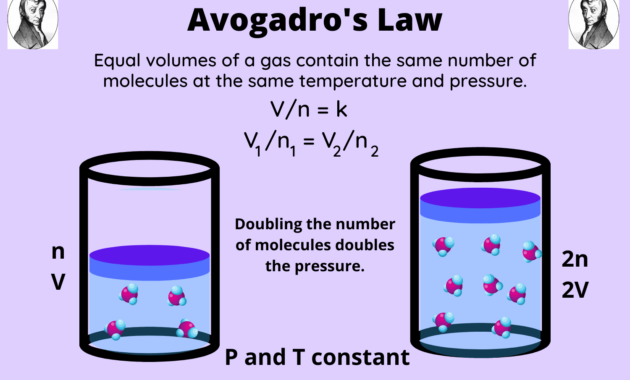
    Therefore, often the verse of the chair is read to avoid or protect from interference by jinn, black magic or other things. In addition to protecting yourself from interference by jinns and black magic, there are other virtues of verses of chairs. How does the verse of the chair and its translation sound? Then what are the advantages and benefits? Check out this article further to find out the lafadz verse of the chair and its translation.

    Ayat Kursi and its Translation, Complete Arabic Latin

    ٱللَّهُ لَآ إِلَٰهَ إِلَّا هُوَ ٱلْحَىُّ ٱلْقَيُّومُ ۚ لَا تَأْخُذُهُۥ سِنَةٌ وَلَا نَوْمٌ ۚ لَّهُۥ مَا فِى ٱلسَّمَٰوَٰتِ وَمَا فِى ٱلْأَرْضِ ۗ مَن ذَا ٱلَّذِى يَشْفَعُ عِندَهُۥٓ إِلَّا بِإِذْنِهِۦ ۚ يَعْلَمُ مَا بَيْنَ أَيْدِيهِمْ وَمَا خَلْفَهُمْ ۖ وَلَا يُحِيطُونَ بِشَىْءٍ مِّنْ عِلْمِهِۦٓ إِلَّا بِمَا شَآءَ ۚ وَسِعَ كُرْسِيُّهُ ٱلسَّمَٰوَٰتِ وَٱلْأَرْضَ ۖ وَلَا يَـُٔودُهُۥ حِفْظُهُمَا ۚ وَهُوَ ٱلْعَلِىُّ ٱلْعَظِيم

    Arabic-Latin: allāhu lā ilāha illā huw, al-ḥayyul-qayyụm, lā ta`khużuhụ sinatuw wa lā na`ụm, lahụ mā fis-samāwāti wa mā fil-arḍ, man żallażī yasyfa’u ‘ indahū illā bi`iżnih, ya’lamu mā baina aidīhim wa mā khalfahum, wa lā yuḥīṭụna bisyai`im min ‘ilmihī illā bimā syā`, wasi’a chairyyuhus-samāwāti wal-arḍ, wa lā ya`ụduhụ ḥifẓuhumā, wa huwal-‘aliyul-‘aẓīm

    Translation:

    Allah, there is no God who has the right to be worshiped except He Who Lives Eternally and continually takes care of His creatures. Neither drowsy nor sleep. to Him belongs what is in the heavens and on the earth. No one can intercede with Allah without His permission. Allah knows whatever is in front of them and behind them and they know nothing of Allah’s knowledge other than what Allah wills. Allah’s chair covers the heavens and the earth and Allah does not find it hard to care for both of them and Allah is Most High, Most Great.

    That is the verse of the chair and its translation accompanied by Arabic and Latin. In order to get the virtues of chair verse, Sinaumed’s can read it every day and at any time. However, the Apostle recommends reading verses of the chair at these three times.

    The three times are after performing the five daily prayers, every morning and evening and before going to bed. So, at these three times, you should read verses of the chair in order to get protection from Allah and get benefits for this life.

    Reading the verse of the chair at the three recommended times can bring many benefits. This is because the verse of the chair is known to have many features which are explained in the hadith narrated by Tirmidhi.

    لِكُلِّ شَىْpoٍ سَنَامٌ وَإِنَّ سَنَامَ الْقُرْآنِ سُورَةُ الْبَقَرَةِ وَفِيهَا آيَةٌ هِىَ سَيِّدَةُ

    This means: everything has a peak and the peak of the Koran is the letter Al-Baqarah, in that letter there is a leading verse of all the other verses of the Koran, namely the verse of the chair. (Narrated by Tirmidhi)

    In another hadith narrated by Ubay bin Ka’ab, it is explained that “verse the chair is the most important letter or verse in the Al-Quran.” This verse also explains about the oneness of Allah SWT and Allah’s absolute power.

    Benefits of Reading Ayat Kursi

    As a Muslim, you should only dhikr and pray to Allah, the ruler of the heavens and the earth. One of the ways to pray and dhikr to Allah is by reading verses of the chair which have benefits if you read them diligently, especially at the three times prescribed by the Apostle. Here are some of the benefits of verse chairs that Sinaumed’s need to know.

    1. Opening the Door of Wisdom and Fortune

    Allah SWT mentions that Allah will guarantee sustenance from His servant who recites the verses of the Al-Quran. In addition, according to the Asraarul Mufidah book it is stated that whoever reads the verse of the chair 18 times a day, he will receive the benefits. The first benefit is that Allah will always open his chest to the door of wisdom and make his sustenance easier.

    2. Elevated Degree

    The second benefit is when a person recites the verse of the chair diligently and regularly, Allah will exalt that person’s degree, both in this world and in the hereafter. For anyone who reads the verse of the chair 18 times, he will get full honor. Not only for himself, but for those around him as well.

    3. Keep away from disaster

    The third benefit of reading verse chairs is usually a benefit that is often sought after, namely to get spiritual peace. When a person gets spiritual peace, he will feel calm, serene and peaceful. In addition to being given spiritual peace, a person who diligently reads verse chair will also be guarded by Allah from all disasters that will befall him on the day he reads verse chair.

    4. The reward is like someone who died a martyr

    The benefits of these four will be felt by someone who reads the verse of the chair after performing the obligatory prayer. If you read the verse of the chair after the obligatory prayer, then he will get a reward like someone who died a martyr. This benefit is explained in a hadith narrated by Hakim.

    من قرأ آية الكرسى دبر كل صلاة كان الذى يلى قبض روحه ذو الجلال والإكرام وكان كمن قاتل عن أنبياء الله ورسله حتى يستشهد

    Meaning: whoever reads the verse of the chair after every prayer, then the one who will take his life is Allah himself and he is like a person who fought with the prophets until he was martyred. (HR. Hakim)

    5. Launched the Way of the Soulmate

    For Sinaumed’s who is confused, wondering when Sinaumed’s’ soul mate will appear, Sinaumed’s can try to facilitate the fortune of a mate by reading verses from the chair regularly.

    The benefits of this one were explained by the Apostle when one of his friends said that he was not married because he did not have enough money. Because of this, the Apostle then ordered the friend to read the letter Al-Ikhlas, the letter Al-Kafirun, the letter Al-Zalzalah, the letter An-Nasr and the verse of the chair.

    Therefore, for someone who reads a lot of verse chairs, Allah will make it easier for him to get a good and pious or pious mate.

    6. Get Protection from Allah

    Another benefit of verse chairs is getting protection from Allah. Especially if you read the verse of the chair after performing fardhu prayers. The protection from Allah in question is getting protection from the temptations of Satan, dangerous wild animals and human evil. Beyond that, Allah also provides protection for families and property.

    In a hadith narrated by Bukhari, the Apostle said “if you go to bed at night, then read the verse of the chair, then Allah SWT will always take care of you. Besides, the devil won’t come near you until morning.” (Narrated by Bukhari).

    7. It is made easy when dying

    When someone reads verses of the chair diligently, then Allah will bring something that did not exist before to exist. Not only that, Allah will also make it easier for that person in the process of dying.

    8. Disbelief is removed from Himself

    According to the words of the Apostle, “Whoever returns to his house, then reads the verse of the chair, Allah will remove all disbelief that is in front of his eyes.”

    Therefore, a person who diligently reads verses of the chair will definitely get pleasure that comes unexpectedly to the house from all directions.

    9. Facilitated in all matters

    If Sinaumed’s has a hajat or is planning something, then Sinaumed’s should read the verse of the chair, so that Allah will make it easier for all the affairs that are planned at that time.

    According to Sheikh Al-Buni, he explained that whoever reads the verse of the chair in full, namely as many as 170 letters, will receive benefits.

    Allah will provide various pleasures, for example, such as providing various assistance, making it easier for all the needs that he has, broadening his mind, so that it is easier for him to think, eliminating sorrow from his heart and expanding his sustenance. However, this pleasure can be obtained if Sinaumed’s recites verses of the chair solemnly.

    10. Get protection while traveling

    If Sinaumed’s reads the verse of the chair during the trip or when he is about to start the journey, then Allah will facilitate the person’s journey. Allah will always ease the journey and will protect him at all times.

    Those are the ten benefits if someone regularly reads the verse of the chair, especially if he reads the verse of the chair solemnly and in the three times that were sunnah by the Prophet.

    Apart from its benefits, is Sinaumed’s curious why this verse is called ayat Kursi? As it is known that in the verse chair there is the word chairyyuhu . According to his own interpretation, the meaning of the word comes from the word Al Kursi which means knowledge.

    Meanwhile, there are also several opinions that say that the word Al-Kursi in the verse of the chair is the majesty of Allah. Apart from that, there are also those who say that it is called verse chair because it is interpreted as God’s power or kingdom.

    Shaykh bin Baz also revealed that the chair verse is a great verse, even as previously explained that the chair verse is the pinnacle of the Al-Quran.

    Not only that, the verse chair also contains elements of monotheism and sincerity to Allah alone. If read after every prayer and going to sleep, then someone who reads the verse of the chair will be protected from all evil.

    Interpretation of the Chair Verse

    After knowing the reasons for naming the verse chair and its translation, Sinaumed’s also needs to know the interpretation of the verse chair, so that this verse becomes a great verse and has many features. Here is the interpretation of the verse chair.

    Allah is the Most Living Essence and has all the perfect essence of life, no one has the right to be confronted with it uluhiyah or ubudiyah except He, besides that Allah is the one who is supremely in control of everything neither sleepy nor sleeping.

    Chair verse is a verse that contains a very great thing, namely Allah. There is a hadith which states that the chair verse is the most important verse in the book of Allah or in the Koran. According to His word,

    O Allah

    Meaning: Allah, there is no other God who has the right to be worshiped besides the One who lives eternally and continuously takes care of His creatures.

    That is, Allah informs that He is the only and only God who is obliged to be worshiped by all nature, is single in his soul. Allah is eternal life and will never die forever and can control all things that exist.

    That way, everything in this world really needs Him, while Allah doesn’t need them at all, nothing will happen without orders from Allah. All creatures that exist in this universe are God’s creation and it is He who rules everything, as His word,

    ومن آياته أن تقوم السماء والأرض بأمره

    Meaning: And among the signs of His power is the establishment of the heavens and the earth with His will (QS. Ar-Rum: 25).

    لَا تَأْخُذُهُ سِنَةٌ وَلَا نَوْمٌ

    Meaning: Not sleepy and not sleeping.

    From these two words, it can be interpreted that He is safe from defects or deficiencies, negligence and negligence in taking care of His creatures. On the contrary, Allah always takes care of and pays attention to what every creature does.

    Allah also always witnesses everything, nothing is hidden from Him and among the perfections of Allah’s attributes is that He is never overpowered or overpowered by drowsiness. Therefore, Allah also said “and neither sleep” because sleep is stronger than drowsiness.

    Meanwhile, in a hadith narrated by Abu Musa, it is mentioned

    قام فينا رسول الله صلى الله عليه وسلم بأربع كلمات فقال : ” إن الله لا ينام ولا ينبغي له أن ينام ، يخفض القسط ويرفعه ، يرفع إليه عمل النهار قبل عمل الليل ، وعمل الليل قبل عمل النهار ، حجابه النور أو النار لو كشفه لأحرقت سبحات وجهه ما انتهى إليه بصره من خلقه

    Meaning: Rasulullah SAW has taught us four sentences, he said ‘indeed Allah never sleeps and He does not abstain from sleeping, Allah has lowered and raised the scales. The deeds of the day before the deeds of the night and the deeds of the night before the deeds of the day are appointed to him. His hijab is made of light and fire, if He shows his face, everything that is seen by His creatures will burn.

    From these words, it is emphasized that no one can or is able to see Allah and all creatures in the universe are in His kingdom, Allah’s power and His coercion.

    Allah also explains that He has majesty, might, and greatness that no one can do, namely by giving intercession to others except with permission from Allah. This is explained in several Al-Quran hadiths, one of which is the letter Maryam verse 64.

    Allah also explains His other greatness and powers that He has. This power and greatness can be known by humans through the verses of the chair as the peak verses and special verses in the Al-Quran. This is because, through verses of the chair, Allah also emphasizes that humans are only humans, while Allah is the Lord of the universe and the only being who has the right to be worshiped.

    That is the explanation of the verse of the chair and its translation which has many virtues and benefits for anyone who reads it solemnly and regularly.

    If Sinaumed’s is interested in knowing the interpretation of other verses of the Koran or wants to learn to read the Koran and prayers that can provide protection and benefits, then Sinaumed’s can start by reading books.

  • Avogadro’s Law and 4 Other Basic Chemical Laws You Must Know

    Avogadro’s Law and 4 Other Basic Chemical Laws You Must Know

    Avogadro’s Law and 4 Other Basic Chemical Laws You Must Know – For Sinaumed who are interested in chemistry, this article will be a friend in exploring more profound knowledge about chemistry. The birth of chemistry will always be remembered by scientists who have dedicated their lives to conducting research for years to conduct research.

    Chemists such as Avogadro, Lavoisier, Proust, and many other figures.

    The basic laws of chemistry are the theories that form the basis of chemical calculations and the quantitative relationships of reactions and products in chemical equations. The following are the five fundamental laws of chemistry, which Sinaumed must know!

     1. Avogadro’s law

    When studying the substance chapter, there is a fundamental law commonly called Avogadro’s law. Avogadro’s law is a theoretical law that deals with the kinetics of gases. To learn more about the inventor and the law’s sound, look at the following article!

    Understanding of Avogadro’s Law

    Avogadro’s law was put forward by a physicist from Italy, Lorenzo Romano Amedeo Caro Avogadro, better known as Amedeo Avogadro.

    Avogadro’s law was put forward in 1811. Disadue to the Encyclopedia Britannica, Avogadro’s law states that there are empirical relationships in gas theory that apply to all natural gases at specific low pressures and temperatures.

    Avogadro’s law reads:

    “All gases with the same number of volumes under the same pressure and temperature have the same number of particles or molecules.”

    For example, chlorine gas and nitrogen gas, which have a volume of 1 liter and are at standard temperature and pressure, have the same number of particles and molecules.

    Adapted from Chemistry LibreTexts, according to Avogadro’s law, the volume of a gas is directly proportional to the number of gas particles or moles when the temperature and pressure are maintained or constant.

    Avogadro’s Law Equation

    Mathematically, Avogadro’s law can be expressed by the formula:

    V = k x n

    With V: gas volume (m³)

    n: the number of moles of gas (mol)

    k: proportionality constant

    Meanwhile, the relationship between two gases at the same temperature and pressure, according to Avogadro’s law, is as follows:

    With, V1: volume of gas 1 (m³) V2: volume of gas 2 (m³) n1: number of moles of gas 1 (mol) n2: number of moles of gas 2 (mol)

    Avogadro’s number

    Meanwhile, the number of gas particles depends on the number of moles and Avogadro’s number. Adapted from Lumen Learning, Avogadro’s number is the number of elementary particles, namely molecules, atoms, and compounds per mole of a substance.

    Avogadro’s number is a constant that has a value of. The number of particles of a gas can be calculated based on the number of moles and Avogadro’s number.

    The formula for the number of particles of a gas is:

    X = n x L

    With X: the number of gas particles

    n: the number of moles of gas

    L: Avogadro’s number 

    Examples of Avogadro’s Law Questions

    A 5-liter cylinder contains 2 × 10²² molecules of carbon dioxide gas. How many nitrogen gas molecules are in a 4-liter cylinder at the same pressure and temperature?

    Answer:

    N1 V1 2×10²²

    5N2 = N2

    V2= N24 = 1,6 x 10²² moles

     2. Lavoisier’s law

    The law of the conservation of mass in Lavoisier’s science is also called the law of the protection of group. What is the law of conservation of mass? Come on, look at the following meaning.

    Understanding Lavoisier’s Law

    A French chemist, Antoine Laurent Lavoisier (1743-1794), is the discoverer of the Law of Conservation of Mass. Lavoisier examined a substance’s mass (weight) before and after the reaction. Lavoisier successfully stated the law of conservation of mass in 1789.

    Because of these discoveries, Lavoisier is now known as the father of modern chemistry. Previously, Mikhail Lomonosov (1748) had proposed a similar idea and had proven the results in an experiment. However, the law of the conservation of mass presented by Mikhail Lomonosov still tends to be challenging to understand because of the bouncing forces in the earth’s atmosphere.

    According to Lavoisier’s experimental results, the amount of substance present before and after a reaction will always be the same if it is in a closed system. Even so, material changes generally occur in an open system, so if a reaction product leaves the system or a substance from the bound environment, the mass of the essence before and after the reaction will be different.

    The conclusion that Lavoisier draws regarding the law of the conservation of mass is:

    “The mass of the substance before and after the reaction is constant.”

    From the sound of the law, it can be concluded that the definition of the law of the conservation of mass is a law that states that the group of a closed system will always be constant or remain the same even though various processes occur in the system.

    Lavoisier’s Law Experiment

    In experimenting on the law of conservation of mass, Antoine Laurent Lavoisier experimented by heating mercury oxide (HgO) to produce metal mercury (Hg) and oxygen gas (O2), which gave rise to the reaction or Lavoisier’s law formula, which is as follows:

    2HgO(l)+O2(g)→2Hg(s)+2O2(g)

    Furthermore, the two products will be reacted again to form mercuric oxide. This study shows that the mass of oxygen gas produced by burning mercury oxide is the same as the mass of oxygen needed to convert mercury metal into mercury oxide.

    Problems example

    1. 5 grams of magnesium metal is reacted with 5 grams of oxygen to form an oxide compound. From this reaction, what mass of magnesium oxide is produced?

    Answer:

    Pre-reaction mass = post-reaction mass

    mass of magnesium metal + mass of oxygen = mass of magnesium oxide

    5 grams by mass of magnesium metal + 5 grams by mass of oxygen = 10 grams by mass of magnesium oxide

    2. A magnesium metal having a mass of 6 grams is then reacted with oxygen to form 8 grams of oxide compounds. What is the group of the reacting magnesium?

    Answer:

    Pre-reaction mass = post-reaction mass

    Mass of magnesium metal + mass of oxygen = mass of magnesium oxide

    6 grams by mass of magnesium metal + mass of oxygen = 8 grams by mass of magnesium oxide

    Mass of oxygen = 8 grams by mass of magnesium oxide – 6 grams by mass of magnesium metal

    The mass of oxygen = 2 grams

    3. Proust’s law

    Has Sinaumed ever tried to do chemical research, where Sinaumed made a compound by mixing materials A, B, and C into a test tube?

    The ingredients included and the size of the amount cannot be arbitrary because one mistake, Sinaumed, can cause an explosion or poison.

    Definition of Proust’s Law

    The manufacture of each chemical compound has a composition or arrangement with a fixed number of ratios (ratio) of the constituent materials.

    This was stated by a chemist from France named Joseph L. Proust in 1806 with a law that is today known as Proust’s law or law of fixed proportions.

    Adapted from Sussex Tech, Proust has argued that compounds of copper carbonate always consist of 5.3 parts copper, 1 part carbon, and four parts oxygen.

    The statement made by Proust at that time was very controversial. However, another prominent chemist, John Dalton, supports this statement. Dalton stated that two different carbon compounds were formed from different amounts of oxygen but always had the same composition in each mix.

    Adapted from Chemistry LibreText, water compounds are found in various kinds such as drinking water, tap water, rainwater, seawater, and also any water with as much mass as anything; each compound unit always consists of hydrogen and oxygen, which have a mass ratio of 1:8.

    This comparison will never change.

    From the results of this study, it can be concluded that Proust’s Law is a law that states that a chemical compound consists of several elements which always have the same mass ratio.

    Problems example

    1. The mass ratio of carbon (C) and oxygen (O) is 3:8. If the carbon that reacts is 1.5 grams, what is the total mass of oxygen that reacted and the group of carbon dioxide that will be formed?

    Answer:

    Mass of carbon: Mass of oxygen: Mass of carbon dioxide

    3: 8: 11

    Reaction:

    1,5:? 😕

    Required mass

    8/3×1,5 = 4 gram

    The group of carbon dioxide formed

    11/3×1,5= 5,5 gram

    So the mass of oxygen reacting and carbon dioxide formed is 4 grams and 5.5 grams.

    2. The mass ratio of iron and sulfur in iron sulfide compounds is 7:4. What is the mass of sulfur required to form iron sulfide compounds with 21 grams of iron without any reaction residue?

    Answer:

    Comparison of sulfur and iron x mass of iron

    =4/7×21 gram

    =12 gram

    Then the mass of sulfur needed is 12 grams.

     4. Dalton’s Law

    Dalton’s law is one of the fundamental laws in chemistry. This law has other names, namely the law of multiple comparisons and the law of multiple comparisons.

    The law of multiple comparisons is a law that was coined by John Dalton, a chemist from England. This law is one of the laws that form the basis of the stoichiometry concept. Intrigued by the law of multiple comparisons? Check out the full explanation below!

    Definition of Dalton’s Law

    According to Dalton, the law of double comparison is two elements that, can form more than one compound when reacted. For example, comparing the mass of one piece, and a combination with another factor with a certain group, is an integer and a simple number.

    As for the sound of the law of multiple comparisons that was triggered by John Dalton, it is:

    If two types of elements combine to form more than one compound and the mass of one of the elements in the compound is the same. In contrast, the groups of the other aspects are different, then the mass ratio of the other factors present in the mix is a simple integer.

    This law was produced by Dalton through experiments conducted and based on the direction of constant comparison that Joseph L. Proust presented.

    Dalton believed there was a regularity related to the masses of elements in a compound. The following table is the result of Dalton’s experiment:

    An example of applying the law of multiple multiples is the two compounds, sulfur dioxide (SO2) and also sulfur trioxide (SO3).

    In one compound molecule, there is one sulfur atom, so both molecules must have the same amount of sulfur mass.

    The SO2 molecule has two O atoms, while the SO3 molecule has three O atoms. From this,, it can be concluded that the ratio of O atoms in the two compounds is 2: 3.

    Since all O atoms have the same mass, the ratio of the groups of O in the two molecules must equal the atomic ratio, and this ratio (2 : 3) is a ratio using small whole numbers. 

    Examples of Dalton’s Law Questions

    The elements oxygen and phosphorus are reacted to form two types of compounds. In 55 grams of mixture I, there are 31 grams of oxygen. And 71 grams of compound II contains 40 grams of phosphorus.

    Does this compound follow Dalton’s law?

    Answer:

    The mass of phosphorus in compound I = 55-31 = 24

    The mass of oxygen in compound II = 71-40 = 31

    Thus the mass of oxygen between compounds I and II is the same, namely 1:1. and the masses of phosphorus from compounds I and II are as follows:

    24/40 = 4:5

    The result is 4:5, which is a simple integer, so the two compounds

    This is according to Dalton’s law.

     5. The Gay Lussac Law

    At the same temperature and pressure, the volume ratio of the reacting gases and the volume of the gas resulting from the reaction is the ratio of simple integers. Joseph Louis Gay Lussac expressed this in the law of volume comparisons. The law of volume comparisons states the volume ratio between the gases involved in a chemical reaction.

    Reaction volume comparison experiment

    The law of ratios of volumes emerged when Gay Lussac was observing the books of the product and gaseous reactants in the reaction to make water from hydrogen and oxygen. Adapted from Purdue University College of Science, Gay Lussac found that the humidity of the reaction flask did not affect the volume of hydrogen and oxygen gases used in a reaction.

    In the experiment, about 199.89 parts by volume of hydrogen were used in the reaction for 100 details by volume of oxygen. From these experiments, the resulting volume ratio with simple integers is 2:1:2.

    To prove his discovery, Gay Lussac tried to observe other reactions.

    The reaction for the formation of ammonium chloride (NH4Cl) is derived from hydrogen chloride (HCl) and ammonia (NH3). Gay Lussac found that it takes equal volumes of HCl and NH3 to form NH4Cl. That is, the volume ratio of the reactants is 1:1:2. Gay Lussac also discovered that two volumes of carbon monoxide consumed by 1 volume of oxygen would produce two books of carbon dioxide. So, the volume ratio is 2:1:2.

    Gay Lussac’s law of volume comparison

    Adapted from Chemistry LibreTexts, Gay Lussac’s volume ratio law reads:

    “When gases combine at constant temperature and pressure, the volume ratios of the gases involved are always simple integer ratios.”

    This means that the ratio between the volumes of the reactant gases and the products can be expressed in integer ratios. This applies to conditions of the same temperature and gas pressure when the reaction occurs. 

    Problems example

    Two liters of chlorine gas reacts with 2 liters of hydrogen gas to produce four hydrogen chloride gas. If 10 liters of chlorine gas has been reacted, how much hydrogen chloride gas will be made?

    Answer:

    Volume Hidrogen : Volume Klorin : Volume Hidrogen Klorida

    2 : 2 : 4

    10 : 10 : 20

    Then the hydrogen chloride produced from the reaction of 10 liters of water is 20 liters.

  • Audiovisual: Definition, Characteristics, Functions, Benefits, and Purpose

    Audiovisual is a term that refers to the use of image components as well as sound. So, the two components will be processed simultaneously to be presented in a presentation, show, and program according to the needs. With this audio-visual media, it is hoped that the delivery of information can be clearer and also interesting.

    In addition, the delivery process will usually be carried out by appearing on a projector screen connected to a personal device such as a laptop or smartphone.

    For those of you who want to know about the meaning of audiovisual, its types, functions, and other things, the details will be explained below.

    Definition of Audiovisual

    Audiovisual is one of the media in which there are elements of images and sounds. For the advantages of this one media, it will certainly seem more communicative, because indeed the output can be seen visually and heard auditively.

    In addition, audio-visual media itself can also act as a tool that is often used to convey information, knowledge, ideas, and ideas as outlined in the form of written presentations in learning, lectures, schools, and also in the office world.

    Meanwhile, audio-visual media is media that has sound elements as well as image elements. This type of media has better capabilities, because as explained above, this media includes both types of auditory or auditory and visual or visual media.

    Audiovisual media are audio-visual aids, which means materials or tools used in learning conditions or situations to assist writing and spoken words in conveying knowledge, ideas, and attitudes.

    The other meaning of audiovisual is a set of tools that can project moving images and sound. The combination of images and sounds also forms a character that is the same as the original object. The tools included in the audiovisual media category are video VCD, television, sound, and also film.

    There are many types and forms of media that are well known today, from simple to high-tech, from the easiest and naturally existing to media that experts have to design themselves.

    Understanding Audiovisual According to Experts

    The following are some definitions of audio-visual according to experts, including:

    1. Definition of Audiovisual According to Anderson

    Audiovisual is a series of electronic images that are accompanied by audio sound elements and have image elements as outlined via video tape.

    2. Definition of Audiovisual According to Barbara

    Audiovisual is a way of producing and delivering material using mechanical as well as electronic equipment to present audio-visual messages.

    Audiovisual Features

    Unlike newspapers or magazines, this audiovisual media has its own characteristics, where the delivery of information comes from audio or speakers. Meanwhile, to clarify this information, supporting pictures must be included. From there, we can see that some of the characteristics of audio visual are as follows:

    1. The presentation has a linear nature.
    2. Presented in a way predetermined by the maker or designer.
    3. Audio visual is a representation of real ideas or abstract ideas.
    4. Developed according to the psychological principles of behaviorism as well as cognitive.
    5. Presenting visuals that are dynamic or always changing and moving.

    Audiovisual Function

    There are several functions of audiovisual media, especially as a means of communication, including:

    1. Social Function

    This audio-visual media can function to convey information in various fields, as well as concepts for everyone, so that they can expand their association. This media can also help someone in their efforts to gain understanding related to other people or customs.

    2. Educational Function

    The educational function here goes by providing meaningful experiences and broadening knowledge for everyone. Not only that, audio-visual media can also be used as a means of conveying values, so that it can help to think critically.

    3. Cultural Functions

    Through this audiovisual media, various elements, especially in the field of culture and art in society, can be passed down from generation to generation. In addition, this media can also provide an overview of changes in human life.

    4. Economical Function

    Goals can be achieved more effectively by using audiovisual media. This is because the delivery of material or information can be done with minimal effort, cost, and time. However, it still does not reduce the effectiveness of achieving goals.

    Kinds of Audiovisual Media

    The following are several types of audio-visual media that need to be understood, including:

    1. Pure Audio Visual

    Pure audio visual or what is often referred to as motion audio visual is media that can display sound elements as well as moving images, sound elements or image elements originating from a source.

    a. Sound Movies

    Film or what is often called a live image. It is an image of a frame that is projected one by one through the projector lens mechanically. So that later it will look alive and moving on the screen. Films are usually used for educational, entertainment and documentation purposes. However, films can also present and describe various kinds of complex concepts, ideas, information, and processes.

    The following are some of the advantages of film as a learning medium, namely:

    • Fim can describe a process, for example, the process of making a hand skill and so on.
    • Can create the impression of space and time.
    • The resulting sound can bring reality to images in a pure form of expression.
    • Can convey the voice of an expert and see his performance.
    • If the film and video also have color, it will be able to add to the reality of the object displayed.
    • Can describe science theory and also animation.

    In addition to the advantages or advantages, the film also has several disadvantages, including:

    • Films with sound can be interspersed with captions that are spoken while the film is playing, stopping playback which will distract the audience’s concentration.
    • The audience will not be able to follow along properly if the film is played too fast.
    • What has passed will be very difficult to repeat except to play it back in its entirety.
    • The cost of manufacture and also the equipment is quite expensive and high.

    b. Videos

    Video as an audio-visual medium that presents motion, is getting more and more popular in society. The message to be conveyed can be factual or fictitious, it can also be informative, educative, or instructional. In the field of education, usually most of the film assignments can be replaced with videos.

    However, that doesn’t mean video can replace film. Video media is a type of audio-visual media other than film which has been widely developed for learning purposes.

    c. Television

    In addition to film and video, television is a medium that conveys learning messages audio-visually, that is, accompanied by elements of motion. When viewed from its understanding, this television comes from two words, namely tele (Greek) which means far away, and vision (Latin) which means vision.

    Meanwhile, in English, television means seeing far. The word “seeing far” implies that images produced in one place can be seen in another through a receiving device called a television monitor or television set.

    Television is an electronic equipment which is basically the same as moving or live images, which consists of images and sound. That way, the role of television as a live picture or radio which can display images that can be seen and produce sound can be heard at the same time.

    In addition, television as a broadcasting institution has also been widely used for educational and teaching purposes. There are lots of TV broadcasts that specifically discuss and inform educational and teaching material messages. Usually the TV broadcast is called educational television.

    2. Impure Audio Visual

    This impure audio-visual is media that has elements of sound and images that come from different sources. Where impure audio-visual is often referred to as silent audio-visual plus sound, namely media that presents silent sounds and images, such as for example:

    a. Sound Slide or Sound Frame Movie

    Slides or so-called film strips added with sound are not complete audio-visual tools. Because, sound and also apparently are in separate places. Therefore, these slides or filmstrips are included in audio-visual media or silent visual media plus sound. The combination of slides and audio tape is the easiest type of multimedia system to produce.

    Combined learning media from slides as well as tape can be used in various locations and for various learning purposes involving pictures to inform or encourage emotional responses.

    Sound slides are an innovation in learning that can be used as learning media and are also more effective in helping students understand abstract concepts to become more concrete.

    Audiovisual Benefits

    The benefits that can be obtained with audiovisuals can be felt in various forms of activity, including:

    1. Raising Curiosity or Curiosity

    This audio-visual media can generate curiosity or curiosity because of the attractive visual appearance and accompanied by audio. That way, children will be curious about the content conveyed in the media.

    2. Not boring

    This audiovisual media is not boring because it varies greatly when used in learning. As we already know from the notion of audio visual, namely the combination of auditory and visual media. The combination of the two media can be created into various types of impressions in the learning process.

    3. Facilitate Submission

    Audiovisual media can facilitate the delivery of material. Because, this one media can attract the attention of students and students. So, children will not be wrong in knowing the contents of the material and it is easy to understand.

    4. Ensuring Understanding

    This audiovisual media can ensure that the information received by children can be conveyed properly. Because, the type is auditive and visual, the broadcast can make students’ understanding more quickly absorbed.

    Purpose of Audiovisual Learning Media

    According to Anderson, the purpose of learning media that uses audio visual has several objectives, including:

    • To develop cognitive in children so they can get to know various things and stimulate their movements.
    • To teach various knowledge regarding certain principles and laws.
    • To show some examples and also ways of behaving regarding student interactions.
    • To convey the most effective information material.

    Strengths and Weaknesses of Audiovisual Learning Media

    Here are some of the advantages of learning media audiovisual media.

    1. Materials for learning so much easier to understand.
    2. For teachers in providing material and also teaching will be more varied.
    3. Students are not easily bored in participating in learning activities.

    The following are the disadvantages of audiovisual learning media.

    1. In the presentation of each material can produce an unclear sound, so that the material becomes difficult to understand.
    2. Because using verbal is not always the same, it requires good mastery of words and language.
    3. If the picture is not clear, then the material presented will be less than optimal.

    After knowing the advantages and disadvantages of audiovisual learning media, in the following discussion, we will discuss how to plan audiovisual learning media.

    How to Make an Audiovisual Learning Media Plan

    To be able to make audio-visual as a means of making learning media, there are several steps that need to be done to create an interesting and not boring lesson. The process itself is as follows:

    1. Pre-Production Stage

    The first stage is the stage before manufacture. At this stage, what must be done is to determine the theme and also the material that will be the content of the audio-visual media.

    a. Defined Image Style

    The first step is to determine the style of the image first. The image style here depends on the creativity of the maker and can be chosen freely.

    b. Sketch Making

    The second step is to make a sketch. In making this sketch, it needs to be adjusted to the material to be conveyed. For how to make it, we can use graphic processing software or flash.

    2. Manufacturing Stage

    The second stage is the manufacturing stage. In this phase, we will carry out the import process from the sketch that was made in the graphic processing software and then put it into flash. If it is directly made in flash, then it doesn’t need to be imported again.

    Audiovisual Equipment

    To be able to make learning media using audio-visual, several types of audio-visual equipment are generally needed, including:

    1. Voice recorder
    2. Camera
    3. Telephone
    4. Headphones
    5. Loudspeaker
    6. tv
    7. audios
    8. Displays

    Thus the explanation regarding audiovisual is, types, benefits, functions, and also how to plan audio-visual learning media. Hopefully all the discussion above is useful for you, Sinaumed’s.

    For Sinaumed’s who want to know more about audio visual media, you can read related books by visiting sinaumedia.com . To support Sinaumed’s in adding insight, sinaumedia always provides quality and original books so that Sinaumed’s has #MoreWithReading information.

    Author: Umm

    Reference:

    • https://duniadik.co.id/audio-visual/
    • https://www.amesbostonhotel.com/pengertian-audio-visual/
  • Astronomy Department Job Prospects

    Astronomy Major Job Prospects – Are there any of you who aspire to become Astronauts, Sinaumed’s? If yes, then study at the  inline department with that profession, namely the Astronomy Department . This major will then answer various questions about How do stars and planets work?

    How does life grow and develop? How did the universe begin? to the question Is there life on other planets? Then what are the job prospects for Astronomy Department graduates? Check out the details below, Sinaumed’s!

    Astronomy itself is the oldest science in history, where ancient prehistoric tribes have long used this knowledge to read the constellations. The Department of Astronomy itself studies physics, biology, chemistry, and evolution related to stars, planets, and other space objects.

    By emphasizing the application of physics to celestial objects, you will learn about the structure and evolution of the universe, starting from the characteristics, movement, distribution of meteorids, asteroids, comets and other celestial bodies.

    An understanding of Chemistry, Physics, and Mathematics is needed to understand natural phenomena in extreme time spans, such as the formation of the element helium from hydrogen through fusion reactions in the sun’s core.

    You will also be faced with a wide choice of areas of expertise including Star Physics, the Galactic Solar System and Cosmology. The science or study of astronomy itself in its development is divided into more specific specialized branches of science, namely Practical Astronomy, Astrometry, Astrophysics, Cosmogony, and Descriptive Astronomy, Planetary Astronomy to Stellar Sinaumed’s Astronomy.

    There is only one university that offers Astronomy majors in Indonesia, in fact the only one in Southeast Asia, namely the Bandung Institute of Technology (ITB). Enter the Faculty of Mathematics and Natural Sciences (FMIPA) ITB.

    FMIPA ITB itself provides Astronomy majors for bachelor, master and doctoral levels which have been accredited A by BANPT (National Accreditation Board for Higher Education). ITB as the only university with a major in Astronomy in Southeast Asia, this University then cooperates with the DKI Jaya Planetarium and Observatory, LAPAN (National Institute of Aeronautics and Space), SRON, University of Leiden, Kyoto University, Gunma Observatory, National Astronomical Observatory, AAO , University of Amsterdam, The University of Tokyo, as well as various other countries in the world such as the US and India.

    Astronomy Department Job Prospects

    Even though the knowledge learned in the Astronomy study program seems specific, in fact an Astronomy graduate has quite broad job prospects in Sinaumed’s.

    The most important prospect for these graduates is of course to become an Astronomer, besides that graduates of the Astronomy study program who also study physics, mathematics, or even programming can enter many industries. Below are some job descriptions for graduates majoring in Astronomy from Sinaumed’s:

    1. Astronaut

    Astronaut profession as a term for people who have undergone training in the human space flight program to lead, fly planes, or become space crew members.

    The term “astronaut” itself is sometimes used to refer to astronauts from the United States or other countries. The astronaut himself is different from a cosmonaut who comes from Russia or the Soviet Union. Astronauts then go into outer space to carry out certain missions.

    For example Sally Ride with the STS-7 mission in 1983, Edwin Aldrin with the Apollo 8 mission in 1969, and so on. Astronauts will then stay aboard the International Space Station and take part in research and experimental activities.

    In the course of his career after carrying out various general training and completing various exams, he will then be assigned to a mission. This job will allow you to dive into various experiences in real space travel, and be able to call yourself an astronaut.

    The career path of an astronaut itself starts at the GS-12 level to the highest GS-15. This level will also affect the amount of income of an astronaut. This Professional Responsibilities include:

    • Set up satellites for various communication and technology needs of all countries in the world.
    • Undergoing training related to space knowledge both theoretically and physically, namely flying on spacecraft and carrying out various specific missions
    • Documenting and observing outer space, taking important objects and samples from there to be brought to earth for more thorough study and research
    • Maintain the safety of the spacecraft and all the crew on board
    • Report various events that occur in space
    • Carry out various activities with space exploration.
    • Documenting and observing the environment of destinations in outer space.
    • Make a report of all events that occur in space.

    2. Astronomer

    Astronomers are currently still making and studying various observations, but in modern astronomy, telescopes are now controlled remotely and astronomers can then wait for the results of their observations from a more comfortable and warm room.

    After the results are obtained, then analysis and processing and observation of data are carried out. If you are interested in pursuing this profession, continue your education up to a doctoral degree, Sinaumed’s. Then you can research various things in the world of astronomy and then publish them in scientific journals. The duties of the Astronomer Profession include:

    • Collaborate with other astronomers to carry out various research projects
    • Present research findings in scientific journals and scientific conferences.
    • Studying celestial phenomena, using space-borne and ground-based scientific instruments and telescopes
    • Analyzing various research data to determine their significance by utilizing computer technology
    • Develop theory based on observations and theories from other astronomers, as well as their personal observations
    • Processing and analyzing various data. This part is then usually carried out at the institute where the astronomer works. The previously retrieved data is often still raw and contains noise in it. This data must then be processed again after being analyzed and made interpretations of the various phenomena being observed. This analysis then uses statistics and other analytical tools, as well as consulting various literature for comparison.

    3. Research Institute

    For those who love Astronomy and graduates from this department, you will then have the opportunity to work in various research institutions including planetariums, outer space. Southeast Asian countries themselves have SEAN (South East Asia Networking) which still needs space and celestial research workers.

    You can also work at BPPT (Agency for the Assessment and Application of Technology), NASA (The National Aeronautics and Space Administration ) and LAPAN (National Aeronautics and Space Agency).

    Researchers themselves play an important role, and become an indicator of the progress of a country. Research activities are usually carried out by a unit, institution or special center owned by a company, university or government agency whose job is to conduct research in the fields of science and technology.

    The methods used in Research usually use standard scientific research techniques without expecting definite results (a form of pure scientific research) or to obtain predictive results that have commercial value in the near future. The researchers’ own tasks include:

    • Carry out various monitoring, evaluation, research, and reporting of research conducted
    • Developing the latest products in their fields which are then useful for life
    • Perform testing and evaluate the results of tests performed
    • Develop various plans, technical policies, and research programs conducted
    • Conduct various collaborations with companies related to the procurement of services and goods for company development and research activities carried out
    • Support various quality research implementations covering the health, agro, environment, and industrial sectors
    • Carry out, create and develop the latest technology to improve the quality of the products produced by the company
    • Ensuring the quality of performance within a company is in accordance with predetermined standards


    4. Science journalist

    In the media field, an Astronomy graduate also has the opportunity to become a columnist or editor.

    You can write in popular magazines or scientific journals. Through writing, journalists will then convey various scientific and astronomical concepts in a more creative way and attract readers.

    The profession of a journalist or journalist is someone who carries out journalistic activities or someone who regularly writes news and his writings are published in a mass media. Another definition of a journalist is a person whose job is to collect, select, search, process news and then present it in the shortest possible time to the wider community through the mass media. Starting from print media and electronic media.

    Called journalists include editors, news cameramen, news photographers, reporters, editors and audio visual editors. Profession as a journalist itself is a profession that is quite heavy, and important. This Professional Responsibilities include:

    • Authenticator – The community needs the role of journalists who can then check the authenticity of information or news
    • Sense Maker – Able to explain whether the information obtained makes sense and is realistic or not
    • Investigator – Journalists must keep an eye on power and uncover crimes that have occurred
    • Withness Bearer – Journalists must monitor and research certain incidents and be able to work closely with reporters.
    • Empowerer – Journalists must empower citizens and journalists to produce continuous conversations between the two.
    • Smart Aggregator – A journalist must also be smart in sharing trusted and reliable news sources, this report must also be enlightening
    • Organizers or journalists must do good news organization, whether it’s news that is new or old.
    • Role Model – Not only creating and producing works, but also paying attention to his attitude in behaving. Because journalists are in the public sphere that must be used as an example, Sinaumed’s.

    5. Academics/Lecturers

    Being a teacher or lecturer whose job is to encourage fans of celestial bodies to love the world of science more and more is suitable for those of you who have passion as a teacher. However, to pursue this profession, you are required to continue your studies up to the Masters or Doctoral level.

    Lecturers with their role as educators are synonymous with having the ability to teach and deliver material in front of the class. But the lecturer himself is not just a profession that is carried out to earn a living.

    He also pursues a profession to give full commitment and dedication in the field of knowledge he masters. These two things will then produce a variety of useful knowledge and be able to move the students.

    In addition to carrying out lectures, lecturers are also expected to continue to conduct research in their field of expertise. As a scientist, lecturers also play a role in the regular publication of scientific papers and research results at academic conferences.

    Don’t worry about educational costs, lecturers can easily get scholarships, not only that they will also be facilitated in terms of research costs, because there are many scholarship awarding institutions that prioritize lecturers. The professional responsibilities include:

    • Creating a climate or atmosphere in learning that is conducive and enjoyable
    • Plan and carry out the learning process, as well as assess and evaluate the results of the teaching and learning process
    • Making a Learning Strategy, lecturers must choose and use training or instructional methods by using the right procedures when learning or teaching new things to their students, Sinaumed’s
    • Improving and developing various academic qualifications and lecture competencies in a sustainable manner in line with developments in art, technology and science
    • Act objectively and non-discriminatively on the basis of considerations of religion, ethnicity, race, gender, certain physical conditions, or socio-economic background of students in the learning process
    • Having various tasks and implementing them in the form of dedication. This task itself covers the humanitarian, professional, and social fields.

    6. System Analyst

    The System Analyst profession is someone who is responsible for coordinating, researching, planning, and selecting software. Not only that, the system analyst is also tasked with supervising the system that best suits the needs of a company or a business organization.

    System analysts themselves play an important role in the system development process. A systems analyst must have these four skills, including analytical, technical, managerial, and interpersonal skills or communicating with others.

    Analytical capabilities also enable a systems analyst to understand organizational behavior and the functions within it, this understanding will then be very helpful in identifying the best possibilities and analyzing a problem and its solution, while technical expertise will help a systems analyst to understand the limitations and potential of a technology. information.

    A system analyst is also required to have the ability to work with various types of operating systems, programming languages, and the hardware they use.

    Managerial skills will also assist a systems analyst in managing projects, resources, risk and change. Meanwhile, interpersonal skills will help systems analysts interact with end users as well as programmers, analysts and other professions. The responsibilities of this profession include:

    • System analysts are responsible for making assumptions about the purpose of the investigation based on interviews with developers or programmers
    • Identify outputs and inputs as well as user needs as the system is developed
    • By using sampling and accounting principles, structured analysis, the system analyst’s job is to ensure that the solutions offered are effective
    • Create specifications and flowcharts which will then be used by a programmer
    • Manage applications, observe performance and coordinate system tests to ensure improvements have been made
    • After conducting an investigation, a system analyst will perform an analysis of the assumptions that then emerge. This analysis itself can be in the form of a direct experiment on what you want to improve or what you want to develop further
    • The system requirements that have been mature will then be followed by designing. This design can be architecture, module, interface, and data. Usually, in design development, system analysts will then work closely with the back end, front end, and full stack developers
    • If the design development is successful, the system analyst will be required to implement it in a case. This case itself can be in the form of making a new system or application in product development.
    • Systems analysts can also become intermediaries for a company selling software or software with the organization where they work, to then be responsible for various development cost analyzes, determining the required timeframe and design and development proposals.
    • Systems analysts are also responsible for feasibility studies of computer systems before making a proposal to company management

    Also read articles related to “Astronomy Job Prospects” :

    • Job Prospects for the Accounting Department
    • Definition of Employment
    • Types of Sole Proprietorship
    • What is SEO, SEM and SMM

    Source: from various sources

  • Assimilation: Definition, Factors, and Types

    Humans are social beings who need interaction with other humans. Humans as social beings means that they need to live in society. One of the keys to successful social life is the ability to socialize.

    Social skills are included in the interactions studied in sociology, namely the science that studies living together in society and investigates the bonds between humans. Sociology studies various human interactions, one of which is assimilation.

    With this interaction between humans, the relationship between individuals with one another is getting tighter. In addition, assimilation can also create a new culture that keeps up with the times.

    Then, actually, what is meant by assimilation? For more details, you can see this article till the end, Sinaumed’s


    Definition of Assimilation

    Assimilation itself is the assimilation of a culture accompanied by the loss of the characteristics of the original culture, thus forming a new culture. Assimilation itself arises when there are groups of people with different cultural backgrounds and interact directly intensively for a long time.

    An assimilation is characterized by efforts to reduce differences between people or groups. To reduce these differences, assimilation includes efforts to strengthen the unity of actions, attitudes and feelings by paying attention to common interests and goals.

    Assimilation is a combination of groups or individuals who have different cultures. Assimilation will occur when groups or individuals interact on the basis of openness and have a tolerant attitude.

    In the Big Indonesian Dictionary (KBBI), assimilation is adjustment (fusion) of one’s original characteristics with the characteristics of the surrounding environment.

    Assimilation can also be interpreted as an assimilation of two cultures accompanied by the loss of the characteristics of the original culture, thus forming a new culture.

    An assimilation is characterized by efforts to reduce differences between people or groups. To reduce these differences, assimilation includes efforts to strengthen the unity of actions, attitudes and feelings by paying attention to common needs and goals.

    The result of the assimilation process is the thinner the boundaries between individuals in a group, or it could be the boundaries between groups. In addition, individuals identify themselves with common interests. In other words, adjusting his will to the will of the group. Likewise between one group and another group.

    A pluralistic society is a society that is primarily the goal of assimilation. Different life backgrounds make the assimilation process reach different stages in different societies.

    This difference makes assimilation cannot be carried out thoroughly in all aspects of the prevailing culture. Imperfect assimilation occurs because people who have culture and identity always try to maintain their existence.

    Assimilation can be formed if there are three requirements, among others:

    1. There are a number of groups that have different cultures
    2. Social interaction between individuals or groups occurs intensively and in a relatively long time
    3. The culture of each of these groups changes and adapts to each other


    Definition of Assimilation According to Experts

    Some experts also express the notion of assimilation. The following is the definition of assimilation according to some experts, among others:

    • Budhi Setianto Purwowiyoto (2020)

    Assimilation is a person’s cognitive process of integrating new perceptions, concepts and experiences into schemes or patterns that already exist in his mind.

    • Koentjaraningrat (1996)

    Assimilation is a social process that occurs in various groups of people with different cultural backgrounds after they interact intensively, so that the characteristics of cultural elements. Each of these groups turned into mixed cultural elements.

    • Soerjono Soekanto (1990)

    Assimilation is a social process characterized by efforts to reduce the differences that exist between individuals or groups which include efforts to enhance the unity of actions, attitudes, and mental processes by paying attention to common goals and interests.

    Assimilation Factors

    The following are some of the factors for assimilation that you need to know

    Driving Factors

    Common factors that encourage or facilitate assimilation include tolerance, similarity, economic interests, sympathy for other cultures and amalgamation.

    Tolerance that results in assimilation can occur if the minority group is able to lose its identity, while the majority group is able to accept the minority group as a new part of its group.

    Factors driving assimilation, among others:

    • Tolerance attitude.
    • Balanced opportunities in the economy (every individual has the same opportunity to reach a certain position on the basis of his abilities and services).
    • The attitude of respect for foreigners and their culture. The open attitude of the ruling class in society.
    • Similarities in cultural elements.
    • Mixed marriage (amalgamation).
    • There is a common enemy from outside.

    Barrier Factors

    Common factors that can be a barrier to assimilation include:

    • Isolated or alienated groups (usually minority groups).
    • The feeling that the culture of certain groups is higher than the culture of other groups.
    • Lack of knowledge about the culture with which the stone is encountered
    • Negative prejudice against the influence of the new culture.
    • This concern can be overcome by increasing the function of social institutions.
    • This excessive pride causes one group not to acknowledge the existence of another group’s culture
    • Differences in physical characteristics, such as height, skin color or hair
    • A strong feeling that the individual is tied to the culture of the group concerned.
    • Minority groups experience interference from the ruling group.
    • The isolation of the life of a certain group in society. For example, Native Americans who live in certain areas (reservations).
    • Lack of knowledge about the culture encountered.
    • There is a feeling of fear of the power of a culture that is faced.
    • There is a feeling that the culture of a certain class or group is higher than the culture of another class or group.
    • There are differences in skin color or physical characteristics.
    • There is a strong ingroup feeling. That is, there is a strong feeling that the individual is tied to the group and the culture of the group concerned.
    • There is interference from the minority group against the ruling class. For example, the harsh treatment of Japanese people living in the United States after the American Naval base at Pearl Harbor was suddenly attacked by Japanese troops in 1941.
    • There are differences of interest and personal conflict.

    The characteristics and conditions for the occurrence of assimilation

    To understand assimilation, it is also necessary to know the characteristics of assimilation. The following are characteristics of assimilation.

    1. Reduced differences are due to efforts to reduce and eliminate differences between individuals or groups.
    2. The reduction of differences in society is due to various efforts to reduce or even eliminate differences between individuals and groups.
    3. Strengthen the unity of actions, attitudes, and feelings and pay attention to common interests and goals.
    4. The closer the unity of actions, attitudes, and feelings, and more concerned with common interests and goals.
    5. There is awareness of each individual to provide a review of other cultures in order to realize common interests.
    6. Each individual as a group interacts directly and continuously intensively.
    7. The act of a person in providing a review of other cultures for the sake of the realization of the public interest. That is, in the review that was carried out it was considered that it would be able to accommodate shared desires in social life.

    Types of Assimilation

    In the Komunika Journal Vol.10, No. 2, 2007 , there are several types of assimilation according to the publication of the Indonesian Institute of Sciences (LIPI), which are as follows:

    1. Cultural Assimilation

    Cultural assimilation is the process of adopting values, beliefs, dogmas, ideologies, languages, and symbol systems from an ethnic group or from various groups that form a content of values, beliefs, dogmas, and ideologies.

    Cultural assimilation is a combination of different cultures and produces a new culture along with the loss of the original cultural characteristics. The process of cultural assimilation or absorption of culture from outside occurs, so that it integrates into the structure of a society that accepts culture.

    An example of cultural assimilation is the transmigration program implemented in Riau during the New Order era. This transmigration program aims to even out the population in various islands in Indonesia. The transmigration process has an impact on cultural assimilation which produces a new culture due to interactions between ethnic groups.

    2. Structural Assimilation

    Structural assimilation is the process of mixing different components in social institutions by considering elements related to society. So in the structural assimilation of social processes and social interactions so that a social system of mixing different components occurs in social institutions by considering elements related to society.

    This indicates that the form of structural assimilation is more an example of formal institutions carried out in the government system.

    An example of structural assimilation can be seen in the Indonesian government system which is currently led by the president (presidential). Judging from its history, Indonesia was originally led by an absolute king. With structural assimilation, community participation is needed in general elections so as to create a just state.

    3. Marital Assimilation

    Marital assimilation is a form of adjustment in society where marriage is legally and legally according to religion to give birth to new offspring. The combination of togetherness between two people who love this is done as a form of collaboration of affection that chooses to live together.

    For example, cross-marriage between ethnic groups. As for what can be mentioned in this marriage assimilation, for example, there are Padang people who live in Papua in building restaurants. Due to living in Papua for a long time, in the end many children of the Padang people marry native Papuans. Until finally this condition can be called marital assimilation.

    4. Linguistic Assimilation

    Linguistic assimilation is the process of mixing the language components used by people in everyday life. This cooperation serves to adapt to civilization and the development of time.

    An example of linguistic assimilation is the role of community life that merges into social groups. This situation has led to the emergence of a new language as a prerequisite for social interaction in society.

    With the emergence of regional languages, the emphasis on words manifested itself. For example, regarding the use of you, me or the terms alay, slang and other languages.

    5. Assimilate Reception

    Receptive attitude assimilation is a form of assimilation carried out by one ethnic group by reducing discriminatory attitudes or reducing stereotypes, stigma, and labels towards other ethnicities.

    6. Assimilation of Architecture

    Architectural assimilation is the construction of buildings or areas carried out by people to help them achieve their lives. The role of this assimilation is to approach the relationship of each component of life so that it has a different pattern.

    7. Assimilation Identification

    Identification assimilation is the process of identifying individuals from a group by creating their own personal identity in order to participate or exert influence in other social institutions.

    8. Citizenship Assimilation

    Assimilation of citizenship is carried out by certain groups by incorporating their basic cultural values ​​into the arena of politics, government, and the life of the nation and state.

    9. Religious Assimilation

    Religious assimilation is a collaboration that is carried out on differences in beliefs, the form of this integration is not in the teachings but in the process of carrying out worship rituals which are carried out without reducing one of the core religions that are believed.

    An example of religious assimilation can be seen in the mourning events held 40 days after someone dies. This 40-day event is part of the Hindu religious tradition. However, this does not reduce the value of both religions.

    Another example is the role of Islam in Indonesia, which organizes 3, 7, and 40 daily events in an effort to celebrate or mourn those who have died. Events 3, 7 and 40 days are part of the Hindu religious tradition.

    Part of the religious culture in this assimilation does not reduce the value of Islam because every Islamic society always applies studies by reading prayers and tahlil to people who have died.

    Examples of Assimilation in Everyday Life

    With assimilation, of course we feel the impact. Here’s an example of assimilation that we usually feel in everyday life.

    1. The emergence of dangdut music, where dangdut is the result of a combination of traditional regional music and Indian music.
    2. There is a culture of adultery/premarital relations under the guise of courtship which incidentally is not from Indonesian culture.
    3. Indonesian people who follow foreign tourists by wearing bikini clothes on the beach.
    4. The habit of using a spoon/fork to eat for some Indonesian people. At first this custom was imitated by the Indonesian elite from European society, but now most Indonesians use a spoon/fork to eat.
    5. The fusion of Betawi and Chinese cultures has resulted in new cultures, for example the Cokek dance and Lenong dance.

    Difference between Assimilation and Acculturation

    Assimilation and acculturation are concepts related to interaction and communication between individuals and communities along with different cultures in society.

    Basically, these two things are examples of forms of cultural adaptation that exist in social processes. Both are related to the process of entering and mixing several different cultures. Of course, it is not surprising that many have difficulty distinguishing them.

    Acculturation is defined as a form of cultural change resulting from interactions between cultural groups that emphasize acceptance of new cultural patterns and elements in society.

    In simple terms, acculturation is a process of entering a foreign culture into a particular culture. The foreign culture is accepted and processed into its own culture, without eliminating the elements of the original culture.

    Assimilation itself is known as a fusion of several cultures to produce a new culture. This is because the social processes that occur in society focus on achieving unity by eliminating the differences between these cultures.

    From the discussion above, it can be said that assimilation is the adjustment of a new culture to an old culture that can create a new culture. Thus the discussion of assimilation and its types. Hopefully all of the discussion above adds to Sinaumed’s’ insight. If you want to get more information about assimilation, then you can do it by reading the books available at sinaumedia.com .

    As #FriendsWithoutLimits we always try to give the best. To support Sinaumed’s in adding insight, sinaumedia always provides quality and original books so that Sinaumed’s has #MoreWithReading information.

    Author: Yufi Cantika Sukma Divine

  • Asset Management: Definition, Benefits, Functions and Tips for Companies

    Asset Management: Definition, Benefits, Functions and Tips for Companies

    Asset management – Every company must have one or several assets at once, ranging from tangible to intangible such as land, buildings, production machinery, production equipment, copyrights, stocks, trademarks, and others. Companies need to manage their assets by carrying out proper asset management.

    This must be done because assets are an essential part of a company that must be appropriately managed. That way, it can benefit the company and encourage the achievement of company goals.

    In this article, we will discuss asset management in more detail, starting from the meaning, benefits, goals, and cycles, along with tips you need to apply in managing assets.

    Definition of Assets

    Before knowing asset management, consider the explanation of assets below.

    Assets are things that have economic value that can be owned by individuals, companies, organizations, and even the government that can be assessed financially.

    If seen explicitly, from an economic point of view, assets are goods (things) or something (anything). These goods can be owned by a person, private organization, or government that has economic value, commercial value, and exchange value.

    In addition, assets can also be interpreted and viewed from an accounting perspective, such as:

    • Current assets (cash and other current assets)
    • Long-term investments or fixed assets (long-term assets such as houses, real estate, factories, tools, and equipment)
    • Prepaid and deferred assets ( expenditures for future costs ) such as insurance, leases, and interest
    • Intangible assets include brand or trademark rights, patents, copyrights, and goodwill.

    Well, that’s an explanation of assets. Now you can understand more about what asset management is.

    Company Management

    Definition of Asset Management

    Asset management is generally a process of managing assets owned by individuals, organizations, or companies that are carried out effectively and efficiently to achieve the goals set.

    According to Gima Sugiyama (2013), asset management is a science or art that guides wealth management. This asset management includes planning, acquiring, appraising, operating, maintaining, renewing, and writing off to transfer assets effectively and efficiently, including inventory and legal audits.

    According to Hariyono (2007), asset management is a structured process that includes all assets as a wealth to support the provision of services. The banking and insurance industry first developed the concept of managing assets and liabilities simultaneously. This concept can also be used to improve the operational activities of any business, including the MSME business.

    Meanwhile, Kaganova and McKellar said that asset management is the process of making decisions and their implementation by acquiring, using, and distributing the assets themselves.

    According to Danylo and Lamer (1999), asset management is a methodology for efficiently and fairly allocating resources among valid and competitive goals and objectives.

    Asset Management Objectives

    After discussing the meaning of asset management, the following discussion is the purpose of asset management. There are several objectives of asset management in a company, including:

    1. Ensuring the Ownership Status of an Asset

    Asset management is carried out to avoid the risk of asset misuse. With proper management, ownership of an asset can be transparent.

    2. Choose the Right Asset Investment

    Reducing the number of losses is the goal and benefit of asset management. The company can reduce the risk of future losses by making a priority scale and using a budget for the best assets.

    3. So that asset values ​​remain high, maintained, and have a long life span

    Asset management is carried out to build awareness of the owners so that they continue to preserve the value of their assets. In asset management, the owner will learn if the asset’s value increases or decreases depending on how the company or a person manages it.

    4. Ensuring an Asset so that It Can Generate Maximum Profits

    Asset management is carried out to determine the status and condition of assets. When planning and maintenance, the asset owner can decide if the investment still has a high value and continues to increase. This asset management can aim to write off assets if they do not have high value and instead cause future losses.

    5. Achieving Optimal Use and Utilization of Assets

    Asset management has a goal so that business owners can also utilize their assets optimally and get the maximum benefit from the assets they own. Periodic control of these assets can make the company’s assets more careful before purchasing holdings so that the company will choose investments with increased profit levels.

    6. So that costs can be minimized during the age of an asset

    With asset management, company costs can be minimized so the company’s finances can run well.

    7. As a Requirement for Safeguarding Assets and Funds

    The company performs asset management to allocate assets so they can be used efficiently in the long term. That way, companies can prevent asset values ​​from dropping or wasteful use of assets and funds.

    8. As a reference in preparing the balance sheet in preparing reports

    The purpose of carrying out further asset management is as a reference in making a balance sheet. By knowing a balanced balance sheet, the preparation of financial reports can be maximized.

    Asset Management Benefits

    The company can reduce non-optimal expenses and increase income by implementing asset management. However, there are other benefits of asset management, including:

    1. Maintaining Asset Value

    This benefit is to maintain the value of company assets. With careful planning, the company can reduce the risk of losing the weight of its assets due to loss or damage. Therefore, the company’s asset value will remain high and survive despite unfavorable situations.

    2. Increase Security

    Considering that the number of assets a company owns is not tiny, implementing asset management will be beneficial to keep assets safe and avoid the risk of loss or damage. In this case, a special team will handle it, so the company doesn’t need to worry because the assets have been recorded and stored appropriately and safely.

    3. Facilitate Budgeting

    Asset management is carried out with a unique system to facilitate the preparation of the company’s budget. This information system allows companies to know their assets’ condition, so the budget preparation process is more practical and flexible.

    4. Prevent Excessive Purchases

    Another benefit of asset management is that it prevents companies from over-purchasing assets. With existing data from the asset management team, companies can prepare budgets based on priorities and reduce costs.

    5. Make Risk Management

    Asset management is carried out to manage assets and prevent the company from experiencing losses in the future. However, asset management cannot predict future threats. Therefore, asset management applications must also be complemented by the creation of risk management to help companies manage the uncertainty of their assets in the future.

    6. Monitor the arrangement of assets

    Preparing these assets is an activity that the company needs to watch out for. If used continuously, the support quality will decrease in function and value. Therefore, the role of asset management is to monitor the required investments.

    How Important is Doing Asset Management?

    If you look at how important it is for companies to carry out asset management, then asset management is essential and essential to do. This is because, with proper and transparent asset management, the company can maintain the value of its assets to remain stable.

    Asset management can also help company performance to increase profits in terms of income and achieving goals.

    If the company implements good asset management, the company can also minimize risks that can occur and cause damage or a decrease in asset value.

    However, if a company does not carry out asset management, it cannot know what has happened to its assets, whether they have experienced depreciation or profit. If the company’s assets experience depreciation, the related team in asset management must make asset management. In addition, there is also a report that must include data on depreciation in the financial statements, which will then be considered in the steps to be taken.

    From a financial point of view, asset management can be recorded by compiling a company budget, for example, construction, purchasing, and maintenance of goods. From this record, it will be a consideration for the company in making decisions to purchase new assets to save expenses.

    As explained above, asset management also goes hand in hand with risk management. This is because the company also needs to consider the risks that will come in the future or those that may threaten its assets.

    Asset management is beneficial and makes work more accessible in compiling financial reports. The finance department requires data to be attached when reporting the Corporate Income Tax Return at the end of the tax year. Assets owned by the company also affect the calculation of income tax that must be registered at the end of the tax year.

    Stages in the Asset Management Cycle

    In carrying out asset management, several cycle stages will occur, including:

    1. Planning for Asset Requirements

    The first cycle is to plan the company’s asset needs and make a management plan for both the short and long term. This includes provision, maintenance, inventory, and other conditions. This process aims to minimize losses and increase profits.

    2. Asset Procurement

    The company will then procure assets by buying goods or services according to the company’s needs. This can be done personally or through another party to provide the support.

    3. Inventory

    Furthermore, in this stage or cycle, the company will carry out an inventory process, such as recording and checking the quality and quantity of assets. In this cycle, it is necessary to pay attention to several conditions, such as assets in good physical or non-physical condition and juridical or legal.

    4. Legal Audits

    The next stage in asset management is a legal audit or legal, due diligence. This cycle examines ownership status, procurement procedures, system, and flow of asset transfers and finds solutions if assets get caught up in legal issues.

    5. Operation and Maintenance

    In this cycle, each asset owned will be used to carry out tasks and work according to its function to achieve company goals and carry out maintenance to be used in the long term.

    6. Assessment

    In this cycle, the company will determine the value of the assets owned to find out in detail the value of the assets owned and the history of assets that have been transferred or written off.

    7. Removal

    If an asset is considered unprofitable and will be written off, then this process is divided into two parts, namely:

    • Transfer of assets is the transfer of rights and responsibilities, authorities, and utilization of a work unit to another work unit within one’s environment. For example, equity participation, grants, and others.
    • Asset destruction is an act of destroying or destroying assets to reduce assets because they are considered to be no longer being used.

    8. Asset Renewal

    After an asset has been used for a certain period, the value or function of the investment may experience depreciation. Assets not considered productive can be renewed to be used again until their economic life ends. This renewal or rejuvenation is carried out as repairs or replacement of spare parts so that the assets can work as before.

    Tips for Doing Company Asset Management

    In carrying out asset management, several tips must be considered so that mistakes do not occur in your business. Here are tips on doing asset management:

    1. Monitoring or Checking All Owned Assets

    When starting asset management, the company needs to check the value of the assets it has routinely. This check can be done to avoid the risk of unexpected expenses due to the burden of unrecorded asset ownership. An example is carrying out inspections every month so that the company does not have to pay taxes on cars or motorcycles that have been damaged.

    2. Understand the Life Cycle of an Asset

    You need to understand the asset life cycle, which can make it easier for companies to manage and use their assets. In addition, companies can also save time in making decisions to update or delete assets.

    3. Create a schedule of incoming and outgoing cash flows

    A company must have a lot of cash flow and outflow, so it’s no wonder people often forget that this is related to its total assets. But to keep it under control, you can make a schedule that shows when cash flows in and out. This schedule will help maintain the balance of cash assets and business liabilities.

    4. Determining the Person in Charge of Assets

    In a company, of course, asset owners cannot continuously monitor the condition of their assets. This is because many other obligations and businesses must develop, limiting one’s time in supervising assets. Then the purchase or company owner can choose someone to take responsibility for the company’s assets.

    5. Study Asset Depreciation

    Depreciation or depreciation of assets is an essential point in carrying out asset management. That way, the company can avoid and facilitate decision-making when help cannot be used optimally.

    6. Use Smart Set Management Solutions

    At present, of course, there have been many technological advances that can help the process of managing company assets. The asset management process no longer needs to be recorded manually because there is already a company asset management information system, so you can do wealth management more easily without having to flip through thick paper.

  • Assessment Is: Definition, Function, Purpose, and the Difference with Evaluation in the Educational Realm

    Assessment Is – Sinaumed’s must be familiar with the term “assessment”? Yep, if you look in the dictionary, this term means an assessment process. This assessment is not only carried out by teachers on student competencies , you know , but is also often used in the process of recruiting new employees at an employee. Therefore, the existence of an assessment will not be separated from tests to assess how competent a person is and can be used frequently in all fields. 

    If so, is the teacher’s assessment of student competency and the employee recruitment process the same? Of course it is different, because the two subjects have different levels of competence and different goals. Even so, the two subjects still need an assessment which is accompanied by a test to assess their ability to deal with a problem. However, in this article, we will discuss assessment in the realm of education, aka student competency. Then actually, what is an assessment? What is the purpose of the assessment being carried out? Let’s look at the following reviews so that Sinaumed’s understands these things!

    What is an Assessment?

    The definition of assessment in the realm of education and employee recruitment in a company is of course different. This is because the subjects and objects in the implementation process are also individuals with different ages and competencies. Even though in fact, this assessment is the same as a form of assessment of the competence possessed by a person. But keep in mind that in this article, we will discuss assessment in the realm of education, so that it focuses on student competencies. 

    The term assessment is defined by Stiggins (1994) as a process of assessing student learning processes, progress, and outcomes (outcomes). Meanwhile, according to Kumano (2001), states that assessment is “the process of collecting data which shows the development of learning” aka a form of assessment of student learning processes. Sinaumed’s must have often encountered this assessment when he was in school. This was stated by Gabel (1993) who categorizes assessment into two groups, namely traditional assessment and alternative assessment. 

    Traditional assessments are usually in the form of tests with right or wrong answers, multiple choice tests, complementary tests, and limited answer tests. Meanwhile, alternative assessments are usually in the form of non-tests, in the form of essays or descriptions, practical assessments, project assessments, questionnaires, inventories, peer assessments, self-assessments, portfolios, observations, discussions, and interviews . If you look at the forms, most of the assessments are carried out in Guidance and Counseling (BK) subjects, yes…

    In this regard, Popham (1995) stated that the existence of this assessment should be part of learning in schools because the assessment focuses on student learning processes. Not only the learning process, but also the progress of student learning. In general, the information obtained from this assessment activity can be used as a basis for making decisions about students, whether it is related to curriculum, learning programs, and school policies. 

    It should also be noted that the existence of assessments is not only carried out in schools, but also in tertiary institutions, of course, the subjects are students.  

    The difference between Assessment and Evaluation

    Many people think that this assessment is the same as an evaluation, but in fact the two things are different. Basically, this evaluation is an assessment of the education program as a whole, so it is more macro in nature. While the assessment is narrower (micro), moreover usually the implementation is carried out by Guidance and Counseling subjects only. So, here is the difference between assessment and evaluation. 

    The difference between Assessment and Evaluation

    Assessment Evaluation
    More emphasis on process assessment. More emphasis on learning outcomes.
    Side with the interests of students. In this al, students can use the results of the assessment as a reflection of the improvement of their learning. Take sides with the interests of the evaluator.
    The assessment is carried out more narrowly (micro), related to student competence and improvement of learning programs. Conducted as a whole (macro) relating to planning, implementation, and monitoring.
    Is one of the methods chosen in the evaluation.  Using various criteria and methods.
    Subjects are just students. The subjects vary, ranging from students, teachers, materials, organizations, and others.

    Assessment function

    The most basic assessment function is the formative function, which is to provide feedback to the teacher and at the same time can be used as a basis for improving his learning techniques. In addition, students can also participate in the process of improving existing learning standards. 

    Meanwhile, according to Arikunto (2013) the function of the assessment is as follows: 

    1. To find out whether the instructional objectives have been achieved.
    2. Feedback for improving the teaching and learning process.
    3. Basis in compiling student progress reports to their parents.

    Assessment Purpose

    Based on Student Competency

    It should be remembered that the existence of this assessment is not only applied in Guidance and Counseling subjects, but also in all subjects taught in schools. According to Arikunto (2013), states that the general purpose of the assessment is to determine how much achievement of competency indicators has been planned previously in a subject. While other objectives are in the form of:

    • Assess individual abilities through specific tasks.
    • Determine learning needs.
    • Assist and encourage students.
    • Assist and encourage teachers to teach better.
    • Determine learning strategies.
    • Institutional accountability.
    • Improving the quality of education.

    Based on Guidance and Counseling

    Different subjects, the purpose and form of the assessment given to students will be different. In the realm of Guidance and Counseling, the existence of this assessment has 12 objectives that have been contained in the book Foundations for Guidance and Counseling in Indonesia (Karya Lahmuddin Lubis). In the book, Hackney and Cornier put forward the 12 assessment objectives, namely:

    1. Streamlining the information gathering process. 
    2. Allows the counselor to make an accurate diagnosis.
    3. Develop an effective action plan.
    4. Determine whether or not the counselee is following a certain plan.
    5. Simplifies goal achievement and progress measurement. 
    6. Increase insight into the counselee’s self. 
    7. Able to assess the environment. 
    8. Improving counseling processes and discussions that are more focused and relevant.
    9. Indicates the probability that a certain event will occur. 
    10. Increase interests, abilities, and personality dimensions. 
    11. Generate choices. 
    12. Facilitate planning and decision making

    Just a little trivia, OK? Counseling doesn’t always exist in schools, it can also become a profession whose subjects are the general public. Therefore, the existence of an assessment can also be used in it. This was also stated by Hackney and Cornier in a book entitled Comprehensive Professional Counseling , that assessment has 6 objectives, namely:

    1. Get information about the problems presented by the counselee and other problems related to them. 
    2. Recognize the controlling and contributing variables associated with the problem. 
    3. Determine what the counselee’s goals/expectations are as a result of counseling.
    4. Collect basic data that will be compared with subsequent data in order to assess and evaluate the counselee’s progress and the effects of the treatment strategy used. 
    5. Educating and motivating the counselee by sharing the counselor’s point of view about the situation, increasing the counselee’s acceptance of treatment and contributing to the changes that are the result of therapy. 
    6. Use the information obtained from the counselee to plan effective treatment methods and strategies

    Forms of Assessment in the Realm of Guidance and Counseling

    This time, we will discuss the form of assessment in the Guidance and Counseling realm, which has two forms, namely in the form of tests and non-tests. Here’s an explanation.

    1. Test Technique Assessment

    In this assessment it is only used by counselors who have special certification, especially for the use of psychopedagogical testing techniques. Assessment of this test technique is a systematic procedure for comparing the behavior levels of two or more individuals, then developed again to observe and describe behavior with the help of a numerical scale or certain categories (Cronbach, 1960). Meanwhile, according to Anne Anastasi in the book Non-test Technique Assessment in the Perspective of Comprehensive Counseling (Karya Gantina Komalasari), argues that assessment with this test technique is a measurement of an objective and standardized sample of behavior. So, in the assessment of this test technique there are also several types, namely:

    1. Achievement Test

    An achievement test is a measure of a person’s level of acquisition or learning in a subject or task. As a measurement instrument, achievement tests are more direct than other tests. These tests provide counselees with the types of information they need to make important educational and career decisions. If a counselee has the right abilities, interests, or personality dispositions for a chosen career field, but lacks knowledge or expertise, he or she can make positive steps to correct those inefficiencies. 

    1. Aptitude Test

    An aptitude test can be defined as a trait that characterizes an individual’s ability to perform in a certain area or achieve the learning required to perform in a certain area. Theoretically, an aptitude test is to measure a person’s potential to achieve certain activities, his ability to learn to achieve these activities. Other functions of this aptitude test are:

    • Identify potential abilities that are not based on individuals; 
    • Support the development of special abilities or potential of certain individuals; 
    • Providing information to help individuals make educational and career decisions or other choices among existing alternatives; 
    • Helps predict the level of academic or job success that individuals can anticipate;
    • It is useful to group individuals with similar talents for personality development and educational purposes.
    1. Interest Test

    As the name implies, this test is a test that measures what kind of activity/occupation a person likes the most. Asher et al argue that the interests possessed by an individual can have an impact, namely as:

    1. As a psychological condition characterized by focusing attention on a particular problem/activity, or as a tendency to understand an experience that will be repeated, 
    2. As a feeling of pleasure resulting from the presence of special attention to an activity.

    Sinaumed’s must have known that everyone in this world has different interests? Yep, Whiterington also defines interest as an individual’s willingness to an object, individual, thing, or situation related to him. Meanwhile, according to Crow & Crow in a book entitled Guidance and Counseling in Educational Institutions (by WS. Winkel & MM Sri Hastuti) states that interest can be a driving force that makes individuals pay attention to objects (can be other individuals, situations, or activities). certain).

    Well, the use of this interest test can aim to help young people (usually also applied to students) in choosing jobs that match their interests and talents. In general, the results of this interest test can be used in 3 applied fields, you know… namely career counseling, job counseling, and student majors. Does Sinaumed’s still remember the interest technique that was once given by the Guidance and Counseling (BK) teacher when we were in grade 12 to determine our college major? 

    The use of this interest test is not only used for grade 12 students to determine college majors , but also in the process of recruiting employees in a company to place prospective employees according to their abilities and interests in a field. 

    d) Personality Test

    This personality test is usually to measure personality traits but not unique, but more cognitive in nature, such as character, style, temperament, emotional life style, mental health, network of social relations with other people, and others. 

    2. Non-Test Technical Assessment

    Since this assessment is in the form of a non-test, both the design, administration, processing, analysis and interpretation procedures are relatively simpler. This form of test is also the most widely used by counselors. As for the types of non-test assessment techniques, there are Problem Checklists (DCM), Common Problem Expression Tools (AUM-U), Learning Problem Expression Tools (AUM PTSDL), Interviews, Sociometry, Observations, Questionnaires, and many others.  

    Source:

    Siregar, Siti Wahyuni. Assessment in Guidance and Counseling. 

    Wulan, Ana Ratna. Definition and Essence of the Concept of Evaluation, Assessment, Test, and Measurement . FMIPA Indonesian University of Education. 

    Also Read!

    • Definition, Concept, and Purpose of AKM
    • 4 New Policies From the Ministry of Education and Culture, What Are They?
    • Definition, Purpose, Concept of AKM
    • Definition and Concept of Inclusive Education
    • Differences between Inclusive Education and Exclusive Education
    • Definition and Elements of Education
    • 10 Benefits of the Internet in Education
    • Definition and Goals of Educational Innovation
    • Understanding the Purpose and Functions of Indonesian Education
    • Definition, Principles, and Foundation of Education
    • Definition of Curriculum and Its Functions in the World of Education
    • Technological Revolution and Educational Evolution
    • Definition of Role Model and How to Choose It
  • Asmaul Husna Ar Rauf Meaning The Most Compassionate, Consider His Proof

    Ar Rauf Meaning – Allah has 99 other names called Asmaul Husna. These names are related to the attributes that Allah has. The 99 names are usually pronounced in certain ways to make them easy to memorize.

    For example by making it a song. Asmaul Husna has many features, one of which is prayer. This is mentioned in Surah Al A’raf verse 180, which has the following meaning.

    “And Allah has Asma’ul-husna (the best names), so ask Him by calling it Asma’ul-husna and leave those who misinterpret His names. They will be rewarded for what they have done.”

    The practice of Asmaul Husna itself can be done in various forms of activity. For example with behavior, nature, or as a wirid. This is because, Asmaul Khusna has many features and provides many advantages to each of its readers.

    The ninety-nine names will be discussed in general in this paper. However, the explanation will be deeper in one of the characteristics, namely Ar Rauf’s meaning and its arguments. Sinaumed’s can listen to the explanation as follows.

    99 Names of Allah in Asmaul Husna

    1. Ar Rahman الرحمن : The Most Gracious
    2. Ar Rahiim الرحيم : The Most Merciful
    3. Al Malik الملك : The Most Reigning
    4. Al Quddus القدوس : The Most Holy
    5. As Salaam السلام: The One Who Gives Prosperity
    6. Al Mu`min المؤمن: The Most Giving Security
    7. Al Muhaimin المهيمن : The Most Regulating
    8. Al Aziz العزيز : The Mighty One
    9. Al Jabbar الجبار: Who Has Absolute Valor
    10. Al Mutakabbir المتكبر : The Most Magnificent
    11. Al Khaliq الخالق : The Creator
    12. Al Baari البارئ : The One Who Releases
    13. Al Mushawwir المصور : The Creator of Forms
    14. Al Ghaffaar الغفار : The Most Forgiving
    15. Al Qahhaar القهار : The Most Compelling
    16. Al Wahhaab الوهاب : The Most Merciful
    17. Ar Razzaaq الرزاق : The Most Giver of Fortune
    18. Al Fattaah الفتاح: The Most Opener of Mercy
    19. Al `Aliim العليم : The All-Knowing
    20. Al Qaabidh القابض : The Most Constricting
    21. Al Baasith الباسط : The Most Extensive
    22. Al Khaafidh الخافض : The Most Condescending
    23. Ar Raafi الرافع : The Most Exalted
    24. Al Mu`izz المعز : The Most Glorifying
    25. Al Mudzil المذل: The Most Humiliating
    26. Al Samii السميع : The All Hearing
    27. Al Bashiir البصير : The All Seeing
    28. Al Hakam الحكم: The Most Determined
    29. Al `Adl العدل : The Most Just
    30. Al Lathiif اللطيف : The Most Gentle
    31. Al Khabiir الخبير : The Knower
    32. Al Haliim الحليم : The Most Forbearing
    33. Al `Azhiim العظيم : The Most High
    34. Al Ghafuur الغفور : The Most Forgiving
    35. As Syakuur الشكور : The Most Avenger of Kindness
    36. Al `Aliy العلى : The Most High
    37. Al Kabiir الكبير : The Most Great
    38. Al Hafizh الحفيظ : The Most Preserver
    39. Al Muqiit المقيت : The Most Giver of Sufficiency
    40. Al Hasiib الحسيب : The One Who Makes Calculations
    41. Al Jaliil الجليل : The Most High
    42. Al Karim الكريم : The Most Gracious
    43. Ar Raqiib الرقيب : The Most Watchful
    44. Al Mujiib المجيب : The Most Answering
    45. Al Waasi الواسع : The Most Extensive
    46. Al Hakimim الحكيم : The Most Wise
    47. Al Waduud الودود :The Most Merciful
    48. Al Majiid المجيد : Your Majesty
    49. Al Baa`its الباعث : The Most Awakening
    50. As Syahiid الشهيد: The Witness
    51. Al Haqq الحق : The Most True
    52. Al Wakiil الوكيل : The Most Preserver
    53. Al Qawiyyu القوى : The Most Powerful
    54. Al Matiin المتين : The Most Steadfast
    55. Al Waliyy الولى : The Most Protecting
    56. Al Hamiid الحميد : The Most Praised
    57. Al Muhshii المحصى : The Calculating One
    58. Al Mubdi المبدئ : The Originator
    59. Al Mu`iid المعيد : The One Who Restores Life
    60. Al Muhyii المحيى : The One Who Gives Life
    61. Al Mumiitu المميت : The Most Deadly
    62. Al Hayyu الحي : The Living One
    63. Al Qayyuum القيوم : The Most Independent
    64. Al Waajid الواجد: The Most Inventor
    65. Al Maajid الماجد : The Most High
    66. Al Wahid الواحد: The One and Only
    67. Al Ahad الاحد : The Almighty
    68. As Shamad الصمد : The Most Needed
    69. Al Qaadir القادر : The Decisive One
    70. Al Muqtadir المقتدر : The Almighty
    71. Al Muqaddim المقدم :The Most Priority
    72. Al Mu`akkhir المؤخر : The One who ends
    73. Al Awwal الأول : The Most Beginning
    74. Al Aakhir الأخر : The Last One
    75. Az Zhaahir الظاهر: The Most Real
    76. Al Baathin الباطن : The Most Unseen
    77. Al Waali الوالي : The Supreme Ruler
    78. Al Muta`aalii المتعالي : The Most High
    79. Al Barru البر: The Most Beneficent
    80. At Tawwaab التواب : The Most Accepting Repentance
    81. Al Muntaqim المنتقم : The Most Merciful
    82. Al Afuww العفو : The Most Forgiving
    83. Ar Ra`uuf الرؤوف : The Most Compassionate
    84. Malikul Mulk مالك الملك Y: the Supreme Ruler of the Kingdom
    85. Dzul Jalaali Wal Ikraam ذو الجلال و الإكرام : The Supreme Owner of Greatness and Glory
    86. Al Muqsith المقسط : The Supreme Giver of Justice
    87. Al Jamii` الجامع : The Most Collecting
    88. Al Ghaniyy الغنى : The Most Rich
    89. Al Mughnii المغنى: The Most Giver of Wealth
    90. Al Maani المانع : The Most Preventing
    91. Ad Dhaar الضار : The Most Beneficial One
    92. An Nafii النافع: The Most Beneficial
    93. An Nuur النور : The Most Radiant
    94. Al Haadii الهادئ : The Most Guiding
    95. Al Badii’ البديع : The Creator
    96. Al Baaqii الباقي : The Everlasting One
    97. Al Waarits الوارث : The Most High Heir
    98. Ar Rasyiid الرشيد : The Most Intelligent
    99. As Shabuur الصبور : The Most Patient

    Ar Rauf Meaning The Most Merciful

    Ar Rauf means that in Asmaul Husna it means the Most Merciful. Meanwhile, in Classical Arabic, it means to be kind, patient, compassionate, gentle, and compassionate to show gentleness.

    In simple terms, Ar Rauf means that God is very compassionate to all of His servants. This can be seen from the burden of life received by each servant. Allah will not give a burden to His servant beyond the limits of ability.

    Allah also gives grace to the servant He wills. He gives mercy to all creatures on earth especially to those who do good deeds and are pious.

    Proof of Ar Ra’uf in the Koran

    After discussing Ar Rauf meaning as the Most Compassionate. The following is Ar Ra’uf’s argument in the Koran.

    1. Surah Al Tawbah Verse 177

    لَقَدْ تَّابَ اللّٰهُ عَلَى النَّبِيِّ وَالْمُهٰجِرِيْنَ وَالْاَنْصَارِ الَّذِيْنَ اتَّبَعُوْهُ فِيْ سَاعَةِ الْعُسْرَةِ مِنْۢ بَعْدِ مَا كَادَ يَزِيْغُ قُلُوْبُ فَرِيْقٍ مِّنْهُمْ ثُمَّ تَابَ عَلَيْهِمْۗ اِنَّهٗ بِهِمْ رَءُوْفٌ رَّحِيْمٌ ۙ – ١١٧

    Meaning: “Indeed, Allah has accepted the repentance of the Prophet, the Muhajirin and the Ansar, who followed the Prophet in difficult times, after the hearts of a group of them almost turned away, then Allah accepted their repentance. Surely Allah is Most Gracious, Most Merciful to them.” (QS. At Tawbah: 177)

    2. Surah Al Hadid Verse 9

    هُوَ الَّذِيْ يُنَزِّلُ عَلٰى عَبْدِهٖٓ اٰيٰتٍۢ بَيِّنٰتٍ لِّيُخْرِجَكُمْ مِّنَ الظُّلُمٰتِ اِلَى النُّوْرِۗ وَاِنَّ اللّٰهَ بِكُمْ لَرَءُوْفٌ رَّحِيْمٌ – ٩

    Meaning: “It is He who sent down clear verses (the Qur’an) to His servant (Muhammad) to bring you out of darkness into light. And indeed, to you Allah is Most Forbearing, Most Merciful.” (QS. Al Hadid: 9)

    3. Surah Al Baqarah Verse 207

    Amen

    Meaning: “And among humans there are people who sacrifice themselves to seek the pleasure of Allah. And Allah is Forgiving to His servants.” (QS. Al Baqarah: 207)

    4. Surah At Tawbah Verse 128

    لَقَدْ جَاۤءَكُمْ رَسُوْلٌ مِّنْ اَنْفُسِكُمْ عَزِيْزٌ عَلَيْهِ مَا عَنِتُّمorry

    Meaning: “Indeed, there has come to you an apostle from your own people, he feels the weight of the suffering you are experiencing, (he) really wants (faith and safety) for you, forbearing and merciful to those who believe.” (QS. At Tawbah: 128)

    How to Practice Ar Ra’uf in Everyday Life

    How to emulate Ar Rauf means that in everyday life it can be done in various ways. Here are some ways that can be done as an interpretation of Ar Ra’uf.

    1. Instilling Strong Faith in Allah’s Attributes

    Imitating and practicing the meaning of the contents of God’s attributes is one part of faith in God. A Muslim is obliged to believe in the 99 attributes of Allah. The way to do this is to believe in your heart that the ninety-nine qualities are true.

    2. Establish friendly ties

    Ar Ra’uf recommends being kind to others. One of them is by establishing a relationship with every colleague, family, friends, relatives, and people we know. The goal is that the closeness of the relationship can be maintained.

    When the relationship is maintained then to give affection will be easy and can continue to happen. The Prophet described a Muslim one with another as one body. This was narrated by An-Nu’man bin Bisyir in a hadith.

    “The parable of those who have faith in terms of loving, loving and cherishing one another is like one body. If one of the limbs hurts, then the whole body will be awake (unable to sleep) and hot (feeling the pain).” (HR. Muslim)

    3. Give charity

    Giving alms is a form of compassion for fellow creatures of God. Giving charity will not make you poor. Precisely will add more wealth and peace of mind.

    Charity does not have to be in the form of money. Energy and attention also includes alms. When someone needs help and we are willing to put in the time and effort to help. So, it is already considered as charity.

    4. Spreading Love to Fellow Living Creatures

    Every living being has the right to love. Every living being must also give his love to his neighbor. Giving love to others is included in the practice of Ar Ra’uf.

    Love is not only limited to fellow human beings. But, also to every creature created by God. To animals by not hunting or killing them indiscriminately for personal gain. To the environment by taking care of it, not clearing the forest or destroying the ecosystem.

    The Story of the Prophet Reflecting Ar Ra’uf

    Adapted from ebookanak.com, here is one story of a prophet that reflects one of God’s characteristics, namely Ar Ra’uf.

    When Rasulullah SAW and his companions received harsh treatment in Mecca. So Rasulullah SAW. and his companions moved towards Taif City on foot. But in the City of Taif, Rasulullah Saw. also received the same treatment. The inhabitants of Taif immediately threw stones at Rasulullah SAW. and his companions with stones. In fact, the stones hurt the Prophet. The Prophet’s Body even to the point of bleeding. Zaid bin Haritsah immediately defended and protected Rasulullah SAW. Rasulullah saw. and his friends then took refuge in a garden belonging to Utbah bin Rabiah. Archangel Gabriel then came down to help and offered help. The angel Jibril will crush the people of Taif with a mountain until it is destroyed. But the Apostle forbade him, “I have forgiven their treatment of me. I pray that the descendants of Taif residents can believe in Allah.”

    How to Practice Asmaul Husna

    A Muslim should always practice Asmaul Husna in his daily life. Here are some ways that can be done as the implementation of Asmaul Husna in the life of every Muslim.

    1. Saying Asmaul Husna in Prayer

    When praying should mention one or two names of Allah. The selection of Allah’s names is adjusted to the prayers we pray.

    For example, when asking to be given strength to deal with one or several things, one should mention Al Qawiyyu (The Most Powerful).

    2. Wirid’s practice

    Wirid or routine practice can be one way to practice Asmaul Husna. When practicing Asmaul Husna it will make life happier physically and mentally.

    One of the ways of wirid Asmaul Husna is done every time after performing the Maghrib prayer. Previously, Sinaumed’s could read Surah Yasin. Then read Asmaul Husna and close it with the Asmaul Husna prayer and ask forgiveness from Allah.

    3. Special Practices

    Some Asmaul Husna which can be practiced with a special amount will give fadhilah or special virtues to the reader. Here are some special practices that a Muslim can do.

    • Reading Ar Rahman (The Most Gracious) 500 times every fardhu prayer will get peace of mind and prevent nervousness and forgetfulness.
    • Ar Rahim (The Most Merciful) is read 100 times a day then people will look at us with compassion with Allah’s permission.
    • As Salam (The Most Giving Salvation) is recited 136 times to ask Allah for healing.
    • Read Al Latifu (The Most Beneficent) 129 times during the day or night, Allah will give you smooth sustenance and taufik.
    • Reading Al Fattahu (Opener of the Door of Grace) 71 times with the position of both palms on the chest after every Fajr prayer, it will cleanse and purify the heart so that it is bright and easy to deal with all matters.
    • Tabarakallah means
    • Asmaul Husna and its meaning
    • Prayers for the world and the hereafter
    • Arabic and Latin reading of the Chair verse
    • Meaning of prophets and messengers
  • Artifacts: Definition, Types, and Examples

    Artifacts are – Since ancient times, civilizations have continued to develop by renewing old civilizations passed on from ancestors. Humans who lived hundreds of years ago preserved their experiences through various things, one of which is artifacts.

    Artifacts, as cultural heritage objects, play an important role in the preservation of native Indonesian traditions, science and philosophy. Through cultural heritage such as artifacts, we can see the development of Indonesian culture.

    In this article, we will discuss more about the meaning of artifacts, their advantages and disadvantages, examples of artifacts, and their benefits. Listen to the end, OK!

    Meaning of Artifact

    Artifacts are basically cultural relics in the form of past man-made equipment. Artifacts can be made of wood, stone, metal, bronze, animal bones, or something else.

    The shape can also vary, ranging from magnificent temples, fortresses, inscriptions, clothes, tombs, household utensils, currency, or other objects.

    Indonesia has a long history, therefore the artifacts found come from various cultures. There are artifacts from the kingdoms of Majapahit, Kutai, Sriwijaya, or Tarumanegara.

    All of these cultural heritages are used by historians to find out how the form of life, culture, where it was made, as well as the conditions of the Indonesian people in the past in certain periods.

    How did it happen? Because artifacts, as historical sources, can indirectly tell us about something in the past. In addition, artifacts can also be considered as the result of human activities that provide information about human life in the past. As explained by Herimanto and Eko Targiyanti in the book SMA/MA Kl.X History of Indonesia Jl.1 K/13 Hots Obligatory.

    In conclusion, with the presence of artifacts, historians will know what historical reality was like in Indonesia. Without artifacts, we will never know how Gajah Mada once swore to conquer the entire archipelago. This is because history emerges because of constructions made by historians of artifacts and other historical sources.

    Artifact advantages and disadvantages

    From the explanation above, it is very clear that artifacts can support historical writing, strengthen arguments in historiography, or open opportunities to seek new interpretations of historical events that occurred in the past.

    However, most of the artifacts found were very old and in incomplete condition, so the historical research process was hampered or the research results were not necessarily accurate even though they were built using scientific methodology.

    But that doesn’t mean that historians haven’t succeeded in correcting the facts and reality of the artifacts they found. For example Agus Aris Munandar in his book entitled Siliwangi, History and Culture of Old Sundanese can explain the history and culture of ancient Sundanese people based on the information he got from several artifacts found in Sundanese lands.

    Artifact Examples

    One day, hundreds of years from now, today’s human culture will become an artefact. Such as writings, paintings, sculptures, photographs, batik, to wedding traditions. Because things like that have a concrete form. This means that it can be seen and also touched directly by the five senses.

    This is what historians do to study Indonesian history in the past. They examined various artifacts that are widespread throughout the territory of the Republic of Indonesia. Here are some examples of artifacts that have been found in Indonesia:

    Inscription Temple Statue Statue
    Sojomerto inscription Borobudur temple Buddha statue in South Sulawesi Kertanegara Statue
    Ligor Inscription Mount Wukir Temple Buddha Statues in the City

    Wake up (Kutai)

    Joko Dolog statue
    Pasemah Inscription Sambisari Temple Ganesha statue in Sarawak
    Karang Brahi inscription Dieng Temple Statue of Vishnu Cibuaya I
    Stone Lake Inscription Gedong Songo Temple Statue of Vishnu Cibuaya II
    The Talang Tuo Inscription Pringapus Temple
    The Kedukan Bukit Inscription. Selegriya Temple
    Lebak Inscription Prambanan temple
    Muara Cianten inscription Mount Kawi Temple
    Pasir Awi inscription Gangsir Mountain Temple
    Monument Inscription Songgoriti Temple
    Guava Inscription Hemisphere Temple
    Coffee plantation inscription Kidal Temple
    Ciaruteun inscription Jago Temple
    Kutai Inscription Simping Temple

    Apart from the examples above, there are also other artefacts related to the daily life of ancient humans, such as stone tools, bones, pottery, metal weapons, and so on. Some of those found in Indonesia are:

    Hand ax

    A hand ax is a weapon used for hunting and daily food needs by humans who lived in prehistoric times. Hand-held ax artifacts found in several areas in Indonesia. There are found in Bali, Lampung, and other areas.

    Bone knife

    This animal bone knife is a relic of humans who lived in the Paleolithic era and is the result of the ngandong culture.

    Arrows

    There are also arrow artifacts made of limestone. These artifacts were found in caves in Tuban, East Java and the Lawa Sampung Caves.

    Artifact Types

    Theoretically, artifacts can actually be divided into two kinds, namely:

    Movable artifacts

    Movable artifacts are objects of historical heritage that can be moved easily, such as being lifted by hand, transported by vehicle, or other means. Movable artifacts are usually only referred to as artifacts.

    The artifact doesn’t move

    The second is an immovable artifact. Even if you want to move it, you have to destroy the structure and matrix. Some objects included in immovable artifacts include monuments, temples, statues, or statues from various periods of human cultural development.

    There are also those who classify artifacts based on the time they were created, for example like:

    Artifacts from the Paleolithic Period

    This is an artifact made in the Paleolithic era. Most of them were tools that could protect humans at that time, such as hand axes or chopping axes found in Ngandong, East Java.

    Artifacts from the Mesolithic Period

    Artifacts from the Mesolithic period are mostly objects used in dwellings, such as hand axes, grinders, and also bones. From the shape of these artifacts, it can be concluded that humans in the Mesolithic era had started to build permanent residences because their way of life no longer moved from one place to another.

    Artifacts from the Megalithic Period

    The Megalithic period is also known as the great stone age where humans started making large buildings out of stone. Because of this, the artifacts made during this era were mostly menhirs, dolmens, coffins, sarcophagi and statues.

    Artifacts from the Metal Age

    Historical Sources Other Than Artifacts

    As previously mentioned, artifacts are one of the historical sources used by historians to find out the facts and events that occurred in the past. So, apart from artifacts, there are other historical sources that you should know about.

    Primary source

    Primary historical sources are sources that directly witness a historical event. Therefore Nugroho Notosusanto in Marwan (2009) refers to it as a source whose information is obtained directly from those who witnessed an event with their own eyes or other five senses or mechanical devices.

    Primary sources are more useful for historians because they have the ability to understand and interpret the testimony directly from the source. Primary sources are further divided into several sections, namely:

    Written Source

    Written sources are sources that are often used in historical research. You can see the various written sources in the table below:

    Types of Written Sources The explanation
    Reports Reports can mean reports made by government or non-government institutions which are often made annually.

    Government reports can be in the form of annual reports which contain various information regarding government affairs.

    Meanwhile, non-government reports can be in the form of company reports which can provide information about company developments during a certain period.

    Letters Letters that can be historical sources can be private letters or official letters made by the government directly.

    Through this letter, we can get information about what happened when the letter was written. Such as the date, who the recipient is, who wrote it, and the contents of the letter itself.

    Newspaper News published in newspapers records and records various daily events that occur in society.

    The topics also vary, there are economic, social, cultural, to political news.

    For historical researchers, news like this can be research material – depending on what theme is being studied.

    Usually the news from one newspaper is different from other newspapers, therefore the more news that is collected, the more complete the information will be.

    Because basically, every newspaper has its own mission and interests in shaping public opinion.

    As a result, there must be differences in the assessment of an event. For example, government and private newspapers, of course, will have different views.

    Moreover, newspapers from political parties will definitely focus more on spreading the program or mission of that party.

    Personal note Some people used to record important events that he experienced in personal notebooks.

    When needed, personal notes such as these can provide other information that may not be recorded in official reports or newsletters.

    For example, the notebook of someone who lived in 1965 and witnessed or experienced the G30S/PKI tragedy first hand can provide information about the state of society that is not available in the news.

    Even though such information can make us know what the actual conditions were when the tragedy occurred.

    Minutes of meeting Meeting minutes are notes that contain information about important matters discussed at the meeting.

    This record is made by a secretary or assigned directly. Notes like this can also be useful to provide information about an event that occurred.

    Oral Source

    Oral sources are historical sources that rely on the memories of actors or direct witnesses of historical events. The memories are then expressed verbally, therefore the speaker or source is fully responsible for the accuracy of the information he conveys so that it can be used as a source for historical writing.

    In addition, oral sources can also be used to supplement information obtained from written sources if needed. However, oral sources have some limitations or weaknesses, namely:

    The age factor of the speaker

    The point is this, oral sources rely heavily on human memory which is prone to being lost, either because the owner of the memory dies, because of age (senility, for example), or because of a disease that attacks the brain.

    Thus, historians or parties who need information from the owner of the memory must hunt with age.

    Limited memory

    Humans have very limited memory, generally the farther the distance between the event and the time the memory is used, the more likely the owner of the memory is to forget the details of the event.

    For example, suppose that 60 years from now you are still living with your beloved children and grandchildren. Then someone asks you about the condition of society when Covid-19 first appeared in Indonesia.

    So, because between the emergence of Covid-19 and the interview you did (60 years old), you most likely forgot a lot of information. As a result, the information you provide may not be accurate.

    Secondary source

    Secondary sources or second sources are sources written by historians after studying primary sources. That is, this is not a direct testimony from a person who experienced a historical event.

    Secondary sources can also be obtained from people who are not eyewitnesses or who were not directly present at the scene of an incident. Therefore, secondary sources usually have to be preceded by primary sources. Without primary sources, information obtained from secondary sources will not be useful at all.

    Historical Facts: Results Obtained From Research on Historical Sources

    This means, historical facts are the same as conclusions obtained after studying historical sources or documents, such as artifacts and others.

    However, historical facts are different from the reality or reality that occurs every day when an event occurs. Because, reality or reality is certain, it cannot change at all.

    As for facts, their nature can change at any time if more credible data and sources are found. Marwan then divides historical facts into several types, namely:

    Types of Facts The explanation
    Soft facts This is a fact that must be proven using the support of other facts. Therefore, the facts are not simply available.

    Historians spend a lot of time researching primary historical sources and processing them so that they are understandable to many people.

    But that doesn’t mean that what they find can’t change, because a debate about the truth can always happen at any time. This means that there is a possibility that there will be parties who disagree with the research results of historians.

    Hard facts Hard facts are facts that have been accepted as true events and are not disputed any further. Usually this fact is free of our will, because of that there are also those who call it an established fact and impossible to falsify.
    Inference Inferences are ideas that become a common thread and a bridge between one fact and another. In general, inferences are subjective, but the existing ideas or ideas are still included in the category of facts, although they are quite weak.

    Especially because inference is only in the form of logical considerations that can explain the relationship between other facts that have been discovered earlier.

    Opinion Almost the same as inference, but opinions are more personal and not based on general considerations. Meanwhile, if it is seen as a form of historical information, it is the same as personal judgment or suspicion or interpretation.

    Thus the discussion of artifacts, ranging from understanding, examples, to historical sources other than artifacts. From all the discussion above it can be said that artifacts are cultural relics from past humans in the form of tools.

    If you want to find various kinds of books about history, then you can get them at sinaumedia.com .

    Reference:

    Marwan, History for Class X High School (2009)

    Author: Gilang Oktaviana Putra

  • Article 315 of the Criminal Code: Mild Insult Law and the Impact of Defamation

    Article 351 of the Criminal Code – Indonesia is a country that has rules. Where the rules are divided into two, namely written and unwritten rules. However, the explanation this time will be more towards written regulations regarding Article 315 of the Criminal Code.

    Where maybe you have also heard related to the law of defamation. The law governing defamation has been explained in Article 315 of the Criminal Code.

    It is undeniable that people’s ignorance of the law on defamation causes several parties to sometimes be involved in cases related to this matter. In fact, maybe you are also familiar with several cases that have been reported in various media related to defamation of a person or certain parties.

    Therefore, it is very important for you to know the defamation law contained in Article 315 of the Criminal Code. You don’t need to be confused anymore if you don’t know about Article 315 of the Criminal Code. Because, in this article, we will explain more deeply about Article 315 of the Criminal Code.

    Article 315 of the Criminal Code

    Article 315 in the Criminal Code or Criminal Code regulates minor insults. Where Article 315 of the Criminal Code can be used to provide criminal sanctions to the perpetrators who have committed minor insults.

    The Criminal Code or Criminal Code is a legal product left behind by the Dutch colonialists. Initially it did not use the name of the Criminal Code but used the name Wetboek van Strafrecht Voor Nederlandsch Indië ( WvSNI ).

    Where the initial WVSNI regulation was formed on October 15, 1915. Even so, it was enforced for the first time on January 1, 1918. After Indonesia entered its independence period, the Bangka founders formulated a criminal law on the basis of WVSNI.

    Which on February 26, 1946 these regulations changed into the Criminal Code or Criminal Code through Law No. 1 of 1946. The existence of the Criminal Code is used to try criminal cases that protect the public interest.

    According to a legal expert, Soedarto, the Criminal Code contains two issues of interest, namely to draw a picture of an act that is punishable by crime and to stipulate and make an announcement related to the consequences that will be received by the convict.

    Meanwhile, according to a legal expert named Moeljatno, who gave a statement that the Criminal Code is part of the overall law that is applied to a country that has the basis and rules for:

    1. Determine which actions may not be carried out, which are prohibited along with threats or sanctions in certain criminal forms for anyone who violates them.
    2. Determine when and in what cases those who violate the prohibition can be imposed or sentenced as threatened.
    3. Determine in what way the imposition of the penalty can be implemented if someone violates it.


    Article 315 of the Criminal Code reads and the penalties imposed

    Article 315 of the Criminal Code has four points of description in it. Where the four points of description in Article 315 of the Criminal Code regulate minor insults and the punishments given to the perpetrators.

    From Article 315 of the Criminal Code, it is explained that if someone commits a minor crime, they will be subject to a maximum prison sentence of 4 months and 2 weeks or a fine of IDR 4,500. Meanwhile, the contents of Article 315 of the Criminal Code in Book II of the Criminal Code Chapter XVI related to insults, as quoted on the official website of the Sukoharjo District Prosecutor’s Office, are as follows.

    1. Any intentional insult that is not libelous or written defamatory which is committed against a person, either in public by word of mouth or in writing, or before the person himself by word of mouth or deed, or by letter sent or received to him, is punishable by insult light with a maximum imprisonment of four months and two weeks or a maximum fine of four thousand five hundred rupiahs.
    2. As written on the Judicial Commission Characterization page, Article 315 of the Criminal Code is different from 310 of the Criminal Code regarding defamation. In Article 310 of the Criminal Code, the perpetrator must attack the honor or good name of a person by accusing something so that it becomes known to the public.
    3. It is this element of the word ‘accusation’ that can distinguish between criminal acts of defamation and minor insults. Meanwhile, Article 315 of the Criminal Code actually states that the mention of minor insults is marked by the existence of an insulting act that is not defamatory or written defamation.

    How to Report Defamation Actions That Occur on Social Media

    It is undeniable that anyone can possibly be exposed to acts of defamation. Of course, everyone does not want to get defamed. However, sometimes something we are not aware of makes defamation happen.

    For those of you who are victims of defamation, you must also know how to report defamation perpetrators. This needs to be done so that the perpetrators of defamation can get the appropriate punishment and get a deterrent effect.

    It should also be noted that if the criminal act of defamation is carried out intentionally to attack someone by using a way of stating something either in writing or verbally it will make the victim suffer losses.

    Especially now that the digital era has begun, where there have been many examples of cases of defamation reporting, especially those that occur in digital and electronic media. Social media is not only present with a positive impact. However, social media also sometimes has a negative impact on human life.

    One of them is the occurrence of defamation that occurs on social media. Recently, many cases of defamation have occurred on social media. For this reason, you also need to know how to report defamation whether it occurs on social media or in person.

    If you are a victim of defamation, then there are several ways to report acts of defamation to the realm of law, such as the police. Some of the ways that can be followed are as follows.

    1. Gather Evidence and Witnesses

    In order to strengthen a defamation report, you as a reporter must also include a number of items that can be used as evidence. For example, such as photos, screenshots and videos when the defamation incident occurred.

    Apart from that, you can also collect witnesses who participated in witnessing defamation on social media. This is done so that you can further emphasize the occurrence of defamation on yourself as a reporter. In addition, this will also make it easier for investigators to carry out further investigative processes.

    Apart from social media, this also applies as a way to report acts of defamation on WhatsApp or WA. Because not infrequently, acts of defamation also often occur in WA messages. In fact, currently the article on insulting via WhatsApp has also been regulated in the law and needs to be considered.

    2. Prepare yourself more maturely

    Before reporting a case of defamation, you as a reporter must also prepare well. Prepare all necessary materials such as content and context to be submitted to the police.

    You as the reporter can also try to explain the chronology of events. Starting from what actually happened, how the incident took place, when and why the incident occurred to who was the perpetrator who committed the act of defaming your character.

    3. Prepare Legal Counsel

    When making a report to the police regarding a defamation case, it is best to be accompanied by someone who understands the law. If it’s possible, you can try to ask for help from legal counsel in the process of making a report because they understand the law better and can be more organized and focused in every process needed.

    4. Report to the Police

    After all the materials needed have been prepared, then you can start reporting cases of defamation to the police. First visit the nearest police station. If you have, proceed to the Integrated Police Service Center or SPKT section which deals with police services.

    Complaint reports can be made in two ways, namely written and oral. If it is in written form, then you must sign the existing report letter. However, if it is verbal, it must be recorded by the investigator which will then be submitted to the complainant to be signed.

    After receiving the report, the investigator or investigator must submit a reporting statement to the party concerned, namely the reporter. In the end, later reports or police reports related to defamation will be investigated after the police report and investigation warrant are issued.

    However, you also need to know that a defamation report can only be valid for six months since the reporting party knows about it. So, a report can be considered expired if it has passed the time limit or after passing the six-month period after the report was made.

    Apart from that, you can also find some examples of defamation reports. This is very useful so that you can get additional references from the report you want to make. For information, if there is no fee to report to the police in cases of defamation, there is no collection of fees from the police related to this matter.


    Punishment for Defamation Actors

    Prohibitions related to criminal acts of defamation have been regulated in Article 27 and Article 28 of the ITE Law on defamation No. 11 of 2008. Where all kinds of information that basically will be published first must have permission from the person concerned. This is done so that the parties concerned do not feel aggrieved for the actions committed, so that in the end they can be held accountable.

    If in the future there is a case related to defamation and the relevant party carries out the reporting process, it is possible that the perpetrator will be subject to a defamation penalty as stipulated in several articles of law such as articles 310, 211 and also article 315 of the Criminal Code.

    1. Punishment for Defamation Referring to Article 310 Paragraph 1 of the Criminal Code

    Perpetrators who violate this article will be threatened with pollution by imprisonment for the longest period of nine months or a maximum fine of Rp. 450,000.

    2. Defamation Punishment Referring to Article 315 of the Criminal Code

    Perpetrators who deliberately violate this article will be punished with mild contempt which can be punished in the form of imprisonment for four months and two weeks and a fine of IDR 4,500

    3. Defamation Punishment Referring to Article 27 Paragraph 3 of the ITE Law

    Perpetrators who deliberately commit acts of defamation will be subject to criminal sanctions with a maximum imprisonment of 6 years or a maximum fine of 1 billion rupiah.

    Details of Defamation Fines

    A number of articles of the Criminal Code can indeed be used as reference material relating to defamation law. For the ITE Law, Article 27 paragraph 3, with the easiest explanation, contains the use or defamation that is done intentionally by accessing electronic information, will be subject to a prison sentence of 4 years and a defamation fine of 750 million rupiah.

    Then, there is also article 45 paragraph 5 where there will be a prison sentence of 4 years which is also included with a fine of 750 million rupiah. There is another if defamation and harm others as regulated in article 36. Where later the defendant can be charged with imprisonment for 12 years with a defamation fine of 12 billion rupiah.

    With this explanation, acts of defamation can have a negative impact on victims so that defamation fines for the aggrieved party are also of great value.

    Target of Criminal Defamation

    Indonesian society is a group of people who have character and uphold eastern cultural customs. Where cases of defamation are also a type of crime that can violate the norms of decency and religion.

    As you already know, defamation is closely related to an insult that can defame another person’s reputation or honor. Usually there are several targets of defamation are as follows.

    1. A certain class or groups.
    2. Certain religious groups.
    3. For someone who has died.
    4. For officials working in the government sphere. For example, such as the head of state with his deputy, a civil servant or an official who is a representative of a foreign country.

    The Impact Of The Existence Of Defamation

    It is undeniable that acts of defamation are currently quite common, especially in the sphere of social media. Therefore the existence of defamation will also have adverse consequences and impacts on oneself and others.

    As for some of the impact of losses from defamation both in terms of material and non-material are as follows.

    1. Can have an impact on one’s popularity and career to be destroyed.
    2. Turning off a person’s freedom of expression.
    3. Provide obstacles to one’s performance.
    4. It can have an impact on damaging the image of a particular institution or person.

    Now that’s an explanation related to defamation. Starting from the article that provides an explanation of this matter to the impact resulting from the existence of a defamation case, it has been described in detail.

    Hopefully all the discussion above can add to your insight, Sinaumed’s. If you want to find books on Law, then you can get them at sinaumedia.com .

    Author: Hendrik Nuryanto

    Source:

    https://blog.justika.com/pidana-dan-report-polisi/cara-melaporkan-pencemaran-nama-baik/

    https://tirto.id/isi-pasal-315-kuhp-about-penghinaan-ringan-dindingannya-gwGY

    https://kejari-sukoharjo.go.id/file/087938fe4b830aeb386f318f3b605198.pdf


  • Armistice: Definition and 4 Examples of Events

    The Armistice Is – When listening to the news about the conflicts that occurred between Israel and Palestine or between Russia and Ukraine in the past few months, Sinaumed’s must haveYou often come across the term “truce” right? Yep, this term is generally used to describe situations that take place during war or conflict on a large scale, which includes the presence of the military. Some people who do not understand the linguistic definition, the term “truce” will actually be interpreted as an attempt to attack using weapons. In fact, this action is actually a positive thing because it is a peace effort between one another. So, what is the definition of a truce? What are some examples of ceasefire incidents that occurred in several countries on this earth? So, so that Sinaumed’s understands these things, let’s take a good look at the following review!

    What Is a Armistice?

    The term “truce” represents two words namely “truce” and “arms” which of course have different definitions. According to KBBI (Big Indonesian Dictionary), the word “cease” can mean ‘cessation’. So, when translated into more detail, the term “truce” can mean ‘efforts to stop shooting using weapons’.

    In short, a truce is an attempt to stop the process of shooting using weapons, especially military weapons in a war situation. 

    Unfortunately, this truce did not immediately mean that the war conflicts that occurred just stopped. This is because the ceasefire is only temporary and must be agreed upon by both parties involved. Even though it is temporary, this effort can be stated in a formal or informal agreement, depending on the understanding between the two parties involved.

    For example, during World War I, Germany and Britain agreed to a temporary truce because they wanted to celebrate Christmas. The armistice that took place on December 25, 1914 was considered an informal agreement between the two because no written agreement was signed. Only after a few days had passed on December 25, 1914, the war was resumed.

    Another example is when the Covid-19 outbreak occurred in 2020, the United Nations Security Council (UNSC) requested that countries that were involved in war conflicts should first call for a ceasefire. Reporting from infopublic , the Minister of Foreign Affairs of the Republic of Indonesia, Ms. Retno Marsudi, conveyed the main points of discussion at the UNSC High Level Open Meeting. One of the main points that he conveyed was “Protection of Civilians in Armed Conflict”.

    According to him, during the Covid-19 pandemic which is endemic throughout the world, countries that are in the middle of an armed conflict should be aware and understand very well to stop the conflict temporarily, aka by carrying out a truce. Unfortunately, the facts on the ground show that in the midst of the Covid-19 pandemic, armed conflict is increasing. Acts of violence due to armed conflict actually increased by 37% in mid-2020 and most occurred in Sub-Saharan Africa. Even though Sinaumed’s knows that the middle of 2020 will be a scary year because Covid-19 is really becoming an epidemic, causing thousands of human deaths.

    One example of a country that does not heed the request of the UN Security Council is the Taliban. Even though there have been requests internationally for them to cease fire and prioritize handling the Covid-19 pandemic, they don’t care about this. The Taliban continue to attack Afghan security forces in various places, especially in rural areas. Yep, the Taliban absolutely refuse to declare a ceasefire. However, they said they would stop fighting conflicts in areas that are heavily infected with Covid-19. Unfortunately, according to UN documentation, 533 civilians were killed as a result of the conflict.

    If Sinaumed’s often pays attention to the latest news from foreign countries, he must find that there is a conflict of war going on. Starting from the state of Israel with Palestine, to the latest is Russia with Ukraine. Several countries that have declared war on each other have also made this effort, you know . Even if it’s only temporary, at least civil society can feel the peace it deserves.

    Armistice In Sociology

    The term truce is also widely discussed in Sociology, precisely in terms of accommodation which is a form of associative social interaction. Just a little trivia , associative social interaction is a form of social interaction that results in cooperation between the two or more parties involved.

    Well, accommodation itself is a process when individuals or groups of individuals who used to be in conflict with each other then make adjustments to each other to overcome tensions. One form of this accommodation is a truce. In this Sociology, a truce also has the same definition as before, namely in the form of a suspension of war for a certain period. Then, during the suspension period, it can later be used to find efforts to resolve conflicts that occur between the parties involved.

    According to Wikipedia , the main purpose of carrying out a ceasefire is not only to stop violence, but also depends on the goals of each country involved. In the short term, this effort is intended to meet limited needs, for example humanitarian assistance. Meanwhile, the resilience of a formal ceasefire agreement is influenced by several factors. Starting from the demilitarized zone, withdrawing troops, to guarantees that third parties will monitor that there will be temporary peace. During 1989-2020, there were at least 2,202 similar attempts in 66 countries in 189 conflicts.

    Types of Armistice

    Reporting from bbc.com , there are several types of “temporary peace” efforts that are taking place in this world, namely.

    1. Truce

    This type is more indicative of an Ad-Hoc alias ‘meant for one purpose only’. Apart from ending the war, Truce certainly does not carry out formal negotiations. An example of Truce’s actions is the Syrian government and the Homs rebels. In its action, the Syrian government allowed to carry out a partial evacuation of the western suburb of Al-Wair.

    2. Cessation of Hostilities

    In the second type it is done more formally. This means that temporarily there is no fighting, but efforts are still being made to stop the war so that it doesn’t go on for too long. An example is the conflict in Syria. Through this Cessation of Hostilities effort , the Syrian government and opposition forces are trying to pave the way for a more formal ceasefire agreement.

    3. Ceasefire

    In this type, efforts to “temporary peace” are carried out formally with agreements and commitments to one another to ease the fighting. This means that the parties concerned will withdraw their weapons and reposition their troops in the safe zone, demilitarized zone and other dividing lines.

    4. Armistice

    In this type of Armistice , it is done to actually end hostilities and negotiate a peaceful settlement. At this Armistice, a truce would be a legally binding agreement. An example is the world war.

    Examples of Armistice Events in World Countries

    Previously, an example of a “temporary peace” event that occurred in this world was given, namely between Germany and England during World War I. Even though now there are world peace organizations such as the United Nations, that does not mean that all countries are immediately at peace without any conflict immediately. . Not infrequently, UN requests for countries in conflict to make peace, at least in the form of a temporary truce, are completely ignored. So, of the many efforts that have taken place, here are a few examples and they have been successful.

    The Christmas Truce of 1914

    Previously, it was briefly explained about examples of “temporary peace” efforts from the World War I era between Germany and the Allies (especially Britain and France). Well, here’s a full explanation.

    Reporting from historia.id , at the beginning of World War I, precisely on 19 October – 22 November 1914, between Germany and the Allies actually fought each other, causing thousands of deaths. However, on Christmas Eve, December 24, 1914, both sides declared a truce to celebrate Christmas Day.

    Uniquely, the German and Allied soldiers both decorated their respective trenches with Christmas trees. Not only that, they even sang Christmas carols together as if there had never been a conflict before. The atmosphere was so friendly with the meeting in the empty land that separated the ditches. Apart from that, they also greeted each other, exchanged cigarettes, played football together, and exchanged Christmas gifts. This momentum was documented in letters and diaries of soldiers.

    Korean Armistice Agreement

    Other countries that are also making efforts to “temporary peace” are Korea (including South Korea and North Korea) with the United States and China China. Reporting from Wikipedia , this armistice was carried out formally in the form of an agreement to end the Korean War. Just a little trivia , the Korean War that took place between South Korea and North Korea lasted for 3 years, in 1950-1953 to be precise.

    The Korean Armistice Agreement was signed by several parties involved, starting from William Harrison Jr. as Lieutenant General of the United States Army who also simultaneously represented the United Nations Command, Nam Il as General of North Korea who represented the Korean People’s Army, and the People’s Volunteer Army. China from China.

    The agreement was finally officially signed on July 27, 1953 and indeed aims to “ensure a complete cessation of hostilities and all actions of armed forces on Korean territory until a final peaceful settlement can be reached”. The impact of this agreement is the formation of the Korean Demilitarized Zone which is the border between South Korea and North Korea. Since the agreement was enforced, a “temporary peace” was carried out as well as the repatriation of the prisoners of war.

    Myanmar Military Conflict with Ethnic Militia

    Does Sinaumed’s know that our neighboring country, Myanmar, has experienced conflict between the military and ethnic groups? Yep, the armed conflict has been going on since 1948 until now, which is claimed to be the longest civil war in the world. Moreover, in 2020, when the Covid-19 pandemic occurred, of course, many Myanmar civilians were infected with the pandemic outbreak, so there were calls for peace in the form of a ceasefire. Reporting from dw.com , when the whole world is still facing the Covid-19 pandemic, the Myanmar military has intensified its attacks on Rakhine state, where the majority of the population are ethnic Rohingya.

    On this basis, on April 2, 2020, a total of 18 foreign ambassadors to Myanmar jointly called for peace efforts, at least in the form of a ceasefire to focus on dealing with the Covid-19 pandemic first. Unfortunately, the fact that is happening on the ground is that a $50 million credit fund from the World Bank that was proposed for Covid-19 assistance in Myanmar, was only used in the center of the country. Yep, this Covid-19 health care is largely inaccessible to people outside of city centres. This of course invites a lot of criticism about how inaccurate the government is in reaching the health network, especially in ethnic groups.

    Finally, last September 2021, the ASEAN side succeeded in pushing for a ceasefire in Myanmar. Reporting from dw.com , the Myanmar military junta (the name for the military government led by military officers) agreed to a proposed ceasefire for security and security, especially in terms of sending humanitarian aid to the people of Myanmar.

    Israeli-Palestinian conflict

    Reported by cnnindonesia.com , the bloody conflict that began in 1920 seems to have been known by all people on this earth. The war, which until now is still under the scrutiny of the public because it did not find a common ground for peace, finally declared a ceasefire in August 2022. Israel and the Palestinian militia have agreed to a ceasefire to end the war that has claimed thousands of civilians. According to a senior member of the Palestinian militia, Mohammd al-Hindi, stated that the ceasefire agreement was successful due to mediation assistance from the Egyptian state. Unfortunately, even though this effort has been approved, the Gaza region which is the center of the war is still gripping.

    So, that’s a review of what is a ceasefire that occurred in a number of countries that were in a state of war conflict, along with its meaning in sociology, types, and examples of events that have occurred so far.

  • Arithmetic Series: Definition, Formulas, and Example Problems

    Arithmetic Series – Students who have entered grade 9 at the Junior High School (SMP) level of education must prepare themselves to take the National Examination (UN). For this, they can no longer play games in learning and must increase their focus on education.

    There are at least 4 subjects that students must study for this UN. These subjects are Indonesian, English, Mathematics, and Natural Sciences (IPA). Even though the level of difficulty of the 4 subjects is the same, it cannot be denied that one of the biggest scourges for students is mathematics.

    Besides they have to repeat the lessons they got in grades 7 and grade 8, they will also receive a number of new materials. The level of difficulty of these materials is also quite complicated. One of them is an arithmetic series.

    In this article, Sinaumed’s will get an explanation about arithmetic series. Hopefully, this article can be useful for Sinaumed’s who need knowledge related to the topic of arithmetic series, regardless of your background.

    Arithmetic progression

    Before we enter into the discussion of formulas regarding arithmetic series, it helps us to first understand the definition of a mathematical sequence. Although they are different topics, they have continuity with one another, so students should study both of them in order to have a deep understanding.

    Basically, an arithmetic sequence is a sequence of numbers such that the difference between successive terms remains constant. While an arithmetic series can be described as the sum total of the terms in the arithmetic sequence.

    The explanation above may not necessarily be understood by some people. Therefore, we will now look at some examples of arithmetic sequences together to make it easier for you to understand this topic.

    4,7,10,13,16,19,22…..

    The example above is an arithmetic sequence. If Sinaumed’s pays attention, each number in the arithmetic sequence is the number obtained after adding the number 3. Let’s look at other examples of arithmetic sequences.

    5,9,13,17,21,25,29…..

    This is another example of an arithmetic sequence. Sinaumed’s can see that every number you find in the arithmetic sequence is obtained after adding the number 4. You can also find other examples of arithmetic sequences with the same principle.

    After understanding the examples of arithmetic sequences, Sinaumed’s should be able to get a more detailed picture of arithmetic series. We’ll take some of the examples above and turn them into an arithmetic series. Here’s an example:

    S 91 = 4,7,10,13,16,19,22= 91

    The example above is a simple example of an arithmetic series. So, all Sinaumed’s needs to do is add up the entire arithmetic sequence until you can get a result. Let’s use the above example of an arithmetic sequence as an arithmetic series.

    S 119 = 5,9,13,17,21,25,29 = 119

    Based on these 2 examples, Sinaumed’s could conclude that the arithmetic series works in the same way. It’s just that, there are times when Sinaumed’s needs to find certain numbers or variables. We will discuss this topic together in the session on the arithmetic series formula and examples of this arithmetic series problem.

    History of Arithmetic Series

    A bit of history regarding the arithmetic series, there is no definite source regarding who was the person who first discovered the arithmetic series system. However, some sources say that it was Carl Friedrich Gauss, a mathematician and natural science expert from Germany who was the first to find out about arithmetic series.

    At that time, Carl Friedrich Gauss was still in elementary school (SD). That said, he reinvented this method for calculating the sum of integers from 1 to 100, by multiplying the n/2 pairs of numbers added up by the value of each pair n+1.

    Even so, the above facts cannot be proven true, bearing in mind that there are still other mathematicians who are also famous for creating various mathematical theories even before entering the century AD. Call it figures like Pythagoras and Archimedes from Greece, Aryabhata and Brahmagupta from India, and Zhang Qiujian from China.

    Mathematics is indeed something that is considered difficult by most students. Even so, there are times when we find some interesting methods to learn mathematics. One way is to read books that are colorful and easy to understand, such as the book “Junior Scientist Encyclopedia: Mathematics”.

    Arithmetic Series Formulas

    Armed with the understanding that we have discussed above, now Sinaumed’s can learn the formula for an arithmetic series. You need to know that like a number of other mathematical materials, arithmetic series also has its own variables that students need to pay attention to.

    These variables are also related to arithmetic sequences, where sometimes Sinaumed’s needs to find these variables before he can work on arithmetic series problems. Some of the variables in question are the difference and the middle term.

    So, below, besides we will learn the arithmetic series formula, we will also learn the difference formula and the middle term formula which you can use if needed. Check out the explanation below.

    Difference Formula

    b = Un Un -1

    • b = Different
    • U n = the umpteenth term
    • U n-1 = The nth term minus 1

    The difference in an arithmetic sequence or arithmetic series is symbolized by “b”. To find the difference, Sinaumed’s only needs to subtract the uth term (U n ) in the arithmetic row with the other term that comes before the umpteenth term (U n-1 ).

    Central Tribal Formula

    U t = (a + U n ) ÷ 2

    • U t = Middle term
    • a = initial term
    • U n = Final term

    The middle term in an arithmetic sequence or arithmetic series is symbolized as “U t “. To find the middle term, Sinaumed’s must first determine the initial term (a) and the final term (U n ) in the arithmetic row, then divide by 2.

    Arithmetic Series Formulas

    S n = ½n (2a + (n – 1) b)

    • S n = Arithmetic series
    • a = First term
    • n = Number of terms
    • b = Different

    The arithmetic series in this formula is symbolized as “S n “. The first thing you need to do to be able to find an arithmetic sequence is multiply half by the number of terms (n) that can be found in the arithmetic sequence.

    Next, Sinaumed’s can add up the result of the sum above with the other variables found in the brackets. There are several additions that you have to calculate, namely multiplying 2 by the first term (a), then adding the result of the number of terms that have been reduced by 1 and multiplied by the difference (b).

    There are several other arithmetic series formulas that Sinaumed’s can use depending on needs. Luckily, these formulas don’t differ much from the arithmetic series formulas above, and they won’t be used very often. You can read these formulas in the book “Super Complete Core Material & Middle/MTS Mathematics Formulas 7,8,9”.

    Example Problem Arithmetic Series

    Of course, discussing formulas alone will not have any effect on students’ understanding of mathematics. In order for Sinaumed’s to understand and be proficient in working on math problems, of course you have to continue to practice your skills by doing practice questions.

    By practicing math problems, you can test the formulas that you previously learned, and determine whether or not the formula is correct. If you only study math formulas without doing questions, you cannot know whether the formula is right or wrong, and whether it can be used or not.

    For this reason, this time we will discuss together several problems related to arithmetic series. These questions will be sorted from the easiest to the most difficult questions, so that your understanding can slowly increase.

    If Sinaumed’s wants to try increasing the difficulty level and wants to test whether or not you understand arithmetic series questions, you can do these questions first before reading the discussion below. Happy practicing, Sinaumed’s!

    First Question

    Consider an arithmetic series that has 8 terms. The first term of this arithmetic sequence is 5, and each term has a difference of 4. Find the arithmetic sequence based on this information!

    Sinaumed’s, who read the problem carefully, probably already realized that you can find all the variables. The next task is just to enter these variables into the formula that we have discussed above.

    S n = ½n (2a + (n – 1) b)
    S n = ½ 8 ((2 x 5) + (8 – 1) 4)
    S n = 4 (10 + 28)
    S n = 142

    The answer above is actually enough. However, there are times when you may not be sure of the answers you have found. If that were the case, Sinaumed’s could have tried to write down the contents of the arithmetic series and ensure that the sum of the arithmetic series was correct. Here’s an example:

    S 142 = 5,9,13,17,21,25,29,33

    Thus, the results above indicate that your calculations are correct. The result of the arithmetic series in the first question is 142.

    Second Problem

    An arithmetic series with 12 terms if added together has a final result of 306. How different does this arithmetic series have if the first term is 9?

    Sinaumed’s needs to understand that you can’t use the formula to find the difference that was taught earlier. This is because there are no other terms in the problem. Even so, Sinaumed’s doesn’t need to worry because what you need to do is the same as the previous problem.

    Sinaumed’s only needs to read carefully which variables have been found in the problem. If you have found what the variables in the problem above are, all you have to do is enter them into the formula we studied earlier.

    S n = ½n (2a + (n – 1) b)
    306 = ½ 12 ((2 x 9) + (12 – 1) b)
    306 = 6 (18 + 11b)
    306 = 108 + 66b
    306 – 108 = 66b
    198 = 66b
    198 ÷ 66 = b
    3 = b

    The calculation of the arithmetic series above is indeed quite long. It is possible if you find errors when calculating the questions above. If Sinaumed’s still has time, you can try to determine whether your calculation is correct or not, by making an arithmetic series based on the information above.

    S 306 = 9,12,15,18,21,24,27,30,33,36,39,42

    If all the numbers above are added up, the result is in accordance with the final result of the arithmetic series mentioned above. With this, you have proven that your calculations are correct. The difference from the second problem arithmetic series is 3.

    Third Problem

    The arithmetic sequence U 1 ,U 2 ,U 3 ,U 4 ,U 5 …54.58 is known to have a middle term of 30 and a total of 450 in the arithmetic sequence. How many terms are in the arithmetic sequence above?

    As promised, the last problem is quite complicated to solve. There is a lot of incomplete information to find out the final result of the problem. However, this can be an opportunity for Sinaumed’s to use all the formulas that you have learned before.

    First, you can find the difference from the arithmetic sequence first. This is because apart from the formula being simple and calculating quickly, you also need a difference to calculate other things in the problem. Here’s the solution.

    b = U n – U n-1
    b = 58 – 54
    b = 4

    After finding the difference, we’ll move on to the next step, which is finding the first term in the arithmetic sequence. This first term is important for later finding the total terms of the arithmetic series as a whole. Here, because there is information about the middle term, Sinaumed’s can use the formula to find the initial term.

    U t = (a + U n ) ÷ 2
    30 = (a + 58) ÷ 2
    30 = a/2 + 29
    30 – 29 = a/2
    1 = a/2
    1 x 2 = a
    2 = a

    After you have found all the variables, the last step you need to do is enter all these variables into the arithmetic series formula to find how many terms are in the arithmetic sequence and also this arithmetic series. The calculation is as follows:

    S n = ½n (2a + (n – 1) b)
    450 = ½n ((2 x 2) + (n – 1) 4)
    450 = ½n (4 + 4n – 4)
    450 = 4n + 2n² – 4n
    450 = 2n²
    450 ÷ 2 = n²
    225 = n²
    15 = n

    Calculations of this length can tire Sinaumed’s so that your focus drops in the middle of the calculations. It would be nice if Sinaumed’s double-checked whether or not the results you got from this calculation were correct. The method is quite simple, that is, as you did in the previous questions.

    S 450 = 2,6,10,14,18,22,26,30,34,38,42,46,50,54,58

    With this proof, you have succeeded in showing that your calculations are correct, because the number of terms in this arithmetic sequence and mathematical series is 15.

    The questions above can be a scourge for Sinaumed’s who are not used to working on arithmetic series problems like this. However, if you practice a lot, you will get used to it and in the end you will be able to work on the questions smoothly. The book “Super Coach for Independent Student Learning Patterns for SMP/MTS Class IX Mathematics” besides containing mathematical formulas and explanations, also has questions that can help improve your understanding.

    If Sinaumed’s is interested in buying math problem books, or looking for other articles related to the same topic, Sinaumed’s can directly visit the www.sinaumedia.com site . There, you will find reading material from sinaumedia, #Friends Without Limits, which are useful to read in order to gain knowledge, insight, and also #MoreWithReading information.

  • Arithmetic Sequences and Series: Definition, Formulas, and Example Problems

    Arithmetic Sequences – In mathematics, there are terms of sequences and series that can be encountered when studying arithmetic material. These sequences and series cannot be separated because they are related to one another. Simply put, an arithmetic sequence is a number with a fixed pattern based on the operations of addition and subtraction. Meanwhile, an arithmetic series is the sum of the first n terms of an arithmetic sequence.

    To find out more about arithmetic sequences and series, check out the information in the articles below.

    Definition of Arithmetic

    Arithmetic table for children, Lausanne, 1835.

    Arithmetic (sometimes misspelled as arithmetic, derived from the Greek αριθμόςarithmos = number) or previously called arithmetic is a branch (or precursor) of mathematics that studies the basic operations on numbers. By ordinary people, the word “arithmetic” is often considered a synonym for number theory. Please see numbers for a deeper understanding of number theory.

    The prehistory of arithmetic is limited to a small number of artifacts, which can demonstrate the concepts of addition and subtraction, the most famous of which is the Ishango bone from Central Africa, dating to somewhere between 20,000 and 18,000 BC, although its interpretation is disputed.

    The earliest written records show the Egyptians and Babylonians using all the basic arithmetic operations as early as 2000 BC. These artifacts do not necessarily reveal the specific process used to solve the problem, but the characteristics of a particular number system greatly influence the complexity of the method. The hieroglyphic system for Egyptian numerals, as well as later Roman numerals, is derived from the counting signs used for counting.

    In both cases, this origin returns a value that uses a decimal base, but doesn’t include positional notation. Complex calculations with Roman numerals require the assistance of a counting pad (or Roman swipoa) to produce results.

    Early number systems that included non-decimal positional notation, included the sexagesimal (base 60) system for Babylonian numerals, and the vigesimal (base 20) system which determined Mayan numerals. Because of this place value concept, the ability to reuse the same number for different values ​​contributes to a simpler and more efficient method of calculating.

    The continuing historical development of modern arithmetic begins with the Hellenistic civilization of ancient Greece, although it dates back much later to Babylonian and Egyptian examples. Prior to the work of Euclid around 300 BC, Greek studies in mathematics overlapped with philosophical and mystical beliefs. For example, Nicomachus summarizes the viewpoints of earlier Pythagorean approaches to numbers, and their relationship to one another, in Introduction to Arithmetic .

    Greek numerals were used by Archimedes, Diophantus, and others in a positional notation that does not differ much from modern notation. The ancient Greeks didn’t have a zero symbol until the Hellenistic period, and they used three separate sets of symbols as digits: one set for the ones place, one for the tens place, and one for the hundreds.

    For the thousands place, they will reuse the symbol for the ones place, and so on. Their addition algorithms are identical to modern methods, and their multiplication algorithms differ only slightly. The long division algorithm is the same, and the digit-by-digit square root algorithm, popularly used as recently as the 20th century, was known by Archimedes (who may have discovered it).

    He preferred it to Heron’s Method of successive approximation because, once calculated, a digit does not change, and the square root of a perfect square, such as 7485692. For numbers with fractional parts, such as 546.934, they use a negative power of 60 instead of a negative power of 10 for fractional part 0.934.

    The ancient Chinese had an advanced study of arithmetic dating back to the Shang Dynasty and continuing into the Tang Dynasty, from elementary numbers to advanced algebra. The ancient Chinese used positional notation similar to that of the Greeks. Because they also lack symbols for zeros, they have one set of symbols for the ones place, and a second set for tens.

    For the hundreds place, they then reuse the symbol for the ones place, and so on. Their symbols are based on ancient counting sticks. The exact time when the Chinese began counting by positional representation is unknown, although it is known that adoption began before 400 BC. The ancient Chinese were the first to discover, understand and meaningfully apply negative numbers. This is explained in the Nine Chapters on Mathematical Arts ( Jiuzhang Suanshu ), written by Liu Hui dating from the 2nd century BC.

    The gradual development of the Hindu-Arabic numeral system independently created the concepts of place value and positional notation, which incorporated simple methods for computing with a decimal base, and the use of a digit representing 0. This allowed the system to consistently represent large and small integers, a approach that eventually supersedes all other systems.

    In the early 6th century AD, the Indian mathematician Aryabhata included existing versions of this system in his work, and experimented with different notations. In the 7th century, Brahmagupta established the use of 0 as a separate number, and determined the results of multiplying, dividing, adding and subtracting zero and all other numbers — except for the product of division by zero. His colleague, the Syrian bishop Severus Sebokht (650 AD) said, “The Indians have a method of calculation that cannot be praised by a single word. Their rational mathematical system, or their method of calculation. I mean the system uses nine symbols”. The Arabs also studied this new method and called it hesab .

    Leibniz’s Stepped Reckoner was the first calculator that could perform all four arithmetic operations.

    Although the Codex Vigilanus describes an early form of Arabic numerals (omitting the 0) in AD 976, Leonardo of Pisa (Fibonacci) is primarily responsible for spreading their use throughout Europe after the publication of his book Liber Abaci in 1202. He writes, “The method of the Indians ( Latin Modus Indoram ) surpasses any known computational method. That’s an amazing method. They do their computations using nine numbers and a zero symbol.

    In the Middle Ages, arithmetic was one of the seven liberal arts taught in universities. The flourishing of algebra in the medieval Islamic world, and also in Renaissance Europe, was the result of simplifying computations via decimals.

    Various types of tools have been invented and are widely used to assist in numerical computations. Before the Renaissance, they were a variety of abaci. More recent examples include the shift rule s, nomograms and mechanical calculators, such as Pascal’s calculator. Today, they have been replaced by calculators and electronic computers.

    Operations in Arithmetic

    The basic arithmetic operations are addition, subtraction, multiplication and division, although this subject also covers more advanced operations, such as manipulation of percentages, square root s, exponents, logarithmic functions, and even trigonometric functions, in the same vein as logarithms (prosthaphaeresis). . Arithmetic expressions must be evaluated according to the order in which the operations are intended.

    There are several methods of specifying this, either the most common, along with the infix notation, explicitly using parentheses and depending on the order of operation of the priority rule, or using the prefix or postfix notation, which uniquely fixes the order of execution itself. Any collection of objects in which all four arithmetic operations (except division by zero) can be performed, and in which these four operations obey ordinary laws (including distribution), is called a field.

    1. Basic Arithmetic Theorem

    The fundamental theorem of arithmetic states that any integer greater than 1 has a unique prime factorization (representation of a number as the product of prime factors), excluding the order of factors. For example, the number 252 has only one prime factorization, namely:

    252 = 2 2 × 3 2 × 7 1

    Elements of Euclid himself first introduced this theorem and provided a partial proof (the so-called Euclidean lemma). The basic theorem of arithmetic was first proved by Carl Friedrich Gauss.

    2. Number Theory

    Until the 19th century, number theory was a synonym for “arithmetic”. The problems it tackles are directly related to elementary operations and those related to primality, division, and the solution of equations in integers, such as Fermat’s last theorem.

    It seems that most of these problems, although very basic to state, are very difficult and probably cannot be solved without very deep mathematics involving concepts and methods from many other branches. This led to new branches of number theory such as analytic number theory, algebraic number theory, diophantine geometry, and arithmetic algebraic geometry.

    Wiles’ proof of Fermat’s Last Theorem is a typical example of the need for sophisticated methods, far beyond those of classical arithmetic, to solve problems that can be expressed in elementary arithmetic.

    Understanding Arithmetic Sequences and Series

    In mathematics, arithmetic sequences and series, also known as arithmetic sequences and series, are sequences that have a certain pattern, that is, the difference between two successive terms is the same and remains the same. In other words, each term (except the first term) in an arithmetic sequence is obtained from the previous term by adding a fixed number, for example:

    This arithmetic sequence can be expressed by the following formula.

    Furthermore, as adapted from the book entitled Mathematics SMK 2: Business and Management Group published by Grasindo, an arithmetic sequence is a line where the value of each term is obtained from the previous term by adding or subtracting a number b.

    Furthermore, the difference between the values ​​of the terms close to each other and is always the same, namely b. For example:

    Un – U(n-1) = b

    For example, rows 1, 3, 5, 7, 9 are arithmetic rows with values:

    b = (9 – 7) = (7 – 5) = (5 – 3) = (3 – 1) = 2

    Meanwhile, an arithmetic series is a sum between terms of an arithmetic sequence. For the sum of the first terms to the nth term, the arithmetic sequence can be calculated as:

    Sn = U1 + U2 + U3 + …. +U(n-1)

    or

    Sn = a + (a + b) + (a + 2b) + …. + (a + (n – 2)b) + (a + (n – 1)b)

    If only the value of a is known, the first term and its value are the nth term, then the value of the arithmetic series is:

    Sn = n/2(a + Un)

    Arithmetic Sequence

    Proof
    We start sorting it from tribe . We continue for the 2nd, 3rd, to .

    1. Different

    .

    2. Middle Tribe

    with

    .

    We can expand it again to get:

    .

    Arithmetic Sequence and Series Formulas

    After discussing the brief understanding of arithmetic sequences and series, understand the following description of the formulas, quoted from a book entitled Complete Collection of Mathematics Formulas for SMA/MA IPA/IPS by Khoe Yao Tung, along with the information.

    1. Arithmetic Sequence Formulas

    The formula for determining the nth term of an arithmetic sequence:

    Un = a + (n – 1)b or Un = Un-1 + b

    Apart from finding the formula for the nth term, the formula used to find the middle value of an arithmetic sequence is:

    Ut = ½ (a + Un)

    Information:

    Un = the nth term
    a = U1
    Un-1 = the term before the nth term
    b = different

    2. Arithmetic Series Formulas

    At first glance, an arithmetic series has the same formula components as an arithmetic sequence. The difference is that the arithmetic series formula is used to find the desired term, while the arithmetic series looks for the sum of these terms.

    For more details, here is the arithmetic series formula, namely:

    Sn = n/2 (a + Un) = n/2(2a + (n – 1)b)

    Based on this formula, the nth term can be found in the following way, namely:

    Un = Sn – Sn-1

    Information:

    Un = the nth term
    a = U1
    Un-1 = the term before the nth term
    b = different

    Examples of Arithmetic Sequences and Series Problems

    In order to understand more clearly about arithmetic sequences and series, first look at the example questions below, as quoted from a book entitled Mathematics Isolation for Middle School Grades 1, 2 and 3 by Herlik Wibowo.

    Problem 1

    An arithmetic series is 5, 15, 25, 35, …. What is the sum of the first 10 terms of the arithmetic sequence?

    Given:
    n = 10
    U1 = a = 5
    b = 15 – 5 = 25 – 15 = 10

    Answer:
    Sn = (2a + (n-1) b )
    S10 = ( 2.5 + (10 -1) 10)
    = 5 ( 10 + 9.10)
    = 5 x 100 = 500
    So, the sum of S10 in the arithmetic series, i.e. 500.

    Problem 2

    Given an arithmetic series with the first term being 10 and the sixth term being 20. Then, determine:

    The difference is the arithmetic series.
    Write down the arithmetic series.
    The sum of the first six terms of the arithmetic sequence.

    Answer:

    The difference in the arithmetic series is:
    Un = a+(n-1)b
    U6= a+(6-1) b
    20= 10+(5)b
    b= 10/5 = 2
    So, the difference in the arithmetic series is 2.

    The arithmetic series, namely:
    10+12+14+16+18+20+…+Un

    The sum of the sixth term, S6 is:
    Sn =n/2 (2a+(n-1) b)
    S6= 6/2 (2.10+(6-1) 2)
    =3(20+10)
    =90
    So, the sum of the sixth term the series is 90.

    Problem 3

    The 40th term of sequence 7, 5, 3, 1, … is…

    Given:
    a = 7
    b = -2

    Answer:
    Un = a + (n – 1)b
    U40 = 7 + (40-1)(-2)
    = 7 + 39 . (-2)
    = 7 + (-78)
    = – 71
    So, the 40th term of the arithmetic sequence is –71.

    Problem 4

    In a theater, the seats are arranged with the front row containing 12 seats, the second row containing 14 seats, the third row containing 16 seats, and so on. The number of seats in the 20th row is…

    Given:
    a = 12
    b = 2

    Answer:
    Un = a + (n – 1)b
    U20 = 12 + (20-1)2
    = 12 + (9)2
    = 12 + 38
    = 50
    So, the number of seats in the 20th row is 50 seats.

    Problem 5

    A petty employee receives a first year’s salary of Rp. 3,000,000.00. Every year the salary increases by IDR 500,000.00. The amount of money received by the employee for ten years is…

    It is known:
    First salary = a = IDR 3,000,000.00
    Salary increase every year = b = IDR 500,000
    Tenth year salary = U10
    Total salary for ten years = S10

    Answer:
    Un = a + (n – 1)b
    U10 = 3,000,000 + (10 – 1)500,000
    = 3,000,000 + (9 × 500,000)
    = 3,000,000 + 4,500,000
    = 7,500,000
    So, employee salaries obtained in the tenth year is IDR 7,500,000.00

    Problem 6

    Calculate the sum of the values ​​for the 4th term (S4) of the arithmetic series if there are numbers: 4, 8, 16, …?

    Given:
    a = 4
    b = 8-4 = 4
    n = 4

    Answer:
    Un = a + (n-1) b
    Un = 4 + (4-1)4
    Un = 4 + 12
    Un = 16

    Then, how much Sn?
    Sn = 1/2 n ( a + Un )
    S4 = 1/2 .4 (4 +16)
    S4 = 4/2 (20)
    S4 = 40
    So, the sum of the values ​​of the 5th term in an arithmetic sequence is 40.

    Book Recommendations & Related Articles

  • Arguments: Definition, Components, and Their Types

    In the life we ​​live, it is not always in accordance with other people’s opinions. Therefore, in social interaction, sometimes there are arguments. Argument is someone who defends opinion. On this occasion, we will discuss more about the argument. So, read this article to the end, Sinaumed’s.


    Definition of Argument

    pixabay

    In living our daily lives, of course we need to interact with other people, just like talking. In this interaction, usually our arguments or other people’s arguments are included. In life in this world sometimes it’s good for us to listen to other people’s arguments, even though not all of other people’s arguments are true.

    In social life, expressing opinions is something that cannot be avoided. In order for this opinion to convince others, it must be accompanied by arguments. Sometimes, someone is mistaken for giving an argument when they are just making a statement. Arguments are the part that can always form a discussion.

    Meanwhile, the meaning of argumentation based on terms is something that is often put forward when expressing an opinion.

    That way, an argument can be interpreted as something that strengthens an opinion, so that an opinion is easier to accept. However, the arguments we convey are not always taken for granted by those who listen. It is possible that our argument can be countered by other arguments, so that argument cannot be avoided.

    Meanwhile, arguing is something that is often encountered in everyday life. Arguing does not always mean attacking or criticizing someone. Arguments are statements that can be used to support a point of view.

    That way, a person or group of people can get another point of view from an issue being discussed. In fact, in Islam, it is explained about the etiquette of opinion.

    Based on the Big Indonesian Dictionary (KBBI), an argument is a reason to strengthen or reject an opinion, position, or idea. Meanwhile, arguing is defined as arguing by mutually defending or rejecting each other’s reasons.

    From the explanation above, it can be concluded that the argument has two purposes, namely strengthening one’s own opinion or weakening and breaking the opinion of others.

    Arguments can also be used to reject a position, idea or thought.

    Knowing the right and proper way to argue is something that must be understood. Especially if you are often involved in a discussion forum or perhaps want to present something.

    Arguments from an Islamic Perspective

    Of course, the argument aims to be applied by Muslims in arguing. During the conversation to interact in submitting arguments we are encouraged to argue in a good way.

    From what we do to express opinions in good words, Allah SWT explains this statement as it is in the word of Allah SWT.

    As the word of Allah SWT in the Qur’an Surah Al-Baqarah Verse 286 namely:

    لَا يُكَلِّفُ ٱللَّهُ نَفْسًا إِلَّا وُسْعَهَا ۚ لَهَا مَا كَسَبَتْ وَعَلَيْهَا مَا ٱكْتَسَبَتْ ۗ رَبَّنَا لَا تُؤَاخِذْنَآ إِن نَّسِينَآ أَوْ أَخْطَأْنَا ۚ رَبَّنَا وَلَا تَحْمِلْ عَلَيْنَآ إِصْرًا كَمَا حَمَلْتَهُۥ عَلَى ٱلَّذِينَ مِن قَبْلِنَا ۚ رَبَّنَا وَلَا تُحَمِّلْنَا مَا لَا طَاقَةَ لَنَا بِهِۦ ۖ وَٱعْفُ عَنَّا وَٱغْفِرْ لَنَا وَٱرْحَمْنَآ ۚ أَنتَ مَوْلَىٰنَا فَٱنصُرْنَا عَلَى ٱلْقَوْمِ ٱلْكَٰفِرِينَ

    Lā yukallifullāhu nafsan illā wus’ahā, lahā mā kasabat wa ‘alaihā maktasabat, rabbanā lā tu`ākhiżnā in nasīnā au akhṭa`nā, rabbanā wa lā taḥmil ‘alainā iṣrang kamā ḥamaltahụ ‘alallażīna ming qablinā, rabbanā wa lāmḥlan mātam lātu bih, wa’fu ‘annā, wagfir lanā, war-ḥamnā, anta maulānā fanṣurnā ‘alal-qaumil-kāfirīn

    It means:

    “Allah does not burden a person but according to his ability. He gets the reward (from the good) that he earns and he gets the punishment (from the crime) that he does. (They pray): “O our Lord, do not punish us if we forget or we are wrong. O our Lord, do not burden us as heavy as You burdened those before us. O our Lord, do not take upon us what we cannot bear. Forgive us; forgive us; and have mercy on us. You are our Helper, so help us against those who disbelieve.”

    Argument Component

    An argument is an attempt to make more than a statement. Inside an argument is a series of related statements that represent support for the main statement. This is nothing but to convince other people that what is said and confirmed is true.

    Before arguing, of course it is important to understand what are the basic components that make up an argument, namely premises, inferences, and conclusions. Here’s the explanation:

    1. Premise

    Premises are statements in the form of facts that explain reasons and or evidence to believe a claim or inference. Here’s an example of an argument with premises and a conclusion:

    • If you want to find a good job, you have to work hard (premise)
    • You really want to find a good job. So you have to work hard (conclusion).

    The first two sentences here are the premises of the argument, and the last sentence is the conclusion. Providing this argument means offering premises as reasons to accept the conclusion. To understand more clearly, here’s a simple example of an argument:

    • The pilot earns a lot of money (premise).
    • I want to make a lot of money (premise).
    • I must become a pilot (conclusion).

    Usually, the challenge in arguing is to come to a conclusion that connects the premises. here’s another example:

    • Doctors earn a lot of money. (premise)
    • With a lot of money, one can travel a lot. (premise)
    • Doctors can travel. (conclusion, from 1 and 2)
    • I want to travel a lot. (premise)
    • I must become a doctor. (of 3 and 4)

    Here we see two different types of claims that can occur in an argument. The first claim is a factual claim, and it is meant to offer evidence.

    The first two premises above are factual claims and usually, not much time is spent on them, whether the claims are true or not.

    2. Inference

    The inference or claim is what is resolved at the end of the argument. However, in a simple argument, there may be no inference, but only consists of premises and conclusions.

    3. Conclusion

    Conclusion is the reasoning of an argument or often also called final inference. To present an argument, a claimant must offer a follow-up statement that at least, in theory, supports the claim.

    Because, an argument aims to offer reasons and evidence. If the inference gets a statement that supports it, then the argument succeeds. Vice versa.

    Argument Types

    pexels

    In general and specifically, arguments can be divided into several types. In general, arguments are divided into, among others, deductive arguments and inductive arguments, as follows:

    1. Deductive Arguments

    A deductive argument is an argument which, if true, will include conclusive evidence to support the truth of its claim.

    Because the premise is strong, a claim made after the premise has been conveyed is no longer a possibility, but a certainty. We have one example that you may have seen on television or maybe somewhere.

    For example: “All humans are mortal. Socrates is human. Therefore, Socrates is human.”

    The first two sentences in the example above are the premises that support the claim in the last sentence. In a deductive argument, the claim cannot be true if the premises are not true. So, there are also arguments that can be called deductively invalid.

    2. Inductive Arguments

    This inductive argument includes premises that, if true, can prove the truth of the claim. So, what’s the difference then, from the deductive one? The difference is, here there is still a possibility for the argument to be proven right or wrong.

    In an inductive argument, the claim that is concluded is only an estimate whose certainty is not yet known. So in drawing conclusions from this argument, it is necessary to make observations and observations of the premises provided.

    For example: “So far, I have noticed that many people with broad shoulders and tall stature are professional swimmers. So, I concluded that everyone with broad shoulders and height is an athlete in swimming.”

    With the premise of body shape, the above argument states a claim that is probably true that everyone with this body is an athlete in swimming.

    So, further specific arguments can be divided based on the topic, for example ontological arguments and political arguments. Here’s the full explanation:

    3. The Ontology Argument

    The ontological argument is an argument that concludes that God exists, by appealing to important, analytical, and a priori premises. A priori itself means knowledge that is not based on certain experiences.

    4. Political Arguments

    We often encounter political arguments, not only on TV but also on social media that you use every day. Political arguments usually offer a series of reasons for carrying out a solution to various political problems.

    Argument Tips Can Work

    pexels

    A statement is not simply an argument no matter how many times someone repeats the statement. According to ThoughtCo , to make an argument, the person making the claim must offer further statements that, at least in theory, support the claim.

    If the claim is supported, then the argument is successful. If the claim is not supported, then the argument fails. The purpose of an argument is To offer reasons and evidence.

    To create an argument that works and can break other people’s opinions, then you can apply the steps below.

    1. Always focus on overturning the opinion of the person. In other words, when arguing, don’t attack the person. That way, you will see more insight.
    2. Stay calm and patient because by doing this, you can think clearly, so you can respond to other people’s arguments.
    3. Use polite and courteous language so as not to offend others.
    4. The arguments presented must be based on existing evidence or facts.

    Expository Text Structure

    Expository text must pay attention to the content, structure and language of the text. The source of the author’s essay is obtained from the results of observations or observations, research and experience. The main idea of ​​expository text contains the identification of a problem, arguments and knowledge to be read.

    To make an exposition text there are several stages that must be passed, namely determining the topic to be discussed, compiling an outline and then developing the framework into a text. After developing the sentences, the writer reviewed the contents for improvement.

    The exposition text is prepared based on statements of opinion (thesis), arguments, and restatements. The thesis section contains an opening paragraph explained by the author. The argumentation section is in the form of a paragraph containing reasons and supporting statements.

    This argumentation section contains data and facts. Lastly is the re-affirmation which is at the end of the paragraph. This sentence is to repeat the statement and convince the reader of the truth.

    The following is an explanation of the structure of the exposition text quoted from the textbook ” Exposition Text and Its Tools ” by Sulastriningsih Djumingin, namely:

    Opening

    The opening is a sentence that contains the initial view of a topic. This view is optional.

    Thesis (opinion)

    This expository text sentence is the part that contains the author’s opinion. The thesis section discusses a topic in question.

    Statement of Opinion

    Statement of opinion is a sentence that contains ideas, ideas, opinions, assumptions, arguments explained by the author of an event.

    Argument

    The argument contains supporting thesis in the form of evidence included by the author. In writing an argument, the text does not only consist of one position. Argumentation aims to strengthen the writing so it requires data findings, facts, and statements from experts.

    Reaffirmation of Opinion

    Reaffirmation of opinion can also be called a closing paragraph which contains reaffirmation, the author uses a different sentence. The purpose of the closing sentence is to emphasize the argument paragraph, adding recommendations and suggestions. That way, the listeners of the argument can understand the contents of the arguments that have been conveyed.

    Arrangement of Argument Paragraphs

    Argumentation is a type of paragraph development in writing written with the aim of convincing or persuading. In writing content arguments it can be in the form of explanations, proofs, reasons, or objective reviews which include examples, analogies, and cause and effect.

    The purpose of the argument paragraph is for the reader to believe that the idea, idea or opinion is true and proven.

    The following is the arrangement of the argument paragraphs, namely:

    1. Introduction

    The first arrangement is the introduction. With this introduction, it aims to attract the reader’s attention, then make the reader more focused on the arguments presented, and to show the basis or reasons for the arguments put forward.

    2. The Body of the Argument

    The next argument paragraph is the body of the argument. The body of this argument has the goal of proving a truth in the argument so that the conclusions reached will be correct according to the initial arrangement. Arguments that are arranged in this body must be analyzed, compiled, observed and must use facts and logical thoughts.

    3. Conclusion or Summary

    The final arrangement is a conclusion or summary which has the aim of proving to the reader that the argument originates from the truth conveyed through reasoning, as a factual and logical thought.

    From the discussion above, an argument is another person’s opinion that aims to defend one’s own opinion or break the opinion of others. Thus the discussion about the meaning of arguments to tips for successful arguments break other people’s opinions. Hopefully all the discussion above can add insight to your argument.

    If you want to find books about arguments or debates, then you can get them at sinaumedia.com .

    As #FriendsWithoutLimits we always try to give the best. To support Sinaumed’s in adding insight, sinaumedia always provides quality and original books so that Sinaumed’s has #MoreWithReading information.

    Author: Yufi Cantika Sukma Divine

  • Argumentation Is: Definition, Characteristics, and Structure

    Arguments are – When communicating with other people or when working with other people, sometimes each individual has their own arguments. Therefore, sometimes between one individual and another individual has a different point of view in responding to something.

    Then, what exactly is meant by argumentation? Find the complete answer in this article, Sinaumed’s.

    Definition of Argumentation

    Argumentation is the process of submitting and defending an opinion or conclusion using valid evidence or arguments and having strong reasons. The purpose of argumentation is to convince others that the opinions or conclusions put forward are correct or valid.

    The argumentation process usually involves exchanging opinions or ideas with other people, where each party will try to defend its position by presenting evidence or arguments to support its opinion. Arguments can also be made orally or in writing, and can be done in various situations such as group discussions, debates, or presentations.

    Yes, the notion of argumentation is a fairly general understanding and can be applied in various situations. However, in philosophy, the term “argument” also has a slightly different meaning. Arguments in philosophy are a series of premises (propositions that are considered true or accepted as a basis) and are commonly used to reach conclusions.

    Each argument must have strong and valid premises so that the conclusion is also considered strong and valid. For example, if we want to put forward the argument that “all humans are the same”, then the premise we can use is “all humans are living beings who have the same needs” or “all humans are creatures created by God with the same characteristics. ”. Using these premises, we can reach the conclusion that “all human beings are equal”.

    Maybe this is a little confusing, but basically the notions of argumentation and arguments are both related to the process of presenting and defending an opinion or conclusion using valid evidence or arguments and having strong reasons. It’s just that the term “argument” is more specific and more often used in philosophy, while the term “argumentation” is more general and can be used in a variety of situations.

    Specifically, argumentation is the process of presenting and defending an opinion or conclusion using valid evidence or arguments and having strong reasons. The purpose of argumentation is to convince others that the opinions or conclusions put forward are correct or valid.

    The argumentation process usually involves exchanging opinions or ideas with other people, where each party will try to defend its position by presenting evidence or arguments that support its opinion.

    Definition of Argumentation According to Experts 

    The following are some definitions of argumentation according to experts:

    • According to David Zarefsky

    Argumentation is a communication process that aims to convince others to accept our opinion by using strong and accountable evidence.

    • According to Stephen Toulmin

    Argumentation is a way to strengthen our position on something by putting forward a strong premise and defending it using valid evidence.

    • According to Roger L. Shuy

    Argumentation is the process of submitting opinions or conclusions using evidence and arguments that can be accounted for, with the aim of influencing others.

    • According to Oswald Hanfling

    Argumentation is a process that aims to reach an agreement about something by using strong and accountable evidence.

    All of the meanings of argumentation mentioned above emphasize the importance of using strong and accountable evidence in the process of submitting and defending an opinion or conclusion. They also emphasize that the purpose of argumentation is to convince others that the opinions or conclusions put forward are true or valid.

    Argumentation Structure

    Argumentation structure is how an argument is packaged and presented logically so that it can be understood and accounted for. There are several structures that are usually found in argumentation structures, namely:

    1. The purpose of the argument

    The author presents arguments to achieve a certain goal, such as persuading the reader about something.

    2. Premises

    Premises are facts or assumptions that are considered true and used as the basis for drawing conclusions.

    3. Hypothesis

    The hypothesis is a possibility that is considered true and tested to validate the premise.

    4. Conclusion

    Conclusion is a conclusion resulting from the premises and hypotheses being tested.

    6. Example

    Examples are examples that show how the premises and hypotheses apply in everyday life.

    7. Counterarguments

    Counterarguments are arguments against the arguments presented and are considered to have the same strength as the arguments presented.

    8. Rebuttal

    Rebuttal is an answer or response to a counterargument that tries to show that the argument presented is stronger than the counterargument.

    By understanding the structure of this argument, we can better understand how an argument is built and justified, so that it can help us make strong and logical arguments.

    The Characteristics of Arguments

    Argumentation is the process of expressing one’s opinion or opinion by using sufficient reasons or evidence to support that opinion. In an argument, someone will try to convince others that their opinion is right or better than the opinions of others. Here are some features of the argument:

    1. An opinion or idea

    Every argument must have an opinion or idea to be conveyed. This idea can be something new or a pre-existing opinion.

    2. Reasons or evidence

    Each argument must have sufficient reasons or evidence to support the opinion expressed. These can be facts, data, examples, or conclusions from previous research or studies.

    3. Denial or rejection of other opinions

    In an argument, someone will usually try to reject or refute other opinions that are contrary to their own. This is done to show that the opinion conveyed is stronger and better than other opinions.

    4. The goal is to convince others

    The main purpose of argumentation is to convince others that the opinion conveyed is correct or better than other opinions. Someone who makes an argument must be able to present sufficient reasons and evidence to convince others.

    5. Use of appropriate language

    In an argument, it is important to use the right language and according to the context. This will help to explain ideas clearly and make arguments easier for others to understand.

    Things to Look For in Arguments 

    In an argument, it is important to pay attention to several things, such as:

    1. Purpose

    Make sure that we know what our purpose is from presenting the argument. Do we want to convince others that our opinion is correct or just want to explain something to others.

    2. Audience

    Consider who our audience is, do they already have knowledge of the topic we are going to cover, or are they new to the topic. This is important so that we can present arguments in a way that suits the abilities and knowledge of the audience.

    3. Premises

    Make sure that the premises (propositions that are considered true or accepted as the basis) that we use in our arguments are valid and justifiable. A strong premise will make the conclusions we propose stronger too.

    4. Logic

    Use proper logic in presenting our arguments. Make sure that the conclusions we submit are reasonable conclusions and are in accordance with the premises we use.

    5. Emotions

    Do not let emotions rule our arguments. As presenters of arguments, we must be able to maintain objectivity and defend our arguments in a rational and logical way, not in an emotional way or cornering other people.

    By paying attention to these things, we can present effective and high-value arguments.

    Types of Arguments


    The following are some types of arguments that are often used in Indonesian:

    1. Logical argumentation

    Logical arguments are arguments based on verified facts and data. The purpose of this argument is to prove a truth in a rational and objective way.

    2. Emotional arguments

    Emotional arguments are arguments based on one’s feelings and emotions. The purpose of this argument is to influence other people’s opinions in an irrational way, but in a way that manipulates their emotions.

    3. Ethical arguments

    Ethical arguments are arguments based on moral values ​​that are believed by someone. The purpose of this argument is to influence other people’s opinions in a way that refers to values ​​that are considered right and good by society.

    4. Contrast argument

    Contrasting arguments are arguments that compare two different sides of a problem. The purpose of this argument is to provide a broader picture of an issue and help others to make a more informed decision.

    5. Persuasive arguments

    Persuasive arguments are arguments that aim to influence other people’s opinions in a way that persuades or invites them to agree with someone’s opinion.

    6. Expository argumentation

    Expository argumentation is an argumentation that aims to provide information about a problem in a clear and organized manner. The purpose of this argument is to give other people a better understanding of an issue.

    Argumentation Example

    Examples of Logical Arguments

    The following are some examples of logical arguments:

    1. “If we spend more money on organic groceries, then we will get greater long-term benefits, such as better health and a healthier environment.”
    2. “Based on verified data, countries that adopt an open education system have lower poverty rates compared to countries that do not adopt the system. Therefore, we should also adopt an open education system in Indonesia.”

    Examples of Emotional Arguments

    An example of an emotional argument is an argument that uses emotions or feelings to try to convince another person. The following are some examples of emotional arguments:

    1. “You have to help us save the animals from forest fires. Just imagine how shocked and saddened they were when the fire broke out.”
    2. “I can’t imagine how it would feel if our children had to live in an unsafe environment. We have to do something right now to improve the environmental conditions in our city.”

    Examples of Ethical Arguments

    In an ethical argument, someone will present his opinion on an issue related to moral values ​​by using reasons that are considered strong and rational. The following are some examples of ethical arguments:

    1. Torture of detainees is an unethical act because it harms a person’s humanity. While torture may be used as a way to obtain information, it is unjustifiable as it causes unnecessary suffering to detainees.
    2. The use of animals in cosmetic tests is unethical because animals do not have the ability to understand or consent to such tests. The use of animals in cosmetic tests not only harms the animals, but also does not provide significant benefits to humanity.

    Examples of Contrast Arguments

    To provide examples of contrasting arguments, the writer will make several premises and develop them into arguments that are the opposite of these premises.

    Premise 1: Higher education in our country is very expensive, so only the rich can afford it.

    Contrast: While it is true that the cost of higher education in our country is quite high, there are many scholarship programs available to students who have good academic achievements.

    Apart from that, there are also several higher education institutions that offer affordable tuition fees for poor students. So, higher education is not only available to wealthy people, but also to students who have good academic achievements and need financial assistance.

    Premise 2: The use of single-use plastic should be banned because it harms the environment.

    Contrast: While it is true that the use of single-use plastics can be detrimental to the environment, there are several advantages offered by single-use plastics as well. For example, single-use plastics can help reduce the use of natural resources, such as wood, which are needed to produce goods that can be used over and over again. In addition, single-use plastic is also more practical and easy to carry everywhere.

    So, we shouldn’t completely ban the use of single-use plastics, but it’s better if we look for ways to reduce the negative impact on the environment, such as by inviting people to be wiser in using single-use plastics.

    Examples of Persuasive Arguments

    The following are examples of persuasive arguments:

    1. “Reducing the use of plastic is actually very easy. Simply by bringing reusable shopping bags or choosing products that have recyclable packaging, we can help reduce plastic waste which is harmful to the environment. Apart from that, by making wise choices in buying products, we can also save money that could actually be used for more important things.”
    2. “Choosing products that are made in a responsible and environmentally friendly way is a wise decision. Apart from helping to preserve the environment, we can also help strengthen responsible industries and have a positive impact on society. So, before buying something, consider whether or not the product was made in a responsible way.”

    Expository Argument Example

    In expository arguments, the writer will usually express an opinion or argument about something to be explained, then develop the argument by presenting relevant facts and information. The following are examples of expository arguments:

    Example 1:

    Opinion: In my opinion, the habit of eating fast food regularly is not good for health.

    Argument: Fast food is fast and convenient, but it is also often high in fat, salt and high in calories. Regular consumption of fast food can increase the risk of heart disease, diabetes and obesity. In addition, fast food also rarely contains the nutrients the body needs such as protein, vitamins and minerals. Therefore, consuming fast food regularly is not good for health and should be avoided.

    Example 2:

    Opinion: I think that online learning programs are the best way to learn today.

    Argument: Distance learning has many advantages compared to face-to-face learning. First, distance learning is more flexible because students can study anytime and anywhere, as long as there is an internet connection. Second, distance learning is also more efficient because students can choose the material they want to learn and adjust the pace of learning according to their abilities.

    Third, distance learning is also more cost-effective because you don’t have to pay for transportation or living in a boarding house. Therefore, I think that distance learning programs are the best way to learn today.

    Conclusion

    An argument is a statement or a series of statements that try to convince others of the truth of an opinion or idea. Arguments consist of premises or grounds that underlie the statement, and conclusions or conclusions derived from these premises.

    In logic and rhetoric, an argument is a way of showing that a statement is true or not true by using logical and rational evidence or reasons. Arguments can be formed in various forms, such as deductive arguments, inductive arguments, and analogical arguments.

    Arguments can also occur in discussions or debates, where people are involved in exchanging ideas and statements that are interconnected with the aim of solving a problem or reaching an agreement. Arguments can occur verbally or in writing, and can occur in various places, such as in the classroom, at work, in the family, or in the community.

    So, Sinaumed’s, our article about the meaning of argument has been completed. Hopefully all the discussion above is useful and can add to your insight, Sinaumed’s. sinaumedia as #FriendsWithoutLimits, participates in providing knowledge and information, therefore sinaumedia presents books that can add to the knowledge and information that readers need.

    If sinaumedia friends are interested and want to learn more and more about arguments and ways to communicate well, then sinaumedia.com is ready to accompany and fill your reading with books available at sinaumedia. Reading lots of books and articles will never hurt you, because Sinaumed’s will get #MoreWithReading information and knowledge.

    Author: Mutual

    Reference:

    • https://www.sampoernauniversity.ac.id/id/teks-argumentasi-Jadi/
    • https://www.merdeka.com/jabar/argumentasi-ada-teks-yang-contains-ideas-with-facts-know-how-and-its-structure-kln.html
    • https://lsfdiscourse.org/brief-studies-arguments/
  • Area of ​​a Rhombus: Definition, Circumference Formula and Elements of a Rhombus

    The area of ​​​​a rhombus – When talking about a flat shape, it seems that almost everyone already knows it. This is because the flat shape lesson itself has been taught since someone was still studying in elementary school (SD). That’s right, during elementary school, it wasn’t just flat shapes, but we also learned about spatial shapes.

    Whether it’s a flat shape or a flat shape, both of them can be used in everyday life. In this case, what is meant by what can be used is the formula of the plane shape and its spatial shape. In our life, of course we cannot be separated from flat shapes, such as cupboards, refrigerators, doors, balls, to diamonds which are one of the special foods when Eid al-Fitr and Eid al-Adha arrive.

    For some people, they may only know square, rectangular, and triangular shapes. However, actually there are many other examples of flat shapes, such as trapezoids, parallelograms, rhombuses, and others. Each formula for a flat shape is certainly different, so when talking about flat shapes we should already know the formulas, namely the area formula and the circumference formula.

    In fact, it would be even better if we also know a few questions from the formula for the area and perimeter of a geometric figure. That way, it will be easier to calculate the area and perimeter of a geometric shape. For some people, they may have forgotten how to formula and perimeter, so they need to open the internet or books when they are still in school.

    If we talk about all the shapes and shapes in one article, it will be very difficult or you could say it will be very long. Therefore, this time, we will first discuss about geometric shapes.

    Even so, we will not discuss all flat shapes, You, but we will only discuss rhombus shapes. Not only the definition of a flat shape, but we will learn together about the formula for the circumference and the formula for the area of ​​a rhombus. In fact, this article will also provide examples of questions on the area and perimeter of a rhombus.

    So, what are you waiting for, without further ado, we will discuss more about the flat shape of a rhombus, starting from understanding, circumference, to area. So, read this article to the end, You.

    Definition of Rhombus

    A rhombus is a flat shape that has four sides that are the same length with the opposite sides parallel to each other and not perpendicular to each other. The four sides of a rhombus are the same length because a rhombus is formed from two congruent isosceles triangles. The following are the kinds of rhombus formulas for plane shapes and spaces in mathematics.

    Rhombus Circumference Formula

    The perimeter of a rhombus is the sum of all the side lengths or four times the sum of the side lengths. So, the formula for the circumference of a rhombus is K = 4s with K as the symbol for the circumference. While s is the side length.

    Problems example:

    Problem 1

    Given a rhombus ABCD with AB = (4x-8) cm and BC = (96-4x) cm. Find the value of x and the perimeter of the rhombus.
    Discussion: The sides of a rhombus are the same length, then: AB = BC
    4x-8 = 96-4x
    8x = 104
    x = 13
    After knowing the value of x, substitute that value into one of the equations.
    AB = 4x – 8
    AB = 4(13) – 8
    AB = 44 cm
    So, it is known that the length of side AB is 44 cm. Plug that number into the formula for the circumference of a rhombus.
    K = 4s
    K = 4(44)
    K = 176 cm
    So, the perimeter of the rhombus is 176 cm.

    Problem 2
    A rhombus has a side length of 13 cm. What’s the circumference?
    Discussion:
    K = 4s
    K = 4(13)
    K = 52 cm
    Or it can be described as follows. Perimeter = Sum of the four sides, then:
    K = side + side + side + side
    K = 13 + 13 + 13 + 13
    K = 52 cm
    So, the perimeter of a rhombus is 52 cm.

    The Area of ​​a Rhombus Formula

    The area of ​​a rhombus is half the length of its diagonals. Then the formula for the area of ​​a rhombus is ½ × d1 × d2. For information, d1 and d2 are the diagonals of a flat rhombus.

    Problems example:

    Problem 1
    Look at the picture below

    Problem 2
    If a rhombus is known as PQRS with length PR = 6 cm and QS = 10 cm. So, what is the area of ​​the rhombus?
    Discussion:
    Given: PR = d1 = 6 cm; QS = d2 = 10 cm. L = ½ × d1 × d2 L = ½ × 6 × 10 L = 30 cm2 So, the area of ​​the rhombus is 30 cm2.

    A rhombus ABCD has diagonals AC = 12 cm and BD = 16 cm. Calculate the area of ​​the rhombus! Discussion: Given: AC = 12 cm; BD = 16 cm L = ½ × d1 × d2 L = ½ × 12 × 16 L = 96 cm2 Then, the area of ​​the rhombus is 96 cm2.

    Rhombus Elements

    1. Four Equal Sides

    It has four sides that are the same length and a pair of sides that are parallel to each other. In the figure, side AB = BC = CD = AD. While the sides AB // CD and AD // BC.

    2. Two Unequal Diagonals

    It has two diagonals that are unequal in length, the two diagonals are perpendicular to each other. Then AC ≠ BD.

    3. Opposing Angles Are Equal

    Opposite angles in a rhombus are equal and are bisected by the diagonal, so angles ∠A = ∠C and ∠B = ∠D.

    4. Adjacent Angles are Straight

    Adjacent angles are complementary. Then ∠A + ∠B = 180° and ∠C and ∠D = 180°. A rhombus has two axes of symmetry, namely its diagonal lines (AC and BD).

    5. There is an isosceles triangle

    Triangles ABD and CBD are isosceles triangles, so the angles ∠ADB = ∠ABD and ∠BDC = ∠DBC.

    Rhombus Prism

    A rhombus prism is a geometric shape that has a rhombus-shaped base and roof. Then, the rhombus prism covers are rectangular in shape. The elements of a rhombus prism, among others:

    • Sides: The planes that form and delimit geometric figures. There are 6 sides in a rhombus prism.
    • Edge: A line segment that is the intersection of two sides of a geometric shape. There are 12 edges in a rhombus prism.
    • Corner point: Where three ribs meet. A rhombus prism has 8 vertices.
    • Diagonal side: A line segment connecting two opposite angles on one side of a prism. There are 12 diagonals in a rhombus prism.
    • Space diagonal: A line segment connecting two vertices of a prism that are not on one side or plane. There are 4 space diagonals in a rhombus prism.
    • Diagonal plane: Plane made through the diagonals of the parallel sides of the base. A rhombus prism has 6 diagonals.

    Rhombus Prism Volume Formula

    The volume of a prism can be calculated by knowing the area of ​​the base and the height. The formula for the volume of a rhombus prism is ½ × d1 × d2 × t. So, it takes the length of both diagonals as well as the height to calculate the volume of the rhombus prism. Volume units are written with the cube symbol, for example cm3 or m3.

    Example problem:
    A rhombus ABCD has a diagonal AC = 10 cm, BD = 12 cm, and a height of 3 cm. Calculate the volume of the prism!
    Discussion:
    Given: AC = 10; BD = 12; t = 3 cm
    V = ½ × d1 × d2 × t
    V = ½ × 10 × 12 × 3
    V = 180 cm3
    So, the volume of the rhombus prism is 180 cm3.

    The formula for the surface area of ​​a rhombus prism

    The surface area of ​​the prism is the sum of both the base and the cover (vertical sides). The formula for the surface area of ​​a rhombus prism is 2 × base area + (base circumference × height) or L = 2 × (½ × d1 × d2) + (4s × t).
    Information:
    L = Surface area of ​​the prism
    d1 and d2 = Length of the
    base diagonal s = Length of side
    t = Height of the prism

    Example problem:
    A rhombus prism has base diagonals of 12 cm and 16 cm. The side length is 10 cm and the height is 5 cm. Calculate the surface area of ​​the prism.
    Discussion:
    Given: d1 = 12 cm; d2 = 16cm; s=10cm; t = 5 cm
    Use the formula for the surface area of ​​a rhombus prism.
    L = 2 × (½ × d1 × d2) + (4s × h)
    L = 2 × (½ × 12 × 16) + (4(10) × 5)
    L = 2 × (96) + (200)
    L = 392 cm2
    So, the surface area of ​​the rhombus prism is 392 cm2.

    Related Books

    Introduction to Mathematical Analysis

    The introductory book on Mathematical Analysis for tertiary institutions can be used by students from various departments, especially those majoring in mathematics. Mathematical analysis requires students to understand more about theorems in mathematics along with their proofs and be able to solve standard problems in mathematics analytically and formally.

    In thinking deductively and analyzing comprehensively, students must have an understanding in developing the concepts of the material they are studying. Some of the material from this Introduction to Mathematical Analysis is an in-depth study of calculus course material which is studied rigorously and adapted to the existing syllabus, especially in the mathematics department in college. In compiling it, the author also refers to related books as references.

    Note Studygram Mathematics Elementary/Mi Grades 4,5,6

    The Mathematics Studygram Note Book is here to make learning more fun. Presentation that is not long-winded makes students get what is learned quickly and precisely, because the summary of the core material & formulas is arranged systematically.

    Examples of questions that are easy to understand and understand make students master the material & formulas even with independent study. Not only does it make learning more fun, the SD/MI 4,5,6 Mathematics Studygram Note book also makes students feel at home for long periods of independent study because the book’s aesthetic full color appearance makes it easy to read.

    In addition, bonus stickers and aesthetic sticky notes add to the enthusiasm for independent learning because you can customize the display decoration as you wish. Bonuses for Up-to-date Application Supporting Lessons that have been adapted to the contents of the book so that students systematically master the basic concepts of the core material.

    Mathematical Logic: Logic Problems and Solutions, Sets, Relations, Functions

    This book is a means to train the brain to have such a mindset. Given the importance of the ability to think logically, in every tertiary curriculum majoring in informatics / computers must include lectures on logic. This book is structured to help students/lecturers to explore it. What’s in this book?

    This book contains material on Mathematical Logic, Set Theory, Relations and Functions. All of these materials are useful for training logical, abstract and structured thinking. Therefore, the material in this book is taught in the first year as part of the compulsory curriculum for informatics/computer majors by the majority of academies/universities in Indonesia. For who?

    Evaluation of Mathematics Learning

    The role of renewal of this learning can only be raised to the surface when data on the results of learning evaluations are informed in a clear and transparent manner. We no longer have to be ashamed of the evaluation data as it is, because this is for the sake of future improvement for poor results. Reflection will be interesting for educators to do in order to achieve the goals of high student achievement.

    Closing

    Basically, the rhombus flat shape has been taught since elementary school (SD). Even so, there is nothing wrong if we want to learn again about the various kinds of flat shapes. This is because the flat shape that we learned in the past can be used for the present.

    Indeed, it will be difficult because you have to remember several formulas for the area and perimeter of a rhombus. However, after reading this article to the end, it is hoped that it will be easier for you to understand the flat rhombus shape. So, hopefully this article will be useful for You in the future.

  • Archimedes’ Law: Definition, History, Examples of Problems and Their Application

    Understanding Archimedes’ Law – Have you ever seen the Titanic movie? The film is enough to get the world’s attention because it tells the true story of the sinking of the Titanic. Titanic is known as a luxury ship. His voyage at that time was highly anticipated. The sinking of the ship occurred after the ship hit an iceberg and a leak occurred.

    The ship, which was originally sailing calmly in the ocean, then collided so that this was a little friction, causing Titanic’s hull plates to bend inward in a number of places on the starboard side and tore five of the sixteen watertight compartments. Over the next two and a half hours, the boat slowly filled with water and sank.

    We will witness the appearance of passengers and floating objects as well as passengers and objects that sink in the film. Why do some things sink? Why are some objects floating? And why are there objects floating?

    Well, this film is actually full of theories about Archimedes’ Law! This theory was initiated by a scientist named Archimedes from Greece. There is a unique story behind the discovery of Archimedes’ law, want to know?

    History of Archimedes’ Law

    So you see, Archimedes was a prominent scientist who came from Syracuse, Greece. This scientist probably lived in the era of 287 – 212 BC. As a major scientist at that time, Archimedes could master several fields at once, from Mathematics, Physics, Philosophy, Astronomy, and Engineering.

    Archimedes lived in an era before paper and pencils, but he was able to formulate various laws regarding buoyancy, principles regarding levers, pulley systems, and much more which is discussed in the book STD 16: ARCHIMEDES.

    Grandpa is really great, even though he was an ancient person who had limited information, he didn’t even have a cell phone. It’s all of us who are ready to study math blankly, do confused physics, peek at chemistry and faint suddenly.

    Archimedes became known to people after he received an order from King Hiero II to prove the purity of the king’s crown gold. Either for fun or indeed the king wanted to know the greatness of Archimedes.

    Being challenged with such a task, Archimedes was confused. But he thought hard to find a solution to this problem. When his confusion peaked because he had yet to find a way to prove the purity of gold, Archimedes chose instead to throw himself into the bath.

    Yes, Archimedes was also a human, maybe he felt his brain was starting to heat up and had to cool it down by taking a bath.

    As he stepped into the bathtub full of water, he noticed that some water had spilled onto the floor. Curious he tried again and again.

    While the mind was wandering thinking about the king’s crown, an idea came down. And he shouted
    “EUREKA!”

    Unexpectedly from the incident he took a bath he got a theory which in the end was able to prove the purity of the king’s gold.
    That’s why you have to bathe diligently, gaess, haha

    Well, how did Archimedes prove⁰?. Armed with his hypothesis after bathing Archimedes then put the crown into the water. The change in water volume due to the entry of the crown is then used as the basis for determining the density. Then he divided the mass of the crown by the change in volume of water.

    Well, the density that he got from the results of the experiment was then equated with the density of pure gold. So he put the crown and pure gold in equal volumes of water.
    Uh, the water that was displaced by the gold and the crown was not what should have been the same, but the reality was different. Well, it was concluded that the gold that was in the king’s crown was not pure gold, but a mixture.

    Now we discuss more in detail the law of Archimedes:

    Understanding / Sounding of Archimedes’ Law

    Archimedes’ law states that an object that is partially or completely immersed in a liquid will experience an upward force equal to the weight of the liquid it displaces.

    So this Law explains the relationship between gravity and upward force on an object when it is put in water. As a result of the upward lift (buoyancy), of course, objects that are in the liquid will experience a reduction in weight. As a result, objects lifted in water will feel lighter than when lifted on land.

    Well, Archimedes’ law implies 3 conditions

    1.1. Sink

    This situation occurs when the density of the liquid is less than the density of the object. For example iron or steel will sink if put in water because the density of iron is greater than the density of water.
    When submerged, the weight of the object in the liquid is greater than the upward force exerted by the liquid.

    Pressure force of water < weight of object

    1.2. Flying

    This situation occurs when the density of the liquid is the same as the density of the object. The floating object is between the bottom of the vessel and the surface of the liquid. For example, if an egg is placed in water and then a little salt is added, it will float because the density of the two is the same.

    Pressure force of water = weight of object

    The same thing happens to fish? fish can equalize their weight with the weight of the water they displace so they can float. The trick is whether the fish will fill its swimming coffers with air.

    1.3. Floating

    This situation occurs when the density of the liquid is greater than the density of the object. For example, styrofoam or plastic will float if placed in water. An example of applying Archimedes’ law of floating bodies \

    The force of water pressure > the weight of the object.

    Archimedes’ Law Formula

    So Archimedes’ Law will calculate the upward compressive force (Fa) affected by 3 things namely

    2.1. density of fluid ( ρ)

    The greater the density of the fluid, the greater the upward force generated, conversely,
    the smaller the type of fluid, the smaller the resulting upward force

    2.2. band volume (in)

    The greater the volume of the object, the greater the upward force generated, conversely
    the smaller the volume of the object lifted, the smaller the resulting upward force

    2.3. object gravity (g)

    The greater the object’s gravity, the greater the upward force generated, conversely,
    the smaller the object’s gravity is lifted, the smaller the resulting upward force.

    Formulas from Archimedes’ law

    F = ρ . g . V

    Where Fa = upward pressure in units of Newtons (N)
    ρ = density in units of Kg/L
    g = gravity in units of N/Kg
    V= unit volume in m³

    For floating conditions, the application of Archimedes’ law is as follows:
    suppose there is wood. So there are 2 forces acting on the wood, namely the lifting force of water and the weight of the wood.

    The magnitude of the lifting force is equal to the weight of the water pushed by the part of the wood below the water’s surface.

    Fa = ρair . g. Vair

    Where
    Vair = volume of water pushed by wood (m³)
    ρair = density of water in unit Kg/L

    The weight of the wood is

    w = ρkayu g Vtotal

    w = weight of wood
    V total = total volume of wood
    ρwood = density of wood
    Because wood is at rest on the surface of the water, there is a relationship

    Lifting force = weight of wood
    Fa = w
    ρair.g. Vair= ρwood . g. Vtotal

    Because g or the value of gravity on the right and left sides is the same, an equation will be obtained

    ρair.Vair= ρkayu . Vtotal

    Find various other physics formulas in the Physics Dictionary which summarizes various types of complicated and quite confusing physics formulas related to objects in nature, phenomena, and natural occurrences.

    Example of Archimedes’ Law Problem

    3.1. Example Question 1

    A block is completely immersed in oil. If the volume of the block is 8 m³, determine the weight of the block in kerosene which has a density of 800 kg/m³ , what is the lifting force experienced by the block
    ?

    Is known :

    Volume of block : V = 8 m³
    gravity : 10 N/ Kg
    Density of oil ρ = 800 kg /m³
    Wanted: lift force Fa?
    Answer:
    Fa = ρ . g. V
    = 800 kg/m³ . 10 N/kg . 8 m³
    = 64,000 N

    3.2. Example Problem 2

    A stone is completely immersed in oil. If the volume of the block is 10 cm³, determine the weight of the block in water which has a density of 8
    1000 kg/m³ , what is the lifting force experienced by the block (gravity: 10 N/kg)

    Solution

    Is known :

    Volume of block : V = 10 cm³
    = 10______
    1,000,000
    = 1________
    100,000
    = 10-6 m³
    gravity : g = 10 N/ kg
    Density of water : ρ = 1000 kg /m³
    Wanted: lift force Fa?
    Answer:
    Fa = ρ . g. V
    = 1000 kg/m³ . 10 N/kg . 10-6 m³
    = 103 . Kg/ m³ .10 N/kg. 10-6 m³
    = 10-2 N
    = 0.01 N

    3.3. Example Problem 3

    It is known that a block with a height of 30 cm has a density of 750 kg/m³ floating on a liquid with a density of 1,200 kg/m³ the height of the block that appears to the surface.

    Solution :

    Block height = 30 cm³
    = 30 m³
    1,000,000
    = 3
    100,000

    = 3. 10⁵m³
    Density of block : ρblock= 750 kg /m
    Density of liquid : ρliquid= 1.200kg /m³
    Overall volume of block = Vt
    Volume of block submerged : V1
    Wanted: height of block that appears on the surface

    ρzatcairV1=  ρbenda.  Vtotal

    1,200 V1 = 750 Vt
    V1 = 750 Vt
    1,200
    V1 = 75 Vt
    120 we divide by 15
    V 1 = 5 Vt
    8
    If the whole beam is considered 1 part
    Then the height of the beam that appears on the surface we can find
    V2 = Vt – V1
    = 1 – ⅝ V
    = ⅜
    Because total V = 30 cm
    Then V2 = ⅜ .30 cm
    = 11.25 cm
    So V2 or the height that appears on the surface is 11.25 cm

    3.4. Example Problem 4

    A ball is completely submerged in water. If the density of water is 1,000 kg/m³ , and the lifting force experienced by the ball is 0.2 N,
    what is the volume of the ball?
    Resolution:

    It is known
    that lifting force : Fa = 0.2 N
    gravity : 10 N/ Kg
    Density of water : ρ = 1,000 kg /m³
    What : volume : V = …?
    Answer:
    Fa = ρ . g. V
    0.2 N = 1000 kg/m³ . 10 N/Kg . V
    0.2 N = 10,000. V N. m³
    0.2 N = 10⁴ . V. N/ m³
    V = 0.2 N
    10⁴ N/ m³
    = 2.10³ m³
    = 2,000 m³

    3.5 Example Problem 5

    The weight of a piece of metal in air is 0.63 N. When weighed in tarebinth oil, the metal loses weight by 0.0522 N. How much does it weigh when weighing gasoline? It is known that the density of gasoline is 700 kg/m³ and the density of tarebin oil is 870 kg/m³

    For example:
    Mass of turbantine : Fa1 = 0.0522 N
    Mass of turban : ρ1= 870 kg /m3
    Mass of gasoline : ρ1= 700 kg /m3
    Fa1= ρ1 g V
    0.0522 N = 870kg/m3 10 N/ Kg V
    0.0522 N = 8700 N/ m3 V
    V = 0.0522 N
    8700 N
    = 522.10-4 N
    87.102 N/m3
    = 6.10-6 m3

    We find the lift force of gasoline
    Fa2= ρ2. g. V
    = 700kg/m³ . 10 N/Kg . 6.10-6 m³
    = 7.10² kg/m³ .10 N/ Kg . 6.10-6 m³
    = 42.10-3 N
    = 0.042 N
    So, the weight of metal in gasoline is the difference in the lift force on tarebinth oil and gasoline
    W metal = 0.63 N – 0.042 N
    = 0.588N

     3.6. Example Problem 6

    A piece of ice having a density of 900 kg/m³ floats in sea water which has a density of 1030 kg/m³. If the volume of the protruding part of the ice in sea water is 0.65 m³. What is the total volume of ice?

    Solution
    Known:
    Density of ice: ρes = 900 kg/ m³
    Density of water: ρair = 1,030 kg/ m³
    Prominent volume: V1 = 0.65 m³
    For example, we denote the total volume of ice as Vtotal

    ρair.Vair=  ρes .  Vtotal

    1.030 kg/ m³ ( Vtotal-V1) m³= 900. Vtotal
    1.030 kg/ m³ ( Vtotal – 0,65 m³) = 900 kg/ m³ .Vtotal
    1.030 kg/ m³ Vtotal – (1.030.0,65 kg/m³ .m³) = 900 kg/ m³. Vtotal
    1.030 kg/ m³ Vtotal – (6.695 kg / m³.m³) = 900 kg / m³ .Vtotal
    (1.030  Vtotal – 900  Vtotal) kg/ m³= 669,5  kg /m³.m³
    130 kg / m³. Vtotal = 669,5 kg / m³.m³
    Vtotal = 669,5 kg/m³.m³
    130 kg/ m³
    = 5,15 m³

    3.7. Example Problem 7

    An object with a density of 1,200 kg/m³ floats in 1/5 of a liquid, the density of the object is…
    Solution: If the density of the liquid is
    known : ρ1= 1200 kg/ m³ Floating volume = V1 Total volume = V1 V1= ⅕ Vt Submerged volume = V2 V2= Vtotal – V1 = 1- ⅕ = ⅘ Vt Wanted: object density: ρobject

    Answer:
    ρ1.Vt = ρbend. V2

    1200 kg/ m³. Vt = ρbenda.  ⅘ Vt
    ρbenda=  1200 kg/ m³. Vt
    ⅘ Vt
    = 960 kg / m³

    Various other questions and discussions that can help Sinaumed’s to better understand Archimedes’ law can also be found in the Physics Smart Pocket Book: Collection of Formulas and Applications for SMA/MA Class 10,11,12 below.

    Example of Application of Archimedes’ Law

    Archimedes’ law is widely used in everyday life. Some examples of objects that use this law are

    1. Submarine

    Uniquely the submarine he can float, he can float and he is fine diving. The submarine will adjust its density in the water so that its position can dive, float or float on the surface of the water. The trick is to remove or add water to reduce or add mass

    2. Ships

    Isn’t it strange? Ships are usually made of steel or iron. How come they can stay afloat on the sea?

    Why is that? Well, apparently this is because the lift force on the ship is proportional to the weight of the ship. How to? You see, ships have a hollow shape so that the volume of water displaced is greater and the upward lift is greater as well.

    Well, the Titanic could have sunk, possibly because the function of the cavity to move water had been damaged so that the weight of the ship became greater than water.

    3. Hot air balloon

    It turns out that the Application of Archimedes’ Law also applies to gaseous objects, namely hot air balloons. Gas has almost the same properties as water.

    The concept of a hot air balloon is that, in order to float in the air, a hot air balloon is filled with a gas that has a density smaller than the density of air in the atmosphere.

    We have finished discussing Archimedes’ Law. Hopefully it can be understood and applied in everyday life.

  • Arbitration: Definition, Types, and Examples

    Arbitration: Definition, Types, and Examples – Every day in any part of the world as long as there are humans there will always be problems because it is impossible to completely rid humans of problems and vice versa. Differences of opinion or business competition are the things that most often trigger problems, therefore the presence of law becomes a mediator or solution to various problems that arise in human life. In a business, for example, problems occur because there are parties who feel aggrieved by other parties which makes the problem bigger and becomes a dispute that must be resolved through legal channels. In dealing with this problem.

    There are various ways​​​​​​​​​​​​​​​​​​​​​​​​​​​​​​​​​​​​​ ​​​​​​​​​​​​​​​​​​​​​​​​​​​​​​​​​​​​​​​​​​ ​​​​​​​​​​​​​​​​​​​​​​​​​​​​​​​​​​​​​​​​​​ ​​​​​​​​​​​​​​​​​​​​​​​​​​​​​​​​​​​​​​​​​​ ​​​​​​​​​​​​​​​​​​​​​​​​​​​​​​​​​​​​​​​​​​ ​​​​​​​​​​​​​​​​​​​​​​​​​​​​​​​​​​ for example through mediation, negotiation, court and arbitration. Especially for the name of the last case mentioned above, the arbitration court has been an alternative dispute resolution institution since ancient times. In general, arbitration is the settlement of civil disputes out of court. Law number 30 of 1999 concerning Arbitration and Alternative Dispute Resolution, it is explained that this institution is a way of resolving disputes outside the general court,

    But for those of you who don’t understand or know about the settlement of legal cases through arbitration, don’t worry, because in this discussion we will try to discuss the definition of arbitration along with its types and examples.

    Furthermore, we will review the discussion below!

    Definition of Arbitration

    Etymologically, Arbitration originates from France and refers to an arbitrator’s decision made by an arbitrator in an arbitration or arbitral tribunal. In modern French, the word “arbitration” usually means a judge. The word “arbitration” referred to in this article was first used by “Mathieu de la Porte” in 1704 in his book “La science des négociants et tenurs de livres” to calculate exchange rate differences. identify the location, the most profitable way to issue and carry out currency exchange transactions. (U)ne combinaison que l’on fait de plusieurs Changes, pour connoître Quelle Place est plus avantageuse pour tirer et remettre”

    “Arbitration” (English arbitration), which in the world of economics and finance is the practice of seeking profit. price difference between two financial markets. This arbitrage is a combination of adjustments between two financial market transactions, where profits are obtained from the difference between the market price of one transaction and another. .

    In the field of law, civil disputes are settled outside the general court based on a written arbitration agreement made between the disputing parties and carried out by an independent arbiter/judge assembly.

    In the scientific world, the term “arbitrage” is defined as a transaction where there is no negative cash flow under any circumstances and positive cash flow under at least one condition, or simply, “risk-free profit” (free profit). .

    The person conducting the arbitration is called an “arbitrator” or, abroad, an arbitrator. This term is mainly used in the business of financial instruments such as bonds, stocks, derivatives, goods and currency. Arbitration is the solution or end of a dispute by a judge or judges based on an agreement submitted and complied with by the parties. by decision of an arbitrator of their choice. Arbitration comes from the Latin word arbitrate, which means the right to decide something at his own discretion.

    Basically an arbitral court is a special type of court, where an important fact that distinguishes it from an ordinary court is the use of a permanent or permanent court in a judicial agreement, whereas in an arbitral court a special arbitration court is formed for that purpose. activity is used. The arbitrator acts as a judge of the arbitral tribunal in the arbitration process as a permanent judge, although only in the case concerned.

    Conventional arbitration is voluntary submission of disputes to an impartial third party, namely an individual or ad hoc arbitration.

    Arbitration Procedure

    An agreement is required between the two disputing parties to resolve the dispute through arbitration (can be concluded before or after the dispute arises). Therefore, both parties must enter into a written agreement before the arbitration.

    Indonesia has several special institutions that facilitate arbitration, namely the Indonesian National Arbitration Board (BANI), the Indonesian Capital Market Arbitration Court (BAPMI) and the Bali International Arbitration and Mediation Center (BIAMC).

    Although both are arbitral bodies, they basically have their own procedures or rules governing the proceedings of the parties to the dispute. However, each institution does not turn a blind eye that if the parties to the dispute have agreed on another procedure, this can also be used.

    The procedure for arbitration is as follows:

    • Registration

    Initially, a candidate may submit an application for registration of arbitration from the party initiating the arbitration to the arbitration secretariat chosen by the parties.

    • Arbitration proceedings

    The applicant must provide the following information when submitting the application:

    •  The names and addresses of the parties
    •  Arbitration agreement of the disputing parties
    •  The circumstances and legal basis of the arbitral proceedings
    •  Case details
    •  Claims or lawsuits
    •  mark
    • Document

    The applicant must attach certified copies of the dispute in question, as well as certified copies of the arbitration agreement and other relevant documents. If there are documents on the back, the applicant must confirm the following documents.

    • Arbitrator appointment

    The applicant must appoint an arbitrator as a neutral third party no later than 30 days after the registration of the application. If the applicant is unable to appoint an arbitrator, an unconditional appointment shall be made to the arbitrator selected.

    The chairman of the arbitration court has the right to ask for an extension of the time limit for appointing an arbitrator up to a maximum of 1

    (days) with a valid reason.

    • Arbitration Fees

    The registration fee for arbitration is usually IDR 2 million upon submission. At the same time, administration fees vary according to requirements.

    Arbitration Conditions

    Arbitration is possible if one of the following three conditions is met:

    • The same asset does not trade at the same price in all markets.
    • Two assets with the same cash flow are not trading at the same price.
    • Assets whose futures contract values ​​are known and are not currently trading at the futures contract price less the discounted risk-free interest (or the commodity has significant carrying costs).
    • Arbitrage is not a simple procedure in which a product is bought in one market and then sold in another at a higher price. Arbitrage transactions must be continuous to avoid market risk or the risk of price changes in one market before two transactions are settled. In practice, this is usually only possible for electronically tradable financial and security products.

    Types of Arbitration

    • Merger Arbitrage

    Merger arbitrage is usually carried out by buying the target company’s shares in addition to short buying by selling the acquirer’s shares.

    In general, the market price of the target company is lower than the price offered by the acquiring company. The price range between these two prices depends on the element of “probability” and the exact timing of the acquisition, as well as the prevailing interest rates.

    Merger arbitrage risk is zero price range when the acquisition process is complete. The risk is when the contract fails and the price range becomes very wide.

    • Regional bond arbitration / Municipal Bond Arbitrage

    Municipal bond arbitrage or municipal bond arbitrage is a global investment management strategy that employs one or two techniques.

    Generally, managers seek relative value opportunities by selling and buying regional maturity neutral bonds. The relative value of a trade can occur between different issuers, different bonds issued by the same institution or capital structure trading the same asset.

    • Convertible bonds

    Convertible bonds are bonds that the investor can return to the issuer for a predetermined amount in exchange for shares in the company.

    These convertible bonds are like private bonds with an option to buy shares.

    The price of these convertible bonds is very sensitive to three main factors, namely:

    • Flower

    When interest rates rise, the price of convertible bonds falls, but the call option portion of convertible bonds rises and the total price tends to fall.

    • Stock price

    When the price of the stock traded for these bonds rises, the price of the bond tends to rise.

    • Loan difference credit

    If the issuer’s creditworthiness deteriorates (i.e. the credit rating decreases) and credit spreads widen, the price of the bond generally decreases, but in most cases the call option portion of the convertible bond increases.

    • Depository Receipts

    Depository Receipts are securities offered to overseas shareholders, for example a Japanese company that wants to make money, can issue depository receipts on the New York Stock Exchange because the stock exchange’s working capital is limited. local exchange These securities are known as ADR (American Depositary Receipt) or GDR (Global Depositary Receipt) depending on where they are issued. Here, there is a difference between the quoted value and the actual value, and the ADR is trading below its actual value, so ADR buyers can expect to profit if the value changes to its true value. However, there is a risk that the value of the stock will decrease, so sorting can reduce that risk.

    • Regulatory arbitration

    Regulatory arbitration is an arbitration procedure in which an institution capitalizes on the difference between the actual risk or financial risk and the existing regulatory position. For example, a bank operating under Basel I regulations, whereby a bank must have 8% remaining capital to cover credit risk, but the actual risk of default is very small, making it useful for securing debt so that low-risk loans are eliminated. from the loan portfolio. On the other hand, if the risk turns out to be greater than the risk regulated by current regulations, it is better to have debt in the bank’s portfolio.

    Examples of Arbitration Cases

    Many cases are resolved through arbitration. There are several land disputes related to the property. The following is an example of an arbitration process that has existed.

    • The Government of Indonesia and Hesham Al Waraq

    In 2011, former vice president of Bank Century Hesham, commissioner, sued the government to take over the bank’s shares. He is seeking compensation of US$19.8 million. Instead of compensation, ICSID actually rejected Hesham’s takeover demands. Thus, Indonesia’s victory in the two Bank Century cases prevented the government from paying around US$100 million or the equivalent of 1.3 trillion rupiah.

    • Indonesian dispute with two foreign companies.

    Indonesia is in dispute with two foreign companies, Planet Mining and Churchill Mining. In this case, the arbitration was carried out with the assistance of the International Center for Arbitration of Investment Disputes (ICSID) and Investor State Dispute Settlement (ISDS).

    The lawsuit stems from the fact that the East Kutai government revoked the operating permits of two companies in 2010. A British company, Churchill Mining Plc, once obtained a mining permit covering an area of ​​350 km2 in Busang, Telen, Muara Wahau and Muara. Ancalong, bought a 75% stake in PT Ridlatama Group. Planet Mining Australia is a Churchill subsidiary.

    Previously, Churchill filed a lawsuit at the Samarinda State Administrative Court. But the end result is the same, revoking the royal license is fine. The appeal process continued all the way to the Supreme Court and the outcome remained the same until Churchill referred the matter to international arbitration. Based on the ICSID decision, Indonesia has the right to increase the claim value to US$1.31 billion or around 17 trillion rupiah.

    However, during the trial, it was found that Planet and Churchill Mining forged the license documents, so their investment activities were deemed illegal. In the end, Indonesia won the argument. Meanwhile, Planet and Churchill Mining paid compensation of USD 8.7 million.

    • Arbitration involving the New York Stock Exchange and the Chicago Mercantile Exchange.

    If the stock prices on the NYSE and the related delivery contracts on the CME do not balance, you can buy at a slightly lower price and sell at a higher price. Because these price differences are small (and short-lived), using a computer can be useful for analyzing prices in different markets and automatically placing trades when prices are far from the equilibrium price. Other refereeing actions can make it very risky. Whoever has the fastest computer and the smartest mathematician wins by a constant small margin, which is a loss for the individual investor.

    Risks in the Arbitration Process

    In the modern information security market, the risk of arbitrary events is low. It is generally impossible to close two or three transactions at once, therefore it is possible that when one transaction is closed, there is a rapid increase in the market price, which makes it impossible for subsequent transactions to be executed at the same time.

    There is also a risk for the counterparty that the counterparty will not fulfill the contract, this risk is very important, because to profit from even a very small price difference, you have to trade very large amounts. This risk increases when there is leverage or the money used is borrowed money.

    Another risk arises when the goods bought and sold are not the same, and arbitration procedures are carried out on the assumption that the prices of the goods are related or predictable.

    Market competition can also pose risks in connection with arbitrary transactions. For example, if someone wants to take advantage of the difference in the price of IBM stock trading on the NYSE and the London Stock Exchange, he might buy a large number of IBM shares on the NYSE and find that he cannot sell it. NYSE. LSE market. This exposes the referee.

    In the 1980s, arbitrage risk became more common. In this form of speculation, a person trades in a security that is significantly lower or higher than its true value, seeing that a pricing error corrects the trade.

    Conclusion

    This is a brief discussion of the definition of arbitration theory. The discussion this time does not only discuss the definition of arbitration but also discusses the procedure for conducting arbitration, looking at the conditions for the possibility of arbitration occurring, the types of arbitration, as well as real examples of cases resolved by arbitration. Understanding the meaning of arbitration itself allows us to know various legal settlements that can be carried out in business and other cases.

    This is a review of the meaning of arbitration. For Sinaumed’s who want to learn all about the meaning of arbitration and knowledge related to other laws, you can visit sinaumedia.com to get related books.

    As #FriendsWithoutLimits, sinaumedia always provides the best products, so you have the best and latest information for you. To support Sinaumed’s in adding insight, sinaumedia always provides quality and original books so that Sinaumed’s has #MoreWithReading information.

    Author: Pandu Akram

    Related article:

  • Arabic Reading and Translation of Surah Al Maidah Verse 2 and Its Interpretation

    Surah Al Maidah verse 2 – Every verse of the Al-Quran certainly has its own meaning and each of these meanings can always be used as a guide for life for Muslims. One of the verses that is full of the meaning of life is Surah Al Maidah verse 2. Then, what content is in that verse?

    Verses of Surah Al Maidah

    Verse 2

    يٰٓاَيُّهَا ​​الَّذِيْنَ اٰمَنُوْا لَا تُحِلُّوْا شَعَاۤىِٕرَ اللّٰهِ وَلَا الشَّهْرَ الْحَرَامَ وَلَا الْهَدْيَ وَلَا الْقَلَاۤىِٕدَ وَلَآ اٰۤمِّيْنَ الْبَيْتَ الْحَرَامَ يَبْتَغُوْنَ فَضْلًا مِّنْ رَّبِّهِمْ وَرِضْوَانًا ۗوَاِذَا حَلَلْتُمْ فَاصْطَادُوْا ۗوَلَا يَجْرِمَنَّكُمْ شَنَاٰنُ قَوْمٍ اَنْ صَدُّوْكُمْ عَنِ الْمَسْجِدِ الْحَرَامِ اَنْ تَعْتَدُوْۘا وَتَعَاوَنُوْا عَلَى الْبِرِّ وَالتَّقْوٰىۖ وَلَا تَعَاوَنُوْا عَلَى الْاِثْمِ وَالْعُدْوَانِ ۖوَاتَّقُوا اللّٰهَ ۗاِنَّ اللّٰهَ شَدِيْدُ الْعِقَابِ

    Yaaa ayyuhal ladziina aamanuu laa tuhillu shaawa ‘oral laahi wa lash Shahrul Haraama wa lal hadya wa lal qalaaa’ida wa laa aaammiinal Baital Haraama yabtaghuuna fadlam mir Rabbihim wa ridwana; waidza halaltum fastaaduu; walaa yajrimannakum syana aanu

    Meaning: “O you who believe! Do not violate the symbols of the sanctity of Allah, and do not (break the honor) of the sacred months, do not (disturb) hadyu (sacrificial animals) and qalaid (marked sacrificial animals), and do not (also) disturb people -people who visit Baitul Haram; they seek the grace and pleasure of their Lord. But when you have finished ihram, then you may hunt. Don’t let your hatred) towards a people because they hinder you from the Masjid Al Haram, pushing you to do beyond (to them). And help you in (doing) virtue and piety, and do not help each other in sin and enmity. Fear Allah, indeed, Allah is very severe in punishment.”

    Information about QS. Al-Maidah

    Surah Al Maidah verse 2 is a verse about helping each other. Also about some restrictions. Surah Al Maidah (المائدة) includes madaniyah. Imam Ahmad narrated that this letter was sent down when the Prophet sallallaahu ‘alaihi wasallam was riding a camel. The camel’s thigh almost broke because of the weight of the revelation that the Prophet received.

    In this verse 2, there are a number of rules that Allah sent down, starting from the prohibition against violating the symbols of Allah, the prohibition against violating the honor of the sacred month, to the prohibition of committing persecution. Then, the most popular is that this verse commands mutual assistance in virtue and piety and prohibits mutual assistance in sins and transgressions.

    Surah Al Maidah consists of 120 verses; including the Madaniyyah letter group. Even though there is a verse that was revealed in Mecca, this verse was revealed after the Prophet Muhammad SAW. Migration to Medina, that is at the time of pilgrimage wada’.

    This letter is called Al Maidah (dish) because it contains the story of the loyal followers of Prophet Isa as asking Prophet Isa as that Allah sends down for them Al Maidah (food dish) from the sky (verse 112). In addition, it is called Al Uqud (covenant), because the word is found in the first verse of this sura, where Allah orders His servants to fulfill their pre-faithful promises to Allah and the agreements they make with each other.

    It is also called Al Munqidz (the one who saves), because at the end of this letter there is a story about Prophet Isa as the savior of his loyal followers from the punishment of Allah.

    Interpretation of Surah Al Maidah Verse 2

    This verse contains Allah’s laws relating to the procedures for carrying out the pilgrimage. O you who believe! Do not violate the symbols of the sanctity of Allah, namely all the practices that are carried out in carrying out the pilgrimage such as the procedures for performing tawaf and sa’i, as well as the places where they are performed, such as the Kaaba, Safa and Marwah, do not violate them by hunting when in a state of ihram and also do not violate the honor of the forbidden months, namely the months of Zulkaidah, Zulhijjah, Muharram and Rajab, nor do you violate his honor by fighting in those months except to defend yourself when attacked.

    Do not also disturb the hadyu, namely sacrificial animals that are given to the Kaaba to get closer to Allah, these animals are slaughtered in unclean land and their meat is given to the poor, and qalaid, sacrificial animals that are marked, garlanded with rope as a sign indicating that the animal has been prepared to be sacrificed and presented as a gift, and also do not disturb people who visit the Baitul Haram, to perform the Hajj or Umrah pilgrimage, they are seeking gifts in the form of worldly benefits, and the pleasure of rewards in the form of rewards from their Lord.

    However, if you have finished ihram, then you may hunt if you wish. Do not let the hatred of some of you towards a people because they prevent you from visiting the Grand Mosque, so that it encourages you to go beyond their limits by killing them or committing crimes against them.

    Help each other in doing good, doing what Allah has commanded, and be pious, fearing what is forbidden, and do not help each other in committing sins, committing immorality and enmity, for doing so violates Allah’s laws.

    Fear Allah, fear Allah by carrying out His commands, and leave His prohibitions, because indeed Allah is very severe in His punishment for those who disobey Him.

    According to the history of Ibn Juraij and Ikrimah, that a man named al-Khatam al-Bakri came to Medina on a camel carrying food. After selling the food he met the Prophet, then committed himself to Islam.

    After he turned away, the Prophet noticed him and said to his companions who were there: “He came to me with a lying face and turned his back on me like a fraud. “After al-Khatam arrived in Yamamah, then he apostatized from Islam. Next, in the month of Zulkaidah, he came out again with his camel to sell food to Mecca. When the Prophet’s companions heard this news, several people from the Muhajirin and Ansar group, prepared to go out to chase him in the middle of the road, then this second verse was revealed. In the end they didn’t do it.

    Meaning of Surah Al Maidah Verse 2 Please Help

    Quoted from the book ‘ Woman’s Dream of Heaven ‘ published by WahyuMedia, the reading “help you in (doing) goodness and piety, and don’t help each other in committing sins and transgressions. And fear Allah, verily Allah is very severe in punishment” has orders to help fellow human beings.

    Meanwhile, the purpose of helping each other is in doing what Allah has commanded and leaving what He has forbidden. Fear Allah SWT and always obey Him.

    In Surah Al Maidah verse 2 there are also forbidden months. In this case, the forbidden months in question are the months of Zulkaidah, Zulhijjah, Muharram and Rajab. In that month it is forbidden to fight, except to defend oneself when attacked by enemies.

    The Goodness Contained in Surah Al Maidah Verse 2

    There are a number of goodness contained in Surah Al Maidah Verse 2:

    1. No hate or grudges. Let forgive the evil of others and repay with good deeds.
    2. Live together and help and help in goodness.

    Asbabun Nuzul (Causes) Surah Al Maidah Verse 2

    Shaykh Wahbah Az Zuhaili in Tafsir Al Munir wrote about these two narrations of asbabun nuzul Surah Al Maidah verse 2. First, Ibn Jarir At Tabari narrated from Ikrimah. He said Al Haitham bin Hindun Al Bakri came to Medina with his caravan that transported food and then sold it.

    Then, he came to the Prophet sallallaahu ‘alaihi wasallam, paid allegiance to him and converted to Islam. When Al Haitham was leaving, the Prophet looked at him and then said to his companions who were with him, “Indeed he entered to meet me with the face of a person who behaved badly and he left with the nape of a traitor who was cunning and deceitful.”

    What happened then happened exactly as the Prophet said. Then, when he arrived at Yamamah, Al Haitham apostatized. In the month of Dzulqa’dah, Al Hatham went to Mecca with his caravan to sell food. When the Companions of the Prophet heard this news, they prepared to go on a ambush and capture Al Haitham and his curves.

    Then, Allah sent down Surah Al Maidah verse 2. The friends discouraged them. Second, Ibn Abi Hatim narrated from Zaid bin Aslam. He said the Prophet and his companions were in Hudaibiyah when they were intercepted by polytheists from entering the Grand Mosque. This incident became a heavy blow to the friends.

    Then, they met a number of polytheists from the east who were about to perform Umrah. The friends said, “Let’s drive them out as they have driven us out.” Then Allah Subhanahu wa Ta’ala revealed this verse.

    Content in Surah Al Maidah Verse 2

    In the second verse of Al Maidah, Allah explains to those who believe; Six important prohibitions that must not be violated are:

    1. Breaking God’s Prohibitions

    Violating Allah’s prohibitions, namely violating the practices and provisions set by Allah in the pilgrimage and others.

    The first point of Surah Al Maidah verse 2 is the prohibition against violating the symbols of Allah.

    يَا أَيُّهَا الَّذِينَ آَمَنُوا لَا تُحِلُّوا شَعَائِرَ اللَّهِ

    Meaning: “O you who believe, do not violate the syi’ar-syi’ar of Allah,”

    Ibn Abbas said that the meaning of Sya’airullah (شعائر الله) in this verse is the rituals of Hajj. Meanwhile, another opinion that Ibn Kathir also included in his commentary, the symbols of Allah are all that Allah has forbidden.

    So the interpretation is, don’t justify things that are forbidden by Allah Subhanahu wa Ta’ala. Buya Hamka in Tafsir Al Azhar explains, shaa allah (شعائر الله) are the pillars of religion.

    2. Violating the Honor of the Haram Month

    Violating the honor of the forbidden months, namely the months of Zulkaidah, Zulhijah, Muharam and Rajab, which are prohibited in these months of fighting except in self-defence because of being attacked.

    The second point of Surah Al Maidah verse 2 is the prohibition against violating the honor of the sacred month.

    وَلَا الشَّهْرَ الْحَرَامَ

    Meaning: “and do not violate the honor of the forbidden months,”

    In other words, one must respect and acknowledge his majesty and leave the things that God forbade at that time. For example fighting and committing tyranny.

    There are four of these forbidden months as the words of the Prophet sallallaahu ‘alaihi wasallam, namely:

    إِنَّ الزَّمَانَ قَدِ اسْتَدَارَ كَهَيْئَتِهِ يَوْمَ خَلَقَ اللَّهُ السَّمَوَاتِ وَالأَرْضَ ، السَّنَةُ اثْنَا عَشَرَ شَهْرًا مِنْهَا ، أَرْبَعَةٌ حُرُمٌ ، ثَلاَثٌ مُتَوَالِيَاتٌ ، ذُو الْقَعْدَةِ وَذُو الْحِجَّةِ وَالْمُحَرَّمُ وَرَجَبُ مُضَرَ الَّذِى بَيْنَ جُمَادَى وَشَعْبَانَ

    Meaning: “Indeed, the era rotates as it was on the day Allah created the heavens and the earth; one year is 12 months. Four of these months are sacred months, three of which are consecutive, namely Dzulqa’dah, Dzulhijjah, and Muharram. As well as Rajab mudhar which falls between Juamada and Sha’ban.” (Narrated by Bukhari)

    3. Disturbing the hadyu animals

    Disturbing the hadyu animals, namely camels, oxen and the like, goats, sheep and the like which are presented to the Kaaba to get closer to Allah, are slaughtered in unclean land and their meat is given to the poor.

    The third point of Surah Al Maidah verse 2 is the prohibition against disturbing hadya and qalaid.

    وَلَا الْهَدْيَ وَلَا الْقَلَائِدَ

    Meaning: “don’t (disturb) the hadyu animals and qalaaid animals,”

    Al Hadyu (الهدي) are animals such as camels, cows or goats that are presented to Baitullah. According to the majority of scholars, this is general in nature and includes all animals that are slaughtered and given as charity to draw closer to Allah.

    Al qalaaid (القلائد) is an al hadyu animal marked with a necklace. Namely al hadyu sunnah, vows, qiran or tamattu’. Meanwhile, the obligatory al hadyu is not marked with a necklace.

    4. Disturbing People Visiting Baitullah

    Obstructing and disturbing people who visit Baitullah to seek Allah’s bounty (provisions) such as trading and seeking His pleasure, namely performing Hajj and Umrah.

    The fourth point of Surah Al Maidah verse 2 is the prohibition against disturbing visitors to the Baitullah.

    Amen

    Meaning: “and do not (also) disturb those who visit the Baitullah while they are seeking grace and the pleasure of their Lord.”

    The point is don’t bother them, don’t get in their way. Including traders who come to Baitullah to seek His gifts. Initially, through this verse Allah forbids the believers from preventing anyone from coming to the Baitullah even though he is a polytheist.

    Then this verse is mansukh with other verses which prohibit polytheists from coming to the Grand Mosque.

    يَا أَيُّهَا الَّذِينَ آَمَنُوا إِنَّمَا الْمُشْرِكُونَ نَجَسٌ فَلَا يَقْرَبُوا الْمَسْجِدَ الri.

    Meaning: “O you who believe, Verily the polytheists are unclean, so do not approach the Grand Mosque after this year…” (QS. At Taubah: 28)

    This verse also contains the jurisprudence of Hajj. Buya Hamka in his Tafsir Al Azhar explained, “This verse shows that doing business during Hajj with the intention of giving up shopping is not prohibited. As long as it’s not commerce that is the goal of humans, hajj becomes a part-time job.”

    According to the jumhur, those who cannot be hindered are the believers, while the disbelievers are no longer allowed to enter the illegitimate land according to the word of Allah:

    “O you who believe, actually those who are polytheists are unclean (souls), therefore they should not approach the Grand Mosque after this year.” (at-Taubah/9:28).

    Furthermore, the verse explains that after tahallul has been completed, it means that after completing the Hajj or Umrah pilgrimage, it is permissible to hunt outside the haraam lands while it is still not permissible on the haraam lands, it is forbidden to uproot the plants and disturb the animals they hunt, to abuse anyone who obstructs them. blocking the entrance to the Grand Mosque, just as the polytheists hindered the believers from carrying out the umrah stipulated in the peace of Hudaibiyah.

    Then, the last part of this verse obliges believers to help each other in doing good and pious, for their interests and happiness. It is forbidden to help one another in committing sins and transgressions and to command one to remain pious to Allah in order to avoid His very severe torment.

    5. Prohibition of Hunting During Hajj

    The fifth point of Surah Al Maidah verse 2 is the prohibition of hunting during Hajj.

    وَإِذَا حَلَلْتُمْ فَاصْطَادُوا

    Meaning: “and when you have completed the pilgrimage, then it is permissible to hunt.”

    Ibn Kathir explains its meaning. “If you have finished ihram and have had tahalul, We allow you to do things that were forbidden to you during ihram, such as hunting.”

    However, hunting that is permissible is hunting outside the Grand Mosque. While hunting in the Grand Mosque remains prohibited. This was stated by Sayyid Qutb in Tafsir Fi Zhilalil Qur’an .

    6. Prohibition of Persecution

    The sixth point of Surah Al Maidah verse 2 is the prohibition of mistreating even those who hinder them from the Grand Mosque.

    Amen

    Meaning: “And never let your hatred) towards a people because they hinder you from the Grand Mosque, encourage you to do wrong (to them).”

    That is – wrote Ibn Kathir in his commentary, “never let your hatred of a people encourage you to leave the norms of justice.” Sayyid Qutb explained, this is the pinnacle of soul control and heart tolerance. “This is the peak that must be climbed and achieved by the people who are assigned by their God to lead people and educate humanity… This is the responsibility of leadership and witness to humans,” he explained.

    7. Obligation to Help

    The seventh point of Surah Al Maidah verse 2 is the obligation to help each other in virtue and piety.

    Amen

    Meaning: “And help you in (doing) virtue and piety, and do not help each other in committing sins and transgressions.”

    In this verse, Allah says the command to help each other in virtue and piety. On the contrary, He forbade helping each other in sin and transgression. Shaykh Wahbah Az Zuhaili explained, al birr (البر) is all the commands and prohibitions of the Shari’a or anything that the heart feels calm and comfortable with.

    Al Itsm (الإثم) is anything that is prohibited by the Shari’a or something that the heart is angry with, does not want other people to see and know about it. While al udwan (العدوان) is a violation of the rights of others.

    8. Orders of Taqwa

    The order of taqwa closes Surah Al Maidah verse 2.

    وَاتَّقُوا اللَّهَ إِنَّ Allah, شَدِيدُ الْعِقَابِ

    Meaning: “And fear Allah, verily Allah is very severe in punishment.”

    Taqwa is what summarizes everything and is the key to salvation from His doom.

    Thus the discussion of the letter Al Maidah verse 2 . Hopefully all the discussion above can provide benefits for Sinaumed’s.

    Sinaumed’s can get more information about Islam by reading books available at sinaumedia.com. As #FriendsWithoutLimits we always try to give the best. To support Sinaumed’s in adding insight, sinaumedia always provides quality and original books so that Sinaumed’s has #MoreWithReading information .

    Author: Yufi Cantika Sukma Divine

  • Arabic-Latin reading of the Kanzul Arsy prayer and its meaning

    Kanzul Arsy Prayer – Each prayer reading has its own blessings and benefits, as well as the Kanzul Arsy prayer. This one prayer can be read and practiced in all conditions. There are several virtues in reading the kanzul arsy prayer, one of which is being able to increase a Muslim’s faith in Allah and the Prophet Muhammad SAW. Apart from that, the Kanzul Arsy prayer also has many other virtues.

    For Sinaumed’s who are not familiar with this prayer, the kanzul arsy prayer is one that is believed to have many virtues and is often likened to a lamp that can illuminate the world with its very bright light. If you read the Kanzul Arsy prayer regularly, the wish of the person who reads this prayer will come true. Not only that, the prayer of the kanzul arsy is also an intermediary for the arrival of blessings as well as sustenance from Allah.

    Prayer Kanzul Arsy Arabic-Latin

    In the kanzul arsy prayer , all the prophets are mentioned and even Asiyah, the wife of Pharaoh. It means that this kanzul arsy prayer contains believers and has been mentioned in the Koran for the contribution of that person in the Islamic religion. At the beginning of the kanzul arsy prayer there is a reading of laa ilaaha illallahu which means to strengthen the faith of Muslims, that there is no God who has the right to be worshiped but Allah SWT. The following is a complete Arabic-Latin prayer for the Kanzul Arsy prayer .

    لاَإِلَـهَ إِلاَّ اللهُ سُبْحَانَ اْلَملِكِ الْقُدُّوْسِ، لاَإِلَـهَ إِلاَّ اللهُ سُبْحَانَ الْعَزِيْزِ الْجَبَّارِ، لاَإِلَـهَ إِلاَّ اللهُ سُبْحَانَ الرَّءُوْفِ الرَّحِيْمِ، لاَإِلَـهَ إِلاَّ اللهُ سُبْحَانَ الغَفُوْرِ الرَّحِيْمِ، لاَإِلَـهَ إِلاَّ اللهُ سُبْحَانَ الْكَرِيْمِ الْحَكِيْمِ، لاَإِلَـهَ إِلاَّ اللهُ سُبْحَانَ الْقَوِيِّ اْلوَفِيّ، لاَإِلَـهَ إِلاَّ اللهُ سُبْحَانَ اللَّطِيْفِ الْخَبِيْرِ، لاَإِلَـهَ إِلاَّ اللهُ سُبْحَانَ الصَّمَدِ الْمَعْبُوْدِ، لاَإِلَـهَ إِلاَّ اللهُ سُبْحَانَ الْغَفُوْرِ الْوَدُوْدِ، لاَإِلَـهَ إِلاَّ اللهُ سُبْحَانَ الْوَكِيْلِ الْكَفِيْلِ، لاَإِلَـهَ إِلاَّ اللهُ سُبْحَانَ الرَّقِيْبِ الْحَفِيْظِ، لاَإِلَـهَ إِلاَّ اللهُ سُبْحَانَ الدَّائِمِ الْقَائِمِ، لاَإِلَـهَ إِلاَّ اللهُ سُبْحَانَ الْمُحْيِ الْمُمِيْتِ، لاَإِلَـهَ إِلاَّ اللهُ سُبْحَانَ الْحَيِّ الْقَيُّوْمِ، لاَإِلَـهَ إِلاَّ Allah سُبْحَانَ الْخَالِقِالْبَارِئِ، لاَإِلَـهَ إِلاَّ اللهُ سُبْحَانَ الْعَلِيِّ الْعَظِيْمِ، لاَإِلَـهَ إِلاَّ اللهُ سُبْحَانَ الْوَاحِدِ اْلاَحَدِ، لاَإِلَـهَ إِلاَّ اللهُ سُبْحَانَ الْمُئْومِنِ الْمُهَيْمِنِ، لاَإِلَـهَ إِلاَّ اللهُ سُبْحَانَ الْحَبِيْبِ الشَّهِيْدِ، لاَإِلَـهَ إِلاَّ اللهُ سُبْحَانَ الْحَلِيْمِ الْكَرِيْمِ، لاَإِلَـهَ إِلاَّ اللهُ سُبْحَانَ الْاول القديم، لاَإِلَـهَ إِلاَّ اللهُ سُبْحَانَ الْاَوَّلِ الْاَخِرِ ، لاَإِلَـهَ إِلاَّ اللهُ سُبْحَانَ الظَّاهِرِ الْبَاطِنِ، لاَإِلَـهَ إِلاَّ اللهُ سُبْحَانَ الْكَبِيْرِ الْمُتَعَالِ، لاَإِلَـهَ إِلاَّ اللهُ سُبْحَانَ الْقَاضَىِّ الْحَاجَاتِ، لاَإِلَـهَ إِلاَّ اللهُ سُبْحَانَ رَبِّ اْلعَرْشِ الْعَظِيْمِ، لاَإِلَـهَ إِلاَّ اللهُ سُبْحَانَ الرَّحْمَنِ الرَّحِيْمِ، لاَإِلَـهَ إِلاَّ اللهُ سُبْحَانَ رَبِّي الْاَعْلَى، لاَإِلَـهَ إِلاَّ اللهُ سُبْحَانَ الْبُرْهَانِ السُّلْطَانِ ، لاَإِلَـهَ إِلاَّ اللهُ سُبْحَانَالسَّمِيْعِ الْبَصِيْرِ، لاَإِلَـهَ إِلاَّ اللهُ سُبْحَانَ الْوَاحِدِ الْقَهَّارِ، لاَإِلَـهَ إِلاَّ اللهُ سُبْحَانَ الْعَلِيْمِ الْحَكِيْمِ، لاَإِلَـهَ إِلاَّ اللهُ سُبْحَانَ السَتَّارِ الْغَفَّارش، لاَإِلَـهَ إِلاَّ اللهُ سُبْحَانَ الرَّحْمَنِ الدَيَّانِ، لاَإِلَـهَ إِلاَّ اللهُ سُبْحَانَ الْكَبِيْرِ الْاَكْبَرِ، لاَإِلَـهَ إِلاَّ اللهُ سُبْحَانَ الْعَلِيْمِ الْعَلَّامِ، لاَإِلَـهَ إِلاَّ اللهُ سُبْحَانَ الشَّافِى الْكَافِي، لاَإِلَـهَ إِلاَّ اللهُ سُبْحَانَ الْعَظِيْمِ الْبَاقِيّ، لاَإِلَـهَ إِلاَّ اللهُ سُبْحَانَ الصَّمَدِ الْاَحَدِ، لاَإِلَـهَ إِلاَّ اللهُ سُبْحَانَ رَبِّ الْاَرْضِ وَالسَّمَوَتِ، لاَإِلَـهَ إِلاَّ اللهُ سُبْحَانَ خَالِقِ الْمَخْلُوْقَاتِ، لاَإِلَـهَ إِلاَّ اللهُ سُبْحَانَ مَنْ خَلَقَ الَّيْلِ وَالنَّهَارِ، لاَإِلَـهَ إِلاَّ اللهُ سُبْحَانَ الْخَالِقِ الرّاَزِقِ، لاَإِلَـهَ إِلاَّ اللهُ سُبْحَانَ الْفَتَّاحِ الْعَلِيْمِ،لاَإِلَـهَ إِلاَّ اللهُ سُبْحَانَ الْعَزِيْزِ الْغَنِيِّ، لاَإِلَـهَ إِلاَّ اللهُ سُبْحَانَ الْغَفُوْرِ الشَّكُوْرِ، لاَإِلَـهَ إِلاَّ اللهُ سُبْحَانَ اْلعَظِيْمِ اْلعَلِيْمِ، لاَإِلَـهَ إِلاَّ اللهُ سُبْحَانَ ذِى الْمُلْكِ وَالْمَلَكُوْتِ، لاَإِلَـهَ إِلاَّ اللهُ سُبْحَانَ ذِى اْلعِزَّةِ وَاْلعَظَمَةِ، لاَإِلَـهَ إِلاَّ اللهُ سُبْحَانَ ذِي الْهَيْبَةِ وَاْلقُدْرَةِ، لاَإِلَـهَ إِلاَّ اللهُ سُبْحَانَ الْكِبْرِيَاءِ وَالْجَبَرُوْتِ، لاَإِلَـهَ إِلاَّ اللهُ سُبْحَانَ السَتَّارِ اْلعَظْيْمِ، لاَإِلَـهَ إِلاَّ اللهُ سُبْحَانَ الْعَالِمِ الْغَيْبِ، لاَإِلَـهَ إِلاَّ اللهُ سُبْحَانَ الْحَمِيْدِ الْمَجِيْدِ، لاَإِلَـهَ إِلاَّ اللهُ سُبْحَانَ الْحَكِيْمِ اْلقَدِيْمِ، لاَإِلَـهَ إِلاَّ اللهُ سُبْحَانَ الْقَادِرِ السَتَّارِ، لاَإِلَـهَ إِلاَّ اللهُ سُبْحَانَ السَّمِيْعِ اْلعَلِيْمِ، لاَإِلَـهَ إِلاَّ اللهُ سُبْحَانَ الْغَنِيِّ الْعَظِيْمِ ، لاَإِلَـهَ إِلاَّاللهُ سُبْحَانَ الْعَلَّامِ السَّلَامِ، لاَإِلَـهَ إِلاَّ اللهُ سُبْحَانَ الْمَلِكِ النَّصِيْرِ، لاَإِلَـهَ إِلاَّ اللهُ سُبْحَانَ الْغَنِيِّ الرَّحِيْمِ، لاَإِلَـهَ إِلاَّ اللهُ سُبْحَانَ الْقَرِيْبِ الْحَسَنَاتِ، لاَإِلَـهَ إِلاَّ اللهُ سُبْحَانَ الْوَلِيِّ الْحَسَنَاتِ، لاَإِلَـهَ إِلاَّ اللهُ سُبْحَانَ الصَّبُوْرِ السَتَّارِ، لاَإِلَـهَ إِلاَّ اللهُ سُبْحَانَ الْخَالِقِ النُّوْرِ، لاَإِلَـهَ إِلاَّ اللهُ سُبْحَانَ اْلغَنِيِّ الْمُعْجِزِ، لاَإِلَـهَ إِلاَّ اللهُ سُبْحَانَ الْفَاضِلِ الشَّكُوْرِ، لاَإِلَـهَ إِلاَّ اللهُ سُبْحَانَ الْغَنِيِّ الْقَدِيْمِ، لاَإِلَـهَ إِلاَّ اللهُ سُبْحَانَ ذِى الْجَلَالِ الْمُبِيْنِ، لاَإِلَـهَ إِلاَّ اللهُ سُبْحَانَ الْخَالِصِ الْمُخْلِصِ، لاَإِلَـهَ إِلاَّ اللهُ سُبْحَانَ الصَّادِقِ اْلوَعْدِ، لاَإِلَـهَ إِلاَّ اللهُ سُبْحَانَ الْحَقِّ الْمُبِيْنِ، لاَإِلَـهَ إِلاَّ اللهُ سُبْحَانَ ذِى اْلقُوَّةِ الْمَتِيْنِ،لاَإِلَـهَ إِلاَّ اللهُ سُبْحَانَ اْلقَوِيِّ الْعَزِيْزِ، لاَإِلَـهَ إِلاَّ اللهُ سُبْحَانَ الْحَيِّ الَّذِي لَايَمُوْتِ، لاَإِلَـهَ إِلاَّ اللهُ سُبْحَانَ اْلعَلَّامِ الْغُيُوْبِ، لاَإِلَـهَ إِلاَّ اللهُ سُبْحَانَ السَتَّارِ اْلعُيُوْبِ، لاَإِلَـهَ إِلاَّ اللهُ سُبْحَانَ ذِى الْغُفْرَانِ الْمُسْتَعَانِ، لاَإِلَـهَ إِلاَّ اللهُ سُبْحَانَ رَبِّ اْلعَالَمِيْنَ، لاَإِلَـهَ إِلاَّ اللهُ سُبْحَانَ الرَّحْمَنِ السَتَّارِ ، لاَإِلَـهَ إِلاَّ اللهُ سُبْحَانَ الرَّحِيْمِ الْغَفَّارِ، لاَإِلَـهَ إِلاَّ اللهُ سُبْحَانَ اْلَعَزِيْزِ الْوَهَّابِ، لاَإِلَـهَ إِلاَّ اللهُ سُبْحَانَ الْقَادِرِ الْمُقْتَدِرِ، لاَإِلَـهَ إِلاَّ اللهُ سُبْحَانَ ذِى الْغُفْرَانِ الْحَلِيْمِ، لاَإِلَـهَ إِلاَّ اللهُ سُبْحَانَ الْمَلِكِ الملك، لاَإِلَـهَ إِلاَّ اللهُ سُبْحَانَ البارئ المصور، لاَإِلَـهَ إِلاَّ اللهُ سُبْحَانَ العزيز الجبار ، لاَإِلَـهَ إِلاَّ اللهُ سُبْحَانَ الجبارالْمُتَكَبِّرِ، لاَإِلَـهَ إِلاَّ اللهُ سُبْحَانَ اللهِ عَمَّا يَصِفُوْنَ، لاَإِلَـهَ إِلاَّ اللهُ سُبْحَانَ اْلقُدُّوْسِ السُبُّوْحِ، لاَإِلَـهَ إِلاَّ اللهُ سُبْحَانَ رَبِّ الْمَلِائِكَةِ وَالرُّوْحِ، لاَإِلَـهَ إِلاَّ اللهُ سُبْحَانَ ذِى الْاَلَاءِ وَالنَّعْمَاءِ، لاَإِلَـهَ إِلاَّ اللهُ سُبْحَانَ الْمَلِكِ الْمَقْصُوْدِ، لاَإِلَـهَ إِلاَّ اللهُ سُبْحَانَ الْحَنَّانِ الْمَنَّانِ، لاَإِلَـهَ إِلاَّ اللهُ سُبْحَانَ اَدَمُ صَفِيُّ اللهِ، لاَإِلَـهَ إِلاَّ اللهُ نُوْحٌ نَجِيُّ اللهِ، لاَإِلَـهَ إِلاَّ اللهُ اِبْرَاهِيْمُ خَلِيْلٌ اللهِ، لاَإِلَـهَ إِلاَّ اللهُ اِسْمَاعِيْلُ ذَبِيْحُ اللهِ، لاَإِلَـهَ إِلاَّ اللهُ مُوْسَى كَلِيْمُ اللهِ، لاَإِلَـهَ إِلاَّ اللهُ دَاُوْدُ خَلِيْفَةٌ اللهِ، لاَإِلَـهَ إِلاَّ اللهُ عِيْسَى رُوْحٌ اللهِ، لاَإِلَـهَ إِلاَّ اللهُ Amenعِيْسَى وَزَبُوْرِ دَاوُدَ وَفُرْقَانِ مُحَمَّدٍ رَسُوْلِ اللهِ صَلَّى اللهُ عَلَيْهِ وَسَلَّمَ بِرَحْمَتِكَ يَااَرْحَمَ الرَّاحِمِيْنَ، وَالْحَمْدُ للهِ رَبِّ الْعَالَمِيْنَ

    Bismillahirrahmaanirrahim. Laa ilaha illa Allah, laa ilaha illa Allah, laa ilaha illa Allah al maliikul khaqqul mubiin, laa ilaha illa Allah al khakamul ‘adlul mubiin, laa ilaha illa Allah robbu abaainal awwaliin, laa ilaha illa anta subhaanaka inni kuntu minadzzoolimiin.

    Laa ilaha illa Allah wahdahu laa shariika lahu. Lahul mulku walahul hamdu yuhyii wayumiitu wahuwa khayyun daaimun laa yamuutu Abada biyadihil khoir wailaihil mashir wa huwa ‘ala kulli syai’in qodiir. Wa bihi nasta’in wala haula wa laa quwwata illa billahil ‘aliyyil ‘adziim.

    Laa ilaha illa Allah syukron lini’matih, laa ilaha illa Allah iqrooron Birubuubiyyatih, subhaanallahi tanziihan li’adzomatihi. As-alukallahu bikhaqqismikal maktubi ‘ala jabhati isroofiila ‘alaika yaa robbi.

    Wa bikhaqqismical maktuubi ‘ala kaffi ‘azroiila ‘alaika yaa robbi. Wa bikhaqqis mikalladzi sammayta bihi munkaron wa nakiiron alaika ya robbi.

    Wa bikhaqqis mika wa asroori ‘ibaadika alaika yaa robbi, wa bikhaqqis mikalladzi tamma bihil islam alaika ya robbi. Wa bikhaqqis mikalladzi talqoohu aadamu lamma habatho minal jannati fanaa daaka falabayta du’aa ahu ‘alaika ya robbi, wa bikhaqqiis mikalladzi naa daka bihi syi’tu alaika ya robbi.

    Wa bikhaqqis mikalladzi qowwaytu bihii khamalahul ‘arsyi alaika yaa robbi. Wa bikhaqqismikal maktuubaati fiitaurooti wal injiili wazzabuuri wal furqooni alaika yaa robbi, wa bikhaqqi asmaaika ila Munta rohmatika ala ‘ibaadika’ alaika yaa robbi.

    Wa bikhaqqi tamaami kalaamika ‘alaika yaa robbi. Wa bikhaqqis mikalladzi nadaika bihi ibroohiimu faja’altannaro ‘alaihi bardan wa salaaman ‘alaika ya robbi. Wa bikhaqqis mikalladzii naa daaka bihii ismaa’iilu fanajjaytuhu minadzabkhi ‘alaika ya robbi.

    Wa bikhaqqis mikalladzi naa daa ka bihi iskhaaqu faqodhoyta khajatahu ‘alaika yaa robbi. Wa bikhaqqis mikalladzi naa daa ka bihi huudun alaika ya robbi. Wa bikhaqqis mikalladzi da’aaka bihi ya’quubu farodadta ‘alaihi bashorohu wawaladahu yuusufa ‘alaika yaa robbi.

    Wa bikhaqqis mikalladzi naadaka bihiidaawuudu faja’altahu kholiifata fil ardhi wa alanta lahul khadiida fii yadiihi ‘alaika ya robbi. Wa bikhaqqis mikalladzi da’aaka bihi sulaimaanu fa’a’thoytahu mulkal ardli ‘alaika ya robbi. Wa bikhaqqis mikalladzi naadaaka bihii ayyubu fanajjaytahuminal ‘ammilladzi kaana fiihi ‘alaika yaa robbi. Wa bikhaqqis mikalladzi naadaaka ‘isaabnu maryam faakhyaytu lahul mauta ‘alaika yaa robbi.

    Wa bikhaqqis mikalladzi naadaka bihi muusa lamma khothobaka ala thuri alaika ya robbi. Wa bikhaqqis mikalladzi naadatka bihi asiyyatumroatu fir’auna farozaqtahal jannata ‘alaika ya robbi. Wa bikhaqqis mikalladzi naadaaka bihi banuu isrooila lamma jaawazuul bahro alaika ya robbi.

    Wa bikhaqqis mikalladzi naadaaka bihil khodhiiru lamaa massya ‘alal maa i alaika ya robbi. Wa bikhaqqis mikalladzii naa daaka bihi muhammaun shollallahu alaihi wasallam yaumal ghoori fanajjaytahu ‘alaika ya robbi.

    Innaka antalkariimul kabiiru. Wa hashasbunallah wa ni’mal wakiilu wa laa khaula wa laa quwwata illa billahil ‘aliyyil ‘adziim. Wa shollallahu ‘ala sayyidina muhammadin wa ala aalihi wa sohbihi wa saallam.

    Meaning of Prayer Kanzul Arsy

    After knowing the Arabic and Latin readings of the kanzul arsy prayer, Sinaumed’s also needs to know the meaning of the kanzul arsy prayer , because if Sinaumed’s knows the meaning and understands this prayer, it will be easier for Sinaumed’s to practice this prayer correctly.

    In the name of Allah, the most gracious and most merciful. There is no god who has the right to be worshiped except Allah, the most holy, the most holy king. There is no God who has the right to be worshiped except Allah SWT, the Most Holy God, the Almighty and the Almighty.

    There is no God who has the right to be worshiped except Allah, the Most Holy God, the Most Gracious and Most Merciful. There is no God who has the right to be worshiped other than Allah, the Most Holy God, the Most Forgiving and Most Merciful.

    There is no God who has the right to be worshiped except Allah, the most holy God, the most noble and also the most wise. There is no God who has the right to be worshiped except Allah, the most holy God who is all-powerful and also all-fulfilling.

    There is no God who has the right to be worshiped except Allah, the most holy God, the most subtle and also the most knowing. There is no God who has the right to be worshiped except Allah, the Holy One who depends on everything else that is worshiped.

    There is no God who has the right to be worshiped except Allah, the most holy God, the most forgiving, the most loving. There is no God who has the right to be worshiped except Allah, the Most Holy God, the Most Helpful and Most Protector.

    There is no God who has the right to be worshiped except Allah, the most holy God who is all watching and all caring. There is no God who has the right to be worshiped other than Allah, so God is eternally holy and takes care of His creatures.

    There is no God who has the right to be worshiped except Allah, the most holy God who gives life and also causes death. There is no God who has the right to be worshiped except Allah, the most holy God who lives eternally and continuously takes care of His creatures.

    There is no God who has the right to be worshiped except Allah, the most holy God who created and created. There is no God who has the right to be worshiped except Allah, the most holy God, the most high and also the greatest. There is no God who has the right to be worshiped except Allah, the one and only God.

    There is no God who has the right to be worshiped other than Allah, the most holy God who gives security and is also the most caring. There is no God who has the right to be worshiped except Allah, the most holy God who is all-seeing and all-witnessing.

    There is no God who has the right to be worshiped except Allah, the most holy God, the most forgiving and also the most glorious. There is no God who has the right to be worshiped except Allah, the most holy and the first God. The first and also the last.

    There is no God who has the right to be worshiped except Allah, the most holy God who is outwardly and also inwardly (real and hidden). There is no God who has the right to be worshiped except Allah, the most holy God who is the greatest and also the most high.

    There is no God who has the right to be worshiped except Allah, the most holy God who fulfills all needs. There is no God who has the right to be worshiped except Allah, the holy of God who rules over the great Throne.

    There is no God who has the right to be worshiped except Allah, the Most Holy God, the Most Gracious and Most Merciful. There is no God who has the right to be worshiped except Allah, the Most Holy God, the Most High.

    There is no God who has the right to be worshiped except Allah, the most holy God who has proof and also power. There is no God who has the right to be worshiped except Allah, the most holy God who is all listening and also all seeing.

    There is no god who has the right to be worshiped except Allah, the one and only God who is all-conquering. There is no God who has the right to be worshiped except Allah, the most holy God who is all-knowing and all-wise.

    There is no god who has the right to be worshiped except Allah, the most holy God, the most covering mistakes and the most forgiving. There is no God who has the right to be worshiped other than Allah, the most holy God, the most gracious and also the most reciprocating. There is no God who has the right to be worshiped except Allah, the Most Holy God, the Almighty and the Greatest.

    There is no God who has the right to be worshiped except Allah, the most holy God, the all-knowing, all-examining. There is no God who has the right to be worshiped except Allah,
    the most holy God who heals and is all-sufficient.

    There is no God who has the right to be worshiped except Allah, the most holy God, the greatest, the most eternal. There is no God who has the right to be worshiped except Allah, the most holy is God who depends on everything and one. There is no God who has the right to be worshiped except Allah, the most holy God who rules the earth and the sky.

    There is no God who has the right to be worshiped except Allah, the most holy God the creator of all creatures. There is no God who has the right to be worshiped except Allah, the most holy God who created the night and the day.

    There is no God who has the right to be worshiped except Allah, the Most Holy is the Lord who creates and provides sustenance.

    There is no God who has the right to be worshiped but Allah, the Most Holy, the Most Mighty, the Most Rich. There is no God who has the right to be worshiped but Allah, the Most Holy, the Most Forgiving, the Most Grateful. There is no God who has the right to be worshiped but Allah, the Most Holy, the Most High, the All-Knowing God.

    There is no God who has the right to be worshiped except Allah, the most holy God who owns the kingdoms of the earth and the sky. There is no God who has the right to be worshiped except Allah, the Most Holy God who has majesty and greatness. There is no God who has the right to be worshiped except Allah, the Most Holy God who has influence and power.

    There is no God who has the right to be worshiped except Allah, the Most Holy is God who has power and greatness. There is no God who has the right to be worshiped except Allah, the Most Holy God who knows the unseen.

    There is no God who has the right to be worshiped except Allah, the most holy God, the most praiseworthy, the most glorious. There is no God who has the right to be worshiped except Allah, the Most Holy God, the Almighty, the Most Covering.

    There is no God who has the right to be worshiped except Allah, the most holy God who is all-hearing, all-knowing. There is no God who has the right to be worshiped except Allah,
    the Most Holy God, the Most Rich, the Most Great. There is no God who has the right to be worshiped except Allah, the Most Holy, the Most Knowing, the Most Prosperous God.

    There is no God who has the right to be worshiped except Allah, the most holy God who is the king and the most helper. There is no God who has the right to be worshiped except Allah, the Most Holy God, the Most Rich, the Most Gracious. There is no God who has the right to be worshiped except Allah,
    the most holy God who is close to His goodness. There is no God who has the right to be worshiped except Allah, the most holy God who controls goodness.

    There is no God who has the right to be worshiped except Allah, the most holy God, the most patient, the most covering mistakes. There is no God who has the right to be worshiped except Allah, the holy God who created nur. There is no God who has the right to be worshiped except Allah, the Most Holy God, the Most Rich, the Most Overcoming.

    There is no God who has the right to be worshiped except Allah, the most holy God, the most glorious, the most grateful. again very explaining.

    There is no God who has the right to be worshiped except Allah, the Most Holy is God who is pure and purifying. There is no God who has the right to be worshiped except Allah, the most holy God who has the right to explain.

    There is no God who has the right to be worshiped except Allah, the most holy God who has the power and the most sturdy. There is no God who has the right to be worshiped but Allah,
    the Most Holy, the Most Powerful, the Most Mighty God. There is no God who has the right to be worshiped except Allah, the Most Holy God who lives and does not die.

    There is no God who has the right to be worshiped except Allah, the
    Most Holy God who knows all that is unseen. There is no God who has the right to be worshiped except Allah, the most holy God who has forgiveness and is asked for help.

    There is no God who has the right to be worshiped except Allah, the most holy Lord of the worlds.
    There is no God who has the right to be worshiped except Allah, the Most Holy God, the Most Gracious, the Most Covering.

    There is no God who has the right to be worshiped except Allah, the Most Holy, the Most Mighty, the Most Merciful. There is no God who has the right to be worshiped except Allah, the most holy God is the almighty, giving power. There is no God who has the right to be worshiped except Allah, the most holy God who has forgiveness and is forbearing.

    There is no God who has the right to be worshiped except Allah, the holy God who has all kingdoms. There is no God who has the right to be worshiped except Allah, the most holy God who creates and gives shape. There is no God who has the right to be worshiped except Allah, the Most Holy God, the Almighty, the Almighty.
    There is no God who has the right to be worshiped except Allah, the Most Holy God, the Almighty, the Most Great. There is no God who has the right to be worshiped but Allah, the Most Holy is Allah from what they (the polytheists) describe.

    There is no God who has the right to be worshiped except Allah, the most holy God in His essence and attributes. There is no God who has the right to
    be worshiped except Allah, the holy God of the angels and the spirits.

    There is no God who has the right to be worshiped except Allah, the holy king who is the goal.
    There is no God who has the right to be worshiped except Allah, the Most Holy God, the Most Gracious, the Most Merciful. There is no God who has the right to be worshiped except Allah, Allah’s chosen Adam.

    There is no god who has the right to be worshiped but Allah, Noah, the one who was saved by Allah. There is no god who has the right to be worshiped except Allah, Abraham the beloved of Allah. , the one whom God spoke to.

    There is no God who has the right to be worshiped but Allah, David, the caliph appointed by Allah. There is no God who has the right to be worshiped except Allah, Jesus is the spirit of Allah’s creation.
    There is no god who has the right to be worshiped but Allah, Muhammad is the messenger of Allah. O Allah, have mercy on us thanks to the Torah of Moses, the Gospel of Isa, the Zabur of David, and the Al Quran of Muhammad SAW. Messenger of Allah with Your mercy O most merciful among the merciful. And, all praise be to Allah, the Lord of the worlds.

    As #FriendsWithoutLimits , sinaumedia.com always provides quality and useful books for Sinaumed’s. Don’t hesitate to buy books at sinaumedia.com . To support Sinaumed’s in adding insight, sinaumedia always provides quality and original books so that Sinaumed’s has #MoreWithReading information .

    Author: Khansa

    Also read:

  • Arabic and Latin Readings Verses Chairs and Translations

    Seat verses and translations – The Koran is the holy book of Muslims, in the Koran there are many verses which, if totaled, all the verses of the Koran are around 6,666 verses. Every verse in the Quran is very full of meanings that can be useful for everyday life. Therefore, for Muslims, the Koran is used as a guide as well as instructions to guide this life, so that Muslims can stay on the straight path.

    Of the many verses in the Al-Quran, there is one verse that is well known to all Muslims, namely Ayat Kursi. Ayat Kursi can be said to be one of the most frequently read verses of the Koran by Muslims in the world. In fact, maybe you are one of those people who often reads Ayat Kursi.

    Since we were small or when we were children, we often read Ayat Kursi while reciting the Koran. As we get older, Ayat Kursi begin to be read by adults, especially during the “Tahlilan” event. In addition, in several Islamic religious events, Ayat Kursi is also often recited. Therefore, from the time we are small to adulthood, we must have heard Ayat Kursi several times.

    Even though many people have read Ayat Kursi, be it during “Tahlilan” or religious events, not everyone knows the benefits behind the Ayat Kursi itself. The benefits of this Ayat Kursi can make the life we ​​live closer to Allah SWT.

    On this occasion, we will discuss further about Ayat Kursi and its translation accompanied by Latin. Not only that, this article will also discuss the benefits of Ayat Kursi that we can all know. Come on, let’s look at this review further.

    Definition of Seat Verse

    Ayat Kursi is included in the letter of Al Baqarah verse 255 which is the second letter in the Al Quran. Ayat Kursi is a very extraordinary verse because it has a very meaningful meaning for Muslims and Muslim women. In addition, Ayat Kursi is an important verse for Muslims when hoping to seek protection from Allah SWT.

    If a Muslim recites Ayat Kursi with sincerity and faith and is accompanied by the right intention, then a servant can get intercession or use or goodness in this world and in the hereafter. Apart from that, reading Ayat Kursi can make it easier for a servant to realize a wish or find a way out of a problem. In addition, reciting Ayat Kursi regularly and with full sincerity can open the doors of heaven.

    Ayat Kursi is a verse that is glorified in the Al Quran, this verse is in Surah Al Baqarah verse 255. Through this verse, a servant will realize the greatness and majesty of Allah SWT. The meaning of Ayat Kursi itself is very broad, through the book Tafsir and Meaning of Ayat Kursi (Verse of The Throne) Indonesian & Arabic Bilingual Editions , readers will find out the hidden meanings contained in Ayat Kursi. So, get this book right away, the method is easy, all you have to do is click the “Buy Now” button, you can get this book of interpretations and meaning of Ayat Kursi.

    In living in this world, we cannot be separated from the unseen world and the grave. There have been many stories in the past that provide lessons about glory and self-purification. There is a lot of advice that we can take from the past, so that we can avoid committing sins and be safe in this world and the hereafter. The book Satan Memorizes Ayat Kursi contains various stories from the past that can be used to build a present life.

    The Interpretation of the Kursi in Ayat Kursi

    Based on the book The Privileges of Ayat Kursi 1000 Blessings – 43 Miracles -33 Khasiat by Al-Ustadz H. Saifuddin Aman, scholars give their interpretation of “Kursi” which consists of 4, including:

    1. Seats are a Big Room

    In this case, the chair does not mean the actual meaning, but in the form of a large room. The chair is a large room that can be interpreted as a room in which its size exceeds the earth and sky and its contents. Therefore, when reading Ayat Kursi regularly, a servant can get the best place in the sight of Allah SWT.

    2. Seat is Government or Power

    The interpretation of the meaning of the seat in the second Ayat Kursi is government or power. It can also be interpreted as the kingdom of God. In this case, this power and government can be interpreted as a life that will go well if there is a strong government, so that all elements of this life can function as they should.

    3. Chairs are a science

    The third interpretation of the chair is a science. This is because knowledge is one of the attributes of Allah SWT. With knowledge, Allah SWT controls all living things that He created. Therefore, in Ayat Kursi there is the meaning “His Chair (His knowledge and power) covers the heavens and the earth”.

    4. The chair is the majesty of Allah SWT

    The interpretation of the fourth chair is the majesty of Allah SWT. In addition, in this interpretation, the chair can also be interpreted as the greatness of Allah SWT.

    Of all the interpretations mentioned above, Ayat Kursi can be interpreted as a policy from Allah SWT and only Allah has power in this world. In addition, Ayat Kursi is a verse that can give instructions to his servant about Allah SWT.

    Arabic and Latin Readings of Seat Verses and Their Translations

    Here is Ayat Kursi and translation.

    Allāhu lā ilāha illā huw, al-ḥayyul-qayyụm, lā ta`khużuhụ sinatuw wa lā na`ụm, lahụ mā fis-samāwāti wa mā fil-arḍ, man żallażī yasyfa’u ‘ indahū illā bi`iżnih, ya’lamu mā baina aidīhim wa mā khalfahum, wa lā yuḥīṭụna bisyai`im min ‘ilmihī illā bimā syā`, wasi’a chairyyuhus-samāwāti wal-arḍ, wa lā ya`ụduhụ ḥifẓuhumā, wa huwal-‘aliyyul-‘aẓīm.

    It means:

    Allah, there is no god but He, the Ever-living One who is constantly taking care of (His creatures). He is not beset by drowsiness and not (nor) by sleep. To Him belong what is in the heavens and what is on the earth. No one can intercede with Him without His permission. He knows what is before them and what is behind them. They do not know anything from His knowledge, except what He wills. His chair (knowledge and power) covers the heavens and the earth. He didn’t find it hard to keep them both. He is the Most High, the Most Great.

    There have been many hadiths that contain how great this Ayat Kursi is. In fact, Ayat Kursi is often used as a way to ward off disturbances from jinns and demons. By reading Ayat Kursi, someone has glorified Allah SWT. Apart from that, there are many secrets in Ayat Kursi. You can get all the secrets of Ayat Kursi in the book Secrets of Ayat Kursi by Mahmud Syalabi. This book is packaged in easy-to-understand language, so that readers can understand the virtues of Ayat Kursi.

    Benefits of Reading Ayat Kursi

    Based on the Verse of Chairs and the translation it can be said that the verses of Chairs are the great ones in the Al Quran, so when you read them you will get a lot of benefits, including:

    1. Protected by Allah SWT

    Ayat Kursi is a great verse, so when a servant reads it, Allah SWT will protect him from the temptations of Satan or from the bad things that exist in this world. In addition, by reading Ayat Kursi, your family and property will be protected by Allah SWT.

    2. The degree is exalted

    By reading Ayat Kursi, the degree of a servant will be exalted, be it in this world or in the hereafter. The recommended number of Ayat Kursi that are recommended to be read is 18 times in order to gain an honor, either for oneself or those around them.

    3. Opening the Door of Fortune and Wisdom

    The door of sustenance and wisdom can be opened when a servant reads Ayat Kursi, so that the life he lives will be more beneficial. It is recommended to read Ayat Kursi 18 times.

    4. Keep away from various disasters

    Everyone must always hope to be kept away from various disasters, so that they can get peace of mind and heart. Reading Ayat Kursi can make a person get protection from Allah from disaster.

    Muslims in this world certainly never escape the so-called sin. The sins that have been committed in this world can be erased by reading the verses of the Al-Quran. The Book of 40 Verses of the Qur’an for the Sins of Sin can make it easier for readers to choose verses of the Qur’an to erase sins. Therefore, this book can be used as a guide for someone to ask forgiveness and repent. By repenting to Allah SWT, the life we ​​live will be more peaceful and more serene.

    5. All Affairs are Given Ease

    Requesting that various kinds of affairs be given ease, is a hope and a request for everyone. When someone reads Ayat Kursi, Allah SWT will provide help while at the same time widening his heart and mind, so that the life he lives becomes more peaceful and serene.

    6. Get protection when traveling

    When traveling, someone will always pray to get protection and always be smooth sailing on the journey from Allah SWT. One way to achieve this is to read Ayat Kursi, so that the journey you make can arrive safely at your destination.

    7. Get the Martyrdom Reward

    A servant who reads Ayat Kursi after completing the obligatory prayer can get the reward of martyrdom. This is also stated in the Muslim hadith, as follows

    It means:

    “Whoever reads Ayat Kursi after every prayer, then the one who will take his life is Allah himself. And he is like a person who fought with the prophets until he was martyred.” (HR. Hakim)

    8. Can Eliminate Poverty in the House

    Reading Ayat Kursi is beneficial in family life or life in the home, which can eliminate poverty in the house. In addition, by reading Ayat Kursi, you can get unexpected pleasure.

    For Muslims, when they hear Surah Al-Fatihah, Ayat Kursi, and Asmaul Husna, they will definitely be familiar. These three things, have many benefits for the life we ​​live. What’s more, the meanings of Al-Fatihah, Ayat Kursi, and Asmaul Husna are very many, they can even have miracles for this life. The Secret Book of Al-Fatihah, Ayat Kursi, and Asmaul Husna explains every secret of Al-Fatihah, Ayat Kursi, and Asmaul Husna based on reliable sources.

    The Right Time to Read Ayat Kursi 

    According to Ayat Kursi and the translation, this verse is a great verse in the Quran that can be read at any time. However, there are several times when it is recommended to read Ayat Kursi, namely:

    1. Before going to bed

    The first time that is recommended for a Muslim to read Ayat Kursi is before going to bed. Ayat Kursi that is read before going to bed can make our sleep more peaceful because we have prayed to ask for protection from Allah SWT from unwanted things. Even better, after reading the Ayat Kursi, it is still accompanied by reading a prayer before going to bed.

    “When you go to bed (at night) then recite Ayat Kursi, Allah SWT will always protect you. Besides, the devil won’t come near you until morning.” (Narrated by Bukhari).

    2. Every Morning and Evening

    The recommended time to read the next Ayat Kursi is every morning and evening. When reading Ayat Kursi in the morning, it makes a person more confident in carrying out daily activities. In addition, the Ayat Kursi that is read in the morning makes a person get protection from Allah SWT until evening comes. Likewise someone who reads Ayat Kursi in the evening will be protected by Allah SWT until morning comes.

    “Who reads it in the morning, then he will be protected (by Allah from various disturbances) until evening. Whoever reads it in the evening, he will be protected until morning.” (Narrated by Al Hakim 1: 562. Shaykh Al Albani validated the hadith in Sahih At-Targhib wa At-Tarhib no. 655).

    Everyone really hopes to get success, be it in their career or in the business they are in. What’s more, the success obtained is in accordance with Faith and Islam, so that the success obtained is in accordance with Allah’s commands. Al-Fatihah’s Powerful Secret Book , Ayat Kursi & Alwaqiah For Career & Business Success can guide readers to be able to achieve success according to faith and to be able to keep walking on the straight path and the path that is blessed by Allah SWT.

    3. After completing the 5 daily prayers

    The next highly recommended time to read Ayat Kursi is after completing the 5 daily prayers. By reading Ayat Kursi after praying 5 times a day, then nothing will prevent him from entering the gates of heaven other than death. Therefore, as much as possible after completing the 5 daily prayers, you should not forget to read Ayat Kursi. This is referred to in the hadith as follows

    It means:

    “Who reads Ayat Kursi after every prayer, nothing will prevent him from entering heaven except death.” (HR. An-Nasai in Al Kubro 9: 44. This hadith was declared authentic by Ibn Hibban, as mentioned by Ibn Hajar in Bulughul Maram).

    Closing

    Ayat Kursi is called the great verse in the Qur’an because in that verse there are 7 names and attributes of Allah, such as wahdaniyah, the nature of knowledge, the nature of power, the nature of will, the divine, the nature of life, and the nature of kingdom. Therefore, we need to read Muslims are encouraged to read this verse, after finishing the 5 daily prayers so that they always get protection from Allah.

    Ayat Kursi is a great verse full of meaning and has many benefits. When reading Ayat Kursi, one can get protection from Allah SWT from bad things such as being kept away from the devil’s disturbances. Therefore, before going to bed, it is recommended to read Ayat Kursi first, which is then followed by reading a prayer before going to bed.

    Book Recommendations & Related Articles

  • Appreciation: Definition, Purpose, and Examples of Appreciation

    Examples of appreciation – In this life, there are times when we give appreciation to something that is deserved. Appreciation can not only be given to yourself when you have reached a specified target.

    However, appreciation can also be done as a form of appreciating and enjoying a work. In addition, when viewed from the definition, appreciation refers more to the act of one’s awareness of a work or cultural art.

    Maybe all this time you have only heard or known appreciation as a form of giving appreciation to yourself and the work of others. This can indeed be a form of appreciation.

    However, in fact there are still many things related to appreciation other than these actions. So that you also understand more about appreciation, here is the full review.

    Definition of Appreciation in General

    The first thing we will discuss together is an explanation related to the meaning of appreciation. Previously, we discussed briefly the definition of appreciation. However, this point will explain more broadly about the meaning of appreciation.

    Appreciation itself is a process of seeing, hearing, experiencing, evaluating, animating and appreciating what humans will do in a work. This work can take many forms. For example, works of art, writing, films and various other kinds.

    In addition, the process of understanding, assessing, seeing and appreciating in appreciation will be described in a statement. For people who appreciate works of art owned by other people, they will directly make a statement to the party concerned.

    An example is to give the sentence “What a beautiful work you make,” to the person who makes a work of art. It cannot be denied that in this case a person’s appreciation will be used in the context of evaluating a work.

    Although basically we appreciate it can also be used for other contexts. For example, appreciation of an attitude or action taken by another person. An example of such appreciation is when you give appreciation for the positive actions taken by others.

    Etymologically, appreciation comes from the Latin word apleclato which means appreciation. In English, appreciation comes from the word appreciate which means to realize, understand, appreciate and give an assessment. Meanwhile, in terms of terminology, appreciation is an act of appraisal process carried out by one person to another.

    From the explanation above, it can be concluded that appreciation is a form of giving appreciation and evaluating something to express a feeling of satisfaction. Meanwhile, for connoisseurs of works of art, the function of appreciation is to create a feeling of satisfaction, disappointment or not causing any feelings.

    The function of appreciation is actually part of the method of giving value, enjoyment, empathy, entertainment, education and developing a human ability in various ways.

    Definition of Appreciation According to Experts

    As previously explained, appreciation is an act of evaluating, seeing, hearing, experiencing, evaluating, animating and comparing a work. The work in question can be in various forms. For example, such as works of art, written works, literary works, film works and so on.

    In general, the meaning of appreciation is like the explanation above. However, according to some experts, the definition of appreciation has several different opinions. Well, below is the meaning of appreciation from the experts.

    1. Aminuddin

    Aminudin explained that appreciation is a recognition process that is carried out with the help of feelings and inner sensitivity and recognition of the elements of beauty expressed by someone.

    2. Albert R. Candler

    Albert R. Candler argues that appreciation is an activity that interprets and is fully aware of the ins and outs of literary works and becomes more sensitive about aesthetic and artistic phenomena. This will make someone more able to enjoy and evaluate a work properly.

    3. Alfred North Whitehead

    Alferd North Whitehend argues that appreciation is a process of appreciating something that is done by someone in an activity in order to get something and also participate in it by conducting an overall assessment.

    4. Effendi

    Effendi explained that appreciation is an activity that engages literary creation more seriously so that there is a better understanding, appreciation, critical sensitivity and sensitivity to feelings in a literary work.

    5.John Dewey

    John Dewey has an opinion if appreciation is a process of enjoying a pleasure or experience of something.

    6. Jarret

    Then Jarrett explained that appreciation is an act of attention that is carried out by someone towards something such as interest, pleasure and use of something that he is paying attention to.

    7. Tirta Wiraya

    Tirta Wiraya explained that appreciation is a person’s ability to determine and know the level and quality of a literary work.

    8. GH Hardy

    GH Hardy has an opinion that appreciation is an act of appreciation done by someone for something.

    9. Hornby

    Hornby argues that appreciation refers more to the meaning of recognition and more precise understanding, considerations, judgments and statements that can provide an assessment.

    10. Syoyan Zakaria

    According to Syoyan Zakaria, appreciation is an act of response carried out by someone who is mature and full of essence resulting from a high critical understanding process and is produced by a developing soul.

    11. Prayogi

    Prayogi explained that appreciation is any appreciation activity that can be carried out as a result of one’s use, absorption and evaluation of a particular work of literature or art. Appreciation can also be interpreted as a form of awe that comes out from within a connoisseur of art or literary works.

    12. Eliyati

    Appreciation explains that appreciation is any activity that is more serious about familiarizing literary works. Appreciation also requires a serious reviewer or connoisseur of literature to be able to recognize, appreciate and appreciate what is being assessed. This will be able to find a deeper soul.

    Levels in Appreciation

    In appreciation is also divided into several types depending on the level. At least, there are three levels that will be carried out by someone in giving appreciation to a work. Now for more details, here are three types of levels that exist in appreciation.

    1. Appreciate the Level of Empathy

    Appreciation at the level of empathy in the dictionary can be interpreted as an action that involves thoughts and feelings. This level of appreciation can be said to exist in the form of sensory capture or capture from the senses.

    2. Appreciation of the Aesthetic Level

    Appreciation at the aesthetic level can be interpreted as a process of evaluating beauty. At this level of appreciation there will be observation and appreciation. That way, art connoisseurs in giving an appreciation are not just observing a work of art, but more than that.

    3. Appreciate the Level of Criticism

    Appreciation of the level of criticism can be interpreted as a form of appreciation that can explain a classification, description, explanation, provide analysis and evaluation so that a conclusion can be drawn.

    The Purpose of Appreciation

    Appreciation can not only be in literary works or works of art. But appreciation also exists in work and everyday life. Appreciation is indeed very important because it can affect a person’s performance, whether the party concerned can work more optimally or not.

    Appreciation in the world of work has the goal of making others feel more valued. This will make them more able to do their jobs better. The existence of appreciation also has a purpose to maintain the mental health of others. Where those whose performance is less appreciated will tend to be easily stressed and not optimal in the work process.

    Appreciation Function

    Appreciation does not only have a purpose, but actually appreciation also has a certain function. Below are some of the functions of appreciation that you can read in full.

    1. Appreciation has a function as a way of providing assessment, education, empathy for an existing work.
    2. Appreciation has appreciation as a means to be able to increase people’s love for the work of the nation’s children and is a form of concern for others.
    3. Appreciation has a function as a way to improve and develop one’s abilities in various ways.
    4. Appreciation serves to motivate someone to do something more optimally.
    5. Appreciation has an important role in pleasing others for what they have done.
    6. Appreciation can also help please yourself because it can provide support to others.
    7. Appreciation serves to build trust in relationships and colleagues.
    8. Appreciation also serves to strengthen relationships with others.
    9. Appreciation can help show appreciation to others.
    10. Appreciation can help increase effectiveness and efficiency in the work process.
    11. Appreciation also serves to make us focus more on the things that are important and to be able to eliminate things that are really irrelevant.
    12. Appreciation can help produce something more innovative.
    13. Appreciation serves as a form of moral support.

    Where the attitude of appreciation given is on the basis of awareness of the contribution of artists to the nation and state or to human values ​​in general. By giving appreciation to this art, we can develop a sense of empathy for people who have artistic or cultural professions.

    Appreciation Activities

    In giving appreciation there will be several activities carried out. So, these activities are as follows.

    1. Perception

    Perception itself is a form of process of introducing a work. An example is introducing several traditional music performances that have developed in Indonesia.

    2. Knowledge

    Knowledge is the basis for giving appreciation, be it history or terms that are often used in works.

    3. Analysis

    In the analysis stage, a person will begin to describe the form of work he is observing and will then interpret the art object to be appreciated.

    4. Assessment

    The last is the stage of evaluating the work that is appreciated, both subjectively and objectively.

    Positive Impact of Giving Appreciation to Employees

    Previously, it has been explained that appreciation cannot only be applied to the world of art. However, appreciation can also be given in various ways such as in the world of work. In fact, the form of appreciation also varies. In addition, appreciation in the world of work is often referred to as a reward.

    There are several positive impacts in giving appreciation to employees. So, if you don’t really know what are the positive effects of giving appreciation to employees, then the explanation below can help.

    1. More Productive Employee Performance

    Giving appreciation to employees will make it easier for them to improve performance and improve productivity. That means the process of achieving company goals will also be realized more quickly.

    In addition, when employees know they will get appreciation in the form of rewards when they can achieve something. Of course they will also be more active and continue to try to do hard work to get this appreciation. This will make the company’s performance even better.

    2. Happier Employees

    Employees who get appreciation will feel happy. Especially when the appreciation given by the company is commensurate with what they provide. In fact, they will continue to feel motivated to continue to perform as well as possible in order to advance the company and get appreciation for the performance they have been doing so far.

    3. More Loyal to the Company

    Employees who get appreciation will give positive feedback to the company. Where later they will give a positive assessment of the company to outsiders. That way, the company’s image will also improve.

    Examples of Appreciation We Can Do

    In this life, of course we have given an appreciation for every thing that is deserved. So, below are some examples of appreciation that we can do.

    1. Watching theatrical art performances or anything that requires good observation in order to convey aesthetic appreciation.
    2. Buy original works or products from original creators and do not use pirated products.
    3. Providing criticism with the aim of building a work of art.
    4. Finishing the food that has been ordered is also included in the form of appreciation for the person who has cooked and served the dish. This also applies when we visit other people’s homes.
    5. Coming on time is also included as a form of appreciation for people who have taken the time to attend a meeting.
    6. Participating in promoting works of art is also an example of appreciation.
    7. Opening an art course with the aim of advancing the art world is also an example of appreciation.
    8. Holding art exhibitions for the public is an act of love, respect and appreciation for the world of art. This activity can not only be done by the owner of the work of art. But art enthusiasts can also create an art exhibition.
    9. Finding out the origins of art is a form of appreciation for art. Curiosity about the creator of works of art is a form of one’s love for the world of art.
    10. Give praise for what someone has done. This is an example of appreciation and can help someone to develop even better.

    Now. that’s a summary of appreciation that you can read in full above. This form of appreciation can be applied to a variety of things, not only about art, but also other things outside of art.

    Hopefully all the discussion above is useful for you. If you want to find various kinds of books about appreciation, then you can get them at sinaumedia.com . To support Sinaumed’s in adding insight, sinaumedia always provides quality and original books so that Sinaumed’s has #MoreWithReading information.

    Author: Hendrik Nuryanto