
Category: Language & Culture

  • Verbal Communication: Definition, Forms, and Examples

    Verbal Communication – The famous Greek philosopher, Aristotle, expressed his famous thought that human beings are zoon politicon . This means that humans are creatures that are predestined to live in social groups and depend on one another.

    To meet their needs, humans as social beings must interact with each other. The interaction or process carried out in exchanging information or messages between individuals is called communication.

    In the communication process, there is information or intent to be conveyed by the sender of the message to the recipient. The information contains a series of words or writing or is verbal. So, the process of conveying messages in the form of language products is called verbal communication.

    Understanding Verbal Communication

    Verbal communication is the process of transmitting messages using language from the sender of the message (communicator) to the recipient of the message (communicant). The words we speak are verbal cues used for communication purposes. Verbal communication is often considered as the main part of communication.

    Verbal communication mostly occurs in face-to-face situations. However, verbal communication is now increasingly widespread by utilizing electronic instruments or devices such as telephones and electronic mail ( e-mail ). The most important factor in verbal communication is the existence of verbal symbols in the message conveyed, such as the use of language through the arrangement of words or sentences.

    Types of Verbal Communication

    Verbal communication is divided into two types, namely verbal communication reading and listening, then one more writing and speaking. To make it clearer, let’s first read the explanation below!

    1. Speaking and writing

    Talking is a type of vocal verbal communication that we use most often every day, where we communicate directly with other people. While writing is verbal non-vocal communication, because to convey this information we use other media in the form of writing without speaking anything.

    2. Listening and reading

    By listening, we can get a new information. Likewise with reading, reading is also a way to get information, and therefore both reading and listening are part of verbal communication.

    Forms of Verbal Communication

    1. Written Communication

    Written communication is a form of verbal communication that is carried out through writing. Written communication is usually done because of the limited distance between the communicator and the communicant. In addition, written communication is also carried out if notes or documentation are needed to be used as evidence.

    In conducting written communication, both communicators and communicants must have good skills in writing and reading. This is because written communication is the process of converting oral communication into symbols of the alphabet, words or sentences. Both of these abilities are needed so that the message to be conveyed can be understood properly.

    Referring to India National Institute of Agricultural Extension Management , there are several advantages and disadvantages of written communication. The advantages of written communication are:

    • The product of written communication can serve as evidence of what happened or what was said.
    • Written communications can become permanent records for future use or study
    • The possibility of misinterpretation that has the potential to occur during the communication process is reduced because written communication products are in the form of writing so that the intent and purpose of the message is clearly recorded. That way, the results of written communication have strong validity.
    • This form of verbal communication can be relied upon when the communicator wants to send long information, for example about finance, production or other important data.
    • Many companies are now implementing anonymous communication methods (whistle blowing system) when employees want to submit complaints or reports that are sensitive. Verbal communication is clearly needed as the medium and written communication is the most appropriate choice.

    Even so, written communication also has some disadvantages:

    • Written communication is generally an expensive and time consuming process. This is because sending messages can experience distortion so that it takes several processes to ensure whether the message is understood properly. In addition, if the written communication product is in the form of a document or a long series of data, it requires a short delivery and costs a lot.
    • Even though written communication has been transmitted in written form, it is not certain whether the recipient has understood the message properly.
    • Written communication sometimes seems old-fashioned even though it is still very relevant and needed in this era. However, another weakness that often occurs is that written documents leak prematurely. This happened to the script for The Avengers film which was leaked to the public in 2011. The film The Avengers itself was released in 2012. Not only was it leaked prematurely, even some confidential written information was leaked to the public. For example, Hillary Clinton’s email containing the 2016 US Presidential election scandal was leaked by WikiLeaks.
    • Written communication sometimes also causes excessive formality and rigidity between individuals which impacts on personal relationships.

    2. Oral Communication

    Oral communication or also often called oral communication is a form of verbal communication through direct or face-to-face interaction between the communicator and the communicant. Conversations in oral communication can involve more than two individuals.

    Oral communication is often referred to as content-rich communication. This is because oral communication involves intense interaction between the communicator and the communicant so as to produce quality communication products.

    This type of verbal communication has advantages and disadvantages according to the Indian National Institute of Agricultural Extension Management. Some of the advantages of oral communication include:

    • Oral communication is a form of verbal communication that does not take up time because it has a low probability of distortion. Because it is conveyed directly, any confusion or ambiguity that may occur during the communication process can be confirmed by the communicant right away.
    • Oral communication is also included in the simplest form of verbal communication because it does not require media, instruments or other means of communication.
    • Oral communication does not cost much or is called the cheapest type of communication. This is due to the characteristics of oral communication that do not take time or require an intermediary.
    • If you want to apply effective communication, then verbal communication through word of mouth is the right choice. Direct face-to-face communication can avoid complicated bureaucratic affairs, delays and formalities.
    • One category of communication success is seen from the feedback conveyed by the communicant. Through oral communication, the communicator will receive immediate feedback. This direct feedback is very beneficial because the communicant can get a response from the communicator immediately after the question is asked.
    • Oral communication can convey complete information, because much information cannot be translated in writing and can only be conveyed through direct instructions.

    However, verbal communication also has some drawbacks. These drawbacks are:

    • Information that is important but long, broad, and many cannot be conveyed effectively by verbal communication. Direct speech that is too long will make the listener bored. This will disrupt the focus of the communicant so that the information conveyed may not be understood properly.
    • Oral communication is often distorted when the communicator and communicant lose motivation or interest in the ongoing communication. It’s not easy to pay full attention to a face-to-face conversation, especially if it lasts for a long time.
    • Words spoken in spoken communication are more easily misunderstood than in writing. This is because oral communication does not only rely on word order but also intonation, tone of voice, pronunciation which is often misinterpreted. Oral communication is very dependent on skills in speaking.
    • The information resulting from oral communication is potentially inadequate because the communicant often requires information that is permanent and in a fixed format for review.
    • Sometimes, spoken communication creates communication gaps. This results from various factors such as differences in status, physical limitations, or other personal barriers. For example, an entrepreneur will find it difficult to explain business concepts in front of an audience who are in elementary school. This situation causes the communication to be incomplete.
    • Oral communication creates a superior feature that is immediate feedback. However, this can also be a gap for communicants to throw out spontaneous responses which sometimes interfere with the communication process.

    Watch Talking Has Art

    Examples of Verbal Communication

    The following is an example of verbal communication based on its form.

    Example of Written Communication

    • Letter

    Letters are one of the oldest written verbal communication media. Letters contain information in the form of writing affixed to a piece of paper. Nowadays letters are rarely written manually, but are typed via software on a computer device.

    In order to reach the recipient, letters need to be sent via courier or postal services so that it takes longer to receive compared to electronic messages. Even so, correspondence activities still exist today

    • Postcard

    Postcards are a mini or shorter version of a letter. This verbal communication also includes writing on a piece of paper called a postcard which is usually sold or provided by the post office.

    Postcards have a standard size of 3R so that the information contained is very limited. In a postcard there is a template of the message body, address, and area for stamps, while the letter has a freer format.

    • E-mail

    Email is one of the modern era verbal communication tools. Email is an advanced or updated version of manual mail. E-mail has the same concept as a letter, contains a structure of sentences that contains information, but is sent via the internet network. At first, email could only be sent between two people. Now, an email can be addressed to many recipients at once.

    In addition, e-mail is an inexpensive verbal communication because it only requires an internet network and a computer device. Email can cover long distances in a short amount of time.

    Email also does not only contain information in the form of writing. Users can insert various forms of soft files such as images, videos, documents, or audio. However, there is a limit to the size of the file that can be uploaded in one email.

    • Short message

    Short messages are also a form of written verbal communication. Short messages have the same features as email, which can insert soft files such as audio, images, documents and videos. We can also send short messages or talk with several people at once.

    The difference between short messages and e-mail lies in the service provider. Short messages are more popular via chat applications or social media, while e-mail must be made through an account created at an e-mail service provider. Short messages are more informal and personal, while emails are used for more professional matters.

    Examples of Oral Communication

    • Public speech

    Public speech is one of the verbal communication that is often carried out by communicators who have important positions. Public speeches are usually one-way. An example is a state address delivered by a president in front of a public audience.

    In a public speech, the message conveyed is thematic, sometimes adjusted to the audience and the context of the ongoing event, but can also carry a specific topic. The contents of a public speech can be prepared by the communicator himself, often involving a special drafting team.

    • Face-to-face or electronic talk

    This verbal communication is simple communication, often involving only two individuals. Conversations can be carried out in a planned or spontaneous manner. The topics discussed also vary, can be personal or professional or have been scheduled.

    Since the pandemic hit, face-to-face conversations have greatly reduced their intensity. Now many people are conducting conversations through electronic media such as application-based voice or video calls. Did Sinaumed’s also experience something similar?

    • Meeting

    Meetings are verbal communication carried out by people who are bound in an institution or organization. Meetings are usually carried out by planning or prior notification of meeting participants. Some institutions even implement a regular schedule of meetings.

    In holding a meeting, the topics discussed are related to the institution that oversees them. To adapt to the new normal era, meetings are more often held online. Online meetings are also a solution to distance barriers.

    • Conference

    According to the Big Indonesian Dictionary (KBBI) a conference is a meeting or meeting to negotiate or exchange opinions on a problem that is faced together. One of these oral verbal communications is also referred to as deliberation efforts to find solutions.

    • Counseling

    KBBI defines counseling as providing guidance by an expert to someone using psychological methods and so on. An expert who provides assistance is called a counselor while a person who receives counseling is called a counselee.

    Counseling is usually personal and occurs between two people, namely a counselor and a counselee. However, marriage counseling can be done simultaneously between the couple and the counselor.

    There is a fee that must be paid by the counselee to the counselor at each counseling session conducted. This fee does not apply to social or humanitarian counseling such as counseling for victims of natural disasters.

    Principles in Verbal Communication

    Basically, this type has three main principles in its use, namely:

    1. Interpretation influences meaning

    Everything in our life, such as the environment, culture, habits, and personality, in fact, not only influences our mindset, but also affects us in interpreting every sentence. To avoid ambiguity and misunderstanding, we are advised to use sentences that are concise and easy to understand. Apart from that, we also need grammar, so that everyone has the same meaning for every word they say.

    2. The practice is guided by rules

    Everything has its own rules, including when we do verbal communication. All the words we say must be chosen and adapted to the interlocutors we are dealing with at this time. For example, the way we communicate with a teacher will certainly not be the same as when we talk with peers. Likewise when we talk to strangers, it is impossible to compare it to when we talk to friends we have known for years.

    3. The stress of each word changes the meaning

    In addition to grammar, emphasis is also one of the things that greatly affects our verbal communication. Emphasis on a word is usually done in two ways. The first is to repeat a word to show important points in the conversation. The second way is to use punctuation. You know, every punctuation mark has its own meaning. Placing punctuation marks in a sentence not only makes the way of reading a sentence different, but also changes the meaning of the sentence.

    Characteristics of Verbal Communication

    In addition to being divided into main types and principles, verbal communication also has certain characteristics. Here are the features!

    1. Delivered orally or in writing

    The main feature of verbal communication is the delivery of information, either verbally by speaking directly in front of other people or by telephone, or conveying it in writing. For example by sending a letter to the person concerned, sending a message via a chat application, or you can also send an email to that person.

    2. Using words from one or several languages

    Unlike non-verbal communication which is conveyed by movement without sound, verbal communication sometimes requires us to speak and make sounds. Most people communicate in one language, but it’s not uncommon for them to mix up two languages ​​in a sentence. People who live in the area, for example, they will speak two languages ​​at once, namely Indonesian and regional languages.

    3. Communication is two-way

    Verbal communication is two-way. It is called two-way because, both speakers and listeners respond to one another. When one person speaks, the other person in front of him will listen, and respond back afterwards. The response itself varies, can be a question, statement, objection, or approval.

    Influencing Factors

    Do you realize that everyone has their own way of speaking. Usually the way a person speaks is greatly influenced by many factors in his life, and here are some factors that affect verbal communication!

    1. Cultural and language factors

    Indonesia is diverse, not only in terms of tourist options, but also in language and culture. This country has 718 regional languages, and one unifying language, namely Indonesian. In addition, each region has a culture that is very different from one another.

    With all these diverse languages ​​and cultures, it is clear that it will greatly influence Indonesians when communicating verbally with other people. Not infrequently, people are so influenced by their own regional culture and language that even when speaking Indonesian we can still hear their regional accent.

    2. Knowledge factor

    Believe it or not, a person’s knowledge also greatly influences his communication. Those who have extensive experience will usually be cool friends to talk to. How not, they never run out of things to talk about, and can connect to any topic of conversation.

    As a bonus, knowledgeable people also always have a ton of things to share, and you don’t feel like you’re wasting time with them. Plus, they are also usually fluent when speaking and make other people feel at home when listening to them.

    3. Experience factor

    Not everyone can be a good speaker. Never mind giving speeches in front of hundreds of people, presenting in front of classmates, sometimes we still tremble. But that will not apply to those who are experienced.

    People who are used to talking to many people will always have much better verbal communication skills than those around them. They were not only able to make people sit quietly listening to him, but also influence people to follow what he said.

    4. Personality factors

    A person’s personality can easily be seen when they talk. People with extroverted personalities tend to have good verbal communication. They can easily mingle, find topics and speak comfortably in front of many strangers they just met minutes ago. This is inversely proportional to introverts.

    People with this personality are usually a little shy. They talk less, and think more for themselves. While many extroverts like to be on stage and talk to many people, introverts are the type of person who is more comfortable talking to certain people they have known for a long time.

    5. Biological factors

    Biological factors are the last thing that affects a person’s verbal communication. Certain people who have disabilities sometimes find it difficult to communicate verbally, plus it’s also sometimes difficult for people who hear it to understand it.

    Even so, things like this really just take some getting used to. When you get used to hearing someone talk, gradually you will definitely begin to understand what he is saying, no matter how complicated it is.

    Benefits of Doing Verbal Communication

    Verbal communication is an activity that we do every day. But did you know that this type of communication has a myriad of benefits? What are the benefits? Here’s the full list!

    1. Naming or labeling

    In a way, naming or labeling is the most basic benefit in verbal communication. By using verbal communication, we can easily identify an object, be it an object, animal or human. For example, if you meet someone you don’t know, you can identify them by asking their name.

    2. Media for interaction

    Humans cannot live alone, and are almost always in need of other people around them. With verbal communication, you can build interaction with the people around you. The interaction itself can be in the form of just greetings, small talk, or even exchanging ideas. It is this interaction that ultimately makes us never alone, and it is clear that this will be difficult to do using non-verbal communication.

    3. As a means of sharing information

    In addition to creating interaction with people around us, verbal communication is also a means for us to share information with others. By doing verbal communication such as speaking, writing, listening, or reading, you can convey or get important information from other people. The opposite is also true for other people. They can get the information they need from you by talking, listening, writing or reading.

    4. Media to develop language

    A language will become extinct if it is never used. But by carrying out verbal communication, we not only keep a language alive, but also make the language continue to develop according to the changing times. One simple example is the development of the Indonesian language. You must have realized that Indonesian in the past was very different from Indonesian today.

    Yes, without realizing it, the Indonesian language has experienced many developments. If the Indonesian language in the past decades tended to be formal and stilted, today’s Indonesian is even more simple and far from formal. Especially with the many new slang that have sprung up, making our country’s language grow and change far from its roots, namely Malay.

    5. Maintain a relationship

    In addition to mutual trust, verbal communication is also the main key to the running of a relationship. Whether it’s a relationship with your partner, family, friends, or people around you. With good verbal communication, no misunderstandings will arise. Everything will go well, even making your relationship with people tighter.

    6. As a means of learning

    Reading as one of the most beneficial types of verbal communication for us. By diligently reading books, you will not only know many things, but also learn from other people’s experiences. In addition, the habit of reading for years will hone our memory.

    Even more amazing, not a few people who like to read have photographic memory , where they can remember an event, information, pictures, as well as numbers in great detail. Then whenever they need it, they can easily recall the information as if they just got it yesterday.

    7. Demonstrate self-existence

    Writing is a form of non-verbal verbal communication. Interestingly, writing can also be a way to show your existence. For those of you who like to write, you can show your existence through various works. Whether it’s short articles, poetry, short stories, or it could be a book. Through this writing, people from various places will recognize you, it is not even impossible for your work to go viral and make you even more famous.

    8. Add vocabulary

    Do you realize, by writing, reading, and speaking, you are unknowingly increasing your vocabulary? The activities above make you acquainted with many new words and their meanings.

    What’s more, we live in Indonesia, where the majority of the population is young, every month there are bound to be new terms that go viral and reach our ears. Now the words you get from these activities, you can reuse when talking to other people, or when you write a new work. Very interesting isn’t it?

    9. Media to express feelings

    We must have unek-unek or something that we really want to convey to others.

    Well, verbal communication is the only way to convey those feelings. You can express it verbally by speaking directly to the person concerned, via a message in the application, or you can also write a handwritten letter.

    10. Media to share knowledge

    When you have more knowledge in a field, it’s better if you don’t keep that knowledge to yourself. You can share it with others through verbal communication. The methods themselves vary, you can write down your knowledge and publish it in a book, or even simpler by teaching people around you who are new to that field.

    At first glance verbal communication sounds so trivial because we do it every day. But sometimes, what we take for granted is not always as simple as we think. Who would have thought that what we do every day in the form of talking, reading, listening or writing actually has a myriad of benefits that we never realized before.

    How to Improve Verbal Communication Skills

    Sinaumed’s can implement some of the tips below to improve verbal communication skills.

    1. Read and write more

    Verbal communication is an activity centered on word play. Through writing in a reading, readers can examine how a word is chosen from the many choices of words with the same meaning.

    By reading, Sinaumed’s will be trained in arranging words into a series of ideas. Reading is also an activity to update the vocabulary bank which will be very influential when conveying messages.

    After reading, we also have to train ourselves to write. Writing is an exercise to get the ideas out of our heads into a structured plan. Through writing we can arrange messages that we want to convey later in a more organized manner.

    2. Prepare the message to be conveyed

    Every time you want to start a conversation, Sinaumed’s needs to keep in mind that every word you want to say must be thought of beforehand. This means that the communication we do is right on target and does not have the potential to cause misunderstandings.

    Sinaumed’s also needs to pay attention to every situation and condition when communication takes place. If the person we are talking to is grieving, then we must carefully choose words of consolation that will not offend him.

    3. Practice speaking

    Without good self-confidence, we often falter when speaking in public. Even anxiety or nervousness is often felt by many people when making presentations. So, how do you overcome this one verbal communication barrier?

    Sinaumed’s can increase self-confidence by continuing to practice speaking. We can try reading aloud in front of a mirror. Next, the practice pattern was changed by speaking without text. Do this exercise regularly to hone Sinaumed’s’ verbal communication skills.

    Conclusion

    The writing above explains that verbal communication has a big role in the whole communication process that we do. For this reason, verbal communication is important to understand and learn in order to support our social life.

    In practice, written verbal communication and written verbal communication cannot be separated. These two patterns of verbal communication are often used in combination. This is done to answer increasingly complex human needs.

    Is Sinaumed’s interested in applying verbal communication skills in everyday life? Sinaumed’s can learn more about communication through the recommended books below. Sinaumed’s can get all of these books by accessing www.sinaumedia.com . Let’s read!

  • Understanding the Meaning of Hablum Minallah and Hablum Minannas

    Understanding the Meaning of Hablum Minallah and Hablum Minannas

    Hablum Minannas – In Islam, a person is required to maintain a relationship with humans and with Allah. The relationship between humans and humans is called Hablum Minannas, while the relationship between humans and God is called Hablum Minallah.

    However, in this article, we will discuss further about and hablum minallah hablum minannas. So, keep reading this article until it’s finished, Sinaumed’s.

    Definition of Hablum Minallah and Hablum Minannas

    As Muslims we must maintain hablum minallah and hablum minannas. Then, what is meant by hablum minallah and hablum minannas? The meaning of this knowledge must be understood by every Muslim so that in its implementation it is always balanced in the life of the world.

    This knowledge must also be practiced on a regular basis, even though in essence Hablum Minannas and Hablum Minallah have a vertical goal, namely to get the pleasure of Allah SWT. God will not glorify a person who is only related to God, but with his fellow human beings he does not have a good relationship.

    It is believed that the worship of a Muslim is imperfect without a balance between Hablum Minallah and Hablum Minannas. Allah also will not be pleased with people who do not want to have a relationship with Allah, even though they have good relations with fellow human beings.

    It tends to be in vain that someone’s charity performs worship day and night but his tongue is still used to commit sins. The knowledge of hablum minallah and hablum minannas is mentioned by Allah SWT because of its importance in the life that must be lived by Muslims directly in the Al-Qur’an Surah Ali ‘Imran verse 112:

    ٱلْمَسْكَنَةُ ۚ ذَٰلِكَ بِأَنَّهُمْ كَانُوا۟ يَكْفُرُونَ بِـَٔايَٰتِ ٱللَّهِ وَيَقْتُلُونَ ٱلْأَنۢبِيَآءَ بِغَيْرِ حَقٍّ ۚ ذَٰلِكَ بِمَا عَصَوا۟ وَّكَانُوا۟ يَعْتَدُونَ

    ḍ ALAME ‘ALAHIMUż-żilluatu Aina Mā ṡuqifū Illā biḥablim minallāhi wa ḥablim minan-nāsi wa bā`ụ bigaḍabim minallāhi wa ḍuribat’ alaihimul-ah, żālika bi`annahum kānụ yakfur aṣaw wa kānụ ya’tadụn

    Meaning: “They are covered with humiliation wherever they are, unless they hold on to the rope (religion) of Allah and the rope (agreement) with humans, and they return to get the wrath of Allah and they are covered with humility. That is because they disbelieved in the verses of Allah and killed the prophets without a good reason. That is because they are disobedient and transgressive.” (QS Ali ‘Imran: 122).

    In the verse above, Hablum Minallah means an agreement from Allah, namely converting to Islam or believing in Islam and being ready to carry out the pillars of faith and Islam.

    Hablum Minannas means an agreement from the believers in the form of security guarantees for dhimmi infidels by paying tribute to the believers through their government to live as citizens of an Islamic state from non-Muslim minorities.

    Hablum Minallah

    Hablumminallah is a behavior or action in maintaining a relationship with Allah, such as following His commands and avoiding His prohibitions.

    We as Muslims must be in the middle or balanced. Individual piety must be as good as social piety. If you are diligent in praying, zakat, fasting, dhikr, prayer, alias your relationship with Allah is good, but your relationship with fellow human beings is bad, then you might become a “bankrupt person” in the afterlife.

     Hablum Minallah and Hablum Minannas
    Hablum Minallah and Hablum Minannas

    Examples of Hablum Minallah Behavior

    Examples of behaviors that reflect hablum minallah according to Imam Al Ghazali are as follows:

    1. Carry out orders and stay away from the prohibitions of Allah SWT

    Muslims must be devoted to Allah SWT by carrying out all his commands and staying away from all his prohibitions. This attitude is also called piety to Allah.

    Someone who is devoted to will always get guidance and guidance from Allah SWT. Meanwhile, for the wrongdoers, they will get nothing but losses.

    Taqwa is a barrier for Muslims to protect themselves from the wrath of Allah SWT. For every devout Muslim carrying out His commands, he will definitely get a good reward, and if he does what is forbidden by Allah, he will get a reward. With piety, a servant will always feel enough with the sustenance he gets.

    Examples of Hablum Minallah Behavior
    Examples of Hablum Minallah Behavior

    2. Be sincere and accept all the provisions of Allah SWT

    As pious Muslims, we must be sincere and accept the provisions and destiny and the distribution of sustenance from Allah SWT. Everything that has been determined by Allah SWT is the best destiny for us.

    3. Leaving the will of his lust to seek the pleasure of Allah SWT

    Every human being has desires, but as pious Muslims, we must try to leave our passions behind. Living in the world of course we need to seek the pleasure of Allah SWT. With the pleasure of Allah SWT, our lives will become more grateful and happier.

    Worship is the purpose of human creation by Allah SWT. As in the word of Allah SWT explains the obligation to worship only to Him in the Qur’an Surah Adz-Dzariyat 56 and the Qur’an Surah Al-Bayyinah verse 5, namely:

    God bless you

    Meaning: “And I did not create jinn and humans except that they serve Me” (QS. Adz-Dzariyat: 56).

    وَمَآ أُمِرُوٓا۟ إِلَّا لِيَعْبُدُوا۟ ٱللَّهَ مُخْلِصِينَ لَهُ ٱلدِّينَ حُنَفَآءَ وَيُقِيمُوا۟ ٱلصَّلَوٰةَ وَيُؤْتُوا۟ ٱلزَّكَوٰةَ ۚ وَذَٰلِكَ دِينُ ٱلْقَيِّمَةِ

    Meaning: “Even though they were not ordered except to worship Allah by purifying obedience to Him in (carrying out) the straight religion and so that they establish prayer and pay zakat; and that is the true religion.” (QS Al-Bayyinah: 5).

    Meaning of Hablum Minannas

    Hablum Minannas is interpreted as an act of maintaining relationships with fellow human beings by always maintaining good relations, maintaining friendly ties, having social concern, being patient, helping each other, being tolerant and respecting each other.

    Hablum minannas is the concept of the relationship between humans and other humans. All of them include religious and social dimensions, both of which can be implemented in human life, namely socializing and forming human beings who believe.

    Meaning of Hablum Minannas
    Meaning of Hablum Minannas

    Muamalah itself has many branches, including political, economic and social. In general, muamalah covers two aspects, namely adabiyah and madaniyah aspects. The following is the explanation:

    1. The adabiyah aspect is an activity or muamalah activity related to morals. For example courtesy, honesty, and others.
    2. Madaniyah aspects are aspects related to material things, such as halal-haram, syubhat, mudharatan, and others.

    From the importance of this hablum minannas until Allah SWT explains in the Qur’an Surah An Nisa verse 36, namely as follows:

    وَاعْبُدُواْ اللَّهَ وَلاَ تُشْرِكُواْ بِهِ شَيْئًا وَبِالْوَالِدَيْنِ إِحْسَانًا وَبِذِي الْقُرْبَى وَالْيَتَامَى وَالْمَسَاكِينِ وَالْجَارِ ذِي الْقُرْبَى وَالْجَارِ الْجُنُبِ وَالصَّاحِبِ بِالجَنبِ وَابْنِ السَّبِيلِ وَمَا مَلَكَتْ أَيْمَانُكُمْ إِنَّ اللَّهَ لاَ يُحِبُّ مَن كَانَ مُخْتَالاً فَخُورًا

    Meaning: “Worship Allah and do not associate anything with Him and do good to two parents, relatives, orphans, poor people, close neighbors and distant neighbors and colleagues, Ibnu sabil and my servant. Verily, Allah does not like those who are arrogant and proud of themselves.” (Surah An-Nisa Verse 36)

    Furthermore, what is included in behavior that reflects hablum minannas is essentially our attitude and kindness to fellow human beings. Which reflects the life of neighbors, brothers and relatives who are more inclined to goodness.

    Hablum Minannas Behavior Examples

    Examples of his behavior according to Imam Ghazali include the following:

    1. Mutual Help

    As is the case today, the social dimension is slowly fading away. This fluidity is very important. Our fellow human beings must help each other is one of the actions required by God and is an example of Hablum Minannas.

    For people who have the attitude of helping with their knowledge as well as a teacher. People who have healthy bodies will visit people who are sick and pray for them. When we give help to someone, psychologically it not only has an impact on others but also has an impact on ourselves.

    We can feel the positive impact such as reducing depression. The feeling of happiness when we can help others. By helping someone as if our life is very useful for others. Unknowingly will make our lives more optimistic.

    Another impact can be peace of mind. Helping people who need it more makes us realize that there are still many who need it more than us. Such awareness will be seen and will have an impact on positive prejudice against Him.

    2. Feeding Orphans

    In Islam, giving charity, loving orphans is very noble. A great reward will be received for anyone who contributes to orphans. Following are the virtues of sponsoring orphans in Islam, namely:

    • Guaranteed to go to heaven
    • Get help directly from Allah SWT
    • Received the title of Abror (People who obey Allah)
    • Avoid torment in the afterlife
    • As Charity for Provisions in the Hereafter
    • Opportunity to Become a Friend of the Prophet in Heaven

    3. Be sincere in all things

    Ikhlas is a sentence that is very easy to say but in practice it is not easy. Sincerity can be interpreted as a release of negative emotions from within the human soul, so that one has a sincere attitude and accepts everything that happens to us.

    Sincere humans are those who do everything for the sake of Allah alone, without expecting anything in return from other humans. They will try to be sincere with all the trials that occur and try to think positively.

    4. Loving the Underprivileged

    As human beings, of course we must have a high social sense towards others. Every day should be an opportunity for us to increase our compassion for the poor. Every alms that is based on a sincere heart to them will be very meaningful. They received it with joy and hope.

    If we follow the example of the actions of the Prophet who always tried to give or help what he had to the poor. If he didn’t have something, he still tried to provide solutions to the problems that befell him even though he had to ask his friends. What is clear, he never left a fakir without any help.

    5. Be Kind or Husnudzon

    Etymologically, husnudzdzon comes from two Arabic words, husn which means good and az-zan can be interpreted as prejudice or prejudice. So the meaning of husnudzon is to be kind.

    Husnudzon is a foundation for humans to always think positively of all events that have been and will be experienced. There are two models of husnudzon application, namely husnudzon to Allah and to humans. Husnudzon to Allah, namely being kind to everything that is given by Him. Next, husnudzon to fellow human beings.

    6. Maintain Hospitality

    Gathering itself comes from Arabic which is composed of two words, shilah which means to connect and uterus means woman. So the meaning of hospitality is to connect with relatives. In addition, to continue kinship relations, silaturahim also has a different meaning when the sentence is changed to friendship.

    The verses of the Qur’an instruct us as Muslims to live side by side by establishing affection. Hospitality is also needed by us as social beings who want good relations with fellow human beings.

    Kinds of Humans

    Humans are of two kinds, namely as follows:

    • People who do rituals and are socially innocent 

    He is called a lucky person (QS Al Qashash verse 67).

    فَاَمَّا مَنْ تَابَ وَاٰمَنَ وَعَمِلَ صَالِحًا فَعَسٰٓى اَنْ يَّكُوْنَ مِنَ الْمُفْلِحِيْنَ

    Meaning: “So as for those who repent and believe, and do good, then hopefully he will be among the lucky ones.”

    • People who don’t practice rituals and don’t sin socially

    He is called a loser (QS Ali Imran verse: 103-104).

    The following is the Qur’an Surah Al Imran verse 103 namely:

    وَاعْتَصِمُوْا بِحَبْلِ اللّٰهِ جَمِيْعًا وَّلَا تَفَرَّقُوْا ۖوَاذْكُرُوْا نِعْمَتَ اللّٰهِ عَلَيْكُمْ اِذْ كُنْتُمْ اَعْدَاۤءً فَاَلَّفَ بَيْنَ قُلُوْبِكُمْ فَاَصْبَحْتُمْ بِنِعْمَتِهٖٓ اِخْوَانًاۚ وَكُنْتُمْ عَلٰى شَفَا حُفْرَةٍ مِّنَ النَّارِ فَاَنْقَذَكُمْ مِّنْهَا ۗ كَذٰلِكَ يُبَيِّنُ اللّٰهُ لَكُمْ اٰيٰتِهٖ لَعَلَّكُمْ تَهْتَدُوْنَ

    Meaning: “And hold fast all of you to the rope (religion) of Allah, and do not be divided, and remember Allah’s favor upon you when you were enemies (during ignorance), then Allah united your hearts, so that by His grace you became brothers, while (at that time) you were on the brink of hell, then Allah saved you from there. Thus, Allah explains His verses to you so that you may be guided.” (QS. Ali Imran verse 103)

    Thus the discussion about hablum minallah and hablum minannas. After reading this article to the end, I hope it can provide benefits

  • Understanding the Definition of Customary Law and Examples in Indonesia

    Understanding the Definition of Customary Law and Examples in Indonesia-  Every action that is committed always contains a cause-and-effect relationship that is obtained when someone does it. There is even the term “dare to do, must dare to take responsibility” as a consequence that is obtained for whatever has been done.

    Receiving punishment or sanctions is the result of an act committed by someone who has made a mistake. Because of the mistakes they have made, they are rewarded in the form of punishment or sanctions. The punishment or sanction also has various variations according to the actions committed. And, a good law is one that gives fair punishment according to the actions of the perpetrators.

    Of the various forms of punishment that exist to process a person’s wrongdoing, there is what is known as customary law. Customary law itself can generally be interpreted as a punishment given in accordance with customs based on local regional regulations that are mutually agreed upon by the residents.

    For this reason, Sinaumed’s friends who want to know more about what customary law is and how it works, especially in Indonesia, in this discussion we have summarized information about this customary law.

    Furthermore, we have summarized information regarding customary law and can be listened to below!

    Definition of Customary Law

    Customary law or traditional law is customary law which refers to rules that bind the community, which are unwritten and arise from practices that grow and develop from certain customary law communities. Indonesian customary law that applies today is customary law that existed before 1808 AD. when Thomas Stamford Raffles made changes, namely “rules that are unwritten and become guidelines for all Indonesian people and are followed by Indonesian people in everyday life and society. And is a benchmark from the group to the various guidelines and facts that regulate and publicize the lives of Indonesians.

    The term “customary law” comes from the Dutch word, namely adatrecht.

    Customary law is a cultural product that includes cultural values ​​of creativity, intention and human feelings. In other words, law was born from awareness of human needs and the desire to live in a just and civilized manner as a manifestation of human civilization.

    On the other hand, customary law is also interpreted as a form of cultural ideas, consisting of cultural values, norms, laws and rules, which are interconnected and form a system and have very strong real sanctions.

    The practice of customary law (common law) is a mature pattern of behavior that can be objectively verified within the social environment of the local community. Lawsuits can be filed to defend “what the judge has always done and accepted”.

    Most customary law concerns social norms established in a particular place. However, this concept can also be applied to areas of domestic and international law where certain norms have become almost universal for accepting the right course of action – such as laws on anti-piracy or anti-slavery devices.

    In many cases, although not in all cases, customary law has legal decisions in favor of jurisprudence and common law which have evolved over time to give their rules additional weight as statutes and also to show the evolution of the interpretation of statutes. That’s from the court in question.

    Customary law is often called common law or common law.

    In Indonesia, customary law is official law and is recognized as applicable law. After Indonesian independence, several provisions were made and included in the 1945 Constitution, one of which was a general law.

    This is reflected in Article 18B paragraph 2 of the 1945 Constitution which reads:

    “The state recognizes and respects the units of ordinary people and their traditional rights as long as they are still alive and in accordance with the principles of development and progress of society. The State Council of the Republic of Indonesia is regulated by law”

    In addition, customary law also has other meanings that are interpreted by experts. Prof. Mr. According to B. Terhaar Bzn, customary law is a set of rules stated in the decisions of traditional leaders and applied spontaneously in society. Terhaar is known for his “Decision” theory, which means that to see whether a custom has become common law, one has to look at the attitude of the rulers of the legal community towards violators of these general rules. If the authorities pass sentences to criminals, then this duty is common law.

    Dr. Sukanto, SH, customary law is a set of practices which are generally not recorded, not codified and are coercive and punitive so that they have legal consequences. So it can be concluded that in general common law is unwritten law. However, indigenous peoples continue to believe that there are laws that bind their environment and that they must be followed and punished if they break them.

    Sources of Customary Law

    Sources of customary law (common law) are divided into three forms, namely:

    • Source Identification

    The main sources of common law are what is actually done in the jurisdiction in question, whether singular or repeated. This source applies when the perpetrator of a crime is clearly proven guilty and then punished according to the wrongdoing committed.

    • Load source

    The source of the content of customary law is the legal awareness of the customary law community. So, awareness of a sanction that applies if you commit a crime or a mistake indirectly gives awareness to the people around you who practice customary law so that they are reluctant to do so so that they are not subject to the applicable customary sanctions or punishments.

    • Binding source

    The binding source of customary law is shame, resulting from the operation of the value system among the indigenous peoples concerned. The binding force of customary law is the legal awareness of the customary members concerned.

    When indigenous peoples still have a high sense of shame if they make mistakes that lead to customary law, of course they avoid making mistakes as much as possible so that they are not subject to applicable customary law. However, it’s a different story if the community no longer has a sense of shame when they make mistakes like those of corruptors and other legal criminals in Indonesia.

    Elements of Common Law

    This unwritten legal element is divided into two parts as follows:

    • Material elements

    The first element is a material element that shows the existence of habits and behavior in customary law which are formed and repeated. It also means the same behavior.

    • Spiritual Elements

    The second element is the spiritual element, which shows that there are paths in customary law that must be followed, because the community groups within them believe that this is done objectively.

    Customary law forms

    Unlike other developed legal systems, customary law is unwritten law. These laws grow, develop and disappear according to the growth and development of society.

    Attempts were made to codify some of the customary laws and thereby encourage them to acquire a written form.

    One example is the Farm Act of 1950. Common law, which became written law, however, was different from earlier common laws. The general law relating to agricultural matters became the Basic Law

    Characteristics of Customary Law

    Customary law is a cultural product which contains cultural values ​​of creativity, intention and human feelings. In other words, law was born from awareness of human needs and the desire to live in a just and civilized manner as a manifestation of human civilization.

    On the other hand, customary law is also interpreted as a form of cultural ideas, consisting of cultural values, norms, laws and rules, which are interconnected and form a system and have very strong real sanctions.

    Quoted by Dr. Introduction to Indonesian Law. B. Hanafi Arief, SH, MH, Ph.D. D, customary law or common law can be identified from several characteristics, including:

    • Irregular.
    • Not written and not codified in legal form.
    • Not arranged systematically.
    • No introduction or consideration is used in the decision.
    • Not made in the form of a law book.
    • Provisions are not systematic and lack explanation.

    Nature of Customary Law (common law)

    Common law has special properties in addition to several characteristics, for example:

    • Community (communal): family; society is more important than the individual.
    • Cash (Cash): Legal actions are legal if done in cash, as a basis for acknowledging legal actions.
    • Real (Concrete): a legal act is declared valid if it is made specifically in the form of a law.

    Examples of customary law in Indonesia

    There are many examples of Indonesian customary law, here is an explanation of the various customary laws that apply in Indonesia and are still valid:

    • Acehnese customary law

    This customary law prohibits men and women who are not husbands or relatives from living together. If they broke, both were whipped. In Aceh, people who make mistakes are punished according to the mistakes they have made. Starting from reprimands, apologies from the public to physical punishment.

    • Balinese customary law

    Following patrilinealism, namely custom, which regulates descent from the father’s side. There, the community has a family inheritance law, which is given entirely to men. Although only women can wear it.

    • Javanese Customary Law

    Javanese people perform special rituals before carrying out activities to avoid bad events.

    • Minangkabau customary law

    Which states that a marriage is considered valid if a member of the community enters into a marriage based on the terms and pillars of the Islamic religion.

    • Finger Cutting Customary Law, Papua

    This customary law may sound terrible, but it really applies in Papua. Among the indigenous people in the Halmahera Mountains, when one of their family members dies, the remaining family members must have their fingers cut off.

    • Mahar Maluku Customary Law

    The customary law that is still valid in Indonesia is the Mahar Maluku Customary Law. Until 2005, the people of Maluku adhered to the customary law of dowry, namely the severed human head. The Naulu people believe that this will bring eternity to their marriage. But now the government has banned the customary law.

    In addition to customary law that uses a dowry, Maluku also has another customary law, namely the customary law of exile. In the city of Maluku, pregnant women are thrown away from their families. The mother-to-be was placed in a 2 x 3 meter house called Tikusune which only had a mattress. Until now, this customary law is still maintained by the Naulu tribe on the island of Seram in the province of Maluku.

    This is an explanation of the meaning of customary law (common law) and some examples of common law in Indonesia. After reading the following explanation, I hope it adds to the knowledge of all of you Sinaumed’s friends to understand and respect customary law that applies in various regions in Indonesia.

    Benefits and Importance of Customary Law

    Customary law, as a law based on the personality of the Indonesian nation, is clearly very important for the Indonesian nation itself. Apart from that, it is also important in forming the domestic laws and regulations of the Republic of Indonesia.

    The benefits of customary law (common law) are:

    • Understand Indonesian customs and legal culture
    • With the existence of common law, we can find out what common law can be close to the uniformity that can be applied as domestic law.
    • Customary law, as a law born from the personality of the Indonesian nation itself, is of course always preserved as positive social law.

    Thus customary law can be used as a benchmark or source of reference in the study and development of the laws of the Republic of Indonesia for those who follow it. However, it can be said that the purpose of customary law is to organize a safe, peaceful and prosperous society.

    Purpose of Existence of Customary Law (Common Law)

    Actually, there is no clear and detailed purpose for the application of common law in society. However, it can be said that the purpose of customary law is to organize a safe, peaceful and prosperous society.

    The scope of customary law only regulates the relationship between the community and other parties with community authorities. Common law is guided by the principles of harmony, decency, social harmony and is religious-magical in nature.

    Common law does not recognize the division of law, and neither does Western law. Common law does not make a clear distinction between private (citizen) and public (public) interests.

    Conclusion

    This is a brief discussion of the definition of customary law and examples in Indonesia. Not only discussing the definition of customary law, but also discussing in more detail the customary law that applies in Indonesia, its legal forms, legal elements, characteristics, characteristics, examples that occur in Indonesian society, the benefits and purposes of enforcing customary law in Indonesia.

    Studying customary law is a very basic thing, especially for a human being as a social being because understanding the various customary laws that apply and develop in each region makes us more respectful of each applicable regional regulation and of course it varies according to the cultural background of the area and the reasons why. they apply the customary law, of course, for certain reasons according to their respective customary beliefs.

  • Regional Songs and Traditional Musical Instruments of West Java

    Hello Sinaumed’s friends, Maybe when you hear the name of the province of West Java, what comes to your mind is of course the famous capital city, Bandung. This city has a long history in the development of Indonesia. It’s no wonder that this city has several nicknames, such as Bandung Lautan Api, Paris Van Java, City of Flowers and many more.

    Besides all that, this province is famous for its beautiful panoramas and rich in local wisdom. There are regional games, songs, dances, traditional musical instruments, regional specialties, and more.

    Folk songs are typical music in an area. The characteristics of regional songs are often the use of local lyrics and instruments such as gamelan, angklung or drums.

    Inspiration for the song often tells about history, natural scenery, typical food or the habits of the people of the area.

    Indonesia itself has lots of folk songs, of course these must be preserved so that the nation’s culture can live on from generation to generation. This time we will discuss and dissect some of the meanings of popular West Javanese folk songs and traditional West Javanese musical instruments.

    Regional Songs from West Java

    If we talk about the province of West Java, of course our memory will not be separated from the familiar names, namely “Bandung” , “Sunda” or ” Peuyeum” . All the privileges of the province of West Java are the main attraction for people to discover the wealth of art in the western part of Java Island.

    The distinctive feature of the province of West Java is its regional songs. West Java has many very unique folk songs to sing. What are the folk songs from West Java? Let’s look at the following collection of folk songs from West Java and their meanings.

    1. Bubuy Bulan

    Bubuy Bulan is a West Javanese folk song composed by Benny Corda in Sundanese. This song is very familiar to Sundanese people, this song is often taught from elementary to high school.

    Lyrics of the folk song “Bubuy Bulan”

    Bubuy bulanBubuy bulan, sangray béntangPanonpoéPanonpoé disasaté
    Unggal bulanUnggal bulan abdi téangUnggal poéUnggal poé ogé hadé
    Situ Ciburuy, laukna hésé dipancingNyérédét haté ningali ngeplak cainaTuh, itu saha nu ngalangkung unggal énjing?Nyérédét haté ningali sorot socana
    Bubuy bulanBubuy bulan, sangray béntangPanonpoéPanonpoé disasaté
    Unggal bulanUnggal bulan abdi téangUnggal poéUnggal poé ogé hadé
    Situ Ciburuy, laukna hésé dipancingNyérédét haté ningali ngeplak cainaTuh, itu saha nu ngalangkung unggal énjing?Nyérédét haté ningali sorot socana
    Bubuy bulanBubuy bulan, sangray béntangPanonpoéPanonpoé disasaté
    Bubuy bulanBubuy bulan


    Bubuy Bulan is a love song that tells about the longing for someone who is far from his lover. He still hopes that his girlfriend can often come home to visit him to satisfy his homesickness.

    But his desire increases when he often sees someone passing by his house every morning, and this person seems to remind him of his girlfriend because they have similar eye features.

    2. Tokecang

    Tokécang is a West Javanese folk song which is also popular among the Sundanese people and even outside the Sundanese community. The song was also choreographed with pop music several times to make it more accessible to the wider public.

    Tokecang is also one of the most famous folk songs in Indonesia, and has even been used as the soundtrack for a children’s soap opera on TV. Many people love this song, from children to adults, because of its upbeat, fast and witty lyrics.

    Traditionally, tokecang is included in the play song genre, usually sung by children in pairs, facing each other and holding hands. While the song is being performed, the couple turns and rotates their hands so that they are facing each other.

    Usually this game is done while waiting for something, either in the form of objects or people. The goal is to reduce boredom when waiting is too long, so that it fills spare time.

    Lyrics of the folk song “Tokecang”

    Tokecang tokecang bala gendir tosblong

    Angeun kacang angeun kacang sapependil kosong

    Aya listrik di masigit meuni caang katingalna

    Aya istri jangkung alit karangan dina pipina

    Tokecang tokecang bala gendir tosblong

    Angeun kacang angeun kacang sapependil kosong

    3. Manuk Dadali

    Manuk Dadali is still classified as a folk song originating from West Java, which was composed by Sambas Mangundikarta. Manuk Dadali means Garuda Bird, it is clear that this song is nationalist in nature and describes the power of the Garuda bird as a symbol of Indonesia’s glory.

    Lyrics of the song “Manuk Dadali”

    Mesat ngapung luhur jauh di awang-awang
    Meberkeun jangjangna bangun taya karingrang
    Sukuna ranggaos reujeung pamatukna ngeluk
    Ngapak mega bari hiberna tarik nyuruwuk

    Saha anu bisa nyusul kana tandangna
    Gandang jeung pertentang taya bandingannana
    Dipikagimir dipikaserab ku sasama
    Taya karempan kasieun leber wawanenna

    Chorus
    Manuk dadali manuk panggagahna
    Perlambang sakti indonesia jaya
    Manuk dadali pangkakon carana
    Resep ngahiji rukun sakabehna

    Hirup sauyunan tara pahiri-hiri
    Silih pikanyaah teu inggis bela pati
    Manuk dadali ngandung siloka sinatria
    Keur sakumna bangsa di nagara indonesia

    4. Cing Cankeling

    Cing Cangkeling is a type of Sundanese game song that is often sung by children to count before playing cat and mouse or running. At first glance, this song seems meaningless. But it turns out that the lyrics of this song carry a fairly deep meaning.

    Lyrics of the song “Cing Cangkeling”

    Kleung dengklek buah kopi rarang geuyan
    Keun anu dewek ulah pati diheureuyan
    Cing cangkeling manuk cingkleung cindeten
    Plos kakolong bapak satar buleneng

    Pat lapat pat lapat katingalan masih tebih kene pisan
    Layarna bodas jeung celak kasurung kaombak ombak

    This song seems to describe the feelings or contents of the human heart compared to birds flying to and fro. Like birds, the human heart is also full of vibrations and movement.

    A good heart is a calm and firm heart that is not easily swayed or shaken. With such a heart, it will certainly grow peace and direct the owner of the heart to the right path.

    5. Sweep Pegat Simpay Pain

    Sapu Nyere Pegat Simpay is included in the genre of Obligatory Songs or West Java Regional Songs created by Sambas Mangundikarta, a broadcaster and musician from Bandung. We don’t have much information about this song, other than the lyrics and subtitles below.

    Lyrics of the song “Sapu Nyere Pegat Simpay”

    Ririungan urang karumpul
    Meumpeung deukeut hayu urang sosonoan

    Macangkrama bari ngawadul
    Urang silih tempas, silih eledan

    Moal lila jeung babaturan
    Hiji wanci anu geus ditangtukeun

    Bakal pisah bakal pajauh
    Bakal mopohokeun katineung urang

    Sapu nyere pegat simpay, bakal kalakon
    Takdir ti Gusti Hyang Widi, pasti kasorang

    Urang rek papisah
    Urang rek pajauh

    Meumpeung deukeut
    Hayu urang sosonoan

    Translation:

    Come closer, let’s get together,

    While still close, let’s share the joy,

    Hanging out while telling stories,

    We greet each other, sit together in peace…

    We will not always be together (oh friend)

    At a time that has been suspended,

    We’ll be apart, we’ll be far from each other,

    We will forget our memories so far…

    Unravel the knot of the broom stick, It Will Happen…(Proverbs)

    God’s destiny, the Giver of Permission, must happen…

    we will separate,

    we’ll be far apart,

    While close let’s create longing and joy….

    6. Peuyeum Bandung

    Peuyeum Bandung is the title of the song which tells about the popularity of Peuyeum as a typical Bandung food which is famous for its enjoyment. This song was composed by Sambas Mangundikarta and popularized by Nining Maida, a Sundanese pop singer in the 1980s, this song attracted many tourists. In Indonesian, peuyeum is often referred to as Sampe or Tapai (tape).

    Lyrics of the song “Peuyeum Bandung”

    Di mana-mana di kampung di kota

    ‘tos kakoncaran duh nikmat rasana

    Sampeu asalna nu direka-reka

    naon namina duh matak kabita

    Peuyeum Bandung kamashur pangaos

    ‘teu luhur ku sadaya kagaleh sepuh jeung murangkalih

    Mangga cobian ulah panasaran

    peuyeum ti Bandung henteu sembarangan


    Translation:

    Every where

    In the village in the city

    Already famous

    By delicious taste

    Originally from Cassava

    Not designed

    What is the name

    Ouch I want

    The famous Bandung tape

    The price is not expensive

    By all kagaleh

    Parents and children

    Please try

    Just in case it’s hot

    Tapes from Bandung

    Not carelessly

    7. Sabilulungan

    In Indonesian, Sabilulungan means “Unity”. As the title suggests, the song tells a story about solidarity, mutual cooperation, and an invitation to anyone to stay united.

    The song Sabilulungan itself was written by Sundanese artist Koko Koswara, or better known as Mang Koko. Through the lyrics of the song, it implies that the unity which has become the symbol of the Indonesian state is something that must be protected and preserved.

    Lyrics of the song “Sabilulungan”

    Sabilulungan, urang gotong-royongSabilulungan, urang silih rojongSabilulungan, genteng ulah potongSabilulungan, persatuan tembongTohaga, rohakaRempug jukung ngabasmi pasalingsinganSatia, sajiwaRempug jukung ngabasmi pasalingsinganSabilulungan, hirup sauyunanSabilulungan, silih pikahemanSabilulungan, tulung tinulunganSabilulungan, kukuh persatuanSantosa, samaktaTeuneung ludeung ngajaring kawibawaanSaihwan, SafahamNagri nanjung berkah sabilulungan(Instrumen)Sabilulungan, urang gotong-royongSabilulungan, urang silih rojongSabilulungan, genteng ulah potongSabilulungan, persatuan tembongTohaga, rohakaRempug jukung ngabasmi pasalingsinganSatia, sajiwaRempug jukung ngabasmi pasalingsinganSabilulungan, hirup sauyunanSabilulungan, silih pikahemanSabilulungan, tulung tinulunganSabilulungan, kukuh persatuanSantosa, samaktaTeuneung ludeung ngajaring kawibawaanSaihwan, SafahamNagri nanjung berkah sabilulungan(Instrumen)

    8. Warung Pojok

    Warung Pojok is a West Javanese folk song composed by the conductor Tarling from Cirebon, namely H. Abdul Adjib. This song is very popular among folk songs, which of course is no stranger to local music lovers, especially in West Java. So familiar, this song is also widely taught in schools in arts and culture subjects.

    Lyrics of the song “Warung Pojok”

    Akeh wong pada kelingan masakanAkeh wong pada kedanan pelayanBali klalen kesopananNing sekabeh langganan
    Liwat balik jalan-jalan mingguanMumpung bae tes gajian kaulanWarung pojok nggo ampiranItung-itung kekenalan
    Aduh dengdenge emi rebuseSega gorengeDaginge sing gede-gede
    Aduh kopie tobat buketeAduh manisePersis kaya pelayane
    Pura-pura mata ngelirik ning duwurPadahal ati ketarik lan ngawurNginum kopi muncrat nyemburTobat keselek ning cungur
    Akeh wong pada kelingan masakanAkeh wong pada kedanan pelayanBali klalen kesopananNing sekabeh langganan
    Liwat balik jalan-jalan mingguanMumpung bae tes gajian kaulanWarung pojok nggo ampiranItung-itung kekenalan
    Aduh dengdenge emi rebuseSega gorengeDaginge sing gede-gede
    Aduh kopie tobat buketeAduh manisePersis kaya pelayane
    Pura-pura mata ngelirik ning duwurPadahal ati ketarik lan ngawurNginum kopi muncrat nyemburTobat keselek ning cungur
    1. Abdul Adjib himself as the creator of this song is one of the most influential artists. His songs are very popular with the public, especially song lovers. In fact, one of his best works has been arranged by great music masters such as Atot Arosoma, Benny Corda and Mus Mualim.

    For his extraordinary works, H. Abdul Adjib also received an award in the arts from the Governor of West Java at that time in 2004.

    West Java Traditional Musical Instruments

    This time we will discuss some of the traditional musical instruments of West Java. It can be said that the traditional musical instruments originating from West Java are numerous and varied. What are the most popular West Javanese traditional musical instruments? Check out the list of traditional musical instruments below.

    1. Angklung

    Angklung is a multinational or two-tone musical instrument that has traditionally developed in the Sunda region. The exact location is on the west side of the island of Java or West Java

    This musical instrument is made of bamboo, played by shaking it. The sound produced by the angklung is made by moving the body on a bamboo tube and producing a vibrating sound in the form of a timbre of 2 (two), 3 (three) to 4 (four) for each size, both small and large.

    2. Arumba

    Arumba is a bamboo musical instrument similar to angklung. The term arumba comes from an abbreviation, specifically the strains of a bamboo grove.

    Initially, arumba used pentatonic scales. But over time, this instrument uses diatonic scales.

    3. Kecapi

    Kecapi is a stringed instrument originating from Indonesia, closely related to other stringed instruments in East Asia, as well as Southeast Asia, such as Vietnam, Japan, Thailand, Korea, and Burma, and China.

    In Indonesia, this musical instrument has spread to various parts of the archipelago, including Java, Sundanese, Bugis, Batak, Dayak, Timor, Toraja and others.

    Kecapi has different names and forms in each region, such as Kacaping, kecapi, kutiyapi, kasapi, etc.

    However, the Sundanese lute has advanced and developed forms and playing techniques compared to similar stringed instruments in Indonesia.

    4. Toleat

    Toleat is a kind of musical instrument that is played by blowing. Toleat comes from Subang and is often played by shepherds on the north coast. They would play this instrument while waiting for the shepherd. Initially this instrument was made of straw. But over time, this musical instrument was made from tamiang bamboo. Because the craftsmen found the material to be more durable and of high quality.

    Toleat has eight tone holes with bass overtones. As a result, it can produce a unique sound similar to a saxophone. The shape of this instrument resembles a flute. However, toleat has a slanted wood. The toleat instrument can be combined with many other musical instruments and can create unique musical creations. This instrument is often associated with drums or harps. Even today, toleat has started collaborating with modern instruments such as keyboards.

    5. Rebab

    Rebab is a traditional West Javanese musical instrument known since the 8th century. This musical instrument was brought by traders from the Middle East to Indonesia. Rebab is not only found in West Java, because Rebab is also a Jambi and Jakarta traditional musical instrument which is used to accompany Betawi masks.

    The meaning of the name rebab comes from the word Rabab which comes from the Persian language and has a sad meaning. This understanding is in accordance with the types of songs that are often played using the fiddle, namely sad songs or ngalengis. The rebab musical instrument is also commonly referred to as lengek, which means friction or mat. Meanwhile, people who play the fiddle are called “ngalengek”, which means playing the fiddle.

    In the past, Rebab was made of copper and had three strings or strings. However, over time, violins were made of arrow-shaped wood. The instrument itself is played with a slide like a violin, but not raised over the shoulders.

    6. Bamboo Flute

    In the Sundanese tradition, the flute is usually made of tamarind type bamboo and has a length of 52 cm and a diameter of 15-18 mm. In the bamboo stick, several holes will be drilled. A hole is tied with thin rattan and used as a sound source. Then another 6-9 holes act as tone controls.

    In Sundanese music, two types of flute are used. The first is a flute with six holes or even edges. Often this flute will be used to accompany Sundanese songs Cianjuran or Gamelan Degung Kreasi. The second type is a flute with four holes. Usually this flute is used in the classic Sundanese songs Cianjuran and Gamelan.


  • Recognizing Propositions in Sentences: Types and Examples

    Proposition Is- In Indonesian lessons apart from learning to read and write we also learn about how to make a good sentence structure in accordance with the basic rules that apply. Therefore, an article must also pay attention to how the linguistic rules have been agreed upon and can be learned in Indonesian itself.

    One of the sentence structures that must be considered in making an Indonesian sentence is a proposition. In Indonesian, a proposition is a clause in the form of a complete sentence. Propositions consist of three main parts: subject, predicate, and conjunction (copula). Conjunctions (copula) are words that connect a subject and a predicate. Copula in Indonesian sentences is not always used. But in a proposition, the copula must be used. Examples of the word copula are, whereas, is, or, etc.

    For Sinaumed’s friends, especially for those who are interested in language and literature, the discussion this time will be very interesting because it will discuss the meaning of propositional sentence structure and how to form example sentences and find out the types of text.

    Further discussion of the notion of propositions can be seen below!

    Definition of Proposition

    Proposition is a term used for a meaningful declarative phrase. That is, a sentence must be believed, questioned, disproved or proven true or not. In short, propositions are statements about things that can be found to be true or false.

    Quoting from a semantic book, a proposition is a statement that can be proven true or can be disproved. Whereas in the book Basics of Logic, propositions are statements in sentences that have a complete and intact meaning. Propositions are also known as instructional sentences which are used as data. In the form of a prepositional sentence, there is a relationship between the fact and the subject. In short, a proposition is a neutral sentence because it does not take the form of a question, wish, or command.

    Propositional Text Forming Elements

    The elements contained in a propositional sentence include:

    • Subjects, especially those mentioned in prepositional sentences, can be objects, places, people, or events.
    • Predicate, namely the things stated in the subject.
    • A copula or conjunction is a word that connects a subject and a predicate.

    Here is an example of a propositional sentence with its constituent parts.

    From the sentence “all humans will die”, it can be explained that the subject of the sentence is “humans”, the predicate of the sentence is “dead”, and the word “is” can be called a copula. The word “all” in the sentence is a number.

    Types of Propositional Sentences

    • Propositions according to form

    According to their form, propositions are classified into two categories: singular and compound. Simple propositions express only one statement which is only supported by subject and predicate (single sentence).

    Examples of simple propositional sentences: I am crying; brother run.

    Example of a compound proposition: Dad does office work and listens to the radio. Every citizen must fulfill his obligations and receive his rights.

    • Based on the nature of justification or denial

    Based on the nature of justification and denial, there are two types of propositions:

    categorical and conditional. Categorical propositions refer to absolute justification or denial; definitely right or definitely wrong. In other words, truth happens unconditionally.

    Next are conditional propositions, which refer to conditional or optional justification or denial. The conditional clause category itself can be divided into two categories, namely the hypothesis and the differentiating proposition.

    A hypothesis conditional statement is a statement that shows a conditional justification. This means that if the proposal is made, then the truth happens. We can see this in the sentence If it rains then the ground is muddy, then the ground will be muddy if it rains. Unlike the subjunctive conditional, an exception clause is also known as a substitution clause. It is based on justification in the form of choice. These clauses often use the word or as in sentences:

    Amir has to help his parents or clean the yard.

    • Categorical proposition:

    the justification or denial of a proposition is absolute (certainly true or false definitively), so that the justification of an absolute proposition is unconditional.

    Example of a categorical clause: All living things will die.

    • Conditional proposition:

    Refers to a proposition as a conditional justification or denial or a possible choice. Conditional clauses are divided into hypothetical conditional propositions and disjunctive conditional propositions.

    The conditional proposition of the hypothesis refers to the conditional justification. When the proposition is fulfilled, the truth occurs.

    Hypothesis conditional proposition:

    In the dry season, the land becomes arid. So that the earth will dry if there is a drought.

    Disjunctive conditional propositions refer to justification by choice and often use the word “or”.

    Examples of disjunctive conditional propositions:

    I have to go to school or work to make a living.

    • Based on a broad understanding

    Based on a broad sense, propositions are divided into three categories:

    universal (general), particular (special) and singular (unique). Universal propositions are propositions that cover all aspects or parts. This is indicated by the words:

    all, all, each, every time, everything. For example in the sentence: No one in the world lives happily

    Then the second proposition is a special proposition, namely a proposition that represents a portion of all aspects. Tasks mark specific suggestions as some, some, not all, most, many. For example:

    Not all students study hard. The word “not all” in the sentence above is a single clause, which only includes certain aspects.

    And the last proposition is the singular proposition, which expresses only one aspect, between the signs of this word and that of another.

    Examples of its use in sentences:

    This house is for sale, from this house there is only one element. If there are two elements in it, then a sentence cannot be called a singular proposition.

    • General (universal) proposition:

    A clause with a predicate that supports or denies all objects. Propositional signs are the words “all”, “each”, “all”, “all”.

    Examples of general propositions:

    All students must do homework given by the teacher.

    • Particular Propositions (Special):

    Propositions with special statements stating that a particular object is part of the predicate. It can also be said that special propositions reveal several aspects.

    Example of a special proposition:

    Several students on this campus are scholarship recipients.

    • Singular Proposition (Unique):

    A proposition that expresses only one aspect. Single clauses are marked with the words “this” and “that”.

    Example: This coconut tree will be cut down.

    Based on quality and quantity

    Based on the quality and quantity, propositions can be divided into two, namely Propositions A, I, E and Proposition O. Proposition A here means universal or single affirmative; total disclosure and justification, affirmative or positive clause. Example sentences: This table is made of teak wood.

    Unlike A, an E-clause is a universal or singular negation it expresses the entirety of any negation, denial, or negativity. For example, like the sentence “This table is not teak wood”, the word not in the sentence shows negation in a negative form.

    In addition to Proposals A and E, based on their quality and quantity, Proposals are further divided into Proposition I and Proposition O. Proposition I is a special proposition in implementation; express a part of the whole acknowledgment, justification or positivity. As an example in the following sentence “Most public high school students are not diligent in studying”.

    Proposition O is itself a concrete negating proposition; express a part of the whole negation, denial or negation.

    Example of sentences:

    “Most public high school students don’t study hard”

    Examples of Propositional Sentences

    Examples of compound proposition sentences

    • Most women prefer pink, while most men prefer black.
    • Some animals cannot lay eggs, while some plants cannot bear fruit.
    • Some students choose to major in science while others choose to major in social sciences.
    • Some recent graduates choose to work as office workers, while others choose to become entrepreneurs.
    • All humans are living beings and must die.
    • Everyone must eat and drink.
    • Most teenagers are stupid weeaboos and kpopers.
    • Jakarta is the capital city of the Republic of Indonesia and the provincial capital of DKI Jakarta. People definitely need genuine love and care.
    • Jakarta is the capital of the Republic of Indonesia, while Paris is the capital of France.

    Single proposition sentence examples

    • Most teenagers like loud music bands.
    • Some women don’t like pink.
    • Of course everyone needs love and affection.
    • Jakarta is the capital city of the Republic of Indonesia.
    • Some trees cannot bear fruit.
    • Everyone is a living being.
    • Humans are all eaters.
    • All living things will surely die.
    • All living things need food.
    • Some men like women with a nice body.

    Another example of a proposition sentence

    • Each child should have their own interests and talents.
    • Not all graduates go on to study for a doctoral degree.
    • Not all students stand out because of their academic success.
    • The moon is a natural satellite of planet Earth.
    • Some viewers don’t like horror movies. Everyone has their own problems.
    • Everything in the universe is God’s creation.
    • Michael Jordan is not a soccer player.
    • Rendang is a dish that CNN rated as the best.
    • Today, most people need multiple devices. Not all men like dark clothes.
    • Not everyone is proud to have a private vehicle.
    • Sadewa is the youngest child of Pandu and Dewi Kunti.
    • IPS stands for social science.
    • Communication is not an exact science. Evan Dimas is not a technocrat.
    • Poetry is not a kind of sentence.
    • Arjuna was not the son of Basudewa Kresna.
    • Gareng is a clown.
    • The poem I Want is a poem by Sapardi Djoko Damono. Ernest Hemingway is not an Indonesian writer.
    • Multatuli is the pseudonym of Eduard Douwes Dekker.
    • Some high school graduates inevitably choose to continue their studies at the university level.
    • Cats are not herbivores.
    • Humans are not tailed creatures. Bandung is not the capital city of East Java.
    • Chairil Anwar is a poet who is famous for his poem I.
    • Today, most people must have various types of social media accounts.
    • Anyone who is an adult must have experienced puberty.
    • Not all men are mean to women. Not all women like pink.
    • Not all teenagers like Japanese manga and anime.
    • All creatures breathe.
    • All living things need food.
    • All living things will surely grow and develop. Each of them has its own characteristics and characteristics.
    • All living beings pass through the stages of birth and death.

    Conclusion

    That’s a brief discussion of the meaning of propositional sentences. The discussion this time does not only discuss the definition of propositional sentences but also discusses the proper use of propositional sentences, types, and examples of propositional sentences.

    Understanding propositional sentences really helps us understand the correct linguistic structure in language learning which helps us more easily understand and properly understand the function and proper use of propositional sentences.

  • Musyarakah: Definition, Pillars, Types, and Differences with Murabaha Contracts

    Musyarakah: Definition, Pillars, Types, and Differences with Murabaha Contracts

    Musyarakah is an important contract in Islamic economics, which is increasingly recognized by residents in Indonesia. As adherents of Islam continue to understand the importance of muamalah, especially in the economic aspect, they are turning to contracts that are permissible in Islamic law.
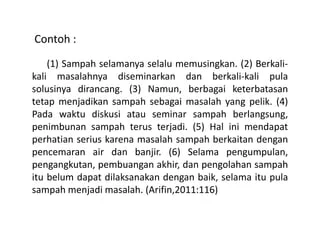
    Among the various contracts used in Indonesia, musyarakah, mudharabah, and murabahah are the most widely used, with musyarakah being an important contract in Islamic banking services. As the lifestyle of the public changes, Islamic banking services are becoming more popular and musyarakah is one of the contracts that offers products to customers.

    In this article, we will discuss the musyarakah contract in more detail, and Sinaumed’s friends can follow along to learn more about it. By understanding the musyarakah contract, we can better navigate the world of Islamic economics and make informed decisions in our financial transactions.

    Definition of Musyarakah Contract

    Musyarakah, also known as Syirkah or Syarikah, means partnership or cooperation in English. It is a type of contract used in Islamic banking, where two or more parties collaborate to achieve a specific mission in the field of business. Each party has an equal share in the business according to their capital contribution and has the right to monitor (voting rights) in the industry according to their respective proportions.

    In the Sharia Economic Law Group, Syirkah is defined as a collaboration between two or more people in terms of investment, expertise, belief in a special endeavor, with an allotment of profits sourced from family relationships. The DSN-MUI teachings define Musyarakah as financing based on a cooperation agreement between two or more parties for a special undertaking, where each party contributes a budget with the determination that profits and risks will be guaranteed together according to the agreement.

    Islamic banking interprets Musyarakah as a financing product based on the principle of loss sharing profits in the form of aggregation of capital of the parties with the mission of having a heritage, effort, or special blueprint. The profits and risks are determined according to the agreed contract and split based on family relationships for the results agreed upon in the contract.

    In the musyarakah platform product financing agreement between the investor, in this case, the bank, and the customer, both investors deposit capital according to the ratio. Profits received from projects or efforts are distributed according to the share of capital participation (family relations) between the bank and the customers.

    In conclusion, musyarakah is an important concept in Islamic economics and banking, where it allows for collaboration and partnership in business endeavors while adhering to the principles of Islamic finance.

    The difference between a Musyarakah
    Contract and a Murabaha Contract

    In addition, it is important for Sinaumed’s to understand the differences between a musyarakah contract and a murabaha contract. By doing so, they can better distinguish between the two and deepen their understanding of each. Below are some key differences between musyarakah and murabaha contracts.

    Musyarakah contract

    • Collaborative activity or association between two or more parties. Both
      participating parties contributed in the form of budget and resources.
    • Enter into the type of blending blessing presence of similar activity method formed.
    • Profits come from early agreements. Moreover, cooperation in carrying out
      blueprints or business fields has uncertain income levels.
    • Losses are shared based on the included capital ratio.

    Murabahah contract

    • Derived from the word rabahah which means profit or profit. In murabaha,
      buying and selling activities take place either in cash or in installments which of the buying and
      selling activities generate profits for the trader.
    • Enter the type of alteration because there is a difference between objects and money.
    • The special advantage is received by the trader while the consumer gets a profit in the form
      of object ownership.
    • Losses occur when consumers are unable to pay installments. For this
      reason, it is necessary to have an agreement between the seller and the consumer to give up the
      consumer’s inability to pay or the consumer to resell the object purchased where the excess is made into
      debt by the consumer.

    Pillars and Terms of the Musyarakah Contract

    To do musyarakah, it is also necessary to understand its pillars. The following are the
    pillars of musyarakah.

    1. Contract actors, business partners
    2. The subject of the contract is capital (mall), activities (drabah)
    3. Shighar, namely Offer and Acceptance
    4. Family relationship profit (for the results).

    In addition, there are certain terms related to Musyarakah that are important to consider.

    For Hanafiyah, the terms related to Musyarakah can be broken down into four parts. The first part relates to all forms of Musyarakah with wealth or others. It is important that what coincides with the goods being contracted must be accepted as a representative. The second provision is that the profit allotment must be real and recognized by both parties. The second part relates to Musyarakah with plaza (wealth), where issues such as the type of capital used and the amount must be addressed. The third part relates to Mufawadhah Syirkah, which requires that the capital be the same and that those who are experts in Syirkah for Kafalah. The fourth part is related to the subject of the contract, which requires an ordinary Syurkah for various buying and selling or trading.

    For Malikiyah, the conditions related to the person carrying out the contract are independence, puberty, and intelligence. Shafi’iyah, on the other hand, believes that only Inan Syirkah is legally stipulated, and the other types of Syirkah are delayed.

    To ensure the validity of a Musyarakah contract, certain conditions must be met, such as the habitat being able to be represented according to the permission of each party, the profit allotment percentage being known from the beginning, and the rationing of profits being determined as a percentage.

    Types of Musyarakah Contracts

    Broadly speaking, musyarakah is categorized into two types, namely ownership musyarakah (shirkah al amlak), and contract musyarakah (shirkah al aqad).

    1. Shirkah Amlak
    • Syirkah endeavor
    • Syirkah ikhtiyar (sincere)
    • Syirkah jabar (insistence)
    1. Shirkah al Aqad
    • Tasarruf who is the subject of the syirkah contract must be represented.
    • The profit that is obtained is joint ownership which is divided according to the agreement.
    • Top down, so that each musyarakah body has authority over other syndicate bodies to carry out tasarruf.
    • The profit share for each musyarakah body must be clearly defined.
    • Compulsory profit is a part that is owned jointly, not by determination.

    Types of Shirkah al Aqad

    • Shirkah inan
    • Shirkah wujuh
    • Shirkah mufawadah
    • Shirkah mudharabah
    1. Shirkah inan
    • A cooperation contract between 2 or more people with the body (body) or assets of both of which they already know even though they are not the same.
    • Most profits are intended for the most contract executives.
    1. Shirkah wujuh
    • A contract between 2 or more people who have a good name, good prestige and are experts in the field of business, without the involvement of capital.
    • Profits can be shared by both.
    1. Shirkah mufawadhah
    • A cooperation contract between 2 or more people.
    • Each party has participation in distributing equal shares, both in capital, responsibility and voting rights.
    1. Shirkah mudharabah
    • An agreement between the owner of capital (shohibul mall) and a worker (mudharib), to manage money from the owner of capital in a particular trade whose profits are divided according to a mutual agreement.

    Advantages and Disadvantages of Musyarakah

    In this final discussion, let us look at the advantages and disadvantages of musyarakah.

    Advantages:

    • Profit: The distribution of profits is agreed upon and cannot be altered during the capital duration. Profit sharing can be tiered, depending on the agreement between the parties. Profit sharing can be done using the profit and loss sharing method or revenue sharing method, based on the financial information of the customer.
    • Risk sharing: Banks and customers share losses according to their respective capital ownership. In cases of loss due to dishonesty, negligence, or breach of contract, the loss is divided based on the ratio of each party’s capital ownership.

    Disadvantages:

    • Lack of control: Each party does not have complete control over the business, as decisions are made through mutual agreement.
    • Shared profits: Profits must be shared with other parties, which may reduce the overall profit received.

    If you are considering entering into a musyarakah contract, it is advisable to seek the advice of an expert to avoid mistakes or regrets in the future. You can also refer to books on contract transactions in Islam to learn more about musyarakah.

  • Examples of Deductive and Inductive Paragraphs

    Examples of Deductive and Inductive Paragraphs

    Examples of Deductive and Inductive Paragraphs – Deductive and inductive paragraphs have very different forms. These two types of sections have a difference that lies in the main sentence. In simple terms, the main idea or sentence in a deductive area is at the beginning of the sentence. Meanwhile, the main idea or sentence in an inductive area is at the end of the sentence, which is the paragraph’s conclusion.

    Because the two paragraphs are already different in form, the easiest thing to do to see the differences in this paragraph is from examples of deductive and inductive paragraphs. This article will focus on explaining examples of deductive and inductive paragraphs. However, not only, you will also be invited to understand the meaning and characteristics of the two paragraphs so that it will be easier to distinguish between them.

    This article will also be beneficial for those who are confused about quickly determining ideas in a paragraph. By understanding the form of sections (deductive or inductive) in a text or writing, you will swiftly and efficiently determine the central ideas or ideas. This is because the form of the text has the main idea in the form of the main sentence conveyed by the author.

    The paragraph itself can be understood as a composition of several sentences with an idea contained in it. The placement of pictures in a section can usually be divided into three ways: deductive areas, inductive paragraphs, and mixed paragraphs (deductive and inductive). Here is an explanation of examples of deductive and inductive cells, complete with their meanings and characteristics.

    A. Deductive Paragraph

    1. Definition of Deductive Paragraph

    A deductive paragraph can be understood as a paragraph whose main idea or ideas are located at the beginning of the section. A deductive team usually consists of a general statement followed by a sentence that is explanatory. This can be interpreted as a discussion starting with something broad and ending with a specific explanation.

    In its use, the main sentence in a deductive paragraph can have a transition sentence form. Some deductive sections that become paragraph transition sentences can be positioned in the second sentence. Therefore, readers who want to find the central ideas or ideas can be more thorough in reading deductive paragraphs.

    Based on the concept of a deductive paragraph as a transitional sentence from the Indonesian Language and Literature Study book, the following is an example of a transitional sentence in a deductive paragraph.

    The activities of a writer can be likened to a farmer plowing fields in his field. Pak Tani will have more energy if he can meet his food and drink needs. If Mr. Tani experiences a shortage of food and drink intake, then he may become more easily tired, tired, and sluggish. This can also apply to a writer. If the writer reads little and doesn’t do enough research, then the writer may quickly run out of ideas or ideas to complement his writing material and is not sensitive to what is happening around him.

    The example of a deductive paragraph in the form of a transitional sentence above shows that the first sentence follows the explanatory sentence, the second sentence, and so on. This means the first sentence is a connector for the following descriptive sentence. That is the purpose of the transition sentence: to connect the first sentence with the second sentence.

    2. Characteristics of Deductive Paragraphs

    After knowing about the meaning of deductive paragraphs, of c,course, you also need to know the characteristics of deductive paragraphs. The following is an explanation of the attributes of deductive paragraphs first. This needs to be done to make it easier for you to distinguish between deductive and inductive paragraphs.

    a. The main idea is at the beginning of the paragraph.

    The characteristic of the first deductive paragraph is a paragraph that has a deductive nature. These characteristics ultimately mean that deductive paragraphs have the main idea or ideas at the beginning or the beginning of the sentence. This makes deductive paragraphs always have a central idea or idea located at the beginning of the sentence and is followed by a broad explanation of the contents of the paragraph. The purpose of placing the main idea or idea of ​​the paragraph at the beginning is so that it becomes the basis for developing the contents of the paragraph.

    b. Development Pattern From General To Specific.

    The following characteristic of deductive paragraphs is developing paragraphs from general to specific. As stated above, the main idea of ​​a deductive paragraph is at the beginning of the paragraph. The pattern of sentence development can be made from general to specific sentences. Main ideas or ideas that have a general nature will be followed by supporting sentences that are specific. In these characteristics, supporting sentences are usually particular containing explanations of examples or evidence that support the initial sentence’s main idea.

    c. Always begins with a general statement sentence.

    The characteristic of the next deductive paragraph is the use of general statements at the beginning of the section. These characteristics indicate that determining a deductive area can be seen from the beginning of the sentence, marked with a general statement. Therefore, these characteristics are usually used to determine the type of paragraph.

    d. Main Sentences Detailed.

    The characteristic of the last deductive paragraph is a more detailed main sentence. The deductive section has features that make the main sentence in the area more explicit through the explanatory sentence.

    3. Examples of Deductive Paragraphs

    After knowing and understanding the meaning and characteristics of deductive paragraphs, you can be sure that it will be easier to analyze them. The following is an example of a deductive paragraph, where the main idea or main idea is located at the beginning of the sentence.

    a. Deductive Paragraph Example 1

    Shallots have a complete nutritional content for the health of the body. In shallots, there are ingredients such as sodium, potassium, folate, vitamins A, C, E, calcium, magnesium, phosphorus, and many other good elements for the body. Therefore, consuming shallots is very good for maintaining a healthy body.

    In addition to maintaining health, who would have thought that shallots are also very effective in preventing various diseases, including cancer which is harmful to the body? According to American Journal of Clinical Nutrition research, Italians and Swiss who frequently consume shallots have a lower risk of cancer.

    b. Deductive Paragraph Example 2

    Indonesia is the biggest archipelago country in the world. There are over 17,000 islands in Indonesia, of which 7,000 are inhabited. As an archipelagic country with the largest area in the world, Indonesia has great potential to become the world’s maritime axis and provide significant advantages for Indonesia in terms of waters.

    B. Inductive Paragraph

    1. Definition of Inductive Paragraph

    If a deductive paragraph is a paragraph that places ideas or ideas at the beginning, then this will be different from inductive paragraphs. In an inductive paragraph, an explanation must appear first. This is because the pattern of presentation used in inductive paragraphs is to place specific explanatory sentences first to draw general conclusions. Well, it can be concluded that paragraphs are paragraphs that put ideas or ideas at the end of sentences and have a form of explanation from specific to general. This conclusion can explain the difference between deductive paragraphs and deductive paragraphs.

    The form presentation of the paragraph above is made using an inductive paragraph creation pattern. However, making inductive paragraphs can be said to be easy, but it can also be said to be complicated. The reason is in making an inductive paragraph, a writer must make a flow of explanation that aims to lead the reader to conclude at the end of the section.

    Sentences containing ideas from inductive paragraphs are at the section’s end. Therefore, in making between sentences become more related and continuous. Conclusions in inductive paragraphs must use conjunctions that function as connectors between sentences. Phrases that you can use in inductive sections are like so, finally, as a result, therefore, therefore, thus, and based on the description above. Conjunctions that function as connectors between sentences can be placed at the beginning using a capital letter and then followed by punctuation in the form of a comma.

    2. Characteristics of Inductive Paragraphs

    After knowing the meaning of inductive paragraphs, you can understand the characteristics of understanding inductive paragraphs first. The following is an explanation of the attributes of inductive paragraphs that need to be known, including:

    a. Starting With a Special Sentence.

    The first characteristics of inductive paragraphs are the use of memorable sentences at the beginning of sections. An inductive unit has a form of presentation that starts with a particular punishment at the beginning and then continues with a sentence that functions as an explanation of the primary or general idea ideas. This means that in an inductive section, a discussion of matters of a general nature will be written first, and then a specific conclusion will be written.

    b. Sentence Patterns Arranged From Specific To General.

    The second feature of inductive paragraphs is the pattern of sentence arrangement from specific to general. The sentence pattern used in this inductive paragraph makes a unique arrangement of paragraphs or sentences first. This submits details, or some available explanations can serve as specific statements or conclusions.

    c. Main Sentences Are Conclusions.

    The third characteristic of inductive paragraphs is using main sentences as conclusions. In the inductive section, the decision has a general nature, and delivery is placed at the end of the area. This makes the writer must have the ability to provide specific explanations in advance in an exciting way. The goal is to attract the reader’s interest so they read the writing or paragraph to conclude.

    d. The mprincipalsentence is located at the end of the paragraph.

    The fourth characteristic of an inductive paragraph is that the main sentence is at the end of the section. The inductive section explains that the explanatory sentence is at the beginning of the sentence or a more specific explanation. Meanwhile, the general main penalties will be at the end of the sentence because they have a role as a conclusion.

    3. Examples of Inductive Paragraphs

    a. Inductive Paragraph Example 1

    Learning in old age requires extra effort because the comprehension power possessed at this time is significantly reduced. Even the motivation that is owned has also weakened because too much Learning in old age requires extra effort. After all, the comprehension power possessed at this time has dramatically reduced. The motivation that is owned has also been weakened because of too much.

    The paragraph above describes the special event first. The sentence above begins with learning in old age requiring extra effort because the comprehension power possessed in the future has been gdramaticallyreduced.

    Then at the end of the sentence, is the main idea that explains the sentence’s conclusion—tAt the end of the sentence, the motivation has been weakened because there are too many.

    b. Inductive Paragraph Example 2

    The snow falling from the sky is a beautiful decoration for the earth. Several cities are conjured with shades of white, producing beautiful and alluring views for beauty connoisseurs. The cold air is biting these areas with subtropical and temperate climates more and more. This is winter in the land of the rising sun.

    The paragraph above begins with a special event, namely the snow that falls from the sky gives a beautiful decoration for the earth.

    The paragraph’s topic sentence is This is winter in the land of the rising sun.

    So the last paragraph is a general statement that becomes the topic sentence. The previous sentence is more argumentative because it explains the facts, events, and data drawn into conclusions.

    C. Other Paragraphs

    Deductive and inductive paragraphs are types of paragraphs. Based on the tkindof paragraph, the types of paragraphs are deductive, inductive, deductive-inductive, iterative, and spreading.

    1. Deductive-Inductive Paragraph (Mixed)

    The deductive-inductive or mixed paragraph can be said to be a paragraph where the main sentence is located at the beginning and has a conclusion at the end of the sentence. This mixed paragraph usually starts with a general statement, the following sentence uses a remarkable message, and at the end of the sentence uses an available verdict.

    Mixed Sentence Examples

    Language is critical in our life. To communicate, we use language. To work together ,we use language. To inherit and pass on culture, we need language. Once again, how important language is for our lives.

    2. Inerative Paragraph

    Apart from mixed paragraphs, the following type of paragraph is Inerative paragraphs. Interactive paragraph is a paragraph with the main sentence in the middle of the paragraph. This makes the initial sentence an explanatory sentence or introductory sentence so that the main idea or idea of ​​the iterative paragraph is added with a descriptive sentence for further information.

    Interactive Paragraph Example

    Mount Sinabung in North Sumatra erupts. The eruption of Mount Sinabung, Mount Kelud in East Java, has not yet subsided. Besides the volcano that erupted, flooding occurred in several areas. The capital city of Jakarta, like in previous years, was hit by floods. NTT, which often experiences drought, is also hit by floods. Many calamities and disasters are indeed hitting Indonesia.

    The example paragraph above can be found in the main sentence, namely, Indonesia is indeed being hit by many calamities and disasters.

    3. Paragraph Spread

    Based on the opinion in the book Paragraph by Suladi, spreading paragraphs are paragraphs with a central idea that spreads out as a main sentence. This makes the main idea of ​​the paragraph implied in the sentences.

    SThey are spreadingparagraph sentence examples.

    The sun isn’t high yet. The dew still glistens. The color of the flowers becomes gorgeous in the sun. You can see butterflies of various colors flying from one flower to another. The breeze was cool.

    The main idea of ​​a spreading paragraph is not at the beginning, middle, or end of a sentence. However, the reader must be able to find the sentence’s conclusion. The paragraph describes the bright morning atmosphere of the sentence depiction.

  • Diction: Definition, Types, Functions, and Their Characteristics

    Understanding Diction  – Diction is the choice of words in writing that are commonly used to describe a story or give meaning according to the wishes of the author.

    diction is the right choice of words and is aligned and aims to make the reader understand the text in writing.

    In every sentence writing, it always requires diction. The choice of words or diction is important for stringing words, suitability in sentences and giving expression to the author’s sentences.

    Diction can determine the style of language in a piece of writing. Every sentence, paragraph and even discourse requires language style. The style of language formed by diction can shape honesty, politeness, the official level of writing and even the atmosphere.

    To make it clearer, here are the definitions, types, functions, and characteristics of diction.

    Definition of Diction

    According to the Big Indonesian Dictionary (KBBI), diction is the choice of words that are appropriate and aligned in their use. Diction is used by the writer to express an idea so as to get a certain effect, as expected by the writer.

    From the definition of diction according to the KBBI, it can be understood that diction is the selection of appropriate words and is used to choose words so that they can express certain ideas.

    In poetry, diction is used by poets to obtain certain meanings. So, diction is not only a choice of words but also used to describe a story and even give meaning. Diction also includes expressions and language styles.

    This will help the interlocutor and the reader more easily understand the message Sinaumed’s is trying to convey. To achieve the goal of using this diction, the writer must be able to choose the right and common diction. Improper diction can cause different messages and meanings in writing.

    In writing, diction is included in the discussion of aspects of words in poetry which include connotation, denotation, semantics, morphology and etymology. The most basic application of diction is the disclosure of the author’s ideas.

    In addition, the use of proper diction can also be applied when speaking in public as well as various types of writing.

    The accuracy of diction can be influenced by the ability of language users related to the ability to master, understand, know and use a number of vocabularies.

    Definition of Diction According to Expert Opinion

    In order to better understand the definition of diction, the following is the definition of diction according to experts.

    1. Gorys Keraf

    Keraf argues that diction is divided into two, namely the choice of words or about the meaning of words used to convey an idea, the right expression and the style of delivery that is better and in accordance with the situation.

    Second, Keraf defines diction as an ability to accurately distinguish the nuances of meaning from the ideas conveyed.

    Apart from that, diction can also be in the form of the ability to find a form that is in accordance with the values, situations that are owned by groups of listeners, readers and society.

    2. Susilo Mansuruddin

    Diction is word choice. According to Susilo Mansurudin, the use or selection of correct, precise and careful diction can help the writer in assigning value to a word.

    The choice of diction that is the same age, in other words, will prevent misinterpretation or different interpretations from writer to reader.

    3. Widyamartaya

    Widyamartaya defines diction as a person’s ability to correctly distinguish a nuance of meaning according to the idea conveyed.

    A person’s ability to distinguish these meanings, according to the situation and the sense of value possessed by community groups and listeners and readers.

    4. Enre

    Not so different from the opinions of other experts, Enre defines diction as the appropriate use of words to represent thoughts and treatments to be conveyed in certain sentence patterns.

    If conclusions are drawn, it can be interpreted that diction is the choice of words that can determine the style of language to express the contents of the thoughts, ideas of the author so that there are no misinterpretations in writing.

    Function and Purpose of Diction

    In general, diction has the function of beautifying a sentence as in poetry or stories, good diction is used to tell a story coherently, explain characterizations, describe time and setting and so on.

    Diction Function

    Here are some other functions of diction in writing literary works.

    1. Helping readers understand the message of a literary work
    Choosing the right and good diction in writing a literary work can make it easier for readers to understand the message the author wants to convey through his writing.

    Messages are any notifications, communications or words conveyed either orally or in writing that are sent from one person to another. This message becomes the core of the communication process that is established.

    2. Effective communication
    Choosing diction in writing literary works can help make communication more effective. A good understanding of the use and selection of diction is very important in order to create an efficient and effective communication.

    In practice, diction can lead to a correct idea as well as a misunderstanding for readers and listeners. Then this can have an impact on society.

    3. As a form of expression
    In accordance with its meaning, diction functions as a form of expression that is present in the author’s ideas which can be expressed in writing or orally.

    The use of harmonious and appropriate diction can help build the imagination of readers and listeners when reading or listening to a literary work.

    Expression is a term that refers to something to show one’s feelings. Expressing feelings, can not only be shown through facial expressions but also through words in writing or when someone speaks through the selection of the right diction.

    4. Entertainment
    Choosing the right diction can serve as entertainment for the reader. This relates to every message and expression outlined in a literary work.

    Entertainment is anything in the form of words, places, objects or even behavior that can entertain listeners, viewers and readers. In general, entertainment can be in the form of games, music, opera, drama, videos, films or even literary works.

    In addition to the four functions of diction above, several other functions of diction are preventing misunderstanding or interpretation, creating the right atmosphere, forming the right style of expressing ideas according to the atmosphere of the event such as formal, informal so that it will be enjoyable for the readers.

    Diction Purpose

    The purpose of using diction is to obtain beauty in order to increase expressivity. Of course, a word will more clearly express the idea of ​​writing if the word used is precise, accurate and appropriate. Diction is used to refine words or sentences to make them feel more beautiful.

    Types of Diction

    In general, diction is divided into two types, namely diction based on meaning and diction based on lexical. The following describes the two types of diction.

    1. Diction Based on Meaning

    Types of diction based on their meaning are divided into two types which include connotative meaning and denotative meaning.

    According to Chaer, differences in diction are based on connotative and denotative meanings according to whether or not there is a sense of value in a word. In short, the denotative is general while the connotative is specific.

    a. Denotative meaning
    Denotative meaning diction is diction with the actual meaning of a sentence or a word. Denotative meaning can also be interpreted as an objective meaning without bringing a certain feeling or pure.

    Diction with denotative meaning has several characteristics, including having a straightforward meaning, because it is literal in nature and is usually the result of observations from the five human senses such as smell, hearing, sight, feeling and even one’s physical experience.

    Here are some examples of diction with denotative meanings.

    • Acne can be caused by sebum that accumulates on the face.
    • Giraffes have longer necks than other animals.
    • Bagus works hard to achieve his goals.

    b. Connotative meaning
    Types based on connotative meaning are dictions, words or sentences that have meanings that are not real. That is, the connotative meaning is a figurative meaning related to the value of taste.

    Diction with a type of connotative meaning is usually influenced by the norms and values ​​held by certain communities.

    Even so, the meaning of this diction will usually change along with changes in norms and values ​​that exist in society.

    Here are some examples of diction with connotative meanings.

    • Many heroes have fallen on the battlefield. (Aborted in the sentence has a connotative meaning, namely died.)
    • Tasya is the golden child in class, because she is very well behaved and diligent. (The golden child in this sentence means the most beloved child.)
    • After graduating from college, Abdul chose to work as an ink coolie. (Ink coolies can be interpreted as writers or more specifically as journalists and not as real coolies.)

    2. Lexical Based Diction

    Diction based on lexical is divided into eight kinds. The following is an explanation of the various dictions based on lexical.

    a. Synonyms Synonyms
    are two or more words that have the same meaning between one word and another.

    The use of synonymous diction aims to make what is written more suitable, in accordance with the expression the author wants to express.

    For example, when the author wants to describe death with the word dead.

    However, the word mutilated is a diction that expresses rude things. So that mutilation can be replaced by other words such as died, passed away, nothing or others that have a more subtle expression to describe death.

    b. Antonyms
    Antonyms are the opposite of synonyms, which means the choice of words or dictions that have different or opposite meanings.

    Some examples of antonyms such as high – low, small – large, up – down, sad – happy, thrifty – extravagant and so on.

    c. Homonym Homonym
    is the choice of words or diction that have the same spelling or pronunciation as a word, but have different meanings.

    Some examples of homonyms are like the moon which has two meanings, namely the first as a satellite of the Earth and the second as a month time indicator.

    d. Homophones
    Homophones are words or dictions that have different meanings and spellings but the pronunciation is the same.

    For example, words based on the lexical homophones bang and bank. Both have different meanings and spellings, but the pronunciation of the two words sounds similar.

    e. Homograph
    Homograph is the selection of words or diction that have different pronunciations and meanings but have the same spelling.

    An example of a homograph is tofu. In sentences like, “He likes fried tofu,” and “He knows about the news.”

    These two sentences have the same word, namely know, but the meaning is different.

    In the first sentence, the word tofu means the name of the food, while in the second sentence the word tofu means to know something.

    f. Polysemy Polysemy
    is a diction or phrase that has more than one meaning.

    Examples include interest in the sentence “A person who saves at the bank will get interest every month,” and the sentence “Dinda is the flower of the village that many men are after.”

    In these two sentences, the word bungan has many and different meanings, in the first sentence the word flower can mean profit or plants, while in the second sentence the word flower can mean beauty or desire or even a poet.

    g. Hypernym
    Hypernym is a diction that represents many other words or includes the meaning of other words.

    Examples of choosing words or diction based on lexical hypernyms are perfect which have good, extraordinary, good, and other meanings.

    h. Hyponym
    Hyponym is diction that can be represented by the word hypernym. An example of choosing words based on hyponyms is in the following sentence, ‘wild animals in the zoo include crocodiles, lions, deer, elephants, horses and others.’

    In this sentence the word wild animal is a hypernym, while the word elephant, crocodile, lion and others are hyponym.

    Diction features

    According to the book Appreciation of Poetry (Theory and Application), it is explained that diction has the following characteristics.

    1. Diction is used as a choice of words to express ideas or things mandated by the author.
    2. Can be used to distinguish nuances of meaning with a form that is appropriate to the situation, ideas and values ​​the reader feels.
    3. Using the vocabulary obtained by the community, the language used can move or empower wealth into a clear word.

    In addition to the three characteristics of the diction, there are several accuracy requirements that need to be considered. According to Gorys Keraf, the following are the requirements for accurate diction.

    1. Using the word connotation and denotation carefully in a piece of writing.
    2. Using synonyms or words that have the same or nearly the same meaning carefully in a piece of writing to express ideas.
    3. Can distinguish words that have similar spelling, but the same meaning.
    4. Using the verb in the preposition and must be idiomatic.
    5. Able to distinguish special and general words in writing such as speech, so that the accuracy of diction can be guaranteed.
    6. Pay attention to the selection of words or diction correctly on an ongoing basis in writing or speech.
    • In order to understand diction more clearly, here are some examples of the use of diction that Sinaumed’s needs to know.
    • Rendi had been the director’s right-hand man for the past few years.
      The right hand means a trusted person.
      Rudi prefers to drain his father’s dairy business after graduating from school.
      The word dairy cow has real meaning, meaning cattle raised for milk.
    • Before leaving for the morning assembly, Dina always makes time for breakfast with apples.
      In this sentence, the word apple has a different meaning. The first means ceremony and the second means fruit. Both are words that have the same spelling, pronunciation but different meanings.

    That is the explanation of diction, namely choosing the right and appropriate words to express the atmosphere, style of language and ideas from the author so that there are no misinterpretations.

    Now Sinaumed’s has understood that diction is the right choice of words to express thoughts or ideas.

  • Characteristics and Examples of Fictional Stories, Here’s the Full Explanation

    Examples of Fiction Stories – Is Sinaumed’s one of the connoisseurs of fiction stories? Exactly, fictional stories do have unique characteristics as literary works, one of which is to entertain readers. In addition, fictional stories also have a bigger imagination container for the audience. That is why many fiction stories are also called very imaginative stories.
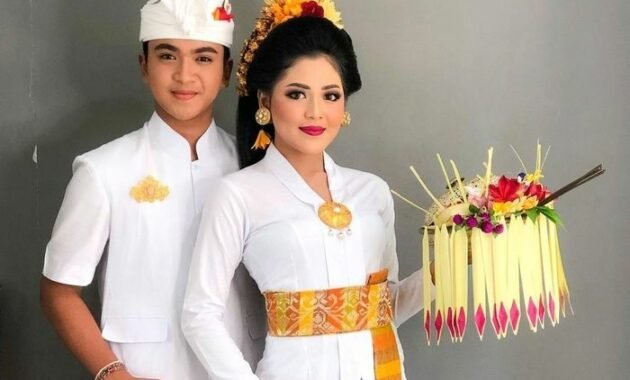
    From its imaginative nature, it means that fiction also has a very wide variety of forms and types. Starting from science fiction stories, history, education, which are based on factuality. So fictional stories are not only based on the imagination of the author. This broad definition of fiction still has its own character which we can observe from the characteristics of the text structure, text elements, and language rules.

    To understand fictional stories, the following is an explanation of the meaning, structure, characteristics, text elements, language rules, and examples of fictional stories that Sinaumed’s needs to know when learning about fictional story texts:

    Definition of Fictional Stories

    Fictional story text is a literary work that contains fictional stories or based on imagination-based “fantasy” that is not based on actual events, but only relies on the imagination of the author’s factual experience. The author’s imagination is processed on the basis of his evaluation of various experiences, insights, views, interpretations, knowledge, reality and purely fictitious events.

    Fictional story text is a kind of fictional story that is more or less realistic. Fictional stories depend on the imagination and creativity of the narrator. Fiction usually describes a collection of stories peppered with events, human experience, or the imagination and creativity of the author.

    Characteristics of Fictional Stories

    Based on practice, fictional stories have their own characteristics and characteristics as literary works, as follows:

    1. Characteristic of the imagination of various authors
    2. There is no relative or absolute truth value. In general, the language used is suggestive
    3. There is no standard classification
    4. In general, this fictional story tells about the feelings of the reader, not logical values ​​but emotions
    5. Each story has a moral message, namely a specific mission

    Types of Fictional Stories

    With its broad scope, fiction has several types of text forms, such as the following:

    1. Novel : A prose work of a written story
    2. Short story: A prose form of fictional story whose goals tend to be concise and direct
    3. Romance

    Elements of Fictional Text

    Just like other types of text, fictional stories also have elements, namely intrinsic elements that exist in the text and extrinsic elements that come from outside the text itself, as follows:

    Intrinsic Elements of Fictional Stories

    • Themes , general ideas that support a literary work and are contained in the text
    • Characters , namely the perpetrators of literary works. In terms of roles, literary works can be divided into two parts, namely the main character and supporting characters
    • The storyline is a storyline that contains a series of events. However, each event is only connected by cause and effect, the occurrence of one event, or the occurrence of another
    • Conflict , or event that is considered important, is an indispensable element in plot development
    • Climax , when the conflict reaches its highest intensity and is inevitable
    • Setting , namely the place, time, and social environment in which the events that are told take place
    • Characterization , the author’s solution to the problem of literary works
    • Perspective , the perspective of the author as a means to present to the reader the characters, plot, setting, and various events that make up the story of a work of fiction
    • Characteristics , namely techniques or methods to express character.

    Extrinsic Elements of Fictional Stories

    • The subjective state of the individual author who has an attitude
    • belief
    • The outlook on life that influenced his work
    • Psychology also influences literary works, both in the form of authoritative psychology such as economics, politics, and socialism
    • Community view of life
    • Various other related works of art

    Fictional Text Structure

    The structure of the short story is not much different from the structure of the text of a fictional story. The structure of a fictional story consists of the following six structures:

    1. The orientation includes the subject, background of the subject, character introduction, beginning, and explanation of the novel’s fictional story
    2. Complexity is the climax of the text of fiction, because various problems begin to appear in this section, and the complexity of the novel is usually the main attraction for the reader.
    3. Rating is part of a novel text that contains solving a problem or generating a discussion about its solution
    4. Solving is the part that includes solving the core problems encountered in the story
    5. The Coda (Reorientation) contains characterizations and positive moral messages that can be extracted from text texts.

    However, it does not rule out that fictional stories from novel texts only have structures in the form of evaluation, orientation, solutions, and complexity.

    The Language Rules of Fictional Stories

    To be able to distinguish fictional texts from other texts, Sinaumed’s needs to know three linguistic rules in fictional stories as follows:

    1. Metaphors are similes that are often used to compare objects or describe things directly with the same nature
    2. Metonymy is a style of speech used, in which certain words are used in place of actual words, but their use only applies to words that are closely related
    3. Simile (equation) is used as an explicit comparison with the intention of stating one thing with another, for example: suppose, as it should be, as it should be.

    Examples of Fiction Stories

    After knowing about the definition, types, structure, characteristics, elements, and linguistic rules of fictional texts, Sinaumed’s can pay attention to the following examples of fictional stories as references:

    1. Examples of fiction stories for children

    Chased by Dogs

    Anton, Doni and Budi are 3 friends who often spend their afternoons playing bicycles. They are always traveling and trying new places to explore. If the term is called Doni, this is called adventure, for example, like the one on television.

    One afternoon, they were frantically trying to find a new route they wanted to explore. The reason is, they have entered all the alleys and complex routes near their homes. Budi also provides new perspectives for exploring the factory complex located outside the residential complex. At first, Doni didn’t approve of Budi’s new view because his mother always advised him not to go too far from the complex of change.

    But with the approval of Anton and Budi, Doni was finally forced to join. They cycled happily and felt challenged because it was the first time they had played outside their compound and had gone quite far. As they were about to enter the factory complex, suddenly they heard a very loud dog barking. They stopped and saw that there was a dog whose neck was not tied behind a tree

    Apparently this dog is a dog kept near the factory to protect the factory on Sundays. Anton, Doni and Budi rushed to pedal their bicycles as hard as they could because the dog had run after them. The three of them screamed for help and pedaled as fast as they could. Until they reached the area of ​​their changing complex, fortunately the dog was no longer chasing them. Doni also regretted not obeying his mother’s orders.

    2. Examples of Educational Fiction Stories

    Pursuing a dream

    Prasetya is an elementary school student from a remote area of ​​Indonesia. He lives in a very lonely village on the edge of Borneo. The life of the villagers is very simple and far from modern life. Access to electricity there is very limited, not to mention signal and internet access. However, the villagers living there can still live happily by fully fulfilling these limitations.

    Since childhood, Prasetya has had aspirations to make his village more advanced. He started to think that at least in his village there is access to electricity that is qualified and free for all the people who live there. That desire arose when he once accidentally read a newspaper he found in his school area. The newspaper was indeed very shabby, so he was even more enthusiastic about building his village.

    For this dream, Prasetya was able to study very hard so that his dream was to be able to get a scholarship to continue his tertiary education. Plas was his high school nickname, then he finally went to school outside the village because he wanted to pursue it more properly. He worked while attending school. In the end, he was accepted at one of the major universities in Indonesia.

    Since then, Prasetya has studied hard and won achievements in various research projects conducted by his lecturers. After graduating from the college, Plas finally returned to the village and started to realize his dream by building a simple hydroelectric power plant (PLTA).

    3. Examples of Historical Fiction Stories

    Indonesian independence

    My name is Ridho, at that time I was 14 years old. Precisely on August 17, 1945, the month of Ramadan. So my father, brother and I left the house without having breakfast because we were fasting. We were the ones who left the house around 09.00 in the morning, but we couldn’t because the streets were very quiet.

    Actually I am now very surprised, but I am silent and will continue to walk in my father’s footsteps. As it turned out, my father had taken me and my sister to a place on Jalan Pegangsaan Timur number 70. There were many people gathered there, of course that made me even more wondering what was really going on.

    There were also a number of youths who were lined up neatly and you could see the invited guests sitting neatly based on the set of chairs that had been provided. Meanwhile, when leaving the gathering place, there were also residents from various backgrounds. Almost all the residents who gathered at that place brought bamboo spears, shovels, machetes, and other types of tools that could be used as weapons.

    They carried everything as if they wanted to show their determination to dare to die in order to defend Indonesia’s independence. At that time, we were walking closer to the area where it was, so the screams of the residents were getting louder and louder, “Now, man, now! Say it at this time, right now, man.”

    Not long after, finally based on that place came out 2 people wearing neat white shirts. One of the people who came out was carrying a piece of paper and he was very firm, he was the one who read out the contents based on the paper containing the statement of the Proclamation of Indonesian Independence.

    When I heard the text of the Proclamation of Indonesian Independence, I was deeply moved. At the age of 14, I participated and witnessed that my beloved country was independent.

    4. Examples of Science Fiction Stories

    Passage of time

    When I start to feel dissatisfied with myself, I tend to try and create new things. Something that I had never done before. Actually there’s not a single thing that I know about how hard I wanted to study and work when I created it.

    A form of technology that can later change the amazing world, then I named it “time tunnel”. As the name suggests, it is a long passage that can be traversed. But, don’t get me wrong, the shape of the aisle is not an ordinary aisle or bridge. But a form of time passage that can explore and go to the past, even the future.

    That’s why, I can know what will happen later in the future. Until now, only I can use it and get through it. No one knows, let alone can pass and walk in this time tunnel.

    5. Examples of Folklore Fictional Stories

    Sangkuriang

    In ancient times, there was a story about a princess from West Java named Dayang Sumbi. He had a son named Sangkuriang. One day, Sangkuriang was hunting with his tugboat. Sangkuriang also did not know that the dog was the incarnation of Parliament and his father.

    At that time, Tumang did not want to obey orders to fight with the São Courier. Then Tumanga was pushed into the forest. Then, Sangkuriang returned to the palace and told his mother. Then Dayang Sumbi suddenly got angry and hit Sangkuriang’s head with the spoon in her hand.

    Sangkuriang was offended and disappointed by his mother’s treatment and decided to wander. After that incident, his mother felt sorry for him. Then the mother always prays and meditates. Once upon a time the gods finally gave a miracle by giving him eternal beauty. After years of wandering, Sangkuriang then intends to return to the palace, namely to his own homeland.

    However. apparently the state of the kingdom was different and had completely changed since Sangkuriang’s departure. Until finally he met a beautiful and very enchanting girl, who turned out to be Dayang Sumbi (his own mother). Upon her beauty, Sangkuriang was fascinated and immediately proposed to her. One day, Sangkuriang said goodbye to the hunt and asked her to cut her future husband’s hair.

    However, Dayang Sumbing was surprised to find that the scar on his head was identical to that of her son’s, and when she examined it, it was very similar. After that, Dayang Sumbing looked for a way to end his marriage. If he wants to bury his tragic story with his child, then he must cross the Citarum river and make a major river crossing that must be completed before dawn.

    Sangkuriang did this not alone, but was assisted by supernatural beings. Apparently Dayang Sumbing peeked at Sangkuriang’s work which was almost finished. Then He ordered his troops to spread a red cloth on the east side of the city to make it visible. Seeing this Sangkuriang thought it was already morning and he was furious. He also kicked the canoe with his strength until the giant canoe arrived at a mountain which was finally named Tangkuban Perahu.

    Well, that’s an explanation of fictional stories, starting from the definition, types, structure, elements, language rules, and examples of fictional stories.

  • Balinese Traditional Clothing: Names, Uniqueness, Types, and Their Meanings

    Balinese Traditional Clothing: Names, Uniqueness, Types, and Their Meanings

    Balinese Traditional Clothing – Bali is a province in Indonesia with a capital city called Denpasar. Bali is one of the islands in the Nusa Tenggara archipelago. Bali is the prima donna of Indonesian tourism, which is also rich in natural beauty, unique art, and culture.

    Bali, as a complete tourist destination, has a variety of exciting tourist attractions, starting from Kuta Beach, Tanah Lot, Bedugul Lake, and Garuda Wisnu Kencana. Art and culture in Bali is also a tourist attraction.

    Also, the typical Balinese clothing worn by the Balinese people every day makes this Island of the Gods feel thick with culture. Balinese dress varies greatly, even though the clothes look the same to the naked eye.

    Each region in Bali has its characteristics and ornaments. It is also based on traditional activities or ceremonies, gender, social status, and age. You can start by recognizing the typical regional clothes to preserve Balinese culture.

    Preserving the culture of the motherland can be started as early as possible.

    Types and Names of Balinese Traditional Clothing

    1. Balinese Kebayas

    kebaya bali

    Balinese kebaya is a traditional dress worn by Balinese women. This Balinese kebaya can be made from various materials, but adding lace is one of the favorites of Balinese women.

    Usually, Balinese kebaya will be worn with a corset. This corset is generally worn at the bottom by older Balinese women. Typically, the colors vary and are quite eye-catching.

    Balinese kebaya is synonymous with bright colors; this has a philosophical value, namely to describe the joy and elegance of women in Bali. Balinese people have many traditional and religious ceremonies.

    It starts with ceremonies that are happy, sad, and religious. Therefore, the kebaya is one of the essential clothes in the life of women in Bali.

    When attending traditional ceremonies that are like, Balinese women usually use bright kebaya colors. Meanwhile, the kebaya used by Balinese women tends to be dark in color for conventional mourning ceremonies.

    This dark color is worn because it is synonymous with sadness. They also don’t wear make-up or put their hair in a bun. Apart from the sad nature of the ceremony, they also did not have time to prepare for their performance.

    In addition to traditional ceremonies, Balinese women wear kebaya for religious activities. One of the religious activities carried out by the Hindu-Balinese community is going to the temple. Kebaya is also used on piodalan day in a temple.

    The kebaya worn is also the usual but with various colors, because they will be doing activities that require a lot of movement and sweating, so the chosen kebaya is comfortable.

    2. Safari clothes

    If Balinese women tend to wear kebaya, Balinese men wear safari clothes. This safari shirt looks like a shirt in general. However, the traditional garments that become Balinese clothes have a deep meaning. Every Bali man wearing this safari suit must maintain cleanliness, tidiness, and decency.

    Safari shirts are generally white, with a collar and buttons, with pockets on the chest and at the bottom. The white color on this safari dress symbolizes purity and sacredness.

    The meaning of these colors is expected so that Balinese men can always maintain their purity. This traditional dress is usually worn at conventional and religious events.

    This safari suit has a unique collar. The collar of the safari shirt is in the form of a sports collar which comes from the development of a fallen collar that stands without an enforcer. Safari clothes are generally used with Kamen, a piece of cloth used to cover the lower body.

    This Kamen looks similar to a sarong, but Kamen is usually made of thin cloth. Generally, men in Bali use two pieces of fabric to cover their lower body.

    In addition to Kamen cloth, the use of this safari shirt is also accompanied by a headband. This headband is made of sewn material and shaped like a knot in the middle. Udeng is not only used with safari clothes but also often used with other Balinese clothes. Usually, udeng is used during worship or worn at special events.

    3. Kamen cloth

    Kamen cloth is a cloth used to cover the lower part of the male body in Bali. Kamen is similar to a sarong, but Kamen has a prominent pattern and a square motif.

    The material used to make Kamen cloth is a thin, smooth cloth. This Kamen cloth is not only used by men in Bali; women in Bali also often wear Kamen cloth.

    This cloth is used to cover the waist to the ankles. The Kamen cloth is wound from left to right. This symbolizes that men must be able to hold dharma or truth.

    The cloth worn must also have an inch distance above the soles of the feet. This symbolizes that men must be able to go further because they have more enormous responsibilities than women.

    The Kamen cloth is wound from left to right, leaving a jag at the bottom. The slope is the edge of the fabric that touches the ground. By letting some of the material touch the ground, it symbolizes the virility of Balinese men. In addition, this also suggests that they will continue to serve the motherland.

    Balinese women who wear Kamen cloth must be wrapped around it from right to left. Its use must be in the opposite direction to the way Balinese men use it. Wrapping the fabric from right to left is a sacred meaning or symbol as a balancing force for men. This also means that Balinese women must look after Balinese men in carrying out their responsibilities or dharma.

    Using Kamen cloth for women is also accompanied by a building or stage. This Bulang or location looks similar to a corset. Bulang or stagen is a symbol of the womb. The use of the moon or stage is symbolized as controlling emotions.

    4. Udeng head

    Balinese Traditional Clothing: Names, Uniqueness, Types, and Their Meanings

    As mentioned above, using is a piece of equipment Balinese men wear in traditional ceremonies. This accessory helps cover the head, and Udeng is worn at various religious events by adult men and boys in Bali. Udeng is not only worn by rich people but middle and lower-class people.

    Not everyone can make Udeng. Making use requires particular expertise to produce good service and has its uniqueness.

    Udeng is made from a cloth which is then sewn and formed a knot in the middle. Balinese men usually wear at least two types of funding: made of plain fabric and used with patterns.

    Plain dung is often used when Balinese men attend religious ceremonies. Meanwhile, colored or patterned using can be used for daily activities.

    Men in Bali also use dung even though they do not participate in traditional or religious ceremonies. This high cultural awareness creates a characteristic that men are better off using daily.

    The cloth that covers the head from these two sides, the right and left sides that meet each other in the middle, means the positive and negative sides meet and will become neutral. Udeng is an accessory that symbolizes self-control. In Bali, three types of dung are commonly known. Udeng jejateran, udeng, which is usually used when going to temples and social activities. Udeng Kepak dara, the udeng worn by kings. Finally, there is the dung beblatukan, worn by religious leaders.

    5. Poleng

    Poleng

    Checkered motifs in black and white may often be found when we go to Bali. Saput cloth, this bottom cloth, is a type of cloth that has a pattern like that. This cloth is usually worn on the top layer of Kamen cloth.

    So, the Kamen cloth is used first, followed by handkerchiefs. This cloth is worn by tying it around the waist. It must also be used counterclockwise.

    Saput cloth is generally used in religious ceremonies or weddings. There are various kinds of caput. One of them is Saput Poleng. Saput Poleng is a cloth of two colors, usually black and white.

    Apart from black and white, there is also what is called Saput Poleng Sudhamala, which is white, gray, and black. Poleng tridatu, which are white, black, and red. The size of this cloth is also very diverse.

    Poleng cloth is used on Balinese men’s bodies and often on umbrellas, monument banners, and statues. Not only sacred art objects but many trees in Bali are also wrapped in this Poleng cloth. Each color or pattern has a different philosophical meaning.

    The philosophical meaning of the black and white black and white black and white black and white arrows are two contradictory characteristics, namely sound and evil, long and short, north and south, and so on.

    Meanwhile, Saput Poleng Sudhamala reflects rwabhineda, which is mediated by alignment and differences in rwabhineda. This trikatu polling caput symbolizes the trigonal teachings, namely steam, rajah, and tamah, which mean wisdom, energy, and inhibition.

    6. Prada belt and shawl

    Prada

    The Prada belt is a part of Balinese traditional clothing. Women in Bali usually wear this Prada belt. The Prada belt is worn with the kebaya, mixed and matched with Kamen cloth.

    Prada belts usually have Balinese motifs and tend to be bright in color. This Prada belt means protecting the female body, especially the uterus, which is a gift from God.

    The Prada belt aims to hold the Kamen cloth so it does not sag. In addition, the woman who wears this Prada belt becomes more graceful and radiant. Apart from having meaning to protect the uterus, the Prada belt is also considered a form of self-control and preventing evil deeds.

    In addition to the Prada belt, shawls or sending are often used with other traditional clothing. This shawl is tied with a live knot on the left and is not covered by the shirt. The use of this shawl cloth has the goal that the wearer is always ready to educate his children so that later they become children who are always obedient to their parents. This shawl is a symbol that represents the behavior of the wearer. The typical Balinese cape has a variety of motifs so that it can be worn according to the model of the Kamen cloth.

    7. Balinese women’s hairstyle

    Women in Bali generally also style their hair when they wear traditional clothes. There are three types of hairstyles for girls. Unmarried women will usually style their hair half-folded and a half-left loose. This hairstyle is called pursuing longer. Pusung Gonjer symbolizes that the woman can still choose a man as her future partner.

    Meanwhile, married women style their hair in a bun. This pursuing bagel bun is usually worn when Balinese women worship or attend certain traditional events. Sanggul pusung tagel has a chignon on the left side which is called atung pusungan. At the same time, the one on the right is called Magellan.

    After that, there is the podgala pusung bun, a type worn by holy women or called sulinggih. This bun arrangement has a shape like a butterfly.

    The bun is decorated with yellow cempaka flowers, white Cempaka, and sand. The three flowers have their symbols. The yellow Cempaka flower represents the symbol of Brahma, the white Cempaka represents Vishnu, and the sand symbolizes Shiva.

    8. Payas Agung

    Payas Agung

    Payas Agung is the traditional dress of the Balinese people. This great pay is usually used during wedding ceremonies or cutting teeth. This clothing has a luxurious and memorable impression. Therefore the great pay as are not intended for various activities.

    Payas Agung is worn with a towering crown and cloth of various colors worn by the bride.

    The bride also wears a long tapis wrapped around from her chest to her toes. This cloth is then covered with a tank top and Kamen Prada covering the ankles.

    They also use a make-up called srinata, a symmetrical arch on the forehead. The crown worn by the bride consists of sandat flowers and gold flowers. They also wear accessories such as bracelets on the left shoulder and waist.

    9. Payas Madya

    Payas Madya

    Payas Madya is slightly different from Payas Agung. Payas Madya has a more relaxed impression. Therefore this clothing can also be used in daily activities. The word madya itself has a middle meaning.

    Payas Madya is not worn with too many accessories like Payas Agung. Payas madya can also be worn during religious rituals and also customary ceremonies.

    10. Payas Alit

    Payas Alit

    Payas alit is a traditional dress that can indeed be worn in everyday activities. Payas Alit is much simpler than Payas Agung and Payas Middle. Alit has a slight meaning, so it has a simple definition or a minor level.

    Payas alit for men can wear a safari shirt or a koko shirt with an udeng head covering. Balinese people usually use payas disembarked for worship at the temple.

  • 10 Regional Songs from Medan and Their Lyrics and Meanings

    Traditional songs from Medan – Hello Sinaumed’s friends, welcome and see you again. In this discussion, sinaumedia friends will discuss Indonesian Traditional Songs again, especially regional songs from Medan.

    Medan city is located in the northern part of Sumatra. The coordinates are 3 degrees 35 minutes north latitude and 98 degrees 40 minutes east longitude. The city of Medan is bordered by the Malacca Strait to the north and Deli Serdang Regency to the west, east and north.

    Medan Sumatra is a strategic location in the Malacca Strait shipping lane. Thus, this city becomes a gateway for domestic and international economic activities through the Malacca Strait.

    Medan is also bordered by areas rich in natural resources, which determine Medan’s economic strength, and Deli Serdang Province, which strengthens mutual cooperation with the surrounding area.

    In addition to its very rich natural resources, Medan also has very diverse folk songs. Like most other Indonesian folk songs, regional songs from Medan also use the regional language, namely the Batak language. The regional songs can tell about the social conditions of the Medan people or tell about their customs.

    Whether due to heredity or individual ability, we all know that many Medan people or what are commonly called Batak people can sing very well, especially in high notes that ordinary singers cannot.

    This is evidenced by the many top Indonesian singers who are actually Batak people, from legendary singers to the present day, from Victor Hutabarat to Judika Sihotan.

    But do you know what songs are still Medan folk songs today? Which songs are also used as songs to celebrate their customs and culture? Let’s look at some collections of Medan folk songs.

    Medan Regional Song

    Did you know that almost all the lyrics of Medan Regional Songs or Batak Traditional Songs have a very high pitch, which is in line with the vocal abilities of most of the singers there, so don’t be surprised if it’s difficult for non-Batak people to sing Medan songs.

    All right, Next. Below, please refer to the lyrics of the North Sumatra song with a brief explanation, especially for those of you who like classical music and Batak music.

    1. “Sinanggar Tulo”

    The next popular folk song from Medan is called Sinanggar Tulo . Who doesn’t know this song? Its popularity is no longer in doubt, both in Medan and nationally and even internationally.

    Apart from that, the Sinanggar Tulo song is also often performed at traditional events, traditional ceremonies, weddings and the like, accompanied by the phenomenal Tor-Tor dance. Although the show is filled with happiness and joy, the meaning is different. In fact, the meaning of this song reflects the sadness of a man when he has to comply with his mother’s request, when the mother wants her child to have a lover who comes from the same tribe as her mother.

    Lyrics of the song “Sinanggar Tulo”

    Sinanggar tulo tulo atulo
    Sinanggar tulo tulo atulo
    Sinanggar tulo tulo atulo
    Sinanggar tulo tulo atulo
    Sinanggar tulo atulo
    Sinanggar tulo atulo

    Sinanggar tulo tulo atulo
    Sinanggar tulo tulo atulo
    Sinanggar tulo tulo atulo
    Sinanggar tulo tulo atulo
    Sinanggar tulo atulo
    Sinanggar tulo atulo

    Sada dua tolu
    Binilang ni da pamilangi
    Jong jong hami na tolu
    Jumolo hami marsattabi

    Sinanggar tulo tulo atulo
    Sinanggar tulo tulo atulo
    Sinanggar tulo tulo atulo
    Sinanggar tulo tulo atulo
    Sinanggar tulo atulo
    Sinanggar tulo atulo

    Mardalan motor sedan
    Marsibolusan dohot lereng
    Mardalan si poriban
    Buriapus molo hubereng

    Sinanggar tulo tulo atulo
    Sinanggar tulo tulo atulo
    Sinanggar tulo tulo atulo
    Sinanggar tulo tulo atulo
    Sinanggar tulo atulo
    Sinanggar tulo atulo

    Sinanggar tulo tulo atulo
    Sinanggar tulo tulo atulo
    Sinanggar tulo tulo atulo
    Sinanggar tulo tulo atulo
    Sinanggar tulo atulo
    Sinanggar tulo atulo

    Sahat sahat ni solu
    Sai sahat ma tu botte an
    Leleng hita mangolu
    Sai sahat tu panggabean

    Sinanggar tulo tulo atulo
    Sinanggar tulo tulo atulo
    Sinanggar tulo tulo atulo
    Sinanggar tulo tulo atulo
    Sinanggar tulo atulo
    Sinanggar tulo atulo

    Sinanggar tulo tulo atulo
    Sinanggar tulo tulo atulo
    Sinanggar tulo tulo atulo
    Sinanggar tulo tulo atulo
    Sinanggar tulo atulo
    Sinanggar tulo atulo
    Sinanggar tulo tulo atulo

    2. Na Donang Do Hita Nadua

    The meaning of “Na Donang Do Hita Nadua” is taken from the Batak language which means “Joy for us both”. The lyrics of the song are composed by the Toba Batak tribe, one of the ethnic groups that produces the most singers in North Sumatra.

    The meaning of the song ” Na Donang Do Hita Nadua” is to tell the story of a man and a woman, love is close, loyal, happy and together until old age. Although the lyrics are quite short, the meaning proves that a good and positive love relationship will definitely be happy.

    Lyrics of the song “Na Donang Do Hita Nadua”

    Nasonang do hita naduaSaleleng ahu rap dohot hoNang rodi na sari matuaSai tong ingoton ku doho
    Hupeop sude denggani basamHuboto do tu ahu do rohamNang rodi na sari matuaSai tong ingoton ku doho
    Nasonang do hita naduaSaleleng ahu rap dohot hoNang rodi na sari matuaSai tong ingoton ku doho
    Hupeop sude denggani basamHuboto do tu ahu do rohamNang rodi na sari matuaSai tong ingoton ku dohoSai tong ingoton ku doho

    3. Butets

    The traditional song of the Butet of North Sumatra in the Batak language is “Women/Girls”. The word Butet is used as a nickname for girls who have not been given an “official” name, such as a newborn baby. Apart from that, it is also used as a common name for unknown.

    With lyrics and a slow tempo, the song Butet is not only used as a song in traditional activities but also represents the struggle for independence for the people of North Sumatra.

    Lyrics of the song “Butet”

    Butet,Dipangungsian do amangmu ale butetDa margurilla da mardarurat ale butetDa margurilla da mardarurat ale butet
    Butet,Sotung ngolngolan ro hamuna ale butetPaima tona manang surat ale butetPaima tona manang surat ale butet
    I doge doge doge i dogei doge dogeI doge doge doge i dogei doge doge
    Butet,Sotung sumolsol roha muna ale butetMusunta i ikkon saut do talu ale butetMusunta i ikkon saut do talu ale butet
    I doge doge doge i dogei doge dogeI doge doge doge i dogei doge doge
    Butet,Haru patibu ma magodang ale butetAsa adong da palang merah ale butetDa palang merah ni negara ale butet
    I doge doge doge i dogei doge dogeI doge doge doge i dogei doge doge
    ButetButetButet

    4. Ketabo

    The traditional song from Medan hereinafter is called “Ketabo” . The meaning of the name Ketabo is: “come on or come on”. This song was created by Nahum Situmorang and comes from the city of Padang Sidempuan.

    The meaning of the song Ketabo talks about an invitation or warning to listeners, or anyone, to visit their city, namely Sidempuan. This city is very famous for its juicy salak fruit.

    Therefore, in the lyrics of Ketabo it is explained that when Sidempuan is experiencing salak fruit season, there will be many beautiful girls who trade here. The lyrics also suggest that visitors may visit the girls’ home to form a relationship.

    Meeting the girl’s house is called “Markusip”, which in Mandarin means Making Love.

    Lyrics of the song “Ketabo”

    Ketabo ketabo
    Ketabo dongan tu Sidempuan an
    Musim ni salak sannari disi dongan
    Tonggi tonggi sapot tai tabo
    Musim ni salak sannari disi dongan
    Tonggi tonggi sapot tai tabo
    Tusi do tusi do
    Ro do bujing bujing i tu pokken an
    Jeges jeges sude
    Jengkar jengkar dongan
    Jogi jogi sude lago lago
    Jeges jeges sude
    Jengkar jengkar dongan
    Jogi jogi sude lago lago
    Ile baya didia muda manyapai ho
    Ile baya tabo begeon dabo
    Ketabo ketabo
    Ketabo dongan tu Sidempuan an
    Anso marhusip hita naro on dongan
    Ketabo ketabo ketabo
    Anso marhusip hita naro on dongan
    Ketabo ketabo ketabo

    5. Anju Ahu

    The next best song for North Sumatra is called Anju Ahu , if you mean the song “Flirt with Me”, “Excuse Me” or even “Know Me”. This song is quite popular among the Batak people in remote parts of the country.

    The meaning of Anju Ahu ‘s song is to tell the story of a troubled couple. Men who are currently facing difficulties hope their partners can understand and sympathize as well as comfort and pay attention to their situation.

    Lyrics of Song “Anju Ahu”

    Anju ahu sai anju ahu ale anggiDina muruk manang marsak rohangkiNang so hupa boa arsak nadi rohaHolongni rohangku sai hot doi
    Anju ahu sai anju ahu ale anggiEngkelmi mambahen pa sonang rohangkiTung saleleng ahu di lambung miAnju ahu sai anju ahu ale anggi
    Nang so hupa boa arsak nadi rohaHolongni rohangku sai hot doi
    Anju ahu sai anju ahu ale anggiEngkelmi mambahen pa sonang rohangkiTung saleleng ahu di lambung miAnju ahu sai anju ahu ale anggiAnju ahu sai anju ahu ale anggi

    6. Dago Host Sarge

    The meaning of the name Dago Inang Sarge is “O Mother”. This song comes from the Tapanuli Regency whose creators are Nahum Situmorang and NN (No Name), although until now it is unclear who the creators are for sure and it is not yet valid.

    The meaning of the song Dago Inang Sarge is actually more directed to feelings of sadness in a romantic relationship. Both partners accepted each other’s situation, but in reality their mother did not agree and gave a heartbreaking response.

    Lyrics of the song “Dago Inang Sarge”

    Dago Inang sarge … dago inang sarge
    Dago inang sarge …
    Dasongoni do ho hape …(2x)Tuginjang ninna porda
    Da tutoruan pambarbaran
    Tuginjang ninna roha
    Patutoruhom do sibaran


    Tudia ma luluan
    Bonani sotul da bahen soban
    Tudia ma luluan
    Boru sitompul siadopan

    Dago Inang sarge … dago inang sarge
    Dago inang sarge …
    Dasongoni do ho hape …(2x)

    Habang pidong sibigo
    Paihut – ihut aek sibulan
    Sai luhut na tapangido
    Sai tubu dilehon Tuhan

    Sahat – sahat ni solu
    Sai sahatma da tu bontean
    Leleng hita mangolu
    Sai sahat ma tu panggabean

    Dago Inang sarge … dago inang sarge
    Dago inang sarge …
    Dasongoni do ho hape …(2x)

    7. A Sing Sing So

    The next song is called A Sing Sing So. This song was first popularized by Gordon Tobing, a legendary Batak singer. Simple lyrics with relaxing music make this song suitable for all ages.

    This legendary song from Medan is often sung with the choir, and it’s no wonder that it becomes number one on the international stage. The popularity of this song continues to grow despite its old age.

    The meaning of the song A Sing Sing So tells the story of a boy rowing a boat on Lake Toba, where his love is filled with longing and full of hope, he dreams that his distant lover will become his soul or soul mate for life. This song sounds sad and gloomy, besides that this song has been popularized by great musicians from generation to generation.

    Lyrics of the song “A Sing-Sing So”

    Sing sing so 11xUeeee…Lugahon ahu da parahuUlushon ahu da alogoTu huta ni da tulang iUeeeee…Lugahon ahu da parahuUlushon ahu da alogoManang tudia pe tahoSotung manimbil roham da hasianPaima so ro si rokkap ni tondimTiur do tongtong langka ni baoaniTarsongon parbinsar ni mata ni ari da.Ueeeee… lugahon ahu da parahuUlushon ahu da alogoTu huta ni da tulang iUeeeee.lugahon ahu da parahuUlushon ahu da alogoManang tudia pe tahoUeeeee… lugahon ahu da parahuUlushon ahu da alogoTu huta na uli…

    8. Sik Sik Sibatumanikam

    The next lyrics are titled Sik Sik Sibatumanikam. This song is full of joy and fun. This song can also be translated in the sense of an invitation, so that people have fun in a cheerful atmosphere during the events that take place there.

    Although the true meaning of this song has not been fully verified, its existence is still maintained by the Batak people as well as Indonesia.

    Lyrics of the song “Sik Sik Sibatumanikam”

    Wo ho wo hoSik sik sibatumanikam diparjoged sormadigottamDinamanginani sibambangkar jula-jula sibambangkar jula-jula
    Wo ho wo hoSik sik sibatumanikam diparjoged sormadigottamDinamanginani sibambangkar jula-jula sibambangkar jula-jula
    Habang birik birik habang birik birik sattabi diloloanonDipatakkas dipatilik dipatakkas dipatilikBohi naguraponon
    Habang birik birik habang birik birik sattabi diloloanonDipatakkas dipatilik dipatakkas dipatilikBohi naguraponon
    Yah
    Teringat si butet di medan kenalan waktu di parapatUdara segar tambah sejuk lihat si butet selalu senyumKu remas-remas tangannya di pinggir danau tobaKu ajak foto bersama untuk kenagan di rumah
    Wo ho wo ho
    Sik sik sibatumanikam diparjoged sormadigottamDinamanginani sibambangkar jula-jula sibambangkar jula-jula
    Sibambangkar jula-jula
    Taradingdang dingdangdo taradingdang dingdangdoHoras

    9. Madekdek Magambiri

    The next Medan regional song is titled Madekdek Magambiri. The meaning of Madekdek Magambiri in the North Sumatran language is “The Fall of the Candlenut Fruit”. What does it mean? The meaning of the song Madekdek Magambiri is a story about how parents love and care for their children.

    Apart from that, the meaning of the song Madekdek Magambiri also describes the behavior of children, of course not much different from their parents. As there is a saying “Eat the fruit is not inferior to the tree”.

    Thus, this song is compared to the hazelnut falling as a child, and the tree as a parent.

    Lyrics of the song “Madekdek Magambiri”

    Madekdek magambiri da hasian
    Sai madekdek tu alaman da hasian
    Molo dung hubege soarami dahasian
    Na lobian na butong mangan dahasian
    Molo dung hubege soarami dahasian
    Na lobian na butong mangan dahasian


    Madekdek magambiri dahasian
    Sai madekdek tu alaman da hasian
    Molo dung hubege soarami dahasian
    Dina lao modom au marnipi da hasian
    Molo dung hubege soarami dahasian
    Dina lao modom au marnipi da hasian

    10. Lisoi

    The second most popular traditional song from Medan is called Lisoi. This Tanah Batak song was re-composed by Nahum Situmorang and covered again by Seringai Band.

    The meaning of the Lisoi song itself is a description of how Batak people interact, both in Medan and outside the region. Even though it shows the manners and behavior of the Batak people in association.

    Lyrics of the song “Lisoi”

    Dongan sapang kilalaan o parmitu
    Dongan saparti naonan o parmitu
    Arsak rap mangka lupa hon o parmitu
    Tole marap mangen dehon o lo tutu


    Lissoi lissoi lissoi lissoi o parmitu lissoi
    Lissoi lissoi lissoi lissoi ma aru arui
    Lissoi lissoi lissoi lissoi o parmitu lissoi
    Lissoi lissoi lissoi lissoi inum ma tuakmi

    Sirupma sirupma dorgukma dorgukma handitma galasmi
    Sirupma sirupma dorgukma dorgukma ingkon rumardoi

    Lissoi lissoi lissoi lissoi o parmitu lissoi
    Lissoi lissoi lissoi lissoi inum ma tuakmi lissoi

    Indonesia is a country that is rich in identity, culture and customs, so it is not surprising that every province has traditional songs that are characteristic of the region.

  • 10 Most Popular Central Javanese Dances You Should Know!

    Central Javanese Dance – Indonesia is known for its diverse culture due to its vast territory stretching from Sabang to Merauke. There are so many cultures that we can meet in every region in our beloved country Indonesia, one of the interesting cultures to discuss is dance culture.
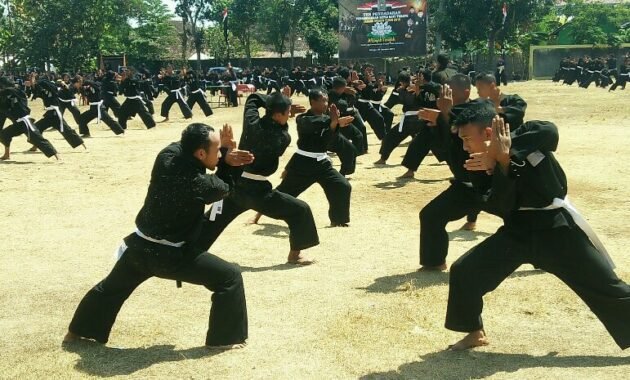
    Even though in the current era of globalization, cultural preservation must still be carried out while still knowing and participating in studying the culture of the country itself, including studying traditional dance.

    Traditional dance is usually an image of a certain area that developed a long time ago and is still being preserved today through cultural centers, although many young people now prefer modern dance.

    In some areas in Indonesia, such as Central Java, it is very rich in tradition and traditional dance is one of the traditions from Central Java that still exists today.

    Traditional dances still exist today because they are still featured in several cultural events and several traditional ceremonies which have made them well known even in the modern era like today.

    For this reason, so that Sinaumed’s friends are more familiar with the traditional dance culture, especially in this discussion, dance originating from Central Java, we have summarized various information related to traditional dances originating from Central Java, which you can find out as additional insight into local culture in Indonesia.

    You can see further discussion about dance from Central Java below!

    Definition of Dance

    Before knowing some of the dances from Central Javanese culture, it’s a good idea to listen to the following discussion about the meaning of the dance itself!

    Dance art in Indonesia is very rich. The diversity of dance arts from Sabang to Merauke is the identity of each region that must be preserved for future generations.

    Various traditional and modern dances are often performed at certain events such as traditional wedding ceremonies, welcoming ceremonies for honored guests, etc. This dance can be performed alone, in pairs, in groups, or in large numbers.

    Dance is an expression of the human soul through rhythmic and aesthetic movements. Apart from art, dance is also part of culture in its development.

    Dance is an art whose medium is expressed in the form of motion. According to a quote on the official website of the Ministry of Education and Culture of the Republic of Indonesia, dance is an art form that has a means of expression or substance of movement through human movement.

    According to KBBI or the Big Indonesian Dictionary, dance is an art form that involves rhythmic body movements (hands and others) and is usually accompanied by sound (music, gamelan, etc.).

    Dance is art, even though its basic substance is motion. However, it is not about realistic or everyday movements, but rather movements in the form of expressive movements.

    Expressive movements are beautiful movements and can affect one’s emotions. The beauty of this movement is that it has a style that contains a certain rhythm.

    The use of the word beautiful in the world of art has a good meaning. John Joseph Martin explained with Modern Dance (1965) that beautiful or good is something that gives one’s inner satisfaction. Good dance is not only limited to smooth and soft movements, hard, rough, powerful, strange and tense movements can also be classified as dances with good movements.

    Dance is defined by experts

    There are several definitions used to explain what dance is. A German dance and music historian named Curt Sachs explains in the book World History of The Dance (1933) that dance is rhythmic motion. So the elements of dance are motion and rhythm or beats.

    A different opinion was expressed by dance expert from the Netherlands Hendrina Cornelia Hartong (Corrie Hartong), who explained that dance is a body shape and rhythmic movement in space. At the same time, the American writer Walter Sorell defined dance as rhythmically regular movements of the body and its limbs.

    The definition of dance above is still consistent with Frederick Hawkins (Erik Hawkins) who works as an American modern dance dancer and choreographer. He stated that dance is an expression of the human soul, transformed by imagination and shaped by movement in such a way that it becomes a symbolic movement and expresses the contents of its creator.

    Then, according to Suryodiningrat, an expert on Javanese dance, dance is the movement of all parts of the human body arranged in harmony with music that has a specific purpose. Meanwhile, according to Soedarsono, dance is a manifestation of the human soul through beautiful rhythms.

    Definition of traditional dance

    Experts present their own definition of traditional dance. Alwi said that traditional art is art created by many people, containing elements of beauty, the results of which are shared property.

    According to Sekarningsih and Rohayan in the book Advanced Study of Dance and Drama Learning (2006), dance is a dance that has experienced a journey and has past values ​​that have been preserved for generations and has a connection with rituals or customs.

    According to Robby Hidayat in the book Art of Dance Insights (2005), traditional dance is a dance that is performed in a certain ethnic environment or tradition which is inherited depending on the procedures used.

    From this it can be concluded that the concept of traditional dance is a dance that develops from time to time and exists in a certain area, custom or tribe for some time. These developments make traditional dance have a classical aesthetic value that is maintained from generation to generation.

    Dance from Central Java

    Central Java is one of the areas in Indonesian culture that is rich in traditions and customs.

    Speaking of Java, the cultural center is actually in Central Java. However, their Javanese dance culture and traditions spread to all provinces in Indonesia.

    Even mothers can easily see the different Javanese cultural dances at every gathering, wedding or big party.

    The following are various types of traditional Central Javanese dances that you need to know more about and educate young Indonesians.

    1. Gambyong Dance

    The first traditional Central Javanese dance is the Gambyong dance. Initially became popular from Surakarta.

    Many people do not know that this traditional dance from Central Java is a folk dance.

    The Gambyong dance is usually performed during the planting season and rice harvest as a tribute to Dewi Sri. This traditional dance is usually performed by two young women wearing green dresses.

    This attire is combined with trousers with a tie, a long yellow scarf wrapped around the waist and a headdress.

    The dancers are accompanied by songs typical of Javanese culture performed by sinden (singers) and gamelan songs (traditional Javanese musical instruments).

    The movements of this traditional Central Javanese dance are quite clever and skilled in blending in with the audience on stage.

    2. Golek Dance

    Another traditional dance from Central Java is the Golek dance. This is a type of dance that is stored in the palace and displayed at certain cultural events.

    A solo dance depicting a young girl growing into a mature woman. The basic postures and techniques are reminiscent of the dances of Bedhaya and Serimpi, but the descriptive movements reveal the beauty of the girl herself.

    The name Golek is related to Wayang Golek, and this tradition has parallels in the history of Wayang Golek. The Golek dance is traditionally performed at lively wedding receptions.

    3. Bedhaya dance

    As an education for today’s children, the Bedhaya dance is no less interesting to know. Bedhaya has a deep religious meaning for both performers and spectators.

    Aesthetic principles are associated with ideas of beauty and unspeakable power, and the Bedhaya dance is considered a form of yoga or meditation. Bedhaya dance is a classical dance from the Surakarta palace.

    This sacred dance presents the romantic relationship between the Queen of the South and the King of Mataram which is manifested in the movements of the hands and all the limbs.

    The outfit includes a tie sarong, velvet blouse and gold scarf. This dance is accompanied by gamelan musical instruments.

    4. Serimpi Dance

    Serimpi dance, this regional dance is said to be almost similar to the traditional Central Javanese Bedhaya dance. This can be seen in the dance techniques, costumes and dances of the women.

    Usually this dance is performed at the Central Java Palace during cultural events and holiday celebrations. The dancers may represent the four elements of the universe earth, water, fire and air, as well as the four cardinal points of the universe.

    The Javanese Serimpi dance is similar to the Pakarena Makassar dance in terms of the smoothness of the dancer’s movements. Since ancient times, the serimpi dance has had a special place in the Javanese courts because of its sacred nature.

    Previously, this dance could only be performed by people chosen by the palace. Serimpi dance is considered sacred, as are heirlooms or objects symbolizing the power of kings from the Hindu-Javanese era. However, the Serimpi dance is not as sacred as the Bedhaya dance.

    The story shows the fight between four heroines with daggers. Not infrequently this traditional Central Javanese dance smells mystical and is quite sacred.

    The uniqueness of this Serimpi dance is the use of a weapon feature wearing a white sarong robe, symbolizing the dancer’s purity and sincerity.

    This dance also symbolizes tenderness that can be seen in the movements and accompaniment.

    5. Bondan Dance

    Bondan dance is a traditional Central Javanese dance originating from Surakarta, Central Java. This dance symbolizes a mother who takes care of her child.

    It’s about a child and a woman holding a doll and an open umbrella gently dancing on a jar and not being kicked or hurt.

    This dance is divided into three, namely Cindogo Mariah, Mariah Mardisiwi and Mariah Gunung.

    The hallmark of this dance is the clothes of village girls, baskets, hats and farming tools.

    6. Beksan Wireng Dance

    Want to introduce young Indonesians to Javanese culture through a dance? Beksan Wireng dance is one of them.

    In fact, this dance is said to have existed since the 12th century. This traditional Central Javanese dance originates from the Javanese palace which is preserved in the Surakarta Sunanate and Mangkunegaran Temple. Dancing is about fighting. Beksan Wireng was made when Amiluhur was king.

    Amiluhur wanted everyone to be able to fight to defend his kingdom, so this dance was created.

    To honor and perpetuate it, many Central Javanese dancers try to perform dances like this Beksan Wireng.

    7. Gambir Anom Dance

    Gambir Anom is a traditional Central Javanese dance which is popular in Surakarta. As a rule, a man or a woman is served.

    The Gambir Anom dance features Irawan, Arjuna’s son who is in love. A character in love expresses himself through neat clothes, hair, makeup, and clothing.

    There was a mirror movement, pacing back and forth, as if her idol was standing in front of her.

    8. Dolalak Dance

    Another traditional Central Javanese dance for children’s education is the Dolalak dance. Dolalak is a cultural product that was born and developed in Purworejo Regency, Central Java.

    This actually existed during the Dutch colonial period in Indonesia around 1915. The Dolalak dance is performed by several dancers dressed in old Dutch or French soldiers. This performance is accompanied by kentrung, tambourine, drums and kecer.

    This can be seen in the costumes and accessories that are similar to the Dutch soldiers.

    The costume of the Dolalak dancers includes long-sleeved shoulder badges, shorts, hats and socks, as well as sunglasses and sampur.

    9. Lengger Dance

    Lengger dance is one of the ancient traditional rituals of Central Java. As a symbol of fertility, male dancers dress like women. When the Lengger dance became popular, men were considered stronger and purer than women.

    At that time, dance practice was more of a ritual event than a means of entertainment. It still smells spiritual and connected to the gods.

    In this form of traditional Central Javanese dance, the dancers sing together while dancing. Most court dances are traditionally associated with the sultan, and many rulers themselves are known as skilled dancers.

    The players are mostly close relatives of the sultan or members of the palace and personal bodyguards.

    Here is information about various types of Central Javanese dance, Sinaumed’s friends. Central Javanese traditional dance has a very strong character, therefore Central Javanese dancers usually have a very high social status.

    As young people and part of the successors of the Indonesian nation, we should also help continue the culture that is developing in Indonesia by appreciating the culture in the area around us, such as the traditional dances in Central Java.

    Because these traditional dances are also part of the cultural heritage of our predecessors which should be preserved, preserved and introduced to the world.

    Conclusion

    This is a brief discussion of traditional dances from the Central Java region. The discussion this time does not only discuss traditional dances from the Central Java region, but also discusses further the meaning of the dance itself, the meaning of traditional dance, as well as examples of traditional dances from the Central Java region that you can see well.

    Trying to recognize a part of the culture in Indonesia, including traditional dances from the Central Java region, gives us additional knowledge about various cultures that have developed in Indonesia from the past to the present which must always be preserved and taught from generation to generation as part of the cultural heritage that needs to be maintained. .

  • 10 Basic Techniques of Pencak Silat that Beginners Need to Master!

    10 Basic Techniques of Pencak Silat that Beginners Need to Master!

    The basic techniques of pencak silat – Silat is a traditional martial art originating from the Malay Archipelago. Martial arts are known in many Southeast Asian countries. For example Indonesia, Malaysia, Brunei Darussalam, Singapore, southern Philippines and southern Thailand. Indonesia itself has pencak silat which is a traditional martial art originating from this archipelago.
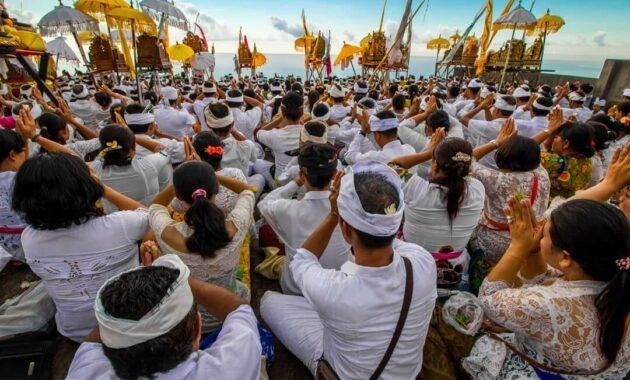
    The term pencak silat consists of two words that have two meanings. “Pencak” means the basic movements of pencak silat with rules. Meanwhile, ‘silat’ means a complete martial art that originates from spirituality.

    Every region in Indonesia has the term pencak silat, such as silek from West Sumatra, penca from West Java, pencak from Central Java and Yogyakarta, mancak Bali and mpaasila from West Nusa Tenggara (NTB).

    This sport requires concentration and agility. In particular, each region in Indonesia has its own distinctive style of pencak silat. For example, West Java has the Cimande and Cikalong schools, Central Java has the Merpati Putih School and East Java has the Perisai Diri School.

    For Sinaumed’s friends who want to learn this martial arts sport from Indonesia, you need to know the basic techniques. What are the basic techniques of pencak silat that need to be mastered?

    The following are the basic techniques of pencak silat that need to be mastered:

    Basic Techniques of Pencak Silat

    1. Easel Technique

    Inilah 7 Teknik Silat

    Usually the first basic technique of pencak silat is the stance technique. This technique is used to maintain the balance of the body to attack or defend. The trick is to put your feet on the ground. The stances are named because the position of the feet when performing this technique is the same as the position of the human feet on the horse’s back.

    There are three stance techniques based on their shape, namely light stance, medium stance, and heavy stance. Based on the weight of the pedestal, pencak silat is divided into five parts, namely front stances, rear stances, middle stances, cross stances, and side stances.

    2. Post Attitude Technique

    Teknik Dasar Pencak Silat yang Benar, dari Kuda-kuda hingga Tendangan

    After being able to position the stance technique correctly and accurately, Sinaumed’s will learn how to do the stance technique. This technique is a combination of stance, footwork, and arm stance. This technique allows Sinaumed’s’ body position to be more flexible in attacking and defending.

    The stance technique is a technique that combines arm and leg poses with or without a horse. However, it must be accompanied by total mental and sensory alertness. Because, the attitude of the tide is a prefix to launch an attack or used for self-defense (defense).

    There are two types of tides, namely open tides and closed tides. Open pair stance is a stance in which the hands and arms do not protect the body, while closed court stance is a stance in which the hands and arms protect the body. This technique can be performed standing, standing or sitting. However, to learn, you need the help of a professional or coach.

    There are 4 attitudes that can be trained hard to be able to master them perfectly. The following is a brief review of the 4 attitudes in question:

    A. Install One

    Pairs of one is an attitude technique in pencak silat where the fighter’s body position can be in an upright condition and both hands are at the sides of the body. In a state of ready martial arts, the fighter’s legs can be opened so that their width can be equal to the width of the shoulders.

    B. Pair Two

    Pairs of two is a stance technique in pencak silat where the position that needs to be formed by the fighter is with the body in an upright position while opening both feet shoulder-width apart. Not only that, make sure to position both hands in a fist and parallel to the waist; this is a bit different from pair one.

    C. Pair Three

    Pair of three is an attitude technique in pencak silat where the fighter needs to position the body exactly like when doing pair of two and make sure that the position is always perpendicular. Don’t forget to open your feet shoulder-width apart while raising your hands at eye level and make sure your fists are open.

    D. Pair Four

    Pairs of four is a stance technique in pencak silat in which fighters can form postures and also eyes as when doing pairs of three. The difference is only in the part of the hand that we can lift at eye level but in a cross position. The fist that was originally open can be clenched.

    3. Step Pattern Technique

    Pola Pembentukan Gerak Pencak Silat | Mikirbae.com

    The step pattern technique is very useful so that the opponent does not easily guess our movements. This technique is done by changing the footsteps from one place to another according to a pattern that we arrange ourselves. Step technique requires a combination of body posture, hand posture, floor pattern, and foot pattern when stepping.

    A. Straight Step Pattern 

    In pencak silat, the straight step technique is when the fighter takes steps to make a straight line. When forming a straight line, this can be done by moving forward or backward. Actually fighters can start from any of the positions mentioned above, especially from the middle position.

    B. Zig-zag Step Pattern

    In pencak silat, this type of zig-zag step is when the fighter moves to make a saw blade, aka zig-zag. In fact, fighters may start in the first pair position, where the ridges that form later are misaligned.

    C. S-Step Pattern

    In pencak silat, a standing competitor can perform an S-step with the point position pointing in a designated direction. The right leg slides toward the body weight on the right foot, then continues or follows the left leg. This step pattern movement basically combines 3 pose techniques that make the letter S. Using a combination of poses here includes side, back, and center poses

    D. U Step Pattern

    In pencak silat, the u or horseshoe stride pattern allows the fighter to start from a straight starting position and move the foot to the right, followed by stopping the left foot before the left foot stops advancing. Pull the leg back and close, then move left and pull the right leg close before moving forward. For the final step, pull your right legs back to bring them together and form the starting position.

    E. Triangular Step Pattern

    In pencak silat, this triangular step pattern is when the fighter moves to form a triangular plane. Usually this technique is done using 2 positions, namely the front position and the middle position.

    F. Quadrilateral Step Pattern 

    In pencak silat, the quadrilateral step pattern is when the fighter moves using a combination of front and center stances, similar to the triangle move, only done so that the stances are prepared first. Then move forward using the middle stance and only then can the expected rectangular pattern of steps be formed.

    4. Direction Technique or Eight Directions of the Wind

    Pola Pembentukan Gerak Pencak Silat | Mikirbae.com

    A fighter definitely needs the right direction of attack. The same goes for defending against an opponent’s attack. This technique works so that Sinaumed’s can determine the direction well.

    This directional technique really requires an understanding of the direction in forming movements when attacking or defending. The direction of pencak silat must be understood as the direction of the 8 basic directions, namely the attitude or pattern of steps in the basic movements of pencak silat with the axis of rotation in the middle.

    Sinaumed’s’ fulcrum is in the middle. Then Sinaumed’s can move in various directions like the eight main directions namely east, southeast, south, southwest, west, northwest, north, northeast. Or simply go backwards, left backwards, left sideways, left forwards, forward right forwards, backwards backwards right.

    5. Kick Technique

    18 Macam Tendangan dalam Pencak Silat, Lengkap dengan Penjelasannya -  Sonora.id

    Kick technique is a technique using the foot to attack the opponent. However, it is not uncommon for kicks to be used to defend against enemy attacks. Kicks or leg attacks in pencak silat can be done using the shins, soles of the feet and knees.

    What are the types of kick techniques in pencak silat? Let’s discuss:

    A. Straight Kick

    This kicking technique is carried forward towards the target using the toe. Oh yes, make sure Sinaumed’s’ legs are straight and his body is straight too. The body facing the opponent and the foot used to attack the opponent is the base of the toes.

    B. Circular Kick

    While kicking with the instep, Sinaumed’s will do a circular kick. For example, Sinaumed’s kicks using his right foot, the left foot is used for left stances.

    Then the right leg is kicked to the side. The part of the opponent’s body that is in contact with the instep, Sinaumed’s friends . To balance Sinaumed’s’ body , place both hands in front of his chest. Don’t forget to make sure there are stomping feet, Sinaumed’s.

    C. Jejag Kick

    This kick is also known as a jejeg kick (in Javanese) or a gejos kick. This kick makes the opponent’s stomach a target. Kicks are executed by lifting the knee as high as possible and pushing the foot into the opponent’s stomach.

    D. Crescent Kick

    The sickle kick is done by hitting the opponent’s stomach with a curved trajectory like a crescent moon.

    E. Kick T

    Take Sinaumed’s to the side and kick to the right. The opponent will be hit by the sharp soles of the feet and heels. There are three styles of T-kick, namely T-snaps, T-jump and T-hang .

    F. Back Kick

    Perform this kick with your back facing your opponent. Twisting while kicking the leg or heel to the opponent’s stomach or head.

    6. Punch Technique

    5 Teknik Pukulan Pencak Silat Dan Penjelasannya (Dengan Gambar)

    Punching techniques do not only exist in pencak silat but other martial arts also use this technique. Punch technique is an attempt to hit the opponent by using the hands. But Sinaumed’s definitely understands, how to execute the right punches? Don’t let Sinaumed’s intend to attack your opponent by attacking the heart which can make your opponent injured by using the wrong punching technique. There are several types of punch techniques, namely:

    A. Front Punch Technique

    This technique is a simple orbital. This punch can be done in two different ways. First the position of the feet in front, but hands parallel. Second, the position of the feet in front, but the hands are not parallel.

    Some mistakes that are often made by fighters are stiff bodies, weak legs, looser hands, weaker strokes and an unbalanced body.

    B. Pendulum blow

    This stroke is called a pendulum movement, namely a blow with the hand moving from the bottom up. Bend your elbows at a 90 degree angle with your feet parallel or not parallel. The way to do a pendulum swing is to raise the middle horse. Then cross your arms in front of your chest.

    Tilt your head and swing one arm forward to attack. Keep the other hand in the starting position to protect the body from the opponent’s attack. After the first stroke is finished, continue with the next stroke with the other hand. Remember, Sinaumed’s , the hand that was originally used to attack or used to defend.

    C. Upright Punch

    The target of an upright punch is the shoulder or shoulder joint. First, install the middle stance. Then place both hands in front of the chest (not crossing). Clench the fingers of the hand used to hit. Strike one hand upright. One hand remains in the starting position to protect the body. Alternate between right and left hands.

    D. Circular Punch

    Circle punch target is usually the opponent’s waist. As the name suggests, this punch is made by moving the hand in a circle. The movement of the shoulders and waist towards the shot can affect the quality of the shot.

    E. Side Punch

    This punch is directed to one side of the body using the back of the hand. The direction of the punch can be done sideways or forward but starting from the side.

    7. Parry Technique

    Inilah Teknik Jatuhan Dalam Pencak Silat yang Sangat Penting! -  OlahragaPedia.com

    To defend, you need parry techniques. This parry technique aims to block or teleport the opponent’s attack, this technique is done by making direct contact with the body part of the opponent who is attacking.

    Blocking techniques can use a combination of hand, arm, elbow and leg movements. Some of the parry techniques that must be mastered are outer block, inner block, upper block, and lower block.

    A. One Arm Block

    • Internal parry, parrying attacks from the outside in.
    • External parry, parrying attacks from the inside out.
    • Upper parry, intended to protect the head. Counter direction from bottom to top.
    • Bottom parry, intended to protect the legs and thighs. Direction of parry from top to bottom.

    B. Two-Arm Block

    • Block two arms with the palms.
    • Two-arm block with forearms.

    8. Cutout Technique

    The cutting technique is a technique of dropping the opponent by pinning both legs to the neck, waist, shins, and other targets on the body. There are three cutting techniques, namely the bottom cut, the middle cut, and the top cut. These three cutting techniques really require speed and accuracy of leg movements, and require the supervision of a trainer. It is best to do this cutting technique with a professional or your trainer to avoid the risk of injury.

    9. Lockdown Technique

    In addition to defending and attacking, fighters must master the death of their opponents. The locking technique or commonly known as the cutting technique can prevent the opponent from moving because his body is locked. Have you ever watched the WWE SmackDown fight ? In this battle, many locking techniques were demonstrated.

    Locking technique is a technique to lock, control, and make the opponent powerless, unable to move, or to disarm the opponent. Movements can use a combination of hands, feet or other limbs by involving avoidance and capture to target the opponent’s body parts. Usually, the vital body parts that are targeted are the neck, shoulders, chin, arms and wrists.

    10. Lying Technique

    The lying technique is intended to train the ability to fall as well as a means of self-defense. There are three types of lying techniques, namely:

    1. The oblique attitude is done by bending while bending the legs to bring them closer to the chest. The line of sight should be straight, while the other leg is used to support the body. One elbow is on the floor and the other hand is used to support the thigh.
    2. The supine position is done by lying on your back while bending one leg, while the other leg is straightened. One hand on the ground bent at the elbow and the other on the chest.
    3. The prone position is done by turning the body, looking straight and awake. Straighten your legs, and at the same time touch the floor with both hands and bend your elbows firmly.


  • The Unique 5 Traditions of Bali’s Nyepi Day That Can Attract Many Tourists

    The Unique 5 Traditions of Bali’s Nyepi Day That Can Attract Many Tourists

    In a few days, specifically for Hindus, the Nyepi Day celebration will take place on Wednesday, March 22, 2023. Prior to the celebration, Hindus will perform several activities and traditions.

    However, during Nyepi Day, Hindus will not engage in any activities. The atmosphere of the Hindu community will be much quieter than usual. This is especially true in Bali, where most of the population practices Hinduism. During Nyepi Day, they will even turn off their mobile data.

    Nevertheless, there are several rituals and traditions in Bali to welcome Nyepi Day, as follows:

    1. Melasti

    Melasti is one of the rituals usually performed by Hindus two to three days before Nyepi Day. The word Melasti comes from the combination of mala, which means dirty, and asti, which means clean. It means to cleanse all the bad things and create goodness, harmony, and peace in the universe.

    During Melasti, Hindus will lead the procession of Ida Bhatara or God. They will walk in a line towards the ocean, beach, or springs to clean all the dirt. This ritual usually takes place in the morning or evening.

    1. Tawur Kesanga

    Tawur Kesanga is a ritual that is usually carried out one day before Nyepi Day. This is also known as a sacrifice or pecaruan ceremony.

    Tourists visiting Bali can observe this tradition in several areas, starting from the provincial level at Pura Besakih, then moving to the district level in places like Catus Pata. It continues to the sub-district, village, hamlet, and even the Caru ritual in each private house.

    Various offerings, including animals like ducks, geese, chickens, dogs, cows, and more, are used in the Caru ritual. The purpose of Tawur Kesanga is to distance the universe from Bhuta Kala and disasters.

    1. Pengerupukan

    The next tradition is Pengerupukan. This tradition involves a parade of ogoh-ogoh, which are big demonic effigies, carried around the village or city with torches.

    Tourists can also witness this tradition during their visit to the Island of Gods. The ogoh-ogoh, which symbolize disasters and Bhuta Kala, must be destroyed or burned after the parade to avoid such disasters.

    1. Catur Brata Penyepian

    The pinnacle of Nyepi Day is the Catur Brata Penyepian tradition, which begins at 6 am and lasts for a full day, or 24 hours.

    This tradition has four main prohibitions for Hindus to clear their minds and meditate. The prohibitions include Amati Geni, which means no lighting of fires, lamps, or candles; Amati Karya, which means no work or activity; Amati Lelungan, which means no travelling outside of the home; and Amati Lelanguan, which means no entertainment, such as watching TV or playing games.

    1. Ngembak Geni and Omed-Omedan Traditions

    After completing the Catur Brata Penyepian tradition, Hindus will perform Ngembak Geni, which means freely lighting a fire or turning on the lights. During this ritual, Hindus will visit each other and ask for forgiveness if they have done wrong. This is after the period of meditation during Nyepi Day.

    Next, the Omed-Omedan tradition is usually held in the Sesetan area, Denpasar. After the prayer for young unmarried people, they will be divided into two groups and pull each other while embracing each other.

    Those are some of the unique traditions of Nyepi Day in Bali. For tourists or those who plan to visit Bali, it may be interesting to witness these traditions firsthand. The Nyepi Day celebration in Bali is not only a sacred ritual but also an opportunity to experience and learn about the culture of the Balinese people. It is a perfect time to relax, reflect, and reconnect with nature and the universe.

  • Emerging Halal Pharmaceuticals Industry: Need of the Hour?

    Emerging Halal Pharmaceuticals Industry: Need of the Hour?

    Introduction

    The pharmaceutical industry has been experiencing tremendous growth worldwide. The industry has been introducing a diverse range of innovative drugs and therapies that have revolutionized the healthcare sector. However, one area where the industry has been lacking is the development and production of halal pharmaceuticals.

    Halal Pharmaceuticals refers to medicines or drugs that are manufactured in compliance with the Islamic laws of food and medicine. The development of halal pharmaceuticals has been gaining attention in recent years. The demand for halal drugs is growing exceptionally fast, particularly in the Muslim world, where religious practices forbid the consumption of any drug that contains alcohol, animal products or material derived from prohibited sources.

    This article looks at the emerging halal pharmaceutical industry and whether it is the need of the hour.

    Emerging Halal Pharmaceuticals Industry

    The global market for halal pharmaceuticals has been growing rapidly, and this trend is expected to continue. According to a research report by Credence Research, the global halal pharmaceuticals market is projected to grow at a CAGR of 9.4% from 2021 to 2027.

    The growth of the halal pharmaceuticals market is driven by several factors. The increasing demand for halal products, particularly in the Muslim world, is one of them. As Muslims worldwide seek to adhere to a halal lifestyle, the demand for halal medicines has spiked. The rise of the Muslim population and increasing awareness of halal products have also contributed to the growth of the halal pharmaceuticals market.

    Another contributing factor is the growing demand for ethical and transparent practices in the healthcare industry. For many Muslim consumers, halal pharmaceuticals represent a more ethical and transparent alternative, as they are manufactured in compliance with Islamic law and free from any haram (prohibited) substances.

    Furthermore, governments and regulatory bodies in Muslim-majority countries are beginning to recognize the importance of halal pharmaceuticals. For instance, Malaysia has become a leading halal pharmaceutical hub, with the country’s government introducing a Halal Healthcare Master Plan to support the industry’s growth.

    The Need for Halal Pharmaceuticals

    Halal pharmaceuticals offer several advantages over conventional drugs. For one, halal drugs are believed to be safer for consumption. They are manufactured using ingredients that have been ethically and sustainably sourced, which means they are free from harmful or toxic chemicals.

    Secondly, halal pharmaceuticals offer peace of mind to Muslim patients. Muslims who adhere to a halal lifestyle take their religious practices seriously and would want to ensure that the medicines and drugs they consume are halal compliant.

    Halal pharmaceuticals also offer financial benefits. The halal pharmaceutical market is large and growing, and investing in the industry can be a profitable venture for companies. Additionally, countries that cater to the halal pharmaceutical industry can position themselves as global leaders and generate revenue from halal tourism.

    Conclusion

    The growing demand for halal pharmaceuticals has created significant opportunities for companies in the pharmaceutical industry. Developing halal drugs can help companies enter new markets, reach new customers, and increase profits.

    However, the development of halal pharmaceuticals requires investment in research and development, strict adherence to Islamic law’s guidelines, and the implementation of ethical manufacturing practices. These requirements can be expensive, but the potential financial and social benefits of investing in halal pharmaceuticals outweigh the costs.

    In conclusion, the emerging halal pharmaceutical industry is the need of the hour. Halal drugs are not just a requirement for Muslims; they offer several advantages over conventional drugs and have the potential to drive revenue and economic growth. As the demand for halal pharmaceuticals continues to grow, companies will need to invest in this industry to remain relevant and competitive.

  • The Rise of Halal Cosmetics: How Muslim Women are Changing the Beauty Industry

    The Rise of Halal Cosmetics: How Muslim Women are Changing the Beauty Industry

    In the past decade, there has been a significant change in the beauty industry as the concept of halal cosmetics emerged. The rise of halal cosmetics reflects the changing demographics of consumers, particularly Muslim women, who are looking for cosmetic products that align with their religious and moral principles.

    Halal cosmetics are products that are free from ingredients prohibited in Islam, such as alcohol, harsh chemicals, and animal-derived ingredients. These products are also manufactured in accordance with Islamic guidelines, which requires that the ingredients be pure, safe, and not mixed with anything impure or harmful.

    The halal cosmetics market has seen significant growth in recent years. According to a report by Grand View Research, the global halal cosmetics market was valued at $16.3 billion in 2020 and is expected to grow at a compound annual growth rate of 12.4% from 2021 to 2028.

    The driving force behind the rise of halal cosmetics is Muslim women, who make up a significant portion of the global population. In 2019, there were an estimated 1.8 billion Muslims worldwide, with approximately 48% of them being women. These women are becoming increasingly conscious of the ingredients in the products they use, and are looking for products that are both halal and ethical.

    In addition to the religious and ethical factors, the rise of halal cosmetics also reflects a shift in the beauty industry as consumers demand more transparency and sustainability. Halal cosmetics are often made with natural and organic ingredients, which are better for the skin and the environment.

    The halal cosmetics market is not limited to Muslim-majority countries; it has also gained popularity in non-Muslim countries, particularly in Europe and North America, where there is a growing population of Muslim consumers. In the United States, the Muslim population is expected to double by 2050, and the demand for halal products, including cosmetics, is expected to increase accordingly.

    In response to the growing demand for halal cosmetics, many mainstream beauty brands have launched halal-certified lines or have reformulated their existing products to make them halal compliant. For example, L’Oreal launched a halal-certified line in Indonesia in 2016, while Estée Lauder launched a halal-certified brand, “Milk” in the United Arab Emirates in 2018.

    Many Muslim women are also launching their own halal cosmetics brands, often inspired by their personal experiences and beliefs. These brands are not only catering to a niche market but also challenging the traditional beauty industry’s standards of beauty and inclusivity.

    One such brand is Shade M, a makeup brand launched by Muslim fashion blogger and influencer, Shafaa Hamadi. Shade M is an inclusive brand that welcomes women of all skin tones and types, and was created to provide Muslim women with halal-certified cosmetics that are both trendy and affordable.

    Another halal cosmetics brand that has gained popularity is Amara Halal Cosmetics, founded by a Muslim pharmacist, Hani Annabi. The brand offers a range of cosmetics, including lipsticks, eyeliners, and foundations, all of which are halal-certified and made with natural and organic ingredients.

    In addition to launching halal cosmetics brands, Muslim women are also using social media to promote and support halal cosmetics. Many Muslim influencers and bloggers have become vocal advocates of halal cosmetics, using their platforms to raise awareness about the importance of halal beauty and encouraging their followers to make more conscious choices when it comes to the products they use.

    The rise of halal cosmetics is not just a trend; it is a reflection of a larger societal shift towards conscientious and inclusive consumerism. The beauty industry is no longer solely focused on offering products that cater to the preferences of the majority, but is also recognizing the diverse needs and desires of minority consumers.

    For Muslim women, the availability of halal cosmetics means that they can participate fully in the beauty industry without compromising their religious and ethical beliefs. It also means that they are no longer forced to choose between their faith and their appearance.

    In conclusion, the rise of halal cosmetics is a significant development in the beauty industry, driven by Muslim women’s growing demand for cosmetics that align with their religious and ethical principles. This development represents an opportunity for the industry to become more inclusive and transparent, and for consumers to make more conscientious choices when it comes to the cosmetics they use. With the growing popularity of halal cosmetics, it is clear that Muslim women, and the values they represent, are changing the beauty industry.

  • 1) Exploring the Benefits of Halal Animal Feed and Nutrition Products

    1) Exploring the Benefits of Halal Animal Feed and Nutrition Products

    In recent years, there has been a growing demand for halal animal feed and nutrition products in the global market. Halal refers to products that are made according to Islamic dietary laws, and it also encompasses a way of life that encourages the ethical treatment of animals.

    Halal animal feed and nutrition products are essential for the well-being and optimal growth of livestock animals. They are designed to meet the nutritional requirements of different animal species, such as poultry, cattle, and sheep, and are produced using high-quality ingredients that are free from contaminants and harmful substances.

    Here are some benefits of using halal animal feed and nutrition products:

    1. Halal animal feed is safe and healthy

    Halal animal feed and nutrition products are made using high-quality ingredients that are free from harmful substances such as genetically modified ingredients, pesticides, and hormones. These ingredients are carefully selected and tested to ensure that they are safe for the animals and do not pose a risk to human health.

    2. Halal animal feed promotes animal welfare

    In Islam, animals are considered as a trust from God, and it is our responsibility to treat them with kindness and respect. Halal animal feed and nutrition products are designed to promote animal welfare by ensuring that the animals receive the right nutrients to keep them healthy and strong.

    3. Halal animal feed is environmentally friendly

    Halal animal feed and nutrition products are produced using sustainable and environmentally friendly practices. The use of natural ingredients and the reduction of waste and pollution can help to reduce the carbon footprint and promote a cleaner and healthier environment.

    4. Halal animal feed is economically sustainable

    The use of halal animal feed and nutrition products can help to improve the economic sustainability of the livestock industry. By providing the right nutrients to the animals, farmers can ensure that they grow faster and produce better quality products, which can lead to increased profits and a more sustainable business.

    5. Halal animal feed is a marker of quality

    Halal certification is a marker of quality assurance that ensures that the products are produced according to strict Islamic dietary laws. Halal certified products are free from contaminants and have undergone rigorous testing to ensure that they are safe and healthy for animals and humans.

    6. Halal animal feed is in demand in the global market

    The global halal market is growing at a rapid pace, creating new opportunities for businesses that produce halal animal feed and nutrition products. The growing demand for halal products, particularly in Muslim countries, can help to boost the economy and create new jobs in the livestock industry.

    In conclusion, halal animal feed and nutrition products offer a range of benefits that can improve animal welfare, promote sustainable practices, and support the economic sustainability of the livestock industry. They are an important part of a holistic approach to animal husbandry that considers both the nutritional requirements of animals and the ethical responsibilities of humans towards them. By choosing halal animal feed and nutrition products, we can promote a healthier and more sustainable future for both animals and humans.

  • The rise of Halal vitamins and supplements: Meeting the needs of Muslim consumers

    The rise of Halal vitamins and supplements: Meeting the needs of Muslim consumers

    The global halal market has been expanding rapidly in recent years, with halal food and cosmetic products leading the way. The Muslim population is projected to grow to 2.2 billion by 2030, making it an important market for businesses. With the increasing awareness of healthier lifestyles, halal vitamins and supplements have witnessed tremendous growth in popularity in recent years, providing a new avenue in the halal industry.

    In the past, Muslims who were conscious of maintaining a halal lifestyle, which requires avoiding food and drinks that are considered haram or forbidden, faced challenges in finding suitable vitamin and supplement products. At the same time, the health and wellness trend has grown to be one of the biggest worldwide, from diet trends to workout routines.

    However, today, the halal product industry has grown more dynamic with the inclusion of halal vitamins and supplements. The sales of halal vitamins and supplements are growing faster than conventional ones, with the market registering sustained growth in Europe and Asia, among other regions. The convenience of halal supplements and the endorsement of halal by authoritative halal certification bodies have boosted consumer confidence in halal vitamin products.

    Halal certification for vitamin and supplement products ensures that they meet specific requirements for bacteria and microbial contamination, animal-source ingredients, and the production and packaging process. The manufacturing process and all ingredients used must adhere to halal guidelines. Certification also entails that the halal vitamins and supplements are free from ingredients that are prohibited in Islam or the ingredients are obtained from halal sources.

    The rise of halal vitamins and supplements is a great innovation as it meets the needs of Muslim consumers. Vitamin and supplement companies are focusing on producing halal products, recognizing that the Muslim consumer market is expanding, and they view the halal industry as a potential profitable market segment.

    One reason that has led to the rise of halal products is due to consumers’ preference to buy ethical products, and the halal market offers a comprehensive range of ethical products to cater to these preferences. Halal vitamins and supplements provide Muslims with viable options for balancing their nutritional requirements with their religious principles of avoiding haram.

    Islamic dietary laws prohibit the consumption of several animal-based ingredients, such as pork and its by-products, and alcohol. Since vitamins and supplements usually contain such ingredients, Muslim consumers are required to meticulously examine their labels and ingredients to identify which ones to consume or avoid.

    Therefore, the manufacture of halal vitamins and supplements ensures that the products don’t contain any haram or questionable ingredients as identified by competent halal certification boards. This aspect gives the Muslim consumer confidence when purchasing halal vitamins and supplements, knowing that these products have undergone rigorous testing and assessment and are compliant with halal dietary requirements.

    Halal-certified vitamins and supplements usually meet the highest of international standards, ensuring the products are free from any impurities or contaminants. Halal certification authorities review a range of factors during the certification process, such as scrutinizing the origin of raw ingredients, hygiene practices, worker welfare, and safety processes.

    In summary, the rise of halal vitamins and supplements provides an innovative solution and meets a need that caters to the halal dietary guidelines of Muslim consumers who enjoy the benefits of healthy living. Halal vitamin certification ensures that the products meet the highest safety, health and quality standards that benefit all consumers regardless of their religious beliefs.

    The trend towards halal products and services is projected to continue, with more manufacturing and distribution companies seeking halal certifications. Future projections indicate that halal vitamins and supplements will continue to dominate the market based on the current trend of wellness and health consciousness.

    In conclusion, the halal product industry is continuously expanding, which provides an excellent opportunity for the halal market to grow more dynamic, offering more halal options for the Muslim consumer. Halal vitamins and supplements offer a significant market potential in the halal industry, enhancing the ability of Muslim consumers to maintain their religious principles while still enjoying a healthy and balanced lifestyle. Halal certification offers reassurance to consumers that products meet the highest safety, health and quality standards, benefitting all consumers.

  • Feast in Style: The Latest Trend in Halal Catering Services for Events

    Feast in Style: The Latest Trend in Halal Catering Services for Events

    In the past, halal catering services for events have been associated with bland and unappetizing food. This perception has been shattered by the latest trend in halal catering services- Feast in Style. This trend has become increasingly popular due to its ability to provide gourmet halal cuisine for events that complement the style and theme of the event while adhering to Islamic dietary laws.

    Halal food is food that is permissible according to Islamic law. The dietary restrictions for Muslims include meat that is slaughtered in a specific way and the prohibition of consuming pork and alcohol. Historically, halal catering has been a niche market, primarily serving Muslim communities. However, in recent years, there has been an increased demand for halal catering services from both Muslim and non-Muslim communities.

    Feast in Style is the latest trend in halal catering services that seeks to cater to this growing demand. It is a high-end catering service that offers gourmet halal cuisine for events that are designed to impress. The menu offerings are diverse and extensive, inspiring creativity and elegance.

    One of the advantages of Feast in Style is that it provides flexibility and diversity in the menu offerings. Clients can choose from a wide range of dishes created by expert chefs, ranging from traditional dishes to fusion cuisine. The diversity of the menu ensures that there is something for everyone, and the food options can be customized according to the clients’ preferences and dietary requirements.

    Halal catering services also provide a significant advantage for event planners or organizers in the planning process. With Feast in Style, clients are given the option of choosing a personalized menu with a range of dishes, ensuring that their guests will be satisfied with what they eat. The catering service provides quality food and services, taking away the worries of event organizers.

    One of the essential elements in the Feast in Style trend is the emphasis on presentation. The food is not only prepared with quality ingredients but is presented beautifully in creative and elegant styles designed to complement the theme of the event. This element adds a luxurious touch to the presentation of the food, elevating the dining experience of guests.

    Some of the options provided by the latest trend in halal catering include interactive food stations, which allow guests to interact with the chefs, build their meals, and add a personalized touch to their dining experience. Interactive food stations have become popular because they provide guests with a unique dining experience. They also add an entertainment aspect, making the dining experience an unforgettable memory.

    Halal catering services have become popular across various events, including weddings, corporate events, birthdays, and other special occasions. The latest trend in halal catering services is not only viewed as a culinary experience but as a cultural statement that promotes inclusivity and diversity.

    Feast in Style is not only transforming the catering industry but also the perception of halal cuisine. It challenges the notion that halal food is limited in its culinary options and provides a platform for halal cuisine to compete on an equal footing with non-halal caterers.

    Another advantage of the Feast in Style trend is its cost-effectiveness. Halal catering services are known to be less expensive than traditional catering services due to the reduced cost of procuring ingredients. This means that clients can enjoy gourmet cuisine at a considerably lower cost, making halal catering services an attractive option for events with a limited budget.

    Feast in Style is the latest trend in halal catering services that perfectly combines culture and international gastronomy trends. It unapologetically showcases the halal industry’s potential, proving that halal cuisine is not limited to certain dietary restrictions but includes a range of diverse, flavorful, and creative cuisines.

    In conclusion, the Feast in Style trend in halal catering services is an exciting and transformative movement that demolishes the stereotypical notions of halal cuisine. It provides a platform for event planners to offer gourmet halal cuisine to guests, catering to the increasing demand for halal food across various communities. The trend celebrates diversity, inclusivity, and creativity in the catering industry, creating an unforgettable culinary experience for guests.

  • The growing global trend of Halal finance: investing in ethical and Sharia-compliant funds

    The growing global trend of Halal finance: investing in ethical and Sharia-compliant funds

    Over the past few years, there has been a growing trend in the global financial market towards Halal finance, which is defined as investing in ethical and Sharia-compliant funds. As Islamic finance continues to grow, businesses and individuals are seeking financial products that align with their values, which has driven the rise of Halal finance as a way to invest in a manner that is both financially sound and ethically responsible.

    Islamic finance has long been seen as a niche market, but recent growth has turned it into a major player in the global economy. Today, there are an estimated 1.5 billion Muslims around the world, and the global Halal market is valued at over $2 trillion. This demographic represents a large and diverse group of people with a variety of financial goals and concerns, which has resulted in more diverse investment options and products that cater to the specific needs of the Muslim population.

    One of the key features of Halal finance is the focus on ethical investing. Sharia law forbids the use of interest-based products, which means that Halal funds must be invested in a manner that is socially responsible and compliant with Islamic principles. This can include investment in companies that are involved in socially responsible practices such as renewable energy, healthcare, education, and humanitarian initiatives.

    Another key feature of Halal finance is the requirement for transparency and accountability. In Islamic finance, it is important that investors and fund managers are transparent about where funds are being invested and how returns are being generated. This is to ensure that investments are ethically sound and in line with Islamic principles.

    Halal finance also tends to be more risk-averse than conventional finance, with a focus on long-term investment and avoiding excessive speculation. This is because Sharia law prohibits investing in speculative products and requires investment in tangible assets that provide real economic value.

    One of the most significant advantages of Halal finance for investors is the potential for diversification. In the current economic climate, many individuals and businesses are looking for ways to protect their assets and diversify their investments. Halal finance provides a way to invest in a range of different asset classes, including equities, sukuk (Islamic bonds), real estate, and commodities. This can help to spread risk and ensure that investments remain robust and stable over the long term.

    Another advantage of Halal finance is its potential to deliver high returns. According to a report by the Islamic Financial Services Board, Islamic finance consistently outperformed conventional finance in terms of profitability in the years following the 2008 financial crisis. This has been attributed to the focus on ethical investing, transparency, and risk-averse investment strategies that are integral to Islamic finance.

    In addition to individual investors, businesses and organizations are also increasingly turning to Halal finance as a means of achieving their financial goals. Muslim-owned businesses, in particular, are turning to Halal finance to tap into the huge potential of the global Halal market. This can include investment in Halal food, cosmetics, pharmaceuticals, and other products and services that are in demand among Muslim consumers.

    Overall, the growing trend of Halal finance represents an exciting opportunity for individuals, businesses, and the global economy as a whole. As more investors choose to invest ethically and in compliance with Sharia law, there will be greater demand for Halal finance products and services. This, in turn, will drive growth and innovation in a variety of sectors, fueling economic development and helping to create a more sustainable and prosperous future for all.

  • Halal Lifestyle and Fashion: The Trend of Ethical Consciousness

    Halal Lifestyle and Fashion: The Trend of Ethical Consciousness

    As the world becomes more aware of ethical issues surrounding the production and consumption of goods, the Halal lifestyle and fashion industry have started to gain popularity through promoting ethical consciousness. This trend has caught the attention of Muslim consumers, as well as non-Muslims who are seeking shared values.

    Halal lifestyle and fashion refer to the development and production of products that are compliant with Islamic dietary laws and principles. This extends beyond food to encompass clothing, cosmetics, and other consumer goods. Halal certification signifies that a product has undergone a rigorous process to ensure its compliance with Islamic principles.

    The market for Halal products has been growing significantly in recent years, fueled by an increasing Muslim population and a growing desire for ethical lifestyle choices. According to the State of the Global Islamic Economy Report 2020, the global Halal economy is set to reach a value of $3.2 trillion by 2024, representing a significant share of the global consumer market.

    Halal fashion has become a significant part of this industry, with Muslim and non-Muslim consumers alike seeking fashionable clothing that meets ethical standards. Many major fashion houses have launched Halal collections, and smaller independent designers have also entered the market, creating unique and stylish pieces that cater to this growing demand.

    Halal fashion is not just about creating clothes that are modest or loose-fitting, but also about ensuring that every aspect of the production process is compliant with Islamic principles. This includes the sourcing of materials, the manufacturing process, and the labor conditions of workers involved in the production. The use of eco-friendly and sustainable materials, as well as the avoidance of animal-derived fabrics, aligns with Islamic values of environmental stewardship and kindness to animals.

    The trend towards Halal fashion reflects a wider movement towards conscious consumption and ethical lifestyle choices. With issues such as climate change and labor exploitation becoming increasingly prevalent, consumers are demanding greater transparency and accountability from the brands they choose to support. Halal fashion seeks to satisfy this demand by promoting ethical practices and providing a genuine alternative to fast fashion.

    In addition to the ethical awareness, Halal fashion has also gained popularity due to its modest designs. Modesty is a significant aspect of Islamic faith and one that is closely tied to dress. Halal fashion is designed to be both stylish and modest, catering to the needs of Muslim women who want to express their personal style while remaining within the boundaries of Islamic dress.

    Halal fashion has also played a significant role in the empowerment of Muslim women. The industry has provided opportunities for Muslim women to build their own businesses and to pursue careers in a field that aligns with their values. This has challenged traditional notions of what it means to be a Muslim woman and has given them a platform to showcase their creativity and talent.

    As Halal fashion continues to grow, it is essential to maintain the authenticity and ethics that underpin the industry. The lack of standardization and governance in the Halal certification process has led to some ambiguity, with the potential for exploitation by unscrupulous businesses. Therefore, it is important for consumers to be informed about the certification process and to be vigilant about the brands they choose to support.

    In conclusion, the trend towards Halal lifestyle and fashion reflects a growing awareness of ethical consumption and the desire for shared values. Halal fashion provides a genuine alternative to fast fashion, promoting conscious consumption and ethical practices. It has become an empowering force for Muslim women, providing opportunities for them to express their creativity and talent while adhering to the principles of Islamic dress. With the global Halal economy set to grow significantly in the coming years, Halal lifestyle and fashion are poised to become major players in the global consumer market.

  • Unlocking The Potential of Halal Logistics

    Unlocking The Potential of Halal Logistics

    Halal logistics refers to the process of managing the distribution, storage, and transportation of halal products that comply with Islamic law. Halal logistics is a rapidly growing industry, and its potential has not been fully realized. The global halal market is estimated to be worth $2.2 trillion, with the demand for halal products expected to continue growing.

    Halal logistics is an important part of the overall halal supply chain. It involves the transportation and handling of halal products in a way that ensures their purity and quality. Halal logistics also involves complying with halal certification requirements, such as ensuring that the products are free from haram (forbidden) ingredients and that the transport and storage facilities are clean and free from contamination.

    Unlocking the potential of halal logistics is crucial for the growth and development of the halal industry. Here are some ways in which halal logistics can be optimized:

    1. Halal compliance

    Halal compliance is at the heart of halal logistics. It is important to ensure that the halal products are handled, stored and transported in a way that meets Islamic law requirements. Halal certification is mandatory for the products to be accepted by Muslim consumers. Halal compliance not only ensures that the products are pure and halal, but it also fosters confidence and trust between the supplier and the customer.

    Halal certification is the process of verifying that the products comply with Islamic law. Halal certification bodies are responsible for monitoring and inspecting the supply chain, including the transport and storage of the products. Halal logistics providers need to adhere to the certification requirements, ensure that the products are correctly labeled and provide detailed documentation that shows the products have been handled in compliance with halal standards.

    2. Traceability

    Traceability is a critical aspect of the halal supply chain, and it is particularly important in the logistics sector. Halal logistics providers need to ensure that the products are traceable from the point of origin to the point of consumption. This includes the tracking of the products during the transportation and storage phases.

    Traceability not only ensures that the products are halal, but it also helps to identify issues and resolve them quickly. In the event of a product recall or contamination, traceability allows for speedy identification of affected products and minimizes the impact on consumers. This is especially important in the halal industry, where consumers place a high value on the purity and safety of the products they consume.

    3. Efficient transport and storage

    Efficient transport and storage are key to unlocking the potential of halal logistics. Halal logistics providers need to ensure that the products are transported and stored in a way that maintains their quality and purity. This includes ensuring that the products are transported at the correct temperature, are not damaged during transit, and are stored in suitable conditions.

    Efficient transport and storage also help to reduce costs and improve delivery times. Halal logistics providers need to streamline their operations and adopt technology that improves efficiency, such as RFID (radio-frequency identification) tracking systems, to ensure that the products are delivered to their destination on time and in good condition.

    4. Innovation and technology

    Innovation and technology have the potential to revolutionize the halal logistics industry. Halal logistics providers need to adopt technology that improves efficiency, enhances traceability, and reduces costs. This includes using IoT (Internet of Things) devices to monitor the transport and storage of the products, and blockchain technology to improve traceability.

    The use of drones for the delivery of halal products is also a possibility, particularly in remote areas where traditional transport methods are not feasible. The adoption of automation and robotics can also help to improve efficiency and reduce labor costs.

    5. Developing the workforce

    The development of the workforce is a crucial element in unlocking the potential of halal logistics. Halal logistics providers need to invest in the training and development of their workforce to ensure that they have the skills and knowledge needed to handle and transport halal products correctly.

    This includes providing training on halal certification requirements, food safety, and hygiene, as well as other skills such as transport management and logistics. Investing in the workforce not only ensures that the products are handled correctly, but it also fosters a culture of continuous improvement and innovation within the organization.

    Conclusion

    Halal logistics has the potential to play a significant role in the growth and development of the halal industry. Unlocking the potential of halal logistics requires halal compliance, traceability, efficient transport and storage, innovation and technology, and workforce development.

    The development of the halal logistics industry requires collaboration between all stakeholders in the halal supply chain, including suppliers, logistics providers, certification bodies, and consumers. Working together, the halal industry can unlock the potential of halal logistics and ensure that halal products are delivered to consumers in a way that meets their halal requirements and expectations.

  • Exploring the Benefits of Halal Certification for Businesses

    Exploring the Benefits of Halal Certification for Businesses

    In recent years, the halal market has become increasingly important for businesses, with Muslims representing a significant and rapidly growing consumer group. In order to tap into this market, many businesses seek halal certification, which is a stamp of approval that a product or service meets the Islamic dietary requirements. This article will explore the benefits of halal certification for businesses, both in Muslim-majority countries and globally.

    1. Access to a Billion-Dollar Market

    The halal market is worth an estimated $2.3 trillion a year and is expected to grow to $3.2 trillion by 2024. This market includes not only food, but also cosmetics, fashion, healthcare products, and more. By obtaining halal certification, businesses can tap into this huge and rapidly growing market.

    In Muslim-majority countries, halal certification is often a requirement for businesses to succeed. In Indonesia, for example, the government mandates that all food, beverage, and medicine products must be certified halal to be sold in the country. In Malaysia, a halal certification logo is seen as a necessary trust signal for Muslim consumers.

    2. Increased Consumer Trust

    Halal certification is more than just a religious obligation; it is also a way to ensure quality and safety. To obtain certification, businesses must adhere to strict guidelines that require the use of pure and healthy ingredients, hygienic production processes, and ethical business practices. This means that consumers can trust that products or services that are halal certified are of high quality.

    By obtaining halal certification, businesses can build trust and loyalty with Muslim consumers. Trust is crucial when it comes to consumer purchasing decisions, and halal certification is seen as an important trust signal. Halal certification can also help businesses to differentiate themselves from competitors, especially in Muslim-majority countries where the market is becoming increasingly competitive.

    3. Expanded Distribution Channels

    Halal certification can also help businesses to expand their distribution channels. Many halal certification bodies have partnerships with distributors and retailers in Muslim-majority countries, making it easier for businesses to enter these markets. This can be especially beneficial for small and medium-sized enterprises (SMEs) that may not have the resources to build their own distribution networks.

    4. Compliance with Religious Requirements

    For businesses that operate in Muslim-majority countries, halal certification is often a legal requirement. This is because Islamic dietary requirements are enshrined in Islamic law and must be adhered to by all Muslims. For businesses that want to cater to Muslim consumers worldwide, halal certification is also important as it ensures that products or services are compliant with religious requirements.

    5. Increased Marketability

    Halal certification can make it easier for businesses to market their products or services to Muslim consumers. By having the halal certification logo on their packaging or marketing materials, businesses can capture the attention of Muslim consumers who may otherwise overlook their products or services. This can be especially beneficial for businesses that are new to the halal market or that are looking to expand their reach.

    6. Growth Opportunities

    The halal market is not just limited to Muslim-majority countries. Muslim consumers represent a significant and growing demographic in many non-Muslim majority countries, such as the United States, Europe, and Australia. With the global Muslim population projected to grow by 70% by 2050, halal certification presents a significant growth opportunity for businesses that want to tap into this market.

    Conclusion:

    Halal certification is a big business in the Muslim world and there are numerous benefits to businesses. By obtaining halal certification, businesses can access a billion-dollar market, build consumer trust, expand distribution channels, comply with religious requirements, increase marketability, and tap into growth opportunities. For businesses operating in Muslim-majority countries, halal certification is often a requirement for success. However, even businesses that don’t operate in these markets can benefit from halal certification by tapping into the growing Muslim consumer demographic worldwide.

  • Breaking Down the Basics of Halal Certification for Non-Food Products

    Breaking Down the Basics of Halal Certification for Non-Food Products

    Halal certification is a process that ensures products meet the dietary requirements of Muslims. These requirements are based on the Islamic law, which defines what can and cannot be consumed. This certification process applies not only to food products but also extends to non-food items. In this article, we will break down the basics of halal certification for non-food products, including what is halal, why halal certification matters, and what products can be certified.

    What is Halal?

    Halal is an Arabic word that means permissible. In the context of Islamic law, the term is used to describe food and other products that are permitted under Sharia law. For a product to be considered halal, it must adhere to specific guidelines.

    Halal certification is the process of verifying that a product meets these guidelines. The certification process is carried out by a halal certifying body, which is typically a third-party organization that specializes in halal certification.

    Why Halal Certification Matters?

    Halal certification is essential for companies looking to market their products to Muslim consumers. Muslims make up about one-fifth of the world’s population and represent a significant consumer group. Halal-certified products are becoming increasingly popular, and companies that do not have halal certification may be missing out on a considerable market.

    Additionally, halal certification can help build trust and credibility with consumers. Muslim consumers who see halal certification on a product are more likely to trust the brand and believe that the product meets their dietary requirements.

    What Products can be Certified?

    Halal certification can apply to a wide range of non-food products. Some common examples include:

    1. Cosmetics and Personal Care Products

    Cosmetics and personal care products, such as soap and shampoo, can be certified halal. These products must not contain any animal-derived ingredients, such as lard or gelatin, and should be free from any alcohol or animal testing.

    2. Pharmaceuticals and Supplements

    Pharmaceuticals and supplements can also be halal-certified. These products must not contain any pork-derived ingredients, such as gelatin capsules or alcohol, and must be free from any ingredients that are considered haram (forbidden).

    3. Clothing and Fashion Accessories

    Clothing and fashion accessories, such as scarves and hijabs, can also be halal-certified. These products must not contain any animal-derived materials, such as leather or silk, and must be manufactured according to ethical standards.

    4. Household Products

    Household products, such as cleaning agents and air fresheners, can also be halal-certified. These products must not contain any ingredients that are considered haram and must be produced according to ethical standards.

    Conclusion

    In conclusion, halal certification is a process that ensures products meet the dietary requirements of Muslims. The certification process applies not only to food products but also to non-food items. Halal-certified products are becoming increasingly popular, and companies that do not have halal certification may be missing out on a considerable market. Halal certification can help build trust and credibility with consumers and is essential for companies looking to market their products to Muslim consumers.

  • Revolutionizing Industry with Halal Manufacturing Solutions

    Revolutionizing Industry with Halal Manufacturing Solutions

    Halal manufacturing solutions are revolutionizing the industry and the way we look at manufacturing. With the increasing demand for halal products, manufacturers are looking for ways to produce halal products without the need for costly certification processes. Halal manufacturing solutions provide the perfect solution to this problem. They help manufacturers to produce halal products in a more cost-effective and efficient manner by incorporating halal standards into the manufacturing process.

    Halal manufacturing is not just limited to food products; it also covers a wide range of products including pharmaceuticals, cosmetics, and personal care items. The halal industry has been growing rapidly in recent years, and it is expected to continue growing at a steady pace. The demand for halal products is not just limited to Muslim consumers, but also non-Muslim consumers who are looking for ethical and sustainable products.

    Halal manufacturing solutions provide a comprehensive framework to manufacturers to ensure their products comply with halal standards. The halal certification process can be complicated and costly, and there is always a risk of non-compliance. With halal manufacturing solutions, manufacturers can incorporate halal standards into their production process, reducing the need for certification and ensuring compliance at every step of the way.

    Halal manufacturing solutions incorporate a number of features that make halal production easier and more efficient. These include:

    1. Halal Ingredient Sourcing – Halal manufacturing solutions help manufacturers to source halal ingredients from certified halal suppliers. This ensures that the entire supply chain is halal compliant, and there is no risk of contamination from non-halal products.

    2. Halal Production Processes – Halal manufacturing solutions provide a framework for halal production, including guidelines for processing, handling, and packaging. This ensures that the entire production process is halal compliant, from start to finish.

    3. Halal Certification – Halal manufacturing solutions provide certification for halal products, with standards that are recognized internationally. This ensures that manufacturers can access global markets and meet the demands of their customers.

    4. Quality Management System – A quality management system (QMS) is an essential element of halal manufacturing solutions. It ensures that the manufacturing process is monitored and all the required controls in place to produce the product of consistent quality.

    By incorporating halal manufacturing solutions into their operations, manufacturers can improve their productivity, reduce their costs, and increase their profitability. These benefits are not just limited to halal products but extend to all aspects of manufacturing operations.

    1. Productivity – By incorporating halal standards into the production process, manufacturers can improve their productivity as there are fewer disruptions and mistakes to address. This results in a faster and more efficient production process.

    2. Cost-effectiveness – Halal manufacturing solutions provide a cost-effective way to produce halal products, reducing the need for costly certification processes. This helps to reduce the cost of production while ensuring compliance with halal standards.

    3. Brand image – By adopting halal manufacturing solutions, manufacturers can improve their brand image and reputation. They can demonstrate to customers that they are committed to ethical and sustainable practices, which can lead to increased customer loyalty.

    4. Access to global markets – Halal certification is recognized internationally, providing manufacturers with access to global markets. This enables manufacturers to expand their customer base and increase their revenue.

    Halal manufacturing solutions are not just limited to halal compliance; they also provide a framework for ethical manufacturing practices. By incorporating sustainability and ethical practices into their operations, manufacturers can demonstrate their commitment to sustainable practices, reduce their environmental impact, and improve their social responsibility.

    Halal manufacturing solutions also play an important role in addressing food safety concerns. Halal certification requires manufacturers to follow strict guidelines for hygiene and food safety, ensuring that products are free from contamination. This is particularly important for consumers who have food allergies or intolerances.

    In conclusion, halal manufacturing solutions are revolutionizing the industry by providing a comprehensive framework for halal compliance, ethical manufacturing practices, and sustainability. These solutions help manufacturers to produce halal products more efficiently and cost-effectively, while also improving their brand image, increasing their access to global markets, and reducing their environmental impact. With the demand for halal products on the rise, manufacturers can benefit from incorporating halal manufacturing solutions into their operations.

  • Halal Farming Takes Root: An Overview of Islamic Agricultural Practices

    Halal Farming Takes Root: An Overview of Islamic Agricultural Practices

    Halal farming takes root as a new player in the agricultural industry, particularly in Islamic countries. This is because of the increasing demand for Halal foods and products all over the world. The word Halal means “lawful” in Arabic, and it applies to all aspects of life, including food and agriculture. Halal farming is not just about producing food, but it also involves ethical and sustainable practices that are in line with Islamic principles.

    Halal farming starts with the understanding and application of Islamic teachings on animal welfare, water management, and soil conservation. These principles govern how farmers produce crops and rear livestock. Halal farming is also concerned with the environmental impact of agriculture and aims to maintain biodiversity and natural resources.

    Islamic principles require that animals be reared in a humane manner, and this includes providing them with sufficient food, water, and space to roam freely. The animals must be treated with respect and dignity, and their slaughter must be done in the most painless way possible. The halal method of slaughter involves cutting the animal’s throat with a sharp knife, and it must be performed by a Muslim who recites the name of Allah during the process.

    Water management is another important aspect of Halal farming. Islam considers water a precious resource, and farmers must use water resources responsibly. This means that farmers must use water-efficient irrigation systems and avoid unnecessary water wastage. In addition, farmers must protect water sources that provide drinking water for humans and animals.

    Soil conservation is also an integral part of Halal farming. Islamic principles require that farmers take care of the soil by avoiding harmful practices such as overgrazing, monoculture, and excessive use of agrochemicals. Instead, farmers should practice crop rotation, use organic fertilizers, and employ other natural practices to maintain soil fertility.

    Halal farming also promotes the use of non-toxic and biodegradable materials in agriculture. This includes avoiding the use of synthetic pesticides and herbicides and instead using natural substances such as neem oil and garlic spray to control pests and diseases. These natural substances are not harmful to humans, animals, or the environment.

    Another important aspect of Halal farming is social and economic responsibility. Islamic teachings require that farmers treat their workers fairly and provide them with a safe working environment. Farmers must also work to improve the economic welfare of their communities by investing in local businesses and providing job opportunities.

    Halal farming is not limited to Islamic countries, as it is now gaining popularity in other parts of the world. This is because more people are becoming aware of the ethical and environmental concerns of agriculture. Halal farming offers consumers an alternative to conventional farming methods that are not always sustainable and ethical.

    Halal farming is also beneficial for farmers because it promotes sustainable practices that are more cost-effective in the long run. Halal farming reduces the use of expensive agrochemicals and promotes the use of natural fertilizers, which are cheaper and more environmentally friendly.

    In addition, Halal farming offers farmers a new market for their products. The demand for Halal food and products is growing around the world, and Halal farmers can tap into this market and benefit from higher prices for their products.

    Halal farming is not without its challenges. The main challenge is the lack of understanding and awareness of Halal farming practices. Many farmers and consumers are not familiar with the principles and practices of Halal farming, and this can lead to misconceptions and misunderstandings.

    Another challenge is the lack of certification and accreditation for Halal farming products. Consumers need assurance that the products they are buying are indeed Halal, and this can only be done through proper certification and accreditation.

    Despite these challenges, Halal farming is here to stay as more people become aware of its benefits. Halal farming offers consumers an alternative to conventional farming methods that are not always sustainable and ethical.

    In conclusion, Halal farming is an emerging player in the agricultural industry that promotes ethical, sustainable, and environmentally friendly practices. It is not just about producing food but about doing it in a way that is in line with Islamic principles. Halal farming offers consumers an alternative to conventional farming methods that are not always sustainable and ethical. It is also beneficial for farmers because it promotes sustainable practices that are more cost-effective in the long run. As more people become aware of Halal farming practices, it is expected to grow in popularity and significance.

  • Exploring the Halal Food Certification Process: A Look at Accredited Agencies

    Exploring the Halal Food Certification Process: A Look at Accredited Agencies

    Halal food has become increasingly popular in recent times, and for good reason. Muslims all over the world are searching for food that is lawful and prepared in accordance with Islamic laws. Halal food means “permissible” in Arabic, and it refers to food and drinks that are considered lawful according to Islamic dietary guidelines. For Muslims, consuming halal food is important, because it is believed that what they consume has a significant impact on their spiritual and moral well-being.
    The process of halal food certification is an intricate one, but it is essential to ensure that the food meets the Islamic dietary laws. Exploring the halal food certification process will provide an understanding of what halal certification entails and how it is received.

    Halal Certification Agencies

    Halal certification agencies are responsible for evaluating, inspecting, and certifying food products as halal. There are numerous halal certification agencies worldwide, and they all have different criteria for halal certification. However, all halal certification agencies follow the same Islamic dietary laws, and products must meet the requirements to be certified as halal.

    Accredited Halal Certification Agencies

    Accredited halal certification agencies are those that have been recognized by regulatory bodies like the World Halal Food Council (WHFC) and the Islamic Food and Nutrition Council of America (IFANCA). These regulatory bodies oversee halal certification agencies worldwide and ensure that the agencies are in compliance with the established Islamic dietary laws.

    The following are examples of accredited halal certification agencies:

    1. IFANCA

    IFANCA is the Islamic Food and Nutrition Council of America, and it has been recognized as an accredited halal certification agency by the WHFC. The organization is based in the United States and is responsible for certifying over 30,000 food products worldwide. The IFANCA certification process involves inspecting the production facility, assessing the ingredients used in the production of the food product, and ensuring that the food product meets the necessary dietary requirements.

    2. MUIS

    The Majlis Ugama Islam Singapura (MUIS) is the Islamic Religious Council of Singapore and is the official halal certifying body in Singapore. MUIS has been accredited by the WHFC and is responsible for certifying all food products in Singapore. The MUIS certification process involves a thorough inspection of the production facility and the raw materials used in the production of the food product.

    3. JAKIM

    The Halal Certification Body of the Department of Islamic Development Malaysia (JAKIM) is the halal-certifying body in Malaysia. JAKIM is responsible for certifying all food products that are sold in Malaysia. The agency has been accredited by the WHFC and has established an extensive certification process that requires regular inspection of the production facility, raw materials, and final product.

    4. HCA

    The Halal Certification Authority (HCA) is an Australian-based halal certification agency that has been accredited by the WHFC. The HCA is responsible for certifying halal food products in Australia, New Zealand, and South Asia. The certification process involves a thorough inspection of the production facility, raw materials used, and the final product.

    Halal Certification Process

    The halal certification process includes a thorough inspection of the production facility, raw materials, and final product. The certification process is carried out by a halal certification agency, and it involves the following steps:

    1. Pre-audit Consultation

    Before a company applies for halal certification, a pre-audit consultation is conducted with the halal certification agency. During the consultation, the company is evaluated and instructions are provided to assist the company in becoming fully compliant with the established Islamic dietary laws.

    2. Inspection and Evaluation

    The production facility is inspected to assess its compliance with Islamic dietary laws, including the cleanliness of the facility, the materials used in the production process, and the handling of the materials. The evaluation process includes checking the ingredients used in the production of the food product to ensure that they are halal compliant.

    3. Audit and Certification

    If the production facility and the raw materials meet the necessary Islamic dietary laws, the food product is certified as halal, and the halal certification can be granted. The certification process involves regular inspections of the production facility and raw materials to ensure that the food products remain compliant with the Islamic dietary laws.

    Conclusion

    Halal food certification ensures that products meet the established Islamic dietary laws and provides assurance to Muslims that the food they consume is lawful. Accredited halal certification agencies are responsible for evaluating, inspecting, and certifying food products as halal. These regulatory bodies ensure that the halal certification agencies are in compliance with the established Islamic dietary laws.

    The halal certification process requires a thorough inspection of the production facility, raw materials, and final product. Halal certification agencies provide guidance and assistance to companies that want to become halal certified. The certification process involves regular inspection of the production facility and raw materials to ensure that the food products remain compliant with the Islamic dietary laws.

  • Exploring the Halal Food Certification Process: A Look at Accredited Agencies

    Exploring the Halal Food Certification Process: A Look at Accredited Agencies

    Halal food is food that is permissible according to Islamic law. The term ‘halal’ means ‘permissible’ in Arabic, and it is an essential part of the Muslim faith. Halal food and ingredients must be handled, prepared and slaughtered according to precise Islamic guidelines, making it suitable for consumption by Muslims.

    Halal food certification is a crucial process that enables Muslim consumers to trust that what they are consuming is halal. While the certification process may seem straightforward, it is a nuanced process that requires reliable Islamic authorities to carry out inspections and audits.

    In this article, we explore the halal food certification process and highlight the essential role of accredited agencies in ensuring food is halal.

    What is Halal Food?

    Halal food refers to food that is permissible according to Islamic law. The basic principle of halal food is that it should not contain any elements that would be considered impure under Islam. For instance, pork and its byproducts are not halal, and neither are alcohol and some other types of food.

    According to Islamic law, halal food should contain only plant or animal products that are permitted for consumption. Meat, for example, must come from animals slaughtered according to Islamic guidelines, and it should not be mixed with any non-halal additives.

    Halal food is widely consumed worldwide, and interest in halal food is increasing. The market for halal food is growing, and it is now estimated to be worth over $2 trillion globally.

    What is Halal Food Certification?

    Halal food certification is the process whereby food manufacturers, distributors, and retailers are audited to ensure that food is halal. The certification process involves a range of audits and inspections, including visits to production facilities, testing of ingredients, and evaluation of manufacturing processes.

    Halal food certification provides Muslim consumers with trust and transparency that the food they are consuming complies with Islamic law. The certification of halal food ensures that consumers can have confidence in the authenticity of the food they purchase.

    The Halal Food Certification Process

    The halal food certification process is a complex and critical process that involves multiple stages. These include:

    1. Application: The certification process for halal food certification starts with the submission of an application by the food producer or distributor.

    2. Audit: An auditor or inspection body will visit the manufacturing site, processing plant or distributor to review their processes, procedures and ingredients used. Auditors will check that food is sourced from halal certified suppliers and approved by Islamic scholars.

    3. Review: Following an audit, the certification body will review the findings and determine eligibility for certification either halal or not halal.

    4. Certification: If the review process determines the food to be halal, the certification body will provide a halal certificate which will display the name of the authorized establishment, product, and validity date.

    5. Monitoring: Halal certification is not a one-time process; it must be reviewed and renewed regularly. The certification body will monitor continued compliance with halal requirements throughout the certification period.

    Role of Accredited Agencies in Halal Food Certification

    The accreditation of agencies that certify halal food is critical in the halal certification process. Accredited agencies conduct rigorous assessments of organizations to ensure they meet specific standards in the certification process.

    Accreditation is a process whereby a third-party agency assesses the competence and impartiality of the certification body. This process ensures the halal certification body is operating at a high standard and is providing independent certificate.

    Accreditation provides assurance to the end consumer that their halal certification is reliable and credible. Without accreditation, multiple certification bodies could exist, and halal certificates may not be consistent in their standards and requirements.

    The role of an accredited agency is critical in ensuring that the certification of halal food is trustworthy, reliable and credible. Accreditation provides assurance to Muslim consumers that the products they are consuming meet halal requirements.

    Halal Accreditation Bodies

    In recent years the number of halal accreditation bodies throughout the world has grown. Some of the most prominent halal accreditation bodies include the following:

    1. GCC Accreditation Center (GAC)

    The Gulf Cooperation Council Accreditation Center is the Gulf’s leading accreditation body that ensures conformity to International Standards. The agency accredits organizations providing halal certificated products and services to Islamic countries in the Gulf.

    2. Emirates International Accreditation Center (EIAC)

    EIAC is a Dubai-based organization that specializes in accrediting certification bodies that provide halal certifications. The accreditation body has been recognized by the International Halal Accreditation Forum (IHAF) and the GCC Accreditation Center (GAC).

    3. The Halal Food Authority (HFA)

    HFA is a UK based charity that offers halal food certification to food businesses in the UK and worldwide. It offers certification for a wide range of products, including meat products, dairy products, and processed foods.

    4. Islamic Food and Nutrition Council of America (IFANCA)

    IFANCA is one of the largest halal certification agencies in North America, and it offers halal certification for a wide range of food and beverage products.

    5. Majelis Ulama Indonesia (MUI)

    MUI is the government-appointed body that issues halal certifications in Indonesia. The agency monitors the slaughtering of animals, the processing of halal products and ensures Islamic teachings are incorporated into food production.

    Conclusion

    In conclusion, halal food certification is a crucial process that provides trust and transparency for Muslim consumers. The certification process is complex and involves a range of audits and inspections to ensure that food meets strict Islamic guidelines.

    Accredited organizations play a critical role in ensuring the integrity of the halal food certification process. They provide reassurance to the end consumer that their halal certification is reliable and credible. With the rise in demand for halal food globally, the role of accredited organizations will become ever more important.

  • Exploring the World of Halal Food Certification Agencies: Understanding Their Mission and Importance

    Exploring the World of Halal Food Certification Agencies: Understanding Their Mission and Importance

    In recent years, there has been a growing demand for halal-certified food products across the globe. Halal food is food that adheres to the dietary laws of Islam, which includes the type of animals, the method of slaughter, and the ingredients used in the preparation. With the increasing demand for halal food products, there is a need for halal certifications agencies to ensure that the food is prepared and processed according to Islamic dietary laws. In this article, we will explore the world of halal food certification agencies, their mission, and importance.

    Halal Certification Agencies

    Halal certification agencies are organizations that are responsible for certifying halal food products. These agencies ensure that the food products meet the Islamic dietary laws and are permitted for consumption by Muslims. There are several halal certification agencies operating globally, with some of the most prominent ones being the Islamic Food and Nutrition Council of America (IFANCA), Halal Certification Services (HCS), and Halal Certification Europe (HCE).

    Most halal certification agencies operate on a fee-for-service basis, meaning that food manufacturers must pay a fee to have their products certified by these agencies. The fee varies depending on the certification agency and the type of certification required.

    The Mission of Halal Certification Agencies

    The main mission of halal certification agencies is to ensure that halal food products meet the requirements of Islamic dietary laws. These requirements include the type of animals that can be consumed, the way they are slaughtered, and the ingredients used in the preparation.

    Halal certification agencies also play a crucial role in promoting the halal food industry. By certifying food products as halal, these agencies assure Muslim consumers that the products are safe and permissible for consumption. This, in turn, helps to build trust between food manufacturers and Muslim consumers, which is essential for the growth of the halal food industry.

    Moreover, halal certification agencies aim to promote uniform halal standards globally. There are some differences in halal standards between Muslim countries and regions, which can make it challenging for food manufacturers to produce halal products that meet the requirements of various markets. Halal certification agencies work towards promoting a universal halal standard to make it easier for food manufacturers to produce halal products that are accepted globally.

    The Importance of Halal Certification

    The halal certification of food products benefits both food manufacturers and consumers. Here are some reasons why halal certification is essential:

    1. Assurance of Halal Compliance

    Halal certification provides assurance that the food product has been produced and processed according to Islamic dietary laws. This assurance is critical for Muslim consumers who are required to consume halal food.

    2. Increased Marketability

    Halal certification can increase a food manufacturer’s marketability, especially in markets with a significant Muslim population. Muslim consumers tend to prefer halal-certified products, and this certification can help food manufacturers tap into this market.

    3. Building Trust

    Halal certification can help to build trust between food manufacturers and Muslim consumers. By obtaining halal certification, food manufacturers demonstrate their commitment to providing safe and permissible food products to Muslim consumers.

    4. Meeting Regulatory Requirements

    In some countries, halal certification is mandatory for food products to be sold as halal. This requirement is particularly prevalent in Muslim countries where Islamic dietary laws are enforced by the government.

    5. Standardization

    Halal certification promotes standardization in the halal food industry. With a universal halal certification standard, food manufacturers can produce halal-certified products that are accepted globally, making it easier for them to enter new markets.

    Conclusion

    Halal certification agencies play a critical role in the halal food industry. Their mission is to ensure that food products meet the Islamic dietary laws, promote the halal food industry, and promote uniform halal standards globally. Halal certification is essential for food manufacturers to increase their marketability, build trust with Muslim consumers, meet regulatory requirements, and promote standardization in the industry. With the growing demand for halal-certified products globally, halal certification agencies’ importance cannot be overstated.

  • Savory and Authentic: Discover the Best Halal Restaurants Near You

    Savory and Authentic: Discover the Best Halal Restaurants Near You

    If you’re on the hunt for the best halal restaurants, you’re about to have your taste buds transported to new heights! For those who are unfamiliar, halal refers to food that is permissible under Islamic law. This means it excludes pork and alcohol, and animals must be slaughtered in a specific way. However, that doesn’t mean halal food is lacking in flavor, variety, or authenticity.

    Whether you’re looking for traditional Middle Eastern cuisine or a fusion of Asian and African flavors, there is a halal restaurant near you that’s sure to tantalize your taste buds. From the bustling streets of New York City to the sunny coast of California, let’s take a journey across America and discover the best halal restaurants that will leave you feeling satisfied and coming back for more.

    New York City:

    If you’re a fan of Middle Eastern cuisine, you’re in luck! New York City is home to some of the best halal restaurants in the country. Let’s start with Mamouns Falafel, located in the heart of Greenwich Village. This family-owned restaurant has been serving up crispy falafel, hummus, and shawarma sandwiches for over 40 years. Don’t leave without trying their signature hot sauce – it’s spicy but flavorful!

    If you’re in the mood for some hearty meat dishes, head over to Fattal’s Syrian Cuisine. Their chicken shawarma is marinated in aromatic spices and served with fluffy rice and tangy pickled vegetables. For dessert, indulge in their freshly made baklava – it’s the perfect mix of crispy phyllo dough, honey syrup, and chopped pistachios.

    California:

    The West Coast is famous for its laid-back vibe and diverse food scene. You won’t be disappointed when it comes to halal cuisine either. Los Angeles is home to The Halal Guys, a food cart turned franchise that has gained a cult following. Their chicken and beef gyro platters are legendary and come with a side of addictive white sauce and fiery hot sauce. Be prepared to wait in line, but trust us, it’s worth it.

    For a taste of North African cuisine, head over to Tagine Beverly Hills. The owner/chef, Ben Benameur, merges the flavors of his native Morocco with California freshness. Their lamb tagine is slow-cooked with apricots, almonds, and spices, resulting in fall-off-the-bone meat that’s bursting with flavor. End your meal with a cup of sweet mint tea, served in traditional Moroccan tea glasses.

    Texas:

    Everything is bigger in Texas, including the halal restaurant scene. Houston, in particular, boasts a wide variety of options, from Indian to Turkish to American-style burgers. Start your day off right with a breakfast burrito from the Halal Guys Food Truck. Their fluffy scrambled eggs, spicy salsa, and crispy bacon or sausage are rolled up in a warm tortilla for a breakfast that will keep you energized all day.

    If you’re looking for some fiery Indian cuisine, visit Himalaya Restaurant. The owner, Kaiser Lashkari, grinds his own spices and handmakes the naan bread for a truly authentic taste. Try their chicken tikka masala for a dish that’s creamy, tangy, and packed with spices. Don’t forget to order a side of haleem, a savory stew made with lentils, meat, and spices.

    Florida:

    The Sunshine State isn’t just known for its beaches, it’s also home to some delicious halal restaurants. Miami, in particular, has an exciting food scene that’s a mix of Latin American and Middle Eastern flavors. For a taste of classic Mediterranean dishes, head over to Pita Plus. They’re known for their generous portions of chicken shawarma, beef kabobs, and crispy fries. The falafel is also top-notch – crispy on the outside and fluffy on the inside.

    If you’re in the mood for something unique, visit Shirin’s NY Grill. They serve up halal-style burgers, hotdogs, and shakes with a kosher twist. Their bacon cheeseburger is made with halal beef and turkey bacon, resulting in a juicy and savory burger that’s perfect for satisfying your cravings.

    In conclusion, whether you’re a halal foodie or just curious about trying something new, there’s a halal restaurant near you that’s sure to satisfy your appetite. From savory meat dishes to crispy falafel to spicy curries, these restaurants offer a delicious experience that’s both authentic and culturally rich. So go ahead and explore the halal food scene – your taste buds will thank you!

  • Unlocking the Demand for Halal Meat: Meet the Suppliers Driving the Industry Forward

    Unlocking the Demand for Halal Meat: Meet the Suppliers Driving the Industry Forward

    In recent years, the demand for halal meat has experienced an unprecedented surge across the globe. This has given rise to a thriving industry that is integrating different cultures, forging new relationships and discovering new business opportunities to meet the needs of consumers. The halal meat industry has become a key driver of economic growth for various countries, providing jobs for people and contributing to the GDP. With an estimated global Muslim population of over 1.8 billion and increasing, the halal food industry is projected to reach a market value of $2.6 trillion by 2023.

    Halal meat is derived from animals that are raised, slaughtered, and processed according to Islamic requirements. The process of halal slaughter involves cut to the jugular vein, carotid artery, and windpipe, while invoking the name of Allah (God), which makes the meat permissible for consumption for Muslims. The halal meat industry caters not only to Muslim consumers but also to non-Muslims who prefer meat slaughtered according to halal standards because of the humane nature of the slaughtering process.

    The demand for halal meat can be attributed to various factors, such as the shift towards healthy eating habits, the growing Muslim population, globalisation and increased affordability. People are becoming more conscious about what they consume, and halal meat fits into that category because of the specific religious requirements that it meets. Moreover, as the Muslim population continues to grow, so does the demand for halal meat. Halal meat also appeals to non-Muslims who want to ensure that the animals they consume are treated humanely, and that the meat is sourced from verified ethical suppliers.

    To meet the growing demand for halal meat, there is a need for suppliers who are willing to invest in the industry. There are different avenues for investing in the halal meat industry, including farming, slaughtering, processing, packaging, marketing, and distribution. The investments required can range from small to large scale, depending on the nature of the business. Small-scale suppliers could focus on farming livestock, while large-scale suppliers can take a holistic approach that covers the entire value chain of halal meat production.

    One of the most significant players in the halal meat industry is Brazil. Brazil is the world’s largest exporter of halal meat, accounting for over 45% of the total global halal meat trade. Brazilian suppliers have been able to achieve this feat by leveraging their reputation for producing quality meat and leveraging the state-of-the-art equipment they use in their slaughtering and processing facilities. The Brazilian government also plays a significant role in promoting halal certification by creating a conducive investment climate, providing support to Brazilian companies seeking to obtain halal certification, and participating in various halal trade fairs worldwide.

    Another supplier that has seen success in the halal meat industry is Australia. The Australian halal meat industry ranks second behind Brazil in total halal meat exports. Like Brazil, Australia has a reputation for producing quality meat, and it has invested heavily in producing premium-grade halal meat that appeals to Muslim consumers globally. Australian suppliers have also invested in traceability and farm-to-plate technologies, such as blockchain technology, to enhance the transparency of their supply chain.

    The United States of America has emerged as another major player in the halal meat industry, thanks to the growing Muslim population in the country. American suppliers have tapped into the halal markets by investing in processing and packaging facilities that comply with halal certification. American suppliers also focus on ensuring that the halal meat is traceable to its source, which is an increasing demand from consumers worldwide. They are also collaborating with halal certifying authorities that are recognised globally, thereby enhancing the credibility of their halal certification.

    Malaysia is another country that has emerged as a significant player in the halal meat industry, thanks to its robust halal certification framework. The Malaysian government has made significant investments in the halal industry, establishing Halal Industry Development Corporation (HDC), which acts as a central agency to develop the halal industry in Malaysia. The HDC has a comprehensive framework for halal certification, from farming, slaughtering, and processing to packaging and exporting.

    In conclusion, the demand for halal meat has been growing exponentially in recent times, thanks to various factors such as the shift towards healthy eating, the growing Muslim population, and globalisation. The halal meat industry has become a vital driver of economic growth that offers business opportunities and jobs for different players along the value chain. Different suppliers worldwide have been able to capitalise on this demand by investing in different segments of the halal meat value chain, ranging from farming to exportation. As the demand for halal meat continues to grow, there will be a need for suppliers to leverage technology, ethics, and credibility to remain relevant and meet consumer needs.

  • The Rise of Halal Beauty: Meeting the Growing Demand for Ethical and Safe Beauty Products

    The Rise of Halal Beauty: Meeting the Growing Demand for Ethical and Safe Beauty Products

    In the world of beauty, there is a growing demand for ethical and safe products. Consumers are increasingly concerned about the impact of beauty products on their health, as well as the environment and animal welfare. The rise of halal beauty is a reflection of this trend.

    Halal beauty refers to products that are compliant with Islamic law. This means that they are free from ingredients that are haram or forbidden, such as alcohol and animal-derived ingredients. Halal products are also produced using ethical and sustainable methods, which are in line with Islamic values.

    The global halal market is expected to reach $2.6 trillion by 2023, with the beauty and personal care sector accounting for a significant share. This growth is driven by the rising demand for halal products among Muslim consumers, as well as non-Muslim consumers who are looking for ethical and safe products.

    One of the key factors driving the rise of halal beauty is the increasing awareness among consumers about the harmful effects of certain chemicals and ingredients commonly found in beauty products. Many consumers are now looking for natural and organic products that are free from harsh chemicals and toxins.

    Halal beauty products are typically free from sulfates, parabens, phthalates, and other harmful ingredients that can cause skin irritation, allergies, and other health problems. This makes them a popular choice among consumers who are looking for safe and gentle products that are suitable for all skin types.

    Another factor contributing to the rise of halal beauty is the growing concern among consumers about animal welfare. Many beauty products are tested on animals, which can cause pain and suffering to these animals. Halal beauty products are produced using ethical and sustainable methods that do not harm animals, which makes them a popular choice for consumers who are looking for cruelty-free products.

    In addition to being safe and ethical, halal beauty products are also known for their high quality and effectiveness. Many halal brands use natural ingredients that are rich in vitamins, minerals, and antioxidants, which help to nourish and protect the skin.

    Halal beauty products also tend to be more affordable than their mainstream counterparts. Since halal manufacturers do not spend money on expensive marketing campaigns, they are able to offer their products at lower prices. This makes them a popular choice for consumers who are looking for quality products at a reasonable price.

    Halal beauty is not just a trend among Muslim consumers; it is also appealing to non-Muslim consumers who are looking for ethical and safe products. The halal market is becoming increasingly mainstream, with major retailers and beauty brands launching their own halal lines to cater to this growing demand.

    However, the rise of halal beauty has also raised questions about its authenticity and certification. With so many brands claiming to be halal, it can be difficult for consumers to distinguish between genuine halal products and those that are simply marketed as halal for commercial purposes.

    To address this issue, several organizations have been established to certify halal products, such as the Halal Certification Services and the Islamic Society of North America. These organizations provide consumers with assurance that the products they are using are genuine halal products that are compliant with Islamic law.

    In conclusion, the rise of halal beauty is a reflection of the growing demand for ethical and safe beauty products. Halal products are free from harmful chemicals and toxins, and are produced using ethical and sustainable methods that are in line with Islamic values. They are also known for their high quality and affordability, making them a popular choice among consumers who are looking for quality products at a reasonable price. As the halal market becomes increasingly mainstream, it is important for consumers to ensure that the products they are using are certified halal products that are compliant with Islamic law.

  • 10 Halal Friendly Travel Destinations for an Authentic Cultural Experience

    10 Halal Friendly Travel Destinations for an Authentic Cultural Experience

    Halaal tourism has been increasing rapidly over the years, and it comes as no surprise that travel destinations are becoming more and more halal friendly. Halal tourism means having activities, accommodations and food options that caters to the Muslim community. More and more people want to experience other cultures without having to compromise their own religion or beliefs. Here are 10 halal friendly travel destinations for an authentic cultural experience:

    1. Istanbul, Turkey
    If you’re looking for an authentic cultural experience with a variety of halal options and attractions, Istanbul, Turkey should be your number one destination! Istanbul is filled with beautiful mosques, museums, and bazaars that highlight its rich history and culture. The Blue Mosque, Topkapi Palace, and the Grand Bazaar are some of the top destinations that are worth visiting. You can also savor some of the best Turkish cuisine in local halal restaurants and shops which offer a unique taste of traditional meats such as shawarma and kebab.

    2. Marrakech, Morocco
    Marrakech is known for its vibrant colors, historical monuments, and spices. It’s an ideal destination for Muslims seeking a unique cultural experience as well as halal accommodations and food options. Enjoy exploring the Grand Souk and the Bahia Palace and indulge in some delicious Moroccan cuisine like tajine, couscous, and pastries in many halal-friendly restaurants.

    3. Kuala Lumpur, Malaysia
    Kuala Lumpur has been rated one of the top halal travel destinations around the world. The city is full of vibrant street markets, iconic landmarks such as the towering Petronas Twin Towers, and wonderful halal-friendly dining options. Located in the heart of Kuala Lumpur, Jalan Masjid India, is known for its variety of local halal food and affordable range of shops selling traditional wear like baju kurung and hijab.

    4. Dubai, UAE
    Dubai is a popular destination for halal travel because of its growing number of halal-friendly accommodations, malls, and restaurants. The city’s magnificent architecture and remarkable hospitality make it a must-visit destination for Muslim travelers. Visitors can experience unique culture by visiting the Burj Khalifa, Dubai Mall, and the Miracle Garden.

    5. Konya, Turkey
    Konya is a city in Turkey that holds great significance in the Islamic world due to it being the spiritual center of Mevlana’s Sufi order. Experience traditional Mevlevi culture through whirling dervish performance or explore the green mosque, the Meram Gardens, and the Alaaddin Mosque. Moreover, Konya offers a number of halal restaurants and food options for visitors to choose from.

    6. Amman, Jordan
    Amman, the capital of Jordan, is known for its ancient ruins, traditional cuisine, and warm hospitality, ranking it upward in halal-friendly travel. The city is home to several historical sites, including the Roman Amphitheater, Jerash, or the Citadel. Additionally, visitors can taste the best of Jordanian cuisine while exploring the local halal restaurants.

    7. Doha, Qatar
    Doha, the capital of Qatar, is a city of contrasts, blending old and new traditions, with its unique architecture and ultramodern museums. The Katara Cultural Village is a great place to indulge in authentic art, music, opera, and theater performances. Its range of world-class halal dining options makes Doha a top halal-friendly travel destination in the Middle East.

    8. Tunis, Tunisia
    Tunis is a city of architecture, history, and tradition. The old Carthage ruins, the Medina and the Bardo Museum are some of the top attractions you should visit, and for a unique experience, the Dougga and Sidi Bou Said are some beautiful destinations to visit. Tunis has a variety of halal-friendly restaurants where visitors can enjoy Tunisian spices and traditional meat and vegetable dishes.

    9. Jakarta, Indonesia
    Jakarta, the capital city of Indonesia, has a lot to offer to Muslim travelers seeking a unique cultural experience. It’s known for its traditional and historical landmarks, including the Monas Tower, Istiqlal Mosque, or the Ragunan Zoo. Visitors can discover the city’s authentic Indonesian cuisine in many halal food stalls or restaurants.

    10. Zanzibar, Tanzania
    Zanzibar is an exotic island destination in East Africa. The island is dotted with sandy beaches, coral reefs, and amazing wildlife. You can visit Stone Town, the Island’s historic capital and stroll through the famous Open-Air Night Markets selling a variety of seafood and Halal street food. Other must-visit destinations include Jozani Chwaka National Park, and the Mnemba Atoll Marine Reserve which is known for its turtles and dolphins.

    In conclusion, Halal-friendly tourism is profiting rapidly in the travel industry with more destinations accommodating their Muslim visitors. Halal-friendly travel destinations cater to the Muslim community while offering a unique and authentic cultural experience. From Istanbul’s historical mosques and bazaars to Bali’s tropical paradise, Muslim travelers do not have to sacrifice their beliefs or values when traveling. These 10 destinations should be on your travel list for 2021!

  • Halal-certified baby food and formula options now available in the market

    Halal-certified baby food and formula options now available in the market

    Halal certification is becoming an increasingly important factor for Muslim families when choosing food for their children. With the global Halal market predicted to reach $2.55 trillion by 2024, more and more companies are recognizing the need to obtain Halal certification for their products. This is especially crucial when it comes to baby food and formula, where parents need to have absolute trust in the safety and quality of the products they are giving to their little ones.

    Fortunately, there are now a range of Halal-certified baby food and formula options available in the market. These products are designed to meet the rigourous standards set by certification bodies such as the Halal Food Authority and the Islamic Food and Nutrition Council of America (IFANCA), ensuring that they are free from any ingredients or processes that are considered Haram (forbidden) under Islamic dietary laws.

    One of the key benefits of Halal-certified baby food is that it provides peace of mind to Muslim parents who want to ensure that their children are consuming food that aligns with their religious beliefs. Halal certification covers everything from the ingredients used to the production process, storage, and transportation of the product, ensuring that each step upholds the highest standards of Islamic dietary law. In addition, Halal-certified baby food and formula are also free from artificial preservatives, colors, and flavors, making them a healthier and safer option for little ones.

    When it comes to choosing Halal-certified baby food and formula, parents have a wide range of options to choose from. Some of the most popular brands in the market include Earth’s Best, Gerber, Enfamil, Similac, and Nestle, all of which offer certified Halal products. These companies have gone through a rigorous auditing process to ensure that their products meet the Halal certification requirements, which includes obtaining certification for each individual ingredient used in the product.

    One important thing to note is that Halal certification requires a product to be fully traceable, meaning that the source and production of each ingredient must be known and documented. This not only gives parents peace of mind, but it also ensures a more transparent supply chain, which can help prevent issues such as mislabeling or contamination.

    In terms of specific products, there are many Halal-certified baby food and formula options available. For instance, Earth’s Best offers a range of organic baby formulas, cereals, and purees that are certified Halal. Similarly, Gerber has a line of organic purees that are Halal-certified, while Enfamil and Similac both offer Halal-certified infant formula options.

    Aside from these major brands, there are also many smaller, niche companies that offer Halal-certified baby food and formula. These companies may specialize in specific types of food, such as halal-certified peanut butter or Halal-certified organic baby food. While some of these products may be more difficult to find in local stores or markets, they can often be purchased online, making it easier for parents to access a wider range of options.

    One thing to keep in mind when purchasing Halal-certified baby food and formula is to ensure that the product is not only Halal-certified, but also meets any additional dietary or nutritional needs that your child may have. Parents may want to consult with their pediatrician or a nutritionist to ensure that the product they are choosing is appropriate for their child’s age, weight, and overall health.

    In conclusion, Halal-certified baby food and formula provides an easy and convenient option for Muslim parents who want to ensure that their children are consuming food that aligns with their religious beliefs. With a range of certified options available in the market, parents can choose products that are not only Halal-certified, but also meet their child’s dietary and nutritional needs. The increased awareness and availability of Halal-certified baby food is an important step towards providing greater choice and accessibility for Muslim families around the world.

  • Definition of Gotong Royong and its Benefits and Examples

    Definition of Gotong Royong and its Benefits and Examples

    Understanding Gotong Royong – Gotong royong is one of the characteristics that is still inherent in the life of Indonesian society. Broadly speaking, gotong royong is contained in Pancasila in the third precept which reads Unity of Indonesia.

    Gotong royong is ingrained and has even become the personality of the nation, as well as a culture that is firmly rooted in people’s lives. In addition, as part of social life, almost all regions in Indonesia instill the value of gotong royong.

    Gotong-royong comes from the word gotong means work and royong means together. In order to find out a more complete explanation regarding mutual cooperation. Let’s pay attention to the discussion below.

    A. Definition of Gotong Royong

    The definition of gotong royong has various explanations with the same meaning, including:

    1. According to the Big Indonesian Dictionary (KBBI)

    Based on the Big Indonesian Dictionary (KBBI), states that gotong royong means working together. Such as helping each other, or helping to help among members in a community.

    2. According to Pudjiwati Sakjoyo

    According to Pudjiwati Sakjoyo, which she wrote in the book Rural Sociology, stated that gotong-royong is a custom of mutual help between people in various fields of social activity, be it according to kinship, neighbors, and practical efficient relations, as well as other collaborations. .

    3. According to Koentjaraningrat

    Based on Koentjaraningrat which he wrote in a book entitled Introduction to Anthropology, stated that mutual cooperation is a form of cooperation where a person is said to be a believer if he loves his brother as he loves himself.

    B. Benefits and Purpose of Gotong Royong

    The benefits and objectives of mutual cooperation carried out by the community include:

    1. Growing a sense and attitude of helping each other, volunteering, helping each other, and having a family nature.

    2. Fostering good social relations with the surrounding community.

    3. Creating a sense of togetherness and fostering a sense of affection.

    4. Strengthening friendship or brotherhood.

    5. Lighten the work and save time in completing a job.

    6. Increasing work productivity.

    7. The creation of a sense of unity and oneness in the surrounding environment.

    Benefits and Purpose of Gotong Royong
    Benefits and Purpose of Gotong Royong

    C. Types of Gotong Royong

    Gotong royong is divided into various types, such as:

    1. Community Service

    Community service is a joint activity in a social environment of the surrounding community. This activity is a form of being able to increase the sense of mutual help and care among others.

    2. Disaster Response

    Disaster response is a response from the community to work together in a condition affected by a disaster. The disaster response activity was formed from a sense of concern for the surrounding community to help others who were in a difficult situation.

    3. Deliberation

    Deliberation is a medium for reaching consensus and gathering with the aim of solving problems and making decisions together.

    With deliberation, the community can exchange thoughts and opinions with the aim of reaching the expected consensus and mutual benefit for all parties.

    4. Great Harvest

    The main harvest is the condition of the harvest season on a large scale from all types of agriculture. This harvest season generally occurs within a year twice or depending on the type of plant planted.

    5. Study Together

    Studying together is also included in the type of mutual cooperation, where a student and a student try to complete difficult material together until it is finished. As well as implementing knowledge as best as possible.

    D. Mutual Cooperation Values

    Gotong royong has mutual cooperation values ​​contained in it, including:

    1. Unity

    2. Unity

    3. Socialization

    4. Volunteer

    5. Please Help

    6. Family

    E. Characteristics of Mutual Cooperation

    Gotong royong has several characteristics that you must know and understand, including the following:

    1. Gotong-royong is one of the basic characteristics that is the pre-eminence of the Indonesian people and is not shared by citizens of other countries.

    2. With gotong royong, many people have a high sense of caring and togetherness is created in every activity carried out together. As well as having noble values ​​from ancient times to the present for generations.

    3. Gotong royong highly upholds the values ​​of humanity and concern for others. In gotong royong activities, all activities and work are carried out together. Does not discriminate or look at the position and degree of a person.

    4. Gotong royong also has the meaning of helping each other to achieve harmony and happiness in living life in society.

    5. Mutual cooperation activities are also carried out voluntarily so that they do not expect any reward or reward.

    F. Example of Gotong Royong

    Example of Gotong Royong

    You can do mutual cooperation anywhere. Here are some examples of mutual cooperation that you can do, including:

    1. In the School Environment

    Gotong royong in the school environment, such as:

    • Clean class together.
    • Do community service activities, for example cleaning the school yard together.
    • Doing group assignments together and fairly.

    2. Within the Community

    Gotong royong in the community, such as:

    • Mutual cooperation in building mosques.
    • Mutual cooperation in carrying out agricultural activities, such as planting and harvesting agricultural products.
    • Mutual cooperation when repairing the house.
    • Community service cleaning the village environment.
    • Mutual cooperation builds bridges between villages.

    G. Efforts to Preserve Mutual Cooperation

    Efforts to preserve gotong royong are one of the hopes of all members of the community so that the spirit of gotong royong will always exist and remain sustainable. Don’t let this fade away as the digital age advances. Therefore, several efforts are needed to preserve mutual cooperation behavior so that it can survive. Here are some efforts you can take to preserve mutual cooperation, including:

    1. In preserving the attitude of mutual cooperation, you need the awareness of all parties or members of the community to have an attitude of being willing to sacrifice for the public interest.

    2. Reducing and minimizing a number of assumptions that reveal that mutual cooperation behavior is not important to do. In this way, it is possible to motivate the community and make them aware that instilling mutual cooperation is important and needs to be done.

    3. There is no society that uses certain things or cases, such as race to ride it with mutual cooperation behavior. If this is done, it will hurt and tarnish the values ​​contained in the mutual cooperation attitude.

    4. Reducing the distance that exists between layers and members of society. With that in mind, of course when you want to do mutual cooperation, each individual has the potential to feel awkward.

    5. You need the government’s role to continue to voice the importance of mutual cooperation.

    Well, that’s information related to mutual cooperation. Hopefully the discussion on gotng royong above can be useful and help you. And always maintain mutual cooperation.