

Category: Economics

  • Musyarakah: Definition, Pillars, Types, and Differences with Murabaha Contracts

    Musyarakah: Definition, Pillars, Types, and Differences with Murabaha Contracts

    Musyarakah is an important contract in Islamic economics, which is increasingly recognized by residents in Indonesia. As adherents of Islam continue to understand the importance of muamalah, especially in the economic aspect, they are turning to contracts that are permissible in Islamic law.

    Among the various contracts used in Indonesia, musyarakah, mudharabah, and murabahah are the most widely used, with musyarakah being an important contract in Islamic banking services. As the lifestyle of the public changes, Islamic banking services are becoming more popular and musyarakah is one of the contracts that offers products to customers.

    In this article, we will discuss the musyarakah contract in more detail, and Sinaumed’s friends can follow along to learn more about it. By understanding the musyarakah contract, we can better navigate the world of Islamic economics and make informed decisions in our financial transactions.

    Definition of Musyarakah Contract

    Musyarakah, also known as Syirkah or Syarikah, means partnership or cooperation in English. It is a type of contract used in Islamic banking, where two or more parties collaborate to achieve a specific mission in the field of business. Each party has an equal share in the business according to their capital contribution and has the right to monitor (voting rights) in the industry according to their respective proportions.

    In the Sharia Economic Law Group, Syirkah is defined as a collaboration between two or more people in terms of investment, expertise, belief in a special endeavor, with an allotment of profits sourced from family relationships. The DSN-MUI teachings define Musyarakah as financing based on a cooperation agreement between two or more parties for a special undertaking, where each party contributes a budget with the determination that profits and risks will be guaranteed together according to the agreement.

    Islamic banking interprets Musyarakah as a financing product based on the principle of loss sharing profits in the form of aggregation of capital of the parties with the mission of having a heritage, effort, or special blueprint. The profits and risks are determined according to the agreed contract and split based on family relationships for the results agreed upon in the contract.

    In the musyarakah platform product financing agreement between the investor, in this case, the bank, and the customer, both investors deposit capital according to the ratio. Profits received from projects or efforts are distributed according to the share of capital participation (family relations) between the bank and the customers.

    In conclusion, musyarakah is an important concept in Islamic economics and banking, where it allows for collaboration and partnership in business endeavors while adhering to the principles of Islamic finance.

    The difference between a Musyarakah
    Contract and a Murabaha Contract

    In addition, it is important for Sinaumed’s to understand the differences between a musyarakah contract and a murabaha contract. By doing so, they can better distinguish between the two and deepen their understanding of each. Below are some key differences between musyarakah and murabaha contracts.

    Musyarakah contract

    • Collaborative activity or association between two or more parties. Both
      participating parties contributed in the form of budget and resources.
    • Enter into the type of blending blessing presence of similar activity method formed.
    • Profits come from early agreements. Moreover, cooperation in carrying out
      blueprints or business fields has uncertain income levels.
    • Losses are shared based on the included capital ratio.

    Murabahah contract

    • Derived from the word rabahah which means profit or profit. In murabaha,
      buying and selling activities take place either in cash or in installments which of the buying and
      selling activities generate profits for the trader.
    • Enter the type of alteration because there is a difference between objects and money.
    • The special advantage is received by the trader while the consumer gets a profit in the form
      of object ownership.
    • Losses occur when consumers are unable to pay installments. For this
      reason, it is necessary to have an agreement between the seller and the consumer to give up the
      consumer’s inability to pay or the consumer to resell the object purchased where the excess is made into
      debt by the consumer.

    Pillars and Terms of the Musyarakah Contract

    To do musyarakah, it is also necessary to understand its pillars. The following are the
    pillars of musyarakah.

    1. Contract actors, business partners
    2. The subject of the contract is capital (mall), activities (drabah)
    3. Shighar, namely Offer and Acceptance
    4. Family relationship profit (for the results).

    In addition, there are certain terms related to Musyarakah that are important to consider.

    For Hanafiyah, the terms related to Musyarakah can be broken down into four parts. The first part relates to all forms of Musyarakah with wealth or others. It is important that what coincides with the goods being contracted must be accepted as a representative. The second provision is that the profit allotment must be real and recognized by both parties. The second part relates to Musyarakah with plaza (wealth), where issues such as the type of capital used and the amount must be addressed. The third part relates to Mufawadhah Syirkah, which requires that the capital be the same and that those who are experts in Syirkah for Kafalah. The fourth part is related to the subject of the contract, which requires an ordinary Syurkah for various buying and selling or trading.

    For Malikiyah, the conditions related to the person carrying out the contract are independence, puberty, and intelligence. Shafi’iyah, on the other hand, believes that only Inan Syirkah is legally stipulated, and the other types of Syirkah are delayed.

    To ensure the validity of a Musyarakah contract, certain conditions must be met, such as the habitat being able to be represented according to the permission of each party, the profit allotment percentage being known from the beginning, and the rationing of profits being determined as a percentage.

    Types of Musyarakah Contracts

    Broadly speaking, musyarakah is categorized into two types, namely ownership musyarakah (shirkah al amlak), and contract musyarakah (shirkah al aqad).

    1. Shirkah Amlak
    • Syirkah endeavor
    • Syirkah ikhtiyar (sincere)
    • Syirkah jabar (insistence)
    1. Shirkah al Aqad
    • Tasarruf who is the subject of the syirkah contract must be represented.
    • The profit that is obtained is joint ownership which is divided according to the agreement.
    • Top down, so that each musyarakah body has authority over other syndicate bodies to carry out tasarruf.
    • The profit share for each musyarakah body must be clearly defined.
    • Compulsory profit is a part that is owned jointly, not by determination.

    Types of Shirkah al Aqad

    • Shirkah inan
    • Shirkah wujuh
    • Shirkah mufawadah
    • Shirkah mudharabah
    1. Shirkah inan
    • A cooperation contract between 2 or more people with the body (body) or assets of both of which they already know even though they are not the same.
    • Most profits are intended for the most contract executives.
    1. Shirkah wujuh
    • A contract between 2 or more people who have a good name, good prestige and are experts in the field of business, without the involvement of capital.
    • Profits can be shared by both.
    1. Shirkah mufawadhah
    • A cooperation contract between 2 or more people.
    • Each party has participation in distributing equal shares, both in capital, responsibility and voting rights.
    1. Shirkah mudharabah
    • An agreement between the owner of capital (shohibul mall) and a worker (mudharib), to manage money from the owner of capital in a particular trade whose profits are divided according to a mutual agreement.

    Advantages and Disadvantages of Musyarakah

    In this final discussion, let us look at the advantages and disadvantages of musyarakah.

    Advantages:

    • Profit: The distribution of profits is agreed upon and cannot be altered during the capital duration. Profit sharing can be tiered, depending on the agreement between the parties. Profit sharing can be done using the profit and loss sharing method or revenue sharing method, based on the financial information of the customer.
    • Risk sharing: Banks and customers share losses according to their respective capital ownership. In cases of loss due to dishonesty, negligence, or breach of contract, the loss is divided based on the ratio of each party’s capital ownership.

    Disadvantages:

    • Lack of control: Each party does not have complete control over the business, as decisions are made through mutual agreement.
    • Shared profits: Profits must be shared with other parties, which may reduce the overall profit received.

    If you are considering entering into a musyarakah contract, it is advisable to seek the advice of an expert to avoid mistakes or regrets in the future. You can also refer to books on contract transactions in Islam to learn more about musyarakah.

  • Chief Financial Officer (CFO): Definition, Duties, and Roles

    Chief Financial Officer (CFO): Definition, Duties, and Roles

    The Chief Financial Officer (CFO) is a senior executive overseeing the company’s finances. As a c-suite member or the highest-ranking decision maker, the Chief Financial Officer is expected to take on various responsibilities that focus on the company’s financial health and growth, including planning and financial analysis, monitoring expenses, and income.

    In addition, other duties of the CFO are reviewing financial performance reports, managing and tracking liquid assets, assessing investments, and analyzing the company’s overall financial condition.

    Becoming a CFO is not only because you are heard; many tasks must be carried out. However, does Sinaumed know what a Chief Financial Officer (CFO) is? Approximately how much is the salary of a CFO? Let’s look at the explanations that have been summarized below.

    Definition of Chief Financial Officer (CFO)

    The Chief Financial Officer (CFO) is the highest-ranking in the financial industry. Meanwhile, in other sectors, the CFO is often seen as the person with the second highest rank after the CEO in the company.

    The Chief Financial Officer will be in charge of directing the goals, objectives, and the company’s financial budget. If you work as CFO in a company, you will oversee the investment of funds held by the company and assess and manage the associated risks.

    You will also be tasked with overseeing cash management activities, implementing a capital-raising strategy to support company expansion, and handling mergers and acquisitions. Most Chief Financial Officers are also responsible for managing the company’s investments and will later sit on the board of directors.

    If you work as the Chief Financial Officer in a smaller company, you will likely be expected to perform various accounting tasks. Meanwhile, executives in large companies will generally be tasked with reviewing reports and data from multiple divisions.

    Responsibilities of the Chief Financial Officer

    A professional Chief Financial Officer has a strategic mindset. Based on solid analysis, they can project a picture of a company’s long-term finances and make those finances more developed.

    Identifying which areas of the company are more efficient and leveraging certain regions is critical to the growth and success of the company. The CFO can locate and execute well-thought-out financial plans and tax strategies.

    Because it is essential for a company’s success, they are members of the management team responsible for overseeing and improving the company’s operations and financial activities.

    The Chief Financial Officer will spend their time assessing long-term risks and financial opportunities, increasing the company’s earnings, improving profitability, implementing new revenue strategies, and overseeing the course of cash flow. This includes both daily analysis and long-term analysis. The following are some of the responsibilities of a Chief Financial Officer, including:

    1. Work with project managers on new ways to increase profitability
    2. Support marketing and sales teams
    3. Help raise capital
    4. Manage the course of internal cash flow
    5. Oversee and support short-term and long-term strategic planning
    6. Coordinate with financial advisers
    7. Involved with multiple assignments and economic projects

    A good Chief Financial Officer is a cross-functional leader who carefully considers how decisions will affect other departments or divisions in the company.

    The Chief Financial Officer is very familiar with all company members. They can identify problems and situations early on and may see things that others miss. Therefore, CEOs usually rely on the CFO as a company’s early warning system regarding any problems that must be addressed.

    Duties of a Chief Financial Officer

    If explained in detail, the CFO has a lot of duties and authority. However, the points below outline the responsibilities and charges that a CFO usually performs.

    1. Supervise the Company’s Finances

    The Chief Financial Officer will be responsible for reporting financially in a detailed, detailed, and accurate manner to stakeholders. Therefore, they are obliged to supervise the implementation and financial management of the company so that it runs according to the results of the agreement and plans.

    2. Perform treasury duties

    The CFO is a leader engaged in treasury duties, namely determining the company’s financial policies by the conditions of the company. Debt plan investment objectives and analyzing financial risks will be the responsibility of a Chief Financial Officer.

    3. Creating a Company Economic Strategy

    As the two points explained above, the CFO must understand various situations related to the company’s finances. Therefore, they must be able to identify and submit an effectiveness report on the company’s strategy. Usually, the CFO’s duties do not deviate from those described above.

    Even though it looks very complex, you can conclude that this CFO is responsible for ensuring the company can run well. This must be supported based on the policies and also the analysis carried out by the CFOs as their job.

    The role of the Chief Financial Officer

    According to the Deloitte report, traditionally, this CFO has had two service roles, namely preserving organizational assets by minimizing risk and successfully managing bookkeeping, and the operator’s role, carrying out stringent related financial operations that are effective and efficient.

    This role was initially conceived as a more back-end and fiduciary function, with the Chief Financial Officer being tasked almost exclusively with quality control, compliance, producing, and analyzing company finances.

    However, this Deloitte research shows that the role of the CFO is growing. With the digital economy, rapidly changing technology, and increasing economic uncertainty and investor scrutiny, the role of the Chief Financial Officer is becoming more forward-looking and exciting with a focus on value and business opportunity.

    For this reason, in addition to being a servant as well as an operator, the Chief Financial Officer must also be a strategist, assisting in shaping the strategy, as well as the direction of the company as a whole, and acting as a catalyst to foster a company-wide approach and financial mindset to help business segments. Others get better.

    Today, the Chief Financial Officer is a trusted advisor to the CEO and a business partner. Often, they serve as the critical intermediary between the back office, C-Suite, and the frontline business units of a company. The CFO plays quite an essential role in helping shape the company’s long-term goals.

    In addition, the CFO also acts as a diplomat with third parties. Because they will be required to continue to ensure the company’s financial sustainability. Therefore, the Chief Financial Officer is the face of a company’s sustainability for customers, vendors, bankers, and other stakeholders.

    For more details, the following are several points of explanation regarding the role of the CFO in the company, including:

    1. Administrators

    As an administrator, the CFO must be able to know, maintain, and record all assets owned by the company. Maintaining assets here means they have to ensure that all purchases can provide results for the company. Therefore, the right decision is essential if investments are less profitable for the company.

    2. Catalyst

    Catalyst here means a driving force so that something can happen. In this case, a CFO acts as a catalyst, which means they must be able to stimulate various developments so that the business can run for some time. This goal can be accomplished by providing different kinds of finance-related policies. That way, the company’s expenses can have a practical value, but the results are still maximum.

    3. Operators

    The role of the Chief Financial Officer as an operator is to carry out various operational tasks carried out daily in the financial sector. Such studies, for example, carry out financial records, tax-related matters, forecasting, etc.

    4. Strategy Giver

    In providing a strategy, a CFO must offer the right design for finance, an essential component of the company. This kind of formulation can indeed be done with other company leaders, but a CFO must be able to analyze it for his own company.

    Qualification of Chief Financial Officer

    In this fast-paced business environment, the Chief Financial Officer is less a corporate accountant and a more multifunctional executive with financial skills. Automating this accounting function has reduced some of the accountant’s duties in the Chief Financial Officer role. However, the position still requires considerable financial management experience and academic training in accounting and finance.

    This Chief Financial Officer qualification is often an MBA or master’s degree in business administration in accounting, finance, and related fields, such as CPA or certified public accountant or CMA (certified management accountant). Some CFOs are certified management or certified public accountants.

    These CFO candidates are often expected to have at least ten years of accounting or finance experience. Five of those years must be held in a managerial role. The Chief Financial Officer must have a solid understanding of GAAP and other tax accounting principles and preferably have experience working with or reporting to the SEC.

    Along with analytical skills, a Chief Financial Officer must have good communication skills to effectively communicate the company’s financial health and strategic goals to the CEO, C-Suite, board members, vendors, and stakeholders.

    In addition, a CFO must also have a vision and foresight that is aligned with the market and trends. This will enable them to create and implement a business plan for the company that aligns with its bigger picture and long-term goals.

    A deep understanding of the business is a must for today’s CFO. Those who become Chief Financial Officers must also be willing to try new things and take calculated risks to grow the business and improve the company’s overall financial position.

    How to Become a Chief Financial Officer (CFO)

    Generally, this CFO position requires the candidate to have more than five years of experience and at least a bachelor’s degree in Accounting or Management. However, it is common for companies to require candidates for this position to have master’s degrees.

    With extensive duties and responsibilities, are you still interested in becoming a Chief Financial Officer? If so, here are some ways you can become a CFO, including:

    1. Develop Analytical Skills

    Becoming a Chief Financial Officer usually involves more analysis than direct fieldwork. Therefore, good analytical skills are needed to work with large amounts of data. You can study economics, law, accounting, and risk management, which will later become a provision of knowledge as a Chief Financial Officer.

    2. Have a Desire to Learn

    Even though this CFO assignment focuses more on company finances, learning many things also includes provisions you can bring to become a professional CFO. Learn about technical work, the focus of the company’s field, the nature of the company’s investors or clients, and more.

    It looks pretty straightforward, but it is often forgotten. Therefore, don’t just focus on learning the big but also the small things that will help you pass the selection to become Chief Financial Officer.

    3. Understand and Follow the Latest Trends

    Study and follow the latest trends to see if the business concept that your company applies is still relevant today, even for the next ten years. The times are growing, and business trends will also be more varied. Many unexpected things happen in the development of the industrial world. Therefore, you must have a visionary and calm mind to generate profits for the company.

    4. Details Oriented

    Becoming a Chief Financial Officer can have a significant domino effect if you don’t go into details. Just imagine if you write the wrong digits into all documents. The powerful impact that will be caused will undoubtedly make one company rowdy and have a harmful effect in the long run.

    Surely that doesn’t want to happen. So do not be surprised if the nature of detail and caution is one of the characteristics required by a CFO.

    Chief Financial Officer (CFO) Salary

    From the explanation above, we can conclude that the Chief Financial Officer is a company leader with a role and responsibility in the financial sector. This consists of planning, matters related to administration, and records at the company where they work.

    However, the CFO also has the main task of carrying out financial planning and is responsible for the company’s cash flow. In addition, the CFO must also be able to analyze the financial level that exists within the company to create further policies.

    With heavy duties and responsibilities, of course, the salary of a CFO is no joke. Based on research that has been done, a CFO can get a salary of $288,696 (USD)/year.

  • Amortization: Definition, Methods, Benefits, and How to Calculate

    Amortization is – In accounting you could say that an asset is a resource with economic value that has its own economic value. Assets can also be owned by individuals, companies or countries with the hope that they will be able to provide some benefit in the future.
    Even so, there is a condition that causes the value of the purchased asset to be not as fixed as when it was first purchased. The condition for measuring asset values ​​in the world of accounting is commonly known as amortization.

    Amortization explained - YouTube

    Definition of Amortization

    The first thing we will discuss is the meaning of amortization. Although previously explained briefly, at this point will be explained more broadly related to the meaning of amortization.

    Amortization is an accounting technique that is usually used periodically to reduce the book value of a loan or intangible asset over a certain period of time. In addition, amortization can also be interpreted as a decrease or reduction in intangible assets for each accounting period that has previously been passed by the company.

    The simplest example of amortization is the process of paying monthly bills for vehicle loans, credit card loans and others. The amortization procedure actually has its own method of calculation.

    Even so, the distinctive feature of the amortization calculation is that the installment number must be greater than the principal loan and also the interest expense that will be borne by the borrower. With this formula, slowly the amortization value will be paid off in every installment payment process that is made.

    Types of Mortgage Loan Amortization - YouTube

    Amortization Calculation Method

    As previously explained, amortization is a method commonly used to reduce intangible assets in each accounting period of a company. Even so, the amortization calculation process will be carried out haphazardly.

    There are specific methods that companies must follow in the amortization calculation process. Basically, the amortization calculation method is already in Law Number 17 of 2000 concerning the third amendment to Law Number 7 of 1983 concerning Income Tax

    It should also be noted that each amortization calculation method has different ways of working and benefits. Therefore, the task of the company and the PIC is to understand the needs and financial resources they already have.

    The following is an explanation regarding the amortization calculation method which you can read in full.

    1. Straight Line Method

    The straight-line method is a technique that can be used in amortization calculations. Where the straight-line method will drive a system of cost allocations whose total will be budgeted each year in the same amount. In fact, you could say that the straight-line method is a cost value with a relatively stable amount of depreciation in each accounting period.

    2. Declining Balance Method

    The declining balance method can also be used as an amortization calculation method. In the declining balance method, the cost allocation system with the budgeted amount will decrease every year as the utilization mass of the asset increases.

    In the last year of the useful life there will be a decrease simultaneously with the value of the remaining book. Not only that, in the declining balance method, usually the year the depreciation fee is acquired will be much larger, which in the following year the cost will be even smaller.

    Amortization Loan Formula - YouTube

    The difference between Amortization and Depreciation

    Not only amortization, but there is also the term depreciation which relates to the process of reducing the useful value of an asset. Even so, both amortization and depreciation have differences, you know .

    If amortization is a decrease in the value of intangible assets, then depreciation is a decrease in tangible assets. Then, amortization shows the value of assets in a company when it will be resold and for depreciation is to allow a company to generate and maintain the existence of income from these assets in a certain period.

    Therefore, both amortization and depreciation can be said to have a long-term impact related to the value of a company’s assets. In order to be able to easily manage company assets and be able to measure the value of depreciated assets, you can use an asset management application.

    With the help of this particular application, you will find it easier to track asset information in more detail and be able to create an asset value report with the relevant metrics. Of course, this will make it easier for you in the process of managing company assets.

    How to Perform Amortization Calculations

    Amortization is an activity that requires a company to process debt payments. The debt includes principal repayments as well as interest payments.

    The purpose of the principal loan is the forest balance that must be outstanding and must be repaid by the company’s management. Interest payments on these debts will continue to decrease when the principal amount paid becomes greater.

    In fact, the longer the amount of interest to be paid also runs out. Even so, the amount of principal payments can actually increase. In order to be effective again, there are about six stages needed in the amortization payment process that can be carried out by a company.

    Amortization Loan Formula - YouTube

    Here are six amortization calculation steps that you can use.

    1. Collect Data

    The first step a company can take in the amortization calculation process is to collect data. This data will be needed so that the company can start calculating the first amortization. Some of the data that companies can collect is interest rates, loan tenors and loan principal.

    2. Prepare Working Papers

    After the required data has been collected, the company can start preparing working papers in the amortization calculation process. This working paper is needed so that the amortization calculation process becomes easier to execute.

    It is undeniable that advances in technology will also provide convenience for companies in the amortization calculation process. Currently, there are many applications that can be used to perform amortization calculations.

    In fact, with the help of Microsoft Excel alone, you can fill in tables with data such as months, principal installment interest, interest installments, installment amounts and loan balances.

    3. Determining Loans

    Next is to determine the loan. The company is required to determine the loan in the previous period and calculate the number of existing installments. Meanwhile, the formula used in the process of calculating the company’s installment amount is as shown below.

    Installment Amount = P x (i/12) / 1 – (1+(i/12)-t)

    Information:

    P: loan principal
    i: interest rate
    t: loan tenor.

    4. Perform Interest Installment Calculations

    Next is the stage of calculating the amount of interest installments. To be able to calculate interest installments also needed a formula. Below is a formula for calculating interest installments that can be done by the company.

    Formula:
    The loan principal in the previous month minus the interest rate multiplied by 30/360

    5. Identify the installments that must be paid

    The next process that can be needed in the amortization calculation is to obtain information related to the principal installments that need to be paid by the company. To make it easier to identify the installments that must be paid by the company, you can use the formula provided below.

    Formula:
    Total installments – interest installments

    6. Perform Loan Balance Calculations

    The last step a company can take in calculating the amortization amount is to calculate the loan balance. Just like the previous point, calculating the loan balance also requires a formula. So, the formula used in calculating the loan balance is as follows.

    Formula:
    The principal amount of the loan in the previous month – the principal installment amount

    Those are six easy steps that can be used when you want to do an amortization calculation.

    Amortization Benefits

    Amortization is an important aspect of business accounting. By using amortization, companies can get a surefire way to be able to predict the financial statements they have.

    Not only that, because amortization can provide information to companies related to the debt they have. Interestingly, the existence of amortization is not only able to provide these two benefits, but also has several other benefits as shown below.

    1. Provide clear information on the amount of payment which includes interest to the principal loan.
    2. Provides information in the form of debt and interest payment schedules in a more structured manner.
    3. Provides a tax deduction process in the current tax year.
    4. Provide clearer and more structured financial report information.
    5. Reducing the risk of accumulating business debt.

    So, those are some of the benefits provided by amortization to a company. With these benefits, amortization is an important aspect required by the company.

    Example of Amortization Utilization

    As explained if amortization is required by the company. Some examples of the use of amortization are as follows.

    1. Vehicle loan monthly bills
    2. Mortgage loans
    3. KPA loans
    4. Credit Card Loans

    When is the Amortization Calculation Time?

    Amortization Schedule: Loan Repayment | Basic Intro | PV, PMT, BAL, PRN,  INT - YouTube

    Calculation of amortization of intangible assets can begin in the month of issuance except for certain business fields which are regulated in the Regulation of the Minister of Finance Number PMK 248/PMK.03/2008 as stated below.

    1. Forestry business sectors such as forest business sector, forest areas and planted forest products that can be carried out in a production process repeatedly and only produce results after the planting process is more than one year.
    2. The tree plantation business sector is like the plantation business sector where the plants can be produced repeatedly and only produce after the planting process has been more than one year.
    3. Livestock business sectors such as the livestock business sector where livestock can be produced repeatedly and can only be sold after maintenance has been carried out for at least one year.

    Amortization of expenditures to acquire intangible assets and other expenses for certain business fields begins in the month of commercial production or the month in which sales have already started.

    Overview of Depreciation

    The previous explanation has been explained regarding the difference between amortization and depreciation, both of which provide calculations for assets but in different forms. At this point, we will study more broadly related to depreciation.

    Depreciation is a method of depreciation in accounting that can affect the value of a company’s assets, especially fixed assets. The more the decline in the value of fixed assets, then this will be able to lower the selling price of the asset.

    Meanwhile, the fixed assets themselves are fixed assets that refer to long-term assets and are useful for the company to be able to carry out its business operations. Buildings, factories, tools, production machines and transportation equipment such as cars and motorbikes are examples of fixed assets. However, land is an exception, because land value cannot be counted as depreciation. This is because land assets will have a higher value over time.

    Depreciation or depreciation can have an effect on the value of fixed assets because it can reduce the value on the balance sheet due to depreciation. This can also affect net income because it is considered a cost and also an expense in finance.

    Please note that the calculation of depreciation is only applied to tangible fixed assets. Intangible fixed assets such as trademarks, licenses, copyrights, franchises and others are not included as fixed assets that can be calculated in depreciation.

    So why is the calculation of the depreciation value so important for the company?

    This is related from various aspects. If we do not calculate the depreciation value, it will allow a loss for a company. Losses that might occur are in inappropriate taxes or can be much larger than recording non-decreasing profits in the absence of calculating depreciation or depreciation costs.

    Factors Affecting Depreciation

    Depreciation or depreciation of the value of tangible assets in a company can also be influenced by several factors. Well, several factors that can affect the value of an asset are as follows.

    Factors affecting Depreciation - YouTube

    1. Acquisition Cost Factor

    The amount of funds obtained is the basic cost of calculating the amount of depreciation which will later be allocated per certain accounting period. These costs are the main factor that can determine how much depreciation of fixed assets occurs. Costs included in the cost of acquisition are such as the purchase price of the asset, shipping or transportation costs as well as entry and installation costs.

    2. Estimated Economic Age

    After knowing the acquisition cost. Next is to find out the estimated economic life of each fixed asset. The economic life factor of an asset is also included in the list of factors that can affect the depreciation of an asset.

    Estimates of economic life can be known from estimates of how long a tangible asset can be useful in the operational production process. For example, for how long, it can range from months or years to a decline in production quality.

    A smaller depreciation will have a longer life. Whereas when there is a greater depreciation, the economic life of the asset will be classified as shorter. Therefore, it is very important for a company to know the estimated economic life of an asset from the start.

    3. Estimated Residual Value

    The final determining factor for depreciation calculations is the estimated residual value of an asset. The value that can be realized when an asset will be sold or no longer used again is the residual value.

    Not only that, residual value can also be interpreted as the residual value of an asset resulting from sales, leasing or rotation in accordance with the maintenance of business policies. Even so, if a fixed asset cannot be used anymore because it cannot provide benefits again, then the asset does not have a residual value that is too high.

    So, that’s a review of amortization and a glimpse of depreciation, which you can read in full here. After reading this article to the end, I hope all the discussion will be useful for Sinaumed’s.

    If, you want to find various kinds of books about accounting, then you can find them at sinaumedia.com . To support Sinaumed’s in adding insight, sinaumedia always provides quality and original books so that Sinaumed’s has #MoreWithReading information.

  • Adam Smith’s Thoughts in The Wealth of Nations

    Adam Smith’s Thoughts in The Wealth of Nations

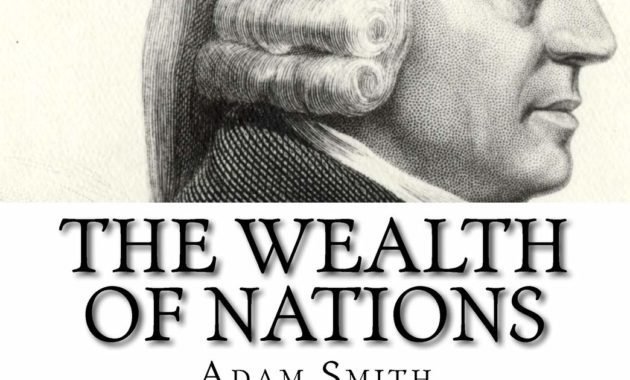
    An Inquiry into the Nature and Causes of the Wealth of Nations , one of Adam Smith’s masterpieces which until now has become the foundation of modern economics, contains the concepts of Smith’s thoughts for many years.
    In this article we will note the important points presented in the book.

    Please note that  The Wealth of Nations  consists of five broad topics, which are further divided into chapters.

    It should also be remembered that this book was published in the 18th century, where the economy, science, and technology were not as advanced as they are today, so some of the explanations are no longer relevant for today.

    Smith stated many things in the book, including those  related to the factors of production , namely labor, land, and capital; with  an emphasis on the labor element .

    He also touched on  regulations in economic activity, taxation, international trade, and public policy .

    Smith also spoke about the importance of  freedom and justice as the foundation for the welfare of the country .

    First, Smith asserts that  economic efficiency can be achieved through the division of labor (tasks) for labor ; In this case, task specialization greatly determines the level of time and cost efficiency, which in turn affects the final product.

    If the workforce is specialized according to expertise, they will do the same task from time to time, so the task will be completed quickly. This also guarantees the quality of the product being worked on.

    In addition, the more efficient the time required, the products with competitive prices will be produced.

    In essence,  the efficiency generated by a specialized workforce is the source of the country’s success in achieving prosperity .

    Furthermore,  trade between individuals  (note: at that time trade was commonly carried out by barter) was basically  carried out freely, according to each other’s interests .

    For example: farmers sell their crops, then buy chicken meat; on the other hand there are traders who sell chicken meat, then buy rice. In this case, all transactions occur because of individual interests.

    However, it must be remembered  that individual interests are not related to greed or egoism  (remember that Smith bases economic activity on aspects of ethics and morality (reread the previous article).

    However, real trading is certainly not as simple as the above example; Therefore , a better method is used, namely using  a transaction medium called money . This money  has an exchange rate that is  agreed by each party.

    Then  how to measure the exchange rate of each traded product?  Namely  by measuring the value (power) used by labor  in the production process.

    So it can be said that  the value of labor is an important factor in the economy , while money is only a tool to measure that value.

    The value of the workforce varies, depending on several factors, such as the level of difficulty of the job, the level of education and skills of the workforce, the risk of the job, and so on. This value is  represented by wages ( wages ) .

    In its development, not only labor is used in the production process, there are other factors involved, namely  capital ( capital )  and  land ( land ) ; so the production value must be calculated from each element used.

    The completion of the production process is marked by the creation of a product that has a selling price. The selling price of the product which is calculated from the accumulation of production factors is called  the natural price .

    Meanwhile, the real price of the product in the market is called  the market price , which is the base price plus the determined profit .

    The more special or special a product, generally requires a larger capital to make it (reflected in the higher product price). This accumulation of capital  is what  drives economic growth .

    The picture is as follows: an increase in capital creates a specialized product, which then creates a surplus. The surplus is used for investment, by creating other specialized products, then resulting in an increase in capital, so continuously continuously.

    In terms of labor, Smith grouped it into  productive and non-productive labor ; the difference lies in the final product ( output ).

    Productive labor produces  marketable output  for some period of time . Examples of productive labor are spinning factory workers and food factory workers.

    Meanwhile  , non-productive labor produces  output  that is only consumed or utilized immediately , for example restaurant waiters, actors, and dancers.

    In terms of national income, the more consumption of non-productive labor, the less income and capital accumulated for investment, so the smaller the added value for national income.

    Smith also revealed, when someone wants to increase production capacity, usually he will borrow capital (debt) to other people. This capital loan is carried out in the hope of obtaining greater profits from the increase in production capacity.

    So it can be said that  debt is one of the important elements in calculating national income .

    When a debt transaction occurs, the lender and the borrower agree on certain clauses, including the sharing of  profits called interest .

    If one day it is found that there are more lenders, then various options are available for borrowers. This prompts lenders to lower loan interest. In other words,  the more loan capital available, the lower the loan interest .

    Higher capital growth , followed by lower costs, will  encourage increased industrial productivity . As a result,  more and more workers are absorbed , so  the more competitive wages are received by workers .

    Furthermore, Smith asserts that  economics is closely related to how to generate wealth for society and provide income for the state .

    He put forward two systems to achieve this, namely  the mercantilist system ( merchantile system )  and  the agricultural system ( agricultural system ) .

    The mercantilist system held that prosperity was obtained through the possession of money, gold, and silver . The more these elements are owned, the more prosperous the society and the state.

    Meanwhile,  the agricultural system states that agricultural products are the main source of income and welfare of the country .

    In the agricultural system there are three social groups that contribute to state income, namely landowners, farmers and workers, as well as traders and manufacturers.

    Smith further stated that  the main task of the state is to protect people from violence and harm . The state must also  protect the economic interests of the  people, including overcoming the problem of economic and social inequality.

    In addition, the state must  facilitate the needs of the community through public policies , for example in the education sector.

    One way is through  the imposition of taxes . In this case, the community must contribute according to the proportion, by setting aside a portion of the income to be given to the state.

    The money collected will be used in the administration of the state, as well as to ensure good governance in society.

    These are some of Adam Smith’s main thoughts as stated in  The Wealth of Nations . Actually there are many more views of Smith that need to be explored and studied; Of course, it is the duty of all learners to find this, for the sake of the development of science. *

    Reference:

    1. Butler, Eamonn. (2012). The Condensed Wealth of Nations and The Incredibly Condensed Theory of Moral Sentiments, CIS Occasional Paper 126.
    2. Smith, Adam. (1776). An Inquiry into the Nature and Causes of the Wealth of Nations, London.
  • Understanding Inflation: Definition, Causes, and Effects

    Understanding Inflation: Definition, Causes, and Effects

    Inflation is one of the main topics in economic studies. The amount of inflation is very influential on the economic growth of a country.

    Inflation is often used as an excuse for not achieving economic growth targets.

    Not infrequently inflation is also used as a campaign tool for prospective leaders to win the votes of the voters, with promises to control it.

    Even in 1974, the then president of the United States, Gerald R. Ford, declared that inflation was the number one enemy of the United States.

    Therefore, in this paper we will learn about the nature of inflation, the factors that cause inflation, and economic policies to control inflation.

    1. BASIC CONCEPTS OF INFLATION.

    As a start, we will study the basic concept of inflation.

    Blanchard states that inflation is  a sustained rise in the general level of prices’ (Blanchard, Olivier,  Macroeconomics , 4th edition, 2006).

    Sementara Samuelson dan Nordhaus menyebut inflasi (inflation or inflation rate) sebagai ‘the percentage of annual increase in a general price level’ (Samuelson, Paul A., and William D. Nordhaus, Economics, 7th edition, 2002).

    In principle,  inflation is a general increase in prices, which occurs within a certain period .

    The price increase can be seen from  two points of view , namely:

    • a broad perspective ( broad perspective ) , for example the increase in prices for goods/services, as well as an increase in the cost of living .
    • a narrow perspective , for example an increase in the price of consumption products such as chili, onions, or rice.

    The inflation rate is measured in percent ( rate ) . One  method of measuring inflation  is  to know the size of the consumer price index (CPI)  or  consumer price index  (CPI).

    The CPI figure is obtained by  calculating the cost of living for household consumers (especially those living in urban areas) , including the cost of consumption of goods and services, housing costs (including rent), and other daily living costs, within a certain period of time.

    Furthermore , the figures obtained are  compared with the index figures in the base year . This base year index becomes the benchmark for every measurement of inflation.

    The comparison produces a number/index called the consumer price indexThe percentage change in CPI  from a certain period of time is  called  consumer price inflation ; In simple language: inflation or the rate of inflation .

    For example: the CPI figure in the base year is 100, while this year the CPI calculation reaches 105, the inflation rate this year is 5% ((105/100) – (100/100))x 100%).

    For information, there is the term  core consumer inflation , which  describes the calculation of the cost of living for consumers, by excluding the prices of certain  products that are seasonal in nature (seasonal products usually experience a price increase that exceeds reasonableness due to increased demand, for example ahead of religious holidays, nearing the end of the year, etc.). etc).

    Public policy makers tend to pay more attention to the calculation of  core consumer inflation , because price changes that occur are relatively stable.

    In addition, economic policy makers will also  try to keep the inflation rate within a certain range , as  a symbol of economic stability from time to time .

    Moreover, a stable inflation rate will facilitate economic policy making. Various economic studies have also stated that if inflation exceeds a certain target, it can trigger further inflation at a more severe level if it is not addressed immediately.

    Actually  there is no certain benchmark related to the inflation rate that is considered reasonable , however, there is a range that can assist economic policy makers in determining the inflation rate targeted in one economic year, namely:

    • inflation rate  is 0% – 2.5% , meaning that  the economy is in a stable condition .
    • inflation rate  2.5% – 5% , indicating  a moderate inflation rate .
    • inflation rate  5% – 8% , including high inflation category  .
    • The inflation rate  is above 8% , meaning that  the economy is entering a dangerous inflation phase , with a further impact in the form of hyperinflation.

    (Hellerstein, Rebecca, The Impact of Inflation, Federal Reserve Bank of Boston, 1997).

    On the other hand,  inflation below 0% is called deflation or  negative inflation .

    A more complete discussion of the Consumer Price Index ( Consumer Price Index ) and the calculation of the inflation rate can be read in the articles on the Consumer Price Index, Producer Price Index, and Determination of the Inflation Rate.

    2. INFLATION TRIGGER FACTORS.

    Inflation can arise as a result of the implementation of fiscal and monetary policies .

    In terms  of monetary policy , for example,  increasing the money supply  or  decreasing the benchmark interest rate .

    The description is as follows:

    • when the money supply increases , then  the value of money will decline .
    • This policy is actually only natural to spur an increase in consumption, but  when the decline in the value of money is greater than the size of the economywhat happens is the increase in product prices  as an adjustment to the decline in the value of money.

    Regarding  fiscal policy , for example, when  the government increases spending  , this triggers an increase in demand .

    However ,  when  demand  exceeds  supply , there will  be a shortage of production resources , resulting  in an increase in product prices . This condition is known as  demand-pull inflation .

    Changes in product supply can also  trigger inflation  ; namely  when  supply shocks occur , for example  when natural disasters occur  which result in  an increase in production costs . This has  an impact on reducing the quantity of product inventory, thus inflating prices .

    In other words,  inflation occurs because of disruptions to product inventories . This phenomenon is known as  cost-push inflation .

    3. INFLATION CONTROL POLICY.

    With so many factors triggering inflation, economic policy makers must be careful in every fiscal, monetary policy decision, as well as in maintaining a balance of  demand  and  supply .

    If there is unexpected inflation, certain policies can be applied, for example  the central bank conducts a  contractionary policy , namely by  raising the benchmark interest rate , so that it can suppress demand (some economic actors will hold their money and not use it for consumption).

    In addition, the central bank can also  tighten the rules for obtaining credit (loans) . In general, policies like this in the short term can have a negative impact on the economy, for example on the housing sector.

    There is one  expression in an effort to overcome inflation , namely  ‘the problem must intentionally be made worse before it gets better!’ , meaning  that economic conditions must be made ‘ worse ‘ in the short term, before improving in the long term .

    It can be concluded that managing the inflation rate so that it remains stable is the best step, because if inflation is out of control, the costs to be incurred will be very expensive.

    Meanwhile,  if the cause of inflation comes from global factors , then  a country’s economic policies will not have a significant effect . The global economic slowdown in 2007-2008 proved that when there was a sharp increase in world crude oil prices, many countries did not have the ability to control it.

    At that time, the policies taken were generally in the form of increasing subsidies and/or reducing the state budget in certain sectors to minimize the impact of inflation.

    This is a description of the basic concept of inflation, the factors that trigger inflation, and economic policies to overcome it. **

  • Product Life Cycle: Understanding the Stages of Product Development

    Product Life Cycle: Understanding the Stages of Product Development

    Similar to the product planning stages, the life of a product also has its stages. The stages of a product’s life are called the product life cycle .

    Understanding the product life cycle is very important in the business world. Through this cycle,  business people can plan marketing strategies when products start to decline. 

    Understanding Product Life Cycle

    The product life cycle is a stage in the life of a product, starting from when the product was launched until it finally had to be withdrawn from the market. 

    A product must have its own time of success. There are times when a successful product will also experience setbacks. 

    This setback is usually caused by competitors with superior products and changes in trends or fashions. 

    However, the product life cycle can also be influenced by technological developments, shifts in values, and economic conditions.

    Using this concept, companies can determine when they should increase promotions, lower product prices, expand product markets, or change the packaging design of their products. 

    Product Life Cycle Stages

    There are four stages in the product life cycle . Each product will go through the stages of introduction, growth, maturity, and decline . The following is an explanation of the four stages of a cycle .

    Product Life Cycle Stages

    1. Introduction

    The first stage is introduction . This stage is the stage to introduce the product to the public. 

    This stage is a determinant of whether the product will be successfully accepted by the public or will be rejected by them. 

    The main purpose of this introduction stage is to build brand awareness . In addition, this stage also aims to increase market demand for a product.

    Therefore, the company will invest a lot of money in advertising and marketing

    2. Growth

    When the product that you introduce to the public is well received and a purchase occurs, your business will start a new stage, namely the growth stage . 

    At this stage, the company’s turnover will increase. However, there will be the possibility of the emergence of competitors with the same or superior products at the growth stage . 

    Therefore, companies must be more aggressive in promoting. 

    Sometimes companies will even consider changing prices to be more competitive by lowering them. 

    However, even though product prices have fallen, the company still has a large income. Because the sales also increased.

    3. Maturity 

    At this stage, product sales will be flat and even begin to decline. 

    Product competition will be even tighter at this stage. So many companies will lower the price of their products. 

    However, due to reduced consumer demand, this will make the company’s profit margin decline. 

    Therefore, another way to overcome this stage is to innovate the product. Companies can develop products or replace them with other products.  

    4. Decline

    The last cycle of a product is decline . Even though the company has tried to maintain the product at the maturity stage , there is still a possibility if the product continues to decline. 

    At this stage, the product will experience a significant decline until it finally loses the market

    This decline could be due to new products that better meet their needs. In addition, saturation, changing needs, and changes in consumer behavior are also factors driving the decline in products.

    The company will eventually lower the price of the product. They will also focus more on loyal customers

    Closing

    That’s the description of the stages of the product life cycle . Understanding the product life cycle will allow you to set a strategy to maintain the product market. 


  • The Importance of Packaging: Functions, Benefits, and Types Explained

    The Importance of Packaging: Functions, Benefits, and Types Explained

    Packaging is something that is very important and cannot be separated from the marketing and distribution process of a product. So what exactly is the meaning of packaging, and what is the purpose of packaging itself?
    In this article, we will briefly discuss several things related to packaging, including:

    • Explanation of what is meant by packaging, both in general terms and according to several experts.
    • Functions and benefits of packaging.
    • Types of packaging.
    • And how to make attractive packaging.

    Let’s read the article to the end, so you understand better what packaging is.

    Understanding Packaging in General

    In general, the definition of packaging is a container or wrapper that is useful for preventing or minimizing damage to the product or goods packaged or wrapped.

    Another opinion says, packaging is a product wrapping material that serves to protect, accommodate, provide identification , and promote the product.

    In this case, the function of packaging is not limited to providing protection for a product. Packaging can also act as a marketing tool to build brand identity and increase sales.

    So, what is meant by packaging?

    Packaging means a coordinated system of preparing goods for transportation, warehousing, logistics, sales, and final use. Simply put, packaging is a process of giving a container or wrapper to a product.

    In the packaging process there are activities to protect, preserve, transport, inform, and sell a product.

    So, the main purpose of packaging products is to protect and prevent damage to what the industry sells. In addition, packaging can also be a good means of information and marketing by making creative packaging designs so that they are more attractive and easy for consumers to remember.

    Understanding Packaging According to Experts

    To better understand what packaging means, we can refer to the opinions of several experts on the definition of packaging. Below is the meaning of packaging according to experts:

    1. Philip Kotler and Gary Armstrong

    According to Kotler and Armstrong (2012), the notion of packaging is a form of activity that involves design and production, so that this packaging can function so that the product inside can be protected.

    2. FD Rodriguez

    According to Rodriguez (2008), the notion of packaging is packaging or active packaging is a container that changes the condition of food ingredients by adding active compounds so as to extend the shelf life of packaged foodstuffs and also improve safety and maintain quality.

    3. Marianne Klimchuk and Sandra Krasovec

    According to Klimchuk and Krasovec (2006), the definition of packaging is a creative design that connects the shape, structure, material, color, image, typography and design elements with product information so that the product can be marketed.

    4. Eric P. Danger

    According to Danger (1992), the meaning of packaging is a container or wrapper to prepare goods to be ready to be transported, distributed, stored, sold, and used. With a container or wrapper can help protect the product in it.


    Packaging Functions According to Experts

    there are two functions of packaging given to a product, namely a protective function and a promotional function. Here is the explanation:

    1. Packaging Protective Function

    Protective function means that packaging functions as a protector or product security from things that can damage the product, such as climate, distribution processes, and others.

    Packaging that protects the product will prevent damage and the risk of defects that can harm the buyer or seller.

    2. Packaging Promotional Function

    As mentioned above, packaging can also serve as a promotional or marketing medium. This can be done by making attractive packaging, both in terms of design, color, size, and others.

    While the general function of packaging is:

    • Self Service ; Packaging shows the characteristics of a product being sold so that each product must have a different packaging.
    • Consumer Affluence ; Attractive packaging can influence consumers to be willing to pay more.
    • Company and Brand Image ; Packaging is the company’s brand image so that it can be one of the company’s identities to be known by the public.
    • Innovative Opportunity ; Innovative packaging can benefit consumers and benefit companies.


    The Benefits of Packaging and Its Purpose

    Alice Louw and Michelle Kimber (2007) say that there are at least seven benefits and purposes of packaging a product/goods. Here’s the explanation:

    1. Physical Production ; The purpose of packaging is to protect the product/goods from temperature, vibration, shock, pressure and so on around it
    2. Barrier Protection ; Installation of packaging on a product/goods aims to protect it from oxygen resistance, water vapor, dust and so on.
    3. Containment or Agglomeration ; Goods packaging also aims at grouping so that the handling and transportation process becomes more efficient.
    4. Information Transmission ; The package may also include instructions on how to use the transportation, recycle, and dispose of the package or label.
    5. Reducing Theft ; Installation of packaging on products/goods also aims to prevent theft by looking at physical damage to the packaging.
    6. Convenience ; Packaging is a feature that adds convenience in distribution, handling, sale, display, opening, re-closing, use and reuse.
    7. Marketing ; The design of packaging and labels can be used by marketers to encourage potential buyers to buy products.


    Type of Packaging/Packaging

    The types of packaging or packaging can be grouped into three categories, namely:

    1. Based on Content Structure

    Types of packaging based on the structure of the contents are containers made according to the contents of the package. This type of packaging can be divided into three, including:

    • Primary Packaging ; Primary packaging is a packaging material that is a direct container for food ingredients. For example milk cans, drink bottles, and others.
    • Secondary Packaging ; The definition of secondary packaging is a container that serves to provide protection against other packaging groups. For example, cardboard boxes to store milk cans, or wooden boxes to store fruit, and so on.
    • Tertiary Packaging ; Tertiary packaging is the packaging used to store or protect the product during the shipping process.

    2. Based on Frequency of Use

    Types of packaging can also be grouped based on the frequency of use. Some of these types of packaging include:

    • Disposable Packaging ; i.e. single-use packaging that is only used once and then thrown away. For example plastic containers, banana leaf wrap, and others.
    • Multi Trip Packaging ; namely packaging that can be used many times by consumers and can be returned to selling agents for reuse. For example, a drink bottle.
    • Semi Disposable Packaging ; namely packaging that is not discarded because it can be used for other things by consumers. For example, a can of biscuits.

    3. Based on the Level of Readiness

    Packaging can also be grouped based on the level of readiness to use, including:

    • Ready-to-Use Packaging ; namely the type of packaging that is ready to be filled and its shape has been perfect since it was produced. For example bottles, cans, and others.
    • Ready Assembled Packaging ; namely packaging that requires an assembly stage before being filled with products/goods. For example, plastic, aluminum foil, packaging paper.

    Tips for Making Attractive Packaging

    After knowing the meaning of packaging along with the function and purpose of making packaging, then how to make attractive packaging? Here are the tips:

    1. Create a Unique Packaging Design

    One of the important points in forming packaging is to design it in a unique, innovative and different way from other products. Unique packaging is very effective in attracting people’s interest and making them curious.

    For example, when a supermarket shelf is lined with box-shaped packaging, then you make a round package, consumers will automatically observe it carefully and be curious about the contents inside.

    2. Packaging Design According to Target Market

    The packaging design used should be adapted to the target market. For example, if your target market is children aged 5-12 years, then make a packaging design that can be added to the cartoons that are most popular with children or in a form of packaging that resembles a toy. Likewise, if the target is adults, the design must also be adjusted.

    3. Make Packages with Multiple Sizes

    If the product you are selling is a new product, try to make packaging in various sizes, such as small, medium and large. People tend to choose the smallest packaging for newly released products.

    4. Include Complete Product Information

    Don’t forget to include product information on the packaging. For example, standard packaging includes product composition, product type, method of use and expiration date. Consumers tend not to be interested in products that have minimal information.


    Conclusion

    From the explanation above, it can be concluded that packaging is a packaging material for consumer goods that has the function to accommodate, identify, explain, protect, display, promote, and keep the product clean.

    While packaging is a system that is structured in such a way as to prepare goods/products so that they can be distributed, sold, stored, and used by consumers in good condition.

    Thus an explanation of the meaning of packaging, functions, goals, and tips for making attractive packaging. Keep in mind that the packaging is the identity of the company, if there is an update on the packaging, it should not be too different from the previous design.

  • What Triggers Economic Recession: Definition, Causes, and Impact on Society

    What Triggers Economic Recession: Definition, Causes, and Impact on Society

    In measuring the development and progress of a country, of course the main reference or indicator is how much economic growth is.

    Meanwhile, the level of economic growth can be seen from the value of the Gross Domestic Product (GDP) in the country.

    If the GDP is low and continues to decline for months, it can trigger an economic recession . What is an economic recession?

    Understanding Economic Recession

    A recession or slump is a condition marked by a decline in the wheels of the economy due to the weakening of the value of Gross Domestic Product (GDP) for six consecutive months in the same year.

    A recession is marked by a significant decline in economic activity that lasts for several months. An economic recession can also be defined as a major slowdown or contraction in economic activity.

    Recession is marked by the value of economic growth reaching 0% and can even reach minus in its worst condition. This condition can certainly disrupt the economic system and threaten the survival of the community.

    A recession can be characterized by high unemployment , falling retail sales, and a prolonged contraction in manufacturing earnings.

    Characteristics of an Economic Recession

    This economic disaster certainly has certain characteristics, the following are the characteristics:

    1. Gross Domestic Product (GDP) continues to decline.
    2. The real income of the people is decreasing.
    3. The decline in sales and manufacturing production , many goods are not sold and piled up in factories.
    4. The unemployment rate is getting higher, while there are fewer jobs.
    5. People’s purchasing power or consumption is low.
    6. Economic growth has slumped for two consecutive quarters.

    Causes of the Economic Recession

    This decline in economic conditions and GDP is certainly caused by many factors, including:

    1. Inflation

    Inflation is a condition in which the price of goods increases continuously. This is actually not a bad thing, but if this price increase occurs excessively or significantly, it will certainly have an impact on society and cause a recession.

    If the price of goods for public needs continues to soar to the point where people are unable to carry out consumption activities and cannot fulfill their needs, then this can be a disaster for the country.

    2. Deflation

    The opposite of inflation, deflation is a condition in which the price of goods continues to experience a significant decline. This will have a similar impact, because if production prices fall, wages will also fall and suppress market price stability.

    Deflation has more of an impact on business owners. If this condition continues, many companies will not be able to continue their business and lead to bankruptcy. This will certainly have an impact on the destruction of the economic system.

    3. Asset Bubble

    An asset bubble is a situation where the impact can be enormous. This condition occurs because there are many investors who are competing to buy shares when the value is high, and competing to sell them when the economy is in disarray.

    Another name for this situation is irrational excitement. This joy comes when investors make decisions to buy stocks and real estate when the economy is good. It’s that fun that inflates the stock market and residential assets.

    Until in the end the bubble burst because the economy was in a downturn, then they would destroy the market by selling all the assets they had. This then triggers a recession.

    4. Economic Shock

    This condition can be many things. Starting from a pile of individual debt, to companies. The more debt you have, the higher the repayment fee will be. In fact, this can get to the point where the debtor is unable to pay off the debt.

    Economic shocks can also occur due to natural disasters , political and social instability, terrorism , war , or in times of pandemics such as those that have occurred since 2020 until now.

    5. High Interest Rates

    High interest rates can also cause prolonged economic problems . A high nominal can indeed protect the value of the currency, but it can also burden the debtor and cause credit faltering. If this problem occurs continuously, it is not surprising that many banks close and collapse.

    6. Loss of Investor Confidence

    In economic development, investment is the key. Therefore, it is necessary to have a conducive and safe climate so that investors are interested and believe in pouring their money.

    If many investors lose confidence and withdraw their investment, then the economy will be weak, production will decrease, unemployment will increase and of course the country will experience an economic recession.

    7. Imports are Bigger than Exports

    When countries bring in more of their basic needs from abroad and are not matched by sales of domestic products to foreign countries, this will trigger a recession.

    It is clear that the expenditure for obtaining imported goods is greater than the income from selling local products to foreign countries. This will of course lead to a deficit in the state budget.

    Impact of the Economic Recession

    The economic recession will certainly have a big impact on all. At least this impact will be grouped into 3 groups, namely:

    1. Government

    An economic recession can cause a reduction in the state budget that comes from taxes and non-taxes. This is because people’s income and property prices have decreased.

    Not only that, the recession also causes high unemployment rates. Of course, the government must find ways to open up the widest possible employment opportunities for those in need.

    Not surprisingly, this condition can make countries apply for loans to foreign banks and increase the amount of state debt.

    2. Company

    Recession is one aspect that can lead to business bankruptcy . When the company is not strong enough to face losses and economic problems that hit the market, the solution is to go out of business.

    Of course, that’s not a good way out. Because this causes massive layoffs that lead to low economic activity in the community due to poverty.

    3. Workers

    They are the worst affected in the event of a recession. Workers will be threatened with losing their jobs and having difficulty meeting their daily needs. If their income is nil due to layoffs, then the impact will no longer only be on the economy, but will also spread to social problems and so on.

    Example of an Economic Recession

    The world has changed dramatically in the three months since our last update of the World Economic Outlook in January. A rare disaster, a coronavirus pandemic, has resulted in a tragically large number of human lives being lost. As countries implement necessary quarantines and social distancing practices to contain the pandemic, the world has been put in a Great Lockdown. The magnitude and speed of collapse in activity that has followed is unlike anything experienced in our lifetimes.

    source : imf.org

    Difference Between Recession and Economic Depression

    In addition to the economic recession that threatens the survival of the community, there is also the term economic depression. Here’s the difference:

    • Scale. The occurrence of a recession is usually limited to one country, while an economic depression affects the global economy. An economic depression is a much more severe condition of the economy and its effects are worse than a recession.
    • GDP levels. The level that marks the onset of a recession is that its GDP fell in the range of minus 0.3-5.1%. While depressed, its GDP was at minus 14.7%-38.1%.

    Period of time. A country is considered to be in a recession when its economy has deteriorated for 6 to 18 months in a row. In depression, the effects are much more severe and long lasting. The slump in economic conditions in the economic depression can last for more than 18 months.

  • 5 Things You Should Know About Sales

    5 Things You Should Know About Sales

    Business pals, hearing the word ” sales ” doesn’t sound familiar anymore, doesn’t it? Its vital role for the company makes the sales role as the spearhead of the company’s sales. Therefore, it is often easy for us to find job vacancies for sales positions . Unfortunately, many people actually underestimate this profession.

    Because, sales are often labeled as a job that only has sexy clothes or a slippery mouth. In fact, the sales function is not that simple, so what? Come on, see the following sinaumedia.com review, friend !

    Sales Definition

    Sales can be understood as part of selling activities, whether in the form of goods or services to buyers. Likewise, HubSpot also defines sales as the activity of selling goods or services.

    It can be seen, almost all companies do not have a sales team . The reason is that direct interaction with consumers makes sales performance have a direct impact on company sales. Therefore, the assumption that underestimates the position of sales, of course, is not right. Because, facing rejection outright and even insults is not easy for someone to accept, unless he has mental steel and resilience.

    Then, it is also important to know that in its movement, there are at least three elements behind the sales movement . First, by region or sales area. Namely, before selling the goods, the sales team will map the area first. After that, the team will get a map of which areas need the goods or services they sell.

    Second, based on the goods or services sold. In this case, the depth of understanding of the goods or services being sold will determine the results of the strategies drawn up. The reason is, the characteristics of the product to be sold will break down the market segmentation that will be targeted.

    Finally, the third, based on the target customer. Making the target customer as a reference in sales , will automatically determine the sales target area as well as complete the characteristics of the product to be sold.


    General Terms in Sales

    Sales as a sales activity, in business, gives rise to several general terms. Sinaumedia.com summarizes at least five general terms, including the following:

    1. Salesperson

    Salesperson in question is an individual who peddles a product in the sales transaction process. Therefore, in other terms, a salesperson is also called a salesman .

    Regarding his job, a salesperson sells products , goods or services to buyers. Where in doing so, the salesperson will suggest products or services that can meet the needs of buyers. Therefore, he must first find out what the buyer wants or needs, and to do so often requires a certain sales technique.

    On the other hand, in addition to the salesperson , he must be able to bring in new buyers, he must also be able to keep the buyers in order to continue to subscribe to the products he sells. That is why, the situation and needs of the company greatly affect the responsibilities and target buyers of the salesperson .

    2. Prospect

    Prospect, according to Krugman and Maurice, is defined as an opportunity that arises because of a person’s efforts to fulfill his needs as well as to gain profit . More specifically, prospects can also be translated as potential clients as ideal customers. That is, those who are not very interested in the products or services offered.

    In another understanding, prospects are also often considered as a way for a salesperson to approach prospective customers, either by making phone calls, social selling , or it could be email marketing . Now, after successfully conducting prospects to customers, the salesperson will enter the deal stage .

    sales team

    3. Deal

    Deal may be a more familiar term in the ears of many people, which is understood as a price agreement between the seller and the buyer. In the process, the deal will be classified into many levels. And, each company has different levels of deals depending on the business and industry. This is where a salesperson must be able to design a deal plan based on needs and conditions. So, the dealing process can run according to the set time period and the planned target.

    4. Sales Pipeline

    Sales pipeline , a term that refers to the steps in the process of selling a product or service. In providing an overview of the sales process, one of the pipelines that is often used is the sales team plan diagram. Where usually through this diagram a series of stages will be described starting from the prospect assessment, meeting with prospects, offering goods or services, to the transaction or deal stage .

    5. Sales Plan

    As with the sales pipeline , the sales plan describes the long-term goals, strategies, and objects of a company’s sales team. This includes details on pricing, target customers, market conditions, team structure, revenue targets, and others. However, what is no less important is the existence of tactics and techniques in the sales plan to realize the targets that have been set.


    Several Position in Sales Departement

    Furthermore, we also need to know that sales within the company also have a position with its own name. The following, there are several positions that are usually under the sales team within the company, citing The Balance Careers , as follows:

    1. Sales Representative

    A sales representative is a position that is at the bottom level of a sales team. Thus, this position becomes the spearhead of the company’s sales. Success in this position will open up opportunities for career advancement to higher positions. Usually, the sales representative position within the company is known by various names, such as sales agent, brand ambassador , advertising representative , account representative , and so on.

    2. Sales Management

    Sales management is a level position above the sales representative . In charge of the sales representative , the position of the sales manager is at the same level as the supervisor .

    In addition, the sales manager is also in charge of leading the sales team within the company, so they also have the authority to set goals and analyze sales. For this reason, in some companies, a sales manager also interacts directly with big buyers, in order to build good relationships so that the big buyers are loyal and stay subscribed to the company.

    As in general, sales manager positions in companies have various names, for example area manager, account manager, franchise development manager , business development manager , and others.

    3. Sales Administration

    Sales administrative generally plays a role in assisting the administration of the sales team. For example, helping with travel permits, preparing quotations , preparing marketing kits for buyers, as well as calculating and managing the administration of bonuses given to loyal buyers .

    In addition, in some companies, the sales administrative also has a crucial role in bridging the marketing and sales teams . As with other positions, sales administrative is also referred to by many names within the company, such as business development representative , financial assistant , enterprise representative , and industry representative .

    4. Account Executive

    Account executive or commonly abbreviated as AE is a position that is almost similar to a sales manager but has slightly more duties.

    In terms of duties, AE generally establishes a relationship between the company and its clients as well as maintains good relations with existing clients. So, AE is not only focused on attracting new clients.

    However, an AE is required to have a deep understanding of the product. At the same time, you must always keep up with industry and market development trends, of course. That’s why AE is usually closer to repeat customers. Meanwhile, in the company itself, AE is generally known by several names, such as channel partner executive , client executive, account handler , and others.

    5. Executive-Level Management

    This position is usually occupied by someone with 10 years or more experience in sales. The reason is, for executive-level management positions, they generally determine and direct the company’s long-term sales goals and targets.

    In addition to the provision of experience, an executive-level management must also have sufficient knowledge of market competition and the products to be sold to buyers. That is why, this position requires great responsibility in marketing planning as well as planning the relationship between the company and its customers. While in the company, besides being called executive-level management , this position is sometimes also called sales director , chief sales officer , and even chief financial officer .

    Closing

    From the explanation above, we can not learn how crucial the role of sales is to sell products until they reach consumers. Therefore, it is no exaggeration to say that sales are the spearhead of the company. In fact, almost all companies have a sales team. So, after knowing what sales are and what they do, are you interested in a career as a salesperson ? Hopefully this article from sinaumedia.com is useful, friend!

  • Sales Forecasting: Definition, Importance, and Techniques

    Sales Forecasting: Definition, Importance, and Techniques

    What is a Sales Forecast?

    Sales forecasting or sales forecasting is the process of estimating future revenue by predicting the number of products or services that a sales unit (which can be an individual salesperson, sales team, or company) will be sold in the following week, month, quarter, or year.

    Simply put, a sales forecast is a projected measure of how the market will respond to a company’s entry into the market.

    Why is Sales Forecast Important?

    Forecast is about the future. It’s hard to overstate how important it is for companies to produce accurate sales forecasts.

    Private companies gain confidence in their business when leaders can trust forecasts. For public companies, accurate forecasts provide credibility in the marketplace.

    Finance, for example, relies on forecasts to develop budgets for capacity and recruitment plans. Production uses sales forecasts to plan its cycle. Forecasts assist sales operations with territory and quota planning, supply chains with material purchasing and production capacity, and sales strategies with channel and partner strategies. These are just a few examples.

    Unfortunately, in many companies, this process remains disconnected, which can result in a loss of business. If information from sales forecasts is not shared, for example, product marketing may create demand plans that are not in line with sales quotas or sales attainment levels.

    This leaves the company with too much inventory, or too little inventory, or inaccurate sales targets — all mistakes that hurt the bottom line in your business. Committing to quality and regular sales forecasts can help avoid those costly mistakes.

    What are the benefits of having an accurate sales forecast?

    • An accurate sales forecasting process provides many benefits. This includes:
    • Better decision making about the future
    • Reduction of sales channels and risk forecast
    • Alignment of sales quotas and revenue expectations
    • Reduction of time spent planning area coverage and setting quotas
    • Benchmarks that can be used to assess future trends
    • Ability to focus the sales team on high-return, high-profit sales channel opportunities, resulting in better win rates

    How to Accurately Forecast Sales

    To create an accurate sales forecast, follow these five steps:

    1. Assess historical trends

    Check sales from the previous year. Break the numbers down by price, product, representation, sales period, and other relevant variables.

    Turn them into “sales rate”, which is the projected number of sales per sales period. This forms the basis of your sales forecast.

    2. Merge changes

    This is where estimates get interesting. Once you have a basic sales level running, you’ll want to tweak it according to the number of changes you see coming. As an example:

    Pricing.

    Did you change the price of a product? Are there competitors who might force you to change your pricing plan?

    Customers.

    How many new customers do you anticipate landing this year? How much did you land the previous year? Have you hired a new representative, gained measurable brand exposure, or increased the likelihood of acquiring a new customer?

    Promotion.

    Will you be running a new promotion this year? What was the ROI on the previous promotion, and how do you expect it to compare with the new promotion?

    Channels.

    Did you open a new channel? New location? New territory?

    Product changes.

    Are you introducing a new product? Changing your product range? How long did it take for the previous product to gain traction in the market? Would you expect a new product to act similarly?

    3. Anticipating market trends

    Now is the time to project all the market events you have tracked. Are you or your competitors going public? Are you anticipating an acquisition? Will there be laws that change how your product is received?

    4. Monitor competitors

    You’ve likely already done this, but consider competing products and campaigns, especially the major players in the field. Also check to see if new competitors might enter your market.

    5. Include a business plan

    Add it to all your business strategic plans. Are you in growth mode? What are the hiring projections for this year? Is there a new market you are targeting or a new marketing campaign? How does all this affect the forecast?

    Once you’ve calculated all of these things, build them into your estimates. You want everything to be detailed, so that you can understand the estimate in as much detail as possible.

    Different stakeholders in the company will likely want to understand different aspects of the forecast, so you should be able to zoom in or out as far as needed.

    Should you do a bottom-up sales forecast or a top-down sales forecast?

    In general, there are two types of sales forecasts: bottom-up forecasts and top-down forecasts.

    Bottom-up forecasting begins by projecting the number of units the company will sell, then multiplying that number by the average cost per unit. You can also build the number of locations, number of sales reps, number of online interactions, and other metrics.

    The idea behind bottom-up sales forecasting is to start with the smallest component of the forecast, and build from there.

    The advantage of bottom-up forecasting is that if a variable changes (such as cost per item, or number of representatives), the forecast is easy to change. It also provides quite detailed information. The top-down sales forecast starts with the size of the total market, then estimates what percentage of the market the business can capture.

    If the market size is $500 million, for example, a company can estimate that they can win 10 percent of that market, making their sales forecast $50 million for the year. When creating sales forecasts, it is important to use both of these methods.

    Start with a top-down method, then use a bottom-up approach to see if your first estimate is feasible. Or do both separately and see how well they fit together. To produce the most accurate estimates, companies must perform both types of estimates, and then adjust them to produce the same amount.

    The Key to Success in Forecasting Sales

    Improving the accuracy of your sales forecasts and the efficiency of the forecasting process depends on many factors, including strong organizational coordination, automation, reliable data, and analytics-based methodologies. Ideally, the sales forecast should:

    Collaborative

    Leaders must combine input from a variety of sales roles, business units, and regions. Frontline sales teams can be very useful here, providing an overview of the market you’ve never considered before.

    Based on data

    Predictive analytics can reduce the impact of subjectivity, which is often more backwards than forwards. Using common data definitions and baselines promotes alignment and saves time.

    Produced in real time

    Investing in real-time capabilities for correcting or re-estimating allows sales leaders to gain insight quickly so they can make more informed decisions. This allows them to quickly and accurately update forecasts based on demand or market changes.

    Single source, with multiple views

    Generating forecasts as a single data source gives you good visibility into your company’s reputation, region and performance, and helps align business functions across the organization.

    Better from time to time

    Use the data provided by the improved sales forecasting process to create more refined future forecasts with increasing accuracy over time against a set of accuracy goals.

    Companies with better forecasting processes and tools perform better than their peers because they better understand the drivers of their business and have the ability to shape the results of the sales period before the period closes.

    What are the Key Challenges in a Sales Forecast?

    It can be difficult to consistently produce accurate sales forecasts. Some keys to success in sales forecasting:

    Accuracy and Distrust

    When companies use spreadsheets for sales forecasts, they can run into accuracy issues, which in turn make forecasts less reliable. This accuracy issue can be exacerbated by:

    • Poor implementation of CRM across the company, and employees don’t enter data in a timely manner
    • Inconsistent data across teams or salespeople don’t include complete data.
    • Stakeholders across the company use different methodologies to generate their estimates
    • Inadequate collaboration across product, sales, and finance teams. This lack of collaboration can be enhanced when companies create sales forecasts manually or using spreadsheets.

    Subjectivity

    While generating quality sales forecasts relies heavily on forecasters making sound decisions about how to use data, in general, companies rely more on judgment and less on credible predictive analytics than they should.

    Companies that forecast with simple arithmetic pipe weighting, for example, may miss the nuances of the true drivers of accuracy, which might be number of employees, pricing decisions, or route-to-market emphasis points.

    Usability

    When a sales forecast is not created in a way that makes it useful to stakeholders across the company, it becomes much less effective than it should be. A good estimate should produce data that is relevant to many teams, and understandable to them.

    Inefficiency

    Sales forecasts can be very difficult to create when inefficiencies are incorporated into the forecasting process. For example, if an estimate has multiple owners, or the forecasting process is not clearly defined by a standard set of rules, there may be disagreements about how the forecast will be produced.

    Similarly, if input into the forecast is not reconciled before the forecast is produced, the forecast itself may undergo multiple revisions, which can reduce confidence in the forecast if a version is released and later revised.

    Conclusion

    To perform company-wide forecasts, companies need different elements of each business function.

    The following functions can contribute to sales forecasts:

    • Sales: Provides a bottom-up view, using data from CRM and PRM, building judgments from sales leaders. Sales can manage this process through the Sales Operations function, using the right tools, and reporting
    • Finance: Provide macroeconomic guidance and work with product teams.
    • Marketing: Provides macro market guidance, especially in industries such as telecommunications, retail and CPG. Marketing can also provide the financial team with market data.
    • Supply Chain: Provides input on inventory and production.
    • IT: Assist with sales forecasting by providing platform, data, integration, and technical support.


  • What is the difference between Revenue and Income? Here’s the explanation

    What is the difference between Revenue and Income? Here’s the explanation

    Often Confused What is the difference between Revenue and Income? Here’s the explanation –  Without realizing it, usually some financial terms are very often misused in everyday conversation.

    The wrong use of the word sometimes causes confusion for young investors and early entrepreneurs.

    Especially entrepreneurs and investors who do not have a formal basic education about finance.

    One term that is very familiar to hear, but is still very gray in its meaning is revenue and income.

    Most people very often use these terms interchangeably, but sometimes in the wrong context. This term does sound very similar, even from its meaning, but it turns out to be different in the concept of meaning.

    Definition of Revenue

    Revenue, a word that will usually always appear at the very top of the operating income statement. Usually this consists of the total amount of cash generated through the sale of a product or service which is the main operational act for a business.

    The results of the revenue displayed are usually also reduced by existing returns or discounts. In other words, revenue can be explained as the net profit generated by business people in a certain period.

    For example, if you own a food business, your revenue will come from total food sales over a certain period of time (usually calculated on a monthly basis). If you give a discount, then you can subtract the resulting count from the total discount you provide to consumers.

    Apart from that, sometimes some types of businesses may also have alternative sources of income either from investments or the sale of other assets. This fund cannot be counted as revenue because it does not come from the main operations of a business.

    You can enter the total funds generated outside of the main operations into other sections of the income statement.


    Definition of Income

    Income or what is commonly called income or profit earned, turns out to have a different meaning from revenue. In the financial context, income almost always refers to net income.

    It is usually referred to as net income because the amount can represent the total amount of cash remaining from the original amount of income after taking into account all additional costs and revenues that exist.

    Existing costs include cost of goods sold, operating costs such as rent, utilities, salaries, interest paid on debt, depreciation and amortization costs, tax costs; emergency expenses due to extraordinary events such as lawsuits.

    As for additional income, it usually comes from several incomes including interest accumulated on investments or funds originating from the sale of intangible assets or physical assets, such as equipment or bonds.

    For example, if you own a restaurant that generates a net profit of IDR 2,000,000 per day, then in one month you will have IDR 2,000,000 x 30 = IDR 60,000,000 net profit in a month.

    Then you need to pay a rental fee of 5 million per month, raw material costs of Rp. 10,000,000 per month, along with the cost of employees for 5 people, each of which is Rp. 2,000,000 per month.

    If totaled; IDR 5,000,000 + IDR 10,000,000 + IDR 10,000,000 = IDR 25,000,000. Then you can subtract the revenue earned by the costs incurred. So Rp 60,000,000 – Rp 25,000,000 = Rp 35,000,000.

    The total number generated is what we then refer to as income or net profit obtained through a business being run.

    This figure can then be added with several other alternative sources of income as well as a form of income that can be received by a business owner.

    Revenue & Income Difference in Pictures

    Do you understand the difference between revenue and income ? If you’re still confused, here’s an image from Amazon’s 2015 financial report.

    Revenue & Income Difference in Pictures
    Source: Business Insider


  • Understanding Market Share: Definition, Importance, and Metrics

    Understanding Market Share: Definition, Importance, and Metrics

    As we know, market share is a very determining factor for the success of a business. Then actually, what is the meaning of market share , and what is its purpose?

    The answer is in this article. Here I will discuss in detail several things related to market share , including:

    • A brief explanation of what market share is .
    • Types of market shares .
    • Measuring the company’s success in market share .
    • What is the purpose of market share analysis ?
    • How to find out the market size.
    • How to increase market share .
    • Advantages and disadvantages of market share.

    If you want to know more about market share, you will definitely like reading this article. Let’s get started!

    Understanding Market Share

    The term market share is an English word consisting of two words, namely market and share .

    According to the origin of the word, the word market means market, while the word share means part, share, and share. In simple terms, the notion of market share is the part of the market that is controlled by a particular company or product.

    So, the notion of market share is part of the entire demand for an item that reflects the consumer group based on its characteristics (market segment) . Classification of consumers can be grouped based on income level, age, gender, education, and social status.

    So, market share is the part of the market controlled by a company from all potential sales, generally expressed as a percentage (%).

    Market share can also be defined as the percentage of total sales of a company’s products from all sources, divided by the total sales of products (goods and services) in a particular industry.

    simple example,

    If consumers as a whole buy 100 shampoo products, and 35% of those purchases come from XYZ company, then XYZ company manages to control 35% market share.

    Types of Market Share

    Market share can be divided into two types. The following are the types of market share and examples:

    1. Main Market (Primary Market)

    The primary market is the market in which securities are created. In this market, companies sell new stocks and bonds to the public for the first time.

    An initial public offering (IPO) is an example of a primary market. In this trade, investors have the opportunity to buy securities from a bank that does initial underwriting for certain shares.

    An IPO occurs when a private company issues shares to the public for the first time.

    2. Secondary Market

    The secondary market is the market where investors buy and sell securities they already own. This market is called by most people the “stock market”, although shares are actually sold on the primary market when they are first issued.

    The national exchange, such as the Stock Exchange, is an example of a secondary market.

    Measuring Company Success in Market Share

    Market share is the percentage of sales recorded by a company of the total sales of its competitors combined in a given industry.

    That is, market share is one of the indicators used by a company in measuring their level of success against their competitors.

    For example, company XYZ in 2008 had a target market share of 10% of the total market. To reach the target market, a promotion fee of Rp. 100 million is needed.

    If after marketing it turns out that XYZ’s market share is more than 10% (eg 15%), it means that the company’s performance is going well.

    On the other hand, if in that year the market share obtained was only 9%, then it shows that the marketing performance is not good and the company will face efficiency and effectiveness problems.

    There are several factors that need to be explored in assessing the problem of companies that are not able to achieve market share, namely:

    • The size of the market share is too high.
    • There are more and more new competitors in the same industry.
    • There is a decline in the competitiveness of the company.
    • Promotions that cannot reach the target market or are not on target.

    Purpose of Market Share Analysis

    After knowing what market share is, of course we also have to know what the purpose of market share analysis is.

    In general, a company’s market share can be used as an indicator of the company’s competitiveness in a market. So, the goal is to find out how well the company is performing and growing against its competitors.

    This metric can also be used to measure changes in sales revenue so as to assist companies in evaluating primary demand in a market.

    Usually the growth in sales levels that comes from primary demand will make it cheaper and will benefit the company, rather than the market gained from taking part in competitors in the same industry.

    Meanwhile, the loss experienced in a market share is an indication of a major problem in the long term. This requires a change in the marketing strategy used.

    Any business or company that has a below-average market share will likely not be able to survive the competition. This is because the trend of market share and sales of the company’s products is also an early indicator of opportunities or problems that may arise in the future.

    Based on research, market share is an asset that is needed by every company. However, many economists say that market share is not the goal or basic criterion of an economic policy.

    That way, market share can only be used as the main basis for measuring the performance of companies that are competing in a market.

    Market share can be used as a reference for building a company system, both in formulating and making policies. And of course the policy is made based on considerations related to the impact of each policy on the market share of the company’s competitors.

    How to Know Market Size

    In order to know and determine the size of the market and its market share , a fairly in-depth market research is needed. Therefore, entrepreneurs usually define the market to be targeted so that they can see the potential of the market.

    Furthermore, after knowing the size of the market and knowing the targeted market segment, the next step is to study who the competitors in the market are and how many markets they have mastered.

    Companies that make strategic plans must develop marketing mix strategies, and narrow product segmentation so that promotions are right on target.

    As an example,

    Company XYZ which is in the beverage industry. It’s not enough to just explain that the business is drinks, but it must be more focused.

    For example, coffee drinks, tea, fruit flavors, and so on.

    How to Increase Market Share

    Understanding the meaning of market share is important. The reason is, by knowing the target market share, a company can understand its strengths and weaknesses and can anticipate the market.

    Understanding the advantages and disadvantages of a company can be done with a SWOT analysis . That way, a company can do various things needed to increase productivity.

    For example, changing prices, changing services, increasing marketing promotions, changing distribution methods , and so on.

    Then how to increase market share when a company starts a trading business. Quoted from various sources, here are brief tips from business people:

    1. Choosing a business that is still relatively new and has not many competitors from other companies.
    2. Have confidence that the company will be successful in the business it runs.
    3. Determine the company’s vision and mission regarding future business targets.
    4. Take into account the strength of competitors in the same industry.
    5. Pay attention to price movements in the targeted industry and determine the most suitable price.
    6. Creating and building a market network so that the business becomes bigger.

    Conclusion

    From the explanation above, it can be concluded that market share is the portion of the market that is owned or controlled by a particular company or product.

    The percentage of market share is used to measure the competitiveness of a company in a particular industry. That way, the company can see how well it is performing and developing against competitors.

    Thus a brief explanation of the meaning of market share or market share, how to find out market size, objectives, types, and how to increase market share. Hopefully this short review is useful and adds to your insight.

  • 3 Basic Investment Principles from Warren Buffett

    3 Basic Investment Principles from Warren Buffett

    Warren Buffett is a legendary investor and billionaire who is greatly admired in the United States and throughout the world. Not surprisingly, his experience and business principles have inspired a number of billionaires, investors, and CEOs from a number of companies in the United States and even in the world.
    For example, like Marc Andreessen, he is a venture capitalist and Silicon Valley technology legend. No wonder because Warren Buffett’s business is also diverse, for example being an investor in various giant companies.

    His investment strategy requires investors not only to explore the latest news, but also to focus on the company’s fundamentals when deciding where to allocate their funds.

    Warren Buffett’s Basic Investing Principles

    Here are a number of investment principles that are owned by the 5th richest man in the world, including:

    1. Know What You Want To Invest

    Avoid investing in businesses you don’t understand. Warren Buffett says, if an investor should stick to what they know. When he wants to invest he only buys shares in a business that he understands and how the business will make money in the future.

    This is evidenced by the portfolio of shares owned such as Apple, American Express and Coca-Cola, these three companies are proven to continue to grow and generate profits for shareholders.

    According to him, most investors are usually trapped in the profits of initial offering shares. Then release the shares because they hold on to investment profits.

    He suggested that investors summarize businesses that have the opportunity to continue to grow in the future, have a certain market or are needed by many people and then collect their shares. Examples include drinking water companies, technology stocks to luxury fashion brands.

    2. Selling and Buying Quality Stocks

    Another basic principle of Warren Buffett ‘s investment is to sell and buy quality stocks. He said it is better to buy a good company at a reasonable price, compared to a standard company, but has an expensive price.

    Investors must understand well what the company is doing and know the amount of money that must be paid to own the shares. His initial investment strategy was to buy stocks at very low prices.

    The quality of the stock is not so important if the price is cheap, so he believes he can still make money. However, his focus changed, and he ended up buying strong and competitive stocks.

    By their nature, such companies are less common and are generally more valued. He believes that after finding a good company, active investors should invest large sums of money.

    Although it takes time, investors must believe that the company whose shares are collected will be able to collect income in the coming years.

    3. Long Term

    Warren Buffett also says, if you don’t think about owning a stock for 10 years, don’t think about owning it for 10 minutes. With so many fast news every day, there is a tendency for investors to have to react to everything.

    But he did not agree with this. He thought that indolence was the key to increasing wealth. This is what makes him think, his favorite hold period is the long term.

    Although occasionally selling shares, he never relinquished all of his holdings. For example, when he first invested in Coca-Cola in the 1980s, he still holds the stock. As Warren Buffett has explained before, you have to know what you are investing in.

  • The Gig Economy Explained: Definition, Benefits, and Risks

    The Gig Economy Explained: Definition, Benefits, and Risks

    Gig Economy is a term that has recently been booming among the public. The gig economy was born from significant technological developments or we know it as 4.0 technology 
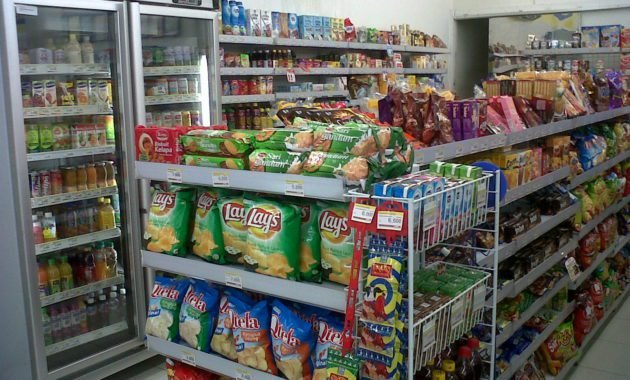
    The gig economy actually refers to a new way of working that is considered more effective and efficient than the previous way of working. In addition, the gig economy can also be a source of income today. 

    So what exactly is the gig economy? How does the gig economy phenomenon work and are there any impacts? 

    What is Gig Economy? 

    the term gig economy comes from the word gig which was previously often used in the entertainment and arts industries.

    Gig is used to name a project in progress and get paid based on the number of projects completed. Gig economy workers generally do not have a fixed income like workers in general. 

    The easiest illustration is about the recent news where there is a resident who accuses his neighbor of practicing pigs because it looks like he doesn’t work but has a lot of money. 

    The presence of the gig economy makes it easier for us to make money because we can work or complete projects from anywhere. Examples of the work in question are content creators, graphic designers, web hosting, and so on. 

    This new way of working is indeed a new thing for ordinary people or the boomers generation. For them, work is leaving the house and going to the office. The COVID-19 pandemic has made the gig economy easier to practice or what we know as Work From Home (WFH). 

    It should be underlined that not all jobs can use the gig economy style, but at least the presence of this gig economy can reduce inequality due to access or ease of making money. 

    Common Types of Jobs

    In the gig economy principle, a person is paid based on the project or work completed. Their monthly income is generally not as fixed as permanent workers in a company. Their income can be greater or less each month, depending on the projects completed. 

    To quote Glints, here are some jobs that are often found in the gig economy:

    • IT: network analyst, information security engineer
    • Penulisan: content writer, resume writer, copywriter, UX copywriter
    • Accounting: accountant,  accounting assistant
    • Administratif: virtual assistant, pharmacy technician, design administrative assistant
    • Education: teacher, lecturer, tutor
    • Software development: game engineer, UI/UX designer, DevOps engineer
    • Project management: project manager, office manager, epic management project manager

    The Impact of the Gig Economy

    The presence of the gig economy is like a double-edged sword where it has both positive and negative impacts. Below  describes the impacts of the gig economy.

    The positive impact of the gig economy is the ease with which a person can take on many projects at one time. You can customize how many projects fit the lifestyle you want to run.

    In addition, you will have many skills because you can determine which project suits your abilities. You can change career direction according to your personality or follow the market demand. Another advantage is that you can determine the rates for the projects you take. 

    Meanwhile, the negative impact of the gig economy is an unclear career path. Because you are a freelancer, it is difficult for you to get a career path.

    Another negative impact is that it is difficult to find a  work life balance . The gig economy offers flexibility where you can work anywhere and anytime. For those of you who are not able to manage time well, this can be a boomerang on physical and spiritual health.

    Lastly, the gig economy can have an impact on the possible exploitation of workers. Because of your non-permanent status, it is difficult for you to get the benefits offered by the company such as protection, holidays, benefits, and so on. 

    That’s information about the gig economy. 

  • Economic Goods: Definition, Types, and Examples

    Economic Goods: Definition, Types, and Examples

    In economics, there are three types of goods that humans can use to support their survival. The three types of goods are economic goods, illite goods, and free goods.

    All three have different meanings and characteristics. However, because there are goods that are limited. Maybe you will not be able to enjoy the item continuously.

    Perhaps from the three terms, you will hear about economic goods more often. For that, so that you also understand more, this article will explain about economic goods, starting from the definition, examples of economic goods, the difference between economic goods and free goods and several other things.

    For that for those of you who want to know more about economic goods, please read the reviews in this article.

    Definition of Economic Goods

    Before discussing examples of economic goods. It would be better if you also know what economic goods are. Economic goods are goods that can meet human needs but in limited quantities.

    The word limited refers to the amount of goods that are less than the amount needed by society. Due to the limited availability of these goods, humans will make sacrifices to be able to get these goods.

    The sacrifice that can be made to achieve economic benefits is an obligation to spend money, time or thought. The availability of these goods is obtained in two ways, namely produced by human labor or indeed goods provided by nature and can be used for free.

    You can get these items at the market, department stores or other types of retailers. Even so, business people want to strengthen their company’s position in field or market conditions. Most of these companies will use a  positioning strategy .

    This positioning strategy is a company’s effort to strengthen their image in order to get a special place in accordance with their target market.

    Microeconomics is a form of high level of mobility in the market

    Types of Economic Goods

    As explained earlier, economic goods are goods that have a lower price and supply compared to market demand. Economic goods also require scarce valuable resources that can provide alternative uses.

    An example is the limited availability of land capable of producing rice and sugar cane. If indeed a farmer wants to produce large products. So the farmer must sacrifice sugarcane production.

    So that it can also be called economic goods has a relationship with the problem of saving scarce resources in order to meet human needs or desires.

    In this explanation, it can be interpreted that all material goods are economic goods. Today there are several types of economic goods. If indeed you do not know the types of economic goods. Then the explanation below will more easily help you to know more about the types of economic goods.

    1. Consumer Goods

    Consumer goods are final goods that can directly satisfy the desires of consumers. These goods include bread, milk, clothing and also medicine.

    In addition, consumer goods are also divided into two groups. The two groups are disposable consumer goods and durable consumer goods.

    a. Disposable Consumer Goods

    Disposable consumer goods are goods that can be used up immediately in one act of consumption. For example, food, cigarettes, matches and fuel. These goods are also included in the category of direct consumption goods.

    This is because these goods are able to provide satisfaction for human desires. In addition, disposable consumer goods also apply to various types of services, such as doctors, lawyers, to waiters, which are also included in disposable goods.

    Disposable Consumer Goods

    b. Durable Consumer Goods

    Meanwhile, durable consumer goods are goods that can be used for a long period of time. The period of time used is not so important, whether it is a short period of time or a long period of time. For example, clothes, tv, pens and so on that have a long period of use.

    Durable Consumer Goods

    2. Capital Goods or Producers

    Next there are types of capital goods or producers. Capital goods are goods that can help in the production process of other goods. The goal remains the same, namely to satisfy consumer satisfaction directly or indirectly.

    Some examples of capital goods or producers are machinery, plants to agricultural and industrial raw materials and so on.

    Capital goods or producers are also still divided into two groups, namely disposable producer goods and manufactured goods that can be used for a long time.

    a. Disposable Manufacturer Items

    Disposable producer goods are goods that will be used up in one act of production. This means that when used once, the manufacturer’s goods will lose their original shape. For example, paper is used to print books and coal is used for factories.

    Disposable Manufacturer Items

    b. Durable Producer Goods

    Durable producer goods are goods that can be used repeatedly. When used for a long time over and over again, the item will not lose its usefulness immediately.

    For example, capital goods such as machinery, factories, tool factory buildings and so on.

    Some of the points explained above are examples of economic goods. The difference between consumer goods and capital goods is seen from their use. Some examples of goods such as electricity and coal are examples of goods that can be used as consumer goods as well as capital goods.

    Then the difference between disposable goods and durable goods also has an important meaning from an economic point of view. The demand for single-use items is considered to be more regular and stable as well as predictable in advance.

    Durable Producer Goods

    Examples of Economic Goods

    The next explanation is an example of economic goods. Currently, there are many examples of goods or services that are classified as economic goods. Even this economic item you may have found easily in the environment. Some examples of economic goods are as follows.

    1. Clothing

    The first example of economic goods is clothing. Clothing is one type of item that is really needed by humans. The number of these clothing products is usually limited.

    In addition, to be able to get this clothing product requires a sacrifice and also competition with others. Because of this, clothing products are classified as economic goods.

    Although in your mind there is a question why the clothes that still exist are included in the economic goods category. Back again as explained earlier if in economics, a lot and a little is something that is so relative.

    Clothing

    However, for clothing products that fall into the category of economic goods, the emphasis is on the method of production and the process of obtaining them. For the production of clothing requires limited materials.

    While someone who wants to get clothes also requires sacrifices such as materials, money, energy, time and even competition with other people who both want the clothing product. Therefore, clothing products are included in the category of economic goods.

    2. Food or Drink

    The next example is food and drink. Food and beverages are included in the category of economic goods because they are seen from the process of obtaining them. Humans need a certain effort to be able to get food and drink.

    Some of the sacrifices made by humans in getting food and drink are making the purchase process by spending money. Then humans also have to do the processing and also look for raw materials for these foods and beverages.

    Basic Needs or Physiology- eati
    Food is one of Basic Needs or Physiology example

    3. Residence

    The next example is a place to live. The limited number of livable housing makes it fall into the category of economic goods. In addition, the process of getting a place to live has also made it into the category of economic goods.

    The reason is that humans have to make certain efforts to be able to get a place to live, such as spending money. The residence referred to here can be a permanent residence owned by private property or a temporary residence such as a boarding house or a rented house.

    To be able to get a permanent residence that is privately owned, one must be able to spend a certain amount of money, building materials such as wood, cement, sand and others if one has to build it from scratch. Then for temporary houses such as boarding houses or rented houses also need money to be able to occupy them.

    Because using these costs makes the place of residence into the category of economic goods.

    Residence

    4. Health Services

    Previously, many examples of economic goods were explained in the form of goods or physical products. So the next example is in the form of services. For example, health services or doctor services.

    This can be seen from the very limited number of practicing doctors. So to use their services requires certain efforts such as queuing and also paying special fees.

    Then to become a doctor also requires a lot of effort and sacrifice such as the costs, time, thoughts to be able to get expertise and also a doctor’s degree.

    Until now, it is not only doctor’s services that are included in economic goods. However, many other services also fall into the category of economic goods.

    This is because when someone needs the help of a service. So they have to spend certain efforts or sacrifices such as spending money.

    Health Services

    Definition of Free Goods

    Not only economic goods, in economics there are also free goods which are also needed for the survival of human life. When viewed from the understanding, in general, economic goods are goods that can be obtained by humans without the need to use certain efforts or sacrifices.

    This is because free goods have an unlimited amount and have been provided by nature in greater quantities than the number of human needs.

    The simplest examples of free goods are air or oxygen. Humans need air or oxygen to survive. In the process of getting it, humans do not need to make certain efforts or sacrifices. However, it is possible that the category of free goods can bear status because it requires a special handling of these goods.

    For example, oxygen that can be used by humans freely without any effort can result in status for people who have health problems. Because those who have health problems in breathing may need special oxygen which must be treated in a certain way before use.

    Free Goods

    Difference between Economic Goods and Free Goods

    In economics, goods are divided into several types depending on the factors in them. Two of them are economic goods and free goods. Previously it has been explained related to what economic goods are.

    At this point, the difference between economic goods and free goods will also be explained. One of the differences between economic goods and free goods lies in the completeness of the commodity.

    Both free goods and economic goods, both are equally needed by humans to meet the needs in their lives. Actually, these two types of goods are not always in the form of commodities, but can also be in the form of services. For clarity, here are some differences between economic goods and free goods.

    1. Item Quantity

    The first difference between economic goods and free goods lies in the quantity of these goods. Economic goods have a very limited quantity. Meanwhile, free goods have an unlimited number.

    The limited number of goods can also be called the scarcity of goods. From this it can be concluded that economic goods have a slightly or more limited amount.

    However, for this small amount, it is still quite relative or requires a comparison. Comparison of the limitations of goods is from the number of human needs associated with these goods.

    You could say if human needs have a limited amount. Therefore, as long as the availability of goods is able to meet these unlimited human needs. It can be interpreted if the goods are free goods.

    And vice versa if an item cannot meet unlimited human needs. Then the goods are included in the category of economic goods.

    Difference between Economic Goods and Free Goods

    2. Production Process

    The second difference between economic goods and free goods lies in the production process. Economic goods require a certain effort for the process of getting it or the production process.

    The existence of a factor that requires effort in obtaining it makes economic goods not mass-produced in unlimited quantities. In the production process, economic goods have their own limitations so that these goods have a limited amount.

    As for free goods to be able to use it without the need to use economic resources. The simplest examples of free goods are the heat of the sun and air.

    It doesn’t just have an unlimited number. However, both sunlight and air can be used by humans without the need to carry out the production process first.

    Difference between Economic Goods and Free Goods

    3. How to Obtain

    The third difference between economic goods and free goods is seen from the way they are obtained. To be able to get free goods does not require a certain effort. Meanwhile, economic goods require sacrifice or competition to get them.

    Having an unlimited number is the factor that makes free goods require no special effort to be obtained. On the other hand, for economic goods that have a limited amount, they must require a sacrifice or competition in order to get them.

    From some of the explanations above, it can be seen how the differences between economic goods and free goods are. Although both are needed for human survival, both free goods and economic goods have differences as described above.

  • Introduction to Microeconomics: Definition, Theory, Objectives and Scope

    Introduction to Microeconomics: Definition, Theory, Objectives and Scope

    Are You looking for references on microeconomic theory? That’s right, sometimes there are still many people who can’t tell the difference between micro and macro economics. Even though the study of this theory will often be encountered by us when studying economics. In order to get to know and understand more about the study of the theory, the following is a specific explanation of microeconomic theory, starting from the definition, objectives, scope, problems, and practical examples:

    Understanding Microeconomics

    The definition of microeconomics is a special study of economics to study the behavior of consumers and a company and determine market prices and quantities of inputs, goods and services to be traded. Microeconomics is also referred to as microeconomics which can directly affect decision making about supply and demand for goods or services.

    So, the definition of microeconomics is to have the main goal for companies, namely to analyze the market and how the mechanism in forming the relative prices of products or services. In microeconomic theory, the study of supply and demand curves helps to understand the relationship between changes in wages, the right pattern of work, and to understand what cost variables are in the production of certain goods and services.

    Aspects in analyzing microeconomics include: cost and benefit analysis, theory of demand and supply, elasticity, market models, industry, production theory, and price theory. This aspect of analysis can play a role in helping to analyze market failures and theoretically describe conditions in a perfectly competitive market. To understand the broader understanding of microeconomics, the following is the definition of microeconomics based on the opinion of experts:

    1. According to Mary A Marchant and William M Snell

    Microeconomics is the study of individuals, households and firms in making decisions within a larger economic process.

    2. According to David A. Moss

    Microeconomics is a step in analyzing a decision made by an individual or group, starting from the factors to the form of consideration of the costs and benefits.

    3. According to Adam Smith

    Microeconomics is a rational consideration in making decisions made by business people.

    4. According to NG Mankiw 

    Microeconomics is a scientific study that discusses the role of individual economic actors in making decisions and how they interact in the market.

    5. According to David Ricardo

    Microeconomics is a condition where economic actors already have information about the ins and outs of a particular market. So, microeconomics is a determining factor in the global economic market.

    6. According to Marshal and Pigou

    Microeconomics is a form of high level of mobility in the market, thus enabling economic actors to directly adapt and adjust to changes in the market.

    Microeconomics is a form of high level of mobility in the market

    Microeconomic Goals

    In practice, microeconomics has the following main objectives in economics:

    1. Can perform analysis on the mechanism that forms the relative price of the product, both in the form of goods and services and its application from limited sources among the many alternative uses.
    2. Can perform market failure analysis, which is when the market fails to produce efficient results and explains various theoretical and strategic situations required by a market with a perfect form of competition.

    Scope of Microeconomics

    The scope of microeconomic theory is producers and consumers, but in the world of economics, producers and consumers are individual forms in every condition of society, organizations, companies, and households. The following is a more detailed or specific scope of economic theory in a broader economic study:

    1. Interaction in the Goods Market

    In this economic concept, there must be interaction in the goods market. The market is a place where supply and demand transactions meet. This place then becomes a meeting place between sellers and buyers to make real buying and selling transactions.

    2. Seller and Consumer Behavior

    Sellers and consumers have a rational nature, where sellers want maximum profit, while consumers or buyers need optimal satisfaction, both in terms of quality and price of goods and services. The behavior of these sellers and buyers can be analyzed using assumptions and it is necessary to pay attention to their economic activities which are carried out rationally and openly.

    3. Market Interaction of Production Factors 

    The scope of microeconomics also involves the interaction of the market with the factors of production, where the seller has the product to meet the needs of the factors of production which he does by becoming a buyer as well. While the buyer or consumer then needs money to be able to continue to meet their needs and satisfaction.

    4. Value Use Theory

    Use value in microeconomic theory is a way to study how an item can produce benefits or satisfaction for buyers or consumers who use these goods or services.

    5. Market Structure Theory

    The theory of market structure is to explain the form of market classification based on a number of existing companies, characteristics, and types of products. This theory also discusses the aspect of convenience for companies or producers to enter and exit a market. A market structure that is generally non-competitive will occur if the company does not have the power and ability to influence the amount of certain goods and their prices.

    Meanwhile, if the company has the power or ability to influence the number of certain goods and their prices, then the market structure becomes a competitive market structure.

    6. Price Elasticity

    Price elasticity is a useful form of analysis for studying how the prices of certain goods or services are formed in a market. The formation of this price is influenced by the large number of requests in the market.

    7. Industry 

    In microeconomic theory, it also discusses how the flow of product turnover, both goods and services, can be formed in the market. This theory will then analyze the goods produced, producers, consumers, and distribution in terms that allow or rational in making the right economic decisions.

    8. Input Market

    The scope of the input market studies how producers obtain their production materials at the lowest possible cost and can produce goods or services that have a higher selling value. This means that in this scope it discusses the product process itself from the beginning which does not yet have a high value after it reaches the hands of consumers or buyers.

    Microeconomic Theory

    We recomend you also read : Understanding Accounting and Its Importance in Business.

    Microeconomic Theory

    In the study of microeconomics, this theory divides three analyzes that can be carried out as follows:

    1. Price Theory

    In price theory, it is usually carried out in the process of price formation, the factors that can affect changes in supply and demand in the market. In addition, it also examines the relationship between the price of demand and supply, as well as the shape of the market and the concept of elasticity of demand and supply.

    Price theory also discusses the balance that occurs between sellers and buyers, where both will carry out a bargaining process until an agreement is reached at a certain price.

    2. Production Theory

    Production theory is used as a basis for analyzing the level and cost required for a particular production process.

    This analysis is then carried out on all matters relating to the cost of producing goods and services on the market. The combination of factors that occur in microeconomics needs to be determined by producers in order to get maximum profit.

    3. Distribution Theory

    Distribution theory aims to analyze labor wages, profits, and the amount of interest that must be paid to the owners of capital. This theory becomes the activity of distributing products from producers to final consumers through distribution channels.

    Generally, this theory in microeconomics is used as a consideration for ordering time, product durability, and the distance between producers and consumers. Distribution is not only a matter of distributing a product from producers to consumers, but also a form of business promotion and packaging of these products or services.

    4. Consumption Theory 

    This theory refers to the religious behavior of consumers in the context of meeting a need. Consumption theory will also discuss the occurrence of the market demand curve which is assessed as a derivative of the individual customer demand curve. In addition, it also discusses the occurrence of a decrease in the curve that can use this theoretical approach.

    Microeconomic Problems

    In microeconomics, economic actors can certainly face problems or obstacles that are economic in nature or related to the economy. The application of microeconomic theory is what can make the best choice from various alternative choices according to the needs and conditions of the problem at hand. This can happen because there are activities to produce or consume goods and services.

    In this situation, economic actors need to make decisions that aim to make the available resources more efficient. In addition, this choice can also create better welfare for economic actors and even more broadly. The following economic problems can occur in the scheme of microeconomic theory:

    1. Scarcity Problem

    Scarcity Problem

    The problem of scarcity can occur because of an imbalance between community needs and available production factors. Factors of production that can be used to produce the needs of these goods are limited. That is why people find it difficult to get all the things they want. Finally, the community makes a decision to choose other options in order to still be able to meet their needs.

    2. Community Needs

    In microeconomics there must be problems related to the needs of the community because basically the needs of the community are a form of need and desire to consume goods or services. Generally is as goods or services imported from abroad. Nevertheless, it remains the most widely produced domestically. In microeconomic theory, it shows that people’s desire to obtain goods and services can be divided into two forms, as follows:

    • The desire followed by the ability to buy or is called effective demand
    • Desire that is not followed by the ability to buy

    Microeconomic Example

    In practice, microeconomics can be seen when producers and consumers carry out rational economic activities. The following is an example of the occurrence of micro-economy that applies in Indonesia:

    1. Request

    Demand is one form of microeconomic example that shows the amount of goods and services that are in demand and the ability to buy for consumers at a certain price level and time. When there is demand when the price of goods or services is higher, the quantity demanded for goods or services will decrease. Conversely, if the price of goods or services decreases, the higher the buyer’s demand for goods or services.

    2. Offer

    In addition to demand, there is supply which is also an example of microeconomics which shows the amount of goods or services available for sale or offered to consumers at a certain price level and period. The actors who make offers are producers, where the higher the price, the higher the number of bids. Conversely, if the price decreases, the number of goods or Java offered will also decrease.

    Microeconomic Example

    3. Consumer and producer behavior

    The behavior of consumers and producers is also an example in microeconomics which shows the activities and processes carried out by economic actors in selecting, searching, buying, evaluating, and using goods or services for certain needs.

    4. Price

    Price is certainly a part of microeconomics because it has a relationship with the value of goods. Price is the element of the marketing mix that represents a profit. The price function in microeconomic theory is a measuring tool that shows the value of a good or service. So when the price is determined it is influenced by economic conditions, demand and supply curves, and also costs that can continue to change.

    5. Inner Cost

    Internal costs are sacrifices that companies or individuals use to get more benefits from the various economic activities they carry out. These costs can affect price changes, for example, high raw material costs cause an increase in the price of the product itself. This cost is also commonly referred to as  cost  because it is issued for  output  according to the target to be achieved.

    6. Market

    The market is a place where buying and selling activities occur, namely bringing them together to obtain a sale and purchase agreement. The market is then not only defined as a physical form, but can take a broader form, such as a marketplace or online buying and selling activities using the internet.

    If we talk about microeconomic theory, we cannot be separated from macroeconomics. Both have a fundamental difference, namely the scope that covers them. If microeconomics has an attempt to find factors that contribute to decisions and their possible impact on the general market, then macroeconomics discusses a holistic study of the structure, performance, behavior, and processes of economic policy making at the national level.

    Well, that’s an explanation of the  introduction to microeconomics , starting from the definition, objectives, scope, problems, and examples. have you been able to understand it? Most people may still have difficulty distinguishing between micro and macroeconomics. Both economic theories discuss the same economic objects, such as producers, consumers, prices, impacts, and so on.

  • 10 Points of Washington Consensus Policy According to John Williamson

    10 Points of Washington Consensus Policy According to John Williamson

    When discussing the Washington Consensus, it is also important that we discuss Neoliberalism. Basically, neoliberalism is not a big theory. This theory was born from a combination of several contemporary anti-investment theories which were developed in certain historical, political and institutional contexts.

    Neoliberalism

    Many people who are unfamiliar with economic theory think that neolibism is a freer form of liberalism or the free market. In fact, neolib can not be understood that simple.

    Neolib is a new form of modification or development of the economic system of liberalism and capitalism. This theory reawakens the ideas of classical economics advocating free markets, individual freedom, and state intervention in the economy.

    Neoliberalism is a collection of theories regarding the relationship between countries, markets, individuals and communities that interact with each other in an economic system based on capitalism.

    In connection with the development of neoliberalism, the World Bank, IMF, and the US Treasury agreed to generalize these various theories in one policy package.

    This policy package is known as the Washington Consensus, which is taken from the form of theory development and its successful application in developed countries. This Washington Consensus also became the trigger for the birth of neoliberalism which is unique and known today.

    Initially, the Washington Consensus was only an agreement between politicians, congress, government agencies, the US Central Bank, and also international financial institutions related to the way of economic recovery in developing countries.

    the Washington Consensus policy

    In order to understand what the policies implemented according to the Washington Consensus are, it will be easier if we look at the 10 policy points formulated by John Williamson.

    According to John Williamson, an economist, the 10 points of the Washington Consensus policy are as follows:

    1. Fiscal Discipline

    Fiscal discipline is basically a very important thing to do. Almost every country implements a budget deficit system to balance the balance of payments crisis and high inflation rates.

    This condition is often experienced by poor countries because many rich people in their countries prefer to save their money abroad.

    2. Public Expenditure Priority

    Public spending must be assessed on a clear priority scale. In this case, Consensus chose to allocate government spending on pro-poor programs. These include subsidies for health and education.

    3. Tax Reform

    Tax reform is carried out by creating a model that combines a broad tax base with a low tax rate.

    4. Interest Rate Liberalization

    The liberalization of interest rates is carried out by implementing a system of interest rates that are free and only determined by the market and are positive in real terms.

    5. Competitive Exchange Rate

    6. Trade Liberalization

    Liberalization in trade was carried out, especially in the case of the abolition of single licenses and tariffs.

    7. Liberalization of Foreign Direct Investment

    8. The privatization of State-Owned Enterprises (SOEs)

    9. Deregulation

    This deregulation was carried out by eliminating regulations that hinder competition, except for maintaining security, the environment, consumer protection, and supervision of financial institutions.

    10. Property Rights Protection

    Property rights define the theoretical and legal ownership of resources and how they can be used. These resources can be both tangible or intangible and can be owned by individuals, businesses, and governments.

  • What is Capitalism? Definition and Characteristics

    What is Capitalism? Definition and Characteristics

    Ideology is an idea, thought, or principle that is owned by an individual or group of people. This time, we will briefly discuss one of the ideologies which was also coined as an economic system, namely capitalism.

    Capitalism upholds individual ownership of the means of production and distribution used to gain competitive advantage of the characteristics of capitalism. In the mid-20th century, capitalism was growing, supported by advances in technology and information.

    What is Capitalism ?

    The theory as well as the economic system of capitalism is estimated to have first appeared in the late 18th and early 19th centuries. Capitalism was present when the economic system at that time was still under the mercantilism economic system, namely an economic system in which there was a lot of government intervention, especially in matters of restrictions on economic activities aimed at increasing export activities and limiting import activities.

    Here are some very important meanings in capitalism as follows:

    • Capitalism is an understanding that was first coined by figures including Adam Smith and David Ricardo.
    • The origin of the word Capitalism is “capital” which generally means “profit” or capital, while the suffix -ism is a term that describes a way of life that has become a principle or habit.
    • Therefore, capitalism can be interpreted as an ideology that emphasizes capital in a commercial ownership or in an economic activity. Capitalism is an ideology that supports personal interests.

    Characteristics of Capitalism

    The economic system of capitalism can indeed provide large profits for the owners of capital or the means of production, but in reality capitalism opens the gap to social inequality that is getting bigger. Sometimes profits are only obtained by the elite who are better able to compete and survive, while the lower middle class still experience difficulties in meeting the capital needs to carry out the production process. So that the capitalist economic system can be said to be not fully in favor of the welfare of the general public. According to one source, in general capitalism has three characteristics, namely:

    • Right to private property,
    • The right to raise capital and obtain maximum profit with minimum capital,
    • The right to compete in any way between the owners of capital.

    Meanwhile, in particular, Capitalism is characterized by the following:

    • Recognition of individual property rights over factors of production including natural resources.
    • There is freedom to own private means of production. This causes a lot of production tools and capital such as factories, machines, raw materials which are owned by private parties individually or in groups in the form of companies.
    • Every individual is free to try in any way and compete with each other for maximum personal gain, one example is establishing his own company. In the economic system of capitalism, humans are seen as creatures who always seek profit for themselves or homo-economicus. One of the principles of capitalism is to get maximum results with minimum capital. These characteristics can be a gap for the negative impact of capitalism, because for the sake of pursuing profit, someone can justify all means, including even bad ways.
    • The production process is the full responsibility of private entrepreneurs and they are free to determine what will be produced, how many goods will be produced including the price that will be charged on the production. But in a capitalist economic system, prices are more often determined by market supply and demand.
    • There is a free competitive market, which is where supply and demand play a major role in the market mechanism, for example in determining prices. This is related to the “Invisible Hands” theory proposed by Adam Smith. That supply and demand as a market mechanism seems to be an “invisible hand” that can manage economic problems, such as inflation and unemployment without realizing it.
    • Does not recognize government interference in the country’s economy. In a capitalist state, the government only acts as a ‘night watchman’, that is, it can only regulate the economic process but cannot limit the ownership and economic activities of the owners of capital.
    • The capitalist system encourages the formation of an individualist attitude based on the nature of materialism.
    • The number of individuals who are hedonistic. This is because the owners of capital will take all the attractive ways through various depictions of products or services through advertisements or other mass media that aims to attract market interest, and this is often successful. Consumers are continuously ‘fed’ with various attractive advertisements with various product advantages that will make consumers decide to buy it without thinking.

    Capitalist Economic System

    Whereas what is meant by a capitalist economic system is a system that gives economic actors the freedom to do everything possible with the resources or factors of production that they have individually, so that they can compete optimally with these resources or factors. other production. This economic system frees everyone to have resources, work, try and compete with each other to meet the needs of life, without interference from the government. So there is a lot of competition between business entities.

    According to Adam Smith, the main elements that must exist in a capitalist economic system are:

    1. Private Property Rights Both Individuals and Groups.

    Capitalism liberates and gives everyone the right to own the factors of production including resources in a legal way. In addition, the owners of capital are allowed to compete in any way to achieve large profits at small costs.

    2. Invisible Hand as Regulator of Economic Activities.

    The invisible hand is a theory coined by Adam Smith, who says that there are “hidden forces” that regulate the course of the economy through the mechanism of supply and demand. These forces are also a motivation for the owners of capital.

    3. Economic Individualism

    Namely, the limitation of government power on economic activities so that individuals can carry out economic activities independently without any government intervention.

    4. Free Competitive Market

    Capitalism can also give birth to individuals who only pursue profit without paying attention to the quality and benefits of something that is produced because it is only made based on market demand. In addition, capitalism can also give rise to monopolies on the means of production or capital. The mechanism of demand and supply that occurs causes the formation of a free competitive market.

    In conclusion, capitalism is an ideology as well as an economic system that prioritizes individual freedom to own the factors or means of production, forms a free competitive market through the mechanism of supply and demand, and does not recognize government interference in economic activities. A brief explanation of the meaning and characteristics of capitalism. Hope it is useful.

  • Advantages, Disadvantages of Perfectly Competitive Markets

    Advantages, Disadvantages of Perfectly Competitive Markets

    In general, a perfectly competitive market is a market structure in which a large number of buyers and sellers are present. And all of them are involved in buying and selling homogeneous products at a single price prevailing in the market.

    In other words, perfectly competitive market is also referred to as pure competition, there is no direct competition between market participants. and all sell identical products for a single and equal price.

    Advantages of Perfect Competition

    You can see an explanation of the characteristics of a perfectly competitive market in this article. In addition, here are the advantages of a perfectly competitive market:

    a. Due to perfect knowledge among market participants, there is no misinformation and product knowledge is shared equally among all market participants.

    b. There are no barriers to entering a perfectly competitive market, so existing firms cannot gain the power to monopolize the market.

    c. There is no need to spend money on advertising, because the products sold are homogeneous, there is perfect knowledge of information, and companies can sell everything they can produce.

    d. There are two possibilities, namely the benefits to consumers and economic welfare.

    e. The formulation P (Price) = MC (Cost Margin) and MC = ATC (Average total cost) will occur. This means that production efficiency is well pushed and producers will improve the quality of the products they sell.

    Disadvantages of Perfect Competition

    In addition to the advantages of a perfectly competitive market, there are some disadvantages as well, namely:

    a. Because the goods sold are homogeneous, consumers feel limited in buying other products outside the homogeneous goods.

    b. It is very difficult to market a product whose brands are not that big or are not on a homogeneous product list.

    c. Limiting producers in innovating for product development because they are too satisfied and comfortable to produce homogeneous goods.

    How Realistic is the Manifestation of Perfectly Competitive Markets in the Real Business World?

    Realistically, there are very few markets or industries in the world that are perfectly competitive. For example, how can a company create a homogeneous product given that even the smallest companies engaged in manufacturing or services try to differentiate their products from other companies.

    The assumption that producers and consumers act rationally in a perfectly competitive market has been questioned by behavioral economists. A number of studies have shown that decision making by market participants is often irrational.

    Decision making can be biased and subjective when consumers and producers are faced with complex situations. This can be an interesting lesson .

    While a perfectly competitive market may be labeled unrealistic by some economists, this model still holds true in two respects; First, many primary commodity markets such as coffee and tea represent some of the characteristics of a perfectly competitive market.

    Such as the number of individual producers that exist, and their inability to influence market prices. Second, for other markets in manufacturing and services, the perfectly competitive market model is a useful benchmark against which economists and regulators can evaluate the level of competition in real markets. Also read our article The Concept of Demand and Supply in Economics.

    Conclusion

    Following is a brief review of the advantages, disadvantages, and criticisms of a perfectly competitive market. Whatever the market conditions, every market participant wants to benefit from their business.

    To achieve this, one of the steps that must be taken by each company or business person is to create a good accounting system for the company’s internal smoothness, comprehensive recording and reporting of each business transaction.

  • How to Determine Market Segmentation

    How to Determine Market Segmentation

    Like an archer athlete, a successful business can certainly determine the right target market . An archer must already know how much energy must be expended to reach the target. If the target is close, it means that there is no need to pull the arrow too far so that energy is not wasted, but if the target is far away, it certainly requires more energy to reach the target. For that we need what is called market segmentation according to “target”.

    Unfortunately in Indonesia, there are still many business people who do not know for sure the market segmentation of their products. All products owned are considered the same, can be for all circles. As a result, the business runs less focused and does not have a main target, so the resources they have are actually wasted. This is what is dangerous in business, because it can kill the business slowly.

    In fact, doing research to find market segmentation is very important so that the business can run smoothly. When the market segment has been found, the product marketing process will become easier and smoother. Of course this will affect the product sales process. The right market segmentation will make the product sell faster.

    A case in point is if you own a baby clothing company. The market segmentation you choose is of course the mothers. Then the market segmentation was further narrowed down to mothers who are pregnant or having babies. The market segmentation can be further narrowed by choosing mothers who prefer to shop online or not, have daughters or sons, even working mothers or not. The selection of this market segmentation adjusts what kind of product you have.

    In this article, you will find out more clearly the definition, types, characteristics and how to easily determine market segmentation for your business.


    1. What is Market Segmentation?

    Market segmentation is one of the strategies in the business world by grouping products owned according to similarities, similarities, interests and customer needs. Before marketing products for the business you run, it’s a good idea to know the types of market segmentation that currently exist, the following types:

    a. Geographic Segmentation

    This type of location segmentation is probably the most widely applied in Indonesia. For example, if the main target is Indonesia, the company will usually build a company located in Indonesia, the main goal is to be closer to consumers so that all costs can be reduced cheaper.

    These are a few ways you might think about creating a geographic segment:

    • Zip code/post code
    • City
    • Country
    • Population density
    • Distance from a certain location (like your office or store)
    • Climate
    • Time zone
    • Dominate language

    b. Time Segmentation

    This time segmentation is rarely used, but usually at certain times it can be applied. For example, photography services will be sold during the graduation season, clothes sellers will be flooded with orders when approaching Eid al-Fitr, and so on.

    c. Price Segmentation

    By using price segmentation, you can more easily consider the economic strength of our prospective customers, which are certainly different. Some can afford to buy at a high price, some are only able to buy at a low price. If the market segmentation is wide, you can apply prices to each product starting from low, medium, and high prices so that all people can enter.

    d. Demographic Segmentation

    Demographic Segmentation

    Gender, age, and income are the most widely used variables in demographic segmentation. Because it could be that the products being sold are only suitable for men, while for women it is already different. There are other products that are only specifically for adults, so you have to segment this demographic so you don’t get the wrong target.

    Some examples of demographic segmentation include:

    • Age
    • Gender
    • Income
    • Occupation
    • Family size
    • Race
    • Religion
    • Marital Status
    • Education
    • Ethnicity

    e. Psychographic Segmentation

    This segmentation includes consumer behavior in responding to product trends and stimulation. This segmentation data is difficult to determine into groups because it usually has a fairly large anomaly. The results of the data analysis presented are also more descriptive.

    These are some examples of psychographic segmentation:

    • Values
    • Goals
    • Needs
    • Pain points
    • Hobbies
    • Personality traits
    • Interests
    • Political party affiliation
    • Sexual orientation

    f. Socio-Cultural Segmentation

    Cultural segmentation pays more attention to the variables of consumer social and cultural patterns. The analyzed data can be; social class, ethnicity, societal norms within the scope of the market and the life cycle of the community.

    2. Characteristics of Effective Market Segmentation

    Before you know how to determine market segmentation, you must know the benchmarks for effectiveness in determining market segmentation. The characteristics of effective market segmentation must be;

    1. Measurable ( measurable ) , market segmentation can be measured to a certain degree, all data analysis research results must also be proven with measurable and accurate data.
    2. Affordable ( accessible ) , effective segmentation is to remove the wall between products and consumers. Products are clearly accessible to consumers.
    3. Influential ( Substantial ) , The segmentation process must also affect the business, for example, provide benefits and also affect process changes.
    4. Distinguishable ( differentiable ) , effective market segmentation is the segmentation of each element can be clearly distinguished.
    5. Realistic ( actionable ) , effective segmentation can also realize or realize your business plan.

    3. How to Determine Market Segmentation

    After you understand what market segmentation is and its types, then it’s time you know how to determine market segmentation for your business. The steps in determining market segmentation in outline are:

    1. Data collection , namely by conducting research in the form of  surveys,  discussions and also other techniques, to obtain variables for each type of segmentation.
    2. Analysis , After all the data is obtained you can process the data and analyze the results of data collection which will be adjusted to the marketing strategy .
    3. Compilation , this stage is where you group the results from the analysis and at this stage the results will be filtered, which products are suitable and which markets are suitable.

    Based on the stages above, the following are more complete stages in determining market segmentation.

    a. Define target market

    How to determine the target depends on the needs of the business you are running. You should pay attention to these three things:

    1. New Consumer , determine segmentation based on new business so you need to find new consumers.
    2. Focused Consumer , This is usually done to find customers that you already have but to support a sustainable business.
    3. Supported Consumer , This consumer is related to your supporting product  needs .

    Based on the three things above, you can refer to the types of segmentation previously discussed such as: demographic, price, time, and products to be sold.

    b. Know Consumer Problems and Needs

    The next step is to find out all the needs of potential customers, then adjust them to the products you sell. To be able to get the information, you can ask potential customers directly or by conducting a series of product tests.

    If you already know consumer problems, you can classify consumer wants, needs and problems. This is useful as a reference in making  a business strategy road map  and also product evaluation.

    c. Know Consumer Behavior

    Furthermore you can observe and analyze consumer behavior. You can pay attention to how consumers use the product, the conditions before and after using the product, and also the trend patterns associated with the product.

    consumer behavior

    d. Data Processing and Analysis

    Furthermore, you can process all consumer-related data that you have observed. At this stage you will find out the opportunity for the product that you will sell to each segmentation that you have done. Data analysis serves as a reference in determining strategies in preparing products and also marketing.

    e. Determine product marketing strategy

    Each segment must have a different marketing strategy, especially if the target market is different. So adjust the target market according to the marketing strategy. You can apply any type of marketing strategy by referring to market segmentation. For example, referring to demographic segmentation; What tools  are suitable for female consumers?

    f. Market response evaluation

    If the market strategy is already running and generating sales, you need to know the response from consumers, especially regarding the shortcomings of the product you have, record all the input that consumers give you and immediately fix it.

    Those were some explanations about how to easily determine market segmentation according to its type. In addition, good financial management is also needed to support your business to be more successful. With good financial management, your product marketing budget can be maximized. Use the help of  software for accounting to make financial management easier and more accurate.

  • SWOT Analysis: Benefits, Factors and Examples

    SWOT Analysis: Benefits, Factors and Examples

    Strengths, Weaknesses, Opportunities, Threats is an acronym for SWOT. SWOT Analysis is a strategic planning techniques that are useful for evaluating the strength and weakness , opportunities and threats in a project. Here will also be discussed about examples of SWOT Analysis for companies.
    But of course, both analysis for an ongoing project or one that is in new planning.

    SWOT analysis was first introduced by Albert S Humphrey in the 1960s in leading a research project at the Stanford Research Institute using data from Fortune 500 companies.

    The benefits of SWOT analysis are as follows

    The SWOT analysis method is the right tool to find problems from 4 (four) different sides, where the applications are:

    • How strength are able to take advantage of an opportunity that exist.
    • How to overcome the weaknesses that prevent profits.
    • How the strengths able to deal with threats that exist.
    • How to overcome weaknesses that are able to make threats become real or create a new threat.

    With the interconnectedness of these 4 factors, making this analysis makes it easy to realize the vision and mission of a company.

    SWOT Analysis

    SWOT Analysis Example

    The following is a simple example of conducting a SWOT analysis to evaluate a company’s strengths, weaknesses, opportunities, and threats.

    Strength 

    Strengths are the strengths of your business, such as quality, location, or other elements that make you superior to your competitors. List as many strengths as you can so you can see what sets your business apart from similar businesses that are similar to yours.

    1. We can respond quickly to every customer request without having to go through a long bureaucracy.
    2. We have low overhead costs, so we can offer our customers the best possible price.
    3. We pay close attention to every customer’s requests and needs.
    4. We are very flexible in handling each case and customer request.
    5. We have a good reputation in our market.

    Weakness 

    Weakness is the weakness of your business when compared to competitors. Estimate all the shortcomings you have so that when you want to do a promotion, you can find out which points have a “safe” location so that they don’t mention the weaknesses of your business.

    1. Our staff still has low ability in certain areas.
    2. Our company has limited capital.
    3. Cash flow is sometimes not smooth.
    4. The location of the office is in a less strategic place.

    Opportunity

    Opportunity is an opportunity that you can achieve after analyzing your position through the two internal factors above. Opportunities can also be determined by calculating the budget that you will spend on certain promotions or advertisements.

    1. The sector we are working in is on the rise.
    2. The government is very supportive of local companies like us.
    3. There is no intense competition in the sector we are engaged in.
    4. Only with low capital we can start a business well.

    Threat

    Simply put, external factors are things you cannot manage as a business owner. High risk requires business owners to analyze threats in order to prepare loss prevention strategies. Threat factors that must be considered are natural disasters, technological developments, competitor activities, and changes in government regulations.

    1. The rapid development of technology in this area is beyond our capabilities and may cause us to be late in adopting it.
    2. Changes to competitors’ strategies could threaten our position in this area.
    3. Lack of banking interest in financing funding for the industry we are currently working on.

    Factors Affecting SWOT Analysis

    There are 2 main factors that will influence the four basic components of a SWOT analysis.

    SWOT-Analysis

    External and internal factors that will affect the analysis of Strength, Weakness, Opportunities, Threats are:

    Internal Factors (Strength dan Weakness)

    Internal factors or factors that come from within consist of two points, namely strengths and weaknesses.

    Both will perform better in a study when strengths outweigh weaknesses.

    Thus the maximum internal strength will obviously give much better research results.

    As for the part of the internal factors themselves, including the resources owned, financial or financial, internal strengths or weaknesses of the organization, as well as previous organizational experiences (both successful and failed).

    External Factors ( Opportunities and Threats )

    This is a factor from outside the entity, where this factor is not directly involved in what is being researched and consists of 2 points, namely threats and opportunities.

    The existence of these opportunities and threats will of course provide data that must be included in research journals so as to produce strategies to deal with them.

    Several points are included in external factors, including trends, culture, socio-politics, ideology, and the economy , sources of capital, government regulations, technological developments, events that occur, and the environment.

    SWOT Analysis Combination Strategy

    In the analysis, you can focus on a combination of the two SWOT points to determine the strategic steps of your business . These focus combinations include:

    1. Focus on  strengths-opportunities (SO)  to obtain offensive alternatives by using internal strengths to take advantage of external opportunities.
    2. Focus on  Weaknesses  (WT)  to obtain defensive alternatives by exploiting internal weaknesses to reduce external threats.
    3. Focus on  Strength-threats  (ST)  by using internal strengths to reduce external threats.
    4. Focus on  Weaknesses  (WO)  by shoring up internal weaknesses to take advantage of external opportunities.

    As a method in general, this SWOT analysis can only help analyze the situation being faced by a company or an organization.

    This means that in principle this method is not a definite answer that is able to provide a solution to every problem at hand.

    But at least it will break down the existing problem by breaking it down into small parts that will look simpler.

    In addition to making a SWOT analysis, companies must also start to make a proper financial analysis.

    For advance guide, please read this article from corporatefinanceinstitute.com

  • Understanding Accounting and Its Importance in Business

    Understanding Accounting and Its Importance in Business

    For some people, the science of accounting is related to the calculation system, but the fact is that accounting is a process that is not simple. What is accounting? What is the definition and understanding of accounting according to some experts? Sinaumedia will review it here.

    This knowledge is quite widely used in daily applications, especially related to business activities.

    By using this knowledge, entrepreneurs can monitor whether the business they are running is running well or not.

    Well, by reading this article, you will have a better understanding of the following topics and be able to answer questions such as:

    • an information system that provides reports to interested parties regarding the economic activities and condition of the company. What is the definition of this sentence?
    • Accounting is the process of identifying, measuring and reporting economic information to enable clear and unambiguous judgments and decisions for those who use the information.

    The definition or definition of accounting is as follows

    Broadly speaking, the notion or definition of accounting is a process that begins with recording, classifying, processing, presenting data, and recording transactions related to finance.

    Thus, the information can be used by someone who is an expert in the field and can be used as material for making a decision.

    A practitioner who is an expert in this field is called an accountant.

    The definition of accounting has also been referred to as the language of business to measure the results of economic activities in organizations and convey information to various parties, including management, investors, creditors, and regulators.

    Various theories themselves have been put forward regarding the notion of accounting.

    Various theories develop along with the increasing number of people who want to learn it, considering the science of accounting systems provides various conveniences in carrying out activities.

    Although accounting software is very helpful, but as an entrepreneur, accounting knowledge is very important to understand.

    The definition of accounting according to experts is as follows

    Various definitions and understanding of accounting represent different things. This difference occurs because the experts who put forward explore different fields of science.

    Here are some definitions of accounting according to some experts:

    • Warren

    What is accounting? In general, accounting or accounting is an information system that produces reports to interested parties regarding the economic activities and conditions of the company.

    • Paul Grady

    What is accounting? According to Paul Grady, accounting is a body of knowledge and organizational functions that are systematic, authentic and original in recording, classifying, processing, summarizing, analyzing, interpreting all transactions and financial events and characteristics that occur in the operations of accounting entities with the aim of providing information that This means that management is needed as a report and accountability for the trust it receives.

    • Zophar Lumbantoruan

    Accounting is a tool used as a business language where the information conveyed can only be understood if the accounting mechanism is understood.

    Stating that accounting is a service activity whose function is to provide quantitative information which is then used for economic decision making.

    The Process in Accounting Is As Follows

    As it has been mentioned above that accounting is a process related to finance whatever happens in a business or organization.

    The process consists of recording, summarizing, analyzing, and reporting data.

    If you want to know more, here is an explanation of the four processes:

    1. Take notes

    The first and most important process in the accounting process is the recording of transactions that occur within the company.

    This process is often referred to as bookkeeping, which is recognizing transactions and entering them into records.

    Bookkeeping is concerned with recording only.

    In accounting, bookkeeping is usually done for the sake of detailed recording and becomes a report to present data as a final financial report.

    2. Summarizing

    Generally, raw data is the result of recording transactions and is considered not very important.

    This raw data has no influence in the decision -making process.

    However, this is where the role of the accountant is to use the raw data, divide it into categories, and translate it.

    So, the usual process is to record transactions, then summarize them.

    3. Report

    Every business that happens in the company is the responsibility of management.

    Every business owner should know the various operations or activities that take place in the company and how the company uses the money.

    In this case, the owner of the company will receive a financial report for the company which is usually sent monthly.

    Meanwhile, there is also an annual report that will summarize all the performance within the company.

    sample accounting report
    sample accounting report

    4. Analyze

    Finally, analyzing is an important final process in accounting.

    After recording and summarizing, of course you have to draw conclusions.

    This is where the important role of management to examine the positive and negative points.

    In analyzing all of this, accounting introduces the concept of comparison.

    Where you can compare sales, profit and loss , equity, and more to determine and analyze work and make decisions.

    Of the many understandings of accounting science, all of them have almost the same goal where each goal is to provide accurate reports relating to company financial problems.

    The definition of accounting will help you in presenting a detailed report on the company’s expenses and income so that you can find out the profits and losses.

    In addition, the use of accounting knowledge will also help companies to identify employees who commit fraud.

    Can you now answer the question what is accounting?

    Again, accounting is the process of recording and processing data on every transaction that occurs in a business.


  • Definition of Distribution: Function, Purpose, and Types of Distribution

    Definition of Distribution: Function, Purpose, and Types of Distribution

    Distribution is one of the processes carried out in economic activities and plays an important role in providing human needs. So what exactly is distribution, and what is its purpose?
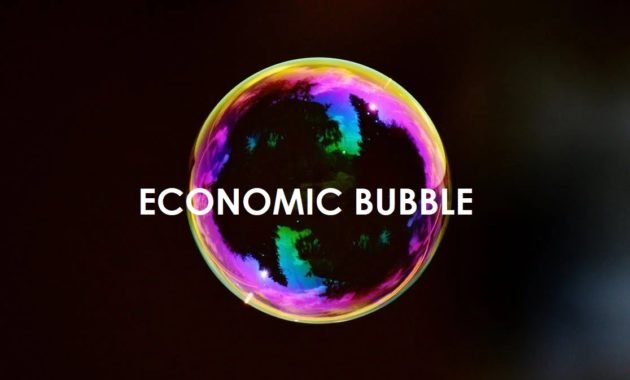
    In this article, several things related to distribution will be discussed in full, including:

    • An explanation of what distribution is, both in general terms and according to experts.
    • Distribution function in economic activity.
    • General distribution purposes.
    • Distribution types.
    • The actors in distribution activities.

    Let’s see the article until the end, so that you better understand what is meant by distribution.

    Definition of Distribution Is

    The word “distribution” is adapted from English “distribution” which means the act or process of sending something from one party to another.

    In a business context, the definition of distribution is the process of distributing a product, be it goods or services, from producers to consumers so that the product is widely distributed and can be purchased by consumers who need it.

    There is also a mention of the meaning of distribution is a marketing activity that aims to facilitate the process of delivering products from producers to consumers. In other words, distribution is the link between production and consumption activities .

    Distribution is one of the four elements of the marketing mix. Distribution is the process of making a product or service available for the consumer or business user who needs it. This can be done directly by the producer or service provider or using indirect channels with distributors or intermediaries.

    In practice, distribution is part of the marketing process that can add value to the product through various functions such as utility, place, time, and product ownership rights.

    In addition, it also creates a smooth flow of marketing, both physical and non-physical such as the flow of information, promotions, negotiations, payments, and so on.

    Distribution activities can be influenced by several factors, including:

    • Number of products.
    • Product nature.
    • Area area.
    • Transportation facilities.
    • Means of communication.
    • company factor.
    • Cost factor.
    • Market conditions.


    Distribution Function in Economic Activities

    In general, there are four main functions of distribution activities, namely purchasing, classification, promotion, and distribution. Here’s a full explanation:

    1. Product Purchase

    The activity of purchasing goods is the initial process of distribution produced by producers. However, if the distribution of goods from producers is carried out directly to consumers, then this process does not apply.

    2. Product Classification

    After the process of purchasing goods, there will be an activity of classifying goods based on their function and type so that marketing and counting goods becomes easier.

    3. Product Promotion

    After the goods are classified, there will be a process of promoting the goods, namely introducing the goods to the public. The process of promoting this item can be done by installing displays in store windows, advertising in various media, and direct offers to consumers.

    4. Product Distribution

    This is the main activity of distribution, namely distributing goods to consumers. The distribution process must be carried out quickly and precisely so that distributors benefit from distribution activities.


    General Distribution Purpose

    The main purpose of distribution activities is to ensure the continuity of production activities and ensure that the product is well received by consumers. Here’s a full explanation:

    1. Ensuring the Continuity of Production Activities

    A well-run distribution process will help production activities. By carrying out distribution activities, the products that have been produced are not held in the producer’s warehouse but move into the hands of distributors.

    2. Ensuring Products Get to Consumers

    In accordance with its main objective, distribution activities will ensure that products from producers can reach consumers. This distribution process can be done by introducing goods (promotions) to the process of sending goods to consumers.


    Distribution Types

    Based on the role of producers with consumers, the types of distribution can be grouped into two, namely direct distribution and indirect distribution. But apart from that, there are also intensive, selective, and exclusive distribution types.

    The following is a brief discussion:

    1. Direct Distribution

    The definition of direct distribution is an activity of distributing goods from producers directly to consumers. In other words, producers act as distributors and the distribution process does not go through intermediaries or third parties.

    In practice, companies must consider the amount of investment required to implement a direct distribution strategy. For example, adding warehouses, vehicles, and delivery staff to distribute goods yourself effectively.

    2. Indirect Distribution

    The definition of indirect distribution is an activity of distributing goods from producers to consumers using intermediaries or third parties. In this case, the distributor can be an individual or a distribution company.

    The term “intermediary” often gets a bad reputation, but in the case of distribution, intermediaries can help in the process of delivering goods to consumers.

    Indirect distribution strategies involve intermediaries who assist with logistics and product placement so that they can reach customers quickly and in optimal locations based on consumer habits and preferences.

    3. Intensive Distribution

    This type of distribution is done by sending the product to as many retail locations as possible. However, only certain products are suitable for this method, namely products that are easy to sell. For example, cold drinks that require very little effort to sell.

    4. Exclusive Distribution

    Exclusive distribution is carried out by producers by entering into agreements with retailers, namely selling products only through special storefronts. One example of exclusive distribution is the agreement between Apple and AT & T in the distribution of iPhone products in America.

    This distribution strategy is very suitable for exclusive products that are in demand and eagerly awaited by many people, such as the iPhone.

    5. Selective Distribution

    Selective distribution is a middle ground between intensive and exclusive distribution. This type of distribution is done by distributing the product in more than one location, but not as much as with intensive distribution.

    For example; selectively selected well-known clothing products such as the Exclusive clothing brand. In addition to the store itself, products from the Exclusive brand can also be found in several clothing stores.


    Distribution Actors in Economic Activities

    Based on the distribution of goods from producers to consumers, distribution actors (distributors) can be divided into six groups, namely:

    1. Merchant

    Merchants are parties who buy goods from producers and resell them to final consumers. Traders can determine the selling price of a product according to market conditions and socio-economic conditions in a society.

    2. Agent

    Agents are companies that have the responsibility to distribute goods from producers to consumers. The profit obtained by the agent is from a predetermined commission value.

    3. Realtor

    A broker is a party that brings together producers and potential buyers of a product, be it goods or services. The broker does not spend any capital in the distribution process and the profits obtained are in the form of fees from producers and consumers for their services.

    4. Exporter

    Exporters are parties who distribute goods from domestic producers to consumers abroad.

    5. Importer

    The opposite of exporters, importers are parties who distribute goods from abroad to consumers in the country.

    6. Commissioner

    The commissioner is a party who makes purchases and sales on his own behalf.


    Conclusion

    From the explanation above, we can conclude that the definition of distribution is the process of spreading a product throughout the market so that the wider community knows it and can buy it.

    The distribution process involves the following:

    • Good transportation system to carry products to different geographic areas.
    • A good tracking system so that the product can be sent to the right party, at the right time, and in the right quantity.
    • Good packaging in order to protect the product during the shipping process.
    • Keep track of places where products can be marketed so that sales opportunities are better.
    • A good system in retrieving goods from traders.

    Thus a brief explanation of distribution, starting from its understanding, function and purpose of distribution, types of distribution, as well as several factors that influence the distribution process. Hopefully this article is useful and adds to your insight.

  • What Are Economic Bubbles, How To Avoid Them?

    What Are Economic Bubbles, How To Avoid Them?

    The term economic bubble or often also referred to as a speculative bubble or financial bubble. This is one thing to watch out for, especially when you invest.
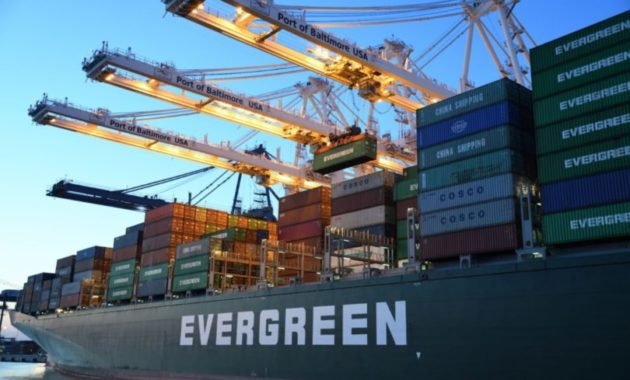
    Determining investment instruments is not an easy thing. Of course, everyone hopes that the chosen investment instrument can increase in price so that it will provide benefits in the future.

    There are many things that must be considered so that you are not wrong in choosing an investment instrument. One thing that is quite important and needs to be watched out for is the phenomenon of the economic bubble.

    Because this phenomenon can make the value of the investment instrument you choose fall very deeply. So instead of getting a profit, you will actually experience a large amount of loss.

    Understanding the term bubble economy

    The phenomenon of economic bubbles has occurred in many countries and has a long history. The occurrence of this phenomenon makes many people suffer losses in very large numbers.

    The term economic bubble itself refers to the condition of rising asset prices to become unrealistic. Furthermore, the price of these assets experienced a sharp decline in a very fast time.

    So that people who have bought assets at high prices, suffer losses due to the decline in prices. This phenomenon can occur in various assets such as stocks, property and other types of assets.

    The naming of this phenomenon takes from the reality of bubbles that easily rise to the top. But at a certain point, the bubble will burst very quickly.

    This illustrates how the price of an asset can soar to the point of being unrealistic. Until in the end the value of the asset broke and the price fell to a very low level.

    The term economic bubble has been known by economists as something to be wary of. Because the occurrence of this phenomenon will have an influence on macroeconomic conditions.

    There have been many examples of economic crises caused by the economic bubble phenomenon. One of them is the housing bubble that occurred in 2005 – 2008 in the United States.

    In that year, house prices in the United States experienced a very high increase. Until finally in 2008, the bubble burst and caused an economic crisis.

    Until finally the American government had to bail out or provide bailout funds to help some companies keep operating. Without the bailout funds, there will be massive layoffs.

    Understanding Some of the Causes of Economic Bubbles

    In general you have understood the term bubble economy. In fact, this phenomenon refers to the movement of the price of an asset that increases and then at some point will break.

    Economists still do not know the exact cause of this phenomenon. However, there are several things that may be the cause of this phenomenon, namely as follows.

    Excessive Liquidity in the Financial System

    The first thing that may be the cause of an economic bubble is excessive monetary liquidity in the financial system. Simply put, the ease of getting a loan can be the cause of an economic bubble.

    Again remember that the term bubble economy refers to a condition in which asset prices increase to the point where it becomes unrealistic. The ease of getting a loan is one of the causes of this.

    With the ease of getting a loan, the purchase of an asset will increase. According to the law of supply-demand, more demand will make the price of an asset increase.

    At a certain point, the price of the asset becomes unaffordable so it cannot be sold. As a result, the owners of assets will make sales at low prices.

    This is done so that they still get income even though they have to suffer losses. Because on the other hand, they still have debts that have the potential to default.

    Investors’ Speculative Behavior

    One of the possible causes of the economic bubble phenomenon is the speculative behavior of investors. Because it refers to the term economic bubble, that in fact an increase in asset prices is an expected thing.

    The higher the potential increase in the price of an asset, the more attractive it will be. Because these assets are predicted to be able to provide huge profits in the future.

    Therefore, an asset that is considered to have a high price in the future must be in great demand. So that more and more investors invest in these assets and make the price increase.

    However, if the price increase is not accompanied by an increase in the intrinsic value of the asset, it will have a bad impact. Because in the end, people will realize that the asset price is too expensive.

    So the demand for these assets will decrease which will also lower the price. So investors who have bought assets at high prices will experience losses.

    The Greater Fool Theory

    One theory that is considered to be the cause of the economic bubble is the greater fool theory This theory is in line with the term economic bubble which describes a significant increase in asset value.

    In general, this theory states that price increases occur when someone can sell an asset that is overpriced to a “stupid” person. Then the “stupid” person will sell it back to the “stupider”.

    This will continue until the price of an asset becomes very high. Until finally the last person could no longer find a “stupider” one to buy the asset.

    So that the bubble will burst and make asset prices that were very high fall very low. So the last “stupider” person will receive a large amount of loss.

    Extrapolation

    Extrapolation is the behavior of equating historical data in the past with the future. This could be the cause of the economic bubble phenomenon considering that the term economic bubble is closely related to price increases.

    Indeed, one way to predict the value of an asset is to look at historical data. However, historical data is not the only data because there are other aspects that also need to be taken into account.

    Extrapolating behavior does not take this into account. They only see that the value of an asset in the past can rise to a very high which may also happen in the future.

    At some point, investors will realize that these assets cannot provide the returns as in the past. So that the bubble burst was marked by a decrease in asset prices.

    Lack of Community Financial Literacy

    It is undeniable that today many people are starting to realize the importance of investing. Unfortunately, awareness of investment is not accompanied by good financial literacy.

    In fact, one of the possible causes of the economic bubble is the lack of public literacy regarding the financial world . In fact, there are still many people who do not know the term economic bubble.

    This lack of literacy or knowledge will certainly affect people’s decisions to invest. One of them is in determining the right instrument and can provide benefits in the future.

    People who are minimal in financial literacy tend to make decisions on a whim and without careful consideration. As a result, they are more easily trapped in the economic bubble phenomenon so that they will get losses in the future.

    Tips to Avoid This Phenomenon

    After understanding the term economic bubble and its causes, of course you need to avoid this phenomenon. Because the losses that can be received due to the economic bubble phenomenon can be very large.

    There are several ways you can do to avoid this phenomenon. Here are some tips that can be done so as not to get caught in an economic bubble.

    Perform Fundamental Analysis

    One of the techniques in investing is fundamental analysis. This technique is done by choosing investment instruments that have good fundamental values. Of course, the fundamental value must be in line with the asset price.

    Fundamental analysis techniques are usually used in stock selection. This method is done by looking at the company’s performance and assessing whether the stock price is in accordance with that performance.

    But you can apply fundamental analysis techniques not only to stocks. Various other assets also have a fundamental value or intrinsic value on which the price of the asset is based.

    Given the term economic bubble is an increase in the value of prices to be unrealistic, then it doesn’t matter as long as the price increase is reasonable. This means that the price increase occurs because the intrinsic value increases.

    Don’t follow

    One of the problems faced by investors, is the fear of making decisions. So many investors prefer to follow the steps or decisions of other investors.

    This is what makes signaling groups very popular  because it makes investors not have to think. The decision to buy or sell an asset simply follows the signals given in the group.

    Whereas decisions that only follow the words of others are very vulnerable to bad effects. Because the decision could be wrong and was done to increase the price of a particular asset.

    People who are not familiar with the term bubble economy are often used for things like this. When the bubble has burst, then of course the one who feels the loss is yourself.

    Improve Financial Literacy

    Improving financial literacy is a must to avoid the economic bubble phenomenon. Apart from exploring the investment world, you also need to learn other things such as financial management and macroeconomics.

    Because basically, economic activities around the world are interconnected. For example, economic conditions in the United States can have an impact on the economic conditions of other countries.

    In addition, it is very important for you to study the economic history of the world. So you can take lessons from history and use them for consideration in the present.

    Moreover, the term economic bubble itself is not new. There has been a lot of history from various countries in the world that you can use as a lesson to be able to avoid this phenomenon.

    Avoid Excessive Desire (Greedy)

    One of the problems that must be avoided by investors is greed. Because greed will make you want the maximum profit to ignore various aspects that must be considered.

    Especially now that there are many investment instruments that promise too sweet but end up losing. Excessive desire or greed will encourage you to get stuck in such an investment instrument.

    Usually when feelings of greed arise, then someone will forget the term economic bubble. When they see an asset experiencing a rapid increase in price, they buy it without thinking.

    As a result, when the bubble burst, they were trapped because they had bought at a high price. Even worse, they can’t sell the assets, so they lose all their investment capital.

    One of the things that investors should be wary of is the economic bubble. Especially considering the term economic bubble that makes people suffer huge losses.

  • Definition of Embargo, Types, and Case Examples

    Definition of Embargo, Types, and Case Examples

    In short, the definition of an embargo is a prohibition issued by the government in a country to import or export certain goods or products to other countries.
    This term is common and familiar used in the world of economics, especially in trade and politics. For more on the meaning of embargo and its types, read this article to the end, okay!

    Definition of Embargo

    The definition of embargo is a prohibition imposed by the government of a country, to export or import certain goods or products to other countries in the framework of policies related to economics, politics, and other policies.

    Therefore, the term embargo can be concluded as an order given by a country, which aims to limit trade and exchange with certain countries.

    The term embargo is generally used in international politics and commerce. An embargo is declared in the form of a policy by the government in a country against other countries in order to isolate the country concerned.

    This will cause the government of an isolated country to be in a fairly difficult internal situation. This difficult internal situation occurred because of the influence of the embargo which caused the economy of the opposing country to suffer.

    The policy, will also limit all trade with a country or aim to reduce the exchange of certain goods.

    In general, embargoes are used as a political punishment for violations of a policy or agreement.

    In general, embargo policies are enforced to force a country to submit to and comply with countries that prohibit exports and imports.

    In other words, an embargo is a weapon that can paralyze a country’s economy.

    If the embargo is enforced for a long period of time, then of course the people in it will experience the impact of the embargo.

    People’s welfare will also decline and can have an impact on other sectors in a country.

    In addition, embargoes are also treated as a result of unfavorable political and economic relations between nations.

    For example, a military embargo is intended to prevent the exchange of military goods from occurring with a country.

    Indonesia itself had received an embargo from the United States. The US embargo was in the form of a ban on exports and imports of military weapons procurement from 1999 to 2005, due to human rights violations committed by ABRI in East Timor.

    America has often made trade embargo decisions and other economic sanctions because of the mandate from the United Nations.

    An example is after the attacks on September 11 in 2001, the United States imposed an embargo on trading commodities to several countries in the Middle East which were accused of being the cause of the attack.

    The embargo does not only apply to all goods and commodities that are exported or imported from the borders of a country.

    Often times, embargoes only apply to certain goods, such as oil and military equipment.


    Purpose of the Embargo

    As previously explained, a country is forced to impose an embargo on another country with the aim of making it difficult for the target country to obtain various kinds of commodities, and especially goods that are the country’s needs.

    The implementation of this embargo policy was triggered by a conflict of interest that occurred between the two conflicting countries, where the country that carried out the embargo hoped that the policy would be able to force other countries to voluntarily sit down together and resolve the issues that were going on between the two.

    The United States, is one of the countries that often implements embargo policies on countries that are considered problematic by them. Both with superpowers and countries globally.

    North Korea, Cuba, to Iran and Indonesia are examples of countries that had been hit by the economic sanctions embargo from the United States.

    Even so, the United States was also affected by this embargo regulation. America is suffering from a shortage as well as an increase in fuel prices, because members of the Organization of the Petroleum Exporting Countries (OPEC) carry out an oil embargo on America.

    Embargoes are carried out by certain countries such as America, because they are considered a tool to influence.

    This embargo is quite often used by several countries that have trade agreements between countries, especially exports and imports.

    Because many countries depend on global trade, embargoes are also considered a powerful tool that can affect a country.


    Types of Embargo

    In general, embargoes are divided into two types. Here’s the explanation.

    1. Economic Embargo

    The first type of embargo is an economic embargo. Prohibition or stopping of commodity traffic from one country to another that has interests or is experiencing conflict.

    Including export and import activities between countries, such as trade embargoes on the defense system or defense equipment and oil.

    In short, the economic embargo is the prohibition of all forms of economic activities. Both export and import activities in countries that are currently receiving sanctions from the embargo.

    Considering the need for certain raw materials, this economic embargo will have an impact on shocks for a production company.

    So the production of certain goods, of course, will require raw materials imported from other countries at much more expensive prices and different levels of quality.

    The policy of this embargo, of course, will have a negative impact. Especially if the country concerned has a level of dependence on raw materials that must be imported or commodities from a country that is ready to import.

    This will bring considerable losses to countries experiencing embargo sanctions.

    The policy of the embargo will also have an impact on economic conditions in a country, namely making the affected economy unstable.

    Huge losses and a fairly severe impact of the economic embargo was massive layoffs.

    In addition, the two countries, both those that impose embargoes and are subject to embargo sanctions, can also be involved in a cold war.

    Because of that, many countries have finally implemented negotiations and even involved the WTO and the United Nations in order to be able to implement the steps they feel are the best in implementing the embargo action.

    This is done in the interest of peace between the two countries and the lives of the people in those countries.

    In addition, the embargo policy also has a certain period of time and has previously been adjusted to the decision of the country of the embargo giver.

    However, it must first contain an agreement between the two countries, if the previous embargo policy is to be lifted.

    In order to be able to lift the embargo policy, of course it will not be easy to do.

    In fact, in general, there will be negotiations that are quite tough and will take a long time to be able to lift the embargo policy.

    2. Information Embargo

    The second type of embargo is the cessation of publication or distribution of all news, both news and information within a certain period of time.

    In the Press Freedom Law itself, it has been stated that the prohibition of embargoes is a legal provision that must be obeyed.

    If a violation occurs, the news company will also receive strict sanctions and fines whose punishment will be determined later.

    A simple example of this information embargo is when a company announces the company’s profits in the mass media, then the public relations party of the company will also provide the data and information needed for publicity.

    However, there is some information that will explain that there is an embargo.

    Where previously the company would officially state that it was led by the leader of the company, then the data and all information provided would be prohibited from being published by the media.


    Impact of the Embargo

    As we knows, that the main purpose of imposing an embargo is to force the target country so that the country can remain subject to the wishes of the country implementing the embargo.

    This step is one of the weapons that is considered quite powerful to cripple the economy of the country affected by the embargo.

    The unavailability of products and basic needs in a country will certainly make the economy in that country shake.

    The existence of this instability, will have an impact on the decline in the level of welfare in the country.

    Not only the economic downturn, the embargo sanctions can also have an impact on the cold war and disrupt world peace.


    How to Overcome the Embargo?

    Considering the impact that can harm many parties, the embargo has become an event that is often difficult to avoid.

    Countries that have been subject to embargo sanctions, will feel some adverse effects.

    However, there are several efforts that can be made by countries that are subject to sanctions to survive the embargo, namely by focusing on surviving by optimizing the resources owned by the country.

    For example, when a country is subject to economic embargo sanctions which then cause imports to that country to be stopped.

    So, the way to overcome this situation is to develop products independently according to the needs of the community.

    However, maybe the quality and quantity of these products will be different, but by taking these steps, at least they are able to cover people’s needs for these products.

    Another effort that can be made by countries that are subject to embargo sanctions is to establish good relations with other countries.

    This needs to be done, so that the country is able to survive even though the country is experiencing an embargo.


    Some Examples of Embargo Cases

    For a more complete explanation of this embargo, here are some cases of embargoes that have previously occurred in various countries.

    1. Economic Embargo on Iran by the United States

    America often imposes sanctions embargoes, including economic embargo sanctions on Iran, namely in the form of prohibiting exports of crude oil to Iran and the sanctions embargo, announced by Barack Obama, who serves as President of the United States.

    At that time, Iran also experienced a number of losses such as its potential market for oil exports.

    In fact, when the economic embargo sanctions were applied, oil exports from Iran immediately fell to 1.5 million barrels per day.

    Thus, Iran can only rely on exports to a few countries in Europe and the Middle East.

    Then in 2015, the United States lifted the sanctions embargo on the condition that Iran must be willing to reduce its nuclear weapons production capacity.

    By lifting the sanctions of the economic embargo, the export activities of crude oil in Iran again increased to 1 million bpd and Iran became part of the Comprehensive Plan of Action (JCPOA) as a form of Iran’s commitment to the nuclear weapons control program.

    Then in 2018, America again imposed an embargo on Iran. The embargo sanctions did not only affect the two countries involved, but also had an impact on the global economy.

    2. An arms embargo by the European Union on Guinea

    In 2018 the United Nations passed a resolution to impose an arms embargo on the country in South Sudan. The policy was adopted by the United Nations, as a response to the existence of conflicts and ethnic violence that continues to occur in the country.

    The resolution, proposed by America. Of the 15 members of the UN Security Council, nine countries supported the embargo policy, including Russia, Ethiopia, China, Equatorial Guinea, Kazakhstan and Bolivia, which abstained.

    In addition to implementing an arms embargo, the UN Security Council also passed another resolution in the form of imposing a travel ban and imposing an asset freeze on South Sudan’s deputy defense chief.

    South Sudan’s deputy defense chief is considered one of the main actors responsible for the conflict and ethnic violence in his country.

    3. Embargo on Cuba

    In 2014, the United States also imposed economic sanctions on Cuba and it has cost Cuba 3.9 billion US dollars or approximately more than Rp. 49.9 trillion in the last year in the foreign trade sector.

    The total loss due to the embargo from America for 55 years even reached Rp1, 377 T, as stated by the Cuban government ahead of Cuba’s annual report to the United Nations in 2014.

    The report is submitted by the Cuban side to the United Nations every year to encourage the lifting of the economic embargo on the country.

    Then for decades, Cuba has also received support from many countries, which is then manifested in UN resolutions relating to the urge to lift the embargo.

    In 2013, 188 countries also supported the resolution, but only two countries voted against it, namely America and Israel.

    It is known that America first imposed an economic embargo on Cuba in 1960 and had begun a full embargo in 1961 after Fidel Castro won his victory in the Cuban uprising in 1959.

    According to reports, if Cuba does not get the sanctions of the embargo, Cuba can make a profit of up to 205.8 million US dollars from the sale of rum and cigars.

  • Product Differentiation: Definition, Strategy & Impact for Business

    Product Differentiation: Definition, Strategy & Impact for Business

    What is product differentiation?

    Product differentiation is the process that differentiates your product or service from others. This process involves detailing the characteristics of each product that consumers value and making it unique. When successful, product differentiation creates a competitive advantage because customers see your product as superior.

    Why is product differentiation important?

    It is important for a company to be different from its competitors, as hundreds of new products enter the market every day. When faced with too many choices, consumers will be confused in choosing and ultimately make the decision not to buy. That’s why it’s so important for your business to find ways to make your product stand out and be perceived as unique and valuable over similar items.

    The marketing team will try to explain to all customers what advantages your product offers and compare it to competitors. If your company has many products, make sure each product has a clear identity to avoid confusion when consumers make choices. Creating a different product is something that appeals to potential customers. This can help build a product’s competitive advantage over other brands.

    Product Differentiation Strategy

    A good product differentiation strategy can earn brand loyalty, the most important thing for any successful business. This strategy focuses on the buyer’s perception of value. As long as the seller continues to provide the highest quality of service, the customer base will remain loyal.

    Market segmentation is currently faced with very competitive business competition. If a product is not consistently high quality, consumers will turn to other options. Creating a unique product will not be enough to gain a competitive advantage from product differentiation if buyers don’t know how your product differs from other brands.

    The seller must have a thorough understanding of the buyer’s expectations and how the product will be used. For example, the purpose of buying a car is for transportation, but if buying the car will also give you a feeling of accomplishment and high self-esteem, then the seller will have a competitive advantage over the car he is selling.

    Another very important way of product differentiation is to contribute to the buyer’s perception that there is no brand that is similar to the product we market. Product differentiation will highlight the things that distinguish our products from competitors. Consumers will see that competitors’ products cannot meet their needs. This increases consumers’ expectations about the quality standards they will be aware of.

    What are the key features that differentiate Apple’s products?

    The company’s products have always been designed to be ahead of peers. Despite high competition, Apple has succeeded in creating demand for its products. As a result, the company has power over prices through product differentiation, innovative advertising, ensured brand loyalty, and hype around new product launches

    Ways to Differentiate Your Products

    You don’t want your product to look weird just because you want it to look different, do you? Instead, consider what is most important to your customers and let that drive your decisions about how to differentiate your product. Your product differentiation should emerge after carefully researching the competition and it should be part of your larger product vision.

    1. Benefits

    What value can customers get when using your product compared to competitors’ products? What problems will your product solve? How will it make prospecting easier and better? For example, your product may be the only mobile app that can know the weather in a certain area in real-time. This kind of thing is really needed for those field workers.

    2. Design

    Does your product have a distinct design and set it apart from the rest? For example, say your product is sleek and has a simple user experience, while your competitors’ offerings seem dated and outdated. This distinction can help customers connect with your brand. An example is the modern design sensibility of the Nest brand thermostat . Instead of copying rectangular shapes on other thermostats, the company opted for simple circles with easy-to-read, color-changing displays.

    3. Price

    Are the prices of your products lower or higher than those of your competitors and other products you offer? Your price should reflect the overall value of the value and features you offer. For example, you can justify a higher price if customers know that your product offers best-in-class quality. This is what the car company Ferrari does, which sets a fairly high price for each of their output cars. On the other hand, pricing your product too low can lead customers to think that your product is not the best choice.

    4. Quality

    Does your product work or be of better quality than your competitors’ products? Do you offer some functionality that your competitors don’t have? Can users or consumers expect the product to last longer than other products? Your product’s competitive advantage may indeed prove to be a superior and reliable construction.

    5. Customer service

    Your product features may be similar to others in many ways. However, you can differentiate your product through your product experience by putting together a professional customer service team to earn a reputation for being responsive to customer needs, requests and ideas. Aftersales in business is very important. You need to know, maintaining consumer loyalty to your product is more difficult than just getting new customers.

    Conclusion

    Ultimately, how you differentiate your product should not be an arbitrary decision or a reactive response to whatever your competitors are doing. Instead, your product differentiation should emerge from a strategy of high-level goals and initiatives specific to your product and your business.

    Along with that, using the right tools for your business is another thing that can make your business grow optimally. For example tools for recording transactions and accounting. In the current era of information speed, choosing an accounting application that can be used anytime and anywhere is a must for those of you who want to develop a business.

  • Understanding Gimmick Marketing

    Understanding Gimmick Marketing

    The ideal gimmick is low cost but still manages to attract the attention of many potential customers. More than that, a good gimmick leaves a strong and positive impression on people’s minds about your company and products, an impression that lingers on them for a long time. A few examples of gimmicks will help you get a feel for what might be happening.

    What is a gimmick?

    A gimmick is something that is intentionally meant to be unexpected and interesting. In the marketing and sales arena, Gimmick goes far beyond the boundaries of typical marketing techniques such as radio advertising or print advertising. Better yet, a very catchy gimmick can get you good, widespread publicity, in the local news or in the print media, all at no cost. For small businesses, successful Gimmick marketing can have the added advantage of being cheaper to launch than conventional marketing tools.

    Of course, after a successful gimmick, they tend to become more common and, therefore, a little less attention-grabbing. Do you remember the first time you saw “balloons with waving hands”, plastic balloons with thin arms waving around a parking lot? At first, they are a very clever and effective way to attract attention – the ideal gimmick. Recently, they have become a fairly common sight. As they proliferate, so do their effects.

    Understanding Gimmick Marketing

    A gimmick  marketing is a trick or novelty designed to attract attention and create interest in a product, service, or company.

    Gimmick and Sales Marketing Examples

    In addition to passionate sky dancers, there are a number of common gimmicks that you may come across nearby, on the news or through online sources.

    The Flash Mob: You may not have seen it in person, but you may have seen it on TV or online: spontaneous-looking music and dancing from “random” people in a crowd. Flash Mob can be interpreted as a group of people who gather at a predetermined time and place to do something like a silly joke that is screaming for 30 seconds and quickly spreads before the police arrive. Using a cell phone, the flash mob can change places if the former has been disturbed. (Wikipedia)

    Tricked-Out Vehicle: Oscar Meyer Wienermobile’s Special Car Design. You may find this something funny and eye-catching, which is a good testament to the power of creative deception (creativity gimmick marketing).

    The Loss-Leader: Selling certain items for much less than the market price in your city is sure to generate buzz. Sure, you’ll incur a loss on the item itself, but many sellers have found the additional influx of customers more than compensated for the loss.

    Making Your Own Gimmick

    Feel free to copy what others have done if you think it would work well for your particular marketing needs. Keep an open mind to things you’ve never tried before. Writing your product’s name in a crowded open space or having a guerrilla salesman somewhere and handing out samples may not work for all businesses, but it may work for yours as well. There are also marketing services that claim to specialize in creating compelling campaigns and gimmicks. See who offers such services in your area.

    Your gimmick will be magnified if it can generate publicity. Be sure to notify your local print and television media of any events you schedule. Use social media tools like Facebook, Twitter, and Instagram to get extra mileage out of your efforts.

  • How to Calculate Working Capital?

    How to Calculate Working Capital?

    Working capital is the company’s ability to pay current liabilities with current assets . Working capital is an important measure of financial health because creditors can measure a company’s ability to pay off its debts within a year.

    Working capital represents the difference between a company’s current assets and current liabilities. The challenge is to determine the right category based on the large number of assets and liabilities on the company’s balance sheet and outline the company’s overall health in meeting its short-term commitments.

    Working Capital Components

    Current Asset

    This is what companies have today – both tangible and intangible – that they can easily turn into cash within a year or a business cycle, whichever is less. The more obvious categories include demand deposits and savings; highly liquid securities such as stocks, bonds, mutual funds and ETFs; money market account; cash and cash equivalents, accounts receivable , inventory and other short-term prepaid expenses. Other examples include current assets from discontinued operations and interest payable. Current assets do not include long-term or illiquid investments such as certain hedge funds, real estate, or collections.

    Current Liabilities

    In the same way, current liabilities include all debts and expenses that the company expects to pay in one year or one business cycle, whichever is less.

    This usually includes all the normal costs of running the business such as rent, utilities, materials and supplies; payment of interest or principal of debt; accounts payable ; accrued obligations; and accrued income tax. Other current liabilities include dividend payable , leases with maturities in one year, and long-term debts that are due.

    How to Calculate Working Capital

    Working capital is calculated using the current ratio, namely current assets divided by current liabilities. A ratio above 1 means current assets exceed liabilities, and generally, the higher the ratio, the better.

    Example of Working Capital: Taruna Arka
    For the fiscal year ended December 31, 2017, PT Taruna Arka has current assets of IDR 36.54 billion. Includes cash and cash equivalents , short-term investments , marketable securities, accounts receivable, inventories, prepaid expenses, and assets held for sale.

    Taruna Arka has current liabilities for the fiscal year ending December 2017 amounting to IDR 27.19 billion. Current liabilities include trade payables, accrued expenses, loans and notes payable, current long-term debt maturities, accrued income taxes, and liabilities held for sale.

    According to the information above, the company’s current ratio is 1.34:

    IDR 36.54 billion ÷ IDR 27.19 billion = 1.34.

    Has Working Capital Changed?

    While working capital funds do not expire, working capital figures do change over time. That’s because the company’s current liabilities and current assets are based on a rolling 12 month period.

    The exact working capital figure can change every day, depending on the nature of the company’s debt. What was once a long-term liability, such as a 10-year loan, becomes a current liability in year nine when the payment deadline is less than one year away. Likewise, what was once a long-term asset, such as real estate or equipment, suddenly becomes an asset as buyers line up.

    Working capital as a current asset cannot be depreciated (depreciated) like a long-term asset. Certain working capital, such as inventory and accounts receivable, can lose value or even be written off occasionally, but how it is recorded does not follow depreciation rules.

    Working capital as current assets can only be charged immediately as a one-time expense to match the income they helped generate in the period.

    Although it cannot lose value due to depreciation over time, working capital can be devalued when some assets have to be marked (Mark-to-Market) to the market.

    It occurs when the asset price is below its original cost, and the others cannot be saved. Two common examples involve inventory and accounts receivable.

    Outdated supplies can be a real problem in operations. When that occurs, the market for inventory has a lower price than the original purchase value recorded in the accounting books. To reflect current market conditions and use the lower cost and market method, companies mark their inventory down, resulting in a loss of working capital value.

    Some receivables may become uncollectible at some point and have to be written off entirely, which is another loss of value in working capital. Because losses in current assets reduce working capital below the desired level, funds or long-term assets may be required to fill the shortfall in current assets, an expensive way to finance additional working capital.

    Means Working Capital

    A healthy business will have sufficient capacity to pay off current liabilities with current assets. A ratio higher than above 1 means the company’s assets can be converted into cash at a faster rate. The higher the ratio, the more likely the company will be able to pay off short-term obligations and debts.

    The higher ratio also means the company can easily fund its day-to-day operations. The more working capital a company has means that it may not need to take on debt to finance its business growth.

    A company with a ratio less than 1 is considered risky by investors and creditors because it indicates that the company may not be able to cover its debts if necessary. A current ratio of less than 1 is known as negative working capital.

    We can see in the graph below that the working capital of Pt. Arka cadets, as indicated by the current ratio, have been increasing steadily over the past few years.

    Working Capital Pt. Arka cadets

    The tighter ratio is the quick ratio, which measures the proportion of short-term liquidity to current liabilities. The difference between this and the current ratio is in the numerator, where the asset side includes cash, securities, and accounts receivable. The Liquid Ratio (Quick Ratio) does not include inventory, which can be more difficult to turn into cash in the short term.

    The value of working capital should be assessed periodically from time to time to ensure that devaluation does not occur, because sustainable operations require sufficient working capital.

  • What is Gross Profit Margin (GPM)?

    What is Gross Profit Margin (GPM)?

    Gross Profit Margin is a metric that analysts use to assess a company’s financial health by calculating the amount of money left over from product sales after reducing the cost of goods sold (COGS) .

    Sometimes gross profit margin is referred to as gross margin ratio, gross profit margin is often expressed as a percentage of sales.

    Key Explanation

    • Gross Proft Margin (GPN) is an analytical metric expressed as a company’s net sales less cost of goods sold (COGS).
    • Gross Proft Margin (GPN) is often shown as gross profit as a percentage of net sales.
    • Gross Proft Margin (GPN) shows the amount of profit made before deducting sales, general and administrative expenses, which is the company’s net profit margin.

    Formula for Gross Profit Margin (GPM)

    GPM = GP / Sales Revenue

    Remarks:

    • GP = Gross Profit
    • GPM = Gross Profit Margin

    How to Calculate Gross Profit Margin (GPM)

    The percentage of a company’s gross profit margin or gross profit margin (MLK) is calculated by dividing gross profit by sales revenue. The figure for the distribution in the form of a presentation is called the gross profit margin.

    Problems example:

    Company A’s gross profit is USD 200,000 and the sales revenue it receives is USD 350,000. So to get the results of the Gross Profit Margin, the calculation is as follows.

    • Gross profit margin = USD 200,000 / USD 350,000.
    • Gross profit margin = 57%.

    What can Gross Profit Margin tell you?

    If a company’s gross profit margin fluctuates wildly, this may signal poor management practices and / or lower product prices.

    On the other hand, such fluctuations can be justified in cases where a company makes massive operational changes to its business model, where cases of temporary volatility should be no cause for alarm.

    For example, if a company decides to automate certain supply chain functions, the initial investment may be high, but the cost of goods eventually decreases due to the lower labor costs resulting from the introduction of automation.

    Product price adjustments can also affect gross margins. If a company sells its products at a premium, all other things being equal, it has a higher gross margin.

    But this can be a tricky balancing act because if the company charges too high, fewer customers buy the product, and the company can suffer losses as a result.

    Examples of Using Gross Profit Margin

    Analysts use gross profit margins to compare a company’s business model with its competitors. For example, let’s assume that Company ABC and Company XYZ both produce electronic products with identical characteristics and similar levels of quality.

    If ABC Company finds a way to manufacture its product at a cost of 1/5, it will provide a higher gross margin due to a reduced cost of goods sold, giving ABC a competitive advantage in the market.

    But then, in an attempt to make up for the loss in gross margins, XYZ fought back by doubling the price of its product, as a method of increasing revenue.

    Unfortunately, this strategy can backfire if customers are deterred by a higher price tag, in which case, XYZ loses gross margins and market share.

  • The Concept of Demand and Supply in Economics

    The Concept of Demand and Supply in Economics

    What is the Law of Supply and Demand?

    The law of supply and demand is a theory that explains the interaction between a seller of a resource and a buyer of that resource. This theory explains the interaction between the existence or availability of a product and the demand for that product on the price of the product.

    Generally, low supply and high demand increase prices and vice versa. Meanwhile, high supply and low demand will reduce prices.

    A brief description

    • The law of demand says that at higher prices, buyers demand less of an economic good.
    • The law of supply says that at a higher price, the seller will supply more of the economy’s good.
    • These two laws interact to determine the actual market price and the volume of goods traded on the market.
    • Several independent factors can influence the shape of market supply and demand, which can affect the prices and quantities we observe in the market.

    Understand the Law of Supply and Demand

    The law of supply and demand is the most basic of economic laws, where it binds almost all economic principles in some way. In practice, supply and demand oppose each other until the market finds a price balance.

    As we know that there are many factors that can affect supply and demand, which causes supply and demand to increase and decrease in several ways. It was studied extensively by Murray N. Rothbard.

    The Law of Demand vs. Supply Law

    The law of demand states that, if all other factors remain the same, the higher the price of a good, the less people will demand that good.

    In other words, the higher the price, the lower the quantity demanded. The number of goods that buyers buy at the higher price is less because when the price of the good rises, so does the opportunity to buy that good.

    As a result, people naturally avoid buying products, forcing them not to consume anything they value more. The graph below shows that the curve is slope downward.

    Like the law of demand, the law of supply shows the quantity to be sold at a certain price. But unlike the law of demand, the supply relationship shows an upward slope. This means that the higher the price, the higher the quantity supplied.

    Producers supply more at a higher price because selling the higher quantity at a higher price increases revenue.

    However, unlike the demand relationship, the supply relationship is a time factor. Time is important to provide because suppliers must — but not always — react quickly to changes in demand or prices. So it is important to try and determine whether the price change caused by demand will be temporary or permanent.

    Say there is an increase in demand for umbrellas and the price of umbrellas suddenly increases in an unexpected rainy season; suppliers can only accommodate demand by using their production equipment more intensively.

    However, if there is climate change, and the population will need an umbrella throughout the year, changes in demand and prices will be expected over the long term; suppliers must change their production equipment and facilities to meet long-term levels of demand.

    Shift vs movement

    In an economy, “movements” and “shifts” in relation to the supply and demand curves represent very different market phenomena.

    Movement refers to changes along a curve. On the demand curve, movement shows the change in price and quantity demanded from one point on the curve to another. These moves imply that the demand relationship remains consistent.

    Hence, a movement along the demand curve occurs when the price of a good changes and the quantity demanded changes according to the initial demand relationship. In other words, a movement occurs when a change in quantity demanded is caused only by a change in price, and vice versa.

    Like movement along the demand curve, movement along the supply curve means that the supply relationship remains consistent.

    Hence, a movement along the supply curve occurs when the price of the good changes and the quantity supplied changes according to the original supply relationship. In other words, a movement occurs when a change in a given quantity is caused only by a change in price, and vice versa.

    Meanwhile, a shift in the demand or supply curve occurs when the quantity of a good demanded or supplied changes even though the price remains the same. For example, if the price for a bottle of energy drink A is IDR 10,000 and the quantity of energy A demanded increases from Q1 to Q2, then there will be a change in the demand for energy drink.

    Shifts in the demand curve imply that the original demand relationship has changed, meaning that quantity demand is affected by factors other than price. A shift in the demand relationship will occur if, for example, energy drink A suddenly becomes the only type of energy available for consumption.

    Conversely, if the price for a bottle of energy drink is IDR 10,000 and the quantity supplied decreases from Q1 to Q2, then there will be a change in the supply of this drink. Like a shift in the demand curve, a shift in the supply curve implies that the original supply curve has changed, meaning that the quantity supplied is affected by a factor other than price.

    A shift in the supply curve would occur if, for example, a natural disaster caused a shortage of hop mass; State drink producers will be forced to supply less of their product at the same price.

    How do supply and demand balance prices?

    Also called the market clearing price, the equilibrium price is the price at which the producer can sell all the units it wants to produce and the buyer can buy all the units it wants to produce.

    At a certain point in time, the supply of goods brought to market is constant. In other words, the supply curve in this case is a vertical line, whereas the demand curve always slopes downward because of the decreasing law of marginal utility.

    Product sellers cannot charge the market more than the market can bear, based on the concept of consumer demand. Over time, however, suppliers may increase or decrease the quantity they supply to the market based on the price they predict will be charged.

    So over time the supply curve slopes upward; the more suppliers expect to charge extra, the more willing they are to produce more and to shower the market with their products.

    With the supply curve sloping up and the demand curve sloping down, it is easy to imagine that at some point the two will intersect. At this point, the market price is sufficient to encourage the supplier to bring to market the same amount of good that the consumer is willing to pay at that price. Supply and demand are in balance, or in balance.

    The right price and quantity occurs based on the position and shape of the supply and demand curves, each of which is influenced by several factors.

    Factors Affecting Supply

    Production capacity, production costs such as labor and raw materials, and the number of competitors directly influence how much of a business supply can be made. Supporting factors such as weather conditions, availability of materials and reliability of the supply chain are also a set of factors that can affect supply.

    Factors Affecting Demand

    The number of substitutes available, changes in prices for complementary products, and consumer preferences can influence demand. For example, if the price of a motorbike for brand A goes down, then the demand for that motorbike can increase because people are more likely to buy it because the price has dropped and want to own it.

  • From Mudharabah to Ijarah, Get to Know the Principles of Islamic Banking

    From Mudharabah to Ijarah, Get to Know the Principles of Islamic Banking

    Islamic banks are banks that carry out their activities based on Islamic law (Islamic principles). This bank is also called an interest-free bank. Why not, in raising funds this bank does not provide interest in return and in loans are not subject to interest.

    In carrying out its activities, this bank is based on Islamic religious principles which prohibit levies and loans with interest or what is called usury. This system also prohibits investing in businesses that are categorized as haram. For example, businesses related to the production of haram food or drinks, non-Islamic media businesses and so on.

    So, what are the principles of the Islamic banking? In the following we will describe them one by one, from the so-called principles of mudaraba, murabahah, to ijarah.

    1. Mudaraba

    The first principle of Islamic banking is mudaraba. This is an agreement between the provider of capital and the customer. Each profit earned will be shared according to a certain ratio agreed upon. The risk of loss is fully borne by the bank, as long as there is no evidence of customer fraud or actions that are not in accordance with the trust of the bank.

    2. The Murabaha Principle

    Murabahah is the distribution of funds in the form of buying and selling. Banks buy goods needed by service users, then sell them back to service users at prices that are increased according to the profit determined by the bank. Service users can pay the goods in installments.

    3. The principle of Musharakah

    Musharakah is financing based on the principle of equity participation. Banks and customers become business partners. Each of them contributes capital and agrees on the ratio of profit in advance for a certain time.

    4. The Wadiah Principle

    Wadiah is a fund deposit service (savings) where the depositor can take the funds at any time.

    5. Ijarah Principles

    Ijarah principle, namely the financing of capital goods based on the principle of pure lease without choice, or with the option of transferring ownership of the goods leased from the bank by another party (ijarah wa iqtina).

    As for some examples of Islamic banks that we can currently find are BRI syariah, Mandiri syariah, BNI syariah and others.

  • Understanding the Meaning of Economic Bubbles

    Understanding the Meaning of Economic Bubbles

    There is a phenomenon in economic studies called economic bubbles or bubble economy . This phenomenon occurs in many countries and has a long history. In this article we will study the general definition of a bubble economy or economic bubbles and some of the events in which the phenomenon of economic bubbles occurs.
    According to its basic concept, economic bubbles or bubble economy refers to a situation where the price of a product or asset in a certain market segment experiences an unusual or unnatural increase in value/price, and occurs in a relatively fast time.

    There are many examples of economic bubble phenomena that occur and involve different economic sectors, including the housing sector or better known as housing bubbles and the stock market or stock bubbles .

    In its development, there have been many studies that examine more comprehensively the concept of the bubble economy , including the question of what is meant by an unreasonable price increase and how to categorize time as relatively fast. However, we will not discuss this in this paper.

    The following are some examples of events that illustrate the phenomenon of economic bubbles .

    One of the classic examples of the bubble economy phenomenon occurred in the 1637’an era known as The Tulip Mania .

    Since the late 1590s, tulips have become one of the commodities imported from Turkey to the Netherlands. Later, this flower became phenomenal in the Netherlands and became one of the trendsetters , especially as a decoration on clothing. Because of the high charm of tulips in the eyes of the public, the demand for these flowers soared rapidly with increasing public demand, until its peak in the early 1637’s.

    The high demand, which is not matched by the availability of tulips, has made the price of tulips soar to the equivalent of 40 times the average salary of Dutch workers per year. Unfortunately this did not last long, especially when market participants holding tulips started selling the flowers to the market and other market participants followed suit, causing the price of tulips to plummet within a month. It is said that after the incident, the price of tulips was not more expensive than the price of a red seed.

    Economic bubbles in the 1997-1998 Asian economic crisis.

    Not a few studies have stated that the 1997-1998 Asian economic crisis was caused, among other things, by the bursting of the economic bubble, considering that in the late 1980s and mid-1990s, interest rates in developing countries in the Asian region tended to be high, far above interest rates. interest offered by developed countries.

    The high interest rate is seen as an attraction by investors, resulting in a very large capital inflow to developing countries, including South Korea, the Philippines, Indonesia, Thailand, and Malaysia. As a result, the economic growth of these countries increased rapidly to be in the range of 8% to 12%.

    Even so, the high growth was solely due to the large inflows of capital, not supported by investment in the real sector and productive assets owned by these countries. In other words, the economic fundamentals of these countries can be said to be porous.

    As a result, when the Central Bank of the United States began to raise the benchmark interest rate ( Fed rate ) after being able to recover from the domestic economic recession, the flow of funds that previously existed in Asia began to move rapidly towards the US market which was considered more stable.

    In addition, the higher the interest rate ( Fed rate ), the stronger the US$ exchange rate against other countries’ currencies. These two factors led to massive capital flight from Asia. In the end, this caused a panic rush in the banking sector, when many people collectively withdrew the cash they had stored in commercial banks, resulting in the collapse of Asian currencies.

    The case of the economic bubble that hit internet-based companies ( .com companies ) in the mid-1990s to early 2000s.

    Another example of the occurrence of economic bubbles in the modern world is the period from the mid-1990s to the early 2000s. At that time technological developments entered a new phase, where there was a boom in internet-based technology companies. This period is also known as the era of The New Economy , which was marked by the emergence of internet – based companies or better known as . com companies .

    When these companies began to go public , the value of their shares skyrocketed many times over, offset by high expectations of market participants and the general public for the success of the new economic era. At that time, all issues related to the internet and online became the main topic of every conversation with optimistic tones.

    Unfortunately, all of these things are not followed by prudent company management , solid financial foundations, and optimal analysis of operating profit/loss calculations; in other words, the focus of attention is the marketing factor alone.

    Until when the United States Central Bank ( the Federal Reserve ) again raised its benchmark interest rate in the 1999-2000 range, these companies began to lose financial strength. This was exacerbated by the number of start-up companies that posted large losses in their financial statements.

    In the end, all public expectations did not materialize, and the economic bubble burst. Records say there is more than US$ 8 trillion evaporated in the market. Even big companies like Amazon.com, Cisco System, Priceline.com, to Yahoo! experienced a decline in stock prices by more than 90% (Jimenez, Alvaro, Understanding Economic Bubbles , 2011).

    Furthermore, there are several theories that try to explain the characteristics of the economic bubble, one of which is the research conducted by Thompson and Hickson.

    The study conducted by the two mentioned two types of bubbles , namely short -term informational monopoly bubbles . This type of economic bubble is usually characterized by the absence of an increase in the supply of products/assets. These bubble characteristics are also known as mini bubbles .

    These bubbles tend to occur through market manipulation mechanisms by market participants who have information about certain assets/products. With financial strength, certain market participants began to speculate on the asset. This attracted the attention of other market participants and began to hunt for similar assets, resulting in a drastic increase in the value/price of the asset in the market.

    This condition is usually unpredictable from the start and it is not known how long it will last. Therefore, this phenomenon is not accompanied by an increase in supply to offset demand .

    Furthermore, the bubble will burst when the perpetrator performs a massive asset disposal, thereby dropping the price/value of the asset.

    As we know, there are at least two behaviors ( economic behavior ) that we can find in market participants, namely those who make decisions with a long-term horizon and prioritize the fundamental factors of an asset, and market participants who focus more on short-term profits, by making purchases. asset at a low price and release it again when the price is high (market participants of this type are known as speculators).

    In this case, the phenomenon of The Tulip Mania can be categorized as short-term informational monopoly bubbles .

    Meanwhile , the next bubble is a long-term government involved bubble , which tends to last longer and is characterized by an increase in product/asset inventory.

    Bubbles like this usually occur as a consequence of taking or changing economic policies (monetary and/or fiscal) and other policies by the relevant authorities.

    However, different from the first type of bubble , here policy makers have calculated and calculated the impact of implementing the policy, both positively and negatively, thus including anticipatory steps as compensation for these impacts.

    The case of .com companies is an example of long-term government induced bubbles . This is evidenced by the growing number of .com -based companies even today, but with capitalization that is not accelerating as fast as in this case (Thompson, E., and Charles R. Hickson, Predicting bubbles, Global Business and Economic Review , Vol 8, 2006).

    In closing, the phenomenon of economic bubbles ( economic bubbles or bubble economy ) has occurred since several centuries ago until now. These bubbles can occur due to purely speculative factors, but can also be caused by the emergence of consequences for economic policies taken by policy-making authorities. **

  • Understanding Economic Growth: Characteristics, Factors and Measurement Methods

    Understanding Economic Growth: Characteristics, Factors and Measurement Methods

    The economic growth of a country is closely related to the welfare of its people which also becomes a benchmark for whether a country is in a good economic condition or not.

    Simon Kuznets himself stated that economic growth is a condition in which a country is able to increase its production based on technological progress which is accompanied by an adjustment of its ideology. The following is a more complete explanation of the Theory of Economic Growth, Starting from the understanding, characteristics, factors to the measurement steps:

    Understanding Economic Growth

    Economic growth is an increase in the value and amount of production of goods and services calculated by a country in a certain period of time based on several indicators, such as the increase in national income, per capita income, the number of workers that is greater than the number of unemployed, and the reduction in poverty levels.

    Economic growth can also be interpreted as a process of continuous change towards better conditions in the economic conditions of a country. The economy of a country itself can be said to be growing if the economic activities of its people have a direct impact on the increase in the production of goods and services.

    By knowing the level of economic growth, the government can then make plans regarding state revenues and future development. Meanwhile, for business sector players, the level of economic growth can be used as a basis for making product development plans and resources.

    Economic Growth Theory

    In its development until now there are various theories of economic growth. This theory itself appears a lot to explain the growth cycle as well as the factors that directly influence an increase in the national economy by experts. Among the many theories that have emerged, here are some of them:

    1. Neoclassical Theory

    Neoclassical theory or also known as the Solow-Swan model of economic growth because it was originally introduced by Adam Smith, then put back by Robert Solow and TW Swan. This theory states that there are three main factors that influence economic growth including capital, labor, and technological developments.

    This theory also believes that an increase in the number of workers can increase per capita income. However, without developing modern technology, this increase will not have a positive impact on national economic growth.

    2. Classical Theory

    Classical theory has developed since the 18th century. Its originator is a prominent figure named Adam Smith who stated that the economy of the population in a country will reach its highest point when using a liberal system consisting of two main elements, namely population growth and output.

    This concept was later refuted by David Ricardo who stated that population growth did not have a positive influence on national economic growth, on the contrary, it would only increase the productive workforce, thus resulting in a decrease in worker wages.

    Classical economic theory was born as the first milestone in economic thought which is used as a scientific discipline. This theory arises because of the weaknesses and shortcomings of previous economic theories.

    3. Historical Theory

    This theory was developed by a number of economists including Karl Bucher, Werner Sombart, and Frederich List with different views, but both are centered on the economic activities of society.

    According to Karl, the relationship between producers and consumers affects national economic growth, this relationship itself occurs in cities, communities, closed household levels, to the world.

    Meanwhile, Werner Sombart classifies the role of society in economic growth, from the closed economic stage, the industrial growth stage, to the capitalist stage.


    Factors Affecting Economic Growth

    Economic growth is a process of changing the economic conditions of a country on an ongoing basis towards a better state within a certain period of time. Find out what factors really play an important role in influencing economic growth:

    1. Natural Resources (SDA)

    Natural Resources or something that comes from nature includes soil fertility, location and composition, natural wealth, minerals, climate, water resources, to marine resources. For economic growth, the availability of abundant natural resources is very good in supporting development.

    Natural resources themselves are further divided into three types including Biological Natural Resources (resources that come from living things both from animals and plants. Examples of biological natural resources include chickens, cows, vegetables, rice, corn, cotton, wood, tea, coffee, to fish, non-biological natural resources (resources that do not come from living things.

    Examples are water, sunlight, air, soil, mining materials, petroleum, and natural gas), natural resources that can be or are recovered (Examples of these resources include animals, plants, trees, and fish, Natural resources that cannot be recovered) renewable resources (resources that are limited because they are formed by natural processes over a long period of time (petroleum, coal, and natural gas), lastly, eternal natural resources that will never run out (examples of these resources include water, air, sunlight, etc.) sun, wind, waves, tides, and geothermal).

    2. Human Resources (HR)

    Human Resources play a very important role in economic growth. Human resources or also abbreviated as HR are productive individuals who act as drivers of an organization, both within companies and institutions.

    It acts as the main element of the organization compared to other elements such as technology and capital, because it is humans who will then control these other factors. Human Resources itself is not solely calculated based on the number but rather on its efficiency. In encouraging Human Resources to work efficiently, there are several things that can be done:

    • Motivation of Human Resources (HR)  – Change and development will not occur without the awareness of each party. Therefore, motivating Human Resources (HR) is one of the things that must be done.
    • Adjust the Work to the Abilities and Interests of Human Resources (HR)  – Human Resources (HR) performance will be less productive if they accept assignments that are not in accordance with their abilities and interests. Therefore, they must be smart in choosing and determining their position according to their abilities and interests in something.
    • Training Programs  – Providing training programs to Human Resources (HR) will also help improve their skills. The training program must be well structured and must be right on target and in accordance with valid data. Guidance on valid data will then produce optimal output.
    • Periodic Evaluation of Human Resources (HR)  Performance – In controlling the performance of Human Resources (HR) within the specified period, it is necessary to have an evaluation so that they are introspective and try to improve and improve their work to maintain their position.

    Human Resource Economics can also be defined as the science of economics which is applied to analyze the formation and utilization of human resources related to economic development.

    3. Capital Accumulation

    The accumulation of capital as a supply of reproducible factors of production. Capital accumulation is the process of adding to the stock of human-made physical capital in the form of equipment, machinery and buildings. If the capital stock increases within a certain time, it is also called capital accumulation or capital formation.

    The relationship between Capital Accumulation and economic growth itself can measure aggregate capital accumulation from the gross capital formation (gross investment) minus depreciation, both of which are within the scope of the Gross Domestic Product (GDP) component.

    In the Harod-Domar model of economic growth, an increase in the saving rate allows more investment, which then leads to a higher rate of economic growth in the medium and short term.

    4. Managerial Personnel and Production Organization

    Production organization as an important part in the process of economic growth which is then closely related to the use of production factors in various economic activities. Production organization is also carried out and regulated by managerial personnel in various daily activities.

    5. Technology

    Technological change is considered as one of the most important factors in the process of economic growth, because technological change and progress is closely related to changes in production methods. It will eliminate the boundaries of time and space which then gives rise to new industries that take advantage of technological developments.

    This is what then results in economic movement, if initially the exchange of goods was done physically, now this exchange is also happening through the media of technology. Economic movements that occur later will indirectly affect economic growth.

    At the macroeconomic level, technological developments play a role in contributing to economic growth and encouraging economic development in a better direction. The development of information technology will also indirectly strengthen the competitiveness of a country in developing its economy.

    The companies in it can then increase national income which can later be used to support the welfare of its residents. Therefore, technological changes will increase the productivity of Human Resources (HR), capital, and other production factors.

    6. Political Factors and Government Administration

    Weak political and administrative structures are a major obstacle to a country’s economic development. Politics that are in an unstable condition and a corrupt government will certainly hamper economic progress.

    In addition, the social aspects of people’s lives such as behavior, attitudes, work motivation, community views, or community institutions, legal order and the composition and incorrect implementation of laws and regulations are also factors that hinder economic progress. So it does not support the implementation of economic growth. Therefore the law should be implemented in a consistent and orderly manner.


    How to Measure Economic Growth

    The economic growth of a country can be measured by comparing the Gross National Product (GNP) and Gross Domestic Product (GDP), in the current year with the previous year. These two benchmarks help in calculating the total output of a country’s economy.

    Meanwhile, according to Todaro and Smith (2004) there are three main factors or components that affect economic growth, namely capital accumulation, population growth (growth in population), and technological progress (technological progress).

    Meanwhile, how to measure the economic growth of a country can be used the following formula:

    Gt = ((PBDt – PBDt-1) / PBDt-1)) x100%.

    Information :

    Gt    = Economic Growth Rate

    PBDt       = PDB value period t

    GDPt-1 = GDP value of the previous period

    In addition, in encouraging economic growth, there are several factors that influence it. Among them, are human resources, natural resources, science and technology, culture and capital resources.


  • Kakeibo, Japanese Tricks to Manage Finances

    Kakeibo, Japanese Tricks to Manage Finances

    Kakeibo is a Japanese concept art of financial management that teaches us how to save more by reducing the amount of spending each month.
    Why learn from Japan’s Kakeibo?

    Hundreds of years ago, Japan was famous for its agricultural production in the traditional way. Japan has changed now, even famous for its very advanced technological developments.

    Japan is the country with the highest cost of living in the world. This phenomenon occurs because the level of competition between residents is hard. That is why Japanese residents are required to manage finances as perfectly as possible. This is where Kakeibo comes into play

    Instead of buying new trending clothes every month, they are better off squandering the extra cash and collecting it to buy more than just clothes.

    Understanding Kakeibo: Origins, Recording Plans, Targeting Savings, and Character Discipline

    Kakeibo is basically a concept of managing finances where we are required to record all our income, our expenses in detail. Kakeibo does not use applications or technology in its financial records, but instead writes with a notebook.

    The main goal of this financial record is to achieve the target of how much money is saved at the end of the month. The average person who implements the Kakeibo financial system is able to accommodate up to 35% more money

    Fumiko Chiba, a Japanese writer who wrote the book “Kakeibo: The Japanese Art of Budgeting Saving Money. Fumiko stated that the challenge in Kakeibo is to manage hard, be more disciplined to reduce the amount of non-essential expenses, then focus on habits and decisions.

    Kakeibo became famous in 1904. It was a Japanese journalist, Hani Motoko, who had popularized Fumiko Chiba’s book Kakeibo and attracted the attention of many people.

    Chiba also said that Kakeibo was made to make things easier for women. Especially housewives. Kakeibo gives freedom to women, meaning that women can be trusted to make wise decisions in managing finances even in the traditional way.

    The basic understanding of Kakeibo is to get rid of the thought of how to buy the things you want to buy. Replace these thoughts with more attention to other things that are more important.


    4 Basic Questions In Kakeibo

    Before starting to apply Kakeibo, there are 4 questions that must be answered first. Everything must be answered in order, not randomly or swapped

    1. How much money do you have? / How much do we earn each month?
    2. How much would you save? / How much target money do you want to save?
    3. How much do you spend? / How much do you spend each month?
    4. How can you make things better? / How do you make things better?

    Starting from the first question to the last is the order of the process of managing Kakeibo’s finances. The last question is the stage where you have to do an evaluation at the end of every month, if something goes wrong.

    For example, your initial target is that you can save 200 usd per month, but after calculating you only get 150 usd. Then you should start evaluating your financial records .

    Maybe you still spend too much money to hangout  with friends or other reasons. So in the next month, you try not to do the same thing in order to reach the savings target.


    4 Kakeibo Budget Allocation Posts

    1. Survival / Basic Necessities

    Which includes basic needs: Food, clothing, transportation, internet quota, vitamins & medicines, masks, toiletries, debt.

    1. Optional / Secondary Need

    Which includes secondary needs: Eat at a restaurant, snacks, buy clothes that are trending , home decor knick-knacks, new gadgets , hobby supplies, and vacations.

    1. Culture / Educational needs and add insight

    Which includes educational needs: Books, courses, visits to museums, magazines/newspapers.

    1. Extra / Additional production

    Which includes additional expenses: Wedding or birthday gifts, vehicle service, doctor fees, assistance to the needy (Alms)


    Recording Income, Expenditures, and Savings Targets Every Month

    Applying Kakeibo requires two notebooks, namely a large notebook and a small notebook.

    A large notebook is useful for recording all income, expenses and savings in detail.

    While a small notebook is useful to carry wherever you go so that when you are shopping, you immediately record your expenses right away so you don’t forget and are accurate.

    Large notebooks should reflect the following:

    1. Monthly Income Plan

    You can make notes in the form of bullets or tables. You must keep a record of your income.

    Starting from basic salary, bonus salary, debt repayment, sales, and so on, everything is recorded at once along with the date on which you received the income.

    1. Set aside savings

    Savings records are divided into two, namely monthly savings and daily savings. Monthly savings are recorded in the form of targets. Create a record table containing date, description, monthly and daily.

    For example, a monthly savings target of 500 thousand, after that we make it in another column of this month’s calendar from the 1st – 31st. Every time we save money in a day, then cross out the stairs on that day.

    The purpose of this daily savings is so that our savings will increase. Prepare an envelope to enter daily savings. While monthly savings are taken at the end of the month, which is the rest of our money.

    1. Pay debt

    Expenditures to pay debts must be set aside from the beginning of the month, so they are not mixed with other expense records.

    1. Allocate 4 Expenditure Budget Items

    Record all expense categories in separate tables. For example, in the table of Basic Needs (survival), sub-categories are also included. For example, eating, how much food was spent on that day and continued to be recorded until the end of the month.

    Other categories of needs are also recorded in their respective tables. That’s what a little notebook is for. Then in the big notebook, there is one big table that summarizes all the total records of each need.

    1. Prepare 5 Envelopes

    The envelopes are divided into savings target envelopes, basic needs envelopes, secondary needs envelopes, educational needs , and additional needs. Each envelope contains approximately how much money is needed to meet these needs.


    End of Month Evaluation and Consistency

    One of the most difficult to implement is the application of a disciplined and consistent character. Kakeibo requires us to be disciplined in managing our finances. Demanded to be wiser in spending money.

    All records of both income, expenditure and savings are intended so that we know accurately the amount of our money. Usually people will not realize that they have bought a lot of clothes, then after that the money just seems to disappear for some reason.

    With records, we know where the money has gone, so when buying expensive things that are not needed, feelings of regret grow.

    The evaluation process at the end of the month is a warning to ourselves that we need to improve ourselves. The process of forming this character will definitely not be easy, and it will take a long time for us to keep ourselves consistent and disciplined.

    But believe me everything will feel worth it. In the end the savings will be useful for us in the future.

    Thus the article about the hormone of happiness from  Tumbooh.com , please share it with your friends if this article is useful. thanks.

  • The Concept of Deflation and Its Impact on the Economy

    The Concept of Deflation and Its Impact on the Economy

    In the previous material, we have studied the definition of inflation, its triggering factors, and economic policies to overcome it. In this article, we will study the situation opposite to inflation, namely negative inflation or deflation and its impact on the economy.

    1. DEFINITION OF DEFLATION.

    In principle, deflation is a general decline in output prices . This situation is actually a common thing in the economy.

    It should be noted that when the price decline lasts only for a moment, it cannot be said to be deflation.

    Likewise, when price declines only occur in certain sectors even though they last for some time, as long as they do not have an impact on the aggregate economy, it cannot be said to be deflation.

    Therefore,a deflative situation has the potential to harm the economy if a general decline in prices occurs over a period of time (some literature mentions at least 1-2 quarters), and is reflected through a decline in the consumer price index (CPI) or GDP deflator .

    The decline in prices could be caused by several factors , including:

    1. productivity increase .
    2. application of modern technology .
    3. policy changes , for example through regulatory deregulation.
    4. decrease in the price of input goods .
    5. excess capacity ( excess supply ).
    6. weak demand .

    If the deflation that occurs is caused by points 1 to 4, what usually happens is mild deflation ( benign deflation ) which does not pose a threat to the economy , because falling prices tend to be followed by an increase in economic growth.

    The simple explanation:

    • when modern technology is applied to increase productivity, it will result in cost and time efficiency . This efficiency will cut production costs and operating costs , thereby lowering the selling price of output that must be borne by consumers.
    • in turn, this situation will trigger an increase in consumption (an increase in the quantity of output sales), as well as encourage an increase in economic growth . This also applies if there is a deregulation policy that encourages productivity growth.

    It is different if the price decline lasts for a long time and causes the CPI and GDP deflator to become negative , then this situation has the potential to harm the economy (a deflative situation like this is known as a malign deflation ).

    The explanation is simple:

    • when prices have decreased for some period of time, consumers and investors will hold liquidity (choose to hold money), in the hope that prices will continue to decline in the future.
    • on the other hand, when supply exceeds demand for a long time, this results in a decrease in profit, an increase in input costs, and an increase in unemployment .

    One case of deflation was the economic crisis in the United States in the 1930s (the Great Depression ), where output prices fell by about 25%, real GDP fell by 30%, and the unemployment rate rose sharply to 25% (Brooks, Douglas H. ., and Pilipinas F. Quising. Danger of Deflation , Asian Development Bank, ERD Policy Brief No. 12, December 2002).

    2. ECONOMIC VIEWS ON DEFLATION.

    In this section we will summarize some of the economists’ views on deflation.

    2.1. The view of the monetarists.

    The monetarist’s point of view is the money supply – side cause . The occurrence of deflation can be described by the following equation:

    The view of the monetarists.

    description:

    • M is the money supply ( money supply ).
    • V is the velocity of money circulation .
    • P is the price of output, which also indicates the size of the GDP deflator.
    • Y is the quantity of output, which also shows the size of real GDP.
    • (Remember! In the previous lesson we learned that the GDP deflator = Nominal GDP / Real GDP. This means P x Y = Nominal GDP).

    The explanation is as follows:

    • If real GDP is held constant in the short term (recall material Three Model Approaches in the Study of Macroeconomics), a decrease in M ​​or V through tight monetary policy, will result in a decrease in the GDP deflator or inflation rate .
    • when the decline in the inflation rate continues to below zero , then deflation occurs .
    • For the record: tight monetary policy ( contractionary monetary policy ) is the central bank’s policy by reducing the money supply (M), or increasing the benchmark interest rate (i).

    The monetarists suggest the implementation of expansionary monetary policy ( expansionary monetary policy ) , for example by increasing the money supply through the purchase of financial assets (bonds). This policy is also known as quantitative easing .

    2.2. Irving Fisher’s Perspective (Fisher’s Effect).

    The deflative situation can also be explained by the Fisher effect, where:

    Irving Fisher's Perspective

    description:

    • i is the nominal interest rate ( nominal interest rate ).
    • r is the real interest rate ( real interest rate ).
    • nē is the expected inflation ( expected inflation ).

    The explanation is:

    • when consumers and investors still view the continued decline in prices in the future, this will result in a decrease in expected inflation as well as a lower nominal interest rate .
    • at that time, consumers and investors tend to choose to hold liquidity rather than spending on consumption or investment. This is what triggers deflation.

    2.3. The Keynesian View.

    The Keynesians view that deflation occurs because of a decrease in aggregate demand ( demand-side cause ) (note: remember the equation Y C + I + G + NX, this equation will often be found in subsequent materials; and given the large number of materials related to aggregate demand , then the review will be presented in a separate article).

    According to Keynesians, deflation is associated with an increase in unemployment, a decrease in profits and income , and the emergence of debt defaults .

    One of the important focuses of the Keynesian perspective is the theory of the liquidity trap ., where the addition of liquidity by the central bank is not able to raise interest rates and income , and encourage economic growth .

    In modern macroeconomic concepts, the liquidity trap is a situation where the nominal interest rate is zero . So if the interest rate is zero , then consumers and investors prefer to hold cash rather than invest (for example in bonds) with a 0% profit rate .

    This at the same time argues against the view of monetarists, stating that monetary policy is not effective in overcoming deflation .

    To answer this question, Keynesians suggest implementing a fiscal-stimulus policy (Eurobank Research. Is Deflation a Risk for Greece? , Economy & Markets, Vol IX, Issue 3, April 2014).

    This is an understanding of deflation and its impact on the economy. **

  • Concepts of Utilitarianism, Liberalism, Libertarianism, and Socialism in Economic Policy Determination

    Concepts of Utilitarianism, Liberalism, Libertarianism, and Socialism in Economic Policy Determination

    Concepts of Utilitarianism, Liberalism, Libertarianism, and Socialism in Economic Policy Determination.

    Determination of economic policy is a classic problem that has always been a debate. The question of what policies the government should implement regarding equitable distribution of social welfare often raises pros and cons. In this paper, we will study the basic concepts that become the reference in determining policy, namely utilitarianism ( utilitarianism ), liberalism ( libertarianism ), libertarianism ( libertarianism ), and socialism ( socialism ).

    Previously, it should be noted that these concepts are multidisciplinary in nature, from the perspectives of politics, ethics, law, economics, and sociology. However, this article will only review from the point of view of economics.

    UTILITARIANISM TREE OF THOUGHT.

    The concept of utilitarianism developed in the mid-17th century until the 18th century. The main thinkers of this concept include Jeremy Bentham (1748-1832) and John Stuart Mill (1806-1873).

    The view of utilitarianism departs from two factors that influence human behavior, namely pain/suffering ( pain ) and satisfaction/happiness ( pleasure ).  These factors determine individual actions, related to whether or not the actions taken, as well as the causes of the actions themselves. It is also said that  every individual always wants happiness and avoids suffering  (Bentham, Jeremy.  An Introduction to the Principles of Morals and Legislation , Batoche Books, Kitchener, 2000).

    Thus, a  socially just policy is a policy that is able to produce  the greatest pleasure  or  total utility  for the community.  It can simply be shown in Figure 1. below.

    description:

    • The initial utility of each individual in society is represented by the line A – B.
    • The blue curve depicts the possible limit of increasing the total utility of society through government policies.
    • The shaded area (in green) is the government’s effort to increase the total utility of the community.

    Furthermore,  Mill asserts that the main purpose of a policy is to maximize utility (happiness) for the majority of society.

    Why the majority of people? Because each individual has a different goal of happiness, happiness for the many (society) becomes more important than happiness for the few (individuals).

    In determining policy, the basis used is the law of diminishing marginal utility , which states that individual satisfaction will decrease as consumption increases for a good (Mill, John Stuart.  Utilitarianism , Batoche Books, Kitchener, 2001) .

    simple example:

    • Individual A has an  income  of IDR 100,000 which can be spent on 10 servings of meatballs. According to the concept of  diminishing marginal utility , the more he consumes meatballs, the less satisfaction he gets.
    • individuals B, C, and D have an income of IDR 30,000, IDR 20,000, and IDR 15,000. With this income, each of them is only able to consume 3 portions of meatballs (for B), 2 portions (for C), and 1 portion (for D).
    • because the goal of utilitarian thought is to provide total satisfaction, then through an economic policy (eg the application of a proportional tax rate), some of the  marginal utility of  individual A will be reduced; while in individuals B, C, and D, will be added, so as to achieve the maximum total utility.

    However,  the concept of utilitarianism cannot be separated from criticism . Some of them are:

    1. The view of utilitarianism  ignores individual rights , simply because individual happiness differs from one another.
    2. The concept that solely aims to maximize happiness,  negates the ‘human’ side of the individual.
    3. Policies that satisfy the majority of people in the short term  do not necessarily provide maximum benefits in the long term.

    LIBERALISM PERSPECTIVE.

    In contrast to the view of utilitarianism which focuses on achieving the total utility of society,  liberalism sees it from an individual point of view .

    In one of his works,  John Locke (1632-1704) stated  that there are at least  three things that form the basis for achieving a liberal society , namely  tolerance and freedom in embracing beliefs, government policies at a certain level, and the recognition of individual rights as basic human rights  (Locke). , John.  A Letter Concerning Toleration , Liberty Fund, 2010).

    Locke asserts that  policy is made  not to produce the truth of an opinion, but  to ensure the security and safety of society and every individual in it.

    In addition, the view of liberalism also states that  the government must be able to regulate and manage public goods , and  ensure that each individual has the freedom to achieve their own happiness.

    In this case,  public goods  are a means of achieving public welfare, social stability, and economic efficiency. Some of the instruments in it include: national security tools (army), health and education facilities, civil security institutions, and infrastructure.

    The management of  public goods  is also what distinguishes the liberalism system from the  laissez-faire system  (classical view), which sees no need for the government’s role at all in the allocation of production factors and market intervention.

    As for one of  the characteristics of liberalism in the economy is a free competitive market , where the factors of production such as labor and capital are determined entirely by the market. In other words,  the free market mechanism is believed to be able to create effective resource allocation and produce efficient production  (Freeman, Samuel.  Liberalism , Oxford Research Encyclopedia of Politics, Online Publication, April 2017).

    Meanwhile, Rawl (1921-2002) argues that community institutions, legal order, and public policy stand on equality. The problem he raises is how to determine ‘equality’ objectively.

    Furthermore,  Rawls mentions that the formation of a community structure begins with cooperation, discussion, and bargaining between individuals, which ends with a mutual agreement; This is where public policy is created.

    Therefore,  public policy must prioritize increasing the degree of individuals who are most vulnerable or in the lowest position in society , or also called the  maximin criterion  (Rawls, John.  A Theory of Justice , 1971).

    VIEW OF LIBERTARIANISM.

    Libertarians argue that  the government must make policy through the application of the law against crime, as well as enforce the agreement voluntarily.  On the other hand,  the government does not need to intervene in terms of income redistribution.

    In one of his studies,  Friedman (1912-2006) states that people who receive minimum intervention from the government will tend to be more efficient and equal .

    In addition,  the market mechanism must work as freely as possible , because it is the key to economic efficiency; so that when a transaction occurs between two parties voluntarily, it will only be realized when each party benefits (Friedman, Milton.  Capitalism and Freedom , 1962).

    While  Nozick (1938-2002) asserts that the main focus of a policy is on the process of economic activity , not on the  outcome ; so that when there is an injustice in the income distribution phase, that is where government policy is applied to overcome the problem.

    On the other hand, when every process of economic activity has been running fairly, the government does not need to think about fairness in   economic outcomes .

    So it can be concluded that  libertarians view equality in opportunity as a more important factor than income equality.  Therefore, the government must ensure that the policies taken allow each individual to have equal opportunities in economic activity (Nozick, Robert.  Anarchy, State, and Utopia , 1974).

    SOCIALIST VIEW.

    If the perspective of liberalism and libertarianism lies in the position of the individual in economic activity, then  in the perspective of socialism, society is in control.  In socialism  there is no recognition of individual property rights related to economic capital  such as land, buildings, and means of transportation. In other words, true freedom is under the complete control of society.

    Marx (1818-1883) and Engels (1820-1895) argued that the workers ( labor force ) were in a vulnerable position to be exploited by capitalists , mainly related to economic productivity. The capitalists will also try to keep the wages of workers as low as possible.

    Therefore,  government intervention in economic activity is an absolute must  to achieve equality for every economic actor.

    While responding to the criticism that too much government intervention has a negative impact on the economy, socialists assert that in principle each party can make a collective agreement in determining the value of justice for each party (Marx, Karl, and Friedrich Engels.  The Communist Manifesto , NY: SoHo, 2013).

    Thus the perspectives of utilitarianism, liberalism, libertarianism, and socialism are related to the determination of economic policy. **

  • What is Accumulation? Definition, Types, and How to Count

    Definition of accumulation – Accumulation is a periodic addition, for example returns or deposit interest . Have you heard the term accumulation? You may often encounter the word accrual when saving or buying items with rewards and points that can be accumulated. However, you still don’t know what accumulation is. Check out the following explanation.

    Definition of Accumulation

    According to the Big Indonesian Dictionary, accumulation is defined as collecting, hoarding, accumulating; as capital. In another sense, in general, accumulation is the activity of accumulating something for the purpose of generating higher returns in the future.

    In economics, accumulation is the periodic addition of capital from interest or other sources to principal to create more output or income in the future. In general, accumulation refers to the acquisition or getting of something with the same goal, i.e. greater success in the future.

    A simple example of accumulation practice is when buying an item. Usually when you shop, there will be offers to buy by collecting points and rewards . Later it will be accumulated and exchanged for a number of products with certain achievements.

    Types of Accumulation

    1. Capital Accumulation

    Capital accumulation is an activity that aims to achieve greater income or production in the future by saving part of the income and then reinvesting it.

    The profits can be in the form of interest, profits, rent, capital gains , royalties or other types of benefits.

    Capital accumulation focuses on increasing existing wealth through profitable investments and savings. This investment is concentrated in various ways throughout the economy. One method of capital growth is the purchase of tangible goods that stimulate production.

    This activity is the basis of the capitalist economic system, in which all economic activities are planned and prepared to raise capital. In other words, all investments are made to achieve financial gain.

    Capital accumulation can include physical assets such as machinery, labour, research and development which can increase production. In financial assets, capital accumulation can include stocks and bonds. Another important factor in capital accumulation is price appreciation.

    Measure capital accumulation

    Measurement of capital accumulation is done by calculating or measuring changes in asset values. For businesses, they will consider reinvesting profits back into the business.

    Depending on the type of business, this could be investing in tangible assets or human capital, and then determining the added value of that reinvestment. The capital structure and capital strength of a company can be determined by analyzing its financial statements.

    In Marxist economics and accounting, capital accumulation is often seen as an investment in the form of income or savings. This is especially true for the real means of production. The result of capital accumulation is centralization and centralization.

    For economic growth, it is often necessary to accumulate capital, both financial and non-financial, because more capital is required for additional production to increase the scale of production.

    More productive and wiser organizations can even increase their output without spending more capital. Capital creation does not always require additional investment. This can be done by improving the organization or by inventions that increase productivity, increase real estate sales, etc.

    As an example :

    companies that want to increase production capacity to boost economic growth in the short term. The method used is to increase physical capital to produce goods and services through bank loans or by issuing capital as a source of funding.

    The relationship between capital accumulation and the economy

    In the Harrod-Domar model of economic growth , an increase in the saving rate allows for more investment. This ultimately leads to higher rates of economic growth in the short and medium term.

    The answer is still controversial. Some economists, such as Solow, argue that increasing capital does not lead to long-term sustainable growth, as the Solow growth model proves.

    Instead, the rate of growth is determined by the rate of population growth and the rate of technical (technological) progress. Indeed, the ratio of capital to labor is assumed to experience a marginal downward trend.

    When the ratio of capital to labor is high (as in developed countries), the contribution of additional capital to economic growth is relatively small compared to when the ratio of capital to labor is low, as in developing countries.

    One example of capital accumulation

    The Government of the Republic of Indonesia intends to increase domestic food production by increasing farmers’ vegetable production. First, the Indonesian government is investing in infrastructure in the form of road construction.

    In addition, the government is investing again by providing new tractors to farmers. Investing in road construction and buying new tractors for farmers is to accumulate capital for the Indonesian government so that future vegetable production will be abundant and national food production will increase. This is in accordance with the accumulation goal to achieve great results in the future.

    2. Parking Accumulation

    Parking accumulation is the total number of vehicles at a given location. This parking space accumulation information is needed to control and plan parking space requirements in an area.

    Parking accumulation information surveys should be carried out to obtain a history of vehicles parked at any given time. Parking varies depending on the location of the business with parking/buildings, such as offices, shopping centers and apartments.

    Parking accumulation survey

    To obtain parking accumulation information, it is necessary to conduct a survey to obtain the history of parked vehicles in a day, the highest achievement level of the number of parked vehicles is called the highest parking accumulation.

    This amount varies depending on the event with parking/building. Offices peaked during the day, while the accumulation of shops/malls during the week was lower than the weekend accumulation in the afternoon, and the accumulation of housing/apartments at night.

    Great accumulation

    The amount of accumulated parking is given by the following formula:

    Where:

    AP is accumulated parking

    Ei is the number of vehicles that enter the parking lot

    Ex is a lot of vehicles leaving the parking lot

    If there were cars previously parked in the lot, then there are lots of cars so the cumulative number present is added to the parking lot.

    The vehicles that are inside are occasionally there. Because the vehicle arrived before the inspection or there was a damaged vehicle that was left overnight by the owner.

    Where :

    N = the number of vehicles that existed before

    When carrying out the survey

    When conducting a survey, it depends on the type of event where the survey is implemented, such as in the office, the event is dominated during working hours, at the market in the morning, schools at the entrance and after school, lodging/apartments at night.

    3. Accumulated Fees

    Cost accumulation is a method used to determine the total cost of a service or product. There are two types of accrued expenses, namely:

    Order Cost Accumulation

    Order costing is a method used to aggregate the cost of a product in which costs are aggregated for each separate order or contract or service and each order or contract can be segregated on the basis of its identity.

    This cumulative ordering cost can be applied to companies using discontinuous manufacturing processes such as; construction work, workshops, printing, catering, furniture , etc.

    Process Cost Accumulation

    Process cost accumulation is a method for aggregating product costs by aggregating costs for each specific unit of time. This process cost accumulation can be applied to companies that use continuous production processes, such as; auto assembly companies, pharmaceuticals, airlines, hospitals, etc.

    Both an actual costing system and a predetermined costing system can be used in order and process costing.

    4. Accumulated Depreciation

    Accumulated depreciation is an accounting term that refers to the decline in value of an asset due to its use over a period of time. Examples include buildings, mining equipment, and office electronics such as laptops and printers.

    In the financial statements there are two values ​​of depreciation, namely depreciation expense and accumulated depreciation. Depreciation costs are the calculated use or benefits of capital assets.

    Meanwhile, accumulated depreciation is a collection of periodic depreciation expenses. The two are also different in financial recording, where the depreciation expense must be recognized in the income statement and the accumulated depreciation must be recorded in the balance sheet.

    The accumulated depreciation in the first year of use of fixed assets is the same as the depreciation in the first year of use of fixed assets. Then, in the second year of use, the accumulated depreciation is the result of the total depreciation of fixed assets in the first and second years. The same goes for the third year and so on.

    In financial statements, the essence of accumulated depreciation is to reduce the value of fixed assets. Use automated accounting applications to support real-time and efficient business financial reporting.

    Variables in Accumulated Depreciation Calculations

    Acquisition Fee:

    costs incurred by the company to purchase fixed assets, including the purchase price plus various other costs, such as transportation, installation, assembly, etc.

    Residual value:

    Estimated or residual value of fixed assets after use. This residual value is not fixed, so fixed assets have no residual value. This is because when the withdrawal deadline arrives, it is not always possible for the asset to be sold and left alone.

    This is of course not recommended. It would be better if idle assets were sold or recycled, to extend their value function.

    Book price or historical value:

    The price at the time of acquisition of the asset, is the acquisition cost by deducting the accumulated depreciation of fixed assets over the economic life of the fixed assets.

    Economic age:

    Estimated useful life of fixed assets or useful life of fixed assets. It is divided into two, namely physical age and functional age.

    Age indicates that the condition still looks good even though its function has decreased. Meanwhile, functional age is related to the usefulness of an asset. Assets serve a lifetime if they are still active and able to contribute to the business.

    Shrinkage Type

    depreciation

    Depreciation is a widely used method and is similar to the straight-line method in terms of depreciation. The trick is to do a systematic sum and then divide the useful life of the asset.

    Usually, this depreciation is applied to assets that have different physical forms, such as computers, laptops, cars, motorbikes, furniture, printers, production machines, machines, copiers, and many other assets.

    Amortization

    Unlike depreciation, the amortization method can be applied to a variety of intangible assets, such as patents, trademarks, franchises for goodwill.

    Based on the Reporting of Financial Accounting Standards (PSAK), the useful lives of various assets affected by amortization may not exceed 20 years. The reason is simple, because 20 years is a very long time, there is a possibility that assets valued during that period will no longer have economic value after 20 years.

    depletion

    If in the previous explanation we have understood the explanation between tangible and intangible assets. So, in this type of amortization, assets experience a real decrease that consumes benefits and materials.

    A simple example of a depleted asset is a company’s natural resources. In accounting, assets that are natural resources decline in value, and during the same period, these assets continue to experience a decrease in physical value.

    How to calculate accumulated depreciation

    There are several ways to calculate this accrual, including the straight-line method and the declining balance method. Based on the accumulated depreciation from the EMBA journal, the following is the accumulated depreciation formula:

    Straight line method

    Depreciation expense is calculated on a straight-line basis, using the assumption that each asset can provide a reasonable contribution or benefit, without fluctuations over its useful life.

    The rate of decline in these assets will be the same every year, so the value of these assets will be deducted from their value in use. For this reason, this method is suitable when used to calculate the depreciation of fixed assets where wear and tear will not be affected by the finished product.

    The formula for calculating it is as follows:

    D = (AC – SV)/LT

    Information:

    D = depreciation

    AC = acquisition price

    SV = residual value

    LT = economic life

    Declining balance method

    The declining balance method is based on the assumption that each fixed asset has the potential to make a significant contribution at the outset of its use. As the economic life decreases, the degree of decline in asset function will also increase.

    This method is suitable for asset classes where usage will be affected by the volume of product produced. The formula for calculating this decreasing balance is as follows:

    D = d% x BV

    d% = 1 – n√SV/AC

    Information:

    D = depreciation

    d% = depreciation rate

    BV = previous book price

    SV = residual value

    AC = acquisition price

    Should be used in cost calculations and also for accumulated depreciation if it can be adjusted to the type of assets used in the calculation.

    In addition, the consistency of using this method will also make depreciation expense easier to measure and record in financial reports, both income statements and balance sheets, using mathematics will be more accurate.

    The difference between depreciation expense and accumulated depreciation

    After we know the depreciation expense together, the method is different, do you know the difference between depreciation expense and accumulated depreciation?

    Basically, the difference between the two is the time period. Accumulated depreciation is the total accumulated depreciation expense for one period or one year. This account has a deduction that in the first year the accumulated depreciation will equal the depreciation expense of business property in one year.

    However, for the second year or so, you can get the accumulated depreciation from the first year by adding up the accumulated depreciation of the second year. You just need to credit it to a reconciliation account, whether it’s office equipment, transportation, or other assets that are in a depreciable condition.

    Accumulating Wealth By Investment

    There are several advantages of investing over saving a certain amount, where the investment can always grow in the future. A simple example, when depositing 1 million in a savings bank, there won’t be much addition. In contrast to investment, with 1 million it will grow by about 20% per year. This proves that investing can be an option to accumulate wealth quickly.