

Tag: sociology

  • Discrimination: Understanding Its Definition, Causes, and Various Types.

    Discrimination: Understanding Its Definition, Causes, and Various Types.

    Discrimination is an action, attitude, or behavior carried out by a person or group to corner another group. Usually discrimination is carried out by one group with a larger population to another group with a much smaller population or what we usually call the minority.

    The behavior, attitudes, and actions of this corner itself are triggered by the big differences between the two groups. Whether differences in ethnicity, culture, skin color, social status to religion. Discrimination that is left unchecked can lead to a conflict.

    Discrimination is most common in homogeneous countries, where the majority of the population is of the same race with exactly the same living habits as one another. Therefore, with many similarities, it is not uncommon for residents of homogeneous countries to feel superior to residents of other countries.

    They feel that their rank is much higher than those who are different from them. As a result of this mindset, when foreigners with different skin colors visit, they will be treated in a different way than local people.

    This discriminatory behavior itself can occur everywhere, especially in public facilities, such as supermarkets, restaurants, buses, means of transportation, and so on. In addition, the name of public facilities, is usually always filled with many people.

    However, sadly, although many people saw this discriminatory behavior, most decided to remain silent without taking any action to stop it. Worse yet, not a few of these people actually agree and consider this act of discrimination as the right step.

    Not infrequently this discriminatory behavior causes big fights that can involve many people. The discriminatory behavior received by a tourist will make him give up on visiting the country again, not infrequently even causing deep enough trauma. If things like that happen often, the tourism sector could experience a decline.


    Causes of Discrimination

    There will be no smoke if there is no fire. The same adage applies to discrimination. However, discriminatory actions or behaviors do not appear suddenly, but are caused by something. In this case, most discrimination is caused by prejudice or stereotypes that develop in society.

    Prejudice and stereotypes that arise are usually caused by a lack of knowledge. But instead of finding out from books or the internet, they prefer to believe from what they know. For example, people in South Asian countries sometimes discriminate against people from Southeast Asia because they think that Southeast Asia is not more developed than countries in South Asia, especially in terms of economy.

    This is exacerbated by the lack of desire to find out, so they continue to think that the countries in Southeast Asia are poor and undeveloped. In fact, the world does not only develop around them.

    The world is also changing, and every country is also developing, including countries in Southeast Asia, Indonesia for example. When compared to Indonesia in the 90s, our country is clearly running very fast, both in the fields of economy, infrastructure, and technology.

    Prejudice  and  stereotypes is what ultimately makes a person tend to treat others in a different way. They will treat people who come from developed countries and of equal or higher social status in a better way.

    Meanwhile, people who are considered to be from developing countries or middle to lower economic status will be treated in a bad way. The lower the social status, skin color or economic status, the worse the treatment will be.


    Types of Discrimination

    Although at first glance acts of discrimination look the same, in fact discrimination is also divided into several types. These types of discrimination are divided based on race, gender, age, and political views.

    Even though Indonesians respect differences, some types of discrimination are still common in this country. So, what types of discrimination are there? Here are the most common types of discrimination in the world!

    1. Racism

    Racism, this one term must be quite familiar to all of us. When compared to other types of discrimination, racism is the most common type of discrimination to date. From the name, you can conclude that racism is the belief that one race is far superior to another.

    Today, racism is usually based on skin color. As you know, every race has a different skin color from each other. There are races whose people have black, brown, olive, to white skin.

    In certain countries, people tend to think that white skin is a symbol of beauty. People with white skin are always considered much more beautiful and attractive than those with dark skin. In fact, this racist attitude makes many women try to change their skin color to be brighter because they feel ugly and are not confident with their natural skin color.

    Although the term racism is popular today, discrimination based on race has in fact been around for decades. If you’ve read any history books about World War II, you probably know that Adolf Hitler once tried to commit genocide on the Jews living in Europe. This action was actually based on many factors, one of which was Hitler’s belief that the Aryan race was far superior to the Jews.

    As a result, millions of Jews in Europe were deprived of their rights, arrested, imprisoned, and tortured in concentration camps spread across several countries already occupied by Germany and the Nazis. At the end of World War II, as many as 5 million Jews died from disease, starvation, torture, and murder by the Nazis in their concentration camps.

    Racism has also occurred in the United States around the 16th century, at which time white people considered them far more honorable than black people. As a result, black people not only lost their rights as human beings, but also became slaves and traded like animals. This slavery just ended when Abraham Lincoln led the land of Uncle Sam.

    2. Sexism

    If racism is based on the belief that one race is superior to another, then sexism is the belief that men are smarter and stronger than women. Sexism in the end makes women always be number two in many ways, especially work.

    Although sexism is not as bad as racism, this type of discrimination is very detrimental to women. In the past, women were not allowed to apply for certain jobs because they were deemed unable to do so. Sexism has also occurred in Indonesia in the colonial era.

    At that time, women’s only job was to stay at home, in the kitchen, taking care of their husbands and children. Because their job is to stay at home, women are prohibited from receiving higher education. In the era before Kartini, many indigenous women could not read because they never had the opportunity to get an education.

    Worse, even though today the world is very modern, sexism is still found in many countries. In South Korea, for example, women’s salaries are not the same as men’s. Many companies also prefer to hire male employees over women because they are considered more profitable.

    Such an opinion is based on the fact that women will someday marry, give birth, and have children. They can no longer work because they have to take care of their children and their families.

    3. ageism

    Ageism is an act of discrimination based on a person’s age. Interestingly, compared to other types of discrimination, ageism is rarely realized by many people. In fact, ageism occurs very often in our daily lives.

    One example of this type of ageism discrimination is the assumption that older people are wiser than younger people. While the old are considered wise, the young are often seen as reckless, selfish, ignorant, and incompetent.

    This is actually very reasonable because in their teens, they have less stable emotions. When problems arise, young people will choose the easiest solution, without thinking about the consequences of that choice. But not all young people are like that right?

    However, a person’s attitude, actions, and mindset do not always match his age. Likewise, many people who are adults in age still have a childish mindset, and even often do trouble and trouble those around them.

    It is not only young people who are victims of this type of discrimination. Parents are also sometimes the aggrieved parties from this type of ageism discrimination. For example, when applying for a job, many companies prefer to hire young people because they are considered to have a stronger physique than older people.

    Therefore, many parents find it difficult to find jobs that match their skills. Even if they have a lot of experience, they are still limited by the age requirements set by the company.

    4. Discrimination against Persons with Disabilities

    Life as a person with a disability is not easy, physical limitations are one of the reasons. However, the lives of people with disabilities are made more difficult than it should be because people often look at them with one eye.

    In the surrounding environment, people with disabilities are often seen as weak and always need a helping hand from others. It’s true that sometimes they need help, but that doesn’t mean they are weak and can’t do anything on their own.

    Today, many people with disabilities have higher education. However, they still find it difficult to get a job because the company is reluctant to give them a chance to prove themselves. As a result, they have to fend for themselves to live.

    In fact, regardless of their physical limitations, people with disabilities can also work well just like other people as long as they get the opportunity to try, the opportunity to prove themselves, and get the opportunity to be equal to others.

    5. Discrimination of Different Political Views

    Now, this discrimination is quite unique, because it only occurs at certain times. Unfortunately, this type of discrimination also occurs in Indonesia. Usually political discrimination occurs before the presidential election which occurs every 5 years.

    As the general election draws near, the people tend to split into two camps. The camps of candidate A and candidate B. This discrimination can be said to be very annoying, because the two camps not only support each other, but also vilify each other.


    How to Avoid Discrimination

    Basically, there are several ways to avoid discrimination, including:

    1. Upholding Human Rights
    2. Enhancing the Spirit of Association and Unity
    3. Get used to not looking at other people from the looks of it
    4. Mutual Respect and Appreciation

    Conclusion

    Regardless of how many and types, discrimination is not something that can be justified, whatever the reason. Discrimination is initially just prejudice, but if left unchecked, this prejudice will turn into attacks, even prolonged hostility.

    People who experience discrimination will not only feel offended and hurt, if left unchecked they will also feel prolonged trauma. In fact, victims of discrimination can be traumatized.

  • Types of Social Control (Preventive, Repressive, Coercive)

    Types of Social Control (Preventive, Repressive, Coercive)

    In living side by side with other people in the community environment where the importance and the need for social control of the community in it. If there is no social control, various things can happen such as robbery, brawl, or even murder that can harm the environment and the people in it.
    However, what is the true meaning of social control itself? Check out the following information regarding social control which is one of the efforts to prevent social deviations, both individually and collectively.


    Definition of Social Control

    The definition of social control based on the website of the Ministry of Education and Culture or the Ministry of Education and Culture is a mechanism used to direct community members in an environment to implement social values ​​and norms that apply in it.

    According to the sociologist Peter L. Berger, the definition of social control is all the ways in which the community tries to discipline or regulate members within the community when they disobey. In addition, Joseph S. Roucek also defines social control as a collective term that has a reference to a planned process.

    Where each individual is persuaded, encouraged or even forced to adapt to the habits and values ​​of life that exist in a community group. Bruce J. Cohen who is a sociologist in his understanding of social control as various ways used to encourage every individual in a society to have behavior in accordance with the will of the community group.

    Robert MZ Lawang defines social control as all means used by a community environment to return or help perpetrators of social deviations to return to a good path.

    Social control according to Karel J. Veeger is a continuation of a socialization process that is carried out and has a relationship with various ways and methods used to encourage each individual to have thoughts and behaviors that are in harmony with the community group and the community environment in which they are located.

    Based on the various definitions expressed by these experts, it can be concluded that social control is a process that is owned or used by a person or group with the aim of influencing, inviting, or even forcing other existing members to instill in themselves the values ​​and norms that apply in the community. that’s where they are.


    The Purpose of Social Control

    After understanding what social control is, there are several reasons why it exists in a society.

    • Reducing social deviant behavior that may be carried out by someone, with the instillation of values ​​and norms, a person will understand not to do things that can harm himself and others.
    • Creating peace and harmony in coexistence in the community, with awareness in every individual in society, the risks of social deviation will be minimized so that it will create peace in an environment.
    • Making the perpetrator aware of the mistakes he made and willing to improve himself and his behavior towards others.
    • Make the perpetrators of social deviation have the awareness to comply with the values ​​and norms that exist and apply in the community.
    • Making people understand and instill in themselves the values ​​and norms that exist both self-awareness and coercion or encouragement from various factors.


    Characteristics of Social Control

    Social control that exists in a community environment itself has various characteristics that we can find, as follows.

    • The first characteristic of social control is to have a method or technique used to control the people in the environment.
    • The second characteristic of social control is that it aims to achieve a balance between stability and changes that are taking place in the community.
    • The third characteristic of social control is that it is usually carried out by a group of people against the individual concerned or other groups in a society.
    • The fourth characteristic of social control is that it has a two-way system that is often not realized by the parties concerned.


    Types of Social Control

    Based on the implementation time, the types of social control can be divided into two, namely, preventive social control and representative social control which are explained as follows.

    1. Preventive social control

    The first type of social control based on the time of its implementation is preventive social control which is a control that occurs in the community before the existence or occurrence of a deviant behavior.

    This preventive social control is usually carried out by someone through socialization of existing norms, education of the surrounding community, community education, and providing advice and consequences so that social deviations do not occur.

    2. Repressive social control

    The second type of social control based on the time of its implementation is repressive social control which is a control that occurs in a community environment after deviant behavior occurs in the community.

    Repressive social control
    Repressive social control

    This repressive social control itself is usually in the form of an effort made through giving consequences for those who violate, commensurate punishments, advice and counseling so as not to repeat it again and realize that it is a mistake. Based on the implementing officers, the types of social control can also be divided into two, namely, formal control and informal control.

    3. Formal controls

    The first type of social control based on its implementing officers is formal control which is usually carried out by various official institutions that officially declare regulations and values ​​and norms in an existing environment.

    In general, the rules as well as values ​​and norms that exist in the formal control environment are made in writing and there are already standards that apply in it. Formal control itself can be seen in several environments such as in the company environment, trade union associations, and existing judicial institutions.

    4. Informal controls

    The second type of social control based on its implementing officers is informal control which is usually made in a community group that has an unofficial nature and the existing rules or values ​​and norms are not written.

    Informal control can generally be seen in everyday life, such as when we gather with family or friends. These informal controls are also generally unplanned and occur spontaneously. For example, when we gather with friends and play a game.

    When someone cheats, that person will be ridiculed. This is a form of informal control. Based on its nature, the types of social control can also be divided into two, namely, curative social control and participatory social control.

    5. Curative social control

    The first type of social control based on its nature is curative social control which is a form of social control that is carried out through various coaching and healing to perpetrators of social deviations to change the values ​​and norms that exist in themselves. We can see curative social control through the rehabilitation provided to users of illegal drugs or drugs and alcoholic beverages.

    6. Participatory social control

    The second type of social control based on its nature is participatory social control which is a form of social control carried out by inviting or involving social deviants who have changed themselves to help improve the values ​​and norms of other social deviants.

    We can see participatory social control through how a former drug user or drug user is used as an anti-drug ambassador to invite other people who are still doing this to have a desire to change and become better.


    Social Control Function

    The following are some of the functions of social control in the community. Check out the following information.

    The first function of social control is to strengthen existing societal beliefs about social values ​​and norms. With the planting and strengthening of this belief, it can directly affect the sustainability of the existing community order. Ways that can be done to strengthen this belief are through various institutions such as schools, families, or through suggestions from the social environment.

    The second function of social control is to provide rewards to each party who is able to comply with social values ​​and norms that apply to the community. What is meant by reward here is to give praise, respect, and give gifts to members of the community. The purpose of giving these rewards is so that everyone continues to carry out existing values ​​and norms and provides an example for other members to become even better.

    The third function of social control is to develop inner shame. What is meant is that when a person who is a social deviant realizes his mistake, he will be ashamed to admit his mistake and his self-esteem will decrease. In addition, the consequences for the perpetrators of social deviance such as criticism or negative comments that come from the community will make him feel ashamed and deterred. That way, the person will have a sense of shame so that in the future they will not commit social deviations again.

    Social Control Function

    The fourth function of social control is to develop inner fear. When a person has a fear of doing an act or thing that can pose a risk of getting consequences, it will indirectly make him aware to avoid these things. With that fear, he will try to do good things and avoid things that are risky to harm himself and others.

    The fifth function of social control is to create a legal system in a society. In order for a common goal or agreement to be achieved in an environment, it is necessary to apply values ​​and norms to regulate every member of the community in it. With this legal system, which contains rules and consequences that can be accepted by any social deviant behavior, people will be aware not to do this if they do not want to get a reward for their actions.


    Forms of Social Control

    In people’s lives, there are various forms of social control that can be done or seen. Here are some forms of social control.

    1. Gossip

    The first form of social control is gossip or what is often referred to as hearsay, which is a behavior of exchanging information carried out by someone without clear concrete evidence of an event or negative behavior.

    2. Reprimand

    The second form of social control is a reprimand which is generally carried out by a person or a group against perpetrators of social deviance that can disrupt the harmony of the community environment. By doing this, someone gives direct and open criticism so that the perpetrator of the social deviation can immediately realize the mistake he has made.

    3. Sanctions

    The third form of social control is sanctions or punishments given to people who commit social deviant behavior. For example, in everyday life, when we go to school and someone is reprimanded for cheating on an exam, the score given is zero. That way he became aware of being afraid and not doing it again. This form of sanction itself also has two benefits, namely, helping someone to be aware of the social deviant behavior that he has committed, and being a warning or reminder for other community members not to make the same mistake.

    4. Education

    The fourth form of social control is education, where the higher the education a person has, the better understanding of existing values ​​and norms, and can practice them in real situations and help bring about change in the community environment.

    5. Religion

    The fifth form of social control is religion, where in religion it is taught for everyone to maintain good relations between each other, relations with other creatures, and also their relationship with those in power. In religious teachings, there are also various prohibitions and orders to stay away from negative things that can become social deviations, because later they will get sanctions.


    Ways of Social Control

    Here are some ways that can be done to carry out social control in a community environment.

    1. Persuasive Social Control

    The first method used to exercise social control is to use persuasive methods. Where by using this method, there is no violence against perpetrators of social deviance, but the method used is to advise, provide advice and guidance so as not to commit deviant behavior in the future. Persuasive methods are usually carried out within the community through verbal or symbolic forms in the form of banners, posters, or public service advertisements that are distributed to community members.

    2. Coercive Social Control

    The second method used to exercise social control is to use coercive methods. Where by using this method, the occurrence of coercion or violence against perpetrators of social deviance both in physical and psychological forms. This is often done by the authorities when there is no other way to make the perpetrator aware.

    However, using this method often leads to consequences such as negative reactions from the other party. One example that we can see is the expulsion and control of street vendors or street vendors who sell on the highway which often makes the roads narrow and causes congestion. Therefore, often the patrolling police warn them to move, but are still ignored until they use this coercive method.

    3. Socialization

    The third method used to carry out social control is to use socialization methods. Where by using this method, community members are taught to create a habit and instill in themselves the values ​​and norms that apply to a community environment. This method is carried out through socialization to the surrounding community, by introducing existing norms and values ​​and their application to attitudes and behavior in everyday life in the community.

    4. Social Emphasis

    The fourth method used to exercise social control is through social suppression. Where by using this method, it is expected to be able to control the behavior of each member of the environment in it. By doing this, it is hoped that a community environment can instill in itself the values ​​and norms that exist in each individual so that they can live side by side properly.

    5. Preventive social control

    namely prevention before deviations from the norms and values ​​of society occur. For example, parents who forbid their children to hang out with friends who like to gamble. This is so that his son does not become a gambler later.

    6. Repressive social control

    namely an effort to restore the situation after the deviation of the values ​​and norms of society. For example, someone who breaks a promise is reported to the court, so the judge imposes a sentence by paying a debt and a fine.

  • Difference Between Psychology and Sociology

    Difference Between Psychology and Sociology

    In this article we will review the Difference between Psychology and Sociology . Psychology and Sociology are two broad sciences related to the study of human beings, wherein ‘psychology’ refers to the study of the human mind, i.e. it deals with what happens inside a person’s brain, in order to understand his reasons/behavior under different circumstances. In contrast, ‘sociology’ implies the study of human behavior in a group or society and the reasons for it.

    Where psychology focuses on an individual, namely studying the individual, his behavior, thoughts, feelings and mental characteristics at a time. Sociology aims to analyze the behavior patterns of a group of people. It also studies the reasons that make them follow a particular religion, belief, culture, customs,

    So, basically, psychology is about the ‘nature’ of a person, i.e. what you were born into, whereas sociology is about ‘upbringing’, i.e. what a person was raised with. Read the article below to the end to understand the difference between psychology and sociology .

    Definition of Psychology

    Psychology can be understood as the methodical research and study of mental processes, experiences and human behavior and the relationships between them, whether real or not. It is the study of a person’s mind, such as how it functions and influences behavior.

    The term ‘psychology’ is a combination of two Greek words ‘psyche’ and ‘logos’ which mean ‘soul’ and ‘study’ respectively. In this way, psychology refers to the study of the soul. It analyzes three main aspects of human nature, namely:

    1. Experience: Some personal human experiences and privacy are studied by psychologists to understand one’s private world. This includes dreams, one’s conscious experiences at various phases of life and altered consciousness experiences, by means of medication or meditation.
    2. Mental Processing: It also studies the human mental processes in which the thoughts that occur in a person’s brain are read. In this study, a person’s internal mental activity is investigated, with their attitudes and behavior in certain situations. This includes the investigation of perception, thinking, learning and remembering, etc.
    3. Behavior: Psychology also studies a person’s behavior, which includes the analysis of basic reflexes, response patterns, and complex behaviors, either through direct observation or measurement through scientific instruments. Basically, a person’s behavior is reflected in his activities such as body language, gestures, facial expressions, when he responds to stimuli in certain situations.

    When observing a person’s behavior, psychologists try to find out the processes that influence a person’s behavior. The process is represented in the image below:

    Difference Between Psychology and Sociology

    Definition of Sociology

    Sociology can be understood as a social science that systematically studies social relations, interactions, culture and behavior of a person in society. The subject area of ​​sociology is not the individual, but seeks to look further, i.e. examine society, regarding certain associations or groups of individuals.

    The term ‘sociology’ is a combination of the Latin word ‘socius’ and the Greek word ‘logu’, meaning ‘associate or associate’ and ‘study’. So, sociology refers to the study of friendship or human relations.

    Sociology studies how people in a group interact with each other and how a person’s behavior is determined by social groups, categories, like age, class, gender, etc., and institutions, i.e. religion, caste, education, politics etc. scientific studies, as in it investigates and analyzes social reality using logical methods, considering verifiable evidence and interpretations. Furthermore, social status, movement, stratification and change, are also studied in this discipline.

    Difference Between Psychology and Sociology

    The differences between psychology and sociology discussed above can be summed up in the following points:

    • Psychology is the study of humans in relation to their experiences, mental well-being and behavioral patterns. On the other hand, sociology is the science of human association, which studies the actions of individuals in a social context.
    • Psychology is a specialized science that studies the individual mind and its functions, which direct and control behavior. Sociology is a general science in which sociologists analyze the structure of groups, societies and institutions and the way people interact.
    • When it comes to subject areas, psychology studies the human mind and behavior, whereas sociology studies the behavior of a person when he is in a group or in the midst of people.
    • In psychology, psychologists tend to examine and analyze one person at a time. In contrast, in sociology, sociologists analyze society or groups as a whole.
    • In psychology reading a person’s mind and the reasons for his behavior in a certain way is an experimental process. On the other hand, in sociology, sociologists observe the behavior of individuals in society and the way society views, beliefs and cultures, etc. Influence someone.
    • While psychology deals with human emotions, sociology deals with human interactions.
    • Psychology assumes that a person’s mental characteristics govern his behavior. In contrast, sociology assumes that individuals are significantly influenced by society, which regulates individual behavior.

    Conclusion:

    Social Psychology is a branch of psychology, which studies the impact of people on the thoughts, feelings and behavior of individuals. Psychology tends to study the individual, in terms of his mental characteristics to find out the reasons for his behavior in a certain way. On the other hand, psychology is concerned with the origin, development and structure of human society.

  • Differences in Social Differentiation with Social Stratification

    Differences in Social Differentiation with Social Stratification

    The following is an explanation of the similarities and differences between social differentiation and social stratification, along with their respective meanings.

    tirto.id – Interactions between community members involve different individual behaviors and habits. This difference is influenced by the social structure as a pattern that regulates people’s daily lives.

    In the study of sociology, the classification of differences in society includes 2 aspects, namely social differentiation and social stratification. So, the social structure affects the diversity of people’s behavior which in the end gives rise to social differentiation and social stratification. The last two concepts have differences and similarities.

    The similarity between social differentiation and social stratification is that the two concepts describe the existence of distinctions or classifications in society.

    However, the two concepts refer to different realities because they use unequal measures in defining differences between members of society. In social differentiation, group differences in society are seen as pluralistic.

    This means that the gap in the position between groups in society due to these differences is not considered. Meanwhile, in social stratification, differences between groups in society are seen based on stratified layers, thus giving rise to identification of social classes.

    It can be concluded, the difference between social differentiation and social stratification lies in the way of looking at the differences between groups in society. Social differentiation shows differences between groups in society in the context of equal, or horizontal (not hierarchical) relationships.

    In contrast, social stratification describes the differences between groups in society, which occur vertically or hierarchically (tiered). To better understand the similarities and differences between social differentiation and social stratification, it is necessary to understand the meaning of each of these concepts along with examples in society.

    Definition of Social Differentiation and Examples

    Through the concept of social differentiation, sociological studies examine the relationship between members of society in an equal position. In the study of sociology, the notion of social differentiation is the horizontal differentiation of society which is characterized by the absence of hierarchical classification. Thus, social differentiation shows plurality and social heterogeneity in society.

    However, this plurality does not show differences in social strata. Social differentiation arises because of the division of labor, gender differences, and differences in religion, race, ethnicity (grouping of individuals on the basis of similar cultural characteristics, such as language, customs, history, attitudes, region).

    Horizontally, society is characterized by the fact that there are social units separated by differences in ethnicity, religion, race, customs, regional elements, and professions.

    One example is social differentiation based on religion. In Indonesia, the people are diverse because they consist of adherents of Christianity, Catholicism, Islam, Hinduism, Buddhism, Confucianism, to local religions and beliefs.

    There are no groups that are higher or lower in social differentiation based on religion, as happened in the distinction between Indonesian people based on their beliefs. The same applies to the example of social differentiation based on sex. Men and women have different social roles and functions.

    Definition of Social Stratification and Examples

    Social stratification is the classification of society into layers that are arranged in stages or hierarchies. This classification refers to the division of community members into vertically tiered levels or strata.

    The emergence of social stratification is driven by the existence of values ​​as something that is valued and upheld in society.

    The value referred to in the context of social stratification relates to resources or valuables that are needed by the community. For example: power, wealth, education, and skills.

    Therefore, it can be concluded that social stratification shows the relationship between community members in an unequal position. So, broadly speaking, social stratification shows the classification of community members based on differences in access to utilizing resources. privilege  and  prestige , but some are not.

    There are a number of basic forms of social stratification in society. The various forms are economic stratification, education/work stratification, and political stratification.

    Meanwhile, Jeffries and Ransford formulated there are 3 kinds of social stratification in society. The explanation of the 3 kinds of social stratification and their examples are as follows.

    1. Class Hierarchy

    This first type of social stratification is based on the classification of society from an economic perspective, namely control over resources to produce goods and services (means of production).

    The economic element can simply be measured by wealth. This type of stratification can apply differently in each society, depending on the mode of production in its economy.

    For example, in a village community whose economy is based on agriculture, the determinant of social class is ownership of land and houses. Meanwhile, in coastal communities where the majority of fishermen are fishermen, the determinant of class hierarchy is ownership of the boat.

    It is different in urban communities, where the layers of society are determined by differences in access to capital. Community groups with strong capital will control the means of production for industry and business, as the economic foundation of urban areas. Capital can be in the form of money or valuable assets that can be used for investment.

    2. Hierarchy of power

    The hierarchy of power is determined by the ability to influence authoritative values. This classification is related to the political aspect. For example, members of society who occupy the position of kings or heads of state and government officials will have different degrees from ordinary citizens.

    3. Status Hierarchy

    The status hierarchy is based on differences in honor and position in society. Size in layers in this type of hierarchy generally occurs in traditional or religious societies.

    An example of this classification can be seen in Javanese society, in which there is a distinction between the priyayi and the wong cilik. The traditional elders whose position is exalted in a number of tribes are also another example. As for the religious community, religious leaders generally get a higher position than ordinary citizens.

  • 9 Inhibiting Factors of Social Change: Lack Education & Ideology

    9 Inhibiting Factors of Social Change: Lack Education & Ideology

    Customs and habits can be a factor that hinders social change. Overall, there are 9 factors that hinder social change.

    Social change cannot be avoided from social life. Even so, these changes can be slow, due to a number of factors that influence it.

    Social change has 4 characteristics that are most commonly known, according to the sociologist, Selo Soemardjan . First, people feel social changes in their environment, be it slow or fast. This change is relentless.

    Second, when changes are experienced by social institutions, there will also be changes in other social institutions. Third, disorganization can occur if social change takes place very quickly in a community group. However, the nature of this disorganization is only temporary.

    Fourth or last, changes can occur in the material (material) and spiritual fields. These two fields have a reciprocal relationship.

    Definition of Social Change

    Etymologically, social change means changes in various social institutions that affect the social system of society, including values, attitudes, patterns, behavior among groups in society.

    Priotr Sztompka describes social change as a change that occurs within or includes a social system, with the explanation that there are differences between the state of certain systems at different times.

    The basic concept of social change relates to three criteria including:

    1. The study of differences, in the sense of being able to see differences or changes in the condition of the object that is the focus of the study. These studies must be carried out at different times, in the sense that comparative studies are carried out in different time dimensions.
    2. Observations on the same social system, in the sense that the object of the comparative study must be the same object. So the discussion of social change is always related to the dimensions of space and time.
    3. The spatial dimension refers to the area of ​​social change and the conditions that surround it. Of course, this dimension cannot be separated from the historical aspects that occurred in the region. The time dimension in the sense of social change looks at the past (past ), present ( present ), and future ( future) . From time to time will be compared so that social changes can be found.

    In the process of social change there are also drivers (reinforcers) and barriers to social change. This is caused by several factors.

    The driving factors make the process of socio-cultural change faster, while the inhibiting factors make the process of social change slower and even fail.

    Inhibiting Factors of Social Change

    The following are the inhibiting factors for socio-cultural change

    1. Lack of Relationships with Other

    Communities Communities that are less connected with other communities experience slow change. This is because these people do not know the development of other communities that can enrich their own culture.

    They are trapped in their culture and patterns of thought that are still simple. For example, ethnic groups who still live in the interior.

    2. Traditional Society

    In general, traditional society holds strongly the existing customs. They reject all new things related to social life. Traditions and customs are glorified. This attitude prevents the community from progressing.

    3. Low Education

    People with low education generally cannot accept new things. Their mindset and perspective is still simple.

    They are generally reluctant to follow the existing changes. That is, society is static and does not experience significant changes.

    4. There is a strong vested interest in a group of people ( vested interest )

    The existence of a strong vested interest in a group makes it difficult for change to occur. This is because each group that has enjoyed its position will reject all forms of change.

    They will try to maintain the existing system. They are afraid that any change will change their position and status in society.

    5. Fear of Unsteadiness in Integration

    The creation of integration is the hope and aspiration of society in general. Therefore, integration is something that is protected by society. Everything new is rejected to avoid swaying in the integration of society.

    6. Bad Prejudice Against Foreign Cultural Elements

    Such attitudes are often found in societies that have been colonized by foreign nations. Past experiences cause them to always have a bad attitude towards foreign cultures.

    As a result, they reject all new things, especially from foreign nations, even though it will bring changes for the better.

    7. Ideological Barriers

    Ideological change is very difficult to do. Why is that? Everyone views ideology as the most basic way of life.

    Therefore, ideological changes are not possible, especially in traditional societies when ideology is firmly held in social life.

    8. Ingrained Customs and Habits

    Habits are patterns of behavior for community members to fulfill their basic needs. If then these behavioral patterns are no longer effective in meeting needs, a crisis will occur.

    For example, in the adoption of innovations which can then replace human labor, it is not always easy to happen because on a certain side technology can replace the presence of human labor so that effectiveness and savings occur. On the other hand, it raises a new problem, namely unemployment.

    9. The Value That Life is Essentially Bad and Impossible to Improve

    This value is owned by some individuals who have a background of failure so that they feel that in essence life is bad and cannot be repaired.

    Feelings of despair and giving up are more dominant than wanting to get up and try something new again. So this value is a barrier to social change.

  • Definition of Sociology According to Experts: Karl Marx to Giddens

    Definition of Sociology According to Experts: Karl Marx to Giddens

    Definition of sociology according to experts such as Emile Durkeim, Karl Marx, and Max Weber is different. But the essence of sociology is the study of society.

    As social beings, our daily activities can be studied through a social science or better known as sociology. Furthermore, according to Max Weber, sociology tries to understand social action to arrive at a causal explanation of how it works and the consequences of that action.

    As a scientific discipline, sociology was born around the 19th century, namely in 1837. The term sociology itself was first used by a French social scientist named Auguste Comte. The term consists of a combination of two Latin words, namely  socius  which means society and  logos  which means knowledge. So that literally sociology is a science that studies society.

    Although Comte was the first social scientist to use the term sociology, the existence of sociological theory actually exists in the philosophy of several philosophers such as Emile Durkeim, Karl Marx, and Max Weber.

    Thoughts of 3 Main Figures of Sociology

    Karl Marx

    In social science, Marx issued a theory on the issue of capitalism. Marx thought that the existence of capitalism has the potential to damage the good relations between humans and the earth. This is because of the exploitation carried out by capitalists who aim to enrich themselves.

    The works of Marx that are still frequently encountered today include social class, social class conflicts, oppression, and alienation. One of the concepts used as the main perspective in sociology, is the theory of social conflict.

    Then, entering the 20th century, various neo-Marxist notions or various social analyzes emerged which made the theory of Marx the main reference. One theory that claims to be neo-Marxist is the dual movement theory of Karl Polanyi, an economic historian. The theory describes a form of response in environmental movements. Examples such as organized labor, to the excesses of capitalism.

    Based on the various theories he put forward, Marx thought that sociology could be used as a tool to help the oppressed in fighting and realizing ideals without the concept of class.

    Max Weber

    One of Weber’s most famous works is  the Protestant Ethic and the Spirit of Capitalism (1905) and Economics and Society  (1920)

    In his book,  Economy and Society , Weber argues that the spread of capitalism has led to the rationalization of society. This has an impact on the development of life with the creation of new technologies. In this regard, Weber was also the first theorist to believe in the independent role of the state in the spread of capitalism.

    In general, Max Weber has a study that is used as the main theory in sociology, namely social action. According to him, social action refers to all forms of action that affect and are influenced by other people.

    So as a sociologist, Weber argues that it must lead to subjective meaning, that is, each person interprets their own behavior or attaches their own behavior.

    Emile Durkheim

    Durkheim in the study of sociology has carried out various types of analysis, among which are well-known such as  Subcultural Variations in Suicide  (1897),  Sociology of Religion  (1912) and  Rules of Sociological Methods  (1895).

    In addition, one of his most important works in sociology is on the division of labor. He thought that the longer the population density and size would increase. So that in terms of work there will be a clearer division between people who come from urbanization and globalization.

    Opinions of Other Social Experts related to Sociology

    Apart from the three main figures in this science, there are several other experts who have also contributed to the development of sociology to date, including:

    Erving Goffman

    According to Goffman, sociology is the study of social interactions in everyday life. .

    Anthony Giddens

    In contrast to Goffman, Giddens explains that sociology is a study of the social life of humans, groups, and society.

    C. Wright Mills

    Meanwhile, C. Wright Mills thinks that to understand what is happening in the world, it is necessary to have a sociological imagination. That way we can understand the life history of the community, personal history, to the relationship between the two.


  • Conflict Theory according to Karl Marx

    Conflict Theory according to Karl Marx

    Karl Marx (1818-1883) is considered a major pioneer of conflict theory. In fact, many figures in sociology calls him the master of conflict perspective.
    The basis of Marx’s thought is about the massive exploitation which is considered as the prime mover of historical forces. Marx views the existence of class differences, one of which is caused by the industrialization project, and this is only the pursuit of economic gain.

    The struggle of class society is a fundamental concept that was conceptualized by Karl Marx at that time. This was triggered by the condition of society at that time which was surrounded by industrialization in the 19th century. Industrialization gave rise to a class of workers and industrialists which in turn led to alienation.

    The conflict perspective which is rooted in the thought of Karl Marx is recognized by sociologists as one way out so that it is very closely related to revolution. However, the conflict here is not meant to be a radical revolution, let alone to the point of spilling blood. Because, after all, Marx was a humanist.

    In essence, conflict theory sees the existence of conflict and conflict in social systems. So, society will not always be in order. In this theory, different authorities are also discussed, which result in superordination and subordination.

    The difference in the interests of these two things then creates a conflict. However, conflict theory itself also reveals that conflict in this social process is needed to create a social change, both in a negative and positive direction.

    The conflict theory according to Karl Marx has long been ignored by sociologists. However, it was not until the 1960s that this theory was re-emerged. Some sociologists who have revived conflict theory include C. Wright Mills [1956-1959], Lewis Coser: [1956] and others [Aron, 1957; Dahrendorf, 1959, 1964; Chambliss, 1973; Collins, 1975].

    In contrast to functionalists who view the normal state of society as a static equilibrium, conflict theorists tend to see society as being in constant conflict within groups and classes.

    Conflict theorists even claim that functionalists have failed to ask the “functionally useful” question, who is this aimed at. The harmonious balance referred to by functionalists is considered only beneficial for some people, while for others it is detrimental.

    Conflict theorists view that a social balance as intended by these functionalists is a mere fantasy, because they are unable to explain how the dominant group exploits other groups and silences them.

    In Marx’s theory, the existence of personal relations in production and social classes is seen as a key element that exists in many societies. Marx in Das kapital also argues that the social changes that are created are largely influenced by the existence of conflicts between the dominant class and the subordinated class.

    The marxian-modern conflict strategy, which is mentioned by Stephen K Sanderson , is as follows:

    • Social life is an arena of conflict or conflict within opposing groups.
    • Various economic resources and political power are important, so various groups try to seize it.
    • A typical consequence of this conflict is the division of society into economically determined groups and subordinated groups.
    • The basic social pattern of a society is strongly influenced by the social conditions of the group which is economically a determining group.
    • Conflicts and deep social conflicts that exist in various societies give birth to forces capable of driving social change.
    • Because conflicts and contradictions are the basic criteria of social life, social change is also a common thing that often occurs.
  • Structural Functional Theory according to Robert K. Merton

    Structural Functional Theory according to Robert K. Merton

    As a proponent of the structural-functional theory, Robert K Marton only makes more limited demands for this perspective. Merton assumes that this functional, structural approach significantly influences the advancement of sociological knowledge. However, he considered structural functionalism still impossible to solve all social problems.
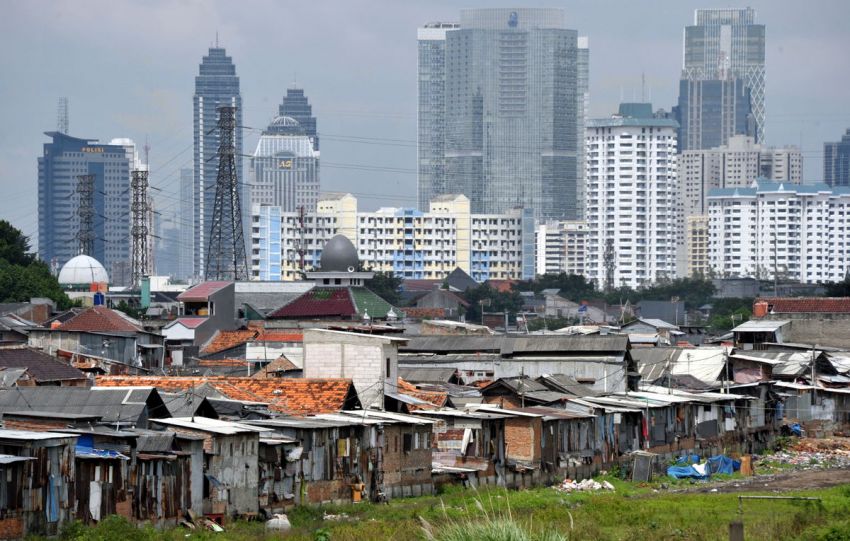
    Merton himself proposed Merton’s functional analysis model, which he got due to the development of a thorough knowledge of classical theories, including the work of Max Weber. Weber influenced Merton’s thinking regarding bureaucracy, thus making Merton more limited in viewing bureaucracy, as was Weber.

    As for the modern bureaucratic organization, according to Merton, it contains the following concepts:

    • bureaucracy is a form of social structure that is organized rationally and formally;
    • bureaucracy includes a pattern of activities with clear boundaries;
    • the actions that take place in the system are ideally related to the goals of the organization;
    • positions in the organization are integrated into the overall bureaucratic structure;
    • The existing statuses in the bureaucracy are arranged in a hierarchical arrangement;
    • Detailed rules limit obligations and rights in the bureaucracy;
    • authority lies in the position, not in the person;
    • the relationships that exist between people are formally restricted.

    The bureaucratic model, as described by Merton, can be illustrated in the form of large-scale organizations. For example, such as companies, universities, or academies.

    Merton’s functional analysis theory can be summarized in three postulates as available analysis, which he then refines individually. In summary, the first postulate is the postulate of the functional unity of society, which shows that the available unit of society has parts that work together in an adequate level of internal consistency without producing a prolonged unresolved conflict.

    The second postulate is the postulate of universal functionalism, assuming that all standardized social and cultural forms have their positive functions, which can establish a balance in the social system.

    The third postulate completes the trio of postulates of functionalism in the form of the postulate of indispensability; namely in every type of civilization, every habit, idea, material object, and belief all fulfill several essential functions and tasks that must be carried out so that they cannot be separated in the activities of the system as a whole.

    Put, in this third postulate, all aspects of society’s standards have a positive function and represent inseparable parts of the whole. This postulate leads to the idea that all structures and functions are functionally necessary for society.

  • Definition of Social Inequality: 3 Analysis of the Approach

    Definition of Social Inequality: 3 Analysis of the Approach

    What do you understand about the definition of social inequality? How the analysis can be used.

    Want to know the answer, let’s look at the following explanation and review and there are three analytical approaches that you can try to understand.
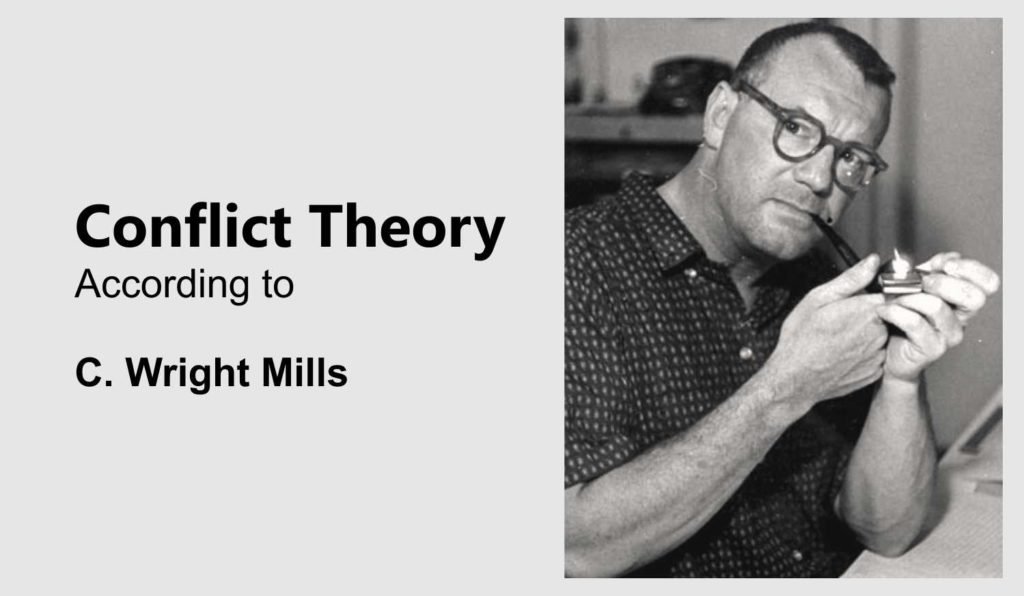
    Understanding Social Inequality

    What is the meaning of social inequality that you need to know, where social inequality is an imbalance.

    As well as social inequalities that occur in society. Where indeed this condition will cause a significant difference between the community.

    We can see this social gap in poverty, low levels of education, social problems related to criminal acts, and others.

    For example, in terms of the need for health, economy, employment, we can also see that there are many gaps there. Let’s see below.

    Analysis of Social Inequality Approach

    There are several approaches that can be used in conducting or analyzing or describing social inequality in people’s lives, namely:

    1. Historical Approach

    For those of you who want to understand social inequality, it is also obligatory to know the existence of social inequality that arises due to differences in life.

    Both in terms of social, economic, and political existence and we often encounter in the daily activities of people’s daily activities.

    For example, if you remember, in the 19th century, there was a great war in Europe, namely World War II.

    Where the occurrence of this war also brought many social changes to the lives of its people, and brought the destruction of most countries in the world to destruction.

    Now this destruction also causes and results in poverty, social inequality, and misery.

    2. Sociological Approach

    Of course, the gaps that occur in the world in particular have made some people restless and worried about these social problems.

    In reality, it can be seen how the lower and upper classes exist in people’s lives.

    Between the rich and the poor who increasingly show the gulf of difference so far. Where the distribution of wealth resources is increasingly not targeting the small community.

    It is precisely the upper classes who are closer to power who benefit from the various uses of this wealth.

    Poverty that occurs in Indonesia is an example of how social inequality appears to be real and compared so far when viewed, the control of these assets.

    Where it is said that a nation can be considered advanced if it has succeeded in improving the welfare of its people.

    However, as well as developed countries will be separated from the problem of poverty that has been faced by many countries.

    3. Juridical Approach 

    The social inequality that we see in the lives of the people around us is one thing that does not reflect the existence of justice.

    Moreover, the state should be able to provide welfare for all its citizens.

    However, in fact and reality, everything seems to be inversely proportional to what is happening in society today.

    But if we look at it, social inequality is still a concern for many people and is a scary ‘ghost’.

    So that’s a glimpse of the discussion and explanation as well as a review of the topic of Understanding Social Inequality: 3 Analysis of the Approach.

  • Conflict Theory According to C. Wright Mills

    Conflict Theory According to C. Wright Mills

    What are the views and understandings of C. Wright Mills conflict Theory? Let’s look at the explanation of conflict theory according to this one sociological figure. 
    Want to know more fully, how we view the conflict version of this critical figure, it is important to study. Let’s read.

    Understanding the Thought of C. Wright Mills

    There are several important figures in sociology who also gave their views on conflict, ranging from Karl Marx, Lewis Coser, Jonathan Turner, Ralf Dahrendorf, and many others.

    The discussion of conflict is indeed interesting to study. Moreover, in the community itself, there will certainly be various disputes and conflicts. 

    There are also those who say that conflict always leads to negative things. However, there are also those who say that conflict can lead to positive things.

    Indeed, there are many views and perspectives given by figures and experts on conflicts that occur in society.

    So on this occasion, we will briefly review the understanding of conflict from the character, namely conflict according to C Wright Mills.

    Charles Wright Mills is an American sociologist who was born in Waco Texas on August 28, 1916. 

    He died in West Nyack, New York, on March 20, 1962. Mills was indeed known as a radical thinker who was rich in ideas, open and courageous. 

    He is known as a sociologist who is intense in observing the reality of the state and power. 

    Then he is famous for putting forward a very famous theory, namely the power elite theory. 

    That’s a glimpse of a popular figure in sociology with his phenomenal works, in his thoughts and perspectives.

    So what do you think about conflict? Check out the explanations and reviews below, let’s read.

    Conflict Theory in the Perspective of C. Wright Mills

    Understanding C. Wright Mills’s thoughts on conflict let’s see, read the plan yes. 

    Mills said that to be able to create a good society on the basis of knowledge and its formation.

    It is the responsibility of the intellectuals to socialize liberally and support the revolution in Cuba.

    He also condemned the American reaction to the revolution in Cuba because he believed that the revolution in Cuba would unite revolutionary socialism and freedom. 

    The theme of the theme discussed in depth and specifically in Mills Sociology is the relationship between alienation and bureaucracy as well as the power of the elite.

    First, a Glimpse Understanding the Alienation of Bureaucracy

    According to Mills explaining the economic difficulties experienced by workers in the past have been replaced.

    Today by psychological dissatisfaction rooted in alienation. The workers of what they work for. 

    He views these workers who work in offices as apathetic, fearful and shaped by mass culture. 

    Where in modern society, those in power often use it covertly.

    With the aim of doing manipulation manipulation. Therefore, Mills argues that bureaucracy is synonymous with manipulation. 

    According to him, the rational system hides their power so that no one understands their calculations. For the biocracy, the world is an object of manipulation. 

    Second, Elite Group Power

    For Mills himself in America at that time, it was controlled by a group of ruling elites, which consisted of people who produced dominant positions in the field.

    Politics, military and economy. Where the three areas of power have a relationship with one another.

    Until the people in power in the field, work together to create a group of elites in power in America.

    It is therefore not surprising that a high-ranking military official could become a capitalist.

    Likewise, the head of government can apply his style of government like an army. Mills explained that he believed where power could be based on other factors.

    Indeed and not on mere ownership. However, it is the same interests of this elite group that have united them and sustained the economy.

    So, that’s just a brief overview of the basics that friends can read from the reference sources below. Then, what about conflict in a sociological sense? 

    Where conflict is defined as a social process between two or more people. In which one party excludes the other.

    By destroying it or making it helpless, and the weakness of a person or group of people. 

    Indeed, every element of society or policy makers will contribute to the conflict. 

    Yes, you may not realize it, the danger that threatens social disintegration in people’s social life. 

    Which will have an impact on the integrity of the country. Mills said conflict in society occurs because of differences in interests, and resources.

    He continues that social structures are created through conflicts between people with different interests and resources. 

    Moreover, at this time, sometimes the government’s position is often unstable, which is the main trigger for conflict in society. 

    The difference in interests between the community and the government in national development often creates an open conflict.

    Indeed, this social conflict usually occurs because of one party or group who feels that their interests or rights have been taken by certain parties. 

    In an unfair way, this term is known as surplus value in Karl Marx’s view. 

    In essence, society will not be separated from the existence of social dynamics and conflict. Especially in the process and social relations.

    There are bound to be disputes and conflicts that overshadow people’s daily lives. Thus conflict becomes a color in various human lives.

    So that’s a glimpse of understanding, explanations and perspectives or views on Conflict Theory According to C Wright MillsHopefully useful, fellow readers.

  • 13 Major Figures in Sociology and Their Theories

    13 Major Figures in Sociology and Their Theories

    Sociology is a social science that studies social behavior between groups and other groups or from individuals to other individuals. Humans are social creatures whose daily activities will always be related to social relationships. As a field of study, of course, the scope of sociology is very broad.

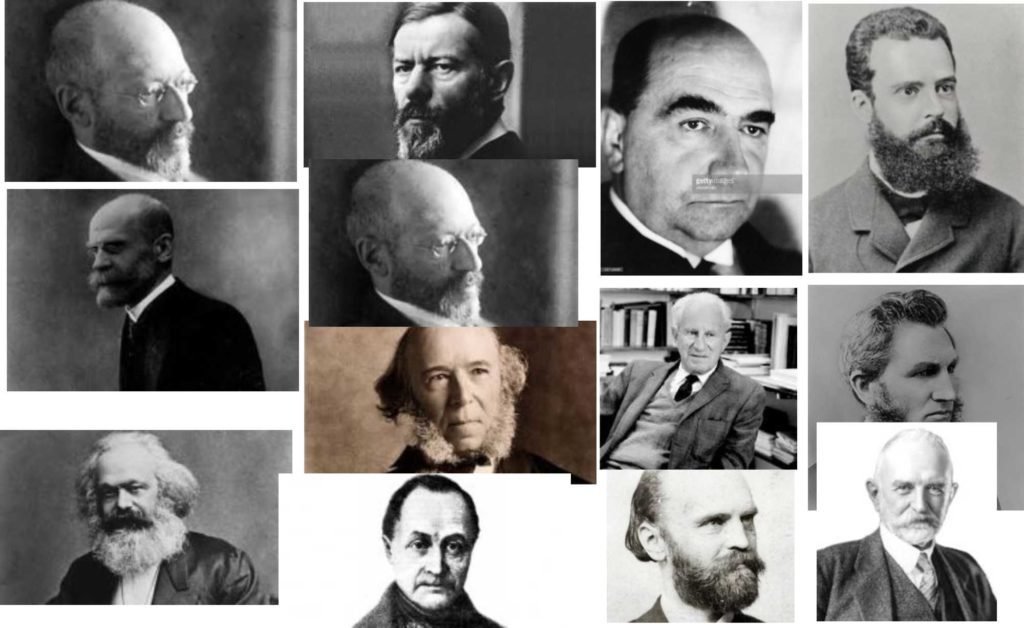
    Not only studying how people influence other people but also in other fields. In a field of study, of course there are figures in it who have a role in developing the field of science. So, here are some of the world’s Major Figures  in sociology, as follows:

    1. Auguste Comte (1798-1857)

    Auguste Comte is a French scientist who is also known as the Father of Sociology. The term sociology was first proposed by Comte in 1839. Here are some of the contents of Augustthe Comte’s theory as a figure in sociology:

    • Previously, the use of the term social physics was used which was adapted from Adholpe Quetelet used to denote statistical studies related to the phenomenon of minerals.
    • Then Comte transformed it into sociology which marked it as a new science for society.
    • Comte is a figure who adheres to the flow of positivism which is quite well known. These positivists believe that society is one part of nature which uses empirical research methods to apply social laws.

    2. Herbet Spencer (1820-1903)

    Herbet Spencer is a British philosopher and thinker of classical liberal theory that is prominent. Although most of his works write about politics, he is better known by the nickname “Father of Social Darwinism”. Spencer analyzed society as an evolutionary system. Some of the theories found in Herbet Spencer in his formulation as a sociological figure:

    • According to Specer, the main objects of sociology are family, religion, politics, industry, and social control. It also includes the local community, division of labor, associations, social stratification, science, and research on beauty and the arts.
    • In 1879, Specer put forward the theory of Social Evolution which is still in use today despite many changes.
    • Specer believes that society undergoes evolution, from what was originally a primitive society and then became an industrial society.
    • As an organism, humans evolved independently of their responsibilities and desires and under a law.

    3. Emile Durkheim (1859-1917)

    Durkheim talks more about collective consciousness which is used as a moral force to bind individuals in a society. Through his writings, The Division of Labor in Society, Durkheim uses a collectivist approach to an understanding if society can be said to be modern or primitive. This solidarity is in the form of shared values, customs, and beliefs.

    In primitive society, they are united by strong moral ties and have an intertwined relationship called Mechanical Solidarity. As for modern society, the collective consciousness is declining due to the existence of bonds with a complex division of labor and interdependence called Organic Solidarity, as follows from the political foundation of Emile Durkheim as a sociological figure which he formulated:

    • In his next work, The Role of Sociological Method, Dhurkeim explains the workings known as social facts, namely facts that come from outside the individual which can control the individual so that he can think, act, and has coercive power.
    • Social facts are divided into two, namely material and non-material. Furthermore, Durkheim was also able to prove that there is an influence between social facts and patterns of suicide.
    • This he concluded that there are 4 types of suicide, namely egoistic, altruistic, anomic, and fatalistic.

    4. Karl Marx (1818-1883)

    Karl Marx used the historical materialism approach to believe that the driving force of human history was class conflict. Marx argues that power and wealth are not evenly distributed in society, so that there are rulers who have the means of production which are always involved in problems by exploited workers.

    Marxist sociology explains more about capitalism in which the production of commodities can affect the overall pursuit of profit. This is because production values ​​have permeated all areas of life. The level of profit earned will determine how much service will be provided. This is what Marx meant if the economic infrastructure will determine the superstructure.

    The Marxist sociological approach does have a conclusion regarding the idea of ​​social reform which has been proven to be quite a brilliant idea in the twentieth century, here are the details.

    • Society is built on conflict
    • Society must be seen as a form of totality in the economy which is the dominant factor.
    • The basic driver of all existing social change is the economy.
    • Historical developments and changes do not occur randomly but can be seen from the relationship between humans and economic groups.
    • Individuals are indeed formed by society but can change society itself through rational actions based on scientific premises.
    • Working in a capitalist society can lead to alienation.
    • Through existing criticism, humans can understand and change the position of their own history.

    5. Max Weber (1846-1920)

    The theory put forward by Max Weber does not agree with Marx, which states that the economy is the main force of social change. From his work, “Protestant Ethics and the Spirit of Capitalism”, Weber argues that it is the revival of a certain religious view (Protestanism) that has brought society towards the development of capitalism. Protestants who have a Calvinist tradition claim that financial success is a major sign that God is on their side. So to get this sign, they will live a frugal lifestyle, be diligent in saving, and invest the profits in order to get a lot of capital.

    Another view of Weber is about individual behavior that can affect society at large, this is what is called Social Action. According to him, social action can be understood as long as we can understand ideas, intentions, values, and beliefs as a form of social motivation. This approach is called  Verstehen. 

    6. Georg Simmel (1859-1919)

    Georg Simmel is indeed famous for his work which explains the specifics of individual actions and interactions, for example on the form of interaction, types of interaction, prostitution, poverty, and problems on a small scale. In fact, Simmel’s works have become a reference for figures in sociology in America, and there are also some theoretical foundations, as follows:

    • One of his most famous works is on the Philosophy of Money. Simmel is known as a sociologist whose attitude tends to oppose modernization or who is known as a pessimistic vision.
    • This view is often known as Cultural Pessimism. According to him, modernization makes humans grow and develop without quality because they are stuck with their own rationality.

    In addition, monetization symptoms that take place in various aspects of life can in fact shackle the community, especially in terms of freezing individual creativity, even in this case it can change awareness. This is because money is a means of payment, but power can be a human liberator over humans. So that money is not only used as a tool but as a goal.

    7. Ferdinand Tonnies (1855-1936)

    Ferdinand Tonnies has studied the forms and patterns of social ties and the organization which results in social classification. According to Tonnies, society has the nature of gemeinschaft or gesselschaft. The gemeinschaft community is a society that has closed social relations, is valued by each of its members, and is based on social compliance and family relationships.

    • Meanwhile, the Gesselschaft community is a society that has faded familial relations, its social relations tend to be more impersonal because of the complicated division of labor.
    • This form of society can be seen in urban communities. Tonnies’ theory has finally succeeded in distinguishing between traditional and modern concepts in the social sphere by using gemeinschaft and gesselschaft.

    8. Herbert Marcuse (1898-1979)

    Herbert Marcuse, a German scientist who is also a member of the Frankfurt School, became famous in the 1960s due to his support for radical and anti-establishment movements.

    Here are some understandings found in Herbert Marcuse’s theory in his statement as follows:

    • Even Herbert Marcuse was nicknamed the “Grandfather of Terrorists” because of his criticism of capitalist society.
    • In his 1964 work, One Dimensional Man, he stated that capitalism creates false needs and consciousness and a mass culture which enslaves workers

    9. Leopold Von Wiese (1876-1949)

    Von Wiese, who is a scientist from Germany, stated that sociology is an empirical and independent science. The object of sociology itself is a study of the relationship between humans and other humans which is a social reality. So according to him the special object of sociology is a social process or social interaction. Subsequent research focused on the social structure which is the channel of human relations.

    The following is the meaning of the formulation and some important theories in Leopold Von Wiese’s character as a figure in sociology:

    • According to Wiese, sociology is research that focuses on the relationship between humans which is a social reality.
    • Wiese researched on the classification of social processes with an emphasis on associative and dissociative social processes.
    • The process categories are then subdivided into smaller processes.
    • Sociology must focus its attention on human relations without being associated with existing goals and rules. Sociology must also begin with observations of certain concrete behaviors.

    10. Antonio Gramsci (1891-1937)

    The Italian sociologist was one of the key thinkers of redefining the debate about class and power. His concept is about hegemony which discusses the complexity of modern society.

    The following are some of the theoretical foundations taught by Antonio Gramsi during his famous period as a figure in sociology:

    • Gramsci argues that the bourgeoisie have power not because of coercion but because of agreement, forming political alliances with other groups and working ideologically in order to dominate in society.
    • The idea of ​​hegemony (winning power on the basis of the consent of the people) is indeed an interesting thing because in reality individuals always have reactions and redefine the society and culture in which they are located.
    • Gramsci’s ideas did have a lot of influence on the study of popular culture.

    11. George Herbert Mead (1863-1931)

    George Herbert Mead Is one of the figures from the center of symbolic interactionism who has a picture of self formation or what is known as the stage of socialization in describing children’s growth. According to him, children’s growth consists of 3 stages, namely the play stage, the game stage, and the stage of taking the role of the other.

    • Humans will not react to the world around them directly, but they will react to the meaning associated with events or objects around them.
    • WI Thomas stated if the definition of a situation, where we can only act appropriately if we have determined the nature of the situation.
    • Failure when formulating a situation correctly and correctly can lead to unpleasant consequences.

    12. Lester Frank Ward (1841-1913)

    According to him, Sociology has a goal to conduct research on human progress. Lester Frank Ward himself distinguishes between pure sociology, which focuses on the origin and development of social phenomena, and applied sociology, which focuses on changes that occur in society due to human efforts. Ward stated that if humans developed from a low level to their current status, here’s the theory:

    Here are some of the theories found in Lester Frank Ward’s formulation of his becoming a figure in sociology:

    • Ward believed that ancient societies could be characterized by modesty and moral poverty.
    • Whereas in modern society it can be characterized by things that are more complex, happy, and get excess freedom.
    • Applied sociology includes awareness in using scientific knowledge that is used to be able to achieve people’s lives to be better than before.

    13. Vilfredo Pareto (1848-1923)

    According to Vilfredo Pareto, sociology is based on observations made on actions, experiments on facts and mathematical formulas. Society is a very balanced power system, the balance depends on the characteristics of human behavior and actions. And these actions depend on the desires and impulses that exist in humans.

    • Pareto is known for his criteria of economic efficiency, he is even recognized as the founder of sociology in the 20th century along with Durkheim and Weber.
    • The emphasis of Pareto theory is more on the legal roots that exist in sources that oppose orthodox rational analysis and its construction that justifies logic on non-logos foundations.
    • In his work entitled “The Mind and Society”, Pareto tries to refute the statement of Marxism by using the existence of the ruling class or what is known as the elite group.
    • Pareto stated that the elite did not need to get a position because of their economic supremacy and social and political changes could occur due to the circulation of the elite which was not supported by economic factors.

    So, those were some of the figures in world sociology and their theories that were quite famous and influential. Some of the existing theories are still used today even though they have changed according to the existing era. And of course these theories are very helpful in the development of sociology to this day. Hopefully the above information can be useful for you.

  • Factors Causing Social Change: Internal and External Factors

    Factors Causing Social Change: Internal and External Factors

    Social change occurs because of a mismatch between social elements in society, which are different. Because of social changes, people will create a new pattern of life that is different from the previous one.

    Social change is unavoidable in social life and will continue to occur throughout time. This is because humans are intelligent, social creatures and always dissatisfied with the existing conditions, so they make changes.

    From the point of view of sociological studies, the nature of social change is understood as the desire of each individual to always change so that the situation becomes better according to his needs.

    Therefore, the scope of social change is also vast, so it is necessary to observe this phenomenon. Observations were made by comparing the community’s living conditions after social changes occurred and before.

    Selo Seomarjan formulated the notion of social change as a change in social institutions in a society, which can affect the social system, including values, attitudes, and behavior patterns among groups in that society.

    Based on the above definition, social change can occur in the social system, structure, and function of society within it.

    Meanwhile, according to Kingsley Davis, one of the most prominent 20th-century American sociologists, the notion of social change is the changes that occur in the structure and function of society.

    For example, the emergence of labor organizations in capitalist society has triggered changes in the relationship between workers and employers and, in turn, led to changes in economic and political organization..


    Examples of Socio-Cultural Changes in Society

    All humans and community groups will definitely experience changes in their daily lives, including static community groups where environmental changes run more slowly than in dynamic societies.

    This change can occur in all aspects, both narrow aspects such as individual behavior and thinking. As well as in broader aspects such as structures that affect developments in social life.

    Social changes in society are also inseparable from cultural changes. William F. Ogburn stated that the scope of social change includes elements of culture, both material and non-material.

    However, the emphasis is on the significant influence of material elements of culture on non-material elements.

    Cultural change occurs in the elements of human culture, either in the form of artifacts, objects, or ideas. This cultural change is heavily influenced by modernization or technology, which causes symptoms of social change in society.

    For example, the sociocultural changes that occurred after the presence of smartphone and internet technology. Various aspects of human life are made easier by this new technology.

    One of the impacts of changes seen due to the emergence of smartphone and internet technology is in the trade sector.

    In the past, when you wanted to buy goods, transactions would be made at the shop where the goods were sold. As for now, only with a smartphone and internet access people can buy and sell goods online without the need to move from their seats. Ordered goods can also arrive at your home by courier delivery services.

    In conclusion, the presence of Internet and smartphone technology causes major changes in the trade sector, one of which results in cost and time efficiency.

    Another example of sociocultural change occurs in financial transactions. Changes in the electronic field as a symptom of modernization have had an impact on remittance activities.

    In the past, money was sent via money orders; now, people can send money via ATM, internet banking, or sms banking. The current money transfer process can be done quickly and easily so that there is efficiency, at least in terms of time.


    Factors Causing Internal and External Social Change

    Sociocultural changes in society can occur if triggered by certain factors. The factors that cause sociocultural change can be grouped into two categories: internal and external.

    A. Internal Factors Triggering Socio-Cultural Change

    Sociocultural changes in society can occur if triggered by certain factors. The factors that cause sociocultural change can be grouped into two categories: internal and external.

    1. Changes in Population (Population)

    Increasing or decreasing population in an area causes social changes both in the destination and abandoned areas.

    For example, when the inhabitants of the island of Java moved to the island of Borneo. So, on the island of Kalimantan, there will be changes in the structure of society, especially its social institutions, in the form of rules and norms. Meanwhile, in Java, there will be a reduction in population which affects the division of labor and social stratification of social institutions.

    2. New Inventions or Innovations

    The birth of new discoveries and innovations greatly affects the changes that occur in society. For example, the invention of the Internet made it easier for people to access information.

    3. Social Conflict

    The social conflict between community groups can encourage social change. For example, conflicts that occur between local residents and residents outside the area make it difficult for local residents to accept the presence of residents from other areas in their territory.

    4. Rebellion and Revolution in Society

    The rebellion occurred because of the people’s dissatisfaction with the government’s power system. This can trigger the emergence of a revolutionary movement that will bring about major changes in society.

    B. External Factors Triggering Socio-Cultural Change

    External factors are factors that cause social change that come from outside the community. The external factors consist of three.

    1. Changes in the Natural Environment

    Environmental changes occur due to natural disasters such as floods, earthquakes, tsunamis, hurricanes, and so on. In this category, including environmental changes due to natural destruction by humans, it is one of the factors causing social change.

    This condition forces people to evacuate and move places. There will be social changes in the new place, both from social institutions and the surrounding environment.

    2. War

    The war won by the opposing side can cause social changes in the region that was defeated. The new policies of a victorious government enacted could be the cause of this change.

    3. The Influence of Other Community Cultures

    The entry of foreign cultural influences into an area through the process of cultural exchange and mass media can affect the indigenous culture of the region.

    the influence of foreign cultures can trigger cultural assimilation and acculturation that give birth to social changes in society.


    Pushing & Inhibiting Factors of Socio-Cultural Change

    Like what happens in a process, there are several driving and inhibiting factors for social change in society. These factors can trigger a process of social change to be faster or vice versa.

    A. Factors Driving Socio-Cultural Change

    1. Contact with other cultures
    2. Respect for the work of others
    3. Advanced education system
    4. Desire to progress
    5. Heterogeneous population
    6. Dissatisfaction with certain areas of life
    7. Open layering system
    8. Orientation to the future

    B. Inhibiting Factors for Socio-Cultural Change

    1. Lack of relationship with other communities
    2. Traditional society
    3. Low education
    4. Strongly entrenched interests
    5. Fear of unsteady integration
    6. Bad prejudice against foreign cultural elements
    7. Ideological barriers.

  • Social Conflict Theory According to Max Weber

    Social Conflict Theory According to Max Weber

    Max Weber views social stratification in society as influencing the emergence of social conflict.

    Social interactions involving relationships between individuals in society will bring about two side effects of the coin, associative and dissociative. Associative impact will make their relationship closer. On the other hand, the dissociative impact of the relationship becomes more tenuous.
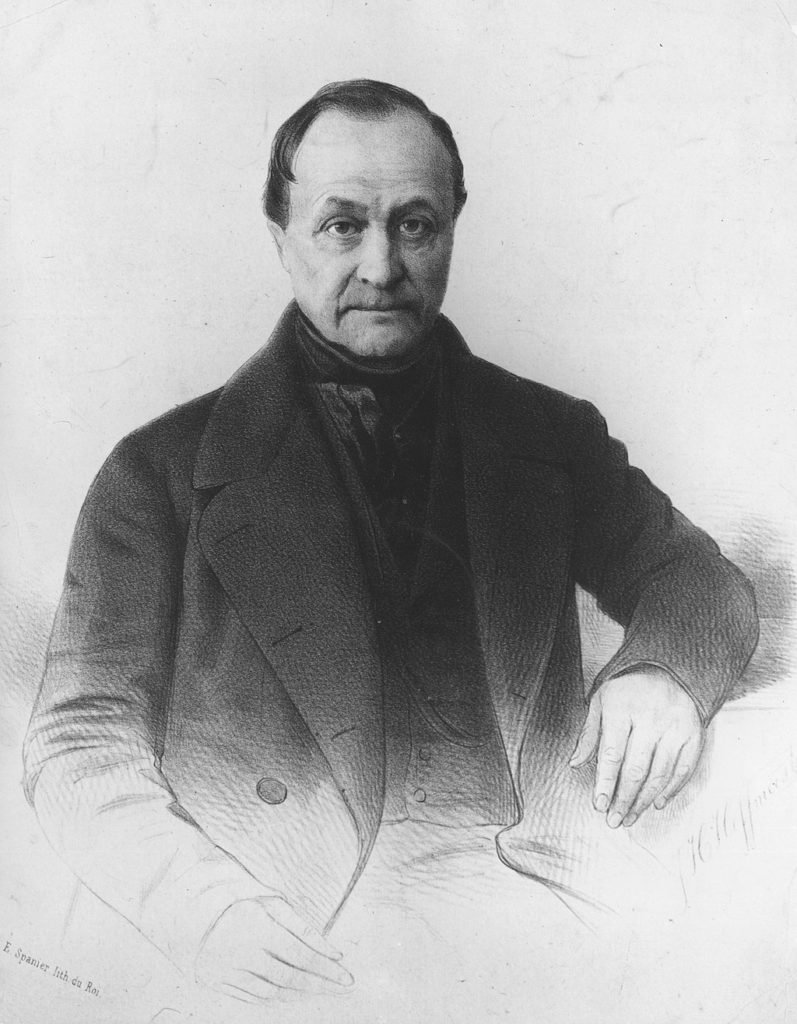
    The sparse relationship between these interactions can lead to social conflict. The main cause is differences in society with various triggers such as cultural differences, unequal interests, social changes that are too fast, to differences in thinking between individuals.

    Max Weber’s Theory of Social Conflict

    Several experts research on social conflict, one of which is Max Weber. According to Weber, conflict arises from the existence of social stratification in society.

    Each of these stratifications is a position worthy of being fought for by humans and their groups. Social relations are an attempt to get a high position in society.

    In his theory of conflict, Weber argues that power has significance for every type of social relationship. Power becomes the driving force of social dynamics that places individuals or groups to be mobilized or mobilized.

    As a result of power and interests, it can simultaneously lead to conflict. This social conflict generally occurs in a combination of the interests of each social structure that gives rise to the dynamics of the conflict.

    Weber’s theory does not discuss conflict theory specifically. Weber attempted to analyze the relationship between social movements and conflict. For him, social movements can lead to conflicts such as those experienced by society during the French Revolution.

    Social Conflict Theory According to Other Expert

    The founder of the famous conflict theory is not only Max Weber. There are still Karl Marx and George Simmel who put forward their respective theories of conflict. In fact, between theories are also “conflicted” because of differences in views such as the thoughts of Karl Marx and Max Weber.

    Conflict theory according to Karl Marx states that social change arises because of a conflict which ultimately results in a different compromise from the initial state. Society will be divided into two classes, namely the capitalist class (bourgeoisie) and the working poor class (proletariat). They are conflicted because of the different nature of the two.

    the conflict between the bourgeoisie and the proletariat cannot be separated from the implementation of capitalism by the bourgeoisie. Capitalism is an economic system that allows some individuals to control vital productive resources. The bourgeois class uses this access to achieve maximum profit by utilizing the services of the proletarian class as laborers.

    Max Weber refuted the opinion of Kari Marx’s conflict theory regarding historical materialism. The historical materialism in Marx’s opinion only emphasizes attention to one side of class. According to Weber, a balance is needed by also emphasizing the role of the idea factors that cause historical change.

    Weber focused on understanding the growth of the rational capitalist system in the Western world on a large scale. On the other hand, the capitalist system did not experience much development in the East and was not liked. Weber argues that the void of religious transformation in the East is an obstacle to the development of capitalism in the region.

  • What is Positivism, A Sociological Theory of Auguste Comte

    What is Positivism, A Sociological Theory of Auguste Comte

    Auguste Comte (1798-1857) was a French philosopher who is often referred to as the founder of sociology. He also introduced the term “Sociology”. The term was first introduced in 1838 in his book Cours De Philosophie Positive .

    In his work, Comte explained that the word “sociology” comes from the Latin “socius” which means “friend or friend”, and “logos” which means “science”.

    Thus, sociology is a branch of science that studies society, including community behavior, and human social behavior by observing the behavior of the groups it builds. These groups include families, ethnic groups, countries, and various political, economic, social organizations.

    Three Stage Theory by Auguste Comte

    Through this book, Comte introduced the stages of intellectual development, each of which is a development from the previous stage.

    The three stages include:

    a) Theological stage , namely the level of human thinking that all objects in the world have a soul and it is caused by a power that is above humans;

    b) Metaphysical stage , which at this stage humans assume that in every symptom there are certain forces or cores that will eventually be revealed; and

    c) Positive Stage , namely the stage where humans begin to think scientifically.

    The last three stages of intellectual development, or the Positive Stage , eventually brought people to know his famous thought: Positivism.

    Recognizing Positivism

    In science, positivism is a form of thought that emphasizes the factual aspects of knowledge, especially scientific knowledge. Generally, positivism describes factual statements on a basis of perception (sensation).

    In other words, positivism is a school of thought which states that the natural (empirical) sciences are the only true source of knowledge and rejects the cognitive value of philosophical or metaphysical studies.

    According to Anthony Flew in A Dictionary of Philosophy (1984), when viewed from the origin of its development, positivism is a philosophical understanding in the flow of the Galilean tradition that emerged and developed in the XVIII century. Comte himself has tried to use the Galilean paradigm to explain human life in society.

    According to Comte, the concepts and methods of natural science can be used to explain human collective life. Furthermore, it is said that human life also occurs under the imperative of the law of cause and effect with all the conditions and probability factors.

    As events in the universe are subject to universal laws, Comte stated that human life can always be explained as a process of actualizing the law of cause and effect. Every event or action in human life that is casuistic can always be explained in terms of rational and natural cause and effect and is therefore scientific .

    According to him, every action cannot be interpreted from the substance in the form of its own moral-altruistic and metaphysical intentions and goals. Because, that is something that can be considered unscientific (unscientific) .

    Pros and Cons of Positivism

    As a thought, positivism has its advantages and disadvantages.  positivism has advantages and disadvantages as follows:

    a.) Strengths

    • Positivism produces a knowledge in which humans will be able to explain the reality of life not speculatively, but concretely, definitely, absolutely, regularly and validly;
    • With progress and with a spirit of optimism, people will be encouraged to act actively and creatively, in the sense of not only gathering facts, but also predicting the future;
    • Positivism has been able to push the pace of progress in the physical and technological sectors;
    • Positivism places great emphasis on rational-scientific aspects, both in epistemology and ontological beliefs that are used as the basis of their thinking.

    b.) Weaknesses

    • Biological analysis which is transformed into social analysis is considered as the root of the decline of spiritual values ​​and even human values. This is because humans are reduced to a physical-biological sense;
    • Man will lose meaning, art or beauty, so man cannot feel happy and pleasure does not exist;
    • Just stop at something that is visible and empirical so that it cannot find valid knowledge.
  • Understanding Pierre Bourdieu’s Theory: Habitus and Examples of Social Phenomena

    Understanding Pierre Bourdieu’s Theory: Habitus and Examples of Social Phenomena

    Pierre Felix Bourdieu’s theory of thought can be easily remembered by the composition of social practice, namely (Habitus X Modal) + Realm = Practice.

    Pierre Felix Bourdieu’s thoughts give us a reflection to understand social phenomena which we ourselves unconsciously make habits or Bourdieu calls Habitus. 

    Now, for the theoretical formula of Pierre Felix Bourdieu’s thought, we can easily remember the composition of social practice, namely (Habitus X Modal) + Realm = Practice.

    In this first article, we will briefly discuss Habitus written by Pierre Felix Bourdieu, let’s see!

    A Brief Introduction to the Sociological Figure Pierre Felix Bourdieu.

    He was a philosopher, anthropologist and sociologist whose work had a major impact on the social sciences in the second half of the 20th century.

    Bourdieu also became one of the leaders of cultural sociology. Bourdieu’s thought was influenced by thinkers such as Aristotle, Thomas Aquinas, Hegel, Marx, Durkheim, Max Weber, Picasso, Franz Fanon, Jeane Paul Sartre, Huserl, Sausure, Levi Strauss, Wittgenstein, Martin Heidegger, and Michel Foucault.

    Then, Bourdieu gave the concept of practical theory which people are familiar with with the formula (Habitus X Modal) + Realm = Practice. He provides a new thought formula called the structuralism-constructive method. 

    Through this method, he synthesizes a theory that emphasizes structure and objectivity with a theory that emphasizes the role of actors and subjectivity.

    His thoughts have an influence in the field of social science, especially in cultural studies. The theory that he put forward is known as the theory of practice.

    Practical theory is a blend or mixture of agent- or actor-centered theory with structure-centered theory in shaping social life. 

    Understanding Pierre Bourdieu’s Thoughts on Habitus. 

    Humans as social beings certainly cannot be separated from the process of social interaction and communication between individuals, as well as between community groups.

    This social interaction and communication occurs when humans are born, which begins with the process of internalizing the prevailing values ​​and norms. Where we ourselves run the habitus without us knowing it. 

    Then, how does Bourdiue define habitus? Well, here’s Sociology Info quoting from the Journal of Cultural Studies (2016) Volume I No. 2: 79-82, Pierre-Felix Bourdieu Theory Research Report by Mangihut Siregar Udayana University, the following is the review: 

    For Bourdieu habitus is a system through a combination of objective structures and personal histories, enduring and changing dispositions that serves as a generative basis for objectively structured and integrated practices. Understanding the concept of habitus is the key in Bourdieu’s theoretical synthesis. 

    Where Habitus is a process of internalizing various socio-cultural values ​​and a sense of the game (feel for the game) that gives birth to various movements that are adapted to the game being played. Habitus is the result of internalizing the structure of the social world, or the inner social structure. 

    Habitus is a historical product that is formed after humans are born and interacts with society in a certain space and time. Habitus is not innate or natural but is the result of learning through parenting and socializing in society. 

    The learning process is very subtle, unconscious and appears as a natural thing. Individuals are not completely free agents, nor are they passive products of social structures. Habitus is closely related to the field, because the practices or actions of agents are habits formed by the field, so that habitus is understood as a cultural action. 

    Bourdieu’s theoretical approach is to illustrate that what a person says and does in his life is basically something other than his desires or just from social and material structures. 

    Individuals in their actions are influenced by the structure or the collective/social. The existing structures in society are internalized by social actors so that they function effectively. Internalization takes place through parenting, play activities, and also education in the community both consciously and unconsciously.

    At first glance, habitus seems like something natural or a gift, but it is a construction. Actors or agents in acting are not like puppets or machines that move when someone orders them. Agents are individuals who are free to move according to their wishes. 

    On the one hand, the agent is an individual who is bound in a collective/social structure, but on the other hand, the agent is an individual who is free to act.

    This synthesis and dialectic between the objective structure and subjective phenomena is known as habitus. The result of the dialectical relationship between structure and agent is seen in practice. Practice is neither objectively determined nor free will.

    Habitus that exists at a certain time is the result of long-lasting collective life. Habitus can last a long time but can also change from time to time. Habitus produces and is produced by social life, meaning that habitus is a social structure and habitus is a structured structure. 

    Thus Bourdieu defines habitus as a durable, transposable disposition system that serves as a generative basis for objectively structured and integrated practices.

    Examples of Social Phenomenon of Society.

    Habitus is a habit that is inherent and repeated by humans in their daily lives. 

    We can see this habit in the behavior and actions taken, such as village communities who are used to mutual cooperation activities, helping when there is a celebration or rewang. 

    Well, we can see how this habit has been ingrained for a long time, so that it becomes a habit that is carried out continuously and repeatedly. 

    Thus, we can form the habit by ourselves without us realizing it. That is when we look at the village community who have been instilled in the values ​​of gotong royong as a habit that has been ingrained for a long time.

    What else can we see in giving examples of habitus? Well, for example in students, students who they familiarize themselves as students and students by learning, behave according to the values ​​and norms as well as their obedience in being students and students. 

    Such as coming on time, doing assignments well and maximally, and applying teachings that are in accordance with existing values ​​and norms. This is where there is a process of social interaction and communication that builds the habitus by continuously repeating these patterns. 

    Well, for examples and analysis of social phenomena in society, yo

  • Erving Goffman’s Theory of Dramaturgy, This is the Latest Explanation and Examples

    Erving Goffman’s Theory of Dramaturgy, This is the Latest Explanation and Examples

    Erving Goffman’s Dramaturgical Theory. The following are explanations and examples of social phenomena in everyday life that we may often encounter.
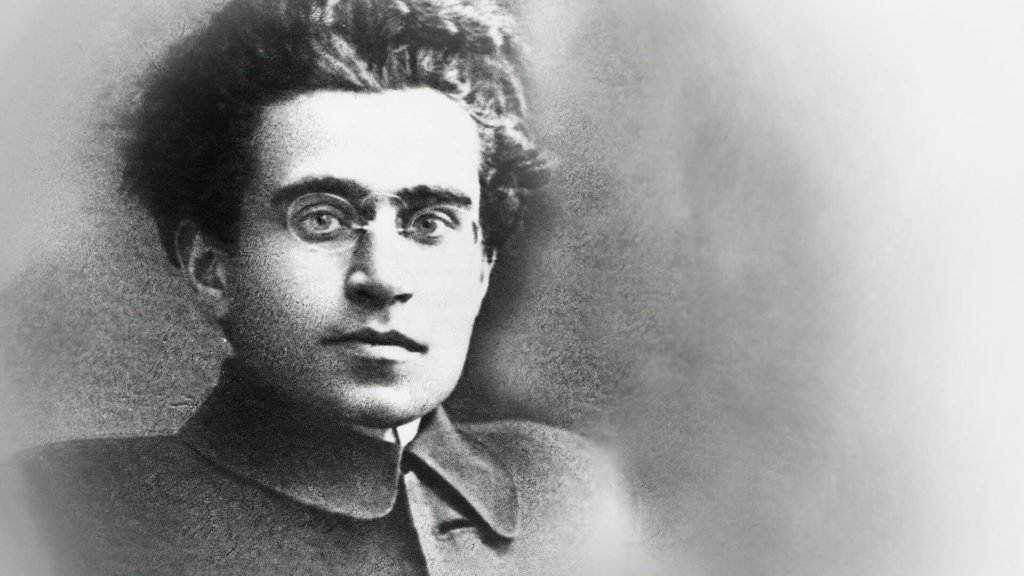
    The existing social life is part of the play. This explanation of Erving Goffman’s Dramaturgy Theory will explain how we understand the play.

    The following are explanations and examples of social phenomena in everyday life that we may often encounter.

    Get to know Erving Goffman, this is his explanation about dramaturgy

    Erving Goffman, is a character who is familiar to some circles. Especially for those who belong to academics, students, or students. Erving Goffman was born in Alberta, Canada June 11, 1992. 

    He was a major Canadian-American sociologist who played an important role in the development of Modern American sociology. 

    An academic who graduated from the University of Chicago, he is known as a member of the Chicago school and as a theorist of symbolic interactionism. He made a theory that is dramaturgy. 

    Dramaturgy theory is widely used for various research purposes, scientific papers, and learning materials. 

    Dramaturgy comes from English, namely “dramaturgy”, from the word “drama” which means the art or technique of drama in the form of theatre. 

    According to Goffman (1959), dramaturgy is a play of life presented by humans. Dramatic situations that seem to occur on stage as illustrations to describe individuals and their interactions in everyday life. 

    So it can be concluded that dramatugy is a view of social life as a form of storyline for drama performances in a stage. 

    (Melati, 8: 2016) explains that dramaturgy is a theory that can interpret the daily life of humans. 

    Humans are like playing a show on stage. The stage consists of a front stage and a back stage. 

    In the front stage there are settings and personal fronts, which can then be divided into appearance and style.”

    Examples of Understanding Dramaturgy Theory in Everyday Life

    Now our discussion this time, how dramaturgy theory is very relevant and closely related to our daily lives. 

    I’ll just give an example with a student, his name is Farhan. Farhan is a student, he also participates in several organizational activities. When you want to go to campus, canteen, library.

    Or other campus facilities, he must adjust himself as best he can, dress like a student, bring books, pens, and laptops. The attitude that he formed is called dramaturgy. 

    Farhan as an individual plays his role as a student, he goes to campus with books, pens, and laptops to support his studies. 

    Besides that, he embellished himself by wearing student-like clothes (with his fashion sense). 

    Farhan as an individual student is he who is characterized above when interacting and dealing with the community, especially with the campus community. This social life is the object of the front stage or front stage. 

    When Farhan is at home, rented, or in a boarding house, he is a different individual or is rarely highlighted. Such a situation is called a back stage or (behind the stage / screen). Like a theater stage, event studio, or shooting location. 

    The actors who are on the back stage, of course, do different things when on the front stage, they can relax and be themselves when they are behind the screen. 

    Likewise Farhan, in the back stage condition Farhan did things he didn’t do when he was on campus, it could be a habit that is not pleasing to the general public. 

    So don’t be surprised if you see a different friend when in a formal environment such as an office, campus, or school with him when in a non-formal environment such as a home, cafe, or other place. 

    Consciously or not, he is applying dramaturgy theory. Maybe, subconsciously you also apply it, hehehehe.

    What are the Benefits of Learning to Understand Dramaturgy Theory

    This theory is very useful for us to be able to position ourselves according to the existing situation. 

    We become wiser and understand how to look when we meet important people such as officials, work clients, lecturers, or our own friends. In a formal situation, we must understand how the policies and values ​​and norms exist in that situation. 

    For example, when you are attending a webinar held by a government institution. From the committee’s policy, it is stated in it, namely “invited guests, committee.

    And participants are prohibited from eating, drinking, and smoking during the event, “so automatically you who get a position as a participant must of course heed this order. 

    When you violate it, you are considered unethical and labeled impolite. If this continues, it is feared that it will become a habit. 

    There is nothing wrong with a habit or a habit, the benchmark for which is whether it is a good standard or a bad one. 

    Therefore, we must be able to position ourselves as best we can, don’t make it a habit when we are on the back stage (house, rented house, boarding house, hangout) brought to the front stage (workplace, campus, and school). 

    On the other hand, dramaturgy theory conveys a message that it is not too easy to judge people’s appearance. Humans still have two sides, nice personality or bad personality. 

    The good and bad of an individual is seen by the public, it depends on himself and depends on the values ​​and norms of his environment. Life is indeed drama, acting, and personal branding. 

    The effect given later will be felt again, as the saying goes “what you sow, that’s what you reap.” 

    So always consider if you want to appear in front of the audience with the thoughts you have, Are these thoughts or ideologies in accordance with your conscience? 

    Are you able, if what you do becomes a problem in the public? And when do you want to start? 

    Questions like that often cross our minds, I personally do too. When you are ready, please go ahead. 

    Do not procrastinate too long due to insecurity and validation of people. The point is, don’t forget to always read books, listen to criticism and advice, and look at your surroundings. 

    That way when applying dramaturgy theory, we can become more realistic, critical, and unselfish people.

    Reference sources :

    (Melati, 2016)Melati, MR (2016). ANALYSIS OF ERVING GOFFMAN’S DRAMATURGY CONCEPT IN PATTERNS OF USE OF PUBLIC SPACE BY STUDENTS IN THE CITY OF SURAKARTA. Thesis, III(2), 2016.

    https://cubic.id/journals/dramaturgy-theory, accessed 27 June 2021

  • Who is Antonio Gramsci ?

    Who is Antonio Gramsci ?

    Antonio Gramsci was an Italian intellectual and politician who founded the Italian Communist Party and contributed to the idea of ​​communism in Italy. He was born in Ales, Italy on January 23, 1891.
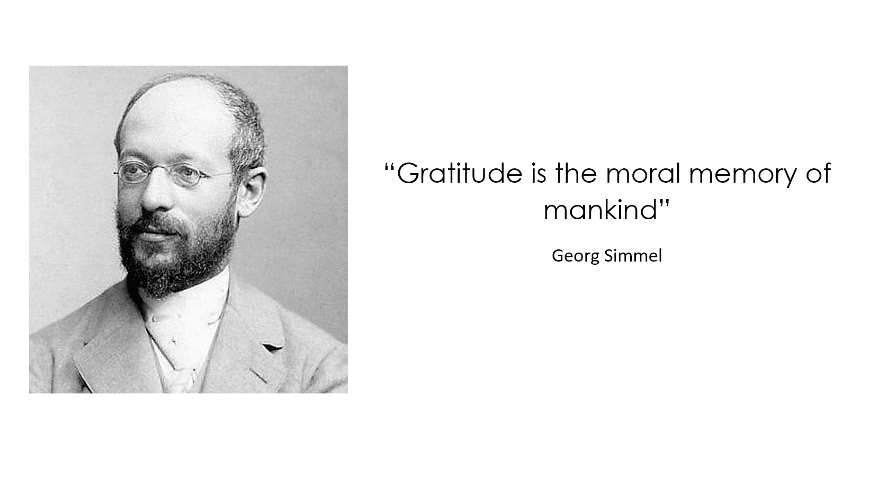
    In 1911, Gramsci began his academic career at the University of Turin. He also joined the Socialist Party, and was associated with the Federation of Young Socialists.

    Gramsci formed the left in the socialist party and encouraged the development of factories.

    Gramsci led a leftist movement in a congress in Livorno with the aim of founding the Italian Communist Party and spent two years in the Soviet Union.

    When he returned to his home country, he became leader of the Italian Communist Party, and was elected to the council.

    However, his party was banned by Benito Mussolini so he was arrested and imprisoned. While he was imprisoned, instead he undertook a historical and theoretical study of Italian society and strategies for change.

    The ideas of Gramsci’s imprisonment at that time became the basis of ideas for figures, such as Robert Cox, Stephen Gill, Joseph Femia, and Robert Gilpin.

    In Gramsci’s perspective, it is different from the realism perspective which assumes that the state is the only actor who has an important role, and prioritizes the concept of national interest.

    Whereas in Gramsci’s theory focuses on hegemony. Gramsci’s perspective seems to be a sign to move away from the international order.

    Hegemony defined by Gramsci is a conscious obedience to one’s power, the power that is built in Gramsci’s perspective does not come from coercion or violence but rather from a control.

    Hegemony itself is born from the practice of approval or subjugation. If a group wants a win in agreement, it must be able to create historical blocs,

    According to Gramsci, to hegemony a group, it is necessary to have an ideology that has a material basis and is supported by an intellectual.

    For Gramsci, everyone is basically an intellectual, but not everyone has an intellectual function in social life.

    Gramsci changed the meaning of hegemony from strategy to a concept, such as the Marxist concept of forces and relations of production, class and state.

    Gramsci extended  his idea of ​​leadership as a condition for gaining power in  a group.

    Through his work, Gramsci emphasizes the concept of hegemony by explaining that “hegemony is a consensus organization.” And in several paragraphs of his Prison Notebook he uses the word leadership interchangeably with hegemony and opposite domination.

    In Gramsci’s sense, the word hegemony must be distinguished from the meaning of the original word, namely the domination of a nation over another nation.

    Gramsci emphasizes that the concept of hegemony focuses more on the human side. He also said consensus with spontaneity because it is psychological.

    Gramsci’s thought emerged as an alternative to the approach to the theory of social change which was previously dominated by class determinism and Marxist economics.

    Hegemony is built on the prestige of the importance of ideas and the inadequacy of physical strength alone in social and political control.

    According to Gramsci, in order for those who are controlled to obey the ruler, those who are controlled must not only have and internalize values ​​and norms.

    REFERENCE

    HI admin. (2013). Antonio Gramsci On The Crisis and The Rise Of Global Capitalism. Retrivied from https://hi.fisipol.ug.ac.id/riset-iis/antonio-gramsci-about-krisis-dan-kebangkitan-kapitalisme-global/

    Ali, Zezen Zaenudin. (2017). Hegemony Thought Antonio Gramsci (1891-1937) in  Italy. Yaqhzan,3(2). Retrivied from  https://syekhnurjati.ac.id/jurnal/index.php/yaqhzan/article/download/5482/2544

    Siswati, Endah.(2017).Anatomy of Antonio Gramsci’s Theory of Hegemony. Journal of Translitera , eds. 5.1-33. Retrivied from https://core.ac.uk/download/pdf/230839469.pdf

    The Editors of Encyclopedia Britannica. (1998). Biography of Antonio Gramsci. Retrivied from https://www.britannica.com/biography/Antonio-Gramsci

  • Georg Simmel: Sociology Without Sociologists

    Georg Simmel: Sociology Without Sociologists

    Who is Georg Simmel?

    Georg Simmel was born in Berlin on March 1, 1858 and died on September 26, 1918 in Alsace, Strasbourg.

    Although now known as one of the classic sociology figures, Georg Simmel’s academic career is arguably not as big as his work which is still often used as a reference.

    Simmel was a sociologist who was formally alienated, but had a profound influence on some of the intellectuals who had been his students.

    Some of them are Albion Small, George Herbert Mead, Robert Park, and WI Thomas.

    Simmel was also a colleague of some of the great thinkers of his time such as Max Weber and Wilhelm Dilthey.

    Seeing Georg Simmel’s intellectual contributions in the field of sociology, he is undoubtedly one of the most influential intellectuals in Europe and America. His name may be less heard in other parts of the world, but some of Simmel’s concepts are well known.

    Sociological studies of social networks and social interactions that are now popular often place Simmel’s work as the theoretical foundation.

    Georg Simmel was descended from a Jewish family, the last of seven children. Despite his Jewish heritage, Simmel as a young man changed his religious affiliation to become a Protestant.

    At that time in Germany it was not uncommon for a child to convert from Judaism to Protestantism. Affiliation to Judaism is considered to be a barrier to one’s career, especially in 19th century Germany to the early 20th century.

    In 1876, Simmel began studying history and philosophy at the King Fredrick William University. At the age of 23, Simmel received an academic degree after successfully defending his dissertation on Kantian philosophy.

    Georg Simmel began his career as a private lecturer in Berlin, teaching ethics, philosophy, sociology and social psychology for a fee depending on the audience.

    Simmel’s lectures were famous for being fashionable and attracted many guests from Berlin’s intellectual circles. His colleague Wilhel Dilthey of the philosophy department repeatedly sponsored Simmel for a full professorship.

    Although universities and faculties have the authority to apply for full professorship titles, the decision rests with the state through the Prussian ministry.

    In the end Simmel earned a professorship but not full. Its powers are limited to teaching and the use of degrees. Recruiting students and guiding students is not his authority.

    This limitation is indicated for two reasons. First, his race is of Jewish descent. Second, the sociology that Simmel taught was considered anti-positivist, a school of thought that was considered a threat to the stability of the country at that time. Simmel taught sociology without formal support as a sociologist.

    Contribution in Sociology

    Some of Simmel’s important contributions to sociology and other social sciences include elaboration in an attempt to answer the question, “What is a gesellschaft?”

    In his essay in the book Soziologie (1908), Simmel argues that sociology is not a science, but a methodology. Sociology is a methodology for exploring the ongoing process of socialization.

    The concept of socialization described by Simmel is now more often referred to as social interaction. As a methodology, sociological research data comes from other disciplines, such as psychology and anthropology.

    One of the important concepts that Simmel coined in sociology is formen or forms. The use of the concept of formen makes it possible for the social world to be understood.

    According to Simmel, all people in this world interact, and through forms , these interactions can be categorized. Georg Simmel looked at the task of sociology to identify categories and types of social interaction. Formen can be defined as a process of sociation, namely the process of socially categorizing reality.

    For example, in a society there is a leader and several followers. The relationship between the leader and the follower forms a certain pattern of interaction.

    For example, when a follower meets a leader, he kisses the leader’s hand as a form of respect or courtesy or whatever his name is. Kissing hands is a form of interaction.

    This form of interaction can be understood through formen , namely the categorization between leaders and followers.

    We can also identify which leaders are followers when we see the kissing scene. Thus the social world can be understood according to Simmel.

    Other concepts that are also important and are also considered as the theoretical foundation of the concept of network society are dyads and triads.

    The concept of dyad describes two entities that are bound to each other. While the triad is three or more entities that are bound to each other. Dyad and triad are two concepts that determine how the formen process takes place.

    Dyad is a unique concept because it consists of two entities or let’s call it two people, where without one of them, the form of interaction can be lost. For example, I can argue with you, but if you leave, I can’t argue anymore.

    While the triads are different. Triads form formations with different processes because interactions can still take place dynamically even though several people come and go.

    For example, three students eat in the cafeteria while chatting. When one said goodbye to take fried food, the others were still able to chat.

    Interaction can still exist. An easy-to-understand illustration of the difference between a dyad and a triad is a ball and chess match.

    When a player gets a red card, the ball game can still be continued, but not chess. The concepts of dyad and triad can explain interaction patterns in more complex contexts, such as urban communities and network communities.

  • Impact Of Social Mobility: Positive And Negative

    Impact Of Social Mobility: Positive And Negative

    There are many impacts caused by the existence of social mobility. What are the impacts of social mobility and how to respond to these positive or negative impacts? let’s learn together here.

    In the midst of running a social life, surely you have heard the term social mobility. Social mobility in people’s lives does have many contexts and anyone may experience social mobility . In fact, many have experienced social impacts, both the perpetrators and the people around them.

    The impact of social mobility in the midst of people’s lives can be felt. Moreover, this social phenomenon seems to be very close to us and related to people’s lives. But not many understand that he has a high social impact.

    Actually, what is the impact of social mobility and how does this social impact affect people’s daily lives? Before discussing what the impact of social mobility is, we will explain several things covering social mobility, starting from the general understanding to the impact itself.

    Understanding Social Mobility in General

    Before discussing the impact of social mobility, you must first understand what social mobility is in general. By understanding the definition of social mobility in general, you will also understand how social mobility impacts, both positive and negative impacts.

    In general, the notion of social mobility is a change in the position of citizens in one social class to another. Social mobility which will have an impact due to social mobility means the movement of individuals, families, or groups through a system of hierarchies or social stratification .

    Social mobility which will later have an impact on social mobility is also referred to as a social movement which is defined as the movement of people or groups from one social stratum to another. The results of the transfer of social status can be higher, lower, or even remain the same.

    In addition, social mobility can also be interpreted as a transfer of status both vertically and horizontally which will then have an impact on social mobility, both positive and negative impacts.

    Social Mobility Channel

    After understanding the meaning of social mobility which will have an impact, you must also understand that there are various channels of social mobility which will then affect or have an impact on social mobility. At least, there are several channels of social mobility within the community.

    The social mobility channel which will later have this impact serves as a means to carry out social mobility. There are many examples of social mobility channels in the community, but we will explain several channels of social mobility which can then have a social impact on society at large.

    1. Education

    One channel of social mobility that will have an impact on social mobility is in the world of education or educational institutions.

    As we know, educational institutions are places where the educational process or teaching and learning process takes place which has the aim of being able to change human behavior or behavior for the better.

    In the channel of social mobility, namely education, it is divided into several types:

    a. formal education

    Formal education in this channel of social mobility will have a considerable social impact on the community. This formal education covers the school level from elementary or elementary school to university. This educational social mobility channel is systematic, regular, tiered, and has clear requirements.

    Formal education is further divided into several parts, namely general education, special education, vocational education, profession, to religion. This educational institution was founded by the government and the private sector which has a large social impact on community life.

    b. Non-formal education

    This non-formal education also has a social impact, although it is not as big as formal education. Non-formal education is held for the benefit of citizens who need educational services as a complement to formal education.

    Examples of non-formal education are place for courses, study groups, training centers, taklim assemblies, centers for learning activities, and many more.

    The results or values ​​that can be obtained from non-formal education are equivalent to the results or values ​​in formal education, as long as the non-formal education center has received equivalence from a special institution or has referred to national education standards.

    c. Informal education

    In contrast to formal and non-formal education, informal education is usually in the form of family education activities which are usually referred to as human first education because of the role of the family in it. Even so, informal education also has a significant impact on social mobility.

    2. Political Organization

    The second channel of social mobility that also has an impact is political organization. Political organizations are engaged and have an interest in the political process and state science. The impact of this mobility from this political organization is important in shaping a social order that plays a role in determining the fate of the nation.

    Channels of social mobility that have an impact on social mobility, namely political organizations, are divided into several types.

    a. Advocacy group

    An advocacy group is an association that aims to influence political decisions and convince public officials to act in accordance with the voices and interests of the group’s members so that the impact can be felt by the wider community.

    b. Think tank or think tank

    This type of political organization also has an impact because it is tasked with conducting research funded by clients, both government and commercial parties that are useful for the interests of political, social, technological, and weapons members that have a very social impact on a particular group.

    c. Political parties

    This political organization has quite a big impact because they will carry out a certain ideology and the organization is formed with a specific purpose. The purpose of this organization is to gain political power constitutionally so that their various policies can be implemented in a country.

    d. Terrorist group

    The impact of mobility from this organization is also felt by the wider community. This organization has certain ideologies and goals that seek to achieve its goals by means of violence or terror so that the impact of social mobility for the wider community is considered quite dangerous.

    3. Professional Organization

    The channel of social mobility, namely this professional organization, has a great impact on society at large and even individuals. A professional organization is a group of people who have the same goals based on expertise education, including certain skills and vocational.

    This professional organization is a union that is a legal entity and is formed from the same individuals who then develop knowledge, expertise, and so on.

    This professional organization has a social impact for members or the community that is able to improve the skills and abilities of workers or members who are members of it and protect their rights.

    4. Economic Organization

    The next channel of social mobility is economic organization. This economic organization or what is also known as a commercial organization has an impact that is also felt by the wider community. This organization aims to obtain or obtain the maximum profit.

    The main activity of this economic organization has a wide impact because it produces and distributes goods or services which are then offered to the wider community. The goods or services have tariffs that must be paid by consumers. Then, the rate paid becomes the profit or profit of the organization.

    Therefore, organizations that have a fairly large impact on economic mobility are often referred to as profit organizations . These organizations are divided into two types, namely private and government organizations. Of these two types, it is further divided into several types.

    a. Private organizations are divided into Firms (Fa), Limited Liability Companies (CV), Limited Liability Companies (PT), and Cooperatives.

    b. Meanwhile, the government’s economic organizations are divided into State Limited Liability Companies (Persero), Regional Companies, Public State Companies (Perum), and State Service Companies (Perjan).

    In addition to the two types of economic organizations above, there are also other types of economic organizations with social ownership, such as Joint Ventures , Cartels, Foundations, Syndicates, Trusts , Holding Companies , and others.

    Positive Impact of Social Mobility

    The occurrence of social mobility certainly has a positive and negative impact. The following is social mobility that has a positive impact on society at large or individuals.

    1. Encourage one’s progress

    The first positive impact is to encourage one’s progress. This is because social mobility can have an impact on a person’s social status from being low to a higher social status. For example, what many people feel is when Indonesia was colonized and Indonesia became independent as it is today.

    2. Accelerating social change

    The second positive impact is the changes that occur in society and have an impact on the social system. An example of social change that occurs is social change due to social mobility due to globalization. People are becoming more aware of technology, and so on.

    3. Increase social integration

    The last positive impact is increased social integration. This means that the impact of social mobility can affect and increase community integration. For example, a family who moves to a new environment will experience social changes by adjusting their lifestyle, and so on.

    The Negative Impact of Social Mobility and Its Solution

    In addition to the positive impact, social mobility can also have a negative impact. The following will explain some of the negative impacts and their solutions.

    1. Conflict occurs

    One of the unfavorable impacts is that it triggers conflict. Conflict is unavoidable by people who carry out social interactions, as well as when social mobility occurs. It could be because of competition or a sense of injustice, then the conflict arises. is unavoidable by people who carry out social interactions, as well as when social mobility occurs. It could be because of competition or a sense of injustice, then the

    Solutions to avoid conflicts can be done in several ways, for example:

    • Avoid cornering one party,
    • Make decisions together, and
    • Conduct evaluations or good communication.

    2. Affects health

    The next negative impact is that it can affect a person’s health. Usually this happens when a person experiences a downward vertical social impact or experiences a decline in social status. It is undeniable, people will feel depressed, uncomfortable, and so on which then triggers the occurrence of disease, especially psychological.

    To overcome this, a solution is needed, namely:

    • work and socialize as well as possible so as not to experience the impact of downward vertical social mobility or a decline in social status,
    • adapt and not bother with the impact of social mobility, and
    • trying to do the best every time.

    How to Deal with Social Mobility

    To address the impact of social mobility, efforts or methods are needed to prevent the detrimental impact on the wider community or an individual.

    • Distributing free education for the underprivileged.
    • Build a healthy political organization.
    • Build an economic organization that benefits both parties.
    • Build professional organizations to create wider employment opportunities.


  • Social Action: Definition, Types And Examples

    Social Action: Definition, Types And Examples

    Have you ever felt angry or sad over the words or actions of those around you? This reaction in sociology is referred to as social action. In socializing or interacting with people around, two things will appear. Come on, understand the meaning and examples of social action and its types.
    The first is social interaction, and from here comes social action, for example, as mentioned earlier. When someone communicates with other people (social interaction), there will be actions, responses, and the like from both parties.

    Whatever actions, responses, etc., are included in the social actions that arise as an effect of social interaction. Everyone, without exception then, every day, even every second, is doing social actions. Then, what exactly is meant by this social action?

    Definition of Social Action

    Social action, in general, is an action that is influenced and affects other people during social interactions. At the same time, social interaction is a relationship between two or more individuals who influence each other.

    This social interaction’s influence is referred to as the social action earlier. So when there is a social action, the background for the emergence of this action is because there is interaction. With interaction, social action will occur.

    In simple terms, social action can be interpreted as a response or reaction visible to the naked eye after social interaction. The forms then vary so that the types of social action are also very diverse, which will be explained below.

    An example is when there is communication between two people, this communication occurs as an effort to exchange information. After the data is conveyed by one of them, the listener will react.

    Whether it’s happy, surprised, amazed, angry, and so on, it is a form of emotional, social action. Then when the listeners of this information decide to cry, yell, and laugh out loud, it also includes social actions that the perpetrators physically carry out.

    Social actions taken then need to be thought out carefully and wisely because this action will lead to other social actions, which can lead to good or even new problems.

    An example is when someone scolds someone because of that person’s social actions. If the person being scolded does not accept it, they will take social actions to get angry at the first party, gossip, slander behind their backs, and so on.

    So, social action is shaped like a cycle. When you do good actions, the actions of those around you are also good. Vice versa. So in sociology, it is discussed in depth how to interact socially well to minimize social actions with negative effects.

    Understanding According to Experts

    Several experts then explained the definition of social action. These experts then expressed their opinion. In sociology, two experts define social action and are widely known worldwide. That is:

    A. Max Weber

    The first expert to define social action was Max Weber, a figure in sociology. According to Weber, the notion of social action is an action based on social facts that have a major influence on social life, where the social system in this influence is created from the relationship of individuals in their groups.

    B. Ritzer

    Ritzer conveyed the second opinion; according to him, the notion of social action is a repetitive behavior carried out intentionally due to passively influencing situations with similar goals in certain conditions.

    Through the definitions presented by the two experts, it can be concluded. That social action is a repetitive action or behavior carried out intentionally due to the influence of certain situations.

    Situations in social interaction will shape the social actions of all individuals in the relationship. A tense situation will create fear and force the mind to look for ideas as a solution.

    The solution obtained is then immediately applied, and this is also included in social action. In practice, no individual does not perform social action. Even getting up early because you want to go to school or work every day is included in it.

    Types of Social Action

    As explained earlier, the types of social action are as diverse as the forms of social action itself. When viewed from the aspect of things that encourage social action. So social action is divided into 4 (four) types, namely:

    1. Instrumental Rational Action

    The first type is instrumental rational action; as the name implies, this social action is rational. So when someone takes an action, it will be adjusted to the final goal to be achieved.

    A person will not take action without a clear purpose; then, his nature becomes rational and logical. Actions with a clear purpose lead to a clear way as well.

    For example, the social action of a high school student studying hard all night. The goal is to be better prepared for the exam the next day. So learning becomes a social act, and the goal is to be ready for exams.

    2. Value Oriented Action

    The second type is value-oriented social action, which is carried out by considering the values ​​that exist in society. So this action adapts to what is considered good by the wider community.

    The scope of values ​​starts from ethical values, aesthetics (beauty), religion, and other values ​​that exist in society. Value-oriented social action focuses on the benefits and pros and cons of the action in the eyes of society, which overrides the goal.

    An example of this type of social action is when children stop playing football because the call to prayer for the midday prayer has sounded. So they decided to stop playing and pray first, then continue the game.

    3. Affective Action

    The third type is affective action, namely social action that is carried out based on the feelings or emotions felt by an individual. So that this social action is unacceptable, considered illogical, or irrational.

    It is said so because this social action is carried out by prioritizing feelings or emotions so that this action does not involve the mind, which also makes the action unacceptable.

    An example is when a teacher scolds a student in class for being caught cheating, then this student cries. Crying here is a form of affective action because it relies on emotions or feelings.

    Namely the feeling of fear of being scolded and the feeling of worrying about getting a bad grade. Whereas logically, students who cheat should immediately apologize and take responsibility for their actions. Not by crying.

    4. Traditional Action

    The last is traditional action, which is a type of social action carried out because it has become a habit or an action based on a habit and is ingrained.

    Then it relates to all forms of culture or customs so that all social actions of this type are based on the culture applied by the community. This action is hereditary, so it has been happening for a while.

    An example is any action that is done because of custom, such as the Ngaben ceremony for the people in Bali, the Ngebali ceremony in Lampung, the Batu Bakar Party event in Papua, and so on.

    All actions that are carried out based on customs then enter into traditional social actions. This action will continue to be carried out by the community as long as it is inherited or taught to children and grandchildren.

    Examples of Social Action

    It is also possible to know examples of social action to make it easier to understand social action. The form of social action will then be following the types previously stated. The following details an example of social action:

    A. Instrumental Social Action

    In instrumental social action, namely social action based on clear goals. So there are several examples of social action in everyday life related to this type, including:

    1. Ani decided to go to bed early to wake up for the tahajjud prayer at 3 am. (Going to bed early is an act, while the goal is to wake up at 3 am – wake up early for prayer).
    2. Mother sweeps the floor twice a day to keep the house clean. (Sweeping is a social act that aims to keep the house clean.)
    3. Ika eats quickly because she doesn’t want to be late for school. (Eating quickly is a social act, and the goal is to get to school on time.)
    4. Value Oriented Social Action

    B. Value Oriented Social Action

    Social action that is oriented or paying attention to societal values is a value-oriented social action. Examples of social actions include:

    1. Ahmad stopped playing football because it was time for the Asr prayer. (Quitting football for prayer is a social act, its basis is a religious value – prayer times).
    2. We will eat and drink with our right hand at home and public events such as wedding receptions because it is considered better. (Eating and drinking with the right hand is a social act, the basis of which is an ethical value in society – politeness).
    3. A soldier will give his soul and body to the nation and state. (willing to give up body and soul is a social act; the basis is the value of patriotism).
    4. Andi gave up his seat on the city bus to a pregnant woman who happened to be standing. (Giving up a seat is a social act; its basis is an ethical value).

    C. Affective Social Action

    Examples of effective social actions carried out based on feelings and emotions felt are as follows:

    1. Supporters of soccer team A immediately roared with joy in the stadium when their flagship team scored a goal in the opponent’s goal.
    2. Ani cried at the funeral because her mother had just died.
    3. Ika was annoyed on the bus because two young men always teased her along the way even though they didn’t know her.

    D. Traditional Social Action

    Social action based on custom or culture is called traditional social action. Here are some examples of social actions:

    1. Following the Ngaben ceremony for the people in Bali.
    2. Following the Ngababali ceremony in Lampung.
    3. Participate in the Burning Stone Festival in Papua.

    Social action is something that everyone in the community group will always do. This action is a form of overflowing feelings, necessities of life, and so on. So that it will always be there and interesting to understand or study because it can help wiser in acting in the community.

  • 3 Main Theories of Sociology

    3 Main Theories of Sociology

    Actually, the scope of sociology itself is very broad because it covers almost all fields in people’s lives. Such as economics, education, politics, religion, or culture. And of course all these fields are seen from a sociological perspective.

    The majority of science has its own theory. Like medical science, for example, it must have a theory on how to carry out disease examinations on patients. Likewise, sociology has a theory to explain various things that happen in society.

    Each theory has its own level of certainty. Generally, natural science theories have a higher degree of certainty than social sciences. In social science, theory is more subjective which depends on the point of view of seeing a phenomenon.

    3 Main Theories of Sociology

    In addition, social reality is always changing from time to time, so a social science theory rarely changes. Until there is no other theory that can prove otherwise, a social science theory will not change at all.

    1. Symbolic Interactionism

    Symbolic Interactionism is a combination of the thoughts of George Herbert Mead, Herbert Blumer, and Max Weber. The first theory analyzes society based on the subjective meaning of an individual in social interaction.

    This theory also assumes that individual actions tend to be based on things that are believed, not objectively true. This belief is what is referred to as the product of the represented social construction. The result of this interpretation is then known as the situation.

    Symbolic interactionism is a part of micro-sociological theory because its analysis is based on individual aspects. The concept of this theory also tends to have a tendency to deal with one’s identity.

    2. Conflict

    Conflict theory assumes that differences in the interests of social classes result in conflictual social relations. This theory was initiated by Karl Marx.

    Social inequality is created because of the unequal distribution of wealth so that when the gap gets worse, the potential for conflict to arise is even greater.

    The social class referred to here is the proletariat and the bourgeoisie. The first group is the working class or people who have no control over resources. Meanwhile, the second group controls the resources because they have large capital.

    From the two classes, it is clear that the interests and goals of the two are very different. The proletariat wants wealth to be evenly distributed. While the bourgeoisie actually wants to increase power or maintain the power it already has.

    The friction between these two groups if left unchecked will trigger a revolution. Especially when coupled with class consciousness that makes the proletariat know that they have actually been exploited.

    3. Structural Functionalism

    The last theory was born from Emile Durkheim. He has the imagination that society is an organism consisting of various components, these components influence each other so that they can function continuously.

    Structural functionalism emphasizes that society is composed of structural systems that have their own roles. Therefore, the result of the overall system that runs can create social stability.

    In this theory, social institutions will survive as long as they function properly. If there is a malfunction, then the institution will slowly disappear.

    In addition, there must be good cooperation among social institutions (such as government, religion, economy, education, family, media, etc.) so that the system can be maintained.


  • Getting To Know Max Weber’s Theory Of Social Action

    Getting To Know Max Weber’s Theory Of Social Action

    Young people this time we will discuss one of the popular theories in the scientific realm of sociology, namely the Theory of Social Action. This sociological theory becomes important to be reviewed when the condition of society is experiencing polarization due to the tsunami of information like now.
    Social Action Theory is a theory that concentrates on motives and goals. With this theoretical approach we will be able to examine the behavior of a person or group in taking action. We certainly understand that all actions have different motives and goals and this is where the important starting point is to study this theory.

    In sociology study, Social Action Theory is a theory coined by a modern sociologist, Max Weber. A person who has a big influence on the development of sociological studies. Weber’s influence can be seen through his masterpieces such as Basic Sociological Terms, The Types of Legitimate Domination, The Protestant Ethic and the Spirit of Capitalism, Objectivity in Social Science, Economy and Society, Sociology of Religion, and Methodological Essays.

    Some of Weber’s writings above had a significant impact on the scientific development of sociology. Weber’s thought criticized Marx’s thought which was very materialistic. For example about capitalism, Weber stated that it is not right for western civilization to be built from the ruins of religious values. He considered that religious values ​​were the foundation of the West in winning capitalism. This opinion can be read further in his work entitled The Protestant Ethic and the Spirit of Capitalism.

    Apart from criticizing, Weber also focuses on discussing ideas and values ​​which then become alternatives. Besides that, his writings are also a reference for other scientific treasures such as law, economics and politics.

    Who is Max Weber?

    Born in the city of Erfurt, Germany in a bourgeois family environment in 1864 to a bureaucrat named Max Weber Sr and mother Helene Fallenstein. Little Weber’s real name is Maximilian Karl Emil Weber and has a brother named Alfred. He lived for 56 years, died in Munich in 1920.

    Weber’s interest in academia began when he entered Heidelberg University. Due to the political situation he had to leave Heidelberg in the 3rd semester for military service. In 1884 he returned to Berlin to continue his studies. Besides studying at Berlin Weber also studied at the University of Goettingen. In 1896, Weber was awarded the title of professor of economics at the University of Heidelberg .

    In general, Weber’s thoughts have influenced the discourse of modernity and post-modernity a lot. In addition, his works became a reference for later sociologists such as Pierre Bourdieu and Anthony Gidden.

    Weber’s Theory of Sociology: Theory of Social Action

    Social Action Theory is a theory that examines the motives and behavior of a human. A subjective approach to meaning that allows a person to be able to influence and accept the influence of others. Weber further stated that every individual action directed at another individual or group has a subjective meaning.

    On the other hand, Weber argues that the best way to understand various groups is to appreciate the typical forms of action that characterize them. As a result, we can understand the reasons why these community members act. In general, one of the goals of sociology is to deeply understand the subjective meaning of social actions taken by the individual.

    This theory is useful for understanding the types of behavior and actions of each individual or group. By understanding the behavior of each individual or group, just as we have appreciated and understood their reasons for taking these actions.

    In the context of the motives of the perpetrators Weber divides the theory of social action into four parts, namely traditional action, affective action, action of instrumental rationality and action of value rationality.

    1.Traditional Actions are actions that are determined by habits that have been rooted from generation to generation. This action refers to actions that are based on tradition or actions that have been repeated since ancient times.

    Weber considers traditional actions to be actions that do not go through rational thinking. Because this action is carried out spontaneously without going through thought, planning and consideration. The basis for this action is usually custom, a tradition passed down from generation to generation. This means that this traditional action is carried out repeatedly and is the same as before.

    In the Indonesian context we can see an example of this traditional action from the homecoming phenomenon. That people who have migrated in big cities will carry out their homecoming to their hometowns during Eid. This means that whatever the community does on the basis of existing customs or traditions is a form of traditional action

    2. Affective action is an action that is determined by the conditions and emotional orientations of the actor / actor. This action refers to actions that are based on individual feelings. Just like before, this action is also not done through rational thinking because the emotional impulse is stronger.

    We need to understand that emisional is different from rational. Emotional prioritizes spontaneous reactions to what happens and is experienced, while rational prioritizes thought considerations.

    This affective action can be seen from the phenomenon of crying during a funeral procession. This act of crying was spontaneous and just like that. Happy when you get a gift from your parents or lover. The two actions above include examples of affective action

    3. Actions of Instrumental Rationality are actions aimed at achieving goals that are rationally calculated and pursued by the actor concerned. This action refers to actions that are based on the actor’s rationality in order to achieve certain goals.

    This action is also called an instrumental action aimed because this action is carried out through efforts and efforts to achieve the expected goals. The word rational contains implicit logical and instrumental meanings to achieve goals. This means that this action is carried out through careful planning and prior consideration.

    We can see this phenomenon of rational action from the following examples. Because you want to go to college at 10 o’clock, you choose to ride a motorbike taxi instead of crazy because you don’t want to be late because you wake up late at 9:45. Choosing a motorbike taxi is an example of instrumental rational action because the choice of a motorcycle taxi is based on clear reasons so that you are on time.

    4. Value Rationality Actions are rational actions based on values, which are carried out for reasons and purposes that are related to personally believed values ​​without taking into account the prospects associated with the success or failure of the action. This action refers to actions based on belief in certain values.

    Of course, this action is through thinking rationally and caring out various kinds of values ​​that exist. This means that individuals who act prioritize what is considered good, normal, reasonable or right in society above individual goals. What is considered good can come from ethics, religion, or other forms of value sources.

    We can see this act of value rationality from our choosing to wear trousers over shorts when praying. We choose to shake hands using the right hand rather than the left hand. Both decisions were made because of value considerations. If we don’t do this, we are considered unnatural or even considered insulting, resulting in rejection from the community.

    Finally, understanding social action theory means understanding society interpretatively. This is where sociology can provide a causal explanation of social phenomena and this is one of the intellectual contributions of Max Weber in the scientific realm of sociology.

    By understanding the four parts of the theory of social action above, we can analyze the symbolic meaning of actions taken by individuals. Then we are able to interpret, identify and clarify what types of social actions are carried out by individuals or groups.

    Weber also stated that with the concept of subjective meaning, sociology can understand the orientation, motivation, and causes of actions taken by individuals even though these motives cannot be observed. Hopefully the young people today have the spirit to maintain their intellectuality by reading so that the analysis knife is sharp and organized. Hopefully!


  • Conflict Theory According to Lewis A Coser’s Perspective

    Conflict Theory According to Lewis A Coser’s Perspective

    Conflict can also be positive for the fabric of a society or social group. Well, here is the conflict according to Luwis Coser, which states that conflict has a positive function.

    According to Coser’s perspective, conflict theory is a functional social system. According to Coser, conflicts that occur in society do not merely show a negative function. However, conflict can also positively impact the ongoing social order.

    For Coser, conflict is a form of interaction and does not need to be denied. Coser means that conflict does not have to be destructive or dysfunctional for the system concerned because conflict can also have positive consequences.

    Coser shows us that conflict is a dispute about values ​​or demands regarding power, status, and sources of wealth whose supply is insufficient.

    Furthermore, Coser stated that disputes or conflicts could occur between individuals, collectivities, or individuals within the group. We can see the conflict between individuals and individuals; we still remember that when we attended high school, we unconsciously created positive conflicts, namely at the level of competition, in competition events, competing to become class winners, and experiencing positive conflict. We’ve been through.

    In negative conflicts, we can see the final results of the competition where the results are not in line with expectations, such as fights between football supporters/fans, coachmen debate that do not teach us lessons, and examples of negative conflicts that can harm many communities. Therefore, we should avoid these negative conflicts.

    Conflict is an important element of interaction, and it cannot be said that it is always bad, divisive, or destructive. Conflict can contribute greatly to the group’s sustainability and unite/strengthen relationships between its members. Such as facing a common enemy can integrate people, generate solidarity and engagement, and make people forget their internal strife.

    Positive Function of Conflict According to Lewis Coser. Conflict is a way or tool to maintain, unite and reinforce the existing social system. For example, the positive function of conflict is in matters relating to the dynamics of the relationship between the in-group and the out-group. Here are some propositions made by Lewis Coser:

    First, the strength of internal solidarity and inner group integration will increase if the level of hostility or conflict with outside groups increases.

    Second, the increased integrity of groups involved in conflict can help strengthen boundaries between that group and other groups in the environment, especially hostile or potentially hostile groups.

    Third, within the group, there is the possibility of a reduced tolerance for division or divisions and an increased emphasis on consensus and conformity.

    •  Consensus is a phrase to produce or make an agreement that is mutually agreed upon between groups or individuals after debates and research are carried out in the intelligence collective to obtain consensus decision-making.
    •  Conformity is a type of social influence when someone changes their attitudes and behavior to suit existing social norms. (Source: id.wikipedia.org)

    Fourth, deviants in the group are no longer tolerated; if they cannot be persuaded to enter the right path, they may be expelled or put under close surveillance.

    Fifth, on the other hand, if the group is not threatened by conflict with hostile outsiders, the strong pressure on cohesiveness, conformity, and commitment to the group may decrease.

    Internal disagreements may surface and be discussed, and deviants may be more tolerated. Generally, individuals will get greater space to pursue their personal interests.

    According to Coser, the function of external conflict can also be to strengthen internal cohesiveness and increase group morale so that groups can provoke antagonism with outside groups or create enemies with outsiders in order to maintain or increase internal solidarity.

    Tensions that occur in a group due to friction make conflict occur. To be able to solve the conflict problems that occur, Lewis Coser has a way or mechanism to be able to reduce or resolve a conflict.

    The mechanism that Coser mentioned is called a safety valve or other designation a safety valve. Coser admits that conflict can jeopardize unity. Therefore, it is necessary to have a solution called Coser as a safety valve.

    For Coser, this safety valve is an institution (safety valve institution). In society’s broad order of elements, we will find many social interests that may take time to fulfill. There needs to be an institution or institution that becomes the safety valve of these interests so that there will be no conflict in the community.

    Let us look at the legislative institution or body which consists of representatives of the people, such as the Indonesian Parliament in Indonesia. The existence of this institution is as a savior or as a safety valve for high conflicts. This is because each region already has representatives in the realm of delivering the community’s social needs in each region.

    Regarding the implementation in the field, it depends on how the community responds and the representatives give the right of their constituents. Thus, a large conflict does not need to occur because there is already a place to convey aspirations.

    In addition, according to Coser, safety valves also do not have to be on institutions; they can also be safety valves based on actions or habits that can reduce tension because conflicts cannot be channeled.

    For example, a joke inserted in a tense situation can reduce or eliminate the tension at that time, even though the joke itself may still contain critical values.

    Coser’s opinion regarding conflicts is that conflict is functional (good) and/or dysfunctional (bad) for relationships and structures that are not encapsulated in the social system. Coser focuses more on the functional conflict; Coser does not see it as dysfunctional.

    Coser defines social conflict as a struggle for value and recognition of rare status, then powers and sources of conflict are neutralized or perpetuated, and rivals are eliminated.

    Coser’s view of functional conflict states that conflict can change the form of interaction, whereas the expression of feelings of hostility is not the case. Therefore, conflicts that occur in society, either individually with individuals or groups with groups, as well as individuals and groups, are one way of unifying elements of society.

    This is because the conflict that occurs is not always negative but also positive in terms of uniting various social interests in it.


  • 3 Characteristics of Social Facts According to Emile Durkheim

    3 Characteristics of Social Facts According to Emile Durkheim

    According to Durkheim, social facts are all ways of acting, thinking, and feeling outside the individual, coercive and general. Come see the reviews.

    As one of the figures who contributed to the development of Sociology, Emile Durkheim separated Sociology and Social Philosophy and strengthened Sociology as an independent branch of science.

    ” Sociology is a science that studies the Social Fact,” firmly Emile Durkheim.

    Social facts in Emile Durkheim’s perspective. 

    Most of us view social facts as relationships that are all visible and can be grasped by the five senses.

    According to Durkheim, social facts are all ways of acting, thinking, and feeling that are outside the individual, coercive, and general.

    Social facts have three characteristics, namely:

    First, External, which is outside the individual. This means that social facts existed before the individual existed and will remain after the individual did not exist.

    Second, Determined Coercive, namely social facts forcing individuals to always conform to them (social facts).

    Third, General, spread out in the community/society, is jointly owned, not individually.

    According to Durkheim’s view, individual interests and motives are not included in social facts because interests and motives are internal to an individual.

    Let’s try to understand one of the following examples; for example, we want to do a study of consumption using social facts.

    So, we will internalize our thinking that consumption is seen as a social fact, such as clothing patterns, consumption patterns, or ways of eating.

    It is an external, general, and compelling reality. Why can? Try to pay attention to the matter of clothing if you want to dress differently when you want to attend an official event or a wedding ceremony.

    Surely you will follow the fashion etiquette when coming to the event, or in everyday clothes; surely we will wear normal clothes.

    It’s different when you want to look extreme, by wearing a swimsuit you come to a formal event, or your daily activities, you can say it’s a mess, uh, crazy people, uh people are crazy, go to parties wearing swimsuits, in public places how come wearing a swimsuit.

    Or you who want to go to college wearing a swimsuit to campus can die of being bullied and beaten by crazy people straying to campus.

    So therefore, we also have to adjust in terms of our clothes or our patterns in everyday dress because this has become a fashion pattern.

    Externally, it is shown by our unwillingness to dress / clothing patterns that are different from what already exists in society and has been going on for a long time, since you were not born and or until you die later.

    Another example is that you are a married woman, and recently your husband died; you will certainly show your sadness and grief.

    If you are not sad as a woman left behind by your husband, the residents will give you a negative stigma.

    For example, you are reported to have had a new husband, so you don’t have to be sad and grieving.

    Or people will sneer at you that you have a new affair because you don’t show that sadness and grief.

    Now this has been socialized by all people, which is general in nature and external to oneself because it is all the result of the socialization process.

    As for the nature of force, it can be seen from the stigma imposed by society on someone who feels, acts, and behaves that are not following social facts, that is, if they do not look sad and grieving (in the example above)

    Assumptions in Social Facts. 

    What are the assumptions behind social facts? The assumptions include: First, social symptoms are real and affect individual consciousness and behavior.

    Members of society feel social facts and become a guide for individuals in feeling, behaving, and behaving.

    Social fact is something that is shared and shared. Second, because social phenomena are real facts, they can be observed/studied using empiric methods.

    As we explained above, social facts can be understood as a reality that can be felt through the human senses.

    Therefore, human senses can also grasp and feel the presence of social facts, so they can be observed or studied.

    Two forms of Real Social Facts.

    Social facts must be considered as real things. According to Emile Durkheim, as a real thing, it can take two forms, as said by Ritzer, namely:

    • In the form of a material, namely something that can be listened to, captured, and observed, such as architecture and legal norms.
    • In the Non-Material form, something considered real appears in human consciousness, such as compassion, anger, sadness, joy, happiness, and others.

    Well, that’s, guys, some of the characteristics in social facts, according to Emile Durkheim, and two forms of social facts are seen as real: material and non-material.

  • The Principle of Analysis and Conflict Model According to Randall Collins

    The Principle of Analysis and Conflict Model According to Randall Collins

    Conflict is a central process in people’s lives. According to Randall Collins, there are 5 Principles of Analysis and 3 Models of Social Stratification Conflict.

    Examples of Visible Social Phenomena.

    According to Randall Collins, organization is an arena of conflict. Conflict between an organization and another or conflict within the organization itself, namely individuals between individuals.

    Social interactions carried out by individuals are related to their interests, power, wealth, social status, which each individual wants to achieve in social organizations.

    The visible example can be seen from political organizations, where interests and power give each other power of influence to members and followers.

    The existence of a high ego causes conflict within political parties to be inevitable, conflict will always exist in political organizations.

    For example, we can see the conflict over the general chairman, which usually has dualism of leadership in political parties.

    In the end, among individuals who conflict because of an emotional drive or ego, they will leave the party structure.

    And of course, will establish their own political party with other individuals who feel they did not get space in the previous political party.

    That’s a glimpse of what we can see in conflict, because of the maneuvers of each individual.

    Social process.

    Conflict is a central process in people’s lives. The social structure is inseparable from the actors who build it.

    Social structure is the essence of individual interaction patterns in the structure of continually re-creating their social organization.

    Three Models of Social Stratification Conflict According to Randall Collins , namely:

    1. Individuals who live in the world, subjectively constructed where they build themselves.

    2. Some people / individuals have the power to be able to influence or influence the construction of the individual’s subjective world, or to control the subjective experience of the individual.

    3. The existence of several people to try to influence the subjective construction, as well as the tendency of individuals to control different people or to oppose the individual’s subjectivity.

    The Five Principles of Conflict Analysis According to Randall Collins , namely:

    1. Conflict theory should focus on the real world rather than the abstract world.

    2. Stratification conflict theory should examine the arrangement of materials that influence interactions.

    3. In an unbalanced situation, the resource ruling group will likely try to exploit the limited resource pool.

    4. Cultural phenomena (beliefs + ideas) are seen from the point of view of interests, resources and power.

    5. In looking at stratification, conflict theory must conduct empirical research.

  • Definition of Functional Integration and Examples

    Definition of Functional Integration and Examples

    Functional integration is a form of social integration. Therefore, functional integration is always related to the differences that exist in society, especially differences related to certain functions in a society or social institution. This social integration is structured in a structured manner, so that each individual has a role to maintain and maintain safe, peaceful, and peaceful social relations. Thus, functional integration is always focused on the needs of the community in order to run safely, fairly and stably.

    So, functional integration is integration that occurs because of the functions in society that must be carried out properly and correctly. However, social integration can be realized if we as a society are able to prioritize these functions, so that it can produce integration in society. A simple example of functional integration is the existence of community groups who work as fishermen, businessmen, farmers, and others, all of whom will carry out their respective functions, so that the needs of each community can be properly met.

    Examples of Functional Integration

    To make it easier to understand functional integration, you need to look at the examples below. So, what are you waiting for, immediately see examples of functional integration.


    1. Integrated Betawi and Sundanese in order to meet food and industrial needs

    The first example of functional integration can be seen in the people of Jakarta with their Betawi ethnicity and the people of West Java with the Sundanese. The two tribes carry out functional integration to meet the supply and availability of food in their respective regions. In addition, the industry in West Java can develop because of the support that comes from Jakarta.

    In this case, the intended functions are commodities and food availability and industrial development. If food commodities cannot be fulfilled, the prices of food ingredients can soar, so that people will find it difficult to get decent food. Meanwhile, in terms of industry, the industry will not develop without the help of the nearby regions. The development of an industry can open up new jobs.

    These two different tribes prove that with differences they can work together instead of bringing each other down. With the cooperation of the two tribes, the needs of the community, be it food or work, can be met.

    2. Regions of West Java and Aceh that are integrated with each other so that the need for tea and coffee can be met

    After the first example is the difference between two tribes, now the second example is the difference between two regions, namely the Aceh region and the West Java region. The two regions carry out functional integration with the aim of meeting the needs of tea and coffee. Tea and coffee are drinks that are already known by the people of Indonesia, from teenagers to adults. Therefore, the supply of tea and coffee in an area must be balanced so as not to experience a shortage.

    The Aceh region is very well known for the quality of coffee beans that have a distinctive aroma and taste. In fact, coffee beans from Aceh have been exported to several countries. Meanwhile, the West Java region is very well known for the quality of its tea. The quality of tea in West Java is unquestionable, especially if you drink the tea directly at the tea plantations, the taste will be more delicious. The taste of coffee and tea is indeed unique and liked by many people, so stock must always be there.

    Therefore, the Aceh region needs quality tea from West Java so that the availability of tea in Aceh does not run out. Likewise, the West Java region requires coffee with a distinctive aroma and taste so that it takes coffee from the Aceh region. The two complementary regions will make tea and coffee in each region not run out.

    3. The Bugis and Javanese Tribes Integrate with each other to meet the needs of agriculture and marine products

    The next example that shows the existence of functional integration is the good relationship between the Bugis and the Javanese. The two tribes cooperate with each other in terms of meeting agricultural and marine needs. In terms of food, agriculture and marine affairs must complement each other so that each individual is able to eat a balanced diet. By eating a balanced diet, a child will experience maximum growth and development.

    The Bugis are very well known for their marine catches because the Bugis tribe’s residence is close to the sea. Meanwhile, the Javanese are also known for their quality agricultural products. Therefore, the Bugis and the Javanese are working together to meet the needs of the local community. The Bugis will take agricultural products from the Javanese and the Javanese will take marine products from the Bugis.

    With this cooperation, the Bugis people can feel the taste of agricultural products that come from Javanese farmers. In this case, agricultural products that enter, such as vegetables, beans, rice, and others. While the incoming marine products, such as salmon, lobster, tuna, and others.

    When the availability is met, it is a sign that the community’s needs in fulfilling balanced nutrition must be met. So, do not underestimate the importance of putting aside capital and prioritizing the needs of the community.

    4. Functional Integration in the Field of Global Competition

    As an era develops, global competition becomes more stringent. Not only global competition is getting tougher, technology is also changing to become faster and more sophisticated. Every country must be quick to adapt to the times, because if we don’t adapt immediately, our country will be left behind by other countries.

    To adapt to the times, functional integration can be done. With functional integration, global competition can be overcome immediately. For example, in terms of promoting a product, it can be done through social media where the whole world will know the products sold in the world market. The more people know about domestic products, the greater the opportunity to export goods, so that the state treasury can increase.

    In this case, the social media in question, such as Twitter, YouTube, Instagram, and others. In fact, this social media can be played through the smart phones we have, so we play social media anytime and anywhere.

    With the presence of social media, it can present a  startup  in the digital world. Social integration between social media and digital developments can build  start-ups  that are able to compete with older companies. The birth  of this startup  will open up job opportunities for the community.

    5. Functional Integration in Business Cases Through Application of the Principles of Usefulness

    Functional integration can not only be done to meet the needs of an area or community. Functional integration in the business world can be implemented through the introduction of products based on their uses. By doing this, consumers will know the functions and advantages of the product so that the product being marketed is selling well.

    For example, the isotonic drink product,  Pocari Sweat  , wants to introduce its products to consumers by providing as much information as possible about the advantages and uses of this isotonic drink when compared to other isotonic drinks. The more often you spread the advantages of a product to consumers, the greater the chance if the product is selling well in the market.

    To inform about the uses and advantages of a product can be through social media. This is because the information disseminated through social media will be easily known by many people. Information spread through social media will make it easier for a product company to communicate with consumers.

    This communication is very important to do because it can build a company. The more advanced the company, the more its products will be known by many consumers.

    Functional Integration Benefits

    Functional integration has several benefits that can be felt directly by the community. Below will be explained some of the benefits of functional integration.

    1. Bringing forth New Collaborations

    As previously discussed, functional integration is a collaboration to meet the needs of the community based on the differences that exist in society. Cooperation is very important to do because it can strengthen brotherhood ties, facilitate communication, and prevent conflicts between community groups and community groups or regions between regions.

    The existence of this cooperation not only creates peace, but also has a positive impact on society or a region, especially in the economic field. An area or community will benefit if the goods derived from the cooperation can be sold or sold in the market.

    In fact, on a wider scale, the birth of this new cooperation will increase the state’s income through an exported product. Exported products indicate that these products are already known by the world community. Social media has become a liaison or media to introduce these products to the world community. The increase in state income makes the country have foreign exchange reserves that can be used to develop the country.

    2. The Needs of a Region and Society Are Fulfilled

    Every need of the community in an area cannot be fulfilled just like that. In other words, there will definitely be some needs that cannot be fulfilled in an area, so that the people of that area cannot feel those needs. For example, Aceh is well known for its coffee quality and West Java is known for its quality tea. To meet the need for coffee, West Java ordered coffee from Aceh and to meet the need for tea, Aceh ordered it from West Java.

    The needs that can be met in an area make the people of the area able to feel a product that comes from another area. Not only that, products from other regions will always tell their own story for the local community. So, every local community with other regional communities must be able to understand each other.

    The fulfillment of a community need in an area makes people’s lives safer, more peaceful, and peaceful, so that unity and integrity can be realized.

    3. Giving Caring Attitudes and Behaviors Towards Others

    Functional integration is related to cooperation that can have a good economic impact. However, it turns out that functional integration has benefits not related to economics. The benefit is to provide the attitude and behavior of the community so that they continue to care for others. This caring attitude and behavior makes people always want to help others who are in trouble.

    There will be many people who will be helped by this caring attitude and behavior. The thing that needs to be underlined in caring for or helping others is that there is no need to differentiate between ethnicity, race, culture, country, and religion when caring for or helping others. If we discriminate between tribes, races, cultures, countries, and religions before helping others, it can trigger offence between people, so it is possible that a conflict will occur.

    Caring for each other can be done, starting from our closest environment, such as neighbors, friends, or relatives. If we are used to helping others, we will instill a desire to help others.

    4. Improving the Nature of Nationalism

    All the benefits of functional integration can be felt by fellow citizens. Not only that, with functional integration, we will get used to increasing the nature of nationalism. The nature of nationalism is important for every member of society because the nature of nationalism can build the life of the nation and state.

    The nature of this nationalism can be in the fields of economy (doing cooperation), education (educating and teaching people who have not been able to go to school), social (providing assistance in the form of food or money), and many more.

    5. Opening Jobs

    The existence of a new collaboration carried out by a community group with different backgrounds can produce a company. Every company that is built definitely needs employees to run its production. It takes employees that will open up new jobs.

    The more jobs available to the community, the greater the welfare of the community. This community welfare will reduce social inequalities that exist in the community.

    Conclusion 

    Functional integration is a form of social integration, so that functional integration can be said as a thing in the form of cooperation carried out based on differences, be it differences in the roles of society, ethnicity, region, and so on. With functional integration, fellow people can live safely, peacefully, and peacefully. Therefore, to maintain unity we must work together so that we can complement each other.

  • Sociology: Understanding the Complexities of Human Interaction

    Sociology: Understanding the Complexities of Human Interaction

    Sociology is a social science that studies human behavior, relationships, and interactions in society. It is one of the most important fields of study because it helps us understand the complexities of human interaction. Sociology provides us with the tools to explore how social relationships are formed, how social problems develop, and how social change occurs. In this article, we will discuss the importance of sociology and how it can help us navigate the intricate web of human interaction.

    Understanding Human Interaction

    Human interaction is complex, and sociology is the best tool we have to understand it. Sociologists study how people interact with each other and how these interactions shape the societies we live in. They explore how our social experiences and relationships are influenced by factors such as race, ethnicity, gender, class, and religion. By understanding these factors, sociologists can show us how social inequalities are perpetuated and how to address them.

    One of the key concepts in sociology is socialization. Socialization is the process by which individuals acquire the skills, knowledge, and values needed to be part of society. This process begins at birth and continues throughout our lives. It is through socialization that we learn to interact with others and understand the norms and expectations of our society. Socialization is also influenced by our family, schools, peers, media, and other institutions we interact with.

    Another important aspect of human interaction is social stratification. Social stratification refers to the hierarchical arrangement of individuals or groups within a society. This hierarchy can be based on factors such as income, education, occupation, and social class. Sociologists study how social stratification affects individuals’ opportunities and life chances. They also explore the causes and consequences of social inequality.

    Social Problems and Social Change

    Sociology also helps us understand social problems and how to address them. Sociologists study a wide range of social issues, including poverty, inequality, crime, racism, sexism, and environmental degradation. They examine the causes and consequences of these problems and propose solutions to address them.

    Social change is another important aspect of sociology. Sociologists study how societies change over time, and how these changes affect individuals and groups. They explore the causes and consequences of social change, and how people and groups resist or adapt to social change. Sociologists also examine the role of social movements, such as the civil rights movement or the environmental movement, in bringing about social change.

    Sociology and Public Policy

    Sociology is also important for public policy. Sociologists provide research findings and insights to policymakers on social issues and trends affecting individuals and society. They work with government agencies, non-profit organizations, and advocacy groups to develop policies and programs that address social problems and promote social change.

    For example, sociologists have played an important role in shaping policies related to poverty, education, healthcare, and environmental protection. They have helped policymakers understand the causes and consequences of these issues and develop strategies to address them. They have also advocated for social justice and human rights, and helped to create more equitable and inclusive societies.

    Conclusion

    Sociology is a crucial field of study that helps us understand the complexities of human interaction. By exploring how social relationships are formed, how social problems develop, and how social change occurs, sociologists provide valuable insights into our society and its challenges. Sociology helps us identify social inequalities and injustices and propose solutions to address them. It also provides us with the tools to navigate the intricate web of human interaction and work towards a more just and equitable society.

  • The Intricacies of Social Structures Explored through Sociology

    The Intricacies of Social Structures Explored through Sociology

    Social structure is a complex web of relationships that exist within a society. It defines the roles, statuses, and power relationships among individuals, groups, and communities. Social structure influences human behavior and shapes the interactions and relationships among people. It is an important area of study in sociology, which considers the patterns and dynamics of social structures in different societies. In this article, we will explore the intricacies of social structures and their role in shaping human behavior.

    Social structure refers to the social organization of a society. It encompasses the various institutions, such as government, economic systems, education, religious institutions, and family structures. These institutions interact with each other to form a complex web of relationships that influence human behavior. For instance, the government sets policies that affect the economy, which, in turn, impacts the education system, and thus affects family structures.

    Sociologists closely examine social structures to understand how they influence human behavior. They study the patterns and dynamics of social structures in different societies and analyze the relationships between individuals, groups, and communities. They also examine how power is distributed among individuals and groups and how this impacts social structures.

    The study of social structures is important because it helps us understand how social inequality and social change occur within societies. For instance, social structures can perpetuate inequality by giving certain individuals or groups more power and influence than others. This can lead to social conflict, which can ultimately lead to changes in social structures.

    One key aspect of social structures is social stratification. Stratification refers to the ranking of individuals, groups, and communities based on their status, wealth, and power. Sociologists classify individuals into different social classes based on their income, occupation, and education level. Social class is a significant factor in determining an individual’s life chances and opportunities.

    Social stratification is an important aspect of social structure, as it can lead to unequal access to resources and opportunities, which can perpetuate social inequality. For instance, individuals from lower social classes may have limited access to quality education, healthcare, and job opportunities, which can limit their social mobility.

    Another aspect of social structures is social norms. Social norms refer to the unwritten rules and expectations that guide human behavior in a society. They provide a framework for human interactions, influencing the way individuals interact with one another. Social norms can vary across different societies and are shaped by cultural, political, and economic factors.

    Social norms play a crucial role in shaping human behavior and promoting social cohesion. They guide individuals in their social interactions, defining what is acceptable and unacceptable behavior. For instance, social norms around gender roles influence the way individuals behave and interact with one another.

    Social structures also involve power relations. Power refers to the ability of individuals or groups to influence the behavior of others. Power can be exercised through various means, including economic, political, and cultural forms. Power relations can be asymmetrical, with certain individuals or groups having more power and influence than others.

    Power relations can shape social structures and contribute to social inequality. For instance, individuals with more economic power may have more influence over government policies and decisions, which can lead to policies that reinforce social inequality. Similarly, individuals with more cultural power may shape social norms, which can influence the behaviors of others.

    Sociologists also examine social institutions as part of social structures. Social institutions are the formal and informal organizations that shape society. They include government, education, religious institutions, family structures, and economic systems. These institutions interact with each other to shape the social structure of a society.

    Social institutions can perpetuate social inequality or promote social change. For instance, education can be a powerful tool for promoting social mobility and reducing social inequality. However, unequal access to quality education can perpetuate social inequality. Similarly, economic systems can promote social mobility or reinforce social inequality, depending on their organization.

    Finally, social structures can change over time. Social change can occur through various means, including political, economic, and cultural factors. Social change can lead to changes in social structures, either by reinforcing existing structures or creating new ones.

    In conclusion, social structures are a complex web of relationships that influence human behavior. They shape human interactions, define social norms, and distribute power among individuals and groups. Social structures can perpetuate social inequality or promote social change. Studying social structures is critical for understanding how social inequality and social change occur within societies. Sociologists analyze the patterns and dynamics of social structures in different societies to understand how they shape human behavior.

  • Why Sociology is the Study of Life in Society

    Why Sociology is the Study of Life in Society

    Sociology is the scientific and systematic study of society, its institutions, how people interact with each other, and how society and culture shape human behavior. It is an important field of study that helps us understand the importance of social institutions, how social norms and values shape human behavior, and how societies function.

    In this article, we will explore the reasons why sociology is the study of life in society.

    1. Understanding Social Issues and Problems

    Sociology provides a platform for understanding social issues and problems that people deal with in their daily lives. It helps us understand how social factors such as poverty, inequality, discrimination, and crime impact individuals and communities. By studying these issues, sociologists are able to identify the social structures and institutions that contribute to these problems, and develop strategies to solve them.

    For example, sociology has helped us understand the social factors that contribute to poverty, such as lack of education, social exclusion, and structural inequality. Through sociological research, policies and programs have been developed to address these issues, such as education and training programs, social safety nets, and affirmative action programs.

    2. Understanding Society and Culture

    Sociology helps us understand the complexities of society and how it works. Through the study of social institutions such as family, education, religion, media, and government, sociologists are able to identify the dynamics of social change, power and authority, and cultural norms and values.

    Sociology also helps us understand how culture influences human behavior. Sociologists examine how culture shapes beliefs, values, and attitudes, and how these in turn shape individual and collective behavior. By understanding the cultural factors that influence behavior, we are better equipped to understand and respond to social problems and issues.

    3. Understanding Human Interaction

    Sociology is concerned with the study of social interaction and the relationships that people have with each other. By examining the ways in which people interact with one another, sociologists can gain insights into human behavior, the ways in which social norms and values are constructed, and the ways in which individuals and groups negotiate differences and conflicts.

    For example, sociologists study the ways in which gender, race, ethnicity, and other social factors shape social interaction. They examine the ways in which people use language, nonverbal cues, and other forms of communication to convey meaning and establish relationships. By examining these interactions, sociologists are able to identify the ways in which social norms and values are constructed and maintained, as well as the ways in which they can change over time.

    4. Understanding Social Change

    Sociology is concerned with studying the social changes that occur over time, and how they impact society and culture. Sociologists are interested in studying the ways in which social changes are brought about, the factors that contribute to social change, and the ways in which society adapts to these changes.

    Sociology helps us understand social change by providing insights into the ways in which social institutions and structures interact with each other, and the ways in which these interactions can lead to social change. By studying the ways in which social changes occur, sociologists are able to identify the factors that contribute to these changes, and develop strategies to manage and adapt to them.

    5. Providing Insights into Globalization and International Relations

    Sociology is an important field of study in the globalized world in which we live today. Sociologists study the ways in which globalization influences social institutions, cultures, and behaviors, and the ways in which international relations are shaped by social, cultural, and economic factors.

    Sociologists examine the ways in which globalization affects social institutions such as the family, education, and government, and how it impacts cultural norms and values. They also study the ways in which international relations are shaped by social, cultural, and economic factors such as social networks, economic development, and international trade.

    Conclusion

    Sociology is a crucial field of study that provides insights into the complexities of society, culture, and human behavior. It helps us understand social issues and problems, the ways in which society and culture shape human behavior, the dynamics of social interaction, the factors that contribute to social change, and the ways in which globalization and international relations are shaped by social, cultural, and economic factors.

    In today’s fast-paced and interconnected world, the importance of sociology cannot be overstated. As we continue to face social and cultural challenges, sociology will continue to play a critical role in shaping our understanding of society and helping us develop strategies for building a more just, equitable, and sustainable world.