Tag: physics

  • How Diesel Engines Work ?

    How Diesel Engines Work ?

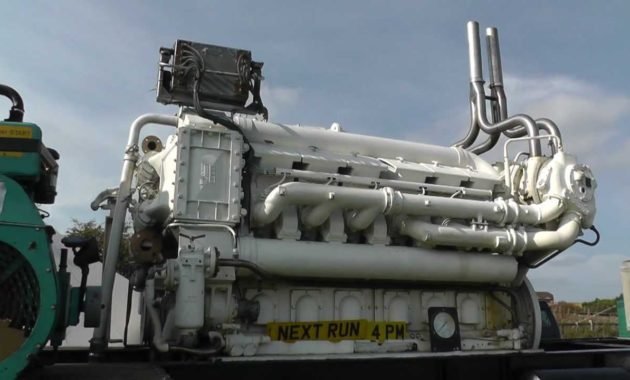
    The diesel engine was invented by a German scientist named Rudoft Diesel in 1893. The first prototype diesel engine was then made in 1897. Initially, the diesel engine was only used in large motorized vehicles such as trucks and full size SUVs

    Characteristics Diesel Engine sounds rough and the vibration is more pronounced than gasoline engines. But more than that it offers abundant torque.

    Then, how does a diesel engine work? Is it similar to a gasoline engine? Keep in mind, the way Diesel engines work does not require spark plugs. As a trigger for combustion, it requires diesel and compressed air .

    How a 4-stroke Diesel engine works

    The way a diesel engine works is different from that of a gasoline engine. How does the engine that is believed to be able to produce this greater torque works? Check out the explanation below!

    Like modern gasoline engines, the combustion process goes through 4 steps: intake, compression, combustion, and exhaust. The components in the engine include pistons, intake and exhaust valves, injectors, intake and exhaust manifolds , connecting rods , and crankshafts.

    one cycle in diesel engine
    one cycle in diesel engine . source : britanica.com

    Suction Phase

    The first way a diesel engine works is the suction phase. The working system of the diesel engine in this phase is the entry of air into the combustion chamber through the valve. In this phase, the piston moves from TDC  (Top Dead Center ) to BDC  (Bottom Dead Center)  to produce an increase in volume in the cylinder chamber. In addition, this phase also plays a role in sucking outside air into the cylinder space without using fuel.

    Compression Phase

    After passing through the suction phase, the next way the diesel engine works is the compression phase. After the air from outside has collected in the cylinder chamber in the suction phase, the BDC  (Bottom Dead Center)  and the cylinder chamber will store the air, then the piston will begin to compress the air until the pressure and temperature become high enough.

    Work process

    Compressed air usually reaches a temperature of 5,500 degrees Celsius, while the boiling point of diesel fuel is at a temperature of 3.00 degrees Celsius. After the air is compressed and reaches that temperature, the next way the diesel engine works is that the injector component will start spraying diesel fuel to drive the car engine.

    Disposal Phase

    After going through the work process, the next diesel engine working system enters the exhaust phase. The combustion products that have been formed from the gas will then flow into the cylinder chamber. In this phase, the position of BDC  (Bottom Dead Center)  to TDC  (Top Dead Center)  has a role to push the gas out through the exhaust valve to become the driving force.

    Illustration of a diesel engine working. dock. quora
    Illustration of a diesel engine working. dock. quora

    Those were the four main phases on the working principle of a diesel engine that you need to know. After understanding these phases, you can make a car with a diesel engine a driving choice because of the various advantages it offers. One of them is fuel economy, because diesel engines do not use spark plug components which make the use of fuel more efficient and maintenance is not complicated.

    You can also see this video about how diesel engine work.


  • Complete 20+ Branch of Physics and Explanations

    Complete 20+ Branch of Physics and Explanations

    In this article, we will discuss the branch of physics. There are various branches of physics, such as Mechanics, Fluid Mechanics, Thermodynamics, Electronics, Geometric Optics, Quantum Physics, Geophysics, and others. Check out the full review below. 
    Physics is a natural science which is divided into several branches. Each of these branches of physics has a different focus of study. The division of physics simultaneously proves that physics is a comprehensive science. This aligns with the fact that many facets of the universe can be studied separately.

    Branch of Physics

    All branches of physics have played many roles in human life. The following are the important branches of physics:

    1. Mechanics

    Mechanics

    Mechanics is a branch of physics that studies motion and changes in the shape of objects caused by forces. Mechanics is a branch of science in the early or oldest period of all branches of physics. Rows of physicists who laid the foundations of mechanics include Archimedes, Galileo Galilei, and Isaac Newton.

    Mechanics is a branch of physics that is widely applied in everyday life. The most crucial problem in mechanics is how things move and what causes them. This problem was solved by Newton in his Laws of motion. The branch of physics mechanics is further divided into two, namely kinematics and dynamics.

    • Kinematics is a part of mechanics that studies the motion of matter without regard to the cause of the object’s action.
    • Dynamics is a branch of mechanics that studies the relationship between the motion of an object and the cause of action, namely force.

    2. Fluid Mechanics

    The next branch in physics is fluid mechanics. Fluid mechanics comes from the words mechanics and fluid. Mechanics is the study of motion, while fluid is a substance that, when a force is applied to it, will change shape continuously because it cannot withstand the pressure, no matter how small the force acts.

    So, mechanics study motion in fluids (liquids, gases, and plasmas) and the forces acting on them. Fluid mechanics is a science that has long been applied in everyday life. Since time immemorial, without us realizing it, many human activities have been related to fluid mechanics.

    Famous fluid mechanics laws include Archimedes’ Law, Pascal’s Law, and Bernoulli’s Law. The physics branch of fluid mechanics is further divided into fluid kinematics and fluid dynamics.

    • Fluid kinematics is a branch of fluid mechanics that studies the behavior of fluids at rest or not in motion.
    • Fluid dynamics is the branch of fluid mechanics that studies fluids in motion or flow.

    3. Thermodynamics

    Physics also has a branch called thermodynamics. In simple terms, thermodynamics is the study of energy transformations, changes in state, and the equilibrium of a group of particles that make up gases, liquids, and solids, especially those related to thermal or heat properties.

    Thermodynamics is often defined as the study of energy changes from one form to another, significantly changing from heat to other forms of energy. The physicist who is known as the father of thermodynamics is Sadi Carnot.

    4. Electronics

    Electronics is a branch of physics that studies the emitting behavior and effects of electrons and the control of charged particles in vacuum, gases, and semiconductor materials.

    In other words, electronics is a branch of science that deals with how to flow and control electrons and their behavior and effects when in a medium such as a vacuum, gas, semiconductor material, or a pie.

    Electronics is further divided into several branches, including:

    • Digital electronics are electronic systems with digital strategies or discrete signals.
    • Analog electronics are electronic systems that have a continuous signal.
    • Microelectronics is an electronic device that uses the concept of integration (integrated circuit-IC).
    • Integrated circuits (ICs) are Active Electronics components consisting of a combination of hundreds, thousands, and even millions of transistors.
    • Optoelectronics is an electronic component that uses the properties of light or the interaction of light with matter.

    5. Geometric Optics

    Geometric optics is a branch of physics that studies light’s reflecting and refracting properties. A well-known law in this branch of physics is Snell’s law. The basics in geometric optics are as follows:

    • The path of light in a homogeneous medium is straight
    • The rays do not affect one another
    • The trajectory of the rays can be reversed
    • The trajectory of light obeys Snell’s laws of reflection and refraction

    6. Physical Optics

    Physical optics is a branch of physics that studies the properties of interference, diffraction, and polarization of light. In another sense, physical optics is the study of the physical properties of light as a wave. Light is polychromatic, consisting of many colors called the color spectrum.

    7. Quantum Physics

    Quantum Physics

    Quantum physics is a branch of physics that studies the physical properties of matter on an atomic or sub-atomic scale. The essence of quantum physics is uncertainty; predictions in quantum theory are more likely than confident. Quantum physics is a branch of physics that will invite us to see the world of physics from a different perspective. A point of view that considers matter not only as matter but also as waves.

    8. Medical Physics

    Medical physics is a branch of physical science that uses the principles, methods, and philosophies of physics in practice and research to prevent, diagnose, and treat disease. Medical physics is needed to reduce the risk of devices that use radiation by implementing and developing quality assurance methods in terms of the safety and feasibility of medical radiation equipment.

    9. Biophysics

    Biophysics is a branch of physics that studies physical phenomena in living things. Biophysics is a combination of biology and physics. In biophysics, biological processes are studied using physical methods. The method is applied to biological organisms and systems to gain insight into how they work

    10. Geophysics

    Geophysics is a branch of physics that studies the earth, including the atmosphere surrounding it, such as volcanic eruptions, earthquakes, landslides, weather changes, etc.

    Geophysics is the knowledge of the physical properties of the earth, and its application includes methods: seismic, gravitational, magnetic, electrical, and radioactive.

    Geophysics is a combination of physics and geography.

    11. Environmental Physics

    Environmental physics is a branch of physics that studies everything about the earth and air and those related to the environment. Environmental physics is divided into several components: soil physics (surface and deep), water physics, air physics, ocean physics, earthquake physics, cloud physics, atmospheric physics, and weather physics.

    12. Astrophysics

    Astronomy is a branch of physics that studies space and everything in it. In other words, Astrophysics is the study of celestial bodies such as the moon, planets, and stars, including the sun. Astrophysics is a combination of physics and astronomy.

    13. Economic Physics

    Economic physics is a branch of physics that studies economics using physical methods. Financial physics is a combination of physics and economics. The physics framework is used to solve problems that exist in economics.

    14. Radiation Physics

    Radiation Physics is the science of physics that studies any process by which energy moves through a medium or space and is eventually absorbed by another object.

    15. Atmospheric Physics

    Atmospheric physics is a branch of physics to study the atmosphere. Atmospheric physicists attempt to model Earth’s atmosphere and the atmospheres of other planets using fluid flow equations, chemical models, radiation budgets, and energy transfer processes in the atmosphere (and how these bind to other systems, such as the oceans).

    16. Meteorology

    Meteorology, or weather science, is a branch of atmospheric science that includes atmospheric chemistry and atmospheric physics, with the main focus being on the science of weather forecasting.

    17. Computational Physics

    Computational physics is the study of numerical implementation of algorithms to solve problems in areas of physics where quantitative theory already exists. In history, computational physics was the first application of modern computer science in science and is now a subsection of computational science.

    18. Physics of solids

    Solid matter physics is the study of the physical properties and behavior of substances in the solid phase

    19. Physics of condensed matter

    Condensed matter physics deals with the exploration and manipulation of phenomena and physical properties of solid and liquid matter based on the principles of quantum mechanics and statistical physics.

    20. Nuclear Physics

    Nuclear physics is the study of atomic nuclei and the changes in atomic nuclei. Particle physics is the branch of physics that studies the fundamental particles that makeup matter and radiation and their interactions. Particle physics is also called high-energy physics.

    Relationship of Physics with Other Sciences

    Physics is a very fundamental science among all the Natural Sciences. For example, in Chemistry, the arrangement of molecules and practical ways of changing specific molecules into others using the method of applying the laws of Physics. Biology must also rely heavily on physics and chemistry to explain the processes in living things.

    The purpose of studying Physics is to know the essential parts of objects, understand the interactions between objects, and explain natural phenomena that occur. Although physics is divided into several fields, the laws of physics apply universally. A review of a phenomenon from a particular area of physics will obtain the same results when viewed from another area of physics.

    In addition, the basic concepts of physics support not only the development of physics itself but also the development of other sciences and technology. Physics supports both pure and applied research. Geologists, in their study, use gravimetric, acoustic, electrical, and mechanical methods. Modern hospital equipment applies physics principles, and astronomers require spectrograph optics and radio engineering.

    Benefits of Studying Physics

    It is something that we often hear about the statement of some people, or maybe most people think physics is complex. They believe physics is a science full of formulas and high-level mathematical calculations. This results in not everyone being able to study physics well. Even physics is often considered the scourge of learning. This situation is almost the same as the assumption in mathematics.

    But despite all the assumptions above, there is something more essential for us to consider. That is about the advantages of studying physics and the disadvantages if we do not want to study physics. Whether we realize it or not, essentially every human being needs knowledge. It keeps up with technological developments to live this life in harmony, where the development of technology is certainly an implication of the physical sciences that experts in their fields have studied.

    Studying physics has many benefits. From the beginning of studying physics, physics has been proven to help humans carry out daily life activities. There are several benefits of studying physics, including:

    • Physics plays a significant role in technological discoveries.
    • Through physics can reveal the secrets of nature.
    • Physics is at the forefront of technological developments.
    • Physics is a basic science that has a role in developing other sciences.
    • Physics trains us to think logically and systematically.
  • What is Infrared Light?

    What is Infrared Light?

    summary

    • Infrared is a type of energy radiation that is invisible to the human eye, but we can feel its heat.
    • Infrared has many applications in everyday life, from smartphones for facial recognition, data transfer, remote control, to astronomical telescopes.

    Have you ever tried to point the tv remote when you press it towards the camera?

    If you see with your eyes, when you press the button, the small light on the end of the TV remote doesn’t seem to shine.

    However, with the camera, you can see that the small light is white.

    Why is the light visible only to the camera and not to our eyes?

    What light is that?

    Infrared Light

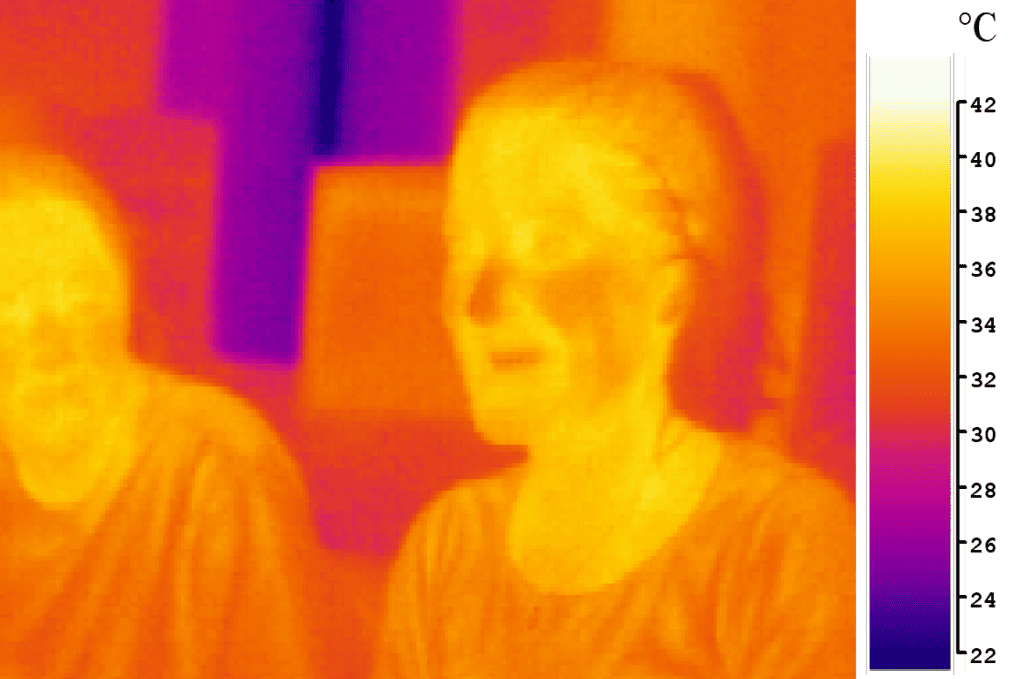
    Infrared radiation or infrared light is a type of energy radiation that is invisible to the human eye, but we can feel its heat.

    Infrared light has a longer wavelength than visible light.

    Everything in the universe emits some level of infrared radiation, but the most obvious sources are the sun and fire.

    Infrared radiation is a type of electromagnetic radiation as well as visible light.

    It is produced when an atom absorbs and releases energy in the form of photons.

    William Herschel, British astronomer, was the first to recognize the existence of infrared waves in 1800.

    He conducted an experiment to measure the temperature difference between the various colors of visible light.

    Placing the thermometer along the path of the rainbow light due to the dispersion of the crystals.

    He observed the temperature rise from blue to red light, he found a strange hot temperature near after the red light.

    Infrared Ray
    Infrared Light is hot

    Infrared is located in the frequencies above the microwaves and below the red waves.

    Infrared light waves are longer than visible light waves .

    Infrared frequencies range from 3 gigahertz to 400 terahertz.

    And the wavelength ranges from 1000 micrometers to 760 nanometers.

    Similar to visible light, which ranges from light purple to red.

    infrared-waves-definition-uses

    Infrared also has its own range.

    Infrared radiation is one of 3 ways of heat transfer, in addition to convexid and conduction mechanisms.

    All objects with a temperature above 5 K or -268°C emit infrared radiation.

    The sun emits almost half of its energy in the form of infrared radiation. Like most other stars.

    One of the most useful uses of infrared is for sensing and detection.

    All objects on Earth emit infrared radiation.

    Which can be detected by electronic sensors, such as in infrared cameras and night vision goggles.

    What are infrared rays used for?

    Infrared (IR) light is used by electrical heaters, cookers for cooking food, short-range communications like remote controls, optical fibres, security systems and thermal imaging cameras which detect people in the dark.

    1. Face Recognition On Our Smartphone

    The latest security technology in smartphones like the iPhone X.

    By using facial recognition or face recognition that takes the owner’s face with an infrared camera.

    10,000 points of infrared light are projected on our faces then captured by infrared cameras and processed to produce a model of our face.

    2. Remote Control

    TV and AC remote controls use infrared light as a medium of communication with their electronic equipment.

    The receiving sensor converts the infrared light signal into an electrical signal which instructs the microprocessor on command.

    3. Data Transfer

    infrared data transfer

    Those of you who have owned a Nokia mobile phone with Java OS must have recognized it.

    Infrared rays were popularly used as a data transfer technology between mobile phones.

    But gradually lost to other technologies such as Bluetooth and WiFi direct because of the low transfer speed and its use is a bit complicated.

    4. Optical fiber

    The fiber optic cables that run our modern internet systems use infrared light to transmit data.

    Infrared rays are used because they are compatible with fiber materials, are not easily dispersed and lose energy.

    5. Satellite

    Imaging on satellite devices mostly uses infrared scanners, mainly on weather satellites.

    Infrared cameras or scanners on satellites can be used to determine the height and water vapor content of clouds.

    Infrared channel image on Himawari . weather satellite
    Infrared channel image on Himawari . weather satellite

    Infrared images of the ocean can be analyzed to determine the movement of ocean currents which is useful for the shipping industry.

    6. Incandescent lamps

    Incandescent lamps convert only about 10% of electrical energy into visible light, while the other 90% of energy is converted into infrared radiation.

    7. Thermal Camera

    Most digital cameras have filters that block infrared.

    This filter can be removed and allows sensitivity in the infrared range.

    The same two photos. The photo on the left was taken with a camera that has an infrared filter and the image on the right was taken with a regular camera.
    The same two photos. The photo on the left was taken with a camera that has an infrared filter and the image on the right was taken with a regular camera.

    8. Astronomical Telescope

    The imaging system on the infrared CCD is able to capture detailed observations of infrared sources in space.

    The advantage of infrared radiation is that it can be used to detect or see objects that are too cold to emit visible light.

    This technique is able to find previously unknown objects, such as comets, asteroids, dwarf planets and interstellar clouds.

    Infrared is useful for observing cold molecules in gases and determining the chemical composition of dust particles in space.

    This observation uses a CCD detector which is sensitive to infrared photons.

    Another advantage of infrared radiation is that the longer the wavelength, the less light is scattered by the atmosphere.

    Visible light, which can be absorbed and reflected by gas and dust, infrared, which has a longer wavelength, is more difficult to interfere with the medium through which it passes.

    Because of this property, infrared can be used to observe objects where the light is blocked by gases and dust.

    Expanse of the Milky Way Galaxy in Infrared light
    Expanse of the Milky Way Galaxy in Infrared light

    Like celestial bodies, newly formed stars are confined within the nebula or center of the Milky Way galaxy.

  • HOW DOES A STEAM ENGINE WORK?

    HOW DOES A STEAM ENGINE WORK?

    In this article, you will learn what the components of a steam engine are and how they work. Steam engine is a technology that converts heat energy into motion energy. The steam engine has a way of working using physical concepts that apply the laws of thermodynamics.
    Inventor of the Steam Engine

    We know James Watt as the inventor of the steam engine in the mid-18th century. In that year, the invention of the steam engine became one of the most revolutionary inventions in history because it revolutionized the industrial world. The invention of the steam engine was the beginning of the industrial revolution.

    But in fact, James Watt was not the first inventor. James Watt made repairs to the previous steam engine on the condenser and shaft parts.

    So who invented the steam engine? So the answer to the inventor of the steam engine is Thomas Newcomen. The steam engine invented by Thomas Newcomen in 1712 had the purpose of pumping water in the mining world. While James Watt made repairs in 1776.

    After improvements by James Watt, the steam engine operated more efficiently and moved more smoothly in its energy conversion process. Through its improvements, the steam engine can be applied in industry more efficiently.

    James Watt worked with Matthew Boulton to design steam engines for industries in Europe.

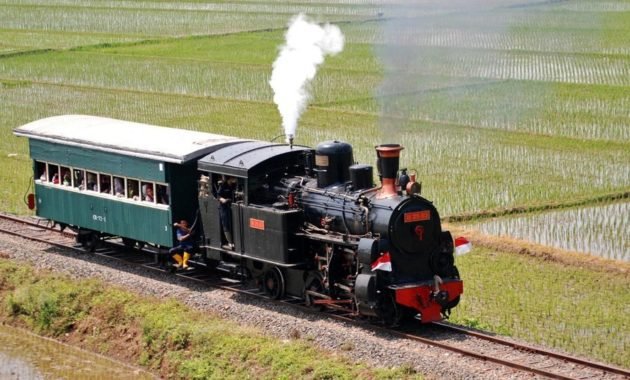
    Not only for industry, the use of steam engines is increasingly developing as a means of supporting land transportation. Steam engines began to replace animal power during the industrial revolution, one of which was the steam locomotive. Animal power began to be replaced by steam engines in 1830 when there was a race between horses and steam engines.

    In the early 19th century, the steam engine underwent continuous improvement until it became more efficient with a smaller size.

    Steam Engine Components

    The working principle of a steam engine can occur because the components are interconnected into a system. The components of a steam engine consist of frames, pistons, cylinders, bearings, valves, etc.

    Steam Engine Components

    1) Frame

    Steam engine has a frame or frame that has a function as a container to connect the components in it. A steam engine frame is made of metal casting material because it is more resistant to thermal expansion.

    2) Cylinder

    Component Cylinder or cylinder on a steam engine is a part or component in the form of a room that has a function to accommodate steam and piston movement. Some engineers refer to the cylinder on a steam engine as the crankcase.

    3) Steam Chest

    Steam Chest on a steam engine is a part or component of a steam engine that is integrated with the cylinder. This Steam Chest generally has a cube or spherical shape depending on the valve used.

    4) Main Bearings

    Bearing is a component or part of a steam engine that has a function to maintain the rotating axis of a shaft. Because friction or flexion often occurs, the inner bearing surface needs to be coated with lubricant.

    5) Piston 

    piston in the steam engine has a similar way of working like the piston in a car engine or motorcycle engine in general. The piston in the steam engine has a function to continue the steam compression force into rotation.

    6) Piston Rings or Piston Rings

    A piston has rings to keep steam from penetrating between the pistons and cylinders.

    7) Piston Rod or Piston Rod The piston

    rod in a steam engine has a function to transmit the compressive force on the piston head to a rotary crank.

    8) Stuffing Box

    The Stuffing Box on the steam engine has a function as a seal to prevent the steam in the system from escaping into the atmosphere. If a leak occurs, the energy in the steam engine system will not be maximized.

    9) Crosshead

    Crosshead on a steam engine has a function so that the movement of the piston is not sideways and out of line.

    10) Connecting Rod or Piston

    Rod Connecting Rod on a steam engine has a function to connect the piston to the crankshaft.

    11) Valve / Valve

    As previously explained that the valve is a part of the cylinder and steam chest. The valve on the steam engine has a function as a gate for the entry and exit of steam in the system.

    12) Valve Rod and Eccentric Rod

    Eccentric Rod The machine has a slab-like shape that has the function of converting rotary motion into linear motion. Why do we need linear motion in steam engines? The answer is to open and close the valve.

    13) Flywheel

    Free Will or we call it the gear on a steam engine is a mechanism to dampen the rotation suddenly. So that the torque on the steam engine becomes more stable.

    How Does Steam Engine Work?

    Steam engines are included in the category of heat engines, namely equipment used to convert thermal energy from fuel into mechanical energy through the combustion process. There are two types of heat engines, namely Internal Combustion Engines (ICE) and External Combustion Engines (ECE). In ICE-type heat engines, the process of burning fuel to produce mechanical power is carried out within the equipment itself; while in ECE, this equipment only converts thermal energy into mechanical energy while the combustion process is carried out outside the equipment.

    Examples of ICE-type heat engines are gasoline and diesel engines, which are very popular as prime movers for both automotive and industrial use. In gasoline and diesel motors, the process of burning fuel (gasoline/diesel) is carried out in the motor cylinder itself and the change in thermal energy resulting from combustion into mechanical energy is also carried out in the aircraft itself through the back and forth movement of the piston into rotational movement of the crank shaft.

    Examples of ECE-type heat engines are steam engines and steam turbines. In this equipment, the steam engine only converts the potential energy of the steam into mechanical energy in the form of to and fro movement of the piston and then converted into rotational motion of the crank shaft; while the steam turbine converts the potential energy of the steam into mechanical energy which is directly the rotational motion of the turbine axle. The fuel combustion process is carried out outside the steam engine and steam turbine, namely in the boiler (boiler). In the boiler (boiler) the thermal energy from the combustion of fuel is used to heat water so that it turns into steam with high temperature and pressure, then the steam with high temperature and pressure is flowed to a steam engine or steam turbine to be converted into mechanical power.

    The workings of the steam engine are as follows: See the picture below,

    HOW DOES A STEAM ENGINE WORK

    Inside the steam engine cylinder there is a piston which has a piston rod connected to a cross head which is outside the cylinder. The cross head is connected by a connecting rod to the crank shaft (not shown in the picture), so that when the piston moves to and fro, the crank shaft can rotate.
    The slide valve which has a valve rod is driven by the crank shaft through an eccentric, so that the slide valve can move to and fro while opening and closing the two steam holes connected to the cylinder. The valve box where the slide valve is located has two channels, the intake channel is connected to the boiler to deliver high pressure steam (red color), and the exhaust channel is connected to the chimney to remove used steam (blue color).

    When the piston reaches the leftmost position, the slide valve will open the steam hole of the left cylinder so that steam from the boiler can enter the cylinder on the left side of the piston and push the piston to the right, while the right steam hole is connected to the exhaust channel so that the used steam can be drained. discharged through the chimney. Before the end of the piston stroke, the steam hole is closed by the slide valve so that the steam supply stops but the piston continues to move to the right due to the expansion of the steam.

    When the piston reaches the far right position, the slide valve will open the steam hole of the right cylinder so that steam from the boiler can enter the cylinder on the right side of the piston and push the piston to the left, meanwhile the left steam hole is connected to the exhaust channel so that used steam can be wasted. through the chimney. Before the end of the piston stroke, the steam hole is closed by the slide valve so that the steam supply stops but the piston continues to move to the right due to the expansion of the steam.

    Because the cross head with the crankshaft is connected by a connecting rod, the back and forth movement of the piston will be converted into rotational motion of the crankshaft. Thus as long as there is a supply of steam from the boiler, the steam engine will turn into mechanical power with the rotational movement of the crank shaft.

    HOW DOES A STEAM ENGINE WORK

    Steam locomotives usually have 2 steam engines mounted on the right and left of the locomotive, the rotational motion produced by the two steam engines is directly used to turn the locomotive wheels so that they are able to pull the entire train series (see picture below).

    HOW DOES A STEAM ENGINE WORK

  • Basic Units in the International System of Units (SI)

    Basic Units in the International System of Units (SI)

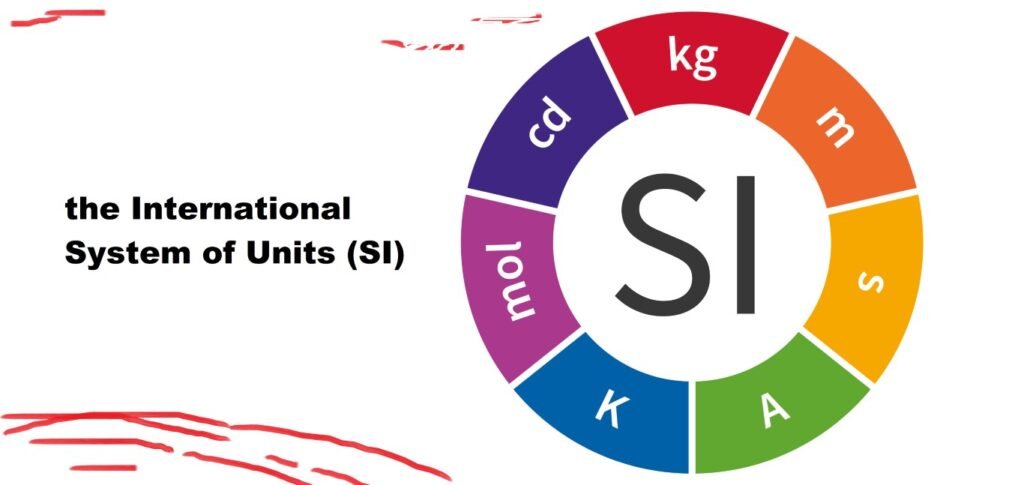
    The International Unit (SI) is a modern form of the metric system and is currently the most commonly used measurement system. This system consists of a coherent measurement system consisting of 7 base units and defines 22 units and many more derivatives.
    Meanwhile, the SI base unit is the seven units of measurement defined by the Systeme International d’Unites , as the basic set to derive all other SI units, namely SI derived units. This basic unit is commonly used in various measurements, such as measuring height, weight, time and many others.

    Here are 7 basic units for the international system (SI) :

    • Long. Dimensions of an object which expresses the distance between ends, with the SI base unit meters (m).
    • Mass. A quantity representing weight, with the SI basis of the kilogram (kg).
    • Time. The entire sequence during which a process, action, or state exists or takes place, has the SI base unit second (s).
    • Temperature. Indicator of the degree of heat of an object, has units of kelvin (K).
    • Electric current. The amount of electric charge caused by the movement of electrons flowing through a point in an electric circuit over time, in the SI base unit amperes (A).
    • Light intensity. The basic physical quantity in measuring the power emitted by a light source in a certain direction per unit angle, has units of candela (cd).
    • Amount of substance. A physical base unit that measures the number of elementary samples which can be atoms, electrons, ions, molecules, or certain particles, with the SI base unit mole (Mol).
    No. Basic Quantity Unit Name Unit Insignia Magnitude Symbol
    1 Long Meter m l
    2 Mass Kilogram Kg m
    3 Time Second s t
    4 Temperature Kelvin K T
    5 Electric current Ampere A I
    6 Light intensity Candela CD j
    7 Amount of substance Mole mole n

    The five of the units of the international system of units are commonly used in chemistry, namely length, mass. Temperature, time and amount of substance.

    Summary

    • The International System of Units (SI) is a modern form of the metric system and is currently the most commonly used measurement system.
    • In international units there are seven basic quantities used, namely length, mass, time, temperature, electric current, light intensity, and amount of substance.
    • Five of the basic SI quantities are commonly used in chemistry.
  • Lord William Thomson Kelvin

    Lord William Thomson Kelvin

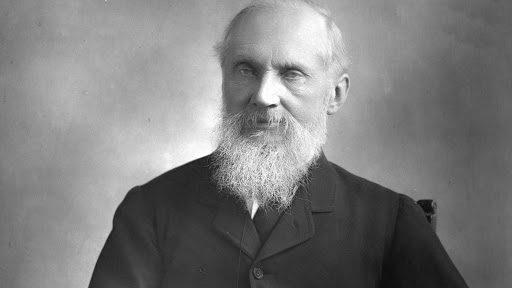
    Lord William Thomson Kelvin  is a physicist, mathematician, inventor (owns 70 patents), professor, author, and president of the Royal Society. He was born in Belfast, Ireland, on June 26, 1824. He received the Lordship title from Queen Victoria.

    Lord William Thomson Kelvin

    Because of the intelligence of Lord William Thomson Kelvin , at the age of 10 he entered university. At 15 years of age,  William Thomson Kelvin won a gold medal for his essay entitled “An Essay on the Shape of the Earth”. At 17, he earned a BA from Cambridge University and was appointed professor at the age of 22 at the University of Glasgow.

    Karya Lord William Thomson Kelvin

    In 1841, when he was 17 years old, William studied at Cambridge University. He graduated in 1845 and obtained a BA (Bachelor Degree) with satisfactory scores. That same year, he studied the work of George Green (which applies mathematics to electricity and magnetism) and the work of the physicist and chemist, Michael Faraday (the use of magnets in creating electricity and how electric currents give off magnetic fields).

    In 1846, at the age of 22, Thomson became a professor of physics (formerly known as natural philosophy) at the University of Glasgow. He held this post for 53 years, despite numerous offers to teach elsewhere. When Thomson became professor of physics, physics covered a wide range of topics and there were almost no ties connecting the topics. However, in the works of Fourier, Faraday, and Green, he begins to see a unity. He himself was able to determine mathematically the relationship between fluid motion and electric flow. This idea he got from the work of Fourier, when he was 16 years old.

    In 1848,  William Thomson Kelvin proposed his absolute temperature scale. Zero degrees on the Kelvin scale (his last name) is absolute zero, because the temperature is the lowest one can expect, where the object no longer radiates the slightest bit of heat. He became wealthy and famous after inventing the Kelvin galvanometer and siphon recorder that could pick up weak electrical signals and succeeded in installing telegraph cables at the bottom of the Atlantic Ocean connecting the Americas and the European Continents by Lord William Thomson Kelvin .