
Author: Fuad Hassan

  • Top 10 Investment Application Recomended

    Top 10 Investment Application Recomended

    Top 10 Investment Applications To Help You Manage Your Money

    Managing your finances has never been easier with the rise of investment applications. There is a wide range of investment applications that can help you diversify your portfolio, manage your money, and even invest in cryptocurrency. We have compiled the top 10 investment applications to help you make better financial decisions.

    1. Robinhood

    Robinhood is a commission-free investing app that allows you to buy and sell stocks, ETFs, and cryptocurrency without paying any fees. It has a user-friendly interface, and it’s effortless to use, making it perfect for beginner investors. Robinhood also offers new users a free stock when they sign up.

    Robinhood

    2. Acorns

    Acorns is a micro-investing app that allows you to invest your spare change. It rounds up your purchases to the nearest dollar and invests the difference. For example, if you buy a cup of coffee for $2.50, Acorns will round it up to $3.00 and invest the additional $0.50. Acorns charges $1 per month for accounts under $5,000 and 0.25% per year for accounts over $5,000.

    Acorns

    3. Betterment

    Betterment is a robo-advisor that manages your investments for as little as 0.25% per year. It uses algorithms to build and manage a diversified portfolio tailored to your financial goals and preferences.

    Betterment

    4. Stash

    Stash is an investment app that offers users the ability to buy fractional shares of more than 1,800 stocks and ETFs. It also offers retirement accounts and custodial accounts for minors. Stash charges $1 per month for accounts under $5,000 and 0.25% per year for accounts over $5,000.

    Stash

    5. Wealthfront

    Wealthfront is a robo-advisor that offers investment management, financial planning, and banking services with no account minimums. It diversifies your portfolio across asset classes and uses tax-loss harvesting to optimize your returns. Wealthfront charges 0.25% per year for investment management.

    Wealthfront

    6. Coinbase

    Coinbase is a digital currency exchange that allows users to buy, sell, and trade cryptocurrency. It supports a wide range of cryptocurrencies, including Bitcoin, Ethereum, and Litecoin. Coinbase charges a fee of 1.49% for every transaction.

    Coinbase

    7. Personal Capital

    Personal Capital is an investment app that offers a comprehensive view of your finances. It tracks your investments, accounts, and spending, allowing you to create a personalized financial plan. Personal Capital charges a fee of 0.89% for accounts up to $1 million.

    Personal Capital

    8. TD Ameritrade

    TD Ameritrade is a brokerage firm that offers a wide range of investment products and services, including stocks, ETFs, mutual funds, options, and futures. It has powerful trading tools and educational resources for beginner and advanced investors. TD Ameritrade charges $0 for stock and ETF trades.

    TD Ameritrade

    9. E-Trade

    E-Trade is a brokerage firm that offers a full range of investment products and services, including stocks, ETFs, mutual funds, options, and futures. It provides powerful trading tools and research resources, making it perfect for active traders. E-Trade charges $0 for stock and ETF trades.

    E-Trade

    10. M1 Finance

    M1 Finance is a robo-advisor that allows users to create and manage their investment portfolio for free. It supports fractional shares and offers a wide range of ETFs and stocks to choose from. M1 Finance charges no fees for trading, managing, or using its platform.

    M1 Finance

    The Bottom Line

    Investment applications have revolutionized the way we invest and manage our money. They offer intuitive interfaces, low fees, and powerful tools that can help us make better financial decisions. Whether you are a beginner or an experienced investor, these 10 investment applications can help you achieve your financial goals.

    Frequently Asked Question

    1. What is an investment application?
    An investment application is a software or mobile application that enables users to invest in various financial instruments, such as stocks, mutual funds, and bonds, among others.

    2. How secure is using an investment application?
    Most investment applications use advanced security protocols such as encryption, biometric authentication, and two-factor authentication to protect your personal and financial data.

    3. Can I use an investment application to invest in international markets?
    Yes, some investment applications allow you to invest in international stocks and securities.

    4. What are the fees for using an investment application?
    The fees for using an investment application vary depending on the provider. Some applications may charge a flat fee, while others may charge a percentage of the investment amount.

    5. What types of investment accounts can I open through an investment application?
    Most investment applications enable users to open various types of investment accounts, including taxable accounts, retirement accounts, and education savings accounts.

    6. Do investment applications provide investment advice?
    Some investment applications provide investment advice through robo-advisors or human advisors.

    7. What is the minimum investment amount required to start using an investment application?
    The minimum investment amount required to start using an investment application varies depending on the provider. Some applications have no minimum investment requirement, while others may require a minimum of $5,000 or more.

    8. Can I transfer my existing investments to an investment application?
    Yes, many investment applications allow you to transfer your existing investments from other accounts or brokers.

    9. What are the benefits of using an investment application?
    Some of the benefits of using an investment application include low fees, convenience, accessibility, and ease of use.

    10. What are the risks of using an investment application?
    The risks of using an investment application include market volatility, potential loss of principal, and operational risks such as system failures or cyber attacks. It is important to do your research and understand the risks before investing through an application.

  • Top 10 Banking Application Recomended

    Top 10 Banking Application Recomended

    Top 10 Banking Applications

    In today’s fast-paced world where everything is just a click away, banking has also gone digital. Banking applications are a great way to save time and make banking easy. With so many banking applications in the market, it is challenging to choose the best ones. In this article, we have compiled a list of the top 10 banking applications in 2021.

    1. Bank of America Mobile Banking

    Bank of America Mobile Banking

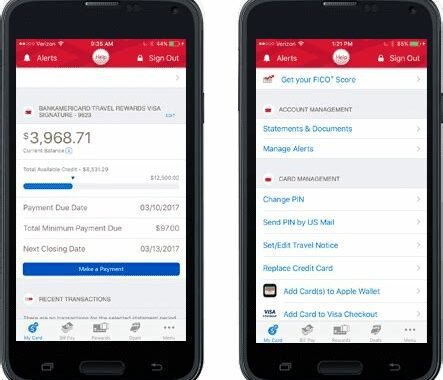
    The Bank of America Mobile Banking app is a widely used banking application. It has excellent features like managing bank accounts, credit, and debit cards. The app also allows you to deposit checks remotely, transfer funds, and track account activity. The app has a user-friendly interface that makes banking easy and offers high-level security features.

    2. Chase Mobile

    Chase Mobile

    Chase Mobile is another popular banking application. It allows you to manage your bank accounts and credit cards, transfer funds, and deposit checks remotely. The app has a user-friendly interface and offers high-level security features like fingerprint and facial recognition. One of the unique features of the app is the ability to schedule payments to payees.

    3. Capital One Mobile

    Capital One Mobile

    The Capital One Mobile app enables you to manage your bank accounts and credit cards, deposit checks remotely and transfer funds. The app has high-level security features and the ability to check balances on-the-go. It also offers a unique feature called CreditWise, which helps you monitor your credit score and report.

    4. Wells Fargo Mobile

    Wells Fargo Mobile

    Wells Fargo Mobile is an easy-to-use banking application that allows you to manage your bank accounts, credit cards, and investment accounts. You can also transfer funds and remotely deposit checks. The app has high-level security features and the ability to view and pay bills. Additionally, Wells Fargo Mobile offers a unique feature that allows you to use your fingerprint to access the app.

    5. Ally Mobile

    Ally Mobile

    Ally Mobile is a popular banking application that enables you to manage your bank accounts, invest, pay bills, and deposit checks remotely. The app has a user-friendly interface and the ability to view all your transactions. Additionally, Ally Mobile offers high-level security features like fingerprint login, facial recognition, and two-factor authentication.

    6. Simple

    Simple

    Simple is a banking application that allows you to set goals for savings and track them. The app has a unique Safe-to-Spend feature, which tells you how much money you have available to spend based on your bills and savings goals. You can also deposit checks remotely and transfer funds. The app has high-level security features and a user-friendly interface.

    7. USAA Mobile

    USAA Mobile

    USAA Mobile is a banking application that is exclusively available to US military personnel and their families. The app allows you to manage bank accounts, credit cards, investment accounts, and insurance policies. You can also deposit checks remotely and transfer funds. The app has high-level security features that are certified by the Federal Financial Institutions Examination Council (FFIEC).

    8. Citi Mobile

    Citi Mobile

    Citi Mobile is a banking application that allows you to manage your bank accounts, credit cards, and investment accounts. You can also deposit checks remotely and transfer funds. The app has high-level security features like Touch ID and facial recognition. Additionally, the app offers the ability to pay bills and view statements.

    9. PNC Mobile

    PNC Mobile

    PNC Mobile is a banking application that allows you to manage your bank accounts, credit cards, and investment accounts. You can also deposit checks remotely, transfer funds, and view transactions. The app has a user-friendly interface and high-level security features. Additionally, PNC Mobile offers the ability to pay bills and track spending.

    10. TD Bank

    TD Bank

    TD Bank is a banking application that allows you to manage your bank accounts, credit cards, and investment accounts. You can also deposit checks remotely, transfer funds, and schedule payments. The app has a user-friendly interface and high-level security features. Additionally, TD Bank offers the ability to pay bills and view statements.

    Conclusion

    Banking applications are a great way to save time and make banking easy. With so many banking applications in the market, it is challenging to choose the best ones. The above-listed banking applications are the most popular and have excellent features like managing bank accounts, credit, and debit cards, depositing checks remotely, and transferring funds. These apps offer high-level security features, a user-friendly interface, and unique features like scheduling payments and tracking spending.

    Frequently Asked Question

    1. What is a banking application?
    A banking application is software designed to enable account holders to perform various banking transactions from their mobile devices or computers.

    2. Is it safe to use a banking application?
    Yes, it is generally safe to use a banking application provided it is downloaded from a reputable source, and the user follows proper security protocols when using it.

    3. What type of transactions can I perform with a banking application?
    With a banking application, you can perform basic tasks such as checking your account balance, making transfers, and paying bills. Some applications also allow you to apply for loans and set up standing orders.

    4. Can I link multiple bank accounts to a single banking application?
    Yes, most banking applications allow you to link several bank accounts, provided they are with the same financial institution.

    5. How can I download a banking application?
    You can download a banking application from your mobile device’s app store or the financial institution’s website.

    6. Do I need to pay any fees for using a banking application?
    Typically, using a banking application is free of charge. However, some financial institutions may charge fees for specific transactions such as international transfers.

    7. How do I ensure my online banking information is secure?
    To ensure your online banking information is secure, you should use strong passwords, avoid using public Wi-Fi networks, and regularly check your transaction history.

    8. Can I use a banking application without an internet connection?
    No, you must have an active internet connection to use a banking application.

    9. What should I do if I lose my mobile device with the banking application installed?
    If you lose your mobile device with the banking application installed, you should contact your financial institution immediately to disable the application and prevent unauthorized access to your account.

    10. What happens if I forget my login credentials for the banking application?
    If you forget your login credentials for the banking application, you can use the password reset feature or contact your financial institution for assistance with regaining access to your account.

  • Top 10 Financial Management Application Recomended

    Top 10 Financial Management Application Recomended

    Top 10 Financial Management Applications

    Managing your finances can be overwhelming and confusing. However, with the increasing number of financial management applications on the market, managing your finances has become much easier. These applications can be used for tracking your income, expenses, and investments, and help you make better financial decisions. Here are the top 10 financial management applications that can help you manage your finances efficiently.

    1. Mint

    Mint application

    Mint is one of the most popular financial management applications available. This application enables you to bring together all your financial accounts in one place. You can monitor your spending, track your investments, pay bills online, and get alerts if your accounts fall below a certain balance. Mint is free, but it may show you ads for financial products.

    2. Personal Capital

    Personal Capital application

    Personal Capital is an all-in-one financial management application that enables you to manage your finances, investments, and retirement savings. It provides you with detailed investment analysis, a fee analyzer, an investment checkup, and a retirement planner. Personal Capital is free to use, but it charges a fee for investment management services.

    3. YNAB (You Need A Budget)

    YNAB application

    YNAB (You Need A Budget) is an effective financial management application that helps you take control of your finances. It uses a zero-based budgeting system that helps you allocate your funds effectively. YNAB also enables you to import transactions from your bank account, set financial goals, and track your expenses. YNAB charges $11.99 per month, but it offers a free trial period of 34 days.

    4. PocketGuard

    PocketGuard application

    PocketGuard is a simple and easy-to-use financial management application that enables you to track your spending and savings. It provides you with an overview of your finances and alerts you if you are approaching your budget limits. PocketGuard also enables you to view your transactions, categorize your expenses, and track your bill payments. PocketGuard is free, but it offers a premium version with additional features.

    5. EveryDollar

    EveryDollar application

    EveryDollar is a budgeting application that enables you to allocate your funds effectively. It uses a zero-based budgeting system and enables you to track your expenses, monitor your bills, and view your financial progress. EveryDollar offers a free version, but it charges $129.99 per year for the premium version, which includes additional features, such as financial coaching and investment advice.

    6. Wally

    Wally application

    Wally is a budgeting and expense tracking application that enables you to manage your finances effectively. It allows you to view your transaction history, categorize your expenses, set financial goals, and track your bills. Wally also enables you to synchronize your bank account, monitor your investment portfolio, and calculate your net worth. Wally is free, but it has a premium version with additional features.

    7. Clarity Money

    Clarity Money application

    Clarity Money is a financial management application that focuses on helping you save money. It monitors your spending and provides recommendations for saving money on bills, subscriptions, and other expenses. Clarity Money also enables you to monitor your credit score, track your expenses, and view your financial activity. Clarity Money is free, but it may show you ads for financial products.

    8. Honeyfi

    Honeyfi application

    Honeyfi is a financial management application that enables you to manage your finances as a couple. It allows you to view your combined budget, track your expenses, and monitor your bills. Honeyfi also enables you to share images, videos, and messages with your partner and provides you with customized financial advice. Honeyfi has both free and premium versions.

    9. Acorns

    Acorns application

    Acorns is a financial management application that enables you to invest your spare change. It rounds up your purchases to the nearest dollar and invests the difference in a diversified portfolio. Acorns also enables you to set financial goals, monitor your investment portfolio, and view your financial progress. Acorns charges a monthly fee of $1, $3, or $5, depending on the plan that you choose.

    10. Stash

    Stash application

    Stash is a financial management application that enables you to invest your money in stocks and ETFs. It offers a wide range of investment options and provides you with personalized investment advice. Stash also enables you to set financial goals, track your expenses, and view your investment portfolio. Stash charges a monthly fee of $1, $3, or $9, depending on the plan that you choose.

    Final Thoughts

    Managing your finances can be challenging, but with the help of these financial management applications, you can simplify the process. These applications enable you to track your expenses, monitor your bills, and invest your money efficiently. However, make sure to choose an application that fits your financial goals and preferences.

    Frequently Asked Question

    1. What is a financial management application?
    A financial management application is a software program that helps individuals and businesses manage their finances. It allows users to track their income, expenses, budget, investments, and taxes.

    2. How can a financial management app help me save money?
    A financial management app can help you save money by providing real-time information about your spending habits, categorizing expenses, and alerting you when you approach your budget limit. It can also help you identify areas where you can cut costs and make smart investment decisions.

    3. Are financial management apps secure?
    Yes, most financial management apps use encryption and other security measures to protect user data. However, be sure to check the app’s privacy policy and make sure it does not share your personal data with third parties.

    4. Can a financial management app help me with my taxes?
    Yes, some financial management apps offer tax tracking and reporting features, allowing you to track deductible expenses and generate tax reports.

    5. How do I connect my financial management app to my bank account?
    Most financial management apps require users to link their bank account or credit card using their online banking credentials. This allows the app to automatically import transactions and categorize expenses.

    6. Do I need to pay for a financial management app?
    There are many free financial management apps available, but they may come with limited features or display ads. Paid apps typically offer more advanced features and better customer support.

    7. Can I use a financial management app with multiple devices?
    Yes, most financial management apps offer cloud syncing, allowing users to access their accounts from multiple devices.

    8. Can I use a financial management app to pay bills?
    Some financial management apps offer bill payment features, allowing users to pay bills directly from the app.

    9. Can a financial management app help me improve my credit score?
    A financial management app can help improve your credit score by providing real-time information about your credit utilization and payment history. It can also help you identify areas where you can reduce debt and make on-time payments.

    10. Do financial management apps provide investment advice?
    Some financial management apps offer investment tracking and analysis features, but they do not provide investment advice. It is important to consult a financial advisor before making investment decisions.

  • Top 10 Time Management Application Recomended

    Top 10 Time Management Application Recomended

    Top 10 Time Management Applications

    Time management is an essential skill that helps you become productive and efficient in your daily activities. The use of technology can improve your time management skills by using different applications available on various devices. With hundreds of time management applications, it can be a daunting task to select the best. In this article, we have compiled a list of top 10 time management applications that can help you organize your time and complete your tasks efficiently.

    1. Trello

    Trello
    Trello is a popular time management tool used by millions of users globally. It uses a board design to help people organize and track their projects. Users can create cards, and the progress can be tracked from “to do” to “in progress” to “completed” stages. Trello provides intuitive and easy-to-use features, including adding labels, due dates, checklists, and comments, making it ideal for both individuals and teams.

    2. RescueTime

    RescueTime
    RescueTime is an advanced time management application that helps people become more productive by monitoring how they spend their time on computer and mobile devices. With RescueTime, users can get detailed reports that show their usage patterns and micro-manage time-wasting activities. The application then recommends changes that could save you time, such as reminding you to take breaks or blocking certain websites.

    3. Focus@Will

    Focus@will
    Focus@Will is a unique productivity application that provides users with music designed to help them focus and increase productivity levels. The music is scientifically curated to enhance concentration while working, learning, or studying. Users can choose different genres and adjust the tempo and intensity levels as per their preference.

    4. Evernote

    Evernote
    Evernote is one of the most popular time management applications that can help users capture their thoughts and ideas using notes, text, audio, or images. The application allows for easy organization and synchronization of notes across devices, making it easy to access your notes from anywhere you are. The app also integrates with Google Drive, Slack, and many other productivity tools.

    5. Todoist

    Todoist
    Todoist is a powerful to-do list manager that can help users stay organized and focused on their tasks. It is available in both free and paid versions, with the latter offering additional features such as labels, filters, and comments. Todoist provides smart task suggestions and will gamify tasks to help users stay motivated.

    6. Forest: Stay Focused

    Forest: Stay Focused
    Forest: Stay Focused is a time management application that helps users stay focused and avoid distractions by planting virtual trees. The more you use the application without opening other distracting apps or websites, the more trees will grow in your forest. You can also customize the duration of your sessions, which makes the application ideal for Pomodoro-style work sessions.

    7. Be Focused

    Be Focused
    Be Focused is a time management application that provides users with a timer and task list to help them complete their work efficiently. The application follows the Pomodoro technique and encourages users to work in 25-minute intervals followed by five-minute breaks. Users can customize the duration of their work sessions and break times.

    8. Focus Booster

    Focus Booster
    Focus Booster is a time management application that helps users get more done in less time by using the Pomodoro technique. The application provides users with a timer that tracks their work sessions and breaks. Users can generate reports on how they spend their time, see work completion rates, and track their progress over time.

    9. Time Doctor

    Time Doctor
    Time Doctor is a time management tool that tracks the time spent on tasks by employees. It provides users with detailed reports on how they spend their time, making it easy to analyze where they are wasting time and increase their productivity. Time Doctor can also be used to track attendance and provide payroll data to managers.

    10. Clockify

    Clockify
    Clockify is a free time management tool that helps users track their time on specific tasks. It includes a timer that can be started and stopped, making it easy to track time spent on each project. Users can generate reports based on the time spent on each task, making it simple to optimize productivity.

    Conclusion

    In conclusion, these are the top 10 time management applications that can help you stay focused and become more productive. Whether you are looking for a tool to help you organize your to-do list or an application to help you avoid distractions, there is an application for everyone on this list. Try some of these time management applications to find the one that works best for you, and enjoy the benefits of a more organized and efficient life.

    Frequently Asked Question

    1. What is a time management application?

    A time management application is a software tool that helps you track, manage and prioritize your time efficiently. It offers features such as to-do lists, calendars, reminders, time tracking, and project management tools to help you manage your time more effectively.

    2. What are the benefits of using a time management application?

    Using a time management application provides several benefits, including improved productivity, increased efficiency, better time usage, reduced stress, and improved work-life balance. It also helps you stay organized, meet deadlines, and complete work on time.

    3. How do I choose the right time management application?

    When choosing a time management application, consider factors such as the features you need, the device and operating system you use, price, and user interface. Also, read reviews, compare features, and try a few apps to find the one that suits you best.

    4. How do time management applications help with prioritization?

    A time management application helps with prioritization by letting you sort tasks and projects based on their urgency or importance. Some apps also allow you to assign deadlines, labels or tags to tasks, or set reminders to ensure you complete them on time.

    5. Can time management applications integrate with other tools I use for work?

    Yes, most modern time management applications integrate with other tools such as email, project management software, or messaging apps such as Slack. Integration helps you streamline workflows and manage tasks more efficiently.

    6. Can I use a time management application for personal tasks too?

    Yes, you can use a time management application for personal tasks such as grocery shopping, household chores, or fitness routines. Some time management apps even offer features that help you set personal goals and track progress.

    7. How do I stay motivated when using a time management application?

    To stay motivated when using a time management application, set achievable goals, break tasks into smaller chunks, reward yourself for achieving milestones, and enlist friends or family to hold you accountable.

    8. Can a time management application help me make better use of my free time?

    Yes, a time management application can help you make better use of your free time by helping you schedule leisure activities, hobbies, or self-care routines. It also helps you avoid distractions such as social media, TV, or excessive internet browsing.

    9. What are some popular time management applications?

    Some popular time management applications include Trello, Evernote, Asana, RescueTime, Todoist, and Google Calendar. Each app offers unique features and benefits, so choose the one that suits your needs.

    10. Can I use a time management application while working remotely?

    Yes, a time management application is especially useful when working remotely, as it allows you to stay organized and productive without the traditional office environment. It helps you manage tasks, collaborate with remote teams, and maintain a healthy work-life balance.

  • Top 10 Task Management Application Recomended

    Top 10 Task Management Application Recomended

    Top 10 Task Management Applications

    If you are in search of the perfect task management application for your everyday work, we have got you covered. We understand how essential organization and effective task management are in achieving success. We’ve compiled a comprehensive list of the top 10 task management applications that have proven effective to help you increase productivity and enhance your output.

    1. Trello

    Trello Trello is one of the best task management applications, with a user-friendly interface that lets you organize tasks in boards, lists, and cards. It comes with a drag and drops feature, which makes it easier to move tasks around, add comments, attachments, and labels. Trello is easy and free to use, but it also has a premium version that enables you to do even more.

    2. Asana

    Asana Asana is a comprehensive task management application designed to simplify teamwork and enhance productivity. It has an excellent user interface that allows you to create, organize, and prioritize tasks. It is ideal for project management, enabling you to track team progress and collaborate in real-time.

    3. Todoist

    Todoist Todoist is another simple yet effective task management application that enables you to organize and prioritize tasks according to your preference. It’s available on multiple platforms, allows you to set due dates, and can send you daily reminders for uncompleted tasks. It’s ideal for both basic and advanced task management needs.

    4. Google Tasks

    Google Tasks Google Tasks is a simple task management application that is perfect for Google users who require something easy and straightforward. It is integrated with other Google apps, such as Gmail and Google Calendar, and also available on mobile. You can add tasks, mark them as completed, and schedule reminders easily.

    5. Evernote

    Evernote Evernote is a task management application that goes beyond just managing tasks. It can take notes, research, and jot down ideas, making it ideal for those who need a more robust system. It offers features such as document scanning, OCR, and can even record audio notes. Evernote offers both free and paid versions.

    6. Microsoft To Do

    Microsoft To Do Microsoft To Do is a task management application that is perfect for the workplace. It syncs automatically with Outlook and Office 365, enabling you to manage tasks from within these applications. You can create tasks, add notes, and set reminders on this application. It’s available on multiple platforms.

    7. Wunderlist

    Wunderlist Wunderlist is a simple yet powerful task management tool, ideal for those who require a basic system. It offers features, such as creating grocery lists, setting reminders, and assigning due dates. It has an intuitive interface, can be accessed on multiple devices, and is available for free.

    8. Jira

    Jira Jira is an advanced task management application that is perfect for software development teams. It’s a robust system designed to handle complex tasks, bugs, and features across multiple projects. It enables you to track team progress, assign tasks within a ticket, and set priorities. Jira is available both on cloud and on-premises.

    9. TickTick

    TickTick TickTick is a simple but feature-rich task management application that is ideal for individual and team task management. It’s free, but there’s also a premium version that offers features such as customizing themes, sub-tasks, and task comments. It has an easy-to-use interface, allows you to share lists, and provides reminders for uncompleted tasks.

    10. Notion

    Notion Notion is a comprehensive task management tool that goes beyond just managing to-do lists. It’s a collaboration tool that allows you to manage projects, take notes, and plan schedules. It offers multiple integrations with other apps, and you can customize its interface to fit your needs. Notion is available for free, but there’s also a premium version that offers more features.

    Conclusion

    Choosing the right task management application can be a game-changer in terms of productivity and efficiency. We hope that this list of the top 10 task management applications has given you a better idea of the available options. It’s essential to choose the tool that meets your specific needs, and we’re confident that there’s an application in this list that will work for you.

    Frequently Asked Question

    1. What is a task management application?
    A task management application is a software tool that helps individuals or teams to organize, track, and manage their tasks and projects efficiently.

    2. What are the benefits of using a task management application?
    Using a task management application can help you to increase your productivity, prioritize your work, organize your day, and collaborate with team members effectively.

    3. Can I use a task management application on my mobile device?
    Yes, most task management applications offer mobile apps that allow you to access your tasks and projects from anywhere, anytime.

    4. Is it possible to collaborate with my team members using a task management application?
    Yes, most task management applications offer collaboration features that allow you to assign tasks, share files, and communicate with your team members.

    5. What are the popular task management applications available in the market?
    Some popular task management applications include Trello, Asana, Microsoft To Do, Todoist, and Wunderlist.

    6. How can I choose the right task management application for my needs?
    To choose the right task management application, you should consider your specific needs, such as the features you require, your budget, and the size of your team.

    7. Is it possible to integrate my task management application with other productivity tools?
    Yes, most task management applications offer integrations with other productivity tools such as calendars, email clients, and project management tools.

    8. Can I customize my task management application to suit my workflow?
    Yes, most task management applications offer various customization options such as the ability to create custom fields, tags, and labels.

    9. Will my data be secure in a task management application?
    Yes, most task management applications take data security seriously and offer various security measures such as encryption, two-factor authentication, and secure data storage.

    10. Can I use a task management application for personal use?
    Yes, you can use a task management application for personal use to organize your daily tasks, manage your goals, and improve your productivity.

  • Top 10 Project Management Application Recomended

    Top 10 Project Management Application Recomended

    Top 10 Project Management Applications

    Project management applications are essential for keeping track of tasks, deadlines, and progress. In today’s business world, there are countless options when it comes to choosing a project management application. This article will highlight the top ten project management applications, based on user reviews and features offered.

    1. Trello

    Trello is a user-friendly and versatile project management application that is perfect for small to medium-sized teams. The application uses a visual approach to managing tasks, allowing users to create boards, lists, and cards that can be easily customized. Users can also assign specific tasks to team members and set due dates. Source: https://tse1.mm.bing.net/th?q=Trello

    2. Asana

    Asana is a powerful project management application designed for larger teams, and it offers a wide range of features to streamline workflow. The application includes tools for task management, project scheduling, and team collaboration. One unique feature of Asana is its timeline view, which allows teams to track progress over time. Source: https://tse1.mm.bing.net/th?q=Asana

    3. Wrike

    Wrike is a cloud-based project management system that is ideal for larger teams working on complex projects. The software includes features for task management, time tracking, and project scheduling. Additionally, Wrike offers a system for tracking and reporting on team progress, which makes it easy to identify areas for improvement. Source: https://tse1.mm.bing.net/th?q=Wrike

    4. Basecamp

    Basecamp is a popular project management application that is well-suited for small to medium-sized teams. The application includes features for task management, team collaboration, and project scheduling. One of the unique features of Basecamp is its ability to group related tasks and projects, which makes it easy to focus on specific areas of a project. Source: https://tse1.mm.bing.net/th?q=Basecamp

    5. Jira

    Jira is a powerful project management application that is designed for large, complex projects. The software includes tools for tracking tasks, assigning team members, and reporting on progress. Jira is particularly suited for software development teams because it includes features for tracking bugs and issues that may arise during development. Source: https://tse1.mm.bing.net/th?q=Jira

    6. Teamwork

    Teamwork is a comprehensive project management application that is ideal for larger teams working on complex projects. The software includes features for task management, team collaboration, and time tracking. Additionally, Teamwork offers tools for project management and resource planning, which makes it easy to manage resources and allocate tasks. Source: https://tse1.mm.bing.net/th?q=Teamwork

    7. Monday.com

    Monday.com is a user-friendly and versatile project management application that is perfect for small to medium-sized teams. The software includes features for task management, team collaboration, and project scheduling. One unique feature of Monday.com is its customizable dashboard, which makes it easy to track progress and stay on top of deadlines. Source: https://tse1.mm.bing.net/th?q=Monday.com

    8. Zoho Projects

    Zoho Projects is a cloud-based project management application that is ideal for small to medium-sized businesses. The software includes features for task management, project scheduling, and team collaboration. Additionally, Zoho Projects includes a suite of tools for reporting and analytics, which makes it easy to monitor progress and identify areas for improvement. Source: https://tse1.mm.bing.net/th?q=Zoho+Projects

    9. Smartsheet

    Smartsheet is a cloud-based project management application that is well-suited for larger teams working on complex projects. The software includes features for project scheduling, task management, and team collaboration. Additionally, Smartsheet offers a suite of tools for reporting and analytics, which makes it easy to track progress and identify areas for improvement. Source: https://tse1.mm.bing.net/th?q=Smartsheet

    10. Microsoft Project

    Microsoft Project is a comprehensive project management application that is designed for large, complex projects. The software includes features for project scheduling, task management, and team collaboration. Additionally, Microsoft Project offers a suite of tools for reporting and analytics, which makes it easy to monitor progress and identify areas for improvement. Source: https://tse1.mm.bing.net/th?q=Microsoft+Project

    Conclusion

    When it comes to project management applications, there are countless options to choose from. The ten applications listed above are among the most popular and trusted by users. Whether you’re managing a small team or working on a large, complex project, these applications provide the features and tools necessary to stay on track and meet deadlines. Consider the needs of your team and the features offered by each application before making a decision. With the right project management application, you can streamline workflow and achieve success.

    Frequently Asked Question

    1. What is a Project Management Application?
    Project Management Application is an online tool that helps to plan, manage and track projects. It also helps teams to collaborate and communicate effectively to deliver projects successfully.

    2. How does Project Management Application help to increase team productivity?
    Project Management Application helps to streamline project workflows, allocate resources, track time, and monitor project progress in real-time. It creates a single source of truth for all team members, leads to fewer errors, and saves time and effort.

    3. What are some must-have features of a Project Management Application?
    The essential features of a Project Management Application are task management, time tracking, team collaboration, project tracking, reporting, and analytics.

    4. How can a Project Management Application help to manage remote teams?
    Project Management Application has features such as task assignment and tracking, real-time communication, file sharing, and document management that enable remote teams to work effectively and efficiently. It provides a centralized workspace and enhances transparency and accountability.

    5. Is it possible to customize a Project Management Application to suit my team’s specific needs?
    Yes, some Project Management Applications allow customization based on specific requirements. Users can add or remove features, modify workflows, and create custom reports.

    6. How can a Project Management Application help to improve project communication?
    Project Management Application has built-in communication tools, such as chat, email, and video conferencing to allow teams to communicate effectively without leaving the application. It also provides a centralized platform for team members to discuss, ask questions, and share feedback.

    7. Is it essential to pay for a Project Management Application to receive its full benefits?
    The free version of a Project Management Application has features that allow users to manage their projects. However, the paid version offers additional features such as advanced reporting, customization, and integrations, which provide extra benefits.

    8. Can a Project Management Application integrate with other software tools?
    Yes, most Project Management Applications offer integration with other tools such as CRM, accounting, and marketing automation software. This provides users with seamless workflows and ensures that all data is synced and up-to-date.

    9. How safe and secure is the data in a Project Management Application?
    Most Project Management Applications provide advanced security features such as SSL encryption, two-factor authentication, and access controls to protect users’ data. It also employs cybersecurity experts to ensure that any vulnerabilities are identified and patched promptly.

    10. Can a Project Management Application help to increase profitability?
    Yes, Project Management Application can help to increase profitability by improving time management, reducing errors, and increasing productivity. It ensures that projects are delivered on time and within budget, and it provides accurate data for invoicing and cost analysis.

  • Top 10 Translator App Recomended

    Top 10 Translator App Recomended

    Top 10 Translator Apps

    In this era of global connectivity, travel and business have made communication an essential aspect of daily life. While language barriers can still pose as a challenge, technology has made it easier for people to communicate effectively. Translator apps have been developed to help in translating languages, allowing for seamless communication between individuals regardless of language differences. Here are the top 10 translator apps that can make communication easier for anyone.

    1. Google Translate

    Google Translate

    Google has created a powerful translator app that can detect over 100 languages. The app offers instant translations, voice translations, and handwriting recognition. This means that users can either type or write the text they want to translate, or speak into the app and it will translate it into their preferred language. It also supports both Android and iOS devices for convenience.

    2. Microsoft Translator

    Microsoft Translator

    Microsoft Translator is another app that offers real-time language translation. Available for both Android and iOS devices, the app can translate up to 60 languages through text and speech. It also allows users to translate text from images taken on their devices, making it perfect for travel, business, and academics.

    3. iTranslate

    iTranslate

    iTranslate is one of the most popular translator apps in the market, with over 200 million downloads worldwide. It offers text, voice, and image translation for over 100 languages. Additionally, it has a feature that enables the app to speak back the translated text for better pronunciation and use in conversation. The app is compatible with iOS and Android devices, making it accessible to all users.

    4. TripLingo

    TripLingo

    TripLingo goes beyond just translation, offering useful cultural insights for travelers. It provides over 100 languages with a library of useful phrases depending on the user’s purpose, whether it be business or recreational travel. The app also has a “Slangslator” feature, which can provide translations for colloquial expressions that are unique to certain regions. TripLingo is available on both iOS and Android devices for convenience.

    5. SayHi Translate

    SayHi Translate

    SayHi Translate is a user-friendly app that offers instant voice translations for up to 90 languages. It also boasts a speech recognition feature, enabling users to speak into the microphone and get their translated text instantly. Additionally, users can adjust the speed of the spoken translations and access previously translated phrases for convenience. SayHi Translate is available on both iOS and Android devices.

    6. Translate Now – Language Translator

    Translate Now - Language Translator

    Translate Now – Language Translator is a fast and accurate translator app that offers over 100 languages for translation. The app offers text and voice translations, with features such as fast typing, handwriting recognition, and keyboard integration. Additionally, users can save their favorite translations and share them on various social media platforms. Translate Now is available for both iOS and Android users for convenience.

    7. Voice Translator – Speak & Translate

    Voice Translator - Speak & Translate

    Voice Translator – Speak & Translate is a perfect app for real-time voice translations in over 50 languages. It is effortless to use, and users only need to speak into their device’s microphone to receive the translated text. The app also records the user’s voice translations, enabling them to listen to the pronunciation and improve their communication skills. Voice Translator is compatible with both Android and iOS devices.

    8. Reverso Translate and Dictionary

    Reverso Translate and Dictionary

    Reverso Translate and Dictionary is an excellent app for both translation and learning new languages. It features a text and voice translation option while offering definitions of words and phrases through its built-in dictionary. Additionally, the app provides users with real-time context translations for idioms and expressions, making it particularly useful for business and academic purposes. The app is available for both iOS and Android devices.

    9. Papago Translator

    Papago Translator

    Papago Translator is a Korean translator app that can be used for up to nine languages, offering text and voice translations. The app provides real-time photo translation, enabling translation via an image taken using the device’s camera. Additionally, the app has a conversation mode that allows for real-time translations while having a chat with someone in a different language. Papago Translator is available for both Android and iOS devices.

    10. Translate Me – Live Translator

    Translate Me - Live Translator

    Translate Me – Live Translator is an excellent app for real-time translations during calls and conversations with someone from another language. It offers voice, text, and photo translations, making it versatile and accessible. Additionally, the app has a feature that saves users frequently used translations, removing the need to re-enter the text or a repeat conversion. Translate Me – Live Translator is available for both iOS and Android devices.

    Conclusion

    Translator apps have revolutionized communication and have reduced language barriers in various sectors, including travel, business, and education. These top 10 translator apps offer excellent features and user-friendly interfaces that cater to users’ different translations and learning needs. Whether on iOS or Android platforms, these apps can provide seamless translations and help bridge any communication gap, making it essential to have at least one of them installed on your device.

    Frequently Asked Question

    1. Can a Translator App translate multiple languages at once?
    Yes, some Translator Apps can translate multiple languages at once. They usually support a wide range of languages for translation.

    2. Do Translator Apps require an internet connection?
    Most Translator Apps require an internet connection to function properly since they need the internet to access their translation databases. Some apps, however, provide an offline mode for basic translations.

    3. How accurate are Translator Apps?
    Translator Apps can be fairly accurate, but the quality of the translation depends on the app’s algorithm and the complexity of the translation. Some apps even use AI technology to improve their accuracy over time.

    4. Can Translator Apps translate slang or informal language?
    Most Translator Apps are designed to translate standard or formal language. However, some apps incorporate slang translations or expressions that are commonly used in everyday language.

    5. Can I use a Translator App for business or legal translations?
    While Translator Apps can be useful for simple translations and conversations, they may not be appropriate for legal or business translations that require a high level of accuracy and professionalism. In such cases, it is best to consult a professional translator.

    6. Can I translate images or handwritten text using a Translator App?
    Some Translator Apps allow you to translate text within images or handwritten text, but the accuracy may not be perfect.

    7. How can I improve the accuracy of a Translator App?
    You can improve the accuracy of a Translator App by providing clear and concise sentences, using standard language, and checking the translation for errors.

    8. Is it safe to use a Translator App for confidential information?
    Most Translator Apps claim to have high privacy and security standards, but it is always recommended to read the privacy policy and terms of service before using an app for confidential information.

    9. Can I use a Translator App while traveling abroad?
    Yes, Translator Apps can be a useful tool when traveling abroad because they can help you communicate with locals and navigate unfamiliar territory.

    10. Are Translator Apps usually free?
    Many Translator Apps are free to download and use, but some apps may require a subscription or charge for certain features.

  • Top 10 Reminder App Recomended

    Top 10 Reminder App Recomended

    Top 10 Reminder App

    Missing an important deadline or appointment is frustrating, but with the help of a reminder app, you can stay on top of your schedule effortlessly. Here are the top 10 reminder apps that will help you stay organized and never forget anything important again.

    1. Any.do

    Any.do is an all-in-one to-do list and reminder app that simplifies your life and keeps you on track. It features an intuitive interface that makes it easy to use and manage all your tasks and reminders. You can set reminders for specific times, dates, or locations and get notified when it’s time to take action. The app also offers customizable widgets that show your daily schedule, and you can sync Any.do with your calendar and other apps for seamless integration.

    Source: https://tse1.mm.bing.net/th?q=Any.do

    2. Todoist

    Todoist is another excellent reminder app that helps you organize your daily tasks and get things done. It offers a clean and simple interface that makes it easy to manage your reminders, deadlines, and appointments. You can set reminders via email, push notifications, or SMS, and the app also allows you to prioritize your tasks and create sub-tasks and sub-projects. Todoist also integrates with various apps like Google Calendar, Outlook, and Trello, making it an ideal choice if you’re looking for a powerful reminder app.

    Source: https://tse1.mm.bing.net/th?q=Todoist

    3. Google Keep

    Google Keep is a versatile reminder app that allows you to create notes, lists, and reminders seamlessly. You can set reminders for specific times, dates, or places and get notified when it’s time to complete a task or attend a meeting. The app also offers an AI-powered feature that suggests reminders based on your location or previous actions. You can also collaborate with your friends and family on notes and lists, making Google Keep an ideal choice for team productivity.

    Source: https://tse1.mm.bing.net/th?q=Google+Keep

    4. Wunderlist

    Wunderlist is a popular reminder app that helps users manage their to-do lists and reminders effortlessly. The app offers a clean and easy-to-use interface that makes it simple to create and manage reminders. You can set reminders for specific times and dates and get notifications when it’s time to take action. Wunderlist also allows you to share your lists and reminders with family and friends and collaborate on tasks in real-time.

    Source: https://tse1.mm.bing.net/th?q=Wunderlist

    5. Evernote

    Evernote is a comprehensive app that lets you stay organized and productive by keeping all your notes, reminders, and lists in one place. It features an intuitive interface that makes it easy to capture ideas, create to-do lists, and set reminders. You can also add attachments like images, voice memos, and PDFs to your notes and reminders, making Evernote an ideal choice for creative individuals, freelancers, and professionals.

    Source: https://tse1.mm.bing.net/th?q=Evernote

    6. Microsoft To Do

    Microsoft To Do is a simple and effective reminder app that helps you manage your daily tasks and schedule. It syncs seamlessly with your Microsoft account, making it easy to access your reminders and lists across multiple devices. The app allows you to set reminders for specific times, dates, or places and customize recurring tasks. You can also collaborate with others on tasks and lists, making it an ideal choice for teams.

    Source: https://tse1.mm.bing.net/th?q=Microsoft+To+Do

    7. Trello

    Trello is a highly effective reminder app that helps you organize your tasks, projects, and deadlines visually. It offers an intuitive card-based interface that allows you to create tasks, add notes, and set reminders quickly. You can also create boards and lists, add attachments, and collaborate with team members in real-time. Trello also integrates with a host of third-party apps, making it highly versatile and customizable.

    Source: https://tse1.mm.bing.net/th?q=Trello

    8. Remember the Milk

    Remember the Milk is a classic reminder app that has been around since 2004. It features an intuitive interface that makes it easy to manage your tasks and schedule. You can create and prioritize tasks, set due dates and reminders, and get notified when it’s time to complete a task. The app also allows you to share lists and tasks with others and syncs seamlessly across multiple devices and platforms.

    Source: https://tse1.mm.bing.net/th?q=Remember+the+Milk

    9. AnyList

    AnyList is a popular reminder app that helps you create and manage grocery lists, meal plans, and shopping lists. You can set reminders for upcoming meals, add recipes, and customize your lists according to your preferences. The app also offers an auto-complete feature that makes it easy to add items quickly, and you can share your lists with family and friends, making AnyList an ideal choice for busy households.

    Source: https://tse1.mm.bing.net/th?q=AnyList

    10. Due

    Due is a simple reminder app that is ideal for users who want to set quick reminders and notifications. It offers an intuitive interface that makes it easy to create reminders, set recurring tasks, and get notified when it’s time to take action. Due also allows you to snooze or postpone reminders, ensuring that you never forget anything important.

    Source: https://tse1.mm.bing.net/th?q=Due

    Conclusion

    These are the top 10 reminder apps that will help you stay organized, productive, and on top of your schedule. Whether you’re a freelancer, a student, or a busy professional, there is an app on this list that will suit your needs. From intuitive interfaces to powerful customization options, these apps have everything you need to stay on top of your tasks and never forget anything important again.

    Frequently Asked Question

    1. What is a reminder app?

    A reminder app is a software tool that enables you to set up reminders for important events or tasks that you need to remember.

    2. What types of reminders can I create with a reminder app?

    You can create various types of reminders, including recurrent reminders, one-time reminders, location-based reminders, time-based reminders, and many others.

    3. Are reminder apps free or paid?

    Most reminder apps have both free and paid versions. The free version may have basic features, while the paid version may offer additional features.

    4. Can I sync my reminders across multiple devices?

    Yes, most reminder apps have a sync feature that enables you to synchronize your reminders across multiple devices.

    5. Can I share my reminders with other people?

    Yes, some reminder apps allow you to share your reminders with other people. This can be useful if you work on a project with other people, and you need to remind them about specific deadlines or tasks.

    6. How do I set up a reminder in a reminder app?

    To set up a reminder, open your reminder app, click on the “create new reminder” button, enter the task or event, and set the date and time of the reminder.

    7. Can I customize my reminders?

    Yes, most reminder apps allow you to customize your reminders. You can change the sound, snooze duration, repeat interval, and other settings.

    8. What happens if I miss my reminder?

    If you miss your reminder, most reminder apps will still record the event or task as completed. However, you may want to reschedule the reminder for a later time or date.

    9. How do I delete a reminder?

    To delete a reminder, open your reminder app, find the reminder that you want to delete, and click on the “delete” button.

    10. Is my data safe in a reminder app?

    Most reminder apps have measures in place to protect your data. However, it is always a good idea to check the app’s privacy and security policy to ensure that your data is safe.

  • Top 10 Calendar application Recomended

    Top 10 Calendar application Recomended

    {“Top 10 Calendar Application”}

    In today’s fast-paced world, tracking appointments, meetings, and events can become overwhelming. Fortunately, with the help of smart technology, we can now easily organize our schedules with just a few clicks on our mobile devices or computers. In this article, we present the top 10 calendar applications that can help you keep track of your busy schedule.

    10. Calendly

    {“Calendly”}

    Calendly is a popular scheduling software used by various organizations, including corporations, businesses, and individuals. Calendly syncs with various calendars, such as Google, Outlook, and iCloud, allowing your availability to be seamlessly shown to your clients, colleagues or team members. You can set up various meeting types and time zones, so meeting scheduling can be hassle-free. The software’s interface is user-friendly and can be customized according to your preference.

    9. Any.do

    {“Any.do”}

    Any.do is a calendar and task management software, allowing you to manage your workload and schedule in one convenient platform. You can easily organize your to-do list and create events, with a straightforward interface that is easy to navigate. Any.do syncs with multiple calendars and also integrates with various applications such as Slack and WhatsApp, making communication within your workspace seamless.

    8. Microsoft Outlook

    {“Microsoft Outlook”}

    Microsoft Outlook is a widely used email and calendar application, with various functionalities that help you stay organized. With Outlook, you can schedule appointments, meetings or events, create a to-do list, and even track your expenses. It also integrates with various email accounts, including Gmail and Yahoo, in one inbox, allowing you to manage your emails and schedule from the same platform.

    7. Apple Calendar

    {“Apple Calendar”}

    Designed for Apple users, the Apple Calendar comes pre-installed on all Apple devices, including iPhone, iPad, and Mac. It’s easy to use, with a clean interface and synchronization across all Apple devices. You can create custom schedules and manage multiple calendars at once. The Apple Calendar is also easily shareable, allowing you to collaborate with others and keep everyone informed of plans.

    6. Google Calendar

    {“Google Calendar”}

    Google Calendar is the most popular calendar application around, used by millions worldwide. It provides an accessible way to organize your schedule, including integration with other Google applications, such as Gmail and Google Drive. Google Calendar syncs across all devices, allowing you to access your calendar at any time, from anywhere. You can also create multiple calendars, share events with colleagues, and create reminders to ensure you meet all your deadlines.

    5. Trello

    {“Trello”}

    Trello is another comprehensive tool that offers both task management and calendar functionalities. It offers a drag-and-drop interface that allows you to move tasks around and schedule them easily. Trello also offers various templates and boards, so you can customize your workflow and manage your workload accordingly. Its collaboration features allow you to work with your team seamlessly.

    4. Fantastical 2

    {“Fantastical 2”}

    Fantastical 2 offers various features for scheduling and is praised for its natural language input, which allows you to schedule events and appointments just by typing them out. It’s also highly customizable, with various themes and integrations for third-party applications, such as Google Maps and Siri. Fantastical 2 also offers the “Today View” feature, allowing you to view your events for the day at a glance.

    3. Cozi

    {“Cozi”}

    Cozi is a highly recommended calendar application for families, allowing you to manage multiple schedules in one platform. You can create shared lists and calendars and even set reminders for your family members. Cozi also offers various features, such as meal planning and recipe storage, so meal planning and grocery shopping can be more manageable. Cozi allows you to stay informed about all family activities, appointments, and events in one place.

    2. Woven

    {“Woven”}

    Woven is a new calendar application that offers advanced scheduling features, including group scheduling, scheduling links, and built-in analytics. Its artificial intelligence (AI) technology helps you save time by automatically suggesting optimal meeting times and providing data about your meeting history, such as the best times to hold meetings. Woven integrates with various calendars, including Google and Outlook, so you can easily transition to Woven without losing any existing events.

    1. Notion

    {“Notion”}

    Notion is a multi-functional tool that offers various features, including task management, note-taking, and a fully customizable workspace, as well as a calendar application. Notion’s calendar offers various views, including daily, weekly, and monthly calendars. With its clean interface, you can quickly create and manage your schedule, as well as add notes and to-do lists. Notion also allows you to import your existing events from various calendars, including Google and Apple, making the transition to Notion seamless.

    Conclusion

    In conclusion, managing your schedule becomes more manageable with the right calendar application. Whether you’re looking for a quick and easy scheduling tool or a comprehensive task management platform, there is a calendar application that suits your needs. The above-listed applications are some of the top choices in the market, known for their seamless integration, customization, and advanced features.

    Frequently Asked Question

    1. How do I add an event to my calendar?
    To add an event to your calendar, open the calendar app and tap on the date you want to add the event to. Then, click on the ‘Add Event’ button and fill in the details such as the event name, time, location, and any additional notes.

    2. Can I set reminders for my events?
    Yes, you can set reminders for your events. When adding an event, you can choose to add a reminder for a certain amount of time before the event occurs.

    3. How can I view my calendar by week or month?
    To view your calendar by week or month, navigate to the ‘Week’ or ‘Month’ view. You should be able to toggle between views by clicking on the appropriate button in the top right corner.

    4. Can I add multiple calendars to my app?
    Yes, you can add multiple calendars to your app. To add a new calendar, click on the ‘Settings’ button within the app and then click on ‘Add Calendar’.

    5. How do I delete an event?
    To delete an event, click on the event within your calendar and select ‘Delete Event’. You can also swipe left on the event and select ‘Delete’ as well.

    6. Can I share my calendar with other people?
    Yes, you can share your calendar with other people. Navigate to the ‘Settings’ in the app and click on ‘Share Calendar’. You should be able to enter the email addresses of the people you would like to share your calendar with.

    7. How can I search for a specific event within my calendar?
    To search for a specific event within your calendar, click on the ‘Search’ button within the app and enter your search term.

    8. How do I change the color of a specific event in my calendar?
    To change the color of a specific event, click on the event within your calendar and select ‘Edit Event’. You should be able to change the color of the event from there.

    9. How do I set up a recurring event?
    To set up a recurring event, click on ‘Add Event’ within the app and select ‘This event repeats’. You can then choose the frequency and end date for the recurring event.

    10. Can I view different time zones within my calendar?
    Yes, you can view different time zones within your calendar. Navigate to the ‘Settings’ in the app and click on ‘Time Zone’. You can then toggle on the option to ‘Show secondary time zone’.

  • Top 10 Notes Application Recomended

    Top 10 Notes Application Recomended

    Top 10 Notes Application

    Are you tired of using traditional notepads and paper? Keeping track of your notes and to-do lists can be challenging, especially if you’re a busy person. Fortunately, technology has brought in numerous applications that can make it easier for you to take notes and manage your tasks. In this article, we have compiled a list of the top 10 notes applications for you to choose from.

    1. Evernote

    Evernote is one of the most popular notes-taking applications in the market. It’s been around for years and offers a wide variety of features to help you stay organized. It allows you to create notes in different formats, including text, audio, and video. It also offers a tagging system that allows you to categorize your notes, so you can easily find them when you need them.

    Evernote

    2. OneNote

    OneNote is another popular note-taking application that comes with Microsoft Office. It allows you to create notes in different formats, similar to Evernote. It also offers a hierarchical organization system that allows you to create notebooks, sections, and pages. OneNote also allows you to sync your notes across multiple devices, so you can access them from anywhere.

    OneNote

    3. Google Keep

    Google Keep is a simple yet powerful note-taking application that comes with Google Drive. It allows you to create notes in different formats, including text, audio, and images. It also offers a color-coding system that allows you to categorize your notes. Google Keep also allows you to set reminders for your notes, so you don’t forget important tasks.

    Google Keep

    4. Simplenote

    Simplenote is a clean, minimalistic note-taking application that allows you to create notes in plain text format. It offers a tagging system that allows you to categorize your notes, and a search function that helps you find them easily. Simplenote also allows you to sync your notes across multiple devices in real-time.

    Simplenote

    5. Notion

    Notion is a multipurpose productivity application that offers note-taking, task management, and project management features. It allows you to create notes in different formats, including text, audio, and video. It also offers a hierarchical organization system that allows you to create pages, sub-pages, and databases. Notion also allows you to collaborate with other users on your notes and tasks.

    Notion

    6. Bear

    Bear is a note-taking application that offers a simple, clean, and elegant interface. It allows you to create notes in different formats, including text, images, and files. It also offers a tagging system that allows you to categorize your notes, and a search function that helps you find them easily. Bear also allows you to sync your notes across multiple devices.

    Bear

    7. Apple Notes

    Apple Notes is a default note-taking application for Apple users. It allows you to create notes in different formats, including text, images, and sketches. It also offers a hierarchical organization system that allows you to create folders, sub-folders, and notes. Apple Notes also allows you to sync your notes across multiple devices using iCloud.

    Apple Notes

    8. Zoho Notebook

    Zoho Notebook is a free note-taking application that offers a beautiful and intuitive interface. It allows you to create notes in different formats, including text, audio, and images. It also offers a tagging system that allows you to categorize your notes, and a search function that helps you find them easily. Zoho Notebook also allows you to sync your notes across multiple devices.

    Zoho Notebook

    9. Turtl

    Turtl is a secure and private note-taking application that offers end-to-end encryption. It allows you to create notes in different formats, including text, images, and files. It also offers a tagging system that allows you to categorize your notes, and a search function that helps you find them easily. Turtl also allows you to sync your notes across multiple devices.

    Turtl

    10. Standard Notes

    Standard Notes is a private and secure note-taking application that uses encryption to protect your notes. It allows you to create notes in different formats, including text, images, and rich-text. It also offers a tagging system that allows you to categorize your notes, and a search function that helps you find them easily. Standard Notes also allows you to sync your notes across multiple devices.

    Standard Notes

    Conclusion

    Choosing the right note-taking application can make a significant difference in your productivity. Each of the applications mentioned above offers a unique set of features that can meet your needs as a user. Whether you’re looking for a simple and minimalistic application or an all-in-one productivity suite, there’s an app on this list that will suit you. Try to experiment with each of them to find the perfect fit for your needs.

    Frequently Asked Question

    1. What is a notes application?
    A notes application is a software program or mobile app that allows users to create and store notes, memos, and other types of information in a digital format.

    2. What are some common features of notes applications?
    Common features of notes applications include the ability to create and edit notes, organize notes with tags or folders, set reminders, and sync notes across devices.

    3. Are notes applications typically free or do they cost money?
    There are both free and paid notes applications available, with the functionality and features varying depending on the app and whether or not you choose to pay for it.

    4. Can notes applications be used collaboratively with other users?
    Many notes applications offer collaborative features such as the ability to share notes with others, leave comments on notes, and work on notes together in real-time.

    5. What types of information can be stored in a notes application?
    A notes application can be used to store a wide range of information, including to-do lists, meeting notes, project plans, shopping lists, and more.

    6. How secure are notes applications?
    The level of security provided in notes applications can vary depending on the app and the settings you choose. Some notes applications offer password protection, encryption, and other security measures to keep your information safe.

    7. Can notes applications be accessed offline?
    Many notes applications offer offline access, allowing you to access and edit your notes even when you are not connected to the internet.

    8. Are notes applications compatible with all devices and operating systems?
    Most notes applications are designed to be compatible with multiple devices and operating systems, including desktops, laptops, smartphones, and tablets. However, it’s important to check the app’s compatibility before downloading it.

    9. How much storage space do notes applications typically require?
    The amount of storage space required by a notes application can vary, depending on the number of notes you have and the size of any media files included in those notes.

    10. Can notes applications be used for note-taking in educational settings?
    Notes applications can be a useful tool for taking notes in educational settings, and many offer features such as the ability to organize notes by class or subject, add multimedia content, and share notes with others.

  • Top 10 Presentation Application Recomended

    Top 10 Presentation Application Recomended

    Top 10 Presentation Applications

    Presentations are a great way for individuals and businesses to showcase their ideas, products or services to clients, investors, or audience. Whether it is for a business meeting, a conference, or a lecture, having the right presentation application makes all the difference. Here is a list of the top 10 presentation applications available today:

    1. Microsoft PowerPoint

    Microsoft PowerPoint is the most popular presentation application used by individuals and businesses worldwide. It is part of the Microsoft Office suite and is available on both Windows and Mac computers. You can create presentations with text, images, graphs, charts, audio, and video files. With its vast collection of templates and themes, you can create professional and visually appealing presentations with ease. Microsoft PowerPoint also has collaboration features that allow several users to work on a presentation at the same time.

    Microsoft PowerPoint

    2. Prezi

    Prezi is a cloud-based presenting application that enables users to create dynamic and engaging presentations. It allows users to zoom in and out of their slides, creating an interactive and engaging experience for the audience. Prezi has a variety of templates to choose from, or you can start from scratch. Prezi also supports collaboration, making it easy for several people to work on a presentation from different locations.

    Prezi

    3. Keynote

    Keynote is Apple’s presentation application that is designed exclusively for Mac users. With Keynote, you can create beautiful and visually appealing presentations with ease. Keynote also supports real-time collaboration, enabling multiple users to work on a presentation simultaneously. Keynote has a comprehensive collection of themes, styles, and effects, making it easy to create unique and eye-catching presentations.

    Keynote

    4. Google Slides

    Google Slides is a cloud-based presentation application available for free through Google Drive. It is easy to use and accessible on any device with an internet connection. Google Slides has a vast collection of templates to choose from, or you can start from a blank slide. With Google Slides, you can work on a presentation with others in real-time, and it automatically saves your work in the cloud. Additionally, it integrates with other Google products like Google Sheets and Google Docs, making presentations creation more comfortable.

    Google Slides

    5. Haiku Deck

    Haiku Deck is a presentation application used to create visually stunning slide decks. Haiku Deck is a cloud-based presentation application that allows users to create presentations on their laptops, desktops, or mobile devices. Haiku Deck has a vast collection of themes and templates for even the most novice presentation creators. Haiku Deck also provides access to free stock images through their integration with Unsplash, making it easier to create visually stunning presentations.

    Haiku Deck

    6. Zoho Show

    Zoho Show is a cloud-based presentation application that provides users with an easy-to-use interface and allows for real-time collaboration. It comes equipped with a variety of themes, fonts, and formatting tools. Zoho Show also has templates and images that can be used to create beautiful slide decks in a matter of minutes. With the integration of the Zoho Suite, users can work on their presentations alongside their other productivity apps, saving time and streamlining their workflow.

    Zoho Show

    7. Canva Presentations

    Canva Presentations is a cloud-based application for creating beautiful, eye-catching slide decks. Its intuitive drag-and-drop interface and its library of over 1 million templates, illustrations, graphics, and images make it an excellent application for both novice and experienced users. Canva Presentations allows for real-time collaboration and integrates with other popular tools like Google Drive and Dropbox.

    Canva Presentations

    8. WPS Office Presentation

    WPS Office Presentation is a free, cross-platform presentation application that allows users to create persuasive and professional presentations. It comes with a wide range of templates and themes that allow users to create visually appealing presentations quickly. WPS Office Presentation also supports real-time collaboration, enabling multiple users to work on a presentation simultaneously. Additionally, it supports popular file formats, making it easy to import and export presentations between different applications.

    WPS Office Presentation

    9. Adobe Spark Presentations

    Adobe Spark is a cloud-based platform that enables users to create visually stunning presentations with ease. Adobe Spark allows users to create slide decks with unique animations, videos, and voiceovers. Adobe Spark Presentations provides a user-friendly interface that is intuitive and easy to use. Adobe Spark also comes with integrated collaboration tools that are suitable for working with a remote team.

    Adobe Spark Presentations

    10. Sliderocket

    Sliderocket is a cloud-based presentation application that comes with enterprise-level features. Sliderocket allows users to create dynamic and visually appealing presentations with ease. Sliderocket has a vast collection of themes and templates, and it supports real-time collaboration. Sliderocket also provides tracking features that allow users to track who has viewed their presentation, how long they spent, and what actions they took while viewing the presentation.

    Sliderocket

    Conclusion

    Whether you are a student, teacher, businessman, or marketer, having the right presentation application can make all the difference in how effectively you communicate your message. These top 10 presentation applications offer different features and tools, so you need to choose the one that fits your needs the most. By choosing the right application, you can ensure that your presentation is both engaging and professional, leaving a lasting impression on your audience.

    Frequently Asked Question

    1. What is a presentation application?
    A presentation application is software that allows users to create and present multimedia presentations, typically in the form of slide shows.

    2. What are examples of presentation applications?
    Examples of presentation applications include Microsoft PowerPoint, Google Slides, Apple Keynote, and Prezi.

    3. What are the key features of a presentation application?
    The key features of a presentation application include the ability to create and edit slides, add multimedia elements such as images and videos, apply transitions and animations, and present the slideshow in a variety of formats.

    4. Can I collaborate with others on a presentation using a presentation application?
    Yes, many presentation applications allow for collaboration and real-time editing with multiple users.

    5. Can I use my own images and audio in a presentation?
    Yes, most presentation applications allow users to import and embed their own images, videos, and audio files.

    6. Can I control the presentation remotely?
    Yes, many presentation applications offer remote control options, such as a mobile app or a remote clicker, to give presenters more freedom to move around while giving their presentation.

    7. Can I convert my presentation to different file formats?
    Yes, most presentation applications allow users to export their presentation as a PDF, image, video, or other file format for sharing or archiving purposes.

    8. Can I add interactive elements to my presentation?
    Yes, many presentation applications allow for the creation of interactive elements such as quizzes, polls, and hyperlinked content.

    9. Can I share my presentation online?
    Yes, most presentation applications allow users to share their presentations online using cloud-based storage services or presentation hosting platforms.

    10. Is training or experience required to use a presentation application?
    While some level of training or experience may be helpful, most presentation applications are designed with user-friendliness in mind and provide helpful tools and tutorials to guide users through the process of creating and presenting their slideshows.

  • Top 10 SpreadSheets Application Recomended

    Top 10 SpreadSheets Application Recomended

    Top 10 Spreadsheet Applications

    Spreadsheets have come a long way since the early days of VisiCalc. Today, they are one of the most essential tools in business and personal finance. Whether you need to organize data, create sales reports, or plan a budget, a good spreadsheet application can make a world of difference. Here are the top 10 spreadsheet applications available today.

    1. Microsoft Excel

    Microsoft Excel is the most popular spreadsheet application in the world. It’s been around since the mid-80s and has become a staple for businesses and individuals alike. Excel is incredibly powerful, with features like pivot tables, data validation, and conditional formatting. It also integrates seamlessly with other applications in the Microsoft Office Suite.

    Microsoft Excel

    Pros:

    • Powerful and versatile
    • Works well with other Microsoft Office applications
    • Large online community for support and tips

    Cons:

    • Expensive if purchased separately from Office suite
    • Steep learning curve for advanced features
    • Not available on all devices

    2. Google Sheets

    Google Sheets is a cloud-based spreadsheet application offered by Google. It’s free to use and accessible from any device with an internet connection. Google Sheets has many of the same features as Excel, including data validation, pivot tables, and conditional formatting. It also makes it easy to collaborate in real-time with others.

    Google Sheets

    Pros:

    • Free to use
    • Accessible from any device with an internet connection
    • Easy collaboration features

    Cons:

    • May not be as powerful as Excel for advanced users
    • Can be slow when working with large datasets
    • Offline access requires additional setup

    3. Apple Numbers

    Apple Numbers is the spreadsheet application included with the Apple iWork suite. It’s designed specifically for Mac and iOS users and offers a simple, intuitive interface. Numbers has a great selection of templates and offers easy-to-use charts and graphics. It also integrates seamlessly with other Apple applications.

    Apple Numbers

    Pros:

    • Designed specifically for Mac and iOS users
    • Easy-to-use interface
    • Great selection of templates

    Cons:

    • May not have the full range of features needed by advanced users
    • Not available on Windows or Android devices
    • May have compatibility issues when transferring files to non-Apple devices

    4. LibreOffice Calc

    LibreOffice Calc is a free and open-source spreadsheet application. It’s one of the most popular alternatives to Microsoft Excel and has a similar range of features. LibreOffice Calc offers support for a wide range of file formats and can be used on Windows, Mac, and Linux systems.

    LibreOffice Calc

    Pros:

    • Free and open-source
    • Works on multiple operating systems
    • Good range of features

    Cons:

    • May not be as user-friendly as some other options
    • Support may be limited compared to paid options
    • May have compatibility issues with Microsoft Office files

    5. Zoho Sheet

    Zoho Sheet is a cloud-based spreadsheet application offered by Zoho Corporation. It offers a wide range of features, including pivot tables, charts, and formulas. Zoho Sheet also offers collaboration features, allowing multiple users to edit a document in real-time.

    Zoho Sheet

    Pros:

    • Cloud-based and accessible from any device with an internet connection
    • Powerful range of features
    • Good collaboration tools

    Cons:

    • May not be as widely known as some other options
    • Free version is limited in features
    • May have compatibility issues with Microsoft Office files

    6. Smartsheet

    Smartsheet is a cloud-based spreadsheet application designed specifically for project management. It offers a range of features, including collaboration tools, Gantt charts, and task lists. Smartsheet also integrates with a wide range of other tools and applications.

    Smartsheet

    Pros:

    • Designed specifically for project management
    • Wide range of features
    • Good collaboration tools

    Cons:

    • May not be as user-friendly as some other options
    • May be more expensive than other options
    • May not be as widely known as some other options

    7. Quip

    Quip is a cloud-based productivity suite that includes a spreadsheet application. Quip offers a range of features, including collaboration tools, chat, and a mobile app. Quip also allows users to embed other types of content in their spreadsheets, such as images and videos.

    Quip

    Pros:

    • Offers a range of productivity tools in addition to spreadsheets
    • Good collaboration tools
    • Mobile app available

    Cons:

    • May not be as powerful as some other spreadsheet applications
    • May be more expensive than other options
    • May not be as widely known as some other options

    8. Airtable

    Airtable is a cloud-based spreadsheet application designed for collaboration and organization. It offers a flexible design that allows users to create customized views of their data. Airtable also offers a range of integrations with other tools and applications.

    Airtable

    Pros:

    • Flexible design that allows customized views of data
    • Good collaboration tools
    • Range of integrations with other tools and applications

    Cons:

    • May not be as powerful as some other spreadsheet applications
    • May be more expensive than other options
    • May not be as widely known as some other options

    9. Excel Online

    Excel Online is the web-based version of Microsoft Excel. It offers many of the same features as the desktop application, including pivot tables and conditional formatting. Excel Online also allows for real-time collaboration and is accessible from any device with an internet connection.

    Excel Online

    Pros:

    • Free to use
    • Accessible from any device with an internet connection
    • Good range of features

    Cons:

    • May not be as powerful as the desktop version of Excel
    • May have compatibility issues with some files
    • May be limited in features compared to paid alternatives

    10. FreeOffice PlanMaker

    FreeOffice PlanMaker is a free spreadsheet application offered by SoftMaker. It offers many of the same features as Microsoft Excel, including pivot tables, charts, and conditional formatting. FreeOffice PlanMaker can be used on Windows and Linux systems.

    FreeOffice PlanMaker

    Pros:

    • Free to use
    • Wide range of features
    • Works on multiple operating systems

    Cons:

    • May not be as user-friendly as some other options
    • May have compatibility issues with Microsoft Office files
    • Support may be limited compared to paid alternatives

    Conclusion

    Choosing the best spreadsheet application for your needs can be a daunting task. However, by considering your specific use cases, platform requirements, and desired features, you can find the right option for you. Whether you opt for a paid or free solution, the right spreadsheet application can help you organize your data, create reports, and make informed decisions.

    Frequently Asked Question

    1. What is a Spreadsheet Application?
    A spreadsheet application is a software program that enables users to organize and manipulate data in a grid format. It is commonly used for tasks such as creating tables, performing calculations, and generating charts and graphs.

    2. What is the most popular Spreadsheet Application?
    Microsoft Excel is currently the most popular spreadsheet application in use, with millions of users worldwide.

    3. What are some common uses for Spreadsheet Applications?
    Spreadsheet applications can be used for a variety of tasks, including tracking expenses and budgets, managing inventories, analyzing financial data, creating schedules and calendars, and organizing contact information.

    4. What are some key features of Spreadsheet Applications?
    Some key features of spreadsheet applications include the ability to use formulas and functions, the ability to sort and filter data, the ability to create charts and graphs, and the ability to collaborate with other users.

    5. How do I create a Spreadsheet?
    To create a spreadsheet, you will need to open a spreadsheet application such as Excel or Google Sheets, and then create a new document. From there, you can begin entering data into the cells of the spreadsheet.

    6. What are some useful formulas and functions in Spreadsheet Applications?
    Some useful formulas and functions in spreadsheet applications include SUM, AVERAGE, MAX, MIN, COUNT, IF, and VLOOKUP.

    7. How can I format my Spreadsheet to make it easier to read?
    To format your spreadsheet, you can use features such as fonts and colors to highlight important data, apply conditional formatting to automatically highlight certain values, and adjust the width and height of cells to make text easier to read.

    8. Can I collaborate with others on a Spreadsheet?
    Yes, many spreadsheet applications allow for collaboration between multiple users. For example, Google Sheets allows multiple users to edit the same document in real-time.

    9. Can Spreadsheet Applications be used on mobile devices?
    Yes, many spreadsheet applications are available as mobile apps for both iOS and Android devices.

    10. How can I learn more about using Spreadsheet Applications?
    There are many resources available for learning more about spreadsheet applications, including online tutorials, user guides, and help forums. You can also take courses or attend workshops to improve your skills.

  • Top 10 Word Processing Application

    Top 10 Word Processing Application

    Top 10 Word Processing Applications

    If you’re someone who loves writing or works in an office environment where typing documents is a daily chore, then you would know the importance of having the right word processing application. Word processors are essential for creating written documents such as letters, reports, articles, and much more. They offer a range of tools to enhance your writing experience and transform your text into professional-looking documents.

    With so many word processing applications available, it can be confusing to choose the right one for your needs. In this article, we’ve compiled a list of the top 10 word processing applications that are perfect for a variety of users, ranging from casual writers to professional authors.

    1. Microsoft Word

    When it comes to word processing, the first name that pops into most people’s minds is Microsoft Word. It is the most popular software in this category and is used by millions of people worldwide. Microsoft Word has a user-friendly interface and a wide range of useful features, such as grammar checker, thesaurus, and the ability to add images, charts, and tables to your document. It is also compatible with other Microsoft Office applications, making it easy to seamlessly integrate data between one another.

    One of the biggest advantages of Microsoft Word is its widespread use. It’s a standard application used in most workplaces and educational institutions, making it easy for people to share files and collaborate with each other. However, Microsoft Word does require a subscription plan, which can be expensive for some users.

    2. Google Docs

    Google Docs is a free word processing application that is gaining popularity with each passing day. It is a cloud-based tool that allows users to create, edit, and share documents online. It has a clean and simple interface, making it easy to use for beginners. Google Docs also offers a range of formatting tools that allow users to customize their documents to their liking.

    One of the biggest advantages of Google Docs is its collaboration feature. Users can access the same file simultaneously and make real-time changes. This feature is especially useful for teams working remotely or for students working on group projects. Additionally, Google Docs integrates seamlessly with other Google products, such as Gmail and Google Drive.

    The app is compatible with different file formats, making it easy to export or import files to and from other word processing applications. However, Google Docs requires an internet connection, making it a less desirable option for users with poor internet connectivity.

    3. Apple Pages

    Apple Pages is a word processing application that is exclusively designed for Mac users. It is a part of the iWork productivity suite and comes pre-installed on all modern Mac computers. It has a user-friendly interface and offers a wide range of pre-designed templates that make creating documents a breeze.

    The app has a clean and sleek design, making it ideal for creative writers looking to make visually appealing documents. Apple Pages includes a variety of tools like text styles, page layouts, and even image editing, making it easy to create professional-looking documents.

    The major downside to Apple Pages is its lack of compatibility with other platforms. It can only be used on Apple products, making it difficult to collaborate with those who use other word processing applications.

    4. LibreOffice Writer

    LibreOffice Writer is a free and open-source word processing application that is similar to Microsoft Word. It has a comprehensive set of tools, including spellcheck, thesaurus, font and paragraph styles, and the ability to add various media types to your document.

    LibreOffice Writer also has an option to save documents as PDF, making it an ideal choice for people who frequently work with this file format. Compatibility with different operating systems like Windows, Mac, and Linux make it an ideal choice for users who need to switch between different platforms.

    A unique feature of LibreOffice Writer is its accessibility. It has support for the OpenDocument format, making it an extremely popular choice in the academic community. The app is also compatible with commonly used file formats such as .doc and .docx.

    5. Scrivener

    Scrivener is a comprehensive word processing application that is primarily designed for professional writers. It is a paid app that offers a wide range of features such as outlining, formatting, and organization of content. Scrivener has a clean and user-friendly interface that makes it easy to manage projects with different categories and tags.

    The app also has a feature called “Scrivenings,” which enables users to work on multiple documents at once, making it easier to manage large and complex projects. Scrivener also includes features like document management, outlining, and customizable metadata management to make the writing process smoother.

    Despite the numerous features, one of the major downsides of Scrivener is its steep learning curve. It may take some time to get used to the app and its features.

    6. WPS Office

    WPS Office is a free word processing application that features a user-friendly interface and a variety of useful features. It includes tools such as spell check, a thesaurus, and document encryption, making it an ideal choice for students or professionals who need a basic writing software.

    The app is also compatible with other file formats such as Microsoft Word, Excel, and PowerPoint, making it easy to collaborate with different users. It also includes an option to share documents via cloud storage services like Dropbox and Google Drive.

    Despite the many features, WPS Office can be slow to load documents and may not work smoothly on older computers.

    7. FocusWriter

    FocusWriter is a minimalist word processing application that is ideal for writers who need a distraction-free environment. It has a simple and clean user interface that allows users to concentrate on their writing. FocusWriter includes features such as daily writing goals and a readable typography that aims to make the writing process more enjoyable.

    The app also has a customizable background and sounds, making the writing environment more personalized. It includes an option to set up timers and alarms, making it a useful tool for those who like to write in intervals.

    However, FocusWriter lacks most features found in other word processing applications. It does not offer spell-check, image insertion or tables, making it less suited for those looking for a full-featured writing tool.

    8. Zoho Writer

    Zoho Writer is a free online word processing application that includes a range of tools such as templates, font styles, and format options. It has a clean and user-friendly interface that is easy to navigate.

    One of the most significant advantages of Zoho Writer is its collaboration feature. It allows users to share files and make real-time changes. It also includes chat and commenting options, making it an ideal tool for collaboration on group projects.

    Zoho Writer is accessible across different platforms and can be accessed from any web-enabled device. However, it requires an internet connection, making it unsuitable for users who frequently work offline.

    9. Apache OpenOffice Writer

    Apache OpenOffice Writer is a free and open-source word processing application that uses the OpenDocument format. It has a range of tools that are similar to Microsoft Word such as spell-check, thesaurus, and format tools. OpenOffice Writer is compatible with file formats including Microsoft Word, making it easy to switch from one app to another.

    The app also includes a range of editing and formatting tools making it easy to create professional-looking documents. However, unlike other apps mentioned in this list, Apache OpenOffice Writer is no longer being actively developed, which means it may not support newer operating systems and may lack new features found in more recent word processing applications.

    10. TextMaker

    TextMaker is a paid word processing application that offers advanced features such as the ability to track changes, add annotations, and create footnotes. It has a user-friendly interface and can be used across different platforms, including Windows, Mac, and Linux.

    The app includes various templates and formatting options, making it ideal for creating professional documents. It is compatible with different file formats and can export files in the widely used format such as DOCX and PDF.

    Although TextMaker is a feature-rich word processing application, its steep price may not be feasible for some users.

    Conclusion

    Choosing the right word processing application ultimately depends on your personal needs and preferences. Some applications are best suited for professionals, whereas others are perfect for casual writers. Microsoft Word and Google Docs are the most widely used apps and offer a comprehensive set of features that are perfect for most people. Scrivener is ideal for professional writers who need a single platform to manage their writing projects, while WPS and Zoho Writer are perfect for students and those on a budget. Apache OpenOffice Writer and TextMaker may not be the most popular on this list, but they offer some unique features that make them worth considering.

    Ultimately, no matter which application you choose, the most important thing is to find one that fits your needs, making your writing experience more comfortable, efficient and enjoyable.

    Frequently Asked Question

    1. What is a word processing application?
    A word processing application is a software program used for creating, editing, and formatting text documents.

    2. What are some popular word processing applications?
    Some popular word processing applications include Microsoft Word, Google Docs, Apple Pages, and LibreOffice Writer.

    3. What are the advantages of using a word processing application?
    The advantages of using a word processing application include the ability to easily edit and format text, the ability to use templates and styles, and the ability to share and collaborate on documents.

    4. How do I create a new document in a word processing application?
    To create a new document in a word processing application, open the application and click on the “New Document” or “New” button. This will create a blank document that you can start working on.

    5. How do I save a document in a word processing application?
    To save a document in a word processing application, click on the “Save” or “Save As” button and choose a location to save the document. You can also give the document a name and choose a file format to save it in.

    6. How do I format text in a word processing application?
    To format text in a word processing application, select the text you want to format and use the formatting tools in the application’s toolbar or menu. This can include tools for changing the font, size, color, alignment, and more.

    7. How do I add images or other media to a document in a word processing application?
    To add images or other media to a document in a word processing application, click on the “Insert” or “Media” button and choose the file you want to add. You can also resize, crop, or adjust the placement of the media in the document.

    8. Can I work on a document with other people in a word processing application?
    Yes, many word processing applications allow for collaboration and sharing of documents. This can include tools for commenting, tracking changes, and working on a document in real-time with other users.

    9. How do I print a document from a word processing application?
    To print a document from a word processing application, click on the “Print” or “Print Preview” button and choose the printer you want to use. You can also adjust the page layout, margins, and other printing options.

    10. How do I export a document from a word processing application?
    To export a document from a word processing application, click on the “Export” or “Save As” button and choose a file format for the document. This can include formats such as PDF, HTML, or plain text.

  • Women’s and Men’s Ihram Clothing and How to Wear It

    Women’s and Men’s Ihram Clothing and How to Wear It

    Clothing is one of the things that must be considered when going to the holy land. Wearing ihram clothes is a sign of the start of the pilgrimage or umrah. There are rules that are allowed or not allowed when wearing ihram clothes. Here are  Ihram clothes for women and men  and how to wear them that you need to know before leaving for the holy land.

    Men’s Ihram Clothing

    Men's Ihram Clothing

    In terms of clothing, the prohibition or taboo that must be obeyed by male pilgrims is to wear sewn clothes. The sewn clothes are, for example, undershirts, underpants, robes, and others.

    In performing Hajj, male pilgrims are required to wear ihram clothing which is in the form of two pieces of unstitched cloth. The first piece of cloth is used to cover the lower part of the private parts, while the second piece of cloth is used as a scarf. Then, how to apply it is as follows.

    1. Use a longer, thicker sheet of cloth to cover the bottom. This is useful so as not to make it difficult for you when you want to pray.
    2. Take a big bath/junub first before wearing ihram clothes. Also include the intention of bathing in ihram.
    3. Don’t forget to take your panties off. Using sewn-in fabrics is prohibited, therefore underwear must be removed.
    4. When you want to wear the ihram cloth, spread your legs about the width of your shoulders. This is to maintain your comfort while walking.
    5. Make sure your aurat is covered. The upper genital area for men is the navel. Make sure the navel is covered by the ihram cloth. Then the lower limit of the chart is the knee. But don’t close your eyes. The ideal size for wearing Ihram clothes is from the navel to the calves.
    6. Use a belt to wrap your lower ihram cloth tighter.
    7. Finally, when performing tawaf, make sure the right shoulder is open. Sling the upper part of the ihram cloth that originally covered both shoulders under the right armpit and attach it to the left shoulder. Close it again when you want to pray.

    Women’s Ihram Dress

    Women's Ihram Clothing

    Meanwhile, the Ihram clothes worn by women are nothing special. Female pilgrims can wear ordinary clothes that cover their genitals like a mukena. Then, for female pilgrims it is better to wear clothes with unobtrusive colors, or it is sunnah to wear white clothes.

    However, there are also prohibitions or prohibitions that must be observed by female worshipers in dressing. Female pilgrims are not allowed to wear veils and gloves when wearing ihram. In fact, covering the face and hands is not prohibited, but female pilgrims are not allowed to wear veils and gloves. To cover the face, female pilgrims can use the veil they wear. Socks are allowed to be used by female pilgrims. This is because a woman’s feet are one of the private parts that must be covered.

    Such is the explanation of ihram clothes for women and men and how to wear them. You certainly need to know this when you plan to make a spiritual journey to the holy land.

  • What is Tawaf?

    What is Tawaf?

    One of the acts of worship in Umrah is performing tawaf. What is Tawaf? Tawaf is one of the pillars of Hajj and Umrah, which is circling the Kaaba seven times. The command to perform tawaf is in QS Al-Hajj verse 29.

    Tawaf  itself has several types. Pilgrims of Hajj/Umroh should also know how to perform this Tawaf because there are several types of Tawaf that become one of the pillars in the implementation of Hajj/Umroh so that if the Tawaf is not performed then the Hajj/Umroh will be invalid.

    In addition, the pilgrims /  Umrah  must also know what things are sunnah in the implementation of tawaf so that their worship becomes better. For more details, see the following discussion!

    Definition of Tawaf

    Tawaf is the activity of circumambulating the Kaaba seven times. This activity is one of the acts of worship performed by Muslims during the  Hajj/Umrah pilgrimage  in the Holy Land. That is a brief explanation of what tawaf is.

    Types of Tawaf

    1. Tawaf Qudum

    Tawaf Qudum or also known as Tawaf Dukhul is a Tawaf performed when you arrive in the city of Makkah. So, this tawaf is a welcome tawaf. Every time the Prophet SAW entered the Haram Mosque, he always performed Tawaf Qudum as a substitute for the Tahiyatul Masjid prayer.

    This Tawaf is a Sunnah law, so if it is not performed, it will not invalidate the performance of Hajj/Umrah. To perform Tawaf Qudum, you don’t need to run around, just walk normally. Women who are menstruating or postpartum are not allowed to perform this tawaf.

    1. Tawaf Tathawwu

    Tawaf tathawwu is a Tawaf that can be performed at any time. This Tawaf serves as a substitute for the Tahiyatul Masjid prayer when entering the  Haram Mosque.

    1. Tawaf Ifadah

    Tawaf ifadah is Tawaf pilgrimage or Tawaf Rukun. This circumambulation is one of the pillars of Hajj so if it is not performed then the Hajj will be invalid. The performance of this tawaf is prioritized on the 10th of Dhul Hijjah, after throwing the jumrah aqabah and  tahallul  or shaving the hair. In addition, tawaf ifadah should also be performed before the end of the tasyriq days (dates 11, 12, and 13 Dzulhijjah).

    1. Tawaf Wada

    What is Tawaf Wada? Tawaf Wada is a parting Tawaf which is also known as Tawaf Shadar (return Tawaf). It is referred to as the return circumambulation because after that the pilgrims  will  leave Makkah and return to their respective places. The law of this circumambulation is mandatory so if you do not perform this circumambulation then you must pay the dam.

    Procedure for the Implementation of Tawaf

    1. Carry out the conditions of prayer, namely purification, intention, covering the genitals, and so on. But in tawaf we are still allowed to communicate with other people.
    2. The left shoulder should be straight towards the Qiblah and should not look back.
    3. The rotation is counterclockwise and starts from the point of Hajar Aswad
    4. Do a round of seven rounds.

    Sunnah When Performing Tawaf

    In performing Tawaf, there are several sunnahs that can be implemented by Hajj/Umrah pilgrims, among them:

    1. Tawaf should be carried out on foot, except for pilgrims who are weak or sick.
    2. Kissing  Black Stone  every time you cross it. But if they can’t kiss the Black Stone, the Hajj/Umrah pilgrims can also give a signal to kiss the Black Stone. At the peak of the hajj season, many pilgrims try to kiss the Black Stone. This makes it a bit difficult for the congregation to reach the Black Stone.
    3. Run fast on rounds 1-3 and run normally on rounds 4-7.
    4. Performing two rak’at sunnah prayers behind Ibrahim’s maqam after completing tawaf.

    That is the discussion about what tawaf is, its types, implementation procedures, and sunnahs in the implementation of tawaf worship.

  • Learn Effectively using the Pomodoro method

    Learn Effectively using the Pomodoro method

    Lack of focus when studying is a problem for every student. Maybe it’s time for you to replace your study technique with the pomodoro technique .

    When studying there are people who find it difficult to focus and are easily distracted by other things. For example, the desire to play mobile phones, watch movies , or talk to other people. 

    However, there are also people who are so focused on studying that they forget time to rest. As a result, the brain will be exhausted and allow the occurrence of burnout due to too long studying. 

    The pomodoro technique can be a solution to the two problems above. 


    What is the Pomodoro Technique? 

    The pomodoro technique is a learning technique introduced by Francesco Cirillo

    In Italian, pomodoro means tomato. This name was taken because while developing the pomodoro technique, Francesco used a tomato-shaped timer. 

    The essence of the pomodoro technique is a focused learning technique for a certain period of time, ignoring distractions, and interspersed with rest periods. 


    How to Apply the Pomodoro Technique

    Then how to apply the pomodoro technique? Check out the following explanation, yes.

    1. Avoid Things That Can Be Distracted

    The first step is to avoid things that make you lose focus. Usually, what often happens is being distracted by the cellphone. 

    Whether it’s because there is an incoming notification or just a desire to check the cellphone and end up not doing the task. 

    Therefore you can change the cellphone mode to silent. Or turn off the cellphone internet and turn it into airplane mode. 

    Also, choose a quiet room. The goal is that no one else interferes with your focus on studying and doing assignments. 


    2. Prepare the task to be done

    The second step is to prepare the tasks to be done. It would be better if you do the task from the highest priority scale. 

    You can make a list of the tasks you have and the deadlines for their collection. Choose and work on the task with the closest submission deadline. 

    This will help you remember to do your assignments and be able to submit them on time. 


    3. Set Timer For 25 Minutes

    The third step is to set a timer for 25 minutes.

    As previously explained, the pomodoro technique is a technique of learning and doing work within a certain time. 

    It doesn’t take too long, the important thing is that you can focus on the task you’re doing and make good use of your time

    For example, by giving 25 minutes to do assignments in each session. You can use a cellphone or an alarm clock to set this time. 


    4. Focus on Your Tasks

    The fourth step is to do the task with focus. 

    Use the 25 minutes well. Focus on the task you are working on. 

    Try not to glance at your phone or chat with other people. That is why in the first step when you want to apply this pomodoro technique, you are required to avoid things that can break your focus. 


    5. Rest for a while

    The timer will sound after 25 minutes. That’s a sign you’re entering time to rest. 

    Take at least 5 minutes to rest before continuing to work on the task for another 25 minutes. 

    You can use this break to drink, eat a snack, go to the toilet, listen to music , or just stretch. 


    6. Do Repetition

    When the 5-minute break is over, you can set an alarm for another 25 minutes. 

    After a break, return to focus on unfinished tasks. Repeat the steps above at least 4 times. 

    After the alarm goes off for the fourth time, you can give yourself a longer break. For example 15-30 minutes. The most important thing is that you can get your energy back to do the task again later. 


    Closing 

    Those are the steps to apply the pomodoro technique from sinaumedia. This pomodoro technique not only serves to increase focus, but can also increase productivity and avoid burnout due to studying too long. 

  • Atomic Habits: How to Turn Bad Habits into Good Habits

    Atomic Habits: How to Turn Bad Habits into Good Habits

    How to turn bad habits into your good habits today? Have you ever felt that you are just going with the flow of life without ever being the person you want to be?

    It usually happens during the new year, you have so many resolutions that you wonder how to turn bad habits into good ones.

    This is not an easy thing, so the question arises how do you change bad habits into good ones more easily and automatically?

    Based on a book written by James Clear entitled Atomic Habits , here is a review of his book and what lessons we can learn from Atomic Habits.

    This review is quoted from the YouTube channel Escaping Ordinary (BC Marx) in the video entitled How to become 37.78 times better at anything | Atomic Habits summary (by James Clear) uploaded on October 6, 2021.

    Comparison Between Hard Work vs 1% Grow

    “A slight change in your daily habits can guide your life to a very different destination,” ungkap James Clear.

    Often times, we convince ourselves that working hard all day long will lead us to success.

    We even other people see it, then give appreciation to us. But the truth is no, even if you grow even only 1% steps every day, you can achieve success.

    This 1% which is not even visible to the naked eye will make a great impact in life.

    Let’s try a math calculation. If we do something meaningful even only 1% per day. Calculate multiplied by 365 days per year, then the result is:

    This means that 1% better every day gives a percentage of up to 38 times better. While 1% worse every day will give a percentage to 0. This means that it does not achieve anything.

    Daily habits can complicate you in the form of stress and negative thoughts. Or daily habits can make you grow in the form of knowledge, productivity, skills, and healthy relationships.

    Nothing is Instant, Everything Needs a Process

    “Success is the product of daily habits, not once in a lifetime transformations.” – James Clear

    The truth about progress is not what most of us or most people think. In fact, progress to move forward does not always run smoothly without obstacles.

    The line is not straight, it is curved and at that time, James Clear called it “the abyss of despair.”

    You’ve been trying hard, risking everything, but still getting no results. That’s when you stop and go back to bad habits.

    The best, most perfect results you will achieve can only be obtained from a growth process that has many delays, so patience is key.

    Goals vs System

    “Forget about goals, focus on system instead.” – James Clear.

    Goals are the goals you want to achieve, while the system is how you can go through the processes that lead you to the results,

    There are policies, societal stereotypes that suggest several ways to achieve your goals and of course you should focus on those goals, such as:

    1. Regular exercise to achieve body goals
    2. Building a business
    3. Maintain good relationships with family, and spend a lot of time with family.

    However, James Clear countered by changing the stereotype by only leading us to the system, not the goal. The following problems will occur if you only focus on goals.

    “Goals are good for setting a direction, but systems are best for making progress.” – James Clear.

    The problem that occurs when changing habits is not with you, but in the system you apply.

    Atomic Habits means implementing small routines and attitudes to produce positive results . Hard work can achieve more attention than small growth.

    But what really matters is how to make decisions every day and the actions we take.

    “Just as atoms are the building blocks of molecules, atomic habits are the building blocks of remarkable results.” – James Clear

    3 Layers of Behavior Change

    1. The first layer is changing outcomes or results. Results are what you want to achieve.
    2. The second layer is changing the processes you do, such as changing your exercise pattern, developing a reading routine.
    3. The third layer is changing your identity. This includes what you believe, your perception of the world, and how you value yourself and others.

    The goal is not to learn to play an instrument, but how to become a musician. The goal is not how to run to the finish line, but how to become a professional runner.

    So apply these thoughts every day in your mind, then you can turn bad habits into good habits.

    watch the original video here

    Thus the article about Atomic Habits: How to Change Bad Habits into Good Habits Easily and Automatically from Sinaumedia.com, please  share  with your friends if this article is useful. thank you

  • Signs You’re Burnout and Need Healing from Work

    Signs You’re Burnout and Need Healing from Work

    Fatigue after work is common for everyone. However, fatigue that is experienced continuously and has a negative impact on job performance can be dangerous. This fatigue is called burnout .

    Some people take burnout lightly . And if it happens continuously, a person’s mental health can be disrupted. Doing daily activities is not optimal.

    One way to overcome burnout is by healing . What is healing ? What activities can be done while healing ?

    This article will review the signs of burnout and how to heal to get rid of burnout. Check out the review below!

    Definition of Burnout and Healing

    Burnout

    Burnout is a feeling of being physically, emotionally, and mentally overwhelmed by the situation at hand. Burnout can be caused by fatigue from work or study that is forced continuously.

    Healing

    Healing is an English term that refers to healing. Healing can mean physical healing and/or mental/emotional healing. Healing does not mean the answer to all mental problems. Healing can be done as a way other than therapy in psychology and mindfulness .

    Signs Someone is Burnout and Needs Healing from Work

    1. Easily Emotional and Offended

    You may not be aware of this sign. However, when people around you start telling you that you get angry easily for no reason, it’s a sign that you need to stop for a moment to think about it.

    2. Decreased Self-Confidence (Insecure)

    When you burnout , chances are you are not performing well at work. Criticism from colleagues and superiors will often come. When you are tired and get bad comments, your self-confidence can decrease.

    Even when you look good, burnout can cause cynical thoughts to arise about your own work. You will feel dissatisfied with the results of your work and self-performance.

    3. Easily Tired and Difficult to Concentrate

    Are you tired and frustrated because you keep feeling tired? That’s a sign you’re burnout . You feel the work is endless even though before you feel enjoy living it.

    Because you feel tired, you choose to divert your mind to other less productive activities. Easily distracted, lose focus, and engage in non-essential activities are also signs of burnout . This usually happens not just once, but has become a pattern that you often do, consciously or unconsciously.

    4. Feeling like you don’t want to do anything

    During burnout , you will feel very tired, even just doing simple activities such as taking a shower or cleaning the room. Just wanting to get out of bed was very hard.

    You feel like you don’t have any energy. This is due to the accumulated fatigue without rest so your body sends a signal that it wants to rest more. Don’t think yourself lazy, okay… Just listen to your body and take a break. If you can only do light activities or want to take a complete break from work, go for it!

    5. Decreased Appetite and Enthusiasm

    When you feel excessively tired, your mind can ignore hunger signals. That’s why when you’re overwhelmed, you just panic and can’t feel what your body really needs.

    The spirit that you usually have is also instantly lost. Burnout can cancel all planned activities because of the lack of enthusiasm to do something.

    6. Lost Work Motivation

    Motivation to work can be lost when you burnout. It’s because you’ve been doing repetitive work that at one point, you feel really bored.

    Try to do work with a different method than what you usually do. Set the layout and decoration of the desk. Making small changes can help you feel new so you can get out of the boredom phase.

    7. Often Sick

    Because you are tired and skip meals, your body will physically weaken. Excessive stress will also make the immune system decline which can eventually make you sick.

    Not just once but in a certain time you will get sick several times. This could be a sign that you need to rest and use your time off for healing .

    Healing Activity Ideas

    Healing is one way to deal with burnout. No need to waste money on healing , here are simple healing ideas that you can do yourself.

    1. Practice Deep Breathing

    Sometimes when we are anxious, breathing occurs quickly and quickly. Resetting your breathing can help relieve anxiety . How to do deep breathing is:

    • Sit or stand position with your chest slightly puffed out
    • Inhale deeply through the nose. Set the count according to your strength. Do it slowly.
    • Hold your breath for a count of five
    • Exhale slowly through the nose
    • Repeat until you feel calm

    2. Enjoying Nature

    There are many options that you can visit while taking a break from work. You can visit the beach, mountains, or even just take a walk in the rice fields near your house.

    Enjoying nature can make you feel grateful for the beauty of nature that you may have ignored because you are too busy working. Enjoying the blue sea and the sound of the waves or gazing at the green trees can also provide a calming effect.

    3. Write a Gratitude Journal

    When you take time off and rest, try to reflect on your feelings in a journal. Try to use positive words about your current job.

    If you are confused about where to start, try using less negative words first. The use of words in an emotional journal is important in shaping your mindset and interpretation of the work you are doing.

    Just mention what you are grateful for from your current job. What makes you happy at work? What was the initial motivation when you took the job? Writing gratitude has been shown to calm the soul and reduce anxiety.

    4. Soak in warm water

    Taking a warm bath after a long day can relieve stress. Warm water can release stiffness and tension in the muscles. A tired mind can be refreshed with the aroma of aromatherapy fragrances.

    Just have hot water and aromatherapy candles on the side of the tub. You can also prepare your favorite face mask to wear while bathing. Play soothing music for deeper relaxation. Also prepare hot chocolate drinks for warmth from the body.

    Besides being cheap, you don’t need to go out of the house to do this healing .

    5. Communicate with Boss

    There is no better healing than rearranging your work. Maybe all this time your workload is too heavy and you just realized it.

    Try talking to your boss about your current condition. Offer options by asking for some adjustments if possible. You can also ask your boss to modify your work routine or ask to be transferred to another division. If you feel uncomfortable, think about the option of applying for a job in a new place.

    Ask your boss for their opinion on these options. If your boss is a professional, he will respect the situation and find the best solution for you.

    Well, that’s a sign that you need healing and sinaumedia version of how to heal . What is your favorite activity while healing? Submit your answer in the comments column, yes!

  • Reach Your Target using the SMART Method

    Reach Your Target using the SMART Method

    The SMART goals method is one method for making goal setting . The word SMART comes from the words Specific , Measurable , Achievable , Relevant , and Time-bound

    The use of the SMART method will make the target look more clear and specific. In addition, the use of this method will also make it easier for someone to know the progress. 

    For this reason, many businesses also use the SMART method.

    Metode SMART Goals

    So how do you make SMART targets? Check out the following explanation, come on!

    metode smart

    1. Specific

    The first stage is specific. When you set a goal, be specific about it. 

    Avoid writing targets that are general and ambiguous. Make the target in detail and describe it clearly. 

    In making a specific target you can formulate it using 5W.

    • Who : Who is involved in this target?
    • What : What target to achieve?
    • Where : Where do you want to achieve this target?
    • When : When will this target be achieved?
    • Why : Why should achieve this target? 

    2. Measurable 

    A target must be measurable . This means whether the target you want to achieve has progress from time to time. 

    To find out this progress, you can ask yourself questions like what are the indicators of success and how do you know if you have achieved the target. 

    Measuring this progress is not only useful for knowing progress. This step can also be a reminder whether you are still on the right path to achieving your target or not. 

    In addition, you can also use this stage as a guide to determine the next step. 

    3. Achievable

    There are some people who have big dreams . However, there are also some people who are afraid to dream too high. 

    A good target is an achievable target . This means that you can achieve that target. Not too easy but not too difficult either. 

    An achievable target will make someone feel challenged to achieve it. However, there is still a possibility to achieve it. 

    Then how do you determine achievable targets . Try asking yourself. Do I have the ability to achieve this target? If not, what am I missing?

    4. Relevant

    SMART targets are relevant targets. 

    Sometimes when we have a target, we will try hard to achieve that target. Unfortunately, we become oblivious to our other targets. 

    As a result, chaos ensues. The target you are fighting for turns out to be irrelevant and actually destroys other targets. 

    Therefore, there are tips so that the targets you make are relevant to other targets you want to achieve. Ask yourself.

    • Is this the right time to reach that target?
    • Could this goal be useful?
    • Am I right to reach the target?
    • Are these targets in line with other targets that you want to achieve?

    5. Time-bound

    A SMART goal must also be time-bound . This means that there is a certain duration to reach a target. 

    You need to determine when you will start the target and when the target must be completed. With this time limit , there will be urgency to complete the target. 

    In other words, this time limit can be self-motivation in order to achieve a target. 

    Closing

    So, those are the 5 SMART goals methods from Sinaumedia . You can use the method above when you want to determine the target you want to achieve. These SMART goals not only make targets clearer but also make targets more structured. 

  • Impact of Bullying Actions on Victims, Perpetrators, and Witnesses

    Impact of Bullying Actions on Victims, Perpetrators, and Witnesses

    Who would have thought that bullying does not only have a negative impact on the mental health of victims of bullying , but also has an impact on the perpetrators and witnesses.

    Everyone will be found guilty. Everyone will go to court to give a statement if bullying cases go to law.

    the following is the impact of bullying on victims, perpetrators, and witnesses.

    Victim

    A teenager who is often bullied at school will be a closed person, low self-esteem, and tend to avoid other people. They will feel that they are worthless, and do not want to be friends with him.

    Of course, such thinking is a very wrong prejudice. That way they think school is a place of discomfort and even hate school.

    Instead of having a passion for learning at school, school becomes a place where we stop learning and academic achievement will decline.

    Those victims will find it hard to trust anyone . Pain in the heart will cause depression and trauma which if it gets worse it must be handled by professionals.

    Of course this will be a serious problem because the pain that is unbearable makes the victim grow a sense of revenge, hurt himself, and commit suicide.

    Perpetrator

    At first it could be just joking with friends, but a teenager may not understand the extent to which we joke without even realizing that we have crossed the line.

    Bullies are those who find it difficult to control their emotions. When there is a problem they tend to vent their anger on other people , the victims of this bullying .

    If someone has been defeated by anger, conscience has been defeated by emotion, then what arises is only a hard and merciless personality.

    A rude personality like this will lead someone into a fight without mercy.

    Because they feel they are used to juvenile delinquency, the environment will continue to lead to alcohol and drug abuse.

    Academic achievement will also decline, to seek other emotional outlets such as trying early sex or out of wedlock.

    Witness

    A witness who is also a human being of course also has a conscience that can feel the emotional conditions of the people around him.

    This means that they actually feel guilty when watching bullying , but are also unable to do anything or are confused about what to do.

    Over time , feelings of guilt and regret will arise in their hearts, especially if the bullying case has gotten worse.

    Witnesses of bullying are also likely to experience health problems, such as depression and excessive anxiety .

    Emotional problems when they cannot be controlled will likely end up in the decision to seek an outlet.

    The outlet that can be done when conditions are unstable is juvenile delinquency such as alcohol and drug abuse.

    Closing

    It’s not just one party, or you alone, but everyone in the bullying circle is wrong for not being able to stop bullying .

    One thing is certain and we need to always remember, that God is just, and those who commit crimes against fellow human beings will certainly receive learning .

    Everyone deserves to accept the same behavior, we can be friends with everyone. Bullying is merely an outlet for anger when someone is tired.

    Doing bullying does not make you a strong person, it actually indicates that you are a coward and weak person because you are unable to stand on your own without demeaning others.

    Thus the article about the hormone of happiness from  Sinaumedia.com , please share it with your friends if this article is useful. thank you.


  • 5 Recommended Movies That Describe Loneliness Accurately

    5 Recommended Movies That Describe Loneliness Accurately

    As social beings, humans need to interact and build relationships with other people. Building social relations is one way for humans to survive. Lack of social relationships and interactions makes a person feel lonely .

    What exactly is loneliness? What are the signs?

    In this article, you will be invited to identify the definition of loneliness, the symptoms of loneliness, and movies that accurately describe loneliness. Listen to the end, yes!

    Loneliness and its Signs

    Loneliness according to Healthline is a negative feeling experienced when the need for contact and social relationships is not met. There are two types of loneliness, namely social loneliness and emotional loneliness .

    Social loneliness is related to unfulfilled access to social networks, for example loneliness in the absence of close relatives or friends.

    While emotional loneliness is related to a lack of closeness and intimacy in an exclusive relationship. This type of loneliness is often experienced by singles.

    Loneliness is also common among people who are older, live alone, or use social media.

    Physical and mental signs of loneliness according to Healthline include:

    • Lack of energy and enthusiasm
    • It’s hard to focus
    • Insomnia and sleep disorders
    • decreased appetite
    • Having doubts and losing hope
    • Easily hurt
    • Impulsive shopping or engaging in other impulsive habits (example: always drinking alcohol to get rid of negative feelings)
    • Desire for physical warmth (hot drink, warm bath, or blanket)

    Recommended Movies about Loneliness

    Sometimes seeing someone who is lonely is very difficult from the outside. To find out you can watch the following films to find out how someone is experiencing loneliness and what they really need.

    Here ‘s a list of movie recommendations that accurately depict loneliness .

    1. On The Beach At Night Alone (2017)


    Title : On the Beach at Night Alone (2017)

    Director: Hong Sang-soo

    Writer: Hong Sang-soo

    Cast: Kim Min-hee, Young-hwa Seo, Jae-yeong Jeong

    Duration: 1 hour 41 minutes

    Genre : Drama

    IMDb Score : 6.8/10

    This indie film by director Hong Sang-soo talks about a young actress (played by Kim Min-hee as Young-hee) who has an affair with a married director. This film describes how the feeling of losing the actress after the director left.

    The film is set in two countries, the city of Hamburg, Germany and the province of Gangwon-do, South Korea. Both settings are depicted in winter, so the melancholy atmosphere adds to Young-hee’s sadness.

    This movie can be pretty boring if you like movies with lots of dialogue and fast pace. However, to describe the feeling of loneliness, this film manages to show several scenes of drinking alcohol, traveling alone, and daydreaming. This film is increasingly sure to raise the issue of loneliness by ending the scene of the actress who enjoys sleeping on the beach alone.

    2. Can You Ever Forgive Me? (2018)

    Title: Can You Ever Forgive Me? (2018)

    Director: Marielle Heller

    Authors: Nicole Holofcener, Jeff Whitty

    Cast: Melissa McCarthy, Richard E. Grant, Dolly Wells

    Duration: 1 hour 46 minutes

    Genre : Biography, Comedy, Crime, Drama

    IMDb Score : 7.1/10

    Can You Ever Forgive Me? (2018) tells the story of a writer named Lee Israel. Usually Melissa McCarthy gets witty roles but in this film, she plays a lonely and desperate writer.

    Failure and a fading career make Lee along with his cat and the help of his best friend, Jack Hock (played by Richard E. Grant) forge letters from famous people. He then sold the fake letters to collectors at high prices. However, his efforts aroused suspicion. He was eventually investigated by the FBI and received a sentence.

    This film very accurately depicts two lonely friends. Lee and Hock need each other for drinking buds. They accept each other because no one wants to accept both. Several scenes also depict the emptiness of Israel. For example , the scene sitting alone in the room or when Lee is drinking at the bar without friends.

    3. Christine (2016)

    Title : Christine (2016)

    Director: Antonio Campos

    Author: Craig Shilowich

    Cast: Rebecca Hall, Michael C. Hall, Maria Dizzia, Tracy Letts, J. Smith-Cameron

    Duration: 1 hour 59 minutes

    Genre : Biography, Drama

    IMDb Score : 6.9/10

    Christine (2016) set in 1974 tells the story of a local television reporter, Christine Chubbuck (Rebecca Hall), who committed suicide while on air .

    The relentless suffering, from her self-diagnosis of being unable to conceive, unrequited love, the betrayal of a friend, and her stagnant career made her snap the trigger of a gun to her head.

    This film shows the complexity of Christine’s emotions during the ups and downs of life. This film is very accurate in depicting depression and loneliness that is neglected. Prepare your mentality before watching this film, OK!

    4. Shame (2011)

    Title : Shame (2011)

    Director: Steven McQueen

    Writers: Steven McQueen, Abi Morgan

    Cast: Michael Fassbender, Carey Mulligan, James Badge Dale

    Duration: 1 hour 41 minutes

    Genre : Drama

    IMDb Score : 7.2/10

    Shame (2011) tells the story of Brandon Sullivan (played by Michael Fassbender) who has an addiction to sex and pornography.

    What makes this film apt to describe loneliness is how addiction is Brandon’s way of eliminating the emptiness of his day as a company employee. He also often changes partners and is never serious about his love relationship.

    Director Steve McQueen’s frustration is expressed time and time again as Brandon tries to get rid of his pornography collection and head to the club to remedy his failed relationship with his ex and sister, Sissy Sullivan (played by Carey Mulligan).

    Fassbender’s great acting earned him the title of Best Actor at the Venice Film Festival. This film is rated for adults only so it is worth watching for those of you who are old enough and interested in addiction and loneliness issues.

    5. Her (2013)

    Title : Her (2013)

    Director: Spike Jonze

    Author : Spike Jonze

    Cast: Joaquin Phoenix, Amy Adams, Scarlett Johansson

    Duration: 2 hours 6 minutes

    Genre : Drama, Romance, Sci-Fi

    IMDb Score : 8.0/10

    In a world full of technology, all human interaction is minimal. Loneliness often becomes Theodore (played by Joaquin Phoenix).

    This film tells the story of Theodore, a writer who orders an assistant program on his computer. The loneliness he experienced made him feel “full” again when he began to fall in love with the voice of the digital assistant program (voiced by Scarlett Johansson).

    In addition to the unusual story idea, Theodore’s story has actually been experienced by many people today. This is what makes this film relevant to watch.

    That’s the recommendation for a movie about loneliness according to sinaumedia. Have you watched any of them? Which do you think hit the most? Submit your answer in the comments column, yes!

  • Book Review : The Subtle Art of Not Giving a F*ck – Mark Manson

    Book Review : The Subtle Art of Not Giving a F*ck – Mark Manson

    The Subtle Art of Not Giving a F*ck , a book by acclaimed New York Time selling author Mark Manson.

    Mark Manson managed to make many people change perspectives in life. Most people think of following the stereotypes that exist in society, but Mark Manson makes us ignore the stereotypes.

    Any doubts and questions about the little things in life, the book The Subtle Art of Not Giving a F*ck by Mark Manson, manages to answer them.

    The book The Subtle Art of Not Giving a F*ck has become the most purchased book in bookstores. It has been sitting in the window for the best selling book category for a long time in 2020.

    There’s a lot to be gained from the book The Subtle Art of Not Giving a F*ck by Mark Manson . The following are thoughts that we can learn from the book The Subtle Art of Not Giving a F*ck.


    An Art To Be Stupid It Means To Be Ignorant

    Thoughts of indifference sound harsh and evil, turn into a thought that increases the mental strength in us to face life.

    Don’t care is a word that Mark Manson sticks to, so that his readers no longer feel guilty for thinking so stupid or not caring. Not caring at all does not mean indifferent behavior.

    Indifference and indifferent are very different.

    In the first chapter of The Subtle Art of Not Giving a F*ck, we will explain in detail why we have to act like we don’t care at all.

    Being indifferent doesn’t mean being indifferent, not caring means being comfortable being different , as Mark Manson wrote.

    It’s not that simple, Mark Manson explains on his “don’t be special ” page. Definition of indifferent? explained in the book The Subtle Art of Not Giving a F*ck, indifference means those who are weak and timid, those who are classified as “couch potatoes”.

    Mark Manson thinks couch potatoes sometimes act like they don’t care, but they don’t really care because they’re immature. They don’t like being criticized.


    Don’t Try Too Hard

    If only we cared what other people say? Dare to follow our heart. Happy and active with our routine. It doesn’t matter if you win or lose.

    Mark Manson explained, that’s not the real value . We have to accept that the world isn’t always on our side, but it doesn’t matter.

    You’ll find the ironic fact in The Subtle Art of Not Giving a F*ck that we don’t really have to try.

    Directing thoughts on positive things: about what is better and what is superior will only remind ourselves again and again about our failures, our shortcomings, what we should have done but failed to achieve.

    Like this, if we realize that we are happy, there is no need, right, every morning to say in front of the mirror that we are happy. “Stay happy, stay healthy.” or “You are beautiful.”

    Mark Manson reminds us to be “All right, just believe in yourself today.”.


    Values ​​of Life / Principles and Values ​​of Life

    The book The Subtle Art of Not Giving a F*ck also covers the story of the world famous heavy metal guitarist, Dave Munstaine .

    Dave Munstaine had been kicked out of his band , then determined to become a musician who was far greater than the band . He devoted himself to heavy metal music and formed his own band, Megadeth .

    Dave Munstaine is considered the legendary and most influential, most brilliant heavy metal musician in the history of heavy metal music . Dave Munstaine has released more than 25 million albums, and toured around the world.

    Unfortunately the band that first kicked Dave Munstaine was Metallica , who sold 180 million copies of the album worldwide.

    Even with such success, Dave Munstaine still considers himself a failure, because he measured the value of life by beating Metallica, while his fans around the world measure Mustaine in different ways.

    Mark Manson berkata, “Do what you love, love what you do. Don’t think about awards, winning or losing. Just do it!”

    Ultimately, Mark Manson divides life values ​​into two categories:

    • Bad Values ​​/ Bad life values

    The bad values ​​of life, namely enjoyment, material success, always feeling right, and staying positive.

    Although being positive is a good attitude, for Mark Manson, negative emotions are a component of emotional health that must be present. Denying the negative side is the same as perpetuating the problem, not solving it.

    Bad life values ​​can be identified from superstitious, socially destructive, and uncontrollable beliefs . Usually comes from external factors

    • Good Values ​​/ Good Life Values

    Mark Manson mentions the values ​​of the good life , namely honesty, innovation, defending oneself, defending others, self-respect, curiosity, charity, humility, and creativity.

    The values ​​of a good life are based on facts or facts that have happened. The values ​​of a good life are also socially constructive, can be controlled, and usually come from internal factors.


    Don’t Be Special

    Because the truth is we’ve never been special.

    Mark Manson means it this way, when we feel that we are lucky. that we can do everything easily. We will begin to increase our self-confidence on a delusional level .

    Because in reality, we are not that special. We will become narcissistic, consider others below us. Mark Manson said that failure is really useful for creating a strong and successful person.

    There’s no such thing as a personal problem . When you have a problem, there is a chance that millions of other people have the same problem. Either then, now, or tomorrow. It could be a stranger, a friend, or a relative.

    You’re not the only victim. Again, as simple as that you are not special.

    Most of us can be categorized as “mediocre” in almost any area. Even if we are special in one area, the chances are that we are average or below average in other areas.

    Such is the nature of life. To be extraordinary in a field. There is no other way, other than to take the journey of dedicating our energy and time to achieve it.


    Thoughts to Be a Successful Person

    No worries.. we are all destined to be successful people . In the book The Subtle Art of Not Giving a F*ck, there is a funny question, that if everyone is successful, what does it mean to hold the title of being successful?

    The nickname of successful people is even considered the new standard of failure. Many people are afraid to accept their successful selves, because they believe that if they accept them, they will never achieve anything again.

    It never changes for the better, and their life will no longer have any meaning and this can be a dangerous thought.

    In fact, successful people, managed to become professionals in their field not because they think that they are special or belong to the category of successful people.

    On the other hand, successful people have an obsession with improving themselves again and again and never feel special.


    Closing

    The book The Subtle Art of Not Giving a F*ck doesn’t just slap us on the unrevealed realities.

    Nobody is perfect. Even human memory is an absolute inaccuracy.

    For Mark Manson, no one’s speech is 100% correct, there must be errors or system errors when we speak. So never feel that you are the most correct.

    Mark Manson’s The Subtle Art of Not Giving a F*ck uncovers the true secrets of the human mind. We just need to ignore everything. There is no need to overdo it, because in fact, we will still be fine with our stance as it is.

    Thus the article from  sinaumedia.com, please share it with your friends if this article is useful. thanks.

  • The Philosophy of Trust: Analyzing the Ethics and Significance of Trust in Contemporary Society

    The Philosophy of Trust: Analyzing the Ethics and Significance of Trust in Contemporary Society

    Trust is one of the most crucial elements in the development of human relationships. It allows people to have faith in one another and form alliances that ultimately lead to the building of communities, society, and civilization. Defined as the belief in the integrity, reliability, and ability of another person, trust is not only a social glue but also a philosophical concept that has endured for centuries.

    In contemporary society, trust has become increasingly relevant as technology and globalization have brought people together in ways that were once unimaginable. The need for trust is evident not only in personal relationships but also in matters of business, politics, and even cybersecurity. Trust is the cornerstone of civil society, its fabric, and its moral compass. This article explores the philosophy of trust, its ethical implications, and its significance in contemporary society.

    What is the Philosophy of Trust?

    The philosophy of trust is the branch of philosophy that deals with the concept of trust, including its definition, forms, and ethical implications. It is concerned with questions such as: What does it mean to trust someone? How is trust developed and sustained? What role does trust play in human relationships, organizations, and institutions? What are the ethical dimensions of trust? What happens when trust is betrayed?

    According to philosopher Annette Baier, trust is not just a cognitive state, but also a disposition to act, an emotional bond, and a social habit. In other words, trust is not simply a matter of rational calculation or risk assessment, but also a matter of emotional investment and social practice. Trust involves a mutual vulnerability between the truster and the trustee, in which both parties place their well-being in the hands of the other.

    Trust has different forms and degrees, ranging from casual familiarity to deep intimacy, from simple reliance on competence to profound faith in character, from conditional expectations to unconditional loyalty. Trust also has different scopes and objects, such as interpersonal trust, institutional trust, and moral trust. Interpersonal trust is the trust between individuals, such as friends, family members, romantic partners, and colleagues. Institutional trust is the trust in organizations, such as governments, companies, non-profit groups, and schools. Moral trust is the trust in norms, values, and principles, such as justice, honesty, and fairness.

    The Philosophy of Ethics and Trust

    The philosophy of trust has significant ethical implications. Trust is not only a means of social coordination but also a source of moral responsibility. When we trust someone, we entrust them with our interests, our values, and our dignity. We hold them accountable for their actions, their words, and their attitudes. We expect them to be faithful, honest, respectful, and benevolent. We grant them the benefit of the doubt, the presumption of innocence, and the forgiveness of mistakes. We rely on them to do the right thing, even when it is difficult or costly.

    Therefore, trust requires a moral framework that guides and justifies its practices. This framework can be based on various ethical theories, such as consequentialism, deontology, virtue ethics, or care ethics. Each theory provides a different account of the nature and sources of moral value and obligation. For example, consequentialism evaluates the moral worth of actions based on their outcomes, deontology evaluates them based on their adherence to duties, virtues, such as honesty, respect, and benevolence, and care ethics evaluate them based on their relational implications.

    According to consequentialism, trust is morally valuable to the extent that it promotes the well-being of the parties involved. For example, if trusting someone leads to beneficial outcomes, such as increased cooperation, mutual support, and personal growth, then trust is justified. However, if trusting someone leads to harmful outcomes, such as deception, exploitation, or betrayal, then trust is not justified.

    According to deontology, trust is morally valuable to the extent that it reflects the respect for moral duties, such as honesty, respect, fairness, and benevolence. For example, if trusting someone is based on their demonstration of moral virtues, such as their honesty, reliability, or compassion, then trust is justified. However, if trusting someone is based on their violation of moral duties or principles, such as lying, cheating, or manipulating, then trust is not justified.

    According to virtue ethics, trust is morally valuable to the extent that it expresses the virtues of the truster and the trustee, such as trustworthiness, honesty, fairness, loyalty, and benevolence. For example, if trusting someone is based on their embodiment of these virtues, then trust is justified. However, if trusting someone is based on their lack of these virtues or their demonstration of opposite vices, such as betrayal, dishonesty, or disloyalty, then trust is not justified.

    According to care ethics, trust is morally valuable to the extent that it respects the interdependent and vulnerable nature of human relationships. For example, if trusting someone reflects the caring attitude of the truster toward the trustee, and vice versa, then trust is justified. However, if trusting someone is based on the disregard of the caring attitude or the imposition of injustices or harms, then trust is not justified.

    The Philosophy of Significance and Trust

    The philosophy of trust is also significant in contemporary society because of its relevance to various domains of human activity. Trust is not only a personal issue but also a social issue that affects political, economic, legal, and technological spheres. The implications of trust are wide-reaching and profound, and they raise ethical, practical, and theoretical questions.

    Political Trust

    In politics, trust is essential for the legitimacy of governments and the stability of societies. Citizens trust their elected officials to represent their interests, to fulfill their promises, and to protect their rights. Governments trust their citizens to obey the law, to pay their taxes, and to support their policies. However, when trust is broken, as in cases of corruption, fraud, or abuse of power, the consequences can be disastrous. The erosion of trust leads to cynicism, apathy, resentment, and social conflict. The restoration of trust requires transparency, accountability, and integrity.

    Economic Trust

    In economics, trust is essential for the efficiency of markets and the prosperity of nations. Consumers trust producers to provide them with safe, reliable, and affordable goods and services. Producers trust consumers to pay them for their products and to respect their intellectual property rights. Investors trust companies to deliver them with profitable returns, to manage their risks, and to disclose their information. Companies trust investors to supply them with capital, to reward their performance, and to respect their social responsibility. However, when trust is broken, as in cases of fraud, mismanagement, or corrupt practices, the consequences can be devastating. The erosion of trust leads to market failure, recession, unrest, and inequality. The restoration of trust requires regulation, competition, and innovation.

    Legal Trust

    In law, trust is essential for the administration of justice and the protection of rights. Citizens trust the legal system to provide them with fair and impartial hearings, to apply the law consistently and predictably, and to respect their due process rights. The legal system trusts citizens to obey the law, to respect their obligations, and to cooperate with their procedures. However, when trust is broken, as in cases of perjury, obstruction of justice, or bias, the consequences can be severe. The erosion of trust leads to miscarriage of justice, the rule of the strong, and the collapse of social order. The restoration of trust requires reform, education, and accountability.

    Cybersecurity Trust

    In technology, trust is essential for the reliability and security of digital networks and systems. Users trust providers to protect their privacy, to prevent unauthorized access or manipulation of their data, and to ensure the availability and integrity of their functions. Providers trust users to be responsible, to follow the rules, and to report any suspicious or malicious activities. However, when trust is broken, as in cases of hacking, phishing, or cyberbullying, the consequences can be catastrophic. The erosion of trust leads to loss of data, identity theft, financial fraud, and social disorder. The restoration of trust requires innovation, regulation, and education.

    Frequently Asked Questions

    Q: What is the difference between trust and faith?

    A: Trust is based on evidence, while faith is based on belief. Trust involves the assessment of knowledge, experience, and observation, while faith involves the acceptance of authority, revelation, or intuition. For example, we trust a doctor to treat our illness based on their qualifications, experience, and medical standards, while we have faith in a religious leader based on our belief in their divine inspiration or guidance.

    Q: Can trust be justified without evidence?

    A: It depends on the context and the degree of trust. In some cases, trust can be justified without evidence, based on moral principles, rational expectations, or norms of reciprocity. For example, we may trust a stranger in a crisis situation based on the assumption that they share our basic values, such as compassion or altruism. However, in most cases, trust requires some evidence or justification, such as reputation, references, or track record.

    Q: What is the difference between trust and hope?

    A: Trust is based on confidence in the competence and integrity of another person, while hope is based on the expectation of a desirable outcome. Trust is more specific and grounded than hope, which is more general and speculative. For example, we trust a pilot to fly a plane safely, based on their training, experience, and compliance with aviation regulations, while we hope that the flight will be smooth, based on our desire for comfort, convenience, and timeliness.

    Q: Can trust be restored after it is broken?

    A: It depends on the severity and the frequency of the betrayal, as well as the willingness of the parties to forgive, apologize, and make amends. Trust can be restored through various means, such as transparency, accountability, communication, and counseling. However, it may take time, effort, and resources to rebuild trust, and it may not be possible in all cases.

    Conclusion

    In conclusion, the philosophy of trust is a fundamental and multifaceted concept that has significant ethical implications and practical significance in contemporary society. Trust is not only a matter of cognitive calculation or emotional attachment, but also a matter of moral responsibility and social practice. Trust requires a moral framework that guides and justifies its values and practices. Trust is essential in the domains of politics, economics, law, and technology, and its erosion can lead to social conflict, economic failure, legal injustice, and cyber insecurity. The restoration of trust requires innovation, education, regulation, and accountability. Trust is an art and a science, a skill and a virtue, and it is a cornerstone of human relationships, society, and civilization.

  • The Philosophy of Trauma: Examining the Ethics and Significance of Trauma in Contemporary Society

    The Philosophy of Trauma: Examining the Ethics and Significance of Trauma in Contemporary Society

    The Philosophy of Trauma: Examining the Ethics and Significance of Trauma in Contemporary Society

    Trauma is a term used to describe an experience that has the potential to cause significant psychological and emotional distress. Trauma is often associated with events such as natural disasters, violent crime, and war, but it can also occur in response to more ordinary experiences, such as the loss of a loved one, divorce, or unemployment. In recent years, there has been a growing interest in the philosophy of trauma, as scholars and practitioners seek to understand the ethical and philosophical implications of trauma in contemporary society.

    The Ethics of Trauma

    One of the key ethical issues related to trauma is the responsibility of individuals and institutions for the prevention and treatment of traumatic events. In many cases, traumatic events are preventable, but individuals and institutions may fail to take adequate steps to prevent them. For example, governments may fail to address poverty, which can lead to increased rates of violence and trauma in areas with higher rates of poverty. Similarly, employers may fail to provide adequate mental health resources to their employees, leaving them vulnerable to traumatic experiences in the workplace.

    Another ethical issue related to trauma is the obligation of individuals and institutions to respond to traumatic events when they occur. In some cases, individuals may be hesitant to seek help after experiencing trauma, due to stigma or lack of resources. Institutions may also be slow to respond to traumatic events, leaving individuals and communities without the support they need to heal and recover. It is important for institutions to have protocols in place for responding to traumatic events, including providing resources for mental health support and ensuring that individuals have access to necessary medical care.

    The Significance of Trauma

    Despite the often-devastating effects of trauma, it is important to recognize that trauma can also be a transformative experience. For some individuals, trauma can lead to increased empathy and compassion for others who have experienced similar experiences. It can also serve as a catalyst for personal growth and development, as individuals who have experienced trauma may be forced to confront their own fears and vulnerabilities.

    Trauma can also have a significant impact on the way that individuals and societies understand and respond to issues related to justice, equality, and social change. There is a growing recognition that trauma can play a role in perpetuating social inequalities, with marginalized communities often experiencing higher rates of traumatic events. In order to create a more just and equitable society, it is important to recognize the impact of trauma and work to prevent and address it.

    FAQs

    Q: Can trauma be prevented?

    A: In many cases, trauma can be prevented by addressing underlying social, economic, and environmental factors that contribute to traumatic events. This may include addressing poverty, reducing rates of violence and crime, and providing adequate resources for mental health support.

    Q: How can individuals and institutions respond to traumatic events?

    A: Individuals and institutions can respond to traumatic events by providing resources for mental health support, ensuring that individuals have access to necessary medical care, and working to create a supportive community environment. This may involve developing protocols for responding to traumatic events, providing training for staff and volunteers, and partnering with community organizations to provide additional support.

    Q: Can trauma be transformative?

    A: Yes, trauma can be a transformative experience for some individuals, leading to increased empathy and compassion for others who have experienced similar experiences, as well as personal growth and development.

    Q: How can trauma impact social change?

    A: Trauma can play a significant role in perpetuating social inequalities, particularly for marginalized communities that experience higher rates of traumatic events. In order to create a more just and equitable society, it is important to recognize the impact of trauma and work to prevent and address it. This may involve advocating for policy changes, supporting community outreach programs, and increasing awareness about trauma and its effects.

  • The Philosophy of Transhumanism: Analyzing the Ethics and Implications of Human Enhancement Technologies

    The Philosophy of Transhumanism: Analyzing the Ethics and Implications of Human Enhancement Technologies

    Transhumanism is a philosophical and cultural movement that advocates for the use of technology to enhance human abilities and overcome the limitations of the human body and mind. This movement is driven by the belief that humans can and should use science and technology to improve our physical and mental capabilities, and ultimately transcend our biological limitations. The philosophy of transhumanism is both fascinating and controversial, as it raises important ethical and societal questions about the implications of human enhancement technologies.

    In this article, we will explore the philosophy of transhumanism, analyze the ethical and societal implications of human enhancement technologies, and address some common questions and concerns about this movement.

    What is Transhumanism?

    Transhumanism is a philosophical and cultural movement that seeks to use technology to overcome the limitations of the human body and enhance our physical and mental abilities. It is a relatively new movement that emerged in the late 20th century, and it is heavily influenced by futurism, science fiction, and the rapid progress of science and technology.

    The central aim of transhumanism is to improve the human condition by using technology to enhance our physical and mental abilities, such as cognitive function, memory, strength, endurance, and longevity. For example, some transhumanists argue that we should use genetic engineering to eliminate genetic diseases and enhance our physical attributes, such as strength, endurance, and agility. Others suggest that we should use brain-computer interfaces to enhance our cognitive abilities, such as memory, creativity, and problem-solving skills.

    Transhumanists argue that human enhancement technologies have the potential to improve our quality of life and overcome many of the limitations that currently constrain us. They argue that our biological bodies are imperfect and subject to disease, aging, and death, and that technology can help us overcome these limitations and improve our physical and mental abilities.

    However, the philosophy of transhumanism is not without controversy, and there are many ethical and societal implications of human enhancement technologies that must be carefully considered.

    The Ethics of Human Enhancement Technologies

    The use of human enhancement technologies raises many ethical questions and concerns, particularly around the issue of consent and the potential for exacerbating social inequalities.

    First, there is the question of whether individuals should have the right to use human enhancement technologies without restriction. Some argue that individuals have the right to use these technologies to enhance their physical and mental abilities if they so choose, while others argue that human enhancement technologies should be regulated to prevent abuse and to ensure equitable access.

    Second, there is the concern that human enhancement technologies could exacerbate social inequalities by creating a new class of genetically and technologically enhanced individuals who have an unfair advantage over others. This is particularly true if these technologies are only available to the wealthy and privileged, further widening the gap between the haves and have-nots.

    Third, there is the issue of safety and long-term impacts on human health. Some human enhancement technologies, such as gene editing, have potential side effects and could create unintended consequences that may not be fully understood until much later. There is also the question of whether these technologies should be tested and regulated before being made available to the public, similar to pharmaceuticals and medical devices.

    Finally, there is the question of whether the use of human enhancement technologies is morally justifiable. Some argue that the use of these technologies is a natural extension of human evolution and that they are necessary to ensure our survival and prosperity. Others argue that they are a form of hubris that undermines our humanity and ignores the value of natural diversity.

    Implications of Human Enhancement Technologies

    The potential implications of human enhancement technologies are vast and far-reaching, particularly in the areas of health, education, productivity, and longevity.

    First, there is the potential for human enhancement technologies to radically transform our approach to health and wellness. Genetic engineering and other biotechnologies could be used to eliminate genetic diseases, improve organ transplantation, and even increase the lifespan of individuals.

    Second, there is the potential for human enhancement technologies to revolutionize education and learning. Brain-computer interfaces could be used to enhance memory and cognitive function, making it easier for individuals to learn new skills and knowledge.

    Third, there is the potential for human enhancement technologies to increase productivity and efficiency in the workplace. Wearable technology and other devices could be used to monitor and enhance worker performance, leading to increased productivity and profitability.

    Finally, there is the potential for human enhancement technologies to increase the lifespan of individuals, potentially leading to a new era of longevity and immortality. This could have profound societal implications, such as the need to rethink retirement and the workforce, as well as potential ethical questions around resource allocation and population control.

    FAQs

    Q: Is transhumanism the same as cyborgs?

    A: While transhumanism and cyborgs share some similarities, they are not the same thing. Cyborgs, or cybernetic organisms, are individuals who have combined biological and artificial components, such as a pacemaker or cochlear implants. Transhumanism, on the other hand, is a philosophical and cultural movement that seeks to use technology to enhance human abilities and overcome the limitations of the human body and mind.

    Q: Is transhumanism only for the wealthy?

    A: There is a concern that transhumanism could exacerbate social inequalities by creating a new class of genetically and technologically enhanced individuals who have an unfair advantage over others. However, this does not necessarily mean that transhumanism is only for the wealthy. There are a growing number of proponents of transhumanism who are working to ensure equitable access to human enhancement technologies.

    Q: What are some of the most promising human enhancement technologies?

    A: There are many human enhancement technologies that show promise, including genetic engineering, brain-computer interfaces, wearable technology, and exoskeletons. These technologies have the potential to enhance our physical and mental abilities, improve our health and well-being, and revolutionize the way we live and work.

    Q: What are some of the concerns about the use of human enhancement technologies?

    A: Some of the concerns about the use of human enhancement technologies include the potential for exacerbating social inequalities, the question of whether the use of these technologies is morally justifiable, concerns about safety and side effects, and the potential long-term societal implications of these technologies.

    Q: How can we ensure ethical and equitable use of human enhancement technologies?

    A: There are many ways to ensure ethical and equitable use of human enhancement technologies, such as regulating these technologies to prevent abuse and ensure equitable access, investing in research to ensure the safety and effectiveness of these technologies, and promoting a public discourse around the ethical and societal implications of human enhancement technologies.

    In conclusion, the philosophy of transhumanism raises important questions and concerns about the implications of human enhancement technologies. While there are many potential benefits to using these technologies to enhance our physical and mental abilities, we must carefully consider the ethical and societal implications of these technologies to ensure they are used for the greater good. It is up to us to shape the future of transhumanism in a way that is equitable, ethical, and in line with our values as a society.

  • and Future

    and Future

    The future is a mystery that has fascinated humans for centuries. What will the world look like in 10, 20, or even 50 years from now? As technology rapidly advances and society rapidly evolves, it’s difficult to predict what the future will hold. However, there are some trends and developments that are pointing us in a certain direction. In this article, we’ll discuss some of the possibilities for the future and some of the questions that people may have about what’s to come.

    One major trend that is shaping the future is the ongoing revolution in technology. From smartphones to artificial intelligence, technology is becoming more powerful and more ubiquitous. It’s changing the way we work, communicate, and live our lives. In the future, we can expect technology to continue to shape the world in new and surprising ways.

    One area where technology is likely to have a significant impact is the job market. With automation and AI becoming more advanced, some experts predict that it could lead to significant job loss. However, others argue that it could also create new jobs and opportunities, such as in fields like robotics or virtual reality. We can expect that the job market and the way we work will continue to evolve as technology advances.

    Another area where technology is already making an impact is healthcare. Medical technology is advancing rapidly, with new treatments and therapies being developed all the time. In the future, we can expect that medical technology will continue to improve, leading to longer lifespans and better overall health. However, this will likely come with its own set of challenges, such as how to integrate these new treatments into existing healthcare systems or how to pay for them.

    The environment is another area where the future is uncertain. Climate change is already having a significant impact on the planet, and if it continues unchecked, it could have devastating consequences. However, there are also many efforts underway to combat climate change, from developing renewable energy sources to reducing carbon emissions. The future of the environment will depend on how successful these efforts are and how well people are able to adapt to changing conditions.

    Overall, the future is full of possibilities and unknowns. While we can make educated guesses about what might happen, there’s no way to know for sure. However, we can prepare for the future by staying informed, being adaptable, and working to create a world that is more sustainable, equitable, and just.

    FAQs

    Q: Will robots take over all jobs in the future?

    A: It’s unlikely that robots will completely replace human workers, but it’s possible that they could lead to some job loss. However, it’s also possible that new jobs and opportunities will be created as a result of automation and AI.

    Q: Will we ever achieve world peace?

    A: While world peace may seem like an idealistic goal, it’s unlikely that it will ever be fully achieved. However, we can work towards reducing conflict, promoting diplomacy, and creating a more peaceful world.

    Q: Can we reverse the effects of climate change?

    A: While we can’t completely reverse the effects of climate change, we can work to mitigate its impact by reducing emissions, developing renewable energy sources, and adapting to changing conditions.

    Q: Will we still have privacy in the future?

    A: The future of privacy is uncertain, as technology continues to advance and surveillance becomes more widespread. However, individuals and governments can work to protect privacy rights and ensure that our personal information is not misused.

    Q: Will we ever travel to other planets?

    A: It’s possible that humans will eventually be able to travel to other planets, but it will likely be a difficult and expensive endeavor. However, space exploration and research will continue to be a priority for many countries and organizations.

  • Present

    Present

    The Present: Our Guide to Living in the Moment

    It’s easy to get caught up in past regrets or future worries, but the power of the present cannot be underestimated. The present moment is all we really have, and it’s our ticket to living a more fulfilling life. In this article, we’ll explore the concept of the present, its importance, and how to make the most of it.

    What is the Present?

    The present is the current moment, the now. It’s the moment you need to focus on when you want to be your best self. The present is where your actions take place and where the future is created. It’s the place where you can experience the joys of life and the beauty of nature. Most importantly, it’s where you can achieve true happiness and inner peace.

    Why is the Present so Important?

    Living in the present has numerous benefits, both physical and mental. Here are just a few:

    Reduces stress – worrying about the future or dwelling on the past can increase stress levels. By focusing on the present moment, we can reduce stress and anxiety.

    Increases happiness – when we focus on what’s happening around us now, we can appreciate the small things in life, leading to increased happiness.

    Improves relationships – when we live in the present, we can be fully engaged in our relationships, which can lead to stronger bonds with loved ones.

    Increases productivity – if we are fully present, we can get more done in a shorter amount of time, leading to increased productivity.

    How Can We Live in the Present?

    Living in the present is easier said than done. Here are a few tips on how to stay focused on the present moment:

    Mindfulness Meditation – practicing mindfulness meditation helps us stay focused on the present moment. This type of meditation involves being aware of our thoughts and emotions, observing them without judgment.

    Gratitude Journaling – taking a few minutes every day to write down what we’re grateful for can help us appreciate the present moment more and stay focused on the positive.

    Deep Breathing – taking a few deep breaths can help us pause and focus on what’s happening right now.

    Engage with your senses – focusing on our senses, what we see, hear, feel or smell can help us stay grounded in the present moment.

    FAQs

    Q. What should I do if my mind keeps wandering when I try to focus on the present moment?

    A. It’s natural for the mind to wander, especially if it’s used to being busy all the time. Whenever you notice that you’re mind is wandering, acknowledge it, and bring your attention back to the present moment. Over time, it will become easier to stay focused on the present.

    Q. Is it okay to think about the future or past sometimes?

    A. Yes, it’s okay to think about the future or the past, but don’t let it consume your thoughts. It’s important to appreciate the present moment because that’s where all the action is.

    Q. How can I teach my children to live in the present?

    A. Children are naturally present-minded, but as they grow older, they may start to worry about the future or dwell on the past. Encourage your child to engage with their senses, keep a gratitude journal, and practice deep breathing. Celebrate and stay engaged in their small successes or activities to encourage them to focus on the present moment.

    Q. Can living in the present help me achieve my goals?

    A. Yes! When we focus on the present moment, we can achieve more in a shorter amount of time, leading to increased productivity and ultimately, success.

    Conclusion

    Living in the present is an essential part of leading a fulfilling life. By embracing the current moment and staying present-minded, we can reduce stress, increase happiness, improve relationships, and achieve more in our lives. Use the tips outlined in this article to stay focused on the present moment, and remember to appreciate the little things in life!

  • The Philosophy of Time: Examining the Concept of Past

    The Philosophy of Time: Examining the Concept of Past

    Time is one of the most intriguing and mysterious concepts that humanity grapples with. People experience it every day and are subject to its constraints, yet its fundamental nature is still shrouded in mystery. Philosophers have long contemplated the enigma of time, trying to make sense of its inherent contradictions and paradoxes.

    The notion of past is an essential aspect of time, being the history of everything that has come before. Past events have already occurred and cannot be changed or undone, although they continue to influence and shape the present and future. It is through our perceptions and memories that we become intimately familiar with past events, and it is only through these modes of consciousness that we are able to distinguish between past, present, and future.

    The philosophical concept of time

    Philosophy offers a variety of perspectives on the concept of past and time more generally. There are several theories about what time actually is, which range from it being an absolute thing that exists objectively in the universe to it being a subjective concept that exists only in our minds. Additionally, the philosophical debates regarding time often center on the question of whether or not it is real – does it actually exist, or is it a mere human invention?

    The study of the philosophy of time is typically broken down into two primary research areas: the nature of time itself and the way in which time relates to our own experiences. Some of the key philosophical questions that emerge from considering the nature of time itself include:

    – Is time an objective or subjective phenomenon?
    – Does time exist independently of our experience of it, or is it a product of human consciousness?
    – Is the flow of time continuous, or is it composed of discrete moments?
    – Is time travel possible, and if so, what implications does this have for our understanding of the nature of time?
    – Does time have an underlying cause or purpose?

    Exploring the nature of time

    Philosophers and scientists have long grappled with the true nature of time, and this remains a complex and multi-layered issue that defies easy answers. One of the most fundamental questions in this regard is whether time exists independent of human experience or whether it is a human invention.

    The philosopher Immanuel Kant, for example, argued that time is a necessary characteristic of human perception, but that it does not necessarily exist independently of conscious beings. For him, time is a construct that our minds use to interpret the world around us, but it is not actually “real” in any objective sense.

    Other thinkers, however, take a more objective view of time, arguing that it exists independently of human experience. The physicist Albert Einstein, for example, famously argued that time is a physical substance that is influenced by gravity and the curvature of space-time. Some contemporary theories of quantum mechanics also suggest that time is an objective phenomenon that moves forward in a linear fashion, rather than being an external construct.

    Another key question in the philosophy of time is whether time is a continuous or discontinuous phenomenon. Some philosophers argue that time flows in a smooth, uninterrupted manner, while others suggest that it is composed of discrete “moments” that are separated by gaps, like frames on a movie reel.

    Questions about the nature of time may seem abstract and esoteric, but they have profound implications for our understanding of the world around us. By examining the fundamental nature of time, we may be able to better understand how we perceive the world, how time influences our experiences, and whether or not time travel is possible.

    The concept of past and memory

    When we consider the concept of the past, we are essentially dealing with history – the events, ideas, and experiences that have come before us. Although we cannot change the past, it remains an important aspect of our lives, shaping our present and influencing the direction of our future.

    One of the most intriguing aspects of the past is that our ability to know and interpret it is limited by our own perceptions and memories. Human memory is far from a perfect mechanism, and the way in which we remember past events can be influenced by a variety of factors, including our mood, our biases, and even the passage of time.

    Despite these limitations, memory remains an essential component of our understanding of the past. Memories allow us to connect with past experiences and learn from the events that have come before us. As such, the way in which we remember the past (both collectively and individually) has a significant impact on the way we behave and make decisions in the present.

    FAQs
    Q: What is the philosophy of time?
    A: The philosophy of time is a branch of philosophy that examines the nature of time and the way it relates to our experiences.

    Q: Does time exist independently of human experience?
    A: Some philosophers argue that time exists independently of human experience, while others suggest that it is a product of human consciousness.

    Q: What is the past?
    A: The past refers to events, ideas, and experiences that have occurred before the present moment.

    Q: Can we change the past?
    A: No, the past cannot be changed. However, past events continue to influence and shape the present and future.

    Q: What is memory’s role in our understanding of the past?
    A: Memory allows us to connect with past experiences and learn from the events that have come before us. The way in which we remember the past (both collectively and individually) has a significant impact on the way we behave and make decisions in the present.

  • The Philosophy of Technology: Examining the Impact and Ethics of Technological Advancements

    The Philosophy of Technology: Examining the Impact and Ethics of Technological Advancements

    Introduction

    The evolution of technology has brought many benefits to society, including improved communication, transportation, medicine, and education. However, it has also raised ethical concerns and challenged many of our values and beliefs. The philosophy of technology explores these issues by examining the impact and ethics of technological advancements.

    The Impact of Technology

    Technology has had a profound impact on society, changing the way we live and work. It has improved many aspects of our lives, such as communication, transportation, and medicine. However, it has also brought challenges and ethical concerns, such as privacy, employment, and environmental issues.

    One of the most significant impacts of technology is the way it has transformed communication. Advances in communication technology have allowed people to communicate more easily and efficiently, breaking down barriers of distance and culture. Social media platforms, like Facebook and Twitter, enable people to connect with others and share information in real-time. However, these platforms have also raised issues of privacy and the spread of misinformation.

    Technology has also transformed transportation. The invention of the automobile revolutionized travel, making it easier and faster to get around. The development of planes made it possible to travel across the world in hours rather than weeks or months. However, these advancements have also contributed to environmental issues, such as air and noise pollution and the depletion of natural resources.

    The advancements in medicine have led to longer lifespans and better health outcomes. Medical technology has made it possible to diagnose and treat diseases more effectively, reducing suffering and saving lives. However, the increasing use of technology in medicine has also raised concerns about the dehumanization of patient care and ethics around genetic engineering and other technologies.

    The Ethics of Technology

    The transformational impact of technology has not come without ethical challenges. As technology continues to evolve, it challenges our values and beliefs, and tests our ability to balance the benefits and risks.

    One of the most significant ethical concerns around technology is privacy. With the increasing amount of personal data being collected by companies and governments, there is a risk of this information being misused or exposed. The development of artificial intelligence technology raises concerns about the use of data to make decisions with potentially discriminatory or biased outcomes.

    Another ethical concern is around the impact of technology on employment. Many jobs that were once performed by people are now being automated, and new job creation is not keeping pace with this transformation. The rise of the so-called gig economy, where people engage in short-term, freelance work, has also raised concerns about job security and fair pay.

    Finally, environmental concerns have become more pressing than ever. Technology, while capable of providing solutions to environmental problems, has also contributed to environmental degradation. With the world facing the effects of climate change, it is more important than ever to ensure that technological advancements play a role in mitigating, rather than exacerbating, these issues.

    FAQs

    1. Is technology always good?

    Technology can have a positive or negative impact, depending on how it is used. It is important to consider the potential benefits and risks of technology when making decisions about its development and use.

    2. What are the ethical concerns around technology?

    Some ethical concerns around technology include privacy, employment, and environmental issues. For example, the collection and use of personal data by companies and governments raises concerns about privacy.

    3. How can we ensure that technology is used ethically?

    It is important to develop ethical frameworks, regulations, and policies that guide the development and use of technology. Education and awareness-raising about ethical concerns is also crucial.

    4. Can technology solve environmental problems?

    While technology can provide solutions to environmental problems, it is not a silver bullet. It is essential that technological solutions are part of a broader strategy that includes policy, behavioral changes, and other approaches.

    5. Will technology replace human jobs?

    Technology can automate some jobs, but it can also create new ones. It is important to ensure that people have access to the skills and education they need to adapt and thrive in a changing job market.

    Conclusion

    The philosophy of technology helps us to critically examine the impact and ethics of technological advancements, as well as their potential benefits and risks. While technology has brought many benefits to society, it has also raised ethical concerns that need to be addressed. As technology continues to evolve, it is important to consider its impact on society and the environment and to ensure that it is used ethically and responsibly.

  • The Philosophy of Technology: Examining the Ethics and Impact of Emerging Technologies on Society

    The Philosophy of Technology: Examining the Ethics and Impact of Emerging Technologies on Society

    The Philosophy of Technology: Examining the Ethics and Impact of Emerging Technologies on Society

    In recent years, the development and emergence of new technologies have had a profound impact on society. From communication and entertainment to healthcare and transportation, technology has transformed the way we live, work, and interact with one another. While these technological advancements have brought new possibilities and opportunities, they have also raised ethical and social concerns about their use and impact.

    The philosophy of technology is a branch of philosophy that explores the ethical and social implications of technology. It examines the values, assumptions, and principles that guide our development and use of technology, and seeks to understand the impact of emerging technologies on society.

    Ethics of Emerging Technologies

    Technological advancements have raised ethical concerns about the development and use of emerging technologies. Some technologies have the potential to create significant social and moral issues. For example, the use of artificial intelligence (AI) raises questions about the ethics of machines making decisions, and the potential consequences of machines acting independently of human control.

    Similarly, the development of genetic engineering raises ethical concerns about the alteration of DNA, and the possibility of creating designer babies or promoting eugenics. The potential consequences of these advancements have important implications for individuals, society, and the environment.

    Emerging technologies also raise questions about privacy and data protection. The rise of the internet and social media has enabled the collection and analysis of vast amounts of personal data. However, concerns have been raised about who has access to this data, and how it is used. Issues of surveillance, data breaches, and privacy violations have become prominent ethical concerns in the age of big data.

    Impact of Emerging Technologies

    The impact of emerging technologies on society can be far-reaching and difficult to predict. While some technologies have brought significant benefits, others have had unintended consequences or negative effects.

    For example, advances in transportation technology have enabled cheaper and easier travel, but have also contributed to environmental degradation and climate change. Similarly, while the internet has opened up new opportunities for communication and information sharing, it has also facilitated the spread of misinformation and fake news.

    The impact of emerging technologies also extends to social structures and relationships. Social media has transformed the way we interact with one another, and has given rise to new forms of communication and social networks. However, it has also contributed to the spread of cyberbullying, online harassment, and trolling, and has raised concerns about the impact of social media on mental health and well-being.

    Philosophical Approaches to Technology

    Philosophers have taken different approaches to studying the impact of technology on society. Some have focused on the ethical issues raised by specific technologies, while others have taken a broader approach, examining the broader social and cultural impact of technology.

    One approach is to explore the anthropological and cultural impact of technology on society. This involves examining the values, assumptions, and meanings that are embedded in technology, and how these shape human behavior and social structures. This approach seeks to understand how technology shapes and reflects cultural values, and how cultural change can be facilitated or hindered by technology.

    Another approach focuses on the role of ethics in the development and use of technology. This involves examining the ethical implications of different technological advancements, and developing ethical frameworks and principles to guide their development and use. This approach seeks to promote responsible and ethical use of technology, and to ensure that technological advancements are aligned with human values and goals.

    Frequently Asked Questions (FAQs)

    Q: What is the philosophy of technology?

    A: The philosophy of technology is a branch of philosophy that explores ethical and social implications of technology. It examines the values, assumptions, and principles that guide our development and use of technology, and seeks to understand the impact of emerging technologies on society.

    Q: What are the ethical concerns raised by emerging technologies?

    A: Emerging technologies raise ethical concerns about decision-making by machines, genetic engineering, data privacy and protection, and unintended consequences or negative effects on the environment, social structures, and relationships.

    Q: What is the impact of emerging technologies on society?

    A: The impact of emerging technologies on society can be far-reaching and difficult to predict. While some technologies have brought significant benefits, such as cheaper and easier travel, others have had unintended consequences or negative effects, such as environmental degradation and climate change.

    Q: What is the anthropological and cultural approach to the study of technology?

    A: The anthropological and cultural approach involves examining the values, assumptions, and meanings that are embedded in technology, and how these shape human behavior and social structures. It seeks to understand how technology reflects cultural values and how cultural change can be facilitated or hindered by technology.

    Q: What is the role of ethics in the development and use of technology?

    A: The role of ethics is to guide the development and use of technology by examining the ethical implications of different technological advancements and by developing ethical frameworks and principles to ensure that technological advancements are aligned with human values and goals.

  • The Philosophy of Spirituality: Analyzing the Ethics and Significance of Spirituality in Contemporary Society

    The Philosophy of Spirituality: Analyzing the Ethics and Significance of Spirituality in Contemporary Society

    Spirituality is a concept that has been around for centuries, and its meaning has evolved over time. It is a term that is difficult to define, but it can be said to encompass a wide range of beliefs and practices that are focused on an individual’s inner self, their connection to a higher power, and their place in the world.

    In contemporary society, there has been an increasing focus on spirituality and its role in people’s lives. Many individuals have turned to spirituality to find meaning, purpose, and understanding in their lives, especially in the face of the challenges that we face in our modern world, such as the pandemic, social injustice, and political turmoil.

    In this article, we will analyze the ethics and significance of spirituality in contemporary society, and explore the philosophy behind it.

    Defining Spirituality

    Spirituality is a concept that is difficult to define, as it has different meanings for different people. At its core, however, spirituality is about connecting with something greater than ourselves, and finding meaning, purpose, and fulfillment in our lives.

    Spirituality can take many forms, such as religion, meditation, yoga, or even personal beliefs and practices. It can involve a connection to a divine being or power, or a deeper connection to the natural world and the universe around us.

    The Ethics of Spirituality

    The philosophy of spirituality is based on a set of ethics that guide individuals in their quest for meaning and fulfillment. These ethics are grounded in the belief that we are all connected, and that everything in the universe is interconnected.

    One of the key ethics of spirituality is compassion. This involves showing kindness, empathy, and understanding towards others, and recognizing that we are all part of the same human family.

    Another important ethical principle of spirituality is mindfulness. This involves being present in the moment, and paying attention to our thoughts, feelings, and experiences. By being mindful, we can become more self-aware, understanding, and empathetic towards others.

    Spirituality also values wisdom and contemplation. This entails exploring the mysteries of the universe, seeking understanding and insight, and nurturing our intellectual and spiritual growth.

    The Significance of Spirituality in Contemporary Society

    Spirituality has become an important part of contemporary society, as people search for meaning, purpose, and fulfillment in their lives. Spirituality offers a way for individuals to connect with something greater than themselves, and to find a sense of inner peace and wellbeing.

    One of the key benefits of spirituality is its ability to provide comfort and solace during challenging times. The pandemic, for example, has brought a great deal of uncertainty and fear into people’s lives. Spirituality offers a way for individuals to cope with these stresses, by providing a sense of support, meaning, and hope.

    Spirituality also offers a way for individuals to connect with others in a meaningful and authentic way. Many spiritual beliefs and practices involve community and shared experiences, which can foster a sense of belonging and social connectedness.

    Moreover, spirituality can help individuals develop a greater sense of self-awareness and personal growth. By exploring their beliefs and practices, individuals can gain insights into their own values, strengths, and areas for personal development.

    Furthermore, spirituality can provide a sense of purpose and direction in life. Many people report that spirituality helps them to align their goals and priorities with their personal values, and to live their lives in a more meaningful and intentional way.

    The FAQs of Spirituality

    Q: Is spirituality the same as religion?

    A: While spirituality and religion are related, they are not the same thing. Spirituality is a broader concept that encompasses a wide range of beliefs and practices, while religion is a specific set of beliefs and practices that are organized around a particular faith or doctrine.

    Q: Can spirituality be practiced without belief in a higher power?

    A: Yes, spirituality can be practiced without belief in a higher power. While many spiritual traditions involve a connection to a divine being or power, spirituality can also involve personal beliefs, practices, and values that do not depend on a religious or supernatural framework.

    Q: How can spirituality be incorporated into daily life?

    A: Spirituality can be incorporated into daily life in many ways. This can include practicing mindfulness, meditation, yoga, or other contemplative practices, engaging in acts of compassion and kindness towards others, seeking out opportunities for personal and spiritual growth, and exploring personal beliefs and values.

    Q: Does spirituality have any scientific basis?

    A: While spirituality is difficult to measure and quantify from a scientific perspective, there is evidence to suggest that spiritual practices, such as meditation and prayer, can have a positive impact on mental and physical health. Spirituality has also been linked to higher levels of happiness, wellbeing, and life satisfaction.

    In conclusion, spirituality is a fundamental aspect of human experience that offers a way for individuals to connect with something greater than themselves, and to find meaning, purpose, and fulfillment in their lives. Its ethics, grounded in compassion, mindfulness, and contemplation, offer a way for individuals to live their lives in a more intentional, authentic, and ethical way, while its significance lies in its ability to provide comfort, solace, social connectedness, personal growth, and a sense of direction and purpose in life.

  • The Philosophy of Solidarity: Analyzing the Ethics and Significance of Solidarity in Contemporary Society

    The Philosophy of Solidarity: Analyzing the Ethics and Significance of Solidarity in Contemporary Society

    The Philosophy of Solidarity: Analyzing the Ethics and Significance of Solidarity in Contemporary Society

    In today’s world where materialism is rampant, solidarity has become a scarce commodity. The philosophy of solidarity, however, teaches us the importance of being there for others, and that our empathy and understanding of them should not be limited to just those who are similar to us. The concept of solidarity highlights the interconnectedness of human experience and the need for us to work together as a community in order to achieve common goals.

    The ethics of solidarity lie in its focus on collective responsibility: the idea that we all bear a responsibility for each other’s welfare, and vice versa. It calls for people to act in the best interests of the community as a whole, making decisions that benefit the greater good, rather than just the individual. This can be seen in instances such as charity, where individuals have a moral obligation to help those who are less fortunate than themselves.

    Furthermore, solidarity helps us to break down barriers that can lead to social division. By recognizing our shared experiences and values, we can build bridges between different groups in society, thereby promoting greater harmony and understanding. Solidarity allows us to see beyond the superficial differences that can often create conflict and instead focus on the commonalities that connect us.

    The significance of solidarity in contemporary society cannot be overstated. With increasing polarization and divisions between groups, solidarity can act as a unifying force that brings people together. It can help to create a sense of belonging and community that can provide people with a source of support and strength during difficult times. Moreover, through solidarity, individuals can come together to challenge societal injustices and inequalities.

    Solidarity can be seen in various forms, such as political solidarity, union solidarity, and humanitarian solidarity. Political solidarity refers to people coming together to demand political change, while union solidarity pertains to workers banding together to advocate for their own rights in the workplace. Humanitarian solidarity involves people coming together to help those in need, whether they are part of the same community or not.

    FAQs

    What is solidarity?

    Solidarity is a philosophy that calls for community members to work together for the common good, rather than just focusing on their own interests. It recognizes a shared responsibility for the welfare of others and promotes empathy and understanding across different groups in society.

    Why is solidarity important?

    Solidarity promotes a sense of community and belonging, which can be important during difficult times. It also helps to break down social divisions and can help to challenge societal injustices and inequalities.

    What are some examples of solidarity?

    Solidarity can be seen in various forms, such as political solidarity, union solidarity, and humanitarian solidarity. Political solidarity refers to people coming together to demand political change, while union solidarity pertains to workers banding together to advocate for their own rights in the workplace. Humanitarian solidarity involves people coming together to help those in need, whether they are part of the same community or not.

    How can individuals practice solidarity in their daily lives?

    Individuals can practice solidarity by being empathetic and understanding towards others, volunteering or donating to charitable organizations, and actively advocating for political or social change. It’s important to recognize the interconnectedness of human experiences and remember that small acts of kindness and empathy can have a significant impact.

  • The Philosophy of Social Media: Examining the Ethics and Significance of Social Media in Contemporary Society

    The Philosophy of Social Media: Examining the Ethics and Significance of Social Media in Contemporary Society

    Social media platforms have become integral to contemporary society, revolutionizing the way we communicate, consume information, and present ourselves to the world. Facebook, Twitter, Instagram, and TikTok have become indispensable tools for social interaction, political activism, and media consumption. However, as social media has become increasingly influential, the philosophical questions about its ethics and significance have come to the forefront. In this article, we will examine the philosophy of social media, exploring the complexities of its ethics, and the significance of its impact in our lives.

    The Ethics of Social Media

    Social media platforms such as Facebook, Twitter, and Instagram have raised many ethical concerns, including the misuse of data, incitement of hate-speech, and the spread of fake news. The Cambridge Analytica Scandal of 2018, in which millions of Facebook users’ data was harvested without their consent, serves as a stark reminder of social media’s potential for abuse.

    The ethics of social media extend to the way in which these platforms are used to spread misinformation and disinformation. False information often spreads rapidly on social media platforms as users are more likely to share content that confirms their pre-existing beliefs, regardless of its accuracy. It is increasingly essential to understand how different information on social media is spread and to be critical of the content we consume.

    Social media platforms also raise concerns about privacy and surveillance. Government surveillance, surveillance capitalism, and pervasive corporate surveillance have all been amplified by social media platforms. Companies such as Google and Facebook track user data for advertising and algorithmic purposes, and governments and law enforcement agencies data-mine social media platforms for intelligence and law enforcement purposes.

    The Significance of Social Media

    Despite the ethical concerns of social media, it remains a hugely significant tool for social interaction, political activism, and media consumption. Social media has enabled the rapid dissemination of information, enabling more people to participate in public discourse and providing a platform for marginalized voices. We have seen the power of social media in global movements like #MeToo, Black Lives Matter, and the Arab Spring.

    Social media platforms have also become essential tools for businesses and organizations to reach their audience. Social media has boosted customer engagement, enabling businesses to gain valuable insights into their target demographics and refine their marketing strategies. Digital marketers recognize the importance of social media in today’s digital landscape and work to build comprehensive brand strategies on various platforms.

    Another noteworthy aspect of social media is that it has created new forms of identity formation, communication, and interaction. Social media platforms have enabled users to connect with people from all over the world and form new relationships with people they may never have met otherwise. The virtual worlds created on social media platforms can provide the opportunity for individuals to express themselves freely, without judgment from their peers.

    FAQs

    Q: What are some ethical concerns with social media?

    A: Social media platforms present several ethical concerns, including privacy and surveillance, the misuse of data, and the spread of fake news.

    Q: How significant is social media in contemporary society?

    A: Social media platforms are highly significant in contemporary society, with over 3.6 billion people using social media daily.

    Q: What role does social media play in activism and public discourse?

    A: Social media has played an essential role in the proliferation of political activism, providing a platform for marginalized voices, and expanding the number of people participating in public discourse.

    Q: How has social media impacted businesses and organizations?

    A: Social media has become an essential tool for businesses and organizations, allowing for better customer engagement, marketing insights, and opportunities for growth.

    Q: How has social media impacted identity formation and communication?

    A: Social media platforms have enabled new forms of identity formation and communication, creating virtual worlds for users to express themselves freely and connect with people from around the world.

    Conclusion

    Social media is a complex and multifaceted phenomenon, deserving of philosophical evaluation. Through examining the ethical concerns of social media and its significance in contemporary society, we gain deeper insights into the complexities of this digital landscape. The future of social media is one of constant evolution, and as we continue to engage with these platforms, it is vital that we remain vigilant, critical, and reflective of the ways in which they shape our lives.

  • The Philosophy of Social Justice: Examining the Ethics and Significance of Social Justice in Contemporary Society

    The Philosophy of Social Justice: Examining the Ethics and Significance of Social Justice in Contemporary Society

    The concept of social justice has been a subject of discussion for many years. However, it has found significant relevance in contemporary society, particularly in light of political developments, global inequality, and social unrest. The philosophy of social justice is premised on the belief that all individuals should have equal access to fundamental social goods and opportunities, including education, housing, healthcare, and employment. This article will examine the ethics and significance of social justice in contemporary society and provide answers to frequently asked questions about the concept.

    Defining Social Justice

    Social justice is a philosophy that aims to promote equality, fairness, and dignity in social, economic, and political environments. It is based on the principle that everyone is entitled to basic human rights and should have the same opportunities to realize his/her potential. Social justice is not about enforcing uniformity or absolute egalitarianism but rather creating environments that enable individuals to thrive to the best of their abilities.

    The concept of social justice presupposes that individuals and groups should not be discriminated against based on their race, gender, sexual orientation, social status, religion, or any other identity categories. It encompasses a wide range of issues, including economic inequality, criminal justice reform, access to healthcare, environmental justice, and democratic participation.

    The Ethics of Social Justice

    The ethics of social justice are guided by the following principles:

    1. Respect for Human Dignity and Diversity

    Every individual is entitled to respect and dignity, regardless of their social, economic or political status. Social justice requires that we recognize and acknowledge the uniqueness and value of every human being.

    2. Basic Human Rights

    Social justice is based on the principle of basic human rights- the idea that all individuals are entitled to fundamental rights and freedoms such as the right to life, liberty, and security. These rights are inalienable and should be respected by every individual and institution.

    3. Fairness and Equity

    Social justice is about ensuring that everyone has access to the same opportunities and resources. This requires that we eliminate systemic barriers that prevent certain groups from accessing basic social goods and opportunities.

    4. Responsibility and Accountability

    Social justice requires that individuals and institutions take responsibility for their actions and are held accountable when their actions undermine social justice principles. This highlights the need for transparency, fairness, and the rule of law in social justice systems.

    The Significance of Social Justice in Contemporary Society

    Social justice has become increasingly significant in contemporary society for several reasons:

    1. Global Inequality

    Global inequality is one of the most significant challenges facing contemporary society. Approximately 26 people hold more wealth than 3.8 billion people, half of the world’s population, who are living in poverty. Social justice is essential in addressing this issue by promoting policies that ensure fair distribution of resources, opportunities and empowering marginalized groups.

    2. Discrimination and Inequality

    Contemporary society is still plagued by discrimination and inequality based on factors such as race, gender, and social status. Social justice is critical in addressing these issues, creating a more inclusive and equitable society.

    3. Environmental Degradation

    Environmental degradation is a significant threat to the health and wellbeing of humans, animals and the planet as a whole. Social justice stresses the need for policies and practices that promote environmental sustainability.

    4. Democratic Participation

    Social justice is central to promoting democratic participation and improving governance. It involves the creation of a more just and fair society where everyone has a voice in decision-making processes.

    FAQs

    1. Why is social justice important?

    Social justice is important because it aims to create a more just and equitable society, where everyone has access to fundamental social goods and opportunities, regardless of their social, economic, or political status. It is essential in addressing issues such as global inequality, discrimination and inequality, environmental degradation and democratic participation.

    2. How can social justice be achieved?

    Social justice can be achieved through policies and practices that promote fairness and equity. These include eliminating systemic barriers that prevent certain groups from accessing basic social goods and opportunities, promoting transparency and accountability, and creating a more inclusive and equitable society.

    3. What are the benefits of social justice?

    Social justice promotes a more just and equitable society, improving the wellbeing of individuals and communities. It promotes democratic participation, social cohesion, and stability. By addressing issues such as global inequality, environmental degradation, and discrimination, social justice contributes to a more sustainable future for all.

    Conclusion

    The philosophy of social justice is essential in creating a more just and equitable society, where everyone has access to fundamental social goods and opportunities. Social justice is guided by ethical principles such as respect for human dignity and diversity, basic human rights, fairness and equity, and responsibility and accountability. It is critical in addressing issues such as global inequality, environmental degradation, and discrimination. Achieving social justice requires policies and practices that promote fairness and equity, eliminating systemic barriers, and creating an inclusive and equitable society.

  • The Philosophy of Social Change: Analyzing the Ethics and Significance of Social Change in Contemporary Society

    The Philosophy of Social Change: Analyzing the Ethics and Significance of Social Change in Contemporary Society

    Social change refers to the transformation of social institutions, policies, attitudes, and behaviors over time. The philosophy of social change entails the study of the ethics and significance of social change in contemporary society. Social change is crucial for addressing social problems such as poverty, inequality, injustice, and discrimination, and for promoting social and economic development. However, social change is a complex and controversial process that raises numerous ethical and practical questions, such as what kind of social change is desirable, who should lead social change, and how social change should be achieved.

    This article aims to provide a comprehensive analysis of the philosophy of social change by examining its ethical and practical implications for contemporary society. We will discuss various theories of social change, including Marxism, liberalism, feminism, and environmentalism, and their impact on social movements and social policies. We will also explore the significance of social change for different groups and communities, such as marginalized populations, women, people of color, LGBTQ communities, and the environment. Finally, we will address some frequently asked questions about the philosophy of social change.

    Theories of Social Change

    The philosophy of social change reflects a broad range of theoretical perspectives and intellectual traditions that attempt to explain and guide social movements and policies. The following are some of the most influential theories of social change in contemporary society:

    Marxism: Marxism is a radical political and economic theory that advocates for the overthrow of capitalism and the establishment of a socialist society. Marxists argue that social change is driven by the contradictions and conflicts of the capitalist system, which generates inequalities and exploitation. According to Marx, the ruling class (capitalists) exploits the working class (proletariat) by withholding the value of their labor and accumulating surplus value as profit. Marxists see social change as a revolutionary process that requires the organization and mobilization of the working class to seize the means of production and establish a socialist system based on social and economic equality.

    Liberalism: Liberalism is a political and moral theory that emphasizes individual freedom, rights, and democracy. Liberals argue that social change should aim to promote the autonomy, dignity, and welfare of each person, rather than imposing a particular ideology or system. Liberals support social change through legal and political reforms that protect and enhance individual rights, such as freedom of speech, equality before the law, and the right to vote. Liberals also advocate for a market economy that generates economic growth and prosperity, although they often support government intervention to mitigate the negative effects of capitalism, such as poverty and inequality.

    Feminism: Feminism is a social and political movement that seeks to eliminate gender-based oppression and discrimination. Feminists argue that social change should aim to achieve gender equality and justice by challenging the patriarchal norms and structures that reinforce sexism and gender roles. Feminist social change can take different forms, including legal reforms that protect women’s rights, grassroots activism that challenges sexist behaviors and attitudes, and cultural innovation that promotes images and narratives of women’s agency and empowerment.

    Environmentalism: Environmentalism is a social and political movement that seeks to protect and preserve the natural environment and promote sustainable development. Environmentalists argue that social change should aim to reduce human impact on the environment and address global challenges such as climate change, biodiversity loss, and pollution. Environmentalist social change can take different forms, including advocacy for green policies and laws, technological innovation that reduces ecological footprint, and lifestyle changes that promote sustainable living.

    The Significance of Social Change

    Social change has many significance and impact for various groups and communities in society. The following are some examples of the significance of social change for different populations and issues:

    Marginalized Communities: Social change can empower marginalized communities that face discrimination, oppression, and exclusion based on their race, ethnicity, religion, gender, sexuality, disability, or socioeconomic status. Social change can involve dismantling systemic barriers that limit opportunities and resources for marginalized communities, promoting cultural diversity and inclusion, and challenging stereotypes and stigmatization.

    Women: Social change has been critical for advancing women’s rights and opportunities and challenging gender-based discrimination and violence. Social change can involve legal and policy reforms that protect women’s rights, grassroots activism that raises awareness of gender issues, and cultural innovation that promotes positive images of women’s roles and achievements.

    People of Color: Social change has been essential for challenging racial discrimination and promoting racial justice and equity. Social change can involve legal and policy reforms that address structural racism, grassroots activism that challenges racial bias and bigotry, and cultural innovation that highlights the diversity and complexity of racial identities and experiences.

    LGBTQ Communities: Social change has been significant in challenging homophobia, transphobia, and other forms of discrimination and violence against LGBTQ communities. Social change can involve legal and policy reforms that protect LGBTQ rights, grassroots activism that challenges insensitive and harmful stereotypes and practices, and cultural innovation that promotes positive images and narratives of LGBTQ identities and experiences.

    The Environment: Social change has been crucial for addressing global environmental challenges and promoting sustainable development. Social change can involve policy and regulatory reforms that promote renewable energy, efficient resource use, and conservation, technological innovation that reduces ecological footprint, and grassroots activism that raises awareness and mobilizes action for environmental issues.

    FAQs

    Q: What is the purpose of social change?

    A: The purpose of social change is to transform social institutions, policies, attitudes, and behaviors to address social problems and promote social and economic development. Social change can empower marginalized communities, challenge discrimination and inequality, and promote justice, human rights, and sustainability.

    Q: Who leads social change?

    A: Social change can be led by different actors, including social movements, civil society organizations, governments, businesses, and individuals. Social change requires collective action and mobilization of diverse stakeholders and perspectives.

    Q: How can social change be achieved?

    A: Social change can be achieved through various strategies, including legal and policy reforms, grassroots activism, cultural innovation, technological innovation, and education and awareness-raising. The most effective strategies often involve a combination of different approaches and collaboration between different actors.

    Q: What are the ethical implications of social change?

    A: Social change raises many ethical questions and dilemmas, such as who should benefit from social change, who should bear the costs and risks, and how to balance different values, priorities, and interests. Ethical considerations are an essential part of social change theory and practice, and require reflecting on the principles of justice, human rights, democracy, and sustainability.

    In conclusion, the philosophy of social change is a rich and complex field that reflects diverse theories, practices, and perspectives on how to address social problems and promote social and economic development. Social change has many ethical and practical implications for contemporary society, and requires a critical examination of its goals, processes, and impacts. By understanding the philosophy of social change, we can better appreciate the challenges and opportunities of social transformation and contribute to creating a more just, inclusive, and sustainable world.

  • The Philosophy of Self-Identity: Analyzing the Ethics and Significance of Self-Identity in Contemporary Society

    The Philosophy of Self-Identity: Analyzing the Ethics and Significance of Self-Identity in Contemporary Society

    The Philosophy of Self-Identity: Analyzing the Ethics and Significance of Self-Identity in Contemporary Society

    Introduction

    In contemporary society, the concept of self-identity is an essential part of people’s lives. Self-identity is the understanding of who one is, their beliefs, values and personality traits. Self-identity is an aspect that evolves throughout the course of one’s life, shaped by various personal experiences, cultural backgrounds, and societal expectations. Therefore, it is not just a mere description of an individual’s attributes but a complex philosophy that suffuses the entire being of a person. The philosophy of self-identity is not only significant in shaping people’s perspectives on themselves but also in how they relate to others in society. This paper is aimed at analyzing the ethics and importance of the philosophy of self-identity in contemporary society.

    Ethics of Self-Identity

    Self-identity is an ethical philosophy that provides moral guidance for individuals’ behavior and interactions with others in society. It offers a framework for ethical behavior through understanding oneself and recognizing the value of others. Ethics are not only important to individuals but to society as a whole since they guide people’s conduct in public and private spaces. Self-identity ethics are based on the belief that everyone deserves respect, and their values, beliefs, and identities should be respected. Self-identity ethics, therefore, calls on people to embrace diversity and refrain from discrimination, prejudice, and stereotyping of others’ identities. Embracing self-identity ethics means acknowledging and respecting diverse cultural and moral values, which exist among different people. Self-identity ethics promotes social cohesion and fosters an inclusive and harmonious society.

    Significance of Self-Identity

    Self-identity plays a critical role in shaping people’s values, beliefs, and personality traits. In contemporary society, self-identity has become increasingly complex due to the interaction among people from diverse cultural backgrounds. Self-identity is significant in shaping people’s perspectives of their place in society and their relationships with others. Self-identity, therefore, serves as a tool for social integration; it unites people who share a common identity regardless of their geographical location. Self-identity is also significant in the development of personal autonomy, which is the ability to make independent decisions about their lives. People with a strong sense of self-identity are better able to make choices based on their values and beliefs, which leads to a more purposeful and fulfilling life.

    In contemporary society, self-identity is also significant in promoting an inclusive and diverse society. A strong sense of self-identity enables individuals to embrace their unique differences and appreciate the differences of others. Inclusivity and diversity are essential virtues in contemporary society as it enhances social unity and cohesion. Self-identity, therefore, is a critical aspect of cultural exchange; it enables people to understand and appreciate the differences between cultures. In contemporary society, the diversity of cultures is an asset that can lead to economic and intellectual growth.

    FAQs

    Q. What is the significance of self-identity in career development?
    A. Self-identity is significant in career development since it enables individuals to make informed choices about their career. A strong sense of self-identity enables individuals to identify their strengths and weaknesses, which is vital in choosing a career that aligns with their skills and interests.

    Q. What is the role of self-identity in promoting mental health?
    A. Self-identity is essential to promoting mental health since it enhances self-esteem and self-worth. People with a strong sense of self-identity are less likely to suffer from mental health problems such as depression and anxiety.

    Q. Are there any negative aspects of self-identity?
    A. Yes, there are negative aspects of self-identity, such as ethnocentrism, which is the belief that one’s culture or ethnic group is superior to others. Ethnocentrism can lead to prejudice, discrimination, and conflicts among different ethnic groups.

    Conclusion

    Self-identity is a vital aspect of individuals’ lives in contemporary society. The philosophy of self-identity helps individuals to understand themselves better and relate to others in society. Self-identity ethics calls on individuals to embrace diversity and respect the values, beliefs, and identities of others. Self-identity is significant in promoting social cohesion, inclusivity, and diversity in contemporary society. Therefore, it is imperative to recognize and appreciate the importance of self-identity in contemporary society.

  • The Philosophy of Self-Care: Analyzing the Ethics and Significance of Self-Care in Contemporary Society

    The Philosophy of Self-Care: Analyzing the Ethics and Significance of Self-Care in Contemporary Society

    Introduction

    In contemporary society, the term self-care has become a popular buzzword, synonymous with activities that promote wellness, health, and mental hygiene. It is often used in discussions around lifestyle choices, health practices, and personal development programs. However, beyond its trendy usage, self-care is a philosophy that offers insights into the ethics and significance of living a fulfilled life. This article analyzes the philosophy of self-care, its ethics, and significance in contemporary society.

    What is Self-Care?

    Self-care is a philosophy that emphasizes the importance of taking care of oneself, physically, emotionally, and mentally. It involves practices and activities that promote wellbeing, reduce stress, and enhance one’s quality of life. Self-care encompasses several areas, including maintaining a healthy diet, getting adequate sleep, regular exercise, stress management activities, personal grooming, and socialization. It is a holistic approach that focuses on self-discovery, self-awareness, and self-preservation.

    The Ethics of Self-Care

    Self-care is grounded in several ethical principles that promote personal responsibility, self-determination, and autonomy. It is based on the belief that each person has a duty to take care of themselves and that their wellbeing is their responsibility. It encourages individuals to take control of their lives, prioritize their needs, and set boundaries that protect their mental, emotional and physical health. Self-care is grounded in the following ethics principles:

    1. Autonomy: Self-care is a personal choice, and individuals have the right to make decisions that promote their wellbeing.

    2. Responsibility: Individuals have a duty to take care of themselves by practicing healthy lifestyle choices, seeking medical help when needed, and managing stress.

    3. Non-maleficence: Self-care does not harm oneself or others.

    4. Beneficence: Self-care activities promote personal wellbeing and enhance one’s quality of life.

    The Significance of Self-Care in Contemporary Society

    In contemporary society, self-care is significant for the following reasons:

    1. Promoting health and wellness: Self-care activities such as exercise, healthy eating habits, and stress management practices promote physical and emotional health.

    2. Managing stress and anxiety: Contemporary society is fast-paced, and individuals may experience stress and anxiety due to work pressures, financial constraints, and other life challenges. Self-care activities such as meditation, yoga, and mindfulness help manage and reduce stress levels.

    3. Improving mental health: Self-care practices such as therapy, counseling, or self-reflection can help individuals address underlying emotional and psychological issues.

    4. Increasing productivity: Taking care of oneself improves focus, cognitive skills, and productivity levels.

    5. Enhancing relationships: Self-care practices such as socialization, personal grooming, and self-reflection promote positive relationships and interpersonal skills.

    FAQs

    Q: Is self-care selfish?

    A: No. Self-care is not selfish but rather a personal responsibility. Individuals have a duty to take care of themselves and prioritize their needs, which enhances their ability to take care of others.

    Q: Does self-care mean doing everything by oneself?

    A: No. Self-care means taking responsibility for one’s wellbeing, which may involve seeking help, support, and advice from others.

    Q: Is self-care only relevant for those with mental health issues?

    A: No. Self-care is relevant for everyone. It promotes health and wellness, enhances productivity and interpersonal relationships, and improves self-awareness and personal growth.

    Conclusion

    The philosophy of self-care emphasizes the significance of taking responsibility for one’s wellbeing, promoting personal growth, and enhancing the quality of one’s life. It is grounded in ethical principles that prioritize autonomy, responsibility, and personal growth. In contemporary society, self-care is essential in promoting good health, managing stress and anxiety, improving mental health, enhancing productivity, and improving interpersonal relationships. It is not only relevant for those with mental health issues, but everyone seeking to live a fulfilled life.

  • The Philosophy of Secularism: Analyzing the Ethics and Significance of Secularism in Contemporary Society

    The Philosophy of Secularism: Analyzing the Ethics and Significance of Secularism in Contemporary Society

    Introduction

    Secularism is a concept that has been heavily debated and discussed over the past few decades. It is defined as the separation of religion and state, with a focus on prioritizing reason, logic, and scientific knowledge above religious beliefs or dogma. The roots of secularism can be traced back to ancient Greece, where philosophers such as Epicurus and Democritus emphasized the power of reason and rationality to understand the world around us.

    In this article, we will analyze the ethics and significance of secularism in contemporary society. Additionally, we will address some frequently asked questions (FAQs) related to the philosophy of secularism and its practical implications.

    The Ethics of Secularism

    The primary ethical principle that underpins secularism is the rejection of dogmatic beliefs and the promotion of rational inquiry. This means that secularists believe that scientific knowledge and reason should guide our understanding of the world, rather than religious dogma or superstition.

    There are several reasons why secularism is considered to be an ethical philosophy. Firstly, secularism promotes freedom of thought and expression, as individuals are free to explore different ideas and perspectives without fear of religious persecution or censorship. This allows for a more diverse and vibrant society, as people are exposed to a wider range of ideas and worldviews.

    Secondly, secularism promotes equal treatment under the law, as all individuals are held to the same legal standards regardless of their religious beliefs (or lack thereof). This ensures that everyone is treated fairly and has equal access to justice, without discrimination based on religious affiliation.

    Thirdly, secularism promotes tolerance and respect for diversity, as individuals are encouraged to seek common ground and understanding with those who hold different beliefs or values. This can lead to more harmonious and peaceful societies, as people are less likely to engage in conflict or discrimination based on religious differences.

    Overall, the ethics of secularism are centered on promoting rational inquiry, freedom of thought and expression, equal treatment under the law, and respect for diversity and tolerance.

    The Significance of Secularism in Contemporary Society

    Secularism has become increasingly significant in contemporary society for several reasons. Firstly, it has become increasingly clear that relying on religious dogma and superstition to guide our understanding of the world is no longer sufficient. Scientific knowledge and reason have allowed us to develop a much deeper and more nuanced understanding of the universe and our place within it, and secularism promotes the use of these tools to continue to expand our knowledge and understanding.

    Secondly, secularism is important in a world that is becoming increasingly diverse and interconnected. As people from different cultures and backgrounds come into contact with one another, it is important to have a philosophy that promotes tolerance, understanding, and respect for diversity. Secularism provides such a philosophy, as it prioritizes rational inquiry and encourages individuals to seek common ground and understanding with those who hold different beliefs or values.

    Thirdly, secularism is significant in a world that is increasingly characterized by political and social polarization. Secularism promotes the use of reason and evidence-based argumentation, and encourages individuals to engage in civil discourse rather than demonizing those who hold different beliefs or values. By promoting rational inquiry and respect for diverse opinions, secularism can play an important role in reducing social and political tension and bringing people together.

    FAQs About Secularism

    1. Does secularism mean that individuals cannot practice religion?

    No, secularism does not mean that individuals cannot practice religion. Rather, it means that religion should not be the basis for political decision-making or legal judgments. Individuals are free to practice their religion, as long as it does not infringe on the rights of others or violate the law.

    2. Is secularism the same as atheism?

    No, secularism is not the same as atheism. Atheism is a belief that there is no God or divine being, while secularism is a philosophy that prioritizes reason, logic, and scientific knowledge over religious dogma or superstition. Secularism can be practiced by individuals who believe in God or hold religious beliefs, as long as they recognize the importance of rational inquiry and evidence-based argumentation.

    3. Does secularism promote moral relativism?

    No, secularism does not promote moral relativism. Rather, it promotes the use of reason and evidence-based argumentation to develop a more nuanced and sophisticated understanding of morality. While secularists recognize that there may be multiple perspectives on moral issues, they believe that these issues can be resolved through reasoned debate and discussion.

    4. Does secularism promote immorality or nihilism?

    No, secularism does not promote immorality or nihilism. Rather, it encourages individuals to develop a moral code based on reason, compassion, and respect for others. While secularists do not rely on religious dogma or divine authority to determine moral codes, they still believe in the importance of moral values and ethical principles.

    Conclusion

    Secularism is a philosophy that prioritizes reason, logic, and scientific knowledge over religious dogma or superstition. Its ethics are centered on promoting rational inquiry, freedom of thought and expression, equal treatment under the law, and respect for diversity and tolerance. In contemporary society, secularism is significant as it provides a guiding philosophy for a world that is becoming increasingly diverse, interconnected, and polarized. By prioritizing reason and evidence-based argumentation, secularism can play an important role in reducing social and political tension and bringing people together.

  • The Philosophy of Science: Examining the Methods and Limits of Scientific Inquiry

    The Philosophy of Science: Examining the Methods and Limits of Scientific Inquiry

    The philosophy of science is the study of the methods, foundations, and implications of science. It examines how scientific inquiry is done and how valid scientific knowledge is obtained. At its core, the philosophy of science examines the assumptions, premises, and limitations of scientific inquiry.

    Scientific inquiry is based on empirical evidence. Empirical evidence refers to data or information gathered from observations or experiments. The scientific method is the process scientists use to gather this evidence. The scientific method consists of several steps that include observation, hypothesis formation, experimentation, and analysis.

    Observation is the first step in the scientific method. Scientists observe phenomena or events in the natural world. From these observations, they create questions or problems to investigate. These questions or problems are called hypotheses.

    Hypotheses are tentative explanations for the observed phenomena or events. They are formulated based on existing knowledge, intuition, or experience. Hypotheses are tested through experiments.

    Experiments are conducted to test the validity of the hypotheses. Experiments are designed to test the hypothesis through a controlled and repeatable process. The experimental process aims to eliminate or control any factors that may interfere with the hypothesis.

    Analysis involves examining the data collected from the experiments. The data is analyzed to determine if the hypothesis is supported or refuted. If the data supports the hypothesis, it is accepted as valid. If the data refutes the hypothesis, the scientist must modify or reject the hypothesis and create a new one.

    The scientific method relies on empirical evidence and the ability to replicate experiments. Replication ensures that the experiment’s results are not biased or influenced by external factors. The replicability of experiments allows scientists to verify the validity of the results.

    The Philosophy of Science and Scientific Inquiry

    The philosophy of science examines the methods of scientific inquiry and the limitations of scientific knowledge. The philosophy of science attempts to answer questions such as “What is science?” and “What is the nature of scientific inquiry?”

    The philosophy of science is concerned with the validity and reliability of scientific knowledge. Validity refers to the accuracy of the scientific knowledge. Reliability refers to the consistency of the scientific knowledge.

    The Philosophy of Science and Scientific Methodology

    Scientific methodology is the systematic approach scientists use to gather empirical evidence. The scientific method is a widely accepted scientific methodology. The philosophy of science examines the assumptions, premises, and limitations of the scientific method.

    The scientific method assumes that the laws of nature are universal and unchanging. The scientific method assumes that observations and experiments can be objectively observed and measured. The limitations of the scientific method are that it cannot prove or disprove anything beyond the physical world. It also assumes that all phenomena can be explained in terms of cause and effect relationships.

    The philosophy of science examines the limitations of the scientific method. The limitations of the scientific method are that it is unable to prove cause and effect relationships. The scientific method assumes cause and effect relationships but does not prove them. The philosophy of science is concerned with the ability of the scientific method to make valid and reliable predictions.

    The philosophy of science also examines the assumptions of the scientific method. The scientific method relies on the premise that all phenomena can be explained in terms of cause and effect relationships. The philosophy of science is concerned with the validity of this premise.

    The philosophy of science also examines the relationship between theory and evidence. Theories are explanations for phenomena or events. Theories are formulated based on empirical evidence. The philosophy of science is concerned with the relationship between theory and evidence. The philosophy of science examines the validity of theories and their ability to predict empirical evidence.

    The Philosophy of Science and Science Education

    The philosophy of science is also concerned with science education. Science education aims to teach students about the scientific method and scientific inquiry. The philosophy of science is concerned with the effectiveness of science education.

    The philosophy of science examines the curriculum and teaching methods used in science education. The philosophy of science is concerned with ensuring that science education is based on valid scientific inquiry. The philosophy of science is also concerned with ensuring that students are taught critical thinking skills.

    The Philosophy of Science and Ethics

    The philosophy of science is also concerned with ethics in scientific inquiry. Ethics in scientific inquiry refers to the moral and ethical considerations involved in conducting scientific research. The philosophy of science is concerned with ensuring that scientific inquiry is conducted ethically.

    The philosophy of science examines the ethical considerations involved in scientific inquiry. The philosophy of science is concerned with ensuring that scientific research is conducted with integrity and in compliance with ethical standards.

    FAQs

    Q: What is the philosophy of science?

    A: The philosophy of science is the study of the methods, foundations, and implications of science. It examines how scientific inquiry is done and how valid scientific knowledge is obtained.

    Q: What is the scientific method?

    A: The scientific method is the process scientists use to gather empirical evidence. The scientific method consists of several steps that include observation, hypothesis formation, experimentation, and analysis.

    Q: What is empirical evidence?

    A: Empirical evidence refers to data or information gathered from observations or experiments.

    Q: What is the relationship between theory and evidence in scientific inquiry?

    A: Theories are explanations for phenomena or events. Theories are formulated based on empirical evidence. The philosophy of science is concerned with the relationship between theory and evidence. The philosophy of science examines the validity of theories and their ability to predict empirical evidence.

    Q: What is the relationship between the scientific method and scientific inquiry?

    A: The scientific method is a widely accepted scientific methodology. Scientific inquiry is the process of using the scientific method to gather empirical evidence. The philosophy of science examines the methods of scientific inquiry and the limitations of scientific knowledge.

  • The Philosophy of Risk: Examining the Ethics and Significance of Risk in Contemporary Society

    The Philosophy of Risk: Examining the Ethics and Significance of Risk in Contemporary Society

    The Philosophy of Risk: Examining the Ethics and Significance of Risk in Contemporary Society

    Risk is an integral part of our lives, and the way we approach it can have significant ethical implications. From the risks we take in our personal lives to the risks we face as a society, understanding the philosophy of risk is essential in making informed decisions.

    The purpose of this article is to examine the philosophy of risk and its significance in contemporary society. We will explore the ethical implications of risk-taking and its impact on personal and societal well-being. Through examining the philosophy of risk, we can begin to understand how to approach risk in a responsible and ethical manner.

    What is the philosophy of risk?

    The philosophy of risk is a philosophical framework that seeks to understand how individuals and societies make decisions in the face of uncertainty. The philosophy of risk is concerned with understanding how decisions about risk-taking are made and what implications those decisions have for individuals and society as a whole.

    The philosophy of risk is not concerned with eliminating risk. Risk is a necessary aspect of life, and attempting to eliminate it entirely is impossible. Instead, the philosophy of risk seeks to understand how risks are perceived and approached and how decisions about risk-taking are made.

    Why is risk significant in contemporary society?

    Risk is significant in contemporary society because it is a necessary aspect of progress. Without taking risks, individuals and society cannot grow or develop. Taking risks in our personal lives can lead to personal growth and development, while taking risks as a society can lead to progress and innovation.

    However, taking risks can also have negative consequences. Risk-taking can lead to harm and loss, both for individuals and society as a whole. Understanding the philosophy of risk is essential in making informed decisions about when and how to take risks to avoid or minimize those negative consequences.

    What are the ethical implications of risk-taking?

    Risk-taking has significant ethical implications. The ethical implications of risk-taking are concerned with the potential harm and loss that can result from taking risks. When individuals or societies take risks, they must consider not only the potential benefits but also the potential harms.

    One of the ethical implications of risk-taking is the concept of informed consent. Informed consent is the idea that individuals have the right to make informed decisions about their own lives, including decisions about risk-taking. When individuals take risks, they should be informed of the potential benefits and harms so that they can make an informed decision about whether to take that risk.

    Another ethical implication of risk-taking is the concept of social responsibility. Society has a responsibility to ensure that the risks that individuals take do not lead to harm or loss. This responsibility extends to individuals and organizations that create and promote products or services that entail risks.

    Additionally, the concept of distributive justice is relevant to the ethics of risk-taking. Distributive justice is the idea that society has a responsibility to ensure that benefits and risks are distributed fairly among all individuals. This means that risks should not be borne disproportionately by certain groups.

    How can we approach risk in a responsible and ethical manner?

    To approach risk in a responsible and ethical manner, we must begin by understanding the nature of risk and the potential benefits and harms of risk-taking. It is essential to approach risk with a balanced perspective that considers both the potential benefits and harms.

    Individuals and organizations should be transparent about the risks associated with products and services they offer. They should take steps to minimize risks wherever possible and inform customers and clients of the potential risks associated with their offerings.

    Additionally, society has a responsibility to regulate risks and ensure that individuals and organizations are held accountable for the potential harms that result from risk-taking. Regulations should be designed to minimize risks while also allowing for progress and innovation.

    FAQs of Philosophy of Risk

    1. What is risk?

    Risk is the potential for harm or loss that results from a decision or action.

    2. Why is it important to understand the philosophy of risk?

    Understanding the philosophy of risk is important because it can help individuals and society make informed decisions about risk-taking. It can also help individuals and organizations take steps to minimize risks and inform customers and clients of potential risks.

    3. What are the ethical implications of risk-taking?

    The ethical implications of risk-taking are concerned with the potential harm and loss that can result from taking risks. Individuals and society have a responsibility to ensure that risks are approached in a responsible and ethical manner.

    4. How can we approach risk in a responsible and ethical manner?

    To approach risk in a responsible and ethical manner, individuals and organizations should be transparent about the risks associated with products and services they offer. Society has a responsibility to regulate risks and ensure that individuals and organizations are held accountable for potential harms that result from risk-taking. Regulations should be designed to minimize risks while also allowing for progress and innovation.

    5. Is it possible to eliminate all risk in life?

    No, it is impossible to eliminate all risk in life. Risk is a necessary aspect of progress and development, both personally and for society as a whole. Understanding how to approach risk in a responsible and ethical manner is essential in making informed decisions about risk-taking.

  • The Philosophy of Resilience: Examining the Ethics and Significance of Resilience in Contemporary Society

    The Philosophy of Resilience: Examining the Ethics and Significance of Resilience in Contemporary Society

    Resilience is a concept that has gained significant popularity in recent years. Originally used to describe the ability of materials to recover after being stretched or compressed, it has since been adopted in different fields and contexts to refer to the ability of individuals, organizations, and societies to cope with adversity and bounce back from challenging situations. The philosophy of resilience, then, pertains to the ethical and conceptual underpinnings of this concept, as well as its implications for contemporary society. In this article, we will examine the philosophy of resilience, exploring its main features, its significance, and its potential limitations. We will also provide a frequently asked questions (FAQs) section to address common concerns and queries about this topic.

    What is Resilience?

    Resilience is a complex concept that has been defined and used in various ways. At its core, resilience refers to the ability of individuals, organizations, and communities to adapt, learn, and recover from adversity. This adversity can take various forms, including physical, emotional, social, and economic challenges, such as trauma, illness, poverty, discrimination, and natural disasters. Resilience is not about avoiding or denying such challenges, but rather about facing them and finding ways to overcome them.

    One common way to define resilience is as the ability to “bounce back” or “rebound” from adversity. This implies that resilience involves a process of recovery or restoration, in which individuals or communities regain their balance and functionality after a setback. However, resilience can also be seen as a proactive and adaptive process, in which individuals or communities anticipate and prepare for future adversity, rather than merely reacting to it. In this sense, resilience involves resilience planning, risk management, and asset mapping, which aim to identify and mobilize resources and strengths that can help individuals or communities deal with adversity more effectively.

    Why is Resilience Important?

    The philosophy of resilience suggests that resilience is not only a desirable trait but also a crucial one for living well and thriving in contemporary society. The following are some reasons why resilience is important:

    – Resilience promotes well-being: Resilience can help individuals cope with stress, anxiety, and trauma, improving their mental health and overall well-being. Resilient individuals are more likely to maintain positive relationships, engage in productive activities, and pursue meaningful goals, even in the face of adversity.

    – Resilience fosters growth and learning: Resilience can help individuals learn from their setbacks and mistakes, developing skills and insights that can benefit them in the future. Resilient individuals are more likely to take risks, explore new opportunities, and challenge themselves, knowing that they have the resources and capacity to recover from setbacks and learn from their experiences.

    – Resilience enhances productivity and innovation: Resilience can help organizations and communities adapt to changing conditions, such as market trends, technological advancements, or environmental challenges. Resilient organizations and communities are more likely to innovate, collaborate, and create value, even in uncertain or volatile environments.

    – Resilience promotes social justice and equity: Resilience can help vulnerable and marginalized groups cope with systemic oppressions, such as poverty, racism, or sexism. Resilient groups are more likely to resist and challenge these oppressions, advocating for their rights and needs and seeking justice and equality.

    What are the Ethics of Resilience?

    While resilience is generally considered a positive and desirable trait, some ethical concerns and debates surround its conceptualization and implementation. The following are some of the main ethics of resilience:

    – Resilience and individualism: Some critics argue that the emphasis on resilience can reinforce individualistic and neoliberal values, focusing on individual effort and responsibility rather than addressing structural factors that contribute to adversity. Resilience can also lead to the stigmatization of those who are not resilient, such as people with mental or physical disabilities, who may be seen as lacking resilience rather than facing societal barriers.

    – Resilience and justice: Some advocates of resilience argue that it can lead to a victim-blaming mentality, assuming that those who face adversity are somehow deficient or responsible for their situation. On the other hand, resilience can also empower individuals and communities to resist injustice and oppression, as well as to take action to prevent future adversity.

    – Resilience and privilege: Some critics argue that resilience can be privileged, meaning that it may be easier for those who have resources and privileges, such as wealth, education, or social networks, to be resilient than for those who lack such resources. Resilience may also overlook the systemic factors that contribute to adversity, such as institutional discrimination, climate change, or economic inequality.

    – Resilience and sustainability: Some critics argue that resilience can be short-sighted, focusing on short-term survival rather than long-term sustainability. Resilient individuals and communities may prioritize immediate needs and interests, such as economic growth or market competitiveness, over long-term goals, such as environmental protection or social justice.

    What are the Limitations of Resilience?

    While resilience can be a powerful and transformative concept, it also has some limitations and challenges. The following are some of the main limitations of resilience:

    – Resilience is not a panacea: Resilience is not a magical cure for all kinds of adversity, nor is it a one-size-fits-all solution for everyone. Different people and communities may face different challenges and require different kinds of support and resources to be resilient.

    – Resilience can be taxing: Resilience can require a lot of energy, time, and effort, which can be exhausting and overwhelming for some individuals or communities. Resilience can also lead to the normalization of adversity, where individuals or communities adapt to toxic or harmful environments, rather than addressing their root causes.

    – Resilience can be co-opted: Resilience can be used as a tool or justification for maintaining oppressive or exploitative structures, under the guise of “surviving” or “adapting” to them. Resilience can also be used to justify austerity measures or cuts in social services, as a way to “toughen up” individuals and communities.

    – Resilience can be individualistic: Resilience can focus on individual traits and behaviors, rather than systemic factors that contribute to adversity. Resilience can also overlook the role of collective action and community-building in fostering resilience, as well as the importance of addressing structural inequalities and injustices.

    FAQs:

    Q1: Can resilience be learned or taught?

    A1: Yes, resilience can be learned and taught through various means, such as mindfulness practices, cognitive-behavioral therapy, social support, or skills-building. Resilience can also be fostered through experiences of challenge, such as overcoming obstacles or facing adversity.

    Q2: Is resilience innate or situational?

    A2: Resilience can be both innate and situational, meaning that some individuals or communities may have natural resilience or predispositions to resilience, while others may develop resilience in response to specific challenges or circumstances.

    Q3: Can resilience be measured?

    A3: Yes, resilience can be measured through various measures, such as the Resilience Scale, the Connor-Davidson Resilience Scale, or the Post-traumatic Growth Inventory. However, the validity and reliability of such measures are subject to debate.

    Q4: How can resilience be applied to organizations or communities?

    A4: Resilience can be applied to organizations or communities by developing resilience plans, conducting risk assessments, mobilizing resources and assets, building social capital, and promoting collaboration and innovation. Resilience can also involve creating supportive and inclusive environments, fostering diversity and equity, and addressing systemic factors that contribute to adversity.

  • The Philosophy of Reproductive Rights: Analyzing the Ethics and Significance of Reproductive Rights in Contemporary Society

    The Philosophy of Reproductive Rights: Analyzing the Ethics and Significance of Reproductive Rights in Contemporary Society

    The Philosophy of Reproductive Rights: Analyzing the Ethics and Significance of Reproductive Rights in Contemporary Society

    Reproductive rights are a complex and often controversial topic in contemporary society. At their core, reproductive rights refer to the ability of individuals and couples to make decisions regarding their reproductive lives. These decisions may include choosing whether or not to have children, when to have children, how many children to have, and what methods of contraception to use. In this article, we will explore the ethics and significance of reproductive rights from a philosophical perspective.

    The Ethics of Reproductive Rights

    Philosophical discussions surrounding reproductive rights often center on issues of autonomy, privacy, and equality. At the heart of these issues is the question of who should have the power to make decisions about when and how to reproduce. Proponents of reproductive rights argue that individuals and couples should have the right to make these decisions for themselves, without interference from the state or other external entities.

    The concept of autonomy is central to the argument for reproductive rights. Autonomy refers to the ability of individuals to make decisions about their own lives, without external coercion or influence. The right to reproductive autonomy is based on the idea that individuals should have the freedom to make decisions about their own bodies, including decisions about pregnancy and childbirth.

    Privacy is another important ethical consideration in the discussion of reproductive rights. The right to privacy is enshrined in the US Constitution, and many argue that it includes the right to make decisions about one’s own reproductive life without interference. This includes the right to access contraception, to obtain abortions, and to make decisions about fertility treatments.

    Finally, the issue of equality is also central to the discussion of reproductive rights. Historically, women have been the primary targets of reproductive oppression, and many argue that access to reproductive healthcare, including contraception and abortion, is a fundamental aspect of gender equality. Additionally, issues of race, class, and socioeconomic status also intersect with discussions of reproductive rights, as marginalized groups may face barriers to accessing reproductive healthcare.

    The Significance of Reproductive Rights

    In addition to the ethical considerations surrounding reproductive rights, there are also significant practical, social, and economic implications associated with these issues. Access to reproductive healthcare, including contraception and abortion, can have a significant impact on individuals’ ability to plan their families, achieve their goals, and participate fully in society.

    For women in particular, access to reproductive healthcare is crucial for full participation in the workforce and in society more broadly. Without access to contraception and abortion, women may be unable to control their fertility, limiting their ability to pursue education or careers. Additionally, unintended pregnancies can have significant economic consequences, as individuals may need to take time off work or may be unable to support their families.

    Access to reproductive healthcare can also have a profound impact on the health and wellbeing of individuals and communities more broadly. Ensuring access to safe and affordable contraception and abortion can help to prevent unintended pregnancies, reduce maternal mortality rates, and improve the overall health of women and children.

    Finally, the issue of reproductive rights is also closely tied to broader discussions of human rights and social justice. Ensuring that individuals have the ability to make decisions about their reproductive lives is fundamentally connected to broader efforts to promote equality, justice, and human dignity.

    FAQs

    Q: What are reproductive rights?
    A: Reproductive rights refer to the ability of individuals and couples to make decisions regarding their reproductive lives. These decisions may include choosing whether or not to have children, when to have children, how many children to have, and what methods of contraception to use.

    Q: Why are reproductive rights important?
    A: Access to reproductive healthcare, including contraception and abortion, can have a significant impact on individuals’ ability to plan their families, achieve their goals, and participate fully in society. Reproductive rights are also closely tied to broader discussions of human rights and social justice, as ensuring that individuals have the ability to make decisions about their reproductive lives is fundamentally connected to efforts to promote equality, justice, and human dignity.

    Q: Who advocates for reproductive rights?
    A: A wide range of organizations and individuals advocate for reproductive rights, including healthcare providers, social justice organizations, and feminist organizations.

    Q: What barriers to reproductive healthcare exist?
    A: Barriers to reproductive healthcare can include a lack of access to affordable, quality healthcare, restrictions on certain types of contraception or abortion services, and social stigma or misinformation about reproductive healthcare.

    Q: What is reproductive justice?
    A: Reproductive justice is a framework that seeks to ensure that individuals have full control over their reproductive lives, including the ability to make decisions about whether and when to have children. It also emphasizes the importance of a broader social and political context that supports reproductive healthcare access and reproductive rights.

  • The Philosophy of Religion: Examining the Beliefs and Practices of Different Faiths

    The Philosophy of Religion: Examining the Beliefs and Practices of Different Faiths

    The Philosophy of Religion: Examining the Beliefs and Practices of Different Faiths

    Religion has been an integral part of human life since the dawn of civilization. It is a system of beliefs, values, and practices that seek to understand the human relationship with the spiritual and supernatural world. Religion has evolved over time, giving rise to different faiths practiced by people all over the world. The philosophy of religion is an area of study that seeks to examine the beliefs and practices of different faiths, and to explore their underlying principles and ideas. In this article, we will look at the philosophy of religion, examining the beliefs and practices of different faiths.

    What is the philosophy of religion?

    The philosophy of religion is an academic discipline that seeks to explore and understand the nature and characteristics of religion. It is concerned with examining the beliefs, practices, and traditions of different faiths, and seeks to explore the philosophical and metaphysical underpinnings of these practices. The philosophy of religion is a broad field, encompassing various sub-disciplines, including theology, ethics, epistemology, and metaphysics.

    The philosophy of religion seeks to explore the following questions:

    – What is the nature of God or the divine?
    – What is the relationship between God and the world?
    – What is the meaning and purpose of life?
    – How can humans attain wisdom and enlightenment?
    – What is the basis of moral and ethical conduct?

    Different faiths have different answers to these questions, and the philosophy of religion seeks to understand these answers and explore their underlying principles.

    Beliefs and practices of different faiths

    Different faiths have different beliefs and practices, and the philosophy of religion seeks to examine these beliefs and practices in detail. Here are some examples of different faiths and their beliefs and practices:

    Christianity

    Christianity is one of the largest religions in the world, with over two billion followers. It is based on the life and teachings of Jesus Christ, who is seen as the son of God. Christianity believes in the existence of one God, who is omniscient and omnipotent. Christianity also believes in the concept of the Holy Trinity, which is the idea that God exists in three forms – the Father, the Son, and the Holy Spirit. Christians believe that Jesus Christ died on the cross to save humanity from sin.

    Islam

    Islam is the second-largest religion in the world, with over 1.8 billion followers. It is based on the teachings of the Prophet Muhammad, who Muslims believe was a messenger of God. Islam believes in the existence of one God, who is merciful and compassionate. Muslims also believe in the concept of the afterlife, and the concept of jihad – a spiritual struggle against evil.

    Hinduism

    Hinduism is the third-largest religion in the world, with over one billion followers. It is a complex and diverse religion, with a deep history and rich cultural heritage. Hinduism believes in the existence of one ultimate reality, known as Brahman. Hinduism also believes in the concept of reincarnation, which is the idea that the soul undergoes a cycle of birth, death, and rebirth.

    Buddhism

    Buddhism is a religion and philosophy that originated in ancient India. It is based on the teachings of the Buddha, who is considered to be an enlightened teacher. Buddhism believes in the concept of the Four Noble Truths, which are the idea that suffering exists, suffering is caused by desire and attachment, it is possible to overcome suffering, and the Eightfold Path is the way to overcome suffering.

    FAQs

    Here are some frequently asked questions about the philosophy of religion:

    Q. What is the relationship between philosophy and religion?

    A. Philosophy and religion are related, but they are not the same. Philosophy seeks to explore and understand the world and humanity through rational inquiry and critical thinking. Religion, on the other hand, is a system of beliefs, values, and practices that seek to understand the human relationship with the spiritual and supernatural world. Philosophy and religion often overlap, and the philosophy of religion seeks to explore this overlap.

    Q. What is the difference between ontology and epistemology in the philosophy of religion?

    A. Ontology is the philosophical study of the nature of being or existence. Epistemology is the philosophical study of knowledge and belief. In the philosophy of religion, ontology explores the nature of God or the divine, while epistemology explores how we can know or believe in God or the divine.

    Q. How do different faiths approach the problem of evil?

    A. The problem of evil is one of the most challenging issues in the philosophy of religion. Different faiths have different approaches to the problem of evil. Some faiths, such as Christianity and Islam, see evil as the result of human sinfulness or disobedience to God. Other faiths, such as Buddhism, see suffering and evil as the result of ignorance and attachment to the physical world.

    Conclusion

    The philosophy of religion is a fascinating field of study that seeks to explore and understand the beliefs and practices of different faiths. It is a discipline that seeks to explore the nature and characteristics of religion, and to explore the philosophical and metaphysical underpinnings of these practices. By examining the beliefs and practices of different faiths, we can gain a deeper understanding of the human relationship with the spiritual and supernatural world.

  • The Philosophy of Power: Analyzing the Ethics and Significance of Power in Contemporary Society

    The Philosophy of Power: Analyzing the Ethics and Significance of Power in Contemporary Society

    Power is an elusive concept that has continued to fascinate people throughout history. Whether in politics, business, or interpersonal relationships, power plays a significant role in shaping our lives. In contemporary society, the philosophy of power has become an essential field of study that seeks to understand the ethics and significance of power.

    In this article, we will explore the philosophy of power and examine the different theories that attempt to explain its complex nature. We will also examine the ethical implications of power and its role in contemporary society.

    Defining Power

    Power is a broad concept that has been used to describe a diverse range of phenomena, including physical strength, wealth, social status, and political influence. In sociology, power is generally defined as the ability to influence or control the behavior of others. This definition acknowledges the relational nature of power and suggests that power is not a fixed attribute, but rather a dynamic and constantly changing social phenomenon.

    Theories of Power

    Over the years, social scientists have developed a range of theories that attempt to explain the nature of power. Here, we will examine some of the most influential theories of power.

    1. The power elite theory

    The power elite theory posits that power in contemporary society is concentrated in the hands of a small group of individuals who control the major institutions of society, including government, corporations, and the media. Proponents of this theory argue that the power elite operate in a self-interested manner, perpetuating their own power and wealth at the expense of the rest of society.

    2. The pluralist theory

    The pluralist theory, in contrast, suggests that power in contemporary society is distributed among a diverse array of interest groups. According to this theory, power is not concentrated in the hands of a small elite, but rather is dispersed among the various groups that exert pressure on government and other institutions.

    3. The structural-functional theory

    The structural-functional theory of power posits that power is necessary for the smooth functioning of social systems. According to this theory, power is distributed in a hierarchy according to merit and skill. Individuals who possess the necessary skills and abilities to carry out important social functions are granted power and authority.

    4. The conflict theory

    The conflict theory of power posits that society is inherently divided into competing groups that struggle over power and resources. According to this theory, the distribution of power is not based on merit, but rather on the ability of groups to assert themselves against other groups. Conflict theorists view power as a tool for maintaining social hierarchies and reinforcing the dominance of the ruling class.

    The Ethics of Power

    The ethical implications of power have been a topic of debate for centuries. Many philosophers have argued that power should be used responsibly and for the benefit of society as a whole. Others have argued that power is inherently corrupting and that individuals who hold power are prone to unethical behavior.

    In contemporary society, the ethical dimension of power is particularly important in the context of politics and business. Political leaders are expected to use their power for the benefit of their constituents, while business leaders are expected to act in the best interests of their shareholders.

    However, recent events have highlighted the potential for abuse of power in these domains. Political leaders have been accused of corruption and authoritarianism, while business leaders have been accused of exploiting workers and damaging the environment.

    The Significance of Power in Contemporary Society

    Power plays a significant role in shaping contemporary society. From politics to business to interpersonal relationships, power dynamics are present in every aspect of our lives. Understanding the nature of power and its ethical implications is essential in order to promote a more just and equitable society.

    Frequently Asked Questions

    Q: Is power inherently corrupting?

    A: Many philosophers and social scientists have argued that power is inherently corrupting. They argue that individuals who hold power are prone to unethical behavior, as they are not held accountable for their actions in the same way as less powerful individuals. However, others argue that power can be used for good, and that ethical decision-making is a matter of individual choice rather than a result of one’s position of power.

    Q: How can we ensure that individuals in positions of power act ethically?

    A: There is no easy answer to this question, as the nature of power and the ethical obligations of those who hold it are complex and multifaceted. However, some suggestions include greater transparency and accountability for those in positions of power, the development of ethical codes of conduct, and empowering individuals and communities to hold those in power accountable for their actions.

    Q: What is the role of power in politics?

    A: Power plays a significant role in politics, as political leaders are expected to use their power for the benefit of their constituents. However, many political leaders have been accused of abusing their power, either by engaging in corrupt practices or by acting in an authoritarian manner.

    Q: How does the acquisition and exercise of power impact human relationships?

    A: The acquisition and exercise of power can have significant impacts on human relationships, both in personal and professional contexts. Power dynamics can create unequal relationships, where one individual holds a disproportionate amount of influence over the other. This can lead to feelings of resentment, distrust, and exploitation. However, individuals can also use their power to create positive relationships based on mutual respect and cooperation.

  • The Philosophy of Power Structures: Analyzing the Ethics and Significance of Power Structures in Contemporary Society

    The Philosophy of Power Structures: Analyzing the Ethics and Significance of Power Structures in Contemporary Society

    Introduction

    Since the beginning of human society, power has been an essential aspect in people’s lives. As society evolved, power took new forms, and it manifested itself in different ways. From monarchies to democracies, power structures have always been at the center of our socio-political landscape. As such, it’s important to analyze the ethics and significance of power structures in contemporary society. In this article, we will explore the philosophy of power structures and how it affects our modern world.

    The Basics of Power Structures

    Power structures refer to the organizations or associations in society that hold power and influence. These structures dictate how power is distributed among the members of the society, and they can take many forms, including the government, religious institutions, corporations, labor unions, and social groups. The power structures that are most commonly used today are government structures.

    The government has the power to make laws and regulations that affect the lives of citizens. Governments typically make decisions based on the interest of the majority of its citizens. Other power structures, such as multinational corporations, labor unions, or social movements, can also influence policymaking by utilizing their collective power to gain influence over the government.

    Power structures can also affect how resources are distributed in society. Privilege and access to resources depend largely on our position within power structures. Access to education, healthcare, and economic opportunities depend on one’s class, race, and socioeconomic status. Individuals with more privilege and access to resources tend to accumulate greater power and influence, leading to a more unidirectional power structure.

    Power structures can also determine how people interact with each other. Those in power can determine which cultural, social, or political values are acceptable or unacceptable. This creates an impact on people’s attitudes, beliefs, and behaviors, ultimately determining their place in society.

    The Ethics of Power Structures

    Power structures can be problematic when they ignore or actively work against the interests of marginalized and minority communities. Power abuse is rife within some power structures, and people within these systems lose their right to self-determination, freedom, and liberty. For example, social norms, such as the traditional gender binary or heteronormative values, are enforced through power structures in a way that excludes people who do not conform to these norms. This results in discrimination, prejudice, and marginalization.

    The ethics of power structures lie in their ability to balance the interests of the majority and the marginalized. The most ethical power structure would be one that focuses primarily on the needs of those who are the most affected by power dynamics. This structure would prioritize the needs of minorities and marginalized groups by acknowledging their rights, respect, and dignity.

    The Significance of Power Structures in Contemporary Society

    Today, power structures are more diverse than ever. Over the past few decades, we have seen a rise in multinational corporations, media conglomerates, and social movements. These new power structures have the power to influence global politics, policies, and societal norms. As a result, the philosophy of power structures is more essential to consider than ever. By analyzing the ethics and significance of power structures, we can determine who holds the power in society and how it can be used.

    The significance of power structures can be seen in the ongoing debates surrounding police power, environmental regulations or the growing wealth gap. These debates are about how power structures can either address or exacerbate issues of inequality and injustice. The discourse on power structures can help us develop a more equitable and just society by elevating the needs of the marginalized and empowering them.

    FAQs

    Q1: Why is it important to analyze the philosophy of power structures?
    A1: Analyzing the philosophy of power structures is essential because it helps us understand who holds the power in society and how that power is used. By looking at power structures through a philosophical lens, we can identify how power is being abused and how we can create fairer power dynamics.

    Q2: How do power structures affect marginalized communities?
    A2: Power structures often serve the interests of the majority, leading to marginalization and oppression for minority communities. These communities lack access to resources, rights, and privileges, leading to a more unidirectional power dynamic. Power structures need to prioritize the needs of the marginalized communities to create more equitable power relations.

    Q3: How can we use the philosophy of power structures to create a better society?
    A3: By examining power structures, we can determine how they can be used to promote justice, empower marginalized communities, and mitigate inequality. A better society can be created by prioritizing the needs of marginalized communities and creating more equitable and just power structures.

    Conclusion

    In conclusion, power structures are essential aspects of our society. They determine who holds the power and how resources are allocated. Understanding the philosophy of power structures is critical in promoting justice, equity, and freedom. We need to prioritize marginalized communities and develop more equitable and just power structures.

  • and Governance

    and Governance

    Introduction

    Governance is a broad term that refers to the process through which a group, community, organization or nation makes decisions, enforces laws, and manages their affairs. In essence, governance is the way in which power is exercised and shared in a society. Good governance requires that the decision-making process is participatory, accountable, and transparent. It also requires that the rule of law is upheld and that there is effective regulation of institutions and actors in society. In this article, we examine the concept of governance and the factors that affect it.

    Factors that affect governance

    There are a number of factors that affect governance, including:

    1. Political stability and the rule of law. Political instability and the absence of the rule of law can negatively affect governance. For example, in countries where there is little respect for the rule of law, there may be rampant corruption, poor accountability, and a lack of transparency.

    2. Economic development. Economic development can play a role in improving governance. For example, a strong economy can lead to better institutions and infrastructure, which can lead to improved governance.

    3. Social dynamics. Social dynamics, including cultural norms and tradition, can have an impact on governance. For example, certain cultures may value individualism over collectivism or vice versa, which can impact the decision-making processes in a society.

    4. Public participation. Citizens’ participation in decision-making processes can contribute to good governance. For example, in countries where there is a strong tradition of civil society, citizens can play an important role in holding institutions accountable.

    5. Access to information. Access to information is essential for good governance. Without access to information, citizens cannot make informed decisions, and transparency and accountability suffer.

    Governance models

    Governance models can be broadly categorized into two types: democratic and autocratic.

    Democratic governance models promote public participation, accountability, and transparency. They involve the election of representatives who serve the interests of their constituents, as well as checks and balances to limit the power of any one individual or group. Democratic governance models are characterized by freedom of speech, assembly, and the press, as well as respect for human rights.

    In contrast, autocratic governance models are characterized by a concentration of power in the hands of a single individual or group. Autocratic models are typically characterized by a lack of freedom of speech, press, and assembly, as well as a lack of transparency and accountability. In some cases, autocratic models may limit citizens’ access to information or their ability to participate in the decision-making processes of their societies.

    FAQs

    1. What is the relationship between governance and development?

    Governance and development are closely linked. Good governance is a prerequisite for sustainable economic and social development. Without effective governance, development is likely to be slow or non-existent.

    2. What is the role of accountability in good governance?

    Accountability is an important aspect of good governance. It ensures that those in positions of power are responsible for their actions and decisions. Accountability also helps to prevent corruption and promote transparency.

    3. What is the difference between democratic and autocratic governance models?

    Democratic governance models promote public participation, accountability, and transparency. Autocratic governance models are characterized by a concentration of power in the hands of a single individual or group, and a lack of freedom of speech, press, and assembly, and transparency

    4. How can citizens participate in the decision-making processes of their societies?

    Citizens can participate in the decision-making processes of their societies through a variety of means, including voting, attending public meetings, participating in protests, and joining civil society organizations.

    5. How can access to information contribute to good governance?

    Access to information is essential for good governance. Citizens must have access to information to make informed decisions, and transparency and accountability require that information is freely available. Without access to information, corruption and bad governance can thrive.

    Conclusion

    Good governance is essential for sustainable development and the well-being of societies. It requires active participation, transparency, and accountability. While there are different governance models, democratic models generally promote public participation, accountability, and transparency, while autocratic models concentrate power in the hands of a single individual or group. By understanding the factors that affect governance and actively working to promote good governance, citizens and leaders can help to ensure the long-term success of their societies.

  • Society

    Society

    Society – An Introduction

    Society is a term that is used to refer to a group of individuals who share a common culture, geographic location, and social structure. The term society includes various aspects of human life, such as the economy, family structure, education, religion, and politics. A society is considered to be a human-made entity that is designed to bring people together and allow them to interact with each other.

    It goes without saying that society plays an important role in shaping our lives. The way we think, behave, and interact with others is largely influenced by the society we live in. Society provides us with a framework that governs our behavior, attitudes, values, and beliefs. It helps us to understand our roles and responsibilities as individuals, and provides us with a sense of identity and belonging.

    At the same time, society is also shaped by its members. People’s actions, attitudes, and values contribute to the overall culture and social structure of a society. As such, society is a dynamic entity that is constantly evolving and changing.

    The Role of Society

    Society plays a crucial role in our lives. It provides us with a sense of identity, belonging, and purpose. It shapes our behaviors, attitudes, and values, and helps us to navigate through the complexities of life. Society also provides us with a platform to express ourselves, articulate our opinions, and form relationships with others.

    Some of the key roles of society include:

    – Providing us with a sense of identity and belonging
    – Establishing norms, values, and beliefs
    – Promoting social cohesion and stability
    – Facilitating communication and interaction among individuals
    – Providing education, healthcare, and other essential services
    – Regulating behavior through laws and regulations
    – Promoting economic growth and development

    Society and Culture

    Culture is an integral part of society. It refers to the shared beliefs, customs, practices, and behaviors that characterize a group of people. Culture provides a framework for understanding the world and our place in it. It shapes our attitudes, values, and behaviors, and influences the way we interact with others.

    Culture is a dynamic entity that is shaped by a variety of factors, including history, geography, religion, language, and social norms. It evolves over time, and new practices, beliefs, and customs are constantly emerging.

    Society and Politics

    Politics is an important aspect of society. It refers to the process of decision-making and governance within a society. Politics plays a crucial role in shaping the way society is organized, and governs how resources are allocated, laws are enforced, and public goods and services are provided.

    Politics is often influenced by various factors, including economic interests, social norms, culture, and individual values. The political system in a society can be democratic, authoritarian, or a combination of both.

    Society and the Environment

    Human society is intricately linked with the environment. Our actions and behaviors have a significant impact on the natural world, and can lead to environmental degradation and climate change. As such, it is important for society to be aware of its impact on the environment and take steps to protect it.

    Society can adopt various measures to promote environmental sustainability, such as reducing greenhouse gas emissions, conserving natural resources, and promoting sustainable development. These efforts are crucial for preserving the natural world for future generations.

    FAQs

    Q. What is the importance of society in human life?

    A. Society plays an important role in shaping human lives. It provides us with a sense of identity, belonging, and purpose. It helps us to navigate through the complexities of life and provides us with a framework for understanding the world around us. Additionally, society provides education, healthcare, and other essential services, regulates behavior through laws and regulations, and promotes economic growth and development.

    Q. How is society related to culture?

    A. Culture is an integral part of society. It refers to the shared beliefs, customs, practices, and behaviors that characterize a group of people. Culture provides a framework for understanding the world and our place in it. It shapes our attitudes, values, and behaviors, and influences the way we interact with others.

    Q. What is the role of politics in society?

    A. Politics is an important aspect of society. It refers to the process of decision-making and governance within a society. Politics plays a crucial role in shaping the way society is organized, and governs how resources are allocated, laws are enforced, and public goods and services are provided.

    Q. How is society related to the environment?

    A. Human society is intricately linked with the environment. Our actions and behaviors have a significant impact on the natural world, and can lead to environmental degradation and climate change. As such, it is important for society to be aware of its impact on the environment and take steps to protect it.

    Conclusion

    Society plays a crucial role in shaping human lives. It provides us with a framework for understanding the world, and helps us to navigate through the complexities of life. A society is a dynamic entity that is constantly evolving and changing. It is shaped by various factors, including culture, politics, and the environment. Understanding the roles and dynamics of society is crucial for promoting social cohesion, stability, and sustainable development.

  • and Justice

    and Justice

    Introduction

    Justice is a concept that is very dear to the heart of societies around the world. Justice, simply put, is the idea that every individual should receive fair and equal treatment under the law. It is a critical component of a harmonious and prosperous society because it promotes trust, peace, and stability. This article will explore the meaning and significance of justice in society, its various forms, why it is essential, and possible ways to achieve it.

    What is Justice?

    Justice, in its most fundamental sense, is a concept that aims to provide fair and impartial treatment to each individual. It involves establishing a society where all people are equal before the law and treated with the same degree of respect, dignity, and fairness. Justice is not only about punishing offenders and protecting the innocent or disadvantaged members of society, but it also includes ensuring that all individuals, regardless of their background, have access to basic needs such as education, healthcare, and housing.

    Forms of Justice

    Justice comes in several forms, and each of these forms is essential for a fair and equitable society.

    Criminal Justice – This form of justice deals with criminal offenses and aims to ensure that individuals who have committed crimes are punished for their actions. Criminal justice includes the police, the courts, and the correctional system.

    Social Justice – This form focuses on promoting equality in society and aims to eliminate discrimination against particular groups of individuals such as women, minorities, and those with disabilities. Social justice involves addressing issues such as poverty, unemployment, and environmental injustice.

    Distributive Justice – This form is concerned with the fair distribution of resources and opportunities in society. Distributive justice aims to ensure that every individual has access to basic necessities such as food, housing, and healthcare, regardless of their socio-economic status.

    Restorative Justice – This form of justice focuses on repairing the harm caused by criminal offenses. This approach brings together the offender, victim, and community to work towards healing and reconciliation.

    Why is Justice So Important?

    Justice is critical for individuals as well as societies because it promotes fairness, equality, and social harmony. It ensures that all individuals have access to the same opportunities and that people are not discriminated against by their gender, race, religion, or social status. Justice is essential for maintaining social order and promoting civic responsibility.

    In a society where justice is upheld, individuals have a sense of security knowing that they will be protected and treated fairly by the law. This sense of safety and protection, in turn, fosters a sense of trust and cohesion among citizens, which is critical for the good of society.

    Possible Ways to Achieve Justice

    Achieving justice is not an easy task. It is a complex process that requires the involvement of various stakeholders such as the government, the legal system, and civil society organizations. Some possible ways to achieve justice include:

    Reforms in Law and Judiciary – The legal system must be reformed to ensure that it is impartial, transparent, and accessible to all. Laws that are outdated, discriminatory or unfair must be repealed, and new laws that promote equality and justice should be enacted.

    Promoting Equal Distribution of Resources – Ensuring that all people have access to basic needs such as healthcare, education, and housing is critical for promoting justice. Governments must take active steps to reduce inequality by implementing policies that promote equal distribution of resources.

    Empowering Women and Marginalized Communities – Women and marginalized communities face discrimination in various aspects of life, and their empowerment is crucial for promoting justice. Policies that aim to provide equal opportunities and access to education, healthcare, and other resources must be put in place to address this issue.

    Creating Awareness – Raising awareness about issues of justice and promoting a culture of justice through education, public awareness campaigns, and community outreach programs is an essential aspect of promoting equality and fairness.

    FAQ

    1. What is the difference between justice and fairness?

    Justice refers to the concept of providing fair and equal treatment to everyone irrespective of their background, while fairness refers to treating others as one would like to treat oneself.

    2. What is social justice?

    Social justice is the concept of addressing inequality and promoting fairness and equality in society. It involves eliminating discrimination against disadvantaged groups such as women, minorities, and those with disabilities.

    3. What is criminal justice?

    Criminal justice is the system that deals with the punishment of criminal offenses, from the investigation and arrest of suspects to their prosecution and incarceration.

    4. What is restorative justice?

    Restorative justice is an approach to justice that focuses on the recovery and healing of individuals and communities affected by criminal offenses. It involves bringing together the offender, victim, and community to work towards healing and reconciliation.

    Conclusion

    Justice is a critical component of a harmonious and prosperous society. It ensures that everyone is treated fairly and equally, and it promotes social harmony, trust, and civic responsibility. Achieving justice is not an easy task, but by promoting awareness, empowering communities and implementing policies that promote equality and fairness, we can build a society where justice is upheld.