
Tag: social conflict

  • Discrimination: Understanding Its Definition, Causes, and Various Types.

    Discrimination: Understanding Its Definition, Causes, and Various Types.

    Discrimination is an action, attitude, or behavior carried out by a person or group to corner another group. Usually discrimination is carried out by one group with a larger population to another group with a much smaller population or what we usually call the minority.

    The behavior, attitudes, and actions of this corner itself are triggered by the big differences between the two groups. Whether differences in ethnicity, culture, skin color, social status to religion. Discrimination that is left unchecked can lead to a conflict.

    Discrimination is most common in homogeneous countries, where the majority of the population is of the same race with exactly the same living habits as one another. Therefore, with many similarities, it is not uncommon for residents of homogeneous countries to feel superior to residents of other countries.

    They feel that their rank is much higher than those who are different from them. As a result of this mindset, when foreigners with different skin colors visit, they will be treated in a different way than local people.

    This discriminatory behavior itself can occur everywhere, especially in public facilities, such as supermarkets, restaurants, buses, means of transportation, and so on. In addition, the name of public facilities, is usually always filled with many people.

    However, sadly, although many people saw this discriminatory behavior, most decided to remain silent without taking any action to stop it. Worse yet, not a few of these people actually agree and consider this act of discrimination as the right step.

    Not infrequently this discriminatory behavior causes big fights that can involve many people. The discriminatory behavior received by a tourist will make him give up on visiting the country again, not infrequently even causing deep enough trauma. If things like that happen often, the tourism sector could experience a decline.


    Causes of Discrimination

    There will be no smoke if there is no fire. The same adage applies to discrimination. However, discriminatory actions or behaviors do not appear suddenly, but are caused by something. In this case, most discrimination is caused by prejudice or stereotypes that develop in society.

    Prejudice and stereotypes that arise are usually caused by a lack of knowledge. But instead of finding out from books or the internet, they prefer to believe from what they know. For example, people in South Asian countries sometimes discriminate against people from Southeast Asia because they think that Southeast Asia is not more developed than countries in South Asia, especially in terms of economy.

    This is exacerbated by the lack of desire to find out, so they continue to think that the countries in Southeast Asia are poor and undeveloped. In fact, the world does not only develop around them.

    The world is also changing, and every country is also developing, including countries in Southeast Asia, Indonesia for example. When compared to Indonesia in the 90s, our country is clearly running very fast, both in the fields of economy, infrastructure, and technology.

    Prejudice  and  stereotypes is what ultimately makes a person tend to treat others in a different way. They will treat people who come from developed countries and of equal or higher social status in a better way.

    Meanwhile, people who are considered to be from developing countries or middle to lower economic status will be treated in a bad way. The lower the social status, skin color or economic status, the worse the treatment will be.


    Types of Discrimination

    Although at first glance acts of discrimination look the same, in fact discrimination is also divided into several types. These types of discrimination are divided based on race, gender, age, and political views.

    Even though Indonesians respect differences, some types of discrimination are still common in this country. So, what types of discrimination are there? Here are the most common types of discrimination in the world!

    1. Racism

    Racism, this one term must be quite familiar to all of us. When compared to other types of discrimination, racism is the most common type of discrimination to date. From the name, you can conclude that racism is the belief that one race is far superior to another.

    Today, racism is usually based on skin color. As you know, every race has a different skin color from each other. There are races whose people have black, brown, olive, to white skin.

    In certain countries, people tend to think that white skin is a symbol of beauty. People with white skin are always considered much more beautiful and attractive than those with dark skin. In fact, this racist attitude makes many women try to change their skin color to be brighter because they feel ugly and are not confident with their natural skin color.

    Although the term racism is popular today, discrimination based on race has in fact been around for decades. If you’ve read any history books about World War II, you probably know that Adolf Hitler once tried to commit genocide on the Jews living in Europe. This action was actually based on many factors, one of which was Hitler’s belief that the Aryan race was far superior to the Jews.

    As a result, millions of Jews in Europe were deprived of their rights, arrested, imprisoned, and tortured in concentration camps spread across several countries already occupied by Germany and the Nazis. At the end of World War II, as many as 5 million Jews died from disease, starvation, torture, and murder by the Nazis in their concentration camps.

    Racism has also occurred in the United States around the 16th century, at which time white people considered them far more honorable than black people. As a result, black people not only lost their rights as human beings, but also became slaves and traded like animals. This slavery just ended when Abraham Lincoln led the land of Uncle Sam.

    2. Sexism

    If racism is based on the belief that one race is superior to another, then sexism is the belief that men are smarter and stronger than women. Sexism in the end makes women always be number two in many ways, especially work.

    Although sexism is not as bad as racism, this type of discrimination is very detrimental to women. In the past, women were not allowed to apply for certain jobs because they were deemed unable to do so. Sexism has also occurred in Indonesia in the colonial era.

    At that time, women’s only job was to stay at home, in the kitchen, taking care of their husbands and children. Because their job is to stay at home, women are prohibited from receiving higher education. In the era before Kartini, many indigenous women could not read because they never had the opportunity to get an education.

    Worse, even though today the world is very modern, sexism is still found in many countries. In South Korea, for example, women’s salaries are not the same as men’s. Many companies also prefer to hire male employees over women because they are considered more profitable.

    Such an opinion is based on the fact that women will someday marry, give birth, and have children. They can no longer work because they have to take care of their children and their families.

    3. ageism

    Ageism is an act of discrimination based on a person’s age. Interestingly, compared to other types of discrimination, ageism is rarely realized by many people. In fact, ageism occurs very often in our daily lives.

    One example of this type of ageism discrimination is the assumption that older people are wiser than younger people. While the old are considered wise, the young are often seen as reckless, selfish, ignorant, and incompetent.

    This is actually very reasonable because in their teens, they have less stable emotions. When problems arise, young people will choose the easiest solution, without thinking about the consequences of that choice. But not all young people are like that right?

    However, a person’s attitude, actions, and mindset do not always match his age. Likewise, many people who are adults in age still have a childish mindset, and even often do trouble and trouble those around them.

    It is not only young people who are victims of this type of discrimination. Parents are also sometimes the aggrieved parties from this type of ageism discrimination. For example, when applying for a job, many companies prefer to hire young people because they are considered to have a stronger physique than older people.

    Therefore, many parents find it difficult to find jobs that match their skills. Even if they have a lot of experience, they are still limited by the age requirements set by the company.

    4. Discrimination against Persons with Disabilities

    Life as a person with a disability is not easy, physical limitations are one of the reasons. However, the lives of people with disabilities are made more difficult than it should be because people often look at them with one eye.

    In the surrounding environment, people with disabilities are often seen as weak and always need a helping hand from others. It’s true that sometimes they need help, but that doesn’t mean they are weak and can’t do anything on their own.

    Today, many people with disabilities have higher education. However, they still find it difficult to get a job because the company is reluctant to give them a chance to prove themselves. As a result, they have to fend for themselves to live.

    In fact, regardless of their physical limitations, people with disabilities can also work well just like other people as long as they get the opportunity to try, the opportunity to prove themselves, and get the opportunity to be equal to others.

    5. Discrimination of Different Political Views

    Now, this discrimination is quite unique, because it only occurs at certain times. Unfortunately, this type of discrimination also occurs in Indonesia. Usually political discrimination occurs before the presidential election which occurs every 5 years.

    As the general election draws near, the people tend to split into two camps. The camps of candidate A and candidate B. This discrimination can be said to be very annoying, because the two camps not only support each other, but also vilify each other.


    How to Avoid Discrimination

    Basically, there are several ways to avoid discrimination, including:

    1. Upholding Human Rights
    2. Enhancing the Spirit of Association and Unity
    3. Get used to not looking at other people from the looks of it
    4. Mutual Respect and Appreciation

    Conclusion

    Regardless of how many and types, discrimination is not something that can be justified, whatever the reason. Discrimination is initially just prejudice, but if left unchecked, this prejudice will turn into attacks, even prolonged hostility.

    People who experience discrimination will not only feel offended and hurt, if left unchecked they will also feel prolonged trauma. In fact, victims of discrimination can be traumatized.

  • Understanding Intervention: Definition, Types, and Applications

    Understanding Intervention: Definition, Types, and Applications

    The definition of intervention in general is an action taken by a body to include its “understanding” like someone who wants to help. It can be said that the interventionist is a third party.
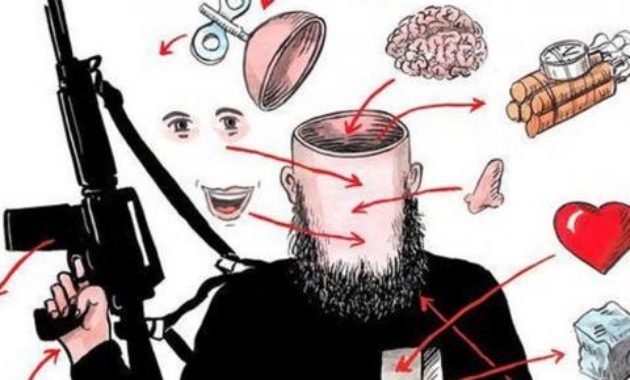
    There are also those who argue that intervention is an act of interfering in the political, economic, and cultural affairs of another country.

    Not a few people claim that intervention is an exaggeration, but basically intervention is done because of the intention to help.

    For more details, here sinaumedia will describe it specifically. In addition, we also present articles on the meaning of mitigation to add to your knowledge.

    Definition of Intervention According to Experts

    Experts have their own opinions on the intervention. To better understand it, you can refer to the opinions of experts as follows:

    1. Dr. Wirjono Prodojodikoro

    According to Dr. Wirjono Prodojodikoro, the notion of intervention is an intervention of a foreign country which is suppressive by means of violence or by threats of violence, if its wishes are not fulfilled.

    2. Parry and Grant

    Parry and Grant argue that the notion of intervention is the intervention of a dictatorial state against other countries with the aim of maintaining or changing certain actual conditions.

    3rd JG Starke

    JG Starke argued, the notion of intervention is a form of propaganda or other activities carried out by a country with the aim of encouraging a revolution or civil war in another country.

    4. Oppenheiman Lauterpacht

    Oppenheiman Lauterpacht stated, the meaning of intervention is the dictatorial intervention of a country in the affairs of other countries with the intention of maintaining or changing a situation, situation, or goods in that country.

    5. Black’s Law Dictionary

    Meanwhile, in the book Black’s Law Dictionary, the notion of intervention is the interference of a country in the affairs of another country by exploiting the power or threat it has.

    Kinds of Intervention

    Interventions are often used in various fields, such as law, government, health, nursing, psychology, education, and others. The following describes interventions in several areas:

    • Legal Intervention

    Third party interference in a matter or ongoing civil law between the plaintiff and the defendant.

    • Government Intervention

    Efforts and actions to pressure certain parties launched by the government in a work plan with the aim of achieving something even better.

    • Health Intervention

    Advertisement

    Rational actions carried out in the interests of patients on the basis of decisions of doctors or nurses or collaborative interventions between the two.

    • Nursing Intervention

    The intervention of a doctor or nurse made to help a patient move to a stage of health or complete recovery.

    • Psychological Intervention

    The form of psychological services individually, in pairs, groups or with families where patients come to the psychology bureau to treat certain psychological conditions.

    Forms of Intervention

    Kalevi J. Holsti revealed that intervention has six forms. The forms are as follows:

    1. Diplomatic Intervention

    A form of intervention in which a diplomat comments in favor of a political case or issue affecting the country in which he or she serves.

    2. Classical Intervention

    Interventions carried out with dark activities or secret missions. As an example of tapping information on a country with a specific purpose.

    3. Military Strength Exhibition

    This form is considered efficient because the cost is relatively cheap and the risk is low compared to sending a real military expedition to a place.

    4. Subversion 

    Subversion is known as the underground movement. Subversion is a political and military movement that is organized, supported, and directed by a foreign country, the purpose of which is to exploit various elements in the target country.

    5. Guerrilla

    Guerrilla is a combination of subversion with conventional warfare systems. Guerrillas are not always the result of intervention by foreign powers, but quite a number of guerrilla activities are manifestations of intervention.

    6. Military Intervention

    This form of intervention is manifested by sending military expeditions to support a government in power or assist rebel groups.

    Types of Interventions

    Based on the type, interventions are divided into two types, namely based on their reach and impact. Here’s the explanation:

    1. Interventions Based on Reach

    • Internal intervention : The act of intervening by a foreign country to support certain groups in order to defect or rebel against the legitimate government.
    • External Intervention : The act of intervention by a foreign country in the ongoing war between two other countries, which has the aim of reconciling or reducing conflict without defending one of the parties involved in the war.
    • Reprisal Intervention : Intervention activities carried out by a country with the aim of retaliating for losses suffered by other countries by causing losses, such as an example of a blockade.

    2. Interventions Based on Impact

    • Positive Intervention : Actions from foreign countries or world institutions that aim to uphold justice. One of the international organizations that often makes positive interventions is the United Nations (UN).
    • Negative Intervention : Reaction from foreign countries with the aim of obtaining or utilizing various products that exist in a country. This form of negative intervention is usually carried out by developed countries against developing countries.

    Examples of Intervention Actions

    • Carry out an embargo against a country that is hostile to other state institutions.
    • Sending soldiers to a warring country that was clearly none of his business.
    • Waging war by means of blockades to other countries, and having no connection at all.

    Thus the definition of intervention along with the types, forms, types, and examples of intervention actions. Hopefully it can be useful.

  • Definition of Radicalism, History, Characteristics, Causes of Radicalism

    Definition of Radicalism, History, Characteristics, Causes of Radicalism

    What does radicalism actually mean? In simple terms, the notion of radicalism is an understanding that requires extreme changes or changes to a system of society to its roots.

    Radicalism is one of the social problems that haunts people’s lives in  the world. The existence of globalization is one of the triggers for the emergence of radicalism understanding or ideology, both in social and political life.

    Currently, radicalism is often associated with the concepts of terrorism and extremism. In fact, there are many definitions of radicalism, depending on the context discussed.

    Definition of Radicalism

    The word radicalism comes from the Latin word radix which means root. This term is intended for the basics, the fundamental principles, the subject matter, and the essence of various phenomena.

    there are three meanings of radicalism. First, radicalism is a radical sect or understanding in politics, second, radicalism is a school or understanding that requires drastic social and political changes, and third, radicalism is a political school that has an extreme attitude.

    Meanwhile, according to Merriam Webster’s online dictionary, radicalism is the behavior or opinion of people who want or like extreme changes in the government or political system.

    In the socio-political concept, radicalism is an ideology that wants change, replacement, and penetration of a community system to its roots.

    the term radical does not always have a negative meaning but can also have a positive meaning, depending on the context of space and time behind the use of the term. So, basically, radicalism refers to the political doctrine adopted by certain parties who support individual and collective freedom.

    According to experts, the notion of radicalism is an ideology (idea or idea) and an understanding that wants to make changes to the social and political system by using violent/extreme means.

    The essence of acts of radicalism are the attitudes and actions of a particular person or group that uses extreme and even violent means in bringing about the desired change.

    Radical groups generally want these changes in a short time and drastically which is often contrary to the prevailing social system.

    Radicalism is often associated with terrorism because radical groups can use any means to achieve their wishes, including terrorizing those who disagree with them.

    Although many associate radicalism with certain religions, fundamentally radicalism is a political issue and not a religious teaching.

    History of Radicalism

    Radicalism has existed since time immemorial because the “seeds” are already in humans. According to the Encyclopedia Britanica, the term radicalism was first recognized after Charles James Fox described the notion in 1797.

    At that time, Charles James Fox called for “Radical Reforms” in the system of government in Great Britain (England). These reforms were used to explain the movement in favor of a parliamentary revolution in the country. In the end the ideology of radicalism began to develop and then mingled with the ideology of liberalism.

    In France prior to 1848, the use of the term radical referred to those who supported universal or republican suffrage. Entering the 19th century, the term radicalism changed its meaning to humans who can control the social environment with collective action.

    Meanwhile in America, the definition of radicalism is political extremism in any form. Communism is considered a radical left, and fascism is considered a radical right. American youth movements that denounced traditional social and political values ​​at the time were called radicals.

    Radicalism is often associated with certain religions, especially Islam. One example can be seen from the existence of the ISIS (Islamic State of Iraq and Syria) group which wants to change the world order by means of violence and terror by bringing/mentioning symbols of the Islamic religion in their every action.

    The actions of ISIS and the support of a small number of Muslims against ISIS were then considered a true form of radicalism. This in the end makes some people of the world think ISIS is a picture of Islamic teachings. However, of course this is not true because most Muslims actually condemn the heinous acts carried out by the ISIS group.

    Characteristics of Radicalism

    Radicalism is very easy to recognize. This is because in general, adherents of this ideology want to be known and want more support from people. That is why radicalism always uses extreme means.

    The following are the characteristics of radicalism:

    1. Radicalism is a response to current conditions, the response is then manifested in the form of evaluation, rejection, and even hard resistance.
    2. Making constant resistance efforts and demanding the desired drastic changes occur.
    3. People who embrace radicalism usually have strong beliefs about the program they want to run.
    4. Adherents of radicalism do not hesitate to use violent means in realizing their wishes.
    5. Adherents of radicalism have the assumption that all parties who have different views with him are guilty.

    Factors Causing Radicalism

    Referring to the definition of radicalism above, this understanding can occur due to several factors, including:

    1. Thinking Factor.  Radicalism can develop because of the idea that everything must be returned to religion, even if in a rigid and violent way.
    2. Economic Factors . Economic problems also play a role in making radicalism appear in various countries. It is human nature to survive, and when pressed by economic problems, humans can do anything, including terrorizing other humans.
    3. Political Factors . Some people think that a state leader only sided with certain parties, resulting in the emergence of community groups that seem to want to uphold justice. These groups can be from social, religious, or political groups. Instead of upholding justice, these groups often make things worse.
    4. Social Factors . Still closely related to economic factors. Some of the weak economic class people are generally narrow-minded so it is easy to believe in radical figures because they are considered to be able to bring drastic changes to their lives.
    5. Psychological Factors. Bitter events in one’s life can also be a factor causing radicalism. Economic problems, family problems, love problems, hatred and revenge, all of these have the potential to make someone a radical.
    6. Education Factor . Wrong education is a factor causing the emergence of radicals in various places, especially religious education. Educators who give teachings in the wrong way can cause radicalism in a person.

    Advantages and Disadvantages of Radicalism

    Don’t get me wrong, since the beginning of this article, it has been stated that radicalism is a misunderstanding and many consider it heretical. However, in radicalism there are also advantages.

    1. Advantages

    • Adherents of radicalism have a clear goal and are very sure of that goal.
    • Adherents of radicalism have great loyalty and fighting spirit in realizing their goals.

    2. Weaknesses

    • Adherents of radicalism cannot see the real reality because they think that all opposing opinions are wrong.
    • They generally use violence and other negative methods in an effort to achieve their goals.
    • Adherents of radicalism consider all parties who have different views with him are enemies who must be eliminated.
    • Adherents of radicalism do not care about human rights (Human Rights).

    This is a brief explanation of the meaning of radicalism, the history of radicalism, the characteristics of radicalism, and the causes of radicalism in various places. Hopefully this article is useful and adds to your insight.

  • Types of Bullying and Examples

    Types of Bullying and Examples

    Bullying is an act or behavior that is done to hurt either in the form of verbal, psychological or emotional and can also be in physical form.
    This bullying can be done by a group of people or individuals who feel physically and mentally stronger than the victim.

    The impact of bullying is very large, here are the types of bullying that we need to know.

    1. Physical Bullying

    This type of bullying is the most common type we encounter. Usually the perpetrators of bullying will do physical violence such as pushing, kicking, hitting and others related to the physical.

    The side effect of this bullying is the marks of violence that appear on the body of the victim of bullying. This type of bullying is easiest to report to the authorities because there is evidence of lasting violence.

    2. Sexual Bullying

    It is a type of sexual bullying, whether against a partner or non-partner. This bullying can be done directly, for example, rape, sexual harassment. Or indirectly with words or private messages.

    3. Prejudicial Bullying

    Bullying against certain races and groups, usually the perpetrators of this bullying act by imitating the speech style of the victim, imitating the tribal habits of the victim or by criticizing his race.

    4. Financial Bullying

    Is a type of bullying that forces the victim to spend money or valuables belonging to him. Examples such as harassing, pointing, embezzlement of funds and others.

    5. Cyber ​​Bullying

    This type of bullying is usually done on social media such as the internet. An example of a case is the perpetrator commenting negatively on the victim’s post or terrorizing the victim.

    6. Verbal Bullying

    Verbal bullying is often associated with cyber bullying, even more cruel. Usually the victim who is affected, will prefer to be alone and hide the problem.

  • Conflict Theory According to C. Wright Mills

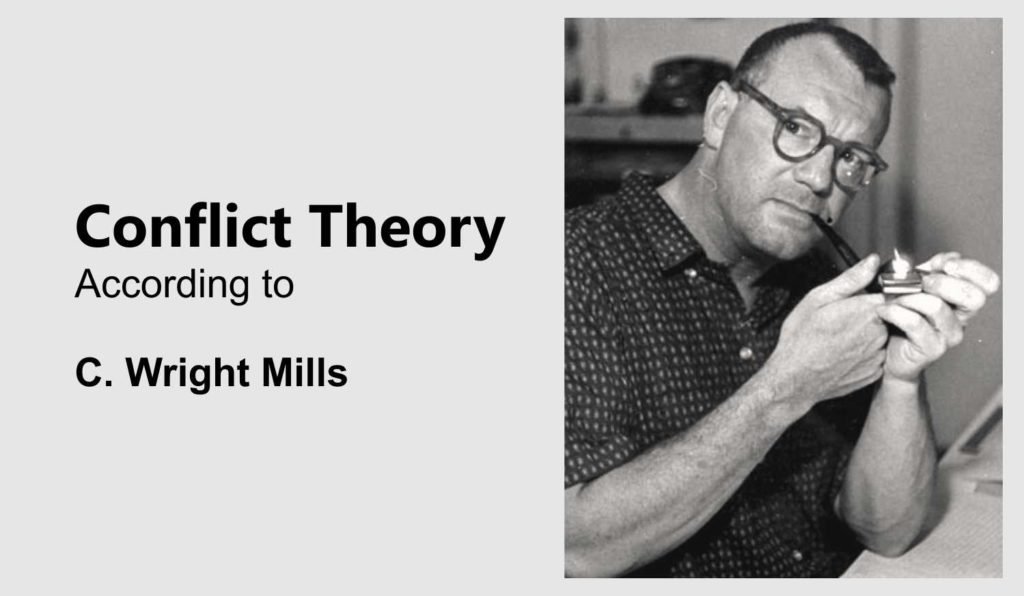
    Conflict Theory According to C. Wright Mills

    What are the views and understandings of C. Wright Mills conflict Theory? Let’s look at the explanation of conflict theory according to this one sociological figure. 

    Want to know more fully, how we view the conflict version of this critical figure, it is important to study. Let’s read.

    Understanding the Thought of C. Wright Mills

    There are several important figures in sociology who also gave their views on conflict, ranging from Karl Marx, Lewis Coser, Jonathan Turner, Ralf Dahrendorf, and many others.

    The discussion of conflict is indeed interesting to study. Moreover, in the community itself, there will certainly be various disputes and conflicts. 

    There are also those who say that conflict always leads to negative things. However, there are also those who say that conflict can lead to positive things.

    Indeed, there are many views and perspectives given by figures and experts on conflicts that occur in society.

    So on this occasion, we will briefly review the understanding of conflict from the character, namely conflict according to C Wright Mills.

    Charles Wright Mills is an American sociologist who was born in Waco Texas on August 28, 1916. 

    He died in West Nyack, New York, on March 20, 1962. Mills was indeed known as a radical thinker who was rich in ideas, open and courageous. 

    He is known as a sociologist who is intense in observing the reality of the state and power. 

    Then he is famous for putting forward a very famous theory, namely the power elite theory. 

    That’s a glimpse of a popular figure in sociology with his phenomenal works, in his thoughts and perspectives.

    So what do you think about conflict? Check out the explanations and reviews below, let’s read.

    Conflict Theory in the Perspective of C. Wright Mills

    Understanding C. Wright Mills’s thoughts on conflict let’s see, read the plan yes. 

    Mills said that to be able to create a good society on the basis of knowledge and its formation.

    It is the responsibility of the intellectuals to socialize liberally and support the revolution in Cuba.

    He also condemned the American reaction to the revolution in Cuba because he believed that the revolution in Cuba would unite revolutionary socialism and freedom. 

    The theme of the theme discussed in depth and specifically in Mills Sociology is the relationship between alienation and bureaucracy as well as the power of the elite.

    First, a Glimpse Understanding the Alienation of Bureaucracy

    According to Mills explaining the economic difficulties experienced by workers in the past have been replaced.

    Today by psychological dissatisfaction rooted in alienation. The workers of what they work for. 

    He views these workers who work in offices as apathetic, fearful and shaped by mass culture. 

    Where in modern society, those in power often use it covertly.

    With the aim of doing manipulation manipulation. Therefore, Mills argues that bureaucracy is synonymous with manipulation. 

    According to him, the rational system hides their power so that no one understands their calculations. For the biocracy, the world is an object of manipulation. 

    Second, Elite Group Power

    For Mills himself in America at that time, it was controlled by a group of ruling elites, which consisted of people who produced dominant positions in the field.

    Politics, military and economy. Where the three areas of power have a relationship with one another.

    Until the people in power in the field, work together to create a group of elites in power in America.

    It is therefore not surprising that a high-ranking military official could become a capitalist.

    Likewise, the head of government can apply his style of government like an army. Mills explained that he believed where power could be based on other factors.

    Indeed and not on mere ownership. However, it is the same interests of this elite group that have united them and sustained the economy.

    So, that’s just a brief overview of the basics that friends can read from the reference sources below. Then, what about conflict in a sociological sense? 

    Where conflict is defined as a social process between two or more people. In which one party excludes the other.

    By destroying it or making it helpless, and the weakness of a person or group of people. 

    Indeed, every element of society or policy makers will contribute to the conflict. 

    Yes, you may not realize it, the danger that threatens social disintegration in people’s social life. 

    Which will have an impact on the integrity of the country. Mills said conflict in society occurs because of differences in interests, and resources.

    He continues that social structures are created through conflicts between people with different interests and resources. 

    Moreover, at this time, sometimes the government’s position is often unstable, which is the main trigger for conflict in society. 

    The difference in interests between the community and the government in national development often creates an open conflict.

    Indeed, this social conflict usually occurs because of one party or group who feels that their interests or rights have been taken by certain parties. 

    In an unfair way, this term is known as surplus value in Karl Marx’s view. 

    In essence, society will not be separated from the existence of social dynamics and conflict. Especially in the process and social relations.

    There are bound to be disputes and conflicts that overshadow people’s daily lives. Thus conflict becomes a color in various human lives.

    So that’s a glimpse of understanding, explanations and perspectives or views on Conflict Theory According to C Wright MillsHopefully useful, fellow readers.

  • Definition of Embargo, Types, and Case Examples

    Definition of Embargo, Types, and Case Examples

    In short, the definition of an embargo is a prohibition issued by the government in a country to import or export certain goods or products to other countries.

    This term is common and familiar used in the world of economics, especially in trade and politics. For more on the meaning of embargo and its types, read this article to the end, okay!

    Definition of Embargo

    The definition of embargo is a prohibition imposed by the government of a country, to export or import certain goods or products to other countries in the framework of policies related to economics, politics, and other policies.

    Therefore, the term embargo can be concluded as an order given by a country, which aims to limit trade and exchange with certain countries.

    The term embargo is generally used in international politics and commerce. An embargo is declared in the form of a policy by the government in a country against other countries in order to isolate the country concerned.

    This will cause the government of an isolated country to be in a fairly difficult internal situation. This difficult internal situation occurred because of the influence of the embargo which caused the economy of the opposing country to suffer.

    The policy, will also limit all trade with a country or aim to reduce the exchange of certain goods.

    In general, embargoes are used as a political punishment for violations of a policy or agreement.

    In general, embargo policies are enforced to force a country to submit to and comply with countries that prohibit exports and imports.

    In other words, an embargo is a weapon that can paralyze a country’s economy.

    If the embargo is enforced for a long period of time, then of course the people in it will experience the impact of the embargo.

    People’s welfare will also decline and can have an impact on other sectors in a country.

    In addition, embargoes are also treated as a result of unfavorable political and economic relations between nations.

    For example, a military embargo is intended to prevent the exchange of military goods from occurring with a country.

    Indonesia itself had received an embargo from the United States. The US embargo was in the form of a ban on exports and imports of military weapons procurement from 1999 to 2005, due to human rights violations committed by ABRI in East Timor.

    America has often made trade embargo decisions and other economic sanctions because of the mandate from the United Nations.

    An example is after the attacks on September 11 in 2001, the United States imposed an embargo on trading commodities to several countries in the Middle East which were accused of being the cause of the attack.

    The embargo does not only apply to all goods and commodities that are exported or imported from the borders of a country.

    Often times, embargoes only apply to certain goods, such as oil and military equipment.


    Purpose of the Embargo

    As previously explained, a country is forced to impose an embargo on another country with the aim of making it difficult for the target country to obtain various kinds of commodities, and especially goods that are the country’s needs.

    The implementation of this embargo policy was triggered by a conflict of interest that occurred between the two conflicting countries, where the country that carried out the embargo hoped that the policy would be able to force other countries to voluntarily sit down together and resolve the issues that were going on between the two.

    The United States, is one of the countries that often implements embargo policies on countries that are considered problematic by them. Both with superpowers and countries globally.

    North Korea, Cuba, to Iran and Indonesia are examples of countries that had been hit by the economic sanctions embargo from the United States.

    Even so, the United States was also affected by this embargo regulation. America is suffering from a shortage as well as an increase in fuel prices, because members of the Organization of the Petroleum Exporting Countries (OPEC) carry out an oil embargo on America.

    Embargoes are carried out by certain countries such as America, because they are considered a tool to influence.

    This embargo is quite often used by several countries that have trade agreements between countries, especially exports and imports.

    Because many countries depend on global trade, embargoes are also considered a powerful tool that can affect a country.


    Types of Embargo

    In general, embargoes are divided into two types. Here’s the explanation.

    1. Economic Embargo

    The first type of embargo is an economic embargo. Prohibition or stopping of commodity traffic from one country to another that has interests or is experiencing conflict.

    Including export and import activities between countries, such as trade embargoes on the defense system or defense equipment and oil.

    In short, the economic embargo is the prohibition of all forms of economic activities. Both export and import activities in countries that are currently receiving sanctions from the embargo.

    Considering the need for certain raw materials, this economic embargo will have an impact on shocks for a production company.

    So the production of certain goods, of course, will require raw materials imported from other countries at much more expensive prices and different levels of quality.

    The policy of this embargo, of course, will have a negative impact. Especially if the country concerned has a level of dependence on raw materials that must be imported or commodities from a country that is ready to import.

    This will bring considerable losses to countries experiencing embargo sanctions.

    The policy of the embargo will also have an impact on economic conditions in a country, namely making the affected economy unstable.

    Huge losses and a fairly severe impact of the economic embargo was massive layoffs.

    In addition, the two countries, both those that impose embargoes and are subject to embargo sanctions, can also be involved in a cold war.

    Because of that, many countries have finally implemented negotiations and even involved the WTO and the United Nations in order to be able to implement the steps they feel are the best in implementing the embargo action.

    This is done in the interest of peace between the two countries and the lives of the people in those countries.

    In addition, the embargo policy also has a certain period of time and has previously been adjusted to the decision of the country of the embargo giver.

    However, it must first contain an agreement between the two countries, if the previous embargo policy is to be lifted.

    In order to be able to lift the embargo policy, of course it will not be easy to do.

    In fact, in general, there will be negotiations that are quite tough and will take a long time to be able to lift the embargo policy.

    2. Information Embargo

    The second type of embargo is the cessation of publication or distribution of all news, both news and information within a certain period of time.

    In the Press Freedom Law itself, it has been stated that the prohibition of embargoes is a legal provision that must be obeyed.

    If a violation occurs, the news company will also receive strict sanctions and fines whose punishment will be determined later.

    A simple example of this information embargo is when a company announces the company’s profits in the mass media, then the public relations party of the company will also provide the data and information needed for publicity.

    However, there is some information that will explain that there is an embargo.

    Where previously the company would officially state that it was led by the leader of the company, then the data and all information provided would be prohibited from being published by the media.


    Impact of the Embargo

    As we knows, that the main purpose of imposing an embargo is to force the target country so that the country can remain subject to the wishes of the country implementing the embargo.

    This step is one of the weapons that is considered quite powerful to cripple the economy of the country affected by the embargo.

    The unavailability of products and basic needs in a country will certainly make the economy in that country shake.

    The existence of this instability, will have an impact on the decline in the level of welfare in the country.

    Not only the economic downturn, the embargo sanctions can also have an impact on the cold war and disrupt world peace.


    How to Overcome the Embargo?

    Considering the impact that can harm many parties, the embargo has become an event that is often difficult to avoid.

    Countries that have been subject to embargo sanctions, will feel some adverse effects.

    However, there are several efforts that can be made by countries that are subject to sanctions to survive the embargo, namely by focusing on surviving by optimizing the resources owned by the country.

    For example, when a country is subject to economic embargo sanctions which then cause imports to that country to be stopped.

    So, the way to overcome this situation is to develop products independently according to the needs of the community.

    However, maybe the quality and quantity of these products will be different, but by taking these steps, at least they are able to cover people’s needs for these products.

    Another effort that can be made by countries that are subject to embargo sanctions is to establish good relations with other countries.

    This needs to be done, so that the country is able to survive even though the country is experiencing an embargo.


    Some Examples of Embargo Cases

    For a more complete explanation of this embargo, here are some cases of embargoes that have previously occurred in various countries.

    1. Economic Embargo on Iran by the United States

    America often imposes sanctions embargoes, including economic embargo sanctions on Iran, namely in the form of prohibiting exports of crude oil to Iran and the sanctions embargo, announced by Barack Obama, who serves as President of the United States.

    At that time, Iran also experienced a number of losses such as its potential market for oil exports.

    In fact, when the economic embargo sanctions were applied, oil exports from Iran immediately fell to 1.5 million barrels per day.

    Thus, Iran can only rely on exports to a few countries in Europe and the Middle East.

    Then in 2015, the United States lifted the sanctions embargo on the condition that Iran must be willing to reduce its nuclear weapons production capacity.

    By lifting the sanctions of the economic embargo, the export activities of crude oil in Iran again increased to 1 million bpd and Iran became part of the Comprehensive Plan of Action (JCPOA) as a form of Iran’s commitment to the nuclear weapons control program.

    Then in 2018, America again imposed an embargo on Iran. The embargo sanctions did not only affect the two countries involved, but also had an impact on the global economy.

    2. An arms embargo by the European Union on Guinea

    In 2018 the United Nations passed a resolution to impose an arms embargo on the country in South Sudan. The policy was adopted by the United Nations, as a response to the existence of conflicts and ethnic violence that continues to occur in the country.

    The resolution, proposed by America. Of the 15 members of the UN Security Council, nine countries supported the embargo policy, including Russia, Ethiopia, China, Equatorial Guinea, Kazakhstan and Bolivia, which abstained.

    In addition to implementing an arms embargo, the UN Security Council also passed another resolution in the form of imposing a travel ban and imposing an asset freeze on South Sudan’s deputy defense chief.

    South Sudan’s deputy defense chief is considered one of the main actors responsible for the conflict and ethnic violence in his country.

    3. Embargo on Cuba

    In 2014, the United States also imposed economic sanctions on Cuba and it has cost Cuba 3.9 billion US dollars or approximately more than Rp. 49.9 trillion in the last year in the foreign trade sector.

    The total loss due to the embargo from America for 55 years even reached Rp1, 377 T, as stated by the Cuban government ahead of Cuba’s annual report to the United Nations in 2014.

    The report is submitted by the Cuban side to the United Nations every year to encourage the lifting of the economic embargo on the country.

    Then for decades, Cuba has also received support from many countries, which is then manifested in UN resolutions relating to the urge to lift the embargo.

    In 2013, 188 countries also supported the resolution, but only two countries voted against it, namely America and Israel.

    It is known that America first imposed an economic embargo on Cuba in 1960 and had begun a full embargo in 1961 after Fidel Castro won his victory in the Cuban uprising in 1959.

    According to reports, if Cuba does not get the sanctions of the embargo, Cuba can make a profit of up to 205.8 million US dollars from the sale of rum and cigars.