

Tag: Social action

  • Negotiation: Definition, Objectives, Benefits, and Examples of Negotiation

    Negotiation: Definition, Objectives, Benefits, and Examples of Negotiation

    Negotiation is a form of communication that cannot be separated from human life, both in business activities and daily life. So what exactly is negotiation and what is the purpose of negotiation?

    In this article, we will discuss several things related to negotiations, including:

    • A brief explanation of what is meant by negotiation.
    • General purpose of negotiations.
    • Benefits of negotiation in general.
    • Some basic skills in negotiating.
    • Examples of negotiation activities in everyday life.

    Come on, read this article to the end so that you better understand what negotiation is.

    The Meaning of Negotiation

    Etymologically, the word negotiation comes from the English language, namely “to negotiate” and “to be negotiating” which means to discuss, negotiate, or offer. The word then has another derivative, namely “negotiation” which means the activity of discussing or negotiating something with other parties to reach an agreement.

    According to the origin of the word, negotiation is a strategic discussion process carried out to resolve a problem in a way that is acceptable to the negotiating parties.

    In negotiations, each party tries to persuade the other party to agree on his point of view. By negotiating, all parties involved try to avoid contention but agree to reach some form of compromise.

    So in general, the notion of negotiation is a form of social interaction between several parties that aims to reach a mutual agreement that is considered beneficial to the negotiating parties. People who carry out negotiation activities are called negotiators.

    Negotiation activities are used in various areas of life, and usually involve many people’s problems. For example, in the world of business and organization, activities in these two fields are never separated from the negotiation process.

    The parties involved in negotiations can vary and can cover many things. Here are some examples of negotiation activities in everyday life:

    • Conversations between buyers and sellers in the process of bargaining for goods.
    • The interview process between employers and prospective employees.
    • The process of a business agreement between a company and another company.
    • The process of communication between the government of a country and other countries in bilateral cooperation.

    Negotiation Purpose

    According to the Oxford dictionary, negotiation is a way to reach an agreement through formal discussion. Negotiations are carried out by two or more parties where each party has different goals and a bargaining process occurs to reach an agreement.

    From this explanation, we can understand that in negotiating activities there are goals to be achieved by the negotiating parties. The objectives of the negotiations are as follows:

    1. To reach an agreement that is considered beneficial to all parties.
    2. To solve a problem and find a solution to the problem being faced by the negotiating parties.
    3. To achieve a mutually beneficial condition for the negotiating parties where all benefit (win-win solution) .

    For example, business negotiation activities between a company and another company are very useful in developing a market where the goal is to increase sales figures.

    Another example, the negotiation process also occurs when producers and consumers negotiate the price of a product to set an agreed price. With negotiation activities, sellers and buyers can determine a price that is considered equivalent to the value of a product.

    Negotiation Benefits

    Many people assume that an offer or price is something that is final. In fact, many things that are considered final are in fact flexible or subject to change.

    After understanding the meaning of negotiation and its purpose, we need to know what are the benefits of negotiation. Some of the benefits of negotiation are as follows:

    1. The creation of a network of cooperation between one party with another party to achieve their respective goals.
    2. There is mutual understanding between each negotiating party regarding the agreement to be taken and its impact on all parties.
    3. Negotiation is beneficial for the creation of a mutual agreement that is mutually beneficial for all negotiating parties.
    4. The creation of a positive interaction between the negotiating parties so that the cooperation will produce a wider impact for many people.

    Basic Negotiation Skills

    Before negotiating, all negotiators must understand the philosophy of negotiating. Referring to the notion of negotiation, the basis for negotiating is that the agreement reached benefits all parties, or everyone wins.

    This can be achieved by considering all aspects of the negotiation from various points of view. The basic skills for negotiating are as follows:

    1. Sharp in thinking.
    2. Be patient in action.
    3. Can adapt well.
    4. Have endurance.
    5. Good socialization skills .
    6. Good concentration ability.
    7. Have articulation skills.
    8. Have a good sense of humour.

    In addition, there are several crucial things that negotiators must pay attention to when conducting the negotiation process, including:

    • In expressing an opinion, it must be accompanied by clear reasons, facts, or examples so that it is easily understood by other parties.
    • Opinions must be conveyed with the appropriate volume, intonation and choice of words.
    • Expression of opinion must be done clearly, smoothly, and politely.
    • It is not easy to accept or reject the opinion of other parties but must go through various considerations.

    Key Factors in Negotiations

    There are several main elements or factors that must be considered in the negotiation process. Quoted from Investopedia.com, the following are some of the main factors in negotiations:

    1. The Parties Involved

    We must know who will be participating in the negotiations, and what are their interests? It is also important to know the background of the parties involved and how this affects their position in the negotiation process.

    2. Relationship

    Next, we also need to know what the relationship between the parties and their intermediaries is in the negotiation process. How are the parties connected and what role do they play in the negotiation process?

    3. Communication

    This relates to the interests of the negotiators can be well communicated to secure their agreement through negotiations? What is the most effective way to deliver the desired result? How can negotiators be sure they are being heard?

    4. Alternative

    Is there any alternative to what one of the parties originally wanted? If direct agreement is not possible, do the parties need to look for other alternatives?

    5. Realistic Options

    What options are possible to achieve a result? Have the negotiators suggested that there might be some flexibility in their demands?

    6. Legitimate Claims

    Are the requests and promises of each party valid? What evidence do the negotiators offer to support their claims and demonstrate that their claims are valid? How will they guarantee that they will follow through on the outcome of the negotiations?

    Conclusion

    From the explanation above, we can conclude that the definition of negotiation is a strategic discussion activity involving two or more parties to reach a final agreement that is agreed by all parties involved.

    In practice, one of the parties will put forward his point of view, while the other will accept the conditions offered or refuse by conveying his own point of view. This process continues until both parties agree on a resolution.

    Thus a brief explanation of negotiation, starting from its meaning, objectives, benefits, and basic skills needed in negotiating. Hopefully this article is useful and adds to your insight.

  • Impact Of Social Mobility: Positive And Negative

    Impact Of Social Mobility: Positive And Negative

    There are many impacts caused by the existence of social mobility. What are the impacts of social mobility and how to respond to these positive or negative impacts? let’s learn together here.
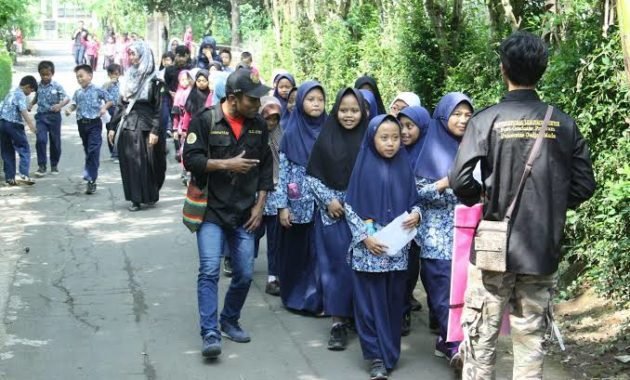
    In the midst of running a social life, surely you have heard the term social mobility. Social mobility in people’s lives does have many contexts and anyone may experience social mobility . In fact, many have experienced social impacts, both the perpetrators and the people around them.

    The impact of social mobility in the midst of people’s lives can be felt. Moreover, this social phenomenon seems to be very close to us and related to people’s lives. But not many understand that he has a high social impact.

    Actually, what is the impact of social mobility and how does this social impact affect people’s daily lives? Before discussing what the impact of social mobility is, we will explain several things covering social mobility, starting from the general understanding to the impact itself.

    Understanding Social Mobility in General

    Before discussing the impact of social mobility, you must first understand what social mobility is in general. By understanding the definition of social mobility in general, you will also understand how social mobility impacts, both positive and negative impacts.

    In general, the notion of social mobility is a change in the position of citizens in one social class to another. Social mobility which will have an impact due to social mobility means the movement of individuals, families, or groups through a system of hierarchies or social stratification .

    Social mobility which will later have an impact on social mobility is also referred to as a social movement which is defined as the movement of people or groups from one social stratum to another. The results of the transfer of social status can be higher, lower, or even remain the same.

    In addition, social mobility can also be interpreted as a transfer of status both vertically and horizontally which will then have an impact on social mobility, both positive and negative impacts.

    Social Mobility Channel

    After understanding the meaning of social mobility which will have an impact, you must also understand that there are various channels of social mobility which will then affect or have an impact on social mobility. At least, there are several channels of social mobility within the community.

    The social mobility channel which will later have this impact serves as a means to carry out social mobility. There are many examples of social mobility channels in the community, but we will explain several channels of social mobility which can then have a social impact on society at large.

    1. Education

    One channel of social mobility that will have an impact on social mobility is in the world of education or educational institutions.

    As we know, educational institutions are places where the educational process or teaching and learning process takes place which has the aim of being able to change human behavior or behavior for the better.

    In the channel of social mobility, namely education, it is divided into several types:

    a. formal education

    Formal education in this channel of social mobility will have a considerable social impact on the community. This formal education covers the school level from elementary or elementary school to university. This educational social mobility channel is systematic, regular, tiered, and has clear requirements.

    Formal education is further divided into several parts, namely general education, special education, vocational education, profession, to religion. This educational institution was founded by the government and the private sector which has a large social impact on community life.

    b. Non-formal education

    This non-formal education also has a social impact, although it is not as big as formal education. Non-formal education is held for the benefit of citizens who need educational services as a complement to formal education.

    Examples of non-formal education are place for courses, study groups, training centers, taklim assemblies, centers for learning activities, and many more.

    The results or values ​​that can be obtained from non-formal education are equivalent to the results or values ​​in formal education, as long as the non-formal education center has received equivalence from a special institution or has referred to national education standards.

    c. Informal education

    In contrast to formal and non-formal education, informal education is usually in the form of family education activities which are usually referred to as human first education because of the role of the family in it. Even so, informal education also has a significant impact on social mobility.

    2. Political Organization

    The second channel of social mobility that also has an impact is political organization. Political organizations are engaged and have an interest in the political process and state science. The impact of this mobility from this political organization is important in shaping a social order that plays a role in determining the fate of the nation.

    Channels of social mobility that have an impact on social mobility, namely political organizations, are divided into several types.

    a. Advocacy group

    An advocacy group is an association that aims to influence political decisions and convince public officials to act in accordance with the voices and interests of the group’s members so that the impact can be felt by the wider community.

    b. Think tank or think tank

    This type of political organization also has an impact because it is tasked with conducting research funded by clients, both government and commercial parties that are useful for the interests of political, social, technological, and weapons members that have a very social impact on a particular group.

    c. Political parties

    This political organization has quite a big impact because they will carry out a certain ideology and the organization is formed with a specific purpose. The purpose of this organization is to gain political power constitutionally so that their various policies can be implemented in a country.

    d. Terrorist group

    The impact of mobility from this organization is also felt by the wider community. This organization has certain ideologies and goals that seek to achieve its goals by means of violence or terror so that the impact of social mobility for the wider community is considered quite dangerous.

    3. Professional Organization

    The channel of social mobility, namely this professional organization, has a great impact on society at large and even individuals. A professional organization is a group of people who have the same goals based on expertise education, including certain skills and vocational.

    This professional organization is a union that is a legal entity and is formed from the same individuals who then develop knowledge, expertise, and so on.

    This professional organization has a social impact for members or the community that is able to improve the skills and abilities of workers or members who are members of it and protect their rights.

    4. Economic Organization

    The next channel of social mobility is economic organization. This economic organization or what is also known as a commercial organization has an impact that is also felt by the wider community. This organization aims to obtain or obtain the maximum profit.

    The main activity of this economic organization has a wide impact because it produces and distributes goods or services which are then offered to the wider community. The goods or services have tariffs that must be paid by consumers. Then, the rate paid becomes the profit or profit of the organization.

    Therefore, organizations that have a fairly large impact on economic mobility are often referred to as profit organizations . These organizations are divided into two types, namely private and government organizations. Of these two types, it is further divided into several types.

    a. Private organizations are divided into Firms (Fa), Limited Liability Companies (CV), Limited Liability Companies (PT), and Cooperatives.

    b. Meanwhile, the government’s economic organizations are divided into State Limited Liability Companies (Persero), Regional Companies, Public State Companies (Perum), and State Service Companies (Perjan).

    In addition to the two types of economic organizations above, there are also other types of economic organizations with social ownership, such as Joint Ventures , Cartels, Foundations, Syndicates, Trusts , Holding Companies , and others.

    Positive Impact of Social Mobility

    The occurrence of social mobility certainly has a positive and negative impact. The following is social mobility that has a positive impact on society at large or individuals.

    1. Encourage one’s progress

    The first positive impact is to encourage one’s progress. This is because social mobility can have an impact on a person’s social status from being low to a higher social status. For example, what many people feel is when Indonesia was colonized and Indonesia became independent as it is today.

    2. Accelerating social change

    The second positive impact is the changes that occur in society and have an impact on the social system. An example of social change that occurs is social change due to social mobility due to globalization. People are becoming more aware of technology, and so on.

    3. Increase social integration

    The last positive impact is increased social integration. This means that the impact of social mobility can affect and increase community integration. For example, a family who moves to a new environment will experience social changes by adjusting their lifestyle, and so on.

    The Negative Impact of Social Mobility and Its Solution

    In addition to the positive impact, social mobility can also have a negative impact. The following will explain some of the negative impacts and their solutions.

    1. Conflict occurs

    One of the unfavorable impacts is that it triggers conflict. Conflict is unavoidable by people who carry out social interactions, as well as when social mobility occurs. It could be because of competition or a sense of injustice, then the conflict arises. is unavoidable by people who carry out social interactions, as well as when social mobility occurs. It could be because of competition or a sense of injustice, then the

    Solutions to avoid conflicts can be done in several ways, for example:

    • Avoid cornering one party,
    • Make decisions together, and
    • Conduct evaluations or good communication.

    2. Affects health

    The next negative impact is that it can affect a person’s health. Usually this happens when a person experiences a downward vertical social impact or experiences a decline in social status. It is undeniable, people will feel depressed, uncomfortable, and so on which then triggers the occurrence of disease, especially psychological.

    To overcome this, a solution is needed, namely:

    • work and socialize as well as possible so as not to experience the impact of downward vertical social mobility or a decline in social status,
    • adapt and not bother with the impact of social mobility, and
    • trying to do the best every time.

    How to Deal with Social Mobility

    To address the impact of social mobility, efforts or methods are needed to prevent the detrimental impact on the wider community or an individual.

    • Distributing free education for the underprivileged.
    • Build a healthy political organization.
    • Build an economic organization that benefits both parties.
    • Build professional organizations to create wider employment opportunities.


  • Social Action: Definition, Types And Examples

    Social Action: Definition, Types And Examples

    Have you ever felt angry or sad over the words or actions of those around you? This reaction in sociology is referred to as social action. In socializing or interacting with people around, two things will appear. Come on, understand the meaning and examples of social action and its types.

    The first is social interaction, and from here comes social action, for example, as mentioned earlier. When someone communicates with other people (social interaction), there will be actions, responses, and the like from both parties.

    Whatever actions, responses, etc., are included in the social actions that arise as an effect of social interaction. Everyone, without exception then, every day, even every second, is doing social actions. Then, what exactly is meant by this social action?

    Definition of Social Action

    Social action, in general, is an action that is influenced and affects other people during social interactions. At the same time, social interaction is a relationship between two or more individuals who influence each other.

    This social interaction’s influence is referred to as the social action earlier. So when there is a social action, the background for the emergence of this action is because there is interaction. With interaction, social action will occur.

    In simple terms, social action can be interpreted as a response or reaction visible to the naked eye after social interaction. The forms then vary so that the types of social action are also very diverse, which will be explained below.

    An example is when there is communication between two people, this communication occurs as an effort to exchange information. After the data is conveyed by one of them, the listener will react.

    Whether it’s happy, surprised, amazed, angry, and so on, it is a form of emotional, social action. Then when the listeners of this information decide to cry, yell, and laugh out loud, it also includes social actions that the perpetrators physically carry out.

    Social actions taken then need to be thought out carefully and wisely because this action will lead to other social actions, which can lead to good or even new problems.

    An example is when someone scolds someone because of that person’s social actions. If the person being scolded does not accept it, they will take social actions to get angry at the first party, gossip, slander behind their backs, and so on.

    So, social action is shaped like a cycle. When you do good actions, the actions of those around you are also good. Vice versa. So in sociology, it is discussed in depth how to interact socially well to minimize social actions with negative effects.

    Understanding According to Experts

    Several experts then explained the definition of social action. These experts then expressed their opinion. In sociology, two experts define social action and are widely known worldwide. That is:

    A. Max Weber

    The first expert to define social action was Max Weber, a figure in sociology. According to Weber, the notion of social action is an action based on social facts that have a major influence on social life, where the social system in this influence is created from the relationship of individuals in their groups.

    B. Ritzer

    Ritzer conveyed the second opinion; according to him, the notion of social action is a repetitive behavior carried out intentionally due to passively influencing situations with similar goals in certain conditions.

    Through the definitions presented by the two experts, it can be concluded. That social action is a repetitive action or behavior carried out intentionally due to the influence of certain situations.

    Situations in social interaction will shape the social actions of all individuals in the relationship. A tense situation will create fear and force the mind to look for ideas as a solution.

    The solution obtained is then immediately applied, and this is also included in social action. In practice, no individual does not perform social action. Even getting up early because you want to go to school or work every day is included in it.

    Types of Social Action

    As explained earlier, the types of social action are as diverse as the forms of social action itself. When viewed from the aspect of things that encourage social action. So social action is divided into 4 (four) types, namely:

    1. Instrumental Rational Action

    The first type is instrumental rational action; as the name implies, this social action is rational. So when someone takes an action, it will be adjusted to the final goal to be achieved.

    A person will not take action without a clear purpose; then, his nature becomes rational and logical. Actions with a clear purpose lead to a clear way as well.

    For example, the social action of a high school student studying hard all night. The goal is to be better prepared for the exam the next day. So learning becomes a social act, and the goal is to be ready for exams.

    2. Value Oriented Action

    The second type is value-oriented social action, which is carried out by considering the values ​​that exist in society. So this action adapts to what is considered good by the wider community.

    The scope of values ​​starts from ethical values, aesthetics (beauty), religion, and other values ​​that exist in society. Value-oriented social action focuses on the benefits and pros and cons of the action in the eyes of society, which overrides the goal.

    An example of this type of social action is when children stop playing football because the call to prayer for the midday prayer has sounded. So they decided to stop playing and pray first, then continue the game.

    3. Affective Action

    The third type is affective action, namely social action that is carried out based on the feelings or emotions felt by an individual. So that this social action is unacceptable, considered illogical, or irrational.

    It is said so because this social action is carried out by prioritizing feelings or emotions so that this action does not involve the mind, which also makes the action unacceptable.

    An example is when a teacher scolds a student in class for being caught cheating, then this student cries. Crying here is a form of affective action because it relies on emotions or feelings.

    Namely the feeling of fear of being scolded and the feeling of worrying about getting a bad grade. Whereas logically, students who cheat should immediately apologize and take responsibility for their actions. Not by crying.

    4. Traditional Action

    The last is traditional action, which is a type of social action carried out because it has become a habit or an action based on a habit and is ingrained.

    Then it relates to all forms of culture or customs so that all social actions of this type are based on the culture applied by the community. This action is hereditary, so it has been happening for a while.

    An example is any action that is done because of custom, such as the Ngaben ceremony for the people in Bali, the Ngebali ceremony in Lampung, the Batu Bakar Party event in Papua, and so on.

    All actions that are carried out based on customs then enter into traditional social actions. This action will continue to be carried out by the community as long as it is inherited or taught to children and grandchildren.

    Examples of Social Action

    It is also possible to know examples of social action to make it easier to understand social action. The form of social action will then be following the types previously stated. The following details an example of social action:

    A. Instrumental Social Action

    In instrumental social action, namely social action based on clear goals. So there are several examples of social action in everyday life related to this type, including:

    1. Ani decided to go to bed early to wake up for the tahajjud prayer at 3 am. (Going to bed early is an act, while the goal is to wake up at 3 am – wake up early for prayer).
    2. Mother sweeps the floor twice a day to keep the house clean. (Sweeping is a social act that aims to keep the house clean.)
    3. Ika eats quickly because she doesn’t want to be late for school. (Eating quickly is a social act, and the goal is to get to school on time.)
    4. Value Oriented Social Action

    B. Value Oriented Social Action

    Social action that is oriented or paying attention to societal values is a value-oriented social action. Examples of social actions include:

    1. Ahmad stopped playing football because it was time for the Asr prayer. (Quitting football for prayer is a social act, its basis is a religious value – prayer times).
    2. We will eat and drink with our right hand at home and public events such as wedding receptions because it is considered better. (Eating and drinking with the right hand is a social act, the basis of which is an ethical value in society – politeness).
    3. A soldier will give his soul and body to the nation and state. (willing to give up body and soul is a social act; the basis is the value of patriotism).
    4. Andi gave up his seat on the city bus to a pregnant woman who happened to be standing. (Giving up a seat is a social act; its basis is an ethical value).

    C. Affective Social Action

    Examples of effective social actions carried out based on feelings and emotions felt are as follows:

    1. Supporters of soccer team A immediately roared with joy in the stadium when their flagship team scored a goal in the opponent’s goal.
    2. Ani cried at the funeral because her mother had just died.
    3. Ika was annoyed on the bus because two young men always teased her along the way even though they didn’t know her.

    D. Traditional Social Action

    Social action based on custom or culture is called traditional social action. Here are some examples of social actions:

    1. Following the Ngaben ceremony for the people in Bali.
    2. Following the Ngababali ceremony in Lampung.
    3. Participate in the Burning Stone Festival in Papua.

    Social action is something that everyone in the community group will always do. This action is a form of overflowing feelings, necessities of life, and so on. So that it will always be there and interesting to understand or study because it can help wiser in acting in the community.