Tag: news

  • University of Michigan’s Galileo Manuscript Turns Out to be Fake

    University of Michigan’s Galileo Manuscript Turns Out to be Fake

    The University of Michigan declared a handwritten manuscript by Galileo Galilei  to be a forged document.

    Previously, the historic piece of paper was in the collection of the University of Michigan Library. However, an internal investigation by a history professor has proven this document to be a fake.

    The professor’s search found watermarks on paper no younger than the 18th century. Galileo himself is known to have died on January 8, 1642, so documents originating after that period can be confirmed as fake documents.

    “It was heartbreaking when we first learned that our Galileo (collection) wasn’t actually Galileo,” said Donna L. Hayward, interim dean of the Michigan library, as quoted by Live Science.

    The University of Michigan has owned the manuscript since 1938 from a donation from Tracy McGregor, a businessman from Detroit, United States (US) who had obtained the document at another collector’s auction in 1934.

    According to the University of Michigan Library, a 1934 auction catalog claims Cardinal Pietro Maffi (1858-1931), Archbishop of Pisa, has authenticated the manuscript by comparing it to other Galileo letters in his collection.

    The upper part of the manuscript is a draft of a letter that Galileo wrote before his presentation of the new telescope to the Doge of Venice in 1609. Meanwhile, the lower part of the document is a set of records of Jupiter’s moons.

    One of the suspicious researchers at the manuscript is Nick Wilding, a historian at Georgia State University. Wilding looked at the image of the document and suspected something was wrong.

    In his opinion, the ink, handwriting, and some of the word choices seemed odd for a 17th century document. Wilding emailed University of Michigan Library curator Pablo Alvarez in May 2022 out of his suspicions, and the University of Michigan launched an internal investigation.

    Three months later, the university confirmed Wilding’s suspicions. The document was not written by Galileo, but most likely by Tobia Nicotra, a prolific Italian forger operating in the 1920s and 1930s.

    Quoting Britannica , Galileo Galilei was an Italian scientist who was born on February 15, 1564 to January 8, 1642. Apart from being an astronomer, he was also a physicist and philosopher.

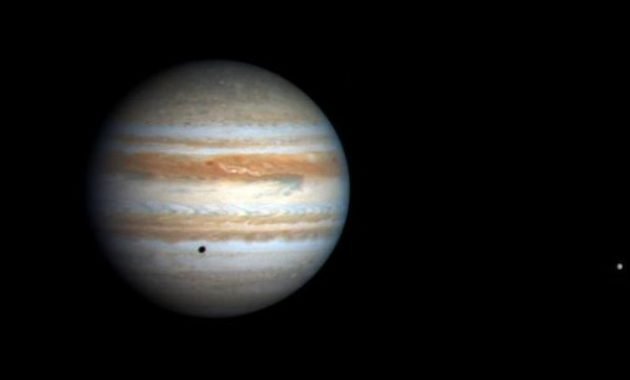
    In 1610, Galileo was credited with discovering Jupiter’s four moons. For this reason, the four moons of Jupiter are also known as the Galilean Moons.

    One of the controversial claims of Galelio is when he mentions the Earth revolves around the Sun. In his time, this claim contradicted the church’s claim that the Earth was the center of the Solar System.

  • Preparing for the Moon, NASA Announces the Landing Site of the Artemis Mission

    Preparing for the Moon, NASA Announces the Landing Site of the Artemis Mission

    The United States space agency ( NASA ) is preparing to send humans to the surface of the Moon for the first time in more than 50 years.

    But before actually setting foot there, NASA first needs to decide where the mission, dubbed Artemis 3, will land on the Moon.

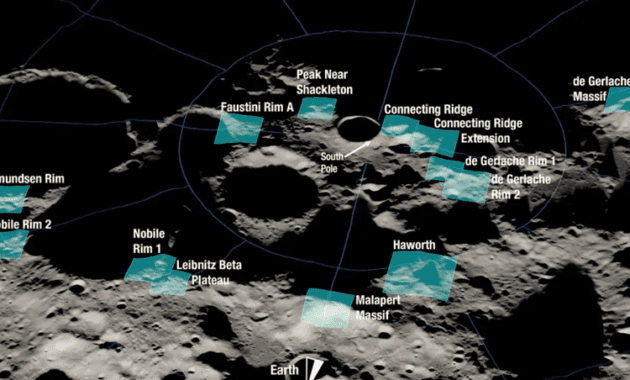
    Last week, NASA finally announced 13 candidate landing areas on the Moon’s surface. The candidate area is near the south pole of the Moon.

    Quoted from Gizmodo, Sunday (21/8/2022) each area is 15×15 kilometers in size and each contains several landing sites with a radius of about 100 meters.

    “An area can be thought of as a series of landing sites. A site is a single parking lot for a lander,” said Jacob Bleacher, NASA’s chief exploration scientist.

    To get to these 13 candidates, NASA collected data using the Lunar Reconnaissance Orbiter (LRO), which was launched in 2009 and is still orbiting the Moon.

    The LRO, which has mapped the Moon’s polar regions and orbiters, is crucial in helping NASA figure out where to land during future lunar missions.

    The south pole area of ​​the Moon itself was chosen because it may contain ice. Water on the Moon is considered a huge boon for future space exploration, and can provide astronauts a valuable, local resource for ongoing support on the lunar surface.

    But while while the south pole does have certain advantages, NASA also has many technical issues to consider when deciding where to land.

    Because the south pole has an area that is permanently shrouded in darkness and other areas that are continuously exposed to the sun.

    “Finding a location with a larger-than-average amount of light allowed us to design systems that utilize light for energy and thermal control,” said Bleacher.

    “Similarly, the unique permanent shadow locations at the poles provide opportunities for water and other volatile elements to be trapped there,” he added.

    Sarah Noble, the science leader of the Artemis mission , said that a team of scientists and engineers was formed to evaluate the accessibility of the South Pole landing area, including safe landing, ease of communication, and proper lighting conditions.

    Furthermore, NASA is working to narrow down the list of candidate landers, as the launch date for the Artemis 3 mission draws near. The mission itself is expected to launch in 2026.

    Meanwhile, NASA’s SLS rocket is now on the launch pad at the Kennedy Space Center in Florida, which will depart the unmanned Artemis 1 mission on August 29.

    Artemis 2, on the other hand, is scheduled to launch in late 2024, but will not land on the Moon ‘s surface .

    This will be the Moon landing that will be carried out by the Artemis 3 mission, in which NASA plans to land a man and a woman at the Moon’s south pole.

    Unlike Apollo, the Artemis mission wasn’t just about landing humans for short stints.

    The mission’s goal is to establish and maintain a human presence on and around Earth’s natural satellite.

    It would be a stepping stone to a much more ambitious project, namely the first human journey to Mars.

  • What is a News Text?

    What is a News Text?

    For some people, reading the news may be like eating or drinking, which is not only a necessity but also a necessity. What for? Yes, especially if you don’t get information, as is the meaning of the news text that we know.

    The information contained in the news text itself can be in the form of events that are currently happening or those that have already happened. And this is usually conveyed either orally as we often hear and see on television, or in writing as we usually read in print media.

    When referring to Wikipedia, news itself can be interpreted as new information or information about something that is happening, presented in print, broadcast, on the Internet, or by word of mouth to a third person or crowd.

    News reports are the duty of the journalist’s profession, when the news is reported by the journalist, the report becomes the latest facts / ideas which are deliberately selected by the news editor / media to be broadcast on the assumption that the news chosen can attract a large audience because it contains news elements.

    What are the elements referred to? There are at least six, namely what, who, where, when, why and how.

    Understanding news according to experts

    Mickhel V. Charniey stated that “news is the fastest report of an event or incident which is factual, important, and interesting for some readers, and concerns their interests”. Meanwhile, according to Willard C. Bleyer, news is defined as something recent (new) which is chosen by journalists to be published in newspapers so that it attracts readers’ interest.

    Not much different, Wiliam S. Maulsby argues that news is a true and impartial narrative of facts that have significant meaning and have just happened, which can attract the attention of the readers of the newspaper containing them.