Tag: inventor

  • The Theoretical Physicists Behind the Development of the Atomic Bomb

    The Theoretical Physicists Behind the Development of the Atomic Bomb

    Talking about the early development of the atomic bomb in the 1940’s, there are two names of great physicists who are worth mentioning:

    • J. Robert Oppenheimer
    • Werner Heisenberg

    Oppenheimer became a central figure in the development of the atomic bomb in America, while Heisenberg in Germany — where the two countries were at odds with each other.

    Interestingly, both Oppenheimer and Heinsenberg were theoretical physicists by nature and had never “worked on a real project”.

    J. Robert Oppenheimer

    J. Robert Oppenheimer

    Oppenheimer works in two important areas of modern physics at the same time:

    • In quantum mechanics, he coined the Born-Oppenheimer Approximation for the wave function of particles
    • While in general relativity, he pioneered the modern theory of neutron stars and black holes

    Werner Heisenberg

    Heinseberg is clearly no less great than Oppenheimer.

    He won the Nobel Prize in physics for his contributions in establishing the foundation and foundation of quantum mechanics.

    One of his most famous discoveries was the Heisenberg Uncertainty Principle, which broke the understanding of classical physics in seeing subatomic particles.

    The Atomic Bomb Project

    Both Oppenheimer and Heisenberg are both “forced” out of their comfort zone.

    They broke out of the habit of scribbling paper and thinking theoretically about physics, becoming the leaders of the most ambitious project aimed at ending the Second World War.

    Yes, even though they are opposite, their goals are the same. The difference is only whether America or Germany succeeded in making the atomic bomb and ending the war.

    However, the most important lesson is not that.

    In my opinion, an important lesson from Oppenheimer and Heisenberg is that learning something theoretically does not mean limiting oneself to just a paper or paper scribbles.

    Both Oppenheimer and Heisenberg shared distant visions. It’s not just looking at physics in the mortal world, but also about applying it to the real world.

    Hiroshima Nagasaki Bombing

    End of the Atomic Bomb Race

    In the end, Heisnberg did lose the race to develop the atomic bomb.

    His laboratory exploded during a chain reaction experiment in breaking up uranium nuclei. But he still came back and continued that research.

    Until finally he and his team of scientists were caught by the United States soldiers on the Alsos mission, so he could not continue the development of the atomic bomb.

    Meanwhile, at the same time Oppenheimer was getting very fast progress both in getting a chain reaction, as well as the production of uranium and plutonium as the main “fuel” of the atomic bomb.

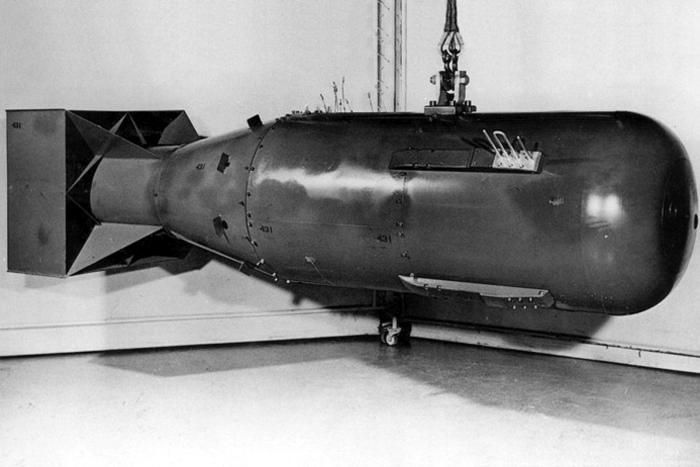
    On July 16, 1945, the first attempt to detonate the atomic bomb of the Manhattan Project, led by Oppenheimer, was successful.

    And following that success, after three weeks, the atomic bomb was ready to be brought by US troops to be detonated in Hiroshima and Nagasaki in Japan.

  • 6 Engineers Who Revolutionized the World’s Electrical System

    6 Engineers Who Revolutionized the World’s Electrical System

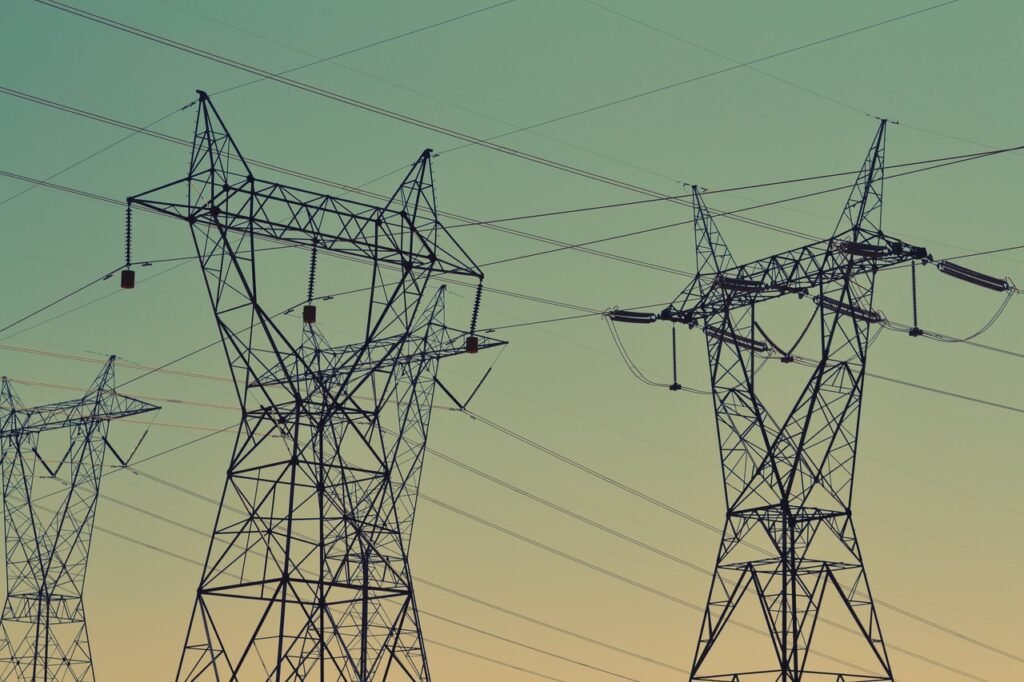
    All the technology that you use today, will not function without electricity . The study and development of electricity was long before the first industrial revolution began.

    Here are 6 engineers who are pioneers in the world electrical system revolution.

    1. Michael Faraday

    Michael Faraday

    In 1831, Faraday discovered the phenomenon of electromagnetic induction. The results of his experiments are now the basis of modern electronic technology.

    2. Alessandro Volta

    In 1800, Volta published the electronic device “voltaic pile” which became the forerunner of battery technology

    3. Georg Ohm

    Ohm showed that the electric current flowing in a conductor is proportional to the voltage and inversely proportional to the resistance.

    His name is immortalized as the unit for electrical resistance.

    4. Andre-Marie Ampere

    Andre-Marie Ampere

    Ampere conducted a theoretical and practical study of electric currents. Because of his services, his name is immortalized as a unit of electric current.

    5. Gustav Kirchoff

    German physicist who studied the characteristics of electric currents in conductors.

    His famous contribution is Kirchhoff’s Law, where the amount of current entering the branch is equal to the amount of current flowing out.

    6. Nikola Tesla 

    Tesla was the engineer who made the AC power system widely used today.

    Contributions include AC electric motors, electricity distribution, and many others.

    Thus the discussion about the six engineers who revolutionized the world’s electrical system. Hopefully useful and inspire us all.

  • Marcian Ted Hoff, Founder of the Microprocessor

    Marcian Ted Hoff, Founder of the Microprocessor

    Marcian Ted Hoff is the father of the inventor of the microprocessor. Thanks to his findings, he changed the world of technology to become increasingly rapidly developing.

    The microprocessor is one of the most influential inventors in technological developments.

    Without a microprocessor, there might not be computers, cell phones, or the internet.

    Luckily Marcian Ted Hoff invented the microprocessor.

    Marcian T. Hoff was born in Rochester-New York, in 1937.

    He studied electrical engineering and earned a Ph.D from Stanford University.

    Hoff then joined Intel Corporation to develop a series of integreted circuits for electronic calculators.

    Hoff then had the idea of ​​creating a universal processor on a single microchip, on special circuits.

    From these results, the microprocessor was born.

    Until now the microprocessor continues to be further developed to process data faster and to use a wider range.