Tag: product development

  • Product Life Cycle: Understanding the Stages of Product Development

    Product Life Cycle: Understanding the Stages of Product Development

    Similar to the product planning stages, the life of a product also has its stages. The stages of a product’s life are called the product life cycle .

    Understanding the product life cycle is very important in the business world. Through this cycle,  business people can plan marketing strategies when products start to decline. 

    Understanding Product Life Cycle

    The product life cycle is a stage in the life of a product, starting from when the product was launched until it finally had to be withdrawn from the market. 

    A product must have its own time of success. There are times when a successful product will also experience setbacks. 

    This setback is usually caused by competitors with superior products and changes in trends or fashions. 

    However, the product life cycle can also be influenced by technological developments, shifts in values, and economic conditions.

    Using this concept, companies can determine when they should increase promotions, lower product prices, expand product markets, or change the packaging design of their products. 

    Product Life Cycle Stages

    There are four stages in the product life cycle . Each product will go through the stages of introduction, growth, maturity, and decline . The following is an explanation of the four stages of a cycle .

    Product Life Cycle Stages

    1. Introduction

    The first stage is introduction . This stage is the stage to introduce the product to the public. 

    This stage is a determinant of whether the product will be successfully accepted by the public or will be rejected by them. 

    The main purpose of this introduction stage is to build brand awareness . In addition, this stage also aims to increase market demand for a product.

    Therefore, the company will invest a lot of money in advertising and marketing

    2. Growth

    When the product that you introduce to the public is well received and a purchase occurs, your business will start a new stage, namely the growth stage . 

    At this stage, the company’s turnover will increase. However, there will be the possibility of the emergence of competitors with the same or superior products at the growth stage . 

    Therefore, companies must be more aggressive in promoting. 

    Sometimes companies will even consider changing prices to be more competitive by lowering them. 

    However, even though product prices have fallen, the company still has a large income. Because the sales also increased.

    3. Maturity 

    At this stage, product sales will be flat and even begin to decline. 

    Product competition will be even tighter at this stage. So many companies will lower the price of their products. 

    However, due to reduced consumer demand, this will make the company’s profit margin decline. 

    Therefore, another way to overcome this stage is to innovate the product. Companies can develop products or replace them with other products.  

    4. Decline

    The last cycle of a product is decline . Even though the company has tried to maintain the product at the maturity stage , there is still a possibility if the product continues to decline. 

    At this stage, the product will experience a significant decline until it finally loses the market

    This decline could be due to new products that better meet their needs. In addition, saturation, changing needs, and changes in consumer behavior are also factors driving the decline in products.

    The company will eventually lower the price of the product. They will also focus more on loyal customers

    Closing

    That’s the description of the stages of the product life cycle . Understanding the product life cycle will allow you to set a strategy to maintain the product market. 


  • The Importance of Packaging: Functions, Benefits, and Types Explained

    The Importance of Packaging: Functions, Benefits, and Types Explained

    Packaging is something that is very important and cannot be separated from the marketing and distribution process of a product. So what exactly is the meaning of packaging, and what is the purpose of packaging itself?
    In this article, we will briefly discuss several things related to packaging, including:

    • Explanation of what is meant by packaging, both in general terms and according to several experts.
    • Functions and benefits of packaging.
    • Types of packaging.
    • And how to make attractive packaging.

    Let’s read the article to the end, so you understand better what packaging is.

    Understanding Packaging in General

    In general, the definition of packaging is a container or wrapper that is useful for preventing or minimizing damage to the product or goods packaged or wrapped.

    Another opinion says, packaging is a product wrapping material that serves to protect, accommodate, provide identification , and promote the product.

    In this case, the function of packaging is not limited to providing protection for a product. Packaging can also act as a marketing tool to build brand identity and increase sales.

    So, what is meant by packaging?

    Packaging means a coordinated system of preparing goods for transportation, warehousing, logistics, sales, and final use. Simply put, packaging is a process of giving a container or wrapper to a product.

    In the packaging process there are activities to protect, preserve, transport, inform, and sell a product.

    So, the main purpose of packaging products is to protect and prevent damage to what the industry sells. In addition, packaging can also be a good means of information and marketing by making creative packaging designs so that they are more attractive and easy for consumers to remember.

    Understanding Packaging According to Experts

    To better understand what packaging means, we can refer to the opinions of several experts on the definition of packaging. Below is the meaning of packaging according to experts:

    1. Philip Kotler and Gary Armstrong

    According to Kotler and Armstrong (2012), the notion of packaging is a form of activity that involves design and production, so that this packaging can function so that the product inside can be protected.

    2. FD Rodriguez

    According to Rodriguez (2008), the notion of packaging is packaging or active packaging is a container that changes the condition of food ingredients by adding active compounds so as to extend the shelf life of packaged foodstuffs and also improve safety and maintain quality.

    3. Marianne Klimchuk and Sandra Krasovec

    According to Klimchuk and Krasovec (2006), the definition of packaging is a creative design that connects the shape, structure, material, color, image, typography and design elements with product information so that the product can be marketed.

    4. Eric P. Danger

    According to Danger (1992), the meaning of packaging is a container or wrapper to prepare goods to be ready to be transported, distributed, stored, sold, and used. With a container or wrapper can help protect the product in it.


    Packaging Functions According to Experts

    there are two functions of packaging given to a product, namely a protective function and a promotional function. Here is the explanation:

    1. Packaging Protective Function

    Protective function means that packaging functions as a protector or product security from things that can damage the product, such as climate, distribution processes, and others.

    Packaging that protects the product will prevent damage and the risk of defects that can harm the buyer or seller.

    2. Packaging Promotional Function

    As mentioned above, packaging can also serve as a promotional or marketing medium. This can be done by making attractive packaging, both in terms of design, color, size, and others.

    While the general function of packaging is:

    • Self Service ; Packaging shows the characteristics of a product being sold so that each product must have a different packaging.
    • Consumer Affluence ; Attractive packaging can influence consumers to be willing to pay more.
    • Company and Brand Image ; Packaging is the company’s brand image so that it can be one of the company’s identities to be known by the public.
    • Innovative Opportunity ; Innovative packaging can benefit consumers and benefit companies.


    The Benefits of Packaging and Its Purpose

    Alice Louw and Michelle Kimber (2007) say that there are at least seven benefits and purposes of packaging a product/goods. Here’s the explanation:

    1. Physical Production ; The purpose of packaging is to protect the product/goods from temperature, vibration, shock, pressure and so on around it
    2. Barrier Protection ; Installation of packaging on a product/goods aims to protect it from oxygen resistance, water vapor, dust and so on.
    3. Containment or Agglomeration ; Goods packaging also aims at grouping so that the handling and transportation process becomes more efficient.
    4. Information Transmission ; The package may also include instructions on how to use the transportation, recycle, and dispose of the package or label.
    5. Reducing Theft ; Installation of packaging on products/goods also aims to prevent theft by looking at physical damage to the packaging.
    6. Convenience ; Packaging is a feature that adds convenience in distribution, handling, sale, display, opening, re-closing, use and reuse.
    7. Marketing ; The design of packaging and labels can be used by marketers to encourage potential buyers to buy products.


    Type of Packaging/Packaging

    The types of packaging or packaging can be grouped into three categories, namely:

    1. Based on Content Structure

    Types of packaging based on the structure of the contents are containers made according to the contents of the package. This type of packaging can be divided into three, including:

    • Primary Packaging ; Primary packaging is a packaging material that is a direct container for food ingredients. For example milk cans, drink bottles, and others.
    • Secondary Packaging ; The definition of secondary packaging is a container that serves to provide protection against other packaging groups. For example, cardboard boxes to store milk cans, or wooden boxes to store fruit, and so on.
    • Tertiary Packaging ; Tertiary packaging is the packaging used to store or protect the product during the shipping process.

    2. Based on Frequency of Use

    Types of packaging can also be grouped based on the frequency of use. Some of these types of packaging include:

    • Disposable Packaging ; i.e. single-use packaging that is only used once and then thrown away. For example plastic containers, banana leaf wrap, and others.
    • Multi Trip Packaging ; namely packaging that can be used many times by consumers and can be returned to selling agents for reuse. For example, a drink bottle.
    • Semi Disposable Packaging ; namely packaging that is not discarded because it can be used for other things by consumers. For example, a can of biscuits.

    3. Based on the Level of Readiness

    Packaging can also be grouped based on the level of readiness to use, including:

    • Ready-to-Use Packaging ; namely the type of packaging that is ready to be filled and its shape has been perfect since it was produced. For example bottles, cans, and others.
    • Ready Assembled Packaging ; namely packaging that requires an assembly stage before being filled with products/goods. For example, plastic, aluminum foil, packaging paper.

    Tips for Making Attractive Packaging

    After knowing the meaning of packaging along with the function and purpose of making packaging, then how to make attractive packaging? Here are the tips:

    1. Create a Unique Packaging Design

    One of the important points in forming packaging is to design it in a unique, innovative and different way from other products. Unique packaging is very effective in attracting people’s interest and making them curious.

    For example, when a supermarket shelf is lined with box-shaped packaging, then you make a round package, consumers will automatically observe it carefully and be curious about the contents inside.

    2. Packaging Design According to Target Market

    The packaging design used should be adapted to the target market. For example, if your target market is children aged 5-12 years, then make a packaging design that can be added to the cartoons that are most popular with children or in a form of packaging that resembles a toy. Likewise, if the target is adults, the design must also be adjusted.

    3. Make Packages with Multiple Sizes

    If the product you are selling is a new product, try to make packaging in various sizes, such as small, medium and large. People tend to choose the smallest packaging for newly released products.

    4. Include Complete Product Information

    Don’t forget to include product information on the packaging. For example, standard packaging includes product composition, product type, method of use and expiration date. Consumers tend not to be interested in products that have minimal information.


    Conclusion

    From the explanation above, it can be concluded that packaging is a packaging material for consumer goods that has the function to accommodate, identify, explain, protect, display, promote, and keep the product clean.

    While packaging is a system that is structured in such a way as to prepare goods/products so that they can be distributed, sold, stored, and used by consumers in good condition.

    Thus an explanation of the meaning of packaging, functions, goals, and tips for making attractive packaging. Keep in mind that the packaging is the identity of the company, if there is an update on the packaging, it should not be too different from the previous design.

  • Product Differentiation: Definition, Strategy & Impact for Business

    Product Differentiation: Definition, Strategy & Impact for Business

    What is product differentiation?

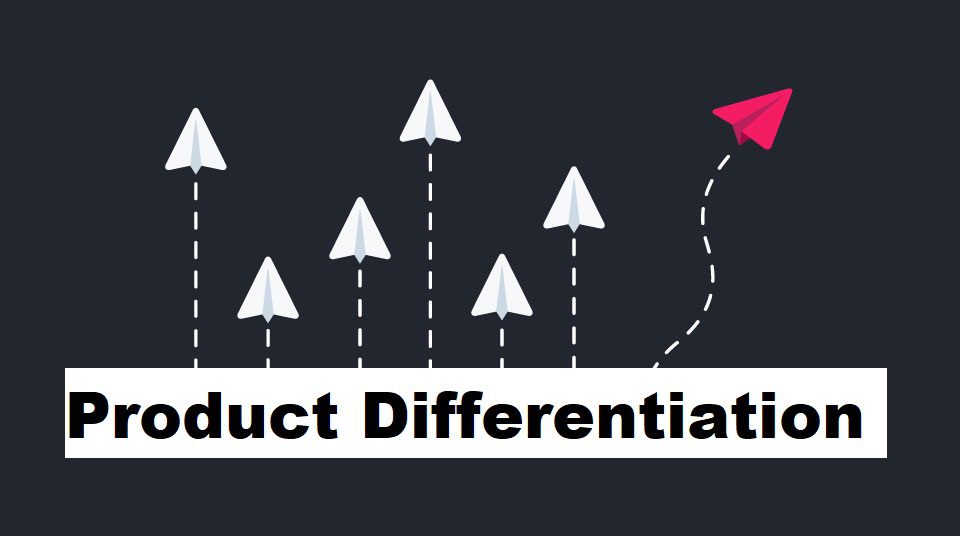
    Product differentiation is the process that differentiates your product or service from others. This process involves detailing the characteristics of each product that consumers value and making it unique. When successful, product differentiation creates a competitive advantage because customers see your product as superior.

    Why is product differentiation important?

    It is important for a company to be different from its competitors, as hundreds of new products enter the market every day. When faced with too many choices, consumers will be confused in choosing and ultimately make the decision not to buy. That’s why it’s so important for your business to find ways to make your product stand out and be perceived as unique and valuable over similar items.

    The marketing team will try to explain to all customers what advantages your product offers and compare it to competitors. If your company has many products, make sure each product has a clear identity to avoid confusion when consumers make choices. Creating a different product is something that appeals to potential customers. This can help build a product’s competitive advantage over other brands.

    Product Differentiation Strategy

    A good product differentiation strategy can earn brand loyalty, the most important thing for any successful business. This strategy focuses on the buyer’s perception of value. As long as the seller continues to provide the highest quality of service, the customer base will remain loyal.

    Market segmentation is currently faced with very competitive business competition. If a product is not consistently high quality, consumers will turn to other options. Creating a unique product will not be enough to gain a competitive advantage from product differentiation if buyers don’t know how your product differs from other brands.

    The seller must have a thorough understanding of the buyer’s expectations and how the product will be used. For example, the purpose of buying a car is for transportation, but if buying the car will also give you a feeling of accomplishment and high self-esteem, then the seller will have a competitive advantage over the car he is selling.

    Another very important way of product differentiation is to contribute to the buyer’s perception that there is no brand that is similar to the product we market. Product differentiation will highlight the things that distinguish our products from competitors. Consumers will see that competitors’ products cannot meet their needs. This increases consumers’ expectations about the quality standards they will be aware of.

    What are the key features that differentiate Apple’s products?

    The company’s products have always been designed to be ahead of peers. Despite high competition, Apple has succeeded in creating demand for its products. As a result, the company has power over prices through product differentiation, innovative advertising, ensured brand loyalty, and hype around new product launches

    Ways to Differentiate Your Products

    You don’t want your product to look weird just because you want it to look different, do you? Instead, consider what is most important to your customers and let that drive your decisions about how to differentiate your product. Your product differentiation should emerge after carefully researching the competition and it should be part of your larger product vision.

    1. Benefits

    What value can customers get when using your product compared to competitors’ products? What problems will your product solve? How will it make prospecting easier and better? For example, your product may be the only mobile app that can know the weather in a certain area in real-time. This kind of thing is really needed for those field workers.

    2. Design

    Does your product have a distinct design and set it apart from the rest? For example, say your product is sleek and has a simple user experience, while your competitors’ offerings seem dated and outdated. This distinction can help customers connect with your brand. An example is the modern design sensibility of the Nest brand thermostat . Instead of copying rectangular shapes on other thermostats, the company opted for simple circles with easy-to-read, color-changing displays.

    3. Price

    Are the prices of your products lower or higher than those of your competitors and other products you offer? Your price should reflect the overall value of the value and features you offer. For example, you can justify a higher price if customers know that your product offers best-in-class quality. This is what the car company Ferrari does, which sets a fairly high price for each of their output cars. On the other hand, pricing your product too low can lead customers to think that your product is not the best choice.

    4. Quality

    Does your product work or be of better quality than your competitors’ products? Do you offer some functionality that your competitors don’t have? Can users or consumers expect the product to last longer than other products? Your product’s competitive advantage may indeed prove to be a superior and reliable construction.

    5. Customer service

    Your product features may be similar to others in many ways. However, you can differentiate your product through your product experience by putting together a professional customer service team to earn a reputation for being responsive to customer needs, requests and ideas. Aftersales in business is very important. You need to know, maintaining consumer loyalty to your product is more difficult than just getting new customers.

    Conclusion

    Ultimately, how you differentiate your product should not be an arbitrary decision or a reactive response to whatever your competitors are doing. Instead, your product differentiation should emerge from a strategy of high-level goals and initiatives specific to your product and your business.

    Along with that, using the right tools for your business is another thing that can make your business grow optimally. For example tools for recording transactions and accounting. In the current era of information speed, choosing an accounting application that can be used anytime and anywhere is a must for those of you who want to develop a business.