
Tag: marketing

  • Product Life Cycle: Understanding the Stages of Product Development

    Product Life Cycle: Understanding the Stages of Product Development

    Similar to the product planning stages, the life of a product also has its stages. The stages of a product’s life are called the product life cycle .

    Understanding the product life cycle is very important in the business world. Through this cycle,  business people can plan marketing strategies when products start to decline. 

    Understanding Product Life Cycle

    The product life cycle is a stage in the life of a product, starting from when the product was launched until it finally had to be withdrawn from the market. 

    A product must have its own time of success. There are times when a successful product will also experience setbacks. 

    This setback is usually caused by competitors with superior products and changes in trends or fashions. 

    However, the product life cycle can also be influenced by technological developments, shifts in values, and economic conditions.

    Using this concept, companies can determine when they should increase promotions, lower product prices, expand product markets, or change the packaging design of their products. 

    Product Life Cycle Stages

    There are four stages in the product life cycle . Each product will go through the stages of introduction, growth, maturity, and decline . The following is an explanation of the four stages of a cycle .

    Product Life Cycle Stages

    1. Introduction

    The first stage is introduction . This stage is the stage to introduce the product to the public. 

    This stage is a determinant of whether the product will be successfully accepted by the public or will be rejected by them. 

    The main purpose of this introduction stage is to build brand awareness . In addition, this stage also aims to increase market demand for a product.

    Therefore, the company will invest a lot of money in advertising and marketing

    2. Growth

    When the product that you introduce to the public is well received and a purchase occurs, your business will start a new stage, namely the growth stage . 

    At this stage, the company’s turnover will increase. However, there will be the possibility of the emergence of competitors with the same or superior products at the growth stage . 

    Therefore, companies must be more aggressive in promoting. 

    Sometimes companies will even consider changing prices to be more competitive by lowering them. 

    However, even though product prices have fallen, the company still has a large income. Because the sales also increased.

    3. Maturity 

    At this stage, product sales will be flat and even begin to decline. 

    Product competition will be even tighter at this stage. So many companies will lower the price of their products. 

    However, due to reduced consumer demand, this will make the company’s profit margin decline. 

    Therefore, another way to overcome this stage is to innovate the product. Companies can develop products or replace them with other products.  

    4. Decline

    The last cycle of a product is decline . Even though the company has tried to maintain the product at the maturity stage , there is still a possibility if the product continues to decline. 

    At this stage, the product will experience a significant decline until it finally loses the market

    This decline could be due to new products that better meet their needs. In addition, saturation, changing needs, and changes in consumer behavior are also factors driving the decline in products.

    The company will eventually lower the price of the product. They will also focus more on loyal customers

    Closing

    That’s the description of the stages of the product life cycle . Understanding the product life cycle will allow you to set a strategy to maintain the product market. 


  • The Importance of Packaging: Functions, Benefits, and Types Explained

    The Importance of Packaging: Functions, Benefits, and Types Explained

    Packaging is something that is very important and cannot be separated from the marketing and distribution process of a product. So what exactly is the meaning of packaging, and what is the purpose of packaging itself?

    In this article, we will briefly discuss several things related to packaging, including:

    • Explanation of what is meant by packaging, both in general terms and according to several experts.
    • Functions and benefits of packaging.
    • Types of packaging.
    • And how to make attractive packaging.

    Let’s read the article to the end, so you understand better what packaging is.

    Understanding Packaging in General

    In general, the definition of packaging is a container or wrapper that is useful for preventing or minimizing damage to the product or goods packaged or wrapped.

    Another opinion says, packaging is a product wrapping material that serves to protect, accommodate, provide identification , and promote the product.

    In this case, the function of packaging is not limited to providing protection for a product. Packaging can also act as a marketing tool to build brand identity and increase sales.

    So, what is meant by packaging?

    Packaging means a coordinated system of preparing goods for transportation, warehousing, logistics, sales, and final use. Simply put, packaging is a process of giving a container or wrapper to a product.

    In the packaging process there are activities to protect, preserve, transport, inform, and sell a product.

    So, the main purpose of packaging products is to protect and prevent damage to what the industry sells. In addition, packaging can also be a good means of information and marketing by making creative packaging designs so that they are more attractive and easy for consumers to remember.

    Understanding Packaging According to Experts

    To better understand what packaging means, we can refer to the opinions of several experts on the definition of packaging. Below is the meaning of packaging according to experts:

    1. Philip Kotler and Gary Armstrong

    According to Kotler and Armstrong (2012), the notion of packaging is a form of activity that involves design and production, so that this packaging can function so that the product inside can be protected.

    2. FD Rodriguez

    According to Rodriguez (2008), the notion of packaging is packaging or active packaging is a container that changes the condition of food ingredients by adding active compounds so as to extend the shelf life of packaged foodstuffs and also improve safety and maintain quality.

    3. Marianne Klimchuk and Sandra Krasovec

    According to Klimchuk and Krasovec (2006), the definition of packaging is a creative design that connects the shape, structure, material, color, image, typography and design elements with product information so that the product can be marketed.

    4. Eric P. Danger

    According to Danger (1992), the meaning of packaging is a container or wrapper to prepare goods to be ready to be transported, distributed, stored, sold, and used. With a container or wrapper can help protect the product in it.


    Packaging Functions According to Experts

    there are two functions of packaging given to a product, namely a protective function and a promotional function. Here is the explanation:

    1. Packaging Protective Function

    Protective function means that packaging functions as a protector or product security from things that can damage the product, such as climate, distribution processes, and others.

    Packaging that protects the product will prevent damage and the risk of defects that can harm the buyer or seller.

    2. Packaging Promotional Function

    As mentioned above, packaging can also serve as a promotional or marketing medium. This can be done by making attractive packaging, both in terms of design, color, size, and others.

    While the general function of packaging is:

    • Self Service ; Packaging shows the characteristics of a product being sold so that each product must have a different packaging.
    • Consumer Affluence ; Attractive packaging can influence consumers to be willing to pay more.
    • Company and Brand Image ; Packaging is the company’s brand image so that it can be one of the company’s identities to be known by the public.
    • Innovative Opportunity ; Innovative packaging can benefit consumers and benefit companies.


    The Benefits of Packaging and Its Purpose

    Alice Louw and Michelle Kimber (2007) say that there are at least seven benefits and purposes of packaging a product/goods. Here’s the explanation:

    1. Physical Production ; The purpose of packaging is to protect the product/goods from temperature, vibration, shock, pressure and so on around it
    2. Barrier Protection ; Installation of packaging on a product/goods aims to protect it from oxygen resistance, water vapor, dust and so on.
    3. Containment or Agglomeration ; Goods packaging also aims at grouping so that the handling and transportation process becomes more efficient.
    4. Information Transmission ; The package may also include instructions on how to use the transportation, recycle, and dispose of the package or label.
    5. Reducing Theft ; Installation of packaging on products/goods also aims to prevent theft by looking at physical damage to the packaging.
    6. Convenience ; Packaging is a feature that adds convenience in distribution, handling, sale, display, opening, re-closing, use and reuse.
    7. Marketing ; The design of packaging and labels can be used by marketers to encourage potential buyers to buy products.


    Type of Packaging/Packaging

    The types of packaging or packaging can be grouped into three categories, namely:

    1. Based on Content Structure

    Types of packaging based on the structure of the contents are containers made according to the contents of the package. This type of packaging can be divided into three, including:

    • Primary Packaging ; Primary packaging is a packaging material that is a direct container for food ingredients. For example milk cans, drink bottles, and others.
    • Secondary Packaging ; The definition of secondary packaging is a container that serves to provide protection against other packaging groups. For example, cardboard boxes to store milk cans, or wooden boxes to store fruit, and so on.
    • Tertiary Packaging ; Tertiary packaging is the packaging used to store or protect the product during the shipping process.

    2. Based on Frequency of Use

    Types of packaging can also be grouped based on the frequency of use. Some of these types of packaging include:

    • Disposable Packaging ; i.e. single-use packaging that is only used once and then thrown away. For example plastic containers, banana leaf wrap, and others.
    • Multi Trip Packaging ; namely packaging that can be used many times by consumers and can be returned to selling agents for reuse. For example, a drink bottle.
    • Semi Disposable Packaging ; namely packaging that is not discarded because it can be used for other things by consumers. For example, a can of biscuits.

    3. Based on the Level of Readiness

    Packaging can also be grouped based on the level of readiness to use, including:

    • Ready-to-Use Packaging ; namely the type of packaging that is ready to be filled and its shape has been perfect since it was produced. For example bottles, cans, and others.
    • Ready Assembled Packaging ; namely packaging that requires an assembly stage before being filled with products/goods. For example, plastic, aluminum foil, packaging paper.

    Tips for Making Attractive Packaging

    After knowing the meaning of packaging along with the function and purpose of making packaging, then how to make attractive packaging? Here are the tips:

    1. Create a Unique Packaging Design

    One of the important points in forming packaging is to design it in a unique, innovative and different way from other products. Unique packaging is very effective in attracting people’s interest and making them curious.

    For example, when a supermarket shelf is lined with box-shaped packaging, then you make a round package, consumers will automatically observe it carefully and be curious about the contents inside.

    2. Packaging Design According to Target Market

    The packaging design used should be adapted to the target market. For example, if your target market is children aged 5-12 years, then make a packaging design that can be added to the cartoons that are most popular with children or in a form of packaging that resembles a toy. Likewise, if the target is adults, the design must also be adjusted.

    3. Make Packages with Multiple Sizes

    If the product you are selling is a new product, try to make packaging in various sizes, such as small, medium and large. People tend to choose the smallest packaging for newly released products.

    4. Include Complete Product Information

    Don’t forget to include product information on the packaging. For example, standard packaging includes product composition, product type, method of use and expiration date. Consumers tend not to be interested in products that have minimal information.


    Conclusion

    From the explanation above, it can be concluded that packaging is a packaging material for consumer goods that has the function to accommodate, identify, explain, protect, display, promote, and keep the product clean.

    While packaging is a system that is structured in such a way as to prepare goods/products so that they can be distributed, sold, stored, and used by consumers in good condition.

    Thus an explanation of the meaning of packaging, functions, goals, and tips for making attractive packaging. Keep in mind that the packaging is the identity of the company, if there is an update on the packaging, it should not be too different from the previous design.

  • 5 Things You Should Know About Sales

    5 Things You Should Know About Sales

    Business pals, hearing the word ” sales ” doesn’t sound familiar anymore, doesn’t it? Its vital role for the company makes the sales role as the spearhead of the company’s sales. Therefore, it is often easy for us to find job vacancies for sales positions . Unfortunately, many people actually underestimate this profession.

    Because, sales are often labeled as a job that only has sexy clothes or a slippery mouth. In fact, the sales function is not that simple, so what? Come on, see the following sinaumedia.com review, friend !

    Sales Definition

    Sales can be understood as part of selling activities, whether in the form of goods or services to buyers. Likewise, HubSpot also defines sales as the activity of selling goods or services.

    It can be seen, almost all companies do not have a sales team . The reason is that direct interaction with consumers makes sales performance have a direct impact on company sales. Therefore, the assumption that underestimates the position of sales, of course, is not right. Because, facing rejection outright and even insults is not easy for someone to accept, unless he has mental steel and resilience.

    Then, it is also important to know that in its movement, there are at least three elements behind the sales movement . First, by region or sales area. Namely, before selling the goods, the sales team will map the area first. After that, the team will get a map of which areas need the goods or services they sell.

    Second, based on the goods or services sold. In this case, the depth of understanding of the goods or services being sold will determine the results of the strategies drawn up. The reason is, the characteristics of the product to be sold will break down the market segmentation that will be targeted.

    Finally, the third, based on the target customer. Making the target customer as a reference in sales , will automatically determine the sales target area as well as complete the characteristics of the product to be sold.


    General Terms in Sales

    Sales as a sales activity, in business, gives rise to several general terms. Sinaumedia.com summarizes at least five general terms, including the following:

    1. Salesperson

    Salesperson in question is an individual who peddles a product in the sales transaction process. Therefore, in other terms, a salesperson is also called a salesman .

    Regarding his job, a salesperson sells products , goods or services to buyers. Where in doing so, the salesperson will suggest products or services that can meet the needs of buyers. Therefore, he must first find out what the buyer wants or needs, and to do so often requires a certain sales technique.

    On the other hand, in addition to the salesperson , he must be able to bring in new buyers, he must also be able to keep the buyers in order to continue to subscribe to the products he sells. That is why, the situation and needs of the company greatly affect the responsibilities and target buyers of the salesperson .

    2. Prospect

    Prospect, according to Krugman and Maurice, is defined as an opportunity that arises because of a person’s efforts to fulfill his needs as well as to gain profit . More specifically, prospects can also be translated as potential clients as ideal customers. That is, those who are not very interested in the products or services offered.

    In another understanding, prospects are also often considered as a way for a salesperson to approach prospective customers, either by making phone calls, social selling , or it could be email marketing . Now, after successfully conducting prospects to customers, the salesperson will enter the deal stage .

    sales team

    3. Deal

    Deal may be a more familiar term in the ears of many people, which is understood as a price agreement between the seller and the buyer. In the process, the deal will be classified into many levels. And, each company has different levels of deals depending on the business and industry. This is where a salesperson must be able to design a deal plan based on needs and conditions. So, the dealing process can run according to the set time period and the planned target.

    4. Sales Pipeline

    Sales pipeline , a term that refers to the steps in the process of selling a product or service. In providing an overview of the sales process, one of the pipelines that is often used is the sales team plan diagram. Where usually through this diagram a series of stages will be described starting from the prospect assessment, meeting with prospects, offering goods or services, to the transaction or deal stage .

    5. Sales Plan

    As with the sales pipeline , the sales plan describes the long-term goals, strategies, and objects of a company’s sales team. This includes details on pricing, target customers, market conditions, team structure, revenue targets, and others. However, what is no less important is the existence of tactics and techniques in the sales plan to realize the targets that have been set.


    Several Position in Sales Departement

    Furthermore, we also need to know that sales within the company also have a position with its own name. The following, there are several positions that are usually under the sales team within the company, citing The Balance Careers , as follows:

    1. Sales Representative

    A sales representative is a position that is at the bottom level of a sales team. Thus, this position becomes the spearhead of the company’s sales. Success in this position will open up opportunities for career advancement to higher positions. Usually, the sales representative position within the company is known by various names, such as sales agent, brand ambassador , advertising representative , account representative , and so on.

    2. Sales Management

    Sales management is a level position above the sales representative . In charge of the sales representative , the position of the sales manager is at the same level as the supervisor .

    In addition, the sales manager is also in charge of leading the sales team within the company, so they also have the authority to set goals and analyze sales. For this reason, in some companies, a sales manager also interacts directly with big buyers, in order to build good relationships so that the big buyers are loyal and stay subscribed to the company.

    As in general, sales manager positions in companies have various names, for example area manager, account manager, franchise development manager , business development manager , and others.

    3. Sales Administration

    Sales administrative generally plays a role in assisting the administration of the sales team. For example, helping with travel permits, preparing quotations , preparing marketing kits for buyers, as well as calculating and managing the administration of bonuses given to loyal buyers .

    In addition, in some companies, the sales administrative also has a crucial role in bridging the marketing and sales teams . As with other positions, sales administrative is also referred to by many names within the company, such as business development representative , financial assistant , enterprise representative , and industry representative .

    4. Account Executive

    Account executive or commonly abbreviated as AE is a position that is almost similar to a sales manager but has slightly more duties.

    In terms of duties, AE generally establishes a relationship between the company and its clients as well as maintains good relations with existing clients. So, AE is not only focused on attracting new clients.

    However, an AE is required to have a deep understanding of the product. At the same time, you must always keep up with industry and market development trends, of course. That’s why AE is usually closer to repeat customers. Meanwhile, in the company itself, AE is generally known by several names, such as channel partner executive , client executive, account handler , and others.

    5. Executive-Level Management

    This position is usually occupied by someone with 10 years or more experience in sales. The reason is, for executive-level management positions, they generally determine and direct the company’s long-term sales goals and targets.

    In addition to the provision of experience, an executive-level management must also have sufficient knowledge of market competition and the products to be sold to buyers. That is why, this position requires great responsibility in marketing planning as well as planning the relationship between the company and its customers. While in the company, besides being called executive-level management , this position is sometimes also called sales director , chief sales officer , and even chief financial officer .

    Closing

    From the explanation above, we can not learn how crucial the role of sales is to sell products until they reach consumers. Therefore, it is no exaggeration to say that sales are the spearhead of the company. In fact, almost all companies have a sales team. So, after knowing what sales are and what they do, are you interested in a career as a salesperson ? Hopefully this article from sinaumedia.com is useful, friend!

  • How to Determine Market Segmentation

    How to Determine Market Segmentation

    Like an archer athlete, a successful business can certainly determine the right target market . An archer must already know how much energy must be expended to reach the target. If the target is close, it means that there is no need to pull the arrow too far so that energy is not wasted, but if the target is far away, it certainly requires more energy to reach the target. For that we need what is called market segmentation according to “target”.
    Unfortunately in Indonesia, there are still many business people who do not know for sure the market segmentation of their products. All products owned are considered the same, can be for all circles. As a result, the business runs less focused and does not have a main target, so the resources they have are actually wasted. This is what is dangerous in business, because it can kill the business slowly.

    In fact, doing research to find market segmentation is very important so that the business can run smoothly. When the market segment has been found, the product marketing process will become easier and smoother. Of course this will affect the product sales process. The right market segmentation will make the product sell faster.

    A case in point is if you own a baby clothing company. The market segmentation you choose is of course the mothers. Then the market segmentation was further narrowed down to mothers who are pregnant or having babies. The market segmentation can be further narrowed by choosing mothers who prefer to shop online or not, have daughters or sons, even working mothers or not. The selection of this market segmentation adjusts what kind of product you have.

    In this article, you will find out more clearly the definition, types, characteristics and how to easily determine market segmentation for your business.


    1. What is Market Segmentation?

    Market segmentation is one of the strategies in the business world by grouping products owned according to similarities, similarities, interests and customer needs. Before marketing products for the business you run, it’s a good idea to know the types of market segmentation that currently exist, the following types:

    a. Geographic Segmentation

    This type of location segmentation is probably the most widely applied in Indonesia. For example, if the main target is Indonesia, the company will usually build a company located in Indonesia, the main goal is to be closer to consumers so that all costs can be reduced cheaper.

    These are a few ways you might think about creating a geographic segment:

    • Zip code/post code
    • City
    • Country
    • Population density
    • Distance from a certain location (like your office or store)
    • Climate
    • Time zone
    • Dominate language

    b. Time Segmentation

    This time segmentation is rarely used, but usually at certain times it can be applied. For example, photography services will be sold during the graduation season, clothes sellers will be flooded with orders when approaching Eid al-Fitr, and so on.

    c. Price Segmentation

    By using price segmentation, you can more easily consider the economic strength of our prospective customers, which are certainly different. Some can afford to buy at a high price, some are only able to buy at a low price. If the market segmentation is wide, you can apply prices to each product starting from low, medium, and high prices so that all people can enter.

    d. Demographic Segmentation

    Demographic Segmentation

    Gender, age, and income are the most widely used variables in demographic segmentation. Because it could be that the products being sold are only suitable for men, while for women it is already different. There are other products that are only specifically for adults, so you have to segment this demographic so you don’t get the wrong target.

    Some examples of demographic segmentation include:

    • Age
    • Gender
    • Income
    • Occupation
    • Family size
    • Race
    • Religion
    • Marital Status
    • Education
    • Ethnicity

    e. Psychographic Segmentation

    This segmentation includes consumer behavior in responding to product trends and stimulation. This segmentation data is difficult to determine into groups because it usually has a fairly large anomaly. The results of the data analysis presented are also more descriptive.

    These are some examples of psychographic segmentation:

    • Values
    • Goals
    • Needs
    • Pain points
    • Hobbies
    • Personality traits
    • Interests
    • Political party affiliation
    • Sexual orientation

    f. Socio-Cultural Segmentation

    Cultural segmentation pays more attention to the variables of consumer social and cultural patterns. The analyzed data can be; social class, ethnicity, societal norms within the scope of the market and the life cycle of the community.

    2. Characteristics of Effective Market Segmentation

    Before you know how to determine market segmentation, you must know the benchmarks for effectiveness in determining market segmentation. The characteristics of effective market segmentation must be;

    1. Measurable ( measurable ) , market segmentation can be measured to a certain degree, all data analysis research results must also be proven with measurable and accurate data.
    2. Affordable ( accessible ) , effective segmentation is to remove the wall between products and consumers. Products are clearly accessible to consumers.
    3. Influential ( Substantial ) , The segmentation process must also affect the business, for example, provide benefits and also affect process changes.
    4. Distinguishable ( differentiable ) , effective market segmentation is the segmentation of each element can be clearly distinguished.
    5. Realistic ( actionable ) , effective segmentation can also realize or realize your business plan.

    3. How to Determine Market Segmentation

    After you understand what market segmentation is and its types, then it’s time you know how to determine market segmentation for your business. The steps in determining market segmentation in outline are:

    1. Data collection , namely by conducting research in the form of  surveys,  discussions and also other techniques, to obtain variables for each type of segmentation.
    2. Analysis , After all the data is obtained you can process the data and analyze the results of data collection which will be adjusted to the marketing strategy .
    3. Compilation , this stage is where you group the results from the analysis and at this stage the results will be filtered, which products are suitable and which markets are suitable.

    Based on the stages above, the following are more complete stages in determining market segmentation.

    a. Define target market

    How to determine the target depends on the needs of the business you are running. You should pay attention to these three things:

    1. New Consumer , determine segmentation based on new business so you need to find new consumers.
    2. Focused Consumer , This is usually done to find customers that you already have but to support a sustainable business.
    3. Supported Consumer , This consumer is related to your supporting product  needs .

    Based on the three things above, you can refer to the types of segmentation previously discussed such as: demographic, price, time, and products to be sold.

    b. Know Consumer Problems and Needs

    The next step is to find out all the needs of potential customers, then adjust them to the products you sell. To be able to get the information, you can ask potential customers directly or by conducting a series of product tests.

    If you already know consumer problems, you can classify consumer wants, needs and problems. This is useful as a reference in making  a business strategy road map  and also product evaluation.

    c. Know Consumer Behavior

    Furthermore you can observe and analyze consumer behavior. You can pay attention to how consumers use the product, the conditions before and after using the product, and also the trend patterns associated with the product.

    consumer behavior

    d. Data Processing and Analysis

    Furthermore, you can process all consumer-related data that you have observed. At this stage you will find out the opportunity for the product that you will sell to each segmentation that you have done. Data analysis serves as a reference in determining strategies in preparing products and also marketing.

    e. Determine product marketing strategy

    Each segment must have a different marketing strategy, especially if the target market is different. So adjust the target market according to the marketing strategy. You can apply any type of marketing strategy by referring to market segmentation. For example, referring to demographic segmentation; What tools  are suitable for female consumers?

    f. Market response evaluation

    If the market strategy is already running and generating sales, you need to know the response from consumers, especially regarding the shortcomings of the product you have, record all the input that consumers give you and immediately fix it.

    Those were some explanations about how to easily determine market segmentation according to its type. In addition, good financial management is also needed to support your business to be more successful. With good financial management, your product marketing budget can be maximized. Use the help of  software for accounting to make financial management easier and more accurate.

  • Product Differentiation: Definition, Strategy & Impact for Business

    Product Differentiation: Definition, Strategy & Impact for Business

    What is product differentiation?

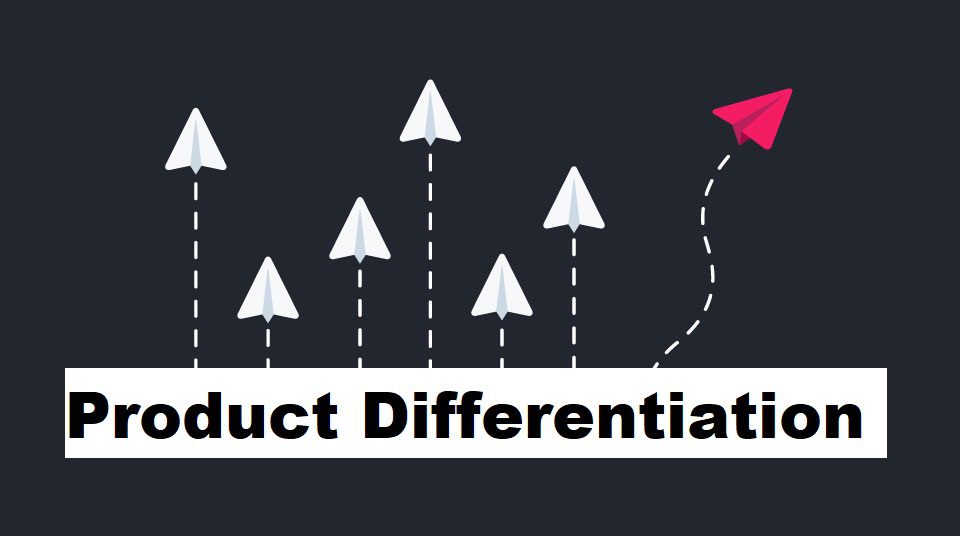
    Product differentiation is the process that differentiates your product or service from others. This process involves detailing the characteristics of each product that consumers value and making it unique. When successful, product differentiation creates a competitive advantage because customers see your product as superior.

    Why is product differentiation important?

    It is important for a company to be different from its competitors, as hundreds of new products enter the market every day. When faced with too many choices, consumers will be confused in choosing and ultimately make the decision not to buy. That’s why it’s so important for your business to find ways to make your product stand out and be perceived as unique and valuable over similar items.

    The marketing team will try to explain to all customers what advantages your product offers and compare it to competitors. If your company has many products, make sure each product has a clear identity to avoid confusion when consumers make choices. Creating a different product is something that appeals to potential customers. This can help build a product’s competitive advantage over other brands.

    Product Differentiation Strategy

    A good product differentiation strategy can earn brand loyalty, the most important thing for any successful business. This strategy focuses on the buyer’s perception of value. As long as the seller continues to provide the highest quality of service, the customer base will remain loyal.

    Market segmentation is currently faced with very competitive business competition. If a product is not consistently high quality, consumers will turn to other options. Creating a unique product will not be enough to gain a competitive advantage from product differentiation if buyers don’t know how your product differs from other brands.

    The seller must have a thorough understanding of the buyer’s expectations and how the product will be used. For example, the purpose of buying a car is for transportation, but if buying the car will also give you a feeling of accomplishment and high self-esteem, then the seller will have a competitive advantage over the car he is selling.

    Another very important way of product differentiation is to contribute to the buyer’s perception that there is no brand that is similar to the product we market. Product differentiation will highlight the things that distinguish our products from competitors. Consumers will see that competitors’ products cannot meet their needs. This increases consumers’ expectations about the quality standards they will be aware of.

    What are the key features that differentiate Apple’s products?

    The company’s products have always been designed to be ahead of peers. Despite high competition, Apple has succeeded in creating demand for its products. As a result, the company has power over prices through product differentiation, innovative advertising, ensured brand loyalty, and hype around new product launches

    Ways to Differentiate Your Products

    You don’t want your product to look weird just because you want it to look different, do you? Instead, consider what is most important to your customers and let that drive your decisions about how to differentiate your product. Your product differentiation should emerge after carefully researching the competition and it should be part of your larger product vision.

    1. Benefits

    What value can customers get when using your product compared to competitors’ products? What problems will your product solve? How will it make prospecting easier and better? For example, your product may be the only mobile app that can know the weather in a certain area in real-time. This kind of thing is really needed for those field workers.

    2. Design

    Does your product have a distinct design and set it apart from the rest? For example, say your product is sleek and has a simple user experience, while your competitors’ offerings seem dated and outdated. This distinction can help customers connect with your brand. An example is the modern design sensibility of the Nest brand thermostat . Instead of copying rectangular shapes on other thermostats, the company opted for simple circles with easy-to-read, color-changing displays.

    3. Price

    Are the prices of your products lower or higher than those of your competitors and other products you offer? Your price should reflect the overall value of the value and features you offer. For example, you can justify a higher price if customers know that your product offers best-in-class quality. This is what the car company Ferrari does, which sets a fairly high price for each of their output cars. On the other hand, pricing your product too low can lead customers to think that your product is not the best choice.

    4. Quality

    Does your product work or be of better quality than your competitors’ products? Do you offer some functionality that your competitors don’t have? Can users or consumers expect the product to last longer than other products? Your product’s competitive advantage may indeed prove to be a superior and reliable construction.

    5. Customer service

    Your product features may be similar to others in many ways. However, you can differentiate your product through your product experience by putting together a professional customer service team to earn a reputation for being responsive to customer needs, requests and ideas. Aftersales in business is very important. You need to know, maintaining consumer loyalty to your product is more difficult than just getting new customers.

    Conclusion

    Ultimately, how you differentiate your product should not be an arbitrary decision or a reactive response to whatever your competitors are doing. Instead, your product differentiation should emerge from a strategy of high-level goals and initiatives specific to your product and your business.

    Along with that, using the right tools for your business is another thing that can make your business grow optimally. For example tools for recording transactions and accounting. In the current era of information speed, choosing an accounting application that can be used anytime and anywhere is a must for those of you who want to develop a business.

  • Understanding Gimmick Marketing

    Understanding Gimmick Marketing

    The ideal gimmick is low cost but still manages to attract the attention of many potential customers. More than that, a good gimmick leaves a strong and positive impression on people’s minds about your company and products, an impression that lingers on them for a long time. A few examples of gimmicks will help you get a feel for what might be happening.

    What is a gimmick?

    A gimmick is something that is intentionally meant to be unexpected and interesting. In the marketing and sales arena, Gimmick goes far beyond the boundaries of typical marketing techniques such as radio advertising or print advertising. Better yet, a very catchy gimmick can get you good, widespread publicity, in the local news or in the print media, all at no cost. For small businesses, successful Gimmick marketing can have the added advantage of being cheaper to launch than conventional marketing tools.

    Of course, after a successful gimmick, they tend to become more common and, therefore, a little less attention-grabbing. Do you remember the first time you saw “balloons with waving hands”, plastic balloons with thin arms waving around a parking lot? At first, they are a very clever and effective way to attract attention – the ideal gimmick. Recently, they have become a fairly common sight. As they proliferate, so do their effects.

    Understanding Gimmick Marketing

    A gimmick  marketing is a trick or novelty designed to attract attention and create interest in a product, service, or company.

    Gimmick and Sales Marketing Examples

    In addition to passionate sky dancers, there are a number of common gimmicks that you may come across nearby, on the news or through online sources.

    The Flash Mob: You may not have seen it in person, but you may have seen it on TV or online: spontaneous-looking music and dancing from “random” people in a crowd. Flash Mob can be interpreted as a group of people who gather at a predetermined time and place to do something like a silly joke that is screaming for 30 seconds and quickly spreads before the police arrive. Using a cell phone, the flash mob can change places if the former has been disturbed. (Wikipedia)

    Tricked-Out Vehicle: Oscar Meyer Wienermobile’s Special Car Design. You may find this something funny and eye-catching, which is a good testament to the power of creative deception (creativity gimmick marketing).

    The Loss-Leader: Selling certain items for much less than the market price in your city is sure to generate buzz. Sure, you’ll incur a loss on the item itself, but many sellers have found the additional influx of customers more than compensated for the loss.

    Making Your Own Gimmick

    Feel free to copy what others have done if you think it would work well for your particular marketing needs. Keep an open mind to things you’ve never tried before. Writing your product’s name in a crowded open space or having a guerrilla salesman somewhere and handing out samples may not work for all businesses, but it may work for yours as well. There are also marketing services that claim to specialize in creating compelling campaigns and gimmicks. See who offers such services in your area.

    Your gimmick will be magnified if it can generate publicity. Be sure to notify your local print and television media of any events you schedule. Use social media tools like Facebook, Twitter, and Instagram to get extra mileage out of your efforts.