Tag: karl marx

  • Karl Marx and the Birth of Marxism: An Overview of His Life and Theories

    Karl Marx and the Birth of Marxism: An Overview of His Life and Theories

    Karl Marx (5 May 1818 – 14 March 1883), a Prussian political economist, journalist, and activist, and author of the important works, “The Communist Manifesto” and “Das Kapital,” influenced generations of political leaders and socioeconomic thinkers. Also known as the Father of Communism, Marx’s ideas spawned violent bloody revolutions, ushered in the overthrow of centuries-old governments, and served as the basis of the political system that still controls more than  20 percent of the world’s population — or one in five people on the planet. “The Columbia History of the World” calls Marx’s writings “one of the most extraordinary and original syntheses in the history of the human intellect.”


    The Childhood of a Karl Marx

    Marx was born on May 5, 1818 in the city of Trier, southeastern Germany, which was then still part of the Lower Rhine Province, Kingdom of Prussia. He was born into a middle-class family. Marx was the third of nine children. Although he came from a family of Jewish descent, in 1816 his father, Heinrich Marx, decided to be baptized into a Christian at the age of 36. His mother, Heinrietta Marx, was also baptized after his father’s death.

    His father Heinrich was a fairly successful lawyer in Prussia. He was also a reform activist in his time. Heinrich’s decision to convert to Christianity was also inseparable from the 1815 regulation that prohibited Jews from occupying crucial positions in society.

    Karl Marx himself was baptized at the age of six, along with his brothers. Although Trier is a Catholic city, the influence of liberal ideas is easier to enter because of its location on the border with France. Until the age of 12 years, Marx studied at home alias home school . Then he continued for another 5 years at the Jesuit school, Firdrich-Wilhelm Gymnasuium, Trier. The principal is a friend of his father’s who is also liberal.


    Marx’s Youth

    Marx was educated at home by his father until high school, and in 1835 at the age of 17, he enrolled at the University of Bonn in Germany, where he studied law at his father’s request. Marx, however, was much more interested in philosophy and literature.

    After his first year at the university, Marx became engaged to Jenny von Westphalen, an educated female baron. They married in 1843. In 1836, Marx enrolled at the University of Berlin, where he immediately felt at home when he joined a circle of brilliant and extreme thinkers who challenged existing institutions and ideas, including religion, philosophy, ethics. , and politics. Marx graduated with a doctorate in 1841.

    Since entering campus, Marx began to show his rebellious attitude . October 1835, Marx started his schooling at the University of Bonn, Germany. He is active in academic life at his campus and is also known as a rebel. During his two semesters in Bonn, Marx spent his days making trouble, getting drunk, and fighting. In the end, his father forced Marx to enroll in another, more serious school, namely the University of Berlin, majoring in philosophy and law.

    This is where Marx was introduced to philosophy from GWF Hegel, a professor in Berlin. Although initially not so enamored with Hegel’s theory, Marx was heavily involved with Hegelian youth groups which were a collection of radical students. They usually criticize the political and religious establishment at that time.

    In 1836, Marx became increasingly involved in political science. He was even secretly engaged to Jenny von Westphalen, the daughter of an upper-class family in Trier. Because of his increasingly radical attitude, his father became worried. Heinrich even wrote to his son and even asked Marx to stop his marriage to Jenny.

    But in 1843, Marx married Jenny. They had six children, but due to extreme poverty, only three children who were girls survived to adulthood. Even as adults, their children are actively involved in political activities, you know .


    Career and Exile

    After school, Marx turned to writing and journalism to support himself. In 1842 he became editor of the liberal Cologne newspaper “Rheinische Zeitung”, but the Berlin government banned its publication the following year. Marx left Germany — never to return — and spent two years in Paris, where he first met his collaborator, Friedrich Engels.

    However, expelled from France by those in power who opposed his ideas, Marx moved to Brussels, in 1845, where he founded the German Workers’ Party and was active in the Communist League. There, Marx networked with other leftist intellectuals and activists and—along with Engels—wrote his most famous work, ” The Communist Manifesto .” Published in 1848, it contained the famous line: “The workers of the world unite. You have nothing to lose but your chains.” After being exiled from Belgium, Marx finally settled in London where he lived as a stateless exile for the rest of his life.

    Marx worked in journalism and wrote for German and English language publications. From 1852 to 1862, he was a correspondent for the “New York Daily Tribune,” writing a total of 355 articles. He also continued to write and formulate his theories about the nature of society and how he believed that society could be improved, and actively campaigned for socialism.

    He spent the rest of his life working on a three-volume tome, “Das Kapital,” which saw its first volume published in 1867. In this work, Marx aimed to explain the economic impact of capitalist society, in which a small group, which he called the bourgeoisie, owned the the means of production and use their power to exploit the proletariat, the working class which actually produces the goods that enrich the capitalist tsar. Engels edited and published the second and third volumes of “Das Kapital” shortly after Marx’s death.


    The works of Karl Marx during his Life

    after marrying Jenny, they moved to Paris. In that city, Marx met Friederich Engels, a writer who later became his colleague and friend. Both of them issued a lot of work together, you know . Their first work was the book The Holy Family in 1845.

    Not only this one book, Marx and Engels also have many other works. According to the marxist.org website , there are also other important works such as:

    • Thesis on Feuerbach (Marx, 1845)
    • The Poverty of Philosophy (Marx, 1847)
    • Wages and Capital (Marx, 1847)
    • Principles of Communism (Engels, 1847)
    • Communist Party Manifesto (Marx and Engels, 1848)
    • Wages Price and Profit (Marx, 1865)
    • Housing Problems (Engels, 1872)
    • Capital I, Capital II, Capital III (Marx, 1867 – 1894)


    Marx and the Idea of ​​the Factory School

    Do you know at that time Marx was also very active in forming a better curriculum for the children of workers, you know ? Yup, in the old days, young children from 9-12 years old were required to work in factories.

    For this reason, in his book entitled Kapital, Marx put his ideas into creating a part-time system for the children of workers. Marx hoped that the children would be able to work but still be able to continue their studies. But unfortunately, the capitalists and the government at that time did not pay much attention to this part-time idea of ​​​​Marx. They say it costs more to hire 2 shifts of child labourers. As a result, many children of workers are fired if they work while attending school.

    The curriculum proposed by Marx at that time was not much different from conventional schools. Starting with mental education, then physical education (a combination of gymnastics and military training), then there is also a polytechnic education which will teach the general principles of all production processes.

    In essence, Marx wants to emphasize the education of children and young workers so that they can develop into individuals who can make social changes around them. Marx was more in favor of a combination of education and work rather than an education system that required children to study all day long.

    According to him, with this part-time work and school system, children and young workers can practice directly and know what is the cause of their mistakes in the production system, and can become individuals who want to make changes for the sake of their people.


    Death and Inheritance

    While Marx remained a relatively unknown figure in his lifetime, the ideas and ideology of Marxism began to exert a profound influence on the socialist movement shortly after his death. He died of cancer on March 14, 1883, and was buried in Highgate Cemetery in London.

    Marx’s theory of society, economy, and politics, collectively known as Marxism, holds that all societies develop through the dialectic of class struggle. He was critical of the current socio-economic form of society, capitalism, which he called the dictatorship of the bourgeoisie, believed it was run by the rich middle and upper classes purely for their own gain, and predicted that it would inevitably result internally. tension that would lead to its self-destruction and its replacement by a new system, socialism.

    Under socialism, he argued that society would be governed by the working class in what he called the “dictatorship of the proletariat.” He believed that socialism would eventually be replaced by a stateless and classless society called  communism .


    Continuous Influence

    Whether Marx intended for the proletariat to rise up and foment revolution or whether he felt that the ideals of communism, ruled by an egalitarian proletariat, would simply outlast capitalism, is debated to this day. But, several successful revolutions did occur, propelled by groups that adopted communism—including those in Russia, 1917-1919, and China, 1945-1948. Flags and banners depicting Vladimir Lenin, the leader of the Russian Revolution, together with Marx, were long displayed in the Soviet Union. The same was true in China, where similar flags showing the leader of that country’s revolution, Mao Zedong, together with Marx were also prominently displayed.

    Marx has been described as one of the most influential figures in human history, and in a 1999 BBC poll was voted “the thinker of the millennium” by people from all over the world. The memorial at his grave is always covered with thanks from his fans. His tombstone is inscribed with words that echo the words of the “Communist Manifesto”, which seems to foretell Marx’s influence on world politics and the economy: “Workers from all lands unite”.


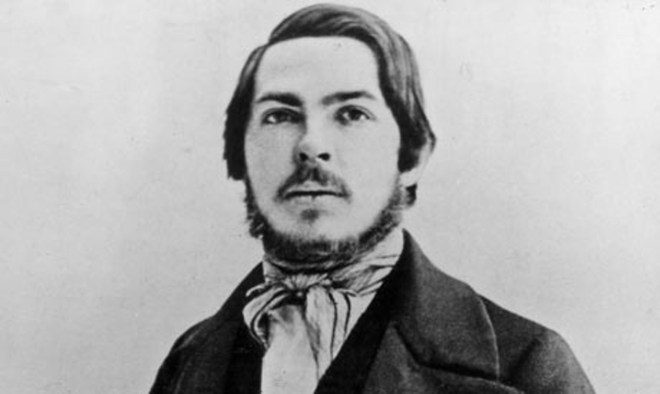
  • There’s Engels Behind Marx: The Biography of Friedrich Engels

    There’s Engels Behind Marx: The Biography of Friedrich Engels

    So far, when we talk about Friedrich Engels, what immediately comes to mind is that he is a friend of Marx. A loyal friend of mine, whose friendship is not only amazing but also thrilling and changing the world. But who really Engels is, and what his role is in the international socialism movement, the Indonesian public doesn’t know much about.

    In my research, dozens of biographies have been published since Engels’ death on August 5, 1895. Karl Kautsky wrote a brief history of Engels at the end of the 19th century. Then Lenin also wrote a brief history in the early 20th century. The most complete biography of Engels was written by the German historian Gustav Meyer in the 1920s. This two-volume biography is written in German. An abridged edition of the English translation was published in 1934, a year after Meyer managed to escape to London from the Nazis. After Meyer’s work was published, almost every decade a biography of Engels was published in various languages. At least, there are two types of biographies of Engels that have been written, namely biographies and critical biographies. The first type generally only describes Engels’ life journey from family origins to his death. Engels is shown here more as a person. The second type usually includes an analysis of Engels’ thought and work in the context of Engels’ intellectual journey. Included in this genre, for example, are the works of Terrell Carver,Engels , first published in 1981 (republished 2003) and by JD Hunley, The Life and Thought of Friedrich Engels (1991).

    In the early decades of the 21st century, a fairly popular biography of Engels was published by Tristram Hunt, a historian and activist for the British Labor Party. The biography was first published in England under the title The Frock-Coated Communist: the revolutionary life of Friedrich Engels (2009), then an American edition appeared under the title Marx’s General: the revolutionary life of Friedrich Engels (2010), as well as a French translated edition entitled Engels. , le gentleman révolutionnaire(2011). This book leans towards the historical type of analysis, in which we can find in many places a critical analysis of the context of Engels’ thought and Engels’ role in the development of Marxism. Praised by Marxist historian Eric Hobsbawm as ‘the best biography of one of the most attractive inhabitants of Victorian England, Marx’s friend, partner, and political heir,’ the book is a bestseller. His popularity indicates that people in Europe and America are starting to pay attention to Engels again.

    In addition to Hunt’s writings, there is another biography that appeared at the end of the first decade of the 21st century, namely that of John Green, a journalist and documentary filmmaker. The title is Engels: a revolutionary life. Compared to Hunt’s, this book has received less attention. Maybe because it’s just a resume. The author is not a historian. I have this book as a gift from the author. By the end of 2011, I already had several of Engels’ biographies of the critical analysis type. I’m in the mood to read a biography of Engels which is just a biography of sorts. I emailed the author. Unexpectedly, the author replied and promised to send one of his books. Compared to the Engels biographies that I already have, this book provides information about Engels as a person I did not know before. Two of them are that Engels’ father was also Friedrich Engels and that the junior Engels had been a combat lieutenant in the working class troops in the 1848 revolution in Prussia.

    What I write here, instead of a review, may be more accurately called a summary. Just to commemorate the birthday of Engels.

    Friedrich Engels Before Meet Karl Marx

    On November 28, 1820, Friedrich Engels, a businessman in the most industrialized city on the Prussian Rhineland at the time, Barmen, was waiting for his wife to give birth to their first child. The man hoped that his wife would give birth to a son. However, as the successor to the family business that his grandfather, Johann Caspar Engels, founded in the first half of the 18th century, Friedrich wanted his business to continue. His hopes were fulfilled. According to custom among the elite at that time, the first boy was named after himself: Friedrich Engels. The child grew up in the midst of the fast-paced family business. Since the 1830s, when the child was only 10 years old, the family business has expanded by jointly establishing a textile production and import-export business in the center of the world’s manufacturing industry, England.

    Friedrich directed his son’s education so that he would later represent his business in England. Incidentally, her maternal grandfather, Elise, was a grammar school principal. At the gymnasium school, Engels junior studied Greco-Roman language and literature as well as German literature. Engels junior is an average student. Except for language, he had an affinity for science, and his rebellion against the bourgeois Christian culture of his city. In fact, before taking the graduation exam, junior Engels often wrote criticisms of the conditions of society and its elite morality under the pseudonym F. Oswald. Almost all major European languages ​​are mastered. He also enjoyed reading the works of Enlightenment thought and writers which he devoured, even though he had to steal time to read them. It was his mother who supported Engels junior’s passion for literature, science, and philosophy. The father, on the other hand, saw signs of danger in his son’s academic abilities and interests. He didn’t want his son to be clever. As the first son to inherit his own name, Friedrich insisted his son should be the successor of the family business. Therefore, before his son passed his final exams, in 1837 he sent him for an apprenticeship in the trading company of his friend Heinrich Leupold. There Engels junior helped the company clerk. His job is to record the number of goods that come in and out, read and translate incoming letters, reply to trade letters, and make daily reports on all of it. The trade letters came from the European colonies in the Americas and the West Indies. Most are written in non-German languages. This is where Engels junior deepens his foreign language skills.

    The desire for contemporary thought is not simply crushed by the daily grind of being a scribe. After work, Engels continued his study. Luckily his mother, Elise van Haar, supported secretly sending him the works of German and French scholars.

    As a Prussian royalist, Friedrich Engels senior was proud to send his son into military service to Berlin in early 1842. There, several days a week, junior Engels received military training as an officer candidate, particularly for the municipal artillery division. Later, his knowledge of the army was used in the armed struggle in the 1848 Revolution in southern Germany. He used his days off to attend the lectures of the philosophy professors. In the evening, he wanders around following the discussions of contemporary thought held by the students of the University of Berlin, wabilespecially Hegel’s disciples. At that time, it can be said, the thinking of Georg Wilhelm Friedrich Hegel became a ‘trendy’ thought among educated Germans. In the hands of the interpretation of the monarchy loyalists, Hegel’s ideas became a kind of supporter of the Prussian constitutional monarchy system and Protestantism as its ideological basis. Historically, proponents of this loyalist interpretation were referred to as the Old Hegelians or Conservative Hegelians. On the other hand, there is a small group of scholars who interpret differently. Instead of supporting, they even talk about the restoration of the monarchy and push Hegel’s thinking in a radical direction as a critique. Such people came to be known as the Young Hegelians. This is where Engels junior got the fertilizer for the seeds of his youth rebellion. Engels read David Strauss, Ludwig Feuerbach,

    Encounter with Marx

    After his son fulfilled his mandatory military service in Berlin, the senior Friedrich Engels sent him back to England. It was also horrifying, if the rumors were true, that junior Engels had swam too far in that critical Young Hegelian puddle. Must as soon as possible his soul purified again by the sanctity of the business world. But too late, Engels junior increasingly in the struggle in the world of radicals. In late 1842, while on a trip to England, he became acquainted with Moses Hess, a prominent communist ideologue at the time. At the offices of the Rheinische Zeitung newspaperin Cologne, he was also introduced to Karl Marx, a recently graduated and rejected doctor of philosophy in Berlin and editor-in-chief of the paper. It was with the latter that Engels junior would form an eternal fellowship.

    Instead of being completely devoted to the business world, Engels junior’s political activity escalated. In England he soon made friends with the Chartists, who, a few weeks before his arrival, had led a general strike in England’s industrial triangle of towns (Manchester, Lancasshire and Cheshire). Upon his arrival in Manchester, Engels became acquainted with Mary Burns, also a labor movement activist, who introduced him to the working class world. Engels became increasingly critical. His reading of economics books at the time led to the writing of his first work, Outlines of Political-Economic Criticism , which was published in the first and last edition of the Deutsch-Französische Jahrbücher., the journal of the German emigrant trade unions in France, in 1843. Marx, who had only known him briefly a few months earlier, read this article and probably decided that this was a man worthy of his comrade-in-arms. It is said that it was because of this writing that Marx shifted his direction from philosophical studies to political-economic criticism. That same year, Marx left the Rheinische Zeitung after his newspaper was censored by the government for his critical articles. He went to Paris looking for work. Incidentally, Engels was also on his way there. The two met for the second time and began a lifelong partnership that would shake the world. The first product of this collaboration is the Sacred Family, a collection of polemical treatises addressed to their former Hegelian comrades in Berlin. This book becomes a kind of baptismal water that binds the two as brothers for life.

    From Paris, Engels returned to England. Where the Ermen & Engels joint venture is based, after serving, junior Engels is increasingly wandering into the workers’ settlements accompanied by Mary Burns. The squalid slums of the working class creeping up on the edge of the bourgeois majestic world, the sad stories of child laborers who are paid three potatoes, the high death rate due to poor sanitation and brutal working conditions, convinced him that something was wrong with the economic system. capitalism and the economic ideologies that support it. Unlike Marx, who was inspired by the idea of ​​socialism from his sophisticated world of philosophy, Engels embraced socialism because he came face-to-face with the empirical reality of how capitalism works. Even from his teenage days at Wupperthal. His encounter with socialism was not confined to the working-class housing estates facing capitalism. Official publications, health inspectorate reports, and field notes on the lives of the workers he read carefully throughout 1842-1844. The results of this investigation were offered to be published as a book. In August 1844, pending confirmation of the publication of his book, Engels left Manchester. In February 1845, the French Minister of the Interior expelled Marx. Marx and his family moved to Brussels, the capital of the Kingdom of Belgium. Here, Marx compiled eleven of his legendary theses on Feuerbach’s philosophy of materialism. In April of that same year, Engels arrived in Brussels and met Marx. The two collaborated again to compile a critical treatise on Hegelian philosophy as well as a critique of British political-economic works. From the end of that year to early 1846, they compiled the treatise that became known asGerman ideology . In a treatise that was never published during their second lifetime, Marx and Engels sowed the seeds of their materialist conception of history, which Engels later called Historical Materialism. In the same year, Engels’ ethnographic work on the conditions of the English working class was published in Leipzig in German.

    Have fun with Marx

    Marx and Engels were not arrogant behind-the-scenes thinkers about reality. Both of them were first of all revolutionaries. Their goal has always been to combine theoretical understanding with practical experience to change the world. That is why, it is not surprising that both of them became members of the Justice League, a kind of communist ideology trade union which later changed its name to the Communist League. This league was the forerunner of the German Communist Party and they were both active in it from the start. The heated European revolutionary atmosphere in 1847 prompted Engels to prepare a grid of political and economic programs for the Communist League when the revolution broke out. The treatise was entitled Principles of Communism . Armed with this short writing by Engels, then Marx and Engels compiledThe Communist Manifesto at the request of the Communist League, which published it in February 1848.

    When the revolution broke out in Germany, the secret police made arrests of members of the League. Engels fled to Paris. At the end of 1848, he went to Germany in a hurry. The clouds of revolution are floating in the south. There, the atmosphere of the revolution strengthened. The proletarian militias were formed. A veteran of the Berlin artillery service, Engels was appointed a lieutenant in the armed struggle of the working class. Unfortunately, the workers’ army lost the struggle. The Prussian army pursued the remnants of Engels’ army. Engels himself avoided capture by fleeing to Geneva, Switzerland. From there, Engels slipped into France. To avoid patrols, Engels walked through the French countryside to the nearest port town. At least a month Engels made the trip. At the end of 1849, Engels made it back to England and was reunited with Marx in London. In the midst of disappointment at the failure of the armed struggle in Germany, coupled with urgent financial needs, Engels accepted his father’s offer to return to a position in the management of the company Ermen & Engels. Engels returned to Manchester and busied himself with the managerial work of the company. Since then, his relationship with Marx has been through correspondence. It is said that during the 20 years of their relationship, they have written more than 1300 letters. Engels returned to Manchester and busied himself with the managerial work of the company. Since then, his relationship with Marx has been through correspondence. It is said that during the 20 years of their relationship, they have written more than 1300 letters. Engels returned to Manchester and busied himself with the managerial work of the company. Since then, his relationship with Marx has been through correspondence. It is said that during the 20 years of their relationship, they have written more than 1300 letters.

    The failed revolution of 1848 made the attention of the German, British, Belgian and British intelligence officers to both of them even more stringent. When he suspected that the intel was imminent, in order to protect important information, Engels burned some of Marx’s letters sent before 1851. To avoid arrest, they also often used veiled language in their letters. Includes address and name. For example, since 1852, Marx frequently wrote to Engels under the envelope name James Belfield. The letter was sent not to Engels’ residence, but to an acquaintance’s house in a workers’ settlement.

    In order to deceive the intrepid intel, as manager of a large corporation, Engels publicly presented himself as a parlent businessman, participating as a member and administrator of elite drinking and equestrian clubs, and visiting classical music concerts like a respectable bourgeoisie. But underground, he kept in touch with Irish workers and German immigrant workers in England. His relations with Marx and his fellow Communist League veterans also continued, including with those who emigrated to America. Engels’ attention to European politics also remained strong. While Marx wrote the treatise on the Class Struggle in France and the special case of Louis Bonaparte’s 18th BrumaireReviewing the Revolutions of 1848-1852, Engels focused on an analysis of the failed 1848 revolution in Germany. In 1850, Engels also wrote a review of the history of the Peasants’ War in Germany . In this paper, Engels investigates class warfare in the cloaked conflict of religion in 16th century Germany. Although it looks more like a scholar’s historical analysis, in fact, through this paper, Engels is self-criticizing the failed armed struggle of the contemporary working class so that lessons can be learned from it.

    In 1853, Peter Ermen, the boss of the Ermen company who was also the managing director of Ermen & Engels in Manchester, retired. Ownership of the business went to his eldest son, Godfrey Ermen. This situation also changed the joint venture agreement between the Ermen family and the Engels family. Under a new contract valid for nine years starting in June 1855, Engels junior not only became a manager, but also received a share of dividends from the shares of the company he held personally. Along with the increase in the company’s business, from year to year Engels’ annual income also increased. From 263 pounds per year in 1855, his income rose to 1095 pounds per year in 1859. It was from this abundance of income that Engels was able to help finance his close family, Marx, in London.

    From 1852 to 1857, Marx was the European correspondent for the New York Tribune. His job was to make a review of events in Europe, including the policies of European countries in the colonies. At this time Marx’s burden was quite heavy. The poverty of his family made his children sick. His wages as a columnist are not much. Meanwhile, the European working class movement that was trying to get up again lacked legs to walk and Marx was among those who were trying to rebuild it. Engels helped his best friend as best he could. One of them is by writing a review for Marx’s column using Marx’s own name so that Marx can still receive wages for writing from the newspaper. Engels’ essays on the 1848 Revolution in Germany submitted under the name of Marx, Engels wrote in full. Of course with the approval of the name. Later the collection of essays will be recorded and given the titleRevolution and Counter-Revolution in Germany .

    Marx gave up writing a column for the New York Tribune in late 1857. Throughout 1857-1863, Marx immersed himself again in historical and economic inquiry. His ambition to compile a complete economic treatise was aimed at providing the working class movement with an understanding of capitalism. Engels clearly supported this effort. One of them is by sending Marx money regularly. This financial support from Engels is considered sufficient to support his family. So night and day Marx grappled with the hundreds of works in the London Museum. Marx’s notes throughout the year are disaggregated. One section contains methodological sketches and conceptual foundations on capital and money. This section later became known as Grundrisse. Another section contains a critical review of the economic theories that developed up to his time. This section later became known as The Theory of Surplus Value, whose publication was edited by one of the students and dedengkot of the German Social Democratic Party, Karl Kautsky. These two sections were not written for publication. Only as study material and the actual treatise grid. Therefore, long after Marx’s death these writings were published.

    In 1859, Marx finally published a long essay which was the result of his first investigation into capital. The book was entitled Contributions to a Critique of Political-Economy . Rather than the content, the most famous part of this book is the Introduction-his. There Marx outlined his theory of historical materialism more firmly. The following year, Friedrich Engels senior died. There was a feeling of relief in Engels junior. So far, Engels’ forays into the world of the manufacturing business have only pleased old Engels. Now that he is no longer around, there is a thought to immediately leave the business world which makes him have to live in two worlds. Besides, Geofrey Ermen, the heir to the Ermen family business, seems eager to get rid of junior Engels and sees an opportunity to make it happen when senior Engels passes away. In 1864, corporate turmoil added to Engels’ resistance to staying at Ermen & Engels. Incidentally, the International Workers’ Association (First International) is being formed. Engels and Marx were active in this association until it was dissolved in 1876.

    Meanwhile, in the working-class world, many people awaited Marx’s full economic treatise. Engels was suddenly asked when Marx would publish it. Requests were often addressed to Marx through Engels’ ears. Because it was becoming more and more frequent, Engels had to beg his partner as well. When pressures from various parties within the European working class movement grew stronger for Marx to immediately publish an economic work that would explain the nature and actions of capitalism, Engels was finally able to persuade Marx to publish a first volume of the work, which was planned to consist of six volumes. So in 1867, with Engels’ help in editing, Marx’s first masterpiece, Das Kapital , was published .

    Two years after Das Kapital was published, Engels told Marx about the desire he had harbored since 1860, namely to retire and sell his stake in the Ermen & Engels joint venture. Mid 1869, Engels officially left the company. From the sale of his shares, Engels made a lot of money. The following year Engels moved to London, living not so far from Marx.

    Not long after, the turmoil of the French revolution broke out again. The crisis of capitalism hit the world. The French working class occupied and formed a government based on the ideas of communism, otherwise known as the Paris Commune a few months in 1870. Marx covered this in an essay on the Civil War in France which was published a year later.

    After the Paris Commune was crushed by the combined forces of the aristocracy and the bourgeoisie, the hopes of Engels and Marx’s revolution were shifted to the German working class. However, instead of being revolutionary, the German Social Democratic Party seemed to show signs of being a reformist. In 1869, the Social Democratic Workers’ Party was founded in Eisenach. Ideologically, the party is based on the theory of revolutionary socialism with Marxist organizational principles. In the first half of the 1870s, party membership grew rapidly. At that time, the party was merged with the German General Workers Union led by Ferdinand Lassalle and formed a new body, the German Social Democratic Party. In the party congress in Gotha, Lassallean ideology tends to dominate. At least there is a compromise that tilts the party’s orientation towards reformism. Marx criticized the party’s program as a result of the congress. At the theoretical level, reformism is represented by the thoughts of Eugen Dühring, a Berlin University lecturer who became an intellectual role model for many party leaders. Engels responded to Dühring’s popularity and his eclectic tendencies and hidden ideals by writing a lengthy critique that he wrote from 1876 to 1878. The article was entitledThe Science Revolution Mr. Eugen Dühring . Engels’ ability to dismantle the philosophical foundations of the scientific claims of Dühring’s theory had been honed several years earlier. From 1873 to early 1876, Engels was active in studying scientific findings from almost all branches of natural science that developed at that time. Engels’ study notes during the year were only published in 1925 under the title Dialectics of Nature . Later, these two works were considered as important milestones in Marxist natural philosophy or the elaboration of dialectical materialism in the study of nature. In Dialectics of Nature, there is also an unfinished essay written by Engels on human evolution entitled The Role of Work in the Transition from Apes to Man.. In 1896, this essay was published in the party newspaper, Die Neue Zeit .

    Throughout 1877 to 1882, Marx tried again to complete the following volumes of Das Kapital . The basis of Marx’s character who had the heart to stop writing in order to simply learn Russian so that he could read works on the history of the forms of agricultural communes there in their original language, working on the volumes of Das Kapitalconstantly neglected. The writing breaks continued to lengthen because Marx was busy studying the history of European colonialism. Not only the colony, but also the pre-capitalist society whose territory was colonized. Marx read ethnography and works on Arabs, Berbers, Persians, Javanese, Balinese, Indians, Incas, American Indians, American Negro slaves, and so on. Coupled with the illness which forced Marx to travel to the tropics of north Africa, the complete impossibility of the Das Kapital volumes.it’s done. Engels’ hope was dead that Marx would complete his masterpiece. In 1880, Engels helped Marx compile a list of 100 questions for a study of the conditions of the French working class. Marx’s questionnaire came to be known as the ‘Enquête Ouvrière.’ In the same year, Engels wrote and published Socialism: Utopia and Science . Its contents emphasize which limits socialism is based on mere wish and wishful thinking and which are based on the provisions of scientific investigation.

    Throughout 1881-1882, Marx drowned again in the ocean of anthropology. He reviewed contemporary anthropological works at that time. These notes were later used by Marx as a source of knowledge in understanding how pre-capitalist life was in the context of understanding human society in general. These study notes were later recorded by the Caribbean-born anthropologist Lawrence Krader, who attached the title The Ethnological Notebooks of Karl Marx (1972, Karl Marx’s Ethnological Notes) to the collection. MEGA editors ( Marx-Engels-Gesamtausgabe)the new generation learned that what Krader collected was only a quarter of Marx’s notes and scribbles on anthropology. You can imagine now how much time Marx has spent just reading and how little time he has written the continuation of the volumes of Das Kapital . Everyone became desperate. So did Engels, who covered his annoyance with complaints begging Marx to stop reading and start writing the remnants of Das Kapital .

    Friedrich Engels After Marx Disappeared

    The Das Kapital passages never appeared again in Marx’s life. Marx died on March 13, 1883 in London. At the funeral of his friend, which was attended by only a few people, Engels delivered a brief speech. As a close friend, Marx’s death not only forced Engels to deliver a speech at his funeral. But it also put him under the burden of collecting and tidying up Marx’s handwriting as soon as possible. While collecting thousands of copies of Marx’s handwritten manuscripts which he planned to fill in the unfinished volumes of Das Kapital , throughout 1884 Engels developed Marx’s scribbles and notes on the work of anthropologists, especially The Ancient Society.by Lewis Henry Morgan, into a full treatise and published under the title Origins of the Family, Private Property, and the State . The significance of this book is to dismantle bourgeois myths about the injustice of the family, private property, and the state and to expose the evidence to the contrary. After the book, which had been compiled for only a few months, was published, only then did Engels specifically focus his thoughts and energy on collecting, compiling, and rewriting Marx’s handwriting. In 1885, Engels finished partially editing and published Das Kapital volume II. Time seemed to be running so fast. Engels grew older and realized that there was increasingly limited time to complete all of Marx’s writings. In 1894, Engels published an edit of Das Kapitalvolume III. These works were interspersed with his busy schedule as honorary president of the International Socialist Congress (Second International) since 1893.

    On August 5, 1895, Engels died in London. The cause is esophageal cancer. It is said that Engels made a will that his body would be cremated and his ashes thrown into the sea. That’s why union activists in London cremated his body at the Working Crematorium and dumped his ashes at Beachy Head near Eastbourne.

    Just a Closing

    From the brief history above, it appears that the impact of Engels’ existence was so great for Marx. It was he who baptized Marx into a political-economic critique, which, according to him, was the key to unlocking the capitalist way of thinking and the workings of capitalism. Without an Engels, perhaps Marx’s way of life would be different. Without Engels, perhaps Marx remained a radical liberal until the end of his life or swerved to become a monk because he was disappointed that his revolutionary hopes were repeatedly dashed. Without Engels, perhaps Marx would have been a sad thinker like Nietzsche, who had been haunted by pessimism all his life and constantly blasphemed the world in its entirety as a cursed devil without moving an inch from his boarding room. We know today that Marx was not only a political activist, but also a great thinker without whom the twentieth century would have been different. Millions of political activists claim to have learned a lesson from it. There is not a single modern social science that is not indebted to him. Both as an inspiration and as a most thrilling theoretical opponent. The greatness of Marx made his shadow cover the figure and thoughts of Engels which then looked clumsy in the eyes of some people. To some, Engels was nothing more than a false prophet who chattered among geeks to distort the great teachings of Marx’s thought. Engels appeared to be simply an uneducated man who simply copied and pasted badly the ideas of Marx. The greatness of Marx made his shadow cover the figure and thoughts of Engels which then looked clumsy in the eyes of some people. To some, Engels was nothing more than a false prophet who chattered among geeks to distort the great teachings of Marx’s thought. Engels appeared to be simply an uneducated man who simply copied and pasted badly the ideas of Marx. The greatness of Marx made his shadow cover the figure and thoughts of Engels which then looked clumsy in the eyes of some people. To some, Engels was nothing more than a false prophet who chattered among geeks to distort the great teachings of Marx’s thought. Engels appeared to be simply an uneducated man who simply copied and pasted badly the ideas of Marx.

    However, not everyone has this view. Engels also deserves to be placed on a par with Marx. Instead of understanding the Marx-Engels duo in terms of person number one and person number two, we should interpret it in the context of the division of labor between two people who are equally large. In the second half of his life, for example, while Marx was busy compiling Das Kapital , Engels apparently decided to take over Marx’s work with regard to the development of dialectical materialism as they had sown its seeds since the 1840s into the natural sciences. In this context, Engels’ thought, as contained in the Dialectic of Nature and Anti-Dühring, demonstrated his ability to formulate a materialist foundation for modern natural science. This foundation was then further developed by contemporary Marxist scholars who grappled with the natural sciences (see Grant and Woods, 2002).

    In the social sciences, Alfred G. Meyer, historian as well as sociologist, places Engels on a par with the founders of the sociological discipline such as Comte, Gumplowicz, and Weber, namely as the seed of the great sociological theory. Like any major theory, Engels’ theories about modern social institutions such as private property, the family, the state, and the military are rich in provocative ideas (Meyer, 1989).

    On one occasion, Lenin once stated that ‘it is impossible to understand Marxism or present a complete picture of it without being familiar with all of Engels’ writings.’ How improbable Lenin’s prediction is, can only be known if we begin to become familiar with Engels’ writings themselves. I think reading Engels’ biography is arguably the first step in that direction.***

  • Definition of Sociology According to Experts: Karl Marx to Giddens

    Definition of Sociology According to Experts: Karl Marx to Giddens

    Definition of sociology according to experts such as Emile Durkeim, Karl Marx, and Max Weber is different. But the essence of sociology is the study of society.

    As social beings, our daily activities can be studied through a social science or better known as sociology. Furthermore, according to Max Weber, sociology tries to understand social action to arrive at a causal explanation of how it works and the consequences of that action.

    As a scientific discipline, sociology was born around the 19th century, namely in 1837. The term sociology itself was first used by a French social scientist named Auguste Comte. The term consists of a combination of two Latin words, namely  socius  which means society and  logos  which means knowledge. So that literally sociology is a science that studies society.

    Although Comte was the first social scientist to use the term sociology, the existence of sociological theory actually exists in the philosophy of several philosophers such as Emile Durkeim, Karl Marx, and Max Weber.

    Thoughts of 3 Main Figures of Sociology

    Karl Marx

    In social science, Marx issued a theory on the issue of capitalism. Marx thought that the existence of capitalism has the potential to damage the good relations between humans and the earth. This is because of the exploitation carried out by capitalists who aim to enrich themselves.

    The works of Marx that are still frequently encountered today include social class, social class conflicts, oppression, and alienation. One of the concepts used as the main perspective in sociology, is the theory of social conflict.

    Then, entering the 20th century, various neo-Marxist notions or various social analyzes emerged which made the theory of Marx the main reference. One theory that claims to be neo-Marxist is the dual movement theory of Karl Polanyi, an economic historian. The theory describes a form of response in environmental movements. Examples such as organized labor, to the excesses of capitalism.

    Based on the various theories he put forward, Marx thought that sociology could be used as a tool to help the oppressed in fighting and realizing ideals without the concept of class.

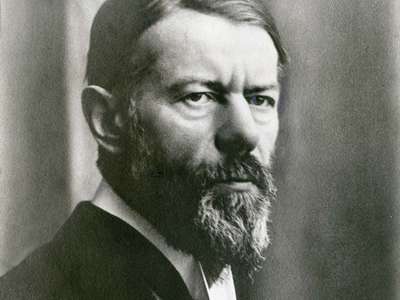
    Max Weber

    One of Weber’s most famous works is  the Protestant Ethic and the Spirit of Capitalism (1905) and Economics and Society  (1920)

    In his book,  Economy and Society , Weber argues that the spread of capitalism has led to the rationalization of society. This has an impact on the development of life with the creation of new technologies. In this regard, Weber was also the first theorist to believe in the independent role of the state in the spread of capitalism.

    In general, Max Weber has a study that is used as the main theory in sociology, namely social action. According to him, social action refers to all forms of action that affect and are influenced by other people.

    So as a sociologist, Weber argues that it must lead to subjective meaning, that is, each person interprets their own behavior or attaches their own behavior.

    Emile Durkheim

    Durkheim in the study of sociology has carried out various types of analysis, among which are well-known such as  Subcultural Variations in Suicide  (1897),  Sociology of Religion  (1912) and  Rules of Sociological Methods  (1895).

    In addition, one of his most important works in sociology is on the division of labor. He thought that the longer the population density and size would increase. So that in terms of work there will be a clearer division between people who come from urbanization and globalization.

    Opinions of Other Social Experts related to Sociology

    Apart from the three main figures in this science, there are several other experts who have also contributed to the development of sociology to date, including:

    Erving Goffman

    According to Goffman, sociology is the study of social interactions in everyday life. .

    Anthony Giddens

    In contrast to Goffman, Giddens explains that sociology is a study of the social life of humans, groups, and society.

    C. Wright Mills

    Meanwhile, C. Wright Mills thinks that to understand what is happening in the world, it is necessary to have a sociological imagination. That way we can understand the life history of the community, personal history, to the relationship between the two.


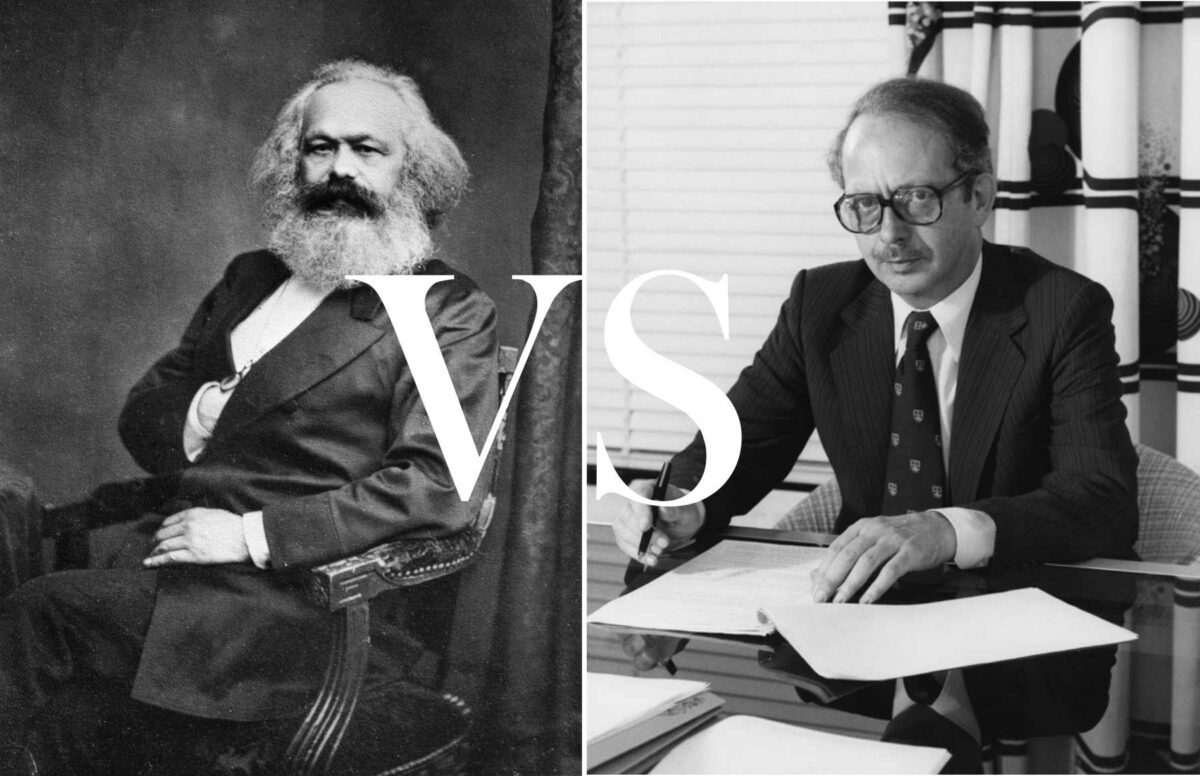
  • Differences in Conflict Theory of Karl Marx and Ralf Dahrendorf

    Differences in Conflict Theory of Karl Marx and Ralf Dahrendorf

    Social conflict is a form of conflict in society that occurs due to various factors. The complexity of social conflict makes studying this phenomenon give rise to multiple theories. Among the sociological thinkers who formulated specific theories to analyze social conflict were Karl Marx and Ralf Dahrendorf.

    Conflict theory was born to oppose the theory of structural functionalism. This is because the last theory provides an understanding that it is as if the development of society is balanced and static.

    Conflict theory comes with the understanding that society is changing because of the ongoing conflicts in life.

    Conflict also turns out to be derived from class conflicts, for example, the ruling group and the oppressed community group. This was one of the factors that brought about social changes or social systems in social life.

    An unbalanced condition ignores generally accepted norms and values but still affects people’s lives. In other words, social life cannot be separated from the various conflicts that occur in it.

    So, what are the Differences in the Conflict Theory of Karl Marx and Ralf Dahrendorf?

    Karl Marx’s Conflict Theory

    Karl Marx considers that a class conflict occurs due to differences in access to power. In this case, the key meant by Karl Marx is the facility of capital (money) which can create two classes, namely the bourgeoisie and the proletariat.

    Furthermore, Elena G. Bystova and Petter Gottschalk, in their research, add that Karl Marx views conflict as a form of class conflict. Karl Marx also explained the concept of class structure in a society full of inequality.

    Both class differences and social inequality can cause conflicts in everyday life. Some groups can dominate, and some are controlled only because of differences in economic class.

    The following are the main concepts in Karl Marx’s conflict theory:

    • There is a class structure in society
    • There are conflicting economic interests in each of the different classes
    • There is a significant influence of economic class on a person’s lifestyle
    • The influence of class conflict can lead to changes in social structure

    Ralf Dahrendorf’s Conflict Theory

    Ralf Dahrendorf’s opinion about conflict theory. He wrote that Ralf Dahrendorf proposed an idea that concluded: conflict occurs because of the social relations in a system.

    Thus, it can be concluded that conflict only occurs with groups belonging to one system. The relations were also classified by power. The existence of the controller with sanctions makes those who have power can benefit from those they control.

    This conflict finally conveyed a conflict between the owners of power and those who were not in control.

    Not only that, but Ralf Dahrendorf’s conflict theory also explains that society has two sides, namely conflict and cooperation.

    In the end, both the theory of Karl Marx and Ralf Dahrendorf explain that conflicts that occur in society can be a factor in social change. In other words, conflict, discontinuity, inequality, and deviation of norms and values also become an unavoidable part of society.

  • Conflict Theory according to Karl Marx

    Conflict Theory according to Karl Marx

    Karl Marx (1818-1883) is considered a major pioneer of conflict theory. In fact, many figures in sociology calls him the master of conflict perspective.

    The basis of Marx’s thought is about the massive exploitation which is considered as the prime mover of historical forces. Marx views the existence of class differences, one of which is caused by the industrialization project, and this is only the pursuit of economic gain.

    The struggle of class society is a fundamental concept that was conceptualized by Karl Marx at that time. This was triggered by the condition of society at that time which was surrounded by industrialization in the 19th century. Industrialization gave rise to a class of workers and industrialists which in turn led to alienation.

    The conflict perspective which is rooted in the thought of Karl Marx is recognized by sociologists as one way out so that it is very closely related to revolution. However, the conflict here is not meant to be a radical revolution, let alone to the point of spilling blood. Because, after all, Marx was a humanist.

    In essence, conflict theory sees the existence of conflict and conflict in social systems. So, society will not always be in order. In this theory, different authorities are also discussed, which result in superordination and subordination.

    The difference in the interests of these two things then creates a conflict. However, conflict theory itself also reveals that conflict in this social process is needed to create a social change, both in a negative and positive direction.

    The conflict theory according to Karl Marx has long been ignored by sociologists. However, it was not until the 1960s that this theory was re-emerged. Some sociologists who have revived conflict theory include C. Wright Mills [1956-1959], Lewis Coser: [1956] and others [Aron, 1957; Dahrendorf, 1959, 1964; Chambliss, 1973; Collins, 1975].

    In contrast to functionalists who view the normal state of society as a static equilibrium, conflict theorists tend to see society as being in constant conflict within groups and classes.

    Conflict theorists even claim that functionalists have failed to ask the “functionally useful” question, who is this aimed at. The harmonious balance referred to by functionalists is considered only beneficial for some people, while for others it is detrimental.

    Conflict theorists view that a social balance as intended by these functionalists is a mere fantasy, because they are unable to explain how the dominant group exploits other groups and silences them.

    In Marx’s theory, the existence of personal relations in production and social classes is seen as a key element that exists in many societies. Marx in Das kapital also argues that the social changes that are created are largely influenced by the existence of conflicts between the dominant class and the subordinated class.

    The marxian-modern conflict strategy, which is mentioned by Stephen K Sanderson , is as follows:

    • Social life is an arena of conflict or conflict within opposing groups.
    • Various economic resources and political power are important, so various groups try to seize it.
    • A typical consequence of this conflict is the division of society into economically determined groups and subordinated groups.
    • The basic social pattern of a society is strongly influenced by the social conditions of the group which is economically a determining group.
    • Conflicts and deep social conflicts that exist in various societies give birth to forces capable of driving social change.
    • Because conflicts and contradictions are the basic criteria of social life, social change is also a common thing that often occurs.
  • Marxism Theory : History, Figures, and Main Ideas in Political Economy

    Marxism Theory : History, Figures, and Main Ideas in Political Economy

    When we talk about socialism or marxism, we will often come into contact with the concept of liberalism. Not because these two ideologies have much in common, but on the contrary, these two ideologies are completely opposite. In fact, the emergence of Marxism is none other than his rejection of the ideas of classical liberalism proposed by Adam Smith.

    Marxism itself is also closely related to socialism, because the two are often considered to have the same basic concept. However, socialism and marxism are fundamentally different . Marxism is an ideology based on the teachings of Karl Marx. This is why it is called Marxism or the teachings of Marx.

    Socialism is a form of idea or thought that existed long before Marx. The ideas in socialism talk a lot about togetherness and collectivism. Even so, there are teachings about togetherness that make the two seem attached.

    That is why, discussions of socialism will usually be divided into three groups , which include:

    1. socialism before Marx;
    2. Marx’s socialism (Marxism);
    3. socialism after Marx (Deliarnov, 2005).

    Discussions about socialism can be done through various perspectives, ranging from philosophy, ideals, movements, politics, teachings, ideology or political economy systems. However, this time our focus is on socialism from the point of view of political economy.

    From the point of view of political economy, socialism is a social system based on the principle of commune or togetherness, with the nature of distribution and ownership of the means of production or collective means of production . So, the most prominent character of this socialist society is its togetherness.

    In its most extreme form, socialism can develop into a form of communism, in which various economic decisions are drawn up, planned and controlled by the state.

    History of Marxism

    The era of industrialization has indeed brought major changes in the world economic system, including the emergence of new thinkers, such as Karl Marx (1818-1883). The ideas of Karl Marx are not really fresh and new ideas. What Karl Marx was trying to bring up was actually the idea of ​​togetherness in a commune, just like the socialist thought.

    However, Marx himself more developed the idea of ​​socialism in the form of a system. This is why, when talking about socialism in the form of a system, what is often used as a reference is the teachings of Karl Marx in the form of Marxism.

    So, here it can be seen that the basic difference between socialism and Marxism apart from their originators, lies in the line of thought. In socialism, the line of thought is broader based on the concept of togetherness. Whereas Marxism emphasizes more on how socialism can be realized in a comprehensive system in people’s lives.

    The history of Marxism itself was driven by the development of industrialization after the industrial revolution in England. Many of Karl Marx’s thoughts are a form of refutation of the classical liberal-leaning thoughts, which build their economy based on the market mechanism.

    Through his ideas, Karl Marx is called the main pioneer of the scientific socialism movement. The beginning of Marx’s popularity began when he published his first book together with Friederich Engels, the financial supporter of Marx.

    The book is entitled Communist Manifesto in 1847. In this book, Marx expresses a series of criticisms of Adam Smith’s ideas along with the concept of capitalism that he carries. This book also describes the conflicts between classes. Marx also said that the state is an instrument of oppression.

    Apart from the Communist Manifesto, Marx’s ideas are also included in many other books, all of which lead to socialist concepts. One of the most popular works of Marx is a book entitled Das Capital, which was published in 1867. It was Marx’s works that eventually became the basis for the emergence of Marxist ideology or Marxism (Deliarnov, 2005: 52).

    In fact, Marx himself never explicitly stated the ideology of Marxism. The concepts of his thought were also never designed into an ideology or ideology called Marxism.

    The term Marxism as a new ideology began to be developed after the death of Marx in 1883. Marx’s thought which was quite interesting began to be summarized as a new ideology which was given the name Marxist by German thinkers (Ritzer, 2005: 478).

    Because of this history, the concept of Marxism is often difficult to define precisely. What can be concluded is that basically, Marxist teachings try to harmonize reality, theories and concepts of thought in the life of an ideal society, through the commune system (Albert, Hahnel, 1991: 13).

    It should be noted that the philosophy of Karl Marx took a lot of dialectics developed by Hegel in 1818 as a basis. What Marx took from Hegel was about the philosophy of idealism and history.

    In Hegel’s philosophy, it is explained how social turmoil relates to the future of civilization. It was Hegel’s thoughts regarding the cycle of historical change that later inspired Marx’s ideas. Marx thought of a revolutionary concept in shaping the theory of society (Chilcote, 2010: 114).

    Scope of Marxist Ideology

    Mainly, many criticisms of Karl Marx were directed at Adam Smith’s idea of ​​deifying the market economy. In his attempt to criticize the idea of ​​capitalism, Marx used many foundations from various disciplines. He tried his best to prove that the ideas of capitalism are actually ” rotten from within ” ideas and are a reflection of an unfair system.

    Various disciplines used by Karl Marx in challenging the thought of capitalism, including:

    1. From a moral point of view, Marx claims that capitalism inherits injustice from within. This is based on capitalism’s indifference to the social inequalities that arise in society.
    2. From a social point of view, Marx stated that capitalism is a source of class conflict. This conflict can arise between the bourgeoisie and the proletariat, between the landlords and farm workers, and between the capitalists and their workers. This happens because one party acts as a suppressor ( oppressor ) and the other party as the oppressed ( opressed ).
    3. From an economic point of view, Marx views capitalism as a tool of capitalists which is solely used to obtain as much profit as possible, even if by suppressing the workers as hard as possible.

    Marx who uses various glasses to present his ideas is what makes Marx’s concept of ‘socialism’ more comprehensive. Marx also thought that the approach to the deductive procedure he used was far superior to that of the classical economists.

    Marx and his followers believed that the world should be understood as an integrated superior unit. Based on this, Marxism offers an idea or system based on the totality method, and not just a mere economic foundation.

    Marxism’s Critique of Capitalism

    As explained earlier, Marxism emerged as a response to Classical thinkers. Therefore, the teachings of Marxism are also based on many forms of criticism of the teachings of the Classical Liberals, especially against the teachings of Adam Smith in the form of capitalism.

    Marx saw capitalism as a system with many weaknesses. Here are some of Karl Marx’s critiques of capitalism, which at the same time illustrate how the mindset of Marx’s ideology is.

    # Capitalism creates classes in society

    Marx believed that the formation of social classes in society was the impact of capitalism. Capitalism forms classes based on economic aspects. The most obvious is the emergence of the ruling class and the working class or workers.

    # Capitalism makes the distribution of wealth unequal

    The rulers who want to make as much profit as possible tend to suppress the workers. In the end, the workers only receive wages that can only be used to survive.

    Marx based his thinking on Ricardo’s theory which proposed a low wage rate. Ricardo stated that in this subsystem of capitalism, such a low wage rate is determined by a value that can only be for survival.

    This form of so-called ” iron wage ” or iron wages is only equivalent to the cost of fuel for the machine to work, or as much as “the cost of animal feed”. This means that the remuneration given to the owners of capital or capitalists is much greater than the remuneration for the owners of labor or labor.

    The owners of capital will be getting stronger and richer, while the owners of labor will be getting poorer and weaker. Capitalism tends to distribute wealth unequally. Until in the end, this system also gave rise to stratified power (Deliarnov, 2006: 42-43).

    # Capitalism allows the ruling class to exploit

    In economics-oriented capitalism, the ruling class or capitalists will try to make as much profit as possible. The greater the efforts of the capitalists to seek profit, the harder the pressure is exerted on the workers.

    That is, this concept allows the ruling class to exploit the workers. In other words, according to Marx, capitalism is a form of exploitation of workers.

    # Capitalism triggers class conflict

    Marx believed that state capitalism would side with the rulers. Why is that? This is because the economically ruling class tends to have the potential to gain political power. This is because money or wealth is considered a form of power.

    This “rotten from within” capitalist country has an unfair system. Capitalism triggers class conflict. One side acts as an oppressor (oppressor) and on the other side there is an oppressed ( oppressed person). This happens because the capitalists will make as much profit as possible by suppressing the workers (Deliarnov, 2006: 41-42).

    # Capitalism makes workers experience alienates

    The system created by capitalism makes the workers experience alienates . Workers who are used as means or tools to meet the needs of the capitalists, will tend to be exploited in order to complete their work as quickly and as well as possible.

    In the end, workers will only focus on their work and have minimal interaction with social life or with other humans. This forces workers to be isolated and unable to grow. In other words, workers are alienated from their basic human nature (Ritzer, Goodman, 2011: 36).

    # Capitalism is Self Destructive

    Marx rejected the notion of the Classics which stated that capitalism is a system that is considered self-sustained ( self- developing). In the eyes of Marxism, capitalism is more referred to as self-destructive ( self-destructive ).

    This condition occurs because the pressure of the capitalists on the workers is so great. This convinced Karl Marx, and even stated his prediction that there would be a revolution of the workers.

    In order to make as much profit as possible, the capitalists will put more pressure on the workers. Workers who are increasingly pressured by these capitalists will certainly not remain silent. There will be resistance so that in the end, this system will self-destruct (Deliarnov, 2005: 42).

    Karl Marx’s Ideas

    The strength of Marxism is in the system it offers, which is all-encompassing. That is, the ideas of Karl Marx have a comprehensive discussion and have interconnections in all types of existing social institutions. Marxism also shows the interconnection between politics and economics.

    This is why the teachings of Marxism are considered the most comprehensive teachings in the concept of political economy. This all-encompassing concept led Marx to believe that his teachings were far superior to the deductive approach of classical political economy.

    # Dialectical Materialism

    Marx carried out an analysis of political economy by combining dialectical methods and materialism. By Engels, this is called dialectical materialism or historical materialism. The view that the world is a single integrated unit makes Marx’s approach able to cover everything with the totality method.

    This conception of Marx’s dialectical materialism draws on Hegel’s thoughts regarding the cycle of historical change. Marx stated that there would be a revolutionary concept in shaping the theory of society through the struggle of the workers to overthrow the rulers, and in the end the formation of all classless society.

    Even so, Marx rejected Hegel’s idealism which stated that these changes were most influenced by ideas. According to Marx, what is more decisive is the power of materialism.

    # Materialistic

    Marx’s materialistic conception is a form of political subordination and the decisions of public authorities under the inherent power of operating in society. Simply put, materialistic ideas are what determine everything, whether in terms of politics, culture, social, morals, philosophy, as well as ideology, is ‘economic’, namely material .

    More simply, matter is the center of life. The material conditions the process of political, social and intellectual life in general. So, when we talk about the mode of production of life, we will focus on the economy. This economy is then able to influence various other modes of life, from various aspects. This also includes, the economy influences politics.

    # Politics is a medium to exercise power and authority

    Politics, power and material things are basically related. However, the most powerful influence is material. According to Marx, politics is only a tool or media used by the authorities as a medium to exercise and legitimize their control.

    Meanwhile, according to Marx, the role is to exercise power and authority, which is influenced by material things. The state must play a role in preparing the political conditions and pressures necessary to maintain each mode of production (Staniland, 1985).

    In linking politics to a market economy, Marx believes that there is a domination structure in every economic organization. Politics for Marx is only a bridge for the ruling class to legitimize its control in order to obtain materials (Deliarnov, 2005: 44).

    # Country Removal

    According to Marx, the expansion of wealth is the same as the expansion of power . This makes Marx believe that wealth is not only used in the concept of power to , but also power over . The power possessed by the capitalists will be used as much as possible to suppress the workers, so this must be abolished.

    The state is only a creation of civil society which is used solely to protect the interests of the ruling classes. This affects the occurrence of conflicts of interest between classes that encourage conflicts between classes or conflicts within the State. Marx proposed that both the state and the ruling class should be abolished (Chilcote, 2010: 148).

    # Co-ownership is replaced by collective distribution

    Capitalism must be immediately replaced with a social system based on collective ownership and distribution (Deliarnov, 2005: 42). In a Marxist perspective, economic change is capable of transforming the ideological superstructure. Human actions depend on changes in the economic structure (Chilcote, 2010: 161).

    # Leaders of the proletarian class to form an authoritarian state

    Marx’s analysis states that the existence of classes is only tied to certain historical phases in the form of the development of production. For this reason, it is necessary to form an authoritarian state to ensure that the historical revolution takes place properly.

    To form an authoritarian state, a leader from the proletariat or the working class is needed. In order to lead to this dictatorship of the proletariat a class struggle is necessary. By itself, this dictatorship will be a transition to the abolition of the entire class.

    According to Marx, the existence of this class must be abolished. In the end, the state will also be abolished. The world will be a single unit without class and without state.

    # Elimination of classes in society

    The social situation will lead to the realization of a classless society, where private property rights to property are abolished. For Marx, the existence of property rights is indicated by the ownership of goods and income opportunities. In fact, this is a hallmark of the existence of class in society, so this must be abolished (Chilcote, 2010: 171).

    The development of Marxism

    Marx after the era of Karl Marx is still experiencing development. Many other thinkers have tried to develop the ideas of Marxism by being seasoned with various other ideas in order to perfect the system that has been offered by Karl Marx. One of them, there is Lenin.

    From the thought of Marx and Engels, Lenin put forward the theory of the State which he expressed in the book State and Revolution in 1932. Lenin argued that the state at that time was a form of manifestation of irreconcilability of class antagonisms .

    Therefore, state power had to be abolished by violent revolution. A form of effort through compromise and reformist solutions is considered unable to solve these class antagonisms (Chilcote, 2010: 259).

    The proletariat is tasked with carrying out the struggle against the state and its instruments of power. The next power is held by the proletariat. The modes of production are then transformed from private ownership to state ownership.

    This transition of capitalism power will then give rise to a form of proletarian government or dictatorship of the proletariat. Bourgeois democracy turned into proletarian democracy. So in essence, the reform aims to establish prosperity for the proletariat.

    The functions of the state will eventually be handed over to the people, until there is no longer a need for this kind of power. After the development of production reaches the highest level, the existence of class is no longer needed. Likewise, the state must also be abolished.

    The function of the state will be replaced by control by the whole community. As a result, people will work voluntarily according to their abilities and receive according to their needs. This is where socialism was created (Chilcote, 2010: 260).

    Criticism of Marxism

    Just as Marxism critiqued the Classical Liberals, it seems that Marxism is not free from criticism. Not a few thinkers claim that the teachings of Marx are not ideal teachings, and even have many shortcomings. Some of the criticisms leveled against Marxism are as follows:

    # Impressed Dogmatic

    After the era of Karl Marx, there were thinkers who carried out critical theory. This critical theory is one that criticizes Marxism. According to critical theory, in general, Marxism has a weakness because this ideology simply imitates Marx’s analysis outright. Karl Marx’s words were used as ideology and tried to be applied to modern society.

    It is this direct application that makes Marxism as an ideology more dogmatic than scientific. The analysis offered by Critical theory itself is a reconceptualization of the basic theory of Karl Marx, namely the liberation of humans from various shackles of oppression.

    # The idea of ​​social revolution occurs automatically is irrational

    According to Marx, capitalism which is “rotten from within” will automatically be destroyed by social revolution. This social revolution carried out by workers will occur automatically, so that in the end it will replace the capitalist order by itself.

    This idea is considered by revisionists as a weakness of Marxism, and seems excessive or irrational. The idea that the collapse of capitalism can happen automatically is irrational.

    Moreover, when referring to the view that socialism will only emerge when capitalism collapses, this means that as long as capitalism is able to maintain its surplus value , this social revolution will not automatically occur.

    Described by Bernstein, as long as countries that support capitalism are still successful in maintaining various anti-monopoly policies and free markets, then capitalism is not on the way to destruction. To put it simply, to expect a social revolution to happen automatically is an exaggeration or even irrationality.

    # Too deify Materialism and ignore ideas

    Marx’s concept of materialism too idolizes matter as part of the economic aspect. In fact, Marx ignores the importance of ideas or ideas and their contribution to history. Marx argued that reality is material and that social revolutions can occur mainly because of this material aspect.

    Material or economy is the only thing that is important and becomes the standard of human life, not thoughts or ideas. Marx’s attitude that put every interest only as part of economic interests is considered excessive and illogical.

    Marx believed, directly or indirectly, that political power is a tool for the benefit of the function of economic power only. Likewise in social and cultural conditions, all are based on a materialistic perspective.

    In his perspective, Marx stated that the historical and revolutionary forces of society are not determined by ideas or ideas, nor are the ideals of freedom. The absence of ideas or ideas, and the attitude of being too deifying of the material is what makes Marx’s teachings widely criticized.

    Reference :

    1. Albert, Michael, Robin Hahnel. Marxist and Socialist Theory . Ho Chin Minh: South End Press.
    2. Deliarnov. 2006. Political Economy . Jakarta: Erlangga.
    3. Your shaft. Tt. Tracing Marxism through the Thoughts of Karl Marx . accessed from http://www.porosilmu.com/2014/12/menelursuri-marxisme-via-pemikiran.html
    4. Ritzer, George and Douglas J. Goodman. 2004. Marxist Theory and Various Neo-Marxian Theories. Bantul: Offset Discourse Creation.
    5. Ritzer, George. 2005. Encyclopedia of Social Theory . New Delhi: Sage Publications.
     

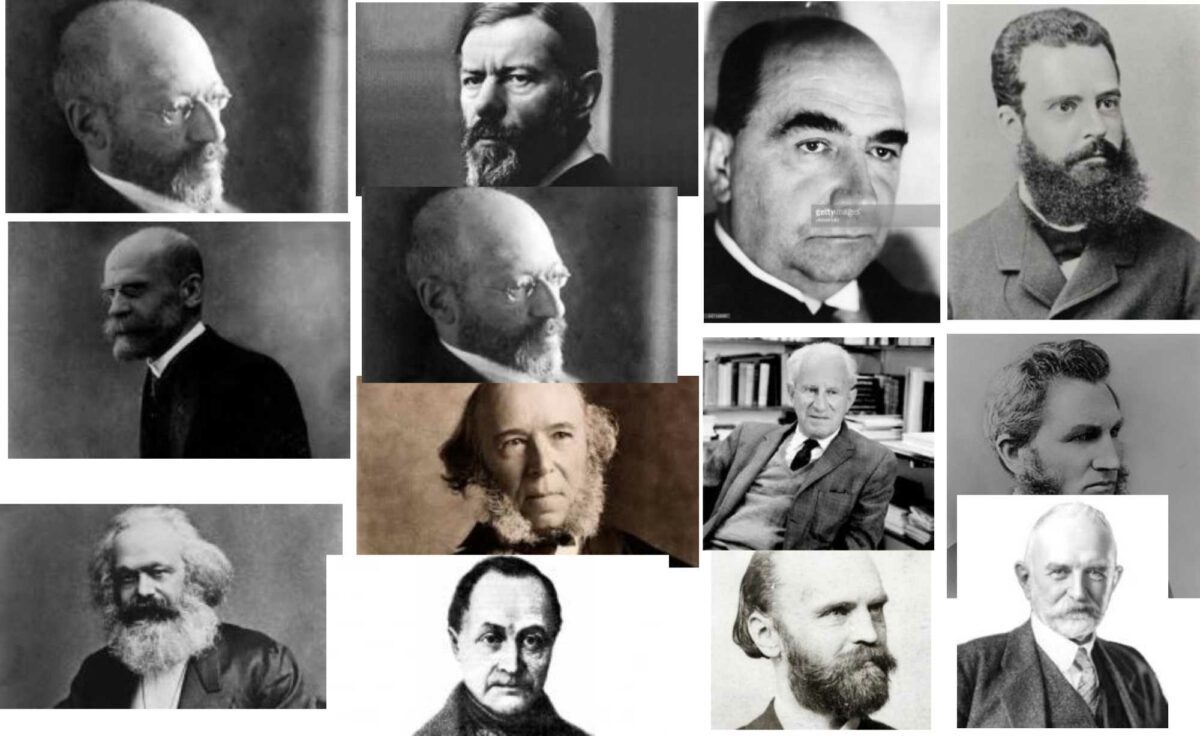
  • 13 Major Figures in Sociology and Their Theories

    13 Major Figures in Sociology and Their Theories

    Sociology is a social science that studies social behavior between groups and other groups or from individuals to other individuals. Humans are social creatures whose daily activities will always be related to social relationships. As a field of study, of course, the scope of sociology is very broad.

    Not only studying how people influence other people but also in other fields. In a field of study, of course there are figures in it who have a role in developing the field of science. So, here are some of the world’s Major Figures  in sociology, as follows:

    1. Auguste Comte (1798-1857)

    Auguste Comte is a French scientist who is also known as the Father of Sociology. The term sociology was first proposed by Comte in 1839. Here are some of the contents of Augustthe Comte’s theory as a figure in sociology:

    • Previously, the use of the term social physics was used which was adapted from Adholpe Quetelet used to denote statistical studies related to the phenomenon of minerals.
    • Then Comte transformed it into sociology which marked it as a new science for society.
    • Comte is a figure who adheres to the flow of positivism which is quite well known. These positivists believe that society is one part of nature which uses empirical research methods to apply social laws.

    2. Herbet Spencer (1820-1903)

    Herbet Spencer is a British philosopher and thinker of classical liberal theory that is prominent. Although most of his works write about politics, he is better known by the nickname “Father of Social Darwinism”. Spencer analyzed society as an evolutionary system. Some of the theories found in Herbet Spencer in his formulation as a sociological figure:

    • According to Specer, the main objects of sociology are family, religion, politics, industry, and social control. It also includes the local community, division of labor, associations, social stratification, science, and research on beauty and the arts.
    • In 1879, Specer put forward the theory of Social Evolution which is still in use today despite many changes.
    • Specer believes that society undergoes evolution, from what was originally a primitive society and then became an industrial society.
    • As an organism, humans evolved independently of their responsibilities and desires and under a law.

    3. Emile Durkheim (1859-1917)

    Durkheim talks more about collective consciousness which is used as a moral force to bind individuals in a society. Through his writings, The Division of Labor in Society, Durkheim uses a collectivist approach to an understanding if society can be said to be modern or primitive. This solidarity is in the form of shared values, customs, and beliefs.

    In primitive society, they are united by strong moral ties and have an intertwined relationship called Mechanical Solidarity. As for modern society, the collective consciousness is declining due to the existence of bonds with a complex division of labor and interdependence called Organic Solidarity, as follows from the political foundation of Emile Durkheim as a sociological figure which he formulated:

    • In his next work, The Role of Sociological Method, Dhurkeim explains the workings known as social facts, namely facts that come from outside the individual which can control the individual so that he can think, act, and has coercive power.
    • Social facts are divided into two, namely material and non-material. Furthermore, Durkheim was also able to prove that there is an influence between social facts and patterns of suicide.
    • This he concluded that there are 4 types of suicide, namely egoistic, altruistic, anomic, and fatalistic.

    4. Karl Marx (1818-1883)

    Karl Marx used the historical materialism approach to believe that the driving force of human history was class conflict. Marx argues that power and wealth are not evenly distributed in society, so that there are rulers who have the means of production which are always involved in problems by exploited workers.

    Marxist sociology explains more about capitalism in which the production of commodities can affect the overall pursuit of profit. This is because production values ​​have permeated all areas of life. The level of profit earned will determine how much service will be provided. This is what Marx meant if the economic infrastructure will determine the superstructure.

    The Marxist sociological approach does have a conclusion regarding the idea of ​​social reform which has been proven to be quite a brilliant idea in the twentieth century, here are the details.

    • Society is built on conflict
    • Society must be seen as a form of totality in the economy which is the dominant factor.
    • The basic driver of all existing social change is the economy.
    • Historical developments and changes do not occur randomly but can be seen from the relationship between humans and economic groups.
    • Individuals are indeed formed by society but can change society itself through rational actions based on scientific premises.
    • Working in a capitalist society can lead to alienation.
    • Through existing criticism, humans can understand and change the position of their own history.

    5. Max Weber (1846-1920)

    The theory put forward by Max Weber does not agree with Marx, which states that the economy is the main force of social change. From his work, “Protestant Ethics and the Spirit of Capitalism”, Weber argues that it is the revival of a certain religious view (Protestanism) that has brought society towards the development of capitalism. Protestants who have a Calvinist tradition claim that financial success is a major sign that God is on their side. So to get this sign, they will live a frugal lifestyle, be diligent in saving, and invest the profits in order to get a lot of capital.

    Another view of Weber is about individual behavior that can affect society at large, this is what is called Social Action. According to him, social action can be understood as long as we can understand ideas, intentions, values, and beliefs as a form of social motivation. This approach is called  Verstehen. 

    6. Georg Simmel (1859-1919)

    Georg Simmel is indeed famous for his work which explains the specifics of individual actions and interactions, for example on the form of interaction, types of interaction, prostitution, poverty, and problems on a small scale. In fact, Simmel’s works have become a reference for figures in sociology in America, and there are also some theoretical foundations, as follows:

    • One of his most famous works is on the Philosophy of Money. Simmel is known as a sociologist whose attitude tends to oppose modernization or who is known as a pessimistic vision.
    • This view is often known as Cultural Pessimism. According to him, modernization makes humans grow and develop without quality because they are stuck with their own rationality.

    In addition, monetization symptoms that take place in various aspects of life can in fact shackle the community, especially in terms of freezing individual creativity, even in this case it can change awareness. This is because money is a means of payment, but power can be a human liberator over humans. So that money is not only used as a tool but as a goal.

    7. Ferdinand Tonnies (1855-1936)

    Ferdinand Tonnies has studied the forms and patterns of social ties and the organization which results in social classification. According to Tonnies, society has the nature of gemeinschaft or gesselschaft. The gemeinschaft community is a society that has closed social relations, is valued by each of its members, and is based on social compliance and family relationships.

    • Meanwhile, the Gesselschaft community is a society that has faded familial relations, its social relations tend to be more impersonal because of the complicated division of labor.
    • This form of society can be seen in urban communities. Tonnies’ theory has finally succeeded in distinguishing between traditional and modern concepts in the social sphere by using gemeinschaft and gesselschaft.

    8. Herbert Marcuse (1898-1979)

    Herbert Marcuse, a German scientist who is also a member of the Frankfurt School, became famous in the 1960s due to his support for radical and anti-establishment movements.

    Here are some understandings found in Herbert Marcuse’s theory in his statement as follows:

    • Even Herbert Marcuse was nicknamed the “Grandfather of Terrorists” because of his criticism of capitalist society.
    • In his 1964 work, One Dimensional Man, he stated that capitalism creates false needs and consciousness and a mass culture which enslaves workers

    9. Leopold Von Wiese (1876-1949)

    Von Wiese, who is a scientist from Germany, stated that sociology is an empirical and independent science. The object of sociology itself is a study of the relationship between humans and other humans which is a social reality. So according to him the special object of sociology is a social process or social interaction. Subsequent research focused on the social structure which is the channel of human relations.

    The following is the meaning of the formulation and some important theories in Leopold Von Wiese’s character as a figure in sociology:

    • According to Wiese, sociology is research that focuses on the relationship between humans which is a social reality.
    • Wiese researched on the classification of social processes with an emphasis on associative and dissociative social processes.
    • The process categories are then subdivided into smaller processes.
    • Sociology must focus its attention on human relations without being associated with existing goals and rules. Sociology must also begin with observations of certain concrete behaviors.

    10. Antonio Gramsci (1891-1937)

    The Italian sociologist was one of the key thinkers of redefining the debate about class and power. His concept is about hegemony which discusses the complexity of modern society.

    The following are some of the theoretical foundations taught by Antonio Gramsi during his famous period as a figure in sociology:

    • Gramsci argues that the bourgeoisie have power not because of coercion but because of agreement, forming political alliances with other groups and working ideologically in order to dominate in society.
    • The idea of ​​hegemony (winning power on the basis of the consent of the people) is indeed an interesting thing because in reality individuals always have reactions and redefine the society and culture in which they are located.
    • Gramsci’s ideas did have a lot of influence on the study of popular culture.

    11. George Herbert Mead (1863-1931)

    George Herbert Mead Is one of the figures from the center of symbolic interactionism who has a picture of self formation or what is known as the stage of socialization in describing children’s growth. According to him, children’s growth consists of 3 stages, namely the play stage, the game stage, and the stage of taking the role of the other.

    • Humans will not react to the world around them directly, but they will react to the meaning associated with events or objects around them.
    • WI Thomas stated if the definition of a situation, where we can only act appropriately if we have determined the nature of the situation.
    • Failure when formulating a situation correctly and correctly can lead to unpleasant consequences.

    12. Lester Frank Ward (1841-1913)

    According to him, Sociology has a goal to conduct research on human progress. Lester Frank Ward himself distinguishes between pure sociology, which focuses on the origin and development of social phenomena, and applied sociology, which focuses on changes that occur in society due to human efforts. Ward stated that if humans developed from a low level to their current status, here’s the theory:

    Here are some of the theories found in Lester Frank Ward’s formulation of his becoming a figure in sociology:

    • Ward believed that ancient societies could be characterized by modesty and moral poverty.
    • Whereas in modern society it can be characterized by things that are more complex, happy, and get excess freedom.
    • Applied sociology includes awareness in using scientific knowledge that is used to be able to achieve people’s lives to be better than before.

    13. Vilfredo Pareto (1848-1923)

    According to Vilfredo Pareto, sociology is based on observations made on actions, experiments on facts and mathematical formulas. Society is a very balanced power system, the balance depends on the characteristics of human behavior and actions. And these actions depend on the desires and impulses that exist in humans.

    • Pareto is known for his criteria of economic efficiency, he is even recognized as the founder of sociology in the 20th century along with Durkheim and Weber.
    • The emphasis of Pareto theory is more on the legal roots that exist in sources that oppose orthodox rational analysis and its construction that justifies logic on non-logos foundations.
    • In his work entitled “The Mind and Society”, Pareto tries to refute the statement of Marxism by using the existence of the ruling class or what is known as the elite group.
    • Pareto stated that the elite did not need to get a position because of their economic supremacy and social and political changes could occur due to the circulation of the elite which was not supported by economic factors.

    So, those were some of the figures in world sociology and their theories that were quite famous and influential. Some of the existing theories are still used today even though they have changed according to the existing era. And of course these theories are very helpful in the development of sociology to this day. Hopefully the above information can be useful for you.

  • Social Conflict Theory According to Max Weber

    Social Conflict Theory According to Max Weber

    Max Weber views social stratification in society as influencing the emergence of social conflict.

    Social interactions involving relationships between individuals in society will bring about two side effects of the coin, associative and dissociative. Associative impact will make their relationship closer. On the other hand, the dissociative impact of the relationship becomes more tenuous.

    The sparse relationship between these interactions can lead to social conflict. The main cause is differences in society with various triggers such as cultural differences, unequal interests, social changes that are too fast, to differences in thinking between individuals.

    Max Weber’s Theory of Social Conflict

    Several experts research on social conflict, one of which is Max Weber. According to Weber, conflict arises from the existence of social stratification in society.

    Each of these stratifications is a position worthy of being fought for by humans and their groups. Social relations are an attempt to get a high position in society.

    In his theory of conflict, Weber argues that power has significance for every type of social relationship. Power becomes the driving force of social dynamics that places individuals or groups to be mobilized or mobilized.

    As a result of power and interests, it can simultaneously lead to conflict. This social conflict generally occurs in a combination of the interests of each social structure that gives rise to the dynamics of the conflict.

    Weber’s theory does not discuss conflict theory specifically. Weber attempted to analyze the relationship between social movements and conflict. For him, social movements can lead to conflicts such as those experienced by society during the French Revolution.

    Social Conflict Theory According to Other Expert

    The founder of the famous conflict theory is not only Max Weber. There are still Karl Marx and George Simmel who put forward their respective theories of conflict. In fact, between theories are also “conflicted” because of differences in views such as the thoughts of Karl Marx and Max Weber.

    Conflict theory according to Karl Marx states that social change arises because of a conflict which ultimately results in a different compromise from the initial state. Society will be divided into two classes, namely the capitalist class (bourgeoisie) and the working poor class (proletariat). They are conflicted because of the different nature of the two.

    the conflict between the bourgeoisie and the proletariat cannot be separated from the implementation of capitalism by the bourgeoisie. Capitalism is an economic system that allows some individuals to control vital productive resources. The bourgeois class uses this access to achieve maximum profit by utilizing the services of the proletarian class as laborers.

    Max Weber refuted the opinion of Kari Marx’s conflict theory regarding historical materialism. The historical materialism in Marx’s opinion only emphasizes attention to one side of class. According to Weber, a balance is needed by also emphasizing the role of the idea factors that cause historical change.

    Weber focused on understanding the growth of the rational capitalist system in the Western world on a large scale. On the other hand, the capitalist system did not experience much development in the East and was not liked. Weber argues that the void of religious transformation in the East is an obstacle to the development of capitalism in the region.

  • 3 Main Theories of Sociology

    3 Main Theories of Sociology

    Actually, the scope of sociology itself is very broad because it covers almost all fields in people’s lives. Such as economics, education, politics, religion, or culture. And of course all these fields are seen from a sociological perspective.

    The majority of science has its own theory. Like medical science, for example, it must have a theory on how to carry out disease examinations on patients. Likewise, sociology has a theory to explain various things that happen in society.

    Each theory has its own level of certainty. Generally, natural science theories have a higher degree of certainty than social sciences. In social science, theory is more subjective which depends on the point of view of seeing a phenomenon.

    3 Main Theories of Sociology

    In addition, social reality is always changing from time to time, so a social science theory rarely changes. Until there is no other theory that can prove otherwise, a social science theory will not change at all.

    1. Symbolic Interactionism

    Symbolic Interactionism is a combination of the thoughts of George Herbert Mead, Herbert Blumer, and Max Weber. The first theory analyzes society based on the subjective meaning of an individual in social interaction.

    This theory also assumes that individual actions tend to be based on things that are believed, not objectively true. This belief is what is referred to as the product of the represented social construction. The result of this interpretation is then known as the situation.

    Symbolic interactionism is a part of micro-sociological theory because its analysis is based on individual aspects. The concept of this theory also tends to have a tendency to deal with one’s identity.

    2. Conflict

    Conflict theory assumes that differences in the interests of social classes result in conflictual social relations. This theory was initiated by Karl Marx.

    Social inequality is created because of the unequal distribution of wealth so that when the gap gets worse, the potential for conflict to arise is even greater.

    The social class referred to here is the proletariat and the bourgeoisie. The first group is the working class or people who have no control over resources. Meanwhile, the second group controls the resources because they have large capital.

    From the two classes, it is clear that the interests and goals of the two are very different. The proletariat wants wealth to be evenly distributed. While the bourgeoisie actually wants to increase power or maintain the power it already has.

    The friction between these two groups if left unchecked will trigger a revolution. Especially when coupled with class consciousness that makes the proletariat know that they have actually been exploited.

    3. Structural Functionalism

    The last theory was born from Emile Durkheim. He has the imagination that society is an organism consisting of various components, these components influence each other so that they can function continuously.

    Structural functionalism emphasizes that society is composed of structural systems that have their own roles. Therefore, the result of the overall system that runs can create social stability.

    In this theory, social institutions will survive as long as they function properly. If there is a malfunction, then the institution will slowly disappear.

    In addition, there must be good cooperation among social institutions (such as government, religion, economy, education, family, media, etc.) so that the system can be maintained.