Tag: Chemistry

  • Definition and Functions of Universal Indicators

    Definition and Functions of Universal Indicators

    Definition and function of universal indicators – In measuring pH many methods are used by researchers in conducting research. One method that is often used is universal indicators. This indicator is often used in research because it is easier to use than other methods. In addition, the results obtained are also accurate and fast.

    However, for ordinary people, students and students who are new to pH measurement methods will find it difficult to understand what the meaning and function of universal indicators are. Moreover, how to use the universal indicator itself. So to anticipate this, here is a complete explanation of universal indicators.

    What is Universal Indicators?

    Universal indicator is a paper that has various colors that can be used to measure a pH value in a solution. Generally, the colors owned by universal indicator paper are 4 colors or more. Each paper that is inserted into the solution can change color according to the level of the pH value of the solution.

    This universal indicator method usually takes advantage of the color change on the paper that occurs due to a comfort in a liquid solution to measure how high the pH is in the solution.

    Colours of universal indicator
    Colours of universal indicator

    Universal Indicator Function

    After knowing the meaning, let’s move on to the function of this universal indicator. Each research method has its own function in examining an object. Likewise, the universal indicator research method has the function of measuring several levels of compounds in a liquid solution. This method is very easy to use in research so that many researchers and students use this method to measure a pH level in a compound.

    This universal indicator function is obtained from paper that has 5 colors. Each color that will be produced by universal indicator paper has various colors, namely:

    pH range Description Colour
    < 3 Strong acid Red
    3–6 Weak acid Orange or Yellow
    7 Neutral Green
    8–11 Weak alkali Blue
    > 11 Strong alkali Indigo or Violet

    The colours from yellow to red indicate an acidic solution, colours blue to violet indicate an alkaline solution and a green colour indicates that a solution is neutral.

    Universal indicator components
    Indicator Low pH colour Transition pH range High pH colour
    Thymol blue (first transition) Red 1.2 – 2.8 Yellow
    Methyl orange Red 3.2 – 4.4 Yellow
    Methyl red Red 4.8 – 6.0 Yellow
    Bromothymol blue Yellow 6.0 – 7.6 Blue
    Thymol blue (second transition) Yellow 8.0 – 9.6 Blue
    Phenolphthalein Colourless 8.3 – 10.0 Fuchsia

    Wide-range pH test papers with distinct colours for each pH from 1 to 14 are also available. Colour matching charts are supplied with the specific test strips purchased.

    How to Use Universal Indicator

    Universal indicators is very easy to use . There is no need to need many tools in using universal indicator methods in a study.

    Researchers only need to buy research indicator paper and prepare a liquid solution that will be used in research and follow these steps:

    1. Take Universal Indicator Paper

    The first step is that the universal indicator paper must be taken with care and try not to touch the dye contained in this universal indicator paper. Because if the dye contained in this paper is contaminated with other substances that have acidic or alkaline properties, this indicator paper can be damaged.

    How to Use Universal Indicator
    How to Use Universal Indicator

    2. Put In Liquid Solution

    The second step is the universal indicator paper is inserted into the beaker which already contains the liquid solution. Make sure all parts of the universal indicator paper have been immersed in the liquid solution. Wait a few minutes to make sure that all the substances in the liquid have adhered to the universal indicator paper and changed color.

    Then, remove the universal indicator paper and let it sit for 4-5 minutes until it dries completely. Make sure the paper is dry properly. If not, the paper will change color again so that the results of the study will change.

    3. Compare Using Scale

    The use of a scale in comparing the levels of substances contained in universal paper is something that cannot be missed. Because this scale will be used to measure the levels of substances contained in a liquid solution. In general, the scale used by researchers to measure color change is between pH 0-4.

    The method used in determining the concentration of the solute is by matching the color of the indicator paper that has been inserted into the liquid solution with a universal indicator scale. After determining the indicator scale that is considered the most suitable for the color of the universal indicator paper. Then the researcher will know the pH levels contained in the liquid solution that has been tested.

    In addition to studying the meaning and function of universal indicators A researcher, student or student who wants to conduct research using the universal indicator method must also understand the advantages and disadvantages of a method itself. These advantages and disadvantages can be used in considering a research method to be taken.

    Disadvantages and Advantages of Universal Indicators

    Disadvantages and Advantages of Universal Indicators

    It is the same with pH research methods or other acid and base measurements . Universal indicators also have their own advantages and disadvantages. There are many advantages possessed by universal indicators and there are also many disadvantages possessed by the pH research method using universal indicators. The following are the advantages and disadvantages of universal indicators:

    Advantages of Universal Indicator

    1. Easy to Use

    The first advantage of the pH measurement method using universal indicators is that it is easy to use. The use of this measurement method can be done anywhere and by anyone. You don’t have to use complicated formulas and so many tools if you want to use universal indicator methods in research.

    Usually, this research method has been applied by teachers who teach in secondary schools. So that students can already feel how to do a research that is usually done by expert researchers. This easy use is the main reason for teachers to choose this method in practical activities.

    2. Low Price

    The price for getting universal indicator paper is relatively cheap compared to other research tools. Thus, many researchers and teachers take advantage of this opportunity to conduct research. In addition, this universal indicator paper is easy to get anywhere, both in big cities and small areas.

    The selling price of universal indicator paper which is relatively cheap makes students, students and researchers conduct research on a solution level using universal indicator paper. Research using this method clearly does not require expensive costs.

    Lack of universal indicators

    1. Not Very Accurate

    The first drawback of universal indicator paper is that the results of this method in measuring pH are not 100% accurate. This happens because, this research can be done by everyone who does not necessarily understand correctly the results of a study.

    If you want the results of the universal indicator method to be more accurate, it is advisable to take measurements with people who are experts in research, namely a laboratory assistant. Laborers will be more careful in inferring the results from changes in the color of the universal indicator paper and compare the indicator scales better.

    Scale limitations

    the scale used to match the color of the indicator paper has only the numbers 0-14. So that the level of pH solution that has a level that requires a comma will not be detected. Of course this is very different if you use a more modern digital pH meter . Each concentration of solution does not have a definite number of scales so that further research is needed.

    Research using other tools to accompany the universal indicator method is very necessary. It aims to see more accurately the results of the solution under study whether it is one hundred percent accurate or not when using the universal indicator research method.

    Well, this article on the meaning and function of universal indicators is written very easily. Hopefully the readers can understand the meaning and function of universal indicators better. So that it can add insight to the readers.

  • Definition and Function of Centrifuge

    Definition and Function of Centrifuge

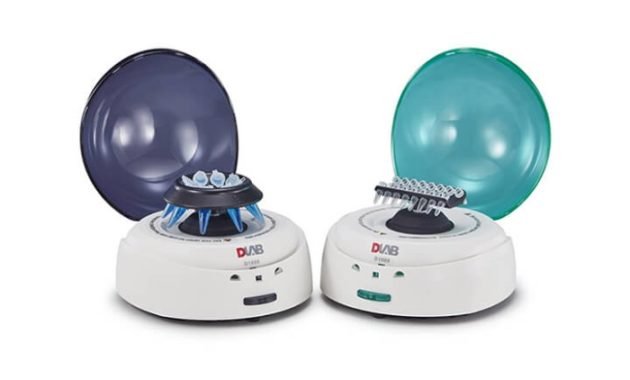
    When you are in the laboratory, you must have tried the activity of separating a solution into its constituent substances. Separation of the solution of these substances can be done using a tool called a centrifuge. Many still need to understand the meaning and function of a centrifuge and how it works.

    The centrifuge works as a means of separating several substances in one solution. The separation process is by the deposition method. This tool is designed to facilitate the deposition process in the separation of substances with a rotating machine mechanism. The rotation is based on the centrifugal force that affects the gravitational force.

    Definition and Function of Centrifuge

    The centrifuge can be used for biochemical research in the laboratory. For example, to separate human blood cells, both white and red blood cells. Or also beneficial for the separation of solutions of other substances. Please feel free to listen to the discussion below to learn about the meaning and function of the centrifuge.

    A. What is a Centrifuge?

    The meaning and function of a centrifuge which has the understanding that a centrifuge is a tool or machine made to separate a particular substance that is in solution. This tool is often found in research and health laboratories. The centrifuge was first discovered by a foreign scientist named Benjamin Robins around the 1700s.

    The centrifuge works by using electric power, which can move the components inside. The rotor is the main component that can be used to separate a solution. The rotor will produce mechanical motion by rotating movement with a certain speed according to the user’s needs.

    B. Centrifuge Function

    Centrifuge Function

    The centrifuge was made with the primary purpose of helping humans work in separating various types of substance solutions in the field of laboratory research. In addition, the centrifuge also has several derivative functions that you can see as follows:

    1. As a separator of the content of substances in a particular solution. Both chemical and biological substances.
    2. To separate red blood cells from white blood cells to be taken plasma cells.
    3. Separating urine and blood to analyze or diagnose a person’s illness.
    4. Can be used to separate a food content.
      5. Can be used to purify a cell.
      6. Can be used for the separation process in animal milk, which separates the fat and milk content.

    C. Types of Centrifuge

    After knowing the function of the centrifuge, let’s also know the types. In its development, the centrifuge is made into several substance separators. These types differ in their respective forms and uses. The following are the types of centrifuges that you need to know:

    1. General Purpose Centrifuge

    General-Purpose-Centrifuge

    This type of centrifuge is a centrifuge that is often used for various needs in the laboratory, which has the usual shape and can be put on the table. This type of centrifuge has a speed range of 0 to 3000 rpm. Can accommodate 5 to 100 ml solution samples per rotation.

    2. Microcentrifuge

    Microcentrifuge

    A microcentrifuge is a helpful machine for separating specific solutions or special microtubes. This machine has a higher speed than the general-purpose centrifuge. Because of its smaller size, it can only accommodate a microtube of about 0.5 to 2.0 ml.

    3. Specialty Centrifuge

    This specialty centrifuge is a machine only used for more special substance separation needs. For example, it is used for microhematocrit to measure pack cell hematocrit. And it can also be used for blood bank, which is serologic separation in tubes.

    4. Ultra-refrigerated centrifuge

    Ultra refrigerated centrifuge

    Ultra and refrigerated centrifuge is one machine often used for research in biochemistry laboratories. This type of tool differs from some previous classes, where the speed is higher, around 50 thousand to 20 thousand rotations per minute. The advantage of this tool is that it is equipped with a sample cooler so that the temperature conditions are appropriately maintained.

    D. Centrifuge Component

    The centrifuge has several components that are designed into a single unit. There are main components and complementary components in it. To find out, let’s look at the components of the centrifuge as follows:

    1. Rotor

    The rotor is the main component of driving the centrifuge, which has a way of working that can rotate at a certain speed. The speed depends on the type of centrifuge used. The rotor itself has two types, namely the fixed rotor and the swing-out rotor, which have different types of rotation.

    2. Drive Shaft

    The drive shaft is another component found in the centrifuge. You can use it as a support for the rotor components. The drive shaft is connected to other parts, namely the motor.

    3. Motor

    The motor is a supporting component in the centrifuge. The motor is useful for driving the function of the rotor connected to the drive shaft. So that this motor can move the parts in the centrifuge, it flows to the power button connected to electricity.

    4. Centrifuge Tube

    The centrifuge tube is one of the components useful for placing samples of certain substances for particle separation. This tube is made slightly concave and pointed at the bottom so that the sample particles can settle to the bottom.

    E. How to Use Centrifuge

    How to Use Centrifuge

    As with laboratory equipment, there must be a good and correct way of using it. Likewise, centrifuges have procedures for use, so they are not mistaken. So that the samples that are successfully processed can be analyzed further. Here’s how to use a centrifuge:

    1. First, prepare all the tools and sample materials.
    2. Be sure to plug in the mains so the centrifuge can run.
    3. The sample to be processed must be put in a glass tube and can be put into a centrifuge machine
    4. Before starting, ensure the cover on the centrifuge can be tightly closed and locked.
    5. Set the speed by setting it on the rpm button, and set the required time by setting it on the timer button.
    6. Press the central button to run the centrifuge.
    7. When finished, you can press the button to stop or open the centrifuge cover.
    8. Then, you can remove all the sample tubes that have been successfully processed.

    Conclusion

    That’s a discussion about the meaning and function of the centrifuge that you can know. The centrifuge is very helpful in various laboratory studies to separate the content of certain substances.

  • Complete 20+ Branch of Chemistry and Explanations

    Complete 20+ Branch of Chemistry and Explanations

    In this article we will discuss various branch of chemistry. The branch of chemistry is divided into several branches including Analytical Chemistry, Physical Chemistry, Organic Chemistry, Thermochemistry, Geochemistry and others. You can learn various branches of chemistry in the following review. 
    In addition to the branch of physics and biology, chemistry is also a part of the natural sciences.

    Chemistry is the study of the composition, structure, changes and properties of a substance.

    Chemistry Branch

    Currently, there are many that include chemistry, so they are grouped into several branches of chemistry. The following are some of the branches of chemistry that exist, namely:

    1. Analytical Chemistry

    Analitycal Chemistry

    Analytical chemistry is a branch of chemistry that studies the analysis of chemicals.

    Examples include how to separate or identify the types of constituent substances and their amounts, grouping of substances and the formation of new substances.

    Analytical chemistry is divided into two parts, namely qualitative analysis and quantitative analysis.

    2. Physical Chemistry

    Physical chemistry is a branch of chemistry that studies the relationship between the concepts of chemistry and physics.

    Examples such as the occurrence of chemical reactions, the separation between two compounds, changes in chemical compounds, energy calculations and determination of the properties of a substance.

    In addition, in physical chemistry, you will find many mathematical equations and calculations related to energy.

    3. Organic Chemistry

    Organic chemistry is a branch of chemistry that studies chemicals such as the synthesis or properties of organic compounds.

    The nature of these organic compounds consists of hydrocarbon compounds and their derivatives.

    Organic chemistry also has a role in the synthesis of compounds and research on other carbon atoms.

    4. Inorganic Chemistry

    Inorganic chemistry is a branch of chemistry as opposed to organic chemistry, which studies the synthesis and properties of inorganic compounds, such as salts, minerals and metals.

    Inorganic chemistry also studies the separation of inorganic compounds, mineral processing and crystal formation.

    In its use, inorganic chemicals are often used for the glass, textile, plastic and paint industries.

    5. Environmental Chemistry

    atmospheric

    Environmental chemistry is a branch of chemistry that studies the chemistry and biochemistry that occurs in nature or everything that happens in the environment.

    Chemistry is also a science that includes atmospheric, aquatic and soil chemistry so that chemistry is often associated with environmental pollution and how to overcome it.

    In addition, environmental chemistry is highly dependent on other branches of chemistry, such as analytical chemistry.

    6. Core Chemistry

    Nuclear chemistry or often referred to as radiochemistry is a branch of chemistry that studies radioactive substances, the structure of the atomic nucleus and its influence on nuclear stability and reactions in the decay process of radionuclides and nuclear transmutation.

    7. Biochemistry

    Biochemistry is a branch of chemistry related to the branch of biology.

    In biochemistry, you will learn about the chemical processes that occur in the body of living things and the analysis of the compounds involved.

    In addition, biochemistry is related to genetic research, the chemical components of cells, as well as research on reactions in the bodies of living things.

    8. Food Chemistry

    Food chemistry is a branch of chemistry that studies chemical processes and interactions with biological components and improves the quality of food.

    For example, a food product that undergoes changes due to the emergence of various food processing methods so how to improve or prevent changes.

    9. Pharmaceutical Chemistry

    Pharmaceutical

    Pharmaceutical chemistry is a branch of chemistry that studies the development of materials containing drugs based on quantitative and qualitative analysis of chemical compounds, both organic and inorganic.

    10. Complex Chemistry

    In chemistry, a complex or coordination compound refers to a molecule or entity formed by the joining of a ligand and a metal ion. Previously, a complex meant the reversible association of molecules, atoms, or ions through weak chemical bonds. This understanding has now changed. Some metal complexes are formed irreversibly and many of them have fairly strong bonds.

    11. Geochemistry

    Geochemistry is the science that uses chemical principles and technologies to analyze and explain the mechanisms behind geological systems such as the Earth’s crust and the oceans above it. The scope of geochemistry extends beyond the geo (earth), covers all rock movement systems in the solar system and has an important contribution in understanding the processes behind mantle convection, planet formation, to the origin of rocks such as granite and basalt.

    12. Stereochemistry

    Stereochemistry, a branch of chemistry, involves the study of the relative spatial arrangement of the atoms that make up the structure of molecules and their manipulation. An important branch of stereochemistry is the study of chiral molecules

    13. Electrochemistry

    Electrochemistry is a branch of physical chemistry that studies the electrical aspects of chemical reactions. Elements used in electrochemical reactions are characterized by the number of electrons they have. In general, electrochemical cells are divided into two groups, namely galvanic cells and electrolytic cells.

    14. Material Chemistry

    Materials chemistry is a branch of chemistry that studies organic, inorganic materials, and the structure of a chemical substance. There is a fundamental difference between matter which is known in chemistry and the term material which is used in materials chemistry. Chemistry studies the properties of matter, both intensive and extensive. However, in material chemistry, the properties of matter are studied so that they can be used for certain functions. For example, certain properties of metalloid elements (silicon, germanium, and arsenic) that can be used as semiconductor materials.

    15. Thermochemistry

    Thermochemistry is a branch of chemistry that studies the energy that accompanies physical changes or chemical reactions. The main objective of thermochemistry is the establishment of criteria for determining the probability or spontaneity of the required transformation. In this way, thermochemistry is used to estimate the energy changes that occur in chemical reactions, phase changes, and solution formation. Most of the features in thermochemistry develop from the application of the first law of thermodynamics, the law of ‘conservation’ of energy, to the functions of internal energy, enthalpy, entropy, and Gibbs free energy.

    16. Polymer Chemistry

    Polymer chemistry or macromolecular chemistry is a branch of chemistry that focuses on the chemical synthesis and chemical properties of polymers and macromolecules. According to IUPAC recommendations, macromolecules refer to individual molecular chains and are the domain of chemistry. Polymers describe the properties of polymeric materials and are a subfield of polymer physics as a subfield of physics.

    17. Theoretical Chemistry

    Theoretical chemistry is a branch of chemistry that deals with physics that studies and predicts chemical phenomena. Although not entirely precise, theoretical chemistry is often confused with quantum chemistry.

    18. Mathematical Chemistry

    Mathematical chemistry or mathematical chemistry is a branch of theoretical chemistry that uses mathematical functions to study chemical phenomena. Mathematical chemistry does not have to be related to quantum chemistry although most of the theories used relate to quantum mechanics or quantum chemistry, for example: group theory to explain the phenomenon of symmetry in molecules.

    19. Quantum Chemistry

    Quantum chemistry is a branch of theoretical chemistry, which applies quantum mechanics (and more recently quantum field theory) to dealing with problems in chemistry. The explanation of the behavior of electrons in atoms and molecules in terms of reactivity is one of the applications of quantum chemistry. 

    20. Computational Chemistry

    Computational chemistry is a branch of chemistry that uses the results of theoretical chemistry which are translated into computer programs through computer simulations to calculate the properties of molecules and their changes as well as to simulate large systems (macromolecules such as proteins or systems of many molecules such as gases, liquids, solids). , and liquid crystals), and apply the program to real chemical systems.

    Benefits of studying chemistry

    The benefit of studying chemistry is a better understanding of the environment and the processes that take place within it.  From the description above, it has been explained that matter can change physically or chemically. By studying chemistry, we can change natural materials into more useful products to meet the needs of human life , and we can understand the needs of human life, and we can understand various natural phenomena that we encounter in our daily lives , for example:
    • Digestion and burning of food substances in the body. Food comes from plants. Growing plants are assimilated by chemical processes. Our bodies need carbohydrates, proteins, fats, vitamins, all of which are chemical processes that can produce carbon dioxide gas, water and energy .
    • In this life, we need soap, toothpaste, textiles, cosmetics, plastics, medicines, fertilizers, pesticides, fuels, paints, cooking spices, household utensils, even various types of processed foods, all of which are the result of application of chemistry. Almost all the materials we need, more or less, either directly or indirectly experience chemical touch. Try to pay attention.

    Given the importance of the benefits of chemistry in life, it is not surprising that then chemistry continues to be developed. Various studies on anything continue to be done. Inventions continue to be born, it is all aimed at the lives of many people. In contrast to chemistry which tends not to be liked much, the benefits of chemistry are actually in demand and needed by humans themselves.

    Everyone has their own view of chemistry and the benefits of chemistry for life. Some have a negative view, some accept its presence. Those with negative views are people who do not understand how important chemistry is in life, lack of knowledge can be the main cause.

  • The Function of Charcoal in Water Purification

    The Function of Charcoal in Water Purification

    We often hear the question of what is the function of charcoal in water purification. So is it true that charcoal can actually purify water? Let’s see the  following Sinaumedia review  !
    What is Charcoal?

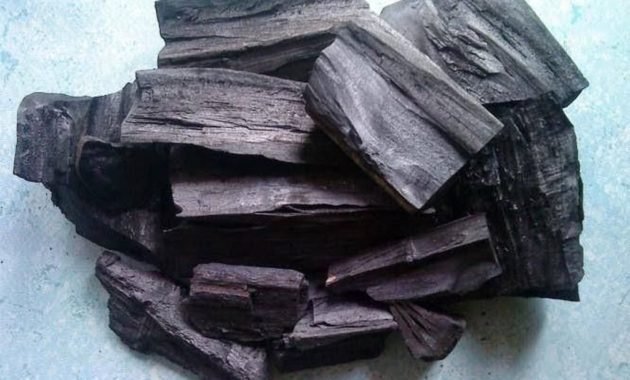
    Charcoal itself is   a black residue which contains impure carbon compounds. Charcoal can be obtained by removing the water content and volatile compounds/components  from  plants and animal bones through the combustion process.

    The form of charcoal is almost like coal consisting of 85% to 98% carbon, the rest is in the form of ash and  other chemical compounds  . There are several basic ingredients for making charcoal such as wood, bones, coconut shells, rice husks and so on.

    The Function of Charcoal in Water Purification

    If you have studied science, you must have done water purification techniques using sand, gravel and stones, right? Can the water you filter be perfectly clear? Of course you can’t! Then why is that? The reason is because the material you use does not contain activated carbon compounds.

    As we know, charcoal contains activated carbon which is able to bind impurities through the absorption or  absorption process . That is, when there is a substance or material that passes through the activated carbon and interacts, the material contained in it will also be absorbed. Therefore, charcoal with activated carbon is able to purify polluted water and at the same time eliminate odors and tastes in the water.

    The use of charcoal in the water purification process is an example of the adsorption properties of colloids, namely the ability to absorb colloidal dispersed particles in water. Dirty water will usually have a lot of colloids that need to be separated using adsorbents such as charcoal, activated carbon and zeolites.

    The way this separation works is by binding the dirt that has accumulated in the water so that the water can be clean and fit for consumption. In addition, activated carbon can also bind to the remnants  of the cleaning agents  used, such as  fluorine  and  chlorine .

    Conclusion

    Purification of dirty water to be clean can indeed use charcoal or activated carbon. You can use charcoal from coconut shells, wood, bones, rice husks and so on.

    The real use in our daily life is in the process of refilling gallons of water. The gallon water refill machine has a purification section with the help of activated charcoal to produce water that is safe for consumption.

    Waste Management

  • Understanding Aquades and its functions

    Understanding Aquades and its functions

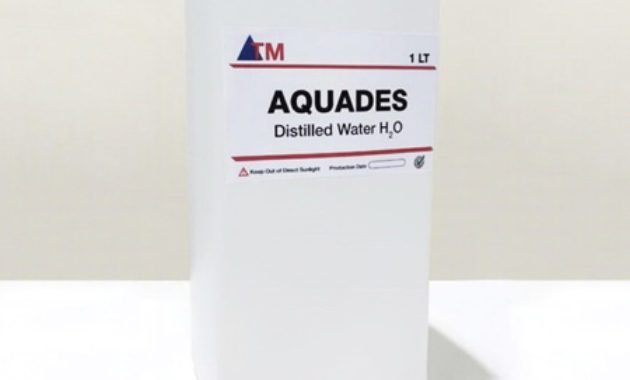
     This distilled water is something that is commonly found, many people have used this water. Especially in the laboratory. So what is aquadest?, aquadest or some also call it aquadest water is a type of water where this water is produced through a distillation process.

    Then what is the function of aquadest? The distillation process here is a process where the goal is to produce water with very good quality, which later on so that the results of the water can be equalized with mineral water. What kind of mineral water is meant?, namely water in which has a lot of good content.

    Examples such as salt, sulfur, and in the form of gases dissolved in water. Aquatic water is a type of water whose content is able to be equal to mineral water. However, this water can only be obtained by one distillation process. Did not achieve two or more processes.

    Although this water can only be obtained with one distillation process, but still the content contained can exceed the content contained in mineral water. So, mineral water is far superior to distilled water. This does not reduce the use of distilled water.

    A. Definition of Aquades

    Aquadest water is water from the distillation process or can also be called distilled water, which is a process of boiling water which will produce water vapor. This process aims to remove the minerals present in the water. From this boiling process the steam will then be re-solidified in a different container.

    So, after distillation, only H2O is contained in the water, in the absence of other elements. Even though it contains only H2O, this water can still be consumed. Here are some explanations of the advantages and disadvantages of the distillation process:

    The advantages of aquadest water

    Aquadified water certainly has many advantages in its use. Here are the various advantages of aquadest:

    1. From several research studies, that this water can be consumed to help prevent  arthritis . Why is that?, This is because distilled water is believed to be able to get rid of mineral deposits contained in human joints.
    2. Distilled water is also believed to be free from various  microscopic toxins . Examples  are bacteriaviruses , and various  other microorganisms  found in a faucet or tub and can be harmful to the health of the body.
    3. Distilled water is also free from various other chemical mixtures. Such as  chlorinefluoride , and other mixed materials that are likely to be found in ordinary bottled water, or bathtubs in general.
    4. Distilled water is even believed to be an alternative for preventing gallstones. This water will remove the minerals contained in the cells of the human body. So that the risk of gallstone disease can be avoided.
    5. Distilled water also does not have the various ingredients found in tap or bottled water in general. Why is that?, because this water has gone through the distillation process first.

    Lack of Aquatic Water

    Not only does it have various advantages, in fact distilled water also has several disadvantages. Following are the disadvantages of aquadest:

    1. Consuming distilled water in the long term and in excessive amounts can result in poor health. This is because distilled water is able to absorb  very large amounts of carbon dioxide  .
    2. If you continue to consume distilled water, then this results in a rapid loss of electrolytes in the body of the person who consumes it. This is clearly dangerous, isn’t it?
    3. If the body has experienced a deficiency of various electrolytes that are very important, for example, such as  chloridemineralssodium , and others. This can cause irregular heart pressure, this cell also results in blood pressure fluctuations.

    B. Aquatic Functions and Its Various Uses

    Generally, some people consume aquadest as an alternative to absorb various toxic substances in the body, then dispose of them. Even so, there are also those who use this water in various other areas of life that are far more important.

    Because actually consuming distilled water is not always profitable. Another use of this water can be in the  laboratory space . Namely as a mixture of chemical solution substances  . Here are some explanations regarding the use of aquadest water:

    1. Aquatic Function in the Laboratory

    The function of distilled water in the laboratory is as a mixture of chemical substances, when conducting research. In addition, distilled water is also used to clean  laboratory equipment  before or after use. After this, use distilled water as an alternative to assist in research.

    2. Function of Aquades in Steel Processing

    Besides being used in the laboratory, aquadest can also be used in steel processing. What kind of processing is meant?, that is, it is utilized in the process of cutting steel and cooling the engine. It is known to be very effective in inhibiting the presence of scale and moss.

    3. Aquatic Function in Chemistry

    chemical lab

    In the field of chemistry, aquadest can clearly be utilized. As already explained, distilled water is used as a mixture or solvent for chemicals, or certain solutions. This water can be used when researching a concentration or compound.

    4. Aquades Function As Battery Water

    It turns out that this very popular distilled water is also popularly used as a substitute for battery water. Do you know how important  it is to use battery water  in motorized vehicles? The answer must be very important. So this shows that distilled water can be another alternative as a substitute for battery water.

    Those are some explanations about the use of aquadest water in everyday life. Is distilled water considered important and useful?, judging from the explanation above and the many benefits that can be obtained from aquadest, then distilled water is considered very important and beneficial.