Tag: space

  • Scientists Plan to Harvest Resources on Mars with Plasma

    Scientists Plan to Harvest Resources on Mars with Plasma

    Nationalgeographic.co.id—An international research team has discovered a plasma-based way to produce and separate oxygen in the Martian environment. This is a complementary approach to NASA’s Mars In-Situ Oxygen Resource Utilization Experiment, or MOXIE. Which can produce a high rate of molecular production per kilogram of instrumentation sent into space.

    Such systems could play an important role in the development of life support systems on the planet Mars. Raw materials as well as basic chemicals needed to process fuels, building materials, and fertilizers.

    In Journal of Applied Physics, from AIP Publishing, a team from the University of Lisbon, Massachusetts Institute of Technology, Sorbonne University, Eindhoven University of Technology, and the Dutch Institute for Fundamental Energy Research presented this method. According to them, this method can be used to utilize and process local resources. Mainly to produce products on Mars. Their findings were published on August 16 under the title Plasmas for in situ resource utilization on Mars: Fuels, life support, and agriculture.

    The natural conditions on the red planet are almost ideal for the utilization of in situ resources by plasma. Since the atmosphere is mainly composed of carbon dioxide which can be broken down to produce oxygen and the pressure is favorable for plasma ignition.

    Vasco Guerra, a University of Lisbon physicist who authored the study, says that creating and accelerating electron beams is much easier on Mars. Where the air is about 100 times thinner than Earth. “There is an ideal pressure for plasma surgery,” he said. “Mars has this exact pressure.”

    However, according to him, there are two major obstacles that hinder the production of oxygen on Mars.

    “First, the decomposition of carbon dioxide molecules to extract oxygen. This is a very difficult molecule to break down,” Guerra said. “Second, the separation of oxygen resulting from a gas mixture that also contains, for example, carbon dioxide and carbon monoxide. We look at these two steps holistically to complete both challenges at the same time. This is where plasma can help.”

    Plasma is the fourth natural state of matter, and contains freely charged particles such as electrons and ions. Electrons are light and easily accelerated to very high energies by electric fields.

    “When electrons like bullets collide with carbon dioxide molecules, they can either instantly decompose them or transfer energy to make them vibrate,” Guerra said.

    “This energy can be channeled, largely into the decomposition of carbon dioxide. Together with our colleagues in France and the Netherlands, we experimentally demonstrated the validity of these theories. In addition, the heat generated in the plasma is also beneficial for the separation of oxygen from oxygen. .”

    Oxygen is the key to creating a breathable environment. As well as a starting point for producing fuel and fertilizer for future Martian agriculture. Local fuel production will be important for future missions. All of them are important for future human settlement on Mars.

    By separating carbon dioxide molecules to produce green fuels and recycled chemicals. Then plasma technology can also help in tackling climate change.

    Michael Hecht, an experimental scientist at the Massachusetts Institute of Technology, also noted that the plasma device would need a portable power source and a place to store the oxygen it provides. But he also said the approach could be developed to avoid bulk with the right investments. “There’s nothing wrong with the plasma technique other than that it’s much more mature,” he said.


  • Preparing for the Moon, NASA Announces the Landing Site of the Artemis Mission

    Preparing for the Moon, NASA Announces the Landing Site of the Artemis Mission

    The United States space agency ( NASA ) is preparing to send humans to the surface of the Moon for the first time in more than 50 years.

    But before actually setting foot there, NASA first needs to decide where the mission, dubbed Artemis 3, will land on the Moon.

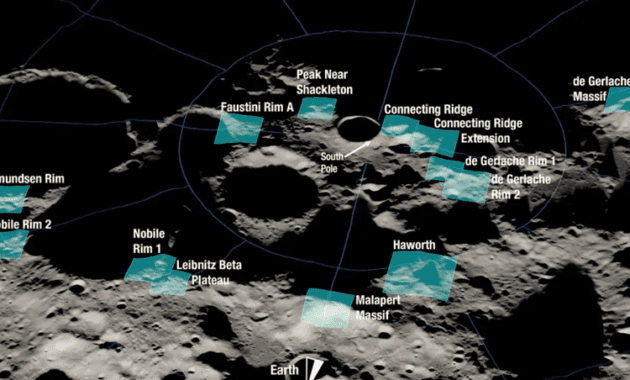
    Last week, NASA finally announced 13 candidate landing areas on the Moon’s surface. The candidate area is near the south pole of the Moon.

    Quoted from Gizmodo, Sunday (21/8/2022) each area is 15×15 kilometers in size and each contains several landing sites with a radius of about 100 meters.

    “An area can be thought of as a series of landing sites. A site is a single parking lot for a lander,” said Jacob Bleacher, NASA’s chief exploration scientist.

    To get to these 13 candidates, NASA collected data using the Lunar Reconnaissance Orbiter (LRO), which was launched in 2009 and is still orbiting the Moon.

    The LRO, which has mapped the Moon’s polar regions and orbiters, is crucial in helping NASA figure out where to land during future lunar missions.

    The south pole area of ​​the Moon itself was chosen because it may contain ice. Water on the Moon is considered a huge boon for future space exploration, and can provide astronauts a valuable, local resource for ongoing support on the lunar surface.

    But while while the south pole does have certain advantages, NASA also has many technical issues to consider when deciding where to land.

    Because the south pole has an area that is permanently shrouded in darkness and other areas that are continuously exposed to the sun.

    “Finding a location with a larger-than-average amount of light allowed us to design systems that utilize light for energy and thermal control,” said Bleacher.

    “Similarly, the unique permanent shadow locations at the poles provide opportunities for water and other volatile elements to be trapped there,” he added.

    Sarah Noble, the science leader of the Artemis mission , said that a team of scientists and engineers was formed to evaluate the accessibility of the South Pole landing area, including safe landing, ease of communication, and proper lighting conditions.

    Furthermore, NASA is working to narrow down the list of candidate landers, as the launch date for the Artemis 3 mission draws near. The mission itself is expected to launch in 2026.

    Meanwhile, NASA’s SLS rocket is now on the launch pad at the Kennedy Space Center in Florida, which will depart the unmanned Artemis 1 mission on August 29.

    Artemis 2, on the other hand, is scheduled to launch in late 2024, but will not land on the Moon ‘s surface .

    This will be the Moon landing that will be carried out by the Artemis 3 mission, in which NASA plans to land a man and a woman at the Moon’s south pole.

    Unlike Apollo, the Artemis mission wasn’t just about landing humans for short stints.

    The mission’s goal is to establish and maintain a human presence on and around Earth’s natural satellite.

    It would be a stepping stone to a much more ambitious project, namely the first human journey to Mars.