
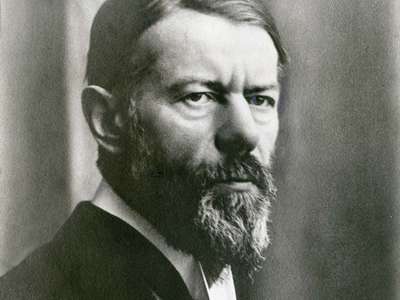
Tag: max weber

  • Social Conflict Theory According to Max Weber

    Social Conflict Theory According to Max Weber

    Max Weber views social stratification in society as influencing the emergence of social conflict.

    Social interactions involving relationships between individuals in society will bring about two side effects of the coin, associative and dissociative. Associative impact will make their relationship closer. On the other hand, the dissociative impact of the relationship becomes more tenuous.

    The sparse relationship between these interactions can lead to social conflict. The main cause is differences in society with various triggers such as cultural differences, unequal interests, social changes that are too fast, to differences in thinking between individuals.

    Max Weber’s Theory of Social Conflict

    Several experts research on social conflict, one of which is Max Weber. According to Weber, conflict arises from the existence of social stratification in society.

    Each of these stratifications is a position worthy of being fought for by humans and their groups. Social relations are an attempt to get a high position in society.

    In his theory of conflict, Weber argues that power has significance for every type of social relationship. Power becomes the driving force of social dynamics that places individuals or groups to be mobilized or mobilized.

    As a result of power and interests, it can simultaneously lead to conflict. This social conflict generally occurs in a combination of the interests of each social structure that gives rise to the dynamics of the conflict.

    Weber’s theory does not discuss conflict theory specifically. Weber attempted to analyze the relationship between social movements and conflict. For him, social movements can lead to conflicts such as those experienced by society during the French Revolution.

    Social Conflict Theory According to Other Expert

    The founder of the famous conflict theory is not only Max Weber. There are still Karl Marx and George Simmel who put forward their respective theories of conflict. In fact, between theories are also “conflicted” because of differences in views such as the thoughts of Karl Marx and Max Weber.

    Conflict theory according to Karl Marx states that social change arises because of a conflict which ultimately results in a different compromise from the initial state. Society will be divided into two classes, namely the capitalist class (bourgeoisie) and the working poor class (proletariat). They are conflicted because of the different nature of the two.

    the conflict between the bourgeoisie and the proletariat cannot be separated from the implementation of capitalism by the bourgeoisie. Capitalism is an economic system that allows some individuals to control vital productive resources. The bourgeois class uses this access to achieve maximum profit by utilizing the services of the proletarian class as laborers.

    Max Weber refuted the opinion of Kari Marx’s conflict theory regarding historical materialism. The historical materialism in Marx’s opinion only emphasizes attention to one side of class. According to Weber, a balance is needed by also emphasizing the role of the idea factors that cause historical change.

    Weber focused on understanding the growth of the rational capitalist system in the Western world on a large scale. On the other hand, the capitalist system did not experience much development in the East and was not liked. Weber argues that the void of religious transformation in the East is an obstacle to the development of capitalism in the region.

  • Social Action: Definition, Types And Examples

    Social Action: Definition, Types And Examples

    Have you ever felt angry or sad over the words or actions of those around you? This reaction in sociology is referred to as social action. In socializing or interacting with people around, two things will appear. Come on, understand the meaning and examples of social action and its types.
    The first is social interaction, and from here comes social action, for example, as mentioned earlier. When someone communicates with other people (social interaction), there will be actions, responses, and the like from both parties.

    Whatever actions, responses, etc., are included in the social actions that arise as an effect of social interaction. Everyone, without exception then, every day, even every second, is doing social actions. Then, what exactly is meant by this social action?

    Definition of Social Action

    Social action, in general, is an action that is influenced and affects other people during social interactions. At the same time, social interaction is a relationship between two or more individuals who influence each other.

    This social interaction’s influence is referred to as the social action earlier. So when there is a social action, the background for the emergence of this action is because there is interaction. With interaction, social action will occur.

    In simple terms, social action can be interpreted as a response or reaction visible to the naked eye after social interaction. The forms then vary so that the types of social action are also very diverse, which will be explained below.

    An example is when there is communication between two people, this communication occurs as an effort to exchange information. After the data is conveyed by one of them, the listener will react.

    Whether it’s happy, surprised, amazed, angry, and so on, it is a form of emotional, social action. Then when the listeners of this information decide to cry, yell, and laugh out loud, it also includes social actions that the perpetrators physically carry out.

    Social actions taken then need to be thought out carefully and wisely because this action will lead to other social actions, which can lead to good or even new problems.

    An example is when someone scolds someone because of that person’s social actions. If the person being scolded does not accept it, they will take social actions to get angry at the first party, gossip, slander behind their backs, and so on.

    So, social action is shaped like a cycle. When you do good actions, the actions of those around you are also good. Vice versa. So in sociology, it is discussed in depth how to interact socially well to minimize social actions with negative effects.

    Understanding According to Experts

    Several experts then explained the definition of social action. These experts then expressed their opinion. In sociology, two experts define social action and are widely known worldwide. That is:

    A. Max Weber

    The first expert to define social action was Max Weber, a figure in sociology. According to Weber, the notion of social action is an action based on social facts that have a major influence on social life, where the social system in this influence is created from the relationship of individuals in their groups.

    B. Ritzer

    Ritzer conveyed the second opinion; according to him, the notion of social action is a repetitive behavior carried out intentionally due to passively influencing situations with similar goals in certain conditions.

    Through the definitions presented by the two experts, it can be concluded. That social action is a repetitive action or behavior carried out intentionally due to the influence of certain situations.

    Situations in social interaction will shape the social actions of all individuals in the relationship. A tense situation will create fear and force the mind to look for ideas as a solution.

    The solution obtained is then immediately applied, and this is also included in social action. In practice, no individual does not perform social action. Even getting up early because you want to go to school or work every day is included in it.

    Types of Social Action

    As explained earlier, the types of social action are as diverse as the forms of social action itself. When viewed from the aspect of things that encourage social action. So social action is divided into 4 (four) types, namely:

    1. Instrumental Rational Action

    The first type is instrumental rational action; as the name implies, this social action is rational. So when someone takes an action, it will be adjusted to the final goal to be achieved.

    A person will not take action without a clear purpose; then, his nature becomes rational and logical. Actions with a clear purpose lead to a clear way as well.

    For example, the social action of a high school student studying hard all night. The goal is to be better prepared for the exam the next day. So learning becomes a social act, and the goal is to be ready for exams.

    2. Value Oriented Action

    The second type is value-oriented social action, which is carried out by considering the values ​​that exist in society. So this action adapts to what is considered good by the wider community.

    The scope of values ​​starts from ethical values, aesthetics (beauty), religion, and other values ​​that exist in society. Value-oriented social action focuses on the benefits and pros and cons of the action in the eyes of society, which overrides the goal.

    An example of this type of social action is when children stop playing football because the call to prayer for the midday prayer has sounded. So they decided to stop playing and pray first, then continue the game.

    3. Affective Action

    The third type is affective action, namely social action that is carried out based on the feelings or emotions felt by an individual. So that this social action is unacceptable, considered illogical, or irrational.

    It is said so because this social action is carried out by prioritizing feelings or emotions so that this action does not involve the mind, which also makes the action unacceptable.

    An example is when a teacher scolds a student in class for being caught cheating, then this student cries. Crying here is a form of affective action because it relies on emotions or feelings.

    Namely the feeling of fear of being scolded and the feeling of worrying about getting a bad grade. Whereas logically, students who cheat should immediately apologize and take responsibility for their actions. Not by crying.

    4. Traditional Action

    The last is traditional action, which is a type of social action carried out because it has become a habit or an action based on a habit and is ingrained.

    Then it relates to all forms of culture or customs so that all social actions of this type are based on the culture applied by the community. This action is hereditary, so it has been happening for a while.

    An example is any action that is done because of custom, such as the Ngaben ceremony for the people in Bali, the Ngebali ceremony in Lampung, the Batu Bakar Party event in Papua, and so on.

    All actions that are carried out based on customs then enter into traditional social actions. This action will continue to be carried out by the community as long as it is inherited or taught to children and grandchildren.

    Examples of Social Action

    It is also possible to know examples of social action to make it easier to understand social action. The form of social action will then be following the types previously stated. The following details an example of social action:

    A. Instrumental Social Action

    In instrumental social action, namely social action based on clear goals. So there are several examples of social action in everyday life related to this type, including:

    1. Ani decided to go to bed early to wake up for the tahajjud prayer at 3 am. (Going to bed early is an act, while the goal is to wake up at 3 am – wake up early for prayer).
    2. Mother sweeps the floor twice a day to keep the house clean. (Sweeping is a social act that aims to keep the house clean.)
    3. Ika eats quickly because she doesn’t want to be late for school. (Eating quickly is a social act, and the goal is to get to school on time.)
    4. Value Oriented Social Action

    B. Value Oriented Social Action

    Social action that is oriented or paying attention to societal values is a value-oriented social action. Examples of social actions include:

    1. Ahmad stopped playing football because it was time for the Asr prayer. (Quitting football for prayer is a social act, its basis is a religious value – prayer times).
    2. We will eat and drink with our right hand at home and public events such as wedding receptions because it is considered better. (Eating and drinking with the right hand is a social act, the basis of which is an ethical value in society – politeness).
    3. A soldier will give his soul and body to the nation and state. (willing to give up body and soul is a social act; the basis is the value of patriotism).
    4. Andi gave up his seat on the city bus to a pregnant woman who happened to be standing. (Giving up a seat is a social act; its basis is an ethical value).

    C. Affective Social Action

    Examples of effective social actions carried out based on feelings and emotions felt are as follows:

    1. Supporters of soccer team A immediately roared with joy in the stadium when their flagship team scored a goal in the opponent’s goal.
    2. Ani cried at the funeral because her mother had just died.
    3. Ika was annoyed on the bus because two young men always teased her along the way even though they didn’t know her.

    D. Traditional Social Action

    Social action based on custom or culture is called traditional social action. Here are some examples of social actions:

    1. Following the Ngaben ceremony for the people in Bali.
    2. Following the Ngababali ceremony in Lampung.
    3. Participate in the Burning Stone Festival in Papua.

    Social action is something that everyone in the community group will always do. This action is a form of overflowing feelings, necessities of life, and so on. So that it will always be there and interesting to understand or study because it can help wiser in acting in the community.

  • 3 Main Theories of Sociology

    3 Main Theories of Sociology

    Actually, the scope of sociology itself is very broad because it covers almost all fields in people’s lives. Such as economics, education, politics, religion, or culture. And of course all these fields are seen from a sociological perspective.

    The majority of science has its own theory. Like medical science, for example, it must have a theory on how to carry out disease examinations on patients. Likewise, sociology has a theory to explain various things that happen in society.

    Each theory has its own level of certainty. Generally, natural science theories have a higher degree of certainty than social sciences. In social science, theory is more subjective which depends on the point of view of seeing a phenomenon.

    3 Main Theories of Sociology

    In addition, social reality is always changing from time to time, so a social science theory rarely changes. Until there is no other theory that can prove otherwise, a social science theory will not change at all.

    1. Symbolic Interactionism

    Symbolic Interactionism is a combination of the thoughts of George Herbert Mead, Herbert Blumer, and Max Weber. The first theory analyzes society based on the subjective meaning of an individual in social interaction.

    This theory also assumes that individual actions tend to be based on things that are believed, not objectively true. This belief is what is referred to as the product of the represented social construction. The result of this interpretation is then known as the situation.

    Symbolic interactionism is a part of micro-sociological theory because its analysis is based on individual aspects. The concept of this theory also tends to have a tendency to deal with one’s identity.

    2. Conflict

    Conflict theory assumes that differences in the interests of social classes result in conflictual social relations. This theory was initiated by Karl Marx.

    Social inequality is created because of the unequal distribution of wealth so that when the gap gets worse, the potential for conflict to arise is even greater.

    The social class referred to here is the proletariat and the bourgeoisie. The first group is the working class or people who have no control over resources. Meanwhile, the second group controls the resources because they have large capital.

    From the two classes, it is clear that the interests and goals of the two are very different. The proletariat wants wealth to be evenly distributed. While the bourgeoisie actually wants to increase power or maintain the power it already has.

    The friction between these two groups if left unchecked will trigger a revolution. Especially when coupled with class consciousness that makes the proletariat know that they have actually been exploited.

    3. Structural Functionalism

    The last theory was born from Emile Durkheim. He has the imagination that society is an organism consisting of various components, these components influence each other so that they can function continuously.

    Structural functionalism emphasizes that society is composed of structural systems that have their own roles. Therefore, the result of the overall system that runs can create social stability.

    In this theory, social institutions will survive as long as they function properly. If there is a malfunction, then the institution will slowly disappear.

    In addition, there must be good cooperation among social institutions (such as government, religion, economy, education, family, media, etc.) so that the system can be maintained.


  • Getting To Know Max Weber’s Theory Of Social Action

    Getting To Know Max Weber’s Theory Of Social Action

    Young people this time we will discuss one of the popular theories in the scientific realm of sociology, namely the Theory of Social Action. This sociological theory becomes important to be reviewed when the condition of society is experiencing polarization due to the tsunami of information like now.

    Social Action Theory is a theory that concentrates on motives and goals. With this theoretical approach we will be able to examine the behavior of a person or group in taking action. We certainly understand that all actions have different motives and goals and this is where the important starting point is to study this theory.

    In sociology study, Social Action Theory is a theory coined by a modern sociologist, Max Weber. A person who has a big influence on the development of sociological studies. Weber’s influence can be seen through his masterpieces such as Basic Sociological Terms, The Types of Legitimate Domination, The Protestant Ethic and the Spirit of Capitalism, Objectivity in Social Science, Economy and Society, Sociology of Religion, and Methodological Essays.

    Some of Weber’s writings above had a significant impact on the scientific development of sociology. Weber’s thought criticized Marx’s thought which was very materialistic. For example about capitalism, Weber stated that it is not right for western civilization to be built from the ruins of religious values. He considered that religious values ​​were the foundation of the West in winning capitalism. This opinion can be read further in his work entitled The Protestant Ethic and the Spirit of Capitalism.

    Apart from criticizing, Weber also focuses on discussing ideas and values ​​which then become alternatives. Besides that, his writings are also a reference for other scientific treasures such as law, economics and politics.

    Who is Max Weber?

    Born in the city of Erfurt, Germany in a bourgeois family environment in 1864 to a bureaucrat named Max Weber Sr and mother Helene Fallenstein. Little Weber’s real name is Maximilian Karl Emil Weber and has a brother named Alfred. He lived for 56 years, died in Munich in 1920.

    Weber’s interest in academia began when he entered Heidelberg University. Due to the political situation he had to leave Heidelberg in the 3rd semester for military service. In 1884 he returned to Berlin to continue his studies. Besides studying at Berlin Weber also studied at the University of Goettingen. In 1896, Weber was awarded the title of professor of economics at the University of Heidelberg .

    In general, Weber’s thoughts have influenced the discourse of modernity and post-modernity a lot. In addition, his works became a reference for later sociologists such as Pierre Bourdieu and Anthony Gidden.

    Weber’s Theory of Sociology: Theory of Social Action

    Social Action Theory is a theory that examines the motives and behavior of a human. A subjective approach to meaning that allows a person to be able to influence and accept the influence of others. Weber further stated that every individual action directed at another individual or group has a subjective meaning.

    On the other hand, Weber argues that the best way to understand various groups is to appreciate the typical forms of action that characterize them. As a result, we can understand the reasons why these community members act. In general, one of the goals of sociology is to deeply understand the subjective meaning of social actions taken by the individual.

    This theory is useful for understanding the types of behavior and actions of each individual or group. By understanding the behavior of each individual or group, just as we have appreciated and understood their reasons for taking these actions.

    In the context of the motives of the perpetrators Weber divides the theory of social action into four parts, namely traditional action, affective action, action of instrumental rationality and action of value rationality.

    1.Traditional Actions are actions that are determined by habits that have been rooted from generation to generation. This action refers to actions that are based on tradition or actions that have been repeated since ancient times.

    Weber considers traditional actions to be actions that do not go through rational thinking. Because this action is carried out spontaneously without going through thought, planning and consideration. The basis for this action is usually custom, a tradition passed down from generation to generation. This means that this traditional action is carried out repeatedly and is the same as before.

    In the Indonesian context we can see an example of this traditional action from the homecoming phenomenon. That people who have migrated in big cities will carry out their homecoming to their hometowns during Eid. This means that whatever the community does on the basis of existing customs or traditions is a form of traditional action

    2. Affective action is an action that is determined by the conditions and emotional orientations of the actor / actor. This action refers to actions that are based on individual feelings. Just like before, this action is also not done through rational thinking because the emotional impulse is stronger.

    We need to understand that emisional is different from rational. Emotional prioritizes spontaneous reactions to what happens and is experienced, while rational prioritizes thought considerations.

    This affective action can be seen from the phenomenon of crying during a funeral procession. This act of crying was spontaneous and just like that. Happy when you get a gift from your parents or lover. The two actions above include examples of affective action

    3. Actions of Instrumental Rationality are actions aimed at achieving goals that are rationally calculated and pursued by the actor concerned. This action refers to actions that are based on the actor’s rationality in order to achieve certain goals.

    This action is also called an instrumental action aimed because this action is carried out through efforts and efforts to achieve the expected goals. The word rational contains implicit logical and instrumental meanings to achieve goals. This means that this action is carried out through careful planning and prior consideration.

    We can see this phenomenon of rational action from the following examples. Because you want to go to college at 10 o’clock, you choose to ride a motorbike taxi instead of crazy because you don’t want to be late because you wake up late at 9:45. Choosing a motorbike taxi is an example of instrumental rational action because the choice of a motorcycle taxi is based on clear reasons so that you are on time.

    4. Value Rationality Actions are rational actions based on values, which are carried out for reasons and purposes that are related to personally believed values ​​without taking into account the prospects associated with the success or failure of the action. This action refers to actions based on belief in certain values.

    Of course, this action is through thinking rationally and caring out various kinds of values ​​that exist. This means that individuals who act prioritize what is considered good, normal, reasonable or right in society above individual goals. What is considered good can come from ethics, religion, or other forms of value sources.

    We can see this act of value rationality from our choosing to wear trousers over shorts when praying. We choose to shake hands using the right hand rather than the left hand. Both decisions were made because of value considerations. If we don’t do this, we are considered unnatural or even considered insulting, resulting in rejection from the community.

    Finally, understanding social action theory means understanding society interpretatively. This is where sociology can provide a causal explanation of social phenomena and this is one of the intellectual contributions of Max Weber in the scientific realm of sociology.

    By understanding the four parts of the theory of social action above, we can analyze the symbolic meaning of actions taken by individuals. Then we are able to interpret, identify and clarify what types of social actions are carried out by individuals or groups.

    Weber also stated that with the concept of subjective meaning, sociology can understand the orientation, motivation, and causes of actions taken by individuals even though these motives cannot be observed. Hopefully the young people today have the spirit to maintain their intellectuality by reading so that the analysis knife is sharp and organized. Hopefully!