Tag: learning

  • Get to know the German Student’s Zettelkasten Note-taking Technique

    Get to know the German Student’s Zettelkasten Note-taking Technique

    The Zettelkasten technique is a note-taking technique introduced by the German sociologist, Niklas Luhmann. Luhmann was a very prolific sociologist. During his 40 years of research, he has produced 70 books and 400 articles.

    His prolific secret is the Zettelkasten writing technique . As a modern academic, Luhmann including an oldschool . He only had paper, pen, and typewriter to take notes.

    What is the Zettelkasten Note-taking Technique?

    Zettelkasten in German is a combination of two words, “Zettel” means a small note (a note) or a piece of paper and “Kasten” means a box. Zettellkasten is simply a box containing index records (slip box) .

    Luhmann used a cabinet with 4 boxes down and 6 rows of boxes to the side. He used the cupboard to store his notes. In the corner of the paper, Luhmann wrote down the topic of the note on the paper so that he did not have trouble finding notes and did not have to open the contents of the notes one by one to find out the topic of his notes.

    In principle, this note-taking technique uses a note-taking system that is interconnected between topics. The problem of students so far is taking notes without knowing the relationship between subject matter so that it does not form a comprehensive understanding. Moreover, there are many note-taking media that we use so that the knowledge we record is scattered and eventually lost, forgotten.

    Advantages of the Zettelkasten Note-taking Technique

    The benefits and advantages of the Zettelkasten note-taking technique include:

    1. Zettelkasten links topics systematically

    Just like how the brain works, index notebooks are like neurons in the brain. Random ideas have interconnections, for example, the topic of public communication is related to the sociology of communication. The relationship is indicated by a tag code or color, depending on the tagging method you apply.

    By tagging topics with categories, it will be easier for you to connect ideas. You will also find it easier to understand the phenomenon as a whole.

    2. You won’t get tired of reading

    Have you ever found reading too tiring? You’ve finally marked all the sections of your book with a highlighter. 

    However, by using the Zettelkasten method, you will be more focused on noting the important parts. Taking notes in Zettelkasten is not necessary to write all parts of the book. You only need to divide it per paper per topic so you won’t get tired. You will also be more excited to enrich your “knowledge bank” in your Zettelkasten!

    3. Learn to be more efficient

    The Zettelkasten note-taking method helps you create a working system for conducting information research, structure thinking, and developing your thinking.

    With the system, you have a productive pattern every time you study . If you are consistent, you will collect tons of ideas in no time. This is because you are not too stressed and overwhelmed by the amount of material you have to learn.

    4. Better memory and creativity

    The essence of Zettelkasten is connecting ideas. When you make a new note about a topic, you need to revisit the old notes so you can decide which category you just noted falls into.

    This is what can train your memory as well as your creativity in deciding category marks or themes.

    How to Take Notes Using the Zettelkasten Method

    The Zettelkasten principle you need to follow. Read more here. 

    To create a Zettelkasten note is very easy! Follow these steps to create your own version of the Zettelkasten knowledge bank.

    1. You don’t need to have a big wardrobe with 24 lockers. Just prepare a folder or shoebox.
    2. Take a piece of paper. Write one and only one idea on paper. Write the explanation in the middle. Use your own language to avoid plagiarism. Don’t forget to put a reference from where you got the idea.
    3. When the paper is arranged in a grid, make sure there is a section of the paper that is easy to see when looking, for example at the top of the paper.
    4. Write in that section the name of the topic. Put the paper number. For example:
    5. “1 Finance”
    6. You can also add category tags (tags) related to the topic. For example, the paper “1 Finance” explains the concept of money, then you can put the tags “#money” or “#economy” and so on.
    7. Add the next paper according to the paper sequence number. When you have found a connection, don’t forget to write the number of the related paper at the bottom right of the paper.
    8. Create index notes to make it easier for you to find bookmarks. For example, #finance is on paper numbers 1, 2, 1/1, and so on.

    Well, how? Easy isn’t it? Try starting from a simple category. As notes/papers grow, you can add other categories and bookmarks that can make your Zettelkasten notes richer.

    Those are the tips for noting the Sinaumedia version of Zettelkasten . Share this information with your friends or teachers, yes, and start making Zettelkasten together!

    ***


  • Classical Conditioning Theory – Pavlov’s Learning Theory

    Classical Conditioning Theory – Pavlov’s Learning Theory

    What is classical conditioning theory? What is the explanation of classical conditioning like? How is classical conditioning applied in everyday life? We discuss all here.

    Have you ever drooled at the thought of the food you crave? Or shudder at the thought of the animal you fear? Or do you feel angry just because you hear the name of the person you hate being called in front of you?

    Why do people have phobias ? Why do we remember our ex when we smell a certain perfume?

    In psychology, you’ve experienced classical conditioning. Classical conditioning  we will study together in this article. Including its history, the process of its occurrence, and how this classical conditioning occurs in our lives.

    Let’s discuss!

    Classical Conditioning Definition

    So what is classical conditioning actually?

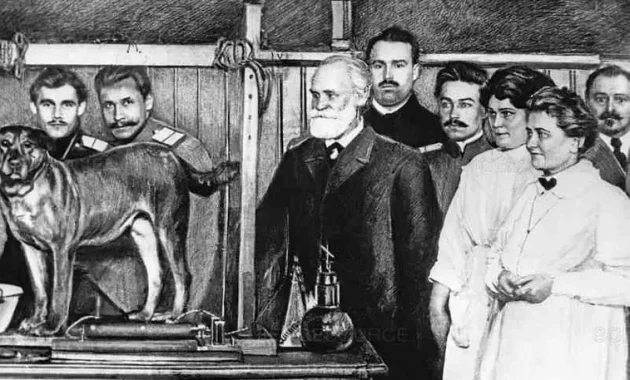
    According to psychology, classical conditioning  is a learning theory that was discovered by Ivan Pavlov  , a doctor from Russia.

    Pavlov revealed that we can produce a response by combining two stimuli; natural stimulus and artificial stimulus.

    In ordinary situations, this artificial stimulus does not produce any response. But when combined with a natural stimulus many times, this artificial stimulus will eventually produce the same response as the natural stimulus.

    Confused?

    I’ll give you an example. You can do this too, the ingredients are pretty easy to find. You need an unused friend and a straw.

    Sit next to your friend, and, using signal 123, blow your friend’s eye with a straw. Just go slow, if you’re too tight, your spit will splash into his face.

    What happened? Your friend will probably squint because the blast is annoying.

    Do this several times. On cue, then blow. See the response.

    After a few times, when you say the cue, what is your friend’s response? Squinting right?

    Well, in this case, the wind being blown is a natural stimulus, and squinting when blown is a natural response.

    But here we add an artificial stimulus, namely the cue. Before the experiment, maybe our friend didn’t respond when we said 1,2,3, in front of his face. But after conditioning many times, hearing the signals 1-2-3 was enough to make him squint.

    When he squints before we blow, we’ve done classical conditioning.


    History and Development of Classical Conditioning

    Classical conditioning is a theory that is within the flow of behavioristic psychology. Behaviorists, as we know, believe that individual behavior is caused by different learning experiences.

    John Watson, a leader in the behavioristic school, once said:

    “Give me a dozen healthy infants, well-formed, and my own specified world to bring them up in and I’ll guarantee to take any one at random and train him to become any type of specialist I might select – doctor, lawyer, artist, merchant-chief and, yes, even beggar-man and thief, regardless of his talents, penchants, tendencies, abilities, vocations and the race of his ancestors”

    “Give me a dozen healthy babies, and give me a world of my own to raise them. And I can take any baby at random and mold him into any specialist I choose – doctors, lawyers, artists, chief merchants and, yes, even beggars and thieves, regardless of talent, inclination, inclination, ability, calling and ancestral race.”

    Behaviorists believe that our personality is formed by experiences and the environment around us. And Pavlov’s classical conditioning confirms this belief.

    Advertisement!

    Pavlov himself was not a psychologist. He’s a doctor. In fact, this classical conditioning was discovered by accident.

    In the 1890s, Ivan Pavlov studied the salivation of dogs in response to being fed. He put a small test tube in each dog’s cheek to measure the saliva when the dog was fed (with a powder made from meat).

    At first Pavlov thought the dogs would salivate in response to the food in front of them, but he noticed that the dogs started drooling whenever they heard his assistant’s footsteps bringing food.

    When Pavlov discovered that any object or event that the dog thought had something to do with food (such as a lab assistant) would trigger the same response, he realized he had made an important scientific discovery.

    Therefore, he devoted the rest of his career to studying this conditioning.


    Classical Conditioning Theory Concepts

    Behaviorism is based on the assumption that:

    • All learning occurs through individual interaction with the environment
    • Environment shapes our behavior

    One thing that is typical in classical conditioning is that there is a neutral signal before the reflex.

    In Pavlov’s classic experiments with dogs, the neutral signal was a natural pitch and reflex sound (salivating) in response to food.

    In our experiment, the neutral signal was a 1-2-3 cue and a natural reflex (squinting) in response to wind hitting the eye. By associating a conditioned stimulus (the cue) with an unconditioned stimulus (blowing the eye), the cue can produce a squinting response.

    But of course classical conditioning is not that simple.

    There is a phase where our friend stops squinting after the signal. It could be, a few days after you start working, your friend’s squinting response appears again.

    To understand more about how classical conditioning works, we need to get to know some of its basic principles.

    Let’s take a closer look at the five main principles of classical conditioning:

    1.Acquisition

    Acquisition is the initial stage of learning. This appears response time first appears and is gradually amplified. During this acquisition phase, the conditioned stimulus (the cue) is repeatedly followed by the unconditioned stimulus (blowing the eye).

    A natural stimulus is something that will naturally trigger a response without the need for learning. If the conditioning process is carried out, the subject will begin to respond to a stimulus that was initially neutral. Since this stimulus has already produced the expected response, it is now called  a conditioned stimulus . It is at this point that we can say that a response has been obtained.

    For example, you condition your friend to squint in response to a signal. You repeatedly pair the cue with the blink of the eye. A response is said to have been obtained immediately if your friend starts squinting in response to the signal.

    Once the response is established, you can gradually amplify the squinting response to ensure the behavior is properly conditioned.

    2. Extinction/Kepunahan

    Extinction or extinction is the reduction or disappearance of the response that we have conditioned. In the case of classical conditioning, this occurs when the conditioned stimulus is no longer accompanied by the unconditioned stimulus.

    If you just give a signal without being followed by a blast, after a long time your friend will not respond anymore.

    3. Spontaneous Recovery

    Sometimes, a learned response may suddenly reappear even after a period of waning in the response. Spontaneous recovery is the reappearance of a conditioned response after a period of pause.

    In this case, imagine that you stop signaling in front of your friend’s eyes. After he doesn’t squint anymore (the response is extinct), give him a break for some time, about 15 minutes. If you suddenly say the cue again, the extinct response can reappear.

    This is called spontaneous recovery, or spontaneous recovery.

    But the response will be extinct again, if the conditioned stimulus (squinting) is not followed by the unconditioned stimulus (blowing).

    4. Stimulus Generalization

    Stimulus generalization is the tendency of the subject to respond to a similar conditioned stimulus.

    For example, after being conditioned, your friend may continue to squint even if the cue is replaced with clapping or hand signals.

    5. Stimulus Discrimination

    Discrimination is the ability to distinguish a conditioned stimulus from another stimulus that has not been paired with an unconditioned stimulus.

    If before that you started with a signal, try starting with a knock on the table.

    Your friend may not squint, because there are different forms of stimulus. Discrimination involves the ability to distinguish between types of signals. Since the subject is able to distinguish between these stimuli, he or she only responds when the conditioned stimulus is presented.

    Responses 4 and 5 may depend on the subject’s perception. If he equates all the signals, it means that even with a knock on the table he will respond (generalize). But if he really focuses on one response, he will ignore other stimuli (discrimination).


    How Does Classical Conditioning Work?

    So what is the process of classical conditioning?

    You may already have an idea, but I’ll explain in more detail.

    The classical conditioning process occurs in three phases:

    Phase 1: Before Conditioning

    The first part of classical conditioning requires an unconditioned stimulus, which, if done, will elicit a response. An example is squinting, it’s a reflex because the eyes are blown.

    This blow is called an unconditioned stimulus, because this stimulus already produces a response without having to be conditioned.

    During phase 1, the unconditioned stimulus (UCS) produces an unconditioned response (UCR).

    In this phase there is a stimulus that has not yet produced a response. This stimulus, if not paired with UCS, doesn’t produce the response you want.

    Let’s say in our research you want to make your friend squint. If you want to give a signal until your mouth is dry, if you don’t blow your friend’s eyes, he won’t squint.

    This cue is what we call a conditioned stimulus. Called conditioned, because we will condition our friends to respond to this stimulus. If we haven’t conditioned our friend, then this stimulus has no response.

    Phase 2: During Conditioning

    This is the second phase of the classical conditioning process. In this phase, the conditioned stimulus will be given to the subject and then followed by the unconditioned stimulus. This is done repeatedly.

    As a result of this sequential stimulus, your friend assumes that CS and UCS will always occur sequentially.

    Here, the stimulus that previously did not produce a response will slowly elicit a response.

    Phase three: After conditioning

    This is the final stage of conditioning. A conditioned stimulus that previously did not provoke a response, because it is always associated with a natural stimulus, can finally trigger a response. In this case squinting on cue. This response we elicit is called a conditioned response.

    It is called a conditioned response because it is the result of our conditioning, not a natural reflex.

    This is an example of classical conditioning.


    Research Related to Classical Conditioning

    Little Albert’s Research

    Ivan Pavlov  studied classical conditioning in his pet dog. Even so, it turns out that humans can also be conditioned.

    In a famous (though now outlawed) experiment, Watson and Rayner (1920) demonstrated just that.

    Little Albert is a 9 month old child who is tested on his reactions to various stimuli. He was shown a white mouse, a rabbit, a monkey and various masks. Albert is described as “not responding emotionally,” unafraid of these stimuli.

    However, what shocked and scared him was the hammer being hit against the iron rod. This loud sound made little Albert cry.

    Two months later, Little Albert was 11 months old. The white mouse was presented again, and a few seconds later a hammer was struck against the iron. This was done seven times over the next seven weeks, and it always brought Albert to tears.

    Since then the little Albert would be scared every time he saw a white mouse.

    Furthermore, it turned out later that he had a phobia of things that were hairy and white, such as dogs, fur coats, cotton wool, and even white beards. This is called generalization, which we discussed briefly earlier.

    Watson and Rayner showed that classical conditioning can lead to phobias.

    Over the following weeks and months, Albert was observed and after ten days post-conditioning, his fear of mice was much less. The process of extinction of the conditioned response is called extinction.

    But the remnants of conditioning remain. Even the conditioned response can be regenerated by reconditioning, with a shorter time span than the initial conditioning.


    Classical Theory of Conditioning in Life

    You may have certain phobias that make friends laugh. I have a friend who cries when she is scared by worms. Another friend of mine, his legs tense up and get goosebumps when there is a cat.

    A friend of mine doesn’t want to go to a mall, just because he was dumped in that mall. Entering the mall makes him sad, he said. Surem, his face is scary but his heart is like Hello Kitty.

    Why do people have an illogical fear of something harmless? Why do places that we think are normal, according to other people can make us sad and upset?

    Many responses arise as a result of classical conditioning. Intense and unforgettable events make us respond to similar stimuli in an exaggerated manner.

    For example, my friend who was decided. Maybe for him, being dumped by the girl he loves has a tremendous impact on his subtle feelings. The incident may be repeated in his mind, so that he unconsciously did classical conditioning himself.

    The mall where he was dumped, he unwittingly translated as a conditioned stimulus. Responses in the form of sadness and confusion over time became a conditioned response every time they saw the mall.

    Another example is my friend who has a phobia of cats. The cat phobia arose because he had seen a cat give birth as a child. Blood and mucus everywhere imprinted so intensely on his memory, it made him disgusted every time he saw a cat.

    Disgust, which is an unconditioned response to seeing mucus and blood, has long been associated with cats. The cat here is a conditioned stimulus, and disgust eventually becomes a conditioned response every time you see a cat.

    Classical conditioning is not only seen in phobias. PTSD is also believed to be caused by a process similar to this conditioning.

    Posttraumatic stress disorder (PTSD), suffered by war veterans and disaster survivors with traumatic experiences, can trigger the formation of classical conditioning. Even years after the event has passed, veterans may feel fear and anxiety at stimuli such as loud noises (Roberts, Moore, & Beckham, 2007; Schreurs, Smith-Bell, & Burhans, 2011; Rosellini et al., 2015).

    Classical conditioning can also be associated with pleasurable experiences.

    For example, you are excited every time you hear a certain song. Or the smell of your boyfriend’s perfume that still lingers on your jacket. Happy emotions can arise because there are positive memories that are intense and imprint on your brain.

    Oh yes, Pavlov’s learning theory also explains why addiction is so difficult to deal with.

    Drug addicts associate certain stimuli — such as a drug device such as a syringe, the smell of a drug, or the room where they use the drug — with the pleasurable feeling that the drug produces.

    Just looking at a syringe is enough for an addict to trigger a craving reaction (Saunders, Yager, & Robinson, 2013; Valyear, Villaruel, & Chaudhri, 2017).


    Criticism of Pavlov’s Theory of Learning

    Classical conditioning was a major breakthrough of its time. In fact, this research made Ivan Pavlov one of the most influential psychological scientists of the 20th century .

    But that doesn’t mean the theory is flawless.

    Classical conditioning overemphasizes that we learn and develops because of the environment, and pays less attention to complex aspects of ourselves as humans.

    In addition, scientists also argue that this approach in analyzing behavior tends to be reductionist, meaning that our complex actions are then simplified into stimulus and response.

    Even to explain human behavior, classical conditioning is also classified as reductionist. Called reductionist because behavior, which is a complex process, is broken down into simple stimulus-response.

    Proponents of the reductionist approach say that this is scientific, because this reduced behavior allows it to be measured. But there are also those who argue that the reductionist view is less valid. Thus, although reductionism can be measured, it may lead to an incomplete explanation.

    Why is it incomplete?

    We come to the last drawback of Pavlov’s theory: it is deterministic.

    This theory emphasizes that humans or other organisms behave in response to external stimuli, and counteract individual free will.

    Two people with the same upbringing and social environment can still be two different people. A bad environment with high poverty can breed criminals, but also many athletes are born from this kind of situation. And behaviorists have difficulty explaining this kind of phenomenon.

    The deterministic approach actually has the potential to guess and predict human behavior in response to something.

    However, this deterministic approach underestimates the uniqueness of the human person and their ability to choose.

    Yes, that was the explanation about classical conditioning theory, Pavlov’s learning theory. In the end, a single theory of learning is not enough to explain us and our souls. Next time we will discuss the second learning theory, namely operant conditioning.

    I’ve actually discussed Bandura’s Social Learning theory , but this should be the last one. The order is messy, hahaha.

    But for the time being I want to write something else, which is a bit lighter.


    Reference:

    https://www.verywellmind.com/classical-conditioning-2794859

    McLeod, S. A. (2018, Oct 08). Pavlov’s dogs. Simply psychology: https://www.simplypsychology.org/pavlov.html

    Feldman, R., 2019. Essentials Of Understanding Psychology. New York: McGraw-Hill Education.

  • Learn Effectively using the Pomodoro method

    Learn Effectively using the Pomodoro method

    Lack of focus when studying is a problem for every student. Maybe it’s time for you to replace your study technique with the pomodoro technique .

    When studying there are people who find it difficult to focus and are easily distracted by other things. For example, the desire to play mobile phones, watch movies , or talk to other people. 

    However, there are also people who are so focused on studying that they forget time to rest. As a result, the brain will be exhausted and allow the occurrence of burnout due to too long studying. 

    The pomodoro technique can be a solution to the two problems above. 


    What is the Pomodoro Technique? 

    The pomodoro technique is a learning technique introduced by Francesco Cirillo

    In Italian, pomodoro means tomato. This name was taken because while developing the pomodoro technique, Francesco used a tomato-shaped timer. 

    The essence of the pomodoro technique is a focused learning technique for a certain period of time, ignoring distractions, and interspersed with rest periods. 


    How to Apply the Pomodoro Technique

    Then how to apply the pomodoro technique? Check out the following explanation, yes.

    1. Avoid Things That Can Be Distracted

    The first step is to avoid things that make you lose focus. Usually, what often happens is being distracted by the cellphone. 

    Whether it’s because there is an incoming notification or just a desire to check the cellphone and end up not doing the task. 

    Therefore you can change the cellphone mode to silent. Or turn off the cellphone internet and turn it into airplane mode. 

    Also, choose a quiet room. The goal is that no one else interferes with your focus on studying and doing assignments. 


    2. Prepare the task to be done

    The second step is to prepare the tasks to be done. It would be better if you do the task from the highest priority scale. 

    You can make a list of the tasks you have and the deadlines for their collection. Choose and work on the task with the closest submission deadline. 

    This will help you remember to do your assignments and be able to submit them on time. 


    3. Set Timer For 25 Minutes

    The third step is to set a timer for 25 minutes.

    As previously explained, the pomodoro technique is a technique of learning and doing work within a certain time. 

    It doesn’t take too long, the important thing is that you can focus on the task you’re doing and make good use of your time

    For example, by giving 25 minutes to do assignments in each session. You can use a cellphone or an alarm clock to set this time. 


    4. Focus on Your Tasks

    The fourth step is to do the task with focus. 

    Use the 25 minutes well. Focus on the task you are working on. 

    Try not to glance at your phone or chat with other people. That is why in the first step when you want to apply this pomodoro technique, you are required to avoid things that can break your focus. 


    5. Rest for a while

    The timer will sound after 25 minutes. That’s a sign you’re entering time to rest. 

    Take at least 5 minutes to rest before continuing to work on the task for another 25 minutes. 

    You can use this break to drink, eat a snack, go to the toilet, listen to music , or just stretch. 


    6. Do Repetition

    When the 5-minute break is over, you can set an alarm for another 25 minutes. 

    After a break, return to focus on unfinished tasks. Repeat the steps above at least 4 times. 

    After the alarm goes off for the fourth time, you can give yourself a longer break. For example 15-30 minutes. The most important thing is that you can get your energy back to do the task again later. 


    Closing 

    Those are the steps to apply the pomodoro technique from sinaumedia. This pomodoro technique not only serves to increase focus, but can also increase productivity and avoid burnout due to studying too long.