Tag: energy

  • Energy Revolution, Transition to Renewable Energy

    Energy Revolution, Transition to Renewable Energy

    Renewable energy is not the only effective approach to reducing carbon emissions. Renewable Energy will continue to play a growing role in power generation capacity, he said, but it is projected that by 2050, 74% of global primary energy demand will still be supplied by coal, oil and gas.

    Instead, industry leaders and energy experts recognize there are many different avenues to explore on the journey towards delivering cleaner energy. Now that the energy sector understands this premise, realistically, achieving a low-carbon future becomes a more complex challenge.

    Mitigating climate change while balancing the growing global demand for energy remains a key focus for the industry, but there are many other considerations. Key challenges for the years ahead include addressing supply intermittency, navigating economic realities and ensuring a safe and consistent energy supply.

    Natural gas remains the main focus of the transition to cleaner and more fuel-efficient fuels, supported by several factors: including falling renewable energy prices; the growing impact of innovations such as carbon capture and provision (CCS); alternative fuels for coal and oil; and expansion of wind and solar technology.

    Costly moving towards cleaner energy, solar power, along with offshore and onshore wind generation, holds the key to the renewable resources of the future. The success of this emission-free technology is driven by cost reductions, coupled with increased generating capacity. As future energy generation leans towards a decentralized power grid, matching supply with demand will prove a challenge. New innovations or alternative fuels will be needed to combat the intermittency of renewable energy supplies to generate power when there is no sunlight or wind.

    The large number of new energy solutions being brought to market creates a large trader risk for the energy industry. The danger of investing in the wrong technology, or in solutions that cannot be measured, acts as a barrier to new innovations being adopted.

    Future Energy Sector

    Natural gas remains the main focus of the transition to renewable energy, but also has an important role in the long-term energy mix, along with other alternative fuels such as hydrogen and biomass. These fuels support renewable energy in an effort to meet the growing demand in the energy sector of the future.

    Biomass is a cleaner source of fuel that does not require large investments in infrastructure, as the process of generating electricity is the same as using fossil fuels.

    Improve Energy Efficiency

    In addition to reducing emissions by using alternative fuels, the energy sector is also developing ways to increase energy efficiency and reduce the environmental impact of traditional fossil fuels.

    Another efficiency-enhancing technology, which can be applied to the manufacture of things like cement, steel, glass and metal, is waste heat recovery. That in heat recovery applications, organic rankine cycle (ORC) units increase the efficiency of the production process by converting low-level heat into useful power.

    model world

    In an increasingly digital world, the Fourth Industrial Revolution is poised to transform the energy sector, just like most other industries.

    Advances in Artificial intelligence (AI), The internet of things ( IoT) and machine learning will automate processes, optimize efficiency and lower costs. In a rapidly changing world, digital energy generation and distribution will enable the energy sector to model real-world behavior and simulate the resource and infrastructure challenges required to scale renewable energy in the future. Using technology to make decisions and create realistic models should make the simulations as realistic as possible.

    Framework for success

    To meet the uncertain challenges of the future energy sector, there is a growing industry confidence in market-based solutions involving government and private sector alliances. By working in unison, policymakers and industry representatives can create a flexible regulatory framework to facilitate the transition to renewable energy.

    Government support and encouragement gives the energy sector scope to absorb and scale up new technologies. The increasing global demand for energy will put pressure on the market in the future as renewable energy becomes fully utilized. In the future, long-term seasonal generation reserves will be very important, including from fossil fuels.

  • How Geothermal Power Plant Work System

    How Geothermal Power Plant Work System

    What exactly is a Geothermal Power Plant?
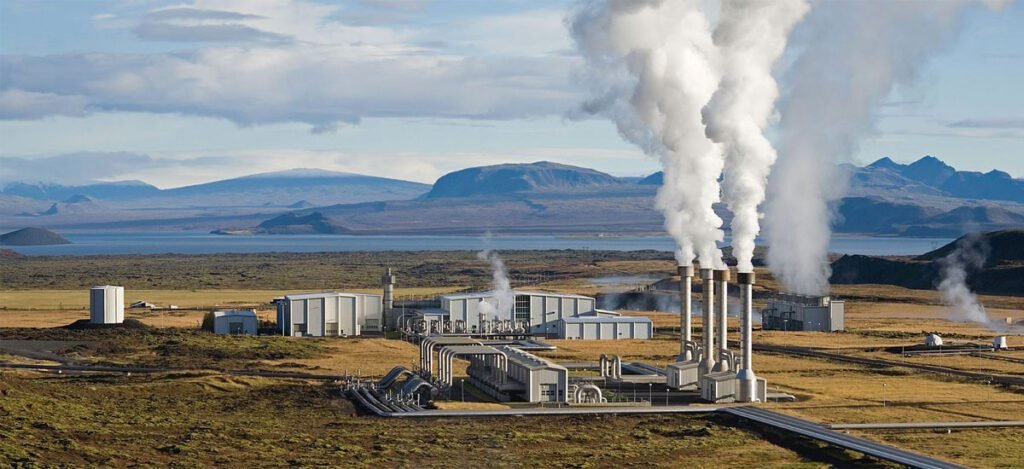
    Geothermal Power Plant is a power plant that uses geothermal energy as its energy source.
    Geothermal energy is one of the natural resources in the form of hot water or steam which is formed through natural heating.
    The word geothermal  comes from the Greek “geo” which means earth and “therme” which means heat. In other words, geothermal energy refers to the energy produced by heat stored in the earth’s core. As a source of energy that comes directly from nature and is renewable in nature, its use does not have a negative impact on the environment and humans.
    Indonesia is very fortunate to be blessed with abundant geothermal resources because of the many volcanoes in Indonesia.

    Things that need attention in choosing technology for using geothermal energy to be converted into electrical energy are:

    1. Temperature; geothermal fluids with a high temperature of> 225 oC have long been used for electricity generation. Medium temperature 150 – 225 oC
    2. Resource reserves of up to 25-30 years
    3. Steam Quality; It is expected that the pH is almost neutral, because if the pH is very low the corrosion rate of the material will be faster.
    4. Well Depth and Chemical Content Usually not very deep (no more than 3 km). The location is relatively easy to reach.
    5. The likelihood of a hydrothermal eruption is relatively low. The production of hot fluid from the bowels of the earth can increase the risk of hydrothermal eruptions.

    Geological Characteristics of Geothermal Areas

    1. Heat Source: Magma which has a temperature of ~ 700 C
    2. Bed Rock: The bedrock layer which is the hard rock of the lower layer
    3. Aquifer (Permeable Zone Layer): is a layer that can be flowed by water. This layer serves as a reservoir
    4. Cap Rock: A layer of hard rock as a cover rock layer.
    5. Water Replishment: as water enhancer.
    6. Surface Manifestation, namely: Symptoms that appear on the earth’s surface (craters, hot springs, geysers, volcanoes, etc.).

    Benefits of Geothermal Energy

    The benefits of geothermal energy obtained from the center of the earth is one of the environmentally friendly alternative energies.
    The way to take advantage of geothermal energy is to drill the part that is the location of geothermal energy to release steam at a certain depth.
    In modern times, geothermal energy is not only used as electricity generation, it turns out that energy from geothermal can also be used as other means such as to help plant growth or other agricultural products that are in the greenhouse during winter. Even this energy can also be used as a space heater and guard the road or sidewalk so that it is not too slippery.
    In the future geothermal energy will be of great help to us in many ways. However, we also have to know that not all regions have locations that have the potential to be used as a source of geothermal energy. With the increasing need for energy in modern times, there are many benefits that we get by taking advantage of geothermal energy.

    How Geothermal Power Plants Work

    How does Geothermal Power Plant work?
    For more details on how the PLTP works, let’s look at the picture and description below.

    1. Steam is supplied from production wells through a steam transmission system which then enters the Steam Receiving Header as a steam collecting medium. The Steam Receiving Header is equipped with a Rupture Disc which functions as the last safety unit. If there is over pressure in the Steam Receiving, the steam will be discharged through the Vent Structure. The Vent Structure functions for warming-up in the pipe line when starting the unit and as a safety valve that will relieve pressure if a sudden trip occurs.

    2. From the Steam Receiving Header, the steam is then flowed to a Separator (Cyclone Type) which functions to separate steam (pure steam) from foreign objects such as heavy particles (Sodium, Potassium, Calcium, Silica, Boron, Ammonia, Fluor etc.).

    3. Then the steam enters the Demister which functions to separate the moisture contained in the steam, so it is hoped that clean steam will enter the turbine.

    4. The steam enters the turbine so that the energy conversion occurs from the heat energy contained in the steam into kinetic energy which is received by the turbine blades. The turbine which is coupled with the generator will cause the generator to rotate when the turbine rotates so that there is a conversion from kinetic energy to mechanical energy.

    5. The rotating generator produces Electricity

    6. Exhaust Steam from the Turbine is condensed in the Condenser with a Jet Spray system (Direct Contact Condensor).

    7. NCG (Non Condensable Gas) which enters the Condenser is sucked by the First Ejector then enters the Intercondensor as a cooling medium and NCG catcher. After from the Intercondensor, NCG is sucked again by the Second Ejector into the Aftercondensor as a cooling medium and then discharged into the atmosphere through the Cooling Tower.

    8. From the condenser, the water from the condensation is flowed by the Main Cooling Water Pump into the Cooling Tower. Furthermore, the cooling water from the cooling tower, dry steam, is recirculated back into the condenser as a cooling medium.

    9. The Primary Cooling System besides being a cooler the Secondary Cooling System also fills the cooling water to the Intercondensor and Aftercondensor.

    10. The overflow from the Cold Basin Cooling Tower will be accommodated for the benefit of the Reinjection Pump.

    11. River Make-Up Pump operates only when filling the Basin Cooling Tower.

    Advantages And Disadvantages of Geothermal Power Plants

    Advantage

    There are actually many advantages to geothermal power. Here are the advantages of geothermal power:
    1. First and foremost, geothermal energy is renewable energy, which means that as long as we don’t pump too much water the energy will continue to exist.
    2. Geothermal energy does not produce pollution, and at the same time, does not contribute to the greenhouse effect.
    3. The location of the power plant for geothermal energy does not require a large area and therefore tends to have little impact on the surrounding environment.
    4. Since geothermal energy is energy that comes from within and from itself, no sources outside of fuel are required to keep the generator running.


    Deficiency

    Although it has many benefits, there are still some disadvantages of geothermal energy. These deficiencies can affect or all three stages of production – pre-production, production and post-production:
    1. Perhaps the biggest drawback of geothermal power is that you don’t build a geothermal power plant anywhere you want. You will need an exact location containing hot rock. After that, not all of these rocks can be drilled because they are too hard. These rocks must also have a depth that allows them to be drilled.
    2. There are also other risks to consider – sometimes a geothermal site may be drilled but has run out of steam. It could be that this happens when the dry season lasts for a long time.
    3. The final loss concerns the potential hazards of geothermal energy. When it is carried out into the soil and which can be mined, this could also mean that there is a possibility that other substances that are not environmentally friendly could also be involved. Harmful gases and minerals can seep from underground and it is very difficult to find ways to safely dispose of these substances into the surrounding environment.
    However, there are certainly advantages and disadvantages caused by exploration. However, with increasingly sophisticated technology, these losses can be anticipated and minimized.
    Why is PLTP now prioritized in Indonesia? Because the profit aspect is greater and Indonesia has abundant geothermal wealth.
  • Basic Knowledge of Kinetic Energy

    Basic Knowledge of Kinetic Energy

    Energy is something that is very in every activity of our life. Generally, energy is the ability of an object to do work. An object is said to have energy when it is capable of producing a force that can do work. Energy is required in almost all activities, such as pushing tables, playing ball, throwing objects, and other activities. Energy has several types, namely kinetic energy, potential energy, and mechanical energy.

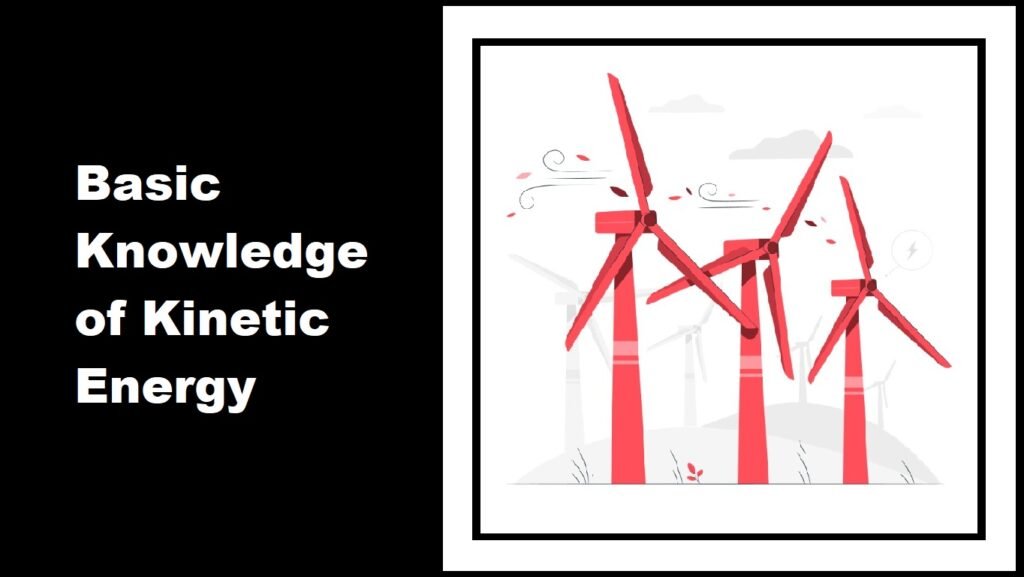
    Kinetic energy is a type of energy due to the movement of an object. The word kinetic comes from the Greek which means to move. Therefore, all energy in motion must have kinetic energy. The kinetic energy is mathematically formulated as follows:

    KE = 1 / 2.mv 2

    Where :

    m = mass

    v = speed

    From this equation, it can be seen that the kinetic energy is influenced by the mass (m) and velocity (v) of an object. The SI unit for energy is the joule (J). The joule is equal to kg.m 2 / s 2 , the other units are calories (cal) which is equivalent to 4.184 J.

    A simple example of kinetic energy is when someone hits a ball with the aim of making the ball fly towards the opponent. Or when you throw stones at a certain speed. Energy can be seen when a rock hits the target it hits.

    Summary 

    • Energy is the capacity of an object to do work or generate heat.
    • Kinetic energy is energy arising from the motion of objects.
    • A joule (J) is the SI unit for energy equal to kg.m 2 / s 2 .