
Tag: communist

  • Karl Marx and the Birth of Marxism: An Overview of His Life and Theories

    Karl Marx and the Birth of Marxism: An Overview of His Life and Theories

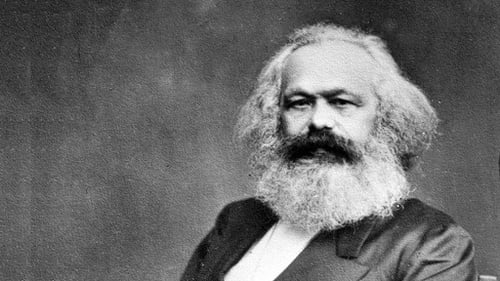
    Karl Marx (5 May 1818 – 14 March 1883), a Prussian political economist, journalist, and activist, and author of the important works, “The Communist Manifesto” and “Das Kapital,” influenced generations of political leaders and socioeconomic thinkers. Also known as the Father of Communism, Marx’s ideas spawned violent bloody revolutions, ushered in the overthrow of centuries-old governments, and served as the basis of the political system that still controls more than  20 percent of the world’s population — or one in five people on the planet. “The Columbia History of the World” calls Marx’s writings “one of the most extraordinary and original syntheses in the history of the human intellect.”


    The Childhood of a Karl Marx

    Marx was born on May 5, 1818 in the city of Trier, southeastern Germany, which was then still part of the Lower Rhine Province, Kingdom of Prussia. He was born into a middle-class family. Marx was the third of nine children. Although he came from a family of Jewish descent, in 1816 his father, Heinrich Marx, decided to be baptized into a Christian at the age of 36. His mother, Heinrietta Marx, was also baptized after his father’s death.

    His father Heinrich was a fairly successful lawyer in Prussia. He was also a reform activist in his time. Heinrich’s decision to convert to Christianity was also inseparable from the 1815 regulation that prohibited Jews from occupying crucial positions in society.

    Karl Marx himself was baptized at the age of six, along with his brothers. Although Trier is a Catholic city, the influence of liberal ideas is easier to enter because of its location on the border with France. Until the age of 12 years, Marx studied at home alias home school . Then he continued for another 5 years at the Jesuit school, Firdrich-Wilhelm Gymnasuium, Trier. The principal is a friend of his father’s who is also liberal.


    Marx’s Youth

    Marx was educated at home by his father until high school, and in 1835 at the age of 17, he enrolled at the University of Bonn in Germany, where he studied law at his father’s request. Marx, however, was much more interested in philosophy and literature.

    After his first year at the university, Marx became engaged to Jenny von Westphalen, an educated female baron. They married in 1843. In 1836, Marx enrolled at the University of Berlin, where he immediately felt at home when he joined a circle of brilliant and extreme thinkers who challenged existing institutions and ideas, including religion, philosophy, ethics. , and politics. Marx graduated with a doctorate in 1841.

    Since entering campus, Marx began to show his rebellious attitude . October 1835, Marx started his schooling at the University of Bonn, Germany. He is active in academic life at his campus and is also known as a rebel. During his two semesters in Bonn, Marx spent his days making trouble, getting drunk, and fighting. In the end, his father forced Marx to enroll in another, more serious school, namely the University of Berlin, majoring in philosophy and law.

    This is where Marx was introduced to philosophy from GWF Hegel, a professor in Berlin. Although initially not so enamored with Hegel’s theory, Marx was heavily involved with Hegelian youth groups which were a collection of radical students. They usually criticize the political and religious establishment at that time.

    In 1836, Marx became increasingly involved in political science. He was even secretly engaged to Jenny von Westphalen, the daughter of an upper-class family in Trier. Because of his increasingly radical attitude, his father became worried. Heinrich even wrote to his son and even asked Marx to stop his marriage to Jenny.

    But in 1843, Marx married Jenny. They had six children, but due to extreme poverty, only three children who were girls survived to adulthood. Even as adults, their children are actively involved in political activities, you know .


    Career and Exile

    After school, Marx turned to writing and journalism to support himself. In 1842 he became editor of the liberal Cologne newspaper “Rheinische Zeitung”, but the Berlin government banned its publication the following year. Marx left Germany — never to return — and spent two years in Paris, where he first met his collaborator, Friedrich Engels.

    However, expelled from France by those in power who opposed his ideas, Marx moved to Brussels, in 1845, where he founded the German Workers’ Party and was active in the Communist League. There, Marx networked with other leftist intellectuals and activists and—along with Engels—wrote his most famous work, ” The Communist Manifesto .” Published in 1848, it contained the famous line: “The workers of the world unite. You have nothing to lose but your chains.” After being exiled from Belgium, Marx finally settled in London where he lived as a stateless exile for the rest of his life.

    Marx worked in journalism and wrote for German and English language publications. From 1852 to 1862, he was a correspondent for the “New York Daily Tribune,” writing a total of 355 articles. He also continued to write and formulate his theories about the nature of society and how he believed that society could be improved, and actively campaigned for socialism.

    He spent the rest of his life working on a three-volume tome, “Das Kapital,” which saw its first volume published in 1867. In this work, Marx aimed to explain the economic impact of capitalist society, in which a small group, which he called the bourgeoisie, owned the the means of production and use their power to exploit the proletariat, the working class which actually produces the goods that enrich the capitalist tsar. Engels edited and published the second and third volumes of “Das Kapital” shortly after Marx’s death.


    The works of Karl Marx during his Life

    after marrying Jenny, they moved to Paris. In that city, Marx met Friederich Engels, a writer who later became his colleague and friend. Both of them issued a lot of work together, you know . Their first work was the book The Holy Family in 1845.

    Not only this one book, Marx and Engels also have many other works. According to the marxist.org website , there are also other important works such as:

    • Thesis on Feuerbach (Marx, 1845)
    • The Poverty of Philosophy (Marx, 1847)
    • Wages and Capital (Marx, 1847)
    • Principles of Communism (Engels, 1847)
    • Communist Party Manifesto (Marx and Engels, 1848)
    • Wages Price and Profit (Marx, 1865)
    • Housing Problems (Engels, 1872)
    • Capital I, Capital II, Capital III (Marx, 1867 – 1894)


    Marx and the Idea of ​​the Factory School

    Do you know at that time Marx was also very active in forming a better curriculum for the children of workers, you know ? Yup, in the old days, young children from 9-12 years old were required to work in factories.

    For this reason, in his book entitled Kapital, Marx put his ideas into creating a part-time system for the children of workers. Marx hoped that the children would be able to work but still be able to continue their studies. But unfortunately, the capitalists and the government at that time did not pay much attention to this part-time idea of ​​​​Marx. They say it costs more to hire 2 shifts of child labourers. As a result, many children of workers are fired if they work while attending school.

    The curriculum proposed by Marx at that time was not much different from conventional schools. Starting with mental education, then physical education (a combination of gymnastics and military training), then there is also a polytechnic education which will teach the general principles of all production processes.

    In essence, Marx wants to emphasize the education of children and young workers so that they can develop into individuals who can make social changes around them. Marx was more in favor of a combination of education and work rather than an education system that required children to study all day long.

    According to him, with this part-time work and school system, children and young workers can practice directly and know what is the cause of their mistakes in the production system, and can become individuals who want to make changes for the sake of their people.


    Death and Inheritance

    While Marx remained a relatively unknown figure in his lifetime, the ideas and ideology of Marxism began to exert a profound influence on the socialist movement shortly after his death. He died of cancer on March 14, 1883, and was buried in Highgate Cemetery in London.

    Marx’s theory of society, economy, and politics, collectively known as Marxism, holds that all societies develop through the dialectic of class struggle. He was critical of the current socio-economic form of society, capitalism, which he called the dictatorship of the bourgeoisie, believed it was run by the rich middle and upper classes purely for their own gain, and predicted that it would inevitably result internally. tension that would lead to its self-destruction and its replacement by a new system, socialism.

    Under socialism, he argued that society would be governed by the working class in what he called the “dictatorship of the proletariat.” He believed that socialism would eventually be replaced by a stateless and classless society called  communism .


    Continuous Influence

    Whether Marx intended for the proletariat to rise up and foment revolution or whether he felt that the ideals of communism, ruled by an egalitarian proletariat, would simply outlast capitalism, is debated to this day. But, several successful revolutions did occur, propelled by groups that adopted communism—including those in Russia, 1917-1919, and China, 1945-1948. Flags and banners depicting Vladimir Lenin, the leader of the Russian Revolution, together with Marx, were long displayed in the Soviet Union. The same was true in China, where similar flags showing the leader of that country’s revolution, Mao Zedong, together with Marx were also prominently displayed.

    Marx has been described as one of the most influential figures in human history, and in a 1999 BBC poll was voted “the thinker of the millennium” by people from all over the world. The memorial at his grave is always covered with thanks from his fans. His tombstone is inscribed with words that echo the words of the “Communist Manifesto”, which seems to foretell Marx’s influence on world politics and the economy: “Workers from all lands unite”.


  • Marxism Theory : History, Figures, and Main Ideas in Political Economy

    Marxism Theory : History, Figures, and Main Ideas in Political Economy

    When we talk about socialism or marxism, we will often come into contact with the concept of liberalism. Not because these two ideologies have much in common, but on the contrary, these two ideologies are completely opposite. In fact, the emergence of Marxism is none other than his rejection of the ideas of classical liberalism proposed by Adam Smith.

    Marxism itself is also closely related to socialism, because the two are often considered to have the same basic concept. However, socialism and marxism are fundamentally different . Marxism is an ideology based on the teachings of Karl Marx. This is why it is called Marxism or the teachings of Marx.

    Socialism is a form of idea or thought that existed long before Marx. The ideas in socialism talk a lot about togetherness and collectivism. Even so, there are teachings about togetherness that make the two seem attached.

    That is why, discussions of socialism will usually be divided into three groups , which include:

    1. socialism before Marx;
    2. Marx’s socialism (Marxism);
    3. socialism after Marx (Deliarnov, 2005).

    Discussions about socialism can be done through various perspectives, ranging from philosophy, ideals, movements, politics, teachings, ideology or political economy systems. However, this time our focus is on socialism from the point of view of political economy.

    From the point of view of political economy, socialism is a social system based on the principle of commune or togetherness, with the nature of distribution and ownership of the means of production or collective means of production . So, the most prominent character of this socialist society is its togetherness.

    In its most extreme form, socialism can develop into a form of communism, in which various economic decisions are drawn up, planned and controlled by the state.

    History of Marxism

    The era of industrialization has indeed brought major changes in the world economic system, including the emergence of new thinkers, such as Karl Marx (1818-1883). The ideas of Karl Marx are not really fresh and new ideas. What Karl Marx was trying to bring up was actually the idea of ​​togetherness in a commune, just like the socialist thought.

    However, Marx himself more developed the idea of ​​socialism in the form of a system. This is why, when talking about socialism in the form of a system, what is often used as a reference is the teachings of Karl Marx in the form of Marxism.

    So, here it can be seen that the basic difference between socialism and Marxism apart from their originators, lies in the line of thought. In socialism, the line of thought is broader based on the concept of togetherness. Whereas Marxism emphasizes more on how socialism can be realized in a comprehensive system in people’s lives.

    The history of Marxism itself was driven by the development of industrialization after the industrial revolution in England. Many of Karl Marx’s thoughts are a form of refutation of the classical liberal-leaning thoughts, which build their economy based on the market mechanism.

    Through his ideas, Karl Marx is called the main pioneer of the scientific socialism movement. The beginning of Marx’s popularity began when he published his first book together with Friederich Engels, the financial supporter of Marx.

    The book is entitled Communist Manifesto in 1847. In this book, Marx expresses a series of criticisms of Adam Smith’s ideas along with the concept of capitalism that he carries. This book also describes the conflicts between classes. Marx also said that the state is an instrument of oppression.

    Apart from the Communist Manifesto, Marx’s ideas are also included in many other books, all of which lead to socialist concepts. One of the most popular works of Marx is a book entitled Das Capital, which was published in 1867. It was Marx’s works that eventually became the basis for the emergence of Marxist ideology or Marxism (Deliarnov, 2005: 52).

    In fact, Marx himself never explicitly stated the ideology of Marxism. The concepts of his thought were also never designed into an ideology or ideology called Marxism.

    The term Marxism as a new ideology began to be developed after the death of Marx in 1883. Marx’s thought which was quite interesting began to be summarized as a new ideology which was given the name Marxist by German thinkers (Ritzer, 2005: 478).

    Because of this history, the concept of Marxism is often difficult to define precisely. What can be concluded is that basically, Marxist teachings try to harmonize reality, theories and concepts of thought in the life of an ideal society, through the commune system (Albert, Hahnel, 1991: 13).

    It should be noted that the philosophy of Karl Marx took a lot of dialectics developed by Hegel in 1818 as a basis. What Marx took from Hegel was about the philosophy of idealism and history.

    In Hegel’s philosophy, it is explained how social turmoil relates to the future of civilization. It was Hegel’s thoughts regarding the cycle of historical change that later inspired Marx’s ideas. Marx thought of a revolutionary concept in shaping the theory of society (Chilcote, 2010: 114).

    Scope of Marxist Ideology

    Mainly, many criticisms of Karl Marx were directed at Adam Smith’s idea of ​​deifying the market economy. In his attempt to criticize the idea of ​​capitalism, Marx used many foundations from various disciplines. He tried his best to prove that the ideas of capitalism are actually ” rotten from within ” ideas and are a reflection of an unfair system.

    Various disciplines used by Karl Marx in challenging the thought of capitalism, including:

    1. From a moral point of view, Marx claims that capitalism inherits injustice from within. This is based on capitalism’s indifference to the social inequalities that arise in society.
    2. From a social point of view, Marx stated that capitalism is a source of class conflict. This conflict can arise between the bourgeoisie and the proletariat, between the landlords and farm workers, and between the capitalists and their workers. This happens because one party acts as a suppressor ( oppressor ) and the other party as the oppressed ( opressed ).
    3. From an economic point of view, Marx views capitalism as a tool of capitalists which is solely used to obtain as much profit as possible, even if by suppressing the workers as hard as possible.

    Marx who uses various glasses to present his ideas is what makes Marx’s concept of ‘socialism’ more comprehensive. Marx also thought that the approach to the deductive procedure he used was far superior to that of the classical economists.

    Marx and his followers believed that the world should be understood as an integrated superior unit. Based on this, Marxism offers an idea or system based on the totality method, and not just a mere economic foundation.

    Marxism’s Critique of Capitalism

    As explained earlier, Marxism emerged as a response to Classical thinkers. Therefore, the teachings of Marxism are also based on many forms of criticism of the teachings of the Classical Liberals, especially against the teachings of Adam Smith in the form of capitalism.

    Marx saw capitalism as a system with many weaknesses. Here are some of Karl Marx’s critiques of capitalism, which at the same time illustrate how the mindset of Marx’s ideology is.

    # Capitalism creates classes in society

    Marx believed that the formation of social classes in society was the impact of capitalism. Capitalism forms classes based on economic aspects. The most obvious is the emergence of the ruling class and the working class or workers.

    # Capitalism makes the distribution of wealth unequal

    The rulers who want to make as much profit as possible tend to suppress the workers. In the end, the workers only receive wages that can only be used to survive.

    Marx based his thinking on Ricardo’s theory which proposed a low wage rate. Ricardo stated that in this subsystem of capitalism, such a low wage rate is determined by a value that can only be for survival.

    This form of so-called ” iron wage ” or iron wages is only equivalent to the cost of fuel for the machine to work, or as much as “the cost of animal feed”. This means that the remuneration given to the owners of capital or capitalists is much greater than the remuneration for the owners of labor or labor.

    The owners of capital will be getting stronger and richer, while the owners of labor will be getting poorer and weaker. Capitalism tends to distribute wealth unequally. Until in the end, this system also gave rise to stratified power (Deliarnov, 2006: 42-43).

    # Capitalism allows the ruling class to exploit

    In economics-oriented capitalism, the ruling class or capitalists will try to make as much profit as possible. The greater the efforts of the capitalists to seek profit, the harder the pressure is exerted on the workers.

    That is, this concept allows the ruling class to exploit the workers. In other words, according to Marx, capitalism is a form of exploitation of workers.

    # Capitalism triggers class conflict

    Marx believed that state capitalism would side with the rulers. Why is that? This is because the economically ruling class tends to have the potential to gain political power. This is because money or wealth is considered a form of power.

    This “rotten from within” capitalist country has an unfair system. Capitalism triggers class conflict. One side acts as an oppressor (oppressor) and on the other side there is an oppressed ( oppressed person). This happens because the capitalists will make as much profit as possible by suppressing the workers (Deliarnov, 2006: 41-42).

    # Capitalism makes workers experience alienates

    The system created by capitalism makes the workers experience alienates . Workers who are used as means or tools to meet the needs of the capitalists, will tend to be exploited in order to complete their work as quickly and as well as possible.

    In the end, workers will only focus on their work and have minimal interaction with social life or with other humans. This forces workers to be isolated and unable to grow. In other words, workers are alienated from their basic human nature (Ritzer, Goodman, 2011: 36).

    # Capitalism is Self Destructive

    Marx rejected the notion of the Classics which stated that capitalism is a system that is considered self-sustained ( self- developing). In the eyes of Marxism, capitalism is more referred to as self-destructive ( self-destructive ).

    This condition occurs because the pressure of the capitalists on the workers is so great. This convinced Karl Marx, and even stated his prediction that there would be a revolution of the workers.

    In order to make as much profit as possible, the capitalists will put more pressure on the workers. Workers who are increasingly pressured by these capitalists will certainly not remain silent. There will be resistance so that in the end, this system will self-destruct (Deliarnov, 2005: 42).

    Karl Marx’s Ideas

    The strength of Marxism is in the system it offers, which is all-encompassing. That is, the ideas of Karl Marx have a comprehensive discussion and have interconnections in all types of existing social institutions. Marxism also shows the interconnection between politics and economics.

    This is why the teachings of Marxism are considered the most comprehensive teachings in the concept of political economy. This all-encompassing concept led Marx to believe that his teachings were far superior to the deductive approach of classical political economy.

    # Dialectical Materialism

    Marx carried out an analysis of political economy by combining dialectical methods and materialism. By Engels, this is called dialectical materialism or historical materialism. The view that the world is a single integrated unit makes Marx’s approach able to cover everything with the totality method.

    This conception of Marx’s dialectical materialism draws on Hegel’s thoughts regarding the cycle of historical change. Marx stated that there would be a revolutionary concept in shaping the theory of society through the struggle of the workers to overthrow the rulers, and in the end the formation of all classless society.

    Even so, Marx rejected Hegel’s idealism which stated that these changes were most influenced by ideas. According to Marx, what is more decisive is the power of materialism.

    # Materialistic

    Marx’s materialistic conception is a form of political subordination and the decisions of public authorities under the inherent power of operating in society. Simply put, materialistic ideas are what determine everything, whether in terms of politics, culture, social, morals, philosophy, as well as ideology, is ‘economic’, namely material .

    More simply, matter is the center of life. The material conditions the process of political, social and intellectual life in general. So, when we talk about the mode of production of life, we will focus on the economy. This economy is then able to influence various other modes of life, from various aspects. This also includes, the economy influences politics.

    # Politics is a medium to exercise power and authority

    Politics, power and material things are basically related. However, the most powerful influence is material. According to Marx, politics is only a tool or media used by the authorities as a medium to exercise and legitimize their control.

    Meanwhile, according to Marx, the role is to exercise power and authority, which is influenced by material things. The state must play a role in preparing the political conditions and pressures necessary to maintain each mode of production (Staniland, 1985).

    In linking politics to a market economy, Marx believes that there is a domination structure in every economic organization. Politics for Marx is only a bridge for the ruling class to legitimize its control in order to obtain materials (Deliarnov, 2005: 44).

    # Country Removal

    According to Marx, the expansion of wealth is the same as the expansion of power . This makes Marx believe that wealth is not only used in the concept of power to , but also power over . The power possessed by the capitalists will be used as much as possible to suppress the workers, so this must be abolished.

    The state is only a creation of civil society which is used solely to protect the interests of the ruling classes. This affects the occurrence of conflicts of interest between classes that encourage conflicts between classes or conflicts within the State. Marx proposed that both the state and the ruling class should be abolished (Chilcote, 2010: 148).

    # Co-ownership is replaced by collective distribution

    Capitalism must be immediately replaced with a social system based on collective ownership and distribution (Deliarnov, 2005: 42). In a Marxist perspective, economic change is capable of transforming the ideological superstructure. Human actions depend on changes in the economic structure (Chilcote, 2010: 161).

    # Leaders of the proletarian class to form an authoritarian state

    Marx’s analysis states that the existence of classes is only tied to certain historical phases in the form of the development of production. For this reason, it is necessary to form an authoritarian state to ensure that the historical revolution takes place properly.

    To form an authoritarian state, a leader from the proletariat or the working class is needed. In order to lead to this dictatorship of the proletariat a class struggle is necessary. By itself, this dictatorship will be a transition to the abolition of the entire class.

    According to Marx, the existence of this class must be abolished. In the end, the state will also be abolished. The world will be a single unit without class and without state.

    # Elimination of classes in society

    The social situation will lead to the realization of a classless society, where private property rights to property are abolished. For Marx, the existence of property rights is indicated by the ownership of goods and income opportunities. In fact, this is a hallmark of the existence of class in society, so this must be abolished (Chilcote, 2010: 171).

    The development of Marxism

    Marx after the era of Karl Marx is still experiencing development. Many other thinkers have tried to develop the ideas of Marxism by being seasoned with various other ideas in order to perfect the system that has been offered by Karl Marx. One of them, there is Lenin.

    From the thought of Marx and Engels, Lenin put forward the theory of the State which he expressed in the book State and Revolution in 1932. Lenin argued that the state at that time was a form of manifestation of irreconcilability of class antagonisms .

    Therefore, state power had to be abolished by violent revolution. A form of effort through compromise and reformist solutions is considered unable to solve these class antagonisms (Chilcote, 2010: 259).

    The proletariat is tasked with carrying out the struggle against the state and its instruments of power. The next power is held by the proletariat. The modes of production are then transformed from private ownership to state ownership.

    This transition of capitalism power will then give rise to a form of proletarian government or dictatorship of the proletariat. Bourgeois democracy turned into proletarian democracy. So in essence, the reform aims to establish prosperity for the proletariat.

    The functions of the state will eventually be handed over to the people, until there is no longer a need for this kind of power. After the development of production reaches the highest level, the existence of class is no longer needed. Likewise, the state must also be abolished.

    The function of the state will be replaced by control by the whole community. As a result, people will work voluntarily according to their abilities and receive according to their needs. This is where socialism was created (Chilcote, 2010: 260).

    Criticism of Marxism

    Just as Marxism critiqued the Classical Liberals, it seems that Marxism is not free from criticism. Not a few thinkers claim that the teachings of Marx are not ideal teachings, and even have many shortcomings. Some of the criticisms leveled against Marxism are as follows:

    # Impressed Dogmatic

    After the era of Karl Marx, there were thinkers who carried out critical theory. This critical theory is one that criticizes Marxism. According to critical theory, in general, Marxism has a weakness because this ideology simply imitates Marx’s analysis outright. Karl Marx’s words were used as ideology and tried to be applied to modern society.

    It is this direct application that makes Marxism as an ideology more dogmatic than scientific. The analysis offered by Critical theory itself is a reconceptualization of the basic theory of Karl Marx, namely the liberation of humans from various shackles of oppression.

    # The idea of ​​social revolution occurs automatically is irrational

    According to Marx, capitalism which is “rotten from within” will automatically be destroyed by social revolution. This social revolution carried out by workers will occur automatically, so that in the end it will replace the capitalist order by itself.

    This idea is considered by revisionists as a weakness of Marxism, and seems excessive or irrational. The idea that the collapse of capitalism can happen automatically is irrational.

    Moreover, when referring to the view that socialism will only emerge when capitalism collapses, this means that as long as capitalism is able to maintain its surplus value , this social revolution will not automatically occur.

    Described by Bernstein, as long as countries that support capitalism are still successful in maintaining various anti-monopoly policies and free markets, then capitalism is not on the way to destruction. To put it simply, to expect a social revolution to happen automatically is an exaggeration or even irrationality.

    # Too deify Materialism and ignore ideas

    Marx’s concept of materialism too idolizes matter as part of the economic aspect. In fact, Marx ignores the importance of ideas or ideas and their contribution to history. Marx argued that reality is material and that social revolutions can occur mainly because of this material aspect.

    Material or economy is the only thing that is important and becomes the standard of human life, not thoughts or ideas. Marx’s attitude that put every interest only as part of economic interests is considered excessive and illogical.

    Marx believed, directly or indirectly, that political power is a tool for the benefit of the function of economic power only. Likewise in social and cultural conditions, all are based on a materialistic perspective.

    In his perspective, Marx stated that the historical and revolutionary forces of society are not determined by ideas or ideas, nor are the ideals of freedom. The absence of ideas or ideas, and the attitude of being too deifying of the material is what makes Marx’s teachings widely criticized.

    Reference :

    1. Albert, Michael, Robin Hahnel. Marxist and Socialist Theory . Ho Chin Minh: South End Press.
    2. Deliarnov. 2006. Political Economy . Jakarta: Erlangga.
    3. Your shaft. Tt. Tracing Marxism through the Thoughts of Karl Marx . accessed from http://www.porosilmu.com/2014/12/menelursuri-marxisme-via-pemikiran.html
    4. Ritzer, George and Douglas J. Goodman. 2004. Marxist Theory and Various Neo-Marxian Theories. Bantul: Offset Discourse Creation.
    5. Ritzer, George. 2005. Encyclopedia of Social Theory . New Delhi: Sage Publications.