Tag: carbon

  • 7 These Are the Causes of Global Warming

    7 These Are the Causes of Global Warming

    Global warming is causing the earth to get worse.

    Global warming causes the earth to experience an increase in average temperature which has an extraordinary impact on life in it.

    Extinction of living things, extreme climate change are also the effects of global warming.

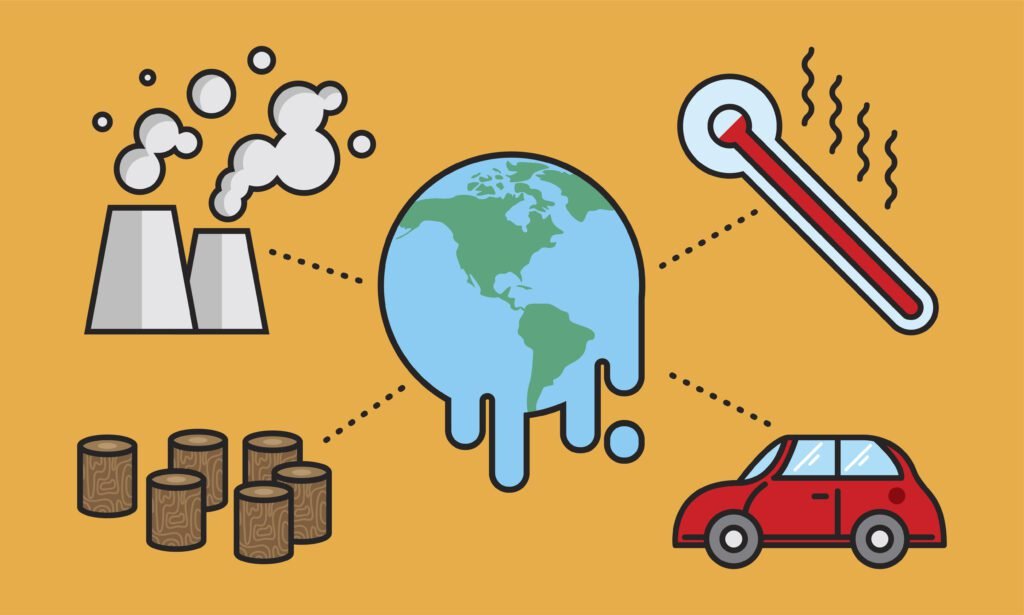
    Here are 7 things that cause global warming:

    Deforestation

    Deforestation

    Forests play an important role in the environment, the more forests the lower the pollution. Massive forest loss caused sudden climate change.

    Trees which are the key to climate regulation, play a role as controlling CO₂ and oxygen. Bush and forest areas act as carbon sinks and regulate the temperature to about 1.5 degrees.

    Currently, the industry uses wood as raw material which is obtained by cutting down forests. Deforestation is the main reason for global warming as the amount of oxygen decreases and CO₂ increases in the atmosphere.

    We know that vegetation is very important, but it is continuously being destroyed and eliminated, the concentration of CO2 is increasing and causing global warming, 1/5 of greenhouse gas pollution is generated from forest degradation and tree cutting.

    The causes of global warming can actually be prevented and checked if the right things are done such as planting more and reforestation

    Rapid Industrialization

    Industry uses chemicals in its manufacture and produces waste that pollutes the environment. These chemicals and industrial wastes enter the environment and mix with water and cause various diseases.

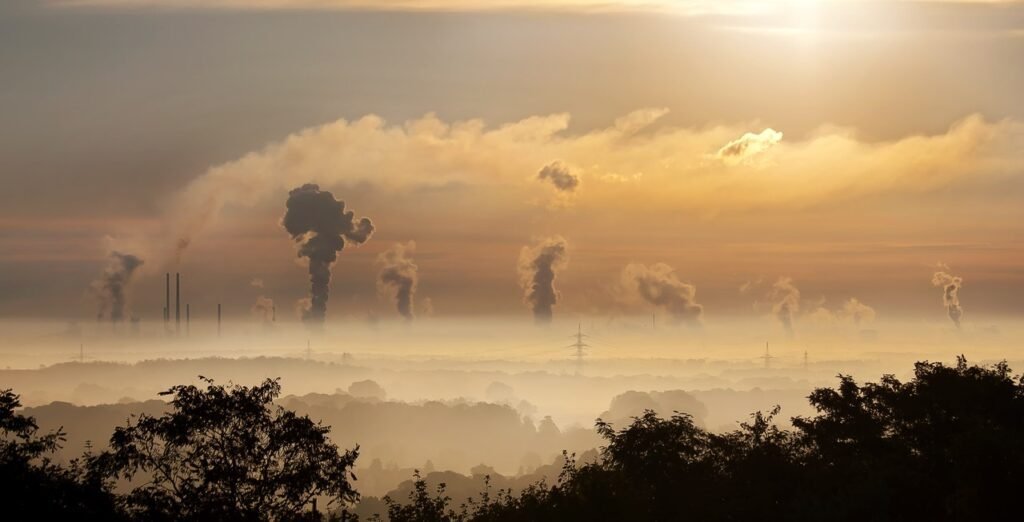
    Some industries use gas and fuel to run factories. During the process, one of the end products is harmful fumes and pollutes the air. The smoke contains large amounts of CO₂ which is the main cause of global warming

    Transportation

    Based on research, findings, and observations, it was gathered that transportation also has a hand to play in the causes of global warming. This can also be seen in the gas output of transportation equipment such as cars, airplanes, trains, and others.

    The World Resources Institute in 2012 proved that 15% of climate pollution comes from transportation.

    Fertilizers and Pesticides

    Fertilizers and pesticides are used to increase production from the agricultural sector. Initially it was clear that the use of fertilizers and pesticides increased production. But on the other hand this results in the release of nitrogen gas which mixes into the air and causes global warming.

    Agriculture also produces methane gas products, especially from livestock such as cattle and sheep. Fertilizers made from nitrogen release nitrogen oxides and have recently become a problem in many countries.

    Household Waste

    This Waste releases methane gas which immediately reacts with oxygen and changes its condition. Why did this happen?

    If not managed properly, waste which generally comes from organic waste which is “anthropogenic waste” will degrade and decompose into methane gas (CH 4 ). CH 4 gas is a greenhouse gas that can cause a greenhouse effect which has the potential to cause global warming.

    Refrigerator and air conditioner

    Refrigerators and air conditioners are used in almost every home and office. These tools use Freon gas or CFC (Cloro Fouro Carbon).

    Freon can deplete the ozone layer when it is put into the air and is one of the causes of global warming. This ozone layer is useful for protecting the earth and living things from exposure to Ultra Violet B (UV-B) radiation and also absorbs high ultraviolet radiation from the sun from reaching the earth.

    Fossil Burning

    Fossil fuels include gas, oil and coal. The main producer of CO₂ is Australia which has been widely recognized for many years compared to others. When fossil fuels are burning, carbon dioxide is released into the atmosphere.

    The cause of this pollution in Australia has been linked to electricity where around 73% of electricity comes from burning coal and about 14% from burning gas. The remaining 13% comes from sources such as wind, sun and water or water. In fact, less pollution is achieved when the amount of gas, coal, several sources of energy. The burning of fossil fuels has for years been recognized as the main cause of global warming.

  • What is a carbon footprint and what does it do?

    What is a carbon footprint and what does it do?

    Carbon footprint is a measure of the impact of human activities expressed in terms of the amount of greenhouse gas (carbon dioxide) emissions.

    Every human activity always has an impact on the environment . One of these impacts is the contribution of greenhouse gas (carbon dicoside) emissions.

    These impacts can occur directly (such as burning garbage) or indirectly (such as using electricity from the Steam Power Plant).

    This emitted greenhouse gas then causes the heat entering the earth to become trapped in the earth’s atmosphere, causing global warming.

    The amount of greenhouse gas emissions resulting from human activity is what is called  carbon footprint 

    Carbon Footprint Function

    This carbon footprint is important to know so that we can find out how much impact each of our activities will have.

    Thus, we can try to reduce the impact of the carbon footprint that we produce every day. And also trying to offset the impact on the carbon footprint that we have created.

    Types of carbon footprint (Carboon Footprint)

    This carbon footprint is divided into two types, namely

    1. primary carbon footprint ( primary carbon footprint )
    2. Secondary carbon footprint ( secondary carbon footprint ).

    The primary carbon footprint is the carbon footprint generated from the direct combustion process of fossil fuels, for example, the use of motorized vehicles.

    Meanwhile, the secondary carbon footprint is a carbon footprint resulting from the cycle process of the products used, from manufacture to decomposition.

    An example of this secondary carbon footprint is products that are consumed daily (usually in the form of food), so that the more products consumed, the greater the carbon footprint.

    How to calculate your carbon footprint

    How do we know how big the carbon footprint of our activities is? There are actually a lot of carbon footprint counters on the internet.

    In general, there are many things that can be included in calculating your carbon footprint . For example, for calculating the carbon footprint of individual or household activities, the activities calculated can include food consumption, travel activities, and household electricity consumption.

    Consumption of these foods includes whether the products consumed have high carbon footprint levels or not.

    Foods that contain a high carbon footprint are usually meat, while foods that contain a low carbon footprint are usually vegetables.

    The following is the carbon content of several types of food, as quoted from the Environmental Working Group (EWG).

    The carbon footprint of travel activities can include the type of vehicle used, whether private vehicles (cars or motorbikes) or public transportation (buses, trains, or planes).

    If using a private vehicle, the carbon footprint calculation will also include the type of fuel used.

    Quoted from the Energy Information Administration (EIA) in the United States, this is the large amount of greenhouse gas emissions from various fuels

    • avtur is 2.20 kg CO2 / liter
    • biodiesel is 2.50 kg CO2 / liter
    • diesel fuel is 2.68 kg CO2 / liter
    • gasoline is 2.35 kg CO2 / liter

    So to find out how big our carbon footprint is from travel activities, we can calculate it from how much fuel is used.

    Meanwhile, for household consumption, in general, the carbon footprint is calculated from the number of kWh of electricity used in one year.

    The carbon footprint for household electricity consumption then depends on the type of power plant used, whether using coal, diesel fuel , nuclear, or using renewable energy (for example solar, wind, geothermal, or hydropower).