Author: Tony Prasetiantono

  • Adam Smith’s Thoughts in The Wealth of Nations

    Adam Smith’s Thoughts in The Wealth of Nations

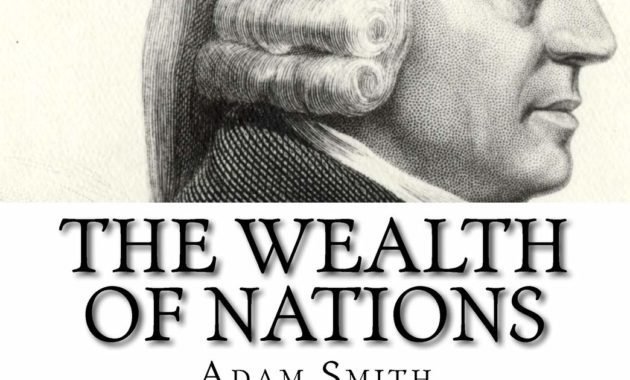
    An Inquiry into the Nature and Causes of the Wealth of Nations , one of Adam Smith’s masterpieces which until now has become the foundation of modern economics, contains the concepts of Smith’s thoughts for many years.

    In this article we will note the important points presented in the book.

    Please note that  The Wealth of Nations  consists of five broad topics, which are further divided into chapters.

    It should also be remembered that this book was published in the 18th century, where the economy, science, and technology were not as advanced as they are today, so some of the explanations are no longer relevant for today.

    Smith stated many things in the book, including those  related to the factors of production , namely labor, land, and capital; with  an emphasis on the labor element .

    He also touched on  regulations in economic activity, taxation, international trade, and public policy .

    Smith also spoke about the importance of  freedom and justice as the foundation for the welfare of the country .

    First, Smith asserts that  economic efficiency can be achieved through the division of labor (tasks) for labor ; In this case, task specialization greatly determines the level of time and cost efficiency, which in turn affects the final product.

    If the workforce is specialized according to expertise, they will do the same task from time to time, so the task will be completed quickly. This also guarantees the quality of the product being worked on.

    In addition, the more efficient the time required, the products with competitive prices will be produced.

    In essence,  the efficiency generated by a specialized workforce is the source of the country’s success in achieving prosperity .

    Furthermore,  trade between individuals  (note: at that time trade was commonly carried out by barter) was basically  carried out freely, according to each other’s interests .

    For example: farmers sell their crops, then buy chicken meat; on the other hand there are traders who sell chicken meat, then buy rice. In this case, all transactions occur because of individual interests.

    However, it must be remembered  that individual interests are not related to greed or egoism  (remember that Smith bases economic activity on aspects of ethics and morality (reread the previous article).

    However, real trading is certainly not as simple as the above example; Therefore , a better method is used, namely using  a transaction medium called money . This money  has an exchange rate that is  agreed by each party.

    Then  how to measure the exchange rate of each traded product?  Namely  by measuring the value (power) used by labor  in the production process.

    So it can be said that  the value of labor is an important factor in the economy , while money is only a tool to measure that value.

    The value of the workforce varies, depending on several factors, such as the level of difficulty of the job, the level of education and skills of the workforce, the risk of the job, and so on. This value is  represented by wages ( wages ) .

    In its development, not only labor is used in the production process, there are other factors involved, namely  capital ( capital )  and  land ( land ) ; so the production value must be calculated from each element used.

    The completion of the production process is marked by the creation of a product that has a selling price. The selling price of the product which is calculated from the accumulation of production factors is called  the natural price .

    Meanwhile, the real price of the product in the market is called  the market price , which is the base price plus the determined profit .

    The more special or special a product, generally requires a larger capital to make it (reflected in the higher product price). This accumulation of capital  is what  drives economic growth .

    The picture is as follows: an increase in capital creates a specialized product, which then creates a surplus. The surplus is used for investment, by creating other specialized products, then resulting in an increase in capital, so continuously continuously.

    In terms of labor, Smith grouped it into  productive and non-productive labor ; the difference lies in the final product ( output ).

    Productive labor produces  marketable output  for some period of time . Examples of productive labor are spinning factory workers and food factory workers.

    Meanwhile  , non-productive labor produces  output  that is only consumed or utilized immediately , for example restaurant waiters, actors, and dancers.

    In terms of national income, the more consumption of non-productive labor, the less income and capital accumulated for investment, so the smaller the added value for national income.

    Smith also revealed, when someone wants to increase production capacity, usually he will borrow capital (debt) to other people. This capital loan is carried out in the hope of obtaining greater profits from the increase in production capacity.

    So it can be said that  debt is one of the important elements in calculating national income .

    When a debt transaction occurs, the lender and the borrower agree on certain clauses, including the sharing of  profits called interest .

    If one day it is found that there are more lenders, then various options are available for borrowers. This prompts lenders to lower loan interest. In other words,  the more loan capital available, the lower the loan interest .

    Higher capital growth , followed by lower costs, will  encourage increased industrial productivity . As a result,  more and more workers are absorbed , so  the more competitive wages are received by workers .

    Furthermore, Smith asserts that  economics is closely related to how to generate wealth for society and provide income for the state .

    He put forward two systems to achieve this, namely  the mercantilist system ( merchantile system )  and  the agricultural system ( agricultural system ) .

    The mercantilist system held that prosperity was obtained through the possession of money, gold, and silver . The more these elements are owned, the more prosperous the society and the state.

    Meanwhile,  the agricultural system states that agricultural products are the main source of income and welfare of the country .

    In the agricultural system there are three social groups that contribute to state income, namely landowners, farmers and workers, as well as traders and manufacturers.

    Smith further stated that  the main task of the state is to protect people from violence and harm . The state must also  protect the economic interests of the  people, including overcoming the problem of economic and social inequality.

    In addition, the state must  facilitate the needs of the community through public policies , for example in the education sector.

    One way is through  the imposition of taxes . In this case, the community must contribute according to the proportion, by setting aside a portion of the income to be given to the state.

    The money collected will be used in the administration of the state, as well as to ensure good governance in society.

    These are some of Adam Smith’s main thoughts as stated in  The Wealth of Nations . Actually there are many more views of Smith that need to be explored and studied; Of course, it is the duty of all learners to find this, for the sake of the development of science. *

    Reference:

    1. Butler, Eamonn. (2012). The Condensed Wealth of Nations and The Incredibly Condensed Theory of Moral Sentiments, CIS Occasional Paper 126.
    2. Smith, Adam. (1776). An Inquiry into the Nature and Causes of the Wealth of Nations, London.
  • Understanding Inflation: Definition, Causes, and Effects

    Understanding Inflation: Definition, Causes, and Effects

    Inflation is one of the main topics in economic studies. The amount of inflation is very influential on the economic growth of a country.

    Inflation is often used as an excuse for not achieving economic growth targets.

    Not infrequently inflation is also used as a campaign tool for prospective leaders to win the votes of the voters, with promises to control it.

    Even in 1974, the then president of the United States, Gerald R. Ford, declared that inflation was the number one enemy of the United States.

    Therefore, in this paper we will learn about the nature of inflation, the factors that cause inflation, and economic policies to control inflation.

    1. BASIC CONCEPTS OF INFLATION.

    As a start, we will study the basic concept of inflation.

    Blanchard states that inflation is  a sustained rise in the general level of prices’ (Blanchard, Olivier,  Macroeconomics , 4th edition, 2006).

    Sementara Samuelson dan Nordhaus menyebut inflasi (inflation or inflation rate) sebagai ‘the percentage of annual increase in a general price level’ (Samuelson, Paul A., and William D. Nordhaus, Economics, 7th edition, 2002).

    In principle,  inflation is a general increase in prices, which occurs within a certain period .

    The price increase can be seen from  two points of view , namely:

    • a broad perspective ( broad perspective ) , for example the increase in prices for goods/services, as well as an increase in the cost of living .
    • a narrow perspective , for example an increase in the price of consumption products such as chili, onions, or rice.

    The inflation rate is measured in percent ( rate ) . One  method of measuring inflation  is  to know the size of the consumer price index (CPI)  or  consumer price index  (CPI).

    The CPI figure is obtained by  calculating the cost of living for household consumers (especially those living in urban areas) , including the cost of consumption of goods and services, housing costs (including rent), and other daily living costs, within a certain period of time.

    Furthermore , the figures obtained are  compared with the index figures in the base year . This base year index becomes the benchmark for every measurement of inflation.

    The comparison produces a number/index called the consumer price indexThe percentage change in CPI  from a certain period of time is  called  consumer price inflation ; In simple language: inflation or the rate of inflation .

    For example: the CPI figure in the base year is 100, while this year the CPI calculation reaches 105, the inflation rate this year is 5% ((105/100) – (100/100))x 100%).

    For information, there is the term  core consumer inflation , which  describes the calculation of the cost of living for consumers, by excluding the prices of certain  products that are seasonal in nature (seasonal products usually experience a price increase that exceeds reasonableness due to increased demand, for example ahead of religious holidays, nearing the end of the year, etc.). etc).

    Public policy makers tend to pay more attention to the calculation of  core consumer inflation , because price changes that occur are relatively stable.

    In addition, economic policy makers will also  try to keep the inflation rate within a certain range , as  a symbol of economic stability from time to time .

    Moreover, a stable inflation rate will facilitate economic policy making. Various economic studies have also stated that if inflation exceeds a certain target, it can trigger further inflation at a more severe level if it is not addressed immediately.

    Actually  there is no certain benchmark related to the inflation rate that is considered reasonable , however, there is a range that can assist economic policy makers in determining the inflation rate targeted in one economic year, namely:

    • inflation rate  is 0% – 2.5% , meaning that  the economy is in a stable condition .
    • inflation rate  2.5% – 5% , indicating  a moderate inflation rate .
    • inflation rate  5% – 8% , including high inflation category  .
    • The inflation rate  is above 8% , meaning that  the economy is entering a dangerous inflation phase , with a further impact in the form of hyperinflation.

    (Hellerstein, Rebecca, The Impact of Inflation, Federal Reserve Bank of Boston, 1997).

    On the other hand,  inflation below 0% is called deflation or  negative inflation .

    A more complete discussion of the Consumer Price Index ( Consumer Price Index ) and the calculation of the inflation rate can be read in the articles on the Consumer Price Index, Producer Price Index, and Determination of the Inflation Rate.

    2. INFLATION TRIGGER FACTORS.

    Inflation can arise as a result of the implementation of fiscal and monetary policies .

    In terms  of monetary policy , for example,  increasing the money supply  or  decreasing the benchmark interest rate .

    The description is as follows:

    • when the money supply increases , then  the value of money will decline .
    • This policy is actually only natural to spur an increase in consumption, but  when the decline in the value of money is greater than the size of the economywhat happens is the increase in product prices  as an adjustment to the decline in the value of money.

    Regarding  fiscal policy , for example, when  the government increases spending  , this triggers an increase in demand .

    However ,  when  demand  exceeds  supply , there will  be a shortage of production resources , resulting  in an increase in product prices . This condition is known as  demand-pull inflation .

    Changes in product supply can also  trigger inflation  ; namely  when  supply shocks occur , for example  when natural disasters occur  which result in  an increase in production costs . This has  an impact on reducing the quantity of product inventory, thus inflating prices .

    In other words,  inflation occurs because of disruptions to product inventories . This phenomenon is known as  cost-push inflation .

    3. INFLATION CONTROL POLICY.

    With so many factors triggering inflation, economic policy makers must be careful in every fiscal, monetary policy decision, as well as in maintaining a balance of  demand  and  supply .

    If there is unexpected inflation, certain policies can be applied, for example  the central bank conducts a  contractionary policy , namely by  raising the benchmark interest rate , so that it can suppress demand (some economic actors will hold their money and not use it for consumption).

    In addition, the central bank can also  tighten the rules for obtaining credit (loans) . In general, policies like this in the short term can have a negative impact on the economy, for example on the housing sector.

    There is one  expression in an effort to overcome inflation , namely  ‘the problem must intentionally be made worse before it gets better!’ , meaning  that economic conditions must be made ‘ worse ‘ in the short term, before improving in the long term .

    It can be concluded that managing the inflation rate so that it remains stable is the best step, because if inflation is out of control, the costs to be incurred will be very expensive.

    Meanwhile,  if the cause of inflation comes from global factors , then  a country’s economic policies will not have a significant effect . The global economic slowdown in 2007-2008 proved that when there was a sharp increase in world crude oil prices, many countries did not have the ability to control it.

    At that time, the policies taken were generally in the form of increasing subsidies and/or reducing the state budget in certain sectors to minimize the impact of inflation.

    This is a description of the basic concept of inflation, the factors that trigger inflation, and economic policies to overcome it. **

  • Product Life Cycle: Understanding the Stages of Product Development

    Product Life Cycle: Understanding the Stages of Product Development

    Similar to the product planning stages, the life of a product also has its stages. The stages of a product’s life are called the product life cycle .

    Understanding the product life cycle is very important in the business world. Through this cycle,  business people can plan marketing strategies when products start to decline. 

    Understanding Product Life Cycle

    The product life cycle is a stage in the life of a product, starting from when the product was launched until it finally had to be withdrawn from the market. 

    A product must have its own time of success. There are times when a successful product will also experience setbacks. 

    This setback is usually caused by competitors with superior products and changes in trends or fashions. 

    However, the product life cycle can also be influenced by technological developments, shifts in values, and economic conditions.

    Using this concept, companies can determine when they should increase promotions, lower product prices, expand product markets, or change the packaging design of their products. 

    Product Life Cycle Stages

    There are four stages in the product life cycle . Each product will go through the stages of introduction, growth, maturity, and decline . The following is an explanation of the four stages of a cycle .

    Product Life Cycle Stages

    1. Introduction

    The first stage is introduction . This stage is the stage to introduce the product to the public. 

    This stage is a determinant of whether the product will be successfully accepted by the public or will be rejected by them. 

    The main purpose of this introduction stage is to build brand awareness . In addition, this stage also aims to increase market demand for a product.

    Therefore, the company will invest a lot of money in advertising and marketing

    2. Growth

    When the product that you introduce to the public is well received and a purchase occurs, your business will start a new stage, namely the growth stage . 

    At this stage, the company’s turnover will increase. However, there will be the possibility of the emergence of competitors with the same or superior products at the growth stage . 

    Therefore, companies must be more aggressive in promoting. 

    Sometimes companies will even consider changing prices to be more competitive by lowering them. 

    However, even though product prices have fallen, the company still has a large income. Because the sales also increased.

    3. Maturity 

    At this stage, product sales will be flat and even begin to decline. 

    Product competition will be even tighter at this stage. So many companies will lower the price of their products. 

    However, due to reduced consumer demand, this will make the company’s profit margin decline. 

    Therefore, another way to overcome this stage is to innovate the product. Companies can develop products or replace them with other products.  

    4. Decline

    The last cycle of a product is decline . Even though the company has tried to maintain the product at the maturity stage , there is still a possibility if the product continues to decline. 

    At this stage, the product will experience a significant decline until it finally loses the market

    This decline could be due to new products that better meet their needs. In addition, saturation, changing needs, and changes in consumer behavior are also factors driving the decline in products.

    The company will eventually lower the price of the product. They will also focus more on loyal customers

    Closing

    That’s the description of the stages of the product life cycle . Understanding the product life cycle will allow you to set a strategy to maintain the product market. 


  • The Importance of Packaging: Functions, Benefits, and Types Explained

    The Importance of Packaging: Functions, Benefits, and Types Explained

    Packaging is something that is very important and cannot be separated from the marketing and distribution process of a product. So what exactly is the meaning of packaging, and what is the purpose of packaging itself?
    In this article, we will briefly discuss several things related to packaging, including:

    • Explanation of what is meant by packaging, both in general terms and according to several experts.
    • Functions and benefits of packaging.
    • Types of packaging.
    • And how to make attractive packaging.

    Let’s read the article to the end, so you understand better what packaging is.

    Understanding Packaging in General

    In general, the definition of packaging is a container or wrapper that is useful for preventing or minimizing damage to the product or goods packaged or wrapped.

    Another opinion says, packaging is a product wrapping material that serves to protect, accommodate, provide identification , and promote the product.

    In this case, the function of packaging is not limited to providing protection for a product. Packaging can also act as a marketing tool to build brand identity and increase sales.

    So, what is meant by packaging?

    Packaging means a coordinated system of preparing goods for transportation, warehousing, logistics, sales, and final use. Simply put, packaging is a process of giving a container or wrapper to a product.

    In the packaging process there are activities to protect, preserve, transport, inform, and sell a product.

    So, the main purpose of packaging products is to protect and prevent damage to what the industry sells. In addition, packaging can also be a good means of information and marketing by making creative packaging designs so that they are more attractive and easy for consumers to remember.

    Understanding Packaging According to Experts

    To better understand what packaging means, we can refer to the opinions of several experts on the definition of packaging. Below is the meaning of packaging according to experts:

    1. Philip Kotler and Gary Armstrong

    According to Kotler and Armstrong (2012), the notion of packaging is a form of activity that involves design and production, so that this packaging can function so that the product inside can be protected.

    2. FD Rodriguez

    According to Rodriguez (2008), the notion of packaging is packaging or active packaging is a container that changes the condition of food ingredients by adding active compounds so as to extend the shelf life of packaged foodstuffs and also improve safety and maintain quality.

    3. Marianne Klimchuk and Sandra Krasovec

    According to Klimchuk and Krasovec (2006), the definition of packaging is a creative design that connects the shape, structure, material, color, image, typography and design elements with product information so that the product can be marketed.

    4. Eric P. Danger

    According to Danger (1992), the meaning of packaging is a container or wrapper to prepare goods to be ready to be transported, distributed, stored, sold, and used. With a container or wrapper can help protect the product in it.


    Packaging Functions According to Experts

    there are two functions of packaging given to a product, namely a protective function and a promotional function. Here is the explanation:

    1. Packaging Protective Function

    Protective function means that packaging functions as a protector or product security from things that can damage the product, such as climate, distribution processes, and others.

    Packaging that protects the product will prevent damage and the risk of defects that can harm the buyer or seller.

    2. Packaging Promotional Function

    As mentioned above, packaging can also serve as a promotional or marketing medium. This can be done by making attractive packaging, both in terms of design, color, size, and others.

    While the general function of packaging is:

    • Self Service ; Packaging shows the characteristics of a product being sold so that each product must have a different packaging.
    • Consumer Affluence ; Attractive packaging can influence consumers to be willing to pay more.
    • Company and Brand Image ; Packaging is the company’s brand image so that it can be one of the company’s identities to be known by the public.
    • Innovative Opportunity ; Innovative packaging can benefit consumers and benefit companies.


    The Benefits of Packaging and Its Purpose

    Alice Louw and Michelle Kimber (2007) say that there are at least seven benefits and purposes of packaging a product/goods. Here’s the explanation:

    1. Physical Production ; The purpose of packaging is to protect the product/goods from temperature, vibration, shock, pressure and so on around it
    2. Barrier Protection ; Installation of packaging on a product/goods aims to protect it from oxygen resistance, water vapor, dust and so on.
    3. Containment or Agglomeration ; Goods packaging also aims at grouping so that the handling and transportation process becomes more efficient.
    4. Information Transmission ; The package may also include instructions on how to use the transportation, recycle, and dispose of the package or label.
    5. Reducing Theft ; Installation of packaging on products/goods also aims to prevent theft by looking at physical damage to the packaging.
    6. Convenience ; Packaging is a feature that adds convenience in distribution, handling, sale, display, opening, re-closing, use and reuse.
    7. Marketing ; The design of packaging and labels can be used by marketers to encourage potential buyers to buy products.


    Type of Packaging/Packaging

    The types of packaging or packaging can be grouped into three categories, namely:

    1. Based on Content Structure

    Types of packaging based on the structure of the contents are containers made according to the contents of the package. This type of packaging can be divided into three, including:

    • Primary Packaging ; Primary packaging is a packaging material that is a direct container for food ingredients. For example milk cans, drink bottles, and others.
    • Secondary Packaging ; The definition of secondary packaging is a container that serves to provide protection against other packaging groups. For example, cardboard boxes to store milk cans, or wooden boxes to store fruit, and so on.
    • Tertiary Packaging ; Tertiary packaging is the packaging used to store or protect the product during the shipping process.

    2. Based on Frequency of Use

    Types of packaging can also be grouped based on the frequency of use. Some of these types of packaging include:

    • Disposable Packaging ; i.e. single-use packaging that is only used once and then thrown away. For example plastic containers, banana leaf wrap, and others.
    • Multi Trip Packaging ; namely packaging that can be used many times by consumers and can be returned to selling agents for reuse. For example, a drink bottle.
    • Semi Disposable Packaging ; namely packaging that is not discarded because it can be used for other things by consumers. For example, a can of biscuits.

    3. Based on the Level of Readiness

    Packaging can also be grouped based on the level of readiness to use, including:

    • Ready-to-Use Packaging ; namely the type of packaging that is ready to be filled and its shape has been perfect since it was produced. For example bottles, cans, and others.
    • Ready Assembled Packaging ; namely packaging that requires an assembly stage before being filled with products/goods. For example, plastic, aluminum foil, packaging paper.

    Tips for Making Attractive Packaging

    After knowing the meaning of packaging along with the function and purpose of making packaging, then how to make attractive packaging? Here are the tips:

    1. Create a Unique Packaging Design

    One of the important points in forming packaging is to design it in a unique, innovative and different way from other products. Unique packaging is very effective in attracting people’s interest and making them curious.

    For example, when a supermarket shelf is lined with box-shaped packaging, then you make a round package, consumers will automatically observe it carefully and be curious about the contents inside.

    2. Packaging Design According to Target Market

    The packaging design used should be adapted to the target market. For example, if your target market is children aged 5-12 years, then make a packaging design that can be added to the cartoons that are most popular with children or in a form of packaging that resembles a toy. Likewise, if the target is adults, the design must also be adjusted.

    3. Make Packages with Multiple Sizes

    If the product you are selling is a new product, try to make packaging in various sizes, such as small, medium and large. People tend to choose the smallest packaging for newly released products.

    4. Include Complete Product Information

    Don’t forget to include product information on the packaging. For example, standard packaging includes product composition, product type, method of use and expiration date. Consumers tend not to be interested in products that have minimal information.


    Conclusion

    From the explanation above, it can be concluded that packaging is a packaging material for consumer goods that has the function to accommodate, identify, explain, protect, display, promote, and keep the product clean.

    While packaging is a system that is structured in such a way as to prepare goods/products so that they can be distributed, sold, stored, and used by consumers in good condition.

    Thus an explanation of the meaning of packaging, functions, goals, and tips for making attractive packaging. Keep in mind that the packaging is the identity of the company, if there is an update on the packaging, it should not be too different from the previous design.

  • What Triggers Economic Recession: Definition, Causes, and Impact on Society

    What Triggers Economic Recession: Definition, Causes, and Impact on Society

    In measuring the development and progress of a country, of course the main reference or indicator is how much economic growth is.

    Meanwhile, the level of economic growth can be seen from the value of the Gross Domestic Product (GDP) in the country.

    If the GDP is low and continues to decline for months, it can trigger an economic recession . What is an economic recession?

    Understanding Economic Recession

    A recession or slump is a condition marked by a decline in the wheels of the economy due to the weakening of the value of Gross Domestic Product (GDP) for six consecutive months in the same year.

    A recession is marked by a significant decline in economic activity that lasts for several months. An economic recession can also be defined as a major slowdown or contraction in economic activity.

    Recession is marked by the value of economic growth reaching 0% and can even reach minus in its worst condition. This condition can certainly disrupt the economic system and threaten the survival of the community.

    A recession can be characterized by high unemployment , falling retail sales, and a prolonged contraction in manufacturing earnings.

    Characteristics of an Economic Recession

    This economic disaster certainly has certain characteristics, the following are the characteristics:

    1. Gross Domestic Product (GDP) continues to decline.
    2. The real income of the people is decreasing.
    3. The decline in sales and manufacturing production , many goods are not sold and piled up in factories.
    4. The unemployment rate is getting higher, while there are fewer jobs.
    5. People’s purchasing power or consumption is low.
    6. Economic growth has slumped for two consecutive quarters.

    Causes of the Economic Recession

    This decline in economic conditions and GDP is certainly caused by many factors, including:

    1. Inflation

    Inflation is a condition in which the price of goods increases continuously. This is actually not a bad thing, but if this price increase occurs excessively or significantly, it will certainly have an impact on society and cause a recession.

    If the price of goods for public needs continues to soar to the point where people are unable to carry out consumption activities and cannot fulfill their needs, then this can be a disaster for the country.

    2. Deflation

    The opposite of inflation, deflation is a condition in which the price of goods continues to experience a significant decline. This will have a similar impact, because if production prices fall, wages will also fall and suppress market price stability.

    Deflation has more of an impact on business owners. If this condition continues, many companies will not be able to continue their business and lead to bankruptcy. This will certainly have an impact on the destruction of the economic system.

    3. Asset Bubble

    An asset bubble is a situation where the impact can be enormous. This condition occurs because there are many investors who are competing to buy shares when the value is high, and competing to sell them when the economy is in disarray.

    Another name for this situation is irrational excitement. This joy comes when investors make decisions to buy stocks and real estate when the economy is good. It’s that fun that inflates the stock market and residential assets.

    Until in the end the bubble burst because the economy was in a downturn, then they would destroy the market by selling all the assets they had. This then triggers a recession.

    4. Economic Shock

    This condition can be many things. Starting from a pile of individual debt, to companies. The more debt you have, the higher the repayment fee will be. In fact, this can get to the point where the debtor is unable to pay off the debt.

    Economic shocks can also occur due to natural disasters , political and social instability, terrorism , war , or in times of pandemics such as those that have occurred since 2020 until now.

    5. High Interest Rates

    High interest rates can also cause prolonged economic problems . A high nominal can indeed protect the value of the currency, but it can also burden the debtor and cause credit faltering. If this problem occurs continuously, it is not surprising that many banks close and collapse.

    6. Loss of Investor Confidence

    In economic development, investment is the key. Therefore, it is necessary to have a conducive and safe climate so that investors are interested and believe in pouring their money.

    If many investors lose confidence and withdraw their investment, then the economy will be weak, production will decrease, unemployment will increase and of course the country will experience an economic recession.

    7. Imports are Bigger than Exports

    When countries bring in more of their basic needs from abroad and are not matched by sales of domestic products to foreign countries, this will trigger a recession.

    It is clear that the expenditure for obtaining imported goods is greater than the income from selling local products to foreign countries. This will of course lead to a deficit in the state budget.

    Impact of the Economic Recession

    The economic recession will certainly have a big impact on all. At least this impact will be grouped into 3 groups, namely:

    1. Government

    An economic recession can cause a reduction in the state budget that comes from taxes and non-taxes. This is because people’s income and property prices have decreased.

    Not only that, the recession also causes high unemployment rates. Of course, the government must find ways to open up the widest possible employment opportunities for those in need.

    Not surprisingly, this condition can make countries apply for loans to foreign banks and increase the amount of state debt.

    2. Company

    Recession is one aspect that can lead to business bankruptcy . When the company is not strong enough to face losses and economic problems that hit the market, the solution is to go out of business.

    Of course, that’s not a good way out. Because this causes massive layoffs that lead to low economic activity in the community due to poverty.

    3. Workers

    They are the worst affected in the event of a recession. Workers will be threatened with losing their jobs and having difficulty meeting their daily needs. If their income is nil due to layoffs, then the impact will no longer only be on the economy, but will also spread to social problems and so on.

    Example of an Economic Recession

    The world has changed dramatically in the three months since our last update of the World Economic Outlook in January. A rare disaster, a coronavirus pandemic, has resulted in a tragically large number of human lives being lost. As countries implement necessary quarantines and social distancing practices to contain the pandemic, the world has been put in a Great Lockdown. The magnitude and speed of collapse in activity that has followed is unlike anything experienced in our lifetimes.

    source : imf.org

    Difference Between Recession and Economic Depression

    In addition to the economic recession that threatens the survival of the community, there is also the term economic depression. Here’s the difference:

    • Scale. The occurrence of a recession is usually limited to one country, while an economic depression affects the global economy. An economic depression is a much more severe condition of the economy and its effects are worse than a recession.
    • GDP levels. The level that marks the onset of a recession is that its GDP fell in the range of minus 0.3-5.1%. While depressed, its GDP was at minus 14.7%-38.1%.

    Period of time. A country is considered to be in a recession when its economy has deteriorated for 6 to 18 months in a row. In depression, the effects are much more severe and long lasting. The slump in economic conditions in the economic depression can last for more than 18 months.

  • 5 Things You Should Know About Sales

    5 Things You Should Know About Sales

    Business pals, hearing the word ” sales ” doesn’t sound familiar anymore, doesn’t it? Its vital role for the company makes the sales role as the spearhead of the company’s sales. Therefore, it is often easy for us to find job vacancies for sales positions . Unfortunately, many people actually underestimate this profession.

    Because, sales are often labeled as a job that only has sexy clothes or a slippery mouth. In fact, the sales function is not that simple, so what? Come on, see the following sinaumedia.com review, friend !

    Sales Definition

    Sales can be understood as part of selling activities, whether in the form of goods or services to buyers. Likewise, HubSpot also defines sales as the activity of selling goods or services.

    It can be seen, almost all companies do not have a sales team . The reason is that direct interaction with consumers makes sales performance have a direct impact on company sales. Therefore, the assumption that underestimates the position of sales, of course, is not right. Because, facing rejection outright and even insults is not easy for someone to accept, unless he has mental steel and resilience.

    Then, it is also important to know that in its movement, there are at least three elements behind the sales movement . First, by region or sales area. Namely, before selling the goods, the sales team will map the area first. After that, the team will get a map of which areas need the goods or services they sell.

    Second, based on the goods or services sold. In this case, the depth of understanding of the goods or services being sold will determine the results of the strategies drawn up. The reason is, the characteristics of the product to be sold will break down the market segmentation that will be targeted.

    Finally, the third, based on the target customer. Making the target customer as a reference in sales , will automatically determine the sales target area as well as complete the characteristics of the product to be sold.


    General Terms in Sales

    Sales as a sales activity, in business, gives rise to several general terms. Sinaumedia.com summarizes at least five general terms, including the following:

    1. Salesperson

    Salesperson in question is an individual who peddles a product in the sales transaction process. Therefore, in other terms, a salesperson is also called a salesman .

    Regarding his job, a salesperson sells products , goods or services to buyers. Where in doing so, the salesperson will suggest products or services that can meet the needs of buyers. Therefore, he must first find out what the buyer wants or needs, and to do so often requires a certain sales technique.

    On the other hand, in addition to the salesperson , he must be able to bring in new buyers, he must also be able to keep the buyers in order to continue to subscribe to the products he sells. That is why, the situation and needs of the company greatly affect the responsibilities and target buyers of the salesperson .

    2. Prospect

    Prospect, according to Krugman and Maurice, is defined as an opportunity that arises because of a person’s efforts to fulfill his needs as well as to gain profit . More specifically, prospects can also be translated as potential clients as ideal customers. That is, those who are not very interested in the products or services offered.

    In another understanding, prospects are also often considered as a way for a salesperson to approach prospective customers, either by making phone calls, social selling , or it could be email marketing . Now, after successfully conducting prospects to customers, the salesperson will enter the deal stage .

    sales team

    3. Deal

    Deal may be a more familiar term in the ears of many people, which is understood as a price agreement between the seller and the buyer. In the process, the deal will be classified into many levels. And, each company has different levels of deals depending on the business and industry. This is where a salesperson must be able to design a deal plan based on needs and conditions. So, the dealing process can run according to the set time period and the planned target.

    4. Sales Pipeline

    Sales pipeline , a term that refers to the steps in the process of selling a product or service. In providing an overview of the sales process, one of the pipelines that is often used is the sales team plan diagram. Where usually through this diagram a series of stages will be described starting from the prospect assessment, meeting with prospects, offering goods or services, to the transaction or deal stage .

    5. Sales Plan

    As with the sales pipeline , the sales plan describes the long-term goals, strategies, and objects of a company’s sales team. This includes details on pricing, target customers, market conditions, team structure, revenue targets, and others. However, what is no less important is the existence of tactics and techniques in the sales plan to realize the targets that have been set.


    Several Position in Sales Departement

    Furthermore, we also need to know that sales within the company also have a position with its own name. The following, there are several positions that are usually under the sales team within the company, citing The Balance Careers , as follows:

    1. Sales Representative

    A sales representative is a position that is at the bottom level of a sales team. Thus, this position becomes the spearhead of the company’s sales. Success in this position will open up opportunities for career advancement to higher positions. Usually, the sales representative position within the company is known by various names, such as sales agent, brand ambassador , advertising representative , account representative , and so on.

    2. Sales Management

    Sales management is a level position above the sales representative . In charge of the sales representative , the position of the sales manager is at the same level as the supervisor .

    In addition, the sales manager is also in charge of leading the sales team within the company, so they also have the authority to set goals and analyze sales. For this reason, in some companies, a sales manager also interacts directly with big buyers, in order to build good relationships so that the big buyers are loyal and stay subscribed to the company.

    As in general, sales manager positions in companies have various names, for example area manager, account manager, franchise development manager , business development manager , and others.

    3. Sales Administration

    Sales administrative generally plays a role in assisting the administration of the sales team. For example, helping with travel permits, preparing quotations , preparing marketing kits for buyers, as well as calculating and managing the administration of bonuses given to loyal buyers .

    In addition, in some companies, the sales administrative also has a crucial role in bridging the marketing and sales teams . As with other positions, sales administrative is also referred to by many names within the company, such as business development representative , financial assistant , enterprise representative , and industry representative .

    4. Account Executive

    Account executive or commonly abbreviated as AE is a position that is almost similar to a sales manager but has slightly more duties.

    In terms of duties, AE generally establishes a relationship between the company and its clients as well as maintains good relations with existing clients. So, AE is not only focused on attracting new clients.

    However, an AE is required to have a deep understanding of the product. At the same time, you must always keep up with industry and market development trends, of course. That’s why AE is usually closer to repeat customers. Meanwhile, in the company itself, AE is generally known by several names, such as channel partner executive , client executive, account handler , and others.

    5. Executive-Level Management

    This position is usually occupied by someone with 10 years or more experience in sales. The reason is, for executive-level management positions, they generally determine and direct the company’s long-term sales goals and targets.

    In addition to the provision of experience, an executive-level management must also have sufficient knowledge of market competition and the products to be sold to buyers. That is why, this position requires great responsibility in marketing planning as well as planning the relationship between the company and its customers. While in the company, besides being called executive-level management , this position is sometimes also called sales director , chief sales officer , and even chief financial officer .

    Closing

    From the explanation above, we can not learn how crucial the role of sales is to sell products until they reach consumers. Therefore, it is no exaggeration to say that sales are the spearhead of the company. In fact, almost all companies have a sales team. So, after knowing what sales are and what they do, are you interested in a career as a salesperson ? Hopefully this article from sinaumedia.com is useful, friend!

  • What is Branding? Here’s what it means and the difference with marketing

    What is Branding? Here’s what it means and the difference with marketing

    In every business, every company definitely needs marketing to market a product. In addition, companies also need branding so that a product can stick in the minds of consumers. Because of this, some people who are not familiar with business think that branding and marketing have the same meaning. What exactly is branding?
    Simply put, branding is the name of a business run by a company. While marketing is a strategy to build a business brand name. Want to get to know branding in full? Or want to know the difference between branding and marketing? Come on, see the full explanation below.

    Getting to Know What Branding Is

    The term branding comes from the word brand which means brand. So, what is branding that companies do in running their business? Branding is an image so that a product can attract and stick in the minds of consumers. You could say that branding can be interpreted as a form of company communication with targeted consumers.

    The main purpose of a branding is to introduce the company’s brand. In addition, branding also aims to build a positive image and reputation of the company so that it is always good in the eyes of consumers. The company’s image can build consumer confidence in the company.

    The easy understanding, what branding is can be seen from a name, logo, and slogan of a company that is attached to the minds of consumers. It can be said that branding tends to always attract consumers to return to a product marketed by the company. Generally, branding is done by new companies whose names are not well known to the public.

    The goal is none other than to introduce the company’s products and get as many consumers as possible. If the company has a good brand, then the company will be easy to sell products. So, the company can get many advantages. One of them is getting a lot of income.

    Branding Functions in a Business

    In a business run by a company, branding activities are needed. This is because branding has many functions in a business. Here is the full review.

    1. As a Differentiator

    The first function of branding in a business is as a differentiator. Every product that has a strong brand, consumers will find it easy to distinguish it from other company brands. In addition, branding can also provide a marker and characteristic of a product. Thus, the company’s products can always be remembered by consumers.

    2. For Promotion And Attractiveness

    If a product has a strong and well-known brand, then it will be an attraction for consumers. Thus, the product will be easier to promote to the public. In this case, the function of what branding is very important for a company’s business.

    3. Build Company Image

    Another function of branding is to build a corporate image. If a company has a good image, then the company’s products will be easily recognized by others. A good image can also show that the quality of the company’s products is unquestionable.

    4. Market Control Tool

    After branding activities are carried out, the company’s products will have a known name. Of course, this will make it easier for the company to control the market. This market control can be done because the wider community already knows and remembers the company’s products well.

    5.To Influence Consumer Psychology

    The last function of branding in business is to influence consumer psychology . If a product already has a strong brand, consumers will trust and consider the company professional. This is clearly different from products that do not have a brand. Consumers will clearly look down on the eyes because they lack confidence.

    Getting to Know Marketing in Brief

    Before knowing the difference between marketing and branding, you should first know what marketing is. Marketing comes from the word market with the meaning of market. Marketing is a marketing activity to form the relationship between companies and consumers. Forming company-consumer relationships can be done through advertising, selling products, or creating products according to market desires.

    Marketing is clearly different from branding. Branding is more of an activity to introduce the brand of a product. But marketing focuses on selling a company’s product. You could say that the main purpose of marketing is to increase the sales value of a product.

    Difference between Branding and Marketing

    In a business run by a company, branding and marketing have a close relationship. However, branding and marketing are clearly very different. The most visible difference between branding and marketing is the timeframe for implementation.

    To build a brand that can be known by the wider community, it takes a long time. Based on this, it is very clear that what is branding is the face of a company that is important for a business. This is clearly different from marketing that can be done quickly.

    The difference is easy, branding is a way to introduce a company. While marketing is a variety of ways that companies do so that their products sell well.

    If branding is a trick to attract consumer interest, then marketing will complete it using all necessary means, including branding itself. Although different, branding is part of marketing in a wider range.

    Building a company branding is not an easy thing. It takes time and a long process so that the company’s brand can be known by the wider community. Companies that do branding well, the company will automatically get loyalty from consumers.

    Conclusion

    This is a complete explanation of what branding is and how it differs from marketing. Although branding and marketing are closely related in a business, they are two different things. Branding and marketing are one unit. The close relationship between branding and marketing makes both of them a powerful tool in a business.

    Another important thing that must be in business besides branding and marketing is bookkeeping. Because without good and correct bookkeeping, you will not be able to develop your business optimally. This is because you do not have factual data on your business finances.


  • What is the difference between Revenue and Income? Here’s the explanation

    What is the difference between Revenue and Income? Here’s the explanation

    Often Confused What is the difference between Revenue and Income? Here’s the explanation –  Without realizing it, usually some financial terms are very often misused in everyday conversation.

    The wrong use of the word sometimes causes confusion for young investors and early entrepreneurs.

    Especially entrepreneurs and investors who do not have a formal basic education about finance.

    One term that is very familiar to hear, but is still very gray in its meaning is revenue and income.

    Most people very often use these terms interchangeably, but sometimes in the wrong context. This term does sound very similar, even from its meaning, but it turns out to be different in the concept of meaning.

    Definition of Revenue

    Revenue, a word that will usually always appear at the very top of the operating income statement. Usually this consists of the total amount of cash generated through the sale of a product or service which is the main operational act for a business.

    The results of the revenue displayed are usually also reduced by existing returns or discounts. In other words, revenue can be explained as the net profit generated by business people in a certain period.

    For example, if you own a food business, your revenue will come from total food sales over a certain period of time (usually calculated on a monthly basis). If you give a discount, then you can subtract the resulting count from the total discount you provide to consumers.

    Apart from that, sometimes some types of businesses may also have alternative sources of income either from investments or the sale of other assets. This fund cannot be counted as revenue because it does not come from the main operations of a business.

    You can enter the total funds generated outside of the main operations into other sections of the income statement.


    Definition of Income

    Income or what is commonly called income or profit earned, turns out to have a different meaning from revenue. In the financial context, income almost always refers to net income.

    It is usually referred to as net income because the amount can represent the total amount of cash remaining from the original amount of income after taking into account all additional costs and revenues that exist.

    Existing costs include cost of goods sold, operating costs such as rent, utilities, salaries, interest paid on debt, depreciation and amortization costs, tax costs; emergency expenses due to extraordinary events such as lawsuits.

    As for additional income, it usually comes from several incomes including interest accumulated on investments or funds originating from the sale of intangible assets or physical assets, such as equipment or bonds.

    For example, if you own a restaurant that generates a net profit of IDR 2,000,000 per day, then in one month you will have IDR 2,000,000 x 30 = IDR 60,000,000 net profit in a month.

    Then you need to pay a rental fee of 5 million per month, raw material costs of Rp. 10,000,000 per month, along with the cost of employees for 5 people, each of which is Rp. 2,000,000 per month.

    If totaled; IDR 5,000,000 + IDR 10,000,000 + IDR 10,000,000 = IDR 25,000,000. Then you can subtract the revenue earned by the costs incurred. So Rp 60,000,000 – Rp 25,000,000 = Rp 35,000,000.

    The total number generated is what we then refer to as income or net profit obtained through a business being run.

    This figure can then be added with several other alternative sources of income as well as a form of income that can be received by a business owner.

    Revenue & Income Difference in Pictures

    Do you understand the difference between revenue and income ? If you’re still confused, here’s an image from Amazon’s 2015 financial report.

    Revenue & Income Difference in Pictures
    Source: Business Insider


  • Understanding Market Share: Definition, Importance, and Metrics

    Understanding Market Share: Definition, Importance, and Metrics

    As we know, market share is a very determining factor for the success of a business. Then actually, what is the meaning of market share , and what is its purpose?
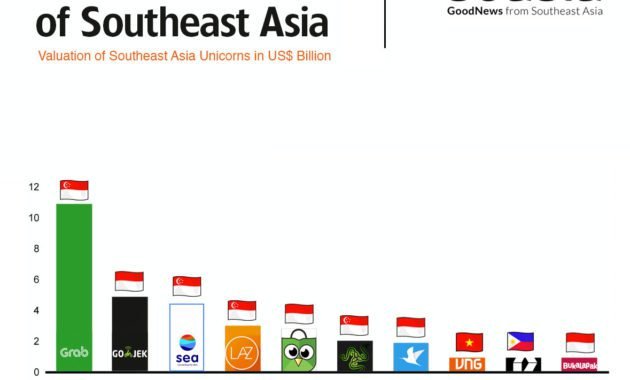
    The answer is in this article. Here I will discuss in detail several things related to market share , including:

    • A brief explanation of what market share is .
    • Types of market shares .
    • Measuring the company’s success in market share .
    • What is the purpose of market share analysis ?
    • How to find out the market size.
    • How to increase market share .
    • Advantages and disadvantages of market share.

    If you want to know more about market share, you will definitely like reading this article. Let’s get started!

    Understanding Market Share

    The term market share is an English word consisting of two words, namely market and share .

    According to the origin of the word, the word market means market, while the word share means part, share, and share. In simple terms, the notion of market share is the part of the market that is controlled by a particular company or product.

    So, the notion of market share is part of the entire demand for an item that reflects the consumer group based on its characteristics (market segment) . Classification of consumers can be grouped based on income level, age, gender, education, and social status.

    So, market share is the part of the market controlled by a company from all potential sales, generally expressed as a percentage (%).

    Market share can also be defined as the percentage of total sales of a company’s products from all sources, divided by the total sales of products (goods and services) in a particular industry.

    simple example,

    If consumers as a whole buy 100 shampoo products, and 35% of those purchases come from XYZ company, then XYZ company manages to control 35% market share.

    Types of Market Share

    Market share can be divided into two types. The following are the types of market share and examples:

    1. Main Market (Primary Market)

    The primary market is the market in which securities are created. In this market, companies sell new stocks and bonds to the public for the first time.

    An initial public offering (IPO) is an example of a primary market. In this trade, investors have the opportunity to buy securities from a bank that does initial underwriting for certain shares.

    An IPO occurs when a private company issues shares to the public for the first time.

    2. Secondary Market

    The secondary market is the market where investors buy and sell securities they already own. This market is called by most people the “stock market”, although shares are actually sold on the primary market when they are first issued.

    The national exchange, such as the Stock Exchange, is an example of a secondary market.

    Measuring Company Success in Market Share

    Market share is the percentage of sales recorded by a company of the total sales of its competitors combined in a given industry.

    That is, market share is one of the indicators used by a company in measuring their level of success against their competitors.

    For example, company XYZ in 2008 had a target market share of 10% of the total market. To reach the target market, a promotion fee of Rp. 100 million is needed.

    If after marketing it turns out that XYZ’s market share is more than 10% (eg 15%), it means that the company’s performance is going well.

    On the other hand, if in that year the market share obtained was only 9%, then it shows that the marketing performance is not good and the company will face efficiency and effectiveness problems.

    There are several factors that need to be explored in assessing the problem of companies that are not able to achieve market share, namely:

    • The size of the market share is too high.
    • There are more and more new competitors in the same industry.
    • There is a decline in the competitiveness of the company.
    • Promotions that cannot reach the target market or are not on target.

    Purpose of Market Share Analysis

    After knowing what market share is, of course we also have to know what the purpose of market share analysis is.

    In general, a company’s market share can be used as an indicator of the company’s competitiveness in a market. So, the goal is to find out how well the company is performing and growing against its competitors.

    This metric can also be used to measure changes in sales revenue so as to assist companies in evaluating primary demand in a market.

    Usually the growth in sales levels that comes from primary demand will make it cheaper and will benefit the company, rather than the market gained from taking part in competitors in the same industry.

    Meanwhile, the loss experienced in a market share is an indication of a major problem in the long term. This requires a change in the marketing strategy used.

    Any business or company that has a below-average market share will likely not be able to survive the competition. This is because the trend of market share and sales of the company’s products is also an early indicator of opportunities or problems that may arise in the future.

    Based on research, market share is an asset that is needed by every company. However, many economists say that market share is not the goal or basic criterion of an economic policy.

    That way, market share can only be used as the main basis for measuring the performance of companies that are competing in a market.

    Market share can be used as a reference for building a company system, both in formulating and making policies. And of course the policy is made based on considerations related to the impact of each policy on the market share of the company’s competitors.

    How to Know Market Size

    In order to know and determine the size of the market and its market share , a fairly in-depth market research is needed. Therefore, entrepreneurs usually define the market to be targeted so that they can see the potential of the market.

    Furthermore, after knowing the size of the market and knowing the targeted market segment, the next step is to study who the competitors in the market are and how many markets they have mastered.

    Companies that make strategic plans must develop marketing mix strategies, and narrow product segmentation so that promotions are right on target.

    As an example,

    Company XYZ which is in the beverage industry. It’s not enough to just explain that the business is drinks, but it must be more focused.

    For example, coffee drinks, tea, fruit flavors, and so on.

    How to Increase Market Share

    Understanding the meaning of market share is important. The reason is, by knowing the target market share, a company can understand its strengths and weaknesses and can anticipate the market.

    Understanding the advantages and disadvantages of a company can be done with a SWOT analysis . That way, a company can do various things needed to increase productivity.

    For example, changing prices, changing services, increasing marketing promotions, changing distribution methods , and so on.

    Then how to increase market share when a company starts a trading business. Quoted from various sources, here are brief tips from business people:

    1. Choosing a business that is still relatively new and has not many competitors from other companies.
    2. Have confidence that the company will be successful in the business it runs.
    3. Determine the company’s vision and mission regarding future business targets.
    4. Take into account the strength of competitors in the same industry.
    5. Pay attention to price movements in the targeted industry and determine the most suitable price.
    6. Creating and building a market network so that the business becomes bigger.

    Conclusion

    From the explanation above, it can be concluded that market share is the portion of the market that is owned or controlled by a particular company or product.

    The percentage of market share is used to measure the competitiveness of a company in a particular industry. That way, the company can see how well it is performing and developing against competitors.

    Thus a brief explanation of the meaning of market share or market share, how to find out market size, objectives, types, and how to increase market share. Hopefully this short review is useful and adds to your insight.

  • The Gig Economy Explained: Definition, Benefits, and Risks

    The Gig Economy Explained: Definition, Benefits, and Risks

    Gig Economy is a term that has recently been booming among the public. The gig economy was born from significant technological developments or we know it as 4.0 technology 
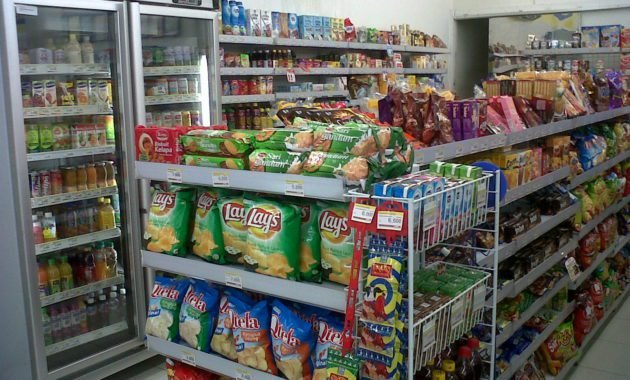
    The gig economy actually refers to a new way of working that is considered more effective and efficient than the previous way of working. In addition, the gig economy can also be a source of income today. 

    So what exactly is the gig economy? How does the gig economy phenomenon work and are there any impacts? 

    What is Gig Economy? 

    the term gig economy comes from the word gig which was previously often used in the entertainment and arts industries.

    Gig is used to name a project in progress and get paid based on the number of projects completed. Gig economy workers generally do not have a fixed income like workers in general. 

    The easiest illustration is about the recent news where there is a resident who accuses his neighbor of practicing pigs because it looks like he doesn’t work but has a lot of money. 

    The presence of the gig economy makes it easier for us to make money because we can work or complete projects from anywhere. Examples of the work in question are content creators, graphic designers, web hosting, and so on. 

    This new way of working is indeed a new thing for ordinary people or the boomers generation. For them, work is leaving the house and going to the office. The COVID-19 pandemic has made the gig economy easier to practice or what we know as Work From Home (WFH). 

    It should be underlined that not all jobs can use the gig economy style, but at least the presence of this gig economy can reduce inequality due to access or ease of making money. 

    Common Types of Jobs

    In the gig economy principle, a person is paid based on the project or work completed. Their monthly income is generally not as fixed as permanent workers in a company. Their income can be greater or less each month, depending on the projects completed. 

    To quote Glints, here are some jobs that are often found in the gig economy:

    • IT: network analyst, information security engineer
    • Penulisan: content writer, resume writer, copywriter, UX copywriter
    • Accounting: accountant,  accounting assistant
    • Administratif: virtual assistant, pharmacy technician, design administrative assistant
    • Education: teacher, lecturer, tutor
    • Software development: game engineer, UI/UX designer, DevOps engineer
    • Project management: project manager, office manager, epic management project manager

    The Impact of the Gig Economy

    The presence of the gig economy is like a double-edged sword where it has both positive and negative impacts. Below  describes the impacts of the gig economy.

    The positive impact of the gig economy is the ease with which a person can take on many projects at one time. You can customize how many projects fit the lifestyle you want to run.

    In addition, you will have many skills because you can determine which project suits your abilities. You can change career direction according to your personality or follow the market demand. Another advantage is that you can determine the rates for the projects you take. 

    Meanwhile, the negative impact of the gig economy is an unclear career path. Because you are a freelancer, it is difficult for you to get a career path.

    Another negative impact is that it is difficult to find a  work life balance . The gig economy offers flexibility where you can work anywhere and anytime. For those of you who are not able to manage time well, this can be a boomerang on physical and spiritual health.

    Lastly, the gig economy can have an impact on the possible exploitation of workers. Because of your non-permanent status, it is difficult for you to get the benefits offered by the company such as protection, holidays, benefits, and so on. 

    That’s information about the gig economy. 

  • Economic Goods: Definition, Types, and Examples

    Economic Goods: Definition, Types, and Examples

    In economics, there are three types of goods that humans can use to support their survival. The three types of goods are economic goods, illite goods, and free goods.
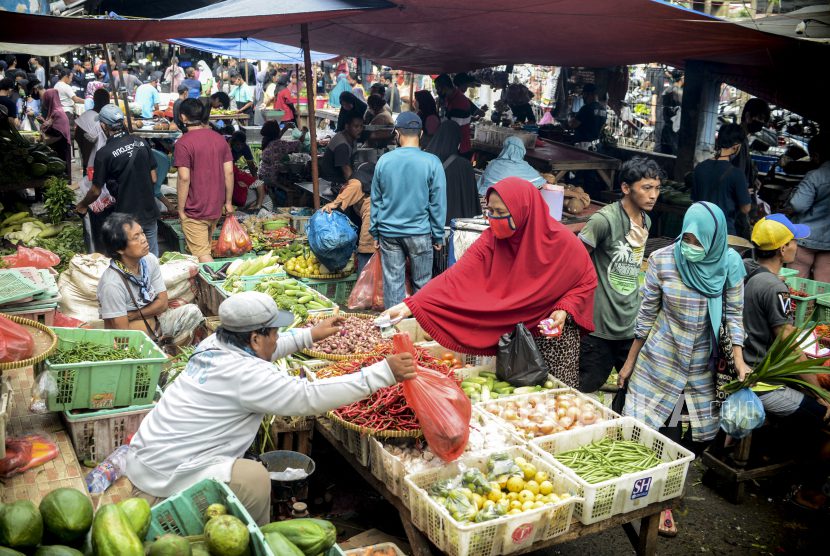
    All three have different meanings and characteristics. However, because there are goods that are limited. Maybe you will not be able to enjoy the item continuously.

    Perhaps from the three terms, you will hear about economic goods more often. For that, so that you also understand more, this article will explain about economic goods, starting from the definition, examples of economic goods, the difference between economic goods and free goods and several other things.

    For that for those of you who want to know more about economic goods, please read the reviews in this article.

    Definition of Economic Goods

    Before discussing examples of economic goods. It would be better if you also know what economic goods are. Economic goods are goods that can meet human needs but in limited quantities.

    The word limited refers to the amount of goods that are less than the amount needed by society. Due to the limited availability of these goods, humans will make sacrifices to be able to get these goods.

    The sacrifice that can be made to achieve economic benefits is an obligation to spend money, time or thought. The availability of these goods is obtained in two ways, namely produced by human labor or indeed goods provided by nature and can be used for free.

    You can get these items at the market, department stores or other types of retailers. Even so, business people want to strengthen their company’s position in field or market conditions. Most of these companies will use a  positioning strategy .

    This positioning strategy is a company’s effort to strengthen their image in order to get a special place in accordance with their target market.

    Microeconomics is a form of high level of mobility in the market

    Types of Economic Goods

    As explained earlier, economic goods are goods that have a lower price and supply compared to market demand. Economic goods also require scarce valuable resources that can provide alternative uses.

    An example is the limited availability of land capable of producing rice and sugar cane. If indeed a farmer wants to produce large products. So the farmer must sacrifice sugarcane production.

    So that it can also be called economic goods has a relationship with the problem of saving scarce resources in order to meet human needs or desires.

    In this explanation, it can be interpreted that all material goods are economic goods. Today there are several types of economic goods. If indeed you do not know the types of economic goods. Then the explanation below will more easily help you to know more about the types of economic goods.

    1. Consumer Goods

    Consumer goods are final goods that can directly satisfy the desires of consumers. These goods include bread, milk, clothing and also medicine.

    In addition, consumer goods are also divided into two groups. The two groups are disposable consumer goods and durable consumer goods.

    a. Disposable Consumer Goods

    Disposable consumer goods are goods that can be used up immediately in one act of consumption. For example, food, cigarettes, matches and fuel. These goods are also included in the category of direct consumption goods.

    This is because these goods are able to provide satisfaction for human desires. In addition, disposable consumer goods also apply to various types of services, such as doctors, lawyers, to waiters, which are also included in disposable goods.

    Disposable Consumer Goods

    b. Durable Consumer Goods

    Meanwhile, durable consumer goods are goods that can be used for a long period of time. The period of time used is not so important, whether it is a short period of time or a long period of time. For example, clothes, tv, pens and so on that have a long period of use.

    Durable Consumer Goods

    2. Capital Goods or Producers

    Next there are types of capital goods or producers. Capital goods are goods that can help in the production process of other goods. The goal remains the same, namely to satisfy consumer satisfaction directly or indirectly.

    Some examples of capital goods or producers are machinery, plants to agricultural and industrial raw materials and so on.

    Capital goods or producers are also still divided into two groups, namely disposable producer goods and manufactured goods that can be used for a long time.

    a. Disposable Manufacturer Items

    Disposable producer goods are goods that will be used up in one act of production. This means that when used once, the manufacturer’s goods will lose their original shape. For example, paper is used to print books and coal is used for factories.

    Disposable Manufacturer Items

    b. Durable Producer Goods

    Durable producer goods are goods that can be used repeatedly. When used for a long time over and over again, the item will not lose its usefulness immediately.

    For example, capital goods such as machinery, factories, tool factory buildings and so on.

    Some of the points explained above are examples of economic goods. The difference between consumer goods and capital goods is seen from their use. Some examples of goods such as electricity and coal are examples of goods that can be used as consumer goods as well as capital goods.

    Then the difference between disposable goods and durable goods also has an important meaning from an economic point of view. The demand for single-use items is considered to be more regular and stable as well as predictable in advance.

    Durable Producer Goods

    Examples of Economic Goods

    The next explanation is an example of economic goods. Currently, there are many examples of goods or services that are classified as economic goods. Even this economic item you may have found easily in the environment. Some examples of economic goods are as follows.

    1. Clothing

    The first example of economic goods is clothing. Clothing is one type of item that is really needed by humans. The number of these clothing products is usually limited.

    In addition, to be able to get this clothing product requires a sacrifice and also competition with others. Because of this, clothing products are classified as economic goods.

    Although in your mind there is a question why the clothes that still exist are included in the economic goods category. Back again as explained earlier if in economics, a lot and a little is something that is so relative.

    Clothing

    However, for clothing products that fall into the category of economic goods, the emphasis is on the method of production and the process of obtaining them. For the production of clothing requires limited materials.

    While someone who wants to get clothes also requires sacrifices such as materials, money, energy, time and even competition with other people who both want the clothing product. Therefore, clothing products are included in the category of economic goods.

    2. Food or Drink

    The next example is food and drink. Food and beverages are included in the category of economic goods because they are seen from the process of obtaining them. Humans need a certain effort to be able to get food and drink.

    Some of the sacrifices made by humans in getting food and drink are making the purchase process by spending money. Then humans also have to do the processing and also look for raw materials for these foods and beverages.

    Basic Needs or Physiology- eati
    Food is one of Basic Needs or Physiology example

    3. Residence

    The next example is a place to live. The limited number of livable housing makes it fall into the category of economic goods. In addition, the process of getting a place to live has also made it into the category of economic goods.

    The reason is that humans have to make certain efforts to be able to get a place to live, such as spending money. The residence referred to here can be a permanent residence owned by private property or a temporary residence such as a boarding house or a rented house.

    To be able to get a permanent residence that is privately owned, one must be able to spend a certain amount of money, building materials such as wood, cement, sand and others if one has to build it from scratch. Then for temporary houses such as boarding houses or rented houses also need money to be able to occupy them.

    Because using these costs makes the place of residence into the category of economic goods.

    Residence

    4. Health Services

    Previously, many examples of economic goods were explained in the form of goods or physical products. So the next example is in the form of services. For example, health services or doctor services.

    This can be seen from the very limited number of practicing doctors. So to use their services requires certain efforts such as queuing and also paying special fees.

    Then to become a doctor also requires a lot of effort and sacrifice such as the costs, time, thoughts to be able to get expertise and also a doctor’s degree.

    Until now, it is not only doctor’s services that are included in economic goods. However, many other services also fall into the category of economic goods.

    This is because when someone needs the help of a service. So they have to spend certain efforts or sacrifices such as spending money.

    Health Services

    Definition of Free Goods

    Not only economic goods, in economics there are also free goods which are also needed for the survival of human life. When viewed from the understanding, in general, economic goods are goods that can be obtained by humans without the need to use certain efforts or sacrifices.

    This is because free goods have an unlimited amount and have been provided by nature in greater quantities than the number of human needs.

    The simplest examples of free goods are air or oxygen. Humans need air or oxygen to survive. In the process of getting it, humans do not need to make certain efforts or sacrifices. However, it is possible that the category of free goods can bear status because it requires a special handling of these goods.

    For example, oxygen that can be used by humans freely without any effort can result in status for people who have health problems. Because those who have health problems in breathing may need special oxygen which must be treated in a certain way before use.

    Free Goods

    Difference between Economic Goods and Free Goods

    In economics, goods are divided into several types depending on the factors in them. Two of them are economic goods and free goods. Previously it has been explained related to what economic goods are.

    At this point, the difference between economic goods and free goods will also be explained. One of the differences between economic goods and free goods lies in the completeness of the commodity.

    Both free goods and economic goods, both are equally needed by humans to meet the needs in their lives. Actually, these two types of goods are not always in the form of commodities, but can also be in the form of services. For clarity, here are some differences between economic goods and free goods.

    1. Item Quantity

    The first difference between economic goods and free goods lies in the quantity of these goods. Economic goods have a very limited quantity. Meanwhile, free goods have an unlimited number.

    The limited number of goods can also be called the scarcity of goods. From this it can be concluded that economic goods have a slightly or more limited amount.

    However, for this small amount, it is still quite relative or requires a comparison. Comparison of the limitations of goods is from the number of human needs associated with these goods.

    You could say if human needs have a limited amount. Therefore, as long as the availability of goods is able to meet these unlimited human needs. It can be interpreted if the goods are free goods.

    And vice versa if an item cannot meet unlimited human needs. Then the goods are included in the category of economic goods.

    Difference between Economic Goods and Free Goods

    2. Production Process

    The second difference between economic goods and free goods lies in the production process. Economic goods require a certain effort for the process of getting it or the production process.

    The existence of a factor that requires effort in obtaining it makes economic goods not mass-produced in unlimited quantities. In the production process, economic goods have their own limitations so that these goods have a limited amount.

    As for free goods to be able to use it without the need to use economic resources. The simplest examples of free goods are the heat of the sun and air.

    It doesn’t just have an unlimited number. However, both sunlight and air can be used by humans without the need to carry out the production process first.

    Difference between Economic Goods and Free Goods

    3. How to Obtain

    The third difference between economic goods and free goods is seen from the way they are obtained. To be able to get free goods does not require a certain effort. Meanwhile, economic goods require sacrifice or competition to get them.

    Having an unlimited number is the factor that makes free goods require no special effort to be obtained. On the other hand, for economic goods that have a limited amount, they must require a sacrifice or competition in order to get them.

    From some of the explanations above, it can be seen how the differences between economic goods and free goods are. Although both are needed for human survival, both free goods and economic goods have differences as described above.

  • Introduction to Microeconomics: Definition, Theory, Objectives and Scope

    Introduction to Microeconomics: Definition, Theory, Objectives and Scope

    Are You looking for references on microeconomic theory? That’s right, sometimes there are still many people who can’t tell the difference between micro and macro economics. Even though the study of this theory will often be encountered by us when studying economics. In order to get to know and understand more about the study of the theory, the following is a specific explanation of microeconomic theory, starting from the definition, objectives, scope, problems, and practical examples:
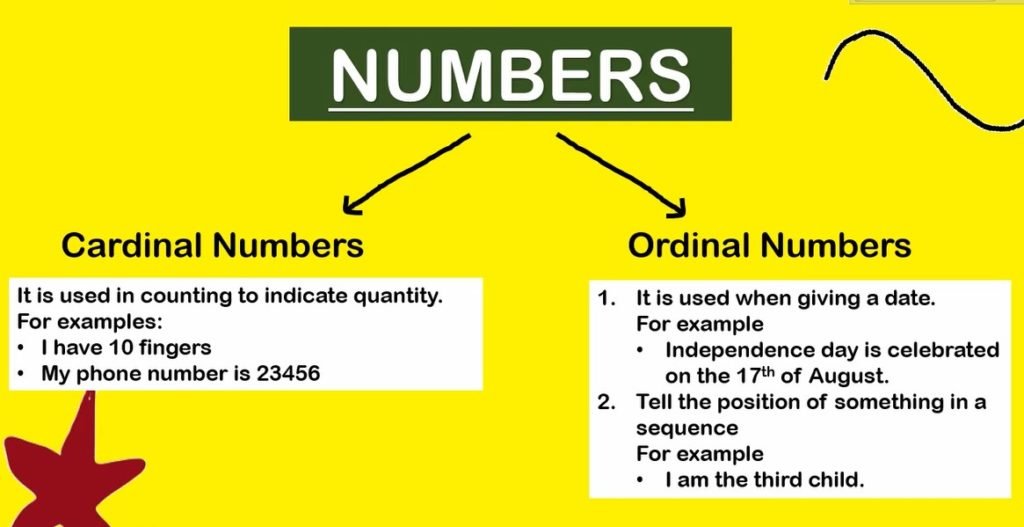
    Understanding Microeconomics

    The definition of microeconomics is a special study of economics to study the behavior of consumers and a company and determine market prices and quantities of inputs, goods and services to be traded. Microeconomics is also referred to as microeconomics which can directly affect decision making about supply and demand for goods or services.

    So, the definition of microeconomics is to have the main goal for companies, namely to analyze the market and how the mechanism in forming the relative prices of products or services. In microeconomic theory, the study of supply and demand curves helps to understand the relationship between changes in wages, the right pattern of work, and to understand what cost variables are in the production of certain goods and services.

    Aspects in analyzing microeconomics include: cost and benefit analysis, theory of demand and supply, elasticity, market models, industry, production theory, and price theory. This aspect of analysis can play a role in helping to analyze market failures and theoretically describe conditions in a perfectly competitive market. To understand the broader understanding of microeconomics, the following is the definition of microeconomics based on the opinion of experts:

    1. According to Mary A Marchant and William M Snell

    Microeconomics is the study of individuals, households and firms in making decisions within a larger economic process.

    2. According to David A. Moss

    Microeconomics is a step in analyzing a decision made by an individual or group, starting from the factors to the form of consideration of the costs and benefits.

    3. According to Adam Smith

    Microeconomics is a rational consideration in making decisions made by business people.

    4. According to NG Mankiw 

    Microeconomics is a scientific study that discusses the role of individual economic actors in making decisions and how they interact in the market.

    5. According to David Ricardo

    Microeconomics is a condition where economic actors already have information about the ins and outs of a particular market. So, microeconomics is a determining factor in the global economic market.

    6. According to Marshal and Pigou

    Microeconomics is a form of high level of mobility in the market, thus enabling economic actors to directly adapt and adjust to changes in the market.

    Microeconomics is a form of high level of mobility in the market

    Microeconomic Goals

    In practice, microeconomics has the following main objectives in economics:

    1. Can perform analysis on the mechanism that forms the relative price of the product, both in the form of goods and services and its application from limited sources among the many alternative uses.
    2. Can perform market failure analysis, which is when the market fails to produce efficient results and explains various theoretical and strategic situations required by a market with a perfect form of competition.

    Scope of Microeconomics

    The scope of microeconomic theory is producers and consumers, but in the world of economics, producers and consumers are individual forms in every condition of society, organizations, companies, and households. The following is a more detailed or specific scope of economic theory in a broader economic study:

    1. Interaction in the Goods Market

    In this economic concept, there must be interaction in the goods market. The market is a place where supply and demand transactions meet. This place then becomes a meeting place between sellers and buyers to make real buying and selling transactions.

    2. Seller and Consumer Behavior

    Sellers and consumers have a rational nature, where sellers want maximum profit, while consumers or buyers need optimal satisfaction, both in terms of quality and price of goods and services. The behavior of these sellers and buyers can be analyzed using assumptions and it is necessary to pay attention to their economic activities which are carried out rationally and openly.

    3. Market Interaction of Production Factors 

    The scope of microeconomics also involves the interaction of the market with the factors of production, where the seller has the product to meet the needs of the factors of production which he does by becoming a buyer as well. While the buyer or consumer then needs money to be able to continue to meet their needs and satisfaction.

    4. Value Use Theory

    Use value in microeconomic theory is a way to study how an item can produce benefits or satisfaction for buyers or consumers who use these goods or services.

    5. Market Structure Theory

    The theory of market structure is to explain the form of market classification based on a number of existing companies, characteristics, and types of products. This theory also discusses the aspect of convenience for companies or producers to enter and exit a market. A market structure that is generally non-competitive will occur if the company does not have the power and ability to influence the amount of certain goods and their prices.

    Meanwhile, if the company has the power or ability to influence the number of certain goods and their prices, then the market structure becomes a competitive market structure.

    6. Price Elasticity

    Price elasticity is a useful form of analysis for studying how the prices of certain goods or services are formed in a market. The formation of this price is influenced by the large number of requests in the market.

    7. Industry 

    In microeconomic theory, it also discusses how the flow of product turnover, both goods and services, can be formed in the market. This theory will then analyze the goods produced, producers, consumers, and distribution in terms that allow or rational in making the right economic decisions.

    8. Input Market

    The scope of the input market studies how producers obtain their production materials at the lowest possible cost and can produce goods or services that have a higher selling value. This means that in this scope it discusses the product process itself from the beginning which does not yet have a high value after it reaches the hands of consumers or buyers.

    Microeconomic Theory

    We recomend you also read : Understanding Accounting and Its Importance in Business.

    Microeconomic Theory

    In the study of microeconomics, this theory divides three analyzes that can be carried out as follows:

    1. Price Theory

    In price theory, it is usually carried out in the process of price formation, the factors that can affect changes in supply and demand in the market. In addition, it also examines the relationship between the price of demand and supply, as well as the shape of the market and the concept of elasticity of demand and supply.

    Price theory also discusses the balance that occurs between sellers and buyers, where both will carry out a bargaining process until an agreement is reached at a certain price.

    2. Production Theory

    Production theory is used as a basis for analyzing the level and cost required for a particular production process.

    This analysis is then carried out on all matters relating to the cost of producing goods and services on the market. The combination of factors that occur in microeconomics needs to be determined by producers in order to get maximum profit.

    3. Distribution Theory

    Distribution theory aims to analyze labor wages, profits, and the amount of interest that must be paid to the owners of capital. This theory becomes the activity of distributing products from producers to final consumers through distribution channels.

    Generally, this theory in microeconomics is used as a consideration for ordering time, product durability, and the distance between producers and consumers. Distribution is not only a matter of distributing a product from producers to consumers, but also a form of business promotion and packaging of these products or services.

    4. Consumption Theory 

    This theory refers to the religious behavior of consumers in the context of meeting a need. Consumption theory will also discuss the occurrence of the market demand curve which is assessed as a derivative of the individual customer demand curve. In addition, it also discusses the occurrence of a decrease in the curve that can use this theoretical approach.

    Microeconomic Problems

    In microeconomics, economic actors can certainly face problems or obstacles that are economic in nature or related to the economy. The application of microeconomic theory is what can make the best choice from various alternative choices according to the needs and conditions of the problem at hand. This can happen because there are activities to produce or consume goods and services.

    In this situation, economic actors need to make decisions that aim to make the available resources more efficient. In addition, this choice can also create better welfare for economic actors and even more broadly. The following economic problems can occur in the scheme of microeconomic theory:

    1. Scarcity Problem

    Scarcity Problem

    The problem of scarcity can occur because of an imbalance between community needs and available production factors. Factors of production that can be used to produce the needs of these goods are limited. That is why people find it difficult to get all the things they want. Finally, the community makes a decision to choose other options in order to still be able to meet their needs.

    2. Community Needs

    In microeconomics there must be problems related to the needs of the community because basically the needs of the community are a form of need and desire to consume goods or services. Generally is as goods or services imported from abroad. Nevertheless, it remains the most widely produced domestically. In microeconomic theory, it shows that people’s desire to obtain goods and services can be divided into two forms, as follows:

    • The desire followed by the ability to buy or is called effective demand
    • Desire that is not followed by the ability to buy

    Microeconomic Example

    In practice, microeconomics can be seen when producers and consumers carry out rational economic activities. The following is an example of the occurrence of micro-economy that applies in Indonesia:

    1. Request

    Demand is one form of microeconomic example that shows the amount of goods and services that are in demand and the ability to buy for consumers at a certain price level and time. When there is demand when the price of goods or services is higher, the quantity demanded for goods or services will decrease. Conversely, if the price of goods or services decreases, the higher the buyer’s demand for goods or services.

    2. Offer

    In addition to demand, there is supply which is also an example of microeconomics which shows the amount of goods or services available for sale or offered to consumers at a certain price level and period. The actors who make offers are producers, where the higher the price, the higher the number of bids. Conversely, if the price decreases, the number of goods or Java offered will also decrease.

    Microeconomic Example

    3. Consumer and producer behavior

    The behavior of consumers and producers is also an example in microeconomics which shows the activities and processes carried out by economic actors in selecting, searching, buying, evaluating, and using goods or services for certain needs.

    4. Price

    Price is certainly a part of microeconomics because it has a relationship with the value of goods. Price is the element of the marketing mix that represents a profit. The price function in microeconomic theory is a measuring tool that shows the value of a good or service. So when the price is determined it is influenced by economic conditions, demand and supply curves, and also costs that can continue to change.

    5. Inner Cost

    Internal costs are sacrifices that companies or individuals use to get more benefits from the various economic activities they carry out. These costs can affect price changes, for example, high raw material costs cause an increase in the price of the product itself. This cost is also commonly referred to as  cost  because it is issued for  output  according to the target to be achieved.

    6. Market

    The market is a place where buying and selling activities occur, namely bringing them together to obtain a sale and purchase agreement. The market is then not only defined as a physical form, but can take a broader form, such as a marketplace or online buying and selling activities using the internet.

    If we talk about microeconomic theory, we cannot be separated from macroeconomics. Both have a fundamental difference, namely the scope that covers them. If microeconomics has an attempt to find factors that contribute to decisions and their possible impact on the general market, then macroeconomics discusses a holistic study of the structure, performance, behavior, and processes of economic policy making at the national level.

    Well, that’s an explanation of the  introduction to microeconomics , starting from the definition, objectives, scope, problems, and examples. have you been able to understand it? Most people may still have difficulty distinguishing between micro and macroeconomics. Both economic theories discuss the same economic objects, such as producers, consumers, prices, impacts, and so on.

  • Diference of Cardinal and Ordinal Numbers

    Diference of Cardinal and Ordinal Numbers

    Using numbers in English is not the same as numbers in other country. In English, the terms cardinal and ordinal numbers are known. What are cardinal and ordinal numbers? Check out this study.

    In English lessons, there are two types of numbers. The first number is known as Cardinal Numbers, while the second number is known as Ordinal Numbers. What’s the difference between the two?

    Understanding Cardinal and Ordinal Numbers

    Cardinal and Ordinal Numbers 2

    Cardinal numbers are numbers used to describe numbers in integers. The ordinal numbers are numbers used to describe positions. To make it easier to understand, consider the following picture.

    The picture above, on the left is an example of a Cardinal number, which is also a number that is used to express the rounded quantity of the object in question. The right part is an example of an Ordinal number which is commonly used to express a sequence or a stage.

    If you’ve ever watched MotoGP, at the end of the race, the rankings achieved by each racer will be announced. That’s where Ordinal numbers play a role because the numbers used are intended to tell the position and not the number.

    An example of an Ordinal Number is as below:

    • 1st Marquez
    • 2nd Dovizioso
    • 3rd Vinales

    Meanwhile, if you are in a market and asked by the seller how much watermelon you want to buy, you need to answer it using the Cardinal number.

    An example of a Cardinal Number is as follows:

    “Hey, bro. How many watermelons you want to buy?”

    “5 watermelons”

    It’s impossible for you to want to answer using the sentence “5th watermelon”?

    Use of Cardinal and Ordinal Numbers

    Earlier, it was discussed that the cardinal is used to express the number and the ordinal to announce the position. Both cardinal and ordinal have their respective uses that you need to know so that there are no mistakes in their use.

    Cardinal Numbers

    Cardinal Numbers

    Cardinal numbers are used to indicate the number and are usually used to answer the question “how many?”. One thing to keep in mind is that cardinal numbers are always whole: 1, 2, 3, etc. and not fractions or numbers other than whole numbers. It’s simple, isn’t it? Haha. Yes indeed. A bit tricky is for ordinal numbers.

    Ordinal Numbers

    Ordinal Numbers

    • Level

    For example, if you want to tell uncle that you are now in grade 2 of high school, then you need to say it using ordinal numbers. Ordinal numbers are also used to refer to the levels in a building.

    Example :

    2nd year of senior high school

    37th floor

    • Date

    Ordinal numbers are also used to express dates. For example August 17th, June 3rd, etc.

    • Order

    If you like making video tutorials on cooking, makeup, and so on, you need to use ordinal numbers to sort each step you want to share. For example this:

    First, turn on the stove

    Second, put your pot on the stove

    Third, turn off the stove

    • The denominator of the fraction

    The denominator is the number at the bottom of the fraction and the numerator is the number at the top. Well, in English, the denominator uses ordinal numbers. For example, to express then we use the three fourth sentence.

    So in conclusion, in ordinal numbers, there are four endings used, namely: -st, -nd, -rd, -th. The four endings must be remembered, Friend. The four suffixes are used to indicate the unit number. But you need to pay attention, Friend . If you find the number 33, add the suffix -rd instead of -th. So you guys read it 33rd, thirthy third not thirthy thirth. Similarly, 41st is read as forty first not forty forth, and so on.

    Window Cleaning Services in Washington DC

    Septic tank pumping service in Wichita

  • Right Triangle Formula of Area and Perimeter

    Right Triangle Formula of Area and Perimeter

    This article will discuss the right triangle formula, starting from its meaning to example questions and discussion.

    Hi guys ! Did you know that there are various types of triangles, one of which is a right triangle. That you know triangle with one side perpendicular to form an angle of 90 °. While the other side is slanted and that is the longest in size. How about it, have you drawn what the shape of a right triangle looks like? Instead of imagining it for too long, let’s just get into the discussion, let’s go !
    What is an Right Triangle?

    On top of already I alluded a little bit, if angled triangle is one of the triangles with one side perpendicular and form an angle of 90 °. You can see a picture of the build below:

    right triangle formula

    The side c is the hypotenuse or hypotenuse. Well , the perpendicular sides are sides a and b which are called the base and height. So that you can more easily understand what the heck triangle elbow, it can be checked from the three following nature:

    • A right triangle has two sides that are perpendicular to each other.
    • A right triangle has one hypotenuse and one of the angles is a right angle or 90°.
    • right triangles do not have rotational symmetry and folding symmetry.

    Well , if you already know the three of the above properties, means already not confused anymore donk distinguish angled triangle with other triangles.

    Right Triangle Formula of Area and Perimeter

    After you understand the concept of a right triangle, now let’s try to calculate the circumference and area.

    The perimeter of right triangle formula:

    K = side a + side b + side c

    The Area of right triangle formula:

    L = base x height

    But, what if it turns out that one of the sides of the right triangle is unknown? What formula should you use to find the length of the unknown side? Yep , how to use the Pythagorean formula. Here is the formula:

    = a + b or c = a + b 2

    = c – b or a = c – b 2

    = c – a or b = c – a 2

    Sample Questions and Discussion

    The formula is easy isn’t it? So , so that the formula for the circumference and the area right triangle formula for a right triangle can be easier for you to understand, also pay attention to the following examples of questions and discussions!

    Example Question 1

    A right triangle has sides a, b, c 3, 4, and 5, respectively. Find the perimeter of the triangle!

    Discussion:

    Given: a = 3; b = 4; and c = 5.

    Asked: K

    Answer:

    K = side a + side b + side c = 3 + 4 + 5 = 12 cm

    So, the perimeter of triangle ABC is 12 cm.

    Example Question 2

    A right triangle has a hypotenuse of 13 cm. The height of the triangle is 5 cm. Calculate the area of ​​the triangular triangle!

    Discussion:

    Given: c (slope side) = 13 cm; b (height) = 5 cm.

    Asked: L

    Answer:

    First, we must seek to know in advance how long the base of the triangle. You do this by using the Pythagorean formula.

    = c – b = 13 – 5 = 169 – 25 = 144

    a = √ 144 = 12 cm.

    After knowing the base is 12 cm. Next we calculate the area.

    L = x base x height = x 12 x 5 = 30 cm.

    So, the area of ​​the right triangle is 30 cm.

    That’s the explanation of the area of right triangle formula. Once you know the meaning and formula, it turns out to be very easy to calculate. Hopefully the above explanation can be easily understood by you, so if you later meet a question that uses the area of right triangle formula, you will not have any difficulties.

  • Who is Antonio Gramsci ?

    Who is Antonio Gramsci ?

    Antonio Gramsci was an Italian intellectual and politician who founded the Italian Communist Party and contributed to the idea of ​​communism in Italy. He was born in Ales, Italy on January 23, 1891.

    In 1911, Gramsci began his academic career at the University of Turin. He also joined the Socialist Party, and was associated with the Federation of Young Socialists.

    Gramsci formed the left in the socialist party and encouraged the development of factories.

    Gramsci led a leftist movement in a congress in Livorno with the aim of founding the Italian Communist Party and spent two years in the Soviet Union.

    When he returned to his home country, he became leader of the Italian Communist Party, and was elected to the council.

    However, his party was banned by Benito Mussolini so he was arrested and imprisoned. While he was imprisoned, instead he undertook a historical and theoretical study of Italian society and strategies for change.

    The ideas of Gramsci’s imprisonment at that time became the basis of ideas for figures, such as Robert Cox, Stephen Gill, Joseph Femia, and Robert Gilpin.

    In Gramsci’s perspective, it is different from the realism perspective which assumes that the state is the only actor who has an important role, and prioritizes the concept of national interest.

    Whereas in Gramsci’s theory focuses on hegemony. Gramsci’s perspective seems to be a sign to move away from the international order.

    Hegemony defined by Gramsci is a conscious obedience to one’s power, the power that is built in Gramsci’s perspective does not come from coercion or violence but rather from a control.

    Hegemony itself is born from the practice of approval or subjugation. If a group wants a win in agreement, it must be able to create historical blocs,

    According to Gramsci, to hegemony a group, it is necessary to have an ideology that has a material basis and is supported by an intellectual.

    For Gramsci, everyone is basically an intellectual, but not everyone has an intellectual function in social life.

    Gramsci changed the meaning of hegemony from strategy to a concept, such as the Marxist concept of forces and relations of production, class and state.

    Gramsci extended  his idea of ​​leadership as a condition for gaining power in  a group.

    Through his work, Gramsci emphasizes the concept of hegemony by explaining that “hegemony is a consensus organization.” And in several paragraphs of his Prison Notebook he uses the word leadership interchangeably with hegemony and opposite domination.

    In Gramsci’s sense, the word hegemony must be distinguished from the meaning of the original word, namely the domination of a nation over another nation.

    Gramsci emphasizes that the concept of hegemony focuses more on the human side. He also said consensus with spontaneity because it is psychological.

    Gramsci’s thought emerged as an alternative to the approach to the theory of social change which was previously dominated by class determinism and Marxist economics.

    Hegemony is built on the prestige of the importance of ideas and the inadequacy of physical strength alone in social and political control.

    According to Gramsci, in order for those who are controlled to obey the ruler, those who are controlled must not only have and internalize values ​​and norms.

    REFERENCE

    HI admin. (2013). Antonio Gramsci On The Crisis and The Rise Of Global Capitalism. Retrivied from https://hi.fisipol.ug.ac.id/riset-iis/antonio-gramsci-about-krisis-dan-kebangkitan-kapitalisme-global/

    Ali, Zezen Zaenudin. (2017). Hegemony Thought Antonio Gramsci (1891-1937) in  Italy. Yaqhzan,3(2). Retrivied from  https://syekhnurjati.ac.id/jurnal/index.php/yaqhzan/article/download/5482/2544

    Siswati, Endah.(2017).Anatomy of Antonio Gramsci’s Theory of Hegemony. Journal of Translitera , eds. 5.1-33. Retrivied from https://core.ac.uk/download/pdf/230839469.pdf

    The Editors of Encyclopedia Britannica. (1998). Biography of Antonio Gramsci. Retrivied from https://www.britannica.com/biography/Antonio-Gramsci

  • Social Research Methods

    Social Research Methods

    Social research method is a systematic way to study social phenomena. Social phenomena can be explained scientifically if the investigation process is carried out through the application of social research methods. Before going any further, it is necessary to first understand the meaning of research.
    What is research?

    Research  can simply be interpreted as scientific efforts made by researchers to capture a phenomenon. Therefore, the research in question is social research, so the phenomenon is a social phenomenon. Some social scientists describe research as follows:

    Soerjono Soekanto said research is a scientific activity that aims to reveal the truth as a manifestation of human desire to know what is actually being faced.

    Hill Way defines research as a study method that is applied carefully and in depth to reveal the facts of the problems that are believed to be able to solve these problems.

    Sutrisno Hadi said research is an effort to find, develop, and test the truth of knowledge by applying the scientific method.

    Saifuddin Anwar argues that research is a scientific endeavor with the aim of answering research problems. So that research cannot be done without problems and goals.

    Sanafiah Faisal said that research is an activity in studying a problem in a planned and systematic way to find scientifically valid and objective stone knowledge.

    Winarno Surachmad defines research as a scientific activity to accumulate knowledge from primary sources with the aim of finding general principles, as well as making estimates through generalizations outside the sample studied.

    Carter Good said that research is a path to progress and problem solving.

    Webster’s Dictionary defines research as an investigation of the process of inquiry in a science to obtain facts and principles carefully and systematically.

    From some of the definitions described above, we can catch several key phrases that describe what research is, such as: the application of the scientific method, the process of investigation, efforts to obtain objective facts, efforts to solve problems, and systematic efforts in investigation.

    Referring to the above definition, social understanding can be interpreted as an effort to investigate social phenomena using scientific methods in social science.

    What are the types of scientific methods in social research?

    We can understand the scientific method in the social sciences based on its types. There are at least two types of social research methods based on their approach: quantitative and qualitative. However, in its development, a third approach emerged, namely a combination of the two ( mixed method ). Here, we will briefly discuss quantitative and qualitative social research methods. The difference between quantitative and qualitative social research methods can be identified through the treatment of the data, the process of data collection, and its variants or types.

    Quantitative research methods

    Quantitative social research methods use numerical data or in the form of numbers. Even though using open interviews, quantitative methods convert narratives into numbers through a process of quantification or coding.

    The process in quantitative research begins with the creation of variables. For example, research on the effect of family monthly income on children’s education level. The family’s monthly income is a variable. Likewise, the level of education of children. The two variables are assumed to be related in the form of a hypothesis. For example, the hypothesis that the researcher has is, the higher the monthly family income, the higher the education level of the child. At this point, the researchers in addition to making variables also develop hypotheses.

    In the process of collecting data, quantitative research methods use instruments outside the researcher, such as questionnaires, survey forms, polling tools, and so on that have been arranged neatly before going out into the field. During the data collection process, researchers focused on the content of the research instruments that had been prepared. That is, there is no need or very little need for an element of subjectivity. The data contained in the research instrument is objective data.

    Research using quantitative methods emphasizes the element of objectivity. Respondents filled out forms or questionnaires distributed according to the instructions given. Some examples of quantitative research methods that are widely used for example, survey research, longitudinal research, cross-sectional research.

    Qualitative research methods

    Qualitative research methods use narrative data or words. The narratives obtained during the data collection process were interpreted by the researcher. However, data processing can also be done through coding. But not in the context of assessing, but looking at the pattern of the informants’ answers.

    In contrast to quantitative research, qualitative research begins by abandoning theoretical assumptions, although there are also qualitative studies that depart from theoretical assumptions. One obvious difference is that qualitative research does not require hypotheses in its research design. For example, research on the development of pop culture in Indonesia. Researchers do not need to write in their proposals a hypothesis, for example, the internet has become the main medium for shaping young people’s tastes for contemporary pop culture. Such assumptions may exist in the mind of the researcher, but not in the proposal

    In the process of collecting data, the methods that are commonly used are observation and interviews. Media analysis content can also be used in discourse analysis research. Through observation and interviews, researchers collected narrative data in the form of a collection of stories given by informants and conditions in the field. In the process of collecting data, the subjective element plays an important role because the researcher interprets the stories obtained during data collection.

    Qualitative research can use interview guides, diaries, or anything that can be used to record narratives in the field as research instruments. Another instrument owned by qualitative research is the researcher himself. The researcher doubles as an instrument, the narrative data collected will be interpreted by the researcher himself. Several kinds of research using qualitative methods, for example, case studies, ethnography, phenomenology.

    In more detail, read the Qualitative Method. From the description above, it can be explained the difference between the two methods. What are the differences?

    The difference between quantitative and qualitative methods:

    Quantitative Qualitative
    Numerical data Narrative data
    Prioritizing Objectivity Focus on Subjectivity
    Starting with a hypothesis No need for hypothesis
    Research subjects are called respondents Research subjects are called informants
    Researchers are not instruments Researchers as instruments
    The instrument is called a questionnaire The instrument is called an interview guide

    These differences are general differences. It should be noted that the differences are more accurately seen as trends. For example, in qualitative research, numerical data can also be used, but only as support. The tendency of qualitative research is the use of narrative data.

  • Muhammad Sangidu – Muhammadiyah Figure

    Muhammad Sangidu – Muhammadiyah Figure

    Kiai Haji Muhammad Sangidu or Kanjeng Raden Penghulu Haji (KRPH) Muhammad Kamaluddiningrat (born in Kampung Kauman Yogyakarta [a] in 1883 and buried in the Karangkajen Cemetery after his death in 1980) is the 13th Chief Penghulu [b] of the Sultanate of Yogyakarta who was sworn in in 1914 to replace the previous penghulu , KRPH Muhammad Khalil Kamaluddiningrat. Sangidu is a relative of Ahmad Dahlan and a supporter of the Muhammadiyah organization that Dahlan founded. He is known as a stamboek holder(Muhammadiyah membership card) first, because he was the first member of the Muhammadiyah organization. In addition, he is the person who proposed the name “Muhammadiyah” to Dahlan.

    When he was the Head of the Penghulu Sultanate of Yogyakarta, Sangidu played a role in making Muhammadiyah teachings the dominant ideology in Kampung Kauman. Although there had previously been tensions between Ahmad Dahlan and the traditional clerics in Kauman Village, his cooperative approach with the court managed to avoid conflict. He also uses local culture as a medium for preaching. Sangidu also tried to change the marriage customs of the people so that they only provide simple treats, and he once tried to make the accuracy of 1 Shawwal (which is the date of Eid al-Fitr in the Hijri calendar ) by using the rukyat bil aini method (observing by sight) instead of calculating the aboge (Javanese year ). In addition, he pioneered the establishment of a modern school system which is now known as Madrasah Muallimin Muhammadiyah and Madrasah Muallimat Muhammadiyah , and helped pioneer Frobelschool which was the first kindergarten established by the Indonesian people.

    Family’s background

    Raden Hariya Muhammad Sangidu is the son of Kiai Ma’ruf Ketib Tengah Amin and Nyai Sebro (Raden Nganten Ketib Amin). [1] He was born in 1883 in Kampung Kauman. [2] Sangidu is the eldest of five children who have younger siblings named Raden Hariya Muhsin, Raden Nganten Muhsinah, Raden Hariya Ali, and Raden Hariya Syarkowi. His father was the second of ten children of Kiai Maklum Sepuh or Kiai Penghulu Muhammad Maklum Kamaluddiningrat (the 9th Head of the Sultanate of Yogyakarta), [1] [3]while his mother is the fourth child of Kanjeng Raden Tumenggung Ronodirdjo from his third wife named Gentang Pakem. Ronodirdjo himself was an official of the Regent of Anom Patih Danuredjo or deputy regent of the Sultanate of Yogyakarta. [4] Sangidu also a sedulur gawan with Ahmad Dahlan who would become the founder of Muhammadiyah . Sedulur Gawan is a relative of the result of a marriage between a widow and a widower, each of whom brings a child. The innate child then became a brother. [5]

    Wedding

    Sangidu’s first wife (name unknown) was the daughter of Muhammad Khalil Kamaluddiningrat (the 12th Head of the Sultanate of Yogyakarta). [6] Through his first marriage he had three children, namely Djalaluddin (husband of Siti Dariyah, father-in-law of Haiban Hadjid), Siti Salmah (wife of Farid Ma’ruf), and Siti Nafi’ah (wife of Masduki, mother-in-law of Mukti Ali ). [7] [8] Sangidu and his father-in-law had different directions because he became a supporter of Ahmad Dahlan’s da’wah movement which later became known as “Muhammadiyah”. Sangidu then had a second marriage with Siti Jauhariyah (Ahmad Dahlan’s sister-in-law). [9] [10] [11] Through this marriage he was blessed with nine children, namelySiti Umniyah , Dariyah, Muhammad Wardan, Darim, Muhammad Jannah, Muhammad Jundi, Jazuri, Burhanah, and Wardhiyah. [8] [12] [13]

    Early role of Muhammadiyah development

    Religious reform in Kauman Village

    Before it was officially established, the spread of Muhammadiyah understanding was initially only centered in Langgar Kidul which was driven by Ahmad Dahlan by disseminating information to scholars who had the same opinion in the area around Kampung Kauman. [14] However, this teaching gradually began to spread to other places in Kauman Village, such as the santri studying in the pavilion of his house (the place which later became known as the Tabligh Pendopo). [15] [16]

    Sangidu’s efforts in defending Ahmad Dahlan’s teachings began when he followed the new understanding and taught it to several students of Kampung Kauman at the Tabligh Hall. Even though at that time Muhammadiyah had not been officially formed, he asked his students to practice Islamic teachings in real terms, especially Surah Al-Ma’un . [c] [17] [18] The students are also asked to give charity socially. They are invited to support the beggars, feed them, tell them to bathe and then clothe them, and finally invite them to pray. [19] [20]

    Like Dahlan, Sangidu provides more examples than lectures to his students. At that time, Yogyakarta was a destination for urbanites from the outskirts to try their luck. The action he took as a manifestation of Surah Al-Ma’un was to gather workers and the poor who came from the outskirts to the pavilion of his house to study religious knowledge with his students. [21] The ideas and empowerment of small people from Dahlan and Sangidu are still well understood by Muhammadiyah and Nasyiatul Aisyiyah activists . [22]

    Before Sangidu served as the head of the Sultanate of Yogyakarta, he faced challenges in spreading da’wah amar makruf nahi munkar . If Dahlan is accused of being an “infidel kiai” and the reform movement he propagates is called ” Alus Christian ” by scholars who maintain the old pattern, Sangidu is considered a destroyer of brotherly relations among the Kauman people. This is because Kiai Djalal and Sangidu as the leaders of the Tabligh Hall defended the movement initiated by Ahmad Dahlan, while Muhsin as the leader of Langgar Dhuwur who was still related to Kiai Djalal and Sangidu did not approve of the reform movement. [23]

    Proposed name “Muhammadiyah”

    The name “Muhammadiyah” was originally proposed by Sangidu at the Tabligh Hall ( Darban 2000 , p. 80).

    After understanding the teachings of the reformists, Ahmad Dahlan felt the need for an organization that could support his mission in spreading the notion of renewal. He finally decided to establish an organization that not only took care of education, but also gathered and became a forum for the reformer movement. He conveyed this intention to his students, relatives, and friends who agreed with the Islamic reform movement he brought in Kauman. In 1911, Sangidu proposed a name for the movement that would be pioneered by Ahmad Dahlan at the Tabligh Hall, namely “Muhammadiyah”. [9] [24] [25] [26] This name was later confirmed by Ahmad Dahlan as the name of his organization after he repeatedly performed the Istikharah Prayer .[27] Muhammadiyah was declared established on 8 Dzulhijah 1330 H or 18 November 1912. [28]

    The name Muhammadiyah is taken from the name of the last Prophet of Islam Muhammad , added with the Arabic letters yes and ta which means nationalization or identification. The name also means to explain that the supporters of this organization are the people of Muhammad, whose principle is Muhammad’s teachings, namely Islam. [29] The ideology of Muhammadiyah reform was prepared with conviction and a work plan that proceeded in a systematic direction. [30] Muhammadiyah became known as a da’wah organization and a social organization for educated people who carried out the credo of tajdid (renewal) in the future. [31]

    On December 20, 1912, Muhammadiyah submitted a rechtspersoon (request as a legal entity) to the Dutch East Indies government through the assistance of Budi Utomo’s administrators. [9] Ahmad Dahlan was listed as the first applicant, along with six of his students RH Syarkawi, H. Abdulgani, HM Sudja, HM Hisham, HM Tamim, and HM Fachrudin. Muhammadiyah was then officially established with the release of Besluiten van den Gouverneur Generaal van Nederlandsch-Indie 22 den Augustus 1914 (No. 81) , with the condition that its scope was limited to the Yogyakarta area only. [32]

    According to Mitsuo Nakamura (Muhammadiyah scholar from Dalian , China ), Sangidu was not a well-known person in Muhammadiyah circles, especially among Muslims in the Dutch East Indies region in the early 20th century . Nevertheless, he was the first stamboek holder to take part in developing Muhammadiyah. [33] Like Ahmad Dahlan, he is neither a scholar nor a writer who bequeaths books and articles, but he is an organizer. [34] Despite bringing the idea of ​​renewal, his approach tends to be cultural in developing Muhammadiyah’s ideas. [35]

    Head of the Sultanate of Yogyakarta

    Sangidu was the 13th Chief Penghulu of the Sultanate of Yogyakarta who was appointed in 1914 to replace the previous penghulu, namely Muhammad Khalil Kamaluddiningrat. [9] Prior to his appointment as penghulu, the title he held was Ketib Anom Kiai (Vice Head Penghulu). [7] Based on the records of Gadjah Mada University historian , Ahmad Adaby Darban, Sangidu was awarded the honorary name KRPH Muhammad Kamaluddiningrat when he was appointed as the head of the Great Mosque of Yogyakarta . [36]

    When he served as a penghulu, Sangidu got a place in Kawedanan Reh Pengulon or Bangsal Pengulon as an office and home office ( Rohman 2019 , p. 207).

    The appointment of Sangidu as a penghulu had a significant impact on Kauman Village. Ulamas and people who do not agree with Muhammadiyah’s religious understanding are shrinking. Along with the breakdown of the regeneration of local-traditional kiai, Muhammadiyah ideology became the dominant ideology in Kauman. [37] Darban noted that with Sangidu’s inauguration as the head of the palace, Kawedanan Reh Pengulon (or Bangsal Pengulon) became an increasingly open place for Muhammadiyah’s Islamic reform movement. [38] Muhammadiyah was allowed to enter the Pengulon Ward which was previously a taboo place for the common people and the place later became a training center for Muhammadiyah missionaries . [7] [39]Sangidu has also made it easier for Dahlan to introduce the understanding of modern Islam in the context of the traditionalist Islamic society in Yogyakarta in the early 20th century. [40]

    As a courtier of the Sultanate of Yogyakarta, Sangidu did not show an antagonistic attitude towards the palace in relation to the birth of Muhammadiyah, although previously there had been tensions between senior clerics in Kauman Village and Ahmad Dahlan over the issue of Qibla direction and other Islamic religious practices. [14] [41] [42] Sultanate of Yogyakarta itself generally regarded as the central tradition of Javanese full of mystique , [43] [44] while the Muhammadiyah organization more identify themselves as a movement of purists who aggressively eradicate superstition(believing in something that doesn’t actually exist), bidah (actions that are not carried out based on a predetermined example, including adding or subtracting provisions), and khurafat (unreasonable teachings) later on. [45] However, Sangidu’s political-structural background as part of the ulema of the palace and the head of the Yogyakarta Grand Mosque formed a cooperative attitude with the sultanate power. [7] According to Siti Ruhaini Dzuhayatin (a member of the Council for Tarjih and the Development of Thoughts for the Central Leadership of Muhammadiyah 2000–2005), this attitude will later characterize Muhammadiyah as an organization that is responsive-adaptive to the government. [46]By utilizing local culture as a medium for preaching, Sangidu tries to build a new paradigm regarding Muhammadiyah in terms of tanzih (purification), which is an inclusive attitude that reflects Muhammadiyah as moderate Islam. [47]

    Regarding Sangidu’s cooperative attitude with the sultanate, historian Harry Jindrich Benda emphasized that Sangidu’s da’wah strategy was one step in building a new culture in the midst of the traditionalism paradigm of society at that time. [35] In this case, Sangidu has actually changed his position from the ulama who can only be “touched” by certain people, such as the santri and people close to the nobility., become someone who is close to the surrounding community. This cooperative attitude and moderate ideas in the view of the historian MT Arifin made his ideas acceptable to the sultanate circles. This attitude is carried out with regard to issues that do not substantively contradict the beliefs he believes in. [48]

    As a descendant of Sangidu, Widiyastuti also considered that the position given by the sultanate to his grandfather was intended to provide a stable atmosphere. [49] In addition, this position is also intended so that the ideas of Islamic purification can develop within the palace. According to historian MC Ricklefs , Sangidu’s attitude was effective in encouraging the palace’s relatives to follow his teachings. [50]

    In line with the views of Arifin and Widiyastuti, Muhammadiyah reviewers Deliar Noer , commenting on Sangidu’s position in relation to the development of Islamic reform initiated by Ahmad Dahlan basically could not be sterile from Hamengkubuwana VII’s role as sultan at that time. Noer added that the sultanate did not complicate the Muhammadiyah movement which was also spread by Sangidu. Hamengkubuwana VII at least “gave wind” to the idea of ​​reforming Muhammadiyah to develop in the lives of its citizens, especially Kampung Kauman. [51]

    Updates in the field of culture

    Sangidu’s first attempt to change people’s customs concerns the wedding ceremony. When she married her daughter, Siti Umniyah, she changed the customary procedures that were not in accordance with Islamic teachings (because it brought a lot of waste) with walimah (a simple treat), but all invitees and the poor could enjoy it. Part of the costs that had been planned for the wedding party, the remainder was then divided into three, namely for walimah , the living capital of the newlyweds, and donations to Muhammadiyah. [52] After the simplification of the wedding ceremony was successful, Muhammadiyah decided that each of its members was ordered to arrange an overall cost plan if they were to hold a hajat event (wedding orcircumcision ). The cost should be divided into three as Sangidu did. This decision is carried out in the following way: every time there is an intention, the Muhammadiyah board goes to the owner of the event and explains the policy that has been set. Through a family approach, the people of Kampung Kauman are gradually able to follow these changes. [53]

    Another contribution of thought made by Sangidu to change the customs of the community is to seek the accuracy of 1 Shawwal (which is the date of Eid al-Fitr) based on the Hijri calendar . This was done because at that time people still used the aboge calculation ( Javanese year ). [54] Muhammadiyah reckoning experts, including Dahlan and Sangidu, conducted investigations using the rukyat bil aini (observation by sight) method . They determined that 1 Shawwal occurred one day before Grebeg Shawwal. The results of calculations using the reckoning and rukyat bil aini methods are not different. [52]Sangidu then escorted Dahlan to Hamengkubuwana VII to convey the intention of holding the Eid prayer the day before the Grebeg Syawal and confirming the direction of the rows at the Great Mosque of Yogyakarta. This intention was accepted by the sultan, but Grebeg Syawal was still carried out using the aboge calculation . The Sultan said to Dahlan, ” Wide wide according to reckoning or rukyat, while grebeg in Yogyakarta still has a tradition according to the aboge count “. [9] [55] [56] [57]

    As a preacher, Ahmad Dahlan’s position is under the head of the penghulu in the structure of the Yogyakarta Palace Kepenghuluan institution. He could not possibly enter the palace and meet directly with the sultan without passing the authority of the head of the penghulu. Thus, the meeting between Dahlan and the sultan probably occurred after 1914 when Sangidu had served as the head of the Sultanate of Yogyakarta. [58]

    Educational stub

    ABA Kauman Kindergarten is the first kindergarten established in Indonesia ( Suratmin 1990 , p. 79). This school was pioneered by Sangidu and the young generation of Muhammadiyah women SPW (Siswo Proyo Wanito) with the initial name Frobelschool ( Seniwati & Lestari 2019 , p. 225).

    In 1918, Sangidu pioneered the establishment of an advanced school called Al-Qismul Arqo. This school uses a modern system and provides Islamic education to its students. In subsequent developments, the school changed its name to Madrasah Muallimin Muhammadiyah and Madrasah Muallimat Muhammadiyah since 1932. [59]

    Sangidu also collaborated with the forerunner of the Muhammadiyah women’s youth organization, namely Siswo Proyo Wanito (SPW). In 1919, Sangidu and SPW pioneered education for early childhood children in Kawedanan Reh Pengulon under the name Frobelschool . [60] [61] This school, which is organized for children aged at least four years, is the first kindergarten established by the Indonesian people. [62]

    Thanks to the help of Sangidu, the subject matter at Frobelschool is growing. [63] The material taught to these children is guidance on the basics of Islam through songs and stories. In addition, lessons at this school are also interspersed with children’s games inside and outside the room. In subsequent developments, the charity pioneered by Sangidu and the Muslim women of Kauman Village was continued as a guide for the movement of the Nasyiatul Aisyiyah organization. [64]

    In 1924, Siti Djuhainah (SPW secretary) and Siti Zaibijah (SPW treasurer) turned Frobelschool into Aisyiyah Bustanul Athfal Kindergarten (TK ABA) Kauman. As for Bustanul Athfal itself means “children’s garden”. [65] The TK, which was founded by Sangidu and members of the SPW, was handed over to Aisyiyah in 1926, while the name SPW was changed to Nasyiatul Aisyiyah in 1931. [39] [66]

    End of term

    Sangidu’s position as the head of the Sultanate of Yogyakarta was replaced by Muhammad Nuh in 1940. When he was appointed as the head of the Great Mosque of Yogyakarta on August 1, 1941, Nuh received the title of KRP Muhammad Nuh Kamaluddiningrat. Several years later, Noah was honorably dismissed from his position by the Sultanate of Yogyakarta. The Sultan of Yogyakarta at that time, Hamengkubuwana IX, then appointed Muhammad Wardan, one of Sangidu’s sons, as the next penghulu on January 28, 1956. Because the penghulu who was replaced was still alive, this also influenced the naming of the title to Muhammad Wardan. He did not use the title Kamaluddiningrat, but used the title Diponingrat as the head of the 15th Sultanate of Yogyakarta. He was the head of the sultanate for 35 years (1956–1991). Before becoming a penghulu, Wardan had helped his father from 1936 until his death in carrying out his penghulu duties. [67] This is what makes Wardan like a tread and inherit the task that was once carried out by his father as the head of the Great Mosque of Yogyakarta. [68]

    End of life

    According to Hoedyana Wara magazine , Sangidu died around 1980 due to age. His body is buried in the Karangkajen Cemetery. [2]

    Information

    1. ^ Kampung Kauman Yogyakarta is located in the ndalem palaceareaand administratively is part of Ngupasan Village, Gondomanan District ( Depari 2012 , p. 15).
    2. ^ The word penghulu (Sundanese: pangulu , Javanese: pengulu , Madurese: pangoloh , Malay: penghulu ) comes from the word Hulu which means one who heads. However, over time penghulu means someone who is an expert in Islam ( Pijper 1984 , p. 67). At that time, the penghulu was the highest position in the religious field ( Darban 2004 , pp. 30–31). When compared to the existing penghulu in the regions, the prince of the palace is seen as the head of the agengin the leadership structure. In addition to functioning as an advisor to the regional council, the duties and authorities of the penghulu include various kinds of religious affairs in general, namely marriage, earning a living, divorce claims, reconciliation, wills/inheritance, grants, and so on ( Albiladiyah 2006 , pp. 13–14). The duties of the penghulu relating to the Sultanate of Yogyakarta included religious ceremonies of the palace, marriages of the sultan’s family, advisors to the sultan, and the care of places of worship or tombs ( Ismail 1997 , pp. 65–82). Penghulu oversees ketib , modin , barjama’ah , and merbot . Officials in the Yogyakarta Great Mosque organization consist of people who are experts in the Islamic religion ( Hamzah, et al 2007, p. 5).
    3. ^ This Surah Al-Ma’un was used as the basis for Ahmad Dahlan to explore community resources in order to build the theological basis for the development of Muhammadiyah social charities in the future. The principle of sincerity contained in the letter is also one of the complements to the success of Muhammadiyah’s charities ( Sudja 1989 , pp. 15–16).

    Reference

    1.  Hidayat, et al (2013), p. 31
    2. ^ Jump to:b Hoedyana Wara (1985), pp. 17
    3. ^ Rohman (2019) , p. 205
    4. ^ Hidayat, et al (2013) , p. 30–32
    5. ^ Darban (2000) , p. 117.
    6. ^ Setyowati & Mu’arif (2014) , p. 152–155
    7. ^ Jump to:d Mu’arif (15 July 2019). “Kamaluddiningrat: Reformist Leader of the Kauman”. Muhammad’s voice. Retrieved 11 August 2019.
    8. ^ Jump to:b Rohman (2019), p. 206
    9. ^ Jump to:e Mu’arif (25 April 2019). “Knowing KH Muhammad Kamaluddiningrat (First Member of Muhammadiyah)”. The Enlightenment. Retrieved 11 August 2019.
    10. ^ Hidayat, et al (2013) , p. 27
    11. ^ Anshoriy (2010) , p. 99
    12. ^ Setyowati & Mu’arif (2014) , p. 152–154
    13. ^ Mu’arif (15 March 2021). “Siti Umniyah and Inspiration from Boedi Oetomo” . Aisyiyah’s voice . Retrieved 20 September 2021 .
    14. ^ Jump to:b Noer (1988), p. 85
    15. ^ Saputra, Andika (4 June 2014). “KH Ahmad Dahlan Heritage Sites in Kauman Village” . The Enlightenment . Retrieved 29 November 2019 .
    16. ^ PP Library and Information Institute. Muhammadiyah (2010) , p. 32
    17. ^ Anshoriy (2010) , p. 67–69
    18. ^ PP Library and Information Institute. Muhammadiyah (2010) , p. 39
    19. ^ Widyastuti (2010) , p. 4
    20. ^ Noer (1988) , p. 90
    21. ^ Widyastuti (2010) , p. 4-5
    22. ^ Dzuhayatin (2015) , p. 54
    23. ^ Darban (2000) , p. 70–73
    24. ^ Azhar, Mesy Azmiza (23 February 2019). “Muhammadiyah in the Hands of Ahmad Dahlan” . Media Student Acclamation of the Islamic University of Riau . Retrieved 16 May 2021 .
    25. ^ The Recipient Committee of the 48th Muhammadiyah Congress of Surakarta (5 July 2020). “History of Muhammadiyah” . The Official Website of the Recipient Committee of the 48th Muhammadiyah Congress Surakarta . Retrieved 16 May 2021 .
    26. ^ PP Library and Information Institute. Muhammadiyah (2010) , p. 33
    27. ^ Gischa, Serafica (17 July 2020). “A Brief History of the Founding of Muhammadiyah” . Compass . Retrieved 21 June 2021 .
    28. ^ Nakamura (1983) , p. 56
    29. ^ Nasir, et al (2018) , p. 204
    30. ^ Arifin (1990) , p. 41
    31. ^ Ricklefs (2006) , p. 78
    32. ^ Mulkhan (1990) , p. 71–72
    33. ^ Nakamura (1983) , p. 58
    34. ^ Nakamura (1983) , p. 55
    35. ^ Jump to:b Objects (1985), p. 32
    36. ^ Darban (2000) , p. 78
    37. ^ Ricklefs (2006) , p. 77
    38. ^ Darban (2000) , p. 41
    39. ^ Jump to:b Aisyiyah Central Executive (without date). “Inspirational Figure: Siti Umniyah”. Aisyiyah Central Leadership. Retrieved 11 August 2019.
    40. ^ Setyowati & Mu’arif (2014) , p. 151–152
    41. ^ Sudja (1989) , p. 10–13
    42. ^ Anshoriy (2010) , p. 99–101
    43. ^ Ramdhon (2011) , p. 83
    44. ^ Objects (1985) , p. 31
    45. ^ Anshoriy (2010) , p. 7
    46. ^ Dzuhayatin (2015) , p. 75
    47. ^ Soeratno, et al (2009) , p. 56–60
    48. ^ Arifin (1990) , p. 38–39
    49. ^ Widyastuti (2010) , p. 18
    50. ^ Ricklefs (2006) , p. 52
    51. ^ Noer (1988) , p. 86–87
    52. ^ Jump to:b PP Library and Information Institute. Muhammadiyah (2010), p. 44
    53. ^ Darban (2000) , p. 80
    54. ^ Purwanto, Sugeng (18 August 2020). “KH Sangidu, Keraton Legitimacy Guarantee for Muhammadiyah” . Muhammadiyah Regional Leader . Retrieved 16 May 2021 .
    55. ^ Darban (2000) , p. 81–82
    56. ^ Mu’arif (10 October 2019). “The Proximity of Muhammadiyah and Yogyakarta Palace” . IBTimes . Retrieved 20 September 2021 .
    57. ^ Umma Editor (undated). “History of Muhammadiyah’s Eid Prayer in the Field” . umma . Retrieved 20 September 2021 .
    58. ^ Darban (2000) , p. 83
    59. ^ Darban (2000) , p. 44
    60. ^ Baha’uddin, et al (2010) , p. 147
    61. ^ Seniwati & Lestari (2019) , p. 225–226
    62. ^ Suratmin (1990) , p. 79
    63. ^ Seniwati & Lestari (2019) , p. 226
    64. ^ Suratmin (1990) , p. 78
    65. ^ Seniwati & Lestari (2019) , p. 225
    66. ^ Suratmin (1990) , p. 85
    67. ^ Rohman (2019) , p. 207–208.
    68. ^ Butar-Butar (2017) , p. 55–63.

    References

    Book

    • Anshoriy, Muhammad Nasrudin (2010). Matahari Updates: Record Footprints of KH Ahmad Dahlan . Yogyakarta: Jogja Bangkit Publisher. ISBN  978-602-9703-21-4 .
    • Arifin, MT (1990). Muhammadiyah A Changing Portrait . Yogyakarta: The Voice of Muhammadiyah. ISBN  978-602-6268-01-3 .
    • Baha’uddin, et al (2010). Aisyiyah and the History of the Indonesian Women’s Movement: A Preliminary Review . Yogyakarta: Department of History, Faculty of Cultural Sciences, Gadjah Mada University. ISBN  978-979-1407-21-2 .
    • Butar-Butar, Arwin Juli Rakhmadi (2017). Getting to Know the Archipelago Astronomical Works: Transmission, Annotation, Biography . Yogyakarta: LKIS. ISBN  978-602-6610-26-3 .
    • Darban, Ahmad Adaby (2000). The History of Kauman: Revealing the Identity of the Muhammadiyah Village . Yogyakarta: Tarawang. ISBN  978-979-8681-26-4 .
    • Dzuhayatin, Siti Ruhaini (2015). The Muhammadiyah Gender Regime: The Contest of Gender, Identity, and Existence . Yogyakarta: Like Press UIN Sunan Kalijaga Yogyakarta. ISBN  978-602-2295-85-3 .
    • Hidayat, Irin, et al (2013). Learning from Abah: Remembering a Father, Teacher, Dai, and Muslim Historian Ahmad Adaby Darban . Yogyakarta: Pro-U Media. ISBN  978-602-7820-10-4 .
    • Ismail, Ibn Qoyim (1997). Kiai Penghulu Jawa: His Role in the Colonial Period . Jakarta: Gema Insani Press. ISBN  978-979-5614-52-4 .
    • PP Library and Information Institute. Muhammadiyah (2010). 1 Century Muhammadiyah: The Idea of ​​Socio-Religious Reform . Jakarta: Kompas Publisher. ISBN  978-979-7094-98-0 .
    • Nakamura, Mitsuo (1983). The Crescent Moon Appears from Behind the Banyan Tree: A Study of the Muhammadiyah Movement in Kotagede Yogyakarta . Yogyakarta: Gadjah Mada University Press. ISBN  978-602-6268-02-0 .
    • Noer, Deliar (1988). The Modern Islamic Movement in Indonesia 1900–1942 . Jakarta: LP3ES. ISBN  978-019-6382-54-8 .
    • Ricklefs, Merle Calvin (2006). Mystic Synthesis in Java: A History of Islamization from the Fourteenth to the Early Nineteenth Centuries (Signature Books Series) . Cambridge: Norwalk East Bridge Books. ISBN  978-189-1936-61-6 .
    • Setyowati, Hajar Nur; Mu’arif (2014). Heroes of Aisyiyah . Yogyakarta: The Voice of Muhammadiyah. ISBN  978-979-3708-97-3 .
    • Soeratno, Siti Chamamah, et al (2009). Muhammadiyah as an Arts and Culture Movement: An Intellectual Heritage Forgotten . Yogyakarta: Student Library. ISBN  978-602-8479-49-3 .

    old book

    • Benda, Harry Jindrich (1985). The Crescent and the Rising Sun: Indonesian Islam during the Japanese Occupation . Jakarta: Pustaka Jaya.
    • Hamzah, Slamet, et al (2007). Yogyakarta Special Region Historic Mosque . Yogyakarta: Regional Office of the Ministry of Religion of the Special Region of Yogyakarta.
    • Mulkhan, Abdul Munir (1990). The Intellectual Heritage of KH Ahmad Dahlan and Amal Muhammadiyah . Yogyakarta: Unity Printing.
    • Nasir, Haedar, et al (2018). Spark Thoughts of Muhammadiyah Leaders for a Progressive Indonesia (PDF) . Yogyakarta: Library and Information Council for Muhammadiyah Central Leadership.
    • Pijper, Guillaume Frederic (1984). Several Studies on the History of Islam in Indonesia 1900–1950 . Jakarta: University of Indonesia Press.
    • Ramdhon, Ahmad (2011). The Fading of Kauman: A Study of Social Change in Traditional-Islamic Society . Yogyakarta: Elmatera.
    • Sudja (1989). Muhammadiyah and its Founders . Yogyakarta: PP. Muhammadiyah Assembly Library.
    • Suratmin (1990). Nyai Ahmad Dahlan National Hero: Charity and Struggle . Yogyakarta: PP. Aisyiyah Special Section for Publishing and Publication.
    • Widyastuti (2010). The Other Side of an Ahmad Dahlan . Yogyakarta: KH Ahmad Dahlan Foundation.

    magazine

    • Hoedyana Wara . No. 2, Th. 1st, July 1985.

    Journal

    Continue reading

    • Basral, Akmal Nasery (2010). The Enlightenment: Novelization of the Life of KH Ahmad Dahlan and His Struggle to Establish Muhammadiyah . Bandung: Mizan Pustaka. ISBN  978-797-4335-96-3 .
    • Lasa, HS (2014). 100 Inspirational Muhammadiyah Figures . Yogyakarta: Library and Information Council for Muhammadiyah Central Leadership. ISBN  978-602-1999-82-0 .
  • How to Determine Market Segmentation

    How to Determine Market Segmentation

    Like an archer athlete, a successful business can certainly determine the right target market . An archer must already know how much energy must be expended to reach the target. If the target is close, it means that there is no need to pull the arrow too far so that energy is not wasted, but if the target is far away, it certainly requires more energy to reach the target. For that we need what is called market segmentation according to “target”.
    Unfortunately in Indonesia, there are still many business people who do not know for sure the market segmentation of their products. All products owned are considered the same, can be for all circles. As a result, the business runs less focused and does not have a main target, so the resources they have are actually wasted. This is what is dangerous in business, because it can kill the business slowly.

    In fact, doing research to find market segmentation is very important so that the business can run smoothly. When the market segment has been found, the product marketing process will become easier and smoother. Of course this will affect the product sales process. The right market segmentation will make the product sell faster.

    A case in point is if you own a baby clothing company. The market segmentation you choose is of course the mothers. Then the market segmentation was further narrowed down to mothers who are pregnant or having babies. The market segmentation can be further narrowed by choosing mothers who prefer to shop online or not, have daughters or sons, even working mothers or not. The selection of this market segmentation adjusts what kind of product you have.

    In this article, you will find out more clearly the definition, types, characteristics and how to easily determine market segmentation for your business.


    1. What is Market Segmentation?

    Market segmentation is one of the strategies in the business world by grouping products owned according to similarities, similarities, interests and customer needs. Before marketing products for the business you run, it’s a good idea to know the types of market segmentation that currently exist, the following types:

    a. Geographic Segmentation

    This type of location segmentation is probably the most widely applied in Indonesia. For example, if the main target is Indonesia, the company will usually build a company located in Indonesia, the main goal is to be closer to consumers so that all costs can be reduced cheaper.

    These are a few ways you might think about creating a geographic segment:

    • Zip code/post code
    • City
    • Country
    • Population density
    • Distance from a certain location (like your office or store)
    • Climate
    • Time zone
    • Dominate language

    b. Time Segmentation

    This time segmentation is rarely used, but usually at certain times it can be applied. For example, photography services will be sold during the graduation season, clothes sellers will be flooded with orders when approaching Eid al-Fitr, and so on.

    c. Price Segmentation

    By using price segmentation, you can more easily consider the economic strength of our prospective customers, which are certainly different. Some can afford to buy at a high price, some are only able to buy at a low price. If the market segmentation is wide, you can apply prices to each product starting from low, medium, and high prices so that all people can enter.

    d. Demographic Segmentation

    Demographic Segmentation

    Gender, age, and income are the most widely used variables in demographic segmentation. Because it could be that the products being sold are only suitable for men, while for women it is already different. There are other products that are only specifically for adults, so you have to segment this demographic so you don’t get the wrong target.

    Some examples of demographic segmentation include:

    • Age
    • Gender
    • Income
    • Occupation
    • Family size
    • Race
    • Religion
    • Marital Status
    • Education
    • Ethnicity

    e. Psychographic Segmentation

    This segmentation includes consumer behavior in responding to product trends and stimulation. This segmentation data is difficult to determine into groups because it usually has a fairly large anomaly. The results of the data analysis presented are also more descriptive.

    These are some examples of psychographic segmentation:

    • Values
    • Goals
    • Needs
    • Pain points
    • Hobbies
    • Personality traits
    • Interests
    • Political party affiliation
    • Sexual orientation

    f. Socio-Cultural Segmentation

    Cultural segmentation pays more attention to the variables of consumer social and cultural patterns. The analyzed data can be; social class, ethnicity, societal norms within the scope of the market and the life cycle of the community.

    2. Characteristics of Effective Market Segmentation

    Before you know how to determine market segmentation, you must know the benchmarks for effectiveness in determining market segmentation. The characteristics of effective market segmentation must be;

    1. Measurable ( measurable ) , market segmentation can be measured to a certain degree, all data analysis research results must also be proven with measurable and accurate data.
    2. Affordable ( accessible ) , effective segmentation is to remove the wall between products and consumers. Products are clearly accessible to consumers.
    3. Influential ( Substantial ) , The segmentation process must also affect the business, for example, provide benefits and also affect process changes.
    4. Distinguishable ( differentiable ) , effective market segmentation is the segmentation of each element can be clearly distinguished.
    5. Realistic ( actionable ) , effective segmentation can also realize or realize your business plan.

    3. How to Determine Market Segmentation

    After you understand what market segmentation is and its types, then it’s time you know how to determine market segmentation for your business. The steps in determining market segmentation in outline are:

    1. Data collection , namely by conducting research in the form of  surveys,  discussions and also other techniques, to obtain variables for each type of segmentation.
    2. Analysis , After all the data is obtained you can process the data and analyze the results of data collection which will be adjusted to the marketing strategy .
    3. Compilation , this stage is where you group the results from the analysis and at this stage the results will be filtered, which products are suitable and which markets are suitable.

    Based on the stages above, the following are more complete stages in determining market segmentation.

    a. Define target market

    How to determine the target depends on the needs of the business you are running. You should pay attention to these three things:

    1. New Consumer , determine segmentation based on new business so you need to find new consumers.
    2. Focused Consumer , This is usually done to find customers that you already have but to support a sustainable business.
    3. Supported Consumer , This consumer is related to your supporting product  needs .

    Based on the three things above, you can refer to the types of segmentation previously discussed such as: demographic, price, time, and products to be sold.

    b. Know Consumer Problems and Needs

    The next step is to find out all the needs of potential customers, then adjust them to the products you sell. To be able to get the information, you can ask potential customers directly or by conducting a series of product tests.

    If you already know consumer problems, you can classify consumer wants, needs and problems. This is useful as a reference in making  a business strategy road map  and also product evaluation.

    c. Know Consumer Behavior

    Furthermore you can observe and analyze consumer behavior. You can pay attention to how consumers use the product, the conditions before and after using the product, and also the trend patterns associated with the product.

    consumer behavior

    d. Data Processing and Analysis

    Furthermore, you can process all consumer-related data that you have observed. At this stage you will find out the opportunity for the product that you will sell to each segmentation that you have done. Data analysis serves as a reference in determining strategies in preparing products and also marketing.

    e. Determine product marketing strategy

    Each segment must have a different marketing strategy, especially if the target market is different. So adjust the target market according to the marketing strategy. You can apply any type of marketing strategy by referring to market segmentation. For example, referring to demographic segmentation; What tools  are suitable for female consumers?

    f. Market response evaluation

    If the market strategy is already running and generating sales, you need to know the response from consumers, especially regarding the shortcomings of the product you have, record all the input that consumers give you and immediately fix it.

    Those were some explanations about how to easily determine market segmentation according to its type. In addition, good financial management is also needed to support your business to be more successful. With good financial management, your product marketing budget can be maximized. Use the help of  software for accounting to make financial management easier and more accurate.

  • What is SOP? Functions, Benefits, and Examples of SOP.

    What is SOP? Functions, Benefits, and Examples of SOP.

    Simply put, SOP are guidelines related to procedures that must be carried out. For example, in a company, company SOP are all the guidelines that employees need to do to get good work results.

    This rule itself is not only about how to get the job done. There are SOP if there is a disaster, SOP if employees are allowed to work, SOP if employees are about to change jobs, and so on.

    In essence, this SOP will arrange for everything to run properly, correctly, and effectively.

    Definition of SOP

    Simply put, as previously explained, SOP are a series of procedures that need to be carried out to get the desired results. Later, this will be a guide for employees on what they should do.

    Meanwhile, there are some experts who also have an opinion about the meaning of SOP itself. SOP are guidelines used to ensure the operational activities of a company or organization run smoothly.

    SOP is a sequence of steps in terms of implementing work, where the work is carried out. It deals with what to do, how to do it, when and where to do it, and who should do it.

    SOP is a document that contains a series of written instructions. The document is standard and official.

    The document contains a series of processes for administering office administration which contains how to do the work, the time of execution, the place of implementation, and also who will carry it out.


    SOP function

    In its own making, SOP have several functions. At least this company SOP is a work guideline that must be obeyed by all parties.

    Try to imagine if a company does not have an SOP. So, every time there is a new employee, the employee will be confused about what they should do.

    The employee will also be confused about his duties, rights, and responsibilities. This is one of the functions of the existence of this standard rule.

    The existing SOP will be a guide for each employee to carry out their duties. Likewise, when there are new employees, the old employees do not have to bother explaining a lot of things about work culture.

    Old employees only need to explain certain things.

    In addition, this rule also has several other functions, such as:

    1. As a Work Guide

    SOP will serve as a guide when working. With this rule, it will be easier in terms of operations .

    This guide will contain the steps in doing the job. This will be very useful to assist employees in carrying out and completing their duties.

    This will also help improve the performance of the company. That’s because every job will be purposeful.

    In this case, employees will know what they need to do, what their rights and responsibilities are, what work standards the company expects, and the limits of their work.

    Furthermore, this rule will help the company to achieve its goals. And on the other hand, by applying this rule properly, the company will also help employees to work optimally.

    2. As a Legal Basis

    SOP will also serve as a legal basis. This will relate to the rights and responsibilities of each party.

    If later there is one party who violates this rule, then the punishment that that party will get is usually already stated in the rule.

    By adhering to this guide, it will also be easier for each error to find the cause.

    This is because it is enough to see which parties are working not in accordance with the existing SOP.

    3. Providing Job-Related Information

    In its application, company SOP are all rules or stages that will be related to work. Later, this company guideline is not only about procedures, but will also contain all the possibilities that occur while working.

    This includes possible problems and obstacles that will arise during work .

    The SOP will manage all the steps when this happens. In other respects, this guide will also set out what all parties need to do, in the event of a natural disaster, for example.

    4. Work Discipline Guidelines

    The essence of the contents of the SOP is the rules that need to be followed by all parties. This rule also contains the consequences they will get if they violate.

    With this, another benefit of the company’s SOP is to create work discipline.


    Purpose of SOP

    From the benefits obtained by the existence of SOP, these rules also have a purpose in making them. Some of these goals include:

    1. Minimizing Errors

    With the SOP in effect, it is hoped that every party present will follow it and understand what they need to do.

    Later, this will be one way to minimize errors.

    2. Employees Find Out More About Their Jobs

    Regarding how to reduce errors. This is partly because every employee will understand what they need to do.

    This in addition to minimizing errors can also be a way to improve the performance of employees.

    3. New Employees Will Easily Adapt

    With this guide, every new employee will be able to immediately know what their rights and responsibilities are. They will also find it easier to know about the details of the work they need to do.

    4. Helping the Company Reach the Target

    With the SOP, one of the goals is to help companies achieve the targets they set. This guide will contain guidance on how to work effectively and efficiently.

    This will be one way to help the company achieve its targets.


    SOP Benefits

    SOP itself is one thing that companies must have. In this case because these guides and guidelines themselves have many benefits.

    The main benefit is of course to provide written guidance on what employees should do. In addition, other benefits of company SOP are :

    1. Increase Reputation

    SOP is one of the characteristics of the company’s seriousness in running a business. In the client’s eyes, companies that have clear rules are considered to know what they are doing and how to do it.

    In this case, one of the benefits of SOP is to increase the reputation or good name of the company itself. When the company runs the existing rules well, the client’s assessment will be good.

    2. SOP are Guidelines for Working

    A company certainly does not want its employees confused about what they should do. This is one of the benefits of having SOP.

    With this guide, it will really help employees to work according to their respective duties and obligations. This will make the work more effective and also avoid overlapping tasks or escaping responsibilities.

    Furthermore, the guide will also make the finished work standard.

    3. SOP is a system that will make it easier

    In connection with the previous point, the SOP will also be a system that will simplify the work in many ways. For example, if an error occurs, then the process of tracing the error will be easy.

    With this guide, all parties involved will know what they have to do, what the standards are, and to what extent.

    4. Maintaining the Company’s Characteristics

    Another benefit of implementing SOP is that they can maintain the company’s characteristics. Company SOP are guidelines that all employees must follow.

    With this guide, whoever does the work will produce a product of the same quality and standard.

    This is because each employee will not work forever. So, with the company’s SOP, it is hoped that when there is a change of employees, it will not affect the quality of production.

    5. Provide Clear Rules

    With the SOP, this indirectly also becomes a rule that all parties must follow. Everyone associated with the guidelines must make it a rule.

    Later, in the guidelines themselves, there will be rules regarding parties who do not follow these guidelines and guidelines properly.

    For example, in a company there are rules that require all employees to wear uniforms.

    When there are employees who do not wear uniforms, the SOP rules will also regulate what punishments the employee will get. In this case, this guide will also be useful as a provider of clear rules.


    Tips for Making SOP

    In every SOP preparation there are at least a few things that need to be considered. One of them is a matter of principle in the formulation of the rules themselves.

    Principles in Preparing SOP

    Because of its very important function, the making of the SOP itself cannot be made haphazardly.

    At least, in its manufacture there are several principles that need to be considered. Some of these principles include:

    1. Clear and Easy to Understand

    Because it will be a guideline and many people will use it, every rule and step in the SOP must be clear and easy to understand.

    In its application, each step in this guide must contain a detailed description so that it is easy to implement.

    In addition, the making of this guide should also use simple and uncomplicated language.

    This is to avoid misunderstandings when interpreting the meaning in the guide itself.

    2. Effective and Efficient

    One of the goals of making SOP is that all parties will easily understand what they have to do. That is why, in making this rule, it must be able to make all work systems effective and efficient.

    Every work procedure in the SOP must be made efficiently. This is to maintain the efficiency of time, energy, and of course costs.

    However, this efficiency will also be closely related to effectiveness. In this case, the company’s target must be the highest benchmark.

    Simply put, in its manufacture, the company’s SOP must be made based on the company’s own goals. This rule will be a way to realize these goals in an efficient and effective manner.

    3. Alignment

    Another principle in the preparation of SOP is harmony. One of these alignments relates to the goals of the company.

    In addition, this alignment is also related to the vision, mission, resources, and also several other things.

    4. Dynamic

    In this case, the SOP can change at any time. Of course these changes occur with prior notice.

    Changes in the rules are important because they must adapt to existing conditions.

    This is where the importance of evaluating the SOP itself. Later, any existing deficiencies can be corrected and produce new, better rules or guidelines.

    5. Measurable

    One of the goals of making SOP is to help companies achieve their goals or targets. In this case, it is this goal or target that must be measurable, both in quantity and quality.

    The measurable principle in making this rule is also important, one of which is as an evaluation material. With a clear measure, it will be easy to judge whether the existing rules are still relevant or not.

    6. Open

    One other principle that needs to be considered when making SOP is openness. That means every rule must be transparent .

    Each party must know clearly all rights and responsibilities.

    This openness also means that every rule is subject to change. When the applicable rules are deemed ineffective or no longer relevant, changes can be made.

    7. Legal certainty

    In addition to work procedure problems, SOP will also usually regulate if an error occurs. In this case, it will also contain punishment.

    Every punishment that exists must of course be in accordance with applicable law.

    The SOP will also regulate if one of the parties does not follow the applicable guidelines. Furthermore, the guidelines also regulate whether an employee can be protected or not if he or she is subject to a lawsuit.

    Tips for Preparing SOP

    In addition to paying attention to the principles as above, in making SOP there are also some tips that can be one way to make effective and good rules.

    Some tips for compiling these rules include:

    1. Determining the Right Person

    You probably already understand how important an SOP is for the company. That is why the manufacturing process cannot be arbitrary.

    Therefore, the person or team that composes this rule cannot be an arbitrary person.

    In this case, besides needing people who have writing skills, making SOP also requires people who understand the technical and non-technical matters of the company.

    In some cases, company SOP are also prepared by external parties they hire.

    2. Create Interesting Visuals

    The SOP will contain many guidelines that will serve as guidelines for many people. This will cause problems if the existing guide is only available in text or written format.

    This is because some people actually understand better when they see pictures.

    In addition, the visual function of the SOP is to make people interested in reading it. A guide that contains lots of rules and guidelines will be very boring if it’s just text or text.

    3. Pay attention to the writing style

    In this case, always pay attention to who your target is. The mistake that often occurs is that the SOP is made with writing or language style that is not in accordance with the target.

    Even though they have the same goals and objectives, the guide for the engineering section cannot be the same as the guide for the finance section. This is because the understanding of each person will be different.

    If this happens, it will only cause confusion in the translation of the guide itself.

    To avoid this, it is better when making SOP each division or section participates. This is useful for equalizing understanding and also creating more detailed guidelines.

    4. Pay Attention to Work in the Field

    In this case, every SOP making must pay attention to who will use it and also how it will be implemented later.

    Also make sure if you use it later it doesn’t cause other problems.

    That is the importance of paying attention to any existing guidelines. That way, when you create a new guide, you can learn what is missing. To be repaired later.

    5. Do Testing Before SOP Launch

    It’s a good idea, before the SOP becomes a fixed rule, do a test for a certain time. This is useful for assessing whether the new rules have met expectations or not.

    In addition, this test will also assess how the response from employees or related parties. Like, whether this new rule makes it easier or makes it more complicated.

    6. Make Sure Every Rule Has A Reason

    In each rule will definitely raise questions about why you made the rule. Here, then you need to provide answers to these questions. Give a reasonable reason why the rule exists.

    Don’t let anyone think that the rules are made only to benefit the other party.

    7. Make Sure All Parties Agree

    Since the implementation of this SOP will be a shared responsibility, it is also quite important to ensure that all parties involved agree on the rules. This agreement is also to avoid the emergence of conflicts in the future.

    8. Always Review Existing SOP

    The current rules are an improvement over the previous rules. It also confirms that the current rules are still subject to change.

    This could be because the rules are no longer relevant, conditions have changed, or other factors.

    This is where it is important to always monitor any applicable rules. If it is felt that there are many shortcomings, then the rules can be immediately changed.

    Of course, each of these changes must also be known by all parties.

    SOP Example

    In its use, of course the SOP of each company will be different. This will depend on the prevailing work culture in the company.

    However, in essence, each of these rules will have the same goal.

    Here are some examples of SOP that you can learn:

    Example of Company SOP on Computer and Internet Use

    Title STANDARD OPERATING PROCEDURE FOR USE OF COMPUTER AND INTERNET
    1 Background 1. Each employee is given a computer which is the office inventory
    2. Every computer is connected to the internet provided by the office
    3. Control the use and utilization of computers and the internet in the work environment during working hours.
    2  Destination 1. Optimizing the use of computers and internet for office facilities for work purposes.
    2. Use of computer and internet office facilities for the right things.
    3 Scope Use of computers and internet for each employee
    4 Responsibility 1. IT Department
    2. Spv of each section
    3. Every employee
    5 Work Units Involved 1. IT Department
    2. Internal Audit
    6 Implementation Procedure 1. Every employee uses the office computer and internet only for work purposes and not for other purposes outside of work.
    2. Each employee is responsible for the office inventory computer that each uses.
    3. File storage on each computer is arranged as neatly as possible. Use clear folder names.
    4. Perform anti-virus scans periodically. Use an anti-virus that is already available
    5. If there is any discrepancy or damage during use, immediately contact the IT Department.
    6. If you feel the need to improve the quality of the device, then carry out the submission procedure with the knowledge of the IT Department
    7 Recording Internal memo to each division.

    Furthermore, each SOP will be signed by the maker, examiner, and those who approve.

    After the SOP is published, it will become the applicable guidelines and rules.

    Sample Company SOP on Uniforms

    In addition to the format as before, usually this rule will also be spread in a simpler format. Usually in this format, the information provided is only about the implementation procedure.

    Usually this is the format that employees see most often. Here is an example:

    STANDARD OPERATING PROCEDURE

    About: Uniform Use

    1. Every employee is required to wear the official uniform that has been determined.
    2. Every employee is required to use an ID Card while in the work environment.
    3. Each employee may only wear black or dark colored shoes.
    4. Every employee is prohibited from using excessive accessories during work.

    That’s an example of a Standard Operating Procedure for uniform use. Rules with this format are usually the ones that will be distributed and pasted in places that are easily read by many people.

    In the rules, this format usually only contains the signature of the maker or person in charge of the rule.


    In addition to the format as above, there are several other formats of making this rule. For example, using images.

    Usually this is for guidance on technical matters. By using images, the hope is that users will become easier to understand.

    In addition, the current guide format also uses audio-visual media. This is to make distributing this guide easier.

    In addition, this format is also considered more effective, because in addition to hearing and seeing directly, users can also choose to see only or only hear.

    In addition to making it more interesting, some places also make this SOP format in the form of animation. Although the format is different, but the purpose of making this guide remains the same.

    Its main goal is to make it easier for users to do what they need to do. This guideline is also useful for providing clear boundaries.

    If it is associated with company SOP, then the goal is that each party or division knows what their duties, responsibilities and rights are. Later, this will be the basis and benchmark in each of their work.

    SOP can also be a reference standard for any existing work. In addition, SOP will also be very useful to inform all parties about what they should do when something happens such as a natural disaster or fire.

  • The Position & Role of the CEO in a Company

    The Position & Role of the CEO in a Company

    You must have heard the term “CEO” before, right?

    Especially if you are quite active in socializing on professional social media such as LinkedIn, you will often come across several profiles of individuals who have CEO positions in the companies where they work.

    Whether it’s for companies whose names are already quite large in Indonesia, as well as new companies that have sprung up recently.

    The CEO position is often synonymous with the highest position in the company.

    So, what exactly is the function of the CEO position?

    Is it different from the position of director and other high positions?

    Come on, let’s look at the following brief review.

    What is a CEO?

    CEO stands for Chief Executive Officer .

    This position is the highest position in the company’s organizational structure, and is usually found in almost all startup companies .

    Usually, a startup company founder also holds the role of CEO in the company.

    However, if a company has a group of shareholders, often the position of CEO is determined by the results of the agreement of the shareholders.

    The Chief Executive Officer of a company is tasked with leading & directing the company, so that it is in line with the vision & mission that has been determined by the company owners/shareholders.

    The CEO has full control over the company’s business activities, including determining the top-level strategies that need to be carried out to develop the company.

    From his duties, the position of CEO actually has similarities to the position of the President Director and the position of the President Director.

    Qualified CEO Character

    Then, can everyone become a CEO?

    Well , because the CEO’s role is very crucial in a company, the company owners/shareholders must be really observant in choosing the CEO that fits their vision and mission.

    Here are some of the characteristics of a CEO who is usually quite reliable in managing a company:

    Able to work together ( teamwork )

    A good CEO is certainly a good team player too.

    The reason is, in leading a company, the CEO must be able to build solid teams , proficient in their fields, and able to communicate with each other.

    A CEO must also be able to be a good listener, and also know who people need to talk to if a problem occurs.

    Quick to adapt ( adaptability )

    The mindset of a good CEO should not be rigid, and be able to quickly change according to circumstances.

    Not only that, the CEO must also be able to learn from past events, and make policies that can mitigate the occurrence of undesirable things.

    Always reliable ( reliability )

    A good leader is a leader who can always be relied on.

    For example, if there is a problem with the company, a CEO must be able to show calm and maturity; not easy to panic & not easy to lose control of his emotions.

    A CEO must be able to estimate the location of the source of the problem, what things can be prepared to overcome it, and who needs to be contacted to immediately resolve the problem.

    That way, the CEO will always get the full trust of the employees, and they will always be ready to accept & carry out all the directions given properly.

    Able to see far ahead ( foresight )

    Just as a business owner is able to see future business trends , a CEO should also be able to predict the business situation in the future.

    At least for the next 1-2 years.

    For example, when the company plans to open a new branch outside the city or abroad, will this have a good impact on the company?

    Or even have a bad impact?

    A CEO needs to have the ability to understand, and read insights about the business situation in the future.

    This is useful so that companies can take advantage of opportunities and also mitigate business risks.

    Have a good character ( decency )

    In addition to the characters above, a CEO should also have a good character.

    For example, by not taking actions that have the potential to violate the law, or issuing policies that complicate the conditions and welfare of employees.

    A good CEO will always prioritize the human factor first, before making decisions related to the development of the company.

    CEO Can Be Changed?

    Then, can a CEO, whose role is very important in a company, be replaced?

    The answer is yes.

    A CEO is someone who is chosen by the owners/shareholders of the company to run the company according to their vision & mission.

    If the owners feel that there are other prospective individuals who are more experienced, or whose leadership style is more in line with the business concept, then they may appoint a new CEO to replace the role of the previous CEO.

    Usually, if a company’s growth slows down, shareholders will appoint a new CEO to improve conditions in the company.

    However, the change could also occur because the old CEO decided to resign for other reasons.

    For example, recently PT Esteh Indonesia Makmur also changed its CEO.

    Artist and young entrepreneur Nagita Slavina was appointed CEO of Esteh Indonesia last July, replacing Haidhar Wurjanto. Haidhar himself is the founder of Esteh Indonesia.

    The two CEO figures are both quite successful entrepreneurs at a young age.

    Haidhar has other food & beverage businesses such as Momo Milk, Raindear Coffee & Kitchen, Cakekekinian, Forestthree Coffee, and Esteh Indonesia.

    Meanwhile, Nagita Slavina is also experienced in managing the various businesses she owns.

    Examples include RANS Entertainment, Frame Ritz and RA Picture production houses, RANS Living, Nagita Slavina Cosmetics, and many others.

    The ability to manage various businesses and companies, as well as their business experience so far, make these two individuals who are suitable for holding the CEO position.

    Conclusion

    Like a captain who leads a ship, a CEO has an important role in a company.

    Many things and high-level strategic decisions a CEO needs to make. Therefore, it must be someone who is truly experienced who is able to carry out these tasks.

    The CEO must also be able to be a bridge between the daily operational activities of the company and the owners/shareholders of the company.

    CEO turnover is not always due to improve the company’s unstable condition. However, it could be because there are other changes that need to be made within the company.

    Whoever is chosen, whether from the business community or celebrities, as long as that person has the skills & knowledge needed, and is in accordance with the vision & mission of the shareholders, then that person is suitable to be a CEO.

  • Definition of Distribution: Function, Purpose, and Types of Distribution

    Definition of Distribution: Function, Purpose, and Types of Distribution

    Distribution is one of the processes carried out in economic activities and plays an important role in providing human needs. So what exactly is distribution, and what is its purpose?

    In this article, several things related to distribution will be discussed in full, including:

    • An explanation of what distribution is, both in general terms and according to experts.
    • Distribution function in economic activity.
    • General distribution purposes.
    • Distribution types.
    • The actors in distribution activities.

    Let’s see the article until the end, so that you better understand what is meant by distribution.

    Definition of Distribution Is

    The word “distribution” is adapted from English “distribution” which means the act or process of sending something from one party to another.

    In a business context, the definition of distribution is the process of distributing a product, be it goods or services, from producers to consumers so that the product is widely distributed and can be purchased by consumers who need it.

    There is also a mention of the meaning of distribution is a marketing activity that aims to facilitate the process of delivering products from producers to consumers. In other words, distribution is the link between production and consumption activities .

    Distribution is one of the four elements of the marketing mix. Distribution is the process of making a product or service available for the consumer or business user who needs it. This can be done directly by the producer or service provider or using indirect channels with distributors or intermediaries.

    In practice, distribution is part of the marketing process that can add value to the product through various functions such as utility, place, time, and product ownership rights.

    In addition, it also creates a smooth flow of marketing, both physical and non-physical such as the flow of information, promotions, negotiations, payments, and so on.

    Distribution activities can be influenced by several factors, including:

    • Number of products.
    • Product nature.
    • Area area.
    • Transportation facilities.
    • Means of communication.
    • company factor.
    • Cost factor.
    • Market conditions.


    Distribution Function in Economic Activities

    In general, there are four main functions of distribution activities, namely purchasing, classification, promotion, and distribution. Here’s a full explanation:

    1. Product Purchase

    The activity of purchasing goods is the initial process of distribution produced by producers. However, if the distribution of goods from producers is carried out directly to consumers, then this process does not apply.

    2. Product Classification

    After the process of purchasing goods, there will be an activity of classifying goods based on their function and type so that marketing and counting goods becomes easier.

    3. Product Promotion

    After the goods are classified, there will be a process of promoting the goods, namely introducing the goods to the public. The process of promoting this item can be done by installing displays in store windows, advertising in various media, and direct offers to consumers.

    4. Product Distribution

    This is the main activity of distribution, namely distributing goods to consumers. The distribution process must be carried out quickly and precisely so that distributors benefit from distribution activities.


    General Distribution Purpose

    The main purpose of distribution activities is to ensure the continuity of production activities and ensure that the product is well received by consumers. Here’s a full explanation:

    1. Ensuring the Continuity of Production Activities

    A well-run distribution process will help production activities. By carrying out distribution activities, the products that have been produced are not held in the producer’s warehouse but move into the hands of distributors.

    2. Ensuring Products Get to Consumers

    In accordance with its main objective, distribution activities will ensure that products from producers can reach consumers. This distribution process can be done by introducing goods (promotions) to the process of sending goods to consumers.


    Distribution Types

    Based on the role of producers with consumers, the types of distribution can be grouped into two, namely direct distribution and indirect distribution. But apart from that, there are also intensive, selective, and exclusive distribution types.

    The following is a brief discussion:

    1. Direct Distribution

    The definition of direct distribution is an activity of distributing goods from producers directly to consumers. In other words, producers act as distributors and the distribution process does not go through intermediaries or third parties.

    In practice, companies must consider the amount of investment required to implement a direct distribution strategy. For example, adding warehouses, vehicles, and delivery staff to distribute goods yourself effectively.

    2. Indirect Distribution

    The definition of indirect distribution is an activity of distributing goods from producers to consumers using intermediaries or third parties. In this case, the distributor can be an individual or a distribution company.

    The term “intermediary” often gets a bad reputation, but in the case of distribution, intermediaries can help in the process of delivering goods to consumers.

    Indirect distribution strategies involve intermediaries who assist with logistics and product placement so that they can reach customers quickly and in optimal locations based on consumer habits and preferences.

    3. Intensive Distribution

    This type of distribution is done by sending the product to as many retail locations as possible. However, only certain products are suitable for this method, namely products that are easy to sell. For example, cold drinks that require very little effort to sell.

    4. Exclusive Distribution

    Exclusive distribution is carried out by producers by entering into agreements with retailers, namely selling products only through special storefronts. One example of exclusive distribution is the agreement between Apple and AT & T in the distribution of iPhone products in America.

    This distribution strategy is very suitable for exclusive products that are in demand and eagerly awaited by many people, such as the iPhone.

    5. Selective Distribution

    Selective distribution is a middle ground between intensive and exclusive distribution. This type of distribution is done by distributing the product in more than one location, but not as much as with intensive distribution.

    For example; selectively selected well-known clothing products such as the Exclusive clothing brand. In addition to the store itself, products from the Exclusive brand can also be found in several clothing stores.


    Distribution Actors in Economic Activities

    Based on the distribution of goods from producers to consumers, distribution actors (distributors) can be divided into six groups, namely:

    1. Merchant

    Merchants are parties who buy goods from producers and resell them to final consumers. Traders can determine the selling price of a product according to market conditions and socio-economic conditions in a society.

    2. Agent

    Agents are companies that have the responsibility to distribute goods from producers to consumers. The profit obtained by the agent is from a predetermined commission value.

    3. Realtor

    A broker is a party that brings together producers and potential buyers of a product, be it goods or services. The broker does not spend any capital in the distribution process and the profits obtained are in the form of fees from producers and consumers for their services.

    4. Exporter

    Exporters are parties who distribute goods from domestic producers to consumers abroad.

    5. Importer

    The opposite of exporters, importers are parties who distribute goods from abroad to consumers in the country.

    6. Commissioner

    The commissioner is a party who makes purchases and sales on his own behalf.


    Conclusion

    From the explanation above, we can conclude that the definition of distribution is the process of spreading a product throughout the market so that the wider community knows it and can buy it.

    The distribution process involves the following:

    • Good transportation system to carry products to different geographic areas.
    • A good tracking system so that the product can be sent to the right party, at the right time, and in the right quantity.
    • Good packaging in order to protect the product during the shipping process.
    • Keep track of places where products can be marketed so that sales opportunities are better.
    • A good system in retrieving goods from traders.

    Thus a brief explanation of distribution, starting from its understanding, function and purpose of distribution, types of distribution, as well as several factors that influence the distribution process. Hopefully this article is useful and adds to your insight.

  • What Are Economic Bubbles, How To Avoid Them?

    What Are Economic Bubbles, How To Avoid Them?

    The term economic bubble or often also referred to as a speculative bubble or financial bubble. This is one thing to watch out for, especially when you invest.

    Determining investment instruments is not an easy thing. Of course, everyone hopes that the chosen investment instrument can increase in price so that it will provide benefits in the future.

    There are many things that must be considered so that you are not wrong in choosing an investment instrument. One thing that is quite important and needs to be watched out for is the phenomenon of the economic bubble.

    Because this phenomenon can make the value of the investment instrument you choose fall very deeply. So instead of getting a profit, you will actually experience a large amount of loss.

    Understanding the term bubble economy

    The phenomenon of economic bubbles has occurred in many countries and has a long history. The occurrence of this phenomenon makes many people suffer losses in very large numbers.

    The term economic bubble itself refers to the condition of rising asset prices to become unrealistic. Furthermore, the price of these assets experienced a sharp decline in a very fast time.

    So that people who have bought assets at high prices, suffer losses due to the decline in prices. This phenomenon can occur in various assets such as stocks, property and other types of assets.

    The naming of this phenomenon takes from the reality of bubbles that easily rise to the top. But at a certain point, the bubble will burst very quickly.

    This illustrates how the price of an asset can soar to the point of being unrealistic. Until in the end the value of the asset broke and the price fell to a very low level.

    The term economic bubble has been known by economists as something to be wary of. Because the occurrence of this phenomenon will have an influence on macroeconomic conditions.

    There have been many examples of economic crises caused by the economic bubble phenomenon. One of them is the housing bubble that occurred in 2005 – 2008 in the United States.

    In that year, house prices in the United States experienced a very high increase. Until finally in 2008, the bubble burst and caused an economic crisis.

    Until finally the American government had to bail out or provide bailout funds to help some companies keep operating. Without the bailout funds, there will be massive layoffs.

    Understanding Some of the Causes of Economic Bubbles

    In general you have understood the term bubble economy. In fact, this phenomenon refers to the movement of the price of an asset that increases and then at some point will break.

    Economists still do not know the exact cause of this phenomenon. However, there are several things that may be the cause of this phenomenon, namely as follows.

    Excessive Liquidity in the Financial System

    The first thing that may be the cause of an economic bubble is excessive monetary liquidity in the financial system. Simply put, the ease of getting a loan can be the cause of an economic bubble.

    Again remember that the term bubble economy refers to a condition in which asset prices increase to the point where it becomes unrealistic. The ease of getting a loan is one of the causes of this.

    With the ease of getting a loan, the purchase of an asset will increase. According to the law of supply-demand, more demand will make the price of an asset increase.

    At a certain point, the price of the asset becomes unaffordable so it cannot be sold. As a result, the owners of assets will make sales at low prices.

    This is done so that they still get income even though they have to suffer losses. Because on the other hand, they still have debts that have the potential to default.

    Investors’ Speculative Behavior

    One of the possible causes of the economic bubble phenomenon is the speculative behavior of investors. Because it refers to the term economic bubble, that in fact an increase in asset prices is an expected thing.

    The higher the potential increase in the price of an asset, the more attractive it will be. Because these assets are predicted to be able to provide huge profits in the future.

    Therefore, an asset that is considered to have a high price in the future must be in great demand. So that more and more investors invest in these assets and make the price increase.

    However, if the price increase is not accompanied by an increase in the intrinsic value of the asset, it will have a bad impact. Because in the end, people will realize that the asset price is too expensive.

    So the demand for these assets will decrease which will also lower the price. So investors who have bought assets at high prices will experience losses.

    The Greater Fool Theory

    One theory that is considered to be the cause of the economic bubble is the greater fool theory This theory is in line with the term economic bubble which describes a significant increase in asset value.

    In general, this theory states that price increases occur when someone can sell an asset that is overpriced to a “stupid” person. Then the “stupid” person will sell it back to the “stupider”.

    This will continue until the price of an asset becomes very high. Until finally the last person could no longer find a “stupider” one to buy the asset.

    So that the bubble will burst and make asset prices that were very high fall very low. So the last “stupider” person will receive a large amount of loss.

    Extrapolation

    Extrapolation is the behavior of equating historical data in the past with the future. This could be the cause of the economic bubble phenomenon considering that the term economic bubble is closely related to price increases.

    Indeed, one way to predict the value of an asset is to look at historical data. However, historical data is not the only data because there are other aspects that also need to be taken into account.

    Extrapolating behavior does not take this into account. They only see that the value of an asset in the past can rise to a very high which may also happen in the future.

    At some point, investors will realize that these assets cannot provide the returns as in the past. So that the bubble burst was marked by a decrease in asset prices.

    Lack of Community Financial Literacy

    It is undeniable that today many people are starting to realize the importance of investing. Unfortunately, awareness of investment is not accompanied by good financial literacy.

    In fact, one of the possible causes of the economic bubble is the lack of public literacy regarding the financial world . In fact, there are still many people who do not know the term economic bubble.

    This lack of literacy or knowledge will certainly affect people’s decisions to invest. One of them is in determining the right instrument and can provide benefits in the future.

    People who are minimal in financial literacy tend to make decisions on a whim and without careful consideration. As a result, they are more easily trapped in the economic bubble phenomenon so that they will get losses in the future.

    Tips to Avoid This Phenomenon

    After understanding the term economic bubble and its causes, of course you need to avoid this phenomenon. Because the losses that can be received due to the economic bubble phenomenon can be very large.

    There are several ways you can do to avoid this phenomenon. Here are some tips that can be done so as not to get caught in an economic bubble.

    Perform Fundamental Analysis

    One of the techniques in investing is fundamental analysis. This technique is done by choosing investment instruments that have good fundamental values. Of course, the fundamental value must be in line with the asset price.

    Fundamental analysis techniques are usually used in stock selection. This method is done by looking at the company’s performance and assessing whether the stock price is in accordance with that performance.

    But you can apply fundamental analysis techniques not only to stocks. Various other assets also have a fundamental value or intrinsic value on which the price of the asset is based.

    Given the term economic bubble is an increase in the value of prices to be unrealistic, then it doesn’t matter as long as the price increase is reasonable. This means that the price increase occurs because the intrinsic value increases.

    Don’t follow

    One of the problems faced by investors, is the fear of making decisions. So many investors prefer to follow the steps or decisions of other investors.

    This is what makes signaling groups very popular  because it makes investors not have to think. The decision to buy or sell an asset simply follows the signals given in the group.

    Whereas decisions that only follow the words of others are very vulnerable to bad effects. Because the decision could be wrong and was done to increase the price of a particular asset.

    People who are not familiar with the term bubble economy are often used for things like this. When the bubble has burst, then of course the one who feels the loss is yourself.

    Improve Financial Literacy

    Improving financial literacy is a must to avoid the economic bubble phenomenon. Apart from exploring the investment world, you also need to learn other things such as financial management and macroeconomics.

    Because basically, economic activities around the world are interconnected. For example, economic conditions in the United States can have an impact on the economic conditions of other countries.

    In addition, it is very important for you to study the economic history of the world. So you can take lessons from history and use them for consideration in the present.

    Moreover, the term economic bubble itself is not new. There has been a lot of history from various countries in the world that you can use as a lesson to be able to avoid this phenomenon.

    Avoid Excessive Desire (Greedy)

    One of the problems that must be avoided by investors is greed. Because greed will make you want the maximum profit to ignore various aspects that must be considered.

    Especially now that there are many investment instruments that promise too sweet but end up losing. Excessive desire or greed will encourage you to get stuck in such an investment instrument.

    Usually when feelings of greed arise, then someone will forget the term economic bubble. When they see an asset experiencing a rapid increase in price, they buy it without thinking.

    As a result, when the bubble burst, they were trapped because they had bought at a high price. Even worse, they can’t sell the assets, so they lose all their investment capital.

    One of the things that investors should be wary of is the economic bubble. Especially considering the term economic bubble that makes people suffer huge losses.

  • Definition of Embargo, Types, and Case Examples

    Definition of Embargo, Types, and Case Examples

    In short, the definition of an embargo is a prohibition issued by the government in a country to import or export certain goods or products to other countries.

    This term is common and familiar used in the world of economics, especially in trade and politics. For more on the meaning of embargo and its types, read this article to the end, okay!

    Definition of Embargo

    The definition of embargo is a prohibition imposed by the government of a country, to export or import certain goods or products to other countries in the framework of policies related to economics, politics, and other policies.

    Therefore, the term embargo can be concluded as an order given by a country, which aims to limit trade and exchange with certain countries.

    The term embargo is generally used in international politics and commerce. An embargo is declared in the form of a policy by the government in a country against other countries in order to isolate the country concerned.

    This will cause the government of an isolated country to be in a fairly difficult internal situation. This difficult internal situation occurred because of the influence of the embargo which caused the economy of the opposing country to suffer.

    The policy, will also limit all trade with a country or aim to reduce the exchange of certain goods.

    In general, embargoes are used as a political punishment for violations of a policy or agreement.

    In general, embargo policies are enforced to force a country to submit to and comply with countries that prohibit exports and imports.

    In other words, an embargo is a weapon that can paralyze a country’s economy.

    If the embargo is enforced for a long period of time, then of course the people in it will experience the impact of the embargo.

    People’s welfare will also decline and can have an impact on other sectors in a country.

    In addition, embargoes are also treated as a result of unfavorable political and economic relations between nations.

    For example, a military embargo is intended to prevent the exchange of military goods from occurring with a country.

    Indonesia itself had received an embargo from the United States. The US embargo was in the form of a ban on exports and imports of military weapons procurement from 1999 to 2005, due to human rights violations committed by ABRI in East Timor.

    America has often made trade embargo decisions and other economic sanctions because of the mandate from the United Nations.

    An example is after the attacks on September 11 in 2001, the United States imposed an embargo on trading commodities to several countries in the Middle East which were accused of being the cause of the attack.

    The embargo does not only apply to all goods and commodities that are exported or imported from the borders of a country.

    Often times, embargoes only apply to certain goods, such as oil and military equipment.


    Purpose of the Embargo

    As previously explained, a country is forced to impose an embargo on another country with the aim of making it difficult for the target country to obtain various kinds of commodities, and especially goods that are the country’s needs.

    The implementation of this embargo policy was triggered by a conflict of interest that occurred between the two conflicting countries, where the country that carried out the embargo hoped that the policy would be able to force other countries to voluntarily sit down together and resolve the issues that were going on between the two.

    The United States, is one of the countries that often implements embargo policies on countries that are considered problematic by them. Both with superpowers and countries globally.

    North Korea, Cuba, to Iran and Indonesia are examples of countries that had been hit by the economic sanctions embargo from the United States.

    Even so, the United States was also affected by this embargo regulation. America is suffering from a shortage as well as an increase in fuel prices, because members of the Organization of the Petroleum Exporting Countries (OPEC) carry out an oil embargo on America.

    Embargoes are carried out by certain countries such as America, because they are considered a tool to influence.

    This embargo is quite often used by several countries that have trade agreements between countries, especially exports and imports.

    Because many countries depend on global trade, embargoes are also considered a powerful tool that can affect a country.


    Types of Embargo

    In general, embargoes are divided into two types. Here’s the explanation.

    1. Economic Embargo

    The first type of embargo is an economic embargo. Prohibition or stopping of commodity traffic from one country to another that has interests or is experiencing conflict.

    Including export and import activities between countries, such as trade embargoes on the defense system or defense equipment and oil.

    In short, the economic embargo is the prohibition of all forms of economic activities. Both export and import activities in countries that are currently receiving sanctions from the embargo.

    Considering the need for certain raw materials, this economic embargo will have an impact on shocks for a production company.

    So the production of certain goods, of course, will require raw materials imported from other countries at much more expensive prices and different levels of quality.

    The policy of this embargo, of course, will have a negative impact. Especially if the country concerned has a level of dependence on raw materials that must be imported or commodities from a country that is ready to import.

    This will bring considerable losses to countries experiencing embargo sanctions.

    The policy of the embargo will also have an impact on economic conditions in a country, namely making the affected economy unstable.

    Huge losses and a fairly severe impact of the economic embargo was massive layoffs.

    In addition, the two countries, both those that impose embargoes and are subject to embargo sanctions, can also be involved in a cold war.

    Because of that, many countries have finally implemented negotiations and even involved the WTO and the United Nations in order to be able to implement the steps they feel are the best in implementing the embargo action.

    This is done in the interest of peace between the two countries and the lives of the people in those countries.

    In addition, the embargo policy also has a certain period of time and has previously been adjusted to the decision of the country of the embargo giver.

    However, it must first contain an agreement between the two countries, if the previous embargo policy is to be lifted.

    In order to be able to lift the embargo policy, of course it will not be easy to do.

    In fact, in general, there will be negotiations that are quite tough and will take a long time to be able to lift the embargo policy.

    2. Information Embargo

    The second type of embargo is the cessation of publication or distribution of all news, both news and information within a certain period of time.

    In the Press Freedom Law itself, it has been stated that the prohibition of embargoes is a legal provision that must be obeyed.

    If a violation occurs, the news company will also receive strict sanctions and fines whose punishment will be determined later.

    A simple example of this information embargo is when a company announces the company’s profits in the mass media, then the public relations party of the company will also provide the data and information needed for publicity.

    However, there is some information that will explain that there is an embargo.

    Where previously the company would officially state that it was led by the leader of the company, then the data and all information provided would be prohibited from being published by the media.


    Impact of the Embargo

    As we knows, that the main purpose of imposing an embargo is to force the target country so that the country can remain subject to the wishes of the country implementing the embargo.

    This step is one of the weapons that is considered quite powerful to cripple the economy of the country affected by the embargo.

    The unavailability of products and basic needs in a country will certainly make the economy in that country shake.

    The existence of this instability, will have an impact on the decline in the level of welfare in the country.

    Not only the economic downturn, the embargo sanctions can also have an impact on the cold war and disrupt world peace.


    How to Overcome the Embargo?

    Considering the impact that can harm many parties, the embargo has become an event that is often difficult to avoid.

    Countries that have been subject to embargo sanctions, will feel some adverse effects.

    However, there are several efforts that can be made by countries that are subject to sanctions to survive the embargo, namely by focusing on surviving by optimizing the resources owned by the country.

    For example, when a country is subject to economic embargo sanctions which then cause imports to that country to be stopped.

    So, the way to overcome this situation is to develop products independently according to the needs of the community.

    However, maybe the quality and quantity of these products will be different, but by taking these steps, at least they are able to cover people’s needs for these products.

    Another effort that can be made by countries that are subject to embargo sanctions is to establish good relations with other countries.

    This needs to be done, so that the country is able to survive even though the country is experiencing an embargo.


    Some Examples of Embargo Cases

    For a more complete explanation of this embargo, here are some cases of embargoes that have previously occurred in various countries.

    1. Economic Embargo on Iran by the United States

    America often imposes sanctions embargoes, including economic embargo sanctions on Iran, namely in the form of prohibiting exports of crude oil to Iran and the sanctions embargo, announced by Barack Obama, who serves as President of the United States.

    At that time, Iran also experienced a number of losses such as its potential market for oil exports.

    In fact, when the economic embargo sanctions were applied, oil exports from Iran immediately fell to 1.5 million barrels per day.

    Thus, Iran can only rely on exports to a few countries in Europe and the Middle East.

    Then in 2015, the United States lifted the sanctions embargo on the condition that Iran must be willing to reduce its nuclear weapons production capacity.

    By lifting the sanctions of the economic embargo, the export activities of crude oil in Iran again increased to 1 million bpd and Iran became part of the Comprehensive Plan of Action (JCPOA) as a form of Iran’s commitment to the nuclear weapons control program.

    Then in 2018, America again imposed an embargo on Iran. The embargo sanctions did not only affect the two countries involved, but also had an impact on the global economy.

    2. An arms embargo by the European Union on Guinea

    In 2018 the United Nations passed a resolution to impose an arms embargo on the country in South Sudan. The policy was adopted by the United Nations, as a response to the existence of conflicts and ethnic violence that continues to occur in the country.

    The resolution, proposed by America. Of the 15 members of the UN Security Council, nine countries supported the embargo policy, including Russia, Ethiopia, China, Equatorial Guinea, Kazakhstan and Bolivia, which abstained.

    In addition to implementing an arms embargo, the UN Security Council also passed another resolution in the form of imposing a travel ban and imposing an asset freeze on South Sudan’s deputy defense chief.

    South Sudan’s deputy defense chief is considered one of the main actors responsible for the conflict and ethnic violence in his country.

    3. Embargo on Cuba

    In 2014, the United States also imposed economic sanctions on Cuba and it has cost Cuba 3.9 billion US dollars or approximately more than Rp. 49.9 trillion in the last year in the foreign trade sector.

    The total loss due to the embargo from America for 55 years even reached Rp1, 377 T, as stated by the Cuban government ahead of Cuba’s annual report to the United Nations in 2014.

    The report is submitted by the Cuban side to the United Nations every year to encourage the lifting of the economic embargo on the country.

    Then for decades, Cuba has also received support from many countries, which is then manifested in UN resolutions relating to the urge to lift the embargo.

    In 2013, 188 countries also supported the resolution, but only two countries voted against it, namely America and Israel.

    It is known that America first imposed an economic embargo on Cuba in 1960 and had begun a full embargo in 1961 after Fidel Castro won his victory in the Cuban uprising in 1959.

    According to reports, if Cuba does not get the sanctions of the embargo, Cuba can make a profit of up to 205.8 million US dollars from the sale of rum and cigars.

  • Emergency Response Plan Planning to Face Potential Disasters

    Emergency Response Plan Planning to Face Potential Disasters

    Emergency Response Plan Planning to Face Potential Disasters – In this very dynamic world, apart from the challenges of globalization and business competition, industry players and society are also faced with unavoidable potentials, namely the potential for disasters. Disasters in this case include fires, riots, earthquakes, floods, tsunamis, volcanoes, and other things. In Indonesia, which is an archipelagic country, most of the land is located in an active tectonic plate line, which is known as the Ring of Fire. This shows that islands that cross this line, namely the islands of Java, Sumatra, Bali, and Papua are at risk of experiencing a higher frequency of earthquakes due to tectonic shifts, as well as the potential for active volcanoes.
    Because natural disasters generally occur suddenly and cannot be avoided, therefore the company management needs to prepare a risk assessment and concrete planning to deal with disasters. For this reason, an emergency response planning management system needs to be carefully prepared by the company as an emergency response to a disaster that occurs.

    Emergency Response Plan (ERP) is defined as an Emergency Response Plan, which is a plan document that contains the necessary procedures to be carried out in the event of an emergency. So in the plan, there are instructions and complex solutions regarding all actions and prevention in emergency situations experienced by the company, workers, employees, and the surroundings.

    Why is Emergency Response Plan important?

    The Emergency Response Plan acts as the first response action that needs to be taken in responding to and dealing with an incident. Some of the processes contained in this ERP are designed to be implemented in the early minutes of an emergency. In making ERP, companies generally carry out a risk assessment followed by determining various possible emergency scenarios, where in every emergency situation they must have a first action / response plan specifically designed to mitigate and minimize risk.

    Through a good Emergency Response Plan system, all parties related to the company/employer can experience several benefits, including:

    1. Raise awareness of the importance of preparedness in dealing with various emergencies
    2. Facilitate hazard control, evacuation process, and help respond to potential hazards that occur within the company
    3. Useful for preparing to reduce the various impacts that occur as a result of a disaster
    4. Able to coordinate what efforts will be made so that it goes well and correctly
    5. Help reduce the cost of losses from a disaster or emergency in a company
    6. Assist as input (feedback) on the development of existing ERP systems sistem

    Important Aspects in Emergency Response Plan Planning

    The Emergency Response Plan (ERP) must be made in such a way as to be able to handle emergencies, especially in the workplace. For this reason, in this article, We will discuss important aspects that need to be considered in making an Emergency Response Plan based on OSHA regulations:

    ERP planning must be made in writing, stored in the workplace both hardcopy and softcopy so that it can be accessed by all employees. Companies with less than 10 employees can communicate ERP verbally.

    ERP planning should include:

    1. Procedures for reporting fires or other emergencies
    2. Procedures for emergency evacuation, including the type of evacuation and the determination of exit routes
      using floor plans or workplace maps that clearly indicate emergency exits
    3. Color coded as an exit route guide, in order to assist employees in determining the nearest exit route
    4. Procedures that must be followed by employees regarding machines or other equipment in the workplace or factory that are important to be turned off before the evacuation process
    5. Provision of backup power supplies, power plants such as generator sets , availability of water supplies, and other essential services for emergency situations
    6. Procedures to account for all business processes and employee safety after the evacuation process
    7. Procedures to be followed by rescue workers as well as medical personnel
    8. Ensure the availability of information regarding the name or position of the PIC that can be contacted by employees who need more information about ERP to find out the tasks / actions required
    9. Maintenance of the alarm system as the main notification device for employees in emergency situations
    10. Provision of training and appointment of PICs to help the evacuation process run smoothly, safely and in an orderly manner
    11. Ensure a sufficient number of employees to act as evacuation assistants in times of emergency
    12. One evacuation assistant employee for every 20 other employees is considered sufficient
    13. The company/employer is responsible for adequate employee involvement and knowledge regarding the evacuation process, which includes knowledge of facility layout, exit routes, nearest shelter (both indoor and outdoor), and awareness of employees who may be in need of additional assistance
    14. Regularly review and update ERP, especially for facilities that are undergoing renovations or other changes to building structures

    In planning the making of an Emergency Response Plan, the company / employer can also discuss or consult with ERP experts, as well as with the related building management to ensure procedures for disaster scenarios, both in terms of actions, availability of safety tools and equipment , emergency exit routes, and others. This aims to provide the maximum possible convenience and security for all workers, as well as carry out a risk assessment to minimize other impacts that may arise.

  • Product Differentiation: Definition, Strategy & Impact for Business

    Product Differentiation: Definition, Strategy & Impact for Business

    What is product differentiation?

    Product differentiation is the process that differentiates your product or service from others. This process involves detailing the characteristics of each product that consumers value and making it unique. When successful, product differentiation creates a competitive advantage because customers see your product as superior.

    Why is product differentiation important?

    It is important for a company to be different from its competitors, as hundreds of new products enter the market every day. When faced with too many choices, consumers will be confused in choosing and ultimately make the decision not to buy. That’s why it’s so important for your business to find ways to make your product stand out and be perceived as unique and valuable over similar items.

    The marketing team will try to explain to all customers what advantages your product offers and compare it to competitors. If your company has many products, make sure each product has a clear identity to avoid confusion when consumers make choices. Creating a different product is something that appeals to potential customers. This can help build a product’s competitive advantage over other brands.

    Product Differentiation Strategy

    A good product differentiation strategy can earn brand loyalty, the most important thing for any successful business. This strategy focuses on the buyer’s perception of value. As long as the seller continues to provide the highest quality of service, the customer base will remain loyal.

    Market segmentation is currently faced with very competitive business competition. If a product is not consistently high quality, consumers will turn to other options. Creating a unique product will not be enough to gain a competitive advantage from product differentiation if buyers don’t know how your product differs from other brands.

    The seller must have a thorough understanding of the buyer’s expectations and how the product will be used. For example, the purpose of buying a car is for transportation, but if buying the car will also give you a feeling of accomplishment and high self-esteem, then the seller will have a competitive advantage over the car he is selling.

    Another very important way of product differentiation is to contribute to the buyer’s perception that there is no brand that is similar to the product we market. Product differentiation will highlight the things that distinguish our products from competitors. Consumers will see that competitors’ products cannot meet their needs. This increases consumers’ expectations about the quality standards they will be aware of.

    What are the key features that differentiate Apple’s products?

    The company’s products have always been designed to be ahead of peers. Despite high competition, Apple has succeeded in creating demand for its products. As a result, the company has power over prices through product differentiation, innovative advertising, ensured brand loyalty, and hype around new product launches

    Ways to Differentiate Your Products

    You don’t want your product to look weird just because you want it to look different, do you? Instead, consider what is most important to your customers and let that drive your decisions about how to differentiate your product. Your product differentiation should emerge after carefully researching the competition and it should be part of your larger product vision.

    1. Benefits

    What value can customers get when using your product compared to competitors’ products? What problems will your product solve? How will it make prospecting easier and better? For example, your product may be the only mobile app that can know the weather in a certain area in real-time. This kind of thing is really needed for those field workers.

    2. Design

    Does your product have a distinct design and set it apart from the rest? For example, say your product is sleek and has a simple user experience, while your competitors’ offerings seem dated and outdated. This distinction can help customers connect with your brand. An example is the modern design sensibility of the Nest brand thermostat . Instead of copying rectangular shapes on other thermostats, the company opted for simple circles with easy-to-read, color-changing displays.

    3. Price

    Are the prices of your products lower or higher than those of your competitors and other products you offer? Your price should reflect the overall value of the value and features you offer. For example, you can justify a higher price if customers know that your product offers best-in-class quality. This is what the car company Ferrari does, which sets a fairly high price for each of their output cars. On the other hand, pricing your product too low can lead customers to think that your product is not the best choice.

    4. Quality

    Does your product work or be of better quality than your competitors’ products? Do you offer some functionality that your competitors don’t have? Can users or consumers expect the product to last longer than other products? Your product’s competitive advantage may indeed prove to be a superior and reliable construction.

    5. Customer service

    Your product features may be similar to others in many ways. However, you can differentiate your product through your product experience by putting together a professional customer service team to earn a reputation for being responsive to customer needs, requests and ideas. Aftersales in business is very important. You need to know, maintaining consumer loyalty to your product is more difficult than just getting new customers.

    Conclusion

    Ultimately, how you differentiate your product should not be an arbitrary decision or a reactive response to whatever your competitors are doing. Instead, your product differentiation should emerge from a strategy of high-level goals and initiatives specific to your product and your business.

    Along with that, using the right tools for your business is another thing that can make your business grow optimally. For example tools for recording transactions and accounting. In the current era of information speed, choosing an accounting application that can be used anytime and anywhere is a must for those of you who want to develop a business.

  • Understanding Gimmick Marketing

    Understanding Gimmick Marketing

    The ideal gimmick is low cost but still manages to attract the attention of many potential customers. More than that, a good gimmick leaves a strong and positive impression on people’s minds about your company and products, an impression that lingers on them for a long time. A few examples of gimmicks will help you get a feel for what might be happening.

    What is a gimmick?

    A gimmick is something that is intentionally meant to be unexpected and interesting. In the marketing and sales arena, Gimmick goes far beyond the boundaries of typical marketing techniques such as radio advertising or print advertising. Better yet, a very catchy gimmick can get you good, widespread publicity, in the local news or in the print media, all at no cost. For small businesses, successful Gimmick marketing can have the added advantage of being cheaper to launch than conventional marketing tools.

    Of course, after a successful gimmick, they tend to become more common and, therefore, a little less attention-grabbing. Do you remember the first time you saw “balloons with waving hands”, plastic balloons with thin arms waving around a parking lot? At first, they are a very clever and effective way to attract attention – the ideal gimmick. Recently, they have become a fairly common sight. As they proliferate, so do their effects.

    Understanding Gimmick Marketing

    A gimmick  marketing is a trick or novelty designed to attract attention and create interest in a product, service, or company.

    Gimmick and Sales Marketing Examples

    In addition to passionate sky dancers, there are a number of common gimmicks that you may come across nearby, on the news or through online sources.

    The Flash Mob: You may not have seen it in person, but you may have seen it on TV or online: spontaneous-looking music and dancing from “random” people in a crowd. Flash Mob can be interpreted as a group of people who gather at a predetermined time and place to do something like a silly joke that is screaming for 30 seconds and quickly spreads before the police arrive. Using a cell phone, the flash mob can change places if the former has been disturbed. (Wikipedia)

    Tricked-Out Vehicle: Oscar Meyer Wienermobile’s Special Car Design. You may find this something funny and eye-catching, which is a good testament to the power of creative deception (creativity gimmick marketing).

    The Loss-Leader: Selling certain items for much less than the market price in your city is sure to generate buzz. Sure, you’ll incur a loss on the item itself, but many sellers have found the additional influx of customers more than compensated for the loss.

    Making Your Own Gimmick

    Feel free to copy what others have done if you think it would work well for your particular marketing needs. Keep an open mind to things you’ve never tried before. Writing your product’s name in a crowded open space or having a guerrilla salesman somewhere and handing out samples may not work for all businesses, but it may work for yours as well. There are also marketing services that claim to specialize in creating compelling campaigns and gimmicks. See who offers such services in your area.

    Your gimmick will be magnified if it can generate publicity. Be sure to notify your local print and television media of any events you schedule. Use social media tools like Facebook, Twitter, and Instagram to get extra mileage out of your efforts.

  • Understanding Process Management

    Understanding Process Management

    Process management is the most important part of any process development and improvement effort. So process management is a way or action in dividing, allocating programs to be executed so that they are not messy and run well as they should. In its function to develop and increase the degree of efficiency and effectiveness, process management is also one of the most potential work tools in an effort to increase customer satisfaction values.

    In the end, it will also be able to increase profits, business growth and the continuity of the business life cycle of the corporation/company itself. Many work organizations are motivated to manage various activities of their work organization functions by using a process management approach which consists of five main dimensions. The focus of the five dimensions of process management is on the functions of quality, efficiency, response to time, work activities and process costs.

    To get maximum corporate/company business profitability, work organizations must think about reducing process costs, reducing product/process failure rates, and working together to develop and improve product/process quality. Therefore, process management is a strategic work tool that can be utilized for this purpose.

    1. Process mapping
    2. Process diagnosis
    3. Process design
    4. Process implementation
    5. Process maintenance

    Process mapping is one of the most important initial activities in process management whose function is to define processes and capture strategic issues. Process mapping is also part of the control functions of process design and development of initial work activities. When the objectivity and defined process functions have been fulfilled and documented, the diagnostic activity can be carried out.

  • How to Calculate Working Capital?

    How to Calculate Working Capital?

    Working capital is the company’s ability to pay current liabilities with current assets . Working capital is an important measure of financial health because creditors can measure a company’s ability to pay off its debts within a year.

    Working capital represents the difference between a company’s current assets and current liabilities. The challenge is to determine the right category based on the large number of assets and liabilities on the company’s balance sheet and outline the company’s overall health in meeting its short-term commitments.

    Working Capital Components

    Current Asset

    This is what companies have today – both tangible and intangible – that they can easily turn into cash within a year or a business cycle, whichever is less. The more obvious categories include demand deposits and savings; highly liquid securities such as stocks, bonds, mutual funds and ETFs; money market account; cash and cash equivalents, accounts receivable , inventory and other short-term prepaid expenses. Other examples include current assets from discontinued operations and interest payable. Current assets do not include long-term or illiquid investments such as certain hedge funds, real estate, or collections.

    Current Liabilities

    In the same way, current liabilities include all debts and expenses that the company expects to pay in one year or one business cycle, whichever is less.

    This usually includes all the normal costs of running the business such as rent, utilities, materials and supplies; payment of interest or principal of debt; accounts payable ; accrued obligations; and accrued income tax. Other current liabilities include dividend payable , leases with maturities in one year, and long-term debts that are due.

    How to Calculate Working Capital

    Working capital is calculated using the current ratio, namely current assets divided by current liabilities. A ratio above 1 means current assets exceed liabilities, and generally, the higher the ratio, the better.

    Example of Working Capital: Taruna Arka
    For the fiscal year ended December 31, 2017, PT Taruna Arka has current assets of IDR 36.54 billion. Includes cash and cash equivalents , short-term investments , marketable securities, accounts receivable, inventories, prepaid expenses, and assets held for sale.

    Taruna Arka has current liabilities for the fiscal year ending December 2017 amounting to IDR 27.19 billion. Current liabilities include trade payables, accrued expenses, loans and notes payable, current long-term debt maturities, accrued income taxes, and liabilities held for sale.

    According to the information above, the company’s current ratio is 1.34:

    IDR 36.54 billion ÷ IDR 27.19 billion = 1.34.

    Has Working Capital Changed?

    While working capital funds do not expire, working capital figures do change over time. That’s because the company’s current liabilities and current assets are based on a rolling 12 month period.

    The exact working capital figure can change every day, depending on the nature of the company’s debt. What was once a long-term liability, such as a 10-year loan, becomes a current liability in year nine when the payment deadline is less than one year away. Likewise, what was once a long-term asset, such as real estate or equipment, suddenly becomes an asset as buyers line up.

    Working capital as a current asset cannot be depreciated (depreciated) like a long-term asset. Certain working capital, such as inventory and accounts receivable, can lose value or even be written off occasionally, but how it is recorded does not follow depreciation rules.

    Working capital as current assets can only be charged immediately as a one-time expense to match the income they helped generate in the period.

    Although it cannot lose value due to depreciation over time, working capital can be devalued when some assets have to be marked (Mark-to-Market) to the market.

    It occurs when the asset price is below its original cost, and the others cannot be saved. Two common examples involve inventory and accounts receivable.

    Outdated supplies can be a real problem in operations. When that occurs, the market for inventory has a lower price than the original purchase value recorded in the accounting books. To reflect current market conditions and use the lower cost and market method, companies mark their inventory down, resulting in a loss of working capital value.

    Some receivables may become uncollectible at some point and have to be written off entirely, which is another loss of value in working capital. Because losses in current assets reduce working capital below the desired level, funds or long-term assets may be required to fill the shortfall in current assets, an expensive way to finance additional working capital.

    Means Working Capital

    A healthy business will have sufficient capacity to pay off current liabilities with current assets. A ratio higher than above 1 means the company’s assets can be converted into cash at a faster rate. The higher the ratio, the more likely the company will be able to pay off short-term obligations and debts.

    The higher ratio also means the company can easily fund its day-to-day operations. The more working capital a company has means that it may not need to take on debt to finance its business growth.

    A company with a ratio less than 1 is considered risky by investors and creditors because it indicates that the company may not be able to cover its debts if necessary. A current ratio of less than 1 is known as negative working capital.

    We can see in the graph below that the working capital of Pt. Arka cadets, as indicated by the current ratio, have been increasing steadily over the past few years.

    Working Capital Pt. Arka cadets

    The tighter ratio is the quick ratio, which measures the proportion of short-term liquidity to current liabilities. The difference between this and the current ratio is in the numerator, where the asset side includes cash, securities, and accounts receivable. The Liquid Ratio (Quick Ratio) does not include inventory, which can be more difficult to turn into cash in the short term.

    The value of working capital should be assessed periodically from time to time to ensure that devaluation does not occur, because sustainable operations require sufficient working capital.

  • What is Gross Profit Margin (GPM)?

    What is Gross Profit Margin (GPM)?

    Gross Profit Margin is a metric that analysts use to assess a company’s financial health by calculating the amount of money left over from product sales after reducing the cost of goods sold (COGS) .
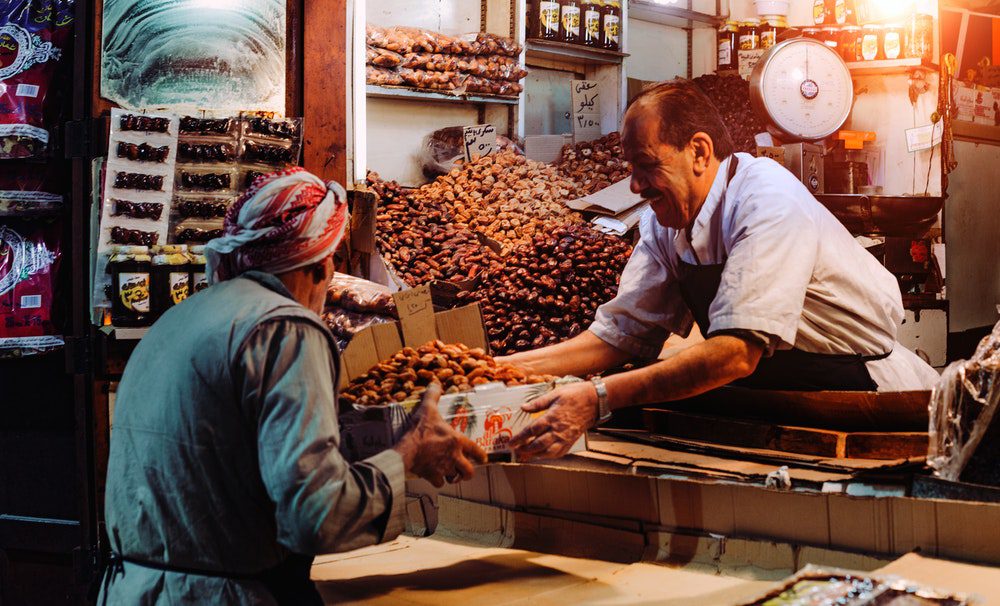
    Sometimes gross profit margin is referred to as gross margin ratio, gross profit margin is often expressed as a percentage of sales.

    Key Explanation

    • Gross Proft Margin (GPN) is an analytical metric expressed as a company’s net sales less cost of goods sold (COGS).
    • Gross Proft Margin (GPN) is often shown as gross profit as a percentage of net sales.
    • Gross Proft Margin (GPN) shows the amount of profit made before deducting sales, general and administrative expenses, which is the company’s net profit margin.

    Formula for Gross Profit Margin (GPM)

    GPM = GP / Sales Revenue

    Remarks:

    • GP = Gross Profit
    • GPM = Gross Profit Margin

    How to Calculate Gross Profit Margin (GPM)

    The percentage of a company’s gross profit margin or gross profit margin (MLK) is calculated by dividing gross profit by sales revenue. The figure for the distribution in the form of a presentation is called the gross profit margin.

    Problems example:

    Company A’s gross profit is USD 200,000 and the sales revenue it receives is USD 350,000. So to get the results of the Gross Profit Margin, the calculation is as follows.

    • Gross profit margin = USD 200,000 / USD 350,000.
    • Gross profit margin = 57%.

    What can Gross Profit Margin tell you?

    If a company’s gross profit margin fluctuates wildly, this may signal poor management practices and / or lower product prices.

    On the other hand, such fluctuations can be justified in cases where a company makes massive operational changes to its business model, where cases of temporary volatility should be no cause for alarm.

    For example, if a company decides to automate certain supply chain functions, the initial investment may be high, but the cost of goods eventually decreases due to the lower labor costs resulting from the introduction of automation.

    Product price adjustments can also affect gross margins. If a company sells its products at a premium, all other things being equal, it has a higher gross margin.

    But this can be a tricky balancing act because if the company charges too high, fewer customers buy the product, and the company can suffer losses as a result.

    Examples of Using Gross Profit Margin

    Analysts use gross profit margins to compare a company’s business model with its competitors. For example, let’s assume that Company ABC and Company XYZ both produce electronic products with identical characteristics and similar levels of quality.

    If ABC Company finds a way to manufacture its product at a cost of 1/5, it will provide a higher gross margin due to a reduced cost of goods sold, giving ABC a competitive advantage in the market.

    But then, in an attempt to make up for the loss in gross margins, XYZ fought back by doubling the price of its product, as a method of increasing revenue.

    Unfortunately, this strategy can backfire if customers are deterred by a higher price tag, in which case, XYZ loses gross margins and market share.

  • The Concept of Demand and Supply in Economics

    The Concept of Demand and Supply in Economics

    What is the Law of Supply and Demand?

    The law of supply and demand is a theory that explains the interaction between a seller of a resource and a buyer of that resource. This theory explains the interaction between the existence or availability of a product and the demand for that product on the price of the product.

    Generally, low supply and high demand increase prices and vice versa. Meanwhile, high supply and low demand will reduce prices.

    A brief description

    • The law of demand says that at higher prices, buyers demand less of an economic good.
    • The law of supply says that at a higher price, the seller will supply more of the economy’s good.
    • These two laws interact to determine the actual market price and the volume of goods traded on the market.
    • Several independent factors can influence the shape of market supply and demand, which can affect the prices and quantities we observe in the market.

    Understand the Law of Supply and Demand

    The law of supply and demand is the most basic of economic laws, where it binds almost all economic principles in some way. In practice, supply and demand oppose each other until the market finds a price balance.

    As we know that there are many factors that can affect supply and demand, which causes supply and demand to increase and decrease in several ways. It was studied extensively by Murray N. Rothbard.

    The Law of Demand vs. Supply Law

    The law of demand states that, if all other factors remain the same, the higher the price of a good, the less people will demand that good.

    In other words, the higher the price, the lower the quantity demanded. The number of goods that buyers buy at the higher price is less because when the price of the good rises, so does the opportunity to buy that good.

    As a result, people naturally avoid buying products, forcing them not to consume anything they value more. The graph below shows that the curve is slope downward.

    Like the law of demand, the law of supply shows the quantity to be sold at a certain price. But unlike the law of demand, the supply relationship shows an upward slope. This means that the higher the price, the higher the quantity supplied.

    Producers supply more at a higher price because selling the higher quantity at a higher price increases revenue.

    However, unlike the demand relationship, the supply relationship is a time factor. Time is important to provide because suppliers must — but not always — react quickly to changes in demand or prices. So it is important to try and determine whether the price change caused by demand will be temporary or permanent.

    Say there is an increase in demand for umbrellas and the price of umbrellas suddenly increases in an unexpected rainy season; suppliers can only accommodate demand by using their production equipment more intensively.

    However, if there is climate change, and the population will need an umbrella throughout the year, changes in demand and prices will be expected over the long term; suppliers must change their production equipment and facilities to meet long-term levels of demand.

    Shift vs movement

    In an economy, “movements” and “shifts” in relation to the supply and demand curves represent very different market phenomena.

    Movement refers to changes along a curve. On the demand curve, movement shows the change in price and quantity demanded from one point on the curve to another. These moves imply that the demand relationship remains consistent.

    Hence, a movement along the demand curve occurs when the price of a good changes and the quantity demanded changes according to the initial demand relationship. In other words, a movement occurs when a change in quantity demanded is caused only by a change in price, and vice versa.

    Like movement along the demand curve, movement along the supply curve means that the supply relationship remains consistent.

    Hence, a movement along the supply curve occurs when the price of the good changes and the quantity supplied changes according to the original supply relationship. In other words, a movement occurs when a change in a given quantity is caused only by a change in price, and vice versa.

    Meanwhile, a shift in the demand or supply curve occurs when the quantity of a good demanded or supplied changes even though the price remains the same. For example, if the price for a bottle of energy drink A is IDR 10,000 and the quantity of energy A demanded increases from Q1 to Q2, then there will be a change in the demand for energy drink.

    Shifts in the demand curve imply that the original demand relationship has changed, meaning that quantity demand is affected by factors other than price. A shift in the demand relationship will occur if, for example, energy drink A suddenly becomes the only type of energy available for consumption.

    Conversely, if the price for a bottle of energy drink is IDR 10,000 and the quantity supplied decreases from Q1 to Q2, then there will be a change in the supply of this drink. Like a shift in the demand curve, a shift in the supply curve implies that the original supply curve has changed, meaning that the quantity supplied is affected by a factor other than price.

    A shift in the supply curve would occur if, for example, a natural disaster caused a shortage of hop mass; State drink producers will be forced to supply less of their product at the same price.

    How do supply and demand balance prices?

    Also called the market clearing price, the equilibrium price is the price at which the producer can sell all the units it wants to produce and the buyer can buy all the units it wants to produce.

    At a certain point in time, the supply of goods brought to market is constant. In other words, the supply curve in this case is a vertical line, whereas the demand curve always slopes downward because of the decreasing law of marginal utility.

    Product sellers cannot charge the market more than the market can bear, based on the concept of consumer demand. Over time, however, suppliers may increase or decrease the quantity they supply to the market based on the price they predict will be charged.

    So over time the supply curve slopes upward; the more suppliers expect to charge extra, the more willing they are to produce more and to shower the market with their products.

    With the supply curve sloping up and the demand curve sloping down, it is easy to imagine that at some point the two will intersect. At this point, the market price is sufficient to encourage the supplier to bring to market the same amount of good that the consumer is willing to pay at that price. Supply and demand are in balance, or in balance.

    The right price and quantity occurs based on the position and shape of the supply and demand curves, each of which is influenced by several factors.

    Factors Affecting Supply

    Production capacity, production costs such as labor and raw materials, and the number of competitors directly influence how much of a business supply can be made. Supporting factors such as weather conditions, availability of materials and reliability of the supply chain are also a set of factors that can affect supply.

    Factors Affecting Demand

    The number of substitutes available, changes in prices for complementary products, and consumer preferences can influence demand. For example, if the price of a motorbike for brand A goes down, then the demand for that motorbike can increase because people are more likely to buy it because the price has dropped and want to own it.

  • What is a News Text?

    What is a News Text?

    For some people, reading the news may be like eating or drinking, which is not only a necessity but also a necessity. What for? Yes, especially if you don’t get information, as is the meaning of the news text that we know.

    The information contained in the news text itself can be in the form of events that are currently happening or those that have already happened. And this is usually conveyed either orally as we often hear and see on television, or in writing as we usually read in print media.

    When referring to Wikipedia, news itself can be interpreted as new information or information about something that is happening, presented in print, broadcast, on the Internet, or by word of mouth to a third person or crowd.

    News reports are the duty of the journalist’s profession, when the news is reported by the journalist, the report becomes the latest facts / ideas which are deliberately selected by the news editor / media to be broadcast on the assumption that the news chosen can attract a large audience because it contains news elements.

    What are the elements referred to? There are at least six, namely what, who, where, when, why and how.

    Understanding news according to experts

    Mickhel V. Charniey stated that “news is the fastest report of an event or incident which is factual, important, and interesting for some readers, and concerns their interests”. Meanwhile, according to Willard C. Bleyer, news is defined as something recent (new) which is chosen by journalists to be published in newspapers so that it attracts readers’ interest.

    Not much different, Wiliam S. Maulsby argues that news is a true and impartial narrative of facts that have significant meaning and have just happened, which can attract the attention of the readers of the newspaper containing them.

  • How to define the main idea in a paragraph?

    How to define the main idea in a paragraph?

    The main idea or main idea is a topic that will be discussed in a paragraph. A good paragraph has a main idea and a few explanatory sentences. The main idea serves as the topic of discussion, while the explanatory sentence serves to explain the topic. A paragraph must have a main idea and explanatory sentences that are correlated or related. Then, how do you determine the main idea of ​​a paragraph?
    Types of paragraphs based on the location of the main idea are divided into three, namely deductive, inductive, and mixed paragraphs. A deductive paragraph is a paragraph where the main idea is at the beginning, while a paragraph whose main idea is at the end is called an inductive paragraph. Then what about mixed paragraphs? Yes, a mixed paragraph is a paragraph that has at least two main ideas, namely at the beginning and end.

    How to Determine the Main Idea

    Determining the main idea of ​​a paragraph is not too difficult. Accuracy is one of the things that you must have to be able to find a main idea easily. To make it easier for you to determine the main idea of ​​a paragraph, there are several ways you can do it, such as

    1. Separate the Main Sentence from the Special Sentence

    The main sentence will usually be followed or preceded by a special sentence. To be able to recognize a special sentence, you can pay attention to one of its characteristics, which is a sentence that contains examples, evidence, or special details, so that if you see a sentence with these characteristics, it is a special sentence. After that separate the two, then you will get a main idea in the form of the main sentence.

    2. Read Carefully

    Maybe this is the simplest way, you only need time and a little concentration to do it. In this way, you can determine which one can be called the main idea or which includes an explanatory sentence.

    3. Concluding a paragraph

    The main idea can determine a conclusion from the paragraph. Therefore, by reading a paragraph and then concluding it, you will get a main idea.

    Those are three ways to determine the main idea easily that you can put into practice, now let’s look at some examples in determining the main idea of ​​a paragraph.

    Examples of Finding Key Ideas in Paragraphs

    Heavy rain for four consecutive hours caused the river to overflow at several points. This causes flooding and can hinder daily activities. This overflowing water caused the streets in the village to inundate, thus narrowing the space for the residents to move. Even the protocol roads were flooded and further hampered traffic in Jakarta. This situation is expected to take place within the next 24 hours. If there is no effective handling from the DKI Jakarta provincial government.

    Based on the sentence above, we can recognize the characteristics of a special sentence. The special sentence here serves to explain the meaning of the main sentence in the form of a further description of the problem alluded to in the main sentence, namely the flood that hinders activity. The second to the fourth sentence is a special sentence that will support the main idea in the main sentence.

    We can also draw a conclusion from the example of the paragraph above, that the floods that occurred caused obstruction of residents’ activities, this conclusion fits the first sentence of the paragraph above, so the first sentence is the main idea of ​​this paragraph.

    If there is a question how to determine the main idea, the answer is these three things. By utilizing these methods, you can answer various questions easily.

    Do you have any questions about this? Please write your question in the comments column and don’t forget to share with others about this knowledge!

  • From Mudharabah to Ijarah, Get to Know the Principles of Islamic Banking

    From Mudharabah to Ijarah, Get to Know the Principles of Islamic Banking

    Islamic banks are banks that carry out their activities based on Islamic law (Islamic principles). This bank is also called an interest-free bank. Why not, in raising funds this bank does not provide interest in return and in loans are not subject to interest.

    In carrying out its activities, this bank is based on Islamic religious principles which prohibit levies and loans with interest or what is called usury. This system also prohibits investing in businesses that are categorized as haram. For example, businesses related to the production of haram food or drinks, non-Islamic media businesses and so on.

    So, what are the principles of the Islamic banking? In the following we will describe them one by one, from the so-called principles of mudaraba, murabahah, to ijarah.

    1. Mudaraba

    The first principle of Islamic banking is mudaraba. This is an agreement between the provider of capital and the customer. Each profit earned will be shared according to a certain ratio agreed upon. The risk of loss is fully borne by the bank, as long as there is no evidence of customer fraud or actions that are not in accordance with the trust of the bank.

    2. The Murabaha Principle

    Murabahah is the distribution of funds in the form of buying and selling. Banks buy goods needed by service users, then sell them back to service users at prices that are increased according to the profit determined by the bank. Service users can pay the goods in installments.

    3. The principle of Musharakah

    Musharakah is financing based on the principle of equity participation. Banks and customers become business partners. Each of them contributes capital and agrees on the ratio of profit in advance for a certain time.

    4. The Wadiah Principle

    Wadiah is a fund deposit service (savings) where the depositor can take the funds at any time.

    5. Ijarah Principles

    Ijarah principle, namely the financing of capital goods based on the principle of pure lease without choice, or with the option of transferring ownership of the goods leased from the bank by another party (ijarah wa iqtina).

    As for some examples of Islamic banks that we can currently find are BRI syariah, Mandiri syariah, BNI syariah and others.

  • Definition of Cultural Change

    Definition of Cultural Change

    Along with advances in science and technology have a significant impact on human life. One of them, with the internet which has a very big influence on changes in the world of education. With the many advantages of the internet, both in terms of time efficiency, complete information, and flexibility, books are no longer the only source of knowledge. These are all examples of cultural changes in the world of education today. Then, what exactly is the meaning of cultural change?

    In general, cultural change is a change in a system involving ideas in people’s lives. Cultural change can also be said to be the occurrence of conditions of incompatibility between existing cultural elements and ultimately creating conditions that are incompatible for life.

    Cultural change actually refers to a change in the social order process in society. Where, this cultural change can take place very quickly or slowly and generally cannot be realized by the people in a country.

    There are several basic elements of culture known as seven universal elements, among others:

    Living equipment systems and technology

    This includes cooking utensils, clothes, weapons, cleaning tools, means of transportation and others. For example, in the days of our ancestors, we used to cook food by baking, but in modern times we can bake in the oven, or fry in a pan.

    Language

    In ancient times, language was only conveyed by word of mouth. However, nowadays language can be conveyed through writing such as newspapers, media, scientific journals, and many more.

    Knowledge system

    This is the logic or basis of society’s thinking that continues to evolve over time.

    Social system

    As time goes by, science is getting more advanced. In the past, humans could only trace what was visible to the eye but now humans can examine even the very smallest such as atoms and particles.

    Economic systems and livelihoods

    In the past, most of the livelihoods were controlled by men in terms of agriculture, industry, and offices, while women were usually at home taking care of the household. Unlike the case today, women can also seek other livelihoods and help the family economy.

    Religious system

    If in the past humans only believed in the existence of spirits, no longer. Today, humans often use reason and logic.

    Art

    This includes fine arts, dance and sound arts. In the past, Javanese people thought that a dark house was a beautiful house. However, today many Javanese have homes with light or pastel shades.

  • Understanding the Meaning of Economic Bubbles

    Understanding the Meaning of Economic Bubbles

    There is a phenomenon in economic studies called economic bubbles or bubble economy . This phenomenon occurs in many countries and has a long history. In this article we will study the general definition of a bubble economy or economic bubbles and some of the events in which the phenomenon of economic bubbles occurs.

    According to its basic concept, economic bubbles or bubble economy refers to a situation where the price of a product or asset in a certain market segment experiences an unusual or unnatural increase in value/price, and occurs in a relatively fast time.

    There are many examples of economic bubble phenomena that occur and involve different economic sectors, including the housing sector or better known as housing bubbles and the stock market or stock bubbles .

    In its development, there have been many studies that examine more comprehensively the concept of the bubble economy , including the question of what is meant by an unreasonable price increase and how to categorize time as relatively fast. However, we will not discuss this in this paper.

    The following are some examples of events that illustrate the phenomenon of economic bubbles .

    One of the classic examples of the bubble economy phenomenon occurred in the 1637’an era known as The Tulip Mania .

    Since the late 1590s, tulips have become one of the commodities imported from Turkey to the Netherlands. Later, this flower became phenomenal in the Netherlands and became one of the trendsetters , especially as a decoration on clothing. Because of the high charm of tulips in the eyes of the public, the demand for these flowers soared rapidly with increasing public demand, until its peak in the early 1637’s.

    The high demand, which is not matched by the availability of tulips, has made the price of tulips soar to the equivalent of 40 times the average salary of Dutch workers per year. Unfortunately this did not last long, especially when market participants holding tulips started selling the flowers to the market and other market participants followed suit, causing the price of tulips to plummet within a month. It is said that after the incident, the price of tulips was not more expensive than the price of a red seed.

    Economic bubbles in the 1997-1998 Asian economic crisis.

    Not a few studies have stated that the 1997-1998 Asian economic crisis was caused, among other things, by the bursting of the economic bubble, considering that in the late 1980s and mid-1990s, interest rates in developing countries in the Asian region tended to be high, far above interest rates. interest offered by developed countries.

    The high interest rate is seen as an attraction by investors, resulting in a very large capital inflow to developing countries, including South Korea, the Philippines, Indonesia, Thailand, and Malaysia. As a result, the economic growth of these countries increased rapidly to be in the range of 8% to 12%.

    Even so, the high growth was solely due to the large inflows of capital, not supported by investment in the real sector and productive assets owned by these countries. In other words, the economic fundamentals of these countries can be said to be porous.

    As a result, when the Central Bank of the United States began to raise the benchmark interest rate ( Fed rate ) after being able to recover from the domestic economic recession, the flow of funds that previously existed in Asia began to move rapidly towards the US market which was considered more stable.

    In addition, the higher the interest rate ( Fed rate ), the stronger the US$ exchange rate against other countries’ currencies. These two factors led to massive capital flight from Asia. In the end, this caused a panic rush in the banking sector, when many people collectively withdrew the cash they had stored in commercial banks, resulting in the collapse of Asian currencies.

    The case of the economic bubble that hit internet-based companies ( .com companies ) in the mid-1990s to early 2000s.

    Another example of the occurrence of economic bubbles in the modern world is the period from the mid-1990s to the early 2000s. At that time technological developments entered a new phase, where there was a boom in internet-based technology companies. This period is also known as the era of The New Economy , which was marked by the emergence of internet – based companies or better known as . com companies .

    When these companies began to go public , the value of their shares skyrocketed many times over, offset by high expectations of market participants and the general public for the success of the new economic era. At that time, all issues related to the internet and online became the main topic of every conversation with optimistic tones.

    Unfortunately, all of these things are not followed by prudent company management , solid financial foundations, and optimal analysis of operating profit/loss calculations; in other words, the focus of attention is the marketing factor alone.

    Until when the United States Central Bank ( the Federal Reserve ) again raised its benchmark interest rate in the 1999-2000 range, these companies began to lose financial strength. This was exacerbated by the number of start-up companies that posted large losses in their financial statements.

    In the end, all public expectations did not materialize, and the economic bubble burst. Records say there is more than US$ 8 trillion evaporated in the market. Even big companies like Amazon.com, Cisco System, Priceline.com, to Yahoo! experienced a decline in stock prices by more than 90% (Jimenez, Alvaro, Understanding Economic Bubbles , 2011).

    Furthermore, there are several theories that try to explain the characteristics of the economic bubble, one of which is the research conducted by Thompson and Hickson.

    The study conducted by the two mentioned two types of bubbles , namely short -term informational monopoly bubbles . This type of economic bubble is usually characterized by the absence of an increase in the supply of products/assets. These bubble characteristics are also known as mini bubbles .

    These bubbles tend to occur through market manipulation mechanisms by market participants who have information about certain assets/products. With financial strength, certain market participants began to speculate on the asset. This attracted the attention of other market participants and began to hunt for similar assets, resulting in a drastic increase in the value/price of the asset in the market.

    This condition is usually unpredictable from the start and it is not known how long it will last. Therefore, this phenomenon is not accompanied by an increase in supply to offset demand .

    Furthermore, the bubble will burst when the perpetrator performs a massive asset disposal, thereby dropping the price/value of the asset.

    As we know, there are at least two behaviors ( economic behavior ) that we can find in market participants, namely those who make decisions with a long-term horizon and prioritize the fundamental factors of an asset, and market participants who focus more on short-term profits, by making purchases. asset at a low price and release it again when the price is high (market participants of this type are known as speculators).

    In this case, the phenomenon of The Tulip Mania can be categorized as short-term informational monopoly bubbles .

    Meanwhile , the next bubble is a long-term government involved bubble , which tends to last longer and is characterized by an increase in product/asset inventory.

    Bubbles like this usually occur as a consequence of taking or changing economic policies (monetary and/or fiscal) and other policies by the relevant authorities.

    However, different from the first type of bubble , here policy makers have calculated and calculated the impact of implementing the policy, both positively and negatively, thus including anticipatory steps as compensation for these impacts.

    The case of .com companies is an example of long-term government induced bubbles . This is evidenced by the growing number of .com -based companies even today, but with capitalization that is not accelerating as fast as in this case (Thompson, E., and Charles R. Hickson, Predicting bubbles, Global Business and Economic Review , Vol 8, 2006).

    In closing, the phenomenon of economic bubbles ( economic bubbles or bubble economy ) has occurred since several centuries ago until now. These bubbles can occur due to purely speculative factors, but can also be caused by the emergence of consequences for economic policies taken by policy-making authorities. **

  • Understanding Economic Growth: Characteristics, Factors and Measurement Methods

    Understanding Economic Growth: Characteristics, Factors and Measurement Methods

    The economic growth of a country is closely related to the welfare of its people which also becomes a benchmark for whether a country is in a good economic condition or not.

    Simon Kuznets himself stated that economic growth is a condition in which a country is able to increase its production based on technological progress which is accompanied by an adjustment of its ideology. The following is a more complete explanation of the Theory of Economic Growth, Starting from the understanding, characteristics, factors to the measurement steps:

    Understanding Economic Growth

    Economic growth is an increase in the value and amount of production of goods and services calculated by a country in a certain period of time based on several indicators, such as the increase in national income, per capita income, the number of workers that is greater than the number of unemployed, and the reduction in poverty levels.

    Economic growth can also be interpreted as a process of continuous change towards better conditions in the economic conditions of a country. The economy of a country itself can be said to be growing if the economic activities of its people have a direct impact on the increase in the production of goods and services.

    By knowing the level of economic growth, the government can then make plans regarding state revenues and future development. Meanwhile, for business sector players, the level of economic growth can be used as a basis for making product development plans and resources.

    Economic Growth Theory

    In its development until now there are various theories of economic growth. This theory itself appears a lot to explain the growth cycle as well as the factors that directly influence an increase in the national economy by experts. Among the many theories that have emerged, here are some of them:

    1. Neoclassical Theory

    Neoclassical theory or also known as the Solow-Swan model of economic growth because it was originally introduced by Adam Smith, then put back by Robert Solow and TW Swan. This theory states that there are three main factors that influence economic growth including capital, labor, and technological developments.

    This theory also believes that an increase in the number of workers can increase per capita income. However, without developing modern technology, this increase will not have a positive impact on national economic growth.

    2. Classical Theory

    Classical theory has developed since the 18th century. Its originator is a prominent figure named Adam Smith who stated that the economy of the population in a country will reach its highest point when using a liberal system consisting of two main elements, namely population growth and output.

    This concept was later refuted by David Ricardo who stated that population growth did not have a positive influence on national economic growth, on the contrary, it would only increase the productive workforce, thus resulting in a decrease in worker wages.

    Classical economic theory was born as the first milestone in economic thought which is used as a scientific discipline. This theory arises because of the weaknesses and shortcomings of previous economic theories.

    3. Historical Theory

    This theory was developed by a number of economists including Karl Bucher, Werner Sombart, and Frederich List with different views, but both are centered on the economic activities of society.

    According to Karl, the relationship between producers and consumers affects national economic growth, this relationship itself occurs in cities, communities, closed household levels, to the world.

    Meanwhile, Werner Sombart classifies the role of society in economic growth, from the closed economic stage, the industrial growth stage, to the capitalist stage.


    Factors Affecting Economic Growth

    Economic growth is a process of changing the economic conditions of a country on an ongoing basis towards a better state within a certain period of time. Find out what factors really play an important role in influencing economic growth:

    1. Natural Resources (SDA)

    Natural Resources or something that comes from nature includes soil fertility, location and composition, natural wealth, minerals, climate, water resources, to marine resources. For economic growth, the availability of abundant natural resources is very good in supporting development.

    Natural resources themselves are further divided into three types including Biological Natural Resources (resources that come from living things both from animals and plants. Examples of biological natural resources include chickens, cows, vegetables, rice, corn, cotton, wood, tea, coffee, to fish, non-biological natural resources (resources that do not come from living things.

    Examples are water, sunlight, air, soil, mining materials, petroleum, and natural gas), natural resources that can be or are recovered (Examples of these resources include animals, plants, trees, and fish, Natural resources that cannot be recovered) renewable resources (resources that are limited because they are formed by natural processes over a long period of time (petroleum, coal, and natural gas), lastly, eternal natural resources that will never run out (examples of these resources include water, air, sunlight, etc.) sun, wind, waves, tides, and geothermal).

    2. Human Resources (HR)

    Human Resources play a very important role in economic growth. Human resources or also abbreviated as HR are productive individuals who act as drivers of an organization, both within companies and institutions.

    It acts as the main element of the organization compared to other elements such as technology and capital, because it is humans who will then control these other factors. Human Resources itself is not solely calculated based on the number but rather on its efficiency. In encouraging Human Resources to work efficiently, there are several things that can be done:

    • Motivation of Human Resources (HR)  – Change and development will not occur without the awareness of each party. Therefore, motivating Human Resources (HR) is one of the things that must be done.
    • Adjust the Work to the Abilities and Interests of Human Resources (HR)  – Human Resources (HR) performance will be less productive if they accept assignments that are not in accordance with their abilities and interests. Therefore, they must be smart in choosing and determining their position according to their abilities and interests in something.
    • Training Programs  – Providing training programs to Human Resources (HR) will also help improve their skills. The training program must be well structured and must be right on target and in accordance with valid data. Guidance on valid data will then produce optimal output.
    • Periodic Evaluation of Human Resources (HR)  Performance – In controlling the performance of Human Resources (HR) within the specified period, it is necessary to have an evaluation so that they are introspective and try to improve and improve their work to maintain their position.

    Human Resource Economics can also be defined as the science of economics which is applied to analyze the formation and utilization of human resources related to economic development.

    3. Capital Accumulation

    The accumulation of capital as a supply of reproducible factors of production. Capital accumulation is the process of adding to the stock of human-made physical capital in the form of equipment, machinery and buildings. If the capital stock increases within a certain time, it is also called capital accumulation or capital formation.

    The relationship between Capital Accumulation and economic growth itself can measure aggregate capital accumulation from the gross capital formation (gross investment) minus depreciation, both of which are within the scope of the Gross Domestic Product (GDP) component.

    In the Harod-Domar model of economic growth, an increase in the saving rate allows more investment, which then leads to a higher rate of economic growth in the medium and short term.

    4. Managerial Personnel and Production Organization

    Production organization as an important part in the process of economic growth which is then closely related to the use of production factors in various economic activities. Production organization is also carried out and regulated by managerial personnel in various daily activities.

    5. Technology

    Technological change is considered as one of the most important factors in the process of economic growth, because technological change and progress is closely related to changes in production methods. It will eliminate the boundaries of time and space which then gives rise to new industries that take advantage of technological developments.

    This is what then results in economic movement, if initially the exchange of goods was done physically, now this exchange is also happening through the media of technology. Economic movements that occur later will indirectly affect economic growth.

    At the macroeconomic level, technological developments play a role in contributing to economic growth and encouraging economic development in a better direction. The development of information technology will also indirectly strengthen the competitiveness of a country in developing its economy.

    The companies in it can then increase national income which can later be used to support the welfare of its residents. Therefore, technological changes will increase the productivity of Human Resources (HR), capital, and other production factors.

    6. Political Factors and Government Administration

    Weak political and administrative structures are a major obstacle to a country’s economic development. Politics that are in an unstable condition and a corrupt government will certainly hamper economic progress.

    In addition, the social aspects of people’s lives such as behavior, attitudes, work motivation, community views, or community institutions, legal order and the composition and incorrect implementation of laws and regulations are also factors that hinder economic progress. So it does not support the implementation of economic growth. Therefore the law should be implemented in a consistent and orderly manner.


    How to Measure Economic Growth

    The economic growth of a country can be measured by comparing the Gross National Product (GNP) and Gross Domestic Product (GDP), in the current year with the previous year. These two benchmarks help in calculating the total output of a country’s economy.

    Meanwhile, according to Todaro and Smith (2004) there are three main factors or components that affect economic growth, namely capital accumulation, population growth (growth in population), and technological progress (technological progress).

    Meanwhile, how to measure the economic growth of a country can be used the following formula:

    Gt = ((PBDt – PBDt-1) / PBDt-1)) x100%.

    Information :

    Gt    = Economic Growth Rate

    PBDt       = PDB value period t

    GDPt-1 = GDP value of the previous period

    In addition, in encouraging economic growth, there are several factors that influence it. Among them, are human resources, natural resources, science and technology, culture and capital resources.


  • Kakeibo, Japanese Tricks to Manage Finances

    Kakeibo, Japanese Tricks to Manage Finances

    Kakeibo is a Japanese concept art of financial management that teaches us how to save more by reducing the amount of spending each month.

    Why learn from Japan’s Kakeibo?

    Hundreds of years ago, Japan was famous for its agricultural production in the traditional way. Japan has changed now, even famous for its very advanced technological developments.

    Japan is the country with the highest cost of living in the world. This phenomenon occurs because the level of competition between residents is hard. That is why Japanese residents are required to manage finances as perfectly as possible. This is where Kakeibo comes into play

    Instead of buying new trending clothes every month, they are better off squandering the extra cash and collecting it to buy more than just clothes.

    Understanding Kakeibo: Origins, Recording Plans, Targeting Savings, and Character Discipline

    Kakeibo is basically a concept of managing finances where we are required to record all our income, our expenses in detail. Kakeibo does not use applications or technology in its financial records, but instead writes with a notebook.

    The main goal of this financial record is to achieve the target of how much money is saved at the end of the month. The average person who implements the Kakeibo financial system is able to accommodate up to 35% more money

    Fumiko Chiba, a Japanese writer who wrote the book “Kakeibo: The Japanese Art of Budgeting Saving Money. Fumiko stated that the challenge in Kakeibo is to manage hard, be more disciplined to reduce the amount of non-essential expenses, then focus on habits and decisions.

    Kakeibo became famous in 1904. It was a Japanese journalist, Hani Motoko, who had popularized Fumiko Chiba’s book Kakeibo and attracted the attention of many people.

    Chiba also said that Kakeibo was made to make things easier for women. Especially housewives. Kakeibo gives freedom to women, meaning that women can be trusted to make wise decisions in managing finances even in the traditional way.

    The basic understanding of Kakeibo is to get rid of the thought of how to buy the things you want to buy. Replace these thoughts with more attention to other things that are more important.


    4 Basic Questions In Kakeibo

    Before starting to apply Kakeibo, there are 4 questions that must be answered first. Everything must be answered in order, not randomly or swapped

    1. How much money do you have? / How much do we earn each month?
    2. How much would you save? / How much target money do you want to save?
    3. How much do you spend? / How much do you spend each month?
    4. How can you make things better? / How do you make things better?

    Starting from the first question to the last is the order of the process of managing Kakeibo’s finances. The last question is the stage where you have to do an evaluation at the end of every month, if something goes wrong.

    For example, your initial target is that you can save 200 usd per month, but after calculating you only get 150 usd. Then you should start evaluating your financial records .

    Maybe you still spend too much money to hangout  with friends or other reasons. So in the next month, you try not to do the same thing in order to reach the savings target.


    4 Kakeibo Budget Allocation Posts

    1. Survival / Basic Necessities

    Which includes basic needs: Food, clothing, transportation, internet quota, vitamins & medicines, masks, toiletries, debt.

    1. Optional / Secondary Need

    Which includes secondary needs: Eat at a restaurant, snacks, buy clothes that are trending , home decor knick-knacks, new gadgets , hobby supplies, and vacations.

    1. Culture / Educational needs and add insight

    Which includes educational needs: Books, courses, visits to museums, magazines/newspapers.

    1. Extra / Additional production

    Which includes additional expenses: Wedding or birthday gifts, vehicle service, doctor fees, assistance to the needy (Alms)


    Recording Income, Expenditures, and Savings Targets Every Month

    Applying Kakeibo requires two notebooks, namely a large notebook and a small notebook.

    A large notebook is useful for recording all income, expenses and savings in detail.

    While a small notebook is useful to carry wherever you go so that when you are shopping, you immediately record your expenses right away so you don’t forget and are accurate.

    Large notebooks should reflect the following:

    1. Monthly Income Plan

    You can make notes in the form of bullets or tables. You must keep a record of your income.

    Starting from basic salary, bonus salary, debt repayment, sales, and so on, everything is recorded at once along with the date on which you received the income.

    1. Set aside savings

    Savings records are divided into two, namely monthly savings and daily savings. Monthly savings are recorded in the form of targets. Create a record table containing date, description, monthly and daily.

    For example, a monthly savings target of 500 thousand, after that we make it in another column of this month’s calendar from the 1st – 31st. Every time we save money in a day, then cross out the stairs on that day.

    The purpose of this daily savings is so that our savings will increase. Prepare an envelope to enter daily savings. While monthly savings are taken at the end of the month, which is the rest of our money.

    1. Pay debt

    Expenditures to pay debts must be set aside from the beginning of the month, so they are not mixed with other expense records.

    1. Allocate 4 Expenditure Budget Items

    Record all expense categories in separate tables. For example, in the table of Basic Needs (survival), sub-categories are also included. For example, eating, how much food was spent on that day and continued to be recorded until the end of the month.

    Other categories of needs are also recorded in their respective tables. That’s what a little notebook is for. Then in the big notebook, there is one big table that summarizes all the total records of each need.

    1. Prepare 5 Envelopes

    The envelopes are divided into savings target envelopes, basic needs envelopes, secondary needs envelopes, educational needs , and additional needs. Each envelope contains approximately how much money is needed to meet these needs.


    End of Month Evaluation and Consistency

    One of the most difficult to implement is the application of a disciplined and consistent character. Kakeibo requires us to be disciplined in managing our finances. Demanded to be wiser in spending money.

    All records of both income, expenditure and savings are intended so that we know accurately the amount of our money. Usually people will not realize that they have bought a lot of clothes, then after that the money just seems to disappear for some reason.

    With records, we know where the money has gone, so when buying expensive things that are not needed, feelings of regret grow.

    The evaluation process at the end of the month is a warning to ourselves that we need to improve ourselves. The process of forming this character will definitely not be easy, and it will take a long time for us to keep ourselves consistent and disciplined.

    But believe me everything will feel worth it. In the end the savings will be useful for us in the future.

    Thus the article about the hormone of happiness from  Tumbooh.com , please share it with your friends if this article is useful. thanks.

  • High-Income Skills That Students Can Learn On Their Own

    High-Income Skills That Students Can Learn On Their Own

    Everyone wants to have a high income. To achieve a high income, you need to hone the skills needed.

    No need to wait to pass. As a student, you can actually learn high-paying skills during college .
    In addition to still having free time to learn new skills , you can find additional income by applying the skills you have learned on a self-taught.

    Skills That Students Can Learn Self-taught Even If They Are Busy in College

    If you are a student who wants to increase your income, you can prepare yourself by learning new skills . You can practice your new skills through online courses spread on YouTube or other online courses .

    The following are high-income skills that are suitable for increasing student income .

    1. Sewing/ Fashion Design

    Sewing isn’t exactly a high-paying skill. However, sewing skills can be an additional point for those of you who are pursuing fashion design.

    Fashion design is the skill of making patterns and designs of clothes. You can learn it through online courses spread on Coursera, Udemy, and YouTube.

    The skills you will hone are creativity , drawing, recognizing clothing materials, clothing proportions, and mixing and matching colors and motifs.

    Reporting from Indeed , the average salary of a fashion designer in Indonesia reaches 5 million per month. Meanwhile, if you have sewing skills, you can start your own clothing business. Isn’t it fun?

    2. Coding Skills

    Coding is a highly sought after skill. As a coder/programmer, you are required to at least speak English, read source code , and debug .

    Complex computer languages ​​are not necessarily difficult to learn. You can get many learning resources, from YouTube, the web, free courses, even paid ones.

    With coding, you can apply the skills to create applications, software, build websites , and so on. You’ll fit in if you like technology and things about computers.

    The average salary for programmers is no joke. For junior programmer positions only, you can get 1000 USD .

    3. Digital/ Social Media Marketing

    Do you like watching FYP Tik Tok? Like to monitor Twitter trends ? or see a new trend on Instagram? If so, it means that you are suitable for the position of Social Media Marketing.

    The job market is currently wide open for those of you who have digital marketing skills . This skill requires expertise in using social media advertising. You are also required to be able to do digital market research and understand social media algorithms.

    By studying digital / social media marketing , you can earn from 700 thousand to 14 million or an average of 5 million per month.

    4. Creating Social Media Content

    The skill of creating social media content is now also being loved by young people. Many of them become content creators for their own Instagram accounts or corporate social media accounts.

    Many internship and freelance opportunities are opened by companies for you to create interesting content to increase sales.

    To be able to earn high income from creating social media content, you need to hone your company branding skills , always update with social media trends, social media language, and visual messages.

    Because it requires a lot of expertise, content creators and social media influencers have high salaries of around 5-6 million rupiah.

    5. Writing

    As a student, you are used to making writing assignments. Writing is a skill that can apply in any industry.

    You can practice writing skills with various writing formats. You can start practicing from writing short articles, writing fiction, science articles, and news. You can also apply writing skills to become a UX writer,  copywriter , film script writer, or online media article .

    Try posting your writing on a personal blog or web or send it to famous media. If it has been published, try to collect the results of your writing to be used as a portfolio. You can use the writing portfolio to work freelance , apply for an internship, or even work regularly at a media company.

    The average writer’s salary ranges from 500 usd up, depending on the industry in which they are involved. While the UX Writer could be higher, which is around 2000 usd.

    6. SEO Skills

    SEO or Search Engine Optimization basically requires the expertise to create content that can appear easily from search engines. SEO techniques require skills to create or write SEO content, read analytics, keyword research, and optimize site and web page addresses.

    This skill is very much needed in today’s digital marketing era. SEO skills can help increase web rankings in the SERP so that the visibility of the web, service, or product being sold can reach the audience directly on the first page of search results.

    You can learn SEO from various websites, books, YouTube tutorials, and paid courses scattered on the internet. By honing your SEO skills , you can have the opportunity to earn high income as an SEO Specialist or Content Writer , which is around 1000 usd.

    7. Graphic Design/ Art/ Illustration

    Graphic design and illustration skills are skills that you can learn independently without going through graphic design courses. These skills are needed in many companies in various industries.

    Graphic designers are often asked to create logos, packaging designs, advertisements, and visual works across a variety of media. Not only expertise in using design software such as Photoshop, Adobe Illustrator or Corel Draw, you need to hone this skill with knowledge of layout or layout of design elements, color combinations, and drawing skills.

    If you have your own style of illustration or design, you can sell your work by opening a pre-order. You can market yourself through a portfolio via Instagram uploads or other portfolio websites.

    Graphic designers have a salary range of 1000 usd. If you are freelance and already have a mature portfolio, you can set prices above 5 million per project, you know!

    Well, those were 7 high-income skills that you can learn during college .

    Even if you don’t take a major that matches your skills , you can hone it through online courses .

    Moreover, yes, a skill with a high salary? Try writing your answer in the comments column! Don’t forget to share with your friends so they can learn together!

  • The Concept of Deflation and Its Impact on the Economy

    The Concept of Deflation and Its Impact on the Economy

    In the previous material, we have studied the definition of inflation, its triggering factors, and economic policies to overcome it. In this article, we will study the situation opposite to inflation, namely negative inflation or deflation and its impact on the economy.

    1. DEFINITION OF DEFLATION.

    In principle, deflation is a general decline in output prices . This situation is actually a common thing in the economy.

    It should be noted that when the price decline lasts only for a moment, it cannot be said to be deflation.

    Likewise, when price declines only occur in certain sectors even though they last for some time, as long as they do not have an impact on the aggregate economy, it cannot be said to be deflation.

    Therefore,a deflative situation has the potential to harm the economy if a general decline in prices occurs over a period of time (some literature mentions at least 1-2 quarters), and is reflected through a decline in the consumer price index (CPI) or GDP deflator .

    The decline in prices could be caused by several factors , including:

    1. productivity increase .
    2. application of modern technology .
    3. policy changes , for example through regulatory deregulation.
    4. decrease in the price of input goods .
    5. excess capacity ( excess supply ).
    6. weak demand .

    If the deflation that occurs is caused by points 1 to 4, what usually happens is mild deflation ( benign deflation ) which does not pose a threat to the economy , because falling prices tend to be followed by an increase in economic growth.

    The simple explanation:

    • when modern technology is applied to increase productivity, it will result in cost and time efficiency . This efficiency will cut production costs and operating costs , thereby lowering the selling price of output that must be borne by consumers.
    • in turn, this situation will trigger an increase in consumption (an increase in the quantity of output sales), as well as encourage an increase in economic growth . This also applies if there is a deregulation policy that encourages productivity growth.

    It is different if the price decline lasts for a long time and causes the CPI and GDP deflator to become negative , then this situation has the potential to harm the economy (a deflative situation like this is known as a malign deflation ).

    The explanation is simple:

    • when prices have decreased for some period of time, consumers and investors will hold liquidity (choose to hold money), in the hope that prices will continue to decline in the future.
    • on the other hand, when supply exceeds demand for a long time, this results in a decrease in profit, an increase in input costs, and an increase in unemployment .

    One case of deflation was the economic crisis in the United States in the 1930s (the Great Depression ), where output prices fell by about 25%, real GDP fell by 30%, and the unemployment rate rose sharply to 25% (Brooks, Douglas H. ., and Pilipinas F. Quising. Danger of Deflation , Asian Development Bank, ERD Policy Brief No. 12, December 2002).

    2. ECONOMIC VIEWS ON DEFLATION.

    In this section we will summarize some of the economists’ views on deflation.

    2.1. The view of the monetarists.

    The monetarist’s point of view is the money supply – side cause . The occurrence of deflation can be described by the following equation:

    The view of the monetarists.

    description:

    • M is the money supply ( money supply ).
    • V is the velocity of money circulation .
    • P is the price of output, which also indicates the size of the GDP deflator.
    • Y is the quantity of output, which also shows the size of real GDP.
    • (Remember! In the previous lesson we learned that the GDP deflator = Nominal GDP / Real GDP. This means P x Y = Nominal GDP).

    The explanation is as follows:

    • If real GDP is held constant in the short term (recall material Three Model Approaches in the Study of Macroeconomics), a decrease in M ​​or V through tight monetary policy, will result in a decrease in the GDP deflator or inflation rate .
    • when the decline in the inflation rate continues to below zero , then deflation occurs .
    • For the record: tight monetary policy ( contractionary monetary policy ) is the central bank’s policy by reducing the money supply (M), or increasing the benchmark interest rate (i).

    The monetarists suggest the implementation of expansionary monetary policy ( expansionary monetary policy ) , for example by increasing the money supply through the purchase of financial assets (bonds). This policy is also known as quantitative easing .

    2.2. Irving Fisher’s Perspective (Fisher’s Effect).

    The deflative situation can also be explained by the Fisher effect, where:

    Irving Fisher's Perspective

    description:

    • i is the nominal interest rate ( nominal interest rate ).
    • r is the real interest rate ( real interest rate ).
    • nē is the expected inflation ( expected inflation ).

    The explanation is:

    • when consumers and investors still view the continued decline in prices in the future, this will result in a decrease in expected inflation as well as a lower nominal interest rate .
    • at that time, consumers and investors tend to choose to hold liquidity rather than spending on consumption or investment. This is what triggers deflation.

    2.3. The Keynesian View.

    The Keynesians view that deflation occurs because of a decrease in aggregate demand ( demand-side cause ) (note: remember the equation Y C + I + G + NX, this equation will often be found in subsequent materials; and given the large number of materials related to aggregate demand , then the review will be presented in a separate article).

    According to Keynesians, deflation is associated with an increase in unemployment, a decrease in profits and income , and the emergence of debt defaults .

    One of the important focuses of the Keynesian perspective is the theory of the liquidity trap ., where the addition of liquidity by the central bank is not able to raise interest rates and income , and encourage economic growth .

    In modern macroeconomic concepts, the liquidity trap is a situation where the nominal interest rate is zero . So if the interest rate is zero , then consumers and investors prefer to hold cash rather than invest (for example in bonds) with a 0% profit rate .

    This at the same time argues against the view of monetarists, stating that monetary policy is not effective in overcoming deflation .

    To answer this question, Keynesians suggest implementing a fiscal-stimulus policy (Eurobank Research. Is Deflation a Risk for Greece? , Economy & Markets, Vol IX, Issue 3, April 2014).

    This is an understanding of deflation and its impact on the economy. **

  • Concepts of Utilitarianism, Liberalism, Libertarianism, and Socialism in Economic Policy Determination

    Concepts of Utilitarianism, Liberalism, Libertarianism, and Socialism in Economic Policy Determination

    Concepts of Utilitarianism, Liberalism, Libertarianism, and Socialism in Economic Policy Determination.

    Determination of economic policy is a classic problem that has always been a debate. The question of what policies the government should implement regarding equitable distribution of social welfare often raises pros and cons. In this paper, we will study the basic concepts that become the reference in determining policy, namely utilitarianism ( utilitarianism ), liberalism ( libertarianism ), libertarianism ( libertarianism ), and socialism ( socialism ).

    Previously, it should be noted that these concepts are multidisciplinary in nature, from the perspectives of politics, ethics, law, economics, and sociology. However, this article will only review from the point of view of economics.

    UTILITARIANISM TREE OF THOUGHT.

    The concept of utilitarianism developed in the mid-17th century until the 18th century. The main thinkers of this concept include Jeremy Bentham (1748-1832) and John Stuart Mill (1806-1873).

    The view of utilitarianism departs from two factors that influence human behavior, namely pain/suffering ( pain ) and satisfaction/happiness ( pleasure ).  These factors determine individual actions, related to whether or not the actions taken, as well as the causes of the actions themselves. It is also said that  every individual always wants happiness and avoids suffering  (Bentham, Jeremy.  An Introduction to the Principles of Morals and Legislation , Batoche Books, Kitchener, 2000).

    Thus, a  socially just policy is a policy that is able to produce  the greatest pleasure  or  total utility  for the community.  It can simply be shown in Figure 1. below.

    description:

    • The initial utility of each individual in society is represented by the line A – B.
    • The blue curve depicts the possible limit of increasing the total utility of society through government policies.
    • The shaded area (in green) is the government’s effort to increase the total utility of the community.

    Furthermore,  Mill asserts that the main purpose of a policy is to maximize utility (happiness) for the majority of society.

    Why the majority of people? Because each individual has a different goal of happiness, happiness for the many (society) becomes more important than happiness for the few (individuals).

    In determining policy, the basis used is the law of diminishing marginal utility , which states that individual satisfaction will decrease as consumption increases for a good (Mill, John Stuart.  Utilitarianism , Batoche Books, Kitchener, 2001) .

    simple example:

    • Individual A has an  income  of IDR 100,000 which can be spent on 10 servings of meatballs. According to the concept of  diminishing marginal utility , the more he consumes meatballs, the less satisfaction he gets.
    • individuals B, C, and D have an income of IDR 30,000, IDR 20,000, and IDR 15,000. With this income, each of them is only able to consume 3 portions of meatballs (for B), 2 portions (for C), and 1 portion (for D).
    • because the goal of utilitarian thought is to provide total satisfaction, then through an economic policy (eg the application of a proportional tax rate), some of the  marginal utility of  individual A will be reduced; while in individuals B, C, and D, will be added, so as to achieve the maximum total utility.

    However,  the concept of utilitarianism cannot be separated from criticism . Some of them are:

    1. The view of utilitarianism  ignores individual rights , simply because individual happiness differs from one another.
    2. The concept that solely aims to maximize happiness,  negates the ‘human’ side of the individual.
    3. Policies that satisfy the majority of people in the short term  do not necessarily provide maximum benefits in the long term.

    LIBERALISM PERSPECTIVE.

    In contrast to the view of utilitarianism which focuses on achieving the total utility of society,  liberalism sees it from an individual point of view .

    In one of his works,  John Locke (1632-1704) stated  that there are at least  three things that form the basis for achieving a liberal society , namely  tolerance and freedom in embracing beliefs, government policies at a certain level, and the recognition of individual rights as basic human rights  (Locke). , John.  A Letter Concerning Toleration , Liberty Fund, 2010).

    Locke asserts that  policy is made  not to produce the truth of an opinion, but  to ensure the security and safety of society and every individual in it.

    In addition, the view of liberalism also states that  the government must be able to regulate and manage public goods , and  ensure that each individual has the freedom to achieve their own happiness.

    In this case,  public goods  are a means of achieving public welfare, social stability, and economic efficiency. Some of the instruments in it include: national security tools (army), health and education facilities, civil security institutions, and infrastructure.

    The management of  public goods  is also what distinguishes the liberalism system from the  laissez-faire system  (classical view), which sees no need for the government’s role at all in the allocation of production factors and market intervention.

    As for one of  the characteristics of liberalism in the economy is a free competitive market , where the factors of production such as labor and capital are determined entirely by the market. In other words,  the free market mechanism is believed to be able to create effective resource allocation and produce efficient production  (Freeman, Samuel.  Liberalism , Oxford Research Encyclopedia of Politics, Online Publication, April 2017).

    Meanwhile, Rawl (1921-2002) argues that community institutions, legal order, and public policy stand on equality. The problem he raises is how to determine ‘equality’ objectively.

    Furthermore,  Rawls mentions that the formation of a community structure begins with cooperation, discussion, and bargaining between individuals, which ends with a mutual agreement; This is where public policy is created.

    Therefore,  public policy must prioritize increasing the degree of individuals who are most vulnerable or in the lowest position in society , or also called the  maximin criterion  (Rawls, John.  A Theory of Justice , 1971).

    VIEW OF LIBERTARIANISM.

    Libertarians argue that  the government must make policy through the application of the law against crime, as well as enforce the agreement voluntarily.  On the other hand,  the government does not need to intervene in terms of income redistribution.

    In one of his studies,  Friedman (1912-2006) states that people who receive minimum intervention from the government will tend to be more efficient and equal .

    In addition,  the market mechanism must work as freely as possible , because it is the key to economic efficiency; so that when a transaction occurs between two parties voluntarily, it will only be realized when each party benefits (Friedman, Milton.  Capitalism and Freedom , 1962).

    While  Nozick (1938-2002) asserts that the main focus of a policy is on the process of economic activity , not on the  outcome ; so that when there is an injustice in the income distribution phase, that is where government policy is applied to overcome the problem.

    On the other hand, when every process of economic activity has been running fairly, the government does not need to think about fairness in   economic outcomes .

    So it can be concluded that  libertarians view equality in opportunity as a more important factor than income equality.  Therefore, the government must ensure that the policies taken allow each individual to have equal opportunities in economic activity (Nozick, Robert.  Anarchy, State, and Utopia , 1974).

    SOCIALIST VIEW.

    If the perspective of liberalism and libertarianism lies in the position of the individual in economic activity, then  in the perspective of socialism, society is in control.  In socialism  there is no recognition of individual property rights related to economic capital  such as land, buildings, and means of transportation. In other words, true freedom is under the complete control of society.

    Marx (1818-1883) and Engels (1820-1895) argued that the workers ( labor force ) were in a vulnerable position to be exploited by capitalists , mainly related to economic productivity. The capitalists will also try to keep the wages of workers as low as possible.

    Therefore,  government intervention in economic activity is an absolute must  to achieve equality for every economic actor.

    While responding to the criticism that too much government intervention has a negative impact on the economy, socialists assert that in principle each party can make a collective agreement in determining the value of justice for each party (Marx, Karl, and Friedrich Engels.  The Communist Manifesto , NY: SoHo, 2013).

    Thus the perspectives of utilitarianism, liberalism, libertarianism, and socialism are related to the determination of economic policy. **

  • Borobudur Temple Entrance Fee Update – What It Means for Tourists and Locals.

    Borobudur Temple Entrance Fee Update – What It Means for Tourists and Locals.

    Borobudur Temple, located in Central Java, Indonesia, is one of the most iconic Buddhist temples in the world. Every year, millions of visitors come to this UNESCO World Heritage Site to witness its grandeur and spirituality. However, starting from January 1st, 2021, the temple authorities have revised their entrance fee policy, which has caused some concern among locals and tourists alike.

    Previously, the entrance fee for Borobudur Temple was IDR 325,000 (about $23 USD) for foreign tourists, IDR 190,000 (about $13 USD) for domestic tourists, and IDR 30,000 (about $2 USD) for local visitors. But now, the new entrance fees are IDR 500,000 (about $35 USD) for foreign tourists, IDR 350,000 (about $25 USD) for domestic tourists, and IDR 25,000 (about $1.5 USD) for local visitors.

    Tourists who planned their trips ahead of time were taken aback by the sudden price hike, as it could be an unexpected budget buster for many. That said, the increased revenue generated from the entrance fees can be used to maintain the temple and its surrounding areas properly. The temple has a steady inflow of visitors, but it costs a lot to maintain it. With the additional funds, the temple’s conservation efforts can be further strengthened, which will help protect the temple for future generations.

    For locals, the new entrance fees are significantly lower than before, which is an excellent move by the temple authorities to encourage more Indonesian locals to visit the site. Borobudur Temple is, after all, an essential part of Indonesian heritage and culture. By making the temple more affordable for locals, the authorities are ensuring that Indonesians can learn more about their country’s history and continue to take pride in their cultural heritage.

    It’s also worth noting that despite the new entrance fee policy, Borobudur Temple remains a must-visit destination for anyone visiting Indonesia. The temple, which is over 1,000 years old, is an architectural wonder, with detailed stone carvings and colossal Buddha statues. It’s an unforgettable experience to watch the sunrise from the temple and see the mist slowly unveil the temple’s intricate designs.

    In summary, the Borobudur Temple entrance fee update may have caught some people by surprise, but the increased revenue can support the temple’s conservation efforts, while the lower fees for Indonesian nationals can encourage local visitors to appreciate and learn more about their country’s cultural heritage. Ultimately, it’s a move towards protecting and preserving the site for future generations, which is a shared responsibility of everyone who loves and appreciates Borobudur Temple.

  • Discover the Magic of Borobudur at Sunrise: A Tourist’s Guide

    Discover the Magic of Borobudur at Sunrise: A Tourist’s Guide

    Borobudur is a majestic temple located in Central Java, Indonesia. It is considered one of the world’s most exceptional Buddhist monuments, with more than 500 Buddha statues and nearly 2,700 relief panels carved into its walls. The temple was built in the 9th century and abandoned for centuries, but it was rediscovered in the 19th century and has since become a significant cultural and religious site in Indonesia.

    One of the most popular ways to experience the beauty of Borobudur is to witness its sunrise view. It is an ethereal experience to witness the first rays of the sun illuminate the temple, and the surrounding landscape, providing visitors with unforgettable views of the temple and its surroundings. If you’re planning a visit to Borobudur anytime soon, here is a tourist guide to help you discover the magic of Borobudur at sunrise:

    Plan your trip:

    It is advisable to book your tour ahead of time to ensure that you’ll have a comfortable experience while you’re there. Choose a tour that starts early enough to reach the temple by sunrise. The Borobudur sunrise tour typically starts early in the morning, around 4 am, so be prepared for an early start.

    Dress Appropriately:

    Since temperatures can get cold early in the morning, it’s best to wear warm clothing, comfortable shoes, and bring a hat or sunglasses to shield your eyes from the sun. Dress modestly, as the temple is a religious site, and modest clothing is required to enter the temple.

    Witness the Sunrise From the Top:

    To experience the full beauty of the temple, climb to the top of Borobudur, where you can witness the sunrise view. The climb is made easier with steps and platforms leading the way. You will have a stunning 360° view of the surrounding landscapes and the temple complex.

    Take Photographs:

    If you’re into photography, don’t forget to bring your camera to capture the breathtaking sunrise views. You can take plenty of photographs of the temple and the surrounding landscapes at different angles for some really great shots.

    Enjoy the Sunrise:

    The most important part of the tour is to enjoy the beauty of Borobudur at sunrise. Once the sun starts to rise, watch as the soft pink hues in the sky turn to burnt orange and yellow, before the temple is bathed in the same golden light. Take a moment to reflect on your surroundings and the beauty of Borobudur.

    In conclusion, Borobudur should be on every traveler’s itinerary. The temple’s serene setting coupled with stunning sunrise views make for an incredible experience. The tour is a perfect combination of history, culture, and natural beauty. So make sure to book your Borobudur sunrise tour to witness this majestic wonder.

  • Unraveling the Magnificence of Borobudur Temple: A Journey through History and Architecture

    Unraveling the Magnificence of Borobudur Temple: A Journey through History and Architecture

    Located in Magelang, Central Java, Indonesia, Borobudur temple is one of the most magnificent and grandiose Buddhist monuments that has stood the test of time. This temple is an exceptional masterpiece of architecture that boasts of stupendous stone carvings, intricate design, and a grandeur unparalleled to any other monument.

    Borobudur temple was built between the 8th and 9th century during the reign of the Sailendra dynasty that ruled Java, Indonesia. The temple stands on a square base that measures 123 meters on each side and is adorned with 504 Buddha statues, an astounding 2,672 relief panels, and dome-shaped shrine. The shrine at the top of the temple, known as stupa, is circular and has a diameter of 16 meters.

    The temple, as a whole, is divided into three levels which signify the different stages of Buddhist teachings. The first level is the kamadhatu, which signifies the world of desire. The second level is the rupadhatu, which symbolizes the world of forms. And the third level is the arupadhatu, which represents the world of formless beings.

    The intricate and exquisite carvings and reliefs on the temple panels and walls depict various aspects of Buddhist history, teachings, and philosophy. The intricate carving on the temple walls showcases various Buddhist teachings which include Jataka tales, karmic law, and the law of cause and effect.

    As one ascends the temple, the view of lush green fields and hills in the distance gradually spread out beneath. On reaching the top of the temple, one is rewarded with a panoramic view of the beautiful landscape, which is breathtakingly beautiful.

    There is much to learn about the history and architecture of Borobudur temple, and the best way to absorb its magnificence would be to take a guided tour around the temple. Touring the temple can take about 1 to 2 hours; hence, there is a need for visitors to wear comfortable clothing.

    In conclusion, Borobudur temple is a remarkable piece of art and architecture that harbors an incredible history of Buddhism. It is a temple that has stood the test of time and remains one of the most essential UNESCO World Heritage sites in Indonesia. It is, therefore, essential for visitors to take time to explore and learn about the temple’s rich history and architecture.

  • Borobudur Temple Opening Hours: Plan Your Visit Like a Pro!

    Borobudur Temple Opening Hours: Plan Your Visit Like a Pro!

    Borobudur Temple is one of the most famous and beautiful temples of Indonesia. It is a masterpiece of Buddhist architecture and one of the most visited tourist attractions in the country. If you’re planning a trip to Borobudur, it is important to know the opening hours to make the most of your experience.

    Borobudur Temple opens daily at 6:00 am and closes at 5:00 pm. It’s important to note that the sunset at Borobudur is a sight not to be missed. Therefore, visitors are also allowed to enter the temple during the sunset hours from 5.30 pm to 6.30 pm. It’s better to plan your visit during these hours to witness the beautiful temple during the sunset.

    During the peak season, Borobudur can get crowded, especially during the sunrise hours. Hence, the temple management has introduced a new package that allows visitors to enter the temple at 4.30 am to be able to see the sunrise. This package is available for early birds and needs to be bought in advance.

    To avoid long waiting lines, visitors have the option to buy tickets in advance. The entrance ticket price for international visitors is IDR 520,000 (approximately USD 35) during the peak season and IDR 450,000 (approximately USD 30) during low season. For domestic visitors, the entrance fee is IDR 30,000 (approximately USD 2). The entrance fee includes the use of a free audio guide that helps visitors to understand the history and significance of the temple.

    Visitors can also explore Borobudur temple beyond its opening hours by participating in the temple’s daily activity programs. These programs usually include a morning walk around the temple’s park, meditation, and traditional dance performances.

    It is important to note that visitors should dress modestly as Borobudur temple is a religious site. Visitors are also not allowed to climb on the temples, touch the carvings, or bring food or beverages inside the temple. Smoking and littering are strictly prohibited in the temple premises.

    In conclusion, a visit to Borobudur temple is a must-do experience for anyone traveling to Indonesia. By planning your visit in advance and knowing the opening hours, you can make the most of your trip to this magnificent temple. Enjoy the breathtaking beauty of the temple and take back unforgettable memories!

  • Borobudur Temple: Indonesia’s Biggest Restoration Project Underway!

    Borobudur Temple: Indonesia’s Biggest Restoration Project Underway!

    Borobudur Temple: Indonesia’s Biggest Restoration Project Underway!

    Borobudur Temple, a UNESCO World Heritage site located in central Java, Indonesia, is one of the largest and most important Buddhist temples in the world. Built in the 8th and 9th centuries, it is a testament to the architecture and art of ancient Indonesia. Currently, it is undergoing its biggest restoration project to date, which aims to preserve the temple for future generations.

    The restoration project is being led by PT Taman Wisata Candi Borobudur, Prambanan & Ratu Boko, a state-owned enterprise that oversees the management and conservation of the temple complex. The project, which started in 2017 and is expected to be completed by 2022, will cost around Rp 570 billion ($40.7 million).

    The restoration work includes repairing the temple’s 2,672 relief panels, restoring the ancient drainage system, and reapplying the stucco on the temple’s upper levels. The stones used to build the temple have been sourced from the same quarry that supplied the original builders, to ensure they match in color and texture.

    Besides preserving the temple’s physical structure, the restoration project also includes improving the visitor experience. This includes building new facilities such as parking lots, information centers, and souvenir shops, as well as developing new tourist routes that give visitors a better understanding of the temple’s history and significance.

    Borobudur Temple is an iconic symbol of Indonesia’s cultural heritage, and its restoration is a testament to the country’s commitment to preserving its history. The temple attracts thousands of visitors each year, and the restoration project will ensure that it continues to be a major tourist destination for years to come.

    The restoration of Borobudur Temple is a massive undertaking, but it is a worthy investment in Indonesia’s cultural heritage. By preserving this important part of the country’s history, Indonesia is not only protecting an iconic monument but also passing on the country’s rich cultural heritage to future generations. As such, the restoration of Borobudur Temple is a project that all Indonesians can take pride in.

  • Explore the Wonders of Borobudur Temple with a Virtual Tour

    Explore the Wonders of Borobudur Temple with a Virtual Tour

    The Borobudur Temple, located in Central Java, Indonesia, is one of the most renowned Buddhist temples in the world. Despite being over a thousand years old, the temple remains a marvel of architecture, art, and religion. However, due to the ongoing pandemic, it may not be easy for people to visit the temple in person. Luckily, with the power of technology, you can now explore the Borobudur Temple through a virtual tour.

    A virtual tour allows you to explore the temple’s every nook and cranny from the comfort of your own home. All you need is a stable internet connection, and you can begin your virtual journey into this magnificent temple.

    To start your virtual tour, search for a website that offers a 360-degree view of Borobudur Temple. A quick Google search will give you numerous options to choose from. Once you have found a website, choose the virtual tour option, and you will be directed to a virtual tour.

    The virtual tour is designed to give you an experience as if you were physically present at the temple. The tour will guide you through the different levels of the temple, starting from the base and leading all the way to the top.

    The tour is accompanied by commentary that explains the significance of various structures and sculptures you will see. You will learn about the temple’s history, its construction, and its spiritual significance.

    As you journey through the temple, you will marvel at the intricate details on the temple walls and the carvings on the Buddha statues. You will notice many unique features, such as the temple’s symbolic shape and the layout of the platforms.

    One of the most remarkable aspects of the virtual tour is the chance to see the sunrise over the temple. You can witness the sun rising over the structure, lighting up the temple in golden hues – an awe-inspiring sight.

    Overall, the virtual tour of Borobudur Temple allows people who can’t be physically present at the temple to still admire its beauty and spirituality. Whether you’re a history buff interested in the temple’s past or someone looking for a spiritual experience, the virtual tour has something for everyone.

    With the pandemic still affecting travel, the virtual tour of Borobudur Temple is an excellent alternative that can bring the temple to you in a safe and accessible way. Don’t miss out on the opportunity to explore the wonders of Borobudur Temple through a virtual tour.

  • Borobudur Temple Entrance Gate: A Journey Through Java’s Rich History

    Borobudur Temple Entrance Gate: A Journey Through Java’s Rich History

    Borobudur Temple is one of the greatest and most significant Buddhist monuments in the world. Located in Magelang, Central Java, Indonesia, this UNESCO World Heritage Site attracts thousands of visitors each year. According to historians, Borobudur Temple was built in the ninth century during the Sailendra dynasty’s rule. The magnificent temple was then abandoned in the 14th century and lay hidden under volcanic ash and jungle growth until its rediscovery in the 19th century.

    The entrance gate of Borobudur Temple is the first monument that visitors will encounter. The gate’s architecture reflects the complex blend of cultural influences that influenced Java’s history.

    The entrance is flanked by two pairs of statues known as Dvarapala. These statues are believed to protect the temple from any evil spirits or negative energies. They are the guardians of the temple and have an essential role in warding off negative influences. Each pair stands on either side of the gate, looking out to those who pass through to seek peace and spiritual enlightenment.

    The entrance gate’s overall design is a beautiful blend of Hindu and Buddhist architecture. The temple’s unique design is a testament to how different religions and cultures have influenced Java’s history. The temple’s creators were inspired by traditional Buddhist architecture, but several Hindu elements were incorporated. For example, the gate is adorned with Kala-Makara, a Hindu mythical creature made up of the head of a lion and the body of a dragon. According to Hindu mythology, this creature is symbolic of destruction and creation, which represents the cycle of life.

    The gate’s bas-reliefs are another impressive feature that provides visitors with a glimpse into Java’s past. The stone carvings are a valuable source of knowledge about the life, culture, and beliefs of the architects and builders of Borobudur Temple. The carvings on the gate represent the earthly desires and worldly distractions that individuals need to overcome to achieve spiritual enlightenment.

    In conclusion, Borobudur Temple Entrance Gate is a masterpiece of ancient architecture that reflects Java’s rich history. Its design and carvings are a testament to how different religions and cultures can blend to create something unique and beautiful. The temple is indeed a must-visit destination for anyone interested in Indonesia’s cultural and religious heritage.

  • Discover the wonders of Borobudur Temple with its new tourist information center

    Discover the wonders of Borobudur Temple with its new tourist information center

    The Borobudur Temple, located in Central Java, Indonesia, is one of the world’s most impressive historical sites, and its new tourist information center is making it easier and more enjoyable for travelers to explore its wonders.

    The Borobudur Temple is a Buddhist monument built in the 8th and 9th centuries AD. It is made up of nine stacked platforms, topped by a central dome, and decorated with over 2,600 relief panels and 504 Buddha statues. The temple was abandoned for centuries and partially buried under volcanic ash until it was rediscovered in 1814. Since then, it has been restored and is now a UNESCO World Heritage site.

    The new tourist information center at Borobudur Temple is a convenient and modern facility that offers visitors a wealth of information about the temple and its history. It is located in the main entrance complex, where visitors can purchase tickets and rent audio guides. The center has interactive exhibits, displays, and videos that educate visitors about the temple’s architecture, symbolism, and historical significance.

    The highlight of the center is the 3D virtual reality theater, which allows visitors to experience the temple in a whole new way. The theater screens a 15-minute video that takes visitors on a tour of the temple, highlighting its features and offering a glimpse into its past. The theater also has virtual reality headsets that offer a more immersive experience, allowing visitors to explore the temple as if they were really there.

    In addition to the virtual reality theater, the tourist information center also has a souvenir shop, a cafe, and a rest area. The shop sells a variety of items, including books, postcards, and local handicrafts. The cafe offers a selection of snacks and beverages, including traditional Indonesian snacks and drinks. The rest area is a comfortable and quiet area where visitors can take a break from their touring or wait for their group to gather.

    Overall, the new tourist information center at Borobudur Temple is a valuable addition to this already impressive site. It offers visitors a convenient and informative way to learn about the temple’s history and architecture while providing modern conveniences and comfort. With its virtual reality theater and other amenities, the center is sure to enhance any visit to the Borobudur Temple.