Tag: ecosystem

  • From Tundra to Desert: An Overview of Biomes and Their Definition

    From Tundra to Desert: An Overview of Biomes and Their Definition

    In an ecosystem, organisms interact with each other with their environment, in this case, the notion of a biome becomes a very wide geographical area and is larger than an ecosystem itself.

    Biomes themselves are named and grouped according to climate and the plants and animals that live in them.

    If you want to travel around the world, you can visit dry deserts that have lots of cacti, cold poles with minimal plants, to humid tropical rain forests. These different areas of the Earth are called biomes.

    Below is complete information about the definition of a biome along with other important information. Listen well yes.

    Definition of biome

    1. In General

    A biome is a large area of ​​land classified according to climate, and the plants and animals that make their homes there. A biome contains many ecosystems within the same area.

    Land-based biomes are called terrestrial biomes. Water-based biomes are called aquatic biomes. Temperature, amount of precipitation and common organisms characterize the world’s biomes.

    2. According to Experts

    The following is the definition of biome according to experts, namely:

    a. Charles Kendrich

    The definition of a biome is a part of a large variety of geographical units in the earth. In the biome, it is seen based on the number of differences that exist in the types of vegetation from the climate and the environment in which flora and fauna live, which has no boundaries.

    b. Wikipedia

    The definition of a biome is an area that has the same geographical / climatic characteristics and includes communities of animals, plants, bacteria, soil organisms, and viruses.

    The scope of the biome includes several ecosystems along with large and distinct regional elements of the biosphere.

    A biome is characterized by the presence of a distinctive plant and animal community.

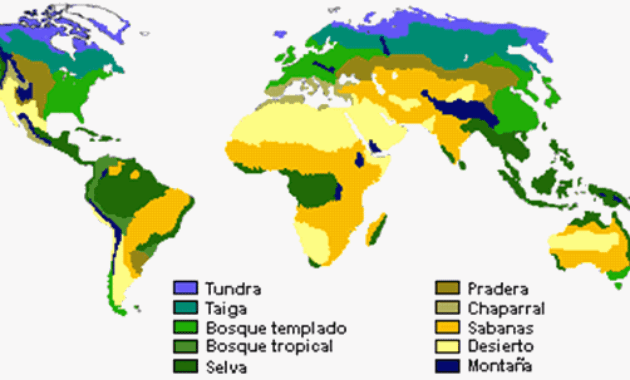
    Within the Earth itself, biomes can be grouped into seven main types of biomes, namely tropical rain forests, grasslands, savannas, deciduous forests, deserts, tundra, and taiga.

    The vegetation that takes place in each environment has its own uniqueness.

    The uniqueness of plant vegetation is a form of plant adaptation to a unique growth environment.

    bioma

    Function of Biome

    the determination of biome in a particular area is done not without reason, specifically in the biological aspects related to the diverse classification of flora & fauna.

    Well, here are some functions of determining biomes that you need to know, namely:

    • Facilitate data collection activities for various types of flora and fauna species.
    • Facilitate the process of grouping various types of flora and fauna that have just been discovered / known.
    • As a method to find out the types of flora and fauna by observing the way of life of these living things in adapting to their environment.
    • Help so that the arrangement of certain populations can run easily and smoothly.

    Characteristic of Bioma

    As mentioned above, biomes are created due to differences in geographical location between regions, the intensity of sunlight, and also rainfall.

    From this review, it can be seen that the biome has the following characteristics:

    • Can be recognized by looking at the main vegetation.
    • Occupies a very wide area / area.
    • It is a collection of various types of population.
    • Created as a result of the interaction between the environment and organisms that live in the environment itself.
    • In a biome, there are producers, consumers, and decomposers (decomposers).
    • The community life is quite stable, unless something happens that can cause the community to become unstable/disturbed.
    • The name of the biome is generally given by looking at / adjusting to the dominating vegetation.

    Factors Affecting the Biome

    Referring to the understanding related to biomes, we can conclude that the existence of a biome with all its characteristics can be caused by several factors.

    Here are some factors that have a great influence on the state of the biome, among them are:

    • Geographical location.
    • Rainfall.
    • Climatic conditions / conditions.
    • The intensity of light from the sun.

    Kinds of Biomes

    After knowing the various reviews related to the definition of the biome above, then you need to know the types of the biome itself in the review below.

    1. Grassland Bioma

    mongolian-Manchurian-Plain-grassland

    Grasslands can be found in tropical / subtropical areas. The rainfall in this biome is 250-500 mm/year.

    Steppes or savannas are generally located in the border area between the tropics and subtropics. For example, in Southern Russia, Hungary, South America, Central Asia, and Australia.

    The following are the characteristics of the prairie or steppe biome, namely:

    • Has poor porosity and drainage due to irregular rain.
    • During the day, the air temperature is 45 degrees C. At night, the air temperature can reach 0 degrees C.
    • Evaporation (evaporation) is easier than precipitation.
    • The humidity is very low.

    The predominant plant on this type of biome is grass. No wonder when experts refer to it as grassland biome. Stepa itself is a term for grassland for Russian society.

    While the animals that can be found in this place are zebras (Africa), bison (America), lions, kangaroos (Australia), wild dogs, wolves, and cheetahs.

    2. Desert Biome

    Desert Biome

    The desert is known for its area of ​​minimal rainfall. The average rainfall in the desert can be said to be very low, which is below 20 cm/ year.

    Extreme temperatures that can occur in desert areas can reach 60 degrees C. It is not surprising that the soil structure is very fragile.

    Even so, there are still animals and plants that can survive in this desert biome.

    Examples of plants that can live in the desert biome are succulents, cacti, eucalypts, and plants with other stiff leaves.

    And for the animals themselves there are camels, scorpions, spiders, snakes, lizards, and several types of insects.

    3. Tropical Forest Biome

    Tropical Forest Biome

    The definition of a tropical forest biome is one type of forest that is very fertile and can only be found in the tropics. The diversity of plants that live in this biome is also very high.

    You can find this type of biome along the Amazon River – Orinoco, Central America, and most of Southeast Asia, Papua New Guinea, and the Congo Basin in Africa.

    The following are the characteristics of the tropical forest biome, namely:

    • Has a temperature range of 25 degrees C – 31 degrees C.
    • Has a high rainfall throughout the year, namely 200 – 225 cm/ year.
    • There is no significant change in temperature from one month to another.
    • Illuminated with sunlight all year round.
    • There are lots of big trees that make the area in the forest seem always dark.
    • Has very fertile soil.

    The plants that you can find in this biome include woody plants with a height of 20-40 m, epiphytes, rattan, bird’s nest nails, orchids, and others.

    And for the animals are squirrels, monkeys, various types of birds, lions, tigers, jaguars, and other animals.

    4. Savannah Biome

    Savannah Biome

    In general, this one savanna is almost the same as a prairie. But what distinguishes between the two is the presence of trees that grow in spreads, such as palms and acacias.

    Advertisement

    This type of biome is located in the tropics and subtropics.

    The following are the characteristics of the savanna forest biome, namely:

    • Has a rainfall of 250 – 700 mm/ year. There is a uniqueness associated with the rainfall, that is, when the rainfall in the savannah is low (250 – 500 mm/ year), then the savannah will become a bush. However, when the rainfall is high (500 – 700 mm/ year), the savannah will turn into a rainforest.
    • The dry months last from December to February. The wet month takes place in May.
    • The intensity of the rain is irregular.
    • Drainage / water flow takes place quickly.
    • High porosity / permeation.

    Animals that can live in this type of biome are zebras, lions, giraffes, elephants, and buffaloes.

    The most famous sabana is in East Africa, specifically Tanzania, which is in the Serengeti Plateau.

    5. Taiga Biome

    Taiga

    The taiga biome is a biome dominated by leafy, needle-like plants.

    You can find this type of biome between the subtropics and the poles, such as Russia, Scandinavia, Alaska, Siberia, and Canada.

    The following are the characteristics of the taiga forest biome, namely:

    • Has a fairly high temperature difference in summer and winter.
    • The growth of trees takes place in the summer, which is between 3-6 months.
    • Has a rainfall of 250 mm/ year.
    • Summer only lasts 3 months, the rest is winter.

    Plants that can live in the taiga area are dominated by coniferous plants such as albus, pine, juniper, spruce, elder, and spruce.

    As for the animals that live in this biome, such as wolves, black bears, squirrels, and several types of birds.

    6. Deciduous Forest Biome

    Deciduous Forest Biome

    Autumn is one of the seasonal characteristics that you can only find in some subtropical countries / four seasons.

    So it is not surprising that the deciduous forest biome can only be found in subtropical areas, such as Korea, China, Japan, Australia, the eastern part of the United States, and England.

    The number of trees that live in this biome is not much and not too close. The various plants will wither / drop their leaves when winter arrives.

    The following are the characteristics of the deciduous forest biome, namely:

    • Has a high rainfall throughout the year, namely 700 – 1,000 mm/ year.
    • It has four seasons, namely spring, winter, summer, and autumn.
    • Has a wide variety of low plant types.
    • The trees that live in this forest have leaves that are not too wide.

    The animals that can live in this forest are deer, wolves, bears, and woodpeckers.

    7. Mangrove Biome

    You can find mangrove biomes along the coast in tropical and subtropical regions.

    One of the functions of this mangrove forest is to minimize the effects caused by seawater abrasion.

    In Indonesia itself, mangrove forests are located along the east coast of Sumatra, the west and south coasts of Kalimantan, the Segara Anakan area, and Wonorejo Surabaya.

    The following are the characteristics of the mangrove forest biome, namely:

    • The water and soil have a high salt content.
    • The soil type is muddy soil.
    • The oxygen content in the water and the soil is low.

    Plants that can live in mangroves are mangroves, bogem trees, and firewood trees. As for the animals, there are crocodiles, fish, monitor lizards, and several types of birds.

    8. Tundra Biome

    Tundra is a term which means a plain without trees. It is clear that the tundra biome is a biome that is not inhabited by trees like other types of biomes. This is because the tundra biome is located in an area with extreme temperatures such as the polar regions.

    The vegetation in this tundra area is only in the form of moss and crust moss. The presence of tundra biome can be found in the Arctic and Antarctic regions.

    The following are the characteristics of the tundra biome, namely:

    • Has a very long winter duration, which is about 9 months.
    • It has very low rainfall, ie 100-250 mm/year.
    • The life span of the plants here is 3 months, exactly during the summer.
    • Most of the soil is source rock with little weathering.
    • The highest temperature there is only 10 degrees C and cold temperatures reach -35 degrees C.

    Plants that can live in the tundra biomass are mosses, crustaceans, and grasses.

    As for the animals that you can find in this area, namely penguins (south pole), polar bears (north pole), walruses, sea lions, polar dogs, wildebeest, thick hairy bison, and several types of birds.

    9. Sea Ice Bioma

    Sea ice biome is a biome that is located in sea ice / above frozen seawater that floats.

    The formation of the sea ice biome is the result of the interaction of all marine organisms from the polar oceans.

    10. Moss Forest Biome

    Moss Forest Biome

    You can find many moss forest biomes on the slopes of the mountains / mountains. A moss forest that is created in an area that is at the boundary of water vapor condensation.

    The most common plant found in moss forest biome types is moss. Moss growth that takes place on the surface of soil, rocks, and trunks of woody trees.

    This moss forest has various trees covered by moss. The moss forest biome has very high humidity as well as low temperatures.

    This condition causes dew to form and almost rains throughout the day.

    11. Seasonal Forest Biome

    Seasonal Forest Biome

    The seasonal forest biome consists of drought-resistant trees. These types of trees are included in trophophytic plants that can adapt to dry or wet conditions.

    During the dry season, the leaf form of plants in the forest biome this season is withered. On the other hand, during the rainy season, seasonal forest biome plants have dense leaves.

    The naming of the seasonal forest is adapted from the name of the tree type, such as teak forest and angsana forest.

    You can find many types of seasonal forest forests in Indonesia, especially in Central Java and East Java.

    Meanwhile, the types of fauna that are often found in the forest this season are deer, tigers, and wild boars.

    Also learn: Topographic Maps

    Examples of Aquatic Biomes

    Aquatic biomes are related to bodies of water.

    The following are some examples of aquatic biomes, namely:

    1. Marine Biome

    Marine biomes include the world’s oceans, the largest aquatic biomes, which are characterized by the presence of salt water. The oceans have various layers associated with the penetration of sunlight.

    2. Freshwater Biome

    The freshwater biome contains water where the salt concentration is very low and includes wetlands, ponds, lakes, and rivers.

    Lakes and ponds experience thermal mixing. This biome can accommodate waterfowl, fish, crustaceans, algae, and microorganisms.

    The river will continue to move towards the lake or ocean. Their current speed affects the types of species that live in them and also the clarity of the water.

    3. Coral Reef Biome

    Coral reefs are found in shallow parts of some tropical oceans. Made from the remains of various classifications of coral animals, this one reef accumulates over time and provides habitat for many underwater species.

    The Great Barrier Reef of Australia is a great example of a coral reef biome.

    4. Wetland Biome

    Wetlands are shallow bodies of water such as swamps and mud. They provide habitat for many plants as well as animals.

    On this type of biome has a stable water flow on freshwater wetlands.

    5. estuary Biome

    An estuary is where an ocean meets fresh water. Plants that can tolerate changes in salinity are referred to as holophytes. Estuaries offer important breeding sites for crustaceans as well as a variety of waterfowl.

    An example for a large estuarine biome is that of the Florida Everglades.

  • Contamination – Definition, Causes, Impact, Countermeasures and Examples

    Contamination – Definition, Causes, Impact, Countermeasures and Examples

    For this discussion we will provide a review of Contamination which in this case includes the Definition of Contamination, Examples of Contamination and Causes of Contamination.

    So in order to better understand and understand see the full review below.

    Definition of Contamination

    So what is meant by contamination? Definition of Contamination is a condition of mixing / contamination of something by other elements that give certain effects, usually a bad impact.

    The components that cause contamination are very diverse, both inanimate objects and living things. Contaminants that come from inanimate objects such as chemical compounds and dirt, while contaminants that come from living things such as microbes.

    And in general, the word contamination is always associated with something that means bad/negative. The use of the word “contamination” is often used for many things, including:

    • Food “food contamination”
    • Environment “environmental contamination”
    • “Cross-contaminating” foodstuffs
    • Language “contamination of words, sentences”

    Microbial Contamination in Foodstuffs

    • Microbial Contamination From Soil

    Soil contains various kinds of microorganisms that can be a source of contamination. If microbiologists want to look for a new type or strain of a microorganism for a particular purpose, they usually first look for it in the soil. Not only a few types, but in large numbers microorganisms are found in fertile soil, which can contaminate plants growing on the soil.

    • Microbial contamination from water

    Water in nature not only contains normal flora but also contains microorganisms originating from the soil and possibly also from animal waste. The water surface of rivers or ponds and the water at the bottom of large lakes and ponds may contain various kinds of microorganisms in units of millions per mm after a rainstorm, which is more numerous than the lake and pond at rest or there is no thunderstorm. Groundwater after spring will exit through layers of soil and rocks: because many bacteria live in the water, the number of bacteria in this water ranges from several hundred per millimeter.

    • Microbial Contamination From the Air

    Food contaminated from the air has an important role in sanitation for economic reasons. Organisms that contain disease, especially those that can cause infections of the respiratory system or in food that causes contamination. The number of microorganisms in food that can come from the air, especially when air is used as aeration in food products, although organisms enter by sedimentation from the air is always not a concern. Airborne mold spores cause problems with cheese, meat, condensed milk, sliced ​​bread and lard.

    Environmental Contamination

    Environmental contamination is contamination of food ingredients caused by environmental conditions that are less well maintained.

    Environment

    • Air: temporary medium for influenza viruses & bacteria
    • Soil : botulinum & C. Perfringens
    • Salmonella, Shigella, faecal Streptococci wastewater ,

    Other Sources:

    • Equipment: during use or storage
    • Equipment contamination from materials, workers and air
    • Overcome with: hygienic design and effective cleaning

    • Water
    1. Water as a cleaning medium Needs special safeguards. For example, ultra violet
    2. Garbage used for washing contains water that has a waste flora
    3. The good places for the bacterial micro-organisms are Clostridium batulinum and Clostridium perfingens. Can be found in the setup and save area in a variety of ways
    4. With food and wrap
    5. With the shoes of the workers
    6. With air (almost every dust belongs to the sewer class

    • Air
    1. Air pollutes processing, packaging, storage and preparation sites ditempat
    2. Polluted air is caused by several factors. Dew drops when talking, sneezing, coughing can be the center of micro-organisms

    • Waste
    1. Poor waste management: sources of contamination
    2. Can pollute water sources, rivers, lakes, seas so that food from these waters can be polluted

    Production place

    1. Judging from the cleanliness of the floor used, if there is standing water it can be a source of contamination in food.
    2. Door handles contaminated with workers’ hands, processing equipment surfaces contaminated with microbes, can contaminate the product being processed.
    3. On the walls that are dirty and not cleaned as a breeding ground for microbes
    4. On the tools used in the cooking process

    Product raw materials

    Contamination contained in the raw food product itself. Prior to the processing, the product has been contaminated with bacteria, this can be caused by unfavorable environmental conditions, bacteria present in the animal (eg cattle affected by anthrax), raw material handlers who are less hygienic (cross contamination)

    • Contaminants from raw materials:
    1. Microbes from soil, water, pesticide residue
    2. Animals: microbiology, antibiotics, hormones
    • Meat
    • salmonella
    1. Knives and tools when slaughtering
    2. Hair, skin, digestive tract, respiratory tract.
    3. Contamination during: slaughtering, cutting, processing, storage and distribution
    4. Carcass contact with dust or other debris
    • Milk
    1. Cow, milker
    2. Cross contamination: worker, container

    Examples of contamination due to human activities; Factory waste is dumped into rivers so that river water becomes toxic to living things. Examples of contamination due to natural activities; volcano erupts, natural gas is poisonous.

    Cross Contamination

    The definition of cross-contamination is the transfer of bacteria from raw food ingredients to finished food products, either directly or indirectly. Cross-contamination generally occurs due to the process of storing foodstuffs and the process of making food that is not clean.

    An example of cross-contamination occurs when a dirty knife contaminated with harmful substances is used to peel a mango that is about to be eaten. Another example, plastic storage contaminated with feces is used to store meat.


    Causes of Contamination

    In general, there are three causes of contamination, namely biological contamination, chemical contamination and physical contamination.

    • Biological contamination, some of the causes of biological or microbiological contamination are “protozoa and worms” parasites, viruses, pathogenic bacteria, which can cause poisoning and infection in humans.
    • Chemical Contamination, chemicals that can cause intoxication in humans. Some of the chemicals that cause poisoning include antibiotics, pesticide residues, industrial chemical contamination.
    • Physical Contamination, contamination of a physical nature, such as stones, dust, hair, metal, pieces of wood, nails or even cooking utensils used. Physical contamination does not always cause disease, but it is still dangerous and interferes with human health

    Impact of Physical Contamination

    In general, food contamination can cause many health problems for people who eat contaminated food. Among them can cause disturbances in the digestive tract, kidneys, liver, heart, and other organs. In addition, food contamination can also cause food poisoning.

    Physical contamination in the form of foreign objects if swallowed with the food or drink we consume will certainly be very dangerous for our bodies. For example, if there is broken glass that enters our body, it will certainly injure our organs and can even cause death.


    Physical Contamination Prevention Efforts

    Some actions that can be taken to prevent or avoid food contamination include the following:

    Personal Hygiene

    People who process, cook, or serve food need to understand and understand that cleanliness is the basis of health. Patients with scabies (scabs), inflammation of the respiratory tract, or digestive tract diseases are sources of transmitting germs to food, especially to cooked food. The ways of transmission are through touching with dirty hands, sneezing, and coughing. Washing hands with clean water is an absolute requirement for food handlers, especially after urinating or defecating.

    Environmental Hygiene

    In addition to personal hygiene, cleanliness of the workplace and the surrounding environment, workplace facilities are equally important. There must be enough clean water available, enough sunlight. Food processing and storage must receive special attention where the food processing area must be in a clean condition. In addition, cooking utensils and cutlery must also be kept clean so that they do not become a source of bacteria.

    Tools should be cleaned as well as possible so that no organic remains are visible to the eye. This action can be helped by using detergent and if this material is used it must be washed / rinsed well with clean water. wash foodstuffs, such as meat and vegetables under running water when they are freshly purchased, to remove chemicals, pesticides, and germs.

    At the Food Ingredients Selection Stage

    Materials that are eaten raw must be transported and stored separately from other raw materials and non-food ingredients. So as to minimize contamination by foreign objects.

    At the Food Storage Stage

    Storage must be done in a special place that is clean and meets the requirements. Items must be arranged properly so that they are easy to take, do not allow insects or rats to nest, avoid flies/rats and for perishable or damaged products to be stored at a cold temperature. . And each food ingredient is placed separately according to its type.

    At Food Processing Stage

    Food processing is the process of changing the shape of raw materials into ready-to-eat food. Good food processing is one that follows the rules and principles of good hygiene and sanitation in the washing process, food handling, cooking process, use of food additives and use of cooking utensils.

    In Food Storage Stage

    Food that has been cooked or is ready to be served, not all of it is directly consumed by us, especially food that comes from catering or catering services. Some things to consider when storing cooked food include:

    1. Food served hot should be kept at a temperature above 60 degrees Celsius.
    2. Food that will be served cold is stored at a temperature below 4 degrees Celsius
    3. Food served in hot conditions stored at a temperature below 4 degrees Celsius must be reheated to 60 degrees Celsius before serving.

    At Food Transport Stage

    Healthy food transportation will play a very important role in preventing food contamination. Contamination of cooked food is higher risk than food contamination. Therefore, the emphasis is on controlling food contamination in cooked food.

    At the Presentation Stage

    The presentation of food must be in accordance with the principles of food hygiene and sanitation, so that there is no contamination of the food to be served.

    Tackling Contamination

    How to deal with contamination of toxic and hazardous materials:

    • When exposed to corrosive liquid

    Immediately washed with water repeatedly on the affected, before being taken to the ER to be treated by a doctor.

    • When exposed to solid corrosive materials

    Immediately wash with water repeatedly on the affected area, if necessary with soapy water.

    • When burns due to chemicals

    Immediately avoid these chemicals and wash them with water repeatedly and immediately be treated by an emergency room doctor.

    • Burns due to heat

    First aid can be done by compressing ice water or pouring water until the pain goes away and does not come back. If necessary soak in water. Cooling relief measures can be taken to relieve pain and more importantly that cooling will be stopped or slow the reaction of the destruction of body tissues due to fire. This first aid must be followed immediately by a doctor’s treatment.

    Clothing that is attached to or adjacent to the burn needs to be removed, avoid contamination of the wound and do not clean the wound or apply topical agents, such as butter, oil, soy sauce and toothpaste. Cover the wound with a sterile, clean cloth or bandage that is treated by a doctor.


    Example of Contamination

    Examples of physical contamination include: dust, soil, stones, glass, hair, staples, klips, animal waste, safety pins, needles, leaves, parts of animals such as fur or animals such as lizards, insects and so on. Sources of physical pollutants can occur in conditions where food processing is not clean, storage of foodstuffs and ready-to-eat food is not good so that dust and soil are possible as well as contamination by rats and insects, the presence of pets such as cats, chickens and birds in food processing areas. can cause physical contamination of food.

    Likewise, humans who manage food that do not use work clothes, good hair cover and how to wash cooking utensils and storage can cause contamination by human hair and dust .