Category: Persona

  • 3 Reasons Why Many CEOs Are From India

    3 Reasons Why Many CEOs Are From India

    Many have asked why CEOs of tech companies are from India, this inspired us to write about 3 reasons why so many CEOs are from India.

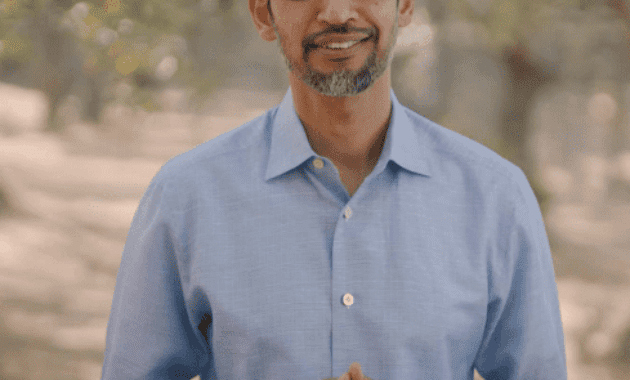
    Of course we are familiar with names like Sundar Pichai from Alphabet who oversees Google or Satya Nadella who now leads Microsoft.

    Then, who was just appointed at the end of 2021, namely Parag Agrawal as CEO of Twitter.

    He has joined at least a dozen other Indian-born CEOs in a corner of the tech firm’s offices in Silicon Valley, the world’s most influential tech hub.

    According to statistical records, Native Indians account for only about 1% of the population in the United States and only 6% of the entire workforce in Silicon Valley.

    However, disproportionately these 6% have a lot of representation in high positions in the company. The important question is “Why?”.

    3 Reasons Why Many CEOs Are From India

    If you really want to know the answer, read this article to the end and you will find 3 reasons why so many CEOs are from India.

    1. Competition in India is very tough

    Various life competitions are increasingly making many young people depressed, mentally affected, healing a little bit, aka vacations that cost money.

    To quote R Gopalakrishnan, former executive director of Tata Sons and co-author of The Made in India Manager, as saying that “No other country in the world ‘trains’ so many of its citizens in a gladiator way like India.”

    “Growing up in India educates every individual to be a natural fighter, from obtaining birth certificates to death certificates, from school admissions to finding jobs, from lack of infrastructure to inadequate capacity”

    Don’t imagine that life in India is full of flowers and singing all day long.

    The true reality of India is exemplified by the police who always arrive late to the crime scene or a child who works hard and is almost depressed in the film The White Tiger (2020).

    Competition and chaos, in other words, make Indians instinctively adaptable problem solvers .

    In fact, this affects the way Indians work, who often prioritize professionalism over personal matters.

    Of course this is very suitable to be applied in the American office culture that encourages everyone to do a lot of work.

    2. Education

    Since the 1960s, India has made gradual shifts in its educational curriculum that emphasizes knowledge of mathematics, science and technology.

    This knowledge cluster is known as STEM, namely Science, Technology, Engineering, and Math.

    You will very easily find technology-based campuses in many cities in India called the Indian Institute of Technology , this is under the auspices of the Indian ministry of education.

    Do not forget to apply English as the language of education in India which allows them to access a variety of the latest knowledge literature from Europe and America.

    Then it also makes it easier for Indian technology college graduates to compete abroad, be it Europe or America.

    America’s tightening immigration policies that prioritized professional workers since the 1960s also made it easy for alumni of technology colleges in India to get work permits in America.

    This policy is like a welcome greeting to the alumni of the institute of technology in India who are masters of the STEM field and are in line with the needs of the high-end labor market in the United States.

    In these two decades, More than 70% of H-1B visas i.e. work permits for foreigners issued by the United States were granted to Indian software engineers.

    Then nearly 40% of all overseas engineers living in cities like Seattle are from India, giving them a greater chance of becoming CEOs from India.

    This group of immigrants from India does not resemble any other group of immigrants from any other country.

    They were selected with a selection process three times more stringent than engineers from other countries.

    Selection in fierce social life in India, selection in competition in college, and also job selection to enter technology companies in America.

    Although a small percentage of these Indians already have the privilege of being born into the upper caste and able to go to famous and expensive colleges.

    Then also a smaller share, namely those who can finance master’s education in the US, as can now be found in Silicon Valley.

    3. Revolution of Work Culture and Mental Attitude

    Work culture is one of the issues that dominate the problems of technology companies in Silicon Valley.

    As practiced by Satya Nadella, a CEO from India who took over as CEO of Microsoft in February 2014. He inherited a toxic culture in a company that is considered a tech dinosaur.

    Bill Gates, the founder, was known to berate employees, and Steve Ballmer, who succeeded Gates, continued the tough business tactics his partners hated.

    Microsoft has lost the battle for smartphones, and Nadella is directing Microsoft’s technology platform to focus on desktops and pave the way to cloud technology.

    As Alex Salkever wrote in the book “From Incremental to Exponential”, Nadella chose to focus first on changing Microsoft culture.

    Since birth in India, and with Buddhist beliefs, he is determined to turn the company into one that embraces what he calls the “learn everything” curiosity, as opposed to today’s worldview which is geared towards “knowing everything”.

    Nadella has now made it clear that the old and aggressive behavior is no longer acceptable in the Microsoft environment.

    Microsoft now does not tolerate anger or shouting at executive meetings.

    As a CEO from India, Nadella sets an example by never raising her own voice or showing blatant anger to employees or executives.

    Never writing angry emails, he is constantly working to create a more comfortable environment.

    As a result of a cultural shift and a change in strategy thanks to the direction of Satya Nadella, Microsoft’s market capitalization increased from about $300 billion in Nadella’s rise to $2.5 trillion and made it one of the two most valuable companies in the world.

    Likewise with Sundar Pichai, CEO from India who also inherited a company with cultural problems.

    Google is known for having an excused workplace culture, where sexual relationships between top executives and employees create internal tensions.

    With his gentle and humble Indian demeanor, Pichai steered a large Alphabet corporate team into calmer waters and reorganized workplace ethics.

    The result is that he has achieved as much success as other Indian CEOs such as Shantanu Narayen of Adobe and Jayshree Ullal of Arista Networks.

    Outside of the tech sector, other Indian CEOs have also left their mark on companies including Indra Nooyi at PepsiCo and Ajay Banga at Mastercard.

    All thanks to the subtle leadership based on the process they have gone through in the company climbing the corporate ladder from the bottom.

    This gives them a sense of humility that sets them apart from many CEOs who came from company founders with a tendency to be arrogant and have great power in their vision and management.

    Alex Salkever also said people like Mr Nadella and Mr Pichai also brought some caution.

    They reflect a “gentle” culture typical of Hinduism and Buddhism which makes them ideal candidates for top positions in a company.

    Especially at a time when the reputation of big technology has plummeted amid congressional hearings in America on the protection of user data and the widening gap between the richest in Silicon Valley and the rest of America.

    Their humble leadership is a big plus, said Saritha Rai, a technology reporter with Bloomberg News.

    India’s diverse society, with so many customs and languages ​​gives CEOs from India the ability to navigate complex situations especially when it comes to organizational scaling.

    Coupled with the ‘hard work’ ethic that makes them grow well,” he added.

    Also Read : How a Google Online Course Can Help You Find the Best Job in Your Field?

    Americans’ Recognition of Indian CEOs

    These are traits that any company’s board of directors would recognize and appreciate, especially when the other option is company founders who are arrogant and very confident that they are entitled to their work.

    These 3 reasons allow a new CEO to change the company culture to be healthier and more productive. This is what is believed to have benefited Indian CEOs.

    This may also be the reason why Twitter’s board unanimously approved Jack Dorsey’s recommendation to appoint Parag Agrawal as his successor, again the CEO is from India.

    A work culture transformation is what Twitter may need above all else.

    Twitter has received a barrage of justified criticism for its toxic work culture and insensitivity to abuses on its platform.

    Coupled with Jack Dorsey’s status is part-time CEO of another company, namely payments start-up Square which is building a blockchain and cryptocurrency ecosystem.

    Dorsey’s predecessor, Dick Costolo, was someone who practiced the company’s chauvinistic culture and an all-male board.

    As many tech CEOs do, he really likes attacking people in public rather than listening to criticism.

    That’s a response no Indian CEO would have made, and that’s why they were chosen to run America’s leading tech company.

    Closing

    There is no doubt that competition in life, education and behavior gives strength to struggle in the overseas land and makes Parag Agrawal, Satya Nadella and others become CEOs from India.

    In a country of more than a billion people, much of which is hampered by rampant corruption, weak infrastructure, and limited opportunities, it takes a lot to survive, let alone progress.

    Indians learned to be tough, to fight endless odds, and to make the most of what they had.

    It should be with a variety of scholarships provided by the government, should motivate the younger generation to be able to study well to win the competition in the global arena to be like the CEOs from India above.

  • Karl Marx and the Birth of Marxism: An Overview of His Life and Theories

    Karl Marx and the Birth of Marxism: An Overview of His Life and Theories

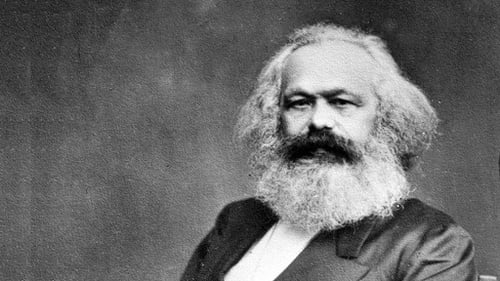
    Karl Marx (5 May 1818 – 14 March 1883), a Prussian political economist, journalist, and activist, and author of the important works, “The Communist Manifesto” and “Das Kapital,” influenced generations of political leaders and socioeconomic thinkers. Also known as the Father of Communism, Marx’s ideas spawned violent bloody revolutions, ushered in the overthrow of centuries-old governments, and served as the basis of the political system that still controls more than  20 percent of the world’s population — or one in five people on the planet. “The Columbia History of the World” calls Marx’s writings “one of the most extraordinary and original syntheses in the history of the human intellect.”
     

    The Childhood of a Karl Marx

    Marx was born on May 5, 1818 in the city of Trier, southeastern Germany, which was then still part of the Lower Rhine Province, Kingdom of Prussia. He was born into a middle-class family. Marx was the third of nine children. Although he came from a family of Jewish descent, in 1816 his father, Heinrich Marx, decided to be baptized into a Christian at the age of 36. His mother, Heinrietta Marx, was also baptized after his father’s death.

    His father Heinrich was a fairly successful lawyer in Prussia. He was also a reform activist in his time. Heinrich’s decision to convert to Christianity was also inseparable from the 1815 regulation that prohibited Jews from occupying crucial positions in society.

    Karl Marx himself was baptized at the age of six, along with his brothers. Although Trier is a Catholic city, the influence of liberal ideas is easier to enter because of its location on the border with France. Until the age of 12 years, Marx studied at home alias home school . Then he continued for another 5 years at the Jesuit school, Firdrich-Wilhelm Gymnasuium, Trier. The principal is a friend of his father’s who is also liberal.


    Marx’s Youth

    Marx was educated at home by his father until high school, and in 1835 at the age of 17, he enrolled at the University of Bonn in Germany, where he studied law at his father’s request. Marx, however, was much more interested in philosophy and literature.

    After his first year at the university, Marx became engaged to Jenny von Westphalen, an educated female baron. They married in 1843. In 1836, Marx enrolled at the University of Berlin, where he immediately felt at home when he joined a circle of brilliant and extreme thinkers who challenged existing institutions and ideas, including religion, philosophy, ethics. , and politics. Marx graduated with a doctorate in 1841.

    Since entering campus, Marx began to show his rebellious attitude . October 1835, Marx started his schooling at the University of Bonn, Germany. He is active in academic life at his campus and is also known as a rebel. During his two semesters in Bonn, Marx spent his days making trouble, getting drunk, and fighting. In the end, his father forced Marx to enroll in another, more serious school, namely the University of Berlin, majoring in philosophy and law.

    This is where Marx was introduced to philosophy from GWF Hegel, a professor in Berlin. Although initially not so enamored with Hegel’s theory, Marx was heavily involved with Hegelian youth groups which were a collection of radical students. They usually criticize the political and religious establishment at that time.

    In 1836, Marx became increasingly involved in political science. He was even secretly engaged to Jenny von Westphalen, the daughter of an upper-class family in Trier. Because of his increasingly radical attitude, his father became worried. Heinrich even wrote to his son and even asked Marx to stop his marriage to Jenny.

    But in 1843, Marx married Jenny. They had six children, but due to extreme poverty, only three children who were girls survived to adulthood. Even as adults, their children are actively involved in political activities, you know .


    Career and Exile

    After school, Marx turned to writing and journalism to support himself. In 1842 he became editor of the liberal Cologne newspaper “Rheinische Zeitung”, but the Berlin government banned its publication the following year. Marx left Germany — never to return — and spent two years in Paris, where he first met his collaborator, Friedrich Engels.

    However, expelled from France by those in power who opposed his ideas, Marx moved to Brussels, in 1845, where he founded the German Workers’ Party and was active in the Communist League. There, Marx networked with other leftist intellectuals and activists and—along with Engels—wrote his most famous work, ” The Communist Manifesto .” Published in 1848, it contained the famous line: “The workers of the world unite. You have nothing to lose but your chains.” After being exiled from Belgium, Marx finally settled in London where he lived as a stateless exile for the rest of his life.

    Marx worked in journalism and wrote for German and English language publications. From 1852 to 1862, he was a correspondent for the “New York Daily Tribune,” writing a total of 355 articles. He also continued to write and formulate his theories about the nature of society and how he believed that society could be improved, and actively campaigned for socialism.

    He spent the rest of his life working on a three-volume tome, “Das Kapital,” which saw its first volume published in 1867. In this work, Marx aimed to explain the economic impact of capitalist society, in which a small group, which he called the bourgeoisie, owned the the means of production and use their power to exploit the proletariat, the working class which actually produces the goods that enrich the capitalist tsar. Engels edited and published the second and third volumes of “Das Kapital” shortly after Marx’s death.


    The works of Karl Marx during his Life

    after marrying Jenny, they moved to Paris. In that city, Marx met Friederich Engels, a writer who later became his colleague and friend. Both of them issued a lot of work together, you know . Their first work was the book The Holy Family in 1845.

    Not only this one book, Marx and Engels also have many other works. According to the marxist.org website , there are also other important works such as:

    • Thesis on Feuerbach (Marx, 1845)
    • The Poverty of Philosophy (Marx, 1847)
    • Wages and Capital (Marx, 1847)
    • Principles of Communism (Engels, 1847)
    • Communist Party Manifesto (Marx and Engels, 1848)
    • Wages Price and Profit (Marx, 1865)
    • Housing Problems (Engels, 1872)
    • Capital I, Capital II, Capital III (Marx, 1867 – 1894)


    Marx and the Idea of ​​the Factory School

    Do you know at that time Marx was also very active in forming a better curriculum for the children of workers, you know ? Yup, in the old days, young children from 9-12 years old were required to work in factories.

    For this reason, in his book entitled Kapital, Marx put his ideas into creating a part-time system for the children of workers. Marx hoped that the children would be able to work but still be able to continue their studies. But unfortunately, the capitalists and the government at that time did not pay much attention to this part-time idea of ​​​​Marx. They say it costs more to hire 2 shifts of child labourers. As a result, many children of workers are fired if they work while attending school.

    The curriculum proposed by Marx at that time was not much different from conventional schools. Starting with mental education, then physical education (a combination of gymnastics and military training), then there is also a polytechnic education which will teach the general principles of all production processes.

    In essence, Marx wants to emphasize the education of children and young workers so that they can develop into individuals who can make social changes around them. Marx was more in favor of a combination of education and work rather than an education system that required children to study all day long.

    According to him, with this part-time work and school system, children and young workers can practice directly and know what is the cause of their mistakes in the production system, and can become individuals who want to make changes for the sake of their people.


    Death and Inheritance

    While Marx remained a relatively unknown figure in his lifetime, the ideas and ideology of Marxism began to exert a profound influence on the socialist movement shortly after his death. He died of cancer on March 14, 1883, and was buried in Highgate Cemetery in London.

    Marx’s theory of society, economy, and politics, collectively known as Marxism, holds that all societies develop through the dialectic of class struggle. He was critical of the current socio-economic form of society, capitalism, which he called the dictatorship of the bourgeoisie, believed it was run by the rich middle and upper classes purely for their own gain, and predicted that it would inevitably result internally. tension that would lead to its self-destruction and its replacement by a new system, socialism.

    Under socialism, he argued that society would be governed by the working class in what he called the “dictatorship of the proletariat.” He believed that socialism would eventually be replaced by a stateless and classless society called  communism .


    Continuous Influence

    Whether Marx intended for the proletariat to rise up and foment revolution or whether he felt that the ideals of communism, ruled by an egalitarian proletariat, would simply outlast capitalism, is debated to this day. But, several successful revolutions did occur, propelled by groups that adopted communism—including those in Russia, 1917-1919, and China, 1945-1948. Flags and banners depicting Vladimir Lenin, the leader of the Russian Revolution, together with Marx, were long displayed in the Soviet Union. The same was true in China, where similar flags showing the leader of that country’s revolution, Mao Zedong, together with Marx were also prominently displayed.

    Marx has been described as one of the most influential figures in human history, and in a 1999 BBC poll was voted “the thinker of the millennium” by people from all over the world. The memorial at his grave is always covered with thanks from his fans. His tombstone is inscribed with words that echo the words of the “Communist Manifesto”, which seems to foretell Marx’s influence on world politics and the economy: “Workers from all lands unite”.


  • There’s Engels Behind Marx: The Biography of Friedrich Engels

    There’s Engels Behind Marx: The Biography of Friedrich Engels

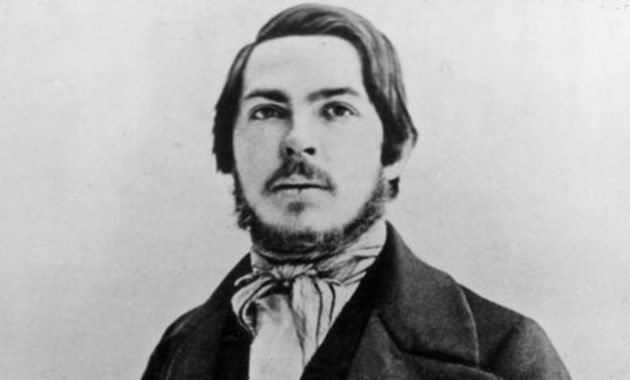
    So far, when we talk about Friedrich Engels, what immediately comes to mind is that he is a friend of Marx. A loyal friend of mine, whose friendship is not only amazing but also thrilling and changing the world. But who really Engels is, and what his role is in the international socialism movement, the Indonesian public doesn’t know much about.
    In my research, dozens of biographies have been published since Engels’ death on August 5, 1895. Karl Kautsky wrote a brief history of Engels at the end of the 19th century. Then Lenin also wrote a brief history in the early 20th century. The most complete biography of Engels was written by the German historian Gustav Meyer in the 1920s. This two-volume biography is written in German. An abridged edition of the English translation was published in 1934, a year after Meyer managed to escape to London from the Nazis. After Meyer’s work was published, almost every decade a biography of Engels was published in various languages. At least, there are two types of biographies of Engels that have been written, namely biographies and critical biographies. The first type generally only describes Engels’ life journey from family origins to his death. Engels is shown here more as a person. The second type usually includes an analysis of Engels’ thought and work in the context of Engels’ intellectual journey. Included in this genre, for example, are the works of Terrell Carver,Engels , first published in 1981 (republished 2003) and by JD Hunley, The Life and Thought of Friedrich Engels (1991).

    In the early decades of the 21st century, a fairly popular biography of Engels was published by Tristram Hunt, a historian and activist for the British Labor Party. The biography was first published in England under the title The Frock-Coated Communist: the revolutionary life of Friedrich Engels (2009), then an American edition appeared under the title Marx’s General: the revolutionary life of Friedrich Engels (2010), as well as a French translated edition entitled Engels. , le gentleman révolutionnaire(2011). This book leans towards the historical type of analysis, in which we can find in many places a critical analysis of the context of Engels’ thought and Engels’ role in the development of Marxism. Praised by Marxist historian Eric Hobsbawm as ‘the best biography of one of the most attractive inhabitants of Victorian England, Marx’s friend, partner, and political heir,’ the book is a bestseller. His popularity indicates that people in Europe and America are starting to pay attention to Engels again.

    In addition to Hunt’s writings, there is another biography that appeared at the end of the first decade of the 21st century, namely that of John Green, a journalist and documentary filmmaker. The title is Engels: a revolutionary life. Compared to Hunt’s, this book has received less attention. Maybe because it’s just a resume. The author is not a historian. I have this book as a gift from the author. By the end of 2011, I already had several of Engels’ biographies of the critical analysis type. I’m in the mood to read a biography of Engels which is just a biography of sorts. I emailed the author. Unexpectedly, the author replied and promised to send one of his books. Compared to the Engels biographies that I already have, this book provides information about Engels as a person I did not know before. Two of them are that Engels’ father was also Friedrich Engels and that the junior Engels had been a combat lieutenant in the working class troops in the 1848 revolution in Prussia.

    What I write here, instead of a review, may be more accurately called a summary. Just to commemorate the birthday of Engels.

    Friedrich Engels Before Meet Karl Marx

    On November 28, 1820, Friedrich Engels, a businessman in the most industrialized city on the Prussian Rhineland at the time, Barmen, was waiting for his wife to give birth to their first child. The man hoped that his wife would give birth to a son. However, as the successor to the family business that his grandfather, Johann Caspar Engels, founded in the first half of the 18th century, Friedrich wanted his business to continue. His hopes were fulfilled. According to custom among the elite at that time, the first boy was named after himself: Friedrich Engels. The child grew up in the midst of the fast-paced family business. Since the 1830s, when the child was only 10 years old, the family business has expanded by jointly establishing a textile production and import-export business in the center of the world’s manufacturing industry, England.

    Friedrich directed his son’s education so that he would later represent his business in England. Incidentally, her maternal grandfather, Elise, was a grammar school principal. At the gymnasium school, Engels junior studied Greco-Roman language and literature as well as German literature. Engels junior is an average student. Except for language, he had an affinity for science, and his rebellion against the bourgeois Christian culture of his city. In fact, before taking the graduation exam, junior Engels often wrote criticisms of the conditions of society and its elite morality under the pseudonym F. Oswald. Almost all major European languages ​​are mastered. He also enjoyed reading the works of Enlightenment thought and writers which he devoured, even though he had to steal time to read them. It was his mother who supported Engels junior’s passion for literature, science, and philosophy. The father, on the other hand, saw signs of danger in his son’s academic abilities and interests. He didn’t want his son to be clever. As the first son to inherit his own name, Friedrich insisted his son should be the successor of the family business. Therefore, before his son passed his final exams, in 1837 he sent him for an apprenticeship in the trading company of his friend Heinrich Leupold. There Engels junior helped the company clerk. His job is to record the number of goods that come in and out, read and translate incoming letters, reply to trade letters, and make daily reports on all of it. The trade letters came from the European colonies in the Americas and the West Indies. Most are written in non-German languages. This is where Engels junior deepens his foreign language skills.

    The desire for contemporary thought is not simply crushed by the daily grind of being a scribe. After work, Engels continued his study. Luckily his mother, Elise van Haar, supported secretly sending him the works of German and French scholars.

    As a Prussian royalist, Friedrich Engels senior was proud to send his son into military service to Berlin in early 1842. There, several days a week, junior Engels received military training as an officer candidate, particularly for the municipal artillery division. Later, his knowledge of the army was used in the armed struggle in the 1848 Revolution in southern Germany. He used his days off to attend the lectures of the philosophy professors. In the evening, he wanders around following the discussions of contemporary thought held by the students of the University of Berlin, wabilespecially Hegel’s disciples. At that time, it can be said, the thinking of Georg Wilhelm Friedrich Hegel became a ‘trendy’ thought among educated Germans. In the hands of the interpretation of the monarchy loyalists, Hegel’s ideas became a kind of supporter of the Prussian constitutional monarchy system and Protestantism as its ideological basis. Historically, proponents of this loyalist interpretation were referred to as the Old Hegelians or Conservative Hegelians. On the other hand, there is a small group of scholars who interpret differently. Instead of supporting, they even talk about the restoration of the monarchy and push Hegel’s thinking in a radical direction as a critique. Such people came to be known as the Young Hegelians. This is where Engels junior got the fertilizer for the seeds of his youth rebellion. Engels read David Strauss, Ludwig Feuerbach,

    Encounter with Marx

    After his son fulfilled his mandatory military service in Berlin, the senior Friedrich Engels sent him back to England. It was also horrifying, if the rumors were true, that junior Engels had swam too far in that critical Young Hegelian puddle. Must as soon as possible his soul purified again by the sanctity of the business world. But too late, Engels junior increasingly in the struggle in the world of radicals. In late 1842, while on a trip to England, he became acquainted with Moses Hess, a prominent communist ideologue at the time. At the offices of the Rheinische Zeitung newspaperin Cologne, he was also introduced to Karl Marx, a recently graduated and rejected doctor of philosophy in Berlin and editor-in-chief of the paper. It was with the latter that Engels junior would form an eternal fellowship.

    Instead of being completely devoted to the business world, Engels junior’s political activity escalated. In England he soon made friends with the Chartists, who, a few weeks before his arrival, had led a general strike in England’s industrial triangle of towns (Manchester, Lancasshire and Cheshire). Upon his arrival in Manchester, Engels became acquainted with Mary Burns, also a labor movement activist, who introduced him to the working class world. Engels became increasingly critical. His reading of economics books at the time led to the writing of his first work, Outlines of Political-Economic Criticism , which was published in the first and last edition of the Deutsch-Französische Jahrbücher., the journal of the German emigrant trade unions in France, in 1843. Marx, who had only known him briefly a few months earlier, read this article and probably decided that this was a man worthy of his comrade-in-arms. It is said that it was because of this writing that Marx shifted his direction from philosophical studies to political-economic criticism. That same year, Marx left the Rheinische Zeitung after his newspaper was censored by the government for his critical articles. He went to Paris looking for work. Incidentally, Engels was also on his way there. The two met for the second time and began a lifelong partnership that would shake the world. The first product of this collaboration is the Sacred Family, a collection of polemical treatises addressed to their former Hegelian comrades in Berlin. This book becomes a kind of baptismal water that binds the two as brothers for life.

    From Paris, Engels returned to England. Where the Ermen & Engels joint venture is based, after serving, junior Engels is increasingly wandering into the workers’ settlements accompanied by Mary Burns. The squalid slums of the working class creeping up on the edge of the bourgeois majestic world, the sad stories of child laborers who are paid three potatoes, the high death rate due to poor sanitation and brutal working conditions, convinced him that something was wrong with the economic system. capitalism and the economic ideologies that support it. Unlike Marx, who was inspired by the idea of ​​socialism from his sophisticated world of philosophy, Engels embraced socialism because he came face-to-face with the empirical reality of how capitalism works. Even from his teenage days at Wupperthal. His encounter with socialism was not confined to the working-class housing estates facing capitalism. Official publications, health inspectorate reports, and field notes on the lives of the workers he read carefully throughout 1842-1844. The results of this investigation were offered to be published as a book. In August 1844, pending confirmation of the publication of his book, Engels left Manchester. In February 1845, the French Minister of the Interior expelled Marx. Marx and his family moved to Brussels, the capital of the Kingdom of Belgium. Here, Marx compiled eleven of his legendary theses on Feuerbach’s philosophy of materialism. In April of that same year, Engels arrived in Brussels and met Marx. The two collaborated again to compile a critical treatise on Hegelian philosophy as well as a critique of British political-economic works. From the end of that year to early 1846, they compiled the treatise that became known asGerman ideology . In a treatise that was never published during their second lifetime, Marx and Engels sowed the seeds of their materialist conception of history, which Engels later called Historical Materialism. In the same year, Engels’ ethnographic work on the conditions of the English working class was published in Leipzig in German.

    Have fun with Marx

    Marx and Engels were not arrogant behind-the-scenes thinkers about reality. Both of them were first of all revolutionaries. Their goal has always been to combine theoretical understanding with practical experience to change the world. That is why, it is not surprising that both of them became members of the Justice League, a kind of communist ideology trade union which later changed its name to the Communist League. This league was the forerunner of the German Communist Party and they were both active in it from the start. The heated European revolutionary atmosphere in 1847 prompted Engels to prepare a grid of political and economic programs for the Communist League when the revolution broke out. The treatise was entitled Principles of Communism . Armed with this short writing by Engels, then Marx and Engels compiledThe Communist Manifesto at the request of the Communist League, which published it in February 1848.

    When the revolution broke out in Germany, the secret police made arrests of members of the League. Engels fled to Paris. At the end of 1848, he went to Germany in a hurry. The clouds of revolution are floating in the south. There, the atmosphere of the revolution strengthened. The proletarian militias were formed. A veteran of the Berlin artillery service, Engels was appointed a lieutenant in the armed struggle of the working class. Unfortunately, the workers’ army lost the struggle. The Prussian army pursued the remnants of Engels’ army. Engels himself avoided capture by fleeing to Geneva, Switzerland. From there, Engels slipped into France. To avoid patrols, Engels walked through the French countryside to the nearest port town. At least a month Engels made the trip. At the end of 1849, Engels made it back to England and was reunited with Marx in London. In the midst of disappointment at the failure of the armed struggle in Germany, coupled with urgent financial needs, Engels accepted his father’s offer to return to a position in the management of the company Ermen & Engels. Engels returned to Manchester and busied himself with the managerial work of the company. Since then, his relationship with Marx has been through correspondence. It is said that during the 20 years of their relationship, they have written more than 1300 letters. Engels returned to Manchester and busied himself with the managerial work of the company. Since then, his relationship with Marx has been through correspondence. It is said that during the 20 years of their relationship, they have written more than 1300 letters. Engels returned to Manchester and busied himself with the managerial work of the company. Since then, his relationship with Marx has been through correspondence. It is said that during the 20 years of their relationship, they have written more than 1300 letters.

    The failed revolution of 1848 made the attention of the German, British, Belgian and British intelligence officers to both of them even more stringent. When he suspected that the intel was imminent, in order to protect important information, Engels burned some of Marx’s letters sent before 1851. To avoid arrest, they also often used veiled language in their letters. Includes address and name. For example, since 1852, Marx frequently wrote to Engels under the envelope name James Belfield. The letter was sent not to Engels’ residence, but to an acquaintance’s house in a workers’ settlement.

    In order to deceive the intrepid intel, as manager of a large corporation, Engels publicly presented himself as a parlent businessman, participating as a member and administrator of elite drinking and equestrian clubs, and visiting classical music concerts like a respectable bourgeoisie. But underground, he kept in touch with Irish workers and German immigrant workers in England. His relations with Marx and his fellow Communist League veterans also continued, including with those who emigrated to America. Engels’ attention to European politics also remained strong. While Marx wrote the treatise on the Class Struggle in France and the special case of Louis Bonaparte’s 18th BrumaireReviewing the Revolutions of 1848-1852, Engels focused on an analysis of the failed 1848 revolution in Germany. In 1850, Engels also wrote a review of the history of the Peasants’ War in Germany . In this paper, Engels investigates class warfare in the cloaked conflict of religion in 16th century Germany. Although it looks more like a scholar’s historical analysis, in fact, through this paper, Engels is self-criticizing the failed armed struggle of the contemporary working class so that lessons can be learned from it.

    In 1853, Peter Ermen, the boss of the Ermen company who was also the managing director of Ermen & Engels in Manchester, retired. Ownership of the business went to his eldest son, Godfrey Ermen. This situation also changed the joint venture agreement between the Ermen family and the Engels family. Under a new contract valid for nine years starting in June 1855, Engels junior not only became a manager, but also received a share of dividends from the shares of the company he held personally. Along with the increase in the company’s business, from year to year Engels’ annual income also increased. From 263 pounds per year in 1855, his income rose to 1095 pounds per year in 1859. It was from this abundance of income that Engels was able to help finance his close family, Marx, in London.

    From 1852 to 1857, Marx was the European correspondent for the New York Tribune. His job was to make a review of events in Europe, including the policies of European countries in the colonies. At this time Marx’s burden was quite heavy. The poverty of his family made his children sick. His wages as a columnist are not much. Meanwhile, the European working class movement that was trying to get up again lacked legs to walk and Marx was among those who were trying to rebuild it. Engels helped his best friend as best he could. One of them is by writing a review for Marx’s column using Marx’s own name so that Marx can still receive wages for writing from the newspaper. Engels’ essays on the 1848 Revolution in Germany submitted under the name of Marx, Engels wrote in full. Of course with the approval of the name. Later the collection of essays will be recorded and given the titleRevolution and Counter-Revolution in Germany .

    Marx gave up writing a column for the New York Tribune in late 1857. Throughout 1857-1863, Marx immersed himself again in historical and economic inquiry. His ambition to compile a complete economic treatise was aimed at providing the working class movement with an understanding of capitalism. Engels clearly supported this effort. One of them is by sending Marx money regularly. This financial support from Engels is considered sufficient to support his family. So night and day Marx grappled with the hundreds of works in the London Museum. Marx’s notes throughout the year are disaggregated. One section contains methodological sketches and conceptual foundations on capital and money. This section later became known as Grundrisse. Another section contains a critical review of the economic theories that developed up to his time. This section later became known as The Theory of Surplus Value, whose publication was edited by one of the students and dedengkot of the German Social Democratic Party, Karl Kautsky. These two sections were not written for publication. Only as study material and the actual treatise grid. Therefore, long after Marx’s death these writings were published.

    In 1859, Marx finally published a long essay which was the result of his first investigation into capital. The book was entitled Contributions to a Critique of Political-Economy . Rather than the content, the most famous part of this book is the Introduction-his. There Marx outlined his theory of historical materialism more firmly. The following year, Friedrich Engels senior died. There was a feeling of relief in Engels junior. So far, Engels’ forays into the world of the manufacturing business have only pleased old Engels. Now that he is no longer around, there is a thought to immediately leave the business world which makes him have to live in two worlds. Besides, Geofrey Ermen, the heir to the Ermen family business, seems eager to get rid of junior Engels and sees an opportunity to make it happen when senior Engels passes away. In 1864, corporate turmoil added to Engels’ resistance to staying at Ermen & Engels. Incidentally, the International Workers’ Association (First International) is being formed. Engels and Marx were active in this association until it was dissolved in 1876.

    Meanwhile, in the working-class world, many people awaited Marx’s full economic treatise. Engels was suddenly asked when Marx would publish it. Requests were often addressed to Marx through Engels’ ears. Because it was becoming more and more frequent, Engels had to beg his partner as well. When pressures from various parties within the European working class movement grew stronger for Marx to immediately publish an economic work that would explain the nature and actions of capitalism, Engels was finally able to persuade Marx to publish a first volume of the work, which was planned to consist of six volumes. So in 1867, with Engels’ help in editing, Marx’s first masterpiece, Das Kapital , was published .

    Two years after Das Kapital was published, Engels told Marx about the desire he had harbored since 1860, namely to retire and sell his stake in the Ermen & Engels joint venture. Mid 1869, Engels officially left the company. From the sale of his shares, Engels made a lot of money. The following year Engels moved to London, living not so far from Marx.

    Not long after, the turmoil of the French revolution broke out again. The crisis of capitalism hit the world. The French working class occupied and formed a government based on the ideas of communism, otherwise known as the Paris Commune a few months in 1870. Marx covered this in an essay on the Civil War in France which was published a year later.

    After the Paris Commune was crushed by the combined forces of the aristocracy and the bourgeoisie, the hopes of Engels and Marx’s revolution were shifted to the German working class. However, instead of being revolutionary, the German Social Democratic Party seemed to show signs of being a reformist. In 1869, the Social Democratic Workers’ Party was founded in Eisenach. Ideologically, the party is based on the theory of revolutionary socialism with Marxist organizational principles. In the first half of the 1870s, party membership grew rapidly. At that time, the party was merged with the German General Workers Union led by Ferdinand Lassalle and formed a new body, the German Social Democratic Party. In the party congress in Gotha, Lassallean ideology tends to dominate. At least there is a compromise that tilts the party’s orientation towards reformism. Marx criticized the party’s program as a result of the congress. At the theoretical level, reformism is represented by the thoughts of Eugen Dühring, a Berlin University lecturer who became an intellectual role model for many party leaders. Engels responded to Dühring’s popularity and his eclectic tendencies and hidden ideals by writing a lengthy critique that he wrote from 1876 to 1878. The article was entitledThe Science Revolution Mr. Eugen Dühring . Engels’ ability to dismantle the philosophical foundations of the scientific claims of Dühring’s theory had been honed several years earlier. From 1873 to early 1876, Engels was active in studying scientific findings from almost all branches of natural science that developed at that time. Engels’ study notes during the year were only published in 1925 under the title Dialectics of Nature . Later, these two works were considered as important milestones in Marxist natural philosophy or the elaboration of dialectical materialism in the study of nature. In Dialectics of Nature, there is also an unfinished essay written by Engels on human evolution entitled The Role of Work in the Transition from Apes to Man.. In 1896, this essay was published in the party newspaper, Die Neue Zeit .

    Throughout 1877 to 1882, Marx tried again to complete the following volumes of Das Kapital . The basis of Marx’s character who had the heart to stop writing in order to simply learn Russian so that he could read works on the history of the forms of agricultural communes there in their original language, working on the volumes of Das Kapitalconstantly neglected. The writing breaks continued to lengthen because Marx was busy studying the history of European colonialism. Not only the colony, but also the pre-capitalist society whose territory was colonized. Marx read ethnography and works on Arabs, Berbers, Persians, Javanese, Balinese, Indians, Incas, American Indians, American Negro slaves, and so on. Coupled with the illness which forced Marx to travel to the tropics of north Africa, the complete impossibility of the Das Kapital volumes.it’s done. Engels’ hope was dead that Marx would complete his masterpiece. In 1880, Engels helped Marx compile a list of 100 questions for a study of the conditions of the French working class. Marx’s questionnaire came to be known as the ‘Enquête Ouvrière.’ In the same year, Engels wrote and published Socialism: Utopia and Science . Its contents emphasize which limits socialism is based on mere wish and wishful thinking and which are based on the provisions of scientific investigation.

    Throughout 1881-1882, Marx drowned again in the ocean of anthropology. He reviewed contemporary anthropological works at that time. These notes were later used by Marx as a source of knowledge in understanding how pre-capitalist life was in the context of understanding human society in general. These study notes were later recorded by the Caribbean-born anthropologist Lawrence Krader, who attached the title The Ethnological Notebooks of Karl Marx (1972, Karl Marx’s Ethnological Notes) to the collection. MEGA editors ( Marx-Engels-Gesamtausgabe)the new generation learned that what Krader collected was only a quarter of Marx’s notes and scribbles on anthropology. You can imagine now how much time Marx has spent just reading and how little time he has written the continuation of the volumes of Das Kapital . Everyone became desperate. So did Engels, who covered his annoyance with complaints begging Marx to stop reading and start writing the remnants of Das Kapital .

    Friedrich Engels After Marx Disappeared

    The Das Kapital passages never appeared again in Marx’s life. Marx died on March 13, 1883 in London. At the funeral of his friend, which was attended by only a few people, Engels delivered a brief speech. As a close friend, Marx’s death not only forced Engels to deliver a speech at his funeral. But it also put him under the burden of collecting and tidying up Marx’s handwriting as soon as possible. While collecting thousands of copies of Marx’s handwritten manuscripts which he planned to fill in the unfinished volumes of Das Kapital , throughout 1884 Engels developed Marx’s scribbles and notes on the work of anthropologists, especially The Ancient Society.by Lewis Henry Morgan, into a full treatise and published under the title Origins of the Family, Private Property, and the State . The significance of this book is to dismantle bourgeois myths about the injustice of the family, private property, and the state and to expose the evidence to the contrary. After the book, which had been compiled for only a few months, was published, only then did Engels specifically focus his thoughts and energy on collecting, compiling, and rewriting Marx’s handwriting. In 1885, Engels finished partially editing and published Das Kapital volume II. Time seemed to be running so fast. Engels grew older and realized that there was increasingly limited time to complete all of Marx’s writings. In 1894, Engels published an edit of Das Kapitalvolume III. These works were interspersed with his busy schedule as honorary president of the International Socialist Congress (Second International) since 1893.

    On August 5, 1895, Engels died in London. The cause is esophageal cancer. It is said that Engels made a will that his body would be cremated and his ashes thrown into the sea. That’s why union activists in London cremated his body at the Working Crematorium and dumped his ashes at Beachy Head near Eastbourne.

    Just a Closing

    From the brief history above, it appears that the impact of Engels’ existence was so great for Marx. It was he who baptized Marx into a political-economic critique, which, according to him, was the key to unlocking the capitalist way of thinking and the workings of capitalism. Without an Engels, perhaps Marx’s way of life would be different. Without Engels, perhaps Marx remained a radical liberal until the end of his life or swerved to become a monk because he was disappointed that his revolutionary hopes were repeatedly dashed. Without Engels, perhaps Marx would have been a sad thinker like Nietzsche, who had been haunted by pessimism all his life and constantly blasphemed the world in its entirety as a cursed devil without moving an inch from his boarding room. We know today that Marx was not only a political activist, but also a great thinker without whom the twentieth century would have been different. Millions of political activists claim to have learned a lesson from it. There is not a single modern social science that is not indebted to him. Both as an inspiration and as a most thrilling theoretical opponent. The greatness of Marx made his shadow cover the figure and thoughts of Engels which then looked clumsy in the eyes of some people. To some, Engels was nothing more than a false prophet who chattered among geeks to distort the great teachings of Marx’s thought. Engels appeared to be simply an uneducated man who simply copied and pasted badly the ideas of Marx. The greatness of Marx made his shadow cover the figure and thoughts of Engels which then looked clumsy in the eyes of some people. To some, Engels was nothing more than a false prophet who chattered among geeks to distort the great teachings of Marx’s thought. Engels appeared to be simply an uneducated man who simply copied and pasted badly the ideas of Marx. The greatness of Marx made his shadow cover the figure and thoughts of Engels which then looked clumsy in the eyes of some people. To some, Engels was nothing more than a false prophet who chattered among geeks to distort the great teachings of Marx’s thought. Engels appeared to be simply an uneducated man who simply copied and pasted badly the ideas of Marx.

    However, not everyone has this view. Engels also deserves to be placed on a par with Marx. Instead of understanding the Marx-Engels duo in terms of person number one and person number two, we should interpret it in the context of the division of labor between two people who are equally large. In the second half of his life, for example, while Marx was busy compiling Das Kapital , Engels apparently decided to take over Marx’s work with regard to the development of dialectical materialism as they had sown its seeds since the 1840s into the natural sciences. In this context, Engels’ thought, as contained in the Dialectic of Nature and Anti-Dühring, demonstrated his ability to formulate a materialist foundation for modern natural science. This foundation was then further developed by contemporary Marxist scholars who grappled with the natural sciences (see Grant and Woods, 2002).

    In the social sciences, Alfred G. Meyer, historian as well as sociologist, places Engels on a par with the founders of the sociological discipline such as Comte, Gumplowicz, and Weber, namely as the seed of the great sociological theory. Like any major theory, Engels’ theories about modern social institutions such as private property, the family, the state, and the military are rich in provocative ideas (Meyer, 1989).

    On one occasion, Lenin once stated that ‘it is impossible to understand Marxism or present a complete picture of it without being familiar with all of Engels’ writings.’ How improbable Lenin’s prediction is, can only be known if we begin to become familiar with Engels’ writings themselves. I think reading Engels’ biography is arguably the first step in that direction.***

  • Biography of KH Hasyim Al Asy’ari Founder of Nahdlatul Ulama (NU)

    Biography of KH Hasyim Al Asy’ari Founder of Nahdlatul Ulama (NU)

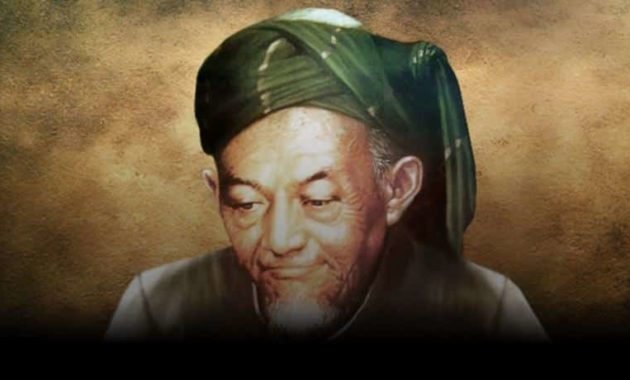
    KH Hasyim Al Asy’ari is a cleric who founded Nahdlatul Ulama (NU), the largest social organization in Indonesia. He is also the founder of the Tebuireng Islamic Boarding School , East Java and is known as an educational reformer of the pesantren. Apart from teaching religion in Islamic boarding schools, he also teaches students to read general knowledge books, organize organizations, and give speeches.
    The work and services of Kiai Hasyim Asy’ari, who was born in Pondok Nggedang, Jombang, East Java, April 10, 1875, cannot be separated from his ancestors who have led the pesantren for generations. His father’s name was Kiai Asyari, the leader of the Keras Islamic Boarding School in the south of Jombang. Her mother’s name is Halimah. From his mother’s line, Kiai Hasyim Asy’ari is a descendant of King Brawijaya VI, also known as Lembu Peteng, Jaka Tingkir’s father who became King of Pajang (the eighth descendant of Jaka Tingkir).

    Birth And Childhood of KH Hasyim Asya’ri

    Not far from the heart of Jombang, there is a hamlet called Ngedang, Tambak Rejo Village, which used to have an Islamic Boarding School which is said to be the oldest hut in Jombang, and its caretaker Kiai Usman. He is a great kiai, pious and very influential, his wife is Nyai Lajjinah and has six children:

    1. Halimah
    2. Muhammad
    3. awarded
    4. Fadli
    5. Arifah

    Halimah was then married to a student of her father named Asy’ari, at that time Halimah was still 4 years old while Asy’ari was almost 25 years old. They were blessed with 10 children:

    1. Nafi’ah
    2. Ahmad Saleh
    3. Muhammad Hasyim
    4. Radiyah
    5. Hasan
    6. Anis
    7. Fatonah
    8. Maimunah
    9. I pay
    10. Nahrowi, dan
    11. Adnan.

    Muhammad Hasyim , was born on Tuesday 24 Dzulqo’dah 1287 H, coinciding with 14 February 1871 A.D. The time in the womb and birth of KH.M. Hashim Ash’ari, there seems to be a sign that shows his greatness. among them, when in the womb Nyai Halimah dreamed of seeing the full moon falling into her womb , so also when giving birth Nyai Halimah did not feel pain like what a woman felt when giving birth.

    As a child he lived with his grandparents in Ngedang Village, this lasted for six years. After that he followed his parents who moved to Keras Village, located south of Jombang, and in that village Kiai Asy’ari founded a boarding school called Asy’ariyah.

    Principle of early learning , maybe this theory deserves to be carried by him, based on his supportive life, namely living in the pesantren environment, so it is natural that the values ​​of the pesantren are very pervasive in him, as well as the values ​​of the pesantren can be seen how his father and mother provide guidance to them. santri, and how the santri live a simple life full of intimacy and mutual help..

    Learning In The Family

    It was his family’s journey that started him for the first time studying religious sciences from his grandparents. Keras Village brought life changes for the first time for him, here at first he received extensive religious lessons from his father who at that time was the founder and caretaker of the Asy’ariyah Islamic Boarding School. With his intellectual capital and the encouragement of a conducive environment, at a fairly young age, he is already able to understand the religious sciences, be it family guidance, teachers, or self-taught. His dissatisfaction with what he had learned, and his thirst for pearls of knowledge, made it not enough just to study in his family environment. After about nine years in Keras Village (aged 15 years) namely studying with his family, he began his odyssey to study.

    Wandering to Various Islamic Boarding Schools

    At the age of 15, the first journey to study, Muhammad Hasyim studied at the famous boarding schools in Java, especially East Java. Among them are Pondok Pesantren Wonorejo in Jombang, Wonokoyo in Probolinggo, Tringgilis in Surabaya, and Langitan in Tuban (now cared for by KH Abdullah Faqih), then Bangkalan, Madura, under the guidance of Kiai Muhammad Khalil bin Abdul Latif (Syaikhuna Khalil).

    There was a pretty amazing story when KH.M. Hasyim Asy’ari“ngangsu kawruh” with Kiai Khalil. One day, he saw Kiai Khalil sad, he ventured to ask. Kiai Khalil replied that his wife’s ring fell in the toilet, Kiai Hasyim then suggested that Kiai Khalil buy another ring. However, Kiai Khalil said that the ring was his wife’s ring. After seeing the sadness on his teacher’s face, Kiai Hasyim offered to look for the ring in the toilet. Finally, Kiai Hasyim really looked for the ring in the toilet, with full sincerity, patience, and sincerity, Kiai Hasyim finally found the ring. How happy Kiai Khalil was for Kiai Hasyim’s success. From this incident, Kiai Hasyim became very close to Kiai Khalil, both during his time as a student and after returning to society to fight. This was proven by the giving of a stick when Kiai Hasyim was about to establish Jam’iyah Nahdlatul Ulama’ which was brought by KH. As’ad Syamsul Arifin (caretaker of the Syafi’iyah Islamic Boarding School in Situbondo).

    After about five years of studying in Madura (to be precise in 1307 H/1891 AD), he finally returned to Java, studying at the Siwalan Islamic boarding school, Sono Sidoarjo, under the guidance of KH Ya’qub who was famous for his nahwu and shorof knowledge. After a while, Kiai Ya’qub became closer to the santri and became more and more interested in becoming his son-in-law.

    In 1303 H/1892 A.D., Kiai Hasyim who was then only 21 years old married Nyai Nafisah, the daughter of Kiai Ya’qub. Shortly after the wedding, he then went to the holy land of Mecca to perform the pilgrimage with his wife and in -laws. In addition to performing the pilgrimage, in Mecca he also deepened the knowledge he already possessed, and absorbed the new knowledge needed. He studied almost all disciplines of religion, especially the sciences related to the hadith of the Prophet SAW which became his favorite since in the homeland.

    The journey of life is sometimes difficult to predict, happy and sad come alternately. The same goes for Kiai Hasyim Asy’ari in the holy land of Mecca. After seven months of living in Mecca, he was blessed with a son named Abdullah. In the midst of the joy of obtaining the baby, the wife became seriously ill and then died. forty days later, his son, Abdullah, also followed the mother back to Rahmatullah. His grief, which at that time had begun to be known as a scholar, was almost unbearable. The only comforter for his heart was to perform tawaf and other acts of worship that he almost never stopped doing. In addition, he also has a loyal friend in the form of books that are constantly studied at all times. Until finally, he left the holy land,

    Maturity of Knowledge in the Holy Land

    Longing for the holy land apparently called him to go back to Mecca. In the year 1309 H/1893 AD, he went back to the holy land with his younger brother, Anis. Beautiful and sad memories flashed back when his feet stepped back on the holy land of Mecca. But it actually raises a new spirit to be more devoted to worship and explore science. He also visited historic and efficacious places, praying to achieve his goals, such as the Arafah Field, Hira’ Cave, Maqam Ibrahim, and other places. Even the tomb of the Prophet Muhammad in Medina was always a place of pilgrimage for him. He visited great scholars who were famous at that time to study as well as take blessings, including Shaykh Su’ab bin Abdurrahman,

    This tiring effort is not in vain. After many years in Mecca, he returned to his homeland with almost complete religious knowledge, both ma’qul and manqul, as a provision for charity and teaching in his hometown.

    Establishing a Tebuireng Islamic Boarding School

    After returning from the holy land around 1313 H/1899 AD, he started teaching students, he first taught at Pesantren Ngedang which was brought up by his grandfather, as well as the place where he was born and raised. After that he taught in the village of Muning Mojoroto Kediri. This is where he managed to marry one of the daughters of Kiai Sholeh Banjar Melati. Unfortunately, due to various reasons, the marriage did not last long so Kiai Hasyim returned to Jombang.

    When he was in Jombang, he planned to build a boarding school, which he chose a place in Tebuireng Hamlet which at that time was a hotbed of disobedience and chaos. The choice, of course, reaped a big question mark among the people, but all of that was ignored.

    The name Tebuireng was originally Kebo ireng (black buffalo). The story is, In that area there was a buffalo that was immersed in the mud, where there were a lot of leeches, when it was pulled on land, the buffalo’s body had changed its color from reddish white to black which was filled with leeches. It is said that since then the area was called Keboireng which eventually turned into Tebuireng.

    On 26 Robiul Awal 1317 H/1899 AD, the Tebuireng Islamic Boarding School was established, together with his comrades in arms, such as Kiai Abas Buntet, Kiai Sholeh Benda Kereb, Kiai Syamsuri Wanan Tara, and several other Kiai, all the difficulties and threats of the parties involved. hatred towards Islamic education broadcasting in Tebuireng can be overcome.

    KH. M. Hasyim Asya’ri started a tradition which later became one of his privileges, namely the completion of the shakhihaini book “Al-Bukhori and Muslim” held every month of the holy month of Ramadan which is said to be attended by hundreds of kiai who came in droves from all over Java. This tradition continues until now (the teacher of PP. Tebuireng KH. M.Yusuf Hasyim). Initially, the first Pondok Tebuireng santri numbered 28 people, then increased to hundreds of people, even at the end of their lives they had reached thousands, alumni of Pondok Tebuireng who succeeded in becoming great ulama and became high state officials, and Tebuireng became the center of Islamic boarding schools. .

    Establishing Nahdlatul Ulama ‘

    Besides being active in teaching, he is also active in various activities, both local and national. On 16 Sa’ban 1344 H/31 January 1926 AD, in Jombang, East Java, the Jam’iyah Nahdlotul Ulama’ (revival of ulama) was established together with KH. Bisri Syamsuri, KH. Wahab Hasbullah, and other great scholars, with the principle and purpose: “To hold firmly to one of the four schools of thought, namely Imam Muhammad bin Idris Asyafi’i, Imam Malik bin Anas , Imam Abu Hanifah An-Nu’am and Ahmad bin Hambali. And also do whatever makes the benefit of the religion of Islam.” KH. Hasyim Asy’ari was elected to NU’s rois akbar, a title that no one now holds. He also drafted the basic qanun (basic regulations) of NU which developed the ideology ofAhli Sunnah waljama’ah .

    Biography of KH Hasyim Al Asy'ari

    Nahdlatul ulama ‘as a bond of ulama’ throughout Indonesia and teaches jihad for belief with an organized system. It is not easy to unite the ulama ‘who are different in their point of view, but it is not Kiai Hasyim who just gives up, that he sees that the struggle carried out alone will open up a greater opportunity for the enemy to destroy it, either the invaders or those who want to extinguish the light. and Islamic syi’ar in Indonesia, to quarrel with each other. He was a sharp and far-sighted person in this regard, saw the dangers that would be faced by Muslims, and therefore he thought of finding a way out by forming an organization with foundations that can be accepted by other ulama’ulama.

    This Jam’iyah adheres to the ideology of ahlu sunnah wal jama’ah, which accommodates to certain limits the pattern of bermadzhab, which later is more inclined to manhaj than just qauli. In its first decade, NU was oriented to religious and social issues. Activities are directed at issues of education, recitation and tabligh. However, when entering the second decade the orientation was expanded to national issues. This is related to its existence as a member of the federation of the Indonesian Muslim Party and Association of Indonesian Muslims (MIAI) NU and even in its history it has appeared as one of the political parties participating in the election, which later merged with PPP, NU’s role in practical politics was later annulled by the decision of the Situbono Congress which wants NU as a socio-religious organization to return to its khitoh.

    Independence Fighters

    The role of KH. M. Hasyim Asy’ari was not only limited to the field of science and religion, but also in the social and national fields, he was actively involved in the struggle to liberate the nation from the Dutch colonialists.

    In 1937 he was approached by the leadership of the Dutch government by giving a gold and silver star as a token of honor but he refused. Then in the evening he gave advice to his students about the incident and analogized with the incident experienced by the Prophet Muhammad SAW which at that time the Jahiliyah offered him three things, namely:

    • A high -ranking seat in government
    • Abundant possessions
    • The prettiest girls

    However, the Prophet (SAW) refused and even said: “By Allah, if they had the power to put the sun in my right hand and the moon in my left hand with the aim of stopping me from fighting, I would not accept it, even my life is at stake . ” The end of KH.M. Hasyim Asy’ari ended his advice to his students to always follow and set an example from the actions of the Prophet SAW.

    The period of physical revolution in 1940, perhaps indeed was the toughest period for him. During the Japanese occupation, he was detained by the Japanese fascist government. While in detention he was physically tortured so that one of his fingers became disabled . But it was precisely during that period that he carved a sheet in gold ink on the sheet of the struggle for the nation and the Republic of Indonesia, namely by calling for the jihad resolution which he decreed on October 22, 1945, in Surabaya, which is better known as the National Hero’s Day .

    Likewise during the Japanese colonial period, in 1942 Kiai Hasyim was imprisoned (Jombang) and transferred to Mojokerto prison and then imprisoned in Surabaya. He was considered a hindrance to the Japanese movement.

    After Indonesia’s independence In 1945 KH. M. Hasyim Asy’ari was elected as general chairman of the Majlis Syuro Muslimin Indonesia (MASYUMI) party board, he held that position but continued to teach at Islamic boarding schools until he died in 1947.

    Family And Sideways

    Almost simultaneously with the establishment of the Tebuireng Islamic Boarding School (1317 H/1899 AD), KH. M. Hasyim Asya’ri remarried to Nyai Nafiqoh, daughter of Kiai Ilyas, the caretaker of the Sewulan Madiun Islamic Boarding School. From this marriage, Kiai Hasyim was blessed with 10 sons and daughters, namely:

    1. Hannah
    2. Khoiriyah
    3. Aisyah |
    4. Azzah
    5. Abdul Wahid |
    6. Abdul Hakim (Abdul Kholiq)
    7. Abdul Karim |
    8. Ubaidillah
    9. Mashurroh
    10. Muhammad Yusuf.

    Towards the end of 1930, KH. M. Hasyim Asya’ri remarried with Nyai Masruroh, daughter of Kiai Hasan, caretaker of the Kapurejo Islamic Boarding School, Pagu Kediri District, from this marriage, he was blessed with 4 sons and daughters, namely:

    1. Abdul Qodir |
    2. Fatimah |
    3. Chotijah
    4. Muhammad Ya’kub

    The lineage of KH. M. Hasyim Asy’ari (Ninth Grandmother)

    Muhammad Hasyim bin Asy’ari bin Abdul Wahid (Prince Sambo) bin Abdul Halim (Prince Benowo) bin Abdul Rahman (Mas Karebet/Jaga Tingkir) who later held the title of Sultan Hadiwijaya bin Abdullah (Lembu Peteng) who held the title of Brawijaya VI

    The Death of the KH Hasyim Asya’ri

    On the 7th of Ramadan 1366 A.D. at 9 pm, he after leading the Tarawih Prayer, as usual sat in a chair to give lessons to Muslim mothers. Soon after, a guest envoy from General Sudirman and Bung Tomo suddenly came. The Kiai met the messenger accompanied by Kiai Ghufron, then the guest delivered a message in the form of a letter. Whatever the content of the letter, it is clear that Kiai Hasyim asked for time last night to think and the answer will be given the next day.

    However, later, Kiai Ghufron reported that the fighting situation and conditions of the fighters were increasingly cornered, as well as the increasing number of civilian casualties. Hearing the report, Kiai Hasyim said, “Masha Allah, Masya Allah…”then he held his head and was interpreted by Kiai Ghufron that he was sleepy. So the guests said goodbye. However, he did not answer, so Kiai Ghufron approached and then asked the two guests to leave, while he himself remained beside Kiai Hasyim Asy’ari. Not long after, Kiai Ghufron realized that Kiai Hasiyim was unconscious. So hastily, he called his family and stretched Kiai Hasyim’s body. At that time, his sons and daughters were not present, for example Kiai Yusuf Hasyim who at that time was at the headquarters of the fighters, although later he was able to attend and a doctor was brought in (Dokter Angka Nitisastro).

    It was not long before it was discovered that Kiai Hasyim had a brain hemorrhage. Even though the doctor had tried to reduce his illness, God had other plans for his lover. KH.M. Hasyim Asy’ari died at 03.00 am, July 25, 1947, coinciding with the 07th of Ramadan 1366 H. Inna LiLlahi wa Inna Ilaihi Raji’un.

    His departure to his final resting place, was accompanied by deep condolences from almost all walks of life, especially from civilian and military officials, comrades -in -arms, scholars, NU residents, and especially the students of Tebuireng. Muslims have lost their great leader who now lies in his grave in the middle of Pesantrn Tebuireng. At the time of escorting him away, his companions and relatives, KH. Wahab hazbulloh, had the opportunity to present a speech that in essence explained the principle of his life, namely, “fight continuously with no recurrence, and if necessary without rest” .

    Book Works

    Another very valuable legacy is a number of books that he wrote on the sidelines of his life in educating students, protecting thousands of people, defending and fighting for the motherland from colonialism. This is a real proof of his attitude and behavior, his thoughts can be traced in several of his works which are mostly in Arabic.

    But it’s a shame, because of the incomplete documentation, the books that are very valuable disappeared without a trace. Actually, the book he wrote no less than twenty titles. However, only a few titles can be saved, including:

    1. Al-Nurul Mubin Fi Mahabati Sayyidi Mursalin. Study of the obligation to believe, obey, emulate, be sincere, love the Prophet SAW as well as his life history
    2. Al-Tanbihat al-Wajibat Liman Yashna’u al-Maulida Bi al-Munkarat. The study of the birthday of the prophet in relation to amar ma’ruf nahi munkar
    3. Risalah Ahli Sunnah Wal Jama’ah. A study of views on heresy, the Conscience of one of the sects, and the division of the ummah into 73 groups
    4. Al-Durasul Muntasyiroh Fi Masail Tis’a ‘asyaraoh. A study of wali and thoriqoh which is summarized in nineteen problems.
    5. Al-Tibyan Fi Nahyi’an Muqatha’ah al-Arham Wa al-Aqrab Wa al-Akhwal. A study of the importance of friendship between human beings
    6. Adabul ‘Alim Wa Muata’alim. Views on the ethics of learning and teaching in pesantrren education in particular
    7. Dlau ‘al-Misbah Fi Bayani Ahkami Nikah. Study of marriage laws, conditions, principles, and rights in marriage
    8. Ziyadah Ta’liqot. The book contains his polemic with Shaykh Abdullah bin Yasir Pasuruaan
  • Biography of KH. Ahmad Dahlan – Founder of Muhammadiyah

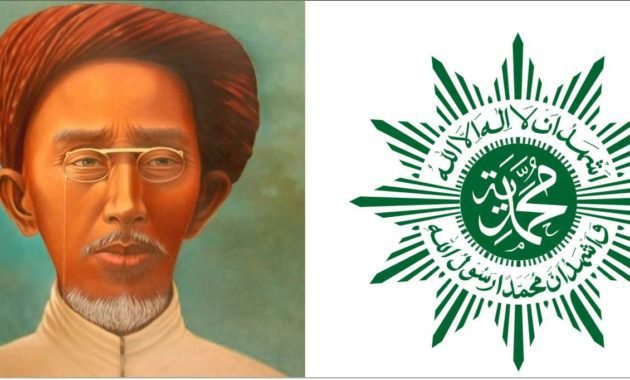
    Biography of KH. Ahmad Dahlan – Founder of Muhammadiyah

    KH Ahmad Dahlan is an Indonesian National Hero who founded the Muhammadiyah organization who was born in Yogyakarta, August 1, 1868. KH Ahmad Dahlan is the 4th child of 7 children from the family of KH Abu Bakar. KH Ahmad Dahlan died on February 23, 1923 in Yogyakarta at the age of 54 years.

    Brief Profile of KH Ahmad Dahlan

    Name : KH Ahmad Dahlan
    Born : Yogyakarta, August 1, 1868
    Died : Yogyakarta, February 23, 1923

    Spouse :
    Hj. Siti Walidah
    Nyai Abdullah
    Nyai Rum
    Nyai Aisyah
    Nyai Yasin

    Son :
    Djohanah
    Siradj Dahlan
    Siti Busyro
    Irfan Dahlan
    Siti Aisyah
    Siti Zaharah
    Dandanah

    Background and Education of KH Ahmad Dahlan

    Little KH Ahmad Dahlan’s name is Muhammad Darwisy, he is the 4th child of 7 siblings. Ahmad Dahlan is the 12th descendant of Maulana Malik Ibrahim or Sunan Gresik. The following is the genealogy of Maulana Malik Ibrahim, Maulana Ishaq, Maulana ‘Ainul Yaqin, Maulana Muhammad Fadlullah (Sunan Prapen), Maulana Sulaiman Ki Ageng Gribig (Djatinom), Demang Djurung Djuru Sapisan, Demang Djurung Djuru Kapindo, Kyai Ilyas, Kyai Murtadla, KH . Muhammad Sulaiman, KH. Abu Bakr, and Muhammad Darwish (Ahmad Dahlan).

    When Ahmad Dahlan was 15 years old, he went on a pilgrimage and for 5 years he lived in Mecca. At this time, KH Ahmad Dahlan began to interact with Islamic reformers, such as Al-Afghani, Muhammad Abduh, Ibn Taimiyah, and Rasyid Rida.

    In 1888, Ahmad Dahlan returned to his hometown and he whose real name was Muhammad Darwisy changed his name to Ahmad Dahlan. He returned to Mecca in 1903 and he stayed for 2 years, at this time Oa had studied with Sheikh Ahmad Khatib who was also the teacher of KH Hasyim Asyari, the founder of NU.

    After returning from Mecca, Ahmad Dahlan married his cousin Siti Walidah (Nyi Ahmad Dahlan), the daughter of Kyai Penghulu Haji Fadhil. From this marriage, they were blessed with 6 children namely Djohanah, Siradj Dahlan, Siti Busyro, Irfan Dahlan, Siti Aisyah, and Siti Zaharah.

    Apart from Siti Walidah, Ahmad Dahlan has also been married to Nyai Abdullah, the widow of H. Abdullah, Nyai Rum who is the sister of Kyai Munawwir Krapyak, Nyai Aisyah who is the younger sister of Adjengan Penghulu Cianjur and from this marriage Ahmad Dahlan has a son Dandanah. And Ahmad Dahlan was also married to Nyai Yasin Pakualaman Yogyakarta.

    Also read : Biography Muhammad Sangidu

    Join the Budi Utomo Organization and Founded Muhammadiyah as well as other organizations

    In 1909, KH Ahmad Dahlan joined the Budi Utomo organization and there he taught religion and the lessons needed by members. The lessons given by KH Ahmad Dahlan were found to be very useful for Budi Utomo’s members, so they suggested that Ahmad Dahlan open a school that was neatly organized and supported by a permanent organization.

    On November 18, 1912 (8 Djulhijah 1330), KH Ahmad Dahlan founded an organization called Muhammadiyah which was engaged in society and education. By establishing this organization, he hopes to advance education and build an Islamic society. Ahmad Dahlan teaches the Qur’an with translation and interpretation so that people understand the meaning in the Qur’an and are not only good at reading and singing it.

    In the field of education, Dahlan changed the pesantren education system at that time. He founded religious schools which also taught general subjects as well as the Dutch language. There are even Muhammadiyah schools such as HIS met de Qur’an. He included religious lessons in public schools as well. Ahmad Dahlan continues to develop and build schools. In addition to school during his life, he also built a mosque, langgar, hospital, polyclinic, and also an orphanage.

    In the field of organization, in 1918 he founded the Aisyiyah organization for women. for the youth, Ahmad Dahlan formed Padvinder or Pandu (now Scouts) called Hizbul Wathan. At the organization the youth learned to march with the drums, wearing shorts, hats, ties, for the uniforms they wear are similar to the scout uniforms today.

    At that time, because all the reforms taught by KH Ahmad Dahlan deviated somewhat from tradition, Ahmad Dahlan was often terrorized like a house being pelted with stones and animal dung even during his dawah in Banyuwangi, Ahmad Dahlan was accused of being a false kyai and he was threatened with death. But with great patience, people slowly began to accept the changes taught by Ahmad Dahlan.

    Everything that was done by KHAhmad Dahlan aims to prove that Islam is a religion of progress that can elevate the status of the people to a higher level and that has had a positive impact on Indonesia, which is predominantly Muslim. Many youths and intellectuals are interested in the methods taught by KH Ahmad Dahlan so that many of them join Muhammadiyah organizations.

    Muhammadiyah, which is a charitable organization and carries out the idea of ​​reforming KH Ahmad Dahlan, has attracted the attention of world Islamic observers. Even writers and scholars from the east focused on Muhammadiyah.

    KH Ahmad Dahlan got a lot of knowledge from many kyai in various fields of science such as KH Muhsin in the field of grammar (Nahwu-Sharaf), KH Muhammad Salih in the field of jurisprudence, Kyai Mahfud and Sheikh KH Ayyat in the field of Hadith Science, KH Raden Dahlan in in the field of astronomy or astronomy, Sheikh Hasan in the field of medicine and animal poisons, and Sheikh Amin and Sayid Bakri Satock in the field of Qur’anic science.

    KH Ahmad Dahlan’s death

    On February 23, 1923, at the age of 54, KH Ahmad Dahlan died in Yogyakarta. Then he was buried in the village of Karangkajen, Brontokusuman, Mergangsan, Yogyakarta. On December 27, 1961, based on the Decree of the President of the Republic of Indonesia No. 657 of 1961 for his services, the state gave him the honorary title as a Hero of Indonesian National Independence.

    Thus the  biography KH. Ahmad Dahlan that we can convey in this article posting, hopefully what we convey can be useful for readers in searching for the complete literature of KH. Ahmad Dahlan.

    Also read : sewa laptop purwokerto

  • The Life and Legacy of Abraham Maslow: Creator of Maslow’s Hierarchy of Needs Theory

    The Life and Legacy of Abraham Maslow: Creator of Maslow’s Hierarchy of Needs Theory

    Abraham Harold Maslow was the eldest of seven children. His parents were uneducated Jewish immigrants from Russia. Young Maslow first studied law at the City College of New York (CCNY), but after three semesters he moved to Cornell, and then back to CCNY.
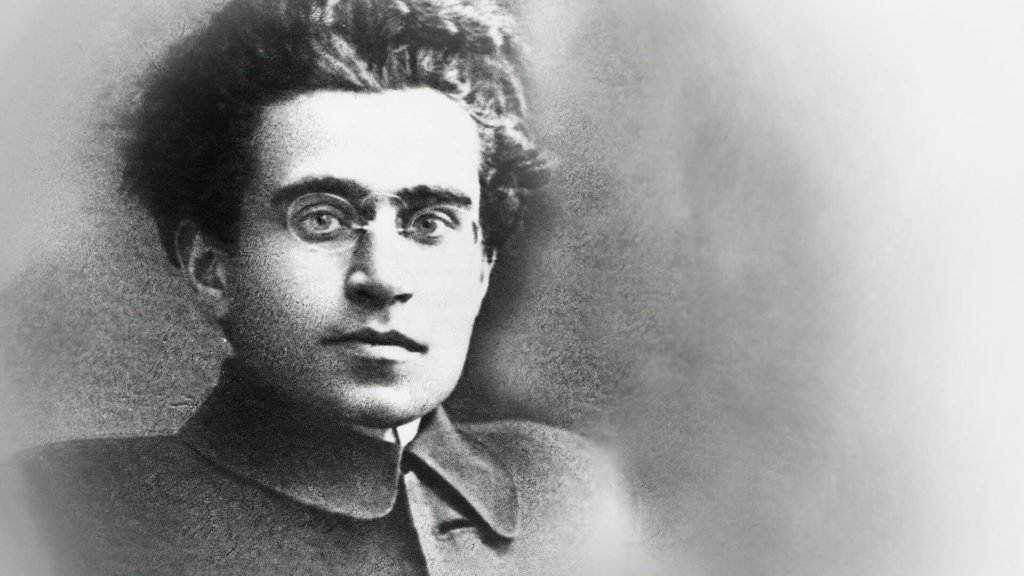
    He earned a BA in 1930, while an MA followed in 1931, and a Ph.D in 1934; all of which he got in psychology from The University of Wisconsin. A year after graduating from his doctoral program, he returned to New York to work with EL Thorndike at Columbia, where Maslow became interested in researching human sexuality.

    Born April 1, 1908 in Brooklyn, New York, United States, he began teaching full time at Brooklyn College in 1937. During that time, he met many European intellectuals who immigrated to the United States, and Brooklyn in particular, such as Adler, Fromm, Horney, and several Gestalt and Freudian psychologists.

    Later, Maslow served as chair of the psychology department at Brandeis in the period (1951-1969). This is where Maslow began to develop ideas and create his most famous theory, namely the hierarchy of needs. Beyond air, water, food, and sex, he lays down five broader layers (ordered by importance of fulfillment): physiological needs, needs for safety and security, needs for love and belonging, needs for appreciation, and needs for self-actualization.

    Maslow’s book is easy to read and full of interesting ideas. The best known are Toward a Psychology of Being (1968), Motivation and Personality (1954 and 1970), and The Further Reaches of Human Nature (1971). In addition, there are also many articles written by Maslow, especially in the Journal of Humanistic Psychology, one of which was pioneered by Maslow himself.

    He spent his last year in California, until on June 8, 1970 he died of a heart attack from a long -standing illness.

    Abraham Maslow.jpg

    BIODATA

    • Full Name: Abraham Harold Maslow
    • Profession: Scientist
    • Place of Birth: Brooklyn, New York, United States
    • Date of Birth : Wednesday, April 1, 1908
    • Zodiac : Aries
    • Nationality: America

    EDUCATION

    • Law at City College of New York
    • Received BA in 1930, MA in 1931, and Ph.D in 1934 from the University of Wisconsin
    CAREER
    • Brooklyn College (1937)
  • Who is Antonio Gramsci ?

    Who is Antonio Gramsci ?

    Antonio Gramsci was an Italian intellectual and politician who founded the Italian Communist Party and contributed to the idea of ​​communism in Italy. He was born in Ales, Italy on January 23, 1891.
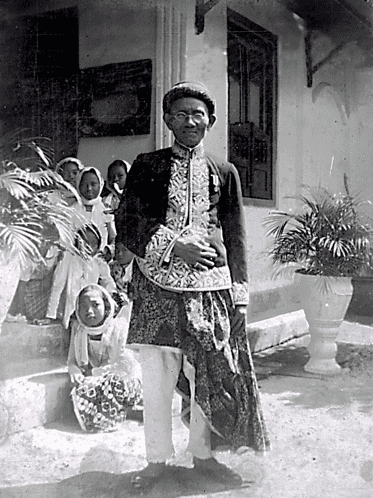
    In 1911, Gramsci began his academic career at the University of Turin. He also joined the Socialist Party, and was associated with the Federation of Young Socialists.

    Gramsci formed the left in the socialist party and encouraged the development of factories.

    Gramsci led a leftist movement in a congress in Livorno with the aim of founding the Italian Communist Party and spent two years in the Soviet Union.

    When he returned to his home country, he became leader of the Italian Communist Party, and was elected to the council.

    However, his party was banned by Benito Mussolini so he was arrested and imprisoned. While he was imprisoned, instead he undertook a historical and theoretical study of Italian society and strategies for change.

    The ideas of Gramsci’s imprisonment at that time became the basis of ideas for figures, such as Robert Cox, Stephen Gill, Joseph Femia, and Robert Gilpin.

    In Gramsci’s perspective, it is different from the realism perspective which assumes that the state is the only actor who has an important role, and prioritizes the concept of national interest.

    Whereas in Gramsci’s theory focuses on hegemony. Gramsci’s perspective seems to be a sign to move away from the international order.

    Hegemony defined by Gramsci is a conscious obedience to one’s power, the power that is built in Gramsci’s perspective does not come from coercion or violence but rather from a control.

    Hegemony itself is born from the practice of approval or subjugation. If a group wants a win in agreement, it must be able to create historical blocs,

    According to Gramsci, to hegemony a group, it is necessary to have an ideology that has a material basis and is supported by an intellectual.

    For Gramsci, everyone is basically an intellectual, but not everyone has an intellectual function in social life.

    Gramsci changed the meaning of hegemony from strategy to a concept, such as the Marxist concept of forces and relations of production, class and state.

    Gramsci extended  his idea of ​​leadership as a condition for gaining power in  a group.

    Through his work, Gramsci emphasizes the concept of hegemony by explaining that “hegemony is a consensus organization.” And in several paragraphs of his Prison Notebook he uses the word leadership interchangeably with hegemony and opposite domination.

    In Gramsci’s sense, the word hegemony must be distinguished from the meaning of the original word, namely the domination of a nation over another nation.

    Gramsci emphasizes that the concept of hegemony focuses more on the human side. He also said consensus with spontaneity because it is psychological.

    Gramsci’s thought emerged as an alternative to the approach to the theory of social change which was previously dominated by class determinism and Marxist economics.

    Hegemony is built on the prestige of the importance of ideas and the inadequacy of physical strength alone in social and political control.

    According to Gramsci, in order for those who are controlled to obey the ruler, those who are controlled must not only have and internalize values ​​and norms.

    REFERENCE

    HI admin. (2013). Antonio Gramsci On The Crisis and The Rise Of Global Capitalism. Retrivied from https://hi.fisipol.ug.ac.id/riset-iis/antonio-gramsci-about-krisis-dan-kebangkitan-kapitalisme-global/

    Ali, Zezen Zaenudin. (2017). Hegemony Thought Antonio Gramsci (1891-1937) in  Italy. Yaqhzan,3(2). Retrivied from  https://syekhnurjati.ac.id/jurnal/index.php/yaqhzan/article/download/5482/2544

    Siswati, Endah.(2017).Anatomy of Antonio Gramsci’s Theory of Hegemony. Journal of Translitera , eds. 5.1-33. Retrivied from https://core.ac.uk/download/pdf/230839469.pdf

    The Editors of Encyclopedia Britannica. (1998). Biography of Antonio Gramsci. Retrivied from https://www.britannica.com/biography/Antonio-Gramsci

  • Muhammad Sangidu – Muhammadiyah Figure

    Muhammad Sangidu – Muhammadiyah Figure

    Kiai Haji Muhammad Sangidu or Kanjeng Raden Penghulu Haji (KRPH) Muhammad Kamaluddiningrat (born in Kampung Kauman Yogyakarta [a] in 1883 and buried in the Karangkajen Cemetery after his death in 1980) is the 13th Chief Penghulu [b] of the Sultanate of Yogyakarta who was sworn in in 1914 to replace the previous penghulu , KRPH Muhammad Khalil Kamaluddiningrat. Sangidu is a relative of Ahmad Dahlan and a supporter of the Muhammadiyah organization that Dahlan founded. He is known as a stamboek holder(Muhammadiyah membership card) first, because he was the first member of the Muhammadiyah organization. In addition, he is the person who proposed the name “Muhammadiyah” to Dahlan.

    When he was the Head of the Penghulu Sultanate of Yogyakarta, Sangidu played a role in making Muhammadiyah teachings the dominant ideology in Kampung Kauman. Although there had previously been tensions between Ahmad Dahlan and the traditional clerics in Kauman Village, his cooperative approach with the court managed to avoid conflict. He also uses local culture as a medium for preaching. Sangidu also tried to change the marriage customs of the people so that they only provide simple treats, and he once tried to make the accuracy of 1 Shawwal (which is the date of Eid al-Fitr in the Hijri calendar ) by using the rukyat bil aini method (observing by sight) instead of calculating the aboge (Javanese year ). In addition, he pioneered the establishment of a modern school system which is now known as Madrasah Muallimin Muhammadiyah and Madrasah Muallimat Muhammadiyah , and helped pioneer Frobelschool which was the first kindergarten established by the Indonesian people.

    Family’s background

    Raden Hariya Muhammad Sangidu is the son of Kiai Ma’ruf Ketib Tengah Amin and Nyai Sebro (Raden Nganten Ketib Amin). [1] He was born in 1883 in Kampung Kauman. [2] Sangidu is the eldest of five children who have younger siblings named Raden Hariya Muhsin, Raden Nganten Muhsinah, Raden Hariya Ali, and Raden Hariya Syarkowi. His father was the second of ten children of Kiai Maklum Sepuh or Kiai Penghulu Muhammad Maklum Kamaluddiningrat (the 9th Head of the Sultanate of Yogyakarta), [1] [3]while his mother is the fourth child of Kanjeng Raden Tumenggung Ronodirdjo from his third wife named Gentang Pakem. Ronodirdjo himself was an official of the Regent of Anom Patih Danuredjo or deputy regent of the Sultanate of Yogyakarta. [4] Sangidu also a sedulur gawan with Ahmad Dahlan who would become the founder of Muhammadiyah . Sedulur Gawan is a relative of the result of a marriage between a widow and a widower, each of whom brings a child. The innate child then became a brother. [5]

    Wedding

    Sangidu’s first wife (name unknown) was the daughter of Muhammad Khalil Kamaluddiningrat (the 12th Head of the Sultanate of Yogyakarta). [6] Through his first marriage he had three children, namely Djalaluddin (husband of Siti Dariyah, father-in-law of Haiban Hadjid), Siti Salmah (wife of Farid Ma’ruf), and Siti Nafi’ah (wife of Masduki, mother-in-law of Mukti Ali ). [7] [8] Sangidu and his father-in-law had different directions because he became a supporter of Ahmad Dahlan’s da’wah movement which later became known as “Muhammadiyah”. Sangidu then had a second marriage with Siti Jauhariyah (Ahmad Dahlan’s sister-in-law). [9] [10] [11] Through this marriage he was blessed with nine children, namelySiti Umniyah , Dariyah, Muhammad Wardan, Darim, Muhammad Jannah, Muhammad Jundi, Jazuri, Burhanah, and Wardhiyah. [8] [12] [13]

    Early role of Muhammadiyah development

    Religious reform in Kauman Village

    Before it was officially established, the spread of Muhammadiyah understanding was initially only centered in Langgar Kidul which was driven by Ahmad Dahlan by disseminating information to scholars who had the same opinion in the area around Kampung Kauman. [14] However, this teaching gradually began to spread to other places in Kauman Village, such as the santri studying in the pavilion of his house (the place which later became known as the Tabligh Pendopo). [15] [16]

    Sangidu’s efforts in defending Ahmad Dahlan’s teachings began when he followed the new understanding and taught it to several students of Kampung Kauman at the Tabligh Hall. Even though at that time Muhammadiyah had not been officially formed, he asked his students to practice Islamic teachings in real terms, especially Surah Al-Ma’un . [c] [17] [18] The students are also asked to give charity socially. They are invited to support the beggars, feed them, tell them to bathe and then clothe them, and finally invite them to pray. [19] [20]

    Like Dahlan, Sangidu provides more examples than lectures to his students. At that time, Yogyakarta was a destination for urbanites from the outskirts to try their luck. The action he took as a manifestation of Surah Al-Ma’un was to gather workers and the poor who came from the outskirts to the pavilion of his house to study religious knowledge with his students. [21] The ideas and empowerment of small people from Dahlan and Sangidu are still well understood by Muhammadiyah and Nasyiatul Aisyiyah activists . [22]

    Before Sangidu served as the head of the Sultanate of Yogyakarta, he faced challenges in spreading da’wah amar makruf nahi munkar . If Dahlan is accused of being an “infidel kiai” and the reform movement he propagates is called ” Alus Christian ” by scholars who maintain the old pattern, Sangidu is considered a destroyer of brotherly relations among the Kauman people. This is because Kiai Djalal and Sangidu as the leaders of the Tabligh Hall defended the movement initiated by Ahmad Dahlan, while Muhsin as the leader of Langgar Dhuwur who was still related to Kiai Djalal and Sangidu did not approve of the reform movement. [23]

    Proposed name “Muhammadiyah”

    The name “Muhammadiyah” was originally proposed by Sangidu at the Tabligh Hall ( Darban 2000 , p. 80).

    After understanding the teachings of the reformists, Ahmad Dahlan felt the need for an organization that could support his mission in spreading the notion of renewal. He finally decided to establish an organization that not only took care of education, but also gathered and became a forum for the reformer movement. He conveyed this intention to his students, relatives, and friends who agreed with the Islamic reform movement he brought in Kauman. In 1911, Sangidu proposed a name for the movement that would be pioneered by Ahmad Dahlan at the Tabligh Hall, namely “Muhammadiyah”. [9] [24] [25] [26] This name was later confirmed by Ahmad Dahlan as the name of his organization after he repeatedly performed the Istikharah Prayer .[27] Muhammadiyah was declared established on 8 Dzulhijah 1330 H or 18 November 1912. [28]

    The name Muhammadiyah is taken from the name of the last Prophet of Islam Muhammad , added with the Arabic letters yes and ta which means nationalization or identification. The name also means to explain that the supporters of this organization are the people of Muhammad, whose principle is Muhammad’s teachings, namely Islam. [29] The ideology of Muhammadiyah reform was prepared with conviction and a work plan that proceeded in a systematic direction. [30] Muhammadiyah became known as a da’wah organization and a social organization for educated people who carried out the credo of tajdid (renewal) in the future. [31]

    On December 20, 1912, Muhammadiyah submitted a rechtspersoon (request as a legal entity) to the Dutch East Indies government through the assistance of Budi Utomo’s administrators. [9] Ahmad Dahlan was listed as the first applicant, along with six of his students RH Syarkawi, H. Abdulgani, HM Sudja, HM Hisham, HM Tamim, and HM Fachrudin. Muhammadiyah was then officially established with the release of Besluiten van den Gouverneur Generaal van Nederlandsch-Indie 22 den Augustus 1914 (No. 81) , with the condition that its scope was limited to the Yogyakarta area only. [32]

    According to Mitsuo Nakamura (Muhammadiyah scholar from Dalian , China ), Sangidu was not a well-known person in Muhammadiyah circles, especially among Muslims in the Dutch East Indies region in the early 20th century . Nevertheless, he was the first stamboek holder to take part in developing Muhammadiyah. [33] Like Ahmad Dahlan, he is neither a scholar nor a writer who bequeaths books and articles, but he is an organizer. [34] Despite bringing the idea of ​​renewal, his approach tends to be cultural in developing Muhammadiyah’s ideas. [35]

    Head of the Sultanate of Yogyakarta

    Sangidu was the 13th Chief Penghulu of the Sultanate of Yogyakarta who was appointed in 1914 to replace the previous penghulu, namely Muhammad Khalil Kamaluddiningrat. [9] Prior to his appointment as penghulu, the title he held was Ketib Anom Kiai (Vice Head Penghulu). [7] Based on the records of Gadjah Mada University historian , Ahmad Adaby Darban, Sangidu was awarded the honorary name KRPH Muhammad Kamaluddiningrat when he was appointed as the head of the Great Mosque of Yogyakarta . [36]

    When he served as a penghulu, Sangidu got a place in Kawedanan Reh Pengulon or Bangsal Pengulon as an office and home office ( Rohman 2019 , p. 207).

    The appointment of Sangidu as a penghulu had a significant impact on Kauman Village. Ulamas and people who do not agree with Muhammadiyah’s religious understanding are shrinking. Along with the breakdown of the regeneration of local-traditional kiai, Muhammadiyah ideology became the dominant ideology in Kauman. [37] Darban noted that with Sangidu’s inauguration as the head of the palace, Kawedanan Reh Pengulon (or Bangsal Pengulon) became an increasingly open place for Muhammadiyah’s Islamic reform movement. [38] Muhammadiyah was allowed to enter the Pengulon Ward which was previously a taboo place for the common people and the place later became a training center for Muhammadiyah missionaries . [7] [39]Sangidu has also made it easier for Dahlan to introduce the understanding of modern Islam in the context of the traditionalist Islamic society in Yogyakarta in the early 20th century. [40]

    As a courtier of the Sultanate of Yogyakarta, Sangidu did not show an antagonistic attitude towards the palace in relation to the birth of Muhammadiyah, although previously there had been tensions between senior clerics in Kauman Village and Ahmad Dahlan over the issue of Qibla direction and other Islamic religious practices. [14] [41] [42] Sultanate of Yogyakarta itself generally regarded as the central tradition of Javanese full of mystique , [43] [44] while the Muhammadiyah organization more identify themselves as a movement of purists who aggressively eradicate superstition(believing in something that doesn’t actually exist), bidah (actions that are not carried out based on a predetermined example, including adding or subtracting provisions), and khurafat (unreasonable teachings) later on. [45] However, Sangidu’s political-structural background as part of the ulema of the palace and the head of the Yogyakarta Grand Mosque formed a cooperative attitude with the sultanate power. [7] According to Siti Ruhaini Dzuhayatin (a member of the Council for Tarjih and the Development of Thoughts for the Central Leadership of Muhammadiyah 2000–2005), this attitude will later characterize Muhammadiyah as an organization that is responsive-adaptive to the government. [46]By utilizing local culture as a medium for preaching, Sangidu tries to build a new paradigm regarding Muhammadiyah in terms of tanzih (purification), which is an inclusive attitude that reflects Muhammadiyah as moderate Islam. [47]

    Regarding Sangidu’s cooperative attitude with the sultanate, historian Harry Jindrich Benda emphasized that Sangidu’s da’wah strategy was one step in building a new culture in the midst of the traditionalism paradigm of society at that time. [35] In this case, Sangidu has actually changed his position from the ulama who can only be “touched” by certain people, such as the santri and people close to the nobility., become someone who is close to the surrounding community. This cooperative attitude and moderate ideas in the view of the historian MT Arifin made his ideas acceptable to the sultanate circles. This attitude is carried out with regard to issues that do not substantively contradict the beliefs he believes in. [48]

    As a descendant of Sangidu, Widiyastuti also considered that the position given by the sultanate to his grandfather was intended to provide a stable atmosphere. [49] In addition, this position is also intended so that the ideas of Islamic purification can develop within the palace. According to historian MC Ricklefs , Sangidu’s attitude was effective in encouraging the palace’s relatives to follow his teachings. [50]

    In line with the views of Arifin and Widiyastuti, Muhammadiyah reviewers Deliar Noer , commenting on Sangidu’s position in relation to the development of Islamic reform initiated by Ahmad Dahlan basically could not be sterile from Hamengkubuwana VII’s role as sultan at that time. Noer added that the sultanate did not complicate the Muhammadiyah movement which was also spread by Sangidu. Hamengkubuwana VII at least “gave wind” to the idea of ​​reforming Muhammadiyah to develop in the lives of its citizens, especially Kampung Kauman. [51]

    Updates in the field of culture

    Sangidu’s first attempt to change people’s customs concerns the wedding ceremony. When she married her daughter, Siti Umniyah, she changed the customary procedures that were not in accordance with Islamic teachings (because it brought a lot of waste) with walimah (a simple treat), but all invitees and the poor could enjoy it. Part of the costs that had been planned for the wedding party, the remainder was then divided into three, namely for walimah , the living capital of the newlyweds, and donations to Muhammadiyah. [52] After the simplification of the wedding ceremony was successful, Muhammadiyah decided that each of its members was ordered to arrange an overall cost plan if they were to hold a hajat event (wedding orcircumcision ). The cost should be divided into three as Sangidu did. This decision is carried out in the following way: every time there is an intention, the Muhammadiyah board goes to the owner of the event and explains the policy that has been set. Through a family approach, the people of Kampung Kauman are gradually able to follow these changes. [53]

    Another contribution of thought made by Sangidu to change the customs of the community is to seek the accuracy of 1 Shawwal (which is the date of Eid al-Fitr) based on the Hijri calendar . This was done because at that time people still used the aboge calculation ( Javanese year ). [54] Muhammadiyah reckoning experts, including Dahlan and Sangidu, conducted investigations using the rukyat bil aini (observation by sight) method . They determined that 1 Shawwal occurred one day before Grebeg Shawwal. The results of calculations using the reckoning and rukyat bil aini methods are not different. [52]Sangidu then escorted Dahlan to Hamengkubuwana VII to convey the intention of holding the Eid prayer the day before the Grebeg Syawal and confirming the direction of the rows at the Great Mosque of Yogyakarta. This intention was accepted by the sultan, but Grebeg Syawal was still carried out using the aboge calculation . The Sultan said to Dahlan, ” Wide wide according to reckoning or rukyat, while grebeg in Yogyakarta still has a tradition according to the aboge count “. [9] [55] [56] [57]

    As a preacher, Ahmad Dahlan’s position is under the head of the penghulu in the structure of the Yogyakarta Palace Kepenghuluan institution. He could not possibly enter the palace and meet directly with the sultan without passing the authority of the head of the penghulu. Thus, the meeting between Dahlan and the sultan probably occurred after 1914 when Sangidu had served as the head of the Sultanate of Yogyakarta. [58]

    Educational stub

    ABA Kauman Kindergarten is the first kindergarten established in Indonesia ( Suratmin 1990 , p. 79). This school was pioneered by Sangidu and the young generation of Muhammadiyah women SPW (Siswo Proyo Wanito) with the initial name Frobelschool ( Seniwati & Lestari 2019 , p. 225).

    In 1918, Sangidu pioneered the establishment of an advanced school called Al-Qismul Arqo. This school uses a modern system and provides Islamic education to its students. In subsequent developments, the school changed its name to Madrasah Muallimin Muhammadiyah and Madrasah Muallimat Muhammadiyah since 1932. [59]

    Sangidu also collaborated with the forerunner of the Muhammadiyah women’s youth organization, namely Siswo Proyo Wanito (SPW). In 1919, Sangidu and SPW pioneered education for early childhood children in Kawedanan Reh Pengulon under the name Frobelschool . [60] [61] This school, which is organized for children aged at least four years, is the first kindergarten established by the Indonesian people. [62]

    Thanks to the help of Sangidu, the subject matter at Frobelschool is growing. [63] The material taught to these children is guidance on the basics of Islam through songs and stories. In addition, lessons at this school are also interspersed with children’s games inside and outside the room. In subsequent developments, the charity pioneered by Sangidu and the Muslim women of Kauman Village was continued as a guide for the movement of the Nasyiatul Aisyiyah organization. [64]

    In 1924, Siti Djuhainah (SPW secretary) and Siti Zaibijah (SPW treasurer) turned Frobelschool into Aisyiyah Bustanul Athfal Kindergarten (TK ABA) Kauman. As for Bustanul Athfal itself means “children’s garden”. [65] The TK, which was founded by Sangidu and members of the SPW, was handed over to Aisyiyah in 1926, while the name SPW was changed to Nasyiatul Aisyiyah in 1931. [39] [66]

    End of term

    Sangidu’s position as the head of the Sultanate of Yogyakarta was replaced by Muhammad Nuh in 1940. When he was appointed as the head of the Great Mosque of Yogyakarta on August 1, 1941, Nuh received the title of KRP Muhammad Nuh Kamaluddiningrat. Several years later, Noah was honorably dismissed from his position by the Sultanate of Yogyakarta. The Sultan of Yogyakarta at that time, Hamengkubuwana IX, then appointed Muhammad Wardan, one of Sangidu’s sons, as the next penghulu on January 28, 1956. Because the penghulu who was replaced was still alive, this also influenced the naming of the title to Muhammad Wardan. He did not use the title Kamaluddiningrat, but used the title Diponingrat as the head of the 15th Sultanate of Yogyakarta. He was the head of the sultanate for 35 years (1956–1991). Before becoming a penghulu, Wardan had helped his father from 1936 until his death in carrying out his penghulu duties. [67] This is what makes Wardan like a tread and inherit the task that was once carried out by his father as the head of the Great Mosque of Yogyakarta. [68]

    End of life

    According to Hoedyana Wara magazine , Sangidu died around 1980 due to age. His body is buried in the Karangkajen Cemetery. [2]

    Information

    1. ^ Kampung Kauman Yogyakarta is located in the ndalem palaceareaand administratively is part of Ngupasan Village, Gondomanan District ( Depari 2012 , p. 15).
    2. ^ The word penghulu (Sundanese: pangulu , Javanese: pengulu , Madurese: pangoloh , Malay: penghulu ) comes from the word Hulu which means one who heads. However, over time penghulu means someone who is an expert in Islam ( Pijper 1984 , p. 67). At that time, the penghulu was the highest position in the religious field ( Darban 2004 , pp. 30–31). When compared to the existing penghulu in the regions, the prince of the palace is seen as the head of the agengin the leadership structure. In addition to functioning as an advisor to the regional council, the duties and authorities of the penghulu include various kinds of religious affairs in general, namely marriage, earning a living, divorce claims, reconciliation, wills/inheritance, grants, and so on ( Albiladiyah 2006 , pp. 13–14). The duties of the penghulu relating to the Sultanate of Yogyakarta included religious ceremonies of the palace, marriages of the sultan’s family, advisors to the sultan, and the care of places of worship or tombs ( Ismail 1997 , pp. 65–82). Penghulu oversees ketib , modin , barjama’ah , and merbot . Officials in the Yogyakarta Great Mosque organization consist of people who are experts in the Islamic religion ( Hamzah, et al 2007, p. 5).
    3. ^ This Surah Al-Ma’un was used as the basis for Ahmad Dahlan to explore community resources in order to build the theological basis for the development of Muhammadiyah social charities in the future. The principle of sincerity contained in the letter is also one of the complements to the success of Muhammadiyah’s charities ( Sudja 1989 , pp. 15–16).

    Reference

    1.  Hidayat, et al (2013), p. 31
    2. ^ Jump to:b Hoedyana Wara (1985), pp. 17
    3. ^ Rohman (2019) , p. 205
    4. ^ Hidayat, et al (2013) , p. 30–32
    5. ^ Darban (2000) , p. 117.
    6. ^ Setyowati & Mu’arif (2014) , p. 152–155
    7. ^ Jump to:d Mu’arif (15 July 2019). “Kamaluddiningrat: Reformist Leader of the Kauman”. Muhammad’s voice. Retrieved 11 August 2019.
    8. ^ Jump to:b Rohman (2019), p. 206
    9. ^ Jump to:e Mu’arif (25 April 2019). “Knowing KH Muhammad Kamaluddiningrat (First Member of Muhammadiyah)”. The Enlightenment. Retrieved 11 August 2019.
    10. ^ Hidayat, et al (2013) , p. 27
    11. ^ Anshoriy (2010) , p. 99
    12. ^ Setyowati & Mu’arif (2014) , p. 152–154
    13. ^ Mu’arif (15 March 2021). “Siti Umniyah and Inspiration from Boedi Oetomo” . Aisyiyah’s voice . Retrieved 20 September 2021 .
    14. ^ Jump to:b Noer (1988), p. 85
    15. ^ Saputra, Andika (4 June 2014). “KH Ahmad Dahlan Heritage Sites in Kauman Village” . The Enlightenment . Retrieved 29 November 2019 .
    16. ^ PP Library and Information Institute. Muhammadiyah (2010) , p. 32
    17. ^ Anshoriy (2010) , p. 67–69
    18. ^ PP Library and Information Institute. Muhammadiyah (2010) , p. 39
    19. ^ Widyastuti (2010) , p. 4
    20. ^ Noer (1988) , p. 90
    21. ^ Widyastuti (2010) , p. 4-5
    22. ^ Dzuhayatin (2015) , p. 54
    23. ^ Darban (2000) , p. 70–73
    24. ^ Azhar, Mesy Azmiza (23 February 2019). “Muhammadiyah in the Hands of Ahmad Dahlan” . Media Student Acclamation of the Islamic University of Riau . Retrieved 16 May 2021 .
    25. ^ The Recipient Committee of the 48th Muhammadiyah Congress of Surakarta (5 July 2020). “History of Muhammadiyah” . The Official Website of the Recipient Committee of the 48th Muhammadiyah Congress Surakarta . Retrieved 16 May 2021 .
    26. ^ PP Library and Information Institute. Muhammadiyah (2010) , p. 33
    27. ^ Gischa, Serafica (17 July 2020). “A Brief History of the Founding of Muhammadiyah” . Compass . Retrieved 21 June 2021 .
    28. ^ Nakamura (1983) , p. 56
    29. ^ Nasir, et al (2018) , p. 204
    30. ^ Arifin (1990) , p. 41
    31. ^ Ricklefs (2006) , p. 78
    32. ^ Mulkhan (1990) , p. 71–72
    33. ^ Nakamura (1983) , p. 58
    34. ^ Nakamura (1983) , p. 55
    35. ^ Jump to:b Objects (1985), p. 32
    36. ^ Darban (2000) , p. 78
    37. ^ Ricklefs (2006) , p. 77
    38. ^ Darban (2000) , p. 41
    39. ^ Jump to:b Aisyiyah Central Executive (without date). “Inspirational Figure: Siti Umniyah”. Aisyiyah Central Leadership. Retrieved 11 August 2019.
    40. ^ Setyowati & Mu’arif (2014) , p. 151–152
    41. ^ Sudja (1989) , p. 10–13
    42. ^ Anshoriy (2010) , p. 99–101
    43. ^ Ramdhon (2011) , p. 83
    44. ^ Objects (1985) , p. 31
    45. ^ Anshoriy (2010) , p. 7
    46. ^ Dzuhayatin (2015) , p. 75
    47. ^ Soeratno, et al (2009) , p. 56–60
    48. ^ Arifin (1990) , p. 38–39
    49. ^ Widyastuti (2010) , p. 18
    50. ^ Ricklefs (2006) , p. 52
    51. ^ Noer (1988) , p. 86–87
    52. ^ Jump to:b PP Library and Information Institute. Muhammadiyah (2010), p. 44
    53. ^ Darban (2000) , p. 80
    54. ^ Purwanto, Sugeng (18 August 2020). “KH Sangidu, Keraton Legitimacy Guarantee for Muhammadiyah” . Muhammadiyah Regional Leader . Retrieved 16 May 2021 .
    55. ^ Darban (2000) , p. 81–82
    56. ^ Mu’arif (10 October 2019). “The Proximity of Muhammadiyah and Yogyakarta Palace” . IBTimes . Retrieved 20 September 2021 .
    57. ^ Umma Editor (undated). “History of Muhammadiyah’s Eid Prayer in the Field” . umma . Retrieved 20 September 2021 .
    58. ^ Darban (2000) , p. 83
    59. ^ Darban (2000) , p. 44
    60. ^ Baha’uddin, et al (2010) , p. 147
    61. ^ Seniwati & Lestari (2019) , p. 225–226
    62. ^ Suratmin (1990) , p. 79
    63. ^ Seniwati & Lestari (2019) , p. 226
    64. ^ Suratmin (1990) , p. 78
    65. ^ Seniwati & Lestari (2019) , p. 225
    66. ^ Suratmin (1990) , p. 85
    67. ^ Rohman (2019) , p. 207–208.
    68. ^ Butar-Butar (2017) , p. 55–63.

    References

    Book

    • Anshoriy, Muhammad Nasrudin (2010). Matahari Updates: Record Footprints of KH Ahmad Dahlan . Yogyakarta: Jogja Bangkit Publisher. ISBN  978-602-9703-21-4 .
    • Arifin, MT (1990). Muhammadiyah A Changing Portrait . Yogyakarta: The Voice of Muhammadiyah. ISBN  978-602-6268-01-3 .
    • Baha’uddin, et al (2010). Aisyiyah and the History of the Indonesian Women’s Movement: A Preliminary Review . Yogyakarta: Department of History, Faculty of Cultural Sciences, Gadjah Mada University. ISBN  978-979-1407-21-2 .
    • Butar-Butar, Arwin Juli Rakhmadi (2017). Getting to Know the Archipelago Astronomical Works: Transmission, Annotation, Biography . Yogyakarta: LKIS. ISBN  978-602-6610-26-3 .
    • Darban, Ahmad Adaby (2000). The History of Kauman: Revealing the Identity of the Muhammadiyah Village . Yogyakarta: Tarawang. ISBN  978-979-8681-26-4 .
    • Dzuhayatin, Siti Ruhaini (2015). The Muhammadiyah Gender Regime: The Contest of Gender, Identity, and Existence . Yogyakarta: Like Press UIN Sunan Kalijaga Yogyakarta. ISBN  978-602-2295-85-3 .
    • Hidayat, Irin, et al (2013). Learning from Abah: Remembering a Father, Teacher, Dai, and Muslim Historian Ahmad Adaby Darban . Yogyakarta: Pro-U Media. ISBN  978-602-7820-10-4 .
    • Ismail, Ibn Qoyim (1997). Kiai Penghulu Jawa: His Role in the Colonial Period . Jakarta: Gema Insani Press. ISBN  978-979-5614-52-4 .
    • PP Library and Information Institute. Muhammadiyah (2010). 1 Century Muhammadiyah: The Idea of ​​Socio-Religious Reform . Jakarta: Kompas Publisher. ISBN  978-979-7094-98-0 .
    • Nakamura, Mitsuo (1983). The Crescent Moon Appears from Behind the Banyan Tree: A Study of the Muhammadiyah Movement in Kotagede Yogyakarta . Yogyakarta: Gadjah Mada University Press. ISBN  978-602-6268-02-0 .
    • Noer, Deliar (1988). The Modern Islamic Movement in Indonesia 1900–1942 . Jakarta: LP3ES. ISBN  978-019-6382-54-8 .
    • Ricklefs, Merle Calvin (2006). Mystic Synthesis in Java: A History of Islamization from the Fourteenth to the Early Nineteenth Centuries (Signature Books Series) . Cambridge: Norwalk East Bridge Books. ISBN  978-189-1936-61-6 .
    • Setyowati, Hajar Nur; Mu’arif (2014). Heroes of Aisyiyah . Yogyakarta: The Voice of Muhammadiyah. ISBN  978-979-3708-97-3 .
    • Soeratno, Siti Chamamah, et al (2009). Muhammadiyah as an Arts and Culture Movement: An Intellectual Heritage Forgotten . Yogyakarta: Student Library. ISBN  978-602-8479-49-3 .

    old book

    • Benda, Harry Jindrich (1985). The Crescent and the Rising Sun: Indonesian Islam during the Japanese Occupation . Jakarta: Pustaka Jaya.
    • Hamzah, Slamet, et al (2007). Yogyakarta Special Region Historic Mosque . Yogyakarta: Regional Office of the Ministry of Religion of the Special Region of Yogyakarta.
    • Mulkhan, Abdul Munir (1990). The Intellectual Heritage of KH Ahmad Dahlan and Amal Muhammadiyah . Yogyakarta: Unity Printing.
    • Nasir, Haedar, et al (2018). Spark Thoughts of Muhammadiyah Leaders for a Progressive Indonesia (PDF) . Yogyakarta: Library and Information Council for Muhammadiyah Central Leadership.
    • Pijper, Guillaume Frederic (1984). Several Studies on the History of Islam in Indonesia 1900–1950 . Jakarta: University of Indonesia Press.
    • Ramdhon, Ahmad (2011). The Fading of Kauman: A Study of Social Change in Traditional-Islamic Society . Yogyakarta: Elmatera.
    • Sudja (1989). Muhammadiyah and its Founders . Yogyakarta: PP. Muhammadiyah Assembly Library.
    • Suratmin (1990). Nyai Ahmad Dahlan National Hero: Charity and Struggle . Yogyakarta: PP. Aisyiyah Special Section for Publishing and Publication.
    • Widyastuti (2010). The Other Side of an Ahmad Dahlan . Yogyakarta: KH Ahmad Dahlan Foundation.

    magazine

    • Hoedyana Wara . No. 2, Th. 1st, July 1985.

    Journal

    Continue reading

    • Basral, Akmal Nasery (2010). The Enlightenment: Novelization of the Life of KH Ahmad Dahlan and His Struggle to Establish Muhammadiyah . Bandung: Mizan Pustaka. ISBN  978-797-4335-96-3 .
    • Lasa, HS (2014). 100 Inspirational Muhammadiyah Figures . Yogyakarta: Library and Information Council for Muhammadiyah Central Leadership. ISBN  978-602-1999-82-0 .
  • Elon Musk’s productive secrets, and one of them is Take a Bath

    Elon Musk’s productive secrets, and one of them is Take a Bath

    We know Elon Musk as the greatest entrepreneur and technocrat in this era.

    He is revolutionizing space technology with SpaceX, changing the future of world transportation with Tesla and Hyperloop, changing the future of energy with Solar City, and many more.
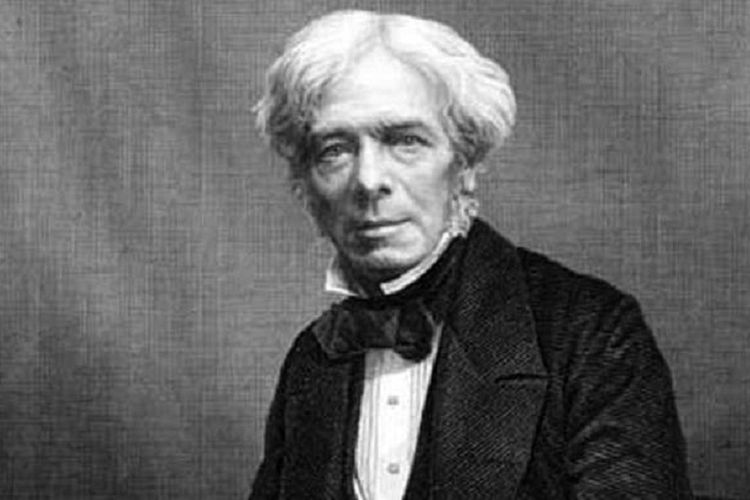
    All that makes Elon Musk into the ranks of the 100 richest people in the world with a fortune of more than US $ 14 Billion in 2016.

    With his success, Elon Musk is often referred to as “Tony Stark” or “Iron Man” in real life.

    Here are some important tips from Elon Musk to become the great innovator he is today

    1. Be diligent in reading books

    Like other great figures in the world, Elon is also diligent in reading books, to broaden horizons.

    While in elementary school, he spent 10 hours a day reading books, and could even finish two books in one day.

    Through reading habits, Elon can learn BASIC programming in just three days, even though it should have been taught for six months.

    Some of the books that Elon Musk likes are JRR Tolkien’s The Lord of The Rings and Peter Thiel’s Zero to One .

    2. Focus on the important things

    A focus on what matters is a critical component of productivity for Elon Musk, and serves to sharpen his views.

    At both SpaceX and Tesla, Elon Musk has always focused on what’s important in the form of developing quality products, and tends to be reluctant to go on a massive promotion when it’s not needed.

    “At Tesla, we hardly ever spend a dime on advertising. When it comes to spending money, we ask first if this can lead to a better product? If not, then we will not spend the money, ”said Elon .

    3. Diligently take a shower

    It may seem like a joke, but this is actually what Elon Musk does as a component of his productivity.

    For Elon, bathing is a habit that benefits him. He conveyed this in a question and answer session on Reddit social media:

    “What are your daily habits that have a big benefit in your life?”

    Elon Musk also replied, “take a shower”.

    This is supported by research from Radboud University in the Netherlands and various other studies, which say that relaxing conditions such as bathing can trigger the brain to generate new ideas.


  • Michael Faraday

    Michael Faraday

    Michael Faraday (1791-1867), was a physicist and chemist from England. His well-known discoveries are electromagnetic induction and the laws of electrolysis. Faraday’s initial research was in chemistry, under the guidance of Sir Humphry Davy and found two types of carbon chloride and benzene. In his research, Faraday also succeeded in liquefying several types of gases.
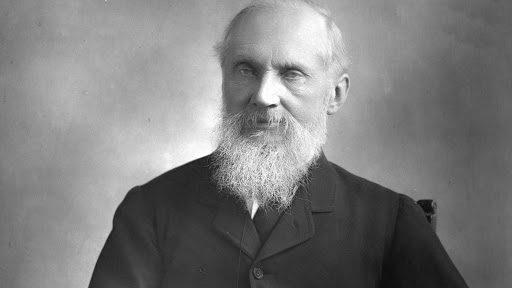
    Michael Faraday is an expert in chemistry and physics. He was born on September 22, 1791 and died on August 25, 1867. He is known as a pioneer in researching electricity and magnetism, even many scientists say that he is the greatest researcher of all time. Some of the concepts he derived directly from experiments, such as lines of magnetic force, have become ideas in modern physics.

    Faraday was born in a poor family in Newington, Surrey near London. Young Faraday was a critical child, but he received little education compared to primary school. Even so, it did not make him feel inferior and give up hope to continue learning. When he was 14 years old, he was apprenticed in a bookbinding business. This is where he got interested in physics and chemistry. After hearing the lecture of a famous chemistry lecturer at the time, Humphry Davy, he sent his lecture notes to the lecturer. It turned out that the lecturer was interested and appointed Faraday as his assistant at the famous University Laboratory in London, when he was 21 years old.

    In his first year of work in the laboratory, Faraday discovered two chlorocarbons and succeeded in liquefying chlorine gas and several other gases. Then managed to separate benzene compounds in 1825 where he was appointed chairman of the laboratory.

    In 1807, Davy, who had a great influence on Faraday’s thought, had predicted that the metal sodium and potassium could be precipitated from their compounds by means of an electric current, a process known as electrolysis. Faraday passionately tried hard to prove his professor’s prediction and in 1834 it became a reality, a new law on electricity emerged, known as Faraday’s Law.

    Faraday’s research into electricity and electrolysis was guided by his belief that electricity is one of the other forces of nature such as heat, light, magnetism and chemical tendencies. Although his idea was wrong, this made him enter the electromagnetic world.

    In 1821, Faraday investigated the magnetic field around a conductor that was energized by an electric current which was first discovered by Hans Christian Oersted in 1819. In 1831 Faraday discovered electromagnetic induction and showed the emergence of an induced current in a coil due to an electric current in another coil. . At the same time, Faraday also conducted successful research in the field of electrolysis.

    The thought and one experiment of electromagnetic phenomena that Faraday demonstrated regarding the concept of lines of force were refuted by most of the European mathematical physicists, they assumed that electric charges attracted and repelled each other by distance and made the lines of force insignificant. However, a well-known physicist at the time, James Clerk Maxwell accepted Faraday’s thoughts and converted them to mathematical equations and became the cornerstone of the birth of modern field theory.

    Another result of Faraday’s creativity (1845) was about the intensity of a magnetic field that could rotate a polarized light field and is now known as the Faraday effect. This phenomenon has been used to determine molecular structures and provide information about the magnetic fields of galaxies.

    Faraday describes much of his research on electricity and electromagnets in three volumes entitled Experimental Researches in Electricity (1839, 1844, and 1855). His research notes are dated in Experimental Researches in Chemistry and Physics (1858). In 1855, Faraday stopped researching because of health problems but he continued his work as a lecturer until 1861. On August 25, 1867, Faraday the inventor died leaving all his work, but all his services, both products and thoughts, will always be remembered by the world and make him the true inventor.

    Michael Faraday’s work 

    1. 27 Oct 1813 With Humphrey Davy investigating his theory of volcanic activity.
    2. 1821 Describes the dynamo principle.
    3. 1821 Invented the first electric motor.
    4. 1821 Examining the magnetic field around conductors.
    5. 1823 Melts chlorine gas.
    6. 1831 Discovering electromagnetic induction.
    7. 1831 Research on moving magnets causes electric currents.
    8. 1831 Finding lines of magnetic force.
    9. 1831 Invented the electric dynamo.
    10. 1831 Inventing electric transformers.
    11. 1831 Making laws about induction.
    12. 1832 Explaining the laws of electrolysis and taking the term “ion” for the particles believed to be responsible for carrying current.
    13. 1833 Developed his laws in the field of electrolysis.
    14. 1845 Investigating the rotation of light polarized by magnetic fields.
    15. 1845 Discovered that the propagation of light in matter can be affected by external magnetic fields.
    16. 1850 Corrects his failed research to find a relationship between gravity and electromagnetic fields.

    25 August 1867 Michael Faraday died in England as a chemist and physicist who contributed to the advancement of science

  • Lord William Thomson Kelvin

    Lord William Thomson Kelvin

    Lord William Thomson Kelvin  is a physicist, mathematician, inventor (owns 70 patents), professor, author, and president of the Royal Society. He was born in Belfast, Ireland, on June 26, 1824. He received the Lordship title from Queen Victoria.

    Lord William Thomson Kelvin

    Because of the intelligence of Lord William Thomson Kelvin , at the age of 10 he entered university. At 15 years of age,  William Thomson Kelvin won a gold medal for his essay entitled “An Essay on the Shape of the Earth”. At 17, he earned a BA from Cambridge University and was appointed professor at the age of 22 at the University of Glasgow.

    Karya Lord William Thomson Kelvin

    In 1841, when he was 17 years old, William studied at Cambridge University. He graduated in 1845 and obtained a BA (Bachelor Degree) with satisfactory scores. That same year, he studied the work of George Green (which applies mathematics to electricity and magnetism) and the work of the physicist and chemist, Michael Faraday (the use of magnets in creating electricity and how electric currents give off magnetic fields).

    In 1846, at the age of 22, Thomson became a professor of physics (formerly known as natural philosophy) at the University of Glasgow. He held this post for 53 years, despite numerous offers to teach elsewhere. When Thomson became professor of physics, physics covered a wide range of topics and there were almost no ties connecting the topics. However, in the works of Fourier, Faraday, and Green, he begins to see a unity. He himself was able to determine mathematically the relationship between fluid motion and electric flow. This idea he got from the work of Fourier, when he was 16 years old.

    In 1848,  William Thomson Kelvin proposed his absolute temperature scale. Zero degrees on the Kelvin scale (his last name) is absolute zero, because the temperature is the lowest one can expect, where the object no longer radiates the slightest bit of heat. He became wealthy and famous after inventing the Kelvin galvanometer and siphon recorder that could pick up weak electrical signals and succeeded in installing telegraph cables at the bottom of the Atlantic Ocean connecting the Americas and the European Continents by Lord William Thomson Kelvin .

  • Marcian Ted Hoff, Founder of the Microprocessor

    Marcian Ted Hoff, Founder of the Microprocessor

    Marcian Ted Hoff is the father of the inventor of the microprocessor. Thanks to his findings, he changed the world of technology to become increasingly rapidly developing.

    The microprocessor is one of the most influential inventors in technological developments.

    Without a microprocessor, there might not be computers, cell phones, or the internet.

    Luckily Marcian Ted Hoff invented the microprocessor.

    Marcian T. Hoff was born in Rochester-New York, in 1937.

    He studied electrical engineering and earned a Ph.D from Stanford University.

    Hoff then joined Intel Corporation to develop a series of integreted circuits for electronic calculators.

    Hoff then had the idea of ​​creating a universal processor on a single microchip, on special circuits.

    From these results, the microprocessor was born.

    Until now the microprocessor continues to be further developed to process data faster and to use a wider range.