Tag: society

  • The Beauty of Multiculturalism: Definition and Significance

    The Beauty of Multiculturalism: Definition and Significance

    Indonesia is country that has a variety of cultures or a multicultural country. What does multiculturalism actually mean?

    This article will discuss more about multiculturalism. So watch and pay close attention.

    Understanding Multiculturalism in General

    Multiculturalism comes from English, namely from the words multi and cultural.

    Multi means many or more than one while cultural means culture. So multicultural is a culture that has many or more than one.

    While the term multiculturalism is a term used to describe a person’s view of the variety of life in the world.

    Multiculturalism can also be referred to as a cultural policy that emphasizes acceptance of the diversity and various kinds of cultures (multicultural) that exist in people’s lives.

    The culture concerns the values, norms, systems, culture, habits, customs, and politics adopted by them.

    Understanding Multiculturalism According to Experts

    Experts express their opinions regarding the meaning of multiculturalism, including the following:

    1. Lawrence Blum

    Multiculturalism is something that includes understanding, appreciating, and appraising one’s culture, as well as respect and curiosity about the ethnic culture of other people.

    2. Azyumardi Azra

    Multiculturalism is a world view that can be translated into various cultural policies.

    The cultural policy emphasizes the acceptance of the reality of religious plurality and multiculturalism in the life of a society.

    Multiculturalism can also be understood as a world view which is then manifested in political consciousness.

    3. Parekh

    Multiculturalism is an agreement that exists in society that is carried out to anticipate social conflicts through cooperation.

    The agreement itself was made because of the opportunity for various differences, such as habits and customs.

    4. Nasikun

    Multiculturalism is a condition of a pluralistic society which structurally has sub-cultures which are characterized by a lack of development of the value system, resulting in various conflicts.

    5. Rifai Harahap

    Multiculturalism is a community unit that is characterized by the merging of various forms of difference to be able to live together.

    By living together that has been planned, it is expected to be able to handle the impact of social phenomena such as conflicts that still often occur in the community.

    Types of Multiculturalism

    Multiculturalism is divided into 5 types, namely:

    1.  Accommodative Multiculturalism

    This accommodative multiculturalism includes people who have a dominant culture that makes certain adjustments and accommodations for the cultural needs of minorities.

    The community here formulates and applies culturally sensitive laws, statutes, and provisions.

    Society also gives freedom to minorities to maintain and develop their culture.

    On the other hand, minorities do not challenge the dominant culture.

    This accommodative multiculturalism is applied in several countries in Europe.

    2.  Autonomous Multiculturalism

    Autonomous multiculturalism includes a plural society in which the main cultural groups seek to achieve equality.

    They challenge the dominant group and seek to create a society in which all groups can exist on an equal footing.

    3.  Interactive or Critical Multiculturalism

    Interactive or critical multiculturalism includes a plural society where cultural groups are not too focused or concerned with autonomous cultural life.

    They rather form a collective creation that reflects and affirms their own distinctive perspectives.

    4.  Isolationist Multiculturalism

    Isolationist multiculturalism refers to a society in which various cultural groups live autonomously and engage in minimal interaction with one another.

    5. Cosmopolitan Multiculturalism

    This cosmopolitan multiculturalism includes efforts to eliminate cultural boundaries to create a society that is no longer bound to a particular culture.

    And conversely, freely involved in intercultural experiments and at the same time develop their own cultural life.

    Elements of Multiculturalism

    here are several elements of multiculturalism, especially in Indonesia. The following are the elements of multiculturalism in Indonesia:

    1. Tribes; ethnic groups in Indonesia are very diverse, ranging from Sabang to Merauke.
    2. Race; Race in Indonesia arises because of the large grouping of humans who have biological characteristics, such as hair color, skin color, body size, and so on.
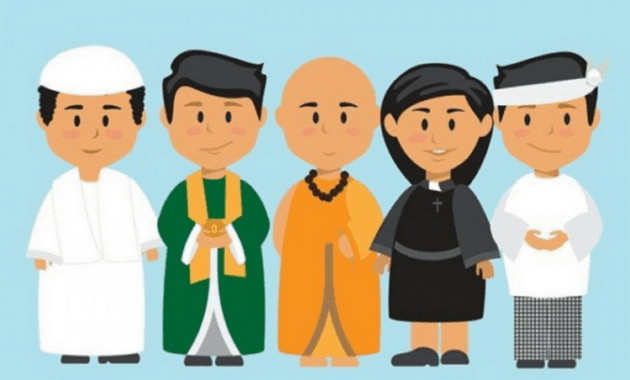
    3. Religion and Belief; Religion and belief in Indonesia is quite diverse, ranging from Islam, Christianity, Catholicism, Hinduism, Buddhism, to Kong Hu Cu.
    4. Ideology; ideology has a strong influence on behavior.
    5. Political; Politics is an attempt to enforce social order.
    6. Manners; Manners are all actions, behaviors, customs, manners, greetings, words and abilities in accordance with certain rules and norms.
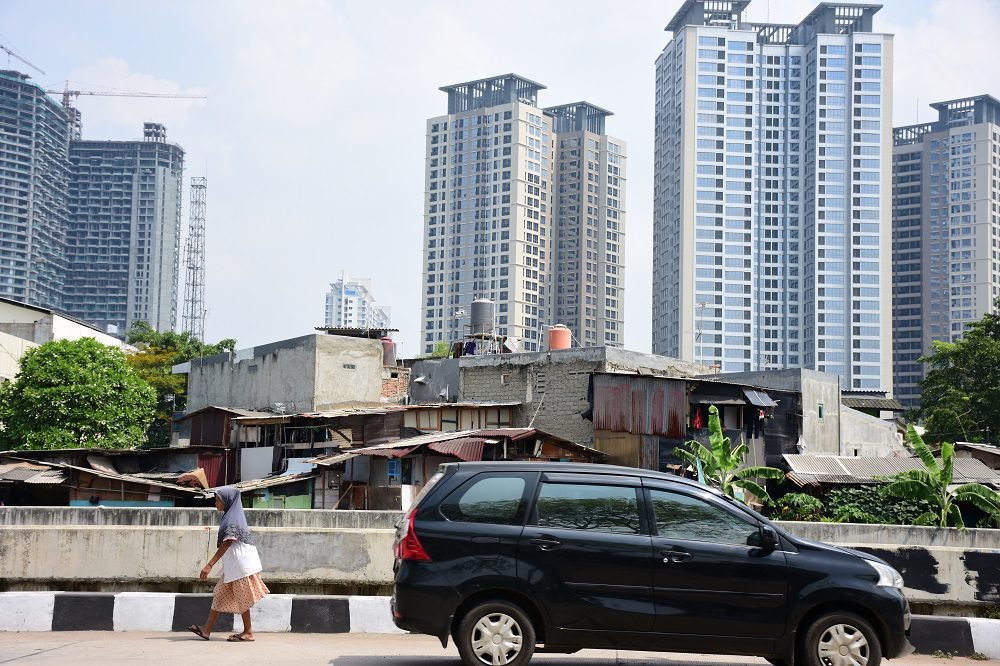
    7. Social gap; there is a classification of people based on caste.
    8. Economic Gap; There are differences in income between people.

    Characteristics of Multiculturalism

    The characteristics of a multicultural society are as follows:

    1. Experiencing segmentation in groups with different sub-cultures.
    2. Has a social structure that is divided into non-complementary institutions.
    3. Low consensus among institutional members.
    4. There are relatively frequent conflicts and debates.
    5. Integration tends to occur by coercion.
    6. There is political dominance over other groups.

    The Cause of Multiculturalism

    Multiculturalism happens for a reason. Here are some of the reasons for the occurrence of multiculturalism:

    1. Geographical factors; In an area that has different geographical conditions, there will definitely be differences in the community.
    2. climatic factors;  In an area that has different climatic conditions, there will definitely be differences in the community.
    3. Foreign cultural influences; people who already know foreign cultures are likely to be affected by these foreign cultural habits.

    Multiculturalism Concept

    The concept of multiculturalism is a world view that is ultimately implemented in policy.

    The policy is about the willingness to accept other groups equally as a unit, regardless of differences in culture, ethnicity, gender, language, or religion.

    Forms of Multicultural Society

    The form of multicultural society is divided into 5 forms, namely:

    1. Primordialism

    Primordialism is a view or understanding that holds fast to various things that have existed since childhood.

    This view can be in the form of beliefs, traditions, customs, or everything that is in the first environment of an individual’s life.

    Primordialism has a function to preserve the culture of the group.

    However, this primordialism can also make an individual or group have an ethnocentrism attitude.

    Ethnocentrism is an attitude that tends to be subjective in viewing other people’s cultures.

    They will find it difficult to accept other understandings other than the understanding they have brought since childhood.

    So primordialism can be interpreted with an ingrained belief.

    2. Ethnocentrism

    Ethnocentrism is the assumption of a social group that their group is the most superior compared to other groups.

    They will find it difficult to accept other understandings other than the understanding they have brought since childhood (primordialism).

    So ethnocentrism can be interpreted with an assumption from social groups that their group is the most superior compared to other groups.

    3. Intersection

    Advertisement

    Intersection is a meeting or intersection which is known as a plural ethnic group in sociology.

    Intersection is also a meeting or crossing membership of a social group from various sections.

    Whether in the form of ethnicity, religion, social class, gender, and so on in a pluralistic society in sociology.

    This intersection will be formed through social interaction or intensive association of its members.

    This social interaction will be formed through the means of association in human culture, including language, art, means of transportation, markets, schools, and so on.

    So intersection can be interpreted as a society consisting of many tribes, cultures, religions, races, and others that blend into one unit in a particular community.

    4. Consolidation

    Consolidation is a process of strengthening thoughts on beliefs that have been believed to be getting stronger.

    Consolidation is also a strengthening process carried out to provide additional faith for someone on what someone already believes.

    So consolidation can be interpreted with a strengthening of what has been attached to him.

    5. Stream Politics

    Stream politics is a group of people who are incorporated into mass organizations that have a unifying force.

    The unifier can be in the form of political parties within a country.

    Political flow is also a community organization that is used to maintain and prosper members of the community.

    So political flow can be interpreted as a political party that has the support of community organizations as a power builder in general elections.

    Difference between Multiculturalism and Pluralism

    There are several differences between multiculturalism and pluralism, including the following:

    1. First

    Multiculturalism is an ideology that glorifies cultural differences or a belief that recognizes cultural pluralism as a way of life for people.

    While pluralism is an ideology that provides a comfortable space for the paradigm of difference as one of the fundamental entities of a human being.

    2. Second

    Multiculturalism is an understanding that requires people to live in tolerance, mutual understanding between cultures and between nations in building a new world.

    While pluralism is an understanding that recognizes the differences between ethnic groups, religions, cultures, and so on.

    3. Third

    Multiculturalism is an understanding which states that a society should consist of many different cultural groups in the same social status, or at least allow these different cultural groups to live in one area.

    While pluralism is an understanding which holds that people of different races, religions, and political beliefs can live peacefully in the same society.

    4. Fourth

    Multiculturalism only accepts cultural differences and does not study other cultures or explore other cultures

    While pluralism accepts the existence of other cultural differences and studies other cultures that are useful for avoiding conflicts.

    Also read: Understanding Culture

    Factors of Multicultural Society in Indonesia

    There are several factors of multicultural society in Indonesia, including the following:

    1. Geographical Factor

    The geographical location of Indonesia, which is between 2 continents and 2 oceans, has resulted in Indonesia being visited by many ethnic groups from all over the world.

    With this geographical location, Indonesia is also used as an international trade route.

    Thus many foreign countries come to Indonesia with the aim of trading, such as Arab, Indian, Chinese, and others.

    This is what adds to the entry of foreign cultures into Indonesia and the creation of a multicultural society.

    2. Climate Factor

    Due to the different climate in Indonesia, the pattern of livelihood, social order, livelihoods, and types of people are also different.

    For example, people who live in urban areas, the majority of people will work in offices or companies.

    While people who live on the coast, the majority of people will work as fishermen or fish traders.

    3. Indonesian History Factors

    This historical factor in Indonesia is a factor where other countries want to have what Indonesia produces, such as spices.

    So many foreign countries colonized Indonesia, such as Japan, the Netherlands, England, and Portugal.

    Members of these countries stay long enough in Indonesia and some even marry members of the Indonesian state.

    This is what adds to the richness of culture and race in Indonesia.

    4. Ethnic and Cultural Factors

    Indonesia has very diverse ethnic groups and cultures. This can make the community become multicultural.

    These ethnic groups and cultures can be in the form of:

    • Local language
    • Folk songs
    • Regional dance
    • Regional art
    • Regional specialties
    • Customs
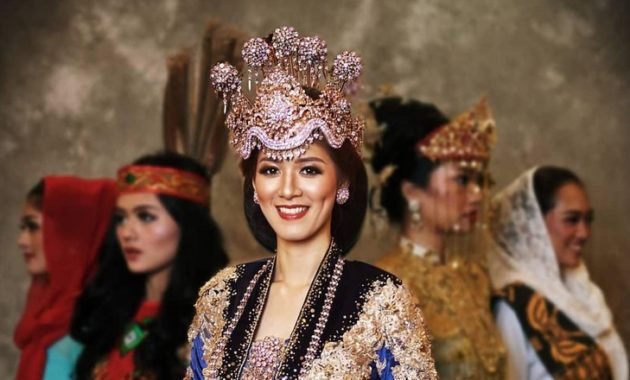
    • Traditional clothes
    • Custom home
    • Musical instrument
    • Traditional weapon

    5. Race Factor

    There are 3 races in Indonesia that make society multicultural, namely:

    • The Mongoloid race, with the characteristics of a brown skin color, a little body hair, straight hair, and slanted eyes.
    • Negroid race, with characteristics of black skin color, curly hair, thick lips, and straight eyelids.
    • Caucasoid race, with the characteristics of white skin color, blond to brown hair color, pointed nose, and straight eyelids.

    6. Physical and Geological Factors

    Indonesia’s geological structure is located between 3 different plates, namely Asia, Australia and the Pacific.

    This makes Indonesia an archipelagic country that has several geological types, such as the Asiatic type, the transitional type, and the Australis type.

    Thus, the life of the people of each island will be different according to the conditions of the island.

    For example, people living on small islands will experience difficulties with natural resources.

    While people who are on the big island they have a lot of natural resources.

    This is what makes the culture of each island different.

    7. Factors of Religion and Belief

    Religion and belief in Indonesia is also a factor in a multicultural society.

    The reason is that religions and beliefs in Indonesia are quite diverse, ranging from Islam, Christianity, Catholicism, Hinduism, Buddhism, to Kong hu cu.

    Examples of Multiculturalism

    There are many examples of multiculturalism, including the following:

    1. Respect interfaith.
    2. Attending invitations from other ethnic groups other than the tribes they believe in.
    3. Balinese people who can accept culture from other regions.
    4. Do not offend each other’s beliefs held by other communities.
    5. Does not mention the characteristics of the race owned by friends.
    6. It is not allowed to use loudspeakers when calling the call to prayer.
    7. Anti-discrimination regulations in the use of public facilities.
    8. They mingle with one another regardless of the background of people who share the same vision and mission as us.
    9. There is a prohibition in holding worship due to the disturbing sound.
    10. Holding mutual cooperation activities every Sunday to maintain the cleanliness and preservation of the living environment.

    Conclusion

    From the above explanation about the notion of multiculturalism, you must know that multiculturalism in Indonesia is very diverse.

    Although there are many definitions of multicultural, basically multicultural has the meaning of diverse cultures.

    These cultures coexist with each other, live in peace even though sometimes there are conflicts.

    So as a good Indonesian society, you must be able to accept the cultural diversity that exists in Indonesia.

    Thus, we can convey about the meaning, types, elements, characteristics, causes, concepts, forms of society, factors, and examples of multiculturalism.

    Hopefully with this article you can understand what multiculturalism is and apply it in everyday life. Thank you

    Question and answer

    What is the meaning of multiculturalism?
    Multiculturalism is a term used to describe a person’s view of the variety of life in the world.
    Multiculturalism can also be referred to as a cultural policy that emphasizes acceptance of the diversity and various kinds of cultures (multicultural) that exist in people’s lives.
    The culture concerns the values, norms, systems, culture, habits, customs, and politics adopted by them.
    Mention 5 types of multiculturalism!
    Accommodative
    Multiculturalism Autonomous
    Multiculturalism Interactive or Critical
    Multiculturalism Isolationist
    Multiculturalism Cosmopolitan
    What are the elements of multiculturalism?
    Ethnicity
    Race
    Religion and Beliefs
    Ideology
    Politics
    Manners
    Social
    Disparities Economic Gaps
    What are the characteristics of a multicultural society?
    Experiencing segmentation in groups with different sub-cultures.
    Has a social structure that is divided into non-complementary institutions.
    Low consensus among institutional members.
    There are relatively frequent conflicts and debates.
    Integration tends to occur by coercion.
    There is political dominance over other groups.
    What are the causes of multiculturalism?
    Geographical
    factors Climatic factors
    Foreign cultural influences
    Mention 5 forms of multicultural society!
    Primordialism
    Ethnocentrism
    Intersection
    Consolidation
    Political Stream
    What are the factors of multicultural society in Indonesia?
    Geographic
    Factors Climate
    Factors Indonesian History
    Factors Ethnic and Cultural
    Factors Race
    Factors Physical and Geological
    Factors Religion and Belief Factors
    Mention some examples of multiculturalism that you know!
    Respect interfaith.
    Attending invitations from other ethnic groups other than the tribes they believe in.
    Balinese people who can accept culture from other regions.
    Do not offend each other’s beliefs held by other communities.
    Does not mention the characteristics of the race owned by friends.
    It is not allowed to use loudspeakers when calling the call to prayer.
    Anti-discrimination regulations in the use of public facilities.
    They mingle with one another regardless of the background of people who share the same vision and mission as us.
    There is a prohibition in holding worship due to the disturbing sound.
    Holding mutual cooperation activities every Sunday to maintain the cleanliness and preservation of the living environment.
  • Why Plurality Matters: An Overview of Definition and Examples

    Why Plurality Matters: An Overview of Definition and Examples

    Plurality is an understanding of diversity to be able to live tolerantly in the midst of society. The community here is a pluralistic society both culturally, religiously, linguistically , politically, and so on. Plurality is also known as pluralism.
    Understanding Pluralism

    Webster’s Revised Unabridge Dictionary

    According to Webster’s Revised Unabridged Dictionar , plurality is

    • results or circumstances being plural.
    • the state of being a pluralist; have more than one about belief.

    Pluralism according to experts

    The following are some experts who contribute their views regarding the notion of pluralism or plurality.

    • Mohammad Shofan
      Pluralism is an effort to build a theological normative awareness and social awareness.
    • Syamsul Maa’arif
      According to Syamsul Maa’rif, pluralism is an attitude of mutual understanding and respect for differences in order to achieve inter-religious harmony.
    • Webster
      Pluralism is a social condition that exists in various ethnicities, religions, races and ethnicities that maintain the tradition of participating in society. This situation creates a pattern of people living side by side in the existing diversity.
    • Anton M. Moeliono
      Pluralism is a thing that gives plural meaning in terms of different cultures in a society. Respect for other cultural values ​​and mutual respect are the basic foundations for the creation of pluralism.
    • Santrock
      Santrock states that Santrock is the acceptance of each individual who believes that cultural differences must be maintained and respected.

    plurality attitude

    Attitudes that reflect plurality include the following:

    • Living in Difference (Attitude of Tolerance/Tasamuh)
      The attitude of accepting other people who are different in view of our personal way of life.
    • Mutual Respect Place
      all human beings in a relation of equality, no one is higher or lower.
    • Mutual trust
      Mutual trust is one of the most important elements in living relationships between human beings in a culture or society.
    • Interdependence (the attitude of mutual need / interdependence)
      Humans are social creatures (homo socius) , between one another are mutual need and complement each other.

    An example of a plurality attitude

    Examples of the application of the attitude of plurality in being carried out are as follows.

    • A company that accommodates people who have different ethnicities, races, and religions
    • The four houses of worship that were built side by side in Kalipuru Hamlet, Kendal, Central Java are a small example of the high plurality of Indonesian society.
    • Balinese people who are predominantly Hindu can live side by side with immigrant communities living in Bali who in fact have religions outside of Hinduism.
    • Help others when they have an accident or become a victim of a natural disaster.
    • Togetherness in mutual cooperation activities to clean up the surrounding environment.

    The impact of the attitude of plurality

    The direct and indirect consequences of the existence of a plurality attitude will provide benefits, among others, as follows:

    • The emergence of mutual respect.
    • Tolerance everywhere.
    • Creating a pluralistic society
    • etc
  • Differences in Social Differentiation with Social Stratification

    Differences in Social Differentiation with Social Stratification

    The following is an explanation of the similarities and differences between social differentiation and social stratification, along with their respective meanings.

    tirto.id – Interactions between community members involve different individual behaviors and habits. This difference is influenced by the social structure as a pattern that regulates people’s daily lives.

    In the study of sociology, the classification of differences in society includes 2 aspects, namely social differentiation and social stratification. So, the social structure affects the diversity of people’s behavior which in the end gives rise to social differentiation and social stratification. The last two concepts have differences and similarities.

    The similarity between social differentiation and social stratification is that the two concepts describe the existence of distinctions or classifications in society.

    However, the two concepts refer to different realities because they use unequal measures in defining differences between members of society. In social differentiation, group differences in society are seen as pluralistic.

    This means that the gap in the position between groups in society due to these differences is not considered. Meanwhile, in social stratification, differences between groups in society are seen based on stratified layers, thus giving rise to identification of social classes.

    It can be concluded, the difference between social differentiation and social stratification lies in the way of looking at the differences between groups in society. Social differentiation shows differences between groups in society in the context of equal, or horizontal (not hierarchical) relationships.

    In contrast, social stratification describes the differences between groups in society, which occur vertically or hierarchically (tiered). To better understand the similarities and differences between social differentiation and social stratification, it is necessary to understand the meaning of each of these concepts along with examples in society.

    Definition of Social Differentiation and Examples

    Through the concept of social differentiation, sociological studies examine the relationship between members of society in an equal position. In the study of sociology, the notion of social differentiation is the horizontal differentiation of society which is characterized by the absence of hierarchical classification. Thus, social differentiation shows plurality and social heterogeneity in society.

    However, this plurality does not show differences in social strata. Social differentiation arises because of the division of labor, gender differences, and differences in religion, race, ethnicity (grouping of individuals on the basis of similar cultural characteristics, such as language, customs, history, attitudes, region).

    Horizontally, society is characterized by the fact that there are social units separated by differences in ethnicity, religion, race, customs, regional elements, and professions.

    One example is social differentiation based on religion. In Indonesia, the people are diverse because they consist of adherents of Christianity, Catholicism, Islam, Hinduism, Buddhism, Confucianism, to local religions and beliefs.

    There are no groups that are higher or lower in social differentiation based on religion, as happened in the distinction between Indonesian people based on their beliefs. The same applies to the example of social differentiation based on sex. Men and women have different social roles and functions.

    Definition of Social Stratification and Examples

    Social stratification is the classification of society into layers that are arranged in stages or hierarchies. This classification refers to the division of community members into vertically tiered levels or strata.

    The emergence of social stratification is driven by the existence of values ​​as something that is valued and upheld in society.

    The value referred to in the context of social stratification relates to resources or valuables that are needed by the community. For example: power, wealth, education, and skills.

    Therefore, it can be concluded that social stratification shows the relationship between community members in an unequal position. So, broadly speaking, social stratification shows the classification of community members based on differences in access to utilizing resources. privilege  and  prestige , but some are not.

    There are a number of basic forms of social stratification in society. The various forms are economic stratification, education/work stratification, and political stratification.

    Meanwhile, Jeffries and Ransford formulated there are 3 kinds of social stratification in society. The explanation of the 3 kinds of social stratification and their examples are as follows.

    1. Class Hierarchy

    This first type of social stratification is based on the classification of society from an economic perspective, namely control over resources to produce goods and services (means of production).

    The economic element can simply be measured by wealth. This type of stratification can apply differently in each society, depending on the mode of production in its economy.

    For example, in a village community whose economy is based on agriculture, the determinant of social class is ownership of land and houses. Meanwhile, in coastal communities where the majority of fishermen are fishermen, the determinant of class hierarchy is ownership of the boat.

    It is different in urban communities, where the layers of society are determined by differences in access to capital. Community groups with strong capital will control the means of production for industry and business, as the economic foundation of urban areas. Capital can be in the form of money or valuable assets that can be used for investment.

    2. Hierarchy of power

    The hierarchy of power is determined by the ability to influence authoritative values. This classification is related to the political aspect. For example, members of society who occupy the position of kings or heads of state and government officials will have different degrees from ordinary citizens.

    3. Status Hierarchy

    The status hierarchy is based on differences in honor and position in society. Size in layers in this type of hierarchy generally occurs in traditional or religious societies.

    An example of this classification can be seen in Javanese society, in which there is a distinction between the priyayi and the wong cilik. The traditional elders whose position is exalted in a number of tribes are also another example. As for the religious community, religious leaders generally get a higher position than ordinary citizens.

  • Conflict Theory According to Lewis A Coser’s Perspective

    Conflict Theory According to Lewis A Coser’s Perspective

    Conflict can also be positive for the fabric of a society or social group. Well, here is the conflict according to Luwis Coser, which states that conflict has a positive function.
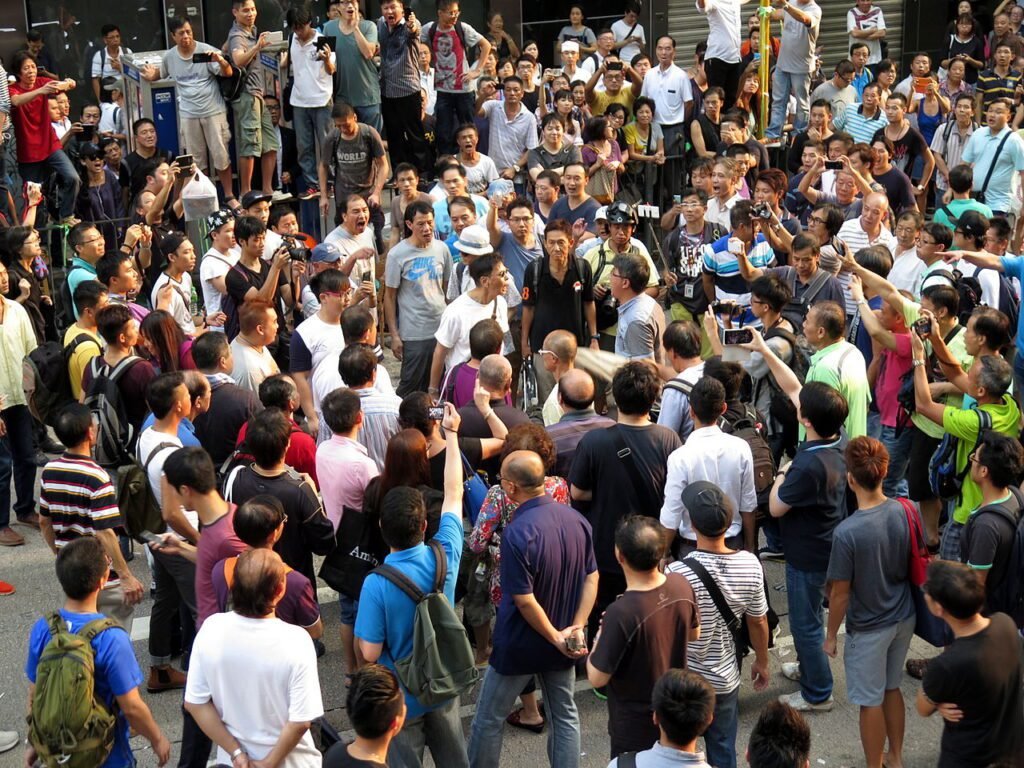
    According to Coser’s perspective, conflict theory is a functional social system. According to Coser, conflicts that occur in society do not merely show a negative function. However, conflict can also positively impact the ongoing social order.

    For Coser, conflict is a form of interaction and does not need to be denied. Coser means that conflict does not have to be destructive or dysfunctional for the system concerned because conflict can also have positive consequences.

    Coser shows us that conflict is a dispute about values ​​or demands regarding power, status, and sources of wealth whose supply is insufficient.

    Furthermore, Coser stated that disputes or conflicts could occur between individuals, collectivities, or individuals within the group. We can see the conflict between individuals and individuals; we still remember that when we attended high school, we unconsciously created positive conflicts, namely at the level of competition, in competition events, competing to become class winners, and experiencing positive conflict. We’ve been through.

    In negative conflicts, we can see the final results of the competition where the results are not in line with expectations, such as fights between football supporters/fans, coachmen debate that do not teach us lessons, and examples of negative conflicts that can harm many communities. Therefore, we should avoid these negative conflicts.

    Conflict is an important element of interaction, and it cannot be said that it is always bad, divisive, or destructive. Conflict can contribute greatly to the group’s sustainability and unite/strengthen relationships between its members. Such as facing a common enemy can integrate people, generate solidarity and engagement, and make people forget their internal strife.

    Positive Function of Conflict According to Lewis Coser. Conflict is a way or tool to maintain, unite and reinforce the existing social system. For example, the positive function of conflict is in matters relating to the dynamics of the relationship between the in-group and the out-group. Here are some propositions made by Lewis Coser:

    First, the strength of internal solidarity and inner group integration will increase if the level of hostility or conflict with outside groups increases.

    Second, the increased integrity of groups involved in conflict can help strengthen boundaries between that group and other groups in the environment, especially hostile or potentially hostile groups.

    Third, within the group, there is the possibility of a reduced tolerance for division or divisions and an increased emphasis on consensus and conformity.

    •  Consensus is a phrase to produce or make an agreement that is mutually agreed upon between groups or individuals after debates and research are carried out in the intelligence collective to obtain consensus decision-making.
    •  Conformity is a type of social influence when someone changes their attitudes and behavior to suit existing social norms. (Source: id.wikipedia.org)

    Fourth, deviants in the group are no longer tolerated; if they cannot be persuaded to enter the right path, they may be expelled or put under close surveillance.

    Fifth, on the other hand, if the group is not threatened by conflict with hostile outsiders, the strong pressure on cohesiveness, conformity, and commitment to the group may decrease.

    Internal disagreements may surface and be discussed, and deviants may be more tolerated. Generally, individuals will get greater space to pursue their personal interests.

    According to Coser, the function of external conflict can also be to strengthen internal cohesiveness and increase group morale so that groups can provoke antagonism with outside groups or create enemies with outsiders in order to maintain or increase internal solidarity.

    Tensions that occur in a group due to friction make conflict occur. To be able to solve the conflict problems that occur, Lewis Coser has a way or mechanism to be able to reduce or resolve a conflict.

    The mechanism that Coser mentioned is called a safety valve or other designation a safety valve. Coser admits that conflict can jeopardize unity. Therefore, it is necessary to have a solution called Coser as a safety valve.

    For Coser, this safety valve is an institution (safety valve institution). In society’s broad order of elements, we will find many social interests that may take time to fulfill. There needs to be an institution or institution that becomes the safety valve of these interests so that there will be no conflict in the community.

    Let us look at the legislative institution or body which consists of representatives of the people, such as the Indonesian Parliament in Indonesia. The existence of this institution is as a savior or as a safety valve for high conflicts. This is because each region already has representatives in the realm of delivering the community’s social needs in each region.

    Regarding the implementation in the field, it depends on how the community responds and the representatives give the right of their constituents. Thus, a large conflict does not need to occur because there is already a place to convey aspirations.

    In addition, according to Coser, safety valves also do not have to be on institutions; they can also be safety valves based on actions or habits that can reduce tension because conflicts cannot be channeled.

    For example, a joke inserted in a tense situation can reduce or eliminate the tension at that time, even though the joke itself may still contain critical values.

    Coser’s opinion regarding conflicts is that conflict is functional (good) and/or dysfunctional (bad) for relationships and structures that are not encapsulated in the social system. Coser focuses more on the functional conflict; Coser does not see it as dysfunctional.

    Coser defines social conflict as a struggle for value and recognition of rare status, then powers and sources of conflict are neutralized or perpetuated, and rivals are eliminated.

    Coser’s view of functional conflict states that conflict can change the form of interaction, whereas the expression of feelings of hostility is not the case. Therefore, conflicts that occur in society, either individually with individuals or groups with groups, as well as individuals and groups, are one way of unifying elements of society.

    This is because the conflict that occurs is not always negative but also positive in terms of uniting various social interests in it.


  • 3 Characteristics of Social Facts According to Emile Durkheim

    3 Characteristics of Social Facts According to Emile Durkheim

    According to Durkheim, social facts are all ways of acting, thinking, and feeling outside the individual, coercive and general. Come see the reviews.

    As one of the figures who contributed to the development of Sociology, Emile Durkheim separated Sociology and Social Philosophy and strengthened Sociology as an independent branch of science.

    ” Sociology is a science that studies the Social Fact,” firmly Emile Durkheim.

    Social facts in Emile Durkheim’s perspective. 

    Most of us view social facts as relationships that are all visible and can be grasped by the five senses.

    According to Durkheim, social facts are all ways of acting, thinking, and feeling that are outside the individual, coercive, and general.

    Social facts have three characteristics, namely:

    First, External, which is outside the individual. This means that social facts existed before the individual existed and will remain after the individual did not exist.

    Second, Determined Coercive, namely social facts forcing individuals to always conform to them (social facts).

    Third, General, spread out in the community/society, is jointly owned, not individually.

    According to Durkheim’s view, individual interests and motives are not included in social facts because interests and motives are internal to an individual.

    Let’s try to understand one of the following examples; for example, we want to do a study of consumption using social facts.

    So, we will internalize our thinking that consumption is seen as a social fact, such as clothing patterns, consumption patterns, or ways of eating.

    It is an external, general, and compelling reality. Why can? Try to pay attention to the matter of clothing if you want to dress differently when you want to attend an official event or a wedding ceremony.

    Surely you will follow the fashion etiquette when coming to the event, or in everyday clothes; surely we will wear normal clothes.

    It’s different when you want to look extreme, by wearing a swimsuit you come to a formal event, or your daily activities, you can say it’s a mess, uh, crazy people, uh people are crazy, go to parties wearing swimsuits, in public places how come wearing a swimsuit.

    Or you who want to go to college wearing a swimsuit to campus can die of being bullied and beaten by crazy people straying to campus.

    So therefore, we also have to adjust in terms of our clothes or our patterns in everyday dress because this has become a fashion pattern.

    Externally, it is shown by our unwillingness to dress / clothing patterns that are different from what already exists in society and has been going on for a long time, since you were not born and or until you die later.

    Another example is that you are a married woman, and recently your husband died; you will certainly show your sadness and grief.

    If you are not sad as a woman left behind by your husband, the residents will give you a negative stigma.

    For example, you are reported to have had a new husband, so you don’t have to be sad and grieving.

    Or people will sneer at you that you have a new affair because you don’t show that sadness and grief.

    Now this has been socialized by all people, which is general in nature and external to oneself because it is all the result of the socialization process.

    As for the nature of force, it can be seen from the stigma imposed by society on someone who feels, acts, and behaves that are not following social facts, that is, if they do not look sad and grieving (in the example above)

    Assumptions in Social Facts. 

    What are the assumptions behind social facts? The assumptions include: First, social symptoms are real and affect individual consciousness and behavior.

    Members of society feel social facts and become a guide for individuals in feeling, behaving, and behaving.

    Social fact is something that is shared and shared. Second, because social phenomena are real facts, they can be observed/studied using empiric methods.

    As we explained above, social facts can be understood as a reality that can be felt through the human senses.

    Therefore, human senses can also grasp and feel the presence of social facts, so they can be observed or studied.

    Two forms of Real Social Facts.

    Social facts must be considered as real things. According to Emile Durkheim, as a real thing, it can take two forms, as said by Ritzer, namely:

    • In the form of a material, namely something that can be listened to, captured, and observed, such as architecture and legal norms.
    • In the Non-Material form, something considered real appears in human consciousness, such as compassion, anger, sadness, joy, happiness, and others.

    Well, that’s, guys, some of the characteristics in social facts, according to Emile Durkheim, and two forms of social facts are seen as real: material and non-material.

  • The Principle of Analysis and Conflict Model According to Randall Collins

    The Principle of Analysis and Conflict Model According to Randall Collins

    Conflict is a central process in people’s lives. According to Randall Collins, there are 5 Principles of Analysis and 3 Models of Social Stratification Conflict.
    Examples of Visible Social Phenomena.

    According to Randall Collins, organization is an arena of conflict. Conflict between an organization and another or conflict within the organization itself, namely individuals between individuals.

    Social interactions carried out by individuals are related to their interests, power, wealth, social status, which each individual wants to achieve in social organizations.

    The visible example can be seen from political organizations, where interests and power give each other power of influence to members and followers.

    The existence of a high ego causes conflict within political parties to be inevitable, conflict will always exist in political organizations.

    For example, we can see the conflict over the general chairman, which usually has dualism of leadership in political parties.

    In the end, among individuals who conflict because of an emotional drive or ego, they will leave the party structure.

    And of course, will establish their own political party with other individuals who feel they did not get space in the previous political party.

    That’s a glimpse of what we can see in conflict, because of the maneuvers of each individual.

    Social process.

    Conflict is a central process in people’s lives. The social structure is inseparable from the actors who build it.

    Social structure is the essence of individual interaction patterns in the structure of continually re-creating their social organization.

    Three Models of Social Stratification Conflict According to Randall Collins , namely:

    1. Individuals who live in the world, subjectively constructed where they build themselves.

    2. Some people / individuals have the power to be able to influence or influence the construction of the individual’s subjective world, or to control the subjective experience of the individual.

    3. The existence of several people to try to influence the subjective construction, as well as the tendency of individuals to control different people or to oppose the individual’s subjectivity.

    The Five Principles of Conflict Analysis According to Randall Collins , namely:

    1. Conflict theory should focus on the real world rather than the abstract world.

    2. Stratification conflict theory should examine the arrangement of materials that influence interactions.

    3. In an unbalanced situation, the resource ruling group will likely try to exploit the limited resource pool.

    4. Cultural phenomena (beliefs + ideas) are seen from the point of view of interests, resources and power.

    5. In looking at stratification, conflict theory must conduct empirical research.

  • Definition of Cultural Change

    Definition of Cultural Change

    Along with advances in science and technology have a significant impact on human life. One of them, with the internet which has a very big influence on changes in the world of education. With the many advantages of the internet, both in terms of time efficiency, complete information, and flexibility, books are no longer the only source of knowledge. These are all examples of cultural changes in the world of education today. Then, what exactly is the meaning of cultural change?

    In general, cultural change is a change in a system involving ideas in people’s lives. Cultural change can also be said to be the occurrence of conditions of incompatibility between existing cultural elements and ultimately creating conditions that are incompatible for life.

    Cultural change actually refers to a change in the social order process in society. Where, this cultural change can take place very quickly or slowly and generally cannot be realized by the people in a country.

    There are several basic elements of culture known as seven universal elements, among others:

    Living equipment systems and technology

    This includes cooking utensils, clothes, weapons, cleaning tools, means of transportation and others. For example, in the days of our ancestors, we used to cook food by baking, but in modern times we can bake in the oven, or fry in a pan.

    Language

    In ancient times, language was only conveyed by word of mouth. However, nowadays language can be conveyed through writing such as newspapers, media, scientific journals, and many more.

    Knowledge system

    This is the logic or basis of society’s thinking that continues to evolve over time.

    Social system

    As time goes by, science is getting more advanced. In the past, humans could only trace what was visible to the eye but now humans can examine even the very smallest such as atoms and particles.

    Economic systems and livelihoods

    In the past, most of the livelihoods were controlled by men in terms of agriculture, industry, and offices, while women were usually at home taking care of the household. Unlike the case today, women can also seek other livelihoods and help the family economy.

    Religious system

    If in the past humans only believed in the existence of spirits, no longer. Today, humans often use reason and logic.

    Art

    This includes fine arts, dance and sound arts. In the past, Javanese people thought that a dark house was a beautiful house. However, today many Javanese have homes with light or pastel shades.

  • Definition of Functional Integration and Examples

    Definition of Functional Integration and Examples

    Functional integration is a form of social integration. Therefore, functional integration is always related to the differences that exist in society, especially differences related to certain functions in a society or social institution. This social integration is structured in a structured manner, so that each individual has a role to maintain and maintain safe, peaceful, and peaceful social relations. Thus, functional integration is always focused on the needs of the community in order to run safely, fairly and stably.

    So, functional integration is integration that occurs because of the functions in society that must be carried out properly and correctly. However, social integration can be realized if we as a society are able to prioritize these functions, so that it can produce integration in society. A simple example of functional integration is the existence of community groups who work as fishermen, businessmen, farmers, and others, all of whom will carry out their respective functions, so that the needs of each community can be properly met.

    Examples of Functional Integration

    To make it easier to understand functional integration, you need to look at the examples below. So, what are you waiting for, immediately see examples of functional integration.


    1. Integrated Betawi and Sundanese in order to meet food and industrial needs

    The first example of functional integration can be seen in the people of Jakarta with their Betawi ethnicity and the people of West Java with the Sundanese. The two tribes carry out functional integration to meet the supply and availability of food in their respective regions. In addition, the industry in West Java can develop because of the support that comes from Jakarta.

    In this case, the intended functions are commodities and food availability and industrial development. If food commodities cannot be fulfilled, the prices of food ingredients can soar, so that people will find it difficult to get decent food. Meanwhile, in terms of industry, the industry will not develop without the help of the nearby regions. The development of an industry can open up new jobs.

    These two different tribes prove that with differences they can work together instead of bringing each other down. With the cooperation of the two tribes, the needs of the community, be it food or work, can be met.

    2. Regions of West Java and Aceh that are integrated with each other so that the need for tea and coffee can be met

    After the first example is the difference between two tribes, now the second example is the difference between two regions, namely the Aceh region and the West Java region. The two regions carry out functional integration with the aim of meeting the needs of tea and coffee. Tea and coffee are drinks that are already known by the people of Indonesia, from teenagers to adults. Therefore, the supply of tea and coffee in an area must be balanced so as not to experience a shortage.

    The Aceh region is very well known for the quality of coffee beans that have a distinctive aroma and taste. In fact, coffee beans from Aceh have been exported to several countries. Meanwhile, the West Java region is very well known for the quality of its tea. The quality of tea in West Java is unquestionable, especially if you drink the tea directly at the tea plantations, the taste will be more delicious. The taste of coffee and tea is indeed unique and liked by many people, so stock must always be there.

    Therefore, the Aceh region needs quality tea from West Java so that the availability of tea in Aceh does not run out. Likewise, the West Java region requires coffee with a distinctive aroma and taste so that it takes coffee from the Aceh region. The two complementary regions will make tea and coffee in each region not run out.

    3. The Bugis and Javanese Tribes Integrate with each other to meet the needs of agriculture and marine products

    The next example that shows the existence of functional integration is the good relationship between the Bugis and the Javanese. The two tribes cooperate with each other in terms of meeting agricultural and marine needs. In terms of food, agriculture and marine affairs must complement each other so that each individual is able to eat a balanced diet. By eating a balanced diet, a child will experience maximum growth and development.

    The Bugis are very well known for their marine catches because the Bugis tribe’s residence is close to the sea. Meanwhile, the Javanese are also known for their quality agricultural products. Therefore, the Bugis and the Javanese are working together to meet the needs of the local community. The Bugis will take agricultural products from the Javanese and the Javanese will take marine products from the Bugis.

    With this cooperation, the Bugis people can feel the taste of agricultural products that come from Javanese farmers. In this case, agricultural products that enter, such as vegetables, beans, rice, and others. While the incoming marine products, such as salmon, lobster, tuna, and others.

    When the availability is met, it is a sign that the community’s needs in fulfilling balanced nutrition must be met. So, do not underestimate the importance of putting aside capital and prioritizing the needs of the community.

    4. Functional Integration in the Field of Global Competition

    As an era develops, global competition becomes more stringent. Not only global competition is getting tougher, technology is also changing to become faster and more sophisticated. Every country must be quick to adapt to the times, because if we don’t adapt immediately, our country will be left behind by other countries.

    To adapt to the times, functional integration can be done. With functional integration, global competition can be overcome immediately. For example, in terms of promoting a product, it can be done through social media where the whole world will know the products sold in the world market. The more people know about domestic products, the greater the opportunity to export goods, so that the state treasury can increase.

    In this case, the social media in question, such as Twitter, YouTube, Instagram, and others. In fact, this social media can be played through the smart phones we have, so we play social media anytime and anywhere.

    With the presence of social media, it can present a  startup  in the digital world. Social integration between social media and digital developments can build  start-ups  that are able to compete with older companies. The birth  of this startup  will open up job opportunities for the community.

    5. Functional Integration in Business Cases Through Application of the Principles of Usefulness

    Functional integration can not only be done to meet the needs of an area or community. Functional integration in the business world can be implemented through the introduction of products based on their uses. By doing this, consumers will know the functions and advantages of the product so that the product being marketed is selling well.

    For example, the isotonic drink product,  Pocari Sweat  , wants to introduce its products to consumers by providing as much information as possible about the advantages and uses of this isotonic drink when compared to other isotonic drinks. The more often you spread the advantages of a product to consumers, the greater the chance if the product is selling well in the market.

    To inform about the uses and advantages of a product can be through social media. This is because the information disseminated through social media will be easily known by many people. Information spread through social media will make it easier for a product company to communicate with consumers.

    This communication is very important to do because it can build a company. The more advanced the company, the more its products will be known by many consumers.

    Functional Integration Benefits

    Functional integration has several benefits that can be felt directly by the community. Below will be explained some of the benefits of functional integration.

    1. Bringing forth New Collaborations

    As previously discussed, functional integration is a collaboration to meet the needs of the community based on the differences that exist in society. Cooperation is very important to do because it can strengthen brotherhood ties, facilitate communication, and prevent conflicts between community groups and community groups or regions between regions.

    The existence of this cooperation not only creates peace, but also has a positive impact on society or a region, especially in the economic field. An area or community will benefit if the goods derived from the cooperation can be sold or sold in the market.

    In fact, on a wider scale, the birth of this new cooperation will increase the state’s income through an exported product. Exported products indicate that these products are already known by the world community. Social media has become a liaison or media to introduce these products to the world community. The increase in state income makes the country have foreign exchange reserves that can be used to develop the country.

    2. The Needs of a Region and Society Are Fulfilled

    Every need of the community in an area cannot be fulfilled just like that. In other words, there will definitely be some needs that cannot be fulfilled in an area, so that the people of that area cannot feel those needs. For example, Aceh is well known for its coffee quality and West Java is known for its quality tea. To meet the need for coffee, West Java ordered coffee from Aceh and to meet the need for tea, Aceh ordered it from West Java.

    The needs that can be met in an area make the people of the area able to feel a product that comes from another area. Not only that, products from other regions will always tell their own story for the local community. So, every local community with other regional communities must be able to understand each other.

    The fulfillment of a community need in an area makes people’s lives safer, more peaceful, and peaceful, so that unity and integrity can be realized.

    3. Giving Caring Attitudes and Behaviors Towards Others

    Functional integration is related to cooperation that can have a good economic impact. However, it turns out that functional integration has benefits not related to economics. The benefit is to provide the attitude and behavior of the community so that they continue to care for others. This caring attitude and behavior makes people always want to help others who are in trouble.

    There will be many people who will be helped by this caring attitude and behavior. The thing that needs to be underlined in caring for or helping others is that there is no need to differentiate between ethnicity, race, culture, country, and religion when caring for or helping others. If we discriminate between tribes, races, cultures, countries, and religions before helping others, it can trigger offence between people, so it is possible that a conflict will occur.

    Caring for each other can be done, starting from our closest environment, such as neighbors, friends, or relatives. If we are used to helping others, we will instill a desire to help others.

    4. Improving the Nature of Nationalism

    All the benefits of functional integration can be felt by fellow citizens. Not only that, with functional integration, we will get used to increasing the nature of nationalism. The nature of nationalism is important for every member of society because the nature of nationalism can build the life of the nation and state.

    The nature of this nationalism can be in the fields of economy (doing cooperation), education (educating and teaching people who have not been able to go to school), social (providing assistance in the form of food or money), and many more.

    5. Opening Jobs

    The existence of a new collaboration carried out by a community group with different backgrounds can produce a company. Every company that is built definitely needs employees to run its production. It takes employees that will open up new jobs.

    The more jobs available to the community, the greater the welfare of the community. This community welfare will reduce social inequalities that exist in the community.

    Conclusion 

    Functional integration is a form of social integration, so that functional integration can be said as a thing in the form of cooperation carried out based on differences, be it differences in the roles of society, ethnicity, region, and so on. With functional integration, fellow people can live safely, peacefully, and peacefully. Therefore, to maintain unity we must work together so that we can complement each other.