Tag: indonesia

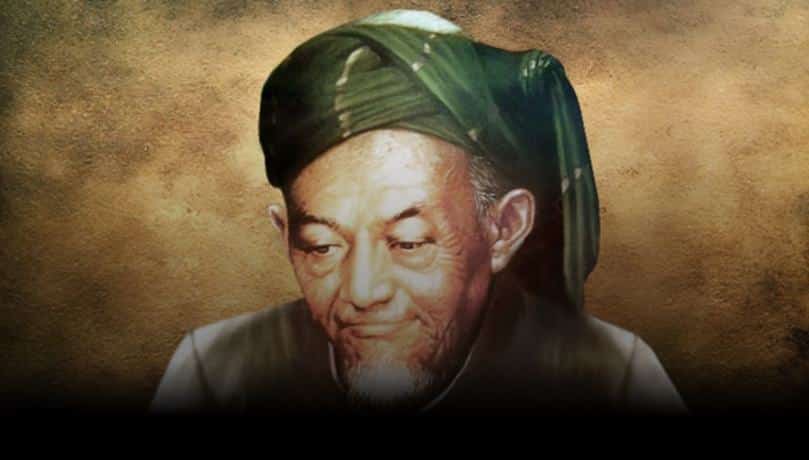
  • Biography of KH Hasyim Al Asy’ari Founder of Nahdlatul Ulama (NU)

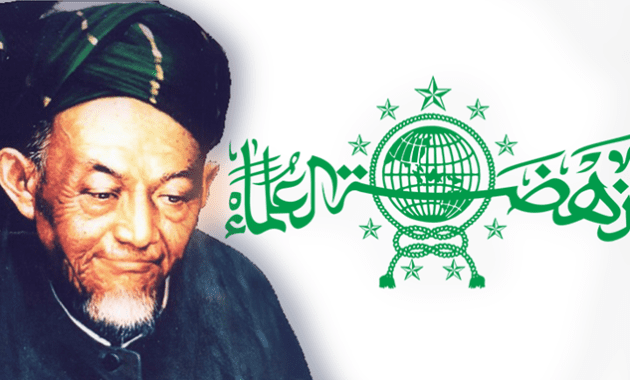
    Biography of KH Hasyim Al Asy’ari Founder of Nahdlatul Ulama (NU)

    KH Hasyim Al Asy’ari is a cleric who founded Nahdlatul Ulama (NU), the largest social organization in Indonesia. He is also the founder of the Tebuireng Islamic Boarding School , East Java and is known as an educational reformer of the pesantren. Apart from teaching religion in Islamic boarding schools, he also teaches students to read general knowledge books, organize organizations, and give speeches.

    The work and services of Kiai Hasyim Asy’ari, who was born in Pondok Nggedang, Jombang, East Java, April 10, 1875, cannot be separated from his ancestors who have led the pesantren for generations. His father’s name was Kiai Asyari, the leader of the Keras Islamic Boarding School in the south of Jombang. Her mother’s name is Halimah. From his mother’s line, Kiai Hasyim Asy’ari is a descendant of King Brawijaya VI, also known as Lembu Peteng, Jaka Tingkir’s father who became King of Pajang (the eighth descendant of Jaka Tingkir).

    Birth And Childhood of KH Hasyim Asya’ri

    Not far from the heart of Jombang, there is a hamlet called Ngedang, Tambak Rejo Village, which used to have an Islamic Boarding School which is said to be the oldest hut in Jombang, and its caretaker Kiai Usman. He is a great kiai, pious and very influential, his wife is Nyai Lajjinah and has six children:

    1. Halimah
    2. Muhammad
    3. awarded
    4. Fadli
    5. Arifah

    Halimah was then married to a student of her father named Asy’ari, at that time Halimah was still 4 years old while Asy’ari was almost 25 years old. They were blessed with 10 children:

    1. Nafi’ah
    2. Ahmad Saleh
    3. Muhammad Hasyim
    4. Radiyah
    5. Hasan
    6. Anis
    7. Fatonah
    8. Maimunah
    9. I pay
    10. Nahrowi, dan
    11. Adnan.

    Muhammad Hasyim , was born on Tuesday 24 Dzulqo’dah 1287 H, coinciding with 14 February 1871 A.D. The time in the womb and birth of KH.M. Hashim Ash’ari, there seems to be a sign that shows his greatness. among them, when in the womb Nyai Halimah dreamed of seeing the full moon falling into her womb , so also when giving birth Nyai Halimah did not feel pain like what a woman felt when giving birth.

    As a child he lived with his grandparents in Ngedang Village, this lasted for six years. After that he followed his parents who moved to Keras Village, located south of Jombang, and in that village Kiai Asy’ari founded a boarding school called Asy’ariyah.

    Principle of early learning , maybe this theory deserves to be carried by him, based on his supportive life, namely living in the pesantren environment, so it is natural that the values ​​of the pesantren are very pervasive in him, as well as the values ​​of the pesantren can be seen how his father and mother provide guidance to them. santri, and how the santri live a simple life full of intimacy and mutual help..

    Learning In The Family

    It was his family’s journey that started him for the first time studying religious sciences from his grandparents. Keras Village brought life changes for the first time for him, here at first he received extensive religious lessons from his father who at that time was the founder and caretaker of the Asy’ariyah Islamic Boarding School. With his intellectual capital and the encouragement of a conducive environment, at a fairly young age, he is already able to understand the religious sciences, be it family guidance, teachers, or self-taught. His dissatisfaction with what he had learned, and his thirst for pearls of knowledge, made it not enough just to study in his family environment. After about nine years in Keras Village (aged 15 years) namely studying with his family, he began his odyssey to study.

    Wandering to Various Islamic Boarding Schools

    At the age of 15, the first journey to study, Muhammad Hasyim studied at the famous boarding schools in Java, especially East Java. Among them are Pondok Pesantren Wonorejo in Jombang, Wonokoyo in Probolinggo, Tringgilis in Surabaya, and Langitan in Tuban (now cared for by KH Abdullah Faqih), then Bangkalan, Madura, under the guidance of Kiai Muhammad Khalil bin Abdul Latif (Syaikhuna Khalil).

    There was a pretty amazing story when KH.M. Hasyim Asy’ari“ngangsu kawruh” with Kiai Khalil. One day, he saw Kiai Khalil sad, he ventured to ask. Kiai Khalil replied that his wife’s ring fell in the toilet, Kiai Hasyim then suggested that Kiai Khalil buy another ring. However, Kiai Khalil said that the ring was his wife’s ring. After seeing the sadness on his teacher’s face, Kiai Hasyim offered to look for the ring in the toilet. Finally, Kiai Hasyim really looked for the ring in the toilet, with full sincerity, patience, and sincerity, Kiai Hasyim finally found the ring. How happy Kiai Khalil was for Kiai Hasyim’s success. From this incident, Kiai Hasyim became very close to Kiai Khalil, both during his time as a student and after returning to society to fight. This was proven by the giving of a stick when Kiai Hasyim was about to establish Jam’iyah Nahdlatul Ulama’ which was brought by KH. As’ad Syamsul Arifin (caretaker of the Syafi’iyah Islamic Boarding School in Situbondo).

    After about five years of studying in Madura (to be precise in 1307 H/1891 AD), he finally returned to Java, studying at the Siwalan Islamic boarding school, Sono Sidoarjo, under the guidance of KH Ya’qub who was famous for his nahwu and shorof knowledge. After a while, Kiai Ya’qub became closer to the santri and became more and more interested in becoming his son-in-law.

    In 1303 H/1892 A.D., Kiai Hasyim who was then only 21 years old married Nyai Nafisah, the daughter of Kiai Ya’qub. Shortly after the wedding, he then went to the holy land of Mecca to perform the pilgrimage with his wife and in -laws. In addition to performing the pilgrimage, in Mecca he also deepened the knowledge he already possessed, and absorbed the new knowledge needed. He studied almost all disciplines of religion, especially the sciences related to the hadith of the Prophet SAW which became his favorite since in the homeland.

    The journey of life is sometimes difficult to predict, happy and sad come alternately. The same goes for Kiai Hasyim Asy’ari in the holy land of Mecca. After seven months of living in Mecca, he was blessed with a son named Abdullah. In the midst of the joy of obtaining the baby, the wife became seriously ill and then died. forty days later, his son, Abdullah, also followed the mother back to Rahmatullah. His grief, which at that time had begun to be known as a scholar, was almost unbearable. The only comforter for his heart was to perform tawaf and other acts of worship that he almost never stopped doing. In addition, he also has a loyal friend in the form of books that are constantly studied at all times. Until finally, he left the holy land,

    Maturity of Knowledge in the Holy Land

    Longing for the holy land apparently called him to go back to Mecca. In the year 1309 H/1893 AD, he went back to the holy land with his younger brother, Anis. Beautiful and sad memories flashed back when his feet stepped back on the holy land of Mecca. But it actually raises a new spirit to be more devoted to worship and explore science. He also visited historic and efficacious places, praying to achieve his goals, such as the Arafah Field, Hira’ Cave, Maqam Ibrahim, and other places. Even the tomb of the Prophet Muhammad in Medina was always a place of pilgrimage for him. He visited great scholars who were famous at that time to study as well as take blessings, including Shaykh Su’ab bin Abdurrahman,

    This tiring effort is not in vain. After many years in Mecca, he returned to his homeland with almost complete religious knowledge, both ma’qul and manqul, as a provision for charity and teaching in his hometown.

    Establishing a Tebuireng Islamic Boarding School

    After returning from the holy land around 1313 H/1899 AD, he started teaching students, he first taught at Pesantren Ngedang which was brought up by his grandfather, as well as the place where he was born and raised. After that he taught in the village of Muning Mojoroto Kediri. This is where he managed to marry one of the daughters of Kiai Sholeh Banjar Melati. Unfortunately, due to various reasons, the marriage did not last long so Kiai Hasyim returned to Jombang.

    When he was in Jombang, he planned to build a boarding school, which he chose a place in Tebuireng Hamlet which at that time was a hotbed of disobedience and chaos. The choice, of course, reaped a big question mark among the people, but all of that was ignored.

    The name Tebuireng was originally Kebo ireng (black buffalo). The story is, In that area there was a buffalo that was immersed in the mud, where there were a lot of leeches, when it was pulled on land, the buffalo’s body had changed its color from reddish white to black which was filled with leeches. It is said that since then the area was called Keboireng which eventually turned into Tebuireng.

    On 26 Robiul Awal 1317 H/1899 AD, the Tebuireng Islamic Boarding School was established, together with his comrades in arms, such as Kiai Abas Buntet, Kiai Sholeh Benda Kereb, Kiai Syamsuri Wanan Tara, and several other Kiai, all the difficulties and threats of the parties involved. hatred towards Islamic education broadcasting in Tebuireng can be overcome.

    KH. M. Hasyim Asya’ri started a tradition which later became one of his privileges, namely the completion of the shakhihaini book “Al-Bukhori and Muslim” held every month of the holy month of Ramadan which is said to be attended by hundreds of kiai who came in droves from all over Java. This tradition continues until now (the teacher of PP. Tebuireng KH. M.Yusuf Hasyim). Initially, the first Pondok Tebuireng santri numbered 28 people, then increased to hundreds of people, even at the end of their lives they had reached thousands, alumni of Pondok Tebuireng who succeeded in becoming great ulama and became high state officials, and Tebuireng became the center of Islamic boarding schools. .

    Establishing Nahdlatul Ulama ‘

    Besides being active in teaching, he is also active in various activities, both local and national. On 16 Sa’ban 1344 H/31 January 1926 AD, in Jombang, East Java, the Jam’iyah Nahdlotul Ulama’ (revival of ulama) was established together with KH. Bisri Syamsuri, KH. Wahab Hasbullah, and other great scholars, with the principle and purpose: “To hold firmly to one of the four schools of thought, namely Imam Muhammad bin Idris Asyafi’i, Imam Malik bin Anas , Imam Abu Hanifah An-Nu’am and Ahmad bin Hambali. And also do whatever makes the benefit of the religion of Islam.” KH. Hasyim Asy’ari was elected to NU’s rois akbar, a title that no one now holds. He also drafted the basic qanun (basic regulations) of NU which developed the ideology ofAhli Sunnah waljama’ah .
    Biography of KH Hasyim Al Asy'ari

    Nahdlatul ulama ‘as a bond of ulama’ throughout Indonesia and teaches jihad for belief with an organized system. It is not easy to unite the ulama ‘who are different in their point of view, but it is not Kiai Hasyim who just gives up, that he sees that the struggle carried out alone will open up a greater opportunity for the enemy to destroy it, either the invaders or those who want to extinguish the light. and Islamic syi’ar in Indonesia, to quarrel with each other. He was a sharp and far-sighted person in this regard, saw the dangers that would be faced by Muslims, and therefore he thought of finding a way out by forming an organization with foundations that can be accepted by other ulama’ulama.

    This Jam’iyah adheres to the ideology of ahlu sunnah wal jama’ah, which accommodates to certain limits the pattern of bermadzhab, which later is more inclined to manhaj than just qauli. In its first decade, NU was oriented to religious and social issues. Activities are directed at issues of education, recitation and tabligh. However, when entering the second decade the orientation was expanded to national issues. This is related to its existence as a member of the federation of the Indonesian Muslim Party and Association of Indonesian Muslims (MIAI) NU and even in its history it has appeared as one of the political parties participating in the election, which later merged with PPP, NU’s role in practical politics was later annulled by the decision of the Situbono Congress which wants NU as a socio-religious organization to return to its khitoh.

    Independence Fighters

    The role of KH. M. Hasyim Asy’ari was not only limited to the field of science and religion, but also in the social and national fields, he was actively involved in the struggle to liberate the nation from the Dutch colonialists.

    In 1937 he was approached by the leadership of the Dutch government by giving a gold and silver star as a token of honor but he refused. Then in the evening he gave advice to his students about the incident and analogized with the incident experienced by the Prophet Muhammad SAW which at that time the Jahiliyah offered him three things, namely:

    • A high -ranking seat in government
    • Abundant possessions
    • The prettiest girls

    However, the Prophet (SAW) refused and even said: “By Allah, if they had the power to put the sun in my right hand and the moon in my left hand with the aim of stopping me from fighting, I would not accept it, even my life is at stake . ” The end of KH.M. Hasyim Asy’ari ended his advice to his students to always follow and set an example from the actions of the Prophet SAW.

    The period of physical revolution in 1940, perhaps indeed was the toughest period for him. During the Japanese occupation, he was detained by the Japanese fascist government. While in detention he was physically tortured so that one of his fingers became disabled . But it was precisely during that period that he carved a sheet in gold ink on the sheet of the struggle for the nation and the Republic of Indonesia, namely by calling for the jihad resolution which he decreed on October 22, 1945, in Surabaya, which is better known as the National Hero’s Day .

    Likewise during the Japanese colonial period, in 1942 Kiai Hasyim was imprisoned (Jombang) and transferred to Mojokerto prison and then imprisoned in Surabaya. He was considered a hindrance to the Japanese movement.

    After Indonesia’s independence In 1945 KH. M. Hasyim Asy’ari was elected as general chairman of the Majlis Syuro Muslimin Indonesia (MASYUMI) party board, he held that position but continued to teach at Islamic boarding schools until he died in 1947.

    Family And Sideways

    Almost simultaneously with the establishment of the Tebuireng Islamic Boarding School (1317 H/1899 AD), KH. M. Hasyim Asya’ri remarried to Nyai Nafiqoh, daughter of Kiai Ilyas, the caretaker of the Sewulan Madiun Islamic Boarding School. From this marriage, Kiai Hasyim was blessed with 10 sons and daughters, namely:

    1. Hannah
    2. Khoiriyah
    3. Aisyah |
    4. Azzah
    5. Abdul Wahid |
    6. Abdul Hakim (Abdul Kholiq)
    7. Abdul Karim |
    8. Ubaidillah
    9. Mashurroh
    10. Muhammad Yusuf.

    Towards the end of 1930, KH. M. Hasyim Asya’ri remarried with Nyai Masruroh, daughter of Kiai Hasan, caretaker of the Kapurejo Islamic Boarding School, Pagu Kediri District, from this marriage, he was blessed with 4 sons and daughters, namely:

    1. Abdul Qodir |
    2. Fatimah |
    3. Chotijah
    4. Muhammad Ya’kub

    The lineage of KH. M. Hasyim Asy’ari (Ninth Grandmother)

    Muhammad Hasyim bin Asy’ari bin Abdul Wahid (Prince Sambo) bin Abdul Halim (Prince Benowo) bin Abdul Rahman (Mas Karebet/Jaga Tingkir) who later held the title of Sultan Hadiwijaya bin Abdullah (Lembu Peteng) who held the title of Brawijaya VI

    The Death of the KH Hasyim Asya’ri

    On the 7th of Ramadan 1366 A.D. at 9 pm, he after leading the Tarawih Prayer, as usual sat in a chair to give lessons to Muslim mothers. Soon after, a guest envoy from General Sudirman and Bung Tomo suddenly came. The Kiai met the messenger accompanied by Kiai Ghufron, then the guest delivered a message in the form of a letter. Whatever the content of the letter, it is clear that Kiai Hasyim asked for time last night to think and the answer will be given the next day.

    However, later, Kiai Ghufron reported that the fighting situation and conditions of the fighters were increasingly cornered, as well as the increasing number of civilian casualties. Hearing the report, Kiai Hasyim said, “Masha Allah, Masya Allah…”then he held his head and was interpreted by Kiai Ghufron that he was sleepy. So the guests said goodbye. However, he did not answer, so Kiai Ghufron approached and then asked the two guests to leave, while he himself remained beside Kiai Hasyim Asy’ari. Not long after, Kiai Ghufron realized that Kiai Hasiyim was unconscious. So hastily, he called his family and stretched Kiai Hasyim’s body. At that time, his sons and daughters were not present, for example Kiai Yusuf Hasyim who at that time was at the headquarters of the fighters, although later he was able to attend and a doctor was brought in (Dokter Angka Nitisastro).

    It was not long before it was discovered that Kiai Hasyim had a brain hemorrhage. Even though the doctor had tried to reduce his illness, God had other plans for his lover. KH.M. Hasyim Asy’ari died at 03.00 am, July 25, 1947, coinciding with the 07th of Ramadan 1366 H. Inna LiLlahi wa Inna Ilaihi Raji’un.

    His departure to his final resting place, was accompanied by deep condolences from almost all walks of life, especially from civilian and military officials, comrades -in -arms, scholars, NU residents, and especially the students of Tebuireng. Muslims have lost their great leader who now lies in his grave in the middle of Pesantrn Tebuireng. At the time of escorting him away, his companions and relatives, KH. Wahab hazbulloh, had the opportunity to present a speech that in essence explained the principle of his life, namely, “fight continuously with no recurrence, and if necessary without rest” .

    Book Works

    Another very valuable legacy is a number of books that he wrote on the sidelines of his life in educating students, protecting thousands of people, defending and fighting for the motherland from colonialism. This is a real proof of his attitude and behavior, his thoughts can be traced in several of his works which are mostly in Arabic.

    But it’s a shame, because of the incomplete documentation, the books that are very valuable disappeared without a trace. Actually, the book he wrote no less than twenty titles. However, only a few titles can be saved, including:

    1. Al-Nurul Mubin Fi Mahabati Sayyidi Mursalin. Study of the obligation to believe, obey, emulate, be sincere, love the Prophet SAW as well as his life history
    2. Al-Tanbihat al-Wajibat Liman Yashna’u al-Maulida Bi al-Munkarat. The study of the birthday of the prophet in relation to amar ma’ruf nahi munkar
    3. Risalah Ahli Sunnah Wal Jama’ah. A study of views on heresy, the Conscience of one of the sects, and the division of the ummah into 73 groups
    4. Al-Durasul Muntasyiroh Fi Masail Tis’a ‘asyaraoh. A study of wali and thoriqoh which is summarized in nineteen problems.
    5. Al-Tibyan Fi Nahyi’an Muqatha’ah al-Arham Wa al-Aqrab Wa al-Akhwal. A study of the importance of friendship between human beings
    6. Adabul ‘Alim Wa Muata’alim. Views on the ethics of learning and teaching in pesantrren education in particular
    7. Dlau ‘al-Misbah Fi Bayani Ahkami Nikah. Study of marriage laws, conditions, principles, and rights in marriage
    8. Ziyadah Ta’liqot. The book contains his polemic with Shaykh Abdullah bin Yasir Pasuruaan
  • Biography of KH. Ahmad Dahlan – Founder of Muhammadiyah

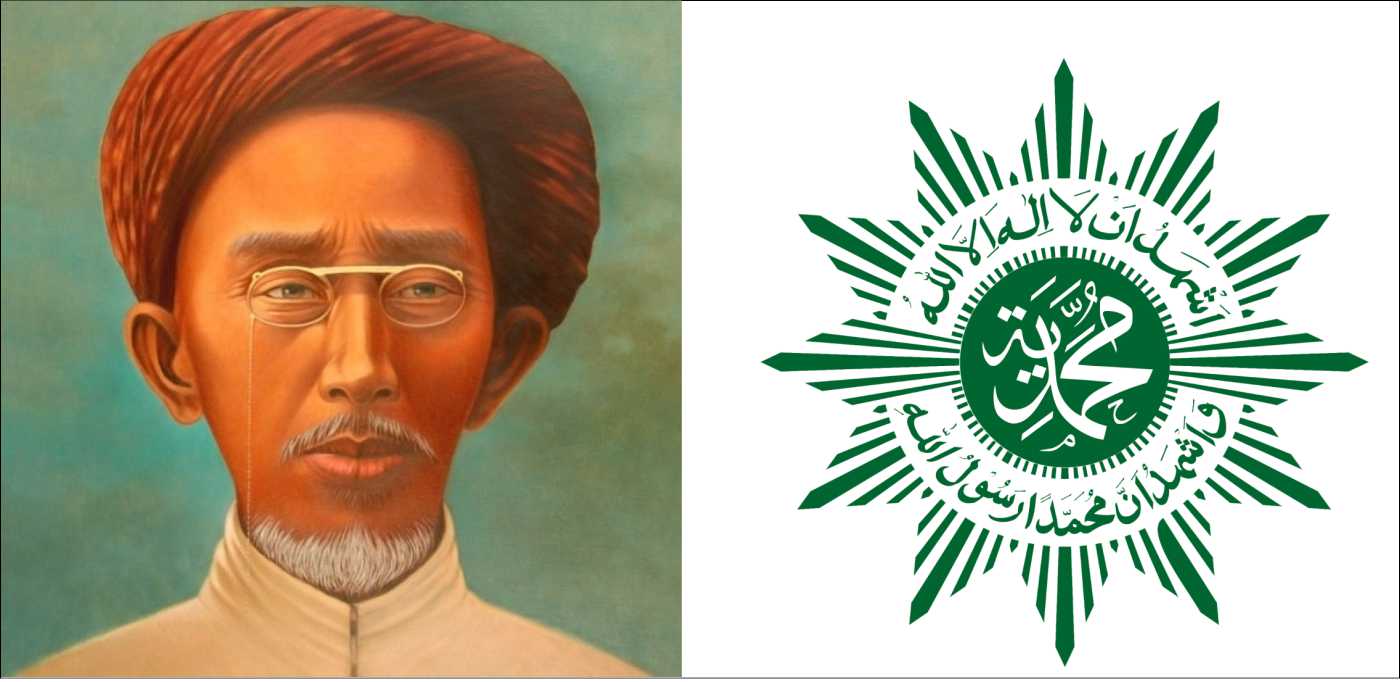
    Biography of KH. Ahmad Dahlan – Founder of Muhammadiyah

    KH Ahmad Dahlan is an Indonesian National Hero who founded the Muhammadiyah organization who was born in Yogyakarta, August 1, 1868. KH Ahmad Dahlan is the 4th child of 7 children from the family of KH Abu Bakar. KH Ahmad Dahlan died on February 23, 1923 in Yogyakarta at the age of 54 years.

    Brief Profile of KH Ahmad Dahlan

    Name : KH Ahmad Dahlan
    Born : Yogyakarta, August 1, 1868
    Died : Yogyakarta, February 23, 1923

    Spouse :
    Hj. Siti Walidah
    Nyai Abdullah
    Nyai Rum
    Nyai Aisyah
    Nyai Yasin

    Son :
    Djohanah
    Siradj Dahlan
    Siti Busyro
    Irfan Dahlan
    Siti Aisyah
    Siti Zaharah
    Dandanah

    Background and Education of KH Ahmad Dahlan

    Little KH Ahmad Dahlan’s name is Muhammad Darwisy, he is the 4th child of 7 siblings. Ahmad Dahlan is the 12th descendant of Maulana Malik Ibrahim or Sunan Gresik. The following is the genealogy of Maulana Malik Ibrahim, Maulana Ishaq, Maulana ‘Ainul Yaqin, Maulana Muhammad Fadlullah (Sunan Prapen), Maulana Sulaiman Ki Ageng Gribig (Djatinom), Demang Djurung Djuru Sapisan, Demang Djurung Djuru Kapindo, Kyai Ilyas, Kyai Murtadla, KH . Muhammad Sulaiman, KH. Abu Bakr, and Muhammad Darwish (Ahmad Dahlan).

    When Ahmad Dahlan was 15 years old, he went on a pilgrimage and for 5 years he lived in Mecca. At this time, KH Ahmad Dahlan began to interact with Islamic reformers, such as Al-Afghani, Muhammad Abduh, Ibn Taimiyah, and Rasyid Rida.

    In 1888, Ahmad Dahlan returned to his hometown and he whose real name was Muhammad Darwisy changed his name to Ahmad Dahlan. He returned to Mecca in 1903 and he stayed for 2 years, at this time Oa had studied with Sheikh Ahmad Khatib who was also the teacher of KH Hasyim Asyari, the founder of NU.

    After returning from Mecca, Ahmad Dahlan married his cousin Siti Walidah (Nyi Ahmad Dahlan), the daughter of Kyai Penghulu Haji Fadhil. From this marriage, they were blessed with 6 children namely Djohanah, Siradj Dahlan, Siti Busyro, Irfan Dahlan, Siti Aisyah, and Siti Zaharah.

    Apart from Siti Walidah, Ahmad Dahlan has also been married to Nyai Abdullah, the widow of H. Abdullah, Nyai Rum who is the sister of Kyai Munawwir Krapyak, Nyai Aisyah who is the younger sister of Adjengan Penghulu Cianjur and from this marriage Ahmad Dahlan has a son Dandanah. And Ahmad Dahlan was also married to Nyai Yasin Pakualaman Yogyakarta.

    Also read : Biography Muhammad Sangidu

    Join the Budi Utomo Organization and Founded Muhammadiyah as well as other organizations

    In 1909, KH Ahmad Dahlan joined the Budi Utomo organization and there he taught religion and the lessons needed by members. The lessons given by KH Ahmad Dahlan were found to be very useful for Budi Utomo’s members, so they suggested that Ahmad Dahlan open a school that was neatly organized and supported by a permanent organization.

    On November 18, 1912 (8 Djulhijah 1330), KH Ahmad Dahlan founded an organization called Muhammadiyah which was engaged in society and education. By establishing this organization, he hopes to advance education and build an Islamic society. Ahmad Dahlan teaches the Qur’an with translation and interpretation so that people understand the meaning in the Qur’an and are not only good at reading and singing it.

    In the field of education, Dahlan changed the pesantren education system at that time. He founded religious schools which also taught general subjects as well as the Dutch language. There are even Muhammadiyah schools such as HIS met de Qur’an. He included religious lessons in public schools as well. Ahmad Dahlan continues to develop and build schools. In addition to school during his life, he also built a mosque, langgar, hospital, polyclinic, and also an orphanage.

    In the field of organization, in 1918 he founded the Aisyiyah organization for women. for the youth, Ahmad Dahlan formed Padvinder or Pandu (now Scouts) called Hizbul Wathan. At the organization the youth learned to march with the drums, wearing shorts, hats, ties, for the uniforms they wear are similar to the scout uniforms today.

    At that time, because all the reforms taught by KH Ahmad Dahlan deviated somewhat from tradition, Ahmad Dahlan was often terrorized like a house being pelted with stones and animal dung even during his dawah in Banyuwangi, Ahmad Dahlan was accused of being a false kyai and he was threatened with death. But with great patience, people slowly began to accept the changes taught by Ahmad Dahlan.

    Everything that was done by KHAhmad Dahlan aims to prove that Islam is a religion of progress that can elevate the status of the people to a higher level and that has had a positive impact on Indonesia, which is predominantly Muslim. Many youths and intellectuals are interested in the methods taught by KH Ahmad Dahlan so that many of them join Muhammadiyah organizations.

    Muhammadiyah, which is a charitable organization and carries out the idea of ​​reforming KH Ahmad Dahlan, has attracted the attention of world Islamic observers. Even writers and scholars from the east focused on Muhammadiyah.

    KH Ahmad Dahlan got a lot of knowledge from many kyai in various fields of science such as KH Muhsin in the field of grammar (Nahwu-Sharaf), KH Muhammad Salih in the field of jurisprudence, Kyai Mahfud and Sheikh KH Ayyat in the field of Hadith Science, KH Raden Dahlan in in the field of astronomy or astronomy, Sheikh Hasan in the field of medicine and animal poisons, and Sheikh Amin and Sayid Bakri Satock in the field of Qur’anic science.

    KH Ahmad Dahlan’s death

    On February 23, 1923, at the age of 54, KH Ahmad Dahlan died in Yogyakarta. Then he was buried in the village of Karangkajen, Brontokusuman, Mergangsan, Yogyakarta. On December 27, 1961, based on the Decree of the President of the Republic of Indonesia No. 657 of 1961 for his services, the state gave him the honorary title as a Hero of Indonesian National Independence.

    Thus the  biography KH. Ahmad Dahlan that we can convey in this article posting, hopefully what we convey can be useful for readers in searching for the complete literature of KH. Ahmad Dahlan.

    Also read : sewa laptop purwokerto

  • Trunajaya Rebellion

    Trunajaya Rebellion

    The Trunajaya Rebellion (or Trunajaya War , also spelled Trunojoyo Rebellion ) was a rebellion carried out by the Madurese nobleman , Raden Trunajaya , and his ally, troops from Makassar , against the Mataram Sultanate assisted by the Dutch East India Company (VOC) in Java in the 1670s. , and ended with the victory of Mataram and the VOC.

    This war began with the victory of the rebels: Trunajaya’s troops defeated the royal troops at Gegodog (1676), then succeeded in occupying almost the entire north coast of Java and capturing the Mataram palace at the Plered Palace (1677). King Amangkurat I died while running away from the palace. He was succeeded by his son, Amangkurat IIwho asked the VOC for help and promised payment in money and territory. The involvement of the VOC managed to turn the situation around. VOC and Mataram troops recaptured the occupied Mataram area, and captured Trunajaya’s capital at Kediri (1678). The rebellion continued until Trunajaya was captured by the VOC in late 1679, as well as the defeat, death or surrender of other rebel leaders (1679–1680). Trunajaya became a prisoner of the VOC, but was killed by Amangkurat II during the king’s visit in 1680.

    Besides Trunajaya and his allies, Amangkurat II also faced other attempts to usurp the throne of Mataram after his father’s death. His most serious rival was his younger brother, Prince Puger (later Pakubuwana I ) who captured the Plered Palace after being abandoned by Trunajaya’s troops in 1677 and only surrendered in 1681.

    Date 1674 – 1680 (main war);
    Rebellion of Prince Puger until 1681
    Location Java Island (now part of Indonesia )
    Results Victory of Mataram and VOC
    Parties involved
    • Flag of the Sultanate of Mataram.svg Mataram Sultanate
    • Assisted by:
    • Flag of the Dutch East India Company.svg VOC
    • Rebel troops
    • Troops from Makassar

    Counter claimant to the Mataram throne (after 1677)

    Characters and leaders
    • Flag of the Sultanate of Mataram.svg Amangkurat I  
    • Flag of the Sultanate of Mataram.svg Amangkurat II
    • Flag of the Dutch East India Company.svg Cornelis Speelman
    • Flag of the Dutch East India Company.svg Antonio Hurdt
    • Flag of the Dutch East India Company.svg Jacob Couper
    • Flag of the Dutch East India Company.svg Whitewater Palakka
    • Trunajaya and allies :
    • Raden Trunajaya Surrender Sentenced to death
    • Karaeng Galesong
    • Raden Kajoran Sentenced to death
    • Panembahan Giri Sentenced to death

    • Join the war :
    • Prince of Puger (1677–1681) Surrender
    Strength
    • Flag of the Sultanate of Mataram.svg Mataram:
    • “Much greater” than 9,000 (1676) 
    • 13,000 (end of 1678) 
    • Flag of the Dutch East India Company.svg VOCs:
    • 1,500 (1676) 
    • 1750 (1678) 
    • Flag of the Dutch East India Company.svg Bugis troops (VOC allies):
    • 1,500 (1678) 
    • 6,000 (1679) 
    • Trunajaya:
    • 9,000 (1676) 
    • 14,500 (1678, Claims of Prince Sampang – ally of Trunajaya ) 

    • Prince Puger:
    • 10,000 (Aug

    Background

    Amangkurat I ascended the throne of Mataram in 1646, succeeding Sultan Agung , who had expanded Mataram’s territory to include most of Central and East Java, as well as several overseas vassals in southern Sumatra and Kalimantan. [8] The early years of Amangkurat’s reign were marked by the executions and massacres of his political enemies. In response to the failed coup attempt of his brother Prince Alit, he ordered the massacre of clerics he believed were involved in Alit’s rebellion. [9] Alit himself was killed in the failed coup. [9]In 1659 Amangkurat suspected Prince Pekik, his father-in-law and son of the defeated Duke of Surabaya who lived in the Mataram court after Surabaya’s defeat , of leading a conspiracy threatening his life. [10] He ordered to kill Pekik and his relatives. [10] The massacre of East Java’s most important nobility created a rift between Amangkurat and his East Javanese subjects and led to conflict with his son, the crown prince (later Amangkurat II ), who was also Pekik’s grandson. [10] Over the next few years, Amangkurat carried out a number of other murders of members of the nobility who had lost his trust. [10]

    Map of Java, depicting Mataram’s expansion just before Amangkurat I ascended the throne in 1646.

    Raden Trunajaya (also spelled Trunojoyo) is a descendant of the Madurese rulers, who was forced to live in the Mataram court after the defeat and annexation by Mataram in 1624. [11] After his father was executed by Amangkurat I in 1656, he left the palace, moved to Kajoran, and married the princess from Raden Kajoran , the head of the ruling family there. [12] [11] The Kajoran family is an ancient clerical family and is married to the royal family. [12] Raden Kajoran was concerned about the brutality of Amangkurat I’s reign, including the execution of nobles in the palace. [11]In 1670, Kajoran introduced his son-in-law Trunajaya to the crown prince, who had just been expelled by the king because of a scandal, and the two forged a friendship that included a mutual dislike of Amangkurat. [11] In 1671 Trunajaya returned to Madura, where he used the support of the crown prince to defeat the local governor and become ruler of Madura. [13]

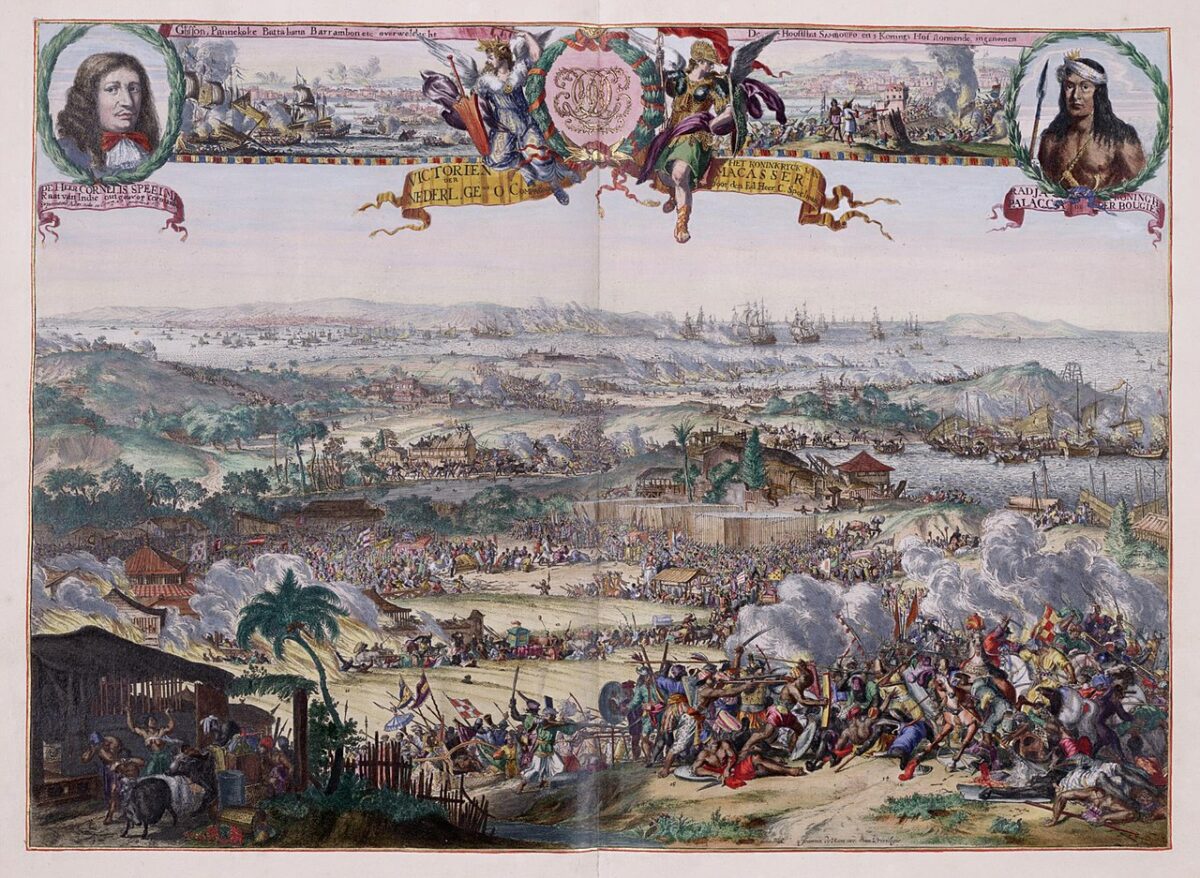
    The capture of Makassar by the VOC in 1669 led to the emigration of Makassarese fighters to Java, many of whom later joined the rebels.
    The capture of Makassar by the VOC in 1669 led to the emigration of Makassarese fighters to Java, many of whom later joined the rebels.

    Makassar was a major trading center east of Java. [13] After the VOC’s 1669 victory over the Sultanate of Gowa in the Makassar War , a group of Makassarese soldiers left Makassar to seek their fortune elsewhere. [13] Initially, they settled in the territory of the Sultanate of Banten , but in 1674 they were expelled, and turned to piracy, raiding coastal cities in Java and Nusa Tenggara . [13] The crown prince of Mataram then allowed them to settle in Demung , a village in Tapal Kuda, East Java . [13]In 1675 an additional group of Makassarese fighters and pirates arrived in Demung led by Karaeng Galesong . [13] These wandering Makassar warriors later joined the rebellion as Trunajaya’s allies. [12]

    Troops involved

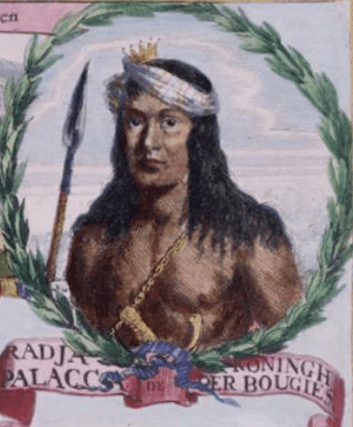
    Bugis troops under Pangeran Arung Palakka (pictured) were among those who allied with the VOC to quell the rebellion.
    Bugis troops under Pangeran Arung Palakka (pictured) were among those who allied with the VOC to quell the rebellion.

    Lacking a permanent army, most of Mataram’s troops were drawn from the army built by the king’s vassals, who also provided weapons and supplies. [14] [15] The majority of these soldiers were farmers who were required by the local authorities ( Javanese : sikep dalem ). [15] In addition, the army included a small number of professional soldiers drawn from the palace guards. [14] These soldiers used cannons , small firearms including sundut rifles ( Javanese : rifles , from Dutch snaphaens ) and carbines ,cavalry , and forts . [16] Historian MC Ricklefs says the transfer of European military technology to the Javanese was “quite urgent”, with gunpowder and weapons made in Java by at least 1620. [15] Europeans were hired to train Javanese army troops in weapons handling, military leadership skills , and construction engineering. [15] Despite this training, however, conscripted peasants of the Javanese army often lacked discipline and fled during battle. [17] [18] Mataram’s army was “much larger” than the 9,000 rebels at Gegodog in September 1676, [1]fell to just a “little company” after the fall of the capital in June 1677, [19] and increased to over 13,000 as it moved towards Trunajaya’s capital of Kediri in late 1678. [2]

    The VOC had its own professional army. [15] Each VOC soldier had a sword, small arms, bullets, carrying pouches and belts, smoke bombs, and grenades. [15] The majority of the VOC’s permanent soldiers were Indonesian, with a small number of European soldiers and marines, all under the command of European officers. [20] While in a technological sense, VOC troops were not superior to their indigenous counterparts, [16] they were generally better trained, disciplined, and equipped than indigenous Indonesian soldiers. [15] The VOC troops also differed in logistics: their troops moved step by step followed by long caravans of wagons carrying supplies. [16]This gave them an advantage over the Javanese troops, who often survived by gathering or stealing food while traveling through the countryside and often faced shortages of supplies. [16] The VOC army numbered 1,500 in 1676, [21] but was later added by the Bugis allies under the leadership of Arung Palakka . The first convoy of 1,500 Bugis arrived in Java in late 1678, [5] and by 1679 there were 6,000 Bugis soldiers in Java. [6]

    Similar to other wars, Trunajaya’s army and its allies also used cannons, cavalry, and forts. [16] When the VOC captured Surabaya from Trunajaya in May 1677, Trunajaya fled with his twenty bronze cannons, leaving behind 69 iron and 34 bronze guns. [22] Trunajaya’s troops consisted of Javanese, Madurese and Makassarese. [1] When the rebels invaded Java in 1676, they numbered 9,000 [1] and consisted of followers of Trunajaya and fighters of Makassar. Later, the rebellion was followed by other Javanese and Madurese nobles. In particular, the ruler of Giri, one of the most prominent Islamic spiritual rulers in Java, joined in early 1676.[23] Trunajaya’s father-in-law, Raden Kajoran , head of the influential Kajoran family, joined after Trunajaya’s victory at Gegodog in September 1676, [24] and Trunajaya’s uncle, Pangeran Sampang (later Cakraningrat II ) joined after the fall of the capital Mataram in June 1677 . [25]

    Military campaign

    Beginnings and early rebel victories

    The rebellion began with a series of attacks by Makassar pirates based in Demung against trading towns on the north coast of Java. [26] The first attack took place in 1674 in Gresik but was repulsed. [26] Trunajaya entered into a pact and marriage alliance with Karaeng Galesong, the leader of the Makassarese, in 1675 and planned further attacks. In the same year, Makassar-Madurese pirates captured and burned the main cities in northeastern Java, from Pajarakan to Surabaya and Gresik. [26] In view of the failure of the loyalist forces against the rebels, King Amangkurat I appointed a military governor inJepara , the provincial capital on the north coast, and fortified the city. [26] The Mataram forces moving at Demung were defeated, and joint action by Mataram and VOC ships on the coast controlled by pirates was not always successful. [26] Karaeng Galesong moved to Madura, territory of his ally, Trunajaya. In 1676 Trunajaya bestowed upon himself the title Panembahan (Ruler) of Maduretna and received the support of sunan (spiritual ruler) Giri, near Gresik. The attack by the VOC fleet then destroyed the pirate base in Demung, but they did not take action against Trunajaya in Madura. [27]

    Gegodog Battle

    In September 1676, a 9,000-strong rebel army [1] led by Karaeng Galesong crossed from Madura to Java and then captured Surabaya, the main city of East Java. [28] Mataram sent a large army, commanded by the crown prince (later Amangkurat II to meet the rebels. [28] A battle took place at Gegodog, east of Tuban , in 1676, resulting in the total defeat of the much larger Mataram army. [28] ] [29] Loyalist troops were deployed, the king’s uncle, Pangeran Purbaya was killed, and the crown prince fled to Mataram. [28]The crown prince was blamed for this defeat for his long hesitation before attacking the rebels. [28] In addition, there were rumors that he colluded with enemies, including his former vassal Trunajaya. [28] Within months of the victory at Gegodog, the rebels quickly captured trading cities in northern Java, from Surabaya to the west in Cirebon , including the cities of Kudus and Demak . [28] The cities fell easily, partly because their forts had been destroyed due to their conquest by the Sultan Agung of Mataram some 50 years earlier. [28]Only Jepara managed to hold off the attack, as the combined efforts of the new military governor and the new VOC troops strengthened the city just in time. [28] The rebellion spread to the interior when Raden Kajoran, Trunajaya’s influential father-in-law based east of the capital Mataram, joined the rebellion. [24] Kajoran and Trunajaya’s troops marched towards the capital, but were repulsed by loyalist forces. [24]

    VOC intervention and fall of the capital Mataram

    Battle of Surabaya

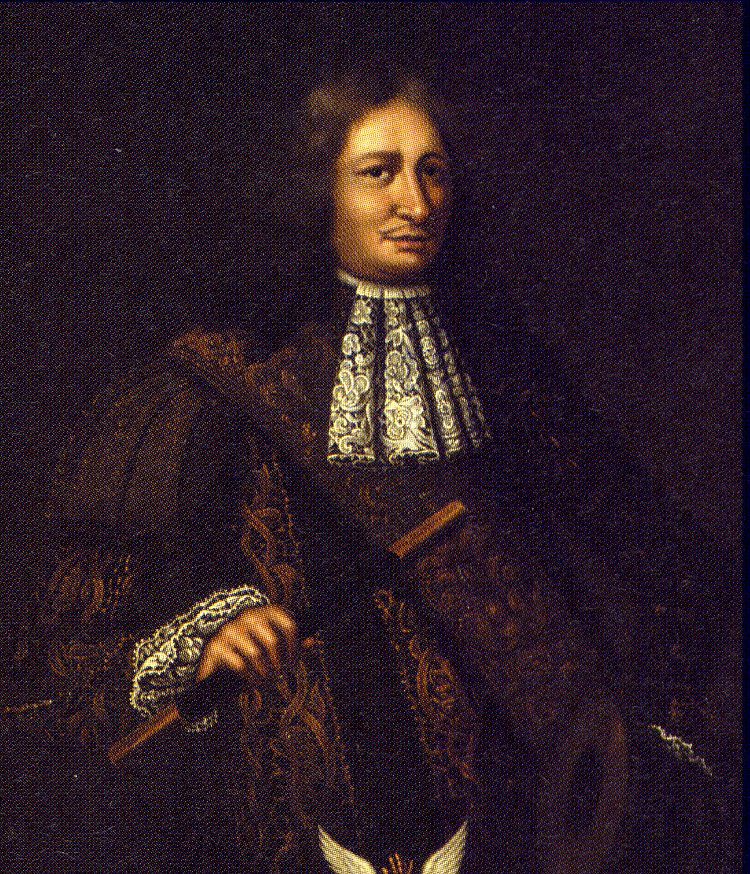
    Cornelis Speelman, who led the VOC forces in the war of 1677, and later Governor-General of the VOC
    Cornelis Speelman, who led the VOC forces in the war of 1677, and later Governor-General of the VOC

    In response to requests for intervention by Mataram, the VOC sent a large fleet containing Indonesian and European troops, commanded by Admiral Cornelis Speelman . [24] In April 1677 the fleet sailed to Surabaya, where Trunajaya was based. [24] After negotiations failed, Speelman’s troops invaded Surabaya and captured it after heavy fighting. [30] The troops continued to clear the rebels from the area around Surabaya. [30] VOC troops also captured Madura, Trunajaya’s home island, and destroyed his residence there. [31] Trunajaya fled to Surabaya and founded his capital at Kediri. [30]

    The fall of Plered

    Although the rebels were defeated in Surabaya, the rebel forces campaigning in the interior of Central and East Java were more successful. The rebel military campaign culminated in the fall of the capital Plered in June 1677. [31] The king was ill, and distrust among the royal princes prevented a well-planned resistance. [31] The king fled west with the crown prince and his retinue, allowing the rebels to enter and plunder the capital with little resistance. [31] The rebels then retreated to Kediri, taking the royal treasures with them. [32]

    The throne of Amangkurat II and alliance with the VOC

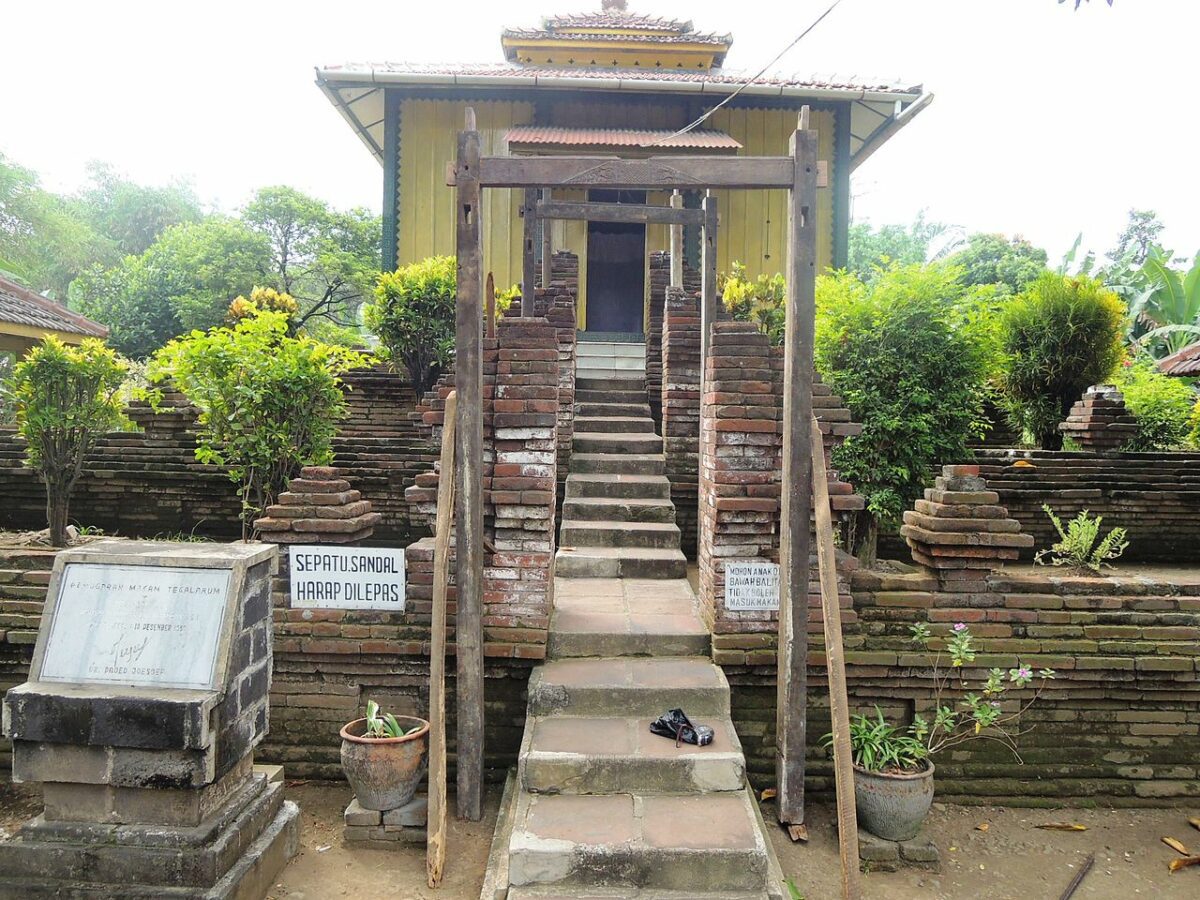
    Tomb of Amangkurat I at the Tegal Arum Complex, Tegal Regency , Central Java .
    Tomb of Amangkurat I at the Tegal Arum Complex, Tegal Regency , Central Java .

    King Amangkurat I died during his retreat in Tegal in July 1677. [31] [21] The crown prince succeeded his father and took the title Amangkurat II, and was accepted by the Javanese nobility in Tegal (his grandmother’s hometown) as well as by the VOC. [33] [21] However, he failed to establish his rule in the nearby city, Cirebon, whose rulers decided to declare independence from Mataram with the support of the Sultanate of Banten . [33] Subsequently, his younger brother Pangeran Puger (later Pakubuwana I) captured the now-destroyed capital, refused to join as Amangkurat II loyalists, and declared himself king with the title Ingalanga Mataram.[33]

    Having no army and wealth and unable to establish his power, Amangkurat decided to ally with the VOC. [34] At this time, Admiral Speelman was in Jepara, sailing there from Surabaya after hearing of the fall of the capital. [33] His troops had recaptured important coastal cities in Central Java, including Semarang , Demak, Kudus, and Pati . [35] Amangkurat moved to Jepara on a VOC ship in September 1677. The king had to agree to the extensive concessions demanded by the VOC in exchange for restoring his monarchy. [34] He promised the VOC revenue from all port cities on the north coast. [34] HighlandsPriangan and Semarang will be handed over to the VOC. [32] The king also agreed to recognize the jurisdiction of the VOC over all non-Javanese living in his territory. [34] Dutch historian HJ de Graaf comments that by doing this, the VOC, as a corporation, engaged in “dangerous speculation”, which they hoped would pay off in the future when their partner would regain control of Mataram. [34]

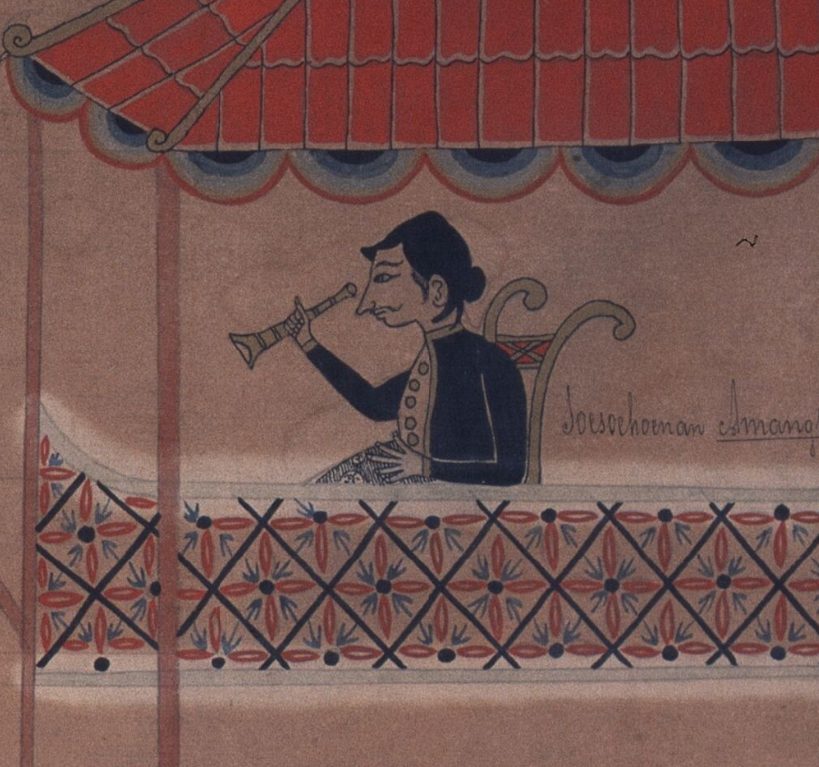
    Amangkurat II , reigned since 1677, in a Javanese painting.
    Amangkurat II , reigned since 1677, in a Javanese painting.

    The VOC–Mataram troops made sluggish progress against the rebels. [32] [34] In early 1678 their control was limited to a few towns on the north-central coast. In 1678, Speelman became Director General of the VOC, replacing Rijcklof van Goens , who became Governor-General (Speelman later became Governor-General in 1681). [32] Command in Jepara was handed over to Anthonio Hurdt , who arrived in June 1678. [32]

    The victory of loyalists and the death of Trunajaya

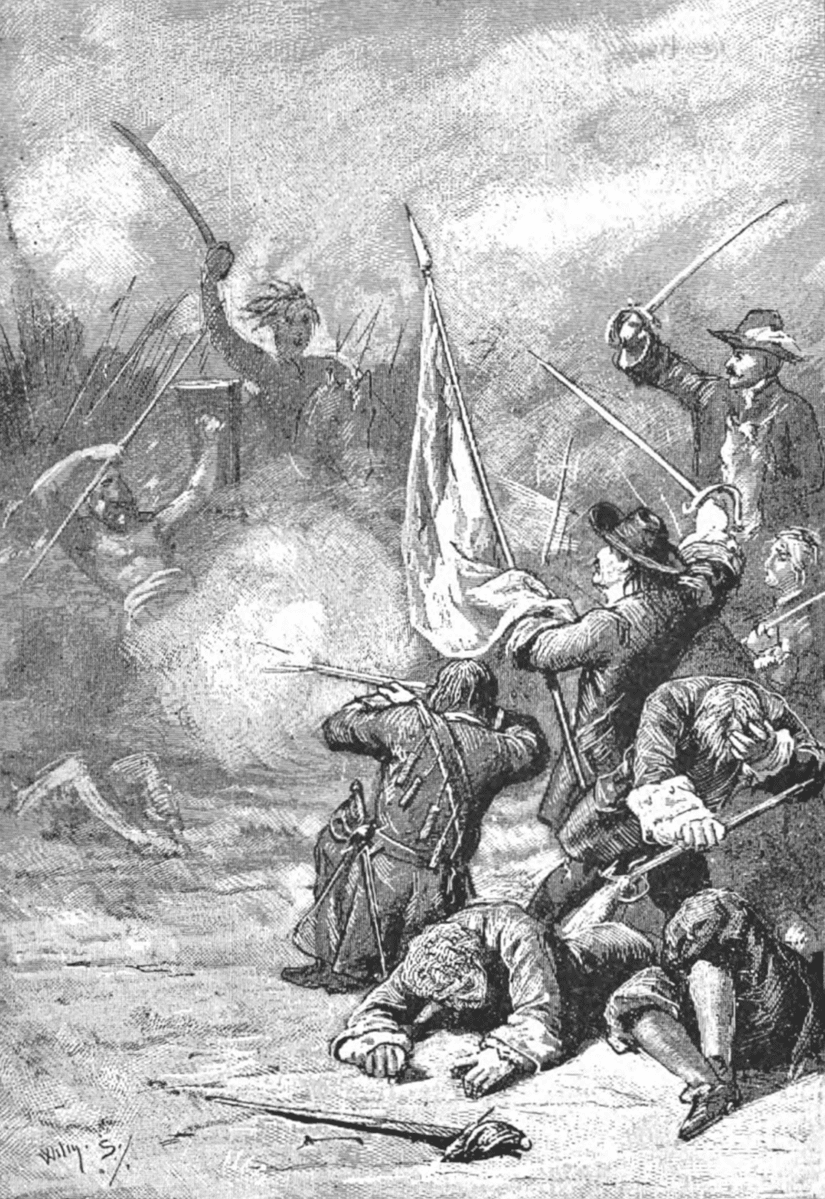
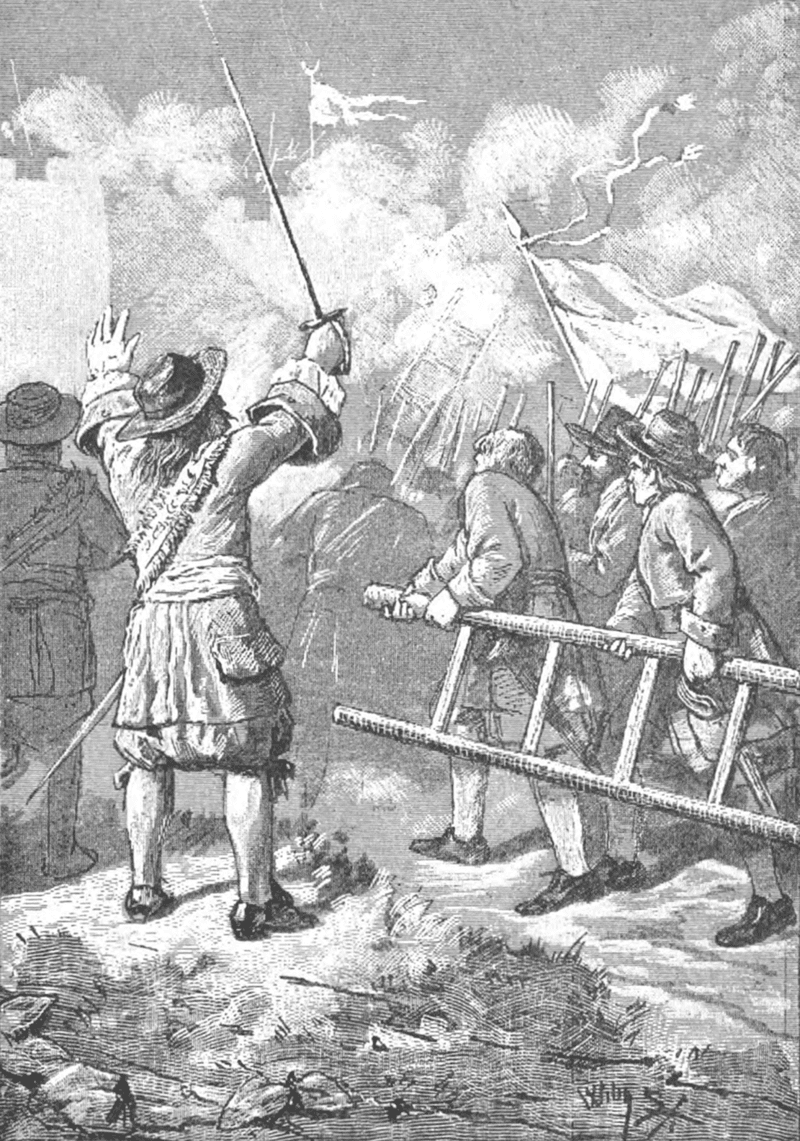
    VOC troops stormed the capital Trunajaya in Kediri in 1678. Described in a Dutch children's story book in 1890.
    VOC troops stormed the capital Trunajaya in Kediri in 1678. Described in a Dutch children’s story book in 1890.

    VOC and Mataram troops marched inland against Kediri in September 1678. At the king’s suggestion, the troops were split into three ranks, with no direct route, with the aim of covering more locations and impressing those who hesitated to take sides. [36] The king’s idea worked, and as the military campaign continued, local groups joined the army, desperate for booty. [20] Kediri was captured on 25  November by an assault force led by Captain François Tack . [20] [32] The victorious army continued on to Surabaya, the largest city in East Java, where Amangkurat founded his palace. [37]Elsewhere, the rebels were also defeated. In September 1679, a combined VOC, Javanese and Bugis forces under Sindu Reja and Jan Albert Sloot defeated Raden Kajoran in a battle at Mlambang, near Pajang. [7] [38] Kajoran surrenders but is executed on Sloot’s orders. [38] In November, the VOC and allied Bugis forces under Arung Palakka destroyed the Makassar rebel stronghold at Keper , East Java. [7] In April 1680, after what the VOC viewed as a fierce battle in the war, the rebellious ruler of Giri was defeated and most of his family executed. [7]As the VOC and Amangkurat won more victories, more and more Javanese people declared their loyalty to the king. [7]

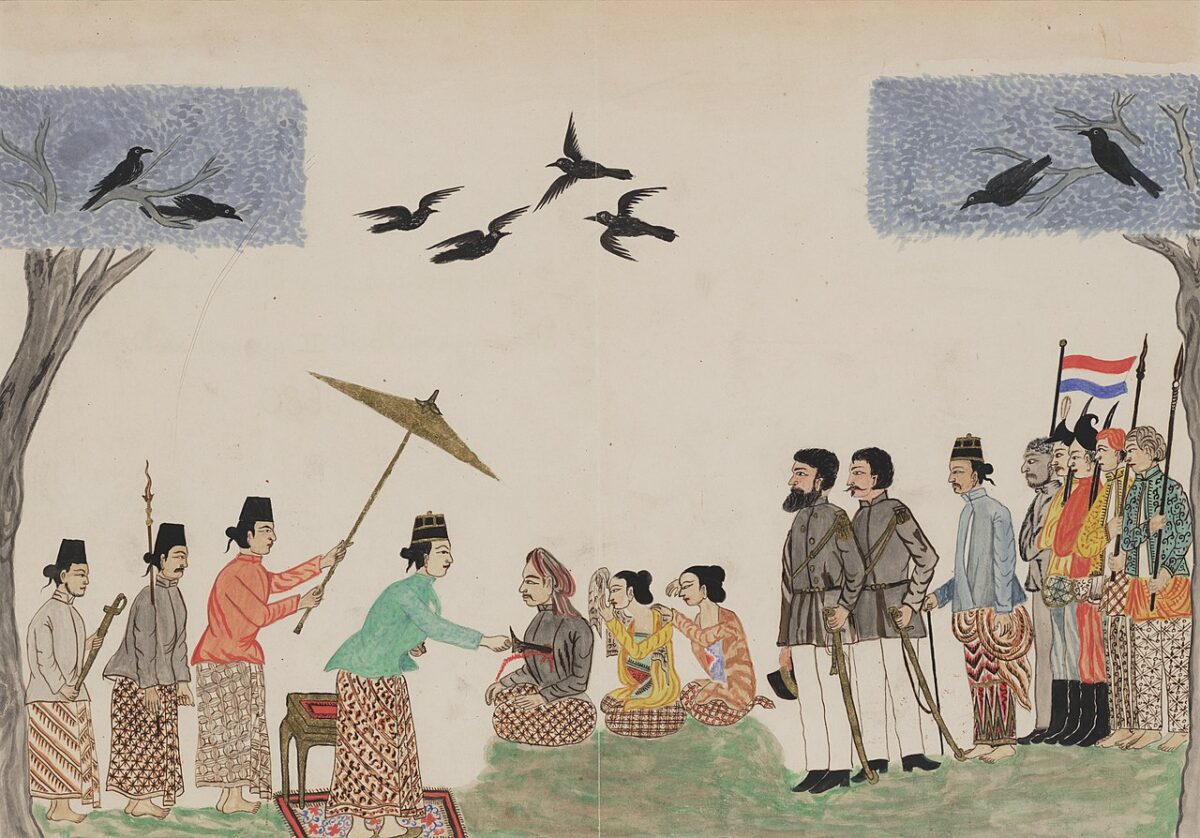
    After his stronghold fell in Kediri, Trunajaya managed to escape to the mountains of east Java. [39] VOC troops and the king pursued Trunajaya, who, isolated and short of food, surrendered to the VOC in late 1679. [40] [7] Initially, he was treated with respect as a prisoner of the VOC commander. However, during a ceremonial visit to a nobleman’s residence in Payak, East Java, on 2 January 1680, [40] he was stabbed by Amangkurat himself, and the king’s courtiers finished him off. [40] [7] The king defended the killing of a VOC prisoner by saying that Trunajaya had tried to kill him. [41] The VOC was not convinced by this explanation, but chose not to punish the king.[42] A romantic account of Trunajaya’s death appears in the18th century Central Javanese chronicle . [39]

    End of the rebellion of Prince Puger

    In addition to Trunajaya’s troops, Amangkurat II continued to face opposition from his brother Pangeran Puger, who had captured the old capital at Plered and had seized the throne for himself in 1677. [33] Prior to Trunajaya’s defeat, Amangkurat’s forces had taken no action against him. [34] After Trunajaya was defeated, Amangkurat still could not convince his brother to surrender. [7] In September 1680, Amangkurat built a new capital city at Kartasura . [7] In November, Amangkurat and VOC troops expelled Puger from Plered. [7] However, Puger quickly rebuilt his army, captured Plered again in August 1681, and nearly captured Kartasura. [7]In November 1681, VOC and Mataram troops again defeated Puger, and this time he surrendered and was pardoned by his brother. [7] [43]

    end

    Amangkurat II stabbed Trunajaya in the presence of his two wives and VOC officers.
    Amangkurat II stabbed Trunajaya in the presence of his two wives and VOC officers.

    Amangkurat II secured his reign with the defeat of the rebels. Due to the rebels’ capture and subsequent destruction of the capital at Plered, he built a new capital, Kartasura, in the Pajang district, and moved his court there. [43] A VOC fort was built in the capital, next to the royal residence, to defend it against invasion. [43] As for the VOC, its involvement allowed the cornered and nearly defeated Amangkurat II to remain on his throne. [44] This set a precedent for the VOC supporting Javanese kings and claimants in exchange for concessions. [44]By 1680, however, this policy required high levels of spending to maintain a military presence in Central and East Java, and this led to a decline in VOC finances. [44] The payments promised by Amangkurat were not kept, and by 1682 the king’s debt to the VOC exceeded 1.5 million rials , about five times the amount of the royal estate. [45] The handover of Semarang was delayed due to disputes, [45] and other provisions of the contract were largely ignored by local Javanese officials. [46] Subsequently, an anti-VOC faction developed in the Mataram court, and a member of this faction, Nerangkusuma, became patih (main minister) from 1682 to 1686. [47][46] The poor relationship between Mataram and the VOC continued with the protection of Surapati , an enemy of the VOC, in 1684, [48] and the death of the VOC captain, François Tack at the Mataram court in 1686. [48]

    The king’s younger brother, Pangeran Puger, who tried to usurp the throne during the Trunajaya rebellion, was pardoned by the king. [43] However, after the king’s death in 1703 and his son Amangkurat III succeeded , Puger took the throne again. [49] Puger’s claim was supported by the VOC, and the VOC-Puger alliance won the subsequent First Javanese War of Succession (1704–1708). [49] Puger ascended the throne with the title Pakubuwana I and Amangkurat III was exiled to Sri Lanka . [49]

    Reference

    footnote

    1. ^ Jump to:f Andaya 1981, p. 214–215.
    2. ^ Jump to:b Ricklefs 1993, p. 50.
    3. ^ Ricklefs 1993 , p. 35.
    4. ^ Jump to:b Ricklefs 1993, p. 51.
    5. ^ Jump to:b Andaya 1981, p. 218.
    6. ^ Jump to:b Andaya 1981, p. 221.
    7. ^ Jump to:l Ricklefs 2008, p. 94.
    8. ^ Pigeaud 1976 , p. 56–57.
    9. ^ Jump to:b Pigeaud 1976, p. 55.
    10. ^ Jump to:d Pigeaud 1976, p. 66.
    11. ^ Jump to:d Pigeaud 1976, p. 67.
    12. ^ Jump to:c Ricklefs 2008, p. 90.
    13. ^ Jump to:f Pigeaud 1976, p. 68.
    14. ^ Jump to:b Houben & Kolff 1988, p. 183.
    15. ^ Jump to:g Taylor 2012, p. 49.
    16. ^ Jump to:e Houben & Kolff 1988, p. 184.
    17. ^ Houben & Kolff 1988 , p. 183–184.
    18. ^ Taylor 2012 , p. 49–50.
    19. ^ Pigeaud 1976 , p. 74.
    20. ^ Jump to:c Pigeaud 1976, p. 79.
    21. ^ Jump to:c Ricklefs 2008, p. 92.
    22. ^ Ricklefs 1993 , p. 39.
    23. ^ Ricklefs 1993 , p. 40.
    24. ^ Jump to:e Pigeaud 1976, p. 71.
    25. ^ Ricklefs 1993 , p. 41.
    26. ^ Jump to:e Pigeaud 1976, p. 69.
    27. ^ Pigeaud 1976 , p. 69–70.
    28. ^ Jump to:i Pigeaud 1976, p. 70.
    29. ^ Andaya 1981 , p. 215.
    30. ^ Jump to:c Pigeaud 1976, p. 72.
    31. ^ Jump to:e Pigeaud 1976, p. 73.
    32. ^ Jump to:f Ricklefs 2008, p. 93.
    33. ^ Jump to:e Pigeaud 1976, p. 76.
    34. ^ Jump to:g Pigeaud 1976, p. 77.
    35. ^ Pigeaud 1976 , p. 76–77.
    36. ^ Pigeaud 1976 , p. 78-79.
    37. ^ Pigeaud 1976 , p. 80.
    38. ^ Jump to:b Pigeaud 1976, p. 89.
    39. ^ Jump to:b Pigeaud 1976, p. 82.
    40. ^ Jump to:c Pigeaud 1976, p. 83.
    41. ^ Pigeaud 1976 , p. 84.
    42. ^ Pigeaud 1976 , p. 83–84.
    43. ^ Jump to:d Pigeaud 1976, p. 94.
    44. ^ Jump to:c Ricklefs 2008, p. 95.
    45. ^ Jump to:b Ricklefs 2008, p. 99.
    46. ^ Jump to:b Pigeaud 1976, p. 95.
    47. ^ Ricklefs 2008 , p. 100.
    48. ^ Jump to:b Ricklefs 2008, p. 101.
    49. ^ Jump to:c Pigeaud 1976, p. 103.

    References

    • Andaya, Leonard Y. (1981). The Heritage of Whitewater Palakka: A History of South Sulawesi (Celebes) in the Seventeenth Century . The Hague: Martinus Nijhoff. doi : 10.1163/9789004287228 . ISBN  9789004287228 .
    • Houben, VJH; Kolff, DHA (1988). “Between Empire Building and State Formation. Official Elites in Java and Mughal India”. Itinerary . 12 (1): 165–194. doi : 10.1017/S016511530002341X .
    • Ricklefs, MC (1993). War, Culture and Economy in Java, 1677-1726: Asian and European Imperialism in the Early Kartasura Period . Sydney: Asian Studies Association of Australia. ISBN  978-1-86373-380-9 .
    • Ricklefs, MC (2008-09-11). A History of Modern Indonesia Since C.1200 . Palgrave Macmillan. ISBN  978-1-137-05201-8 .
    • Pigeaud, Theodore Gauthier Thomas (1976). Islamic States in Java 1500–1700: Eight Dutch Books and Articles by Dr HJ de Graaf . The Hague: Martinus Nijhoff. ISBN  90-247-1876-7 .
    • Taylor, Jean Gelman (2012). Global Indonesia . Routledge. ISBN  978-0-415-95306-1 .