Tag: laboratory tools

  • What is desiccator and its function ?

    What is desiccator and its function ?

    Now we will discuss a laboratory tool that is no less familiar, namely the laboratory desiccator.

    The topics that we will discuss in this article include the definition of a desiccator, the function of a desiccator, how to use a desiccator and the price of a laboratory desiccator. Here’s the review:

    what is desiccator

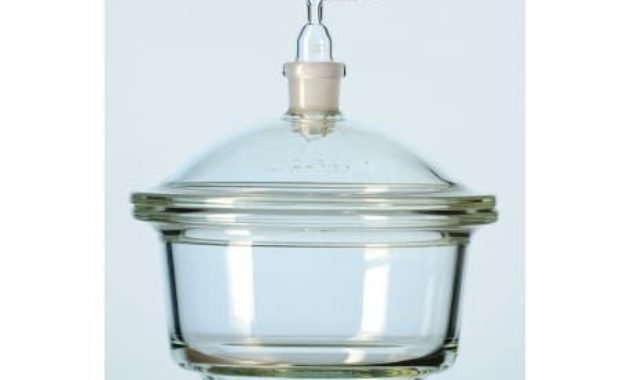
    A desiccator is a laboratory instrument made of glass or glass. The desiccator usually has a shape that is almost similar to the food jar in our homes.

    This tool is composed of a container, cover and silica gel. The lid of the desiccator usually has a hole that is very useful in drying the sample in it.

    Desicator Function

    A desiccator functions to remove water content in a test sample. It can also be used to remove crystals in the test sample.

    A desiccator is often used in the analysis of water content testing with the help of silica gel in it. This silica gel functions as a vaporizer that can bind the water present in the sample.

    Desicator Function

    Desicator Working Principle

    The principle or method of working of a desiccator is to bind the water content in the sample. Silica gel will bind H2O before the sample completely loses its water content.

    The test sample is put in a desiccator and has moisture because the water will be bound by the silica gel in it. The silica gel will then experience a color change which indicates that the water is bound.

    If the silica has changed color, it is best to dry the silica in an oven at 105 degrees Celsius or replace it with new silica if necessary.

    Kinds of Desiccators

    Just like other laboratory equipment, it turns out that there are 2 different types of desiccators, namely:

    1. Ordinary Desiccator : Ordinary desiccator is a desiccator that only consists of a container, cover and silica gel.
    2. Vacuum desiccator : Unlike the usual desiccator, the vacuum desiccator consists of an additional vacuum device. The vacuum in this desiccator is useful for sucking all the water content in the sample.

    Conclusion

    After reading the article above, there are several points that we can draw conclusions about this desiccator, namely:

    • A desiccator is a container made of glass and is impermeable to air in it.
    • A desiccator is a laboratory tool that functions to dry test samples with the help of silica gel.
    • Silica gel in the desiccator serves to bind the water content in the sample.

    That is the meaning and function of a laboratory desiccator. Hopefully this article is useful for those of you who are looking for a reference about the desiccator and its function as a laboratory tool.


  • Laboratory Water Bath Functions and Working Principles

    Laboratory Water Bath Functions and Working Principles

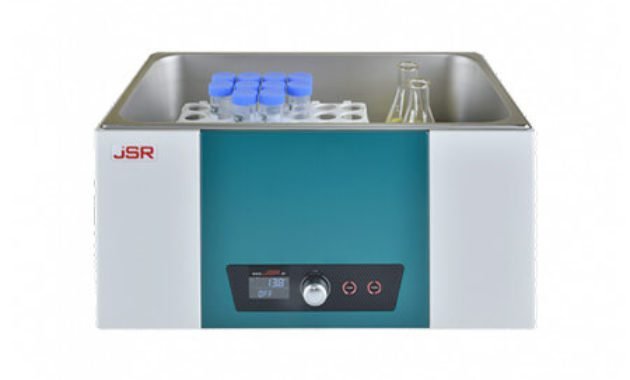
    Water Bath is one of the laboratory equipment that is included in the classification of laboratory instrumentation. The use of water baths in laboratories is quite massive, especially in pharmaceutical and microbiology laboratories.

    In this article, we will get to know the water bath in full, starting from its understanding, how it works and how to use it. Let’s see the following review!

    What is a Laboratory Water Bath?

    What is a Laboratory Water Bath

    A water bath is a laboratory equipment that resembles a container and is used in the process of heating a sample solution by immersing it in this tool. By using this tool, the solution temperature can be maintained constant at certain intervals.

    Usually water baths are equipped with digital and analog interfaces that make it easy for users to operate them. The water bath is also equipped with a shaker which is useful for homogenizing the test solution.

    Water Bath Function

    After reading the definition of a water bath above, we can draw conclusions that describe the function of this tool. The function of the water bath is to keep the test sample in a constant temperature state, between 30-100º celsius.

    We often find the use of water baths in chemistry, microbiology and pharmacy laboratories. The function of the water bath in analytical chemistry is usually found in the synthesis of compounds, isolation and purification of organic compounds. Meanwhile, the function of the water bath in microbiology is usually found in the incubation of culture cells and the melting of the substrate.

    The function of the water bath is to warm objects with the help of hot water or steam.

    This water bath is generally used to warm or heat some laboratory objects such as:

    • Reagents
    • Laboratory chemical reactions
    • Evaporating the solvent

    Water bath is a tool that cannot work alone, but requires other supporting tools. Usually tests using a water bath will involve a centrifuge , an incubator , a micropipette and a laboratory oven .

    How Water Baths Work 

    Laboratory Water Bath Functions and Working Principles

    Water bath is a device used to heat certain objects by using water medium.

    So that indirect heating using fire which may under certain conditions can be dangerous for the sample being tested.

    The working principle of a water bath is actually quite simple, namely by increasing the temperature of the water through a heating plate around the water reservoir.

    By using water, as a result, heating can be more stable, and evenly distributed over the entire surface of the object being heated.

    The way it works is also not too difficult, you just need to set the desired temperature, then the alarm will sound after the temperature is reached, and you can directly insert the object to be heated.

    The object to be heated or warmed must of course be in a container that can withstand hot water or hot steam such as:

    • Laboratory glass
    • ceramic
    • Porcelain
    • etc

    The working temperature that is generally used is 0-99°C or some reach the boiling point of water, which is 100°C.

    In certain types, some can even exceed the boiling point of water, reaching temperatures of 150°C to 200°C

    Type of Water baths

    Water baths have several types or variants that are used for more than just warming the sample.

    Some of the commonly known types are:

    • Shaking water bath
    • Circulating water bath
    • Non-circulating water bath

    water bath type

    Everything is different, depending on the intended use.

    1. Shaking water bath

    In certain reactions, in addition to requiring stable heating using water, the sample requires kinetic actions such as shaking or stirring.

    More than just warming, the presence of a shaker installed in the water container can help shake or homogenize the sample while it is heated.

    2. Circulating water bath

    This model is different from the shaker, if the shaker that moves is the sample, while the circulating that moves is the water.

    The water in the water bath is driven by a pump which eventually makes the water in it move or circulate.

    The advantages of this model compared to conventional ones are:

    • More even heating
    • The temperature in the water is more stable
    • Wider temperature range

    This type of water bath tends to be widely used in microbiology laboratories and clinics.

    3. Unstirred Water Bath

    This model is a fairly old one, namely by conventional heating standards.

    The weakness of this type of water bath is the uneven temperature distribution, which is different from the circulating type.

    However, for general use this model is sufficient for everyday use in the laboratory.

    Conclusion

    Water bath is a tool used to warm or heat samples through water media at a temperature of 0-99°C.

    Its function is to warm some objects such as:

    • Reagents
    • Chemical reaction
    • Evaporating the solvent
    • dsb

    Several types of water baths are available in the market, namely; shaking, circulating, and un-stirred water bath.

  • Definition and Functions of Universal Indicators

    Definition and Functions of Universal Indicators

    Definition and function of universal indicators – In measuring pH many methods are used by researchers in conducting research. One method that is often used is universal indicators. This indicator is often used in research because it is easier to use than other methods. In addition, the results obtained are also accurate and fast.
    However, for ordinary people, students and students who are new to pH measurement methods will find it difficult to understand what the meaning and function of universal indicators are. Moreover, how to use the universal indicator itself. So to anticipate this, here is a complete explanation of universal indicators.

    What is Universal Indicators?

    Universal indicator is a paper that has various colors that can be used to measure a pH value in a solution. Generally, the colors owned by universal indicator paper are 4 colors or more. Each paper that is inserted into the solution can change color according to the level of the pH value of the solution.

    This universal indicator method usually takes advantage of the color change on the paper that occurs due to a comfort in a liquid solution to measure how high the pH is in the solution.

    Colours of universal indicator
    Colours of universal indicator

    Universal Indicator Function

    After knowing the meaning, let’s move on to the function of this universal indicator. Each research method has its own function in examining an object. Likewise, the universal indicator research method has the function of measuring several levels of compounds in a liquid solution. This method is very easy to use in research so that many researchers and students use this method to measure a pH level in a compound.

    This universal indicator function is obtained from paper that has 5 colors. Each color that will be produced by universal indicator paper has various colors, namely:

    pH range Description Colour
    < 3 Strong acid Red
    3–6 Weak acid Orange or Yellow
    7 Neutral Green
    8–11 Weak alkali Blue
    > 11 Strong alkali Indigo or Violet

    The colours from yellow to red indicate an acidic solution, colours blue to violet indicate an alkaline solution and a green colour indicates that a solution is neutral.

    Universal indicator components
    Indicator Low pH colour Transition pH range High pH colour
    Thymol blue (first transition) Red 1.2 – 2.8 Yellow
    Methyl orange Red 3.2 – 4.4 Yellow
    Methyl red Red 4.8 – 6.0 Yellow
    Bromothymol blue Yellow 6.0 – 7.6 Blue
    Thymol blue (second transition) Yellow 8.0 – 9.6 Blue
    Phenolphthalein Colourless 8.3 – 10.0 Fuchsia

    Wide-range pH test papers with distinct colours for each pH from 1 to 14 are also available. Colour matching charts are supplied with the specific test strips purchased.

    How to Use Universal Indicator

    Universal indicators is very easy to use . There is no need to need many tools in using universal indicator methods in a study.

    Researchers only need to buy research indicator paper and prepare a liquid solution that will be used in research and follow these steps:

    1. Take Universal Indicator Paper

    The first step is that the universal indicator paper must be taken with care and try not to touch the dye contained in this universal indicator paper. Because if the dye contained in this paper is contaminated with other substances that have acidic or alkaline properties, this indicator paper can be damaged.

    How to Use Universal Indicator
    How to Use Universal Indicator

    2. Put In Liquid Solution

    The second step is the universal indicator paper is inserted into the beaker which already contains the liquid solution. Make sure all parts of the universal indicator paper have been immersed in the liquid solution. Wait a few minutes to make sure that all the substances in the liquid have adhered to the universal indicator paper and changed color.

    Then, remove the universal indicator paper and let it sit for 4-5 minutes until it dries completely. Make sure the paper is dry properly. If not, the paper will change color again so that the results of the study will change.

    3. Compare Using Scale

    The use of a scale in comparing the levels of substances contained in universal paper is something that cannot be missed. Because this scale will be used to measure the levels of substances contained in a liquid solution. In general, the scale used by researchers to measure color change is between pH 0-4.

    The method used in determining the concentration of the solute is by matching the color of the indicator paper that has been inserted into the liquid solution with a universal indicator scale. After determining the indicator scale that is considered the most suitable for the color of the universal indicator paper. Then the researcher will know the pH levels contained in the liquid solution that has been tested.

    In addition to studying the meaning and function of universal indicators A researcher, student or student who wants to conduct research using the universal indicator method must also understand the advantages and disadvantages of a method itself. These advantages and disadvantages can be used in considering a research method to be taken.

    Disadvantages and Advantages of Universal Indicators

    Disadvantages and Advantages of Universal Indicators

    It is the same with pH research methods or other acid and base measurements . Universal indicators also have their own advantages and disadvantages. There are many advantages possessed by universal indicators and there are also many disadvantages possessed by the pH research method using universal indicators. The following are the advantages and disadvantages of universal indicators:

    Advantages of Universal Indicator

    1. Easy to Use

    The first advantage of the pH measurement method using universal indicators is that it is easy to use. The use of this measurement method can be done anywhere and by anyone. You don’t have to use complicated formulas and so many tools if you want to use universal indicator methods in research.

    Usually, this research method has been applied by teachers who teach in secondary schools. So that students can already feel how to do a research that is usually done by expert researchers. This easy use is the main reason for teachers to choose this method in practical activities.

    2. Low Price

    The price for getting universal indicator paper is relatively cheap compared to other research tools. Thus, many researchers and teachers take advantage of this opportunity to conduct research. In addition, this universal indicator paper is easy to get anywhere, both in big cities and small areas.

    The selling price of universal indicator paper which is relatively cheap makes students, students and researchers conduct research on a solution level using universal indicator paper. Research using this method clearly does not require expensive costs.

    Lack of universal indicators

    1. Not Very Accurate

    The first drawback of universal indicator paper is that the results of this method in measuring pH are not 100% accurate. This happens because, this research can be done by everyone who does not necessarily understand correctly the results of a study.

    If you want the results of the universal indicator method to be more accurate, it is advisable to take measurements with people who are experts in research, namely a laboratory assistant. Laborers will be more careful in inferring the results from changes in the color of the universal indicator paper and compare the indicator scales better.

    Scale limitations

    the scale used to match the color of the indicator paper has only the numbers 0-14. So that the level of pH solution that has a level that requires a comma will not be detected. Of course this is very different if you use a more modern digital pH meter . Each concentration of solution does not have a definite number of scales so that further research is needed.

    Research using other tools to accompany the universal indicator method is very necessary. It aims to see more accurately the results of the solution under study whether it is one hundred percent accurate or not when using the universal indicator research method.

    Well, this article on the meaning and function of universal indicators is written very easily. Hopefully the readers can understand the meaning and function of universal indicators better. So that it can add insight to the readers.

  • Definition and Function of Centrifuge

    Definition and Function of Centrifuge

    When you are in the laboratory, you must have tried the activity of separating a solution into its constituent substances. Separation of the solution of these substances can be done using a tool called a centrifuge. Many still need to understand the meaning and function of a centrifuge and how it works.
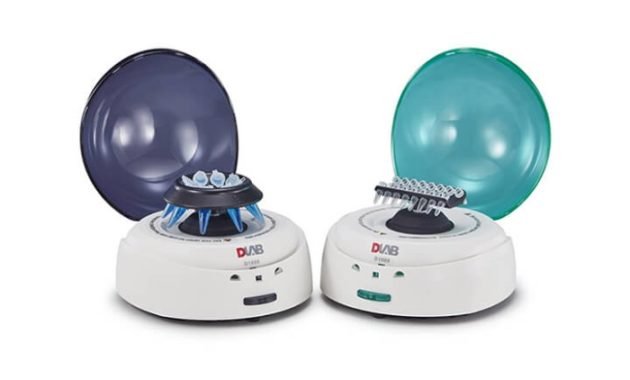
    The centrifuge works as a means of separating several substances in one solution. The separation process is by the deposition method. This tool is designed to facilitate the deposition process in the separation of substances with a rotating machine mechanism. The rotation is based on the centrifugal force that affects the gravitational force.

    Definition and Function of Centrifuge

    The centrifuge can be used for biochemical research in the laboratory. For example, to separate human blood cells, both white and red blood cells. Or also beneficial for the separation of solutions of other substances. Please feel free to listen to the discussion below to learn about the meaning and function of the centrifuge.

    A. What is a Centrifuge?

    The meaning and function of a centrifuge which has the understanding that a centrifuge is a tool or machine made to separate a particular substance that is in solution. This tool is often found in research and health laboratories. The centrifuge was first discovered by a foreign scientist named Benjamin Robins around the 1700s.

    The centrifuge works by using electric power, which can move the components inside. The rotor is the main component that can be used to separate a solution. The rotor will produce mechanical motion by rotating movement with a certain speed according to the user’s needs.

    B. Centrifuge Function

    Centrifuge Function

    The centrifuge was made with the primary purpose of helping humans work in separating various types of substance solutions in the field of laboratory research. In addition, the centrifuge also has several derivative functions that you can see as follows:

    1. As a separator of the content of substances in a particular solution. Both chemical and biological substances.
    2. To separate red blood cells from white blood cells to be taken plasma cells.
    3. Separating urine and blood to analyze or diagnose a person’s illness.
    4. Can be used to separate a food content.
      5. Can be used to purify a cell.
      6. Can be used for the separation process in animal milk, which separates the fat and milk content.

    C. Types of Centrifuge

    After knowing the function of the centrifuge, let’s also know the types. In its development, the centrifuge is made into several substance separators. These types differ in their respective forms and uses. The following are the types of centrifuges that you need to know:

    1. General Purpose Centrifuge

    General-Purpose-Centrifuge

    This type of centrifuge is a centrifuge that is often used for various needs in the laboratory, which has the usual shape and can be put on the table. This type of centrifuge has a speed range of 0 to 3000 rpm. Can accommodate 5 to 100 ml solution samples per rotation.

    2. Microcentrifuge

    Microcentrifuge

    A microcentrifuge is a helpful machine for separating specific solutions or special microtubes. This machine has a higher speed than the general-purpose centrifuge. Because of its smaller size, it can only accommodate a microtube of about 0.5 to 2.0 ml.

    3. Specialty Centrifuge

    This specialty centrifuge is a machine only used for more special substance separation needs. For example, it is used for microhematocrit to measure pack cell hematocrit. And it can also be used for blood bank, which is serologic separation in tubes.

    4. Ultra-refrigerated centrifuge

    Ultra refrigerated centrifuge

    Ultra and refrigerated centrifuge is one machine often used for research in biochemistry laboratories. This type of tool differs from some previous classes, where the speed is higher, around 50 thousand to 20 thousand rotations per minute. The advantage of this tool is that it is equipped with a sample cooler so that the temperature conditions are appropriately maintained.

    D. Centrifuge Component

    The centrifuge has several components that are designed into a single unit. There are main components and complementary components in it. To find out, let’s look at the components of the centrifuge as follows:

    1. Rotor

    The rotor is the main component of driving the centrifuge, which has a way of working that can rotate at a certain speed. The speed depends on the type of centrifuge used. The rotor itself has two types, namely the fixed rotor and the swing-out rotor, which have different types of rotation.

    2. Drive Shaft

    The drive shaft is another component found in the centrifuge. You can use it as a support for the rotor components. The drive shaft is connected to other parts, namely the motor.

    3. Motor

    The motor is a supporting component in the centrifuge. The motor is useful for driving the function of the rotor connected to the drive shaft. So that this motor can move the parts in the centrifuge, it flows to the power button connected to electricity.

    4. Centrifuge Tube

    The centrifuge tube is one of the components useful for placing samples of certain substances for particle separation. This tube is made slightly concave and pointed at the bottom so that the sample particles can settle to the bottom.

    E. How to Use Centrifuge

    How to Use Centrifuge

    As with laboratory equipment, there must be a good and correct way of using it. Likewise, centrifuges have procedures for use, so they are not mistaken. So that the samples that are successfully processed can be analyzed further. Here’s how to use a centrifuge:

    1. First, prepare all the tools and sample materials.
    2. Be sure to plug in the mains so the centrifuge can run.
    3. The sample to be processed must be put in a glass tube and can be put into a centrifuge machine
    4. Before starting, ensure the cover on the centrifuge can be tightly closed and locked.
    5. Set the speed by setting it on the rpm button, and set the required time by setting it on the timer button.
    6. Press the central button to run the centrifuge.
    7. When finished, you can press the button to stop or open the centrifuge cover.
    8. Then, you can remove all the sample tubes that have been successfully processed.

    Conclusion

    That’s a discussion about the meaning and function of the centrifuge that you can know. The centrifuge is very helpful in various laboratory studies to separate the content of certain substances.

  • Rotary Evaporator : Working Principle, Use and Function

    Rotary Evaporator : Working Principle, Use and Function

    Rotary Evaporator: Working Principles, Uses, and Functions – In testing chemical substances, generally, we will carry out several reaction activities.
    The reaction activity is carried out, of course, with a specific purpose, such as accelerating reactions, separating substances, dissolving chemicals, evaporating, concentrating, etc.

    Evaporation is included in it, which by definition Evaporation or evaporation is the process of changing water molecules into gas.

    Yes, the purpose of using an evaporator is to vaporize a solution.

    Here’s the full explanation:

    Rotary Evaporator: Working Principle, Use and Function

    Work principle

    Broadly speaking, the Evaporator evaporates the solution, separating the substance from the solvent.

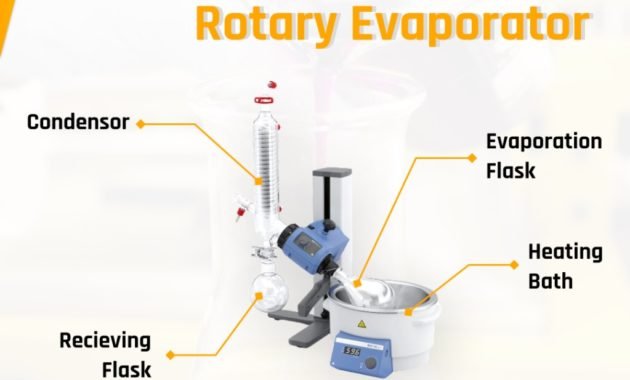
    The working principle of a rotary evaporator is to heat the solution in one of the containers (evaporation flask), which is warmed in a water bath, because of the difference in boiling point between the substance and the solvent (e.g., ether, methanol, etc.), the substance with a lower boiling point will evaporate.

    The vaporized gas will be trapped by the condenser, which, with the help of cold pressure and temperature, will re-liquid the gas, return to a solution, and be accommodated in a receiving flask.

    In the end, two separate liquids will be formed: a concentrated solution and a solvent which generally already contains the dissolved test substance.

    Of course, this is a big picture of the working principle of a rotary evaporator; the rest depends on the use and testing in each laboratory.

    Usage and Function

    The use of a Rotary Evaporator can be very diverse, but the function remains the same, namely separating two solutions with different boiling points.

    First Test Example (#1)

    For example, if you concentrate, you can use a Rotary Evaporator to evaporate other substances that you did not test.

    The concentration of a general solution is done to get a high concentration of the substance we will test.

    Because of this, a Rotary Evaporator can evaporate other substances you would not be testing.

    Of course, with the difference in boiling points, there will be two separate solutions, and you can test the substance concentrated in the Evaporating Flask.

    Second Test Example (#2)

    If, in your first example, you focused on the substance being concentrated, this time, you will be testing the vaporized substance.

    The working principle is more or less like this:

    The substance you are going to test is dissolved in a solvent such as ether, for example, so that the solvent is already bound to the test substance to be evaporated.

    By using a water bath and rotating the rotator, the solvent (ether) with varying boiling points can be evaporated and collected in the condenser.

    With the help of cold temperatures and air pressure, the gas trapped in the condenser will melt again and be accommodated in the reservoir flask.

    So that finally, it forms two solutions, namely the initial solution and the solvent, which already contains the test substance that you will analyze.

    Tool Parts

    Seeing the shape that may be quite complex, the Rotary Evaporator consists of several parts.

    Here are some of the parts needed to run the tool.

    Heating Bath

    This section is used to warm the liquid in the evaporation flask.

    Instead of using a fired heater which may be dangerous, a water bath can be an alternative solution for providing heat to the solution to be evaporated.

    Rotator

    The rotator is used to rotate the evaporation flask so that it heats evenly and creates a kinetic movement that makes evaporation more effective.

    Without a circular motion, the solution in it may not evaporate completely.

    Condenser

    This glass device is used to ‘trap’ the air coming out of the evaporating flask with a winding air duct.

    In the condenser, manipulation occurs with the addition of cold temperatures and pressure so that the gas, which was originally going to rise to the top, becomes liquid again.

    Receiving Flask

    This glass tool is used to accommodate the recovered gas from the condenser.

    Later this flask contains a solvent that may contain the substance you are testing.

    Vacuum Pump

    This tool is applied to the condenser, increasing the air pressure, thereby slowing the gas’s movement.

    Circulator Chiller

    This tool is also applied to the condenser to introduce cold air.

  • All parts of the microscope and their functions

    All parts of the microscope and their functions

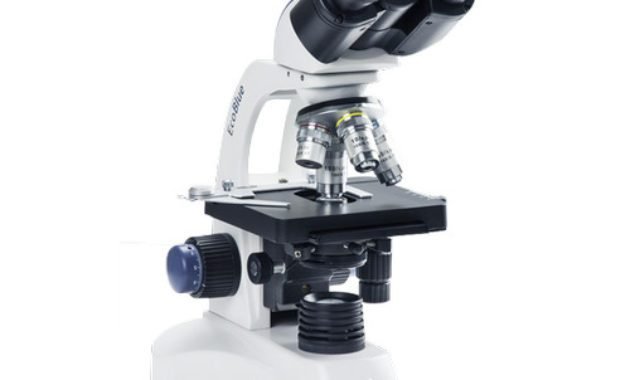
    The microscope is an important part in the laboratory, but do you already know all the parts of the microscope and their functions? Actually this tool is quite familiar to know and use. It has even started at an early age, aka students. But not necessarily already know all the parts. Though every part of the microscope has an equally important role. Curious what the parts and functions are? Check out the full explanation with GeneCraft Labs below.
    Types of Microscopes

    Before entering into an explanation of the parts of a microscope and their functions, you should first get acquainted with the types. In total there are two types of microscopes, namely light and electron microscopes.

    Light microscopes are further divided into two, namely dissection microscopes which are useful for observing the surface of objects, and monocular and binocular microscopes for observing the inside of cells.

    A monocular microscope has only one eyepiece. In contrast, a binocular microscope has two eyepieces that can be used by both eyes at once.

    For the electron microscope itself, the way it works is by using an energy source from electrons to enlarge the image of the research object.

    All parts of the microscope and their functions

    Microscope Components and its function

    Now it’s time to get into the discussion of the microscope parts and their functions. The microscope itself consists of two parts. There are optical and mechanical parts.

    Optical Parts

    For the optics, there are four components in it. Consist of:

    1. Ocular Lens

    The eyepiece, which is located directly above the microscope, is the first source of vision for the user. Its function is to form a real image of the objective lens. The number of ocular lenses in a monocular microscope is only one, so it can be used by one eye. However, for the ocular lens in a binocular microscope, there are two so that the user can have both eyes at once.

    2. Objective Lens

    The objective lens is located close to the object. The function of this lens is to enlarge the image of the observed object from 10 times to 100 times.

    3. Spotlight

    The reflector is a regulating mirror that is useful for reflecting light into the diaphragm.

    4. Condenser

    The condenser is useful for collecting the light reflected by the regulating mirror. The light is focused on the object.

    mechanical part

    For the mechanical part, it consists of seven components, namely:

    1. Microscope Tube

    The microscope tube is useful for adjusting the focus. Then another function is the link between the objective lens and the eyepiece.

    2. Revolver

    The revolver functions as a lever to support the objective lens in order to make it easier to adjust the observation value of the microscope.

    3. Object Clamp

    The object clamp is useful for holding the object glass so that it is easy to move during the observation process.

    4. Diaphragm

    Diaphragm is a component that is located in the preparation table. Its job is to determine how much light enters and is focused on the object of observation.

    5. Object Table

    As the name implies, the object table is useful as a container for placing observation objects. Usually there is an object clamp as well so that it can hold the object so it doesn’t move easily during the observation process.

    6. Microscope Arm and Leg

    The arm of the microscope is a handle when you want to move the microscope. On the other hand, the foot of the microscope is useful for placing this laboratory instrument on a plane that is not flat.

    7. Joint Inclination

    The inclination joint is useful for adjusting the degree of tilt of the microscope. This component is certainly needed to make it easier to observe.

    So that’s the information about the microscope parts and their functions. Hopefully the information can be useful for you.

  • Understanding Aquades and its functions

    Understanding Aquades and its functions

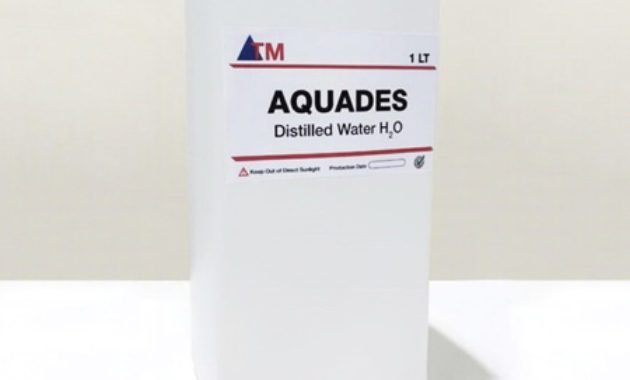
     This distilled water is something that is commonly found, many people have used this water. Especially in the laboratory. So what is aquadest?, aquadest or some also call it aquadest water is a type of water where this water is produced through a distillation process.

    Then what is the function of aquadest? The distillation process here is a process where the goal is to produce water with very good quality, which later on so that the results of the water can be equalized with mineral water. What kind of mineral water is meant?, namely water in which has a lot of good content.

    Examples such as salt, sulfur, and in the form of gases dissolved in water. Aquatic water is a type of water whose content is able to be equal to mineral water. However, this water can only be obtained by one distillation process. Did not achieve two or more processes.

    Although this water can only be obtained with one distillation process, but still the content contained can exceed the content contained in mineral water. So, mineral water is far superior to distilled water. This does not reduce the use of distilled water.

    A. Definition of Aquades

    Aquadest water is water from the distillation process or can also be called distilled water, which is a process of boiling water which will produce water vapor. This process aims to remove the minerals present in the water. From this boiling process the steam will then be re-solidified in a different container.

    So, after distillation, only H2O is contained in the water, in the absence of other elements. Even though it contains only H2O, this water can still be consumed. Here are some explanations of the advantages and disadvantages of the distillation process:

    The advantages of aquadest water

    Aquadified water certainly has many advantages in its use. Here are the various advantages of aquadest:

    1. From several research studies, that this water can be consumed to help prevent  arthritis . Why is that?, This is because distilled water is believed to be able to get rid of mineral deposits contained in human joints.
    2. Distilled water is also believed to be free from various  microscopic toxins . Examples  are bacteriaviruses , and various  other microorganisms  found in a faucet or tub and can be harmful to the health of the body.
    3. Distilled water is also free from various other chemical mixtures. Such as  chlorinefluoride , and other mixed materials that are likely to be found in ordinary bottled water, or bathtubs in general.
    4. Distilled water is even believed to be an alternative for preventing gallstones. This water will remove the minerals contained in the cells of the human body. So that the risk of gallstone disease can be avoided.
    5. Distilled water also does not have the various ingredients found in tap or bottled water in general. Why is that?, because this water has gone through the distillation process first.

    Lack of Aquatic Water

    Not only does it have various advantages, in fact distilled water also has several disadvantages. Following are the disadvantages of aquadest:

    1. Consuming distilled water in the long term and in excessive amounts can result in poor health. This is because distilled water is able to absorb  very large amounts of carbon dioxide  .
    2. If you continue to consume distilled water, then this results in a rapid loss of electrolytes in the body of the person who consumes it. This is clearly dangerous, isn’t it?
    3. If the body has experienced a deficiency of various electrolytes that are very important, for example, such as  chloridemineralssodium , and others. This can cause irregular heart pressure, this cell also results in blood pressure fluctuations.

    B. Aquatic Functions and Its Various Uses

    Generally, some people consume aquadest as an alternative to absorb various toxic substances in the body, then dispose of them. Even so, there are also those who use this water in various other areas of life that are far more important.

    Because actually consuming distilled water is not always profitable. Another use of this water can be in the  laboratory space . Namely as a mixture of chemical solution substances  . Here are some explanations regarding the use of aquadest water:

    1. Aquatic Function in the Laboratory

    The function of distilled water in the laboratory is as a mixture of chemical substances, when conducting research. In addition, distilled water is also used to clean  laboratory equipment  before or after use. After this, use distilled water as an alternative to assist in research.

    2. Function of Aquades in Steel Processing

    Besides being used in the laboratory, aquadest can also be used in steel processing. What kind of processing is meant?, that is, it is utilized in the process of cutting steel and cooling the engine. It is known to be very effective in inhibiting the presence of scale and moss.

    3. Aquatic Function in Chemistry

    chemical lab

    In the field of chemistry, aquadest can clearly be utilized. As already explained, distilled water is used as a mixture or solvent for chemicals, or certain solutions. This water can be used when researching a concentration or compound.

    4. Aquades Function As Battery Water

    It turns out that this very popular distilled water is also popularly used as a substitute for battery water. Do you know how important  it is to use battery water  in motorized vehicles? The answer must be very important. So this shows that distilled water can be another alternative as a substitute for battery water.

    Those are some explanations about the use of aquadest water in everyday life. Is distilled water considered important and useful?, judging from the explanation above and the many benefits that can be obtained from aquadest, then distilled water is considered very important and beneficial.