

Blog

  • The Philosophy of Action: Analyzing the Relationship between Reason and Action

    The Philosophy of Action: Analyzing the Relationship between Reason and Action

    The Philosophy of Action: Analyzing the Relationship between Reason and Action

    Philosophy is all about pondering the fundamental questions of life, including why we do what we do. In other words, it is the study of the nature of reality, existence, and values. One of the most intriguing areas of philosophy that deals with the question of why humans act the way they do is the philosophy of action. It is an area of philosophy that deals with the analysis of human action and the reason behind it.

    The philosophy of action is concerned with understanding how human behavior is influenced by the mental processes that accompany it. It involves an analysis of the relationship between reason and action. The study of human behavior can be analyzed through different lenses such as psychology, neuroscience, and sociology. The philosophy of action, however, concerns itself with a different question: what motivates human beings to act as they do?

    To understand the philosophy of action and analyze the relationship between reason and action, one must break down the concepts individually.

    Reason

    Reason is one of the most important concepts in philosophy. It refers to the ability to think logically, understand concepts, and draw conclusions. Reason can be seen as a central guiding force in human action. It provides us with the ability to think through actions and make logical decisions.

    In philosophy, reason is often seen as the source of truth and knowledge. The idea is that we can use our ability to reason in order to gain a deeper understanding of the world around us.

    Action

    Action, on the other hand, refers to the physical movements that we make in the world. Unlike reason, which is often seen as an abstract concept, action can be seen, felt, and touched. It is the manifestation of our thoughts, beliefs, and desires.

    In philosophy, action is often seen as the result of a conscious decision, a choice that we make in order to bring about some desired outcome. It is important to note that not all actions are intentional. Some actions are reflexes, automated responses to stimuli that we do not consciously choose to undertake.

    Analyzing the Relationship between Reason and Action

    As previously mentioned, the philosophy of action is concerned with analyzing the relationship between reason and action. At its core, this analysis centers on the question of what motivates humans to act the way they do.

    One way of looking at the relationship between reason and action is to see reason as the cause of action. In this view, reason is seen as the driving force behind our actions. It provides us with the ability to think through a situation, weigh different options, and make a choice based on what we consider to be the best option.

    Another way of looking at the relationship between reason and action is to see reason as the effect of action. In this view, action is seen as the driving force behind reason. We act first, and then we use our ability to reason to explain why we acted the way we did.

    Some philosophers have taken a middle ground in this debate. They view the relationship between reason and action as being more complex than a simple cause-and-effect relationship. In this view, reason and action are seen as mutually reinforcing. Our ability to reason informs our actions, and our actions, in turn, shape our ability to reason.

    FAQs

    Q: What is the philosophy of action?

    A: Philosophy of action is an area of philosophy that deals with the analysis of human action and the reason behind it.

    Q: What is reason?

    A: Reason is the ability to think logically, understand concepts, and draw conclusions.

    Q: What is action?

    A: Action refers to the physical movements that we make in the world. It is the manifestation of our thoughts, beliefs, and desires.

    Q: Why is the philosophy of action important?

    A: The philosophy of action is important because it helps us to understand why humans act the way they do. It provides us with the tools to analyze and evaluate human behavior, and it can help us to make sense of our own actions.

    Q: What is the relationship between reason and action?

    A: The relationship between reason and action is complex and multifaceted. Some philosophers see reason as the cause of action, while others see action as the cause of reason. Still, others view the relationship as mutually reinforcing. Ultimately, the answer to this question depends on one’s philosophical perspective.

  • The Philosophy of Action: Analyzing the Ethics and Meaning of Action and Inaction

    The Philosophy of Action: Analyzing the Ethics and Meaning of Action and Inaction

    The Philosophy of Action: Analyzing the Ethics and Meaning of Action and Inaction

    As human beings, we are constantly in a state of action or inaction. We make decisions, we act upon them, and sometimes we choose to do nothing. Our actions define who we are, and they have a significant impact on those around us. Understanding the philosophy of action is crucial to living a meaningful life, for it helps us to understand the ethical implications of our choices and the meaning behind them. In this article, we will delve into the philosophy of action, analyzing the ethics and meaning of action and inaction, and explore some frequently asked questions about this fascinating branch of philosophy.

    Ethics of Action and Inaction

    Ethics refers to the moral principles that govern our behavior. When we make decisions and act upon them, we are making ethical choices. The ethics of action and inaction are concerned with the morality of doing something or doing nothing in a given situation.

    Inaction is often considered to be just as morally relevant as action. For example, if you see a person in trouble and you choose to do nothing to assist them, you are acting immorally. Your decision not to act is still a decision, and it is one that has consequences for both you and the person in need. Inaction can be problematic because it can lead to harm and suffering, and it can contribute to social injustice.

    At the same time, there are situations where inaction is the most ethical choice. For instance, if you are witnessing an altercation between two people, and getting involved could cause more harm than good, you may choose to refrain from acting. In such cases, inaction can be seen as a form of self-preservation and an ethical choice.

    On the other hand, action can also be morally problematic. For instance, if you take action in a situation where you lack knowledge or expertise, you may be causing harm instead of help. It is important to carefully consider the consequences of our actions and to ensure that we have the knowledge, skills, and resources to act with integrity.

    The Meaning of Action and Inaction

    Action and inaction are also closely linked to our sense of purpose and meaning. Our actions define who we are, and they contribute to our sense of identity and the kind of life we lead. When we take action, we are expressing our values and beliefs, and we are actively shaping the world around us. Inaction, on the other hand, can be seen as a form of apathy, and it can lead to feelings of emptiness and purposelessness.

    Inaction can also have a detrimental effect on our mental health. When we choose not to act, we may experience feelings of guilt, helplessness, or despair. These negative emotions can prevent us from experiencing joy and fulfillment in life.

    The meaning of action and inaction also depends on the context in which they occur. For example, if you are a doctor, taking action to save a patient’s life is an ethical imperative and an expression of your professional duties. In contrast, if you are a passenger on a plane, choosing not to intervene in a situation where a passenger is unruly may be the most ethical choice.

    FAQs about The Philosophy of Action

    Q: What is the philosophy of action?

    A: The philosophy of action is a branch of philosophy that is concerned with the ethics and meaning of human behavior. It explores questions about free will, morality, and responsibility, and it seeks to understand the relationship between our actions and our sense of purpose and identity.

    Q: How do ethical theories relate to the philosophy of action?

    A: Ethical theories are frameworks for understanding the morality of human behavior. They provide a lens through which we can analyze the ethics of action and inaction. For instance, a utilitarian would consider the consequences of an action when determining its ethical value, whereas a deontologist would focus on the inherent ethical principles involved.

    Q: What is the importance of understanding the philosophy of action?

    A: Understanding the philosophy of action is essential for living a purposeful and ethical life. It helps us to make informed decisions about our behavior, and it enables us to act with integrity and compassion. By exploring the meaning and ethics of action and inaction, we can gain a greater understanding of ourselves and the world around us.

    Q: Can inaction ever be the most ethical choice?

    A: Yes, inaction can sometimes be the most ethical choice. For instance, if intervening in a situation would cause more harm than good, it may be better to refrain from acting. However, inaction can also be ethically problematic, especially when it leads to harm and suffering.

    In conclusion, the philosophy of action is a crucial branch of philosophy that helps us to understand the ethics and meaning of human behavior. Our actions define who we are, and they have immense consequences for ourselves and those around us. By exploring the philosophical underpinnings of action and inaction, we can gain a greater understanding of how to act with integrity and compassion, and how to live a purposeful and fulfilling life.

  • The Nature of Reality: Does it Exist Independently of Our Perception?

    The Nature of Reality: Does it Exist Independently of Our Perception?

    The Nature of Reality: Does it Exist Independently of Our Perception?

    Reality is the state of things as they are, rather than as they appear or might be imagined. It is what we perceive and experience through our senses, what we feel within ourselves, and what we understand through our intellect. But does reality exist independently of our perception? This is a question that has puzzled philosophers for centuries, and still remains unresolved.

    Theories of Perception

    There are two main theories of perception: direct realism and representative realism. Direct realism holds that we directly perceive the external world as it is, without any intermediate mental representations. It is believed that our senses directly pick up information about the external world, which is then processed by the brain.

    Representative realism, on the other hand, holds that we do not directly perceive the external world, but rather a mental representation of it. It is believed that our senses provide us with information about the external world, which is then processed by the brain to create a mental image or representation of that world.

    The Problem of Perception

    The problem of perception arises when we consider that our senses can be deceived. Optical illusions, hallucinations, and dreams are all examples of situations where our senses fail to accurately represent reality. If our senses can be deceived, how can we trust them to provide accurate information about the external world?

    Some philosophers have argued that our senses can be trusted in most cases, and that only under exceptional circumstances do they fail to accurately represent reality. Others have taken a more skeptical position, arguing that we can never be sure that our senses provide reliable information about the external world.

    The Role of Consciousness

    Another issue that arises in the discussion of the nature of reality is the role of consciousness. Some philosophers argue that consciousness is essential to the existence of reality, and that without consciousness there would be no reality at all. Others argue that consciousness is a byproduct of brain activity, and that reality exists independently of consciousness.

    The Quantum World

    The study of quantum mechanics has led physicists and philosophers to question the nature of reality even further. In the quantum world, particles do not exist in specific locations until they are observed. This raises the question of whether reality exists independently of observation.

    The Copenhagen interpretation of quantum mechanics holds that the observation of a particle causes it to “collapse” into a specific location, and that reality exists independently of observation. However, other interpretations of quantum mechanics hold that reality does not exist independently of observation. The many-worlds interpretation, for example, holds that every possible outcome of an event exists in a separate universe, and that observation causes the universe to split into multiple parallel universes.

    FAQs

    Q: Does reality exist independently of our perception?

    A: This is a question that has puzzled philosophers for centuries and still remains unresolved. Some argue that reality exists independently of our perception, while others argue that our perception creates reality.

    Q: Are our senses reliable sources of information about the external world?

    A: Our senses can be deceived, and there are situations where they fail to accurately represent reality. However, in most cases, our senses can be trusted to provide accurate information about the external world.

    Q: What is the role of consciousness in the existence of reality?

    A: Some philosophers argue that consciousness is essential to the existence of reality, while others argue that consciousness is a byproduct of brain activity and that reality exists independently of consciousness.

    Q: What does quantum mechanics tell us about the nature of reality?

    A: The study of quantum mechanics has led physicists and philosophers to question the nature of reality even further. In the quantum world, particles do not exist in specific locations until they are observed, which raises the question of whether reality exists independently of observation.

    Q: Is there a definitive answer to the question of the nature of reality?

    A: There is no definitive answer to the question of the nature of reality. Different philosophers and scientists have proposed different theories, and the debate is ongoing.

  • The Meaning of Life: Is there an Ultimate Purpose to our Existence?

    The Meaning of Life: Is there an Ultimate Purpose to our Existence?

    The Meaning of Life: Is there an Ultimate Purpose to our Existence?

    The question about the meaning of life is one of the most profound and essential questions that have been asked by philosophers, scientists, and religious leaders throughout human history. The question about the ultimate purpose of our existence has intrigued humanity since time immemorial.

    The Meaning of Life: A Philosophical Perspective

    From a philosophical perspective, the meaning of life is not an easy question to answer. Philosophers have produced a wide range of answers to the question of the meaning of life. They have proposed theories that range from the nihilistic view that life has no ultimate purpose, to more optimistic theories that suggest that the purpose of life is to attain personal happiness and fulfillment.

    One argument for nihilism is that life has no inherent meaning because it is nothing but a product of chance events that occurred by accident. Therefore, there can be no ultimate purpose to our existence. This view has been criticized because even if life is the result of a series of random events, it does not follow that it has no meaning. Furthermore, just because there is no ultimate purpose to our existence, it does not mean that life lacks meaning altogether.

    Other philosophers argue that the purpose of life is to attain personal happiness and fulfillment. They argue that since we have only one life to live, we should do everything in our power to make our existence as meaningful and fulfilling as possible. This view has its challenges too since happiness and fulfillment are subjective experiences that differ from one individual to another.

    The Meaning of Life: A Religious Perspective

    Religions have been another source of answers to the question of the ultimate purpose of life. For instance, in Christianity, the purpose of life is to glorify God and enjoy him forever. In Islam, the ultimate purpose of life is to submit to the will of Allah and to serve him in everything we do. In Buddhism, the purpose of life is to achieve enlightenment and to end the cycle of birth and rebirth.

    In all major religions, the idea is that there is a higher power or being that is responsible for our existence, and it is this being that determines our ultimate purpose in life. The religious perspective has been criticized because it is not based on empirical evidence, but rather on faith and belief.

    The Meaning of Life: A Scientific Perspective

    Science also provides some answers to the question of the ultimate purpose of life. According to science, the ultimate purpose of life is to survive and reproduce. From the perspective of biology, all organisms are designed to survive and perpetuate their genes. This is known as the theory of natural selection.

    However, this view of life’s ultimate purpose has also been challenged. Some argue that science’s purpose is too narrow and reductionist since it reduces life to a biological process. Furthermore, some people argue that just because the ultimate purpose of life is to survive and reproduce, it does not necessarily follow that this is the only meaning life can have.

    The Meaning of Life: Different Perspectives, One Question

    The question of the meaning of life has been answered in different ways by different people throughout history. Some have argued that life has no ultimate purpose, while others believe that the purpose of life is to attain personal happiness and fulfillment. Still, others believe that religion provides the ultimate answer to life’s ultimate purpose.

    Despite the different perspectives on the meaning of life, the question remains an open one. Whether one subscribes to the nihilistic view that life has no ultimate purpose, or one embraces the religious perspective that there is a higher power that determines our purpose, the question remains unresolved.

    FAQs

    Q. Is there an objective meaning to life?

    A. It depends on whom you ask. From a philosophical perspective, there are different answers to this question. Some argue that there is no objective meaning to life, while others believe that the objective meaning of life is to attain personal happiness and fulfillment. From a religious perspective, many believe that there is an objective meaning to life, which is determined by the higher power or being responsible for our existence.

    Q. Does science provide an answer to the question of the meaning of life?

    A. Science provides some answers to the question of the ultimate purpose of life. According to science, the ultimate purpose of life is to survive and reproduce. However, science’s purpose is too narrow and reductionist since it reduces life to a biological process. Furthermore, whether the ultimate purpose of life is to survive and reproduce or not, it does not necessarily follow that this is the only meaning life can have.

    Q. Can life have no ultimate purpose but still have meaning?

    A. Yes, life can have meaning even if it has no ultimate purpose. For instance, one can find meaning in personal accomplishments, relationships, and social causes, among others. The fact that there is no ultimate purpose to our existence does not mean that life lacks meaning altogether.

    Q. Can we create our own meaning in life?

    A. Yes, we can create our own meaning in life. Each one of us has the power to determine what is meaningful and what is not. We can attach meaning to our lives through our relationships, work, hobbies, and achievements, among other things. By doing so, we can find our own personal fulfillment regardless of whether there is an ultimate purpose to our existence or not.

  • The History of Philosophy: From Ancient Greece to Modern Times

    The History of Philosophy: From Ancient Greece to Modern Times

    Philosophy has been an essential area of study for a long time. It involves the analysis and study of the human experience and the world. Philosophy encompasses values, reasoning, ethics, and metaphysics. The search for knowledge has been an integral part of humanity since ancient times, and philosophy is one way that humans have attempted to make sense of the world. From ancient Greece to modern times, philosophy has undergone significant developments, which have shaped human life in many ways.

    Ancient Greece

    The ancient Greeks were the first people to practice philosophy. They were curious about the natural world and the human experience. The ancient Greeks had a great interest in the eternal questions of human existence, such as the nature of the world and the human experience, which gave rise to some of the most important and well-known philosophical theories of all time.

    Socrates (470/469 BCE – 399 BCE) is considered one of the most influential philosophers of all time. Socrates is known for his Socratic Method, which is a way of using questioning to challenge one’s beliefs. He believed that the best way to educate people was not to give them the answers but to encourage them to think for themselves. Socrates was sentenced to death by the Athenian court for “corrupting the youth” and “not acknowledging the gods of the state.”

    Plato (428/427 BCE – 348/347 BCE) was a student of Socrates and is considered one of the most important and influential philosophers in history. Plato wrote extensively on a wide range of philosophical topics, including metaphysics, ethics, politics, and epistemology. He was the founder of the Academy, which was the first institution of higher learning in the Western world.

    Aristotle (384 BCE – 322 BCE) was a student of Plato and is considered one of the most important philosophers in history. Aristotle wrote extensively on a wide range of topics, including logic, rhetoric, politics, metaphysics, ethics, and biology. He believed that everything in the world had a purpose or goal and that the ultimate goal of human life was happiness.

    Hellenistic Philosophy

    Hellenistic philosophy was the philosophy that emerged after the death of Alexander the Great in 323 BCE. Hellenistic philosophy focused on questions of ethics, happiness, and how to live a good life. The most important Hellenistic philosophers were Epicurus, Zeno of Citium, and Pyrrho.

    Epicurus (341 BCE – 270 BCE) was a Greek philosopher who founded the school of Epicureanism. Epicurus taught that the goal of life was to achieve happiness, which he believed could be achieved by living a life of pleasure and avoiding pain.

    Zeno of Citium (336 BCE – 264 BCE) was a Greek philosopher who founded the school of Stoicism. Stoicism is a philosophy that teaches that one should be content with what they have and not let external events affect their happiness.

    Pyrrho (360 BCE – 270 BCE) was a Greek philosopher who founded the school of Pyrrhonism. Pyrrhonism is a philosophy that teaches that one should suspend judgment on all beliefs and opinions.

    Medieval Philosophy

    Medieval philosophy refers to the period of philosophy that lasted from the fall of the Roman Empire in the 5th century CE to the Renaissance in the 15th century CE. During this time, much of the focus of philosophy was on religion and theology, and many of the great philosophers of the time were monks, theologians, and priests. St. Augustine, St. Thomas Aquinas, and William of Ockham are the most significant philosophers of the medieval period.

    St. Augustine (354 CE – 430 CE) was a Christian theologian and philosopher who played a significant role in the development of Christian belief. His most famous work is “The City of God,” which explains the relationship between the divine and human.

    St. Thomas Aquinas (1225 CE – 1274 CE) was a theologian and philosopher who is considered one of the most significant figures in medieval philosophy. He wrote many works, including the “Summa Theologica,” which is his most famous text. St. Thomas Aquinas is known for his synthesis of Aristotelian philosophy and Christian theology.

    William of Ockham (1285 CE – 1347 CE) was an English Franciscan monk and philosopher who is known for his theory of Ockham’s Razor. The principle of Ockham’s Razor states that if there are several explanations for a phenomenon, the simplest explanation is most likely the correct one.

    Modern Philosophy

    Modern philosophy refers to the period of philosophy that began in the 16th century and continued into the 19th century. During this period, there were significant advancements in science, politics, and economics, which influenced philosophical thought. The most important philosophers of the modern period were Rene Descartes, Immanuel Kant, and John Locke.

    Rene Descartes (1596 CE – 1650 CE) was a French philosopher and mathematician who is known for his method of doubt. Descartes believed that the only way to find true knowledge was to doubt everything except what was absolutely certain.

    Immanuel Kant (1724 CE – 1804 CE) was a German philosopher who is known for his ideas about ethics, knowledge, and the limits of human reason. Kant believed that knowledge is only possible to the extent that it is based on experience.

    John Locke (1632 CE – 1704 CE) was an English philosopher who is known for his ideas about the nature of human knowledge and understanding. Locke believed that knowledge is derived from sensory experiences and that the mind is a blank slate at birth.

    Frequently Asked Questions

    1. What is the meaning of philosophy?

    Philosophy is the study of the fundamental problems of existence, knowledge, morality, and the meaning of life.

    2. Who were some of the most influential ancient Greek philosophers?

    Socrates, Plato, and Aristotle are considered the most significant ancient Greek philosophers.

    3. What is the Socratic Method?

    The Socratic Method is a way of using questioning to challenge one’s beliefs.

    4. What is the goal of Stoicism?

    The goal of Stoicism is to achieve contentment and not let external events affect one’s happiness.

    5. What is Ockham’s Razor?

    Ockham’s Razor states that if there are several explanations for a phenomenon, the simplest explanation is most likely the correct one.

    6. Who were some of the most influential modern philosophers?

    Rene Descartes, Immanuel Kant, and John Locke are considered the most significant modern philosophers.

    7. What did Immanuel Kant believe about knowledge?

    Kant believed that knowledge is only possible to the extent that it is based on experience.

    Conclusion

    From ancient Greece to modern times, philosophy has gone through significant developments, which have shaped human life in many ways. Ancient Greek philosophers, including Socrates, Plato, and Aristotle, laid the foundation for philosophy. Hellenistic philosophy focused on questions of ethics, happiness, and how to live a good life. During the medieval period, much of the focus of philosophy was on religion and theology, and many of the great philosophers of the time were monks, theologians, and priests. Modern philosophy saw significant advancements in science, politics, and economics, which influenced philosophical thought, and the most important modern philosophers included Rene Descartes, Immanuel Kant, and John Locke. Philosophy remains an essential area of study that seeks to answer some of the most fundamental questions about existence, knowledge, morality, and the meaning of life.

  • The Ethics of Artificial Intelligence: A Philosophical Perspective

    The Ethics of Artificial Intelligence: A Philosophical Perspective

    The Ethics of Artificial Intelligence: A Philosophical Perspective

    Artificial Intelligence (AI) is rapidly becoming a fundamental part of our lives. It is woven into our daily experiences and is used in everything from social media feeds to self-driving cars. With the rise of AI, however, comes a host of ethical considerations that need to be addressed. AI requires the collection and analysis of data from individuals, and there are concerns that AI could lead to the violation of privacy rights and autonomy. There are also questions about accountability and responsibility for the actions of intelligent machines. In this article, we will explore the ethics of AI from a philosophical perspective.

    The Impact of AI on Society

    There is no denying that AI has the potential to transform society for the better. The benefits of AI are many and include advancements in healthcare, transportation, and education. Intelligent machines can perform tasks that are dangerous or difficult for humans, and they can do so with greater speed and efficiency. However, there are also concerns about the impact of AI on society. One of the challenges of AI is that it is difficult to predict its consequences. AI systems can learn and adapt in ways that are difficult to anticipate, and this can lead to results that are unexpected or unintended.

    One of the major concerns about AI is its potential impact on employment. Many jobs that were previously performed by humans may become automated, leading to job displacement and unemployment. AI could also exacerbate existing social inequalities. Intelligent machines might reinforce rather than challenge the status quo, perpetuating biases and discrimination. These are complex ethical considerations, and they underscore the need for careful deliberation about the development and deployment of AI technologies.

    The Ethics of Data Collection

    AI relies on data to learn and make decisions. This means that AI systems must be provided with large amounts of data. There are concerns, however, about how this data is collected and used. The collection of data raises questions about privacy, autonomy and informed consent. Individuals may not be aware of the data that is being collected about them, or they may not fully understand how their data is being used.

    There is also a concern about the accuracy and fairness of data. AI systems are only as good as the data they use to learn. If the data is biased, then the AI system will be as well. This can lead to results that are discriminatory or unjust. For instance, if a hiring algorithm is trained on data that is biased against certain groups (such as women or people of color), it may perpetuate those biases when making hiring decisions.

    The Ethics of Decision Making

    One of the most challenging ethical considerations of AI is the question of how to ensure that machine decision-making is ethical. One approach to this problem is to program AI systems with ethical principles. For example, an AI system could be programmed to prioritize human safety and well-being in all of its decisions. However, programming such systems comes with a host of challenges. It may be difficult to create a comprehensive set of ethical principles that can be applied in all situations. Moreover, ethical principles may conflict with one another, and it may be difficult to prioritize one principle over another.

    Another approach to ensuring ethical decision making is to build AI systems that are transparent and accountable. This means that the decision-making processes of AI systems are made explicit and can be audited by humans. Transparent AI systems would enable humans to evaluate the decisions made by machines and to ensure that they align with ethical principles.

    The Ethics of Responsibility

    One of the challenges of AI is determining who is responsible for its actions. In a traditional sense, responsibility is typically assigned to individuals. However, AI presents unique challenges because it operates autonomously, and its actions can be difficult to predict. Moreover, AI systems can be created by teams of individuals, and it may be difficult to identify who is responsible for the actions of the system.

    One way to address this challenge is to assign responsibility to the individuals or organizations that create and deploy AI systems. This would incentivize individuals and organizations to create ethical AI systems and to ensure that those systems contribute positively to society.

    Frequently Asked Questions

    Q. What is the difference between AI and machine learning?
    A. AI refers to machines that are capable of performing tasks that would typically require human intelligence, such as problem solving or decision making. Machine learning is a subset of AI that involves the development of algorithms that learn from data.

    Q. What is the Turing test?
    A. The Turing test is a test of a machine’s ability to exhibit intelligent behavior equivalent to, or indistinguishable from, that of a human.

    Q. What is ethical AI?
    A. Ethical AI refers to the development and deployment of AI systems that align with ethical principles and contribute positively to society.

    Q. What is the impact of AI on employment?
    A. AI has the potential to automate many jobs that are currently performed by humans, leading to job displacement and unemployment.

    Q. How can we ensure that machine decision making is ethical?
    A. One approach to ensuring ethical decision making is to program AI systems with ethical principles. Another approach is to build AI systems that are transparent and accountable.

    Conclusion

    The rise of AI presents a host of ethical considerations that need to be addressed. AI has the potential to transform society, but it is essential that we approach its development and deployment with care and consideration. The ethics of AI are complex and multifaceted, and they require a multidisciplinary approach that incorporates philosophy, technology, and social science. By engaging in thoughtful and careful deliberation, we can ensure that AI systems are aligned with ethical principles and contribute positively to society.

  • The Debate between Determinism and Indeterminism

    The Debate between Determinism and Indeterminism

    Introduction:

    Determinism and indeterminism are two concepts that have been debated for centuries. While determinism asserts that everything in the universe, including human behavior, is predetermined, indeterminism suggests that certain factors and variables make it impossible to predict with certainty. The concept of determinism can be traced back to ancient Greece, where prominent philosophers such as Aristotle and Plato discussed the idea that the world is governed by necessary causes. On the other hand, the idea of indeterminism emerged during the 17th century, particularly with the advent of modern science. In this article, we will explore the debate between determinism and indeterminism and discuss some of the key arguments and counter-arguments.

    Determinism:

    Determinism is the philosophical theory that every event, including human actions, is the result of prior causes. This means that all of our choices and decisions are predetermined by a causal chain of events that have taken place before a person was born. Determinism suggests that the universe is like a large clock that was set in motion at the beginning of time and has been ticking away ever since, with every event and action being predetermined by the mechanical workings of this clock. Determinism suggests that the concept of free will is an illusion since every choice a person makes is predetermined by previous events.

    There are several arguments in favor of determinism. One of the key arguments is that determinism is supported by science. For example, the laws of physics and chemistry suggest that every event is the result of prior causes. This means that if we knew all of the laws of physics and all of the variables involved in a particular event, we could predict that event with 100% accuracy. Similarly, biology suggests that every living organism is the product of DNA and other genetic factors, suggesting that a person’s behavior and choices are predetermined by their genetics.

    Another argument in favor of determinism is that it provides a sense of comfort and stability to individuals. If everything in the universe is predetermined, then every event and outcome must have a logical explanation. This means that if something bad happens to a person, they can take comfort in the fact that it was predetermined and beyond their control. Similarly, if someone achieves success, they can attribute it to the predetermined nature of the universe.

    Indeterminism:

    Indeterminism, on the other hand, suggests that certain events cannot be predicted with certainty. Indeterminism asserts that there is an element of randomness and chance in the universe, which means that not every event can be traced back to a cause. Unlike determinism, indeterminism suggests that humans have free will and can make choices that are not predetermined by prior causes.

    There are several arguments in favor of indeterminism. One of the most prominent arguments is that it allows for the existence of free will. If every action and choice a person makes is predetermined, then it would suggest that humans have no control over their own lives. This would undermine the sense of responsibility that individuals feel for their actions and choices. Indeterminism suggests that humans have the power of choice and can make decisions that are not predetermined by prior causes.

    Another argument in favor of indeterminism is that it allows for the possibility of change and creativity. If every event and action was predetermined, then there would be no room for innovation or progress. Indeterminism suggests that humans can make choices that go beyond the predetermined limits of the universe, which means that they can create new ideas and concepts that have never been seen before.

    FAQs:

    1. Can determinism and indeterminism coexist?

    Yes, it is possible for determinism and indeterminism to coexist. Some philosophers suggest that the universe is deterministic at a macro-level but indeterministic at a micro-level, which means that certain events cannot be predicted with certainty.

    2. Does determinism imply fatalism?

    Not necessarily. While determinism suggests that every event is predetermined, it does not suggest that humans have no control over their own lives. Humans are still responsible for their own actions and choices, even if those actions and choices are predetermined.

    3. Does indeterminism imply randomness?

    Not necessarily. While indeterminism suggests that certain events cannot be predicted with certainty, this does not mean that they are completely random. There may be certain variables and factors that influence the outcome of an event, even if they cannot be accurately predicted.

    Conclusion:

    The debate between determinism and indeterminism is a complex and ongoing one. While determinism suggests that every event, including human behavior, is predetermined, indeterminism suggests that certain events cannot be predicted with certainty. While there are valid arguments on both sides of this debate, it is ultimately up to individuals to decide which theory they believe in. Regardless of which theory is correct, it is important to remember that humans are still responsible for their own actions and choices, even if those actions and choices are predetermined.

  • The Concept of Justice: What Does it Mean to Treat People Fairly?

    The Concept of Justice: What Does it Mean to Treat People Fairly?

    Introduction

    The concept of justice is a fundamental principle of any society, which defines how individuals and groups should interact and be treated in a fair and equitable manner. Justice involves a wide range of issues, including legal frameworks, socioeconomic factors, cultural norms, and ethical considerations. In essence, justice seeks to foster a society where everyone is treated equally, regardless of their backgrounds, beliefs, or social status. This article explores the meaning of the justice concept and its importance in creating a just society.

    The Meaning of Justice

    Justice refers to the principle of fairness or impartiality in how people are treated by individuals, institutions, or the state. This principle is based on the belief that every human being is entitled to certain rights, freedoms, and opportunities, and that these should be protected and promoted by society. In other words, justice is the means by which individuals’ rights and freedoms are protected and their interests are balanced with those of other people and society.

    Justice is not merely an abstract concept but a practical tool for ensuring that society’s values and goals are met. It ensures that society’s resources are distributed equitably, that individuals are held accountable for their actions, and that justice is administered impartially. In short, justice is the cornerstone of a democratic and equitable society, where everyone can enjoy their rights, freedoms, and opportunities without fear of discrimination or abuse.

    The Importance of Justice

    Justice is crucial for maintaining social stability and promoting values that support individuals’ human rights and dignity. Without justice, society cannot function effectively, and individuals would be vulnerable to exploitation, abuse, discrimination, and oppression. However, justice also helps to ensure that people are responsible for their actions, and that wrongdoers are held accountable for their behavior.

    Justice is also an essential tool for promoting social equality and the fair distribution of resources. By ensuring that everyone is treated equally and receives equal opportunities and benefits, justice helps to reduce poverty, inequality, and social exclusion. This is important, given that poverty and inequality can undermine social harmony, reduce national development, and promote social unrest.

    Furthermore, justice is central to promoting human rights and dignity. Human rights are the rights and freedoms that every person is entitled to, regardless of their race, gender, religion, or social status. These rights are enshrined in international laws, norms, and conventions, and are intended to protect individual freedoms, dignity, and well-being. Justice is crucial for ensuring that these rights are respected, protected, and fulfilled, and that individuals are protected from abuse and discrimination.

    FAQs about Justice

    1. What are the different types of justice?

    There are several types of justice, including distributive justice, retributive justice, restorative justice, and social justice. Distributive justice refers to the fair distribution of resources and opportunities among individuals and groups, while retributive justice refers to holding wrongdoers accountable for their actions. Restorative justice focuses on restoring harm caused by crime, while social justice seeks to address social inequality and marginalization.

    2. What are the characteristics of a just society?

    A just society is characterized by fairness, equality, and respect for human rights and dignity. It is a society where individuals are treated equally under the law, and where institutions and leaders are accountable and transparent. In a just society, everyone has access to basic needs such as healthcare, education, housing, and employment, and individuals are protected from abuse, discrimination, and exploitation.

    3. What are some examples of social justice issues?

    Social justice issues include poverty, inequality, discrimination, racism, and marginalization. These issues often affect vulnerable groups such as women, children, the elderly, people with disabilities, and minority groups. Social justice seeks to address these issues by promoting equal treatment, equal opportunities, and ensuring that marginalized groups are included and empowered.

    Conclusion

    Justice is an essential principle that underpins any democratic and equitable society. It ensures that individuals and groups are treated fairly, their rights are protected, and their interests are balanced with those of other people and society. Justice is not only a moral principle but also a practical tool for promoting social stability, reducing inequality, and protecting human rights and dignity. Therefore, it is crucial that individuals, institutions, and societies work together to promote justice and create a fair and equitable world for all.

  • The Concept of Free Will: Is it an Illusion or Reality?

    The Concept of Free Will: Is it an Illusion or Reality?

    The debate on free will has been ongoing for centuries, with philosophers, scientists, and theologians all weighing in on the concept. At its core, the question of free will centers around whether or not human beings have the ability to make their own choices and whether those choices are truly independent or predetermined by outside forces.

    Some argue that free will is an illusion, that our actions are predetermined by genetic, social, and environmental factors beyond our control. Others maintain that free will is real, that humans possess an inherent freedom of choice that allows us to act autonomously.

    In this article, we will explore both sides of the debate around free will, examining the philosophical, scientific, and religious arguments for and against the concept. We will also consider how recent research in neuroscience and psychology has impacted our understanding of free will and what this means for our sense of agency and responsibility.

    The Philosophical Debate on Free Will

    The philosophical debate on free will can be traced back to the ancient Greeks, with thinkers like Aristotle and Plato exploring the notion of human choice and agency. In the centuries since, philosophers have argued both for and against the concept of free will, with conflicting theories and perspectives.

    One of the earliest arguments against free will came from the philosopher determinism, who believed that every event, including human actions, was determined by prior causes, such as the laws of nature, genetics, and environmental factors. For determinists, free will was an illusion, and human actions were predetermined by factors beyond their control.

    Other philosophers challenged this perspective, arguing that humans were capable of making their own choices, despite a deterministic universe. These ideas were particularly prominent in the Renaissance and Enlightenment periods, with thinkers like Immanuel Kant and Jean-Jacques Rousseau arguing that individuals had a naturalistic free will based on their inherent human dignity.

    In recent years, the debate around free will has continued to evolve, with philosophers exploring new ideas around consciousness, moral responsibility, and determinism. Some philosophers argue that the concept of free will is compatible with determinism, suggesting that humans can have a sense of agency and autonomy, despite being influenced by a range of external factors.

    The Scientific Perspective on Free Will

    In addition to philosophical debates, the concept of free will has also been examined by scientists across a range of disciplines, from neuroscience to psychology. Recent research has shed new light on the mechanisms of decision-making and consciousness, challenging some traditional notions of free will while supporting others.

    One area of research that has impacted the debate around free will is the study of brain activity during decision-making, using techniques such as fMRI and EEG. These studies have shown that certain brain regions are activated during decision-making, suggesting that there are neural processes involved in our choices.

    However, some researchers have interpreted this as evidence against free will, suggesting that these neural processes make our choices predictable and predetermined. They argue that the brain simply reacts to external stimuli, rather than making autonomous choices.

    Other scientists disagree, arguing that the brain’s decision-making processes are still based on a range of factors, including individual beliefs, values, and experiences. They suggest that while the brain plays a role in decision-making, the ultimate outcome is still influenced by our internal sense of agency and autonomy.

    The Religious and Spiritual Perspective on Free Will

    In addition to philosophical and scientific perspectives on free will, religious and spiritual beliefs have also shaped the debate around the concept. For example, many religious traditions, including Christianity, Judaism, and Islam, place a strong emphasis on the concept of free will, attributing it to the individual’s soul or spirit.

    In religious and spiritual frameworks, free will is often viewed as a choice between good and evil, with individuals having the opportunity to act in accordance with the divine will or to defy it through sin or immoral actions. This suggests that free will is not only real but also has moral implications for our behavior and decisions.

    However, not all religious and spiritual beliefs support the idea of free will. Some Buddhist schools, for example, emphasize the idea of determinism, suggesting that our actions are predetermined by our karma and past experiences.

    FAQs

    Q: Is free will an illusion?

    A: The debate about whether free will is an illusion is ongoing, with arguments on both sides. Some philosophers and scientists argue that our choices are predetermined by a range of factors, including genetics, environment, and neurological processes, while others maintain that humans possess an inherent freedom of choice and agency.

    Q: Can free will and determinism coexist?

    A: Some philosophers argue that free will and determinism are not mutually exclusive, suggesting that humans can have a sense of agency and autonomy, despite being influenced by a range of external factors.

    Q: What are the moral implications of free will?

    A: Many religious and spiritual traditions suggest that free will has moral implications for our behavior and decisions, implying that we are responsible for our actions and choices. However, others argue that the concept of free will has limited impact on morality, as our actions are influenced by a range of external factors beyond our control.

    Q: How has recent research in neuroscience and psychology impacted our understanding of free will?

    A: Recent research has challenged some traditional notions of free will, suggesting that the brain’s decision-making processes are influenced by a range of external factors. However, other researchers argue that our internal sense of agency and autonomy still plays a significant role in decision-making, suggesting that free will is an ongoing debate that requires further exploration.

  • Borobudur Temple Entrance Fee Update – What It Means for Tourists and Locals.

    Borobudur Temple Entrance Fee Update – What It Means for Tourists and Locals.

    Borobudur Temple, located in Central Java, Indonesia, is one of the most iconic Buddhist temples in the world. Every year, millions of visitors come to this UNESCO World Heritage Site to witness its grandeur and spirituality. However, starting from January 1st, 2021, the temple authorities have revised their entrance fee policy, which has caused some concern among locals and tourists alike.

    Previously, the entrance fee for Borobudur Temple was IDR 325,000 (about $23 USD) for foreign tourists, IDR 190,000 (about $13 USD) for domestic tourists, and IDR 30,000 (about $2 USD) for local visitors. But now, the new entrance fees are IDR 500,000 (about $35 USD) for foreign tourists, IDR 350,000 (about $25 USD) for domestic tourists, and IDR 25,000 (about $1.5 USD) for local visitors.

    Tourists who planned their trips ahead of time were taken aback by the sudden price hike, as it could be an unexpected budget buster for many. That said, the increased revenue generated from the entrance fees can be used to maintain the temple and its surrounding areas properly. The temple has a steady inflow of visitors, but it costs a lot to maintain it. With the additional funds, the temple’s conservation efforts can be further strengthened, which will help protect the temple for future generations.

    For locals, the new entrance fees are significantly lower than before, which is an excellent move by the temple authorities to encourage more Indonesian locals to visit the site. Borobudur Temple is, after all, an essential part of Indonesian heritage and culture. By making the temple more affordable for locals, the authorities are ensuring that Indonesians can learn more about their country’s history and continue to take pride in their cultural heritage.

    It’s also worth noting that despite the new entrance fee policy, Borobudur Temple remains a must-visit destination for anyone visiting Indonesia. The temple, which is over 1,000 years old, is an architectural wonder, with detailed stone carvings and colossal Buddha statues. It’s an unforgettable experience to watch the sunrise from the temple and see the mist slowly unveil the temple’s intricate designs.

    In summary, the Borobudur Temple entrance fee update may have caught some people by surprise, but the increased revenue can support the temple’s conservation efforts, while the lower fees for Indonesian nationals can encourage local visitors to appreciate and learn more about their country’s cultural heritage. Ultimately, it’s a move towards protecting and preserving the site for future generations, which is a shared responsibility of everyone who loves and appreciates Borobudur Temple.

  • Udemy: Disrupting traditional education with online courses

    Udemy: Disrupting traditional education with online courses

    In recent times, there has been a significant shift in the way people learn and acquire knowledge. The emergence of online learning platforms such as Udemy has disrupted the traditional education system, making it possible for people from all over the world to access quality education at affordable rates.

    Udemy is an online learning platform where anyone can create or take courses in various fields of study. The platform currently has over 40 million students, who can access over 155,000 courses taught by over 70,000 instructors worldwide.

    One of the significant benefits of Udemy is that it offers flexible learning, which allows learners to fit their studies into their busy schedules. This has made it easier for working professionals to acquire new skills and advance their careers without having to take time off work. Moreover, learners can study at their own pace, meaning there is no pressure to keep up with the rest of the class, which is often seen as a challenge in traditional education settings.

    Udemy has also disrupted the cost structure of education. Traditionally, education is considered an expensive undertaking that can take years, if not decades, to pay off. Udemy has managed to turn this model on its head by offering courses at a fraction of the cost of traditional education. The platform also allows users to pay per course, which means they only pay for what they need to learn.

    Udemy’s course offerings are not limited to traditional subjects such as Math, English, and Science like conventional education systems. It has a vast range of courses that are designed to cater to various fields of study, including music, art, and gaming, among others. This means that anyone can find a course that suits their interests, making learning enjoyable.

    The platform has also created opportunities for people to become instructors in their areas of expertise. This has allowed professionals and experts in different fields to create courses and share their knowledge with a broad student base worldwide. Instructors can earn an income from their courses while helping learners acquire new skills.

    In conclusion, Udemy has disrupted traditional education by providing a platform that offers flexible learning, affordable fees, and a broad range of courses. With this, it has opened up doors to millions of people worldwide, giving them access to quality education that was previously beyond their reach. As technology continues to disrupt different industries, we can expect more platforms like Udemy to emerge, making education more accessible and inclusive for all.

  • Innovative Testing Methods Enhance Engine Performance and Reliability

    Innovative Testing Methods Enhance Engine Performance and Reliability

    In the world of engine design and production, achieving the highest level of performance and reliability is critical to stay competitive in the market. With advancements in materials science and manufacturing technology, manufacturers are constantly seeking more efficient ways to construct their engines, while also ensuring they meet stringent regulatory requirements.

    Innovative testing methods play a significant role in this process, facilitating developers and engineers to evaluate engine performance and reliability during and after development. In recent years, new and advanced testing techniques have emerged that offer valuable insights into the behavior of engines under various conditions, improving the engine’s performance and reliability.

    Here we will elaborate on the effect of advanced testing techniques and their role in enhancing engine performance and reliability.

    1. Virtual Testing

    The use of virtual testing methods enables researchers to evaluate and optimize components and systems of an engine without developing physical prototypes, thus saving time and costs. Computer-aided engineering simulations can analyze the complexities of numerous engine components, such as combustion chambers, intake and exhaust valves, ignitions systems, and turbochargers, to create accurate representations of engine performance.

    By simulating combustion processes, engineers can optimize the design of the cylinder head, pistons, and valves to achieve greater efficiency and power output. This approach not only reduces development costs but also accelerates time-to-market and enhances engine performance and reliability.

    2. Non-Destructive Testing Techniques

    Non-destructive testing techniques permit researchers to assess the properties of engine components without harming the parts. Using technologies such as magnetic particle imaging, ultrasonic testing, and X-ray imaging, engineers can detect tiny defects that can impact performance and reliability over time, assisting manufacturers in identifying potential issues in engine components before failure occurs.

    Non-destructive testing also allows manufacturers to inspect the quality of materials used in the engine, ensuring they meet the required material specifications for proper performance and reliability. Detecting defects before the engine is assembled enhances the quality of the final product, resulting in better fuel efficiency, longer lifespan, and lower maintenance costs.

    3. Durability Testing

    Durability testing simulates real-world usage conditions and climate variations, such as temperatures, humidity, and vibration, to evaluate engine performance and longevity over time. Durability testing aids in detecting individual components’ weaknesses, such as pistons, bearings, and cylinder liners, and in turn, improves the engine’s performance and reliability.

    Durability testing also enables designers to determine how various materials and designs impact engine life, identify high-stress areas, and optimize component performance. By identifying defects or design weaknesses early, manufacturers can improve engine durability, reduce repair costs, and enhance the engine’s overall performance and reliability.

    4. High-Speed Photography

    High-speed photography facilitates capturing images of internal engine components at high speeds, providing valuable data on component performance, vibration, and fluid movement within the engine. Using this technique, engineers can monitor the engine’s combustion process, fuel injection patterns, and valve behavior, enabling them to identify inefficiencies and optimize the engine’s design for better fuel efficiency and power output.

    High-speed photography also allows engineers to evaluate potential problems and changes in real-time, significantly decreasing the time and cost involved in the development process. The data obtained from high-speed photography helps engineers to hone their designs and produce engines that are more reliable and efficient in operation.

    Conclusion

    Innovation testing techniques are vital to achieving improved engine performance and reliability. With the advancements in technology, manufacturers can harness the power of non-destructive testing, virtual testing, durability testing, and high-speed photography to evaluate engine components and systems thoroughly.

    By utilizing these innovative testing methods in engine design and testing, manufacturers can ensure their products meet regulatory standards while also providing the highest possible efficiency and reliability. These testing methods enable manufacturers to save time and costs, accelerate the development process and optimize the engine’s design while significantly improving engine performance and reliability.

  • Emerging Halal Pharmaceuticals Industry: Need of the Hour?

    Emerging Halal Pharmaceuticals Industry: Need of the Hour?

    Introduction

    The pharmaceutical industry has been experiencing tremendous growth worldwide. The industry has been introducing a diverse range of innovative drugs and therapies that have revolutionized the healthcare sector. However, one area where the industry has been lacking is the development and production of halal pharmaceuticals.

    Halal Pharmaceuticals refers to medicines or drugs that are manufactured in compliance with the Islamic laws of food and medicine. The development of halal pharmaceuticals has been gaining attention in recent years. The demand for halal drugs is growing exceptionally fast, particularly in the Muslim world, where religious practices forbid the consumption of any drug that contains alcohol, animal products or material derived from prohibited sources.

    This article looks at the emerging halal pharmaceutical industry and whether it is the need of the hour.

    Emerging Halal Pharmaceuticals Industry

    The global market for halal pharmaceuticals has been growing rapidly, and this trend is expected to continue. According to a research report by Credence Research, the global halal pharmaceuticals market is projected to grow at a CAGR of 9.4% from 2021 to 2027.

    The growth of the halal pharmaceuticals market is driven by several factors. The increasing demand for halal products, particularly in the Muslim world, is one of them. As Muslims worldwide seek to adhere to a halal lifestyle, the demand for halal medicines has spiked. The rise of the Muslim population and increasing awareness of halal products have also contributed to the growth of the halal pharmaceuticals market.

    Another contributing factor is the growing demand for ethical and transparent practices in the healthcare industry. For many Muslim consumers, halal pharmaceuticals represent a more ethical and transparent alternative, as they are manufactured in compliance with Islamic law and free from any haram (prohibited) substances.

    Furthermore, governments and regulatory bodies in Muslim-majority countries are beginning to recognize the importance of halal pharmaceuticals. For instance, Malaysia has become a leading halal pharmaceutical hub, with the country’s government introducing a Halal Healthcare Master Plan to support the industry’s growth.

    The Need for Halal Pharmaceuticals

    Halal pharmaceuticals offer several advantages over conventional drugs. For one, halal drugs are believed to be safer for consumption. They are manufactured using ingredients that have been ethically and sustainably sourced, which means they are free from harmful or toxic chemicals.

    Secondly, halal pharmaceuticals offer peace of mind to Muslim patients. Muslims who adhere to a halal lifestyle take their religious practices seriously and would want to ensure that the medicines and drugs they consume are halal compliant.

    Halal pharmaceuticals also offer financial benefits. The halal pharmaceutical market is large and growing, and investing in the industry can be a profitable venture for companies. Additionally, countries that cater to the halal pharmaceutical industry can position themselves as global leaders and generate revenue from halal tourism.

    Conclusion

    The growing demand for halal pharmaceuticals has created significant opportunities for companies in the pharmaceutical industry. Developing halal drugs can help companies enter new markets, reach new customers, and increase profits.

    However, the development of halal pharmaceuticals requires investment in research and development, strict adherence to Islamic law’s guidelines, and the implementation of ethical manufacturing practices. These requirements can be expensive, but the potential financial and social benefits of investing in halal pharmaceuticals outweigh the costs.

    In conclusion, the emerging halal pharmaceutical industry is the need of the hour. Halal drugs are not just a requirement for Muslims; they offer several advantages over conventional drugs and have the potential to drive revenue and economic growth. As the demand for halal pharmaceuticals continues to grow, companies will need to invest in this industry to remain relevant and competitive.

  • Master the Art of Social Media and Digital Marketing with Udemy’s Top-Recommended Courses

    Master the Art of Social Media and Digital Marketing with Udemy’s Top-Recommended Courses

    In today’s fast-paced digital world, social media and digital marketing have become crucial aspects of businesses. Whether you’re an entrepreneur or a marketer, mastering these skills can help you stay ahead of the competition and reach a wider audience. Fortunately, Udemy offers a variety of courses to help you master the art of social media and digital marketing.

    Here are some of the top-recommended courses:

    1. The Complete Digital Marketing Course – 12 Courses in 1

    This comprehensive course covers all aspects of digital marketing, from SEO and SEM to social media, email marketing, and more. With over 23 hours of video content and various hands-on exercises, this course offers hands-on learning that can enhance your skill set.

    2. Social Media Marketing Mastery

    As social media platforms continue to dominate the online world, understanding how to create effective marketing strategies is crucial. This course covers topics such as Facebook, Instagram, and Twitter marketing, brand building, and content creation. With over 20 hours of video content, this course is perfect for individuals looking to improve their social media marketing skills.

    3. SEO Training Course by Moz

    This course is perfect for anyone who wants to learn the fundamentals of search engine optimization. With seven hours of premium video content, this course teaches SEO strategies to improve your website’s ranking on Google and other search engines. The course is led by Moz’s own Rand Fishkin, who is considered an authority in the world of SEO.

    4. Instagram Marketing 2021: Complete Guide To Instagram Growth

    With over 1 billion active users, Instagram has become a powerful platform for businesses to reach their target audience. In this course, you’ll learn how to create an Instagram account, build a strong following, and develop effective marketing strategies. The course offers over 10 hours of video content and hands-on exercises.

    5. Google Analytics Certification: Become Certified and Earn More

    Google Analytics is an essential tool that helps businesses track their website’s performance and improve their marketing strategies. This course covers everything from setting up Google Analytics to tracking and analyzing data, making it an ideal choice for marketers looking to enhance their analytical skills.

    In conclusion, the art of social media and digital marketing continues to evolve, and keeping up with the changes is essential for success. Udemy’s top-recommended courses can help you acquire the necessary skills to market your business effectively and reach a broader audience. With convenient access to a plethora of courses, you can learn at your own pace and control your learning journey.

  • Udemy: Revolutionizing Education Through Online Learning

    Udemy: Revolutionizing Education Through Online Learning

    In the world of education, traditional classrooms and in-person teachings were once the only options. However, with the ever-evolving technology, online learning has taken over as a popular and effective way of education. One of the pioneers in this field is Udemy, which has revolutionized education through its online platform.

    Udemy is a massive open online course (MOOC) provider that offers thousands of courses on various subjects, from business and technology to personal development and lifestyle. It was founded in 2010 by Eren Bali, Oktay Caglar, and Gagan Biyani, with a mission to democratize education and make it accessible to anyone, anywhere in the world.

    What sets Udemy apart from other online learning platforms is its user-friendly interface and the flexibility to learn at your own pace. Students can browse through courses, choose from a range of instructors, and enroll in classes that suit their interests and learning goals. The courses are video-based and include lectures, assignments, and quizzes to help students stay engaged and motivated.

    The instructors on Udemy are experts in their respective fields, with years of experience and knowledge to share. They come from diverse backgrounds and offer a unique perspective on their subjects, making the learning experience rich and engaging. In addition, Udemy offers a dynamic course review system, which allows students to rate and provide feedback on courses they have taken, ensuring the highest quality of education.

    Udemy has impacted the lives of millions of students worldwide, with over 150,000 courses and 35 million students to date. Its reach extends beyond the traditional classroom model, allowing students to learn from anywhere in the world, at any time. It offers affordable courses, empowering individuals to pursue their passions and goals without the financial burden of traditional education.

    Udemy has also disrupted the traditional education model by bridging the gap between industry professionals and learners. It provides access to cutting-edge technology and up-to-date knowledge, equipping students with the tools to thrive in the real world.

    In conclusion, Udemy has transformed the education industry through its innovative online platform. It offers a personalized and affordable approach to learning, making education accessible to everyone. With its vast array of courses, expert instructors, and student-centered approach, Udemy is revolutionizing the way we learn and shaping the future of education.

  • The Evolution of Engine Ignition and Fuel Delivery Systems: From Carburetors to Direct Injection

    The Evolution of Engine Ignition and Fuel Delivery Systems: From Carburetors to Direct Injection

    In the early days of automobiles, engine ignition and fuel delivery systems were relatively simple by today’s standards. Most engines used a carburetor to mix fuel and air for combustion, and the ignition system relied on a distributor, spark plugs, and coil to provide a spark to ignite the fuel mixture. However, as time went on, new technologies were developed that allowed for more advanced ignition and fuel delivery systems. In this article, we will take a look at the evolution of engine ignition and fuel delivery systems, from carburetors to direct injection.

    Carburetors

    The carburetor was the primary fuel delivery system used in automobiles for many years. It was first patented in 1888 by German engineer Karl Benz, who also created the first gasoline-powered automobile. The carburetor is essentially a tube with a narrowing constriction in the middle called a venturi. As air flows through the venturi, it creates a low-pressure area that draws fuel from a reservoir and mixes it with the air. This fuel/air mixture is then sent to the engine’s cylinders for combustion.

    While carburetors were simple and effective, they had some significant drawbacks. One of the biggest issues was that they had difficulty maintaining the optimal air/fuel ratio across all operating conditions. This led to poor fuel economy and emissions, as well as reduced engine performance. To address these issues, new fuel delivery systems were developed.

    Fuel Injection

    Fuel injection was first introduced in the 1950s as a way to improve engine performance and fuel economy. Rather than relying on a carburetor to mix air and fuel, fuel injection systems use an injector to spray fuel directly into the engine’s cylinders. The amount of fuel injected is determined by a computer that monitors various engine parameters, such as air flow, engine speed, and throttle position.

    Early fuel injection systems were mechanical, meaning they used a series of gears and linkages to control the amount of fuel delivered. Later systems became electronic, using sensors and a computer to precisely control fuel delivery. Electronic fuel injection (EFI) systems offer several advantages over carburetors, including better fuel economy, reduced emissions, and improved engine performance.

    Electronic fuel injection systems have also evolved over time. Early EFI systems used a single injector to deliver fuel to all of the engine’s cylinders. This was improved upon later with multi-point fuel injection, which uses individual injectors for each cylinder. This allows for more precise fuel control and better engine performance.

    Direct Injection

    The latest evolution in fuel delivery systems is direct injection. Unlike traditional fuel injection, which sprays fuel into the engine’s intake manifold, direct injection injects fuel directly into the combustion chamber. This allows for even more precise fuel control, which results in improved engine performance, fuel economy, and emissions.

    Direct injection also allows for more efficient combustion, which is especially beneficial in turbocharged engines. Turbocharged engines produce more power by compressing air before it enters the engine’s cylinders. However, this also increases the temperature of the air, which can cause detonation (premature combustion) if the fuel mixture isn’t precisely controlled. Direct injection allows for better control of the fuel mixture, which reduces the risk of detonation and allows for more aggressive turbocharging.

    Another benefit of direct injection is that it allows for the use of alternative fuels, such as ethanol and compressed natural gas (CNG). These fuels have different combustion characteristics than gasoline, which can make them difficult to use with traditional fuel injection systems. Direct injection allows for more precise control of the fuel mixture, which makes it easier to use alternative fuels.

    Ignition Systems

    While fuel delivery systems have evolved significantly over the years, ignition systems have also undergone some changes. The old-fashioned distributor, spark plugs, and coil system has largely been replaced by electronic ignition systems.

    Electronic ignition systems use a computer to control the timing of the spark plug, which ignites the fuel mixture in the engine’s cylinders. This allows for more precise control of the ignition timing, which can improve engine performance and fuel economy.

    Another technological advance in ignition systems is the use of coil-on-plug (COP) systems. With a traditional ignition system, a single coil provides the spark for all of the engine’s spark plugs. However, with a COP ignition system, each spark plug has its own coil. This allows for more precise control of the spark timing, which can improve engine performance and fuel economy.

    Conclusion

    Engine ignition and fuel delivery systems have come a long way since the early days of the automobile. Carburetors gave way to electronic fuel injection, which has now been surpassed by direct injection. Meanwhile, electronic ignition systems have replaced the old-fashioned coil, distributor and spark plug system. These technological advances have resulted in improved fuel economy, reduced emissions, and better engine performance. As automotive technology continues to evolve, it will be interesting to see what the future holds for engine ignition and fuel delivery systems.

  • Discover the Magic of Borobudur at Sunrise: A Tourist’s Guide

    Discover the Magic of Borobudur at Sunrise: A Tourist’s Guide

    Borobudur is a majestic temple located in Central Java, Indonesia. It is considered one of the world’s most exceptional Buddhist monuments, with more than 500 Buddha statues and nearly 2,700 relief panels carved into its walls. The temple was built in the 9th century and abandoned for centuries, but it was rediscovered in the 19th century and has since become a significant cultural and religious site in Indonesia.

    One of the most popular ways to experience the beauty of Borobudur is to witness its sunrise view. It is an ethereal experience to witness the first rays of the sun illuminate the temple, and the surrounding landscape, providing visitors with unforgettable views of the temple and its surroundings. If you’re planning a visit to Borobudur anytime soon, here is a tourist guide to help you discover the magic of Borobudur at sunrise:

    Plan your trip:

    It is advisable to book your tour ahead of time to ensure that you’ll have a comfortable experience while you’re there. Choose a tour that starts early enough to reach the temple by sunrise. The Borobudur sunrise tour typically starts early in the morning, around 4 am, so be prepared for an early start.

    Dress Appropriately:

    Since temperatures can get cold early in the morning, it’s best to wear warm clothing, comfortable shoes, and bring a hat or sunglasses to shield your eyes from the sun. Dress modestly, as the temple is a religious site, and modest clothing is required to enter the temple.

    Witness the Sunrise From the Top:

    To experience the full beauty of the temple, climb to the top of Borobudur, where you can witness the sunrise view. The climb is made easier with steps and platforms leading the way. You will have a stunning 360° view of the surrounding landscapes and the temple complex.

    Take Photographs:

    If you’re into photography, don’t forget to bring your camera to capture the breathtaking sunrise views. You can take plenty of photographs of the temple and the surrounding landscapes at different angles for some really great shots.

    Enjoy the Sunrise:

    The most important part of the tour is to enjoy the beauty of Borobudur at sunrise. Once the sun starts to rise, watch as the soft pink hues in the sky turn to burnt orange and yellow, before the temple is bathed in the same golden light. Take a moment to reflect on your surroundings and the beauty of Borobudur.

    In conclusion, Borobudur should be on every traveler’s itinerary. The temple’s serene setting coupled with stunning sunrise views make for an incredible experience. The tour is a perfect combination of history, culture, and natural beauty. So make sure to book your Borobudur sunrise tour to witness this majestic wonder.

  • Unraveling the Magnificence of Borobudur Temple: A Journey through History and Architecture

    Unraveling the Magnificence of Borobudur Temple: A Journey through History and Architecture

    Located in Magelang, Central Java, Indonesia, Borobudur temple is one of the most magnificent and grandiose Buddhist monuments that has stood the test of time. This temple is an exceptional masterpiece of architecture that boasts of stupendous stone carvings, intricate design, and a grandeur unparalleled to any other monument.

    Borobudur temple was built between the 8th and 9th century during the reign of the Sailendra dynasty that ruled Java, Indonesia. The temple stands on a square base that measures 123 meters on each side and is adorned with 504 Buddha statues, an astounding 2,672 relief panels, and dome-shaped shrine. The shrine at the top of the temple, known as stupa, is circular and has a diameter of 16 meters.

    The temple, as a whole, is divided into three levels which signify the different stages of Buddhist teachings. The first level is the kamadhatu, which signifies the world of desire. The second level is the rupadhatu, which symbolizes the world of forms. And the third level is the arupadhatu, which represents the world of formless beings.

    The intricate and exquisite carvings and reliefs on the temple panels and walls depict various aspects of Buddhist history, teachings, and philosophy. The intricate carving on the temple walls showcases various Buddhist teachings which include Jataka tales, karmic law, and the law of cause and effect.

    As one ascends the temple, the view of lush green fields and hills in the distance gradually spread out beneath. On reaching the top of the temple, one is rewarded with a panoramic view of the beautiful landscape, which is breathtakingly beautiful.

    There is much to learn about the history and architecture of Borobudur temple, and the best way to absorb its magnificence would be to take a guided tour around the temple. Touring the temple can take about 1 to 2 hours; hence, there is a need for visitors to wear comfortable clothing.

    In conclusion, Borobudur temple is a remarkable piece of art and architecture that harbors an incredible history of Buddhism. It is a temple that has stood the test of time and remains one of the most essential UNESCO World Heritage sites in Indonesia. It is, therefore, essential for visitors to take time to explore and learn about the temple’s rich history and architecture.

  • Expert engine oil analysis services for peak performance and reliability.

    Expert engine oil analysis services for peak performance and reliability.

    Engine oil analysis is a critical tool that every engine owner requires to ensure peak performance and reliability of their engines. By scrutinizing the lubricant that lubricates the engine components, one can get a wealth of insights on its performance and maintenance needs.

    An expert engine oil analysis service can help you identify potential engine troubles before they cause a significant problem, thereby reducing maintenance costs, and maximizing uptime. In this article, we will take a closer look at engine oil analysis services and how they can help you optimize your engine’s health.

    What is Engine Oil Analysis?

    Engine oil analysis is a diagnostic tool that examines a lubricant that lubricates the engine parts for contaminants, wear debris, and other harmful elements that can affect engine performance and longevity. The process involves analyzing a small sample of the engine oil to provide a comprehensive report that analyzes the oil’s quality based on several parameters, ranging from metal wear to contaminants.

    The sample provided is collected from the engine and then compared to a benchmark sample to determine any changes that have occurred. The analysis provides a detailed report that identifies any wear patterns, indicates oil efficiency, and helps to identify potential maintenance/repair issues which could be necessary.

    The Benefits of Engine Oil Analysis

    As previously pointed out, engine oil analysis provides considerable benefits that extend far beyond the simple detection of contaminants.

    Preventative Maintenance

    By providing insight into potential issues before they become significant problems, oil analysis helps you save money and downtime by replacing parts before catastrophic failures occur. The analysis can also identify the root cause of failures, providing data to help prevent future occurrences.

    Reliability Improvements

    By ensuring that your engine’s lubrication system is working at optimal performance, the engine operates efficiently, minimizing the likelihood of mechanical failures that could result in downtime, costly repairs, or even total engine failure.

    Extending Engine Life

    Regular engine oil analysis and lubrication system maintenance are essential for keeping an engine running longer. By using the data provided by the analysis, you can detect and prevent issues that could impact an engine’s lifespan.

    Cost Savings

    By discovering issues early and taking action on those problems, you can save considerable money on maintenance and repair costs. Furthermore, preventative maintenance reduces downtime, allowing your business to operate more effectively.

    The Importance of Expert Analysis

    While there are many different ways to analyze engine oil, an expert engine oil analysis service is essential to fully realizing the benefits of oil analysis. Expert service providers can provide a more thorough analysis and offer more comprehensive insights into the engine oil’s condition.

    Notably, expert oil analysis services offer extended diagnostic parameters and expert interpretations, ensuring the best possible analysis results. In addition, expert providers offer reliable and consistent recommendations on the correct courses of action, and this allows one to make informed decisions that help improve the engine’s performance and longevity.

    Conclusion

    Engine oil analysis is a critical tool that should be employed to ensure peak performance and reliability of your engine. Expert engine oil analysis services offer in-depth insights into an engine’s lubrication system’s efficiency and help to identify potential maintenance needs. By engaging expert oil analysis services, you can be assured of a thorough analysis of your engine’s lubrication system, saving you time, money, and increasing efficiency. In the end, the expert oil analysis will help maximize the lifespan of your engine while ensuring its optimal performance.

  • The Rise of Halal Cosmetics: How Muslim Women are Changing the Beauty Industry

    The Rise of Halal Cosmetics: How Muslim Women are Changing the Beauty Industry

    In the past decade, there has been a significant change in the beauty industry as the concept of halal cosmetics emerged. The rise of halal cosmetics reflects the changing demographics of consumers, particularly Muslim women, who are looking for cosmetic products that align with their religious and moral principles.

    Halal cosmetics are products that are free from ingredients prohibited in Islam, such as alcohol, harsh chemicals, and animal-derived ingredients. These products are also manufactured in accordance with Islamic guidelines, which requires that the ingredients be pure, safe, and not mixed with anything impure or harmful.

    The halal cosmetics market has seen significant growth in recent years. According to a report by Grand View Research, the global halal cosmetics market was valued at $16.3 billion in 2020 and is expected to grow at a compound annual growth rate of 12.4% from 2021 to 2028.

    The driving force behind the rise of halal cosmetics is Muslim women, who make up a significant portion of the global population. In 2019, there were an estimated 1.8 billion Muslims worldwide, with approximately 48% of them being women. These women are becoming increasingly conscious of the ingredients in the products they use, and are looking for products that are both halal and ethical.

    In addition to the religious and ethical factors, the rise of halal cosmetics also reflects a shift in the beauty industry as consumers demand more transparency and sustainability. Halal cosmetics are often made with natural and organic ingredients, which are better for the skin and the environment.

    The halal cosmetics market is not limited to Muslim-majority countries; it has also gained popularity in non-Muslim countries, particularly in Europe and North America, where there is a growing population of Muslim consumers. In the United States, the Muslim population is expected to double by 2050, and the demand for halal products, including cosmetics, is expected to increase accordingly.

    In response to the growing demand for halal cosmetics, many mainstream beauty brands have launched halal-certified lines or have reformulated their existing products to make them halal compliant. For example, L’Oreal launched a halal-certified line in Indonesia in 2016, while Estée Lauder launched a halal-certified brand, “Milk” in the United Arab Emirates in 2018.

    Many Muslim women are also launching their own halal cosmetics brands, often inspired by their personal experiences and beliefs. These brands are not only catering to a niche market but also challenging the traditional beauty industry’s standards of beauty and inclusivity.

    One such brand is Shade M, a makeup brand launched by Muslim fashion blogger and influencer, Shafaa Hamadi. Shade M is an inclusive brand that welcomes women of all skin tones and types, and was created to provide Muslim women with halal-certified cosmetics that are both trendy and affordable.

    Another halal cosmetics brand that has gained popularity is Amara Halal Cosmetics, founded by a Muslim pharmacist, Hani Annabi. The brand offers a range of cosmetics, including lipsticks, eyeliners, and foundations, all of which are halal-certified and made with natural and organic ingredients.

    In addition to launching halal cosmetics brands, Muslim women are also using social media to promote and support halal cosmetics. Many Muslim influencers and bloggers have become vocal advocates of halal cosmetics, using their platforms to raise awareness about the importance of halal beauty and encouraging their followers to make more conscious choices when it comes to the products they use.

    The rise of halal cosmetics is not just a trend; it is a reflection of a larger societal shift towards conscientious and inclusive consumerism. The beauty industry is no longer solely focused on offering products that cater to the preferences of the majority, but is also recognizing the diverse needs and desires of minority consumers.

    For Muslim women, the availability of halal cosmetics means that they can participate fully in the beauty industry without compromising their religious and ethical beliefs. It also means that they are no longer forced to choose between their faith and their appearance.

    In conclusion, the rise of halal cosmetics is a significant development in the beauty industry, driven by Muslim women’s growing demand for cosmetics that align with their religious and ethical principles. This development represents an opportunity for the industry to become more inclusive and transparent, and for consumers to make more conscientious choices when it comes to the cosmetics they use. With the growing popularity of halal cosmetics, it is clear that Muslim women, and the values they represent, are changing the beauty industry.

  • Reviving the Power: Engine Remanufacturing Services Explained

    Reviving the Power: Engine Remanufacturing Services Explained

    Engine remanufacturing is the process of rebuilding an engine to its original factory specifications by taking it apart, cleaning and inspecting each part, and replacing or repairing any parts that are damaged or worn out. This service is a cost-effective alternative to purchasing a new engine and can add years of life to a vehicle.

    The need for engine remanufacturing arises when an engine has worn out or has been damaged beyond repair. A worn-out engine exhibits symptoms such as low power, high fuel consumption, excessive smoking, and poor acceleration. In such cases, engine remanufacturing comes to the rescue.

    Engine remanufacturing services are available for a variety of engines, from small two-stroke motors to large diesel engines used in heavy machinery. These services are provided by experienced and skilled technicians who have a deep understanding of the mechanical workings of engines. With the use of specialized tools and equipment, these technicians can disassemble an engine, inspect each part, and rebuild it with precision and accuracy.

    The process of engine remanufacturing starts with the disassembly of the engine. The engine is stripped down to the bare block, and each component is inspected for damage or wear. The pistons, connecting rods, and crankshaft are inspected for wear and are either reconditioned or replaced as needed. The cylinder walls are bored and honed to the correct specifications, and the block is inspected for cracks and repaired if necessary.

    Once the major components have been addressed, the engine is reassembled with new gaskets, seals, and bearings. New camshafts, lifters, and timing chains are installed as needed, and the entire engine is thoroughly cleaned and lubricated. The rebuilt engine is then tested to ensure that it meets the original factory specifications and is ready for installation.

    The benefits of engine remanufacturing services include cost savings, improved performance, and reduced environmental impact. Remanufacturing an engine costs significantly less than purchasing a new one, and it is a more sustainable option as it reduces the amount of waste produced by the automotive industry. In addition, remanufactured engines perform as well as new engines and can add years of life to a vehicle that would otherwise have to be scrapped.

    The market for engine remanufacturing services has been steadily growing over the years, driven mainly by the increasing demand for sustainability and cost-effectiveness. According to a report by Grand View Research, the global engine remanufacturing market size was valued at $47.1 billion in 2019 and is expected to reach $68.9 billion by 2027, growing at a CAGR of 4.9% from 2020 to 2027.

    The United States is the largest market for engine remanufacturing services, with companies such as Jasper Engines, Caterpillar Inc., and Cummins Inc. leading the industry. These companies offer a wide range of remanufactured engines for various applications, from passenger cars to commercial trucks and heavy machinery.

    In addition to the United States, the engine remanufacturing market is also growing rapidly in Asia Pacific, particularly in China and India. The increasing industrialization and demand for transportation in these countries have led to a surge in demand for engine remanufacturing services.

    The growth of the engine remanufacturing market can be attributed to several factors, including the increasing cost of new engines, the aging vehicle fleet, and the growing awareness of the environmental impact of the automotive industry. As more consumers and companies seek cost-effective and sustainable solutions for their engine needs, the demand for engine remanufacturing services is expected to continue growing.

    In conclusion, engine remanufacturing services offer a cost-effective and sustainable alternative to purchasing a new engine. These services are provided by skilled and experienced technicians who use specialized tools and equipment to rebuild engines to their original factory specifications. The market for engine remanufacturing services is growing rapidly, driven by the increasing demand for sustainability and cost-effectiveness. As the automotive industry continues to evolve, engine remanufacturing services will play an important role in reviving the power of vehicles and reducing their environmental impact.

  • 1) Exploring the Benefits of Halal Animal Feed and Nutrition Products

    1) Exploring the Benefits of Halal Animal Feed and Nutrition Products

    In recent years, there has been a growing demand for halal animal feed and nutrition products in the global market. Halal refers to products that are made according to Islamic dietary laws, and it also encompasses a way of life that encourages the ethical treatment of animals.

    Halal animal feed and nutrition products are essential for the well-being and optimal growth of livestock animals. They are designed to meet the nutritional requirements of different animal species, such as poultry, cattle, and sheep, and are produced using high-quality ingredients that are free from contaminants and harmful substances.

    Here are some benefits of using halal animal feed and nutrition products:

    1. Halal animal feed is safe and healthy

    Halal animal feed and nutrition products are made using high-quality ingredients that are free from harmful substances such as genetically modified ingredients, pesticides, and hormones. These ingredients are carefully selected and tested to ensure that they are safe for the animals and do not pose a risk to human health.

    2. Halal animal feed promotes animal welfare

    In Islam, animals are considered as a trust from God, and it is our responsibility to treat them with kindness and respect. Halal animal feed and nutrition products are designed to promote animal welfare by ensuring that the animals receive the right nutrients to keep them healthy and strong.

    3. Halal animal feed is environmentally friendly

    Halal animal feed and nutrition products are produced using sustainable and environmentally friendly practices. The use of natural ingredients and the reduction of waste and pollution can help to reduce the carbon footprint and promote a cleaner and healthier environment.

    4. Halal animal feed is economically sustainable

    The use of halal animal feed and nutrition products can help to improve the economic sustainability of the livestock industry. By providing the right nutrients to the animals, farmers can ensure that they grow faster and produce better quality products, which can lead to increased profits and a more sustainable business.

    5. Halal animal feed is a marker of quality

    Halal certification is a marker of quality assurance that ensures that the products are produced according to strict Islamic dietary laws. Halal certified products are free from contaminants and have undergone rigorous testing to ensure that they are safe and healthy for animals and humans.

    6. Halal animal feed is in demand in the global market

    The global halal market is growing at a rapid pace, creating new opportunities for businesses that produce halal animal feed and nutrition products. The growing demand for halal products, particularly in Muslim countries, can help to boost the economy and create new jobs in the livestock industry.

    In conclusion, halal animal feed and nutrition products offer a range of benefits that can improve animal welfare, promote sustainable practices, and support the economic sustainability of the livestock industry. They are an important part of a holistic approach to animal husbandry that considers both the nutritional requirements of animals and the ethical responsibilities of humans towards them. By choosing halal animal feed and nutrition products, we can promote a healthier and more sustainable future for both animals and humans.

  • Rev Up Your Engine Repair Game with These Advanced Diagnostic Tools

    Rev Up Your Engine Repair Game with These Advanced Diagnostic Tools

    When it comes to engine repair, traditional troubleshooting approaches can be a tedious and time-consuming process. Mechanics often resort to trial and error methods to pinpoint the root cause of engine problems. However, advanced diagnostic tools have emerged as a game-changer for engine repair professionals. These tools are designed to streamline the engine diagnosis process and help mechanics save time and money. This article explores some of the best advanced diagnostic tools that can help you rev up your engine repair game.

    1. OBD-II Scanners

    On-board diagnostic (OBD) scanners are arguably the most essential diagnostic tools for any mechanic. They are designed to diagnose issues in the engine control unit (ECU) and other onboard systems of a vehicle. OBD-II scanners are the latest iteration of this tool and provide advanced diagnostic features. They can read and clear codes, display live data, monitor sensors, and perform various other diagnostics tasks. Furthermore, OBD-II scanners are compatible with most vehicle models, making them an indispensable tool for any mechanic.

    2. Digital Oscilloscopes

    Digital oscilloscopes are advanced diagnostic tools that allow mechanics to analyze various electrical signals in an engine. They provide real-time feedback on voltage, current, and resistance levels, indicating potential issues with electronic components in the engine. Oscilloscopes can also be used to test sensors, fuel injectors, and ignition coils. Additionally, they can be used to detect intermittent problems that would otherwise go unnoticed.

    3. Smoke Machines

    Smoke machines are a relatively new addition to the engine diagnostic toolkit. They are designed to identify leaks in the engine and exhaust system. The machine produces a neutral-colored smoke that is then fed into the vehicle’s intake system. If there is a leak in the engine or exhaust system, the smoke will be visible, and the mechanic can easily locate the source of the leak. Smoke machines are particularly useful for diagnosing vacuum leaks, which can be difficult to detect using other diagnostic methods.

    4. Thermal Imaging Cameras

    Thermal imaging cameras are another advanced diagnostic tool that has gained popularity among engine repair professionals. They are used to identify issues related to the engine’s cooling system, such as overheating or loss of coolant. Thermal cameras detect temperature variations in the engine’s components, highlighting potential issues that would otherwise be difficult to spot. Mechanics can use these cameras to check for hotspots in the engine block, radiator, or other components that may indicate a problem with the cooling system.

    5. Fuel Pressure Testers

    Fuel pressure testers are essential diagnostic tools that help mechanics identify issues related to fuel delivery. They are used to measure the fuel pressure in the fuel lines and can be used to locate fuel-related issues such as clogged fuel filters, low fuel pressure, or faulty fuel pumps. Fuel pressure testers can also be used to test the fuel injectors to ensure that they are delivering fuel to the engine properly.

    6. Battery Testers

    A weak or dead battery can cause a variety of problems in the engine, including difficulties in starting the vehicle. Battery testers are designed to check the battery’s voltage, capacity, and other parameters. They are particularly useful for identifying weak batteries and can be used to determine if the battery needs to be replaced.

    7. Compression Testers

    Compression testers are used to measure the engine’s compression levels. They are designed to be attached to the engine’s cylinder to measure the pressure created when the engine turns over. Compression testers can be used to identify issues related to valve seals, piston rings, or other components that may affect the engine’s performance. Furthermore, compression testers can be used to determine the overall health of an engine and its potential lifespan.

    Conclusion

    Advanced diagnostic tools have revolutionized the engine repair profession. They have streamlined the diagnostic process, making it easier and faster to identify issues and fix them. These tools help mechanics save time and money by reducing the need for trial and error troubleshooting methods. By incorporating these advanced diagnostic tools into their repair toolkit, mechanics can improve the quality of their services and provide a better experience for their customers. Whether you are a seasoned professional or just starting in the field, investing in these advanced diagnostic tools can give you a competitive edge and help you rev up your engine repair game.

  • Feast in Style: The Latest Trend in Halal Catering Services for Events

    Feast in Style: The Latest Trend in Halal Catering Services for Events

    In the past, halal catering services for events have been associated with bland and unappetizing food. This perception has been shattered by the latest trend in halal catering services- Feast in Style. This trend has become increasingly popular due to its ability to provide gourmet halal cuisine for events that complement the style and theme of the event while adhering to Islamic dietary laws.

    Halal food is food that is permissible according to Islamic law. The dietary restrictions for Muslims include meat that is slaughtered in a specific way and the prohibition of consuming pork and alcohol. Historically, halal catering has been a niche market, primarily serving Muslim communities. However, in recent years, there has been an increased demand for halal catering services from both Muslim and non-Muslim communities.

    Feast in Style is the latest trend in halal catering services that seeks to cater to this growing demand. It is a high-end catering service that offers gourmet halal cuisine for events that are designed to impress. The menu offerings are diverse and extensive, inspiring creativity and elegance.

    One of the advantages of Feast in Style is that it provides flexibility and diversity in the menu offerings. Clients can choose from a wide range of dishes created by expert chefs, ranging from traditional dishes to fusion cuisine. The diversity of the menu ensures that there is something for everyone, and the food options can be customized according to the clients’ preferences and dietary requirements.

    Halal catering services also provide a significant advantage for event planners or organizers in the planning process. With Feast in Style, clients are given the option of choosing a personalized menu with a range of dishes, ensuring that their guests will be satisfied with what they eat. The catering service provides quality food and services, taking away the worries of event organizers.

    One of the essential elements in the Feast in Style trend is the emphasis on presentation. The food is not only prepared with quality ingredients but is presented beautifully in creative and elegant styles designed to complement the theme of the event. This element adds a luxurious touch to the presentation of the food, elevating the dining experience of guests.

    Some of the options provided by the latest trend in halal catering include interactive food stations, which allow guests to interact with the chefs, build their meals, and add a personalized touch to their dining experience. Interactive food stations have become popular because they provide guests with a unique dining experience. They also add an entertainment aspect, making the dining experience an unforgettable memory.

    Halal catering services have become popular across various events, including weddings, corporate events, birthdays, and other special occasions. The latest trend in halal catering services is not only viewed as a culinary experience but as a cultural statement that promotes inclusivity and diversity.

    Feast in Style is not only transforming the catering industry but also the perception of halal cuisine. It challenges the notion that halal food is limited in its culinary options and provides a platform for halal cuisine to compete on an equal footing with non-halal caterers.

    Another advantage of the Feast in Style trend is its cost-effectiveness. Halal catering services are known to be less expensive than traditional catering services due to the reduced cost of procuring ingredients. This means that clients can enjoy gourmet cuisine at a considerably lower cost, making halal catering services an attractive option for events with a limited budget.

    Feast in Style is the latest trend in halal catering services that perfectly combines culture and international gastronomy trends. It unapologetically showcases the halal industry’s potential, proving that halal cuisine is not limited to certain dietary restrictions but includes a range of diverse, flavorful, and creative cuisines.

    In conclusion, the Feast in Style trend in halal catering services is an exciting and transformative movement that demolishes the stereotypical notions of halal cuisine. It provides a platform for event planners to offer gourmet halal cuisine to guests, catering to the increasing demand for halal food across various communities. The trend celebrates diversity, inclusivity, and creativity in the catering industry, creating an unforgettable culinary experience for guests.

  • Borobudur Temple: Indonesia’s Biggest Restoration Project Underway!

    Borobudur Temple: Indonesia’s Biggest Restoration Project Underway!

    Borobudur Temple: Indonesia’s Biggest Restoration Project Underway!

    Borobudur Temple, a UNESCO World Heritage site located in central Java, Indonesia, is one of the largest and most important Buddhist temples in the world. Built in the 8th and 9th centuries, it is a testament to the architecture and art of ancient Indonesia. Currently, it is undergoing its biggest restoration project to date, which aims to preserve the temple for future generations.

    The restoration project is being led by PT Taman Wisata Candi Borobudur, Prambanan & Ratu Boko, a state-owned enterprise that oversees the management and conservation of the temple complex. The project, which started in 2017 and is expected to be completed by 2022, will cost around Rp 570 billion ($40.7 million).

    The restoration work includes repairing the temple’s 2,672 relief panels, restoring the ancient drainage system, and reapplying the stucco on the temple’s upper levels. The stones used to build the temple have been sourced from the same quarry that supplied the original builders, to ensure they match in color and texture.

    Besides preserving the temple’s physical structure, the restoration project also includes improving the visitor experience. This includes building new facilities such as parking lots, information centers, and souvenir shops, as well as developing new tourist routes that give visitors a better understanding of the temple’s history and significance.

    Borobudur Temple is an iconic symbol of Indonesia’s cultural heritage, and its restoration is a testament to the country’s commitment to preserving its history. The temple attracts thousands of visitors each year, and the restoration project will ensure that it continues to be a major tourist destination for years to come.

    The restoration of Borobudur Temple is a massive undertaking, but it is a worthy investment in Indonesia’s cultural heritage. By preserving this important part of the country’s history, Indonesia is not only protecting an iconic monument but also passing on the country’s rich cultural heritage to future generations. As such, the restoration of Borobudur Temple is a project that all Indonesians can take pride in.

  • The rise of Halal vitamins and supplements: Meeting the needs of Muslim consumers

    The rise of Halal vitamins and supplements: Meeting the needs of Muslim consumers

    The global halal market has been expanding rapidly in recent years, with halal food and cosmetic products leading the way. The Muslim population is projected to grow to 2.2 billion by 2030, making it an important market for businesses. With the increasing awareness of healthier lifestyles, halal vitamins and supplements have witnessed tremendous growth in popularity in recent years, providing a new avenue in the halal industry.

    In the past, Muslims who were conscious of maintaining a halal lifestyle, which requires avoiding food and drinks that are considered haram or forbidden, faced challenges in finding suitable vitamin and supplement products. At the same time, the health and wellness trend has grown to be one of the biggest worldwide, from diet trends to workout routines.

    However, today, the halal product industry has grown more dynamic with the inclusion of halal vitamins and supplements. The sales of halal vitamins and supplements are growing faster than conventional ones, with the market registering sustained growth in Europe and Asia, among other regions. The convenience of halal supplements and the endorsement of halal by authoritative halal certification bodies have boosted consumer confidence in halal vitamin products.

    Halal certification for vitamin and supplement products ensures that they meet specific requirements for bacteria and microbial contamination, animal-source ingredients, and the production and packaging process. The manufacturing process and all ingredients used must adhere to halal guidelines. Certification also entails that the halal vitamins and supplements are free from ingredients that are prohibited in Islam or the ingredients are obtained from halal sources.

    The rise of halal vitamins and supplements is a great innovation as it meets the needs of Muslim consumers. Vitamin and supplement companies are focusing on producing halal products, recognizing that the Muslim consumer market is expanding, and they view the halal industry as a potential profitable market segment.

    One reason that has led to the rise of halal products is due to consumers’ preference to buy ethical products, and the halal market offers a comprehensive range of ethical products to cater to these preferences. Halal vitamins and supplements provide Muslims with viable options for balancing their nutritional requirements with their religious principles of avoiding haram.

    Islamic dietary laws prohibit the consumption of several animal-based ingredients, such as pork and its by-products, and alcohol. Since vitamins and supplements usually contain such ingredients, Muslim consumers are required to meticulously examine their labels and ingredients to identify which ones to consume or avoid.

    Therefore, the manufacture of halal vitamins and supplements ensures that the products don’t contain any haram or questionable ingredients as identified by competent halal certification boards. This aspect gives the Muslim consumer confidence when purchasing halal vitamins and supplements, knowing that these products have undergone rigorous testing and assessment and are compliant with halal dietary requirements.

    Halal-certified vitamins and supplements usually meet the highest of international standards, ensuring the products are free from any impurities or contaminants. Halal certification authorities review a range of factors during the certification process, such as scrutinizing the origin of raw ingredients, hygiene practices, worker welfare, and safety processes.

    In summary, the rise of halal vitamins and supplements provides an innovative solution and meets a need that caters to the halal dietary guidelines of Muslim consumers who enjoy the benefits of healthy living. Halal vitamin certification ensures that the products meet the highest safety, health and quality standards that benefit all consumers regardless of their religious beliefs.

    The trend towards halal products and services is projected to continue, with more manufacturing and distribution companies seeking halal certifications. Future projections indicate that halal vitamins and supplements will continue to dominate the market based on the current trend of wellness and health consciousness.

    In conclusion, the halal product industry is continuously expanding, which provides an excellent opportunity for the halal market to grow more dynamic, offering more halal options for the Muslim consumer. Halal vitamins and supplements offer a significant market potential in the halal industry, enhancing the ability of Muslim consumers to maintain their religious principles while still enjoying a healthy and balanced lifestyle. Halal certification offers reassurance to consumers that products meet the highest safety, health and quality standards, benefitting all consumers.

  • Borobudur Temple Opening Hours: Plan Your Visit Like a Pro!

    Borobudur Temple Opening Hours: Plan Your Visit Like a Pro!

    Borobudur Temple is one of the most famous and beautiful temples of Indonesia. It is a masterpiece of Buddhist architecture and one of the most visited tourist attractions in the country. If you’re planning a trip to Borobudur, it is important to know the opening hours to make the most of your experience.

    Borobudur Temple opens daily at 6:00 am and closes at 5:00 pm. It’s important to note that the sunset at Borobudur is a sight not to be missed. Therefore, visitors are also allowed to enter the temple during the sunset hours from 5.30 pm to 6.30 pm. It’s better to plan your visit during these hours to witness the beautiful temple during the sunset.

    During the peak season, Borobudur can get crowded, especially during the sunrise hours. Hence, the temple management has introduced a new package that allows visitors to enter the temple at 4.30 am to be able to see the sunrise. This package is available for early birds and needs to be bought in advance.

    To avoid long waiting lines, visitors have the option to buy tickets in advance. The entrance ticket price for international visitors is IDR 520,000 (approximately USD 35) during the peak season and IDR 450,000 (approximately USD 30) during low season. For domestic visitors, the entrance fee is IDR 30,000 (approximately USD 2). The entrance fee includes the use of a free audio guide that helps visitors to understand the history and significance of the temple.

    Visitors can also explore Borobudur temple beyond its opening hours by participating in the temple’s daily activity programs. These programs usually include a morning walk around the temple’s park, meditation, and traditional dance performances.

    It is important to note that visitors should dress modestly as Borobudur temple is a religious site. Visitors are also not allowed to climb on the temples, touch the carvings, or bring food or beverages inside the temple. Smoking and littering are strictly prohibited in the temple premises.

    In conclusion, a visit to Borobudur temple is a must-do experience for anyone traveling to Indonesia. By planning your visit in advance and knowing the opening hours, you can make the most of your trip to this magnificent temple. Enjoy the breathtaking beauty of the temple and take back unforgettable memories!

  • Halal Lifestyle and Fashion: The Trend of Ethical Consciousness

    Halal Lifestyle and Fashion: The Trend of Ethical Consciousness

    As the world becomes more aware of ethical issues surrounding the production and consumption of goods, the Halal lifestyle and fashion industry have started to gain popularity through promoting ethical consciousness. This trend has caught the attention of Muslim consumers, as well as non-Muslims who are seeking shared values.

    Halal lifestyle and fashion refer to the development and production of products that are compliant with Islamic dietary laws and principles. This extends beyond food to encompass clothing, cosmetics, and other consumer goods. Halal certification signifies that a product has undergone a rigorous process to ensure its compliance with Islamic principles.

    The market for Halal products has been growing significantly in recent years, fueled by an increasing Muslim population and a growing desire for ethical lifestyle choices. According to the State of the Global Islamic Economy Report 2020, the global Halal economy is set to reach a value of $3.2 trillion by 2024, representing a significant share of the global consumer market.

    Halal fashion has become a significant part of this industry, with Muslim and non-Muslim consumers alike seeking fashionable clothing that meets ethical standards. Many major fashion houses have launched Halal collections, and smaller independent designers have also entered the market, creating unique and stylish pieces that cater to this growing demand.

    Halal fashion is not just about creating clothes that are modest or loose-fitting, but also about ensuring that every aspect of the production process is compliant with Islamic principles. This includes the sourcing of materials, the manufacturing process, and the labor conditions of workers involved in the production. The use of eco-friendly and sustainable materials, as well as the avoidance of animal-derived fabrics, aligns with Islamic values of environmental stewardship and kindness to animals.

    The trend towards Halal fashion reflects a wider movement towards conscious consumption and ethical lifestyle choices. With issues such as climate change and labor exploitation becoming increasingly prevalent, consumers are demanding greater transparency and accountability from the brands they choose to support. Halal fashion seeks to satisfy this demand by promoting ethical practices and providing a genuine alternative to fast fashion.

    In addition to the ethical awareness, Halal fashion has also gained popularity due to its modest designs. Modesty is a significant aspect of Islamic faith and one that is closely tied to dress. Halal fashion is designed to be both stylish and modest, catering to the needs of Muslim women who want to express their personal style while remaining within the boundaries of Islamic dress.

    Halal fashion has also played a significant role in the empowerment of Muslim women. The industry has provided opportunities for Muslim women to build their own businesses and to pursue careers in a field that aligns with their values. This has challenged traditional notions of what it means to be a Muslim woman and has given them a platform to showcase their creativity and talent.

    As Halal fashion continues to grow, it is essential to maintain the authenticity and ethics that underpin the industry. The lack of standardization and governance in the Halal certification process has led to some ambiguity, with the potential for exploitation by unscrupulous businesses. Therefore, it is important for consumers to be informed about the certification process and to be vigilant about the brands they choose to support.

    In conclusion, the trend towards Halal lifestyle and fashion reflects a growing awareness of ethical consumption and the desire for shared values. Halal fashion provides a genuine alternative to fast fashion, promoting conscious consumption and ethical practices. It has become an empowering force for Muslim women, providing opportunities for them to express their creativity and talent while adhering to the principles of Islamic dress. With the global Halal economy set to grow significantly in the coming years, Halal lifestyle and fashion are poised to become major players in the global consumer market.

  • Borobudur Temple Entrance Gate: A Journey Through Java’s Rich History

    Borobudur Temple Entrance Gate: A Journey Through Java’s Rich History

    Borobudur Temple is one of the greatest and most significant Buddhist monuments in the world. Located in Magelang, Central Java, Indonesia, this UNESCO World Heritage Site attracts thousands of visitors each year. According to historians, Borobudur Temple was built in the ninth century during the Sailendra dynasty’s rule. The magnificent temple was then abandoned in the 14th century and lay hidden under volcanic ash and jungle growth until its rediscovery in the 19th century.

    The entrance gate of Borobudur Temple is the first monument that visitors will encounter. The gate’s architecture reflects the complex blend of cultural influences that influenced Java’s history.

    The entrance is flanked by two pairs of statues known as Dvarapala. These statues are believed to protect the temple from any evil spirits or negative energies. They are the guardians of the temple and have an essential role in warding off negative influences. Each pair stands on either side of the gate, looking out to those who pass through to seek peace and spiritual enlightenment.

    The entrance gate’s overall design is a beautiful blend of Hindu and Buddhist architecture. The temple’s unique design is a testament to how different religions and cultures have influenced Java’s history. The temple’s creators were inspired by traditional Buddhist architecture, but several Hindu elements were incorporated. For example, the gate is adorned with Kala-Makara, a Hindu mythical creature made up of the head of a lion and the body of a dragon. According to Hindu mythology, this creature is symbolic of destruction and creation, which represents the cycle of life.

    The gate’s bas-reliefs are another impressive feature that provides visitors with a glimpse into Java’s past. The stone carvings are a valuable source of knowledge about the life, culture, and beliefs of the architects and builders of Borobudur Temple. The carvings on the gate represent the earthly desires and worldly distractions that individuals need to overcome to achieve spiritual enlightenment.

    In conclusion, Borobudur Temple Entrance Gate is a masterpiece of ancient architecture that reflects Java’s rich history. Its design and carvings are a testament to how different religions and cultures can blend to create something unique and beautiful. The temple is indeed a must-visit destination for anyone interested in Indonesia’s cultural and religious heritage.

  • The growing global trend of Halal finance: investing in ethical and Sharia-compliant funds

    The growing global trend of Halal finance: investing in ethical and Sharia-compliant funds

    Over the past few years, there has been a growing trend in the global financial market towards Halal finance, which is defined as investing in ethical and Sharia-compliant funds. As Islamic finance continues to grow, businesses and individuals are seeking financial products that align with their values, which has driven the rise of Halal finance as a way to invest in a manner that is both financially sound and ethically responsible.

    Islamic finance has long been seen as a niche market, but recent growth has turned it into a major player in the global economy. Today, there are an estimated 1.5 billion Muslims around the world, and the global Halal market is valued at over $2 trillion. This demographic represents a large and diverse group of people with a variety of financial goals and concerns, which has resulted in more diverse investment options and products that cater to the specific needs of the Muslim population.

    One of the key features of Halal finance is the focus on ethical investing. Sharia law forbids the use of interest-based products, which means that Halal funds must be invested in a manner that is socially responsible and compliant with Islamic principles. This can include investment in companies that are involved in socially responsible practices such as renewable energy, healthcare, education, and humanitarian initiatives.

    Another key feature of Halal finance is the requirement for transparency and accountability. In Islamic finance, it is important that investors and fund managers are transparent about where funds are being invested and how returns are being generated. This is to ensure that investments are ethically sound and in line with Islamic principles.

    Halal finance also tends to be more risk-averse than conventional finance, with a focus on long-term investment and avoiding excessive speculation. This is because Sharia law prohibits investing in speculative products and requires investment in tangible assets that provide real economic value.

    One of the most significant advantages of Halal finance for investors is the potential for diversification. In the current economic climate, many individuals and businesses are looking for ways to protect their assets and diversify their investments. Halal finance provides a way to invest in a range of different asset classes, including equities, sukuk (Islamic bonds), real estate, and commodities. This can help to spread risk and ensure that investments remain robust and stable over the long term.

    Another advantage of Halal finance is its potential to deliver high returns. According to a report by the Islamic Financial Services Board, Islamic finance consistently outperformed conventional finance in terms of profitability in the years following the 2008 financial crisis. This has been attributed to the focus on ethical investing, transparency, and risk-averse investment strategies that are integral to Islamic finance.

    In addition to individual investors, businesses and organizations are also increasingly turning to Halal finance as a means of achieving their financial goals. Muslim-owned businesses, in particular, are turning to Halal finance to tap into the huge potential of the global Halal market. This can include investment in Halal food, cosmetics, pharmaceuticals, and other products and services that are in demand among Muslim consumers.

    Overall, the growing trend of Halal finance represents an exciting opportunity for individuals, businesses, and the global economy as a whole. As more investors choose to invest ethically and in compliance with Sharia law, there will be greater demand for Halal finance products and services. This, in turn, will drive growth and innovation in a variety of sectors, fueling economic development and helping to create a more sustainable and prosperous future for all.

  • Explore the Wonders of Borobudur Temple with a Virtual Tour

    Explore the Wonders of Borobudur Temple with a Virtual Tour

    The Borobudur Temple, located in Central Java, Indonesia, is one of the most renowned Buddhist temples in the world. Despite being over a thousand years old, the temple remains a marvel of architecture, art, and religion. However, due to the ongoing pandemic, it may not be easy for people to visit the temple in person. Luckily, with the power of technology, you can now explore the Borobudur Temple through a virtual tour.

    A virtual tour allows you to explore the temple’s every nook and cranny from the comfort of your own home. All you need is a stable internet connection, and you can begin your virtual journey into this magnificent temple.

    To start your virtual tour, search for a website that offers a 360-degree view of Borobudur Temple. A quick Google search will give you numerous options to choose from. Once you have found a website, choose the virtual tour option, and you will be directed to a virtual tour.

    The virtual tour is designed to give you an experience as if you were physically present at the temple. The tour will guide you through the different levels of the temple, starting from the base and leading all the way to the top.

    The tour is accompanied by commentary that explains the significance of various structures and sculptures you will see. You will learn about the temple’s history, its construction, and its spiritual significance.

    As you journey through the temple, you will marvel at the intricate details on the temple walls and the carvings on the Buddha statues. You will notice many unique features, such as the temple’s symbolic shape and the layout of the platforms.

    One of the most remarkable aspects of the virtual tour is the chance to see the sunrise over the temple. You can witness the sun rising over the structure, lighting up the temple in golden hues – an awe-inspiring sight.

    Overall, the virtual tour of Borobudur Temple allows people who can’t be physically present at the temple to still admire its beauty and spirituality. Whether you’re a history buff interested in the temple’s past or someone looking for a spiritual experience, the virtual tour has something for everyone.

    With the pandemic still affecting travel, the virtual tour of Borobudur Temple is an excellent alternative that can bring the temple to you in a safe and accessible way. Don’t miss out on the opportunity to explore the wonders of Borobudur Temple through a virtual tour.

  • Unlocking The Potential of Halal Logistics

    Unlocking The Potential of Halal Logistics

    Halal logistics refers to the process of managing the distribution, storage, and transportation of halal products that comply with Islamic law. Halal logistics is a rapidly growing industry, and its potential has not been fully realized. The global halal market is estimated to be worth $2.2 trillion, with the demand for halal products expected to continue growing.

    Halal logistics is an important part of the overall halal supply chain. It involves the transportation and handling of halal products in a way that ensures their purity and quality. Halal logistics also involves complying with halal certification requirements, such as ensuring that the products are free from haram (forbidden) ingredients and that the transport and storage facilities are clean and free from contamination.

    Unlocking the potential of halal logistics is crucial for the growth and development of the halal industry. Here are some ways in which halal logistics can be optimized:

    1. Halal compliance

    Halal compliance is at the heart of halal logistics. It is important to ensure that the halal products are handled, stored and transported in a way that meets Islamic law requirements. Halal certification is mandatory for the products to be accepted by Muslim consumers. Halal compliance not only ensures that the products are pure and halal, but it also fosters confidence and trust between the supplier and the customer.

    Halal certification is the process of verifying that the products comply with Islamic law. Halal certification bodies are responsible for monitoring and inspecting the supply chain, including the transport and storage of the products. Halal logistics providers need to adhere to the certification requirements, ensure that the products are correctly labeled and provide detailed documentation that shows the products have been handled in compliance with halal standards.

    2. Traceability

    Traceability is a critical aspect of the halal supply chain, and it is particularly important in the logistics sector. Halal logistics providers need to ensure that the products are traceable from the point of origin to the point of consumption. This includes the tracking of the products during the transportation and storage phases.

    Traceability not only ensures that the products are halal, but it also helps to identify issues and resolve them quickly. In the event of a product recall or contamination, traceability allows for speedy identification of affected products and minimizes the impact on consumers. This is especially important in the halal industry, where consumers place a high value on the purity and safety of the products they consume.

    3. Efficient transport and storage

    Efficient transport and storage are key to unlocking the potential of halal logistics. Halal logistics providers need to ensure that the products are transported and stored in a way that maintains their quality and purity. This includes ensuring that the products are transported at the correct temperature, are not damaged during transit, and are stored in suitable conditions.

    Efficient transport and storage also help to reduce costs and improve delivery times. Halal logistics providers need to streamline their operations and adopt technology that improves efficiency, such as RFID (radio-frequency identification) tracking systems, to ensure that the products are delivered to their destination on time and in good condition.

    4. Innovation and technology

    Innovation and technology have the potential to revolutionize the halal logistics industry. Halal logistics providers need to adopt technology that improves efficiency, enhances traceability, and reduces costs. This includes using IoT (Internet of Things) devices to monitor the transport and storage of the products, and blockchain technology to improve traceability.

    The use of drones for the delivery of halal products is also a possibility, particularly in remote areas where traditional transport methods are not feasible. The adoption of automation and robotics can also help to improve efficiency and reduce labor costs.

    5. Developing the workforce

    The development of the workforce is a crucial element in unlocking the potential of halal logistics. Halal logistics providers need to invest in the training and development of their workforce to ensure that they have the skills and knowledge needed to handle and transport halal products correctly.

    This includes providing training on halal certification requirements, food safety, and hygiene, as well as other skills such as transport management and logistics. Investing in the workforce not only ensures that the products are handled correctly, but it also fosters a culture of continuous improvement and innovation within the organization.

    Conclusion

    Halal logistics has the potential to play a significant role in the growth and development of the halal industry. Unlocking the potential of halal logistics requires halal compliance, traceability, efficient transport and storage, innovation and technology, and workforce development.

    The development of the halal logistics industry requires collaboration between all stakeholders in the halal supply chain, including suppliers, logistics providers, certification bodies, and consumers. Working together, the halal industry can unlock the potential of halal logistics and ensure that halal products are delivered to consumers in a way that meets their halal requirements and expectations.

  • Captivating Borobudur: Expert Photography Tips to Capture the Temple’s Beauty!

    Captivating Borobudur: Expert Photography Tips to Capture the Temple’s Beauty!

    Borobudur Temple, a UNESCO heritage site located in Java, Indonesia, is a magnificent example of Buddhist architecture and art. Built in the 9th century, it consists of nine stacked platforms, six square and three circular, adorned with over 2,600 relief panels and 504 Buddha statues. Captivating Borobudur with its sheer scale and intricate carvings can be a photographer’s delight. Here are some expert photography tips to capture the temple’s beauty.

    1. Visit Early Morning or Late Afternoon

    The best time to photograph Borobudur is during early morning or late afternoon light. The softer and angled light at these times will enhance the relief and Buddha statues’ details, creating textured shadows and highlights. Avoid visiting the temple during midday when the light is too harsh and flat.

    2. Use a Tripod

    Using a tripod will help you capture sharp images, especially if you want to shoot at lower shutter speeds to capture the temple’s intricate details. It will also keep your image steady if you want to shoot during dawn or dusk when light is low. Consider investing in a sturdy carbon fiber tripod that is lightweight and can withstand the outdoor elements.

    3. Experiment with Different Lenses

    Borobudur Temple’s grandeur and scale can be best captured with wide-angle lenses. A 16-35mm lens or a 12mm fisheye lens can give you an excellent perspective by capturing the temple’s vastness in a single frame. A zoom lens can also be useful for capturing intricate details or isolating sections of the temple in portrait shots.

    4. Try Different Angles and Compositions

    Borobudur Temple is vast, so it can be challenging to capture a unique perspective. Try exploring different angles and compositions to create interest in your images. Get low and capture the temple’s reflection in the nearby pond or find a vantage point to shoot from a distance with the landscape as your background. Experimenting with different angles and compositional elements can give your photo a unique touch.

    5. Pay Attention to Details and Lighting

    The relief panels and Buddha statues in Borobudur Temple tell a story of Buddhist teachings and depict various themes, from the wheel of life to the heavenly realms. Take time to examine the intricate details and the play of light and shadows on the temple’s elaborately carved surfaces. Use the temple’s lighting as an essential factor and look for creative ways to highlight the details and textures of the temple.

    Conclusion

    Borobudur is undoubtedly an architectural masterpiece and a fascinating site for photography enthusiasts. As a photographer, you should pay attention to details, experiment with angles, and use the right lens and lighting. You can capture the temple’s beauty in ways that distinctly highlight its intricate carvings, grandeur, and serene ambience. With these expert photography tips, you can create memorable and captivating images of Borobudur to cherish for years to come.

  • Discover the wonders of Borobudur Temple with its new tourist information center

    Discover the wonders of Borobudur Temple with its new tourist information center

    The Borobudur Temple, located in Central Java, Indonesia, is one of the world’s most impressive historical sites, and its new tourist information center is making it easier and more enjoyable for travelers to explore its wonders.

    The Borobudur Temple is a Buddhist monument built in the 8th and 9th centuries AD. It is made up of nine stacked platforms, topped by a central dome, and decorated with over 2,600 relief panels and 504 Buddha statues. The temple was abandoned for centuries and partially buried under volcanic ash until it was rediscovered in 1814. Since then, it has been restored and is now a UNESCO World Heritage site.

    The new tourist information center at Borobudur Temple is a convenient and modern facility that offers visitors a wealth of information about the temple and its history. It is located in the main entrance complex, where visitors can purchase tickets and rent audio guides. The center has interactive exhibits, displays, and videos that educate visitors about the temple’s architecture, symbolism, and historical significance.

    The highlight of the center is the 3D virtual reality theater, which allows visitors to experience the temple in a whole new way. The theater screens a 15-minute video that takes visitors on a tour of the temple, highlighting its features and offering a glimpse into its past. The theater also has virtual reality headsets that offer a more immersive experience, allowing visitors to explore the temple as if they were really there.

    In addition to the virtual reality theater, the tourist information center also has a souvenir shop, a cafe, and a rest area. The shop sells a variety of items, including books, postcards, and local handicrafts. The cafe offers a selection of snacks and beverages, including traditional Indonesian snacks and drinks. The rest area is a comfortable and quiet area where visitors can take a break from their touring or wait for their group to gather.

    Overall, the new tourist information center at Borobudur Temple is a valuable addition to this already impressive site. It offers visitors a convenient and informative way to learn about the temple’s history and architecture while providing modern conveniences and comfort. With its virtual reality theater and other amenities, the center is sure to enhance any visit to the Borobudur Temple.

  • Respectful Attire Required at Borobudur Temple: A Guide to Dressing Appropriately for Your Visit

    Respectful Attire Required at Borobudur Temple: A Guide to Dressing Appropriately for Your Visit

    The Borobudur Temple in Indonesia is one of the most popular tourist sites in the world, attracting thousands of visitors every day. This 9th-century Buddhist temple is not only a sacred site but also a UNESCO World Heritage Site, making it an important historical and cultural landmark. As such, visitors are expected to dress respectfully and appropriately when visiting the temple.

    When visiting Borobudur Temple, it is essential to remember that this is a place of worship, and visitors should dress accordingly. Your attire should be conservative, modest, and respectful of the local culture and tradition.

    Here are some tips on what to wear when visiting Borobudur Temple:

    1. Cover your legs and shoulders

    The most important rule when visiting Borobudur Temple is to cover your legs and shoulders. Wear long pants or skirts that cover your knees and shoulders should be covered with a shirt or a scarf. You can also wear a long-sleeved shirt to ensure that your arms are covered.

    2. Avoid tight and revealing clothing

    Avoid wearing tight or revealing clothing, such as shorts, tank tops or low-cut tops. This type of clothing is not only disrespectful but also inappropriate for a religious site.

    3. Wear comfortable footwear

    The Borobudur Temple complex is vast, and there is a lot of walking involved, so wear comfortable and sturdy shoes. Avoid wearing high heels or flip flops, as the temple’s surfaces can be slippery and uneven.

    4. Dress according to the weather

    Indonesia is a tropical country, and the weather can be hot and humid throughout the year. Dress accordingly for the weather, but still ensure that your clothing is modest and respectful.

    5. Respect the local culture

    Remember that you are a guest in a foreign country and should, therefore, respect the local culture, tradition, and customs. Dressing appropriately is one way of showing respect to the people of Indonesia and their culture.

    In conclusion, when visiting Borobudur Temple, dressing appropriately and respectfully is crucial. It is essential to dress modestly yet comfortably and to respect the local culture. By following these tips, you can enjoy your visit to Borobudur Temple while showing respect to the local people and their customs.

  • Exploring the Benefits of Halal Certification for Businesses

    Exploring the Benefits of Halal Certification for Businesses

    In recent years, the halal market has become increasingly important for businesses, with Muslims representing a significant and rapidly growing consumer group. In order to tap into this market, many businesses seek halal certification, which is a stamp of approval that a product or service meets the Islamic dietary requirements. This article will explore the benefits of halal certification for businesses, both in Muslim-majority countries and globally.

    1. Access to a Billion-Dollar Market

    The halal market is worth an estimated $2.3 trillion a year and is expected to grow to $3.2 trillion by 2024. This market includes not only food, but also cosmetics, fashion, healthcare products, and more. By obtaining halal certification, businesses can tap into this huge and rapidly growing market.

    In Muslim-majority countries, halal certification is often a requirement for businesses to succeed. In Indonesia, for example, the government mandates that all food, beverage, and medicine products must be certified halal to be sold in the country. In Malaysia, a halal certification logo is seen as a necessary trust signal for Muslim consumers.

    2. Increased Consumer Trust

    Halal certification is more than just a religious obligation; it is also a way to ensure quality and safety. To obtain certification, businesses must adhere to strict guidelines that require the use of pure and healthy ingredients, hygienic production processes, and ethical business practices. This means that consumers can trust that products or services that are halal certified are of high quality.

    By obtaining halal certification, businesses can build trust and loyalty with Muslim consumers. Trust is crucial when it comes to consumer purchasing decisions, and halal certification is seen as an important trust signal. Halal certification can also help businesses to differentiate themselves from competitors, especially in Muslim-majority countries where the market is becoming increasingly competitive.

    3. Expanded Distribution Channels

    Halal certification can also help businesses to expand their distribution channels. Many halal certification bodies have partnerships with distributors and retailers in Muslim-majority countries, making it easier for businesses to enter these markets. This can be especially beneficial for small and medium-sized enterprises (SMEs) that may not have the resources to build their own distribution networks.

    4. Compliance with Religious Requirements

    For businesses that operate in Muslim-majority countries, halal certification is often a legal requirement. This is because Islamic dietary requirements are enshrined in Islamic law and must be adhered to by all Muslims. For businesses that want to cater to Muslim consumers worldwide, halal certification is also important as it ensures that products or services are compliant with religious requirements.

    5. Increased Marketability

    Halal certification can make it easier for businesses to market their products or services to Muslim consumers. By having the halal certification logo on their packaging or marketing materials, businesses can capture the attention of Muslim consumers who may otherwise overlook their products or services. This can be especially beneficial for businesses that are new to the halal market or that are looking to expand their reach.

    6. Growth Opportunities

    The halal market is not just limited to Muslim-majority countries. Muslim consumers represent a significant and growing demographic in many non-Muslim majority countries, such as the United States, Europe, and Australia. With the global Muslim population projected to grow by 70% by 2050, halal certification presents a significant growth opportunity for businesses that want to tap into this market.

    Conclusion:

    Halal certification is a big business in the Muslim world and there are numerous benefits to businesses. By obtaining halal certification, businesses can access a billion-dollar market, build consumer trust, expand distribution channels, comply with religious requirements, increase marketability, and tap into growth opportunities. For businesses operating in Muslim-majority countries, halal certification is often a requirement for success. However, even businesses that don’t operate in these markets can benefit from halal certification by tapping into the growing Muslim consumer demographic worldwide.

  • Beyond Borobudur: Exploring the Hidden Gems of Central Java

    Beyond Borobudur: Exploring the Hidden Gems of Central Java

    Central Java is a province in Indonesia that is steeped in history and culture. It is home to the world-famous Borobudur Temple, which attracts millions of visitors each year. However, the province has much more to offer, beyond the well-trodden tourist path. Hidden gems abound, and those who venture further afield are rewarded with stunning landscapes, ancient temples, and unique experiences that are off the beaten track.

    One of the lesser-known temples in Central Java is the Pawon Temple, located just a few kilometers from Borobudur. Smaller in scale than its famous neighbor, Pawon Temple is still an impressive structure. Built in the same era as Borobudur, it features intricate carvings that are perfectly preserved to this day. Visitors who climb to the top of the temple can enjoy panoramic views of the surrounding countryside.

    Another hidden gem in Central Java is the Dieng Plateau, a vast highland area that is home to numerous volcanic craters and lakes. The scenery here is breathtaking, and visitors can hike through verdant forests, alongside bubbling sulphur springs, and across scenic meadows. The plateau is also steeped in history, with ancient Hindu temples dotted throughout the area. The most famous of these is the Arjuna Temple, which dates back to the eighth century.

    Central Java is also known for its thriving craft scene. The town of Laweyan in Solo, for example, is renowned for its batik production. Here, visitors can witness the intricate process of making batik fabric, from boiling wax in huge vats to painting delicate patterns onto fabric using traditional tools. The finished products make excellent souvenirs or gifts.

    For those seeking a more adventurous experience, Central Java has plenty to offer. At the Sembung River, visitors can enjoy white-water rafting on rapids that are suitable for both beginners and experienced rafters. Alternatively, for a more leisurely experience, there are kayaking tours available that take visitors through tranquil mangrove forests to a hidden beach.

    Finally, foodies will find plenty to delight in Central Java. The province is known for its delicious traditional cuisine, such as nasi liwet, a savory dish made with rice, coconut milk, and various spices. Other notable dishes include soto, a soup made with meat and vegetables, and gudeg, a jackfruit curry that is slow-cooked for hours until it becomes tender and flavorful.

    In conclusion, Beyond Borobodur, Central Java has so much to offer to visitors who are willing to venture off the beaten path. From ancient temples and stunning landscapes to unique cultural experiences and thrilling activities, this province truly has something for everyone.

  • Revolutionizing Industry with Halal Manufacturing Solutions

    Revolutionizing Industry with Halal Manufacturing Solutions

    Halal manufacturing solutions are revolutionizing the industry and the way we look at manufacturing. With the increasing demand for halal products, manufacturers are looking for ways to produce halal products without the need for costly certification processes. Halal manufacturing solutions provide the perfect solution to this problem. They help manufacturers to produce halal products in a more cost-effective and efficient manner by incorporating halal standards into the manufacturing process.

    Halal manufacturing is not just limited to food products; it also covers a wide range of products including pharmaceuticals, cosmetics, and personal care items. The halal industry has been growing rapidly in recent years, and it is expected to continue growing at a steady pace. The demand for halal products is not just limited to Muslim consumers, but also non-Muslim consumers who are looking for ethical and sustainable products.

    Halal manufacturing solutions provide a comprehensive framework to manufacturers to ensure their products comply with halal standards. The halal certification process can be complicated and costly, and there is always a risk of non-compliance. With halal manufacturing solutions, manufacturers can incorporate halal standards into their production process, reducing the need for certification and ensuring compliance at every step of the way.

    Halal manufacturing solutions incorporate a number of features that make halal production easier and more efficient. These include:

    1. Halal Ingredient Sourcing – Halal manufacturing solutions help manufacturers to source halal ingredients from certified halal suppliers. This ensures that the entire supply chain is halal compliant, and there is no risk of contamination from non-halal products.

    2. Halal Production Processes – Halal manufacturing solutions provide a framework for halal production, including guidelines for processing, handling, and packaging. This ensures that the entire production process is halal compliant, from start to finish.

    3. Halal Certification – Halal manufacturing solutions provide certification for halal products, with standards that are recognized internationally. This ensures that manufacturers can access global markets and meet the demands of their customers.

    4. Quality Management System – A quality management system (QMS) is an essential element of halal manufacturing solutions. It ensures that the manufacturing process is monitored and all the required controls in place to produce the product of consistent quality.

    By incorporating halal manufacturing solutions into their operations, manufacturers can improve their productivity, reduce their costs, and increase their profitability. These benefits are not just limited to halal products but extend to all aspects of manufacturing operations.

    1. Productivity – By incorporating halal standards into the production process, manufacturers can improve their productivity as there are fewer disruptions and mistakes to address. This results in a faster and more efficient production process.

    2. Cost-effectiveness – Halal manufacturing solutions provide a cost-effective way to produce halal products, reducing the need for costly certification processes. This helps to reduce the cost of production while ensuring compliance with halal standards.

    3. Brand image – By adopting halal manufacturing solutions, manufacturers can improve their brand image and reputation. They can demonstrate to customers that they are committed to ethical and sustainable practices, which can lead to increased customer loyalty.

    4. Access to global markets – Halal certification is recognized internationally, providing manufacturers with access to global markets. This enables manufacturers to expand their customer base and increase their revenue.

    Halal manufacturing solutions are not just limited to halal compliance; they also provide a framework for ethical manufacturing practices. By incorporating sustainability and ethical practices into their operations, manufacturers can demonstrate their commitment to sustainable practices, reduce their environmental impact, and improve their social responsibility.

    Halal manufacturing solutions also play an important role in addressing food safety concerns. Halal certification requires manufacturers to follow strict guidelines for hygiene and food safety, ensuring that products are free from contamination. This is particularly important for consumers who have food allergies or intolerances.

    In conclusion, halal manufacturing solutions are revolutionizing the industry by providing a comprehensive framework for halal compliance, ethical manufacturing practices, and sustainability. These solutions help manufacturers to produce halal products more efficiently and cost-effectively, while also improving their brand image, increasing their access to global markets, and reducing their environmental impact. With the demand for halal products on the rise, manufacturers can benefit from incorporating halal manufacturing solutions into their operations.

  • Breaking Down the Basics of Halal Certification for Non-Food Products

    Breaking Down the Basics of Halal Certification for Non-Food Products

    Halal certification is a process that ensures products meet the dietary requirements of Muslims. These requirements are based on the Islamic law, which defines what can and cannot be consumed. This certification process applies not only to food products but also extends to non-food items. In this article, we will break down the basics of halal certification for non-food products, including what is halal, why halal certification matters, and what products can be certified.

    What is Halal?

    Halal is an Arabic word that means permissible. In the context of Islamic law, the term is used to describe food and other products that are permitted under Sharia law. For a product to be considered halal, it must adhere to specific guidelines.

    Halal certification is the process of verifying that a product meets these guidelines. The certification process is carried out by a halal certifying body, which is typically a third-party organization that specializes in halal certification.

    Why Halal Certification Matters?

    Halal certification is essential for companies looking to market their products to Muslim consumers. Muslims make up about one-fifth of the world’s population and represent a significant consumer group. Halal-certified products are becoming increasingly popular, and companies that do not have halal certification may be missing out on a considerable market.

    Additionally, halal certification can help build trust and credibility with consumers. Muslim consumers who see halal certification on a product are more likely to trust the brand and believe that the product meets their dietary requirements.

    What Products can be Certified?

    Halal certification can apply to a wide range of non-food products. Some common examples include:

    1. Cosmetics and Personal Care Products

    Cosmetics and personal care products, such as soap and shampoo, can be certified halal. These products must not contain any animal-derived ingredients, such as lard or gelatin, and should be free from any alcohol or animal testing.

    2. Pharmaceuticals and Supplements

    Pharmaceuticals and supplements can also be halal-certified. These products must not contain any pork-derived ingredients, such as gelatin capsules or alcohol, and must be free from any ingredients that are considered haram (forbidden).

    3. Clothing and Fashion Accessories

    Clothing and fashion accessories, such as scarves and hijabs, can also be halal-certified. These products must not contain any animal-derived materials, such as leather or silk, and must be manufactured according to ethical standards.

    4. Household Products

    Household products, such as cleaning agents and air fresheners, can also be halal-certified. These products must not contain any ingredients that are considered haram and must be produced according to ethical standards.

    Conclusion

    In conclusion, halal certification is a process that ensures products meet the dietary requirements of Muslims. The certification process applies not only to food products but also to non-food items. Halal-certified products are becoming increasingly popular, and companies that do not have halal certification may be missing out on a considerable market. Halal certification can help build trust and credibility with consumers and is essential for companies looking to market their products to Muslim consumers.

  • Halal Farming Takes Root: An Overview of Islamic Agricultural Practices

    Halal Farming Takes Root: An Overview of Islamic Agricultural Practices

    Halal farming takes root as a new player in the agricultural industry, particularly in Islamic countries. This is because of the increasing demand for Halal foods and products all over the world. The word Halal means “lawful” in Arabic, and it applies to all aspects of life, including food and agriculture. Halal farming is not just about producing food, but it also involves ethical and sustainable practices that are in line with Islamic principles.

    Halal farming starts with the understanding and application of Islamic teachings on animal welfare, water management, and soil conservation. These principles govern how farmers produce crops and rear livestock. Halal farming is also concerned with the environmental impact of agriculture and aims to maintain biodiversity and natural resources.

    Islamic principles require that animals be reared in a humane manner, and this includes providing them with sufficient food, water, and space to roam freely. The animals must be treated with respect and dignity, and their slaughter must be done in the most painless way possible. The halal method of slaughter involves cutting the animal’s throat with a sharp knife, and it must be performed by a Muslim who recites the name of Allah during the process.

    Water management is another important aspect of Halal farming. Islam considers water a precious resource, and farmers must use water resources responsibly. This means that farmers must use water-efficient irrigation systems and avoid unnecessary water wastage. In addition, farmers must protect water sources that provide drinking water for humans and animals.

    Soil conservation is also an integral part of Halal farming. Islamic principles require that farmers take care of the soil by avoiding harmful practices such as overgrazing, monoculture, and excessive use of agrochemicals. Instead, farmers should practice crop rotation, use organic fertilizers, and employ other natural practices to maintain soil fertility.

    Halal farming also promotes the use of non-toxic and biodegradable materials in agriculture. This includes avoiding the use of synthetic pesticides and herbicides and instead using natural substances such as neem oil and garlic spray to control pests and diseases. These natural substances are not harmful to humans, animals, or the environment.

    Another important aspect of Halal farming is social and economic responsibility. Islamic teachings require that farmers treat their workers fairly and provide them with a safe working environment. Farmers must also work to improve the economic welfare of their communities by investing in local businesses and providing job opportunities.

    Halal farming is not limited to Islamic countries, as it is now gaining popularity in other parts of the world. This is because more people are becoming aware of the ethical and environmental concerns of agriculture. Halal farming offers consumers an alternative to conventional farming methods that are not always sustainable and ethical.

    Halal farming is also beneficial for farmers because it promotes sustainable practices that are more cost-effective in the long run. Halal farming reduces the use of expensive agrochemicals and promotes the use of natural fertilizers, which are cheaper and more environmentally friendly.

    In addition, Halal farming offers farmers a new market for their products. The demand for Halal food and products is growing around the world, and Halal farmers can tap into this market and benefit from higher prices for their products.

    Halal farming is not without its challenges. The main challenge is the lack of understanding and awareness of Halal farming practices. Many farmers and consumers are not familiar with the principles and practices of Halal farming, and this can lead to misconceptions and misunderstandings.

    Another challenge is the lack of certification and accreditation for Halal farming products. Consumers need assurance that the products they are buying are indeed Halal, and this can only be done through proper certification and accreditation.

    Despite these challenges, Halal farming is here to stay as more people become aware of its benefits. Halal farming offers consumers an alternative to conventional farming methods that are not always sustainable and ethical.

    In conclusion, Halal farming is an emerging player in the agricultural industry that promotes ethical, sustainable, and environmentally friendly practices. It is not just about producing food but about doing it in a way that is in line with Islamic principles. Halal farming offers consumers an alternative to conventional farming methods that are not always sustainable and ethical. It is also beneficial for farmers because it promotes sustainable practices that are more cost-effective in the long run. As more people become aware of Halal farming practices, it is expected to grow in popularity and significance.

  • Exploring Indonesia’s Borobudur Temple – The New Entrance Fee Policy

    Exploring Indonesia’s Borobudur Temple – The New Entrance Fee Policy

    Borobudur Temple is a UNESCO World Heritage Site located in Central Java, Indonesia. It is the world’s largest Buddhist temple, consisting of nine stacked platforms, six square and three circular, topped by a central dome. Borobudur Temple is considered one of the greatest Buddhist monuments in the world and attracts millions of visitors every year.

    Recently, the government of Indonesia made changes to the entrance fee policy of Borobudur Temple. The new policy aims to encourage tourists to visit the temple during weekdays and to preserve the heritage site’s cultural and historical significance.

    Under the new policy, visitors will have to pay different entrance fees depending on when they visit. The highest fee will be charged on weekends and public holidays, while a lower fee will be charged on weekdays. The new policy will also introduce a different fee for foreign tourists.

    This move by the Indonesian government is a step towards promoting sustainable tourism and balancing the number of tourists that visit the temple. It is hoped that by charging different fees for different days, the demand for Borobudur Temple will be spread out more evenly, reducing overcrowding and congestion, thereby preserving the site’s heritage.

    Furthermore, the revenue generated from the entrance fee will also be used for the maintenance of the site. The funds will be allocated towards ensuring the temple remains in good condition, providing essential services to visitors, and improving security measures.

    Visitors have mixed feelings about the new policy, with some agreeing that it is a sensible approach to preserving the temple’s heritage and others expressing concerns about the increased cost of visiting on weekends and public holidays. However, the new policy is set to be implemented, and visitors are encouraged to plan their visit accordingly.

    In conclusion, Borobudur Temple is an incredible temple and a must-visit destination for those traveling to Indonesia. While the new entrance fee policy may come as a surprise, it is essential to preserve the site’s cultural and historical significance for generations to come. The Indonesian government’s move is a step towards promoting sustainable tourism, and visitors should respect this change.

  • Master a New Skill with Udemy Online Courses

    Master a New Skill with Udemy Online Courses

    Learning a new skill and becoming proficient at it is crucial for our personal and professional growth. But with our fast-paced lives, it can be challenging to find the time and resources to attend traditional classes or workshops. Fortunately, Udemy, an online learning platform, offers thousands of online courses that allow you to master new skills at your own pace and at a reasonable cost.

    Udemy courses are designed by experts in various fields, and the platform offers a vast range of topics, including programming, graphic design, marketing, photography, cooking, personal development, and more. Whether you want to improve your skills to advance your career or learn something new, Udemy has something for everyone.

    One of the significant advantages of Udemy is its accessibility, and you can access its courses from anywhere worldwide. All you need is a device with an internet connection. Furthermore, Udemy offers lifetime access to the courses you enroll in, so you can revisit the content and lessons whenever you need to refresh your knowledge.

    Additionally, Udemy’s courses are self-paced, allowing you to learn at your own speed. This way, you can balance your work, personal life, and learning goals without compromising on any of them. You can pause or resume courses whenever you want, which is another feature that traditional classroom settings typically do not offer.

    Moreover, Udemy’s courses offer a diverse array of learning methods, including video lectures, articles, quizzes, and assignments, making learning a more interactive experience. Additionally, Udemy courses offer certificates upon the completion of the course, which can serve as a testament to your new knowledge and skills.

    In conclusion, Udemy is an excellent way to master new skills while accommodating your busy lifestyle, and it provides a more flexible, interactive, and cost-effective alternative to traditional classes. Whether you want to improve your professional career or learn something new, Udemy’s online courses are an excellent option to expand your skillset and knowledge.

  • Exploring the Halal Food Certification Process: A Look at Accredited Agencies

    Exploring the Halal Food Certification Process: A Look at Accredited Agencies

    Halal food has become increasingly popular in recent times, and for good reason. Muslims all over the world are searching for food that is lawful and prepared in accordance with Islamic laws. Halal food means “permissible” in Arabic, and it refers to food and drinks that are considered lawful according to Islamic dietary guidelines. For Muslims, consuming halal food is important, because it is believed that what they consume has a significant impact on their spiritual and moral well-being.

    The process of halal food certification is an intricate one, but it is essential to ensure that the food meets the Islamic dietary laws. Exploring the halal food certification process will provide an understanding of what halal certification entails and how it is received.

    Halal Certification Agencies

    Halal certification agencies are responsible for evaluating, inspecting, and certifying food products as halal. There are numerous halal certification agencies worldwide, and they all have different criteria for halal certification. However, all halal certification agencies follow the same Islamic dietary laws, and products must meet the requirements to be certified as halal.

    Accredited Halal Certification Agencies

    Accredited halal certification agencies are those that have been recognized by regulatory bodies like the World Halal Food Council (WHFC) and the Islamic Food and Nutrition Council of America (IFANCA). These regulatory bodies oversee halal certification agencies worldwide and ensure that the agencies are in compliance with the established Islamic dietary laws.

    The following are examples of accredited halal certification agencies:

    1. IFANCA

    IFANCA is the Islamic Food and Nutrition Council of America, and it has been recognized as an accredited halal certification agency by the WHFC. The organization is based in the United States and is responsible for certifying over 30,000 food products worldwide. The IFANCA certification process involves inspecting the production facility, assessing the ingredients used in the production of the food product, and ensuring that the food product meets the necessary dietary requirements.

    2. MUIS

    The Majlis Ugama Islam Singapura (MUIS) is the Islamic Religious Council of Singapore and is the official halal certifying body in Singapore. MUIS has been accredited by the WHFC and is responsible for certifying all food products in Singapore. The MUIS certification process involves a thorough inspection of the production facility and the raw materials used in the production of the food product.

    3. JAKIM

    The Halal Certification Body of the Department of Islamic Development Malaysia (JAKIM) is the halal-certifying body in Malaysia. JAKIM is responsible for certifying all food products that are sold in Malaysia. The agency has been accredited by the WHFC and has established an extensive certification process that requires regular inspection of the production facility, raw materials, and final product.

    4. HCA

    The Halal Certification Authority (HCA) is an Australian-based halal certification agency that has been accredited by the WHFC. The HCA is responsible for certifying halal food products in Australia, New Zealand, and South Asia. The certification process involves a thorough inspection of the production facility, raw materials used, and the final product.

    Halal Certification Process

    The halal certification process includes a thorough inspection of the production facility, raw materials, and final product. The certification process is carried out by a halal certification agency, and it involves the following steps:

    1. Pre-audit Consultation

    Before a company applies for halal certification, a pre-audit consultation is conducted with the halal certification agency. During the consultation, the company is evaluated and instructions are provided to assist the company in becoming fully compliant with the established Islamic dietary laws.

    2. Inspection and Evaluation

    The production facility is inspected to assess its compliance with Islamic dietary laws, including the cleanliness of the facility, the materials used in the production process, and the handling of the materials. The evaluation process includes checking the ingredients used in the production of the food product to ensure that they are halal compliant.

    3. Audit and Certification

    If the production facility and the raw materials meet the necessary Islamic dietary laws, the food product is certified as halal, and the halal certification can be granted. The certification process involves regular inspections of the production facility and raw materials to ensure that the food products remain compliant with the Islamic dietary laws.

    Conclusion

    Halal food certification ensures that products meet the established Islamic dietary laws and provides assurance to Muslims that the food they consume is lawful. Accredited halal certification agencies are responsible for evaluating, inspecting, and certifying food products as halal. These regulatory bodies ensure that the halal certification agencies are in compliance with the established Islamic dietary laws.

    The halal certification process requires a thorough inspection of the production facility, raw materials, and final product. Halal certification agencies provide guidance and assistance to companies that want to become halal certified. The certification process involves regular inspection of the production facility and raw materials to ensure that the food products remain compliant with the Islamic dietary laws.

  • The Top Automotive Engine Manufacturers in the World

    The Top Automotive Engine Manufacturers in the World

    The world of automobiles is filled with countless different engines, and the decisions regarding which engine to use in a vehicle can make or break the success of a car manufacturer. From the hybrids and electrics to the engines that rely on internal combustion, there are plenty of options for a car manufacturer to choose from. However, despite the wide array of possibilities, there are several top automotive engine manufacturers worldwide that tend to dominate the industry through their innovation, quality, and reliability. In this article, we’ll take a look at some of the top automotive engine manufacturers in the world.

    Toyota

    As one of the biggest automobile manufacturers, it comes as no surprise that Japan’s Toyota holds a significant share of the global engine production market. Toyota has positioned itself as an innovative player that is always looking to challenge the status quo, and this is reflected in its engine designs. Many of Toyota’s engines are known for their high fuel efficiency and low emissions, which makes them an attractive choice for consumers who are on the lookout for environmentally friendly vehicles.

    In addition, Toyota has built a reputation for quality and reliability. Their engines are known for their ability to last for a long time, making them a solid investment for car owners. Thanks to their innovative designs and commitment to quality, it is no surprise that Toyota remains one of the top automotive engine manufacturers globally.

    General Motors

    General Motors is an American car manufacturing giant that has a long history of producing high-quality engines. The company’s engines are used in a wide range of vehicles, from small SUVs to large pickup trucks. General Motors is known for designing engines that are powerful and reliable, which has made them the go-to choice for many car manufacturers worldwide.

    One of the things that sets General Motors apart from other engine manufacturers is their investment in hybrid and electric car engine technology. The company has been at the forefront of developing engines that run on alternative fuels, and their engines are some of the most efficient and environmentally friendly in the industry. As we continue to shift towards more sustainable modes of transportation, General Motors’ dedication to developing cutting-edge hybrid and electric engines is an excellent signal for the future.

    Honda

    Honda is a Japanese company that has built a reputation for designing efficient and reliable engines. The company is known for its innovative engines that incorporate advanced technologies, which helps reduce emissions and improve fuel efficiency. As one of the pioneers of hybrid cars, Honda’s engines have always been associated with sustainability and innovation.

    Honda’s engines are used in a wide range of vehicles, from small hatchbacks to powerful sports cars. The company’s VTEC engine has become a hallmark of Honda’s brand, thanks to its ability to deliver exceptional performance while remaining fuel-efficient. Overall, Honda’s commitment to innovation and sustainability has made it one of the top automotive engine manufacturers in the world.

    Ford

    Ford is an American car manufacturer that has held a significant share of the global engine production market for several decades. The company’s engines are used in a wide range of vehicles, from compact cars to large SUVs. Ford is known for designing engines that are powerful and reliable, which is reflected in the durability and performance of their engines.

    One of the things that sets Ford apart from other engine manufacturers is its emphasis on fuel efficiency. The company has been investing in new engine technologies that can help reduce emissions and improve fuel economy, which makes their engines an excellent choice for consumers who are looking to reduce their carbon footprint. Overall, Ford’s long history of producing high-quality engines has made them one of the top automotive engine manufacturers in the world.

    BMW

    Founded in 1916, BMW is a German automobile manufacturer that has built a reputation for designing some of the best-performing engines in the industry. The company’s engines are known for their high horsepower and torque, making them an excellent choice for sports cars and high-performance vehicles. However, despite their power, BMW’s engines are also fuel-efficient and are designed to reduce emissions, making them an excellent choice for eco-conscious consumers.

    In addition, BMW has continued to invest in hybrid and electric engine technology, which is reflected in their BMW i lineup of electric vehicles. As we continue to shift towards more sustainable modes of transportation, BMW’s commitment to developing cutting-edge hybrid and electric engines is an excellent signal for the future. Overall, BMW’s reputation for designing high-quality, high-performance engines has made them one of the top automotive engine manufacturers in the world.

    Conclusion

    With so many different engine manufacturers competing for a share of the market, it can be challenging to determine which ones are the best. However, by considering factors such as innovation, quality, and reliability, it is possible to identify several top automotive engine manufacturers. From Toyota’s commitment to fuel efficiency and low emissions to General Motors’ investment in alternative fuel technology, these companies are at the forefront of designing some of the best engines in the industry. Whether you are in the market for a fuel-efficient hybrid or a high-performance sports car, these engine manufacturers are sure to have an option that suits your needs.

  • The Top Automotive Engine Manufacturers in the World

    The Top Automotive Engine Manufacturers in the World

    In the automotive industry, the engine is one of the most important components of a vehicle. The engine is responsible for converting fuel into mechanical energy, powering the wheels of a car, truck or any other vehicle. The design and performance of an engine play a crucial role in the overall performance and reliability of a vehicle. It’s no wonder that automotive engine manufacturers are always striving to produce ever-more efficient, powerful and reliable engines. Here are the top automotive engine manufacturers in the world.

    1. Toyota

    Founded in 1937, Toyota is one of the largest automotive manufacturers in the world. The company’s engines are known for their efficiency, reliability, and quality. Toyota produces a wide range of engines, from small four-cylinder engines to powerful V8s. Among its most notable engines is the 2JZ-GTE, which powered the legendary Toyota Supra. Toyota’s hybrid engines are among the best in the industry, powering the company’s popular Prius models.

    2. BMW

    As one of the world’s premier luxury car manufacturers, BMW has an excellent reputation for building high-performance engines. BMW’s engines are known for their smooth power delivery and punchy acceleration. The company’s inline six-cylinder engines are among the best in the world, delivering balanced and refined performance. BMW’s M division produces some of the most powerful engines on the market. The BMW S65 V8 that powers the M3 and M4 is a prime example of BMW’s engineering expertise.

    3. Mercedes-Benz

    Mercedes-Benz has a long history of producing some of the most advanced engines in the automotive industry. The company’s engines are renowned for their smoothness, refinement, and longevity. Mercedes-Benz produces a range of engines, from small four-cylinder diesels to powerful V8s. The company’s hybrid engines are among the best on the market, delivering excellent fuel economy and performance.

    4. General Motors

    General Motors is one of the largest automotive manufacturers in the world, and the company has a long history of producing innovative and advanced engines. General Motors’ engines are known for their power and performance, and the company has produced some of the most iconic engines in the world. The Chevrolet Small-Block V8, first introduced in 1955, is a legendary engine that has been used in millions of cars and trucks.

    5. Ford

    Ford is one of the most iconic American automotive manufacturers, and the company’s engines are known for their reliability and longevity. The company produces a wide range of engines, from small four-cylinder engines to powerful V8s. Ford’s EcoBoost engines are among the most advanced on the market, delivering excellent performance and fuel economy.

    6. Honda

    Honda is one of the most respected automotive manufacturers in the world, and the company’s engines are known for their efficiency, reliability and performance. Honda produces a range of engines, from small four-cylinder engines to powerful V6s. Honda’s VTEC engines are some of the most advanced on the market, delivering high-revving performance and excellent fuel economy.

    7. Volkswagen Group

    Volkswagen Group is one of the largest automotive manufacturers in the world, and the company produces a wide range of engines for its various brands, including Volkswagen, Audi, Porsche, and Bentley. Volkswagen Group’s engines are known for their efficiency, reliability and high-performance. The company’s TDI diesel engines are among the best on the market, delivering excellent fuel economy and performance.

    8. Fiat Chrysler Automobiles

    Fiat Chrysler Automobiles is one of the largest automotive manufacturers in the world, and the company produces a wide range of engines for its various brands, including Fiat, Chrysler, and Jeep. Fiat Chrysler Automobiles’ engines are known for their power and performance, and the company has produced some of the most powerful engines on the market. The company’s Hemi V8 engine is an iconic engine that delivers excellent performance and power.

    9. Renault-Nissan

    Renault-Nissan is one of the largest automotive manufacturers in the world, and the company produces a wide range of engines for its various brands, including Renault, Nissan, and Infiniti. Renault-Nissan’s engines are known for their efficiency and reliability, and the company has produced some of the most advanced engines on the market. The company’s hybrid engines and electric motors are some of the best in the industry, delivering excellent performance and fuel economy.

    10. Hyundai-Kia

    Hyundai-Kia is one of the fastest-growing automotive manufacturers in the world, and the company produces a range of engines for its various brands. Hyundai-Kia’s engines are known for their efficiency and reliability, and the company has made significant investments in electric and hybrid technology. The company’s Theta and Gamma engines are among the most advanced on the market, delivering high-performance and excellent fuel economy.

    In conclusion, the automotive engine manufacturers on this list are known for producing some of the most advanced, efficient and reliable engines on the market. These engines power some of the world’s most iconic and popular vehicles. As the automotive industry continues to evolve, these manufacturers will continue to play a vital role in shaping the future of automotive technology.

  • Udemy Launches New Instructor Certification Program

    Udemy Launches New Instructor Certification Program

    Udemy, a leading online learning platform, has announced the launch of its new Instructor Certification Program. The initiative is developed to help Udemy instructors enhance their skills and provide a better learning experience to students worldwide. The new certification program is an excellent opportunity for instructors to learn new teaching strategies, improve their course design, and gain recognition for their expertise.
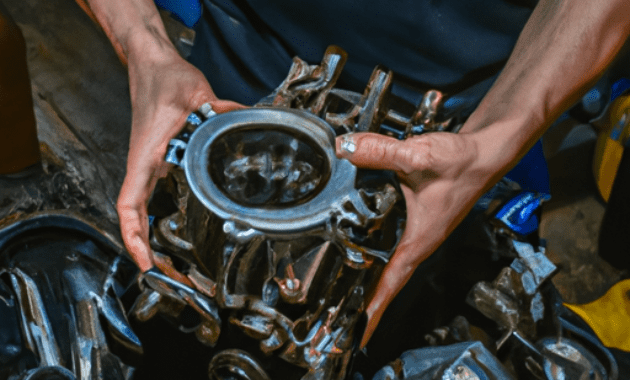
    Being a Udemy Instructor is an exciting job that requires a lot of dedication, creativity, and passion for teaching. With over 130,000+ courses and 40+ million students, Udemy has provided a learning platform to various individuals who want to learn and enhance their skills. However, to keep up with the evolving needs of students, instructors need to stay updated with the latest teaching trends and course design best practices. Udemy’s new Instructor Certification Program is aimed at addressing this challenge.

    The program consists of two levels: Udemy Approved and Udemy Premium. The Udemy Approved level is designed for instructors who are new to the platform or have not created courses in a while. The course focuses on teaching essential skills such as course creation, production quality, and student engagement. Once the instructor completes the Udemy Approved level, they earn an Udemy-Approved Badge, which signifies their skill level.

    The Udemy Premium level is targeted at experienced instructors who want to take their teaching skills to the next level. The course covers advanced topics such as course marketing, instructional design, and student retention. The program culminates in an assessment that evaluates an instructor’s teaching skills, student engagement, and course design. Instructors who complete the Udemy Premium level earn an Udemy Premium Badge, which showcases their exceptional teaching expertise on the platform.

    The Udemy Instructor Certification Program is designed to help instructors enhance their skills, improve their courses, and increase their student engagement. Instructors who earn Udemy-Approved and Udemy Premium badges provide students with confidence in the quality of their courses. The certification process also helps create a more robust and knowledgeable instructor community by providing feedback and best practices to enhance teaching skills.

    In conclusion, Udemy’s new Instructor Certification Program highlights the importance of continued development and teaching excellence on the learning platform. It provides instructors with a valuable opportunity to learn new skills and refresh their teaching methods to provide better learning experiences to their students. The program is a significant step towards creating a more robust and knowledgeable instructor community, which will help to provide students with high-quality courses worldwide.

  • Discovering Local Small Engine Repair Services Near You

    Discovering Local Small Engine Repair Services Near You

    Small engine repair services are essential in maintaining and repairing the machines that make our lives easier each day. From lawn mowers to snow blowers, small engines require consistent maintenance and repair work to stay in working order. But, finding a reliable and competent small engine repair service provider can be a daunting task.

    A quick search online can reveal many options, but how do you choose the best service provider for your needs? Here are some tips to help you discover local small engine repair services near you:

    1. Ask family and friends for referrals

    The best place to start your search for small engine repair services is by asking family and friends who have used these services before. Referrals from people you trust are often the best starting point when it comes to finding professional services. Ask these individuals about the quality of work done, the timeliness of service, and the overall experience they had with the provider. This information can help you determine whether it’s worth reaching out to the provider.

    2. Check online reviews

    Online reviews can provide useful insight into the experiences of past customers with small engine repair services near you. Websites such as Google, Yelp, and Angie’s List can provide ratings and reviews from multiple customers. Look for service providers with high ratings and a lot of positive reviews. However, don’t just rely on high ratings alone. Take the time to read through individual reviews to gain a full understanding of what to expect when working with a particular service provider.

    3. Local directories

    Local directories such as the Yellow Pages can also provide a list of small engine repair services in your area. These directories list service providers based on their location in different areas so that you can easily find options that are close to you. You can also look for online directories that list service providers based on location and service type, and these directories will provide more detailed information like phone numbers, email addresses, and even the price range of different providers.

    4. Check for certifications and licensing

    When looking for small engine repair services, check for certifications and licensing. Certifications mean that the repair shop is trained and qualified to work on small engines. Licensing ensures that the provider is registered with the relevant local government authority and has met the necessary requirements to legally offer their services. Make sure to confirm that the provider is licensed and certified before any work is done.

    5. Visit the shop

    Before having any repair work done, take a visit to the shop to evaluate the facility, equipment, and customer service. Take note of how organized the shop is and how clean the work area is. You want to work with a provider that values cleanliness and orderliness, as it shows they take pride in their work. Meet with the repair technicians and ask questions about the type of repairs they specialize in, how long they’ve been in business, and what their experience level is. This information can help you determine whether their services are a good match for your needs.

    6. Consider the price

    Price is also a crucial factor when choosing a small engine repair service provider. While many providers offer competitive pricing, consider other factors like service quality, experience, and customer feedback before making a final decision. Be wary of low pricing, as this may indicate lower-quality service or inexperienced technicians. On the other hand, high prices don’t necessarily guarantee excellent service. The key is striking a balance between affordability and the quality of the service.

    7. Consider overall convenience

    When choosing a small engine repair service provider, it’s also important to consider convenience. Look for a provider that is nearby your location (or one that will come to you for a fee) and offers flexible service hours. You don’t want to waste valuable time and energy driving across town to get maintenance or repair work done. Also, ensure that the repair shop offers a variety of services, as you may need other services in the future, such as engine replacement or tune-ups.

    In conclusion, finding a reliable and trustworthy small engine repair service provider near you can be challenging, but not impossible. With a little research and careful consideration, you can find the best provider for your needs. Consider reaching out to friends and family for referrals, checking online reviews and local directories, confirming certifications and licensing of providers, visiting the shop, and considering overall convenience and pricing. By using these tips, you can find a small engine repair service provider that meets your expectations and helps keep your small engines running smoothly.

  • Borobudur Temple Entrance Fee Increased: Here’s What You Need to Know

    Borobudur Temple Entrance Fee Increased: Here’s What You Need to Know

    Borobudur Temple, a UNESCO World Heritage Site located in Central Java, Indonesia, has recently raised its entrance fee. Visitors to the temple are now required to pay Rp 5000 more than the previous ticket price, bringing the new entry fee to Rp 40,000 (approximately US $2.70 or EU €2.30).

    The decision to increase the entrance fee has been met with mixed reactions from tourists and locals alike. Some feel that the new fee is still affordable, while others worry that it may deter lower-income individuals from visiting this significant religious and cultural landmark.

    Borobudur Temple is a Buddhist temple built during the 8th and 9th centuries. It is the world’s largest Buddhist temple, and it attracts millions of visitors each year. Visitors to the temple climb the temple’s nine levels, with each level representing a different stage of enlightenment. The temple’s intricate carvings and reliefs, the largest being over 2 meters high, are a testament to the skill of the ancient Javanese people who built it.

    The decision to increase the entrance fee was made by the Indonesian government, citing the need for additional revenue to maintain the temple and its surroundings. The increased rate is still lower than other popular cultural and historical attractions in the region. For example, the Angkor Wat Temple in Cambodia charges $37 for a one-day pass.

    While the entrance fee increase may be a slight inconvenience for budget-conscious visitors, the added revenue will help fund vital maintenance and preservation efforts. Borobudur Temple is not only a representation of Indonesia’s rich cultural heritage but is also an important religious site for Buddhists around the world. The increased entrance fee will help ensure that the temple remains accessible for future generations to experience and appreciate.

    Visitors to Borobudur Temple can take advantage of guided tours that provide a deeper understanding of the temple’s history and significance. The temple is open daily from 6 am to 5 pm, and the entrance fee goes towards the maintenance of the temple and its surroundings. Visitors are reminded to dress modestly and remove shoes before entering the temple.

    In conclusion, while the increase in the entrance fee of the Borobudur Temple may be a setback for some visitors, it is a necessary measure to ensure the temple’s continued preservation and to maintain its cultural and historical significance. With the added revenue, the Indonesian government can continue to protect and showcase this valuable piece of the country’s heritage for generations to come.