Category: History

  • The story and example of the Prophet Ishaq AS which should be used as a lesson!

    The story and example of the Prophet Ishaq AS which should be used as a lesson!

    As a Muslim, you are familiar with the stories of the Prophets that are often told during religious lectures at mosques, schools, and other religious events. These stories are not mere fables, but true accounts of historical events that occurred centuries ago and have contributed to the development of Islamic religion until today. Faith in the Prophets and Messengers is the fourth pillar of faith, and it is important for Muslims to study and understand the stories, miracles, history, and journeys of all 25 Prophets and Messengers.

    Believing in the Prophets and Messengers can motivate us to be more active in worshiping Allah Ta’ala, refrain from prohibited actions, and emulate the attitudes and behaviors of the Prophets and Messengers who had honest and true faith.

    Prophet Ishaq (AS) was no exception. He was the son of Prophet Ibrahim (AS) and brother of Prophet Ismail (AS), who also conveyed the message of Allah SWT to spread goodness and the command that there is no god but Allah. Despite facing various obstacles while conveying Islamic teachings, Prophet Ishaq (AS) remained patient and determined to persevere.

    It is, therefore, beneficial for us as Muslims to emulate the qualities of Prophet Ishaq (AS) as a guide to living a righteous life in this world and to always do good and believe in the power of Allah SWT.

    To serve as a guide for our everyday life, we have summarized the example of Prophet Ishaq (AS) in this discussion so that Sinaumed’s friends can learn and practice it.

    Furthermore, we have presented the discussion below!

    History of the Prophet Ishaq AS

    As a part of the history of the development of Muslims, researching the history of a figure, especially that figure is a prophet, it is also a good idea to pay attention to the history of this figure briefly to find out how his role was in life in fighting for God’s commands. In this discussion, the character in question is the prophet Ishaq AS, we have presented the history of his life below.

    1. Birth of the Prophet Ishaq

    In surah As-Saffat verses 112 to 113, Allah SWT says:

    وَبَشَّرْنٰهُ بِاِسْحٰقَ نَبِيًّا مِّنَ الصّٰلِحِيْنَوَبٰرَكْنَا عَلَيْهِ وَعَلٰٓى اِسْحٰقَۗ وَمِنْ ذُرِّيَّتِهِمَا مُحْسِنٌ وَّظَالِمٌ لِّنَفْسِهٖ مُبِيْنٌ ࣖ –

    Meaning: “And We gave him good news with (the birth of) Isaac a prophet who was among the pious. And We bestow blessings on him and on Isaac. And among the descendants of the two there are those who do good and there are (also) those who openly do injustice to themselves.”

    It is said that one day Allah SWT sent an angel to meet Prophet Ibrahim AS. They gave two news to the prophet who is known as Abul Anbiya or the father of the prophet. The first news that was conveyed was the revelation of Allah SWT’s punishment on the Sodomites who had disobeyed His commands.

    In surah Hud verses 69 and 70 it is stated: “And Our messengers (the angels) came to Ibrahim with good news, they said, “Congratulations.” He (Ibrahim) replied, “Congratulations (on you).” So not long after that Ibrahim served roasted veal meat “.

    Then, “So when he saw that their hands did not touch him, he (Ibrahim) suspected them, and was afraid of them. They (angels) said, “Do not be afraid, indeed we were sent to the people of Lut”.

    Another news related to Siti Sarah’s pregnancy. As the wife of Prophet Abraham, Sarah was never blessed with children. After all, he was already about 90 years old at that time. Prophet Ibrahim himself was almost 120 years old. Hearing the news, both of them were quite surprised. Because seeing old age, Allah SWT really gives His grace in the form of children. Plus his wife, Siti Sarah, who was provoked to ask questions when she heard the news.

    In Surah Hud verses 71-71 it is written: “And his wife stood and smiled. Thus We announced to him the birth of Isaac and after the birth of Isaac, Jacob will be born. gave birth to children and my husband is very old? This is really something extraordinary.” After receiving the “guest”, the two returned to their daily lives. With the permission of Allah SWT, Siti Sarah then became pregnant when she became old. Then little Ishaq was born as the second son after Prophet Ibrahim Ismail with another mother, Ismail himself was about 14 years old at that time.

    The name Ishaq comes from the Hebrew word Yiṣḥāq, which means to laugh/smile. The word came from her mother Sarah, who smiled in disbelief after receiving the good news from the angel. He is a character in the Koran, the Bible, and the Tanakh. He was the son of Prophet IbrahIm with Siti Sarah and became the father of Prophet Jacob.

    Ishaq is the second son of Abraham. His mother was Siti Sarah, who was Ibrahim’s first wife. Ishaq has a half-brother, Ismail, sons Ibrahim and Hajar, and another half-brother, sons Ibrahim and Ketura.

    Isaac is considered a prophet in Islam. Although his name is mentioned quite a lot compared to other prophets, his story in the Qur’an, according to some scholars, is only news about his birth or murder. The remainder of his life is generally processed by Jewish and Christian sources. The Qur’an does not tell about Isaac’s preaching to specific people, but mentions that he always reminded people about the hereafter.

    His name is often associated in the Qur’an with Abraham and Ya’qub and several other prophets, confirming his status as a prophet, a pious and religious figure and given instructions by God to give revelation and guidance. Ishaq is also said to have great strength and high knowledge. It is also stated that Allah gave to his descendants a book and a prophet. Muslims are also commanded to believe in Allah’s revelations, as well as those revealed to Muhammad and other prophets, including Isaac, and are also instructed not to discriminate between prophets and to obey Allah.

    2. Death of the Prophet Ishaq

    Like the other prophets and messengers of Allah, the Prophet Isaac also died. His death age was 180 years, making him very old.

    Before the death of the prophet Isaac, there was a dispute between his servants. Even though he died, there are still many remnants of Prophet Ishaq’s example in the form of life lessons for his people.

    Prophet Ishaq never gave up spreading the teachings of Allah’s religion so that they could make this religion their way of life.

    Because of his determination to uphold justice and spread the teachings of Allah’s religion, he was able to escape the terrible torments of hellfire.

    The Prophet Ishaq was finally buried in Palestinian land, precisely in the Makhpela cave. He was buried with his parents, Sayyidina Sarah and Prophet Ibrahim.

    Prophet Ishaq received many favors and gifts from Allah SWT during his life. This is certainly comparable to his struggle to spread the truth in the world.

    As good Muslims, we must be able to practice the example of Prophet Ishaq in our daily lives, so that we can always share God’s pleasure.

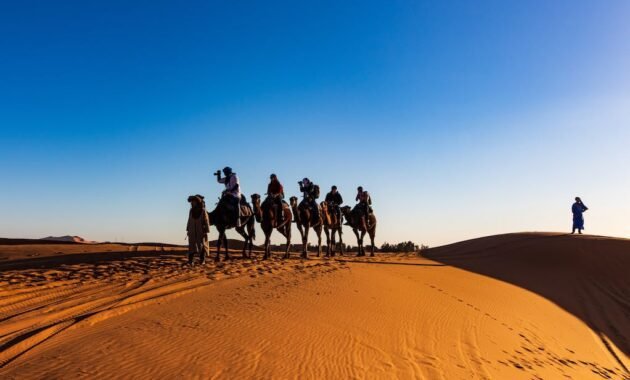
    Free Full body cute camels in colorful saddles resting on sandy desert dunes during hot day Stock Photo

    Follow the story of the Prophet Ishaq AS

    1. Prophet Ishaq really loved his parents, wife, children and people. This makes him continue to spread kindness to his people.

    There was a time when Sarah, the mother of the prophet Isaac, died first. When Prophet Ibrahim was the father of Prophet Ishaq, his condition began to grow old and Prophet Ishaq himself was not married at that time.

    Finally, Abraham’s servant was told to find a wife for Prophet Ishaq. Then this maid searched all the way to Iraq to find a suitable wife for Prophet Ishaq.

    The servant finally brought Prophet Ishaq to a woman named Rebekah/Rifqah. Finally they both got married when Prophet Ishaq turned 40 years old.

    At the age of 40, Prophet Ishaq decided to marry and start his own family. Prophet Ishaq was reported to have married a woman named Rafqah bint Batuil. However, it turns out that the trials faced by his father and mother. Prophet Ishaq also experienced it. His wife Rafqah is also said to be a barren woman.

    Prophet Isaac continued to pray to Allah. He was born thanks to a miracle from Him. So it’s not impossible that God sent back a miracle. Prophet Ishaq and his wife continued to pray with hope and faith.

    After a long wait, the fruit of her patience came, Rafqah became pregnant and it turned out that God had given her twins. The child was named Iis or Esau and Jacob. How happy Prophet Ishaq was in his old age when Allah SWT bestowed him with twins.

    Then one of his sons later became an apostle. He was Prophet Yaqub and later became the father of Prophet Yusuf, Benjamin and his brothers. And his son, Ya’qub bin Ishaq, who was the forerunner to the formation of the Children of Israel or the Israelites. Prophet Jacob was the son of Prophet Isaac and his mother’s name was Rafiqah. He is also the grandson of Prophet Abraham. Prophet Jacob had a twin brother named Esau/Isu. Prophet Jacob’s parents hoped that their twins would become pious children and follow in the footsteps of their grandfather, Prophet Ibrahim.

    In order for this to happen, the prophet Isaac gave his two sons a series of religious lessons and often gave them advice and advice. One thing that the Prophet Isaac always taught was that his two sons should avoid jealousy and envy, immorality and enmity.

    The Prophet Isaac always emphasized that his two sons always loved peace and work, so that his two sons always believed in Allah.

    Such is the form of love shown by the prophet Ishaq AS for his parents, children and family, he loved them very much until he was even close to death. In fact, he (Prophet Ishaq) complied with his father’s will to find a mate for him and was willing to propose to the girl his father’s choice had given by his servant.

    2. Patience Brings Blessings

    After their marriage, Prophet Isaac and his wife waited for the birth of their child. However, later it was revealed that Rebekah, who became Prophet Ishaq’s wife, was in fact infertile, so they had difficulty conceiving children.

    That is why the Prophet Ishaq and his wife tried to pray to Allah SWT so that they would be given offspring. Prophet Ishaq always prayed with sincerity and confidence to have children.

    Because of the persistence of Prophet Ishaq and his wife and the permission of Allah SWT, their prayers were finally answered and Rebekah became pregnant with twins. At that time, Prophet Ishaq was known to be 60 years old.

    The first son was named Esau, and the second son was named Jacob. The story of the birth of the Prophet Jacob is recorded in the Qur’an, namely in Surah Al-Anbiya verse 72 which means:

    “And We have given him (Ibrahim) Isaac and Jacob, as a gift (from Us). and each of them We made righteous people.”

    Over time, the children of the prophet Ishaq began to grow, namely Esau and Jacob, but among them they had completely different personalities and interests. Esau wanted to perfect his hunting skills to become a skilled hunter.

    While Jacob has a gentle nature. He prefers to stay at home and help his parents. Jacob was also told that he liked to set up camp around his house.

    Esau’s character turned out to be inherited from his father and was very similar to his father’s. At the same time, the gentle nature of Prophet Jacob was inherited from his mother.

    When Esau and Jacob reached the age of 15, Prophet Abraham, who was their grandfather, was destined to die. Prophet Ibrahim is known to have died at the age of 175 years. His body was buried near the grave of his wife Siti Sarah.

    3. Do not hold grudges between brothers

    After old, Prophet Ishaq’s eyesight began to decline. Prophet Ishaq was afraid that he would die anytime, so he told his son Esau to hunt and prepare his favorite food so Isaac could pray for blessings for his older son.

    Then his wife Rebekah, knowing Ishaq’s intentions, told Ya’qub to serve Ishaq some food before Esau returned from hunting. Then Rebekah put Esau’s clothes on Jacob and sheepskins on Jacob’s arms and neck, because Esau was a sharp hunter. When Jacob offered food, and when Prophet Ishaq touched Jacob’s body, and said: If it is a voice, it is Jacob’s voice; if it is a hand, it is Esau’s hand.

    After eating the dish, Ishaq prays for Ya’qub, whom he thinks is his firstborn son Esau, that he will be blessed with goodness, lots of food, and that he will be the lord of his brother and his descendants.

    After Jacob left, Esau came to Isaac and offered him the food his father had asked for. But Ishaq says he eats and prays for him. Ishaq and Esau then knew that it was Ya’qub who had come. Esau weeps for his father, but Ishaq says his prayers cannot be changed. Esau then promised to kill Ya’qub when Isaac died.

    Knowing Esau’s threat, Rebekah told Jacob to go to the house of Laban, Rebekah’s brother, in Mesopotamia. Before leaving, Ishaq prayed for Ya’qub and forbade Ya’qub to marry Palestinian women because most people in the area did not believe, so Ishaq told Ya’qub to find a wife in Mesopotamia from the Abrahamic family in Mesopotamia.

    After that, Ya’qub left Palestine. Esau heard that his father did not like Palestinian women, even though he had already married two Palestinian women, so he looked for other wives. His third wife was Mahalat, daughter of Ishmael.

    Conclusion

    That’s all for a brief discussion of examples from the story of Prophet Ishaq AS. From the story of the prophet Ishaq AS mentioned above, there are many examples that we can learn and lessons that we can learn to live our daily lives. Reading and emulating the story and character of Prophet Ishaq AS teaches us to always obey and be patient with every test given by Allah SWT.

  • 15 List of Relics of the Hindu Kingdoms that are Scattered in Indonesia

    15 List of Relics of the Hindu Kingdoms that are Scattered in Indonesia

    Relics of the Hindu Kingdom – Indonesia is a country that has a lot of wealth. In fact, in terms of its own culture, Indonesia can be said to be very rich.

    If we go back to studying history, Indonesia is one of the countries that once had a kingdom with a Hindu religion. Until now, evidence of the relics of the Hindu kingdom has also been abundant.

    The relics of the Hindu kingdom are currently used as a medium of learning from generation to generation until they become a form of cultural heritage. Of course, we as a good nation must continue to maintain what has been left by our ancestors.

    The splendor of every heritage of the Hindu kingdom makes us even more able to think that long ago our ancestors were able to make something so amazing, beautiful, amazing, complex that it had cultural elements that could be used as a lesson for the next generation.

    In this article, we will discuss some of the relics of Hindu kingdoms that have been found in Indonesia. Therefore, if you are curious about the relics of the Hindu kingdom, here is a complete explanation.

    Characteristics of Hindu Temples

    One form of heritage of the Hindu kingdom in Indonesia is the temple. There are many temples that stand firm and have their own beauty with Hindu patterns and exist in Indonesia. In fact, some of you may already know what these temples are.

    Interestingly, actually in Indonesia there are not only temples relics of the Hindu kingdom. But there are also temples with patterns of other religions such as Buddhism. So, of course, Hindu temples will have different characteristics from Buddhist temples.

    Therefore, before we go further in knowing what are the relics of the Hindu kingdom. It would be better, if we also know what are the characteristics or characteristics of Hindu temples, here are their characteristics.

    1. At the entrance to Hindu temples there is usually a kala head which is equipped with the lower jaw.
    2. Hindu temples usually have a slimmer shape.
    3. In general, Hindu temples are grouped or complex in that there are several temples within the area and the main one will be at the back of the ancillary temples such as the Prambanan Temple.
    4. Hindu temples will usually have a statue of the goddess Trimurti
    5. The top of a Hindu temple is usually in the shape of a pearl
    6. Hindu temples in general will have three building structures. Starting from Bhurloka, Bhuvarloka, and Svarloka
    7. Hindu temples will usually have a function as a burial place for kings and places of worship to the gods in Hindu religious beliefs.

    Some Relics of the Hindu Kingdom in the Form of Temples

    Historical relics with Hindu motifs such as temples, inscriptions to literary works have been found in Indonesia. For example, Prambanan Temple and various other temples that are spread out all over Indonesia.

    The existence of relics in various parts of Indonesia cannot be separated from the long history of the process of spreading Hinduism in the archipelago in the past. In fact, until it could form the same empire spread across various regions of the archipelago.

    Starting from the Kutai Kingdom which turned out to be the oldest Hindu kingdom because according to history it had been established since 500 AD to the Majapahit Kingdom which was established in 1292 AD which at that time had a war leader who was so dashing, strong and famous, namely Gajah Mada.

    Until now, we can still enjoy the existence of the legacy of the Hindu kingdom as a learning medium. Below, there are some relics of the Hindu kingdom which you can read in full.

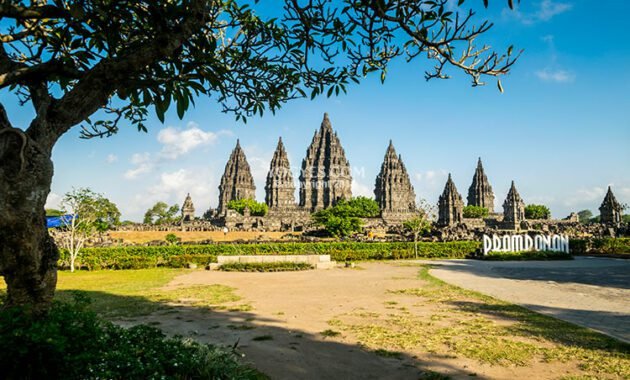
    1. Prambanan Temple

    prambanan-temple

    Prambanan Temple is a Hindu temple located in the village of Prambanan or on the border of Central Java and Yogyakarta. Prambanan Temple is estimated to have been built since the 9th century AD.

    The establishment of Prambanan Temple is used for the existence of the Trimurti such as Brahmins, Vishnu and Shiva. Actually, Prambanan Temple has the original name Siwagrha which comes from Sanskrit with the meaning of Shiva’s House when seen from the Siwagrha Inscription.
    Prambanan Temple also has a Shiva Mahadeva event with a height of about three meters in the main hall or garbagriha.

    This shows that Prambanan Temple prioritizes the god Shiva. Interestingly, Prambanan Temple is also the most beautiful temple in Southeast Asia. The architecture of Prambanan Temple is seen as a tall and slender building, the same as in other Hindu temples. In addition, UNESCO has also determined that Prambanan Temple is one of the world heritage sites along with the Buddhist Borobudur Temple.

    The main temple in the Prambanan temple complex has a size of 47 meters which is in the middle of other small temples. It is estimated that Prambanan Temple has existed since 850 AD when viewed from the Siwagrha Inscription, which subsequently developed during the Medang Mataram Kingdom during the reign of Balitung Maha Sambu.

    2. Dieng Temple

    Dieng Temple

    Next, there is the Dieng Temple which is also included in one of the temples with a Hindu style. Dieng Temple is a 7th century masterpiece building from the Sanjaya Dynasty. Dieng Temple itself is located on the Dieng Plateau, Central Java.

    Previously there were around 400 temples in the Dieng Temple complex area. This makes the Dieng area often referred to as the Javanese Hindu Temple Complex. Even so, the number of 400 temples has begun to decrease to only a few temples.

    Dieng Temple has northern Javanese architecture which is almost similar to Gedong Songo Temple and Clown Temple in East Java as well as Cangkuang Temple and Bojongmenje Temple in West Java. The characteristics of this architecture are simple style, few ornaments and relatively small size.

    Evidence in the form of inscriptions found in the area shows that the Dieng Temple complex has existed since the 8th and 9th centuries AD. The construction of the Dieng Temple is used as a form of embodiment of the community’s devotion to Lord Shiva and Sati Shiva or Shiva’s wife.

    Of the 21 existing buildings in the Dieng Temple complex, they are divided into 5 groups. Where the 4 groups of temple buildings are in the form of ceremonial sites or places of worship as the Arjuna Temple Group (Pandawa 5), ​​Gatotkaca Temple Group, Bhima Temple Group, Dwarawati/Parikesit Temple Group, Magersari Temple Group.

    Then, for the fifth group in the Dieng Temple complex, they are buildings used as residences or what can be called settlement sites, where currently only ruins remain in the Arjuna temple complex area.

    It should also be noted that another temple complex was recently discovered, namely Setyaki Temple.

    3. Gedong Songo Temple

    Gedong Songo Temple

    Gedong Songo Temple is one of the cultural heritages that has a Hindu style. Gedong Songo Temple itself is located in the village of Candi, Bandungan, Semarang Regency, Central Java province.

    Like Dieng Temple, Gedong Songo Temple is also one of the relics with a Hindu style which is located on a plateau around 1,200 meters above sea level. More precisely, Gedong Songo Temple is located on the slopes of Mount Ungaran.

    With this altitude, the air temperature in the Gedong Songo Temple area is quite cold, which is between 19 and 27 degrees Celsius. The 9 temples in the Gedong Songo Temple complex are located in different places with quite a distance. Even so, Gedong Songo Temple is still able to offer such beautiful natural scenery.

    Currently, Gedong Songo Temple has several other tourist attractions such as a hot spring bathing area from sulfur-containing springs, camping areas, horseback riding tours and several other facilities.

    In 1804, Raffles managed to find the Gedong Songo Temple for the first time. Gedong Songo Temple is also included as a Hindu cultural heritage from the 9th century Syailendra Dynasty or around 927 AD.

    4. Asu Sengi Temple

    Asu Sengi

    Asu Sengi Temple is a Hindu-style temple located in Candi Pos Hamlet, Sengi Village, Shaman District, Magelang Regency and is located on the western slopes of Mount Merapi or on the banks of the Tlingsing Pabelan River.

    The local community gave the name Asu Sengi Temple when they first discovered the Lembu Nandi statue, but it was in a damaged condition and more like the shape of a dog or if in Javanese it is called asu.

    Besides having an amazing view, Asu Sengi Temple is also often used as a place to hold traditional ceremonies for the local community.

    5. Umbul Temple

    Umbul Temple

    Umbul Temple is located in Candi Umbul Hamlet, Kartoharjo Village, Grabag District, Magelang Regency. Where the Umbul Temple was included as a relic of the Hindu Mataram Kingdom during the Syailendra dynasty.

    Apart from offering a very cool atmosphere and views of the rice fields that are so beautiful. Umbul Temple also has two large and small ponds which are often used as bathing places by visitors.

    6. Clero Temple

    Next is Klero Temple which is also a Hindu temple and is located in Ngentak Lor, Klero, Tengaran District, Semarang Regency. The location of Klero Temple is actually quite strategic and easy to find because it is on Jalan Raya Salatiga-Solo and not far from the Tengarang market.

    Even so, the existence of Klero Temple is quite rarely visited. Until now, the existence of Klero Temple is very well maintained and well maintained. Having a relatively small size makes visitors not easily tired when visiting Klero Temple.

    7. Pringapus Temple

    Pringapus Temple is located in Temanggung, Central Java and is currently also a tourist destination in the area. Pringapus Temple is located in an area that is still well maintained so that the environment allows visitors to capture the moment they are in this tourist attraction.

    At certain times, visitors can see such a beautiful view from Pringapus Temple. The existence of Pringapus Temple is often used for local community traditional ceremonies and of course visitors can see it.

    8. Ngempon Temple

    Ngempon Temple often referred to as Candi Muncul is one of the relics of the Hindu kingdom. According to the story, Ngempon Temple was formerly used as a training ground used to train people to become masters or mpu.

    Even so, currently the existence of Ngempon Temple is relatively empty of visitors. In the Ngempon Temple area there is also the Petirtaan Derek Hot Spring that visitors can visit. Ngempon Temple is located in Klego, Ngempon, Kec. Bergas, Semarang Regency, Central Java.

    9. Jago Temple

    Judging from the information in the Negarakertagama and Pararaton books, Jago Temple has the original name Jajaghu. The name Jajaghu itself means Majesty, just as the main purpose of the construction of Jago Temple was used to honor King Sri Jaya Wisnuwardhana who is also King Singasari who adheres to the Shiva Buddhist religion.

    Shiva Buddhism itself is a flow of blending Hindu and Buddhist teachings. The construction process of Jago Temple itself uses andesite rock material. Then, Jago Temple also has Kunjarakarna and Pancatantra reliefs. Jago Temple is located on Jl. Wisnuwardhana, Roggowuni, Overlapping, Kec. Tumpang, Malang Regency, East Java.

    10. Gupolo Arca Temple

    Unlike the heritage sites of previous Hindu kingdoms, Arca Gupolo Temple is a heritage site with Hindu roots consisting of a collection of 7 statues. The name Gupolo itself was given by local residents to the Agasta statue which is also one of the statues on the Gupolo Arca Temple site. Close to Arca Gupolo Temple, there is a clear spring that never dries up during the long dry season.

    11. Sukuh Temple

    Furthermore, there is the Sukuh Temple which is also included in the list of temples with a Hindu style. The temple which is located in the Tambak area, Berjo, Kec. Ngargoyoso, Karanganyar Regency, Central Java has a pyramid-like shape.

    Not only that, the article in Sukuh Temple has reliefs and statues that depict human genitalia explicitly. In 1995, Sukuh Temple was proposed to UNESCO as a world heritage site.

    Relics of the Hindu Kingdom in the Form of Inscriptions and Books

    Apart from temples, there are also relics from the Hindu kingdom in the form of inscriptions and books, including:

    1. The Kutai Inscription

    The Kutai inscription is one of the legacies of the next Hindu kingdom. Where the Kutai Inscription or Mulawarman Inscription is a relic of the Kutai Kingdom in East Kalimantan. This inscription was first discovered near the headwaters of the Mahakam River which is also part of the Kutai Kingdom. The inscription itself is a document or certain important information which is written on stone or metal media.

    Then, for the Kutai Inscription itself, it contains the story of King Mulawarman who gave many cows to the Brahmins. The inscription states that King Mulawarman was the son of Aswawarman and grandson of Kudungga. While the language used in the Kutai Inscription is Pallawa letters and Sanskrit.

    2. The Ciaruteun Inscription

    The Ciaruteun inscription is also one of the relics with a Hindu style. The Ciaruteun inscription itself was found on the banks of the Ciaruteun River, near the mouth of the Cisadane River, Bogor, West Java. Where the Ciaruteun Inscription is believed to be a relic from the Tarumanegara Kingdom. Then the writing of the Ciaruteun Inscription itself uses Pallawa letters and Sanskrit.

    3. Bharatayudha book

    The Bharatayudha Book is a work of literary art created by Mpu Sedah and Mpu Panuluh. Where the Bharatayudha Book is a literary work that existed in the era of the reign of the Kingdom of Kediri. The Bharatayudha book was completed in 1079 Saka or on 6 November 1157 AD.

    The contents of the Bharatayudha Book are sourced from the Mahabharata which describes the victory of the Pandavas over the Kauravas in Padang Kurusetra or better known as the Bharatayudha War.

    4. Hariwangsa Book

    The Hariwangsa Book is a work of literary art written by Mpu Panuluh in 1135 to 1157 AD. The Hariwangsa Book is also included in historical heritage with a Hindu style that existed during the reign of the Kingdom of Kediri. The Hariwangsa Book itself tells of King Kresna, the incarnation of the god Vishnu who married Dewi Rukmini from Negeri Kundina who is also the incarnation of Dewi Sri.

    Closing

    Well, that’s a review of some of the relics of Hindu kingdoms in Indonesia. By reading the information above, we have become more aware of the history in Indonesia.

    If you want to find books about kingdoms in Indonesia, then you can get them at sinaumedia.com. Reading lots of books and articles will never hurt you, because Sinaumed’s will get #MoreWithReading information and knowledge .

    Author: Hendrik Nuryanto

    Source:

    • Hindu-Buddhist Temples in Indonesia: Characteristics of Hindu-Buddhist Temples in Indonesia
    • Hindu-style historical heritage in Indonesia
    • Indonesian Hindu-Buddhist Temple (Edu)

    Also read:

  • 13 Organizations of the Indonesian Freedom National Movement in 1900-1945

    National Movement Organization – Talking about Indonesian history is endless. Indonesian history has its own story and long journey. To become the great nation it is today, this nation was built by great Indonesians who fought for Indonesian independence. Even after independence, the people of Indonesia are still struggling to build the country on their own.
    In practice, Indonesian people unite in small groups and are even stronger to carry out movements within the organization. The emergence of organizations that brought the movement of Indonesian nationalism came from various groups. Starting from student groups, nationalists, secular schools, professional movements, to the women’s movement.

    The movement of these organizations later became an important history for the Indonesian people. This proves that the Indonesian people are united in accordance with their respective abilities to fight against the invaders for the sake of national independence. Many stories and concepts of their thoughts are interesting to learn. We can learn a lot from the history of national movement organizations that involve many great and inspiring figures. In the following, Sinaumed’s can look at the history of how these organizations struggled and learn about the concept of organizational goals for the movement.

    A. Definition of National Movement Organization

    The national movement organization is a movement carried out by the Indonesian people who have an organizational goal to improve the fate or condition of the Indonesian people who both want to gain national independence.

    The background for the formation of this national movement was due to the awareness of the common suffering and misery that had befallen many Indonesian people during colonialism.

    That is why this movement organization is expected to be able to end the suffering of the Indonesian people, get a better situation, and make changes for the better. There are several important factors that make many national movement organizations emerge. These factors are domestic and foreign factors. The following details the factors for the emergence of national movement organizations that Sinaumed’s needs to know:

    1. Domestic Factors

      • As a result of the prolonged suffering of the Indonesian people due to colonialism and imperialism from the invaders
      • The birth of a progressive educated class
      • So far the struggle of the Indonesian people has only been regional in nature or not united in a larger force, so that it was easy to be silenced and broken by the colonialists

    2. Foreign Factors

      • As a result of Japan’s victory over Russia in 1905
      • There is a national awakening of neighboring countries such as India, the Philippines, China and Turkey against their colonizers
      • Starting from the entry of new ideas such as nationalism and democracy from outside the country of Indonesia

    B. Purpose of the National Movement Organization

    The goal of the national movement organization is to achieve the independence of the Indonesian nation which is free from the shackles of colonialism and foreign colonialism which are very detrimental to the nation. These national movement organizations seek to determine the fate of their own nation and also for the welfare of all Indonesian people.

    This national movement organization which consists of a group of people with an official membership structure has one goal to fight together for the common interest on behalf of the Indonesian nation. That is why the goals of this organization become smoother and better because they are towards the same goal.

    Within a certain period of time several national movement organizations were formed. Even after the organization is weak or collapses, a revival reappears to create a new, stronger movement organization.

    What are these organizations? The following is a list of national movement organizations that Sinaumed’s needs to know about in order to respect and emulate the struggles of the figures within them to fight the invaders more intelligently and strategically.

    C. List of Indonesian Freedom National Movement in 1900-1945

    1. Budi Utomo

    Budi Utomo is a national movement organization that arose as a result of very apprehensive living conditions since the enactment of ethical politics because the natives were able to get an education, but were still hindered by funds. That’s what makes dr. Wahidin Sudirohusodo tried to raise funds by means of propaganda around the island of Java.

    The idea was then accepted by dr. Sutomo, who at that time was studying at Stovia and finally on May 20 1908 he and his colleagues founded an organization in Jakarta called Budi Utomo.

    We then commemorate that day as National Awakening Day. The emergence of this organization then resulted in a response and reaction from the Netherlands. Some of the priyayi groups disagreed, but the regents turned out to be very supportive of Budi Utomo’s organization.

    2. Sarekat Islam

    Sarekat Islam (SI) is an association of traders which was previously named Sarekat Dagang Islam which was pioneered by KH Samanhudi who is a batik entrepreneur from the village of Lawean (Kolo).

    The background to the emergence of this organization was initiated because it wanted to offset so that competition could be overcome when facing foreign traders. However, in 1912 the Sarekat Dagang Islam changed to become the Sarekat Islam under the leadership of HOS Cokroaminoto, which consisted of all members of the community who were Muslims. It was from here that this organization began to focus on religious issues.

    The aim of the Sarekat Islam organization is to develop an Islamic economy as stated by Haji Umar Said Cokroaminoto. This organization was also growing and made the Netherlands worried because it was considered dangerous to the position of the Dutch government. For details on the history of the organization of the national movement Sarekat Islam, Sinaumed’s can read the book Gerakan Sarekat Islam which reveals the beginnings of the establishment of the Sarekat Dagang Islam.

    3. Indische Partij

    Indische Partij is a national movement organization founded by Ernest Eugene Francois Douwes Dekker or also known as Dr. Danudirja Setiabudi, dr. Cipto Mangunkusumo, and Suwardi Suryaningrat or popularly known as Ki Hajar Dewantara.

    The founders of this organization later became known as Tiga Serangkai which on 25 December 1911 formed the Indische Partij in Bandung. This organization has the privilege of being an organization that has a short life but its statutes serve as the foundation for Indonesian politics with mixed organizational status between foreigners and natives.

    Because of its very radical goals and principles of wanting an independent Indonesia, this organization was opposed by the Dutch government. Finally on March 4, 1913 this organization was closed and considered a banned organization.

    4. Indonesian Association

    The Indonesian Association is a national movement organization which was originally established under the name Indische Vereeniging by the Dutch in 1908, namely Soetan Kasajangan Soripada and RM Noto Suroto. But in 1923, this organization actually fought from afar to spearhead independence for Indonesia at that time.

    Furthermore, in 1925 this organization changed its name to the Indonesian Association which showed the identity of the nation and state and replaced the word Dutch East Indies.

    The figures involved in this organization are Mohammad Hatta, Cipto Mangunkusumo, and Suwardi Suryaningrat.

    5. Indische Sociaal Democratische Vereeniging (ISDV)

    Indische Social democratische Vereeniging (ISDV) is an organization founded on May 9, 1914 by Henk Sneevliet who is a member of the Dutch Social Democratic Labor Party. ISDV is an organization that embraces Marxism. It was this ISDV that later became the forerunner to the formation of the Indonesian Communist Party in December 1920.

    ISDV’s goal is to bring socialism in the Bumiputra community that is not only obtained by the heads of members who come from Europe. This organization also spread social democracy to the people of the Indies today, Indonesia. The popularity of the ideology of capitalism and liberalism in Indonesia was also spearheaded by the ISDV.

    6. Indonesian National Party

    The Indonesian National Party (PNI) is an organization formed by Ir. Soekarno on 4 July 192 engaged in political, economic and social fields. Then after the 1928 congress, PNI membership increased. This is what makes the Dutch government worried. Finally four PNI figures, namely Soekarno, Gatot Mangkoepradja, Maskoen, and Supradinata were arrested and sentenced by the Bandung court on December 29, 1929.

    The main goal of the PNI was the desire to achieve Indonesian independence. However, thanks to the arrest of Sukarno, all nationalist followers were afraid to act and gradually dispersed.

    7. Muhammadiyah

    Muhammadiyah is a national movement organization that has religious roots which was founded in Yogyakarta on 18 November 1912 by KH Ahmad Dahlan. The aim of this organization was a response to Budi Utomo’s suggestion to teach its members religion lessons, thereby making the Muhammadiyah group a modern religious organization. This organization began to move by establishing modern religious schools, orphanages, homes for the elderly and the poor, to medical centers and hospitals.

    The long and winding process of the Muhammadiyah organization is also described in a book by Agus Purwanto et al with the title Becoming Muhammadiyah.

    Muhammadiyah has an important role in preparing the resistance against foreign domination and Dutch influence. This organization is also effective in improving the education of the Indonesian people for the better. For details on the history of the Muhammadiyah national movement organization, Sinaumed’s can read the following book recommendations:

    Category : Social Sciences

    Book: Muhammadiyah Political Paradigm

    8. All Indonesian Youth Movement

    The All-Indonesian Youth Movement is an organization that emerged thanks to the bright spot of the influence of Budi Utomo which had an impact on all youth in Indonesia. In 1914, the Pasundan association was founded with the aim of increasing the degree of decency, intelligence, and expanding employment opportunities. Furthermore, on August 16, 1927, the United Minahasa organization was formed under the leadership of dr. Tumbelaka and Sam Ratulangi.

    As a result of a misunderstanding, the Celebes Sarekat was founded. Thanks to the enthusiasm of the Indonesian youth at that time, many youth organizations emerged, starting from the Sarekat Madura, the Timorese Union, and the Sumatran Sarekat. Youth organizations throughout Indonesia have developed thanks to the formation of regional youth associations.

    9. Scout Organization

    Scout association organizations were also born, apart from youth organizations, which were continuations of the original organizations. Initially, this organization only gathered youth groups who were fond of sports.

    The organization that was first born was the Javaansche Padvinders Organisatie (JPO) in 1916 in Solo. After that, an organization called Neda Indische Padvinders Vereeniging (NIPV) was born in 1917 among children of European descent.

    Furthermore, after 1920, this scouting organization grew which followed the development of nationalism.

    10. Student Park

    Taman Siswa is a national movement organization founded by Ki Hajar Dewantara in 1922 which aims to improve the culturally well-organized education system.

    The student park is a milestone in the arrangement of the development of national education to reach what it is today. This organization is run democratically and prioritizes the interests of the Indonesian people. It is this organization that raises awareness of the important role of national education in achieving independence.

    Taman Siswa had threatened the Dutch government because the prevention of the course of education was limited. Since then, Taman Siswa has been considered a wild school and its movements have been restricted. For details on the history of the Taman Siswa national movement organization, Sinaumed’s can read the following book recommendations:

     11. Indonesian Communist Party

    The Indonesian Communist Party is an organization that arose as a result of the split of the Sarekat Islam organization. The presence of this revolutionary group formed the red SI to influence the development of socialist thought in Indonesia.

    This organization was chaired by Semaun in December 1920. Until then on November 13, 1926 this party carried out an uprising in Java and Sumatra, but was still defeated by the Dutch colonialists.

    Simultaneously with the emergence of the PKI, Dutch Marxism was also born under the leadership of Sneevliet. The party’s political movement is a radical political organization, so its existence was banned by the Dutch government.

    However, Semaun, Darsono, and Alin continued to carry out the organization’s political activities in secret. For detailed history of the organization of the Indonesian Communist Party’s national movement, Sinaumed’s can read the following book recommendations:

    12. Indonesian Party (Partindo)

    The Indonesian Party was born because the Indonesian National Party (PNI) had become a banned party, so nationalist figures formed a committee to form a new party. On May 1, 1931, under Sartono’s leadership, a new association called the Indonesian Party was born. This organization hopes that the former PNI followers will join again.

    The aim of this organization is to achieve Indonesian independence. After Soekarno joined this organization, Partindo followers also grew. This apparently made the Dutch government anxious again, until finally Soekarno was again arrested and exiled to Ende on August 1, 1933.

    13. Women’s Movement

    The Women’s Movement was pioneered by RA Kartini who participated in the struggle for independence. This organizational idealism became known as the Emancipation of women who grew from Kartini’s aristocratic environment.

    It was from here that Kartini began to realize the knowledge she had learned from the west to advance education for women. Then came the movement of Indonesian women.

    Apart from that, there is also a Wife priority school run by Raden Dewi Sartika in the Pasundan area and a women’s organization called Sopa Tresna is also established in Yogyakarta.

    This women’s movement then became more massive and emerged, such as Aisyiyah from the Muhammadiyah organization, Minangkabau Wife Kautamaan Organization in Sumatra, and the De Gorontalo Sche Mohammedaansche Vrouwen Vereeniging organization in Minahasa which became a milestone in the birth of women’s organizations that helped the national awakening movement.

    So, those are some of the national movement organizations that were victorious in their time. Is Sinaumed’s still unfamiliar with some of the national movement organizations above? Maybe some Sinaumed’s already know from history or social science lessons at school. Each of the above organizations has their own story and journey in fighting for the Indonesian nation.

  • The History of Borobudur Temple and Its Origin Story

    The History of Borobudur Temple and Its Origin Story

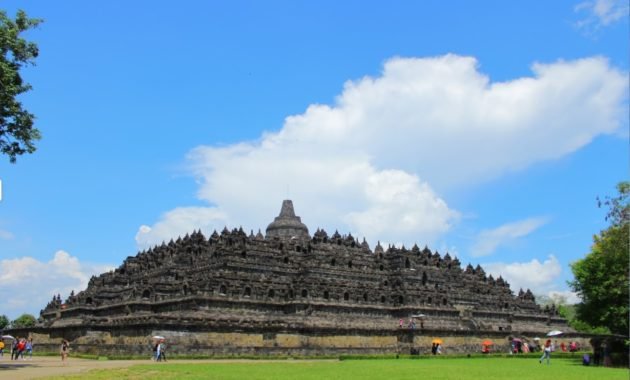
    Borobudur Temple is a Buddhist temple located in the city of Magelang, Central Java province. Borobudur Temple is the largest Buddhist temple or temple in the world, as well as one of the largest Buddhist monuments in the world. Because of its splendor and majesty, the temple which was built in the 8th century has been designated by UNESCO as one of the world’s cultural heritages (world heritage).
    Borobudur temple was built during the reign of the Syailendra dynasty. This stupa -shaped was erected by Mahayana Buddhists during the reign of the Syailendra dynasty. History of the establishment of Borobudur Temple was built in the 8th century.

    The origin of the Borobudur temple is still shrouded in mystery, regarding who the founder of the Borobudur temple was and what was the initial purpose of building this temple. Many stories and stories of the Borobudur temple are circulating which are now known as local folk tales.

    The temple building was built in the 8th century AD. This temple was inaugurated as a tourist spot on July 15, 1980. Then, Borobudur temple was designated as a World Cultural Heritage by UNESCO in 1991.

    History of Borobudur Temple

    There is a long history in the founding of the Borobudur temple. Until now, no written evidence has been found that explains who built Borobudur and what was the purpose of building this temple. It is estimated that Borobudur temple was built in 800 AD.

    The estimated time for the construction of the temple is based on a comparison between the type of script written on the closed foot of Karmawibhangga with the type of script commonly used in 8th and 9th century royal inscriptions. Borobudur temple was built during the kingdom of the Syailendra dynasty in Central Java which coincided between the period 760 to 830 AD.

    The process of building the Borobudur temple is estimated to take more than 75 to 100 years. The new Borobudur Temple was completely completed 100% during the reign of King Samaratungga in 825 AD. Also read : The History of Prambanan Temple.

    Borobudur Temple Construction Process

    From the thesis entitled The Relation of the Meaning of Borobudur Temple Symbols with Buddhist Teachings, the builder of the Borobudur temple named Gunadarma. This temple was built in 5 stages:

    1. The first stage (780 AD)

    Initial construction was carried out on a hill. The hillside was leveled and the courtyard expanded. Not all materials for the temple are made of andesite. The process of building a hill uses compacted soil and covered with stone structures.

    This rock structure resembles a shell and encloses a hill of earth. Meanwhile, the rest of the hill is covered with stone structures layer by layer. The beginning of the construction of the temple was arranged in stages like a stepped pyramid.

    2. Second and third stages (792 AD)

    The second level, there is the addition of two square -shaped steps. Part of the ledge fence and a circular step on it. The stair section has a large single stupa.

    stupa
    stupa

    The third part is a change in the design of the building. The top of the circle with a single main stupa was dismantled. The stupa was replaced by three circular steps, while small stupas were built in a circle on the courtyard of the steps. The large stupa is in the middle.

    Archaeologists suspect, originally Borobudur was designed in the form of a single, very large stupa. So that the stupa is like a crown in the middle. But the large stupa was too heavy, pushing the structure of the building.

    Stupa that is too large can shift the building. The core of Borobudur is just a hill of earth, so that the pressure on the top can spread downwards so that Borobudur is threatened with landslides and collapses.

    Finally, the main stupa was replaced with circular terraces decorated with small stupas. The main stupa is only one which functions to support the temple walls and prevent shifting.

    3. The Fourth Stage (824 AD) and the fifth 833 AD

    The temple building underwent minor changes, such as the addition of the outermost balustrade, improvement of the reliefs, changes to the stairs, widening of the toe, and the arch of the gate.

    Philosophy of Borobudur Temple

    Borobudur Temple symbolizes the universe. The structure of the building consists of 10 levels in the form of terraces which are divided into three levels. Each level contains a philosophical meaning in Buddhism, namely:

    • Kamadhatu , the bottom part which symbolizes the underworld or human behavior bound by worldly desires
    • Rupadhatu , the middle part which symbolizes the intermediate nature or human behavior that begins to leave worldly desires
    • Arupadharu , the top part which symbolizes the upper nature or human behavior that has been completely free from worldly desires

    These three levels are distinguished based on the reliefs of the temple. This relief is stretched for 3 meters. There are 1,460 frames interspersed with dividing fields totaling about 1,212 pieces.

    Borobudur Temple Construction Process

    Above the row of frames there is a kind of longitudinal fold, extending as far as one and a half kilometers. These folds are decorated and form a series of lotus flowers. In the bag there is a triangular simbar decoration amounting to 1,476 pieces.

    Level Kamadhatu and rupadhatu contained 1,472 432 stupas and Buddha statues that surround the entire winds. At the last level, there are 72 stupas that surround the main stupa at the top. It took about two million pieces of stone to build this monument.

    Borobudur Temple as a whole consists of a stupa. The stupa is one of the Buddhist memorial buildings. In Sanskrit, stupa means mound or heap of earth.

    This temple is located in Borobudur in the Kedu plain area which is surrounded by Mount Merapi and Merbabu in the east, Mount Sindoro and Sumbing in the north, and the Menoreh mountains in the south.

    Borobudur Temple Abandoned

    Borobudur Temple was abandoned around 928 and 1006. At that time, King Mpu Sindok moved the royal capital of Medang to East Java. The move of the capital city was due to a volcanic eruption and the Borobudur temple was finally abandoned.

    Around the year 1,365, Mpu Prapanca in the Nagarakretagama manuscript was written during the Majapahit kingdom. In the manuscript he mentions “Wihara di Budur”

    The History of the Rediscovery of the Borobudur Temple

    The history of the next Borobudur temple enters the stage of rediscovery. Please note that the Borobudur temple was hidden and neglected for centuries. Borobudur was buried under a layer of soil and volcanic ash which was then overgrown with trees and shrubs so that Borobudur at that time really resembled a hill.

    It is not known why Borobudur was abandoned and left unkempt. It is estimated that between 928 and 1006 AD when King Mpu Sindok moved the royal capital of Medang to East Java because a volcanic eruption was a factor why Borobudur was abandoned, although this is also uncertain.

    The scattered parts of Borobudur Temple at Karmawibhangga Museum
    The scattered parts of Borobudur Temple at Karmawibhangga Museum

    The entry of the Islamic kingdom in the 15th century also made Borobudur increasingly forgotten. Although there are stories and legends of Borobudur temple circulating about the success of this temple in the past.

    Only in 1814 AD, Borobudur temple was rediscovered again. At that time the island of Java was under British rule, led by Thomas Stamford Raffles as governor general. Raffles has an interest in Javanese history and culture.

    While inspecting Semarang, Raffles heard the news of a large monument hidden in the forest near the village of Bumisegoro. He then sent HC Cornelius, a Dutch engineer, to investigate the existence of this large building.

    Within 2 months, Cornelius and 200 of his subordinates cut down the trees and shrubs that grew on the Borobudur hill and cleaned the layer of soil that buried this temple. He reported this finding and gave Raffles a sketch of the Borobudur temple. Raffles is also credited with rediscovering the Borobudur Temple and starting to attract world attention for the existence of this once lost monument.

    Hartmann, a Dutch East Indies government official at the Kedu Residency, continued Cornelius’ work. In 1835 AD, finally all parts of the temple building have been excavated and can be seen. The Dutch East Indies government commissioned FC Wilsen, a Dutch technical engineer to study this monument.

    After that, the Dutch East Indies government continued to conduct research related to Borobudur temple. Borobudur is also increasingly famous to invite temple collectors to visit. Borobudur was also a target for temple artifact thieves to be then sold at high prices.

    In 1882, the chief inspector of cultural artifacts suggested that Borobudur be completely dismantled and its reliefs moved to a museum due to unstable conditions, uncertainty and rampant theft at the monument. However, a government-appointed archaeologist named Groenveldt conducted a thorough investigation of the site and then suggested that the building be left intact and not dismantled for removal.

    Borobudur Temple Restoration

    The history of the founding of Borobudur Temple continues with the restoration process. In 1900 AD, the Dutch East Indies government took steps to preserve this monument.

    A commission consisting of three officials was formed to examine this monument consisting of an art historian named Brandes, a Dutch engineer and soldier named Theodoor van Erp and a building construction expert engineer of the Department of Public Works named Van de Kamer.

    The restoration of the temple was carried out by paying attention to many things. Among other things, improvements were made to the drainage system, setting the corners of the building, removing dangerous stones, strengthening the first balustrade and restoring several niches, gates, stupas and main stupas.

    Another thing that must be added is the making of the temple yard fence and the cleaning of the area. The process of restoring the Borobudur temple was carried out in the period 1907 to 1911 AD. After Indonesia’s independence, the government also carried out several restorations, although on a small scale.

    In the late 1960s, the Indonesian government had submitted a request to the international community for a major restoration to protect this monument. The Indonesian government in collaboration with UNESCO took steps for the overall repair of the temple in a major project that started from 1975 to 1982.

    After the renovation, in 1991 to be exact, UNESCO then included Borobudur Temple in the list of World Heritage Sites and included in the Cultural criteria.

    So that’s an explanation of the brief history of the Borobudur temple and the origin of the complete Borobudur temple. Currently, Borobudur temple tourism is one of the most visited tourist attractions in Indonesia. Borobudur Temple is able to attract local and foreign tourists as one of the world’s famous cultural heritages.

  • Pramodawardhani

    Pramodawardhani

    Pramodawardhani (also known as rī Kahulunnan or rī Sanjiwana ) was the crown princess of the Sailendra dynasty who became the consort of Rakai Pikatan , the sixth king of the Medang Kingdom of Central Java period around the 840s .
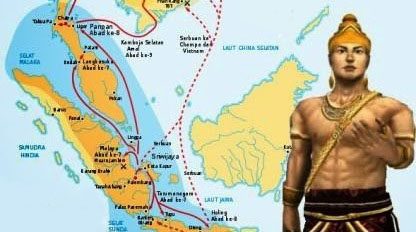
    Inauguration of Borobudur 

    The name Pramodawardhani is found in the Kayumwungan inscription dated March 26, 824 as the daughter of Maharaja Samaratungga . According to the inscription, he inaugurated a very beautiful multi-storey Jinalaya building. This building is generally interpreted as Borobudur Temple .

    Meanwhile, the Tri Tepusan inscription dated 11 November 842 mentions a figure with the title Sri Kahulunan who exempted several villages from taxes so that the residents would participate in caring for Kamulan Bhumisambhara (the original name of Borobudur Temple ). Historian Dr. De Casparis interpreted the term Sri Kahulunan as “the empress “, namely Pramodawardhani, because at that time Rakai Pikatan was thought to have become king.

    Another opinion was expressed by Drs. Boechari who interprets Sri Kahulunan as the queen mother . For example, in the Mahabharata the character Yudhisthira calls his mother, namely Kunti , as Sri Kahulunan . So, according to this version, the character of Sri Kahulunan is not Pramodawardhani, but his mother, namely Samaratungga’s wife .

    Pramodawardhani Inauguration of Borobudur 
    Pramodawardhani Inauguration of Borobudur 

    Marriage with Rakai Pikatan 

    Rakai Pikatan Mpu Manuku is the sixth king of the Medang Kingdom according to the Mantyasih inscription . From the Wantil inscription it is known that Rakai Pikatan adheres to the Hindu Shiva religion and is married to a Buddhist princess . The majority of historians agree that the princess is Pramodawardhani.

    The Kayumwungan inscription in 824 only mentions the names of Pramodawardhani and Samaratungga without mentioning the name of Mpu Manuku. It can be estimated that in that year Pramodawardhani and Mpu Manuku were not married.

    Meanwhile, in the Munduan inscription in 807, Mpu Manuku already served as Rakai Patapan, whereas in 824 Pramodawardhani was still a girl. This means that there is a large age difference between the two. Maybe Rakai Pikatan Mpu Manuku is the same age as his father-in-law, Samaratungga .

    From the marriage of Rakai Pikatan with Pramodawardhani, it is estimated that Rakai Gurunwangi Dyah Saladu (Plaosan inscription) and Rakai Kayuwangi Dyah Lokapala (Wantil inscription) were born. Thanks to his services in crushing the enemy of the state named Rakai Walaing Mpu Kumbhayoni, Rakai Kayuwangi was able to become king after Rakai Pikatan.

    The appointment of Rakai Kayuwangi, the youngest son, to become king later caused jealousy in Rakai Gurunwangi’s heart, namely the discovery of the Munggu Antan inscription in 887 .

    Relations with Balaputradewa

    Balaputradewa was the king of the Srivijaya Kingdom, son of Samaragrawira. Prof. NJ Krom considers Samaragrawira synonymous with Samaratungga , so Balaputradewa is automatically considered as Pramodawardhani’s brother.

    Dr. De Casparis then developed a theory that there had been a civil war over the throne after Samaratungga’s death , between Balaputradewa and Pramodawardhani. Finally Balaputradewa was defeated by Rakai Pikatan, Pramodawardhani’s husband. He then fled to the island of Sumatra and became king of the Srivijaya Kingdom.

    De Casparis’ theory is guided by the Wantil inscription in 856 which mentions a war between Rakai Pikatan against an enemy hiding in a fort heap of stones. In the Wantil inscription found the term Walaputra which is interpreted as another name Balaputradewa.

    Meanwhile Prof. Slamet Muljana believes that Balaputradewa is not Pramodawardhani’s brother. This opinion is guided by the Kayumwungan inscription which states that Samaratungga only has one daughter (namely Pramodawardhani). According to Slamet Muljana, Balaputradewa is more appropriate as Samaratungga’s younger brother, and both are the sons of Samaragrawira. In other words, Pramodawardhani is Balaputradewa’s nephew.

    The stone pile fort which is the headquarters of Balaputradewa is identical to the Ratu Boko Site. Drs. Boechari found several inscriptions around the site, but not in the name of Balaputradewa, but in the name of Rakai Walaing Mpu Kumbhayoni who claimed to be a descendant of the founder of the kingdom (namely Sanjaya ).

    Boechari argues that Rakai Pikatan’s enemy is not Balaputradewa, but Rakai Walaing. According to him, the term Walaputra in the Wantil inscription does not mean Balaputradewa, but means “the youngest child”, which is the nickname for Rakai Kayuwangi as a hero to destroy Rakai Walaing.

    Other evidence shows that there is damage to some of the inscriptions that record the genealogical sequence of Rakai Walaing. This damage seems to have been deliberately done by Rakai Pikatan as a fellow descendant of Sanjaya who is competing for the Medang throne.

    If the opinions of Slamet Muljana and Boechari are combined, a theory can be put forward that the war between Rakai Pikatan and Balaputradewa may never have occurred. According to the Po Ngar inscription in 802 the Cambodian state managed to escape from Javanese colonialism. Perhaps this was the reason Samaragrawira at the end of his reign divided the power of the Sailendra dynasty between his two sons. Samaratungga ruled in Java , while Balaputradewa ruled in Sumatra .

    This second theory is an alternative to the first theory which says Balaputradewa fled to Sumatra due to losing the war against Pramodawardhani who was assisted by Rakai Pikatan.

  • Balaputradewa

    Balaputradewa

    Sri Maharaja Balaputradewa was a member of the Sailendra dynasty who became king of the Srivijaya Kingdom .

    Origins 

    According to Nalanda’s inscription, Balaputradewa was the grandson of a Javanese king who was nicknamed Wirawairimathana ( killer enemy officers). His grandfather’s nickname is similar to Wairiwarawimardana alias Dharanindra in the Kelurak inscription . In other words, Balaputradewa is the grandson of Dharanindra .
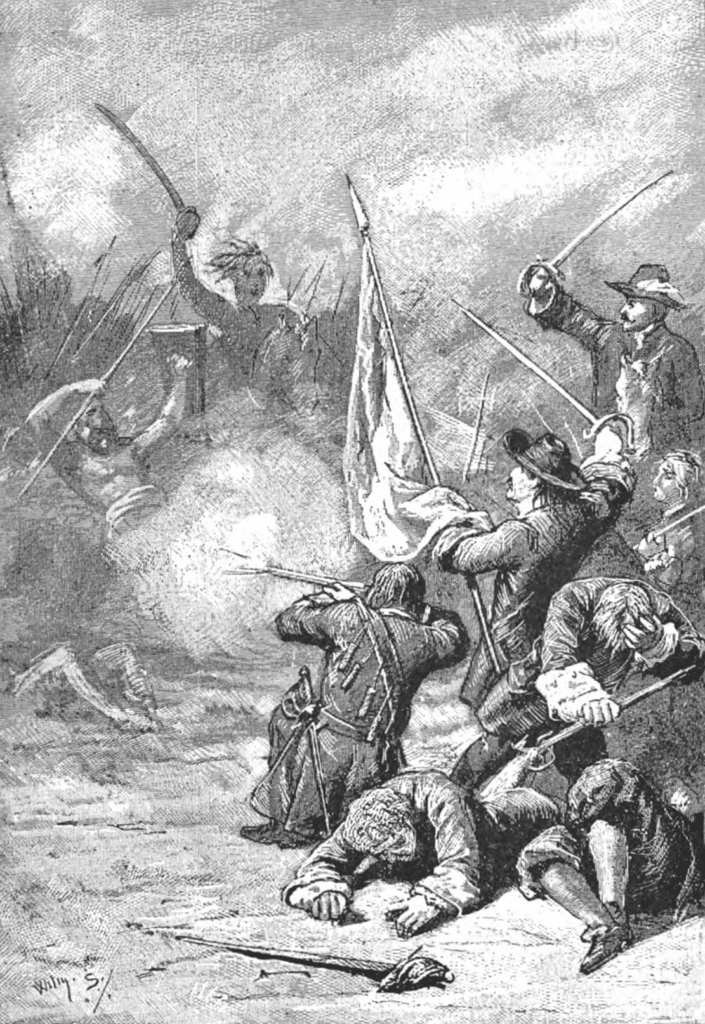
    Balaputradewa’s father was named Samaragrawira , while his mother was Dewi Tara, daughter of Sri Dharmasetu of the Soma dynasty . The Nalanda inscription itself shows the friendship between Balaputradewa and Dewapaladewa the king of India , which is marked by the construction of a monastery initiated by Balaputradewa in the Bengal region .

    Withdrew from Java 

    A very popular theory, developed by De Casparis, states that Samaragrawira is identical with Samaratungga, the king of Java . After the death of Samaratungga there was a struggle for the throne between his two sons, namely Balaputradewa against Pramodawardhani . In 856 Balaputradewa was defeated by Rakai Pikatan, Pramodawardhani’s husband, and fled to the island of Sumatra .

    This theory was refuted by Slamet Muljana because according to the Malang inscription, Samaratungga only had a daughter named Pramodawardhani . According to him, Balaputradewa is more accurately called Samaratungga’s younger brother . In other words, Samaratungga is the eldest son of Samaragrawira , while Balaputradewa is his youngest son.

    The expulsion of Balaputradewa was generally based on the Wantil inscription that there had been a war between Rakai Mamrati Sang Jatiningrat (aka Rakai Pikatan ) against an enemy who had built a fortress in the form of heaps of stones. In the inscription found the term Walaputra which is considered synonymous with Balaputradewa.

    This popular theory was refuted by Pusponegoro and Notosutanto that the term Walaputra is not synonymous with Balaputradewa. Instead, the term Walaputra means “the youngest son”, namely Rakai Kayuwangi who is praised for defeating the kingdom’s enemies. Meanwhile, Rakai Kayuwangi is the youngest son of Rakai Pikatan who managed to defeat his father’s enemy.

    The rock pile fort which is suspected as the headquarters of the Balaputradewa rebellion is identical to Ratu Baka hill. However, the inscriptions found in the area did not mention Balaputradewa’s name, but instead mentioned Rakai Walaing Mpu Kumbhayoni . So, Rakai Pikatan ‘s enemy who was defeated by Rakai Kayuwangi the Walaputra turned out to be Mpu Kumbhayoni, not Balaputradewa.

    According to the inscriptions, the figure Rakai Walaing Mpu Kumbhayoni claimed to be a descendant of the founder of the Medang Kingdom (namely Sanjaya ). So it is very possible if he rebelled against Rakai Pikatan as a fellow descendant of Sanjaya .

    Presumably the popular theory that Balaputradewa fled to the island of Sumatra because he was urged by Rakai Pikatan is wrong. Perhaps he left the island of Java not because he lost the war, but because from the start he did not have the right to the throne of Java , considering that he was only the younger brother of Maharaja Samaratungga , not his son.

    Became the King of Srivijaya 

    The Nalanda inscription mentions Balaputradewa as the king of Suwarnadwipa, the ancient name for the island of Sumatra . Because at that time the island of Sumatra was identical with the Srivijaya Kingdom , historians agree that Balaputradewa was the king of Srivijaya .

    The most popular opinion states that Balaputradewa inherited the throne of the Srivijaya Kingdom from his maternal grandfather, namely Sri Dharmasetu . However, it turns out that Sri Dharmasetu’s name is contained in the Kelurak inscription as a subordinate of Dharanindra who was tasked with guarding the Kelurak Temple building .

    So, Dharanindra reconciled with his subordinate employee, named Sri Dharmasetu through the marriage between Samaragrawira and Dewi Tara . According to the Kelurak inscription, Dharmasetu is a Javanese . So, the popular theory that he was the king of the Srivijaya Kingdom is wrong.

    Balaputradewa succeeded in becoming king of the Srivijaya Kingdom not because he inherited the throne of Sri Dharmasetu, but because at that time the island of Sumatra had become the territory of the Sailendra dynasty , as was the case with Java .

    Based on the analysis of the Ligor inscription, the Srivijaya Kingdom was ruled by the Sailendra dynasty since the time of Maharaja Vishnu . As a member of the Sailendra dynasty , Balaputradewa succeeded in becoming king in Sumatra, while his older brother, Samaratungga, became king in Java.

    References

    • Marwati Poesponegoro & Nugroho Notosusanto. 1990. Sejarah Nasional Indonesia Jilid II. Jakarta: Balai Pustaka
    • Purwadi. 2007. Sejarah Raja-Raja Jawa. Yogyakarta: Media Ilmu
    • Slamet Muljana. 2006. Sriwijaya (terbitan ulang 1960). Yogyakarta: LKIS
    • Apakah Anda sedang mencari spesialis jasa kontraktor kolam renang Palembang, Prabumuli, Pagar Alam, Lubuk Linggau (Sumatera Selatan)?
  • Trunajaya Rebellion

    Trunajaya Rebellion

    The Trunajaya Rebellion (or Trunajaya War , also spelled Trunojoyo Rebellion ) was a rebellion carried out by the Madurese nobleman , Raden Trunajaya , and his ally, troops from Makassar , against the Mataram Sultanate assisted by the Dutch East India Company (VOC) in Java in the 1670s. , and ended with the victory of Mataram and the VOC.
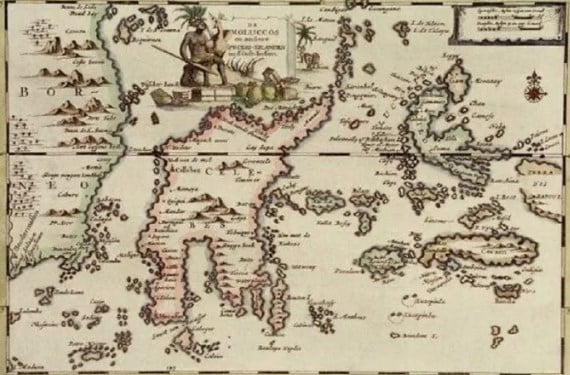
    This war began with the victory of the rebels: Trunajaya’s troops defeated the royal troops at Gegodog (1676), then succeeded in occupying almost the entire north coast of Java and capturing the Mataram palace at the Plered Palace (1677). King Amangkurat I died while running away from the palace. He was succeeded by his son, Amangkurat IIwho asked the VOC for help and promised payment in money and territory. The involvement of the VOC managed to turn the situation around. VOC and Mataram troops recaptured the occupied Mataram area, and captured Trunajaya’s capital at Kediri (1678). The rebellion continued until Trunajaya was captured by the VOC in late 1679, as well as the defeat, death or surrender of other rebel leaders (1679–1680). Trunajaya became a prisoner of the VOC, but was killed by Amangkurat II during the king’s visit in 1680.

    Besides Trunajaya and his allies, Amangkurat II also faced other attempts to usurp the throne of Mataram after his father’s death. His most serious rival was his younger brother, Prince Puger (later Pakubuwana I ) who captured the Plered Palace after being abandoned by Trunajaya’s troops in 1677 and only surrendered in 1681.

    Date 1674 – 1680 (main war);
    Rebellion of Prince Puger until 1681
    Location Java Island (now part of Indonesia )
    Results Victory of Mataram and VOC
    Parties involved
    • Flag of the Sultanate of Mataram.svg Mataram Sultanate
    • Assisted by:
    • Flag of the Dutch East India Company.svg VOC
    • Rebel troops
    • Troops from Makassar

    Counter claimant to the Mataram throne (after 1677)

    Characters and leaders
    • Flag of the Sultanate of Mataram.svg Amangkurat I  
    • Flag of the Sultanate of Mataram.svg Amangkurat II
    • Flag of the Dutch East India Company.svg Cornelis Speelman
    • Flag of the Dutch East India Company.svg Antonio Hurdt
    • Flag of the Dutch East India Company.svg Jacob Couper
    • Flag of the Dutch East India Company.svg Whitewater Palakka
    • Trunajaya and allies :
    • Raden Trunajaya Surrender Sentenced to death
    • Karaeng Galesong
    • Raden Kajoran Sentenced to death
    • Panembahan Giri Sentenced to death

    • Join the war :
    • Prince of Puger (1677–1681) Surrender
    Strength
    • Flag of the Sultanate of Mataram.svg Mataram:
    • “Much greater” than 9,000 (1676) 
    • 13,000 (end of 1678) 
    • Flag of the Dutch East India Company.svg VOCs:
    • 1,500 (1676) 
    • 1750 (1678) 
    • Flag of the Dutch East India Company.svg Bugis troops (VOC allies):
    • 1,500 (1678) 
    • 6,000 (1679) 
    • Trunajaya:
    • 9,000 (1676) 
    • 14,500 (1678, Claims of Prince Sampang – ally of Trunajaya ) 

    • Prince Puger:
    • 10,000 (Aug

    Background

    Amangkurat I ascended the throne of Mataram in 1646, succeeding Sultan Agung , who had expanded Mataram’s territory to include most of Central and East Java, as well as several overseas vassals in southern Sumatra and Kalimantan. [8] The early years of Amangkurat’s reign were marked by the executions and massacres of his political enemies. In response to the failed coup attempt of his brother Prince Alit, he ordered the massacre of clerics he believed were involved in Alit’s rebellion. [9] Alit himself was killed in the failed coup. [9]In 1659 Amangkurat suspected Prince Pekik, his father-in-law and son of the defeated Duke of Surabaya who lived in the Mataram court after Surabaya’s defeat , of leading a conspiracy threatening his life. [10] He ordered to kill Pekik and his relatives. [10] The massacre of East Java’s most important nobility created a rift between Amangkurat and his East Javanese subjects and led to conflict with his son, the crown prince (later Amangkurat II ), who was also Pekik’s grandson. [10] Over the next few years, Amangkurat carried out a number of other murders of members of the nobility who had lost his trust. [10]

    Map of Java, depicting Mataram’s expansion just before Amangkurat I ascended the throne in 1646.

    Raden Trunajaya (also spelled Trunojoyo) is a descendant of the Madurese rulers, who was forced to live in the Mataram court after the defeat and annexation by Mataram in 1624. [11] After his father was executed by Amangkurat I in 1656, he left the palace, moved to Kajoran, and married the princess from Raden Kajoran , the head of the ruling family there. [12] [11] The Kajoran family is an ancient clerical family and is married to the royal family. [12] Raden Kajoran was concerned about the brutality of Amangkurat I’s reign, including the execution of nobles in the palace. [11]In 1670, Kajoran introduced his son-in-law Trunajaya to the crown prince, who had just been expelled by the king because of a scandal, and the two forged a friendship that included a mutual dislike of Amangkurat. [11] In 1671 Trunajaya returned to Madura, where he used the support of the crown prince to defeat the local governor and become ruler of Madura. [13]

    The capture of Makassar by the VOC in 1669 led to the emigration of Makassarese fighters to Java, many of whom later joined the rebels.
    The capture of Makassar by the VOC in 1669 led to the emigration of Makassarese fighters to Java, many of whom later joined the rebels.

    Makassar was a major trading center east of Java. [13] After the VOC’s 1669 victory over the Sultanate of Gowa in the Makassar War , a group of Makassarese soldiers left Makassar to seek their fortune elsewhere. [13] Initially, they settled in the territory of the Sultanate of Banten , but in 1674 they were expelled, and turned to piracy, raiding coastal cities in Java and Nusa Tenggara . [13] The crown prince of Mataram then allowed them to settle in Demung , a village in Tapal Kuda, East Java . [13]In 1675 an additional group of Makassarese fighters and pirates arrived in Demung led by Karaeng Galesong . [13] These wandering Makassar warriors later joined the rebellion as Trunajaya’s allies. [12]

    Troops involved

    Bugis troops under Pangeran Arung Palakka (pictured) were among those who allied with the VOC to quell the rebellion.
    Bugis troops under Pangeran Arung Palakka (pictured) were among those who allied with the VOC to quell the rebellion.

    Lacking a permanent army, most of Mataram’s troops were drawn from the army built by the king’s vassals, who also provided weapons and supplies. [14] [15] The majority of these soldiers were farmers who were required by the local authorities ( Javanese : sikep dalem ). [15] In addition, the army included a small number of professional soldiers drawn from the palace guards. [14] These soldiers used cannons , small firearms including sundut rifles ( Javanese : rifles , from Dutch snaphaens ) and carbines ,cavalry , and forts . [16] Historian MC Ricklefs says the transfer of European military technology to the Javanese was “quite urgent”, with gunpowder and weapons made in Java by at least 1620. [15] Europeans were hired to train Javanese army troops in weapons handling, military leadership skills , and construction engineering. [15] Despite this training, however, conscripted peasants of the Javanese army often lacked discipline and fled during battle. [17] [18] Mataram’s army was “much larger” than the 9,000 rebels at Gegodog in September 1676, [1]fell to just a “little company” after the fall of the capital in June 1677, [19] and increased to over 13,000 as it moved towards Trunajaya’s capital of Kediri in late 1678. [2]

    The VOC had its own professional army. [15] Each VOC soldier had a sword, small arms, bullets, carrying pouches and belts, smoke bombs, and grenades. [15] The majority of the VOC’s permanent soldiers were Indonesian, with a small number of European soldiers and marines, all under the command of European officers. [20] While in a technological sense, VOC troops were not superior to their indigenous counterparts, [16] they were generally better trained, disciplined, and equipped than indigenous Indonesian soldiers. [15] The VOC troops also differed in logistics: their troops moved step by step followed by long caravans of wagons carrying supplies. [16]This gave them an advantage over the Javanese troops, who often survived by gathering or stealing food while traveling through the countryside and often faced shortages of supplies. [16] The VOC army numbered 1,500 in 1676, [21] but was later added by the Bugis allies under the leadership of Arung Palakka . The first convoy of 1,500 Bugis arrived in Java in late 1678, [5] and by 1679 there were 6,000 Bugis soldiers in Java. [6]

    Similar to other wars, Trunajaya’s army and its allies also used cannons, cavalry, and forts. [16] When the VOC captured Surabaya from Trunajaya in May 1677, Trunajaya fled with his twenty bronze cannons, leaving behind 69 iron and 34 bronze guns. [22] Trunajaya’s troops consisted of Javanese, Madurese and Makassarese. [1] When the rebels invaded Java in 1676, they numbered 9,000 [1] and consisted of followers of Trunajaya and fighters of Makassar. Later, the rebellion was followed by other Javanese and Madurese nobles. In particular, the ruler of Giri, one of the most prominent Islamic spiritual rulers in Java, joined in early 1676.[23] Trunajaya’s father-in-law, Raden Kajoran , head of the influential Kajoran family, joined after Trunajaya’s victory at Gegodog in September 1676, [24] and Trunajaya’s uncle, Pangeran Sampang (later Cakraningrat II ) joined after the fall of the capital Mataram in June 1677 . [25]

    Military campaign

    Beginnings and early rebel victories

    The rebellion began with a series of attacks by Makassar pirates based in Demung against trading towns on the north coast of Java. [26] The first attack took place in 1674 in Gresik but was repulsed. [26] Trunajaya entered into a pact and marriage alliance with Karaeng Galesong, the leader of the Makassarese, in 1675 and planned further attacks. In the same year, Makassar-Madurese pirates captured and burned the main cities in northeastern Java, from Pajarakan to Surabaya and Gresik. [26] In view of the failure of the loyalist forces against the rebels, King Amangkurat I appointed a military governor inJepara , the provincial capital on the north coast, and fortified the city. [26] The Mataram forces moving at Demung were defeated, and joint action by Mataram and VOC ships on the coast controlled by pirates was not always successful. [26] Karaeng Galesong moved to Madura, territory of his ally, Trunajaya. In 1676 Trunajaya bestowed upon himself the title Panembahan (Ruler) of Maduretna and received the support of sunan (spiritual ruler) Giri, near Gresik. The attack by the VOC fleet then destroyed the pirate base in Demung, but they did not take action against Trunajaya in Madura. [27]

    Gegodog Battle

    In September 1676, a 9,000-strong rebel army [1] led by Karaeng Galesong crossed from Madura to Java and then captured Surabaya, the main city of East Java. [28] Mataram sent a large army, commanded by the crown prince (later Amangkurat II to meet the rebels. [28] A battle took place at Gegodog, east of Tuban , in 1676, resulting in the total defeat of the much larger Mataram army. [28] ] [29] Loyalist troops were deployed, the king’s uncle, Pangeran Purbaya was killed, and the crown prince fled to Mataram. [28]The crown prince was blamed for this defeat for his long hesitation before attacking the rebels. [28] In addition, there were rumors that he colluded with enemies, including his former vassal Trunajaya. [28] Within months of the victory at Gegodog, the rebels quickly captured trading cities in northern Java, from Surabaya to the west in Cirebon , including the cities of Kudus and Demak . [28] The cities fell easily, partly because their forts had been destroyed due to their conquest by the Sultan Agung of Mataram some 50 years earlier. [28]Only Jepara managed to hold off the attack, as the combined efforts of the new military governor and the new VOC troops strengthened the city just in time. [28] The rebellion spread to the interior when Raden Kajoran, Trunajaya’s influential father-in-law based east of the capital Mataram, joined the rebellion. [24] Kajoran and Trunajaya’s troops marched towards the capital, but were repulsed by loyalist forces. [24]

    VOC intervention and fall of the capital Mataram

    Battle of Surabaya

    Cornelis Speelman, who led the VOC forces in the war of 1677, and later Governor-General of the VOC
    Cornelis Speelman, who led the VOC forces in the war of 1677, and later Governor-General of the VOC

    In response to requests for intervention by Mataram, the VOC sent a large fleet containing Indonesian and European troops, commanded by Admiral Cornelis Speelman . [24] In April 1677 the fleet sailed to Surabaya, where Trunajaya was based. [24] After negotiations failed, Speelman’s troops invaded Surabaya and captured it after heavy fighting. [30] The troops continued to clear the rebels from the area around Surabaya. [30] VOC troops also captured Madura, Trunajaya’s home island, and destroyed his residence there. [31] Trunajaya fled to Surabaya and founded his capital at Kediri. [30]

    The fall of Plered

    Although the rebels were defeated in Surabaya, the rebel forces campaigning in the interior of Central and East Java were more successful. The rebel military campaign culminated in the fall of the capital Plered in June 1677. [31] The king was ill, and distrust among the royal princes prevented a well-planned resistance. [31] The king fled west with the crown prince and his retinue, allowing the rebels to enter and plunder the capital with little resistance. [31] The rebels then retreated to Kediri, taking the royal treasures with them. [32]

    The throne of Amangkurat II and alliance with the VOC

    Tomb of Amangkurat I at the Tegal Arum Complex, Tegal Regency , Central Java .
    Tomb of Amangkurat I at the Tegal Arum Complex, Tegal Regency , Central Java .

    King Amangkurat I died during his retreat in Tegal in July 1677. [31] [21] The crown prince succeeded his father and took the title Amangkurat II, and was accepted by the Javanese nobility in Tegal (his grandmother’s hometown) as well as by the VOC. [33] [21] However, he failed to establish his rule in the nearby city, Cirebon, whose rulers decided to declare independence from Mataram with the support of the Sultanate of Banten . [33] Subsequently, his younger brother Pangeran Puger (later Pakubuwana I) captured the now-destroyed capital, refused to join as Amangkurat II loyalists, and declared himself king with the title Ingalanga Mataram.[33]

    Having no army and wealth and unable to establish his power, Amangkurat decided to ally with the VOC. [34] At this time, Admiral Speelman was in Jepara, sailing there from Surabaya after hearing of the fall of the capital. [33] His troops had recaptured important coastal cities in Central Java, including Semarang , Demak, Kudus, and Pati . [35] Amangkurat moved to Jepara on a VOC ship in September 1677. The king had to agree to the extensive concessions demanded by the VOC in exchange for restoring his monarchy. [34] He promised the VOC revenue from all port cities on the north coast. [34] HighlandsPriangan and Semarang will be handed over to the VOC. [32] The king also agreed to recognize the jurisdiction of the VOC over all non-Javanese living in his territory. [34] Dutch historian HJ de Graaf comments that by doing this, the VOC, as a corporation, engaged in “dangerous speculation”, which they hoped would pay off in the future when their partner would regain control of Mataram. [34]

    Amangkurat II , reigned since 1677, in a Javanese painting.
    Amangkurat II , reigned since 1677, in a Javanese painting.

    The VOC–Mataram troops made sluggish progress against the rebels. [32] [34] In early 1678 their control was limited to a few towns on the north-central coast. In 1678, Speelman became Director General of the VOC, replacing Rijcklof van Goens , who became Governor-General (Speelman later became Governor-General in 1681). [32] Command in Jepara was handed over to Anthonio Hurdt , who arrived in June 1678. [32]

    The victory of loyalists and the death of Trunajaya

    VOC troops stormed the capital Trunajaya in Kediri in 1678. Described in a Dutch children's story book in 1890.
    VOC troops stormed the capital Trunajaya in Kediri in 1678. Described in a Dutch children’s story book in 1890.

    VOC and Mataram troops marched inland against Kediri in September 1678. At the king’s suggestion, the troops were split into three ranks, with no direct route, with the aim of covering more locations and impressing those who hesitated to take sides. [36] The king’s idea worked, and as the military campaign continued, local groups joined the army, desperate for booty. [20] Kediri was captured on 25  November by an assault force led by Captain François Tack . [20] [32] The victorious army continued on to Surabaya, the largest city in East Java, where Amangkurat founded his palace. [37]Elsewhere, the rebels were also defeated. In September 1679, a combined VOC, Javanese and Bugis forces under Sindu Reja and Jan Albert Sloot defeated Raden Kajoran in a battle at Mlambang, near Pajang. [7] [38] Kajoran surrenders but is executed on Sloot’s orders. [38] In November, the VOC and allied Bugis forces under Arung Palakka destroyed the Makassar rebel stronghold at Keper , East Java. [7] In April 1680, after what the VOC viewed as a fierce battle in the war, the rebellious ruler of Giri was defeated and most of his family executed. [7]As the VOC and Amangkurat won more victories, more and more Javanese people declared their loyalty to the king. [7]

    After his stronghold fell in Kediri, Trunajaya managed to escape to the mountains of east Java. [39] VOC troops and the king pursued Trunajaya, who, isolated and short of food, surrendered to the VOC in late 1679. [40] [7] Initially, he was treated with respect as a prisoner of the VOC commander. However, during a ceremonial visit to a nobleman’s residence in Payak, East Java, on 2 January 1680, [40] he was stabbed by Amangkurat himself, and the king’s courtiers finished him off. [40] [7] The king defended the killing of a VOC prisoner by saying that Trunajaya had tried to kill him. [41] The VOC was not convinced by this explanation, but chose not to punish the king.[42] A romantic account of Trunajaya’s death appears in the18th century Central Javanese chronicle . [39]

    End of the rebellion of Prince Puger

    In addition to Trunajaya’s troops, Amangkurat II continued to face opposition from his brother Pangeran Puger, who had captured the old capital at Plered and had seized the throne for himself in 1677. [33] Prior to Trunajaya’s defeat, Amangkurat’s forces had taken no action against him. [34] After Trunajaya was defeated, Amangkurat still could not convince his brother to surrender. [7] In September 1680, Amangkurat built a new capital city at Kartasura . [7] In November, Amangkurat and VOC troops expelled Puger from Plered. [7] However, Puger quickly rebuilt his army, captured Plered again in August 1681, and nearly captured Kartasura. [7]In November 1681, VOC and Mataram troops again defeated Puger, and this time he surrendered and was pardoned by his brother. [7] [43]

    end

    Amangkurat II stabbed Trunajaya in the presence of his two wives and VOC officers.
    Amangkurat II stabbed Trunajaya in the presence of his two wives and VOC officers.

    Amangkurat II secured his reign with the defeat of the rebels. Due to the rebels’ capture and subsequent destruction of the capital at Plered, he built a new capital, Kartasura, in the Pajang district, and moved his court there. [43] A VOC fort was built in the capital, next to the royal residence, to defend it against invasion. [43] As for the VOC, its involvement allowed the cornered and nearly defeated Amangkurat II to remain on his throne. [44] This set a precedent for the VOC supporting Javanese kings and claimants in exchange for concessions. [44]By 1680, however, this policy required high levels of spending to maintain a military presence in Central and East Java, and this led to a decline in VOC finances. [44] The payments promised by Amangkurat were not kept, and by 1682 the king’s debt to the VOC exceeded 1.5 million rials , about five times the amount of the royal estate. [45] The handover of Semarang was delayed due to disputes, [45] and other provisions of the contract were largely ignored by local Javanese officials. [46] Subsequently, an anti-VOC faction developed in the Mataram court, and a member of this faction, Nerangkusuma, became patih (main minister) from 1682 to 1686. [47][46] The poor relationship between Mataram and the VOC continued with the protection of Surapati , an enemy of the VOC, in 1684, [48] and the death of the VOC captain, François Tack at the Mataram court in 1686. [48]

    The king’s younger brother, Pangeran Puger, who tried to usurp the throne during the Trunajaya rebellion, was pardoned by the king. [43] However, after the king’s death in 1703 and his son Amangkurat III succeeded , Puger took the throne again. [49] Puger’s claim was supported by the VOC, and the VOC-Puger alliance won the subsequent First Javanese War of Succession (1704–1708). [49] Puger ascended the throne with the title Pakubuwana I and Amangkurat III was exiled to Sri Lanka . [49]

    Reference

    footnote

    1. ^ Jump to:f Andaya 1981, p. 214–215.
    2. ^ Jump to:b Ricklefs 1993, p. 50.
    3. ^ Ricklefs 1993 , p. 35.
    4. ^ Jump to:b Ricklefs 1993, p. 51.
    5. ^ Jump to:b Andaya 1981, p. 218.
    6. ^ Jump to:b Andaya 1981, p. 221.
    7. ^ Jump to:l Ricklefs 2008, p. 94.
    8. ^ Pigeaud 1976 , p. 56–57.
    9. ^ Jump to:b Pigeaud 1976, p. 55.
    10. ^ Jump to:d Pigeaud 1976, p. 66.
    11. ^ Jump to:d Pigeaud 1976, p. 67.
    12. ^ Jump to:c Ricklefs 2008, p. 90.
    13. ^ Jump to:f Pigeaud 1976, p. 68.
    14. ^ Jump to:b Houben & Kolff 1988, p. 183.
    15. ^ Jump to:g Taylor 2012, p. 49.
    16. ^ Jump to:e Houben & Kolff 1988, p. 184.
    17. ^ Houben & Kolff 1988 , p. 183–184.
    18. ^ Taylor 2012 , p. 49–50.
    19. ^ Pigeaud 1976 , p. 74.
    20. ^ Jump to:c Pigeaud 1976, p. 79.
    21. ^ Jump to:c Ricklefs 2008, p. 92.
    22. ^ Ricklefs 1993 , p. 39.
    23. ^ Ricklefs 1993 , p. 40.
    24. ^ Jump to:e Pigeaud 1976, p. 71.
    25. ^ Ricklefs 1993 , p. 41.
    26. ^ Jump to:e Pigeaud 1976, p. 69.
    27. ^ Pigeaud 1976 , p. 69–70.
    28. ^ Jump to:i Pigeaud 1976, p. 70.
    29. ^ Andaya 1981 , p. 215.
    30. ^ Jump to:c Pigeaud 1976, p. 72.
    31. ^ Jump to:e Pigeaud 1976, p. 73.
    32. ^ Jump to:f Ricklefs 2008, p. 93.
    33. ^ Jump to:e Pigeaud 1976, p. 76.
    34. ^ Jump to:g Pigeaud 1976, p. 77.
    35. ^ Pigeaud 1976 , p. 76–77.
    36. ^ Pigeaud 1976 , p. 78-79.
    37. ^ Pigeaud 1976 , p. 80.
    38. ^ Jump to:b Pigeaud 1976, p. 89.
    39. ^ Jump to:b Pigeaud 1976, p. 82.
    40. ^ Jump to:c Pigeaud 1976, p. 83.
    41. ^ Pigeaud 1976 , p. 84.
    42. ^ Pigeaud 1976 , p. 83–84.
    43. ^ Jump to:d Pigeaud 1976, p. 94.
    44. ^ Jump to:c Ricklefs 2008, p. 95.
    45. ^ Jump to:b Ricklefs 2008, p. 99.
    46. ^ Jump to:b Pigeaud 1976, p. 95.
    47. ^ Ricklefs 2008 , p. 100.
    48. ^ Jump to:b Ricklefs 2008, p. 101.
    49. ^ Jump to:c Pigeaud 1976, p. 103.

    References

    • Andaya, Leonard Y. (1981). The Heritage of Whitewater Palakka: A History of South Sulawesi (Celebes) in the Seventeenth Century . The Hague: Martinus Nijhoff. doi : 10.1163/9789004287228 . ISBN  9789004287228 .
    • Houben, VJH; Kolff, DHA (1988). “Between Empire Building and State Formation. Official Elites in Java and Mughal India”. Itinerary . 12 (1): 165–194. doi : 10.1017/S016511530002341X .
    • Ricklefs, MC (1993). War, Culture and Economy in Java, 1677-1726: Asian and European Imperialism in the Early Kartasura Period . Sydney: Asian Studies Association of Australia. ISBN  978-1-86373-380-9 .
    • Ricklefs, MC (2008-09-11). A History of Modern Indonesia Since C.1200 . Palgrave Macmillan. ISBN  978-1-137-05201-8 .
    • Pigeaud, Theodore Gauthier Thomas (1976). Islamic States in Java 1500–1700: Eight Dutch Books and Articles by Dr HJ de Graaf . The Hague: Martinus Nijhoff. ISBN  90-247-1876-7 .
    • Taylor, Jean Gelman (2012). Global Indonesia . Routledge. ISBN  978-0-415-95306-1 .
  • The Saragosa Treaty | History, Background, Content and Impact

    The Saragosa Treaty | History, Background, Content and Impact

    History of the Saragosa Treaty – The Saragosa Treaty is an agreement between the Portuguese and Spanish which was signed on April 22, 1529. The purpose of the agreement was so that the two parties would not clash over the colonial territory in the Maluku region. The trigger was the arrival of the Spaniards in Maluku, after the Portuguese had previously occupied the area.
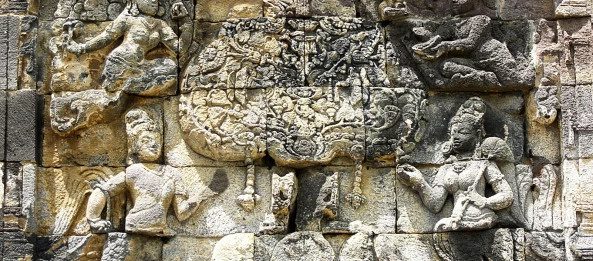
    The results of the Saragosa Treaty required Spain to leave the Maluku region. In addition, there was an agreement regarding the Spanish and Portuguese territories. The treaty is so named because it was held in the city of Saragosa, Spain.

    Saragosa Treaty

    The following will share the history of the Saragosa Treaty , including the background of the agreement, the characters involved, the results and contents of the agreement to the consequences and impacts.

    Background of the Saragosa Treaty 

    The history of the Saragosa negotiations was motivated by the conflict between the Spaniards and the Portuguese in the Maluku region. This is because both parties want to monopolize the spice trade in the Maluku region.

    Initially the Portuguese arrived in Maluku in 1512 AD. They were received by the King of Ternate, who at that time was in conflict with the Tidore Kingdom. The king of Ternate asked the Portuguese for help to build a fort. In return, the Portuguese were given the right to a trade monopoly.

    But in 1521 AD, the Spanish expedition arrived in Tidore. The arrival of Spain started the conflict between the Portuguese-Spanish. Both sides accused the other of violating the Tordesillas Agreement, the previous agreement between Portugal and Spain.

    For this reason, a new agreement was then held between Portugal and Spain to resolve the previous dispute, where the agreement was named the Treaty of Zaragoza or the Saragosa Agreement.

    Characters of the Saragosa Covenant

    The Saragosa Agreement involved two parties, namely the Spanish and the Portuguese. From the Spanish side it was represented by Emperor Charles V. While from the Portuguese side it was represented by King John III. The two heads of government signed the dossier of this agreement.

    Time and Place of the Saragosa Treaty

    The Treaty of Saragosa was signed on April 22, 1529. The place where the Saragosa negotiations were held was in the city of Saragosa, Spain. This treaty was signed by the two heads of government, King John III and Emperor Charles V.

    Purpose of the Saragosa Treaty

    The purpose of the Saragosa agreement was that Portuguese and Spanish troops did not compete with each other in fighting over the kingdoms and colonies, so an agreement was made from both parties, Spain and Portugal which had been agreed upon.

    Contents of the Saragosa Treaty

    The contents of the Saragosa Treaty are as follows:

    • Earth is divided into two influences, namely the influence of the Spanish and Portuguese.
    • The Spanish territory stretched from Mexico to the west to the Philippine islands and the Portuguese territory stretched from Brazil to the east to the Maluku islands. The area west of the Saragosa line was under Portuguese control.

    Impact of the Saragosa Treaty

    There were several implications of the Treaty of Saragosa. The main thing is that the Spaniards had to leave the Moluccas. Instead, they concentrate their activities on the Philippines. Meanwhile, Maluku became the Portuguese territory.

    Now that’s the historical reference of the Saragosa Agreement including the background, purpose, time and place, parties and characters involved, content and results and the impact of holding the Saragosa negotiations. Hopefully it can be a historical reference.

  • Who is Rakai Pikatan ?

    Who is Rakai Pikatan ?

    Sri Maharaja Rakai Pikatan Mpu Manuku was the sixth king of the Medang Kingdom of the Central Java period (or commonly called the Ancient Mataram Kingdom ) who ruled around the 840s – 856 .

    Rakai Pikatan Real name and title 

    Rakai Pikatan is included in the list of kings in the Mantyasih inscription version . His real name according to the Argapura inscription is Mpu Manuku . In the Munduan inscription in 807, it is known that Mpu Manuku served as Rakai Patapan. Then in the Kayumwungan inscription in 824, the position of Rakai Patapan was held by Mpu Palar. Maybe at that time Mpu Manuku had moved to Rakai Pikatan.

    However, in the 850 Water Bone inscription, Mpu Manuku again holds the title Rakai Patapan. Meanwhile, according to the Gondosuli inscription, Mpu Palar had died before 832 . May the Patapan area again become the responsibility of Mpu Manuku, even though at that time he was already a maharaja . This tradition is true in the history of the Medang Kingdom where a king also includes his old title as regional head, for example Maharaja Rakai Watukura Dyah Balitung .

    According to the Wantil inscription, Mpu Manuku built a new capital city in the village of Mamrati so that he was nicknamed Rakai Mamrati. The new palace was named Mamratipura, as a replacement for the old capital city, Mataram .

    The Wantil inscription also states that Rakai Mamrati abdicated and became a brahmin with the title Sang Jatiningrat in 856 .

    Marriage with Pramodawardhani

    The Wantil inscription also mentions the marriage of Sang Jatiningrat alias Rakai Pikatan Mpu Manuku to a daughter of another religion. Historians agree that the princess was Pramodawardhani of the Sailendra dynasty, who was Mahayana Buddhist , while Mpu Manuku himself embraced the Hindu Shiva religion .

    Pramodawardhani is the daughter of Samaratungga whose name is recorded in the Kayumwungan inscription in 824 . At that time, the one who served as Rakai Patapan was Mpu Palar, while Mpu Manuku’s name was not mentioned at all. Maybe at that time Pramodawardhani was not yet the wife of Mpu Manuku.

    Historian De Casparis considers Rakai Patapan Mpu Palar the same as Maharaja Rakai Garung and is the father of Mpu Manuku. Both of them were members of the Sanjaya dynasty who succeeded in establishing a marital relationship with the Sailendra dynasty .

    sanjaya and syailendra dynasty
    sanjaya and syailendra dynasty relief on prambanan temple

    This theory was rejected by Slamet Muljana because according to the Gondosuli inscription, Mpu Palar was an immigrant from the island of Sumatra and all of his children were girls. After all, Mpu Manuku had already served as Rakai Patapan before Mpu Palar. The possibility that Mpu Manuku is Mpu Palar’s son is very small.

    Meanwhile, Mpu Manuku had served as Rakai Patapan in 807 , while Pramodawardhani was still a girl in 824 . This shows that the age difference between the two is quite far. Perhaps, Rakai Pikatan Mpu Manuku is the same age as his father-in-law, Samaratungga .

    Pramodawardhani is not the only wife of Rakai Pikatan. Based on the Hadap inscription, it is known that another wife of Rakai Pikatan was named Rakai Watan Mpu Tamer. Presumably at that time the title of mpu was not synonymous with men.

    This concubine named Rakai Watan Mpu Tamer is the grandmother of Dyah Balitung’s wife , the king who issued the Mantyasih inscription ( 907 ).

    War Against Balaputradewa

    Balaputradewa son of Samaragrawira was the king of the Srivijaya Kingdom . The popular theory pioneered by the historian Krom states that Samaragrawira is identical with Samaratungga so that automatically Balaputradewa is Pramodawardhani’s brother .

    In the Wantil inscription it is stated that Sang Jatiningrat alias Rakai Pikatan fought against an enemy who built a defense in the form of a pile of stones on a hill. The enemy was defeated by Dyah Lokapala, the son of Jatiningrat. In the inscription there is the term Walaputra, which is interpreted as Balaputradewa . As a result, the theory emerged that there had been a civil war over the throne after Samaratungga’s death which ended in the defeat of Balaputradewa .

    Slamet Muljana rejected the notion that Samaragrawira was identical with Samaratungga because according to the Kayumwungan inscription, Samaratungga only had one child named Pramodawardhani . According to him, Samaragrawira is more accurately called the father of Samaratungga . Thus, Balaputradewa was the uncle of Pramodawardhani .

    Popular theory assumes Balaputradewa built a fort from heaps of stone on the hill of Ratu Baka in the war against Rakai Pikatan and Pramodawardhani . However, according to the historian Buchari, on Ratu Baka hill there is no inscription in the name of Balaputradewa , but in the name of Rakai Walaing Mpu Kumbhayoni. Perhaps this figure who rebelled against the government of Rakai Pikatan because he also claimed to be a descendant of the original founder of the kingdom, namely Sanjaya .

    Meanwhile, the term Walaputra in the Wantil inscription means “youngest son”. So, this term is not another name for Balaputradewa , but a nickname for Dyah Lokapala , the hero who managed to defeat Rakai Walaing, his father’s enemy.

    Thus, the popular theory that there has been a civil war between Rakai Pikatan and his brother-in-law, Balaputradewa, may be wrong. May Balaputradewa leave the island of Java not because he lost the war, but because from the start he had no right to the throne of the Medang Kingdom , considering that he was not the son of Samaratungga but his younger brother.

    The Sailendra dynasty under the leadership of Dharanindra succeeded in conquering the Srivijaya Kingdom , even as far as Cambodia . After Dharanindra ‘s death , his power was inherited by Samaragrawira . Perhaps he was not as strong as his father because according to the Po Ngar inscription, Cambodia succeeded in becoming independent from Javanese colonialism in 802 .

    On this basis, after the death of Samaragrawira, the power of the Sailendra dynasty was divided into two, with the aim of making its supervision easier. The power over the island of Java was given to Samaratungga , while the power over the island of Sumatra was given to Balaputradewa .

    Establishment of Prambanan Temple

    prambanan-temple
    Prambanan Temple

    The Wantil Inscription, also known as the Siwagrha Inscription , was issued on November 12, 856 . This inscription not only mentions the establishment of the Mamratipura palace, but also mentions the construction of the sacred Siwagrha building, which translates as Shiva Temple.

    Based on the characteristics described in the inscription, Shiva Temple is identical to one of the main temples in the Prambanan Temple complex . Thus, the main building in the complex was built by Rakai Pikatan, while other smaller temples were probably built during the reign of later kings.

    Also read history of prambanan temple

    End of Reign

    The Wantil inscription also mentions that Rakai Pikatan alias Rakai Mamrati abdicated to become a brahmin with the title Sang Jatiningrat in 856 . The throne of the Medang Kingdom was then held by his youngest son, namely Dyah Lokapala alias Rakai Kayuwangi .

    The appointment of the youngest son as maharaja is presumably based on the merit of defeating the rebel Rakai Walaing Mpu Kumbhayoni. This caused dissatisfaction because the Munggu Antan inscription later appeared in the name of Maharaja Rakai Gurunwangi. This name is not included in the list of kings of the Mantyasih inscription , so it can be estimated that at the end of the reign of Rakai Kayuwangi there had been a royal split.

    The names of Rakai Gurunwangi Dyah Saladu and Dyah Ranu are found in the Plaosan inscription after Rakai Pikatan. Maybe they are Rakai Pikatan’s children. Or maybe the relationship between Dyah Ranu and Dyah Saladu is husband and wife.

    In 807 Mpu Manuku had become an official, namely as Rakai Patapan. He abdicated to become a brahmin in 856 . Maybe at that time he was over 70 years old. After his death, Sang Jatiningrat was buried or didharmakan in the village of Pastika.


  • The History of Prambanan Temple and Its Origin & Story

    The History of Prambanan Temple and Its Origin & Story

    History of Prambanan Temple – Prambanan Temple is a Hindu-style temple complex in Sleman, Yogyakarta. This temple is also known as Roro Jonggrang Temple. Prambanan Temple is the largest Hindu temple complex in Indonesia. The history of this temple was first built in the 9th century AD during the Mataram or Medang Kingdom.
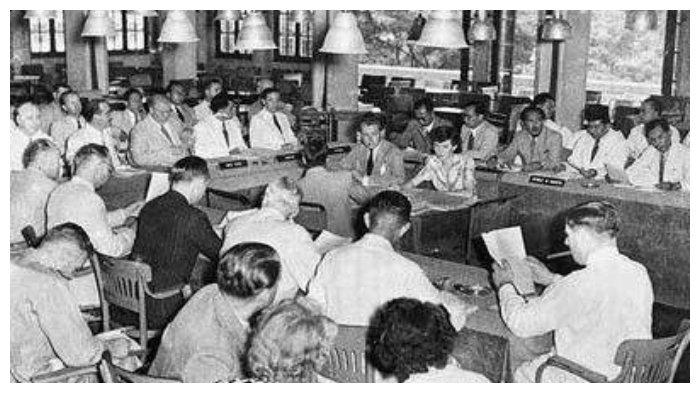
    According to the Siwagrha inscription, the original name of this temple is Siwagrha Temple, which in Sanskrit means Shiva’s House. This temple was built as an offering to the Trimurti, the three primary Hindu gods, Brahma, Vishnu, and Shiva. But indeed, Lord Shiva is preferred in this temple.

    Prambanan Temple is located in Prambanan District, Sleman Regency, Yogyakarta and Prambanan District, Klaten Regency, Central Java. This temple is located between 2 sub-districts from 2 different provinces. This means that this temple is situated on the border of Central Java and Yogyakarta provinces. Click here to see the Prambanan temple on the maps.

    Prambanan Temple is a UNESCO World Heritage Site. This temple is claimed to be the largest Hindu temple in Indonesia and one of the most beautiful temples in Southeast Asia. As a cultural heritage, this temple is one of the tourist attractions visited by local and foreign tourists every year.

    History of Prambanan Temple

    The following will explain in detail the history of Prambanan Temple, starting from the origin and background of the temple, the development process, the legend that developed in the community, and the rediscovery and restoration of the damaged temple building.

    The Origin of Prambanan Temple

    The history of this Prambanan temple began when the archipelago was still in the era of the Hindu-Buddhist Kingdom. Rakai Pikatan initiated the construction of this temple. He tried to build a magnificent Hindu-style temple to match the Buddhist-style Borobudur Temple that had been built previously.

    The construction of the Prambanan temple is also thought to be aimed at marking the return of the Sanjaya family to power in Java. Indeed, there was a rivalry between the Sanjaya dynasty, who were Hindus, and the Buddhist Sailenda dynasty regarding their power in Java.

    The temple’s construction became a transition from a Buddhist to a Hindu style in the Mataram or Medang Kingdom. Prambanan Temple was also built to glorify Lord Shiva. The original name of this building in Sanskrit is Siwagrha Temple or Siwalaya Temple.

    prambanan temple grub

    Prambanan Temple Construction Process

    The temple building was first built around 850 AD by Rakai Pikatan. Then successive kings, such as King Lokapala and King Balitung Mah Sambu, continued the development process. The building method is also accompanied by changes in the water system and the areas around the temple so that the temple is more awake.

    The temple complex was built periodically and continued by kings such as King Daksa and King Tulodong. Hundreds of additional temples were also built around the main temple as a companion temple.

    After that, a very magnificent temple building was formed. The splendor of the Prambanan temple also received wide acceptance from the people of that era. This temple is dedicated to Trimurti, the three primary Hindu gods: Brahma as the creator god, Vishnu as the preserver god, and Shiva as the destroyer god.

    Inside the Shiva temple as main temple, there is a Shiva statue in the garbhagriha or main room. Archaeologists believe that the statue is a statue of the embodiment of King Balitung.

    The splendor of this temple makes Prambanan the great temple of the Mataram Kingdom. Prambanan Temple is a meeting place for rituals and important royal ceremonies. Also, read The History of Borobudur Temple and Its Origin Story.

    The Legend of Prambanan Temple 

    Prambanan Temple was abandoned around 930 AD. This is most likely caused by the violent eruption of Mount Merapi in the north of the Prambanan temple. The capital of the Mataram kingdom was moved to East Java by Mpu Sindok, who later founded the Isyana dynasty.

    Another possible cause for the transfer of the capital is a war or power struggle. As a result, the Prambanan temple needed to be addressed. The temple building began to crumble and collapse. The Prambanan temple became increasingly damaged after an earthquake in the 16th century.

    After the split of the Mataram Sultanate in 1755 AD, the ruins of this temple became the boundary between the Yogyakarta Sultanate and the Surakarta Sunanate. At that time, many residents knew about the existence of this temple but needed to learn its history and origin.

    At that time, myths and fairy tales were developed about the origin of the temple’s existence. The fairy tale tells the story of thousands of temples built in one night with the help of spirits at the request of Rara Jonggrang’s daughter, but then the princess was cursed to become a statue for cheating.

    The story became so famous that the temple is known as Roro Jonggrang Temple. Even today, the story of the temple’s construction in 1 night is still widely told as part of the legend of the community.

    Prambanan Temple
    Prambanan Temple

    Discovery and Restoration of Prambanan Temple

    CA later discovered Prambanan Temple. Lons from the Netherlands in 1733. This temple also attracted the attention of many circles during the British occupation of Java. Governor General Sir Thomas Stamford Raffles then ordered further investigation of the ruins of this temple.

    Then around 1855, a massive demolition was carried out to restore the temple building. Even so, residents took many statues and temple stones carelessly. The severe restoration of the Prambanan temple only began in the 1930s.

    Dutch archaeologists carried out the temple’s renovation and then continued with native Indonesians. Restoration efforts continue to be carried out even today. The restoration of the Shiva temple, the main temple of the complex, was completed in 1953 and inaugurated by President Soekarno.

    In 1991, Prambanan Temple was officially included in the World Heritage Site protected by UNESCO. Some parts of the temple continue to be maintained and restored, especially after the Yogyakarta earthquake 2006, which damaged several statues and temple buildings.

    So that’s a brief explanation of the history of the Prambanan temple and the origin of the Prambanan temple in full. Currently, Prambanan temple is also one of the tourist attractions visited by many local and foreign tourists—so many references to the history of the Prambanan temple this time.

    prambanan temple restoration

  • Roem Royen Agreement | Background, History, Results, Content & Impact

    Roem Royen Agreement | Background, History, Results, Content & Impact

    The history of the Roem Royen agreement – The Roem Royen agreement is an agreement between Indonesia and the Netherlands which began on April 14, 1949 and was finally signed on May 7, 1949 at the Des Indes Hotel, Jakarta. His name was taken from the two leaders of the delegation, Mohammad Roem and Herman van Roijen.
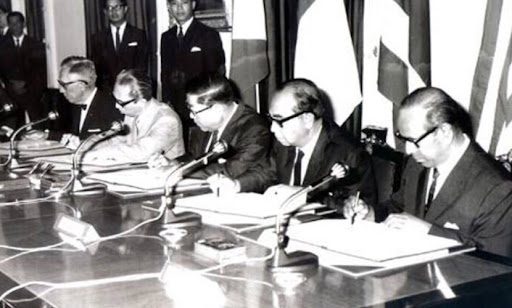
    This time, information about the history and background of the Roem Royen agreement will be presented along with the contents, impacts and results of the complete negotiations.

    Roem Royen Agreement Background

    The Roem Royen Agreement were initially motivated by an attack from the Netherlands on Indonesia after the proclamation of independence. The Dutch carried out an attack on Yogyakarta and the Dutch Military Aggression II attack.

    This was coupled with the detention of Indonesian leaders which began to invite criticism from the international community, especially from the United States and the United Nations Council.

    Pressure from abroad which then made the need for negotiations between Indonesia and the Netherlands. Therefore, the Roem Royen negotiations were carried out which became the way to the Round Table Conference (KMB) to be held in The Hague, Netherlands.

    The date of the Roem Royen agreement was from April 14 to May 7, 1948 and took place in Jakarta.

    The Roem Royen Negotiations

    The Roem Royen Agreement began on April 14, 1948. In the Roem Royen agreement, the Indonesian side was represented by Mohammad Roem, several members such as Ali Sastro Amijoyo, Dr. Leimena, Ir. Juanda, Prof. Supomo, and Latuharhary. Meanwhile, the Dutch were represented by Dr. J. Herman van Royen with members such as Blom, Jacob, dr. Van, dr. Gede, Dr. PJ Koets, Van Hoogstratendan and Dr. Gieben.

    Meanwhile, the mediator is UNCI (United Nations Commission for Indonesia) chaired by Merle Cochran from the United States. Then the Indonesian negotiations were strengthened by the presence of Drs. Moh Hatta and Sri Sultan Hamengkubuwono IX.

    The new negotiations ended on May 7, 1949 at the Hotel Des Indes, Jakarta. This agreement began to be signed and the name of this agreement was decided to be taken from the names of the two leaders of the delegation, namely Mohammad Roem from the Indonesian side and Herman van Royen from the Dutch side.

    Result of the Roem Royen Agreement

    The results of the Roem Royen negotiations include:

    1. The armed forces of the Republic of Indonesia must stop all guerrilla activities
    2. The Government of the Republic of Indonesia will attend the Round Table Conference (KMB)
    3. The return of the government of the Republic of Indonesia to the city of Yogyakarta
    4. The Dutch armed forces will stop all military operations and release all prisoners of war and politics
    5. The Netherlands approved the Republic of Indonesia as part of the United States of Indonesia
    6. Sovereignty will be handed over to Indonesia in full and without conditions
    7. The Netherlands and Indonesia will establish an alliance on a voluntary basis and equal rights
    8. The Netherlands gives all rights, powers and obligations to Indonesia

    Impact of the Roem Royen Agreement

    There are many impacts of this agreement on the situation in Indonesia. The contents of the Roem Royen agreement included the release of political prisoners so that Soekarno and Hatta returned to Yogyakarta after being exiled.

    Yogyakarta is also the temporary capital of Indonesia. There was also the handover of the mandate from Sjafruddin Prawiranegara as president of the PDRI (Emergency Government of the Republic of Indonesia) back to Ir. Sukarno.

    The most striking is the ceasefire between the Netherlands and Indonesia. The Roem Royen negotiations ended with the Round Table Conference (KMB) in The Hague, the Netherlands which resolved the problems between Indonesia and the Netherlands.

    This is the reference information for the Roem Royen negotiations covering the background, objectives, history, results and content as well as the impacts. This incident became one of the historic events in the continuity of the Republic of Indonesia that occurred after the independence era.

  • Bangkok Declaration | Results, Content, History, Figure

    Bangkok Declaration | Results, Content, History, Figure

    The Bangkok Declaration was the initial foundation of cooperation from Southeast Asian countries. The Bangkok Declaration was signed on August 8, 1967 in the city of Bangkok, Thailand. The existence of this declaration is considered as the beginning of the establishment of ASEAN. There are 5 ASEAN countries that have signed the Bangkok Declaration.
    The declaration stated the establishment of an association in the Southeast Asia (ASEAN) region. This association was founded with the consideration that countries in Southeast Asia have a responsibility to strengthen economic and social stability, ensure peace and the pace of national development and ensure security stability from outside interference in all its manifestations.

    The Bangkok Declaration is a basis for an agreement to establish regional cooperation in the economic, social and cultural fields in the Southeast Asian region. In addition, there are 7 points of content of the Bangkok Declaration which is also known as the ASEAN goal .

    Bangkok Declaration

    In the following, we explain about the Bangkok Declaration starting from the time and place of signing, the founding figures as well as the results and contents of the Bangkok Declaration and its impact on Indonesia and Southeast Asian countries.

    Signing of the Bangkok Declaration

    The Bangkok Declaration was signed on August 8, 1967. As the name implies, the Bangkok Declaration was signed in Thailand, precisely in the city of Bangkok.

    This declaration also became the beginning of the establishment of the ASEAN organization, namely the organization of countries in Southeast Asia. No wonder this declaration is also often referred to as the ASEAN Declaration.

    Bangkok Declaration Figure

    There are 5 (five) countries that participated in the Bangkok Declaration represented by 5 representative figures. The five countries participating in the meeting in Bangkok are Indonesia, Malaysia, Singapore, the Philippines and Thailand.

    Indonesia was represented by Adam Malik as Indonesia’s foreign minister at the signing of the Bangkok Declaration. The following are the names of representatives of countries now known as founding figures of ASEAN who also signed the Bangkok Declaration:

    • Adam Malik (Indonesian foreign minister)
    • Tun Abdul Razak (deputy prime minister of Malaysia)
    • S. Rajaratnam (Minister of Foreign Affairs of Singapore)
    • Narciso Ramos (Philippines foreign minister)
    • Thanat Khoman (Thai foreign minister)

    Contents of Bangkok Declaration

    Following are the contents and results of the Bangkok Declaration. The following seven points are also known as the purpose of establishing ASEAN in countries in the Southeast Asian region.

    1. Accelerate growth, social progress and cultural development in the Southeast Asian region.
    2. Maintain peace and stability by upholding the law and relations between countries in Southeast Asia.
    3. Promote active cooperation and mutual assistance in the economic, social, cultural, technological and administrative fields.
    4. Provide mutual assistance in the field of training and research facilities in the fields of education, vocational, technical and administrative.
    5. Cooperate more effectively to achieve greater efficiency in the fields of agriculture, industry and trade development including studies on international commodity trade, improvement of transportation and communication facilities and improving people’s living standards.
    6. Increase the study of problems in Southeast Asia.
    7. Maintain close and fruitful cooperation with other international and regional organizations that share common goals and seek opportunities to promote cooperation with them.

    This declaration also approved the establishment of ASEAN or the Association of South East Asian Nations, which is an association of organizations between countries in the Southeast Asia region.

    At the beginning of the declaration there were 5 members who became the founding countries of ASEAN, namely Indonesia, Malaysia, Singapore, the Philippines and Thailand. After that several other countries joined ASEAN such as Brunei Darussalam (joined in 1984), Vietnam (joined in 1995), Laos & Myanmar (joined in 1997) and also Cambodia (joined in 1999).

    The formation of ASEAN was based on the desire for cooperation, especially in the economic field. ASEAN is a non-political and non-military cooperative organization of Southeast Asian countries. The existence of the ASEAN Declaration in Bangkok is also the beginning of cooperation between Southeast Asian countries.

  • 6 Engineers Who Revolutionized the World’s Electrical System

    6 Engineers Who Revolutionized the World’s Electrical System

    All the technology that you use today, will not function without electricity . The study and development of electricity was long before the first industrial revolution began.
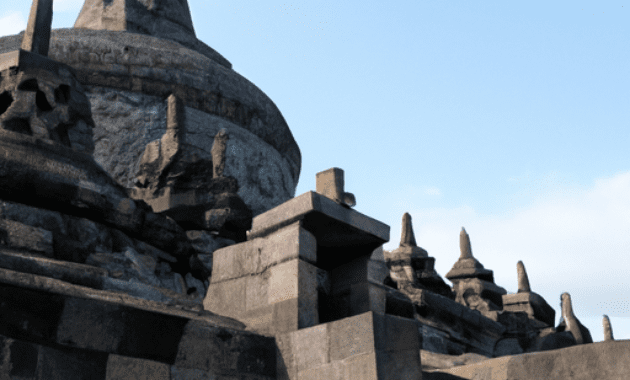
    Here are 6 engineers who are pioneers in the world electrical system revolution.

    1. Michael Faraday

    Michael Faraday

    In 1831, Faraday discovered the phenomenon of electromagnetic induction. The results of his experiments are now the basis of modern electronic technology.

    2. Alessandro Volta

    In 1800, Volta published the electronic device “voltaic pile” which became the forerunner of battery technology

    3. Georg Ohm

    Ohm showed that the electric current flowing in a conductor is proportional to the voltage and inversely proportional to the resistance.

    His name is immortalized as the unit for electrical resistance.

    4. Andre-Marie Ampere

    Andre-Marie Ampere

    Ampere conducted a theoretical and practical study of electric currents. Because of his services, his name is immortalized as a unit of electric current.

    5. Gustav Kirchoff

    German physicist who studied the characteristics of electric currents in conductors.

    His famous contribution is Kirchhoff’s Law, where the amount of current entering the branch is equal to the amount of current flowing out.

    6. Nikola Tesla 

    Tesla was the engineer who made the AC power system widely used today.

    Contributions include AC electric motors, electricity distribution, and many others.

    Thus the discussion about the six engineers who revolutionized the world’s electrical system. Hopefully useful and inspire us all.

  • Borobudur Temple Entrance Fee Update – What It Means for Tourists and Locals.

    Borobudur Temple Entrance Fee Update – What It Means for Tourists and Locals.

    Borobudur Temple, located in Central Java, Indonesia, is one of the most iconic Buddhist temples in the world. Every year, millions of visitors come to this UNESCO World Heritage Site to witness its grandeur and spirituality. However, starting from January 1st, 2021, the temple authorities have revised their entrance fee policy, which has caused some concern among locals and tourists alike.
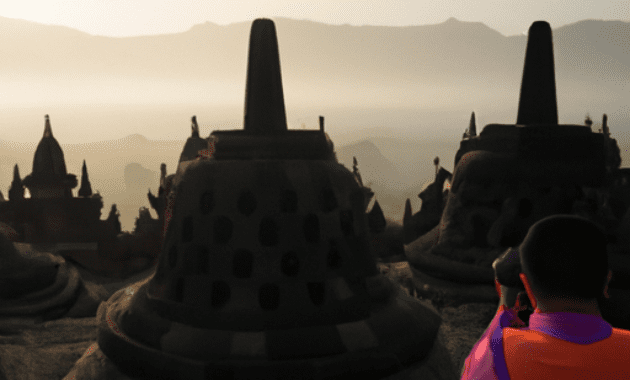
    Previously, the entrance fee for Borobudur Temple was IDR 325,000 (about $23 USD) for foreign tourists, IDR 190,000 (about $13 USD) for domestic tourists, and IDR 30,000 (about $2 USD) for local visitors. But now, the new entrance fees are IDR 500,000 (about $35 USD) for foreign tourists, IDR 350,000 (about $25 USD) for domestic tourists, and IDR 25,000 (about $1.5 USD) for local visitors.

    Tourists who planned their trips ahead of time were taken aback by the sudden price hike, as it could be an unexpected budget buster for many. That said, the increased revenue generated from the entrance fees can be used to maintain the temple and its surrounding areas properly. The temple has a steady inflow of visitors, but it costs a lot to maintain it. With the additional funds, the temple’s conservation efforts can be further strengthened, which will help protect the temple for future generations.

    For locals, the new entrance fees are significantly lower than before, which is an excellent move by the temple authorities to encourage more Indonesian locals to visit the site. Borobudur Temple is, after all, an essential part of Indonesian heritage and culture. By making the temple more affordable for locals, the authorities are ensuring that Indonesians can learn more about their country’s history and continue to take pride in their cultural heritage.

    It’s also worth noting that despite the new entrance fee policy, Borobudur Temple remains a must-visit destination for anyone visiting Indonesia. The temple, which is over 1,000 years old, is an architectural wonder, with detailed stone carvings and colossal Buddha statues. It’s an unforgettable experience to watch the sunrise from the temple and see the mist slowly unveil the temple’s intricate designs.

    In summary, the Borobudur Temple entrance fee update may have caught some people by surprise, but the increased revenue can support the temple’s conservation efforts, while the lower fees for Indonesian nationals can encourage local visitors to appreciate and learn more about their country’s cultural heritage. Ultimately, it’s a move towards protecting and preserving the site for future generations, which is a shared responsibility of everyone who loves and appreciates Borobudur Temple.

  • Discover the Magic of Borobudur at Sunrise: A Tourist’s Guide

    Discover the Magic of Borobudur at Sunrise: A Tourist’s Guide

    Borobudur is a majestic temple located in Central Java, Indonesia. It is considered one of the world’s most exceptional Buddhist monuments, with more than 500 Buddha statues and nearly 2,700 relief panels carved into its walls. The temple was built in the 9th century and abandoned for centuries, but it was rediscovered in the 19th century and has since become a significant cultural and religious site in Indonesia.
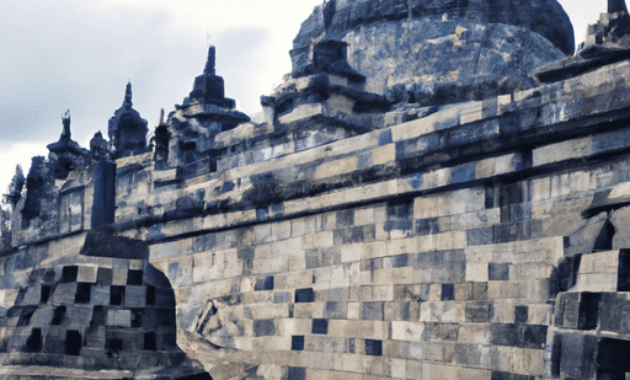
    One of the most popular ways to experience the beauty of Borobudur is to witness its sunrise view. It is an ethereal experience to witness the first rays of the sun illuminate the temple, and the surrounding landscape, providing visitors with unforgettable views of the temple and its surroundings. If you’re planning a visit to Borobudur anytime soon, here is a tourist guide to help you discover the magic of Borobudur at sunrise:

    Plan your trip:

    It is advisable to book your tour ahead of time to ensure that you’ll have a comfortable experience while you’re there. Choose a tour that starts early enough to reach the temple by sunrise. The Borobudur sunrise tour typically starts early in the morning, around 4 am, so be prepared for an early start.

    Dress Appropriately:

    Since temperatures can get cold early in the morning, it’s best to wear warm clothing, comfortable shoes, and bring a hat or sunglasses to shield your eyes from the sun. Dress modestly, as the temple is a religious site, and modest clothing is required to enter the temple.

    Witness the Sunrise From the Top:

    To experience the full beauty of the temple, climb to the top of Borobudur, where you can witness the sunrise view. The climb is made easier with steps and platforms leading the way. You will have a stunning 360° view of the surrounding landscapes and the temple complex.

    Take Photographs:

    If you’re into photography, don’t forget to bring your camera to capture the breathtaking sunrise views. You can take plenty of photographs of the temple and the surrounding landscapes at different angles for some really great shots.

    Enjoy the Sunrise:

    The most important part of the tour is to enjoy the beauty of Borobudur at sunrise. Once the sun starts to rise, watch as the soft pink hues in the sky turn to burnt orange and yellow, before the temple is bathed in the same golden light. Take a moment to reflect on your surroundings and the beauty of Borobudur.

    In conclusion, Borobudur should be on every traveler’s itinerary. The temple’s serene setting coupled with stunning sunrise views make for an incredible experience. The tour is a perfect combination of history, culture, and natural beauty. So make sure to book your Borobudur sunrise tour to witness this majestic wonder.

  • Unraveling the Magnificence of Borobudur Temple: A Journey through History and Architecture

    Unraveling the Magnificence of Borobudur Temple: A Journey through History and Architecture

    Located in Magelang, Central Java, Indonesia, Borobudur temple is one of the most magnificent and grandiose Buddhist monuments that has stood the test of time. This temple is an exceptional masterpiece of architecture that boasts of stupendous stone carvings, intricate design, and a grandeur unparalleled to any other monument.
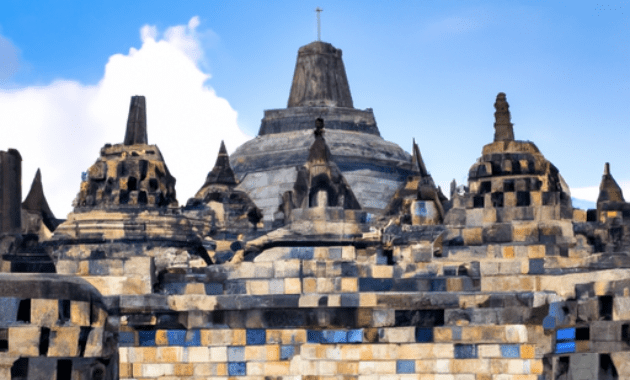
    Borobudur temple was built between the 8th and 9th century during the reign of the Sailendra dynasty that ruled Java, Indonesia. The temple stands on a square base that measures 123 meters on each side and is adorned with 504 Buddha statues, an astounding 2,672 relief panels, and dome-shaped shrine. The shrine at the top of the temple, known as stupa, is circular and has a diameter of 16 meters.

    The temple, as a whole, is divided into three levels which signify the different stages of Buddhist teachings. The first level is the kamadhatu, which signifies the world of desire. The second level is the rupadhatu, which symbolizes the world of forms. And the third level is the arupadhatu, which represents the world of formless beings.

    The intricate and exquisite carvings and reliefs on the temple panels and walls depict various aspects of Buddhist history, teachings, and philosophy. The intricate carving on the temple walls showcases various Buddhist teachings which include Jataka tales, karmic law, and the law of cause and effect.

    As one ascends the temple, the view of lush green fields and hills in the distance gradually spread out beneath. On reaching the top of the temple, one is rewarded with a panoramic view of the beautiful landscape, which is breathtakingly beautiful.

    There is much to learn about the history and architecture of Borobudur temple, and the best way to absorb its magnificence would be to take a guided tour around the temple. Touring the temple can take about 1 to 2 hours; hence, there is a need for visitors to wear comfortable clothing.

    In conclusion, Borobudur temple is a remarkable piece of art and architecture that harbors an incredible history of Buddhism. It is a temple that has stood the test of time and remains one of the most essential UNESCO World Heritage sites in Indonesia. It is, therefore, essential for visitors to take time to explore and learn about the temple’s rich history and architecture.

  • Borobudur Temple Opening Hours: Plan Your Visit Like a Pro!

    Borobudur Temple Opening Hours: Plan Your Visit Like a Pro!

    Borobudur Temple is one of the most famous and beautiful temples of Indonesia. It is a masterpiece of Buddhist architecture and one of the most visited tourist attractions in the country. If you’re planning a trip to Borobudur, it is important to know the opening hours to make the most of your experience.
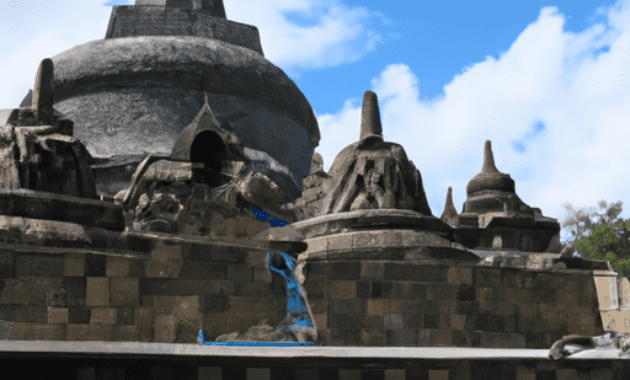
    Borobudur Temple opens daily at 6:00 am and closes at 5:00 pm. It’s important to note that the sunset at Borobudur is a sight not to be missed. Therefore, visitors are also allowed to enter the temple during the sunset hours from 5.30 pm to 6.30 pm. It’s better to plan your visit during these hours to witness the beautiful temple during the sunset.

    During the peak season, Borobudur can get crowded, especially during the sunrise hours. Hence, the temple management has introduced a new package that allows visitors to enter the temple at 4.30 am to be able to see the sunrise. This package is available for early birds and needs to be bought in advance.

    To avoid long waiting lines, visitors have the option to buy tickets in advance. The entrance ticket price for international visitors is IDR 520,000 (approximately USD 35) during the peak season and IDR 450,000 (approximately USD 30) during low season. For domestic visitors, the entrance fee is IDR 30,000 (approximately USD 2). The entrance fee includes the use of a free audio guide that helps visitors to understand the history and significance of the temple.

    Visitors can also explore Borobudur temple beyond its opening hours by participating in the temple’s daily activity programs. These programs usually include a morning walk around the temple’s park, meditation, and traditional dance performances.

    It is important to note that visitors should dress modestly as Borobudur temple is a religious site. Visitors are also not allowed to climb on the temples, touch the carvings, or bring food or beverages inside the temple. Smoking and littering are strictly prohibited in the temple premises.

    In conclusion, a visit to Borobudur temple is a must-do experience for anyone traveling to Indonesia. By planning your visit in advance and knowing the opening hours, you can make the most of your trip to this magnificent temple. Enjoy the breathtaking beauty of the temple and take back unforgettable memories!

  • Borobudur Temple: Indonesia’s Biggest Restoration Project Underway!

    Borobudur Temple: Indonesia’s Biggest Restoration Project Underway!

    Borobudur Temple: Indonesia’s Biggest Restoration Project Underway!

    Borobudur Temple, a UNESCO World Heritage site located in central Java, Indonesia, is one of the largest and most important Buddhist temples in the world. Built in the 8th and 9th centuries, it is a testament to the architecture and art of ancient Indonesia. Currently, it is undergoing its biggest restoration project to date, which aims to preserve the temple for future generations.
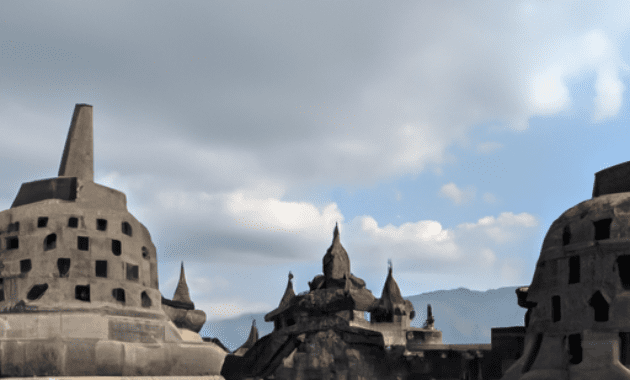
    The restoration project is being led by PT Taman Wisata Candi Borobudur, Prambanan & Ratu Boko, a state-owned enterprise that oversees the management and conservation of the temple complex. The project, which started in 2017 and is expected to be completed by 2022, will cost around Rp 570 billion ($40.7 million).

    The restoration work includes repairing the temple’s 2,672 relief panels, restoring the ancient drainage system, and reapplying the stucco on the temple’s upper levels. The stones used to build the temple have been sourced from the same quarry that supplied the original builders, to ensure they match in color and texture.

    Besides preserving the temple’s physical structure, the restoration project also includes improving the visitor experience. This includes building new facilities such as parking lots, information centers, and souvenir shops, as well as developing new tourist routes that give visitors a better understanding of the temple’s history and significance.

    Borobudur Temple is an iconic symbol of Indonesia’s cultural heritage, and its restoration is a testament to the country’s commitment to preserving its history. The temple attracts thousands of visitors each year, and the restoration project will ensure that it continues to be a major tourist destination for years to come.

    The restoration of Borobudur Temple is a massive undertaking, but it is a worthy investment in Indonesia’s cultural heritage. By preserving this important part of the country’s history, Indonesia is not only protecting an iconic monument but also passing on the country’s rich cultural heritage to future generations. As such, the restoration of Borobudur Temple is a project that all Indonesians can take pride in.

  • Explore the Wonders of Borobudur Temple with a Virtual Tour

    Explore the Wonders of Borobudur Temple with a Virtual Tour

    The Borobudur Temple, located in Central Java, Indonesia, is one of the most renowned Buddhist temples in the world. Despite being over a thousand years old, the temple remains a marvel of architecture, art, and religion. However, due to the ongoing pandemic, it may not be easy for people to visit the temple in person. Luckily, with the power of technology, you can now explore the Borobudur Temple through a virtual tour.
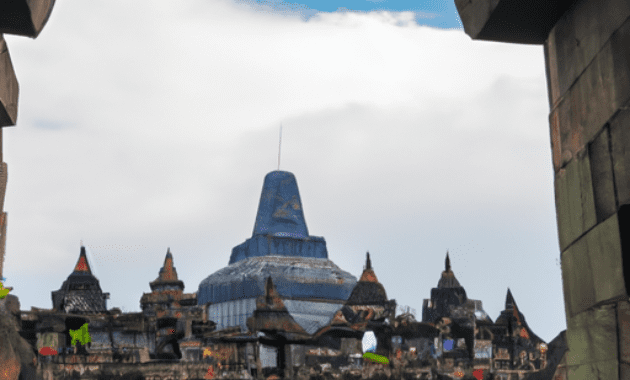
    A virtual tour allows you to explore the temple’s every nook and cranny from the comfort of your own home. All you need is a stable internet connection, and you can begin your virtual journey into this magnificent temple.

    To start your virtual tour, search for a website that offers a 360-degree view of Borobudur Temple. A quick Google search will give you numerous options to choose from. Once you have found a website, choose the virtual tour option, and you will be directed to a virtual tour.

    The virtual tour is designed to give you an experience as if you were physically present at the temple. The tour will guide you through the different levels of the temple, starting from the base and leading all the way to the top.

    The tour is accompanied by commentary that explains the significance of various structures and sculptures you will see. You will learn about the temple’s history, its construction, and its spiritual significance.

    As you journey through the temple, you will marvel at the intricate details on the temple walls and the carvings on the Buddha statues. You will notice many unique features, such as the temple’s symbolic shape and the layout of the platforms.

    One of the most remarkable aspects of the virtual tour is the chance to see the sunrise over the temple. You can witness the sun rising over the structure, lighting up the temple in golden hues – an awe-inspiring sight.

    Overall, the virtual tour of Borobudur Temple allows people who can’t be physically present at the temple to still admire its beauty and spirituality. Whether you’re a history buff interested in the temple’s past or someone looking for a spiritual experience, the virtual tour has something for everyone.

    With the pandemic still affecting travel, the virtual tour of Borobudur Temple is an excellent alternative that can bring the temple to you in a safe and accessible way. Don’t miss out on the opportunity to explore the wonders of Borobudur Temple through a virtual tour.

  • Borobudur Temple Entrance Gate: A Journey Through Java’s Rich History

    Borobudur Temple Entrance Gate: A Journey Through Java’s Rich History

    Borobudur Temple is one of the greatest and most significant Buddhist monuments in the world. Located in Magelang, Central Java, Indonesia, this UNESCO World Heritage Site attracts thousands of visitors each year. According to historians, Borobudur Temple was built in the ninth century during the Sailendra dynasty’s rule. The magnificent temple was then abandoned in the 14th century and lay hidden under volcanic ash and jungle growth until its rediscovery in the 19th century.
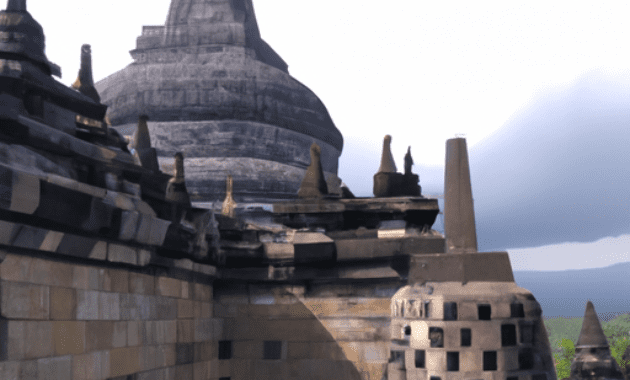
    The entrance gate of Borobudur Temple is the first monument that visitors will encounter. The gate’s architecture reflects the complex blend of cultural influences that influenced Java’s history.

    The entrance is flanked by two pairs of statues known as Dvarapala. These statues are believed to protect the temple from any evil spirits or negative energies. They are the guardians of the temple and have an essential role in warding off negative influences. Each pair stands on either side of the gate, looking out to those who pass through to seek peace and spiritual enlightenment.

    The entrance gate’s overall design is a beautiful blend of Hindu and Buddhist architecture. The temple’s unique design is a testament to how different religions and cultures have influenced Java’s history. The temple’s creators were inspired by traditional Buddhist architecture, but several Hindu elements were incorporated. For example, the gate is adorned with Kala-Makara, a Hindu mythical creature made up of the head of a lion and the body of a dragon. According to Hindu mythology, this creature is symbolic of destruction and creation, which represents the cycle of life.

    The gate’s bas-reliefs are another impressive feature that provides visitors with a glimpse into Java’s past. The stone carvings are a valuable source of knowledge about the life, culture, and beliefs of the architects and builders of Borobudur Temple. The carvings on the gate represent the earthly desires and worldly distractions that individuals need to overcome to achieve spiritual enlightenment.

    In conclusion, Borobudur Temple Entrance Gate is a masterpiece of ancient architecture that reflects Java’s rich history. Its design and carvings are a testament to how different religions and cultures can blend to create something unique and beautiful. The temple is indeed a must-visit destination for anyone interested in Indonesia’s cultural and religious heritage.

  • Discover the wonders of Borobudur Temple with its new tourist information center

    Discover the wonders of Borobudur Temple with its new tourist information center

    The Borobudur Temple, located in Central Java, Indonesia, is one of the world’s most impressive historical sites, and its new tourist information center is making it easier and more enjoyable for travelers to explore its wonders.

    The Borobudur Temple is a Buddhist monument built in the 8th and 9th centuries AD. It is made up of nine stacked platforms, topped by a central dome, and decorated with over 2,600 relief panels and 504 Buddha statues. The temple was abandoned for centuries and partially buried under volcanic ash until it was rediscovered in 1814. Since then, it has been restored and is now a UNESCO World Heritage site.

    The new tourist information center at Borobudur Temple is a convenient and modern facility that offers visitors a wealth of information about the temple and its history. It is located in the main entrance complex, where visitors can purchase tickets and rent audio guides. The center has interactive exhibits, displays, and videos that educate visitors about the temple’s architecture, symbolism, and historical significance.

    The highlight of the center is the 3D virtual reality theater, which allows visitors to experience the temple in a whole new way. The theater screens a 15-minute video that takes visitors on a tour of the temple, highlighting its features and offering a glimpse into its past. The theater also has virtual reality headsets that offer a more immersive experience, allowing visitors to explore the temple as if they were really there.

    In addition to the virtual reality theater, the tourist information center also has a souvenir shop, a cafe, and a rest area. The shop sells a variety of items, including books, postcards, and local handicrafts. The cafe offers a selection of snacks and beverages, including traditional Indonesian snacks and drinks. The rest area is a comfortable and quiet area where visitors can take a break from their touring or wait for their group to gather.

    Overall, the new tourist information center at Borobudur Temple is a valuable addition to this already impressive site. It offers visitors a convenient and informative way to learn about the temple’s history and architecture while providing modern conveniences and comfort. With its virtual reality theater and other amenities, the center is sure to enhance any visit to the Borobudur Temple.

  • Captivating Borobudur: Expert Photography Tips to Capture the Temple’s Beauty!

    Captivating Borobudur: Expert Photography Tips to Capture the Temple’s Beauty!

    Borobudur Temple, a UNESCO heritage site located in Java, Indonesia, is a magnificent example of Buddhist architecture and art. Built in the 9th century, it consists of nine stacked platforms, six square and three circular, adorned with over 2,600 relief panels and 504 Buddha statues. Captivating Borobudur with its sheer scale and intricate carvings can be a photographer’s delight. Here are some expert photography tips to capture the temple’s beauty.

    1. Visit Early Morning or Late Afternoon

    The best time to photograph Borobudur is during early morning or late afternoon light. The softer and angled light at these times will enhance the relief and Buddha statues’ details, creating textured shadows and highlights. Avoid visiting the temple during midday when the light is too harsh and flat.

    2. Use a Tripod

    Using a tripod will help you capture sharp images, especially if you want to shoot at lower shutter speeds to capture the temple’s intricate details. It will also keep your image steady if you want to shoot during dawn or dusk when light is low. Consider investing in a sturdy carbon fiber tripod that is lightweight and can withstand the outdoor elements.

    3. Experiment with Different Lenses

    Borobudur Temple’s grandeur and scale can be best captured with wide-angle lenses. A 16-35mm lens or a 12mm fisheye lens can give you an excellent perspective by capturing the temple’s vastness in a single frame. A zoom lens can also be useful for capturing intricate details or isolating sections of the temple in portrait shots.

    4. Try Different Angles and Compositions

    Borobudur Temple is vast, so it can be challenging to capture a unique perspective. Try exploring different angles and compositions to create interest in your images. Get low and capture the temple’s reflection in the nearby pond or find a vantage point to shoot from a distance with the landscape as your background. Experimenting with different angles and compositional elements can give your photo a unique touch.

    5. Pay Attention to Details and Lighting

    The relief panels and Buddha statues in Borobudur Temple tell a story of Buddhist teachings and depict various themes, from the wheel of life to the heavenly realms. Take time to examine the intricate details and the play of light and shadows on the temple’s elaborately carved surfaces. Use the temple’s lighting as an essential factor and look for creative ways to highlight the details and textures of the temple.

    Conclusion

    Borobudur is undoubtedly an architectural masterpiece and a fascinating site for photography enthusiasts. As a photographer, you should pay attention to details, experiment with angles, and use the right lens and lighting. You can capture the temple’s beauty in ways that distinctly highlight its intricate carvings, grandeur, and serene ambience. With these expert photography tips, you can create memorable and captivating images of Borobudur to cherish for years to come.

  • Beyond Borobudur: Exploring the Hidden Gems of Central Java

    Beyond Borobudur: Exploring the Hidden Gems of Central Java

    Central Java is a province in Indonesia that is steeped in history and culture. It is home to the world-famous Borobudur Temple, which attracts millions of visitors each year. However, the province has much more to offer, beyond the well-trodden tourist path. Hidden gems abound, and those who venture further afield are rewarded with stunning landscapes, ancient temples, and unique experiences that are off the beaten track.

    One of the lesser-known temples in Central Java is the Pawon Temple, located just a few kilometers from Borobudur. Smaller in scale than its famous neighbor, Pawon Temple is still an impressive structure. Built in the same era as Borobudur, it features intricate carvings that are perfectly preserved to this day. Visitors who climb to the top of the temple can enjoy panoramic views of the surrounding countryside.

    Another hidden gem in Central Java is the Dieng Plateau, a vast highland area that is home to numerous volcanic craters and lakes. The scenery here is breathtaking, and visitors can hike through verdant forests, alongside bubbling sulphur springs, and across scenic meadows. The plateau is also steeped in history, with ancient Hindu temples dotted throughout the area. The most famous of these is the Arjuna Temple, which dates back to the eighth century.

    Central Java is also known for its thriving craft scene. The town of Laweyan in Solo, for example, is renowned for its batik production. Here, visitors can witness the intricate process of making batik fabric, from boiling wax in huge vats to painting delicate patterns onto fabric using traditional tools. The finished products make excellent souvenirs or gifts.

    For those seeking a more adventurous experience, Central Java has plenty to offer. At the Sembung River, visitors can enjoy white-water rafting on rapids that are suitable for both beginners and experienced rafters. Alternatively, for a more leisurely experience, there are kayaking tours available that take visitors through tranquil mangrove forests to a hidden beach.

    Finally, foodies will find plenty to delight in Central Java. The province is known for its delicious traditional cuisine, such as nasi liwet, a savory dish made with rice, coconut milk, and various spices. Other notable dishes include soto, a soup made with meat and vegetables, and gudeg, a jackfruit curry that is slow-cooked for hours until it becomes tender and flavorful.

    In conclusion, Beyond Borobodur, Central Java has so much to offer to visitors who are willing to venture off the beaten path. From ancient temples and stunning landscapes to unique cultural experiences and thrilling activities, this province truly has something for everyone.

  • Respectful Attire Required at Borobudur Temple: A Guide to Dressing Appropriately for Your Visit

    Respectful Attire Required at Borobudur Temple: A Guide to Dressing Appropriately for Your Visit

    The Borobudur Temple in Indonesia is one of the most popular tourist sites in the world, attracting thousands of visitors every day. This 9th-century Buddhist temple is not only a sacred site but also a UNESCO World Heritage Site, making it an important historical and cultural landmark. As such, visitors are expected to dress respectfully and appropriately when visiting the temple.
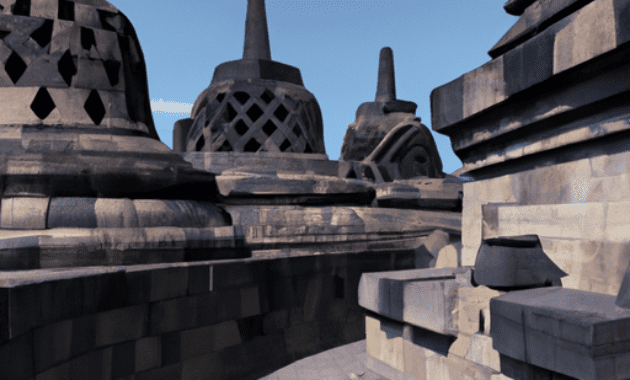
    When visiting Borobudur Temple, it is essential to remember that this is a place of worship, and visitors should dress accordingly. Your attire should be conservative, modest, and respectful of the local culture and tradition.

    Here are some tips on what to wear when visiting Borobudur Temple:

    1. Cover your legs and shoulders

    The most important rule when visiting Borobudur Temple is to cover your legs and shoulders. Wear long pants or skirts that cover your knees and shoulders should be covered with a shirt or a scarf. You can also wear a long-sleeved shirt to ensure that your arms are covered.

    2. Avoid tight and revealing clothing

    Avoid wearing tight or revealing clothing, such as shorts, tank tops or low-cut tops. This type of clothing is not only disrespectful but also inappropriate for a religious site.

    3. Wear comfortable footwear

    The Borobudur Temple complex is vast, and there is a lot of walking involved, so wear comfortable and sturdy shoes. Avoid wearing high heels or flip flops, as the temple’s surfaces can be slippery and uneven.

    4. Dress according to the weather

    Indonesia is a tropical country, and the weather can be hot and humid throughout the year. Dress accordingly for the weather, but still ensure that your clothing is modest and respectful.

    5. Respect the local culture

    Remember that you are a guest in a foreign country and should, therefore, respect the local culture, tradition, and customs. Dressing appropriately is one way of showing respect to the people of Indonesia and their culture.

    In conclusion, when visiting Borobudur Temple, dressing appropriately and respectfully is crucial. It is essential to dress modestly yet comfortably and to respect the local culture. By following these tips, you can enjoy your visit to Borobudur Temple while showing respect to the local people and their customs.

  • Exploring Indonesia’s Borobudur Temple – The New Entrance Fee Policy

    Exploring Indonesia’s Borobudur Temple – The New Entrance Fee Policy

    Borobudur Temple is a UNESCO World Heritage Site located in Central Java, Indonesia. It is the world’s largest Buddhist temple, consisting of nine stacked platforms, six square and three circular, topped by a central dome. Borobudur Temple is considered one of the greatest Buddhist monuments in the world and attracts millions of visitors every year.
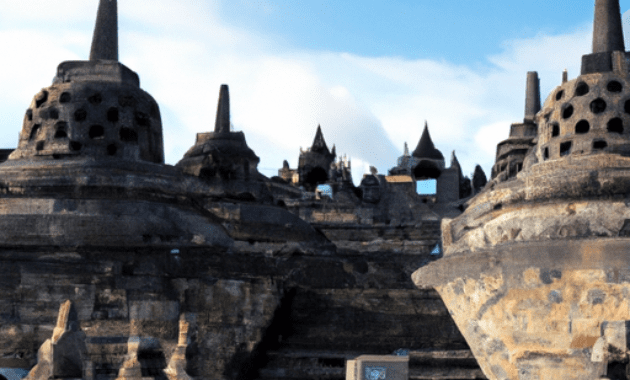
    Recently, the government of Indonesia made changes to the entrance fee policy of Borobudur Temple. The new policy aims to encourage tourists to visit the temple during weekdays and to preserve the heritage site’s cultural and historical significance.

    Under the new policy, visitors will have to pay different entrance fees depending on when they visit. The highest fee will be charged on weekends and public holidays, while a lower fee will be charged on weekdays. The new policy will also introduce a different fee for foreign tourists.

    This move by the Indonesian government is a step towards promoting sustainable tourism and balancing the number of tourists that visit the temple. It is hoped that by charging different fees for different days, the demand for Borobudur Temple will be spread out more evenly, reducing overcrowding and congestion, thereby preserving the site’s heritage.

    Furthermore, the revenue generated from the entrance fee will also be used for the maintenance of the site. The funds will be allocated towards ensuring the temple remains in good condition, providing essential services to visitors, and improving security measures.

    Visitors have mixed feelings about the new policy, with some agreeing that it is a sensible approach to preserving the temple’s heritage and others expressing concerns about the increased cost of visiting on weekends and public holidays. However, the new policy is set to be implemented, and visitors are encouraged to plan their visit accordingly.

    In conclusion, Borobudur Temple is an incredible temple and a must-visit destination for those traveling to Indonesia. While the new entrance fee policy may come as a surprise, it is essential to preserve the site’s cultural and historical significance for generations to come. The Indonesian government’s move is a step towards promoting sustainable tourism, and visitors should respect this change.

  • Borobudur Temple Entrance Fee Increased: Here’s What You Need to Know

    Borobudur Temple Entrance Fee Increased: Here’s What You Need to Know

    Borobudur Temple, a UNESCO World Heritage Site located in Central Java, Indonesia, has recently raised its entrance fee. Visitors to the temple are now required to pay Rp 5000 more than the previous ticket price, bringing the new entry fee to Rp 40,000 (approximately US $2.70 or EU €2.30).
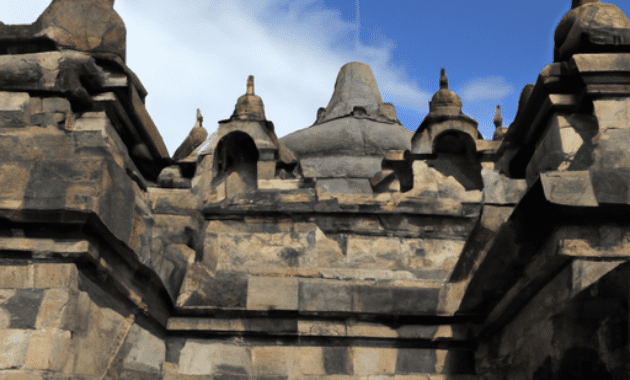
    The decision to increase the entrance fee has been met with mixed reactions from tourists and locals alike. Some feel that the new fee is still affordable, while others worry that it may deter lower-income individuals from visiting this significant religious and cultural landmark.

    Borobudur Temple is a Buddhist temple built during the 8th and 9th centuries. It is the world’s largest Buddhist temple, and it attracts millions of visitors each year. Visitors to the temple climb the temple’s nine levels, with each level representing a different stage of enlightenment. The temple’s intricate carvings and reliefs, the largest being over 2 meters high, are a testament to the skill of the ancient Javanese people who built it.

    The decision to increase the entrance fee was made by the Indonesian government, citing the need for additional revenue to maintain the temple and its surroundings. The increased rate is still lower than other popular cultural and historical attractions in the region. For example, the Angkor Wat Temple in Cambodia charges $37 for a one-day pass.

    While the entrance fee increase may be a slight inconvenience for budget-conscious visitors, the added revenue will help fund vital maintenance and preservation efforts. Borobudur Temple is not only a representation of Indonesia’s rich cultural heritage but is also an important religious site for Buddhists around the world. The increased entrance fee will help ensure that the temple remains accessible for future generations to experience and appreciate.

    Visitors to Borobudur Temple can take advantage of guided tours that provide a deeper understanding of the temple’s history and significance. The temple is open daily from 6 am to 5 pm, and the entrance fee goes towards the maintenance of the temple and its surroundings. Visitors are reminded to dress modestly and remove shoes before entering the temple.

    In conclusion, while the increase in the entrance fee of the Borobudur Temple may be a setback for some visitors, it is a necessary measure to ensure the temple’s continued preservation and to maintain its cultural and historical significance. With the added revenue, the Indonesian government can continue to protect and showcase this valuable piece of the country’s heritage for generations to come.

  • Borobudur Temple Enforces New Entrance Fees for Foreign Visitors

    Borobudur Temple Enforces New Entrance Fees for Foreign Visitors

    Indonesia’s Borobudur Temple, a UNESCO World Heritage site, is imposing new entrance fees on foreign visitors. The new charges, which took effect on January 1, 2020, have sparked controversy among tourists and locals alike.

    Borobudur Temple is one of the most popular tourist destinations in Indonesia, attracting a large number of visitors every year. It is a massive Buddhist temple complex that was built in the 8th century, and it is considered to be one of the greatest architectural masterpieces of the Buddhist world.

    In the past, foreign visitors were charged an entrance fee of IDR325,000 (about $22) per person, which was already considered to be quite high by many visitors. But in 2020, the new rates for adult foreign visitors have been set at IDR500,000 (about $35).

    The new fees have been met with mixed reactions. While some tourists argue that the price is too high and might discourage them from visiting the site, others believe that the charges are justified given the upkeep costs of the temple.

    The Indonesian government has defended the move, saying that the new rates are necessary to help preserve the temple and secure an additional source of revenue for the local community.

    The temple complex underwent a major renovation in 2017, during which several improvements were made to its infrastructure, accessibility, and visitor experience. Specific costs for the renovation, however, were not disclosed to the public.

    While the new fees might seem steep to foreigners, it is important to remember that most Indonesian locals only pay IDR30,000 (about $2) to enter the temple. The government claims that the new fees are part of a larger initiative to promote local tourism and provide jobs and income for local communities.

    Overall, the Borobudur Temple’s new entrance fees for foreigners have sparked heated debate regarding conservation and tourism. It remains to be seen how effective the new charges will be in maintaining the temple and promoting development in the local community.

  • Borobudur Temple Ticket Prices – Is It Worth the Cost?

    Borobudur Temple Ticket Prices – Is It Worth the Cost?

    Borobudur Temple is a significant heritage place, located in Magelang, Central Java, Indonesia. This temple is one of the most visited tourist destinations in Indonesia. Tourists come from various countries to witness the beauty of this UNESCO World Heritage Site. However, before visiting this amazing temple, it is essential to know about the Borobudur Temple ticket prices.
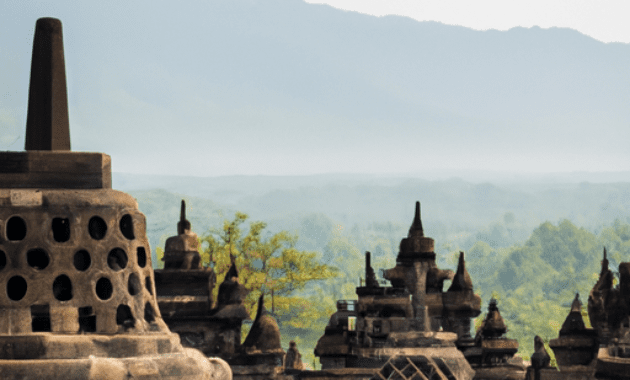
    The ticket prices for Borobudur Temple vary depending on various factors. For local Indonesian visitors, the ticket prices are relatively lower than international visitors. The cost of a ticket for local visitors is IDR 25,000 while international visitors have to pay IDR 535,000 per person. However, the ticket cost for Indonesian students is IDR 15,000, while for international students, the ticket price is IDR 370,000.

    The price might seem reasonably high, but you get to experience the following benefits:

    1. Amazing View

    The Borobudur Temple displays beautiful and intricate Buddhist art, including sculptures and carvings that will capture your attention. You will enjoy the beautiful beauty of Borobudur temple and its surrounding areas, such as beautiful nature and paddy fields.

    2. Experience the Buddhist Culture

    The temple is a significant cultural center for Buddhists in Indonesia. Learning about the history of this Temple will allow you to understand the Buddha’s teachings and principles. You can experience a peaceful, meditative atmosphere near the temple, providing the perfect environment for relaxation.

    3. Enjoy interactive activities

    The ticket price includes various interactive activities for visitors. As part of the ticket price, visitors can access the museum and watch the film screened in a high-definition theater. These activities give visitors an insight into the temple’s history and culture, providing a deeper understanding of Indonesia’s heritage.

    In conclusion, the Borobudur Temple is one of Indonesia’s most significant heritage sites. The price of the ticket may seem high, but the benefits far outweigh the cost. Visitors get to experience the magnificent architecture and intricate artwork, learn about the Buddhist culture, and enjoy engaging activities. Indeed, the Borobudur Temple ticket prices are worth it, and visitors will have an unforgettable experience.

  • Discovering Borobudur Temple – The Impacts of the New Entrance Fee Structure

    Discovering Borobudur Temple – The Impacts of the New Entrance Fee Structure

    Borobudur temple, located in central Java, Indonesia, is one of the most magnificent ancient temples in the world. It is a UNESCO world heritage site and a popular tourist attraction. The temple has seen a significant increase in visitors in recent years, and the government has now implemented a new entrance fee structure. This new pricing structure has both positive and negative impacts on the tourism industry and local community.

    The temple’s new entrance fee structure has come into effect from 1st January 2020. Previously, there was a fixed entrance fee for both local and foreign visitors. The new pricing structure differentiates between local and foreign visitors, and the price for foreigners has significantly increased compared to locals. This change in price aims to increase revenue and balance the number of local and foreign visitors.

    One of the positive impacts of this new entrance fee structure is it will help to support the maintenance of the temple. The temple, which is more than 1200 years old, requires significant maintenance and restoration work. The funds collected from the entrance fees will be used for these essential works. This will help to preserve the cultural heritage site for future generations and ensure visitors can appreciate the site’s beauty and history.

    However, a significant negative impact of this pricing structure is that it may discourage some foreign visitors from visiting the monument. The increase in price could make it less affordable for some tourists, causing a decrease in the number of foreign visitors. Moreover, it may reduce the tourism industry’s contribution to the local economy, which heavily depends on tourism. This decrease in foreign visitors could lead to a reduction in employment opportunities and income for the local community.

    It should be noted that this new pricing structure will not affect the visiting locals, as the cost of entry has not increased for them. The new pricing structure aims to encourage local visitors to appreciate their cultural heritage, which is very important, as the temple is a crucial symbol of Indonesia’s rich cultural history.

    In conclusion, the new entrance fee structure in Borobudur Temple has both positive and negative impacts on the tourism industry and local community. It provides much-needed funding for the maintenance and restoration of the temple while potentially discouraging some foreign visitors from visiting. Nonetheless, it is essential to preserve this cultural heritage site for the future, and we must acknowledge and support the government’s effort in maintaining our world’s cultural wonders.

  • Why Borobudur Temple’s Entrance Fee Increase is a Good Thing

    Why Borobudur Temple’s Entrance Fee Increase is a Good Thing

    Borobudur Temple, a UNESCO World Heritage site located in Indonesia, attracts millions of tourists every year. It is a magnificent structure that symbolizes the Buddhist religion and culture. Recently, there has been an increase in the entrance fee to the temple. While some tourists have criticized this, there are several reasons why the increase in entrance fees is a good thing.
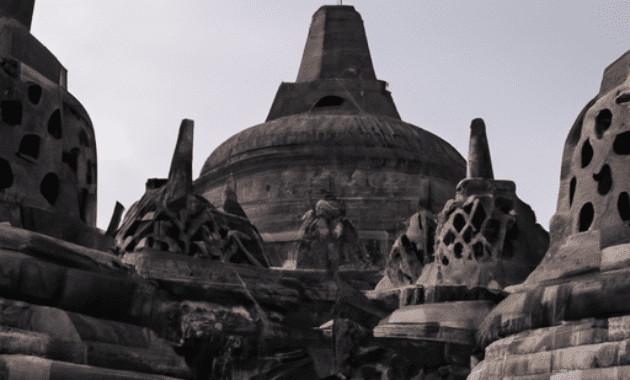
    Firstly, the revenue generated from the entrance fee goes towards maintenance of the temple. The Borobudur Temple is centuries old and requires constant attention to maintain its structural integrity. The increase in revenue has enabled the temple authorities to undertake regular maintenance work, thus ensuring the temple’s preservation for future generations.

    Secondly, the increase in entrance fee helps in managing the crowds that visit the temple. Borobudur Temple is a popular tourist destination, and sometimes the influx of tourists can be overwhelming. The increase in entrance fee has deterred some travelers who may not be genuinely interested in the temple or may not be able to afford the new price. This, in turn, has resulted in a better visiting experience for those who do visit.

    Thirdly, the funds generated by the increase in entrance fee can help in the development of the local community. The temple is located in a rural area, and the revenue generated from the fees can be used for the upliftment of the local community in terms of education, healthcare, and infrastructure. This ensures that the temple’s presence has a positive impact on the region.

    Lastly, the increase in entrance fee could be seen as a way of promoting responsible tourism. Responsible tourism aims to minimize the negative impact of tourism on the environment and local people. By increasing the entrance fee, only serious and committed tourists who value the temple’s significance will visit the site.

    In conclusion, the increase in the entrance fee to the Borobudur Temple may have caused discomfort to some tourists, but it is essential to understand the benefits it brings. The revenue generated helps in maintaining the temple, managing the crowds, developing the local community and promotes responsible tourism. Ultimately this ensures that the Borobudur Temple continues to be a landmark not only in Indonesia but in the world.

  • Experience the Grandeur of Borobudur Temple – Updated Entrance Fee and Guidelines

    Experience the Grandeur of Borobudur Temple – Updated Entrance Fee and Guidelines

    Borobudur Temple is one of the most significant and majestic Buddhist temples in the world, located in the Central Java province of Indonesia. This iconic temple, built in the 8th and 9th centuries, was abandoned for centuries before being rediscovered in the early 19th century. It stands as a testament to the skill and creativity of the ancient Javanese civilization.
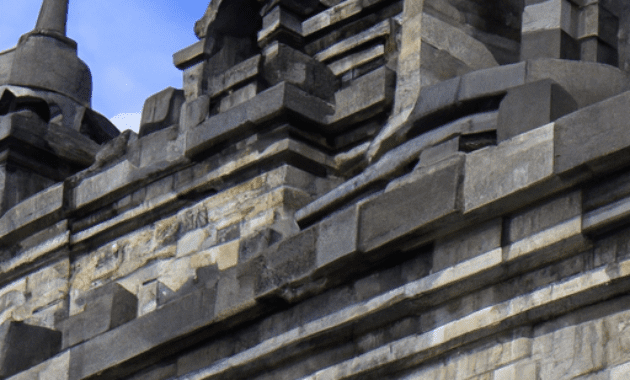
    Built in the shape of a mandala, Borobudur Temple is an incredible piece of architecture that boasts nine stacked platforms, adorned with over 2,500 relief panels and 500 Buddha statues, all carved from volcanic stone. Visitors can witness the intricate details of the carvings that depict scenes from daily life, the Buddha’s teachings, and the path to enlightenment.

    To enjoy the grandeur of Borobudur Temple, visitors must follow the updated entrance fee and guidelines. The entrance fee for foreign visitors is IDR 530,000 (around USD 38) per person and IDR 30,000 (around USD 2) for domestic visitors. The entrance fee includes access to the temple grounds, the museum, and the Manohara Sunrise Tour package.

    Visitors must also follow a dress code, as Borobudur Temple is a sacred site. Visitors are required to wear decent clothes that cover their shoulders and knees. Wearing hats or sunglasses is discouraged, as it is a sign of disrespect in the Javanese tradition.

    To maintain the sanctity of Borobudur Temple, visitors are also prohibited from bringing food, beverages, or any kind of trash inside the temple. Smoking, drinking, and loud talking are also not allowed.

    Visitors are encouraged to join the Manohara Sunrise Tour, which starts at 4:30 AM, to witness the sunrise from the top of Borobudur Temple. The tour includes a guided walk through the temple, a light breakfast, and a bottle of mineral water. The tour provides a serene and peaceful experience as visitors can see the sun rising over the temple and the surrounding hills, an unforgettable sight.

    In conclusion, a visit to the Borobudur Temple is an absolute must for anyone visiting Indonesia. To enjoy the full grandeur of this magnificent temple, visitors must follow the updated entrance fee and guidelines, including the dress code and prohibited items. The Manohara Sunrise Tour offers a unique and breathtaking experience at Borobudur Temple, making it a must-visit attraction.

  • Borobudur Temple Entrance Fees – How it Benefits the Preservation of the Monument

    Borobudur Temple Entrance Fees – How it Benefits the Preservation of the Monument

    Borobudur Temple is an iconic monument located in central Java, Indonesia, and is regarded as one of the world’s largest Buddhist temples. It is an impressive venue for visitors who are interested in ancient Indonesian art, culture, and religion.
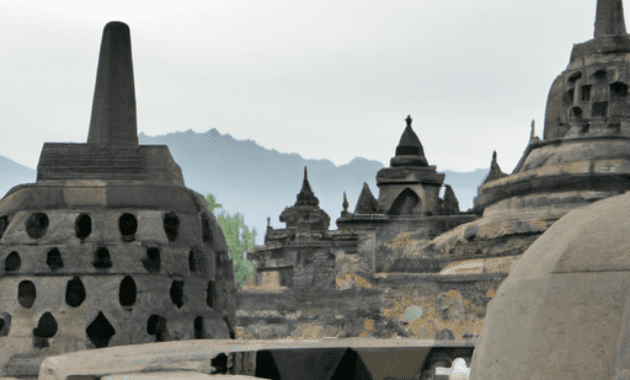
    To access the temple, visitors must pay a fee, which helps to preserve the monument. The Borobudur temple entrance fee has become vital in ensuring that the site is well-conserved and protected from degradation.

    Preservation of the Monument

    The significance of the temple as a world heritage site has prompted UNESCO to support its conservation by initiating various programs. Through the Borobudur temple entrance fee, a significant portion goes into maintaining and improving the site. The funds collected are used for various maintenance activities such as cleaning, repair, and restoration of the temple’s structures.

    Upgrading the Facilities

    The temple has continued to attract visitors from all over the world, and the entrance fees have become instrumental in improving the temple’s facilities. A portion of the entrance fees are used to maintain and upgrade the visitor center, including restrooms, pathways, and other amenities. This way, visitors can enjoy the experience of exploring the temple, making it a worthwhile investment for tourists and locals.

    Conservation of the Environment

    The Borobudur temple is situated in a natural environment that is home to various flora and fauna. The temple entrance fee is utilized to support the conservation of the environment, including the management of waste, preventing soil erosion, and controlling the negative impact of tourism activities. This supports the temple’s sustainability and future cultural heritage.

    Supporting the Local Community

    The preservation of the Borobudur temple results in increased tourism activity, which positively impacts the local community. The temple provides employment opportunities that enhance the local economy. It has also opened up opportunities for small businesses through the sale of locally-made souvenirs.

    Conclusion

    In conclusion, the Borobudur temple entrance fee has become instrumental in preserving the site and supporting the local community. The funds collected are utilized in maintenance activities, upgrading facilities, conserving the environment, and supporting local businesses. Despite the fee being a small price to pay, it goes a long way in enriching visitors’ experience while ensuring the temple’s sustainable cultural heritage.

  • Borobudur Temple: Understanding the Entrance Fee Debate

    Borobudur Temple: Understanding the Entrance Fee Debate

    Borobudur Temple, located in Central Java, Indonesia, is one of the world’s largest Buddhist temples and a UNESCO World Heritage site. For decades, visitors have been flocking to this magnificent temple, marveling at its intricate carvings and grand architecture. However, in recent years, the temple’s entrance fee has become the subject of controversy and confusion. Here’s everything you need to know about the entrance fee debate.

    Borobudur Temple Entrance Fee

    First off, it’s important to understand that there are different entrance fees for Indonesian citizens and foreigners. In 2021, the entrance fee for Indonesian citizens is IDR 40,000 (approximately $2.75 USD) and for foreigners, it’s IDR 500,000 (approximately $34 USD).

    A Higher Price for Foreigners

    The high entrance fee for foreigners has stirred up a fair bit of controversy. Some visitors have argued that the fee is too high, and it’s an unfair discrimination against foreigners.

    However, it’s important to note that the higher price for foreigners is not unique to Borobudur. It’s a standard practice in many countries and tourist attractions worldwide. For instance, foreigners pay more to see the Great Wall of China, the Taj Mahal in India, and the Colosseum in Rome.

    Why the Price Difference?

    The reasoning behind the price difference is that foreign tourists can afford to pay more, and the higher fees can help support and improve the maintenance and preservation of the cultural heritage sites. Additionally, many of these sites receive significant government or charity funding that might not be available in other parts of the world.

    Furthermore, higher entrance fees can help to limit overcrowding, allowing for a more peaceful and serene experience for those who do pay to visit the temple.

    What About Indonesian Citizens?

    While the price difference has been criticized, it’s essential to note the affordability of the entrance fee for Indonesian citizens. In comparison to other tourist attractions worldwide, the entrance fee is nominal and incredibly affordable for the average citizen. It’s essential to ensure that Indonesians are not priced out of visiting their own cultural heritage sites.

    It’s also worth mentioning that Indonesian citizens receive a substantially lower fee for other cultural heritage sites in the country, such as Prambanan Temple and dozens of other temples scattered around the island of Java.

    Wrapping Up

    In summary, the high entrance fee for foreigners visiting Borobudur Temple may appear unjust at first glance, but it’s a standard practice around the world. The higher price helps to support the maintenance and preservation of the cultural heritage sites while also limiting overcrowding.

    At the same time, it’s essential to keep the entrance fee affordable for Indonesian citizens, ensuring that they retain access to their own cultural heritage sites. By striking a delicate balance between affordability and long-term conservation, Borobudur Temple will continue to provide an unforgettable experience for visitors for years to come.