Tag: Microeconomics

  • Economic Goods: Definition, Types, and Examples

    Economic Goods: Definition, Types, and Examples

    In economics, there are three types of goods that humans can use to support their survival. The three types of goods are economic goods, illite goods, and free goods.

    All three have different meanings and characteristics. However, because there are goods that are limited. Maybe you will not be able to enjoy the item continuously.

    Perhaps from the three terms, you will hear about economic goods more often. For that, so that you also understand more, this article will explain about economic goods, starting from the definition, examples of economic goods, the difference between economic goods and free goods and several other things.

    For that for those of you who want to know more about economic goods, please read the reviews in this article.

    Definition of Economic Goods

    Before discussing examples of economic goods. It would be better if you also know what economic goods are. Economic goods are goods that can meet human needs but in limited quantities.

    The word limited refers to the amount of goods that are less than the amount needed by society. Due to the limited availability of these goods, humans will make sacrifices to be able to get these goods.

    The sacrifice that can be made to achieve economic benefits is an obligation to spend money, time or thought. The availability of these goods is obtained in two ways, namely produced by human labor or indeed goods provided by nature and can be used for free.

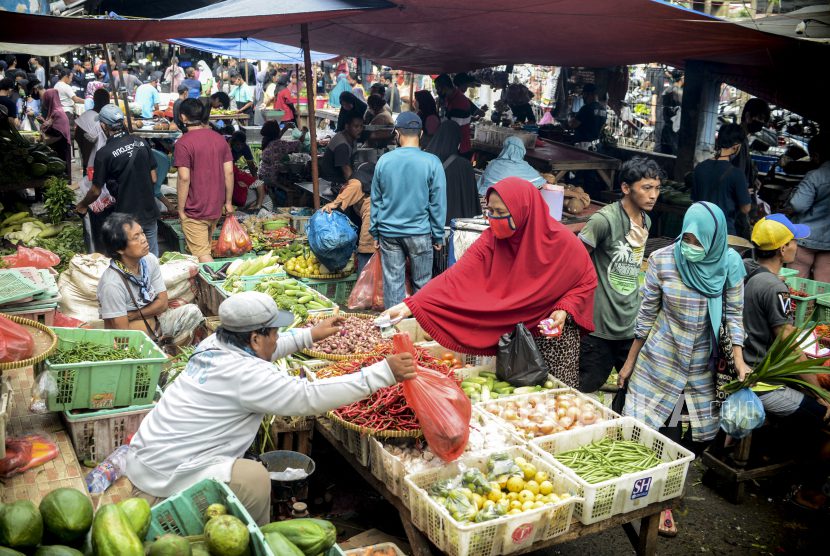
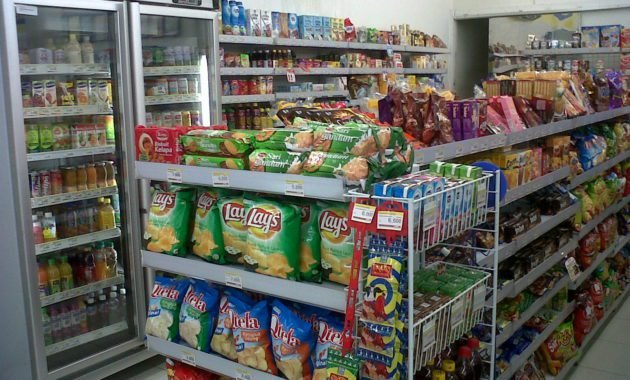
    You can get these items at the market, department stores or other types of retailers. Even so, business people want to strengthen their company’s position in field or market conditions. Most of these companies will use a  positioning strategy .

    This positioning strategy is a company’s effort to strengthen their image in order to get a special place in accordance with their target market.

    Microeconomics is a form of high level of mobility in the market

    Types of Economic Goods

    As explained earlier, economic goods are goods that have a lower price and supply compared to market demand. Economic goods also require scarce valuable resources that can provide alternative uses.

    An example is the limited availability of land capable of producing rice and sugar cane. If indeed a farmer wants to produce large products. So the farmer must sacrifice sugarcane production.

    So that it can also be called economic goods has a relationship with the problem of saving scarce resources in order to meet human needs or desires.

    In this explanation, it can be interpreted that all material goods are economic goods. Today there are several types of economic goods. If indeed you do not know the types of economic goods. Then the explanation below will more easily help you to know more about the types of economic goods.

    1. Consumer Goods

    Consumer goods are final goods that can directly satisfy the desires of consumers. These goods include bread, milk, clothing and also medicine.

    In addition, consumer goods are also divided into two groups. The two groups are disposable consumer goods and durable consumer goods.

    a. Disposable Consumer Goods

    Disposable consumer goods are goods that can be used up immediately in one act of consumption. For example, food, cigarettes, matches and fuel. These goods are also included in the category of direct consumption goods.

    This is because these goods are able to provide satisfaction for human desires. In addition, disposable consumer goods also apply to various types of services, such as doctors, lawyers, to waiters, which are also included in disposable goods.

    Disposable Consumer Goods

    b. Durable Consumer Goods

    Meanwhile, durable consumer goods are goods that can be used for a long period of time. The period of time used is not so important, whether it is a short period of time or a long period of time. For example, clothes, tv, pens and so on that have a long period of use.

    Durable Consumer Goods

    2. Capital Goods or Producers

    Next there are types of capital goods or producers. Capital goods are goods that can help in the production process of other goods. The goal remains the same, namely to satisfy consumer satisfaction directly or indirectly.

    Some examples of capital goods or producers are machinery, plants to agricultural and industrial raw materials and so on.

    Capital goods or producers are also still divided into two groups, namely disposable producer goods and manufactured goods that can be used for a long time.

    a. Disposable Manufacturer Items

    Disposable producer goods are goods that will be used up in one act of production. This means that when used once, the manufacturer’s goods will lose their original shape. For example, paper is used to print books and coal is used for factories.

    Disposable Manufacturer Items

    b. Durable Producer Goods

    Durable producer goods are goods that can be used repeatedly. When used for a long time over and over again, the item will not lose its usefulness immediately.

    For example, capital goods such as machinery, factories, tool factory buildings and so on.

    Some of the points explained above are examples of economic goods. The difference between consumer goods and capital goods is seen from their use. Some examples of goods such as electricity and coal are examples of goods that can be used as consumer goods as well as capital goods.

    Then the difference between disposable goods and durable goods also has an important meaning from an economic point of view. The demand for single-use items is considered to be more regular and stable as well as predictable in advance.

    Durable Producer Goods

    Examples of Economic Goods

    The next explanation is an example of economic goods. Currently, there are many examples of goods or services that are classified as economic goods. Even this economic item you may have found easily in the environment. Some examples of economic goods are as follows.

    1. Clothing

    The first example of economic goods is clothing. Clothing is one type of item that is really needed by humans. The number of these clothing products is usually limited.

    In addition, to be able to get this clothing product requires a sacrifice and also competition with others. Because of this, clothing products are classified as economic goods.

    Although in your mind there is a question why the clothes that still exist are included in the economic goods category. Back again as explained earlier if in economics, a lot and a little is something that is so relative.

    Clothing

    However, for clothing products that fall into the category of economic goods, the emphasis is on the method of production and the process of obtaining them. For the production of clothing requires limited materials.

    While someone who wants to get clothes also requires sacrifices such as materials, money, energy, time and even competition with other people who both want the clothing product. Therefore, clothing products are included in the category of economic goods.

    2. Food or Drink

    The next example is food and drink. Food and beverages are included in the category of economic goods because they are seen from the process of obtaining them. Humans need a certain effort to be able to get food and drink.

    Some of the sacrifices made by humans in getting food and drink are making the purchase process by spending money. Then humans also have to do the processing and also look for raw materials for these foods and beverages.

    Basic Needs or Physiology- eati
    Food is one of Basic Needs or Physiology example

    3. Residence

    The next example is a place to live. The limited number of livable housing makes it fall into the category of economic goods. In addition, the process of getting a place to live has also made it into the category of economic goods.

    The reason is that humans have to make certain efforts to be able to get a place to live, such as spending money. The residence referred to here can be a permanent residence owned by private property or a temporary residence such as a boarding house or a rented house.

    To be able to get a permanent residence that is privately owned, one must be able to spend a certain amount of money, building materials such as wood, cement, sand and others if one has to build it from scratch. Then for temporary houses such as boarding houses or rented houses also need money to be able to occupy them.

    Because using these costs makes the place of residence into the category of economic goods.

    Residence

    4. Health Services

    Previously, many examples of economic goods were explained in the form of goods or physical products. So the next example is in the form of services. For example, health services or doctor services.

    This can be seen from the very limited number of practicing doctors. So to use their services requires certain efforts such as queuing and also paying special fees.

    Then to become a doctor also requires a lot of effort and sacrifice such as the costs, time, thoughts to be able to get expertise and also a doctor’s degree.

    Until now, it is not only doctor’s services that are included in economic goods. However, many other services also fall into the category of economic goods.

    This is because when someone needs the help of a service. So they have to spend certain efforts or sacrifices such as spending money.

    Health Services

    Definition of Free Goods

    Not only economic goods, in economics there are also free goods which are also needed for the survival of human life. When viewed from the understanding, in general, economic goods are goods that can be obtained by humans without the need to use certain efforts or sacrifices.

    This is because free goods have an unlimited amount and have been provided by nature in greater quantities than the number of human needs.

    The simplest examples of free goods are air or oxygen. Humans need air or oxygen to survive. In the process of getting it, humans do not need to make certain efforts or sacrifices. However, it is possible that the category of free goods can bear status because it requires a special handling of these goods.

    For example, oxygen that can be used by humans freely without any effort can result in status for people who have health problems. Because those who have health problems in breathing may need special oxygen which must be treated in a certain way before use.

    Free Goods

    Difference between Economic Goods and Free Goods

    In economics, goods are divided into several types depending on the factors in them. Two of them are economic goods and free goods. Previously it has been explained related to what economic goods are.

    At this point, the difference between economic goods and free goods will also be explained. One of the differences between economic goods and free goods lies in the completeness of the commodity.

    Both free goods and economic goods, both are equally needed by humans to meet the needs in their lives. Actually, these two types of goods are not always in the form of commodities, but can also be in the form of services. For clarity, here are some differences between economic goods and free goods.

    1. Item Quantity

    The first difference between economic goods and free goods lies in the quantity of these goods. Economic goods have a very limited quantity. Meanwhile, free goods have an unlimited number.

    The limited number of goods can also be called the scarcity of goods. From this it can be concluded that economic goods have a slightly or more limited amount.

    However, for this small amount, it is still quite relative or requires a comparison. Comparison of the limitations of goods is from the number of human needs associated with these goods.

    You could say if human needs have a limited amount. Therefore, as long as the availability of goods is able to meet these unlimited human needs. It can be interpreted if the goods are free goods.

    And vice versa if an item cannot meet unlimited human needs. Then the goods are included in the category of economic goods.

    Difference between Economic Goods and Free Goods

    2. Production Process

    The second difference between economic goods and free goods lies in the production process. Economic goods require a certain effort for the process of getting it or the production process.

    The existence of a factor that requires effort in obtaining it makes economic goods not mass-produced in unlimited quantities. In the production process, economic goods have their own limitations so that these goods have a limited amount.

    As for free goods to be able to use it without the need to use economic resources. The simplest examples of free goods are the heat of the sun and air.

    It doesn’t just have an unlimited number. However, both sunlight and air can be used by humans without the need to carry out the production process first.

    Difference between Economic Goods and Free Goods

    3. How to Obtain

    The third difference between economic goods and free goods is seen from the way they are obtained. To be able to get free goods does not require a certain effort. Meanwhile, economic goods require sacrifice or competition to get them.

    Having an unlimited number is the factor that makes free goods require no special effort to be obtained. On the other hand, for economic goods that have a limited amount, they must require a sacrifice or competition in order to get them.

    From some of the explanations above, it can be seen how the differences between economic goods and free goods are. Although both are needed for human survival, both free goods and economic goods have differences as described above.

  • Introduction to Microeconomics: Definition, Theory, Objectives and Scope

    Introduction to Microeconomics: Definition, Theory, Objectives and Scope

    Are You looking for references on microeconomic theory? That’s right, sometimes there are still many people who can’t tell the difference between micro and macro economics. Even though the study of this theory will often be encountered by us when studying economics. In order to get to know and understand more about the study of the theory, the following is a specific explanation of microeconomic theory, starting from the definition, objectives, scope, problems, and practical examples:

    Understanding Microeconomics

    The definition of microeconomics is a special study of economics to study the behavior of consumers and a company and determine market prices and quantities of inputs, goods and services to be traded. Microeconomics is also referred to as microeconomics which can directly affect decision making about supply and demand for goods or services.

    So, the definition of microeconomics is to have the main goal for companies, namely to analyze the market and how the mechanism in forming the relative prices of products or services. In microeconomic theory, the study of supply and demand curves helps to understand the relationship between changes in wages, the right pattern of work, and to understand what cost variables are in the production of certain goods and services.

    Aspects in analyzing microeconomics include: cost and benefit analysis, theory of demand and supply, elasticity, market models, industry, production theory, and price theory. This aspect of analysis can play a role in helping to analyze market failures and theoretically describe conditions in a perfectly competitive market. To understand the broader understanding of microeconomics, the following is the definition of microeconomics based on the opinion of experts:

    1. According to Mary A Marchant and William M Snell

    Microeconomics is the study of individuals, households and firms in making decisions within a larger economic process.

    2. According to David A. Moss

    Microeconomics is a step in analyzing a decision made by an individual or group, starting from the factors to the form of consideration of the costs and benefits.

    3. According to Adam Smith

    Microeconomics is a rational consideration in making decisions made by business people.

    4. According to NG Mankiw 

    Microeconomics is a scientific study that discusses the role of individual economic actors in making decisions and how they interact in the market.

    5. According to David Ricardo

    Microeconomics is a condition where economic actors already have information about the ins and outs of a particular market. So, microeconomics is a determining factor in the global economic market.

    6. According to Marshal and Pigou

    Microeconomics is a form of high level of mobility in the market, thus enabling economic actors to directly adapt and adjust to changes in the market.

    Microeconomics is a form of high level of mobility in the market

    Microeconomic Goals

    In practice, microeconomics has the following main objectives in economics:

    1. Can perform analysis on the mechanism that forms the relative price of the product, both in the form of goods and services and its application from limited sources among the many alternative uses.
    2. Can perform market failure analysis, which is when the market fails to produce efficient results and explains various theoretical and strategic situations required by a market with a perfect form of competition.

    Scope of Microeconomics

    The scope of microeconomic theory is producers and consumers, but in the world of economics, producers and consumers are individual forms in every condition of society, organizations, companies, and households. The following is a more detailed or specific scope of economic theory in a broader economic study:

    1. Interaction in the Goods Market

    In this economic concept, there must be interaction in the goods market. The market is a place where supply and demand transactions meet. This place then becomes a meeting place between sellers and buyers to make real buying and selling transactions.

    2. Seller and Consumer Behavior

    Sellers and consumers have a rational nature, where sellers want maximum profit, while consumers or buyers need optimal satisfaction, both in terms of quality and price of goods and services. The behavior of these sellers and buyers can be analyzed using assumptions and it is necessary to pay attention to their economic activities which are carried out rationally and openly.

    3. Market Interaction of Production Factors 

    The scope of microeconomics also involves the interaction of the market with the factors of production, where the seller has the product to meet the needs of the factors of production which he does by becoming a buyer as well. While the buyer or consumer then needs money to be able to continue to meet their needs and satisfaction.

    4. Value Use Theory

    Use value in microeconomic theory is a way to study how an item can produce benefits or satisfaction for buyers or consumers who use these goods or services.

    5. Market Structure Theory

    The theory of market structure is to explain the form of market classification based on a number of existing companies, characteristics, and types of products. This theory also discusses the aspect of convenience for companies or producers to enter and exit a market. A market structure that is generally non-competitive will occur if the company does not have the power and ability to influence the amount of certain goods and their prices.

    Meanwhile, if the company has the power or ability to influence the number of certain goods and their prices, then the market structure becomes a competitive market structure.

    6. Price Elasticity

    Price elasticity is a useful form of analysis for studying how the prices of certain goods or services are formed in a market. The formation of this price is influenced by the large number of requests in the market.

    7. Industry 

    In microeconomic theory, it also discusses how the flow of product turnover, both goods and services, can be formed in the market. This theory will then analyze the goods produced, producers, consumers, and distribution in terms that allow or rational in making the right economic decisions.

    8. Input Market

    The scope of the input market studies how producers obtain their production materials at the lowest possible cost and can produce goods or services that have a higher selling value. This means that in this scope it discusses the product process itself from the beginning which does not yet have a high value after it reaches the hands of consumers or buyers.

    Microeconomic Theory

    We recomend you also read : Understanding Accounting and Its Importance in Business.

    Microeconomic Theory

    In the study of microeconomics, this theory divides three analyzes that can be carried out as follows:

    1. Price Theory

    In price theory, it is usually carried out in the process of price formation, the factors that can affect changes in supply and demand in the market. In addition, it also examines the relationship between the price of demand and supply, as well as the shape of the market and the concept of elasticity of demand and supply.

    Price theory also discusses the balance that occurs between sellers and buyers, where both will carry out a bargaining process until an agreement is reached at a certain price.

    2. Production Theory

    Production theory is used as a basis for analyzing the level and cost required for a particular production process.

    This analysis is then carried out on all matters relating to the cost of producing goods and services on the market. The combination of factors that occur in microeconomics needs to be determined by producers in order to get maximum profit.

    3. Distribution Theory

    Distribution theory aims to analyze labor wages, profits, and the amount of interest that must be paid to the owners of capital. This theory becomes the activity of distributing products from producers to final consumers through distribution channels.

    Generally, this theory in microeconomics is used as a consideration for ordering time, product durability, and the distance between producers and consumers. Distribution is not only a matter of distributing a product from producers to consumers, but also a form of business promotion and packaging of these products or services.

    4. Consumption Theory 

    This theory refers to the religious behavior of consumers in the context of meeting a need. Consumption theory will also discuss the occurrence of the market demand curve which is assessed as a derivative of the individual customer demand curve. In addition, it also discusses the occurrence of a decrease in the curve that can use this theoretical approach.

    Microeconomic Problems

    In microeconomics, economic actors can certainly face problems or obstacles that are economic in nature or related to the economy. The application of microeconomic theory is what can make the best choice from various alternative choices according to the needs and conditions of the problem at hand. This can happen because there are activities to produce or consume goods and services.

    In this situation, economic actors need to make decisions that aim to make the available resources more efficient. In addition, this choice can also create better welfare for economic actors and even more broadly. The following economic problems can occur in the scheme of microeconomic theory:

    1. Scarcity Problem

    Scarcity Problem

    The problem of scarcity can occur because of an imbalance between community needs and available production factors. Factors of production that can be used to produce the needs of these goods are limited. That is why people find it difficult to get all the things they want. Finally, the community makes a decision to choose other options in order to still be able to meet their needs.

    2. Community Needs

    In microeconomics there must be problems related to the needs of the community because basically the needs of the community are a form of need and desire to consume goods or services. Generally is as goods or services imported from abroad. Nevertheless, it remains the most widely produced domestically. In microeconomic theory, it shows that people’s desire to obtain goods and services can be divided into two forms, as follows:

    • The desire followed by the ability to buy or is called effective demand
    • Desire that is not followed by the ability to buy

    Microeconomic Example

    In practice, microeconomics can be seen when producers and consumers carry out rational economic activities. The following is an example of the occurrence of micro-economy that applies in Indonesia:

    1. Request

    Demand is one form of microeconomic example that shows the amount of goods and services that are in demand and the ability to buy for consumers at a certain price level and time. When there is demand when the price of goods or services is higher, the quantity demanded for goods or services will decrease. Conversely, if the price of goods or services decreases, the higher the buyer’s demand for goods or services.

    2. Offer

    In addition to demand, there is supply which is also an example of microeconomics which shows the amount of goods or services available for sale or offered to consumers at a certain price level and period. The actors who make offers are producers, where the higher the price, the higher the number of bids. Conversely, if the price decreases, the number of goods or Java offered will also decrease.

    Microeconomic Example

    3. Consumer and producer behavior

    The behavior of consumers and producers is also an example in microeconomics which shows the activities and processes carried out by economic actors in selecting, searching, buying, evaluating, and using goods or services for certain needs.

    4. Price

    Price is certainly a part of microeconomics because it has a relationship with the value of goods. Price is the element of the marketing mix that represents a profit. The price function in microeconomic theory is a measuring tool that shows the value of a good or service. So when the price is determined it is influenced by economic conditions, demand and supply curves, and also costs that can continue to change.

    5. Inner Cost

    Internal costs are sacrifices that companies or individuals use to get more benefits from the various economic activities they carry out. These costs can affect price changes, for example, high raw material costs cause an increase in the price of the product itself. This cost is also commonly referred to as  cost  because it is issued for  output  according to the target to be achieved.

    6. Market

    The market is a place where buying and selling activities occur, namely bringing them together to obtain a sale and purchase agreement. The market is then not only defined as a physical form, but can take a broader form, such as a marketplace or online buying and selling activities using the internet.

    If we talk about microeconomic theory, we cannot be separated from macroeconomics. Both have a fundamental difference, namely the scope that covers them. If microeconomics has an attempt to find factors that contribute to decisions and their possible impact on the general market, then macroeconomics discusses a holistic study of the structure, performance, behavior, and processes of economic policy making at the national level.

    Well, that’s an explanation of the  introduction to microeconomics , starting from the definition, objectives, scope, problems, and examples. have you been able to understand it? Most people may still have difficulty distinguishing between micro and macroeconomics. Both economic theories discuss the same economic objects, such as producers, consumers, prices, impacts, and so on.