

Similar to the product planning stages, the life of a product also has its stages. The stages of a product’s life are called the product life cycle .
Understanding the product life cycle is very important in the business world. Through this cycle, business people can plan marketing strategies when products start to decline.
Understanding Product Life Cycle
The product life cycle is a stage in the life of a product, starting from when the product was launched until it finally had to be withdrawn from the market.
A product must have its own time of success. There are times when a successful product will also experience setbacks.
This setback is usually caused by competitors with superior products and changes in trends or fashions.
However, the product life cycle can also be influenced by technological developments, shifts in values, and economic conditions.
Using this concept, companies can determine when they should increase promotions, lower product prices, expand product markets, or change the packaging design of their products.
Product Life Cycle Stages
There are four stages in the product life cycle . Each product will go through the stages of introduction, growth, maturity, and decline . The following is an explanation of the four stages of a cycle .
1. Introduction
The first stage is introduction . This stage is the stage to introduce the product to the public.
This stage is a determinant of whether the product will be successfully accepted by the public or will be rejected by them.
The main purpose of this introduction stage is to build brand awareness . In addition, this stage also aims to increase market demand for a product.
Therefore, the company will invest a lot of money in advertising and marketing.
2. Growth
When the product that you introduce to the public is well received and a purchase occurs, your business will start a new stage, namely the growth stage .
At this stage, the company’s turnover will increase. However, there will be the possibility of the emergence of competitors with the same or superior products at the growth stage .
Therefore, companies must be more aggressive in promoting.
Sometimes companies will even consider changing prices to be more competitive by lowering them.
However, even though product prices have fallen, the company still has a large income. Because the sales also increased.
3. Maturity
At this stage, product sales will be flat and even begin to decline.
Product competition will be even tighter at this stage. So many companies will lower the price of their products.
However, due to reduced consumer demand, this will make the company’s profit margin decline.
Therefore, another way to overcome this stage is to innovate the product. Companies can develop products or replace them with other products.
4. Decline
The last cycle of a product is decline . Even though the company has tried to maintain the product at the maturity stage , there is still a possibility if the product continues to decline.
At this stage, the product will experience a significant decline until it finally loses the market.
This decline could be due to new products that better meet their needs. In addition, saturation, changing needs, and changes in consumer behavior are also factors driving the decline in products.
The company will eventually lower the price of the product. They will also focus more on loyal customers.
Closing
That’s the description of the stages of the product life cycle . Understanding the product life cycle will allow you to set a strategy to maintain the product market.
As we know, market share is a very determining factor for the success of a business. Then actually, what is the meaning of market share , and what is its purpose?
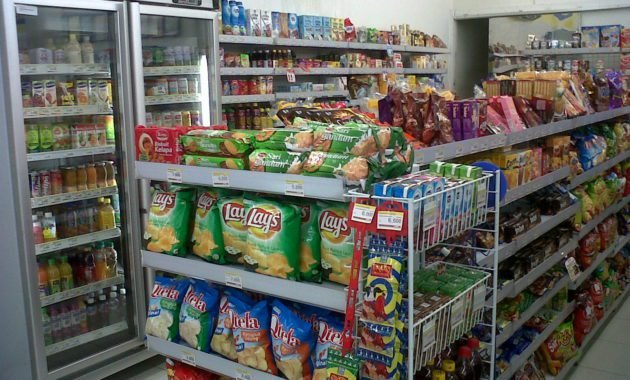
The answer is in this article. Here I will discuss in detail several things related to market share , including:
A brief explanation of what market share is .
Types of market shares .
Measuring the company’s success in market share .
What is the purpose of market share analysis ?
How to find out the market size.
How to increase market share .
Advantages and disadvantages of market share.
If you want to know more about market share, you will definitely like reading this article. Let’s get started!
Understanding Market Share
The term market share is an English word consisting of two words, namely market and share .
According to the origin of the word, the word market means market, while the word share means part, share, and share. In simple terms, the notion of market share is the part of the market that is controlled by a particular company or product.
So, the notion of market share is part of the entire demand for an item that reflects the consumer group based on its characteristics (market segment) . Classification of consumers can be grouped based on income level, age, gender, education, and social status.
So, market share is the part of the market controlled by a company from all potential sales, generally expressed as a percentage (%).
Market share can also be defined as the percentage of total sales of a company’s products from all sources, divided by the total sales of products (goods and services) in a particular industry.
simple example,
If consumers as a whole buy 100 shampoo products, and 35% of those purchases come from XYZ company, then XYZ company manages to control 35% market share.
Types of Market Share
Market share can be divided into two types. The following are the types of market share and examples:
1. Main Market (Primary Market)
The primary market is the market in which securities are created. In this market, companies sell new stocks and bonds to the public for the first time.
An initial public offering (IPO) is an example of a primary market. In this trade, investors have the opportunity to buy securities from a bank that does initial underwriting for certain shares.
An IPO occurs when a private company issues shares to the public for the first time.
2. Secondary Market
The secondary market is the market where investors buy and sell securities they already own. This market is called by most people the “stock market”, although shares are actually sold on the primary market when they are first issued.
The national exchange, such as the Stock Exchange, is an example of a secondary market.
Measuring Company Success in Market Share
Market share is the percentage of sales recorded by a company of the total sales of its competitors combined in a given industry.
That is, market share is one of the indicators used by a company in measuring their level of success against their competitors.
For example, company XYZ in 2008 had a target market share of 10% of the total market. To reach the target market, a promotion fee of Rp. 100 million is needed.
If after marketing it turns out that XYZ’s market share is more than 10% (eg 15%), it means that the company’s performance is going well.
On the other hand, if in that year the market share obtained was only 9%, then it shows that the marketing performance is not good and the company will face efficiency and effectiveness problems.
There are several factors that need to be explored in assessing the problem of companies that are not able to achieve market share, namely:
The size of the market share is too high.
There are more and more new competitors in the same industry.
There is a decline in the competitiveness of the company.
Promotions that cannot reach the target market or are not on target.
Purpose of Market Share Analysis
After knowing what market share is, of course we also have to know what the purpose of market share analysis is.
In general, a company’s market share can be used as an indicator of the company’s competitiveness in a market. So, the goal is to find out how well the company is performing and growing against its competitors.
This metric can also be used to measure changes in sales revenue so as to assist companies in evaluating primary demand in a market.
Usually the growth in sales levels that comes from primary demand will make it cheaper and will benefit the company, rather than the market gained from taking part in competitors in the same industry.
Meanwhile, the loss experienced in a market share is an indication of a major problem in the long term. This requires a change in the marketing strategy used.
Any business or company that has a below-average market share will likely not be able to survive the competition. This is because the trend of market share and sales of the company’s products is also an early indicator of opportunities or problems that may arise in the future.
Based on research, market share is an asset that is needed by every company. However, many economists say that market share is not the goal or basic criterion of an economic policy.
That way, market share can only be used as the main basis for measuring the performance of companies that are competing in a market.
Market share can be used as a reference for building a company system, both in formulating and making policies. And of course the policy is made based on considerations related to the impact of each policy on the market share of the company’s competitors.
How to Know Market Size
In order to know and determine the size of the market and its market share , a fairly in-depth market research is needed. Therefore, entrepreneurs usually define the market to be targeted so that they can see the potential of the market.
Furthermore, after knowing the size of the market and knowing the targeted market segment, the next step is to study who the competitors in the market are and how many markets they have mastered.
Companies that make strategic plans must develop marketing mix strategies, and narrow product segmentation so that promotions are right on target.
As an example,
Company XYZ which is in the beverage industry. It’s not enough to just explain that the business is drinks, but it must be more focused.
For example, coffee drinks, tea, fruit flavors, and so on.
How to Increase Market Share
Understanding the meaning of market share is important. The reason is, by knowing the target market share, a company can understand its strengths and weaknesses and can anticipate the market.
Understanding the advantages and disadvantages of a company can be done with a SWOT analysis . That way, a company can do various things needed to increase productivity.
For example, changing prices, changing services, increasing marketing promotions, changing distribution methods , and so on.
Then how to increase market share when a company starts a trading business. Quoted from various sources, here are brief tips from business people:
Choosing a business that is still relatively new and has not many competitors from other companies.
Have confidence that the company will be successful in the business it runs.
Determine the company’s vision and mission regarding future business targets.
Take into account the strength of competitors in the same industry.
Pay attention to price movements in the targeted industry and determine the most suitable price.
Creating and building a market network so that the business becomes bigger.
Conclusion
From the explanation above, it can be concluded that market share is the portion of the market that is owned or controlled by a particular company or product.
The percentage of market share is used to measure the competitiveness of a company in a particular industry. That way, the company can see how well it is performing and developing against competitors.
Thus a brief explanation of the meaning of market share or market share, how to find out market size, objectives, types, and how to increase market share. Hopefully this short review is useful and adds to your insight.
In economics, there are three types of goods that humans can use to support their survival. The three types of goods are economic goods, illite goods, and free goods.
All three have different meanings and characteristics. However, because there are goods that are limited. Maybe you will not be able to enjoy the item continuously.
Perhaps from the three terms, you will hear about economic goods more often. For that, so that you also understand more, this article will explain about economic goods, starting from the definition, examples of economic goods, the difference between economic goods and free goods and several other things.
For that for those of you who want to know more about economic goods, please read the reviews in this article.
Definition of Economic Goods
Before discussing examples of economic goods. It would be better if you also know what economic goods are. Economic goods are goods that can meet human needs but in limited quantities.
The word limited refers to the amount of goods that are less than the amount needed by society. Due to the limited availability of these goods, humans will make sacrifices to be able to get these goods.
The sacrifice that can be made to achieve economic benefits is an obligation to spend money, time or thought. The availability of these goods is obtained in two ways, namely produced by human labor or indeed goods provided by nature and can be used for free.
You can get these items at the market, department stores or other types of retailers. Even so, business people want to strengthen their company’s position in field or market conditions. Most of these companies will use a positioning strategy .
This positioning strategy is a company’s effort to strengthen their image in order to get a special place in accordance with their target market.
Types of Economic Goods
As explained earlier, economic goods are goods that have a lower price and supply compared to market demand. Economic goods also require scarce valuable resources that can provide alternative uses.
An example is the limited availability of land capable of producing rice and sugar cane. If indeed a farmer wants to produce large products. So the farmer must sacrifice sugarcane production.
So that it can also be called economic goods has a relationship with the problem of saving scarce resources in order to meet human needs or desires.
In this explanation, it can be interpreted that all material goods are economic goods. Today there are several types of economic goods. If indeed you do not know the types of economic goods. Then the explanation below will more easily help you to know more about the types of economic goods.
1. Consumer Goods
Consumer goods are final goods that can directly satisfy the desires of consumers. These goods include bread, milk, clothing and also medicine.
In addition, consumer goods are also divided into two groups. The two groups are disposable consumer goods and durable consumer goods.
a. Disposable Consumer Goods
Disposable consumer goods are goods that can be used up immediately in one act of consumption. For example, food, cigarettes, matches and fuel. These goods are also included in the category of direct consumption goods.
This is because these goods are able to provide satisfaction for human desires. In addition, disposable consumer goods also apply to various types of services, such as doctors, lawyers, to waiters, which are also included in disposable goods.
b. Durable Consumer Goods
Meanwhile, durable consumer goods are goods that can be used for a long period of time. The period of time used is not so important, whether it is a short period of time or a long period of time. For example, clothes, tv, pens and so on that have a long period of use.
2. Capital Goods or Producers
Next there are types of capital goods or producers. Capital goods are goods that can help in the production process of other goods. The goal remains the same, namely to satisfy consumer satisfaction directly or indirectly.
Some examples of capital goods or producers are machinery, plants to agricultural and industrial raw materials and so on.
Capital goods or producers are also still divided into two groups, namely disposable producer goods and manufactured goods that can be used for a long time.
a. Disposable Manufacturer Items
Disposable producer goods are goods that will be used up in one act of production. This means that when used once, the manufacturer’s goods will lose their original shape. For example, paper is used to print books and coal is used for factories.
b. Durable Producer Goods
Durable producer goods are goods that can be used repeatedly. When used for a long time over and over again, the item will not lose its usefulness immediately.
For example, capital goods such as machinery, factories, tool factory buildings and so on.
Some of the points explained above are examples of economic goods. The difference between consumer goods and capital goods is seen from their use. Some examples of goods such as electricity and coal are examples of goods that can be used as consumer goods as well as capital goods.
Then the difference between disposable goods and durable goods also has an important meaning from an economic point of view. The demand for single-use items is considered to be more regular and stable as well as predictable in advance.
Examples of Economic Goods
The next explanation is an example of economic goods. Currently, there are many examples of goods or services that are classified as economic goods. Even this economic item you may have found easily in the environment. Some examples of economic goods are as follows.
1. Clothing
The first example of economic goods is clothing. Clothing is one type of item that is really needed by humans. The number of these clothing products is usually limited.
In addition, to be able to get this clothing product requires a sacrifice and also competition with others. Because of this, clothing products are classified as economic goods.
Although in your mind there is a question why the clothes that still exist are included in the economic goods category. Back again as explained earlier if in economics, a lot and a little is something that is so relative.
However, for clothing products that fall into the category of economic goods, the emphasis is on the method of production and the process of obtaining them. For the production of clothing requires limited materials.
While someone who wants to get clothes also requires sacrifices such as materials, money, energy, time and even competition with other people who both want the clothing product. Therefore, clothing products are included in the category of economic goods.
2. Food or Drink
The next example is food and drink. Food and beverages are included in the category of economic goods because they are seen from the process of obtaining them. Humans need a certain effort to be able to get food and drink.
Some of the sacrifices made by humans in getting food and drink are making the purchase process by spending money. Then humans also have to do the processing and also look for raw materials for these foods and beverages.
Food is one of Basic Needs or Physiology example
3. Residence
The next example is a place to live. The limited number of livable housing makes it fall into the category of economic goods. In addition, the process of getting a place to live has also made it into the category of economic goods.
The reason is that humans have to make certain efforts to be able to get a place to live, such as spending money. The residence referred to here can be a permanent residence owned by private property or a temporary residence such as a boarding house or a rented house.
To be able to get a permanent residence that is privately owned, one must be able to spend a certain amount of money, building materials such as wood, cement, sand and others if one has to build it from scratch. Then for temporary houses such as boarding houses or rented houses also need money to be able to occupy them.
Because using these costs makes the place of residence into the category of economic goods.
4. Health Services
Previously, many examples of economic goods were explained in the form of goods or physical products. So the next example is in the form of services. For example, health services or doctor services.
This can be seen from the very limited number of practicing doctors. So to use their services requires certain efforts such as queuing and also paying special fees.
Then to become a doctor also requires a lot of effort and sacrifice such as the costs, time, thoughts to be able to get expertise and also a doctor’s degree.
Until now, it is not only doctor’s services that are included in economic goods. However, many other services also fall into the category of economic goods.
This is because when someone needs the help of a service. So they have to spend certain efforts or sacrifices such as spending money.
Definition of Free Goods
Not only economic goods, in economics there are also free goods which are also needed for the survival of human life. When viewed from the understanding, in general, economic goods are goods that can be obtained by humans without the need to use certain efforts or sacrifices.
This is because free goods have an unlimited amount and have been provided by nature in greater quantities than the number of human needs.
The simplest examples of free goods are air or oxygen. Humans need air or oxygen to survive. In the process of getting it, humans do not need to make certain efforts or sacrifices. However, it is possible that the category of free goods can bear status because it requires a special handling of these goods.
For example, oxygen that can be used by humans freely without any effort can result in status for people who have health problems. Because those who have health problems in breathing may need special oxygen which must be treated in a certain way before use.
Difference between Economic Goods and Free Goods
In economics, goods are divided into several types depending on the factors in them. Two of them are economic goods and free goods. Previously it has been explained related to what economic goods are.
At this point, the difference between economic goods and free goods will also be explained. One of the differences between economic goods and free goods lies in the completeness of the commodity.
Both free goods and economic goods, both are equally needed by humans to meet the needs in their lives. Actually, these two types of goods are not always in the form of commodities, but can also be in the form of services. For clarity, here are some differences between economic goods and free goods.
1. Item Quantity
The first difference between economic goods and free goods lies in the quantity of these goods. Economic goods have a very limited quantity. Meanwhile, free goods have an unlimited number.
The limited number of goods can also be called the scarcity of goods. From this it can be concluded that economic goods have a slightly or more limited amount.
However, for this small amount, it is still quite relative or requires a comparison. Comparison of the limitations of goods is from the number of human needs associated with these goods.
You could say if human needs have a limited amount. Therefore, as long as the availability of goods is able to meet these unlimited human needs. It can be interpreted if the goods are free goods.
And vice versa if an item cannot meet unlimited human needs. Then the goods are included in the category of economic goods.
2. Production Process
The second difference between economic goods and free goods lies in the production process. Economic goods require a certain effort for the process of getting it or the production process.
The existence of a factor that requires effort in obtaining it makes economic goods not mass-produced in unlimited quantities. In the production process, economic goods have their own limitations so that these goods have a limited amount.
As for free goods to be able to use it without the need to use economic resources. The simplest examples of free goods are the heat of the sun and air.
It doesn’t just have an unlimited number. However, both sunlight and air can be used by humans without the need to carry out the production process first.
3. How to Obtain
The third difference between economic goods and free goods is seen from the way they are obtained. To be able to get free goods does not require a certain effort. Meanwhile, economic goods require sacrifice or competition to get them.
Having an unlimited number is the factor that makes free goods require no special effort to be obtained. On the other hand, for economic goods that have a limited amount, they must require a sacrifice or competition in order to get them.
From some of the explanations above, it can be seen how the differences between economic goods and free goods are. Although both are needed for human survival, both free goods and economic goods have differences as described above.
Ideology is an idea, thought, or principle that is owned by an individual or group of people. This time, we will briefly discuss one of the ideologies which was also coined as an economic system, namely capitalism.

Capitalism upholds individual ownership of the means of production and distribution used to gain competitive advantage of the characteristics of capitalism. In the mid-20th century, capitalism was growing, supported by advances in technology and information.
What is Capitalism ?
The theory as well as the economic system of capitalism is estimated to have first appeared in the late 18th and early 19th centuries. Capitalism was present when the economic system at that time was still under the mercantilism economic system, namely an economic system in which there was a lot of government intervention, especially in matters of restrictions on economic activities aimed at increasing export activities and limiting import activities.
Here are some very important meanings in capitalism as follows:
Capitalism is an understanding that was first coined by figures including Adam Smith and David Ricardo.
The origin of the word Capitalism is “capital” which generally means “profit” or capital, while the suffix -ism is a term that describes a way of life that has become a principle or habit.
Therefore, capitalism can be interpreted as an ideology that emphasizes capital in a commercial ownership or in an economic activity. Capitalism is an ideology that supports personal interests.
Characteristics of Capitalism
The economic system of capitalism can indeed provide large profits for the owners of capital or the means of production, but in reality capitalism opens the gap to social inequality that is getting bigger. Sometimes profits are only obtained by the elite who are better able to compete and survive, while the lower middle class still experience difficulties in meeting the capital needs to carry out the production process. So that the capitalist economic system can be said to be not fully in favor of the welfare of the general public. According to one source, in general capitalism has three characteristics, namely:
Right to private property,
The right to raise capital and obtain maximum profit with minimum capital,
The right to compete in any way between the owners of capital.
Meanwhile, in particular, Capitalism is characterized by the following:
Recognition of individual property rights over factors of production including natural resources.
There is freedom to own private means of production. This causes a lot of production tools and capital such as factories, machines, raw materials which are owned by private parties individually or in groups in the form of companies.
Every individual is free to try in any way and compete with each other for maximum personal gain, one example is establishing his own company. In the economic system of capitalism, humans are seen as creatures who always seek profit for themselves or homo-economicus. One of the principles of capitalism is to get maximum results with minimum capital. These characteristics can be a gap for the negative impact of capitalism, because for the sake of pursuing profit, someone can justify all means, including even bad ways.
The production process is the full responsibility of private entrepreneurs and they are free to determine what will be produced, how many goods will be produced including the price that will be charged on the production. But in a capitalist economic system, prices are more often determined by market supply and demand.
There is a free competitive market, which is where supply and demand play a major role in the market mechanism, for example in determining prices. This is related to the “Invisible Hands” theory proposed by Adam Smith. That supply and demand as a market mechanism seems to be an “invisible hand” that can manage economic problems, such as inflation and unemployment without realizing it.
Does not recognize government interference in the country’s economy. In a capitalist state, the government only acts as a ‘night watchman’, that is, it can only regulate the economic process but cannot limit the ownership and economic activities of the owners of capital.
The capitalist system encourages the formation of an individualist attitude based on the nature of materialism.
The number of individuals who are hedonistic. This is because the owners of capital will take all the attractive ways through various depictions of products or services through advertisements or other mass media that aims to attract market interest, and this is often successful. Consumers are continuously ‘fed’ with various attractive advertisements with various product advantages that will make consumers decide to buy it without thinking.
Capitalist Economic System
Whereas what is meant by a capitalist economic system is a system that gives economic actors the freedom to do everything possible with the resources or factors of production that they have individually, so that they can compete optimally with these resources or factors. other production. This economic system frees everyone to have resources, work, try and compete with each other to meet the needs of life, without interference from the government. So there is a lot of competition between business entities.
According to Adam Smith, the main elements that must exist in a capitalist economic system are:
1. Private Property Rights Both Individuals and Groups.
Capitalism liberates and gives everyone the right to own the factors of production including resources in a legal way. In addition, the owners of capital are allowed to compete in any way to achieve large profits at small costs.
2. Invisible Hand as Regulator of Economic Activities.
The invisible hand is a theory coined by Adam Smith, who says that there are “hidden forces” that regulate the course of the economy through the mechanism of supply and demand. These forces are also a motivation for the owners of capital.
3. Economic Individualism
Namely, the limitation of government power on economic activities so that individuals can carry out economic activities independently without any government intervention.
4. Free Competitive Market
Capitalism can also give birth to individuals who only pursue profit without paying attention to the quality and benefits of something that is produced because it is only made based on market demand. In addition, capitalism can also give rise to monopolies on the means of production or capital. The mechanism of demand and supply that occurs causes the formation of a free competitive market.
In conclusion, capitalism is an ideology as well as an economic system that prioritizes individual freedom to own the factors or means of production, forms a free competitive market through the mechanism of supply and demand, and does not recognize government interference in economic activities. A brief explanation of the meaning and characteristics of capitalism. Hope it is useful.
In general, a perfectly competitive market is a market structure in which a large number of buyers and sellers are present. And all of them are involved in buying and selling homogeneous products at a single price prevailing in the market.

In other words, perfectly competitive market is also referred to as pure competition, there is no direct competition between market participants. and all sell identical products for a single and equal price.
Advantages of Perfect Competition
You can see an explanation of the characteristics of a perfectly competitive market in this article. In addition, here are the advantages of a perfectly competitive market:
a. Due to perfect knowledge among market participants, there is no misinformation and product knowledge is shared equally among all market participants.
b. There are no barriers to entering a perfectly competitive market, so existing firms cannot gain the power to monopolize the market.
c. There is no need to spend money on advertising, because the products sold are homogeneous, there is perfect knowledge of information, and companies can sell everything they can produce.
d. There are two possibilities, namely the benefits to consumers and economic welfare.
e. The formulation P (Price) = MC (Cost Margin) and MC = ATC (Average total cost) will occur. This means that production efficiency is well pushed and producers will improve the quality of the products they sell.
Disadvantages of Perfect Competition
In addition to the advantages of a perfectly competitive market, there are some disadvantages as well, namely:
a. Because the goods sold are homogeneous, consumers feel limited in buying other products outside the homogeneous goods.
b. It is very difficult to market a product whose brands are not that big or are not on a homogeneous product list.
c. Limiting producers in innovating for product development because they are too satisfied and comfortable to produce homogeneous goods.
How Realistic is the Manifestation of Perfectly Competitive Markets in the Real Business World?
Realistically, there are very few markets or industries in the world that are perfectly competitive. For example, how can a company create a homogeneous product given that even the smallest companies engaged in manufacturing or services try to differentiate their products from other companies.
The assumption that producers and consumers act rationally in a perfectly competitive market has been questioned by behavioral economists. A number of studies have shown that decision making by market participants is often irrational.
Decision making can be biased and subjective when consumers and producers are faced with complex situations. This can be an interesting lesson .
While a perfectly competitive market may be labeled unrealistic by some economists, this model still holds true in two respects; First, many primary commodity markets such as coffee and tea represent some of the characteristics of a perfectly competitive market.
Such as the number of individual producers that exist, and their inability to influence market prices. Second, for other markets in manufacturing and services, the perfectly competitive market model is a useful benchmark against which economists and regulators can evaluate the level of competition in real markets. Also read our article The Concept of Demand and Supply in Economics.
Conclusion
Following is a brief review of the advantages, disadvantages, and criticisms of a perfectly competitive market. Whatever the market conditions, every market participant wants to benefit from their business.
To achieve this, one of the steps that must be taken by each company or business person is to create a good accounting system for the company’s internal smoothness, comprehensive recording and reporting of each business transaction.
Like an archer athlete, a successful business can certainly determine the right target market . An archer must already know how much energy must be expended to reach the target. If the target is close, it means that there is no need to pull the arrow too far so that energy is not wasted, but if the target is far away, it certainly requires more energy to reach the target. For that we need what is called market segmentation according to “target”.
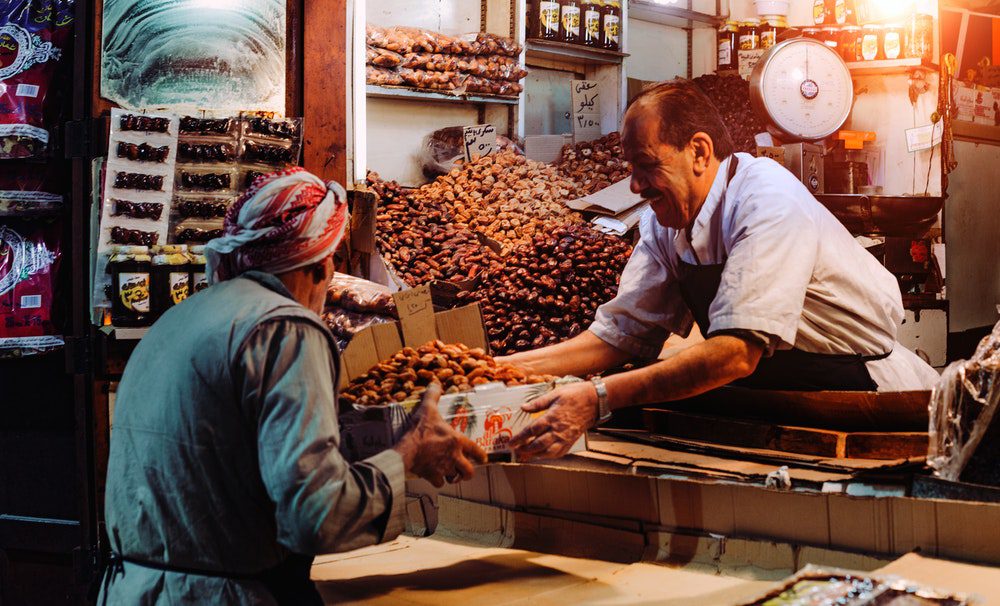
Unfortunately in Indonesia, there are still many business people who do not know for sure the market segmentation of their products. All products owned are considered the same, can be for all circles. As a result, the business runs less focused and does not have a main target, so the resources they have are actually wasted. This is what is dangerous in business, because it can kill the business slowly.
In fact, doing research to find market segmentation is very important so that the business can run smoothly. When the market segment has been found, the product marketing process will become easier and smoother. Of course this will affect the product sales process. The right market segmentation will make the product sell faster.
A case in point is if you own a baby clothing company. The market segmentation you choose is of course the mothers. Then the market segmentation was further narrowed down to mothers who are pregnant or having babies. The market segmentation can be further narrowed by choosing mothers who prefer to shop online or not, have daughters or sons, even working mothers or not. The selection of this market segmentation adjusts what kind of product you have.
In this article, you will find out more clearly the definition, types, characteristics and how to easily determine market segmentation for your business.
1. What is Market Segmentation?
Market segmentation is one of the strategies in the business world by grouping products owned according to similarities, similarities, interests and customer needs. Before marketing products for the business you run, it’s a good idea to know the types of market segmentation that currently exist, the following types:
a. Geographic Segmentation
This type of location segmentation is probably the most widely applied in Indonesia. For example, if the main target is Indonesia, the company will usually build a company located in Indonesia, the main goal is to be closer to consumers so that all costs can be reduced cheaper.
These are a few ways you might think about creating a geographic segment:
Zip code/post code
City
Country
Population density
Distance from a certain location (like your office or store)
Climate
Time zone
Dominate language
b. Time Segmentation
This time segmentation is rarely used, but usually at certain times it can be applied. For example, photography services will be sold during the graduation season, clothes sellers will be flooded with orders when approaching Eid al-Fitr, and so on.
c. Price Segmentation
By using price segmentation, you can more easily consider the economic strength of our prospective customers, which are certainly different. Some can afford to buy at a high price, some are only able to buy at a low price. If the market segmentation is wide, you can apply prices to each product starting from low, medium, and high prices so that all people can enter.
d. Demographic Segmentation
Gender, age, and income are the most widely used variables in demographic segmentation. Because it could be that the products being sold are only suitable for men, while for women it is already different. There are other products that are only specifically for adults, so you have to segment this demographic so you don’t get the wrong target.
Some examples of demographic segmentation include:
Age
Gender
Income
Occupation
Family size
Race
Religion
Marital Status
Education
Ethnicity
e. Psychographic Segmentation
This segmentation includes consumer behavior in responding to product trends and stimulation. This segmentation data is difficult to determine into groups because it usually has a fairly large anomaly. The results of the data analysis presented are also more descriptive.
These are some examples of psychographic segmentation:
Values
Goals
Needs
Pain points
Hobbies
Personality traits
Interests
Political party affiliation
Sexual orientation
f. Socio-Cultural Segmentation
Cultural segmentation pays more attention to the variables of consumer social and cultural patterns. The analyzed data can be; social class, ethnicity, societal norms within the scope of the market and the life cycle of the community.
2. Characteristics of Effective Market Segmentation
Before you know how to determine market segmentation, you must know the benchmarks for effectiveness in determining market segmentation. The characteristics of effective market segmentation must be;
Measurable ( measurable ) , market segmentation can be measured to a certain degree, all data analysis research results must also be proven with measurable and accurate data.
Affordable ( accessible ) , effective segmentation is to remove the wall between products and consumers. Products are clearly accessible to consumers.
Influential ( Substantial ) , The segmentation process must also affect the business, for example, provide benefits and also affect process changes.
Distinguishable ( differentiable ) , effective market segmentation is the segmentation of each element can be clearly distinguished.
Realistic ( actionable ) , effective segmentation can also realize or realize your business plan.
3. How to Determine Market Segmentation
After you understand what market segmentation is and its types, then it’s time you know how to determine market segmentation for your business. The steps in determining market segmentation in outline are:
Data collection , namely by conducting research in the form of surveys, discussions and also other techniques, to obtain variables for each type of segmentation.
Analysis , After all the data is obtained you can process the data and analyze the results of data collection which will be adjusted to the marketing strategy .
Compilation , this stage is where you group the results from the analysis and at this stage the results will be filtered, which products are suitable and which markets are suitable.
Based on the stages above, the following are more complete stages in determining market segmentation.
a. Define target market
How to determine the target depends on the needs of the business you are running. You should pay attention to these three things:
New Consumer , determine segmentation based on new business so you need to find new consumers.
Focused Consumer , This is usually done to find customers that you already have but to support a sustainable business.
Supported Consumer , This consumer is related to your supporting product needs .
Based on the three things above, you can refer to the types of segmentation previously discussed such as: demographic, price, time, and products to be sold.
b. Know Consumer Problems and Needs
The next step is to find out all the needs of potential customers, then adjust them to the products you sell. To be able to get the information, you can ask potential customers directly or by conducting a series of product tests.
If you already know consumer problems, you can classify consumer wants, needs and problems. This is useful as a reference in making a business strategy road map and also product evaluation.
c. Know Consumer Behavior
Furthermore you can observe and analyze consumer behavior. You can pay attention to how consumers use the product, the conditions before and after using the product, and also the trend patterns associated with the product.
d. Data Processing and Analysis
Furthermore, you can process all consumer-related data that you have observed. At this stage you will find out the opportunity for the product that you will sell to each segmentation that you have done. Data analysis serves as a reference in determining strategies in preparing products and also marketing.
e. Determine product marketing strategy
Each segment must have a different marketing strategy, especially if the target market is different. So adjust the target market according to the marketing strategy. You can apply any type of marketing strategy by referring to market segmentation. For example, referring to demographic segmentation; What tools are suitable for female consumers?
f. Market response evaluation
If the market strategy is already running and generating sales, you need to know the response from consumers, especially regarding the shortcomings of the product you have, record all the input that consumers give you and immediately fix it.
Those were some explanations about how to easily determine market segmentation according to its type. In addition, good financial management is also needed to support your business to be more successful. With good financial management, your product marketing budget can be maximized. Use the help of software for accounting to make financial management easier and more accurate.
The law of supply and demand is a theory that explains the interaction between a seller of a resource and a buyer of that resource. This theory explains the interaction between the existence or availability of a product and the demand for that product on the price of the product.
Generally, low supply and high demand increase prices and vice versa. Meanwhile, high supply and low demand will reduce prices.
A brief description
The law of demand says that at higher prices, buyers demand less of an economic good.
The law of supply says that at a higher price, the seller will supply more of the economy’s good.
These two laws interact to determine the actual market price and the volume of goods traded on the market.
Several independent factors can influence the shape of market supply and demand, which can affect the prices and quantities we observe in the market.
Understand the Law of Supply and Demand
The law of supply and demand is the most basic of economic laws, where it binds almost all economic principles in some way. In practice, supply and demand oppose each other until the market finds a price balance.
As we know that there are many factors that can affect supply and demand, which causes supply and demand to increase and decrease in several ways. It was studied extensively by Murray N. Rothbard.
The Law of Demand vs. Supply Law
The law of demand states that, if all other factors remain the same, the higher the price of a good, the less people will demand that good.
In other words, the higher the price, the lower the quantity demanded. The number of goods that buyers buy at the higher price is less because when the price of the good rises, so does the opportunity to buy that good.
As a result, people naturally avoid buying products, forcing them not to consume anything they value more. The graph below shows that the curve is slope downward.
Like the law of demand, the law of supply shows the quantity to be sold at a certain price. But unlike the law of demand, the supply relationship shows an upward slope. This means that the higher the price, the higher the quantity supplied.
Producers supply more at a higher price because selling the higher quantity at a higher price increases revenue.
However, unlike the demand relationship, the supply relationship is a time factor. Time is important to provide because suppliers must — but not always — react quickly to changes in demand or prices. So it is important to try and determine whether the price change caused by demand will be temporary or permanent.
Say there is an increase in demand for umbrellas and the price of umbrellas suddenly increases in an unexpected rainy season; suppliers can only accommodate demand by using their production equipment more intensively.
However, if there is climate change, and the population will need an umbrella throughout the year, changes in demand and prices will be expected over the long term; suppliers must change their production equipment and facilities to meet long-term levels of demand.
Shift vs movement
In an economy, “movements” and “shifts” in relation to the supply and demand curves represent very different market phenomena.
Movement refers to changes along a curve. On the demand curve, movement shows the change in price and quantity demanded from one point on the curve to another. These moves imply that the demand relationship remains consistent.
Hence, a movement along the demand curve occurs when the price of a good changes and the quantity demanded changes according to the initial demand relationship. In other words, a movement occurs when a change in quantity demanded is caused only by a change in price, and vice versa.
Like movement along the demand curve, movement along the supply curve means that the supply relationship remains consistent.
Hence, a movement along the supply curve occurs when the price of the good changes and the quantity supplied changes according to the original supply relationship. In other words, a movement occurs when a change in a given quantity is caused only by a change in price, and vice versa.
Meanwhile, a shift in the demand or supply curve occurs when the quantity of a good demanded or supplied changes even though the price remains the same. For example, if the price for a bottle of energy drink A is IDR 10,000 and the quantity of energy A demanded increases from Q1 to Q2, then there will be a change in the demand for energy drink.
Shifts in the demand curve imply that the original demand relationship has changed, meaning that quantity demand is affected by factors other than price. A shift in the demand relationship will occur if, for example, energy drink A suddenly becomes the only type of energy available for consumption.
Conversely, if the price for a bottle of energy drink is IDR 10,000 and the quantity supplied decreases from Q1 to Q2, then there will be a change in the supply of this drink. Like a shift in the demand curve, a shift in the supply curve implies that the original supply curve has changed, meaning that the quantity supplied is affected by a factor other than price.
A shift in the supply curve would occur if, for example, a natural disaster caused a shortage of hop mass; State drink producers will be forced to supply less of their product at the same price.
How do supply and demand balance prices?
Also called the market clearing price, the equilibrium price is the price at which the producer can sell all the units it wants to produce and the buyer can buy all the units it wants to produce.
At a certain point in time, the supply of goods brought to market is constant. In other words, the supply curve in this case is a vertical line, whereas the demand curve always slopes downward because of the decreasing law of marginal utility.
Product sellers cannot charge the market more than the market can bear, based on the concept of consumer demand. Over time, however, suppliers may increase or decrease the quantity they supply to the market based on the price they predict will be charged.
So over time the supply curve slopes upward; the more suppliers expect to charge extra, the more willing they are to produce more and to shower the market with their products.
With the supply curve sloping up and the demand curve sloping down, it is easy to imagine that at some point the two will intersect. At this point, the market price is sufficient to encourage the supplier to bring to market the same amount of good that the consumer is willing to pay at that price. Supply and demand are in balance, or in balance.
The right price and quantity occurs based on the position and shape of the supply and demand curves, each of which is influenced by several factors.
Factors Affecting Supply
Production capacity, production costs such as labor and raw materials, and the number of competitors directly influence how much of a business supply can be made. Supporting factors such as weather conditions, availability of materials and reliability of the supply chain are also a set of factors that can affect supply.
Factors Affecting Demand
The number of substitutes available, changes in prices for complementary products, and consumer preferences can influence demand. For example, if the price of a motorbike for brand A goes down, then the demand for that motorbike can increase because people are more likely to buy it because the price has dropped and want to own it.