Tag: cost

  • Understanding Accounting and Its Importance in Business

    Understanding Accounting and Its Importance in Business

    For some people, the science of accounting is related to the calculation system, but the fact is that accounting is a process that is not simple. What is accounting? What is the definition and understanding of accounting according to some experts? Sinaumedia will review it here.

    This knowledge is quite widely used in daily applications, especially related to business activities.

    By using this knowledge, entrepreneurs can monitor whether the business they are running is running well or not.

    Well, by reading this article, you will have a better understanding of the following topics and be able to answer questions such as:

    • an information system that provides reports to interested parties regarding the economic activities and condition of the company. What is the definition of this sentence?
    • Accounting is the process of identifying, measuring and reporting economic information to enable clear and unambiguous judgments and decisions for those who use the information.

    The definition or definition of accounting is as follows

    Broadly speaking, the notion or definition of accounting is a process that begins with recording, classifying, processing, presenting data, and recording transactions related to finance.

    Thus, the information can be used by someone who is an expert in the field and can be used as material for making a decision.

    A practitioner who is an expert in this field is called an accountant.

    The definition of accounting has also been referred to as the language of business to measure the results of economic activities in organizations and convey information to various parties, including management, investors, creditors, and regulators.

    Various theories themselves have been put forward regarding the notion of accounting.

    Various theories develop along with the increasing number of people who want to learn it, considering the science of accounting systems provides various conveniences in carrying out activities.

    Although accounting software is very helpful, but as an entrepreneur, accounting knowledge is very important to understand.

    The definition of accounting according to experts is as follows

    Various definitions and understanding of accounting represent different things. This difference occurs because the experts who put forward explore different fields of science.

    Here are some definitions of accounting according to some experts:

    • Warren

    What is accounting? In general, accounting or accounting is an information system that produces reports to interested parties regarding the economic activities and conditions of the company.

    • Paul Grady

    What is accounting? According to Paul Grady, accounting is a body of knowledge and organizational functions that are systematic, authentic and original in recording, classifying, processing, summarizing, analyzing, interpreting all transactions and financial events and characteristics that occur in the operations of accounting entities with the aim of providing information that This means that management is needed as a report and accountability for the trust it receives.

    • Zophar Lumbantoruan

    Accounting is a tool used as a business language where the information conveyed can only be understood if the accounting mechanism is understood.

    Stating that accounting is a service activity whose function is to provide quantitative information which is then used for economic decision making.

    The Process in Accounting Is As Follows

    As it has been mentioned above that accounting is a process related to finance whatever happens in a business or organization.

    The process consists of recording, summarizing, analyzing, and reporting data.

    If you want to know more, here is an explanation of the four processes:

    1. Take notes

    The first and most important process in the accounting process is the recording of transactions that occur within the company.

    This process is often referred to as bookkeeping, which is recognizing transactions and entering them into records.

    Bookkeeping is concerned with recording only.

    In accounting, bookkeeping is usually done for the sake of detailed recording and becomes a report to present data as a final financial report.

    2. Summarizing

    Generally, raw data is the result of recording transactions and is considered not very important.

    This raw data has no influence in the decision -making process.

    However, this is where the role of the accountant is to use the raw data, divide it into categories, and translate it.

    So, the usual process is to record transactions, then summarize them.

    3. Report

    Every business that happens in the company is the responsibility of management.

    Every business owner should know the various operations or activities that take place in the company and how the company uses the money.

    In this case, the owner of the company will receive a financial report for the company which is usually sent monthly.

    Meanwhile, there is also an annual report that will summarize all the performance within the company.
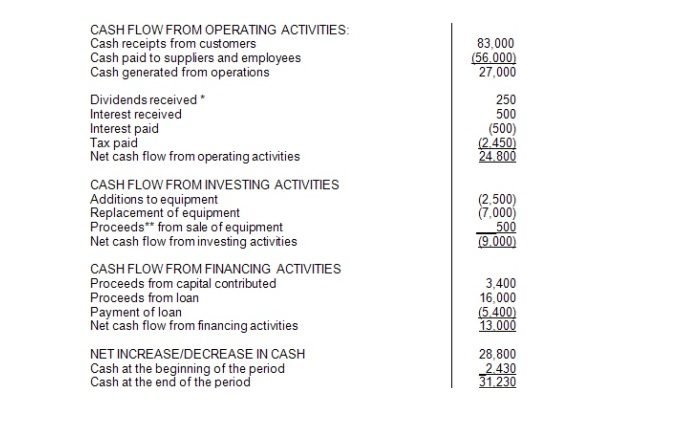
    sample accounting report
    sample accounting report

    4. Analyze

    Finally, analyzing is an important final process in accounting.

    After recording and summarizing, of course you have to draw conclusions.

    This is where the important role of management to examine the positive and negative points.

    In analyzing all of this, accounting introduces the concept of comparison.

    Where you can compare sales, profit and loss , equity, and more to determine and analyze work and make decisions.

    Of the many understandings of accounting science, all of them have almost the same goal where each goal is to provide accurate reports relating to company financial problems.

    The definition of accounting will help you in presenting a detailed report on the company’s expenses and income so that you can find out the profits and losses.

    In addition, the use of accounting knowledge will also help companies to identify employees who commit fraud.

    Can you now answer the question what is accounting?

    Again, accounting is the process of recording and processing data on every transaction that occurs in a business.

     

  • How to Calculate Working Capital?

    How to Calculate Working Capital?

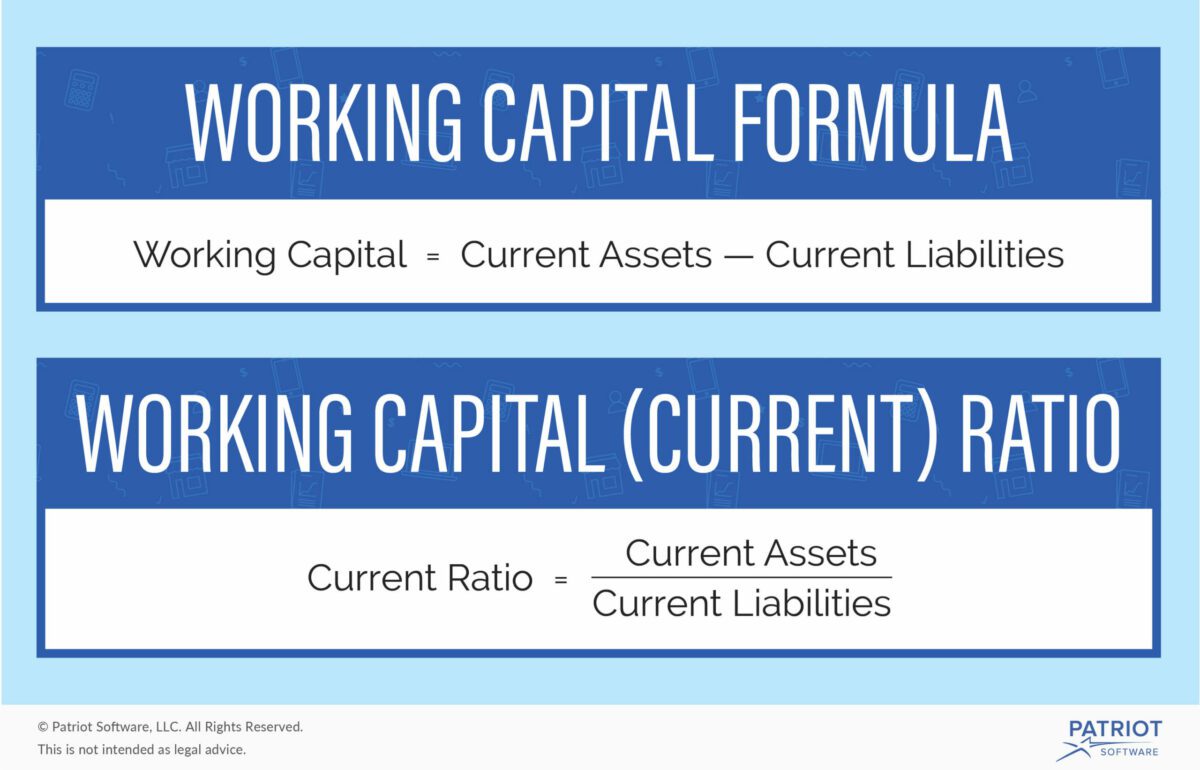
    Working capital is the company’s ability to pay current liabilities with current assets . Working capital is an important measure of financial health because creditors can measure a company’s ability to pay off its debts within a year.

    Working capital represents the difference between a company’s current assets and current liabilities. The challenge is to determine the right category based on the large number of assets and liabilities on the company’s balance sheet and outline the company’s overall health in meeting its short-term commitments.

    Working Capital Components

    Current Asset

    This is what companies have today – both tangible and intangible – that they can easily turn into cash within a year or a business cycle, whichever is less. The more obvious categories include demand deposits and savings; highly liquid securities such as stocks, bonds, mutual funds and ETFs; money market account; cash and cash equivalents, accounts receivable , inventory and other short-term prepaid expenses. Other examples include current assets from discontinued operations and interest payable. Current assets do not include long-term or illiquid investments such as certain hedge funds, real estate, or collections.

    Current Liabilities

    In the same way, current liabilities include all debts and expenses that the company expects to pay in one year or one business cycle, whichever is less.

    This usually includes all the normal costs of running the business such as rent, utilities, materials and supplies; payment of interest or principal of debt; accounts payable ; accrued obligations; and accrued income tax. Other current liabilities include dividend payable , leases with maturities in one year, and long-term debts that are due.

    How to Calculate Working Capital

    Working capital is calculated using the current ratio, namely current assets divided by current liabilities. A ratio above 1 means current assets exceed liabilities, and generally, the higher the ratio, the better.

    Example of Working Capital: Taruna Arka
    For the fiscal year ended December 31, 2017, PT Taruna Arka has current assets of IDR 36.54 billion. Includes cash and cash equivalents , short-term investments , marketable securities, accounts receivable, inventories, prepaid expenses, and assets held for sale.

    Taruna Arka has current liabilities for the fiscal year ending December 2017 amounting to IDR 27.19 billion. Current liabilities include trade payables, accrued expenses, loans and notes payable, current long-term debt maturities, accrued income taxes, and liabilities held for sale.

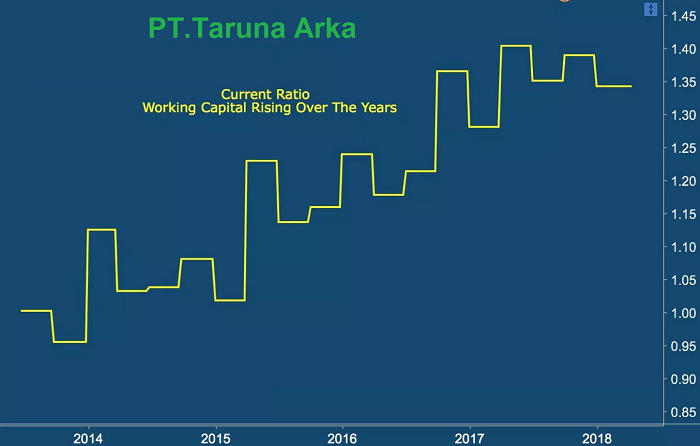
    According to the information above, the company’s current ratio is 1.34:

    IDR 36.54 billion ÷ IDR 27.19 billion = 1.34.

    Has Working Capital Changed?

    While working capital funds do not expire, working capital figures do change over time. That’s because the company’s current liabilities and current assets are based on a rolling 12 month period.

    The exact working capital figure can change every day, depending on the nature of the company’s debt. What was once a long-term liability, such as a 10-year loan, becomes a current liability in year nine when the payment deadline is less than one year away. Likewise, what was once a long-term asset, such as real estate or equipment, suddenly becomes an asset as buyers line up.

    Working capital as a current asset cannot be depreciated (depreciated) like a long-term asset. Certain working capital, such as inventory and accounts receivable, can lose value or even be written off occasionally, but how it is recorded does not follow depreciation rules.

    Working capital as current assets can only be charged immediately as a one-time expense to match the income they helped generate in the period.

    Although it cannot lose value due to depreciation over time, working capital can be devalued when some assets have to be marked (Mark-to-Market) to the market.

    It occurs when the asset price is below its original cost, and the others cannot be saved. Two common examples involve inventory and accounts receivable.

    Outdated supplies can be a real problem in operations. When that occurs, the market for inventory has a lower price than the original purchase value recorded in the accounting books. To reflect current market conditions and use the lower cost and market method, companies mark their inventory down, resulting in a loss of working capital value.

    Some receivables may become uncollectible at some point and have to be written off entirely, which is another loss of value in working capital. Because losses in current assets reduce working capital below the desired level, funds or long-term assets may be required to fill the shortfall in current assets, an expensive way to finance additional working capital.

    Means Working Capital

    A healthy business will have sufficient capacity to pay off current liabilities with current assets. A ratio higher than above 1 means the company’s assets can be converted into cash at a faster rate. The higher the ratio, the more likely the company will be able to pay off short-term obligations and debts.

    The higher ratio also means the company can easily fund its day-to-day operations. The more working capital a company has means that it may not need to take on debt to finance its business growth.

    A company with a ratio less than 1 is considered risky by investors and creditors because it indicates that the company may not be able to cover its debts if necessary. A current ratio of less than 1 is known as negative working capital.

    We can see in the graph below that the working capital of Pt. Arka cadets, as indicated by the current ratio, have been increasing steadily over the past few years.

    Working Capital Pt. Arka cadets

    The tighter ratio is the quick ratio, which measures the proportion of short-term liquidity to current liabilities. The difference between this and the current ratio is in the numerator, where the asset side includes cash, securities, and accounts receivable. The Liquid Ratio (Quick Ratio) does not include inventory, which can be more difficult to turn into cash in the short term.

    The value of working capital should be assessed periodically from time to time to ensure that devaluation does not occur, because sustainable operations require sufficient working capital.