Tag: Conflict Theory

  • Differences in Conflict Theory of Karl Marx and Ralf Dahrendorf

    Differences in Conflict Theory of Karl Marx and Ralf Dahrendorf

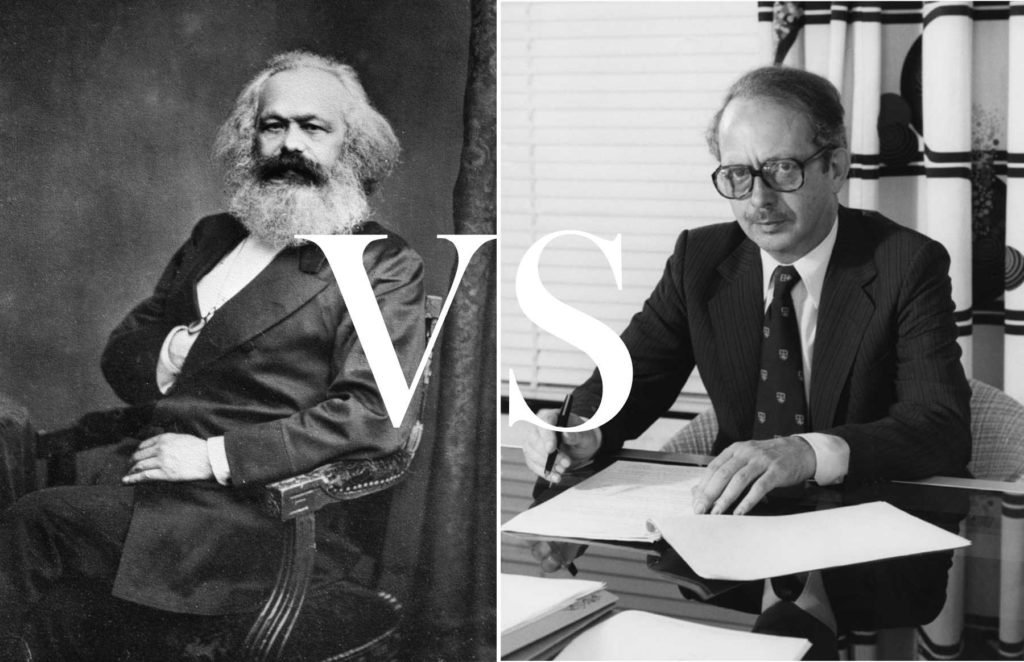
    Social conflict is a form of conflict in society that occurs due to various factors. The complexity of social conflict makes studying this phenomenon give rise to multiple theories. Among the sociological thinkers who formulated specific theories to analyze social conflict were Karl Marx and Ralf Dahrendorf.

    Conflict theory was born to oppose the theory of structural functionalism. This is because the last theory provides an understanding that it is as if the development of society is balanced and static.

    Conflict theory comes with the understanding that society is changing because of the ongoing conflicts in life.

    Conflict also turns out to be derived from class conflicts, for example, the ruling group and the oppressed community group. This was one of the factors that brought about social changes or social systems in social life.

    An unbalanced condition ignores generally accepted norms and values but still affects people’s lives. In other words, social life cannot be separated from the various conflicts that occur in it.

    So, what are the Differences in the Conflict Theory of Karl Marx and Ralf Dahrendorf?

    Karl Marx’s Conflict Theory

    Karl Marx considers that a class conflict occurs due to differences in access to power. In this case, the key meant by Karl Marx is the facility of capital (money) which can create two classes, namely the bourgeoisie and the proletariat.

    Furthermore, Elena G. Bystova and Petter Gottschalk, in their research, add that Karl Marx views conflict as a form of class conflict. Karl Marx also explained the concept of class structure in a society full of inequality.

    Both class differences and social inequality can cause conflicts in everyday life. Some groups can dominate, and some are controlled only because of differences in economic class.

    The following are the main concepts in Karl Marx’s conflict theory:

    • There is a class structure in society
    • There are conflicting economic interests in each of the different classes
    • There is a significant influence of economic class on a person’s lifestyle
    • The influence of class conflict can lead to changes in social structure

    Ralf Dahrendorf’s Conflict Theory

    Ralf Dahrendorf’s opinion about conflict theory. He wrote that Ralf Dahrendorf proposed an idea that concluded: conflict occurs because of the social relations in a system.

    Thus, it can be concluded that conflict only occurs with groups belonging to one system. The relations were also classified by power. The existence of the controller with sanctions makes those who have power can benefit from those they control.

    This conflict finally conveyed a conflict between the owners of power and those who were not in control.

    Not only that, but Ralf Dahrendorf’s conflict theory also explains that society has two sides, namely conflict and cooperation.

    In the end, both the theory of Karl Marx and Ralf Dahrendorf explain that conflicts that occur in society can be a factor in social change. In other words, conflict, discontinuity, inequality, and deviation of norms and values also become an unavoidable part of society.

  • Conflict Theory according to Dahrendorf

    Conflict Theory according to Dahrendorf

    Another quite popular conflict theory is Dahrendorf. Ralf Dahrendorf is a German intellectual who became famous through his work ” Class and Class Conflict in Industrial Society ” in 1959.
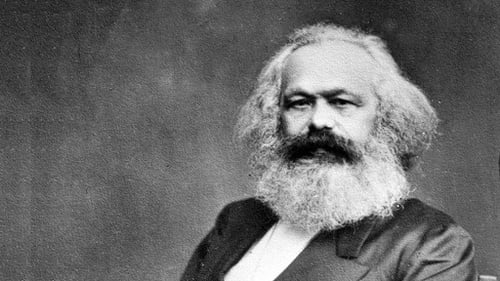
    For Dahrendorf, the functionalist explanations of integration, value and consensus, and stability needed to be revised. He rejected these functionalist assumptions and sought to base his theory on a modern Marxist perspective. For him, social conflicts based on the opposition of interests and the consequences of disputes can be widespread and, at the same time, can give birth to social change. (Johnson: 1986: 183).

    Although Dahrendorf has the same thoughts in viewing class conflict, Dahrendorf does not agree with the proposition offered by Marx. Dahrendorf considers Marx’s view irrelevant to post-industrial society (modern industry).

    That is why Marx’s theories and concepts are recommended to be modified so that they can be adapted to analyze modern industrial society. Dahrendorf views that Marx only refers to capitalist society. Since Marx wrote his thoughts, there have been significant changes in the social structure. (Dahrendorf 1988).

    That is why, Dahrendorf offers a concept and theory that pays more attention to explaining capitalist and post-capitalist society. Dahrendorf then built his new theory through this framework.

    Dahrendorf had quite a few conflicts with Marx. He even rejected Marx’s concept of a classless society. Dahrendorf considers that the analysis of a classless society is highly speculative, and there is no empirical evidence that it can be realized.

    Furthermore, Dahrendorf views several of Marx’s theses as not supported by empirical facts. In reality, class division cannot be carried out solely based on ownership of the means of production.

    In conflict theory, Ralf Dahrendolf assumes that society is loyal when subject to change and conflict processes. Conflicts and various elements of culture that exist in the social system are considered to contribute to disintegration and change.

    For him, the order that can be created in society is nothing but coercion on its members, carried out by those with power. This means that power in this social system plays a role in efforts to maintain order in society.

    Dahrendorf also put forward the idea of ​​a dialectical conflict theory. This theory states that society is a subject with two faces, namely conflict, and consensus. From this, Dahrendorf proposed the division of sociological theory into two parts, namely conflict theory and consensus theory.

    In conflict theory, we can examine conflicts of interest and the use of violence in society. In consensus theory, we can examine the value of integration in society.

    Dahrendorf assumes that society cannot exist without consensus and conflict because the unification of society occurs because of enforced non-freedom. This also reflects that in certain societal positions, there is authority over other positions that delegate power.

    That’s it; Conflict Theory, according to Dahrendorf, I hope it is useful.

  • Conflict Theory according to Karl Marx

    Conflict Theory according to Karl Marx

    Karl Marx (1818-1883) is considered a major pioneer of conflict theory. In fact, many figures in sociology calls him the master of conflict perspective.
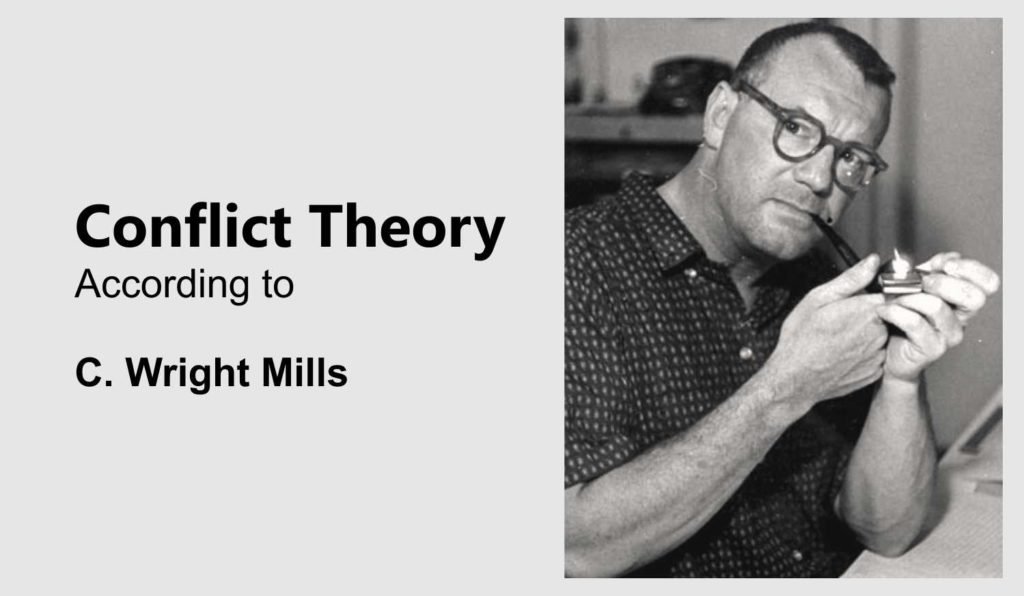
    The basis of Marx’s thought is about the massive exploitation which is considered as the prime mover of historical forces. Marx views the existence of class differences, one of which is caused by the industrialization project, and this is only the pursuit of economic gain.

    The struggle of class society is a fundamental concept that was conceptualized by Karl Marx at that time. This was triggered by the condition of society at that time which was surrounded by industrialization in the 19th century. Industrialization gave rise to a class of workers and industrialists which in turn led to alienation.

    The conflict perspective which is rooted in the thought of Karl Marx is recognized by sociologists as one way out so that it is very closely related to revolution. However, the conflict here is not meant to be a radical revolution, let alone to the point of spilling blood. Because, after all, Marx was a humanist.

    In essence, conflict theory sees the existence of conflict and conflict in social systems. So, society will not always be in order. In this theory, different authorities are also discussed, which result in superordination and subordination.

    The difference in the interests of these two things then creates a conflict. However, conflict theory itself also reveals that conflict in this social process is needed to create a social change, both in a negative and positive direction.

    The conflict theory according to Karl Marx has long been ignored by sociologists. However, it was not until the 1960s that this theory was re-emerged. Some sociologists who have revived conflict theory include C. Wright Mills [1956-1959], Lewis Coser: [1956] and others [Aron, 1957; Dahrendorf, 1959, 1964; Chambliss, 1973; Collins, 1975].

    In contrast to functionalists who view the normal state of society as a static equilibrium, conflict theorists tend to see society as being in constant conflict within groups and classes.

    Conflict theorists even claim that functionalists have failed to ask the “functionally useful” question, who is this aimed at. The harmonious balance referred to by functionalists is considered only beneficial for some people, while for others it is detrimental.

    Conflict theorists view that a social balance as intended by these functionalists is a mere fantasy, because they are unable to explain how the dominant group exploits other groups and silences them.

    In Marx’s theory, the existence of personal relations in production and social classes is seen as a key element that exists in many societies. Marx in Das kapital also argues that the social changes that are created are largely influenced by the existence of conflicts between the dominant class and the subordinated class.

    The marxian-modern conflict strategy, which is mentioned by Stephen K Sanderson , is as follows:

    • Social life is an arena of conflict or conflict within opposing groups.
    • Various economic resources and political power are important, so various groups try to seize it.
    • A typical consequence of this conflict is the division of society into economically determined groups and subordinated groups.
    • The basic social pattern of a society is strongly influenced by the social conditions of the group which is economically a determining group.
    • Conflicts and deep social conflicts that exist in various societies give birth to forces capable of driving social change.
    • Because conflicts and contradictions are the basic criteria of social life, social change is also a common thing that often occurs.
  • Conflict Theory According to C. Wright Mills

    Conflict Theory According to C. Wright Mills

    What are the views and understandings of C. Wright Mills conflict Theory? Let’s look at the explanation of conflict theory according to this one sociological figure. 

    Want to know more fully, how we view the conflict version of this critical figure, it is important to study. Let’s read.

    Understanding the Thought of C. Wright Mills

    There are several important figures in sociology who also gave their views on conflict, ranging from Karl Marx, Lewis Coser, Jonathan Turner, Ralf Dahrendorf, and many others.

    The discussion of conflict is indeed interesting to study. Moreover, in the community itself, there will certainly be various disputes and conflicts. 

    There are also those who say that conflict always leads to negative things. However, there are also those who say that conflict can lead to positive things.

    Indeed, there are many views and perspectives given by figures and experts on conflicts that occur in society.

    So on this occasion, we will briefly review the understanding of conflict from the character, namely conflict according to C Wright Mills.

    Charles Wright Mills is an American sociologist who was born in Waco Texas on August 28, 1916. 

    He died in West Nyack, New York, on March 20, 1962. Mills was indeed known as a radical thinker who was rich in ideas, open and courageous. 

    He is known as a sociologist who is intense in observing the reality of the state and power. 

    Then he is famous for putting forward a very famous theory, namely the power elite theory. 

    That’s a glimpse of a popular figure in sociology with his phenomenal works, in his thoughts and perspectives.

    So what do you think about conflict? Check out the explanations and reviews below, let’s read.

    Conflict Theory in the Perspective of C. Wright Mills

    Understanding C. Wright Mills’s thoughts on conflict let’s see, read the plan yes. 

    Mills said that to be able to create a good society on the basis of knowledge and its formation.

    It is the responsibility of the intellectuals to socialize liberally and support the revolution in Cuba.

    He also condemned the American reaction to the revolution in Cuba because he believed that the revolution in Cuba would unite revolutionary socialism and freedom. 

    The theme of the theme discussed in depth and specifically in Mills Sociology is the relationship between alienation and bureaucracy as well as the power of the elite.

    First, a Glimpse Understanding the Alienation of Bureaucracy

    According to Mills explaining the economic difficulties experienced by workers in the past have been replaced.

    Today by psychological dissatisfaction rooted in alienation. The workers of what they work for. 

    He views these workers who work in offices as apathetic, fearful and shaped by mass culture. 

    Where in modern society, those in power often use it covertly.

    With the aim of doing manipulation manipulation. Therefore, Mills argues that bureaucracy is synonymous with manipulation. 

    According to him, the rational system hides their power so that no one understands their calculations. For the biocracy, the world is an object of manipulation. 

    Second, Elite Group Power

    For Mills himself in America at that time, it was controlled by a group of ruling elites, which consisted of people who produced dominant positions in the field.

    Politics, military and economy. Where the three areas of power have a relationship with one another.

    Until the people in power in the field, work together to create a group of elites in power in America.

    It is therefore not surprising that a high-ranking military official could become a capitalist.

    Likewise, the head of government can apply his style of government like an army. Mills explained that he believed where power could be based on other factors.

    Indeed and not on mere ownership. However, it is the same interests of this elite group that have united them and sustained the economy.

    So, that’s just a brief overview of the basics that friends can read from the reference sources below. Then, what about conflict in a sociological sense? 

    Where conflict is defined as a social process between two or more people. In which one party excludes the other.

    By destroying it or making it helpless, and the weakness of a person or group of people. 

    Indeed, every element of society or policy makers will contribute to the conflict. 

    Yes, you may not realize it, the danger that threatens social disintegration in people’s social life. 

    Which will have an impact on the integrity of the country. Mills said conflict in society occurs because of differences in interests, and resources.

    He continues that social structures are created through conflicts between people with different interests and resources. 

    Moreover, at this time, sometimes the government’s position is often unstable, which is the main trigger for conflict in society. 

    The difference in interests between the community and the government in national development often creates an open conflict.

    Indeed, this social conflict usually occurs because of one party or group who feels that their interests or rights have been taken by certain parties. 

    In an unfair way, this term is known as surplus value in Karl Marx’s view. 

    In essence, society will not be separated from the existence of social dynamics and conflict. Especially in the process and social relations.

    There are bound to be disputes and conflicts that overshadow people’s daily lives. Thus conflict becomes a color in various human lives.

    So that’s a glimpse of understanding, explanations and perspectives or views on Conflict Theory According to C Wright MillsHopefully useful, fellow readers.

  • Factors Causing Social Change: Internal and External Factors

    Factors Causing Social Change: Internal and External Factors

    Social change occurs because of a mismatch between social elements in society, which are different. Because of social changes, people will create a new pattern of life that is different from the previous one.
    Social change is unavoidable in social life and will continue to occur throughout time. This is because humans are intelligent, social creatures and always dissatisfied with the existing conditions, so they make changes.

    From the point of view of sociological studies, the nature of social change is understood as the desire of each individual to always change so that the situation becomes better according to his needs.

    Therefore, the scope of social change is also vast, so it is necessary to observe this phenomenon. Observations were made by comparing the community’s living conditions after social changes occurred and before.

    Selo Seomarjan formulated the notion of social change as a change in social institutions in a society, which can affect the social system, including values, attitudes, and behavior patterns among groups in that society.

    Based on the above definition, social change can occur in the social system, structure, and function of society within it.

    Meanwhile, according to Kingsley Davis, one of the most prominent 20th-century American sociologists, the notion of social change is the changes that occur in the structure and function of society.

    For example, the emergence of labor organizations in capitalist society has triggered changes in the relationship between workers and employers and, in turn, led to changes in economic and political organization..


    Examples of Socio-Cultural Changes in Society

    All humans and community groups will definitely experience changes in their daily lives, including static community groups where environmental changes run more slowly than in dynamic societies.

    This change can occur in all aspects, both narrow aspects such as individual behavior and thinking. As well as in broader aspects such as structures that affect developments in social life.

    Social changes in society are also inseparable from cultural changes. William F. Ogburn stated that the scope of social change includes elements of culture, both material and non-material.

    However, the emphasis is on the significant influence of material elements of culture on non-material elements.

    Cultural change occurs in the elements of human culture, either in the form of artifacts, objects, or ideas. This cultural change is heavily influenced by modernization or technology, which causes symptoms of social change in society.

    For example, the sociocultural changes that occurred after the presence of smartphone and internet technology. Various aspects of human life are made easier by this new technology.

    One of the impacts of changes seen due to the emergence of smartphone and internet technology is in the trade sector.

    In the past, when you wanted to buy goods, transactions would be made at the shop where the goods were sold. As for now, only with a smartphone and internet access people can buy and sell goods online without the need to move from their seats. Ordered goods can also arrive at your home by courier delivery services.

    In conclusion, the presence of Internet and smartphone technology causes major changes in the trade sector, one of which results in cost and time efficiency.

    Another example of sociocultural change occurs in financial transactions. Changes in the electronic field as a symptom of modernization have had an impact on remittance activities.

    In the past, money was sent via money orders; now, people can send money via ATM, internet banking, or sms banking. The current money transfer process can be done quickly and easily so that there is efficiency, at least in terms of time.


    Factors Causing Internal and External Social Change

    Sociocultural changes in society can occur if triggered by certain factors. The factors that cause sociocultural change can be grouped into two categories: internal and external.

    A. Internal Factors Triggering Socio-Cultural Change

    Sociocultural changes in society can occur if triggered by certain factors. The factors that cause sociocultural change can be grouped into two categories: internal and external.

    1. Changes in Population (Population)

    Increasing or decreasing population in an area causes social changes both in the destination and abandoned areas.

    For example, when the inhabitants of the island of Java moved to the island of Borneo. So, on the island of Kalimantan, there will be changes in the structure of society, especially its social institutions, in the form of rules and norms. Meanwhile, in Java, there will be a reduction in population which affects the division of labor and social stratification of social institutions.

    2. New Inventions or Innovations

    The birth of new discoveries and innovations greatly affects the changes that occur in society. For example, the invention of the Internet made it easier for people to access information.

    3. Social Conflict

    The social conflict between community groups can encourage social change. For example, conflicts that occur between local residents and residents outside the area make it difficult for local residents to accept the presence of residents from other areas in their territory.

    4. Rebellion and Revolution in Society

    The rebellion occurred because of the people’s dissatisfaction with the government’s power system. This can trigger the emergence of a revolutionary movement that will bring about major changes in society.

    B. External Factors Triggering Socio-Cultural Change

    External factors are factors that cause social change that come from outside the community. The external factors consist of three.

    1. Changes in the Natural Environment

    Environmental changes occur due to natural disasters such as floods, earthquakes, tsunamis, hurricanes, and so on. In this category, including environmental changes due to natural destruction by humans, it is one of the factors causing social change.

    This condition forces people to evacuate and move places. There will be social changes in the new place, both from social institutions and the surrounding environment.

    2. War

    The war won by the opposing side can cause social changes in the region that was defeated. The new policies of a victorious government enacted could be the cause of this change.

    3. The Influence of Other Community Cultures

    The entry of foreign cultural influences into an area through the process of cultural exchange and mass media can affect the indigenous culture of the region.

    the influence of foreign cultures can trigger cultural assimilation and acculturation that give birth to social changes in society.


    Pushing & Inhibiting Factors of Socio-Cultural Change

    Like what happens in a process, there are several driving and inhibiting factors for social change in society. These factors can trigger a process of social change to be faster or vice versa.

    A. Factors Driving Socio-Cultural Change

    1. Contact with other cultures
    2. Respect for the work of others
    3. Advanced education system
    4. Desire to progress
    5. Heterogeneous population
    6. Dissatisfaction with certain areas of life
    7. Open layering system
    8. Orientation to the future

    B. Inhibiting Factors for Socio-Cultural Change

    1. Lack of relationship with other communities
    2. Traditional society
    3. Low education
    4. Strongly entrenched interests
    5. Fear of unsteady integration
    6. Bad prejudice against foreign cultural elements
    7. Ideological barriers.

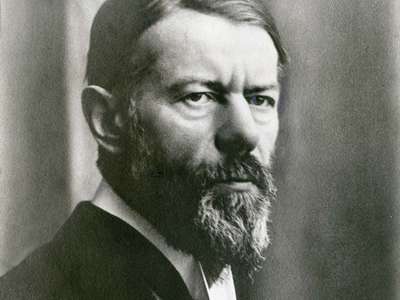
  • Social Conflict Theory According to Max Weber

    Social Conflict Theory According to Max Weber

    Max Weber views social stratification in society as influencing the emergence of social conflict.

    Social interactions involving relationships between individuals in society will bring about two side effects of the coin, associative and dissociative. Associative impact will make their relationship closer. On the other hand, the dissociative impact of the relationship becomes more tenuous.
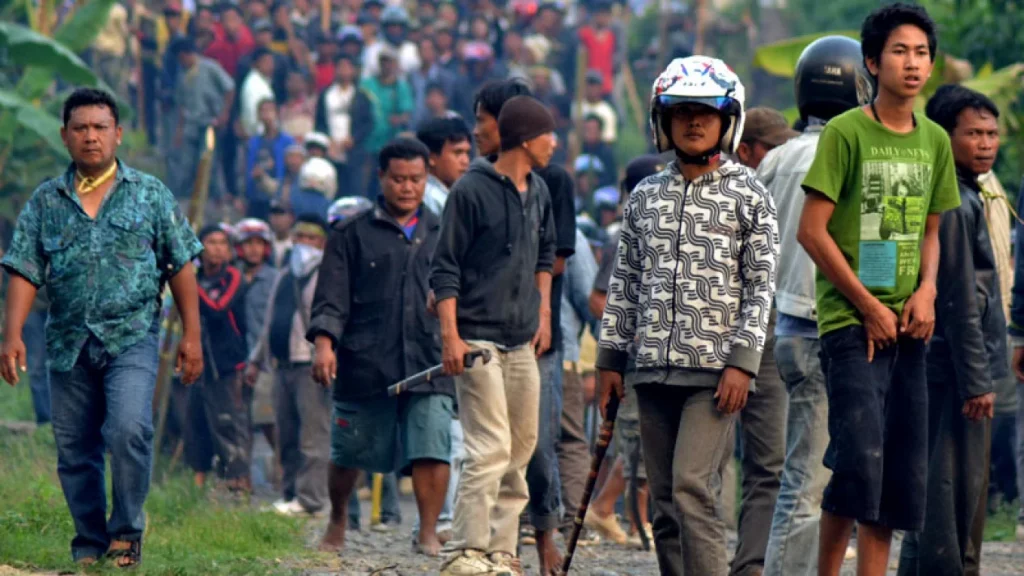
    The sparse relationship between these interactions can lead to social conflict. The main cause is differences in society with various triggers such as cultural differences, unequal interests, social changes that are too fast, to differences in thinking between individuals.

    Max Weber’s Theory of Social Conflict

    Several experts research on social conflict, one of which is Max Weber. According to Weber, conflict arises from the existence of social stratification in society.

    Each of these stratifications is a position worthy of being fought for by humans and their groups. Social relations are an attempt to get a high position in society.

    In his theory of conflict, Weber argues that power has significance for every type of social relationship. Power becomes the driving force of social dynamics that places individuals or groups to be mobilized or mobilized.

    As a result of power and interests, it can simultaneously lead to conflict. This social conflict generally occurs in a combination of the interests of each social structure that gives rise to the dynamics of the conflict.

    Weber’s theory does not discuss conflict theory specifically. Weber attempted to analyze the relationship between social movements and conflict. For him, social movements can lead to conflicts such as those experienced by society during the French Revolution.

    Social Conflict Theory According to Other Expert

    The founder of the famous conflict theory is not only Max Weber. There are still Karl Marx and George Simmel who put forward their respective theories of conflict. In fact, between theories are also “conflicted” because of differences in views such as the thoughts of Karl Marx and Max Weber.

    Conflict theory according to Karl Marx states that social change arises because of a conflict which ultimately results in a different compromise from the initial state. Society will be divided into two classes, namely the capitalist class (bourgeoisie) and the working poor class (proletariat). They are conflicted because of the different nature of the two.

    the conflict between the bourgeoisie and the proletariat cannot be separated from the implementation of capitalism by the bourgeoisie. Capitalism is an economic system that allows some individuals to control vital productive resources. The bourgeois class uses this access to achieve maximum profit by utilizing the services of the proletarian class as laborers.

    Max Weber refuted the opinion of Kari Marx’s conflict theory regarding historical materialism. The historical materialism in Marx’s opinion only emphasizes attention to one side of class. According to Weber, a balance is needed by also emphasizing the role of the idea factors that cause historical change.

    Weber focused on understanding the growth of the rational capitalist system in the Western world on a large scale. On the other hand, the capitalist system did not experience much development in the East and was not liked. Weber argues that the void of religious transformation in the East is an obstacle to the development of capitalism in the region.

  • Definition of Social Conflict and Its Theory According to the Experts

    Definition of Social Conflict and Its Theory According to the Experts

    From several conflict theories known in sociology, there are two groups, namely first, functional conflict theory and second, class conflict theory.
    There are various social groups in society. This diversity can lead to social conflicts that can have an impact on the disruption of the regularity of people’s lives.

    Social conflict can be triggered by several things, such as the presence of community members who do not understand the goals of the group or society.

    Conflicts that take place in society can also occur between individuals, individuals with groups, and groups with groups.

    According to Webster, the term “conflict” in English means a fight, war or struggle, which is a physical conflict between several parties.

    The meaning of the word then develops with the inclusion of “sharp disagreements or oppositions over various interests, ideas, ideas, etc.”. So the term “conflict” also touches on the psychological aspect behind the physical conflict itself.

    Meanwhile, according to Gurr, the criteria that mark a conflict as a conflict are as follows:

    1. A conflict must involve two or more parties in it;
    2. The parties attract each other in mutually opposing actions;
    3. They usually tend to engage in coercive behavior to confront and destroy the “enemy”;
    4. The conflicting interactions between the parties are in a definite state, therefore the existence of conflicting events can be easily described by social observers who are not involved in the conflict.

    Definition of Social Conflict According to Experts

    Several expert opinions regarding the definition of social conflict include:

    a. Soerjono Soekanto: Conflict is a social process of individuals or groups of people trying to fulfill their goals by opposing the opposing party accompanied by threats and/or violence.

    b. Robert MZ Lawang: Conflict is a struggle for value, status, and power in which their goal is not only to gain advantage, but also to subdue their rivals.

    c. Berstein: Conflict is a disagreement or difference that cannot be prevented. This conflict can have a positive or negative influence when interacting with other people.

    Social Conflict Theories According to Experts

    From several conflict theories known in sociology, there are two groups, namely first, functional conflict theory and second, class conflict theory.

    These two groups of theories are rooted in the thoughts of two figures, namely Georg Simmel and Karl Marx. Simmel’s thinking was then followed by Lewis Coser, while Marx was followed by Ralf Dahrendorf.

    More fully, the following are theories of social conflict according to experts in the field of sociology:

    1. Conflict Theory According to Lewis A. Coser

    Lewis A. Coser
    Lewis A. Coser

    According to Coser, conflicts that occur in society are caused by lower-level groups who increasingly question the legitimacy of the existence of the distribution of resources. rare source.

    Coser considers that conflict is not always negative, but conflict can strengthen and establish harmony within a group.

    Three factors that influence the duration of a conflict in society are as follows:

    a. The breadth and narrowness of the goals of social conflict.

    b. There is knowledge and defeat in conflict.

    c. There is a leader’s role in understanding the costs of conflict and persuading followers.

    Conflict can maintain intergroup relations and reinforce group identity. The benefits of conflict according to Coser, are as follows:

    a. Conflict can be a medium for communication.

    b. Conflict can strengthen group solidarity.

    c. Conflicts with other groups can produce solidarity within the group and that

    solidarity can lead to alliances with other groups.

    d. Conflict can cause isolated community members to play an active role.

    Then, Coser classifies social conflicts into two types, namely realistic conflicts and non-realistic conflicts.

    a. Realistic Conflict Realistic

    conflict is a conflict that comes from individual or group disappointment over the demands or estimates of benefits that occur in social relationships.

    b. Non-Realistic

    Conflict Non-realistic conflict is conflict that stems not from conflicting rival goals, but from a need to defuse tension.

    2. Conflict Theory According to Karl Marx

    Karl Marx
    Karl Marx

    Karl Marx has a view of social conflict as a class struggle. Communities in conflict are dominated by dominant groups.

    The existence of a more dominant party appears the party in power with the party being controlled. The two parties have different or conflicting interests that can lead to conflict.

    In Karl Marx’s theory, there are several facts as follows:

    a. The existence of a class structure in society

    b. There are conflicting economic interests among people who are in different classes.

    c. There is a great influence seen from the economic class on a person’s lifestyle.

    d. There are various effects of class conflict in causing changes in social structure.

    3. Conflict Theory According to Ralf Dahrendorf

    Ralf Dahrendorf
    Ralf Dahrendorf

    Dahrendorf sees conflict theory as a partial theory used to analyze social phenomena.

    Dahrendorf sees society as having two different sides, namely conflict and cooperation. Dahrendorf uses Marxian theory of class struggle to build a theory of class and class struggle in contemporary industrial society.

    The class struggle in modern society lies in the control of power.

  • Conflict Theory According to Lewis A Coser’s Perspective

    Conflict Theory According to Lewis A Coser’s Perspective

    Conflict can also be positive for the fabric of a society or social group. Well, here is the conflict according to Luwis Coser, which states that conflict has a positive function.

    According to Coser’s perspective, conflict theory is a functional social system. According to Coser, conflicts that occur in society do not merely show a negative function. However, conflict can also positively impact the ongoing social order.

    For Coser, conflict is a form of interaction and does not need to be denied. Coser means that conflict does not have to be destructive or dysfunctional for the system concerned because conflict can also have positive consequences.

    Coser shows us that conflict is a dispute about values ​​or demands regarding power, status, and sources of wealth whose supply is insufficient.

    Furthermore, Coser stated that disputes or conflicts could occur between individuals, collectivities, or individuals within the group. We can see the conflict between individuals and individuals; we still remember that when we attended high school, we unconsciously created positive conflicts, namely at the level of competition, in competition events, competing to become class winners, and experiencing positive conflict. We’ve been through.

    In negative conflicts, we can see the final results of the competition where the results are not in line with expectations, such as fights between football supporters/fans, coachmen debate that do not teach us lessons, and examples of negative conflicts that can harm many communities. Therefore, we should avoid these negative conflicts.

    Conflict is an important element of interaction, and it cannot be said that it is always bad, divisive, or destructive. Conflict can contribute greatly to the group’s sustainability and unite/strengthen relationships between its members. Such as facing a common enemy can integrate people, generate solidarity and engagement, and make people forget their internal strife.

    Positive Function of Conflict According to Lewis Coser. Conflict is a way or tool to maintain, unite and reinforce the existing social system. For example, the positive function of conflict is in matters relating to the dynamics of the relationship between the in-group and the out-group. Here are some propositions made by Lewis Coser:

    First, the strength of internal solidarity and inner group integration will increase if the level of hostility or conflict with outside groups increases.

    Second, the increased integrity of groups involved in conflict can help strengthen boundaries between that group and other groups in the environment, especially hostile or potentially hostile groups.

    Third, within the group, there is the possibility of a reduced tolerance for division or divisions and an increased emphasis on consensus and conformity.

    •  Consensus is a phrase to produce or make an agreement that is mutually agreed upon between groups or individuals after debates and research are carried out in the intelligence collective to obtain consensus decision-making.
    •  Conformity is a type of social influence when someone changes their attitudes and behavior to suit existing social norms. (Source: id.wikipedia.org)

    Fourth, deviants in the group are no longer tolerated; if they cannot be persuaded to enter the right path, they may be expelled or put under close surveillance.

    Fifth, on the other hand, if the group is not threatened by conflict with hostile outsiders, the strong pressure on cohesiveness, conformity, and commitment to the group may decrease.

    Internal disagreements may surface and be discussed, and deviants may be more tolerated. Generally, individuals will get greater space to pursue their personal interests.

    According to Coser, the function of external conflict can also be to strengthen internal cohesiveness and increase group morale so that groups can provoke antagonism with outside groups or create enemies with outsiders in order to maintain or increase internal solidarity.

    Tensions that occur in a group due to friction make conflict occur. To be able to solve the conflict problems that occur, Lewis Coser has a way or mechanism to be able to reduce or resolve a conflict.

    The mechanism that Coser mentioned is called a safety valve or other designation a safety valve. Coser admits that conflict can jeopardize unity. Therefore, it is necessary to have a solution called Coser as a safety valve.

    For Coser, this safety valve is an institution (safety valve institution). In society’s broad order of elements, we will find many social interests that may take time to fulfill. There needs to be an institution or institution that becomes the safety valve of these interests so that there will be no conflict in the community.

    Let us look at the legislative institution or body which consists of representatives of the people, such as the Indonesian Parliament in Indonesia. The existence of this institution is as a savior or as a safety valve for high conflicts. This is because each region already has representatives in the realm of delivering the community’s social needs in each region.

    Regarding the implementation in the field, it depends on how the community responds and the representatives give the right of their constituents. Thus, a large conflict does not need to occur because there is already a place to convey aspirations.

    In addition, according to Coser, safety valves also do not have to be on institutions; they can also be safety valves based on actions or habits that can reduce tension because conflicts cannot be channeled.

    For example, a joke inserted in a tense situation can reduce or eliminate the tension at that time, even though the joke itself may still contain critical values.

    Coser’s opinion regarding conflicts is that conflict is functional (good) and/or dysfunctional (bad) for relationships and structures that are not encapsulated in the social system. Coser focuses more on the functional conflict; Coser does not see it as dysfunctional.

    Coser defines social conflict as a struggle for value and recognition of rare status, then powers and sources of conflict are neutralized or perpetuated, and rivals are eliminated.

    Coser’s view of functional conflict states that conflict can change the form of interaction, whereas the expression of feelings of hostility is not the case. Therefore, conflicts that occur in society, either individually with individuals or groups with groups, as well as individuals and groups, are one way of unifying elements of society.

    This is because the conflict that occurs is not always negative but also positive in terms of uniting various social interests in it.


  • The Principle of Analysis and Conflict Model According to Randall Collins

    The Principle of Analysis and Conflict Model According to Randall Collins

    Conflict is a central process in people’s lives. According to Randall Collins, there are 5 Principles of Analysis and 3 Models of Social Stratification Conflict.

    Examples of Visible Social Phenomena.

    According to Randall Collins, organization is an arena of conflict. Conflict between an organization and another or conflict within the organization itself, namely individuals between individuals.

    Social interactions carried out by individuals are related to their interests, power, wealth, social status, which each individual wants to achieve in social organizations.

    The visible example can be seen from political organizations, where interests and power give each other power of influence to members and followers.

    The existence of a high ego causes conflict within political parties to be inevitable, conflict will always exist in political organizations.

    For example, we can see the conflict over the general chairman, which usually has dualism of leadership in political parties.

    In the end, among individuals who conflict because of an emotional drive or ego, they will leave the party structure.

    And of course, will establish their own political party with other individuals who feel they did not get space in the previous political party.

    That’s a glimpse of what we can see in conflict, because of the maneuvers of each individual.

    Social process.

    Conflict is a central process in people’s lives. The social structure is inseparable from the actors who build it.

    Social structure is the essence of individual interaction patterns in the structure of continually re-creating their social organization.

    Three Models of Social Stratification Conflict According to Randall Collins , namely:

    1. Individuals who live in the world, subjectively constructed where they build themselves.

    2. Some people / individuals have the power to be able to influence or influence the construction of the individual’s subjective world, or to control the subjective experience of the individual.

    3. The existence of several people to try to influence the subjective construction, as well as the tendency of individuals to control different people or to oppose the individual’s subjectivity.

    The Five Principles of Conflict Analysis According to Randall Collins , namely:

    1. Conflict theory should focus on the real world rather than the abstract world.

    2. Stratification conflict theory should examine the arrangement of materials that influence interactions.

    3. In an unbalanced situation, the resource ruling group will likely try to exploit the limited resource pool.

    4. Cultural phenomena (beliefs + ideas) are seen from the point of view of interests, resources and power.

    5. In looking at stratification, conflict theory must conduct empirical research.